Author: SwiftCargo Team

  • Sourcing Electronics from Shenzhen: A Practical Guide for Importers

    Sourcing Electronics from Shenzhen: A Practical Guide for Importers

    Every importer who touches electronics eventually ends up dealing with Shenzhen, whether they know it or not. The charger in your Amazon listing, the earbuds in your Shopify store, the smart plug your customer pairs with their phone: the odds are overwhelming that the board inside was populated within an hour’s drive of Huaqiangbei. What most importers never see is the structure underneath: the layered ecosystem that makes Shenzhen the only place on earth where a complete bill of materials can be sourced, assembled, tested and boxed within a 50-kilometre radius. Understanding that structure (where each layer sits and where you should engage) is the difference between importing electronics profitably and becoming one more casualty of the me-too product trap.
    Sourcing Electronics from Shenzhen: A Practical Guide for Importers

    Why Shenzhen Is the Hardware Capital

    Shenzhen’s advantage is not cheap labour. Labour in the Pearl River Delta stopped being cheap by Chinese standards a decade ago, and plenty of provinces undercut it. The advantage is density and speed.

    Consider what it takes to revise a circuit board. In most of the world, you order components with two-to-six-week lead times, send Gerber files to a board house in another city, wait for assembly slots, and iterate perhaps once a month. In Shenzhen, an engineer can walk the component markets in the morning, hand a revised design to a PCBA house at lunch, and hold populated boards within 48 to 72 hours. Iteration cycles that take a quarter elsewhere take a week here. Compounded over a product’s development, that speed gap is unbridgeable.

    The second structural fact is what economists call agglomeration and factory owners call “everything is nearby.” Within 50 kilometres of central Shenzhen sit component distributors holding stock of essentially every commodity part in the global electronics supply chain, hundreds of PCBA houses, thousands of assembly factories across Bao’an and Longhua districts and neighbouring Dongguan, plus injection moulders, packaging printers, battery makers and test labs. A full bill of materials (every resistor, cell, enclosure and box) is sourceable without a single interstate courier. No other region matches that, and it is why even brands that assemble elsewhere still design and prototype in Shenzhen.

    One distinction matters immediately for importers: Huaqiangbei, the famous multi-storey electronics market district, is the retail face of the ecosystem, not the ecosystem itself. The real production belt runs through Bao’an and Longhua districts in Shenzhen’s north and west and spills across the border into Dongguan, where land is cheaper and factory floors are bigger. Tourists and journalists see Huaqiangbei. Your goods will come from an industrial estate 40 minutes away that has no signage in English and no interest in walk-ins.

    The Ecosystem Layers and Where Value Actually Sits

    Think of Shenzhen electronics as four stacked layers, each feeding the next.

    Layer 1: component markets and distributors. The Huaqiangbei stalls and the distributors behind them trade in chips, passives, displays, cells and modules. Margins are thin, volumes are enormous, and the same part may be genuine, refurbished or counterfeit depending on which counter you ask. For an importer this layer is education and sampling only: nobody should be building a retail supply chain on market-stall stock.

    Layer 2: PCBA houses. These are the board-population specialists, pick-and-place lines that turn bare boards and reels of components into working assemblies. They serve the layers above and rarely deal with foreign importers directly unless you are doing genuine custom hardware.

    Layer 3: ODM factories. This is where most importers should live. An ODM (original design manufacturer) develops its own catalog of finished products (chargers, speakers, smart plugs, wearables) and sells them to anyone who will hit the MOQ, with your logo, your packaging and often your firmware tweaks. The design cost is amortised across every customer, which is why an ODM smart plug costs a fraction of what developing one yourself would.

    Layer 4: OEM and brand factories. At the top sit factories building to a customer’s own specification (OEM in the trade’s loose usage) and the giant contract manufacturers serving global brands. Custom work means tooling charges, engineering fees and MOQs with an extra zero.

    Here is the uncomfortable part of the value analysis: the further down the stack you buy, the more work you take on and the more risk you carry, but margin does not automatically follow. The importer who buys an unmodified ODM catalog product competes with every other importer buying the same product, including sellers shipping it direct from China with no local overhead. The importer commissioning full custom hardware carries development risk most SMEs cannot absorb. The defensible position for most is the middle: ODM catalog hardware with genuine differentiation layered on top, which we will get to shortly.

    Where to Engage by Order Size

    Match your engagement layer to your realistic order volume, not your ambition.

    Samples and prototypes (1–50 units): Huaqiangbei and ODM sample orders. Use the markets to see what exists, what things cost at component level, and what the current generation of any product category looks like. Buy widely, test everything, and treat none of it as production supply.

    First commercial orders (200–2,000 units): ODM catalog products. This is the sweet spot for most Australian importers. Realistic ODM MOQs run 500–2,000 units per SKU for standard catalog items, and factories will often flex lower on products already in volume production for other customers. You get proven hardware, existing tooling, and (with caveats covered below) an existing compliance test history to build on.

    Established volume (5,000+ units per SKU): ODM-modified or OEM. Only at this scale do custom enclosures, custom boards or meaningful hardware changes make sense, because tooling of USD 3,000–15,000 per part and engineering time must be amortised. Below roughly 1,000–5,000 units, custom hardware is a vanity project; the per-unit amortisation eats whatever margin the customisation was supposed to create.

    The most common structural mistake we see is the inversion: a first-time importer trying to commission custom hardware at 300 units while a 10,000-unit importer keeps buying unmodified catalog stock. Both are leaving money on the table in opposite directions.

    This access point has shifted in the last few years, and it’s worth naming the mechanism rather than just the outcome. ODM catalog engagement used to require relationships and minimum order quantities that put it out of reach for anyone below a few thousand units. That threshold has fallen, not because factories got generous, but because digital catalog tooling and third-party inspection services closed the trust gap that used to require an in-person relationship to bridge. A small importer can now specify firmware and packaging on a catalog base and get it inspected pre-shipment without ever meeting the factory. That’s not a nicer buying experience. It’s a structural drop in the capital and relationship threshold required to compete in a category that used to belong almost exclusively to importers with existing China relationships.

    Product Strategy: Escaping the Me-Too Trap

    ODM catalogs are open to everyone, and that is precisely the problem. If you can buy that magnetic wireless charger, so can fifty other importers, and at least ten already have. Undifferentiated catalog electronics follow a predictable margin curve: healthy for the first movers, compressed within twelve months as listings multiply, then negative once sellers start racing to the bottom on the identical product. This is the me-too trap, and it consumes most first-time electronics importers.

    The escape route is not hardware. It is everything around the hardware. On catalog electronics, differentiation lives in three places factories will happily customise at low MOQs:

    Firmware and app. Many ODM products, especially smart home and audio, run firmware the factory will modify: your app branding, your pairing flow, your default settings, features enabled or disabled. A smart plug that onboards through your branded app in ninety seconds is a different retail product from the same plug running the factory’s generic app, even though the boards are identical.

    Packaging and bundle. Retail-grade packaging, localised quick-start guides, an Australian-plug wall adapter in the box, a bundled accessory. Cheap to execute, visible to the customer, invisible to competitors browsing the same catalog.

    Category focus and range logic. A coherent range (a phone-accessories line that shares design language, packaging and app) builds a brand a single cherry-picked SKU never will. Factories reward range customers with better pricing and priority, too.

    Chargers, audio, smart home and wearables remain the workhorse ODM categories for Australian importers because demand is broad and the catalogs are deep. But in exactly those categories, the me-too pressure is fiercest. Go in with a differentiation plan or do not go in.

    Compliance from the Factory Floor: RCM, EMC and the “We Have Certificate” Conversation

    Australian electronics compliance runs through the RCM, the Regulatory Compliance Mark, covering electrical safety and electromagnetic compatibility (EMC), with radio-equipment rules layered on for anything with Wi-Fi or Bluetooth. The legal responsibility sits with the Australian supplier (you, the importer), not the factory. That single fact should reframe every compliance conversation you have in Shenzhen.

    Because here is how the conversation actually goes. You ask about certification. The sales rep says, brightly, “we have certificate,” and sends over a PDF. Look closely and one of the following is usually true: the report covers a different model number in the same family; it covers the 110-volt US variant, not the 240-volt unit you are buying; it was issued three hardware revisions ago; or it tested a configuration without the Bluetooth module your version includes. None of this is necessarily malicious: factories accumulate paperwork across hundreds of SKUs and genuinely see “close enough” reports as responsive. But a test report that does not cover your exact SKU, voltage variant and firmware-relevant configuration covers you not at all when a regulator or an insurance assessor comes asking.

    The working rules:

    Verify scope, not existence. Match the report’s model number, ratings label, photographs and test configuration against the exact unit you are ordering. Photographs inside test reports are your friend: factories rarely fake those.

    Test what you sell. For safety and EMC, commission testing on your production configuration at a NATA-accredited lab in Australia or an ILAC-recognised lab overseas. For a typical catalog product, budget AUD 2,000–6,000 depending on scope, and treat it as tooling: a fixed cost amortised across every unit you ever sell of that SKU.

    Treat batteries as their own regime. Anything containing a lithium cell (earbuds, wearables, power banks, anything rechargeable) needs UN 38.3 transport testing evidence before it moves by sea or air, entirely separate from RCM. Ask for the UN 38.3 test summary for the specific cell in your product, and confirm the cell model on the summary matches the cell the factory is actually fitting, because cell substitution mid-production is common and quiet.
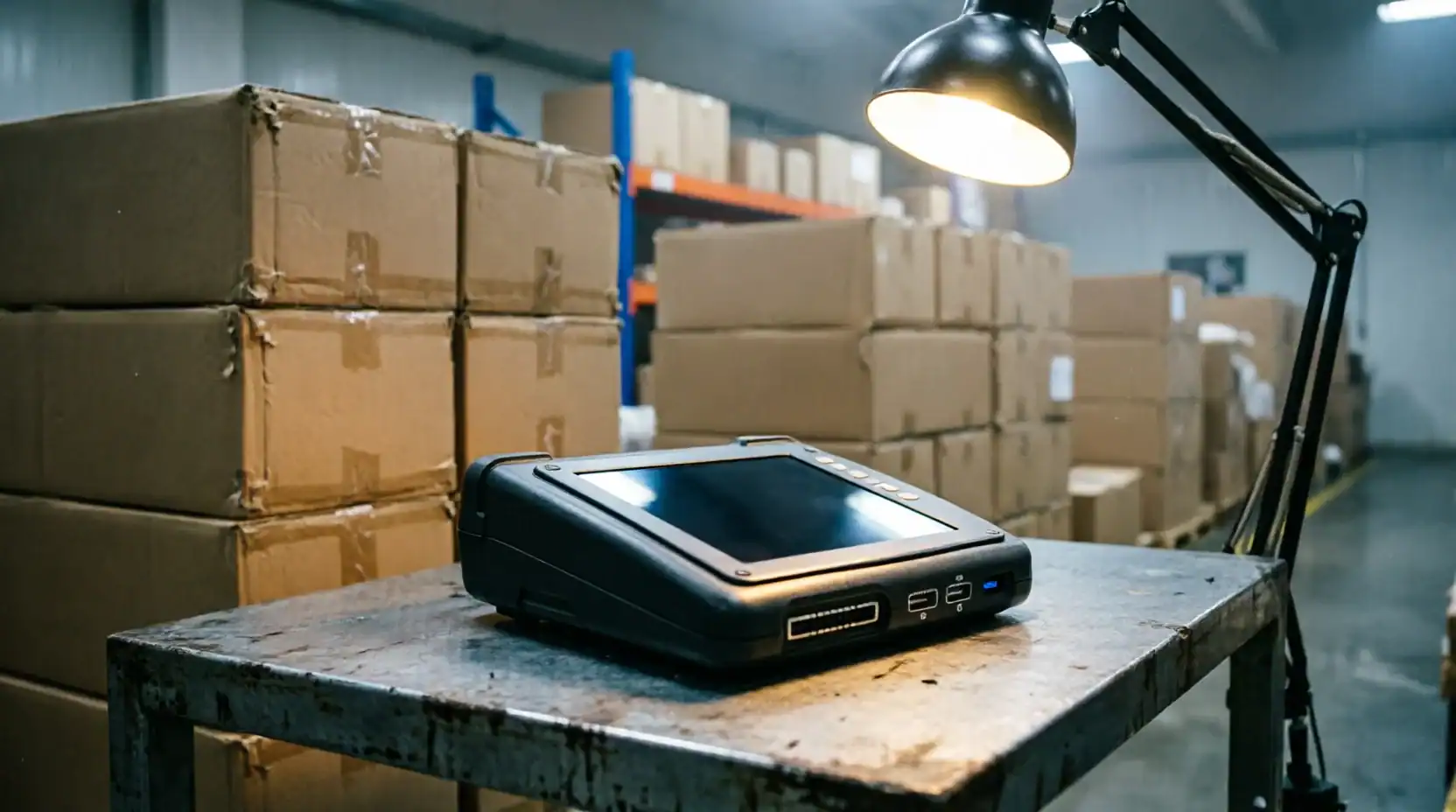
    Golden sample quality control inspection for electronics sourced from Shenzhen

    Quality Engineering: Golden Samples, Firmware Locks and DOA Maths

    Electronics quality control differs from general-merchandise QC in one fundamental way: the failure modes are invisible. A defective garment looks defective. A charger with an out-of-spec transformer looks identical to a good one until it fails in a customer’s home. That forces a more engineered approach.

    Golden sample discipline. Before production, sign off a golden sample, a physical unit, sealed and documented, that defines “correct.” For electronics, the golden sample must travel with a functional spec sheet: output voltages and tolerances, charge times, pairing behaviour, standby draw, button functions, LED states. Vague acceptance criteria produce vague products.

    Firmware version lock. This is the one electronics-specific clause most importers miss. ODM factories update firmware continuously across their customer base, and without a contractual lock, batch two of your product may ship with different pairing behaviour, a renamed Bluetooth identity or an app incompatibility: no notice, no changelog. The factory does not consider this a change; the hardware is the same. Your customers, whose app suddenly cannot find the device, disagree. Specify the firmware version in the order, require written approval for any change, and have your inspection verify the version string on sampled units. The firmware-changed-without-notice problem generates more one-star reviews than any hardware defect.

    Pre-shipment functional testing. General AQL inspections check cosmetics and workmanship; electronics need functional testing on top. Specify percentage-based powered testing: commonly 100 percent power-on at the factory’s own line plus functional testing of a 10–20 percent sample at pre-shipment inspection against your spec sheet, with defined pass criteria. For battery products, include charge-cycle verification on a smaller sub-sample.

    DOA rates and warranty stock. Now the numbers. A competent ODM with real end-of-line testing delivers dead-on-arrival rates below 1 percent. Across the first year of field use, total failure rates on catalog electronics run 2–5 percent: simple chargers and cables at the bottom of that range, battery-plus-radio-plus-app products at the top. Plan for it. On a 2,000-unit order, hold 40–100 units as warranty and replacement stock, and cost those units into your landed price from day one. An importer who prices assuming zero failures has mispriced by several margin points and will discover it through their support inbox.

    The IP Reality on Catalog Goods

    Three separate IP questions attach to Shenzhen catalog electronics, and importers routinely conflate them.

    Are you infringing someone else? A catalog product sold by fifty factories has murky design parentage. Some ODM designs are original; some are near-copies of Western brands’ products; the factory will not volunteer which. If a product looks strikingly like a well-known brand’s design, assume the resemblance is not coincidental, and remember that the infringement claim in Australia lands on the importer. Patent and registered-design searches on lookalike products are cheap insurance before you commit to volume.

    Is your brand clear? Before printing your name on 2,000 boxes, run a trademark search in Australia, and in China, where trademark squatting on foreign brands remains a genuine industry. Branding before a trademark check is one of the classic sequencing errors: importers have had their own goods held up because someone in China registered “their” mark first.

    Can you protect anything? You cannot patent an ODM product you did not invent. But if you commission genuinely distinctive enclosure or packaging design, Australian registered design protection is fast and cheap relative to patents, and gives you a tool against local copycats importing the same catalog base product dressed like yours. It is a modest moat, but on catalog goods, modest moats are the only kind available.

    Logistics from Shenzhen: Ports, Batteries and When Air Makes Sense

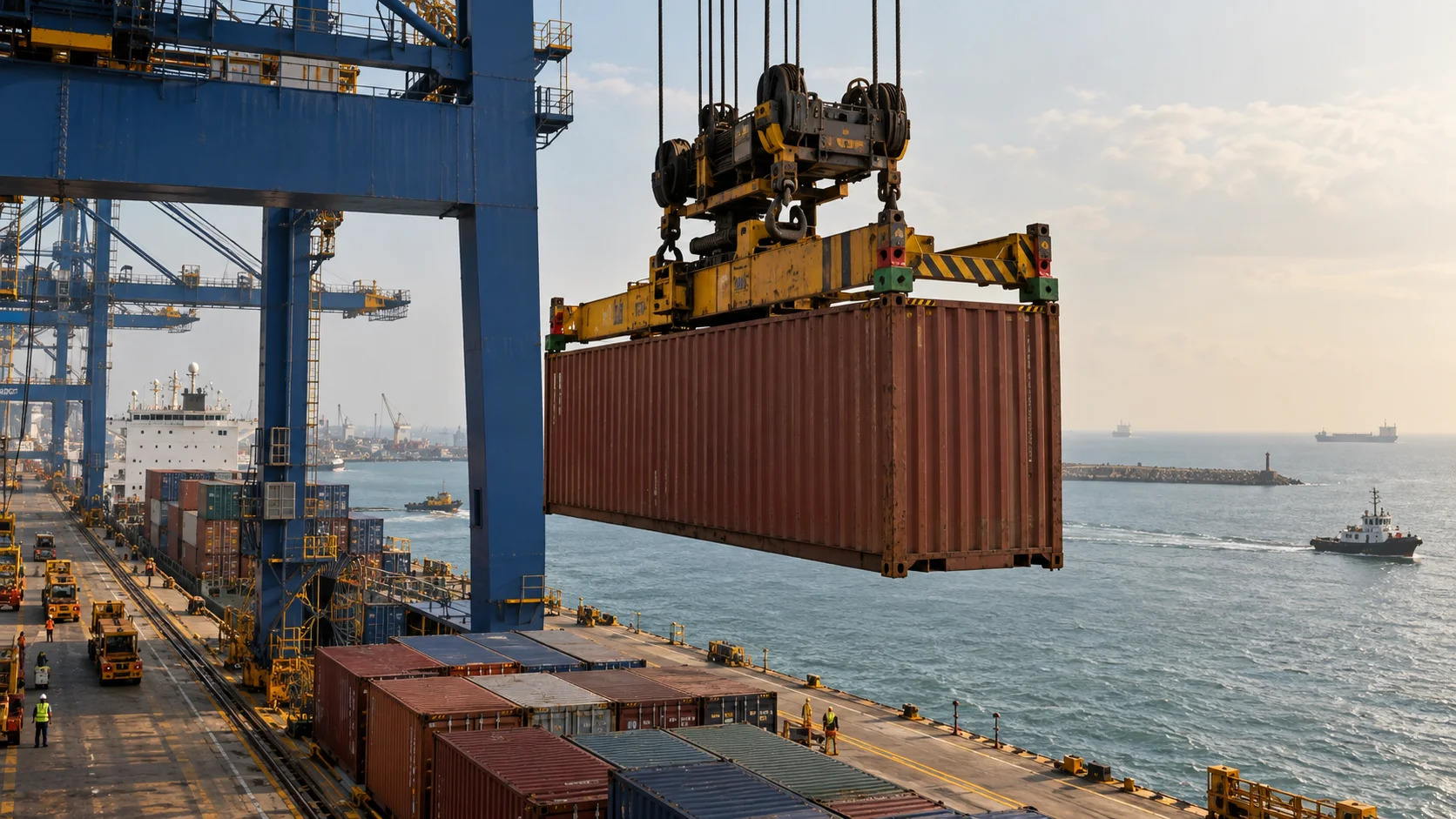
    Shenzhen’s freight geography is a genuine advantage for Australian importers. Yantian, on the city’s east side, is one of the world’s largest container terminals with direct Australia services; Shekou serves the western districts. Direct sailings to Australian east coast ports run 14–18 days port to port, with total door-to-door around 3–4 weeks once origin cartage, export clearance and destination handling are counted. Factories in Bao’an, Longhua and Dongguan are all within short cartage range of one port or the other, which keeps origin costs tight.

    Battery goods change the paperwork. Products containing lithium cells move under dangerous goods provisions. Most retail electronics with installed cells travel under relatively workable packing instructions, but they must be declared, backed by UN 38.3 test summaries, and booked with carriers accordingly. The mistake that causes real damage is non-declaration: undeclared batteries discovered in a consignment can mean rejected bookings, fines, and in the worst case liability for an incident. If your product has a cell, say so at booking, every time, and use a forwarder who handles DG electronics routinely.

    Air freight deserves a more serious look for electronics than for most cargo. The maths is value density. A carton of wireless earbuds might carry AUD 8,000 of product in 15 kilograms; air freight at even AUD 10–12 per kilo adds around 2 percent to landed cost while cutting four weeks of inventory pipeline to one. For high-value, small-cube electronics (especially first orders where you want to test the market fast), air is often the rational default, battery declarations permitting. Bulky, low-value SKUs like wall chargers stay firmly on the water.

    Samples move by express courier in 3–6 days. Keep sample shipments honest: correctly described, batteries declared, commercial value stated. A seized sample delays a launch as effectively as a seized container, at a fraction of the drama threshold.

    When to Fly In: The Engineering Visit Case

    Below roughly AUD 100,000 of annual electronics spend, stay home. Third-party factory audits (AUD 400–700) and pre-shipment inspections (AUD 400–600 per man-day) cover the verification job more cheaply and more expertly than you will on your first factory floor.

    Above that threshold, a Shenzhen trip stops being tourism and starts being engineering due diligence, because at that spend level the questions change from “is this factory real?” to “how do I take cost and risk out of this supply chain?” Those questions get answered in person. A well-planned three-day trip covers:

    Day one: factory audits. Visit your current and shortlisted factories. On an electronics floor you are looking for end-of-line functional test stations actually in use, ESD controls (wrist straps worn, not hanging), component storage discipline, and whether the SMT lines are the factory’s own or the “factory” is actually a trading office above someone else’s plant. An hour on the floor answers questions a year of chat messages cannot.

    Day two: Huaqiangbei education. Not to buy, but to calibrate. Walking the component markets teaches you what displays, cells, chipsets and modules cost at the layer below your factory’s quote. That component-cost literacy transforms your negotiating position: when you know the BOM of your product within 20 percent, cost-down conversations become collaborative engineering instead of blind haggling.

    Day three: engineering meetings. Sit with your ODM’s engineers on next-generation catalog products, firmware roadmaps, and the customisations worth paying for. Factories reserve their best information for customers who show up.

    Worked Example: A Phone-Accessories Range from ODM Catalog

    Numbers make the strategy concrete. An Australian seller builds a three-SKU phone-accessories range from one Bao’an ODM’s catalog: a 30W GaN wall charger, a magnetic wireless charging stand, and a braided cable set: shared design language, branded packaging, one Australian app-free product family. Here is the first-order economics on the hero SKU, the wireless stand, at 2,000 units.

    Sampling phase. Samples of six candidate products from three factories, express freighted: AUD 420 including courier. Two weeks of in-house testing kills three candidates (coil whine on one, firmware quirks on another, mediocre build on a third). Total sampling spend across the range: about AUD 700.

    Order and compliance. Unit price ex-works USD 6.80 at 2,000 units with branded packaging and a firmware lock written into the PO. Call it AUD 10.45 at 0.65. The factory’s existing EMC report covers a sister model, not this SKU (the classic scope gap), so the importer commissions safety and EMC testing on the production configuration: AUD 4,200, plus AUD 350 for trademark searches done before packaging went to print. Compliance amortisation: AUD 2.28 per unit on the first order, and zero on every reorder, which is where the real margin lives.

    Quality spend. Golden sample sign-off with functional spec sheet, then a pre-shipment inspection with 15 percent functional sampling and firmware version verification: AUD 550, or AUD 0.28 per unit.

    Freight and landing. 2,000 stands cube out around 4.2 cbm, 780 kg. LCL from Yantian to Melbourne, no battery in this SKU so no DG declaration needed. Freight, port charges, clearance and delivery: about AUD 1,650. Customs value AUD 20,900 attracts 10 percent GST (claimable for registered businesses); duty is free under ChAFTA with correct origin documentation.

    The landed picture. Product AUD 10.45 + compliance amortisation 2.28 + inspection 0.28 + freight/landing 0.83 = AUD 13.84 landed per unit on order one. Against a retail price of AUD 59.95 and typical marketplace fees, that supports a genuine margin even after allocating 3 percent of units (60 stands) to warranty stock. On the 2,000-unit reorder, landed cost drops to roughly AUD 11.56 (the compliance fixed costs are done), and the margin widens by almost four points of retail price. That reorder economics is the whole argument for treating compliance as an investment in an SKU you will sell for years, not a tax on a one-off punt. Request a corporate freight quote for a landed-cost estimate on your own electronics range.

    Common Mistakes That Sink Shenzhen Electronics Orders

    Accepting certificates that do not cover your SKU. The single most common and most dangerous shortcut. A report for a sister model, a different voltage or an older revision is a comfort document, not compliance. Verify scope line by line.

    No firmware lock. If the PO does not pin the firmware version, the factory will change it, silently, and your app-dependent product will break in the field between batch one and batch two.

    Branding before the trademark check. Searches in Australia and China cost a few hundred dollars. Reprinting 2,000 boxes (or surrendering a brand to a squatter) costs considerably more.

    Undeclared batteries. “It is just earbuds” is how consignments get rejected and importers get fined. If there is a cell, there is a declaration, backed by UN 38.3 evidence, every shipment.

    Buying production stock from market stalls. Huaqiangbei is a classroom, not a warehouse. Traceability, batch consistency and compliance paperwork all evaporate at the stall counter.

    Custom hardware at catalog volumes. Tooling and engineering amortised over 300 units destroys the margin the customisation was meant to create. Earn your way to OEM with volume first.

    Related Reading

    Frequently Asked Questions

    What is the minimum order quantity for electronics from Shenzhen?

    For ODM catalog electronics, realistic MOQs run 500–2,000 units per SKU, and factories often flex lower on products already running at volume for other customers. Genuine OEM custom work rarely makes sense below 1,000–5,000 units, because tooling and engineering costs have to be spread across the order. If a factory quotes you an MOQ of 100 for “custom” hardware, you are almost certainly being sold lightly relabelled catalog stock.

    Do electronics from Shenzhen need RCM certification for Australia?

    Yes. Electrical and electronic products sold in Australia fall under the RCM framework covering safety and EMC, with additional rules for radio devices. The importer is the responsible party. The critical detail is scope: the test reports behind your RCM claim must cover your exact model, voltage variant and configuration. A factory certificate for a sister model provides no protection.

    Can I buy stock from Huaqiangbei markets and resell it in Australia?

    Treat Huaqiangbei as sampling and education, not supply. Market stock has weak traceability, inconsistent batches, absent or borrowed compliance paperwork, and unverifiable IP status. Use the markets to learn the category and component costs, then order production quantities from the factory behind the product.

    How long does shipping from Shenzhen to Australia take?

    Direct sea services from Yantian or Shekou run 14–18 days port to port to the Australian east coast, roughly 3–4 weeks door to door. Air freight for high-value compact electronics runs 3–7 days and often adds only a small percentage to landed cost. Anything with a lithium cell requires UN 38.3 evidence and correct DG declaration in either mode.

    What DOA rate should I expect on catalog electronics?

    Under 1 percent dead-on-arrival from a factory with genuine end-of-line testing. Across the first year, plan total failures at 2–5 percent of units (simple chargers at the low end, battery-and-app products at the high end), and hold warranty stock accordingly, costed into your landed price from the first order.

    Is it worth visiting Shenzhen before placing an electronics order?

    Below about AUD 100,000 annual electronics spend, third-party audits and inspections are the cheaper and better tool. Above it, a three-day trip covering factory audits, a Huaqiangbei component-cost education day and engineering meetings with your ODM pays for itself in negotiating leverage alone.
  • Sort Camping Gear by Compliance Tier Before Importing to Australia

    Sort Camping Gear by Compliance Tier Before Importing to Australia

    Camping gear looks like the easiest import category in the outdoor world. Tents, sleeping bags, folding chairs: soft, light, cheap to make, no motors, no plugs. Then you get to page two of your product range plan and it all changes: a butane stove, a lithium power station, a lifejacket for the kayak line, a multitool. Suddenly half your catalogue touches gas appliance approvals, dangerous goods classes, a mandatory Australian Standard and the prohibited imports list.

    That split personality is the whole story of importing camping gear to Australia. Most of the container is genuinely simple. A handful of SKUs carry almost all of the regulatory weight, and they are exactly the SKUs that catch new importers out.

    Sort Camping Gear by Compliance Tier Before Importing to Australia

    The Category Map: Sorting Gear by Compliance Weight

    Before you brief a freight forwarder or a supplier, sort your range into compliance tiers. The discipline matters. Every product either belongs in a standard general-cargo container or it does not, and you need to know which is which before the first purchase order goes out, not when the container is already on the water.

    Tier one: standard goods with claims to substantiate

    Tents, tarps, swags and sleeping bags are ordinary general cargo. No permit, no mandatory product standard, no DG paperwork. What they do carry is the Australian Consumer Law. If your tent listing says “3000mm waterhead” or “UPF 50+ UV protection,” those are performance claims, and the ACCC treats unsubstantiated performance claims as misleading conduct. Water-resistance ratings and UV claims are the two that bite hardest in this category, because factories will print whatever number you ask for on the hang tag. Get test reports from the supplier (hydrostatic head results for fabrics, UV transmission testing for shade products), and keep them on file. The cost is small. The exposure from a recall or an ACCC undertaking is not.

    Sleeping bag temperature ratings deserve the same treatment. A bag marketed as “comfort rated to -5°C” that leaves campers shivering at +5°C is a consumer-law problem and a review-score problem at the same time. Ask whether the rating comes from actual thermal testing or from the marketing department.

    Tier two: camp furniture and the weight-rating question

    Folding chairs, stretchers, camp tables. Still general cargo, still no permit, but weight-rated products fail in a way fabric doesn’t. A chair rated 120kg that collapses under a 100kg adult is a safety incident, and safety incidents involving structural failure attract regulator attention quickly. Specify the rating you advertise, get the static and dynamic load test data, and build a real margin between tested capacity and the printed rating. Cheap camp furniture is a race to the bottom on tube gauge; your import margin does not survive a product safety recall.

    Tier three: packs, apparel and footwear

    Hiking packs and technical apparel are textiles, which means Australian labelling obligations: fibre content and care labelling on apparel, country of origin marking done accurately. It is unglamorous compliance, and it is the kind that gets checked at retail, not at the border. A major stockist’s quality team will bounce an entire delivery over missing care labels. Have labelling specified in the purchase order and photographed at pre-shipment inspection. Footwear, by contrast, is the most straightforward corner of the whole category: standard duty treatment, no special standards for general hiking boots, biosecurity clean-sole rules only if the goods are used.

    The Dangerous Goods and Regulated Corner

    Now the SKUs that carry the weight. This section is the difference between a smooth import and a container held at origin because a carrier found something in the packing list they were never told about.

    Camp stoves: the appliance, not the fuel

    A butane or LPG camp stove without fuel is not dangerous goods. It is a gas appliance, and gas appliances sold in Australia sit inside a certification framework. Gas appliance certification in Australia runs through schemes administered with reference to the Australian Gas Association (AGA) and state gas technical regulators; portable camping stoves of certain types need certification against the relevant appliance standards before they can legally be sold. The practical position for an importer: confirm with your certifier which scheme your specific stove type falls under before you order, because certification is a months-long process involving test samples, not a form you file at customs. Plenty of importers have landed sea containers of stoves they could not legally put on shelves.

    Gas canisters: why almost everyone ships stove-only

    The canisters themselves (butane cartridges, threaded isobutane canisters, small LPG cylinders) are Class 2.1 flammable gas under the IMDG Code. That means UN-specification packaging, a dangerous goods declaration, DG-rated stowage, a carrier acceptance process and a meaningful cost premium per shipment. It also means one undeclared carton of canisters contaminates the compliance status of your entire container.

    Run the numbers and the conclusion writes itself. A canister retails for a few dollars. The DG surcharge, documentation and handling on a mixed shipment can add hundreds to thousands per container. Canisters are heavy for their value. They are manufactured and distributed locally at competitive prices, and Australian cylinders must meet local standards anyway. So the dominant commercial pattern in this category is stove-only importing: ship the appliance, exclude the fuel entirely, and let camping retail chains and service stations do what they already do: sell canisters. Make the exclusion explicit in your purchase order and your packing instructions, because factories bundle “free” canisters into stove cartons as a sales sweetener, and that free gift is an undeclared dangerous goods violation with your name on the import declaration.

    Lighters, firestarters and hexamine fuel tablets sit in the same bucket: all dangerous goods classes, all requiring declaration, all better excluded from a general gear shipment unless the volumes genuinely justify a DG line.

    Battery-powered gear: lanterns, headlamps and the power station boom

    Lithium batteries are where the modern camping catalogue meets serious freight regulation. Every rechargeable lantern, headlamp and fan in your range contains lithium cells that must have passed UN 38.3 transport testing. Get the test summary from the manufacturer for every battery model, because carriers and forwarders can ask for it. Small equipment-contained batteries (UN 3481) ship under manageable provisions by sea, but they still need to be declared and packed correctly.

    Portable power stations are a different animal. The category has boomed (every camping retailer now sells 500Wh to 3kWh lithium power stations), and each one is, in freight terms, a large lithium-ion battery. That is Class 9 dangerous goods, UN 3480 or UN 3481 depending on configuration, and it demands a properly declared DG booking on sea freight. Air freight for large power stations is heavily restricted under IATA dangerous goods rules and often simply unavailable, which makes sea planning non-negotiable: DG declaration, compliant packaging, state-of-charge management where required, and a forwarder who handles Class 9 routinely. Booking power stations as general cargo to dodge the surcharge is not a shortcut. It is the mistake that gets containers rolled, fines issued and, in the worst cases, causes fires on vessels. The industry has burned ships over undeclared lithium. Declare it.

    On the electrical side, anything with a charger or mains connection needs RCM compliance, the Regulatory Compliance Mark regime covering electrical safety and EMC. That applies to the power station’s AC charger, your lantern’s USB wall plug, the 240V camp fridge. RCM is a supplier-declaration system, but the declaration has to exist and the responsible supplier has to be registered before sale.

    Safety beacons: PLBs and EPIRBs

    If your range extends into personal locator beacons or EPIRBs, you are importing regulated safety-of-life equipment. Beacons sold in Australia must be 406 MHz digital units meeting the standards AMSA recognises, and they are registered with AMSA by the end user. Old-technology or non-compliant beacons are worse than useless. They are a search-and-rescue liability. Source only properly certified 406 MHz units, and understand that this is a low-volume, high-trust product line where the compliance documentation is the product.

    Knives and multitools: check the mechanism

    Camping knives, kitchen knives, fixed blades and standard folding multitools are fine to import. What is not fine: automatic knives, flick knives, gravity knives, butterfly knives and other items on the ABF prohibited imports list. The line is drawn at the opening mechanism, not the blade. A spring-assisted “one-hand opening” folder from an overseas catalogue can cross the prohibited line even when the factory calls it a camping knife. Check every opening mechanism in your knife range against the current prohibited imports guidance before ordering, because prohibited weapons are seized at the border with no refund and potential penalties.

    Notice the shape of the mistake in both the stove-certification trap and the canister-declaration trap: someone treated a discovery question as a delivery question. Whether a specific stove needs certification, and under which scheme, is something to resolve before you place the purchase order. A months-long process has no business starting after the container is already at sea. Whether canisters ship at all, and under what DG paperwork, is the same category of question. Before committing to a range, camping-gear importers who build a pre-order checklist around these two questions specifically spend a few hours up front and avoid the container-held-at-origin outcome entirely.

    Kayaks, SUPs and lifejackets staged for import to Australia

    Water Gear: Kayaks, SUPs and the Lifejacket Gate

    Inflatable kayaks and stand-up paddleboards are a pleasant surprise: no vessel registration applies below the size and power thresholds that recreational paddle craft sit under, so they import as ordinary sporting goods. The compliance exposure is back in ACL territory: valve quality, pressure ratings and weight capacities are performance claims, and an inflatable that delaminates at its rated PSI is a refund wave waiting to happen. Buy drop-stitch quality you have actually pressure-tested, not catalogue numbers.

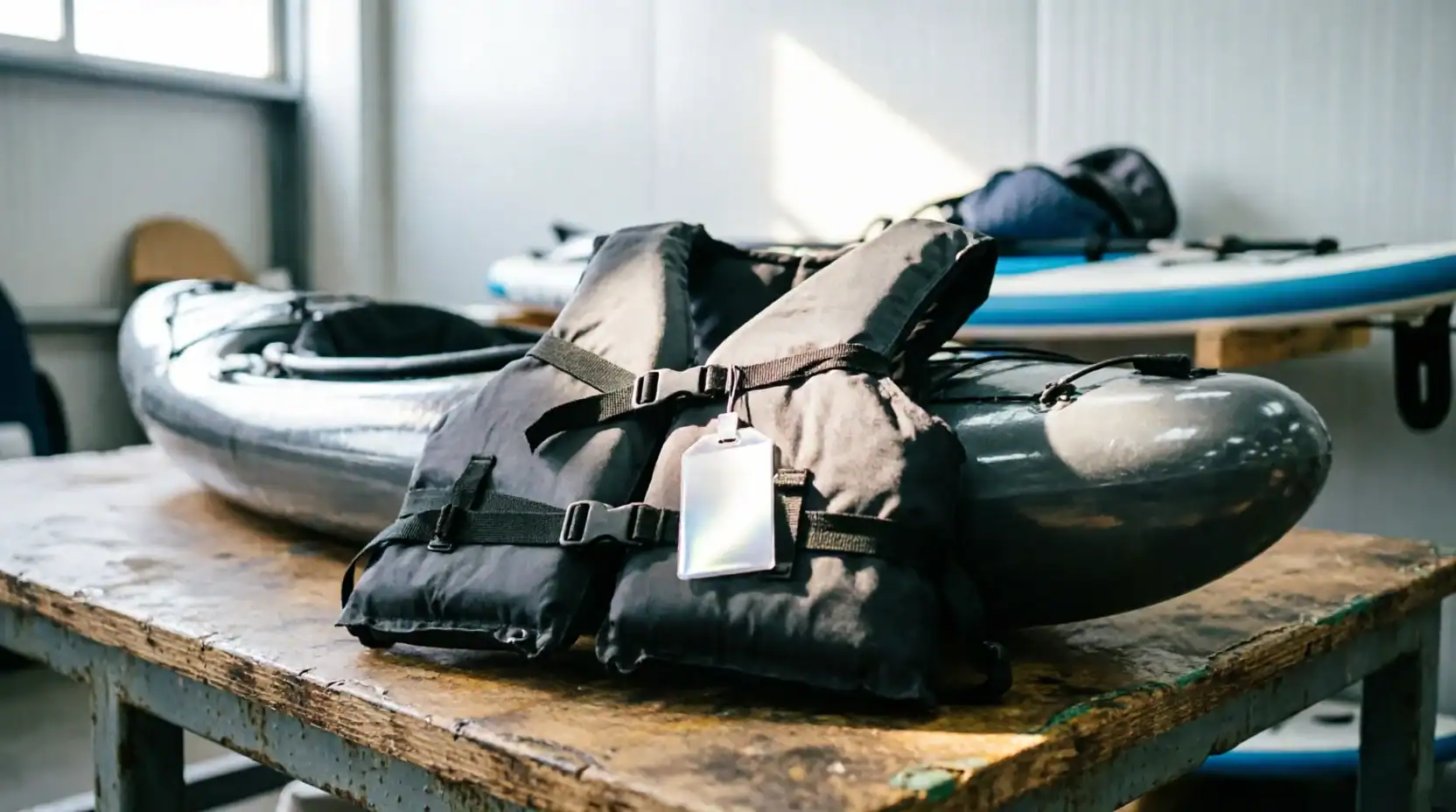
    Lifejackets are the opposite: a genuine, mandatory compliance gate. Lifejackets supplied in Australia as safety equipment must comply with the AS 4758 series, and every state’s maritime rules reference AS 4758 levels (Level 50, Level 100 and so on) for their mandatory-wear requirements. This is not optional certification you can market around. A foam vest without AS 4758 certification cannot be sold as a lifejacket, full stop, and certification involves accredited testing of the actual product, not a supplier’s assurance that it is “CE approved,” which is a European mark with no standing under Australian maritime rules.

    Draw the line clearly in your own catalogue between lifejackets (AS 4758 certified, sold as safety equipment, priced accordingly) and buoyancy aids or water toys (lighter requirements, but must never be described in a way that implies lifesaving performance). Blurring that line in a product listing is both an ACL breach and a genuine safety hazard. If a lifejacket line is core to your range, budget for certification early. It is a real cost and a real timeline.

    Biosecurity: The Dirt Problem

    New camping gear in factory packaging sails through biosecurity. The risk lives in three places.

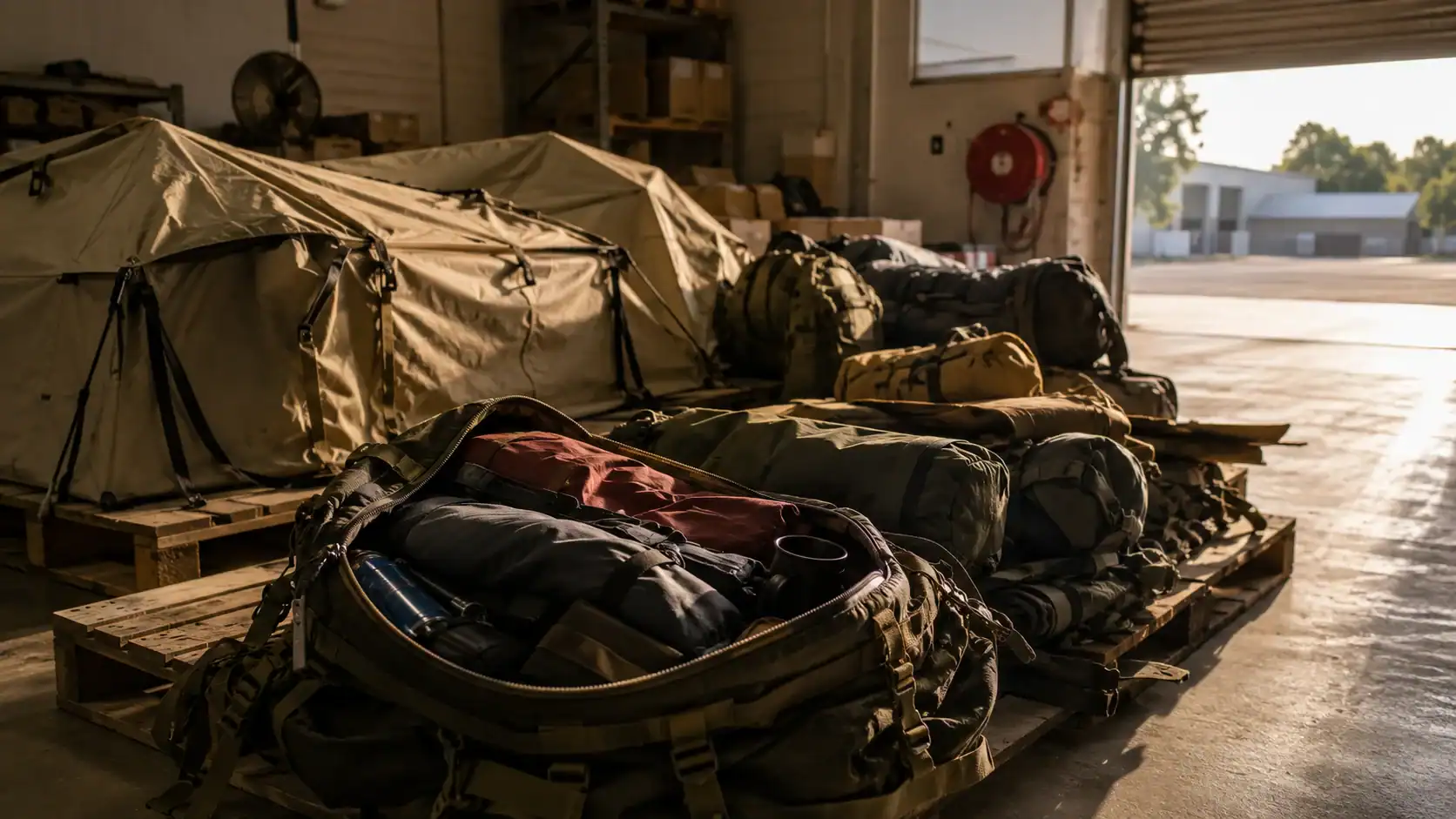
    First, used and demo gear. Ex-display tents coming back from an overseas trade show, demo kayaks, sample boots: this is the returning-exhibition-stock problem, and it is chronically underestimated. A tent that was pitched once on grass at a European trade fair has soil on its pegs, seeds in its groundsheet folds and organic matter in its guy-line bags. Australian biosecurity officers know this, which is why used camping equipment is a flagged category. Anything used must be cleaned to bare-material standard (pegs scrubbed, soles brushed out, groundsheets washed), and honestly declared, or you will pay for inspection, treatment or export of the goods.

    Second, timber components. Wooden-handled hatchets, timber trekking poles, bamboo furniture: minor exposure, but timber packaging and components fall under biosecurity’s material rules, and bark-on or untreated timber invites intervention. Specify treated, bark-free timber and standard ISPM 15 pallets.

    Third, straw, seagrass and natural-fibre packaging some factories still use as void fill. Ban it in your packing instructions. Paper and plastic only.

    Seasonality: Working Back from September

    Australian camping demand is savagely seasonal. The peaks are the spring and summer school holidays (September/October, then the long December–January stretch), with Easter as the big autumn spike. Retail buying for the main season starts in early spring, which means your stock needs to be landed, unpacked and shelf-ready in the first half of September.

    Now work the calendar backwards. Ningbo or Shanghai to Melbourne is roughly 30–35 days port-to-door once you include origin cartage, export clearance, the sailing, Australian customs and delivery. Add a buffer week for the things that eat buffer weeks. That puts your vessel departure in late July to early August, and your confirmed factory orders back in May or June, because production slots for tents and sleeping bags run 45–75 days depending on fabric lead times.

    Here the northern hemisphere does you a favour. Chinese outdoor gear factories are tooled for the European and North American summer, which peaks in their May–August shipping window. By the time Australian orders need production (northern autumn), those factories are coming off peak. That off-season window mirrors what happens in other outdoor categories: better pricing, shorter queues, more negotiating room on MOQs, and factory QC teams that are not stretched across twelve simultaneous big-brand orders. Australian importers who order in the northern off-season consistently land better unit costs than those fighting for slots in the northern spring.

    The Freight Profile: Light, Bulky and Occasionally Dense

    Camping gear freight splits into two physical profiles, and mixing them well is where a good forwarder earns their fee.

    Most of the category is volume-light bulky softgoods. Tents, sleeping bags, chairs and apparel cube out a container long before they weigh it out. A 40′ HC packed with camping softgoods might carry six or seven tonnes in 68 CBM of space. That makes CBM your cost currency, and compression your biggest lever. Sleeping bags shipped in retail lofted packaging can consume three to four times the volume of the same bags compression-baled at the factory and re-lofted in your warehouse. On apparel and bags, vacuum baling can cut shipped CBM by 40–60%. The maths is dramatic: if compression takes a sleeping bag order from 12 CBM to 5 CBM, at typical LCL or per-CBM allocation rates you have just saved more than the cost of the baling. Specify compression packing in the purchase order, and confirm your warehouse has the re-lofting time. Bags need days out of compression before they present properly at retail.

    The exception is the power station line: weight-dense, high-value, and dangerous goods. Power stations need declared DG sea freight, which usually means they either travel as a DG line within your FCL container (declared, documented, properly stowed and segregated) or as a separate DG LCL shipment. Do not let the softgoods planning mindset (“just cube it in”) anywhere near the battery SKUs.

    Duty and FTA Position

    The duty news is good. Most camping and outdoor gear enters Australia at 0–5%. Textile-heavy items (tents, sleeping bags, packs, apparel) generally sit at the 5% general rate, while many hardware and equipment lines are free or near it. Then the free trade agreements do their work: goods of Chinese origin qualify for preferential rates (typically zero) under ChAFTA with a valid certificate or declaration of origin, and AANZFTA covers Vietnamese, Thai and other Southeast Asian production the same way. On a container with $80,000 of textile goods, ChAFTA preference is a $4,000 saving for the cost of origin paperwork. Always claim it. GST of 10% applies on the VoTI (value of taxable importation) regardless of origin, and is creditable for GST-registered importers.

    Worked Example: A Camping Range Launch, Ningbo to Melbourne

    Here is the arithmetic for a realistic first range: tents, sleeping bags, butane stoves (no canisters: stove-only, per the pattern above) and rechargeable lithium lanterns. 15 CBM, shipped LCL/part-container from Ningbo to Melbourne, with the lanterns run as a declared DG line.

    The order:

    • 400 × 3-person dome tents @ US$28 = US$11,200, 7.2 CBM
    • 600 × sleeping bags @ US$9.50 = US$5,700, compression-baled to 3.6 CBM (would be 9+ CBM lofted)
    • 500 × single-burner butane stoves @ US$6.80 = US$3,400, 2.4 CBM (AGA-scheme certification arranged pre-order)
    • 300 × rechargeable lithium lanterns @ US$7.20 = US$2,160, 1.8 CBM, UN 3481, UN 38.3 summaries on file

    FOB total: US$22,460 ≈ AU$34,550 at 0.65. Total 15.0 CBM, ~3.9 tonnes.

    Freight and landing costs (AUD):

    • Sea freight, 13.2 CBM general cargo @ ~$95/CBM: $1,254
    • DG line, 1.8 CBM lithium lanterns @ ~$165/CBM incl. Class 9 handling: $297
    • DG documentation and declaration fee: $180
    • Origin charges and export clearance: $420
    • Australian port, terminal and LCL depot charges: $890
    • Customs brokerage incl. one DG-related tariff line: $340
    • Delivery to Melbourne warehouse: $380
    • Freight subtotal: $3,761

    Duty and GST:

    • Duty: $0. All lines qualify for ChAFTA preference with certificates of origin (without ChAFTA, the tents and bags alone would attract ~$1,300 at 5%)
    • GST: 10% of VoTI (goods $34,550 + freight/insurance ≈ $2,100 international portion) ≈ $3,665, creditable

    Cash landed cost: ~$38,310 (excluding creditable GST). Effective landed cost per CBM of stock: ~$2,554. Per-unit landed: tents ~$47.10, sleeping bags ~$11.85, stoves ~$9.30, lanterns ~$10.55. Against typical retail prices of $149, $49, $39 and $34.95 respectively, the margin structure works, and note where the compression baling earned its keep: 5.4 CBM of avoided volume on the sleeping bags is roughly $700 of freight and depot charges that never got billed.

    Note also what is not in this container: canisters, lighters, fuel tablets. The manifest discipline is the point. Everything in the box is either general cargo or a declared DG line. Nothing is ambiguous, nothing is hoping to go unnoticed.

    Common Mistakes That Cost Real Money

    Canisters in the container, undeclared. The factory throws in “free” butane cartridges with the stove order, nobody reads the packing list, and now there is undeclared Class 2.1 flammable gas in a general cargo container. If it is found at origin, the container is unpacked at your cost. If it is found in transit or at destination, you are looking at penalties and a compliance record that follows your importer profile. Write the exclusion into every stove PO.

    Lifejackets without AS 4758. A container of “CE approved” foam vests marketed as lifejackets is a container of stock you cannot legally sell as lifejackets. Either budget for AS 4758 certification before ordering or reposition the product honestly as a buoyancy aid, and accept the pricing that comes with that.

    Power stations booked as general cargo. Whether from ignorance or to save the DG surcharge, this is the most dangerous mistake in the category, legally and literally. Large lithium batteries misdeclared at sea are a fire risk carriers actively hunt for. Declare Class 9, supply the UN 38.3 summaries, pay the surcharge, sleep at night.

    Unsubstantiated waterhead and UV claims. “3000mm rated” with no hydrostatic test report, “UPF 50+” with no transmission testing. The ACCC does not need to test your tent; it only needs to ask for the substantiation you do not have. Get the reports at order time, when they cost nothing, not after a complaint.

    Used demo stock shipped dirty. Exhibition gear that goes overseas and comes back muddy gets held, inspected and treated at your expense. Clean before packing, every time.

    The Pre-Order Checklist

    Before any camping gear purchase order is confirmed, every SKU should have a written answer to each of these:

    • Compliance tier: general cargo, claims-substantiation, certification-required, or DG?
    • For stoves: certification pathway confirmed with a certifier, timeline built into the launch plan?
    • For anything with a battery: UN 38.3 test summary in hand, DG classification agreed with the forwarder, RCM covered for chargers?
    • For lifejackets: AS 4758 certification confirmed, or the product honestly repositioned?
    • For knives: opening mechanism checked against ABF prohibited imports guidance?
    • Canisters, lighters, fuel: explicitly excluded in the PO and packing instructions?
    • Performance claims (waterhead, UV, temperature, weight ratings): test reports requested?
    • Packing: compression baling specified for softgoods, no natural-fibre void fill, ISPM 15 pallets?
    • Timing: landed by early September for the peak season, order confirmed in the northern off-season?
    • Origin paperwork: ChAFTA or AANZFTA certificates arranged?

    The failures happen when nobody owns the list. The importers who do well in this category are not the ones with the cheapest tents. They are the ones whose containers never contain a surprise. Request a corporate freight quote for a landed-cost estimate on your own camping gear range.

    Related Reading

    Frequently Asked Questions

    Can I import camping gas canisters to Australia with my stoves?

    You can, but most gear importers choose not to. Butane and LPG canisters are Class 2.1 dangerous goods under the IMDG Code: DG-declared freight, certified packaging, documentation, and a willing carrier. The margin on a canister rarely covers the freight complexity, and canisters are available locally anyway. The standard commercial pattern is stove-only importing.

    Do imported lifejackets need to meet AS 4758?

    Yes, if they are sold as safety equipment. Lifejackets supplied in Australia as personal flotation devices need to comply with the AS 4758 series, which state maritime rules reference for mandatory-wear requirements. A generic buoyancy vest without AS 4758 certification cannot legally be marketed as a lifejacket. Buoyancy aids and water toys sit under lighter requirements, but never blur the line in your listings.

    Are portable power stations dangerous goods for sea freight?

    Yes. They are large lithium-ion batteries and ship as Class 9 dangerous goods under UN 3480/3481, requiring UN 38.3 test summaries, a DG declaration and a compliant booking. Sending them as undeclared general cargo is one of the most serious mistakes an outdoor gear importer can make.

    What import duty applies to camping gear in Australia?

    Most gear attracts 0–5% duty. Textile items (tents, sleeping bags, packs, apparel) typically sit at the 5% general rate; much hardware is lower or free. Chinese-origin goods generally enter duty-free under ChAFTA with correct origin documentation, and AANZFTA covers most Southeast Asian origins. GST of 10% applies on landed value regardless.

    When should I order camping stock to hit the Australian peak season?

    Peak demand runs from the September/October school holidays through the December–January summer break, with Easter as the autumn spike. Stock should be landed by early-to-mid September, which means vessels departing China in late July to early August and factory orders confirmed by May or June, conveniently the northern-hemisphere off-season, when pricing and production slots are at their best.

    Does used or demo camping gear face biosecurity screening?

    Yes. It is a flagged category. Used tents, pegs, boots and packs carry soil, seeds and plant material, and returning exhibition or demo stock is routinely inspected. Dirty gear is directed for cleaning or treatment at the importer’s cost, so clean everything to bare-material standard before packing it for Australia.

  • Moving from Portugal to Thailand: Freight, Customs and Relocation Guide

    Moving from Portugal to Thailand: Freight, Customs and Relocation Guide

    A homeowner spent nineteen years building a cellar in Vila Nova de Gaia. Not a grand one, maybe two hundred bottles, tucked into a cool room behind the garage, vintage ports from years that meant something. His daughter’s birth year. The year he bought the house. When the Bangkok job offer came through, he sat down with our surveyor and worked through the whole apartment room by room. Sofas, yes. The azulejo panel his grandmother left him, yes, crated properly. Books, bicycles, the lot. Then he opened the cellar door and the surveyor shook his head before the homeowner even asked. You can pack almost everything when you leave Portugal. The cellar is the thing that stays.

    That is the strange shape of a Portugal-to-Thailand move. In most respects it is the gentlest relocation on the entire Europe–Thailand corridor. The climate transition barely registers, your plugs work, your summer wardrobe survives intact. And then there is one category of belongings, the one Portuguese households often care about most, that simply cannot make the trip.

    A large share of the people leaving Portugal for Thailand these days were never Portuguese to begin with. The NHR years brought tens of thousands of foreign residents to Lisbon, Cascais, Porto and the Algarve, and as that tax regime wound down, plenty of them are now moving onward rather than home. If you are a Briton, German or American leaving your second country for a third, your checklist differs from a Portuguese national’s in a few specific places. We flag those throughout.

    Moving from Portugal to Thailand: Freight, Customs and Relocation Guide

    Leaving Portugal Properly: The Departure Admin

    Portugal will not stop you at the airport and demand an exit form. That is precisely the danger. Because nothing forces you to close your records, it is easy to leave them open, and open records generate problems that surface a year later, usually as a tax letter you never receive.

    Finanças and your NIF

    Start with the tax authority, because your NIF touches everything else. Your Número de Identificação Fiscal does not expire and you do not surrender it. You will keep it for life, and you will need it if you ever sell Portuguese property or receive Portuguese income. Your registered status changes. Through the Portal das Finanças (or in person at a Finanças office), update your address to your Thai address and, if you are genuinely ceasing Portuguese tax residency, file the change of residency status. If you no longer have a Portuguese or EU address, you may need to appoint a fiscal representative in Portugal to receive correspondence on your behalf. This is a common requirement for non-EU-resident NIF holders, and skipping it means official mail goes to an address where nobody lives.

    Time this carefully. Portuguese tax residency generally hinges on 183 days of presence or maintaining a habitual home, so the date you declare matters for which country taxes that year’s income. If your affairs are simple, the Portal filing is enough. If you spent your Portugal years under NHR, get an hour of professional advice before you file anything, because the wind-down rules and the interaction with Thailand’s remittance-based taxation of foreign income are exactly the kind of thing you do not want to improvise.

    Junta de Freguesia and residence registration

    If you registered your residence at your local Junta de Freguesia (typically to obtain an Atestado de Residência for some other process) that registration does not clean itself up. A short visit or written request to the same Junta cancels it. Portuguese nationals moving abroad should also consider registering with the Portuguese consulate in Bangkok once they arrive; it keeps your Cartão de Cidadão renewable without a trip home and puts you on the consular register for elections.

    For the double-expat crowd, the equivalent step depends on your paperwork. EU citizens who registered under free movement hold a CRUE (Certificado de Registo de Cidadão da União Europeia) from their Câmara Municipal, and formally cancelling it when you leave is the tidy move. Non-EU residents holding an AIMA residence permit should understand what absence does to it: most Portuguese residence permits lapse after extended absence from the country, generally six consecutive months or eight non-consecutive months within the permit’s validity, unless you fall under an exception. If there is any chance you will want the door back open (and after a year of Bangkok traffic some people do) check those thresholds before you assume the permit will be waiting for you.

    Segurança Social

    At a high level: your Portuguese social security contributions are not lost when you leave. Your contribution record sits in the system and remains part of your eventual pension entitlement, and Portuguese nationals can in some circumstances continue voluntary contributions from abroad. But Thailand has no bilateral social security agreement with Portugal, so your years there will not add to the Portuguese record, and you will not be covered by Segurança Social while living in Thailand. Notify Segurança Social of your departure, especially if you receive any benefit, because continuing to draw a residence-linked benefit from abroad creates a debt you will eventually repay. Then arrange private health cover for Thailand, since your SNS entitlement is tied to Portuguese residence and Thai visa categories increasingly require proof of insurance anyway.

    The rest of the loop

    Close or convert utilities (EDP, Galp, MEO/NOS/Vodafone contracts have notice periods, so check for fidelização penalties on term contracts), redirect mail through CTT, and tell your Portuguese bank you are moving. That last one matters more than people expect: banks apply different compliance treatment to non-resident accounts, and some will ask you to update your tax residency declaration. Keeping a Portuguese account open is usually wise, since it makes selling property, receiving deposits back and paying the odd lingering bill vastly easier, but keep it honest and updated.

    Portugal departure ports Lisbon, Leixões and Sines for shipping to Thailand

    Shipping Out: Lisbon, Leixões and the Sines Question

    Portugal’s container geography is straightforward once you see the pattern. There are three ports that matter for household shipping, and they play different roles.

    Lisbon is the natural origin for anyone in the capital, the Setúbal peninsula or the central coast. It handles substantial container volume, but for Asia-bound cargo it functions mostly as a feeder port: your container is loaded onto a smaller regional vessel and relayed to a main-line hub (typically Algeciras or Valencia in Spain, sometimes Rotterdam) where it joins a large Asia-service vessel. The feeder leg adds a few days and one transhipment to the journey.

    Leixões, just outside Porto at Matosinhos, plays the same feeder role for the north. If you live in Porto, Braga or anywhere down the A3/A4 corridors, your groupage or container will gate in at Leixões and relay to a hub. Porto-region movers should not be tempted to truck goods to Lisbon “because it’s the bigger port”. It makes no difference to the ocean routing and adds domestic haulage cost.

    Sines is the interesting one. An hour and a half south of Lisbon, Sines is Portugal’s deepwater port and its only terminal taking regular direct calls from the largest main-line vessels on Asia rotations. If your shipment routes via Sines, it can skip the feeder-and-transhipment step entirely, which removes both days and a handling event (and every handling event is a small risk event for household goods). You do not usually choose this yourself, since your forwarder books the carrier and the carrier’s service string determines the port, but it is worth asking whether a Sines direct service is available for your dates, particularly for FCL moves from the Lisbon–Setúbal–Algarve half of the country.

    Suez, the Cape, and why Portugal’s position is unusual

    This is where southern Europe differs from the north, and where you should be careful with anything you read that was written for a Hamburg or Felixstowe audience. Historically, Mediterranean and Iberian origins were the best-placed in Europe for Asia trade: a vessel leaving Algeciras or Valencia enters the Suez corridor quickly, and Portugal-to-Thailand transits were correspondingly tight. The Red Sea disruption that began in late 2023 upended that calculus. When carriers reroute around the Cape of Good Hope, the geometry reverses: a Cape routing from Iberia means sailing south past the entire African coast, and the transit penalty for southern-European origins is proportionally heavier than for northern ones.

    The honest picture in 2026 is mixed and shifting. Some services have returned to Suez routings as conditions allow; others still run via the Cape, and carriers change service strings with little notice. What this means for you practically: do not treat any quoted transit time as a promise, ask your forwarder which routing your specific sailing takes, and build slack into your plans. The difference between a Suez and a Cape routing on this corridor can be ten days or more. Book on the schedule, plan on the pessimistic end of it.

    Transit time: what to actually expect

    Put together, with the feeder leg, hub transhipment and main-line ocean leg, a realistic Portugal-to-Thailand port-to-port window is 45 to 55 days to Laem Chabang. Direct Sines calls on a favourable routing land near the bottom of that range; a Cape-routed feeder itinerary sits at the top or beyond it. Door to door, once you add origin packing, export formalities, destination customs clearance and delivery upcountry or into Bangkok, plan on 8 to 10 weeks. For a deeper dive into how these legs stack up across the continent, see our guide to shipping times from Europe to Thailand.

    Thai Customs: The Duty-Free Personal Effects Rules

    Thailand’s household-goods concession is generous if you fit its frame and expensive if you miss it. The rules, per Thai government guidance, in plain terms:

    • Who qualifies: under Thai Customs’ standard criteria, foreigners entering on a work-permit-matched non-immigrant visa or an LTR visa. Retirement and marriage-based non-immigrant O visas are both excluded from that standard test, and neither qualifies on the visa alone. Tourist and short-stay entries do not qualify at all.
    • Ownership and use: the goods must be used personal or household effects that you have owned and used for at least one year. New items, or items still boxed with retail tags, are dutiable. This is the “one-year ownership-and-use” test, and Thai officers apply it with discretion: a room full of obviously new purchases invites assessment.
    • The arrival window: your shipment must arrive in Thailand within six months of your own arrival. This is the deadline people miss. Given a 45–55 day ocean transit, you have real slack, but not infinite slack. Do not leave your goods in Portuguese storage for five months “until we’re settled” and then book the ship.
    • One shipment: the concession applies to one sea shipment (or one sea plus one accompanying air shipment arriving together in spirit) per person. Splitting your household into three consignments over a year burns the concession on the first.
    • Reasonable quantities: one of each major appliance per family is the working expectation. Two televisions, three espresso machines and four bicycles for a single adult reads as import for resale.

    Paperwork-wise, your forwarder’s Thai agent will need your passport, visa evidence, a detailed packing list in English, and the bill of lading, and clearance is smoothest when you are already in Thailand with your visa activated before the vessel arrives. The full mechanics, including what happens when a shipment is partially assessed, are covered in our dedicated guide to duty-free import rules for Thailand.

    The Cellar Problem: What Not to Ship from Portugal

    Every origin country on this corridor has its heartbreak category. For Portugal, it is wine, and above all, port.

    Wine and port: the numbers that end the conversation

    Thailand permits an arriving traveller to bring one litre of alcohol duty free. One bottle, roughly. Beyond that, imported wine into Thailand faces layered import duty, excise tax, interior tax and VAT that compound to a combined burden regularly exceeding 400 percent of the wine’s value, and alcohol is excluded from the household-effects concession entirely, so there is no “but it’s my personal collection” route through customs. A €40 bottle of Douro red becomes a €200 bottle before it reaches a Thai shelf, which is why restaurant wine lists in Bangkok read the way they do. Shipping a two-hundred-bottle cellar would mean declaring it commercially, paying tax that dwarfs the collection’s value, and navigating an import-licence regime built for distributors. Nobody does this, because it cannot be done sensibly.

    So this homeowner’s options are everyone’s options. Drink the best of it in the months before departure, a farewell project with real charm. Gift bottles to the people who helped you move. Sell the tradeable vintages through a merchant. Or place the collection in professional bonded or climate-controlled storage in Portugal, which for serious port collections is often the right answer: vintage port is patient, storage in Gaia is not expensive by collectible standards, and your cellar becomes the standing reason to come home every year or two.

    What ships beautifully

    The good news list is longer. Azulejos and ceramics travel well with proper export packing: individual wrapping, double-walled cartons, crating for panels and anything antique. If you own mounted azulejo work, tell your surveyor at the quote stage so custom crating is priced in, and photograph everything before it is wrapped. (One caution: genuinely antique tiles can fall under Portuguese cultural-heritage export rules, so anything old and significant deserves a provenance check before it leaves the country.) Cork products (flooring offcuts, furniture, bags, boards) ship without restriction and without customs interest. Books, furniture, kitchenware, textiles, bicycles, tools: all standard, all fine under the used-goods concession.

    The usual exclusions

    Beyond alcohol, the do-not-pack list is standard for Thailand: no weapons or replica weapons without permits, no drone without checking current Thai NBTC registration rules, no plants, seeds, soil or fresh food, and no counterfeit goods. Be careful with medicines: bring prescriptions and check controlled-substance lists rather than boxing up the medicine cabinet wholesale. Vehicles are their own regime with punitive duty; almost no private mover ships a car to Thailand and neither should you.

    The Climate Dividend: Why This Is the Easiest Packing Job in Europe

    This is the quiet advantage nobody prices in. Lisbon summers run 28–35°C; the Algarve hotter. Bangkok runs 28–35°C essentially year-round. Of every European origin we cover, Portugal-to-Thailand is the gentlest climate transition there is. A Portuguese summer wardrobe is, functionally, a Thai wardrobe. Linen shirts, light dresses, sandals, technical fabrics: everything you wore from June to September travels and gets used from the day you land.

    Compare the northern-European mover, who confronts a wardrobe that is one-half wool and a garage full of winter tyres and snow shovels, and faces a genuine purge-or-pay decision on all of it. Your version of that decision is small: the handful of proper winter coats you kept for Serra da Estrela weekends or January trips north can come along for future European holidays (they cost you a fraction of a cubic metre) or go to charity. Either way, the climate continuity typically saves Portuguese households one to two cubic metres of shipping volume and an entire category of replacement spending on arrival. Your body will still notice the humidity, since Bangkok’s wet-season air is a different animal from Atlantic-dried Lisbon heat, but your suitcase will not.

    Plugs and Appliances: Type F Travels Well

    Another quiet win. Portugal runs 230V/50Hz on Type F Schuko plugs. Thailand runs 220V/50Hz, comfortably inside every appliance’s tolerance, and the modern Thai Type O socket, along with the ubiquitous universal sockets in Thai homes and condos, accepts round two-pin European plugs. In practice, nearly everything Portuguese plugs straight in: kitchen appliances, lamps, chargers, power tools. No transformers, no voltage converters, at most a handful of cheap adapters for older Thai outlets.

    Two caveats. Earthing in older Thai buildings is inconsistent, so put computers, televisions and audio equipment behind surge-protected boards. And leave the tumble dryer decision to arrival, because many Thai condos have no venting provision and the climate does the job for free.

    LCL or FCL: Matching the Shipment to the Household

    The volume logic on this corridor is the same as everywhere, with euro figures attached.

    LCL (groupage) means your goods professionally packed, wrapped and consolidated into a shared container. You pay per cubic metre. This is the right answer below roughly 15 m³, which covers studio, one-bedroom and most two-bedroom moves. The trade-offs: consolidation and deconsolidation add handling and typically a week or two of time, and per-m³ pricing means ruthless decluttering pays cash dividends.

    FCL (your own container): a 20ft container holds about 28–33 m³ of household goods; a 40ft about 60–67 m³. Once your survey comes back above ~15 m³, a 20ft container starts beating LCL on price per cube, and it is sealed at your Portuguese door and opened at Thai customs, so fewer hands, fewer handling events, faster at destination.

    Indicative costs, Lisbon to Laem Chabang (EUR, 2026)

    Shipment type Typical household Volume Indicative door-to-door cost
    LCL, small Studio / 1-bed apartment 5–8 m³ €1,100–€1,800
    LCL, medium 2-bed apartment 10–15 m³ €1,900–€3,400
    FCL 20ft 2–3 bed house up to ~30 m³ €3,300–€4,600
    FCL 40ft 4-bed+ house, full household up to ~65 m³ €4,800–€6,500

    Treat these as planning ranges, not quotes: routing (Suez vs Cape), season, fuel surcharges and destination services (Bangkok condo delivery with lift booking vs upcountry delivery) all move the number. Leixões-origin pricing runs close to Lisbon’s; Algarve pickups add domestic haulage. Marine insurance, typically 2.5–3.5 percent of declared value, sits on top and is not optional in any sane plan.

    A worked example

    Take a couple leaving a two-bedroom apartment in Campo de Ourique for a Sukhumvit condo. Pre-move survey says 13 m³ after they sell the wardrobes and give away the terrace furniture. They ship LCL: packing and collection in Lisbon, feeder to Algeciras, main-line vessel to Laem Chabang, clearance under the husband’s work-permit Non-Immigrant B visa, delivery and unpacking in Bangkok. The invoice: €2,650 freight and services, plus €280 marine insurance on €9,000 of declared value, plus roughly €120 in Thai destination sundries (documentation, condo lift fee). Call it €3,050 all-in, door to door in nine weeks. Against that, they saved perhaps €700 by cutting three cubic metres at the decluttering stage, which is the general lesson: on LCL, every box you don’t ship is €150–€230 you keep. For how this compares across origins, our Europe-to-Thailand cost guide has the full picture.

    Visas: The Legal Frame That Makes the Shipping Work

    Your visa is not a separate workstream from your shipping. It is a precondition, because the duty-free concession hangs on it. The two routes most Portugal leavers use:

    Non-Immigrant O is the workhorse category, covering retirement (O/O-A for over-50s with the funds requirement: THB 800,000 in a Thai bank or THB 65,000 monthly income), marriage to a Thai national, and family accompaniment. Apply through the Royal Thai Embassy in Lisbon before you go; enter Thailand, extend in-country to the full year. Both the retirement and marriage bases are excluded from the standard relocation criteria described above, so your household shipment clears as dutiable goods, not under the exemption.

    LTR (Long-Term Resident) is Thailand’s ten-year visa for wealthy pensioners, remote workers for substantial foreign companies, and high-skill professionals. Income thresholds are meaningful (broadly US$80,000/year for the main categories, with carve-outs), but the package (ten years, fast-track immigration, a 17 percent flat rate for some workers, lighter reporting) makes it the best-value option for anyone who qualifies. Many NHR-era professionals leaving Portugal fit the LTR remote-worker profile better than they expect.

    Whichever route: secure the visa before the container sails, and land in Thailand before the vessel does. Clearing customs as a visa-holding resident is routine; clearing as a tourist “whose visa is coming” is a storage-fee generator.

    For a shipping quote to Thailand, get a quote here.

    Five Named Mistakes, and the Sequence That Avoids Them

    1. The Cellar Denial. Deciding you will “figure out the wine later” and leaving it in the shipment scope until packing week. Later never comes with better options. The 1L limit and 400-percent-plus tax load are not negotiable. Decide in month one: drink, gift, sell, or store in Portugal. It is the only decision on this list with a pleasant execution phase, so give it the months it deserves.

    2. The Open-Records Exit. Flying out with your Finanças address unchanged, no fiscal representative appointed, Segurança Social uninformed and the Junta registration live. Twelve months later a tax notice goes to an empty apartment in Benfica and compounds quietly. Close the loop before you leave. It is a fortnight of admin, not a project.

    3. The Six-Month Drift. Arriving in Thailand, spending five months choosing a condo, and only then shipping, colliding with the six-month arrival window with a 45–55 day transit still to run. Sequence it the other way: book the shipment to sail around when you fly, or within a month or two of it.

    4. The Northern-Europe Copy-Paste. Planning from a guide written for German or British movers: wrong transit assumptions (Iberian routings differ, especially under Cape diversions), wrong port logic (your feeder hub question is Algeciras/Valencia, and Sines direct calls are an option Hamburg never has), and a winter-wardrobe purge you do not need.

    5. The Double-Expat Blind Spot. Non-Portuguese residents treating departure as if they were Portuguese: forgetting the CRUE cancellation or AIMA-permit absence rules, missing the fiscal-representative requirement that specifically bites non-EU-resident NIF holders, and, most expensively, not taking NHR wind-down tax advice before setting a departure date.

    The correct sequence, compressed: (1) visa application and tax advice, three to four months out; (2) survey, quotes and the cellar decision, three months out; (3) declutter and book the shipment, two months out; (4) Finanças, Segurança Social, Junta/CRUE, utilities and bank, the final month; (5) fly, activate the visa, receive the container, and open the one bottle you carried in your hand luggage on the new balcony. Ship first steps first, and this corridor, the easiest in Europe on climate, plugs and wardrobe, behaves like it.

    Related Reading

    Frequently Asked Questions

    How long does shipping take from Portugal to Thailand?

    Expect 45 to 55 days port to port from Lisbon or Leixões to Laem Chabang, including the feeder leg via Algeciras, Valencia or Rotterdam. Direct calls from Sines can trim several days; Cape of Good Hope diversions can add ten or more. Door to door, budget 8 to 10 weeks including packing, Thai customs clearance and delivery.

    Can I ship my wine or port collection to Thailand?

    No, not sensibly. Thailand’s duty-free allowance is 1 litre per adult, alcohol is excluded from the household-effects concession, and the combined tax load on imported wine regularly exceeds 400 percent. Drink it, gift it, sell it, or store it professionally in Portugal.

    Do I qualify for duty-free import of household goods into Thailand?

    Yes, if you hold a work-permit non-immigrant visa or an LTR with permission to stay at least a year (retirement and marriage Non-O visas are excluded), the goods are used items you have owned and used for at least a year, and the shipment arrives within six months of your own arrival. One shipment per person, in reasonable household quantities.

    Will my Portuguese plugs and appliances work in Thailand?

    Almost all of them. Portugal’s 230V/50Hz matches Thailand’s 220V/50Hz, and Thai sockets accept the round two-pin European format, so Type F plugs generally fit directly. Use surge protection for electronics, as earthing in older Thai buildings is variable.

    What does it cost to ship from Lisbon to Laem Chabang?

    As 2026 planning ranges: LCL around €150–€230 per cubic metre door to door, a 20ft container €3,300–€4,600, a 40ft container €4,800–€6,500. A typical two-bedroom apartment shipping 12–15 m³ lands around €2,200–€3,400 all-in, plus marine insurance.

    Do I need to deregister anywhere in Portugal before leaving?

    There is no compulsory exit procedure, but update your address and residency status with Finanças (appointing a fiscal representative if required), notify Segurança Social, cancel any Junta de Freguesia registration or CRUE certificate, and put your bank on notice of non-residency. Portuguese nationals should also register with the consulate in Bangkok after arrival.

  • Goods to Follow in Canada: BSF186 and BSF186A Explained

    Goods to Follow in Canada: BSF186 and BSF186A Explained

    Marisol Reyes packed her Manila apartment into two piles the week before she flew to Vancouver as a new permanent resident. What would travel with her: two suitcases, a laptop bag, the blender. What would follow: her couch, a bed frame, four boxes of kitchenware, and her grandmother’s sewing machine, loaded into a crate booked with a freight forwarder for a six-week ocean crossing.

    The couch didn’t worry her. A number she’d read on a moving-company blog the night before her flight did. Somewhere in her research she had absorbed the idea that unaccompanied goods arriving in Canada had 40 days to clear customs after her own arrival, or she would lose whatever exemption she was counting on. Her crate wasn’t going to make that window. She spent her first week in Vancouver, jet-lagged and apartment-hunting, convinced she had a customs deadline bearing down on her.

    She didn’t have one. The 40-day rule she’d read about belongs to an entirely different CBSA program, the personal exemption for returning Canadian residents bringing home goods bought on a trip, filed on a different form. What actually governed Marisol’s crate was Form BSF186, the Personal Effects Accounting Document she signed at the airport the day she landed, listing the couch and the sewing machine as goods to follow. For that program, there is no deadline at all.

    Most of the confusion around BSF186 and BSF186A starts in that gap, between what people assume the rule is and what CBSA actually says.

    This guide picks up once permanent residence is already in hand, like Marisol’s was. If you’re still waiting on that step, ExpatsDirect’s breakdown of the Express Entry processing timeline covers the stage most people underestimate, well before anyone gets to a border officer and a goods-to-follow list.

    Goods to Follow in Canada

    What BSF186 Actually Is

    Form BSF186, the Personal Effects Accounting Document, is CBSA’s record of a household move into Canada. It used to be called Form B4, and a lot of moving-company guides still refer to it that way. The form covers four categories of importer: settlers establishing Canadian residence for the first time, former residents returning after living abroad, seasonal residents, and people importing goods left to them under a will.

    Most household movers fall into one of the first two categories. A settler, under tariff item 9807.00.00, is someone entering Canada intending to establish a residence for the first time, for a period of not less than 12 months. A former resident, under tariff item 9805.00.00, is someone resuming Canadian residence after living outside the country for at least a year. Both categories file the same form and get the same duty-free treatment for qualifying goods. The distinction affects eligibility, not paperwork.

    BSF186 is not something you complete in advance and mail in. A CBSA border services officer fills it out with you, in person, at your first point of entry into Canada, even if none of your goods are physically arriving that day. You bring a prepared list. The officer reviews it, explains the terms of the exemption, and you sign it. What you walk away with is a stamped, officer-verified copy. For every shipment that follows, it proves that the goods on it were declared before you crossed the border as a resident. See Swift Cargo’s Canada customs documentation checklist for the full paperwork picture beyond BSF186 itself.

    BSF186A Isn’t a Different Form, It’s an Overflow Sheet

    BSF186A, formerly B4A, causes more confusion than it should, partly because CBSA’s own literature is thin on the distinction and most of what circulates online comes from moving companies rather than CBSA itself. BSF186A is not a separate program with its own rules. It’s a continuation sheet, used when your list of goods doesn’t fit on the BSF186 itself.

    That means the real question people should be asking isn’t “BSF186 or BSF186A,” as though they’re a choice between two forms. Everyone moving household goods into Canada as a settler or former resident uses BSF186. Some of them also need one or more BSF186A continuation sheets, because there isn’t room on the primary form. That generally means anyone with more than a short list of items, or with individually valuable pieces that need their own line.

    The detail CBSA expects on either form scales with the item. For ordinary household goods, a group listing with one combined value is fine: kitchen utensils as a single line with a dollar figure, rather than every fork itemized. For anything of real individual value, particularly jewelry, CBSA expects it identified separately on the list, not folded into a group total. The working standard is that your list has to be detailed enough to avoid confusion when the shipment actually arrives, which is a lower bar than a full inventory but a higher one than “assorted household items, various value.”

    What “Goods to Follow” Actually Means

    Goods to follow is CBSA’s own term for the second half of your declared list: household items that don’t arrive with you on the day you land, but come later by sea or land freight. Before you get to the border, CBSA’s own guidance for people moving or returning to Canada tells you to prepare your list in exactly two sections: what’s coming with you, and what’s coming later. Both sections go on the same BSF186, filled out at the same appointment with the same officer.

    The temptation is to treat the border-crossing paperwork as covering only the suitcase in your hand and to sort out the container separately once it’s moving. CBSA’s process runs the other way. You declare the container at your first entry, alongside the suitcase, before the container has necessarily even left the port of origin. If you haven’t estimated your shipment’s contents by the day you land, and you’re not intending to complete BSF186A on the spot with placeholder detail, you’re not ready for that appointment yet. Work out how much volume your goods to follow actually represent before you travel. That makes the conversation considerably easier, both with the border officer and with whoever is arranging your shipment.

    Container departure for goods to follow shipments to Canada

    Is There a Time Limit on Goods to Follow?

    This is the question with the cleanest answer, and also the one most likely to get tangled up with an unrelated rule. For settlers’ effects under tariff item 9807.00.00, CBSA Memorandum D2-2-1, Settlers’ Effects, states plainly that there is no time limit for importing goods to follow that were listed on the settler’s original Form B4, now BSF186. Your crate can take six weeks or six months to arrive, and it doesn’t forfeit its duty-free status for being late, provided it was on the list you signed at first entry.

    Don’t confuse this with the 40-day rule Marisol read about. That belongs to a different CBSA program entirely, the personal exemption for returning Canadian residents bringing home goods purchased on a trip, described in CBSA’s “I Declare” guide and filed on Form BSF192, not BSF186. If you’re moving to Canada as a settler or returning as a former resident and shipping household goods separately, the 40-day clock does not apply to you.

    Two limits do apply, and they’re the ones people actually miss:

    You can’t add items after the fact. Once you sign BSF186 at first entry, that list is locked. Anything not on it when you crossed the border cannot later be imported duty-free as part of your settlers’ or former resident’s effects, even if it would have qualified had you listed it. If you remember something after landing, it has to come in as a separate, ordinarily dutiable import, not an addition to the goods-to-follow list.

    There’s a 12-month retention condition. If you sell or otherwise dispose of goods you imported duty-free under this provision within 12 months of their arrival, you owe the duty you avoided. Those 12 months run from the date the goods physically arrive in Canada, not the date you personally landed. If you’re planning to sell the car or the furniture soon after it clears customs, budget for that possibility rather than assume the exemption is permanent.

    Who Actually Fills Out the Form, You or Your Moving Company?

    This is the second most common version of the confusion, and CBSA’s own memorandum is specific enough to answer it directly. Only you can present the list and sign BSF186. CBSA requires the settler, or the former resident, to be physically present at the border and to sign the form personally, and nothing in CBSA’s published guidance describes a customs broker or moving company completing it on an importer’s behalf. That holds whether you’re arriving with two suitcases or you’ve hired a full-service international mover: the signature at first entry is yours.

    A moving company or licensed customs broker handles everything on either side of that moment, and that is where hiring one earns its fee. Before you travel, a good mover helps you build the itemized list correctly, so nothing gets left off and valuable items get the individual description CBSA expects. After you land, they use your stamped BSF186 to clear the actual shipment when it arrives at a Canadian port weeks or months later. They handle the destination-side paperwork, so you don’t have to present yourself a second time. If you’re moving without professional help, that second step becomes your own responsibility: presenting the stamped copy and coordinating clearance when your goods-to-follow shipment lands.

    The Filing Sequence, in Order

    Laid out as a sequence rather than a list of rules, the process runs like this. Before you travel, build your list in two sections: goods accompanying you, and goods to follow. Note value, make, model, and serial numbers for anything that needs it. If you’re planning the move yourself rather than through a full-service mover, work through a basic international moving checklist before you get to this stage. That catches most of the gaps.

    At your first point of entry, present that list to a CBSA border services officer. They complete BSF186, and BSF186A if your list runs long, and explain the terms of the exemption. Then you sign. Keep the stamped copy somewhere you won’t lose it. It’s your only proof the goods-to-follow items were declared before you became a resident.

    After you land, your goods to follow ship separately, on whatever timeline your carrier or moving company works to. There is no CBSA deadline attached to this leg for settlers’ or former residents’ effects, which is the entire point of the “no time limit” rule above.

    When the shipment arrives, you or your broker present the stamped BSF186 at the port where it clears customs, referencing the same declared list you signed at first entry. Nothing on that list needs re-justifying. What isn’t on it can’t be added at this stage either.

    Settlers vs Former Residents: Does the Category Change What You File?

    Both categories use the same BSF186, but the eligibility conditions behind it differ in ways worth knowing before you build your list. A former resident, someone resuming Canadian residence after at least a year abroad, generally needs to have owned, possessed, and used their goods abroad for at least six months before returning, per CBSA Memorandum D2-3-2, Former Residents of Canada. That six-month requirement is waived if you lived abroad for five years or more. Former residents also face a specific dollar threshold: individual items worth more than CAN$10,000 are dutiable on the amount over that threshold, even though the item as a whole otherwise qualifies. A similar ownership-and-use test shows up in other countries’ personal-effects concessions, not just Canada’s.

    Settlers, people establishing Canadian residence for the first time, need to have owned, possessed, and used their goods abroad prior to arriving, but CBSA’s settler guidance doesn’t attach the same fixed six-month figure to that requirement the way the former-resident provision does. In practice this means a settler with a recently purchased item should expect more scrutiny of ownership and use than a former resident who clears the six-month bar automatically. If you’re unsure which category applies to your situation, or your circumstances sit somewhere between the two definitions, that’s worth confirming with CBSA or a licensed customs broker before you finalize your goods-to-follow list, not after your shipment is already at sea.

    Common Mistakes People Make With Goods to Follow

    Confusing BSF186 with the returning-resident’s 40-day exemption is the mistake this article opened with. It is also the most common one by a wide margin, largely because both programs deal with unaccompanied goods and neither CBSA form is exactly a household name.

    Some people leave an item off the original list, assuming they can add it once they’ve settled in. That causes real financial damage: the list locks at signature, and there’s no mechanism to append it later.

    A vague description like “boxes of household items” creates friction exactly when the shipment arrives and someone at the port is trying to match it against the list you signed months earlier. CBSA expects more detail than that, particularly for higher-value pieces.

    Sell or gift an item within 12 months of its physical arrival and the duty exemption reverses. People generally only discover that after the fact, when there’s no longer a clean way to undo it.

    A moving company’s staff cannot complete or sign BSF186 on an importer’s behalf. The in-person appointment at first entry is not delegable, and people who arrive without having planned for that step hit avoidable delays.

    Frequently Asked Questions

    What is the difference between BSF186 and BSF186A?

    They are not two different programs. BSF186, the Personal Effects Accounting Document, is the main form a CBSA officer completes with you at first entry. BSF186A is a continuation sheet, used when your list of goods does not fit on the primary form. Everyone moving household goods into Canada as a settler or former resident uses BSF186. You additionally need BSF186A only if your itemized list runs long, which is common for a full household move.

    Is there a time limit for goods to follow into Canada?

    No, not for settlers’ effects. CBSA Memorandum D2-2-1 states there is no time limit for importing goods to follow that were listed on your original BSF186 at first entry. Your shipment can take weeks or months to arrive without losing its duty-free status. Do not confuse this with the separate 40-day rule that applies to returning residents claiming a personal exemption on Form BSF192, which is a different program entirely.

    Should I fill out BSF186 or BSF186A if I am using a removal company?

    You still complete and sign BSF186 yourself. CBSA requires the settler or former resident to be physically present at the first point of entry and sign the form in person, and nothing in CBSA’s guidance allows a moving company or broker to do this step for you. What your removal company handles is everything around that moment: helping you build an accurate itemized list beforehand, and using your stamped BSF186 to clear the actual shipment when it arrives at a Canadian port later.

    What happens if I forget to list an item on my BSF186 goods to follow list?

    You cannot add it later. Once you sign BSF186 at first entry, that list is locked. Anything not listed at that point cannot be imported afterward as part of your duty-free settlers’ or former resident’s effects, even if it would otherwise have qualified. If you remember something after landing, it has to come in as a separate, ordinarily dutiable import rather than an addition to the original list.

    How detailed does my goods to follow list need to be?

    It depends on the item. For ordinary household goods, a group listing with an overall value is enough, for example kitchen utensils with one combined dollar figure. Higher-value or easily identifiable items, particularly jewelry, need to be individually described on the list you submit to CBSA. The general standard CBSA applies is that the list has to be detailed enough to avoid confusion when the shipment actually arrives.

    What is the difference between BSF186 and BSF192?

    BSF186 covers settlers, former residents, seasonal residents, and people importing inherited goods, bringing household effects into Canada under a duty-free provision with no deadline on goods to follow. BSF192 is a completely different form, the Personal Exemption CBSA Declaration used by returning Canadian residents to claim goods purchased on a trip and shipped home separately, which does carry a 40-day claim window. Confusing the two is the single most common mistake people make with this process.

    Planning Your Move to Canada With Swift Cargo

    Swift Cargo coordinates household goods shipments into Canada, including the goods-to-follow itemization your BSF186 appointment requires and destination clearance once your shipment lands. If you’re moving the other direction, leaving Canada rather than arriving, the CBSA rules that apply are different. See our guides to moving from Canada to Thailand or moving from Canada to China for the outbound side of that process.

    Get a quote for your move to Canada →

  • Shipping from Thailand to the USA: Cost and Timeline

    Shipping from Thailand to the USA: Cost and Timeline

    Most of the Thailand cost guides on this site cover goods moving in one direction: into the country. That’s the traffic Swift Cargo sees the most of, and it’s reflected in our complete Thailand shipping cost breakdown. But a meaningful share of searches are the reverse question: what does it cost, and how long does it take, to ship from Thailand to the United States. Returning Americans, US businesses sourcing from Thai manufacturers, and expats heading home are the ones asking it.

    The two directions aren’t mirror images. US customs entry works nothing like Thai customs entry. The single biggest cost lever on this route is a duty exemption for returning residents’ household effects, and the inbound side has no equivalent at all. Here’s the real breakdown.

    Shipping from Thailand to the USA

    Ocean Freight Rates: Laem Chabang to the US

    Laem Chabang is Thailand’s primary deep-sea container port and the origin point for the large majority of US-bound sailings, whether your cargo starts in Bangkok, Chiang Mai or anywhere else in the country. Your US destination changes both the price and the timeline more than almost any other variable on this route.

    US Destination 20ft FCL (USD) 40ft HC FCL (USD) Transit Time
    Los Angeles / Long Beach (West Coast) 1,600-3,000 2,400-4,300 28-35 days
    New York / Savannah (East Coast) 2,200-3,800 3,200-5,400 38-48 days

    LCL (groupage) pricing to the US typically runs USD 60-110 per CBM to the West Coast and USD 80-140 per CBM to the East Coast, excluding origin CFS charges and destination deconsolidation fees. As with every other lane on this site, these rates are ocean freight only; origin haulage in Thailand, destination port fees, US customs brokerage, duty where applicable, and last-mile delivery all sit on top.

    Why the East Coast Costs More and Takes Longer

    West Coast ports sit at the shortest sailing distance across the Pacific, so they receive the bulk of Asia-origin traffic. That volume keeps competition high and rates comparatively contained. East Coast-bound cargo from Thailand generally reaches its destination one of two ways: an all-water routing through the Panama Canal, or a West Coast landing followed by rail across the country. Both add time and cost over a straight West Coast delivery. As a result, the East Coast figures in the table sit higher than the West Coast figures on both price and days. If your final destination is inland and roughly equidistant from both coasts, it’s worth pricing both routings rather than defaulting to whichever coast feels geographically closer to the delivery address.

    The same vessels and alliance networks serving Thailand-US routes carry China-US and Vietnam-US volume too, so Trans-Pacific capacity and rates are also more exposed to global disruption events than a shorter regional lane. A capacity squeeze or rerouting event on the broader Trans-Pacific trade moves Thailand-origin rates along with everything else on the same vessels, regardless of conditions on the Thailand lane itself. Check UNCTAD’s Review of Maritime Transport and BIMCO’s market updates before booking a time-sensitive shipment.

    Air Freight as an Alternative

    For anything time-critical, or small enough that container economics don’t apply, price air freight from Suvarnabhumi against sea freight instead of assuming it’s too expensive by default. On comparable long-haul lanes, air freight runs roughly USD 7-18 per chargeable kilogram, while sea freight works out to well under a dollar per kilogram once spread across a full container. Our air freight decision guide covers the chargeable-weight math in more detail, including the crossover point where air stops making sense. That math runs the same way in reverse for Thailand-to-US shipments.

    US Customs Entry: ISF, HTS Classification and Bonds

    Every ocean shipment entering the United States needs an Importer Security Filing, commonly known as the 10+2 rule. It must be submitted to US Customs and Border Protection at least 24 hours before the vessel loads at Laem Chabang. Missing this deadline can mean more than a fine after the fact: the container may not sail on the intended vessel at all. Treat the filing as an origin-side task, not something to deal with once the ship is already at sea.

    Commercial cargo is classified against the Harmonized Tariff Schedule, maintained by the US International Trade Commission. The base duty rate depends on the specific HTS code and ranges from 0% to well into double digits. CBP assesses it on transaction value, the price paid for the goods excluding international freight and insurance (19 U.S.C. 1401a), not on CIF value. Since 24 July 2026, Thai-origin goods have also carried an additional 12.5% Section 301 tariff on top of the base rate (CBP CSMS #69326983). That tariff is being challenged at the US Court of International Trade, which scheduled arguments for 30 September 2026, so confirm the rate in force before you book. Commercial entries also pay a Merchandise Processing Fee of 0.3464% of value (minimum USD 34.58, maximum USD 670.86 from 1 October 2026, per CBP Dec. 26-14) and, on ocean cargo, a Harbor Maintenance Fee of 0.125% (19 CFR 24.24). For formal entries, CBP generally requires a customs bond once the shipment’s value exceeds USD 2,500, either single-entry for an occasional shipper or continuous for anyone importing regularly.

    The Returning Resident Duty Exemption

    If your shipment qualifies, this exemption moves your total more than any other factor on the Thailand-to-USA route, and nothing like it exists for shipments into Thailand. Under 19 CFR 148.52 and Harmonized Tariff Schedule subheading 9804.00.05, a returning US resident can bring in used personal and household effects free of duty and internal revenue tax, provided the items were used abroad for not less than one year and aren’t intended for sale or for another person. Other countries’ personal-effects concessions apply a similar ownership-and-use test.

    The returning resident makes the claim on CBP Form 3299 at the time of entry. If a written declaration is filed correctly, the goods generally don’t need to be individually itemized on it. Two conditions catch people out most often: the one-year use requirement is about actual use, not simply ownership, and the exemption is personal. Mix genuine household effects with goods intended for resale in the same shipment, and you jeopardize the whole claim.

    CBP doesn’t police the exemption for you in advance, so the discipline is yours to maintain. Keep your household goods separate from anything you’re bringing back to sell, and resist folding a few resale items into the same shipment just because the freight is already booked. Be ready to account for the one-year-use requirement with real evidence if asked: a Thai lease, utility bills, photos of the items in your Bangkok apartment. Assemble that record before you file Form 3299, since the exemption fails as soon as your declaration reads as ambiguous rather than clean.

    What a Commercial Importer Needs Instead

    A commercial importer might be a Thai furniture manufacturer’s US buyer or a business bringing in inventory rather than personal belongings. That importer is solving a different problem than a returning expat, even though both bookings might get quoted as “ocean freight, Thailand to USA.” The commercial importer needs correct HTS classification for every line item, not a household-effects exemption that doesn’t apply to them. They also need a customs bond if the shipment exceeds the formal-entry threshold, and a licensed customs broker who can defend the declared value and classification if CBP selects the shipment for examination. Where the returning resident’s paperwork centers on proving personal use, the commercial importer’s paperwork centers on proving accurate valuation and classification. Most avoidable delays on this route come from conflating the two, or from using a broker who only handles one type well.

    A Worked Cost Example

    A returning US resident shipping a 20ft container of household goods from Bangkok to Los Angeles, goods valued at USD 15,000, all items owned and used for over a year:

    Ocean freight (20ft, Laem Chabang to LA/Long Beach) USD 1,600-3,000
    Origin charges (Thai export haulage, documentation) USD 150-400
    Destination port fees and last-mile delivery USD 400-900
    US customs duty (9804.00.05 exemption applies) USD 0
    Customs brokerage USD 150-350
    Estimated total USD 2,300-4,650

    The exemption also keeps the shipment clear of the 12.5% Section 301 tariff, which does not apply to goods properly entered under chapter 98 of the tariff schedule, and of the Merchandise Processing Fee (19 U.S.C. 58c). Household effects entitled to free entry also qualify for informal entry, which takes them outside the Harbor Maintenance Fee. Shipped as commercial cargo without the exemption, the same goods would owe roughly USD 1,950 or more in duty and entry fees on top of an otherwise identical freight bill, depending on HTS classification. Confirm eligibility for the exemption before assuming it doesn’t apply.

    The picture looks different for a commercial importer bringing in USD 15,000 of finished furniture, valued at the price paid to the Thai seller before freight and insurance. Ocean freight and origin/destination charges stay roughly the same. The base duty is not the cost driver: wooden, metal, rattan, bamboo and upholstered furniture under HTS 9401 and 9403 currently carries a free general rate in the Harmonized Tariff Schedule. The customs bill instead comes to roughly USD 1,950: USD 1,875 for the 12.5% Section 301 tariff, about USD 52 in Merchandise Processing Fee and about USD 19 in Harbor Maintenance Fee. Without the Section 301 tariff, the two fees alone come to about USD 71. A continuous customs bond becomes worthwhile once shipments are regular rather than one-off. Freight costs nearly the same either way, so customs treatment accounts for the gap between the two totals.

    Cargo Insurance for the Return Trip

    Marine cargo insurance matters just as much shipping out of Thailand as it does shipping in. The gap in standard carrier liability is the same in both directions: the bill of lading’s default liability terms cover only a small fraction of a shipment’s real value if something is lost or damaged. For household effects accumulated over years abroad, the replacement cost is often far higher than the shipper initially estimates. Our full guide to cargo insurance for Thailand shipments covers what a policy costs and what it actually protects, and its advice holds whether the container is heading into Thailand or out of it.

    Restricted and Regulated Goods on This Route

    A handful of categories need extra attention on a Thailand-to-USA shipment beyond standard customs entry. Wood products can fall under Lacey Act declaration requirements at US entry, and that includes furniture made from certain hardwood species. Some traditional Thai carved items made from protected species require CITES documentation before they’ll clear at all, regardless of the exemption status of the rest of the shipment. Food, plant material and certain traditional medicines are subject to FDA and USDA review separately from the customs duty question, and can be held or refused entry even when duty-free under the returning-resident exemption. None of this is exotic; it mainly affects antiques, carved wood items, and anything edible or plant-based. If your shipment includes any of these categories, flag it to your forwarder before booking rather than after the container has sailed.

    Choosing a Forwarder for This Route

    The practical risk on a Thailand-to-USA booking isn’t usually the ocean freight rate. It’s a forwarder whose Thai-side operation is strong but whose US customs brokerage side is generic or subcontracted. Confirm two things before booking: whether the broker handling the US entry has genuine, recent experience filing 9804.00.05 returning-resident claims specifically, and whether ISF filing is built into their standard process rather than something you have to remember to request. A broker who only processes commercial entries may not handle the personal-effects paperwork correctly. If a forwarder treats the ISF deadline as routine rather than an afterthought, that is a reasonable proxy for how carefully they’ll handle the rest of the US-side paperwork.

    Common Mistakes on This Route

    Filing the ISF late or with incorrect data. The deadline is tied to vessel loading at the Thai end rather than arrival in the US, so it’s easy to treat as a low-priority task and miss the window.

    Assuming the household-effects exemption is automatic. It requires an affirmative claim on Form 3299 and, if CBP asks, proof of the one-year use period. Keep receipts, photos or other evidence of when items were acquired and how long they were in use in Thailand.

    Under-declaring value to reduce apparent duty exposure. For commercial shipments this is customs fraud, not a savings strategy, and it puts the entire shipment at risk of seizure or penalty well beyond whatever duty was being avoided.

    Booking East Coast delivery without comparing the West Coast plus inland option. As covered above, the routing difference can amount to several hundred dollars and a week or more of transit time.

    Not confirming CITES or Lacey Act status on wood, wildlife-derived or antique items before shipping. These holds can sit for weeks and, in some cases, result in the item being refused entry entirely, regardless of the rest of the shipment’s duty status.

    Timing Considerations

    Reduced staffing around Songkran, the Thai New Year in mid-April, can add a few days to origin-side documentation and export clearance. Because the Thai end handles an export rather than an import, the effect is smaller here than on inbound Thai customs entries. On the US side, peak demand across the entire Trans-Pacific trade runs from roughly September through November, the run-up to the winter holiday retail season. Rates on the Thailand-US lane rise along with everything else moving into US ports during that window. If your shipment isn’t time-critical, booking outside that peak window is worth the planning effort.

    Related reading: USA to Australia Imports: AUSFTA, Biosecurity and Standards · Moving Pets from the USA to Thailand: Documentation and Timing

    Frequently Asked Questions

    How much does it cost to ship from Thailand to the USA?

    A 20ft FCL from Laem Chabang to Los Angeles or Long Beach typically runs USD 1,600-3,000 in ocean freight. To New York or Savannah on the East Coast, expect USD 2,200-3,800. A 40ft container runs roughly 42-50% higher than the 20ft rate on the same lane. These figures are ocean freight only, before origin charges, US customs entry costs and last-mile delivery.

    How long does shipping from Thailand to the USA take?

    Port-to-port transit from Laem Chabang to the US West Coast typically runs 28-35 days. To the US East Coast, allow 38-48 days, since most sailings either transship or route via the Panama Canal. Add US customs clearance and last-mile delivery on top, which usually adds 5-10 days for a straightforward entry.

    Do returning US residents pay duty on household goods shipped from Thailand?

    No, in most cases. Under 19 CFR 148.52 and Harmonized Tariff Schedule subheading 9804.00.05, a returning US resident can bring in used personal and household effects free of duty, provided the items were used abroad for at least one year and are not intended for sale. The returning resident makes the claim on CBP Form 3299 at the time of entry.

    What is an Importer Security Filing and do I need one shipping from Thailand?

    Yes, for any ocean freight shipment entering the United States. The Importer Security Filing, commonly called the 10+2 rule, must be submitted to US Customs and Border Protection at least 24 hours before the vessel loads at Laem Chabang. Your freight forwarder or customs broker typically files it on your behalf, but the importer of record is legally responsible for its accuracy and timing.

    Is it cheaper to ship air or sea freight from Thailand to the USA?

    Sea freight is cheaper per kilogram for anything beyond a small parcel, but air freight is faster by weeks rather than days. As a rough benchmark, air freight on comparable long-haul lanes runs USD 7-18 per chargeable kilogram, while ocean freight typically works out to well under USD 1 per kilogram once landed cost is spread across a full container. Air freight makes sense for small, time-critical or high-value shipments; sea freight wins for anything container-sized.

    Do I need a customs bond to import from Thailand to the USA?

    For a formal commercial entry, US Customs and Border Protection generally requires either a single-entry or continuous customs bond once the shipment’s value exceeds USD 2,500. Returning residents claiming the household-effects duty exemption on personal belongings do not need a commercial bond for that portion of the shipment.

    Planning a move or shipment from Thailand to the United States? See current USA shipping costs and customs requirements.

  • Shipping Costs from India to Thailand: Container and Freight Rates

    Shipping Costs from India to Thailand: Container and Freight Rates

    Jawaharlal Nehru Port, on Mumbai’s doorstep, handles close to half of all containerised cargo moving through India’s major ports and recently posted a record 6.43 million TEU in annual throughput. None of that scale shows up in what a Thailand-bound shipper actually gets when they search for a rate: a generic calculator with a single number, no distinction between India’s two busiest gateways, and no mention of the transshipment leg that quietly adds a week and several hundred dollars to half of all India-Thailand bookings.

    This is the missing piece in our complete Thailand shipping cost breakdown, which covers China, Vietnam, Europe and the major Western lanes but stops short of India specifically.

    Featured image. A container being craned at an Indian port (Chennai or Nhava Sheva/JNPA) with a Bay of Bengal or Arabian Sea backdrop, OR a split image: Indian port

    Which Indian Port You Ship From Changes the Price

    India’s Thailand-bound trade splits across two coasts that behave nothing alike. Nhava Sheva and Mumbai sit on the west coast, facing the Arabian Sea; Nhava Sheva is operated by the Jawaharlal Nehru Port Authority (JNPA). To reach Laem Chabang, most sailings from either port route around the southern tip of India and across the Bay of Bengal. They typically transship through Colombo, Port Klang or Singapore before a final short hop to Thailand.

    Chennai Port, on the east coast facing the Bay of Bengal, starts the journey already on the right side of the subcontinent. Sailings from Chennai are more often direct or single-transshipment. That routing is the main reason Chennai consistently prices lower and transits faster than the west coast ports on this lane, even though Nhava Sheva is the larger port overall.

    Origin Port Coast Typical Routing to Laem Chabang Indicative Transit
    Chennai East (Bay of Bengal) Direct or single transshipment (Port Klang/Singapore) 10-16 days
    Nhava Sheva / Mumbai West (Arabian Sea) Transshipment via Colombo, Port Klang or Singapore 16-26 days

    If your cargo can originate from either coast (a manufacturer with plants in both regions, for instance), routing through Chennai is usually the better call for a Thailand-only shipment. That advice reverses only if Nhava Sheva’s much higher sailing frequency lets you catch a vessel days earlier than the next Chennai departure.

    LCL Rates from India to Thailand

    LCL (groupage) is priced per CBM. The rates below cover ocean freight only. Origin CFS charges, destination deconsolidation, THC and customs brokerage sit on top, the same as every other lane covered in our Thailand cost breakdown.

    Origin LCL Rate (USD/CBM) Transit Time
    Chennai 45-85 12-18 days
    Nhava Sheva / Mumbai 55-100 18-26 days

    These ranges sit above the China and Vietnam lanes and below Europe. That spread tracks the transshipment reality above: Chennai’s more direct routing keeps it closer to the China-Thailand benchmark, while Mumbai’s extra leg pushes it toward European-lane pricing despite the much shorter physical distance.

    FCL Rates from India to Thailand

    FCL is a flat rate per container. See shipping a container to Thailand and the FCL booking process guide for the full mechanics of container sizing, what fits in a 20ft versus a 40ft, and the LCL-to-FCL break-even point.

    Origin 20ft FCL (USD) 40ft HC FCL (USD) Transit Time
    Chennai 700-1,500 1,100-2,200 10-16 days
    Nhava Sheva / Mumbai 900-1,800 1,400-2,600 16-26 days

    A rule of thumb carried over from the China lane still applies here: FCL becomes cost-competitive once your LCL volume passes roughly 12-15 CBM. Below that, groupage is almost always cheaper, even after CFS handling fees.

    Why This Lane Costs More Than the China-Thailand Corridor

    Because India sits closer to Thailand than Europe or the US West Coast, the instinct is to assume it should price closer to the China-Vietnam benchmark. It mostly doesn’t, and supply rather than distance explains why. Dozens of carriers compete on the China-Thailand corridor, and their frequent direct sailings keep rates compressed. The India-Thailand lane carries a fraction of that volume, so fewer carriers offer the service, sailings run less frequently, and a west coast shipment usually adds a transshipment leg that a China shipment never needs.

    In practice, don’t benchmark an India quote against a China quote and assume something’s wrong when it comes in 20-40% higher. The right comparison is a similarly thin lane. Australia-to-Thailand and UK-to-Thailand both price in a comparable band for the same underlying reason: thinner competition on a longer or transshipped route. A quote that lands meaningfully below the Chennai range above is worth reading twice. It more likely hides a cost layer than offers a bargain.

    Asking for the cheapest forwarder will not get you a good rate on a lane this thin. It rewards importers who settle a few decisions before requesting quotes. Start with routing: which Indian port you ship from, whether the carrier sails direct or feeds your container into a transshipment hub, and which volume tier you can commit to consistently enough to earn better rates. Then decide what earns your cargo priority with a forwarder: AIFTA documentation discipline that avoids duty disputes at the Thai end, or consolidation volume large enough that a thin-lane forwarder wants to keep it. Importers who skip the routing decisions and jump straight to “get the best rate” end up remaking the same shipment decision on every order. They never commit to a port, a routing or a volume, so they keep shopping.

    The AIFTA Advantage at Thai Customs

    The ASEAN-India Free Trade Area has applied to India-Thailand trade since it entered into force in January 2010. For commercial shipments, the practical effect at the Thai customs counter is real money: qualifying goods entering under a valid Certificate of Origin can clear at reduced or zero duty rather than the standard Thai import rate. Coverage isn’t universal. A number of sensitive product categories sit outside the agreement’s tariff cuts, so the fact that the goods originated in India does not decide whether the saving applies. The classification of your specific HS code does.

    To claim the reduced rate, your Indian exporter needs a Certificate of Origin from an authorised issuing agency, referenced against the Indian Trade Portal’s AIFTA documentation. This is a commercial-goods mechanism only. It does not apply to personal household effects, which Thai customs treats under a separate duty-free personal effects framework tied to visa status and length of ownership, not country of origin.

    Do not leave the Certificate of Origin as your exporter’s problem to solve on their own timeline. Before the goods leave India, confirm that they have engaged an authorised issuing agency and that the certificate will be ready before the container needs to be released at the Thai end. Don’t wait for your customs broker to ask for it. AIFTA saves you money only if the paperwork exists at the moment it’s needed. A certificate that arrives a week after clearance was due is worth exactly the standard duty rate you were trying to avoid, plus whatever storage accrued while you waited.

    Thai Import Duty, VAT and a Worked Example

    For goods that don’t qualify for AIFTA relief, or where the importer hasn’t obtained the Certificate of Origin, standard Thai duty applies. As covered in our full cost breakdown, Thai import duty ranges from 0% to 80% depending on HS classification, and common manufactured goods attract 5-30%. Thailand’s Customs Department then applies 7% VAT on the CIF value plus duty.

    For a worked example, take a shipment of manufactured goods with a CIF value of THB 300,000 (roughly USD 8,300), a standard duty rate of 10%, and no AIFTA relief claimed.

    Import duty (10% of CIF) THB 30,000
    VAT base (CIF + duty) THB 330,000
    VAT (7%) THB 23,100
    Total tax liability THB 53,100 (~USD 1,470)

    If a valid AIFTA Certificate of Origin reduces that same product’s duty to 0%, the VAT base drops to the CIF value alone (THB 300,000), VAT becomes THB 21,000, and the total tax liability falls to THB 21,000 instead of THB 53,100. That difference is large enough to justify the paperwork on any shipment of meaningful size.

    What a Generic Freight Quote Leaves Out

    A freight rate answers one question: what does moving the box cost? It doesn’t answer the question that actually determines whether India-to-Thailand freight is the right tool for the job in front of you. Three very different customers can request the exact same quote, “ocean freight, India to Thailand,” and still need different services: a trading company moving 40 CBM a month of finished goods, a manufacturer shipping machinery components against a factory install date, and a family relocating household effects to Bangkok.

    The trading company is optimising for cost per CBM and is well served by consolidated LCL on a fixed monthly cycle. The manufacturer is optimising for a hard delivery date and predictability. A missed transshipment connection on a groupage shipment can cost far more in downtime than the extra freight spend, so FCL often makes sense even below the normal break-even volume. The relocating family is optimising for a single door-to-door outcome with minimal handling. That points toward a full-service mover rather than a freight-only booking. Match the mode to the job, not to the lowest number on a rate sheet.

    Timing: Monsoon and Diwali Effects on the India-Thailand Lane

    Two recurring windows affect this corridor beyond the general peak-season pattern that hits every Asia-Thailand lane. India’s southwest monsoon runs roughly June through September and can slow port operations and inland trucking to Chennai or Nhava Sheva during heavy rain weeks, though it rarely brings the multi-day blanket disruption Songkran causes at the Thai end. Diwali, typically in October or November, disrupts sailings the way Chinese New Year does: factories and export offices across India close for extended periods, and the sailing schedule compresses in the surrounding weeks. If a shipment needs to move in late October, book it earlier than usual rather than assume normal lead times will hold.

    Common Mistakes That Inflate an India-Thailand Freight Bill

    Four mistakes show up on this lane more often than on better-served corridors like China or Vietnam, because thinner competition lets forwarders bury more costs in a quote.

    Quoting Nhava Sheva rates for a Chennai shipment, or vice versa. Because the two coasts price so differently on this lane, a generic “India to Thailand” rate sheet that doesn’t specify origin port is close to meaningless. Always confirm which Indian gateway the quote assumes before comparing two forwarders.

    Missing the AIFTA Certificate of Origin deadline. Your exporter needs to obtain the Certificate from an authorised Indian issuing agency, and it must travel with the shipment’s documentation set. Requesting it after the goods have already sailed is the single most common reason importers pay full Thai duty on shipments that should have qualified for relief.

    Assuming a transshipment connection is guaranteed. A missed connection at Colombo, Port Klang or Singapore on a west coast sailing can add 5-10 days beyond the quoted transit time. Forwarders rarely volunteer the connection risk on a standard quote. Ask directly what happens if the transshipment vessel is missed.

    Treating personal effects and commercial cargo as the same booking. A family relocating to Bangkok with a container of household goods does not benefit from AIFTA and should not be quoted commercial FCL rates without the personal-effects duty exemption factored in. See our guide to what qualifies for duty-free import when moving to Thailand for the separate rules that apply.

    Cargo Insurance on the India-Thailand Lane

    Carrier liability under the standard bill of lading terms covers only a small fraction of a shipment’s actual value if goods are lost or damaged in transit. That gap matters more on a transshipment-heavy route with an extra handling point at Colombo, Port Klang or Singapore than on a direct China sailing. Marine cargo insurance is inexpensive relative to the exposure it covers. Arrange it separately from the freight booking rather than assume it’s included. Our full guide to cargo insurance for Thailand shipments covers what a standard policy costs and what it actually protects against.

    Documentation and Clearance at the Thai End

    Once the shipment lands at Laem Chabang or Bangkok Port, the paperwork requirements are identical regardless of Indian origin: a commercial invoice, packing list, Bill of Lading, and the Certificate of Origin where AIFTA relief is being claimed. Missing or mismatched documentation is the leading cause of delay at Thai customs on every lane, India shipments included. Read our breakdowns of the complete documentation checklist and what actually causes shipments to get held at Thai customs before your first booking on this route.

    Choosing a Forwarder for a Thin Lane

    The India-Thailand corridor’s biggest practical risk isn’t the freight rate. It’s booking with a forwarder whose regular business is China or Europe and who treats India as an occasional add-on. Test for that risk before you commit by checking three things: whether they can name the actual transshipment hub your cargo will route through rather than give a vague “via Singapore or similar,” whether they have a working relationship with an AIFTA-authorised Certificate of Origin agency in India rather than leave you to source one yourself, and whether their Thai-side customs broker has recent experience clearing India-origin AIFTA claims specifically. A broker unfamiliar with the paperwork can delay a shipment that would otherwise have cleared in the standard 3-7 days.

    None of these are deal-breakers to ask about upfront, and a forwarder who books this lane regularly should answer all three without hesitation. One who can’t is telling you, indirectly, that your shipment will be their first attempt at figuring out the details rather than their hundredth.

    Related reading: Thai Customs Duty Is Calculated on CIF Value, Not Price Paid

    Frequently Asked Questions

    How much does it cost to ship a container from India to Thailand?

    A 20ft FCL from Chennai to Laem Chabang typically runs USD 700-1,500 in ocean freight, and from Nhava Sheva or Mumbai USD 900-1,800. A 40ft container runs roughly 44-57% higher than the 20ft rate on the same lane. These are ocean freight only. Add origin haulage, destination THC, Thai customs brokerage, duty and VAT to reach the full door-to-door cost.

    How much does LCL shipping from India to Thailand cost per CBM?

    LCL ocean freight from Chennai to Thailand typically runs USD 45-85 per CBM. From Nhava Sheva or Mumbai, expect USD 55-100 per CBM, reflecting the extra transshipment leg most west coast sailings require. Add origin CFS charges, destination deconsolidation and Thai customs brokerage on top of the ocean freight component.

    Is it cheaper to ship from Mumbai or Chennai to Thailand?

    Chennai is usually both cheaper and faster for Thailand-bound cargo. It sits on India’s east coast facing the Bay of Bengal, closer to the Malacca Strait and often served by more direct or single-transshipment sailings. Nhava Sheva and Mumbai sit on the west coast, so most Thailand-bound cargo routes via a transshipment hub such as Colombo, Port Klang or Singapore, adding both cost and transit days.

    Does AIFTA reduce Thai import duty on goods from India?

    Yes, for qualifying commercial goods with a valid Certificate of Origin issued under the ASEAN-India Free Trade Area. AIFTA eliminates duty on the large majority of traded product lines and reduces duty on most of the remainder, though it does not cover every category and some sensitive goods are excluded. It does not apply to personal household effects, which are assessed under Thailand’s separate duty-free personal effects rules.

    How long does shipping from India to Thailand take?

    From Chennai, port-to-port transit typically runs 10-16 days depending on whether the service is direct or single-transshipment. From Nhava Sheva or Mumbai, expect 16-26 days because of the additional transshipment leg most west coast sailings require. Add Thai customs clearance time on top, which usually runs 3-7 days for a straightforward entry.

    What documents do I need to export goods from India to Thailand?

    A commercial shipment needs a Shipping Bill filed electronically through India’s ICEGATE customs system, a commercial invoice, a packing list, and a Bill of Lading. If you want your buyer to claim reduced Thai duty under AIFTA, you also need a Certificate of Origin from an authorised Indian issuing agency. Personal household effects use a different, simpler documentation path than commercial cargo.

    Ready to price your India-Thailand shipment properly, coast, mode and duty treatment included? Get a complete quote for shipping to Thailand.

  • Timber and BBQ Imports to Australia Follow a Two-Axis Risk Grid

    Timber and BBQ Imports to Australia Follow a Two-Axis Risk Grid

    Every winter, a wave of Australian retailers and ecommerce sellers makes the same discovery at the same time: outdoor living is a seasonal import category with a biosecurity problem attached. The products look simple. A teak dining setting, a four-burner BBQ, a stack of terracotta pots. But between the factory in Vietnam and the customer’s deck in Brisbane sits the world’s strictest biosecurity regime, a gas appliance certification system with genuine teeth, and a selling season that opens in September whether your container has arrived or not.

    Garden and outdoor products being prepared for import into Australia

    Think in Risk Tiers, Not Product Lists

    The most useful mental model for this category is not a product catalogue. It is a risk map with two axes: biosecurity risk (does DAFF care about this?) and regulatory risk (does a safety regulator care about this?). Every outdoor product sits somewhere on that grid, and where it sits determines your documentation burden, your inspection probability, and your downside if something goes wrong.

    Low on both axes: a powder-coated steel fire pit. It is inert metal. Nobody at the border loses sleep over it. High on biosecurity, low on regulatory: untreated timber furniture. High on regulatory, low on biosecurity: a gas BBQ. High on both: almost nothing, which is a small mercy.

    The frame matters because importers who think in product lists get surprised one SKU at a time. Importers who think in risk tiers ask the right question before ordering anything new: what is this made of, and what does it do? Plant material and soil trigger biosecurity. Gas and electricity trigger safety certification. Claims on the box trigger consumer law. Run every product through those three filters and the category stops producing surprises.

    The Biosecurity-Heavy Half of the Category

    Outdoor Timber Furniture

    Timber is where the Department of Agriculture, Fisheries and Forestry (DAFF) concentrates its attention, and for good reason: wood borers, bark beetles and termite species that Australia does not have arrive hidden inside wood that looks perfectly finished. The distinction that matters is treated and processed versus raw and untreated.

    Commercially manufactured furniture from kiln-dried, treated timber (the standard output of established Vietnamese and Indonesian factories) is generally low-friction. The timber has been through processes (kiln drying, machining, finishing) that kill or exclude pests. Where importers get into trouble:

    • Raw or semi-processed timber elements. Rustic-style furniture with bark still attached, live-edge slabs, untreated hardwood logs turned into stools. These are treated as raw timber, not furniture, and raw timber needs treatment evidence (heat treatment or fumigation certificates from an approved provider) or it gets treated on arrival at your cost, or exported, or destroyed.
    • Borer holes. Visible insect exit holes in timber are an inspection failure even if the insect is long dead. Factories in the tropics sometimes use borer-affected timber in low-visibility components. Put it in your QC checklist: no insect damage, anywhere, including undersides and frames.
    • Packaging. All solid timber packaging (pallets, crates, dunnage) must be ISPM 15 compliant, stamped with the treatment mark. This is old news to experienced importers, but note the subtlety: when your product is raw timber, ISPM 15 on the pallet does not cover the product itself. The product needs its own treatment pathway. Plenty of first-timers assume the pallet stamp covers everything in the crate. It does not.

    Check the specific commodity in DAFF’s BICON database before you order. Conditions change, and the database, not a blog post, is the authority. Our biosecurity requirements when importing to Australia guide gives a deeper grounding in how the system works.

    Bamboo, Rattan and Cane

    These materials deserve their own paragraph because they trip up importers who think of them as “furniture” when DAFF thinks of them as “plant material.” Bamboo in particular is a borer hotel. The rule of thumb: commercially manufactured, fully processed items with treatment certificates are importable; anything raw, bark-on, or undocumented is a problem. Get your supplier to provide heat treatment or fumigation documentation as a condition of the order, and expect a higher inspection rate than for hardwood furniture regardless. If your supplier cannot explain their treatment process, that tells you something about the shipment’s prospects at the border.

    Garden Tools

    Here the distinction is new versus used, and it is absolute. New garden tools (spades, secateurs, hose fittings) are unremarkable general cargo. Used garden tools, including anything sold as vintage or reconditioned, are a biosecurity risk item because of one word: soil. Soil is essentially prohibited. It can carry everything from fire ant colonies to plant pathogens. Any used equipment with soil residue will fail inspection, and “we brushed it off” is not a cleaning standard DAFF recognises. If you are importing used machinery or tools, they must be cleaned to a genuinely soil-free, as-new standard, and even then expect inspection. For most commercial importers the answer is simpler: import new.

    Planters, Pots and Growing Media

    Terracotta, glazed ceramic, fibreglass and plastic pots are fine: they are inert manufactured goods. The trap is anything that ships with growing media. Pre-planted arrangements, pots with a “starter soil disc,” hanging baskets lined with coco fibre and filled with compost: growing media and soil are prohibited or heavily restricted. Coco peat and coir products have their own specific conditions. If a supplier offers to include “free soil pellets” as a value-add, decline firmly.

    Decorative Stone, Pebbles and Water Features

    Stone and pebbles are generally clean from a biosecurity standpoint provided they are washed and free of soil and organic matter. The real question with stone is economic, not regulatory: it is extraordinarily heavy relative to its value. A container of pebbles hits maximum legal weight at a fraction of its cubic capacity, so your freight cost per dollar of product value is brutal. Run the numbers before assuming stone is a good container filler.

    Water features split into two components: the vessel (stone, resin, ceramic: simple) and the pump (an electrical appliance: not simple). Any mains-powered pump needs to comply with Australian electrical safety requirements and carry the Regulatory Compliance Mark (RCM). Low-voltage solar-powered features are lighter-touch but still need compliant transformers if mains-charged. Do not treat the pump as an afterthought bundled with the fountain; it is the regulated part of the product.

    The BBQ Sub-Category: Where Certification Gets Serious

    If timber is the biosecurity heart of this category, BBQs are its regulatory heart. And the stakes are higher, because a biosecurity failure costs you a shipment while a gas safety failure can cost you the business.

    Gas BBQs

    Australia runs its own gas appliance certification system. Appliances must be certified against the relevant Australian standard (for outdoor gas BBQs, AS 4557 is the reference standard) and carry approval recognised by state gas technical regulators. Certification has historically run through bodies such as the Australian Gas Association (AGA) and state-based approval schemes, and retailers will not stock an uncertified unit.

    You can’t just import the BBQ that sells well in the US or Europe because the appliance is engineered for a different gas supply. Australian LPG and natural gas differ in pressure and composition from overseas supplies, and the jets, regulators and burner tuning are specific to them. An overseas BBQ connected to Australian LPG can run over-gassed, producing dangerous flame characteristics and carbon monoxide. This is why the rules exist, and it is why enforcement is not theoretical: selling uncertified gas appliances exposes you to serious penalties, product recalls, uninsurable liability, and personal exposure if someone is hurt. Of all the mistakes in this guide, this is the one that ends companies.

    Your options as an importer: buy from factories that already produce Australian-certified models (many large Chinese BBQ factories do, so ask for the certificate and verify it), or fund certification yourself, which costs real money and months of lead time and only makes sense at volume. There is no third option.

    Electric Grills and Outdoor Heating

    Electric grills, plancha tops and electric pizza ovens are regulated as electrical appliances: RCM marking, compliance with electrical safety standards, and registration on the national database where required. This is a well-trodden path (the same one every appliance importer walks), but it is still a path, not a formality.

    Outdoor heating splits neatly along the same fault line. Gas patio heaters: full gas certification, exactly as with BBQs, and worth extra caution because the mushroom-style heater market has a long history of grey imports. Wood-fired fire pits and chimineas in steel or cast iron: simple, unregulated metal goods. Charcoal BBQs likewise: no gas, no electricity, no certification. If you want an easy entry point into the outdoor category, charcoal and fire pits are it.

    Shade, Shelter and the Claims You Make

    Umbrellas, gazebos and shade sails are structurally simple imports: aluminium, steel, polyester. The regulatory exposure here is not the product but the packaging copy. Two claims dominate this segment, and both are governed by Australian Consumer Law (ACL), enforced by the ACCC:

    • Wind ratings. “Withstands winds up to 40 km/h” is a factual claim. If the gazebo folds in a 25 km/h gust, that is a misleading representation under the ACL. Either have test data behind the number or do not print the number.
    • UV protection. “UPF 50+” is a testable, certifiable claim under Australian/New Zealand UV protective standards. Substantiate it with actual UPF test reports on the actual fabric batch, not the supplier’s assurance. Sun protection claims in the Australian market attract scrutiny for obvious public health reasons.

    The pattern to internalise: in this segment you are not importing a product so much as importing a set of claims, and you own every one of them the moment you offer the product for sale.

    Outdoor Textiles: Cushions, Covers and the Mould Problem

    Outdoor cushions and furniture covers are regulatorily boring and logistically treacherous. Textiles shipped through tropical humidity in a sealed container are a mould culture waiting to happen. Condensation forms on container walls as the ship moves through temperature zones (“container rain”), drips onto cargo, and three weeks later you open the doors in Brisbane to the smell of a failed shipment. Mouldy textiles are also a biosecurity flag.

    The mitigations are cheap and standard: dry containers inspected before loading (no roof holes, sound door seals), adequate desiccant dosing hung through the container, moisture-barrier bagging on the cushions themselves, and confirmed dry-season or climate-controlled warehousing at origin. Spend the extra hundred dollars on desiccant. It is the best-value insurance in freight.

    One more seasonal overlay: shipments from BMSB risk countries (parts of Europe and Asia designated by DAFF) during the September-to-May brown marmorated stink bug season may require mandatory offshore treatment depending on origin and cargo type. Outdoor furniture from Vietnam is outside the core BMSB target list, but if you also source from Italy or other risk countries (outdoor heaters and premium furniture often come from Europe), check the current season’s requirements before booking. How these seasonal measures interact with routine screening is the subject of our DAFF biosecurity inspection triggers breakdown.

    Seasonality: The Economics That Decide Whether Any of This Makes Money

    This is the strategic layer that separates professional outdoor importers from opportunists. The Australian outdoor selling season runs roughly September to March, peaking hard through November and December. The Christmas BBQ is a cultural institution, and it is bought in the eight weeks before Christmas. April to August, the category hibernates.

    Now work the calendar backwards from a September selling start:

    • Stock landed and warehoused: by early August. This is your anchor date. Everything else derives from it.
    • Vessel departure from Asia: late June to early July. Allow 3 to 4 weeks transit Vietnam or China to the Australian east coast, plus 1 to 2 weeks for clearance, any inspection, and delivery to your warehouse.
    • Production complete: mid-June. That means production starts late April to May for a typical 4 to 6 week furniture production run.
    • Purchase order placed and deposit paid: April to May. In the depths of the Australian autumn, when outdoor products feel maximally irrelevant and your cash wants to go elsewhere. Placing a large outdoor order in April requires conviction. That is precisely why it works.

    There is a genuine structural advantage hiding in this calendar. Your peak ordering window (April–June) lands well before the northern hemisphere’s own big ordering push: by the time northern hemisphere retailers are placing their big orders for their spring (roughly August–November), you are already done. A southern hemisphere importer who orders in April is buying factory capacity when the factory wants the work, negotiating from the quiet side of the calendar. You will typically get better pricing, better timeline commitments and first pick of production slots than a buyer competing in the northern peak. Freight rates follow a similar seasonal rhythm. Check our seasonal freight pricing to Australia guide to see when the cheap sailings fall.

    The failure mode is equally structural. Order in July because “the season is coming and we should get stock,” and your container lands in October, a third of the season gone. Order in November chasing a strong start to the season, and you land in February, selling into a dying market and carrying the stock through winter. Outdoor stock that misses its season is not slightly less valuable; it is capital frozen for eight months, minus storage. The calendar is unforgiving, so respect it more than any other variable in this category.

    Flat-pack versus assembled container cube comparison for garden and outdoor products

    The Freight Profile: You Are Shipping Air

    Outdoor furniture is the definitive volume-monster cargo. A 40ft high-cube container gives you about 76 cubic metres of usable space and a payload limit around 26 tonnes. A container of outdoor furniture “weighs out” at maybe 8 to 12 tonnes. You will hit the walls long before you hit the scales. Every landed-cost calculation in this category is therefore a cube calculation.

    Which brings us to the single most consequential product decision: flat-pack versus assembled.

    Take a 9-piece outdoor dining setting (table plus eight chairs). Assembled, with chairs nested as best the packers can manage, the set occupies roughly 3.5 to 4 cubic metres of container space. Flat-packed, with the table top separate from legs and chairs knocked down into dense cartons, the same set packs into 1.2 to 1.4 cubic metres. That is nearly a 3:1 ratio, and it flows directly through your unit economics: the assembled container carries perhaps 19 settings; the flat-pack container carries 55 to 60. Freight cost per setting drops from roughly $370 to about $120 on a $7,000 all-in container cost. Same product, same factory, same ship: a $250 per-unit difference created entirely by packing engineering.

    The classic trap is the assembled teak set. Premium teak furniture is often built fully assembled with mortise-and-tenon joinery: genuinely better construction, and genuinely impossible to knock down. If you import assembled teak, accept that you are paying triple freight per unit and price accordingly; it can still work at the premium end. Importing mid-market assembled furniture into a price segment where competitors flat-pack does not work. They will beat your landed cost by hundreds of dollars per set and you will not understand why until you audit the cube.

    Beyond flat-packing, container utilisation for bulky goods is its own discipline: carton dimensions designed to the container’s internal geometry (a carton that is 5cm too wide to fit three-across wastes a full column of space down the container’s length), mixed loading with dense goods low and light bulky goods high, and floor-loading versus palletising decisions (floor-loading recovers 10 to 15% of cube at the cost of slower devanning). On a product this volumetric, an afternoon spent on a load plan with your forwarder is worth more than a month of freight-rate negotiation.

    The flat-pack-versus-assembled decision is really a question about what job the piece is hired to do for the end customer. A budget outdoor dining set is bought to fill a patio at a price point: the customer’s job is furnishing a space affordably, and flat-pack construction serves that job perfectly well. A premium teak set is bought as a statement piece, sometimes as a wedding gift or a long-term investment in a permanent home: the customer’s job includes the tactile confidence of mortise-and-tenon joinery, and a flat-pack version of that product would fail at the actual job it was bought for, however much freight it saved. Match the construction method to what the customer is really buying, not to whichever option happens to fit more units in a container.

    Duty, GST and the FTA Angle

    The tariff picture is mercifully simple. Most garden and outdoor products (furniture, BBQs, umbrellas, tools, pots) attract a general duty rate of 5%, with 10% GST applied on the landed value (customs value plus duty plus international freight and insurance). Confirm your specific tariff classification with the Australian Border Force (ABF) working tariff or through your broker, because classification determines everything downstream.

    The 5% stops mattering when origin enters the picture. Indonesia and Vietnam (the two dominant origins for timber outdoor furniture) are both AANZFTA parties, and qualifying goods enter Australia duty-free with valid origin documentation. On a $60,000 container of furniture, that is $3,000 of duty eliminated by a certificate your supplier can arrange for a nominal fee. There are few easier wins in this business. The mechanics of origin documentation and supplier management differ by country; we have covered both routes in detail in our guides to importing furniture from Indonesia and importing furniture from Vietnam.

    Chinese-origin goods similarly benefit from ChAFTA preference on most of this category: relevant for BBQs, umbrellas and steel goods, where China dominates production.

    Worked Example: A 40ft of Flat-Pack Outdoor Settings, Vietnam to Brisbane

    Let us land a real container, on the correct calendar. Purchase order placed in early May; production June; vessel ex Ho Chi Minh City early July; landed Brisbane late July; in your warehouse the first week of August, ready for the September season.

    The cargo: 55 flat-packed 7-piece acacia outdoor dining settings (kiln-dried, treated, FSC-certified timber; powder-coated aluminium frames) at USD $520 FOB each.

    • Goods (FOB): 55 × $520 = USD $28,600 ≈ AUD $43,300 (at 0.66)
    • Ocean freight, 40ft HC Ho Chi Minh City–Brisbane: AUD $4,100 (July sailing, pre-peak rates)
    • Marine insurance (0.4% of CIF value): AUD $195
    • Import duty: $0, Vietnamese origin, AANZFTA certificate of origin supplied (saving $2,165 versus the 5% general rate)
    • GST (10% of value of taxable importation ≈ $47,600): AUD $4,760 (payable, but recoverable as an input tax credit for GST-registered importers, so excluded from true cost below)
    • Customs brokerage and import declaration: AUD $480
    • Port and terminal charges, Brisbane: AUD $1,450
    • DAFF processing and (budgeted) inspection: AUD $600 (treated-timber furniture will not always be inspected, but budget as if it will be)
    • Transport, port to warehouse, and container unpack: AUD $950

    Total landed cost: approximately AUD $51,075. Per setting: AUD $929. Against a retail price of $2,199 for a 7-piece hardwood setting, that supports a healthy margin structure even after warehousing, fulfilment, marketing and the inevitable damage allowance: flat-pack timber travels well, but budget 1 to 2% for split slats and lost fittings.

    Now the counterfactual that makes the point: the same order assembled instead of flat-packed fits perhaps 19 settings in the container. Freight, port, brokerage and local costs are container-level and barely change, so roughly $8,000 of landing costs spreads across 19 units instead of 55. Landed cost per setting jumps past $1,200 before you account for the higher assembled FOB price. Two identical products, $300+ apart in landed cost, separated only by a packing decision made months earlier at a factory in Binh Duong.

    For a landed-cost estimate on your own container, get a quote for shipping to Australia.

    The Five Mistakes That Define This Category

    1. Importing uncertified gas BBQs. The category’s most dangerous mistake, legally and physically. No Australian gas certification, no sale, and no shortcut. Verify certification before the deposit, not at the port.
    2. Raw-timber products without treatment evidence. The bark-on bench, the live-edge table, the rustic log stool. Without heat treatment or fumigation certificates these become expensive lessons in DAFF’s treatment-or-export options. The pallet’s ISPM 15 stamp does not cover the product.
    3. Shipping assembled when the market flat-packs. Wasting 60% of your container space is invisible on any single invoice and fatal in aggregate. Audit cubic utilisation on every bulky-goods order.
    4. Landing stock in April. The season ends in March. Stock arriving as demand dies is working capital imprisoned until spring. Anchor every order to an August landing and walk the calendar backwards.
    5. Printing claims you cannot substantiate. Wind ratings, UPF ratings, “weatherproof,” “marine-grade.” Under the ACL, the importer owns the claim. Test reports first, packaging copy second.

    Related Reading

    Frequently Asked Questions

    Do I need a permit to import timber garden furniture to Australia?

    Most manufactured timber outdoor furniture does not need an import permit, but it must meet DAFF biosecurity conditions. Furniture made from processed, treated timber with documentation generally clears without issue. Raw or minimally processed timber, bark-on pieces, and items showing borer holes will be directed for inspection and possibly treatment or export. Check the DAFF BICON database for the specific commodity before ordering.

    Can I import gas BBQs to Australia without certification?

    You can physically import them, but you cannot legally sell an uncertified gas appliance in Australia. Gas BBQs must be certified for Australian gas types and pressures, and state gas regulators enforce this seriously. An overseas BBQ jetted for a different gas supply is not compliant just because it lights. Factor certification cost and lead time into sourcing before committing to an order.

    When should I order outdoor furniture for the Australian summer season?

    Work backwards from a September selling start: 4 to 6 weeks production, 3 to 4 weeks ocean transit from Southeast Asia, 1 to 2 weeks clearance and distribution. That means purchase orders by May or June and stock landed by August. Later orders risk arriving mid-season, or as demand collapses in autumn.

    Is bamboo and rattan furniture hard to import to Australia?

    Bamboo, rattan and cane are high-risk plant materials because they can harbour borers. Commercially manufactured items are importable, but expect treatment documentation requirements and a higher inspection likelihood. Untreated or bark-on material is where imports fail. Confirm treatment evidence with your supplier before production, not after arrival.

    What duty applies to garden and outdoor products imported into Australia?

    Most garden and outdoor products attract 5% general duty plus 10% GST on landed value. Goods of Indonesian or Vietnamese origin can enter duty-free under AANZFTA with a valid certificate of origin: worth thousands on a full container of timber furniture.

    Why is flat-pack so important for outdoor furniture imports?

    Outdoor furniture fills a container long before it reaches the weight limit. An assembled dining setting can consume three times the cubic space of the same product flat-packed, inflating freight and per-unit landed cost. Flat-pack versus assembled is the single biggest lever on landed unit economics in this category.

  • Chiang Mai vs Bangkok: The Relocation Logistics Comparison

    Chiang Mai vs Bangkok: The Relocation Logistics Comparison

    Two containers came off the same vessel at Laem Chabang on a Tuesday morning in March. Both had left Felixstowe five weeks earlier, both cleared customs by lunchtime, and both belonged to British families relocating to Thailand. By eight that evening, the first family was eating takeaway on their own sofa in a Sathorn condo, boxes stacked around them. The second family’s container was parked at a trucking depot outside Chonburi, waiting for a highway slot north. It reached their rented house in Hang Dong, south of Chiang Mai, on Friday. That was three days later and THB 24,000 more expensive, a line item they had not noticed buried in their quote as “onward domestic haulage.”

    That gap (three days and a five-figure baht charge) is the single most concrete difference between moving to Bangkok and moving to Chiang Mai, and almost nobody planning the move knows about it. Search “chiang mai vs bangkok moving” and you will drown in lifestyle listicles. This is the other comparison: the one your freight forwarder sees. Strip away the lifestyle noise and the two cities are hiring your shipment to do genuinely different jobs, and the logistics diverge from the moment the vessel docks.

    Chiang Mai and Bangkok compared as relocation destinations for inbound household freight

    The Delivery-Distance Reality: Every Container Enters Through the Same Door

    The fact that shapes everything else in this article: Thailand’s deep-sea container traffic enters through the eastern seaboard. Laem Chabang handles the overwhelming majority of it, with Bangkok Port (Khlong Toei) taking a share of the smaller vessels. There is no seaport option for northern Thailand. Chiang Mai sits roughly 700km inland, and every cubic metre of your household goods covers that distance on a truck.

    For a Bangkok delivery, the port is effectively next door. Laem Chabang to central Bangkok is 110–130km: one to two hours outside peak traffic. A container that clears customs in the morning can be at your building that afternoon. The trucking leg is short enough that it barely registers as a separate cost inside a door-to-door quote.

    Chiang Mai is a different job entirely. The truck leg north adds one to three days to your delivery timeline and, more importantly, real money. For a full container (20ft or 40ft), budget an additional THB 15,000 to 35,000 for the inland haul, depending on season, fuel prices, and whether the trucker can secure a return load. For LCL (less than container load) shipments, the surcharge shows up per cubic metre, and it is meaningful: on a modest 8 CBM shipment, the inland leg can add 15–25% to your total move cost.

    The trap is not the cost itself. It is how quotes hide it. Some forwarders quote “to Thailand” with delivery priced only to Bangkok metro, leaving the northern leg as a vague “onward delivery available.” Others fold it into a single door-to-door figure, which is honest but makes comparison shopping misleading. A Chiang Mai door-to-door quote will always look expensive next to a Bangkok one from a competitor, even when the underlying ocean freight is identical. When you compare quotes for a Chiang Mai move, insist on seeing the inland haulage as a separate line. If a quote does not mention it at all, that is not a bargain. That is a surprise invoice waiting at the destination.

    Housing Type Changes the Physical Move: Condo City vs House City

    The second structural difference is what kind of building your goods arrive at. Bangkok expat housing is overwhelmingly vertical: condominiums from 35 to 120 square metres, in buildings with juristic offices, service lifts, and rulebooks. Chiang Mai expat housing is overwhelmingly horizontal: standalone houses in moobans (gated villages) or along sois in Hang Dong, San Sai, Mae Rim, and the old city fringe. This is not a minor stylistic note. It changes the delivery day completely.

    The Bangkok condo delivery

    Delivering to a Bangkok condo is an exercise in permissions. Before a single box enters the lobby, most buildings require:

    • A moving-in permit from the juristic office (the building management entity). Some issue it same-day; some want 3–7 days’ notice and a copy of your lease.
    • A booked service lift or freight lift slot. Buildings typically allow moves only on weekdays, often 9am–5pm, and many ban weekend deliveries outright. In popular buildings the lift calendar books out a week or more ahead.
    • Lift dimension checks. A three-seat sofa that travelled 9,000 nautical miles without incident can be defeated by a 2.1-metre lift cabin. Measure your largest pieces against the freight lift before the container ships, not after.
    • A damage deposit, refundable, at some buildings (typically THB 3,000–10,000).

    Then there is the street itself. Plenty of central Bangkok sois have no legal truck parking, which means the crew shuttles goods from a truck parked a block away, or the delivery happens from a smaller vehicle after a transload. Both add hours and sometimes cost. A good local delivery team knows which buildings and sois are difficult; this is exactly the kind of knowledge that never appears in a quote but decides whether your delivery takes three hours or eight.

    The Chiang Mai house delivery

    Chiang Mai deliveries are physically simpler. A house in a mooban has a gate, a driveway or at least a soi wide enough for a six-wheeler, and no juristic office demanding paperwork. No lift booking, no moving-in permit, no weekend ban. The crew backs the truck up, opens the doors, and carries things inside.

    The complications, where they exist, are rural rather than bureaucratic: a gate too narrow for the truck (goods walked in the last 30 metres), a soi with a low-hanging power line, a mooban security office that wants the landlord notified. All manageable with a phone call. The practical effect: a Chiang Mai delivery day is usually shorter and calmer than a Bangkok one, despite the container having travelled three days further.

    There is a second-order effect that matters more than delivery-day convenience. Houses have storage: spare bedrooms, covered carports, storerooms. That changes what is worth shipping in the first place, which brings us to the real decision.

    What to Ship: The Two Cities Give Opposite Answers

    Ask what the shipment is being hired to do in each city and you get opposite answers. In Bangkok, the job is to furnish a compact vertical life. In Chiang Mai, the job is to fill a house, and the economics reward doing it with things you already own.

    Bangkok caps you physically. A typical expat condo runs 35–70 square metres. That is one sofa, one bed per bedroom, one dining setting, and very little else. Many Bangkok condos also come partly or fully furnished, and landlords are frequently unwilling to remove their furniture. The result: Bangkok movers routinely ship less than they planned. The rational Bangkok load is clothing, kitchen equipment you actually use, electronics, books you cannot replace, and perhaps one or two furniture pieces you love. For many, that is an LCL shipment of 5–12 CBM, not a container.

    Chiang Mai rewards volume. A three-bedroom house in Hang Dong can rent for what a one-bedroom condo costs in Sathorn. Cheaper space changes the ship-vs-buy calculus entirely: when you have 200 square metres to furnish, buying everything new in Thailand is a substantial expense, and the marginal cost of adding furniture to a container you are already shipping is low. A 40ft container that would be absurd for a Bangkok condo is entirely sensible for a Chiang Mai house. Beds, wardrobes, desks, the garden bench, the tools: a house swallows all of it and thanks you.

    The most expensive version of getting this wrong is shipping for one city and living in the other: paying to ship a 40ft container to a Bangkok condo that fits a quarter of it (now you are paying Bangkok storage rates for the rest), or arriving in a Chiang Mai house with a suitcase-sized shipment and spending months and hundreds of thousands of baht furnishing it from scratch. Decide the city first. Then decide the load. Our shipping household goods to Thailand guide has the full breakdown of the shipping process itself.

    Access and Timing: Traffic Windows vs Festival Shutdowns

    Both cities can stall your delivery. The reasons are completely different.

    Bangkok’s constraint is daily and chronic: traffic. Delivery crews plan around it the way sailors plan around tides. Trucks over a certain size are restricted from inner Bangkok during peak hours, and even where access is legal, a delivery scheduled across the evening rush can lose two hours sitting on Rama IV. Combine the truck-hour restrictions with condo lift windows (weekdays, office hours) and the weekend delivery bans mentioned above, and you get a narrow scheduling target: mid-morning to mid-afternoon on a weekday, booked in advance. Miss the slot and you may wait days for the next one.

    Chiang Mai’s constraint is seasonal and acute: Songkran. Thailand’s April new year water festival happens everywhere, but Chiang Mai is its spiritual capital, and the city closes harder for it than Bangkok does. For close to a week around April 13–15, the old city moat becomes a water fight involving most of the population, roads through the centre are effectively impassable, trucking firms stand down, and unpacking crews are with their families. Bangkok empties over Songkran (which ironically makes some deliveries easier); Chiang Mai fills up and stops. If your vessel schedule puts Chiang Mai delivery anywhere in the second week of April, expect the truck leg to wait until the week after. Plan around it or embrace it, but do not discover it with a container on a truck.

    People planning a move instinctively research distance (kilometres, hours, ports of entry) because distance is easy to picture and easy to compare. Timing risk gets far less attention, because it is invisible right up until the week it isn’t: a shipment that would have landed cleanly in March sits stranded for a week because it happened to arrive during Songkran, or a Bangkok delivery that should take an afternoon stretches into three days because nobody checked the condo’s lift-booking calendar against the vessel’s ETA. The two cities fail in different rhythms: Bangkok’s problem recurs daily and is manageable with planning, while Chiang Mai’s is rare but total when it hits. A shipment scheduled without checking either calendar is betting against a risk most movers never thought to look up.

    Climate Nuance: What the Weather Does to Your Load Decisions

    Thailand’s climate is usually summarised as “hot, hotter, and wet,” which is roughly true for Bangkok and materially wrong for Chiang Mai. Two northern climate realities should influence both what you ship and when you arrive.

    Burning season, February to April. Northern Thailand’s agricultural burning period sends Chiang Mai’s air quality to genuinely hazardous levels: AQI readings that make international news. For the logistics of your move, this cuts two ways. First, air purifiers move from “nice to have” to “essential equipment”: if you already own good HEPA units, ship them; if not, budget to buy several on arrival. Second, arrival timing: if anyone in the household has asthma or respiratory sensitivity, arriving in Chiang Mai in early March to unpack a house (physical work, doors open all day, crews walking in and out) is the worst possible introduction to the city. Many families deliberately schedule northern arrivals for the May–January window. Bangkok has pollution spikes too, but nothing with the seasonal severity of the northern burning months. Arrival-window planning gets a deeper look in our best time to move to Thailand guide.

    Chiang Mai’s cool season is actually cool. December and January nights in Chiang Mai drop to 13–16°C, and in the surrounding hills lower still. Houses have no heating. This rescues a category of belongings that Bangkok movers ruthlessly cut: proper duvets, jumpers, a real jacket. If you are heading north, some winter clothing survives the packing cut. If you are heading to Bangkok, where the “cool” season means 24°C at dawn, ship one light jacket for the airport and donate the rest before you pay to move it across an ocean.

    Services Access: Schools, Hospitals, Immigration

    Both cities clear the bar on the essentials, so one line each. Bangkok offers the country’s deepest bench of international schools and world-class private hospitals; Chiang Mai has a solid, smaller set of both: several established international schools and good private hospitals, sufficient for most families without Bangkok’s range of choice.

    The recurring logistics difference is immigration. Visa extensions, 90-day reports, and re-entry permits are a permanent feature of expat life in Thailand, and the two cities administer them differently in practice. Bangkok’s immigration division at the Chaengwattana government complex is a large, industrial-scale operation: long queues, but throughput to match, and the complex is a serious drive from most expat neighbourhoods. Chiang Mai’s immigration office is smaller and has developed its own queue culture: appointment slots and early-morning queue numbers that seasoned residents plan around, with busy periods requiring genuinely early starts. Neither is painful enough to decide a city, but factor the routine into your first-90-days planning either way. For official requirements, the Thai Immigration Bureau is the authority worth checking directly. Rules shift, and secondhand summaries age badly.

    Photorealistic editorial shot contrasting a shipping container/truck on the inland highway route from Laem Chabang toward Chiang Mai vs

    The Worked Comparison: Same 20ft Container, Two Destinations

    Numbers settle arguments, so the full comparison follows below. The scenario: a UK household ships a 20ft container (roughly 25–28 CBM used) from London, door-to-door. Destination A is a 65 sqm condo in Bangkok’s Phrom Phong area. Destination B is a three-bedroom house in Hang Dong, Chiang Mai. Figures are realistic planning ranges at typical mid-market rates, converted to THB; your quotes will vary with season and carrier, but the structure of the difference will not.

    Cost component UK → Bangkok condo UK → Chiang Mai house
    Origin services (packing, wrap, load, UK haulage) THB 70,000–95,000 THB 70,000–95,000
    Ocean freight, UK → Laem Chabang (20ft) THB 85,000–130,000 THB 85,000–130,000
    Thai port charges, customs clearance, handling THB 25,000–40,000 THB 25,000–40,000
    Inland haulage from port THB 6,000–12,000 (110–130km) THB 15,000–35,000 (~700km)
    Delivery access costs (lift booking admin, permit, possible transload/shuttle) THB 3,000–15,000 THB 0–5,000
    Unpack and debris removal THB 5,000–10,000 THB 5,000–10,000
    Likely storage need (goods exceeding condo capacity) THB 3,000–8,000/month, often 2–6 months Rarely needed
    Indicative door-to-door total (excl. storage) THB 194,000–302,000 THB 200,000–315,000
    Time from customs clearance to delivery Same day–2 days 2–4 days
    Furniture the destination can absorb ~25–40% of a full 20ft load All of it, comfortably

    Read the bottom rows, not just the totals. The headline totals sit surprisingly close: the Chiang Mai inland leg adds THB 9,000–23,000 net over Bangkok’s short haul, roughly a 5–8% premium on the whole move. But the Bangkok column hides two asymmetries. First, storage: if your 20ft load exceeds what a 65 sqm condo holds (and it usually does), you pay monthly for the overflow, and six months of Bangkok storage can quietly exceed the entire Chiang Mai trucking surcharge. Second, utilisation: the Chiang Mai house uses everything you paid to ship; the Bangkok condo may waste half the container. Per usable cubic metre delivered, Chiang Mai is frequently the cheaper move despite the longer truck ride. That inversion (the further destination costing less per useful item) is the kind of thing a lifestyle listicle will never tell you. For the other charges that ambush both columns, see our rundown of the hidden costs of shipping to Thailand. For your own route and volume, get a live Thailand quote.

    The Split Decision: Land in Bangkok First, Move North Later?

    A large share of people comparing these cities are not actually choosing between them. They are choosing between committing now and deferring the decision. The pattern is common enough to have a standard shape: land in Bangkok, live there six to eighteen months, then move domestically to Chiang Mai once you are sure. It has real logistics consequences worth pricing honestly.

    What the split costs. A domestic Bangkok-to-Chiang-Mai move runs THB 30,000–80,000 depending on volume: a few-CBM condo load at the bottom of the range, a full house at the top. Add the friction costs: a second round of packing, a Bangkok lease you may break or run out, double deposits, and the weeks of disruption a second move always brings. If you shipped a Bangkok-sized load and then rent a Chiang Mai house, you also inherit the furnishing problem from the earlier section: buying for 200 square metres from scratch.

    When the split wins. If you genuinely do not know which city fits (you have never lived in Thailand, your work situation is fluid, your family’s verdict is unknown), the split is cheap insurance. THB 30,000–80,000 to avoid committing a whole container to the wrong city is a fair premium. In that case, ship conservatively: a modest LCL load that works in a condo, with the understanding that a Chiang Mai house purchase list comes later if the move happens.

    When shipping direct wins. If you have already spent real time in Chiang Mai (a winter, a work stint, a previous stay) and you know it is the destination, the split is pure waste. You pay Bangkok rent premiums for months, then pay a second move, then discover that the furniture decisions you made for a condo are wrong for a house. Direct shipment to Chiang Mai costs one inland trucking leg once, and the container arrives at the house it was packed for. The decision rule is uncertainty, not geography: the split-decision premium buys information, and if you already have the information, stop paying for it.

    Either way, sequence matters: sign the destination lease before the container sails, not after it lands, an order our Thailand relocation timeline lays out in full.

    Five Common Mistakes (Seen From the Freight Side)

    1. Not budgeting the inland leg. The classic. A Chiang Mai mover collects three quotes, picks the cheapest, and discovers at destination that “delivery” meant Bangkok metro. The northern truck leg arrives as a fresh invoice for THB 20,000–35,000, payable before the goods move. Always confirm, in writing, that the quoted delivery address is the Chiang Mai address, postcode and all.
    2. Shipping a condo-sized load, then renting a house. The reverse-fit error. A cautious 8 CBM shipment lands in a three-bedroom Hang Dong house, and the family spends their first three months and THB 200,000+ furnishing rooms they could have filled from storage back home for the cost of stepping up to a 20ft container.
    3. Arriving in burning season with respiratory sensitivity. A family schedules a Chiang Mai arrival for February–April because the vessel schedule suggested it, then spends unpacking week indoors with the windows taped while the AQI sits in the red. If anyone in the household has asthma, treat the burning months as a blackout window for northern arrivals.
    4. Booking the condo lift too late. Bangkok-specific and brutally simple: the container cleared customs Tuesday, but the building’s freight lift is booked until the following Thursday, so the shipment sits on a truck (or in paid storage) for nine days. Book the lift and the moving-in permit the moment you have a realistic delivery window.
    5. Timing the truck leg into Songkran. A mid-April Chiang Mai delivery is a delivery that happens in late April. The trucking network stands down, the crews are at the water fight, and no amount of urgency on your part changes the calendar. Check the festival dates against your vessel ETA before booking.

    Related Reading

    The table above is really a story about infrastructure density disguised as a shipping-cost comparison. A Bangkok condo and a Chiang Mai house both receive the same 20ft container at the same port, but from there the two destinations diverge the way a dense market diverges from a thin one. Bangkok’s shorter inland haul and established condo-delivery logistics (lift bookings, juristic office paperwork, transload options) function like an ecosystem that’s already been built out by volume, while Hang Dong’s longer haul and thinner delivery-access infrastructure show up as real cost precisely because fewer households have moved that route before you. Neither number reflects effort or planning quality on the mover’s part. Both reflect how much delivery infrastructure a destination has already earned through prior demand, which is the same reason network-dense markets are cheaper to enter than sparse ones in almost any category.

    Frequently Asked Questions

    How much more does it cost to ship a container to Chiang Mai than to Bangkok?

    All sea freight enters Thailand through Laem Chabang or Bangkok Port, so a Chiang Mai delivery adds roughly 700km of inland trucking. Budget an extra THB 15,000–35,000 per container and one to three additional days. LCL shipments carry a per-CBM surcharge for the same truck leg, which can add 15–25% to a small shipment’s total.

    Is it cheaper to ship furniture or buy it in Thailand?

    City-dependent. Bangkok condos of 35–70 sqm physically cap what you can use, so smaller shipments win. Chiang Mai houses absorb a full container, and cheap rent per square metre makes shipping furniture you already own the better deal in most cases.

    Should I land in Bangkok first and move to Chiang Mai later?

    Only if you are genuinely undecided. The later domestic move costs THB 30,000–80,000 plus second-move friction. If you already know Chiang Mai is the destination, shipping direct is cheaper and avoids furnishing a house with condo-sized decisions.

    What paperwork does a Bangkok condo delivery need?

    Typically a moving-in permit from the juristic office, a booked freight lift slot (weekdays only in many buildings), sometimes a refundable damage deposit, and lift-dimension clearance for large furniture. Arrange all of it before the container clears customs.

    When should I avoid arriving in Chiang Mai?

    Mid-April, when Songkran halts trucking and crews for close to a week, and February–April generally if anyone in the household has respiratory sensitivity, because burning-season air quality is at its worst. May to January is the comfortable arrival window.

    How long after customs clearance until delivery?

    Bangkok: often same day, at most a day or two, subject to your building’s lift schedule. Chiang Mai: two to four days from clearance, covering the 700km truck leg and scheduling.

  • Full Food-Contact Liability for Kitchenware Imports to Australia

    Full Food-Contact Liability for Kitchenware Imports to Australia

    Kitchenware looks like an easy category from a distance. No electrical compliance, no quarantine drama for most of it, five per cent duty at worst, and a supplier base in China and Southeast Asia so deep you can source a full dinnerware range from a single trade fair aisle. Then the first container arrives with eleven per cent of the bowls chipped, a customer emails asking whether the glaze on your bargain stoneware contains lead, and you discover your breakage insurance excludes, of all things, breakage.

    Kitchenware and ceramic dinnerware packed for import into Australia

    The Food-Contact Safety Landscape: No Gatekeeper, Full Liability

    The thing that surprises importers coming from the US or European markets: Australia has no single mandatory pre-market approval regime for food-contact articles. There is no Australian equivalent of the US FDA’s food-contact substance notification pathway, and no direct counterpart to the EU’s framework regulation on materials intended to contact food. Nobody stamps your dinnerware “approved” before it can be sold.

    That absence is not a free pass. It is the opposite. The Australian Consumer Law applies in full to every plate, tumbler and spatula you sell. Goods must be of acceptable quality, safe for their ordinary use, and match every claim on the packaging. When there is no regulator pre-approving your product, the entire compliance burden sits with you, the importer. It surfaces after the fact, when something goes wrong, through the ACCC, a state fair trading office, or a personal injury claim. A US importer can sometimes point to an FDA pathway as evidence of diligence. An Australian importer pointing at nothing has nothing.

    Within that general framework, specific instruments do exist. The most important for this category are the limits on lead and cadmium release from glazed ceramic ware: the migration of heavy metals from glaze into food, tested by acid-extraction methods. For plastics in contact with food, AS 2070 is the relevant Standards Australia framework; it is not mandatory in the way an electrical safety standard is, but it is the benchmark a court or regulator will reach for when asking whether your plastic containers were fit for purpose. Standards Australia publications are voluntary until a regulation calls them up. And “voluntary” stops mattering the moment someone is harmed and the question becomes what a reasonably careful importer would have done.

    The Ceramic Glaze Problem, Specifically

    Glaze is glass: a silica melt fluxed with metal oxides so it fuses at kiln temperature and grips the clay body. Done properly, the metals are locked into the vitrified matrix and stay there. Done cheaply (glaze underfired to save fuel, lead-fluxed frits used because they melt low and give brilliant colour, decoration applied over the glaze instead of under it), the matrix is incomplete, and acidic food will pull heavy metals out of it. Tomato sauce, vinegar-dressed salads, citrus, wine: everyday Australian food is an extraction solvent for bad glaze.

    The failure mode is invisible. A leaching plate looks identical to a safe one. Colour is no guide (though heavily decorated ware, especially with on-glaze decals in reds and oranges, is statistically higher risk). Country of origin is no guide either: Chaozhou and Jingdezhen produce some of the best-controlled glaze chemistry in the world and some of the worst, sometimes in factories a street apart.

    The answer is testing, and it is cheap. A lead/cadmium migration test on representative samples from a NATA-accredited lab in Australia, or an ILAC-recognised lab near your supplier, typically runs AUD 250–600 per product line. On a 2,000-piece order that is under 30 cents a piece. Against the cost of a recall, a fair trading investigation, or one injured customer, it is the cheapest insurance you will ever buy. The rule of thumb: any glazed ceramic from a factory you have not personally vetted gets tested before the production run ships. Ask for the test on your production glaze batch, not a year-old certificate for a different SKU: certificates recycle around trading companies with remarkable fluidity.

    Category by Category: What Each Material Wants From You

    Ceramics and Porcelain

    Beyond glaze testing, two things matter commercially. First, chip resistance. Vitrified porcelain fired above 1300°C is a different material from stoneware at 1200°C or earthenware at 1050°C: porosity, edge strength and thermal shock tolerance all track firing temperature and body composition. Hospitality buyers know this and will ask; if you are selling into cafés, an edge-chipping grade from the factory (many use impact-test protocols borrowed from hotel-ware specs) is worth having on file.

    Second, the handmade-versus-factory tension for boutique importers. Hand-thrown, hand-glazed ware from small workshops is exactly what the premium homewares market wants, and exactly where glaze control is weakest, because small workshops mix glazes in buckets rather than batching from certified frits. If your brand story is “artisan,” your testing budget needs to be bigger, not smaller, and you should test per glaze colour, not per shape.

    Glassware

    The distinction that matters is tempered versus annealed. Annealed glass (most stemware and decorative pieces) is slowly cooled and breaks into shards. Tempered glass is rapidly quenched so the surface is in compression; it is several times stronger, tolerates thermal shock, and dices into granules when it does fail. Suppliers will describe almost anything as “toughened.” If your listing says heat-resistant, thermal-shock-proof, or safe for boiling water, that is a claim under the ACL and it needs substantiation: a factory test report against a recognised thermal shock protocol, at minimum. A tumbler that shatters when someone pours tea into it is both an injury and a misleading-conduct case in one incident.

    Cookware

    Nonstick is a claims minefield. “PFOA-free” is technically true of virtually all current production (PFOA was phased out of PTFE manufacture years ago), which means the claim is simultaneously accurate and capable of misleading, if presented to imply the pan is free of all fluoropolymers or somehow chemically inert. The ACCC has form on environmental and health claims that are literally true but create a false overall impression. Say what the coating is, accurately, and keep the supplier’s material declaration on file.

    Induction compatibility is the other one. Induction needs a ferromagnetic base; an aluminium pan needs a bonded steel plate, and a thin or poorly bonded plate heats unevenly and can delaminate. “Induction compatible” on the box is a performance claim. Test it on an actual induction hob (a $40 portable unit in your warehouse settles it) before the artwork goes to print.

    Knives

    Ordinary kitchen knives face no import restriction: chef’s knives, santokus, cleavers, paring knives all clear without permits. But state weapon laws and the Commonwealth prohibited imports list touch the edges of the category. Flick knives (automatic opening) and butterfly knives are prohibited imports full stop, and the definitions are mechanical, not marketing-based: a “kitchen” knife with an assisted-opening mechanism can fall inside them. Push daggers, concealed blades and some disguised knives are similarly caught. The practical rule: plain fixed blades and conventional folders are fine; anything with a spring, a gravity mechanism or a novelty concealment feature gets checked against the Australian Border Force prohibited imports material before you place the order, not after seizure.

    Plastics and Melamine

    Melamine tableware is durable, cheap and everywhere in the café and kids’ segments. Its known weakness is chemistry at temperature: melamine-formaldehyde resin releases measurable melamine and formaldehyde into hot, acidic food, which is why it is not microwave-safe and why migration testing at realistic temperatures matters more than room-temperature results.

    The bamboo-melamine composite deserves its own warning. Cups and bowls marketed as “bamboo fibre” are usually bamboo dust bonded in melamine resin, and the composite migrates worse than plain melamine, because the filler disrupts the resin matrix. European authorities pulled large numbers of these products from the market, and several jurisdictions concluded the material combination is simply not authorised for food contact. Australia has no equivalent pre-market rule, but importing a product other sophisticated regulators are actively removing is a poor bet under the ACL’s acceptable-quality guarantee. Separately, calling a product that is mostly melamine resin “bamboo,” “natural” or “eco-friendly” is greenwashing, and greenwashing is an active ACCC enforcement priority. Describe the material honestly or pick a different product.

    Wooden Boards and Utensils

    Timber is where kitchenware brushes against biosecurity. Wooden articles are subject to assessment by the Department of Agriculture, Fisheries and Forestry on arrival: bark, insect holes, or evidence of borers can trigger treatment or destruction. Buy from suppliers who kiln-dry properly and can document it; acacia and rubberwood from established Vietnamese and Thai factories generally arrive clean, while rustic “live edge” pieces with bark inclusions are asking for an inspection hold. And remember the packaging itself: pallets and dunnage must be ISPM 15 treated and stamped, or the whole consignment sits at the wharf.

    On finish: oiled boards (food-grade mineral oil or hardened plant oils) ship better and present better than raw timber, which can check and crack as moisture content swings between a humid factory and a dry container crossing the equator. Raw-finish boards should be shipped at 8–12 per cent moisture content with desiccant in the cartons; ask for the moisture reading, because a supplier who cannot give you one is not measuring it.

    Fragility freight engineering for ceramics export packing to Australia

    Fragility Freight Engineering: Getting Ceramics Here Intact

    Now the freight problem. Ceramic dinnerware fails in transit through three mechanisms: edge-to-edge contact inside the carton (chipping), carton crush in the stack (fracture under compression), and shock at handling points (drop breakage). Each has a specific engineering answer, and none of them is “more bubble wrap.”

    Compartmentalised cartons. Every piece in its own cell. Corrugated cell dividers between plates, foam or pulp interleaving in bowl nests, and nothing, nothing, packed loose to “fill space.” A 16-piece dinner set should arrive in a carton where no ceramic surface can touch another ceramic surface no matter how the carton is oriented. This is the single biggest determinant of breakage rates.

    Edge protection and stacking strength. Double-wall outers as a minimum for sea freight, edge boards on palletised stacks, and a stated stacking limit the factory actually honours. A carton engineered for a two-high stack in a domestic Chinese truck will sit seven-high in a container for four weeks with humidity cycling that halves corrugated board strength. This is why the supplier’s domestic packaging is not export packaging, ever. Ask explicitly: “Is this your export spec or your domestic spec?” and get the answer in writing on the PI.

    Drop-test a sample carton. Before the production run ships, have the factory pack one carton exactly to the agreed export spec and courier it to you. Then drop it: flat, edge and corner, from roughly 76 cm, which approximates real handling abuse. Open it and count. Fifteen minutes and one sacrificial dinner set will tell you more than any packaging datasheet. If the sample arrives damaged just from the courier journey, you have learned something even cheaper.

    Stow position. For LCL especially, ask your forwarder to request stowage away from the container door end (where cargo shifts hit first) and off the top tier of heavy mixed stow. It is a request, not a guarantee, but forwarders who consolidate their own boxes can and do honour fragile-stow requests, and it costs nothing to ask. Marking cartons with fragile and this-way-up symbols is worth doing; it will be ignored sometimes, and respected sometimes, and you want the sometimes.

    Insurance: Read the Breakage Exclusion Before You Need It

    Marine cargo insurance has two traps for ceramics importers. First, many policies covering fragile goods carry a breakage exclusion or a punitive fragile-goods excess unless breakage cover is specifically bought back. An Institute Cargo Clauses (A) policy sounds like “all risks,” but breakage of brittle goods is commonly excluded or excess-loaded unless declared, and the premium loading for proper breakage cover on ceramics is entirely worth paying. Declare the commodity honestly at placement; insurers decline claims where the cargo was described as “homewares” and turned out to be porcelain.

    Second, general average. If the vessel suffers a casualty and general average is declared, every cargo owner contributes to the loss whether their own cargo was touched or not, and uninsured importers must post a cash bond before their container is released. Insurance handles the guarantee for you. It is a once-a-decade event that is catastrophic exactly once.

    For claims, documentation discipline decides outcomes. Photograph damaged cartons before unpacking, keep the damaged goods until the surveyor releases them, count per carton against the packing list, and lodge notice within the policy’s time limit (often three days for concealed damage). A claim supported by “carton 47 of 120: 6 of 16 pieces fractured, photos attached” gets paid; “a bunch of plates broke” gets argued.

    Quantity Economics: Why Kitchenware Is an LCL-Friendly Category

    Kitchenware is mid-density cargo. Ceramic dinnerware runs around 250–350 kg per cubic metre packed; cookware similar; glassware a little lighter for the volume; melamine lighter again. That means neither the weight limits nor the volume limits of a container bind first in an awkward way: you pay for space roughly in proportion to what you are shipping, which makes LCL genuinely economic at small order sizes rather than merely tolerable.

    Typical CBM profiles: a 2,000-piece dinnerware order (say 125 sixteen-piece sets) packs to roughly 8–10 CBM depending on carton design. A starter cookware range of 500 boxed sets might be 6–7 CBM. Both sit comfortably in LCL territory, where the breakeven against a 20-foot container is usually somewhere around 13–15 CBM once you account for LCL’s per-CBM handling fees at both ends. Below that, ship LCL and spend the savings on packaging and testing; above it, take the box: a full container also means your fragile cargo travels alone, untouched by consolidation handling, which quietly cuts breakage rates too.

    Labelling and Claims: The Cheap Compliance Layer

    Country of origin marking must be accurate: “Made in China” where it is made in China, and no Australiana trade dress that implies otherwise. Care instructions are your warranty-cost control: if stoneware should not go from freezer to oven, say so. And treat every convenience claim as a testable assertion, because under the ACL it is one. “Dishwasher safe” means the decoration survives a few hundred domestic dishwasher cycles without fading. There are standard test protocols, and factories can run them. The difference between on-glaze decoration (sits on the surface, dies in the dishwasher) and in-glaze or underglaze decoration (protected, durable) is exactly the kind of thing to specify at ordering time. “Microwave safe” means no metallic decoration and a body that does not superheat. Untested claims are deferred liabilities with your brand name on them.

    Duty and FTA Treatment

    Most kitchenware classifies across a familiar spread of tariff headings (ceramic tableware, glassware, plastic tableware, base-metal cookware, cutlery), and the general duty rate for most of it is 5 per cent of the customs value. The good news: preference wipes it out for the dominant origins. Under ChAFTA, Chinese-origin kitchenware enters duty-free with a valid certificate of origin or declaration; under AANZFTA, the same applies to Vietnamese, Thai, Malaysian and Indonesian origin goods. On a $30,000 order that is $1,500 back for the price of asking your supplier for a document at ordering time, not at clearance, when a missing certificate means paying the duty and chasing a refund later. GST of 10 per cent applies on the value of the taxable importation either way; if you are GST-registered it is claimable as an input credit, so it is a cash-flow item rather than a cost. Classification is not always obvious at the edges (is a bamboo-melamine bowl plastic or vegetable material? Plastic, for the record), so have your broker confirm headings on a new range rather than copying last year’s entry.

    Worked Landed Cost: 2,000-Piece Ceramic Dinnerware Order, Chaozhou to Sydney

    The full arithmetic on a realistic order: 125 cartons of 16-piece stoneware dinner sets (2,000 pieces) from a Chaozhou factory, FOB Shantou, shipping LCL to Sydney. FX assumed at AUD/USD 0.66.

    • Goods: USD 4.10/piece FOB × 2,000 = USD 8,200 = AUD 12,424
    • Export packaging upgrade (cell dividers, double-wall outers, edge boards, factory quoted as an extra): USD 0.18/piece = USD 360 = AUD 545
    • Glaze migration testing (lead/cadmium, ILAC lab, 2 glaze colours + sample courier and drop-test set): AUD 780
    • LCL sea freight, Shantou→Sydney, 9.2 CBM @ USD 62/CBM incl. origin charges: USD 570 = AUD 864
    • Destination LCL charges (port service, unpack, delivery order, cartage to a Sydney 3PL): AUD 1,180
    • Customs clearance + broker: AUD 220
    • Duty, 5% of customs value, waived under ChAFTA with certificate of origin (saving ≈ AUD 648): AUD 0
    • GST: 10% on (customs value + freight + insurance) ≈ AUD 1,430, claimable input credit for a registered business, excluded from unit cost below
    • Marine insurance incl. breakage buy-back: 1.1% of CIF+10% ≈ AUD 165
    • Breakage provision, 2.5% of goods value (a realistic rate for well-packed LCL ceramics; budget 5%+ if you skipped the packaging upgrade): AUD 311

    Total landed cost: AUD 16,489, or AUD 8.24 per piece, roughly AUD 131.90 per 16-piece set against an FOB cost of about AUD 99.40 per set. The freight, compliance and risk layer adds about 33 per cent to FOB. Note where the money went: testing plus packaging plus breakage provision together cost AUD 1,636 (about 10 per cent of the landed total), and they are precisely the lines that inexperienced importers delete to make a spreadsheet look better. Delete them and the spreadsheet improves while the business gets worse: a 10 per cent breakage rate on unprotected cartons costs AUD 1,242 in goods alone, before customer refunds and review damage. At a retail price of AUD 299 per set, the landed cost supports a healthy margin with every safeguard paid for. For a landed cost estimate on your own order, get a Swift Cargo quote.

    Common Mistakes

    No glaze test on cheap ceramics. The cheaper the ware, the higher the leaching risk and the more certain you should be, yet testing budgets usually shrink with unit price. Under 30 cents a piece on a 2,000-piece order. Just do it.

    Accepting domestic packaging for export transit. The factory’s standard carton survived a truck to Guangzhou. Yours faces a crane, a consolidation warehouse, four weeks at sea, humidity cycling and two more handling yards. Specify export packaging, pay the small premium, drop-test a sample.

    Dishwasher-safe claims untested. On-glaze decals fade in fifty cycles and your reviews will document it in photographs. Specify underglaze or in-glaze decoration, or drop the claim.

    Missing breakage provision in landed cost. Some percentage of ceramic cargo breaks. Pricing as if it will not does not make it not; it just means each breakage event reads as a surprise loss instead of a budgeted cost. Provision 2–3 per cent for well-packed freight and reconcile against actuals every shipment: your real rate is a supplier quality metric worth tracking.

    One more for free: recycled test certificates. A certificate for a different SKU, a different glaze batch or a different factory is decoration, not diligence. Test what you are actually shipping.

    Related Reading

    Frequently Asked Questions

    Does kitchenware need food-contact approval to be imported into Australia?

    No. Australia has no single mandatory pre-market approval regime for food-contact articles, unlike the US or EU. But the Australian Consumer Law applies fully: goods must be safe and of acceptable quality, and specific lead/cadmium limits apply to glazed ceramic ware. The compliance burden sits entirely with the importer, which is why independent testing of high-risk items is the professional default.

    How much does glaze leaching testing cost?

    Typically AUD 250–600 per product line at a NATA or ILAC-accredited laboratory. On a 2,000-piece order that is under 30 cents per piece. Test your actual production glaze batch, per colour, not a recycled certificate for a different SKU.

    What duty applies to kitchenware imports?

    Most lines carry a 5 per cent general rate, reduced to zero under ChAFTA or AANZFTA with valid origin documentation. GST of 10 per cent applies regardless and is claimable by GST-registered businesses. Sort the certificate of origin at ordering time, not clearance time.

    How do I reduce breakage on ceramic shipments?

    Compartmentalised cartons with cell dividers, double-wall outers, edge protection, an honest stacking limit, a drop-tested sample carton before the run ships, a fragile stow request to your forwarder, and marine insurance with breakage cover explicitly bought back. Then provision 2–3 per cent for breakage anyway and document claims per carton.

    Are kitchen knives restricted imports?

    Conventional kitchen knives are not restricted. Flick knives and butterfly knives are prohibited imports, and some state weapon laws capture push daggers and concealed or disguised blades. Anything with an opening mechanism beyond a plain folder should be checked against Australian Border Force prohibited imports guidance before ordering.

    Should I import bamboo-melamine tableware?

    Probably not. The composite migrates melamine and formaldehyde at higher rates than plain melamine and has been withdrawn from several overseas markets. Marketing it as “bamboo” or “eco” also creates greenwashing exposure under the Australian Consumer Law. If you proceed anyway: migration testing at temperature, and an honest material description.

  • The Canton Fair Guide for Importers: How to Work the World’s Biggest Trade Show

    The Canton Fair Guide for Importers: How to Work the World’s Biggest Trade Show

    The first thing that hits you is the scale. You come up the escalator at the Canton Fair Complex in Pazhou and the hall in front of you (one hall, of dozens) stretches further than you can see, a grid of booths running to a vanishing point under white light. Roughly 25,000 exhibitors show here across a single edition. If you gave each booth two minutes, walking twelve hours a day, you would still run out of fair before you ran out of aisles.

    Most first-time buyers respond to this the same way: they start walking. They walk for three days, collect four hundred business cards they will never be able to tell apart, eat badly, sleep worse, and fly home with sore feet and no suppliers. The fair beat them, and the fair didn’t even notice.

    This guide is about not being that buyer. The Canton Fair, officially the China Import and Export Fair and held in Guangzhou twice a year, is the single densest concentration of Chinese manufacturers you will ever stand in front of. Worked properly, four days here can compress six months of online sourcing into one trip. Worked badly, it’s an expensive walk. The difference is entirely in the preparation, the booth protocol, and what you do in the six weeks after you fly home.

    The Canton Fair Guide for Importers: How to Work the World's Biggest Trade Show

    What the Canton Fair Actually Is

    Two editions a year. Spring runs across April and May; autumn runs across October and November. Each edition is split into three phases of about five days each, with a short break between them while one set of exhibitors trucks out and the next trucks in. The phases are organised by product category, and this is the first fact that saves you from a wasted trip:

    • Phase 1 covers electronics and household electrical appliances, machinery, hardware and tools, vehicles and spare parts, building materials, lighting, chemicals.
    • Phase 2 covers consumer goods: kitchenware, ceramics, home décor, gifts and premiums, toys, clocks, gardening products.
    • Phase 3 covers textiles and garments, shoes, cases and bags, office supplies, recreation products, medicines and health products, food.

    If you import kitchen gadgets and you book flights for Phase 1, you will spend three days surrounded by excavator parts. It happens more often than you would think. Map your product category to its phase before you touch a flight search. If your range spans two phases (say, small appliances in Phase 1 and homewares in Phase 2), you either stay for the changeover or pick the phase where the larger share of your buying sits.

    The venue itself, the Canton Fair Complex in the Pazhou district of Guangzhou, is one of the largest exhibition buildings on earth. Halls are lettered and zoned by product category within each phase. The fair publishes a hall plan for each edition. Download it. Print it. You will refer to it forty times a day.

    Before You Go: The Unglamorous Part That Decides Everything

    Buyer badge registration

    Entry requires a buyer badge. Register online through the fair’s official buyer registration system before you travel. You upload a passport-style photo and basic business details, and you collect the physical badge at the venue or at designated hotel counters. Do this weeks ahead, not on the plane. On-site registration exists, but the queue on opening morning of a phase is its own small economy of lost time; we have watched buyers spend half a day of a four-day trip standing in it. One more thing: the badge is typically valid for several future editions. Keep it. Veterans walk straight past the registration hall with a five-year-old lanyard and a faint air of superiority.

    Hotels and transport: book months ahead

    Guangzhou is a city of many millions and during fair weeks it behaves like a city that has sold out. Hotel prices within reasonable reach of Pazhou routinely triple during phases, and the well-located properties go months in advance. Book as soon as your phase dates are confirmed. If you leave it late, you will pay peak-Sydney prices for a room an hour from the venue.

    The good news is the metro. The complex sits on the Guangzhou metro network, and staying anywhere near a connecting line beats staying in a “fair hotel” at triple rate two changes away. Taxis and ride-hailing exist but the roads around Pazhou at 9am and 6pm during the fair are a car park with horns. Plan on the train.

    Visas

    Check your situation early, but the current position is straightforward for Australians: ordinary Australian passport holders can enter mainland China visa-free for stays up to 30 days for business, tourism or transit, under a policy the Chinese Embassy in Australia has confirmed runs through 31 December 2026. China’s visa policy has shifted more than once in recent years, so verify against the official notice for your own travel dates rather than trusting a blog post’s memory of the rules, and if the policy has lapsed or you need a visa for another reason, allow proper lead time. An invitation letter connected to your buyer registration can help with a business visa application.

    Plan your halls or the fair plans you

    You cannot walk the whole fair. Accept this before you arrive and the trip improves immediately. Take the hall plan for your phase and mark the halls that match your category, usually two to four of them. Those are your territory. Everything else is a distraction wearing a booth.

    Then go one level deeper: many exhibitors are listed in advance. Spend an evening before you fly building a target list of twenty or thirty companies whose product ranges look right, note their booth numbers, and plot a rough walking order. You will discover plenty of suppliers you didn’t know existed (that serendipity is half the fair’s value), but the target list gives your days a spine.

    A buyer's-eye view down a long Canton Fair exhibition aisle, rows of booths receding under bright even hall lighting, generic product displays visible but no legible

    Working the Fair: The Booth Protocol

    This is the rhythm of a fair day. You approach a booth. Someone, usually a young salesperson and occasionally the owner, makes eye contact and gestures at the product wall. You have perhaps three minutes before you both decide whether this conversation is worth continuing. Most buyers waste those minutes saying “just looking” or asking the price of the first thing they touch. There is a better script.

    The first three minutes: four questions

    1. “Are you the factory or a trading company?” Ask it straight, early, and watch the answer more than you listen to it. Neither answer is disqualifying (good trading companies exist and earn their margin), but you need to know which one you’re talking to, because it changes everything downstream: pricing, quality control, accountability. Follow up: “Where is the factory?” A factory rep answers in half a second with a city and district. A trading company hesitates, or names somewhere improbably far from the product’s industrial cluster.
    2. “What’s your MOQ on this line?” The minimum order quantity tells you instantly whether this supplier and your business are the same size. If their MOQ is 5,000 units and your test order is 300, you’re not negotiating. You’re browsing. Better to know in minute two than email four.
    3. “Which export markets do you serve?” You want to hear markets whose standards resemble yours. A supplier already shipping to Australia, the EU or North America has met compliance regimes, packaging expectations, and buyers who sue. A supplier who has only ever sold to markets with looser requirements will be learning on your order.
    4. “What certifications do you hold, and can I see them?” Note the phrasing. Not “do you have certifications”, because everyone says yes. Ask to see them, now, at the booth. This one question does more filtering than the other three combined, and we’ll come back to it.

    Four questions, three minutes, and you know whether this is a card-and-move-on booth or a sit-down-and-talk booth. At 25,000 exhibitors, that filter is the whole game.

    Capturing suppliers at volume: one note per supplier

    By day two, every buyer without a system has the same problem: a pocket full of near-identical business cards and no memory of which card belongs to the booth with the good hinges. The fix is mechanical. For every booth that passes your three-minute filter, create one note on your phone before you walk away, containing:

    • a photo of the booth (with the booth number visible),
    • a photo of the business card,
    • photos of the two or three products that interested you,
    • three lines of text: factory or trader, MOQ, indicative price, and your gut rating out of five.

    Thirty seconds per supplier. It feels pedantic on day one and it is the only thing standing between you and chaos on day four. When you sit down in your hotel room to triage, every candidate is a self-contained record instead of a mystery card.

    Samples at the fair

    Suppliers expect sample requests; it is the fair’s currency of seriousness. Some hand over samples free at the booth, some charge, some prefer to courier after the fair once you have talked specifications. Negotiate sample terms on the spot while goodwill is high: free sample against a courier account, or sample cost credited against a first order, are both normal asks. If you collect physical samples during the trip, you will quickly face the pleasant logistics problem of getting a suitcase worth of product home; more on that below.

    The price-quoted-at-fair caveat

    Write this on your hand if necessary: a fair price is an opening position. The number a salesperson gives you at a booth is a fast FOB estimate produced without confirmed specifications, packaging, labelling, certification requirements, or real quantities. It is calibrated to keep you at the booth. It is not the price.

    The real price emerges over the following month, in the follow-up exchange, once you have supplied exact specs and quantities, and once the supplier knows you are talking to two of their competitors from the same hall. Buyers who treat fair quotes as final either overpay (they anchored on a padded number) or get burned later (they anchored on a teaser number that quietly rose once specifications firmed up). Collect fair prices as data points for comparison, nothing more.

    Reading a Booth: Quality Signals in Plain Sight

    You cannot audit a factory from its booth. But a booth leaks information about the company behind it, if you know where to look.

    Product depth versus breadth. A booth showing forty variations of one product family (every size, every material grade, cutaway sections showing internals) is telling you it manufactures that thing and thinks about it constantly. A booth showing one of everything, kettles beside power banks beside garden lights, is telling you it sources from a catalogue. Depth suggests factory; breadth suggests trader. Depth in your category is the single most encouraging thing a booth can display.

    Who staffs the booth. Ask a technical question: tolerances, material specification, why they chose this component over the cheaper alternative. If the salesperson turns and beckons an engineer who answers precisely in workable English, that is a company with technical staff close enough to the customer to be at the fair. If every question, however technical, is answered by sales with “yes, no problem, we can do,” you have learned that the people who actually make the product are somewhere else, possibly in another company entirely.

    Certifications on hand versus promised later. Serious exporters bring their paperwork. Test reports, quality management certificates, compliance documentation for their main markets, printed, in a folder, sometimes laminated on the booth wall. When you ask to see certificates and the answer is “we will email after the fair,” record that answer in your phone note. Sometimes the email arrives and everything is genuine. Often it arrives with documents that are expired, apply to a different product, or belong to a different company. A supplier who can hand you the folder at the booth just saved you two weeks of verification email tennis, and demonstrated they’ve been asked before, by buyers pickier than you.

    Treat all three of these signals the way an investigative reporter treats a first source: promising, not confirmed. A deep, technically-staffed booth with certifications on the wall earns the company a place in your shortlist for follow-up, not a purchase order on the spot. The actual verification happens after the fair, on your own time, away from the pressure of a five-minute conversation with a queue behind you: checking the certificates are genuine, confirming the factory you were shown is the factory that will produce your order, running a company registry search. The booth tells you who is worth investigating. It does not do the investigating for you.

    After the Fair: The Funnel Is the Point

    This is the frame that separates buyers who get results from buyers who get souvenirs. The fair is not a place where you find suppliers. It is the top of a funnel, and the funnel looks like this:

    200 cards → 20 conversations → 5 sample orders → 2 suppliers.

    Two hundred booths pass your first glance across four days. Twenty survive triage and get a proper follow-up email with specifications and a request for a formal quotation. Five of those quote sensibly, communicate competently, and earn a paid sample order. Two samples pass your testing, and those two companies pass verification. Two new suppliers is a successful fair. Buyers who expect twenty are measuring the wrong thing; buyers who follow up with none paid AUD 5,000 for a walk, and studies of trade-show behaviour suggest a shocking share of collected leads are never contacted at all.

    The funnel discipline matters because each stage is cheap to run and expensive to skip. Triaging costs an evening. Follow-up emails cost a day. Samples cost a few hundred dollars. The stage people skip is the next one, and it’s the one that ruins businesses:

    Verify before you order. Always.

    A booth at the Canton Fair proves that a company could afford a booth at the Canton Fair. That is all it proves. Before your first real order goes to any fair contact, run the same vetting you would on a supplier you found online: verify the business registration, confirm the certifications with the issuing bodies, check that the company selling to you is the company you’d have legal recourse against, and for meaningful order values, commission a factory audit. The full process, which we set out in our guide to vetting Chinese suppliers, does not become optional just because you shook someone’s hand in Pazhou. If anything, the handshake is the risk: it manufactures a feeling of relationship that two hours at a booth has not earned.

    The geography bonus: visit factories while you’re there

    This is an advantage of attending in person that buyers routinely leave on the table. Guangzhou sits at the top of the Pearl River Delta, the densest manufacturing region on the planet. Dongguan, Foshan, Shenzhen and Zhongshan, the cities where an enormous share of your candidate factories actually are, sit between thirty minutes and two hours away by train or car. If a booth conversation goes very well and the factory is in Foshan, ask to visit this week. A supplier who says “of course, come Thursday” has just told you more than any certificate. A supplier who finds reasons why a visit is impossible while you are forty minutes from their claimed factory has also told you something. Build one buffer day into your trip for exactly this.

    Fair Versus the Alternatives: When Does It Earn the Airfare?

    The Canton Fair is not the only way to find Chinese suppliers, and honesty requires the comparison.

    Online sourcing platforms, the big B2B directories where most importers start, cost nothing, run year-round, and offer a functionally infinite catalogue. What they cannot give you: hands on the product, faces across a table, the ability to compare forty competing versions of one item in an afternoon, or the incidental education of watching how a company presents itself. Online sourcing is a fine tool, and for reordering or commodity items it may be all you need.

    Yiwu, the vast permanent wholesale market city in Zhejiang, runs year-round and is unbeatable for small-quantity, low-value general merchandise across tens of thousands of tiny stalls. But it is overwhelmingly a trading environment, oriented to buying stock rather than developing manufactured products to your specification. We’ve compared the two sourcing worlds in detail in our Guangzhou versus Yiwu guide.

    So when does the Canton Fair justify flights, hotels and a week of your life? Three situations, reliably:

    • New category entry. You’re moving into a product area you don’t know. Four days at the fair delivers a compressed education (the price bands, the quality tiers, the feature sets, who the serious manufacturers are) that would take months to assemble through a screen.
    • Supplier diversification. You depend on one or two suppliers and that concentration is keeping you up at night. The fair is the fastest way to build a bench of verified alternatives.
    • Product discovery. You don’t know exactly what you’re looking for. Search boxes need queries; aisles don’t. The product you end up building a business on is often three booths down from the one you came to see.

    If none of those apply, and you’re happy with your suppliers and reordering stable products, save the airfare. The fair rewards buyers with a mission.

    The Freight Tie-In: Thinking Like a Shipper While You Shop

    You are, after all, going to have to move whatever you buy. Three logistics threads to hold while you work the fair:

    Getting samples home. By day four you may have a hotel room that looks like a small retail store. Options: pack what fits in your luggage (mind airline limits and prohibited-goods rules), have suppliers courier samples to Australia after the fair, or, if you’ve gathered a serious volume from multiple suppliers, consolidate everything into one shipment home rather than paying ten separate courier bills. See our guide to shipping samples from China for the full costs and customs treatment.

    Timing first orders around Chinese New Year. This one bites autumn-fair buyers every single year, so read it twice. You attend the October–November fair, spend six weeks on follow-up and verification, and place your first production orders in late December or January. That timing runs production straight into the Chinese New Year shutdown, when factories close for weeks and freight rates spike in the pre-holiday scramble. Sequence deliberately: either compress your funnel and place orders by early-to-mid November for pre-CNY production, or accept that first deliveries land after the post-holiday restart and plan stock accordingly. The exact windows are mapped out in our CNY freight planning guide.

    The port advantage. A quiet benefit of sourcing at the fair: your new suppliers cluster in the Pearl River Delta, which means their goods ship out of Guangzhou (Nansha) or Shenzhen (Yantian, Shekou), among the largest and most frequently served container ports in the world, with constant sailings to Australia. Short factory-to-port trucking, deep sailing schedules, competitive rates. Compared with a supplier deep inland, a Delta supplier’s location shaves days and dollars off every future shipment. It’s not a reason to choose a worse supplier, but between two comparable candidates, geography is allowed to vote. When you’re ready to move a first commercial order, our corporate freight service handles exactly this door-to-door SME import lane.

    Timing Strategy for Australian Importers

    The two editions map onto the Australian retail calendar in usefully different ways.

    The autumn fair (Oct–Nov) is the Q1 play. Attend in October, run the funnel hard through November, place orders for pre-CNY production, and your goods land in Australia in the first quarter: new-year retail resets, back-to-school, autumn ranges. The catch is the compressed timeline described above: the gap between fair and CNY shutdown is tight, and first orders with new suppliers always take longer than promised. Move fast or plan for post-CNY delivery.

    The spring fair (Apr–May) is the calm play. Orders placed off the back of a spring visit run through the middle of the year, comfortably clear of CNY, landing as mid-year stock, with time for a second, larger order to arrive before Christmas trading if the first performs. For a first-time attendee, spring is the gentler on-ramp: less schedule pressure, more room for the follow-up funnel to run at its natural pace. Our guide to importing from China to Australia works through the broader shipping context for the route.

    Worked Example: A 4-Day Fair Plan on a Real Budget

    Meet a composite: a Melbourne homewares importer, two years in, currently buying through one trading company, attending Phase 2 of the autumn fair to diversify. This is her trip, with numbers.

    The budget. Return economy flights Melbourne–Guangzhou booked ten weeks out: about AUD 1,300. Five nights in a mid-range hotel one metro line from Pazhou at fair-week pricing: AUD 1,800. Meals, metro, occasional taxis, buyer badge, phone data, sample costs and a contingency: AUD 1,200. Call it AUD 4,300 all-in, comfortably inside the realistic AUD 4,000–6,000 band for a solo four-day trip, with the top of the band buying you a closer hotel and a factory-visit day-trip.

    Day 0 (arrival, evening). Land, collect the badge at the hotel registration counter, and spend ninety minutes with the hall map and her pre-built target list of 28 exhibitors across three halls. Walking order plotted. Early night; the fair punishes jet lag.

    Day 1: the sweep. Doors at 9:30. She walks her three halls end to end, fast, running the three-minute protocol. No long conversations, no sitting down. 61 booths get the four questions; 38 pass and get the photo-and-note treatment. Feet finished by 5pm. Evening: first triage over dinner turns the 38 into a ranked list.

    Day 2: depth. Sit-down conversations of twenty to forty minutes with her top 12. Specifications discussed, catalogue prices probed, sample terms negotiated at nine booths, certification folders inspected, with two “we’ll email you” answers duly recorded and mentally demoted. One conversation goes so well the export manager offers a factory tour: their plant is in Foshan, 40 minutes away.

    Day 3: Foshan. The factory visit. Real production lines, an actual QC bench with rejected units visibly tagged, an engineering office that answers hinge-tolerance questions without calling anyone. This is now candidate number one, and nothing about it was visible from the booth. Afternoon back at the fair: second visits to three booths for unresolved questions, plus two hours of unplanned aisle-wandering that surfaces a product category she hadn’t considered, possibly the most valuable two hours of the trip.

    Day 4: close the loop. Final booth visits, sample logistics locked (four samples in luggage, five to be couriered, terms agreed in writing at the booth), and the flight home. On the plane she drafts the follow-up emails while every booth is still vivid.

    The funnel, six weeks on. 61 approached → 38 captured → 12 deep conversations → 9 formal RFQs sent within five days of landing → 5 quality quote responses → 5 samples tested → 3 passed → verification (registration checks, certificate confirmation, one commissioned audit on the Foshan factory) → 2 suppliers approved. First orders placed November 12, produced pre-CNY, on the water in January, landed Melbourne in February.

    The maths. Trip cost AUD 4,300. The two new suppliers price her core range 9% below her incumbent trading company on landed cost. On her AUD 320,000 of annual buying, that comes to roughly AUD 29,000 a year, before counting the risk value of no longer depending on a single source. The fair paid for itself before the first container cleared Melbourne customs. That is the realistic upside case: not a life-changing windfall, just a decisively positive trade, if the funnel gets run. Skip the follow-up and the same trip is a AUD 4,300 walking tour.

    Common Mistakes: The Four Ways Buyers Beat Themselves

    1. Walking aimlessly without a hall plan. The fair’s scale converts unplanned buyers into exhausted ones. No target list, no hall map, no walking order, just aisles until the feet give out. Cure: plan halls before you fly, sweep fast on day one, go deep on day two.

    2. Treating fair prices as final. In both directions: anchoring on a padded teaser, or celebrating a “fair special” that quietly inflates when real specifications arrive. Fair quotes are conversation starters. The price is negotiated afterwards, in writing, against competing quotes.

    3. Ordering from a booth without verification. The most expensive mistake on this list. The handshake, the friendly export manager, the impressive booth: none of it is due diligence. Every fair contact goes through the same vetting as a stranger from the internet, because until verified, that is what they are.

    4. Missing the phase for your category. The unforced error that ends trips before they start. Three phases, three different fairs in effect. Confirm your category’s phase against the current edition’s official schedule (allocations do get adjusted) before booking anything with a cancellation fee.

    Related Reading

    The friendly export manager, the impressive booth, the handshake that feels like it means something: none of that is verification, and treating it as such is exactly how buyers get burned at scale, not by strangers, but by people who felt trustworthy in the moment. The fair creates a specific kind of pressure that works against scrutiny: thousands of exhibitors, limited days, a booth that looks legitimate because it’s expensive to build a booth that doesn’t. But a supplier met at a trade fair carries exactly the risk profile of a supplier found on a cold outreach email until they’ve been checked the same way: references, samples, a paper trail that survives someone actually asking hard questions. The booth’s polish tells you what the exhibitor spent on the fair. It tells you nothing about what happens after the deposit clears.

    Frequently Asked Questions

    When is the Canton Fair held each year?

    Twice a year in Guangzhou: a spring edition across April and May, and an autumn edition across October and November. Each edition runs in three phases of roughly five days, organised by product category, with short breaks between phases while exhibitors change over.

    Which Canton Fair phase should I attend?

    Phase 1 covers electronics, machinery, hardware, vehicles and building materials. Phase 2 covers consumer goods, gifts and home décor. Phase 3 covers textiles, garments, shoes, office supplies, food and health products. Match your category to its phase before booking travel. The wrong phase means the exhibitors you need are not in the building.

    How do I register for a buyer badge?

    Register through the fair’s official online buyer registration system before you travel, upload a passport photo and business details, then collect the physical badge at the venue or a designated hotel counter. The badge is typically valid for multiple future editions, so keep it. On-site registration exists, but opening-day queues can consume half a morning of a short trip.

    Are prices quoted at the fair final?

    No. Booth quotes are fast FOB estimates given without confirmed specifications, packaging or quantities, and they function as opening positions. The real price is negotiated in follow-up once exact specs are on the table and the supplier knows you hold competing quotes. Collect fair prices as comparison data, not commitments.

    Should I place orders at the fair itself?

    Almost never with a new supplier. Use the fair to shortlist, collect samples and set indicative pricing, then verify each candidate afterwards (registration checks, certificate confirmation and, for meaningful order values, a factory audit) before any money moves. A booth demonstrates marketing budget, not manufacturing quality.

    Is the fair worth it for a small Australian importer?

    A four-day solo trip realistically costs AUD 4,000–6,000 all-in. If you return with two verified suppliers who improve your landed cost or quality even modestly, the trip typically pays for itself within an order or two. It earns the airfare most clearly for new category entry, supplier diversification, or product discovery, less so if you are simply reordering from suppliers you already trust.