
FCL stands for Full Container Load. The name is slightly misleading: FCL doesn’t mean your goods fill the container. It means you’ve booked the entire container for your exclusive use. You get the box. Whether you fill it to the door or load 60% of it, you pay the same box rate.
For shipments to Thailand above a certain volume, FCL is almost always cheaper than LCL (sharing a container with other shippers), faster, and lower-risk. Your goods go into a sealed container at origin, that container stays shut until it reaches the destination, and it is handled as a single unit throughout. Once you understand when FCL makes sense, how it is priced, and what the booking process involves, you can judge that decision yourself instead of leaning entirely on the freight forwarder’s recommendation.
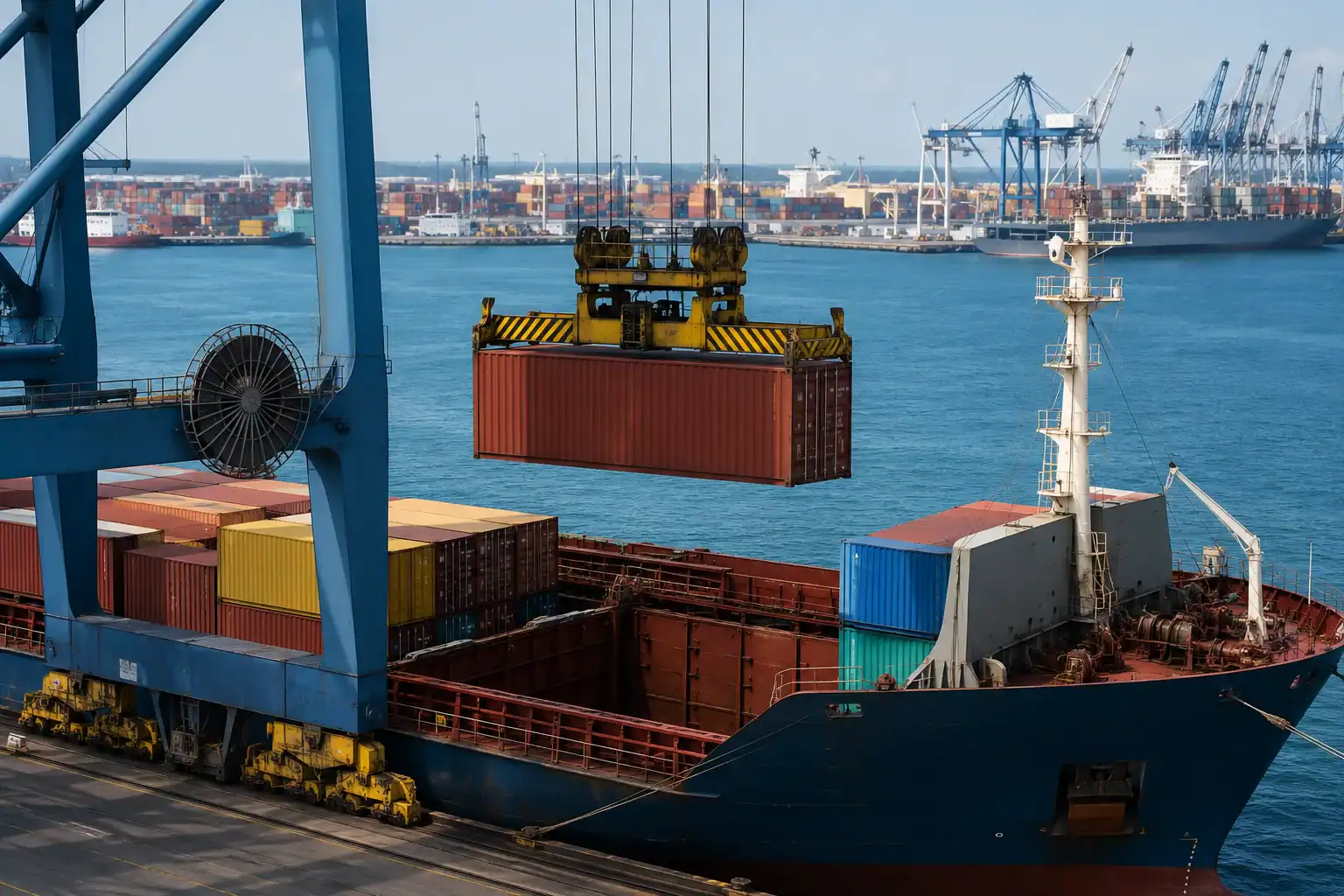
Container Specifications: 20ft and 40ft
Standard shipping containers come in two primary sizes for general cargo: the 20-foot container (TEU, or Twenty-foot Equivalent Unit) and the 40-foot container (FEU, or Forty-foot Equivalent Unit). The 40ft High Cube (40HC) adds another 30cm of internal height, and it is the standard for household goods and voluminous cargo.
Our guide to shipping a container to Thailand: 20ft vs 40ft breaks the sizing down further, covering what fits in each box and all-in cost scenarios from the UK, Europe, Australia and the USA.
| Container Type | External Length | Internal Length | Internal Width | Internal Height | Max Payload | Max Volume |
|---|---|---|---|---|---|---|
| 20ft Standard | 6.1m | 5.9m | 2.35m | 2.39m | 28,000 kg | ~33 CBM |
| 40ft Standard | 12.2m | 12.0m | 2.35m | 2.39m | 26,500 kg | ~67 CBM |
| 40ft High Cube | 12.2m | 12.0m | 2.35m | 2.69m | 26,300 kg | ~76 CBM |
Three things pull usable space below the container’s technical maximum: irregularly shaped items, the packaging clearance around them, and load planning for safe transit. In practice, most shipments fill 85–90% of the theoretical maximum volume.
For household goods moves to Thailand, the 40ft High Cube is the standard once a move exceeds the roughly 28 CBM a 20ft container practically holds. Furniture, mattresses, and larger items all benefit from the additional ceiling height. For commercial cargo (cartons, pallets), the standard 40ft is typically adequate.
How FCL Pricing Works
FCL freight is priced as a flat box rate: a single charge for the container, regardless of how full it is. This is the fundamental difference from LCL, which is priced per CBM or per tonne.
A typical FCL box rate from Europe to Thailand (Felixstowe or Hamburg → Laem Chabang) runs USD 1,800–2,800 for a 20ft container and USD 2,400–3,800 for a 40ft or 40HC container. The exact figure depends on the carrier, the season, and the routing. These rates fluctuate with market conditions. Peak season in Q3–Q4 often carries surcharges of USD 500–1,500 on top of base rates. The box rate is only the freight line; the full cost of shipping to Thailand also stacks origin charges, destination THC, and last-mile delivery. Note: spot rates change frequently; verify current levels via Freightos or Drewry before you book.
The full FCL cost stack to Thailand:
- Origin charges: container collection fee or depot release fee (if the shipping line delivers an empty container to a shipper’s premises), or loading at the origin port/CFS
- Ocean freight: the flat box rate for the voyage
- Origin THC (Terminal Handling Charge): the port’s charge for loading the container onto the vessel; varies by port, typically USD 150–350 per container
- Documentation/B/L fee: the shipping line’s charge for issuing the Bill of Lading
- Destination THC at Laem Chabang: approximately THB 4,000–6,000 per container for a 20ft; THB 6,000–9,000 for a 40ft
- Thai customs broker fee: for filing the import declaration, applying for duty-free status (if applicable), and coordinating release; typically THB 8,000–20,000 depending on the complexity of the shipment and the goods category
- Port storage (if any): charged when customs clearance runs past the shipping line’s free time at Laem Chabang, typically 7–14 days for FCL, after which demurrage begins
- Last-mile delivery: from Laem Chabang to the delivery address in Thailand
The door-to-door FCL rate bundles all of the above into a single quote, which makes it the most transparent basis for comparison. Ask for the door-to-door all-in rate when comparing FCL freight forwarders. A low ocean freight rate with high destination charges is not necessarily cheaper than a higher ocean freight rate with lower charges bundled in.
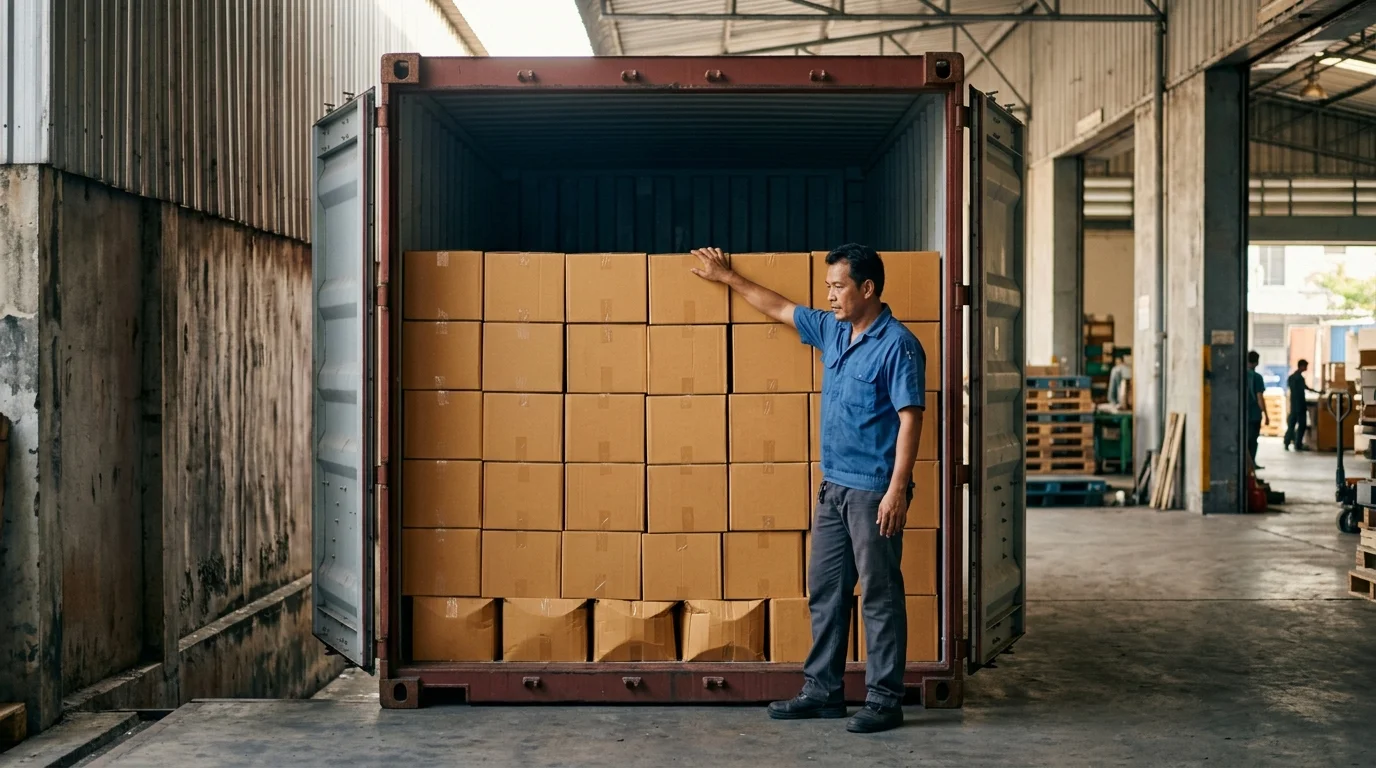
FCL vs LCL: When FCL Wins
The economic crossover point is where FCL becomes cheaper than LCL. It moves with the trade lane, market conditions, and the surcharge environment at the time of booking. Because the whole comparison turns on volume, the first step is measuring your shipment in cubic metres (CBM). As a general guide for Thailand-bound shipments:
- Under 10 CBM: LCL is almost always cheaper. FCL box rates cannot compete with per-CBM LCL rates at this volume.
- 10–15 CBM: Compare both; LCL is often cheaper but the margin narrows. Peak season surcharges or specific origin THC structures can make FCL competitive at 12–13 CBM.
- 15–20 CBM: FCL in a 20ft container is frequently competitive with LCL at this volume. Get quotes for both. If a 20ft container is USD 1,800 and LCL at 18 CBM would cost the equivalent of USD 1,600+, FCL wins on certainty and transit time.
- Over 20 CBM: FCL is almost always cheaper. A 20ft holds roughly 28 CBM of household goods once real packing efficiency is allowed for, so 20–28 CBM still fits one box.
- Over 28 CBM: A 40ft or 40HC container is required. LCL at this volume would be substantially more expensive than FCL box rates.
Volume is not the only factor. FCL also wins on:
- Transit time: FCL is typically 3–7 days faster than LCL on the same route because the cargo skips CFS consolidation at origin and deconsolidation at destination. The container loads at origin and doesn’t open until the consignee or their broker opens it at the destination.
- Cargo security: An FCL container is sealed at origin with the shipper’s seal. No one opens it until destination. LCL cargo is handled multiple times at origin and destination CFS facilities.
- Fragility: Furniture, artwork, large appliances, and fragile items travel better in FCL because they are not co-loaded with other cargo; the shipper controls how the container is loaded.
- Customs risk: Customs examines a sealed FCL container less often than an LCL shipment, provided it comes from a known shipper with a clean customs history. The carrier never sees inside an LCL consignment before sealing, so it cannot vouch for the contents.
The Swift Cargo Thailand shipment-size guide sets out the cost comparison across specific CBM ranges, which is where the LCL vs FCL threshold on a Thailand move falls. Shared containers get the full walkthrough in our guide to how LCL shipping to Thailand works.

The FCL Booking Process, Step by Step
FCL bookings follow a more defined sequence than LCL, because an empty container must be sourced, delivered to the loading point, stuffed, sealed, and returned to the port for loading. The sequence:
Step 1: Booking Confirmation
The freight forwarder confirms a vessel booking with the shipping line. The booking specifies: container size, vessel and voyage, origin port, destination port, commodity description, and estimated cargo weight. The shipping line issues a Booking Confirmation (BC) with a reference number and the cut-off dates: the Equipment Return Date (when the empty container must be returned to port after stuffing) and the Port Cut-Off (when the fully loaded container must be at the port gate).
Step 2: Equipment Release
The shipping line releases an empty container from its depot. For a shipper’s load (shipper-stuffed, or SOL for Shipper’s Own Load), the shipping line delivers the container to the shipper’s premises or a designated loading address. For CFS-stuffed FCL, which is less common and mostly reserved for particular commodity types, the shipping line stuffs the container at its own CFS facility.
Step 3: Stuffing and Sealing
The shipper or their removalist/packer loads the container. For household goods, this is the work of the removal company on the day of packing. For commercial cargo, it may be the shipper’s warehouse team or a third-party container stuffing service.
When loading is complete, the container is sealed, usually with both a shipping line seal and a shipper’s own padlock. The shipper prepares the packing list and cargo declaration for the forwarder’s documentation file.
Step 4: Return to Port and Gate-In
The loaded container is transported to the origin port terminal by truck. At the gate, the terminal scans the container seal, verifies the booking reference, and checks the cargo declaration against the booking. The terminal then positions the container in the export stack. It waits there until the vessel loads.
Step 5: Vessel Loading and ETD
At vessel loading, the container is craned from the export stack onto the vessel. The forwarder confirms the Estimated Time of Departure (ETD) and issues the draft Bill of Lading for the shipper’s review. Once confirmed, the shipping line issues the original B/L. For most moves to Thailand, a telex release replaces it.
Step 6: Transit and ETA
The container travels as part of the vessel’s stow plan. The forwarder tracks vessel position and updates the ETA as the voyage progresses. If the vessel calls at transhipment ports (Singapore or Port Klang for UK/Europe → Thailand routes), the container transfers to a connecting vessel.
Step 7: Arrival at Laem Chabang and Customs Clearance
When the vessel arrives at Laem Chabang, the shipping line discharges the container to the port. The Thai customs broker files the import declaration. For personal effects, the broker also submits the duty-free application. For commercial cargo, the broker calculates duty and VAT from the declared CIF value and the applicable tariff.
Thai Customs releases the container once you have paid any applicable duties and the broker confirms. The shipping line then releases it from the Laem Chabang facility once you present the B/L or telex release and pay the destination THC. The container is then collected by the consignee’s agent or transported by truck to the delivery address.
Step 8: Unstuffing and Delivery
At the delivery address, the container is unstuffed, either by the removal team (for household goods) or by the consignee’s warehouse staff (for commercial cargo). The empty container is returned to the shipping line’s Laem Chabang depot within the free time period (typically 3–7 days after release from port). Container detention charges apply if the empty is returned late.
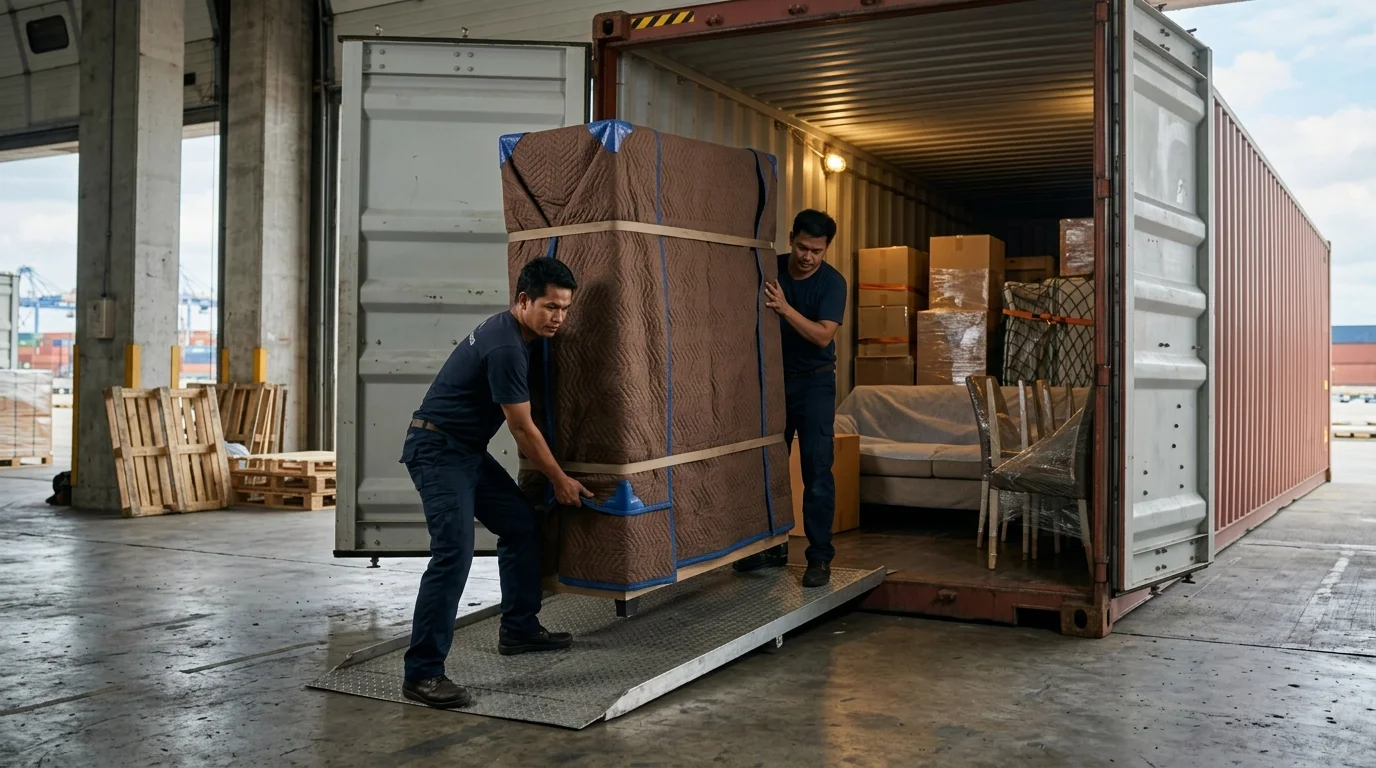
FCL for Personal Effects and Household Goods
For relocators moving household goods to Thailand, FCL is the preferred option for moves above approximately 20 CBM, and worth pricing against LCL from 15 CBM up. The case is not only cost: the sealed-container approach suits a household goods shipment better than CFS co-loading.
Key considerations for FCL household goods moves to Thailand:
- Professional packers should load the container. For FCL household goods, the removal company stuffs the container at the shipper’s premises. How the container is loaded determines how goods travel. Professional packers understand how to brace furniture, wrap fragile items, and distribute weight to prevent load shift during transit. An improperly loaded container will damage its contents even when they are not fragile: they shift across a 25–30 day voyage.
- The itemised packing list standard applies equally to FCL and LCL. Thai Customs does not distinguish between FCL and LCL for personal effects documentation requirements. An itemised list (named items, values, condition, approximate year of purchase) is required for both. See the guide on how to avoid customs delays when moving to Thailand for the full packing list standard.
- Free time at Laem Chabang is your customs clearance window. That window runs 7–14 days for FCL in most cases, and container demurrage charges begin the moment it closes. Your Thai customs broker should file the declaration and have goods released within this window. If the documentation set is complete and submitted before arrival, a straightforward personal effects FCL typically clears in two to four working days.
- Marine insurance should cover the full FCL. Even in a sealed container, FCL household goods can be damaged by container condensation, load shift, and (rarely) container flood events. Marine insurance on an “all risks” basis (Institute Cargo Clauses A) covers the shipment from loading to the destination warehouse.
FCL for Commercial Cargo to Thailand
For businesses importing product stock, retail goods, or industrial equipment to Thailand, FCL offers advantages beyond cost:
- Cargo integrity: commercial cargo in FCL travels in a dedicated, sealed container. Nothing from another shipper’s consignment can co-mingle with it, contaminate it, or damage it in transit.
- Customs simplicity: a single FCL commercial shipment with one shipper, one consignee, and one commodity type is straightforward to declare and clear. Mixed LCL consignments with multiple commodity types can generate classification questions.
- FTA origin advantage: a Certificate of Origin presented with the shipment may reduce or eliminate import duty, provided your goods originate from a country with which Thailand has an FTA (China, ASEAN, Australia, India, Japan). See the full India-to-Thailand freight rate and AIFTA duty breakdown if India is your origin country. The paperwork is the same for FCL and LCL, but FCL generally clears more simply.
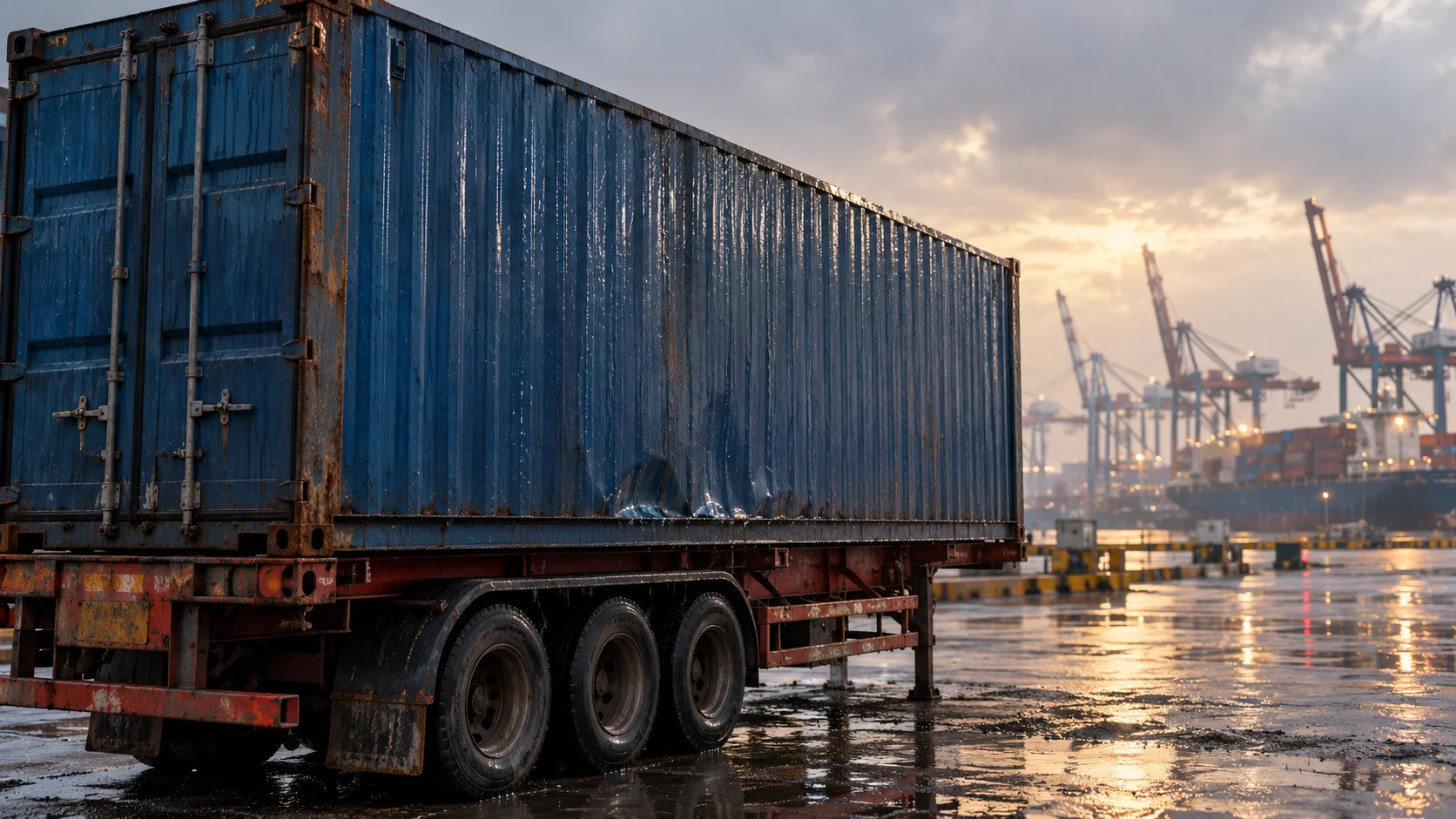
Container Demurrage and Detention: The Costs That Surprise FCL Shippers
Here is the part almost nobody prices in before booking. Two identical 40ft containers leave Hamburg on the same vessel, pay the same box rate, and arrive at Laem Chabang on the same tide. One clears for the quoted price. The other costs its owner an extra USD 900: not because anything went wrong at sea, but because a single missing customs document left the box sitting in the terminal past its free days. The vessel did its job; the paperwork did not. That gap, measured in days on a demurrage clock, is where FCL budgets quietly break.
Two time-related charges apply to FCL and not to LCL: container demurrage and container detention. These are distinct charges, often confused:
- Demurrage: the shipping line’s charge for the container occupying space at the port terminal beyond the free time period. The clock starts from the day the vessel arrives at Laem Chabang. If customs clearance is delayed and the container sits in the port terminal, demurrage accumulates, typically USD 30–100 per day per container for a 20ft and higher for a 40ft.
- Detention: the shipping line’s charge for keeping the empty container beyond the free time period after it has been released from the port and collected by the consignee. If unstuffing takes longer than expected (common for large household goods moves), detention charges accumulate at a daily rate similar to demurrage.
Two habits avoid both charges. First, submit complete customs documentation before the vessel arrives; a Thai customs broker who pre-files the declaration keeps demurrage off the clock. Second, return the empty container to the depot promptly after unstuffing. Telling your forwarder the collection and unstuffing timeline before the vessel arrives keeps detention risk down.
Request a Thailand shipping quote from Swift Cargo for door-to-door FCL rates with all destination charges included.
Demurrage and detention charges confuse people for the same reason a badly designed thermostat does: nobody explained which clock is running. Demurrage is the port’s clock, counting days the container sits at the terminal after arrival. Detention is the carrier’s clock, counting days the empty container sits with you before it’s returned. Shippers assume one number when there are actually two, running from different start points, charged by different parties, for different reasons. That’s less a shipper’s mistake than a design failure in how the industry explains its own rules. The fix isn’t cleverness. It’s asking your forwarder, before the container even ships, to write down both free-time windows and both daily rates on the same page. Once the two clocks are visible side by side, the surprise charge stops being a surprise.
Related reading: Laem Chabang Port: Terminals, Berths, Cut-Offs and Customs Explained
Frequently Asked Questions
Does FCL mean my container will be full?
No. FCL means you have exclusive use of the container. It does not mean your cargo fills it. You may ship 15 CBM in a 20ft container (which can hold up to ~33 CBM) and still pay the full FCL box rate. The advantage is that no other shipper’s cargo is in your container.
How long does FCL shipping to Thailand take?
Port-to-port transit times: UK → Laem Chabang 28–35 days; Germany → Laem Chabang 24–30 days; Australia → Laem Chabang 12–20 days; USA → Laem Chabang 20–26 days; China → Laem Chabang 8–14 days. Add 2–5 business days for Thai customs clearance after arrival at Laem Chabang.
What is a telex release and do I need one for Thailand?
A telex release is an electronic instruction authorising the consignee to collect the container without presenting original B/L documents. For personal effects moves and most direct commercial shipments, telex release is standard and removes the need to courier original B/L paperwork to Thailand.
What is container demurrage and how do I avoid it?
Demurrage is the charge your shipping line imposes when your container sits at Laem Chabang port beyond the free time period (typically 7–14 days from vessel arrival). Avoid it by ensuring your Thai customs broker has a complete document set before the vessel arrives so the declaration can be filed promptly.
Can I use a 40ft container if I only have 20ft worth of cargo?
Yes, but the economics rarely make sense. A 40ft FCL rate is typically 30–50% higher than a 20ft rate. For cargo that fills a 20ft container, booking a 40ft wastes money. The exception is when specific goods require the 40HC’s additional ceiling height.