
A retail store that imports its own stock runs a fundamentally different freight operation from an eCommerce seller, even when both buy from the same factory in Guangdong. The eCommerce importer replenishes continuously and lives or dies on stockout rates. The retailer buys in seasonal blocks, commits cash to a whole range months before a single unit sells, and has to land that range on the shop floor by a date the trading calendar does not move. Get the freight plan wrong and you are not slightly late. You are discounting Christmas stock in January.

Retail importing vs eCommerce importing: two different problems
Start with the structural difference, because it drives every downstream freight decision.
An eCommerce importer typically runs continuous replenishment: smaller, more frequent shipments sized to keep 6-10 weeks of cover on a rolling basis. Demand is relatively smooth, SKU counts are often deep on a narrow range, and a late shipment costs a few weeks of lost sales on specific lines. The freight profile that suits this is regular LCL or small FCL on a fixed cadence. We cover that model in detail in our eCommerce importing guide.
A retail store importer runs seasonal block buying. A homewares retailer might place two to four major range buys a year: autumn/winter, spring/summer, Christmas, and perhaps a mid-season top-up. Each buy is wide (many SKUs, shallow depth per SKU), date-critical (the range launches on a set week), and cash-heavy (you pay for the entire season’s stock 60-120 days before it starts selling). The consequences differ too. If an eCommerce replenishment order is three weeks late, you lose three weeks of sales on some SKUs. If a retailer’s Christmas container is three weeks late, the whole seasonal range misses its selling window and the residual value of that stock drops 30-50% almost immediately.
Three practical differences follow:
- Shipment size: retailers ship fewer, larger consignments. A single seasonal buy of 18-25 CBM is common where an eCommerce equivalent might ship 5 CBM monthly.
- Schedule tolerance: retailers need buffer built into the plan, not speed bought at the last minute. Air freight rescue on a full seasonal range is rarely affordable: 20 CBM of homewares by air would cost more than the goods.
- Distribution tail: the eCommerce importer’s freight job ends at the fulfilment warehouse. The retailer still has to split the consignment across stores.
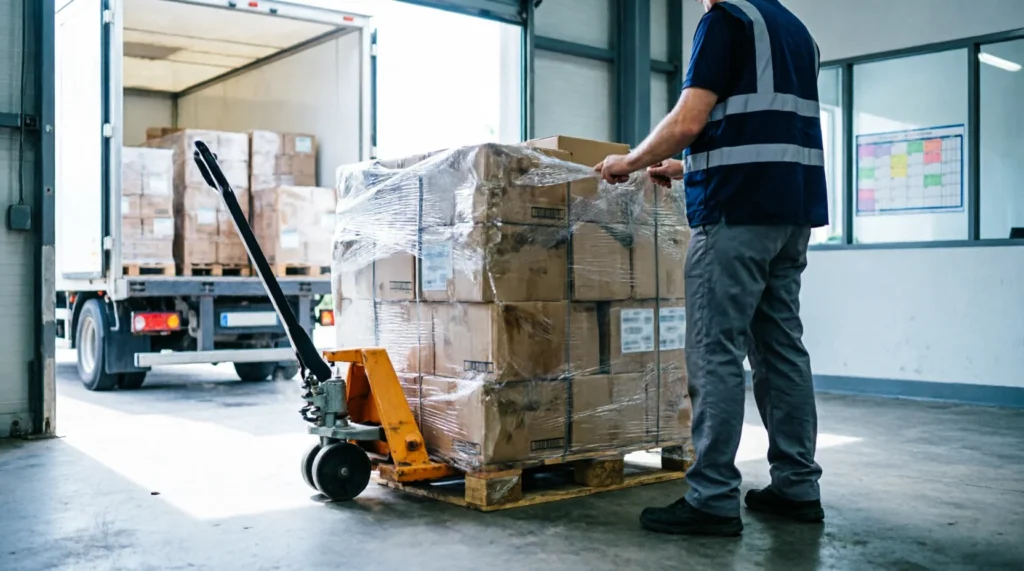
The seasonal buying calendar: work backwards from the floor date
Every retail import plan should be built backwards from the date stock must be on the shop floor. Here is the arithmetic for a typical China-to-Australia sea freight buy:
- Floor date to DC arrival: allow 7-14 days for receiving, ticketing and store distribution.
- Port-to-door transit: 30-40 days including origin cutoffs, sailing (14-18 days Shanghai to Melbourne or Sydney), customs clearance and delivery. Port congestion or a quarantine inspection can add 5-10 days.
- Production: 30-60 days from order confirmation, longer for custom or private-label goods, and longer again if your production window collides with Chinese New Year (roughly late January to mid-February, when factories close for 2-4 weeks and take another 2 weeks to return to full output).
- Buffer: 15-20 days. Not optional. This is the difference between a delay being absorbed and a delay being a crisis.
Total: 100-130 days from purchase order to shop floor. That produces a calendar most new retail importers find uncomfortably early:
- Christmas range (floor by early November): orders confirmed by late June/July, shipping September/October.
- Autumn/winter range (floor by late February): orders confirmed by October, which means the order must be placed before Christmas trading results are known, and production must finish before Chinese New Year or wait until March.
- Spring/summer range (floor by early September): orders confirmed by May.
The Chinese New Year trap deserves emphasis. An autumn/winter buy ordered in November with a 45-day production lead time finishes in early January. Fine. Order the same goods in mid-December and production now straddles the factory shutdown, pushing completion to March and your floor date to May. The order date moved three weeks; arrival moved ten. Retailers who map factory calendars, not just shipping schedules, avoid this entirely.
Planogram-driven quantities: buy to the shelf, not to the price break
Retail order quantities should start from the planogram (the physical shelf plan), not from the supplier’s MOQ or the price break table. The logic runs:
- Facings per store: the planogram says SKU A gets 4 facings, 6 units deep = 24 units on display per store.
- Backroom cover: add 1-2 replenishment cycles, say another 24-48 units.
- Multiply by store count: 6 stores × 60 units = 360 units.
- Season sell-through: sanity-check against expected weekly rate of sale × weeks in season. If SKU A sells 8 units/store/week over a 14-week season, that is 672 units of demand against 360 bought: increase the buy or plan a top-up shipment.
Then, and only then, negotiate with the supplier’s carton quantities and MOQs. Rounding 360 units up to 400 to hit a carton multiple is fine. Buying 1,000 because the per-unit price drops 8% is how retailers end up with 400 units of dead stock that consumes the entire 8% saving in markdowns and backroom space. A useful discipline: any quantity above planogram-plus-sell-through needs a written exit plan (second season, online channel, planned promotion) before the PO is signed.
The freight consequence of planogram buying is that your consignment volume becomes predictable early. Once the range plan is locked, you can estimate CBM within 10-15% months before the goods exist, which means you can book freight space and choose your container strategy deliberately instead of reactively.
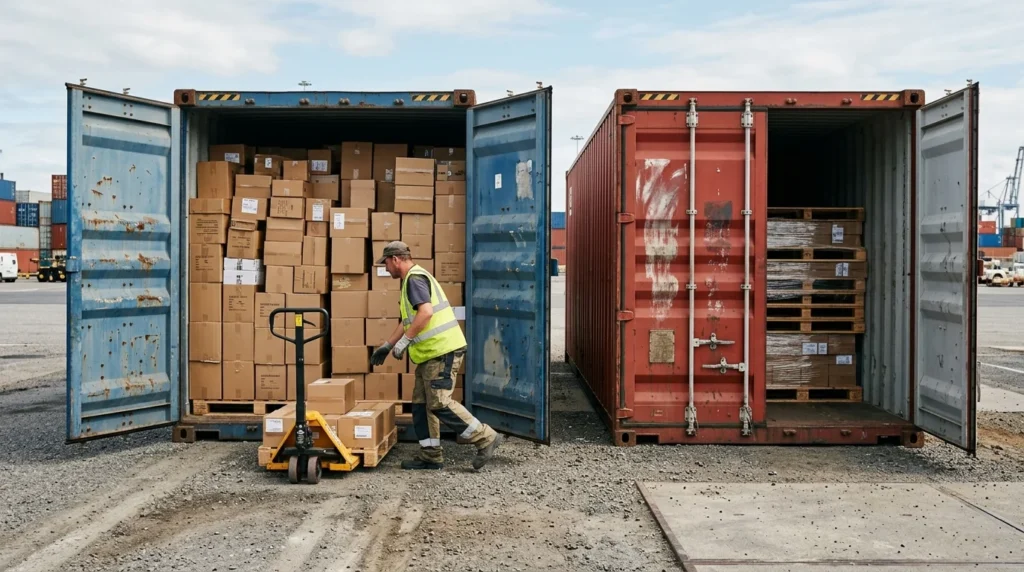
FCL vs LCL for seasonal ranges
The container decision for retail buys is mostly arithmetic. The full framework is in our LCL vs FCL comparison, but here is the retail-specific version.
LCL (less than container load) pricing from Chinese main ports to Sydney or Melbourne typically runs AUD $45-75 per CBM for the ocean leg, but the real cost is in the fixed and per-CBM destination charges: deconsolidation, CFS fees, documentation, delivery. A realistic all-in LCL cost is often AUD $110-160 per CBM door-to-door. A 20ft FCL container (about 28 CBM usable, 25-26 CBM practical for mixed retail cartons) might cost AUD $2,800-4,200 all-in door-to-door depending on the season and destination.
Run the numbers at three volumes:
- 8 CBM: LCL ≈ $880-1,280. FCL ≈ $2,800+. LCL wins clearly.
- 14 CBM: LCL ≈ $1,540-2,240. FCL ≈ $2,800-3,500. Getting close, and FCL arrives 4-7 days faster (no deconsolidation queue) with less handling.
- 20 CBM: LCL ≈ $2,200-3,200. FCL ≈ $2,800-3,500. FCL wins on cost or ties, and wins outright on transit time, damage risk and pilferage.
The break-even lands around 13-15 CBM for most lanes. But retail buys carry two thumb-on-the-scale factors that push toward FCL below the pure cost break-even:
- Handling damage: retail goods travel in their retail packaging. Every extra touch in a consolidation warehouse is a chance to crush the box the customer sees on the shelf. A 2% damage rate on shelf-ready packaging is not a 2% loss: those units either sell at markdown or need repacking at $1-2 per unit.
- Date certainty: FCL skips origin consolidation cutoffs and destination unpack queues. When the whole season depends on one arrival date, 4-7 days of removed variability is worth real money.
For retailers whose seasonal buy sits stubbornly at 8-12 CBM, two options beat shipping small LCL forever: consolidate multiple suppliers’ goods into one container at an origin consolidation warehouse (see our guide to freight consolidation for Australian imports), or coordinate order timing so two seasonal categories share a box. A homewares retailer combining a 7 CBM textiles order and a 9 CBM ceramics order from different factories into one 16 CBM FCL via a Shenzhen consolidator typically saves 15-25% versus two LCL shipments, and gets one arrival to manage instead of two.
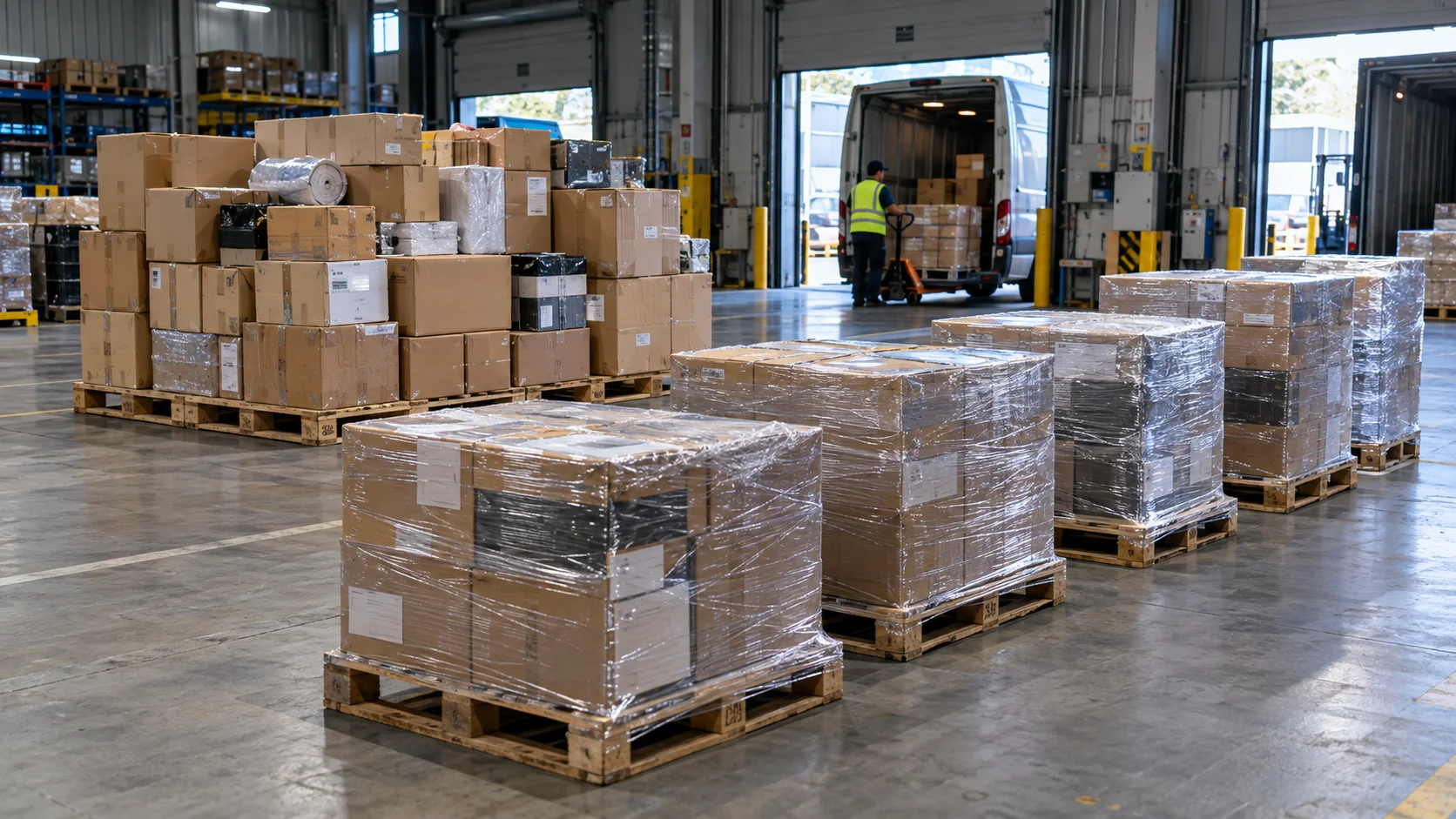
Distribution after the wharf: central DC vs direct-to-store
The container has cleared customs. Now the retail-specific problem starts: 6,000 units across 80 SKUs need to become six accurate store deliveries.
Model 1: central DC (or 3PL) distribution. The container delivers to one location. Goods are received, counted against the packing list, ticketed if needed, picked into store allocations, and dispatched by domestic carrier. Costs look like: container unpack $350-600, receiving/put-away $8-15 per pallet, pick and pack $0.15-0.40 per unit, domestic carton freight $15-40 per store consignment depending on distance. For a 6-store retailer this adds perhaps $1,500-3,000 per seasonal buy, but it buys one customs entry, one QC checkpoint before stock scatters, and the ability to hold back reserve stock for mid-season replenishment to whichever stores are selling fastest.
Model 2: direct-to-store. The consignment is split at origin into store-specific cartons and delivered separately, or the container is unpacked at the wharf transport depot and multi-dropped. This removes the DC handling cost but adds multi-delivery transport fees ($150-300 per additional drop from most container depots), removes the central QC step, and locks the store allocation at origin: months before you know which store is trading strongest. A short shipment or damaged carton now shows up as a hole in one store’s range with no reserve pool to fill it.
Decision rule: with 1-2 stores, direct delivery to the store (or the larger store acting as informal DC) is fine. With 3+ stores, central distribution wins in almost all cases; the flexibility of post-arrival allocation alone is worth the handling cost, because actual sales always deviate from forecast. The exception is bulky goods (furniture, large outdoor items) where double-handling costs more than multi-drop delivery.
One practical refinement: have the factory pack store-friendly cartons even when shipping to a DC: solid cartons per SKU, no mixed cartons, carton quantities that divide cleanly across your store count. A carton of 24 splits across 6 stores; a carton of 50 does not. This is negotiated for free at PO time and expensive to fix at the DC. Our warehouse delivery planning guide covers the receiving side in more depth.
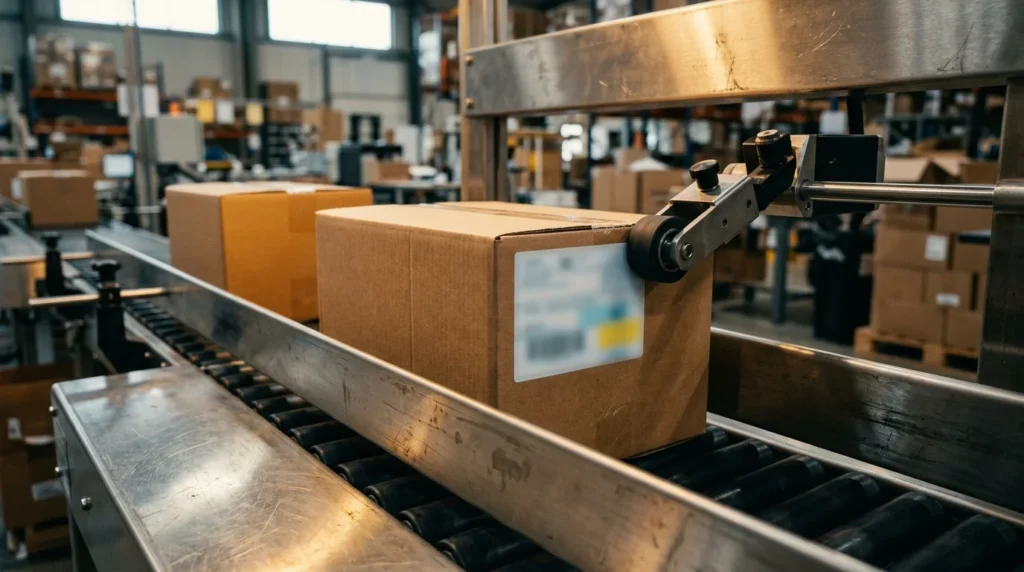
GS1 barcoding and labelling: origin vs Australia
Every product on an Australian retail shelf needs a scannable barcode, and if you wholesale to other retailers or ever want to, it needs to be a proper GS1-allocated GTIN, not a made-up number. GS1 Australia membership starts around $600-1,200 per year depending on turnover and barcode volume, and allocates the company prefix your GTINs are built from.
The freight question is where labels get applied:
- At origin (factory): supply the factory with your GTIN artwork or pre-printed labels. Typical cost: USD $0.03-0.10 per unit, often absorbed into FOB price above modest volumes. The factory applies barcodes during packing, and goods arrive shelf-ready.
- In Australia (3PL/DC): relabelling runs AUD $0.35-0.80 per unit including label stock and handling, plus 2-5 days of added dwell time in the DC: time you may not have in a seasonal window.
On a 10,000-unit seasonal buy, origin labelling saves roughly AUD $3,000-7,500 and a week of lead time. Default to origin labelling, with three exceptions: artwork or compliance wording not finalised at production time; stock that may be split between retail and online channels with different labelling requirements; and first orders from an unproven factory, where a label error replicated across 10,000 units at origin is worse than paying to label locally once. Whatever you choose, put barcode placement, size (standard EAN-13 at 80-100% magnification scans reliably; below 80% many POS scanners struggle) and verification into the PO as an inspectable requirement. A pre-shipment inspection that scans 30 random units costs about USD $250-350 and has saved more than one retailer from a container of unscannable stock.
Carton-level labelling matters too: SSCC or at minimum clear carton labels showing SKU, quantity and PO number make DC receiving take hours instead of days. Factories do this for nothing if asked at order time.
Compliance: ACL, country of origin, and mandatory standards
Retail imports face three compliance layers, and the importer (not the overseas factory) carries the liability for all of them.
Australian Consumer Law. The consumer guarantees under the ACL (acceptable quality, fit for purpose, match description) apply to everything you sell, and as the importer you are treated as the manufacturer for many purposes, including safety liability, when the actual manufacturer has no Australian presence. There is no “it came from the factory like that” defence. Practical consequence for freight planning: build a QC step (pre-shipment inspection at origin or receiving inspection at the DC) into the timeline, because discovering a defect rate after store distribution multiplies the recall cost by the number of stores.
Country of origin. For food, country of origin labelling is mandatory under the Country of Origin Food Labelling Information Standard. For general merchandise, origin labelling is not universally mandatory, but any claim you do make (“Australian designed”, “Made in Italy”) must be accurate under the ACL’s misleading conduct provisions, and the ACCC actively enforces this. Origin markings are cheapest applied at the factory: another item for the PO, not the DC.
Mandatory standards and bans. The ACCC administers mandatory safety and information standards for specific categories: toys for children under 3 (small parts), products containing button batteries (secure compartments plus warnings: this one catches many general-merchandise importers), sunglasses, children’s nightwear flammability, cots, bunk beds, prams, bicycles, treadmills and more. Some products are banned outright. The check takes an hour on the Product Safety Australia website and belongs at range-planning stage, before the PO. Retailers who discover a mandatory standard after the container lands face testing delays (2-4 weeks and $500-3,000 per product for accredited testing), relabelling, or in the worst case destruction of stock. Separately, goods with timber, bamboo, or other biosecurity-relevant materials may attract DAFF inspection: declare accurately and allow buffer days.
A compliance check that runs before the PO, not after the container lands, pairs well with a quote built around your floor date.
Landed cost and retail margin: keystone vs actual
Retail pricing tradition says keystone: retail price = 2× cost, a 50% gross margin. The trap is what “cost” means. Price off the FOB invoice and your margin is fiction. Here is a worked example for a homewares retailer importing 2,400 ceramic serving bowls from Guangzhou, retailing at $34.95.
- FOB price: USD $6.10/unit × 2,400 = USD $14,640 ≈ AUD $22,520 (at 0.65)
- Sea freight, 20ft FCL door-to-DC (goods occupy the container solo at 22 CBM): AUD $3,400
- Customs duty at 5% of customs value: AUD $1,126 (many goods from China are duty-free under ChAFTA with valid certificates of origin: worth checking per tariff line, this example assumes no COO obtained)
- Customs brokerage, entry fees, port charges: AUD $520
- Marine insurance at 0.35% of CIF: AUD $92
- DC unpack, receiving, ticketing, store distribution (6 stores): AUD $2,150
- GST: 10% on value of taxable importation ≈ AUD $2,760 (claimable as an input tax credit for a GST-registered retailer, so excluded from landed cost but very much included in the cash flow section below; see ABF’s GST and other taxes guidance for current rates)
Total landed cost: AUD $29,808, or $12.42 per unit (32% above the naive FOB conversion of $9.38). (Full methodology in our total landed cost guide.)
Now the margin maths at a $34.95 retail price:
- Ex-GST selling price: $31.77
- Gross margin per unit: $31.77 − $12.42 = $19.35, or 60.9%
- Priced off FOB “cost” of $9.38, the retailer would believe margin is 70.5%: an overstatement of nearly 10 points
The overstatement compounds in markdown planning. If 20% of the buy (480 units) sells at 40% off, the real blended margin drops to about 55%; the retailer pricing off FOB thinks it is still 65% and plans the next season’s buy on numbers that were never real. The discipline: every SKU in the range plan gets a landed cost estimate before the PO, using per-CBM freight allocation (this bowl at 0.0092 CBM per unit carries $1.42 of freight and DC cost; a lightweight textile SKU in the same container carries $0.30). Flat-percentage freight loading systematically under-costs bulky items and over-costs dense ones, which quietly distorts which products look profitable.
Cash flow: the part that breaks seasonal importers
Seasonal importing front-loads cash like almost nothing else in retail. Map the same bowl order:
- Day 0: 30% deposit on PO (AUD $6,756)
- Day 50: 70% balance at shipment (AUD $15,764)
- Day 78: freight, duty, brokerage, GST at import (AUD $7,900, of which $2,760 GST comes back at the next BAS, potentially 1-4 months later)
- Day 85: DC costs (AUD $2,150)
- Day 95: stock hits the floor. First revenue.
- Day 95-190: the season sells through
Peak cash exposure is around $32,500 on a single mid-size order, held for roughly 95 days before the first dollar returns, and 140-plus days before cumulative sales cover the outlay. A retailer running four seasonal categories can easily have $150,000-300,000 committed to stock that has not yet sold, with the Christmas buy peaking exactly when Q1 BAS and rent fall due. Three levers help:
- Payment terms: moving from 30/70 deposit/shipment to 30% deposit with 70% at 30 days after bill of lading shifts $15,000 of the example order past the arrival date. Factories offer this to proven repeat buyers more often than new importers assume: usually from the third or fourth order.
- Staggered shipping: splitting a large seasonal buy into a main FCL plus a smaller top-up LCL 4-5 weeks later costs perhaps $600-900 in extra freight but delays 25-30% of the cash outflow and lets the top-up allocation follow actual early-season sales. That trade-off gets a full treatment in our guide to shipping frequency for Australian imports.
- GST timing: retailers with strong compliance history can apply to the ATO for the deferred GST scheme, which moves import GST from a cash payment at the wharf to a book entry on the BAS. On the example order that is $2,760 of cash that never leaves. On an annual import program of $500,000, deferral is worth $50,000 of permanently smoothed cash flow, one of the highest-return pieces of paperwork in Australian importing.
A decision framework to close on
Compressed to the choices that matter, retail import logistics comes down to five commitments made in the right order:
- Calendar first. Fix floor dates, subtract 100-130 days, map Chinese New Year and peak-season freight (September-November rates run 20-50% above the annual average). POs late by choice, never by surprise.
- Buy to the planogram. Facings × depth × stores × sell-through, then negotiate cartons. Price breaks fund markdowns; they do not fund profit.
- Choose the container deliberately. Above ~14 CBM or when the date is critical, FCL. Below it, LCL or origin consolidation across suppliers.
- Centralise distribution at 3+ stores, keep allocation flexible, and make the factory pack cartons that divide across your store count.
- Land the compliance and the cost before the PO. Mandatory standards checked, origin labelling specified, GS1 barcodes applied at the factory, landed cost per SKU calculated per-CBM, and cash flow mapped through to the BAS.
We quote seasonal buys against your floor date, not a generic transit.
Most SMEs get a detailed, all-inclusive quote within 24 hours, DC or direct-to-store distribution included.
Related Reading
- eCommerce Importing to Australia: the continuous-replenishment model this guide contrasts against
- Total Landed Cost When Importing to Australia
- LCL vs FCL for Australian Imports
- Warehouse Delivery Planning for Imports
- Freight Consolidation for Australian Imports
- Wholesale Importing in Australia: How Distributors Structure Their Import Logistics
A retail buyer who orders a seasonal quantity that sells out completely in the first two weeks usually gets treated as having made the right call. That is not obviously true. Selling out fast can mean the order was sized correctly for demand, or it can mean the order was sized too small and the retailer left real margin on the table in lost sales it will never see in the numbers. The opposite mistake, ordering too much and marking down the surplus in January, is visible and gets scrutinised. The invisible mistake of ordering too little never shows up as a loss on any report, which is exactly why it keeps recurring. Judging the buying decision by whether the shelf emptied, rather than by what demand data actually supported at order time, misreads the signal every season.
Frequently Asked Questions
How far in advance should a retail store order imported stock for a season?
Work backwards from your floor date. For sea freight from China, allow 30-40 days port-to-door, 30-60 days factory production, plus a 2-3 week buffer for customs, quarantine or vessel delays. That means placing purchase orders 100-130 days before the season launch. Christmas stock that needs to be on shelves by early November should be ordered by June or July.
Should a retailer use FCL or LCL for seasonal import buys?
The break-even sits around 13-15 CBM. Below roughly 13 CBM, LCL is usually cheaper despite per-CBM handling fees. Above 15 CBM, a 20ft FCL container (28 CBM usable) typically costs less in total, arrives faster because it skips deconsolidation, and reduces handling damage on retail-packaged goods. Seasonal buys across multiple stores often justify FCL even if a single store’s volume would not.
Is it better to ship imports to a central DC or direct to each store?
For most retailers with 3 or more stores, a central distribution point wins. One customs entry, one delivery, then domestic carton distribution at $15-40 per store consignment. Direct-to-store only makes sense with 2 stores in different states, or when each store’s volume independently justifies its own LCL consignment. Splitting one import across multiple delivery addresses adds fees and multiplies the chance of a short delivery to one store.
Should GS1 barcodes be applied at the factory or in Australia?
At origin, almost always. Factory labelling typically costs USD $0.03-0.10 per unit built into the FOB price, versus AUD $0.35-0.80 per unit for relabelling in an Australian 3PL. On a 10,000-unit seasonal buy that difference is $3,000-7,500. The exception is when artwork or compliance wording is not finalised at production time, or when the same stock may be redirected between retail and online channels with different labelling.
What compliance rules apply to imported retail products in Australia?
Three layers: Australian Consumer Law (guarantees apply regardless of where goods were made), country of origin labelling (mandatory for food under the Country of Origin Food Labelling Information Standard, and any origin claims on other goods must not mislead), and mandatory product standards administered by the ACCC for categories such as toys, sunglasses, cots, bunk beds, treadmills and button-battery products. Check the Product Safety Australia register before ordering, not after the container lands.
How does landed cost affect retail pricing and margin?
Keystone pricing (retail = 2x cost) only works if “cost” means full landed cost: FOB price plus freight, duty, GST treatment, port charges, transport and labelling. A unit with a USD $6 FOB price can easily land at AUD $13-14 once everything is counted. Price off FOB and your real margin can be 15-20 points below what you think it is.