
Vietnam has become one of the world’s most significant furniture manufacturing hubs, outpacing China on labour cost for handcrafted pieces and offering wood species and craftsmanship that are difficult to source elsewhere at comparable price points. Australian furniture retailers, interior designers, and hospitality fit-out companies have been importing from Vietnam for over a decade, but the compliance requirements on this lane (particularly DAFF timber biosecurity) remain the most consistent source of costly errors. To import furniture from Vietnam to Australia at 0% duty and without a biosecurity hold, you need AANZFTA origin documentation from your supplier and ISPM 15 treatment on all solid timber, including the crating.
AANZFTA Tariff Treatment
The ASEAN-Australia-New Zealand Free Trade Agreement (AANZFTA) eliminates or reduces tariffs on most goods traded between ASEAN member states (including Vietnam) and Australia. For furniture imports from Vietnam, the practical effect is a 0% duty rate on most Chapter 94 headings: wooden furniture (9403), metal furniture (9403), and upholstered seating (9401), compared to a 5% MFN rate that would otherwise apply to wooden furniture.
To claim the AANZFTA preferential rate, two conditions must be met:
- Rules of origin: The furniture must qualify as originating in Vietnam under AANZFTA. The standard for furniture is that it is wholly obtained or substantially transformed in Vietnam, meaning that Vietnamese manufacture adds sufficient value (the regional value content test or change in tariff heading test, depending on the specific product). Furniture assembled in Vietnam from Vietnamese timber and components is straightforwardly qualifying. Furniture assembled in Vietnam from Chinese-origin components may not qualify depending on the value contribution of the Vietnamese transformation.
- Origin documentation: A Form AANZ (the AANZFTA certificate of origin) issued by a Vietnamese authorised body, or a self-declaration of origin from the Vietnamese exporter on the commercial invoice. The form must be available at the time of import for ABF to accept the preferential rate claim.
For a detailed explanation of how AANZFTA certificates of origin work and what the Form AANZ must contain, see Importing from Vietnam to Australia: What Businesses Need to Know.

Timber Biosecurity: The Detail That Creates Holds
DAFF classifies Vietnam as a high-risk timber source country. This means that any solid timber furniture from Vietnam (regardless of how well-established your supplier is) is subject to a higher-than-average biosecurity scrutiny level at Australian ports. The most important compliance investment on this lane is understanding exactly what is required and building it into your supplier instructions and documentation.
ISPM 15 requirements
The International Standards for Phytosanitary Measures No. 15 (ISPM 15) specifies treatment requirements for wood packaging material used in international trade. For furniture specifically, it applies to:
- Solid wood components in the furniture itself (legs, frames, panels, structural elements)
- Solid wood packaging: wooden crates, pallets, dunnage used to pack or support the furniture during transit
The required treatment options are:
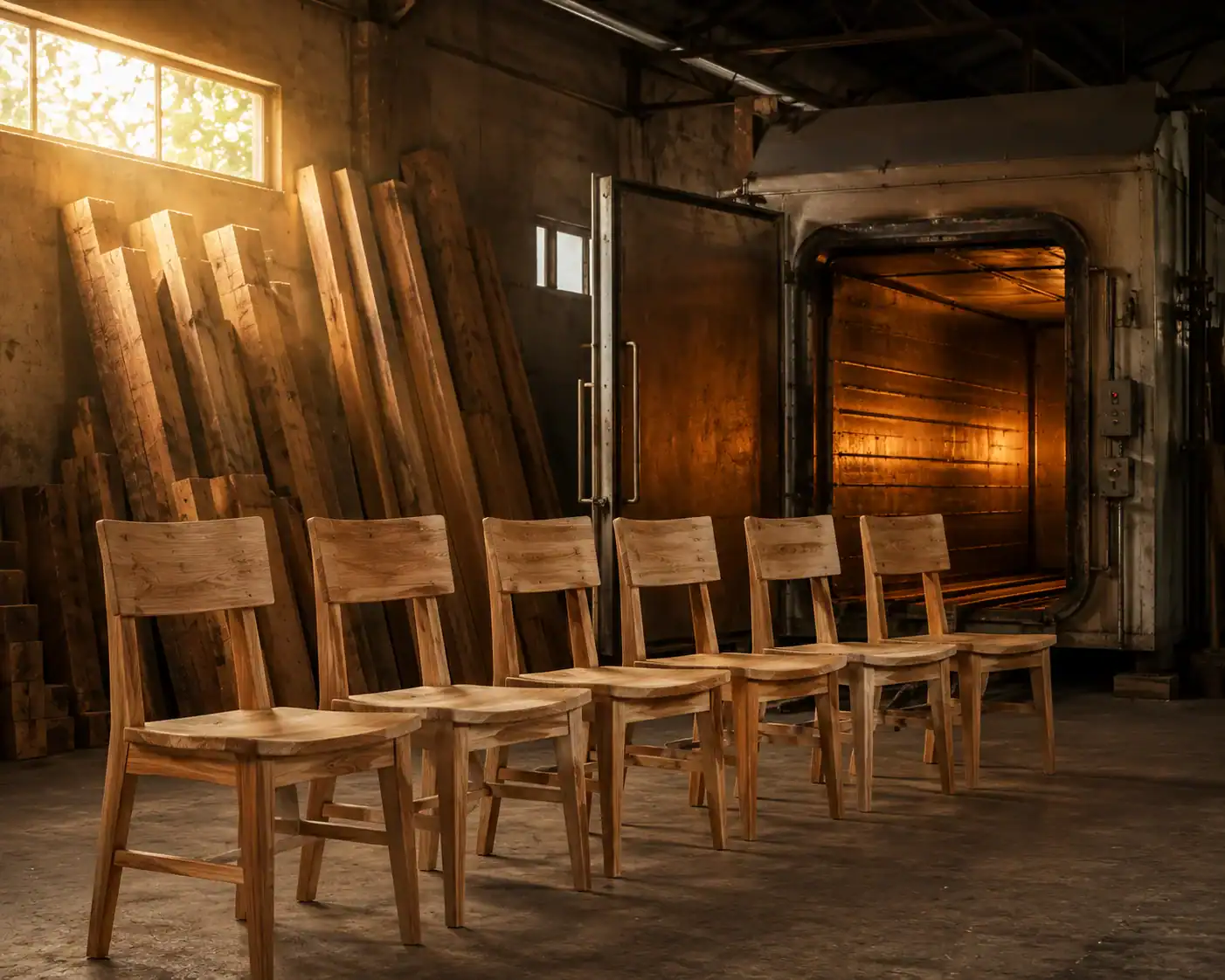
- Heat treatment (HT): The wood must be heated to a minimum core temperature of 56°C for 30 continuous minutes. This is the preferred treatment method for most furniture components: it leaves no chemical residue and is widely available at Vietnamese furniture factories.
- Methyl bromide fumigation (MB): An alternative treatment. Methyl bromide is a restricted chemical and its use for timber fumigation is being phased out in many markets, though it remains available in Vietnam. Not accepted as a substitute for ISPM 15-compliant heat treatment in all circumstances: confirm acceptability with your customs broker.
- Dielectric heating (DH): Available but less common.
The treatment must be marked on the timber or packaging with the IPPC mark, the internationally recognised symbol showing the country code (VN), the producer/treatment provider code, and the treatment type (HT or MB). The mark must be physically stamped on the wood, not on a paper label or sticker that can detach.
What triggers a DAFF inspection
DAFF may direct any furniture shipment to a biosecurity examination facility. The triggers that increase inspection likelihood include:
- Missing or non-compliant IPPC mark on timber components or packaging
- Bark or live plant material present on any timber element
- Documentation that describes the goods generically (“furniture”) rather than specifically (“solid acacia wood dining chairs, ISPM 15 heat treated”)
- First-time importers from a new Vietnamese supplier who have no biosecurity clearance history
- Mixed containers with both timber and non-timber goods, where the timber component is not clearly separated and identified
A biosecurity examination adds 2–7 business days and AUD 300–800 in examination fees (payable by the importer) to your clearance timeline. Treatment on arrival (required if timber does not meet ISPM 15 on inspection) adds further cost and 3–10 days. For a high-volume furniture importer, these costs and delays recur on every non-compliant shipment. The investment in getting documentation right from the first shipment pays back immediately.
Non-timber furniture
Upholstered furniture with no exposed solid wood components, metal-frame furniture, rattan and wicker furniture, and furniture made entirely of engineered wood products (MDF, plywood, particleboard) do not require ISPM 15 treatment. Rattan and wicker carry their own biosecurity requirements: check BICON for current import conditions on plant-derived materials. MDF and plywood are processed materials and are treated differently from solid timber; confirm with your customs broker whether ISPM 15 treatment requirements apply to the specific engineered wood products in your shipment.

Vietnamese Furniture Regions and Their Freight Implications
Vietnamese furniture manufacturing is geographically concentrated, and the production region determines which load port you use, which in turn affects freight cost and transit time to Australia.
Southern Vietnam (Ho Chi Minh City / Binh Duong / Dong Nai)
The majority of Vietnam’s furniture export production is concentrated in the provinces surrounding Ho Chi Minh City (particularly Binh Duong and Dong Nai), which host large-scale furniture manufacturing clusters. The load port is Cat Lai (Ho Chi Minh City’s main container terminal). Transit times to Australian east coast ports:
- HCMC to Sydney: 14–20 days
- HCMC to Melbourne: 15–21 days
- HCMC to Brisbane: 16–22 days
Northern Vietnam (Hanoi / Hai Phong)
Northern Vietnam has a growing furniture cluster, particularly for lacquerware, handicrafts, and natural fibre furniture. The load port is Hai Phong. Transit times to Australian east coast ports are 4–6 days longer than HCMC due to the additional distance and limited direct sailing options from Hai Phong to Australia. Hai Phong cargo frequently transships at Singapore or Port Klang, adding variance to the transit window.
Freight Mode Selection: LCL vs FCL
Furniture is a high-cube, low-weight commodity category: pieces pack large relative to their weight, which means volume (CBM) rather than weight drives your freight cost calculation.
LCL for small orders
LCL (less than container load) works for furniture import volumes up to approximately 12–15 CBM. Below that threshold, LCL cost per CBM is usually lower than the equivalent FCL cost spread across a small volume. The disadvantage of LCL for furniture is handling risk: your pieces move through a CFS (container freight station) at origin and at destination, where they are handled alongside other cargo. Well-packaged furniture with internal foam and external cardboard or wooden crating survives LCL transit adequately, but fragile or decorative pieces (lacquer finishes, glass elements, marble tops) carry higher damage risk than in a dedicated container.
FCL for container volumes
A 20-foot container holds approximately 25–28 CBM of flat-packed furniture and 18–22 CBM of assembled furniture (which packs less efficiently). A 40-foot high-cube container (the preferred option for furniture) holds approximately 60–68 CBM of flat-packed goods. For any order exceeding 15 CBM, run the FCL cost comparison against LCL: on the Vietnam-Australia lane, FCL rates from HCMC are typically AUD 2,000–3,500 per 20-foot container (freight only, not including origin and destination charges), making the per-CBM FCL cost competitive against LCL from approximately 18–20 CBM.
For the methodology for calculating the LCL/FCL crossover point and when volume justifies a rate agreement with your forwarder, see How to Scale Your Import Business in Australia.
Supplier Qualification for Vietnamese Furniture
Vietnamese furniture manufacturing spans a wide quality and compliance range, from internationally certified factories producing for major global retailers, to small workshops producing handcraft pieces for niche buyers. Qualifying your supplier before committing to a first order prevents the most common problems: quality failure, ISPM 15 non-compliance, and AANZFTA origin documentation gaps.
Factory audit or remote qualification
For orders above USD 10,000, a factory audit (either in person or via a third-party inspection service) is worth the cost. A standard audit covers: production capacity, quality control procedures, ISPM 15 treatment facility (on-site kiln or documented use of an accredited external treatment provider), export compliance experience, and sample review. Remote qualification through photos, video calls, and sample shipment is an acceptable alternative for lower-value first orders, provided you build in a physical inspection on the first production run before goods are packed.
ISPM 15 compliance verification
Confirm directly with your supplier that they have on-site heat treatment capability or a documented relationship with an accredited treatment provider. Ask for the treatment provider’s NPPO (National Plant Protection Organisation) registration number: Vietnamese ISPM 15 treatment providers are registered with the Vietnam Plant Protection Department. A supplier who cannot provide this information does not have compliant timber treatment in place.
AANZFTA origin capability
Ask your supplier to confirm that they can issue a Form AANZ or provide a self-declaration of Vietnamese origin on the commercial invoice. An established exporter will have a relationship with a Vietnamese Chamber of Commerce or Ministry of Industry and Trade office that issues Form AANZ. A supplier who has never exported to Australia may need to establish this relationship for your first shipment: allow 2–4 weeks for the first Form AANZ to be issued.

Quality Control: What to Check and When
Furniture quality defects (finish scratches, misaligned joints, inconsistent fabric tension, incorrect dimensions) cannot be identified from shipping documents. They require physical inspection of the goods. The most cost-effective time to inspect is before goods are packed and loaded into the container, while defective pieces can still be replaced or reworked at the factory.
A pre-shipment inspection (PSI) by an independent inspector at the factory should cover:
- Dimensions: Measure a sample against the approved specification sheet. Size deviations over 5mm on structural dimensions affect assembly and fitment.
- Finish quality: Check for scratches, uneven lacquer, timber grain gaps, fabric pilling, stitching irregularities, and colour match against your approved sample.
- Structural integrity: Load-test chairs and tables against the weight rating. Check joint tightness: dovetail, mortise and tenon, or screw-fixed joints should have no visible gaps.
- Packaging: Inspect carton strength, internal foam protection for corners and edges, and carton labelling accuracy (SKU, dimensions, weight, handling instructions).
- ISPM 15 marking: Confirm the IPPC mark is present and legible on all solid timber components and packaging before the container is sealed.
PSI costs on the Vietnam-Australia lane are typically USD 200–400 per inspection day. A standard 20-foot furniture container can be inspected in one day. The cost of a missed defect (a full container of chairs with wrong finish colour, or dining tables with non-conforming dimensions) far exceeds the inspection cost.
Common Problems on the Vietnam-Australia Furniture Lane
IPPC mark missing from packaging timber
This is the most frequent cause of biosecurity holds on Vietnamese furniture shipments. The furniture itself may have a valid heat treatment certificate, but the wooden crating or pallet material used for packaging lacks the IPPC mark. DAFF inspects all timber in the consignment, not just the finished goods. Specify in your purchase order that all wooden packaging material must carry the IPPC mark, and include this in your pre-shipment inspection checklist.
AANZFTA documentation not ready at loading
Form AANZ must be available at the time of Australian customs clearance, not weeks after arrival. Some Vietnamese suppliers issue the form only after shipment, which creates a scenario where goods arrive, clearance is attempted, no form is available, and duty is assessed at the 5% MFN rate (or clearance is delayed while the form is couriered or electronically submitted). Confirm in writing with your supplier that the Form AANZ will accompany the shipment documents before loading. At the 5% MFN rate, a late form on a AUD 50,000 order adds AUD 2,500 in duty, a cost you carry yourself when you import furniture from Vietnam to Australia.
Finish variation between sample and production
The approved sample was one piece, manufactured at the sample stage with individual attention. Production furniture is manufactured at scale. Finish colour, fabric dye lot, and lacquer sheen can vary between the sample and the production run, particularly on orders that span multiple production batches. A mid-production inspection (not just pre-shipment) catches dye lot or finish variation before the full order is completed. For high-value or colour-critical furniture, specify that the importer must approve a production sample before the full order proceeds.
Rattan and wicker misclassified as “furniture”
Rattan furniture is subject to different biosecurity import conditions than timber furniture. Natural rattan, wicker, and bamboo are plant-derived materials with specific DAFF requirements that are separate from the ISPM 15 framework for processed timber. Declaring rattan furniture simply as “furniture” without specifying the material type can trigger a DAFF query. Use accurate material descriptions (“rattan-frame dining chairs, synthetic wicker weave” or “solid bamboo shelving unit”) that give the biosecurity assessor the information needed to assess risk correctly.

Incoterms with Vietnamese Furniture Suppliers
Vietnamese furniture exporters typically offer FOB or EXW terms. Understanding which term your purchase order uses determines your cost and risk exposure from the factory gate to your Australian warehouse.
FOB (Free On Board) HCMC or Hai Phong is the most practical term for Australian importers. Your supplier handles export customs, inland transport to port, and CFS handling, then delivers goods to the ship’s rail at the nominated load port. Your responsibility (and your freight forwarder’s management) begins from that point. FOB gives you full control over the ocean freight booking, carrier selection, and Australian customs handling, while keeping your supplier responsible for export compliance in Vietnam.
EXW (Ex Works) from a Vietnamese factory means your freight forwarder must manage the complete movement from factory gate: inland transport to port, export customs in Vietnam, CFS handling, and the ocean leg. This is operationally more complex and requires your forwarder to have an established Vietnamese agent at the production location (Binh Duong, Dong Nai, or Hanoi province). EXW does give you full cost visibility across the supply chain, since your supplier is not marking up freight components.
CIF (Cost, Insurance, Freight) to an Australian port means your supplier books and pays for the ocean freight and insurance, delivering to an Australian port. This is convenient but removes your control over carrier selection, routing, and freight cost. Your supplier’s freight markup is built into the CIF price and may not be transparent. CIF is generally not recommended for volume importers who want control over transit time and freight cost on a lane they are actively managing.
For a detailed comparison of the cost and operational implications of each Incoterm for Australian importers, see EXW vs FOB vs CIF for Australian Importers.
It is worth asking who actually carries the risk when a timber consignment is held at the border. The supplier’s quote says “AANZFTA duty-free.” The forwarder’s brochure says “we handle the paperwork.” Neither of them absorbs the cost when DAFF flags untreated timber and orders fumigation or re-export: that bill is yours, every time. Do not settle for the reassuring version. Ask, in writing, for the treatment certificate and the ISPM 15 mark before the container is packed, and confirm which party is legally the importer of record on the DAFF declaration.
Managing Your First Furniture Container
A first furniture container from Vietnam involves more coordination than a repeat shipment once the process is established. The key milestones to manage actively:
Pre-production: Sample approval
Before the factory commences production, approve a physical sample of each SKU against your specification sheet. The sample approval is the reference point for the pre-shipment inspection: if the PSI inspector finds production goods that differ materially from the approved sample, you have documented grounds to require rework before the container is sealed. Keep one approved sample at your office, and send one to the inspection company so the inspector has a physical reference on-site.
Production milestone: Mid-production check
For orders involving colour-critical finishes or fabric with specific dye lot requirements, arrange a mid-production check when approximately 30–40% of the order is complete. This catches finish or colour variation before the full production run is committed. A mid-production check does not require a formal PSI: a video call with your supplier during which they show you production goods against the approved sample is sufficient for most orders. For high-value orders, send an inspector on-site.
Pre-loading: PSI and ISPM 15 verification
The PSI occurs when the full order is completed, goods are ready for packing, and the container has not yet been sealed. The inspector checks goods against your specification, approves or rejects the order, and verifies ISPM 15 compliance on all timber and packaging components. Receive the PSI report before authorising container sealing and final payment. A PSI report with a “conditional” result (indicating some defects requiring rework before dispatch) requires a follow-up photo or video confirmation that the rework has been completed before giving seal authority.
Post-departure: Document management
Once the container is sealed and departed, your freight forwarder will issue or receive the following documents that you need for Australian customs clearance: bill of lading (or sea waybill), commercial invoice, packing list, ISPM 15 treatment certificate, and Form AANZ. Confirm you have received and reviewed all five documents before the vessel arrives at the Australian port. Missing documents (particularly the Form AANZ) cannot always be sourced quickly after the vessel has sailed, and the cost of collecting them remotely from Vietnam can delay clearance.
For a freight quote on the Vietnam-Australia furniture lane, including LCL consolidation and FCL options from Cat Lai, see Swift Cargo Australia.

Landed Cost for Vietnamese Furniture
Working from an FOB HCMC price, the full landed cost components for a typical furniture order are:
- Ocean freight (FCL 20-foot): AUD 2,000–3,500 HCMC to east coast Australia
- Origin charges: CFS handling, export documentation, export customs, approximately USD 200–350 per container
- Destination THC: AUD 350–600 per container at Sydney, Melbourne, or Brisbane
- Customs duty: 0% with valid AANZFTA Form AANZ; 5% MFN without
- GST: 10% on customs value plus freight plus insurance
- Customs brokerage: AUD 150–300 per import declaration
- DAFF biosecurity levy: AUD 36.80 per declaration (current rate)
- Biosecurity inspection (if triggered): AUD 300–800 examination fee
- Drayage (port to warehouse): AUD 300–600 depending on distance
The single largest controllable cost variable is AANZFTA duty: 5% MFN on a AUD 50,000 furniture order is AUD 2,500 in avoidable duty. Getting the Form AANZ right on every shipment, from the first, pays for multiple years of customs brokerage fees.
For tracking and managing your supply chain from your Vietnamese supplier’s factory gate through to your Australian warehouse, see How to Manage Supplier to Warehouse Logistics in Australia.
A held container at the Australian border is not bad luck. It is the result of a decision made weeks earlier, usually the decision to skip the timber treatment certificate because the supplier said it wasn’t necessary. Extreme ownership means the importer owns that outcome, not the supplier, not DAFF, not the freight forwarder. Before the first container ships, get the fumigation or heat-treatment certificate in hand, confirm it matches the actual timber species used, and confirm it again once the furniture is built, not just when the raw timber was sourced. That is not excessive caution. That is the minimum standard for anyone moving cargo a biosecurity inspector is trained to distrust by default. Push the responsibility back onto the supplier and you will lose time waiting for someone else to fix your problem. Own the checklist yourself and the container moves.
Before You Import Furniture from Vietnam to Australia
Confirm your supplier can issue a Form AANZ before the order is placed, and specify ISPM 15 treatment with the IPPC mark for all solid timber and wooden packaging. Book a pre-shipment inspection against the approved sample, and hold the bill of lading, commercial invoice, packing list, ISPM 15 certificate and Form AANZ before the vessel reaches Australia.
Frequently Asked Questions
What is the import duty on furniture from Vietnam to Australia?
Most furniture from Vietnam enters Australia at 0% duty under the ASEAN-Australia-New Zealand Free Trade Agreement (AANZFTA). To claim the preferential rate, goods must meet AANZFTA rules of origin and be accompanied by a Form AANZ certificate of origin or an equivalent origin declaration from the Vietnamese exporter. Without AANZFTA documentation, the standard MFN rate applies, typically 5% for wooden furniture under Chapter 94.
What are the biosecurity requirements for importing Vietnamese furniture to Australia?
Timber furniture from Vietnam is subject to DAFF biosecurity assessment. Solid wood components must comply with ISPM 15 phytosanitary treatment requirements (heat treatment or methyl bromide fumigation), with the IPPC mark visible on the timber or packaging. Vietnam is classified as a high-risk timber source country by DAFF. Goods with untreated solid wood, bark-on timber, or live plant material will be directed to mandatory inspection and may require treatment on arrival.
How long does sea freight from Vietnam to Australia take?
Sea freight from Ho Chi Minh City (Cat Lai port) to Sydney or Melbourne takes approximately 14–22 days. From Hai Phong (serving northern Vietnam, including Hanoi) the transit is 18–26 days to east coast Australia. Brisbane and Adelaide add 1–3 days over Sydney/Melbourne times. Actual transit depends on the carrier, sailing schedule, and any transshipment routing.
Do I need a fumigation certificate for wooden furniture from Vietnam?
Yes. For solid timber furniture, you need either an ISPM 15-compliant heat treatment certificate (showing the timber was heated to a core temperature of 56°C for 30 continuous minutes) or a methyl bromide fumigation certificate. The IPPC mark must also be physically stamped on the timber or wooden packaging. Upholstered furniture with no exposed solid wood and metal-frame furniture do not require timber treatment certification.
What quality control should I do before importing furniture from Vietnam?
A pre-shipment inspection (PSI) by an independent third-party inspector before goods are packed and sealed is the most cost-effective quality control method. The inspection should check: dimensions and finish against approved samples, joinery and structural integrity, fabric or leather quality and colourfastness, packaging quality sufficient for a 20-day sea transit, and carton labelling accuracy. Expect to pay USD 200–400 per day for an accredited inspection service. One day typically covers a standard furniture container.
Can I source furniture from both Ho Chi Minh City and Hanoi suppliers?
Yes, but mixing southern and northern suppliers in a single shipment adds logistics complexity. HCMC (Cat Lai) and Hai Phong are distinct load ports, and consolidating goods from both in one container requires inland transport of goods from one region to the other, or splitting the shipment across two containers from separate ports. For a first import, source from a single production region to simplify freight and inspection coordination.