
One of the most misunderstood phrases in Australia household-goods shipping is “Unaccompanied Personal Effects concession.” People hear the word concession and assume it means the shipment is automatically duty free and automatically simple. That is not how it works.
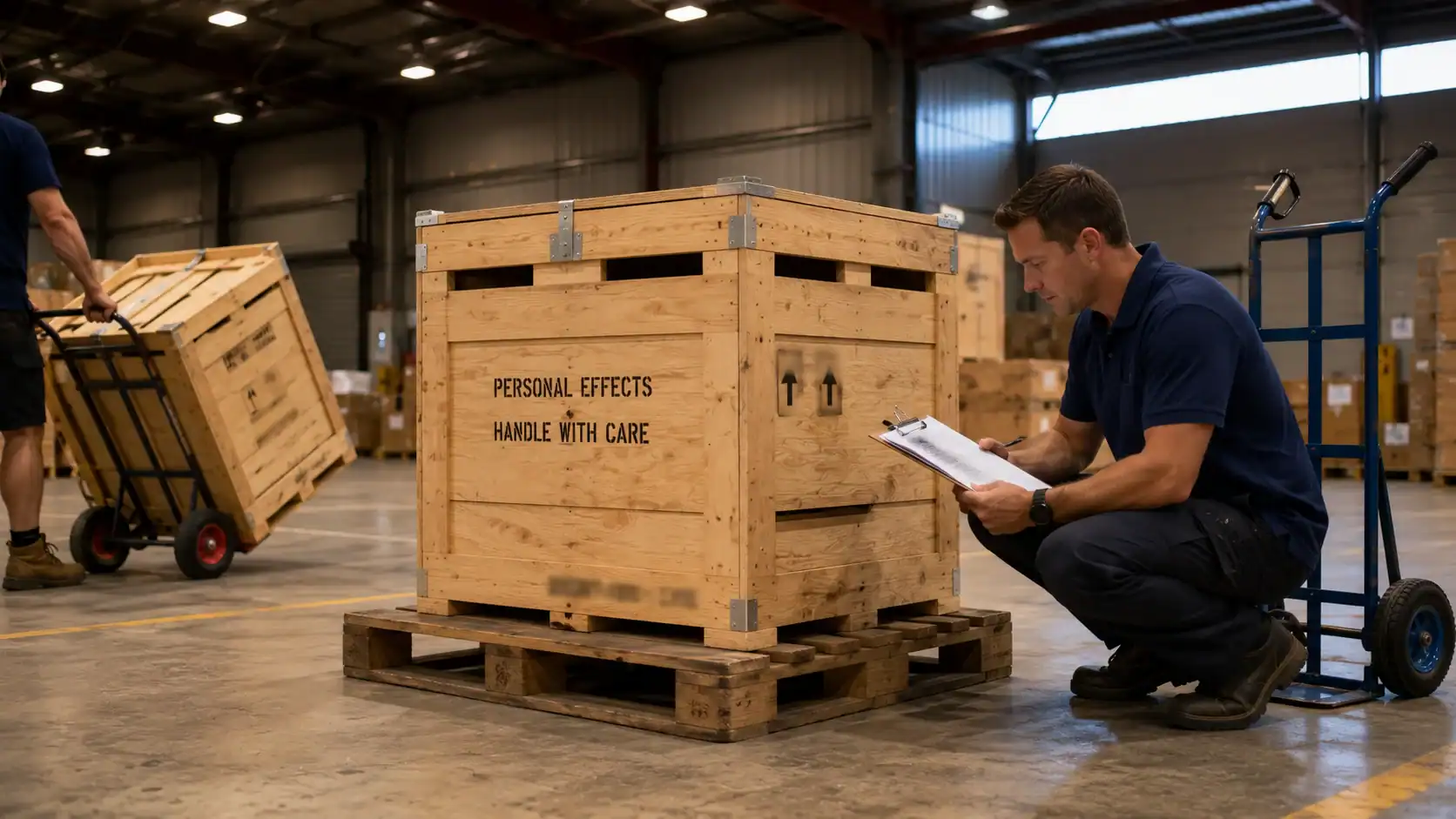
The UPE concession can change the customs-duty and GST picture for qualifying household and personal goods arriving separately from the traveller. But it does not turn the shipment into a compliance-free event, and it does not remove Australia’s separate biosecurity controls.
That distinction is where a lot of costly confusion begins. A shipment can be customs-favourable and still be operationally difficult. It can qualify on the customs side and still need inspection, treatment, or extra handling because of what is actually inside the consignment.
The useful question is not just “do I get the concession?” It is “what does the concession actually cover, what does it not cover, and how do I avoid mistaking customs relief for total clearance relief?”
What the UPE Concession Actually Is
The Unaccompanied Personal Effects concession is part of the customs treatment for certain personal and household goods that arrive separately from the traveller. It exists because people relocating internationally often do not carry all of their belongings with them as accompanied baggage. Some items move later by sea or air cargo.
That customs distinction matters. ABF separates accompanied traveller concessions from unaccompanied goods, and the rules are not identical. A shipment arriving later is not automatically treated the same way as items in your luggage just because they are yours. ABF: Duty free concessions
The concession can allow qualifying goods to clear without the full duty-and-tax burden that would otherwise apply in a standard import scenario. But it is a concession with conditions, not a blanket exemption for anything labelled “household goods.”
Who It Is Designed to Help
The concession is designed for genuine personal relocation, not for disguised commercial imports. DAFF’s moving-to-Australia guidance describes personal effects and household goods as unaccompanied items transported into Australia by a returning resident or a new resident via sea or air freight. DAFF: Moving to Australia or importing personal effects
The underlying purpose is clear: this pathway is for people moving their own belongings, not for using a personal-effects classification to avoid normal commercial treatment on goods that do not belong in that category.
ABF’s compliance material clarifies that the UPE concession is an area where misuse matters. Incorrect use can lead to non-payment of duties, taxes, and charges, and the agency treats that seriously. ABF: Trade and goods compliance
Why Ownership and Use History Matter
One of the biggest practical filters is ownership and use history. ABF’s duty-free guidance explains that unaccompanied goods do not automatically receive the same concession treatment as accompanied baggage and may still be subject to duty and tax unless they have been owned and used overseas for the relevant period. ABF: Duty free concessions
ABF’s moving-to-Australia guidance specifies that to qualify, household effects must have been owned and used by the traveller overseas for at least 12 months before the move to Australia. Goods purchased specifically for the relocation, regardless of where, generally do not qualify for the concession and attract full duty and GST at the applicable rates. ABF: Moving to Australia
Many movers unintentionally mix different categories together. Long-owned personal furniture may sit in the same container as newer purchases, replacement appliances, recent online buys, decorative items never really used, or goods that look closer to commercial inventory than lived-in household effects.
Once that happens, the concession picture becomes less clean. The question stops being whether the container belongs to a relocating family and starts being a more granular question about which specific goods qualify and how the shipment is being presented.
“Owned and used overseas for at least 12 months” is not just technical wording. It is the main filter that separates a qualifying personal-effects shipment from a cargo mix that may need duty-and-tax assessment on some or all items.
What the Concession Does Not Remove
The most common misconception is that customs relief means total relief. It does not. DAFF clarifies that personal effects and household goods are still subject to biosecurity control because they can carry pests, disease risk, soil, plant matter, animal-origin material, and contamination hidden inside normal household items. DAFF: Personal effects and household goods
A mover can be told the shipment is eligible for a customs concession and still face inspection, treatment, or destruction/export decisions on specific items, each of which adds days to how long clearance takes at the border. Biosecurity does not disappear just because the goods are personal.
The concession also does not remove the need to consult BICON where relevant. DAFF’s guidance explicitly tells movers to check BICON if they are unsure whether goods can be brought in, whether they require treatment, or whether extra conditions apply. DAFF: Personal effects and household goods
The concession can reduce duty and GST for qualifying goods, but it is not a substitute for preparing the goods for Australian inspection standards. Why Used Household Goods Get Inspected in Australia
For a full picture of how Australia’s customs duty and GST charges work on qualifying and non-qualifying goods, see the Australia customs and import conditions overview.
Why Paperwork and Packing Detail Still Matter
The B534 form exists for a reason. Agencies are not just checking whether you say the shipment is personal. They are trying to understand what is actually in the consignment and what risks it creates.
DAFF explains that it assesses the B534 form and packing list to decide how much of the consignment needs to be presented for inspection and whether goods of biosecurity concern are present. DAFF: Personal effects and household goods
Accurate paperwork is commercially useful, not bureaucratic decoration. Vague labels such as “miscellaneous household goods” may feel convenient at origin, but they do not help a shipment clear cleanly in Australia if the actual contents include timber, outdoor gear, animal-related items, food-related utensils, or contamination-prone equipment.
Good packing detail also separates what is likely to qualify cleanly from what may create questions. When that work is skipped, the concession discussion becomes less credible because the authorities cannot easily see what they are being asked to clear.
The B534 and packing list are risk documents, not paperwork chores.
If your inventory does not separate owned-and-used items clearly enough to satisfy an officer, that is worth fixing before the container is packed, not after.
The Common Mistakes People Make
- Assuming every item in a relocation shipment automatically qualifies.
- Confusing customs concession treatment with biosecurity clearance.
- Mixing long-used personal goods with newer purchases and expecting one clean answer.
- Treating the B534 and packing list as paperwork chores rather than risk documents.
- Assuming “household goods” means low inspection risk even when the cargo contains timber, outdoor items, animal-related goods, or contamination-prone objects.
Most of the pain around UPE concessions comes from over-simplification. The concession is real and useful. But it works best when the shipment is genuinely eligible, documented accurately, and prepared with the understanding that Australia’s border applies customs and biosecurity logic separately.
If that separation is understood early, the move becomes far easier to plan. If it is misunderstood, the shipper is often surprised twice: first by the customs answer, and then by the biosecurity answer that still follows. Import Duty and GST Explained for Australia
Read that list of mistakes closely and a pattern emerges worth stating plainly. Almost every one traces back to the same false belief: that the concession is a single door the whole shipment walks through. It is not. Customs and biosecurity read the same container through two separate lenses, and the shipper who prepared for one is repeatedly caught by the other. The detail that exposes this is usually tiny: one undeclared timber ornament, one bike with dried soil still on the tyres. Yet it reveals the larger truth that the concession relieves a tax, not an inspection. Those were never the same gate.
Why the B534 Feels Harder Than It Is
People routinely describe the B534 declaration as confusing, and it is worth asking why. The form itself is short. The difficulty is a mismatch of mental models. The person filling it in thinks in terms of their life: “this is my kitchen, these are my books, that is the bike I ride.” The border system reading it thinks in terms of risk categories: timber, soil contact, animal-origin material, ownership duration. The form is the narrow channel where those two ways of seeing the same boxes have to meet, and most frustration happens exactly there.
The practical fix is to fill in the form from the border’s point of view rather than your own. Walk the inventory asking the system’s questions (how long owned, what is it made of, where has it been used) instead of describing your household the way you would to a friend. Movers who make that mental switch produce declarations that clear faster, and they are far less surprised by what happens at the arrival end of the shipping timeline. The form did not get easier. The model matched.
The UPE Concession Is Valuable, but It Is Not a Shortcut Around the Border
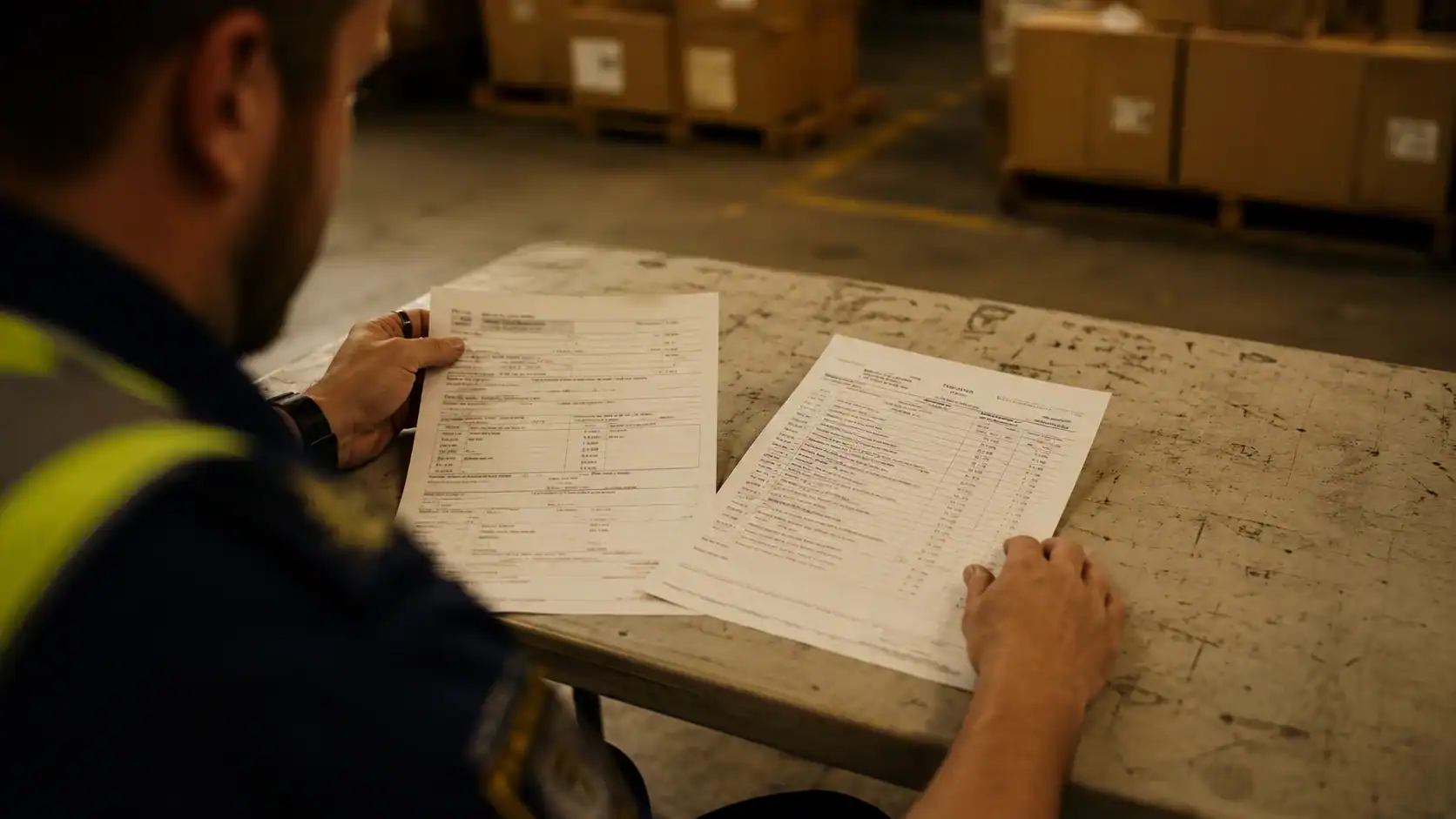
The B534 is one page; the packing list might run to twelve. The two sit side by side on a folding table at the depot. The inspector reads them the way a geologist reads rock layers, not for individual items, but for the pattern: a consistent vocabulary across both documents, room-by-room organisation, ages noted where they help, ownership history that does not need explaining. The shipments that flow through this step are the ones where the paperwork describes the cargo before anyone has to open a box. The shipments that pause are the ones where the inspector has to reconstruct the description from the goods themselves.
Australia’s UPE concession can materially improve the customs position for qualifying household and personal goods. That makes it important. But the real value comes from understanding its limits as clearly as its benefits.
A customs concession is not the same as a low-friction shipment. The cleanest moves are the ones where concession eligibility, documentation quality, and biosecurity preparation all line up together, including a BICON pre-check where the conditions exist (see our explainer on Australia’s Biosecurity Import Conditions database).
The cleanest decision rule for UPE eligibility is to walk the inventory once with a single filter: “Have I personally owned and used this item for at least twelve months before shipment?” If yes, document it and it rides with the household effects. If the answer is “no”, “maybe”, or “I just bought it for the move”, set it aside and decide deliberately: ship at duty, sell or donate locally, or use it for twelve months before shipping if the timeline allows. The expensive UPE surprise is almost never the rule itself. It is mixed shipments where a small share of dutiable items contaminates the rest of the consignment because the inventory does not separate them clearly.
Why the Concession Is Assessed Item by Item, Not Shipment by Line
The concession does not apply to a shipment as a single decision. It applies to each item inside it separately. Take a container that includes twelve months of owned furniture, a newly purchased television bought the week before departure, and a set of tools intended for resale. It is not one eligible shipment or one ineligible one. It is three separate assessments, and the outcome for one item does not affect the outcome for another. This is the choice the concession makes, and it is worth naming directly: it exists to relieve duty on genuine relocation of a person’s own established possessions, not to relieve duty on a shipment merely because most of it qualifies.
The practical failure mode is not dishonesty. It is deciding by shipment instead of by item. Consider an importer who lists “household goods” as a single line on the inventory, with a new appliance folded into the middle of a genuinely owned collection. They have not hidden anything, but they have made the officer’s job harder and their own claim weaker. If an inventory cannot show, item by item, which goods meet the ownership test, it invites a slower, more conservative read of the whole shipment. When an inventory separates owned-and-used items from anything bought in the last twelve months, priced and listed on its own line, it lets the concession do exactly what it was built to do, and nothing more.
We plan your move around the customs test and the biosecurity one.
Tell us what’s in the container and we help you sort owned-and-used from newly bought before you ship: fixed pricing, no hidden costs.
Related reading: DAFF Biosecurity Requirements for Australian Imports: By Product
Related reading: Moving from France to Australia: How to Ship Your Belongings
Frequently Asked Questions
What is the Unaccompanied Personal Effects concession in Australia?
It is a customs concession pathway for certain personal and household goods that arrive separately from the traveller, usually as sea or air cargo during a relocation move.
Does the concession mean I pay no charges at all?
No. It can improve the customs-duty and GST position for qualifying goods, but it does not remove possible biosecurity inspection, treatment, storage, or other operational costs.
Do all household goods qualify automatically?
No. Ownership and use history matter, and shipments that mix different categories of goods can create a more complex customs answer than people expect.
Why does the B534 form matter so much?
Because authorities use it, together with the packing list, to understand what is in the shipment and what customs or biosecurity response may be needed.