
ChAFTA brings the duty to zero on most lines, but that doesn’t clear helmet and protective-equipment standards, e-bike battery Dangerous Goods rules, or the ISPM 15 wood-treatment requirement, and each applies independently.
China is the origin country for the majority of sporting goods sold in Australia. From recreational equipment and gym supplies to bicycles, team sports gear, and outdoor products, Chinese manufacturing dominates the global sporting goods supply chain. The country’s production capacity, tooling infrastructure, and cost structure have made it the default origin for a category that ranges from AUD 5 skipping ropes to AUD 5,000 carbon-frame road bikes.
But the China sporting goods lane has several compliance layers that catch importers unprepared. Australian product safety standards for helmets and protective equipment are mandatory. E-bikes and battery-powered equipment carry Dangerous Goods obligations for freight and RCM requirements for electrical components. Wooden sporting goods interact with DAFF biosecurity rules. And the ChAFTA duty benefit (worth 5% on most lines) requires compliant origin documentation from the Chinese exporter. Importers weighing origin markets should also see the USA sourcing guide for how AUSFTA and RCM-versus-FCC requirements differ.
Why China Dominates Sporting Goods Manufacturing
China’s concentration in sporting goods is not simply a labour cost story. The country has built deep tooling and component infrastructure (aluminium extrusion, carbon fibre fabrication, injection moulding, electronic assembly) that produces economies of scale unavailable elsewhere. A bicycle frame manufacturer in Guangdong is within an hour of carbon fibre suppliers, component manufacturers, paint shops, and export logistics. The vertical integration of the supply chain means faster iteration, lower minimum order quantities, and a shorter path from product design to a finished container-ready shipment.
The dominant production regions for sporting goods include Guangdong province (bicycles, gym equipment, outdoor furniture, team sports gear), Zhejiang province (fishing equipment, camping gear, outdoor sports), and Fujian province (footwear including sports footwear). Some higher-end equipment (particularly in golf, tennis, and cycling) has production concentrated in smaller specialist clusters that have developed around specific brands’ supply chains over decades.
For an Australian importer sourcing from China, origin concentration also means that most Chinese sporting goods exporters are already well-versed in Australian compliance requirements: ChAFTA Certificates of Origin, ACCC product standards documentation, and Australian electrical safety standards. This is not true of all origins. A Chinese sporting goods supplier who has been exporting to Australia for five years has seen these compliance requirements before; a new supplier from a less established origin may not.
ChAFTA Duty Rates for Sporting Goods
Under the China-Australia Free Trade Agreement (ChAFTA), which entered into force in December 2015, the vast majority of sporting goods originating in China are eligible for 0% duty when imported into Australia. The MFN (Most Favoured Nation) rate for most sporting goods categories is 5%, which means a compliant ChAFTA claim saves 5% of the customs value on every shipment.
On a commercial shipment with an AUD 80,000 customs value, that is AUD 4,000 in duty avoided, directly improving the importer’s margin or pricing position. Over a year of regular imports, the cumulative saving is significant and fully justifies the administrative investment in maintaining compliant ChAFTA documentation.
To claim ChAFTA preference, the Chinese exporter must provide a Certificate of Origin in the format prescribed by the DFAT ChAFTA framework. The certificate can be issued by an authorised Chinese body (typically the China Council for the Promotion of International Trade, CCPIT, or China Inspection and Quarantine, CIQ) or, for approved exporters, self-declared. The certificate must be presented to the customs broker at the time of lodging the import declaration.
The ChAFTA Rules of Origin for sporting goods generally require that the goods were manufactured in China and that a minimum level of processing or value addition occurred there. For finished goods produced entirely within China from Chinese inputs, this is straightforward. For goods that involve inputs from third countries (South Korean carbon fibre, Taiwanese components), the value addition calculation requires attention.
Importers should also confirm classification under the ABF Schedule 3. Sporting goods span several HS chapters: Chapter 94 (furniture and sporting furniture), Chapter 95 (toys, games, sports equipment), Chapter 64 (footwear), Chapter 87 (bicycles and e-bikes), Chapter 85 (electrical sporting equipment). The ChAFTA rate schedule must be checked for each specific HS subheading, as a small number of categories have different treatment.
Australian Product Safety Standards
Australia’s product safety regime for sporting goods is administered by the ACCC under the Australian Consumer Law. Mandatory safety standards apply to specific product categories, and supplying goods that don’t meet those standards is a strict liability offence, regardless of whether the importer knew about the non-compliance.
The key mandatory standards relevant to sporting goods imported from China include:
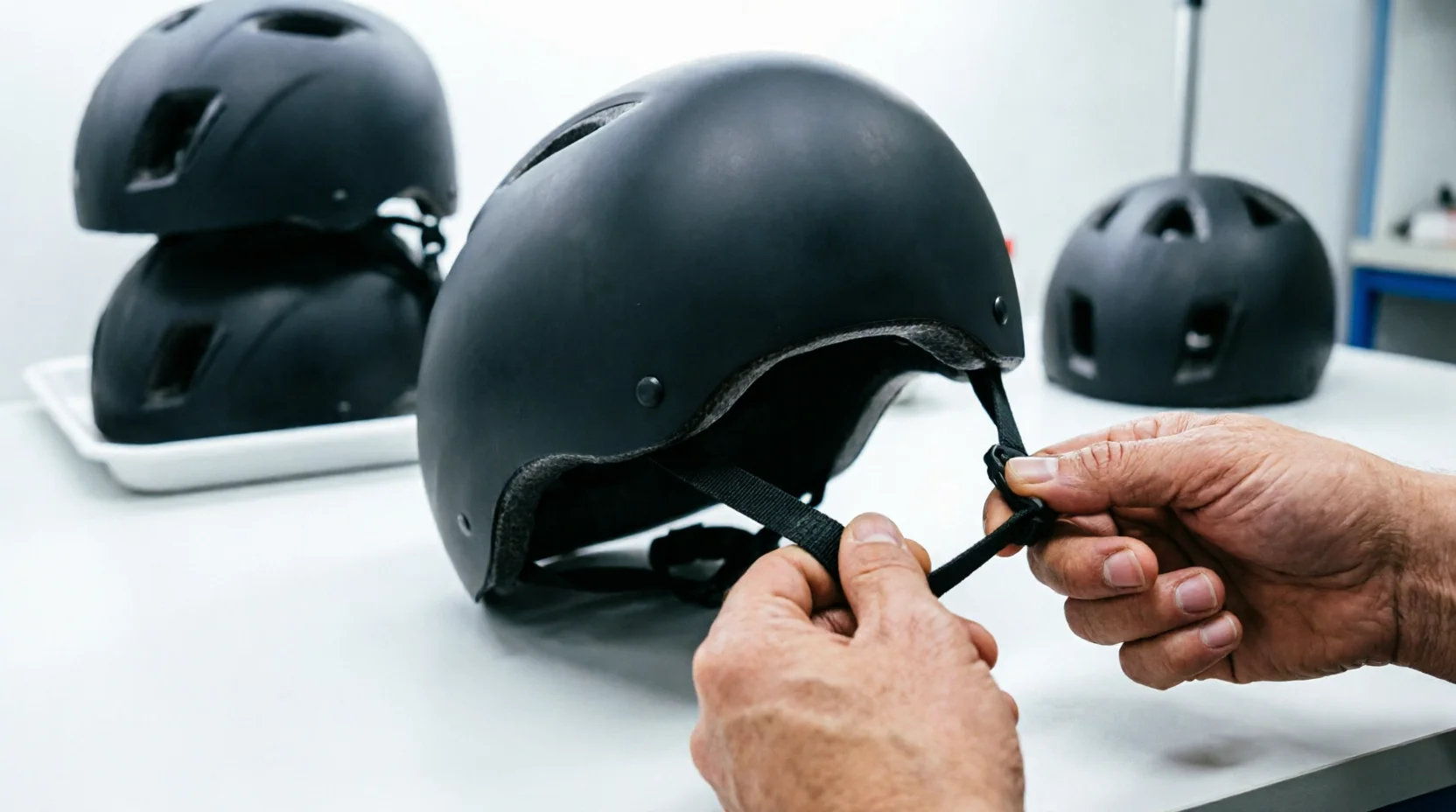
- Bicycle helmets: AS/NZS 2063:2008 (or equivalent listed international standard). All bicycle helmets sold in Australia must comply. The ACCC conducts regular market surveillance and has issued recalls for Chinese-manufactured helmets that failed the standard.
- Children’s toys: ACCC Mandatory Standard for Toys (EN 71 or equivalent). Applies to any product marketed for children under 14, which includes many sporting items such as junior equipment, pool toys, and inflatable sports goods.
- Portable swimming pools and barriers: AS 1926.2 and related standards for pool safety barriers where relevant to water sports or backyard sporting equipment.
- Electrical equipment: Regulatory Compliance Mark (RCM) for all in-scope electrical goods, covering product safety and electromagnetic compatibility (EMC) testing. Applies to powered gym equipment, e-bikes, electric scooters, and any sporting product with a mains power input or rechargeable battery with a charger sold in Australia.
The ACCC Product Safety website maintains the current list of mandatory standards and bans. Importers should check this list against their product range before placing orders, not after. A test report from a Chinese exporter issued by an unaccredited laboratory is not sufficient to demonstrate compliance with an AS/NZS standard. The laboratory must be NATA-accredited or an accredited equivalent for the specific standard.
Bicycle Helmets and Protective Equipment
Bicycle helmets are among the most frequently recalled consumer goods in Australia, and China is the dominant origin for recalled units. The common failure modes in ACCC helmet recalls include:
- Impact absorption below AS/NZS 2063 threshold (the helmet doesn’t meet the deceleration test).
- Retention system failure (chin strap or fastening mechanism breaks under load).
- Misleading AS/NZS markings on non-compliant helmets (the standard number printed without valid certification).
The importer, not the Chinese exporter, bears the legal liability for non-compliant helmets sold in Australia. A recall notice naming the importer, combined with the cost of retrieving and destroying distributed stock, typically costs AUD 50,000–250,000 depending on the volume distributed before detection.
Due diligence for helmet imports must include: a test report from an accredited laboratory for the specific AS/NZS 2063 standard, confirmation of which production batch the test report covers, and a factory inspection to verify that production quality is consistent with the tested sample. Helmets are not a category where a supplier’s self-declaration of compliance is acceptable.
The same principle applies to other protective equipment sold with safety claims: knee pads, wrist guards, skateboard and cycling helmets. Where a product is marketed as protective equipment in an activity context, the ACCC treats it as a safety-relevant product regardless of whether a specific mandatory standard exists. Misleading safety claims trigger ACL enforcement powers independently of the product standards regime.
E-Bikes, Electric Scooters, and Lithium Battery Compliance
Powered sporting equipment (e-bikes, electric scooters, electric skateboards) is one of the fastest-growing import categories on the China-Australia lane. It is also one of the highest-compliance-complexity categories.
Dangerous Goods classification in freight. Lithium-ion batteries above certain watt-hour thresholds are classified as Dangerous Goods Class 9 under IMDG (sea) and IATA (air) regulations. E-bike batteries typically fall in the 200–700 Wh range: well above the thresholds for unrestricted shipment. For sea freight, DG declaration is required; the battery must be packed in accordance with IMDG packing instructions (typically P903 or P908 for lithium batteries with equipment), and documentation must correctly identify the battery chemistry, watt-hour rating, and quantity. Errors in DG documentation can result in port refusal of the container or, in severe cases, seizure.
RCM for electrical components. The e-bike’s charger, and any in-scope electrical components, must carry the Regulatory Compliance Mark. The RCM certifies that the product has been tested to Australian electrical safety and EMC standards. The testing and certification is managed through the Electrical Regulatory Authorities Council (ERAC) framework. A Chinese e-bike exported without RCM-certified electrical components cannot legally be sold in Australia. The certification process typically takes 6–12 weeks and should be completed before the first commercial shipment.
Motor power and road classification. Australian states regulate e-bikes by motor power output. A pedelec (pedal-assist) e-bike with a motor not exceeding 250W nominal output is classified as a bicycle in most Australian states and can be ridden without registration or a licence. An e-bike with a motor exceeding 200W (throttle-controlled, seated) or 250W (pedelec) may be classified as a motor vehicle, requiring registration and insurance in some jurisdictions. For importers marketing e-bikes through retail channels, the motor power specification must be correctly represented, and marketing materials should reflect the state-by-state regulatory position to avoid creating misleading impressions about where the product can legally be used.
Wooden Sporting Goods and ISPM 15
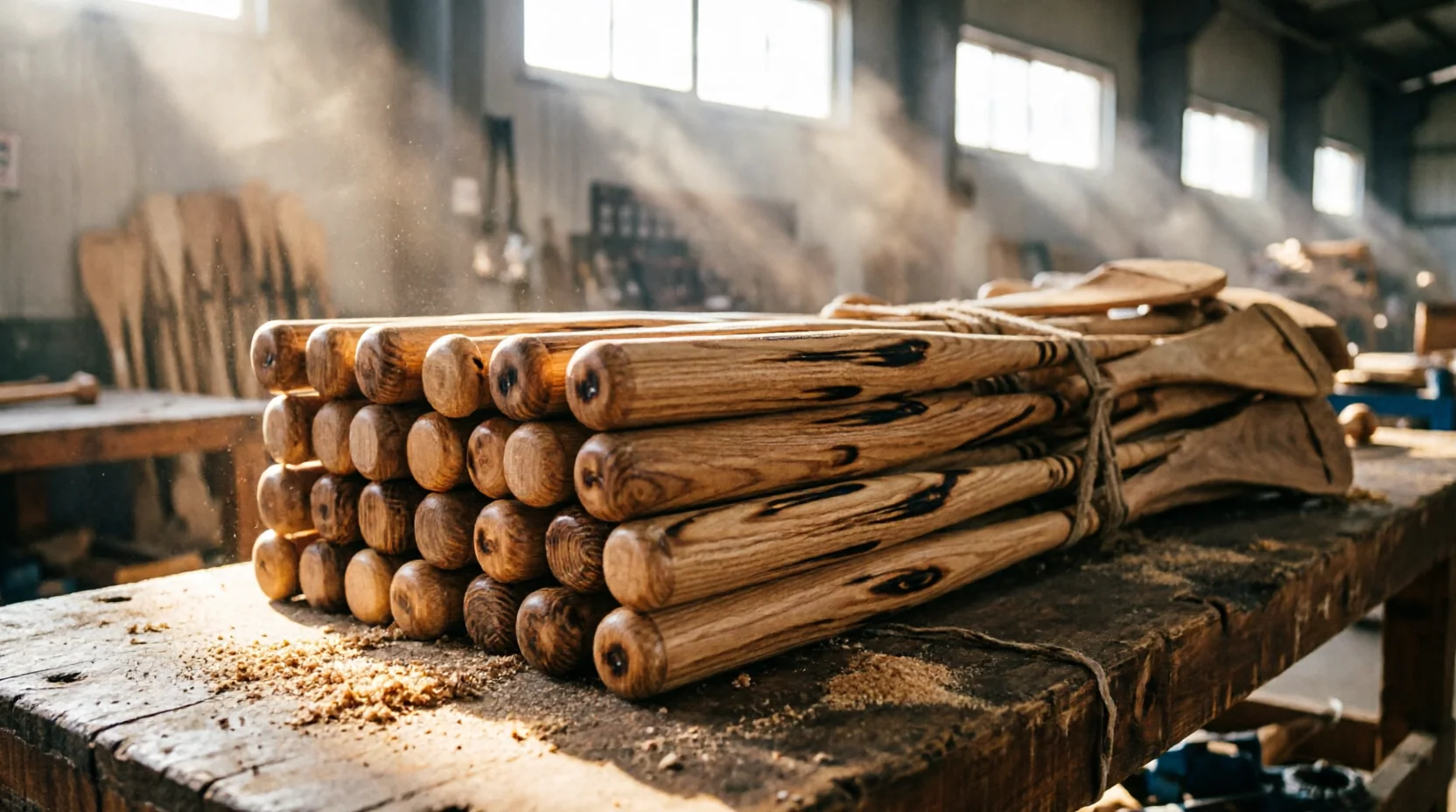
Sporting goods with solid wood components (cricket bats, wooden hockey sticks, baseball bats, wooden gym equipment, wooden table tennis tables) interact with DAFF’s biosecurity import requirements. China is a high-risk origin for timber biosecurity, and wooden sporting goods from China are subject to documentary and potentially physical inspection on arrival.
The ISPM 15 phytosanitary treatment standard (heat treatment to 56°C core temperature for 30 minutes, or methyl bromide fumigation as a less common alternative) applies to solid wood used in product components and to the wood packaging (pallets, crates, dunnage) used to ship any cargo. The IPPC mark stamped on treated timber is the required evidence of compliance.
Importers of wooden sporting goods should check the DAFF BICON database for the specific biosecurity import conditions applicable to their HS code and origin. Some wooden sporting goods require a phytosanitary certificate from the Chinese competent authority (the entry-point quarantine service); others require only that the ISPM 15 treatment mark be present. The BICON conditions are specific to product type and origin and must be checked for each new product category.
Untreated solid wood components arriving from China without the IPPC mark will be held for treatment on arrival at the importer’s cost (typically AUD 2,000–5,000 per container for treatment plus associated holding costs) or destroyed. Biosecurity clearance is a mandatory step before goods can be released, and the costs of failing it fall on the importer.
Pre-Shipment Inspection for Quality-Critical Goods
Sporting goods purchased from Chinese manufacturers involve a production quality risk that is different from off-the-shelf commodity goods. A gym equipment set, a bicycle, or a set of tennis racquets represents a finished product with performance and safety requirements. Defects discovered after a container arrives in Australia (incorrect specifications, finish failures, component quality below sample standard) are expensive to remediate and potentially impossible to return.
Pre-shipment inspection (PSI) is the systematic solution. A third-party inspection firm (Bureau Veritas, SGS, Intertek, or a specialist sports goods inspector) visits the factory before goods are loaded, inspects a statistically representative sample of the production run, and issues a report covering:
- Quantity verification (carton count and unit count match the purchase order).
- Specification check (dimensions, materials, finish, colour match against approved sample).
- Functional testing (for products with moving parts or electrical components).
- Safety check (AS/NZS compliance markings present, no obvious safety defects).
- Packing check (carton strength, inner packing protection, label accuracy).
PSI on a full container typically costs USD 300–600 for a standard commercial inspection, plus travel time if the factory is remote from a major city. Against the cost of receiving a container of defective sporting goods (the freight, the duty, the storage, the disposal), the inspection cost is negligible. The inspection also creates leverage with the supplier: defects identified pre-shipment can be remediated before loading; defects identified after arrival are the importer’s problem to negotiate.
The question that decides whether PSI is worth the cost is what job the product actually has to do. A bicycle helmet is hired to protect a skull in an impact: if the shell delaminates or the foam density is wrong, the product has failed at the one thing it exists for, and a customer only discovers that failure at the worst possible moment. A branded gym towel is hired to be a towel; a colour mismatch is a minor annoyance, not a functional failure. Spend the inspection budget where the product’s job is safety-critical or performance-critical, and accept a lighter check on goods where the worst-case outcome is a customer complaint rather than an injury.
Finding and Qualifying Chinese Sporting Goods Suppliers
The dominant sourcing channel for Chinese sporting goods remains Alibaba and Global Sources for initial contact, with trade shows (China Import and Export Fair, Guangzhou) as the primary venue for relationship development and competitor scanning. Neither channel provides automatic quality assurance: they are discovery tools, not qualification tools.
Supplier qualification for a sporting goods import program involves several steps beyond the initial sample exchange:
- Factory audit: an on-site assessment of production capability, quality management systems, and compliance documentation. For first-order volumes above AUD 30,000, a self-conducted or third-party audit is standard practice. The audit should verify that the factory produces the same goods sold at the quoted price, not that they source from subcontractors who do.
- Documentation review: can the supplier provide ChAFTA Certificates of Origin? Do they have existing test reports for the Australian standards relevant to the product category? Have they exported to Australia before?
- Reference checks: other importers in the same category who use this supplier. A Chinese exporter with a track record of compliant Australian supply is materially less risky than one exporting to Australia for the first time.
The broader China import process covers supplier due diligence in detail across categories. For sporting goods specifically, the ACCC’s history of recalls from Chinese-origin products makes compliance-focused supplier qualification essential, not optional.
Freight Structure: LCL for Samples, FCL for Commercial Orders
The freight structure for sporting goods from China depends on the volume and density of the goods.
Lightweight sporting goods (inflatable equipment, foam padding, textile products, most team sports consumables) are volume-heavy and reach FCL thresholds on a CBM basis without approaching container weight limits. A 40-foot container carries 55–60 CBM of usable volume and around 26 tonnes of payload; for light sporting goods, CBM will be the binding constraint.
Dense goods (weight training equipment, dumbbells, kettlebells, weight plates, steel gym equipment) reach weight limits before volume limits. A 20-foot container holds 21–22 tonnes; at 100 kg/CBM average density for weight training goods, that’s approximately 20–22 CBM before the container is at maximum payload. Planning a dense-goods container requires a weight calculation as well as a volume calculation.
For initial orders and sample shipments, LCL freight is cost-effective. The LCL rate on China-Australia lanes runs approximately AUD 120–200 per CBM, making it appropriate for shipments below 12–15 CBM. Above that threshold, FCL economics improve on a per-CBM basis, particularly on high-volume direct services between Chinese ports (Ningbo, Shanghai, Guangzhou) and Australian ports (Melbourne, Sydney, Brisbane).
Transit time on direct China-Australia services runs 18–24 days port-to-port. Transshipment services (via Singapore or Port Klang) add 5–10 days and are typically used to fill vessel space gaps. They are not the default for regular commercial imports.
Landed Cost Breakdown for a Sporting Goods Container
Understanding the full landed cost is the foundation of wholesale pricing for any import program. For a typical 40-foot container of sporting goods from China to Australia, the cost stack looks like this:
- FOB China value: AUD 80,000 (the customs value for duty purposes).
- Freight (ocean + origin charges): AUD 3,500–5,500 for a 40-foot FCL on China-Australia lanes, including origin handling and documentation fees.
- Marine insurance: approximately 0.3–0.5% of cargo value, so AUD 240–400 on an AUD 80,000 shipment.
- Import duty: 0% with valid ChAFTA Certificate of Origin. Without ChAFTA, 5% MFN = AUD 4,000. This is the most controllable cost differential.
- GST: 10% on the sum of customs value + duty + 10% of freight and insurance = approximately AUD 8,400–8,600 (recoverable by a registered business via input tax credit).
- Customs brokerage: AUD 250–450 for a standard import entry, higher for complex multi-line or DG declarations.
- Destination charges (port fees, container release): AUD 300–600.
- Cartage to warehouse: AUD 400–800 for metro delivery.
Total landed cost on an AUD 80,000 FOB order with ChAFTA: approximately AUD 92,500–95,000. Without ChAFTA: approximately AUD 96,500–99,000. The ChAFTA benefit of AUD 4,000 is recoverable simply by obtaining and submitting the correct origin documentation: the highest-return, lowest-effort compliance task in this import program.
Swift Cargo ships commercial and personal cargo from China to Australia, including LCL and FCL sea freight and full customs brokerage. Get a quote for China-to-Australia freight.
Common Problems on the China Sporting Goods Lane
Four failure patterns account for the majority of problems encountered by importers of Chinese sporting goods:
1. Product safety non-compliance discovered after arrival. The most costly failure mode. A shipment of helmets, children’s sports equipment, or electrical sporting goods that fails Australian mandatory standards cannot be sold and must be destroyed or exported. Detection typically occurs either at an ABF examination (for flagged categories) or in post-sale ACCC market surveillance. The remediation cost is the full freight, duty, and clearance cost (sunk) plus the destruction or export cost. Prevention: verify test reports against the specific AS/NZS or mandatory standard before placing the order; do not accept supplier self-declarations as compliance evidence for regulated categories.
2. ChAFTA claim rejected on documentation grounds. A ChAFTA Certificate of Origin issued in a non-compliant format, or without a valid authorisation number, will not be accepted by ABF. The result is duty assessed at MFN (5%) with no right to claim the preferred rate retrospectively in most circumstances. Prevention: confirm with the Chinese exporter that they are authorised to issue ChAFTA CoOs, and request a sample of their CoO format before placing the order.
3. Lithium battery DG documentation errors. E-bike and powered equipment shipments without correct Dangerous Goods declarations are refused by carriers or detained at origin ports. Common errors include incorrect watt-hour rating, wrong packing instruction reference, and missing shipper’s declaration. Prevention: ensure the Chinese exporter has a compliant DG packing and documentation procedure before booking the shipment; confirm with the freight forwarder that the DG declaration is reviewed before container booking.
4. ISPM 15 packaging failures on wooden goods. The outer cartons or pallets used to pack wooden sporting goods arriving without the IPPC treatment mark trigger DAFF inspection and potential treatment or destruction. Prevention: include ISPM 15 packaging compliance as a specific purchase order requirement and verify before the container is loaded.
Frequently Asked Questions
What duty rate applies to sporting goods from China under ChAFTA?
Most sporting goods originating in China are eligible for 0% duty under ChAFTA, versus 5% MFN without ChAFTA. The saving on a AUD 50,000 order is AUD 2,500. A valid ChAFTA Certificate of Origin from the Chinese exporter is required to claim the preference.
Do bicycle helmets from China need AS/NZS 2063 certification?
Yes. Bicycle helmets sold in Australia must comply with AS/NZS 2063:2008 or a listed equivalent international standard. An accredited laboratory test report is required. Supplier self-declarations are not sufficient. Non-compliant helmets are prohibited from sale and subject to ACCC recall.
What are the lithium battery requirements for e-bikes from China?
E-bike batteries are Dangerous Goods Class 9 in both sea and air freight and require compliant DG documentation and packaging. In Australia, the e-bike’s charger and electrical components must carry the RCM mark. Motor power specifications must reflect state road regulations: a pedelec e-bike above 250W may be classified as a motor vehicle in some states.
Do wooden sporting goods require ISPM 15 treatment?
Solid wood components in sporting goods from China are subject to DAFF biosecurity requirements. Many categories require ISPM 15-treated wood (IPPC mark) for both product components and outer packaging. Check DAFF BICON for the specific conditions by HS code and origin before shipping.
What is the LCL vs FCL threshold for sporting goods from China?
For most sporting goods, LCL is cost-effective below 12–15 CBM. Above that threshold, FCL per-CBM rates on China-Australia lanes become competitive. Dense goods (weight equipment) reach container payload limits before volume limits: weight calculation is required in addition to CBM for these categories.