
Nobody writes the guide for going home. Search for “moving to Thailand” and you’ll drown in checklists, visa explainers, and packing lists. Search for the reverse journey and you get almost nothing, which is strange, because return moves make up somewhere between 20 and 30 percent of all expat relocations. Every year, thousands of people who arrived in Bangkok or Chiang Mai or Phuket with a modest shipment pack up and head back to Europe. And nearly all of them are surprised by the same thing.
They arrived with 40 boxes. They’re leaving with 70.
Thailand does that to a household. Five years in, you own a teak dining table you had made in Chiang Mai, two rattan armchairs from Chatuchak, a wardrobe of tailored suits and shirts from a shop on Sukhumvit that knows your measurements by heart, framed art from a gallery in Charoenkrung, ceramics from Lampang, and (this is the one that causes trouble) perhaps a Buddha image or two picked up along the way. The outbound move was about fitting your old life into a container. The return move is about deciding what your Thai life becomes, and then getting it past two sets of customs authorities who care about very different things.
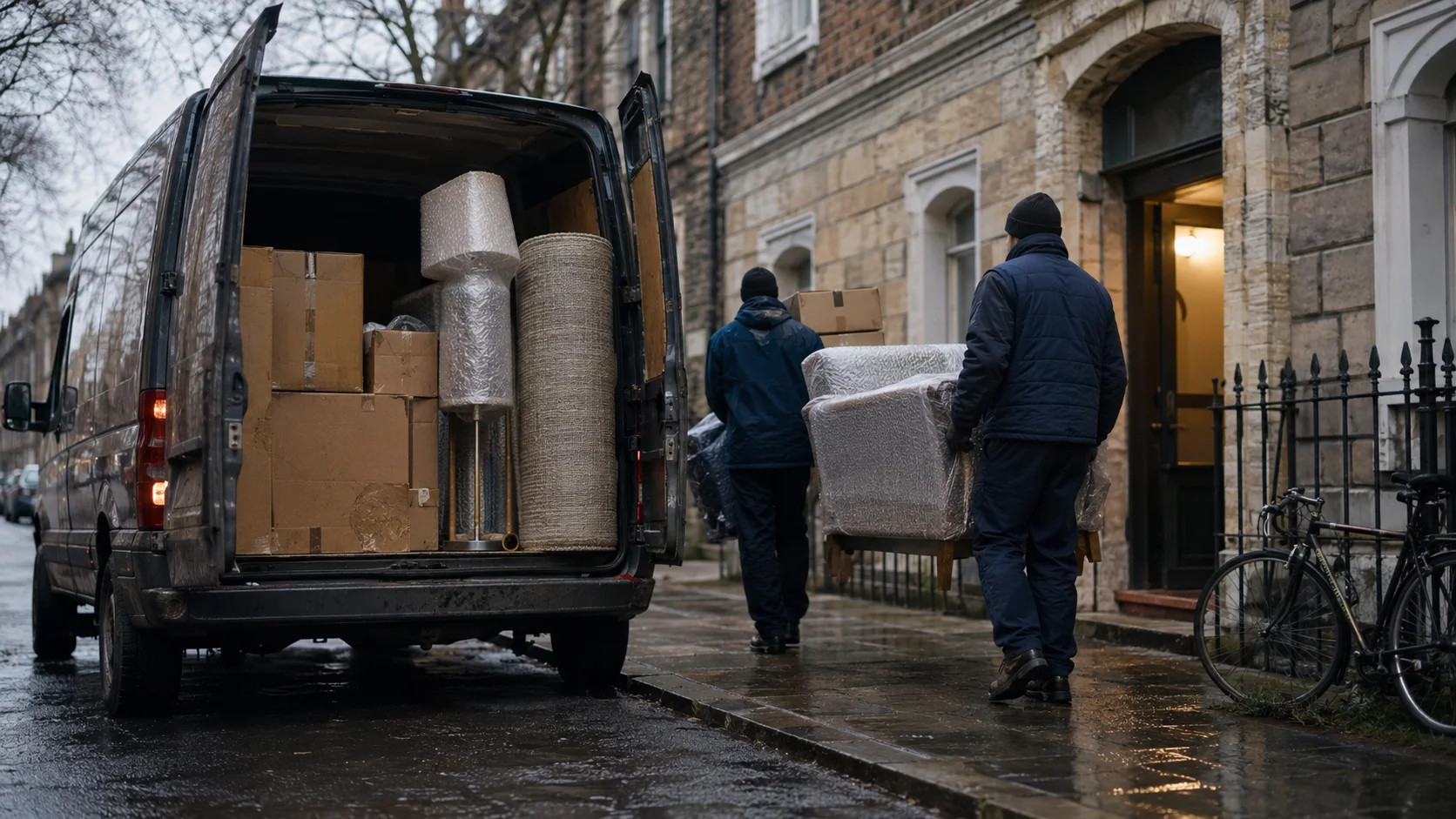
Why a Return Move Is Not an Outbound Move in Reverse
It’s tempting to assume the return trip is just the arrival movie played backwards. It isn’t, for three structural reasons.
First, the volume problem. Households grow in Thailand. Custom furniture is affordable enough that people commission it. Tailoring is a lifestyle. Art and handicrafts accumulate. A couple who shipped 8 cubic metres to Bangkok routinely ships 12 to 15 cubic metres home. That changes your container mathematics, your quote, and sometimes your LCL-versus-FCL decision entirely.
Second, the duty question flips. On the way out, you were fighting Thailand’s used-household-goods rules and the infamous conditions attached to duty-free import. On the way home, the question becomes whether the UK or your EU country will let your goods in without VAT and duty. The good news: both the UK and the EU operate personal property relief schemes for returning residents. The bad news: they come with paperwork, deadlines, and prior-use requirements, and the UK version must be applied for before your shipment sails.
Third, the pressure moves to the paperwork, not the calendar. Moving to Thailand, many people raced a six-month import window tied to their visa and arrival date. Leaving Thailand, there’s no equivalent countdown on the Thai side: you can export personal effects more or less whenever you like. But that looseness is deceptive. Export documentation still needs to be right, and two categories of goods need permits that take weeks to obtain. The clock on a return move is set by the Fine Arts Department and by HMRC, not by your flight date.
The Thai Export Side: Easier Than You Think, With Three Big Exceptions
Let’s start with the reassuring part. For the ordinary contents of a home, exporting used personal and household effects from Thailand is straightforward. Thai Customs wants a packing list, a copy of your passport, and export declarations handled by your forwarder or moving company. Used clothing, books, kitchenware, standard furniture, electronics: none of it attracts export duty, and none of it needs special permission. Compared with the import gauntlet you may remember from your arrival, the exit is calm.
Then come the exceptions. These are not small-print exceptions. They are seize-your-shipment exceptions.
1. Buddha images and religious artifacts, the big trap
This is the single most common serious problem in Thailand-to-Europe household shipments, so let’s be blunt about it: Buddha images require an export permit from the Fine Arts Department, full stop. Not just antique Buddhas. Not just valuable ones. The law covers Buddha images and religious artifacts generally, and Thai authorities treat the export of Buddha images without a licence as a criminal matter, not an administrative one.
The practical reality has some texture. Small amulets worn for personal protection are generally tolerated in personal luggage. But that carved Buddha head you bought at a riverside market? The seated bronze figure on your bookshelf? If it’s packed into your sea shipment and the container is inspected (and household-goods containers do get X-rayed and inspected), the image can be seized and you can face fines or prosecution. Your entire shipment sits in limbo while it’s sorted out, racking up storage charges.
What to do instead, in sequence:
- Inventory every religious item in your home before your survey. Statues, images, temple rubbings, shrine pieces, anything depicting the Buddha.
- Apply to the Fine Arts Department for an export licence for each piece you intend to ship. The process involves an application, photographs, and physical inspection of the items. Budget four to six weeks.
- If a permit is refused (which happens for pieces judged to be genuine antiquities or of religious significance), the item stays in Thailand. Gift it, sell it locally, or donate it to a temple. Do not “bury it in a box of linens.” Movers are asked to do this constantly and reputable ones will refuse, because they carry the liability too.

2. Antiques and objects of art
Separately from religious items, antiques and objects of art over specified ages require Fine Arts Department export permits. If you’ve collected Ayutthaya-period ceramics, old Lanna woodcarving, or anything a dealer described as “genuine antique,” assume it needs a permit until the Fine Arts Department says otherwise. Reproductions and contemporary handicrafts are fine (and this covers most of what expats actually own), but the burden is on you to demonstrate it. Keep purchase receipts that describe items as reproductions. Some sellers of quality reproductions provide certificates for exactly this reason; if yours did, pack those certificates in your document file, not in the container.
3. Wildlife, plants, and CITES-listed materials
The third trap is anything made from protected species or restricted woods. CITES (the Convention on International Trade in Endangered Species) governs this internationally, and both Thailand (export) and the EU/UK (import) enforce it. The items that catch returning expats:
- Ivory, in any form, including old carved pieces and inlay. Effectively unmovable, don’t attempt it.
- Certain rosewoods and protected timbers. Siamese rosewood (phayung) is heavily protected. Most commercial teak furniture is fine (plantation teak is not CITES-restricted), but exotic hardwood pieces deserve a check.
- Orchids and live plants. Wild-collected orchids are CITES-listed; even nursery plants face phytosanitary rules on the EU side. The practical answer for houseplants is almost always: rehome them in Thailand.
- Anything with animal parts: horn, shell, certain feathers, taxidermy, some traditional medicine ingredients.
The rule of thumb: if an item’s charm comes from what it’s made of rather than who made it, check before you pack it.
The European Import Side: Relief Schemes That Reward the Organised
Here’s where the return move gets genuinely valuable to plan properly. Both the UK and every EU member state allow returning residents to import their household goods free of duty and VAT, but only if you qualify, apply correctly, and can prove it.
UK: Transfer of Residence (ToR1), apply BEFORE you ship
If you’re returning to the UK, the mechanism is HMRC’s Transfer of Residence relief, applied for via the ToR1 form. Get this right and your household shipment enters free of import duty and VAT. Get it wrong and you’re looking at 20% VAT on the assessed value of everything in the container: on a £30,000 household, that’s £6,000 for a paperwork failure.
The sequencing matters more than anything else, so here it is stripped to essentials:
The wrong order: book the movers → pack → ship → land at Felixstowe → discover you need a ToR reference number to clear customs → apply → wait weeks while the container sits in storage at £40–£80 a day → pay storage, possibly pay VAT anyway if the application stumbles.
The right order: apply for ToR1 online with HMRC as soon as your return is confirmed → receive your unique reference number (allow several weeks; processing times vary with season) → give the number to your forwarder → ship → the shipment clears against your reference with no VAT, no duty, minimal drama.
The qualifying conditions echo rules you’ll remember from Thailand, which makes them easy to internalise:
- You must have lived outside the UK for at least 12 consecutive months.
- You must have owned and used the goods for at least 6 months before the move, so that dining table commissioned a month before departure doesn’t qualify, even though everything else does. (Non-qualifying items can still be shipped; they’re just declared and taxed separately.)
- You must be transferring your normal place of residence to the UK and import the goods within 12 months of arrival.
- You cannot sell or dispose of the relieved goods within 12 months of import without telling HMRC.
Alcohol and tobacco are excluded from the relief. Vehicles have their own rules within ToR. And note the pleasing symmetry: Thailand asked for evidence you’d used goods abroad before letting them in duty-free; the UK asks for exactly the same thing in the opposite direction.
The relief works identically whichever country you leave from. For the four qualifying clocks sequenced against the shipment itself, see our guide to ToR1 relief on a Hong Kong to UK move.

EU: returned-resident and transfer-of-residence schemes, country by country
Every EU member state implements the same underlying EU customs relief for people transferring their normal residence from outside the EU, but the administration is national. Moving to the Netherlands, you’ll deal with Dutch customs’ household-effects procedure; Germany, France, Spain, and the rest each have their own forms and quirks. The common skeleton:
- 12 months’ residence outside the EU (your Thai years qualify comfortably).
- 6 months’ prior ownership and use of the goods.
- Import within 12 months of establishing residence in the EU.
- No sale of relieved goods for 12 months after import.
- Full exemption from customs duty and import VAT when conditions are met.
Unlike the UK’s pre-approval model, several EU countries process the relief at the point of import rather than in advance, but you should never treat that as permission to wing it. Ask your destination country’s customs authority (or have your forwarder confirm) exactly which documents are needed and whether any pre-registration applies. The Netherlands, for example, expects a completed household-effects declaration and evidence of deregistration abroad; France wants a detailed inventory in French with a declared-value column and a certificate of change of residence.
The evidence file: build it before you leave Thailand
Whichever destination, the relief stands or falls on proving you actually lived in Thailand. This is the step people skip because it feels bureaucratically paranoid. It isn’t. Customs officers reviewing a relief claim want documents, and Thai documents are hard to obtain retroactively from a sofa in Surrey.
Before you leave, scan and file:
- Your lease agreements or condo ownership papers covering the full period.
- Work permit and employment contract, or business registration.
- Visa pages and extension stamps: photograph every relevant passport page.
- 90-day report receipts, TM30 records if you have them.
- Thai bank statements and utility bills spanning the years: a sample per year is fine.
- Receipts for major possessions, especially anything bought in the last two years, to demonstrate the 6-month use condition.
One returning couple we worked with kept a single A4 folder labelled “Proof We Lived Here” from year one of their Thai posting. Their ToR1 application was approved without a single follow-up question. The counter-example: a client who had binned his old leases during a Marie Kondo phase spent six weeks reconstructing his residence history through embassy letters and employer statements while his container waited.
Ship It or Sell It? The Honest Audit of a Thai Household
Now the emotional part. Not everything that made sense in a Thonglor condo makes sense in a Manchester terrace or an Amsterdam apartment, and shipping costs mean every cubic metre should earn its passage.
Before the category detail, it is worth noticing that most people never actually make this decision. “Bring what matters and sell the rest” can never be proved wrong, only left unmet, so it defers every hard call to the week the packers are standing in the living room. A real choice has two halves. The first is what you are deliberately not taking, named in advance and specifically: the veneered wardrobe, the second sofa, the rice cooker that costs €40 to replace. The second is what the volume you do keep is buying you: a house that feels like yours in week two rather than month four. If your list could not turn out to be wrong on either count, it is not a plan yet, and the container will end up sized by inertia.
Furniture: the reverse humidity shock
Everyone worries about tropical humidity ruining furniture on the way to Thailand. Fewer people think about the reverse problem, which is real: furniture built and acclimatised in 70–80% humidity now lives in a centrally heated European home running at 30–40% humidity in winter. Wood loses moisture, shrinks, and (if it was built with tight joinery for a tropical climate) cracks.
- Solid teak: generally ships well. Teak is dimensionally stable and oily; it’s the reason it survives on boat decks. Quality teak pieces are worth shipping and worth more in Europe than you paid in Thailand. Expect minor movement; keep pieces away from radiators for the first winter and consider a room humidifier.
- Rattan and wicker: fine. Light, durable, and increasingly fashionable in Europe. Its low weight also makes it cheap to ship per piece.
- Veneered and MDF-core furniture: sell it. Tropical-spec veneer work is the most likely category to delaminate or crack in dry heated air, and its resale value in Europe doesn’t justify the freight.
- Custom pieces with sentimental value: ship them, but tell your mover. A good packer will crate high-risk items and advise on acclimatisation.
Electronics: the easy direction
Here the return move is kind to you. Thailand runs 220V/50Hz; the UK and EU run 230V/50Hz. Practically everything electrical you bought in Thailand works in Europe with nothing more than a plug adapter or a changed plug head. (UK-bound movers: Thai two-pin plugs need adapters or rewiring for UK sockets, a five-minute job.) The exceptions to think about are region-locked media gear and any appliance nearing end of life: freight cost versus replacement cost still applies to a seven-year-old TV.

Tailoring and textiles
Ship all of it. Custom clothing is featherweight in freight terms and irreplaceable in value terms: the Bangkok tailor who has your patterns is not coming with you. Same for Thai silk, bedding, and textiles. Pack with silica desiccant and ensure everything is bone dry before wrapping; a damp cotton shirt in a sealed carton for seven weeks is how mildew stories start.
The sell-in-Thailand market: better than you’d expect
Bangkok has a permanently churning expat second-hand market: Facebook groups for departing-expat sales, consignment dealers, and the incoming cohort of arrivals furnishing condos. Quality Western-brand appliances, gym equipment, and furniture sell fast and at respectable prices, precisely because imported goods are expensive locally. The practical play: list your sell pile six to eight weeks before your pack date, sell the big-ticket items early, and live lightly for the last month. Every 1,000 baht you recover is paired with a cubic metre you don’t pay to ship.
Routes, Timing, and Why Westbound Is the Cheap Direction
Your shipment will almost certainly load at Laem Chabang, Thailand’s main deep-sea container port, about 90 minutes southeast of Bangkok. From there, westbound services run to the major North European gateways: Felixstowe and London Gateway for the UK, Rotterdam for the Netherlands and much of the continent, plus Hamburg and Antwerp.
Transit time: the Cape adds the same 10–14 days in both directions
With mainline services still routing around the Cape of Good Hope rather than through the Suez Canal, plan on 45 to 60 days port to port from Laem Chabang to North Europe. The Cape detour adds roughly 10 to 14 days versus the old Suez schedules, and it penalises both directions equally: your return takes about as long as your outbound move did under the same routing. Door to door, add a week or two at each end for packing, export formalities, import clearance, and delivery: call it 9 to 11 weeks for FCL, and up to 12 to 14 weeks for LCL once consolidation time is counted.
The backhaul economics: why your return quote may pleasantly surprise you
Here’s a piece of freight economics that works in your favour. The Asia–Europe trade is structurally imbalanced: the heavy money flow is manufactured goods moving from Asia to Europe, so carriers price the headhaul (Asia→Europe) at a premium and reposition capacity accordingly. You might think that makes your direction the expensive one, but household goods pricing doesn’t track raw container spot rates one-to-one. What a returning expat actually buys is a door-to-door move, and on the personal-effects side the westbound lane is deep, competitive, and well-served: every major mover and consolidator runs regular Thailand→Europe groupage because the returning-expat flow is constant.
The practical upshot, seen across years of quotes: a Thailand-to-Europe household move frequently prices at or below the equivalent Europe-to-Thailand move, sometimes by 10–20%, particularly for LCL where westbound consolidations depart weekly rather than fortnightly. Destination charges in Europe (port fees, customs handling, delivery labour) are higher than Thai destination charges were, which claws some of that back, but the freight leg itself is rarely the pain point people expect. Moral: get real quotes rather than assuming your outbound invoice, and get them from at least three movers.
LCL or FCL for a return move?
Return moves skew smaller than outbound ones in one specific way: many returners sell heavily before leaving. The typical return volume lands between 8 and 15 cubic metres, squarely in the awkward zone.
- Under ~12 m³: LCL usually wins. You pay per cubic metre in a shared container. Weekly consolidations from Bangkok to the UK and Rotterdam keep waits short, but remember your goods are handled more (packed into and out of a groupage container) and transit is longer.
- Above ~13–15 m³: price a 20ft container (33 m³ capacity). FCL gives you a sealed box, less handling, faster transit, and a flat rate, and because of the backhaul dynamics above, 20ft westbound rates are often close enough to a large LCL charge that the container wins on value.
- Consolidation timing matters for ToR. If you’re UK-bound and your ToR1 approval is pending, an LCL shipment’s flexible departure can actually help: you can hold your goods a week or two for the reference number without paying container demurrage. Coordinate this with your mover explicitly.

Pets: The Long Lead Item on the Whole Move
If a dog or cat is coming home with you, start here, because the pet timeline is longer than the freight timeline.
Thailand is an unlisted country under both EU and UK pet travel rules, which triggers the full high-rabies-risk protocol:
- Microchip (ISO standard), then rabies vaccination after chipping.
- Rabies antibody titer test (blood draw) at least 30 days after vaccination, processed by an EU-approved laboratory.
- A mandatory 3-month wait from the date of the successful blood draw before the pet may enter the EU or UK.
- Export health certification from Thailand, issued via the Department of Livestock Development, with the final vet checks and paperwork done in Bangkok in the days before the flight. Use a Bangkok vet who does export work weekly, not occasionally; the certificate choreography is unforgiving.
- For the UK: entry via approved routes with a tapeworm treatment for dogs 24–120 hours before arrival. Pets from Thailand generally travel as manifest cargo, not in-cabin.
Add it up and the minimum realistic runway is four months from “we’re moving” to wheels-down, and that’s if the titer test passes first time. If your previous EU pet passport lapsed while in Thailand (rabies boosters missed), the clock restarts; a still-valid passport with unbroken boosters can shorten the process, but for most multi-year Thailand stays, assume the full protocol. Budget €1,500–€3,000 per pet for testing, certification, an IATA crate, and cargo freight.
Worked Example: A Bangkok-to-London Return Move
Meet a composite but realistic case: a couple returning to London after six years in Bangkok. They’ve sold the veneered bedroom set and the old appliances, and they’re shipping 14 m³: teak dining set, rattan lounge furniture, books, kitchenware, clothing including a serious tailoring collection, art, and boxes of the life you accumulate. They chose a 20ft FCL after LCL quotes came in close.
- Pre-move sale proceeds (appliances, bedroom set, motorbike): recovered ~£1,800
- Professional export packing, materials, origin handling (Bangkok): £1,400
- Fine Arts Department permit for two Buddha images (agent-assisted): £150
- Ocean freight, Laem Chabang → London Gateway, 20ft: £1,700
- UK destination charges (port, terminal, customs clearance handling): £950
- Customs duty and VAT with approved ToR1: £0 (without ToR relief, VAT alone on a £28,000 household: ~£5,600)
- Delivery and unpacking, London Zone 3, normal access: £650
- Transit insurance at 2.5% of £28,000 declared value: £700
Total: roughly £5,550 door to door (about £3,750 net of the pre-move sales) over a door-to-door timeline of about ten weeks. The same shipment to Amsterdam prices similarly on freight (Rotterdam destination charges run slightly lower than UK), with the Dutch household-effects relief replacing ToR1. And notice the single biggest line item on the whole sheet is the hypothetical one: the £5,600 of VAT that a timely ToR1 application made vanish. Paperwork is where the money is on a return move.
The Return-Move Timeline: Working Back from Moving Day
4 months out: Pets: vaccination status check, titer test booked. Decide destination country and confirm which relief scheme applies.
3 months out: Apply for UK ToR1 with HMRC (or confirm your EU country’s procedure and document list). Inventory religious items and antiques; lodge Fine Arts Department permit applications. Get three moving quotes and book a surveyor.
2 months out: Build the residence-evidence file: scan leases, work permits, visa pages, bank statements. Start selling the not-shipping pile. Confirm ToR reference received or chase it.
1 month out: Finalise inventory with the mover, flag high-risk wood pieces for crating. Final pet vet appointments scheduled. Sell the last big items; arrange condo handover.
Pack week: Documents (permits, ToR reference, evidence file, passports) travel with you, never in the container. Photograph everything as it’s packed.
Arrival + 10 weeks: Delivery. Keep relieved goods for 12 months before selling; keep the humidifier running near the teak for the first heated winter.

Five Mistakes That Define Bad Return Moves
- The unpermitted Buddha in box 47. The classic. An image packed “because it’s just decorative” gets flagged at export inspection; the container is held, storage charges mount, and the owner faces a legal process in a country they’ve already left. Permit it or leave it: there is no third option.
- ToR1 gets applied for after the ship has already sailed. The container arrives at Felixstowe before the reference number exists. Quayside storage at £40–£80 per day turns a free relief into a four-figure bill, and a rushed application invites rejection. Apply the week your return is confirmed.
- Shipping tropical-spec furniture into central heating. The veneered cabinet that survived seven weeks at sea splits open in February beside a radiator in Leeds. Audit wood furniture honestly: solid teak and rattan yes, tropical veneer and MDF no.
- No evidence of residence abroad. Leases binned, work permits returned, passport renewed with the old stamps inside it. The relief claim then rests on reconstruction: slow, stressful, sometimes unsuccessful. Scan everything before you fly.
- Buying furniture for the new home from Thailand, then claiming relief on it. That gorgeous table commissioned two months before departure fails the 6-month use test. Ship it by all means, but declare it honestly as a new item; hiding it inside a relieved shipment risks the relief on everything else.
Swift Cargo runs the westbound Thailand-to-Europe lane regularly, including the Fine Arts Department and ToR1 paperwork this guide walks through. Get a quote for shipping from Thailand to France and we’ll confirm your relief eligibility before you book.
Sources
- HMRC, Transfer of Residence relief (ToR1) guidance: gov.uk
- Council Regulation (EC) No 1186/2009, EU system of reliefs from customs duty: eur-lex.europa.eu
- UK CITES import/export permit guidance (ivory, rosewood, antiques): gov.uk
Related Reading
- Shipping from Europe to Thailand: Routes, Costs and Timelines
- Duty-Free Import of Household Goods into Thailand: The Rules Explained
- Storage Options When Moving to or from Thailand
- Moving Pets Between Europe and Thailand: The Complete Process
- International Removals to Thailand: Choosing the Right Service
- Moving from Europe to Thailand: The Six-Layer Cost
- Moving Back to the UK from Portugal: What Returners Need to Know
Give the constraint above a name and it gets easier to plan around: call it the pet clock, not the freight clock. Everything else in a return move, the container, the customs relief scheme, even the house search, can compress under pressure if it has to. Three things cannot compress at all: a rabies antibody titer test, the mandatory three-month wait after a successful blood draw, and export certification timed to a Bangkok vet who does this work every week. Four months, minimum, and that’s the optimistic version. Most people plan a move by asking “when do we want to arrive,” then working backwards. A move with a pet needs the opposite question asked first: when does the pet clock start, because that date, not your preferred moving day, is the one that actually sets the calendar for everyone else.
Frequently Asked Questions
Do I pay import duty when moving back from Thailand to the UK or EU?
Usually not, if you qualify for relief. The UK’s Transfer of Residence (ToR1) scheme and the EU’s returned-resident provisions both exempt household goods from duty and VAT, provided you lived abroad at least 12 months, owned and used the goods for at least 6 months, and import within 12 months of returning. The UK application must be lodged before your goods ship.
Can I export a Buddha image or statue from Thailand?
Only with an export permit from the Thai Fine Arts Department. This applies to images regardless of age or value, not just antiques. Small personal amulets are generally tolerated, but statues and images in a container without a permit risk seizure and prosecution. Allow four to six weeks for the permit.
Is shipping from Thailand to Europe cheaper than the other way?
Often yes, particularly for LCL. The westbound personal-effects lane is deep and competitive, with weekly consolidations, and return-move quotes frequently come in 10–20% below the equivalent eastbound move. European destination charges claw some of that back, so always compare full door-to-door quotes.
How long does a sea shipment from Bangkok to London or Amsterdam take?
With Cape of Good Hope routing, plan on 45–60 days port to port, or roughly 9–11 weeks door to door for a full container and 12–14 weeks for LCL once consolidation is included.
What documents prove I lived in Thailand for duty relief?
Leases or condo papers, work permits, visa and extension stamps, 90-day report receipts, Thai bank statements, and utility bills covering your years abroad. Scan everything before departure: these documents are very difficult to reconstruct from Europe.
Can my dog or cat fly back to Europe from Bangkok?
Yes, but Thailand’s unlisted status means the full protocol applies: microchip, rabies vaccination, a titer test at least 30 days later, then a 3-month wait from the blood draw before entry, plus Thai export certification. Start at least four months before your flight.