
An eCommerce business importing 200 SKUs from China for resale in Australia faces a freight problem that has almost nothing in common with a traditional importer buying 200 SKUs for a retail chain. The product range might overlap exactly. The supplier origin might be identical. But the freight architecture (how you size shipments, how often you order, how you think about safety stock, where you hold inventory) is different in almost every dimension that matters to your landed cost.
How eCommerce Importing Differs From Traditional Retail
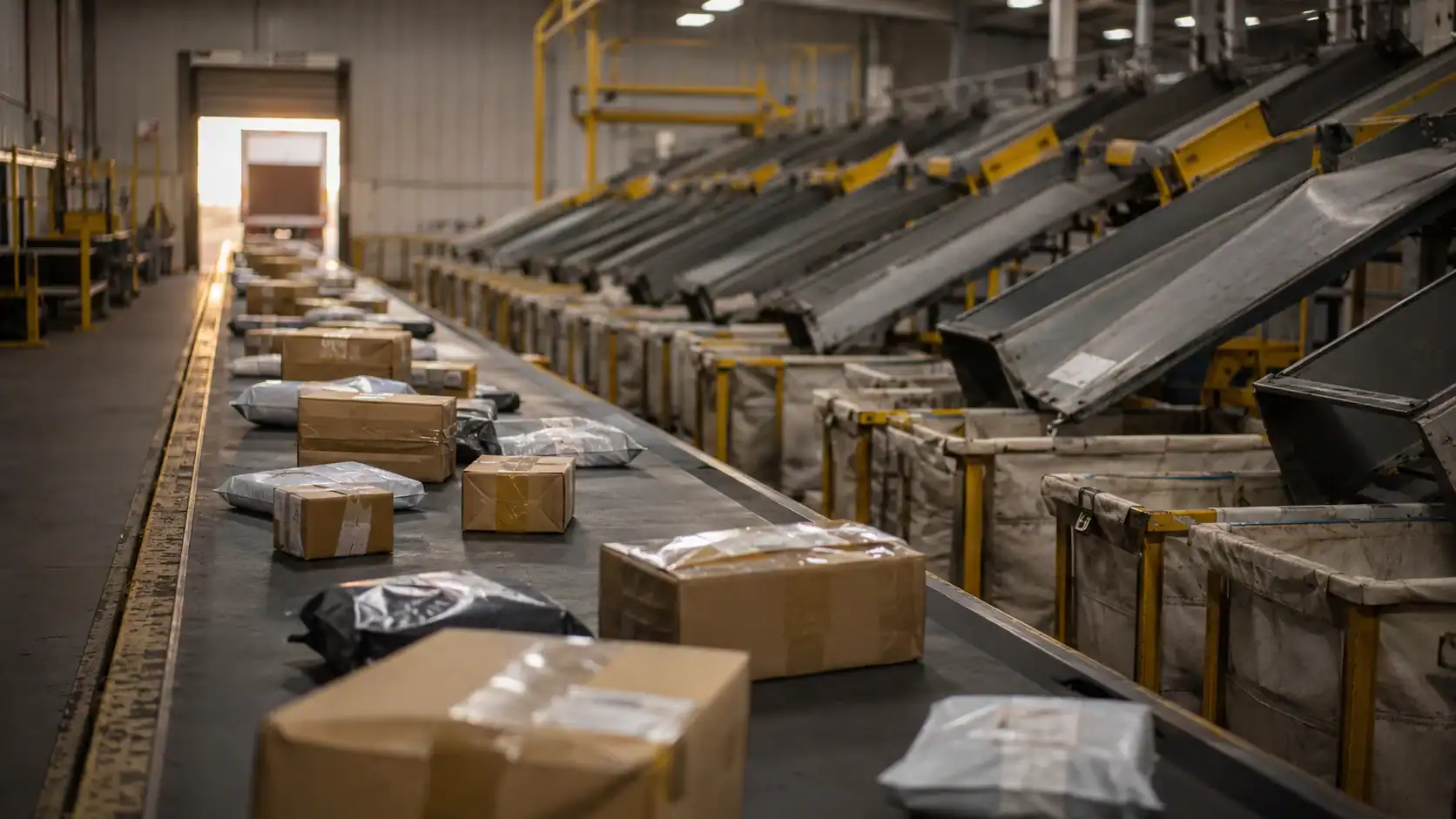
The most significant structural difference is replenishment frequency vs order volume. A traditional importer might order 3–4 times per year in large volumes: seasonal buys that fill containers. An eCommerce business typically needs to replenish more frequently in smaller quantities to avoid tying up capital in slow-moving inventory while keeping fast-moving SKUs in stock.
This creates a fundamental tension with freight economics. Sea freight is efficient when you fill a container. LCL (shared container) freight is efficient when you have consistent, predictable volumes. Neither mode is ideal for a business whose per-SKU order quantity fluctuates weekly based on sales velocity, customer reviews, and the latest algorithm change on the marketplace where you sell.
The second difference is return rates. Physical retail returns run at 8–12% for most categories. eCommerce returns run at 15–30%, and for categories like clothing and footwear, returns can reach 40%. Every returned unit represents a duty and freight cost that has already been incurred. At 25% return rates on a high-volume SKU, the return cost becomes a meaningful component of true landed cost that most eCommerce importers underestimate at the planning stage.
The third difference is demand volatility. eCommerce sales can spike dramatically during sale events (EOFY, Click Frenzy, Black Friday, Christmas) and the timing of those spikes can shift by weeks from year to year. The standard safety stock formula (safety stock = Z × σ × √L, where Z is the service level factor, σ is demand standard deviation, and L is lead time in the same unit) uses historical demand standard deviation. For an eCommerce business running its first EOFY sale, there is no historical peak data to calibrate against.
GST on Imported Goods: What Changed in 2018
Before 1 July 2018, goods imported into Australia with a customs value below AUD 1,000 were exempt from customs duty and GST. This threshold, called the low-value imports threshold, meant that overseas retailers selling directly to Australian consumers had a cost advantage over local businesses that paid GST on all sales.
The ATO’s own guidance confirms the mechanics: GST applies to low-value imported goods, with the collection point shifting from the border to the point of sale for consignments valued at or under the low-value threshold. See the ATO’s GST and imported goods guidance for current thresholds.
From 1 July 2018, GST applies to imported goods regardless of value. The threshold itself survives for customs duty: a consignment of AUD 1,000 or less still clears free of duty, and GST on it is collected by the overseas seller or marketplace at point of sale instead of at the border (ABF, GST and other taxes). For eCommerce importers bringing goods in commercially, meaning goods intended for resale rather than personal use, the change affects two things:
1. Your import cost structure. You pay 10% GST on the customs value plus the cost of freight and insurance at import. This GST is recoverable as an input tax credit through your Business Activity Statement, provided you are registered for GST. The net cost after GST recovery is nil, but you need the working capital to pay it at the border and recover it quarterly.
2. Your competitive position. Overseas retailers selling directly to Australian consumers now face the same GST obligation you face when you import for resale. The 10% price disadvantage that offshore competitors previously enjoyed is structurally reduced. This levels the playing field, but it does not eliminate the landed cost gap. Overseas competitors may still undercut on base price.
Customs duty rates are set by product HS code and are unaffected by the 2018 change. A clothing item at 10% duty pays 10% duty before and after 2018.

Product Safety and Compliance for Online Retailers
Under the Australian Consumer Law (ACL), if you import goods into Australia for supply, you are the importer of record and bear full product safety responsibility. This applies whether you sell through your own website, a marketplace like Amazon Australia, or a combination of channels. The platform does not assume your product safety obligations. You do.
The consequences of non-compliance are significant:
- The ACCC can issue a compulsory recall that requires you to stop supply within 2 business days
- You are personally liable for any injury or property damage caused by a non-compliant product
- Marketplace channels (Amazon, eBay) increasingly require importers to demonstrate compliance through uploaded test reports before products are listed or during account audits
The most common compliance requirements for eCommerce imports:
Electrical goods: Must carry the Regulatory Compliance Mark (RCM) and comply with the applicable AS/NZS electrical safety standard. The RCM replaced the previously separate C-Tick and A-Tick marks in 2016. Goods without RCM cannot be legally supplied in Australia. For eCommerce importers sourcing electrical goods from China, the CE mark (European standard) is not a substitute for RCM.
Children’s products: Mandatory safety standards apply to a wide range of children’s products including toys (age group 0–36 months must meet AS/NZS 8124.1), children’s nightwear (flammability requirements under AS/NZS 1249), and certain furniture items. The ACCC maintains a current list of mandatory standards by product category.
Cosmetics and personal care: Regulated under the Industrial Chemicals Act 2019. You may need to notify the Australian Industrial Chemicals Introduction Scheme (AICIS) before importing certain chemical constituents. Some ingredient categories require registration at AICIS before the goods can be lawfully imported.
Country of origin labelling: For food products, Australian Consumer Law requires country of origin claims to be displayed using the mandatory standard mark (the kangaroo logo system). For non-food products like clothing, mandatory country of origin labelling does not apply, but false or misleading country of origin claims are prohibited. If your supplier labels goods “Made in China” and you relabel them, the original labelling must be accurate.

The SKU Proliferation Problem in eCommerce Freight
A traditional Australian importer bringing in one product category from China might have 10–30 SKUs. They consolidate all SKUs into one container, order seasonally, and the math works cleanly: at 15 CBM they ship LCL; at 28 CBM they convert to FCL.
An eCommerce business in the same product category might have 150 SKUs, ranging from hero products (500 units per cycle) to long-tail items (12 units per cycle). The aggregate volume might reach 30 CBM per month, enough for an FCL. But the long-tail SKUs are problematic: you cannot hold 6 months of stock in your warehouse to hit FCL thresholds on those SKUs, because demand for a long-tail SKU can go to zero if a competitor with a better review score takes over the buy box.
The practical solution most experienced eCommerce importers use is supplier consolidation with a fixed order cycle:
- Designate a fixed order cut-off date (e.g., the 1st of every month)
- All POs to the same supplier, regardless of SKU, are submitted on that date
- All goods from that supplier ship in one consolidated LCL or FCL consignment
- Long-tail SKUs with low volume are included in the consolidated consignment without waiting to reach individual FCL thresholds
The trap is circular: full containers, negotiated rates and predictable customs handling only pay off at volume, and you do not reach volume until you have been ordering to a fixed structure long enough to build it. Nobody would run a rigid monthly cut-off as a permanent system. But it is what takes a 50-SKU importer from scattered, uneconomical 2-CBM shipments to a consolidation program with real freight leverage, and after roughly six months suppliers start planning around the cut-off rather than fighting it.
For a business with 150 SKUs across 3 Chinese suppliers in Guangdong, Zhejiang, and Fujian, this approach typically generates 3 monthly consolidations. If the aggregate volume per consolidation exceeds 25–28 CBM, each shipment converts to FCL. Below that threshold, each ships as LCL.
A worked example: an eCommerce business with 50 SKUs across one Guangdong supplier, monthly order cycle, average 0.15 CBM per SKU per order = 7.5 CBM total per month. At LCL rates of AUD 220–280 per CBM Melbourne, that is AUD 1,650–2,100 per month in ocean freight. Doubling the order cycle to bimonthly (15 CBM) halves the shipment frequency with the same freight cost per unit, and if the longer cycle can be extended to every 8 weeks, the 20 CBM volume starts approaching crossover with FCL options.
LCL vs FCL for eCommerce Importers
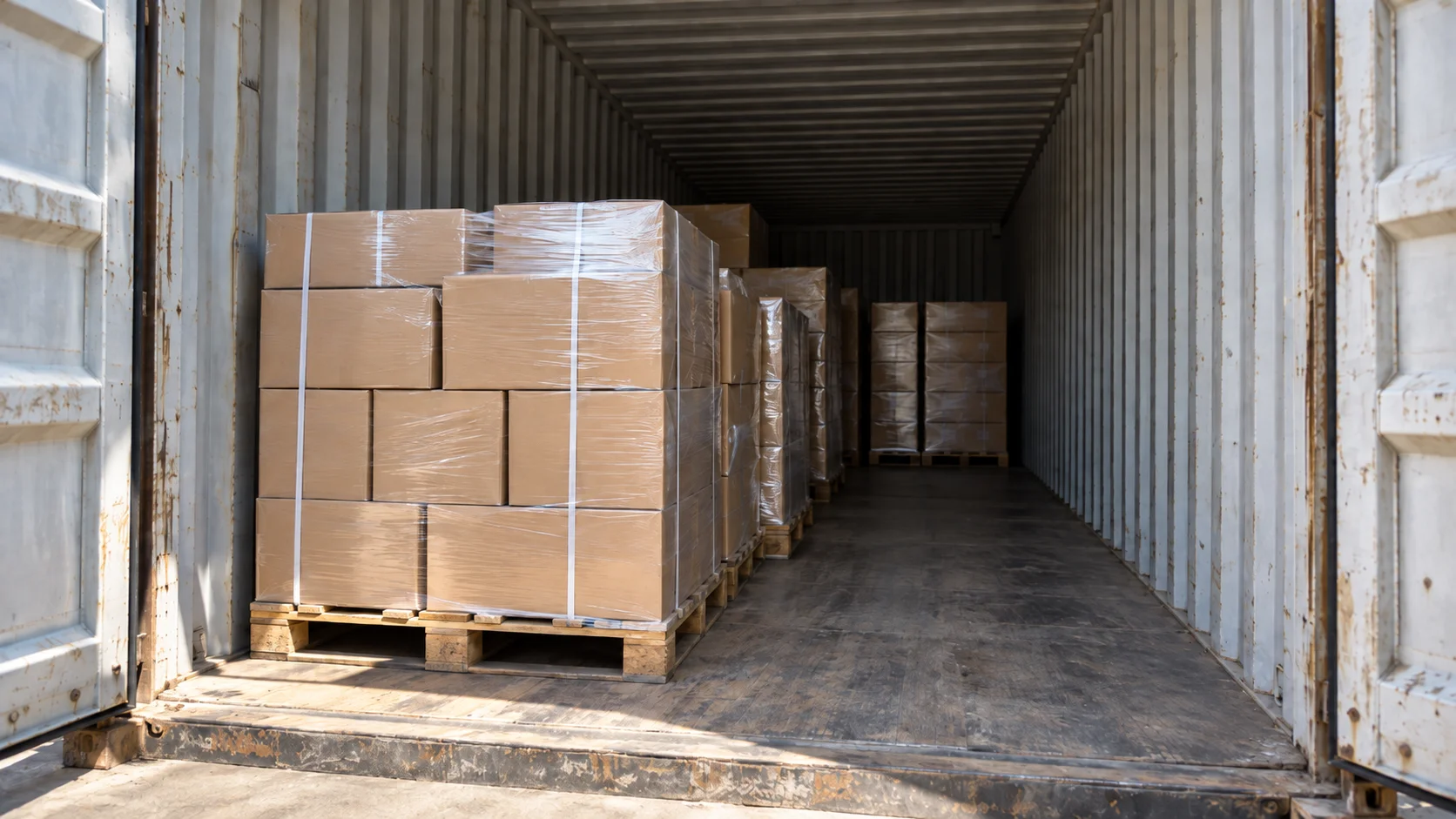
The LCL-to-FCL crossover for eCommerce importers follows the same economics as for any importer, but the decision has additional complexity because of demand volatility. When demand is predictable, the standard crossover analysis applies: compare LCL at market rates (typically AUD 200–300 per CBM Melbourne from China, with origin handling and destination charges on top) against FCL at all-in rates (AUD 3,200–4,500 for a 20ft container, Melbourne, from South or East China).
The actual crossover for a Melbourne importer from Guangdong is approximately 18–22 CBM. Below 18 CBM, LCL is almost always cheaper. Above 25 CBM, FCL is almost always cheaper. The 18–25 CBM band is ambiguous and requires a comparison of actual quotes for the shipment, including origin CFS handling and destination port charges which can vary significantly between LCL services.
The eCommerce-specific complication is transit time reliability. LCL shipments have cut-off dates: your cargo must arrive at the origin CFS by a specific date or it misses the vessel. If your supplier is late by 2 days, you miss the vessel and wait for the next one, typically 7–14 days later. For a fast-moving SKU going out of stock, that delay is costly in lost sales and potentially in marketplace ranking.
FCL shipments avoid this problem. Your container departs when it is ready, not on a fixed vessel schedule. You control the vessel departure date by instructing the freight forwarder when the container is full and ready. This flexibility has real value for eCommerce importers managing unpredictable production timelines.
The key is to structure your PO cycles to group sufficient volume into each LCL consignment rather than shipping multiple small LCL consignments of 2–5 CBM each, which erodes the cost benefit of sea freight vs air.
Lead Time Planning for Demand-Volatile eCommerce
Sea freight transit times from China to Australia run 14–22 days depending on origin port and Australian destination port. Add origin preparation time (7–21 days from PO to ready-to-ship, depending on whether goods are in stock at the supplier or require production), origin customs and loading (3–5 days), and Australian customs clearance and delivery (3–7 days), and the end-to-end cycle is typically 27–55 days.
Standard inventory management would set a reorder point when on-hand stock equals demand during lead time plus safety stock. But eCommerce demand during peak sale periods is not predictable from average demand. A product selling 100 units per week at baseline might sell 400 units per week during a Black Friday campaign. If you set your reorder point using 100 units per week × 6 weeks lead time + safety stock, you will be out of stock for the Black Friday period if you haven’t placed a special pre-peak order.
The practical approach for eCommerce lead time planning:
Identify your peak sale calendar. These are typically EOFY (mid-June to mid-July), Click Frenzy (November), Black Friday/Cyber Monday (late November), and Christmas (dispatch by December 15). These dates are fixed and known well in advance.
Work backwards from each peak. If goods need to be in your warehouse by 1 November for Black Friday, and total lead time is 40 days, the purchase order must be placed by 22 September. If you are already ordering in the standard cycle, you may need an additional pre-peak order placed 12–14 weeks before the peak to ensure stock arrives in time.
Estimate peak demand separately. For your first peak, use a conservative multiplier on current velocity (e.g., 3× baseline for a strong promotional event). For subsequent peaks, use prior-year peak data. Set safety stock for the peak period using peak velocity, not average velocity.
Avoid the temptation to over-stock in anticipation of peaks. Inventory holding costs for an eCommerce business using a 3PL are typically AUD 0.80–2.50 per unit per month depending on product size and 3PL pricing structure. Holding 6 months of stock to cover demand uncertainty costs more in storage fees than the airfreight to replenish if you underestimate demand.
A 3PL that already knows how to receive a full container changes this maths, worth pricing your peak-season volume against the alternative.
3PL vs In-House Warehouse for eCommerce Importers
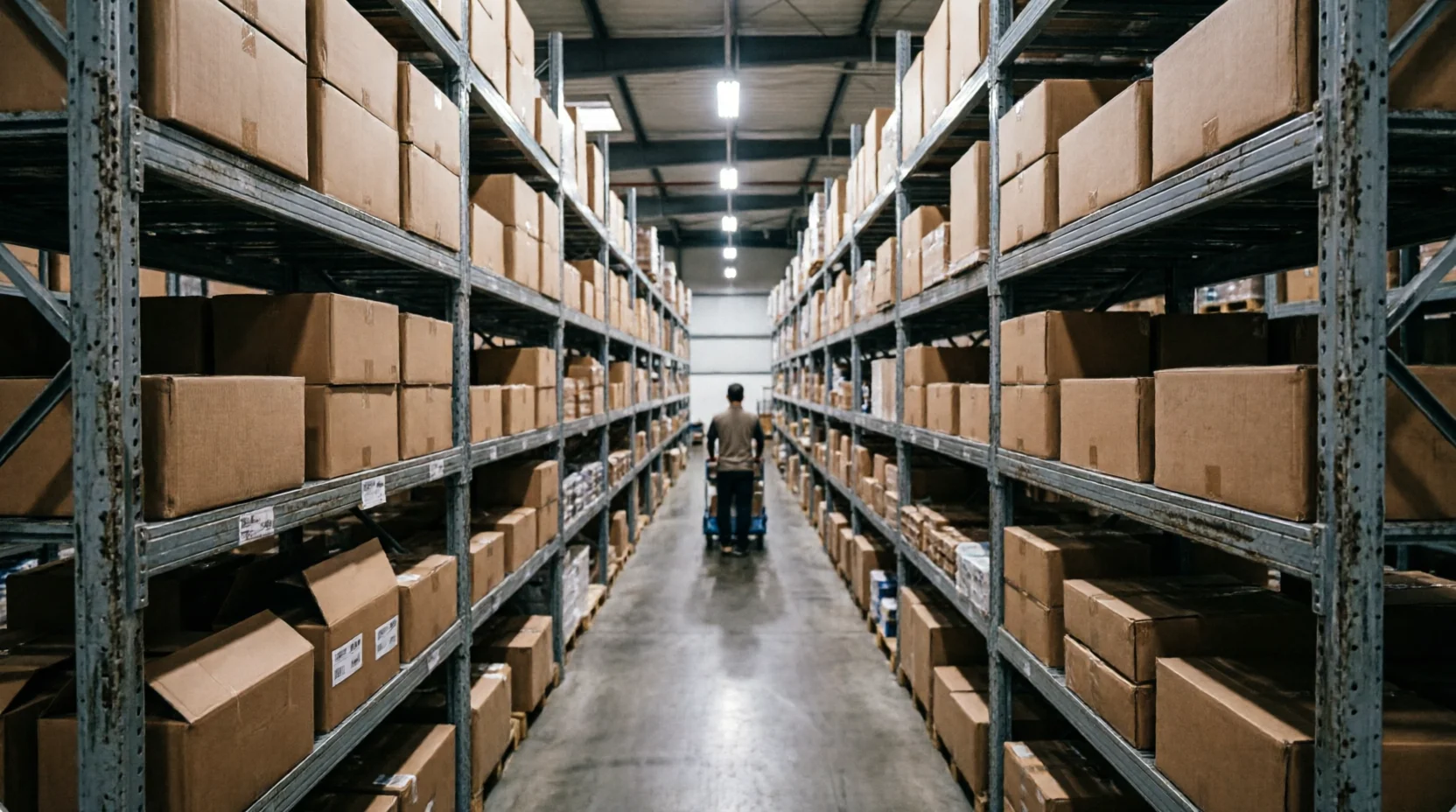
Most eCommerce importers in Australia use a third-party logistics provider (3PL) for warehousing and fulfilment rather than leasing their own warehouse space. The economics generally support this at volumes below 200–400 orders per day. Above that threshold, in-house logistics often becomes cheaper per unit.
The main freight-related consideration when choosing between 3PL and in-house is container delivery. When you import in FCL quantities, your container needs to be delivered to a facility that can receive it: typically a site with a loading dock, container-rated concrete, and a forklift or container ramp. Most commercial 3PLs have these capabilities. Many smaller in-house warehouses do not.
If your in-house warehouse cannot receive a full container directly, the alternative is to have the freight forwarder deliver to a nearby container devanning facility (CFS), unload the container, and cart the palletised goods to your warehouse on a truck. This adds AUD 300–600 to the delivery cost per container and adds 1–3 days to the delivery timeline.
For eCommerce importers shipping LCL, 3PL delivery is simpler. LCL cargo typically arrives as pallets or loose cartons on a standard curtain-sider truck, deliverable to any commercial address. The container delivery complexity is only relevant for FCL importers.
When evaluating 3PLs for eCommerce, the questions specific to importing logistics:
- Can the 3PL receive a 20ft or 40ft container directly at their dock?
- What is their receiving inspection process: do they check quantities and visible damage against the packing list, or unload and scan without checking?
- Can they return goods to your supplier for replacement if a quantity discrepancy or damage is found at receiving?
- What is their on-hand stock reporting frequency and can the report be connected to your eCommerce platform via API?
Calculating True Landed Cost for eCommerce
True landed cost for an eCommerce business includes all costs from supplier to customer-ready stock. Most importers calculate: product cost + freight + duty + GST (recoverable) + customs broker fee + destination cartage. For eCommerce, two additional components are material:
Returns cost: At a 20% return rate on a product with a landed cost of AUD 35 per unit, the returns-related cost per unit sold is AUD 7 (0.20 × AUD 35). This assumes returned goods are not resaleable, so they are either disposed of, relabelled and resold at a discount, or returned to the supplier. If returns are returned to the supplier, duty drawback may recover part of the import duty paid (see below). If returns are disposed of locally, the full landed cost of the returned unit is lost.
Compliance cost: For categories requiring mandatory safety testing (electrical goods, children’s products), the cost of obtaining Australian-compliant test reports from a NATA-accredited laboratory is typically AUD 800–2,500 per product model, depending on the complexity of testing required. This is a one-time cost per model that is amortised across all units imported under that model. At 1,000 units, a AUD 1,500 test cost adds AUD 1.50 to landed cost per unit. At 10,000 units, the same cost adds AUD 0.15.
A complete landed cost calculation for a typical eCommerce imported product (example: electronic accessory, Guangdong origin, Melbourne destination):
- Product cost: AUD 8.00 per unit
- Ocean freight LCL (5 CBM consignment): AUD 250/CBM × 5 = AUD 1,250 ÷ 500 units = AUD 2.50 per unit
- Origin charges (CFS handling, documentation): AUD 450 ÷ 500 units = AUD 0.90 per unit
- Customs duty (10% on customs value): AUD 0.80 per unit
- Customs broker fee: AUD 350 ÷ 500 units = AUD 0.70 per unit
- Destination cartage: AUD 300 ÷ 500 units = AUD 0.60 per unit
- Compliance testing amortisation: AUD 1,500 ÷ 5,000 units annual = AUD 0.30 per unit
- Returns provision (18% return rate at full landed cost): AUD 13.80 × 0.18 = AUD 2.48 per unit
- True landed cost per unit: AUD 16.28
Without the returns provision, the importer might calculate AUD 13.80 and price accordingly. The 18% return rate adds AUD 2.48, a 15% underestimation in landed cost that erodes margin on every unit sold.
Duty Drawback on Returned Goods
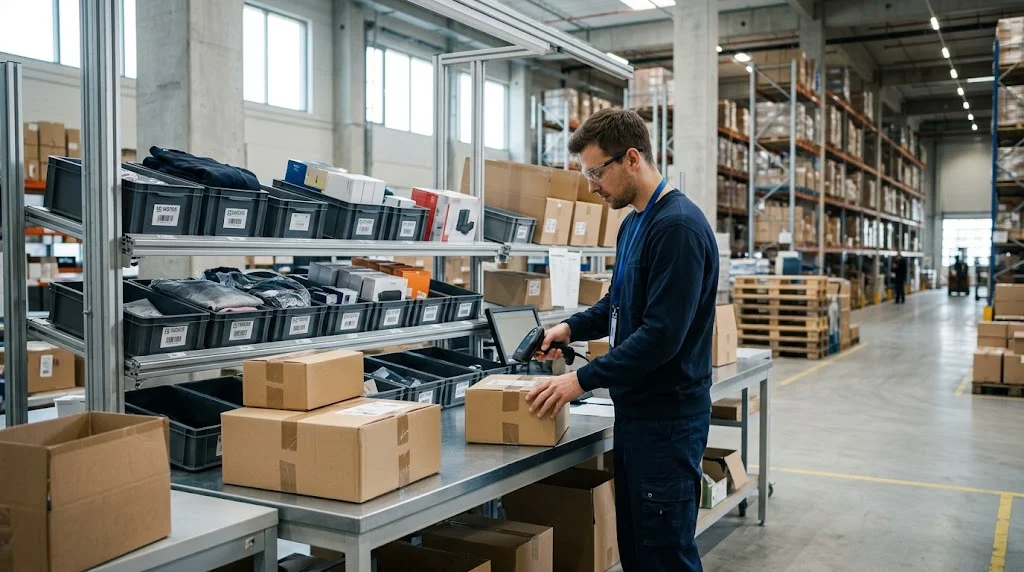
Australian Border Force allows duty drawbacks on goods that are re-exported within 12 months of the original import entry. The application must be lodged within 4 years of import. Drawback is available for customs duty paid at import, not for GST, which is recovered through the normal BAS input tax credit process.
For an eCommerce business returning defective goods to an overseas supplier, the process is:
- The returned goods are declared to ABF at export as a drawback claim
- ABF matches the export to the original import entry
- Duty paid on the original import is refunded, less ABF processing deductions
In practice, duty drawback is economically worthwhile only if your return volumes are material. If you are returning 500 units per quarter and duty per unit is AUD 3, the quarterly drawback is AUD 1,500. The compliance cost of processing a drawback claim (customs broker time, documentation) typically runs AUD 400–600 per claim. At low duty rates and low volumes, the drawback may cost more to process than it recovers.
The calculation threshold: if duty per unit × returned units per period > AUD 800–1,000, drawback is worth pursuing. Below that, absorb the duty as a cost of the returns program.
Choosing the Right Customs Broker for eCommerce
eCommerce importers have different requirements from a customs broker than traditional commercial importers. The key differences:
Product classification volume: A traditional importer might import 5–10 HS codes per year. An eCommerce business adding new product categories regularly might need new HS code classifications quarterly. A broker experienced with high-volume classification work is preferable to one that handles a small number of large importers.
Communication speed: When an ABF query holds a consignment, the response window is often 24–48 hours. For an eCommerce business with a stock-out on a fast-moving SKU, every day of delay has a calculable revenue cost. A broker who responds within hours is worth more than a cheaper broker who responds within days.
Australian Business Register and AICIS familiarity: For eCommerce businesses in cosmetics, personal care, or chemical-adjacent categories, the broker should be familiar with AICIS notification requirements. Getting caught with an AICIS-required notification after you have already imported and sold the goods creates a significant compliance problem.
Ask any prospective customs broker for their average response time to ABF queries and their process for handling HS code classification requests. A broker who can’t answer both questions specifically is not set up to serve an eCommerce importer well.
We quote replenishment cycles, not just single containers.
Most SMEs get a detailed, all-inclusive quote within 24 hours, LCL consolidation and broker handoff included.
Related Reading
- How to Optimise Shipping Frequency for Your Import Business: EOQ model and safety stock frameworks applied to regular importers
- LCL vs FCL for Australian Importers: When to Use Each: full crossover analysis with worked examples
- Total Landed Cost When Importing to Australia: Full Breakdown: all cost components from supplier to warehouse
- Warehouse and Delivery Planning After Import: receiving inspection protocol, container delivery logistics
- How to Plan Inventory Around Shipping Timelines: lead time planning frameworks for regular importers
- Avoid Stockouts: Australia Import Safety Stock Guide
Every eCommerce brand celebrates hitting a thousand SKUs like it is a growth milestone worth a press release. Almost none of them price what that milestone actually costs in freight and customs complexity: a thousand SKUs means a thousand HS code classifications to get right, a thousand chances for a labelling or safety-standard mismatch, and a landed-cost calculation that gets harder to trust with every new product line added. The brands that scale profitably are not the ones that added the most SKUs fastest. They are the ones that quietly kept classification and compliance overhead flat while the catalogue grew, usually by standardising a small number of supplier relationships instead of chasing every trending product. Nobody puts that discipline in a founder interview. It is the actual reason some eCommerce importers stay profitable at scale and most do not.
Frequently Asked Questions
Do I pay customs duty when importing goods to sell online in Australia?
Yes, on any consignment valued above AUD 1,000. Customs duty applies at the standard rate for your product’s HS code, regardless of whether you sell the goods in a physical store or online, plus 10% GST and any applicable surcharges (WET, excise). The AUD 1,000 low-value threshold still exists and was not removed in 2018; what changed that year was GST, not duty. In practice a commercial replenishment consignment almost always exceeds AUD 1,000, so duty applies.
What is the GST low-value import rule and does it affect my import costs?
Since 1 July 2018, GST applies to imported goods regardless of value. The change was to GST only: consignments of AUD 1,000 or less remain free of customs duty at the border, and GST on them is collected by the overseas seller or marketplace at point of sale. On a consignment above AUD 1,000 you pay 10% GST on the customs value plus freight and insurance at import, which you can then claim back as an input tax credit if you are registered for GST.
How does SKU proliferation affect my freight strategy?
A business with 200 SKUs replenishing on a six-week cycle might only need 0.05–0.12 CBM per SKU per cycle. The solution is consolidation: group all SKUs from one supplier into a single LCL consignment or, above the 25–28 CBM threshold, a full FCL. Ordering SKUs from multiple suppliers in the same geographic cluster on the same PO cycle is the most effective way to reach consolidation thresholds.
What product safety obligations do I have as an eCommerce importer?
Under the Australian Consumer Law, if you import goods into Australia for supply, you are the importer and bear full product safety responsibility. You must ensure goods comply with any applicable mandatory safety standards before they enter Australia. For electrical goods, this means RCM and applicable AS/NZS standards; for children’s products, specific mandatory standards set by the ACCC apply.
Can I claim a duty drawback if customers return imported goods?
Yes, if the goods are re-exported within 12 months of import and you apply within 4 years. ABF refunds duty paid on the original import, less processing deductions. GST is recovered separately through your BAS. The threshold for it being worth pursuing: if duty per unit × returned units per period exceeds AUD 800–1,000.
How should I plan lead times for eCommerce given demand volatility?
Use your peak-period demand velocity (not average) to calculate safety stock. Schedule a special pre-peak shipment 12–14 weeks before your key sale events (EOFY, Black Friday, Christmas). Work backwards from the date goods need to be in your warehouse and place the PO at least 40–55 days ahead of that date to allow for standard sea freight lead times from China.