
Most people ask for a shipping quote to Thailand and get a number. What they don’t get is what that number contains, or what it leaves out. A freight rate is not a landed cost. Between the vessel leaving origin and your goods arriving at a Thai warehouse, six to eight separate cost layers stack on top of each other, each charged by a different party, each varying with market conditions, shipment type, and product classification.
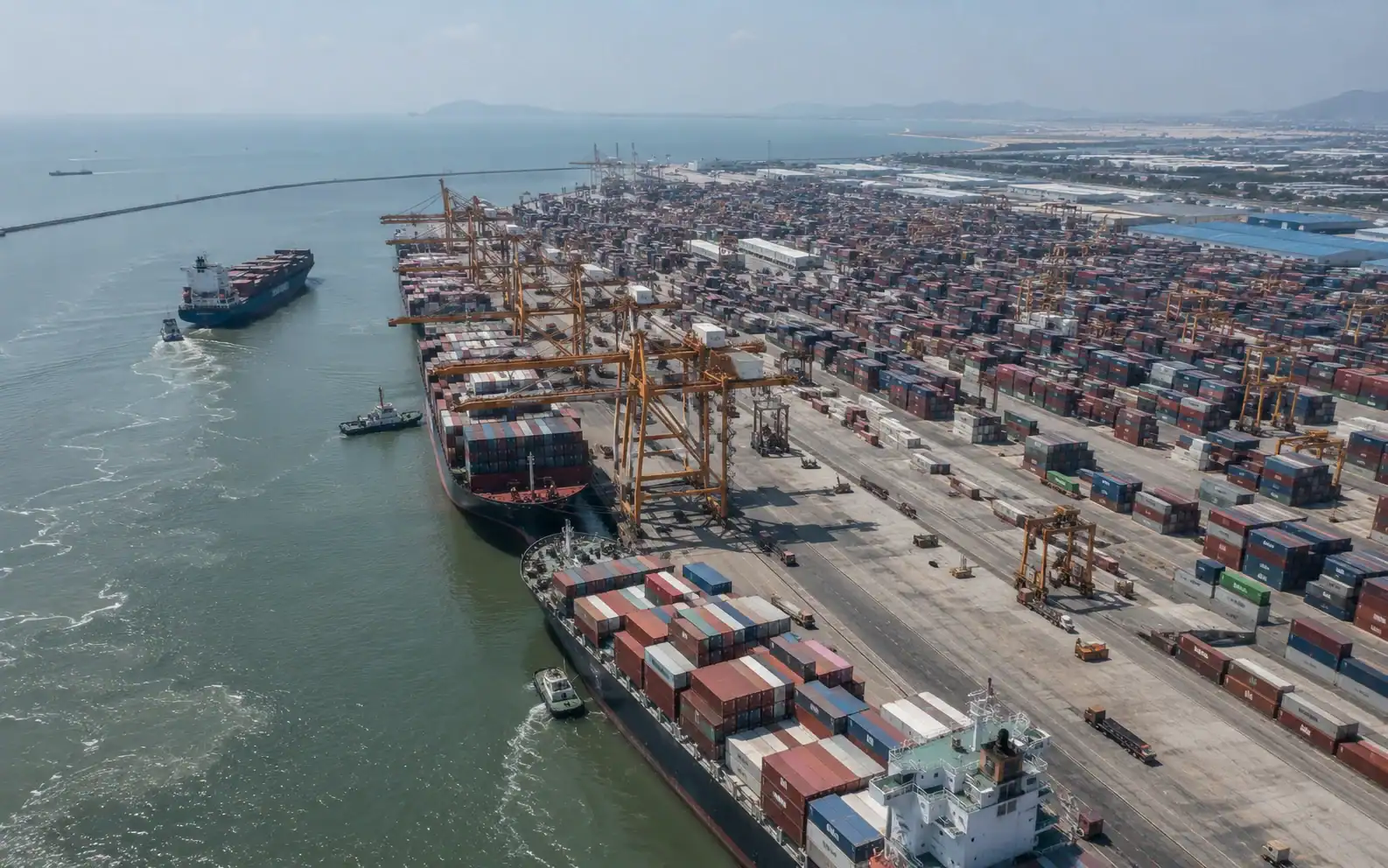
The mental model that causes the most problems treats “shipping cost” as a single, stable figure. It isn’t one. It’s a stack. Once you see the stack, you can price your goods correctly, compare quotes on an apples-to-apples basis, and avoid the cash flow shock that comes when a consignment costs 35% more than the freight quote suggested.
Layer 1: Origin Charges
Before a box reaches the vessel, it incurs costs at origin. These are often bundled into a freight quote or left out entirely:
- Collection / cartage: Pickup from your supplier’s warehouse to the port or CFS (Container Freight Station). USD 50–300 depending on distance and vehicle size.
- Export packing and labelling: If goods aren’t already export-packed, this is an additional cost, usually handled by the supplier but sometimes charged separately.
- Origin CFS / stuffing (LCL only): For groupage/LCL shipments, cargo is delivered to a Container Freight Station where it’s consolidated with other exporters’ cargo. Typically USD 15–35 per CBM.
- Export customs declaration: Some origins require a formal export entry. From China, most commercial shipments do. Your freight forwarder handles it but may charge USD 30–80.
- Bill of Lading fee: Document fee charged by the shipping line. USD 30–80 per consignment.
Layer 2: Ocean Freight
This is the component most people mean when they say “freight cost.” It’s the charge for moving the container (or your share of one) from the origin port to Laem Chabang or Bangkok port.
LCL (Less than Container Load / Groupage)
LCL pricing is quoted per CBM (cubic metre) or per tonne, whichever is greater (a “revenue tonne” comparison). Standard LCL ocean freight rates to Thailand:
| Origin | LCL Rate (USD/CBM) | Transit Time |
|---|---|---|
| Shanghai / Ningbo (China) | 35–65 | 12–18 days |
| Shenzhen / Guangzhou (China) | 35–60 | 10–15 days |
| Ho Chi Minh City (Vietnam) | 30–55 | 7–10 days |
| Jakarta (Indonesia) | 40–70 | 7–12 days |
| Hamburg / Bremerhaven (Germany) | 90–160 | 35–52 days |
| Felixstowe (UK) | 95–165 | 38–55 days |
These are ocean freight only. Add origin CFS, destination CFS deconsolidation (see Layer 4), and all other layers below.
FCL (Full Container Load)
FCL pricing is a flat rate per container, regardless of how full it is. FCL therefore gets more cost-effective as your shipment volume grows. A rule of thumb: FCL becomes competitive once your LCL volume exceeds 12–15 CBM. For container specs, the 8-step booking process, and demurrage, see FCL to Thailand: container costs, sizes, and the LCL break-even.
| Origin | 20ft FCL (USD) | 40ft HC FCL (USD) |
|---|---|---|
| Shanghai / Ningbo | 600–1,400 | 900–2,000 |
| Shenzhen / Guangzhou | 550–1,300 | 850–1,900 |
| Ho Chi Minh City | 500–1,100 | 750–1,600 |
| Hamburg / Bremerhaven | 1,800–3,500 | 2,500–4,800 |
These ranges reflect market conditions from 2024–2026. Container freight rates are volatile. Demand cycles, carrier capacity decisions, and disruption events all move them. Always get a current rate from your freight forwarder rather than relying on historical benchmarks.
Container Rates from Australia, North America and the UK
A 40ft container from Melbourne to Laem Chabang usually costs less than a single business-class fare on the same route. Almost nobody pricing a Thailand move from a Western origin expects that going in. The China and Europe lanes above are the busiest, but plenty of movers ship from Australia, the United States, the United Kingdom or Canada, where sailings are less frequent and the per-container rate sits higher. Current benchmark ranges:
| Origin | 20ft FCL (USD) | 40ft HC FCL (USD) |
|---|---|---|
| Sydney / Melbourne (Australia) | 1,400–2,600 | 2,000–3,600 |
| Los Angeles / Long Beach (US West) | 1,600–3,000 | 2,400–4,300 |
| New York / Savannah (US East) | 2,200–3,800 | 3,200–5,400 |
| Felixstowe / Southampton (UK) | 1,900–3,600 | 2,700–5,000 |
| Vancouver / Montreal (Canada) | 1,900–3,400 | 2,800–4,900 |
Two things drive the higher numbers. Longer transit and fewer direct sailings to Thai ports mean more transhipment. Most Australian, North American and UK boxes route through Singapore, Port Klang or a China hub before reaching Laem Chabang, and each leg carries its own handling cost. Thinner demand on these lanes also means less rate competition than on the China–Thailand corridor, where dozens of carriers fight for the same freight. If a 40ft quote from a Western origin comes back below the floor of the range above, read it twice. It almost always means origin haulage, terminal handling or the destination THC has been left out, not that you found a bargain.
Moving specifically from Australia? See the full Australia-to-Thailand cost breakdown, with studio, one-bedroom and two-bedroom scenarios in AUD. A full container move out of the UK prices differently. See the full UK to Thailand container cost breakdown. Both 20ft and 40ft scenarios are priced there, in GBP. India-origin shipments get their own line: See the full India to Thailand container and freight rate breakdown, which prices Nhava Sheva and Chennai origins separately.

Layer 3: Surcharges and Market Adjustments
On top of the base ocean freight rate, shipping lines apply surcharges that vary by lane, season, and market conditions. These are not optional extras. They are part of the freight cost:
- Bunker Adjustment Factor (BAF) / Fuel Surcharge: Adjusts for fuel price volatility. Can add 5–15% to the base rate.
- Red Sea Emergency Surcharge (EBS/GRI): Since January 2024, most Europe-to-Asia carriers rerouted via the Cape of Good Hope. Emergency surcharges on Europe-origin lanes to Thailand added USD 200–600 per TEU at peak. A partial, carrier-by-carrier return to Suez routing began in mid-2026, so current surcharge levels vary by service. Confirm the rate and routing with your forwarder.
- Peak Season Surcharge (PSS): Applied ahead of Chinese New Year (January) and the pre-Christmas peak (August–October). USD 100–300 per TEU typically.
- Currency Adjustment Factor (CAF): Covers exchange rate risk on certain lanes. USD 20–80 per TEU.
A quote that shows only base ocean freight and omits surcharges is incomplete. A good freight forwarder quotes an all-in rate with current applicable surcharges included.
Layer 4: Destination Terminal Handling (THC) and Port Fees
Once the vessel arrives at Laem Chabang, the shipping line or terminal levies charges to move the container from the ship to the terminal yard. These are unavoidable and are not included in ocean freight rates:
- Destination THC (Laem Chabang): USD 120–180 per 20ft / USD 180–250 per 40ft. Charged by the shipping line.
- Destination CFS / deconsolidation (LCL only): When your LCL cargo is unloaded from the container at the destination CFS, you pay a deconsolidation fee. Typically USD 20–50 per CBM.
- Delivery order / documentation fee: Charged by the shipping line to release the Bill of Lading to your broker. USD 30–80.
- Container detention: If your container is not returned to the shipping line within the free-time window (typically 5–10 days), daily detention charges of USD 20–80 per TEU apply. Timely customs clearance avoids them.
Layer 5: Thai Customs Duty and VAT
This is the layer most importers underestimate, particularly if they’ve only budgeted for freight. Thai customs duty applies to most imported goods based on their HS classification. Duty is calculated on the CIF value: the value of the goods plus international freight and insurance costs to the Thai port.
- Import duty: Ranges from 0% to 80% depending on the product. Common manufactured goods (electronics, clothing, furniture) attract 5–30%. Food and beverage can be higher. Raw materials often 0–5%.
- VAT (7%): Applied to CIF value plus import duty. Thailand’s standard VAT rate is 7% (temporarily reduced from 10%, maintained for most of the past decade).
Example: A shipment with a CIF value of THB 200,000 (approximately USD 5,500) with 10% import duty:
- Import duty: THB 20,000
- VAT base: THB 220,000
- VAT (7%): THB 15,400
- Total tax liability: THB 35,400 (approximately USD 975)
Thailand’s bilateral and multilateral free trade agreements reduce or eliminate duty on qualifying goods with a valid Certificate of Origin. They include the ASEAN Free Trade Area (AFTA), the ASEAN-China FTA (ACFTA), and the ASEAN-Australia-New Zealand FTA (AANZFTA). See how Thai customs classification and documentation affects clearance.
Whether your shipment lands in the 5% duty band or the 30% one depends on its HS classification, and Thailand’s customs duty rules explain exactly how that gets decided.

Layer 6: Customs Brokerage
A licensed Thai customs broker prepares and lodges your import entry with the Thai Customs Department, pays duties on your behalf, and coordinates physical release of the goods. Without a broker, goods sit in bonded storage and accrue daily fees.
Typical customs brokerage fees for Thailand:
- Standard FCL import entry: THB 3,000–8,000 (USD 80–220)
- LCL / groupage entry: THB 2,000–5,000 (USD 55–140)
- Red Line physical examination assistance (if applicable): additional THB 1,000–3,000
- Storage coordination (if goods go to bonded warehouse): additional fees apply
These fees do not include duty and VAT. Those are collected and remitted on your behalf at cost, not as a brokerage margin.
Layer 7: Last-Mile Delivery in Thailand
The final cost layer runs from the port to your warehouse or final delivery address in Thailand. Laem Chabang, the main deep-sea port, sits in Chonburi province, approximately 130 km south-east of Bangkok. Transport costs from Laem Chabang:
- Laem Chabang to Bangkok (Eastern Seaboard): THB 4,000–8,000 per truck (20ft FCL equivalent)
- Laem Chabang to Central Bangkok: THB 6,000–12,000 per truck
- LCL delivery to Bangkok area: THB 500–2,000 per CBM (distance-dependent)
Air freight shipments clear through Suvarnabhumi Airport cargo terminal in Bangkok. Delivery from the airport cargo area to a Bangkok warehouse is shorter and cheaper than a Laem Chabang port run.
Delivery Cost by Thai Destination
Layer 7’s cost above is a Bangkok figure. The distance from Laem Chabang to your actual delivery address determines the real number, and it varies substantially by destination:
- Bangkok (central, Sukhumvit, Silom): approximately 130 km, 2–3 hours from Laem Chabang. THB 6,000–12,000 per truck (matches the Layer 7 figure above).
- Pattaya: only 15 km from Laem Chabang, and the cheapest delivery of any Thai destination at THB 2,500–5,000.
- Chiang Mai: approximately 700 km north, 7–8 hours by truck. THB 9,000–18,000 depending on volume.
- Phuket: approximately 900 km south. THB 12,000–23,000. Some operators route larger volumes via feeder vessel through Singapore to Penang or Hat Yai instead.
- Island destinations (Koh Samui, Koh Phangan, Koh Tao): overland to Surat Thani, then barge or ferry. THB 15,000–30,000, more for large volumes. Timing depends on barge schedules, not just truck availability.
This leg is quoted in Thai Baht by the local agent or the customs broker’s trucking partner and billed at clearance in Thailand, not at booking. Confirm the inland figure for your specific address before treating any quote as final.
Worked Example: 10 CBM LCL from Shanghai to Bangkok
To show how the layers stack, here is a worked cost example for a 10 CBM LCL consignment from Shanghai to a Bangkok warehouse:
| Cost Component | Estimated Cost (USD) |
|---|---|
| Origin collection and CFS | 200–400 |
| Ocean freight (LCL @ USD 50/CBM × 10 CBM) | 500 |
| Surcharges (BAF + current market) | 100–200 |
| Destination THC / CFS deconsolidation | 300–500 |
| Customs brokerage | 80–150 |
| Thai import duty (example: 10% on USD 5,000 CIF value) | 500 |
| Thai VAT (7% on CIF + duty) | 385 |
| Last-mile delivery (Bangkok) | 150–350 |
| Total estimated door-to-door | USD 2,215–2,485 (excl. goods value) |
This example assumes a mid-range duty rate. If your goods qualify for 0% duty under AANZFTA or ACFTA with a valid Certificate of Origin, the duty layer disappears and the VAT base falls to the CIF value alone.

Air Freight to Thailand: When the Premium Is Worth It
Air freight to Thailand runs approximately 4–6 times the per-kg cost of sea freight, but compresses the transit time from 12–52 days (sea) to 3–7 days door-to-door. The cases where air freight is worth the premium:
- High-value, low-weight goods: Pharmaceuticals, electronics components, and luxury goods, where holding cost and time-to-market outweigh the freight premium
- Stock replenishment urgency: A fast-moving product that’s out of stock in Thailand for 30+ days loses more margin than the air freight premium costs
- Sample shipments: Single units or small quantities for buyer approval, where the volume doesn’t justify sea freight economics
- Time-critical materials: Production inputs that hold up a manufacturing line
Air cargo clears through Suvarnabhumi Airport’s air cargo terminal, typically in 1–3 working days for standard consignments. The same duty rates and VAT apply as for sea freight.
Thai Customs Duties: How Thailand Taxes Imports by Product
Thailand applies customs duty on imported goods based on the CIF value: the cost of the goods plus insurance plus freight to the Thai port of entry. Duty rates vary significantly by product category. Common categories and approximate Thai duty rates:
- Personal computers and peripherals: 0%
- Consumer electronics: 0–10%
- Clothing and textiles: 30%
- Furniture and homewares: 30%
- Toys and sporting goods: 30%
- Cosmetics and skincare: 30%
- Books and printed matter: 0%
- Alcoholic beverages: 54% + excise duty
- Passenger vehicles: 80%
- Most industrial machinery: 0–5%
Thai VAT on imports is 7%, applied to the CIF value plus the customs duty. It applies regardless of the duty rate. A 0%-duty commercial import still attracts 7% VAT on the CIF value, so an AUD 50,000 CIF commercial shipment with 0% duty carries AUD 3,500 of Thai VAT.
Australia and Thailand operate the Thailand-Australia Free Trade Agreement (TAFTA), in force since 2005. Australian-origin goods exported to Thailand can enter at preferential TAFTA rates with a valid Certificate of Origin, frequently at 0%. For commercial importers shipping Australian-manufactured goods into Thailand, TAFTA origin certification is worth obtaining if the standard Thai duty rate is above 5%. The Australian Chamber of Commerce or an equivalent body issues it. The Thai Customs Department publishes current tariff schedules at customs.go.th.

The Duty-Free Personal Effects Allowance: What Actually Qualifies
Thailand’s Customs Act provides a duty-free import allowance for personal effects brought in by a person establishing residence there. The rules are specific, and Thai customs officers enforce them with varying degrees of strictness depending on the port, the officer, and the shipment profile.
The conditions for duty-free personal effects treatment:
- The goods must be genuinely used. New items still in commercial packaging are regularly challenged. Thai customs regulations carry no formal definition of “used”, so the officer’s assessment is the operative standard. A laptop used for two years is clearly personal effects. Fifty identical T-shirts with price tags still attached are not, regardless of what the declaration says.
- The goods must arrive within six months of the owner’s first entry to Thailand on resident status. The shipment arrival date is compared against the owner’s entry stamp. Missing the six-month window forfeits duty-free eligibility with no discretionary extension.
- The exemption is one-time. A follow-up shipment of additional household goods does not qualify, whether it is furniture out of storage or items shipped later.
- Some items are excluded outright. Alcohol, tobacco, firearms, and vehicles fall outside the personal effects exemption regardless of use status or declaration.
When personal effects clear duty-free, the Thai side of the cost is the customs broker fee (THB 3,000–8,000) plus any examination charges if the shipment is selected. Full duty applies to commercial imports and to non-qualifying personal goods, and it is calculated as customs duty at the applicable rate on CIF value, plus 7% VAT on CIF plus duty.
The full requirements and timing for the personal effects exemption, alongside visa documentation and what to ship versus what to sell before leaving, are covered in the Thailand relocation guide 2026.
Related reading: Moving from Europe to Thailand: The Six-Layer Cost
Frequently Asked Questions
How does a shipping container fit into the total cost of shipping to Thailand?
Container freight is only one layer of the total. A 20ft FCL from China to Laem Chabang typically runs USD 600–1,400 for ocean freight. A 40ft HC runs USD 900–2,000. These are freight-only rates. Add origin charges, destination THC, customs brokerage, duty, VAT, and last-mile delivery to get the door-to-door total. Our guide to the cost of shipping a container to Thailand has the all-in breakdown by origin and container size.
How much does LCL shipping to Thailand cost per CBM?
LCL ocean freight from China runs USD 35–65 per CBM to Thailand. From Europe, USD 90–165 per CBM. Add origin CFS charges (USD 15–35/CBM), destination CFS deconsolidation (USD 20–50/CBM), and all other cost layers for the real door-to-door cost.
What import duty and VAT applies to goods entering Thailand?
Thai import duty ranges from 0% to 80% depending on HS classification. Common manufactured goods attract 5–30%. VAT is 7%, applied to CIF value plus duty. Free trade agreements (AANZFTA, ACFTA, AFTA) reduce duty to 0% on qualifying goods with a valid Certificate of Origin.
What are THC charges at Laem Chabang?
Destination THC at Laem Chabang is typically USD 120–180 per 20ft / USD 180–250 per 40ft. Charged by the shipping line, separate from ocean freight.
Has the Red Sea crisis raised shipping costs to Thailand?
Yes, primarily for Europe-to-Asia lanes. Carrier rerouting via Cape of Good Hope since early 2024 added Emergency Surcharges of USD 200–600 per TEU at peak. Asia-origin lanes to Thailand are less directly affected, though market-wide congestion effects have influenced rates across all lanes. Confirm current surcharge levels with your forwarder before budgeting.

Seasonal Timing: When Rates and Clearance Times Increase
Shipping cost to Thailand is not static across the year. Two recurring windows push rates and transit times higher on top of everything in the layers above:
Q4 pre-Christmas peak (October–December): global container demand surges as retailers stock for the holiday season, on top of the Peak Season Surcharge already noted in Layer 3. Ocean freight rates on Asia-Thailand lanes can run 25–50% above off-peak levels during October and November, and vessel space tightens earlier than usual. If you’re timing a shipment for a January arrival, departing origin in late September avoids both the rate peak and the Singapore transshipment congestion it creates.
Thai New Year / Songkran (mid-April): Songkran typically spans April 13–15, with reduced customs staffing running 3–5 days on either side. Goods arriving at Laem Chabang inside that window can face clearance delays of 5–10 days as backlogs build. Target arrival at least 25 days before April 13, or plan for an April 20+ arrival once operations normalise.
Chinese New Year affects vessel supply even on non-China lanes to Thailand, since most carriers serving the route also run China-origin services. Factory shutdowns cut container flow out of Chinese ports for 2–3 weeks, which ripples into vessel positioning and Singapore hub capacity across January and February.
We price your Thailand shipment’s full stack, not a benchmark range.
Tell us your route and volume, and our team prices the full stack for your shipment: a free estimate, fixed pricing, no hidden costs.
Getting an Accurate Cost Picture for Your Thailand Shipment
Complete documentation for shipping to Thailand is what keeps clearance fast, detention rare, and storage costs off the invoice. Understanding what causes shipments to get held at Thai customs matters just as much: it separates a clean pickup from one that sits in detention, where the destination end absorbs the most common cost blow-outs.
The seven layers above cover what a forwarder can quote in advance. Marine insurance, CFS deconsolidation, Songkran storage and three-currency FX exposure sit outside that quote. The hidden costs of shipping to Thailand are itemised separately.
Contact Swift Cargo for a complete cost assessment for your Thailand shipment →