Author: SwiftCargo Team

  • Importing Second-Hand and Used Goods to Australia: Rules, Risks and What’s Worth It

    Importing Second-Hand and Used Goods to Australia: Rules, Risks and What’s Worth It

    Every container of second-hand goods arriving in Australia is, from a biosecurity officer’s point of view, a container of unknowns. A new laptop left a factory last month in sealed packaging. A used laptop has lived somewhere: a desk, a warehouse, a garage. So has the pallet it’s strapped to, the furniture packed beside it and the vintage denim filling the gaps. That single fact, that used goods have a history, drives almost everything about how Australia treats them at the border: the inspection rates, the cleanliness paperwork, the valuation arguments and, ultimately, whether a second-hand import business makes commercial sense.

    This guide works through importing used goods to Australia category by category (clothing, machinery, furniture, refurbished electronics, vehicle parts, décor) then tackles the two questions that trip up more importers than any biosecurity rule: where the line sits between personal effects and commercial stock, and how customs values goods that were bought at auction for a fraction of their original price. We finish with a worked comparison of two real-world business models, because “can I import it” and “is it worth importing” are very different questions.
    Importing Second-Hand and Used Goods to Australia: Rules, Risks and What's Worth It

    Why Used Goods Get More Scrutiny Than New Goods

    Australia’s biosecurity system runs on risk profiling. The Department of Agriculture, Fisheries and Forestry (DAFF) doesn’t inspect every consignment; it inspects the ones its profiles flag as likely to carry pests, soil, seeds or organic contamination. Used goods sit high on that risk ladder for reasons that are easy to picture once you think like an inspector.

    Soil hides in tyre treads, machinery tracks, the feet of garden furniture and the wheels of anything that ever rolled across a yard. Organic residue (food, plant matter, animal material) clings to upholstery, textiles and packaging. Insects and their eggs shelter in timber joints, cardboard, foam and fabric folds, and some of Australia’s most-feared arrivals, like the brown marmorated stink bug, actively seek out exactly the kind of dark, sheltered cavities that used goods provide in abundance. A new item, made and packed under factory conditions, offers almost none of these opportunities. A used item offers all of them. (Our quarantine and biosecurity handling overview covers how this plays out at the border in general terms.)

    The practical consequence is that declaring goods as “used” or “second-hand” on import documentation raises the probability of documentary assessment and physical inspection. That is not a reason to describe used goods as new. Misdescription is a far more serious problem than an inspection, and it’s the kind of thing that follows an importer’s profile around for years. It’s a reason to plan for scrutiny: budget time for inspection in your lead times, budget money for it in your landed cost, and prepare the goods so that when an officer opens the container, there’s nothing to find.

    That last point deserves emphasis, because it’s where experienced used-goods importers separate themselves from beginners. Inspectors are not looking for used goods; they’re looking for contaminated used goods. A container of laundered vintage clothing, steam-cleaned machinery and wiped-down furniture with a cleanliness declaration on file is a fast inspection. A container with mud in the wheel arches and mouse droppings in the upholstery is a treatment order, a fumigation bill, weeks of delay, and in bad cases a directive to re-export or destroy the goods at your expense. The condition of the goods when they were packed overseas determines almost everything about what happens when they arrive.

    Used Clothing and Textiles: Bales Versus Boutique

    Second-hand clothing splits cleanly into two very different import propositions, and the difference is scale.

    At the boutique end, with a vintage reseller bringing in curated stock of tens or hundreds of garments per shipment, used clothing is one of the more manageable second-hand categories. The goods should be clean and laundered before packing, and the shipment should travel with a declaration to that effect. Clean, dry textiles present low biosecurity risk, and small consignments of laundered vintage clothing routinely clear without drama. The margin structure at this end can be genuinely attractive: a garment bought for a few dollars at an overseas market can retail for ten or twenty times that in Australia, and freight per unit is trivial because clothing is light and dense.

    Commercial bales are a different world. Bulk used textiles, the compressed bales that supply op-shop chains and rag traders, are treated as a higher-risk commodity. Bales can conceal moisture, mould, insects and contaminated items deep inside the compressed mass, where no external inspection can see them. Bulk second-hand clothing imports move into permit territory, inspections approach certainty, and a single contaminated bale can taint the treatment status of an entire container. Importers at this scale need established relationships with suppliers who sort and clean to a documented standard, because the economics only work if treatment orders are rare.

    The practical rule: if you can describe your consignment as “cleaned and laundered garments, individually sorted,” you’re in the viable zone. If the honest description is “mixed bales, condition unsorted,” get professional advice before the goods ship, not after they arrive.

    Used Machinery: The Steam-Clean Regime

    Used machinery is the category where DAFF’s expectations are most explicit; the full regime is set out in our guide to importing machinery to Australia. The short version: any machine that has worked outdoors (agricultural equipment, earthmoving plant, forestry gear) is presumed contaminated until demonstrated otherwise. Soil is the enemy. It carries seeds, nematodes, fungal spores and bacteria that Australia’s agricultural sector is structured around keeping out.

    The accepted answer is aggressive pre-shipment cleaning: high-pressure steam cleaning of every surface, with particular attention to tracks, tyres, undercarriages, radiator cores and the internal cavities where soil compacts and hides. Photograph the machine after cleaning, from every angle, including the awkward ones underneath. A cleanliness certificate from a recognised cleaning contractor overseas is worth far more than its cost, because the alternative, cleaning ordered on arrival at Australian contractor rates with the machine sitting in storage on your account, can run to thousands of dollars and weeks of delay.

    Even indoor machinery (printing presses, CNC equipment, food-processing lines) needs attention. Food residue in processing equipment is organic contamination. Timber skids and packing cases carry their own ISPM 15 treatment requirements. And a machine that arrives with its coolant, hydraulic fluid or fuel still aboard can raise dangerous goods questions on top of the biosecurity ones. Drain, clean, photograph, certify: the sequence is boring and it works.

    Used Furniture: Timber, Bugs and Upholstery

    Second-hand furniture imports run into three distinct risk streams, and it pays to know which one your stock sits in.

    Timber pests. Solid-timber furniture, the mid-century teak and French oak and colonial pine that vintage dealers love, can harbour wood-boring insects whose larvae live inside the timber for years. Exit holes, frass (the fine powder borers push out) and live activity are what inspectors look for. Furniture with active borer is looking at fumigation at minimum. Buying stock, check for fresh exit holes and powder before you commit; a treatment history from the seller is a genuine asset.

    Seasonal hitchhikers. Furniture shipped from BMSB-risk countries during the Northern Hemisphere’s stink bug season (roughly September through April for goods shipped from affected countries) can fall under the seasonal treatment measures that apply to a wide range of goods, not just furniture. If your supply chain runs through Europe, the US or parts of Asia, the shipping calendar is a compliance variable: the same container that clears untreated in July may need heat treatment or fumigation in November.

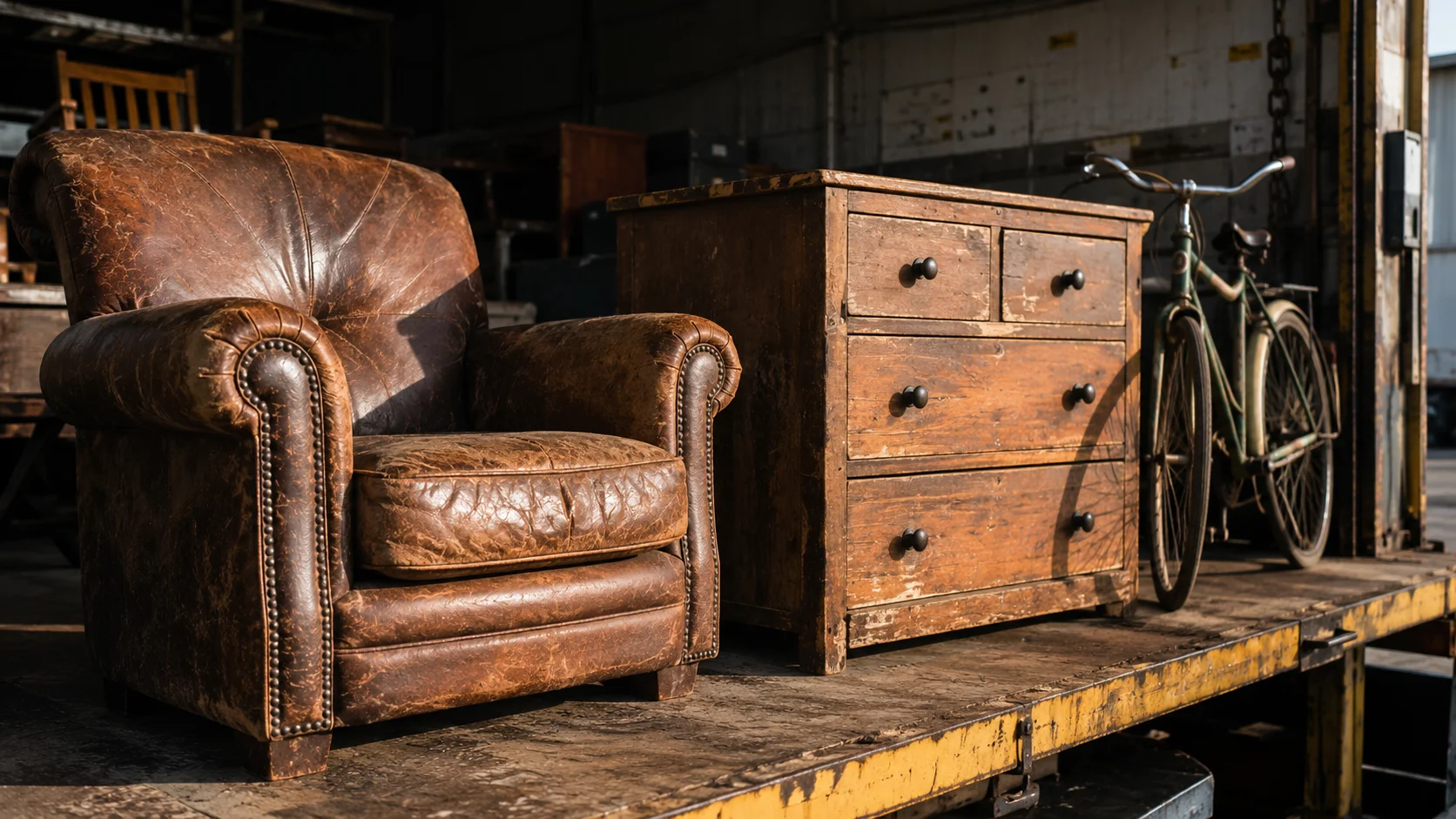
    Upholstery cleanliness. Fabric and padding hold organic material: food, hair, dander, and occasionally worse. Upholstered pieces should be professionally cleaned before shipment and declared as such. Anything that smells of damp when packed will smell worse after six weeks in a sealed container, and mould is a treatable but expensive finding.

    The furniture category rewards curation. A dealer hand-selecting thirty clean, treated, photographed pieces has a fundamentally different risk profile from someone shipping a container of house-clearance stock sight unseen. The same logic applies to migrants’ household shipments too, a subject our guide to used household goods inspection in Australia covers in full. Inspectors open what they can’t verify, and documentation is what lets them not open things.
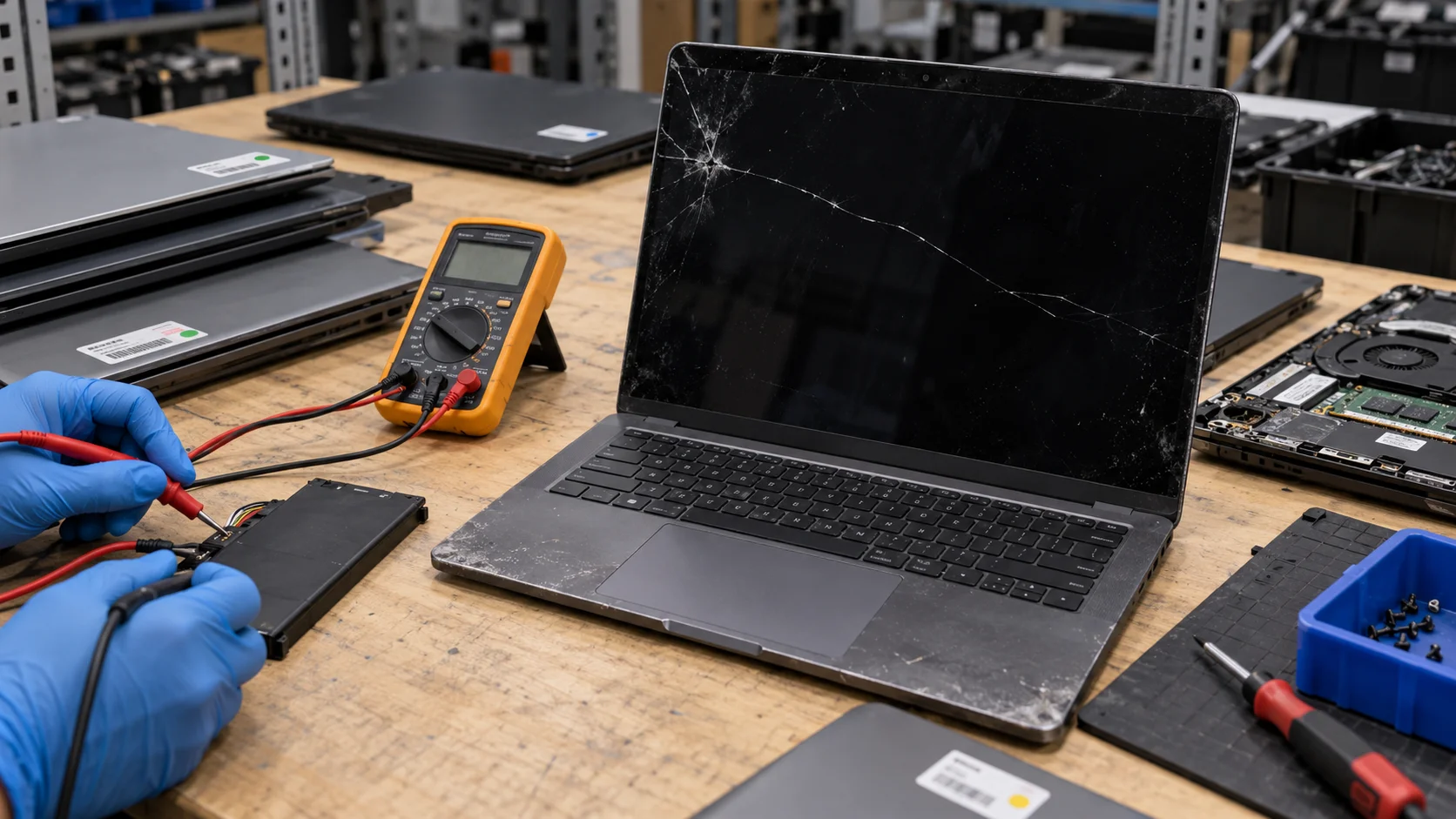
    A workbench flatlay of assorted off-lease business laptops mid-inspection, one open showing a cracked-but-functional screen, a technician's gloved hands (out of frame at

    Refurbished Electronics: The Growth Category With Hidden Homework

    Refurbished electronics is arguably the most commercially interesting used-goods category right now. Corporate laptop fleets refresh on three-year cycles, generating a steady stream of off-lease machines; consumer demand for cheaper, sustainable alternatives to new devices keeps growing; and per-unit freight is negligible. But the compliance homework is heavier than most new entrants expect, and it has almost nothing to do with biosecurity.

    RCM applies to refurbs. The Regulatory Compliance Mark, Australia’s electrical safety and electromagnetic compatibility marking regime, applies to devices placed on the Australian market, and a refurbished device you import and sell is being placed on the Australian market by you. The fact that the device was compliant when first sold in another country, under another regulator, does not transfer. If you’re the supplier, the registration, the compliance records and the marking obligations sit with you. Importers who skip this discover it at the worst possible moment: when a safety incident or a competitor complaint puts their operation in front of a regulator.

    Lithium batteries are a freight problem before they’re a compliance problem. Used devices ship with used batteries, and dangerous goods rules for lithium cells care about condition. Damaged, swollen or recalled batteries are restricted or forbidden from air freight entirely, and even healthy batteries in equipment are subject to state-of-charge and packaging requirements. A refurb trader air-freighting laptops needs a DG-literate freight partner and a supplier who actually screens batteries, because one swollen cell identified at the airline’s acceptance check can offload a whole consignment.

    Australian Consumer Law requires disclosure. Selling refurbished goods as new, or leaving their history ambiguous, is misleading conduct under the consumer law the ACCC administers. “Refurbished” must be disclosed, and consumer guarantees, that goods are of acceptable quality and fit for purpose, apply to refurbished goods sold in trade, with the standard adjusted for price and description but never eliminated. Your warranty terms can’t contract out of them. Build the guarantee cost into your margin model from day one; treat returns as a line item, not a surprise.

    Grey-market imports are generally legal. Parallel importing, meaning buying genuine branded goods overseas and reselling them in Australia without the brand’s blessing, is broadly lawful here, and legislative changes to trademark law have made it harder for brand owners to use registered marks to block genuine parallel imports. The nuances live at the edges: repackaging, modified goods, certain copyright-protected elements, and the practical reality that the Australian brand entity won’t honour its local warranty on your grey stock (which is precisely why your own ACL obligations matter more). At high volumes, spend the money on proper legal advice. At the level of principle: genuine goods, honestly described, are yours to import.

    Used Vehicles, Parts and Tyres

    Used vehicle parts are a workable import category with the same biosecurity logic as machinery: parts that have been on a vehicle carry road grime, oil and soil, and they should be cleaned and declared accordingly. Engines and gearboxes should be drained of fluids. For the category’s full compliance picture, including the asbestos testing question that catches out importers of older friction components, see our guide to importing auto parts to Australia.

    Complete used vehicles are a different regulatory universe. Road vehicles require approval under the Road Vehicle Standards framework, the ROVER system, before import, and the eligibility pathways (older vehicles, specialist and enthusiast vehicles, and so on) are a specialist topic well beyond this guide. If your plan involves whole cars, start with the vehicle import approval question, not the freight question, because without the approval there is no freight question.

    Used tyres deserve their own warning: they are close to a prohibited item in practice. Tyres hold water, and water breeding mosquitoes, including species that vector dengue, is exactly the pathway biosecurity regimes exist to close. Used tyre imports face requirements strict enough (cleaning, treatment, permits depending on circumstances) that the economics almost never work for commercial resale. If your used-parts supplier wants to fill container space with tyres, decline.

    Vintage Décor and Antiques: Mostly Low Risk, With Exceptions

    The gentlest corner of the used-goods trade is decorative: ceramics, glass, metalware, art, mirrors, lighting. Inorganic, cleanable and easy to describe, these clear with little friction and make excellent supplementary stock for vintage retailers. The exceptions are predictable from everything above: timber items (carved pieces, frames, boxes) carry the borer question; anything organic (taxidermy, feathers, shells, seeds, unprocessed hides) steps into wildlife trade and biosecurity territory simultaneously and needs case-by-case checking; and woven organic materials like cane and seagrass sit between the two. Sort your buying accordingly: a pallet of French mirrors and ceramic lamps is easy money; a crate of carved tribal masks with feather inlays is a research project.

    The Personal-Effects Boundary: Where ABF Draws the Line

    Australia’s unaccompanied personal effects concession lets arriving migrants and returning residents bring their own used household goods in free of duty and GST. It exists because taxing someone’s own furniture as they move countries would be absurd. It is not a channel for commercial stock, and the Australian Border Force polices the boundary using two straightforward tests.

    Quantity and pattern. One person owns one, maybe two, of most things. A UPE shipment containing forty pairs of sneakers in graduated sizes, or fifteen sealed smartphones, or six identical mid-century sideboards, doesn’t look like a household. It looks like inventory. Officers see thousands of genuine personal-effects shipments; the commercial ones stand out immediately.

    Ownership and resale intent. The concession covers goods you’ve personally owned and used overseas for the qualifying period, imported for your continuing personal use. Goods bought recently, goods still in retail packaging, and goods imported to sell all fail the test regardless of quantity.

    The consequences of blurring the line scale badly. At minimum, the commercial goods in a mixed shipment are assessed for duty and GST. Beyond that, the whole consignment can be reclassified, the false declaration itself becomes the issue, and (the cost that keeps costing) the importer’s profile is flagged, which means the next shipment, and the one after, get opened. If you’re migrating and starting a resale business, run two consignments: personal effects declared as personal effects, commercial stock declared commercially with duty paid. The duty on a startup-sized commercial shipment is almost always cheaper than the downstream cost of a compliance finding.

    Valuing Used Goods at Customs: The eBay-Receipt Problem

    Customs valuation of second-hand goods confuses importers because the goods’ history suggests ambiguity where the law mostly doesn’t have any. Transaction value, the price you actually paid, is the primary valuation method for used goods just as for new. If you bought a pallet of off-lease laptops for AUD 9,000, the customs value starts at AUD 9,000 (plus the usual adjustments), regardless of what the machines cost new or what you’ll sell them for.

    The complications are practical, not legal:

    Evidence quality. Used goods are bought at auctions, from marketplace sellers, at estate clearances, channels that generate PayPal screenshots and handwritten receipts rather than commercial invoices. That evidence can absolutely support a declared value, but it needs to be kept, organised and consistent. The eBay-receipt problem isn’t that eBay receipts are invalid; it’s that importers don’t retain them, can’t match them to specific items, or declare a “round number” that matches no document at all.

    The reassessment power. The ABF can reject a declared value it considers unreliable and work through the alternative valuation methods, which in practice means undocumented low values get revised upward, with duty, GST and potentially penalties following. The declared values most likely to attract attention are the implausibly low ones: the “gifted” container of furniture, the “$200” pallet of laptops. If you genuinely bought cheaply at auction, the auction record is your shield; declare the real price and keep the proof. Our guide to customs valuation in Australia walks through the full methodology, including when transaction value gives way to fallback methods.

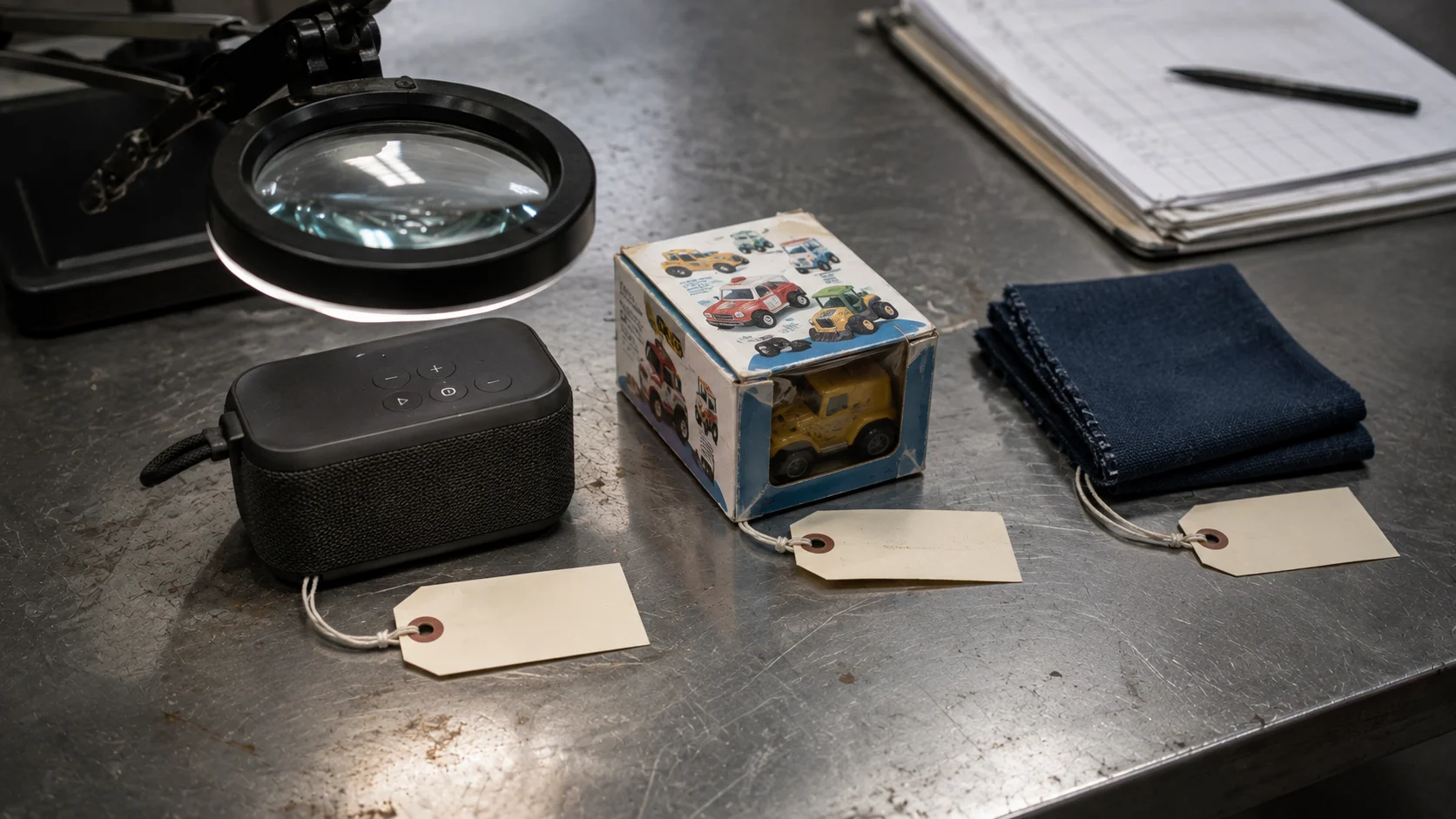
    Condition documentation. Photograph everything before it ships: overall shots, serial numbers, damage, cleanliness. Pre-shipment photos serve three masters at once: they support your valuation (this is genuinely used stock, not new goods under-declared), they support your biosecurity position (the machinery was clean when packed), and they’re your insurance evidence if the container arrives damaged. For categories where cleanliness declarations apply, the photos are what make the declaration credible.

    Own the evidence problem before it becomes ABF’s problem to solve for you. A screenshot buried in an old email, a receipt with no item description, a purchase you genuinely remember but cannot document. None of that is fraud, but none of it survives a reassessment either, and the burden sits with you, not with the marketplace you bought from. The discipline that actually protects a used-goods importer is boring and unglamorous: a folder, one entry per purchase, screenshot plus price plus date plus what it was, made at the time of purchase, not reconstructed from memory when a shipment gets flagged. Take ownership of that record before you need it, because by the time you need it, it is too late to create it honestly.

    The Commercial Case: When Used Goods Are Worth It

    Strip away the compliance detail and the used-goods trade is a margin-versus-overhead calculation. Second-hand categories offer buy prices that new-goods importers can’t touch, and that’s the entire attraction. Against that sit costs that new-goods importers don’t carry: higher inspection rates, cleaning and treatment, heavier documentation, valuation evidence management, and (for electronics) RCM and consumer-guarantee overheads. The categories worth entering are the ones where the margin premium comfortably outruns the compliance premium at your intended scale.

    Some rough contours. Vintage clothing at boutique scale clears the bar easily: huge markups, trivial freight, light compliance. Refurbished electronics clears it at medium scale and above, where RCM setup and returns-handling costs amortise across enough units. Restored furniture clears it for curated, treated stock and fails it for speculative bulk. Used tyres fail it outright. Used machinery isn’t resale arbitrage at all for most importers. It’s capital equipment acquisition, where the “margin” is the discount to new price and the compliance cost is a known line item.

    Worked Example: The Bale Trader and the Laptop Trader

    Two importers, both starting a used-goods business with roughly AUD 25,000 of working capital per cycle. Their paths diverge instructively.

    Importer A: vintage clothing, quarterly bale import. She buys graded vintage stock from a US sorter, not raw bales but “picked” grade (sorted, laundered, faults removed), at about AUD 14,000 for 800 kg, roughly 3,200 garments. Sea freight LCL, insurance and port charges add AUD 2,400. Duty on clothing plus GST on the lot adds about AUD 3,900. The supplier provides a cleanliness declaration; her broker flags the consignment accurately as commercial used textiles. Because the stock is graded and laundered, her inspections have been document-only in three of four quarters; the one physical inspection cost her AUD 380 in fees and eight days. Landed cost: about AUD 20,700, or AUD 6.50 per garment. She retails through a mix of market stalls and online at an average AUD 38, sells through 70% in the quarter and clears the rest at cost. Quarterly gross margin lands around AUD 55,000 on revenue of about AUD 91,000, before her labour, which is substantial, because every garment is photographed and listed by hand. Her compliance overhead is real but stable: the declaration, the broker, the inspection risk. Her actual business constraint is listing labour, not the border.

    Importer B: refurbished laptops. He buys 120 off-lease business laptops from a Singapore refurbisher at AUD 190 each, or AUD 22,800. Air freight with DG-compliant lithium battery handling: AUD 1,900. GST on import: about AUD 2,500 (no duty on the laptops themselves). But his cycle-one costs include items Importer A never sees: RCM registration and compliance record-keeping for his supplier entity, battery screening documentation from the refurbisher, and a returns reserve. He budgets 8% of units for consumer-guarantee claims, about AUD 2,000 per cycle at his repair-or-refund costs. Landed and provisioned: roughly AUD 245 per unit. He wholesales 40 units to a school supplier at AUD 330 and retails 80 at AUD 419 with “refurbished, Grade A” disclosed prominently. Cycle gross margin: about AUD 14,700, but his cycle is six weeks, not a quarter, and his per-unit labour is minutes, not the half-hour a vintage garment takes. Annualised, the two businesses gross within shouting distance of each other; the laptop trade scales further because adding units barely adds labour, while the clothing trade defends better because curation is the moat.

    The contrast is the lesson. A’s compliance risk is biosecurity-shaped and managed by supplier selection; B’s is regulator-and-consumer-shaped and managed by process. Neither business works if its operator treats the compliance layer as optional. A’s model dies the first time an ungraded bale draws a treatment order, B’s the first time an undisclosed refurb or a missing RCM record surfaces. Both work because the overhead was priced in from the start.

    Common Mistakes

    Shipping dirty goods. The single most expensive error in the category. Contamination found in a container means treatment at Australian rates, storage while you wait, and in serious cases export or destruction directions. Every dollar spent on cleaning overseas saves several on arrival. If a DAFF officer would frown at it, wash it before it ships, and read our breakdown of DAFF biosecurity inspection triggers to understand what draws attention in the first place.

    Assuming RCM doesn’t apply to refurbs. It does. The obligation attaches to placing devices on the Australian market, not to their manufacturing date.

    Declaring undocumented values. Round numbers with no supporting evidence invite reassessment, and reassessment goes one direction. Keep the auction record, the marketplace receipt, the payment confirmation, and declare what you actually paid.

    Mixing personal effects with commercial stock. One consignment, one purpose. The UPE concession is generous precisely because it’s policed; using it to smuggle inventory in duty-free risks the concession, the consignment and your importer profile in one move.

    Skipping condition documentation. No pre-shipment photos means no evidence for valuation, no support for cleanliness declarations, and no leverage in an insurance claim. A phone and twenty minutes at the packing stage is the cheapest insurance in freight.

    Treating “used” as a description to avoid. Some importers, knowing used goods draw scrutiny, shade their descriptions toward ambiguity. This is exactly backwards. Accurate declaration plus good preparation is a fast lane; misdescription discovered at inspection is a profile flag that makes every future shipment slower.

    Related Reading

    The bale trader and the laptop trader above started with comparable capital and ended with comparable annual gross margin, which makes the difference between them worth naming precisely, because it isn’t the product category. It’s a specific, repeated discipline. The vintage-clothing importer photographs and lists every garment individually and works with a supplier whose grading and cleanliness declarations hold up to inspection, quarter after quarter, which is why three of her four inspections went document-only. The laptop trader built battery-screening documentation and a consumer-guarantee reserve into his process before his first shipment, not after a claim forced the issue. Neither business succeeded because of one clever sourcing decision. Each succeeded because a specific compliance habit got repeated often enough to become the thing regulators and customers actually noticed, which looks like luck from the outside and looks like nothing much, day to day, from the inside.

    Frequently Asked Questions

    Why are used goods inspected more heavily than new goods?

    Because they have a history. Soil, organic residue and pests accumulate in goods during use in ways factory-new items never allow, so DAFF’s risk profiles weight second-hand declarations toward documentary and physical inspection. Clean, well-documented used goods still clear efficiently. The scrutiny targets contamination, not second-hand status itself.

    Do I need a permit to import used clothing into Australia?

    Curated, laundered vintage stock at small commercial scale generally moves on a cleanliness declaration without a permit. Bulk bales of unsorted used textiles are higher-risk goods where permits and near-certain inspection enter the picture. The dividing line is effectively whether your goods are individually sorted and clean, or compressed and unknown.

    Does RCM apply to refurbished electronics?

    Yes. Whoever places a device on the Australian market, including an importer of refurbished units, carries the Regulatory Compliance Mark obligations. Compliance in the device’s original market doesn’t transfer. Lithium battery condition adds a separate dangerous-goods dimension for freight, particularly by air.

    How does customs value used goods bought at auction?

    Transaction value, what you actually paid, remains the primary method. Auction records and marketplace receipts are acceptable evidence if you keep them and they match your declaration. The ABF can reassess values it finds implausible, and undocumented low declarations are the ones that get revised upward.

    Can I bring commercial stock in under the personal effects concession?

    No. The UPE concession covers goods you’ve owned and used personally, imported without resale intent. Quantity patterns and packaging give commercial stock away quickly, and a blurred declaration risks the whole consignment being reassessed and your importer profile being flagged for future shipments.

    Is it legal to import grey-market or parallel-import goods into Australia?

    Generally, yes. Australia permits parallel importation of genuine goods, and trademark law changes have weakened brand owners’ ability to block it. Edge cases exist around repackaging and copyright elements, and local brand warranties won’t cover grey stock, which makes your own consumer-law obligations the ones that matter. Take legal advice before building a large program.

  • Moving from Poland to Thailand: Freight, Customs and Relocation Guide

    Moving from Poland to Thailand: Freight, Customs and Relocation Guide

    Marek had the whole thing planned around Hamburg. Spreadsheet, trucking quotes, a contact at a German forwarder. The works. He lived in Sopot, twenty minutes from the Port of Gdańsk, and he was about to pay a haulier to drive his container 700 kilometres west so it could sit in a German terminal queue before sailing to Thailand. When our coordinator asked him why, he said what a lot of Poles say: “Everything ships through Germany, doesn’t it?”

    It used to. It doesn’t anymore. The deepwater terminal at Gdańsk now takes main-line container vessels (the big ships that sail directly to Asia), which means a household move from the Tricity, Warsaw or even Kraków can load at a Polish port and stay on one vessel most of the way to Laem Chabang. Marek cancelled the Hamburg trucking, saved roughly the price of his flights, and his container left Polish waters on a ship he could have watched from the beach at Brzeźno.

    Moving from Poland to Thailand: Freight, Customs and Relocation Guide

    The Right Order of Operations

    Before any detail, hold onto this sequence, because almost every expensive mistake in a Poland–Thailand move is a sequencing mistake:

    1. Thai visa first. Secure your long-stay visa (Non-Immigrant O, LTR, or whichever route fits you) before you dismantle your Polish life. Your duty-free allowance in Thailand depends on your visa status, and your Polish paperwork is easier to finish while you still officially live there.
    2. Book freight 8–10 weeks before your target arrival. At current transit times, a container loaded in Gdańsk today reaches Laem Chabang in six to seven weeks, plus clearance and delivery.
    3. Polish departure admin last. Wymeldowanie, notifying the urząd skarbowy, closing out ZUS matters: these come after the visa is in your passport and ideally after the container is booked.
    4. Fly, then receive. You (or your co-shipper spouse) should be in Thailand, visa activated, before or very shortly after the container arrives. Thai customs clears personal effects against the person, not just the paperwork.

    Visa first. It feels backwards to people who want to “sort out Poland” before looking east, but the Thai side is the gate everything else swings on.

    Polish Departure Admin: Wymeldowanie, PESEL, ZUS and the Tax Office

    Poland is unusual among EU countries in how much of daily life hangs off two threads: your registered address (zameldowanie) and your PESEL number. Unpicking them in the wrong order creates problems that are annoying to fix from a condo in Chiang Mai.

    Wymeldowanie: deregistering your address

    If you’re leaving Poland permanently, you’re obliged to deregister from your place of residence. You can do it in person at the gmina office or online through the gov.pl departure-abroad service with a trusted profile (profil zaufany). The act itself takes minutes. The timing is what matters.

    Do not deregister early. While you’re still gathering documents (apostilles, criminal record certificates for visa files, bank letters), you want to remain an ordinary registered resident. Some offices and institutions get twitchy about serving someone who has formally declared they’ve left. Deregister in your final two or three weeks, after the Thai visa is issued and the container is booked, not months ahead as a way of feeling organised.

    Also worth knowing: if you deregister by declaring departure abroad, that information flows into the system. It’s not a secret errand. It’s the formal start of your non-residence, so treat it as the closing ceremony, not the opening one.

    PESEL-linked services

    Your PESEL doesn’t expire when you leave. It’s yours for life, but a surprising number of services assume a Polish address sits behind it. Before you go, run a sweep of every service tied to that address. Update your bank’s correspondence address and confirm in writing that your account can operate from abroad; most Polish banks allow this, but get it confirmed rather than assumed. Check e-recepta and your medical records access, and cancel or update any subscription or contract that auto-renews against your old address. Keep your profil zaufany active above everything else on this list: it is your remote key to Polish e-government from Thailand, and it is far easier to maintain than to re-establish once you’ve left.

    ZUS: social insurance

    At a high level: Poland and Thailand do not have a social security totalisation agreement, so your ZUS contribution history doesn’t transfer to any Thai system and nothing accrues while you’re gone. Your existing Polish contribution record is preserved. Years already banked toward a Polish pension stay banked. If you’re employed until departure, contributions simply stop when the employment does. If you run a Polish company or JDG (sole proprietorship) and plan to keep it alive from Thailand, sit down with an accountant before you leave, because ongoing ZUS obligations for business owners are their own topic, and a wrong assumption there gets expensive fast, month after month. The one-sentence version: leaving doesn’t erase your ZUS history, but don’t expect it to follow you to Bangkok.

    Urząd skarbowy: tax residency notification

    This is awareness-level, not tax advice: when you move your centre of life abroad, you should notify your tax office of the change via an address/residency update (the ZAP-3 form for individuals is the usual vehicle) and understand that Polish tax residency turns on your centre of vital interests and day counting, not just on where your furniture is. Poland and Thailand each have their own rules for when you become or stop being tax-resident, and the year you move is typically a split year in practice. Get one hour with a Polish tax advisor before departure. It’s the cheapest hour of the whole move.

    Why Gdańsk Changes the Maths

    For decades, the default assumption was that Polish cargo bound for Asia trucked or railed west to Hamburg or Rotterdam, because only those ports received the main-line vessels. Poland’s ports were feeder ports: small ships shuttling containers to the big hubs, adding cost, handling and days.

    That map is out of date. Gdańsk’s deepwater container terminal now takes main-line vessels on direct Far East services, and Gdańsk and Gdynia together have been the fastest-growing container port complex on the Baltic. For a household mover, the consequences are concrete:

    • No trucking leg to Germany. Road haulage Gdańsk-area to Hamburg for a 20ft container runs roughly 500–900 EUR (2,100–3,900 PLN) depending on origin and season, before German terminal handling. From most of Poland, that money simply stays in your pocket.
    • One loading, one ship. A direct call means your container is loaded in Gdańsk onto the vessel that sails for Asia. A feeder-dependent origin (and that includes many smaller European ports) means an extra ship, an extra port, an extra transshipment where delay and (rarely) damage can occur. On current schedules, a Gdańsk direct call can genuinely beat routings that look shorter on a map.
    • Origin services in Polish. Export packing crews, customs brokers and surveyors working in your language at origin. Underrated until you’re trying to explain “the wardrobe dismantles but the key is taped inside the left door” through two translations.

    If you live in western Poland (Szczecin, Zielona Góra), the Hamburg comparison gets closer and occasionally wins on a specific sailing. Everywhere else, from the Tricity through Warsaw, Łódź, Kraków and the entire east, Gdańsk wins the comparison almost by default. Ask your forwarder to quote both; the numbers will make the argument for you.

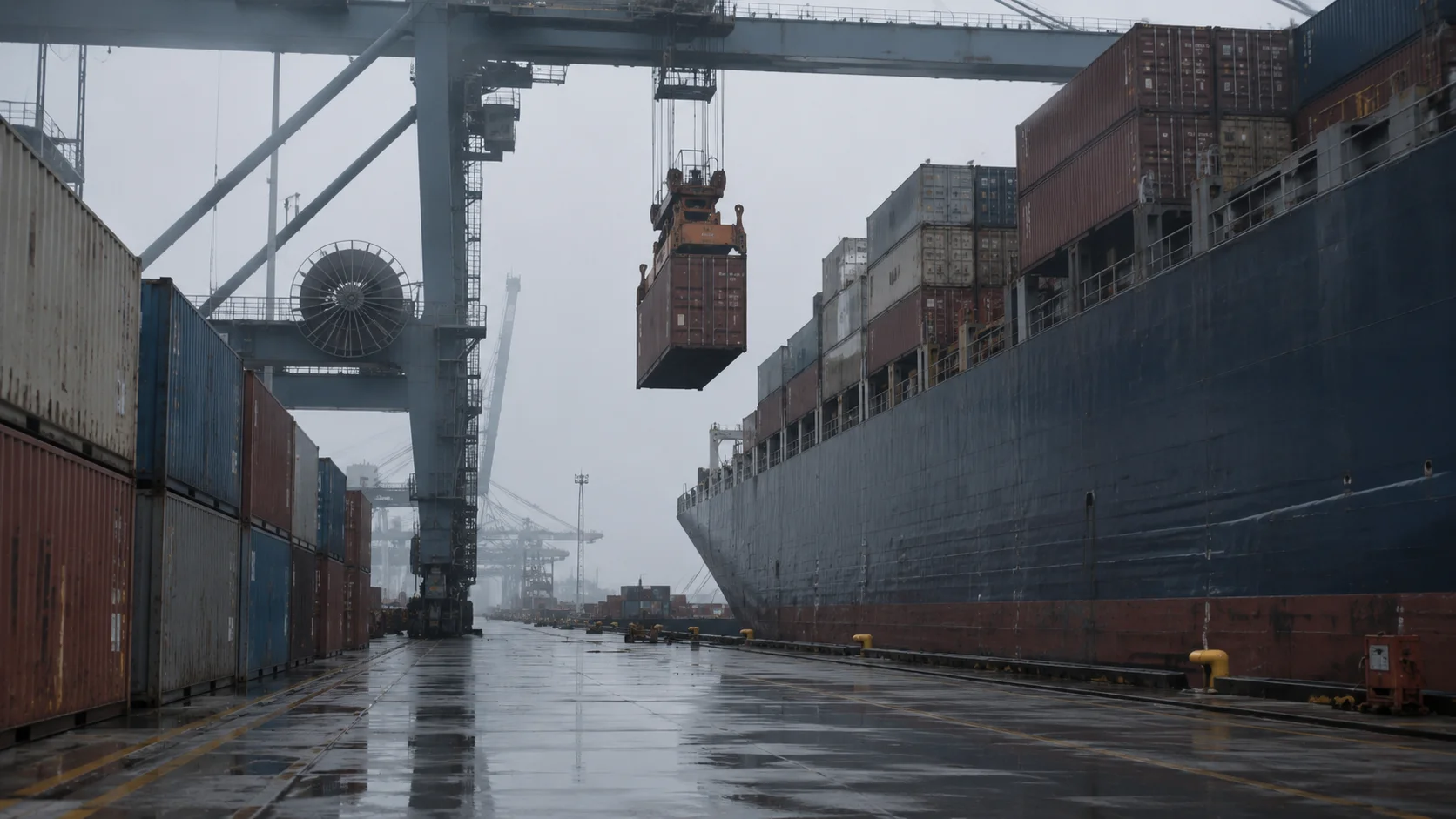
    Container departing a Baltic port bound for Thailand

    Transit Realities: 42–52 Days, and Why

    Plan on 42 to 52 days port to port, Gdańsk to Laem Chabang. Two things drive that number.

    First, geography: the Baltic is simply a long way from the Gulf of Thailand, and every routing begins with the passage out through the Danish straits and down the length of Europe.

    Second: vessels between Europe and Asia are now routing around the Cape of Good Hope rather than through the Red Sea and Suez. This is the detail that surprises anyone who last checked shipping times a few years ago. That rerouting adds roughly 10 to 14 days versus the old Suez transit. It’s been the operating reality long enough now that schedules have stabilised around it; the days are baked into published transit times rather than appearing as nasty surprises. But if a quote or an old blog post promises you “about a month,” it’s working from the old map.

    On top of port-to-port, budget one to two weeks of ground time: origin packing and export formalities before sailing, then Thai customs clearance and delivery after arrival. Realistic door-to-door: eight to ten weeks. Count backwards from when you want your bed in Bangkok, and you’ll see why the freight booking belongs near the top of the checklist. For a deeper dive into schedules and the variables that move them, see our guide to shipping times from Europe to Thailand.

    Build your visa timeline and your Thai housing search off the wide end of that range, and treat an earlier arrival as a bonus rather than a baseline.

    Thai Customs: The Duty-Free Rules That Actually Matter

    Thai Customs allows returning Thais and foreigners taking up residence to import used household effects duty free, once, subject to conditions. For a foreign national, the conditions that matter are these:

    • Visa status. You need a non-immigrant visa granting a stay of at least one year. A work-linked visa or an LTR meets the standard test cleanly; a retirement or spouse-based Non-Immigrant O does not qualify (more on this in the visa section below). A tourist entry does not qualify at all.
    • One year of ownership and use. Items must have been owned and used by you for at least a year before import. This is why a container full of showroom-fresh goods is a problem. More below.
    • The six-month window. Your shipment must arrive in Thailand no earlier than one month before and no later than six months after your own arrival. Miss the window and the duty-free treatment is at risk. This is the clock that makes the visa-first sequencing non-negotiable: the window is measured against you, and you can’t sensibly arrive until the visa exists.
    • One shipment. The allowance is designed around a single consignment of household effects. Consolidate; don’t drip-feed boxes across multiple sailings.

    Paperwork-wise, expect to provide your passport, visa evidence, a detailed packing list in English, and a bill of lading. Clearance is handled through a licensed Thai customs broker; your forwarder arranges this on your behalf, and our Thailand customs process page sets out what that clearance actually involves. Thai Customs publishes its household-effects rules; your forwarder will work to the current letter of them, but it’s worth reading the official position yourself so nothing in your container contradicts it. We’ve covered the allowance mechanics in detail in our duty-free Thailand import guide.

    What Not to Ship from Poland

    Vodka and spirits

    The instinct is understandable: a case of decent żubrówka or a few bottles of something from a small regional distillery as a piece of home. Don’t. Thailand permits one litre of alcohol per adult traveller, carried with you, and alcohol in a household-effects shipment is not covered by the duty-free allowance. Beyond the limit you’re into Thai excise territory, where the combined duties and taxes on spirits are punishing enough that the arithmetic becomes silly: you can end up paying more in charges than the bottle cost in Poland, plus the paperwork friction of having declared alcohol in the container at all. Carry your one litre on the plane, hand the rest to friends at the pożegnanie, and buy your vodka in Thailand like everyone else does.

    Kielbasa, preserved meats and food generally

    This one matters more, because it can hold your whole container hostage. Meat products, including cured, smoked, dried and vacuum-packed sausage (the entire glorious wall of a Polish wędliny counter), fall under Thai food import restrictions and require permits a household shipper does not have. A customs inspection that finds food in a personal-effects container doesn’t just confiscate the kielbasa; it flags the shipment, and now everything you own is sitting in an inspection queue accruing storage charges because of a ring of myśliwska tucked into a box of towels. Do not put food in the container. Not “just one jar” of bigos, not the dried mushrooms from your aunt, none of it.

    New goods in original packaging

    The duty-free allowance covers used household effects, owned and used for a year. A brand-new television still sealed in its OEM box is, in a customs officer’s eyes, an import of new goods, and it will be assessed duty regardless of what else is in the container. If you genuinely need to bring something new, unbox it, use it, and ship it as what it now is: your used possession. Better yet, buy electronics in Thailand, where the selection is vast and the warranty is local.

    The usual suspects

    The standard prohibited and restricted lists apply as they do for any origin: no weapons without permits, no drugs, no counterfeit goods, no e-cigarettes or vaping products (banned in Thailand), and vehicles are a completely separate and heavily-taxed topic that does not belong in a household move.

    What Poles Actually Ship, and What’s Worth It

    Solid-wood furniture

    Poland is one of Europe’s great furniture-making countries, and the good stuff is absolutely worth its cubic metres: solid oak, ash and walnut pieces, whether inherited, artisan-made or from the better end of Polish manufacturing. Comparable solid-wood furniture in Thailand is either imported at a premium or made in tropical hardwoods in styles that may not be yours. One practical note that matters more than people expect: humidity acclimatisation. Your furniture is leaving a Polish climate for year-round tropical humidity. Solid wood will move (joints ease, drawers stick, panels swell slightly), most of it settling within a few weeks. Give pieces time in the new climate before judging them or calling a carpenter, keep them out of direct sun and away from air-conditioning blast lines, and they’ll be fine. Veneered and engineered pieces handle the transition less gracefully than solid timber; factor that into what makes the cut.

    Ceramics and glassware

    Bolesławiec stoneware travels in Polish containers so reliably it’s almost a stereotype, along with crystal and family porcelain. Ship it (it’s compact, dense, and irreplaceable in kind), but insist on proper export packing for ceramics: individually wrapped, double-boxed, dish-pack cartons. This is the category where professional packing pays for itself, and where the insurance distinction between owner-packed and professionally-packed boxes bites hardest.

    Books

    Polish-language books are effectively unobtainable in Thailand at any reasonable price, and e-books don’t fully replace a shelf you’ve built over a lifetime. Books are heavy but stack efficiently; in an LCL shipment they’re often the densest, cheapest-per-item thing you send. Cull honestly, ship the keepers.

    Appliances and electronics: the plug question

    Good news on compatibility. Poland uses 230V/50Hz with type E plugs; Thailand runs 220V/50Hz, which is within tolerance for household equipment. No voltage converters needed. Thai sockets are types A, B and O, so your type E plugs need simple travel adapters, or a screwdriver and five minutes to swap plugs on the appliances you use daily. The real question isn’t compatibility. It’s space economics: a washing machine occupies half a cubic metre of costly shipping space, only to arrive in a country where a new one is inexpensive and locally warrantied. Ship the espresso machine you love; leave the white goods.

    LCL or FCL: A Volume Guide

    • Under 2 m³: Reconsider shipping at all. Airline baggage plus a small air-freight consignment may beat sea freight on both cost and time.
    • 2–12 m³: LCL (groupage). Your effects are professionally packed, crated and loaded into a shared container. You pay per cubic metre. Typical for singles and couples shipping the curated version of a household: the furniture that matters, ceramics, books, kitchen kit.
    • 13–28 m³: 20ft FCL. Your own container, loaded at your Polish address, sealed, opened again in Thailand. The standard choice for a family household without the bulkiest extras.
    • 28 m³+: 40ft FCL. Full family household with large furniture. If you’re borderline, price both: a lightly-loaded 40ft sometimes beats a crammed 20ft plus an LCL top-up.

    LCL involves consolidation and deconsolidation at both ends, which adds handling days and per-cubic-metre destination charges that surprise people who only compared the ocean rate. FCL buys you the seal: loaded at your door, untouched until Thailand. Around 10–13 m³ the curves cross, and a 20ft container starts costing little more than the equivalent LCL volume while giving you room to stop agonising over every box.

    What It Costs: Gdańsk to Laem Chabang in PLN and EUR

    Ballpark door-to-door figures for professional household relocation, Polish origin address to a Bangkok-area delivery via Laem Chabang. Treat these as planning ranges, not quotes. Rates move with the market, and PLN/EUR rounding is approximate.

    Shipment Typical volume EUR (door to door) PLN (approx.)
    LCL: small 3–5 m³ 1,400–2,200 EUR 6,000–9,500 PLN
    LCL: medium 6–10 m³ 2,300–3,600 EUR 9,900–15,500 PLN
    20ft FCL up to 28 m³ 4,300–6,500 EUR 18,500–28,000 PLN
    40ft FCL up to 58 m³ 6,000–9,000 EUR 25,800–38,700 PLN

    What’s inside those numbers: professional export packing at origin, wrapping and loading, Polish export formalities, ocean freight Gdańsk–Laem Chabang, Thai destination handling, customs brokerage for a duty-free household-effects clearance, and delivery with unloading to a Bangkok-area address. What’s not: marine insurance (typically 2–3% of declared value, buy it), storage at either end, duties on any items that fail the used-goods test, and delivery surcharges for remote destinations or buildings with difficult access.

    A worked example

    A couple in Gdynia shipping 8 m³ LCL: quality bedroom furniture in oak, a dining table and four chairs, eight boxes of books, four dish-pack cartons of Bolesławiec and crystal, kitchen equipment, clothing and soft furnishings. Packing crew day at origin: part of the door-to-door rate of roughly 2,900 EUR (≈12,500 PLN). Marine insurance on a declared value of 15,000 EUR at 2.5%: 375 EUR (≈1,600 PLN). Adapters, plug swaps and a dehumidifier rod for the wardrobe in Thailand: call it 60 EUR. All-in: about 3,335 EUR / 14,350 PLN, door in Gdynia to door in Bangkok, roughly nine weeks end to end. The same couple trucking to Hamburg first would have added several hundred euro and at least a few days for no benefit whatsoever. For broader European benchmarks to sanity-check any quote you receive, see our cost guide for moving from Europe to Thailand.

    Visa Options in Brief

    Not immigration advice, but the shipping plan depends on the visa plan.

    • Non-Immigrant O. The workhorse for retirees (O based on retirement, age 50+, with financial requirements met in a Thai bank or by income) and for those with a Thai spouse or family. Typically obtained at a Thai embassy (Warsaw handles Poland), then extended annually in-country. Does not satisfy the household-effects allowance requirement under Thai Customs’ standard criteria: both the retirement route and the spouse/family route are excluded from the baseline test.
    • LTR (Long-Term Resident). A 10-year visa aimed at wealthy pensioners, remote workers for substantial foreign companies, and high-income professionals. Higher bar, better benefits, and its longer horizon pairs nicely with shipping a full household rather than a trial-run LCL.
    • Work-linked visas. If a Thai employer is moving you, the Non-Immigrant B and work permit process usually runs through the employer, and your relocation may be part of the package, but the customs allowance rules for your effects are the same.

    Whichever route: passport validity, apostilled documents where required, and the financial evidence assembled before you start dismantling the flat in Poland.

    The Polish Community in Thailand

    You won’t be pioneering. The Polish community in Thailand (concentrated in Bangkok, with clusters in Pattaya, Phuket and Chiang Mai) has grown steadily and is easy to find through expat groups and the Polish Embassy in Bangkok’s community channels, which are also your registration point as a Pole residing abroad.

    Five Mistakes Poles Make Moving to Thailand

    1. Deregistering (wymeldowanie) months before departure. It feels proactive; it’s premature. You cut yourself off from services you still need for document-gathering. Correct order: visa approved → freight booked → wymeldowanie and urząd skarbowy notification in the final weeks.

    2. Routing through Germany by reflex. Marek’s mistake. Paying 500–900 EUR to truck a container to Hamburg when Gdańsk’s deepwater terminal loads main-line Asia services an hour away. Always price the Gdańsk direct option first.

    3. Packing food in the container. The kielbasa problem. One found meat product can put your entire shipment into inspection with storage charges ticking. Zero food. No exceptions, however shelf-stable it looks.

    4. Shipping before the visa exists. The container arrives, you’re still waiting on an embassy appointment in Warsaw, the six-month/arrival-window mechanics wobble, and your goods sit in bonded storage at daily rates. Visa, then freight. Every time.

    5. Trusting pre-2024 transit times. “About a month” is the old, Suez-era answer. Cape routing means 42–52 days port to port and eight to ten weeks door to door. Build the real number into your housing dates on both ends. The overlap month of temporary accommodation should be in the budget, not a nasty surprise.

    Your Sequenced Checklist

    1. 12+ weeks out: Choose visa route; start document collection (apostilles, financial evidence). Get one hour with a Polish tax advisor.
    2. 10 weeks out: Visa application in. Survey the flat; decide LCL vs FCL; get quotes from Gdańsk, not Hamburg.
    3. 8 weeks out: Visa issued. Book freight. Buy marine insurance. Start the honest cull: furniture and ceramics yes, white goods and food no.
    4. 4 weeks out: Confirm packing dates. Update bank correspondence address; confirm profil zaufany access; sort ZUS/company matters with the accountant.
    5. 2 weeks out: Packing crew loads. Container to Gdańsk. Wymeldowanie done; ZAP-3 to the urząd skarbowy.
    6. Departure: Fly with documents, valuables and your one litre of vodka.
    7. Weeks 6–8 after loading: Vessel arrives Laem Chabang; broker clears against your passport and visa; delivery booked.
    8. Week 9–10: Furniture in, drawers sticking slightly, acclimatising, like you.

    Estimated Moving Costs: Poland to Thailand

    Home size Estimated cost (PLN)
    2 bedroom PLN 4,060–9,060
    3 bedroom PLN 4,430–8,370
    4 bedroom PLN 5,430–10,190
    5 bedroom PLN 7,910–16,220

    These are door to door estimations, not port to port. They include standard packing and customs clearance on both ends, and assume an origin and destination reasonably near the port on both sides; a move to or from a more remote location may cost more. Treat these as budgets, not final pricing. The final cost depends on the quantity and nature of what you are shipping, service availability, and sea freight rates at the time of your move. These figures are based on average home sizes from past moves and may not reflect your own home. Timing and availability can also materially affect the price, and in some cases whether we are able to complete the job on your preferred timeline. For an accurate quote, contact our team or start our online self service quote, a short survey about your move that takes about four minutes and lets our team provide a real quote based on your specific details.

    Related Reading

    Frequently Asked Questions

    How long does shipping from Poland to Thailand take?

    Plan on 42 to 52 days port to port, Gdańsk to Laem Chabang, with Cape of Good Hope routing adding 10–14 days over the old Suez transit. Door to door, budget eight to ten weeks including packing, export formalities, Thai clearance and delivery.

    Can I ship my household goods to Thailand duty free from Poland?

    Yes, if you hold a non-immigrant visa for a stay of a year or more that is not retirement- or Thai-spouse-based, the goods have been owned and used for at least a year, and the shipment arrives within six months of your own arrival. New items in original packaging are excluded and will be assessed duty.

    Should I ship from Gdańsk or truck my goods to Hamburg?

    Gdańsk, almost always. Its deepwater terminal takes main-line vessels on direct Asia services, so you skip 500–900 EUR of trucking plus German handling and an extra terminal queue. Only western-Poland origins with unusual service needs should even run the Hamburg comparison seriously.

    Do I need to do wymeldowanie before leaving Poland?

    Yes. Permanent departure obliges you to deregister, and you should notify your urząd skarbowy of the residency change. But do it in your final weeks, after the Thai visa is issued, not months in advance.

    Can I bring Polish food like kielbasa in my container?

    No. Meat products fall under Thai food import restrictions and a single found item can put your whole container into inspection with storage charges accruing. Ship zero food of any kind.

    Will my Polish appliances work in Thailand?

    Electrically yes. Poland’s 230V/50Hz and Thailand’s 220V/50Hz are compatible, and type E plugs just need cheap adapters. Whether bulky appliances justify their container space is the better question; usually they don’t.

  • Separate Pet Food From Toys and Accessories Before Importing

    Separate Pet Food From Toys and Accessories Before Importing

    Australians spend more than $33 billion a year on their pets, and a growing share of that money goes on imported products: food, treats, toys, beds, harnesses, GPS trackers, automatic feeders. From the outside it looks like one category. From a compliance perspective it is two completely different businesses that happen to share a shelf.

    Whether the product contains animal-derived material is the distinction that determines everything else in this guide. Pet food and treats made from animal material sit among the most heavily biosecurity-controlled imports Australia processes, harder, in several respects, than importing human food. Pet accessories (toys, beds, bowls, leads, grooming tools) are mostly standard consumer goods that clear the border like any other freight from the same origin.

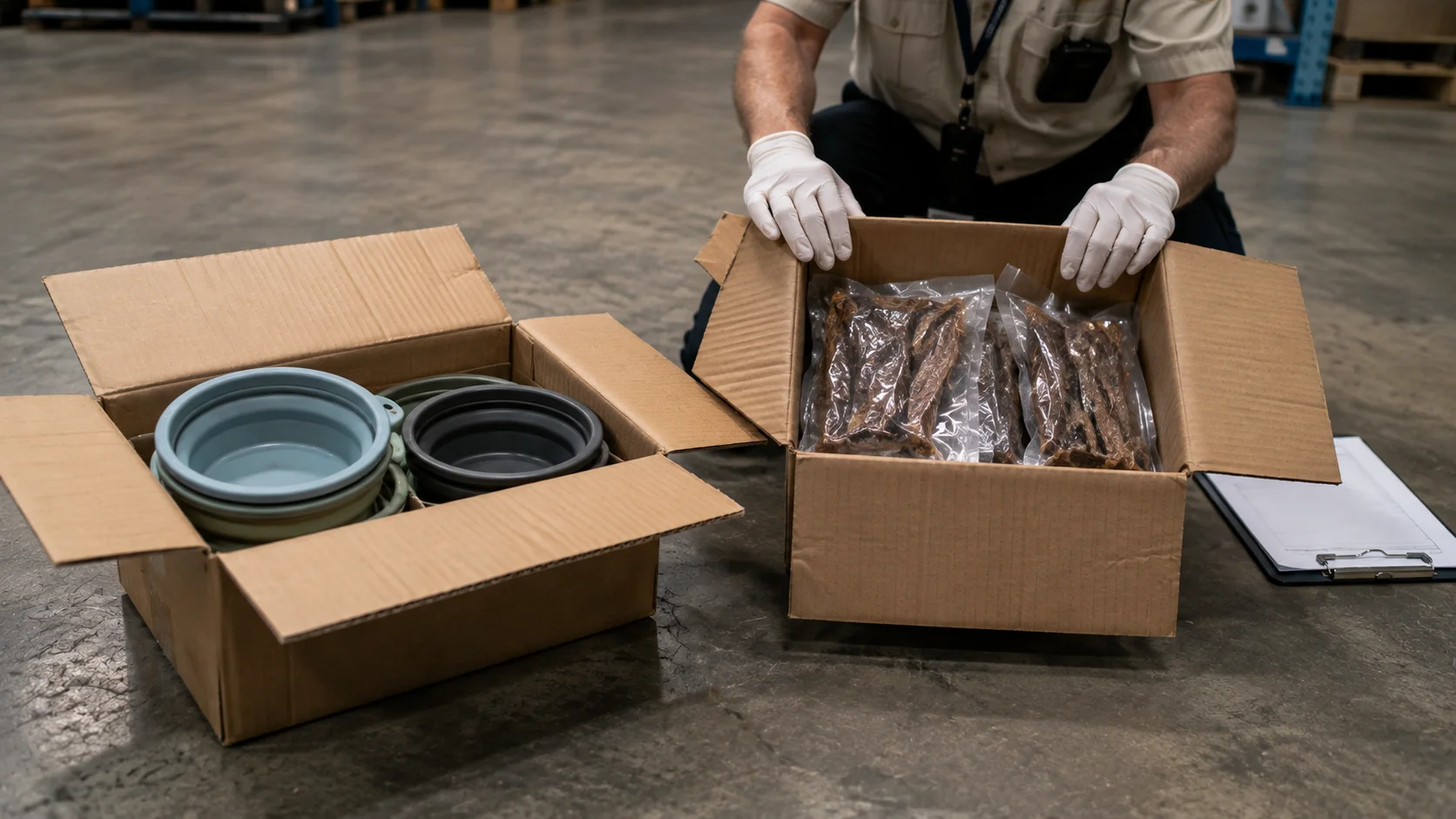
    Get that split clear in your head before you order anything, because importers who blur it lose entire consignments. A container of silicone dog bowls and a carton of dried chicken treats can leave the same Shenzhen warehouse on the same day. The bowls clear in days. The treats, without the right permit, get destroyed at the border at your expense. Same supplier, same freight lane, opposite outcomes.

    Separate Pet Food From Toys and Accessories Before Importing

    The Decision Frame: Animal-Derived or Not?

    Run every pet product you consider importing through one question first: does it contain material derived from an animal? Not “is it food”: does it contain animal material. The biosecurity system doesn’t care about your marketing category; it cares about disease pathways.

    Animal-derived material shows up in obvious places and unobvious ones:

    • Obvious: canned dog food, kibble containing meat meal, pig ears, rawhide chews, dried liver treats, freeze-dried raw food, fish-based treats, bully sticks.
    • Less obvious: feather cat toys, sheepskin dog beds, wool-felted toys, leather leads and collars, bone-shaped chews that actually contain bone or hide, toys stuffed with catnip mixed with animal-derived attractants, dental chews with dairy or meat flavouring agents.
    • Genuinely clean: rubber and silicone toys, nylon chews, polyester beds and blankets, plastic and stainless bowls, webbing leads and harnesses, plastic litter trays, grooming brushes, synthetic-bristle products, electronic devices.

    The Department of Agriculture, Fisheries and Forestry (DAFF) administers these controls through BICON, the Biosecurity Import Conditions database. BICON is where you check the actual conditions for your specific product, and “specific” means specific: species of origin, ingredient list, processing method, country of manufacture, and sometimes the individual facility all change the answer. Two chicken treats from two factories in the same country can have different import outcomes.

    Pet Food and Treats: The Compliance Wall

    Australia’s animal biosecurity settings exist to keep out diseases like foot-and-mouth and African swine fever, which would devastate the country’s livestock industries. Pet food made from animal material is a recognised pathway for exactly those diseases. That is why the controls are so severe, and why they are not going to soften for a promising e-commerce niche.

    How BICON conditions work for pet food

    Import conditions for pet food are determined by a matrix of factors:

    • Ingredient species. Products containing ruminant material (beef, lamb), pig material, or avian material each carry their own risk profiles. Pig and ruminant material attract the tightest controls.
    • Country of origin. DAFF maintains approved-country lists tied to disease status. A retort-processed chicken product might be importable from one country and prohibited from its neighbour.
    • Manufacturing facility. For many pathways, the product must come from a facility approved by the exporting country’s veterinary authority, with that approval recognised by DAFF. You cannot substitute factories mid-program.
    • Processing method. This is the big one. Retort processing (commercial sterilisation in a sealed can or pouch, the same technology behind shelf-stable human food) is the treatment DAFF trusts most. Retorted, shelf-stable pet food from approved countries and facilities is the most workable commercial pathway. Raw, freeze-dried, air-dried and gently-cooked products are the formats Australia’s system is least willing to admit, even though they’re the formats driving premium pet food growth globally.

    Most animal-derived pet food pathways require a DAFF import permit issued before the goods ship. Permit applications require detailed manufacturer information, ingredient breakdowns by species and percentage, and processing parameters (time and temperature data for heat treatments). Assessment takes weeks at minimum, longer where the product is novel or the documentation is thin.

    Dried treats: the category that catches everyone

    Pig ears, rawhide, dried chicken breast, duck jerky and bully sticks make up the treat wall at every pet shop, and they deserve their own warning. These products are dried, not sterilised. Drying does not reliably kill the pathogens DAFF cares about, so dried animal treats face permit requirements plus specific treatment requirements, typically prescribed heat treatments such as holding at a specified core temperature for a specified time. Certification must prove the treatment happened.

    The trap is that these products look casual. They’re cheap per unit, they ship light, they’re the obvious add-on line for an accessories importer. Marketplace suppliers will happily sell them to you and put anything you like on the paperwork. None of that moves a biosecurity officer. Dried animal treats arriving without a valid import permit are directed for export or destruction. There is no “pay a fine and keep the goods” option, and no retrospective permit.

    Fish-based products

    Fish and aquatic-animal material runs on a different set of BICON pathways from land-animal material, reflecting different disease concerns (salmonid diseases, prawn viruses, and others). Some fish-based pet food and treat lines are more accessible than their land-animal equivalents; others carry their own strict controls, particularly those containing salmonid material or uncooked prawn. Do not assume the fish pathway is “the easy one”; check the specific species in BICON. A dried whitefish skin treat and a salmon-based kibble are different regulatory conversations.

    The honest feasibility assessment

    Many small importers simply cannot import pet food commercially, and no amount of process knowledge changes that. If the product you want to sell is raw, freeze-dried, air-dried, or comes from a facility without the right approvals, the answer is not “find a better agent”. The answer is no. The compliance wall is the point of the system.

    What is feasible, for an importer willing to do the work:

    • Retort-processed, shelf-stable food (cans, pouches) from approved countries and facilities is workable, under permit and with full manufacturer documentation. This is how the multinational brands do it, and a disciplined smaller importer can run the same pathway at smaller scale, provided the manufacturer will support the documentation burden for your volumes.
    • Products with no animal-derived material at all. Genuinely plant-based treats and foods sit on much lighter pathways, though “no animal material” must be literally true, down to flavouring agents and processing aids, and you will need the manufacturer to declare it.
    • Buying locally manufactured food and importing only the accessories side of your range is another established option. Australia has a substantial pet food manufacturing sector precisely because importing is so constrained. Many successful pet brands import their hardgoods and contract-manufacture their consumables onshore.

    If your business plan depends on importing dried raw treats from a marketplace supplier, change the plan now, before the border changes it for you.

    The Documentation Trail for Animal-Derived Products

    Where an animal-derived pathway does exist, it runs on paper. Expect to assemble and maintain:

    • Manufacturer declarations state exactly what the product contains, by species, and how it was processed. These must be on manufacturer letterhead, signed, dated, batch-linked and consistent with every other document in the pack. A declaration that says “chicken” while the label says “chicken and beef” is a consignment-stopper.
    • Treatment certificates evidence the required processing (retort parameters, heat-treatment records), often endorsed by the exporting country’s competent authority.
    • Batch documentation. Permits and declarations attach to production batches, not to your brand. Every shipment needs its documentation matched to the batches physically in the boxes. Mixed-batch cartons with single-batch paperwork are a classic inspection failure.
    • Your import permit must stay current and match the product as manufactured, not as originally applied for. Reformulations, new flavours and facility changes all require the permit to be revisited before shipping.

    The practical implication: your manufacturer is a compliance partner, not just a supplier. A factory that won’t produce consistent, authority-endorsed documentation for your order size is a factory you cannot import animal-derived product from, whatever their price. Vet the paperwork capability before you vet the samples.

    Biosecurity inspection of pet product imports into Australia

    The Accessories Path: Where the Category Opens Up

    Cross to the non-animal side of the line and the regulatory landscape changes character entirely. Toys, beds, bowls, leads, harnesses, litter accessories and grooming tools are, for import purposes, general consumer goods. No import permit, no BICON pathway to navigate (assuming genuinely no animal material), no approved-facility lists. Your obligations shift from biosecurity law to consumer and electrical law.

    Pet toys: no mandatory standard, but not a free-for-all

    A point that surprises importers coming from children’s products: there is no mandatory safety standard for pet toys in Australia. The mandatory children’s toy standards (small parts, magnets, button batteries as applied to toys for children under 36 months) apply to toys for children. A dog toy is not within their scope.

    That does not mean nothing applies. The Australian Consumer Law (ACL), administered by the ACCC, still imposes:

    • Acceptable quality and fitness for purpose. A chew toy that fragments into swallowable shards on first use fails the consumer guarantees, and you as the importer are the “manufacturer” for ACL purposes when the overseas maker has no Australian presence. Refunds, replacements and liability land on you.
    • The general safety provisions. Selling goods that are unsafe in normal use invites ACCC attention, mandatory recall exposure, and direct liability under the ACL’s evolving safety provisions.
    • Misleading conduct rules. Every claim on your packaging must be substantiable, including “indestructible,” “vet approved” and “non-toxic.” The ACCC has a long record of pursuing unsubstantiated product claims, and pet owners are an energetic complaint demographic.

    Smart accessories importers behave as if a standard existed: they specify materials (food-grade silicone, phthalate-free PVC or none at all), commission basic lab testing for heavy metals and phthalates on mouthed products, and document durability testing. It costs a few hundred dollars per SKU and converts directly into defensibility and retail credibility.

    Electronic accessories: the RCM obligation importers miss

    GPS trackers, automatic feeders, pet cameras, smart doors, heated beds and LED collars make up the fastest-growing accessories segment. It carries the compliance requirement most first-time importers miss entirely: electrical and radiocommunications compliance under the RCM (Regulatory Compliance Mark) scheme.

    If the device plugs into mains power, includes a charger, or transmits (Bluetooth, Wi-Fi, GPS, cellular), then before sale you must:

    • Register as a responsible supplier on the national compliance database;
    • Hold compliance evidence (test reports to the applicable electrical safety and EMC standards) for each device;
    • Apply the RCM mark to the product.

    This is a supplier obligation that attaches to you as the Australian importer. Your factory’s CE report is useful supporting evidence but is not, by itself, Australian compliance. Selling unregistered transmitting devices exposes you to penalties and to marketplace delisting: Amazon AU and the major retailers increasingly ask for RCM documentation up front. Budget roughly $1,500–$4,000 per electronic SKU for testing and compliance if your factory cannot supply usable reports, and check the factory’s test evidence before you commit to the order, not after.

    A second electronic obligation sits inside the battery compartment. Coin cells used to live in watches and remote controls; now they power LED collars, clip-on trackers, flashing ball toys and remote training buttons, and that shift pulls the pet aisle into the ACCC’s mandatory button and coin battery standards, in force since June 2022. They apply to consumer goods and accessories that use button or coin batteries, not only to children’s toys, so the toy-standard carve-out above does not help here, and the ACCC treats the importer as the supplier. The standards set how the product and its packaging must be designed, including a battery compartment a child cannot open, and the warnings that must appear. An LED collar whose battery door clicks open by hand is non-compliant before it ships, so write the compartment design into the purchase order and get the factory’s test evidence with the RCM reports.

    Beds, textiles and BMSB season

    Pet beds, blankets and soft toys are standard textile goods, with two caveats. First, filling material: recycled or unidentified stuffing can raise quality questions and, if animal-derived (like feather or wool), biosecurity questions; specify virgin polyester fill and have it declared. Second, seasonal BMSB measures: shipments from brown marmorated stink bug risk countries between September and April may require offshore treatment depending on cargo type. Risk countries include much of Europe, parts of Asia and North America; China is not currently BMSB-listed. If you source beds or timber-and-textile cat furniture from a risk country, build BMSB and quarantine handling into your Q4 shipping plans: peak pet retail season sits exactly inside the BMSB window.

    Labelling Pet Food for the Australian Market

    Suppose you have a viable food pathway: retorted pouches from an approved facility, permit in hand. Labelling is the next layer, and it is messier than human food because there is no single national mandatory standard.

    The framework in practice:

    • AS 5812, the Australian Standard for the manufacturing and marketing of pet food, is voluntary. It specifies labelling requirements: product name and species, ingredient list in descending order, typical analysis (protein, fat, fibre, moisture percentages), feeding guide, batch identification, Australian contact details.
    • PFIAA (the Pet Food Industry Association of Australia) administers industry self-regulation around AS 5812; members commit to the standard. Major retailers and distributors largely treat AS 5812-compliant labelling as the ticket to shelf, voluntary or not.
    • State-based rules add a patchwork underneath: several states maintain labelling and registration expectations for stock foods and pet foods under agricultural compliance legislation, and enforcement attention has increased following recurring national reviews of pet food regulation. Check the requirements for each state you’ll sell into rather than assuming a single national position.
    • ACL overlay: every nutrition and health claim must be substantiable, including “complete and balanced” and “supports joint health,” exactly as with any consumer product.

    Practical approach: label to AS 5812 from day one, with a compliant typical-analysis panel and Australian supplier details, and have your overseas manufacturer print it correctly rather than over-stickering: inspection officers and retail buyers both read stickered-over imported labels as a red flag.

    Duty, GST and FTA Preference

    The good news in an otherwise demanding category: pet products are cheap to bring through customs. Most relevant tariff lines carry 0–5% duty, and free trade agreements take much of the range to zero:

    • Dog and cat food put up for retail sale (HS 2309.10): 0% duty as a general rate. Other prepared animal feed (2309.90) is similarly low.
    • Rubber and plastic toys and articles: typically 5% general rate; 0% for Chinese-origin goods under ChAFTA with valid origin documentation.
    • Textile beds and blankets: up to 5% general rate; again generally 0% under ChAFTA and other FTAs for qualifying origin.
    • Electronic devices (trackers, feeders, cameras): predominantly 0% under general rates for most electronics lines.
    • Leather goods (collars, leads): around 5% general, FTA-dependent.

    GST of 10% applies to the value of the taxable importation (customs value + duty + transport and insurance) on commercial consignments regardless of origin. It’s recoverable as an input tax credit if you’re GST-registered, and deferrable on the BAS if you’re on the deferred GST scheme. For a category where landed margins are made or broken on freight and compliance rather than duty, the FTA paperwork is still worth doing: on a $60,000 annual accessories program, ChAFTA origin documentation is worth about $3,000 a year for an hour of supplier paperwork per shipment. The Australian Border Force publishes the tariff and FTA rules of origin; your broker will classify, but you should know your own lines.

    Freight Profiles: Two Different Logistics Businesses

    Accessories are volume-light. Pet beds, plush toys and hollow rubber products cube out long before they weigh out: a 40-foot container of dog beds might carry six tonnes in 65 cubic metres. Your freight cost per unit is driven by cubic efficiency: compression-packing beds, nesting bowls, flat-packing where the product allows. Accessories tolerate slow transit (no expiry), suit sea freight LCL for starting volumes, and fit the standard e-commerce import playbook.

    Pet food is weight-dense and shelf-life-driven. Canned and pouched food stows heavy: you will hit container weight limits (roughly 21–24 tonnes payload depending on equipment and road limits) well before you fill the cube. And every day in transit is a day off the best-before date. Retailers commonly want long remaining shelf life at receipt, so a 12–18-month shelf-life product already loses a meaningful slice of its saleable window to three months in manufacturing, consolidation, transit and clearance. Food importing is therefore an inventory-cycle business: regular, forecast-driven FCL shipments, buffer stock calculated against permit and clearance variability, and a real cost attached to every biosecurity delay. Inspection holds don’t just cost storage: they cost shelf life.

    The Private-Label Opportunity: Why Accessories Are the Entry Point

    Food has deep, recurring, sticky demand, and a compliance wall that keeps small importers out. Accessories have lighter demand economics per SKU, and a compliance path any diligent operator can walk.

    That asymmetry is why private-label accessories from China are the standard entry into the Australian pet category. The playbook: select a focused range (say, silicone slow-feeder bowls, webbing harnesses, and a plush toy line), private-label it with your brand from established factories, and do the ACL diligence and lab testing the factories won’t do for you. Once the base range is proven, add RCM-compliant electronics and build the brand and channel relationships on hardgoods margin. If food ever enters the picture, it comes later: via the retort-import pathway with a capable manufacturer, or more commonly via Australian contract manufacturing under the brand you built on accessories.

    Worked Example: An Accessories Launch vs an Attempted Treats Import

    Two hypothetical importers, both starting with about $30,000 of product budget, both sourcing from China.

    Importer A: private-label accessories range

    • Range: silicone bowls and slow feeders (4 SKUs), webbing harness/lead sets (6 SKUs), plush and rubber toys (8 SKUs). No animal material anywhere: feather, wool and rawhide explicitly excluded in the product spec.
    • Compliance outlay: heavy-metals and phthalate testing on mouthed SKUs, ~$2,400; ACL claim review of packaging, ~$700. No permits, no BICON pathway. Total: ~$3,100.
    • Freight: 22 cbm LCL/part-container, Shenzhen to Melbourne, ~$4,300 including port charges. Standard clearance: broker ~$450, duty $0 under ChAFTA with Certificates of Origin, GST ~$3,900 (creditable).
    • Timeline: 8 weeks production, 4 weeks shipping and clearance. Goods on sale in under 3 months.
    • Landed outcome: ~$38,000 all-in for a retail-value range around $110,000. Repeatable quarterly.

    Importer B: dried chicken treats

    • Plan: $30,000 of air-dried chicken breast treats from a marketplace supplier who “ships to Australia all the time”.
    • Reality at BICON: the product is an animal-derived, non-retorted treat. The pathway requires an import permit, an eligible country and facility, prescribed heat treatment with certification, and manufacturer declarations. The marketplace supplier can produce none of it: no veterinary-authority facility approval, no treatment records, declarations that don’t survive first reading.
    • Best case (importer checks before shipping): the project dies at the desk. Sunk cost: samples and time. Painful, survivable.
    • Worst case (importer ships first, asks later): consignment arrives, is referred to biosecurity, has no permit, and is directed for destruction. Sunk cost: $30,000 of product, ~$3,500 of freight, destruction and storage charges typically $2,000–$5,000, plus an importer profile that now attracts closer scrutiny on future consignments. Total loss approaching $40,000, revenue: zero.
    • The viable version of Importer B exists, but looks completely different: months of permit work, an approved facility relationship, retorted or fully treated product formats, and a documentation pack maintained batch by batch, a program measured in quarters and tens of thousands in setup before the first saleable unit lands. That is a considered second-phase move for an established pet brand, not a first import.

    Common Mistakes

    • Ordering dried treats without permits. This is the single most expensive mistake in this category. Dried, air-dried and raw animal treats need permits and treatment certification; without them the border outcome is export or destruction, not a warning.
    • Assuming “natural” means importable. In biosecurity terms, natural is precisely the problem. The less processed an animal product is, the harder it is to import. Marketing language on the packet has zero regulatory meaning.
    • Missing RCM on electronic accessories. Trackers, feeders and cameras need responsible-supplier registration and compliance evidence before sale. Factory CE paperwork alone doesn’t cut it.
    • Animal material hiding in “accessories”. Feather toys, sheepskin beds, rawhide-core rope toys and leather goods with untreated hide sit on the biosecurity side of the line even though they’re merchandised as accessories. Screen every SKU’s bill of materials, not the category name.
    • Stickered-over labels on food. Print AS 5812-style Australian labelling at the factory. Over-stickering looks improvised to both inspectors and buyers.
    • Ignoring shelf life in the freight plan. For food, transit time is inventory cost. Plan the whole cycle (production to shelf) against the best-before date, not just the sailing schedule.
    • Trusting supplier claims about Australian rules. “We ship to Australia all the time” is not a compliance document. Check BICON yourself, and make permits and testing your workstream.

    Related Reading

    Frequently Asked Questions

    Can I import pet food to Australia commercially?

    Sometimes, but the bar is high. Most pet food containing animal-derived material requires a DAFF import permit, granted only for approved countries and often approved facilities, with prescribed processing such as retort treatment. Many products (especially raw, dried and air-dried formats) effectively cannot be imported commercially. Shelf-stable retorted food from approved sources is the most feasible pathway; many importers instead contract-manufacture food locally and import only accessories.

    Do pet toys and accessories need an import permit?

    Generally no. Synthetic toys, beds, bowls, leads and grooming tools are standard consumer goods with no biosecurity permit. The exceptions are products containing untreated animal material (rawhide, feathers, sheepskin) and electronic devices, which need RCM compliance rather than a permit.

    What happens if I import dried animal treats without a permit?

    The consignment is directed for export or destruction at your cost, with storage and disposal charges on top. There is no retrospective permit and no fine-and-release option. Check BICON before ordering, not after arrival.

    What duty applies to pet products?

    Most lines are 0–5%. Retail dog and cat food is duty-free as a general rate; toys, beds and leather goods are around 5% general but typically 0% for Chinese-origin goods under ChAFTA with correct origin documents; most electronics are 0%. GST of 10% applies to commercial imports regardless of origin.

    Do GPS trackers and automatic feeders need Australian electrical approval?

    Yes. Mains-powered or transmitting pet devices fall under the RCM scheme: register as a responsible supplier, hold test evidence for each device, apply the RCM mark before sale. This obligation sits with you as the importer, not your factory.

    Is pet food labelling mandatory in Australia?

    There is no single national mandatory standard. AS 5812 is voluntary and administered in practice through PFIAA industry self-regulation, with additional state-based expectations underneath. Commercially, AS 5812-style labelling (ingredients, typical analysis, feeding guide, Australian contact) is the effective baseline for retail.

  • Shipping Musical Instruments to Thailand: Pianos, Guitars and Everything Fragile

    Shipping Musical Instruments to Thailand: Pianos, Guitars and Everything Fragile

    The 1968 Martin D-28 left Rotterdam in a hard case inside a plywood crate, buried mid-container between a wardrobe and a box of books. Forty-one days later its owner opened the case in a Sukhumvit condo, half expecting a cracked top. Instead the guitar was fine. Better than fine, the top slightly domed, the action a shade higher, the wood already drinking Bangkok’s air. The two-way humidity packs he’d sealed in the case had done their job at sea. His problem was only starting: a guitar built for a Dutch winter now had to live in a city where the humidity never drops below 65%.

    Shipping musical instruments to Thailand is not one problem but three stacked on top of each other: getting a fragile, often valuable object through six weeks of ocean transit intact; getting it through Thai Customs and, for certain older instruments, past international wildlife-trade rules that most owners have never heard of; and then keeping it healthy in a tropical climate it was never built for.

    Shipping Musical Instruments to Thailand: Pianos, Guitars and Everything Fragile

    Acoustic Pianos: The Hardest Household Item There Is

    An acoustic piano is the single most demanding object in household shipping. An upright weighs 200–300kg; a baby grand 250–350kg; a full concert grand can pass 500kg. That weight is not evenly distributed. Most of it is a cast-iron frame holding around 20 tonnes of string tension, and the case around it is thin veneered wood that marks if you look at it wrong.

    You cannot treat a piano as furniture. It needs specialist piano movers at both ends: at origin to get it out of the house (stairs, doorways, sometimes a hoist through a window), and in Thailand to get it into a Bangkok condo, which frequently means negotiating a service lift with a strict weight limit and a juristic office that wants paperwork before anything heavy enters the building. Between those two teams sits a purpose-built crate: internal bracing, the piano wrapped and blocked so it cannot shift, moisture barrier around the whole assembly.

    Upright and grand pianos travel differently. An upright ships on its back or upright on a piano board, essentially intact. A grand is partially dismantled: legs and pedal lyre come off, and the body travels on its straight side on a padded skid board. That dismantling and reassembly is skilled work, and it is one more reason the quotes are what they are. Expect the piano alone to add $2,000–4,000 to a household move once specialist handling at both ends, crating and the extra cube are counted.

    Then comes the climate shock. A piano is a wooden soundboard under tension, and it will react to Thailand the way the Martin did: swelling, pitch drift, sticking keys in the worst cases. Every piano needs at least one tuning after arrival, usually two across the first six months as it settles. Plan for it to live in an air-conditioned room, ideally with a soundboard humidity-control system fitted.

    The Ship-or-Sell Calculus

    Bangkok has a real piano market: new Yamahas and Kawais through established dealers, and a steady flow of well-kept second-hand uprights, many already acclimatised to Thai conditions. A decent used Yamaha U1 in Bangkok costs roughly what you’d pay to ship a similar piano from Europe. Unless your instrument has genuine sentimental value, is a high-end grand worth well into five figures, or is a specific instrument you cannot replace, selling at origin and buying in Thailand is very often the better financial and musical decision. The piano you buy locally has already survived the climate transition. Yours hasn’t.

    Digital pianos and stage keyboards, by contrast, are almost trivially easy. No strings under tension, no soundboard, no climate sensitivity worth worrying about. Original box if you have it, or a double-walled carton with 5cm of foam all round if you don’t; remove the stand; they ride in the container like any other electronics. An 88-key digital piano is roughly 15–25kg and takes up a fraction of a cubic metre.

    Humidity risk considerations for shipping guitars and musical instruments to Thailand

    Guitars: Humidity Is the Killer

    Guitars break in shipping far less often than people fear and suffer from climate far more often than people realise. The physical risk (a cracked headstock from a drop) is real but manageable with a hard case. The humidity risk is subtler and does more total damage.

    A solid-wood acoustic guitar is built at a controlled humidity, typically 45–50%. Take it below 35% and the top shrinks and can crack; take it well above 60% for a long period and the top swells, the dome rises, the action climbs, and over years glue joints can soften. A 40-day container transit passes through multiple climate zones, and container “rain” (condensation cycles as the box heats and cools) is a documented phenomenon. Then the guitar arrives in a country running 70–80% relative humidity every month of the year.

    The transit fix is straightforward: two-way humidity control packs (the Boveda-style 49% packs musicians use) sealed inside the case with the guitar. They release moisture when the case air is dry and absorb it when wet, and they will hold a stable case environment for well over the length of an ocean transit. Laminate-construction guitars (most beginner and mid-range instruments) are far more tolerant and need less fuss.

    Luthiers disagree on truss rods. Fully detensioning the strings removes the pull the truss rod is adjusted against, and a rod left counteracting nothing for six weeks can push the neck into a back-bow. Leaving full concert tension on adds stress if the case takes an impact. The consensus middle ground: slacken each string two or three semitones, support the neck on its case cradle, pad the headstock, and book a setup on arrival regardless.

    For a valuable instrument (anything from a vintage Martin to a modern custom build), the standard is hard case inside a crate or double-walled carton, with the guitar immobilised in the case (padding under the headstock, crumpled paper filling voids), the case immobilised in the box, and nothing able to move at any layer. Loosen nothing structural; label nothing tempting. A crate that says “GUITAR, FRAGILE” advertises its contents; plain marking with a fragile symbol is smarter.

    Violins, Violas and Cellos: Fly Them

    The violin family occupies the opposite corner of the freight matrix from a piano: tiny mass, enormous value density. A professional violin can be worth more than everything else in the container combined while weighing under 2kg with its case. That changes the correct answer entirely.

    For any violin or viola of real value, air freight is usually right, and for the truly valuable, neither air freight nor courier: the instrument travels in the cabin with you, in a modern suspension case, as carry-on. Airlines will generally accept a violin case in the overhead; buy the case a seat if the instrument justifies it. Six weeks of uncontrolled ocean humidity is simply not a risk worth taking to save a few hundred dollars on an instrument worth tens of thousands.

    Cellos are the awkward middle: too big for overhead bins (a cabin seat purchase is the professional’s solution), expensive but manageable as air cargo in a flight case. Student-grade instruments of the whole family can travel by sea in the household shipment with the same case-plus-carton approach as guitars, plus humidity packs: a carved spruce top cares about moisture exactly as much as a guitar top does.

    One insurance note that belongs here because it bites string players hardest: a bow is a separate object. A good pernambuco bow can be worth thousands on its own, and insurers treat instrument and bow as separate scheduled items. More on that below.

    Brass, Woodwind, Drums and the Studio

    Brass is the robust end of the orchestra. A trumpet or trombone in a hard case, boxed, survives sea freight without drama. Dents are the risk, humidity barely matters to the metal. Do empty and dry the instrument thoroughly: six weeks of trapped moisture inside brass tubing is how you grow corrosion and smells.

    Woodwind needs one caveat: pads and corks. Clarinet and saxophone pads are leather and felt; oboe and bassoon add fragile reed mechanisms. High humidity swells pads and can throw off seating, and wooden-bodied clarinets and oboes share the crack-and-swell behaviour of any fine wood. Case humidity packs again, and budget for a pad check with a Bangkok repair tech after arrival. Thailand has a solid repair scene, particularly for saxophones.

    Drum kits are the volume problem rather than the fragility problem. A five-piece kit with hardware and cymbals is not especially delicate (shells are plywood cylinders) but it eats a cubic metre or more of container space. Nest the toms, bag the hardware separately (it is absurdly heavy relative to the shells), put cymbals in a padded cymbal case, and remove or slacken resonant heads if you want to be thorough. Sea freight, always; the weight-to-value ratio makes air freight silly for all but touring professionals.

    Amplifiers and studio gear come with good news first: Thailand runs 220–230V at 50Hz, so European, UK and Australian equipment plugs in and works. You will need plug adapters (Thai sockets take flat two-pin and hybrid types) but no voltage converters. American 110V gear does need a step-down transformer. Check the label on every unit, because many modern power supplies are dual-voltage anyway.

    The one genuinely fragile item in the rack is the tube amplifier. Valves are glass, mounted in sockets, and they neither like impacts nor container vibration. Best practice: pull the tubes, wrap each individually, box them inside the amp cabinet’s packing, and reseat them on arrival, or at minimum stuff padding around the tube cage so nothing can rattle loose. Studio monitors, interfaces and outboard gear travel like any electronics: original boxes if you kept them, dense foam if you didn’t, and desiccant packs in every carton.

    Arrival: Instruments in the Tropics

    Whatever survives the ocean still has to live in Thailand, and this is the part of shipping musical instruments to Thailand that owners underestimate most. Bangkok’s relative humidity runs 70–80% essentially year-round; the European rooms most instruments come from sit at 40–60% with central-heating winters drier still. Your instrument is moving to a permanently wetter world.

    Practical rules that working musicians in Thailand converge on:

    • Acclimatise slowly. On arrival, leave the instrument in its closed case in the room where it will live for 24–48 hours before opening. Sudden climate transitions do more harm than gradual ones.
    • Your humidifier is now a dehumidifier. The case humidification habit reverses in Thailand. Two-way packs handle this automatically: they absorb in Bangkok as readily as they release in Berlin. Single-direction sponge humidifiers become useless; rechargeable silica-gel packs become essential.
    • Air-conditioned storage for solid wood. Serious players keep good instruments in one consistently air-conditioned room, in the case, with humidity packs. The enemy is not the humidity level alone but the daily cycling between a 55% aircon room and an 80% hallway.
    • Expect a settling period. Guitar actions rise; a setup two to four weeks after arrival, once the wood has finished moving, is money well spent. Pianos need that first tuning at six to eight weeks and another within six months.
    • Watch the hardware. Salt air near the coast and constant humidity accelerate corrosion on frets, strings and plating. Strings die faster in Thailand; buy in bulk.

    Insurance: Where Instrument Claims Go Wrong

    Standard household transit insurance treats a guitar as “one carton, miscellaneous.” That is precisely what you do not want for anything valuable, and the fixes are all pre-departure paperwork.

    Appraisal documentation. Insurers pay against evidence of value. For any instrument worth more than roughly $2,000, get a written appraisal or recent purchase documentation before it ships, with serial numbers and dated photographs from multiple angles, including existing dings, which protects you both ways. A luthier’s or dealer’s valuation letter costs little and transforms a claim.

    Agreed-value policies. Where possible, insure valuable instruments on an agreed-value basis (the payout figure is fixed in the schedule at policy inception) rather than market-value, which invites a post-loss argument about what a 1968 D-28 was “really” worth. Specialist musical-instrument insurers offer this as standard; make sure the transit leg is explicitly covered, as some instrument policies exclude sea freight unless declared.

    Pairs and sets. A violin and its bow are separate scheduled items with separate values. So are a guitar and its vintage case, an amp head and its cab. List them individually. An insurer will happily pay out on “violin outfit, $8,000” at a fraction of the true combined value of a good instrument and a good bow if you let the schedule stay vague.

    The owner-packed exclusion. This is the trap that catches the most people. Most transit policies exclude or restrict claims on owner-packed boxes, because the insurer cannot verify the packing standard. For valuable instruments, have the professional packers pack them (or at least crate them) and make sure the inventory records it. You can prepare the instrument yourself (humidity packs, string tension, internal case padding) and still have the crate professionally built and sealed. For a fuller treatment of marine cover generally, see our guide to cargo insurance for Thailand shipping.

    The CITES Trap: Rosewood, Ivory and Tortoiseshell

    The Convention on International Trade in Endangered Species (CITES) regulates cross-border movement of protected species and anything made from them, and older musical instruments are full of exactly those materials.

    The three that matter:

    Brazilian rosewood (Dalbergia nigra). The classic tonewood of pre-1970 high-end acoustic guitars (Martin used it as standard until 1969) and of many older violin fittings and fingerboards. It has been CITES Appendix I (the strictest tier) since 1992. Crossing a border with a Brazilian rosewood instrument legally requires CITES documentation demonstrating pre-Convention origin. Critically, the 2019 exemption that everyone half-remembers does not cover it.

    That 2019 exemption, correctly stated: in 2017 all rosewood species (the whole Dalbergia genus) were added to Appendix II, briefly making every modern guitar with an East Indian rosewood fingerboard a paperwork problem. The 2019 CITES conference carved out finished musical instruments, parts and accessories from the Appendix II rosewood listing. So a modern guitar with Indian rosewood is fine to ship with no permit. A 1968 Martin with Brazilian rosewood back and sides is not: Appendix I, no instrument exemption, permits required.

    Ivory. Piano keytops on instruments made before roughly the mid-1950s (later in some markets), violin and cello bow tips, tuning pegs and ornaments on older instruments. Elephant ivory is Appendix I. The practical problem is documentation: proving your piano’s keytops are pre-1975 (the pre-Convention threshold that matters for most ivory) when the original receipt vanished decades ago. Options include dated photographs, dealer letters, serial-number dating, or (for pianos) having a technician replace ivory keytops with modern material before shipping, which many owners now choose simply to make the instrument freely movable.

    Tortoiseshell. Genuine hawksbill-shell picks, pickguards and inlays on older instruments: Appendix I, same regime. Modern “tortoiseshell” celluloid is fine; the genuine article on a vintage instrument is not.

    The enforcement reality: undeclared CITES material can mean the instrument is seized, or the offending parts (bow tips, pegs) removed and confiscated. If any instrument in your shipment predates the 1970s, identify its materials before it ships, obtain a pre-Convention certificate from your origin country’s CITES management authority where needed, and declare it. This mirrors the regime we described for antique furniture and ivory inlay in our guide to shipping antiques and fragile items to Thailand.

    The Thai Import Side

    Used personal musical instruments arriving as part of a household-goods shipment fall under Thailand’s personal effects framework: with an appropriate long-stay visa (typically Non-Immigrant with a year’s stay) and evidence the goods are genuinely yours and used (the working standard is around a year of ownership), instruments come in without duty. The full mechanics of that process are in our guide to shipping household goods to Thailand, and the exemption rules get their own treatment in the duty-free Thailand import guide.

    Two edges to stay away from. First, commercial quantities: one of everything reads as personal; five identical guitars, sealed boxes, or a pallet of pedals reads as stock, and Thai Customs will assess duty (typically 10% on instruments) plus 7% VAT on the whole lot. Second, new-looking gear: an instrument still in shrink-wrap with a fresh receipt is a purchase, not a personal effect. If you buy your dream guitar the month before you emigrate, play it, keep the case scuffed and the receipt handy, but understand the exemption is discretionary and recently purchased items are its weakest case.

    A third case runs on a different mechanism altogether. If you are coming to play rather than to live (a tour, a residency, a recording block), the personal-effects exemption is the wrong instrument, because it assumes a change of residence. The tool built for professional equipment entering temporarily is the ATA Carnet, which Thailand accepts: one document, issued by the chamber of commerce in your home country, that lets instruments and gear enter without duty on condition they leave again within the carnet’s validity, normally twelve months. It converts a duty assessment into a re-export undertaking. The structural consequence is that your visa, not your instrument, decides which regime you are in, so settle that question before anyone quotes freight.

    The returning-musician scenario covers a Thai national or long-term resident coming home after years abroad with a career’s worth of gear. The personal effects exemption applies to returning Thais changing residence too, with its own conditions on time spent abroad. The same commercial-quantity logic applies: a returning session guitarist with six instruments should carry evidence they are working tools of one person (photos over the years, setlists, insurance schedules), not inventory. Full pricing and process for a household move (instruments included) sits on Swift Cargo’s Thailand shipping page.

    Air or Sea: Decide by Value Density

    The mode decision is one ratio: value and fragility per kilogram. Sea freight to Thailand runs five to seven weeks door to door and charges by volume; air freight runs three to seven days and charges by weight. (Full mode comparison in our air freight to Thailand guide.)

    • Cabin baggage: violins, violas, anything irreplaceable that fits overhead. The instrument never leaves your control.
    • Air freight: instruments worth roughly $3,000+ per box where cabin carriage is impractical (a pair of high-end guitars, a cello, a vintage synth). You pay perhaps $150–400 more than sea for the box, and buy six fewer weeks of climate exposure and handling risk.
    • Sea freight: everything heavy, bulky or replaceable (pianos, drum kits, amps, monitors, mid-range instruments, the whole studio rack). Properly packed, sea freight is safe; it is merely slow.

    Worked Example: A Home Studio, Three Guitars and an Upright Piano, Bangkok-Bound

    The shipment: a producer relocating from Manchester to Bangkok. Inventory: a Yamaha U1 upright piano (240kg, bought used eight years ago, sentimental), a 1968 Martin D-28 (insured value $9,500, Brazilian rosewood back and sides; pre-Convention, needs CITES paperwork), a Fender Telecaster ($1,800), a mid-range Taylor ($1,400), a Fender tube amp, two studio monitors, an interface, a synth, mic collection and cabling (studio total value ~$7,000, ~1.5m³ boxed).

    Decisions made:

    • The Martin flies: air freight in its hard case inside a professional crate, $340, with a CITES pre-Convention certificate obtained from the UK management authority six weeks before departure (allow at least that long; the application needed dated photos and a dealer letter). Two-way humidity packs in the case, strings down three semitones.
    • The piano nearly didn’t ship. Quote: £1,850 for specialist handling at both ends, crating and its share of the container, plus two tunings in Bangkok (~4,000 THB). A comparable used U1 in Bangkok: roughly 150,000 THB. Marginal call on money; sentiment carried it. Booking the Bangkok piano crew and confirming the condo’s service-lift weight limit happened before the ship sailed, not after arrival.
    • Everything else went in the groupage container. Telecaster and Taylor in hard cases inside double-walled cartons with humidity packs; tubes pulled from the amp and packed separately inside the cabinet; monitors in original boxes; desiccant in every electronics carton. Professional packers crated the guitars, keeping the owner-packed exclusion off the two most claimable boxes.
    • Insurance: the Martin on an agreed-value instrument policy with transit cover declared; the rest on the household transit policy with the guitars and amp individually scheduled. Total premium ~$310.

    Outcome and totals: sea freight share for studio + piano + guitars roughly £2,600; air freight $340; insurance $310; CITES certificate £74; Bangkok setups and tunings ~6,500 THB. Call it £3,300 all-in. Everything arrived working. The Taylor needed a truss-rod tweak, the piano’s second tuning fell at month five, and the Martin, as you already know, came out of its case slightly domed and entirely alive.

    Related Reading

    Frequently Asked Questions

    Can I ship a piano to Thailand?

    Yes, but it is the most demanding household item you can move: specialist piano movers at both ends, a purpose-built crate, and several thousand dollars door to door. Given Bangkok’s healthy new and used piano market, selling at origin and buying locally is often cheaper, and the local piano is already acclimatised.

    Will Thai humidity damage my guitar?

    Solid-wood acoustics built in a dry climate absorb moisture in Thailand’s 70–80% humidity: the top swells, action rises, and over years glue joints can soften. Keep valuable instruments in an air-conditioned room, use two-way silica humidity packs in the case, and acclimatise in the closed case for 24–48 hours on arrival.

    Do I need a CITES permit to ship my instrument?

    Only if it contains listed materials: Brazilian rosewood (common in pre-1970 acoustics), elephant ivory (older piano keys, bow tips) or genuine tortoiseshell. Modern instruments with ordinary rosewood are exempt under the 2019 CITES finished-instrument carve-out. Brazilian rosewood and ivory were never part of that exemption and need pre-Convention documentation.

    Is air or sea freight better for instruments?

    Decide by value density. Violins and anything above roughly $3,000 per box justify air freight or cabin carriage: less transit time means less climate and handling exposure. Pianos, drums, amps and studio gear are too heavy for economical air freight and travel safely by sea when properly packed.

    Do I pay Thai import duty on my own instruments?

    Used personal instruments in a household-goods shipment generally qualify for Thailand’s personal effects treatment with a long-stay visa and roughly a year’s ownership. Commercial-looking quantities or brand-new sealed gear are assessed as imports with duty plus 7% VAT.

    Should I loosen guitar strings before shipping?

    Drop tension two or three semitones rather than removing it entirely: a truss rod left with nothing to counteract for six weeks can back-bow the neck. Support the neck in the case, pad the headstock, and budget for a setup on arrival either way.

  • Two Different Import Regimes for Green and Roasted Coffee Beans

    Two Different Import Regimes for Green and Roasted Coffee Beans

    Australians drink close to two kilograms of coffee per person per year, and almost none of it grows here. A small crop comes off farms in northern New South Wales and far north Queensland: charming, expensive, and a rounding error against national demand. Everything else arrives by sea: green beans for the roasters, roasted and packaged product for the supermarket shelf, soluble coffee for the office kitchen. If you are a roaster moving from a domestic green bean merchant to importing your own, or a brand bringing packaged roasted coffee in from overseas, the pathway is well worn but full of specific traps. This guide walks the whole route: the two regulatory regimes, the origin maths, the container physics, and a full worked landed cost for a five-tonne specialty order from Colombia to Melbourne.

    Two Different Import Regimes for Green and Roasted Coffee Beans

    Two Products, Two Regimes

    The first thing to understand about importing coffee to Australia is that the border treats green beans and roasted coffee as fundamentally different cargo, because biologically they are.

    A green coffee bean is a seed. It is alive in the botanical sense that matters to the Department of Agriculture, Fisheries and Forestry (DAFF): it can carry insects, fungal spores, soil, weed seeds and plant debris from a farm on the other side of the world. Green coffee is therefore a biosecurity-controlled plant product, and its import conditions live in BICON, the department’s import conditions database. The good news is that green coffee from the major producing origins is permitted without an import permit for standard commercial consignments. The conditions are conditions, though, not formalities: beans must be free of live insects, contaminant seeds, soil and plant material, and every consignment is subject to inspection on arrival. Fail the inspection and your options narrow quickly: treatment (usually fumigation), export, or destruction, all at your cost, all while your working capital sits in a bonded store.

    Roasted coffee is a different animal. Roasting takes the bean to 200°C or more; nothing survives that. Biosecurity risk collapses to almost nothing, and the regulatory centre of gravity shifts from DAFF’s plant quarantine function to food law. Roasted and packaged coffee is a processed food, which means it falls under the Imported Food Inspection Scheme at the border and must comply with the Australia New Zealand Food Standards Code (the FSANZ framework) once it is on a shelf. Lower biosecurity bar, higher paperwork-and-labelling bar. We will come back to labelling in detail, because it is where packaged coffee importers most often stumble.

    Instant coffee, coffee capsules, cold brew concentrate and ready-to-drink products all follow the roasted-product logic: processed food, food compliance, minimal plant quarantine interest. Anything that is still a viable seed (green beans, and certainly unroasted specialty micro-lots) follows the plant pathway. Know which regime you are in before you sign a contract, and if your origin is anything other than the big five producers, run the specific country and product through BICON first. Conditions genuinely differ by origin, and an unusual provenance (say, a boutique lot out of Yemen or a Pacific island origin) can carry requirements that the Brazilian mainstream never sees.

    The Origin Map: Where Australian Coffee Comes From

    Five origins dominate the trade into Australia, and each has its own logistics personality.

    Vietnam is the volume play. The world’s largest robusta producer sits 10–15 days by sea from the Australian east coast, with dense, frequent services out of Ho Chi Minh City (Cat Lai) and Cai Mep. Robusta feeds the instant coffee industry and increasingly the espresso-blend market. The short transit is a genuine quality advantage: less time in the box means less moisture cycling and less flavour drift.

    Indonesia supplies both robusta and some of the most distinctive arabicas in the trade: Sumatran Mandheling, Sulawesi Toraja, Java estates. Transit from Jakarta, Surabaya or Belawan runs roughly 10–18 days depending on port pair and transhipment, often via Singapore. Like Vietnam, Indonesia sits inside the AANZFTA free trade area, which matters less than you might expect (more below) but simplifies documentation habits.

    Brazil is the world’s largest producer and the backbone of most commercial blends. Santos is the great coffee port, and the haul to Australia is long: 30–45 days depending on routing, sometimes eastward via the Cape and Asian transhipment hubs, sometimes across the Pacific. Long transits raise the stakes on packaging and moisture management, because the container will cross multiple climate zones.

    Colombia ships washed arabicas from Buenaventura on the Pacific coast (shorter routing to Australia) and Cartagena on the Caribbean side. Count on 30–45 days port to port, typically with at least one transhipment. Colombian milds are a staple of the Australian specialty scene, and the long ocean leg is simply the price of them.

    Ethiopia (the botanical home of arabica) is landlocked. Coffee trucks from Addis Ababa down to Djibouti, then sails via the Red Sea and Asian hubs, arriving in 25–35 days when the routing behaves. Ethiopian logistics carry extra inland complexity and paperwork, and shipment windows after the October–January harvest get congested. Book early in the season.

    Two planning consequences fall out of this map. First, transit time is a quality variable, not just a cash-flow variable: a Vietnamese lot arrives three to five weeks fresher than a Brazilian one, and green coffee ages in the container just as surely as it ages in a warehouse. Second, arrival timing interacts with the Australian seasons in a way that matters enormously for condensation, which brings us to the physics.

    Green coffee bean freight and moisture control considerations for import to Australia

    Moisture Is Everything: The Green Bean Freight Decision

    If you remember one number from this article, make it this: green coffee should ship at 10–12% moisture content. Below about 9% the bean fades: flat cups, faded acidity. Above 12.5% you are running a mould and condensation experiment at sea. The moisture spec belongs in your purchase contract, in writing, with a pre-shipment certificate to back it, not as an aspiration but as a rejection criterion. A surprising number of first-time importers leave it out, and they are the ones who open a container in Melbourne to the smell of damp hessian and a claim nobody will pay.

    This is the physics you are managing. A container loaded in Buenaventura at 28°C carries warm, humid air and roughly 1,000–1,500 kg of water bound inside 19 tonnes of coffee, perfectly happily, as long as temperatures hold. Sail that box south into a Melbourne July, where the container roof might sit at 8°C overnight, and the dew point arithmetic turns hostile. Warm moist air inside meets cold steel above; water condenses on the roof and rains back onto the top tier of bags. The trade calls it container rain, and it is the single most common cause of green coffee damage on the Australia run. Winter arrivals after a tropical transit are the worst case, which is why experienced importers look at the calendar, not just the freight rate, when they book. If your shipment schedule allows it, avoid landing high-value lots into the depths of the southern winter; if it does not, engineer the container properly and accept the residual risk knowingly.

    Engineering the container means, in rough order of importance:

    • Moisture at origin. 10–12%, certified, contractual. No liner or desiccant fixes wet coffee.
    • Hermetic or lined bags. Grainpro, Ecotact and similar multilayer hermetic liners inside the traditional 60kg bag have become the specialty standard precisely because they decouple the bean from the container atmosphere. Jute and hessian breathe, which is romantic and also means they exchange moisture and odour freely with everything around them. Hessian alone is fine for hardy commercial robusta on a short Vietnam run; for a 40-day South American transit of an expensive washed lot, hermetic lining pays for itself the first time it saves a container.
    • Container dressing. Kraft paper or thermal liner on walls and roof, cardboard on the floor, and desiccant. Note that desiccant strategy means calculating dosage (typically 6–10 kg of high-capacity desiccant per TEU for coffee, more for long or winter transits), hanging poles along the top rails where condensation forms, not tossing a few sachets on the floor.
    • Stow position. Ask your forwarder to request under-deck or at minimum protected stow, away from the vessel’s weather deck where diurnal temperature swings are most violent. Not every carrier will guarantee it, but the request costs nothing and is honoured often enough to be worth making on every booking. Inside the box, keep bags off the doors and leave the classic air gap under the roof.

    Then there is the ventilated-versus-dry-container debate. Ventilated containers (the “coffee containers” of the old trade) have passive vents that let the box breathe and equalise with ambient air. They genuinely reduce roof condensation on some routings. They are also scarce in the fleets serving Australian trades, attract premium pricing, and on a voyage that ends in a cold, damp Australian winter, breathing the ambient air is not obviously what you want. The practical consensus in the specialty trade has settled on standard dry containers, properly dressed, with hermetic bags and calculated desiccant. Save the argument about ventilated equipment for the rare case where your carrier actually has one to offer.

    Why LCL and Green Coffee Are a Bad Marriage

    Small roasters starting out often want to bring in 20 or 30 bags (less than two tonnes), and the obvious mode is LCL, sharing a container with other shippers’ cargo. Understand what you are agreeing to. Green coffee is one of the most absorbent cargoes in general trade: it takes up moisture, and it takes up odour, with enthusiasm. In a co-loaded container you have no control over the neighbours. Spices, rubber, camphor-treated furniture, freshly sawn timber, detergents, chemicals in drums that seep vapour: any of them can taint a coffee lot beyond commercial use, and taint claims are notoriously hard to prove and harder to recover. Moisture migration works the same way: your carefully dried 11% coffee will happily equalise with someone’s damp cargo two pallets away over a five-week voyage.

    If LCL is genuinely the only way to trial an origin, mitigate: hermetic bags non-negotiable, ask the consolidator directly what co-load restrictions apply, keep the transit as short as possible, and treat the shipment as a trial in the full sense. Cup it hard on arrival before it goes anywhere near production. But run the numbers early on going FCL instead. A 20-foot container takes roughly 19.2 tonnes of green coffee in 320 sixty-kilo bags; a standard pallet carries about ten bags, call it 600 kg. The FCL crossover comes surprisingly low: somewhere around 40–60 bags, the sum of LCL per-tonne charges, port service fees and risk premium starts to approach the flat cost of your own box, and your own box means your own atmosphere. Many small roasters solve the volume problem by sharing a dedicated coffee-only container with two or three other roasters buying from the same origin: all the control of FCL, a fraction of the volume commitment. Formats above the 60kg bag exist too: one-tonne bulk bags cut handling labour for commercial-grade coffee, and full bulk lining of a container (coffee poured loose into a liner) is common at the commodity end, though specialty stays loyal to bags because lot identity is the product.

    The FCL/LCL threshold math here follows the same logic as any consolidation decision. The broader decision framework, including sharing a dedicated container with other buyers from the same origin, is covered in our guide to freight consolidation strategies for Australian importers.

    Duty, GST and the FTA Question

    The pleasant surprise in an article full of warnings: coffee generally enters Australia at a 0% customs duty rate. Green, roasted, ground, decaffeinated: the tariff schedule is benign across the board. This is not an FTA concession; it is the general rate. Which means AANZFTA certificates of origin for Vietnamese or Indonesian coffee are, for straight coffee, largely academic: there is no duty to eliminate. Where origin certification can still earn its keep is on blended or further-processed products, on coffee mixed with other ingredients (3-in-1 sachets, flavoured preparations), and simply as clean supporting documentation for customs. Do not pay a supplier extra for a certificate you do not need; do check the tariff classification of anything that is not plain coffee, because “coffee preparation” headings behave differently from “coffee”.

    Zero duty does not mean zero cost at the border. GST applies at 10% on the value of the taxable importation: customs value plus international freight plus insurance plus any duty (here, nil). If you are registered for GST and importing for your business, this is a cash-flow item you claim back on your BAS, and deferred GST registration can eliminate even the cash-flow hit. You will also pay the Australian Border Force import processing charge on entries over the $1,000 threshold, and DAFF’s fees for document assessment and any physical inspection. None of these are large individually; all of them belong in your landed cost model, which we will build shortly.

    Our guide to Australian import duty and GST explained sets out how duty, GST, and customs value combine into landed cost across any product category, not just coffee.

    The Specialty Supply Chain: Contracts, Samples and the Cupping Table

    Between the farm and your roastery sits a set of commercial arrangements worth understanding even if you never see the paperwork. At one end, direct trade: the roaster contracts with the producer or export cooperative, takes title early, and manages (or hires out) the entire logistics chain. Maximum story, maximum margin capture, maximum exposure: you own every problem from the mill to your door. At the other end, importing merchants and brokers hold position: they buy at origin at scale, ship on their own account, and sell to roasters from Australian warehouses in single-bag quantities, spot or forward. Most Australian roasters live somewhere between the two, and the honest advice is to earn your way left along that spectrum. Import your first containers through or alongside an experienced intermediary; go fully direct once you have seen a season’s worth of what can go wrong.

    Whichever structure you use, the specialty trade runs on two disciplines: forward contracts and samples. Coffee is harvested once a year per origin (with some fly crops), so serious buyers contract against the harvest months in advance, fixing quantity and quality terms, sometimes fixing price, sometimes pricing later against the futures market. Forward contracting is what secures the specific lots you cupped and loved; spot buying is what you do when planning failed.

    The sample protocol is your quality control system, and it has stages. A type sample or offer sample gets you interested. A pre-shipment sample, drawn from the actual milled lot before it loads, is the one that matters: cup it, grade it, and approve it in writing before the coffee ships, because it is your last realistic chance to reject at the supplier’s cost. Then an arrival sample from the landed lot, cupped against the retained pre-shipment sample. The gap between the two cups is your transit story told in flavour: a lot that left Buenaventura bright and clean and lands in Melbourne papery and flat has aged or moisture-cycled in the box, and the side-by-side cupping is both your early warning and your evidence for any claim. Keep retained samples, keep cupping notes, and log moisture readings at every stage. A $60 moisture meter reading at devanning has settled more than one argument.

    Harvest timing also belongs in your freight calendar. Colombian main crop, Ethiopian harvest, Brazilian season: each origin has shipment windows when fresh-crop coffee becomes available, and the specialty market prizes freshness. Book vessel space against those windows, remember the transit time, and note the collision we flagged earlier: some origins’ natural shipment windows land coffee in Australia in mid-winter. That is not a reason to skip fresh crop; it is a reason to specify hermetic packaging and dress the container like you mean it.

    Roasted and Packaged Coffee: The Food Compliance Lane

    Importing finished roasted coffee (whole bean, ground, or capsules) swaps quarantine physics for regulatory precision. The border mechanism is the Imported Food Inspection Scheme: entries are referred for possible inspection against the Food Standards Code, with rates that fall as you build a compliant history. The compliance substance is mostly labelling, and the requirements are specific:

    • Country of origin labelling under Australia’s mandatory information standard: the familiar statement and, for many food categories, the standardised mark. Packaged overseas with an overseas brand? The label still has to carry compliant origin labelling for retail sale in Australia.
    • Date marking: a best-before date in the prescribed format. “Roasted on” dates beloved of the specialty scene are welcome extras, not substitutes.
    • Name and Australian street address of the supplier: an overseas address alone does not satisfy the Code, which is a genuine gotcha for brands shipping retail-ready stock from origin.
    • Product name, lot identification, and ingredient labelling where the product is more than pure coffee (flavourings, milk solids in mixes, and so on).

    The practical answer for most importers is either to have compliant labels applied at origin against a specification you provide, or to bring stock in and over-sticker under supervision in Australia: legal, common, and cheaper than reprinting offshore, though it adds a handling step and looks what it is. Get the label specification reviewed before the first production run, not after the first detained consignment.

    One packaging note that rewards attention: nitrogen-flushed bags with one-way valves are not just shelf-life marketing. Roasted coffee stales by oxidation, and a sea freight leg of three to six weeks plus distribution time consumes a meaningful slice of the product’s fresh window. Nitrogen flushing at packing holds residual oxygen low enough that the transit leg costs the product very little, and it also stabilises the packs against pressure and temperature changes in the container. If you are importing packaged roasted coffee at any quality level above commodity, make flushing and residual-oxygen limits part of your packing specification, and be realistic about the calendar: a product roasted in week one, shipped in weeks two through seven, and sold over months three through nine needs a shelf-life claim built on that timeline, not on domestic assumptions.

    Worked Example: 5 Tonnes of Colombian Specialty, Buenaventura to Melbourne

    Numbers make the theory honest. Take a realistic first serious order: 5 tonnes of washed Colombian specialty green coffee. That’s 84 bags at 60 kg, Grainpro-lined, on pallets in a 20-foot container (a partial load by weight, which is common for specialty; the box is yours regardless). Contract price US$4.40/kg FOB Buenaventura, exchange rate A$1 = US$0.66. All figures are illustrative mid-2026 planning numbers; your quotes will differ, but the structure will not.

    Cost line Basis AUD
    Green coffee, 5,040 kg @ US$4.40/kg FOB US$22,176 ÷ 0.66 $33,600
    Ocean freight, 20′ Buenaventura–Melbourne (incl. surcharges) ~US$2,600 $3,940
    Marine insurance ~0.35% of CIF-ish value $140
    Container dressing: Grainpro (in FOB), liner, desiccant, under-deck stow request origin charge $420
    Customs duty 0% on coffee $0
    ABF import processing charge electronic sea entry $102
    DAFF document assessment + full inspection (first-time importer) fee for service $620
    Customs broker + clearance agency fee $380
    Port, terminal and destination charges port service, handling $1,150
    Transport to roastery + devanning, metro Melbourne sideloader delivery $780
    Landed cost before GST $41,132
    GST (10% on value of taxable importation ≈ goods + freight + insurance) claimable if registered $3,768
    Cash outlay at import $44,900

    Read the table the way an analyst would. Landed cost before recoverable GST is $41,132 for 5,040 kg, $8.16 per kilo, against a bean cost of $6.67. The logistics and compliance wrap adds about 22% to the FOB price on a partial container over one of the longest routes in the coffee trade. Freight is the biggest single addition, and here is the scale lesson: that same container carries 19.2 tonnes for nearly the same ocean freight and fixed charges. At full utilisation the wrap falls to roughly 6–8% over FOB, and per-kilo landed cost drops by about a dollar. The single most powerful landed-cost lever in coffee importing is not negotiating the freight rate. It is filling the box. For a deeper template that extends this method to any commodity, see our total landed cost guide.

    Two sensitivities deserve a line each. Currency: at 0.66, a one-cent move in AUD/USD shifts this order’s bean cost by roughly $500. Hedge or at least time your conversion deliberately on forward contracts. Inspection: the table assumes a clean first-time inspection; a failed one adds fumigation ($400–900), storage during treatment, and days of delay. The cheapest insurance against that outcome was purchased back at origin, in the moisture certificate and the clean, debris-free milling you specified.

    It is worth asking why so many first-time coffee importers spend their negotiating energy on the freight rate rather than the fill rate. Part of the answer is that a freight quote arrives as a single visible number you can push back on in an email, while under-utilisation is invisible: it never shows up as a line item, only as a slightly worse landed cost that looks normal because you have nothing to compare it against. Negotiating $50 off a freight quote feels like a win you can point to. Consolidating two half-loads into one full container rarely feels like anything, because no one sends you an invoice for the mistake of not doing it.

    The Five Mistakes That Cost Real Money

    1. Green beans in LCL next to aromatic cargo. The classic. A trial lot co-loaded with spice cartons or rubber goods arrives smelling of its neighbours, and the taint goes all the way through the cup. If you must LCL, hermetic bags and hard questions to the consolidator; better, share an FCL with other roasters.

    2. No moisture spec in the contract. If 10–12% with a pre-shipment certificate is not written down, you have no rejection right and no claim basis when the meter reads 13.5% at devanning. This is a one-sentence fix at contract time and an unwinnable argument afterwards.

    3. Skipping the BICON check on an unusual origin. Brazil and Colombia are routine; the interesting micro-lot from a niche origin may not be. Ten minutes in BICON before you commit beats discovering a permit requirement or an unexpected condition when the coffee is already on the water, a check our biosecurity requirements guide walks through step by step.

    4. Ignoring the winter-arrival condensation cycle. A tropical loading, a long transit, and a July arrival into Melbourne is the textbook container-rain scenario. Either schedule around it or engineer for it: thermal liner, calculated desiccant, hermetic bags, under-deck stow request. Hoping is not a strategy the dew point respects.

    5. Treating samples as a formality. Approving shipment without cupping the pre-shipment sample, or failing to cup arrival against retention, throws away both your quality gate and your evidence trail. The cupping table is where import problems are caught early and claims are won.

    Getting the First Container Right

    Coffee is a forgiving cargo compared with frozen food or dangerous goods: zero duty, permitted from the major origins, unrefrigerated, stable when handled well. The craft is entirely in the handling: get the moisture spec, the container strategy and the compliance paperwork right at the start, and the second container is dramatically easier than the first. If your volumes are growing past occasional pallets, Swift Cargo’s corporate freight service can help build the landed-cost model and shipping schedule around your own numbers.

    Related Reading

    Frequently Asked Questions

    Do I need an import permit to bring green coffee beans into Australia?

    For most major origins (Brazil, Colombia, Ethiopia, Indonesia, Vietnam), no import permit is required, but green beans are biosecurity-controlled and must meet the conditions published in BICON: clean, free of live insects, soil, contaminant seeds and plant debris, and subject to inspection on arrival. Always run your specific origin through BICON before contracting, because conditions vary and unusual origins can carry extra requirements.

    What duty applies to coffee imported into Australia?

    Coffee generally attracts a 0% customs duty rate whether green, roasted, ground or decaffeinated. You still pay 10% GST on the customs value plus freight and insurance (claimable if you are GST-registered), the import processing charge, and biosecurity fees. AANZFTA certificates for Vietnamese or Indonesian coffee are mostly academic at a zero general rate, though they can matter for blended or processed products.

    Should green coffee ship in a ventilated or standard dry container?

    The modern specialty consensus is a standard dry container, properly dressed: kraft or thermal liner, calculated desiccant along the top rails, hermetic Grainpro-style bags, and an under-deck stow request to the carrier. Ventilated containers help on some routings but are scarce and expensive, and the bigger levers are moisture at origin and arrival timing.

    Is LCL shipping safe for green coffee beans?

    It is risky, because coffee absorbs moisture and odour from co-loaded cargo you cannot control. For unavoidable small trial lots, insist on hermetic bags and ask the consolidator about co-load restrictions. From around 40–60 bags, FCL (or a shared coffee-only container with other roasters) usually wins on both cost and quality control.

    How long does coffee take to ship to Australia from major origins?

    Vietnam roughly 10–15 days, Indonesia 10–18, Ethiopia via Djibouti 25–35, and Brazil or Colombia 30–45 days port to port, plus 5–10 days at the Australian end for inspection, clearance and delivery. Transit time is also a freshness variable: shorter voyages land livelier coffee.

    What labelling does roasted coffee need to be sold in Australia?

    Retail packs must meet the Food Standards Code: product name, best-before date marking, lot identification, the supplier’s name with an Australian street address, ingredient labelling where relevant, and compliant country of origin labelling. Imported roasted coffee is also subject to the Imported Food Inspection Scheme at the border, so keep specifications and supplier declarations on file.

  • Moving from Finland to Thailand: Freight, Customs and Relocation Guide

    Moving from Finland to Thailand: Freight, Customs and Relocation Guide

    A Finnish engineer decided to leave Finland at 2:40 in the afternoon, in the dark. That detail matters. It was the second week of December in Oulu. The sun had technically risen at 10:34 and given up by 14:12, and this engineer (with fifteen years at a telecoms firm and a remote contract that no longer cared where he sat) looked out at the kaamos gloom and made the most Finnish decision of his life in the least Finnish way possible: quietly, without telling anyone, and with a spreadsheet open.

    Six months later he was standing in a condo in Bangkok’s On Nut district watching a mover carry in a vacuum-packed bag of wool base layers he would never wear again, and he told us the thing that this whole guide hangs on: “The shipping was easy. The order of the paperwork nearly broke me.”

    That’s the Finnish version of this move in one sentence. Finns arrive at international relocation with sisu and a plan, and both serve them well, right up until they meet two systems that punish the wrong sequence: the Finnish deregistration machinery run through the Digital and Population Data Services Agency (DVV), and Thai Customs’ duty-free window for personal effects. Get the order right and this is one of the most orderly moves in Europe. Get it wrong and you can strand yourself between two bureaucracies, neither of which considers you fully theirs.

    This guide covers the whole arc: the paperwork sequence (with the correct order spelled out), the physical logistics of getting a container out of Helsinki and around the Cape of Good Hope, what Thai Customs will and won’t wave through, the climate-inversion problem of packing for permanent summer, honest EUR costs, and the sauna question, which deserves, and gets, its own section.

    Moving from Finland to Thailand: Freight, Customs and Relocation Guide

    The Sequence Comes First: Visa Before Deregistration

    Here’s the single most important lesson in this article, so let’s not bury it.

    Secure your Thai long-stay visa before you file your notification of permanent move abroad with the DVV.

    Why the order matters: the DVV’s muuttoilmoitus for a permanent move abroad changes your status in the Finnish population register. Once you’re registered as permanently abroad, a cascade begins. Kela reassesses your entitlement to residence-based social security. As a rule, a permanent move ends coverage, with some transition nuances that are worth a conversation with Kela before you file anything. Your municipality of residence changes to “abroad.” Banks, insurers, and agencies that key off your registered address start treating you differently.

    None of that is a problem after you hold a Thai visa. All of it is a potential problem before. Thai visa applications can ask for documents that are easiest to obtain while you’re still a fully registered Finnish resident: bank statements from a bank that isn’t flagging your account for review, police certificates, legalised documents moving through a system that still knows where you live. If your visa application hits a delay and you’ve already deregistered, you’re in an administrative no-man’s-land: Kela winding down, Thailand not yet committed to you.

    Before (the painful version): File muuttoilmoitus in March because it feels like progress. Apply for the Non-Immigrant O visa in April. Embassy requests an additional bank document in May; the bank has questions about your now-foreign registered status. Visa lands in July. Your shipment, booked optimistically for May, has been sitting in storage, and your Kela coverage ended months before you had anywhere to be.

    After (the correct version): Apply for the visa first. Visa granted. Book the shipment. File the DVV notification in the final weeks before departure. It can be done online and is designed to be filed close to the move. Notify Kela separately with your actual departure date. Fly out with every system agreeing on what you are: a Finn who has properly left.

    One clean sequence, one messy one, same documents in both. The only difference is order.

    Your Visa Options: Non-O and LTR

    Two routes cover most Finnish movers.

    Non-Immigrant O is the workhorse. Retirees over 50 use the O/O-A retirement track (with financial requirements of roughly 800,000 THB in a Thai bank or an equivalent monthly income, around €21,000 at recent rates). Spouses of Thai nationals use the marriage version at a lower threshold. It’s a one-year cycle with annual extensions, 90-day reporting, and a re-entry permit needed if you travel. Unglamorous, well-trodden, reliable. One catch for your shipment: Thai Customs excludes retirement and marriage Non-O holders from the household-effects duty exemption.

    LTR, the Long-Term Resident visa, is the one that fits this kind of remote professional surprisingly well. It grants ten years of residency, digital work permission for remote employees of qualifying foreign companies, reduced reporting, and a flat 17% personal income tax rate for qualifying professionals. The bar is real (income thresholds around $80,000/year for the work-from-Thailand category, employer requirements), but a Finnish tech salary with a remote contract often clears it. If you qualify, the LTR removes most of the annual-renewal friction that defines expat life on a Non-O.

    Whichever you choose, the visa date matters beyond immigration: it starts the clock on your duty-free import window, which is the hinge on which your whole shipping timeline turns. More on that shortly.

    The Geography Problem: Shipping Out of Helsinki

    Now the physical move, and a truth Finns need to absorb early: Finland is one of the longest European origins to Thailand. Not the most expensive by a wide margin, but the slowest, and the timeline drives everything else.

    Your container’s journey has three legs:

    Leg one: the Baltic feeder. Almost all Finnish containerised exports move through Helsinki’s Vuosaari harbour (or HaminaKotka for some cargo). No deep-sea vessel bound for Asia calls at Vuosaari; instead, your box rides a feeder vessel down the Baltic, through the Danish straits, to a main-line hub: Rotterdam or Hamburg, occasionally Bremerhaven or Gdańsk. The feeder leg plus hub dwell time adds 5 to 8 days compared with a shipment that starts life in continental Europe. In winter, add margin: the northern Baltic ices over, and while Finnish ports stay open year-round with icebreaker support, January and February schedules carry more variability than June ones. If you’re moving in deep winter, treat published transit times as optimistic.

    Leg two: the deep-sea main line. At Rotterdam or Hamburg your container is transshipped onto a vessel bound for Southeast Asia. Since the Red Sea disruption pushed carriers onto the Cape of Good Hope routing, this leg runs the length of the Atlantic, around southern Africa, and across the Indian Ocean. That routing adds 10 to 14 days versus the old Suez transit. Carriers have rebuilt their schedules around the Cape, so the times are predictable now; they’re just long.

    Leg three: arrival. Most household shipments discharge at Laem Chabang, Thailand’s main container port, about 130 km southeast of Bangkok, then clear customs and truck to your door.

    Add it up: 48 to 58 days port to port, Helsinki to Laem Chabang, with door-to-door realistically touching two months once you include origin packing, export formalities, hub dwell, Thai clearance, and delivery scheduling. A Rotterdam-origin shipment beats you by a week or more; you’re paying the Baltic tax in time. Plan around it rather than fighting it. The timeline is actually a gift for the customs sequencing below, because a two-month sail gives you a comfortable buffer to fly ahead, activate your visa, and be legally established in Thailand before your goods arrive.

    This is not a scheduling quirk that a different carrier or a better booking window could route around. No Finnish port has ever handled direct intercontinental container service, because the volume calling at Vuosaari or HaminaKotka has never justified the deep-sea vessel sizes that make an Asia run economical. The Baltic is a feeder market by structure, not by accident. Rotterdam and Hamburg exist as hubs precisely because enough cargo converges there to fill a ship; Helsinki feeds that convergence rather than anchoring it. Understanding that distinction stops a Finnish shipper from hunting for a faster booking that does not exist.

    LCL or FCL: How Much Are You Actually Shipping?

    The climate-inversion section below will shrink your shipment more than any decluttering method, so read that before you book. But the structural choice is standard:

    LCL (less than container load): your goods are professionally packed, crated, and consolidated with other shippers’ cargo in a shared container. You pay by volume. Right for 2 to 10 cubic metres: books, kitchenware, clothing that survives the climate cut, electronics, a few sentimental furniture pieces. Expect extra handling (goods are loaded and unloaded at consolidation warehouses at both ends) and a slightly longer, less predictable tail on the timeline.

    FCL (full container load): a sealed 20ft (about 33 m³) or 40ft (about 67 m³) container is yours alone, packed at your Finnish address and opened at Thai customs. Right above roughly 12 to 15 m³, or whenever you’re shipping real furniture. Faster clearance, no co-loading damage risk, one seal from Espoo to Bangkok.

    A useful volume compass: a studio’s shippable contents usually fit in 3 to 6 m³ (LCL). A two-bedroom flat with furniture is 15 to 25 m³ (20ft). A full detached house with solid-wood furniture pushes toward a 40ft, though very few Finland–Thailand movers should be anywhere near that, for reasons the next two sections make clear.

    What It Costs: EUR Figures, Helsinki to Laem Chabang

    Rates move with the season and the carrier market, so treat these as planning ranges rather than quotes, but they’re honest ranges for the Helsinki–Laem Chabang trade as of mid-2026:

    Shipment type Typical volume Indicative cost (EUR) Best for
    LCL: small 3 m³ €950 – €1,300 Clothing, books, kitchen, electronics
    LCL: medium 5–8 m³ €1,400 – €1,900 Above plus select furniture pieces
    FCL 20ft up to ~33 m³ €3,800 – €5,200 Two-bedroom home with furniture
    FCL 40ft up to ~67 m³ €5,200 – €7,000 Full household (rarely justified on this route)

    Those figures cover origin packing, export formalities, the feeder leg, and ocean freight to Laem Chabang. Budget separately for Thai-side destination charges, customs clearance, and delivery, typically €600 to €1,200 depending on volume and delivery distance, plus any storage if you can’t take delivery immediately.

    A worked example. Take this engineer: one-bedroom in Oulu, ruthless climate cull, final shipment 6 m³ LCL. Freight and origin services: €1,650. Thai destination charges and delivery to On Nut: €780. Marine insurance at 2.2% of a €14,000 declared value: €308. Pre-move storage for three weeks while the visa finalised: €140. Total: €2,878, against roughly €9,000 to replace the same goods at Bangkok retail prices, and that’s before you price the things that can’t be replaced at all. The comparison isn’t always that lopsided, but for a shipment built around quality items you already own, shipping usually wins. For a shipment padded with IKEA bookcases and winter coats, it doesn’t, which is exactly why the packing decisions below matter more than the freight rate.

    For a deeper cost breakdown across European origins, see our guide to the cost of moving from Europe to Thailand. Finland sits at the expensive-and-slow end of every table in it, but the structure is the same. Ready to see exact numbers for your own shipment? Get a quote for shipping to Thailand.

    Thai Customs: The Duty-Free Window and How Finns Miss It

    Thailand grants duty-free import of used household goods and personal effects to foreigners arriving on eligible long-stay visas. The concession is genuinely generous and genuinely conditional. Three conditions carry the weight:

    1. Ownership and use. Goods must have been owned and used by you for at least one year. This is the used-personal-effects test: your five-year-old Artek chairs qualify; the new one you bought as a farewell gift to yourself does not.

    2. The arrival window. Your shipment must arrive within approximately six months of your first entry into Thailand on the settlement visa. Note the trigger carefully: the clock starts when you first enter on that visa, not when the visa is issued, and not when you eventually feel ready. Enter Thailand in February on your Non-O, and a shipment arriving the following October is outside the window and exposed to duty at Thai Customs’ discretion.

    3. Eligible visa status at clearance. You clear customs as the importer, matching the visa in your passport. Tourist entries don’t qualify. Your passport, visa, and shipping documents need to tell one consistent story.

    The clean pattern for a Finn:

    1. Visa granted in Finland.
    2. Shipment packed and booked; file the DVV muuttoilmoitus and notify Kela in these final weeks.
    3. Fly to Thailand and enter on the settlement visa. The six-month window opens.
    4. Container sails; arrives seven to nine weeks later, comfortably inside the window, with you already resident and ready to clear it.

    Two months of Cape-routed sailing, which felt like a penalty three sections ago, is now your buffer. The route’s slowness and the customs window fit together almost politely.

    Our standalone guide to duty-free import into Thailand goes deeper than this section can, covering the full documentary detail: packing list format, what Thai Customs physically inspects, and restricted items.

    What Not to Ship

    Alcohol. Thailand allows one litre per person, and beyond that Thai excise rates are punitive, routinely exceeding the value of the bottle. That gin collection, the cellared wines, the Koskenkorva you were saving: drink them, gift them, sell them. Do not put them in the container hoping they’ll slide through inside a box marked “kitchen.” Alcohol found in a personal-effects shipment invites exactly the kind of full inspection you want to avoid.

    New goods in OEM packaging. A sealed box reads as commercial import, full stop. If you genuinely need to bring something new, unbox it, use it, and let it look owned. Better yet, buy it in Thailand. Electronics pricing in Bangkok is competitive with Helsinki.

    Anything on Thailand’s restricted lists. Drones, radio equipment, and e-cigarettes (banned outright in Thailand) all create problems disproportionate to their value. Check current Thai Customs guidance for anything with a transmitter or a battery bigger than a laptop’s.

    Most of your winter, obviously. But that gets its own section.

    The Sauna Question

    We have to talk about it. Every Finnish client raises it, usually with a laugh that isn’t entirely a joke.

    Here is the strange truth: technically, you could ship your sauna. A kiuas runs on 230V. Thailand’s grid is compatible. Sauna stoves are robust, well-packed, and survive ocean freight without complaint. The benches, the panels, even the aspen ladle: all shippable. Nothing in Thai customs law objects to a stove that’s a year old and clearly used.

    And here is the equally strange truth: almost nobody should. The obstacles aren’t electrical. They’re everything else. A proper electric kiuas needs a dedicated high-amperage circuit that no Thai condo will provide and no condo juristic office will approve. It needs a heat-and-moisture-rated room that doesn’t exist in Thai residential construction. It needs a landlord willing to let you build one, in a country where your building’s pool deck is 30 degrees at midnight. The equipment is heavy (a stove, stones, and paneling can eat a cubic metre and 150 kilos of your shipment), and at the end of all that effort, you’re recreating a heat ritual in a place that supplies the heat for free.

    Most Finns, standing in front of the disassembled sauna, quietly concede the point. The sauna is the thing Finland keeps.

    But (and we say this with real warmth), some of you will ship it anyway, and we understand. A retired couple we moved to a house outside Hua Hin brought their kiuas, hired a Thai electrician who found the whole project delightful, built an insulated sauna room off the carport, and now host löyly evenings for baffled neighbours in the tropics. It made no logistical sense and complete human sense. If that’s you: put it in an FCL container, declare it plainly as used household equipment, budget for a dedicated circuit installation (€400–800 in Thai electrician fees), and confirm your house (not condo) can take it. We won’t talk you out of it twice.

    Packing considerations for the climate shift from Finland to Thailand

    The Climate Inversion: Packing for Permanent Summer

    Leaving the kaamos for a country with twelve hours of daylight every day of the year does something odd to a packing list. You are not moving your life; you’re moving the half of it that works at 32 degrees.

    The winter wardrobe nearly all stays. Down parkas, wool coats, thermal layers, winter boots, ski gear: in Thailand these are dead weight occupying paid cubic metres. Sell or donate the bulk. Keep one warm capsule (a coat, a sweater, decent shoes) for trips home, because you will visit Finland and it will still be Finland. If you do ship wool or down (that one irreplaceable Icelandic sweater, the down duvet you can’t part with), vacuum-pack it with desiccant. Tropical humidity in a container is merciless to natural fibres, and a compressed, sealed bag is the difference between arriving fresh and arriving musty.

    Leather and solid wood need an adjustment period. Your leather sofa and solid-wood furniture will survive the voyage but arrive into 70–80% humidity after a lifetime in Finland’s bone-dry heated interiors. Wood swells; joints shift; drawers stick for a season and then settle. Leather can bloom mould in a badly ventilated room. Neither is a reason not to ship quality pieces (Finnish design furniture is exactly the category worth shipping), but plan for air-conditioned rooms, leave wood a few weeks to acclimatise before judging it, and condition leather on arrival.

    Electronics travel well. Finland’s type F plugs work in most modern Thai sockets, and the 230V/50Hz supply matches. Bring your good power strips from home (quality varies at the Thai hardware store), and everything from your espresso machine to your desktop PC plugs in and runs. The one carve-out, as covered, is anything hard-wired to a dedicated Finnish circuit.

    The net effect: Finnish shipments to Thailand are often 30–40% smaller than the same household would send to, say, Canada. Price your LCL quote after the climate cull, not before.

    Five Mistakes Finns Actually Make (and the Correct Sequence)

    Mistake 1: Filing the muuttoilmoitus before the visa is granted. The flagship error, covered above. Deregistering feels like commitment; it’s actually exposure. Correct order: visa first, DVV and Kela notifications in the final pre-departure weeks.

    Mistake 2: Shipping before first entry, or long after it. Some movers dispatch the container while still finishing their notice period in Finland, then arrive in Thailand months later to find the shipment landed before they could legally clear it, or they linger in Finland “wrapping things up” until the six-month window is nearly spent. Correct order: enter Thailand on the settlement visa around the time the container sails, so the goods arrive with you resident and the window wide open.

    Mistake 3: Treating the transit time as continental-European. A Finn reads “35 days to Thailand” on a German mover’s site and plans housing, budgets, and an air-mattress period around it. That Finn will spend three extra weeks sleeping on that mattress. The feeder leg and Cape routing are not optional extras. Correct planning figure: 48–58 days port to port, two months door to door.

    Mistake 4: Padding the container with things Thailand replaces for pennies, or that Thailand’s climate ruins. Winter clothes, cheap flat-pack furniture, sealed new purchases, the wine. Every cubic metre costs real euros and some of it costs customs attention too. Correct approach: cull for climate first, ship quality and sentiment, buy commodity items in Bangkok.

    Mistake 5: Letting the Kela conversation happen by default. Social security entitlement doesn’t pause politely while you figure things out; a permanent move generally ends residence-based coverage, and health insurance in Thailand is your problem from day one. Correct approach: talk to Kela before you file anything, know your end date, and have Thai health cover active from your first entry. Many visa categories require proof of it anyway.

    Notice that four of the five are sequencing errors. The move rewards exactly the thing Finns are supposed to be good at: doing things in the right order, without drama, in the dark if necessary.

    A Realistic Timeline

    Months 4–6 before departure: Choose the visa route (Non-O vs LTR) and start gathering financial documents. Get shipping quotes and decide LCL vs FCL. Begin the climate cull. It takes longer than you think, emotionally more than practically.

    Months 2–3: Visa application in. Book the mover with a flexible packing date. Talk to Kela about your coverage end date. Sell the winter gear while Finland still has buyers for it.

    Final month (visa in hand): Packing and export formalities. File the DVV muuttoilmoitus. Confirm Kela notification. Set up mail forwarding and a Finnish contact for stragglers.

    Departure: Fly out around the time the container sails from Vuosaari. Enter Thailand on the settlement visa. The six-month customs window opens; your goods are seven to nine weeks behind you.

    Weeks 7–9 in Thailand: Container arrives at Laem Chabang. Clearance with your passport, visa, and packing list. Delivery. Let the wood furniture sulk for a few weeks in the air conditioning. Unpack the one wool sweater, laugh at it, keep it anyway.

    Related Reading

    Frequently Asked Questions

    How long does shipping from Finland to Thailand take?

    Plan on 48 to 58 days port to port. The Baltic feeder from Vuosaari to Rotterdam or Hamburg adds 5 to 8 days before the main-line vessel even departs, and Cape of Good Hope routing adds another 10 to 14 versus the old Suez transit. Door to door, two months is the honest planning figure, and in deep winter, when Baltic ice adds schedule variability, give it margin on top.

    Should I file my DVV muuttoilmoitus before or after getting my Thai visa?

    After, always after. Deregistering from the Finnish population register before your Thai visa is granted exposes you to a gap where Kela coverage winds down, banks treat you as non-resident, and document processes get harder, all while Thailand hasn’t yet said yes. File the DVV notification and notify Kela in the final weeks before departure, with the visa already in your passport.

    Can I import my household goods to Thailand duty-free?

    Yes, on an eligible long-stay visa such as a work-permit Non-Immigrant B or an LTR (Thai Customs excludes retirement and marriage Non-O holders), provided the goods are used personal effects you’ve owned for at least a year and the shipment arrives within roughly six months of your first entry on that visa. New items in original packaging are treated as commercial imports and attract duty. Keep your packing list honest and consistent with your documents.

    Do Finnish plugs and appliances work in Thailand?

    Yes, with rare exceptions. Both countries run 230V/50Hz, and Thailand’s common sockets accept Finland’s type F plugs in most modern buildings. Ship your electronics with confidence, bring good-quality Finnish power strips, and leave behind only appliances hard-wired for dedicated circuits, which in a Finnish home means, above all, one specific item.

    Should I ship my sauna to Thailand?

    The stove is voltage-compatible and customs won’t object to used equipment, but the practical case collapses for anyone in a condo: no dedicated circuit, no heat-rated room, no landlord approval, and a climate that provides the heat free of charge. Most Finns leave the sauna as the thing Finland keeps. If you have a house, a tolerant electrician, and the conviction, it has been done, and done happily. Budget the weight, ship FCL, and declare it plainly.

    How much does it cost to ship household goods from Finland to Thailand?

    In EUR planning ranges: small LCL shipments run €950–1,900 depending on volume; a 20ft container from Helsinki to Laem Chabang lands around €3,800–5,200; a 40ft around €5,200–7,000, plus €600–1,200 for Thai-side clearance and delivery, and marine insurance at roughly 2–2.5% of declared value. The Baltic feeder leg keeps Finnish rates modestly above continental European origins, but the climate cull usually shrinks Finnish shipments enough to offset it.

  • HS Codes Explained: How to Classify Your Imports to Australia Correctly

    HS Codes Explained: How to Classify Your Imports to Australia Correctly

    Every import declaration lodged in Australia hangs off one field: the tariff classification. Get that ten-digit code right and the duty rate, the free trade agreement claim, the biosecurity screening and the permit checks all resolve the way they should. Get it wrong and you can underpay duty for four years without knowing, claim an FTA preference you were never entitled to, or pay 5% on goods that should have entered free. Classification is not paperwork trivia. It is the single decision that prices your goods at the border, and it is a decision the law says belongs to you, the importer, even when a broker fills in the box.

    HS Codes Explained: How to Classify Your Imports to Australia Correctly

    What the Harmonized System Is (and Where Australia Adds Its Own Digits)

    The Harmonized Commodity Description and Coding System, run by the World Customs Organization (WCO), is a structured catalogue of everything that can be traded. It is organised into 21 sections and 97 chapters, moving broadly from raw materials (live animals, chapter 1) to complex manufactures (works of art, chapter 97). Within each chapter, four-digit headings describe product groups and six-digit subheadings narrow them. Those first six digits are international: a knitted cotton T-shirt is 6109.10 whether it lands in Sydney, Rotterdam or Los Angeles. More than 200 countries and territories classify on this common base, and the WCO revises it roughly every five years, most recently in the HS 2022 edition.

    Beyond six digits, each country goes its own way. Australia extends the code to eight digits in Schedule 3 of the Customs Tariff Act 1995, published as the Working Tariff, and the eighth-digit level is where the Australian duty rate is actually set. A further two-digit statistical code is added for Australian Bureau of Statistics trade data, which is why the code you report on a full import declaration runs to ten characters. This layering matters for one practical reason: a code your supplier uses in China or Vietnam is only guaranteed to match Australia’s for the first six digits. The last four are Australian, and they are the ones that decide what you pay.

    Why One Code Drives Everything

    It is tempting to think of the HS code as a label for statistics. In practice, at least five separate consequences key off it.

    Duty rate. Australia’s general rates are low by world standards, mostly Free or 5%, but the difference between those two on a $400,000 annual import program is $20,000 a year, before GST is calculated on the duty-inclusive value. Some lines carry different rates again, and concessional items in Schedule 4 depend on classification too.

    FTA eligibility. Every free trade agreement Australia has signed defines its preferences and its rules of origin by HS code. Change the code and you may change the applicable rule of origin, the required change-in-tariff-classification test, and sometimes whether a preference exists at all. An FTA claim made against the wrong classification is not a small error; it is an invalid claim, and the duty saved becomes duty owed. How origin rules attach to codes is explained in full in Australia’s free trade agreements for importers.

    Anti-dumping exposure. Dumping and countervailing measures are published against specific tariff classifications from specific countries. Aluminium extrusions, certain steel products, some glass and chemicals from particular origins carry additional duties that can run from a few percent to well over 50%. Whether your goods fall inside a measure is determined first by the code you declare, so misclassification can either drop you into a dumping net you did not expect or, worse, look like an attempt to slide out of one. See our article on anti-dumping duties in Australia for how measures are scoped.

    Biosecurity referral. The Department of Agriculture’s profiles that decide whether a consignment gets referred for documentary assessment or inspection are keyed to tariff codes. Declare timber furniture under the right code and the system asks the right biosecurity questions; declare it under a generic code and you either miss a treatment requirement (a problem at the wharf) or get referred for goods that never needed it (a problem for your lead time).

    Permits and prohibitions. Import permit requirements, restrictions and outright prohibitions are likewise mapped to classifications. Therapeutic goods, certain chemicals, weapons-adjacent items and dozens of other categories trigger controls through the code.

    One field, five consequences. That is why classification deserves more attention than the thirty seconds it usually gets.

    How Classification Actually Works: The Six General Interpretive Rules

    Classification is not a vibe. It is governed by six General Interpretive Rules (GIRs), applied in order, and they resolve almost every argument if you work through them honestly. Here they are without the legalese.

    Rule 1: the words of the headings and the legal notes decide. Section and chapter notes have legal force; the chapter titles do not. This rule settles the overwhelming majority of classifications on its own. If a chapter note says “this chapter does not cover X”, no amount of common sense about where X “belongs” overrides it. Always read the notes before the headings.

    Rule 2(a): incomplete and unassembled goods count as the finished article. A flat-packed bookshelf is a bookshelf, not a bundle of timber panels and screws. A car body without an engine, if it has the essential character of a car, classifies as a car. This is the rule that stops importers splitting a product into “parts” shipments to chase a lower rate.

    Rule 2(b) and Rule 3: mixtures and multi-material goods. When goods are made of more than one material, or when two or more headings each describe the product, Rule 3 gives a three-step tiebreak, applied strictly in order:

    First, 3(a): the most specific description wins. “Electric shavers” beats “electro-mechanical domestic appliances”. A heading that names the product beats a heading that names its material or its general class.

    Second, 3(b): essential character. If two headings are equally specific, ask what gives the product its essential character: which component drives its bulk, value, weight, or the role it plays in why anyone buys the thing. A gift hamper of cheese, crackers and a small wooden board classifies with the food, not the board, because the board is along for the ride. Retail sets are handled here too: goods put up together for retail sale, meeting a need together, classify as a set under the component that gives the set its character. A hairdressing set of scissors, comb and brush in a case classifies under the scissors.

    Third, 3(c): last in numerical order. If specificity and essential character both fail to separate the candidates, the heading that appears last in the tariff wins. It feels arbitrary because it is; it exists so that every product has exactly one answer.

    Rule 4: goods that fit nowhere classify with what they are most akin to. Genuinely rare in practice; new-to-world products usually still fit an existing heading.

    Rule 5: packing classifies with the goods. Camera cases with cameras, instrument cases with instruments, ordinary cartons with whatever is inside them, unless the packaging is suitable for repetitive independent use or is clearly the more valuable article.

    Rule 6: repeat the whole process at subheading level. Once you have the four-digit heading, the same logic runs again to pick the six- and eight-digit lines, comparing only subheadings at the same level.

    Two habits make these rules workable. Read the legal notes first, every time. And when you invoke essential character, write down why: value share, weight share, function. “It felt like a speaker” is not reasoning the ABF will accept in an audit; “the audio components are 78% of the ex-works cost and the product is marketed and bought as a speaker” is.

    If you have run product decisions in any other context, Rule 3(b) will feel familiar: it is asking the same question a “jobs to be done” framework asks about a product before you ever get to a tariff schedule: not what is this thing made of, but what job is a customer actually hiring it to do. The Bluetooth speaker with a light show is bought to play music; the light is a feature riding along on that job, not a competing product. The moment the light becomes the reason someone buys it, as in the mood-light reversal case below, the job the product does has changed, and so has its classification. Essential character is not a technicality bolted onto the tariff schedule. It is the same question good product thinking already asks, applied by customs.

    Common Classification Traps

    Parts versus accessories versus articles in their own right. “Parts” provisions only capture goods identifiable as parts of a specific machine and not excluded by a note. Many things importers call parts are classified elsewhere as articles: bolts are bolts (7318) even if they only ever go into your machine; rubber belts, gaskets and seals frequently classify as rubber articles, not machine parts. Accessories are narrower still, and several chapters have no accessory provision at all.

    Multi-function devices. A device that measures, records and transmits, or cooks and blends, forces a principal-function analysis (Section XVI note 3 for machinery) or a Rule 3 tiebreak. The marketing name is irrelevant; the function analysis is everything.

    Materials versus articles of material. Fabric on a roll and a finished garment sit in different chapters. Aluminium profile and an aluminium door frame are different classifications with different anti-dumping exposure. The moment a material is cut, shaped or worked past a threshold described in the notes, it changes identity.

    The “it’s obviously X” error. The classic is the phone case. It is obviously a phone accessory, so importers hunt around heading 8517 with the phones. The tariff disagrees: a phone case is a container, classified in heading 4202 or as a plastics article by its constituent material, with a different duty outcome than the phone itself. Association with a product does not classify you with that product. The tariff classifies what the article is, not what it is for in your catalogue.

    Worked example of HS code classification for imports into Australia

    Worked Example 1: A Bluetooth Speaker With a Light Show

    The product: a portable Bluetooth speaker with a translucent dome that projects rotating coloured light patterns, sold heavily on the light feature. Two candidate headings: 8518 (loudspeakers and audio-frequency electric amplifiers) and 9405 (luminaires and lighting fittings). Rule 3(a) does not resolve it cleanly, since each heading describes one function specifically. So we go to 3(b), essential character.

    Pull the numbers. In a typical build, the audio components (driver, amplifier board, Bluetooth module, battery sized for playback) represent roughly 70 to 80% of component cost; the LED array and motor perhaps 10%. The product is unusable as a lamp in any practical sense (the light show is decorative, not illuminating) but fully functional as a speaker with the lights off. Essential character: speaker. Classification lands in 8518 as a loudspeaker, and in Australia most 8518 lines are duty Free.

    Why it matters: heading 9405 lines commonly carry 5%. On a $180,000 annual program, arguing yourself into “it’s a novelty lamp” costs $9,000 a year in duty that was never owed, plus the GST cascade on top. This trap runs both ways: a “mood light with built-in speaker”, where the audio is a tinny afterthought and the LED and diffuser assembly dominates cost and marketing, flips the essential-character analysis toward 9405 and picks up the 5%. Same shelf in the shop, opposite classification, and the deciding evidence is a component cost breakdown you should have on file.

    Worked Example 2: The Wooden Toy Box

    The product: a pine storage box, 80cm wide, lid on a soft-close hinge, sold as a “kids’ toy box” with a jungle animal decal. Candidates: 9403 (other furniture) at 5%, or 9503 (toys) at Free. The importer wants 9503, obviously; it is called a toy box.

    Read the notes. Chapter 95 covers articles designed for amusement. A toy box does not amuse anyone; it stores things that do. Its function is storage, its construction is furniture construction, and children playing near it does not convert it. The decal is decoration, not play value. Classification: 9403, furniture, 5% duty. The name on the carton has zero legal weight.

    Contrast the genuine edge case: a toy box built as a sit-in pirate ship, where the storage cavity is incidental to a product a child physically plays with. Now there is a real Rule 3 argument, and the outcome turns on evidence about design intent, marketing and how the thing is actually used. The lesson generalises: within a single product category, small design changes move goods across a duty boundary, and the importer who documents the analysis holds the defensible position. On a container of 600 toy boxes at $38 FOB, the difference between Free and 5% is about $1,140 per container before GST amplification: small enough to ignore once, large enough to hurt when the ABF back-assesses 26 containers across four years and adds penalties.

    Worked Example 3: The Cotton-Poly Blend Garment

    Textiles are where classification gets genuinely unforgiving, because Section XI’s notes classify blended goods by the fibre that predominates by weight, and nothing else. Take a knitted T-shirt. At 60% cotton / 40% polyester it is a cotton T-shirt: 6109.10. Drop the cotton to 45% and polyester to 55%, and the identical-looking garment moves to 6109.90 as a T-shirt of other textile materials. At exactly 50/50, no fibre predominates, Rules 3(b) and then 3(c) kick in, and the last-occurring subheading wins, which is why a 50/50 blend classifies as if synthetic, not cotton.

    Move upstream to the fabric itself and the shift is bigger: a cotton-dominant woven fabric sits in chapter 52, while the same construction with polyester predominating moves to chapter 55. Different chapter, different statistical regime, and critically, different treatment under several FTA rules of origin, which for textiles frequently require a change of chapter or specific yarn-forward processing. A 5% swing in blend ratio at the mill can silently invalidate the origin claim your duty-free entry depends on.

    The practical consequence: for apparel, the fibre composition on the care label is a declaration input, not marketing copy. Mills drift. A supplier who re-sources yarn and moves your fabric from 52% to 48% cotton has changed your classification without telling you, and if your FTA preference relied on a chapter-change rule, they may have changed your duty rate from Free to 5% as well. Serious apparel importers test composition on a schedule and tie the classification to the tested spec, not the label.

    We review contestable classifications before you lodge.

    The corporate form asks whether you want a full quote or only indications, so a blend-ratio question need not arrive dressed as a shipment booking.

    Ask about a classification

    What Getting It Wrong Costs

    Errors run in both directions and neither is free.

    Underpaid duty. The ABF can demand unpaid duty on declarations going back four years. On top of the back-assessment sit penalties for false or misleading statements under the Customs Act, which apply on a strict-liability basis: you do not need to have intended anything. An importer who underpaid 5% on $2 million of goods over four years faces a $100,000 demand before penalties, arriving as one letter. Voluntary disclosure before the ABF finds the error dramatically improves the penalty position, which is one of the strongest arguments for periodic self-review.

    Overpaid duty. Pay 5% on goods that should be Free and nobody sends you a letter; the money just leaves. The refund window mirrors the assessment window: you can generally apply for refunds of overpaid duty for up to four years. We routinely see importers recover five-figure sums after a classification review, but everything older than four years is simply gone, along with the margin or the pricing headroom it represented. Duty also feeds the GST base and your landed cost model, so a wrong rate quietly distorts pricing decisions too; see our breakdown of total landed cost for Australian imports.

    Voided FTA claims. This is the sharpest edge. Preference claims are made against a specific classification, and origin documentation (certificates of origin, declarations) states the HS code. If the classification was wrong, the origin evidence often fails with it, and the ABF’s position is straightforward: no valid claim, full general duty owed, four years back. An importer who “saved” 5% under a preference on the wrong code did not save anything; they deferred the bill and added penalty exposure.

    When to Ask the ABF: The Tariff Advice System

    For any classification that is genuinely arguable and commercially material, Australia gives you a way to remove the uncertainty entirely: a Tariff Advice (TA) from the Australian Border Force. You apply with a full product description, specifications, composition data, images and your proposed classification with reasoning. The ABF issues a written ruling that binds it: enter the goods under the advised classification and it will not be disputed later.

    Three practical parameters. It is free. The ABF generally aims to decide within around 30 days of receiving a complete application, so build it into your pre-shipment timeline rather than requesting it with a container on the water. And an issued TA is generally honoured for five years, unless the legislation changes underneath it or your product changes, in which case it lapses with the change.

    When is a TA worth it? Our rule of thumb: request one when the classification is contestable and at least one of these is true: the duty difference between candidate codes exceeds a few thousand dollars a year; an anti-dumping measure sits on one candidate code; an FTA claim depends on the classification; or the product is a long-term repeat line. For a one-off $8,000 shipment where both candidates are Free, documentation of your own reasoning is proportionate. For a permanent SKU with a 5%-versus-Free question, the TA is a month of waiting in exchange for years of certainty.

    Your Broker Classifies. You Are Responsible.

    A common and expensive misunderstanding: “my broker does the classification, so errors are their problem”. Under Australian customs law, the owner of the goods is responsible for the accuracy of the import declaration. Licensed customs brokers bring real expertise and a good one is worth every dollar, but the broker acts as your agent. When the ABF back-assesses, the demand goes to the importer. Whatever recourse you may have against a negligent broker is a separate commercial matter, and it will not cover strict-liability penalties or the disruption of an audit.

    This means operationally: never treat classification as fully outsourced. Give your broker complete product information (composition, function, specifications, photos), not just an invoice description like “electronic device”. Ask them to record the reasoning for anything non-obvious. And keep the classification database in your hands, product by product, so that a broker change does not mean starting from zero. For the declaration process itself, and where classification sits in it, see import process for Australia.

    A Practical Workflow for Classifying a New Product

    The sequence we use before a new product’s first shipment:

    1. Take the supplier’s code as a hint, never an answer. Your supplier classifies for their export regime. Chinese ten-digit codes, for instance, serve Chinese export controls and VAT rebate schedules, and suppliers have been known to select codes that maximise their own rebate. Only the first six digits even claim to be international, and supplier errors at six digits are common.

    2. Establish what the product actually is. Composition by weight and value, function, how it is put up for sale, whether it ships complete or unassembled. Most classification failures are really product-knowledge failures.

    3. Work the Australian Working Tariff. Identify candidate chapters, read the section and chapter notes first, then apply the GIRs in order down to the eight-digit line. Check Schedule 4 for concessions and the FTA schedules if a preference is in play.

    4. Check the consequences of the candidate code. Duty rate, dumping measures, biosecurity profile, permit triggers. If two defensible codes have materially different outcomes, that is your signal to escalate.

    5. Document the reasoning. One page: product spec, candidate headings considered, which GIR decided it, why. This is what turns an audit finding of “reckless” into “reasonable care”, and it is what makes a voluntary disclosure credible if you ever need one.

    6. Escalate genuinely contestable calls. Broker opinion first; Tariff Advice for anything material and arguable, per the thresholds above.

    When to Re-Review a Classification

    Classification is not a set-and-forget decision. Three triggers should reopen it. First, an annual review of your top lines by duty value: an hour with your import data catches drift, and catching your own errors first transforms the penalty conversation. Second, any product specification change: a new blend ratio, a material substitution, an added function, a shift from assembled to knock-down. The physical goods changed, so the classification question changed. Third, external events: a new FTA entering into force can make a previously academic classification distinction worth 5%, a new dumping measure can put your code inside scope, and each five-yearly WCO revision renumbers lines and occasionally moves products.

    Common Mistakes We See

    Copying the supplier’s code straight onto the declaration. Classifying from the product’s marketing name instead of its objective characteristics. Ignoring section and chapter notes and arguing from heading titles. Claiming “parts” classifications for goods that are articles in their own right. Assuming a 6-digit code found on a US or EU website settles the Australian 8-digit line. Making FTA claims without confirming the classification the origin rule depends on. Never reviewing old classifications, so a 2019 decision quietly misprices four years of imports. And treating the value declared and the code declared as separate worlds, when the ABF audits them together; if valuation is your weak spot instead, customs valuation in Australia is where to start.

    The pattern behind all of these is the same: classification handled as an afterthought at declaration time instead of a decision made once, properly, with the reasoning on file. The tariff rewards importers who do the boring work early. It back-assesses everyone else.

    We move commercial imports into Australia.

    Give us the goods, origin and volume, and our team works up a free estimate. The origin drives both your rate and your rule of origin.

    Get an import freight quote

    Related Reading

    Frequently Asked Questions

    What is the difference between a 6-digit HS code and an Australian 8-digit tariff code?

    The first six digits are the international Harmonized System code, maintained by the World Customs Organization and shared by more than 200 countries. Australia adds two more digits in the Working Tariff to set the duty rate, plus a two-digit statistical code for ABS trade data. Your import declaration uses the full Australian code, so a 6-digit code from a supplier is never enough on its own.

    Can I just use the HS code my supplier puts on the invoice?

    Treat it as a starting hint only. Your supplier classifies for their export regime, and codes diverge between countries beyond six digits. Suppliers also sometimes pick codes that suit their own export rebate position rather than accuracy. Verify the classification against the Australian Working Tariff yourself or through your broker, and document the reasoning.

    Who is legally responsible if the HS code on my declaration is wrong: me or my customs broker?

    The importer. Under Australian customs law the owner of the goods is responsible for the accuracy of the import declaration, even when a licensed broker prepared it. A broker error may give you a commercial argument with the broker, but the ABF back-assessment, interest and any penalties land on the importer.

    What is a Tariff Advice from the ABF and how long does it last?

    A Tariff Advice is a free, written, binding classification ruling from the Australian Border Force for a specific product. The ABF generally aims to issue one within around 30 days of a complete application. Once issued it is generally honoured for five years, unless the tariff legislation changes or the product itself changes.

    How far back can the ABF go if I have been using the wrong HS code?

    Underpaid duty can generally be demanded for imports going back four years, plus the ABF can pursue penalties for false or misleading statements. The same four-year window works in your favour if you overpaid: you can apply for refunds of duty on past declarations once you establish the correct classification.

    Does the HS code affect anything other than the duty rate?

    Yes, almost everything downstream keys off it. The code determines whether a free trade agreement preference is available and which rule of origin applies, whether anti-dumping or countervailing duties attach, whether the consignment is referred for biosecurity assessment, and whether an import permit or prohibition applies. A wrong code can quietly break all of these at once.

  • Importing Commercial Goods to Thailand: A Business Guide

    Importing Commercial Goods to Thailand: A Business Guide

    The container arrived at Laem Chabang on a Tuesday: forty treadmills and eighteen pallets of rubber gym flooring from a supplier in Guangzhou, ordered by a British-owned fitness company in Bangkok that had just signed leases on two studio locations. The goods were fine. The invoice was fine. The problem was that the importing company had never registered with Thai Customs, had no digital certificate, and could not lodge an import declaration in the e-Customs system at all. The container sat on the terminal accruing demurrage for eleven days while the paperwork caught up. Total avoidable cost came to a little over 60,000 baht, plus a delayed studio opening.

    Nothing about that story is unusual. Thailand’s blog coverage (ours included) leans heavily toward personal relocations: household goods, pets, the odd motorcycle. The commercial side is a different machine with different rules, and businesses regularly walk into it assuming the personal-import playbook scales up. It doesn’t. This guide covers what actually governs commercial imports into Thailand: who can import, what you must register, how the duty stack works, where the free trade agreements help, which products need licences, and what a real shipment costs end to end.

    Forklift loading wrapped boxes into a shipping container at a warehouse with palm trees outside.

    Who This Guide Is For

    Three groups keep asking the same questions, so let’s name them.

    Foreign businesses supplying Thai customers. A German machinery maker with Thai factory clients. A UK supplement brand that wants shelf space in Bangkok. These companies have no Thai presence and need to understand what “delivered duty paid to Thailand” actually requires before quoting it.

    Expat entrepreneurs running Thai companies. The gym owner above. Café owners importing espresso machines and specialty beans. E-commerce sellers bringing in stock. They have a Thai entity but often haven’t wired it into the customs system.

    Sourcing and manufacturing operations. Businesses bringing equipment, components, or raw materials into Thailand for assembly, processing, or regional distribution. This group has the most to gain from bonded warehouses, duty drawback, and the free zone regime, and often doesn’t know those tools exist.

    If you’re moving personal effects, this isn’t your article. Our relocation guides cover that. Everything below assumes goods entering Thailand for sale, use in a business, or onward processing.

    The Company Prerequisite: You Need a Legal Importer

    Thai Customs does not clear commercial goods for individuals or foreign entities. Every commercial import declaration names a legal importer, and that importer must be a Thai-registered entity (a Thai limited company, a registered branch office, or a partnership) with its own customs registration. This is the first gate, and it’s the one the fitness company hit.

    For most foreign entrepreneurs, the entity is a Thai limited company. The default rule matters here: foreign ownership of a Thai company is capped at 49% under the Foreign Business Act for most business activities, meaning Thai shareholders must hold the majority. There are real exceptions. Companies promoted by the Board of Investment (BOI) can be 100% foreign-owned for approved activities, typically manufacturing, software, and certain services. US citizens have a separate route under the Treaty of Amity. But a garden-variety trading company importing goods for resale will usually be majority Thai-owned on paper, and structuring that properly (genuine shareholders, not illegal nominees) is a legal exercise worth doing correctly before Customs ever sees your name.

    The Importer of Record alternative. If you don’t have and don’t want a Thai entity, the IOR model exists precisely for you. An IOR provider is a Thai-registered company that acts as the legal importer on your behalf: their name goes on the declaration, they hold the customs registration and any product licences, they pay the duty and VAT (billed back to you), and they carry the compliance liability. Fees typically run 1–3% of shipment value plus fixed handling charges. It’s the standard route for foreign companies testing the Thai market, shipping demo equipment, or fulfilling a one-off contract with a Thai buyer who refuses to act as importer. The trade-off is control and margin: the IOR owns the import record, and for regulated products (more below) the licences often attach to them, not you.

    Decide this early. Everything downstream (registration, licensing, VAT recovery) hangs off that choice.

    The Registration Stack: Getting Into e-Customs

    Having a Thai company is necessary but not sufficient. Before your first commercial shipment, the company must complete paperless customs registration with the Thai Customs Department. This registers the entity in the e-Customs system (Thailand’s electronic declaration platform), and links it to a company digital certificate used to sign declarations electronically.

    The process itself is bureaucratic rather than hard: company affidavit, VAT certificate, director ID documents, an application form, and issuance of the digital certificate through an approved certification authority. Done cleanly, it takes days to a couple of weeks. The catch is sequencing. Registration cannot be done retroactively to a container already on the water, and terminals charge demurrage by the day. The single cheapest piece of advice in this entire guide is: complete customs registration before you place your first purchase order, not when the shipping line sends an arrival notice.

    Most companies also authorise their customs broker in the system at this stage, so the broker can lodge declarations under the company’s registration. That’s one form, and it saves a scramble later.

    The Duty Landscape: How Thailand Prices an Import

    Thailand values imports on a CIF basis: cost of goods, plus insurance, plus international freight to the Thai port. If your supplier quoted FOB Shanghai, the freight and insurance get added back before any tax math starts. This is the number one source of “the invoice said X, why is duty calculated on more than X” confusion.

    On top of the CIF value, Thailand applies a cascading stack, each layer computed on the layers beneath it:

    1. Import duty: the tariff rate for the HS code, applied to CIF value. General machinery often sits at 0–5%; consumer goods commonly 10–30%; some protected categories higher.
    2. Excise tax: only for excisable categories (alcohol, tobacco, vehicles, batteries, certain beverages, perfume). Calculated on a base that includes duty.
    3. Interior tax: 10% of the excise tax, so it only exists where excise does.
    4. VAT at 7%: applied to the sum of CIF + duty + excise + interior. Everything compounds into the VAT base.

    For non-excisable goods (most industrial and general commercial cargo), the stack simplifies to duty on CIF, then 7% VAT on (CIF + duty). Run the numbers before you price your product for the Thai market, not after. We work a full example later in this article.

    Tools that reduce or defer the duty bill

    Bonded warehouses. Goods can enter a licensed bonded warehouse without paying duty or VAT, stored for up to the permitted period, and re-exported duty-free, or cleared into Thailand in parts, paying tax only on what’s withdrawn. If Thailand is your regional distribution hub and a chunk of stock leaves again for Vietnam or Malaysia, bonding turns a sunk duty cost into nothing.

    Duty drawback. Manufacturers import materials, incorporate them into finished products, and export those products. They can then reclaim the import duty paid on the inputs under Section 29 drawback. The paperwork discipline required is real (you must trace imported inputs into exported outputs), but for genuine manufacturing re-exporters the refunds are substantial.

    Free Zones. Thailand’s industrial estate free zones (and Customs free zones) go further: goods and machinery enter the zone with duty and VAT suspended entirely. Manufacture inside the zone, export the output, and the imported inputs never incur Thai import tax at all. Sell from the zone into the Thai domestic market and tax is assessed at that point. For manufacturers weighing where to put a plant, the free zone regime (often combined with BOI promotion) is a headline part of Thailand’s pitch.

    FTA Preferences: When the Tariff Drops to Zero

    Thailand’s free trade agreements can cut published tariff rates dramatically for qualifying goods, and businesses leave real money behind by not claiming them. The inbound agreements that matter most:

    • ASEAN (ATIGA): imports from ASEAN member states, most tariff lines at 0%. Preference is claimed with a Form D certificate of origin.
    • ACFTA (ASEAN–China): imports from China, a huge share of lines at 0% or reduced rates, claimed with a Form E.
    • JTEPA (Japan–Thailand): Japanese machinery, components, and materials at reduced or zero rates with a JTEPA certificate of origin.
    • TAFTA (Thailand–Australia): Australian goods, most lines at 0% inbound with the TAFTA certificate.
    • RCEP: overlays many of the above; sometimes the better rate, sometimes not. Your broker should check line by line.

    Two operational points. First, the certificate must exist and be correct at clearance: right form, right HS code, right origin criteria, consistent with the invoice. A Form E with a typo in the consignee name can cost you the entire preference on that entry. Second, the origin rules are about where the goods were substantially made, not where they were shipped from. Transshipped goods don’t automatically qualify. Ask your supplier for the certificate at order time, as a contract term, and have your broker verify it before the vessel sails.

    For the fitness company importing Chinese-made gym equipment, a valid Form E is the difference between a meaningful tariff and, for many equipment lines, zero. That’s not a rounding error; it’s margin.

    Import Licensing: The Pre-Order Licence Check

    Most goods enter Thailand without a licence. The exceptions are exactly the categories businesses love to trade in, so check before you order. A licence check costs an hour; a container of unlicensable goods costs the container.

    • Food, beverages, supplements, drugs, medical devices: regulated by the Thai FDA. Import registration or licensing required before the goods ship. Covered in depth below.
    • Cosmetics: Thai FDA notification (lighter than food registration, but still mandatory and pre-import).
    • Radio and telecommunications equipment: anything with a transmitter needs NBTC (the telecom regulator) type approval or an applicable exemption. In 2026 that covers most electronics, including Wi-Fi routers, Bluetooth speakers, wearables, and IoT sensors. Importers of connected fitness equipment discover this one late and often.
    • Used machinery and vehicles: restricted or permit-bound in many cases; used goods generally invite closer valuation scrutiny.
    • Agricultural products, chemicals, hazardous substances: various permits from sector ministries.
    • General new machinery, tools, furniture, most industrial goods: mostly open, no licence, just correct classification and the standard duty stack.

    Adopt this discipline: for every new product line, get the HS code confirmed, then have your broker run it against the controlled-goods lists before the purchase order is signed. Make it a checklist item, not an assumption.

    The Thai FDA Layer: Consumables Run on a Different Clock

    If your product touches the body (food, drink, supplements, cosmetics, medical devices), the Thai FDA is your critical path, and it’s slower than everything else in this article combined.

    The essentials. Registration must be held by a Thai-registered entity with the appropriate FDA import licence for the category; a foreign brand cannot register products directly, which is why local agents and IOR-plus-licence-holder arrangements are standard. Each product (often each SKU, each flavour, each pack size) is registered or notified individually. Labels must carry Thai-language information. And the timelines are the planning constraint: cosmetic notifications may clear in weeks; standard food products commonly take two to three months; supplements and anything with functional claims can run four to six months or longer, with document rounds in Thai.

    The strategic implication is blunt: FDA timelines drive market entry, not shipping schedules. Sea freight from China is two weeks. Registration for the protein powder in the container is four months. Businesses that order stock first and start registration second end up paying storage on goods they cannot legally clear, or worse, re-exporting or destroying them. Sequence it: appoint the licence holder, register the products, then place the stock order.

    One more trap: the registration attaches to the licence holder. If your local agent holds your product registrations and the relationship sours, moving them is painful. Negotiate ownership and transfer terms up front.

    FDA and licensing timelines routinely run longer than the sea freight itself, so it’s worth timing your shipment to the compliance clock before goods leave the supplier.

    Logistics Practicalities: Ports, Brokers, and Clearance Times

    Where your freight lands. Laem Chabang, about 130 km southeast of Bangkok, is the deep-sea container port and handles the overwhelming majority of ocean freight: full containers from China, Europe, and the US arrive here. Bangkok Port (Khlong Toei) sits in the city and handles smaller vessels and some regional traffic; it’s closer to Bangkok consignees but capacity-constrained. Suvarnabhumi Airport is the air cargo hub for urgent, high-value, or light goods. At ten to twenty times sea freight cost per kilo, it’s for samples, spares, and genuinely time-critical stock, not pallets of gym flooring.

    The broker question. Technically, a registered importer can self-clear through e-Customs. Practically, use a licensed customs broker. Declarations and supporting correspondence run in Thai. HS classification disputes are technical arguments with real money attached. Brokers know which documents each customs office wants formatted which way, and their fees (typically a few thousand baht per entry plus disbursements) are trivial against the cost of a misdeclared container. Vet them like a supplier: ask about your specific product categories, FTA certificate handling, and their error track record.

    Clearance times. With clean documents, e-Customs green-lane entries clear in hours to a day; physical-inspection (red-lane) entries add one to three days. Most delays are not Customs being slow. They’re documentation gaps: missing origin certificate, invoice/packing-list mismatches, an unregistered importer. Which brings us to a cultural note worth stating plainly: the tea-money era of Thai customs clearance is largely over. e-Customs removed most of the human discretion that informal payments once greased. What replaced it is a system that is more predictable but far less forgiving of sloppy paperwork. Documentation precision is now the currency. Companies that internalise this clear fast, consistently.

    VAT Mechanics: The 7% That Comes Back

    Import VAT deserves its own moment because it’s the largest single tax line on many entries and the most misunderstood. At clearance you pay 7% VAT on the full landed tax base (CIF + duty + any excise and interior tax). For a VAT-registered Thai company, that payment is input VAT: it goes on the monthly VAT return and offsets against the output VAT you charge customers. Over a normal trading cycle it nets out. Import VAT is a cash-flow cost, not a P&L cost.

    Three caveats. Your company must actually be VAT registered (mandatory above 1.8 million baht annual revenue; voluntary and usually sensible below it for importers). The import must be in the company’s name. VAT paid by an IOR belongs to the IOR’s return, and how it flows back to you is a commercial term in the IOR contract worth reading twice. And the cash still has to exist on clearance day: on a 3-million-baht landed base that’s 210,000 baht out the door weeks or months before sales revenue arrives. Budget the float.

    Worked example of importing gym equipment commercially from China to Thailand

    Worked Example: Gym Equipment from China, End to End

    Let’s put the whole stack together with the company from the opening, this time doing it right. A UK entrepreneur owns 49% of a Thai limited company (Thai partners hold 51%), VAT registered, operating fitness studios in Bangkok. The company imports commercial fitness equipment from Guangzhou: 40 treadmills and accessories.

    Compliance path (weeks −8 to 0):

    1. Company completes paperless customs registration and obtains its digital certificate (done once; allow 2 weeks).
    2. Broker appointed and authorised in e-Customs.
    3. HS codes confirmed for treadmills and rubber flooring; licence check run: no FDA issue (not a consumable), but the treadmills have Bluetooth consoles, so NBTC applicability is checked. The supplier’s modules carry existing Thai type approval; confirmation obtained in writing. This check happens before the PO.
    4. Purchase contract requires the supplier to provide a Form E (ACFTA) certificate of origin matching the commercial invoice.

    The money. Supplier invoice: USD 68,000 FOB Shanghai. Sea freight to Laem Chabang: USD 2,600. Insurance: USD 400.

    • CIF value: 68,000 + 2,600 + 400 = USD 71,000 ≈ 2,485,000 THB (at 35 THB/USD).
    • Import duty: the general rate on this equipment line would take roughly 10–15%, but with a valid Form E the ACFTA preferential rate is 0%. Duty = 0 THB. Without the certificate, duty at 10% would have been 248,500 THB. The Form E clause in the purchase contract just paid for itself several hundred times over.
    • Excise/interior: not an excisable category. 0 THB.
    • VAT: 7% × (2,485,000 + 0) = 173,950 THB, paid at clearance, recovered as input VAT on the next return.
    • Broker and port charges: customs brokerage ~5,000 THB; terminal handling, D/O, and trucking to Bangkok ~35,000 THB.

    Cash out at the border: ~213,950 THB, of which 173,950 comes back through the VAT return. True landed cost above CIF: roughly 40,000 THB in fees and trucking, plus the VAT float. Clearance took nine working hours because the declaration, invoice, packing list, bill of lading, and Form E all agreed with each other. The same container, without customs registration and without the Form E, costs a quarter of a million baht more and sits at the terminal for a week. The difference is entirely administrative.

    Common Mistakes (and What They Cost)

    • Ordering before FDA registration. The classic consumables error. Stock arrives months before it can legally clear; storage, demurrage, and sometimes destruction follow. Register first, order second.
    • No importer arrangement at all. Foreign companies quote DDP Thailand without a Thai entity or IOR lined up, then discover at arrival that nobody can lodge the declaration. Fix: settle the legal-importer question before signing the sales contract.
    • Skipping customs registration. The opening scenario. A two-week administrative task done late becomes eleven days of demurrage.
    • Underestimating licence timelines. NBTC type approval and FDA registration are measured in months. Market-entry dates promised to investors or landlords need to be built backwards from these, not from the sailing schedule.
    • The CIF surprise. Businesses budget duty and VAT on the FOB invoice value, then discover the tax base includes freight and insurance. On air freight, where freight is a large share of value, this bites hardest.
    • Ignoring FTA certificates. Businesses pay 10–30% general rates on goods that qualified for 0% under ATIGA, ACFTA, JTEPA, or TAFTA because nobody asked the supplier for the form.
    • Treating the broker as a formality. A broker who misclassifies your HS code cheaply is more expensive than a careful one; post-clearance audits reach back years.

    The pattern across all of these is the same: Thai commercial importing punishes bad sequencing far more than it punishes complexity. Every requirement in this guide is knowable in advance. The businesses that struggle are the ones that let the goods travel faster than the paperwork.

    We price Thai commercial imports around your compliance sequence.

    Most SMEs get a detailed, all-inclusive quote within 24 hours, covering CIF duty, FDA categories and Laem Chabang clearance.

    Price your Thailand import

    Related Reading

    The compliance obligation in this entire chain sits with the Thai legal-importer entity, not with the foreign supplier, and that fact gets glossed over more often than it should. A supplier can hand over a certificate of analysis or a compliance claim that turns out to be wrong, incomplete, or simply written for a different market’s standard, and none of that shifts where the Thai FDA or customs authority looks when something fails inspection. The entity that filed the import registration answers for it, full stop. Treating a supplier’s paperwork as sufficient due diligence, rather than verifying it independently, is how importers end up accountable for a compliance gap they did not create but absolutely will be the one asked to explain.

    Frequently Asked Questions

    Can a foreign company import commercial goods into Thailand without a Thai entity?

    Not directly. Every commercial declaration names a Thai-registered legal importer. Without your own entity, use an Importer of Record service (typically 1–3% of shipment value plus handling) or sell to a Thai distributor who imports under their own registration.

    How is import duty calculated on commercial goods in Thailand?

    Duty is calculated on CIF value: goods plus insurance plus freight. Duty applies to CIF, excise and interior tax apply to certain categories on top, and 7% VAT is charged on the sum of everything. For non-excisable goods it’s simply duty on CIF, then VAT on CIF plus duty.

    Which products need an import licence or permit?

    Food, supplements, drugs, and medical devices need Thai FDA registration; cosmetics need FDA notification; anything with a radio transmitter needs NBTC type approval. Most new general machinery and industrial goods are open. Check the HS code against controlled-goods lists before ordering.

    How long does Thai FDA registration take?

    Roughly 2–6 months depending on category. Cosmetic notifications are fastest; supplements and products with functional claims are slowest. The registration must be held by a Thai entity, and it should set your market-entry timeline.

    Is the 7% import VAT recoverable?

    Yes, for VAT-registered Thai companies importing in their own name. It’s input VAT that offsets output VAT on the monthly return, a cash-flow cost rather than a permanent one. VAT paid by an IOR sits on the IOR’s return, so check your contract.

    Do I really need a customs broker?

    Self-clearing through e-Customs is legal but rare. Documentation runs in Thai, classification disputes are technical, and broker fees are small compared to the cost of a misdeclared or delayed container. Nearly every commercial importer uses one.

  • Import Businesses in Australia Need Sequencing, Not a Licence

    Import Businesses in Australia Need Sequencing, Not a Licence

    Every week someone pays a course-seller a few thousand dollars to learn how to “get their import licence” for Australia. There is no such licence. There never has been. The actual setup path costs a few hundred dollars in government fees and can be completed in a fortnight. It covers structure, ABN, GST, deferred GST, permits where relevant, banking, insurance and a compliance file. What it requires is not money but sequencing: doing the steps in the right order, because several of them are cheap to do early and expensive to fix late.

    This is written for someone starting from zero in Australia with a product idea and no trading history.

    Illustration of a stack of documents, a shipping container, and a storefront archway stacked like building blocks.

    Step 1: Choose Your Structure, and Why Importers Incorporate Earlier Than Most

    The standard advice for a new small business is to start as a sole trader: free to set up, simple tax, upgrade to a company later if things work. For most businesses that is sound. For importers it is riskier than it looks, and the reason is product liability.

    Under the Australian Consumer Law, when goods are supplied in Australia and the manufacturer has no local presence, the importer is deemed to be the manufacturer. Read that again, because it is the single most underappreciated fact in this whole process. If the phone charger you imported starts a house fire, the injured party does not chase a factory in Shenzhen. They chase you. As a sole trader, “you” means your personal assets: your house, your savings, everything. As a director of a proprietary limited company, the claim lands on the company, and your personal exposure is limited to what the company owns, with normal exceptions for negligence and director misconduct.

    That asymmetry drives the default recommendation: a Pty Ltd company before your first commercial order. The costs are real but modest: an ASIC registration fee of a few hundred dollars, an annual review fee, and slightly more involved bookkeeping. Against uncapped personal liability for a defective product, it is one of the cheapest risk transfers available to you. The inversion worth noticing: people treat incorporation as a milestone you earn after the business proves itself. For an importer, it is protective equipment you put on before the activity that creates the risk. That risk begins with your very first sale, not your thousandth.

    A word on trusts. A discretionary trust with a corporate trustee adds income-distribution flexibility and another asset-protection layer. Plenty of established importing families run this structure. It also adds setup cost, accounting complexity and decisions you are not yet equipped to make. It is a year-three conversation with your accountant, not a day-one one. Sole trader remains defensible for one narrow case: you are importing samples and tiny test batches, not yet selling to the public, and you incorporate before the first customer transaction.

    Step 2: The Registration Stack, ABN, GST and the Deferred GST Scheme

    Three registrations, in order.

    ABN

    The Australian Business Number is free, applied for through the Australian Business Register, and near-instant for straightforward applications. Nothing else in the stack works without it: it is the identifier customs entries key against, the number your GST registration hangs off, and the reference suppliers and platforms will ask for. If you have registered a company, the ABN application typically follows immediately using the company’s ACN.

    GST: Register From Day One, Threshold or Not

    New importers routinely burn money on GST. GST registration is compulsory once turnover hits AUD 75,000, so people below that threshold skip it. For a service freelancer, fine. For an importer, it is a straightforward working capital error.

    Every commercial import into Australia attracts GST at 10% of the taxable importation value, roughly customs value plus duty plus international freight and insurance. On a shipment with AUD 12,000 of goods and AUD 2,500 of duty and freight, that is about AUD 1,450 of GST payable at the border. If you are GST-registered, that AUD 1,450 is an input tax credit: you claim it back on your next Business Activity Statement, and its net cost to you across the cycle is zero. If you are not registered, it is simply gone: a 10% surcharge on everything you land, unrecoverable, forever.

    Run the numbers on a first year of, say, four trial-to-small orders totalling AUD 60,000 in landed inputs: skipping registration costs you roughly AUD 6,000 in dead GST while saving you a few hours of BAS paperwork. Nobody would take that trade if it were framed honestly. Register voluntarily from day one.

    The Deferred GST Scheme: The Importer’s Cash Flow Transformation

    GST registration gets your import GST back. The deferred GST scheme, run by the ATO, stops it leaving in the first place. Without deferral, GST is payable when your goods clear customs (real cash out at the wharf) and you wait until your BAS to claim it back. That gap can be weeks to months of cash you do not have working for you. With deferral approval, the GST liability moves onto your next BAS, where the matching input credit typically cancels it. The cash never leaves.

    The price of admission is monthly BAS lodgement (instead of quarterly), electronic lodgement and a clean tax record. Monthly BAS sounds like a burden. With modern accounting software it is a modest routine, and for an importer it comes with a side benefit: you get your input credits on other expenses back monthly too. Apply as soon as your GST registration is active. On the worked example later in this article, deferral keeps roughly AUD 950–1,700 per order in your account instead of with the government. On a growing order cadence, that compounds into a genuine funding advantage. For more depth on how these costs stack, see our total landed cost guide.

    Step 3: The Import Licence Question, and What You Actually Need

    Say it plainly: Australia has no general import licence. Any person or company can import goods. The Australian Border Force does not issue, and has never issued, a licence to “be an importer”. When a course or “mentorship program” markets itself around securing your import licence, it is selling you a solution to a problem that does not exist. That’s a reliable tell that the rest of the material is padding too.

    Australia does have permits and controls on specific categories of goods. The distinction matters: the licence attaches to the goods, not to you. A working checklist by category:

    • Food and beverages: imported food inspection regime, biosecurity conditions, and for some items country-specific requirements. Check biosecurity import conditions before ordering anything edible.
    • Therapeutic goods: medicines, supplements, medical devices (which includes more than you think: massage devices, some skincare claims). TGA territory: entries and sponsorship obligations apply.
    • Biosecurity-risk goods: plant material, timber and wooden items, seeds, animal products, soil-contaminated goods. Permits or treatments may be required.
    • Electrical goods: no import permit, but state electrical safety certification (RCM marking regime) before sale. The barrier is at the point of sale, not the border, which catches people out.
    • Firearms, weapons and restricted items: police certification and ABF permission. Also covers surprising items: laser pointers over a power threshold, some knives, slingshots.
    • Chemicals and cosmetics: industrial chemical introduction rules; cosmetics count as industrial chemicals for this purpose.
    • Vehicles: a genuine approval regime; one of the few categories with real import approval paperwork.

    If your product is none of the above (homewares, textiles, tools, sporting goods, storage products, most general merchandise), you need no permit at all. Duty, GST and correct declaration, yes. Permission, no.

    Step 4: Banking and FX, the Margin Leak Nobody Budgets

    Open a dedicated business transaction account the moment the company exists. Mixing personal and company funds is both an accounting mess and a threat to the liability protection you incorporated for. Then look hard at how you will pay overseas suppliers, because this is where a quiet 1–3% of your cost base leaks away.

    Pay a Chinese supplier USD 10,000 through a major bank’s standard international transfer and you are typically charged a margin of 1–3% hidden inside the exchange rate, plus a flat fee. Call it AUD 200–450 per payment at current rates. That does not sound catastrophic until you frame it correctly: if your net margin on the goods is 20%, a 2.5% FX cost is 12.5% of your entire profit on the order, paid for the privilege of moving money. Multi-currency accounts from specialist FX providers routinely cut that margin to 0.3–0.7%. Setting one up takes an afternoon and requires nothing but your company documents and ABN. It is among the highest hourly-rate tasks in this whole setup.

    A second tool for later: forward contracts. When you place a large order with a deposit now and balance in 60–90 days, you carry currency risk on the balance. A 4% adverse move in AUD/USD between deposit and balance payment can erase a fifth of your margin. That size of move is well within a normal quarter’s range. A forward contract locks today’s rate for the future payment. For a first AUD 15–25k order, the exposure is survivable and hedging is optional; once individual orders pass AUD 50k, unhedged balances are gambling with your margin whether you intend to or not.

    Step 5: The Insurance Stack, Product Liability Before First Sale, Not After

    Three policies, in priority order:

    Product liability insurance comes first, and its timing is the point. Remember the ACL deemed-manufacturer rule from Step 1: your exposure begins with your first sale, not with scale. A policy with AUD 10–20 million cover for a low-risk product category typically costs a new importer somewhere in the AUD 600–1,500 a year range. The sequencing error people make is treating it like other business insurance, something you add when the business is “real”. Incorporation caps what a claimant can take; insurance is what actually pays the claim and the defence costs. Bind it before the first unit leaves your possession.

    Marine cargo (transit) insurance covers the goods from factory to your warehouse. Carrier liability under standard sea freight terms is capped at trivially small amounts per package, nowhere near replacement value. Per-shipment cover generally runs 0.3–0.5% of insured value; an annual open policy becomes economic once you are shipping regularly. On an AUD 15,000 shipment, that is roughly AUD 50–75. Skipping it means self-insuring a container fire or a dropped pallet for the sake of a restaurant meal’s worth of premium.

    General business insurance covers public liability if customers or couriers visit premises, contents/stock cover for goods in your garage or 3PL, cyber if you run your own store checkout. Necessary, unremarkable, cheap at small scale.

    Product liability and marine cargo cover close the risk gap the ACL leaves open, worth pricing your first shipment properly before you commit to a supplier.

    Step 6: The Compliance File, and Doing It Before Choosing Your Product

    The sequence inversion that separates importers who last from those who exit with a garage full of unsellable stock is this: compliance research comes before product selection, not after. The natural order (find a winning product, then check the rules) regularly leads people to fall in love with a product whose compliance burden they discover only after paying a supplier.

    Build a simple compliance file for any product you are considering:

    • Mandatory standards check. The ACCC Product Safety site lists every mandatory safety standard and ban. Search your category before you shortlist a product. Dozens of everyday categories carry mandatory standards, including toys with small parts, sunglasses, treadmills, button-battery products and kids’ nightwear. Supplying non-compliant goods is an offence with per-contravention penalties that would end a small company.
    • Labelling requirements. Country-of-origin labelling for some categories (food especially), care labelling for textiles, ingredient labelling for cosmetics, trade descriptions accuracy generally. Labelling is cheap to get right at the factory and expensive to fix in a warehouse in Sydney, sticker by sticker.
    • Evidence. Test reports from accredited labs for any product touching a mandatory standard. A supplier’s verbal assurance of compliance is worth exactly nothing in an ACCC investigation; a genuine test report against the specific Australian standard is your defence file.
    • Record-keeping. Customs requires import records to be kept for five years: commercial invoices, packing lists, bills of lading and entry documentation. Set up the folder structure on day one; ABF can audit years after the fact, and reconstructing a 2026 shipment file in 2030 is misery.

    One item belongs in that file even though no regulator will ask for it: a trade mark search. For many new importers, distribution now runs through marketplaces rather than their own shopfront, and marketplaces enforce brands through the register, since their brand-protection programmes generally require a registered or pending trade mark. The border runs on the same logic. The ABF can seize counterfeit copies on a brand owner’s behalf only after that owner has registered the mark and lodged a Notice of Objection, so an unregistered brand is invisible to the one agency positioned to stop copies at the port. Search the IP Australia register before you commit to a name, both to confirm nobody else already owns it and to decide whether to file for it yourself before the first container ships.

    Step 7: Choosing Your First Product, the Crawl-Walk-Run Ladder

    You are choosing two things at once with a first product: something to sell, and a training environment for learning the import cycle. Optimise for the second. The money you make on order one is noise; the competence you build is the asset.

    That logic says: defer regulated categories deliberately. Categories like electrical goods, toys, food, cosmetics and anything for infants are not bad businesses, but each stacks a certification or inspection regime on top of the already-new-to-you basics of supplier management, freight, customs and cash cycle. Failing at two new things simultaneously is how first orders die. The ladder:

    • Crawl: compliance-light general merchandise such as homewares, storage and organisation, non-electrical kitchen tools, sporting accessories, pet accessories (non-food), plain textiles. Few or no mandatory standards, no permits, straightforward classification.
    • Walk: categories with a defined, learnable compliance layer: textiles with care labelling, sunglasses against their mandatory standard, products needing a single test report.
    • Run: electrical (RCM regime), toys, food and supplements, cosmetics, once you have a broker relationship, a compliance file habit, and enough margin history to absorb testing and certification costs.

    Course-sellers push regulated niches as “moats”. A moat you cannot yet cross protects the incumbents, not you. Earn the right to the harder categories.

    Compare two first-time importers who start with the same AUD 25,000. The first puts all of it into 400 units of a battery-powered children’s toy, so the stock arrives needing a mandatory-standard test package for every model before a single unit can legally be sold. The second runs two small orders of plain kitchen storage, learns where the paperwork stalls, and still has cash in the bank when the second order lands. Twelve months on, the second importer holds the broker relationship, the compliance file and the margin history the first is still trying to buy. What separated them was a small, correct step, repeated until it compounded.

    Step 8: Broker and Forwarder, Where Self-Reliance Becomes False Economy

    You can legally self-clear your own customs entries. For a first commercial shipment, do not. A licensed customs broker charges roughly AUD 150–400 per entry and, in exchange, classifies your goods against the tariff correctly, applies any free trade agreement preference you are entitled to, gets valuation right, and keeps your importer record clean. That FTA preference is frequently worth more than the broker fee on its own. The failure mode of self-clearing is not the paperwork being hard. It is being confidently wrong. A misclassified tariff heading can mean underpaid duty discovered in audit, with back-payment and penalties, or overpaid duty you never notice, order after order. Against that distribution of outcomes, the broker fee is not a cost. It is cheap insurance with a positive expected return.

    The freight forwarder decision sits alongside it: many forwarders provide brokerage in-house, and for LCL trial orders a forwarder handling door-to-door with customs included is the sane default. Our guide to choosing a freight forwarder in Australia covers what to look for in more depth: communication cadence, LCL consolidation quality, transparent surcharge handling. Our import process walkthrough covers the mechanics of the shipment itself.

    Worked budget example for a first import shipment into Australia

    Step 9: The First Shipment Walkthrough, With a Real Budget

    The pattern that works is three escalating commitments:

    Samples first. Order samples from two or three shortlisted suppliers, and expect to pay AUD 50–150 per supplier including courier. You are checking build quality, labelling execution and whether the factory’s communication survives contact with a real request. Supplier vetting is its own discipline; our guide to vetting Chinese suppliers covers verification, and it applies before any money at scale moves.

    Trial order second. 50–200 units, shipped LCL. This is deliberately below the quantity that maximises unit economics, because you are paying a per-unit premium to cap your downside while you test the full cycle: production, quality control, freight booking, customs clearance, receiving, and (most importantly) whether anyone buys the thing.

    Then the full cycle at commercial scale. The realistic all-in budget for a first proper order of a compliance-light product looks like this: the numbers new importers actually experience, not the stock-cost-only figures course-sellers quote:

    Item Low (AUD) High (AUD)
    Stock (150–400 units, ex-works) 8,000 13,000
    Samples and courier (2–3 suppliers) 200 450
    Pre-shipment QC inspection 350 500
    LCL sea freight + origin/destination charges 1,200 2,500
    Marine cargo insurance 50 100
    Customs brokerage + entry fees 250 450
    Import duty (0–5% typical; often 0% under FTA) 0 650
    Import GST at 10% (recoverable / deferrable if registered) 950 1,700
    Company setup + ASIC fees 600 900
    Product liability insurance (year one) 600 1,500
    Compliance: test report or standards review 0 1,200
    FX costs on supplier payments (0.5–2.5%) 50 350
    Local delivery, storage, contingency 750 1,700
    Total ~13,000 ~25,000

    Call it AUD 15,000–25,000 all-in for most realistic first proper orders. The GST line comes back to you (or never leaves, with deferral), and the setup lines are one-offs. The number that matters as much as the total is the timeline it is locked up for: 30% deposit at order, balance before shipment around week 4–6, freight and clearance costs around week 8–10, and first meaningful revenue somewhere from week 10 onward. That is a 60–90 day capital lock before the cycle turns. Under-capitalising it is how importers with genuinely good products go broke: enough for the stock, not enough for the weeks the money is at sea.

    Common First-Year Mistakes

    The same failures repeat with remarkable consistency:

    • Skipping GST registration, then discovering the credits. The importer trades below the threshold unregistered, eats 10% dead GST on every shipment, and finds out in month nine what an input credit is. Registration can’t cleanly rescue GST already paid as an unregistered importer on earlier shipments. The money is gone. Day-one registration costs nothing and prevents all of it.
    • The product liability gap on first sale. The importer trades as a sole trader, uninsured, in the exact window where ACL deemed-manufacturer exposure begins. The probability of a claim on any given unit is low; the severity is uncapped. Low-probability, ruinous-severity risks are precisely what you insure.
    • Choosing regulated products naively. The first-timer who orders 500 units of a children’s electrical toy has combined three compliance regimes with zero import experience. The stock arrives; the RCM certification, standards testing and labelling problems surface afterwards; the goods can’t legally be sold.
    • Under-capitalising the cash cycle. The importer budgets for stock cost and forgets that freight, duty, GST and the 60–90 day lock exist. The second order can’t be placed until the first order’s cash returns, and the business stalls at exactly the moment it has proven demand. Our guide to scaling an import business covers the growth-stage version of this problem.
    • Paying for the mythical licence. The importer pays thousands of dollars to a course-seller for paperwork that does not exist, while the real registrations (free ABN, free GST registration, free deferred GST application) sit unused.

    The Setup Sequence, Compressed

    Total government cost across every registration above: a few hundred dollars. Total time: two to four weeks, running in parallel with supplier conversations. The registrations are the easy part. The discipline of compliance-first product selection and honest cash-cycle budgeting is what the first year actually tests. External references worth bookmarking as you go: the ATO (GST and deferred GST), ASIC (company registration), the ABF (import requirements and record-keeping) and the ACCC (product safety standards).

    We quote first-time importers the same way we quote year-ten ones.

    Most SMEs get a detailed, all-inclusive quote within 24 hours, covering classification, FTA eligibility and clearance.

    Price your first shipment

    Related Reading

    Frequently Asked Questions

    Do I need an import licence to start an import business in Australia?

    No. Australia has no general import licence, and anyone can import. Some goods need category-specific permits: food, therapeutic goods, biosecurity-risk items, firearms and a few others. Anyone selling you an “import licence” is selling a myth.

    Should I register for GST before hitting the AUD 75,000 threshold?

    If you import, almost certainly yes. Import GST at 10% of taxable importation value is an unrecoverable cost to an unregistered business and a claimable input credit to a registered one. Voluntary registration from day one is a working capital decision.

    What is the deferred GST scheme and should I apply?

    It’s an ATO scheme that moves import GST from a cash payment at customs clearance to your next BAS, where the input credit typically cancels it. The cost is monthly BAS lodgement. For importers it is close to free cash flow, so apply as soon as GST registration is active.

    Sole trader or Pty Ltd for an import business?

    Pty Ltd, and earlier than general small-business advice suggests. Under the ACL the importer is deemed the manufacturer for overseas-made goods, so product liability lands on you personally as a sole trader. Incorporate before your first commercial sale.

    How much do I need for a first proper import order?

    Budget AUD 15,000–25,000 all-in for a 50–400 unit LCL order of a compliance-light product, including freight, duty, GST, insurance, compliance, and setup costs. Expect the cash to be locked up for 60–90 days before revenue returns it.

    Do I need a customs broker for my first shipment?

    Not legally, but practically yes. AUD 150–400 per entry buys correct classification, FTA preference application and a clean compliance record. Self-clearing your first commercial shipment is usually a false economy.

  • Retiring in Thailand: The Logistics of a Permanent Move

    Retiring in Thailand: The Logistics of a Permanent Move

    There is a moment in every retirement move that nobody warns you about. It isn’t the flight, or the farewell dinner, or the first night in a Thai condo listening to unfamiliar traffic. It’s the afternoon you stand in the doorway of a house you’ve lived in for thirty years and realise that everything you can see (the bookshelves, the workshop, the good china that came out four times a decade, the drawer of photographs nobody has sorted since 1998) has to become one of three things. Shipped. Stored. Or gone.

    A young expat taking a two-year contract in Bangkok packs a few boxes and calls it done. A retiree making a permanent move is doing something different: compressing a life’s accumulation into a one-container decision, on a deadline set by a visa office in a country nine time zones away. That is a logistics problem before it is anything else, and this guide treats it that way.

    Retiring in Thailand: The Logistics of a Permanent Move

    The Visa Sets the Clock, Not the Other Way Around

    The single most expensive mistake in retirement relocations to Thailand: booking the shipment before the visa strategy is settled. It feels efficient. It is the opposite.

    The standard route for retirees is the Non-Immigrant O visa based on retirement: age 50 or over, with financial evidence that usually takes the form of a THB 800,000 deposit in a Thai bank account or proof of qualifying monthly income (or a combination). There are variants: the O-A long-stay visa issued from your home country, and the O-X for certain nationalities offering longer validity with higher financial thresholds. Which one you choose affects where you apply, what insurance you need, and, critically for our purposes, when you first enter Thailand as a settler.

    Start with the fact that sets the budget, because most retirement guides get it wrong. A Thai retirement visa does not carry the household-goods duty exemption. Thailand’s transfer-of-residence concession is granted against documented status: a Department of Labour work permit valid for a year or more, a non-immigrant visa with a confirmed working period of not less than one year, Thai permanent residence, a full one-year Smart Visa, or returning-Thai-national status after twelve or more consecutive months abroad. A retiree on a Non-O, O-A or O-X holds none of those. The FIDI Global Alliance Thailand customs guide states it without hedging: holders of visa type O and O-A will not be considered for duty-free entry and are subject to duties and taxes.

    So a retiree’s container clears as an ordinary import. Budget duty of roughly 10-30% of CIF value depending on goods category, plus 7% VAT. That single fact reshapes the whole move, because it makes the shipping decision an inventory decision: every cubic metre you send now carries tax, so what you leave behind saves more than freight alone. We unpack the concession’s mechanics, and exactly who qualifies, elsewhere: duty-free household goods import into Thailand.

    The entry date still governs the calendar, just not as a duty clock. You need to be in Thailand, on the visa you settle under, for clearance to run cleanly, and a container that lands before you do sits at Laem Chabang accruing storage while it waits. Ship too early and you pay demurrage on top of duty. The sequencing advice survives the correction intact, even though the reason for it changed: visa first, then the container.

    The Exploratory-Trips Trap

    Most people don’t retire to Thailand cold. They visit. They rent a condo in Hua Hin for a winter, try Chiang Mai for a month, come back the following year. Sensible, and it used to create a genuine wrinkle at the customs counter: with a passport showing entries stretching back years, which one started the six-month clock?

    The trap turns out to be the question itself. For a retiree there is no clock to start, because there is no concession to time. A passport full of tourist stamps changes nothing about the duty position, which was settled the moment the visa route was. Anyone still arguing about which stamp counts is optimising a variable that does not exist.

    The entry record still affects how coherent your file looks. An officer assessing declared values on a used-goods consignment has an easier job when the shipping paperwork, packing inventory dates and visa issue date all point at the same arrival, and a clean file draws fewer valuation questions. Keep the boarding pass and note the entry stamp for the arrival on which you genuinely settle.

    One timing note that does still bite: the visa’s financial seasoning is a real clock, even though the import window is not. If you’re using the THB 800,000 deposit route, that money typically needs to sit in a Thai account for a qualifying period before the relevant application or extension, and that period runs on its own schedule regardless of where your container is. Week by week, the full sequence is mapped out in our Thailand relocation timeline.

    Downsizing a Thirty-Year Household: The Three-Pile Method at Scale

    Now the hard part. Not hard logistically. Hard emotionally, which is why so many people avoid it until the packers are booked and then panic-ship everything.

    The three-pile method is old advice: ship, store, sell (or donate). At retirement scale it needs discipline, because the volume is different. A thirty-year family house holds somewhere between 40 and 70 cubic metres of belongings. A 20ft container holds about 28 cubic metres of well-packed goods. The maths does the arguing for you: at least half of what you own is not making the trip, and for most people it’s closer to two-thirds.

    Start early (six months before the intended shipping date is not too soon) and work room by room, not category by category. Rooms have edges; categories sprawl. For each item, ask one question, and make it this one: does this serve the life I’m moving to, or the life I’m leaving? Not “is it valuable.” Not “might I need it.” Does it serve a Thai retirement: a warmer, smaller, simpler domestic life, probably in a condo or a modest villa, probably with someone else doing the garden.

    The Furniture Reality: Humidity and Square Metres

    Furniture deserves its own honesty session, because it’s the biggest volume decision you’ll make.

    Two forces work against your existing furniture. The first is size. The typical retirement move in Thailand lands in a two-bedroom condo of 70–120 square metres or a compact villa, not a four-bedroom detached house with a dining room that seats ten. That oak dining suite, the three-piece sofa set, the king wardrobes: measure your likely destination before you assume they fit. Many retirees ship a full dining suite and end up giving half of it away in Thailand, having paid to move it 10,000 kilometres first.

    The second force is humidity. Thailand runs 70–90% relative humidity for much of the year. Solid hardwood generally copes, though joints can loosen as timber moves. Veneered and flat-pack furniture copes badly: swelling, delaminating, hosting mould in a poorly ventilated room. Leather needs active care in the tropics or it blooms. Upholstered pieces from a cold climate can become musty within a season without air conditioning running constantly.

    The rule of thumb that serves retirees best is to ship solid-wood pieces you genuinely love, anything with irreplaceable sentimental weight, and one or two “anchor” items that make a new place feel like home: the reading chair, the writing desk, the bed you sleep well in. Sell or donate the rest and buy locally; Thailand makes excellent hardwood and rattan furniture suited to its own climate, often for less than the freight cost of the piece it replaces.

    What Retirees Specifically Should Ship

    Generic moving lists are written for thirty-somethings. Retirement moves have their own priority items, and they’re the things hardest to replace in Thailand.

    Medical and Mobility Equipment

    CPAP machines ship without drama and are worth bringing along with a full set of spare masks, hoses and filters. Replacements exist in Thailand but your specific model’s consumables may not, so a two-year buffer of parts is cheap insurance. Mobility equipment (wheelchairs, walkers, mobility scooters) ships well in a container and is declared with the rest of your used personal goods. On a retirement visa there is no household-goods concession for it to sit inside, so ask your broker how it will be assessed. Bring spare prescription glasses: at least two pairs beyond the ones on your face, plus your written prescription. Thai optometry is good and inexpensive, but there is a gap between arrival and finding your local optician, and that gap is exactly when a lens gets scratched. Note that the machines and equipment above are freight; the medicines are not, and we’ll get to that firmly in a moment.

    The Hobby Workshop

    This one surprises people: ship your tools. Woodworking equipment, model-making benches, fishing gear, photography kit, sewing machines, the good garden hand tools if you’ll have any garden at all. Tools are dense, pack efficiently, survive sea freight almost indifferently, and Thai replacements are variable: the professional-grade equipment you’ve collected over decades is either unavailable locally or imported at a steep premium. Retirement is when the hobby finally gets the hours it deserves; don’t arrive without the kit. (Check voltage on powered tools, more on that below, but hand tools and 230V equipment from the UK/EU generally transfer fine to Thailand’s 220V supply.)

    Books, Papers and the Archive

    Books are heavy but ship cheaply by volume, and English-language books in Thailand are expensive and patchily available outside Bangkok. Ship the library you’ll actually reread, and protect it. Humidity is the enemy of paper: use quality double-walled cartons, wrap valuable volumes, add silica desiccant to book and document cartons, and plan for air-conditioned or at least well-ventilated storage at the destination. The same goes double for the family archive: photographs, certificates, letters. Digitise everything before you pack it (a weekend with a scanner is the best pre-move investment you’ll make), then ship the originals that matter, humidity-protected.

    The Memento Calculus

    And then there’s everything else with a heartbeat in it. The honest calculus: mementoes cost almost nothing to ship at the margin (they’re small, they fill gaps in the container) and cost everything to lose. If it would hurt to see it in someone else’s house, ship it. If you’re keeping it out of guilt rather than love, photograph it and let it go. You will not be less your mother’s child for donating the sideboard; you will be exactly as much her child with the photographs and her handwriting shipped safely in a sealed carton.

    What to Leave Behind

    Shorter list, firmer verdicts.

    Cold-climate everything. The winter coats, the duvets rated for a Northern January, the skis, the electric blankets, the snow shovel someone always packs as a joke. Thailand’s coolest night in the coolest highland town does not justify a wardrobe of wool. Keep one smart jacket for flights and hotel air conditioning; release the rest.

    Most large furniture, per the honesty session above.

    Major appliances. This one has two layers. Voltage is the layer people know about, and actually, UK/EU appliances at 230V mostly run fine on Thailand’s 220V/50Hz supply, while North American 110V/60Hz appliances mostly don’t. But the layer that matters more is service networks. A washing machine is only as good as the technician who can fix it and the parts chain behind him. Thai service networks are built around the brands and models sold in Thailand. Your imported machine, even if it runs, is an orphan the day it breaks: no parts, no manual the technician recognises, no warranty. White goods in Thailand are competitively priced. Buy there.

    Anything you’re shipping “just in case.” “Just in case” is how a 20ft move becomes a 40ft move. The case never comes.

    The Medication File: Not Freight, Never Freight

    If you take one hard rule from this article, take this one: prescription medication does not go in the sea shipment. Ever.

    Medicines entering Thailand are governed by Thai FDA personal-import rules, which are entirely separate from the household-goods customs regime. The framework, broadly: travellers may carry a limited personal supply of most prescription medicines (commonly up to 30 days’ worth) accompanied by the original prescription or a doctor’s letter naming you, the drug, and the dosage. Certain categories are far stricter. Controlled substances (opioid painkillers, benzodiazepines, some sleep medications and ADHD drugs) require an import permit arranged in advance, with quantity limits, and travelling with them undeclared is a serious legal problem, not a paperwork hiccup.

    Now imagine any of that inside a sea container. Medication discovered in a freight shipment isn’t covered by traveller allowances at all; at best it’s confiscated, at worst it flags the entire container for full inspection, holding your household goods at the port while storage charges accrue and questions get asked. Three months of blood-pressure tablets tucked into a bathroom carton by a well-meaning packer can cost you weeks and serious money. Brief your packing crew explicitly: no medicines, no supplements in unlabelled containers, nothing pharmaceutical in the boxes.

    The right medication logistics for a retiree look like this:

    • Before departure: get a full medication list from your doctor with generic (not just brand) names, dosages, and the clinical reason for each. Brand names differ in Thailand, generic names travel.
    • Carry-on: a compliant personal supply in original packaging, with prescriptions, in your hand luggage: never checked baggage, never freight.
    • Controlled substances: check Thai FDA requirements well in advance and obtain permits where required, or work with your doctor on an alternative regimen before you fly.
    • First month in Thailand: establish a Thai prescribing relationship early. Thailand’s private hospitals are excellent and English-friendly; register, bring your records, and get your prescriptions re-issued locally before your carried supply runs low. This, not a suitcase of pills, is your long-term supply chain.

    Healthcare-Adjacent Logistics

    The medication file is part of a wider healthcare handover that retirees should treat as seriously as the container.

    Medical records: request complete copies from your GP and any specialists before you leave: imaging, surgical notes, cardiology traces, the lot. Getting records released across borders after the fact is slow and sometimes impossible. Carry digital copies (encrypted USB plus cloud) and consider printed summaries of the major items. For anything that may feed into official processes (insurance claims, certain visa-linked medical requirements) ask whether certified translation or an apostille will be needed; getting documents apostilled from inside Thailand means couriering originals home, so do it before departure while everything is one bus ride away.

    Health insurance documentation: some retirement visa variants (notably the O-A) carry health-insurance requirements, and any sensible retiree carries private cover regardless. Keep policy schedules, certificates of cover and insurer letters in your hand-carried document file. They may be requested at application or extension time, and you do not want the only copy steaming across the Indian Ocean.

    The financial-logistics interface deserves a line here too, because it trips people up: the THB 800,000 you season in a Thai bank for the visa is not your moving budget. Commingling them is how people accidentally break the seasoning requirement paying a shipping invoice. Fund the move from a separate pot, and when transferring large sums into Thailand, use proper international transfer channels that document the foreign origin of funds (useful later for various purposes, including if you ever buy a condo). Watch the exchange rate calendar with the same attention you watch the sailing schedule; on a six-figure-baht transfer, timing is real money.

    Pets in Retirement Moves: The Age-Honest Assessment

    Retirement pets are often older pets, and that changes the conversation. Thailand’s import requirements (microchip, current rabies vaccination, veterinary health certificate, import permit arranged before travel) apply at any age. Age changes flight risk.

    Cargo-hold travel is a physiological stress: temperature swings, pressure changes, noise, hours of confinement. A healthy four-year-old labrador shrugs it off. A fourteen-year-old dog with a heart murmur may not, and brachycephalic (snub-nosed) breeds such as pugs, bulldogs and Persian cats carry elevated respiratory risk at any age, to the point that some airlines refuse them for cargo travel outright. Before you book anything, ask your vet for a genuinely frank flight-fitness assessment, not a rubber stamp: age, breed, cardiac and respiratory status, heat tolerance, anxiety history. Then plan around the answer: routes with shorter segments and cooler transit hubs, cabin travel where size rules allow it, a specialist pet-travel escort for borderline cases, or, hardest of all, the honest conversation about whether a very elderly animal is better served living out its days with your daughter’s family than surviving a flight it may find traumatic. Most older pets make the trip fine. The ones that don’t are usually the ones nobody assessed honestly.

    Time the pet’s travel to your travel, not the container’s. Pets fly when you fly (ideally the same flight or within days), landing into a home you’ve already made ready for them.

    Worked example of retirement relocation logistics costs to Thailand


    What It Actually Costs: Volumes, Money and a Worked Example

    Retirees ship bigger than young expats. That’s just what thirty years does. Where a two-year contract expat ships 5–10 cubic metres of groupage, a downsized retirement household typically lands at 20–28 cubic metres, which is why the sole-use 20ft container is the workhorse of the retirement move. It holds roughly 28m³ packed well: the anchor furniture, the workshop, the library, the archive, the kitchen you kept, the wardrobes worth keeping.

    Worked Example: UK Retiree, 20ft Container, Door-to-Door to Thailand

    Margaret and Tom, retiring from a four-bedroom house in Kent to a two-bedroom condo in Hua Hin. After a disciplined downsize they’re shipping 24m³: a solid-oak table and chairs, two beds, Tom’s woodworking shop, Margaret’s sewing room, around forty cartons of books, kitchenware, clothing and the family archive. Representative door-to-door budget:

    • Professional export packing and materials: GBP 900–1,300
    • Origin haulage and UK export formalities: GBP 500–750
    • Ocean freight, UK port to Laem Chabang, sole-use 20ft: GBP 1,800–2,600 (season-dependent)
    • Thai destination charges and customs clearance: GBP 600–900
    • Delivery to Hua Hin, unpacking, debris removal: GBP 500–800
    • Marine transit insurance (typically ~2–3% of declared value; here GBP 25,000 declared): GBP 500–750

    Total: roughly GBP 4,800–7,100 door-to-door, or GBP 5,500–6,000 as a sensible planning midpoint, or about EUR 6,300–6,900 for an EU-origin equivalent (Rotterdam or Hamburg pricing runs similar). Timeline: one to two weeks from packing to sailing, five to seven weeks on the water, one to two weeks for clearance and delivery. Plan ten to twelve weeks door to door, which is also why the season you ship in matters. Monsoon, peak season and holiday shutdowns all move prices and transit times, a dynamic our best time to move to Thailand guide explains in depth.

    That budget does not include Thai import duty and VAT. Every figure above is freight and service cost. Because a retirement visa carries no duty exemption, Margaret and Tom’s consignment is assessed as an ordinary import: duty of roughly 10-30% of CIF value by goods category, plus 7% VAT. Against the GBP 25,000 they declared, that is a four-figure sum and on some categories a substantial one. Ask your broker for a category-level estimate before you decide what travels, because for a retiree it is the tax bill rather than the freight bill that makes the marginal cubic metre expensive.

    Ship less than about 15m³ and groupage (shared container) becomes worth pricing; ship a genuinely large downsize (the grand piano, the full workshop, the four-poster) and a 40ft container may pencil out. But for the classic retirement move, the 20ft sole-use box is usually the right call: predictable, sealed from origin to destination, and cleared as one consignment. For a shipment-specific number, use Swift Cargo’s Thailand shipping quote tool.

    The Storage Hedge: Buying Yourself a Year of Certainty

    This is a quiet strategy that suits a lot of retirees: don’t decide everything now.

    Permanent is a big word. Most retirement moves to Thailand stick; some don’t: health changes, family pulls, or the dream and the daily reality turn out to be different animals. If you are anything less than fully certain, the storage hedge is cheap insurance: ship the container of things that serve the Thai life, and put a curated remainder (the second-tier furniture, the seasonal things, the “can’t decide” pile) into storage at origin. A domestic storage unit or a mover’s containerised store runs modestly per month and converts an irreversible decision into a reversible one.

    Then, and this is the part people skip, put a decision review in the calendar at the 12-month mark. One year in, you know things you couldn’t know before: whether you miss the stored items (almost nobody does), whether Thailand is home, and whether the condo needs the second wardrobe after all. By then you will also have a much better sense of where you actually want to live long term. Thailand’s housing markets vary enormously by city and neighbourhood, so it is worth getting familiar with ⁠the practicalities of buying and renting property in Thailand before turning a first-year rental into a more permanent housing decision.

    At the review, choose: ship a top-up consignment, sell the storage contents remotely (movers and auction houses handle this routinely), or, in the rare reversal, be quietly grateful you didn’t sell the house-worth of furniture you’re now returning to. That first-year origin hedge, and short-term storage in Thailand while you house-hunt, are two of the options our guide to storage options when moving to Thailand walks through.

    The Five Mistakes That Cost Retirees the Most

    1. Shipping before the visa strategy is settled. The container is booked, the house is sold, and the visa route is still “we’ll sort it when we get there.” Now the shipment’s arrival date and the entry date are strangers to each other, and the container sits at Laem Chabang accruing storage while its owner is still in Kent. Visa first, always. The container books in weeks; get the entry date right and everything downstream gets easier.

    2. Medication in the container. Covered above, repeated here because packers make this mistake for you if you don’t brief them. Walk the bathroom and bedside cartons yourself before they’re sealed.

    3. Whole-house shipping without downsizing. Grief-avoidance disguised as efficiency. It turns a 20ft move into a 40ft move, fills a Thai condo to the ceiling with furniture that doesn’t fit the rooms or the climate, and defers every hard decision to a hotter, more expensive place to make it. The three piles happen either way; the only question is whether they happen in Kent or in a Hua Hin spare room two years later.

    4. Budgeting the move as freight only. The removal quote covers packing, sailing and delivery. It does not cover Thai import duty and VAT, which a retiree pays in full because the retirement visa carries no exemption. People who learn this at the port have already shipped the things they would otherwise have sold, and they are now paying tax on them. Price the tax before you fix the inventory, not after the container is sealed.

    5. Treating the move as one giant leap instead of a sequence. Visa, downsize, ship, carry the medical file, fly with the pet, receive the container, review at twelve months. Turn that sequence into tick-boxes with our full moving to Thailand checklist.

    Related Reading

    For most of human history, growing old meant staying roughly where you had always lived, surrounded by whatever you had already accumulated, because moving an entire household across an ocean in your sixties or seventies was neither affordable nor really possible. Retirement migration at the scale Thailand now sees is a genuinely recent phenomenon, made possible by pensions that stretch further abroad, container freight cheap enough for an ordinary household to use, and a visa system built specifically for this cohort. The three-pile downsizing method this guide walks through is not really about a container. It is a solution to a problem earlier generations never had to solve: how to compress thirty years of accumulated life into a shape that can physically cross an ocean, something almost nobody attempted before this was logistically possible at all.

    Related reading: Lire cet article en français

    Frequently Asked Questions

    When should I ship my belongings if I’m retiring in Thailand?

    After the visa strategy is settled, and timed so the container arrives four to eight weeks after your first entry on the settlement visa. Not because of a duty-free window: a retirement visa carries no household-goods exemption, so the shipment is assessed as an ordinary import whenever it lands. The visa date drives the calendar for a practical reason instead. You want to be in the country before the container is, or it accrues storage at Laem Chabang while it waits for you.

    Can I put my prescription medication in the sea shipment?

    No. Medicines fall under Thai FDA personal-import rules, not freight rules. Carry a personal supply (generally up to 30 days for most prescriptions) in hand luggage with the original prescription; controlled substances such as opioids and benzodiazepines need advance permits. Medication found in a container can hold the whole shipment at customs.

    How much does a retiree’s 20ft container to Thailand cost?

    Budget roughly GBP 4,500–6,500 (about EUR 5,200–7,500) door-to-door from the UK or EU for a sole-use 20ft container of around 24m³, including packing, ocean freight, Thai clearance, delivery and marine insurance. Thai import duty and VAT are additional: a retirement visa carries no exemption, so budget roughly 10-30% duty on CIF value plus 7% VAT on top of the freight figure. Allow ten to twelve weeks end to end.

    Should I ship my furniture or buy new in Thailand?

    Ship the solid-hardwood and sentimental anchor pieces; sell or donate bulky upholstered suites, veneered flat-pack items and anything sized for a four-bedroom house. Thai condos are smaller and Thai humidity is unkind to cold-climate furniture, while locally made hardwood and rattan pieces are excellent and often cheaper than the freight on what they replace.

    Do my earlier tourist trips affect the duty-free window?

    Not for a retiree, because there is no window for them to affect. The retirement visa carries no household-goods duty exemption, so the duty position is the same whatever your entry history shows. Prior stamps still matter for a smaller reason: a coherent file, with visa, entry stamp and shipment dates aligned, draws fewer valuation questions on the used-goods declaration.

    Is it safe to fly an older pet to Thailand?

    Often, but not automatically. Thailand requires vet certification, rabies vaccination and an import permit; beyond the paperwork, get a frank flight-fitness assessment for senior animals and snub-nosed breeds, and consider cabin-eligible routings or a pet-travel escort for higher-risk cases. Fly the pet when you fly, not with the freight timeline.