
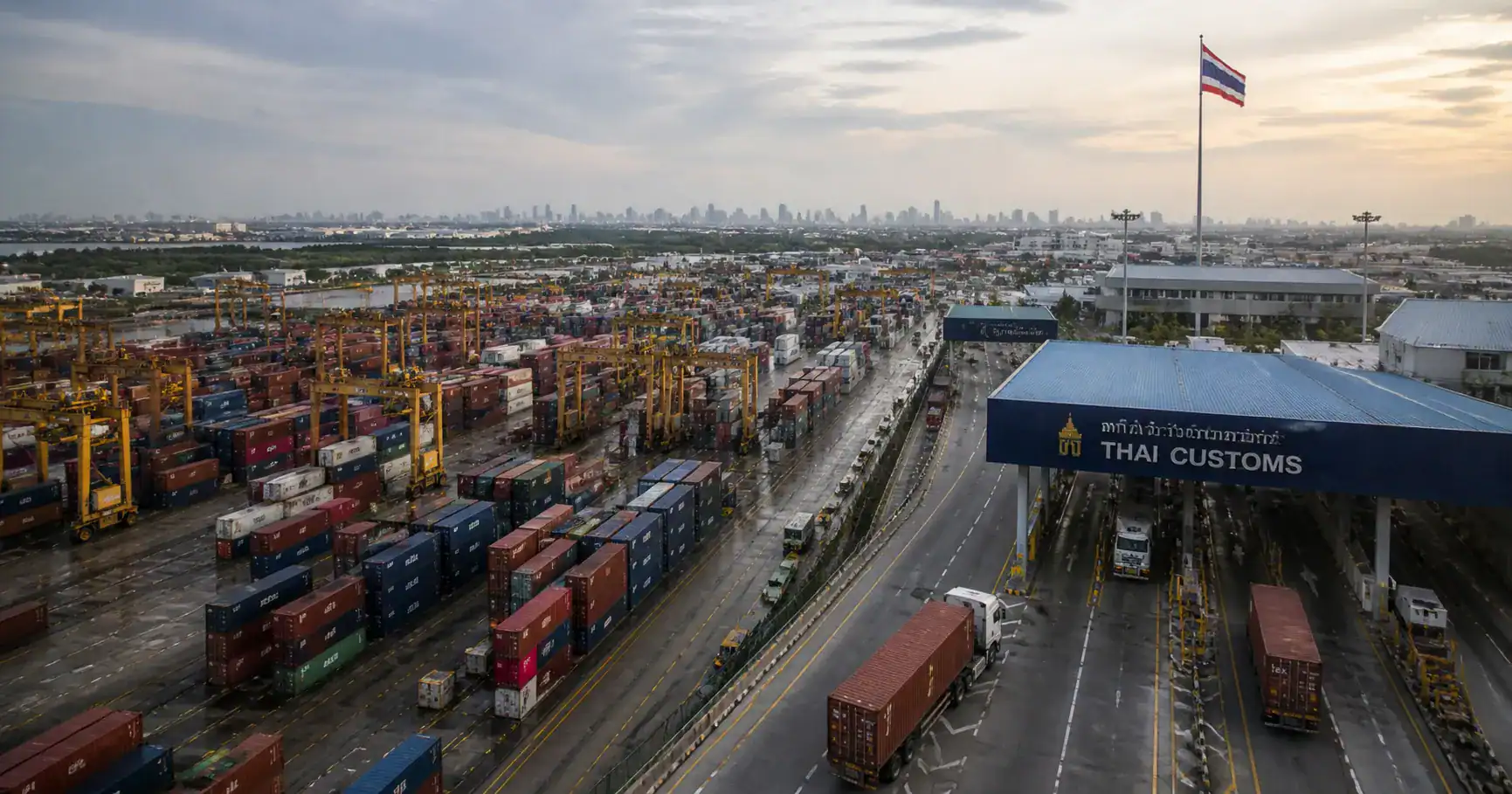
Most people who contact a freight company about a stuck shipment in Thailand share one belief: Thai customs is unpredictable. They’re usually wrong.
Thai customs is systematic. Most shippers only find out which part of the system they failed to satisfy once their goods are sitting in a bonded warehouse collecting fees.
Key Takeaways
- Thailand’s customs system assigns shipments to Green Line (automatic release) or Red Line (physical inspection) based on documentation quality and risk signals.
- Most compliant, well-documented shipments receive Green Line status and clear within 24–48 hours.
- The most common delay triggers are documentation errors, incorrect HS codes, and valuation disputes, not random enforcement.
- From January 2026, customs duty applies to imported goods of any value, ending the old low-value exemption. Valuation accuracy carries more weight than it did under the previous system.
- A qualified Thai customs agent handles the NSW digital filing, HS classification, and officer communication. That prevents most avoidable delays before they start.
How Thai Customs Actually Works Today
Thailand’s import system is built around a risk-based release model. When your customs agent files an import entry declaration through the National Single Window (NSW), the system weighs document consistency, HS code plausibility, declared value relative to known market data, and goods category risk. It then assigns a lane. The two that matter for most shipments are:
Green Line: Automatic release. Documents are consistent and valid, the goods match their declared profile, and no flags have been raised. No physical inspection is required. Source: THAILAND.GO.TH: Import Entry with Red Line status
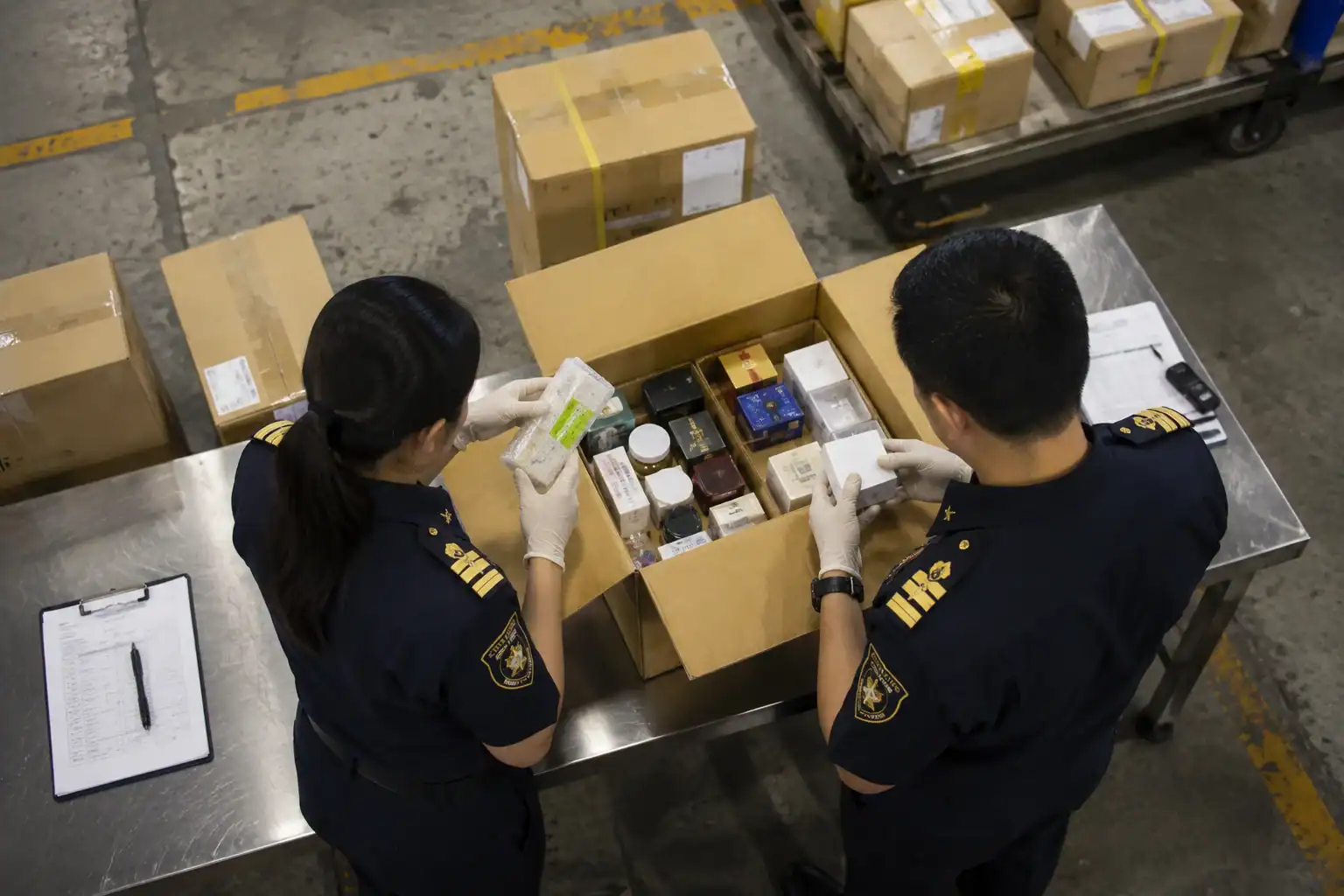
Red Line: Physical inspection required. The shipment has triggered a flag: document mismatch, suspect HS code, incomplete paperwork, unusual valuation, or a random compliance audit. A customs officer is assigned to inspect the goods and review all documentation.
Declarations are filed electronically, and the e-Customs system analyses the risk in each import declaration before it issues an inspection order. Source: THAILAND.GO.TH: Import Customs clearance and releasing goods
Green Line shipments typically clear within one to two business days of arrival. Red Line shipments add three to seven business days once inspection is assigned, and can extend further if a valuation dispute or missing permit requires formal resolution.
The Seven Most Common Reasons Shipments Get Held
1. Documentation Errors
This is the most common cause of customs delays, by some margin. Thai customs requires a specific document set for every import: an Import Declaration, Commercial Invoice showing FOB value, Packing List, and either a Bill of Lading (sea freight) or Air Waybill (air freight). For personal effects and household goods, you’ll typically also need proof of your prior overseas residence and an itemised description of the goods.
The errors that trigger flags are often small: a name spelled differently on the invoice versus the bill of lading, a declared value in USD that doesn’t convert cleanly to the THB figure on the invoice, item descriptions on the packing list that don’t match descriptions on the commercial invoice. Thai customs officers compare documents against each other and flag every inconsistency for review.

2. Incorrect or Disputed HS Codes
Every imported item is classified using a Harmonized System (HS) code, which determines the applicable duty rate. Your agent may assign a code that doesn’t match the goods, or one that customs officers interpret differently. The system may then flag it before release, or an officer will reclassify it during a Red Line inspection.
The risk is highest for goods that sit across categories: electronics that could be classified as consumer or commercial grade, tools that might be industrial or personal use, clothing in larger quantities that reads more like commercial stock than household effects. Get the classification right before the entry is filed. Source: U.S. Commercial Service: Thailand Customs Regulations
3. Valuation Disputes
Thai customs uses transaction value, the price actually paid, as the primary basis for duty assessment. When a declared value appears low relative to known market data for that item, officers issue a value doubt query. You’ll need to provide payment proof: bank transfer records, original purchase invoices, or documented appraisals confirming the declared amount.
This matters especially for used household goods, which are often declared at current market value rather than original purchase price. If you’re using depreciated or second-hand market values, document the methodology and be ready to show comparable prices. That reduces dispute risk. Our guide on how Thai customs decides whether goods are used or new covers the assessment process in detail.
4. Restricted or Controlled Items
Certain categories of goods require specific import permits or approvals before they can enter Thailand. Medicines and health supplements need FDA approval from Thailand’s Food and Drug Administration. Communications equipment may require NBTC certification. Firearms and weapons are prohibited outright. Some food products need product registration.
One restricted item without its permit documentation can hold the entire shipment, not just the flagged item. See our guide on what you cannot ship to Thailand for the full restricted and prohibited categories.
5. Misdeclaration or Underdeclaration
Thai customs law treats two things as misdeclaration: declaring a high-value item as “miscellaneous household goods,” and significantly undervaluing electronics. Thai customs uses reference databases and market pricing data to check declared values against known market rates. The penalties include fines up to four times the evaded duty amount and potential seizure of goods.
For relocation shippers, the usual risk is a careless packing list that bundles items under vague descriptions, rather than deliberate fraud. A laptop, a camera, and a drone all have material value. Each should have its own line on the invoice with a clear description and declared value.
6. Missing or Expired Permits
For goods that require import licences or phytosanitary certificates, the permit must be current at the time of arrival. A licence that lapsed since filing will hold your shipment. So will a certificate that expires before the vessel docks. Check permit expiry dates against the expected arrival date, not the date of filing or the date of sailing.

7. Random Compliance Audits
A small percentage of shipments that would otherwise receive Green Line status are selected for physical inspection as part of routine compliance auditing. Selection is a random sample function built into the risk management system and says nothing about the shipment itself. The inspection typically resolves within 24 to 72 hours if documentation is accurate and goods match the declaration. All you can do here is keep your paperwork clean so the audit resolves quickly.
Most holds above trace back to paperwork, not enforcement.
Getting your invoice, packing list and bill of lading to agree before the entry is filed is the cheapest fix available, and the one most shipments skip.
What Red Line Inspection Means in Practice
When the system routes a shipment to the Red Line, customs formally assigns an officer to review the goods and documentation. Your customs agent receives a notice to contact that officer. If you’re self-filing, that notice comes to you.
The inspection covers whether the declared goods match what was physically packed, whether the HS codes are appropriate for the actual items, whether the declared value is supported by evidence, and whether any controlled items have the required permit documentation.
Common requests during Red Line inspection include: payment proof such as bank transfer records or original purchase receipts; supporting documentation for high-value items; permit or licence paperwork for controlled goods; and clarification on packing list descriptions that are vague or inconsistent with the invoice.
Response time matters. Until the officer has what they asked for, the goods stay in storage and warehouse fees keep accruing. Source: U.S. Commercial Service: Thailand Import Requirements and Documentation
What Changed in 2026 and Why It Affects Your Shipment
Until the end of 2025, Thailand applied a simplified system for many imported goods that limited enforcement of customs duties on lower-value shipments. From January 2026, both VAT and full customs duties now apply according to the tariff schedule for each product type. The Thai government confirmed and implemented this change at the start of this year. Source: Nation Thailand: Government to impose VAT and customs duties on imports from January 2026
Two practical effects follow from this change:
First, more shipments now carry real duty liability, so valuation accuracy matters more than it did before. Items that previously cleared on a simplified basis now go through full tariff assessment.
Second, the duty calculation depends on declared value, so customs now has stronger financial incentive to query declarations that look inconsistently low.
For relocation shipments specifically: most household goods qualify for duty-free treatment under Thailand’s personal effects concession if you meet the residency requirements and timing conditions. But you must claim this exemption explicitly, with supporting documentation. Thai customs does not apply it for you. Check our duty-free guide for Thailand if you’re moving under a retirement or long-stay visa. For the DTV and other newer visa types, see our DTV holders shipping guide.
The 2026 duty change means declared values get a harder look than before, so it is worth pricing your move against the current rules before you pack, not after a query lands.

How to Prevent Delays Before Your Shipment Leaves
Most customs delays are resolved in documentation, not at the port.
Use a qualified Thai customs agent. This is the single highest-leverage move. The right customs agent removes the majority of avoidable delay risk, because they know the current HS code conventions, the current value reference databases, and which goods categories attract scrutiny. Thailand’s digital-only NSW system also requires technical familiarity with the e-Customs platform.
Itemise everything. Generic descriptions are delay magnets: “household goods,” “personal effects,” “assorted items.” Every item of material value should have its own line on the packing list and supporting documents. Each line needs a specific description, country of manufacture, quantity, and declared value.
Match all documents before filing. The names, values, quantities, and item descriptions on your commercial invoice, packing list, and bill of lading must be internally consistent. Discrepancies between documents are the most common Green Line failure and the easiest to fix before filing.
Verify HS codes for any item that sits across categories. Electronics, tools, food products, cosmetics, and textiles in larger quantities all carry classification risk. Confirm the correct code with your agent before the entry is filed.
Check restricted goods before you pack. If anything in your shipment might require a permit, confirm permit status before sailing, not after the ship has left. Applying for a permit after arrival is a slow, expensive process.
What to Do If Your Shipment Is Already Held
Contact your customs agent immediately if you have one. They know which officer is assigned, what the specific query is, and what documentation is needed to resolve it. This is where having professional representation is most valuable.
If you’re managing this yourself: contact the assigned customs officer, ask for a specific statement of what is required, and respond within one to two business days. Gather original purchase receipts for any queried items, bank transfer records as payment proof for high-value goods, and any permit documentation you hold.
Respond to the specific query, not the general situation. A valuation query requires different documentation than a permit query. A misdeclaration concern requires different evidence than an HS code dispute.
Two meters start running while the officer waits for your answer. The terminal or warehouse holding the goods charges storage once its free period ends, and on a full container the shipping line adds demurrage for each extra day its box stays in the port. Neither meter pauses while the query is open, and a clean release at the end does not normally cancel what has accrued. So on the first day of a hold, ask your agent or the carrier for two dates: when free storage ends and when free container time ends. Those dates are the real deadline for your reply, and either can run out well before the ten-business-day mark mentioned below.
If the delay extends beyond ten business days with no clear resolution path, bring in a licensed customs consultant or a logistics operator with established relationships in the Thai customs system. Either can often accelerate the process.
Swift Cargo manages end-to-end customs clearance for household goods and relocation shipments into Thailand: from documentation preparation through officer communication and final release. If your shipment is already stuck or you want to ensure it isn’t, get in touch with our team.
The guide on shipping time to Thailand covers total transit time from origin to Thai delivery, including the customs clearance window.
Frequently Asked Questions
For the prevention side of this, see our guide to avoiding Thai customs delays when moving. It covers the documentation protocols and pre-shipment steps that stop holds before they start.
How long does Thai customs clearance actually take?
For Green Line shipments, one to two business days from arrival is typical. Red Line shipments add three to seven business days once inspection is assigned. Complex cases involving valuation disputes or missing permits can extend to two to four weeks depending on how quickly the required documentation is provided.
What is the most common reason household goods get held at Thai customs?
Documentation errors and incomplete or vague packing lists are the most frequent triggers. A packing list that uses broad descriptions like “household goods” instead of itemised entries is the single most avoidable cause of delays.
Do I need a customs agent to import household goods into Thailand?
Technically no, but practically yes for most shippers. Thailand’s customs system requires accurate HS code classification, correct valuation documentation, and current knowledge of permit requirements. The entire process is digital. Professional customs agents reduce delay risk.
Will my shipment be physically inspected by Thai customs?
Most compliant, well-documented shipments receive Green Line status and are not physically inspected. Red Line status, which triggers physical inspection, is assigned when documentation flags are detected or as part of random compliance auditing.
What changed in 2026 for Thai customs on imported goods?
From January 2026, Thailand applies both VAT and full customs duties on imports according to the tariff schedule for each product type. The previous simplified system that limited duty enforcement on lower-value shipments no longer applies. Household goods shippers who qualify for the personal effects duty-free concession still benefit from that exemption, but they must claim it explicitly, with supporting documentation.