
Most of the Thailand cost guides on this site cover goods moving in one direction: into the country. That’s the traffic Swift Cargo sees the most of, and it’s reflected in our complete Thailand shipping cost breakdown. But a meaningful share of searches are the reverse question: what does it cost, and how long does it take, to ship from Thailand to the United States. Returning Americans, US businesses sourcing from Thai manufacturers, and expats heading home are the ones asking it.
The two directions aren’t mirror images. US customs entry works nothing like Thai customs entry. The single biggest cost lever on this route is a duty exemption for returning residents’ household effects, and the inbound side has no equivalent at all. Here’s the real breakdown.
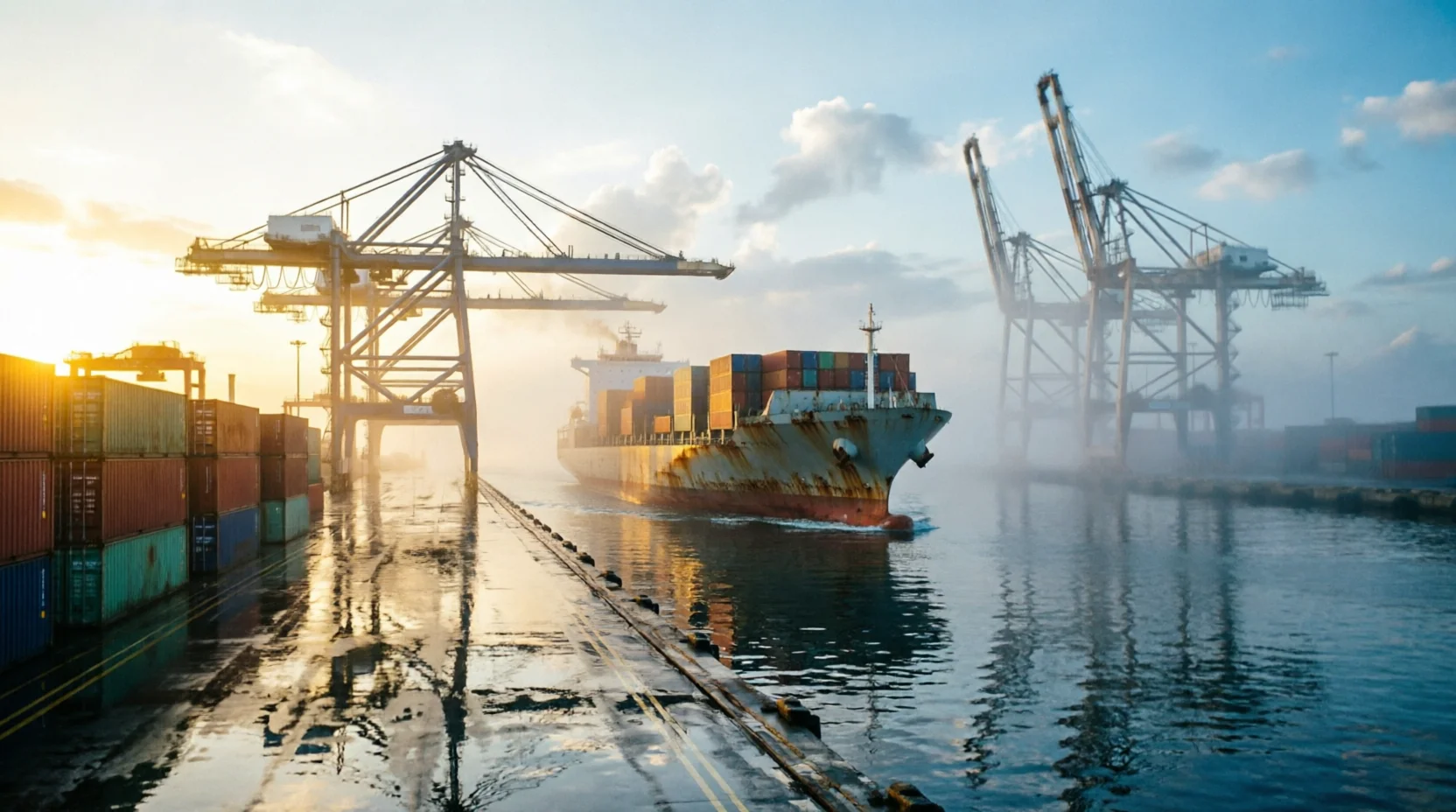
Ocean Freight Rates: Laem Chabang to the US
Laem Chabang is Thailand’s primary deep-sea container port and the origin point for the large majority of US-bound sailings, whether your cargo starts in Bangkok, Chiang Mai or anywhere else in the country. Your US destination changes both the price and the timeline more than almost any other variable on this route.
| US Destination | 20ft FCL (USD) | 40ft HC FCL (USD) | Transit Time |
|---|---|---|---|
| Los Angeles / Long Beach (West Coast) | 1,600-3,000 | 2,400-4,300 | 28-35 days |
| New York / Savannah (East Coast) | 2,200-3,800 | 3,200-5,400 | 38-48 days |
LCL (groupage) pricing to the US typically runs USD 60-110 per CBM to the West Coast and USD 80-140 per CBM to the East Coast, excluding origin CFS charges and destination deconsolidation fees. As with every other lane on this site, these rates are ocean freight only; origin haulage in Thailand, destination port fees, US customs brokerage, duty where applicable, and last-mile delivery all sit on top.
Why the East Coast Costs More and Takes Longer
West Coast ports sit at the shortest sailing distance across the Pacific, so they receive the bulk of Asia-origin traffic. That volume keeps competition high and rates comparatively contained. East Coast-bound cargo from Thailand generally reaches its destination one of two ways: an all-water routing through the Panama Canal, or a West Coast landing followed by rail across the country. Both add time and cost over a straight West Coast delivery. As a result, the East Coast figures in the table sit higher than the West Coast figures on both price and days. If your final destination is inland and roughly equidistant from both coasts, it’s worth pricing both routings rather than defaulting to whichever coast feels geographically closer to the delivery address.
The same vessels and alliance networks serving Thailand-US routes carry China-US and Vietnam-US volume too, so Trans-Pacific capacity and rates are also more exposed to global disruption events than a shorter regional lane. A capacity squeeze or rerouting event on the broader Trans-Pacific trade moves Thailand-origin rates along with everything else on the same vessels, regardless of conditions on the Thailand lane itself. Check UNCTAD’s Review of Maritime Transport and BIMCO’s market updates before booking a time-sensitive shipment.
Air Freight as an Alternative
For anything time-critical, or small enough that container economics don’t apply, price air freight from Suvarnabhumi against sea freight instead of assuming it’s too expensive by default. On comparable long-haul lanes, air freight runs roughly USD 7-18 per chargeable kilogram, while sea freight works out to well under a dollar per kilogram once spread across a full container. Our air freight decision guide covers the chargeable-weight math in more detail, including the crossover point where air stops making sense. That math runs the same way in reverse for Thailand-to-US shipments.
US Customs Entry: ISF, HTS Classification and Bonds
Every ocean shipment entering the United States needs an Importer Security Filing, commonly known as the 10+2 rule. It must be submitted to US Customs and Border Protection at least 24 hours before the vessel loads at Laem Chabang. Missing this deadline can mean more than a fine after the fact: the container may not sail on the intended vessel at all. Treat the filing as an origin-side task, not something to deal with once the ship is already at sea.
Commercial cargo is classified against the Harmonized Tariff Schedule, maintained by the US International Trade Commission. The base duty rate depends on the specific HTS code and ranges from 0% to well into double digits. CBP assesses it on transaction value, the price paid for the goods excluding international freight and insurance (19 U.S.C. 1401a), not on CIF value. Since 24 July 2026, Thai-origin goods have also carried an additional 12.5% Section 301 tariff on top of the base rate (CBP CSMS #69326983). That tariff is being challenged at the US Court of International Trade, which scheduled arguments for 30 September 2026, so confirm the rate in force before you book. Commercial entries also pay a Merchandise Processing Fee of 0.3464% of value (minimum USD 34.58, maximum USD 670.86 from 1 October 2026, per CBP Dec. 26-14) and, on ocean cargo, a Harbor Maintenance Fee of 0.125% (19 CFR 24.24). For formal entries, CBP generally requires a customs bond once the shipment’s value exceeds USD 2,500, either single-entry for an occasional shipper or continuous for anyone importing regularly.
The Returning Resident Duty Exemption
If your shipment qualifies, this exemption moves your total more than any other factor on the Thailand-to-USA route, and nothing like it exists for shipments into Thailand. Under 19 CFR 148.52 and Harmonized Tariff Schedule subheading 9804.00.05, a returning US resident can bring in used personal and household effects free of duty and internal revenue tax, provided the items were used abroad for not less than one year and aren’t intended for sale or for another person. Other countries’ personal-effects concessions apply a similar ownership-and-use test.
The returning resident makes the claim on CBP Form 3299 at the time of entry. If a written declaration is filed correctly, the goods generally don’t need to be individually itemized on it. Two conditions catch people out most often: the one-year use requirement is about actual use, not simply ownership, and the exemption is personal. Mix genuine household effects with goods intended for resale in the same shipment, and you jeopardize the whole claim.
CBP doesn’t police the exemption for you in advance, so the discipline is yours to maintain. Keep your household goods separate from anything you’re bringing back to sell, and resist folding a few resale items into the same shipment just because the freight is already booked. Be ready to account for the one-year-use requirement with real evidence if asked: a Thai lease, utility bills, photos of the items in your Bangkok apartment. Assemble that record before you file Form 3299, since the exemption fails as soon as your declaration reads as ambiguous rather than clean.
What a Commercial Importer Needs Instead
A commercial importer might be a Thai furniture manufacturer’s US buyer or a business bringing in inventory rather than personal belongings. That importer is solving a different problem than a returning expat, even though both bookings might get quoted as “ocean freight, Thailand to USA.” The commercial importer needs correct HTS classification for every line item, not a household-effects exemption that doesn’t apply to them. They also need a customs bond if the shipment exceeds the formal-entry threshold, and a licensed customs broker who can defend the declared value and classification if CBP selects the shipment for examination. Where the returning resident’s paperwork centers on proving personal use, the commercial importer’s paperwork centers on proving accurate valuation and classification. Most avoidable delays on this route come from conflating the two, or from using a broker who only handles one type well.
The returning resident and the commercial importer are not two versions of the same shipment with different paperwork attached. They sit in different positions at the US border. CBP treats a citizen relocating personal household effects as distinct from a business bringing in goods for resale, and the exemption follows from that distinction, not from skill, preparation, or how well either party fills out the form. A commercial importer cannot out-execute their way into it, no matter how clean their documentation is. Settle which category you actually occupy first, before building a shipping plan around an exemption that was never available to you.
A Worked Cost Example
A returning US resident shipping a 20ft container of household goods from Bangkok to Los Angeles, goods valued at USD 15,000, all items owned and used for over a year:
| Ocean freight (20ft, Laem Chabang to LA/Long Beach) | USD 1,600-3,000 |
| Origin charges (Thai export haulage, documentation) | USD 150-400 |
| Destination port fees and last-mile delivery | USD 400-900 |
| US customs duty (9804.00.05 exemption applies) | USD 0 |
| Customs brokerage | USD 150-350 |
| Estimated total | USD 2,300-4,650 |
The exemption also keeps the shipment clear of the 12.5% Section 301 tariff, which does not apply to goods properly entered under chapter 98 of the tariff schedule, and of the Merchandise Processing Fee (19 U.S.C. 58c). Household effects entitled to free entry also qualify for informal entry, which takes them outside the Harbor Maintenance Fee. Shipped as commercial cargo without the exemption, the same goods would owe roughly USD 1,950 or more in duty and entry fees on top of an otherwise identical freight bill, depending on HTS classification. Confirm eligibility for the exemption before assuming it doesn’t apply.
The picture looks different for a commercial importer bringing in USD 15,000 of finished furniture, valued at the price paid to the Thai seller before freight and insurance. Ocean freight and origin/destination charges stay roughly the same. The base duty is not the cost driver: wooden, metal, rattan, bamboo and upholstered furniture under HTS 9401 and 9403 currently carries a free general rate in the Harmonized Tariff Schedule. The customs bill instead comes to roughly USD 1,950: USD 1,875 for the 12.5% Section 301 tariff, about USD 52 in Merchandise Processing Fee and about USD 19 in Harbor Maintenance Fee. Without the Section 301 tariff, the two fees alone come to about USD 71. A continuous customs bond becomes worthwhile once shipments are regular rather than one-off. Freight costs nearly the same either way, so customs treatment accounts for the gap between the two totals.
Cargo Insurance for the Return Trip
Marine cargo insurance matters just as much shipping out of Thailand as it does shipping in. The gap in standard carrier liability is the same in both directions: the bill of lading’s default liability terms cover only a small fraction of a shipment’s real value if something is lost or damaged. For household effects accumulated over years abroad, the replacement cost is often far higher than the shipper initially estimates. Our full guide to cargo insurance for Thailand shipments covers what a policy costs and what it actually protects, and its advice holds whether the container is heading into Thailand or out of it.
Restricted and Regulated Goods on This Route
A handful of categories need extra attention on a Thailand-to-USA shipment beyond standard customs entry. Wood products can fall under Lacey Act declaration requirements at US entry, and that includes furniture made from certain hardwood species. Some traditional Thai carved items made from protected species require CITES documentation before they’ll clear at all, regardless of the exemption status of the rest of the shipment. Food, plant material and certain traditional medicines are subject to FDA and USDA review separately from the customs duty question, and can be held or refused entry even when duty-free under the returning-resident exemption. None of this is exotic; it mainly affects antiques, carved wood items, and anything edible or plant-based. If your shipment includes any of these categories, flag it to your forwarder before booking rather than after the container has sailed.
Choosing a Forwarder for This Route
The practical risk on a Thailand-to-USA booking isn’t usually the ocean freight rate. It’s a forwarder whose Thai-side operation is strong but whose US customs brokerage side is generic or subcontracted. Confirm two things before booking: whether the broker handling the US entry has genuine, recent experience filing 9804.00.05 returning-resident claims specifically, and whether ISF filing is built into their standard process rather than something you have to remember to request. A broker who only processes commercial entries may not handle the personal-effects paperwork correctly. If a forwarder treats the ISF deadline as routine rather than an afterthought, that is a reasonable proxy for how carefully they’ll handle the rest of the US-side paperwork.
Common Mistakes on This Route
Filing the ISF late or with incorrect data. The deadline is tied to vessel loading at the Thai end rather than arrival in the US, so it’s easy to treat as a low-priority task and miss the window.
Assuming the household-effects exemption is automatic. It requires an affirmative claim on Form 3299 and, if CBP asks, proof of the one-year use period. Keep receipts, photos or other evidence of when items were acquired and how long they were in use in Thailand.
Under-declaring value to reduce apparent duty exposure. For commercial shipments this is customs fraud, not a savings strategy, and it puts the entire shipment at risk of seizure or penalty well beyond whatever duty was being avoided.
Booking East Coast delivery without comparing the West Coast plus inland option. As covered above, the routing difference can amount to several hundred dollars and a week or more of transit time.
Not confirming CITES or Lacey Act status on wood, wildlife-derived or antique items before shipping. These holds can sit for weeks and, in some cases, result in the item being refused entry entirely, regardless of the rest of the shipment’s duty status.
Timing Considerations
Reduced staffing around Songkran, the Thai New Year in mid-April, can add a few days to origin-side documentation and export clearance. Because the Thai end handles an export rather than an import, the effect is smaller here than on inbound Thai customs entries. On the US side, peak demand across the entire Trans-Pacific trade runs from roughly September through November, the run-up to the winter holiday retail season. Rates on the Thailand-US lane rise along with everything else moving into US ports during that window. If your shipment isn’t time-critical, booking outside that peak window is worth the planning effort.
Frequently Asked Questions
How much does it cost to ship from Thailand to the USA?
A 20ft FCL from Laem Chabang to Los Angeles or Long Beach typically runs USD 1,600-3,000 in ocean freight. To New York or Savannah on the East Coast, expect USD 2,200-3,800. A 40ft container runs roughly 42-50% higher than the 20ft rate on the same lane. These figures are ocean freight only, before origin charges, US customs entry costs and last-mile delivery.
How long does shipping from Thailand to the USA take?
Port-to-port transit from Laem Chabang to the US West Coast typically runs 28-35 days. To the US East Coast, allow 38-48 days, since most sailings either transship or route via the Panama Canal. Add US customs clearance and last-mile delivery on top, which usually adds 5-10 days for a straightforward entry.
Do returning US residents pay duty on household goods shipped from Thailand?
No, in most cases. Under 19 CFR 148.52 and Harmonized Tariff Schedule subheading 9804.00.05, a returning US resident can bring in used personal and household effects free of duty, provided the items were used abroad for at least one year and are not intended for sale. The returning resident makes the claim on CBP Form 3299 at the time of entry.
What is an Importer Security Filing and do I need one shipping from Thailand?
Yes, for any ocean freight shipment entering the United States. The Importer Security Filing, commonly called the 10+2 rule, must be submitted to US Customs and Border Protection at least 24 hours before the vessel loads at Laem Chabang. Your freight forwarder or customs broker typically files it on your behalf, but the importer of record is legally responsible for its accuracy and timing.
Is it cheaper to ship air or sea freight from Thailand to the USA?
Sea freight is cheaper per kilogram for anything beyond a small parcel, but air freight is faster by weeks rather than days. As a rough benchmark, air freight on comparable long-haul lanes runs USD 7-18 per chargeable kilogram, while ocean freight typically works out to well under USD 1 per kilogram once landed cost is spread across a full container. Air freight makes sense for small, time-critical or high-value shipments; sea freight wins for anything container-sized.
Do I need a customs bond to import from Thailand to the USA?
For a formal commercial entry, US Customs and Border Protection generally requires either a single-entry or continuous customs bond once the shipment’s value exceeds USD 2,500. Returning residents claiming the household-effects duty exemption on personal belongings do not need a commercial bond for that portion of the shipment.
Planning a move or shipment from Thailand to the United States? See current USA shipping costs and customs requirements.