
Camping gear looks like the easiest import category in the outdoor world. Tents, sleeping bags, folding chairs: soft, light, cheap to make, no motors, no plugs. Then you get to page two of your product range plan and it all changes: a butane stove, a lithium power station, a lifejacket for the kayak line, a multitool. Suddenly half your catalogue touches gas appliance approvals, dangerous goods classes, a mandatory Australian Standard and the prohibited imports list.
That split personality is the whole story of importing camping gear to Australia. Most of the container is genuinely simple. A handful of SKUs carry almost all of the regulatory weight, and they are exactly the SKUs that catch new importers out.
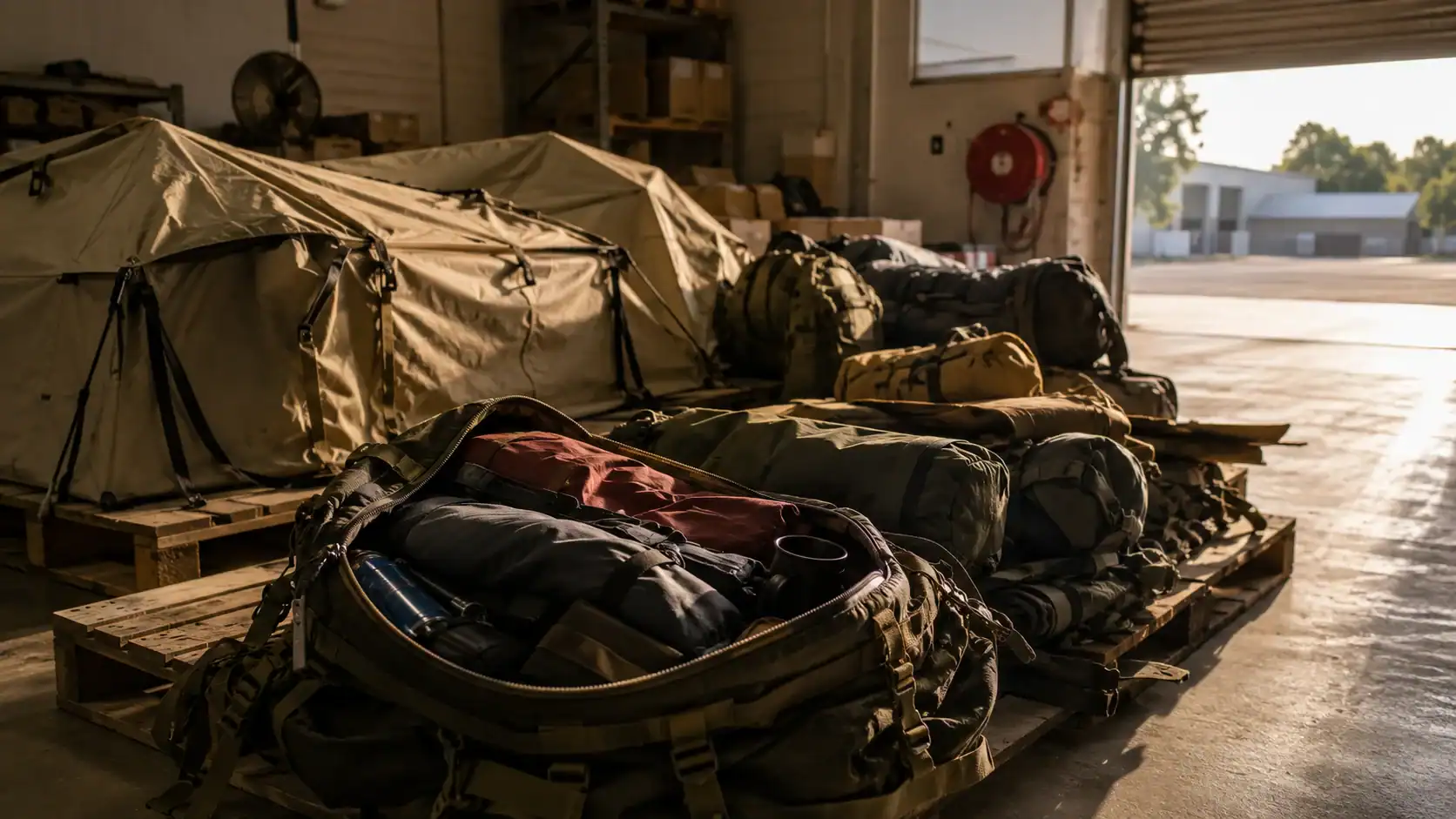
The Category Map: Sorting Gear by Compliance Weight
Before you brief a freight forwarder or a supplier, sort your range into compliance tiers. The discipline matters. Every product either belongs in a standard general-cargo container or it does not, and you need to know which is which before the first purchase order goes out, not when the container is already on the water.
Tier one: standard goods with claims to substantiate
Tents, tarps, swags and sleeping bags are ordinary general cargo. No permit, no mandatory product standard, no DG paperwork. What they do carry is the Australian Consumer Law. If your tent listing says “3000mm waterhead” or “UPF 50+ UV protection,” those are performance claims, and the ACCC treats unsubstantiated performance claims as misleading conduct. Water-resistance ratings and UV claims are the two that bite hardest in this category, because factories will print whatever number you ask for on the hang tag. Get test reports from the supplier (hydrostatic head results for fabrics, UV transmission testing for shade products), and keep them on file. The cost is small. The exposure from a recall or an ACCC undertaking is not.
Sleeping bag temperature ratings deserve the same treatment. A bag marketed as “comfort rated to -5°C” that leaves campers shivering at +5°C is a consumer-law problem and a review-score problem at the same time. Ask whether the rating comes from actual thermal testing or from the marketing department.
Tier two: camp furniture and the weight-rating question
Folding chairs, stretchers, camp tables. Still general cargo, still no permit, but weight-rated products fail in a way fabric doesn’t. A chair rated 120kg that collapses under a 100kg adult is a safety incident, and safety incidents involving structural failure attract regulator attention quickly. Specify the rating you advertise, get the static and dynamic load test data, and build a real margin between tested capacity and the printed rating. Cheap camp furniture is a race to the bottom on tube gauge; your import margin does not survive a product safety recall.
Tier three: packs, apparel and footwear
Hiking packs and technical apparel are textiles, which means Australian labelling obligations: fibre content and care labelling on apparel, country of origin marking done accurately. It is unglamorous compliance, and it is the kind that gets checked at retail, not at the border. A major stockist’s quality team will bounce an entire delivery over missing care labels. Have labelling specified in the purchase order and photographed at pre-shipment inspection. Footwear, by contrast, is the most straightforward corner of the whole category: standard duty treatment, no special standards for general hiking boots, biosecurity clean-sole rules only if the goods are used.
The Dangerous Goods and Regulated Corner
Now the SKUs that carry the weight. This section is the difference between a smooth import and a container held at origin because a carrier found something in the packing list they were never told about.
Camp stoves: the appliance, not the fuel
A butane or LPG camp stove without fuel is not dangerous goods. It is a gas appliance, and gas appliances sold in Australia sit inside a certification framework. Gas appliance certification in Australia runs through schemes administered with reference to the Australian Gas Association (AGA) and state gas technical regulators; portable camping stoves of certain types need certification against the relevant appliance standards before they can legally be sold. The practical position for an importer: confirm with your certifier which scheme your specific stove type falls under before you order, because certification is a months-long process involving test samples, not a form you file at customs. Plenty of importers have landed sea containers of stoves they could not legally put on shelves.
Gas canisters: why almost everyone ships stove-only
The canisters themselves (butane cartridges, threaded isobutane canisters, small LPG cylinders) are Class 2.1 flammable gas under the IMDG Code. That means UN-specification packaging, a dangerous goods declaration, DG-rated stowage, a carrier acceptance process and a meaningful cost premium per shipment. It also means one undeclared carton of canisters contaminates the compliance status of your entire container.
Run the numbers and the conclusion writes itself. A canister retails for a few dollars. The DG surcharge, documentation and handling on a mixed shipment can add hundreds to thousands per container. Canisters are heavy for their value. They are manufactured and distributed locally at competitive prices, and Australian cylinders must meet local standards anyway. So the dominant commercial pattern in this category is stove-only importing: ship the appliance, exclude the fuel entirely, and let camping retail chains and service stations do what they already do: sell canisters. Make the exclusion explicit in your purchase order and your packing instructions, because factories bundle “free” canisters into stove cartons as a sales sweetener, and that free gift is an undeclared dangerous goods violation with your name on the import declaration.
Lighters, firestarters and hexamine fuel tablets sit in the same bucket: all dangerous goods classes, all requiring declaration, all better excluded from a general gear shipment unless the volumes genuinely justify a DG line.
Battery-powered gear: lanterns, headlamps and the power station boom
Lithium batteries are where the modern camping catalogue meets serious freight regulation. Every rechargeable lantern, headlamp and fan in your range contains lithium cells that must have passed UN 38.3 transport testing. Get the test summary from the manufacturer for every battery model, because carriers and forwarders can ask for it. Small equipment-contained batteries (UN 3481) ship under manageable provisions by sea, but they still need to be declared and packed correctly.
Portable power stations are a different animal. The category has boomed (every camping retailer now sells 500Wh to 3kWh lithium power stations), and each one is, in freight terms, a large lithium-ion battery. That is Class 9 dangerous goods, UN 3480 or UN 3481 depending on configuration, and it demands a properly declared DG booking on sea freight. Air freight for large power stations is heavily restricted under IATA dangerous goods rules and often simply unavailable, which makes sea planning non-negotiable: DG declaration, compliant packaging, state-of-charge management where required, and a forwarder who handles Class 9 routinely. Booking power stations as general cargo to dodge the surcharge is not a shortcut. It is the mistake that gets containers rolled, fines issued and, in the worst cases, causes fires on vessels. The industry has burned ships over undeclared lithium. Declare it.
On the electrical side, anything with a charger or mains connection needs RCM compliance, the Regulatory Compliance Mark regime covering electrical safety and EMC. That applies to the power station’s AC charger, your lantern’s USB wall plug, the 240V camp fridge. RCM is a supplier-declaration system, but the declaration has to exist and the responsible supplier has to be registered before sale.
Safety beacons: PLBs and EPIRBs
If your range extends into personal locator beacons or EPIRBs, you are importing regulated safety-of-life equipment. Beacons sold in Australia must be 406 MHz digital units meeting the standards AMSA recognises, and they are registered with AMSA by the end user. Old-technology or non-compliant beacons are worse than useless. They are a search-and-rescue liability. Source only properly certified 406 MHz units, and understand that this is a low-volume, high-trust product line where the compliance documentation is the product.
Knives and multitools: check the mechanism
Camping knives, kitchen knives, fixed blades and standard folding multitools are fine to import. What is not fine: automatic knives, flick knives, gravity knives, butterfly knives and other items on the ABF prohibited imports list. The line is drawn at the opening mechanism, not the blade. A spring-assisted “one-hand opening” folder from an overseas catalogue can cross the prohibited line even when the factory calls it a camping knife. Check every opening mechanism in your knife range against the current prohibited imports guidance before ordering, because prohibited weapons are seized at the border with no refund and potential penalties.
Notice the shape of the mistake in both the stove-certification trap and the canister-declaration trap: someone treated a discovery question as a delivery question. Whether a specific stove needs certification, and under which scheme, is something to resolve before you place the purchase order. A months-long process has no business starting after the container is already at sea. Whether canisters ship at all, and under what DG paperwork, is the same category of question. Before committing to a range, camping-gear importers who build a pre-order checklist around these two questions specifically spend a few hours up front and avoid the container-held-at-origin outcome entirely.
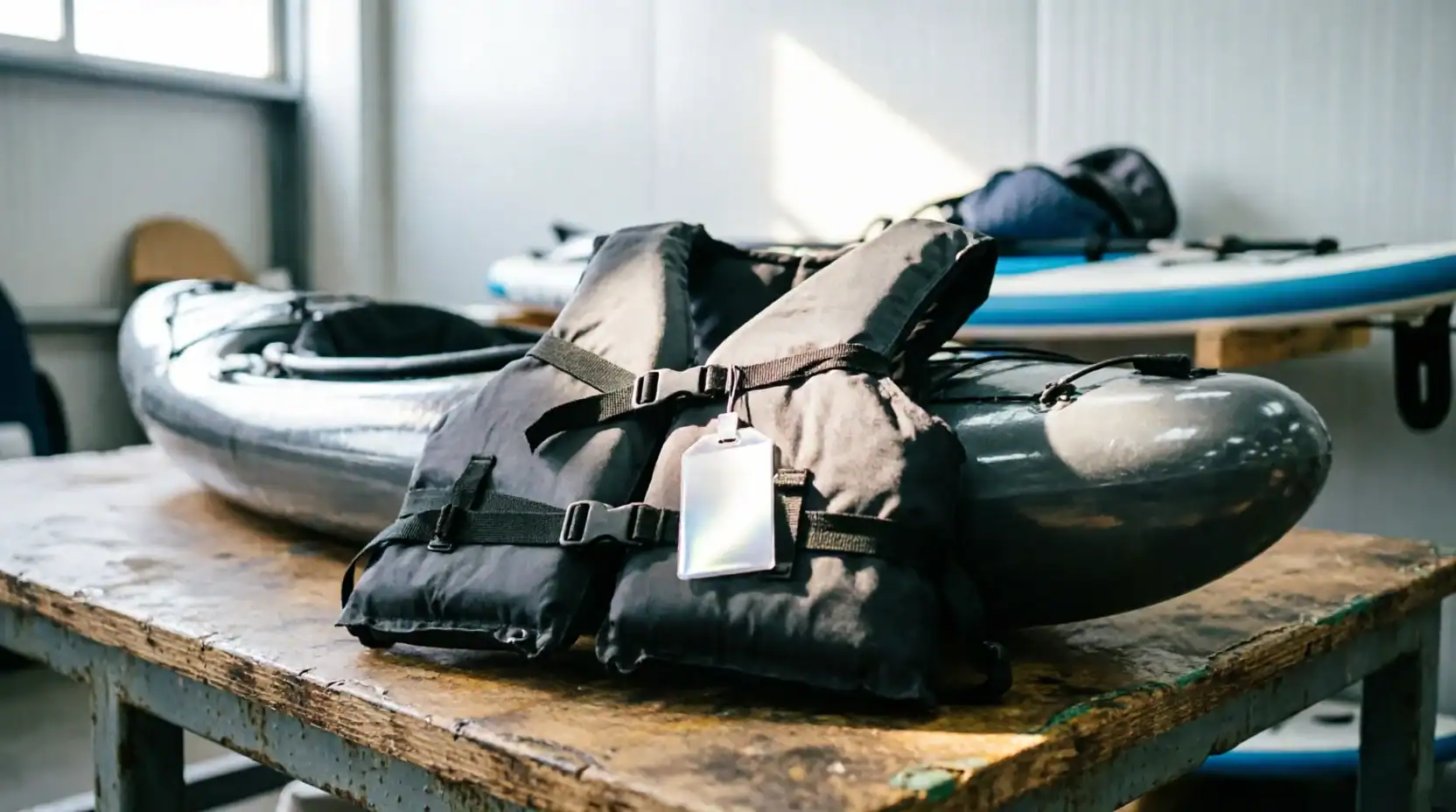
Water Gear: Kayaks, SUPs and the Lifejacket Gate
Inflatable kayaks and stand-up paddleboards are a pleasant surprise: no vessel registration applies below the size and power thresholds that recreational paddle craft sit under, so they import as ordinary sporting goods. The compliance exposure is back in ACL territory: valve quality, pressure ratings and weight capacities are performance claims, and an inflatable that delaminates at its rated PSI is a refund wave waiting to happen. Buy drop-stitch quality you have actually pressure-tested, not catalogue numbers.
Lifejackets are the opposite: a genuine, mandatory compliance gate. Lifejackets supplied in Australia as safety equipment must comply with the AS 4758 series, and every state’s maritime rules reference AS 4758 levels (Level 50, Level 100 and so on) for their mandatory-wear requirements. This is not optional certification you can market around. A foam vest without AS 4758 certification cannot be sold as a lifejacket, full stop, and certification involves accredited testing of the actual product, not a supplier’s assurance that it is “CE approved,” which is a European mark with no standing under Australian maritime rules.
Draw the line clearly in your own catalogue between lifejackets (AS 4758 certified, sold as safety equipment, priced accordingly) and buoyancy aids or water toys (lighter requirements, but must never be described in a way that implies lifesaving performance). Blurring that line in a product listing is both an ACL breach and a genuine safety hazard. If a lifejacket line is core to your range, budget for certification early. It is a real cost and a real timeline.
Biosecurity: The Dirt Problem
New camping gear in factory packaging sails through biosecurity. The risk lives in three places.
First, used and demo gear. Ex-display tents coming back from an overseas trade show, demo kayaks, sample boots: this is the returning-exhibition-stock problem, and it is chronically underestimated. A tent that was pitched once on grass at a European trade fair has soil on its pegs, seeds in its groundsheet folds and organic matter in its guy-line bags. Australian biosecurity officers know this, which is why used camping equipment is a flagged category. Anything used must be cleaned to bare-material standard (pegs scrubbed, soles brushed out, groundsheets washed), and honestly declared, or you will pay for inspection, treatment or export of the goods.
Second, timber components. Wooden-handled hatchets, timber trekking poles, bamboo furniture: minor exposure, but timber packaging and components fall under biosecurity’s material rules, and bark-on or untreated timber invites intervention. Specify treated, bark-free timber and standard ISPM 15 pallets.
Third, straw, seagrass and natural-fibre packaging some factories still use as void fill. Ban it in your packing instructions. Paper and plastic only.
Seasonality: Working Back from September
Australian camping demand is savagely seasonal. The peaks are the spring and summer school holidays (September/October, then the long December–January stretch), with Easter as the big autumn spike. Retail buying for the main season starts in early spring, which means your stock needs to be landed, unpacked and shelf-ready in the first half of September.
Now work the calendar backwards. Ningbo or Shanghai to Melbourne is roughly 30–35 days port-to-door once you include origin cartage, export clearance, the sailing, Australian customs and delivery. Add a buffer week for the things that eat buffer weeks. That puts your vessel departure in late July to early August, and your confirmed factory orders back in May or June, because production slots for tents and sleeping bags run 45–75 days depending on fabric lead times.
Here the northern hemisphere does you a favour. Chinese outdoor gear factories are tooled for the European and North American summer, which peaks in their May–August shipping window. By the time Australian orders need production (northern autumn), those factories are coming off peak. That off-season window mirrors what happens in other outdoor categories: better pricing, shorter queues, more negotiating room on MOQs, and factory QC teams that are not stretched across twelve simultaneous big-brand orders. Australian importers who order in the northern off-season consistently land better unit costs than those fighting for slots in the northern spring.
The Freight Profile: Light, Bulky and Occasionally Dense
Camping gear freight splits into two physical profiles, and mixing them well is where a good forwarder earns their fee.
Most of the category is volume-light bulky softgoods. Tents, sleeping bags, chairs and apparel cube out a container long before they weigh it out. A 40′ HC packed with camping softgoods might carry six or seven tonnes in 68 CBM of space. That makes CBM your cost currency, and compression your biggest lever. Sleeping bags shipped in retail lofted packaging can consume three to four times the volume of the same bags compression-baled at the factory and re-lofted in your warehouse. On apparel and bags, vacuum baling can cut shipped CBM by 40–60%. The maths is dramatic: if compression takes a sleeping bag order from 12 CBM to 5 CBM, at typical LCL or per-CBM allocation rates you have just saved more than the cost of the baling. Specify compression packing in the purchase order, and confirm your warehouse has the re-lofting time. Bags need days out of compression before they present properly at retail.
The exception is the power station line: weight-dense, high-value, and dangerous goods. Power stations need declared DG sea freight, which usually means they either travel as a DG line within your FCL container (declared, documented, properly stowed and segregated) or as a separate DG LCL shipment. Do not let the softgoods planning mindset (“just cube it in”) anywhere near the battery SKUs.
Duty and FTA Position
The duty news is good. Most camping and outdoor gear enters Australia at 0–5%. Textile-heavy items (tents, sleeping bags, packs, apparel) generally sit at the 5% general rate, while many hardware and equipment lines are free or near it. Then the free trade agreements do their work: goods of Chinese origin qualify for preferential rates (typically zero) under ChAFTA with a valid certificate or declaration of origin, and AANZFTA covers Vietnamese, Thai and other Southeast Asian production the same way. On a container with $80,000 of textile goods, ChAFTA preference is a $4,000 saving for the cost of origin paperwork. Always claim it. GST of 10% applies on the VoTI (value of taxable importation) regardless of origin, and is creditable for GST-registered importers.
Worked Example: A Camping Range Launch, Ningbo to Melbourne
Here is the arithmetic for a realistic first range: tents, sleeping bags, butane stoves (no canisters: stove-only, per the pattern above) and rechargeable lithium lanterns. 15 CBM, shipped LCL/part-container from Ningbo to Melbourne, with the lanterns run as a declared DG line.
The order:
- 400 × 3-person dome tents @ US$28 = US$11,200, 7.2 CBM
- 600 × sleeping bags @ US$9.50 = US$5,700, compression-baled to 3.6 CBM (would be 9+ CBM lofted)
- 500 × single-burner butane stoves @ US$6.80 = US$3,400, 2.4 CBM (AGA-scheme certification arranged pre-order)
- 300 × rechargeable lithium lanterns @ US$7.20 = US$2,160, 1.8 CBM, UN 3481, UN 38.3 summaries on file
FOB total: US$22,460 ≈ AU$34,550 at 0.65. Total 15.0 CBM, ~3.9 tonnes.
Freight and landing costs (AUD):
- Sea freight, 13.2 CBM general cargo @ ~$95/CBM: $1,254
- DG line, 1.8 CBM lithium lanterns @ ~$165/CBM incl. Class 9 handling: $297
- DG documentation and declaration fee: $180
- Origin charges and export clearance: $420
- Australian port, terminal and LCL depot charges: $890
- Customs brokerage incl. one DG-related tariff line: $340
- Delivery to Melbourne warehouse: $380
- Freight subtotal: $3,761
Duty and GST:
- Duty: $0. All lines qualify for ChAFTA preference with certificates of origin (without ChAFTA, the tents and bags alone would attract ~$1,300 at 5%)
- GST: 10% of VoTI (goods $34,550 + freight/insurance ≈ $2,100 international portion) ≈ $3,665, creditable
Cash landed cost: ~$38,310 (excluding creditable GST). Effective landed cost per CBM of stock: ~$2,554. Per-unit landed: tents ~$47.10, sleeping bags ~$11.85, stoves ~$9.30, lanterns ~$10.55. Against typical retail prices of $149, $49, $39 and $34.95 respectively, the margin structure works, and note where the compression baling earned its keep: 5.4 CBM of avoided volume on the sleeping bags is roughly $700 of freight and depot charges that never got billed.
Note also what is not in this container: canisters, lighters, fuel tablets. The manifest discipline is the point. Everything in the box is either general cargo or a declared DG line. Nothing is ambiguous, nothing is hoping to go unnoticed.
Common Mistakes That Cost Real Money
Canisters in the container, undeclared. The factory throws in “free” butane cartridges with the stove order, nobody reads the packing list, and now there is undeclared Class 2.1 flammable gas in a general cargo container. If it is found at origin, the container is unpacked at your cost. If it is found in transit or at destination, you are looking at penalties and a compliance record that follows your importer profile. Write the exclusion into every stove PO.
Lifejackets without AS 4758. A container of “CE approved” foam vests marketed as lifejackets is a container of stock you cannot legally sell as lifejackets. Either budget for AS 4758 certification before ordering or reposition the product honestly as a buoyancy aid, and accept the pricing that comes with that.
Power stations booked as general cargo. Whether from ignorance or to save the DG surcharge, this is the most dangerous mistake in the category, legally and literally. Large lithium batteries misdeclared at sea are a fire risk carriers actively hunt for. Declare Class 9, supply the UN 38.3 summaries, pay the surcharge, sleep at night.
Unsubstantiated waterhead and UV claims. “3000mm rated” with no hydrostatic test report, “UPF 50+” with no transmission testing. The ACCC does not need to test your tent; it only needs to ask for the substantiation you do not have. Get the reports at order time, when they cost nothing, not after a complaint.
Used demo stock shipped dirty. Exhibition gear that goes overseas and comes back muddy gets held, inspected and treated at your expense. Clean before packing, every time.
The Pre-Order Checklist
Before any camping gear purchase order is confirmed, every SKU should have a written answer to each of these:
- Compliance tier: general cargo, claims-substantiation, certification-required, or DG?
- For stoves: certification pathway confirmed with a certifier, timeline built into the launch plan?
- For anything with a battery: UN 38.3 test summary in hand, DG classification agreed with the forwarder, RCM covered for chargers?
- For lifejackets: AS 4758 certification confirmed, or the product honestly repositioned?
- For knives: opening mechanism checked against ABF prohibited imports guidance?
- Canisters, lighters, fuel: explicitly excluded in the PO and packing instructions?
- Performance claims (waterhead, UV, temperature, weight ratings): test reports requested?
- Packing: compression baling specified for softgoods, no natural-fibre void fill, ISPM 15 pallets?
- Timing: landed by early September for the peak season, order confirmed in the northern off-season?
- Origin paperwork: ChAFTA or AANZFTA certificates arranged?
The failures happen when nobody owns the list. The importers who do well in this category are not the ones with the cheapest tents. They are the ones whose containers never contain a surprise. Request a corporate freight quote for a landed-cost estimate on your own camping gear range.
Related Reading
- Importing Garden and Outdoor Products to Australia
- Importing Sporting Goods from China to Australia
- Seasonal Freight Pricing to Australia: Timing Your Shipments
- Importing Bicycles and E-Bikes to Australia
- E-commerce Importing to Australia: The Complete Guide
Frequently Asked Questions
Can I import camping gas canisters to Australia with my stoves?
You can, but most gear importers choose not to. Butane and LPG canisters are Class 2.1 dangerous goods under the IMDG Code: DG-declared freight, certified packaging, documentation, and a willing carrier. The margin on a canister rarely covers the freight complexity, and canisters are available locally anyway. The standard commercial pattern is stove-only importing.
Do imported lifejackets need to meet AS 4758?
Yes, if they are sold as safety equipment. Lifejackets supplied in Australia as personal flotation devices need to comply with the AS 4758 series, which state maritime rules reference for mandatory-wear requirements. A generic buoyancy vest without AS 4758 certification cannot legally be marketed as a lifejacket. Buoyancy aids and water toys sit under lighter requirements, but never blur the line in your listings.
Are portable power stations dangerous goods for sea freight?
Yes. They are large lithium-ion batteries and ship as Class 9 dangerous goods under UN 3480/3481, requiring UN 38.3 test summaries, a DG declaration and a compliant booking. Sending them as undeclared general cargo is one of the most serious mistakes an outdoor gear importer can make.
What import duty applies to camping gear in Australia?
Most gear attracts 0–5% duty. Textile items (tents, sleeping bags, packs, apparel) typically sit at the 5% general rate; much hardware is lower or free. Chinese-origin goods generally enter duty-free under ChAFTA with correct origin documentation, and AANZFTA covers most Southeast Asian origins. GST of 10% applies on landed value regardless.
When should I order camping stock to hit the Australian peak season?
Peak demand runs from the September/October school holidays through the December–January summer break, with Easter as the autumn spike. Stock should be landed by early-to-mid September, which means vessels departing China in late July to early August and factory orders confirmed by May or June, conveniently the northern-hemisphere off-season, when pricing and production slots are at their best.
Does used or demo camping gear face biosecurity screening?
Yes. It is a flagged category. Used tents, pegs, boots and packs carry soil, seeds and plant material, and returning exhibition or demo stock is routinely inspected. Dirty gear is directed for cleaning or treatment at the importer’s cost, so clean everything to bare-material standard before packing it for Australia.