Author: SwiftCargo Team

  • Identity Verification Timing Decides 10 or 30 Days of Australian Pet Quarantine

    Identity Verification Timing Decides 10 or 30 Days of Australian Pet Quarantine

    Published 20 August 2026. How long is pet quarantine in Australia? Ten days for some pets, thirty for others, and the difference comes down to one appointment timed months in advance, not the animal’s health or paperwork. Quarantine duration rules are current as of publication per DAFF guidance and are subject to change. Verify current requirements against agriculture.gov.au before booking.

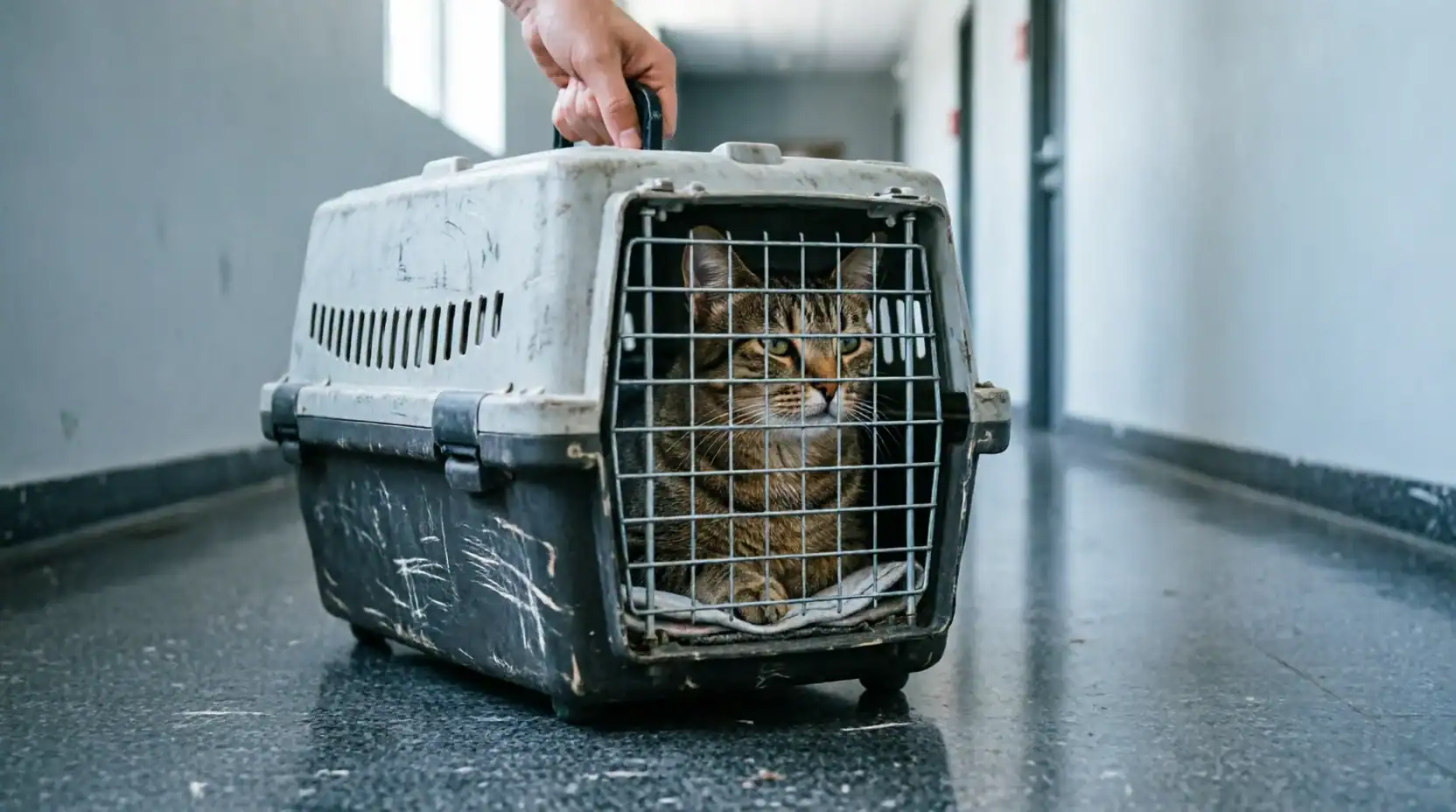
    A bright, short hallway diverging from a darker, longer hallway from a single point, representing the difference between a 10-day and 30-day Australian pet quarantine timeline

    Two dogs fly in from London on the same week, both healthy, both fully vaccinated, both carrying an identical stack of paperwork at first glance. One goes home after 10 days. The other stays at Mickleham for 30. The owners compare notes afterward and assume it must have been a mistake, or bad luck, or a difference in breed. It wasn’t. The entire gap comes down to one appointment, months earlier, that one owner’s export agent booked and the other one didn’t: a formal identity check, completed before the blood was drawn for the RNATT test, not after.

    Your pet’s quarantine length is not a fixed feature of its country of origin. Group 2 pets get a flat 10 days, no exceptions. Group 3 pets get 10 days or 30 days depending on whether a competent government authority verified the animal’s identity before its RNATT blood draw, not after. That’s most owners reading this, since Group 3 covers the UK, USA, Canada and most of Europe. Get the sequencing right, months before travel, and you’re in the shorter group. Get it backwards, and there is no fix once the blood has already been drawn.

    Why “All Pets Stay 10 Days” Is Inaccurate

    Most of what circulates informally among pet owners planning a move to Australia collapses two genuinely different numbers into one. Ten days is real. So is 30. Neither is the default for every pet, and neither is assigned at random. It is the direct output of a specific procedural choice made well before the pet ever boards a flight. Guides that quote “10 days” as a flat figure are describing the best case, not the typical case, and owners who plan their preparation timeline around that number without understanding what earns it are the ones who end up surprised at three weeks extra board and a call from Mickleham explaining why.

    The confusion is understandable. DAFF’s own quarantine guidance states both numbers side by side without much fanfare, and most pet-relocation agencies would rather advertise the shorter figure than explain the condition attached to it. The condition is not complicated once someone actually explains it. It just has to happen at the right point in a timeline most owners have never planned before.

    Group 2 and Group 3 Pathways Are Not the Same Decision

    It helps to separate two questions that get run together constantly: which country group does my pet’s country belong to, and, if it’s Group 3, will my pet get 10 or 30 days once it’s there. These are sequential, not parallel, decisions.

    Group 2 pets (Singapore, Japan, Fiji and the rest of DAFF’s rabies-free-recognised list) never face this particular fork at all. There is no RNATT test in Group 2’s process, so there is nothing to verify identity ahead of, and the quarantine length is a flat 10 days regardless of how the paperwork was handled. If your pet is Group 2, this article’s central mechanism doesn’t apply to you. You can stop worrying about the 10-versus-30 question entirely.

    Group 3 is where the fork exists, and it’s the group that includes the large majority of owners moving pets to Australia from Western countries. Every Group 3 pet takes the RNATT blood test and serves the 180-day wait described in the full RNATT explainer.

    Competent-Authority Identity Verification, Explained

    “Competent authority identity verification” sounds like bureaucratic filler until you understand why DAFF added it. It is a formal check, conducted by a government official (not the treating vet, and not the owner) in the country of export. The check confirms that the specific animal later presented for the RNATT blood draw is the same animal described on its microchip number and vaccination history, not a substitute animal presented under someone else’s paperwork.

    DAFF introduced this requirement after identifying a genuine pattern of fraud overseas: cases where the animal that had actually been vaccinated and blood-tested was not the same animal that ultimately travelled to Australia, exploiting the gap between “paperwork says this dog is protected” and “this is actually that dog.” The department’s own identity check process page, which covers the UK version of the process, describes exactly this concern. The 30-day default for unverified pets is not an arbitrary penalty. It’s DAFF compensating, with extra quarantine time, for a paper trail it cannot independently confirm is describing the actual animal on the plane.

    Why It Has to Be Identity-Before-RNATT, Not RNATT-Before-Identity

    The order matters, and it only works in one direction. Identity verification has to happen before the RNATT blood sample is taken, not at some point during the following six months, and not retroactively once the sample has already been submitted. A government official confirming, a week after the blood draw, “yes, this was definitely the same dog” does not qualify. DAFF’s RNATT guidance is explicit that the identity check and the RNATT cannot be completed in the same visit: the identity check comes first, at its own appointment.

    This is the single highest-leverage appointment in the entire Group 3 process, and it is also the easiest one to accidentally skip, because it isn’t the blood test itself. It’s a separate booking, with a separate government official, that has to be completed at an earlier visit than the RNATT draw. An export agent or vet unfamiliar with Australia’s specific requirement can complete a technically correct RNATT test, with a technically correct result, and still leave the owner facing 30 days simply because nobody booked the identity check ahead of the blood draw appointment.

    An Australian Export Certificate Can Serve as Identity Evidence

    For pets that were originally exported from Australia (a dog that travelled to Thailand with its family for a posting, for example, and is now coming home), there is a second form of identity evidence available. The animal’s own Australian export certificate, issued when it originally left the country, can support the identity-verification requirement for the return journey, since it already establishes a government-recorded link between that specific microchip number and that specific animal’s medical history. This is one of several reasons the return process for Australian-origin pets, covered in preparing a pet to return to Australia before you leave and returning an Australian dog or cat from Thailand, is worth planning before departure rather than after. The paperwork trail you build on the way out directly shapes how smooth the way back is.

    Why Repeating RNATT Can Restart the Whole Timeline

    RNATT has a pass threshold, set out on DAFF’s rabies neutralising antibody page: 0.5 IU/mL or higher. A result below that line does not pass, and it doesn’t mean a quick retest next week. Your pet needs a booster vaccination first, then a fresh blood draw. The 180-day wait restarts entirely from the date the new sample reaches the approved laboratory, not from the original draw date. Six months of preparation can become closer to twelve if a first attempt comes back marginal and nobody caught it early enough to leave time for a second attempt before a planned move date.

    One detail worth knowing if you’ve already been through the identity-verification appointment once: that step doesn’t need to be repeated for a retest in the same way the blood draw does, provided the same animal is presented again and the original verification remains valid. It’s the antibody clock that resets, not necessarily every procedural step that led to it. But confirm this with your export vet for your specific situation, since requirements can vary by exporting country’s own process.

    Longer Stays After Non-Compliance

    Ten and thirty are the two numbers this article is built around, but they are not the absolute ceiling. Several things can extend a stay well past 30 days while the issue is resolved, at the owner’s cost for every additional day: non-compliance discovered after arrival, a discrepancy between the animal presented at Mickleham and its documentation, an expired vaccination that wasn’t caught before export, or paperwork that doesn’t hold up under the facility’s own verification. This is a genuinely rare outcome for owners who’ve followed the process correctly, but it is the reason “close enough” paperwork is a real risk, not just an administrative inconvenience. DAFF’s own quarantine facility page notes that extensions are charged at the owner’s cost. The Mickleham facility guide covers what day-to-day life looks like inside either the 10-day or 30-day stay in detail.

    What the Import Permit Will Say

    The minimum quarantine period is not a surprise revealed on arrival. It is stated on the individual import permit DAFF issues for your specific pet, reflecting the pathway actually followed. If the identity-verification-before-RNATT step was completed and documented correctly, the permit should reflect the 10-day pathway. If it wasn’t, the permit will show 30 days, and that figure is set well before your flight is even booked, not decided at the border. One detail that surprises owners moving more than one animal together: DAFF’s guidance for cats and dogs arriving on private or chartered flights notes that animals travelling together may all be required to serve the longest period applicable to any single animal on that flight, even if the others individually qualified for the shorter stay. Confirm the permit’s stated quarantine period as one of the first things you check when it’s issued, not something you find out about at Mickleham’s front gate.

    What Owners Can and Cannot Change

    What you control: whether identity verification happens, and whether it happens before the RNATT blood draw rather than after or not at all. That single booking decision, made months before travel, is the actual lever. Everything downstream of it is fixed regardless of how the identity step goes: the 180-day wait itself, the RNATT threshold, and the quarantine facility’s own procedures.

    What you cannot change: the 180-day wait cannot be shortened by paying more, expedited processing does not exist for this step, and a 30-day outcome cannot be appealed or converted to 10 days after the RNATT sample has already been submitted without prior verification. There is no retroactive fix. The only point of control is upstream, at the export agent or vet who books your pet’s appointments, which makes “does this vet know to book identity verification before RNATT, specifically for Australia” one of the first questions worth asking when choosing who handles preparation, not a detail to confirm later.

    Don’t ask it as a yes-or-no question, because a rushed clinic will say yes to anything. Ask it as a sequence: “Which appointment happens first, identity verification or the blood draw?” A vet who does this regularly answers instantly and specifically, naming the competent authority they use. A vet who hesitates, or answers with “we’ll get all the paperwork sorted,” is telling you something about whether they’ve actually done this Australia-specific sequence before, and that’s the answer you need before you book, not the answer you get back after a 30-day outcome.

    10-vs-30-Day Pathway Flowchart

    Step 10-day pathway 30-day pathway
    1. Country group Group 2: automatic 10 days, skip to arrival. Group 3: continue to step 2.
    2. Identity verification booked? Yes: scheduled with a competent government authority to occur before the blood draw No: skipped, or scheduled after the blood draw
    3. RNATT blood draw Occurs after identity is confirmed, chain of custody intact Occurs without a preceding identity check
    4. RNATT result Must be ≥0.5 IU/mL or the process restarts from a new blood draw, regardless of pathway
    5. 180-day wait Identical for both pathways: counted from laboratory receipt of the qualifying sample
    6. Import permit issued States 10-day minimum quarantine States 30-day minimum quarantine
    7. Mickleham arrival Released after 10 days, subject to clean facility checks Released after 30 days, subject to clean facility checks

    If your pet is still in the preparation stage, this is the moment to confirm with your export vet, in writing, that identity verification is booked to happen before, not after, the RNATT blood draw. That single booking also affects your budget directly. A 30-day Mickleham stay costs meaningfully more than a 10-day one, as the full Thailand-to-Australia cost breakdown shows. For the complete door-to-door process from Thailand through staging and arrival, see Swift Cargo’s international pet transport service, which coordinates exactly this kind of appointment sequencing for the Thailand-to-Australia route.

    Frequently Asked Questions

    Is it true that all pets only spend 10 days in Australian quarantine?

    No. Ten days is the minimum, not the default. Group 2 pets get a fixed 10 days. Group 3 pets, the largest group, including the UK, USA and Canada, get 10 days only if a competent government authority formally verified the animal’s identity before its RNATT blood draw. Without that step, the same pet from the same country faces 30 days.

    What is identity verification and why does it change my pet’s quarantine length?

    Identity verification is a formal check, by a government official in the country of export, confirming the animal presented for the RNATT blood draw is the same animal described on its microchip and vaccination records. DAFF introduced it after cases of animal-substitution fraud overseas. Verified-before-RNATT pets qualify for 10 days; unverified pets default to 30, because DAFF cannot fully rely on the paper trail alone.

    Can I get a 30-day outcome changed to 10 days after my pet has already arrived?

    No. The identity-verification step has to happen before the RNATT blood draw, months before travel. Once the blood has been drawn without it, that door is closed for this import cycle. There is no on-arrival appeal or paperwork fix that converts a 30-day permit into a 10-day stay.

    Does my Australian pet’s own export certificate count as identity evidence?

    Yes. If the animal was originally exported from Australia and holds its own Australian export certificate, that document can support identity verification for the reduced quarantine pathway when the pet is returning, in place of a separate identity declaration.

    What happens if my pet’s RNATT test comes back below the threshold?

    A result below 0.5 IU/mL does not pass. Your pet needs a booster vaccination and a fresh blood draw, and the 180-day wait restarts from the date the new sample reaches the laboratory, not from the original draw date. Identity verification, if already completed, does not need to be repeated, but the clock itself resets in full.

    Will my import permit tell me in advance whether my pet gets 10 or 30 days?

    Yes. The minimum quarantine period is stated on the individual import permit DAFF issues for your pet, determined by the pathway you followed. If more than one animal is travelling together on a private or chartered flight, all animals on that flight may need to serve the longest period required by any single animal on board.

  • Australia’s Pet Import Country Groups Explained

    Australia’s Pet Import Country Groups Explained

    Published 19 August 2026. Import group classifications and quarantine rules are reviewed here against DAFF guidance current as of publication and are subject to change. Always confirm current requirements against agriculture.gov.au or your BICON permit assessor before booking flights or vaccinations.

    Sculptural relief world map divided into three color-graded zones representing Australia’s Group 1, 2, and 3 pet-import risk classifications, with a small pet carrier at a zone boundary

    A dog flying in from Auckland can clear the airport and go home the same afternoon. A dog flying in from Bangkok cannot enter the country at all, not with a permit, not with money, not with the best broker in the business, until it has lived somewhere else first, for six months, before anyone in Australia will look at its paperwork. The difference between those two animals has nothing to do with their health, their vaccination history or their owner’s budget. It comes down to a single administrative fact: which of Australia’s three country groups, if any, the exporting country belongs to.

    Every country in the world sits in one of four positions for the purposes of bringing a dog or cat to Australia: Group 1, Group 2, Group 3, or not approved at all. That placement, not the animal’s individual health record, decides whether an RNATT blood test is required, how long the mandatory pre-export wait is, and how many days the pet spends in post-entry quarantine at Mickleham after landing. Get the group wrong and you don’t get a slower version of the same process. You get a process that doesn’t exist yet, because your pet’s country hasn’t met the residency requirement to enter it.

    Why Australia Groups Countries At All

    Australia is one of a small number of countries that has never had an established rabies outbreak. That status is not an accident or a geographic given. It is the product of decades of border control decisions, and the country groups are the current version of the mechanism that protects it. Most first-time importers assume the groups are about wealth, or diplomatic relationships, or how “developed” a country is. They are not. The Department of Agriculture, Fisheries and Forestry assesses each country’s actual rabies and disease surveillance record, its veterinary reporting systems, and how reliably its government can vouch for an animal’s medical history, then places it in the group that matches the residual risk. A country can be wealthy and well-governed and still sit in Group 3 rather than Group 2, because the group reflects the disease status the country’s own animal population actually carries, not how much anyone trusts its paperwork in the abstract.

    That is why the groups don’t sort the way most people expect. Singapore, a small and highly regulated city-state, is Group 2. The United Kingdom, Germany and the United States, three of the most trusted trading partners Australia has, sit in Group 3, the group that requires the RNATT test and the longest wait. The classification is about rabies epidemiology, not international standing.

    Group 1: New Zealand, Norfolk Island, Cocos (Keeling) Islands

    Group 1 is the smallest and simplest group: New Zealand, Norfolk Island and the Cocos (Keeling) Islands. Dogs and cats travelling from these three origins do not need an RNATT blood test, do not face the 180-day pre-export wait, and do not go into post-entry quarantine on arrival in Australia. This is the closest thing to a domestic-style pet move that exists in the entire system, and it reflects genuinely negligible assessed risk: New Zealand in particular has its own rabies-free status and a biosecurity relationship with Australia that goes well beyond what any other country has negotiated.

    If your pet has lived exclusively in a Group 1 territory, the rest of this article is not really about you. Go straight to DAFF’s Group 1 step-by-step guide. Everyone coming from Thailand, or planning a Thailand-adjacent route, should keep reading, because the country you’re actually dealing with is nowhere near this group.

    Group 2: DAFF-Recognised Rabies-Free Countries

    Group 2 covers countries DAFF recognises as rabies-free by their own right, even though the relationship isn’t as close as New Zealand’s. The list includes American Samoa, Bahrain, Barbados, Christmas Island, Cook Islands, Falkland Islands, Fiji, French Polynesia, Guam, Hawaii, Iceland, Japan, Kiribati, Federated States of Micronesia, Mauritius, Nauru, New Caledonia, Niue, Palau, Papua New Guinea, Samoa, Singapore, Solomon Islands, Tonga, Tuvalu, Vanuatu, and Wallis and Futuna.

    Notice that Hawaii is listed separately from the rest of the United States. That’s not a formatting quirk. Hawaii has run its own independent rabies-free program for decades, with import and quarantine rules distinct from the US mainland, and DAFF’s classification recognises that Hawaii’s actual disease status is different from the country it’s politically part of. It is the clearest example in the whole system of the rule from the section above: the groups track disease status, not national borders.

    Pets from Group 2 countries skip the RNATT test entirely: there is no rabies antibody titre requirement, because the country of origin is independently verified rabies-free. What Group 2 pets do still face is an official identity check at least 180 days before export, and a 10-day post-entry quarantine stay at Mickleham on arrival in Melbourne, plus the standard vaccination, microchip, veterinary examination and import permit requirements. Country-level rabies-free status replaces the RNATT, not the identity check. See DAFF’s Group 2 step-by-step guide for dogs for the full checklist.

    Singapore’s presence on this list matters more to readers of this article than any other single entry, because Singapore is the staging country most Thailand-based owners end up using, a fact this article will come back to later, and one the staging-country comparison covers in full.

    Group 3: Rabies-Present-But-Controlled Countries

    Group 3 is where most Western pet owners are surprised to find themselves. It covers countries where rabies is present in the animal population but is well controlled through vaccination, surveillance and veterinary infrastructure: a list that includes the United Kingdom, the United States (mainland), Canada, Germany, France, Spain, Italy, and most of the rest of the European Union, among dozens of others.

    Group 3 is the only group that requires the RNATT rabies neutralising antibody titre test: a blood draw that proves the animal’s vaccination actually produced a protective immune response, not just that a vaccine was administered. Passing RNATT starts a mandatory 180-day wait, counted from the date the testing laboratory receives the blood sample, not the date of the blood draw itself. Only after that wait is served can the pet be exported. On arrival, Group 3 pets face either a 10-day or a 30-day quarantine stay at Mickleham, and which one applies depends on whether a competent government authority formally verified the animal’s identity before the RNATT blood draw was taken (a returning Australian pet can use its Australian export certificate instead), a sequencing detail covered in full in the 180-day rule explainer and unpacked step by step in why some pets stay 10 days and others 30.

    The practical reality most competitor guides skip: Group 3 is not a punishment tier and it is not a sign your country is considered high-risk in absolute terms. It is simply the group that requires individual-animal proof (the RNATT test) rather than country-level proof (Group 1 and 2’s approach) that rabies immunity is genuinely present. Full requirements are in DAFF’s Group 3 step-by-step guide for dogs.

    Non-Approved Countries, Including Thailand

    Thailand is not in Group 1. It is not in Group 2. It is not in Group 3. There is no fourth “Thailand tier” with its own slower, more expensive but still direct pathway. Thailand, like the large majority of countries in Africa, South America, and much of Asia, simply has no DAFF-approved direct export status for dogs and cats to Australia at all.

    There is no permit application, no additional fee, no expedited assessment that lets a pet fly directly from a non-approved country to Australia. The only pathway is for the pet to establish 180 consecutive days of continuous residence in an approved Group 1, 2 or 3 country, and then export from that country under that country’s own rules. Why pets cannot fly directly from Thailand to Australia covers the mechanics of that staged route in detail.

    One clarification that saves real confusion: “non-approved” is a statement about the country, not a judgment on your pet’s actual health. A perfectly healthy, fully vaccinated dog that has lived its whole life in Bangkok is in exactly the same position as a dog with no medical history at all, because the requirement attaches to the country’s disease-surveillance status, not the individual animal.

    Country of Residence Versus Country of Final Export

    DAFF’s 180-day requirement is a residency test, not a paperwork test, and the distinction matters more than most guides let on. Only where your pet has actually, physically lived for the 180 consecutive days immediately before export counts, not where the import permit application was filed, not where you as the owner are based, and not where the pet happens to be booked to fly from if that differs from where it actually lived.

    The export health certificate itself (the document a government-approved veterinarian signs, stamps and dates on every page, confirming the animal’s health and vaccination status immediately before travel) must be issued in the country of final export: the approved country the pet is physically leaving from at the end of the residency period. That country must itself be an approved Group 1, 2 or 3 country in its own right. A pet cannot rack up 180 days in an approved country and then have its final paperwork issued from an unrelated third country that never hosted it. DAFF’s requirements for the veterinarians who sign these certificates are detailed on the department’s export preparation guidance for veterinarians page.

    Moving Between Approved Countries During the 180 Days

    A question that comes up constantly among Thailand-based owners: if a pet spends part of its 180 days in one approved country and part in another, does the clock reset? DAFF’s own framing is residence in an approved country or countries, which allows the 180 days to be split across more than one approved origin, provided the residency is genuinely continuous and never interrupted by time spent in a non-approved country, including, notably, Thailand itself, if the owner were to bring the pet back for a visit mid-residency.

    This is one of the few areas in this entire framework where we’d actively discourage relying on a blog article, including this one. Multi-country residency claims are reviewed individually by DAFF and your BICON permit assessor, and the practical evidence bar (proof of continuous residence, veterinary records showing where the animal actually was on any given date) is not something worth guessing at for a plan this expensive to get wrong. If your itinerary genuinely needs to span two approved countries, raise it with your permit assessor before you commit to flights, not after.

    Certificate Availability Varies More Than Owners Expect

    Not every approved country has the same practical access to government-approved veterinarians experienced with Australia’s specific export paperwork. This is a real operational factor, not a formality, and it’s a major reason Singapore has become the default staging choice for Thailand-based owners rather than one of the smaller Pacific Group 2 entries also on the list. High volumes of Australia-bound pet traffic through Singapore mean its veterinary and export infrastructure is well-practised at producing exactly the documentation DAFF expects, with fewer of the delays that come from a less-trafficked origin’s paperwork getting kicked back for a missing stamp or an incorrectly dated signature. The full comparison against Japan, South Korea and other alternatives is in the staging-country guide.

    Returning Australian Pets Follow a Related but Different Path

    If your pet was originally exported from Australia, travelling with you to Thailand for a posting, for instance, and is now coming home, the country-group system still applies to wherever the pet is currently resident, but Australian origin can be submitted as supporting evidence in the identity-verification and permit process. This is a distinct enough scenario that DAFF maintains separate guidance for cats and dogs returning to Australia, and this site covers it in more depth in preparing a pet to return to Australia before you leave and returning an Australian dog or cat from Thailand. Do not assume Australian origin exempts a pet from the country-group rules covered in this article. It doesn’t. Thailand’s non-approved status applies regardless of where the pet was born.

    Country Examples by Group

    Group Example countries RNATT required Pre-export wait Quarantine on arrival
    Group 1 New Zealand, Norfolk Island, Cocos (Keeling) Islands No None None
    Group 2 Singapore, Japan, Fiji, Hawaii, Iceland, Mauritius, Papua New Guinea No 180 days after official identity check Minimum 10 days
    Group 3 United Kingdom, United States, Canada, Germany, France, Spain, Italy Yes 180 days from lab receipt 10 or 30 days, depending on identity verification
    Non-approved Thailand and most other countries not listed above Not applicable directly No direct pathway. 180 days’ continuous residence in an approved country required first Follows the approved country’s own group rules after staging

    This table is illustrative, not exhaustive. DAFF maintains the authoritative current list on its country risk-analysis page, and country placements are reviewed periodically. Always verify your specific country against the live list before making any booking or medical decision.

    Route-Checking Decision Tree

    Use this table to identify which pathway actually applies to your pet. Start at the top and follow the row that matches your pet’s real, continuous living situation for the past 180 days, not where you as the owner are from, and not where you’d like the pet to be considered resident.

    Where has your pet actually lived for the last 180 continuous days? Applicable group Next step
    Exclusively New Zealand, Norfolk Island or Cocos (Keeling) Islands Group 1 Follow the Group 1 step-by-step guide directly: no RNATT, no quarantine
    A Group 2 country such as Singapore, Japan or Fiji, without interruption Group 2 Get an official identity check at least 180 days before export, then vaccinations, tests and permit application; plan for 10 days at Mickleham
    A Group 3 country such as the UK, USA or Canada, without interruption Group 3 Book RNATT early and arrange identity verification before the blood draw to target the 10-day outcome; budget 180 days from lab receipt
    Thailand, or another country not listed in Group 1, 2 or 3 Non-approved Plan a staging move to an approved country first (Singapore is the most common choice); the 180-day clock cannot start until residency there begins
    Time split between two approved countries, no non-approved country in between Depends on final export country Confirm the specific scenario with DAFF or your BICON permit assessor before booking anything

    Check which pathway your pet is likely to follow before beginning vaccinations or booking a flight. A wasted RNATT test or a vaccination given in the wrong country is money and weeks you don’t get back. Once you know your group, budgeting the full journey is the natural next step. For the complete door-to-door process, see Swift Cargo’s international pet transport service.

    Frequently Asked Questions

    What are Australia’s pet import country groups?

    Australia sorts every country in the world into Group 1, Group 2, Group 3 or non-approved, based on rabies and other animal disease risk. The group a country belongs to determines whether RNATT testing applies, how long the mandatory wait is before travel, and how many days a dog or cat spends in quarantine on arrival.

    Which countries are in Group 1?

    Group 1 is New Zealand, Norfolk Island and the Cocos (Keeling) Islands. Dogs and cats from Group 1 do not need an RNATT blood test and do not go into post-entry quarantine on arrival, reflecting the negligible disease risk DAFF has assessed for these origins.

    Do Group 2 countries require the RNATT blood test?

    No. Group 2 covers DAFF-recognised rabies-free countries such as Japan, Singapore, Fiji and Iceland. Pets from these countries skip the RNATT test entirely but still complete a minimum 10-day post-entry quarantine stay at Mickleham.

    What happens if my pet is coming from a non-approved country like Thailand?

    There is no direct pathway. Thailand is not in Group 1, 2 or 3, so a pet cannot be exported straight from Thailand to Australia under any permit type. The pet must first live continuously in an approved Group 1, 2 or 3 country for 180 days, then export from that country under its group’s rules.

    Can my pet’s 180-day residency be split across two approved countries?

    DAFF’s requirement is continuous residence in an approved country or countries for the 180 days immediately before export, which allows time split between approved countries provided the pet never spends time outside approved countries and the export certificate is issued from the final country of departure. Confirm any multi-country itinerary with DAFF or your BICON permit assessor before relying on it, since these cases are reviewed individually.

    Does my export certificate have to come from the same country my pet has lived in?

    The export health certificate must be issued by a government-approved veterinarian in the approved country your pet is exported from, with that vet’s signature, stamp and date on every page. This is the country of final export, and it must be an approved Group 1, 2 or 3 country regardless of where else the pet lived during the 180-day residency period.

    Is Group 1, 2 or 3 the same thing as “Category” 1, 2 or 3?

    Yes. DAFF’s consumer-facing guidance calls them Groups, but the department’s own step-by-step guide URLs and some older documents, including its import permit glossary, still use “Category” for the identical classification. Owners searching DAFF’s site directly sometimes assume these are two different systems; they are not.

  • Prepare Your Pet to Return to Australia Before You Leave

    Prepare Your Pet to Return to Australia Before You Leave

    Three original assets per the cluster brief: (1) a return-readiness checklist graphic; (2) a vaccine/RNATT expiry calendar template (microchip, vaccin

    The day your dog boards a flight to Bangkok, a clock starts that almost no one tells you about. It has nothing to do with visas, leases or school terms. It is Australia’s own biosecurity system quietly reclassifying your pet, and by the time most families notice it is running, they are eighteen months into a posting and trying to book a return flight that does not exist.

    Losing Australian Health Status

    Your pet does not carry a permanent “Australian” passport that survives any trip, anywhere, indefinitely. The Department of Agriculture, Fisheries and Forestry’s rules for cats and dogs returning to Australia are built around a simple, unforgiving logic. What matters is which countries your pet has actually lived in, and for how long, immediately before it tries to come home. It does not matter where it was born, how long it lived in Australia before it left, or what passport its owner holds. A dog that spent eight years in Melbourne and then two years in Bangkok is evaluated, on return, almost identically to a dog that has never set foot in Australia. That is what “losing health status” actually means in practice, and it surprises almost every owner who assumed a lifetime in Australia would count for something.

    Approved Versus Non-Approved Destinations

    DAFF sorts countries into risk-based approved groups for cat and dog imports. Countries in Group 1 and Group 2 carry a comparatively straightforward pathway back to Australia; Group 3 and non-approved countries carry a considerably longer and stricter one, built around the Group 3 step-by-step import requirements. Singapore sits in Group 2. That matters because it is the staging point most Thailand-based Australians eventually use for the return leg described in our guide on why pets can’t fly directly from Thailand to Australia. Thailand itself does not appear on any of DAFF’s approved lists at all.

    In practice, the groups separate a comparatively fast pathway from a mandatory, months-long one. Broadly: Group 1 origins carry minimal additional testing burden because the underlying rabies risk is treated as negligible. Group 2 origins sit in the middle: no RNATT and, if the pet returns directly from the Group 2 country it left Australia for, no identity check or 180-day residency, but a Mickleham quarantine stay still applies. Group 3 origins carry the full pathway: microchip, vaccination, RNATT, the 180-day wait, an import permit, and mandatory quarantine on arrival at Mickleham. Non-approved origins, Thailand included, must first stage through an approved country and then follow that country’s group rules: through Singapore (Group 2), that means an official identity check and 180 days’ residence, with no RNATT. Knowing which bucket your posting falls into on day one changes how you plan the entire two years, not just the last few months of it.

    Why Thailand and Malaysia Create a Return Problem

    Thailand and Malaysia are both extremely common postings for Australian expats and both sit outside every DAFF-approved group. That single fact is the entire source of the “why can’t my dog just fly home” problem this cluster covers elsewhere. It has nothing to do with your dog’s individual health, your family’s travel history, or anything you did wrong. It is a blanket country classification that applies the same way to every animal that has spent time there. Once you accept that as a fixed constraint rather than a problem to argue with, the planning question becomes much simpler: not “how do I get an exception,” but “how do I build my calendar around a rule that isn’t going to bend.”

    DAFF classifies by country rather than animal by animal, which is why appealing to your own dog’s health record never works. DAFF isn’t assessing your pet; it’s assessing whether the country your pet has been living in has a rabies-surveillance and veterinary-reporting system DAFF trusts enough to certify absence of exposure. Thailand’s and Malaysia’s national systems don’t meet that bar, regardless of how careful any individual owner or vet has been. That’s a statement about the country’s institutions, not your pet.

    The Australian Export Certificate

    Before your pet leaves Australia at all, a registered vet completes a health check and issues the documentation that accompanies a formal export process. DAFF’s own guidance on exporting companion animals sets out the backbone of this stage: a Notice of Intention to Export and a compliant veterinary health certificate. Get this file properly assembled and kept, not just submitted and forgotten, because it becomes the baseline record you or your pet transport agent will refer back to when the return conversation starts, potentially years later.

    Choosing a Vet Who Documents This Correctly

    Not every vet clinic handles export paperwork often enough to get the sequencing right on the first attempt. Before you book the appointment that matters, ask directly: how many DAFF export health certificates has this clinic issued in the past year, and are they comfortable coordinating the microchip-then-vaccination-then-blood-draw sequence without you having to manage it yourself. A clinic that does this occasionally, rather than routinely, is more likely to make the exact sequencing error described below, not from carelessness but from unfamiliarity with a process most general practice vets encounter rarely.

    Pre-Departure Rabies Vaccination: the Sequencing Mistake That Costs Owners Months

    Your pet needs an ISO-compatible microchip implanted before any rabies vaccination counts toward the eventual import pathway. Vaccinate first and chip second, and the vaccination is not considered valid for Australian import purposes. It has to be redone, on the correct side of the microchip, before the process can restart. This ordering error is one of the most avoidable and most costly mistakes in the process. It happens because the correct order is counterintuitive: most people assume vaccination is the more “official” step and the microchip is administrative. For DAFF’s purposes, it is the other way around. Confirm the microchip is in and scanning correctly before a single vaccine goes in the syringe.

    ACDP and the RNATT

    The Rabies Neutralising Antibody Titre Test (RNATT) is the blood test that proves your pet’s rabies vaccination actually produced effective immunity, not just that a vaccine was administered. DAFF’s RNATT guidance sets the bar at an antibody level of 0.5 IU/mL or above, tested at an approved laboratory. For Australian-linked testing, that laboratory is the Australian Centre for Disease Preparedness (ACDP), formerly the Australian Animal Health Laboratory. It is a high-security CSIRO facility in Geelong, Victoria, and one of the country’s few laboratories equipped for this class of exotic-disease testing. For a return through a Group 3 country, the 180-day wait that everyone mentions is measured from the date the blood sample physically arrives at the laboratory, not the date it was drawn at your vet’s clinic. That gap of days or weeks is one owners sometimes miscount when they’re doing the maths themselves.

    Maintaining Booster Continuity

    An RNATT result is only meaningful alongside continuous, current vaccination cover. If your pet’s rabies booster lapses partway through a two-year posting, you have done more than miss an appointment: you have broken the continuous-immunity story the whole file is supposed to tell. DAFF treats a lapse of even one day as disqualifying: revaccination, a new RNATT and a fresh 180-day residency in an approved country, at the least convenient possible moment. Set booster reminders before you leave Australia, not after you’ve settled overseas and the Australian systems that used to nag you about it are no longer in your inbox.

    Maintaining RNATT Validity

    An RNATT result is valid for 12 months from the date the blood sample was taken. If your overseas posting runs longer than that, as most do, you need a plan for what happens when the original test ages out: a repeat blood draw before the current result expires, taken in an approved country if your pet lives in Thailand, and, in practice, a fresh look at whether the 180-day approved-country residency requirement is satisfied again at that later date. The exact interaction between test validity, booster timing and country-residency requirements gets specific to your own itinerary. This is the one part of pre-departure planning worth confirming directly with DAFF or an approved pet export agent before you lock in return dates, rather than assuming any single article, including this one, has covered every edge case of your specific timeline.

    Short Overseas Trips

    It’s tempting to assume a short holiday to a non-approved country doesn’t really count, on the reasoning that DAFF’s rules are aimed at people who relocate for years, not a two-week trip. Don’t assume that. The framework is built around where your pet has physically been, not how long the trip felt to you. If any part of your plans includes even a brief stay in a non-approved country with your pet, get that specific scenario checked against current requirements before you travel. A short trip that turns out to have consequences you didn’t know about is a worse outcome than a short trip you simply chose not to take with the pet along.

    Your Record-Keeping Calendar

    The single most useful thing you can build before departure is a calendar, not a folder. Track these dates from day one:

    • Microchip implant date: must predate every vaccination that follows
    • Rabies vaccination date(s): including every booster for the full length of your posting
    • RNATT blood draw date: the date drawn, separately from the date it reaches the laboratory
    • RNATT laboratory receipt date: this is the date the 180-day countdown actually starts in a Group 3 staging country (in Singapore and other Group 2 countries, the official identity check date starts it)
    • 180-day eligibility date: laboratory receipt date plus 180 days
    • RNATT 12-month expiry date: blood draw date plus 12 months; the test needs renewing before this if your posting runs longer
    • Each booster’s next-due date: set a reminder at least two weeks ahead of every one, not on the day itself
    • Australian export certificate date: your baseline compliance record, kept alongside everything above

    A simple spreadsheet with these eight dates, shared with whoever is managing your pet’s care overseas, does more to prevent a return-trip crisis than any single piece of paperwork.

    Worked Example: A Two-Year Move to Thailand

    A Sydney-based family accepts a two-year posting to Bangkok, with a dog that has lived in Australia its whole life. Preparing properly, their timeline looks roughly like this: in the two months before departure, the dog is confirmed microchipped (already compliant), given a rabies booster, and blood-drawn for RNATT four weeks after the vaccination, with the sample sent to ACDP. The export certificate and Notice of Intention to Export are completed in the same window, and the dog departs for Bangkok once everything is confirmed. Through the two years in Thailand, the family calendars every booster due date and travels with the dog to an approved country once a year for the booster and a new RNATT, as DAFF requires for pets living in a non-approved country. They keep receipts and vet records organised as they go.

    Around six months before the planned return, not six weeks, the family starts arranging the required approved-country stay, most commonly a relocation to Singapore for the mandatory consecutive period immediately before export to Australia, alongside a DAFF import permit application and a Mickleham quarantine booking through the department’s approved quarantine facility. Because the vaccination and testing groundwork was already done properly years earlier, this final stretch is a matter of sequencing and paperwork, not starting from zero under time pressure.

    Where this family’s plan nearly went wrong: at around the fourteen-month mark, a booster appointment was pushed back during a busy stretch, and the record-keeping calendar flagged that the new date fell three weeks after the booster’s due date. They rebooked it ahead of the due date. Had it gone ahead late, even by a day, DAFF would have required revaccination, a new RNATT and a fresh 180-day wait.

    If You’re Moving More Than One Pet

    Every date on the record-keeping calendar above needs tracking per animal, not per household. Two dogs on different vaccination schedules can end up with different RNATT eligibility and expiry dates, and it’s easy to lose track of which timeline belongs to which pet once you’re managing two or three sets of dates instead of one. Keep separate rows, not a merged summary, and double-check before any booking that you’re working from the right animal’s dates. A mixed-up expiry date is an easy mistake to make and an expensive one to discover at the airport.

    What Pre-Departure Preparation Cannot Do

    Preparation is not a workaround, and it has limits. It cannot eliminate the requirement to spend the mandated period in an approved country immediately before your pet’s actual return. Thailand residency doesn’t count toward that, no matter how early you did your Australian paperwork. It cannot eliminate Mickleham’s minimum quarantine stay on arrival back in Australia. It cannot guarantee that DAFF’s specific requirements won’t change somewhat over a two-year posting. Biosecurity rules are reviewed and updated, and a plan built in year one should be re-checked against current requirements as the return date approaches, not assumed to be frozen. What preparation does buy you is a clean compliance record, a calendar instead of a scramble, and the lead time a mandatory waiting period actually requires. That is the difference between an inconvenience and a crisis.

    An Approved-Destination Decision Tree

    Work through this in order for your specific posting country:

    • Start: is your destination in DAFF’s Group 1? If yes, minimal additional testing burden; confirm current specifics but the pathway is comparatively fast. If no, continue.
    • Is your destination in Group 2? If yes, more documentation than Group 1 but no mandatory extended pre-export residency; still confirm current requirements before booking. If no, continue.
    • Is your destination in Group 3? If yes, the full pathway applies: microchip, vaccination, RNATT, 180-day wait, import permit, Mickleham quarantine on return. If no (i.e. your destination is non-approved and not in any group, which is Thailand’s actual status), continue.
    • Non-approved country (Thailand, Malaysia and others): your pet cannot return directly at all. The realistic path home is a staged move through an approved country for the required consecutive period immediately before export: through Singapore (Group 2), an official identity check and 180 days’ residence with no RNATT; through a Group 3 country, the full RNATT pathway. Start planning that stage at least six months out, not six weeks.

    If you’re not certain which bucket your destination falls into, don’t guess. Confirm it against DAFF’s current published lists before you build a timeline around an assumption.

    A Simple Decision Check Before You Book Anything

    Ask these four questions in order. If you can answer all of them with confidence, you’re in good shape; wherever you can’t, that’s where to focus first.

    • Is your destination country DAFF-approved (Group 1 or 2), Group 3, or entirely non-approved? Thailand and Malaysia are non-approved, so assume the longer pathway applies from day one.
    • Is your pet microchipped with an ISO-compatible chip, confirmed before any rabies vaccination? If vaccination happened first, that shot needs redoing before anything else proceeds.
    • If your return will stage through a Group 3 country, has an RNATT been drawn and sent to an approved laboratory, and do you know its 180-day and 12-month dates? If not, this is the next action item, not something to defer until closer to any return trip.
    • Do you have a calendar tracking every booster, expiry and eligibility date for the length of your posting? If the answer is no, building one this week is the highest-leverage thing in this entire article.

    Every family’s timeline is different, and the specific interaction between your travel dates, your pet’s test dates and DAFF’s current requirements is worth confirming directly before you commit to flights. Australia’s biosecurity import requirements and the BICON system explainer are useful next reading if this is your first time working through DAFF’s framework.

    If departure is still ahead of you, our guide to what the move to Thailand actually costs and our walkthrough of what happens when your pet lands at Suvarnabhumi cover the outbound journey in full; this page is the one to bookmark for the leg home. For help planning the move itself, get a pet transport quote from SwiftCargo before you lock in departure dates.

    Frequently Asked Questions

    What happens to my Australian pet’s health status when I move overseas?

    Your pet doesn’t carry a permanent “Australian” status that follows it everywhere. DAFF’s import rules for cats and dogs are based on which countries the animal has actually lived in and for how long, immediately before it tries to come back. Moving to a non-approved country like Thailand, even after a lifetime in Australia, puts your pet on the same pathway as an animal that has never set foot in Australia at all.

    Can my dog return to Australia directly from Thailand?

    No. Thailand does not appear on any of DAFF’s approved country lists, so there is no direct import pathway. Our companion guide on why pets can’t fly directly from Thailand to Australia explains the mechanism in full; this article is about preparing for that reality before you leave, not after.

    When should I do the RNATT test, before I leave Australia or after I arrive overseas?

    Doing it before you leave, while your pet is microchipped, vaccinated and blood-drawn under an Australian vet you can easily verify with, removes a major source of friction later and starts your own planning clock immediately. It does not, on its own, let you skip the requirement to spend time in an approved country immediately before your eventual return. Confirm the exact sequencing for your timeline with DAFF or a pet export agent before you lock in dates.

    What if my rabies vaccination lapses while I’m living overseas?

    Treat a lapsed booster as a real problem, not paperwork. DAFF treats a lapse of even one day as disqualifying: your pet would need revaccination, a new RNATT and a fresh 180-day residency in an approved country. Calendar every booster due date before you leave Australia, and build in a buffer rather than renewing on the exact expiry day.

    Does a short holiday to a non-approved country affect my pet’s return eligibility?

    Treat any time at all in a non-approved country as consequential rather than assuming a short trip is safe. DAFF’s framework is built around where your pet has actually been, not how long the trip felt. If a short visit to Thailand or a similar destination is part of your plans, confirm the specific impact on your pet’s eligibility with DAFF or an approved pet export agent before travelling, rather than assuming a brief stay doesn’t count.

    What’s the biggest mistake Australians make when planning to bring their pet home?

    Treating the return leg as a problem for future-them. Families research the outbound move in detail and then discover the return requirements for the first time when they’re already trying to book flights, months or years later. The approved-country residency period, the quarantine booking, and the paperwork all take lead time that a two-year posting actually has, provided you start the clock on day one instead of at the eighteen-month mark.

  • Australia to Thailand Pet Transport Costs Explained

    Australia to Thailand Pet Transport Costs Explained

    Original asset per the cluster brief: an editable cost-comparison table or simple cost-calculator style graphic showing the named cost layers (vet/doc

    A cat in a small crate and a large dog in an XL crate can fly the exact same Sydney-to-Bangkok route, on the exact same day, and land more than three thousand Australian dollars apart in total cost. Almost none of that gap comes from the animal itself. It comes from a single number most first-time movers never think to ask about: the crate’s dimensional weight, which is what airlines actually bill against, not the number on the vet’s scale.

    That one mechanism explains more about your eventual quote than anything else in this article. Once you understand it, and the handful of other layers stacked on top of it, a $2,000 quote and a $5,000 quote stop looking like two prices for the same job and start looking like what they usually are: two different pets, two different routes, or two different scopes of service.

    Why Destination Changes Everything

    “Australia to Thailand” is not one price. It’s a range that moves on four variables: the pet’s size and crate volume, which Australian city you’re departing from, whether Bangkok is the final stop or just the clearance point before an onward leg to Phuket, Hua Hin or Chiang Mai, and how many animals are travelling together. Departure city is a good example. Perth simply has fewer direct wide-body options to Bangkok than the east coast does, and that scarcity shows up in the quote. Two families moving a similar-sized dog in the same month, one from Sydney and one from Perth, can therefore pay meaningfully different freight costs.

    Veterinary and Export Documentation Cost

    Every pet needs a current health check, up-to-date core vaccinations, and a veterinary health certificate endorsed close to the travel date before Thailand will accept them. On the Australian side, this sits alongside the export paperwork that a registered vet, and where applicable a DAFF-certifying process, confirms before your pet is cleared to leave. The Department of Agriculture, Fisheries and Forestry’s own live-animal export guidance sets out the backbone of this step: a Notice of Intention to Export and a compliant health certificate. As an illustrative planning figure, budget somewhere in the low-to-mid hundreds of Australian dollars per pet for the full vet-and-documentation stage. It moves up if vaccinations need updating or the vet visit involves more than a routine check.

    Cabin, Baggage or Freight: The Method That Sets Everything Else

    Small, healthy cats and small dogs can sometimes travel as accompanied baggage on the owner’s own flight, which keeps the pet on the same itinerary and avoids a separate cargo booking. Larger dogs, and any pet travelling when the owner isn’t on the same flight, go as manifested air cargo instead. Cargo is not a downgrade, just a different booking and handling path, described in our Suvarnabhumi arrival walkthrough. But it does carry its own handling and documentation charges that accompanied baggage doesn’t.

    The Crate Is the Real Cost Driver

    Airlines price live-animal freight on dimensional (volumetric) weight: the crate’s length times width times height, converted to a chargeable weight, compared against the animal’s actual weight, with the higher figure billed. IATA’s own container requirements set the minimum internal dimensions a crate must meet: enough room for the animal to stand, turn around and lie down naturally. That minimum is not negotiable down to save money. A cat’s crate might be a fraction of the volume of a large dog’s XL crate, and the freight bill scales with that volume far more than it scales with the weight difference between a 4kg cat and a 30kg dog. This is the single biggest reason two pets on the same route can carry very different price tags. IATA’s wider live animal travel standards cover the same ground airlines use to set handling procedures worldwide, which is why crate rules don’t change much between one international airline and the next. The cost variable is size, not which carrier you book.

    Why Quotes Move With the Season

    Freight capacity for live animals is not unlimited on any given flight, and it competes for cargo-hold space with everything else moving on that aircraft. Around Thai public holidays, school-holiday periods and the December-January peak, cargo-hold space tightens and pet freight pricing tends to firm up along with it. Families most commonly end up paying peak-season pricing by booking the pet’s flight last, after every other travel arrangement is locked in, without realising cheaper capacity was available on a slightly different date. If your travel dates have any flexibility at all, ask your operator whether shifting a week either way changes the freight quote.

    Regional Collection and Positioning

    A pet collected from central Sydney, Melbourne or Brisbane usually reaches its international freight booking with minimal extra handling. A pet collected from a regional town sometimes needs a positioning leg to a hub airport first, and so does a pet departing from a city with fewer direct Bangkok freight services. Perth is the clearest example on the Australian side. That positioning leg adds its own handling step and cost layer before the international freight charge even starts.

    Thailand’s Import Permit and the Animal Quarantine Station Fee

    The Thai side of this cost stack is smaller than most people expect. The import permit application itself carries no significant government fee. The cost of that stage is lead time and paperwork, not money, since it needs to be lodged and approved before departure. On arrival, Thailand’s Department of Livestock Development charges a standard Animal Quarantine Station inspection fee of 500 baht per animal, paid in cash. That is roughly the cost of a mid-range restaurant meal in Bangkok, and a genuinely small fraction of the total move. The Royal Thai Government’s own pet-import guidance confirms the same permit-and-inspection structure, so this isn’t a fee schedule that varies by which agent or airline you book through.

    Does This Cost Pattern Hold for Other Origins?

    Broadly, yes. Families moving pets to Thailand from the United States or from Europe work through the same layer structure described here: vet and export documentation, crate, international freight, Thai permit and AQS fee, Bangkok clearance, onward delivery. The differences are the origin-country export rules and a longer international leg, which pushes the freight layer higher. What’s specific to Australia is the comparatively short flight time to Bangkok relative to a European or US departure, which keeps the freight layer lower than those routes even before crate size is factored in. It’s a genuine advantage for Australian movers that rarely gets mentioned when people compare notes across different origin countries.

    Customs, Warehouse and Bangkok Clearance

    This is where cargo-side handling charges show up: cargo agent fees, Cargo Free Zone warehouse handling, and the administrative work of presenting your pet’s paperwork at the Goods to Declare channel. These charges come from your airline, ground handler or pet transport agent, not from a government fee schedule, which is exactly why they vary between operators and are worth asking about explicitly before you book.

    No Mandatory Holding Quarantine: A Real Asymmetry Worth Knowing

    Here’s a detail that surprises Australians used to DAFF’s own import rules: Thailand does not hold a healthy, correctly-documented pet in quarantine on arrival the way Australia holds incoming pets at Mickleham for a minimum stay. If your pet’s paperwork and physical inspection check out at the Animal Quarantine Station, it goes home with you the same day. The compliance bar on entry to Thailand is real, but the cost and time burden of Australia’s own import system sits on the return leg, not the outbound one. That matters enormously if this pet ever comes back. Our guide on why pets can’t fly directly from Thailand to Australia covers that asymmetry in full.

    Delivery Beyond Bangkok

    Suvarnabhumi is where Thai clearance happens, full stop. It’s not optional and it’s not skippable by flying into a different city. If your actual destination is Phuket, Hua Hin, Chiang Mai or anywhere else, budget an additional delivery leg on top of the international cost: either a domestic connecting flight (common for Phuket and Chiang Mai) or ground transport (common for Hua Hin, roughly 200km south of Bangkok). Quotes that only price “Australia to Bangkok” and leave this leg as a same-day surprise are a common source of arrival-day stress.

    Multiple Pets and Cancellation Cover

    Moving two or more pets together doesn’t multiply every cost line item cleanly. Vet visits and documentation scale per animal, and Thailand’s AQS fee is charged per animal, but crate cost can sometimes be shared: IATA permits two adult animals of comparable size, compatible and used to cohabiting, in a single container up to a combined weight limit. That is genuinely useful if you’re moving two cats that already share a bed at home. Ask your operator about cancellation and rebooking terms as well; a flight delay or missed connection with a live animal already checked in is a different problem than a delayed suitcase, and not every quote spells out what a rebooking costs until you’re already in that situation.

    Ask about payment structure too. Most operators take a deposit to secure the booking and permit application, with the balance due closer to travel once the crate, flight and final documentation are confirmed. That is reasonable, since several cost layers genuinely can’t be locked in months ahead. Be more cautious of a quote asking for the full amount upfront, long before travel dates or even the import permit are confirmed; that structure benefits the operator’s cash flow more than it protects you if a date needs to shift.

    Four Illustrative Cost Scenarios

    The four scenarios below are constructed, illustrative planning examples built from the cost layers described above. They are not real client invoices, and they are not a quote. Every operator prices differently, exchange rates move, and airline freight capacity changes seasonally. Treat these as a way to see how the layers combine, then request an actual quote for your own pet, route and travel dates.

    Scenario 1: Sydney Cat to Bangkok

    A single adult cat in a small IATA-compliant crate, flying as manifested cargo direct to Bangkok, no onward delivery. Illustrative layers: vet and export documentation around $250; small crate around $120; international freight around $1,300; Thai permit and AQS fee around $25; Bangkok clearance and handling around $220. Illustrative all-in range: roughly AUD 1,900–2,300.

    Scenario 2: Melbourne Dog to Phuket

    A medium dog (around 20kg) in a medium crate, flying to Bangkok with an onward domestic connection to Phuket. Illustrative layers: vet and documentation around $300; medium crate around $220; international freight around $2,100; Thai permit and AQS fee around $25; Bangkok clearance around $280; onward Phuket delivery around $280. Illustrative all-in range: roughly AUD 3,100–3,600.

    Scenario 3: Brisbane Large Dog to Hua Hin

    A large dog (around 35kg) in an XL crate, with a positioning consideration since Brisbane has fewer direct wide-body freight options than Sydney or Melbourne, plus ground transport on to Hua Hin. Illustrative layers: vet and documentation around $350; XL crate around $400; international freight around $3,600; Thai permit and AQS fee around $25; Bangkok clearance around $320; ground transport to Hua Hin around $260. Illustrative all-in range: roughly AUD 4,700–5,400.

    Scenario 4: Perth Two-Cat Move to Chiang Mai

    Two adult cats, compatible and cohabiting, sharing a single appropriately-sized crate under IATA’s shared-container allowance, positioned from Perth, with an onward domestic connection to Chiang Mai. Illustrative layers: vet and documentation for two cats around $430; one shared crate around $220; international freight (including Perth’s positioning premium) around $2,400; Thai permit and AQS fees for two animals around $45; Bangkok clearance around $260; onward Chiang Mai delivery around $320. Illustrative all-in range: roughly AUD 3,600–4,200.

    How to Compare Two Real Quotes

    Once you’re past illustrative ranges and into actual quotes, the comparison that matters is scope, not just the bottom-line number. Ask each operator to itemise vet and documentation support, crate (supplied or owner-provided), international freight, Thailand’s import permit handling, Bangkok clearance and warehouse fees, and delivery beyond Bangkok if relevant. A lower headline number that excludes Bangkok clearance and delivery isn’t actually cheaper than a higher number that includes both. It just moves the same cost to a surprise invoice on arrival day. Request a personalised quote from SwiftCargo and every layer above is itemised up front, not discovered at the airport.

    The lower number wins the comparison for a reason that has nothing to do with what you’ll actually pay: it’s the first figure you see, and it’s easier to feel good about a decision today than to price in a cost that arrives weeks from now. That’s not a flaw in your judgment, it’s just how anchoring works on anyone comparing numbers under time pressure. The fix isn’t willpower, it’s a habit: ask what’s excluded before you compare totals, not after you’ve already mentally committed to the smaller number.

    Related reading: Pet Transport from Sydney to Thailand: Timeline, Flights and Paperwork

    Frequently Asked Questions

    How much does it cost to send a pet from Australia to Thailand?

    As an illustrative planning range, a single cat in a small crate typically lands somewhere in the low thousands of Australian dollars all-in, while a large dog in an XL crate can run several times that, because freight is priced on the crate’s dimensional weight, not the animal’s actual weight. Destination beyond Bangkok, vaccination status, and which airline handles the route all move the total. Treat any figure you read online, including the ranges in this article, as a planning estimate, not a quote.

    What’s included in a pet transport quote from Australia to Thailand?

    A complete quote should itemise the veterinary and export-documentation cost, the crate, the airfreight or cargo charge, Thailand’s import permit and Animal Quarantine Station inspection fee, Bangkok clearance and handling, and delivery beyond the airport if your destination isn’t Bangkok itself. If a quote is a single lump sum with no breakdown, ask what’s excluded before you book.

    Does it cost more to send a dog than a cat to Thailand?

    Usually, yes, but the driver is crate size, not species. A large dog needs a crate with roughly double or triple the internal volume of a cat’s crate, and airfreight is charged on that volume. Two compatible, cohabiting cats can sometimes share a single IATA-compliant crate, which changes the arithmetic in the opposite direction.

    Why do pet transport quotes vary so much between operators?

    Mostly because they’re not quoting the same scope. Some quotes include the Thai import permit application and Bangkok clearance; others hand you off to a separate customs agent at that point and charge extra. Some include a crate; others expect you to supply one. Comparing two quotes without checking what each one actually covers is comparing two different products, not two prices for the same service.

    Does shipping a pet to Phuket or Chiang Mai cost more than Bangkok?

    Yes, because Bangkok’s Suvarnabhumi Airport is where the Animal Quarantine Station clears the pet; anywhere else requires an additional delivery leg, either a domestic flight or ground transport, on top of the international cost. Budget an extra layer for this rather than assuming the quote for a Bangkok arrival applies unchanged to Phuket, Hua Hin or Chiang Mai.

    What Thai government fees will I actually pay on arrival?

    The Animal Quarantine Station’s published inspection fee is 500 Thai baht per animal, paid in cash on arrival. That figure is small relative to the total cost of the move. The real cost sits in freight, the crate and Bangkok handling, not in Thai government charges.

    Figures in this article are illustrative planning ranges only, built from publicly available cost layers, and will move with fuel surcharges, exchange rates and your pet’s specific crate size. For a precise, itemised number, get a pet transport quote from SwiftCargo.

  • Suvarnabhumi Pet Arrival Depends on Booking Method: Baggage or Cargo

    Suvarnabhumi Pet Arrival Depends on Booking Method: Baggage or Cargo

    Two original assets per the cluster brief: (1) a labelled passenger-arrival flow map -- immigration, baggage claim, Animal Quarantine Station near Car

    Two dogs can land on the same flight to Bangkok and go through completely different afternoons. One is clipped to its owner’s carry-on lead, walks off the jet bridge, and is home within two hours. The other rode in the belly of the same aircraft as manifested cargo, and its owner is still waiting at a warehouse desk in the Cargo Free Zone four hours later, holding an airway bill instead of a leash. Same airport, same flight, same paperwork requirements underneath. Yet the arrival looks completely different, and almost nobody explains which one you’re booking until it’s already decided.

    The difference comes down to one choice made weeks earlier: whether your pet is checked in as accompanied baggage on your own ticket, or shipped as freight on an airway bill. Everything else that follows on arrival day flows from that single decision: where you stand, which door your pet comes through, how long you wait. Both paths are detailed below, sourced to Airports of Thailand’s own arrival guidance, the Royal Thai Government’s official pet-import guidance, and the Department of Livestock Development’s Animal Quarantine Station procedures, not to a single traveller’s one-off experience.

    Two Different Arrivals: Passenger-Associated and Cargo

    A pet flying as accompanied baggage travels on the same ticket and the same flight as its owner, checked in at the airline counter at departure like an oversized suitcase. On arrival, it comes off the aircraft with the rest of the hold baggage and is available for collection at roughly the same time as checked luggage, normally within an hour or so of the doors opening, quarantine processing included. This is the path most solo travellers and couples use for a cat or a small-to-medium dog.

    A pet flying as manifested air cargo travels under its own airway bill, independently of any passenger ticket. This is standard for larger dogs whose crate exceeds the airline’s baggage allowance, for owners who fly on a different date to their pet, and for shipments arranged through a pet transport agent rather than booked at a check-in counter. Cargo pets clear through the airport’s Cargo Free Zone (the bonded warehouse area handling all air freight, not the passenger terminal), and the process typically runs to a slower clock, often several hours rather than one.

    Neither path is “better” in the sense of being less compliant; Thai import law applies the same permit, health-certificate and vaccination requirements to both. What changes is logistics: who meets the pet, where, and how quickly.

    Immigration, Baggage, and Where Your Pet Actually Waits

    If your pet travelled as accompanied baggage, you clear passenger immigration first, exactly as you would without a pet. Your pet does not walk through immigration with you. It stays in the terminal’s animal holding area, under airline and ground-handling staff, until you’ve cleared into the baggage hall. This gap is the part first-time flyers find hardest: a dog that has just spent 9-plus hours in a crate is now waiting alone in an unfamiliar building for another 20 to 40 minutes while its owner queues at a passport desk. It is a genuinely uncomfortable stretch for the pet and for you, and no amount of preparation removes it entirely. The honest answer is that you get through it, and it is shorter than it feels standing in the queue.

    Once through immigration, you collect any checked luggage, then proceed, not to a general customs exit but specifically to the Animal Quarantine Station, before customs.

    The Animal Quarantine Station Near Carousel 8

    Suvarnabhumi’s Animal Quarantine Station sits inside the passenger terminal, and Airports of Thailand’s own airport guide places it in the arrivals area in front of Baggage Claim Belt 8. That is exactly where the “baggage carousel 8” detail that circulates on pet-travel forums comes from. Terminal layouts do get adjusted as the airport expands its facilities, so treat “near Carousel 8” as the reliable general orientation rather than a guarantee that won’t ever shift; confirm the current desk location with your airline or handler on the day, the same way you’d confirm a gate change.

    This is a livestock-and-companion-animal quarantine desk, not a customs booth. It exists specifically to verify the animal’s health documentation before Thai customs ever gets involved. Officers here are checking whether the dog or cat in front of them matches the paperwork that was submitted weeks earlier, not assessing duty or value.

    What the Officer Checks: Documents and the R6/R7 Forms

    The Department of Livestock Development’s own guidance for Suvarnabhumi’s Animal Quarantine Station sets out a specific document set officers check on arrival, all of which should have been prepared and, for the import permit, pre-approved well before departure:

    • The import permit, Form R1/1: applied for in advance, with DLD’s own processing guidance allowing lodgement no fewer than 7 and no more than 60 days before departure, and roughly 5–7 Thai business days to process once the file is complete
    • The original veterinary health certificate, valid for 10 days from the date your vet endorsed it: book the vet visit against your flight date, not the other way around
    • Proof of current core vaccinations: rabies for both species, plus distemper, hepatitis, parvovirus and leptospirosis for dogs, and feline panleukopenia for cats
    • The pet’s microchip number, matched against every other document in the file

    If everything matches, the station issues two further documents on the spot: Form R6, the arrival inspection record confirming the physical animal was checked against the paperwork, and Form R7, formal permission to release the animal to its owner. You carry both forms, along with your import permit and health certificate, to the next stop, because customs asks for them again.

    The Goods to Declare Channel and the Fee You’ll Actually Pay

    A live animal is not a suitcase you can quietly wheel through the green “nothing to declare” lane. Thai customs requires import-permit holders to present their pet and paperwork at the red Goods to Declare channel, where an officer reviews the same permit and forms the quarantine station just issued, and assesses whatever is applicable to the shipment.

    The Animal Quarantine Station’s own published fee is straightforward: a 500 baht inspection fee per animal, payable in cash. That is the one number worth memorising before you travel. It is not, however, the only number you’ll pay on arrival day. Airlines and ground handlers separately charge for cargo handling, and if your pet arrives outside the AQS’s normal processing window, warehouse storage adds up by the hour. Build a buffer into your arrival-day budget rather than assuming 500 baht is the full bill.

    If Your Pet Travels as Cargo: The Cargo Free Zone Route

    Cargo arrivals skip the passenger terminal entirely. Your pet’s crate is offloaded with the rest of the flight’s air freight and moved to the airline’s cargo warehouse inside the Cargo Free Zone, tracked against its airway bill rather than a boarding pass. You do not meet your pet at a baggage belt in this scenario. You meet it at the warehouse counter, after presenting the airway bill, the same import permit and health certificate, and (in most cases) working with a cargo agent or pet transport handler who manages the counter-side paperwork on your behalf.

    The Animal Quarantine Station still inspects cargo arrivals against the same document checklist and issues the same R6/R7 forms. The compliance bar does not lower because the pet arrived as freight. What changes is the physical route: airway bill and cargo manifest instead of a boarding-pass baggage tag, warehouse collection instead of a terminal exit, and, realistically, a longer clock. Where a passenger-associated pet might be in your arms within an hour of landing, a cargo pet’s total time from touchdown to collection commonly runs three to five hours once warehouse processing, quarantine inspection and customs are all sequenced.

    Timing: Late-Night Arrivals versus Business Hours

    Here is the detail that decides whether your arrival day is smooth or genuinely stressful: the Animal Quarantine Station is not a 24-hour desk in the way passenger immigration is. Live-animal processing runs across extended hours to match Suvarnabhumi’s flight schedule, but staffing thins overnight, and a pet landing in the small hours can sit considerably longer than one landing mid-afternoon, whether that wait happens in the terminal’s holding area or the cargo warehouse.

    If you have any control over flight selection, route the arrival into business hours. With a pet involved, it’s worth treating this as a real selection criterion rather than an afterthought. A flight that lands at 2pm and clears by 4pm beats a flight that lands at 1am and clears by sunrise, even if the 1am option was cheaper or more convenient for your own onward connection. Confirm current AQS operating hours directly through Suvarnabhumi’s own pet travel guidance before you book, since hours are the kind of detail that gets updated without much notice.

    Meeting Your Driver and Getting Home

    Once Form R7 is issued and customs has cleared the shipment, the practical part of the day is almost done. If SwiftCargo or another handler has arranged ground transport, the meeting point is typically just outside the arrivals hall for passenger-associated pets, or at the Cargo Free Zone’s own vehicle access point for cargo arrivals. These are two different physical locations at the airport, so confirm which one your driver is briefed for, particularly if you booked transport separately from the pet shipment itself. A mismatch here is a common, entirely avoidable source of a 30-minute delay at the exact moment everyone involved, pet included, is ready to be finished with the airport.

    When Something Goes Wrong: Delays, Damaged Crates, or Missing Water

    Most arrivals go smoothly. Some don’t, and it’s worth knowing what “not going well” actually looks like rather than imagining the worst version. There are three realistic failure modes. A delayed connecting flight can push your pet’s arrival into the thin overnight staffing window described above. A water dispenser can come loose or run dry during a long transit; ground staff are trained to flag and top it up, but check it yourself the moment you see the crate. Least often, but most upsetting, a crate door or latch can arrive damaged in handling; airlines are required to address that before release rather than hand the crate back as-is. Every crate moving through Suvarnabhumi as air cargo is checked against IATA’s Live Animals Regulations, the international standard airlines use for container strength, ventilation and water access. A crate built to that standard is far less likely to produce either failure mode in the first place.

    None of these are reasons to panic, and none of them are unique to Suvarnabhumi. They are the standard set of things that can go wrong moving a live animal through any major international airport. What matters is knowing, before you’re standing in the terminal exhausted, which of these are yours to raise immediately (crate damage, missing water) versus which are simply the process taking its normal, slower cargo-side course.

    If you do need to raise something, be specific rather than general. “The crate looks damaged” gets a slower response than “the left latch is bent and won’t fully close.” That phrasing tells the staff member exactly what to look at and exactly what fixes it counts as done. The same goes for water: don’t say the crate seems dry, point at the dispenser and say it’s empty. Vague concerns get queued behind whatever else is happening at the counter; specific, checkable ones get handled on the spot.

    What Firsthand Blogs Get Right, and Where They Mislead You

    Search “Suvarnabhumi pet arrival” and most of what comes back is a single traveller’s account of the one day they did this once. That’s genuinely useful for atmosphere and reassurance. Knowing that someone else’s dog also found the terminal overwhelming and was fine within the hour is worth something. Where these accounts get shakier is anywhere they present a one-off experience as a fixed rule: the exact wait time (which varies by flight-load and time of day far more than any single post admits), the exact fee charged at the Goods to Declare counter (some travellers report figures well above the AQS’s own published 500 baht inspection fee, which likely reflects cargo handling or storage charges bundled in without the traveller realising they were separate line items), and confident claims about which terminal door or counter to use, which can go stale the moment the airport adjusts a walkway.

    The documents, forms and the official 500 baht inspection fee described in this guide come from Thailand’s Department of Livestock Development and Airports of Thailand directly, not from any single traveller’s memory of one trip. Treat blog accounts as useful colour on top of that official baseline, not as a replacement for it.

    Does the Process Change Depending on Where Your Pet Started?

    Not materially. The Animal Quarantine Station applies the same document checklist, the same R6/R7 forms and the same 500 baht inspection fee regardless of whether the pet’s journey started in Sydney, Los Angeles or Rotterdam. Thai import law is written around the animal and its paperwork, not its passport. What does change from origin to origin is everything that happens before the airport: which vaccinations count as “core,” how far in advance the health certificate can be issued, and how the exporting country’s own rules interact with Thailand’s. Families who moved pets from the United States or from Europe describe the same Suvarnabhumi arrival day covered here. The origin-specific work happens weeks earlier, at the vet’s office and the DLD permit application, not at the airport itself.

    The one origin-specific wrinkle worth flagging for Australian movers specifically: DAFF’s biosecurity rules on the Australian side are considerably stricter about what your pet can be exposed to than Thailand’s are about what it can bring in. If any part of this trip is a fixed-term posting rather than a one-way move, it’s worth reading Australia’s own biosecurity import requirements before you fly out, not after. And if a return to Australia is even a possibility, the mechanics of why Thailand doesn’t support a direct pet flight home are explained in full in our companion guide on why pets can’t fly directly from Thailand to Australia. Reading that before you leave, rather than discovering it two years into a posting, is the difference between an inconvenience and a genuine problem.

    Your Suvarnabhumi Arrival Checklist

    Carry physical originals of everything below. A phone photo is not an accepted substitute for the Animal Quarantine Station’s document check:

    • Approved import permit, Form R1/1
    • Original veterinary health certificate, endorsed within the last 10 days
    • Vaccination record showing current rabies cover, plus the other core vaccines for your pet’s species
    • Microchip certificate or record, with the number legible and matching every other document
    • Airway bill (cargo arrivals only) or baggage claim tag (accompanied arrivals)
    • 500 baht in cash, per animal, for the AQS inspection fee
    • A spare collapsible water bowl and a small water bottle, in your carry-on, for the gap between landing and collection
    • Your handler’s or driver’s phone number, and confirmation of which arrivals point they’ll meet you at

    Families arranging this move through SwiftCargo’s pet transport service get this checklist confirmed against their specific flight and crate before departure, so nothing on this list is a surprise on the day.

    Related reading: Moving a Pet from Bangkok Airport to Pattaya, Hua Hin, Phuket or Chiang Mai

    Frequently Asked Questions

    What happens when your pet arrives at Suvarnabhumi Airport?

    Your pet is met on arrival by Thailand’s Animal Quarantine Station, located inside the passenger terminal near Baggage Claim Belt 8 for accompanied pets, or through the Cargo Free Zone for pets travelling as freight. An officer checks the import permit, health certificate and vaccination record against the physical animal, issues the arrival form, and directs you to the Goods to Declare customs channel before you can leave with your pet.

    Is my pet’s arrival handled differently as accompanied baggage versus air cargo?

    Yes. A pet checked in as accompanied baggage on your own ticket clears through the passenger terminal alongside you, usually within an hour or two of landing. A pet shipped as manifested air cargo, which is common for larger dogs or when the owner travels separately, clears through the airport’s Cargo Free Zone against an airway bill, and is collected from a cargo warehouse rather than a passenger baggage belt.

    Where do I actually collect my pet at Suvarnabhumi: is it near Baggage Claim 8?

    For passenger-associated arrivals, yes. Airports of Thailand’s own signage places the Animal Quarantine Station in the passenger terminal in front of Baggage Claim Belt 8, so most travellers collect checked luggage first, then walk to the quarantine desk before customs. Gate and terminal layouts can shift with airport works, so confirm the current desk location with your handler or airline on the day rather than relying on any single travel blog.

    What documents does the Animal Quarantine Station check on arrival?

    The officer checks the pre-approved import permit (Form R1/1), the original veterinary health certificate issued within 10 days of travel, the rabies and core vaccination record, and the microchip number against the paperwork. On a clean file, the station issues Form R6 (the arrival inspection record) and Form R7 (permission to release the animal), which you then present to customs.

    How much does pet customs clearance cost at Bangkok airport?

    The Animal Quarantine Station charges a standard inspection fee of 500 Thai baht per animal, payable in cash. This is separate from any freight, handling or cargo-warehouse storage charges your airline or forwarder invoices, and separate from any customs assessment at the Goods to Declare channel, so budget for more than the 500 baht figure alone.

    What should I do if my pet’s flight lands late at night?

    Confirm the Animal Quarantine Station’s operating hours for your exact arrival slot before you book the flight, not after. Suvarnabhumi runs live-animal arrivals across extended hours, but staffing thins overnight, and a pet landing outside core hours can face a longer wait at the airport, or in the cargo warehouse, before an officer is available to process the file. Where possible, route arrivals into business hours.

    Every one of the requirements above can change as Thai and Australian rules are updated, so confirm current forms, fees and hours with Thailand’s Department of Livestock Development or your pet transport handler before you travel. For a plan built around your specific route, crate and flight, get a pet transport quote from SwiftCargo.

  • Your BNO Visa Is Approved. Now Move the House: Hong Kong to UK Shipping and Customs

    Your BNO Visa Is Approved. Now Move the House: Hong Kong to UK Shipping and Customs

    Getting the visa was the hard part. More than 230,000 people have been granted leave under the Hong Kong British National (Overseas) route since it opened in 2021, and something close to 170,000 have already made the move. In February 2026 the route was widened again, so that adult children of BN(O) status holders who were under 18 at the 1997 handover can now apply in their own right rather than as a dependant, which the Home Office estimates could bring more than 25,000 further arrivals over five years.

    This article is not about any of that. It does not cover the visa application, the e-visa, share codes, or checking your immigration status. This is about the part that starts the morning after the approval email: you have a flat in Hong Kong full of possessions, a date, and no clear idea what happens to any of it.

    That half of the move has its own rules, its own deadlines, and one customs application that decides whether you pay 20 percent VAT on your own furniture.

    Photorealistic cinematic, outcome-focused

    The One Application That Decides Your Tax Bill

    UK customs treats a container of your own belongings exactly like a container of commercial imports unless you tell it otherwise. Left alone, that means import VAT at the standard 20 percent rate on the declared value of everything inside, plus duty where it applies. On a household shipment, that is a four-figure bill and occasionally a five-figure one, charged on possessions you already own.

    Transfer of Residence relief, applied for on form ToR1, is what stops that happening. It allows a person moving their normal place of residence to the UK to bring household goods and personal belongings in free of customs duty and import VAT.

    Two things about it catch people out.

    The first is that relief is not automatic. It is applied for, assessed and granted in advance. Nobody at the port will notice you are a BNO family and apply it on your behalf.

    The second is that you should apply before the goods ship. HMRC’s guidance says plainly that goods can be declared before they are sent to the UK. Approval gives you a customs procedure code, CPC 40 00 C01, which goes on the import declaration, along with the ability to declare the whole household under a single commodity code rather than itemising it against the tariff. Ship first and apply afterwards and you risk a container sitting at Felixstowe or Southampton, accruing port storage, while an application works its way through.

    The Four Clocks, and Why They Run at Once

    Read the government guidance and you will find the conditions stated separately, on different pages, in the order a lawyer would write them. That ordering hides what actually matters: four different time limits apply to the same move, each measured from a different event. Satisfying three of them is not a partial pass.

    1. Twelve months looking backwards, and it qualifies you. You must have been resident outside the UK for at least 12 consecutive months before the move. For almost every BNO family this is satisfied without thought. It matters for the minority who have been moving between Hong Kong and the UK, or who spent a year studying in Britain recently.
    2. Six months looking backwards, and it qualifies the goods. Each item must have been in your possession for at least 6 months before you move, and used for its normal purpose during that time. This is not about the shipment. It is about each thing in it.
    3. Twelve months looking forwards, and it is your deadline. The goods must be imported within 12 months of you coming to live in the UK.
    4. Twelve months after the move, and it is a restriction, not a permission. Goods granted relief cannot be lent, used as security, hired out or transferred to another person within 12 months of the date you moved.

    The fourth clock is the one people do not know about. A family arrives, spends six months in a rented flat, buys somewhere smaller than they expected, and sells the sofa and the dining table that came over in the container. That is a disposal of relieved goods inside the restricted period. It is not a catastrophe and it is not fraud, but it is a condition attached to a customs relief you claimed, and the right move is to tell HMRC rather than assume the goods stopped being their business the moment they were delivered.

    The third clock is the one worth exploiting. A twelve-month import window means you do not have to ship everything at once, and you do not have to ship before you know where you are living. Plenty of BNO families arrive into temporary accommodation with no idea whether they will end up in Reading, Manchester or Belfast. Shipping the household into storage at a UK address you have not chosen yet is expensive and frequently regretted. That is a legitimate use of the window rather than a workaround: send the essentials by air, live light for a few months, and ship the household once there is a real address to deliver to.

    What Does Not Qualify

    The formal exclusions are short. Relief does not cover alcoholic beverages, tobacco and tobacco products, commercial means of transport, or professional instruments that are not portable.

    The informal exclusion is longer and causes more trouble: anything that looks bought for the move. The six-month ownership and use test exists precisely to stop Transfer of Residence being used as a duty-free import channel. Goods that are brand new, still boxed, or obviously purchased in the weeks before departure will not satisfy it.

    Hong Kong is a good place to buy electronics. If you are replacing the television or the laptop anyway, the temptation is to buy new before you go and ship it with everything else. That purchase is now a fresh acquisition inside a relieved shipment. Buy it more than six months before you move, use it, and it is simply one of your possessions. Buy it three weeks before the container loads and you have introduced a problem into a declaration that had none.

    Sizing the Shipment: A Flat Is Not a House

    Hong Kong households are, by international standards, compact and vertically organised. UK housing at the same price point is usually larger in floor area, differently shaped, and much less dependent on built-in storage. That inversion has two effects.

    The first is that you will probably ship less volume than you expect. A three-bedroom Hong Kong flat frequently fits comfortably inside a 20ft container with room left over, because a meaningful share of what makes the flat work is fitted joinery that is not coming.

    The second is that the furniture that does come often does not fit its new context. Furniture bought for a Hong Kong flat is scaled for a Hong Kong flat: narrow, shallow, chosen to work in tight circulation space. In a UK terrace with wider rooms and higher ceilings it can look undersized and sit oddly. The point is not to ship nothing but to make the ship, sell or store decision item by item on merit rather than defaulting to shipping everything because it is already yours.

    The volume vocabulary you will need for this is the cubic metre, and if the numbers on a removals survey are not yet meaningful to you, our guide to what a CBM actually looks like converts them into rooms and box counts.

    Sensible defaults:

    • Ship anything with genuine personal value, anything expensive to replace in the UK, all electrical goods (see below), books, art, kitchen equipment you actually use, and children’s things, which matter more to a child mid-upheaval than their volume justifies.
    • Sell or give away flat-pack furniture, anything bulky and cheap to replace, and mattresses, which are almost never worth their volume.
    • Leave behind entirely alcohol and tobacco, which are excluded from relief outright and dutiable at UK rates that will surprise you.

    The One Piece of Good News: Your Plugs Already Work

    Hong Kong uses the Type G BS 1363 three-pin plug. So does the UK. It is the same standard, not a similar one. Nothing you own needs an adapter, and nothing needs rewiring.

    The voltage question resolves just as cleanly. Hong Kong’s mains supply is 220V at 50Hz. The UK’s is specified as 230V at 50Hz, with a tolerance band that comfortably contains 220V. In practice the distinction makes no difference to your appliances. Frequency, the variable that actually breaks motors and clocks when it differs, is identical between the two countries.

    Anyone moving to the UK from North America, Japan or most of Asia faces a genuine decision about whether electrical goods are worth shipping. From Hong Kong, that decision is close to free. Ship the lamps, the kitchen appliances, the audio equipment and the extension leads. They will work on arrival exactly as they did at home.

    Deciding what makes the container is easier against a real volume and a real price, and our Hong Kong to UK desk will size the shipment before you start sorting through the flat.

    Sea, Air, or Both

    Sea freight carries the household. Port to port from Hong Kong to Felixstowe or Southampton runs roughly 25 to 35 days. Door to door, once origin packing, export handling, UK customs clearance and inland delivery are counted honestly, plan on 40 to 55 days. If you are sharing a container rather than taking a full one, add roughly another 5 to 7 days: shared cargo has to be consolidated at origin before departure and separated again on arrival before anything can be released to you.

    Air freight carries the first month of your life. It is expensive per kilogram and it is the right tool for a specific job: the clothes, the laptop, the documents, the children’s school things, the few objects whose absence for eight weeks would make the arrival materially worse.

    Most families should do both. A modest air shipment adds a fraction to the total move cost and removes roughly two months of living out of suitcases in a country you have just arrived in. Against the cost of buying replacement basics twice, it frequently pays for itself outright.

    Both shipments should sit under one Transfer of Residence approval and tell one consistent story: two shipments, two inventories, one ToR1, and a clear note of which consignment carries what.

    Bringing the Dog or the Cat

    Here Hong Kong holds an advantage that families moving from most of Asia do not.

    Hong Kong is a UK listed country, in the same group as Singapore, Japan, the United States and Canada. That status means two things: no rabies blood titre test, and no three-month waiting period. Families relocating from unlisted countries routinely have to start their pet’s paperwork four to six months before departure. From Hong Kong, the timeline is measured in weeks.

    The sequence, and the order matters:

    1. Microchip first. The microchip must be implanted before the rabies vaccination. A vaccination given to an unchipped animal does not count, and the vaccination has to be repeated.
    2. Rabies vaccination second.
    3. Wait at least 21 full days after the first vaccination, or the last of an initial course.
    4. Great Britain animal health certificate, issued within 10 days of arrival in the UK. The origin-side process runs through Hong Kong’s Agriculture, Fisheries and Conservation Department.
    5. Tapeworm treatment for dogs, administered no less than 24 hours and no more than 5 days before arrival in Great Britain. Cats are exempt from this step.

    Note also that animal health certificates and pet passports are among the documents the ToR1 application itself asks for. Prepare them together.

    The Car Question

    Hong Kong drives on the left, as does the UK, which means Hong Kong cars are already right-hand drive. That makes the idea of shipping the car far more tempting than it should be.

    A vehicle can be included in a Transfer of Residence claim provided you have owned and used it for at least 6 months, and the ToR1 application asks specifically for the VIN, the registration number, the year of manufacture and the date of purchase. So the customs path exists.

    The registration path is where it gets long. You must notify HMRC through NOVA, the Notification of Vehicle Arrivals system, within 14 days of the vehicle arriving in the UK, and DVLA will not register the vehicle until that notification has been processed. Depending on the age and specification of the car, approval testing may also be required before it can be registered, although cars over ten years old are generally exempt from individual vehicle approval and need only an MOT.

    Then price it honestly: ocean freight for a vehicle, marine insurance, UK port handling, any testing, registration, and a first year of UK insurance on an imported car with no UK history. For an ordinary family vehicle the total routinely exceeds what the same car costs to buy in Britain. The answer is usually no. It changes for something genuinely rare, genuinely loved, or genuinely worth more than the process costs.

    The Order to Do This In

    Sequencing is where most of the avoidable pain lives, because several of these steps have lead times that only reveal themselves once you are inside them.

    • Twelve weeks out. Book a removals survey and get a real volume figure. Start the pet sequence if you have an animal, because the microchip-then-vaccinate-then-wait-21-days chain cannot be compressed. Begin the ship, sell or store decisions room by room.
    • Eight weeks out. Build the inventory. It has to be detailed enough for ToR1 and for insurance, and doing it once for both is far less work than doing it twice.
    • Six to eight weeks out. Submit the ToR1 application. Processing is not instant and the queue is not under your control, so give it room. You need proof of your UK address dated within 3 months and proof of your Hong Kong address dated within 6 months, so check the dates on the documents you are planning to use before you need them.
    • Four weeks out. Confirm the shipping booking, the packing dates and the mode split between sea and air. Have the ToR approval in hand or clearly in progress.
    • Departure week. Packing, loading, the pet’s tapeworm treatment inside its 24-hour to 5-day window, and the animal health certificate inside its 10-day validity.
    • On arrival. Vehicle NOVA notification within 14 days if one is coming. Keep every customs document. The 12-month disposal restriction is now running.

    Where BNO Moves Actually Go Wrong

    Five failures:

    1. Shipping before applying for ToR1. The container arrives, there is no approval, and storage charges accumulate while an application is assessed. It is entirely avoidable and the most expensive item on this list.
    2. New purchases inside the shipment. It happens when someone buys electronics in Hong Kong before departure and ships them still boxed. That undermines the six-month ownership test for those items and invites scrutiny of everything else.
    3. Vaccinating the pet before microchipping it. The vaccination is void and the 21-day clock restarts from the repeat. This regularly costs families their travel date.
    4. Address evidence that has gone stale. You need UK proof within 3 months and Hong Kong proof within 6. Utility bills and statements expire against those windows quietly, usually noticed at the moment of upload.
    5. Shipping the household before choosing where to live. The twelve-month import window exists. Using a few months of it is cheaper than paying UK storage and a second internal move.

    A note on who does what, since it confuses people at exactly the wrong moment: the removals company packs and moves your possessions, and the customs broker files the entry with HMRC. Some firms do both. If yours does not, know which one is holding your ToR approval before the vessel sails, not after. We set the distinction out in freight forwarder versus customs broker.

    🇭🇰 Hong Kong → 🇬🇧 United Kingdom

    We move BNO households from Hong Kong to the UK.

    Give us the route and the size of the home, about 60 seconds of work, and our team comes back with a free estimate covering the shipping and the customs entry together.

    Get a Hong Kong to UK quote

    Related Reading

    Sources

    Related reading: Moving from Hong Kong to Australia: Visa Pathways and Shipping Household Goods

    Frequently Asked Questions

    Do BNO visa holders pay UK import duty and VAT on household goods?

    Not if the shipment qualifies for Transfer of Residence relief and you have applied for it. ToR relief lets someone moving their normal residence to the UK bring personal belongings in free of customs duty and import VAT. Without it, standard UK import VAT at 20 percent plus any applicable duty applies to the declared value, which on a full household is a substantial and entirely avoidable bill.

    What are the eligibility rules for ToR relief when moving from Hong Kong?

    You must have been resident outside the UK for at least 12 consecutive months before the move, and the goods must have been in your possession for at least 6 months before you move. The UK must become your normal place of residence rather than a second home, the goods must be for your own or your household’s use, and they must be imported within 12 months of you coming to live in the UK.

    When should I apply for ToR1, before or after shipping?

    Before. HMRC guidance is explicit that goods can be declared before they are shipped, and approval issues the customs procedure code CPC 40 00 C01 that the import declaration needs. Shipping first means the container can arrive with no approval in place, at which point it sits accruing port storage while the paperwork catches up.

    What documents does the ToR1 application require?

    A list of the items being imported. This may be typed, a spreadsheet, or a photograph of a handwritten list. The photo page of your passport. Proof of your UK address such as a bank statement, utility bill or rental agreement dated within the last 3 months. Proof of your previous non-UK address dated within the last 6 months. Animal health certificates or pet passports if animals are coming. For a vehicle, the VIN, registration number, year of manufacture and date of purchase.

    What goods are excluded from ToR relief?

    Alcoholic beverages, tobacco and tobacco products, commercial means of transport, and professional instruments that are not portable. Beyond the formal list, goods that are new, still boxed, or clearly bought for the move will struggle to satisfy the six-month ownership and use test and may be treated as ordinary imports subject to duty and VAT.

    Can I sell my imported belongings after they arrive in the UK?

    Not within 12 months of the move without telling HMRC. Goods granted relief cannot be lent, used as security, hired out or transferred to another person within 12 months of the date you moved. It catches families who downsize after arriving and sell furniture on in the first year without realising a customs condition still attaches to it.

    How long does sea freight from Hong Kong to the UK take?

    Roughly 25 to 35 days port to port to Felixstowe or Southampton, and realistically 40 to 55 days door to door once origin packing, export handling, UK clearance and inland delivery are included. Shared container groupage adds around 5 to 7 days on top, because the cargo is consolidated at origin and separated again on arrival before release.

    Do my Hong Kong appliances work in the UK?

    Yes, in almost every case. Hong Kong uses the Type G BS 1363 three-pin plug, the same standard as the UK, so nothing needs an adapter. Hong Kong runs 220V at 50Hz and the UK is specified as 230V at 50Hz with a tolerance range that comfortably covers the gap. Frequency, the variable that actually damages motors when it differs, is identical between the two countries.

    How do I bring my dog or cat from Hong Kong to the UK?

    Hong Kong is a UK listed country, so there is no rabies blood test and no three-month wait. Microchip first, then vaccinate against rabies, then wait at least 21 full days after the first vaccination. Your pet then needs a Great Britain animal health certificate issued within 10 days of arrival, and dogs need tapeworm treatment between 24 hours and 5 days before arrival. Weeks rather than months.

    Is it worth shipping a car from Hong Kong to the UK?

    Usually not, despite Hong Kong driving on the left like the UK, which means Hong Kong cars are already right-hand drive. A vehicle can be included in a ToR claim if owned and used for at least 6 months, but you must notify HMRC through NOVA within 14 days of arrival and DVLA will not register it until NOVA is processed. Once freight, any approval testing and first-year UK insurance on an imported car are added, the total usually exceeds buying the equivalent car in Britain.

  • Laem Chabang Port: Terminals, Berths, Cut-Offs and Customs Explained

    Laem Chabang Port: Terminals, Berths, Cut-Offs and Customs Explained

    Thailand’s trade runs through a headland in Chonburi Province, about 130 kilometres southeast of Bangkok, past the refineries at Si Racha, where the land ends in a set of artificial basins cut into the Gulf. The place is called Laem Chabang. On any given day roughly thirty ships are alongside or waiting for a berth. Over a year the port takes about 12,123 vessel calls and moves somewhere close to 9.4 million TEU, which puts it around twentieth in the world and makes it, by a wide margin, the gateway through which almost everything Thailand buys and sells at scale passes.

    Most people who need to understand Laem Chabang encounter it as a line on a document. It appears on a bill of lading as THLCH, or in a tracking email as a discharge port, or in a forwarder’s message explaining why something is late. This article covers what is physically there, who runs which piece of it, which deadlines actually govern a booking, what happens to a shared container after it is lifted off the ship, and how the box eventually reaches a warehouse in Bangkok.

    If your specific question is whether to route through Laem Chabang or through Bangkok Port at Khlong Toei, that is a genuinely different decision with a different answer. We have written it up separately in Laem Chabang vs Bangkok Port: which should your shipment use. This page assumes the choice is already made, or was made for you by your carrier, and explains the port you are now dealing with.

    Laem Chabang Port

    What Is Actually There

    Laem Chabang covers about 2,572 acres. That figure is hard to feel, so here is a more useful way to hold it: the port is not one facility but two adjacent harbour basins, each dredged to a different depth, each lined with berths that are leased out to different companies under separate long-term concessions. There is no single operator. There is a landlord, the Port Authority of Thailand, and there are tenants.

    The Port Authority describes the site as holding seven container terminals plus a multipurpose terminal, a Ro/Ro terminal, a combined passenger and Ro/Ro terminal, a general cargo terminal and a shipyard terminal, connected inland by highway, rail and waterway, with a free trade area attached. That is accurate but flat. The structure that matters operationally is the split between the two basins, because the water depth in each one determines what can call there, and what can call there determines which services your cargo can travel on.

    Two Basins, and Why the Depth Decides Everything

    Basin 1 is the older half. It holds eleven terminals: seven container terminals (A2, A3 and B1 through B5), the A0 multipurpose and coastal terminal, the A1 passenger terminal, the A4 general cargo terminal and the A5 car terminal. It is dredged to about 14 metres, which accommodates container vessels up to roughly 6,500 TEU.

    Basin 2 is the deeper half, dredged to about 16 metres. It holds six container terminals (C1 to C3 and D1 to D3) plus the C0 general cargo terminal. This is where the larger services call, and it is why Laem Chabang can handle Super Post-Panamax tonnage at all.

    Two metres of water sounds like a technicality, but it is the difference between a port that receives feeder services from a regional hub and one that receives direct mainline calls. A 14-metre basin puts a ceiling on the size of ship that can safely enter, and ship size drives cost per container more than almost any other variable in ocean freight. Every mainline service that can berth in Basin 2 is a service that does not need to tranship your container through Singapore or Port Klang. That removes a handling step, a set of terminal charges, and several days of exposure to a connection you do not control.

    This is also the clearest way to understand the Phase 3 expansion, which we come to at the end: it is fundamentally a dredging project with terminals attached.

    Who Operates Which Berth

    Because the berths are leased individually, “Laem Chabang” is not a single service standard. Different terminals have different equipment, different gate systems, different yard practices and different levels of congestion on any given week. Your container lands where your carrier’s berthing arrangement puts it, which means the terminal is chosen for you, upstream, by a commercial relationship you are not part of.

    The publicly documented allocations include:

    • A0 (multipurpose and coastal) is operated by LCMT Company Limited.
    • A1 is the passenger terminal. This is the cruise berth, and it is the source of a great deal of confusion, discussed below.
    • A4 handles general cargo; A5 is the car terminal, which matters more than it sounds given Thailand’s position as a vehicle manufacturing and export base.
    • B1 is operated by LCB Container Terminal 1 Limited.
    • B4 is operated by TIPS Company Limited under a 27-year lease.
    • B5 is operated by Laem Chabang International Terminal Company under a 30-year contract.
    • C1 and C2 are operated by Hutchison Laemchabang Terminal Limited, C1 under a 30-year contract.
    • D1, D2 and D3 are operated by Hutchison Laemchabang Terminal Limited. D1 has a 700-metre quay; D2 and D3 are 500 metres each.

    The practical consequence of this fragmentation: when you are told your container is “at Laem Chabang,” that is roughly as specific as being told a parcel is “in London.” Ask which terminal. It determines the gate you collect from, the yard whose free-time policy applies, and the tariff schedule your storage charges are calculated against.

    The Cruise Terminal Problem

    Search for information about this port and a substantial share of what comes back is written for cruise passengers. Laem Chabang is the disembarkation point for Bangkok, and terminal A1 exists precisely to serve that traffic. Pages explaining how to get from the pier to the Grand Palace outrank pages explaining how a container clears customs, because the passenger audience is larger, more searched and better monetised.

    Nothing about that traffic is relevant to cargo. The tour operators, the shuttle timetables, the reviews of the terminal building: none of it touches the container gate, which is a different part of the port entirely. If you are researching a shipment and keep landing on itineraries, you have run into a genuinely contested query, not searched badly.

    The Cut-Off Ladder

    Nothing about a booking is governed by a single deadline. Four separate cut-offs apply, they are set by different parties, and they fall in a fixed order. Missing the earliest one rolls your cargo to the next vessel no matter how comfortably you met the other three.

    In the order they bite:

    1. CFS cut-off (LCL only). Earliest of the four. Your loose cargo has to be physically at the consolidator’s container freight station in time to be stuffed into a groupage container, which itself has to make the container yard cut-off. You are queuing behind other people’s freight.
    2. VGM submission. The verified gross mass of a packed container must be declared before loading under the SOLAS amendment. No VGM, no load. This one catches first-time shippers because it is a legal requirement rather than a commercial one, and carriers cannot waive it.
    3. Container yard / gate-in cut-off. The full container must be through the terminal gate. This is the deadline most people think of as “the cut-off.”
    4. Documentation / shipping instruction cut-off. Your instructions for the bill of lading. Usually the latest of the four, and the only one where a late submission tends to produce a phone call rather than a rolled booking.

    The exact hours are not port-wide. They vary by carrier, by service string and by terminal, and they are stated on the booking confirmation. Treat any specific figure you find online as indicative only, including the ones in this article. The document that governs you is the one with your booking number on it.

    One point survives all the carrier-by-carrier variation: the deadline that binds an LCL shipment is the CFS cut-off, which can sit several days ahead of the gate cut-off everyone quotes. Shippers who plan against the published vessel cut-off and are shipping LCL routinely discover they had less time than they thought.

    Cut-offs are the part of a Thailand booking that most reliably goes wrong without a forwarder watching them, and our Thailand shipping desk works the CFS and gate deadlines backwards from the vessel rather than forwards from your packing date.

    What Happens to an LCL Container

    A full container is straightforward: it is discharged, it sits in the yard, it is cleared, it leaves on a truck or a train. A shared container is not.

    LCL cargo arrives inside a groupage box holding consignments belonging to several unrelated importers. That box is moved to a container freight station and devanned, meaning it is unpacked and its contents separated by consignee. Only then does your cargo become individually identifiable, individually clearable and individually collectable.

    Three consequences follow, and all three surprise people:

    • Time. Devanning is a scheduled operation, not an instant one. It waits for the CFS to have space and labour, and it does not start until the container has been released. Several days between discharge and cargo availability is normal, not a failure.
    • Cost. The CFS charges for handling your consignment, then bills the consignee directly at destination. These charges do not appear in an ocean freight quote, which is one of the more common reasons a Thailand arrival costs more than expected. We break the full set down in hidden costs of shipping to Thailand.
    • Exposure. Your goods are handled more times, alongside other people’s goods, by people with no relationship to you. Most of it is fine. The tail risk is real and it is why insurance is priced differently for LCL.

    LCL shipping to Thailand and FCL shipping to Thailand cover the mechanics of groupage in full, including where the economics cross over into a full container. The short version is that the crossover arrives earlier than most people assume once destination handling is counted honestly, and what actually fits in a 20ft or 40ft container is usually the number that settles it.

    Clearance: Green Line and Red Line

    Thai import declarations are lodged electronically through the country’s paperless e-Customs system. The declaration is assessed and the entry is assigned a channel.

    Green Line means release without physical inspection. Duty and VAT are settled electronically and the container is available for collection, in favourable cases within hours of lodgement.

    Red Line means a customs officer physically examines the goods against the declaration. This is a normal outcome, not an accusation, and a proportion of commercial shipments go this way as a matter of routine assurance.

    The channel depends partly on system rules, partly on history, and partly on the declaration itself. Importers with a clean record and consistent, well-classified entries see fewer inspections over time. Several things increase the odds: new-importer status, unusual commodity codes, valuations that look thin against the declared goods, and any disagreement between the invoice, the packing list and the bill of lading.

    The controllable half of this is the paperwork: the difference between a Green Line and a Red Line entry is measured in days of storage. What happens when paperwork is wrong at Thai customs covers the specific failure patterns, and how Thai customs duty is calculated covers the tariff and VAT cascade that then applies. If you are moving house rather than importing commercially, the personal effects exemption is a separate regime with its own conditions and its own ways of being lost.

    Free Time, Storage and the Clock You Do Not Control

    The single most expensive misunderstanding at any port is about whose clock is running.

    Three separate charges attach to a delayed container, and they belong to different parties:

    • Port storage is charged by the terminal for occupying yard space, and it begins when the terminal’s free period expires.
    • Demurrage is charged by the carrier for the container sitting inside the terminal beyond the agreed free days.
    • Detention is charged by the carrier for the container being outside the terminal, in your possession, beyond the free days allowed for unpacking and return.

    Free time is typically a handful of days and is not standardised. It is set by the carrier’s tariff and the terminal’s tariff, it differs between operators at this same port, and it can be negotiated in advance far more easily than it can be waived afterwards. Get the number from your bill of lading before the vessel arrives rather than from any general source.

    Two things reliably eat free time and both are avoidable. The first is arranging inland transport after the container clears rather than before, which wastes the good days at the front of the free period. The second is a clearance delay caused by paperwork, which spends the free period on an entry that has not moved. Avoiding Thai customs delays deals with the second in detail.

    Getting the Box to Bangkok

    Discharge is not delivery. Laem Chabang is 130 kilometres from Bangkok, and something has to close that distance.

    Road is the default. It is the fastest option for a single container, it is the most flexible on timing, and it carries the least fixed overhead. It is also exposed to the eastern seaboard’s traffic and to haulage availability, which tightens during peak periods.

    Rail runs to the Lat Krabang Inland Container Depot on the eastern edge of Bangkok, a 645-rai facility with capacity for about 600,000 TEU a year. Currently around 24 freight train round trips a day operate on the link. In fiscal year 2024, 8,622 freight trains carried 465,329 TEU between the port and the ICD.

    That last number rewards a moment’s arithmetic. Against a port throughput near 9.4 million TEU, 465,329 TEU is roughly five percent. The State Railway of Thailand is working to raise the service to 30 round trips a day. The Phase 3 programme is also building the Single Rail Transfer Operation, a 960,000-square-metre facility with six sidings each holding two trains. The facility is designed to lift rail handling capacity from about 500,000 TEU a year to 2 million, targeting a 30 percent rail share.

    Whether that target is met is a separate question from whether the infrastructure gets built. Modal shift depends on shipper behaviour, ICD dwell times and the economics of the final leg from Lat Krabang, none of which a new rail siding changes by itself. Today, rail is a genuine option for planned, repeating volume and a poor one for a single urgent container.

    Barge connects Laem Chabang to Bangkok Port at Khlong Toei via coastal service. It is cheap per box and slow, and it suits cargo whose delivery date has slack in it.

    How long shipping to Thailand actually takes sets out transit-time planning across the whole journey, by origin market, from origin port to Thai doorstep.

    The Free Zone

    Laem Chabang has a designated free trade area attached to the port. The mechanism is simple and occasionally very valuable: goods held inside the zone have not formally entered Thailand for duty purposes. Duty and VAT are suspended while the goods sit there, and they crystallise only when the goods are released into the domestic market. Cargo re-exported from the zone does not attract Thai import duty at all.

    This is irrelevant to a household move and material to a regional distribution business. If you are holding stock for onward distribution into neighbouring markets, or importing components for assembly and re-export, the zone is the difference between financing duty on inventory you have not sold and not financing it. If you are importing to sell in Thailand, it mostly just adds a step.

    Phase 3: What Changes, and When

    The port is running at about 9.4 million TEU against an installed capacity near 11 million. That is a comfortable position and a temporary one, which is why Phase 3 exists.

    The programme is designed to take total capacity from about 11 million TEU to about 18 million:

    • Terminals F1 and F2 add 4 million TEU between them, on a dredged channel depth of 18.5 metres, with two quays of 1,000 metres each. F1 is scheduled to open in 2027, F2 in 2031.
    • Terminals E1 and E2 add a further 3 million TEU. Timing is not yet fixed.
    • Terminal E0 is a multipurpose terminal for which a partner has not yet been selected.
    • The Single Rail Transfer Operation is the rail hub described above.

    Total investment is stated at 110,924 million baht, split roughly 44 percent Port Authority of Thailand and 56 percent private sector.

    The figure worth noticing is the 18.5 metres. Basin 1 is at 14, Basin 2 at 16, and Terminal F is being cut to 18.5. That is a deliberate step into a size class the port cannot currently serve, and it says more about the next decade of Thai trade than the TEU numbers do. Dates on infrastructure of this scale should be read as intentions rather than commitments; F1 in 2027 is contracted, F2 in 2031 is a plan, and the E-series is a plan without a partner.

    We clear cargo through Laem Chabang every week.

    Tell us the route and the volume, about 60 seconds of work, and our team comes back with a free estimate that includes the destination handling most quotes leave out.

    Get a Thailand shipping quote

    Related Reading

    Sources

    Frequently Asked Questions

    Where is Laem Chabang Port and what is its port code?

    It sits on Thailand’s eastern seaboard in Chonburi Province, roughly 130 kilometres southeast of Bangkok near Si Racha. The UN/LOCODE is THLCH. The site covers about 2,572 acres and handles the large majority of Thailand’s containerised trade.

    How many containers does Laem Chabang handle each year?

    Around 9.4 to 9.5 million TEU. The Eastern Economic Corridor Office records 9.4 million TEU against 12,123 vessel calls; Lloyd’s List placed the port at roughly 9.46 million TEU for 2024, about twentieth globally. Installed capacity is near 11 million TEU, so the port is running close to but not yet at its ceiling.

    What is the difference between Basin 1 and Basin 2?

    Water depth, and therefore ship size. Basin 1 is dredged to about 14 metres and takes vessels up to roughly 6,500 TEU; it holds eleven terminals including seven container terminals plus the passenger, car and general cargo berths. Basin 2 is dredged to about 16 metres and holds six container terminals plus one general cargo terminal, which is where the larger mainline services call.

    Which companies operate the terminals at Laem Chabang?

    The berths are leased to separate operators under long concessions rather than run by one company. LCMT operates the A0 multipurpose and coastal terminal. LCB Container Terminal 1 operates B1. TIPS operates B4 under a 27-year lease. Laem Chabang International Terminal operates B5 under a 30-year contract. Hutchison Laemchabang Terminal operates C1, C2 and the D-series berths. Which one your box lands at is set by your carrier’s berthing arrangement, not by you.

    What cut-off times apply at Laem Chabang?

    There is no single port-wide cut-off. Four deadlines apply in a fixed order: the CFS cut-off for LCL cargo is earliest, then the VGM submission deadline, then the container yard or gate-in cut-off, then the documentation or shipping instruction cut-off. Exact hours vary by carrier, service and terminal and are stated on the booking confirmation. Missing the earliest one rolls the cargo regardless of the others.

    Why does my LCL shipment take longer to collect than a full container?

    Because a groupage container must be devanned before your consignment exists as a separate, clearable lot. The box is moved to a container freight station, unpacked and sorted by consignee, and only then is your cargo available. Devanning is scheduled around the CFS’s own capacity, so several days between discharge and availability is normal rather than a failure.

    How does Thai Customs clearance work at the port?

    Declarations are lodged electronically through Thailand’s paperless e-Customs system, which assigns each entry a channel. Green Line means release without physical inspection once duty and VAT are settled, sometimes within hours. Red Line means a customs officer examines the goods against the declaration. Documentary disagreement between invoice, packing list and bill of lading is the most controllable factor pushing an entry toward Red Line.

    How does a container get from Laem Chabang to Bangkok?

    Road, rail or coastal barge. Road is the default and the fastest for a single box. Rail runs to the Lat Krabang Inland Container Depot at about 24 round trips a day, carrying 465,329 TEU in fiscal year 2024, which is roughly five percent of port volume. Barge connects to Bangkok Port at Khlong Toei. Rail and barge cost less per box but add fixed handling steps, so they suit planned volume rather than an urgent single container.

    What is the Laem Chabang Phase 3 expansion?

    A build-out raising capacity from about 11 million TEU to about 18 million. Terminals F1 and F2 add 4 million TEU on a dredged depth of 18.5 metres with two 1,000-metre quays; Terminals E1 and E2 add a further 3 million. Total investment is stated at 110,924 million baht, split 44 percent Port Authority of Thailand and 56 percent private sector. F1 is scheduled for 2027 and F2 for 2031.

    Do I get to choose which terminal my container is discharged at?

    No. The terminal follows the carrier’s berthing arrangement for that service, which is a commercial relationship between the carrier and the terminal operator. What you can do is find out which terminal it is as soon as the vessel is fixed, because the terminal determines your collection gate, the applicable free-time policy and the storage tariff you will be billed against.

  • Thailand Pet Import Permit from Australia: Forms R1/1, R6 and R7

    Thailand Pet Import Permit from Australia: Forms R1/1, R6 and R7

    Annotated example of Thailand's Form R.1/1 pet import permit application with a document checklist, for an Australia to Thailand pet move

    Thailand’s Animal Quarantine Station will not clear a pet whose paperwork is still being processed. An application submitted the week before a flight is already too late. Not because the system is unreasonable, but because the office that reviews it runs on a five-to-seven-business-day cycle with no expedited lane for owners who left it to the end. Everything else in this process is genuinely manageable. The timing is the one thing that punishes improvisation.

    Why the Thai Approval Actually Matters

    A dog or cat cannot enter Thailand on a tourist’s paperwork logic. A valid Australian passport and a confirmed flight get the owner through immigration, and get the pet exactly nowhere. Thailand’s Department of Livestock Development (DLD) treats an incoming pet as a live animal import, which means it runs through the same class of regulatory process as any other animal product entering the country, administered through the DLD’s Animal Quarantine Station network. Getting this right isn’t a formality stacked on top of the move. It is the actual legal basis on which the animal is allowed to leave the airport with its owner rather than being held.

    It also isn’t optional based on how the pet is travelling. A dog riding in the cabin, a cat travelling as checked baggage, and a large dog moving as manifest cargo all still need the same R.1/1 approval before departure. The travel method changes which door the animal walks through at Suvarnabhumi, not whether Thailand requires the paperwork in the first place.

    Cargo or Accompanied: Two Different Arrival Processes

    How the pet physically arrives changes which door it goes through on landing day. A pet hand-carried with its owner is processed at the Animal Quarantine Station’s passenger-side counter, which the Royal Thai Embassy’s own guidance confirms operates 24 hours a day. A pet arriving as air cargo travels separately from the owner and can only be collected during business hours, Monday to Friday, closed on weekends and Thai public holidays. This applies on routes or airlines that don’t offer manifest cargo alongside passenger check-in. An owner who books a Saturday cargo arrival without checking this detail first can find their pet legally landed and sitting at the airport with nobody available to release it until Monday.

    Form R.1/1: The Application That Starts Everything

    Form R.1/1 is the actual application for the import permit, submitted to the DLD before the pet ever leaves Australia. It captures the owner’s identity, the animal’s identity, the intended port of entry, and the travel details, and it is the document every later approval traces back to. No later step, not the approval notice and not the arrival clearance, exists without a correctly completed R.1/1 on file first.

    The Supporting Documents the Application Needs

    The R.1/1 application doesn’t travel alone. Alongside it, the DLD expects a copy of the owner’s passport, a colour photograph of the pet showing identifying features, the confirmed flight itinerary, a vaccination record in English, and a certificate confirming the pet’s microchip number. Each of these exists to answer a specific question the reviewing officer has to be able to close without following up: who owns this animal, what does it look like, when is it arriving, is it vaccinated, and can its identity be confirmed against a chip. A gap in any one of them is a realistic reason for the application to sit rather than move. Thai diplomatic missions publish consistent lists of this same document set. The Royal Thai Embassy in The Hague’s guidance matches the Washington DC embassy’s list item for item, a useful cross-check if a station’s specific request ever looks unfamiliar.

    Which Animal Quarantine Station Handles Your Application

    The application goes to the Animal Quarantine Station at the intended port of entry, not to a general DLD office. Suvarnabhumi Airport, as Thailand’s primary international gateway, has its own dedicated station, and other Thai international airports maintain their own. This matters because the station reviewing the R.1/1 is also the station the pet clears through on arrival, so choosing the arrival airport and confirming the correct station’s contact details are effectively the same decision, made at the same time, not two separate steps to sequence later.

    This is also why a routing change matters more than it looks like it should. An owner might submit an R.1/1 for Suvarnabhumi, then find a cheaper or more convenient connection through a different Thai international airport weeks later. That is not just a changed flight. They’ve changed which Animal Quarantine Station is supposed to be reviewing the file. The correct fix is contacting the new station directly, not assuming the original approval travels with the itinerary.

    The Seven-Day Minimum, the Sixty-Day Maximum

    The application window has a floor and a ceiling. Submit fewer than 7 working days before travel, and there may not be enough processing time left before the flight; submit more than 60 days ahead, and the application is outside the window the DLD will accept. Inside that window, actual processing typically runs 5 to 7 Thai business days from the point all documents are received, which means the realistic safe zone for most owners sits somewhere in the middle of the 7-to-60-day range: comfortably clear of both edges, not pressed right up against the earliest allowable date.

    How Long the Approval Actually Lasts

    Once granted, the import approval is valid for roughly 60 days from issuance. That sounds generous until a flight changes: an airline reschedule, a delayed departure, a family decision to push the move back a few weeks. Then the new travel date quietly slides past the approval’s expiry without anyone checking. An expired approval isn’t a formality to wave through at the airport; it typically means resubmitting the application and absorbing another 5-to-7-day wait, at exactly the point in a move when there’s the least appetite for a delay.

    Form R.6: The Notice of Import Approval

    Form R.6 is the document confirming the R.1/1 application has cleared review. Thailand’s national government portal describes it plainly as the approval notice that “must be issued before the import date.” That phrasing matters: R.6 is not something collected on arrival. It is something secured in advance, and Thai customs can treat a permit obtained only after the animal has already landed as a violation rather than a technicality. Practically, this means an owner should have R.6 in hand, printed rather than just an email confirmation sitting unread, before boarding the flight, not as a same-day arrival task.

    Form R.7: What Actually Lets Your Pet Into the Kingdom

    Form R.7 is the final step, and it happens at the airport, not before it. Once the pet and its owner arrive at the Animal Quarantine Station with the R.1/1, the R.6 approval, and the full supporting document set, an officer inspects the animal and the paperwork and issues R.7 if everything is in order, which is the actual permission for the animal to enter the Kingdom, alongside a 500 baht per-animal fee paid at the counter. Some English-language sources describe R.6 and R.7 as both issued together on arrival rather than R.6 in advance; the DLD’s own port-level practice can vary slightly by station and season, so the safest approach is to arrive assuming R.6 must already be secured, and to confirm the exact handoff with the receiving Animal Quarantine Station or an import agent before travel rather than assume either version applies by default.

    How the Health Certificate Fits Into This

    Running alongside the R.1/1, R.6 and R.7 sequence is a separate document with its own, much tighter clock: the official health certificate, completed by an accredited veterinarian and endorsed by the relevant government authority. For an Australia-origin pet, that means a registered vet’s examination followed by the appropriate government endorsement, mirroring the vet-then-government-officer chain DAFF itself uses for outbound pets. That certificate is typically valid for only around 10 days from the date of government endorsement, a far shorter window than the 60-day import approval. Getting the certificate endorsed too early relative to the actual flight date is one of the most common and most avoidable failure points in this entire process. It has to be timed to the flight, not to whenever the vet appointment happened to be available.

    The practical implication is scheduling order: book the vet appointment for the health certificate last among the major steps, once the flight date is locked and the R.1/1 is already approved, not first. Getting the certificate done early, simply because the vet had a convenient opening two months out, almost always means booking a second appointment closer to departure, no matter how thorough the first one was.

    If Your Flight or Airport Changes After Approval

    An approved R.1/1 is tied to the details it was submitted with: intended port of entry, approximate travel window, the pet’s confirmed identity. A minor flight-time change within the same day and airport rarely causes a problem. Two things generally do: a change of arrival airport, or a travel date that slides outside the 60-day approval window or outside the health certificate’s 10-day validity. The fix in both cases is contacting the receiving Animal Quarantine Station directly rather than assuming the original approval still quietly covers the new plan.

    The Errors That Turn Up Most Often

    Most rejected or delayed applications aren’t rejected for a disqualifying reason. They’re delayed for a fixable one that simply wasn’t caught before submission. The recurring ones: an R.1/1 submitted inside the 7-day minimum window, leaving no processing runway; a health certificate endorsed too far ahead of the actual flight date and expired by the time the pet travels; a cargo arrival booked for a weekend or Thai public holiday with nobody available to release the animal; a microchip number that doesn’t match exactly across the vaccination record, the health certificate, and the R.1/1 form itself; and an approved R.6 left as an email confirmation rather than printed and carried, at a station where staff expect a physical document at the counter.

    None of these are difficult to avoid individually. What makes them recur is that each one lives on a different document, prepared at a different time by a different person: the owner books the flight, a vet in Australia issues the health certificate, the DLD approves the R.1/1. Nobody is naturally positioned to check all three dates against each other except the owner, right before departure. Build a single timeline that lists the R.1/1 submission date, the expected R.6 approval date, the health certificate endorsement date, and the flight date side by side. Doing this catches most of these before they become a problem at the counter rather than after.

    The reason nobody is naturally positioned to catch this isn’t carelessness on anyone’s part. It’s that no single institution owns the cross-check. The DLD’s system knows the R.1/1 and R.6 dates. The vet’s clinic knows the health certificate date. The airline knows the flight date. Each system is internally consistent and each party did their job correctly by their own system’s standard; the mismatch only exists in the gap between three systems that were never designed to compare notes with each other. The owner isn’t checking these dates because they’re the most qualified person to do it. They’re checking them because they’re the only person standing in all three systems at once.

    An Annotated R.1/1 Example

    The table below shows the kind of information a completed R.1/1 application actually contains, using a fictional example (no real applicant’s details) to show what each field is confirming.

    R.1/1 fieldExample entry (fictional)What it confirms
    Importer / owner nameJ. WhitfieldMatches the passport presented at the Animal Quarantine Station on arrival
    Passport numberPA1234567 (example only)Cross-checked against the physical passport at collection
    Species / breedDomestic dog, Cavalier King Charles SpanielConfirms the animal type the application covers
    Microchip number982000123456789Must match the vaccination record and health certificate exactly
    Port of entrySuvarnabhumi AirportDetermines which Animal Quarantine Station reviews and later clears the application
    Intended arrival dateWithin the approved 60-day windowSets the clock the R.6 approval and health certificate both have to remain valid against
    Flight / airline detailsConfirmed itinerary, not a placeholder bookingDistinguishes accompanied arrival from air cargo, which changes the collection process
    Purpose of importRelocating with ownerDistinguishes a personal pet move from commercial import

    Document Checklist Before You Fly

    • Completed and DLD-approved Form R.1/1 application
    • Printed Form R.6 approval notice (not just an email confirmation)
    • Copy of the owner’s passport
    • Colour photograph of the pet
    • Confirmed flight itinerary matching the approved travel window
    • Vaccination record in English, microchip number matching every other document exactly
    • Microchip certificate
    • Official health certificate, government-endorsed inside its roughly 10-day validity window relative to the actual flight date
    • 500 baht per animal for the Animal Quarantine Station fee, paid on arrival

    Getting this list right the first time is less about any single document being complicated and more about keeping every date pointed at the same actual flight: the 7-to-60-day application window, the 60-day R.6 validity, and the roughly 10-day health certificate window. Families managing the return leg of the same move should also read our guide to returning an Australian dog or cat from Thailand and why pets cannot fly directly from Thailand to Australia, since most owners moving to Thailand with a pet eventually plan the trip home too. SwiftCargo also covers the European corridor in moving a dog or cat from Europe to Thailand.

    SwiftCargo’s pet transport team submits R.1/1 applications inside the safe middle of the 7-to-60-day window as standard practice, and times the health certificate endorsement to the actual confirmed flight rather than to whenever the vet has an opening. Get in touch before booking the vet appointment: that appointment date is what starts every other clock in this process.

    Related reading: Australia’s Notice of Intention to Export: A Plain-English Guide

    Frequently Asked Questions

    What is Form R.1/1 for a Thailand pet import?

    Form R.1/1 is the application submitted to Thailand’s Department of Livestock Development to request an import permit for a dog or cat. It has to be submitted at least 7 working days, and no more than 60 days, before the intended travel date, along with the supporting documents.

    What is Form R.6 and when is it issued?

    Form R.6 is the Notice of Import Approval, the document confirming the R.1/1 application has been approved. It needs to be secured before the pet’s import date. Thai customs may treat an approval obtained after the animal has already arrived as a violation, so this cannot be left to sort out on arrival.

    What is Form R.7?

    Form R.7 is the actual permission to bring the pet into the Kingdom, issued at the Animal Quarantine Station at the airport once an officer has checked the animal and its documents on arrival. Practically, R.7 is the last step, completed at the counter, not something an owner receives in advance.

    What documents do I need to bring a dog from Australia to Thailand?

    At minimum: the completed R.1/1 application, a copy of the owner’s passport, a colour photograph of the pet, the flight itinerary, an English-language vaccination record, a microchip certificate, and an official health certificate endorsed by the relevant Australian government authority within its validity window.

    How long is the Thai import approval valid once issued?

    The approval is generally valid for 60 days after issuance. Booking a flight well outside that window, or letting a flight change push the travel date past it, is one of the more common reasons an approved application still needs to be resubmitted.

    Does the health certificate have a separate expiry from the import permit?

    Yes, and it is a much tighter window. The official health certificate is typically only valid for around 10 days from the date of government endorsement, which is a far shorter clock than the 60-day permit validity, so it has to be timed to the flight specifically, not just completed at some point during the application process.

  • RNATT for Australia: The Rabies Blood Test Explained

    RNATT for Australia: The Rabies Blood Test Explained

    A veterinarian examining and treating an older dog's foreleg on an exam table, part of the health checks required before an RNATT blood test for Australia pet import
    Veterinary blood sample vial and paperwork representing the RNATT rabies antibody test required for pet import to Australia

    Two dogs can have the identical vaccination history, the identical RNATT result, and the identical staging country, and still land in Melbourne on quarantine stays three weeks apart. The difference is never the blood test itself. It is a single scheduling decision made months earlier (whether the dog’s identity was verified before or after the blood was drawn), and almost nobody explains that this is where the real risk in the entire RNATT process sits, long before anyone is thinking about which lab or which vet to use.

    What RNATT Actually Stands For, and What It Measures

    RNATT stands for Rabies Neutralising Antibody Titre Test. It is a blood test, not a disease test: it does not check whether an animal has ever been exposed to rabies. It measures whether the animal’s immune system produced a strong enough antibody response to its rabies vaccination to be considered protective by DAFF’s own published standard. A dog that has never encountered rabies in its life can still fail an RNATT if its immune response to the vaccine itself was weak, which is a more common outcome than most owners expect and has nothing to do with the animal’s actual health.

    Which Import Pathways Actually Require It

    RNATT is required only for dogs and cats coming from Group 3 countries, where rabies is present but well controlled. Group 1 and Group 2 pets skip it entirely, because DAFF’s country-grouping system treats those countries as rabies-free. Group 3 countries carry more residual risk in DAFF’s assessment, and RNATT is the mechanism that closes that gap with animal-level evidence rather than country-level trust alone.

    Since Thailand is not an approved country at all, every pet leaving Thailand stages through a Group 2 or Group 3 country first, and the staging country’s group decides whether Australia asks for an RNATT. Staging through a Group 2 country such as Singapore, Australia requires no RNATT: the 180 days run from an official identity check in Singapore. Singapore’s own entry rules for a pet arriving from Thailand do require a rabies antibody test before the pet can enter Singapore, which is a separate requirement from Australia’s. Staging through a Group 3 country, the Australian RNATT and everything below applies in full.

    The Sequencing Rule That Decides Everything Downstream

    Here is the mechanism almost no general import guide explains properly: DAFF requires that a competent authority in the staging country formally verify the pet’s identity, scanning and confirming the microchip against its records, before blood is drawn for RNATT, not at the same appointment and never afterward. Get that order right, and a dog from a Group 2 or Group 3 country qualifies for Australia’s minimum 10-day quarantine stay. Get it backward (RNATT first, identity check second, which is what happens by default if nobody specifically requests the correct order), and the same dog, with the identical blood result, is now looking at a minimum 30-day stay at Mickleham.

    This is not a technicality buried in fine print. It is the single highest-leverage scheduling decision in the entire process, and it is made weeks before anyone is thinking about quarantine at all, usually by whichever vet clinic happens to be available first, rather than by a deliberate choice. DAFF’s own identity-check guidance is explicit that pet agents and shippers cannot supply this verification after the fact, and that no substitute evidence (a pet passport, a vaccination card, a microchip certificate) is accepted in place of the formal check.

    The logic behind the rule, once it’s laid out, is straightforward: DAFF’s whole system is built on trusting that the blood in the tube belongs to the animal named on the paperwork. An identity check performed before the blood draw closes that gap directly: the competent authority has already confirmed which specific animal is in front of them, and the RNATT result that follows is unambiguously tied to that confirmed identity. An identity check performed afterward can still confirm the same microchip number, but it cannot retroactively prove that the blood drawn three weeks earlier came from that exact animal rather than, say, a kennel-mate. DAFF’s quarantine-length tiering is effectively pricing that residual uncertainty. It has nothing to do with the animal’s health and everything to do with which paperwork question gets closed first.

    Vaccination Timing: Why the Blood Can’t Be Drawn Too Early

    Before any of this, the rabies vaccination itself has to be in place, and the blood draw has to wait at least 21 days after that vaccination (roughly three weeks) to give the animal’s immune system time to produce a measurable antibody response. Drawing blood earlier than that doesn’t just risk a weak result; it can produce a technically accurate reading that still understates the animal’s eventual protection, because the antibody response simply hasn’t finished developing yet. Vets working to a tight travel deadline sometimes push this date forward under pressure from an owner. It is one of the few steps in this process where rushing produces a worse outcome, not just a faster one.

    The vaccination itself also isn’t always a single visit. A pet with no prior rabies vaccination, or one whose vaccination history can’t be verified, typically needs a full primary course rather than a single booster shot: the exact protocol depends on the vaccine used and the vet’s own assessment, but it can add real weeks before the 21-day countdown to the blood draw even starts. A pet with a current, verifiable booster on record is usually able to move straight to the 21-day wait. Confirming which category a pet falls into is worth doing in the first phone call with the staging-country vet, not the first in-person appointment.

    Who Is Allowed to Perform and Declare the Test

    The blood itself can be drawn by a registered veterinarian, but the RNATT declaration (the document that actually accompanies the result into the DAFF application) has to be completed, signed, and stamped by an official government veterinarian of the exporting country. A private clinic vet drawing the blood is routine; a private clinic vet signing the government declaration is not accepted. This distinction catches out owners staging through countries where the private-veterinary and government-veterinary systems aren’t obviously separated to an outsider. The staging country’s competent authority plays this endorsing role, and the appointment for that endorsement is a separate booking from the blood draw itself, not an automatic follow-on step. Owners who assume their regular staging-country vet can complete the whole sequence solo are usually the ones who discover, appointment already booked, that an entirely separate government appointment still needs to happen first.

    Which Laboratory Is Allowed to Run It

    DAFF does not maintain its own master list of approved RNATT laboratories. Instead, the laboratory has to be approved by the government of the country where the test is performed, and that government has to certify the lab meets the World Organisation for Animal Health’s (WOAH) standards for rabies serology. In practice, this means the acceptable laboratory varies by staging country (an application from one Group 3 country uses a different approved lab than a US-based or UK-based one), which is exactly why the RNATT declaration has to carry an official government veterinarian’s endorsement: that endorsement is what tells DAFF the laboratory behind the number is legitimate, not the lab’s own letterhead.

    The two accepted test methods, FAVN and RFFIT, both work by exposing the blood sample to live rabies virus in a controlled laboratory setting and measuring how effectively the animal’s antibodies neutralise it; they differ in laboratory technique rather than in what they report back, and DAFF treats a passing result from either as equivalent. For US-origin pets, Kansas State University’s veterinary diagnostic laboratory is a commonly used and government-recognised option; Canadian exporters are also routinely directed there, since Canada’s own domestic system does not run RNATT testing at the required standard. The specific lab matters less than the paper trail proving it is the correct kind of lab for the country the test was drawn in: that proof is what the government veterinarian’s signature is actually certifying.

    Two Dates That Are Not the Same Thing

    Every RNATT carries two distinct dates, and confusing them is one of the most common planning mistakes in this entire process. The first is the blood draw date: the day the sample was actually taken from the animal. The second is the laboratory receipt date: the day the sample physically arrived at the approved laboratory and testing could begin. These are sometimes the same day and sometimes a week or more apart, depending on courier logistics from a regional clinic to a capital-city lab. The 180-day approved-country clock runs from the second date, not the first. An owner who books their eventual flight home based on the blood draw date, rather than the laboratory’s actual receipt date, is working from a countdown that started later than they think, and finds that out only when the numbers don’t match at the permit stage.

    What Counts as a Pass: The 0.5 IU/mL Threshold

    The accepted result is 0.5 IU/mL or higher, using either the FAVN (Fluorescent Antibody Virus Neutralisation) or RFFIT (Rapid Fluorescent Focus Inhibition Test) method; both are internationally recognised serology methods for measuring rabies antibody response, and DAFF accepts either. There is no partial credit below the threshold and no discretionary judgment call available to the vet or the lab: a result of 0.49 IU/mL is a failed test in exactly the same way a result of 0.1 IU/mL is, even though the two numbers represent very different levels of actual immune protection.

    There is a second asymmetry hiding inside that threshold, and it runs the other way. A result of 0.6 IU/mL and a result of 5.0 IU/mL are both recorded as a pass, and most owners are told the word rather than the number. Those are not equally safe positions. If anything later forces a repeat test, whether a booster falling due mid-staging, a degraded or rejected sample, or a change of import pathway, the animal that cleared the bar by a hair is the one most likely to sit under it the second time. A titre that has never been retested is not evidence of a robust antibody response. It is evidence that the retest has not happened yet. Ask your vet for the figure rather than the verdict, and treat a marginal pass as a position worth reinforcing with an early booster while the timeline still has room to absorb one.

    The 180-Day Period, and Where the Clock Actually Starts

    The approved-country residency requirement is 180 consecutive days immediately before export, and the clock starts on the RNATT sample’s laboratory receipt date, not the day the pet arrived in the staging country, not the day the vaccination was given, and not the day the flight is booked. Because the residency period has to be continuous, a pet cannot leave the staging country for a visit elsewhere partway through the 180 days without breaking it and starting over. For a pet staging through a Group 3 country after leaving Thailand, this means the practical countdown to an Australia-bound flight is almost always longer than owners initially estimate, since it is anchored to a laboratory logistics date rather than a travel date.

    Validity and the Booster Clock Running Alongside It

    A passing RNATT result is valid for 12 months from the blood draw date. That is a hard ceiling, independent of the 180-day residency clock running in parallel: a pet could clear the 180-day residency requirement comfortably and still have an RNATT that expires before the import permit is finalised, if the staging period drags on for other reasons. Meanwhile, the underlying rabies vaccination has its own booster schedule, commonly annual or triennial depending on the vaccine used, and letting that lapse invalidates the basis for the RNATT even if the 12-month test window itself hasn’t technically closed. Both dates need to be tracked from the moment they’re issued, not from whenever the owner next thinks about the move.

    Where RNATT Sits Inside the Wider Import Permit Application

    RNATT is not a standalone test that gets filed away once it passes: it is one input into the import permit application DAFF processes through its BICON (Biosecurity Import Conditions) system, alongside the identity verification record, the vaccination history, and eventually the pre-export health certificate. The permit application cannot be meaningfully progressed until a passing RNATT is on file, because the 180-day residency clock the permit is checking against doesn’t exist as a verified date until the laboratory receipt date is confirmed. Owners sometimes submit a permit application while the RNATT is still pending, assuming the two processes can run in parallel. In practice, the application simply stalls at the RNATT checkpoint until the result lands, so there’s rarely any real time saved by submitting early.

    Treating the RNATT sequence as the first booking made, not the last, actually saves time. Because everything else in the import permit timeline (the 180-day clock, the permit validity window, the eventual quarantine booking) is anchored to dates the RNATT process generates, getting the identity check and blood draw scheduled correctly in the first two weeks of a staging period tends to determine whether the rest of the file runs smoothly or turns into a sequence of small, avoidable delays.

    What Happens If the Result Comes Back Low or the Test Fails

    A failed or low RNATT means revaccination and a fresh blood draw, following the same 21-day wait after vaccination as the first attempt. If the new result is still below 0.5 IU/mL, the entire sequence (vaccination, wait period, blood draw) starts over again, with no partial credit for the earlier attempt. Because the 180-day clock is tied to the laboratory receipt date, a failed test doesn’t just cost the retest turnaround time; it resets the entire residency countdown to zero from whenever the new passing sample reaches the lab. A failure discovered late in a staging period is, in practical terms, close to the worst-case timeline outcome in this entire process.

    Opening that lab result and seeing a number under 0.5 feels like a gut-punch no amount of advance warning fully prepares you for: it’s not just a delay, it’s your dog or cat’s homecoming date moving further away right when you’d started to let yourself believe it was close. That reaction is normal, and it passes. Not waiting until the number matters to find out what it is actually helps: ask your vet for the result the moment it comes back, weeks before the staging deadline is anywhere close, so a low reading is a minor scheduling adjustment instead of the late-stage emergency described above.

    The Record Errors That Quietly Wreck a Clean Timeline

    Most RNATT problems aren’t failed blood tests. They’re paperwork mismatches that surface only when the import permit application is reviewed, by which point there’s no time left to fix them cheaply. The recurring ones: a microchip number on the RNATT declaration that doesn’t exactly match the number on the vaccination record or the identity verification; a declaration signed by a private clinic vet instead of the required government veterinarian; a blood draw date recorded instead of the laboratory receipt date on documents that ask for the latter; and identity verification completed after the blood draw rather than before it, discovered only when someone finally checks the sequence against DAFF’s own requirement. A fifth, less obvious one: an RNATT drawn correctly and sequenced correctly, but declared by a veterinarian who turns out not to hold current official government accreditation in that specific jurisdiction: accreditation status can lapse or change between the time an owner first got a recommendation for a vet and the time the appointment actually happens, especially in staging countries with smaller expat-vet networks. Every one of these is avoidable with a five-minute cross-check before the appointment, and every one of them is expensive to discover afterward, usually at the exact point in the process (permit review) where there’s no more slack left in the timeline to absorb a redo.

    RNATT for Pets Returning to Australia

    A dog or cat that previously lived in Australia and is now returning from Thailand follows exactly the same RNATT sequence as any other Group 3 pathway if it stages through a Group 3 country (a return staged through Singapore or another Group 2 country needs no Australian RNATT): prior Australian residency doesn’t change the requirement or the sequencing rule. The one genuine shortcut available is for pets that are still physically in Australia before they ever leave: getting the RNATT drawn through ACDP in Geelong ahead of departure means the eventual return application doesn’t need a foreign government veterinarian’s declaration at all, since ACDP’s results are already in DAFF’s own recognised system. For the full mechanics of what a returning pet’s paperwork actually needs to show, see our guide to returning an Australian dog or cat from Thailand.

    Two Example Timelines

    The table below shows the same dog, staging through a Group 3 country after leaving Thailand, run two ways: once with identity verification correctly sequenced before the RNATT blood draw, and once with the more common default where nobody specifically requested that order.

    StageSequenced correctly (identity first)Sequenced incorrectly (RNATT first)
    Identity verificationDay 0: competent authority confirms microchip before any blood is drawnDay 45: only completed after the permit application flags it as missing
    Vaccination (if not already current)Day 0Day 0
    RNATT blood sample drawnDay 21 (21-day wait after vaccination, identity already on file)Day 21 (blood drawn on schedule, but before identity verification exists)
    Sample reaches approved laboratoryDay 25Day 25
    180-day clock startsDay 25Day 25 in theory, but the permit application stalls until identity verification is retroactively completed on Day 45
    Import permit and travelAround day 205: quarantine booked at the 10-day minimumAround day 205, but quarantine booked at the 30-day-plus tier because identity was verified after the blood draw

    The blood result, the vaccination, and the calendar days are identical in both columns. The only variable is which appointment happened first, and it is worth roughly three extra weeks of Mickleham boarding fees and three extra weeks away from a family that has already been waiting six months.

    There’s a broader question behind this RNATT sequence: why no flight from Thailand to Australia can go direct in the first place. That’s the subject of a separate piece, why pets cannot fly directly from Thailand to Australia. SwiftCargo’s guide to Australia’s biosecurity import conditions covers how the same DAFF framework applies outside pet imports specifically.

    SwiftCargo’s pet transport team books the identity verification and RNATT appointments in the correct order as standard practice, not as a special request. Get in touch before the first vet appointment is booked, since that is the appointment that actually decides the quarantine outcome six months later.

    Frequently Asked Questions

    What does RNATT stand for and what does it actually measure?

    RNATT stands for Rabies Neutralising Antibody Titre Test. It is a blood test that measures whether a dog or cat’s immune system produced enough antibody response to its rabies vaccination, not whether the animal has ever been exposed to rabies itself.

    What result do I need for my dog’s RNATT to pass?

    DAFF requires a result of 0.5 IU/mL or higher, using either the FAVN or RFFIT test method, processed at a laboratory approved by the government of the exporting country to a standard recognised by the World Organisation for Animal Health.

    How long is an RNATT valid?

    Twelve months from the date blood was drawn, not from the date the laboratory issued the result or the date the owner received it. Owners planning a long staging period should calendar this expiry the day the sample is taken.

    What happens if my dog’s RNATT fails or comes back low?

    The dog is revaccinated and retested. If the new result is still below 0.5 IU/mL, the entire vaccination and testing sequence starts again. Either way, the 180-day approved-country clock restarts from whenever the new passing sample reaches an approved laboratory.

    Why does the 180-day wait start after RNATT, not before?

    For a pet staging in a Group 3 country, the 180-day approved-country residency clock starts on the date the RNATT blood sample reaches an approved laboratory, not the day the pet arrived in the staging country or the day blood was drawn. In a Group 2 country such as Singapore there is no RNATT, and the 180 days run from the official identity check. DAFF needs laboratory confirmation of an adequate immune response before the residency period can be considered valid.

    Can I get my dog’s RNATT done in Australia before I even leave?

    Yes, through the Australian Centre for Disease Preparedness (ACDP) in Geelong, the domestic laboratory DAFF recognises directly. Testing there before departure means a foreign government veterinarian’s RNATT declaration is not required later, which simplifies the eventual return import application.

  • Returning an Australian Dog or Cat from Thailand

    Returning an Australian Dog or Cat from Thailand

    A cat inside a travel carrier being wheeled through a clinical corridor, part of the staged process for bringing an Australian-origin pet home through an approved country
    Pet travel crate and documents prepared for an international flight, representing an Australian-origin pet's staged journey home from Thailand

    Buster was born in a vet clinic car park outside Toowoomba. He has an Australian export health certificate with his name on it, issued the week he flew to Bangkok in 2024. None of that history will get him home to Australia any faster than a street dog picked up in a Bangkok soi with no Australian paperwork at all. That is the part almost nobody explains before a family leaves: the Department of Agriculture, Fisheries and Forestry does not run a homecoming lane. An Australian-born, Australian-microchipped, previously Australian-certified pet that has spent time in Thailand is assessed the same way as any other animal leaving a country outside Australia’s approved list, because the rule tracks where the animal has been living, not where it was born.

    For owners who assumed their dog’s Australian history would count for something, this is usually the moment the relocation timeline blows out. It doesn’t have to, if the paperwork gets built in the right order starting now.

    Why Australian Birth Isn’t an Exemption

    It feels like it should matter. A dog with an Australian microchip, an Australian vet history, and an Australian export certificate is, in every everyday sense, an Australian dog. DAFF’s guidance for pets returning to Australia is explicit that the import conditions depend on the countries the pet visited while overseas, not on its origin, its prior residency, or any certificate it held before it left. A pet that has been living in Thailand needs the same 180 consecutive days in an approved country, the same official identity check in that country, the same rabies testing if that country is in Group 3, and the same import permit as a pet that has never set foot in Australia. For DAFF’s purposes, a returning Australian pet leaving Thailand is a Thailand-origin export like any other.

    This is not DAFF being unreasonable about sentiment. It is a disease-risk model, and disease risk is a function of recent geography. A rabies-risk assessment based on “this dog used to live somewhere safe” would defeat the purpose of the entire approved-country system, which exists to stop rabies entering Australia regardless of whose dog is carrying the risk.

    What “Losing Australian Health Status” Actually Means

    Here’s the part that trips up even careful owners: how does a dog that spent six years in Australia lose that history in a matter of months in Thailand? The honest answer is that it was never a status the dog banked and kept. Australia doesn’t grant an animal a permanent health passport that survives travel. What DAFF actually tracks is a rolling picture of the countries an animal has lived in most recently, run fresh every time an import decision is needed.

    The moment a pet’s most recent country of residence becomes Thailand, that is the country DAFF’s assessment starts from, not Australia, and not wherever the pet lived five years or five months earlier. Years of prior Australian residency don’t get averaged in or given partial credit. The pet’s import eligibility is calculated off its most recent chapter, full stop, which is why an Australian-born dog and a dog that has never left Southeast Asia end up on the identical 180-day approved-country pathway once both are departing from Thailand.

    Your Original Export Certificate Still Matters: Just Not the Way You’d Expect

    The Australian export health certificate issued when the pet originally left the country doesn’t disappear from the file. DAFF’s own returning-pets guidance asks owners to present that certificate, or its certificate number, when applying for the return import permit. Its job is identity and history confirmation, not eligibility. It tells DAFF which animal this is, confirms the microchip number on record, and establishes that the pet did in fact leave from Australia: useful, sometimes necessary paperwork, but not a document that shortens the 180-day clock. On a Group 3 staging path DAFF accepts it in place of the overseas identity check. On the Singapore path it does not: DAFF’s Group 2 exemption covers only a pet coming back directly from the Group 2 country it left Australia for, so a pet that went to Thailand first still needs the Singapore identity check.

    If the certificate has been lost somewhere in a house move or a hard drive failure, DAFF’s guidance points owners back to the regional office that processed the original export, which may be able to help locate the record. It’s worth doing that early rather than discovering the gap partway through the return application.

    The Microchip Is the Thread That Ties the File Together

    Every document in this process has to reference the same microchip number: the original export certificate, the identity verification, any RNATT declaration, and the eventual import permit. The chip itself has to meet DAFF’s format requirements too, a 15-digit chip compliant with ISO standards 11784 and 11785. DAFF does not accept chips beginning with the digits 999, and does not accept nine-digit chips at all. If a pet was rechipped at any point overseas, or if a vet in Thailand recorded the number incorrectly on a single form, that mismatch surfaces exactly when it’s most expensive to fix: during the identity verification step, the first thing the staging country’s government vet does.

    Before starting anything else, confirm the chip actually scans, confirm the number matches every existing Australian record, and get a clear photograph of the scanner reading. It is the cheapest ten minutes in the entire process and the one most owners skip.

    A returning pet actually carries a slightly different version of this risk than a first-time import. There is already an Australian paper trail: the original export certificate, possibly earlier vet records, sometimes an old Australian import record if the pet itself was once brought into the country from somewhere else. Every one of those documents has to agree on the same fifteen digits as the identity verification your staging-country vet performs now. Two records that are each individually correct but disagree with each other read, to DAFF, exactly like a documentation error. It is worth pulling the old Australian paperwork before the appointment, not after a mismatch gets flagged.

    Where the RNATT Fits for a Pet Currently in Thailand

    A common assumption is that a pet with Australian history could simply have its RNATT drawn through CSIRO’s Australian Centre for Disease Preparedness (ACDP) in Geelong, the domestic laboratory DAFF recognises directly. That only works for a pet that is physically in Australia when the blood is drawn. For a pet currently in Thailand, whether DAFF needs an RNATT at all depends on where it stages. Staging in Singapore, which DAFF lists in Group 2, there is no RNATT: the official identity check with Singapore’s Animal & Veterinary Service is the mandatory first step, the 180 days run from it, and the minimum Mickleham stay is 10 days. Singapore does require its own rabies serology for a pet arriving from Thailand (AVS Schedule III), plus at least 30 days at its Animal Quarantine Centre, but that test is for Singapore’s border, not DAFF’s. Staging in a Group 3 country instead, the RNATT is mandatory, drawn by a government-approved vet there after identity has been established (by the overseas check or the Australian export certificate), and the 180 days run from the date the sample reaches the laboratory, as for any Thailand-origin pet on that path.

    Where ACDP matters is before the next trip. DAFF says a pet vaccinated and RNATT-tested through ACDP before leaving Australia, with vaccination and an annual RNATT kept valid overseas, may be able to return at short notice from Group 3 or non-approved countries. That’s a decision to make before departure, the point made at the end of this article.

    Two Countdown Clocks: Boosters and RNATT Validity

    Two separate expiry dates run in the background of every overseas posting, and neither one pauses because the owner is busy living life in Bangkok. The rabies vaccination needs boosting on the schedule set by the vaccinating vet and the vaccine used: commonly annual or triennial. Where an RNATT is in play (a Group 3 staging path, or an ACDP result kept alive for a short-notice return), it is only valid for 12 months from the date blood was drawn. Singapore’s own serology has a window too: AVS wants the sample drawn at least 90 days and no more than 12 months before export to Singapore.

    Owners who track these two dates from the day they arrive in Thailand (not from the day they decide to move home) are the ones who avoid a restart. Owners who only check when the move is already planned are, in our experience, the ones who discover a lapse with no runway left to absorb it.

    What Happens If Either One Lapsed While You Were Overseas

    If the booster lapsed, the pet needs revaccination, and then a wait before any rabies blood test: at least 28 days for Singapore’s serology, three to four weeks for a Group 3 RNATT, because the antibody response needs that time to reach a testable level. If an RNATT is in play and has expired past its 12-month window, a new blood draw is needed regardless of booster status, drawn by a government-approved vet in the approved country after identity has been established.

    On a Group 3 path either lapse has the same downstream effect: a new RNATT sample date, which means a new 180-day countdown starting from whenever that sample reaches an approved laboratory. DAFF treats an expired or failed RNATT no differently from a first attempt below the 0.5 IU/mL threshold, and there is no partial credit for the days already elapsed. On the Singapore path the 180 days run from the identity check and a lapse does not restart them, but Singapore will not admit the pet until its serology sample is at least 90 days old, so the lapse still pushes the identity check, and everything after it, back by about four months.

    The Approved-Country Requirement Doesn’t Waive Because the Pet Used to Live Here

    The mechanism itself is the same rule explained in full for any pet leaving Thailand, and it applies to a returning Australian pet without modification: 180 consecutive days of residence in a Group 1, 2, or 3 approved country immediately before export to Australia. DAFF’s own guidance is direct on this point: there is no exception for prior Australian residency, prior Australian export documentation, or an existing Australian microchip record. A dog that lived in Melbourne for eight years before two years in Bangkok stages through Singapore, Japan, or another approved country on exactly the same terms as a dog with no Australian history at all.

    What Coming Home Actually Looks Like

    Every cat and dog arriving in Australia from a Group 2 or Group 3 country clears through the same government-run Post Entry Quarantine facility at Mickleham, outside Melbourne, regardless of which Australian city the family is actually returning to. After the staging period, that includes every pet that started in Thailand. There is no alternative entry point for a live animal, and no version of this process that skips the facility because the pet used to live in the country it’s now re-entering.

    The quarantine stay itself runs from roughly 10 days to 30 days or more, and the spread is not random. On the Singapore path the minimum is a flat 10 days; on a Group 3 path it tracks to whether identity was established, by the overseas check or the Australian export certificate, before the RNATT blood draw. A returning pet whose paperwork was built correctly the first time typically clears at the shorter end of that range; a pet whose file has any inconsistency between the old Australian records and the new staging-country paperwork tends to land toward the longer end, or beyond it. The homecoming itself, in other words, is decided by work that happens six months before the flight, not by anything that happens at the airport.

    Is There Any Shortcut for a Returning Australian Pet?

    Almost every owner asks this question, and the honest answer is no: not for an ordinary companion animal. DAFF does publish one narrow short-stay provision, for Australian cats and dogs overseas for less than 45 days, and a Thailand posting measured in months is well past it. Group 1 countries such as New Zealand skip Australian quarantine entirely, but that exemption is about the country the pet is leaving from immediately before Australia, not about whether the pet used to be Australian. A pet staging through Thailand and then Singapore still follows the Group 2 pathway regardless of its birthplace.

    A Decision Tree for Where Your Paperwork Actually Stands

    Most owners fall into one of six situations. This table is a starting map, not a substitute for confirming your pet’s specific file with DAFF or your pet transport provider.

    Your situationWhat it meansWhat to do next
    Export certificate on hand, microchip confirmed, booster and RNATT both currentRare, and the best possible starting pointBook identity verification in your staging country; add the RNATT blood draw only if that country is in Group 3
    Export certificate lost or misplacedIdentity evidence gap, not an eligibility problemContact the DAFF regional office that processed the original export before doing anything else
    Booster lapsed during your time overseasNo rabies blood test (Singapore’s serology or a Group 3 RNATT) can be drawn until the post-vaccination wait clearsRevaccinate immediately, then calendar the earliest possible blood-draw date
    RNATT older than 12 months or never drawn overseasMatters only on a Group 3 staging path, where a fresh RNATT is required after identity is established; the Singapore path needs no RNATTConfirm which DAFF group your staging country is in before booking any blood draw
    Both booster and RNATT lapsedFull restart of the vaccination-and-testing sequenceTreat the timeline as a new 180-day case starting from revaccination, not from your original departure date
    Pet has no Australian export history at all (acquired overseas)No different from any other Thailand-origin petFollow the standard staged-route process: Australian ownership doesn’t change the pathway

    Two Scenarios: The Seven-Month Plan and the Restart

    The difference between these two owners is entirely about when they checked their dates, not luck.

    The seven-month plan. An owner who had the Singapore-bound rabies serology drawn early in the posting and kept it current flies the dog to Singapore within weeks of deciding to move home, and books the official identity check with AVS as soon as it can be done after arrival. The 180-day clock starts on that check, no RNATT is involved, and the family lands in Melbourne roughly seven months after the decision, for a flat 10-day Mickleham stay.

    The restart. A second owner discovers that their dog’s booster lapsed fourteen months into a Thailand posting, only once the return process has already begun: nobody had calendared it, and the vet who gave the original vaccination was on the other side of the world. Revaccination happens immediately, but AVS will not accept a serology sample until 28 days after it, and will not admit the dog until at least 90 days after the sample, so the identity check in Singapore, and the 180 days that run from it, start about four months later than they could have. The return date moves by about that much from what the family had originally planned, entirely because of a booster date nobody was watching.

    Neither owner did anything dramatic. One happened to write two dates on a calendar the week the paperwork was issued. The other meant to, got busy with an actual move to an actual country, and didn’t. The gap between a seven-month homecoming and an eleven-month one is almost never a difficult decision: it’s a small, boring, easily postponed one.

    What to Preserve Before You Ever Leave Australia Again

    If there’s one thing worth taking from another family’s restart, it’s this: the paperwork that makes a return smooth gets built on the way out, not the way back. Keep the original export certificate number somewhere more durable than a single email inbox. Calendar the booster due date, and the 12-month expiry of any RNATT or Singapore-bound serology, the day each is issued, not the day you start thinking about coming home. If a future posting is likely to be long, consider getting the RNATT drawn through ACDP before departure, so the DAFF-recognised result is already on file. None of this guarantees an easy return. It just means the family, not the paperwork, gets to decide when the six months actually starts. Before a pet has even left Australia, owners who are still in the planning stage should read our guide to preparing a pet to return to Australia before you leave: the certificate, booster, and record-keeping habits that make this article’s best-case scenario possible all start on the way out, not the way back.

    Owners staging through a Group 3 country, where the identity-and-RNATT sequencing applies, should read our full breakdown of how the RNATT actually works, including the specific errors that push a straightforward case into a restart. For the broader question of why no flight from Thailand to Australia can go direct in the first place, see why pets cannot fly directly from Thailand to Australia. Families managing the outbound leg of the same move can also read SwiftCargo’s guide to moving pets internationally to Thailand and the site’s wider guide to Australia’s biosecurity import conditions for how the same DAFF framework applies outside pet imports.

    SwiftCargo’s pet transport team handles returning-pet cases regularly enough to know where the paperwork usually breaks. Get in touch as soon as a return date is even a possibility, since the biggest variable in this process is time, and time is the one thing a late start can’t buy back.

    Frequently Asked Questions

    Does it matter that my dog was born in Australia?

    No. DAFF’s import conditions are based on where an animal has most recently lived, not where it was born or previously certified. An Australian-born dog that has spent time in Thailand is assessed the same way as any other dog leaving Thailand: it needs 180 consecutive days in an approved country before it can be imported to Australia.

    What does it mean that my pet has “lost” its Australian health status?

    Australia does not assign a pet a permanent health status. DAFF assesses import eligibility from the countries an animal has lived in most recently. Once a pet’s most recent residence is a non-approved country like Thailand, its import assessment runs on that basis, regardless of how many years it previously spent in Australia.

    Can I still use my dog’s original Australian export certificate?

    Yes, but only as identity evidence, not as a shortcut. DAFF asks returning-pet owners to present the export health certificate, or its certificate number, issued before the pet left Australia, when applying for the return import permit. If it is lost, the regional DAFF office that processed the original export may be able to help.

    Do I need a new RNATT test to bring my dog home from Thailand?

    Only if the pet stages in a Group 3 country. Singapore, the usual staging country, is Group 2, and DAFF requires no RNATT from there: the official identity check starts the 180 days and the minimum Mickleham stay is 10 days. Singapore does require its own rabies serology for a pet arriving from Thailand, but that test is for Singapore’s border, not Australia’s.

    What happens if my dog’s rabies booster lapsed while we were overseas?

    The dog needs to be revaccinated, then wait before any rabies blood test: at least 28 days for Singapore’s serology, three to four weeks for a Group 3 RNATT. On a Group 3 path that pushes the 180-day clock out by the same amount, since it starts on laboratory receipt of the sample; on the Singapore path it delays entry to Singapore, and so the identity check that starts the 180 days.

    Is there any fast-track for a returning Australian pet?

    Not for an ordinary companion pet on a posting of months. DAFF publishes a narrow short-stay provision for Australian pets overseas under 45 days, which a Thailand posting is well past. Group 1 countries such as New Zealand skip quarantine entirely, but that depends on the country the pet is leaving from immediately before Australia, not on the pet’s Australian history.