Author: SwiftCargo Team

  • Australia’s Free Trade Agreements: A Practical Guide for Importers

    Australia’s Free Trade Agreements: A Practical Guide for Importers

    Australia has one of the densest free trade agreement networks in the world. Nineteen agreements are in force, covering countries that supply the overwhelming majority of what arrives at Australian wharves. And yet a surprising share of importers still pay the full 5 per cent general tariff on goods that could enter duty-free, because somewhere between “the agreement exists” and “my customs broker claimed preference on my declaration” the chain broke. Free trade agreements for Australian importers only pay out when origin, documentation and the claim on the declaration all line up.

    Australia's Free Trade Agreements: A Practical Guide for Importers

    The Agreement Map: Which FTA Covers Your Origin

    Start with where your goods are made, not where they ship from. That distinction matters more than anything else in this article, and we will come back to it. For now, here is the map by major origin:

    • China: ChAFTA (China–Australia Free Trade Agreement, in force since December 2015). The workhorse. China is Australia’s largest import source, and ChAFTA has eliminated tariffs on the vast majority of Chinese-origin goods. RCEP also covers China, which occasionally matters for rules of origin.
    • ASEAN and New Zealand: AANZFTA (ASEAN–Australia–New Zealand FTA). One agreement covering ten Southeast Asian countries plus New Zealand. For Indonesia, Malaysia, the Philippines and others, this is usually the primary route. It was upgraded via the Second Protocol, which modernised several rules of origin.
    • Thailand: TAFTA (Thailand–Australia FTA, 2005), sitting alongside AANZFTA and RCEP. Thailand is the textbook overlapping-agreement case, covered in detail below.
    • Japan: JAEPA (Japan–Australia Economic Partnership Agreement, 2015). Also overlapped by CPTPP and RCEP. Machinery, vehicles and components dominate the trade.
    • Korea: KAFTA (Korea–Australia FTA, 2014). Most industrial tariff lines went to zero either immediately or on short phase-outs that have now completed.
    • United States: AUSFTA (2005). One of the oldest, and the one most often claimed incorrectly, because so many goods sold by US companies are not made in the US.
    • India: ECTA (Australia–India Economic Cooperation and Trade Agreement, December 2022). Newer, and importantly an interim agreement: coverage is broad but not universal, and some lines phase down rather than dropping to zero immediately. Check your tariff line rather than assuming.
    • United Kingdom: A-UKFTA (in force May 2023). Near-complete tariff elimination on UK-origin goods entering Australia.
    • Vietnam: no bilateral agreement, but covered three ways: AANZFTA, CPTPP and RCEP. Another overlapping case worked through below.
    • RCEP (Regional Comprehensive Economic Partnership, 2022): the overlay across Asia. Fifteen members including China, Japan, Korea, all of ASEAN and New Zealand. RCEP’s tariff outcomes for Australia are rarely better than the bilateral agreements, but its rules of origin are sometimes easier to meet, and its cumulation zone is the region’s largest. Think of RCEP as the fallback that occasionally becomes the first choice.

    The pattern worth noticing: almost every major Asian origin is covered by at least two agreements, and Thailand and Vietnam by three. That redundancy is not clutter. It is optionality, and later in this guide we treat it as exactly that.

    How Preference Actually Works

    An FTA does not abolish tariffs. It creates a preferential rate (usually zero) available to goods that satisfy the agreement’s conditions, claimed line by line on the import declaration. Three consequences follow.

    First: tariff elimination runs on schedules. Some lines went to zero on day one of each agreement. Others phased down over three, five, or in a few cases ten or more years. For the older agreements (TAFTA, AUSFTA, KAFTA, JAEPA, ChAFTA) virtually all phase-outs have completed, so the preferential rate today is almost always “Free”. For ECTA and RCEP, phasing is still live on some lines. That means the preferential rate this year may be 2.5 per cent, not zero, and it matters which staging year applies. Always read the schedule for your specific tariff classification, not the press release.

    Second: “an FTA exists” does not mean “your product qualifies”. The agreement’s benefits attach to goods that meet its rules of origin and documentation requirements. A product manufactured in China from mostly imported components may or may not be “Chinese origin” for ChAFTA purposes. The agreement is the doorway; origin is the key.

    Third: preference must be claimed, with evidence, at the time of entry. Your broker enters a preference code against each tariff line on the import declaration and must hold, or be able to produce, the origin documentation supporting it. Claim without documentation and you have made a false statement to the Australian Border Force, even if the goods genuinely qualify. Fail to claim when you could have, and you have donated duty to the Commonwealth. (Refunds of overpaid duty are sometimes possible retrospectively, but the cleaner path is getting it right at entry.)

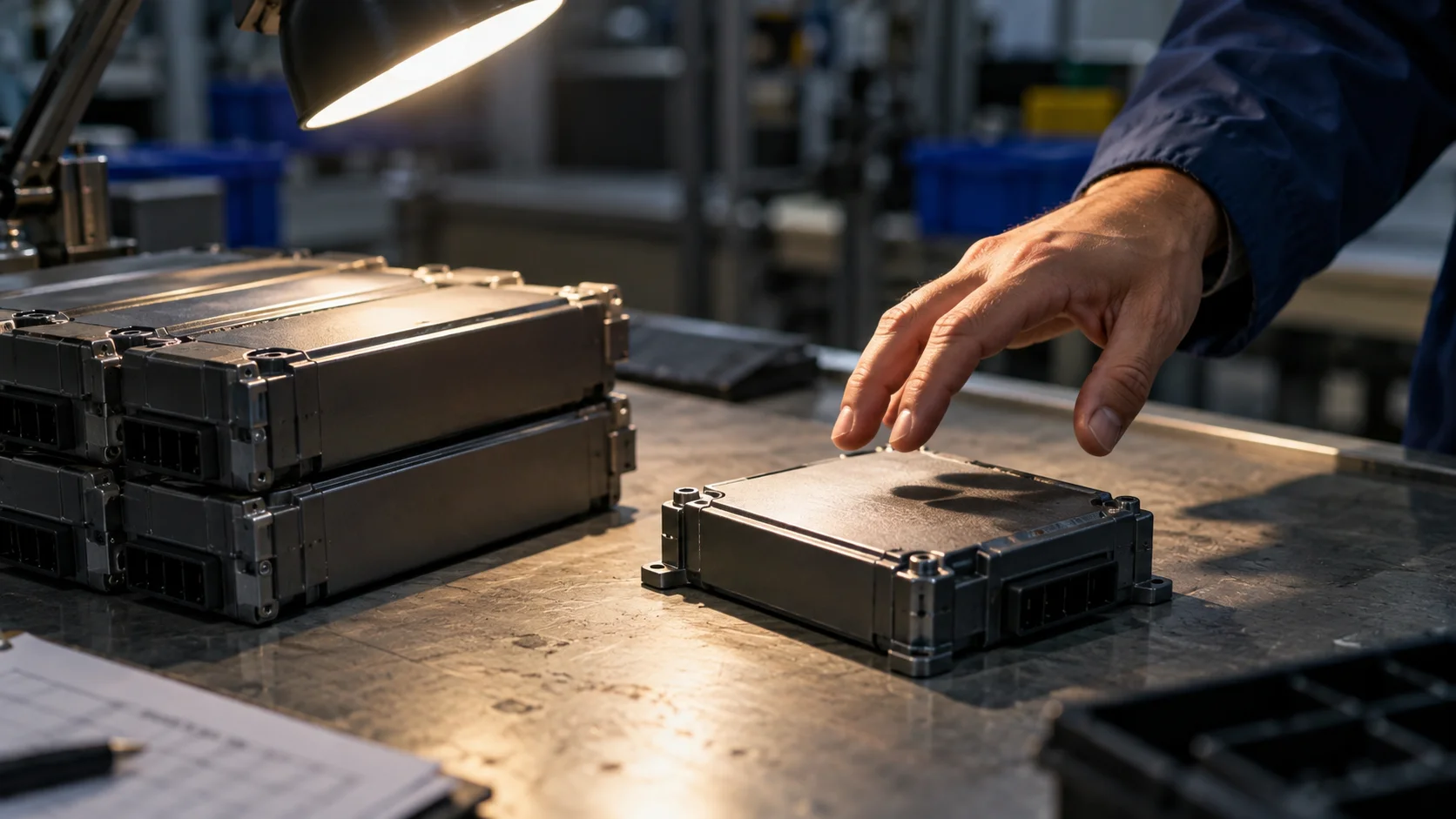
    A factory quality inspector examining a finished product's component materials against a supplier certificate on a tablet with the screen turned away from camera, export cartons stacked neatly behind on a clean factory floor.

    Rules of Origin in Practice

    Rules of origin (RoO) are the qualifying rules: the tests a product must pass to count as originating in the FTA partner. There are two families.

    Wholly obtained. Goods entirely produced in the partner country from that country’s own materials: minerals mined there, crops grown there, animals raised there, fish caught by its vessels. Simple in concept, and mostly relevant to primary produce. Your Thai rice or Vietnamese seafood typically qualifies this way.

    Substantial transformation. The relevant test for manufactured goods, which almost always contain imported inputs. Each agreement defines transformation using one or both of:

    • Change in tariff classification (CTC). The finished product must fall under a different tariff heading (or chapter, or subheading; the rule specifies the level) than its non-originating inputs. Imported steel coil (heading 7208) transformed into steel furniture (heading 9403) changes chapter entirely, a clear pass under a “change of chapter” rule. Imported furniture parts assembled into furniture may not pass a stricter rule, because parts and finished goods can share a heading.
    • Regional value content (RVC). A minimum percentage of the product’s value must originate in the FTA region, commonly 40 per cent, calculated on either a build-up or build-down basis depending on the agreement. RVC rules reward local labour, overheads and profit as well as local materials, but they demand cost records: bills of materials, supplier declarations, costed build sheets. If your supplier cannot produce these, an RVC claim is unverifiable, and unverifiable is as good as false when ABF comes asking.

    Which test applies depends on the agreement and the tariff line: each FTA publishes product-specific rules, and many lines offer a choice (“CTH or RVC 40%”). A choice is a gift: pick whichever test your production process and record-keeping can actually prove.

    The Misconception That Costs the Most Money

    Here is the error we see more often than any other, so let’s state it in bold terms: Chinese-made goods shipped from a US warehouse do NOT qualify for AUSFTA. Origin follows manufacture, not shipment.

    It feels intuitive that “we buy from an American company, the goods come from America, therefore US free trade agreement”. Every link in that chain is wrong. The American company is the seller, not the origin. The goods “come from” a US port, but they were made in Shenzhen. AUSFTA’s rules of origin ask where the product was wholly obtained or substantially transformed, and warehousing, repacking, relabelling and distribution are none of those things. The goods are Chinese origin, full stop.

    Can you claim ChAFTA instead? In principle the goods may qualify as Chinese origin, but now you have two practical problems. You need a ChAFTA certificate of origin, which the US distributor almost certainly did not obtain from the Chinese manufacturer. And the goods have been transshipped through the US commercial market, which usually breaks direct consignment (more on that below). In practice, Chinese goods bought through US distribution usually enter Australia at the general rate. If the duty at stake is material, the fix is structural: buy closer to the factory, or have the distributor ship direct from China with proper origin documentation.

    The same logic runs everywhere. German machinery bought through a Singapore agent is not Singaporean. Vietnamese garments consolidated in Hong Kong are still Vietnamese, and can keep AANZFTA preference if the transit paperwork is right. Invert the intuition: never ask “where did it ship from?”, always ask “where was it made, and can anyone prove it?”

    A freight forwarder's desk with a folder of shipping documents fanned slightly open, the pages angled away from camera, a small world map pinned to the wall behind

    Documentation: What Each Agreement Actually Requires

    Origin claims live or die on paper. The FTA network uses two documentary philosophies, and knowing which applies to your agreement determines what you must chase from your supplier.

    Third-party certified certificates of origin. The older model: an authorised body in the export country examines the exporter’s claim and issues a formal certificate. AANZFTA uses a prescribed Certificate of Origin (the familiar AANZFTA form), issued by authorised bodies in each ASEAN member. It is completed with the exporter, consignee, transport details, HS code, origin criterion (WO, CTC, RVC as applicable) and the issuing body’s stamp. TAFTA likewise relies on certificates from authorised Thai bodies. Under ChAFTA, certificates are issued in China by authorised bodies (principally CCPIT and China Customs) and must show the correct origin criterion code and cover the goods on the specific shipment. ChAFTA also allows Declarations of Origin from approved exporters holding advance rulings, though third-party certificates remain the common path. A certificate can misdescribe the goods, cite the wrong HS code, or arrive after the import declaration has been lodged. Any of those buys you nothing at entry time.

    Self-declaration systems. The newer model: no chamber, no stamp. AUSFTA has always worked this way: the importer’s claim is supported by the exporter’s or producer’s knowledge, typically documented in a declaration or supporting statement. CPTPP, A-UKFTA and ECTA (via its declaration provisions) lean the same direction: a certification of origin completed by the exporter, producer or importer containing prescribed data elements. RCEP runs both models in parallel (third-party certificates and approved-exporter declarations) with importer self-certification arriving on a delayed timetable for some members.

    Self-declaration is cheaper and faster, but it shifts risk to you. A chamber-certified certificate at least means an authorised body looked at something. A self-declaration means your supplier signed something, and if your supplier misunderstands the RVC maths, the signature is worth little at audit. Whichever system applies, the rule of thumb is identical: hold the document, in valid form, before the goods clear, and satisfy yourself that the supplier could actually defend it.
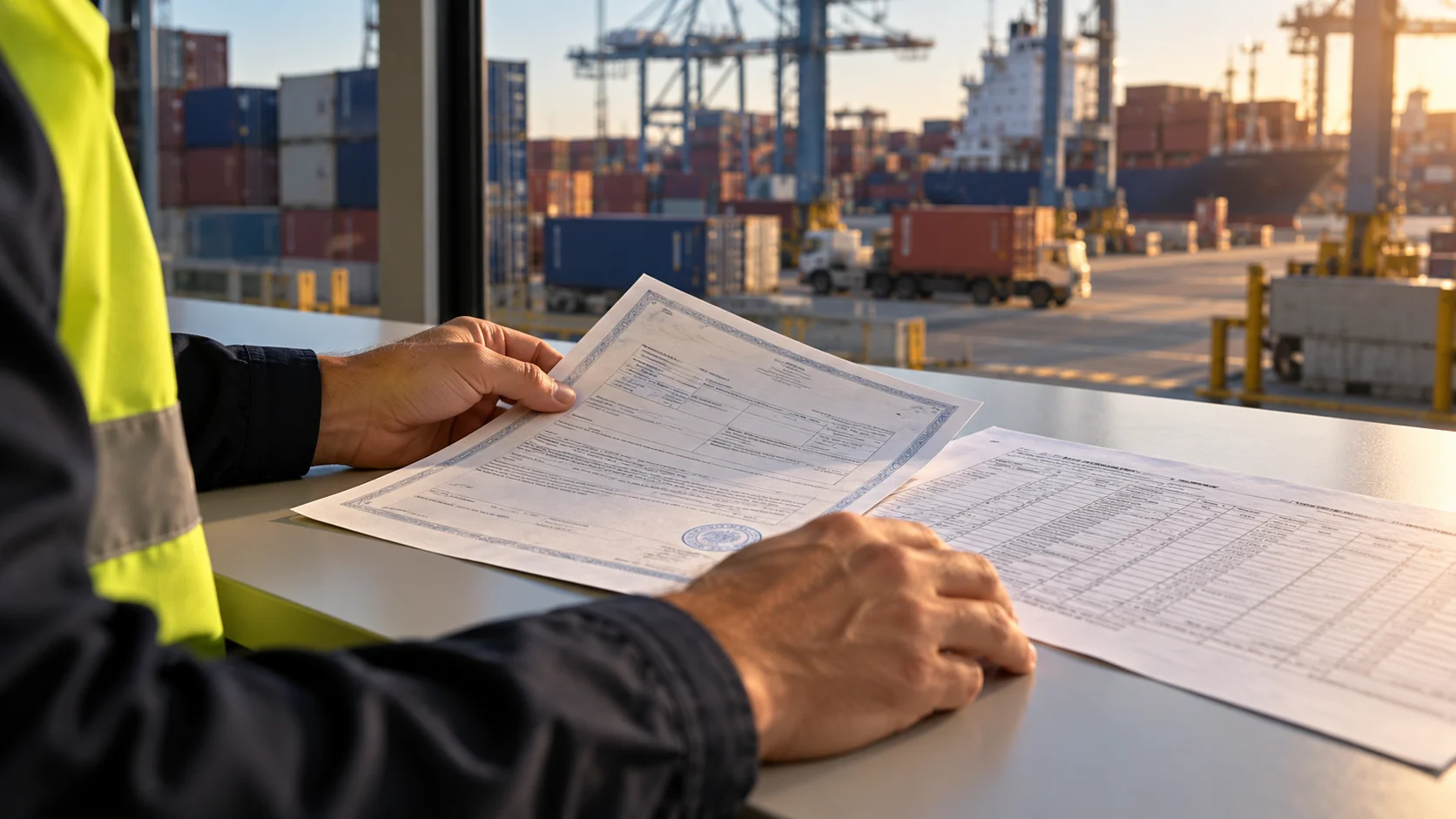
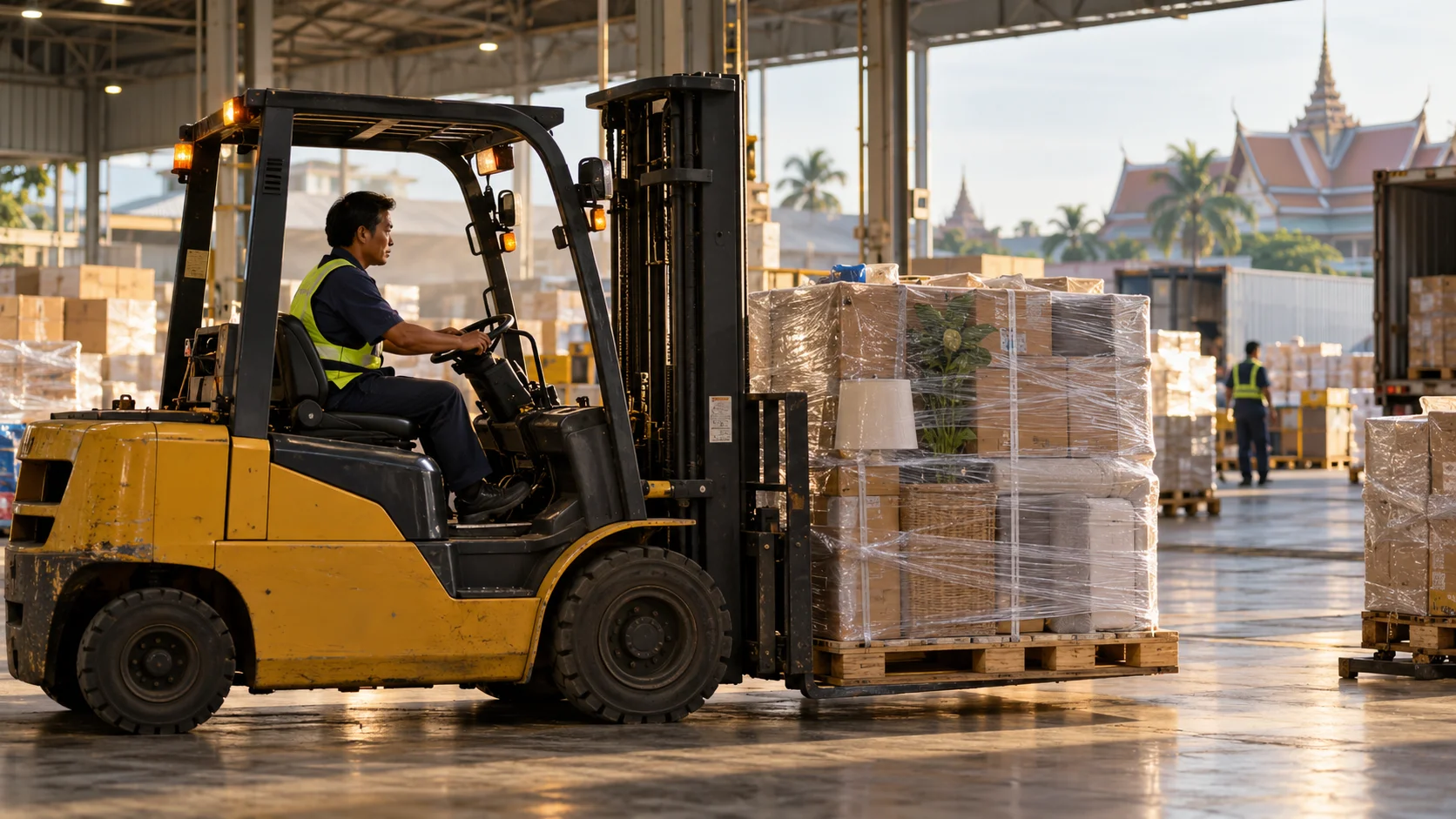
    Photorealistic, cinematic, outcome-focused: a customs clearance scene at an Australian port or bonded warehouse — a broker or clerk's hands reviewing a certificate of

    Overlapping Agreements: Choosing the Best Route

    When two or three agreements cover the same origin, you get to choose: shipment by shipment, product by product. The selection framework has three questions, asked in order:

    1. Which agreement gives the lowest duty rate for this tariff line, this year? Where all candidates are “Free”, rate stops mattering and you move on. Where one agreement is still phasing (RCEP and ECTA lines especially), the mature bilateral usually wins on rate.
    2. Which agreement’s rule of origin can this product actually satisfy? The strictness of product-specific rules differs between agreements for the same good. A garment might fail one agreement’s yarn-forward-style rule but pass another’s simpler CTC rule. RCEP’s rules are, for many lines, the most accommodating, and RCEP cumulation across fifteen members lets Chinese fabric sewn in Vietnam count as originating in a way AANZFTA may not.
    3. Which certificate can your supplier obtain reliably and cheaply? A theoretical preference under an agreement whose paperwork your supplier fumbles every third shipment is worth less than a slightly stricter agreement they document flawlessly.

    Worked Example: Thailand Three Ways

    Say you import polypropylene storage containers (chapter 39) from a Bangkok factory, customs value AUD 300,000 a year. General rate: 5 per cent, or AUD 15,000 of duty exposure. Thailand offers TAFTA, AANZFTA and RCEP.

    • Rate: all three deliver zero on this line: TAFTA and AANZFTA phase-outs completed years ago; RCEP is also free here. Rate is a three-way tie.
    • RoO: the factory injection-moulds containers from imported PP resin. Resin (heading 3902) to containers (heading 3924) is a change of heading, so it passes typical CTC rules under all three agreements. Still tied.
    • Documentation: the supplier’s forwarder obtains AANZFTA certificates routinely for their New Zealand customers, so the AANZFTA form is a known, cheap process for them. TAFTA certification would work too but is a separate process they run less often.

    Decision: AANZFTA. Not because it is “better” in the abstract, but because it is the zero-rate route with the most reliable paperwork. The AUD 15,000 saving is identical under all three; the probability of actually banking it is highest under AANZFTA. That is the whole game. If this factory instead used imported semi-finished containers and merely finished them (failing CTC), you would re-run the comparison on RVC rules, and RCEP’s cumulation might suddenly become decisive.

    Vietnam: AANZFTA vs CPTPP vs RCEP

    Vietnam runs the same drill with different personalities. AANZFTA is the incumbent: mature, zero-rated on most lines, well-understood certificate process. CPTPP delivers zero on nearly everything too, with self-certification convenience but some stricter product rules, notoriously for apparel. RCEP is the fallback with the friendliest cumulation: if your Vietnamese product is stuffed with Chinese, Korean and Japanese inputs, RCEP may be the only agreement under which it counts as originating at all. For some lines, though, RCEP’s rate is still phasing rather than zero. Check before defaulting to it. The pattern for a Vietnamese-sourced catalogue: run AANZFTA first, CPTPP where its rules are kinder or certificates are a bottleneck, RCEP where regional inputs would fail the other two.

    A container ship transiting past a distant transshipment port at dusk, other vessels waiting at anchor softly visible in the haze beyond, the foreground ship's wake showing natural turbulence and irregular water texture.

    Direct Consignment: Keeping Preference Alive in Transit

    Origin can be earned in the factory and lost on the water. Every Australian FTA contains a direct consignment (or “transport through non-parties”) rule: preference survives transit through third countries only under conditions. The standard conditions are that during transit the goods remain under customs control, and undergo no operation beyond unloading, reloading, storage, splitting of loads, or operations necessary to preserve them or transport them onward.

    This matters constantly, because Australian trade lanes run through hubs. Vietnamese cargo transships in Singapore; Chinese cargo consolidates in Hong Kong (though far less than it used to); European cargo may route through Malaysia. None of that is fatal. Three things are fatal: goods entering the commercial market of the transit country, being processed or repacked into new retail configurations, or sitting in a distributor’s warehouse being sold from stock. That is precisely why the US-warehouse scenario above fails twice over. Every one of the free trade agreements for Australian importers carries a version of this rule, so the transit plan matters as much as the factory.

    Documentation preserves preference. Keep the through bill of lading showing carriage from the origin country to Australia via the hub. If cargo is restuffed or held, obtain a non-manipulation certificate from the transit country’s customs authority, or evidence the goods stayed in a bonded facility. Brokers rarely ask for this at entry, but ABF asks for it at verification, and “the forwarder didn’t keep it” is not a defence three years later.

    Verification, Audit Risk and the Five-Year Tail

    FTA preference is claimed on trust and checked on audit. The Australian Border Force runs origin verification activity ranging from desk requests (“provide the certificate of origin and evidence of direct consignment for these ten entries”) through to formal verification visits. It also cooperates with partner-country authorities under the agreements’ verification chapters.

    Your obligations as the importer:

    • Keep records for five years. Certificates or declarations of origin, commercial invoices, transport documents, and anything supporting the origin criterion claimed. ABF’s origin guidance sets this as the standard retention period across the FTA network. Five years is longer than most staff tenure and several times longer than most email retention habits. Treat FTA records as a filed archive, not an inbox.
    • Answer for the claim even though the supplier stated the origin. The declaration to ABF is yours. If verification finds the goods did not qualify, the duty short-paid is recoverable from you, with the prospect of administrative penalties for false or misleading statements, and, for reckless or deliberate conduct, worse. “My Chinese supplier’s chamber stamped it” mitigates; it does not immunise.
    • Stress-test supplier certificates before you rely on them at scale. A useful habit: for each major supplier, once, ask them to walk you through how the product meets the cited origin criterion. A supplier claiming RVC 40 who cannot produce a bill of materials is a supplier whose certificates are decorative. Better to discover that in a conference call than in an ABF verification letter.

    Calibrate the risk honestly. The probability of any single entry being verified is low, but verification is retrospective and batched: a failed claim pattern gets unwound across every affected entry in the five-year window. An importer saving AUD 40,000 a year on shaky certificates is not running a AUD 40,000 risk; they are running a AUD 200,000-plus risk with penalties on top.

    When Duty Savings Justify Changing the Supply Chain

    Run the arithmetic before restructuring anything. The standard case:

    Worked example. You import AUD 800,000 a year (customs value) of hardware components attracting the 5 per cent general rate: AUD 40,000 of duty annually. The goods are Chinese-origin but currently bought through a Singapore trading company that cannot supply ChAFTA certificates. Options:

    • Fix the paperwork: get the manufacturer to issue ChAFTA certificates and ship under customs control through Singapore with through bills. Cost: perhaps AUD 100–200 per shipment in certificate and handling fees, or roughly AUD 4,000 a year across 25 shipments. Net saving: ~AUD 36,000 annually, no structural change. This is almost always the first move.
    • Restructure sourcing: buy direct from the factory. Larger saving (the trader’s margin plus the duty), larger disruption. The AUD 40,000 duty line alone rarely justifies this; duty plus margin often does.
    • Do nothing: defensible only if volumes are small. At AUD 40,000 a year, “do nothing” is a AUD 200,000 five-year decision.

    The general thresholds we suggest: below about AUD 10,000 of annual duty at stake, fix paperwork only if it is nearly free. Between AUD 10,000 and AUD 50,000, invest properly in documentation processes and supplier training. Above AUD 50,000, FTA qualification belongs in your sourcing decisions themselves: factory selection, input sourcing to pass RVC, and lane design for direct consignment. And remember duty compounds through the chain: duty is payable before GST is calculated and before your margin is applied, so AUD 40,000 of duty saved is worth more than AUD 40,000 of retail price flexibility.

    One structural point is worth holding on to before you treat duty savings as a competitive edge. Every importer in your category faces the same tariff schedule and can claim the same preference; the agreements are public and the certificates are available to anyone who asks their supplier for them. Duty relief is therefore table stakes rather than advantage: a competitor who is not claiming it is paying a self-imposed tax, and the day they notice, your five per cent gap closes. The capability underneath is genuinely hard to copy: a supplier base that can produce compliant origin evidence on demand, and a lane design and document trail that still hold up when the ABF verifies them five years later. A rival can match your duty rate inside a quarter. Matching that operating discipline takes considerably longer.

    A customs broker and an importer standing together at a warehouse office window overlooking the receiving floor, both looking down at a shared tablet showing a simple

    Common Mistakes (and the Fix for Each)

    • No valid certificate at entry time. The certificate exists, in someone’s inbox, in draft, or covering the wrong shipment. Fix: make “CoO received and checked” a document-set gate before the vessel arrives, exactly like the bill of lading.
    • Warehouse-origin confusion. Claiming AUSFTA on Chinese goods from US stock, or “Singapore origin” on anything that merely transited Singapore. Fix: origin = manufacture. Ask the where-was-it-made question on every new product line, once, in writing.
    • Ignoring phased schedules. Assuming ECTA or RCEP means zero today when the line is still stepping down, or, in reverse, paying full general rate because “India doesn’t have a real FTA yet”. Fix: check the current-year preferential rate for your tariff line, every January.
    • Not checking RCEP as a fallback. Product fails AANZFTA’s rule of origin, importer gives up. RCEP’s cumulation or gentler product rule might have qualified it. Fix: when a product fails one agreement, run the overlapping alternatives before defaulting to the general rate. If none of them qualify, check whether your tariff line is already covered by an existing Tariff Concession Order, which delivers a free rate on goods with no substitutable Australian manufacture, regardless of origin.
    • Treating supplier certificates as infallible. Fix: the once-per-supplier walkthrough described above, plus a file note. Cheap insurance against a five-year unwind.
    • Broken direct consignment with no paper trail. Fix: through bills of lading as standard; non-manipulation certificates whenever cargo is restuffed at a hub.

    Putting It to Work

    The practical sequence for any importer reading this: list your suppliers by country of manufacture. Map each to its agreements: bilateral first, AANZFTA/CPTPP where relevant, RCEP as overlay. Pull the preferential rate for each of your top tariff lines and compare it to what your broker actually claimed on your last twenty entries. The gap between those two numbers, annualised, is the size of your problem, or your opportunity. For agreement texts, schedules and product-specific rules, DFAT’s FTA Portal publishes the authoritative versions; for verification practice and record-keeping obligations, the ABF’s origin guidance is the reference. And if the gap turns out to be five figures, it will not close itself. A broker or corporate freight partner who already claims preference correctly across overlapping agreements can close that gap faster than building the process in-house from a standing start.

    A Checklist on Free Trade Agreements for Australian Importers

    Map each supplier by country of manufacture, not shipment, pull the preferential rate for your top tariff lines, and hold valid origin documents before the goods clear. Keep origin records and through bills of lading for five years, because a failed verification unwinds every affected entry in that window.

    Related Reading

    Frequently Asked Questions

    Do Chinese-made goods shipped from a US warehouse qualify for AUSFTA?

    No. Origin follows manufacture, not shipment. Goods made in China remain Chinese origin regardless of the warehouse they ship from, so the relevant agreement is ChAFTA, and the US routing typically breaks direct consignment anyway. Bought through US distribution, such goods usually pay the general rate.

    Which FTA should I use for imports from Thailand?

    Compare TAFTA, AANZFTA and RCEP at the tariff-line level. Rates are usually zero under all three, so the decision comes down to which rules of origin your product passes and which certificate your supplier obtains most reliably. AANZFTA is often the practical winner simply because Thai exporters process its forms routinely.

    What documentation do I need for a ChAFTA claim?

    A ChAFTA Certificate of Origin issued by an authorised Chinese body (CCPIT or China Customs), or a Declaration of Origin from an approved exporter. The certificate must be valid at the time of your import declaration, match the goods, and cite the correct origin criterion.

    How long must FTA records be kept, and what if a claim is wrong?

    Five years. A failed verification requires repaying the duty saved across all affected entries, with penalties possible for false or misleading declarations. The importer answers for the claim even where the supplier supplied the certificate.

    Does transshipment through a hub port destroy preference?

    No, provided the goods stay under customs control, undergo nothing beyond unloading, reloading, storage or preservation, and you hold through bills of lading or non-manipulation certificates proving it.

    Is preference worth claiming for small import volumes?

    Usually. At the common 5 per cent general rate, AUD 200,000 of annual imports carries AUD 10,000 of duty. Certificates typically cost a few hundred dollars a year per supplier. Only at very small volumes per supplier does the administrative effort outweigh the saving.

  • Moving from Norway to Thailand: Freight, Customs and Relocation Guide

    Moving from Norway to Thailand: Freight, Customs and Relocation Guide

    There is a Norwegian word that does not translate, and everyone who has spent a winter above the 59th parallel knows it in their bones: koselig. It is the candle in the window at three in the afternoon because the sun has already given up. It is the wool blanket folded over the arm of the sofa, the triple-glazed windows, the heated bathroom floor, the whole architecture of a life engineered to hold warmth inside a box while the dark presses against the glass. A Norwegian home is a fortress against cold. Every object in it (the down duvets, the sheepskin on the chair, the birch stacked by the fireplace) exists to keep heat in.

    Now consider what you are about to do. You are going to take that fortress apart, item by item, and ship it to a country built on the exact opposite principle. A Thai house is designed to let heat out: high ceilings, cross-breezes, tile floors that stay cool underfoot, verandas that blur the line between inside and outside. Your duvet has no job there. Your wool has no job there. Half your wardrobe becomes archaeology. Moving from Norway to Thailand is not just a change of address; it is an inversion of the entire logic your household was assembled around.

    Which is precisely why this move rewards planning more than almost any other European relocation. The paperwork is different (Norway is not in the EU customs union, and that changes your export documents). The routing is different (Oslo is a feeder port, not a deep-sea hub, and that adds days). And the packing decisions are different, because a good chunk of what you own belongs in storage in Bærum, not in a container heading for the tropics.

    This guide walks through the whole sequence (Folkeregisteret, visas, freight, Thai customs, costs in NOK and EUR) in the order you should actually do it. Because the order matters. Get it wrong and you will pay for it in duty, delay, or a very awkward conversation with Skatteetaten.

    Moving from Norway to Thailand: Freight, Customs and Relocation Guide

    Step One Is Not the Container: Folkeregisteret and the Sequencing Problem

    Here is the plain-language version of the rule most Norwegians learn too late: secure the Thai visa first, then deregister, then ship.

    If you are leaving Norway for more than six months, you are required to notify the National Population Register (Folkeregisteret) by filing a melding om flytting til utlandet (notification of moving abroad). You do this through Skatteetaten, which administers the register, and you can file it up to a few weeks before departure. It is a simple form. The complications are entirely in the timing.

    Why visa first? Because your Thai duty-free import allowance (more on that below) hinges on holding a qualifying long-stay visa when your shipment clears customs. If you deregister, sell the flat, ship the container, and then discover your visa application needs another two months, you have a container arriving in Laem Chabang with no valid basis for duty-free clearance and a six-month arrival window already ticking. People do this. Do not be one of them.

    The correct sequence, spelled out:

    1. Apply for and receive the Thai visa (Non-Immigrant O, LTR, or whichever category fits you; see the visa section).
    2. Book the freight once your travel date is fixed, timed so the shipment lands after you do but well inside the six-month window.
    3. File the melding om flytting til utlandet with Folkeregisteret in the final weeks before departure.
    4. Fly. Arrive in Thailand before your container does.

    One more thing while we are on Skatteetaten, and it deserves its own paragraph because it surprises nearly everyone. Deregistering from Folkeregisteret does not end your Norwegian tax residency. These are two separate systems. Under Norwegian rules, if you have lived in Norway for ten years or more, you generally remain tax resident for up to three full income years after the year you leave (the so-called three-year rule) unless you can show you have no home available in Norway and your days in the country stay under strict limits. This guide is about freight, not tax, so we will leave it at this: talk to Skatteetaten or a tax adviser before you leave, budget for the possibility of filing Norwegian returns for a few more years, and do not assume the emigration form settles anything with the tax office. It does not.

    Norway Is Not in the EU, and Your Paperwork Knows It

    If you have read guides about moving from Germany or the Netherlands to Thailand, note one structural difference before you copy their checklist: Norway is in the EEA and Schengen, but it is outside the EU customs union. For your household shipment, that changes the export side of the paperwork.

    Goods leaving an EU country for Thailand are exported once, under a single EU export declaration, at whichever EU port they sail from. Your goods leaving Norway are exported from Norwegian customs territory, meaning a Norwegian export declaration is filed with Tolletaten when the shipment leaves Norway. When the container or LCL consignment then moves through Rotterdam, Hamburg or Bremerhaven on its way to the deep-sea vessel, it moves through the EU under transit arrangements as goods passing through, not as an EU export.

    In practice, your forwarder handles all of this, and used personal effects leaving Norway do not attract export duty. But it matters to you in three concrete ways:

    • Extra documents. Expect to sign or supply data for a Norwegian export declaration in addition to the usual bill of lading, packing list and valued inventory. Build a few extra days into your document timeline.
    • The packing list works harder. Because the shipment crosses a customs border before it even reaches the ocean vessel, a sloppy inventory can snag it twice: once in Norway or at the EU transit point, once in Thailand. Number every box, describe contents specifically (“wool sweaters x8, hiking boots x2” beats “clothes”), and keep values realistic.
    • Returning goods, if you ever move back. Keep a copy of the export declaration. If the Thai chapter ends and your goods come home, proof that they left Norway as your used effects simplifies re-import enormously.

    None of this makes a Norwegian move harder than a Swedish or Danish one in any way that should worry you. It just makes it different, and forwarders who mostly handle EU-origin moves occasionally treat Oslo like it is Hamburg. It is not. Ask your forwarder directly how they handle the Norwegian export declaration and the EU transit leg. A crisp answer is a good sign.

    A small feeder container ship works cargo at a Nordic harbor under cool, overcast Scandinavian daylight, a single gantry crane mid-lift with a container swinging gently

    Getting Out of Oslo: Feeder Vessels, Trucks to Gothenburg, and Why the First Leg Matters

    Oslo is a working container port, but it is not a deep-sea hub. No vessel sails from Oslofjord directly to Laem Chabang. Your shipment’s journey to Thailand actually begins with a short-sea hop, and you have two realistic origin routings:

    Option one: feeder from Oslo. Your container (or consolidated LCL cargo) loads at the Port of Oslo onto a feeder vessel (a small container ship running a scheduled loop) down to one of the North Sea mega-hubs: Rotterdam, Hamburg or Bremerhaven. There it is discharged, staged, and reloaded onto the deep-sea vessel bound for Asia. The feeder leg itself is only a couple of days of sailing, but the realistic addition to your door-to-door time is 5 to 8 days once you include hub dwell time, the days your box sits in the stack at Rotterdam waiting for its connecting vessel.

    Option two: truck to Gothenburg. Sweden’s biggest port is about 300 kilometres down the E6 from Oslo, and it hosts more direct deep-sea calls than Oslo does. Trucking your container overland to Gothenburg can shave hub-transfer time and occasionally beats the feeder on price, particularly for FCL when feeder space out of Oslo is tight. The trade-off is a customs wrinkle (the goods exit Norway by road at the Svinesund border rather than by sea) and road haulage costs that rise with fuel prices. For households in the Oslo region either routing works; for households in southern Norway (Kristiansand, Stavanger area), ask your forwarder to price both, because the answer flips depending on the month.

    Either way, internalise this: your quoted “ocean transit time” almost never includes the feeder leg. When a forwarder says “35 to 40 days to Laem Chabang,” ask whether that clock starts in Oslo or in Rotterdam. The honest answer changes your planning by a week.

    The Cape of Good Hope Problem: Why 45–55 Days Is the Real Number

    There was a time when a container from Northern Europe to Thailand sailed through the Suez Canal and the whole ocean leg took around 30 to 35 days. That routing remains disrupted. Security conditions in the Red Sea have pushed the major carriers to route Europe–Asia services around the Cape of Good Hope, the long way around Africa, and that detour adds roughly 10 to 14 days to the deep-sea leg.

    Stack the pieces of a Norwegian move and the arithmetic looks like this:

    • Feeder Oslo → Rotterdam/Hamburg/Bremerhaven, including hub dwell: 5–8 days
    • Deep-sea leg via the Cape to Laem Chabang: 38–45 days
    • Total port-to-port: roughly 45 to 55 days

    Add origin packing, export clearance, Thai import clearance and final delivery, and a sensible door-to-door planning figure is eight to ten weeks. Two consequences follow. First, book early: during the summer moving season, feeder and deep-sea space out of Northern Europe fills weeks ahead. Second, think hard about what goes in your suitcases versus the container, because you will live for two months or more on what you carry: documents, medications, laptops, a capsule wardrobe for the tropics, and anything you cannot cheerfully do without until October, in hand luggage and checked bags, not the box.

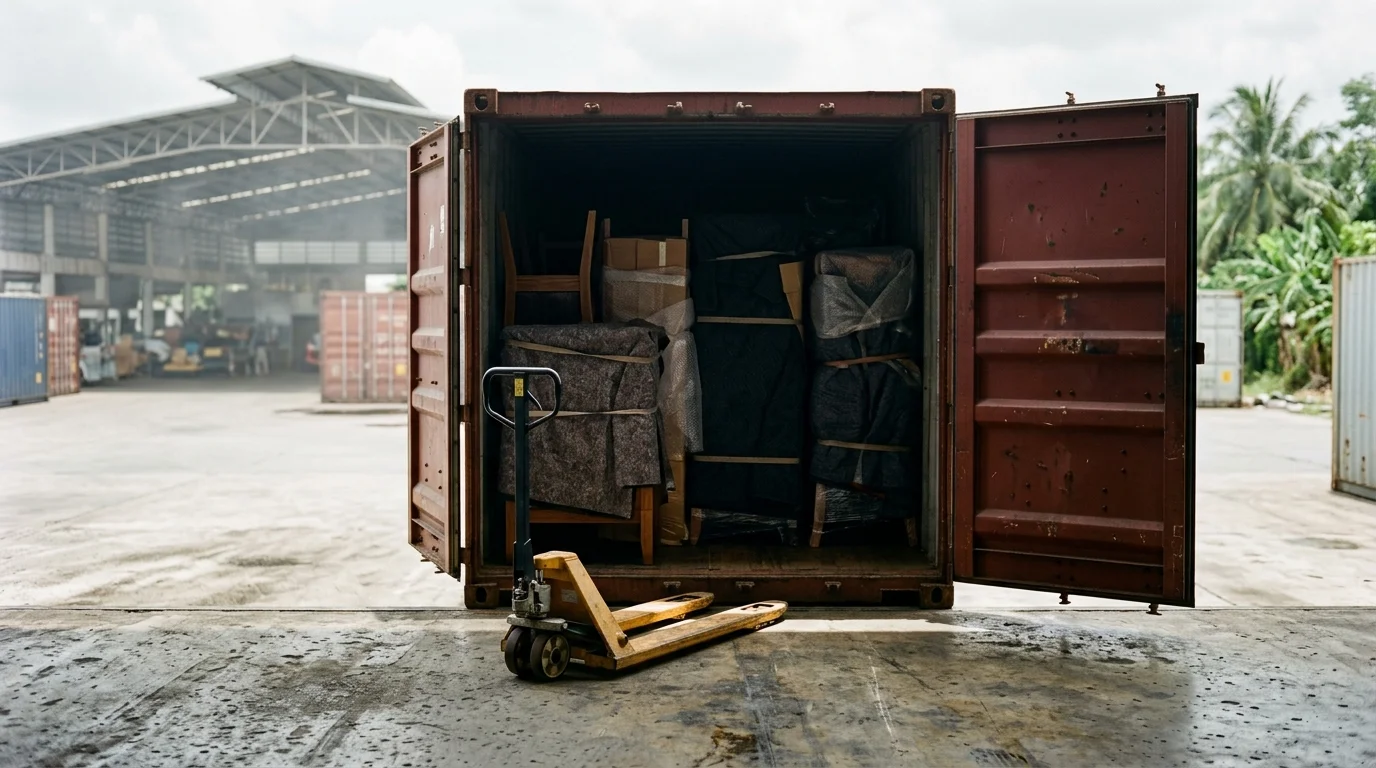
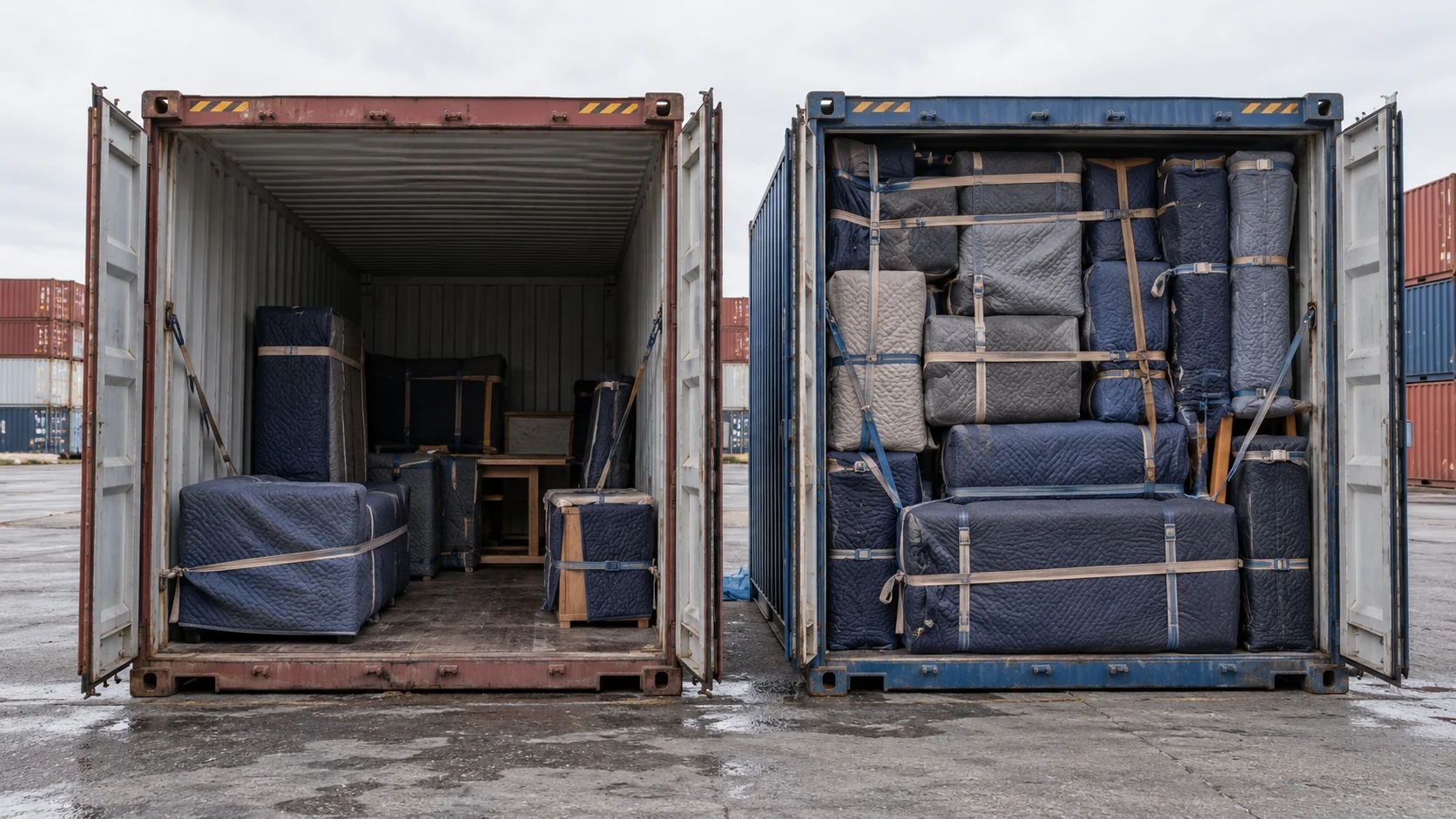
    Open container doors reveal furniture wrapped in blankets at a tropical receiving yard, a pallet jack waiting in front.

    Thailand’s Duty-Free Door: Rules Worth Memorising

    Thailand allows returning residents and qualifying foreigners to import used household effects free of duty, and for a move of this distance the allowance is worth real money. Thai Customs applies the rules narrowly, so learn them properly:

    • The one-year rule. Goods must be used personal or household effects that you have owned and used for at least one year. This is an ownership-and-use test, not just a receipt-age test. Your five-year-old Jøtul-adjacent furniture qualifies. The espresso machine you bought in the January sales, still boxed, does not.
    • The six-month window. Your shipment must arrive in Thailand within six months of your own arrival. With 45–55 day transits, this is comfortable if you ship around the time you fly, and dangerously tight if you “settle in first and ship next spring.” The window runs from your entry date, not your visa issue date.
    • Qualifying visa. You need a long-stay basis, a Non-Immigrant visa (O, B, or similar) or an LTR, at clearance time. Tourist entries do not qualify for the duty-free concession.
    • One sea shipment per family. The concession covers one consignment. Consolidate; do not plan a second container of the stuff you forgot.
    • Reasonable quantities. One household’s worth of any item. Eight lamps reads as a household. Forty reads as a shop, and Thai Customs will price it accordingly.

    Expect a physical or X-ray inspection at Laem Chabang or Bangkok as routine, not as a sign of trouble. A clean, detailed, honest packing list is what turns inspection into a formality.

    What Not to Ship: Aquavit, Skis, and Boxes That Still Smell of Shrink-Wrap

    Every country guide has this section. The Norwegian version has three entries that genuinely hurt.

    The aquavit problem (and the wine cellar)

    Thailand permits one litre of alcohol per adult, carried personally. That is the whole allowance. Alcohol packed into a freight shipment is not covered by the household-effects concession; it attracts import duty plus Thai excise tax that together can exceed the value of the bottle, and it can hold your entire consignment in clearance while the alcohol line items are assessed. Your linje-aquavit has already crossed the equator twice by tradition; do not send it a third time in a container. The realistic options: drink it at the farewell party, gift it, sell it, or leave it in a relative’s cellar. Same verdict for the wine. Carry one good bottle in your suitcase and make it count.

    The ski decision

    Here is a sentence to sit with: there is no snow in Thailand. Your cross-country skis, alpine setup, pulk, snowshoes and winter-mountain gear will do nothing in Chonburi except occupy cubic metres you are paying for and corrode gently in the humidity. Run the honest calculation. Shipping 1 m³ of ski equipment both ways (because you will ship it back or replace it) costs more than a season’s rental in Hemsedal when you visit at Christmas. Unless you are a serious skier who will fly to Japan every winter (in which case ship your boots only, since boots are the fit-critical item, and rent skis), the right answer is almost always storage in Norway. A family member’s loft is free. A small storage unit costs a few hundred kroner a month. Both beat freighting winter to the tropics.

    For most of human history, moving your household to a new climate meant moving your whole material culture with it, because there was no alternative: what you owned was what you could carry, and what you could carry was built for the climate you left. A Norwegian household shipping to the tropics is one of the few moments left where that old logic still visibly applies, except now an alternative exists and the old instinct does not know it yet. The skis, the wool, the heavy pulk, all of it is physical evidence of an environment your body no longer needs to survive. The families who adapt fastest are not the ones who pack the most efficiently. They are the ones who let go of the idea that everything they own has to make the journey with them.

    New goods in original packaging

    The duty-free concession covers used effects. Anything new, in OEM boxes with intact seals, invites Thai Customs to reclassify it as a commercial import: dutiable at full rates, with your receipts requested. If you genuinely want to bring something new (a laptop, a phone), unbox it, use it for months, and pack it as the used item it now is. Do not ship a pallet of sealed IKEA flat-packs and hope. Buy furniture in Thailand; it is well-made, tropical-appropriate and inexpensive.

    Vacuum-sealed wool blankets beside a plastic-wrapped antique wooden chest in a Norwegian living room, prepared for humidity protection ahead of shipping to Thailand

    Climate Shock: Preparing a Cold-Country Household for 90% Humidity

    This is the part of the move that is uniquely Nordic, so let us treat it seriously. Your possessions were acquired for a climate that swings from -15°C and bone-dry indoor heating to mild damp summers. They are about to live at 30°C and 70–90% relative humidity, all year.

    Wool and down. Be ruthless first: most of the heavy wool (the lusekofte collection, the winter base layers, the -20°C parkas) belongs in storage in Norway, not in the container. Keep a small cold-weather kit for trips home (one good jacket, one wool layer, gloves) and for northern-Thailand cool-season mornings, which can genuinely surprise you in Chiang Mai. Whatever wool and down you do ship, vacuum-pack it: clean and completely dry first (any residual moisture becomes mildew in a sealed bag on a six-week voyage), then compressed bags with a silica gel sachet inside each one. Vacuum-packing protects against humidity in transit, saves volume you are paying for by the cubic metre, and gives the contents a fighting chance in a Thai wardrobe, where, incidentally, you should plan on a dehumidifier or air-conditioned storage for anything wool or down long-term.

    Leather. Leather sofas, jackets, boots and bags will drink the humidity. Expect leather goods to arrive slightly stiff or bloomed with a light surface mould if packed damp. Clean and condition everything before packing, wrap in breathable paper (never plastic film directly against leather), and condition again on arrival. In the house, leather lives longest in rooms that get regular air-conditioning.

    Wood furniture. Norwegian solid-wood furniture (pine, birch, oak) has spent its life at low indoor humidity. In Thailand it will absorb moisture and swell: drawers stick, joints move, veneers can lift, and hairline cracks appear as the wood equilibrates. Most pieces survive fine, but give them the transition gently. Do not park a solid-wood dresser against an exterior wall in an un-air-conditioned room during its first rainy season. Let it acclimatise somewhere with moderated humidity, wax or oil the surfaces, and accept that a little movement is normal. Antiques or pieces with sentimental weight deserve a conversation with your forwarder about desiccant packs in the container and, for FCL, whether a ventilated stow position is available. And be honest about the aesthetic question too: heavy dark Nordic furniture in a bright Thai townhouse is a look you should choose deliberately, not inherit by default.

    The good news: your plugs work

    One genuine mercy in this move. Norway runs on 230V/50Hz with Type F (Schuko) plugs. Thailand runs on 220V/50Hz, comfortably inside tolerance for essentially all modern appliances, and Thai sockets, especially the universal-style outlets in newer condos and houses, accept Type F pins along with Types A, B and C. Your lamps, kitchen appliances, chargers and power tools will almost all work without transformers. Two caveats: older Thai buildings may have two-pin ungrounded sockets, so pack a handful of Schuko adapters and a couple of good-quality grounded power strips from Clas Ohlson before you leave; and check anything with a motor or heating element for a voltage plate reading “220–240V,” which nearly everything sold in Norway carries. Leave behind anything that only earns its keep in winter: the heated boot dryer is not coming.

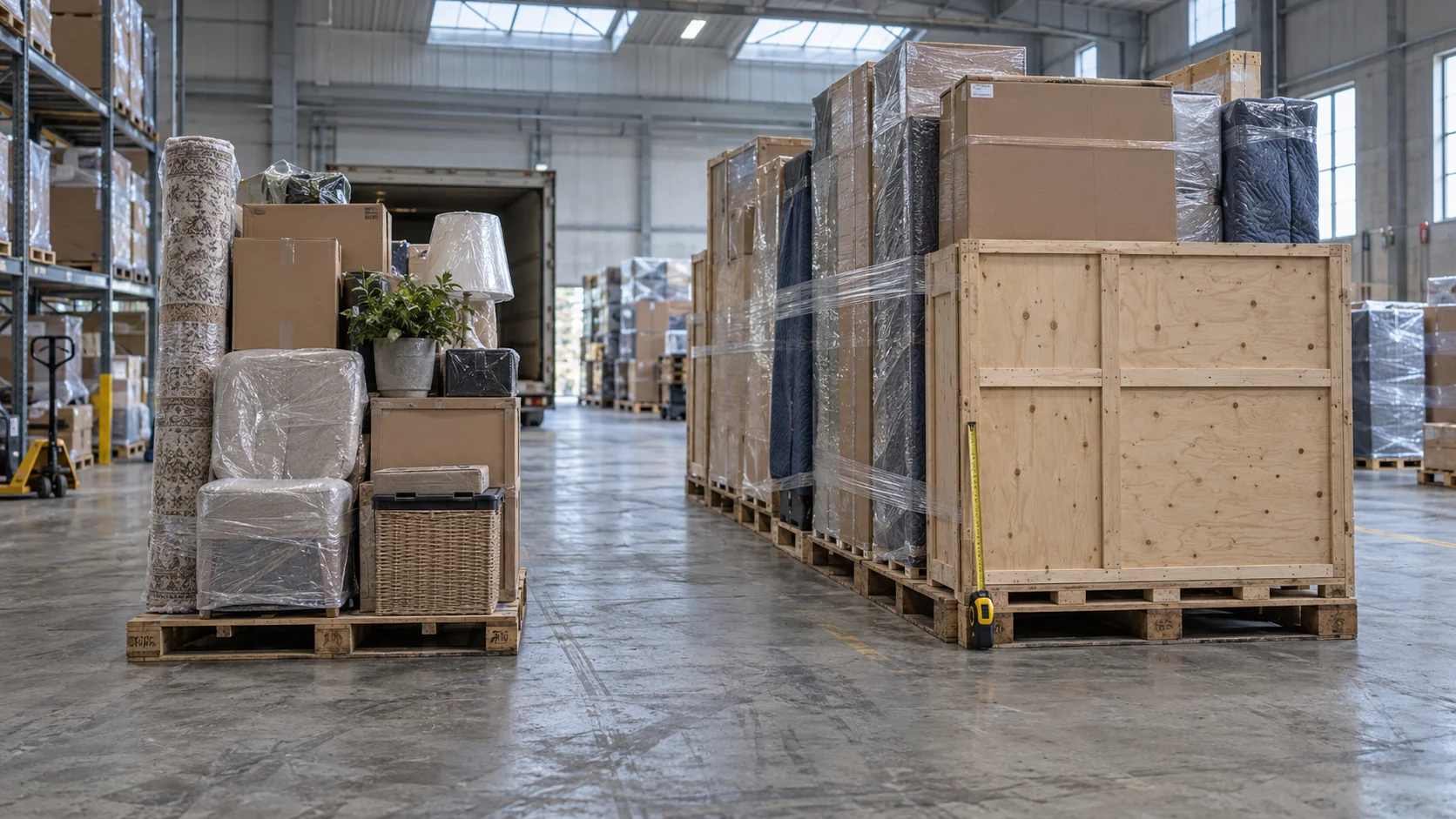
    A warehouse aisle holds two household shipments: a small wrapped bundle on one pallet and a larger crated load on another.

    LCL or FCL? Volume Guide and Costs in NOK and EUR

    The structural choice in any sea move: share a container (LCL: less than container load, priced per cubic metre) or take a whole one (FCL: full container load, flat rate per box).

    Rules of thumb by household:

    • Under 5 m³ (a studio’s worth, or a heavily pruned one-bedroom): LCL, clearly.
    • 5–12 m³ (one-to-two-bedroom flat after honest decluttering): LCL still wins on price for most.
    • 12–14 m³: the crossover zone. Get both quotes; a 20ft container often costs about the same as LCL here and gives you a sealed box, no shared handling, and usually faster clearance.
    • 14–28 m³ (full family house contents): 20ft FCL (about 28 m³ usable, ~33 m³ nominal).
    • Above 28 m³: 40ft container, though ask yourself hard whether a Norwegian winter household really needs to move 40 feet of itself to the tropics. Most do not.

    Indicative door-to-door costs, Oslo to Laem Chabang / Bangkok, including feeder or trucking leg, ocean freight, standard export and import clearance and normal delivery, but excluding Thai duties on non-qualifying items and insurance:

    Shipment Typical volume NOK (approx.) EUR (approx.)
    LCL (small) 3 m³ 18,000–28,000 1,550–2,400
    LCL (medium) 8 m³ 40,000–55,000 3,450–4,750
    LCL (large) 12 m³ 55,000–75,000 4,750–6,450
    FCL (20ft container) up to ~28 m³ 75,000–105,000 6,450–9,050
    FCL (40ft container) up to ~58 m³ 110,000–150,000 9,500–12,900

    Treat these as planning bands, not quotes: rates move with fuel surcharges, Cape-routing capacity and season. Marine insurance typically adds 2.5–3.5% of your declared inventory value and is worth every øre on a two-ocean voyage.

    A worked example: family of three, Nordstrand to Hua Hin

    A couple with one child leave a three-bedroom rowhouse in Nordstrand, Oslo. After a proper cull (skis and winter kit to a parent’s loft in Lillehammer, aquavit distributed at the farewell dinner, the sofa sold on Finn.no because leather plus humidity plus a new life felt like the moment), they measure out at 16 m³: beds, the dining table that was a wedding gift, kitchenware, books, bikes, vacuum-packed clothing and the children’s-room universe.

    At 16 m³ they are past the crossover, so they book a 20ft FCL:

    • Origin packing and wrapping, Oslo: NOK 14,000
    • Door-to-door 20ft, Oslo → feeder Rotterdam → Laem Chabang, incl. Norwegian export declaration and Thai clearance: NOK 88,000
    • Marine insurance (declared value NOK 350,000 @ 3%): NOK 10,500
    • Delivery and unpacking, Hua Hin: NOK 7,500
    • Total: about NOK 120,000 (≈ EUR 10,300)

    Timeline: packed 20 June, feeder sails 26 June, deep-sea vessel departs Rotterdam 3 July, arrives Laem Chabang 12 August via the Cape, cleared duty-free on the family’s Non-O visas 19 August, delivered 21 August. That is sixty-two days door to door, inside the eight-to-ten-week planning window, and comfortably inside the six-month customs window after their 1 July arrival in Bangkok.

    A softly lit room at dusk shows moving boxes, folded linens on a rattan chair, and an open window to tropical greenery.

    Visas: The Freight Question Hiding Inside the Immigration Question

    This is a freight guide, so we will keep to the shipping-relevant essentials. Your visa is not just permission to live in Thailand. It is the legal basis on which your container clears duty free.

    Non-Immigrant O. This is the workhorse for Norwegians over 50 (retirement basis) or those with a Thai spouse or family grounds. Financial requirements for the retirement path (800,000 THB in a Thai bank or a qualifying monthly income) are straightforward for most Norwegian retirees, and NAV pensions paid abroad generally satisfy the income route (check your own tax and pension position with Skatteetaten and NAV before relying on this). Whether you qualify on the retirement basis or the spouse/family basis, this Non-O route is excluded from Thai Customs’ standard duty-free household concession criteria and does not qualify on either basis.

    LTR: Long-Term Resident visa. This is a 10-year visa aimed at wealthy global citizens, wealthy pensioners, remote workers for large foreign companies, and high-skilled professionals. Here is the quietly relevant point for this audience: the LTR’s wealth and income thresholds (for instance the wealthy-pensioner category’s passive-income requirement of roughly USD 80,000 a year) are pitched at levels that a Norwegian with a full pension, some fund savings and the proceeds of a sold Oslo flat can plausibly meet, where they would be a stretch for many other nationalities. If your numbers fit, the LTR buys you a decade of stability, lighter reporting, and an unambiguous long-stay status for customs purposes. Worth investigating before you default to the Non-O.

    What not to do: arrive visa-exempt as a tourist “to sort things out” while your container is on the water. A tourist entry does not support duty-free clearance. Converting status in-country while a shipment waits at Laem Chabang is an expensive way to learn about sequencing, and storage charges accrue by the day. Swift Cargo can talk through the sequencing for your specific visa and shipping timeline.

    An empty shipping container sits on a trailer chassis in a container yard as security floodlights switch on at dusk.

    Five Common Mistakes, Named and Numbered

    1. The Premature Deregistration. It means filing the melding om flytting til utlandet before the Thai visa is granted. If the visa slips, you are administratively half-departed with a shipment plan built on a date that no longer exists. Visa first. Always.

    2. The Rotterdam Clock. It means believing the “35–40 day” transit quote without asking where the clock starts. From Oslo, the feeder leg and hub dwell add 5–8 days before the deep-sea voyage even begins, and Cape routing has already added 10–14 to that voyage. Plan on 45–55 days port to port and eight to ten weeks door to door, and be pleasantly surprised, not desperately improvising in an empty condo.

    3. The Container of Winter. It means paying by the cubic metre to ship skis, parkas and duvets to a country whose cold season tops out around 22°C. Storage in Norway costs less than freight both ways, and everything wool that does travel should be vacuum-packed against the humidity it is about to meet.

    4. The Farewell Case of Wine (in Box 47). It means tucking aquavit and wine into the household shipment “because customs never checks everything.” Thai Customs checks enough. Alcohol in freight means excise assessment, duty, potential licensing questions and a delayed consignment. One litre, carried, is the allowance. Respect it.

    5. The Springtime Shipment. It means flying to Thailand in August, settling in, and shipping the household “once we have found the right house”, in March. The duty-free window closes six months after your arrival. Ship around the time you fly, use temporary furnished housing at the Thai end, and let the container’s eight-week transit be your house-hunting period.

    Print the correct sequence and tape it to the fridge you are about to sell: visa → freight booking → Folkeregisteret notification → fly → container arrives → duty-free clearance → delivery. Every mistake above is a reshuffling of that list.

    The Last Candle

    At some point in the final week, you will stand in a stripped apartment with the packers gone, one suitcase by the door and one candle still burning on the windowsill out of pure habit, and the whole koselig apparatus of your Norwegian life will be sealed in a steel box beginning its long swing around Africa. Eight weeks later a truck will reverse up a soi somewhere warm, and the wedding-gift table and the vacuum-packed sweaters and the books will come out blinking into a climate they were never designed for. Most of it adapts. So, rather quickly, do you. The trick, the whole trick, is doing the paperwork in the right order and shipping the life you are moving toward, not the one you are leaving behind.

    Estimated Moving Costs: Norway to Thailand

    Home size Estimated cost (NOK)
    2 bedroom NOK 4,980–11,090
    3 bedroom NOK 4,500–9,500
    4 bedroom NOK 6,830–12,470
    5 bedroom NOK 9,130–16,630

    These are door to door estimations, not port to port. They include standard packing and customs clearance on both ends, and assume an origin and destination reasonably near the port on both sides; a move to or from a more remote location may cost more. Treat these as budgets, not final pricing. The final cost depends on the quantity and nature of what you are shipping, service availability, and sea freight rates at the time of your move. These figures are based on average home sizes from past moves and may not reflect your own home. Timing and availability can also materially affect the price, and in some cases whether we are able to complete the job on your preferred timeline. For an accurate quote, contact our team or start our online self service quote, a short survey about your move that takes about four minutes and lets our team provide a real quote based on your specific details.

    Related Reading

    A sunlit tropical living room with a patterned throw on a rattan sofa, a ceiling fan, and lush greenery outside.

    Frequently Asked Questions

    How long does shipping from Norway to Thailand take?

    Plan on 45 to 55 days port to port. Cargo from Oslo travels by feeder vessel to Rotterdam, Hamburg or Bremerhaven (adding 5 to 8 days including hub dwell), then joins a deep-sea service that currently routes around the Cape of Good Hope, adding 10 to 14 days versus the old Suez routing. Door to door, budget eight to ten weeks.

    Do I need to deregister from Folkeregisteret before moving to Thailand?

    Yes, if you are leaving for more than six months you must file a melding om flytting til utlandet with Folkeregisteret via Skatteetaten. Do it in the final weeks before departure, after your Thai visa is secured. Note that deregistration does not end Norwegian tax residency. Under the three-year rule, most long-term residents remain tax resident for up to three full income years after leaving.

    Can I import my household goods into Thailand duty free?

    Yes, provided you hold a qualifying long-stay visa (Non-Immigrant O, LTR or similar), the goods are used household effects owned and used for at least one year, and the shipment arrives within six months of your arrival. One duty-free sea shipment per family. New items in original packaging are dutiable.

    Is LCL or FCL cheaper from Oslo to Laem Chabang?

    Below roughly 12 to 14 cubic metres, LCL is usually cheaper, at around NOK 40,000–55,000 for a typical 8 m³ shipment door to door. Above that, a 20ft container (NOK 75,000–105,000) often matches LCL pricing while giving you a sealed box with no shared handling.

    Will my Norwegian plugs and appliances work in Thailand?

    Almost all of them. Norway’s 230V/50Hz Type F (Schuko) equipment is compatible with Thailand’s 220V/50Hz supply, and most modern Thai sockets accept Type F pins. Bring a few Schuko adapters for older two-pin sockets, and leave winter-only appliances behind.

    Can I ship aquavit or wine in my household shipment?

    No. Keep alcohol out of the container. Thailand’s personal allowance is one litre per adult, carried with you. Alcohol in freight attracts import duty and steep Thai excise tax and can delay clearance of the entire shipment.

  • Importing Textiles and Fabrics to Australia

    Importing Textiles and Fabrics to Australia


    This article covers duty rates by fibre content, the mandatory care-labelling rules Australian Consumer Law requires, and how fabric actually moves in freight: roll handling, moisture protection and LCL thresholds.

    Fabric is one of those cargoes that looks simple on the rate sheet and turns out to be anything but. A roll of polyester-cotton shirting is not apparel, and Australian customs, consumer law and biosecurity all treat it differently from the finished shirts it will eventually become. Get the fibre composition wrong on the entry and you can under- or over-pay duty for years. Let a roll get wet in transit and you don’t have damaged goods. You have no goods. And if the care labels your mill printed at origin don’t match Australia’s mandatory standard, you’ll discover the problem at retail, long after the container is unpacked.

    This guide covers importing textiles to Australia as fabric (rolls, bolts and piece goods, plus made-up textile products like bedding and towels) rather than finished garments.

    Importing Textiles and Fabrics to Australia: Duty, Labelling and Freight Guide

    Why fabric classification is harder than it looks

    Textiles live in Section XI of the Harmonized System (Chapters 50 through 63) and it is one of the most granular, trap-laden sections in the entire tariff. Unlike most goods, where classification turns on what the product is, fabric classification turns on what it is made of, how it is constructed, and how far it has been processed: three separate axes, each capable of moving the code.

    Fibre composition drives the chapter. Woven cotton fabrics sit in Chapter 52. Woven fabrics of man-made filament sit in Chapter 54, and of man-made staple fibre in Chapter 55. Wool and animal hair take Chapter 51; silk, Chapter 50; flax, jute and other vegetable fibres, Chapter 53. For blends, the rule in Section XI Note 2 is blunt: the fabric classifies as if it consisted wholly of the fibre that predominates by weight. A 60% cotton / 40% polyester shirting is a cotton fabric of Chapter 52. Reverse the blend to 40/60 and the identical-looking cloth becomes a man-made staple fibre fabric of Chapter 55: a different chapter, a different statistical code, and potentially a different duty and FTA outcome. When two fibres tie at 50/50, the fabric classifies under the heading that occurs last in numerical order among those meriting equal consideration. Yes, a 50/50 poly-cotton and a 52/48 poly-cotton can land in different chapters.

    Construction splits woven from knitted. Knitted and crocheted fabrics have their own chapter (Chapter 60) regardless of fibre. A cotton single jersey is not a Chapter 52 good; it is heading 6006 territory. Importers who buy both wovens and knits from the same mill routinely see invoices that describe everything as “cotton fabric,” and entries prepared from those invoices are wrong half the time.

    Within the heading, the subheading splits keep coming: unbleached versus bleached versus dyed versus printed versus yarn-dyed; weight per square metre bands (cotton wovens split at 200 g/m²); weave type (plain, twill, 3-thread or 4-thread twill including cross twill); and for some headings, yarn count. A dyed plain-weave cotton fabric at 190 g/m² and the same cloth at 210 g/m² carry different statistical codes.

    Why does misclassification matter if most textile rates are 5% anyway? Three reasons. First, FTA schedules are written at tariff-line level, and the origin rules differ line by line: claim preference under the wrong code and the claim itself is defective. Second, the Australian Border Force runs post-entry compliance audits with a four-year amendment window; a systematic classification error across two years of entries becomes a demand for back duty, GST adjustments and potential penalties in one unpleasant letter. Third, misclassification corrupts your own landed-cost model, and textile margins are thin enough that a percentage point of phantom duty distorts real pricing decisions.

    The practical discipline: classify from a laboratory fibre analysis, not from the supplier’s proforma. Mills describe fabric commercially (“TC shirting,” “CVC fleece”), and commercial names encode blend conventions loosely. A composition test from an accredited lab costs little against the value of a container and gives you the number that Note 2 actually operates on. Keep the test report in the entry file. It is also your defence document if ABF queries the entry.

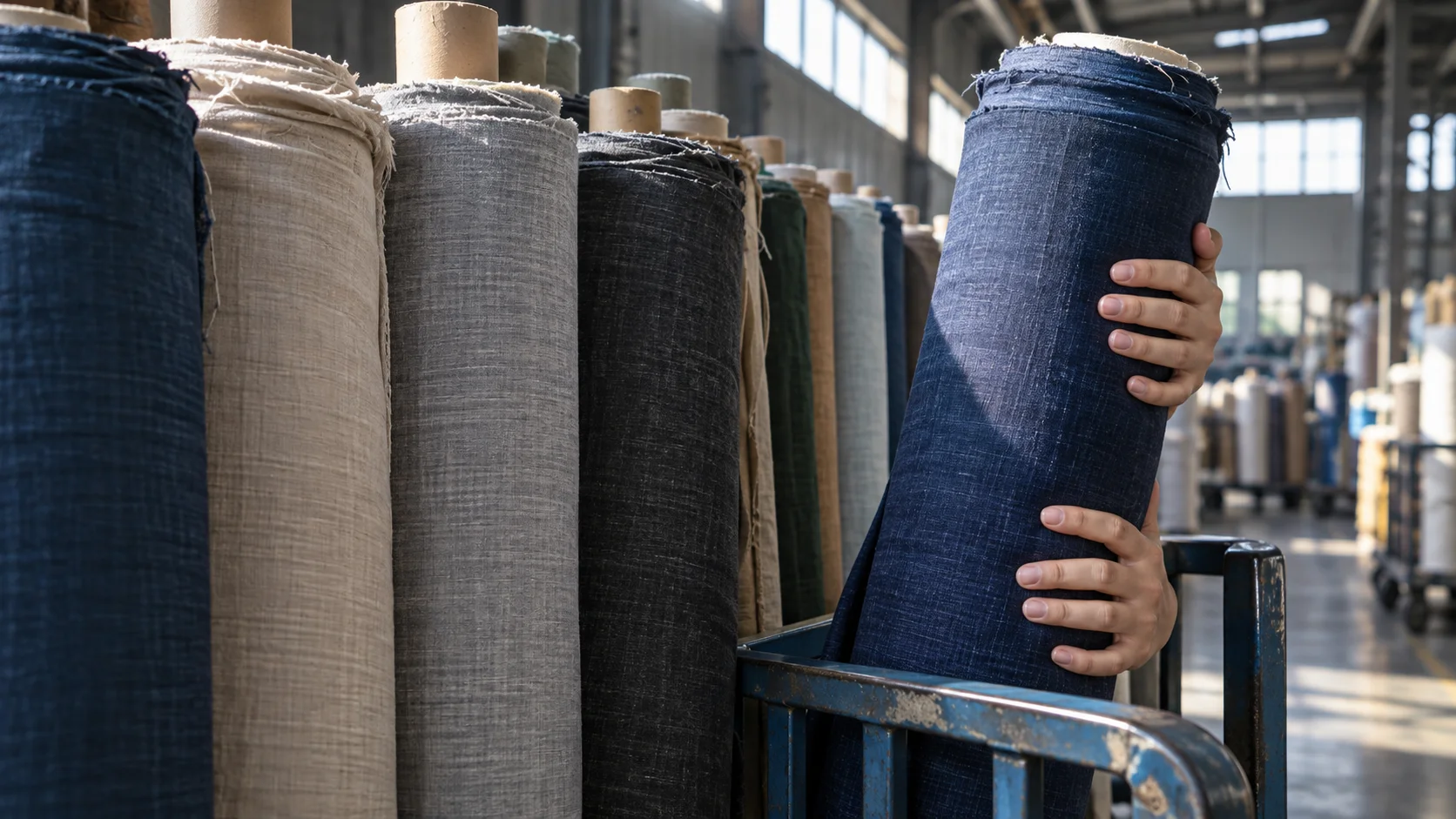
    Bolts of woven fabric stand upright in a tight row inside a Chinese textile mill's dispatch area, a worker's hands (cropped at the wrist) sliding one bolt onto a trolley

    Duty rates and FTA preference by origin

    The general duty rate on most woven and knitted fabrics entering Australia is 5%, applied to the customs value, normally the FOB price paid or payable, converted at the exchange rate applicable on the day of export. A minority of textile lines are already duty-free under the general tariff, but budget on 5% until you’ve confirmed your specific code.

    The real money is in preference. Australia’s FTA network covers the major fabric origins:

    • ChAFTA (China). Textile tariffs under the China–Australia FTA phased to zero, so Chinese-origin fabric with a valid ChAFTA Certificate of Origin or Declaration of Origin enters duty-free. China remains the dominant fabric origin for Australian importers, which makes this the single most valuable certificate in the textile trade.
    • AANZFTA (ASEAN plus New Zealand). Covers Vietnam, Indonesia, Thailand, Malaysia and the rest of ASEAN. Textile rates for ASEAN origins are at zero for qualifying goods. Vietnam-origin knits and Indonesia-origin rayon wovens both ride this agreement. Note the origin rules: fabric generally qualifies via a change-of-tariff-classification rule, which usually means the weaving or knitting, not just finishing, happened in the FTA partner.
    • ECTA (India). The Australia–India Economic Cooperation and Trade Agreement eliminated duty on Indian textiles from entry into force, significant for cotton wovens, home textiles and the powerloom sector. India-origin bed linen and towelling that previously wore 5% now enters free with ECTA origin documentation.

    Two operating rules keep preference claims clean. First, the certificate must exist and be valid at the time you claim. Chasing a retrospective certificate after entry means lodging a refund application, which works but ties up cash and attention. Second, watch third-country processing: Chinese greige fabric dyed and finished in Vietnam does not automatically become Vietnamese-origin under AANZFTA. Where the fabric was formed is the question, and mills are not always precise about it until you ask in writing.

    GST of 10% applies to the value of the taxable importation (customs value plus duty plus international transport and insurance) for every origin, preference or not. If you’re registered for GST and hold deferral approval, it’s a cash-flow timing item rather than a cost, but it belongs in the landed-cost model regardless.

    Labelling: fibre content accuracy and mandatory care labels

    Australia repealed its old prescriptive fibre-content labelling standard years ago, and some importers took that as “no rules.” Wrong conclusion. What replaced prescription is the Australian Consumer Law’s general prohibition on false or misleading representations, and a fibre content claim is a representation. If the label, the invoice, or the product page says 100% cotton and the lab says 82% cotton / 18% polyester, that is a misleading claim the ACCC can and does act on. The exposure isn’t at the border; it’s at retail, where a competitor, a customer or the regulator commissions a burn test.

    The discipline mirrors classification: test, don’t trust. Fibre composition on your labels should trace to the same lab report you classified from. When compositions drift batch to batch (common with blended yarns bought on the open market) either tighten the supply contract or label to the tolerance the standard test methods allow.

    Care labelling is where the mandatory standard still bites. Made-up textile products supplied to consumers in Australia (bedding, towels, curtains, furnishing items and similar) must carry care labelling complying with the mandatory standard based on AS/NZS 1957. The labels must be permanent, legible for the life of the product, in English, and must give adequate instructions for care appropriate to the product. Piece goods sold by the metre have their own requirement: care information must be provided so it can be passed to the end customer, typically on the roll ticket or an accompanying leaflet.

    The classic failure mode: care labels printed at origin follow the mill’s home-market convention, using symbols only, no English text, or wash instructions that don’t survive the standard’s adequacy test. Origin-printed labels are cheap and sewing them in later is expensive, so get the label artwork approved before bulk production, in writing, against the Australian requirement. A one-page label spec in the purchase order costs nothing and prevents a relabelling exercise that can run to dollars per unit across a container of quilt covers.

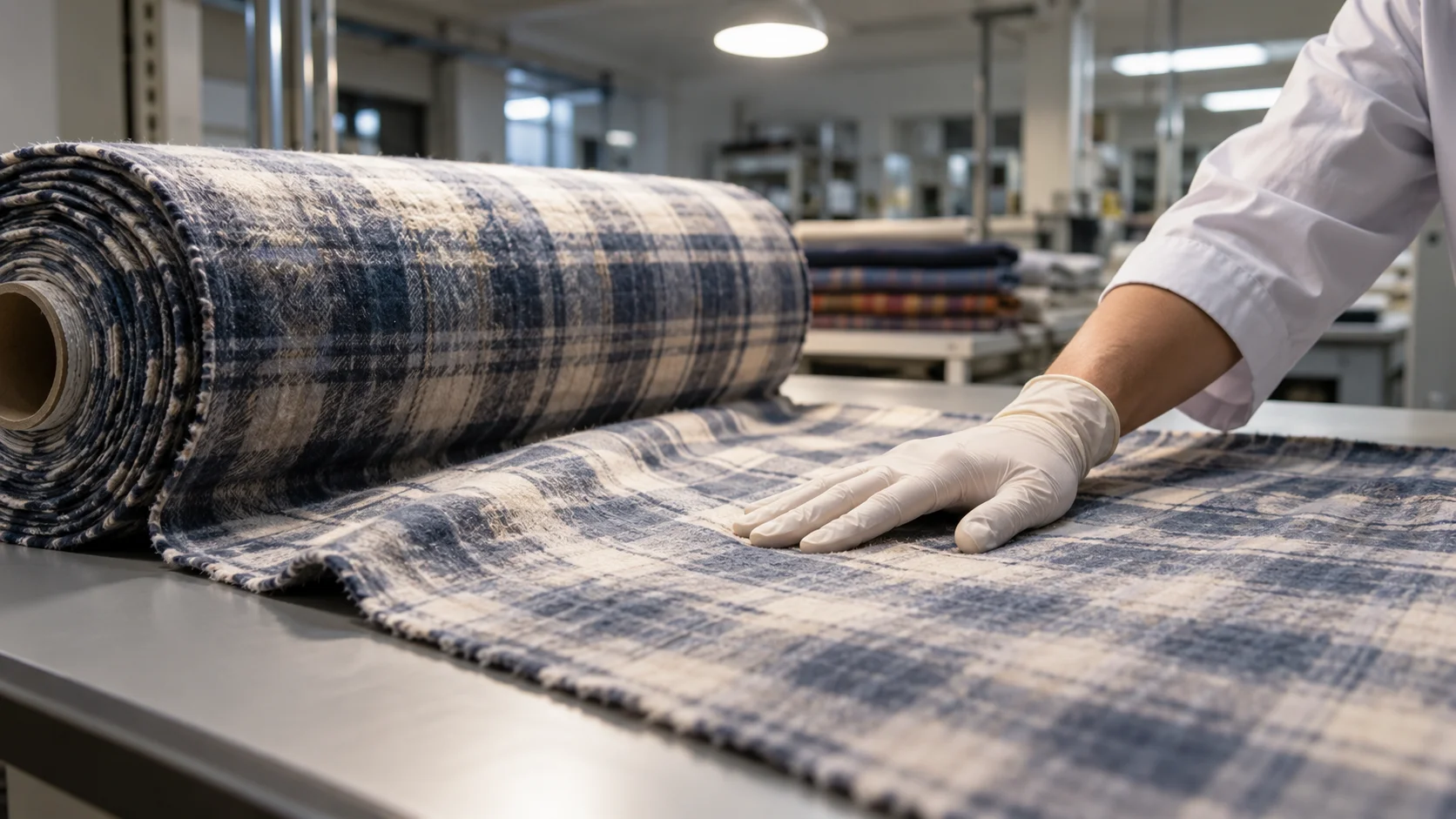
    A roll of soft brushed cotton flannelette sits partially unrolled across an inspection table in a compliance-testing room, the fabric's napped texture catching soft,

    Flammability: nightwear and commercial upholstery

    Two flammability regimes matter to fabric importers. The first is the mandatory standard for children’s nightwear, based on AS/NZS 1249, which categorises garments (and by extension the fabrics destined for them) by fire hazard and prescribes labelling from “low fire danger” through to “warning: high fire danger.” If you import fabric that will be cut into children’s sleepwear (brushed cotton flannelette is the obvious case), the fabric’s burn behaviour determines what category the finished garment can carry, and a fabric that can’t achieve a saleable category is a fabric your customer can’t use. Test before bulk, and put the burn-performance requirement in the fabric contract.

    The second regime is commercial rather than mandatory-consumer: upholstery and furnishing fabrics for commercial fitouts (hotels, offices, healthcare, public buildings) are routinely specified against flammability performance under building and furnishing codes. The specifier’s schedule will cite the test standard; your job as the importer is to hold current test certificates from the mill and confirm they cover the actual construction and finish being shipped, not a cousin of it. A flame-retardant finish gets applied to the tested batch, then quietly omitted from the production batch. That is a real and recurring problem, discovered at the worst possible time: during fitout certification.

    Biosecurity: natural fibres, packing and the used-textile trap

    New, commercially manufactured fabric is low-risk cargo from a biosecurity standpoint, and most textile containers clear without intervention from the Department of Agriculture, Fisheries and Forestry (DAFF). The risk concentrates in three places.

    Packaging. Timber pallets and dunnage must be ISPM 15 compliant. But textiles bring their own packaging quirks: jute and sisal wrapping, hessian bale covers and straw padding are traditional in some origins and all of them are biosecurity risk material. Specify synthetic wrapping and plastic or compliant timber pallets in the purchase order. A container of pristine polyester gets held for treatment because of the hessian it was wrapped in. That is an entirely self-inflicted delay.

    Raw and lightly processed natural fibres. Scoured and carbonised wool, degummed silk and processed cotton are fine. But greasy (unscoured) wool, raw jute, raw sisal and similar minimally processed fibres carry import conditions and may require treatment or documentation showing processing. Check the DAFF import conditions database (BICON) against the actual processing state of the fibre before you commit to the shipment, not after it arrives.

    Used textiles are a different regime entirely. Second-hand clothing bales, used bedding, and recycled textile inputs are treated as high-risk: they attract inspection, frequently require fumigation or other treatment, and must be clean, free of soil, seeds and animal material. If your business model involves used textile bales, price in inspection and treatment as routine costs and vet your origin supplier’s cleaning process: a dirty bale does not get a warning. It gets treated at your expense or exported.

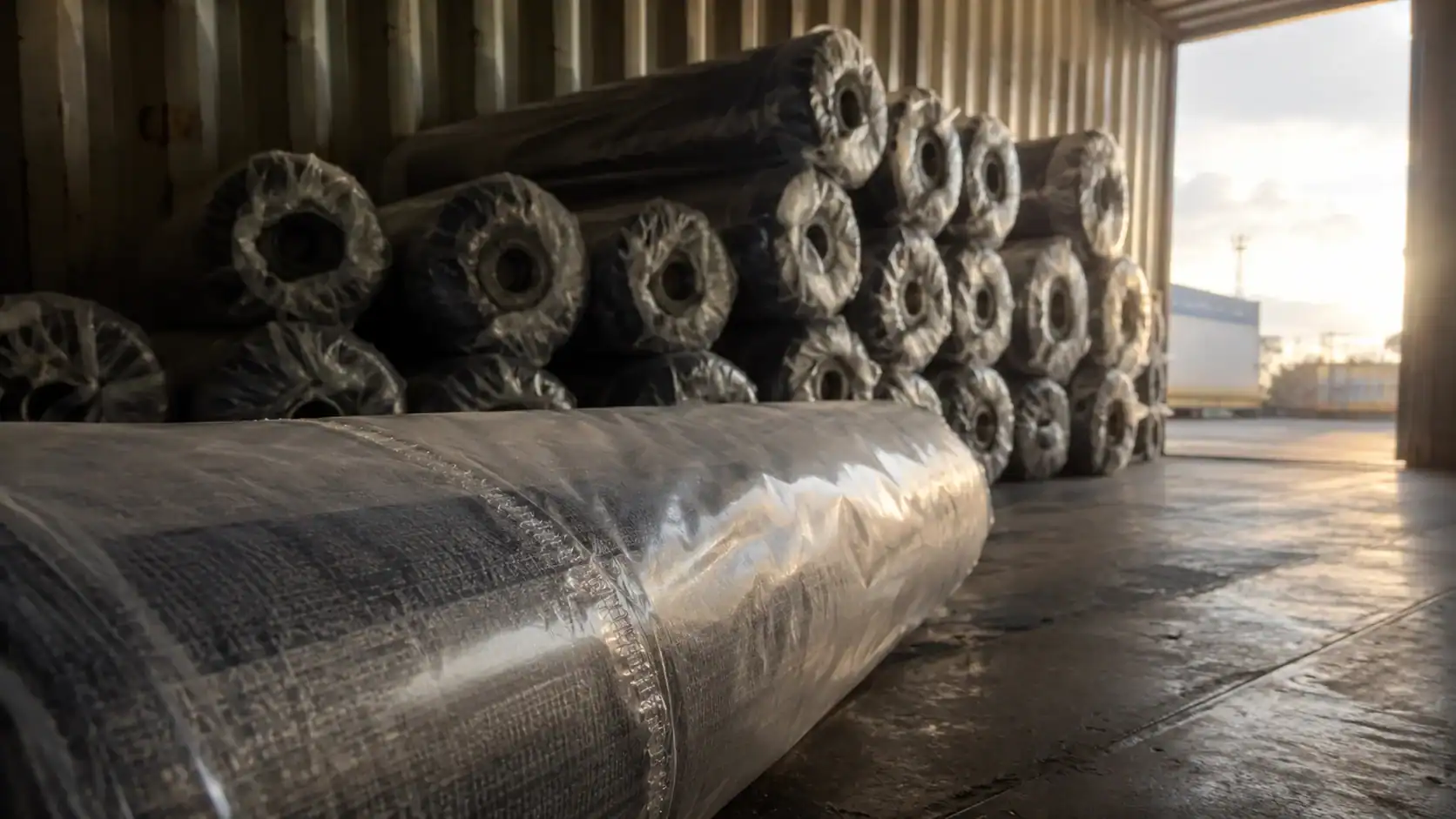
    Rolls of fabric wrapped in protective poly sleeves stacked inside an open shipping container at a warehouse dock, illustrating how textile freight is stowed and moisture-protected in transit

    Freight mechanics: how fabric actually travels

    Fabric freight rewards physical thinking. The cargo is heavy for its bulk or bulky for its weight, depending on construction. It is unforgiving of moisture, and the way rolls are stowed determines whether they arrive as sellable goods or as creased, crushed seconds.

    Roll handling and stow

    Fabric ships on rolls: cardboard or plastic tubes, typically 1.5 to 3 metres wide depending on loom width. The stow question is roll-on-end versus flat (horizontal) stow. On-end stow keeps the roll’s weight on the tube and prevents flat-spotting, but only works for rolls short enough to stand within container height and stable enough not to topple; it suits shorter, fatter rolls and racked stow. Flat stow is the default for full containers: rolls laid horizontally, stacked in interlocking tiers. The rules that matter: put heavy constructions on the bottom, never stack more tiers than the tube stiffness supports (crushed tubes telescope and crease the inner metres of fabric), and use end-boards or bracing so the stack cannot shift and chafe. Pile fabrics like velvet and corduroy deserve special care: crushing under stack weight leaves permanent pressure marks, so they ride on top or in racked stow.

    Moisture: the loss that can’t be fixed

    If one paragraph in this guide earns its keep, it’s this one. A wet roll is a total loss. Water staining, mildew, tide marks and dye migration cannot be economically remediated on fabric. You cannot re-dye your way out of a mildewed shirting roll, and cutting around damage on a continuous 100-metre roll destroys yield. Container rain (condensation cycling as the box crosses climate zones) does the damage more often than seawater does. The specification that prevents it: every roll individually sleeve-wrapped in polyethylene, ends sealed; desiccant dosed to the transit season and route (a January sailing from humid South China into a Melbourne winter is the worst case); no roll in direct contact with the container floor, so use pallets or a dunnage layer underneath; and inspect the container before loading for holes of light and old cargo residue. Put the moisture spec in the purchase order and require loading photos. When a claim happens, the insurer’s first question is whether the cargo was packed to a documented standard, and “the mill wrapped it however they usually do” is how claims get denied.

    Weight versus volume by fabric type

    Fabric density varies enormously, and it flips the economics of the freight mode. Denim at 400–500 g/m² on full rolls packs a 20-foot container out to 18–20 tonnes before the box is volumetrically full: you weigh out. Voile, chiffon and other sheers at 60–80 g/m² cube out long before any weight limit matters. Quilted and pile constructions trap air and cube out fastest of all. The consequences are practical: heavy fabrics favour 20-foot containers over 40-foot (you can’t use the extra cube anyway); light fabrics favour 40-foot high-cubes; and on LCL, heavy constructions can trip the weight-basis charging threshold (commonly 1 tonne per cubic metre), so a denim LCL shipment may be charged on weight while the voile next to it is charged on measure.

    LCL suitability

    Fabric is genuinely good LCL cargo: dense, regular, stackable, non-hazardous. A 5,000-metre order of mid-weight shirting occupies roughly 4–6 cubic metres depending on roll dimensions, which is comfortably LCL territory and nowhere near justifying a dedicated container. Two cautions. Co-loaded cargo is unknown cargo: your wrapped rolls may share a box with wet-packed goods or leaking drums, so the polyethylene sleeve spec matters even more for LCL than FCL. And CFS handling means more touches. Insist on rolls that are wrapped, end-capped and ideally palletised, because loose rolls at a busy CFS get forklift tines through them with depressing regularity.

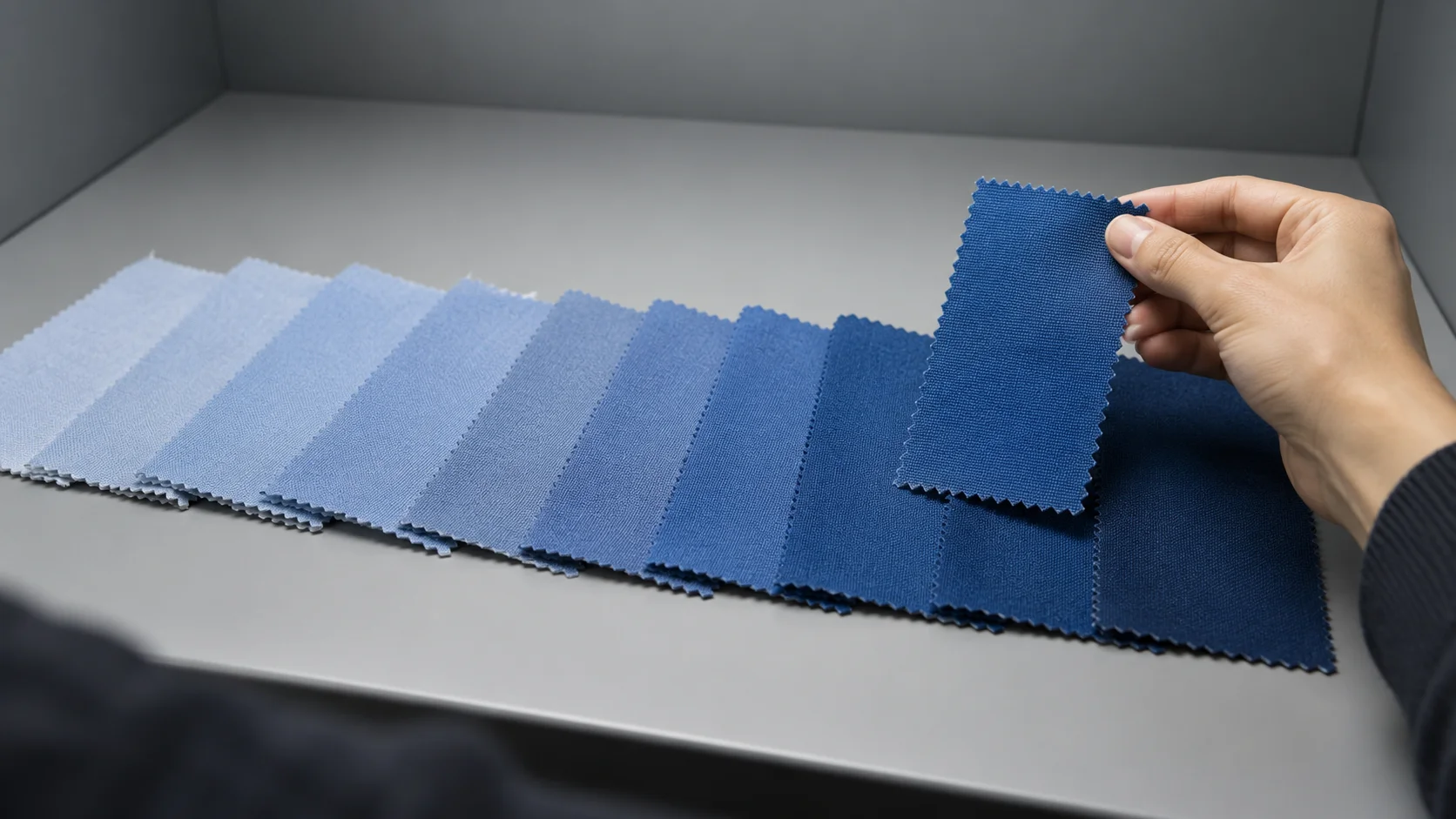
    A hand holds up a dark blue fabric swatch beside a fanned row of swatches graduating from pale to deep blue on a grey viewing table.

    Colour workflow: lab dips, tolerances and shade bands

    Colour is where fabric importing stops being logistics and becomes craft, and where undocumented process turns into unwinnable disputes. The standard workflow runs: the buyer issues a colour standard (a physical swatch or a spectral reference); the mill submits lab dips (small dyed samples, usually two or three options per colour) for approval before bulk dyeing; the buyer approves one dip in writing; bulk production is then dyed against the approved dip.

    The commercial machinery hangs on tolerance. Visual assessment happens in a light box under agreed illuminants: D65 daylight as primary, often with a store-lighting secondary. Metamerism, where two samples match under one light and diverge under another, is a genuine trap for retail fabric. Instrumental assessment uses a spectrophotometer and a colour-difference number, most commonly CMC ΔE, with a typical commercial tolerance of ΔE ≤ 1.0 against the approved dip. The contract should state the tolerance, the illuminants and who measures.

    Then comes within-order consistency: shade bands. Continuous dyeing drifts, and batch dyeing varies batch to batch, so a 5,000-metre order will contain measurable shade variation. The mill documents this by cutting a swatch from each dye lot (and head/middle/tail of long lots), grouping them into shade bands, and shipping the shade band card with the goods, so the cutter downstream never mixes lots in one garment marker. When a colour claim arises, the approved lab dip, the stated tolerance and the shade band card are the entire evidentiary record. Importers who keep all three documents win claims; importers who approved colour “by WhatsApp photo” do not, because a phone photo of a swatch is colourimetric noise.

    The awkward case is the importer who approved colour from a photo and got a perfect match anyway. It is tempting to read that as proof the shortcut works. It is closer to a bet that happened to pay: nobody measured the odds, so the good result says almost nothing about the next order. Put a rough number on it. If one photo-approved order in five ends in a shade claim you cannot win, and the affected lot sells at a 40% discount, the 5,000-metre shirting order in the worked example below (AUD 3.18 landed per metre) carries roughly AUD 1,270 of expected loss per order. A lab dip round costs a week and a courier fee. Judge the approval process by that arithmetic, not by how the last order turned out.

    Origin QC: four-point grading and pre-shipment inspection

    Fabric quality is graded at origin under the four-point system, the textile industry’s near-universal standard. Every roll (or a sampled fraction of rolls) is run over an inspection frame and defects are scored by size: up to 3 inches, 1 point; over 3 to 6 inches, 2 points; over 6 to 9 inches, 3 points; over 9 inches, 4 points. Four points is also the maximum per linear yard, however bad the yard is; full-width defects score 4. The points are totalled and normalised to points per 100 square yards. Typical commercial acceptance thresholds run around 20 points per 100 square yards for a first-quality woven shipment average, with individual rolls rejected above roughly 28–30; premium programmes buy tighter, workwear and utility fabrics looser. Your purchase contract should state the threshold, the sampling rate (10% of rolls is a common minimum), and what happens to rejected rolls: replaced, discounted, or excluded from the shipment.

    Pay for an independent pre-shipment inspection rather than trusting the mill’s own report in four cases: first orders from a new mill, always; any order where the fabric feeds a committed downstream programme (a fitout deadline, a retailer launch window) where late discovery of bad goods is catastrophic; high-value or technically demanding constructions (FR finishes, performance coatings); and any mill whose previous shipment threw a claim. A third-party inspection on a container-sized fabric order costs a few hundred dollars and checks four-point results, colour against the approved dip, width, length verification (short rolls are a quiet, chronic form of leakage; 96 metres invoiced as 100 adds up), moisture packing and labelling. Against a shipment value in the tens of thousands, it is the cheapest insurance in this guide.

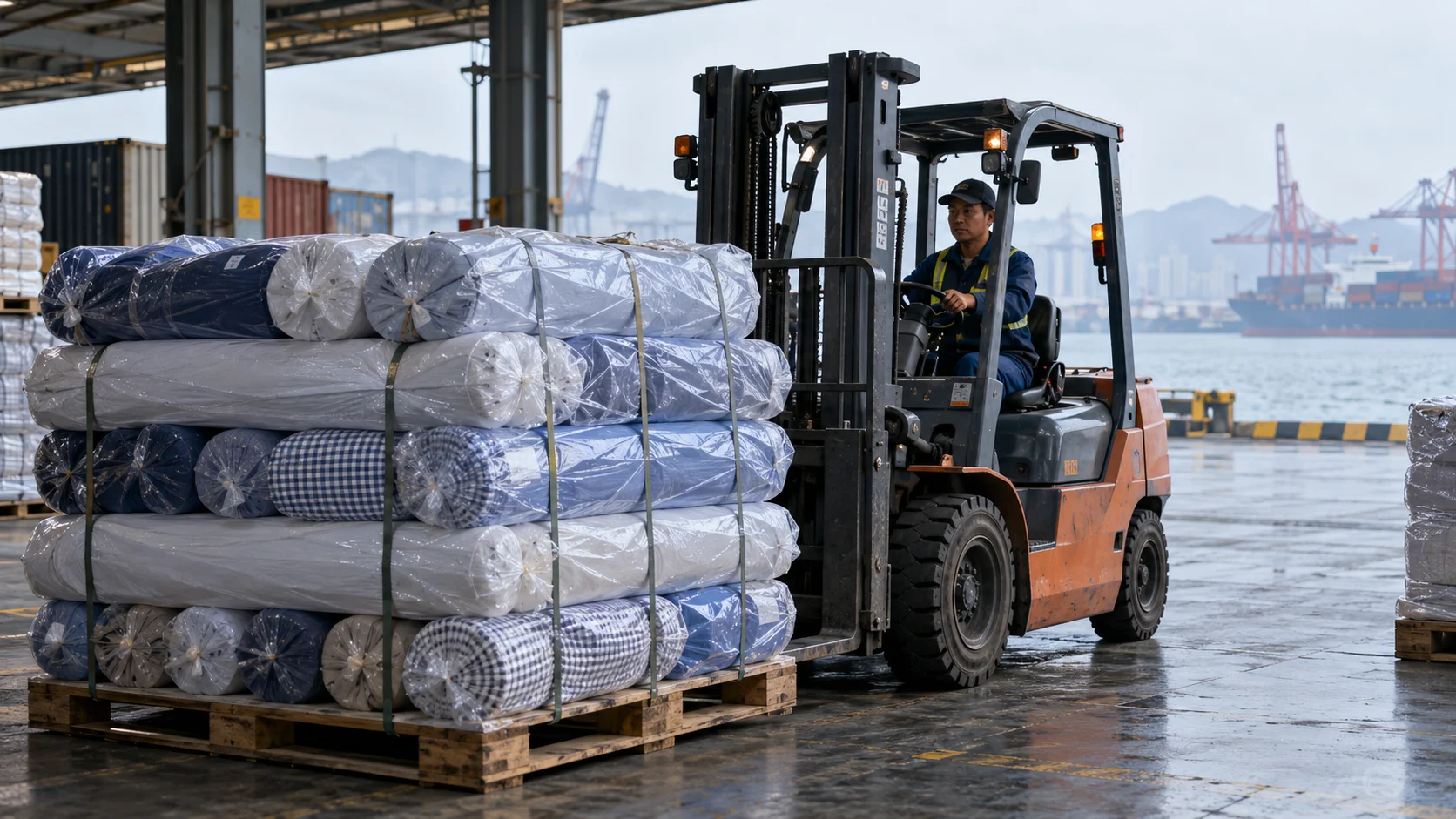
    Rolls of finished shirting fabric, wrapped in protective plastic sleeves, are stacked onto a pallet at a covered loading dock near a Chinese port, a small forklift

    Worked example: 5,000 metres of polyester-cotton shirting from China

    Let’s land a real order. The goods: 5,000 metres of woven shirting, 65% polyester / 35% cotton, dyed, 120 g/m², 150 cm width, from a mill in Shaoxing, shipped LCL ex Ningbo to Melbourne. Because polyester predominates by weight, this classifies in Chapter 55 (woven fabrics of synthetic staple fibre mixed mainly with cotton), not Chapter 52: exactly the blend trap described earlier.

    The physicals first. At 120 g/m² and 1.5 m width, the fabric weighs 180 g per linear metre: 5,000 m = 900 kg of fabric, roughly 1,050 kg with tubes, wrapping and pallets. Rolled at 100 m per roll, that’s 50 rolls; palletised and wrapped, call it 4.8 cubic metres. At ~220 kg/m³ this charges on volume, not weight.

    Cost line Basis AUD
    Fabric FOB Ningbo 5,000 m × US$1.85/m = US$9,250 @ 0.66 $14,015
    Customs duty 5% general rate; ChAFTA preference claimed: 0% $0
    Ocean freight LCL 4.8 m³ (w/m) Ningbo–Melbourne incl. origin charges $620
    Marine insurance 110% CIF basis $95
    Destination port/CFS charges 4.8 m³ LCL unpack, wharf, fees $540
    Customs brokerage + entry fees Entry, import processing charge $290
    Quarantine/biosecurity fees Document assessment (no inspection expected) $60
    GST 10% of (customs value + duty + freight + insurance) ≈ 10% × $14,730 $1,473
    Delivery CFS to warehouse Local cartage, tailgate unload $260
    Total outlay $17,353
    Landed cost ex-GST (GST-registered importer) $15,880

    That’s $3.18 per metre landed ex-GST against an FOB price of $2.80/m, a landed uplift of about 13.3%. Now run the counterfactuals. Without the ChAFTA certificate, duty adds $701 (5% of $14,015) plus $70 of extra GST: the certificate is worth 14 cents a metre, for the price of asking the mill for a document. If the entry had been classified from the invoice description “cotton shirting” into Chapter 52 and preference claimed under the wrong tariff line, the claim is defective, and a post-entry audit would unwind it with penalties. And if one pallet of rolls (say 12 rolls, 1,200 m) arrives wet because the sleeve-wrap spec was never issued, the loss is roughly $3,800 of landed value plus the downstream cost of shorting your customer, nearly six times the entire ocean freight bill. The cheap lines in this table are not where the risk lives.

    A gloved hand holds a frayed-edged dark fabric swatch under a round ring-light magnifier, showing individual fibers in close detail.

    Common mistakes that cost real money

    • Invoice fibre composition not matching the lab test. The single most common textile compliance failure. The mill invoices “T/C 65/35,” the lab finds 70/30, and now the classification, the FTA claim and the retail label are all wrong at once. Test every new fabric quality and re-test periodically on repeats.
    • No moisture specification in the purchase order. If the PO doesn’t say “individual PE sleeve wrap, sealed ends, desiccant, no floor contact, loading photos required,” you have no packing standard, and when a roll arrives mildewed you have no claim either.
    • Care labels printed at origin without Australian sign-off. Origin printing is cheap; relabelling in Australia is not. Approve label artwork against the mandatory standard before bulk production, in writing.
    • Approving colour from photographs. Lab dips exist for a reason. Approve physical dips under agreed illuminants, state the ΔE tolerance in the contract, and demand shade band cards with the shipment.
    • Classifying from the commercial description. “Shirting,” “fleece” and “canvas” are not tariff terms. Composition by weight, construction and finish state drive the code. Get the test report first.
    • Skipping the origin inspection on programme-critical orders. A four-point inspection at the mill costs a rounding error and catches short rolls, off-shade lots and defect rates before they cross the ocean, while the mill can still fix them.
    • Ignoring the packaging biosecurity angle. Hessian wrap and untreated timber pallets turn a clean cargo into a held container. Specify synthetic wrap and ISPM 15 pallets in the PO.

    Swift Cargo moves fabric and made-up textile orders into Australia on the LCL and FCL mechanics covered above. See how the process works before your first container books.

    Related Reading

    Frequently Asked Questions

    What is the duty rate on textiles imported to Australia?

    Most woven and knitted fabrics attract a 5% general duty rate on the customs value. FTA preference (ChAFTA for China, AANZFTA for ASEAN origins, ECTA for India) takes qualifying fabric to zero, provided valid origin documentation exists at the time of the claim. GST of 10% applies on the duty-paid value plus transport and insurance for every origin.

    How is fabric classified for customs in Australia?

    Fabric is classified by fibre composition by weight first (the predominant fibre sets the chapter under Section XI Note 2), then by construction (woven versus knitted; knits have their own Chapter 60), then by processing state (unbleached, bleached, dyed, printed) and often weight per square metre. Classify from a laboratory fibre analysis, never from the supplier’s commercial description.

    Do imported fabrics need fibre content labels in Australia?

    Fibre content claims must be accurate under the Australian Consumer Law: a misdescribed blend is a misleading representation the ACCC can pursue. Made-up textile products such as bedding, towels and curtains must also carry care labelling complying with the mandatory standard based on AS/NZS 1957: permanent, legible, in English, with adequate care instructions.

    Are there biosecurity requirements for importing fabric to Australia?

    New processed fabric is low-risk, but packaging (timber, jute, hessian, straw) and raw natural fibres (greasy wool, raw jute, raw sisal) carry DAFF import conditions. Used textile bales sit under a much stricter regime with routine inspection and treatment. Specify synthetic wrapping and ISPM 15 pallets to keep clean cargo clean.

    Why is moisture protection so important when shipping fabric?

    Because a wet roll is a total loss: mildew, water staining and dye migration can’t be economically fixed, and cutting around damage on a continuous roll destroys yield. Individual polyethylene sleeve wrap, sealed ends, desiccant matched to the route and season, and no floor contact should be written into the purchase order, with loading photos required.

    Can fabric ship LCL or does it need a full container?

    Fabric is excellent LCL cargo: a typical 5,000-metre order occupies only 4–6 cubic metres. Insist on wrapped, end-capped, ideally palletised rolls because co-loaded cargo and CFS handling raise moisture and damage risk, and check the chargeable basis: dense constructions like denim can be charged on weight rather than volume.

  • Shipping Antiques and Fragile Items to Thailand: Packing, Insurance and Customs

    Shipping Antiques and Fragile Items to Thailand: Packing, Insurance and Customs

    A Victorian pier mirror made in Birmingham in 1886 has survived two world wars, five house moves and a century and a half of children’s birthday parties. Then its owner books a shipment to Chiang Mai, and it faces the most dangerous six weeks of its long life: a forklift in Felixstowe, a crane in Singapore, 40 days of tropical humidity cycling inside a steel box, and a delivery truck on the Hang Dong Road. Whether it arrives intact has almost nothing to do with luck. It has to do with roughly a dozen decisions made before the container doors close, and most of them are made, or fumbled, in the packing room.

    If you are shipping a broader household alongside the fragiles, our companion guide to shipping household goods to Thailand covers the general process; this article deals with the pieces you cannot replace.

    Shipping Antiques and Fragile Items to Thailand: Packing, Insurance and Customs

    What Counts as a High-Stakes Fragile Shipment

    Movers use “fragile” loosely. For planning purposes, it helps to separate ordinary breakables (supermarket glassware, flat-pack furniture with a glass door) from high-stakes fragiles, where the combination of fragility and value (financial or sentimental) changes how the whole shipment should be engineered. The second category typically includes:

    • Antique furniture, especially veneered, inlaid or gilded pieces, and anything with original glass
    • Artwork: oil paintings, works on paper, framed prints, sculpture
    • Ceramics and porcelain, from dinner services to individual studio pieces
    • Glassware and crystal, including chandeliers, which are among the hardest household items to ship well
    • Pianos: uprights and grands, which combine extreme weight with extreme internal fragility
    • Mirrors, particularly antique mercury-glass mirrors whose plates cannot be replaced
    • Heirloom pieces whose replacement cost is meaningless because there is no replacement

    The unifying feature is asymmetry. A sofa that arrives damaged is an insurance claim. A 140-year-old mirror that arrives damaged is a small bereavement with a cheque attached. Everything below flows from taking that asymmetry seriously.

    Professional Packing Standards: How the Good Firms Actually Do It

    Watch a museum-trained packer work and the first thing you notice is how slowly they start. Before anything is wrapped, the piece is photographed from every side, existing damage is noted on a condition sheet, and removable elements (shelves, keys, pendants, finials) are taken off and packed separately. Only then does the wrap sequence begin, and the sequence matters.

    The wrap sequence

    The first layer against the object is never bubble wrap. Bubble against a French-polished or gilded surface can imprint its texture into the finish over a warm six-week voyage, and the plastic traps moisture against timber and oil paint. The correct sequence is:

    1. Acid-free tissue directly against the surface: inert, breathable, no chemical interaction with finishes, gilt or paint
    2. A soft wrap layer (furniture blanket or foam sheet) to distribute pressure
    3. Bubble wrap, bubbles facing outward, for shock absorption
    4. Rigid protection (corner protectors, cardboard sheathing, or a crate) to take impacts before they reach the soft layers

    Glass and mirrors get one extra step: low-tack tape applied in a lattice across the plate, so that if the glass does break, the shards stay in place instead of grinding against the frame for five thousand miles. Paintings travel face-protected with glassine, never with anything touching the paint surface, and framed works get corner blocks so the frame, often more fragile than the picture, carries no point loads.

    The crating decision

    Not everything needs a crate. The working rule most fine-art shippers use is a two-axis test: value and fragility. A robust oak coffer worth GBP 800 travels fine in blanket wrap inside a container. A GBP 400 ceramic lamp probably justifies a light case. Anything that is both fragile and valuable (the mirror, the porcelain service, the marble bust) gets a purpose-built timber crate with internal foam blocking, so the object floats in a rigid box and never touches the walls.

    At the extreme end sits double-crating: an inner case suspended inside an outer crate on foam or springs, so shocks that reach the outer shell are absorbed before they reach the inner one. It is standard practice for museum loans and sensible for any single item worth north of GBP 15,000–20,000, or for items (mercury-glass mirrors again) where any impact at all is likely to be fatal.

    Who packs matters more than how

    The clause that catches more antique shippers than any other: the owner-packed exclusion. Almost every all-risks marine cargo policy limits or voids breakage cover for items packed by the owner rather than by the professional firm. The insurer’s logic is blunt: they cannot verify your packing, so they will not underwrite it. You can wrap your grandmother’s tea service with genuine care and real skill, and if a cup arrives in pieces the claim will still be declined, or paid only on total-loss-of-the-whole-shipment terms. For anything on the high-stakes list above, professional packing is not a luxury upgrade. It is the price of admission to meaningful insurance.

    The owner-packed exclusion is not really about packing quality. It is about who bears the tail risk. An insurer who underwrites professional packing is pricing a known, bounded process with an accountable party on the other end if something goes wrong. An insurer asked to underwrite owner-packing is being asked to price an unverifiable process with no accountable party, a different and much worse bet, so they simply decline it rather than mispricing it. The owner who packs carefully and has never had a claim denied is not evidence the exclusion is unfair. It is evidence the stress test has not happened yet. The exclusion exists precisely for the one time it does.

    Wooden export crate under construction in a packing workshop

    Custom Crating: Economics and the ISPM 15 Rule

    Two things to understand about crates for Thailand: what they cost, and what timber they must be made from.

    ISPM 15 first, because it is non-negotiable. Thailand enforces the international standard for wood packaging material: all solid-timber crates, cases and pallets entering the country must be heat-treated or fumigated and stamped with the IPPC mark. A beautiful crate built from untreated timber can see the whole consignment held at Laem Chabang for re-fumigation, re-packing or destruction of the packaging, at your cost and on customs’ timetable. Any competent export packer builds to ISPM 15 automatically; if you are tempted by a local carpenter’s cheaper quote, this is why you should not be. Plywood and other processed panels are exempt, which is why many fine-art cases use ply shells over a treated-timber frame.

    Costs scale with volume and complexity. Indicative UK ranges for export-grade ISPM 15 crates:

    • Small case (a mantel clock, a boxed ceramic): GBP 80–150
    • Medium crate (a mirror, a painting up to about 120 cm, a side table): GBP 150–350
    • Large crate (a wardrobe, a longcase clock, a large canvas): GBP 350–700
    • Piano crate or double-crated museum case: GBP 700–1,500+

    People flinch at these numbers until they run the comparison the other way. A GBP 300 crate protecting a GBP 8,000 mirror is a 3.75% premium on the item’s value (less than the insurance rate on some fragile schedules) and it reduces the probability of the claim ever being needed. Crating is the cheapest insurance you will buy in this whole exercise, because it changes the odds rather than merely compensating you after the fact.

    FCL, LCL or Air: Choosing a Transit Mode by Handling Events

    The single most useful mental model for fragile freight is to stop thinking in miles and start thinking in handling events: each occasion on which a human or machine picks your goods up, sets them down, or restacks them. Damage to sea freight overwhelmingly happens in warehouses and at container doors, not on the ocean. (For the full taxonomy of how cargo actually gets broken, see our breakdown of what causes shipping damage in international freight.)

    Count the events by mode:

    • FCL (full container load): packed and loaded into the container at your origin residence or the packer’s warehouse, container sealed, container opened at destination, unloaded once. Roughly 4 handling events touch your goods, and half of them are performed by the crew you hired and briefed.
    • LCL (groupage/shared container): collected, unloaded at a consolidation warehouse, stacked, loaded into a shared container alongside strangers’ cargo, deconsolidated in Bangkok, restacked, loaded again for delivery. Typically 10–12 handling events, most performed by warehouse staff who have no idea what is inside your cases and are paid by throughput, not by care.

    If each handling event carries even a modest independent chance of a drop, a tip or a bad stack, tripling the event count roughly triples your exposure, and LCL adds the specific hazard of other people’s cargo being stacked on top of yours. For high-stakes fragiles the industry consensus is emphatic: FCL wherever the volume can remotely justify it. A 20ft container from the UK to Thailand often costs only GBP 800–1,500 more than the equivalent LCL charge on a mid-sized consignment, and it buys you a sealed box that nobody opens between your driveway and your delivery address.

    Air freight earns its keep in one niche: extreme-value small pieces. A GBP 25,000 porcelain figure or a small painting is far better spending three days in a rigid case in aircraft holds than six weeks at sea. Air handling is not gentle, but the journey is short, the humidity exposure is minimal, and the number of custody transfers is small. Above roughly GBP 10,000 of value in under a cubic metre, price air freight before you default to the container.

    Antique bronze ritual vessel cushioned in cut foam blocking inside a wooden museum shipping crate with crumpled acid-free tissue paper, the kind of high-value fragile item that drives the case for specialist transit insurance

    Insurance for Antiques: The Deep Dive

    Standard household-goods transit insurance (a lump-sum declared value across the whole shipment, claims settled at depreciated value) is close to useless for antiques. Depreciation logic runs backwards for old things, and lump-sum declarations invite the insurer to average away your best pieces. You want a valued, itemised schedule instead, and the details below are where claims are won or lost. The general mechanics of marine cargo cover on this route are set out in our guide to cargo insurance for Thailand shipping. This section covers what changes when the cargo is irreplaceable.

    Declared value per item, with evidence

    Every significant piece gets its own line: description, declared value, and (this is the part people skip) photographs taken before packing and, for higher-value items, a written appraisal. A pre-shipment appraisal from an auction house or accredited valuer does two jobs. It fixes the value so there is no argument at claim time, and it documents condition, so the insurer cannot suggest the crack was already there. Appraisals cost GBP 50–150 per item or a day rate for a collection; on anything worth over about GBP 2,000 they pay for themselves the first time you need them.

    Agreed value versus indemnity

    Read the settlement basis clause. Indemnity policies pay “market value at the time of loss,” which invites a negotiation with a loss adjuster about what your dead grandmother’s bureau was really worth. Agreed value policies pay the scheduled figure, full stop. Agreed value costs more (often 2.5–4% of declared value for fragile schedules versus 1.5–2.5% for general household goods) and it is worth every basis point when the cargo is the kind of thing you are reading this article about.

    Pairs and sets

    If one of a pair of Regency chairs is destroyed, is the loss half the pair’s value, or all of it? A pair is worth far more than two singles, so without a pairs-and-sets clause the insurer will pay for one chair and leave you holding an orphan. Good fine-art policies let you insure sets as sets: total loss of the set’s value, insurer takes salvage on the survivors. Ask explicitly. It is rarely the default.

    The exclusions that bite

    • Owner packing, as covered above: the single most common reason antique claims fail.
    • Inherent vice: damage arising from the nature of the object itself. Old glue joints letting go in tropical heat, a canvas slackening, veneer lifting because the timber was always going to move: insurers class these as the object’s own frailty, not a transit accident, and exclude them. Your defence is climate management (see below), not paperwork.
    • Unattended vehicle and storage extensions: check that cover runs door to door including any storage period in Thailand, not just port to port.
    Plain rectangular timber crate holding a single crated object

    Thai Customs: Exemptions, Export Permits and the Buddha Image Trap

    The personal effects route

    Thailand’s used-household-effects concession is the friendliest door for antiques to enter through. Items that are demonstrably personal household goods, owned and used for at least a year, imported as part of a genuine change of residence by someone holding a qualifying status, can be admitted duty-free at Thai Customs’ discretion. The qualifying statuses are a one-year Thai work permit, a non-immigrant visa with a confirmed one-year working period, Thai permanent residence and a full one-year Smart Visa. A retirement visa is not among them, so a retiree importing antiques pays duty and 7% VAT on them like any other importer. Beyond the full eligibility mechanics in our duty-free Thailand import guide, two antique-specific wrinkles deserve attention here.

    First, the collection problem. Six antique clocks reads to a customs officer less like “household effects” and more like “stock” or “an investment collection,” and duty can be assessed on items that exceed what a household plausibly uses. If your shipment is collection-heavy, brief your forwarder in advance so the packing list and valuation are framed honestly and consistently, and be prepared for duty on the excess.

    Second, the one-year ownership test. That Chippendale-style chest you bought at auction two months before flying? It fails the “owned and used” test and is technically dutiable. Keep purchase receipts and older photographs of pieces in your home. They are the cheapest proof of ownership duration that exists.

    Export permits at origin: the step everyone forgets

    Import is only half the customs story. Many countries restrict the export of cultural property, and the thresholds are lower than people expect. In the UK, cultural goods over specified age and value limits require an individual export licence administered through Arts Council England. As a rule of thumb, most objects over 50 years old need checking against the thresholds, though the value limits mean ordinary household antiques usually pass without a licence. EU states operate parallel regimes under the EU cultural goods framework, some considerably stricter. An unlicensed export can mean seizure at origin, and it permanently taints the piece’s provenance. Build a two-to-four-week buffer into your schedule for licence checks on paintings, manuscripts, clocks and anything with museum-adjacent significance.

    Religious artifacts: the trap with teeth

    Now the rule that genuinely catches people out. Thailand treats Buddha images as protected religious objects, and exporting Buddha images and certain other religious artifacts from Thailand requires permission from the Thai Fine Arts Department, a licence process involving photographs, inspection and fees. Note the direction: this bites when you leave. Expats routinely ship a Buddha figure into Thailand with the household effects (small quantities for personal worship are generally tolerated on import, though antique or historically significant images attract scrutiny), live there for five years, and then discover during the outbound move that the same statue cannot legally leave without Fine Arts Department clearance, including the one they imported themselves. The defence is documentation: keep the import packing list and photos showing the piece arrived with you, and start the export permission process weeks before any onward move. And if you are ever tempted to ship home an antique Buddha head bought in a Bangkok river market: genuinely old religious artifacts may be refused export outright, and trafficking them is a criminal matter.

    Close midground of gloved hands photographing the surface of a fragile ceramic piece with a small handheld camera

    Condition Documentation: The Protocol That Wins Claims

    Insurance pays on evidence, and the evidence window opens before packing and closes shortly after delivery. The protocol is simple and boring, which is why so few people follow it:

    1. Timestamped photographs before packing. Every significant piece, every side, close-ups of existing flaws, shot on a phone with location and date metadata intact. This is your baseline; without it, “pre-existing damage” is the adjuster’s favourite phrase.
    2. Packing video for high-value items. Two minutes of footage showing the mirror intact, then being tissue-wrapped, bubbled and lowered into its crate. It proves condition and professional packing in one artifact, neutralising the two biggest claim defences simultaneously.
    3. Condition report at delivery, before the crew leaves. Open every crate containing a scheduled item while the delivery team is present. Photograph anything wrong immediately, note it on the delivery receipt in writing, and never sign a clean receipt for a shipment you have not inspected. “Subject to unpacking inspection” written above your signature preserves your position if full unpacking must wait.
    4. Claim window discipline. Transit policies typically require written notice of damage within a short window, commonly 7 days from delivery, sometimes less for visible damage. Diarise it. A valid claim reported late is just a sad story with photographs.

    Climate Risk: Forty Days in a Steel Box

    A container on the UK–Thailand rotation spends 35–45 days at sea, crossing from a temperate winter through the Suez, the Indian Ocean and into the Gulf of Thailand. Inside the box, air temperature can swing from near-freezing to over 50°C at the roof line, and each swing drives a humidity cycle: warm moist air condenses on the coldest surface (often the underside of the container roof) and drips. Shippers call it container rain. Antiques hate all of it.

    • Solid timber swells and shrinks across the grain; old glue joints and veneers, laid down with hide glue that softens in heat, are the first casualties. This is exactly the damage insurers file under inherent vice: prevention is the only remedy.
    • Oil paintings respond to humidity cycling with canvas slackening, craquelure and, in bad cases, paint delamination.
    • Leather and textiles risk mould above roughly 65% sustained relative humidity, and a tropical container interior can sit above that for weeks.

    The countermeasures are cheap relative to the risk. Desiccant poles or bags (calcium chloride units hung inside the container) cost GBP 60–150 per 20ft box and materially flatten the humidity curve. Breathable wraps (that acid-free tissue again) stop condensation sitting against surfaces. Stow fragile organic pieces low and central, away from the roof and walls where temperature swings are sharpest. For genuinely important paintings or instruments, sealed case liners with conditioned silica gel create a stable micro-climate inside the crate itself, and for collections at the top of the value range, climate-controlled reefer containers exist, though they are expensive and rarely necessary if the passive measures are done properly.

    Two movers carefully carrying a cushioned item into a home

    White-Glove Delivery: The Last Mile Tiers

    The final 20 kilometres in Thailand carry real risk: soi access too narrow for the truck, condominium freight-lift bookings, stairs. Delivery service comes in tiers, and it is worth knowing what you are buying:

    • Kerbside/economy: the crate comes off the truck and becomes your problem. Never appropriate for scheduled antiques.
    • Standard room-of-choice: crew carries items to the designated room; you unpack. Fine for blanket-wrapped robust pieces.
    • Full white-glove: uncrating, placement, assembly, debris removal, and, critically, a crew present while you complete the delivery condition report. For pianos, mirrors and large crated pieces this tier is the correct default, and in Bangkok it typically adds a modest amount to the destination charges relative to what it protects.
    • Fine-art specialist: art handlers, hanging service, condition reporting to museum standard. Justified for the top slice of the schedule.

    Worked Example: A GBP 30,000 Antique Collection, UK to Chiang Mai

    Numbers make the trade-offs concrete. Take a realistic collection accompanying a retirement move: the Victorian pier mirror (appraised GBP 8,000), a George III bureau (GBP 6,500), a 48-piece Royal Worcester service (GBP 4,000), two oil paintings (GBP 5,500 the pair), a longcase clock (GBP 4,500), and assorted smaller ceramics and glass (GBP 1,500). Total declared value: GBP 30,000, occupying about 12–14 m³, comfortably inside a 20ft container with the rest of a modest household.

    • Pre-shipment appraisals (valuer’s day rate, six lots documented): GBP 450
    • Export licence checks (Arts Council England thresholds reviewed; clock and paintings assessed, no licence ultimately required): GBP 0–150 in professional time
    • Professional packing, museum-grade materials, two packers for two days: GBP 900
    • Custom ISPM 15 crates (double-crate for the mirror at GBP 550, crates for the clock, bureau and paintings, cases for the porcelain): GBP 1,750
    • Freight share, the fragiles’ pro-rata share of a 20ft FCL, UK door to Chiang Mai door, including THC and destination handling: GBP 2,400
    • Desiccants and container preparation: GBP 120
    • Insurance, an agreed-value itemised schedule with pairs-and-sets clause at 3% of GBP 30,000: GBP 900
    • White-glove delivery upgrade, uncrating and condition reporting in Chiang Mai: GBP 350

    Total protection and transport stack: roughly GBP 6,900–7,000, about 23% of the collection’s value. That ratio startles people. Then run the counterfactual: the budget alternative (owner packing, LCL groupage, lump-sum indemnity insurance) might come in near GBP 3,000, while tripling the handling events, voiding breakage cover on anything you wrapped yourself, and settling any surviving claim at depreciated value. Cheap shipping for antiques is not cheaper. It is a different product: transport without protection.

    Five Common Mistakes (and What They Cost)

    1. Owner-packing the valuables to save money. Voids breakage cover under the owner-packed exclusion. The GBP 900 saved on packing is repaid the first time a GBP 4,000 dinner service arrives as mosaic tiles with no valid claim.
    2. Choosing LCL for a fragile-heavy consignment. Ten-plus handling events versus four, strangers’ cargo stacked on your crates, and warehouse staff who cannot see what “FRAGILE” is protecting. The FCL premium is the cheapest risk reduction on the invoice.
    3. Skipping the appraisal and photo baseline. Without pre-shipment evidence, every claim becomes a negotiation about whether damage is new and what the piece was worth. Both negotiations favour the insurer.
    4. Ignoring export licensing at origin. Discovering three days before collection that the longcase clock needs an Arts Council England licence check adds weeks; discovering it after export creates a provenance problem that follows the piece forever.
    5. Shipping religious artifacts casually. Buddha images enter Thailand easily and leave it only with Thai Fine Arts Department permission. Undocumented pieces can be stuck in the country, or seized. Keep import records for every religious item from day one.
    Fully wrapped and padded antique shipment secured inside a part-loaded container interior

    Getting It Right

    The pattern across every section of this guide is the same: with high-stakes fragiles, money spent before departure (packing, crating, appraisal, permits, desiccants) changes the probability of loss, while money spent on insurance merely changes who pays for it. Both matter, but the order matters more. The Victorian mirror does not care how good your policy is; it cares whether it is floating in foam inside two boxes of heat-treated timber in a container that nobody opens until Chiang Mai.

    Swift Cargo arranges fine-art-grade packing, ISPM 15 crating, itemised agreed-value insurance and FCL shipping to Thailand as a single coordinated service, with export licence checks handled before collection is booked. If your shipment includes pieces that cannot be replaced, tell us early. The mirror’s next 140 years depend on the next six weeks.

    Related Reading

    Frequently Asked Questions

    Can I pack my own antiques for shipping to Thailand?

    You can, but you probably shouldn’t. Most all-risks transit policies carry an owner-packed exclusion: items you packed yourself lose breakage cover entirely or drop to total-loss-only terms. For anything valuable or irreplaceable, professional packing is effectively a condition of being insured at all.

    Do antiques qualify for Thailand’s personal effects duty exemption?

    Household antiques owned and used for at least a year generally qualify when they arrive as part of a genuine relocation and you hold a qualifying status: a one-year work permit, a non-immigrant visa with a confirmed one-year working period, Thai permanent residence or a full one-year Smart Visa. A retirement visa does not qualify, so a retiree pays duty on antiques. Large collections, recently purchased pieces, or anything resembling commercial stock can be assessed for duty at Thai Customs’ discretion, so keep receipts and older photographs proving ownership duration.

    Do I need an export licence to ship antiques out of the UK?

    Cultural goods above certain age and value thresholds need an individual export licence, administered through Arts Council England. Most everyday household antiques fall under the value limits, but paintings, manuscripts, clocks and higher-value pieces frequently require checking. Allow two to four weeks for the process and complete it before the crate is sealed.

    Is FCL or LCL better for fragile antiques?

    FCL, almost without exception. Your goods see roughly four handling events in a full container versus ten to twelve in shared LCL groupage, and nobody else’s cargo is ever stacked on your crates. The extra cost of a container you do not completely fill is usually the cheapest risk reduction in the whole shipment.

    How should I insure an antique collection in transit?

    Itemise every significant piece on a valued schedule with photographs and pre-shipment appraisals, insist on agreed-value rather than depreciated-indemnity settlement, and add a pairs-and-sets clause if any items belong together. Expect a premium around 2.5–4% of declared value for a fragile schedule.

    Can I bring a Buddha statue into Thailand, and take it out again?

    Small quantities of Buddha images for personal worship are generally tolerated on import, though antique or significant pieces attract scrutiny. Export is the trap: taking Buddha images out of Thailand requires Thai Fine Arts Department permission, including pieces you originally imported yourself. Keep your import paperwork so you can prove provenance if you later move on.

  • Anti-Dumping Duties in Australia: What Importers Need to Know Before They Order

    Anti-Dumping Duties in Australia: What Importers Need to Know Before They Order

    One category of import cost does not appear on your supplier’s quote, does not show up in most online duty calculators, and can exceed the price of the goods themselves. Anti-dumping duty is the ambush of Australian importing. Ordinary customs duty on most goods runs at 0 or 5 percent. Anti-dumping duty on the wrong steel from the wrong mill can run past 100 percent. The difference between those two numbers is the difference between a profitable container and a container you cannot afford to clear.

    Frustratingly, every piece of information you need to avoid the ambush is published. The Anti-Dumping Commission maintains a public register listing every product, every origin country, and every exporter subject to measures, with the rates attached. The importers who get burned are almost never the ones who checked and misread the register. They are the ones who never knew it existed.

    A worked example below shows how the choice of exporter (not product, not origin, just exporter) can move an aluminium extrusion order’s duty bill from 5 percent to more than 40 percent.

    Anti-Dumping Duties in Australia: What Importers Need to Know Before They Order

    What Anti-Dumping and Countervailing Duties Actually Are

    Two related concepts travel together here, and the register lists both.

    Dumping occurs when an exporter sells goods to Australia at a price below the “normal value”: broadly, the price the same goods sell for in the exporter’s home market, or a constructed value based on cost of production plus a reasonable profit. If a Chinese mill sells hollow steel sections domestically at the equivalent of AUD 1,200 a tonne but exports them to Australia at AUD 950, the goods are dumped, and the dumping margin is the gap expressed as a percentage of the export price.

    Countervailing (or subsidy) duties address a different distortion: foreign government subsidies that let exporters price below what an unsubsidised producer could sustain. Cheap state-directed loans, discounted raw materials from state-owned enterprises, tax rebates tied to export performance: where an investigation finds these benefits flowing to the goods, a countervailing duty offsets them. Many measures on Chinese-origin goods combine both: a dumping duty and a countervailing duty stacked on the same product.

    Neither is a penalty for doing anything wrong as the importer. They are remedial trade measures designed to lift the landed price of dumped or subsidised goods back to an undistorted level, protecting Australian producers from material injury. That is cold comfort when you are the one paying, but it matters for how you should think about them: they are not going away, they are lawful and WTO-consistent, and arguing with the Australian Border Force officer at clearance achieves nothing. The time to deal with anti-dumping duty is before the purchase order, not at the wharf.

    The system has two institutional halves. The Anti-Dumping Commission investigates: it receives applications from Australian industry, examines export prices and normal values, calculates margins, and recommends measures to the Minister. The Australian Border Force collects: once measures are in place, ABF applies them at the border like any other duty, calculated on top of ordinary customs duty, with GST then applied to the lot. Both agencies publish; the Commission’s paper trail is the document set every serious importer of affected goods learns to read: initiation notices, statements of essential facts, final reports, the dumping commodity register itself.

    On an Australian receiving dock, a warehouse worker checks a bundle of aluminum extrusions resting in a steel cradle, running a hand along one length to inspect its

    Which Products Are Affected

    Anti-dumping measures cluster heavily in a handful of industrial categories. If you import any of the following, treat the register check as mandatory, not optional.

    Steel products dominate the register. A wide range of steel products has carried measures at various points, typically against China and in various cases Korea, Taiwan, Malaysia, Vietnam, Thailand and others: rod in coils, steel reinforcing bar (rebar), hollow structural sections (the square and rectangular tube used in everything from fencing to building frames), hot-rolled plate, and various coated and galvanised products. Steel measures are the ones that catch builders, fabricators and fencing suppliers who order direct from Asian mills expecting the ordinary 5 percent duty and discover the real figure at clearance.

    Aluminium extrusions have been subject to both dumping and countervailing measures on Chinese-origin goods for well over a decade, with exporter-specific rates spanning an enormous range. The category covers the profiles used in window frames, shopfronts, shower screens, solar mounting rails and countless fabricated products. It is the category in our worked example below, because it illustrates the exporter-rate problem better than any other.

    Certain chemicals and industrial inputs appear periodically: ammonium nitrate, certain PVC resins, glyphosate at various points, and other inputs where Australian producers compete with large-scale foreign plants.

    Wind towers and other large fabricated steel structures have attracted measures too: a reminder that the register is not just about commodity products. Project cargo can be affected.

    Origins follow a pattern. China is by far the most common subject country, which is why anti-dumping risk should be on the checklist for anyone importing from China to Australia in the affected categories. But it is a mistake to assume China-only. Measures have applied to goods from Korea, Taiwan, Malaysia, Indonesia, Vietnam, Thailand, Spain, Italy and elsewhere. The register, not your assumptions, is the source of truth.

    One more subtlety: measures attach to goods as described in the measure, cross-referenced to tariff classifications, not to tariff codes alone. Two products under the same tariff heading can be treated differently if one falls inside the goods description and the other does not. This is one of several reasons the check is broker work, not a thirty-second web search.

    How the Rates Work, and Why Your Specific Mill Matters

    Here is where the numbers get serious, and where most importer misunderstandings live.

    Anti-dumping duty is additional. It stacks on top of ordinary customs duty. If your aluminium extrusions carry 5 percent general duty and a 30 percent dumping margin, you pay 35 percent before GST, and GST is then calculated on the duty-inclusive value. The measures do not replace ordinary duty; they compound it.

    Margins vary enormously. Dumping margins found in Australian investigations have ranged from single digits to well over 100 percent on some steel products. Measures generally are not imposed below 2 percent, where the margin is treated as negligible. A 10 to 40 percent range is common; 50 to 100 percent-plus happens. When a countervailing duty is stacked on a dumping duty for the same goods, the combined effective rate climbs further.

    Rates are exporter-specific. This is the single most important operational fact in this entire article. During an investigation, the Commission invites exporters to cooperate: to open their books, supply cost and pricing data, and have an individual margin calculated. Exporters that cooperate get their own rate, which reflects their actual pricing behaviour and is often relatively low. Exporters that do not cooperate, or that did not exist or did not export during the investigation period, fall under the residual “all others” rate, which is derived from the least favourable facts available and is almost always the highest rate in the measure.

    The practical consequence: two factories in the same industrial park can carry duty rates 35 percentage points apart while producing physically identical extrusions to the same standard. The product is the same. The origin is the same. The tariff code is the same. The only variable is the name on the exporter line of the paperwork. Choosing your supplier without checking their name against the register is choosing your duty rate blind.

    It follows that the check cannot stop at “is my product covered?” It has three layers, and all three must match your actual transaction: the goods description and tariff code, the country of origin, and the specific exporter or manufacturer. Get the exporter’s registered legal name in Chinese-origin cases: trading names, English marketing names and group names frequently differ from the entity named in the measure, and the entity named in the measure is what determines the rate.

    Through a warehouse office's internal glass partition, a procurement staffer is visible reviewing something on a laptop screen at a standing desk, stacked steel or

    The Pre-Order Check: The Register Is the Document

    The Anti-Dumping Commission publishes the dumping commodity register (DCR), the consolidated public record of every measure in force. For each affected product it lists the goods description, the relevant tariff classifications, the subject countries, and the exporters with their individual rates alongside the residual rate. It is updated as measures change. It is free. It is the single document that would have saved every importer who has ever been ambushed by anti-dumping duty.

    The working method, before any significant order in an at-risk category:

    1. Classify the goods properly. You need the tariff code your broker will actually declare, not a guess. Classification errors flow straight into anti-dumping errors in both directions: you can miss a measure that applies, or panic about one that does not.

    2. Search the register by product and tariff code. Confirm whether a measure exists for your goods from your origin country. Read the goods description carefully: coverage turns on the wording, including dimensions, alloy grades, coatings and end-use descriptions in some measures.

    3. Match your exporter by legal name. If the measure applies, find your specific supplier in the exporter list. If they appear with an individual rate, that is your rate. If they do not appear, the residual rate applies, and that changes the economics of the deal, possibly fatally.

    4. Put the resulting rate into a full landed cost calculation before committing. Anti-dumping duty belongs in the same spreadsheet as freight, ordinary duty, GST, port charges and delivery. Our total landed cost when importing to Australia guide works through that discipline in full.

    A licensed customs broker should be doing this with you, and a good one will raise it unprompted the moment they see steel or aluminium on a commercial invoice. The broker’s role here is genuinely valuable: they read the goods descriptions the way the Commission writes them, they know which measures have pending reviews, and they can query ABF treatment of borderline goods before the container ships rather than after. If your broker has never mentioned the dumping commodity register and you import metal products, that silence is information. Swift Cargo runs this check as standard on affected commodity categories.

    Two visually identical bundles of galvanized steel square tubing on wooden pallets in a warehouse, illustrating how the same product from two different exporters can carry very different anti-dumping duty rates

    Worked Example: One Product, Two Exporters, 35 Points of Duty

    Numbers make the stakes concrete. Suppose a Brisbane shopfitting business orders aluminium extrusions from China: a 20-foot container of profiles for shopfront glazing systems, customs value AUD 60,000, sea freight and insurance already inside that CIF figure for simplicity.

    Scenario A: cooperative exporter with a low individual rate. The supplier is a large extruder that cooperated with the Commission’s investigations and holds a low individual dumping margin; assume a combined dumping and countervailing rate of 5 percent for illustration.

    • Ordinary customs duty at 5%: AUD 3,000
    • Anti-dumping/countervailing at 5%: AUD 3,000
    • GST at 10% on (value + duties) = 10% of 66,000: AUD 6,600 (creditable for most registered businesses)
    • Cash at the border: AUD 12,600; non-recoverable duty cost: AUD 6,000 (10% of goods value)

    Scenario B: uncooperative exporter on the residual rate. The supplier quoted 8 percent cheaper on the goods, and their name is nowhere in the register’s exporter list. The residual combined rate is assumed at 40 percent for this example (residual rates on this category have historically sat at these levels and beyond). Goods cost drops to AUD 55,200.

    • Ordinary customs duty at 5%: AUD 2,760
    • Anti-dumping/countervailing at 40%: AUD 22,080
    • GST at 10% of 80,040: AUD 8,004
    • Cash at the border: AUD 32,844; non-recoverable duty cost: AUD 24,840 (45% of goods value)

    The “cheaper” supplier costs AUD 18,840 more in non-recoverable duty than they saved on the goods. Total landed cost swings by roughly a third of the order value on the strength of a single line in a public register that takes fifteen minutes to check. And Scenario B assumes everything goes smoothly: the duty is at least known and budgeted. The genuinely destructive version is the importer who prices their shopfront contracts off Scenario A economics, ships under Scenario B paperwork, and finds out at clearance with the container accruing storage while they scramble for AUD 33,000.

    Anyone bringing in construction inputs should run this arithmetic as standard practice. The overlap is almost total between anti-dumping categories and the products our importing building materials from China to Australia guide draws on.

    Circumvention: The Traps That Turn a Cost Problem Into a Legal Problem

    When a duty bill can exceed 40 percent, the incentive to dodge it is obvious, and an ecosystem of dodges exists. Every one of them lands on the importer.

    Transshipment origin-washing. The classic offer routes Chinese-origin goods through Malaysia, Vietnam or Thailand, re-documents them with a third-country certificate of origin, and ships them to Australia as if they were made there. Sometimes the goods pass through a genuine but trivial processing step; sometimes they just change containers. Either way, origin under customs law follows where the goods were manufactured, not where they were last loaded. Declaring the wrong origin is a false declaration. The liability is the importer’s, even if the importer was deceived by the supplier. ABF can demand years of unpaid duty on past entries, plus penalties, and “my supplier told me it was Malaysian” is a mitigation argument at best, not a defence. If a supplier volunteers a transshipment arrangement, they have told you two things: the real duty exposure of their goods, and how they treat legal risk that belongs to someone else.

    Slight modification. The subtler variant alters the goods just enough to fall outside the measure’s goods description (a marginally different alloy, a coating, a small dimensional change with no commercial purpose) while the product does the same job. Australia’s anti-circumvention framework exists precisely for this, and the Commission has conducted circumvention inquiries and extended measures to slightly modified goods. A product that is outside the measure today because of a cosmetic tweak can be inside it after an inquiry, and the pricing advantage evaporates retroactively for future orders you have already contracted.

    Under-declared values. Because anti-dumping duty is ad valorem in most cases, a lower declared value produces lower duty, which makes affected goods a magnet for the invoice games unpacked in our customs valuation in Australia article. ABF pays particular attention to valuation on goods subject to measures, and some measures use floor-price mechanisms specifically to defeat under-invoicing. Do not let a supplier “help” you here either.

    The pattern across all three: the supplier proposes, the importer pays. You are the entity ABF can reach. Price the duty honestly or restructure the sourcing honestly; no durable third option exists.

    Measures Change: Reviews, Sunset Reviews and Why Repeat Importers Must Monitor

    A register check is a snapshot, and the picture moves.

    Measures are normally imposed for five years. Before expiry, the Commission can conduct a sunset review (continuation inquiry): if it finds that removing the measures would lead to continued or recurring dumping and injury, they are extended for another five years. Several long-running steel and aluminium measures have been extended repeatedly. Expiry is not automatic in practice for the persistent categories.

    Between sunsets, interim reviews and reinvestigations adjust individual rates. An exporter’s margin can be revised up or down; new exporters can apply for their own rates through accelerated reviews instead of wearing the residual rate; goods descriptions can be clarified; circumvention inquiries can pull new goods or origins into scope. Variable-rate mechanisms tied to benchmark prices move with the market.

    For the one-off importer this is background noise. For anyone importing affected products on a repeat basis, it is operational risk that compounds quietly: the rate you verified in March may not be the rate in November, in either direction. The discipline is simple: re-check the register before every significant order, and have your broker flag reviews in progress on your commodities. Commission review outcomes are published with commencement dates, so rate changes are knowable in advance by anyone who watches. The importers who treat the register as a living document get cost changes as forecasts; the ones who checked once get them as surprises.

    A worker guides a wrapped pallet on a pallet jack back into a warehouse aisle alongside other moving pallets.

    Interim Duty, Final Assessment and Getting Money Back

    A detail that surprises even experienced importers: the anti-dumping duty you pay at clearance is interim duty. It is collected at the rate in force, but the final liability for a given import period can be assessed later against the exporter’s actual export prices and normal values in that period.

    This cuts both ways, but the useful direction is the refund. If the actual dumping margin on your consignments turns out to be lower than the interim rate you paid, you can lodge a duty assessment application with the Anti-Dumping Commission and claim back the difference between interim duty paid and final duty owed. That can happen because your exporter lifted prices, or the market moved. Applications relate to defined importation periods and carry strict lodgement windows counted in months, not years, so the mechanism only works for importers who keep organised records: entry numbers, duty paid per line, exporter details, dates.

    For a business importing affected goods regularly, this is real money. Take an importer who pays interim duty at 20 percent while their exporter’s actual margin resolves to 12 percent. That 8-point gap becomes a refund claim across every entry in the period. Most never claim it, because most never knew the mechanism existed. Set up the tracking on your first affected shipment. A simple register of entries and duty paid, reviewed against assessment windows with your broker, turns a bureaucratic footnote into a recurring cost recovery.

    Options If Your Product Is Affected

    Finding your product on the register is not the end of the sourcing plan. It is a fork with four honest paths.

    Source from a non-subject origin. If the measure covers China but not, say, India or Turkey for your product, a supplier in a non-subject country avoids the duty entirely, legitimately, because the goods genuinely originate there. Run the full landed cost comparison: a non-subject origin at a higher unit price frequently beats a subject origin plus 30 percent duty. And verify the origin claim properly; buying “Malaysian” extrusions that are Chinese goods in transit puts you straight back into the circumvention trap above.

    Choose a low-rate exporter within the subject country. Often the best answer. The register tells you exactly which exporters carry which rates; sourcing from a cooperative exporter with a low individual margin keeps your Chinese supply chain intact at a duty premium of a few points instead of forty. This turns the register into a supplier-selection tool rather than just a hazard map.

    Price the duty in. For some products the subject-origin supplier is still cheapest even with the full duty loaded. That is a legitimate outcome: the measure’s purpose is fair pricing, not prohibition. The requirement is simply that the duty appears in your costing and your sell-price before you commit, not after.

    Exemption applications. Where no Australian producer makes the goods (or a substitutable product), an importer can apply for an exemption from the measures for those specific goods. Exemptions are granted for defined goods and are not quick, but for a product line that is genuinely unavailable locally, they can remove the duty lawfully and durably. Broker or trade-consultant territory, worth exploring for high-volume niche inputs.

    A quality staffer runs a finger along the embossed underside of a metal fitting, checking its stamped origin mark closely under a raking desk lamp, a small stack of

    Common Mistakes

    Ordering steel or aluminium without checking the register. Still the number one failure, and the most expensive per incident. If the goods are metal and the origin is Asia, the DCR check is as mandatory as the tariff classification. No exceptions for small orders: the duty percentage does not care about your container count.

    Trusting “we handle the duty” from the supplier. Under the standard terms most importers buy on, the importer of record pays Australian duties, full stop. A supplier claiming to have duty “sorted” is describing either a misunderstanding, a DDP arrangement you should scrutinise line by line, or one of the circumvention schemes above wearing a reassuring sentence. Ask precisely: sorted how, under whose importer-of-record, at what declared origin and value?

    Accepting transshipment offers. Covered above, repeated deliberately: the liability is yours, deception is not a defence, and back-duty demands can reach years of entries. The discount is never large enough.

    Matching the product but not the exporter. Confirming “extrusions from China carry measures” and stopping there misses the entire exporter-rate structure, and with it, both the risk (your supplier is on the residual rate) and the opportunity (a comparable supplier is at 5 percent).

    Checking once and never again. Reviews, sunsets and circumvention inquiries move the rates. Repeat importers need a repeat check.

    These sit alongside the broader failure patterns in our roundup of common import mistakes in Australia. Anti-dumping just carries a higher price tag per mistake than most.

    The Fifteen-Minute Habit

    Anti-dumping duty is unusual among import costs: enormous, variable, and entirely knowable in advance. The Commission publishes the register, lists rates by exporter, and announces reviews before they conclude. Everything about the system rewards the importer who reads the documents and punishes the one who assumes.

    So build the habit. Before any order of steel, aluminium or industrial chemicals from Asia: classify the goods, search the dumping commodity register by code and origin, match the exporter’s legal name, and load the resulting rate into the landed cost sheet. Fifteen minutes with a public document, or a single email to your broker, guards against a downside measured in tens of thousands of dollars and, in the circumvention cases, in legal exposure that outlasts the shipment by years.

    Related Reading

    Frequently Asked Questions

    What are anti-dumping duties in Australia?

    Additional import duties are applied when goods are exported to Australia below their normal value, investigated by the Anti-Dumping Commission and collected by the Australian Border Force on top of ordinary duty and GST. Countervailing duties, which offset foreign government subsidies, work the same way and are often imposed alongside dumping duties on the same goods.

    How do I check if my product is subject to anti-dumping duty?

    Search the Anti-Dumping Commission’s dumping commodity register using three inputs: the tariff classification, the country of origin, and the exporter’s legal name. All three determine the outcome. A licensed customs broker can run the check as part of a pre-order landed cost estimate, and should raise it unprompted for steel and aluminium orders.

    Why does the specific exporter matter so much?

    Because rates are exporter-specific. Cooperative exporters receive individual margins, often low; everyone else wears the residual “all others” rate, usually the highest in the measure. Identical goods from two suppliers in the same country can carry duty rates 35 points apart.

    Is transshipment through a third country legal if my supplier arranges it?

    No. Origin follows where goods were manufactured, not where they shipped from. Declaring a false origin is circumvention. The importer carries the liability even when deceived by the supplier, and ABF can pursue unpaid duty on years of past entries plus penalties.

    Can I get anti-dumping duty back?

    Potentially. Duty collected at import is interim; final liability is assessed later. If the actual dumping margin for the period was lower than the interim rate paid, a duty assessment application to the Anti-Dumping Commission recovers the difference. Lodgement windows are strict, so keep entry-level records from the first affected shipment.

    Do measures expire?

    Measures normally run five years, but sunset reviews frequently extend them, and interim reviews adjust individual rates in between. Repeat importers should re-check the register before every significant order rather than relying on a previous answer.

  • Start Vetting Chinese Suppliers With Three Free Checks

    Start Vetting Chinese Suppliers With Three Free Checks

    Here is a pattern we have watched repeat for a decade. An Australian buyer finds a supplier online, exchanges friendly messages for two weeks, receives a sample that looks terrific, wires a deposit (sometimes the full amount), and then one of three things happens. The goods arrive and they are nothing like the sample. The goods never arrive at all. Or the goods arrive fine, the relationship warms up, and eighteen months later a single email with “updated bank details” quietly redirects a five-figure balance payment into a criminal’s account. Learning how to vet Chinese suppliers is how you avoid becoming the buyer in that story.

    Every one of those failures was preventable, and not by instinct or luck. By documents. The supplier’s business licence, export record, credit file, factory floor and payment behaviour all leave a paper trail, and the trail is checkable, much of it free. The importers who get burned are almost never unlucky; they skipped steps that would have cost them an afternoon and a few hundred dollars.

    So this guide works backwards from the failures. For each way importers lose money to unvetted Chinese suppliers, there is a specific verification step that closes the door. If you want the broader context on the import process itself, our guide to importing from China to Australia covers the end-to-end journey; this article is purely about the supplier decision, because it is the decision everything else depends on.

    How to Vet Chinese Suppliers Before Your First Order

    Start With How Importers Get Burned

    Invert the problem before you build the process. If you list the ways first orders go wrong, the verification stack designs itself.

    • The supplier does not legally exist, or exists as something other than what they claim. The “factory” is a two-person trading outfit reselling someone else’s production, or the company on the invoice is not the company you have been talking to.
    • The supplier exists but cannot perform. They are real, registered, even well-meaning, but they have never exported to a developed market, have no QC process, and your order is their learning experience.
    • The supplier performs once, then degrades. The golden sample was hand-finished by the best worker on the floor. Production units come off a different line, with cheaper components, and you discover it when the container lands in Melbourne.
    • The money is stolen in transit. Not by the supplier, but by a third party who has compromised the supplier’s email and inserted new bank details at exactly the right moment.
    • The supplier is a pure fiction. Stolen photos, a cloned website, a deposit, then silence.

    Each failure mode maps to a check. Registry verification kills the fiction and the identity mismatch. Export history and factory audits catch the supplier who cannot perform. Golden-sample discipline plus pre-shipment inspection catches the quality slide. Payment structure and out-of-band verification defeat the fraudsters. Nothing on that list requires you to fly to Guangdong. Let us take them in order of cost, starting with the checks that are completely free.

    Free Check One: Verify the Business Licence Through Official Registries

    Every legitimate mainland Chinese company holds a business licence issued by the State Administration for Market Regulation, and every licence carries an 18-character unified social credit code, a mix of digits and letters that functions like an ABN. This is the single most important string of characters in your entire due diligence file, because it unlocks the official record.

    The process:

    1. Ask the supplier for a copy of their business licence. Any legitimate exporter will send it within the hour; they get asked constantly. Hesitation here is itself a data point.
    2. Take the unified social credit code from the licence and look it up on the National Enterprise Credit Information Publicity System, the government registry at gsxt.gov.cn. The site is in Chinese, but browser translation handles it well enough, and the code itself needs no translation.
    3. Cross-check what comes back. You are looking for four things. The registered company name should match the name on the licence and, critically, the name on the pro forma invoice and bank account. The registration status should be active (存续), not revoked or deregistered. The registered capital and establishment date should be consistent with the story you have been told (“fifteen years of manufacturing experience” sits oddly with a 2023 registration). And the registered address should be in a plausible industrial area, not a residential tower.

    Then read the business scope line carefully, because it is doing more work than any other field on the record. Chinese companies must declare what activities they are licensed to conduct, and the scope tells you what kind of animal you are dealing with. That brings us to the second free check.

    Wide view of a Chinese manufacturing facility floor

    Free Check Two: Factory or Trading Company?

    This distinction matters more than most first-time importers realise, and it matters in three concrete ways.

    Pricing layers. A trading company buys from a factory and adds a margin, typically somewhere between 5% and 15%. On a one-off small order that margin can be money well spent, because a good trading company aggregates small orders and manages factories you could never access directly. On a repeating product at volume, it is a permanent tax on your landed cost.

    QC control. When you buy from the factory, the entity you hold accountable is the entity making the product. When you buy through a trader, there is a firewall between you and the production floor. If quality slips, the trader may not know why, may not be able to fix it, and may quietly switch factories between your orders without telling you: same product photos, different production line, different results.

    MOQ flexibility. Factories live on production-run economics and tend to hold firmer minimums. Traders can pool orders and often accept smaller quantities. Neither is inherently better; you just need to know which one you are negotiating with, because their constraints are different.

    How to tell them apart:

    • The business scope on the licence. A manufacturer’s scope includes production and manufacturing (生产, 制造) of specific goods. A trading company’s scope reads import and export, wholesale, sales. This is the most reliable single tell, and it is sitting in the public registry record you already pulled.
    • Product range breadth. A factory makes a narrow family of products deeply: one catalogue, many variants. If the same “manufacturer” offers you Bluetooth speakers, silicone bakeware and camping chairs, you are talking to a trader. No factory tools up for that spread.
    • A factory audit or video tour settles the question definitively. More on that shortly.

    Discovering your supplier is a trading company is not a red flag. Discovering they lied about it is. A supplier who misrepresents something checkable in a public registry has told you exactly how they will behave when something goes wrong at sea.

    Free Check Three: Export Licence and Export History

    Manufacturing capability and export capability are different skills. A supplier who has only ever sold domestically has no experience with export packing, fumigation-compliant pallets, correct commercial documentation, or the paperwork your customs broker will need on the Australian side. You do not want to fund their education.

    Verify two things. First, that the company is registered for import-export operations. Export registration in China is a formal status, and a supplier should be able to show their customs registration without drama. Second, and more usefully, that they have an actual track record of shipping to developed markets. Ask directly: “Which markets do you currently export to, and roughly what share goes to Australia, the US and Europe?” A factory whose exports go entirely to markets with lax standards is a different risk than one shipping regularly to buyers who inspect.

    You can go further. Ask for trade references from buyers in your market: one or two existing Australian or comparable Western customers willing to take a five-minute call or email. Some suppliers will decline for confidentiality reasons, which is fair; but a supplier who claims a decade of Australian exports yet cannot produce a single reference is telling you something. Separately, commercial data services index shipping manifests and bill of lading records from customs authorities, so you can look up an exporter’s actual shipment history: destination countries, frequency, consignee patterns. A subscription or one-off report from this category of service turns “we ship to Australia all the time” into a verifiable claim. When the shipping data shows nothing, or shows a completely different product category, believe the data.

    Paid Check: The Company Credit Report

    For somewhere between AUD 100 and 300, third-party verification firms will pull a full credit and background report on a Chinese company. This is the best value-for-money step in the entire stack, and we are consistently surprised how many importers wiring $40,000 deposits have never spent $200 on one.

    A proper report gives you verified registration details and shareholding structure (who actually owns this company), registered capital paid in versus merely declared, and litigation history: whether this supplier has been sued by other buyers, or has sued its own suppliers over unpaid bills. It also surfaces enforcement actions and dishonoured-debtor listings. China maintains a public list of judgment debtors, and appearing on it is disqualifying. The report adds operational status, employee counts and social insurance filings that hint at real headcount versus claimed headcount, and linked companies sharing directors, which sometimes reveals that your “manufacturer” and their “independent QC partner” are the same person.

    Run a credit report on every supplier on your final shortlist, not just the leading candidate. The comparison is often more informative than any single report. And note the pattern this step is defending against: the supplier who is real, registered and friendly, but financially drowning. A factory under debt enforcement has every incentive to take your deposit and use it to plug yesterday’s hole.

    Factory manager viewed from behind watching a machining floor through an office window, with precision-machined metal parts laid out on the desk, representing the kind of facility view a video factory tour should reveal

    Notice the order this stack runs in: three free checks first, one small paid check second, and only after both come the expensive parts. Those are the factory tour, the golden sample, and the staged deposit. That sequencing is not accidental. It is the same discipline good product teams apply before committing real budget: resolve the cheap questions that can kill the deal outright before spending money on the questions that only matter if the deal survives. A registry mismatch or a missing export licence ends the conversation for AUD 0. Spending on a credit report, a factory tour, or a deposit before ruling those out is validating a decision you have not yet earned the right to make.

    The Video Factory Tour: What to Actually Ask to See

    Pre-2020, verifying a factory meant flying there or paying an auditor. Video calls changed the economics: a live, unscripted video tour is free, and a supplier’s response to the request is a verification result all by itself. Reluctance to do a live video walk-through of a factory they supposedly own is close to disqualifying.

    The key word is live. Pre-recorded videos prove nothing, and they may not even be that supplier’s factory. On a live call, you direct the camera. Ask to see:

    • The production line running your product category, not just any line. If you are buying stainless drinkware and every line in view is assembling phone cases, you have learned what you needed to. Ask them to walk the length of the line so you can see the process stages, not a single flattering angle.
    • The QC stations. Where does incoming material get inspected? Where do finished units get checked, and against what? A real QC station has test equipment, reference samples, and paperwork: checklists on clipboards, defect logs. A factory that “does QC” but cannot point a camera at where it happens does not do QC.
    • The warehouse. Raw material stocks and packed finished goods tell you the factory is actually trading. Empty racks in the busy season are a question worth asking out loud.
    • The business licence on the wall. Chinese companies typically display it at reception. Ask the camera to linger; match the unified social credit code against the copy they emailed you.
    • Signage and small details. The company name on the building, worker uniforms, safety notices. Fraudsters borrowing a friend’s factory for a tour tend to fail on the details.

    Keep it conversational, but keep control of the camera. “Could you show me the station where the units are tested before packing?” is a normal buyer question, and the thirty seconds of hesitation before an answer is data. For orders large enough to justify it, a paid on-site audit by an independent inspection firm does all of this with a trained eye and a written report. It typically costs a few hundred dollars and is worth every cent on orders above roughly AUD 20,000.

    Close midground shot of a product sample being held up against a reference unit on a factory workbench

    Samples as Verification: Golden Sample Discipline

    Most importers treat samples as a product decision. They are also a verification instrument, provided you impose discipline on the process.

    The discipline is this: the approved sample becomes the golden sample, the contractual reference standard for mass production. You keep one sealed, signed and dated; the supplier keeps an identical one, also signed. Your purchase order and any inspection you commission reference the golden sample explicitly: “production units shall conform to the approved golden sample dated X.” Without that anchor, “the quality is different from the sample” is an argument. With it, it is a documented breach.

    The sampling process itself tells you several things. How long did the sample take, and did they hit their own promised date? A supplier who is late on a sample will be late on a container. Did the sample come from their production line or was it hand-built? Ask directly. An honest “the sample is hand-finished; production units are assembled on line” is a good sign, because it is candid about the thing suppliers usually hide. Did they push back on any of your specs? A factory that accepts every requirement without a single question either was not listening or does not intend to comply. Real manufacturers negotiate specs, because they know their own constraints.

    Sample and courier costs are modest, usually AUD 100–400 including express freight. The logistics of getting them here have their own quirks, and our guide on shipping samples from China covers the practical side. For vetting purposes, pay for samples happily, but pay for them as a verification expense, and extract every gram of information the process offers.

    Payment Structure Is a Risk Control, Not an Afterthought

    Everything above reduces the probability of dealing with a bad supplier. Payment structure caps the damage if you are wrong anyway. Follow the documents, then structure the money so that no single failure is fatal.

    The 30/70 norm. Standard terms for a first order are a 30% deposit to commence production, with the 70% balance paid against a copy of the bill of lading, or better, after a passed pre-shipment inspection and before release of shipping documents. This structure gives both sides skin in the game. The supplier has built goods you have not fully paid for, and you have paid for goods you do not yet hold. Neither side can walk away clean, which is exactly the incentive alignment you want.

    Never pay 100% upfront to an unverified supplier. This should not need saying, and yet full-prepayment losses remain the most common disaster story we hear. A demand for full payment before production, on a first order, from a supplier you have never transacted with, is either desperation or a scam. Both are reasons to walk.

    Escrow and trade assurance. Several major sourcing platforms operate order-protection mechanisms in which your payment is held or guaranteed by the platform and released against shipment milestones. A dispute process applies if goods do not conform. These mechanisms have real limitations: claim windows, evidence requirements, caps. But for a small first order they meaningfully shift risk. Independent escrow services exist for off-platform deals. In both cases, read the actual protection terms before relying on them; the protection is only as good as the conditions you can satisfy.

    Letters of credit for large orders. Above roughly AUD 50,000, a letter of credit becomes worth its bank fees. An LC pays the supplier only against presentation of conforming documents, which converts “trust” into “document compliance.” The documents mean a bill of lading, plus an inspection certificate if you require one. Suppliers with genuine export experience handle LCs routinely; a supplier who has never seen one is telling you about their export history again.

    Pay the entity on the licence. The beneficiary account name should match the registered company name you verified in the registry. Payments to personal accounts, or to a different company “for tax reasons,” break the chain of accountability you spent all this effort building. Legitimate structures do exist, and a Hong Kong receiving entity related to the mainland factory is common. But the relationship should be documented and explained before your first dollar moves, not after.

    A quality-control bench holding a small stack of finished units, one unit set slightly apart from the rest as if flagged for closer review, a hand's shadow falling

    The Red Flags Checklist

    Any one of these warrants a pause. Two or more, and you should walk regardless of how good the price looks.

    • Prices far below market. If three quotes cluster at $8.40–$9.10 a unit and a fourth comes in at $5.20, the fourth supplier is not a genius. They are quoting a different (worse) product, planning a bait-and-switch, or fishing for deposits. Below-market pricing is the single most reliable predictor of a failed first order, because it is the bait in nearly every scam pattern.
    • Reluctance to video call. Camera “broken” twice, factory “too far from the office,” endless rescheduling. In 2026 there is no innocent explanation.
    • Licence mismatch with claimed products. The business scope says textiles; they are quoting you lithium battery packs. Companies do operate outside stale scopes occasionally, but if the mismatch appears alongside any other flag, treat it as disqualifying.
    • No export history to developed markets. It is not fatal alone, since everyone has a first Western customer, but it should change your payment structure and inspection intensity.
    • Pressure to pay outside agreed channels. Moving you off platform to “avoid fees,” pushing for payment methods with no recourse, discounts for full prepayment. Every one of these transfers risk from them to you.
    • Sudden bank account changes. This is the invoice fraud pattern, and it deserves its own section below, because it catches experienced importers, not just beginners.

    We have written a broader companion piece on red flags when dealing with overseas suppliers that extends this list beyond China; the patterns travel.

    Three Scam Patterns That Target Importers

    The bank-account-switch email compromise. The most expensive scam in trade, and the cruellest, because it exploits a genuine relationship. A criminal compromises the supplier’s email account or registers a lookalike domain one character off, then watches the correspondence for months. Just before a balance payment falls due, “the supplier” emails: new bank account, plausible reason (audit, tax year, new banking partner). You pay. The real supplier, who sent no such email, still wants their money, and legally you still owe it. You will rarely recover the stolen funds. The defence is procedural and absolute: any change of bank details is verified by voice or video call, on a number you sourced independently. Source it from the original contract, the verified licence record, or a prior call, never from the email announcing the change. Write this rule into your purchase agreement so both sides expect the call. Australian businesses report payment-redirection losses in the tens of millions annually to the ACCC’s Scamwatch, and international supplier payments are a favourite target because a five-figure wire to China raises no eyebrows at anyone’s bank.

    The disappearing supplier. Cloned website, stolen factory photos, responsive sales contact, attractive price, deposit, silence. This one dies at the registry check and the live video stage. That is precisely why the fake supplier’s price is set low enough to tempt you to skip them.

    The quality bait-and-switch. The supplier is real and the golden sample is genuinely excellent. Production units use cheaper resin, thinner steel, a knock-off chipset. This is not always premeditated. Sometimes a factory hits a margin squeeze mid-production and “value-engineers” without telling you, but the result is identical. The defence stack has three layers: golden sample discipline, a purchase order that specifies materials and tolerances (not just “as per sample”), and balance payment held until after a pre-shipment inspection by an independent third party checking production units against the golden sample. An inspection costs roughly AUD 300–500. It is the last gate before your money and your goods separate from each other, and skipping it is among the classic import mistakes Australian businesses make.

    Office desk beside a window with a blank wall planner

    Timeline and Budget: What Proper Diligence Actually Costs

    The whole stack, run on a shortlist of two or three suppliers, takes two to four weeks and costs roughly AUD 500–1,500 all-in:

    • Registry checks, licence review, factory/trader identification: free, but perhaps three hours of your time per supplier.
    • Credit reports: AUD 100–300 each, so AUD 200–900 for a shortlist.
    • Live video tours: free.
    • Samples and courier: AUD 100–400.
    • Bill of lading / export data lookup: roughly AUD 50–150 depending on the service.
    • Optional on-site audit for the finalist: AUD 300–600.

    Weigh that against the downside. A failed first order does not just cost the deposit. It costs the freight you may have prepaid, the customs and GST on goods you cannot sell, the three months of lead time you cannot recover, and, if you had customers waiting, the orders you now cannot fill. A modest AUD 30,000 first order that fails completely can easily turn into a AUD 50,000+ total loss. Spending 2–3% of order value to avoid a total-loss scenario is not caution; it is arithmetic. How to vet Chinese suppliers is therefore a budgeting question as much as a research task: a few hundred dollars before the deposit, against a potential five-figure loss after it.

    Sourcing Agents vs Going Direct

    A good sourcing agent runs much of this stack for you, on the ground, in Mandarin, with existing factory relationships. The fee is typically 3–8% of order value, or a flat project fee for smaller engagements. When is it justified?

    Use an agent when: the product is technical and specs are hard to communicate (electronics, anything with certifications); you need on-the-ground comparisons across multiple factories; order values are high enough that 5% is cheap insurance; or you are scaling into multiple products and lack the hours to run diligence on each supplier yourself, a scenario we cover in our piece on scaling your import business.

    Go direct when: the product is simple and mature, the order is small, and you can genuinely run the checks above yourself. Direct relationships compound. The factory learns your standards, you learn their constraints, and there is no intermediary margin or information filter between you.

    One caution: vet the agent with the same stack you would apply to a supplier. An agent taking undisclosed commissions from factories is worse than no agent, because they launder a bad supplier through your trust in them. That conflict is real and common. Ask directly whether they accept factory-side commissions, and get the answer in writing.

    Three sample product boxes lined up evenly on a warehouse table for side-by-side comparison

    Worked Example: Vetting a Shortlist of Three

    Say you are importing insulated stainless drink bottles, first order around AUD 25,000, and you have narrowed twenty online candidates to three. Here is the pass, week by week.

    Week 1: documents. All three send business licences same-day. Registry lookups: Supplier A‘s scope reads “production and sales of stainless steel vacuum vessels, daily-use metal products”, making it a manufacturer, registered 2011, registered capital ¥10M, status active. Supplier B‘s scope reads “import and export of goods; wholesale of daily necessities”, making it a trading company, though their website says “our factory.” Supplier C‘s licence name does not match the name on their quotation, and the registry shows the licensed entity in an administrative-penalty listing. C is out by Wednesday, at a cost of zero dollars.

    Week 2: money and history. Credit reports on A and B (AUD 240 each). A: clean litigation record, 180 employees on social insurance filings, consistent with claims. B: real and solvent, 12 employees, clearly a trader but a functioning one. Export data lookup (AUD 90): A ships regularly to the US and Germany, with drinkware HS codes throughout. B’s shipment history is thinner and spread across many product categories. Asked about the discrepancy, B admits they source from partner factories. That is honest, but they misrepresented themselves at first contact, and their quote carries a margin over A’s for the identical spec. B is now a fallback, not a candidate.

    Week 3: the floor and the sample. The live video tour with A shows two production lines running vacuum bottles, a QC station with leak-testing rigs and thermal retention logs on the wall, and the licence at reception matching the code on file. You order samples from both A and B (AUD 260 total with courier). A’s arrives in six days, matching every spec. They push back on one spec query, recommending a different lid gasket for Australian conditions. That pushback is worth more than any brochure.

    Week 4: terms. A accepts 30/70 with balance after a third-party pre-shipment inspection against the signed golden sample, and the beneficiary account matches the licensed entity. The contract includes the written rule: bank detail changes are valid only when confirmed by video call. Total spend comes to about AUD 830 and perhaps twelve hours of work. It bought one supplier eliminated for cause, one repositioned to fallback with accurate expectations, and one verified across registry, credit, export record, factory floor, sample discipline and payment structure, all before a single dollar of deposit moved.

    That is the entire method. No single check is decisive; the stack is. Suppliers who are what they claim to be pass every layer without friction, because the truth is consistent across documents. Suppliers who are not fail somewhere in the stack, and the earlier the layer, the cheaper the failure. Once a supplier clears the stack, Swift Cargo can quote the freight side of getting the order to Australia.

    How to Vet Chinese Suppliers in Four Weeks

    In week one, verify the licence and business scope on the national registry and establish whether you are dealing with a factory or a trader; in week two, buy credit reports and check export history. In week three, run a live video tour and sign off a golden sample; in week four, agree 30/70 terms with the balance held until a passed pre-shipment inspection, plus a call-back rule for any change of bank details.

    Related Reading

    Frequently Asked Questions

    How do I verify a Chinese supplier’s business licence?

    Ask for a copy of the licence, then look up the 18-character unified social credit code on the National Enterprise Credit Information Publicity System (gsxt.gov.cn). Confirm the registered name matches your invoices and bank beneficiary, the status is active, the establishment date fits the supplier’s claims, and the business scope covers your product category.

    How much does proper supplier vetting cost?

    Roughly AUD 500–1,500 to vet a shortlist of two or three suppliers, over two to four weeks. Registry checks and video tours are free; credit reports run AUD 100–300 each; samples with courier freight typically AUD 100–400; an optional on-site audit adds AUD 300–600. One failed order costs many multiples of that.

    How can I tell a factory from a trading company?

    Read the business scope on the licence: manufacturers list production of specific goods, traders list import-export and wholesale. A narrow, deep product range points to a factory; a catalogue spanning unrelated categories points to a trader. A live video tour of the production line is the definitive check.

    What payment terms are normal for a first order?

    A 30% deposit with the 70% balance against the bill of lading is the standard, or ideally after a passed pre-shipment inspection. Never pay 100% upfront to an unverified supplier. Use platform trade-assurance or escrow mechanisms for small orders and consider a letter of credit above about AUD 50,000.

    What is the bank account switch scam?

    A criminal compromises or spoofs the supplier’s email and sends you new bank details just before the balance is due, diverting the payment. Defend against it by confirming any bank detail change by phone or video on a number sourced independently of the email. Write that verification rule into your contract.

    Should I use a sourcing agent for my first order?

    Only sometimes. Agents charging 3–8% earn their fee on technical products, multi-factory comparisons, or large orders where the fee is cheap insurance. For a simple product and a small order, running the verification stack yourself and buying direct is entirely workable, and the relationship you build compounds.

  • Customs Valuation in Australia: How the Value of Your Goods Is Determined

    Customs Valuation in Australia: How the Value of Your Goods Is Determined

    Most importers can tell you their duty rate. Far fewer can tell you exactly what figure that rate is applied to, and that second number is where the money actually moves. Three importers bringing in identical goods at identical duty rates can pay three different amounts of duty and GST, entirely because of how their customs value was constructed. One supplied tooling to the factory and never declared it. Another paid a royalty that should have been added to the invoice price. The third, the one who got it right, read the rules.

    Customs valuation is the layer of the import process that sits underneath everything else. Classification tells you the rate. Valuation tells you what the rate bites on. Australia’s rules come from Division 2 of Part VIII of the Customs Act 1901, which implements the WTO Customs Valuation Agreement. That is the same framework essentially every major trading nation uses, but Australia applies it with one quirk that works in importers’ favour.

    Customs Valuation in Australia: How the Value of Your Goods Is Determined

    Why Valuation Matters More Than You Think

    Duty is calculated as a percentage of customs value. GST is calculated as 10% of the value of the taxable importation. That base is the customs value plus the duty plus international transport and insurance. Every dollar of customs value therefore carries a compounding tax load. On a 5% duty item, an extra AUD 10,000 of customs value costs you AUD 500 in duty and then AUD 1,050 in GST on the grossed-up base. If you’re GST-registered the GST washes through as an input tax credit, but the duty does not. It’s a permanent cost.

    Get the value wrong in either direction and you lose. Under-declare and you face back-duty assessments, penalties, and interest. The Australian Border Force can and does reassess entries going back four years. Over-declare and you hand the Commonwealth money you never owed. That happens more often than importers realise, typically by valuing on a CIF figure when Australia only requires FOB, or by failing to strip out post-importation charges. The ABF will not chase you down to give it back; you have to lodge a refund application, and most overpayers never notice.

    The valuation rules are not guesswork. They are a strict hierarchy, applied in order, and the ABF checks specific things at each step. Here is the trail.

    The Six Valuation Methods: A Strict Hierarchy

    The Customs Act implements the WTO Valuation Agreement into Australian law. The Agreement prescribes six methods, and they must be applied in sequence. You cannot pick the one that gives the lowest number. If method one applies, you use method one.

    1. Transaction value (the default)

    The transaction value is the price actually paid or payable for the goods when sold for export to Australia, adjusted as the Act requires. Around 90–95% of Australian imports are valued this way. “Price actually paid or payable” is deliberately broad: it captures the invoice price plus any other payments the buyer makes to or for the benefit of the seller as a condition of the sale. That means settlement of the seller’s debt, side payments, tooling contributions, the lot. If your commercial invoice says USD 50,000 but you also wired the factory USD 8,000 for “mould costs” on a separate invoice, the transaction value conversation starts at USD 58,000, not 50.

    Transaction value can only be used if certain conditions hold: there are no restrictions on the buyer’s use of the goods (beyond trivial ones), the sale is not subject to conditions whose value can’t be determined, no part of the resale proceeds flows back to the seller (unless it can be quantified and added), and, critically, the buyer and seller are not related in a way that influenced the price. More on that last one below.

    2. Identical goods

    If transaction value fails, the customs value becomes the transaction value of identical goods exported to Australia at or about the same time. Identical means the same physical characteristics, quality, and reputation, produced in the same country. The ABF uses actual accepted values from other importations, not price lists.

    3. Similar goods

    Same idea, looser match: goods that are not identical but are commercially interchangeable, perform the same functions, and come from the same country of production.

    4. Deductive value

    Work backwards from the Australian resale price. Take the price at which the imported goods (or identical/similar goods) are sold in Australia in the greatest aggregate quantity, then deduct the profit and general expenses usual in that trade, Australian transport and insurance, and Australian duties and taxes. What’s left approximates the customs value.

    5. Computed value

    Build forwards from the factory’s costs: materials and fabrication, plus an amount for profit and general expenses reflecting sales of goods of the same class from that country to Australia. This method needs cost data from the producer, so it’s realistically only usable in related-party situations where the importer can compel the information. Under the WTO Agreement, an importer can ask for methods four and five to be applied in reverse order.

    6. Fallback

    If everything above fails, the value is determined using reasonable means consistent with the principles of the Agreement, usually one of the earlier methods applied with justified flexibility. The fallback method cannot use prohibited bases: Australian domestic selling prices of Australian-made goods, the higher of two alternative values, export prices to third countries, minimum values, or arbitrary figures.

    When the ABF audits a valuation, the first thing it tests is whether transaction value was validly used. Importers fail that test in two main ways: undeclared additions and related-party pricing. So let’s look at what has to be added.

    Warehouse worker tightening a strapping band around a large plastic-wrapped pallet of goods at a loading dock, representing the packing and handling costs layered on top of the invoice price for customs valuation

    What Must Be ADDED to the Invoice Price

    The invoice price is the starting point, not the finish line. The Customs Act requires specific amounts to be added if they were incurred by the buyer and are not already included in the price. The big five:

    Assists: tooling, moulds, materials, and offshore design work

    If you supply anything to the manufacturer free of charge or at reduced cost that goes into producing your goods, its value must be added. This covers moulds, dies, tooling and machinery; materials, components and consumables incorporated in the goods; and engineering, development, artwork, design work, plans and sketches undertaken outside Australia and necessary for production. Design work done in Australia is expressly excluded, a deliberate carve-out that rewards keeping R&D onshore.

    Assists are the single most commonly missed addition, because they never appear on the supplier’s commercial invoice. You paid a toolmaker directly; the factory just uses the mould. The invoice looks complete. It isn’t.

    Royalties and licence fees

    Royalties and licence fees that relate to the imported goods and that the buyer must pay, directly or indirectly, as a condition of the sale for export must be added. The classic pattern: you import branded goods and pay the brand owner 5% of net sales for the trademark licence, and the supply agreement makes the licence a condition of buying the goods. That royalty belongs in the customs value even though it’s paid to a third party months after importation. Payments for the right to reproduce the goods in Australia, by contrast, are not added.

    Packing costs

    The cost of packing forms part of the customs value if the buyer bore it separately. That covers both labour and materials, and containers treated as one with the goods.

    Commissions (other than buying commissions)

    Selling commissions and brokerage paid by the buyer are added. Genuine buying commissions are excluded. These are the fees you pay your own agent to source goods and represent your interests, and the agency has to be real. If your “buying agent” takes title to the goods or is related to the seller, the ABF will treat the commission as part of the price.

    Proceeds that flow back to the seller

    If any part of your Australian resale proceeds accrues to the seller, that amount is added too. A revenue share or an earn-out both count.

    What Can Be EXCLUDED: The FOB Advantage

    Here is the Australian quirk that saves importers real money. Australia values goods on an FOB basis: the customs value is the value of the goods placed on board the ship or aircraft at the place of export. International freight and insurance from that point are excluded from the customs value for duty purposes.

    Contrast the EU, Thailand, and much of Asia, which use CIF valuation: cost plus insurance plus freight. There, every dollar of ocean freight attracts duty as if it were merchandise. In Australia it does not. The planning implication is direct. When freight rates spike, as anyone who imported through 2021–22 remembers, an Australian importer’s duty bill stays anchored to the goods value, while a European importer’s duty bill inflates with the freight market. There is a documentation consequence too. If your supplier quotes you a single CIF price, insist the invoice (or a supplementary declaration) breaks out the freight and insurance components. Declaring the full CIF figure as customs value means paying duty on freight that was never dutiable here.

    One nuance: freight and insurance don’t vanish entirely. They are added back into the value of the taxable importation for GST. But GST is creditable for registered businesses; duty is not. Keeping freight out of the duty base is pure saving.
    Other legitimate exclusions, provided they are distinguished from the price of the goods:

    • Post-importation charges: construction, erection, assembly, maintenance or technical assistance performed in Australia after importation.
    • Australian duties and taxes: the customs value cannot include the duty and GST calculated on it (no tax-on-tax circularity).
    • Transport within Australia: delivery from the wharf to your warehouse.
    • Interest charges under a genuine written financing arrangement, where the rate is commercially normal.
    A warehouse floor divided by a painted yellow demarcation line into two storage zones.

    Related-Party Transactions: Where Valuation Meets Transfer Pricing

    The transaction value method is still available when you buy from a related company, whether a parent, a subsidiary, or a sister entity under common control. It applies only if the relationship did not influence the price. This is where customs valuation collides with transfer pricing, and where the ABF and the ATO are pulling in opposite directions: for income tax, a group has an incentive to price imports high (more deductible cost in Australia); for customs duty, the incentive runs low. Both agencies know this, and both data-match.

    The ABF tests related-party prices two ways. First, the circumstances-of-sale test: can you show the price was settled in a manner consistent with normal industry pricing practice, such as cost plus a margin, or prices that recover all costs plus representative profit? Second, test values: does your price closely approximate transaction values of identical or similar goods in unrelated sales to Australia?

    Documentation is the whole game here. A contemporaneous transfer-pricing study, intercompany agreements, and evidence of how the price was built will usually satisfy an ABF query. A shrug will convert your entry to method two, three, or four, at the ABF’s numbers rather than yours. And note the trap in year-end transfer-pricing adjustments: if the group true-up increases the price of goods already imported, that increase is a customs value amendment, and you are expected to amend the import declarations and pay the extra duty. Groups that only adjust downward and claim refunds, but never adjust upward, tend to attract audits.

    Currency Conversion: The Day of Export Rules

    Invoices in foreign currency must be converted to Australian dollars using the rate of exchange applicable on the day of export: not the invoice date, not the payment date, not the day your broker lodges the declaration. The ABF publishes the applicable rates, and the day-of-export rule means the customs value of a fixed USD invoice moves with the currency between order and shipment. On a USD 100,000 invoice, a three-cent move in AUD/USD between the day you budgeted and the day the vessel sailed shifts the customs value by roughly AUD 6,500, with duty and GST consequences to match. We’ve covered the mechanics and the planning angles in detail in our article on customs exchange rates and why the day of export matters. The short version: the rule is rigid, so your landed-cost model should treat the conversion date as a variable, not a constant.

    The Under-Declaration Trap

    Somewhere in your inbox, or your colleague’s, is a message from a marketplace supplier that reads: “We can declare low value on invoice to save you customs tax, no problem.” It is a problem. A large one, and entirely yours.

    Under Australian law the importer is legally responsible for the accuracy of the import declaration, not the overseas supplier. When you lodge (or your broker lodges on your behalf) a declaration based on a fabricated invoice, you make a false statement to the Commonwealth. The consequences stack:

    • Strict-liability infringement penalties for false or misleading statements resulting in a duty shortfall. Strict liability means intent is irrelevant, so “I didn’t know the supplier low-balled the invoice” is not a defence.
    • Back-duty assessments: the ABF can demand the underpaid duty and GST on entries going back four years.
    • Interest on the shortfall, accruing at general-interest-charge style rates from the original entry date. On a multi-year pattern this can rival the duty itself.
    • Forfeiture: goods subject to an attempted evasion can be seized.
    • Prosecution in deliberate, systematic cases.

    And the odds of getting caught keep shortening. The ABF data-matches at scale. It checks declared values against payment flows banks report under AUSTRAC rules, against the values other importers declare for identical goods from the same suppliers, against export declarations lodged in the origin country, and against ATO data. That last one bites hardest: the invoice you show customs at AUD 20,000 and the cost of goods you claim as a tax deduction at AUD 60,000 now sit in databases that talk to each other. A pattern of entries where the declared unit price is half the market rate for that tariff classification is exactly the kind of anomaly the ABF’s risk engines are built to surface.

    If you discover you’ve been under-declaring, even innocently, a voluntary disclosure before the ABF comes knocking improves the penalty position. It’s covered further in our roundup of common import mistakes in Australia.

    The odd thing about under-declaration is that it feels like the cautious option. A smaller number on a form reads as a smaller risk, the same instinct that makes a lower quote feel safer than a higher one even when the terms are worse. But the number on the invoice is not what determines your exposure. The strict-liability standard and the four-year look-back are, and neither cares how small the number was. A AUD 20,000 under-declaration and a AUD 200,000 one are assessed by the same mechanism, on the same timeline, with the same irrelevance of intent. What sets your actual risk is the gap between what you declared and what a valuation review would find, not how modest that gap looks on the page.

    A calm government-adjacent office corridor with frosted-glass doors and soft overhead lighting.

    Valuation Advices: Getting a Binding Answer From the ABF

    When the valuation treatment is genuinely uncertain, you don’t have to guess. Uncertainty here looks like a royalty structure that might or might not be a condition of sale, an assist apportionment method, or a related-party pricing model. The ABF issues valuation advices: written rulings on how the valuation rules apply to your specific facts. Like tariff advices for classification, they give you a position you can rely on and lodge against.

    Request one before you commit to a supply arrangement where the treatment drives material duty amounts, when your broker and your adviser disagree, when you’re restructuring intercompany pricing, or when you want audit protection on an aggressive-but-arguable exclusion. Include the contracts (supply agreement, licence agreement, tooling agreement), the payment flows, and a clear statement of the question. Turnaround is typically several weeks, so build it into the project timeline rather than requesting it with a vessel on the water.

    Worked Examples: Three Valuations Done Properly

    Example 1: The tooling assist

    Meridian Housewares (fictional, but the numbers are realistic) orders 50,000 units of a kitchen product from a Guangdong factory at USD 4.00 per unit FOB Shenzhen. Before production, Meridian paid an Australian toolmaker’s Chinese subsidiary AUD 15,000 for an injection mould, supplied free to the factory. The mould’s expected life is 150,000 units.

    The mould is an assist. Its value is apportioned over the units it will produce: AUD 15,000 ÷ 150,000 = AUD 0.10 per unit, so AUD 5,000 attaches to this 50,000-unit shipment. (Apportioning the full AUD 15,000 to the first shipment is also acceptable and gets the cash-flow pain over with; what’s not acceptable is apportioning none of it.)

    • Invoice: 50,000 × USD 4.00 = USD 200,000 → at a day-of-export rate of 0.6500, AUD 307,692
    • Add assist apportionment: AUD 5,000
    • Customs value: AUD 312,692
    • Duty at 5%: AUD 15,635 (vs AUD 15,385 without the assist, AUD 250 more)

    AUD 250 seems trivial until you run the counterfactual: an ABF audit three years and thirty shipments later finds an undeclared assist pattern, assesses back-duty across every entry, adds interest, and issues infringement penalties per false statement. The declared assist costs cents per unit. The undeclared one costs an audit.

    Example 2: The royalty addition

    Southbank Apparel imports licensed character T-shirts at USD 60,000 FOB per consignment. Its licence agreement with the (overseas) brand owner requires a royalty of 5% of Australian net sales, and the manufacturer is only permitted to sell to licensed distributors. That makes the royalty a condition of the sale for export. Expected net sales from the consignment: AUD 250,000.

    • Invoice: USD 60,000 → at 0.6500, AUD 92,308
    • Add royalty attributable to the goods: 5% × AUD 250,000 = AUD 12,500
    • Customs value: AUD 104,808
    • Duty at 5%: AUD 5,240, of which AUD 625 is duty on a payment that never touches the supplier’s invoice.

    Because the royalty is calculated on future sales, the exact amount isn’t known at importation. In practice this is handled by declaring an estimate and reconciling, or by agreeing an uplift methodology with the ABF. That is precisely the scenario a valuation advice is designed for.

    Example 3: FOB vs CIF, the Australian advantage quantified

    Same consignment, two jurisdictions. Goods: AUD 100,000 FOB. Ocean freight: AUD 8,000. Marine insurance: AUD 500. Duty rate: 5% in both places.

    • Australia (FOB basis): customs value = AUD 100,000. Duty = AUD 5,000. GST base = 100,000 + 5,000 + 8,500 = AUD 113,500; GST = AUD 11,350 (creditable if registered).
    • EU-style CIF basis: customs value = AUD 108,500. Duty = AUD 5,425, which is AUD 425 more on identical goods, purely because the freight leg is dutiable.

    Scale it: an importer moving AUD 10 million FOB annually with 8% freight overhead saves about AUD 40,000 a year in duty relative to a CIF jurisdiction at the same rate. Two practical consequences follow. First, always ensure freight and insurance are separately identifiable in your documents so they can be excluded. A lazy CIF lump-sum invoice, declared as-is, donates that AUD 425 per shipment to the Commonwealth. Second, when freight markets spike, Australian importers’ duty exposure is insulated in a way European competitors’ is not; factor that into landed-cost comparisons, which we walk through end-to-end in our total landed cost guide.

    A customs broker's hand adjusting a stack of client folders on an office shelf, one folder pulled slightly out of alignment from the rest.

    Common Valuation Mistakes

    • Declaring the CIF figure when only FOB is required: the most common overpayment. Free money left on the table, every shipment.
    • Forgetting assists: tooling and offshore design paid outside the supplier invoice. The most common underpayment found in audits.
    • Ignoring royalties because they’re paid to a third party after importation. Condition-of-sale royalties belong in the value.
    • Using the wrong conversion date: invoice date or payment date instead of the day of export.
    • Treating a supplier’s “low declared value” offer as a favour rather than a liability transferred onto you.
    • Relying on related-party prices with no documentation: the price may well be arm’s length, but if you can’t demonstrate it, the transaction value method can be rejected.
    • Adjusting transfer prices downward for refunds but never upward for top-ups: asymmetry the ABF specifically looks for.
    • Splitting invoices (“goods” on one, “tooling”/”development fee”/”quality service” on another) and declaring only the first. The price actually paid or payable includes all payments for the goods, however they’re labelled.

    Valuation errors also compound operationally: a query on value is one of the classic triggers for a held container, as we cover in our piece on customs delays on Australian imports. Clean, consistent, well-papered values clear faster. If you’d rather have a broker build the valuation into your quote correctly the first time, see how Swift Cargo handles Australian customs clearance.

    The Bottom Line

    Customs valuation in Australia is a rules trail, not a negotiation. Transaction value is the default and covers the vast majority of imports, but “price actually paid or payable” reaches further than the commercial invoice: into your tooling payments, your licence agreements, your intercompany pricing. At the same time, the FOB basis gives Australian importers a structural discount that CIF jurisdictions don’t enjoy, and disciplined importers claim it on every entry by keeping freight and insurance separately documented. The ABF’s data-matching means the era of the quietly optimistic invoice is over; the importers who do well are the ones whose declared values would survive a four-year look-back without a flinch. If a valuation question is material and uncertain, get a valuation advice and take the ambiguity off the table. For where valuation sits in the wider entry workflow, start with our overview of the import process in Australia.

    Related Reading

    Requesting a valuation advice before you sign a royalty or related-party arrangement is a real strategic choice, and a real choice can turn out to be wrong. You spend the weeks of turnaround time and the filing effort, and the ABF could still rule against the treatment you wanted. Waiting to see how an audit goes isn’t a choice in that sense at all: it can’t fail the same way, because it never commits to a position in advance, it just moves the same question to a moment with less leverage and no advance notice. Importers who request an advice early aren’t more cautious by temperament than the ones who don’t. They’ve made an explicit call about which arrangements are worth paying for certainty on and which aren’t, instead of treating “we’ll deal with it if it comes up” as a plan. That’s the decision actually buried inside “get a valuation advice,” and it’s worth making on purpose rather than by default.

    Frequently Asked Questions

    What is the customs value of imported goods in Australia?

    It’s the figure duty is calculated on, and the anchor of the GST base. For most imports it’s the transaction value: the price actually paid or payable for the goods sold for export to Australia, plus required additions (assists, condition-of-sale royalties, packing, selling commissions), valued on an FOB basis at the place of export.

    Does Australia use FOB or CIF for customs valuation?

    FOB. International freight and insurance are excluded from the customs value for duty purposes, unlike the EU and Thailand, which duty the freight leg under CIF valuation. Freight and insurance are added back only for the GST calculation, and GST is creditable for registered businesses.

    What counts as an assist?

    Anything you supply to the manufacturer free or below cost that’s used to produce your goods: moulds, dies, tooling, machinery, incorporated materials, and engineering or design work performed outside Australia. Its value must be added to the price, usually apportioned per unit over the assist’s productive life. Design work done in Australia is excluded.

    Do I have to add royalties to the customs value?

    If the royalty or licence fee relates to the imported goods and paying it is a condition of the sale for export to Australia, yes, even if it’s paid to a third-party brand owner after importation and never appears on the supplier’s invoice. Rights to reproduce the goods in Australia are not added.

    What are the penalties for under-declaring value?

    Strict-liability infringement penalties for false statements, back-duty and GST assessments reaching back four years, interest on the shortfall, and potential seizure of goods. The importer carries the legal responsibility regardless of who wrote the invoice. Voluntary disclosure before an audit substantially improves the outcome.

    When should I request a valuation advice from the ABF?

    Whenever the valuation treatment is uncertain and the money is material: royalty structures, assist apportionment methods, related-party pricing, or contested exclusions. A valuation advice is a written ruling you can rely on at entry. Request it before committing to the supply arrangement, not when the container is already on the water.

  • Moving from Ireland to Thailand: Freight, Customs and Relocation Guide

    Moving from Ireland to Thailand: Freight, Customs and Relocation Guide

    Niamh Brennan stood on the quay at Dublin Port on a grey Tuesday in March, watching a container that held eleven years of her life get lifted onto a ship that was not going to Thailand. It was going to Rotterdam. That was the part nobody had explained to her until the week before: when you move from one island to another island on the far side of the world, your belongings make two sea voyages before the main one even begins. A feeder run across the Irish Sea and the North Sea to a hub port. Then the long haul, currently swinging all the way around the southern tip of Africa. Then, in her case, a final short hop from Singapore up into the Gulf of Thailand. Three vessels. Fifty-one days. One very patient sofa.

    Niamh’s move went fine, in the end, because she got the sequence right. Most of the Irish moves that go wrong go wrong for the same handful of reasons, and almost none of them involve the ocean. They involve dates, documents and a bottle of Redbreast 21 that should never have gone in the box.

    Moving from Ireland to Thailand: Freight, Customs and Relocation Guide

    Leaving Ireland: the departure admin nobody tells you about

    This is a small mercy of being Irish: there is no formal deregistration register. If you have ever spoken to a German or Dutch friend about emigrating, you will have heard about the Abmeldung or the uitschrijving: the compulsory trip to the town hall to officially remove yourself from the population register, without which half of continental bureaucracy refuses to believe you have left. Ireland has no such register and no such ritual. You do not “sign out” of the State.

    That does not mean you do nothing. It means the burden shifts to individual agencies, and the big one is Revenue.

    Tell Revenue you are leaving. Notify Revenue of your departure date through your myAccount. If you leave partway through the tax year, you may be entitled to a refund of income tax under split-year treatment, because your credits are applied against only part of a year’s income. Plenty of emigrants leave hundreds or thousands of euro behind simply because they never filed. Sort this before you go, while you still have easy access to your PPS-linked online services and an Irish phone number for the verification texts. Revenue is also the authority to talk to about ongoing obligations: rental income from a property you keep in Ireland stays taxable in Ireland, even when you are resident in Chiang Mai.

    Your PPS number does not expire, but access does get harder. The number stays yours for life. Anything that assumes an Irish address, an Irish mobile for two-factor codes, or an in-person appointment becomes painful from abroad. Update your contact details everywhere before departure, set up a reliable postal redirect or a trusted family address, and keep your MyGovID credentials working.

    Healthcare: the EHIC quietly stops covering you. The European Health Insurance Card is for people insured in an EU state, and it only works inside the EU/EEA anyway, so it was never going to help you in Bangkok. But the deeper point is that once you cease to be ordinarily resident in Ireland, your entitlement to the public system fades, and Thailand has no reciprocal healthcare arrangement with Ireland at all. Thai private hospitals are excellent and priced accordingly. International health insurance is not optional; several Thai visa categories require proof of it. Arrange cover that starts the day you land, and get copies of your Irish medical records, prescriptions and vaccination history before you leave, because extracting them from a GP’s office across seven time zones is miserable.

    The rest of the checklist: notify your bank (keep at least one Irish account open, since you will want it for pension, rental or tax matters), sort out your car (sell it or SORN-equivalent it off the road; shipping a right-hand-drive Irish car to Thailand is technically appealing since Thailand drives on the left, but import duty on vehicles is punitive and the paperwork is a project in itself, so most people rightly do not), redirect An Post mail, and if you claim any social welfare payment, check its export rules, because most do not travel outside the EU.

    A feeder container ship docked at a small European port under an overcast Irish sky, a crane mid-motion lifting a container with visible cable tension and realistic sway, choppy grey-green harbor water with broken reflections.

    How freight actually leaves Ireland: the feeder reality

    No deep-sea container service sails direct from Ireland to Asia. Dublin Port and the Port of Cork are feeder ports: they are served by smaller vessels that shuttle containers to and from the big transhipment hubs where the Asia-bound giants call. From Dublin, feeders run primarily to Rotterdam and Antwerp, with connections also via Southampton and other UK ports. Cork’s Ringaskiddy terminal has similar continental feeder links and suits anyone in Munster far better than trucking a container the length of the country to Dublin.

    So a “Dublin to Laem Chabang” shipment is really three movements:

    • Pre-carriage: collection from your home in Ireland, either as a full container delivered to your door for loading, or as loose cargo trucked to a groupage warehouse in Dublin.
    • Feeder leg: Dublin or Cork to Rotterdam, Antwerp or Southampton. Two to five days of sailing, but budget a week or more including port dwell time, because your box then waits at the hub for its connecting vessel.
    • Main-line leg: hub port to Asia on a large container vessel, usually with a final transhipment at Singapore or Tanjung Pelepas before the short hop to Laem Chabang or Bangkok.

    Each connection is a scheduled handoff, and a missed connection at the hub costs you the wait for the next sailing (which happens, especially when feeder schedules slip in winter weather on the Irish Sea). This is the honest reason Irish quotes run a few hundred euro above the equivalent UK quote and a week or so longer. It is not a forwarder inventing margin. It is geography.

    The landbridge question: through Britain or around it?

    Before Brexit, a lot of Irish cargo moved across Great Britain by truck (the “landbridge”) to reach Felixstowe, Southampton or the Channel ports, because it was fast and frictionless. Since Brexit, cargo transiting GB between Ireland and the EU or beyond requires transit formalities: goods must move under the Common Transit Convention with transit declarations opened and discharged at each end. For a professionally managed container this is routine and largely invisible to you, but it is genuinely more paperwork, and every extra document is another place an error can strand a box.

    The market responded: direct Ireland-continent feeder and ro-ro capacity expanded enormously after 2021, and for household shipments the default answer today is usually a direct feeder from Dublin or Cork to Rotterdam or Antwerp, keeping your goods inside EU customs territory right up until they board the deep-sea vessel. Routing via Southampton or Felixstowe still makes sense when the sailing schedule happens to line up better: a UK hub connection that saves ten days of waiting is worth a transit declaration. The practical takeaway: ask your forwarder which routing your quote assumes, and ask who handles the GB transit paperwork if it goes that way. The right answer is “we do, it is included.”

    Transit time: the Cape of Good Hope adds a fortnight

    Since the Red Sea security crisis, main-line services between Europe and Asia have largely abandoned the Suez Canal and route around the Cape of Good Hope instead. The detour adds roughly 10 to 14 days each way compared with the old Suez timings, and the industry has rebuilt its schedules around it.

    For an Irish move, stack the legs up honestly:

    • Feeder Dublin/Cork to hub, including dwell: 5-10 days
    • Main-line hub to Singapore via the Cape: 30-38 days
    • Transhipment and final feeder to Laem Chabang: 5-8 days

    Call it 45 to 55 days port to port. Door to door, once you add packing at origin, export formalities, import clearance in Thailand and delivery to your home, a realistic promise is nine to eleven weeks. Anyone quoting you five weeks Dublin to Bangkok in 2026 is quoting a routing that no longer exists. If schedules shift back through Suez the numbers improve, but plan on the Cape and let any improvement be a pleasant surprise. We have written more about managing this in our piece on shipping delays and Thailand relocations.

    The planning consequence matters more than the number itself: your shipment and your flight are on completely different clocks. You will land in Bangkok about eleven hours after leaving Dublin. Your belongings will follow two months later. Pack your airline luggage and an air-freight box (if you use one) as if the sea shipment does not exist.

    Palletized household cargo moving through a structured customs-processing warehouse in Thailand, a forklift naturally mid-motion positioning a pallet under warm mixed

    Thai customs: the duty-free rules that decide everything

    Thai Customs allows returning Thais and qualifying foreign nationals to import used household effects free of duty and tax, but the conditions are specific and enforced:

    • Visa status: you need a non-immigrant visa with a stay of one year or longer. Non-Immigrant B and LTR visas generally qualify; tourist visas and visa-exempt entries never do. Non-Immigrant O for retirement is the exception worth flagging: Thailand’s official relocation criteria excludes retirement-visa entrants from the standard qualifying list, so that route does not qualify for duty-free entry.
    • Ownership and use: goods must have been owned and used by you for at least one year. This is the rule that kills brand-new purchases; more below.
    • The six-month window: your shipment must arrive in Thailand no earlier than one month before you and no later than six months after your own arrival. Given a nine-to-eleven-week door-to-door timeline from Ireland, this is comfortable, but only if you do not dispatch the container months before your visa situation is settled.
    • One shipment each way: one sea consignment and one air consignment per person qualify. Consolidate; do not drip-feed boxes.

    You will need your passport, visa evidence, a detailed packing list in English, and the bill of lading. Reasonable quantities of used furniture, clothing, books, kitchenware and one unit of most electrical appliances per household sail through. Duty on anything that fails the test is charged on the customs value, and electronics and new goods attract real money. Our standalone guide to duty-free import into Thailand covers the edge cases in detail.
    What not to ship from Ireland

    Every origin country has its signature packing mistakes. These are Ireland’s.

    The whiskey collection. This one hurts, and we have the conversation several times a year. Thailand permits one litre of alcohol per arriving adult, carried with you. Alcohol packed inside a household shipment does not qualify as personal effects, and Thai excise on spirits is severe: duty, excise and VAT stacked together can exceed what you paid for the bottle, and undeclared alcohol found at inspection invites fines and clearance delays for the whole container. A cellar of Midleton, Redbreast and Dingle single malts is, in customs terms, a smuggling risk sitting on top of your sofa. Sell it, gift it to the friends helping you pack, or put it in storage in Ireland, which, as we will see, you may want anyway.

    Peat, turf and anything that grew. Briquettes for nostalgia, a bag of Irish garden compost for the balcony herbs, seed potatoes, bulbs, that bodhrán with the untreated hide is fine but the sod of turf from the home place is not. Thailand’s plant quarantine rules restrict soil, growing media and plant material, and peat products are exactly that. Biosecurity inspection of one flagged item can hold an entire consignment. Dried, sealed, commercially packaged foods are generally tolerated in modest quantities; anything living, soil-based or of animal origin is not worth the gamble.

    New goods in original packaging. The one-year ownership-and-use rule means a brand-new appliance in its sealed OEM box is, by definition, not a used personal effect. Inspectors look for exactly this. If you buy new things for the Thai house, either buy them in Thailand (electronics and furniture are plentiful and often cheaper) or unbox them, use them for a while, and ship them looking used. Even then, recent-model electronics in quantity draw attention. A shipment that reads as “one household’s genuinely used belongings” clears smoothly. A shipment that reads as “retail stock” does not.

    The obvious contraband, briefly: no vapes and e-cigarettes (prohibited in Thailand), no drone without checking licensing, no counterfeit goods, and declare any medication regimes properly, since some routine Irish prescriptions are controlled substances in Thailand.

    Plugs and appliances: good news for once

    Ireland uses 230V at 50Hz. Thailand uses 220V at 50Hz. Electrically, that difference is trivial: every Irish appliance will run safely on Thai power. Anyone who moved from North America has to junk half their kitchen; you do not.

    The catch is the pins. Ireland uses the type G three-pin plug, the same chunky rectangle as the UK. Thai sockets take type A and B (the flat American-style pins), type C (two round European pins) and increasingly the type O hybrid. Your type G plugs fit none of them. The fix costs almost nothing: a bag of adapters in your air luggage for day one, then either replacement plugs fitted locally or good-quality Thai power strips for the desk and the TV cabinet. You do not need voltage converters, and you should check any device with a motor or heating element for a 50Hz rating, which virtually all Irish-market goods have. The only genuine casualty category is anything hard-wired for the Irish market, like electric showers, which stay behind with the house.

    Two open shipping containers side by side in a consolidation yard, one partially filled with household furniture wrapped in protective blankets and one fully packed

    LCL or FCL: how much are you actually shipping?

    The volume question drives everything else. Two options:

    LCL (less than container load / groupage): your effects are professionally packed, wrapped and consolidated with other customers’ cargo in a shared container. You pay per cubic metre. Right for anyone shipping roughly 1 to 12 cbm: a one-bed flat’s meaningful contents, or a curated selection from a bigger house. Slower (consolidation adds time at both ends) and with more handling, but dramatically cheaper at small volumes.

    FCL (full container load): a 20ft container (about 28-30 cbm usable) or 40ft (about 58-65 cbm) is yours alone, loaded at your Irish address, sealed, and opened at Thai customs. A 20ft suits a typical two-to-three-bed home; a 40ft swallows a large four-bed house including bulky furniture. Faster, one seal from door to door, and at larger volumes cheaper per cube than LCL.

    The crossover sits around 12-15 cbm: above that, price a 20ft container before committing to LCL. And be ruthless about what earns its place. At LCL rates, that IKEA wardrobe costs more to ship than to rebuy in Bangkok.

    What it costs: EUR guide rates, Dublin to Laem Chabang

    Indicative 2026 door-to-door budget figures for a professionally packed move from the Dublin area to the Bangkok/Laem Chabang region. Treat them as planning numbers, not quotes: rates move with season, fuel and capacity.

    Shipment size Typical contents Door-to-door estimate (EUR) Typical door-to-door time
    LCL 1-2 cbm Boxes only: books, clothes, kitchenware €1,100-€1,600 10-12 weeks
    LCL 3-5 cbm One-bed flat essentials, small furniture €1,700-€2,800 10-12 weeks
    LCL 6-10 cbm Two-bed apartment, selective €2,900-€4,300 10-12 weeks
    20ft FCL Two-to-three-bed house €4,800-€6,600 9-11 weeks
    40ft FCL Large four-bed house €6,500-€9,000 9-11 weeks
    Air freight, per 100 kg Immediate-needs box €550-€850 5-10 days

    A worked example. Take a couple leaving a two-bed house in Rathmines for a condo in On Nut, Bangkok. They declutter hard and land on a 20ft container. Origin packing and wrapping, collection, Dublin port charges and export formalities: about €1,900. Feeder to Rotterdam plus ocean freight via the Cape to Laem Chabang: about €2,600. Thai destination charges, customs clearance under the duty-free personal effects allowance, delivery and unpacking in Bangkok: about €1,400. Total roughly €5,900. They add marine insurance, 2.5% of a declared value of €30,000, which comes to €750, and a 100 kg air-freight box of immediate essentials at €700. All-in relocation freight budget: about €7,350, with belongings landing in week ten. Compare that against our broader cost guide for moving from Europe to Thailand and you will see the Irish feeder premium of roughly €300-€600 over a continental origin: the price of living on the island before the island.

    Two line items people forget: insurance (2-3% of declared value; with three vessel transfers on this route, buy it) and Thai condo access charges (many Bangkok buildings require booked lift access and sometimes fees for move-ins, and a delivery crew turned away at the lobby is a paid re-delivery).

    Visas: what gets you the duty-free door

    Your visa is not just permission to live in Thailand; it is the key that unlocks the personal-effects allowance for most routes below; retirement and marriage-based entry are the exceptions and do not qualify. The main routes for Irish nationals:

    • Non-Immigrant O: the workhorse, covering retirement (50+, with financial requirements of 800,000 THB in a Thai bank or equivalent income), marriage to a Thai national, or dependants. Both the retirement and marriage routes fall outside Thailand’s standard duty-free relocation list and do not qualify. Typically issued for 90 days and extended in-country to one year, renewable.
    • Non-Immigrant B: employment or business, sponsored by a Thai employer, paired with a work permit.
    • LTR (Long-Term Resident): the 10-year visa for wealthy pensioners, remote workers employed by substantial foreign companies, and high-skilled professionals. Higher bar, but excellent for freight purposes: a decade-long stay with clear documentation makes the duty-free case unambiguous, and LTR holders get streamlined immigration handling.
    • DTV (Destination Thailand Visa): the five-year multi-entry visa for remote workers. It is flexible for living, but each stay is limited to 180 days, and it sits awkwardly with the household-goods concession; take advice before relying on it for a full container.

    The sequencing rule that follows: secure the visa before you dispatch the container. The shipment must clear customs while your qualifying status is provable, and it must land inside the six-month window after your arrival. Visa first, flights second, freight third.

    A half-packed living room in a Dublin home, some furniture already wrapped and stacked by the door for shipping and other pieces clearly staying behind, soft grey Irish

    The returning-home question: maybe don’t ship everything

    This is a pattern in the data that Irish clients recognise the moment it is said out loud: an awful lot of Irish emigrants come home. The tradition of emigration-and-return is practically a national institution, and Thailand moves are often framed from day one as a five-year plan: the Bangkok posting, the retirement trial run, the years-abroad adventure before the kids start school in Ireland.

    If there is a realistic chance you will move back, run the arithmetic both ways. Shipping a 20ft container out and back is €10,000-€13,000 across the two moves, plus the risk and hassle, and on the return leg your goods face Irish/EU import formalities (transfer-of-residence relief exists, with its own conditions). Long-term storage in Ireland runs perhaps €80-€150 a month for a household’s worth. Over three years, storage plus a lean 3-5 cbm LCL shipment to Thailand frequently beats hauling the full house across the planet twice, especially given how affordable furniture and appliances are in Thailand.

    The hybrid most returning-minded clients settle on: store the furniture with meaning and value (the good oak table, the piano, the paintings), sell the replaceable bulk, and ship a tight LCL consignment of the things that make a Thai apartment feel like yours. Your future self, reading a re-import packing list in a Cork kitchen in 2031, will be grateful.

    Five mistakes Irish movers make, and the sequence that avoids them

    Mistake 1: The Whiskey in the Wardrobe. Packing alcohol, or letting the packers find the drinks cabinet still full on packing day. Named after the client who “forgot” a case of Green Spot inside a shipped wardrobe and spent three weeks and a painful excise assessment getting the container released. Empty the drinks cabinet before the crew arrives.

    Mistake 2: The Backwards Booking. Booking the container for the week after the house sale closes, before the Thai visa is issued. If the visa slips, the shipment arrives before you hold qualifying status, and the duty-free allowance is at risk. Visa, then flights, then freight. Always that order.

    Mistake 3: The Suez Schedule. Planning around a 30-35 day transit remembered from a friend’s move in 2019, then signing a Bangkok lease that starts “when the furniture lands.” Via the Cape, with two feeder legs, it is 45-55 days on the water and nine-to-eleven weeks door to door. Book furnished temporary accommodation for the gap and treat an early arrival as a bonus.

    Mistake 4: The Phantom Taxpayer. Leaving without notifying Revenue, losing the split-year refund, then discovering two years later that the rented-out house in Ireland has been quietly accruing an undeclared tax liability, now managed from seven time zones away with a defunct Irish mobile number blocking every login. Do the Revenue admin, and update every two-factor contact detail, before the flight.

    Mistake 5: The Retail Refit. Buying a houseful of new appliances and furniture in the Kildare Village sales “because it’s cheaper than Bangkok” and shipping it all in factory packaging. It is not cheaper once Thai duty is applied to goods that fail the one-year ownership test, and it flags the whole container for inspection. Used goods go in the container; new purchases happen in Thailand.

    The correct sequence, in one paragraph: Decide your visa route and apply (months 1-2). Notify Revenue, sort healthcare cover, bank and PPS-linked admin (month 2). Declutter, decide ship-store-sell, and get surveys and quotes (month 2-3). Book the move for after your visa is in hand. Pack-out and dispatch (month 3-4). Fly. Live out of the air shipment for eight or nine weeks. Receive the container inside the six-month window, clear duty free, unpack. In that order, the whole thing is boring, which is exactly what a good international move should be. For the mechanics of how Swift Cargo runs that sequence end to end, see our Thailand shipping process.

    Related Reading

    Frequently Asked Questions

    How long does shipping from Ireland to Thailand take?

    Plan for 45 to 55 days port to port and nine to eleven weeks door to door. Irish cargo travels by feeder from Dublin or Cork to a hub such as Rotterdam or Southampton, then joins a deep-sea service routing around the Cape of Good Hope, which adds 10-14 days versus the old Suez timings.

    Can I import my household goods into Thailand duty free?

    Generally yes on a Non-Immigrant B or LTR visa, if the goods have been owned and used for at least a year and the shipment arrives within six months of your own arrival. Retirement-based Non-Immigrant O is the exception: Thailand’s official relocation criteria excludes it from the standard list, so it does not qualify. One sea and one air shipment per person qualify.

    Should my shipment route through the UK or stay in the EU?

    A feeder to Rotterdam or Antwerp keeps goods in EU customs territory until they board the deep-sea vessel. Routing via Southampton or Felixstowe means transiting GB, which post-Brexit requires transit declarations. Both are fine when professionally handled; ask your forwarder which routing your quote assumes and who manages the transit paperwork.

    How much does it cost to move from Ireland to Thailand?

    As a euro guide: 3 cbm LCL around €1,700-€2,400 door to door, a 20ft container €4,800-€6,600, a 40ft €6,500-€9,000. Irish origins carry a feeder premium of roughly €300-€600 over continental quotes. Add 2-3% of declared value for marine insurance.

    Can I bring my whiskey collection to Thailand?

    Realistically no. Thailand allows one litre of alcohol per arriving adult, alcohol in a household shipment does not count as personal effects, and Thai excise on spirits can exceed a bottle’s retail value. Sell, gift or store the collection in Ireland.

    Do Irish plugs and appliances work in Thailand?

    Appliances yes, plugs no. Ireland (230V/50Hz) and Thailand (220V/50Hz) are voltage compatible, so everything runs safely, but Irish type G plugs do not fit Thai type A, B, C or O sockets. Bring adapters and buy Thai power strips; you do not need voltage converters.

  • Container Detention and Demurrage in Australia: How the Charges Work and How to Avoid Them

    Container Detention and Demurrage in Australia: How the Charges Work and How to Avoid Them

    Two invoices arrive after your container clears Melbourne. One says demurrage. The other says detention. The dollar figures are different, the day counts are different, and neither word appeared anywhere in your freight quote. You call your forwarder, and the explanation you get uses both terms interchangeably, which does not help.

    You are not confused because you missed something obvious. You are confused because the industry uses two similar-sounding words for two different charges, and then some carriers merge them into one charge anyway.

    Abstract illustration of a shipping container beneath stacked amber gauge dials and a glowing teal clock face, representing escalating detention and demurrage charges as a container's free time runs out

    Demurrage vs Detention: The Definitions That Actually Hold Up

    Strip away everything decorative and the distinction is straightforward.

    Demurrage is charged while the loaded container sits inside the terminal past its allotted free time. The container came off the vessel, it is occupying terminal ground, and nobody has collected it. The terminal wants its space back and the carrier wants its box moving, so a daily charge starts accruing against you.

    Detention is charged once the container has left the terminal and is out in your custody past the free days, counting until the empty container is returned to the carrier’s nominated depot. The box is at your warehouse, or your transport yard, or stuck somewhere in between. The carrier’s asset is unavailable for its next revenue voyage, so a daily charge starts accruing against you.

    One location test resolves almost every argument: is the container inside the terminal gate or outside it? Inside past free time is demurrage. Outside past free days, before empty return, is detention.

    Port Storage Is Not Demurrage

    The stevedore (DP World, Patrick, VICT, Hutchison) charges its own fee for containers occupying terminal ground past the terminal’s own free period, which is usually just three days and shorter than the carrier’s demurrage free time. This is port storage, billed by the terminal, and it stacks on top of carrier demurrage rather than replacing it. A container sitting at Port Botany for ten days can generate a storage invoice from Patrick and a demurrage invoice from the shipping line for overlapping days. They are separate charges from separate parties for the same stationary box. Australian terminal access charges have drawn repeated scrutiny from the ACCC’s container stevedoring monitoring, which tells you something about how contested this territory is.

    Some Carriers Merge the Terms: Read the Tariff

    Several carriers publish a single “combined detention and demurrage” free time with one merged clock: the container gets, say, seven days total from discharge to empty return, and any day past that is billed at one tariff regardless of where the box is sitting. Others keep the charges fully separate with independent clocks. The consequence is blunt: you cannot reason from the general definitions to your specific liability. The carrier’s published Australian tariff (or your contract rate agreement, which overrides it) is the only document that answers how your charges accrue. Read it before the container ships, not after the invoice lands.

    Free Time Mechanics: When the Clock Starts and How It Counts

    Free time is the period you can use the container without charge. Australian standard tariffs typically allow somewhere between 3 and 10 days combined for dry containers. Reefers get less, often 1 to 3 days, because a refrigerated container plugged into terminal power is expensive real estate.

    The detail that catches importers is when the clock starts. For most carriers, free time begins at vessel discharge (the moment the crane lifts the container off the ship), not when the container becomes available for collection. Those are different moments, sometimes by days. A container can be discharged, then buried in a terminal stack, then held by customs, and the whole time your free days are burning even though no truck on earth could have collected it.

    Consider the worst common case: a vessel completes discharge on the Friday evening before a long weekend. The terminal does not release the container until Tuesday. Under a discharge-start tariff that counts calendar days, you have lost four of your seven free days before collection was physically possible.

    Which raises the counting rules, and here carriers genuinely diverge:

    • Some count calendar days: weekends and public holidays burn free time like any other day.
    • Some count working days for free time but revert to calendar days once charges start accruing.
    • Some exclude the day of discharge itself; some count it as day one.
    • Public holiday treatment varies by state, which matters when your container discharges in Melbourne during a Victorian public holiday that does not exist in Sydney.

    None of this is standardised. Two containers on the same vessel, consigned under different carriers’ bills, can have materially different chargeable-day counts for identical physical timelines. When you compare carriers or forwarders on price, the free time terms belong in the comparison alongside the freight rate: a cheaper ocean rate with three days of calendar-day free time can cost more, all-in, than a dearer rate with ten working days.

    A single shipping container sits alone on a chassis in a port yard, with cranes and a container ship working in the hazy background.

    The Escalation Structure: Why Day Nine Costs Triple What Day One Did

    Detention and demurrage tariffs are not flat. They are tiered, and the tiers are designed to hurt more the longer the box is out. A representative Australian structure for a 20ft dry container looks like this (compare against Swire Shipping’s published Australia detention tariff for one carrier’s actual rates):

    • Tier 1 (first few chargeable days, often days 1–5 past free time): AUD 80–150 per day
    • Tier 2 (the next block, often days 6–10): AUD 150–250 per day
    • Tier 3 (everything beyond): AUD 200–400 per day, and some tariffs keep climbing

    Three multipliers sit on top of the base structure:

    Container size. A 40ft container typically bills at 1.5 to 2 times the 20ft rate at every tier. If you import in 40ft high-cubes, mentally double every figure above.

    Equipment type. Reefer detention is in a different league: commonly 2 to 4 times dry rates, with shorter free time to start with. A reefer is a six-figure asset with a generator set, and carriers price its idleness accordingly. A reefer held a week past free days can generate a four-figure invoice without breaking a sweat.

    Compounding with storage. Remember that terminal storage charges escalate on their own independent tiers. A long dwell inside the terminal escalates on two curves at once.

    The escalation shape drives one strategic conclusion: the cost of delay is convex. Losing two days is an annoyance; losing ten days is a budget event. Every prevention measure later in this article is really an attempt to keep you off the steep part of the curve.

    Who Bills Whom: Following the Invoice Chain

    The charge originates with the shipping line, but the line rarely invoices the importer directly. The standard chain runs: carrier bills the forwarder (as the party to the contract of carriage), and the forwarder bills the importer, usually at cost plus an administration margin, sometimes at cost. If you buy on delivered terms, your overseas supplier’s forwarder may be in the chain instead, and the charge reaches you as a mysterious line item weeks later with even less documentation.

    The haulage arrangement changes who carries the risk:

    Carrier haulage: the shipping line arranges the transport leg from terminal to your door. The carrier controls the collection timing, so delays in that leg are largely the carrier’s problem, and detention exposure on the road leg mostly evaporates. You pay for this control in the haulage rate.

    Merchant haulage: you or your forwarder arrange transport, which is the dominant model in Australia. You gain rate control and carrier choice on the road leg, and in exchange you own the full detention risk: if your transport provider cannot get a slot, or your warehouse cannot receive, or the empty park will not accept the return, the chargeable days are yours.

    Most Australian importers are in merchant haulage without having consciously chosen it, and therefore carry detention risk without having consciously priced it. That is worth five minutes of reflection against your last year of import volumes.

    A gloved hand checks a wrapped pallet inside an open shipping container under floodlights, with the yard continuing behind.

    The Five Trigger Scenarios That Cause Most Charges

    Detention and demurrage rarely arrive out of nowhere. In practice, five scenarios account for the overwhelming majority of chargeable days in Australia.

    1. Customs and DAFF Holds Eating Free Time

    An Australian Border Force documentation query or a Department of Agriculture inspection hold can pin a container in the terminal for days. The free time clock does not stop for a government hold. A biosecurity inspection queue during peak season can consume an entire free period on its own, delivering you to day one of chargeable demurrage before you have done anything wrong. If your goods profile attracts inspections (timber packaging, food, anything soil-adjacent), build this into your planning. Our guide to customs clearance times in Australia covers what realistic hold durations look like.

    2. Empty Container Park Congestion and Futile Trips

    This is the distinctly Australian pathology, and it deserves its own section below. The short version: you finish unpacking on time, your driver takes the empty back, and the nominated container park refuses it because the park is full. The clock keeps running. Your transport provider bills you a futile trip fee (commonly AUD 150–300) for the wasted journey. Then you do it again tomorrow.

    3. Transport Slot Unavailability

    Terminal collections in Sydney, Melbourne and Brisbane run on booked vehicle slots. In peak periods, slots are scarce, and a container that clears customs on Monday might not have a truck slot until Thursday. Three free days gone. Transport providers with larger slot allocations are worth their premium in peak season for exactly this reason.

    4. Importer Warehouse Not Ready

    The self-inflicted one. The container arrives at your DC and there is no dock, no labour, or no space, so it sits loaded on a trailer (or worse, gets returned to a yard) while detention days accrue. This trigger is entirely within your control, which makes it the most galling to pay for. Receiving readiness is a planning discipline, covered in detail in our piece on warehouse delivery planning for imports.

    5. Documentation Delays Releasing the Container

    An original bill of lading stuck in a courier network, an unpaid supplier invoice blocking telex release, a forwarder waiting on funds before releasing the delivery order. The container is cleared and collectable, but nobody can legally collect it. Every day of paperwork friction is a free-time day spent. Documentation delays compound viciously with the other triggers: a slow bill of lading followed by a customs query followed by a slot shortage is how twelve-day holds happen. Our broader guide to shipment delays on Australian imports maps how these failures chain together.

    A line of container trucks with idling engines queues on an access road toward a gated depot stacked with containers.

    The Empty Return Problem, in Detail

    Empty container return deserves special treatment because it is the trigger where importers most often pay for a problem they did not cause, and the one where disputes most often succeed.

    The mechanics: when your container is released, the carrier nominates an empty return depot. Australian empty parks in Sydney and Melbourne run chronically close to capacity, because empty containers accumulate faster than carriers evacuate them. When a park hits capacity, it stops accepting returns for particular carriers or container types, sometimes with hours of notice.

    Three things then happen to you:

    Redirections. The carrier issues a redirection notice: return the box to a different park, possibly 40 kilometres away. Your transport provider charges for the longer leg. Redirections can chain: park B fills before your rebooked slot, and you are redirected to park C.

    Park-full notifications. The nominated park publishes a notification refusing your carrier’s empties for a window. Your box physically cannot be returned. The detention clock, under many tariffs, keeps counting anyway until you force the issue.

    Futile trips. Your driver arrives at a park that was accepting returns when the trip was booked and is not accepting them on arrival. The trip is wasted, billed, and the box comes home again.

    The defence is timing evidence. From the moment an empty is ready to return, your transport provider should be logging: the date the empty was ready, every return booking attempt with timestamps, every park-full notification received (screenshots, not memories), every redirection notice with its issue time, and every futile trip with arrival records. When the detention invoice arrives claiming six chargeable days, and you can show the box was ready on day one and refused four times through no act of yours, you have a dispute that wins. Without the records you have an anecdote, and anecdotes do not get waived.

    Negotiation Levers: What You Can Actually Change

    The tariff is not scripture. Three levers move it.

    The mindset shift that actually saves money: detention and demurrage charges are not something that happens to you. They are something you allow to happen by staying quiet. Nobody at the carrier volunteers extended free time, a waiver, or a rate review unprompted. The importers who actually get these levers are not getting better treatment than anyone else. They are simply the ones who asked, in writing, before the invoice arrived instead of after.

    Every importer who negotiates these levers successfully is solving the same cold-start problem: the carrier has no reason to offer better terms to a shipper it has no track record with, and the shipper has no leverage until it has volume the carrier wants to keep. The way out is not waiting for volume to accumulate on its own. It is asking for the smaller, no-cost concessions early, a documented extension request, a first waiver ask, that build a paper trail of an importer who asks, and asks reasonably. That paper trail is exactly the track record a carrier’s contract desk uses to justify better terms once real volume negotiations start. The three levers in this section are not independent tactics. They are a sequence, and the first one is available on your very next shipment, not your fiftieth.

    Extended free time in contract rates. If you import regularly (even a few containers a month), free time is negotiable alongside the freight rate. Regular importers routinely secure 14 to 21 days of combined free time in contract rates at volume, against the 3 to 10 days in the standard tariff. This is the single most valuable clause in a freight contract that most importers never ask about. When your forwarder tenders your volume to carriers, instruct them to weight free time in the evaluation, not just the ocean rate. A rate USD 50 per box cheaper with half the free time is frequently the more expensive option once a bad quarter is averaged in.

    Waiver requests on carrier-caused delays. When the delay traces to the carrier or terminal (a vessel that discharged days late, a terminal system outage, a container buried and unavailable during its own free time), a waiver request is legitimate and often granted. Waivers are relationship-lubricated: forwarders with volume get them approved faster than one-off requesters. Ask early, in writing, with the timeline laid out.

    Disputes on empty return failures. Covered above, but to underline the evidence requirements: dispute outcomes in Australia turn almost entirely on documentation. Park-full notices, redirection records, futile trip logs, timestamped booking attempts. Carriers see undocumented disputes daily and template-reject them. Documented ones get reviewed by a human, and the ACCC’s ongoing interest in container charge practices has made carriers noticeably less cavalier about rejecting well-evidenced disputes than they once were.

    A single 40-foot shipping container sits isolated on a chassis at the edge of a Melbourne-area port storage yard, late-afternoon light warm and low, casting a long

    Worked Example: What a 12-Day Combined Hold Actually Costs

    Numbers make this concrete. Take a realistic bad-but-not-catastrophic import: one 40ft dry container into Melbourne, standard tariff, 7 days combined free time from discharge, calendar-day counting. The tariff for a 40ft: Tier 1 (chargeable days 1–5) at AUD 190/day, Tier 2 (days 6–10) at AUD 330/day. Terminal storage: 3 days free, then AUD 120/day escalating to AUD 195/day after day 7.

    The timeline:

    • Day 0 (Thursday): Vessel discharge. Free time clock starts.
    • Days 1–3: DAFF inspection hold, random biosecurity screen. Container unavailable. Terminal storage free period expires day 3.
    • Day 4: Hold released, but the weekend has arrived and no transport slot exists until Tuesday.
    • Day 6 (Tuesday): Container collected from terminal. Six of seven free days consumed; terminal storage has billed 3 chargeable days.
    • Day 7: Delivered to the DC, but receiving is jammed with a delayed prior shipment. Container waits on the trailer. Free time expires at end of day.
    • Days 8–9: Unpacked late day 9. Chargeable detention days 1 and 2 accrue.
    • Day 10: Empty return booked; nominated park issues a park-full notification. Futile trip. Chargeable day 3.
    • Day 11: Redirection notice to a park across town; no slot available until tomorrow. Chargeable day 4.
    • Day 12: Empty returned and gated in. Chargeable day 5. Clock stops.

    The invoice stack:

    • Detention/demurrage: 5 chargeable days, all in Tier 1 at AUD 190 = AUD 950
    • Terminal storage: 3 chargeable days at AUD 120 = AUD 360
    • Futile trip fee from the transport provider = AUD 250
    • Redirection surcharge (longer return leg) = AUD 180
    • Forwarder administration on disbursements = AUD 75

    Total: AUD 1,815, on a container whose ocean freight might have been AUD 2,500. And this example is merciful: every chargeable day stayed in Tier 1. Stretch the same dysfunction three more days and days 6–8 bill at AUD 330, adding another AUD 990. A reefer on the same timeline would roughly triple the detention line. Two of the five chargeable days (10 and 11) trace to the empty park, which, with the futile trip record and park-full notice attached, makes AUD 380 of detention plus the AUD 430 in transport penalties legitimately disputable. The other three days are simply gone.

    The lesson inside the arithmetic: no single failure caused this. A three-day inspection, a weekend, a slot shortage, a busy dock and a full container park (each individually ordinary) chained into a twelve-day hold. Prevention is about breaking the chain, not eliminating any one link.

    The Prevention Playbook

    Four disciplines, in descending order of value per unit of effort.

    1. Pre-clearance. Lodge the import declaration before the vessel arrives. Australian customs entries can be lodged days ahead of arrival, and a clean pre-lodged entry means the container discharges already cleared, converting the free-time clock from a countdown into usable time. Pre-clearance also surfaces documentation problems (a missing packing declaration, a tariff classification query) while the container is still at sea and the fix is free. This is the highest-leverage habit on the list.

    2. Transport pre-booking. Book the collection slot and the delivery window before the vessel berths, using the estimated availability date, and let your transport provider adjust. Providers can amend a booked slot far more easily than they can conjure one during a peak week. If you are importing into Sydney or Melbourne between September and December, treat slots as the scarce resource they are. Port congestion multiplies every one of these timing risks: see our analysis of port delays across Australian shipping for the seasonal picture.

    3. DC readiness confirmation. Make warehouse readiness an explicit checkpoint, not an assumption: confirmed dock booking, confirmed labour, confirmed floor space, confirmed unpack-and-return plan, 48 hours before delivery. Every importer who has paid detention for a container idling outside their own full warehouse institutes this rule immediately afterwards. Institute it beforehand instead.

    4. Tariff free-time comparison when choosing carriers and forwarders. Put free time terms into every rate comparison: how many days, combined or split, calendar or working, clock start point, and the Tier 1 daily rate. Five minutes of tariff reading per carrier, once per contract cycle. If your forwarder cannot produce these terms readily, that itself is information. Hidden landside charges are a pattern across trades: our breakdown of hidden costs when shipping from Thailand shows how the same all-in-price discipline applies at origin.

    When Detention Insurance or Guarantees Make Sense — Container Detention and Demurrage in Australia: How the Charges Work and How to Avoid Them

    When Detention Insurance or Guarantees Make Sense

    A small market exists for detention and demurrage insurance, and some forwarders offer capped-exposure arrangements: a fixed fee per container in exchange for absorbing charges beyond a threshold.

    For most importers, it is not worth it. The premiums price in the average expected charges plus margin, so a well-run import operation with pre-clearance and booking discipline subsidises everyone else’s chaos. Your money is better spent on the prevention playbook.

    The cases where cover earns its keep are the ones with fat-tailed exposure you cannot manage away: reefer importers, where a single stuck container generates thousands in days; project cargo and out-of-gauge moves, where return logistics are genuinely unpredictable; importers into chronically congested trades or peak-season windows where empty park failures are near-certain rather than possible; and businesses whose cash flow cannot absorb a five-figure surprise even once. In those profiles, converting an unbounded variable cost into a fixed fee is rational insurance rather than expensive comfort.

    If you do buy cover, read the exclusions with the same care you now apply to tariffs: most policies exclude charges arising from your own documentation failures or warehouse unavailability, which, as the trigger list showed, is exactly where a lot of the days come from.

    Related Reading

    Frequently Asked Questions

    What is the difference between detention and demurrage?

    Demurrage applies while the loaded container sits inside the terminal past its free time. Detention applies once the container has left the terminal, counting until the empty is returned to the carrier’s nominated depot. The location test (inside or outside the terminal gate) settles most arguments, but some carriers merge both into a single combined charge with one clock, so the specific tariff is the final word.

    How much free time do containers get in Australia?

    Standard tariffs typically allow 3 to 10 days combined for dry containers, counted from vessel discharge. Reefers get 1 to 3 days. Regular importers can negotiate 14 to 21 days into contract rates at volume, which is the single most valuable free-time lever available.

    When does the demurrage clock start?

    For most carriers, at vessel discharge, not when the container becomes available for collection. A container discharged before a long weekend, or pinned under a customs hold, burns free time while collection is impossible. Weekend and holiday counting rules differ between carriers, so identical physical timelines can produce different chargeable-day counts.

    What do detention and demurrage charges cost per day?

    Rates are tiered: first-tier charges typically run AUD 80–150 per day for a 20ft dry container, escalating to AUD 200–400 per day in later tiers. 40ft containers bill at roughly 1.5 to 2 times the 20ft rate, and reefer detention runs 2 to 4 times dry rates with shorter free time.

    Can I dispute detention charges when the empty park refused my return?

    Yes, this is the most winnable dispute category, provided you have evidence: park-full notifications, redirection notices, futile trip records and timestamped booking attempts. Carriers template-reject undocumented complaints but review documented ones, and regulatory attention on container charges has made well-evidenced disputes harder to dismiss.

    Who bills the importer for these charges?

    The carrier bills the forwarder as the contracting party, and the forwarder bills you, usually with an administration margin. Under merchant haulage (the dominant Australian model) you carry the detention risk on the road leg; under carrier haulage the carrier controls collection timing and absorbs more of that exposure.

  • Storage Options When Moving to Thailand: Origin, Destination and In-Transit Choices

    Storage Options When Moving to Thailand: Origin, Destination and In-Transit Choices

    There is a storage unit on an industrial estate outside Manchester that has held the contents of a three-bedroom semi since 2019. The owner moved to Chiang Mai “for a year or two.” The unit costs about £1,400 a year. A house-clearance firm recently valued everything inside it (the sofas, the oak table, the boxed kitchenware) at just under £900. The storage bill passed the total resale value of its own contents sometime in early 2020, and it has been quietly lapping it every year since.

    Nobody plans that outcome. It happens one reasonable decision at a time, which is exactly why storage deserves its own chapter in a Thailand relocation plan rather than a line item bolted on at the end.

    Abstract editorial illustration of three storage box clusters at origin, mid-ocean and destination points along a route line, in teal and amber, representing origin, in-transit and destination storage choices

    Why Storage Enters a Thailand Move at All

    In a perfectly synchronised relocation, your household goods would leave your old home the day after you do and arrive in Thailand the day your new lease starts. Real moves are never synchronised, and four specific mismatches push most people toward storage.

    None of this happens because movers are disorganised. It happens because the moving industry is built around a linear assumption: goods leave, goods travel, goods arrive, in that order, on a schedule everyone agreed to at the start. Real relocations are not linear. Visas get approved early or late, leases start on dates set by someone else, and Thai customs enforces windows that do not care what your shipping company promised. Storage is not a failure of planning. It is the buffer that lets a non-linear process survive contact with a linear industry.

    Visa timing versus shipping timing. Sea freight from Europe to Bangkok takes roughly six to ten weeks door to door once you add origin packing, sailing time, customs clearance and delivery. Visa processes run on their own calendar. Plenty of movers get visa approval faster than expected and fly out before their goods are packed, or the reverse, where the shipment is ready but the visa is not. Either gap needs a holding pattern.

    The six-month duty-free window. Thai Customs grants duty relief on used household effects for eligible importers (principally returning Thai nationals who have lived abroad for at least a year) provided the goods arrive within six months of the owner’s own arrival. That deadline forces a shipping decision early. If you are eligible and you wait too long to ship, you pay duty on goods you already own. We explain that window in detail in our guide to duty-free import to Thailand, but for storage purposes the key point is this: the clock creates pressure to ship before you have anywhere to put things, which is precisely when destination storage earns its keep.

    The unfurnished-versus-furnished question is still open. Thailand’s rental market, especially in Bangkok, skews heavily furnished. Many arrivals genuinely do not know whether their long-term home will need a container of furniture until they have spent a few months viewing condos. Shipping everything commits you to an answer you have not reached yet.

    The trial period. A sensible number of movers treat the first year in Thailand as an experiment. If there is a realistic chance you will return, shipping the full household both ways is the most expensive possible outcome, and storage at origin becomes a hedge rather than a cost.

    A softly lit self-storage corridor leads to one open unit holding stacked boxes, a potted plant, and a shrink-wrapped armchair, with a city skyline visible beyond.

    Option One: Storage in Your Origin Country

    Keeping goods at home is the default choice for trial-period movers, and it has real advantages: no international shipping risk, familiar legal environment, easy access if you fly back, and a temperate climate that is kinder to furniture than the tropics.

    The economics, honestly

    A unit big enough for a two-to-three-bedroom household (roughly 100–150 square feet) runs around £150–£250 per month in most UK cities outside London, and noticeably more inside it. Call it £2,000–£3,000 per year as a working figure; US and Australian pricing lands in a similar band once converted. That is manageable for six months. It becomes an interesting number at two years and an alarming one at five.

    The comparison that matters is not “storage versus nothing.” It is storage versus the value of what is being stored, and here the psychology gets in the way of the arithmetic. Behavioural economists call it the endowment effect: we value things more because they are ours. The dining table you would not pay £300 for at auction feels worth storing at £200 a month because it is your table, with your family’s dents in it. The honest test is brutal but useful: walk through your home and ask, item by item, “If this were in a shop window today, what would I pay for it?” Most people find their furniture’s replacement-at-auction value is a fraction of what two years of storage will cost. The things that genuinely justify storage fees are rarely the big things. They are documents, photographs, a handful of quality pieces, and items with real appreciation or sentimental irreplaceability.

    Long-term storage for return-planners

    If you are confident you will return within 12–24 months, origin storage is usually correct, because it avoids paying international freight twice. Negotiate accordingly: most storage operators discount meaningfully for 12-month prepayment, and container-based “closed door” storage (your goods sealed in a wooden or steel container in a warehouse) is typically 30–40 percent cheaper than self-storage because you are not paying for 24-hour access you will never use from 9,000 kilometres away.

    Climate control at origin

    Temperate does not mean benign. Unheated storage in the UK or northern Europe swings through condensation cycles that damage electronics, warp veneered furniture and foxe paper. For anything organic, electronic or archival (solid wood, leather, instruments, documents, photographs), pay for a humidity-managed unit, and store electronics with silica gel in sealed boxes rather than loose on shelves.

    Option Two: In-Transit Storage

    Between your old front door and your new one, there are several points where goods can legitimately pause: some free, some cheap, some ruinously expensive.

    Port and CFS free time at both ends

    When your shipment arrives at a port or container freight station (CFS), it gets a free storage period: commonly three to seven days at the terminal, depending on the port and the line. After that, storage charges begin, and they escalate: many terminals use rising daily tariffs, so day ten costs more than day four. At the origin end the same logic applies if your container is delivered to port before its vessel cutoff.

    A single weathered shipping container sits stationary at the edge of a busy overcast port yard while cranes and trucks move containers in the background.

    Demurrage and detention: the accidental storage nobody wants

    Demurrage is the charge for a container sitting inside the terminal beyond free time. Detention is the charge for keeping the shipping line’s container outside the terminal beyond free days. Functionally, both are the world’s worst storage products. Rates of US$75–$200 per container per day are normal, which annualises to more than the cost of a Bangkok condo. Nobody chooses demurrage; people fall into it when clearance paperwork stalls or delivery addresses are not ready. The rule is simple: never use the port as a waiting room. If you know there will be a gap, plan storage; do not drift into it. Demurrage traps belong on that same worry list; they show up in our piece on the hidden costs of shipping to Thailand.

    We used to think the fix for this was simply better planning: build a tighter timeline and the gap disappears. That is only half true. Even well-planned moves hit a real-world seam where the container clears before the new place is ready, or a visa appointment slips by two weeks, and no amount of upfront planning removes that seam entirely. Treating the possibility of a gap as a real scenario worth a decision in advance, not a failure to be avoided by trying harder, actually helps. Ask, before you book anything: if this specific step slips by two weeks, where do the goods go, and who is responsible for moving them there. Answering that question once, calmly, before you need it, is a very different experience than answering it for the first time while a demurrage clock is already running.

    Bonded warehouse storage in Thailand

    The genuinely useful in-transit tool is the bonded warehouse: a customs-controlled facility where goods can be held before clearance, with duty and import formalities deferred until release. For a Thailand move, bonded storage does two jobs. First, it buys time when you have shipped early (say, to meet the six-month duty-free window) but have nowhere to deliver to yet. Second, in some scenarios it allows the goods to arrive physically in Thailand while the paperwork position (visa category, work permit status) matures.

    Bonded storage is priced per cubic metre or per pallet per day, and it costs more than commercial self-storage: think of it as a short-stay hotel for cargo, not an apartment. Two to eight weeks in bond is a sensible plan; six months is not. Your forwarder arranges it; ask for the daily rate, the handling-in and handling-out fees (often larger than the storage itself for short stays), and the insurance position while in bond, in writing, before the goods sail.

    Inside a warehouse, one bay holds pallets stacked in a precise grid while the adjacent bay holds a looser cluster of boxes as a worker pulls a pallet jack past.

    Planned storage versus drift: a quick comparison

    For a 20-foot container’s worth of goods needing a four-week pause in Bangkok:

    • Demurrage at the terminal: roughly US$100/day after free time → US$2,500–$2,800 for the month, plus mounting pressure and no access.
    • Bonded warehouse: devanning plus ~28 days’ storage plus handling → typically US$700–$1,200 all in.
    • Clear customs, deliver to commercial storage: often US$400–$700 for the month once cleared (the cheapest of the three, but only available once your import paperwork is complete).

    The gap between the first and third line is the price of not planning.

    Option Three: Storage in Thailand

    The Bangkok self-storage market

    Bangkok’s self-storage sector has grown fast over the past decade and now resembles the markets of Singapore or Hong Kong in structure, if not yet in scale. You will find three broad tiers: modern purpose-built facilities with air conditioning, CCTV and app-based access, concentrated along the Sukhumvit corridor and near expat-dense districts; converted warehouse operations on the city fringes at lower prices with variable climate control; and traditional godown-style warehouse storage handled by moving companies, where goods are palletised and access requires an appointment.

    Pricing is the pleasant surprise. Climate-controlled space in Bangkok generally costs less per square metre than equivalent space in London, Sydney or Hong Kong: a small air-conditioned unit might run ฿2,500–฿5,000 per month (roughly US$70–$140), with larger household-sized units in the ฿8,000–฿15,000 range. Outside Bangkok, in Chiang Mai or on the Eastern Seaboard, options thin out quickly and mover-operated warehouse storage becomes the practical default. We deliberately will not recommend specific operators here; the market moves quickly, and the right choice depends on your district, access needs and climate-control requirements. Visit two or three facilities in person and bring a hygrometer (more on that below).

    A narrow condo utility nook beside a kitchen holds neatly stacked moving boxes, one open box revealing folded linens, with a city view through the window.

    The condo-size reality

    The number that reshapes most storage decisions after arrival: a typical Bangkok one-bedroom condo is 35 square metres, a generous two-bedroom is 60–80. The average UK house the same family left behind is 90–100 square metres with a loft, a garage and a shed. Australian and American homes are larger still. The volume of possessions that fits invisibly into a European house simply has nowhere to go in a Thai condo, and that is before you notice the condo came furnished.

    This is why destination storage functions as a pressure valve rather than a warehouse. Used well, it holds the 15–20 percent of your shipment that will not fit but that you are not ready to release: seasonal gear, books, the second sofa, the boxes you will process over your first six months. Used badly, it becomes the Manchester unit, a monthly fee for postponing decisions. A good discipline: put a review date on the storage contract itself. Anything still unopened at twelve months gets sold, donated or shipped back.

    The Three-Way Decision: A Worked Comparison

    Every storage choice in a Thailand move reduces to three strategies. A worked comparison for a representative household follows: contents of a three-bedroom home, of which the genuinely wanted core fits a 20-foot container, UK to Bangkok. Figures are realistic 2026 planning numbers, rounded; your quotes will vary.

    Strategy A: Ship now, store the overflow in Thailand. One-way FCL door-to-door: ~£6,500. Bangkok storage for overflow (medium climate-controlled unit at ~£220/month).

    Strategy B: Store at origin, ship later (or on return). UK storage at ~£210/month, then one-way shipping (~£6,500) whenever you commit, or no shipping if you return.

    Strategy C: Sell and re-buy. Sell contents (net proceeds after fees for a typical used household: ~£3,000). Refurnish in Thailand to a comparable standard: ~£6,000–£8,000, spent gradually. Net cost ~£4,000, no monthly fees, no shipping.

    Horizon A: Ship + store in TH B: Store at origin C: Sell & re-buy
    1 year £6,500 + £2,640 = £9,140 £2,520 (shipping deferred) = £2,520 ~£4,000
    2 years £6,500 + £5,280 = £11,780 £5,040 + £6,500 if you then ship = £11,540 (or £5,040 if you return) ~£4,000
    5 years £6,500 + £13,200* = £19,700 £12,600 + £6,500 = £19,100 (goods aged 5 yrs on arrival) ~£4,000

    *In practice nobody should hold a full overflow unit for five years; the realistic A path shrinks the unit over time, cutting this figure roughly in half.

    Three conclusions fall out of the table. First, if there is a real chance you return within about 18 months, Strategy B dominates: you may never pay the shipping at all. Second, once you are confident the move is long-term, C is almost always the cheapest strategy for ordinary furniture, and the honest resistance to it is emotional, not financial. Third, A earns its premium only for goods that are expensive to replace, irreplaceable, or both, which argues for a hybrid: ship a smaller consignment of the genuinely valuable and loved, sell the bulk, and use a modest Thai storage unit as the transition buffer. Most experienced movers land, eventually, on exactly this hybrid; the expensive mistakes come from shipping everything or storing everything.

    Fold this decision into your broader schedule early: the sequencing is laid out in our Thailand relocation timeline.

    Close on a wooden pallet raised slightly off a warehouse floor, moisture-absorbing desiccant packets tucked between wrapped furniture pieces, a small hygrometer with an

    Humidity: The Silent Tax on Thai Storage

    Bangkok’s relative humidity sits above 70 percent for most of the year and pushes past 90 percent in the wet season. In a non-climate-controlled unit, that environment does predictable damage on a predictable schedule. Leather sofas and shoes bloom with white-green mould in four to eight weeks. Solid wood swells, then cracks when the dry season arrives. Textiles pick up a musty smell that survives multiple washes. Books and documents foxe, ripple and stick together. Electronics corrode at the contacts.

    The mitigation hierarchy, in order of effectiveness:

    • Climate-controlled units first. Continuous air conditioning holds humidity near 50–60 percent. For anything organic or valuable, this is not an upgrade; it is the entry requirement. The price premium (often 30–50 percent) is cheaper than one ruined sofa.
    • Desiccants as a supplement, never a substitute. Silica gel sachets inside sealed plastic boxes work well for electronics, documents and camera gear. Calcium chloride tubs (“damp traps”) help in enclosed wardrobes and trunks but are hopeless for an open unit: a 10-square-metre room overwhelms them in days.
    • Preparation. Everything must go in bone dry. Clean and fully dry furniture, wash and dry textiles, and never wrap wood or leather tightly in plastic film: it traps moisture against the surface. Use breathable covers, keep items off the floor on pallets, and leave air gaps between furniture and walls.
    • Inspection. Visit every one to two months. Mould caught in week three wipes off with diluted vinegar; mould discovered at month nine has eaten the finish.

    Insurance While Goods Are in Storage

    This is a gap that catches people every year: marine transit insurance and storage insurance are different products, and the handover between them is where claims go to die. A typical marine cargo policy covers your goods door to door including storage incidental to the transit: usually capped at 30 or 60 days. The moment storage becomes deliberate and open-ended, that cover lapses.

    Practical checklist: confirm in writing how many days of storage your transit policy includes and whether bonded-warehouse time counts against it; for origin or destination self-storage, take either the facility’s offered cover or a standalone storage policy, insured at replacement value, not the resale value we discussed earlier: you are insuring the cost of buying again, not the price a dealer would pay; and read the exclusions. Mould, mildew, vermin and “gradual deterioration” are excluded from most standard storage policies, which means humidity damage in Thailand is usually your risk to manage physically, not the insurer’s to pay for. That single fact should push borderline items into climate control.

    A black document bag and a small hard case sit alone on a wooden bench beside a large shrink-wrapped pallet of storage-bound boxes.

    What Should Never Go Into Storage

    Some things must stay in your hand luggage or your day-one boxes, no matter how tempting the empty carton looks:

    • Identity and status documents: passports, birth and marriage certificates, degree certificates and transcripts (Thai work permit applications frequently require originals), police clearance certificates, medical and vaccination records.
    • Financial access: banking tokens, chequebooks, tax records for the current and prior year. You will file returns in at least one country while your boxes are in a warehouse.
    • High-value portables: jewellery, watches, cash, hard drives and laptops. Storage insurance commonly caps or flatly excludes them, and they are the first target in any theft.
    • Anything needed within 48 hours of any plausible emergency: medication and prescriptions, spare glasses, chargers and adapters, children’s comfort items.
    • Prohibited or risky items: aerosols, batteries in bulk, and anything flammable. Most facilities ban them, and a breach can void your insurance for the entire unit.

    A useful habit: pack a single “sovereign box” that travels with you on the plane and is never surrendered to any mover, warehouse or storage unit. Our moving to Thailand checklist includes a full suggested contents list.

    Five Common Storage Mistakes in Thailand Moves

    1. Letting the port become the storage plan. Drifting into demurrage because the condo was not ready is the single most expensive storage decision available. If there is any chance of a delivery gap, book bonded or commercial storage before the vessel arrives.

    2. Storing by default instead of by decision. “We’ll put it all in storage and sort it out later” converts a one-day decision into a multi-year subscription. Later never has a date. Decide item by item before the packers arrive, and give any storage contract a written review date.

    3. Valuing possessions at what they cost, not what they would fetch. The endowment effect makes a £900 household feel like a £15,000 one. Price your goods as a buyer would, then compare that number with the storage bill over your realistic horizon. If the fees exceed the auction value inside two years, the storage unit is a sentiment tax: pay it knowingly or not at all.

    4. Ignoring humidity because the facility looked clean. A spotless non-air-conditioned unit in Bangkok will still mould your leather in six weeks. Ask for the humidity specification, take a £15 hygrometer to the viewing, and assume any answer vaguer than a number means “no climate control.”

    5. Assuming insurance follows the goods. It does not. Transit cover expires after its incidental-storage allowance; storage cover excludes mould; high-value items are capped everywhere. Map the coverage timeline against the goods’ actual journey before they leave your house. For the shipment mechanics themselves, start with our guide to shipping household goods to Thailand.

    Related Reading

    Frequently Asked Questions

    Is it cheaper to store my furniture at home or ship it to Thailand and store it there?

    For stays under about two years, origin storage usually wins because you avoid paying international freight, possibly twice. Beyond two years, accumulated fees at origin typically exceed the cost of shipping once. Bangkok climate-controlled storage is often cheaper per square metre than UK, Australian or Hong Kong equivalents, but a fair comparison must include the one-way shipping cost and the humidity-management premium. For most long-term movers, the winning answer is a hybrid: ship a curated core, sell the bulk, and keep a small unit at destination as a transition buffer.

    Can my shipment sit in a bonded warehouse in Thailand before customs clearance?

    Yes. Bonded warehouses hold goods under customs control with duty and clearance formalities deferred until release. That makes them useful for bridging a gap between arrival and a lease start, or for landing goods inside the six-month duty-free window before you are ready to receive them. They are charged daily with handling fees in and out, so treat them as a two-to-eight-week buffer rather than long-term storage, and get the full rate card from your forwarder in writing before shipping.

    How long is Thailand’s duty-free window for household goods?

    Thai Customs allows eligible importers (principally returning Thai nationals who have lived abroad at least a year) to bring in used household effects with duty relief if the goods arrive within six months of the owner’s own arrival, with extensions possible in limited circumstances. The deadline is the reason many people ship earlier than their housing situation is ready for, which is exactly the gap that bonded and destination storage exist to fill.

    Will my furniture survive non-air-conditioned storage in Bangkok?

    Hard materials like metal, glass and plastic will be fine. Leather, solid and veneered wood, textiles, paper and electronics are all at genuine risk: mould can appear on leather within four to eight weeks at Bangkok humidity levels. For anything organic or valuable, climate control is the entry requirement; desiccants are a supplement inside sealed boxes only; everything must be stored bone dry on pallets with air gaps; and you should inspect every month or two.

    What documents and items should stay out of storage entirely?

    Passports, visa and work permit paperwork, original degree certificates, birth and marriage certificates, medical records, current-year tax papers, medication, chargers, and high-value portables like jewellery and hard drives. Keep them in a single box that travels with you on the plane and is never handed to a mover or warehouse. Insurance policies typically cap or exclude high-value portables in storage, and replacing lost originals from inside Thailand is slow and sometimes impossible.

    Does insurance cover my goods while they are in storage?

    Only partially, and only if you arrange it deliberately. Marine transit policies cover storage incidental to the journey for a limited period, commonly 30 or 60 days. Planned storage needs its own policy (via the facility or a standalone insurer) written at replacement value. Note that mould, mildew and gradual deterioration are excluded from most storage policies, so humidity damage in Thailand is a risk you manage physically with climate control, not one you can transfer to an insurer.