
Niamh Brennan stood on the quay at Dublin Port on a grey Tuesday in March, watching a container that held eleven years of her life get lifted onto a ship that was not going to Thailand. It was going to Rotterdam. That was the part nobody had explained to her until the week before: when you move from one island to another island on the far side of the world, your belongings make two sea voyages before the main one even begins. A feeder run across the Irish Sea and the North Sea to a hub port. Then the long haul, currently swinging all the way around the southern tip of Africa. Then, in her case, a final short hop from Singapore up into the Gulf of Thailand. Three vessels. Fifty-one days. One very patient sofa.
Niamh’s move went fine, in the end, because she got the sequence right. Most of the Irish moves that go wrong go wrong for the same handful of reasons, and almost none of them involve the ocean. They involve dates, documents and a bottle of Redbreast 21 that should never have gone in the box.

Leaving Ireland: the departure admin nobody tells you about
This is a small mercy of being Irish: there is no formal deregistration register. If you have ever spoken to a German or Dutch friend about emigrating, you will have heard about the Abmeldung or the uitschrijving: the compulsory trip to the town hall to officially remove yourself from the population register, without which half of continental bureaucracy refuses to believe you have left. Ireland has no such register and no such ritual. You do not “sign out” of the State.
That does not mean you do nothing. It means the burden shifts to individual agencies, and the big one is Revenue.
Tell Revenue you are leaving. Notify Revenue of your departure date through your myAccount. If you leave partway through the tax year, you may be entitled to a refund of income tax under split-year treatment, because your credits are applied against only part of a year’s income. Plenty of emigrants leave hundreds or thousands of euro behind simply because they never filed. Sort this before you go, while you still have easy access to your PPS-linked online services and an Irish phone number for the verification texts. Revenue is also the authority to talk to about ongoing obligations: rental income from a property you keep in Ireland stays taxable in Ireland, even when you are resident in Chiang Mai.
Your PPS number does not expire, but access does get harder. The number stays yours for life. Anything that assumes an Irish address, an Irish mobile for two-factor codes, or an in-person appointment becomes painful from abroad. Update your contact details everywhere before departure, set up a reliable postal redirect or a trusted family address, and keep your MyGovID credentials working.
Healthcare: the EHIC quietly stops covering you. The European Health Insurance Card is for people insured in an EU state, and it only works inside the EU/EEA anyway, so it was never going to help you in Bangkok. But the deeper point is that once you cease to be ordinarily resident in Ireland, your entitlement to the public system fades, and Thailand has no reciprocal healthcare arrangement with Ireland at all. Thai private hospitals are excellent and priced accordingly. International health insurance is not optional; several Thai visa categories require proof of it. Arrange cover that starts the day you land, and get copies of your Irish medical records, prescriptions and vaccination history before you leave, because extracting them from a GP’s office across seven time zones is miserable.
The rest of the checklist: notify your bank (keep at least one Irish account open, since you will want it for pension, rental or tax matters), sort out your car (sell it or SORN-equivalent it off the road; shipping a right-hand-drive Irish car to Thailand is technically appealing since Thailand drives on the left, but import duty on vehicles is punitive and the paperwork is a project in itself, so most people rightly do not), redirect An Post mail, and if you claim any social welfare payment, check its export rules, because most do not travel outside the EU.

How freight actually leaves Ireland: the feeder reality
No deep-sea container service sails direct from Ireland to Asia. Dublin Port and the Port of Cork are feeder ports: they are served by smaller vessels that shuttle containers to and from the big transhipment hubs where the Asia-bound giants call. From Dublin, feeders run primarily to Rotterdam and Antwerp, with connections also via Southampton and other UK ports. Cork’s Ringaskiddy terminal has similar continental feeder links and suits anyone in Munster far better than trucking a container the length of the country to Dublin.
So a “Dublin to Laem Chabang” shipment is really three movements:
- Pre-carriage: collection from your home in Ireland, either as a full container delivered to your door for loading, or as loose cargo trucked to a groupage warehouse in Dublin.
- Feeder leg: Dublin or Cork to Rotterdam, Antwerp or Southampton. Two to five days of sailing, but budget a week or more including port dwell time, because your box then waits at the hub for its connecting vessel.
- Main-line leg: hub port to Asia on a large container vessel, usually with a final transhipment at Singapore or Tanjung Pelepas before the short hop to Laem Chabang or Bangkok.
Each connection is a scheduled handoff, and a missed connection at the hub costs you the wait for the next sailing (which happens, especially when feeder schedules slip in winter weather on the Irish Sea). This is the honest reason Irish quotes run a few hundred euro above the equivalent UK quote and a week or so longer. It is not a forwarder inventing margin. It is geography.
The landbridge question: through Britain or around it?
Before Brexit, a lot of Irish cargo moved across Great Britain by truck (the “landbridge”) to reach Felixstowe, Southampton or the Channel ports, because it was fast and frictionless. Since Brexit, cargo transiting GB between Ireland and the EU or beyond requires transit formalities: goods must move under the Common Transit Convention with transit declarations opened and discharged at each end. For a professionally managed container this is routine and largely invisible to you, but it is genuinely more paperwork, and every extra document is another place an error can strand a box.
The market responded: direct Ireland-continent feeder and ro-ro capacity expanded enormously after 2021, and for household shipments the default answer today is usually a direct feeder from Dublin or Cork to Rotterdam or Antwerp, keeping your goods inside EU customs territory right up until they board the deep-sea vessel. Routing via Southampton or Felixstowe still makes sense when the sailing schedule happens to line up better: a UK hub connection that saves ten days of waiting is worth a transit declaration. The practical takeaway: ask your forwarder which routing your quote assumes, and ask who handles the GB transit paperwork if it goes that way. The right answer is “we do, it is included.”
Transit time: the Cape of Good Hope adds a fortnight
Since the Red Sea security crisis, main-line services between Europe and Asia have largely abandoned the Suez Canal and route around the Cape of Good Hope instead. The detour adds roughly 10 to 14 days each way compared with the old Suez timings, and the industry has rebuilt its schedules around it.
For an Irish move, stack the legs up honestly:
- Feeder Dublin/Cork to hub, including dwell: 5-10 days
- Main-line hub to Singapore via the Cape: 30-38 days
- Transhipment and final feeder to Laem Chabang: 5-8 days
Call it 45 to 55 days port to port. Door to door, once you add packing at origin, export formalities, import clearance in Thailand and delivery to your home, a realistic promise is nine to eleven weeks. Anyone quoting you five weeks Dublin to Bangkok in 2026 is quoting a routing that no longer exists. If schedules shift back through Suez the numbers improve, but plan on the Cape and let any improvement be a pleasant surprise. We have written more about managing this in our piece on shipping delays and Thailand relocations.
The planning consequence matters more than the number itself: your shipment and your flight are on completely different clocks. You will land in Bangkok about eleven hours after leaving Dublin. Your belongings will follow two months later. Pack your airline luggage and an air-freight box (if you use one) as if the sea shipment does not exist.
Thai customs: the duty-free rules that decide everything
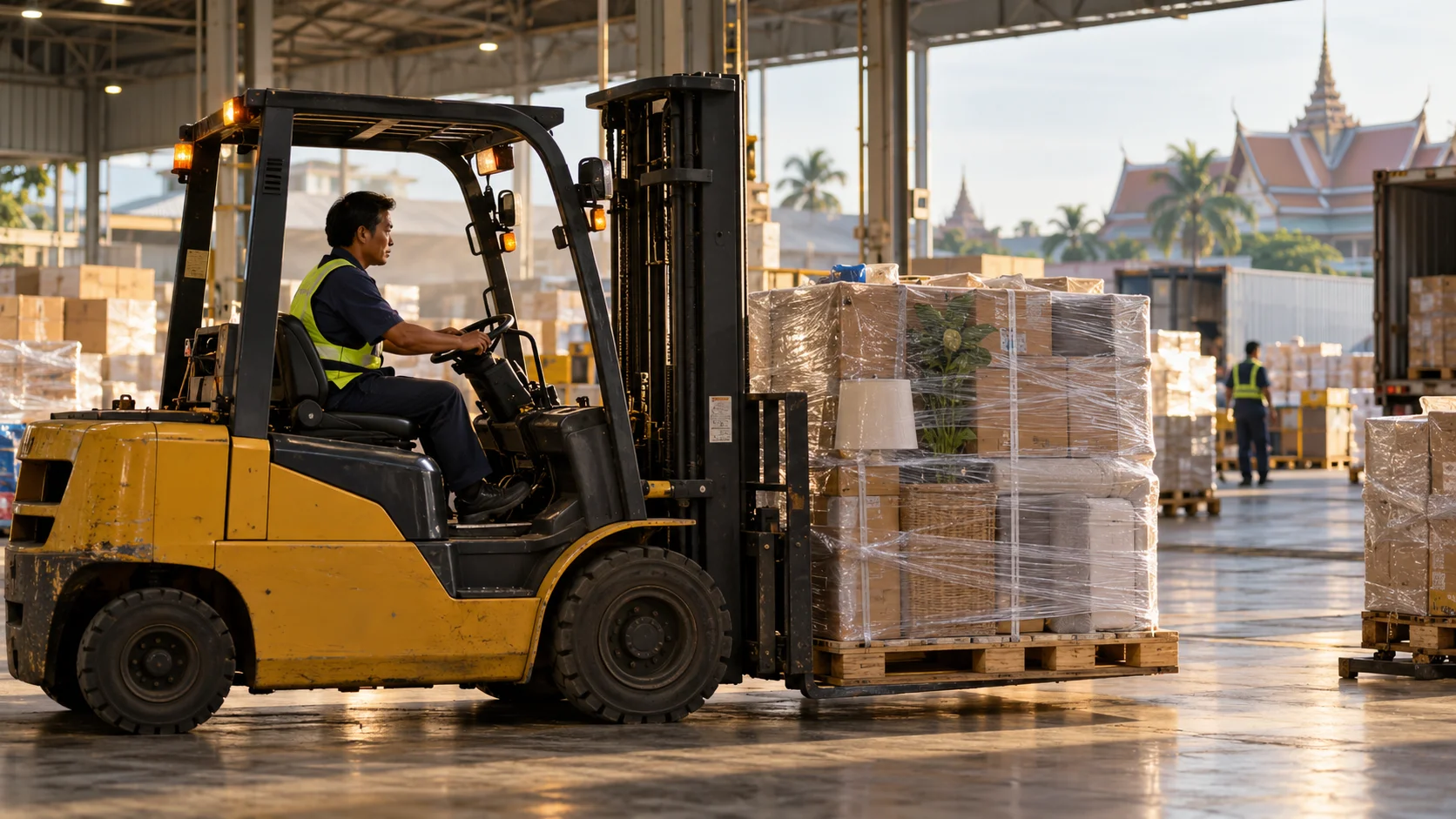
Thai Customs allows returning Thais and qualifying foreign nationals to import used household effects free of duty and tax, but the conditions are specific and enforced:
- Visa status: you need a non-immigrant visa with a stay of one year or longer. Non-Immigrant B and LTR visas generally qualify; tourist visas and visa-exempt entries never do. Non-Immigrant O for retirement is the exception worth flagging: Thailand’s official relocation criteria excludes retirement-visa entrants from the standard qualifying list, so that route does not qualify for duty-free entry.
- Ownership and use: goods must have been owned and used by you before the move. This is the rule that kills brand-new purchases; more below.
- The six-month window: your shipment must arrive in Thailand no earlier than one month before you and no later than six months after your own arrival. Given a nine-to-eleven-week door-to-door timeline from Ireland, this is comfortable, but only if you do not dispatch the container months before your visa situation is settled.
- One shipment each way: one sea consignment and one air consignment per person qualify. Consolidate; do not drip-feed boxes.
You will need your passport, visa evidence, a detailed packing list in English, and the bill of lading. Reasonable quantities of used furniture, clothing, books, kitchenware and one unit of most electrical appliances per household sail through. Duty on anything that fails the test is charged on the customs value, and electronics and new goods attract real money. Our standalone guide to duty-free import into Thailand covers the edge cases in detail.
What not to ship from Ireland
Every origin country has its signature packing mistakes. These are Ireland’s.
The whiskey collection. This one hurts, and we have the conversation several times a year. Thailand permits one litre of alcohol per arriving adult, carried with you. Alcohol packed inside a household shipment does not qualify as personal effects, and Thai excise on spirits is severe: duty, excise and VAT stacked together can exceed what you paid for the bottle, and undeclared alcohol found at inspection invites fines and clearance delays for the whole container. A cellar of Midleton, Redbreast and Dingle single malts is, in customs terms, a smuggling risk sitting on top of your sofa. Sell it, gift it to the friends helping you pack, or put it in storage in Ireland, which, as we will see, you may want anyway.
Peat, turf and anything that grew. Briquettes for nostalgia, a bag of Irish garden compost for the balcony herbs, seed potatoes, bulbs, that bodhrán with the untreated hide is fine but the sod of turf from the home place is not. Thailand’s plant quarantine rules restrict soil, growing media and plant material, and peat products are exactly that. Biosecurity inspection of one flagged item can hold an entire consignment. Dried, sealed, commercially packaged foods are generally tolerated in modest quantities; anything living, soil-based or of animal origin is not worth the gamble.
New goods in original packaging. The ownership-and-use rule means a brand-new appliance in its sealed OEM box is, by definition, not a used personal effect. Inspectors look for exactly this. If you buy new things for the Thai house, either buy them in Thailand (electronics and furniture are plentiful and often cheaper) or unbox them, use them for a while, and ship them looking used. Even then, recent-model electronics in quantity draw attention. A shipment that reads as “one household’s genuinely used belongings” clears smoothly. A shipment that reads as “retail stock” does not.
The obvious contraband, briefly: no vapes and e-cigarettes (prohibited in Thailand), no drone without checking licensing, no counterfeit goods, and declare any medication regimes properly, since some routine Irish prescriptions are controlled substances in Thailand.
Plugs and appliances: good news for once
Ireland uses 230V at 50Hz. Thailand uses 220V at 50Hz. Electrically, that difference is trivial: every Irish appliance will run safely on Thai power. Anyone who moved from North America has to junk half their kitchen; you do not.
The catch is the pins. Ireland uses the type G three-pin plug, the same chunky rectangle as the UK. Thai sockets take type A and B (the flat American-style pins), type C (two round European pins) and increasingly the type O hybrid. Your type G plugs fit none of them. The fix costs almost nothing: a bag of adapters in your air luggage for day one, then either replacement plugs fitted locally or good-quality Thai power strips for the desk and the TV cabinet. You do not need voltage converters, and you should check any device with a motor or heating element for a 50Hz rating, which virtually all Irish-market goods have. The only genuine casualty category is anything hard-wired for the Irish market, like electric showers, which stay behind with the house.
LCL or FCL: how much are you actually shipping?
The volume question drives everything else. Two options:
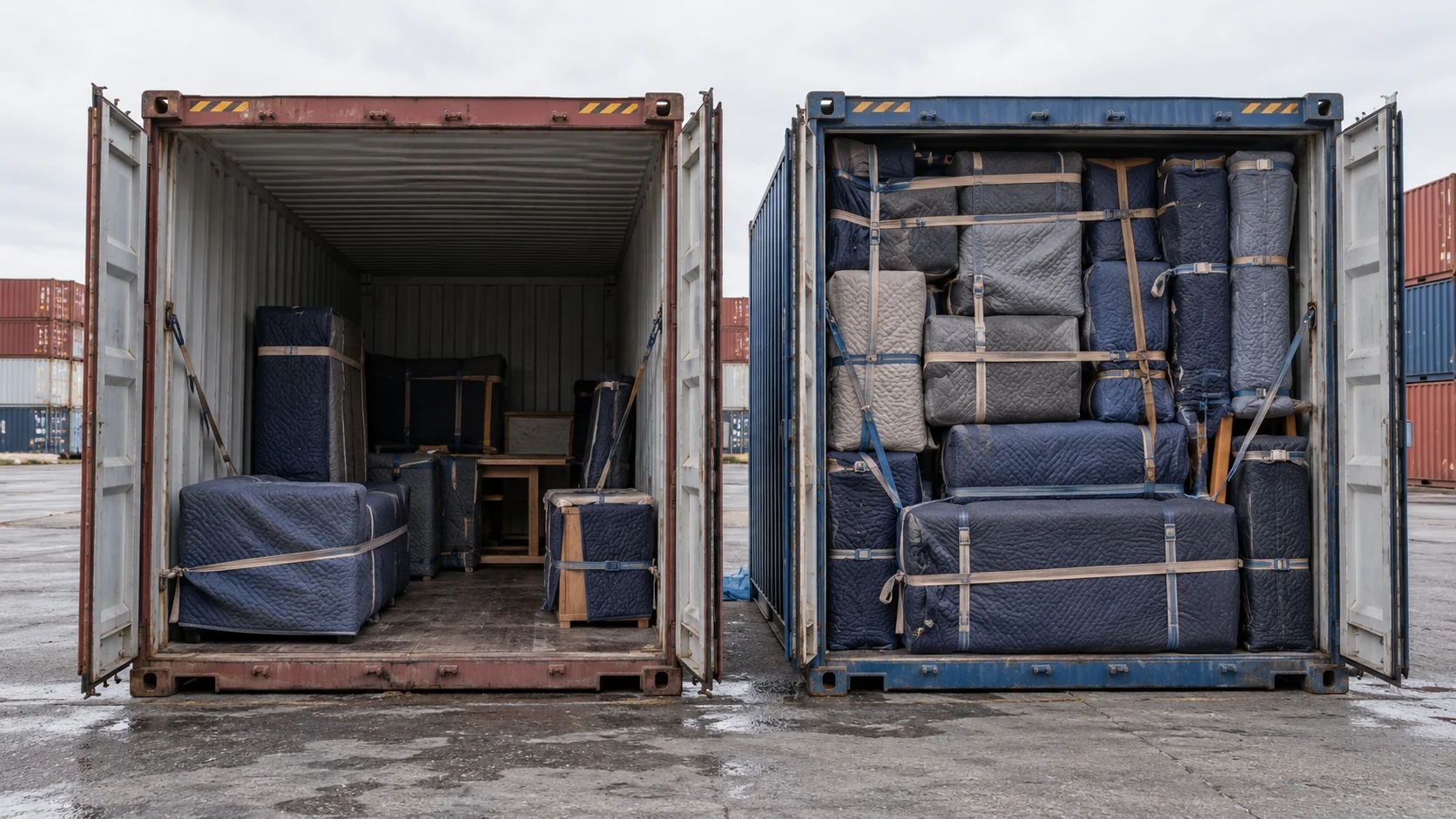
LCL (less than container load / groupage): your effects are professionally packed, wrapped and consolidated with other customers’ cargo in a shared container. You pay per cubic metre. Right for anyone shipping roughly 1 to 12 cbm: a one-bed flat’s meaningful contents, or a curated selection from a bigger house. Slower (consolidation adds time at both ends) and with more handling, but dramatically cheaper at small volumes.
FCL (full container load): a 20ft container (about 28-30 cbm usable) or 40ft (about 58-65 cbm) is yours alone, loaded at your Irish address, sealed, and opened at Thai customs. A 20ft suits a typical two-to-three-bed home; a 40ft swallows a large four-bed house including bulky furniture. Faster, one seal from door to door, and at larger volumes cheaper per cube than LCL.
The crossover sits around 12-15 cbm: above that, price a 20ft container before committing to LCL. And be ruthless about what earns its place. At LCL rates, that IKEA wardrobe costs more to ship than to rebuy in Bangkok.
What it costs: EUR guide rates, Dublin to Laem Chabang
Indicative 2026 door-to-door budget figures for a professionally packed move from the Dublin area to the Bangkok/Laem Chabang region. Treat them as planning numbers, not quotes: rates move with season, fuel and capacity.
| Shipment size | Typical contents | Door-to-door estimate (EUR) | Typical door-to-door time |
|---|---|---|---|
| LCL 1-2 cbm | Boxes only: books, clothes, kitchenware | €1,100-€1,600 | 10-12 weeks |
| LCL 3-5 cbm | One-bed flat essentials, small furniture | €1,700-€2,800 | 10-12 weeks |
| LCL 6-10 cbm | Two-bed apartment, selective | €2,900-€4,300 | 10-12 weeks |
| 20ft FCL | Two-to-three-bed house | €4,800-€6,600 | 9-11 weeks |
| 40ft FCL | Large four-bed house | €6,500-€9,000 | 9-11 weeks |
| Air freight, per 100 kg | Immediate-needs box | €550-€850 | 5-10 days |
A worked example. Take a couple leaving a two-bed house in Rathmines for a condo in On Nut, Bangkok. They declutter hard and land on a 20ft container. Origin packing and wrapping, collection, Dublin port charges and export formalities: about €1,900. Feeder to Rotterdam plus ocean freight via the Cape to Laem Chabang: about €2,600. Thai destination charges, customs clearance under the duty-free personal effects allowance, delivery and unpacking in Bangkok: about €1,400. Total roughly €5,900. They add marine insurance, 2.5% of a declared value of €30,000, which comes to €750, and a 100 kg air-freight box of immediate essentials at €700. All-in relocation freight budget: about €7,350, with belongings landing in week ten. Compare that against our broader cost guide for moving from Europe to Thailand and you will see the Irish feeder premium of roughly €300-€600 over a continental origin: the price of living on the island before the island.
Two line items people forget: insurance (2-3% of declared value; with three vessel transfers on this route, buy it) and Thai condo access charges (many Bangkok buildings require booked lift access and sometimes fees for move-ins, and a delivery crew turned away at the lobby is a paid re-delivery).
Visas: what gets you the duty-free door
Your visa is not just permission to live in Thailand; it is the key that unlocks the personal-effects allowance for most routes below; retirement and marriage-based entry are the exceptions and do not qualify. The main routes for Irish nationals:
- Non-Immigrant O: the workhorse, covering retirement (50+, with financial requirements of 800,000 THB in a Thai bank or equivalent income), marriage to a Thai national, or dependants. Both the retirement and marriage routes fall outside Thailand’s standard duty-free relocation list and do not qualify. Typically issued for 90 days and extended in-country to one year, renewable.
- Non-Immigrant B: employment or business, sponsored by a Thai employer, paired with a work permit.
- LTR (Long-Term Resident): the 10-year visa for wealthy pensioners, remote workers employed by substantial foreign companies, and high-skilled professionals. Higher bar, but excellent for freight purposes: a decade-long stay with clear documentation makes the duty-free case unambiguous, and LTR holders get streamlined immigration handling.
- DTV (Destination Thailand Visa): the five-year multi-entry visa for remote workers. It is flexible for living, but each stay is limited to 180 days, and it sits awkwardly with the household-goods concession; take advice before relying on it for a full container.
The sequencing rule that follows: secure the visa before you dispatch the container. The shipment must clear customs while your qualifying status is provable, and it must land inside the six-month window after your arrival. Visa first, flights second, freight third.
The returning-home question: maybe don’t ship everything
This is a pattern in the data that Irish clients recognise the moment it is said out loud: an awful lot of Irish emigrants come home. The tradition of emigration-and-return is practically a national institution, and Thailand moves are often framed from day one as a five-year plan: the Bangkok posting, the retirement trial run, the years-abroad adventure before the kids start school in Ireland.
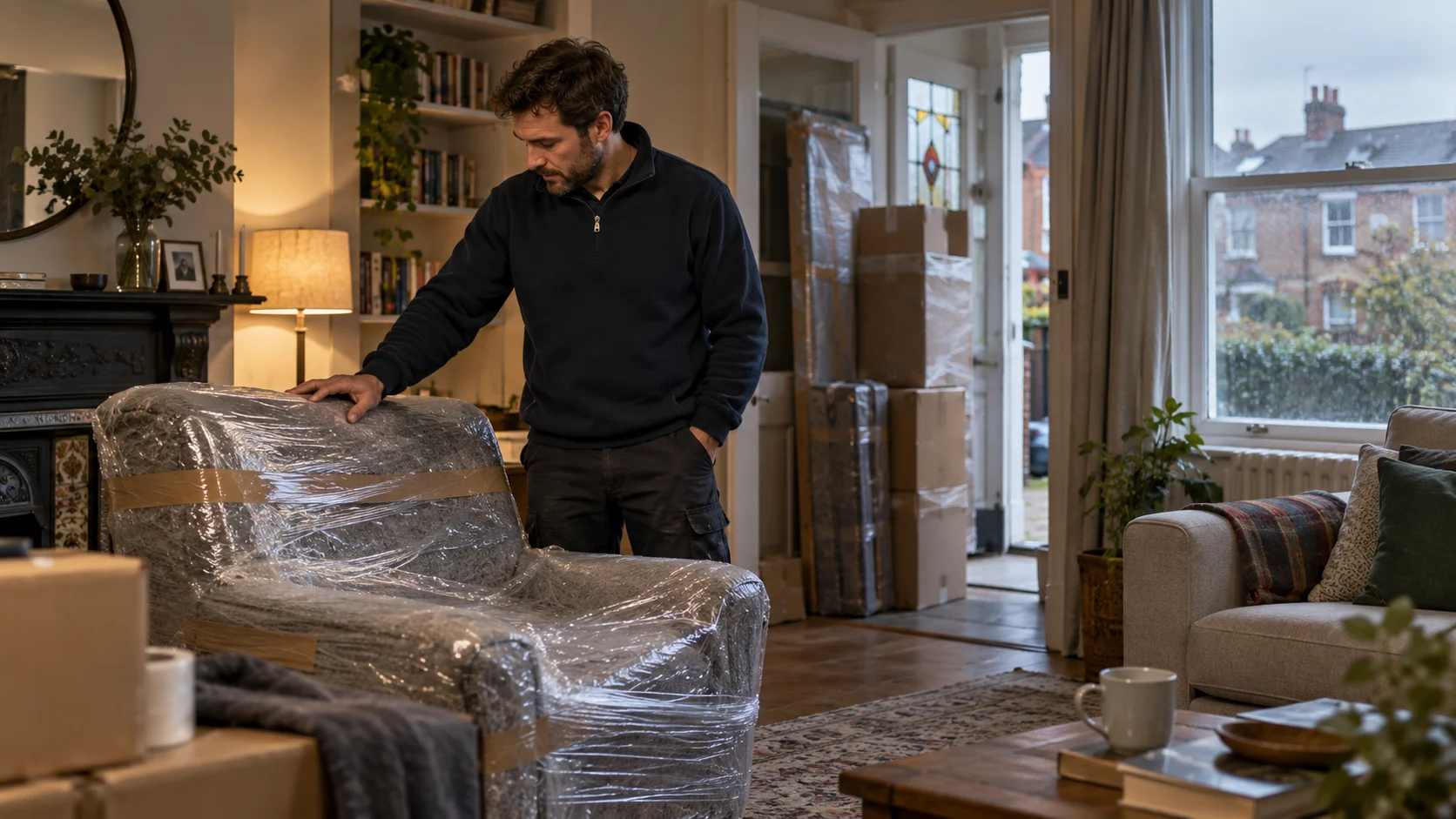
If there is a realistic chance you will move back, run the arithmetic both ways. Shipping a 20ft container out and back is €10,000-€13,000 across the two moves, plus the risk and hassle, and on the return leg your goods face Irish/EU import formalities (transfer-of-residence relief exists, with its own conditions). Long-term storage in Ireland runs perhaps €80-€150 a month for a household’s worth. Over three years, storage plus a lean 3-5 cbm LCL shipment to Thailand frequently beats hauling the full house across the planet twice, especially given how affordable furniture and appliances are in Thailand.
The hybrid most returning-minded clients settle on: store the furniture with meaning and value (the good oak table, the piano, the paintings), sell the replaceable bulk, and ship a tight LCL consignment of the things that make a Thai apartment feel like yours. Your future self, reading a re-import packing list in a Cork kitchen in 2031, will be grateful.
Five mistakes Irish movers make, and the sequence that avoids them
Mistake 1: The Whiskey in the Wardrobe. Packing alcohol, or letting the packers find the drinks cabinet still full on packing day. Named after the client who “forgot” a case of Green Spot inside a shipped wardrobe and spent three weeks and a painful excise assessment getting the container released. Empty the drinks cabinet before the crew arrives.
Mistake 2: The Backwards Booking. Booking the container for the week after the house sale closes, before the Thai visa is issued. If the visa slips, the shipment arrives before you hold qualifying status, and the duty-free allowance is at risk. Visa, then flights, then freight. Always that order.
Mistake 3: The Suez Schedule. Planning around a 30-35 day transit remembered from a friend’s move in 2019, then signing a Bangkok lease that starts “when the furniture lands.” Via the Cape, with two feeder legs, it is 45-55 days on the water and nine-to-eleven weeks door to door. Book furnished temporary accommodation for the gap and treat an early arrival as a bonus.
Mistake 4: The Phantom Taxpayer. Leaving without notifying Revenue, losing the split-year refund, then discovering two years later that the rented-out house in Ireland has been quietly accruing an undeclared tax liability, now managed from seven time zones away with a defunct Irish mobile number blocking every login. Do the Revenue admin, and update every two-factor contact detail, before the flight.
Mistake 5: The Retail Refit. Buying a houseful of new appliances and furniture in the Kildare Village sales “because it’s cheaper than Bangkok” and shipping it all in factory packaging. It is not cheaper once Thai duty is applied to goods that fail the ownership-and-use test, and it flags the whole container for inspection. Used goods go in the container; new purchases happen in Thailand.
The correct sequence, in one paragraph: Decide your visa route and apply (months 1-2). Notify Revenue, sort healthcare cover, bank and PPS-linked admin (month 2). Declutter, decide ship-store-sell, and get surveys and quotes (month 2-3). Book the move for after your visa is in hand. Pack-out and dispatch (month 3-4). Fly. Live out of the air shipment for eight or nine weeks. Receive the container inside the six-month window, clear duty free, unpack. In that order, the whole thing is boring, which is exactly what a good international move should be. For the mechanics of how Swift Cargo runs that sequence end to end, see our Thailand shipping process.
Related Reading
- Moving from the UK to Thailand: the complete guide (much of the type-G-plug, customs and visa detail overlaps; the routing does not).
- Shipping from Europe to Thailand: routes, hubs and transit times
- Thailand duty-free import rules for household goods
- What it costs to move from Europe to Thailand
- Shipping delays and your Thailand relocation: how to plan around them
- Thailand Relocation Guide 2026
Frequently Asked Questions
How long does shipping from Ireland to Thailand take?
Plan for 45 to 55 days port to port and nine to eleven weeks door to door. Irish cargo travels by feeder from Dublin or Cork to a hub such as Rotterdam or Southampton, then joins a deep-sea service routing around the Cape of Good Hope, which adds 10-14 days versus the old Suez timings.
Can I import my household goods into Thailand duty free?
Generally yes on a Non-Immigrant B or LTR visa, if the goods have been owned and used before the move and the shipment arrives within six months of your own arrival. Retirement-based Non-Immigrant O is the exception: Thailand’s official relocation criteria excludes it from the standard list, so it does not qualify. One sea and one air shipment per person qualify.
Should my shipment route through the UK or stay in the EU?
A feeder to Rotterdam or Antwerp keeps goods in EU customs territory until they board the deep-sea vessel. Routing via Southampton or Felixstowe means transiting GB, which post-Brexit requires transit declarations. Both are fine when professionally handled; ask your forwarder which routing your quote assumes and who manages the transit paperwork.
How much does it cost to move from Ireland to Thailand?
As a euro guide: 3 cbm LCL around €1,700-€2,400 door to door, a 20ft container €4,800-€6,600, a 40ft €6,500-€9,000. Irish origins carry a feeder premium of roughly €300-€600 over continental quotes. Add 2-3% of declared value for marine insurance.
Can I bring my whiskey collection to Thailand?
Realistically no. Thailand allows one litre of alcohol per arriving adult, alcohol in a household shipment does not count as personal effects, and Thai excise on spirits can exceed a bottle’s retail value. Sell, gift or store the collection in Ireland.
Do Irish plugs and appliances work in Thailand?
Appliances yes, plugs no. Ireland (230V/50Hz) and Thailand (220V/50Hz) are voltage compatible, so everything runs safely, but Irish type G plugs do not fit Thai type A, B, C or O sockets. Bring adapters and buy Thai power strips; you do not need voltage converters.