
A delayed shipment is not one problem. It is five different problems that each require a different response, a different contact, and a different timeline to resolve. The importer who treats “my shipment is late” as a single undifferentiated event (and rings the supplier in Guangzhou to ask where the container is) loses 48 hours before anyone useful is involved. Import shipment delays in Australia split into five types, and the first job is working out which one you have.
The Five Types of Shipment Delay (and Why They Matter)
Identifying which of the five types you are dealing with determines who can resolve it and how fast.
Type 1. Vessel or carrier delay: The shipping line has delayed the vessel’s departure, missed a port call, or rerouted the vessel. This is the most visible delay. It shows on the shipping line’s vessel schedule and your freight forwarder can confirm it within hours. Transit time from China to the Australian east coast runs 12–18 days; a vessel delay of 3–5 days is common and expected. For Europe-origin shipments via the Cape of Good Hope, the transit is 38–48 days. A 3-day vessel delay is proportionally less disruptive but still needs to be tracked.
Type 2. Port congestion delay: The vessel has arrived but the container cannot be discharged or moved from the terminal because the port is congested. Major Australian ports (Port Botany, Fremantle, Melbourne’s Webb Dock) operate under variable productivity levels. During Q3–Q4 peak season or following industrial action, terminal dwell times extend and the queue for collection extends accordingly. Port congestion delays are not caused by the importer, the carrier, or the goods, but the importer bears the cost if containers wait on-port past the free period.
Type 3. Australian Border Force / customs hold: ABF has placed a hold on the container or consignment pending documentary verification or physical examination. This can be triggered by: a risk-flagged commodity (certain electronics, food, chemicals); a discrepancy between the shipping documents and the import declaration; a compliance history issue with the importer; or random examination selection. The customs hold is separate from biosecurity and must be resolved through ABF channels.
Type 4. DAFF biosecurity hold: The Department of Agriculture, Fisheries and Forestry (DAFF) has selected the container for biosecurity examination. This is the most common cause of delays that importers cannot predict or control in advance. DAFF holds can be triggered by: the type of goods (timber, plant products, soil-exposed machinery, animal-origin products); the origin country; the packing material (timber dunnage, crating); or random selection under the biosecurity risk matrix.
Type 5. Documentation or declaration error: Your customs entry, commercial invoice, packing list, or certificate of origin contains an error or omission that prevents the goods from being released. This is the only delay type that the importer can typically resolve faster than a port or government agency, if they act immediately to obtain the corrected documents.

Immediate Response: The First 24 Hours
When your forwarder or tracking system shows the shipment has not arrived as scheduled, or when you receive a notification that the container is on hold, the first 24 hours determine how quickly and cheaply the delay is resolved.
Step 1: Confirm delay type with your forwarder. Email or call your freight forwarder with the bill of lading number, container number (if known), and the expected arrival date. Ask specifically: “What is the current status and what is holding the release?” A competent forwarder will have the answer or the answer in progress within 2–4 hours. If your forwarder cannot tell you the delay type within 24 hours, that is a performance issue to address separately.
Step 2: Get the timeline estimate for the delay. Once you know the delay type, ask for a realistic resolution timeline. Carrier delays have predictable timelines (the revised vessel ETA from the shipping line). Customs holds have unpredictable but estimable timelines (1–3 days for a standard documentary check, 5–10 days for a physical examination). Documentation errors have timelines that depend on how quickly you can obtain corrected documents from your supplier.
Step 3: Identify the demurrage clock start date. Ask your forwarder: “When does the free time period expire and what is the daily demurrage rate?” Free time varies by carrier. Most Australian importers have 5 working days from wharf availability. Once you know the clock start, you can calculate the exposure. At AUD 150 per container per day (a mid-market rate), a 10-day delay past free time costs AUD 1,500, not catastrophic on a commercial FCL shipment, but compounding if the delay continues.
Step 4: Inform your supply chain. If the delay affects production or customer orders, internal and external stakeholders need to know within 24–48 hours, not when the delay has already caused a missed commitment. A 5-day warning gives a production planner options. A 0-day warning gives them none.
Responding to a Carrier or Vessel Delay
Carrier delays are the least actionable from the importer’s perspective. The vessel schedule is the carrier’s responsibility and the importer has limited leverage. The correct response is:
Monitor the revised ETA actively. Shipping line vessel tracking systems update in real time. Your forwarder should be monitoring and pushing you an ETA update daily once the vessel is within 5 days of Australian port arrival.
Notify the port depot of the revised arrival. If you have booked container transport (cartage) from the port, your transport provider needs the revised ETA to rebook. If the vessel has been delayed more than 3 days, the original cartage booking may no longer be valid. Confirm with your transport provider.
Check whether carrier liability applies. Shipping lines include delay liability exclusions in their standard bill of lading terms. Vessel delays caused by weather, port congestion, or operational decisions are generally excluded from carrier liability. The Hague-Visby Rules do not create liability for delay, only for loss or physical damage to goods. In practice, you cannot claim the cost of a vessel delay from the carrier unless the delay was caused by the carrier’s negligence in a way that is demonstrable and material.
Consider air freight for urgent partial shipments. If the delayed goods include a high-priority component needed for production or a customer commitment, consider whether a partial urgent reorder by air freight is more cost-effective than waiting. The cost comparison: air freight AUD 8–15/kg from China to Australia east coast; sea freight AUD 0.30–0.80/kg. For a 50 kg urgent component worth AUD 5,000, the air premium of AUD 350–700 may be justified against a customer penalty or production shutdown cost.
Responding to a Port Congestion Delay
Port congestion is systemic. It cannot be resolved by any individual importer acting alone. The response is cost management, not resolution.
Request a free time extension from the shipping line. During declared port congestion events, some Australian shipping line agents will grant free time extensions of 2–5 days on request. This is not guaranteed, but it costs nothing to request. Email the shipping line’s Australian agent (not the global carrier’s customer service) with your container number and a brief statement that the delay is port congestion. If granted, get the extension confirmed in writing.
Prioritise documentation so you can move the container the moment it is available. Port congestion delays are often followed by a surge of container releases as the congestion clears. Importers who have their customs entry and DAFF biosecurity documentation pre-lodged are positioned to collect containers immediately on release. Importers who start their documentation after the container is available lose a further 1–3 days to declaration and clearance processing.
Arrange overnight or weekend collection with your transport provider. Australian ports have extended operating hours and some offer weekend pickup during congestion periods. Pre-booking a confirmed pickup slot (including an out-of-hours option) positions you for the fastest possible departure once the container is released.
Responding to an ABF Customs Hold
An Australian Border Force customs hold is a formal intervention and must be treated as such. The contact protocol:
Contact your licensed customs broker immediately. Your broker has access to the ABF Integrated Cargo System (ICS) and can view the exact reason for the hold. They can also lodge responses and queries through the ICS channels that are not available to importers directly. If you do not have a broker and filed your own import declaration, you can contact ABF directly on 1300 558 286, but the process is slower without ICS access.
Identify the basis for the hold. Common ABF hold triggers: (a) documentation discrepancy, a difference between the import declaration values and the shipping documents; (b) goods subject to import prohibition or permit requirement; (c) suspected customs value understatement; (d) anti-dumping duty liability check; (e) random selection under ABF risk profiling.
For documentation discrepancy holds: the broker can typically resolve these with a declaration amendment and supporting document upload (1–3 working days for standard amendments). Do not attempt to correct a duty value after ABF has already raised a query without seeking advice. Voluntary disclosure before a query is treated differently from a correction made in response to ABF scrutiny.
For permit-required goods: if your goods require an import permit (firearms, certain chemicals, therapeutic goods, certain food items) and the permit was not obtained before importation, the ABF hold cannot be resolved until the permit is obtained or the goods are re-exported. Obtaining a permit post-arrival is possible for some goods categories but adds weeks to the clearance timeline. This situation is preventable with pre-import commodity research. The ABF prohibited goods list should be reviewed before every new product category is imported.
Responding to a DAFF Biosecurity Hold
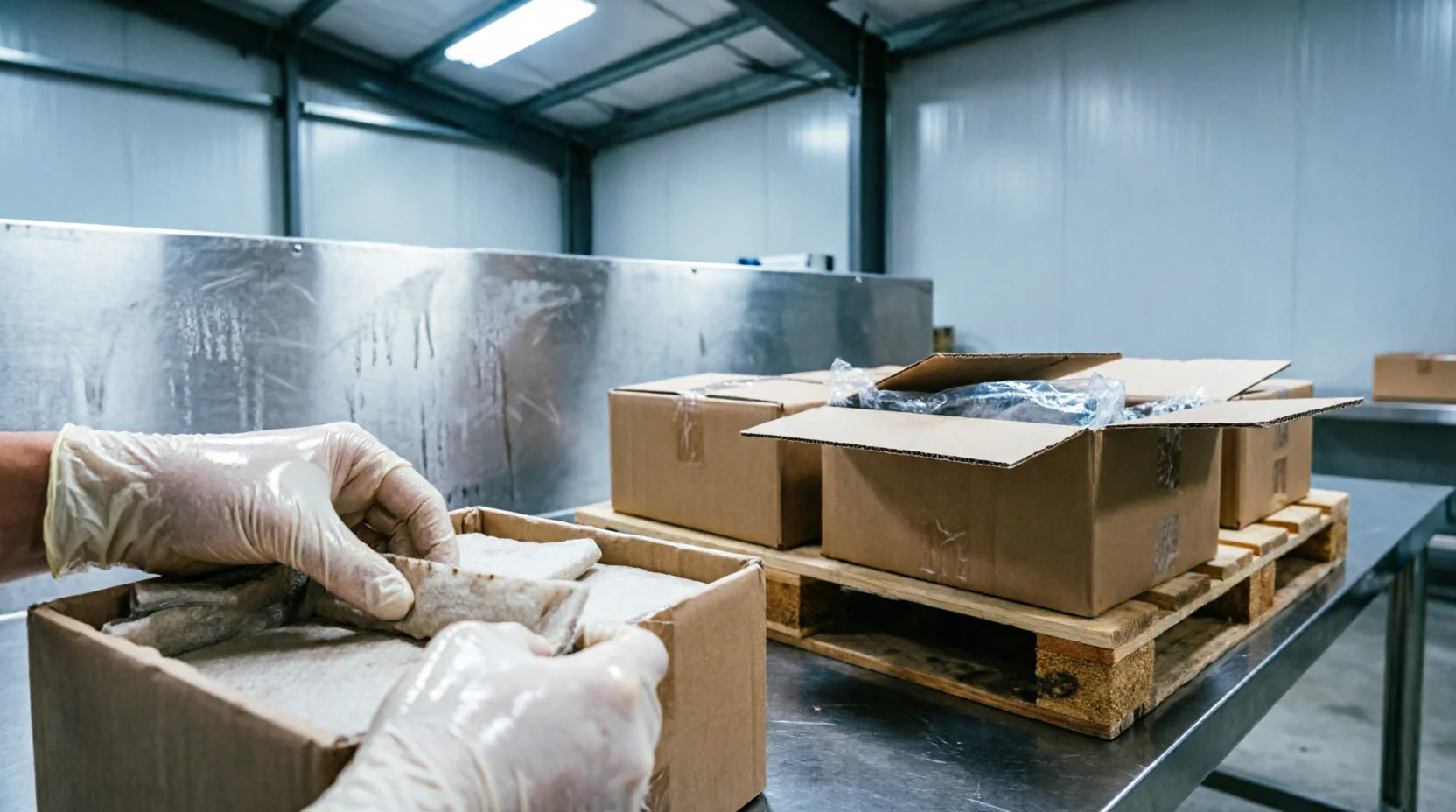
DAFF biosecurity holds are the most process-intensive delay type. The response sequence:
Confirm the DAFF hold with your broker and obtain the DAFF Direction or Notice. DAFF issues a direction to the importer (or their broker) specifying what examination or treatment is required. Read this direction carefully. It specifies whether the hold is (a) documentary only, (b) requires a physical inspection, or (c) requires treatment.
For documentary holds (most common for food, chemicals, plant products): DAFF needs to verify biosecurity-relevant certificates: phytosanitary certificates, HACCP certification for food, treatment certificates. If these were not lodged with the import documentation, your broker can upload them through the Integrated Cargo System. Typical resolution time: 1–3 working days.
For physical inspection: DAFF will arrange an inspection at the port container examination facility or at an approved biosecurity site. The cost is AUD 100–300 for the DAFF officer’s attendance plus any facility fees charged by the port. Typical resolution time: 3–7 working days including scheduling lag.
For treatment required (ISPM 15 timber packaging failure is the most common): An approved treatment provider must fumigate the container with methyl bromide or provide an alternative approved treatment. Treatment provider costs: AUD 200–600 for fumigation of a standard 20ft container. Total delay including treatment, re-inspection, and clearance resubmission: 5–12 working days. During treatment, the container remains on-port and demurrage continues to accrue.
Prevention of ISPM 15 treatment holds: require all suppliers to confirm that timber packaging (pallets, crating, dunnage) complies with ISPM 15: heat treated (HT mark) or fumigated (MB mark) with approved treatment. Make this a purchase order condition rather than a post-arrival verification. One ISPM 15 failure costs AUD 200–600 in treatment plus AUD 150–300/day in demurrage during treatment. Over a 12-month import program, one preventable treatment event per quarter costs AUD 1,400–3,600, compared to zero additional cost for requiring ISPM 15 compliance in the PO. Of all import shipment delays in Australia, ISPM 15 treatment holds are among the easiest to design out at the purchase order stage.
Responding to a Documentation Error
Documentation errors are the most preventable delay type and also the fastest to resolve if action is taken immediately. The response protocol:
Identify the specific error. Your broker will identify the discrepancy. Typically: wrong HS code declared, unit quantity or weight mismatch between invoice and packing list, value declared incorrectly (CIF vs FOB), missing or expired certificate (origin, phytosanitary, ACMA), or import declaration lodged to the wrong entity (wrong ABN).
Obtain corrected documents from the supplier immediately. For invoice or packing list errors, contact the supplier by phone (not email) and request the corrected document within 2 hours if the shipment is at the Australian port. A supplier who takes 48 hours to issue a corrected invoice while demurrage is accruing is costing you AUD 300–600 in port charges. This is worth escalating to the supplier’s management if the junior contact cannot produce the document promptly.
Lodge the amendment through your broker. ABF declaration amendments for value corrections and document additions are processed through the ICS. Standard processing time for a simple amendment: 24–48 hours. For amendments involving duty recalculation (wrong HS code with different duty rate), the processing time may extend to 3–5 working days while ABF assesses the correct classification.
Know which errors cannot be amended. An import declaration for prohibited goods cannot be amended to make the goods legal. The goods must be re-exported or destroyed. An import declaration with a false statement about the nature, origin, or value of goods is not corrected by an amendment. It may constitute a false declaration offence under the Customs Act 1901. For any documentation error that involves a possible customs value dispute or description misrepresentation, seek advice from your broker before lodging an amendment that may be treated as an admission.
Managing Demurrage and Detention Costs
Demurrage and detention are the cost clock that runs in parallel with every delay. The faster you understand and manage these charges, the smaller the bill.
Demurrage rates by Australian port and carrier (typical range, mid-2026):
- Free time at port: 3–5 working days from wharf availability (varies by carrier and terminal)
- Demurrage days 1–5 after free time: AUD 80–150/TEU/day
- Demurrage days 6–10: AUD 150–250/TEU/day (escalating tier common among major carriers)
- Demurrage days 11+: AUD 250–400/TEU/day at many carriers
Cost example, 15-day DAFF treatment delay: Free time: 5 days. DAFF examination + treatment + re-inspection + clearance: 12 working days. Days past free time: 7. Demurrage at mid-tier rates (AUD 80 days 1–5, AUD 150 days 6–7): (5 × AUD 80) + (2 × AUD 150) = AUD 400 + AUD 300 = AUD 700. Plus DAFF inspection and treatment cost: AUD 400. Total delay cost on one container: AUD 1,100, from a preventable ISPM 15 compliance failure.
Requesting demurrage waiver or credit: If the delay was caused by a carrier vessel delay (not the importer’s actions), it is reasonable to request a demurrage waiver for the days of delay caused by the carrier’s late arrival. Many carriers will waive demurrage for the period corresponding to vessel delay on request, but you must ask, with documentation of the vessel ETA versus actual arrival date. Carriers do not proactively waive demurrage; you must initiate the request.
Detention management: Once you collect the container and begin unpacking, return the empty container to the nominated container park within the free return period. Track the empty return deadline on the day you collect the container. Detention charges for late empty return are typically the same rate as demurrage (AUD 80–250/day), and are charged directly by the shipping line against your credit account.
Communicating During a Delay
Delay management is as much a communication task as a logistics task. Stakeholders who receive no information during a delay make assumptions, usually the worst possible ones.
Every delay this guide describes eventually produces two competing accounts: the one the carrier or broker gives when asked directly, and the one the tracking data and timestamps actually show. They rarely match exactly, and the gap between them is not usually deception. It is closer to institutional habit: a customer service desk trained to say “processing” long after the real cause is known internally, because “processing” requires no further explanation and no escalation. The importers who manage delays best are the ones who ask a second, more specific question when the first answer is vague, and who keep their own written timeline of what they were told and when. That timeline is what turns a disputed demurrage waiver request from a feeling into a documented case a carrier’s claims desk cannot easily wave off.
Customer communication: If the delay will affect a committed delivery date, notify the customer within 24 hours of confirming the delay. Provide: (a) the new expected date with a confidence range (“we expect delivery between 15 and 18 July, most likely 16 July”); (b) the cause (at a level of detail appropriate for the customer relationship); (c) what you are doing to minimise the delay. Do not wait until you have certainty about the new date. Customers who receive timely uncertain information are easier to manage than customers who receive late certain information.
Internal production/operations communication: Notify your production planner, warehouse manager, or inventory team of the revised delivery date as soon as you have a first estimate. A 5-day warning gives them options; a 0-day warning forces reactive decisions.
Supplier communication: Contact the origin supplier if the delay involves documentation that the supplier must correct or provide. Be specific about what you need and by when. “Please send a corrected commercial invoice (the description must read ‘polypropylene safety helmets AS/NZS 1801’ not ‘hard hats’ and the declared value must be in AUD, not CNY) within 2 hours.” Vague requests to suppliers produce vague responses.
What Cargo Insurance Covers (and Does Not Cover) During a Delay
A common misunderstanding among Australian importers is that cargo insurance covers business losses caused by a delayed shipment. Standard ICC cargo insurance does not.
Under Institute Cargo Clauses (A), the broadest standard coverage, Clause 4.5 explicitly excludes: “loss, damage or expense caused by delay, even though the delay be caused by a risk insured against.” This means that if your goods are physically damaged during transit AND delayed, the insurance covers the physical damage but not the financial losses caused by the delay.
The following losses from delays are typically NOT covered by standard cargo insurance:
- Demurrage and detention charges
- Lost sales revenue from missed delivery windows
- Customer penalty clauses triggered by late delivery
- Production shutdown costs from missing components
- Expediting costs (premium air freight to partially substitute for delayed sea freight)
Businesses with significant exposure to delay-related losses (particularly those with tight production schedules or customers with contractual delivery penalty clauses) should discuss contingency freight insurance or trade credit insurance with a specialist broker. These products are separate from standard cargo insurance and require individual underwriting based on the specific business risk.
Swift Cargo manages cargo insurance and maintains relationships with marine insurance specialists as part of the freight program for commercial importers. Visit swiftcargo.solutions/australia to discuss how your freight program can be structured to minimise delay exposure and insurance gaps.
Handling Import Shipment Delays in Australia
Confirm the delay type with your forwarder, get a resolution timeline, and find the date free time expires, which for most importers is 5 working days from wharf availability. Then warn customers and your production team within 24 to 48 hours, keep a written timeline of what you were told, and remember that standard cargo insurance does not cover delay losses.
Frequently Asked Questions
Who do I contact first when my shipment is delayed in Australia?
Your first call is to your freight forwarder or customs broker. They have access to the tracking systems, port records, and carrier communications that you do not, and they can identify the specific delay type within 30–60 minutes in most cases. If you do not have a forwarder (for example, you are using a supplier-arranged FOB shipment), contact the shipping line’s Australian agent directly with your bill of lading number. Do not contact the origin supplier about a delay until you have confirmed the delay type with your forwarder, as suppliers cannot resolve Australian customs or port issues from the other end of the supply chain.
What is the difference between demurrage and detention?
Demurrage is the charge applied when a container remains on the port terminal beyond the free time period, typically 3–5 working days after vessel arrival. It applies at the terminal and is charged by the shipping line (or their Australian agent) at rates of AUD 80–300 per container per day depending on the carrier and container size. Detention is the separate charge applied when you take the container off-port but do not return the empty box to the container park within the free return period, also typically 3–5 working days. Both charges accrue independently and can accumulate simultaneously if a container was both delayed on-port and then not returned promptly after unpacking. Shipping line free time periods and charge rates differ by carrier. Check the specific tariff for your shipment.
Does my cargo insurance cover losses caused by shipping delays?
Standard cargo insurance under ICC-A All Risk, ICC-B, and ICC-C does not cover financial losses caused by delay, including missed sale windows, lost contracts, demurrage costs, or customer penalties. The ICC clauses explicitly exclude delay losses under Institute Cargo Clauses (A), Clause 4.5: ‘loss, damage or expense caused by delay, even though the delay be caused by a risk insured against.’ If your business relies on just-in-time inventory or has penalty clauses with customers for late delivery, you need a separate business interruption or contingency freight policy, not a standard cargo insurance policy. Confirm coverage scope with your insurer or broker before assuming delay losses are covered.
How long does a DAFF biosecurity examination take in Australia?
A standard DAFF (Department of Agriculture, Fisheries and Forestry) documentary examination typically takes 1–3 working days. A physical inspection (X-ray or container examination) typically takes 3–7 working days. If treatment is required (for example, methyl bromide fumigation for timber packaging that fails ISPM 15 requirements), the treatment itself takes 1–2 days but scheduling the treatment provider and resubmitting for clearance can add a further 2–5 days. In total, a DAFF examination that requires treatment can delay clearance by 5–12 working days and cost AUD 200–800 for the treatment plus the port storage and demurrage that accrues during that period. Goods that present significant biosecurity risk and cannot be treated may be re-exported or destroyed at the importer’s cost.