
Thailand rarely gets the attention China and Vietnam do in Australian import conversations, and that’s a mistake. Two-way trade between the countries sits above A$30 billion a year, Thailand has been running a full free trade agreement with Australia since 2005, and its export manufacturing base (automotive components, processed food, rubber goods, jewellery, homewares) maps neatly onto what Australian businesses actually buy. Better still, most of it enters Australia duty-free if you do the paperwork correctly.
That last clause is where importers get into trouble. Thailand is unusual in that Australian importers can choose between three different free trade agreements (TAFTA, AANZFTA and RCEP) and the wrong choice can cost you the preference entirely. Add food inspection rules for canned goods, ADR questions for automotive parts and biosecurity conditions on rubber and wood,.

What Australia Imports from Thailand
Thailand’s export profile to Australia is broader than most people expect. Passenger vehicles and pickup trucks dominate the headline numbers (Thailand is one of the world’s largest producers of one-tonne utes) but for small and mid-sized importers, the commercial opportunities sit in the categories underneath.
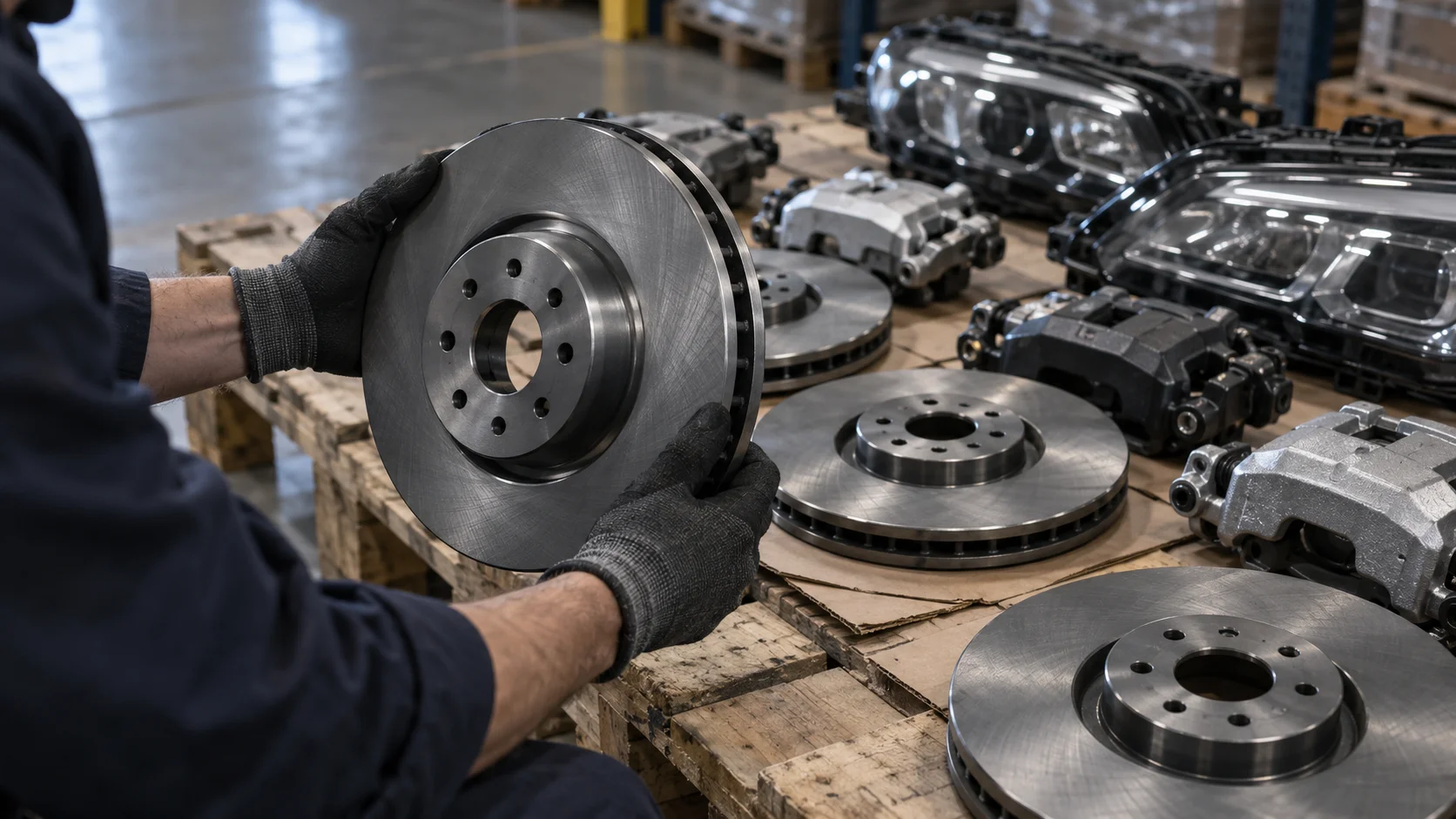
Automotive parts and accessories. Thailand’s vehicle assembly industry has built a deep component supply chain: filters, brake components, wiring harnesses, suspension parts, body panels, bull bars and 4WD accessories. Australian aftermarket retailers and workshops source heavily from Thai manufacturers, often the same factories supplying OEM production lines.
Canned food and seafood. Thailand is one of the world’s largest exporters of canned tuna, and also ships canned fruit, coconut products, sauces, curry pastes and ready meals. Private-label canned goods for Australian grocery and food-service buyers are a mature, well-trodden trade lane.
Rice and food staples. Jasmine (hom mali) rice is the flagship, alongside rice noodles, dried fruit and snack products serving both mainstream retail and Asian grocery channels.
Rubber products. Thailand is the world’s largest natural rubber producer. Gloves, tyres, hoses, seals, mats and latex products all flow into Australia in volume.
Jewellery and gems. Bangkok is a global centre for coloured gemstone cutting and silver jewellery manufacturing. Small consignments by air freight are common in this category.
Homewares and furniture. Ceramics, woven goods, rattan and wood furniture, candles and spa products, often craft-adjacent, mid-price-point goods that differentiate well against mass-produced Chinese equivalents.
TAFTA: The Default Preference Pathway
The Thailand-Australia Free Trade Agreement entered into force on 1 January 2005, making it one of Australia’s older bilateral FTAs. Its tariff schedule is now fully phased in: essentially all Thai-originating goods enter Australia duty-free, and the same applies in reverse for Australian goods entering Thailand (with a small number of Thai-side exceptions). For an Australian importer, TAFTA means the difference between paying the general 5% tariff on most manufactured goods and paying nothing.
Three requirements decide whether your goods qualify. Miss any one and the preference fails.
1. Rules of origin
The goods must be Thai-originating under TAFTA’s rules: either wholly obtained in Thailand (rice grown there, rubber tapped there) or substantially transformed in Thailand according to the product-specific rule for your tariff classification. Most TAFTA rules use a change-in-tariff-classification test, sometimes combined with a regional value content threshold. A Thai factory assembling a product entirely from Chinese components may or may not confer origin depending on the specific rule for that HS code. Ask your supplier where their inputs come from before assuming the preference applies.
2. Certificate of Origin
TAFTA requires a formal Certificate of Origin issued by an authorised body in Thailand: in practice the Thai Ministry of Commerce’s Department of Foreign Trade or the Board of Trade/Thai Chamber of Commerce. This is stricter than Australia’s newer agreements, several of which accept self-declarations by the exporter. Your Thai supplier arranges the certificate; you should receive it with the shipping documents, check the details against the commercial invoice (consignee, invoice number, HS codes, origin criterion), and keep it for five years. The Australian Border Force (ABF) can ask for it in a post-clearance audit long after the goods have cleared.
3. Direct consignment
TAFTA contains a direct consignment rule: the goods must be transported directly from Thailand to Australia. Transhipment through a third country (Singapore being the common one on this lane) is permitted only where the goods remain under customs control and undergo no operations beyond unloading, reloading and preservation. In practice, if your container tranships in Singapore, keep the through bill of lading showing Thailand as origin and Australia as destination, and be prepared to produce a non-manipulation certificate from Singapore customs if the ABF queries the claim. Goods that enter a third country’s commerce (sold from a Singapore warehouse, split and repacked, relabelled) lose the preference.
AANZFTA and RCEP: When the Alternatives Win
Thailand is also a party to the ASEAN-Australia-New Zealand FTA (AANZFTA) and to RCEP, which means an Australian importer can, for the same shipment, choose whichever agreement gives the best outcome. You claim exactly one preference per line on the import declaration, so this is a genuine decision, and it’s worth making deliberately rather than defaulting to TAFTA out of habit.
The decision framework has three questions:
First: what’s the preferential rate under each agreement for my HS code? For imports into Australia, all three agreements now deliver duty-free or near-duty-free outcomes on most goods, so the rate itself is rarely the deciding factor on this lane. Check anyway: DFAT’s FTA Portal lets you compare rates by tariff code across agreements. Where the rates are equal, move to the next question.
Second: which agreement’s rule of origin can my goods actually satisfy? This is usually the real decider. The agreements differ in how they treat inputs from other countries:
- TAFTA counts only Thai (and Australian) content toward origin. A product made in Thailand from mostly Chinese or Malaysian inputs may fail TAFTA’s rule.
- AANZFTA allows cumulation across all ASEAN member states plus Australia and New Zealand. A Thai factory using Malaysian rubber compound, Vietnamese packaging and Indonesian components can count all of that as originating content. For goods with regional supply chains, AANZFTA’s rule is often far easier to meet.
- RCEP extends cumulation further, to China, Japan and Korea. If your Thai supplier builds around Chinese steel, Japanese electronics or Korean chemicals, RCEP may be the only agreement whose regional value content test the product passes.
Third: what documentation can my supplier realistically produce? An agreement you can’t document is worthless. TAFTA and AANZFTA both use authority-issued certificates of origin, which Thai exporters produce routinely. RCEP additionally allows declarations of origin by approved exporters. Ask your supplier which certificates they already issue for other customers: a supplier who ships AANZFTA Form AANZ certificates every week will make fewer errors on that form than on one they rarely touch.
Worked comparison: rubber floor mats
Say you’re importing moulded rubber floor mats. General tariff rate: 5%. Your Thai manufacturer uses Thai natural rubber (about 55% of ex-works value), a Chinese-made synthetic rubber additive (20%) and local labour and overhead (25%).
- TAFTA: the product-specific rule requires substantial transformation with limited non-originating content. The Chinese additive is non-originating, but compounding and moulding in Thailand changes the tariff classification, so the goods likely qualify. Result: 0% duty, Certificate of Origin from the Thai Department of Foreign Trade.
- AANZFTA: also qualifies comfortably, since the Chinese input still counts as non-originating while the regional value content easily clears the threshold. Result: 0% duty.
- RCEP: the Chinese additive counts as originating content under RCEP cumulation, giving the strongest origin position of the three. Result: 0% duty.
All three deliver 0%, so the tiebreaker is documentation confidence. If your supplier issues TAFTA certificates routinely, claim TAFTA. But flip the input mix (a Thai-assembled product that is 60% Chinese components) and TAFTA and AANZFTA may both fail their origin rules while RCEP passes. Same factory, same product, and the FTA choice becomes the difference between 0% and 5% duty. On a A$400,000 annual purchase volume, that’s A$20,000 a year decided by which box your broker ticks.
Ports and Routing: Laem Chabang and Bangkok
Laem Chabang, about 130 km southeast of Bangkok on the Gulf of Thailand, is Thailand’s primary deep-sea container port and handles the overwhelming majority of FCL exports to Australia. It’s a large, modern port with direct services to Australia and dense connections to the Singapore transhipment hub. If your supplier is in the Bangkok metropolitan area or the Eastern Economic Corridor industrial zones (Chonburi, Rayong, where much of the automotive industry sits), Laem Chabang is the natural gateway.
Bangkok Port (Khlong Toei) is a river port closer to the city with draft and vessel-size restrictions. It remains relevant for LCL cargo and shorter regional feeder legs; many LCL consolidations to Australia are boxed in Bangkok and fed to Laem Chabang or Singapore for the ocean leg. For most importers the port choice is made by the freight forwarder based on the consolidation schedule rather than being a decision you need to agonise over, but if a supplier quotes FOB Bangkok versus FOB Laem Chabang, understand that the routing and sometimes the transit time will differ.
Suppliers in northern Thailand (Chiang Mai handicrafts, for instance) add a significant inland leg (700 km or more by road to the ports) that should appear in the quoted price and the lead time.
Transit times
Thailand sits closer to Australia than China does, and the transit times reflect it:
- Laem Chabang to Brisbane / Sydney / Melbourne: roughly 10–18 days on direct services, depending on carrier and port rotation.
- Via Singapore transhipment: add 5–10 days, sometimes more if the connection is missed. Cheaper slots are often on transhipment routings; ask which one your quote is for.
- Fremantle: often well-served via Singapore, with total transits in a similar 14–21 day band.
- LCL: add consolidation and deconsolidation time at both ends; plan on 3–5 weeks door to door.
- Air freight (Bangkok Suvarnabhumi to Australian capitals): 2–5 days door to door; the standard mode for jewellery and urgent parts.
As a planning number, treat FCL door-to-door as about four weeks from factory-ready date, and pad it during peak season (September–November) and around Songkran in mid-April, when Thai factories and government offices close for the best part of a week and export documentation queues afterwards.
Food Imports: DAFF Inspection and FSANZ Standards
Food is where Thailand-lane importers face the most regulatory machinery, because two separate systems apply on top of customs.
The Imported Food Inspection Scheme (IFIS), administered by the Department of Agriculture, Fisheries and Forestry (DAFF), inspects imported food against Australian standards. Foods are classified as either risk food or surveillance food. Surveillance foods are inspected at a low reference rate (around 5% of consignments). Risk foods (categories with a history or potential for safety hazards) start at a 100% inspection rate, stepping down to 25% and then 5% as an importer builds a compliant history for that product from that producer. Several Thai staples sit in or near the risk category. Certain canned and pouched seafood lines qualify, coconut milk products have had past episodes of contamination attention, and canned fish is subject to histamine testing. Budget for inspection fees, possible laboratory testing and hold time at the wharf on early consignments.
FSANZ standards (Food Standards Australia New Zealand) define what the food itself must be: compositional limits, permitted additives, contaminant thresholds and labelling (the one that catches importers most often). Imported retail food must carry compliant English-language labels: product name, lot identification, name and Australian address of the importer, ingredient list, allergen declarations, nutrition information panel, country of origin. Thai export packaging designed for other markets frequently fails Australian labelling requirements. Fixing labels after arrival (over-stickering under supervision) is possible but slow and expensive; getting compliant labels printed at the factory is cheap. Send your supplier the labelling spec before production, not after.
Some products also need more than inspection: certain foods require import permits or supporting certificates, such as manufacturer declarations for some dairy-containing or egg-containing processed foods, and the requirement is driven by biosecurity rather than food safety. Always check the specific product in DAFF’s BICON database before committing to an order.
Automotive Parts: ADR Considerations
Automotive parts are Thailand’s strongest industrial export to Australia, and most of them (filters, mechanical service parts, accessories, body hardware) import without product-specific regulatory approval. But parts that affect vehicle safety or road compliance intersect with the Australian Design Rules (ADRs) and state road authority requirements.
The distinction that matters: importing a part is generally unrestricted, but fitting it to a road-registered vehicle may require the part to meet an ADR or a state modification code. Lighting assemblies, seat belts and child restraints, brake components, wheels, and frontal protection systems (bull bars) are the classic examples. A Thai-made bull bar might be excellent steel but incompatible with vehicles fitted with airbag sensors unless tested to the relevant standard; LED light bars must comply with lighting ADRs to be road-legal. If you’re importing parts to resell for road use, verify the compliance position for the specific category before you order a container of stock you can only legally sell for off-road use. Reputable Thai manufacturers in the 4WD accessory space export to Australia already and can usually provide test reports: ask for them during supplier qualification.
Also watch asbestos: Australia enforces a zero-tolerance ban, and brake and gasket friction materials from Asian supply chains have historically been a detection hotspot. Get explicit asbestos-free declarations and, for friction products, independent test certificates. The ABF targets these categories, and an asbestos detection means seizure and potentially serious penalties.
Biosecurity: Rubber, Wood and Natural Materials
Thailand’s craft and homewares strengths (rattan, bamboo, carved wood, dried botanicals, shell, woven water hyacinth) are exactly the materials Australian biosecurity scrutinises hardest. DAFF’s concern is hitchhiker pests, timber borers, bark, seeds and soil.
- Processed rubber (vulcanised products, tyres, mats, gloves) is generally low biosecurity risk, though used tyres are heavily restricted.
- Wooden furniture and carvings must be bark-free and free of insect damage; expect requirements for fumigation (methyl bromide) or heat treatment with treatment certificates for many timber products.
- Bamboo, rattan and plant-fibre weaves have specific import conditions; permanently and effectively treated items clear more smoothly, and anything with visible pest activity will be ordered for treatment, export or destruction at your cost.
- Packaging counts too. Solid timber pallets and crates must be ISPM 15 treated and stamped. Straw and plant-material packing is prohibited: instruct suppliers explicitly, because a compliant product in non-compliant packaging still gets held.
The pattern across all of it: conditions are checkable in advance in BICON, treatments are cheap in Thailand and expensive (or impossible) after arrival, and the worst outcomes happen to importers who discover the rules at the wharf.
Worked Example: Landed Cost on a Canned Food Order
Numbers make this concrete. Suppose you’re importing a 20ft FCL of canned coconut milk from a supplier near Bangkok. That’s 1,800 cartons at US$11.50 per carton FOB Laem Chabang: US$20,700, call it A$31,850 at an assumed 0.65 exchange rate.
- FOB goods value: A$31,850
- Ocean freight, Laem Chabang–Melbourne (20ft): A$1,900
- Marine insurance (~0.4% of CIF-ish value): A$135
- Customs value (roughly FOB for duty purposes): A$31,850
- Import duty: general rate would be 5% (≈A$1,590), but A$0 with a valid TAFTA claim and Certificate of Origin
- GST: 10% × (customs value + duty + freight + insurance) = 10% × A$33,885 ≈ A$3,389 (creditable if you’re GST-registered)
- Customs brokerage and import declaration: A$250
- DAFF imported food inspection and label check on an early consignment: A$400 (declines as compliance history builds)
- Port, terminal and wharf charges: A$750
- Transport to warehouse: A$450
Total landed cost (excluding creditable GST): about A$35,735, or roughly A$19.85 per carton against an A$17.70 FOB carton price, a landed uplift of around 12%. Two observations from the numbers. First, the TAFTA claim is worth about A$0.88 per carton on this order; skip the Certificate of Origin and your margin quietly loses five points of the goods value. Second, the fixed costs (brokerage, port charges, inspection) barely change whether the container holds A$30,000 or A$60,000 of goods, which is the standing argument for fuller containers and consolidated orders. For the full method behind these calculations, see our landed cost guide in the related reading below, or get a Thailand import quote to price your own container.
Treat the four fixed lines as the cold-start cost of the lane. Brokerage, inspection, port charges and transport come to A$1,850 on this container, which is A$1.03 a carton at 1,800 cartons. Load half the goods and the same lines come to about A$2.06 a carton, because they barely move with volume, so a half-load costs roughly A$1.03 more per carton, close to 6 per cent of the A$17.70 FOB price, before freight is counted. The inspection line falls as compliance history builds, so the first containers carry the most. That is the case for batching orders so each container carries as much as demand and cash flow allow.
Paying Thai Suppliers and Trade Norms
Payment terms. The standard opening position is 30% deposit with order, 70% against copy of bill of lading: the same T/T structure used across Asia. Established relationships often migrate to smaller deposits or documents-against-payment. Letters of credit appear on larger contracts but are less common in the SME trade. Pay against documents, not promises, and verify bank details by a second channel before every first payment and any “changed account” request: invoice-redirection fraud is not a China-only problem.
Currency. Most export trade is invoiced in US dollars, which means an AUD-based importer carries AUD/USD exposure between order and payment. Some larger Thai exporters will invoice in THB or AUD; if margins are tight, ask, and consider forward cover on larger orders.
Supplier culture. Thai business culture prizes politeness and dislikes open confrontation; a supplier may say “should be possible” where a Chinese factory would say no. Get specifications, tolerances and dates in writing, confirm them in the proforma invoice, and use third-party pre-shipment inspection for early orders exactly as you would elsewhere. English proficiency at export-oriented manufacturers is generally workable but thins out in smaller craft workshops, where a sourcing agent earns their fee.
Verification. Check DBD (Department of Business Development) registration, ask for existing Australian or Western customer references, and treat trade-fair presence (Bangkok hosts significant food and gift/houseware fairs) as a positive but not sufficient signal. Video factory tours are normal to request post-2020.
Holidays. Songkran (Thai New Year, mid-April) is the big one: factories close and logistics slow for a week or more. Plan Q2 orders around it.
There is an incentive problem buried in the document the whole preference claim rests on, and it is worth naming plainly. The Certificate of Origin is issued in Thailand, arranged by your supplier, on the strength of input-sourcing information only your supplier holds. If it turns out to be wrong, the ABF does not pursue the supplier. It reassesses the duty against you, with penalties, up to five years after the container cleared. The supplier has already been paid by then, usually 70 percent against a copy of the bill of lading, and carries no exposure to the outcome at all. Importers who take this seriously make the Certificate of Origin one of the documents the final payment is released against, alongside the bill of lading, rather than something that turns up with the arrival paperwork. That does not by itself make the certificate more accurate, but it gives the only party who can fix it a reason to care whether it is.
Common Mistakes on the Thailand Lane
Claiming the wrong FTA, or documenting one and claiming another. The certificate must match the agreement claimed on the import declaration. An AANZFTA Form AANZ does not support a TAFTA claim. Brokers process hundreds of declarations a day; give written standing instructions per product.
Missing direct consignment evidence. The container tranships in Singapore, the paperwork shows a Singapore load port, the ABF asks questions, and the preference claim collapses, not because the goods weren’t Thai, but because the importer can’t prove they stayed under customs control. Keep through bills of lading and ask the forwarder for non-manipulation documentation whenever routing gets creative.
Certificate errors. Mismatched invoice numbers, wrong HS codes, misspelled consignee names. Check the Certificate of Origin against the invoice before the vessel arrives, while the supplier can still reissue it quickly.
Food inspection failures. Labelling is the leading cause: missing allergen statements, no importer details, non-compliant nutrition panels. The fix costs almost nothing at the factory and a fortune at the wharf.
Assuming a “Thai” product has Thai origin. Assembly operations using majority third-country inputs can fail TAFTA rules of origin. Ask about input sourcing during supplier qualification, and remember RCEP may rescue a claim TAFTA can’t support.
Ignoring biosecurity on natural materials. Rattan, bamboo, timber and botanical products need their BICON conditions checked before order, treatment done before shipment, and certificates in the document pack.
Selling road-use parts without checking ADR status. Importation is easy; legal fitment is the constraint. Verify before you hold a container of stock.
Related Reading
- Importing from China to Australia: The Complete Guide
- Importing from Vietnam to Australia: Freight and Compliance
- Biosecurity Requirements When Importing to Australia
- Total Landed Cost: What Importing to Australia Really Costs
- Shipping Routes to Australia Explained
Frequently Asked Questions
Is there import duty on goods from Thailand to Australia?
Under TAFTA, duty on virtually all Thai-originating goods has been eliminated, but only if you claim the preference on the import declaration and hold valid origin documentation. Without a claim, the general rate (typically 5% on manufactured goods) applies. GST of 10% on the landed value applies either way.
What documents do I need to claim TAFTA preference?
A Certificate of Origin issued by an authorised Thai body (Department of Foreign Trade or Thai Chamber of Commerce), matching your commercial invoice, plus evidence of direct consignment if the cargo transits a third country. Keep everything for five years against post-clearance audit.
How long does sea freight take from Thailand to Australia?
Direct Laem Chabang–east coast services run about 10–18 days port to port. Transhipment via Singapore adds 5–10 days. Plan roughly four weeks door to door for FCL and up to five for LCL.
Can I import canned food from Thailand to Australia?
Yes, subject to the DAFF Imported Food Inspection Scheme and FSANZ standards. Risk-classified lines (some canned seafood) start at 100% inspection until you build compliance history. Australian-compliant labelling printed at the factory prevents the most common failure.
Which FTA should I use: TAFTA, AANZFTA or RCEP?
Compare all three for your HS code. TAFTA is the simple default; AANZFTA helps when inputs come from other ASEAN countries; RCEP helps when inputs come from China, Japan or Korea. Claim the agreement whose rule of origin your goods can actually satisfy and whose certificate your supplier can reliably produce.
Do rubber and wooden products face biosecurity checks?
Processed rubber is generally low risk. Wood, bamboo, rattan and other plant materials attract import conditions: often fumigation or heat treatment with certificates. Check DAFF’s BICON database before the goods ship.