
A couple spent eleven years building a lagom life in a three-room apartment in Gothenburg. Not too much, not too little. String shelves with exactly the books they reread. One good Danish armchair. A kitchen where every drawer closed on something they actually used. Then one partner’s employer offered a three-year posting in Bangkok, and the couple who had spent a decade owning deliberately less found themselves staring at a quote sheet asking whether they wanted a 20-foot container or a 40. Moving from Sweden to Thailand takes roughly 8 to 10 weeks door to door in 2026, so that choice has to be made early.
That is the strange Swedish paradox of this move. A culture that has turned restraint into a design philosophy suddenly has to make maximalist logistics decisions: how many cubic metres, which port, which visa, and in exactly which order to unwind a life that is stitched into a personnummer. Get the sequence right and the move is expensive but smooth. Get it wrong (deregister from Skatteverket a month too early, or ship a pallet of flat-packed IKEA boxes) and you create problems that cost real money and real weeks to fix.

The order of operations: visa first, Skatteverket second, container third
- Secure the Thai visa first. Non-Immigrant O, Non-Immigrant B with a work permit process, or LTR, whichever applies to you. Your visa category determines whether your shipment qualifies for duty-free entry at all.
- Book the freight second. Once the visa is approved and you have a departure window, get shipping quotes. You need the visa date to time the shipment inside Thailand’s arrival window (one month before to six months after your own arrival).
- File with Skatteverket third. The flytta utomlands (moving abroad) notification should go in close to your actual departure: Skatteverket asks you to report if you will be abroad for a year or more, and you can file in the weeks before you leave. Not months early.
- Fly, then receive the container. You (or your visa) generally need to be in Thailand before or when the shipment clears; sending your goods to arrive weeks before you do invites storage fees and clearance complications.
The Skatteverket timing matters so much because your personnummer is the key to almost everything you will still need during the move. Deregister from the population register (folkbokföring) too early and you can find yourself with a BankID that behaves unpredictably, a bank that flags your account for review, a 1177 healthcare login that no longer reflects your registration, and mail forwarding that starts before you have left the apartment. Swedish systems are beautifully integrated, which means they fail in an integrated way too. One notification quietly propagates everywhere.
The before-and-after version, plainly: Before (wrong): file flytta utomlands in March “to get the paperwork done,” then spend April and May fighting to keep a functioning bank account while you sell furniture and pay the moving company. After (right): visa approved in March, container booked in April, Skatteverket notification filed two weeks before a late-May flight, everything still working when you need it. Same paperwork. Different order. Entirely different experience.
One more Skatteverket note: deregistering does not automatically end Swedish tax liability. Sweden’s five-year rule and the concept of väsentlig anknytning (essential ties) mean you may remain taxable in Sweden for five years after you leave, depending on what you keep here: property, business interests, family. That is an accountant conversation, not a freight one, but have it before you go, not after.
Getting out of Sweden: Gothenburg direct vs trucking to Hamburg or Rotterdam
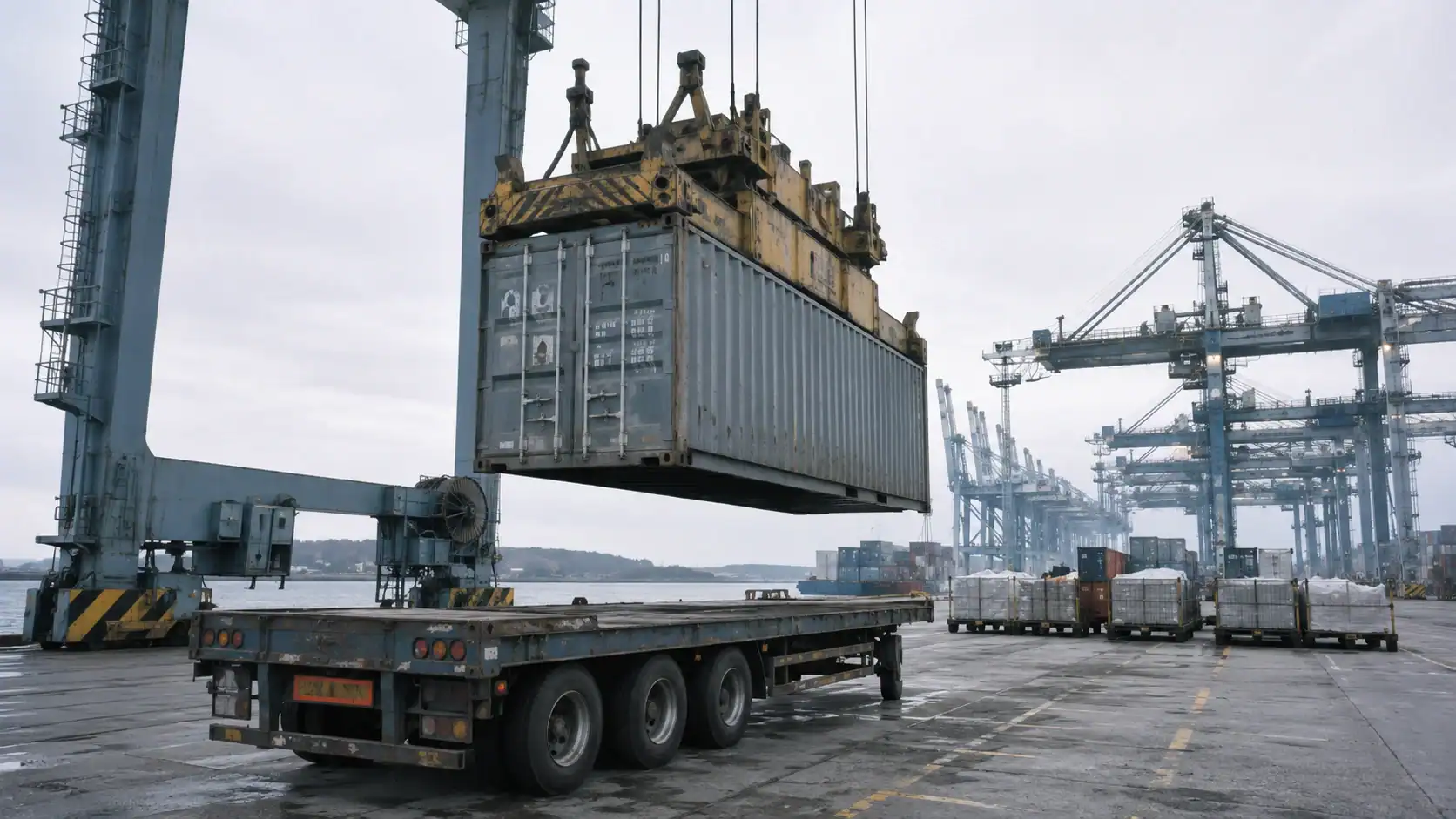
Sweden has one genuinely serious container gateway: the Port of Gothenburg. It is the largest port in Scandinavia and, unusually for the region, has direct deep-sea services to Asia. Your container can be loaded in Gothenburg and stay on one vessel (or one carrier’s network) all the way to Southeast Asia, without a truck ever crossing a border.
Your forwarder, however, may quote you a different option: trucking or railing your container south to Hamburg or Rotterdam and loading it onto one of the many Asia services calling there. Both routings work. They trade off differently.
Option 1: Load in Gothenburg
- Pre-carriage: minimal. A local truck from your Gothenburg, Mölndal or even Stockholm-area address to the terminal. Short, cheap, low-risk.
- Sailings: fewer departures per week to Asia than the German and Dutch mega-hubs. If you miss a sailing, the next one may be a week or more away.
- Handling: one export customs process, in Sweden, in a system your forwarder deals with daily.
Option 2: Pre-carriage to Hamburg or Rotterdam
- Pre-carriage: 600–1,100 km by truck or rail before your goods see a ship. That leg alone can add SEK 8,000–15,000 for a full container, plus an extra handling point where damage and delay can occur.
- Sailings: the deepest schedule choice in Europe. Multiple Asia departures weekly, more carrier options, sometimes sharper ocean rates that partially offset the trucking cost.
- Handling: your container transits another country’s port ecosystem. Fine in practice, but one more link in the chain.
The plain-language rule: if you live in western Sweden and your dates are flexible, Gothenburg direct is usually the calmer choice. If you are in Skåne (where the drive to Hamburg is comparatively short), if your timing is tight and you need the next available sailing, or if your forwarder’s Hamburg rate is dramatically better, the continental routing earns its place. For LCL (shared-container) shipments the decision is often made for you: many Scandinavian LCL consolidations run through Hamburg or Rotterdam regardless, because that is where the groupage boxes are stuffed.

Transit time in 2026: the Cape of Good Hope is still your route
The number that surprises most people planning this move: 40 to 50 days port to port, Scandinavia to Thailand.
The reason is geography, or rather the current avoidance of a shortcut. Since the Red Sea security crisis began, most major carriers have kept their Europe–Asia services routing around the Cape of Good Hope, at the southern tip of Africa, instead of transiting the Suez Canal. That detour adds roughly 10 to 14 days to what used to be a 28–35 day journey. Carriers have rebuilt their schedules around the longer loop, so it is not chaos: it is just slow, and it is the baseline you should plan against in 2026 unless your forwarder confirms your specific service has returned to Suez.
Build your calendar accordingly:
- Packing to sailing: 1–2 weeks (export customs, terminal cut-offs, possible pre-carriage to Hamburg/Rotterdam).
- Ocean transit: 40–50 days Gothenburg or Hamburg to Laem Chabang, Cape routing.
- Arrival to delivery: 1–2 weeks for Thai customs clearance and delivery to your address; LCL adds several days for deconsolidation.
Total: roughly 8 to 10 weeks door to door. This is exactly why the sequencing above matters. If you fly out in June and the container leaves Sweden the same week, you are living out of suitcases in Bangkok until August. Most families ship two to three weeks before flying, accept a short furnished-rental overlap in Thailand, and land within the same month their boxes do. For a deeper breakdown of the schedule maths, see our guide to shipping times from Europe to Thailand, and if you want to stress-test your plan against things going wrong, read up on handling shipping delays during a Thailand relocation.
Thai customs: the duty-free rules that decide what your move costs
Thai Customs allows returning Thais and eligible foreign residents to import used household effects free of duty and VAT, but the conditions are specific, and they are enforced.
- Eligible visa. Thai Customs looks for a full one-year Thai work permit (in practice with a Non-Immigrant B). Retirement visas, elite cards and tourist entries do not qualify.
- One year of ownership and use. The goods must be personal effects you have owned and used for at least a year. This is the rule that catches new purchases. More on IKEA below.
- Six-month arrival window. The shipment must arrive in Thailand between one month before and six months after your own arrival. With a 40–50 day ocean leg, this window is comfortable, but only if you do not ship five months after you fly.
- One shipment, reasonable quantities. The allowance is designed for one household’s worth of used goods. Six identical rice cookers read as commerce, not relocation.
Anything that fails these tests is assessed duty (rates vary by item category) plus 7% VAT on the customs value. Thai Customs officers physically inspect household shipments more often than their European counterparts, and “used” is judged by looking, not by your invoice date. Full details and the paperwork list are in our dedicated guide to duty-free imports into Thailand.
What not to ship from Sweden
Alcohol: leave the Systembolaget stock behind
This is the expensive one. Sweden’s alcohol retail monopoly means many households have a considered little collection: the aquavit for Midsommar, the wine from that anniversary, the whisky someone brought back from Islay. None of it should go in the container.
Thailand permits one litre of alcohol per adult arriving traveller. Alcohol inside a sea shipment is a different regime entirely. It requires an import licence, and Thai excise tax on alcohol is severe: the combined duties and taxes routinely amount to several times the retail value of the bottle. A SEK 400 bottle of wine can generate more than its own purchase price again in taxes and handling, and undeclared alcohol found during inspection puts your entire duty-free shipment at risk of reassessment and fines. Drink it, gift it, or sell it. Carry your one litre each in your luggage and call it done.
New IKEA-boxed goods: unbox first or buy in Thailand
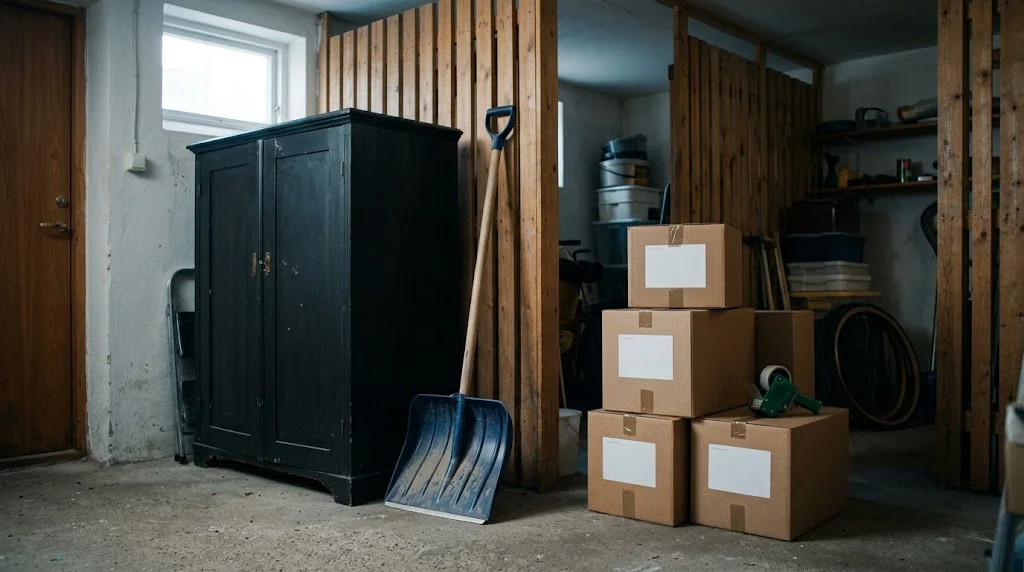
This is a genuinely Swedish trap. The instinct before an international move is to stock up: new mattress, new kitchenware, a wall of flat-packed BILLY bookcases still in their brown boxes, all at Swedish prices you trust. Then the container is opened in Laem Chabang and a customs officer sees a stack of factory-sealed goods in original manufacturer packaging.
Sealed OEM boxes read as new goods, because they are new goods. They fail the one-year ownership-and-use test on sight, and they get assessed duty plus VAT, turning your Swedish bargain into an expensive import. Worse, a shipment that looks half-commercial invites a more thorough inspection of everything else.
The fix is simple. If you truly need the item, buy it well before the move, unbox it, and use it: genuinely, not theatrically. Otherwise: Thailand has IKEA. Bangkok has full-size stores at Bang Na and Bang Yai. The BILLY you were about to pay to ship 20,000 kilometres is on a shelf 40 minutes from your new apartment, assembled prices in baht, delivered next week. Shipping flat-pack furniture from the country of its birth to another country that sells it is a decision your future self will not respect.
The usual prohibited and restricted list
Standard Thai rules apply: no narcotics (obviously), no e-cigarettes or vaping equipment (banned in Thailand), weapons and ammunition require permits you will not get for a household move, and anything touching lèse-majesté-sensitive material stays out. Medications beyond personal quantities need documentation. Plants, seeds and animal products face agricultural controls: that includes the sourdough-adjacent experiments in the pantry.
Once the no-ship list is settled, the real planning question is what a 20ft container actually costs from Gothenburg, worth pricing your own volume before you pack.

The Swedish-specific packing decisions
Winter gear: store it or ship it?
You own serious winter equipment. Thailand’s coldest Bangkok night will not drop below what a Swede calls “lovely spring.” So does the Fjällräven expedition parka, the skis, the studded bike tyres and eleven pairs of wool base layers cross the ocean?
The honest calculus: ship the compact, store or sell the bulky. Wool base layers, a good shell jacket and hiking boots earn their space: you will use them on trips to northern Thailand’s cool season, to Japan, to visits home in December. Skis, skates, the pulka and the floor-to-ceiling winter wardrobe do not earn LCL space at ~SEK 2,000+ per cubic metre; a cubic metre of ski gear costs more to ship than to store in a Swedish förråd for three years, and far more than replacing rental skis on your one annual trip to the Alps. If family can absorb two boxes and the skis, that is the lagom answer. If the move is permanent, sell: Blocket in September is full of buyers.
Candles, textiles and the hygge freight (yes, ship them)
Good news for the sanity items: candles, linen curtains, wool throws, ceramics and the entire Swedish home-textile aesthetic ship without any customs drama. They are light, they survive tropical humidity in an air-conditioned home, and they matter more than they weigh: the fastest way to make a Bangkok condo feel like yours is the same textiles and candlelight that made the Gothenburg apartment feel like yours. Pack candles in the middle of the container (they can soften in a hot box stuffed near the doors) and skip the moisture-sensitive antique veneers unless your Thai home will be climate-controlled year-round.
Electronics and plugs: mostly a non-issue
Sweden runs 230V/50Hz; Thailand runs 220V/50Hz. That difference is within tolerance for essentially all consumer electronics, so no transformers needed. Physically, Swedish Type F (Schuko) plugs fit most modern Thai sockets: Thailand’s common universal outlets accept Type F pins, though the earth contact is not always properly engaged in older installations. Bring a strip of good adapters for older Type A/B two-pin outlets, buy a couple of Thai power strips on arrival, and ship the electronics you own (used, see above). The one caveat: appliances with motors calibrated to Swedish conditions and Swedish-market TV tuners are marginal shippers; a used washing machine rarely justifies its cubic metre.
LCL or FCL: how much of a container is a lagom life?
The volume decision, in plain terms:
- 1–10 m³: LCL (shared container). A studio or one-bedroom’s contents, or a “ship the good stuff, sell the rest” edit. You pay per cubic metre and share a box with other shippers. Slower at both ends (consolidation and deconsolidation) but far cheaper at small volumes.
- 10–15 m³: the crossover zone. Get both quotes. Around this range a 20ft FCL container often costs the same or less than LCL, moves faster, and nobody else’s goods touch yours.
- 15–28 m³: 20ft FCL. A typical two-to-three-room apartment, thoughtfully packed. This is the couple’s answer, and the most common one for a Swedish household making a real move.
- 28 m³+: 40ft FCL. A full villa or a family house with no editing. Before you book it, ask the honest lagom question: are you moving your life, or your storage?
Cost guide: Gothenburg to Laem Chabang, 2026 planning figures
Treat these as budgeting ranges, not quotes: rates move with season, fuel surcharges and the Cape routing premium. Door-to-door, including packing, export clearance, ocean freight, Thai clearance and delivery to a Bangkok-area address:
| Shipment | Typical volume | SEK (approx.) | EUR (approx.) |
|---|---|---|---|
| LCL, per m³ (min. ~2 m³) | N/A | 1,900–2,700 /m³ | 170–240 /m³ |
| LCL small move | 5 m³ | 14,000–19,000 | 1,250–1,700 |
| LCL one-bed move | 10 m³ | 23,000–31,000 | 2,050–2,750 |
| 20ft FCL | up to 28 m³ | 48,000–68,000 | 4,300–6,100 |
| 40ft FCL | up to 58 m³ | 62,000–88,000 | 5,500–7,900 |
A worked example: this couple’s 20ft container
The couple edited their Gothenburg apartment down to about 22 m³: the armchair, the books, the kitchen, the textiles, three bikes, no white goods, no skis (stored at a relative’s place). Their numbers, Gothenburg loading, Cape routing, delivery to a Sukhumvit condo:
- Professional export packing and materials: SEK 9,500
- Local collection and terminal delivery, Gothenburg: SEK 3,800
- Swedish export customs and documentation: SEK 1,900
- Ocean freight, 20ft Gothenburg–Laem Chabang incl. surcharges: SEK 34,000
- Thai customs clearance (duty-free under Non-B/work permit, so no duty or VAT): SEK 4,600
- Delivery and unpacking, Laem Chabang–Bangkok: SEK 5,200
- Marine insurance at 2.5% of SEK 220,000 declared value: SEK 5,500
Total: SEK 64,500 (roughly EUR 5,760). Door to door, 63 days from packing day in Gothenburg to boxes open in Bangkok. Had they shipped the sealed IKEA order one partner nearly placed in April (SEK 18,000 of new goods), duty and VAT would have added an estimated SEK 5,000–7,000 and flagged the shipment for full inspection. The comparison quote via Hamburg came in SEK 4,000 cheaper on the ocean leg but SEK 11,000 more expensive once pre-carriage was added. Gothenburg direct won comfortably. For broader benchmarks, our cost guide for moving from Europe to Thailand covers other origin countries and volumes.
Visas: the two routes most Swedes actually use
- Non-Immigrant O (and O-A/O-X for retirees). The workhorse family: marriage to a Thai national, retirement (50+, financial requirements), dependants of workers. Extendable in-country to year-long stays. Customs accepts only a full one-year work permit for duty-free entry, so the marriage and retirement (O-A/O-X) routes do not qualify.
- Non-Immigrant B. The employment route (the working partner’s route) tied to a Thai employer and work permit.
- LTR (Long-Term Resident). The 10-year visa for wealthy pensioners, remote workers for large foreign companies, and highly skilled professionals. Higher bar (income and asset requirements), but the smoothest long-term status Thailand offers, with tax and reporting perks. Increasingly popular with Swedish remote employees whose companies clear the revenue thresholds.
Whichever route: visa approval comes before the container booking. Apply through the Royal Thai Embassy in Stockholm or the e-visa system, get the approval, then call your forwarder.
🇸🇪 Sweden → 🇹🇭 Thailand
We price a Gothenburg move the way this couple shipped theirs.
The form takes about 60 seconds. Fixed pricing, no hidden costs, and no guessing at SEK-to-THB conversions.
What Decides the Duty When Moving from Sweden to Thailand
Duty-free import needs a qualifying status such as a one-year Thai work permit, goods owned and used for at least a year, and arrival between one month before and six months after your own arrival a retirement visa does not qualify. Sealed new goods and alcohol are assessed regardless, so keep both out of the container.
Estimated Moving Costs: Sweden to Thailand
| Home size | Estimated cost (SEK) |
|---|---|
| 2 bedroom | SEK 3,870–8,550 |
| 3 bedroom | SEK 5,210–11,380 |
| 4 bedroom | SEK 6,410–11,470 |
| 5 bedroom | SEK 9,160–17,740 |
These are door to door estimations, not port to port. They include standard packing and customs clearance on both ends, and assume an origin and destination reasonably near the port on both sides; a move to or from a more remote location may cost more. Treat these as budgets, not final pricing. The final cost depends on the quantity and nature of what you are shipping, service availability, and sea freight rates at the time of your move. These figures are based on average home sizes from past moves and may not reflect your own home. Timing and availability can also materially affect the price, and in some cases whether we are able to complete the job on your preferred timeline. For an accurate quote, contact our team or start our online self service quote, a short survey about your move that takes about four minutes and lets our team provide a real quote based on your specific details.
Related Reading
- Shipping from Europe to Thailand: The Complete Guide
- Duty-Free Imports into Thailand: Rules for Personal Effects
- What It Costs to Move from Europe to Thailand
- Shipping Times from Europe to Thailand in 2026
- Handling Shipping Delays During a Thailand Relocation
- Thailand Relocation Guide 2026
Current duty-free personal effects conditions are published by the Thai Customs Department.
Frequently Asked Questions
How long does shipping from Sweden to Thailand take in 2026?
Plan on 40 to 50 days port to port. Most Europe–Asia services still route around the Cape of Good Hope rather than the Red Sea, adding roughly 10–14 days versus old Suez schedules. Add one to two weeks on top for Swedish export formalities and another one to two for Thai clearance and delivery: call it 8 to 10 weeks door to door.
Can I import my household goods into Thailand duty free?
Only if your status qualifies, and a long-stay visa alone is not enough. The qualifying routes are a one-year Thai work permit (in practice with a Non-Immigrant B), a non-immigrant visa with a confirmed one-year working period, Thai permanent residence, or a full one-year Smart Visa, with goods owned and used for at least one year and arriving between one month before and six months after your own arrival. A retirement visa (Non-Immigrant O, O-A or O-X) does not qualify. New or unused items are assessed duty plus 7% VAT.
Should I deregister from Skatteverket before or after getting my Thai visa?
Visa first, always. File the flytta utomlands notification only once your visa is approved and your departure date is fixed, ideally in the final weeks before you fly. Deregistering early can disrupt BankID, banking, healthcare access and post while you still need all of them to run the move.
Do Swedish plugs work in Thailand?
Mostly yes. Voltage is compatible (230V vs 220V, both 50Hz), and Swedish Type F plugs fit most modern Thai universal sockets. Carry a few adapters for older two-pin outlets. No transformers required for normal consumer electronics.
How much does a container from Gothenburg to Thailand cost?
As 2026 planning ranges, door to door: LCL around SEK 1,900–2,700 per cubic metre (EUR 170–240), a 20ft FCL container SEK 48,000–68,000 (EUR 4,300–6,100), a 40ft SEK 62,000–88,000 (EUR 5,500–7,900). Get live quotes: rates move with season and routing.
Can I ship alcohol from Sweden to Thailand in my household shipment?
No, not sensibly. Thailand’s allowance is one litre per adult traveller carried personally. Alcohol in sea freight needs an import licence and attracts excise taxes several times the bottles’ value, and it puts your whole duty-free shipment at risk during inspection. Leave the Systembolaget collection in Sweden.