
Australian customs clearance can take four hours or four days, depending on what is in your container, how your documentation was prepared, and whether ABF’s risk engine flagged the shipment for examination. Most importers do not know which outcome they are heading toward until the result arrives, and by that point, the container is already at the port and the clock on storage charges is running.

Who Does What: ABF, DAFF, and Your Customs Broker
Australian customs clearance involves three parties with distinct roles.
Australian Border Force (ABF) administers the Customs Act 1901 and assesses all commercial imports for duty liability, prohibited goods, and compliance with import conditions. ABF’s role is the financial and regulatory gate. They determine whether duty is payable, whether the goods are permitted to enter Australia, and whether the importer’s declaration accurately represents what is in the container.
The Department of Agriculture, Fisheries and Forestry (DAFF) administers biosecurity under the Biosecurity Act 2015. DAFF’s role is to prevent the introduction of pests, diseases, and contaminants that could harm Australia’s agricultural sector or natural environment. ABF and DAFF operate simultaneously. Clearance from both is required before goods can be released.
Your customs broker is the intermediary who lodges the import declaration through ABF’s Integrated Cargo System (ICS) and manages communication with ABF and DAFF. They also pay duty and GST on your behalf and coordinate port release. Your customs broker’s documentation quality and their familiarity with your product classification profile are the single greatest determinants of your clearance speed.
The Integrated Cargo System: How Clearance Actually Works
The Integrated Cargo System (ICS) is ABF’s electronic processing platform for all imports arriving in Australia. Every commercial import above AUD 1,000 customs value requires a formal import declaration lodged through the ICS by a licensed customs broker.
When a declaration is lodged, the ICS applies an automated risk assessment algorithm that draws on:
- The tariff classification and product description
- The country of origin and exporter
- The importer’s compliance history (tied to your ABN)
- The value declared relative to statistical benchmarks for similar goods
- Any active targeting profiles or intelligence on the specific origin or product type
- The customs broker’s compliance history
The ICS returns one of three directions:
Green channel (electronic clearance)
The declaration is accepted and clearance is granted electronically. No ABF officer reviews the declaration or inspects the goods. This is the outcome for the majority of commercial shipments from low-risk origins with accurate documentation. Green channel clearance is typically granted within 1–4 hours of declaration lodgement during business hours.
Yellow channel (documentary examination)
ABF directs the shipment to documentary review. An officer reviews the declaration, commercial invoice, packing list, and any supporting documents (certificate of origin, fumigation certificate, etc.) before deciding whether to grant clearance, query a specific point, or escalate to physical examination. Yellow channel adds 1–3 business days to the clearance timeline. The most common yellow channel triggers are: first-time import of a new product category, a value that appears low relative to the declared goods, or a product classification that ABF is actively reviewing across the market.

Red channel (physical examination)
ABF directs the container or parcel to a physical examination facility. Goods are unloaded, inspected, and documented by an ABF officer, sometimes in conjunction with DAFF biosecurity officers. Red channel examination adds 2–5 business days and imposes examination costs on the importer. Physical examination is triggered by high-risk product categories, intelligence-based targeting, unexplained discrepancies between the declaration and the goods visible on scanning, or random audit selection.
DAFF Biosecurity Clearance: Running in Parallel
DAFF biosecurity clearance runs simultaneously with ABF customs clearance for most shipments. For low-risk goods (commercially packaged manufactured goods, machinery, electronics, general merchandise in sealed cartons from low-risk origins), DAFF assessment is electronic and adds no time to the clearance process.
DAFF directs goods to additional assessment in the following circumstances:
- Risk commodity categories: Wood and timber products, plant material, animal-derived goods, food and food ingredients, soil-bearing items, used or second-hand goods
- Documentation gaps: Missing treatment certificates for timber (ISPM 15), absent import permits for restricted goods, generic product descriptions that prevent accurate risk assessment
- Origin-based risk: Goods from countries with known pest or disease issues relevant to the declared product type
- Random inspection: a baseline inspection rate applied to certain commodity types regardless of risk profile, to maintain biosecurity system integrity
When DAFF directs goods to inspection, the examination typically takes 1–3 business days for documentary review and 2–7 business days for mandatory physical inspection. If goods are found to require treatment (fumigation, heat treatment) that was not performed at origin, treatment can be arranged at an Australian treatment facility, adding 3–10 days and treatment costs.
For a detailed breakdown of what triggers biosecurity holds by product category and how to prepare documentation to reduce inspection risk, see Biosecurity Requirements for Importing to Australia.
Whether you land in green, yellow or red channel comes down to your own classifications and documentation, and pricing your import with those classifications already on file is how you stay there.
Pre-Arrival Lodgement: The Fastest Path to Clearance
The single most effective action to minimise clearance time for sea freight is pre-arrival lodgement of the import declaration. ABF allows customs brokers to lodge declarations up to 30 days before the vessel’s estimated arrival date (ETA). When a declaration is lodged pre-arrival and receives green channel clearance, the goods can be released at the port within hours of the vessel berthing, rather than requiring a full clearance cycle after arrival.
Pre-arrival lodgement requires having all shipping documents in hand before the vessel arrives: the bill of lading, commercial invoice, packing list, and any supporting compliance documents (origin certificates, treatment certificates, import permits). Shipments where the supplier sends documents late (a common problem when buying on EXW terms with a supplier new to export documentation) cannot benefit from pre-arrival lodgement.
For air freight, same-day lodgement and clearance is the standard, since air freight transit is too short for meaningful pre-arrival lodgement. Air cargo is typically cleared within 4–8 hours of the flight’s arrival, provided documentation is complete and the goods present no examination triggers.

Real-World Timelines by Scenario
Sea freight, standard commercial goods, green channel
The broker lodges the pre-arrival declaration 3–5 days before vessel arrival. Green channel clearance follows within 4 hours of lodgement. ABF assesses duty and GST, and your customs broker advises the amount and collects payment. On vessel arrival and berthing, port release typically follows within 2–6 hours during business hours. Drayage to your warehouse takes the same or next business day, depending on port location and your warehouse’s receiving schedule. Total time from vessel berth to goods at your warehouse runs 1–2 business days.
Sea freight, standard commercial goods, yellow channel
The broker lodges the declaration pre-arrival. ABF directs the shipment to yellow channel, and documentary examination begins. ABF review typically completes within 1–3 business days. If clearance is granted after review, port release and delivery proceed as above. Total time from vessel berth to goods at warehouse runs 3–5 business days.
Sea freight, timber or biosecurity-risk goods, DAFF inspection
The broker lodges the declaration pre-arrival. DAFF directs goods to mandatory inspection on arrival. Goods move from port to a biosecurity examination facility (DEP, Disinfection and Emergency Preparedness facility). Inspection occurs within 2–5 business days. If goods comply (no live pests, treatment certification correct), goods are released from the examination facility and proceed to your warehouse. Total time runs 5–10 business days from vessel berth. If treatment is required, add 3–10 days.
Air freight, commercial goods
The broker lodges the declaration on or before the day of aircraft arrival. Green channel delivers same-day clearance. Goods are available for collection from the air freight facility the same business day. Total time from aircraft arrival to goods available for collection runs 4–12 hours.
What Causes Clearance Delays
Delays fall into two categories: those caused by the importer’s documentation and those caused by ABF or DAFF processes.
Documentation errors (controllable)
Incorrect tariff classification. It’s the most common and consequential documentation error. If the HS code on the import declaration does not match ABF’s classification of the goods, the duty rate is wrong, and the discrepancy will either be caught on examination or in a post-clearance audit. Yellow or red channel is more likely on declarations where the declared classification is unusual for the product type.
Valuation discrepancies. If the declared customs value is materially lower than ABF’s statistical benchmarks for similar goods, the ICS may flag the shipment for review. This can happen legitimately (you may have negotiated a particularly good price), but it requires supporting documentation (price negotiations, supplier price lists) to satisfy ABF’s review.
Missing origin documentation. If you are claiming a preferential FTA rate (AUSFTA, AANZFTA, ChAFTA) and the origin certificate is missing or incorrectly completed, the duty is assessed at the MFN rate. The FTA preference can sometimes be claimed retrospectively, but this requires an amendment process that adds 3–10 business days.
Late documentation from suppliers. Your customs broker cannot lodge a declaration without the commercial invoice, packing list, and bill of lading. A supplier who issues documents late (after the vessel has already arrived) converts a pre-arrival clearance scenario into a post-arrival clearance delay. This is a relationship and purchase order management problem, not a customs problem. See How to Manage Supplier to Warehouse Logistics in Australia for a framework on managing document timelines from your suppliers.
Biosecurity holds (partially controllable)
DAFF inspection holds on timber, plant-derived, or animal-derived goods can be reduced but not eliminated. The controllable elements are: correct ISPM 15 treatment certification, specific product descriptions on documentation, and supplier compliance with DAFF import conditions. A well-documented timber shipment clears faster than a poorly documented one even at the same risk profile.
ABF examinations (not controllable)
Random audit selection, intelligence-based targeting, and systematic reviews of certain product categories are outside the importer’s control. An importer with an excellent compliance history can still receive a red channel direction on a given shipment. The only mitigation is ensuring that when an examination occurs, the goods match the declaration exactly. Any discrepancy extends the timeline by days to weeks.
Most red-channel holds trace back to paperwork, not the goods.
If your classifications or origin documentation have never been checked against ABF’s own risk triggers, that gap is worth closing before your next shipment, not after a hold.
How to Reduce Customs Clearance Time
Clearance time is largely determined before the goods leave your supplier. Four specific actions reduce your average clearance time.
Set documentation deadlines in your purchase order
Your purchase order should specify that the supplier must provide the commercial invoice, packing list, and bill of lading to your freight forwarder within 48 hours of goods departing origin. For sea freight, this allows pre-arrival lodgement with a meaningful buffer. A supplier who routinely issues documents late should be put on notice that the additional clearance delay time and any storage charges at port will be deducted from their payment.
Standardise your tariff classifications
Agree your product classifications with your customs broker at the start of the relationship, not on a per-shipment basis. For your top 10 product SKUs by volume, confirm the HS code, the applicable duty rate, and any FTA treatment. Store this in a classification register that your broker references on every declaration. This eliminates the most common yellow-channel trigger: a classification that varies shipment-to-shipment because it was never formally established.
Carry treatment certificates in the shipment documents
For any goods that require biosecurity treatment (timber, wool, animal-derived products), the treatment certificate must travel with the shipment documents and be presented to DAFF at the same time as the import declaration. A certificate issued after arrival, sent by email, or retrieved from a filing system during a DAFF review adds days to the resolution. Treat the treatment certificate as a shipping document with the same priority as the bill of lading.
Build buffer stock to absorb clearance variance
Even with perfect documentation, clearance time varies. A shipment that normally clears in 4 hours can be directed to yellow channel without prior indication. For business-critical stock, do not plan to receive goods from customs the same week you need them on the shelf. Between expected vessel arrival and your operational need for the stock, a minimum 10-business-day buffer absorbs all but the most unusual clearance delays. For a framework on managing inventory against clearance time variance, see How to Avoid Stockouts When Importing to Australia.
Port Storage Charges: The Real Cost of Delays
Port storage and demurrage charges accumulate while goods are awaiting clearance or collection. At Australian container terminals, free time (the period before storage charges begin) is typically 3–5 calendar days from vessel discharge. After free time expires, storage fees run at AUD 80–250 per day per TEU (twenty-foot equivalent unit) depending on the terminal and container type. Published tariff schedules are available directly from DP World Australia and Patrick Terminals.
A shipment that enters yellow channel examination on day 1 and clears on day 5 may be within the free time period. A shipment that goes to DAFF inspection and takes 7 business days to clear will likely incur 4–6 days of storage charges before collection can be arranged.
Demurrage (the charge for keeping the carrier’s container beyond the contracted free time) is a separate cost from port storage, and accumulates from the moment the container is discharged from the vessel. Most contracts provide 7–10 calendar days free time for demurrage before daily charges begin (typically AUD 100–200 per day per container). A delayed clearance combined with a busy warehouse schedule can run up AUD 1,000–2,000 in demurrage on a single container before collection.
Pre-arrival clearance eliminates most storage and demurrage exposure. Filing the port release request on the day of vessel arrival minimises the time between discharge and gate-out.
The Importer Compliance Record
Your compliance record with ABF (tied to your ABN) accumulates over time and influences your examination rate. With a long history of accurate declarations, no duty shortfall queries, and no voluntary disclosures of past errors, an importer is assessed as lower risk by the ICS algorithm and is less likely to be directed to examination on any given shipment.
The ABF post-clearance audit program regularly reviews importer compliance records and may identify duty shortfalls on past shipments. If ABF identifies a systematic classification error across your import history, the audit can result in back-duty demands covering up to four years of imports. The best defence against post-clearance audit liability is the same as the best defence against clearance delays: accurate, consistent, well-documented declarations on every shipment.
High-volume importers with strong compliance records may be eligible for ABF’s Trusted Trader program, a formal accreditation that results in reduced examination rates, priority processing, and a direct relationship with an ABF account manager. Application details are available at the ABF Trusted Trader program page.
It helps to see the Integrated Cargo System not as a gatekeeper but as a piece of design responding to the signals you feed it. When a consignment lands in the yellow or red channel, importers tend to read it as bad luck or an officious inspector. It is neither. The system is doing exactly what it was built to do: matching the data on your declaration against known risk patterns and surfacing anything incomplete, inconsistent, or unfamiliar for a human to check. A red-channel hold is rarely a verdict on your goods; more often it is a verdict on your paperwork. The importers who clear fastest are the ones who treat the declaration itself as the deliverable, not an afterthought handed to a broker at the last minute.
What to Do When Clearance Is Delayed
When a shipment is directed to examination or is awaiting a DAFF biosecurity decision, the instinct is often to wait and hope for a quick resolution. The more productive approach is to communicate systematically and supply documentation proactively.
Get specific information from your broker within 24 hours. “Under examination” is not sufficient information. Ask: Is this ABF documentary examination, ABF physical examination, or DAFF biosecurity? What documentation has been requested? What is the estimated resolution timeline? The examination type determines how you respond and how long you wait.
For documentary examination: ABF is reviewing specific documents and may request additional information: a supplier invoice for price verification, an origin certificate for an FTA claim, a product specification sheet for a classification query. Supply whatever is requested immediately. Every day of delay in responding is a day added to your clearance timeline. Your customs broker should be the communication channel, but you need to provide the substantive information they cannot source independently.
For physical examination: The goods are at a physical examination facility and ABF officers will inspect them on their schedule, typically within 2–4 days of direction. There is no action you can take to accelerate this step other than ensuring the facility has all supporting documentation. Monitor daily for the examination result and act immediately if ABF identifies any discrepancy between the declaration and the physical goods.
For DAFF biosecurity holds: DAFF will issue a direction specifying why the goods are held (documentation gap, inspection required, treatment required). If the hold is documentation-based (a missing treatment certificate that exists but was not provided), supply the certificate through your broker immediately. If treatment is required, your broker can arrange treatment at an accredited Australian facility. Get treatment quotations and approve the work on the same day the hold is confirmed. Every day of delay in approving treatment extends the timeline by a day.
For extended delays beyond 10 business days: Contact ABF through your customs broker to request a status update and an estimated resolution date. If storage charges are escalating, you may need to decide whether to pay duty under protest (to get goods released) and dispute it later, or wait for the examination to conclude. Discuss this option with your broker if the examination runs beyond 7 business days.
For a summary of Australian customs procedures and what to prepare before your goods arrive, see Australian customs clearance procedures on the Swift Cargo Australia page.
Incoterms and Clearance Responsibility
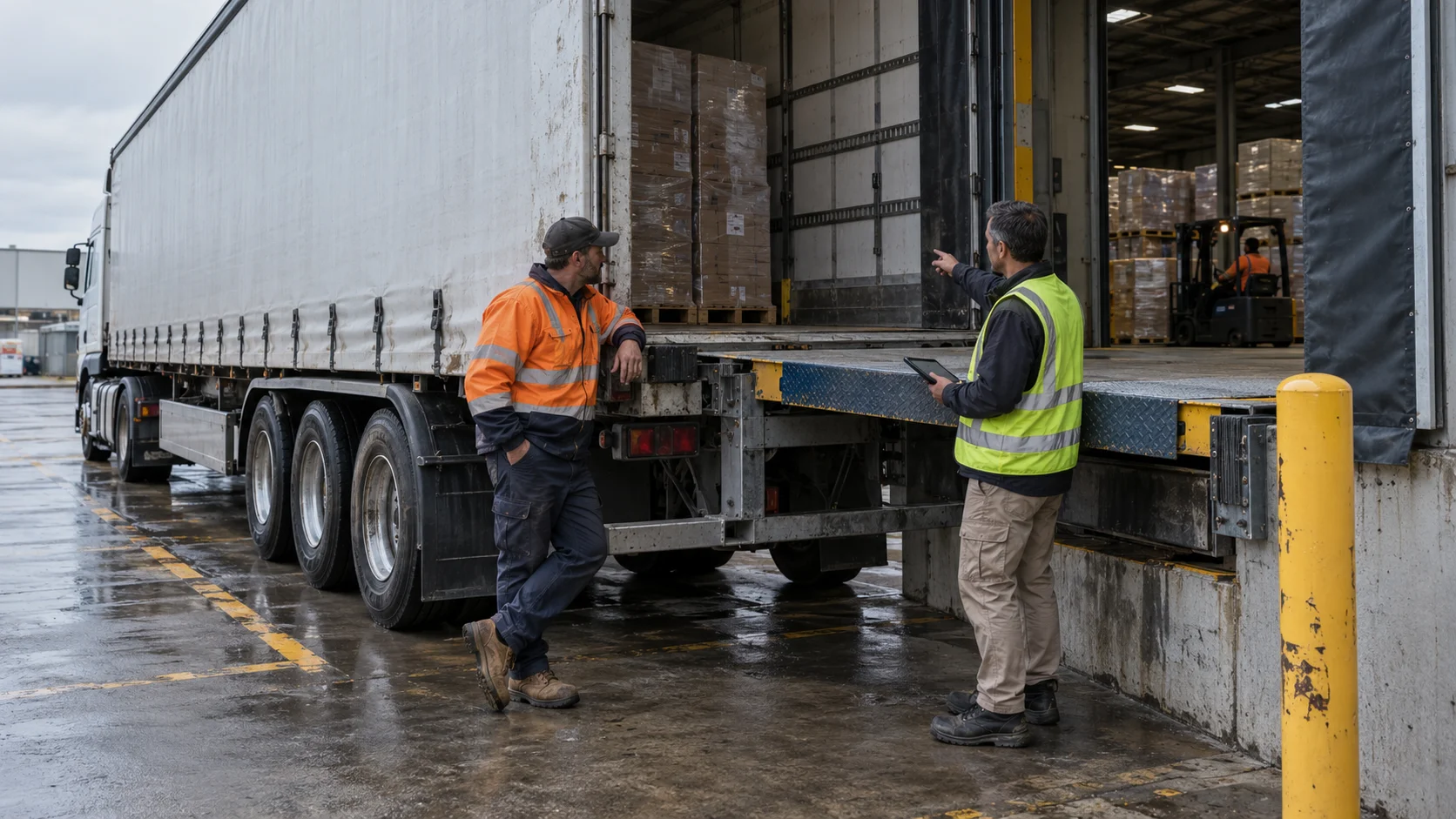
The Incoterm in your purchase order determines when your responsibility for customs clearance begins. For CIF (Cost, Insurance, Freight) and DDP (Delivered Duty Paid) terms, the supplier manages transport to an Australian port or address. Import customs clearance in Australia is always the buyer’s responsibility, regardless of the Incoterm. DDP is the one exception where the seller pays duty, but the logistics of a foreign entity paying Australian duty are complex, and DDP into Australia is uncommon in practice.
For FOB, EXW, and CFR terms (the most common terms on the major import lanes), you are fully responsible for Australian customs clearance from the point the goods arrive at an Australian port. Your freight forwarder and customs broker manage this process on your behalf. For a detailed explanation of how Incoterms allocate cost and responsibility across the supply chain, see What Incoterms Mean for Australian Importers.
We lodge your declaration and work the ICS, not around it.
Most SMEs receive a detailed, all-inclusive quote within 24 hours, no hidden fees, so you know your landed cost before you book.
Every long customs delay looks like an isolated bad-luck story until you look at enough of them together: a missing invoice value here, a mismatched HS code there, a biosecurity referral nobody flagged in advance somewhere else. Individually, each looks like a paperwork slip. Collectively, they trace back to the same root cause: the Integrated Cargo System and DAFF’s biosecurity screen run in parallel, not in sequence. Almost nobody outside the industry understands what that actually means for their own shipment. It means the two clearances can finish on wildly different days even when both eventually pass. When importers ask their broker which of the two systems is actually holding up their specific shipment, they get straight answers and real timelines. When they just ask “why is it stuck,” they get shrugs, because the question doesn’t point at either system.
Frequently Asked Questions
How long does standard customs clearance take in Australia?
For sea freight shipments, standard electronic customs clearance (green channel) takes 1–4 hours after your broker lodges the import declaration and ABF’s Integrated Cargo System accepts it. For air freight, clearance is typically same-day. Documentary examination (yellow channel) adds 1–3 business days. Physical examination (red channel) adds 2–5 business days. DAFF biosecurity clearance runs in parallel with ABF customs clearance and typically takes the same or less time for low-risk goods.
What is the Integrated Cargo System (ICS) and how does it affect clearance?
The Integrated Cargo System (ICS) is ABF’s electronic platform for processing all cargo arriving in Australia. Import declarations are lodged by licensed customs brokers through the ICS. For sea freight, pre-arrival lodgement is possible up to 30 days before vessel arrival. This means clearance can be granted before the ship docks. For air freight, same-day lodgement and clearance is the standard. The ICS’s automated risk assessment determines whether a shipment is directed to green (auto-clear), yellow (documents), or red (physical) channel.
What causes customs clearance delays in Australia?
The main causes of clearance delay are: documentation errors (incorrect tariff classifications, valuation discrepancies, missing origin certificates), biosecurity holds from DAFF for prohibited or restricted goods, ABF examinations triggered by risk assessment, post-clearance audit queries on previous shipments, and high-volume periods at major ports (particularly October to December and around Chinese New Year). Documentation issues are the most common and most preventable cause of delay.
Can customs clearance be done before the ship arrives in Australia?
Yes. For sea freight, your customs broker can lodge an import declaration up to 30 days before the vessel’s estimated arrival date (ETA). If the declaration is accepted and the shipment passes electronic risk assessment, customs clearance can be granted before the ship docks. This means that for a standard sea freight shipment without biosecurity issues, goods can be released and available for collection at the port within hours of the vessel berthing, rather than waiting days for clearance after arrival.
How long does DAFF biosecurity clearance take?
For low-risk goods (commercially packaged manufactured goods in sealed containers from low-risk origins), DAFF biosecurity clearance is electronic and occurs in parallel with ABF customs clearance with no additional time added. For goods directed to documentary review, clearance takes 1–3 business days. For goods directed to mandatory physical inspection at a biosecurity examination facility, clearance takes 2–7 business days plus examination fees. Treatment on arrival (if required) adds 3–10 additional days.
What is a Cargo Support Arrangement (CSA) and does it speed up clearance?
A Cargo Support Arrangement is an ABF program that allows trusted, accredited importers with a strong compliance record to benefit from reduced examination rates and streamlined clearance pathways. It is designed for high-volume importers with demonstrated compliance history. Not all importers are eligible. ABF assesses compliance history, volume, and the risk profile of the goods being imported. Eligible importers see faster clearance and fewer directed examinations.