Author: SwiftCargo Team

  • DAFF and FSANZ Enforce Separate Rules for Importing Food to Australia

    DAFF and FSANZ Enforce Separate Rules for Importing Food to Australia


    Food is one of the few import categories where two Australian regulators get a say before you can sell a single unit. Most product categories deal with customs and maybe a safety standard. Food deals with the Department of Agriculture, Fisheries and Forestry (DAFF) at the biosecurity gate, and then with the Food Standards Australia New Zealand (FSANZ) rulebook enforced through the Imported Food Inspection Scheme. Miss either one and your container sits on the wharf accruing storage charges, or worse, gets ordered onto a ship back to origin at your expense.

    How to Import Food Products to Australia: FSANZ, DAFF and Freight Guide

    The Two-Regulator Model: One Question Each

    The single most useful mental model for food importing is this. Australia asks two separate questions of every imported food, and a different agency owns each one.

    Question one: can it enter? This is biosecurity, and it belongs to DAFF. Australia is an island continent free of many pests and diseases that are endemic elsewhere, and DAFF’s job is keeping it that way. Whether your product can physically cross the border depends on what it is, how it was processed, and where it came from. A commercially sterilised canned product from Thailand sails through. Fresh cheese made from unpasteurised milk, certain meat products, and fresh produce from most origins face permits, treatment requirements, or outright prohibition.

    Question two: is it safe and compliant to sell? This belongs to FSANZ, whose Food Standards Code sets composition, contaminant limits, and labelling rules for all food sold in Australia. FSANZ does not stand at the border itself; DAFF enforces the Code on imported food through the Imported Food Inspection Scheme (IFIS). Your product can clear biosecurity perfectly and still fail IFIS because the allergen declaration is in the wrong format or a lab test finds histamine above the limit.

    Step One: Check BICON Before You Order Anything

    BICON is DAFF’s Biosecurity Import Conditions database, and it should be the first tab you open, before you sign a supplier agreement, before you pay a deposit, before you even request samples in commercial quantity. Search your product and country of origin and BICON tells you one of four things:

    • No conditions beyond standard requirements. Shelf-stable, commercially processed foods often land here. Document the BICON case and move on.
    • Conditions apply. The product can enter if it meets specified processing standards (retorted, pH-controlled, shelf-stable), comes with manufacturer declarations, or carries specific certificates. Common for coconut products, sauces, and snack foods containing dairy or egg.
    • Import permit required. You must apply and be granted a permit before the goods ship. Permit assessment can take weeks to months depending on complexity. Dairy-heavy products, some meat-containing foods, and certain seeds fall here.
    • Prohibited. Some products from some origins simply cannot come in. Fresh produce from most countries, raw milk cheeses outside specific approved arrangements, many meat products.

    Two things trip people up. First, BICON conditions are product-and-origin specific. Coconut milk from Thailand and coconut milk from a different origin can have different conditions. Roasted peanuts and raw peanuts are different cases. A snack bar with 2% milk powder is a different case from the same bar without it. Search the exact product, not the category.

    Second, conditions attach to processing details you may not know until you ask the manufacturer. “Commercially manufactured and retorted” is a specific claim your supplier must be able to document. Get the manufacturer’s declaration template sorted at the same time you negotiate price, not when the container is already on the water.

    The most expensive sentence in food importing is “we ordered before checking BICON.” If the product needed a permit you did not have, or is prohibited, your options at the border are re-export or destruction. Neither is cheap, and neither is negotiable. Australian biosecurity requirements cover the DAFF side of that risk in more depth.

    A receiving dock at an Australian import warehouse, cartons of packaged food products stacked on pallets, one carton being lifted onto an inspection b

    Risk Food vs Surveillance Food: How the Inspection Lottery Works

    Once biosecurity is satisfied, IFIS takes over. Every food import declaration is profiled, and whether your consignment gets pulled for inspection depends on which of two classifications your product falls into.

    Risk foods are those FSANZ has assessed as posing a medium or high risk to public health. The list includes certain soft and semi-soft cheeses, cooked crustaceans and some other seafood, dried and fermented meats, some seed and paste products (tahini has been on the list following salmonella events), and a rotating set of others as risk advice evolves. Risk foods face an escalating-trust inspection schedule:

    • 100% of consignments inspected and tested while you have no history: every single shipment, until you accumulate five consecutive passes;
    • 25% after five consecutive compliant consignments;
    • 5% after a further twenty consecutive passes at the 25% rate.

    A single failure resets you back up the schedule.

    Surveillance foods are everything else: the great majority of imported food lines, from biscuits to canned vegetables to sauces. Surveillance foods are referred for inspection at a flat 5% rate, randomly. Inspection here is mostly visual and label assessment, with testing applied to a subset. Nineteen consignments in twenty float through on the paperwork; the twentieth gets a proper look.

    Run the numbers on what classification means in practice. Say a risk-food inspection with lab testing costs you roughly $300–$600 in fees plus three to ten working days of delay while results come back. A new importer of a risk food pays that on 100% of consignments. Call it $500 and a week of buffer stock on every single order. The same importer with a mature compliance history pays it on 5% of consignments, an expected $25 per shipment and a delay so rare it barely affects inventory planning. Same product, same supplier, twenty-fold difference in inspection cost and a transformed cash-conversion cycle, purely as a function of history. Inspection rate is not a fixed cost of the category; it is a variable you manage.

    What Actually Happens at Inspection, and When It Goes Wrong

    When a consignment is referred, an authorised officer inspects it against the Food Standards Code. That means a label assessment (the most common failure point by a wide margin), a visual check of the product and packaging condition, and (for risk foods and targeted surveillance lines) sampling for laboratory analysis. Tests depend on the product: microbiological counts, histamine in fish products, aflatoxins in nuts, additives and preservatives against permitted limits.

    Pass, and the consignment is released, the result logged to your compliance history. Fail, and the consignment is held. Your options narrow to three:

    • Treatment or correction, where the failure is fixable: relabelling under supervision is sometimes permitted for label-only failures, and it is tedious and expensive (a team physically over-stickering thousands of units in a bonded facility) but far cheaper than the alternatives;
    • Re-export, at your cost, including the freight both ways and every storage day in between;
    • Destruction, at your cost, with certified disposal fees on top of the written-off stock.

    A failed test result on a food safety ground (as opposed to labelling) generally cannot be “fixed”. Contaminated product is re-exported or destroyed, full stop. And every failure is recorded. For a risk food, one failure can knock you from the 5% tier back to a higher inspection rate; the five-shipment ladder starts again. The compliance record follows the importer and the product line, which is why established food importers treat a single failure as a serious event rather than a cost of doing business.

    If your consignment is held for inspection during a busy period, expect the delay to stack with normal port congestion. We walk through how holds compound, and what buffer to build into your planning, in our piece on customs delays for Australian imports.
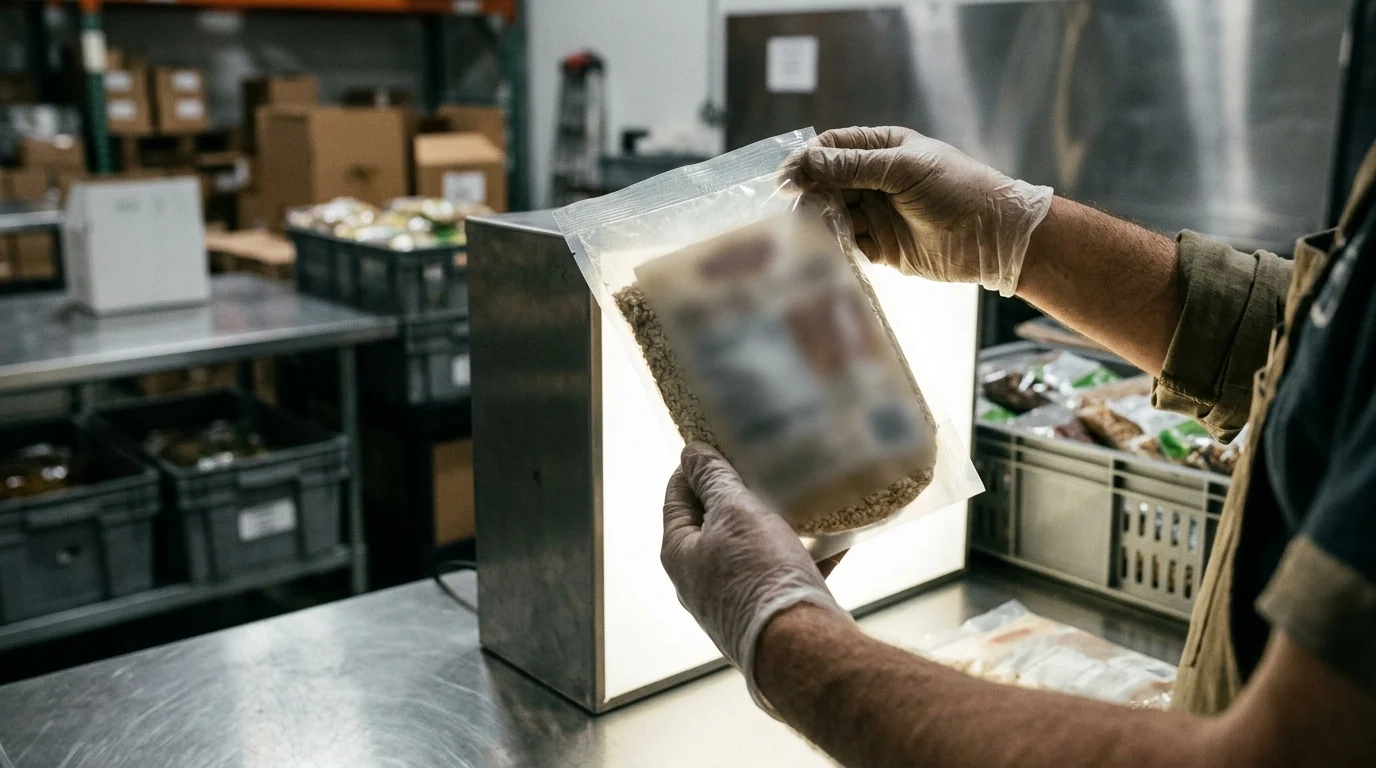
    Technician holding a sealed food package up to a light box for quality-control inspection in a food-import warehouse

    Labelling: Where Most Failures Actually Happen

    Ask anyone who works around IFIS what fails most and the answer is labels. Not contamination, not fraud: labels printed at origin for a different market, arriving on product that is otherwise perfectly good. The Food Standards Code labelling requirements for retail food include:

    • English language. All mandatory information in English. Bilingual labels are fine as long as the English is complete and legible.
    • Ingredient list in descending order by ingoing weight, with compound ingredients broken out and additives declared by name or number.
    • Allergen declarations in the mandatory format. This is the one that catches importers who “did labels years ago and haven’t looked since.” The Plain English Allergen Labelling rules became fully mandatory in February 2024: allergens must be declared using required names (e.g. “milk”, “egg”, “wheat”, specific tree nut names, not just “nuts”), in bold, in the ingredient list, plus a separate “Contains:” summary statement in bold. An EU-style label with allergens merely italicised does not comply. A label saying “gluten” where the Code requires the cereal named does not comply.
    • Nutrition information panel in the prescribed Australian format: per serving and per 100g columns, the standard nutrient rows. A US-format Nutrition Facts panel is not a substitute.
    • Date marking: a best-before date (or use-by for foods that become unsafe), day/month/year in an acceptable format. Foods with a shelf life of two years or more are exempt from best-before marking, which matters for canned goods.
    • Name and Australian address of the importer or distributor.
    • Country of origin labelling for retail food: the familiar kangaroo-in-a-triangle mark with the bar chart applies to food grown/produced/made in Australia; imported food requires a country of origin statement in the prescribed box format (“Product of Thailand”). Retail food without compliant CoOL cannot legally be sold, even if it clears the border.

    The strategic point: get label artwork approved before the production run at origin. Have the compliant label printed on the packaging in the factory, not stickered on later. Over-stickering 20,000 units in a Sydney 3PL at $0.20–$0.40 a unit is a rite of passage nobody needs. It gets worse the second time, when the first sticker batch’s allergen statement wasn’t bolded. Send your artwork to a food labelling consultant or have it reviewed against the Code. The review costs a few hundred dollars and protects the entire consignment.

    Rows of temperature-controlled shelving in a food distribution warehouse, cartons organized by batch with visible but unreadable date-coded stickers,

    Shelf Life, Date Marking and the Calendar Problem

    Shelf life interacts with freight in a way spreadsheets often miss. A product with a 12-month best-before date does not give you 12 months of selling time. Subtract production-to-departure time at origin (often 2–6 weeks), the ocean transit (2–4 weeks from Asia, 5–7 from Europe), customs and any inspection hold, and the retailer’s minimum remaining shelf life requirement. Major Australian grocery buyers commonly refuse stock with less than 60–75% of shelf life remaining at delivery. On a 12-month product, arriving with 10 months left, against a 75% rule, you have roughly a one-month receiving window with the retailer and no slack for a delayed vessel.

    Practical responses: negotiate production-to-shipment windows into your supplier contract (goods must ship within 30 days of production), prefer longer-dated formulations where they exist, and align order cadence so stock never sits at origin waiting for a consolidation. For canned and retorted product with 2–3 year dates this is a minor concern; for chilled, snack, and dairy-adjacent lines it drives the entire ordering rhythm.

    Packaging and Food-Contact Considerations

    The Food Standards Code also reaches the packaging itself. Food-contact materials must not leach contaminants into food. Migration of chemicals from packaging is covered by the Code’s contaminant standards, and ACCC product safety rules sit alongside. In practice, for imported packaged food, this means asking your manufacturer for food-grade certification of the packaging materials (can linings, laminate films, BPA status for cans if your retail customers ask, which increasingly they do). Secondary packaging matters for biosecurity too: raw timber pallets must be ISPM 15 treated and stamped, straw or plant-material dunnage is a biosecurity red flag, and cartons should be clean and new. A perfectly compliant food product on an untreated pallet earns the whole consignment a fumigation order.

    Cold Chain vs Ambient: The Freight Decision

    Food splits into two freight worlds, and the cost gap between them shapes what is worth importing at all.

    Ambient (shelf-stable) freight is the easy world. Canned goods, dry snacks, sauces, oils, rice, and confectionery travel in standard dry containers. Your considerations are the ordinary ones: weight limits (canned goods hit the container’s payload ceiling long before its volume; a 20ft container maxes out around 24–26 tonnes of cargo, and dense canned product routinely cubes out the weight rather than the space), plus temperature awareness for products like chocolate that are technically ambient but suffer above 30°C. For chocolate and similar, shippers often book “protect from heat” stowage or pay for a reefer set to 15°C anyway.

    Cold chain freight means reefer containers: insulated boxes with an integrated refrigeration unit that plugs into the vessel’s power supply and into generator sets (“gensets”) for road legs. Key mechanics worth understanding:

    • A reefer maintains temperature; it does not do the initial pull-down. Product must be loaded already at carriage temperature. Loading warm product into a reefer is a classic origin failure.
    • Set point discipline matters: chilled (0 to 4°C typical), frozen (−18°C or below), and controlled ambient (13–15°C for chocolate and wine) are different bookings with different handling.
    • Temperature recorders are your evidence. The container’s own data logger belongs to the carrier; serious food importers place an independent recorder inside the cargo. When a claim arises (and with frozen seafood or dairy, eventually one will), the recorder trace is the difference between a paid insurance claim and an argument.
    • Power continuity is the risk to manage: reefer plugs at origin depot, on the vessel, at the terminal, and genset availability for trucking. Every unpowered gap is product risk.

    The reefer premium is substantial: expect a reefer slot to cost roughly 2–3x the dry-container rate on the same lane, plus monitoring fees, plus power charges at terminals, plus higher insurance. On a Thailand–Australia lane where a 20ft dry container might cost US$1,200–1,800, the reefer equivalent runs US$3,000–4,500 depending on season and equipment availability. That premium is exactly why the smartest first move for a new food importer is a shelf-stable strategy: build your compliance history, your retail relationships, and your import muscle on ambient product where a freight mistake costs margin, not the whole consignment. Move into chilled and frozen once the machine works.

    A customs brokerage desk corner with a small stack of sealed courier envelopes and a calculator with a blank, unreadable display, a window behind show

    Duty, GST and the FTA Question

    Food is, tariff-wise, one of the friendlier categories. Most processed food lines carry general duty rates of 0–5%, and Australia’s free trade agreement network takes many of those to zero:

    • Thailand (TAFTA / AANZFTA / RCEP): most processed foods duty-free with a valid certificate of origin;
    • EU-origin goods: general rates apply (commonly 4–5% on processed foods) unless and until preferential arrangements cover the line. Check the current tariff for your specific HS code;
    • UK (A-UKFTA), USA (AUSFTA), China (ChAFTA), Japan, Korea, ASEAN: broad duty elimination on food lines with origin documentation.

    The certificate of origin is worth real money: 5% of a $60,000 consignment is $3,000 per container, recovered by asking your supplier for a document that costs them an afternoon. Classify carefully. Food HS codes are granular (sugar content, packaging size, and preparation method can shift the line) and the duty rate follows the code.

    Two additions to watch. GST at 10% applies to the customs value plus duty plus international transport and insurance. Many basic foods are GST-free when sold in Australia, and GST treatment at the border follows the same rules, so genuinely GST-free basic food (plain rice, canned vegetables) is not taxed at import, while snack foods, confectionery and beverages are. Get the GST status of your line confirmed; it changes landed cost by 10%. And if your product is alcohol or alcohol-adjacent (wine, cider, sake, cooking wine above threshold strength), the Wine Equalisation Tax (29% of the wholesale value) or excise duty applies on top, and the economics change completely. That is a different article; just do not stumble into WET by accident with a “gourmet cooking wine” line.

    Duty, GST, and customs value combine into a landed cost figure across any product category, and the underlying mechanics get a full walkthrough in Australian import duty and GST explained.

    Worked Example: Canned Coconut Milk from Thailand

    Let’s land a real consignment end-to-end. The product: 400ml canned coconut milk, retail-labelled, from a manufacturer near Bangkok. One 20ft container, weight-limited at 1,900 cartons × 12 cans = 22,800 units, roughly 21 tonnes of cargo. FOB price US$0.55 per can → FOB US$12,540 ≈ A$19,000 (at 0.66).

    Compliance path, in order:

    • BICON check (week 0): commercially manufactured, retorted, shelf-stable coconut milk from Thailand. Conditions: no import permit required; must be commercially prepared and packaged. Save the BICON case record. Confirm the manufacturer can declare the retort process.
    • Classification: coconut milk is a surveillance food, not a risk food: 5% referral rate. (Contrast: if this were tahini or certain cheeses, we would be planning around 100% inspection for the first five consignments.)
    • Label pre-approval (weeks 0–3): artwork reviewed against the Code before production. English ingredient list; no tree nut declaration for coconut, which is not a required tree nut allergen name under Plain English Allergen Labelling; sulphite declaration if over 10mg/kg; NIP in Australian format; “Product of Thailand” in the CoOL box format; importer’s Australian address; best-before date optional (a 2-year shelf life meets the two-years-or-more exemption; confirm exact shelf life with the manufacturer).
    • Order and production (weeks 3–7): PO issued only after BICON and label sign-off. TAFTA certificate of origin requested with the commercial documents.
    • Freight (weeks 7–11): ambient dry 20ft, Laem Chabang → Sydney, ~18–22 days ocean transit.
    • Border (week 11): import declaration lodged; full import declaration processing charge applies; 95% probability of release on documents, 5% chance of an IFIS referral (label assessment, possible sampling) adding 3–10 days.

    Landed cost build-up (A$):

    • FOB goods: $19,000
    • Ocean freight (20ft dry, Thailand–Sydney): $2,300
    • Marine insurance (~0.4% of CIF-ish value): $90
    • Duty: general rate on this line up to 5%, but $0 under TAFTA with the certificate of origin (saving ~$950)
    • GST: coconut milk is a basic food, GST-free, $0 (if this were flavoured coconut drink, add ~$2,300)
    • Port and terminal charges, wharf cartage to Western Sydney: $1,450
    • Customs brokerage + import declaration charges: $380
    • Expected inspection cost (5% × ~$450 inspection event): $25 provisioned
    • Unpack and putaway at 3PL: $600

    Total landed: ≈ $23,845, or $1.05 per can against an FOB of $0.83, a landed uplift of about 26%. Wholesale into distributors at $1.60–1.80 per can leaves workable margin; the same can retails around $2.50–3.00. Note what the compliance work bought: the TAFTA certificate saved $950, the GST-free confirmation saved $2,300 of cash flow, and the pre-approved label meant the 5% inspection lottery was a delay risk, not a destruction risk. Repeat this build-up for any product line using our total landed cost guide; the Thailand to Australia importing guide adds the lane-specific detail.

    The same skeleton applies to packaged snacks from Europe. The differences are a longer transit (5–7 weeks, watch the shelf-life calendar), duty at 4–5% unless preferential treatment applies, GST payable (snack foods are not GST-free), and a label conversion job that is almost always required because EU allergen formatting does not meet the Australian bold-plus-Contains-statement standard.

    Import compliance manager reviewing a binder of shipment records with color-coded tab dividers, representing an accumulating compliance history

    The Compliance History Flywheel

    The strategic frame that separates food importers who scale from those who churn: your compliance history is an asset on your balance sheet that no competitor can buy, only build. Every clean consignment compounds it; every failure liquidates a chunk of it.

    The mechanism is explicit in the risk-food schedule (100% → 25% → 5% inspection is a published trust ladder), but the flywheel spins even for surveillance food. A clean history means fewer holds, faster releases, cheaper insurance conversations, and retail buyers who trust your supply continuity. The flywheel logic changes decisions upstream of the border:

    • Sequence your catalogue deliberately. Enter with your cleanest, simplest, most inspection-proof lines. Build five, ten, twenty clean consignments. Add the harder lines (the risk foods, the chilled products) on top of an established record, so their inspection schedule is the only new variable.
    • Never let a marginal consignment ship. If the labels from a production run are questionable, fixing them at origin costs days; shipping them and failing costs the consignment and resets the ladder. The expected value calculation is not close.
    • One supplier problem is a history problem. A supplier who substitutes an ingredient or changes a formulation without telling you is not just risking one shipment. They are spending your compliance asset. Written change-control requirements in supplier agreements are standard practice for exactly this reason.

    Importers who think shipment-by-shipment optimise each consignment. Importers who think in flywheel terms optimise the trajectory, and after two years they are paying 5% inspection rates on lines their newer competitors are paying 100% on. That is a structural cost advantage earned entirely through boring consistency.

    Common Mistakes (and What Each One Costs)

    • Ordering before checking BICON. The classic. Best case, a scramble for a permit and weeks of storage. Worst case, re-export or destruction of the entire consignment. Cost: potentially everything.
    • Labels printed at origin against the wrong standard. EU or US artwork reused for Australia. Cost: over-stickering at $0.20–0.40 a unit if permitted, re-export if not, plus the compliance history damage.
    • Allergen format wrong. Right allergens, wrong presentation: not bold, no “Contains:” statement, generic “nuts” instead of the required specific name. Fully mandatory since February 2024, and inspected against exactly. Cost: a label failure with all the above consequences.
    • No compliance history strategy. Launching with a risk food as your first-ever import and being shocked by 100% inspection on every consignment. Cost: hundreds of dollars and a week of delay per shipment that a sequenced catalogue would have avoided.
    • Ignoring the shelf-life calendar. Product arrives compliant but with too little life left for the retailer to accept. Cost: fire-sale margins or write-off.
    • Warm loading into a reefer. The container maintains temperature; it cannot rescue product loaded warm. Cost: an insurance argument you will probably lose.
    • Missing the certificate of origin. Paying 5% duty that a free document would have eliminated. Cost: pure margin leak, ~$1,000–3,000 per container on typical food values.
    A freight forwarder and an importer's representative standing at a warehouse receiving bay looking together toward an incoming delivery truck reversin

    Where a Freight Forwarder Fits

    A forwarder experienced in food lanes does more than book the container. They will sanity-check your BICON case against the shipping documents, make sure the manufacturer’s declaration travels with the bill of lading, book the right equipment (and the genset for the road leg), lodge the import declaration with the food-questions answered correctly so the IFIS profiling runs clean, and (when a consignment is referred) manage the inspection booking so the hold costs days, not weeks. They cannot fix a non-compliant label or conjure a permit after the vessel sails. The division of labour is clear: compliance decisions happen before the purchase order; execution happens after. Get the sequence right and food is one of the most systematic, repeatable import categories there is. This sequence sits inside the broader step-by-step Australian import process guide, or jump directly to Swift Cargo’s Australia customs clearance process.

    Related Reading

    Frequently Asked Questions

    Do I need a licence to import food into Australia?

    There is no general food import licence. Requirements depend on the product: some foods need a DAFF import permit under BICON conditions, most need none. Every food import must satisfy both biosecurity conditions and the FSANZ Food Standards Code as enforced through the Imported Food Inspection Scheme.

    What is the difference between DAFF and FSANZ?

    DAFF controls biosecurity: whether the food can enter Australia without pest or disease risk. FSANZ writes the food safety and labelling standards that determine whether the food is compliant to sell; DAFF enforces those standards on imports at the border. Two separate questions, two separate ways to fail.

    What is a risk food versus a surveillance food?

    Risk foods are lines FSANZ has assessed as medium-to-high food safety risk; new importers face 100% inspection, stepping down to 25% and then 5% with consecutive compliant consignments. Surveillance foods (most food lines) are referred at a flat 5% rate.

    What happens if my consignment fails inspection?

    It cannot be released for sale. Label-only failures can sometimes be corrected under supervision; safety failures mean re-export or destruction at your cost. Every failure is recorded against your compliance history and raises future inspection rates.

    Do I need to change my labels for the Australian market?

    Almost always. Australian requirements (English labelling, the Plain English Allergen Labelling bold format with a “Contains:” statement, the Australian nutrition panel format, country of origin statements and an Australian importer address) differ from EU and US formats. Approve compliant artwork before the production run.

    How much duty and tax applies to imported food?

    Most processed foods carry 0–5% duty, often reduced to zero under free trade agreements with a certificate of origin. GST at 10% applies to taxable food (many basic foods are GST-free). Alcohol attracts Wine Equalisation Tax or excise on top.

  • Moving from Austria to Thailand: Freight, Customs and Relocation Guide

    Moving from Austria to Thailand: Freight, Customs and Relocation Guide

    Of all the households we help move to Thailand, the one that started this article held a record nobody wants: the furthest from the sea. Markus and Elisabeth K. lived in a farmhouse outside Zell am See, a good 380 kilometres from the nearest container terminal in any direction. When their first moving quote arrived, the ocean freight (Vienna’s forwarder had priced Hamburg) was actually the smaller number. The trucking leg to get their container to a ship cost more per kilometre than the ship would charge to carry it 15,000 nautical miles. Markus, an engineer, did what engineers do. He opened a map, drew a circle around Austria, and asked the question most Austrian movers never ask: why are we driving north when the Adriatic is right there?

    Austria is the only major expat-sending country in this series with no coastline at all, and that single geographic fact changes the economics of the entire move. It also means Austrians face a paperwork sequence (Abmeldung, visa, shipment, arrival) that punishes anyone who does it in the wrong order.

    3D illustration of a glowing road winding from a mountain ring past a coastal city to a port with a docked ship.

    Step One: Understand the Abmeldung, and Get the Sequence Right

    Every Austrian resident is registered with their local Meldeamt (registration office). When you leave the country for good, you must file an Abmeldung (deregistration) within three days of vacating your address. The form is straightforward and can be handled at the Meldeamt or, in many municipalities, through the official portal at oesterreich.gv.at. The act itself takes minutes. The consequences take planning.

    Deregistering your Hauptwohnsitz (main residence) is not a formality. It is the administrative act that tells the Austrian state you no longer live there. Downstream effects include:

    • Health insurance. Your e-card coverage through ÖGK or another carrier is tied to residence and employment. Once you deregister and end employment, coverage lapses. Arrange international or Thai health insurance to start before your Austrian cover ends, not after.
    • Banking. Austrian banks increasingly ask for a registered address. Most will keep your account open with a foreign address on file, but update this before you deregister, while you can still walk into a branch.
    • Vehicle and licence matters. A car registered to a deregistered person creates problems fast. Sell or deregister the vehicle first.
    • Tax. Giving up your Hauptwohnsitz is a major factor in ending Austrian tax residency, though not the only one. If you keep property or economic ties in Austria, get advice: the Finanzamt looks at the whole picture, including where your “centre of vital interests” sits.
    • Post and official mail. Once deregistered, official correspondence has nowhere to land. Set up a postal forwarding arrangement or nominate a trusted person to receive mail.

    Secure your Thai visa before you file the Abmeldung. Thai visa applications through the Royal Thai Embassy in Vienna generally want to see stability: proof of address, bank statements, sometimes an employment or pension record. A person who has already deregistered, closed accounts and given notice on their flat is a harder applicant on paper than one who is still comfortably resident. The correct order is: visa first, then shipping arrangements, then Abmeldung in the final days, then departure. The three-day rule works in your favour here: you are not allowed to deregister weeks early anyway, so plan the Meldeamt visit for the week you hand back the keys.

    The Landlocked Problem: Where Does an Austrian Container Actually Sail From?

    This is the paradox Markus discovered. Austria has no port, so every Austrian shipment involves a pre-carriage leg (truck or rail) to somebody else’s coastline. Most forwarders default to the northern range: Hamburg, Bremerhaven or Rotterdam. These are enormous ports with dozens of weekly Asia services and highly competitive ocean rates. But look at the distances from Vienna:

    • Vienna to Hamburg: roughly 900 km by road, or two to four days by rail via the well-established intermodal corridors.
    • Vienna to Rotterdam: roughly 1,150 km.
    • Vienna to Koper (Slovenia): about 460 km.
    • Vienna to Trieste (Italy): about 490 km.

    Markus’s dilemma is not really an Austria problem. Every landlocked European shipper who defaults to their forwarder’s usual port is optimising for the forwarder’s convenience, not the shipper’s actual freight bill or transit time. Switzerland faces an identical fork between established northern-range habits and a shorter Adriatic alternative, as our Swiss relocation guide lays out in more detail. The pattern holds wherever an incumbent routing choice survives past the point it stopped being the best one: nobody re-runs the comparison once the first shipment goes out the default way.

    The Adriatic ports are half the distance. From Graz or Klagenfurt the gap is even more dramatic: Koper is barely 250 km from Graz. Trieste and Koper have spent the last decade building serious deep-sea capability, with direct services to Asia and dedicated rail links into Austria; Vienna, Graz, Linz and Salzburg all have regular container rail connections to the Adriatic. Yet they remain oddly overlooked in relocation quotes, largely out of habit and because the big consolidators run their groupage through the northern hubs.

    The shorter pre-carriage adds up in euros: trucking a 20-foot container from Vienna to Hamburg typically runs €1,200–1,800 depending on fuel surcharges and season. Vienna to Koper or Trieste is more like €700–1,000. Rail can undercut both on the northern route but adds handling time. On a full-container move, choosing the Adriatic can save €400–800 on pre-carriage alone and cut three to five days off the inland leg.

    The northern ports still dominate for two reasons. First, sailing frequency: the northern ports offer far more weekly departures to Thailand, which matters if you miss a cut-off. Second, LCL consolidation: if you are shipping less than a container, the groupage depots that consolidate cargo for Bangkok are concentrated in Hamburg and Rotterdam, and your boxes may end up trucked north regardless. The practical rule: FCL moves from eastern and southern Austria should always get an Adriatic quote alongside the northern one. LCL moves will usually route north, and that is fine.

    A container ship on open ocean under a wide overcast sky, photographed from a slight distance to show the vessel's full length against irregular swell, visible wake turbulence and a light salt haze on the horizon.

    The Cape of Good Hope Question: Routing and Transit Times in 2026

    A word on the elephant in the shipping lane. Since the Red Sea disruptions began, a large share of Europe–Asia services have rerouted around the Cape of Good Hope rather than transiting the Suez Canal. Some services have returned to Suez routing; many have not, and carriers change their minds service by service. You cannot assume either routing when you book: ask your forwarder which string your container is on.

    The routing question interacts with port choice in an interesting way:

    • From Hamburg or Rotterdam via the Cape: the ship sails the full length of the Atlantic seaboard, around southern Africa, and across the Indian Ocean. Transit to Laem Chabang typically lands in the 40–50 day range.
    • From Trieste or Koper: the Adriatic sits deep in the Mediterranean, so when a service does use Suez, the distance advantage is substantial: the Suez routing was always the Adriatic’s trump card, and sailings via the canal can be markedly quicker. When Adriatic services also reroute via the Cape (exiting through Gibraltar), that advantage shrinks and transit converges on the same 40–50 day band.

    The honest summary for 2026: plan on 40–50 days port to port either way, treat anything faster as a bonus, and do not pick a port on transit-time promises alone. Add pre-carriage, export handling, and Thai clearance, and a realistic door-to-door window from an Austrian address to a Bangkok address is eight to ten weeks. If you need the family’s winter clothes by a certain date, count backwards from that and add two weeks of buffer.

    Moving from Austria to Thailand: Freight, Customs and Relocation Guide: Thai Customs: The Duty-Free Personal Effects Rules

    Thai Customs: The Duty-Free Personal Effects Rules

    Thailand allows genuine transferees to import used household goods and personal effects free of duty and tax, but the rules are specific, enforced, and worth reading twice. The authoritative source is Thai Customs; your forwarder’s Bangkok agent will handle the filing, but you need to structure the move to qualify. The core conditions:

    • One-year ownership and use. Items must have been owned and used by you for at least one year before import. Your six-year-old dining table qualifies. The espresso machine you bought last month does not.
    • Six-month arrival window. The shipment must arrive in Thailand within six months of your own arrival (extensions are possible but discretionary). Given a 8–10 week door-to-door time, this is comfortable, but do not fly to Thailand, spend five months house-hunting, and then dispatch the container from Austria.
    • Qualifying visa status. The exemption applies to Thais returning after at least a year abroad and to foreigners taking up residence with an appropriate long-stay status: in practice a one-year Non-Immigrant visa (O, B, or similar) or the Long-Term Resident (LTR) visa. Arriving on a tourist visa and trying to clear a household shipment duty-free is one of the classic failures; expect full assessment.
    • One shipment, reasonable quantities. The exemption covers one air and one sea shipment of household quantities. Six identical rice cookers looks like trade, not a household.
    • Vehicles are excluded. Cars and motorbikes never qualify for the personal-effects exemption and attract punishing rates. Sell the Audi in Austria.

    Documentation your Bangkok broker will want: passport with the visa and entry stamp, a detailed packing list in English with values, the bill of lading, and sometimes proof of the one-year rule for high-value items (receipts, photos of items in your Austrian home). Prepare the packing list as the container is loaded, not from memory three weeks later. For the full mechanics, see our standalone guide on duty-free import into Thailand.

    What Not to Ship from Austria

    Every country’s movers have their signature mistake. For Austrians, there are three.

    The Wine Collection

    This one hurts. Austria produces superb Grüner Veltliner and Blaufränkisch, and long-time collectors naturally want their cellar to follow them. Do not do it. Thailand taxes imported wine with a stack of import duty, excise tax, municipal tax and VAT that compounds into an effective burden that can exceed 400% of the declared value, and alcohol is explicitly excluded from the personal-effects exemption regardless of how long you have owned it. A €3,000 cellar can generate a five-figure tax bill, plus licensing complications, plus six weeks in an uninsulated container crossing the equator, which is its own crime against Riesling. Sell the collection, gift it, or leave it with family and drink it on visits home.

    Most guides to this decision will tell you alcohol is simply excluded from the personal-effects exemption, full stop, and leave it there. That is technically true and almost useless on its own, because it does not explain why the number is so punishing. The actual mechanism is that Thailand stacks import duty, excise tax, a municipal tax and VAT on top of each other rather than applying one rate, and each layer compounds on the value the previous layer already inflated. Nobody explains that stacking to a first-time mover until the invoice arrives at closer to 400% of what the cellar cost to build. The families who sell the collection before shipping are not making a sentimental sacrifice. They read the mechanism, not just the headline rule, and did the arithmetic before the container left, not after.

    A pair of ski bags and a boot case being carefully loaded into a wooden shipping crate in a clean packing warehouse, a packer's hands positioning foam corner protectors around the ski tips.

    The Ski Equipment

    The storage-versus-ship decision in its purest form. Thailand has no ski infrastructure: no slopes, no snow, nothing. Rationally, your Atomic skis and touring boots are dead weight. And yet: skis are long but light, boots pack around other cargo, and the sentimental and return-trip value is real. If you are shipping a full container anyway, the marginal cost of a ski bag is effectively zero, and many Austrian expats in Bangkok make annual trips to Japan’s powder or back to the Alps at Christmas. Our rule of thumb: FCL move, ski trips planned → ship them. LCL move, or no concrete plan to ski → store them in Austria, where a parent’s cellar costs nothing and a Bangkok condo’s storage room is precious, humid, and 34 degrees.

    New Goods in Original Packaging

    The temptation is universal: appliances and electronics are cheaper or better in Europe, so people buy new before departure and ship the boxes. Thai Customs inspectors know this game intimately. Items in OEM packaging with intact seals fail the ownership-and-use test on sight, get assessed at full duty plus VAT, and, worse, can cast doubt on the rest of your shipment, inviting a fuller inspection and delays. If you must bring a new laptop, unbox it, use it for months, and carry it in hand luggage. Ship nothing that still smells of shrink-wrap.

    The Good News: Your Plugs and Appliances Mostly Work

    One pleasant surprise. Austria uses the Type F Schuko plug on a 230V/50Hz supply. Thailand runs 220V/50Hz: comfortably within tolerance for European appliances, and Thai buildings overwhelmingly use hybrid sockets that accept Type A, B, C and, in many cases, the round-pin European formats. Type C Europlugs (the two-pin plugs on lamps, chargers and small appliances) work almost everywhere. Full Schuko Type F plugs with earthing clips fit many Thai sockets, though the earth connection may not engage; for earthed appliances like washing machines and kitchen equipment, buy a handful of proper grounded adaptors or have a Thai electrician fit Schuko-compatible outlets, which is a cheap job.

    Practical implications: your espresso machine, KitchenAid, lamps, and power tools all come with you and need no converters. The only items to leave behind on electrical grounds are anything wired for special Austrian installations (three-phase workshop equipment) and devices with motors sensitive to the minor voltage difference, rare in practice. This is a meaningful cost advantage over movers from 110V countries, who must rebuy half a kitchen.

    LCL or FCL? A Volume Guide for Austrian Households

    The volume question determines everything downstream, including the port routing discussion above.

    • Under 3 m³ (boxes, books, clothes, a bicycle): LCL groupage, almost certainly consolidated via Hamburg or Rotterdam. Consider whether excess baggage plus one air-freight pallet beats sea freight entirely at this size.
    • 3–12 m³ (a one-bedroom flat, no large furniture): classic LCL territory. You pay per cubic metre; the depot consolidates your crates with others bound for Bangkok.
    • 12–25 m³ (two-to-three-bedroom household): the crossover zone. Above roughly 13–15 m³, a dedicated 20-foot container (33 m³ capacity, ~25 m³ practical load) often costs no more than LCL and clears customs faster with less handling damage. This is where the Adriatic option becomes live.
    • 25 m³ and up (full house, furniture, the ski bag): 40-foot container (67 m³ capacity). Rare for Thailand moves unless you are furnishing a house.

    What It Costs: Vienna to Laem Chabang in Euros

    Indicative 2026 budget figures for door-to-door moves from the Vienna area to Bangkok (via Laem Chabang port), including export packing, pre-carriage, ocean freight, destination handling and standard customs clearance. Every move differs; treat these as planning numbers, not quotes.

    Shipment Via Hamburg/Rotterdam Via Trieste/Koper Typical door-to-door
    LCL 5 m³ €1,900–2,600 rarely offered 9–11 weeks
    LCL 10 m³ €3,200–4,300 rarely offered 9–11 weeks
    FCL 20 ft €5,200–6,800 €4,700–6,200 8–10 weeks
    FCL 40 ft €7,300–9,500 €6,700–8,800 8–10 weeks

    Notice the pattern: the Adriatic routing saves roughly €400–700 on a 20-footer, driven almost entirely by the shorter pre-carriage. From Graz or Villach the gap widens; from Vorarlberg in the far west, the calculus flips and Rotterdam via the German motorway network or even a Genoa routing can compete. Get quotes both ways and make the forwarder show the pre-carriage as a separate line.

    A large Alpine farmhouse living room mid-pack, wooden furniture partially wrapped in moving blankets, tall windows showing soft mountain daylight and a hint of distant peaks out of focus.

    A Worked Example: The Zell am See Farmhouse

    Back to Markus and Elisabeth. Their household surveyed at 22 m³: squarely in 20-foot container territory. The competing quotes came out like this:

    • Northern routing: packing and wrapping €1,400; trucking Zell am See–Hamburg €1,650; ocean freight and surcharges Hamburg–Laem Chabang €2,900; Thai destination charges and clearance €950; delivery to a Bangkok townhouse €450. Total: €7,350.
    • Adriatic routing: packing €1,400; trucking Zell am See–Trieste (about 350 km over the Tauern route) €900; ocean freight Trieste–Laem Chabang €3,100 (slightly dearer per box, fewer sailings); destination charges €950; delivery €450. Total: €6,800.

    They saved €550 and, because their sailing used Suez routing that month, arrived nine days sooner. The skis went in the container (FCL, Japan trip booked for January). The wine (forty bottles of Wachau Riesling) stayed in her brother’s cellar in Salzburg, appreciating nicely. For a broader cost breakdown across origin countries, see our guide to the cost of moving from Europe to Thailand.

    Visa Options That Unlock the Customs Exemption

    Your visa is not just permission to stay: it is the key that makes the duty-free import work. The main routes for Austrians:

    • Non-Immigrant O (retirement). For applicants 50 and over, showing THB 800,000 in a Thai bank or a qualifying monthly income (Austrian pensions count, with documentation). Apply at the Royal Thai Embassy in Vienna, then extend annually in Thailand. The most common route for retirees, though it does not automatically qualify for the personal-effects duty exemption under Thai Customs’ standard relocation criteria: Thailand’s own guidance excludes retirement-visa entrants from that baseline test. The exemption can still be secured by substantiating a genuine relocation claim with proper documentation; see our retirement-visa duty-free guide before assuming it applies.
    • Non-Immigrant O (marriage/family). For spouses of Thai nationals; lower financial thresholds (THB 400,000) but more documentation. Like the retirement route above, this basis is excluded from Thailand’s standard relocation criteria and does not qualify for the exemption.
    • Long-Term Resident (LTR). Thailand’s ten-year visa for wealthy pensioners, remote workers employed by substantial foreign companies, and highly skilled professionals. Income thresholds are meaningful (generally USD 80,000/year, with a lower band if you hold other qualifying assets or credentials), but the package (ten years, fast-track immigration, one-stop service) is compelling for those who qualify. LTR holders comfortably satisfy the customs residence test.
    • Non-Immigrant B (work). If a Thai employer is sponsoring you, they drive the process; your shipment rides on the visa and work permit.

    Five Common Mistakes, and the Correct Sequence

    These are the failures we see most often on Austria–Thailand moves, each with the fix.

    1. Deregistering before the visa is granted. The Abmeldung ends your Austrian residence footprint just when the Thai embassy wants to see it. Fix: visa first, Abmeldung in your final week.
    2. Accepting the first (northern) routing without an Adriatic comparison. Habit costs Austrian movers hundreds of euros in unnecessary pre-carriage. Fix: for any FCL move from eastern or southern Austria, demand quotes via both Hamburg/Rotterdam and Trieste/Koper with pre-carriage itemised.
    3. Flying to Thailand months before dispatching the shipment. The six-month arrival window is measured from your arrival, not the container’s departure. Fix: dispatch the shipment before or shortly after you fly; never let more than three months pass between your entry stamp and the container leaving Austria.
    4. Shipping wine, or new goods in original packaging. Both trigger full assessment: wine catastrophically so. Fix: sell or store the cellar; unbox and use anything new well before packing day.
    5. Arriving on a tourist visa and hoping to sort status later. The shipment arrives, you hold the wrong visa, and the exemption evaporates while storage charges mount at Laem Chabang. Fix: hold the Non-O or LTR before the container is loaded.

    The correct master sequence, in one line: survey and quotes → visa application in Vienna → visa granted → book shipment → pack and dispatch → Abmeldung at the Meldeamt → fly → clear customs within six months → delivery.

    Related Reading

    Frequently Asked Questions

    How long does the whole move from Austria to Thailand take?

    Eight to ten weeks door to door is the realistic planning window: one to two weeks for packing and pre-carriage to port, 40–50 days on the water whether you sail from Hamburg or Trieste, and one to two weeks for Thai clearance and delivery. Start the visa process two to three months before your intended departure, because the shipment timeline only starts once your status is settled.

    Do I have to do the Abmeldung if I might come back to Austria?

    If you genuinely vacate your Austrian address, yes: the law requires deregistration within three days regardless of your long-term intentions. If you keep a residence in Austria (for example, a flat you retain and genuinely use), you may keep a registration there, but be aware this preserves ties the Finanzamt considers when assessing tax residency. Many movers deliberately keep a Nebenwohnsitz; get tax advice before deciding.

    Can my shipment arrive in Thailand before I do?

    It can arrive at port, but it cannot clear customs duty-free until you are in the country with the right visa, and storage charges accrue while it waits. The clean approach is to land in Thailand first or at roughly the same time your container arrives, then clear it against your entry stamp. Remember the outer limit in the other direction: the shipment must arrive within six months of your arrival.

    Is LCL from Austria always routed through Germany?

    Nearly always. Groupage consolidation for Thailand-bound cargo is concentrated in Hamburg and Rotterdam, so small shipments ride the northern corridor whatever the map suggests. The Adriatic advantage is real but belongs to full-container moves, where your box travels alone and the forwarder can route it freely through Trieste or Koper.

    What happens if customs decides some of my items are new?

    Those items are assessed individually at Thailand’s standard duty rates plus 7% VAT, while the rest of the shipment can still clear under the exemption. Problems escalate only when the volume of new goods suggests commercial intent, which can trigger a full inspection of everything. Honest declaration of the odd new item, with duty paid, is cheap insurance compared with a flagged container.

    Should I use an Austrian forwarder or book directly with an international line?

    For a household move, use a forwarder experienced with Thai personal-effects clearance: the destination paperwork is where moves succeed or fail, and shipping lines do not handle it. What matters more than the forwarder’s nationality is that they quote both port routings, itemise pre-carriage, and have a named clearance agent in Bangkok who will confirm your documents qualify before the container is loaded in Austria.

  • Register With AICIS Before You Import Cosmetics to Australia

    Register With AICIS Before You Import Cosmetics to Australia


    A pallet of Korean essences sat in a Sydney bonded warehouse for five weeks last year while its importer, a two-person online retailer, worked out what AICIS was. They had checked the duty rate. They had checked GST. Nobody had told them that the moment a jar of moisturiser crosses the Australian border for commercial sale, the importer becomes an “introducer of industrial chemicals” in the eyes of the law, with an annual registration obligation that should have been sorted before the ship left Busan. ABF will not ask about it at the border, which is why the step is so easy to miss when importing cosmetics to Australia.

    That story ends fine: registration sorted, goods released, a storage bill that stung. Plenty don’t. Cosmetics look like the friendliest import category in the book: light, high-margin, no biosecurity drama, mostly duty free. Underneath, they sit at the junction of three regulators: AICIS for the chemistry, the TGA for anything that drifts toward a therapeutic claim, and the ACCC for labelling and safety, plus the Australian Border Force at the gate.

    Abstract editorial illustration of cosmetic bottle silhouettes beside an ingredient-list ribbon and regulatory checkmark forms in teal and amber, representing Australian cosmetics import compliance

    Who Regulates What: The Three-Agency Map

    Start with the map, because most cosmetics import mistakes are really jurisdiction mistakes: solving the right problem with the wrong regulator.

    AICIS (the Australian Industrial Chemicals Introduction Scheme) regulates the chemicals inside your products. In Australia, cosmetics are legally classified as industrial chemicals, not drugs, not food. AICIS replaced the old NICNAS scheme on 1 July 2020 and controls who may introduce chemicals, which chemicals need assessment, and what records you must keep.

    The TGA (Therapeutic Goods Administration) takes over the moment a product makes therapeutic claims or falls into a category Australia deems therapeutic by default, sunscreen being the famous one. TGA territory means listing or registration on the Australian Register of Therapeutic Goods (ARTG), manufacturing standards, and a completely different cost base.

    The ACCC enforces the mandatory information standard for cosmetics ingredient labelling and general consumer law: misleading claims, product safety, recalls.

    The Australian Border Force clears the goods, collects duty and GST, and cares about tariff classification and valuation, not chemistry. ABF will not stop your shipment for a missing AICIS registration. That is exactly why importers get caught later rather than at the wharf, often during an AICIS compliance audit with two years of unregistered introductions behind them.

    AICIS Registration: You Are an “Introducer” Now

    If you import cosmetics into Australia for commercial purposes (even one carton, even samples you intend to sell), you must register with AICIS as an introducer before the introduction happens. Registration is per business entity, not per product, and it renews annually on a registration year that runs 1 September to 31 August.

    Fees are tiered by the value of industrial chemicals (including the chemicals in cosmetics) you introduce in the year. The tiers have moved with indexation, but the structure has been stable:

    • Tier 1 covers introductions up to $50,000 in value: roughly $100 or less per year. Most small e-commerce brands live here.
    • Tier 2 covers $50,000 to $500,000: several hundred dollars per year.
    • Tier 3 covers anything above $500,000: in the low thousands, with a further high-volume band above $5 million.

    Check the current figures on the AICIS website before you budget, but notice the shape: for a small importer the registration cost is trivial. Sixty to a hundred dollars a year is the cheapest compliance insurance in the entire import chain. The penalty exposure for introducing without registration is not trivial. Civil penalties run into six figures for a body corporate, and unregistered introduction taints every downstream declaration you make.

    Registering takes an ABN, a business address, and about twenty minutes online. Do it before you pay your supplier deposit, not after the container is on the water.

    A lab-coated worker in blue gloves inspects a skincare jar amid rows of cosmetic jars and bottles on a stainless steel bench.

    Ingredient Obligations: Listed, Exempted, Reported or Assessed

    Registration gets you in the door. The ingredient work is where the real diligence lives, and it operates at the level of each chemical, not each finished product.

    Every ingredient in every SKU falls into one of five introduction categories:

    • Listed. The chemical appears on the Australian Inventory of Industrial Chemicals and your use fits within any conditions on its listing. This is the goal state: no further pre-introduction steps beyond your records. The Inventory holds around 40,000 chemicals, and the overwhelming majority of conventional cosmetic ingredients are on it.
    • Exempted. Very low risk introductions. For cosmetics this typically means an ingredient at very low concentration, or introduced at 10 kilograms or less per year, or meeting other low-risk criteria. No pre-introduction report, but you must keep records proving you qualified and submit a once-off post-introduction declaration.
    • Reported. Low risk but not exempt: you lodge a pre-introduction report before the goods arrive.
    • Assessed. Medium to high risk: a novel active, a nanomaterial, certain UV filters. You need an assessment certificate before introduction. Budget serious time and money; this is rare for finished cosmetics but real for cutting-edge actives.
    • Commercial evaluation is a niche category for market-testing new chemicals under volume caps.

    The practical workflow for an importer of finished cosmetics: get the full ingredient list for each SKU from your supplier (a proper formulation disclosure, not just the marketing label), then check every INCI name against the AICIS Inventory search, which is free and public. Screenshot or export each result and date it. That record is your defence. Where an ingredient isn’t found under its INCI name, check synonyms and CAS numbers before panicking; the Inventory indexes chemical names that don’t always match cosmetic naming conventions.

    The trap for small importers is assuming small volumes mean no obligations. The exemptions genuinely help. A boutique brand importing 8 kilograms a year of a niche botanical extract can often introduce it as exempted, but “exempted” is a category you must be able to evidence, not a shrug. Keep the volume records.

    The TGA Boundary: Where a Cosmetic Stops Being a Cosmetic

    The legal test looks at what the product is, what it contains, and, critically, what you claim it does. A cosmetic cleans, perfumes, protects, changes appearance, or keeps the body in good condition. A therapeutic good prevents, treats or cures disease, or influences a physiological process. The same jar of cream can be either, depending on the words on the label and the listing page.

    Nowhere does this boundary bite harder than the one product almost every skincare range eventually wants to add. Import a jar of moisturiser with “broad-spectrum protection” printed across the lid, and you have not shipped a cosmetic with a bonus feature. You have shipped an unregistered therapeutic good, and the label is the evidence. The TGA does not need to test the cream to make that case, only read the box. Importers usually discover this after the stock is already on the water, when a compliance review flags the claim and the whole shipment’s classification changes overnight.

    Sunscreen: therapeutic by default

    The bright line everyone trips over: in Australia, sunscreen is a therapeutic good. A primary sunscreen (anything marketed principally for sun protection, SPF on the front of the pack) must be listed on the ARTG before import, made in TGA-licensed (or approved overseas) facilities, and tested to the Australian sunscreen standard. This is radically different from the EU and most of Asia, where sunscreen is a cosmetic. A K-beauty range that is fully compliant in Seoul, Tokyo and Paris still cannot ship its SPF 50 essence to Australia as a cosmetic. Full stop.

    There is a narrow carve-out for secondary sunscreens: a moisturiser with SPF 15 or lower, making only incidental sun protection claims, can remain a cosmetic under conditions. Read that carve-out optimistically (“it’s basically a moisturiser”) while the pack says SPF 50+ PA++++, and you are importing an unlisted therapeutic good. The TGA treats that seriously: goods seized or re-exported, and penalties on top.

    A gloved hand sets down a bottle at the end of a row of matching bottles, with a second row of bottles staged behind on a stainless table.

    Claims: the slow drift into TGA territory

    Beyond sunscreen, the boundary is patrolled by claims. Watch these:

    • “Anti-ageing” claims that promise structural change. “Reduces the appearance of fine lines” is cosmetic. “Stimulates collagen production” or “repairs skin damage” is drifting therapeutic: you are claiming to influence a physiological process.
    • Acne. “For blemish-prone skin” is cosmetic positioning. “Treats acne” is a therapeutic claim about a skin condition.
    • Eczema, dermatitis, psoriasis, rosacea. Naming a condition and promising relief is therapeutic, always.
    • Antibacterial and antifungal claims beyond ordinary cleaning.
    • Hair loss. “Volumising” is cosmetic; “regrows hair” or “prevents hair loss” is therapeutic.

    The audit that matters happens before import, and it must cover more than the physical label. The TGA and ACCC read your Shopify product pages, your marketplace listings, your Instagram captions. A compliant physical label does not protect you here: a product listing that says “clinically proven to treat rosacea” is still a therapeutic claim, made by you, about a product you imported as a cosmetic. Do the claims audit across every surface: pack copy, inserts, website, ads, and (a recurring K-beauty issue) translated manufacturer copy pasted straight from the Korean listing, where regulatory claim culture differs.

    The honest advice: if a product’s entire selling proposition depends on a claim that sits on the boundary, resolve the classification before you order stock. Reformulating a listing after the TGA writes to you is a bad week. Re-exporting a container is a worse one.

    Labelling: The Cosmetics Standard and INCI Names

    Australia’s mandatory cosmetics labelling rule, carried into the current framework as the Consumer Goods (Cosmetics) Information Standard 2020 and still widely called the Cosmetics Standard, is enforced by the ACCC and is refreshingly concrete:

    • Full ingredient listing on the container or the product itself. Where the product is too small or is unpackaged at retail (think bath bombs sold loose), the listing may be displayed at the point of sale instead.
    • Descending order by mass or volume for ingredients at concentrations above 1%. Ingredients at 1% or below may follow in any order. Colour additives can be listed in any order after the rest.
    • Recognised names. INCI (International Nomenclature of Cosmetic Ingredients) names are the accepted convention: “Aqua,” “Butyrospermum Parkii Butter,” “Niacinamide.” English names are acceptable; a label carrying only Korean, Chinese or French ingredient text is not compliant.

    Practical implications for importers:

    Overlabelling is legal and common. If your supplier’s packaging carries the ingredient list only in Korean, you can apply a compliant English INCI sticker in Australia before retail sale. It must be durable and legible; it does not need to be printed at origin. Many importers have their 3PL apply stickers during receipt, cheaper than a custom packaging run for a market test.

    Check the supplier’s INCI list against the actual formulation disclosure. Export-market artwork frequently lags reformulations. If the sticker says one thing and the AICIS ingredient check was done on another, both compliance exercises are broken. Ask for a fresh formulation disclosure with every reorder, because importing cosmetics to Australia on an outdated ingredient list repeats the same error on each shipment.

    Add the practical extras. Strict cosmetic labelling law in Australia is lighter than the EU’s, but consumer law still expects batch identification for recalls, and if you make any “free from” or “natural” claims, the ACCC’s misleading-conduct provisions apply with teeth. Period-after-opening symbols and expiry dates aren’t mandated for most cosmetics here, but retailers increasingly demand them. More on shelf life below.

    Warehouse staff member separating a single unlabeled cosmetic jar into its own tray apart from a tray of identical jars

    Banned and Restricted Ingredients

    Australia restricts cosmetic ingredients through a patchwork: the Poisons Standard (SUSMP) schedules substances with concentration limits, AICIS listing conditions constrain others, and consumer product bans cover the rest. The list is long; the ones that actually catch importers:

    • Hydroquinone. The skin-lightening agent. Scheduled; above trace levels it is a prescription-only medicine, not a cosmetic. Skin-whitening products from Asian suppliers are the classic seizure category.
    • Formaldehyde and strong releasers are restricted; relevant to nail hardeners and some keratin hair treatments (where free formaldehyde limits have been enforced hard after salon exposure incidents).
    • Mercury compounds are banned in cosmetics; still found in grey-market lightening creams.
    • Corticosteroids. Any presence makes the product a medicine. Occasionally found undeclared in “miracle” eczema creams, which is a criminal problem, not a paperwork one.
    • Certain UV filters, preservatives and colourants at capped concentrations are mostly aligned with international norms, but check the SUSMP entry for anything your formulation leans on heavily.

    The workflow is the same as the Inventory check: take the formulation disclosure, screen it against the SUSMP schedules, and document the pass. For most mainstream skincare and colour cosmetics this takes an hour and finds nothing. The hour is still worth it, because the failure mode (retailing a scheduled poison) is one of the few cosmetics mistakes that escalates beyond commercial pain.

    The Animal Testing Ban

    From 1 July 2020, Australia bans reliance on new animal test data for chemicals introduced solely for use in cosmetics. Note the precise shape of this rule, because it’s widely misreported: it is not a ban on importing products that were ever animal-tested, and it is not a finished-product testing ban like the EU’s. It is a data ban: animal test data generated after 1 July 2020 cannot be used to support an AICIS categorisation or assessment for a cosmetic-only chemical.

    What it means in practice: if your supplier’s safety dossier for a novel ingredient leans on post-2020 animal studies (common where the supplier also sells into markets that require animal testing), that data is unusable for your Australian introduction, and you may not be able to categorise the ingredient at all without alternative (in vitro, computational) data. For finished products built from Inventory-listed ingredients (the vast majority of imports), the ban changes nothing operationally. For anyone importing genuinely novel actives, ask the supplier the data-provenance question early.

    A shrink-wrapped pallet of cartons sits in a shaded warehouse corner with a small sensor clipped to the top box, a sunlit bay door beyond.

    Freight: Cosmetics Are Not As Innocent As They Look

    Cosmetics freight has two recurring hazards: dangerous goods hiding in ordinary-looking SKUs, and heat.

    Dangerous goods in the beauty aisle

    A surprising share of a typical cosmetics catalogue is classified dangerous goods:

    • Aerosols (hairspray, dry shampoo, setting sprays, mousse) are Class 2.1 (flammable gas) or 2.2, UN1950. Propellant, not product, drives the classification.
    • Perfumes and fragrances: high-ethanol, Class 3 flammable liquid, typically UN1266 (“Perfumery products”).
    • Nail polish and remover: Class 3, commonly UN1263 or UN1090 territory; nail polish is one of the most frequently undeclared DG items in retail freight.
    • Alcohol-based toners, hand sanitisers, some setting sprays: check the SDS; above certain ethanol content they’re Class 3.

    Every one of these needs a Safety Data Sheet, correct UN classification, compliant packing (inner receptacle limits matter, and limited quantity provisions save many retail shipments), a dangerous goods declaration, and DG-capable carriers. Air freight is stricter than sea: many aerosols and flammables that move comfortably in a container under IMDG limited quantities face tight or prohibitive restrictions under IATA rules, which is why perfume and aerosol lines usually go by sea even when the rest of the range flies.

    DG surcharges and paperwork feel like unnecessary friction, and skipping the declaration because of it is the single most dangerous shortcut in this category. Undeclared dangerous goods discovered in an air consignment trigger fines that dwarf the freight bill, carrier bans, and voided cargo insurance. Declared DG cosmetics move every day without drama. Build the surcharge into your landed cost and move on.

    Heat: the silent quality killer

    A sealed shipping container on a summer deck run through the tropics (and every routing from Asia or Europe to Australia crosses the tropics) can hit internal temperatures of 60°C and beyond. That is oven territory for formulations:

    • Emulsions (creams, lotions) split, separating into oil and water phases.
    • Lipsticks, balms and solid formulations with melt points around 55–65°C soften, slump or bloom.
    • Actives like vitamin C and retinol degrade measurably; fragrances shift.
    • Aerosol cans build internal pressure toward their rated limits.

    Mitigations, in ascending cost order: ship on winter-favourable schedules where the calendar allows; ask for below-deck stowage; use thermal blankets or liners on the pallets (a few hundred dollars per container, effective against radiant peaks); and for genuinely sensitive lines (high-active serums, luxury lipstick), price a reefer container at a controlled 20–25°C. A reefer costs meaningfully more than a dry box, but one melted lipstick production run pays for years of them. Australian summer adds a final leg risk: a container sitting on a Brisbane or Perth wharf in January cooks just as effectively as one at sea. Plan quick dehire in summer months.

    Shelf Life and Batch Documentation

    Australia doesn’t mandate expiry dating for most cosmetics (sunscreens, being therapeutic, do carry expiries). But shelf life still runs your commercial maths. Standard cosmetic shelf life is 24–36 months from manufacture; a typical sea freight import cycle (production, consolidation, 3–5 weeks transit, clearance, receipt) consumes two to three months of it before the first unit sells. Retailers commonly refuse stock with less than 12 months remaining. So insist on fresh production in your purchase terms (e.g., “manufactured within 60 days of shipment”), get batch codes and manufacture dates on the packing list, and keep batch-level records tying each import shipment to its production lot. That batch trail is also your recall mechanism (the thing the ACCC will ask for first if a safety issue ever surfaces) and your evidence chain for AICIS record-keeping.

    Duty and GST: The Pleasant Surprise

    After the regulatory chapters, the money is easy. Cosmetics classify under HS Chapter 33: heading 3304 covers beauty and skincare preparations, 3305 hair products, 3303 perfumes, 3307 shaving and deodorants. General duty rates run 0–5%, and free trade agreements erase most of what’s left:

    • South Korea (KAFTA): 0% with a certificate or declaration of origin.
    • China (ChAFTA): 0% with origin documentation.
    • France/EU: no FTA in force, so the general rate applies. For most heading 3304 lines that’s 5%, with some lines free. Check your specific code.

    GST is the bigger number: 10% on the value of the taxable importation (customs value + duty + international freight and insurance) for consignments over AUD 1,000, creditable if you’re GST-registered. Under AUD 1,000, GST is collected at point of sale by the platform or the vendor. One classification note: a product that has crossed into therapeutic territory can change classification (heading 3004 or sunscreen-specific codes), another reason the cosmetic/therapeutic boundary decision comes first.

    For how duty, GST, and customs value combine at the border across any product category, see our guide to Australian import duty and GST explained.

    A worker packs small boxes into a padded shipping carton in a compact room overlooking a city skyline at dusk.

    Worked Example: A K-Beauty Skincare Import from Seoul

    Put the pieces together. An Australian online retailer orders a first commercial shipment from a Korean brand: 6,000 units across four SKUs (a foaming cleanser, a snail mucin essence, a niacinamide serum, and a moisturiser with SPF 50+) at USD 21,000 FOB Busan (about AUD 32,300), one pallet-heavy LCL shipment, roughly 4.5 cubic metres.

    Step 1: the claims and classification audit kills a SKU. The SPF 50+ moisturiser is a primary sunscreen: therapeutic good, ARTG listing required, not achievable for this order. It’s cut from the purchase order (or redirected to the brand’s NZ distributor, where the rules differ). The serum’s Korean listing claims “fades hyperpigmentation and treats acne scarring,” so the Australian product page is rewritten to “brightens the appearance of uneven skin tone.” Order revised: 5,000 units, USD 17,500 (≈ AUD 26,900).

    Step 2: AICIS. The retailer registers as an introducer. First-year introduction value sits well under $50,000: Tier 1, about $100. All 62 ingredients across the three SKUs are checked against the Inventory; 61 are listed. One botanical extract in the essence isn’t found by INCI name but matches under its CAS number: listed. Records exported and filed. Total elapsed time: one afternoon.

    Step 3: labels. Korean-market packaging carries English INCI lists already (common for export-oriented K-beauty), in descending order. Compliant as-is; batch codes confirmed on cartons. Manufacture dates within 45 days of shipment, per the revised purchase terms.

    Step 4: freight. No aerosols, no fragrance-alcohol SKUs, so no DG. It’s a February shipment (southern summer), so the pallets get thermal covers and the forwarder books below-deck LCL. Busan to Sydney, about 14 days on the water, door-to-door 26 days. Freight, thermal covers and local charges: ≈ AUD 1,650.

    Step 5: the border. HS 3304.99 for the skincare, 3304.99/3401-adjacent for the cleanser (broker confirms 3304). KAFTA declaration of origin supplied: duty $0. GST = 10% × (26,900 + 0 + 1,650) ≈ AUD 2,855, claimed back as an input tax credit on the next BAS. Broker and clearance fees ≈ AUD 420.

    Landed outcome: AUD 26,900 goods + 1,650 freight + 0 duty + 420 clearance = AUD 28,970 cash cost before creditable GST, about AUD 5.79 per unit against a planned AUD 34 retail price. The compliance work added roughly $100 in fees and two days of effort, and removed the one SKU that would have put the entire consignment at risk. The same skeleton works for a French pharmacy-brand order (swap KAFTA for 5% duty and re-run the numbers) or a Guangzhou private-label run under ChAFTA. The regulators don’t care about origin glamour, only chemistry and claims.

    A hi-vis-vested worker stands with hands on hips inspecting a fully wrapped pallet of cartons at a warehouse loading bay.

    Common Mistakes (and How Each One Ends)

    • No AICIS registration. The default state of first-time cosmetics importers, discovered in audits rather than at the border. Ends with backdated compliance work and penalty exposure that a $100 registration would have prevented. Register before you order.
    • Importing sunscreen as a cosmetic. The most expensive single misunderstanding in the category. SPF-led products need ARTG listing before import: no workaround, no “small quantities” exception for commercial sale.
    • Therapeutic claims on the listing, not the label. The pack is clean; the website says “treats eczema.” Regulators read websites. Audit every claim surface, including translated supplier copy, before launch.
    • Aerosols and nail polish shipped undeclared. Ends with fines, carrier blacklisting and voided insurance if discovered, and it is increasingly discovered, because carriers screen for exactly these SKUs. Declare, pack to code, pay the surcharge.
    • Ignoring container heat. A January shipment of lip products arrives as a returns pallet. Thermal covers cost less than one carton of writeoffs.
    • Stale stock. Buying a “bargain” clearance lot with 14 months of shelf life left, losing three to freight and receipt, and discovering retailers won’t take it at eleven. Fix it in the purchase contract, not the warehouse.

    The Order of Operations

    If this guide compresses to a checklist, it’s this, in sequence: classify first (cosmetic or therapeutic: audit every claim), register with AICIS second, verify every ingredient against the Inventory and the SUSMP third, sort compliant English INCI labelling fourth, then and only then book freight, with dangerous goods declared and heat managed, and clear the border with correct HS codes and FTA origin paperwork. The chemistry and claims work costs a few days and a hundred dollars. Done in the right order, the freight part is the easy bit, and that part is what a good forwarder is for.

    What Importing Cosmetics to Australia Costs in Time and Fees

    On the compliance side, a small importer should expect roughly $100 in AICIS fees and a couple of days of claims, ingredient and labelling checks, as the Seoul example shows. The costs that need planning sit on the freight side: dangerous goods handling for aerosols and perfumes, heat protection on summer sailings, and 10% GST on the landed value, creditable if you are GST-registered.

    Related Reading

    Frequently Asked Questions

    Do I need to register with AICIS to import cosmetics into Australia?

    Yes. Any commercial import of cosmetics makes you an introducer of industrial chemicals, and registration must be in place before the goods arrive. It’s annual (1 September to 31 August), tiered by introduction value, and starts at around $100 for small importers. Register before you order stock.

    Is sunscreen a cosmetic or a therapeutic good in Australia?

    Primary sunscreens are therapeutic goods regulated by the TGA and must be on the ARTG before import, regardless of how they’re classified in the country of origin. Only limited secondary sunscreens (SPF 15 or lower moisturisers with restrained claims) can remain cosmetics.

    What labelling do imported cosmetics need in Australia?

    A full ingredient list in recognised (INCI) names, in descending order above 1% concentration, on the product or in limited cases at the point of sale. English overlabelling applied in Australia is an acceptable and common fix for foreign-language packaging.

    How much duty and GST do imported cosmetics attract?

    Most cosmetics under HS Chapter 33 carry 0–5% duty, and FTA origins like South Korea and China are typically duty free with origin documentation. GST of 10% applies on the landed value and is creditable for GST-registered businesses.

    Can I air freight aerosols, perfumes or nail polish to Australia?

    Only as declared dangerous goods (aerosols are typically Class 2.1 and perfumes and nail polish Class 3) with correct UN numbers, compliant packing and a DG declaration. Air rules are tighter than sea, which is why most flammable cosmetic lines travel by ocean under limited quantity provisions.

    Does Australia ban animal-tested cosmetics?

    Australia bans reliance on new animal test data (generated after 1 July 2020) for cosmetic-only chemical introductions. It’s a data ban rather than a finished-product import ban, but it matters when categorising novel ingredients with AICIS.

  • Weight and Urgency Decide How to Ship Samples from China

    Weight and Urgency Decide How to Ship Samples from China

    Every importing failure we have been asked to untangle traces back to a decision made cheaply. And the cheapest-looking decision in the entire supplier development process is the one to skip samples. A sample round for four Chinese suppliers might cost you $600 to $900 all in: fees, courier charges, a fortnight of waiting. A container of product that does not match what you thought you ordered costs you $30,000, three months, and sometimes the customer relationship your whole business was built to serve. The ratio between those two numbers is the entire argument for this article.

    Shipping samples from China is not glamorous logistics. The parcels are small, the invoices are modest, and the temptation is to treat the whole exercise as an errand. It is not an errand. It is the highest-leverage freight spend you will make all year, and it deserves the same deliberate thinking you would give a full container booking: which mode, what it costs, how customs treats it, and what you do with the sample once it lands.

    Illustration of small parcel boxes along a path linking a delivery van, a cargo plane, and a container ship.

    Why Samples Matter: The Golden Sample Is Your Contract Made Physical

    A purchase order describes a product in words and numbers. Words and numbers are ambiguous. “Matte black finish” means one thing to you and something slightly different to a factory in Dongguan, and that slight difference multiplied across 5,000 units is a dispute. The sample resolves the ambiguity by existing. It is the product, physically, in your hands, before you commit real money.

    The industry term for the approved reference unit is the golden sample. Once you sign off on it, the golden sample becomes the standard against which everything downstream is measured: the supplier’s own line QC, your third-party pre-shipment inspection, and any claim you make when goods arrive out of spec. An inspector in a factory in Ningbo cannot check production against your intentions. They can check it against a golden sample.

    Two rules follow from this, and neither has an exception worth entertaining:

    • Never skip physical samples. Photos, videos, and video calls with the factory are useful supplements, not substitutes. Weight, texture, stitch density, plastic smell, hinge resistance, colour under Australian daylight: none of these survive a camera. If a supplier resists sending a physical sample, that reluctance is itself data, and it is telling you to walk away.
    • The golden sample must be production-representative. A hand-built prototype made by the factory’s best engineer tells you what the factory can do, not what it will do at unit 3,000 on a Friday afternoon. Confirm the sample comes off production tooling with production materials, and ask directly. Suppliers will usually tell you the truth if you ask; they simply will not volunteer it.

    Think of the sample round as buying information. Before samples, you are choosing a supplier based on Alibaba photos, a trade assurance badge, and an English-speaking sales rep’s assurances, a decision made with perhaps 20 per cent of the information you need. After a properly run sample round, you know how four factories actually build the product, how they communicate under mild pressure, how they pack, and how they handle a small payment. Purchased for a few hundred dollars, that is most of what distinguishes a good supplier from a disaster. Very few investments in business return information at that rate.

    Your Three Shipping Options for Samples

    Samples move by the same modes as everything else, but the economics at 2 kg are inverted from the economics at 2 tonnes. Here is how the three realistic options compare for an Australian importer.

    Option 1: Express Courier (1–5 kg, 3–7 Days Door-to-Door)

    For the standard sampling scenario (one to three units of a consumer product, a parcel of 1 to 5 kg), express courier services are the default for good reason. The supplier hands a box to a pickup driver in Shenzhen; it arrives at your door in Australia three to seven days later, with tracking the whole way and customs brokerage handled inside the service. You pay for that integration, typically AUD 30 to 90 for a small parcel depending on weight, service speed, and how the supplier’s account rates compare with retail rates.

    A few practical points that save money and grief:

    • Ask the supplier to ship on their courier account and bill you. Chinese factories ship thousands of parcels and have negotiated rates far below anything you can get retail. Most will happily add the courier cost to the sample invoice.
    • Volumetric weight applies. A large, light sample (a pillow, a lampshade) is charged on dimensional weight, not actual weight. Ask for the box dimensions before agreeing to a shipping quote.
    • Speed is worth paying for at this stage. Sampling sits on the critical path of your entire sourcing timeline. Saving $20 by choosing a slow economy postal service while your product launch waits ten extra days is a false economy of the classic kind.

    Option 2: Air Freight (10 kg and Up, Bulkier Sample Sets)

    Courier pricing turns against you as weight climbs. Somewhere between 10 and 20 kg (the exact crossover depends on rates in the month you ship), conventional air freight becomes cheaper than express parcels. This matters when your sample set is genuinely bulky: furniture components, a run of 20 units for market testing, machinery parts, or consolidated samples from several suppliers picked up by an agent in China and shipped as one lot.

    The trade-offs: air freight moves airport-to-airport unless you pay for door service, so you (or your forwarder) handle customs clearance and local delivery at the Australian end. Transit stretches to 5–10 days including handling. And minimum charges mean air freight is uneconomic below roughly 10 kg. A 45 kg minimum chargeable weight is common, so a 3 kg parcel priced as air freight costs more than the same parcel by courier. Air freight for samples is a tool for the specific case of bulk, not a general upgrade.

    Option 3: Riding an Existing Sea Consolidation (Near-Zero Marginal Cost, 4–6 Weeks)

    Here is the option most importers forget they have. If you are already importing (if a consolidated sea shipment is leaving South China for Melbourne next week anyway), a 4 kg box of samples added to that consignment costs almost nothing at the margin. The container is sailing regardless. Your forwarder adds a carton to the packing list, the samples appear on the commercial documents at their proper value, and the incremental freight cost rounds to a few dollars.

    The catch is obvious: 4 to 6 weeks door-to-door. That is fine for second-round samples confirming a revision you have already approved in principle, or for samples from a new supplier you are evaluating on a relaxed timeline. It is wrong for first-round samples on a live product launch, where every week of delay compounds. The decision rule is simple: if the samples are on your critical path, fly them; if they are not, float them. Established importers running continuous sea freight often default to consolidation for routine sampling and reserve courier spend for genuinely urgent evaluations, a discipline that quietly saves hundreds of dollars a year.

    Customs Treatment: The “Sample: No Commercial Value” Myth

    Now for the part that trips up more new importers than any freight decision: what happens at the Australian border. There is a persistent folk belief that samples enter Australia free of duty and GST if the box is marked “sample: no commercial value.” This belief is wrong, and acting on it creates risk out of all proportion to the dollars involved.

    The myth survives because it is almost true. A genuine trade sample, mutilated or otherwise made valueless and never resold, clears differently, and that narrow exception is specific enough to make the broader claim sound plausible to someone who half-remembers hearing it from a supplier. Factories in China repeat the line because it makes ordering samples feel free, and nobody at the border corrects an eighty-dollar parcel; they just apply the SAC threshold and move on. The pattern generalises past samples: any customs rule with a real but narrow exception eventually gets misquoted as a blanket one, by people who have every incentive to believe the simpler version.

    The actual position, per the Australian Border Force (ABF), is that commercial samples are goods. They are valued and entered like any other import. The narrow concessions that exist for genuine trade samples are tightly drawn (typically covering items mutilated or marked so they cannot be sold, or of negligible value), and a working product sample you intend to evaluate, photograph, and keep does not fit them. Plan on normal treatment and you will never be unpleasantly surprised.

    Normal treatment, for the parcel sizes samples usually arrive in, looks like this:

    • Under AUD 1,000: the parcel clears through self-assessed clearance (SAC). No formal import declaration, no declaration processing charge, and no duty collected at the border on most goods. But GST is not waived. For low-value imported goods, GST is generally collected at the point of sale by the platform or supplier where the vendor is registered for Australian GST, or accounted for by you as a business importer. If you are GST-registered and the samples are for your business, the GST washes through your BAS as an input credit anyway, which is one more reason not to play games with declared values.
    • Over AUD 1,000: a full import declaration applies, with duty (commonly 5 per cent for many consumer goods, often zero under ChAFTA with the right documentation), GST at 10 per cent on the value of the taxable importation, and the import processing charge. A big multi-supplier sample consolidation can cross this line, so watch the aggregate value when combining boxes.

    Under-declaration deserves its own paragraph because suppliers offer it constantly and casually. A factory will mark your $180 sample as a $15 gift without being asked, believing they are doing you a favour. They are not. The declared value on that parcel is a statement you are legally responsible for as the importer. Penalties for false declarations exist and are applied; more practically, a pattern of suspiciously valued parcels attracts exactly the kind of ABF attention an importing business never wants, and an under-declared sample also gives you no basis for an insurance claim if the parcel disappears. Tell the supplier, explicitly and in writing, to declare the true transaction value. The GST on a $180 sample is $18, and you will likely claim it back. That is the full cost of doing this properly.

    Negotiating Sample Costs with Suppliers

    Sample commercial terms follow a small number of conventions, and knowing them stops you either overpaying or reading a normal request as a red flag.

    • Sample fee plus shipping is the standard arrangement for anything customised. Expect the fee to run 1.5 to 3 times the eventual unit price (a $6 unit might sample at $10 to $20) because the factory is making a handful of units outside a production run, sometimes with tooling setup. This is normal and fair.
    • Free sample, buyer pays shipping is common for stock items and simple products. The supplier’s real cost is low; asking you to cover the courier is their filter against tyre-kickers. Paying $40 of freight for a free sample is a perfectly good deal.
    • Refund against order is the convention worth negotiating hardest for: the sample fee is credited back against your first purchase order. Most suppliers agree readily because it costs them nothing if you order and compensates them if you do not. Get the refund term written on the proforma invoice. A verbal promise from a sales rep does not survive their job change.

    One counterintuitive point: a sample fee is a mildly positive signal, not a negative one. Factories that charge for samples are filtering for serious buyers, which means their sales team spends time on real customers, including you. Be more cautious about a supplier who offers everything free, ships instantly, and asks no questions about your specifications; that pattern is more consistent with a trading company reshipping stock than a factory engaging with your product. On which note, the sampling stage is also your best early window for spotting problems. Our guide to red flags with overseas suppliers covers the warning signs in detail.

    What you should not do is grind the sample fee itself. Negotiating $15 off a sample invoice signals that you are a small, price-obsessed buyer before the relationship has begun, and it poisons the far more important negotiations to come on unit price and payment terms. Spend your negotiating capital where the money is.

    Once samples are approved, the freight decision that actually moves money is the trial order, worth pricing that first real container now.

    Running a Multi-Supplier Sampling Round

    Sampling one supplier tells you whether that supplier can make your product. It tells you nothing about whether they are the best of your realistic options, and it leaves you negotiating with no alternative, the weakest position in commerce. The professional approach is parallel sampling from three or four shortlisted suppliers, run as a single structured exercise.

    Parallel matters for speed as much as leverage. Sequential sampling (order from supplier A, wait two weeks, evaluate, then try supplier B) turns a two-week process into a two-month one. Send identical specification packs to all four suppliers in the same week, and the samples arrive within days of each other, ready for side-by-side comparison under identical conditions.

    Structure is what separates a sampling round from a pile of boxes. Three disciplines:

    • Labelling. The moment each sample arrives, tag it: supplier code, date received, version number (S1-V1 for supplier one, version one). Photograph the parcel, the packaging, and the unit before you handle it. Four similar products from four factories become indistinguishable within a week, and a mixed-up sample round is worthless.
    • Version control. First samples are rarely right. You will request revisions: different finish, corrected dimension, better switch. Every revised sample gets a new version number, and your comments to the supplier reference versions explicitly (“the hinge on S2-V2 resolved the issue in S2-V1”). Keep superseded versions; they document the supplier’s responsiveness, which is itself a selection criterion.
    • A written evaluation checklist, scored identically for every supplier. Dimensions against spec (measure, don’t eyeball). Weight. Materials and finish quality. Function testing. Packaging quality. Consistency between units if you ordered multiples. Two units that differ from each other are a louder warning than one unit that differs from spec. And two criteria that are about the supplier rather than the product: communication quality during the round, and whether the sample shipped when they said it would. A factory that is late and vague on a two-unit sample will be late and vague on a 5,000-unit order, except then it will matter.

    Score the round, pick a winner and a runner-up, and tell the runner-up they were close. A credible second source is insurance you will eventually be glad you kept warm, a lesson many importers learn the expensive way, as we covered in the most common import mistakes Australian businesses make.

    Worked Example: A 4-Supplier Sampling Round Budget

    Numbers make this concrete. Say you are an Australian business developing a consumer houseware product (target landed cost around $8 a unit), and you have shortlisted four suppliers from initial enquiries. You order two sample units from each so you can check unit-to-unit consistency. Here is a realistic budget:

    Item Supplier A Supplier B Supplier C Supplier D
    Sample fee (2 units) $36 $0 (free, stock-adjacent) $44 $30
    Courier to Australia (2–3 kg) $52 $58 $49 $55
    GST on landed value $9 $6 $9 $9
    Subtotal per supplier $97 $64 $102 $94

    Round one total: $357. Then add the second round, because there will be one. Two suppliers make the cut for revisions (say a revised sample from B and from D at roughly $90 each including freight), adding about $180. If your product touched a compliance category you would add lab-test units here too, but for ordinary housewares the sampling round lands at roughly $540 all-in over four to five weeks. Suppose the round’s findings steer you away from the supplier whose samples showed inconsistent finishing, the one who, on the photos alone, looked best. If that supplier would have delivered a 5,000-unit order with a 10 per cent defect rate, the sampling round just saved you 500 defective units, roughly $4,000 of product plus the far larger cost of remediation and reputation. Against $540 of spend, that is the trade. It is rarely close.

    Two refund-against-order credits (say $30 from your chosen supplier, applied to the first PO) claw a little back, and the GST returns through your BAS. The true net cost of complete information about four factories: under $500.

    When Samples Must Be Re-Tested: Compliance Categories

    For most products, sample evaluation is your own judgement plus a tape measure. For regulated categories, the sample carries a second job: it is the test article. Electrical goods must meet Australian electrical safety requirements; children’s toys must meet mandatory standards enforced by the ACCC; and demonstrating compliance generally means accredited laboratory testing (in Australia, that means a NATA-accredited lab) performed on units that represent actual production.

    That last phrase is where importers get caught. A lab report is only as good as the units tested. If the supplier sends hand-finished prototypes for testing and then produces with a cheaper power supply or a different plastic resin, your test report describes a product you are not actually importing, and the liability for the non-compliant goods on Australian shelves is yours, not the factory’s. So for compliance categories:

    • Order extra sample units specifically for testing. Labs typically need multiple units, and destructive tests consume them.
    • Confirm in writing that test samples come from production tooling and production-spec materials.
    • Time the testing realistically: lab queues and report turnaround can add two to six weeks to your critical path, and you cannot place the production order until the report is clean.
    • Re-test when anything material changes: a substituted component, a new factory, a revised design. The old report does not stretch to cover the new product.

    Electrical products from China are their own discipline, with certification, labelling, and state-based requirements layered on top of the sampling logic here. Our dedicated guide to importing electronics from China to Australia walks through the full compliance pathway.

    Documenting the Golden Sample for Your Purchase Order

    The sample round ends with a decision; the decision is worthless until it is documented. When you approve a sample, do these things the same day, while the unit is in front of you:

    • Photograph it exhaustively. Every face, every seam, labels, internals if accessible, packaging inside and out. Include a ruler or scale reference in the shots. Shoot in good natural light. Colour disputes are the most common quality disputes, and your photos are evidence.
    • Record the measurables. Weight to the gram, key dimensions to the millimetre, material descriptions, colour codes (Pantone references if colour matters at all).
    • Reference the sample in the PO explicitly. A line such as: “Goods to conform to approved golden sample S2-V3, received 14 July 2026, photographs attached as Annex A. Approved sample retained by buyer; duplicate retained by supplier.” Have the supplier confirm they hold a matching sealed duplicate (the standard convention), so both sides are measuring against the same physical object.
    • Give the golden sample to your inspector. When you book pre-shipment inspection before the goods leave China, the inspection brief should reference the golden sample and your photo annex. This is the payoff for all the documentation: an inspection standard that is objective rather than argumentative.

    Store the sample properly: labelled, in its packaging, somewhere it will not fade, warp, or get borrowed by the sales team. It stays relevant for the life of the product.

    From Sample to Trial Order to Full Order

    Approving a golden sample does not mean jumping to a full production order. The professional escalation runs in three stages, and the freight mode shifts at each one:

    • Sample stage (2–10 units). Courier or piggy-backed consolidation, as above. You are buying information about the product and the supplier.
    • Trial order (100–500 units, product-dependent). This is the stage skippers skip and regret. A trial order tests what the sample cannot: the factory’s behaviour in actual production, consistency across hundreds of units, real packaging performance, real lead-time discipline, and how your product sells before you are holding a year of stock. Freight-wise, trial orders usually move as LCL sea freight (a few cubic metres, consolidated with other importers’ cargo) or air freight if the product is light and the market window is tight. This is also where you engage a freight forwarder properly, set up your import processes, and clear a full commercial entry, a dress rehearsal for the real cadence. If you are new to that machinery, our complete guide to importing from China to Australia covers the end-to-end process.
    • Full order (1,000+ units). With a clean trial behind you, volumes justify FCL sea freight or large LCL consignments, unit freight costs drop sharply, and your negotiating position on unit price improves with the volume. The golden sample and the trial-order inspection reports now anchor every subsequent PO.

    Notice what each stage does: it increases your financial exposure only as fast as your information improves. Sample proves the product; trial proves the process; full order exploits both. Compressing the stages compresses the learning, and the market charges tuition for unlearned lessons. When the model works and volumes climb, the freight strategy evolves again. See our guide on scaling your import business in Australia for what changes at that stage.

    We price the trial order the same way we price the tenth container.

    Most SMEs get a detailed, all-inclusive quote within 24 hours, whether it rides with a sea consolidation or ships alone.

    Price your trial order

    Related Reading

    Frequently Asked Questions

    Are product samples from China duty and GST free in Australia?

    In most cases, no. Commercial samples are valued and entered like ordinary goods. Parcels under AUD 1,000 clear through self-assessed clearance without formal declaration fees, but GST still applies for business importers, typically collected at the point of sale. Writing “sample: no commercial value” on the box does not change the legal treatment, and deliberate under-declaration is an offence.

    What is the cheapest way to ship samples from China?

    If a sea consignment is already moving from the same region and you can wait 4–6 weeks, adding samples to that consolidation costs almost nothing at the margin. For standalone shipments of 1–5 kg, express courier is usually cheapest in practice, because air freight minimum charges make small standalone air shipments uneconomic.

    How long does it take to get samples from China to Australia?

    Express courier: 3–7 days door-to-door. Air freight for bulkier sample sets: typically 5–10 days including handling and clearance. Samples added to a sea consolidation: 4–6 weeks depending on sailings and destination port.

    Should I pay a sample fee to a Chinese supplier?

    Usually yes, and it is often a positive signal, since factories that charge for samples are filtering for serious buyers. Expect 1.5–3 times the eventual unit price. Negotiate a refund-against-order convention and get it in writing on the proforma invoice.

    What is a golden sample and why does it matter?

    The golden sample is the approved reference unit that defines exactly what the supplier must produce. It becomes the objective standard for pre-shipment inspection and production QC. Without a signed, photographed golden sample referenced in your PO, a quality dispute is your word against the factory’s.

    Do samples of electrical products or toys need lab testing?

    For regulated categories such as electrical goods and children’s toys, the sample often is the test article. Australian compliance testing generally requires production-representative units tested by a NATA-accredited laboratory, so order extra units, confirm they come from production tooling and materials, and re-test whenever a component, factory, or design changes.

  • Importing Toys to Australia: Safety Is Enforced After the Sale

    Importing Toys to Australia: Safety Is Enforced After the Sale


    Toys are one of the most regulated consumer product categories an importer can touch in Australia, and one of the least forgiving when things go wrong. The reason is not bureaucratic caution. It is a documented injury history: children swallowing button batteries, high-powered magnets perforating intestines, small parts lodging in airways. Australia’s toy rules were written in response to hospital admissions, and the ACCC enforces them with that history in mind.

    One framing point before we start. Australia does not operate a pre-market approval system for toys. Nobody at the wharf checks your test reports before releasing your container. Compliance is enforced after the fact: through market surveillance, injury reports, competitor complaints and recalls. That structure tempts new importers into thinking the rules are optional. They are not. They are simply enforced at the point where the consequences are largest.

    How to Import Toys to Australia: Safety Standards, Compliance and Freight Guide

    The Mandatory Standards: What Australian Law Actually Requires

    Australian toy regulation sits under the Australian Consumer Law, which gives the Commonwealth the power to declare mandatory safety standards and bans. For toys, the ones that matter most are these.

    Toys for children up to 36 months: AS/NZS ISO 8124.1

    The core mandatory standard applies to toys intended for children up to and including 36 months of age, and it is based on parts of AS/NZS ISO 8124.1, the mechanical and physical hazards standard. The logic is simple: children under three mouth everything, so anything they can detach and swallow is a hazard.

    The best-known test in this standard is the small parts cylinder. It is a truncated cylinder, roughly the dimensions of a young child’s throat, and any toy or detachable component that fits entirely inside it fails for the under-36-months category. Testing involves torque, tension and drop tests designed to simulate the abuse a toddler dishes out: pulling eyes off a plush toy, biting wheels off a car, dropping a rattle on tile. If any resulting fragment fits the cylinder, the toy cannot be supplied for that age group.

    Who decides whether a toy is “intended” for children up to 36 months? Partly you, through marketing and labelling, but not entirely. Regulators look at the nature of the toy itself. A soft rattle marketed as “3 years and up” does not escape the standard, because the toy is self-evidently designed for infants. Age-grading games do not work, and the ACCC has pursued suppliers who tried them.

    Magnets: a standard written in the emergency ward

    Small high-powered magnets are subject to their own mandatory requirements, and the reasoning is grim. When a child swallows one magnet, it usually passes. When a child swallows two, they can attract each other through the walls of the intestine, pinching tissue, cutting off blood supply and perforating the bowel. Australian and international case reports include surgeries removing dozens of magnets, and fatalities overseas. That is why loose small high-powered magnets sold as toys or novelties are effectively banned, and magnetic components in toys must meet strength and size limits: either too weak to cause the injury mechanism or too large to swallow.

    If you are looking at magnetic construction sets, fidget products or magnetic dart boards from an overseas catalogue, treat this as a red-flag category. It is heavily policed and regularly recalled.

    Projectile toys

    Toys that fire projectiles (dart guns, bow sets, launchers) carry mandatory requirements covering projectile energy, tip design and the resilience of suction cups and soft tips (a hard tip hidden under a soft cap that can be removed or worn away is a classic failure). Eye injuries drive this one. If your product fires anything, it needs specific testing against the projectile requirements, not just the general mechanical standard.

    Button batteries: the rule that covers everything, not just toys

    This is the compliance area new toy importers most often miss, and it is the one with the least regulatory patience behind it. Following the deaths of several Australian children who swallowed button batteries, Australia introduced world-first mandatory standards for button and coin batteries that took full effect in June 2022. Two points matter enormously.

    First, the standards apply to every consumer product containing button or coin batteries: toys, yes, but also light-up novelties, musical greeting cards, key finders, remote controls packed with a toy, LED accessories. If a button battery is anywhere in your shipment, the standard applies to that item. “It’s not really a toy” is not an exemption; it is the opposite of one.

    Second, the requirements are specific and testable. Battery compartments must be secure: openable only with a tool such as a screwdriver, or through two independent simultaneous movements. Products must survive compartment integrity testing (drops, crush, battery replacement cycles) without releasing the battery. Batteries supplied with or in the product must be in child-resistant packaging. And prescribed warnings must appear on packaging and in instructions, alerting purchasers to the ingestion hazard and telling them to keep batteries away from children and seek immediate medical attention if swallowed.

    A toy that passes every mechanical test but has a battery door held by a simple friction catch is non-compliant, full stop. Given that a swallowed button battery can burn through a child’s oesophagus in as little as two hours, this is the standard the ACCC enforces with the least tolerance for excuses.

    Lead and chemical migration limits

    Toys must also comply with limits on lead and certain other elements. The relevant testing measures migration (how much of the element leaches out of the toy material under conditions simulating a child sucking or chewing it) rather than total content. Paints, surface coatings and accessible plastics on children’s products are the focus. Cheap paint from an unaudited factory is the classic failure mode: the toy looks identical to the compliant version, and only a laboratory can tell the difference. That is precisely why the test report matters. You cannot inspect your way to chemical compliance at a factory walkthrough.

    A compliance technician in a small product-testing lab examining a children's toy sample under a bench lamp and magnifier arm, small mechanical test rigs and calibration equipment softly out of focus behind.

    Testing: NATA Labs, Real Costs and the Per-Model Economics

    Compliance evidence means laboratory test reports from a NATA-accredited laboratory or one recognised under the ILAC mutual recognition arrangement, which includes the major international testing houses (and their accredited labs in China, which is convenient, because that is where most toys and most testing happen). A supplier’s own factory QC certificate is not a test report. A report for “a similar product” is not a test report for your product. And a report for the same product tested three years ago against a superseded standard version is questionable evidence at best.

    The numbers start to matter here, so let’s be concrete.

    • AS/NZS ISO 8124.1 mechanical and physical hazards: roughly AUD 800–1,200 per model, depending on complexity and the number of components.
    • Chemical migration testing: add AUD 300–700 depending on the number of materials and colours tested.
    • Button battery compliance testing: add AUD 300–600 where applicable.
    • Full package for a battery-operated painted toy: plan on AUD 1,500–2,500 per model.

    The critical word in every line is per model. Testing is a fixed cost against the model, not a variable cost against units. That single fact should shape your entire buying strategy, because it behaves very differently at different volumes:

    • At 300 units of a model with a AUD 2,000 test package, compliance adds AUD 6.67 per unit, often more than the FOB cost of the toy itself.
    • At 1,500 units, it is AUD 1.33 per unit. Noticeable, manageable.
    • At 5,000 units, it is AUD 0.40 per unit. Rounding error.

    The strategic consequence: toy importing punishes wide, shallow catalogues. An importer bringing in twenty models at 250 units each pays for twenty test packages across 5,000 units, or around AUD 8 per unit in compliance alone. An importer bringing in four models at 1,250 units each pays for four packages across the same 5,000 units, or about AUD 1.60 per unit. Same container, same total volume, five times the compliance burden. New toy importers should start narrow and deep, prove sell-through, then widen the range.

    One more nuance: a “model” for testing purposes generally means a specific design in specific materials and coatings. Colour variants using the same materials can often share a report; a size change or a material change usually cannot. Confirm scope with the laboratory before assuming one report covers your whole range.

    That makes range width a strategic choice rather than a merchandising preference. A twenty-model catalogue is an aspiration to be everywhere on the shelf. Four models at depth is a decision about which customers you serve first and which you leave to other importers this season. The narrower version can be wrong, and that is its value: sell-through on four models tells you within one Christmas whether the bet worked, and the test reports you paid for keep earning on every reorder. If you are still setting up the business around a first product, the same logic runs through the crawl-walk-run ladder for a new import business, where toys sit deliberately on the last rung.

    Enforcement: How the ACCC Actually Polices Toys

    Because no border gate exists for toy compliance, enforcement works backwards from the market. It is worth understanding the trail, because it determines what documentation you need and when you will be asked for it.

    The ACCC and state consumer affairs agencies run market surveillance: buying products from retail shelves and online marketplaces and sending them for testing. Toys are a perennial focus, with sweeps intensifying before Christmas. Injury reports feed the system from the other direction: hospitals, parents and doctors report incidents, and the ACCC traces the product back through the retailer to the supplier. That supplier, the importer, is you. Under Australian Consumer Law, the importer of goods manufactured overseas is treated as the manufacturer for liability purposes when the actual manufacturer has no Australian presence. No hiding behind the factory.

    Two obligations deserve particular attention.

    Mandatory injury reporting. If you become aware that a product you supplied has caused, or may have caused, death, serious injury or illness, you must report it to the ACCC within 2 days. The regulator’s deadline is two days, not two business days, so a Friday incident does not buy you until Tuesday. Two days after you become aware, not two days after your lawyer looks at it. Toy importers need an internal process for this before they need it, because 48 hours is no time at all to build one.

    Recalls. Most Australian recalls are technically “voluntary”: initiated by the supplier, usually after a regulator makes clear that the alternative is a compulsory recall ordered by the minister. Voluntary or not, the obligations are real: notify the ACCC, publish the recall, contact retailers, quarantine stock, offer consumers refunds or replacements, and report progress. Toys are consistently among the most recalled consumer categories in Australia, and button battery non-compliance has driven a steady stream of them since 2022.

    Run the arithmetic on what a recall costs a small importer: refunds on sold units, freight and destruction of returned and warehoused stock, recall advertising, management time, and the retail relationships that end when a buyer has to strip your product from shelves. It routinely exceeds the entire landed value of the shipment. Against that, AUD 2,000 for a test report before the goods leave the factory is not a cost. It is the cheapest insurance in the industry.

    Penalties escalate from there. Supplying goods that fail a mandatory standard exposes companies to fines running into the millions for serious contraventions, and the ACCC has shown sustained appetite for court action on children’s product safety. This is not a regulator that treats toys as a paperwork category.

    Rows of boxed toys moving along a clean packing line, a worker's hands placing a sealed carton onto a conveyor beneath a hanging warehouse light, cartons visibly sized

    Age Grading and Labelling: Small Print, Large Consequences

    Age grading is not marketing copy. It determines which standards apply and what warnings are required, and regulators treat it as a safety declaration.

    The load-bearing label is the choking hazard warning for toys with small parts: the familiar “WARNING: CHOKING HAZARD, small parts, not suitable for children under 3 years” statement. It is required where a toy for older children contains small parts, and it must be legible on the packaging a consumer sees at purchase. What it cannot do is launder a baby toy into an older category. As noted above, a toy that is plainly designed for infants is regulated as one regardless of the sticker.

    Button battery products carry their own prescribed warning content on packaging and instructions. Check your supplier’s artwork against the actual Australian requirements rather than assuming the EU or US boilerplate on their standard packaging covers you: warning wording and placement requirements differ between markets, and “compliant somewhere” is not compliant here.

    While you are reviewing artwork, deal with country-of-origin labelling and make sure your own business details appear somewhere traceable. When a retailer or regulator needs to find the supplier of record, being findable and organised is the difference between a manageable inquiry and an adversarial one.

    The Counterfeit Trap: IP Seizures at the Border

    Toy compliance has a second enforcement channel that has nothing to do with safety: intellectual property. Toys are one of the most counterfeited product categories on earth, and the marketplace listings offering suspiciously cheap character merchandise (the not-quite-right building bricks, the unlicensed movie tie-in plush) are the bait.

    Australia’s mechanism is the Notice of Objection scheme administered by the Australian Border Force. Trademark and copyright owners lodge notices covering their marks and works. ABF officers can then seize imported goods that appear to infringe. The rights holder is notified, and the importer has a short window to make a claim for release, which, for genuine counterfeits, means either forfeiting the goods or inviting legal action from a multinational’s IP counsel. Nearly every major toy brand and entertainment studio maintains active notices.

    For the importer, a seizure means the goods are gone, the freight and duty spend is gone, and there may be follow-on legal exposure. The compliance angle compounds it: counterfeit toys are, almost by definition, untested toys. A factory willing to steal a trademark is not paying for migration testing or secure battery compartments. Counterfeit and unsafe are overwhelmingly the same shipment.

    The defence is boring and effective: buy either unbranded generic designs or properly licensed goods with the licence documentation to prove it, vet suppliers beyond a marketplace storefront, and treat any branded product priced dramatically below the licensed wholesale market as exactly what it is. For the broader supplier-vetting playbook, see importing from China to Australia, which covers verification in depth.

    Seasonality: Why Christmas Toys Are Ordered in July

    Toys are the most seasonal general merchandise category there is. For many toy retailers, the weeks from November to late December carry the large majority of annual sales. That calendar, combined with freight physics, creates a scheduling problem every toy importer must solve a year at a time.

    Work backwards from the shelf. Stock needs to be in stores or ready to ship for online orders by early November. Allow two to three weeks for receiving, quality checks and distribution after the container lands. Sea freight from Chinese ports to the Australian east coast runs roughly three to four weeks port to port, plus customs clearance. Production of a toy order typically takes 30 to 60 days, longer for new tooling, and you want your compliance testing done on production samples before the goods ship, which adds one to two weeks of lab turnaround you should run in parallel with final production, not after it.

    Stack those blocks and the purchase order lands in July, August at the absolute latest. This is not conservative padding. It is the base case with nothing going wrong.

    Now add the complication: everyone else’s Christmas cargo is on the same boats. The Q4 peak season out of China builds from late August, and by September and October space is tight, rates are at their annual high, and rollovers (your booked container bumped to the next sailing) become routine. A toy importer who orders in September pays peak rates for uncertain space and gambles the entire season on nothing slipping. One who orders in June or July ships ahead of the worst of the peak or at least books early within it. We cover the rate cycle in detail in our guide to seasonal freight pricing in Australia.

    The failure mode is brutal because toy demand does not shift. It evaporates. A container of Christmas toys arriving on 20 December is not late inventory; it is next year’s inventory, warehoused for ten months at your expense, sold at clearance, or both. The panicked alternative, air freighting toys, collides with the category’s other defining trait, which brings us to freight.

    Booking early against the Q4 crush is a freight decision as much as a compliance one, worth pricing your container before it hits.

    A half-loaded shipping container photographed from the open doors, toy cartons stacked with visible void space between rows to show low-density packing, a forklift operator positioning another pallet just outside the container mouth.

    Freight: The Physics of Shipping Air in Boxes

    Toys are volumetric cargo. A container of plush animals or plastic playsets “weighs out” at a fraction of the weight limit: you run out of space long before you run out of payload. Practically, that means:

    Sea freight pricing is per container or per cubic metre, and toys consume CBM greedily. A 40ft high-cube holds about 76 CBM of theoretical space, perhaps 65–68 CBM of well-loaded cartons. Your cost per unit is driven almost entirely by how many units fit in a cubic metre, which makes carton engineering a real margin lever. Ask your supplier for the carton dimensions and units per carton before you finalise the order, and challenge lazy packing. Oversized cartons with air gaps are you paying ocean freight to ship nothing.

    Air freight is ruinous for toys. Airlines charge on volumetric weight (typically volume in cubic centimetres divided by 6,000). Light, bulky toy cartons get charged as if they weighed far more than they do. This is why the “we’ll just air freight the late Christmas order” rescue plan usually fails financial sense: the volumetric charge on a bulky toy can exceed its wholesale value.

    Crush protection matters more than usual. Light cargo gets stacked high, and toy retail packaging (the printed window box) is part of the product. A crushed master carton at the bottom of a container stack can render saleable toys unsaleable without breaking a single one. Specify double-wall master cartons for crushable retail packaging, sensible stacking limits, and top-layer placement in mixed LCL consignments where possible.

    For smaller importers who cannot fill a container, LCL (less than container load) works well for toys precisely because pricing is per CBM, but the peak season warning applies double, since LCL consolidations are the first freight to be delayed when space tightens.

    Worked Example: Landed Cost on a Container of Toys

    Let’s put every thread together in one shipment. Say you import 4,000 units of a battery-operated activity toy (with painted surfaces and a button battery in its sound module) from Shenzhen, at USD 4.50 FOB per unit, packed 24 per carton at 0.065 CBM per carton, or about 10.9 CBM total, shipped LCL in the shoulder season.

    • Goods: 4,000 × USD 4.50 = USD 18,000 ≈ AUD 27,300 (at 0.66)
    • Compliance testing (AS/NZS ISO 8124.1 + chemical migration + button battery package): AUD 2,200
    • Sea freight, LCL, ~11 CBM incl. origin charges: AUD 1,650
    • Destination port and handling charges, LCL: AUD 950
    • Customs clearance and broker: AUD 380
    • Import duty: toys are duty-free at 0% under most tariff classifications, and China-origin toys enter free under ChAFTA: AUD 0
    • GST (10% on customs value + freight + insurance ≈ AUD 29,400): AUD 2,940, creditable if you are GST-registered, but it is real cash flow at the border
    • Marine insurance: AUD 120
    • Local cartage to warehouse: AUD 350

    Total landed: about AUD 35,890, or AUD 8.97 per unit, or AUD 8.24 net of the GST credit. Against the AUD 6.83 unit cost of the goods alone, the real-world uplift is around 21% before GST, of which compliance amortisation is AUD 0.55 per unit at this volume.

    Now rerun it at 800 units instead of 4,000. Goods drop to AUD 5,460, freight to perhaps AUD 700 all-in, but the AUD 2,200 test package is unchanged, and now costs AUD 2.75 per unit, five times the impact. Compliance is the line item that decides whether small toy orders make money, which is exactly why so many small importers are tempted to skip it, and exactly why the recall statistics look the way they do.

    Selling into retail rather than direct? The buyer will ask for your test reports before the range review, not after. What retail supply agreements expect from importers is covered in retail import logistics in Australia.

    A warehouse receiving clerk inspecting an opened carton of toys against a printed manifest on a clipboard, the paper angled away from camera, one toy lifted partway out

    Common Mistakes Toy Importers Make

    Buying from a marketplace listing with no test reports. The listing says “CE certified” or shows a generic certificate. CE is a European marking, the certificate is often for a different product or simply fabricated, and none of it evidences compliance with Australian mandatory standards. If the supplier cannot produce a genuine, current, product-specific report from an ILAC-recognised lab (or agree to testing on your production run) the real price of that toy is unknown and probably includes a recall.

    Missing the button battery standard entirely. Importers check the toy standard, pass the small parts tests, and never realise the light-up feature triggers a separate mandatory standard with its own compartment and warning requirements. Since 2022 this has been the most common single compliance gap in the category. Audit every SKU for button batteries, including free gifts, packaging inserts and remote controls.

    Ordering Christmas stock in September. Production time plus peak-season freight makes on-time arrival a coin flip, and the downside is a full year of carrying cost. July orders are not early. They are on time.

    Treating age grading as marketing. Labelling a toddler toy “3+” to dodge the under-36-months standard fails, because the standard follows the toy’s nature, not the sticker. It also hands the ACCC evidence of intent.

    Ignoring the per-model economics. Twenty models at 250 units each is a compliance bill that quietly consumes the margin of the whole container. Start with a narrow range at depth.

    Branded goods without licence paperwork. If the price of the character merchandise seems too good, the ABF Notice of Objection scheme is how you find out why, after you have paid for the goods and the freight.

    Many of these are category-specific versions of failures we see across all product types. The broader list is in our guide to common import mistakes in Australia.

    A Practical Compliance Workflow

    Pulling it into a sequence you can actually run:

    1. Classify each toy before ordering. Intended age? Small parts? Magnets? Projectiles? Button batteries anywhere in the product or packaging? Painted or coated surfaces? Each yes maps to a specific mandatory requirement.
    2. Vet the supplier’s compliance history. Ask for existing reports for the exact product, verify the laboratory’s accreditation, and check the report date and standard version.
    3. Budget testing per model into the buy price and let the amortisation maths shape your range width and order depth.
    4. Test production samples, not golden samples. The pre-production showpiece is not what ships. Arrange testing on units pulled from the actual production run, ideally alongside a third-party inspection.
    5. Review artwork against Australian requirements (choking hazard warnings, button battery warnings, your traceability details) before printing, because reprinted packaging after production is expensive and slow.
    6. Book freight early with the seasonal peak in mind, specify crush-resistant cartons, and keep your test reports filed with the shipment documents where you can produce them within a day.
    7. Have a two-day incident process written down before you sell a single unit: who takes the call, who notifies the ACCC, who contacts retailers.

    The authoritative sources to bookmark are the ACCC’s Product Safety site for the current mandatory standards, its mandatory reporting guidance for the two-day incident deadline, Standards Australia for the standards texts themselves, and the Australian Border Force for the Notice of Objection scheme and import documentation. Check the current requirements directly before each buying season: button batteries proved that this category’s rules can change substantially, and the obligation to know sits with the importer.

    Toys reward importers who treat compliance as part of the product cost rather than an obstacle to it. The standards are knowable, the tests are purchasable, the calendar is predictable, and the freight is manageable with early booking and decent cartons. The importers who get hurt in this category are almost never the ones who found the rules too complex. They are the ones who decided the rules were for somebody else.

    We book toy volume ahead of the Q4 crush, not into it.

    Most SMEs get a detailed, all-inclusive quote within 24 hours, crush protection and CBM accounted for.

    Price your container

    Related Reading

    Frequently Asked Questions

    Do I need safety testing to import toys into Australia?

    If your toys are intended for children up to 36 months, they must comply with the mandatory standard based on AS/NZS ISO 8124.1 covering mechanical and physical hazards. No pre-market approval gate exists at the border, but supplying non-compliant toys exposes you to ACCC penalties and recall obligations. Test reports from a NATA-accredited or ILAC-recognised laboratory are the accepted evidence, typically costing AUD 800 to 2,500 per toy model.

    What are the button battery rules for toys in Australia?

    Since June 2022, mandatory standards apply to every consumer product containing button or coin batteries, not just toys. Compartments must be secure, products must pass integrity testing, and prescribed warnings must appear on packaging and instructions. Non-compliance is one of the fastest routes to a recall.

    How much does toy compliance testing cost per model?

    A mechanical and physical hazards report runs roughly AUD 800 to 1,200 per model; a full package including chemical migration and button battery testing can reach AUD 1,500 to 2,500. Because the cost is per model, per-unit impact falls sharply with volume: AUD 6.67 per unit at 300 units versus AUD 0.40 at 5,000.

    When should I order Christmas toy stock from overseas suppliers?

    By July or August. Production lead times of 30 to 60 days collide with the Q4 sea freight peak out of China from September onward. Later orders risk missing the sell-through window entirely or paying air freight premiums that erase the shipment’s margin.

    Can Australian Border Force seize counterfeit toys?

    Yes. Under the Notice of Objection scheme, rights holders lodge objections and the ABF can seize suspected infringing imports. Character-branded toys from unvetted suppliers are a common seizure category, and the importer loses both the goods and the freight spend.

    What happens if the ACCC recalls my toy?

    You must report any death, serious injury or illness linked to your product within 2 days of becoming aware. A recall means notifying consumers and retailers, refunds or replacements, quarantining stock and progress reporting, with direct costs that frequently exceed the value of the imported stock.

  • Moving from Denmark to Thailand: Freight, Customs and Relocation Guide

    Moving from Denmark to Thailand: Freight, Customs and Relocation Guide

    The removals surveyor stood in Anders’s living room in Frederiksberg with a laser measure and a clipboard, and he kept coming back to the chair. A CH24: the Wegner Wishbone, bought at auction in 2011, paper cord seat worn to the colour of weak tea. “You know,” the surveyor said, “this chair is worth more than everything else going in the container. Combined.” He wasn’t exaggerating. The sofa was ten years old. The bed was from a Danish flat-pack chain. The kitchen table had a water ring shaped like Fyn. But the Wishbone, the pair of PH 5 pendants over the table, and a teak sideboard from Anders’s grandmother would each have cost more to replace in Bangkok than the entire sea freight bill from Copenhagen to Laem Chabang.

    The Thai Customs Department publishes current personal-effects conditions and required documents.

    That is the Danish version of the moving-to-Thailand problem, and it is genuinely different from the Swedish, German or British version. Danes tend to own a small number of very good things. The economics of shipping them are unusually favourable, and the economics of shipping everything else are unusually poor. Meanwhile, the bureaucratic side of leaving Denmark runs through one system, the CPR register, and if you touch it in the wrong order you can cut yourself off from services you still need. This guide covers both halves: the paperwork sequence that keeps Danish authorities and Thai immigration happy, and the freight decisions (Aarhus or Copenhagen, direct call or Hamburg trucking, LCL or FCL) that determine what you pay and how long you wait.

    Moving from Denmark to Thailand: Freight, Customs and Relocation Guide

    Start with the sequence, not the boxes

    Here is the single most useful lesson from Danish families who have done this move: the order of operations matters more than any individual task. Get the sequence right and every step supports the next one. Get it wrong and you create gaps: a cancelled health card while you still live in Denmark, a shipment that lands in Bangkok before you have the visa that makes it duty free.

    The correct high-level order looks like this:

    1. Secure the Thai visa first. Non-Immigrant O, Non-Immigrant B, LTR, whichever fits your situation. Everything downstream depends on it.
    2. Book freight second. Time the sailing so the shipment arrives after you do, and within six months of your first entry on the new visa.
    3. Notify your kommune of fraflytning third, shortly before departure: borger.dk accepts the notification up to four weeks before you leave.
    4. Handle Danish tax exit questions in parallel, with advice, because full tax liability does not automatically end the day you fly.
    5. Fly, enter Thailand on the correct visa, then clear the shipment.

    Each of those steps gets its own section below. But keep the skeleton in mind, because most of the expensive mistakes we see are sequencing mistakes, not paperwork mistakes.

    CPR deregistration: the fraflytning notification, done at the right moment

    Denmark’s CPR register is the spine of Danish administrative life, and leaving it is a formal act. If you move abroad for more than six months, you are obliged to report your departure (the fraflytning) to your kommune, which you do digitally through borger.dk. The rules allow you to submit the notification up to four weeks before your actual departure date. Shorter stays abroad, under six months, generally do not require deregistration if you keep a home in Denmark, but a genuine relocation to Thailand is squarely in mandatory-notification territory.

    The timing question is where people go wrong. Deregistering from the CPR register is not a neutral database update. It switches off, or complicates, a long list of CPR-linked services:

    • Your yellow health insurance card (sundhedskort) stops covering you, and your assignment to a general practitioner lapses.
    • Your entitlement to Danish public healthcare while abroad becomes limited; travel outside the EU is not covered the way EU travel can be.
    • MitID generally continues to work, but some services that check for an active Danish address will start behaving differently.
    • Banks, insurers and pension providers will eventually ask about your residency status, and some products are conditional on a Danish address.

    So the plain-language rule: do not deregister until your Thai visa is approved and your departure date is fixed. Deregistering early has no advantage and carries real disadvantages. Someone who deregisters three months before flying, “to get it out of the way,” spends three months in their own country with a lapsed health card and a string of confused letters from institutions. Someone who deregisters two weeks before departure, visa in passport, tickets booked, experiences none of that.

    One more CPR-adjacent point: keep documentation of your deregistration date. Thai banks, Danish pension providers, and your kommune, if you ever move back, will all at some point want to know exactly when your Danish residence ended. Borger.dk gives you a confirmation; save it somewhere better than an email inbox.

    A Copenhagen apartment mid-packing: moving boxes stacked near a tall window with soft Scandinavian daylight, minimalist Danish furniture partially wrapped in protective

    Danish tax exit: know the shape of the problem before you fly

    This guide is about freight, not tax advice, so treat this section as a map of the terrain rather than a route. But you need to know the terrain exists, because it interacts with your timing.

    Denmark distinguishes between full tax liability (fuld skattepligt) and limited tax liability, and moving abroad does not automatically end full liability. Skattestyrelsen looks at the substance of your ties: whether you keep a home available in Denmark, where your family lives, where your economic interests sit. Selling or letting out your Danish home on a long, non-terminable lease matters. Keeping a summerhouse you can live in matters in the other direction.

    Two things every Denmark-to-Thailand mover should do:

    • Tell Skattestyrelsen you are leaving and provide the exit information they request. This is separate from the CPR fraflytning, even though the two feel like one event.
    • Ask a professional about exit taxation on assets: Denmark has rules that can treat certain shares and financial assets as disposed of when full tax liability ends. Pension taxation for non-residents is its own topic. The current status of tax arrangements between Denmark and Thailand is exactly the sort of thing to confirm with an adviser rather than a blog, because it affects how Danish pensions paid to a Thai resident are taxed.

    None of this needs to delay your container. It does need to be in motion before you deregister, because unwinding a badly sequenced tax exit from a condo in Bangkok is nobody’s idea of a good first month abroad.

    Origin logistics: Aarhus, Copenhagen, or a truck to Hamburg?

    Denmark has two container ports that matter for a household move: Aarhus, the country’s largest container port, and Copenhagen–Malmö. Here is the honest picture of how your shipment actually reaches Thailand from either one.

    Very little cargo sails directly from a Danish port to Southeast Asia on a main-line vessel. The big Asia–Europe loops call at the North Sea hubs (Hamburg, Bremerhaven, Rotterdam, Antwerp) and Danish ports connect to those hubs by feeder vessel. So a container loaded in Aarhus typically rides a feeder to Hamburg or Bremerhaven, transships onto a main-line service, and then sails for Asia. The feeder leg adds a few days and one handling event, but it is routine, high-frequency and priced into the through rate.

    That creates a genuine choice for movers in Jutland and on Zealand alike:

    • Ship via a Danish port (feeder to Hamburg). Simplest at origin: the container is loaded at your home, trucked a short distance to Aarhus or Copenhagen, and the ocean carrier handles the rest. Export customs formalities are done in Denmark. One quote, one chain of custody.
    • Truck directly to Hamburg and load there. Hamburg is about 350 km from Copenhagen and roughly 330 km from Aarhus by road. Trucking the container straight to the German hub skips the feeder leg and its transshipment. For LCL shipments, the packed goods travel by truck instead. It can shave three to six days off the door-to-door time and, depending on rate conditions in a given month, save a few hundred euros on an FCL move. The trade-off is a longer road leg and export formalities handled through Germany.

    Which wins? For FCL, get both routings quoted; the answer moves with the market, and neither is consistently cheaper by a wide margin. For LCL, the question mostly answers itself: consolidation for Southeast Asia happens at the hubs anyway, so your two cubic metres of boxes are going to Hamburg one way or another. Choose on price and pickup convenience, not geography pride.

    One practical note for people outside the big cities: if you live in, say, Aalborg or Esbjerg, the trucking distance to Aarhus is far shorter than to Hamburg, and the feeder routing usually wins on total cost. The Hamburg-direct option is most attractive for households in the Copenhagen area and southern Jutland.

    Transit time: the Cape of Good Hope is still the default

    Set your expectations now, because this is the number that shapes everything else: plan on 40 to 50 days port to port from Northern Europe to Laem Chabang or Bangkok.

    The reason is routing. Most main-line services between Europe and Asia continue to sail around the Cape of Good Hope rather than through the Suez Canal, a rerouting that adds roughly 10 to 14 days compared with the old Suez schedules. Carriers have rebuilt their networks around the longer route, so schedules are reliable, but they are reliably long. A container that leaves Hamburg in mid-August is a container you unpack in Thailand in October.

    Build the schedule backwards from that fact:

    • Door to door, expect 8 to 11 weeks once you add origin packing and haulage, the feeder leg if any, destination customs clearance, and delivery upcountry or into Bangkok.
    • Ship before you fly, but not too long before. The Thai duty-free window (next section) runs from your first entry, and you must be in Thailand, visa stamped, before the shipment clears. The comfortable pattern: container ships two to four weeks before your flight, you land, you activate the visa, the shipment arrives three to six weeks later, you clear it duty free.
    • Do not ship things you will need in the first two months. Work equipment, school documents, medication, the good rain jacket for arriving in monsoon season: all of that flies with you or goes air freight.
    Container contents checked at a Thai bonded receiving area, including a teak-toned chair

    Thai customs: the duty-free rules that decide what your move costs

    Thai Customs allows qualifying foreign nationals to import used household effects free of duty. The conditions are specific, and every one of them is enforced:

    • Visa status. Thai Customs grants the concession against documented status, not length of stay: a Non-Immigrant B with a work permit valid for a year or more, or an LTR visa, qualifies. A Non-Immigrant O on a retirement or marriage basis does not, and neither does a tourist entry.
    • One year of ownership and use. Items must have been owned and used by you for at least a year before import. This is the rule that kills “I’ll just buy everything new in Denmark and ship it”. New goods are dutiable.
    • Six-month arrival window. The shipment must arrive in Thailand within six months of your first entry on the qualifying visa. Miss the window and the duty-free concession is gone, which is why the sequencing above puts the visa first and the sailing second.
    • One shipment per person is the working assumption; a married couple relocating together should plan the consignment accordingly.

    Thai Customs officers assess whether goods look used. A sofa with life in it, kitchenware with scratches, clothes that have been worn: no issue. Anything in original retail packaging, with tags, or in obviously untouched condition invites duty assessment on that item, and sometimes closer inspection of the whole container. We cover the inspector’s-eye view in more depth in our guide to how Thai duty-free import rules work for household goods.

    Certain categories sit outside the household-effects concession entirely:

    • Alcohol. Your wine collection does not ride free in the container. Alcohol is excisable, licensed and heavily dutied in Thailand; shipping cases of wine or spirits inside a household consignment is a reliable way to get the whole shipment pulled for inspection. Drink it, gift it, or sell it before you leave. The personal allowance you can carry when flying in is one litre.
    • Vehicles. Cars and motorcycles are a separate, punitive import regime. Sell the car in Denmark.
    • Restricted goods. Weapons (including ornamental ones), drones above certain specs, certain communications equipment, and anything resembling e-cigarettes are all barred. Thailand bans vaping products outright. Leave all of it out.

    The six-month clock runs from your first entry, so the sailing date and the visa date are one decision. An early estimate for the Denmark leg shows how much of that window freight will use.

    What to ship and what to sell: the Danish design question

    Now back to Anders’s Wishbone chair, because this is where a Danish move differs from almost every other European origin.

    The default advice for Europe-to-Thailand movers is brutal and mostly right: sell your furniture, because Thai furniture is inexpensive and freight is not. But Danish households frequently own pieces that invert the calculation: original Wegner, Finn Juhl, Børge Mogensen, Kaare Klint; PH lamps and other Louis Poulsen classics; a Montana system; a good teak sideboard from the 1960s. In Thailand these are imported luxury goods, when you can find them at all. A new Wishbone chair at a Bangkok design retailer costs dramatically more than in Denmark, and vintage pieces essentially cannot be sourced locally at Danish prices.

    So run the maths item by item. Effective freight cost lands around DKK 1,500–2,500 per cubic metre once packing, handling and delivery are averaged in. A lounge chair occupies well under one cubic metre when professionally wrapped. If replacing the item in Thailand would cost more than a few thousand kroner, it earns its place in the container. For real design pieces, the replacement cost is often ten times that.

    The reverse list, the things that do not earn their place:

    • Flat-pack and mid-market furniture. It is cheap to replace, expensive to ship, and often not built for a second assembly anyway.
    • Large appliances. Thai kitchens are configured differently, condos come equipped, and warranty service for Danish-market appliances does not exist locally.
    • Bicycles: with an asterisk. An ordinary city bike, sell. A high-end road bike or a Christiania-style cargo bike you love, ship; the replacement cost in Bangkok justifies it, though be honest about how much you will ride in the heat.
    • Winter wardrobe beyond one good layer. You will visit Denmark in December eventually; keep one warm outfit and store or give away the rest.

    The spreadsheet makes this sound easy. It is not. Selling the sofa is fine; what stops people is the kitchen drawer of odd utensils, the children’s drawings, the bike you rode to work for a decade. You will list something on DBA for 200 kroner, and when a stranger arrives to collect it you will want to take the listing down. That feeling is normal, and it is not a reason to pay for a cubic metre of freight. Keep the few things you would grieve, photograph the rest before it goes, and let the container carry what you will actually use in a Bangkok flat. The move gets lighter the week you stop negotiating with your own furniture.

    The hygge audit: candles, wool and the things that make a Thai condo feel Danish

    A lighter section, but a real one, because these are the questions Danish clients actually ask.

    Candles ship fine. Denmark’s per-capita candle consumption is famously the highest in Europe, and no, Thai Customs has no objection to used or opened household candles packed among your effects. Pack them in the middle of the container, not against a hot steel wall: a container crossing the equator gets warm enough to soften wax. Boxed, brand-new candles in retail multipacks read as “new goods,” so keep those to a sensible personal quantity.

    Wool textiles, sheepskins and throws ship fine too. Declare them correctly as used household textiles. Clean everything before packing: Thai (and Danish export) inspectors care about soil and organic residue, not about wool as such. Also use breathable wrapping rather than sealed plastic for the sea journey.

    The PH lamp question: yes, ship the lamps, but have an electrician fit them at destination. Which brings us to plugs.

    Type K meets Thailand. Denmark uses the type K plug, the cheerful three-pin design that looks like a surprised face. Thailand uses types A, B, C and O outlets. Your Danish plugs will not fit Thai sockets, but the electricity itself is compatible: Denmark supplies 230V at 50Hz, Thailand 220V at 50Hz, and effectively every modern appliance tolerates that difference without noticing. So the fix is trivial: adapters for the transition period, then replacement plugs or Thai power strips for anything permanent. Buy a handful of adapters in Denmark before you go; type-K-to-Thai adapters are easier to find in Copenhagen than in Chiang Mai.

    LCL or FCL: matching the container to a Danish household

    The volume decision, in plain terms:

    • Under ~3 m³: think hard about whether you should ship at all, or fly with extra baggage and buy locally. Fixed charges dominate small LCL shipments.
    • 3–12 m³: LCL (groupage). Your professionally packed goods share a container with other consignments, consolidated at Hamburg. You pay per cubic metre. This fits a one-bedroom household or a “design pieces plus books plus kitchen” curated move, the most common Danish profile, in our experience.
    • 12–28 m³: 20ft FCL. Your own sealed container, loaded at your Danish address. Fits a typical two-to-three-bedroom apartment. Above roughly 12–14 m³, the flat container rate beats LCL per-cubic-metre pricing, and you gain speed (no consolidation wait) and security (one seal, door to door).
    • 28 m³ and up: 40ft FCL. A full family house. If you are filling a 40-footer for a Thailand move, revisit the sell-versus-ship section first; most families who think they need one actually need a well-packed 20ft.
    Small shipping-office desk in late-afternoon light

    What it costs: DKK and EUR budget table, Copenhagen/Hamburg to Laem Chabang

    Indicative door-to-port and door-to-door figures for 2026 planning. Ocean rates move month to month: treat these as budgeting anchors, not quotes.

    ShipmentEx Copenhagen (via feeder)Ex Hamburg (trucked)Door-to-door time
    LCL 3 m³DKK 9,500–14,000 (€1,270–1,880)DKK 9,000–13,500 (€1,210–1,810)9–11 weeks
    LCL 6 m³DKK 15,000–22,000 (€2,010–2,950)DKK 14,500–21,000 (€1,940–2,820)9–11 weeks
    LCL 10 m³DKK 22,000–32,000 (€2,950–4,290)DKK 21,000–30,500 (€2,820–4,090)9–11 weeks
    20ft FCL (~28 m³ max)DKK 38,000–55,000 (€5,100–7,380)DKK 36,000–52,000 (€4,830–6,980)8–10 weeks
    40ft FCL (~58 m³ max)DKK 55,000–80,000 (€7,380–10,730)DKK 52,000–76,000 (€6,980–10,200)8–10 weeks

    Figures assume professional export packing, standard origin haulage within ~50 km, ocean freight to Laem Chabang, destination port charges, customs clearance under the duty-free concession, and delivery within greater Bangkok. Upcountry delivery (Chiang Mai, Phuket, Hua Hin) adds DKK 2,500–6,000 depending on volume. Marine insurance, typically 2–3% of declared value, is extra and worth every øre for a container full of Wegner.

    A worked example

    Take Anders and his partner, moving from Frederiksberg to Bangkok with a curated 8 m³ LCL shipment: the Wishbone and three other chairs, two PH lamps, the teak sideboard, twelve boxes of books and kitchen things, clothes, and a road bike.

    • Professional packing and pickup in Frederiksberg: included in through rate
    • LCL Copenhagen → Hamburg (feeder) → Laem Chabang, 8 m³ at ~DKK 2,300/m³ all-in: DKK 18,400
    • Destination clearance and Bangkok delivery: included
    • Marine insurance on DKK 220,000 declared value at 2.5%: DKK 5,500
    • Type K adapters, documentation copies, sundries: DKK 600

    Total: roughly DKK 24,500 (about €3,290), against a replacement cost for the design pieces alone that comfortably exceeds DKK 150,000 in Thailand. The shipment left Copenhagen three weeks before their flight, arrived in week seven of their stay, and cleared duty free inside the six-month window with weeks to spare.

    For the broader cost picture across European origins, see our cost guide for moving from Europe to Thailand.

    Visa options: the two routes most Danes actually use

    Your visa is the keystone of the duty-free concession, so choose it before you book anything.

    Non-Immigrant O. The workhorse for retirees (O with retirement extension, age 50+, with the bank-deposit or income requirements) and for those married to a Thai national. Typically issued for 90 days and extended in-country to one year at a time. Thailand’s own guidance excludes both retirement-based and marriage-based entrants from the household-effects concession, so budget for duty and 7% VAT on the household shipment.

    LTR (Long-Term Resident). Thailand’s ten-year visa for wealthy pensioners, remote workers employed by substantial foreign companies, and high-income professionals. The financial thresholds are meaningful (income or asset tests, health insurance requirements), but for Danes who qualify, the LTR offers ten years of certainty, a flat personal income tax treatment for some categories, and painless airport lanes. A Copenhagen tech salary paid remotely often clears the work-from-Thailand category. It is the cleanest possible foundation for a duty-free household import.

    Non-Immigrant B with a work permit serves those with a Thai employer; education visas and the various “soft” long-stay options generally do not support the duty-free concession, and you should not rely on them for a container-scale move.

    Five common mistakes, and the sequence that avoids them

    1. The Early Deregistrator. Notifies the kommune of fraflytning months before departure “to be organised,” then spends a Danish autumn without a valid health card, fielding letters from institutions that believe they have left. Fix: borger.dk accepts the notification up to four weeks before departure. Use week three or four. Never earlier.

    2. The Window Misser. Enters Thailand in January on a qualifying visa, flies home, dithers, and ships the container in June. It arrives in August (past the six-month mark from first entry), and the duty-free concession has evaporated. Fix: the clock runs from your first entry on the visa. Ship within the first two to three months of that entry and the 40–50 day transit still lands you comfortably inside the window. If the schedule slips anyway, our shipping delays and Thailand relocation timelines guide sets out the fallback options.

    3. The Suez Optimist. Plans around a 30-day transit remembered from a colleague’s 2022 move, books a short-term rental accordingly, and spends three extra weeks sleeping on an inflatable mattress. Fix: Cape of Good Hope routing is the planning default: 40–50 days port to port, 8–11 weeks door to door. Book accommodation and deliveries against the pessimistic end.

    4. The Wine Cellar Smuggler. Tucks eighteen bottles of Barolo into the sideboard “because it’s personal use.” Customs finds it, duties it at Thai alcohol rates, and inspects everything else with new enthusiasm. This adds storage days at the port. Fix: alcohol does not go in the container. Full stop. One litre in your suitcase is the allowance; the rest gets a farewell party in Denmark.

    5. The Retail Packager. Buys a new mattress, new kitchen machine and new monitor the week before packing, ships them boxed and pristine. Thai Customs assesses every one as a new import; duty and VAT follow. Fix: the concession covers goods owned and used for a year. Buy new things in Thailand, where the mattress will suit the climate and the warranty will actually work.

    Notice that four of the five are timing errors. The correct sequence (visa, then freight booking, then fraflytning, then flight, then clearance) is the whole game.

    Shipping container door standing partially open in the driveway of a Danish home at dusk

    Your Denmark-to-Thailand checklist

    • 4–6 months out: choose and apply for the visa (Non-O or LTR). Start the sell-versus-ship audit; value the design pieces honestly. Talk to a tax adviser about your exit from full Danish tax liability.
    • 3 months out: get freight quotes both via Danish ports and via Hamburg trucking, LCL and FCL variants. Book the sailing so arrival falls inside the six-month window and after your own arrival.
    • 6–8 weeks out: sell, gift and dispose. Drink or rehome the wine. Buy type K adapters. Photograph and inventory everything for insurance and customs.
    • 4 weeks out: submit the fraflytning notification on borger.dk. Notify Skattestyrelsen. Packing crew comes; container or LCL consignment departs.
    • Departure: fly, enter on the correct visa, complete any in-country extension promptly.
    • Weeks 3–8 in Thailand: shipment arrives; your agent clears it under the household-effects concession; the Wishbone chair goes by the window where the light is good.

    Shipping from Denmark to Thailand rewards the planner. The freight itself is routine (Danes have been sending containers through Hamburg for as long as there have been containers), and the Thai rules are strict but predictable. Follow the steps in order, ship only what earns its cubic metre, and the move costs less and hurts less than almost anyone expects. For the wider route context, see our overview of shipping from Europe to Thailand.

    🇩🇰 Denmark → 🇹🇭 Thailand

    We make moving a Danish household to Thailand straightforward.

    Give us the route, rough volume and target arrival month. The form takes about 60 seconds, then our team works up a free estimate from real shipping history.

    Start your Denmark estimate

    Related Reading

    Frequently Asked Questions

    How long does shipping from Denmark to Thailand take?

    Plan on 40 to 50 days port to port, because main-line services from Northern Europe currently route around the Cape of Good Hope, adding 10 to 14 days over the old Suez schedules. Door to door, with packing, the Hamburg feeder or trucking leg, Thai clearance and delivery, budget 8 to 11 weeks.

    Can I import my household goods into Thailand duty free?

    Only if your status qualifies: a Non-Immigrant B with a work permit valid for a year or more, or an LTR visa. A Non-Immigrant O on a retirement or marriage basis does not qualify, so budget for duty and 7% VAT. On a qualifying status, the goods must have been owned and used by you for at least one year, and the shipment must arrive within six months of your first entry on that visa. New items and goods in retail packaging are dutiable.

    Do I need to deregister from the CPR register before moving?

    Yes. A move abroad exceeding six months must be reported to your kommune via borger.dk, no earlier than four weeks before departure. Because deregistration ends your health card coverage and other CPR-linked services, do it last, after the visa is secured and the departure date is fixed.

    Should I ship my Danish design furniture or sell it?

    Genuine design pieces (Wegner chairs, PH lamps, vintage teak) almost always justify shipping, because replacement cost in Thailand is many multiples of the freight cost. Flat-pack and mid-market furniture almost never does. Compare each item’s Thai replacement cost against roughly DKK 1,500–2,500 per cubic metre of freight.

    Will my Danish plugs and appliances work in Thailand?

    Appliances yes, plugs no. Denmark’s 230V/50Hz supply is compatible with Thailand’s 220V/50Hz, so equipment works fine. But type K plugs do not fit Thai type A, B, C or O outlets: bring adapters from Denmark and refit plugs on anything permanent.

    Is it cheaper to ship via Copenhagen or truck to Hamburg?

    The gap is usually small. Danish ports feed the Hamburg and Bremerhaven main-line services anyway, so an FCL move saves at most a few days and a few hundred euros by trucking direct; LCL consolidates at the hubs regardless. Quote both routings and decide on price and pickup convenience.

  • Machinery Import Duty to Australia Doesn’t Care if It’s New or Used

    Machinery Import Duty to Australia Doesn’t Care if It’s New or Used


    A packaging line lands at Port Botany. After twelve weeks of planning and a six-figure purchase, the machine sits in a container yard because nobody booked a crane for delivery day. Or worse: DAFF found soil in the conveyor chassis, and the whole unit is heading to a treatment facility at $180 an hour. Machinery imports fail at predictable points, and almost all of those points sit before the vessel ever sails.

    This guide is written for the manufacturing, food processing, construction and agricultural businesses that make up the bulk of Australia’s machinery import trade.

    How to Import Machinery to Australia: Compliance, Freight and Installation Guide

    New vs Used Machinery: Two Different Imports

    The single most important fork in the road is whether the machinery is new or used. Not for duty (the tariff treatment is identical), but for biosecurity.

    New machinery, crated ex-factory, is low risk. The Department of Agriculture, Fisheries and Forestry (DAFF) is mainly interested in the packaging: timber crates and dunnage must be ISPM 15 treated and stamped, and straw or raw plant-fibre packing is prohibited. Get the packaging declaration right and new machinery typically clears without physical inspection.

    Used machinery is a different proposition entirely. A second-hand excavator, a used CNC mill, a decommissioned bottling line: these have lived in a working environment, and DAFF treats them as potential carriers of soil, seeds, plant material, insects, spiders, snails and animal residue. Australia’s biosecurity system exists to keep out pests like khapra beetle and brown marmorated stink bug (BMSB), and used machinery is one of the highest-risk vectors DAFF sees.

    What DAFF expects of used machinery:

    • Cleanliness to a “new condition” standard. No soil, no caked grease with embedded organic matter, no leaf litter in radiator fins, no grain dust in hoppers. Internal cavities count: inspectors open panels, check under guards, and look inside chassis rails.
    • Pre-export cleaning documentation. A steam-cleaning or high-pressure wash certificate from a professional cleaning contractor, dated close to the export date, with photographs. This isn’t a mandatory document for most machinery lines, but it materially shifts the inspection outcome and is your evidence if condition is disputed.
    • Inspection on arrival. Most used machinery is directed for physical inspection at an Approved Arrangement site or wharf. Budget for it in both money (inspection fees run in the hundreds of dollars, plus transport to the inspection point) and time (typically 3–10 working days added to the clearance timeline, longer in peak season).
    • Seasonal BMSB measures. Machinery shipped from designated risk countries (much of Europe, including Germany and Italy, plus the US, Japan and others) between 1 September and 30 April (the shipped-on-board date on the bill of lading) must be treated (heat, methyl bromide or sulfuryl fluoride) either offshore by an approved provider or, in limited cases, onshore. Untreated BMSB-target cargo shipped in that window can be denied discharge or ordered for export.

    The failure mode is expensive. If an inspector finds contamination, options are onshore cleaning (at your cost, at commercial wash rates, with re-inspection fees), fumigation, or in bad cases re-export or destruction. A contaminated 20-tonne machine that needs full onshore decontamination can absorb $5,000–$15,000 and three to six weeks. Compare that with $800–$2,000 for a proper pre-export steam clean and the maths makes itself.

    Plant Safety: Your WHS Duties as an Importer

    Here is the obligation most first-time machinery importers miss completely. Under Australia’s model Work Health and Safety Regulations (administered federally through guidance from Safe Work Australia and enforced by state regulators), a person who imports plant for supply or use in a workplace carries the duties of a manufacturer if the original manufacturer has no presence in Australia. You are a “person conducting a business or undertaking” (PCBU) supplying plant, and the law does not care that you didn’t build the machine.

    Practically, that means before the machine is commissioned you must be able to demonstrate:

    • Guarding. Rotating parts, nip points, cutting zones and crush hazards must be guarded to the standard of AS/NZS 4024 (Safety of machinery), the umbrella series Australian regulators and courts reference. European CE-marked machinery built to EN ISO standards is usually close, but not automatically compliant: interlock categories, guard opening distances and emergency stop provisions should be verified against the AS/NZS 4024 series, not assumed. Machinery from lower-cost manufacturing origins frequently arrives with guarding gaps that need rectification before use.
    • Emergency stops and isolation. Accessible e-stops, lockable isolators for energy sources (electrical, pneumatic, hydraulic, stored mechanical energy).
    • Documentation in English. Operating manuals, maintenance schedules, and safety information. If the machine comes with a German or Chinese manual only, commissioning it in an Australian workplace without translated documentation is a live compliance gap.
    • A risk assessment before commissioning. A documented plant risk assessment (hazard identification, controls, residual risk) is the baseline expectation of every state regulator, and it is the first document requested after any incident.
    • Registration where required. Certain plant items (pressure vessels above threshold hazard levels, some cranes, lift equipment) require plant design registration and/or item registration with the state regulator before use.

    Treat this as a gate, not paperwork. The disciplined operator’s sequence is fixed: risk assessment scheduled before the vessel arrives, guarding review booked with a competent person for installation week, no production until both are signed off. Teams that improvise this step are the ones explaining themselves to an inspector after a hand injury on an unguarded infeed.

    Electrical Compliance for Powered Machinery

    Australia runs 230V single-phase / 400V three-phase at 50Hz. Machinery built for other markets (US 480V/60Hz plant is the classic trap) may need transformers, VSD reprogramming or motor changes, and 60Hz motors run roughly 17% slower on 50Hz supply, which matters for pumps, fans and anything speed-critical.

    On regulatory compliance:

    • In-scope electrical equipment supplied to the Australian market must meet the Electrical Equipment Safety System (EESS) requirements, and prescribed categories carry the Regulatory Compliance Mark (RCM). Household-type and plug-in equipment is heavily regulated; large fixed industrial three-phase machinery generally sits outside the Level 2/3 registration categories but must still be electrically safe and fit for Australian supply.
    • Hard-wired connection must be performed by a licensed electrician, and the installation must comply with AS/NZS 3000 (the Wiring Rules). For a production line this includes supply capacity checks: a 75kW packaging line may need a distribution board upgrade the importer hasn’t budgeted.
    • EMC requirements apply to equipment with electronics; reputable manufacturers supply a declaration of conformity that covers this.

    Ask the supplier for the electrical schematic, the rated supply specification and conformity documentation before you pay a deposit. Retrofitting compliance after arrival is always dearer than specifying it in the purchase contract.

    Heavy industrial machinery suspended from a dockside crane while two workers in high-visibility jackets and hard hats look on, with container gantry cranes in the background

    Freight: Matching Machinery to the Right Mode

    Machinery freight decisions come down to three numbers: length × width × height, and the weight. Get accurate figures (from the manufacturer’s datasheet, not the sales brochure) including skid or crate dimensions, because the crate adds 100–300mm each way and can push borderline cargo into a different (more expensive) category.

    The decision ladder by dimensions and weight

    • Standard container (20’/40′ GP or 40′ HC). Internal working limits: about 2.35m wide, 2.28m high through the door (2.58m in a high cube), payload up to ~28 tonnes in a 20’GP but constrained in practice by road weight limits at destination: in most Australian states a standard container on a side-loader or skel trailer works best under 24–25 tonnes gross cargo. Cheapest option by a wide margin; always check whether the machine can be partially dismantled to fit.
    • Open top container. For cargo within width limits but over door height, loaded by crane from above and shipped with a tarpaulin or as out-of-gauge (OOG) with the cargo protruding above roof line. OOG surcharges apply because the slot above becomes unusable.
    • Flat rack. For over-width, over-height or very heavy units. A 20′ flat rack takes 30+ tonnes concentrated load; a 40′ flat rack suits long cargo up to ~40 tonnes depending on the unit. OOG cargo on flat racks pays for the “lost slots” beside and above it: an over-width machine can be charged as two or three container slots.
    • Breakbulk / heavy-lift. Beyond flat rack envelopes (roughly >4m wide, >40 tonnes as a working rule of thumb, though it varies by trade lane), cargo ships on conventional breakbulk or project vessels, lifted by ship’s gear or shore crane. Sailings are less frequent (often monthly rather than weekly on secondary trade lanes), so breakbulk decisions push your whole project timeline.
    • RoRo. Self-propelled or towable machinery (excavators, loaders, tractors) can ship roll-on/roll-off, often cheaper than flat rack for wheeled plant, but RoRo used machinery gets heavy biosecurity attention: track-type machines with soil in the undercarriage are the classic inspection failure.

    Lashing, securing and deck position

    Flat rack and breakbulk cargo must be professionally lashed: welded or bolted sea fastenings, chain and turnbuckle lashings rated for the cargo weight, timber cribbing to spread point loads. This is specialist work: lines can refuse cargo with inadequate securing, and marine insurers can deny claims where securing was below the applicable cargo securing standards. Budget $800–$3,000 for professional lashing of a mid-size machine, and get the lashing certificate into your document pack.

    Deck position matters more than most importers realise. Under-deck stowage protects cargo from green water, spray and salt; on-deck stowage exposes it to all three plus greater motion. OOG flat racks frequently ride on deck. If your machine is sensitive (machined surfaces, electronics cabinets, anything not fully crated), specify under-deck stowage in the booking where the line offers it, request seaworthy export packing (VCI anti-corrosion wrapping, desiccants, fully sheathed crate), or accept that on-deck OOG cargo needs both robust packing and insurance priced for the exposure.

    Arrival: Cranes, Forklifts and the Last 50 Metres

    The last 50 metres kill more machinery delivery schedules than the previous 15,000 kilometres. Before the vessel sails (not after it berths) confirm:

    • Offloading equipment at your site. A 12-tonne machine on a flat rack needs a crane (typically a 50–80 tonne mobile crane once radius is accounted for) or a very large forklift (a 16-tonne+ machine with extended tynes). Standard warehouse forklifts top out at 2.5–3 tonnes. Crane hire for a half-day lift runs $1,500–$4,000 in metro areas, more with traffic management.
    • Site access. Door heights, floor loading capacity, turning circles for a semi-trailer or float, overhead power lines in the crane’s slew path.
    • Transport permits. Over-dimension road movements (over 2.5m wide, 4.3m high or standard mass limits) need permits and possibly pilot vehicles, arranged days to weeks ahead depending on the state and route.
    • Positioning and skating. Getting the machine off the truck is half the job; moving it to its footings inside the building may need machinery skates, an internal gantry, or a specialist machinery relocation crew.

    Sequence it as doctrine: equipment booked against a confirmed delivery date, delivery date confirmed only after customs and biosecurity release, and a one-day buffer between planned release and the crane booking so an inspection delay doesn’t cost you a cancellation fee. Swift Cargo coordinates exactly this sequencing for machinery imports into Australia.

    Insurance: Transit Damage vs Breakdown

    Two distinct covers get conflated. Marine transit insurance covers loss or damage during carriage: the crate dropped at transhipment, salt water ingress on deck, the machine shifting in heavy weather. Insure at CIF value plus 10% as standard practice, declare OOG/on-deck stowage honestly (it affects both premium and validity), and note that many policies apply higher excesses or restricted conditions to used machinery and on-deck cargo. Premiums for machinery typically run 0.3%–0.8% of insured value depending on age, packing and route.

    Machinery breakdown insurance is a separate, post-installation cover for mechanical and electrical failure in operation. It does not apply in transit, and conversely transit insurance ends when cover terminates at the destination named in the policy, often your premises, sometimes the port. The gap to watch is installation: the lift off the truck, the skate across the floor, the first energisation. Ask your broker for erection/installation cover or an extension of transit cover through to commissioning, because the uninsured window between “delivered” and “operational” is precisely when a $400,000 machine is dangling from a crane hook.

    Duty, GST and the Deferral Scheme

    Machinery classifies overwhelmingly under HS Chapter 84 (mechanical machinery) and Chapter 85 (electrical machinery). The Australian Border Force (ABF) working tariff puts most of these lines at 0% or 5% general duty, and free trade agreements take most of the remainder to zero:

    • ChAFTA (China): virtually all machinery duty-free with a valid Certificate of Origin or Declaration of Origin.
    • Machinery of EU origin (Germany, Italy): no comprehensive FTA in force, so 0–5% general rates apply by tariff line, but a large share of chapter 84 lines are already 0% general rate, and Tariff Concession Orders (TCOs) can eliminate the 5% where no Australian manufacturer makes a substitutable good. Check the TCO register by tariff classification before assuming duty is payable.
    • Japan, Korea, US, UK, ASEAN: FTA rates of zero on almost all machinery lines with origin documentation.

    Classification is worth doing properly: a packaging line, for instance, might classify as a single functional unit under one heading rather than as separate machines, changing both the rate and the paperwork. For anything ambiguous or high-value, a tariff advice ruling from the ABF gives certainty.

    GST is 10% of the value of the taxable importation (customs value + duty + international transport and insurance). On a $500,000 machine that is roughly $52,000 of cash the ATO hands straight back as an input tax credit on your next BAS, unless you use the Deferred GST Scheme, in which case you never pay it at the border at all. Eligibility: GST-registered, lodging activity statements monthly (not quarterly) and electronically, with a clean compliance history. Approval is via the ATO, your customs broker flags deferral on the import declaration, and the GST amount appears on your BAS where the matching credit typically cancels it out. For machinery importers the scheme is close to a free lunch: on that $52,000, deferral is worth several hundred dollars in avoided funding cost per import, and more importantly it removes a five-figure cash bump from the week of arrival.

    Worked Example: A Used CNC Machining Centre from Germany

    A Melbourne precision engineering firm buys a 2019 five-axis CNC machining centre from a dealer in Stuttgart. Purchase price €220,000 (≈ AUD 365,000). Machine dimensions on skid: 3.4m long × 2.6m wide × 2.9m high, 14,200kg.

    Freight decision. At 2.6m wide and 2.9m high it exceeds both the door and internal envelope of any standard box. Width kills the open top option. It goes on a 40′ flat rack as OOG cargo (over-width by ~150mm each side, over-height above the rack’s end walls) with professional lashing and a fully sheathed, VCI-lined export crate because it will likely stow on deck. Hamburg to Melbourne, roughly 38–42 days on water.

    Biosecurity path. Used metalworking machinery: the dealer arranges a professional clean (coolant system drained and flushed, swarf trays removed, chip conveyor steam-cleaned, underside washed) with a cleanliness certificate and 40 photographs, cost €1,400. Shipping in October means it is inside the BMSB season window and Germany is a target risk country, so the crated unit is heat-treated by a DAFF-approved offshore provider before loading (€1,100). On arrival it is directed for inspection anyway (standard for used machinery); it passes on first inspection because the prep was done.

    One caution about reading that result. A clean first inspection does not prove the €2,500 of cleaning and treatment was needed on this particular machine; it might have passed anyway. The spend was still the right call, because the decision had to be made before anyone knew how the inspection would go. Suppose an uncleaned machine of this age would pass three times in four. Skipping the prep then carries a one-in-four chance of a $5,000 to $15,000 decontamination bill and three to six weeks of lost production, which on expected cost alone lands close to the price of the clean, and only the clean protects the commissioning date. Judge the preparation by what was knowable before loading, not by the inspector’s verdict on arrival.

    Compliance path. The machine is CE-marked to EN ISO 16090. Before commissioning, the buyer commissions a plant risk assessment against AS/NZS 4024 ($2,800 from a machinery safety consultant), which flags one gap: the swarf conveyor guard interlock doesn’t meet the required category and is upgraded for $1,900. Manuals are supplied in English. Electrically it is 400V/50Hz three-phase (native to both Germany and Australia, one of the quiet advantages of European used plant), connected by a licensed electrician with a new 125A supply ($3,600 including board work).

    The numbers:

    • Machine (FOB equivalent incl. cleaning/treatment/crating): AUD 375,500
    • Ocean freight, 40′ flat rack OOG Hamburg–Melbourne incl. lashing: AUD 16,800
    • Marine insurance @ 0.6% of CIF+10%: AUD 2,600
    • Customs value ≈ AUD 375,500; duty: the tariff line carries 5% general rate, but an existing TCO covers the classification → duty $0
    • GST: 10% × (375,500 + 0 + 16,800 + 2,600) = AUD 39,490 → deferred to BAS, fully credited
    • Port charges, customs brokerage, biosecurity inspection fees: AUD 3,900
    • OD road transport Melbourne wharf to Dandenong with permit: AUD 2,400
    • 60-tonne mobile crane, half day, plus machinery skates crew: AUD 5,200
    • Risk assessment, guarding rectification, electrical connection: AUD 8,300

    All-in landed and commissioned: ≈ AUD 414,700 against a AUD 365,000 sticker price, a 13.6% on-cost, of which not one dollar of duty or (net) GST. Elapsed time from purchase to first chips cut: 11 weeks. The same machine bought new from Germany would cost roughly AUD 680,000 landed; the used import saved about $265,000 for two weeks of extra compliance work.

    For a contrasting profile: a new packaging line from China (say AUD 240,000 FOB Shanghai, five modules each fitting a 40’HC) ships as three standard high cubes at ~AUD 4,500 each, enters duty-free under ChAFTA with a Certificate of Origin, faces packaging-only biosecurity scrutiny (ISPM 15 crates), but demands more WHS work at the destination end because guarding on the infeed and case erector needs upgrading to AS/NZS 4024 interlock standards, and its 380V rating needs verification against Australian 400V supply. New doesn’t mean compliant; it means clean.

    The Pre-Shipment Checklist as Doctrine

    Run this in order, every time. Discipline here is what separates an 11-week import from a 20-week one.

    1. Confirm exact crated dimensions and weight in writing from the supplier.
    2. Classify the goods (HS code), check duty rate, FTA eligibility and the TCO register.
    3. Used plant: contract the pre-export clean, cleanliness certificate and photo pack. Check the BMSB season window and book offshore treatment if required.
    4. Obtain electrical specs and conformity documents; verify against Australian supply before paying the balance.
    5. Select freight mode off the dimension ladder; book lashing/securing for flat rack or breakbulk; specify under-deck stowage or upgrade packing.
    6. Arrange marine transit insurance including the installation window.
    7. Apply for GST deferral (once, well before the first shipment).
    8. Book the plant risk assessment and any guarding review for installation week.
    9. Confirm destination logistics: OD permits, crane or heavy forklift, site access, positioning crew.
    10. Only then: confirm the delivery date, with a buffer day after expected biosecurity release.

    Common Mistakes

    • Buying used plant sight-unseen with no cleanliness preparation. The auction bargain that arrives with soil in the chassis becomes the most expensive machine in its class after onshore decontamination, storage and re-inspection. If you can’t inspect it, pay for a third-party pre-purchase inspection that explicitly covers cleanliness.
    • No WHS risk assessment before commissioning. Energising imported plant and putting operators on it without a documented risk assessment is the single most cited gap after machinery incidents. It costs a few thousand dollars and a week; skipping it can cost a prosecution.
    • Booking the wrong container type. Discovering at the origin depot that the machine is 80mm too wide for the box means re-booking a flat rack at OOG rates on a later vessel, typically two to four weeks lost and thousands in re-handling.
    • Ignoring the BMSB season. Target goods shipped from risk countries between 1 September and 30 April without approved treatment get held, treated onshore at premium rates, or refused discharge.
    • No crane booked, or the wrong crane. A machine sitting on wharf accruing storage at $150–$400/day because site offloading wasn’t arranged is pure waste.
    • Assuming CE marking equals Australian compliance. It’s a strong starting point, not a substitute for verification against AS/NZS 4024 and a local risk assessment.
    • Insuring the transit but not the installation. The crane lift and floor positioning are statistically among the highest-risk moments in the machine’s journey.

    Related Reading

    Frequently Asked Questions

    What import duty applies to machinery imported into Australia?

    Most machinery under HS chapters 84 and 85 carries a general rate of 0–5%, and FTAs (ChAFTA, JAEPA, KAFTA, AUKFTA and others) take nearly all of it to zero with valid origin documentation. For non-FTA origins such as Germany, check the Tariff Concession Order register: many machinery classifications are covered, eliminating the 5%. GST of 10% on the landed value applies regardless of duty outcome.

    Does used machinery need to be cleaned before shipping to Australia?

    Effectively yes. DAFF requires used machinery to arrive free of soil, plant material, seeds, insects and animal residue, and directs most used plant for physical inspection. A documented professional steam clean before export (certificate plus photographs) is the cheapest insurance in the entire import: it turns a likely failure-and-treatment scenario into a routine pass.

    Do I need a flat rack or open top container for oversized machinery?

    Work down the dimension ladder. Fits through a container door (≤2.28–2.58m high, ≤2.35m wide)? Standard box. Over-height only? Open top. Over-width or above roughly 25–28 tonnes? Flat rack, priced as out-of-gauge. Beyond flat rack limits, it’s breakbulk on a conventional vessel. Self-propelled plant can also go RoRo, often cheaper for wheeled machines.
    What WHS obligations do machinery importers have?

    An importer supplying plant for workplace use effectively steps into the manufacturer’s duties under the model WHS Regulations. That means guarding consistent with AS/NZS 4024, emergency stops and isolation, English documentation, registration for prescribed plant, and a documented risk assessment before the machine is commissioned. Safe Work Australia publishes the model codes of practice for managing plant risks.

    Can I defer GST on imported machinery?

    Yes, via the ATO’s Deferred GST Scheme, provided you are GST-registered, lodge monthly and electronically, and are approved before importing. GST that would be paid at the border is instead reported on your BAS and normally cancelled by the matching input tax credit: on a $500,000 machine that keeps around $52,000 out of the border transaction entirely.

    Does imported electrical machinery need RCM marking?

    Prescribed categories of electrical equipment must carry the Regulatory Compliance Mark. Large fixed industrial three-phase machinery usually falls outside the registration-heavy categories, but it must still be electrically safe, compatible with 400V/50Hz three-phase supply, connected by a licensed electrician to AS/NZS 3000, and supported by the supplier’s conformity documentation. US-spec 480V/60Hz plant almost always needs modification: confirm before purchase, not after arrival.

  • Thai Customs Duty Is Calculated on CIF Value, Not Price Paid

    Thai Customs Duty Is Calculated on CIF Value, Not Price Paid

    An importer in Chiang Mai declared 200,000 THB of furniture last year and budgeted for the 20% duty rate his HS code showed. He expected a bill of about 40,000 THB. The assessment came back at 68,480 THB: 71% higher than his estimate. Nothing was wrong with the assessment. He had made three separate errors, and each one is baked into how Thai customs duty calculation actually works.

    Walk it backwards. First, duty is not charged on the price of the goods. It is charged on CIF value: cost plus insurance plus freight. His 200,000 THB of furniture travelled with 38,000 THB of sea freight and 2,000 THB of insurance, so the dutiable base was 240,000 THB. Second, his 20% duty came to 48,000 THB, not 40,000. Third, Thailand then charges 7% VAT, but not on the goods value. VAT is charged on the accumulated total of CIF plus duty: 7% of 288,000 THB is 20,160 THB. Add a small customs processing fee and the bill lands at 68,480 THB.

    None of this is hidden. It is all published by the Thai Customs Department. But the calculation cascades in a specific order, and if you estimate any layer on the wrong base, every layer after it is wrong too. This guide walks through the full stack, step by step, with worked numbers at every stage, so the assessment that arrives matches the one you budgeted.

    Thai Customs Duty Is Calculated on CIF Value, Not Price Paid

    Step 1: Establish the Customs Value (CIF)

    Everything starts with the customs value, and in Thailand that means CIF: Cost + Insurance + Freight.

    This trips up importers from FOB-basis countries. The United States, for example, assesses duty on the price of the goods alone, excluding international shipping. Thailand does not. The money you spend getting the goods to a Thai port is itself dutiable.

    What counts inside customs value:

    • Cost: the transaction price actually paid or payable for the goods. For commercial shipments, this is the commercial invoice value. It includes packing costs, selling commissions, royalties tied to the sale, and any assists (materials or tooling you supplied to the manufacturer free or at reduced cost).
    • Insurance: the premium for insuring the goods in transit. If you did not buy insurance, Thai Customs applies a notional figure (conventionally 1% of the cost-plus-freight amount) rather than treating it as zero.
    • Freight: international transport charges to the Thai port of entry. Domestic trucking inside Thailand after clearance is not included; the ocean or air leg is.

    A quick example. You buy machinery for 500,000 THB, pay 45,000 THB in sea freight, and skip insurance. Customs does not use 545,000 THB. It adds notional insurance of roughly 5,450 THB (1% of 545,000), producing a customs value of about 550,450 THB. Small, but it compounds through every later layer.

    One more subtlety: currency conversion. Invoices in USD, EUR, or RMB are converted to THB at the exchange rate published by Thai Customs for the relevant period, not the rate on your credit card statement. On large shipments, a few percent of currency movement between purchase and clearance changes the assessment.

    Step 2: Find Your Duty Rate by HS Code

    Every product entering Thailand is classified under a Harmonized System (HS) code, and each code carries a duty rate. Thailand’s tariff schedule runs from 0% to 80%, and the spread is not gentle. Typical bands:

    • Electronics and IT equipment: often 0–10%. Many computers, phones, and components enter duty-free under the Information Technology Agreement. A laptop is typically 0%; some consumer audio gear sits at 10%.
    • Machinery and industrial equipment: commonly 0–15%, depending on type and whether promotional exemptions apply.
    • Clothing and textiles: around 30% for most finished apparel. This is one of the most consistently painful categories for small importers.
    • Furniture: generally 20%.
    • Cosmetics and perfume: up to 30%, and perfume additionally attracts excise tax (more on that below).
    • Alcohol: 54–60% duty on wine and spirits, before the excise stack that makes the real burden several times higher.
    • Vehicles: up to 80% duty on imported cars (the top of the schedule), and vehicles also carry heavy excise, which is why an imported car in Thailand can cost double or triple its overseas price.

    Two warnings about classification. First, the rate depends on the precise code, not the general category. “Furniture” is not one rate; a wooden dining chair, a metal office chair, and a mattress classify differently. Second, if you self-classify wrong, Customs reclassifies at clearance: always at their code, sometimes with a penalty for the misdeclaration. If your product is ambiguous, get a binding ruling before shipping (covered in the final section) rather than guessing.

    Free trade agreements can cut these rates dramatically. Goods of ASEAN origin often enter at 0% under ATIGA; goods from China, Japan, Korea, Australia, and others may qualify for preferential rates under their respective FTAs, but only with a valid certificate of origin presented at clearance. Without the certificate, you pay the general rate. No exceptions after the fact.

    A pyramid of stacked wooden shipping crates narrowing toward the top under a single warehouse lamp, visualizing the cascading, layer-on-layer structure of Thai customs duty calculation

    Step 3: The Cascading Calculation Order

    This is the engine of the whole system. Thai import taxes are not parallel charges on the same base. They cascade: each tax is calculated on a base that includes the taxes before it. The order is fixed:

    1. Import duty = duty rate × CIF value
    2. Excise tax (selected goods only) = excise rate applied to the duty-inclusive value
    3. Interior tax = 10% × the excise tax amount
    4. VAT = 7% × (CIF + duty + excise + interior tax)

    Excise applies only to a specific list: alcohol, tobacco, perfume and certain cosmetics, motor vehicles, motorcycles, yachts, and a handful of others. Ordinary goods (clothing, furniture, electronics, machinery) skip steps 2 and 3 entirely and go straight from duty to VAT. But VAT always applies, and it always applies to the accumulated total, never to the goods value alone.

    Worked example: how 30% becomes 46%

    Take a shipment of clothing with a CIF value of 100,000 THB, duty rate 30%, no excise.

    • CIF value: 100,000 THB
    • Import duty: 30% × 100,000 = 30,000 THB
    • VAT base: 100,000 + 30,000 = 130,000 THB
    • VAT: 7% × 130,000 = 9,100 THB
    • Total tax: 30,000 + 9,100 = 39,100 THB, an effective rate of 39.1%, not 30%.

    Now the same 100,000 THB CIF, but a good carrying 30% duty and a 30% excise burden, say a perfume consignment:

    • Import duty: 30% × 100,000 = 30,000 THB
    • Excise tax on the duty-inclusive value: 30% applied to 130,000 in simplified form ≈ 39,000 THB (the Excise Department uses a suggested-retail-price formula in practice; the simplified version shown here understates it slightly)
    • Interior tax: 10% × 39,000 = 3,900 THB
    • VAT base: 100,000 + 30,000 + 39,000 + 3,900 = 172,900 THB
    • VAT: 7% × 172,900 = 12,103 THB
    • Total tax: 85,003 THB, an effective rate of 85% from a headline duty rate of 30%.

    Even without excise, the pattern holds: multiply your duty rate’s effect by the VAT cascade and the true burden on ordinary goods is roughly duty rate + 7% + (7% × duty rate). A 20% duty is really 28.4%. A 30% duty is really 39.1%. A 60% duty is really 71.2%. Budget on the headline rate and you will always come up short.

    Where does “46%+” come from, the figure you sometimes see quoted for 30%-duty goods? Add the pieces many shipments actually carry: notional insurance uplift on the base, customs processing fees, and (for goods with even a modest excise component) the interior tax rider. The gap between the sticker rate and the invoice is structural, not an error.

    Step 4: Check Whether the Stack Applies at All

    Two carve-outs matter enormously, because when they apply, the entire calculation above disappears.

    Personal effects exemption

    If you are relocating to Thailand and importing used household goods and personal effects, a duty exemption can apply to foreigners with a qualifying documented status (a work permit valid for a year or more, a non-immigrant visa with a confirmed working period of at least a year, Thai permanent residence, or a full one-year Smart Visa) and to returning Thai nationals who have been abroad at least a year. A retirement or marriage-based Non-Immigrant O does not qualify. The goods must be used (generally owned six months or more), reasonable in quantity for a household, and imported within the eligibility window around your arrival.

    When the exemption applies, there is no CIF calculation, no duty, no VAT on the qualifying items. When it does not (new goods mixed into the shipment, duplicate appliances, commercial quantities, a visa category that does not qualify), the affected items drop straight into the full stack, valued at Customs’ assessment of their worth. This is the single biggest fork in the road for household movers, and we cover the qualification rules in detail in our guide to Thailand’s duty-free import rules.

    De minimis for postal and courier imports

    Parcels arriving by post or courier with a CIF value of 1,500 THB or less clear free of duty and VAT. Two things to understand about this threshold:

    • It is CIF, so a 1,300 THB item with 400 THB shipping is over the line at 1,700 THB.
    • It is a cliff, not an allowance. A 1,600 THB parcel pays duty and VAT on the full 1,600 THB, not on the 100 THB excess.

    Splitting one order into several sub-threshold parcels to the same address is a known pattern that Customs watches for, and consolidated treatment (plus penalties) is the likely outcome if flagged.

    A customs officer and an importer's representative standing at a document counter inside a Thai customs office annex, both looking at a shared printed value assessment

    Step 5: Survive the Valuation Review

    You declare a value; Customs decides whether to believe it. Thai Customs maintains reference pricing databases built from historical import data: what comparable goods, from comparable origins, have been declared at. If your declaration sits well below the reference band, the officer can reject the transaction value and reassess.

    Reassessment is not an accusation of fraud by itself. But it moves the burden onto you, and the duty is calculated on their number until you displace it. What actually works as evidence:

    • The commercial invoice: itemized, consistent with the packing list, showing seller, buyer, and payment terms.
    • Proof of payment: bank transfer records or card statements matching the invoice amount. This is the strongest document you can hold.
    • Marketplace or catalogue evidence: a live listing showing the item genuinely sells at your declared price, useful for discounted or clearance goods.
    • Correspondence: the negotiation trail, if you secured a below-market price for a documented reason (end-of-line stock, damaged packaging, bulk terms).

    What does not work: a proforma invoice conjured for customs at a fraction of the real price, or “the seller marked it as a gift.” Gifts are dutiable at market value in Thailand; the gift label changes nothing except the officer’s level of suspicion. Undervaluation is also among the most common reasons cargo stalls at the border, a pattern we unpack in why shipments get stuck at Thai customs.

    Valuing used goods

    Used goods are dutiable on current market value, not original price and not a token figure. In practice, Customs accepts reasonable depreciation when you document it: the item’s age, purchase receipt, condition, and comparable second-hand prices. Depreciation schedules in the region of 10–20% per year of use are commonly applied for household goods and equipment, usually with a floor: a ten-year-old machine is not worth zero for customs purposes.

    Concretely: a three-year-old camera bought for 60,000 THB might reasonably be declared around 30,000–36,000 THB with the original receipt attached. Declare it at 3,000 THB and you invite reassessment on the whole shipment, because one implausible line item taints the credibility of every other line.

    Step 6: Know the Cost of Getting It Wrong

    The Customs Act gives Thai Customs unusually sharp teeth on valuation offences. For under-declaration that evades duty, the exposure is:

    • Fines of up to four times the duty evaded (in serious cases, calculated on duty plus taxes), on top of paying the duty itself;
    • Seizure of the goods: forfeiture is available for smuggling-classified offences, and deliberate under-declaration can be classified that way;
    • Criminal liability in aggravated cases, including potential imprisonment.

    Run the arithmetic on a real case. Goods with a true CIF of 300,000 THB at 30% duty owe 90,000 THB duty plus 27,300 THB VAT. Declare them at 150,000 THB and you “save” roughly 58,650 THB. If caught: you pay the full correct tax, plus a fine that can reach four times the ~45,000 THB duty evaded (up to 180,000 THB), and the goods can sit in seizure while it is resolved, accruing storage. The downside is four to six times the upside, before counting the flag that now sits on your importer record and raises your inspection rate on every future shipment.

    Look at who suggests the low invoice and who carries the outcome. The supplier who offers to write 150,000 THB on the paperwork loses nothing if the declaration is caught; the fine, the seizure and the flag on the importer record all land on you. Past success is weak evidence here too. Thai Customs can audit entries after clearance, so a run of shaded declarations that went through without questions tells you the review has not reached you yet, and little else. Declare the real value and the downside is capped at the tax you already budgeted.

    Honest mistakes are treated more leniently than deliberate evasion (voluntary disclosure before detection materially reduces penalties), but the cleanest protection is a declaration you can document to the baht. Many of the errors that trigger penalties are clerical rather than strategic; our rundown of common customs paperwork mistakes in Thailand covers the ones we see most.

    Step 7: Pre-Calculate Before You Ship

    Now assemble the whole method into a pre-shipment estimate. The procedure, every time:

    1. Build CIF: goods cost + freight quote + insurance (or 1% notional).
    2. Classify the goods and look up the duty rate (verify against the Thai Customs Department tariff, or get a broker to confirm).
    3. Duty = rate × CIF.
    4. If the goods are excisable, add excise on the duty-inclusive value, then interior tax at 10% of excise.
    5. VAT = 7% × everything accumulated so far.
    6. Add ~200–1,000 THB in customs processing and, for larger shipments, terminal and clearance fees.

    Example A: Electronics (the friendly case)

    A business imports 350,000 THB of laptops; air freight 18,000 THB; insurance 1,200 THB.

    • CIF: 369,200 THB
    • Duty at 0% (ITA-covered): 0 THB
    • VAT: 7% × 369,200 = 25,844 THB
    • Total tax: 25,844 THB, effective rate 7.0%. Electronics are the best case in the entire schedule: no duty on many codes, VAT only. But note VAT still applied to freight and insurance, not just the goods.

    Example B: Furniture (the standard case)

    Household furniture, CIF 240,000 THB (the Chiang Mai importer from the opening), duty 20%.

    • Duty: 20% × 240,000 = 48,000 THB
    • VAT: 7% × 288,000 = 20,160 THB
    • Total: 68,160 THB on 200,000 THB of goods, an effective rate of 34.1% against the goods price, from a 20% headline duty. Add the processing fee and you reach his 68,480 THB assessment exactly.
    A wooden wine crate being carefully lowered into a padded shipping container insert inside a climate-aware packing facility, a worker's gloved hands guiding the crate's

    Example C: Wine (the brutal case)

    Twelve cases of wine, goods cost 80,000 THB, freight and insurance 8,000 THB. CIF: 88,000 THB.

    • Import duty at 54%: 47,520 THB (running total: 135,520)
    • Excise: wine excise is assessed on a suggested-retail-price basis with both ad valorem and per-litre-of-alcohol components; on a shipment like this it commonly lands around the duty-paid value again, call it 135,000 THB (running total: 270,520)
    • Interior tax: 10% × 135,000 = 13,500 THB (running total: 284,020)
    • VAT: 7% × 284,020 = 19,881 THB
    • Total tax: 215,901 THB on 80,000 THB of wine, an effective rate of about 270%, and depending on the wine’s alcohol content and assessed retail price the stack routinely reaches 300–400%.

    This is why wine in a Bangkok restaurant costs what it costs, and why “I’ll just bring a few cases in my container” is one of the most expensive casual decisions a relocating family can make. Alcohol above the tiny personal allowance is never worth shipping; the traveller allowance rules are set out in our duty-free Thailand import guide, and the broader budget traps in the hidden costs of shipping to Thailand.

    Notice the spread across the three examples: 7%, 34%, 270%. Same country, same month, same calculation method. The variable is the goods. No useful average “Thailand import tax rate” exists, only the calculation, run on your specific shipment.

    Step 8: Get a Binding Ruling When the Stakes Justify It

    If your shipment is large, recurring, or sits on a classification boundary, do not rely on your own read of the tariff. The Thai Customs Tariff and Ruling Service offers advance rulings on three questions: tariff classification (which HS code applies), customs valuation (how a pricing arrangement will be valued), and origin (whether goods qualify for FTA preference).

    How it works in outline:

    • You apply before importation, with product specifications, samples or images, and the commercial context.
    • The Customs Department issues a written ruling: processing typically takes around 30 working days, longer for complex products.
    • The ruling binds Customs for the goods described, generally for a period of around two years, so the rate you planned on is the rate you pay.

    For a one-off box of personal effects this is overkill. For a business importing 30% of its cost base through Laem Chabang every month, an advance ruling converts the largest variable in the landed-cost model into a fixed number. It also neutralizes the classification-penalty risk entirely: you cannot be penalized for using the code Customs itself put in writing.

    Rates themselves move too. Duty rates are set under the customs tariff decree and adjusted by the Ministry of Finance; excise rates shift with policy (alcohol excise in particular has been restructured several times in recent years). A calculation you ran two years ago is a hypothesis, not a fact. Re-verify rates against the Customs Department and Excise Department schedules before each significant shipment.

    The Method, Compressed

    Everything above reduces to a card you can keep next to any quote:

    1. CIF, not price. Goods + insurance + freight is the base. No insurance bought? Customs adds a notional 1%.
    2. Rate by exact HS code. 0–80% range; electronics 0–10%, clothing ~30%, furniture ~20%, vehicles up to 80%. FTA certificate = potentially 0%.
    3. Cascade in order. Duty on CIF → excise (alcohol, tobacco, perfume, vehicles) → interior tax at 10% of excise → VAT 7% on the accumulated total.
    4. Check the exits. Qualifying personal effects: exempt. Postal/courier parcels ≤1,500 THB CIF: exempt. Everything else: the full stack.
    5. Document your value. Invoice + proof of payment beats the reference database; used goods at documented depreciated market value.
    6. Never shade the declaration. Up to 4× the evaded duty in fines, plus seizure.
    7. Big or recurring shipment? Binding ruling first.

    The Chiang Mai importer’s 71% surprise was three small errors compounding: wrong base, right rate, missing VAT layer. Run the six-line calculation before you commit to shipping and the number on the assessment stops being a surprise at all. If you would rather have someone run it for you (with current rates, your actual freight quote, and the right HS codes), that is precisely the work a forwarder’s customs team does before your goods ever leave origin. See how Swift Cargo handles Thai customs clearance for a shipment like yours.

    Related Reading

    Frequently Asked Questions

    Is Thai customs duty calculated on the price I paid or on CIF value?

    On CIF value: the cost of the goods plus international freight plus transit insurance. If you paid 100,000 THB for goods and 15,000 THB to ship them with 1,000 THB of insurance, duty applies to 116,000 THB. Importers used to FOB-basis systems like the United States consistently underestimate Thai assessments for exactly this reason.

    Why is my total Thai import tax higher than the duty rate suggests?

    Because the taxes stack rather than run in parallel. Duty is charged on CIF, then 7% VAT is charged on CIF plus duty, plus excise and interior tax where those apply. A 30% duty rate produces roughly a 39% total burden on ordinary goods, and dramatically more on excisable goods such as wine, perfume, or vehicles.

    What is the de minimis threshold for imports into Thailand?

    Postal and courier imports with a CIF value of 1,500 THB or less are exempt from both duty and VAT. It is a cliff, not an allowance: a parcel worth 1,600 THB is taxed on the entire 1,600 THB. Deliberately splitting orders to stay under the line is a pattern Customs monitors.

    Can Thai Customs reject my declared value?

    Yes. Officers compare declarations against reference pricing databases of comparable historical imports. A declaration well below the reference band can be reassessed upward, with duty calculated on Customs’ figure. Commercial invoices matched by proof of payment are the strongest defence; “gift” labels and low-ball proforma invoices are not.

    How are used goods valued for Thai customs duty?

    At current market value. Customs generally accepts documented depreciation (often in the range of 10–20% per year of age, with a floor) when you provide the original receipt and evidence of condition. A token declared value on a used item tends to trigger reassessment of the entire shipment.

    What is the penalty for under-declaring value to Thai Customs?

    Fines of up to four times the duty evaded, on top of the correct tax, and possible seizure of the goods, since deliberate under-declaration can be treated as smuggling under the Customs Act. Voluntary disclosure before detection reduces penalties; accurate, documented declarations avoid the issue entirely.

  • Importing from Thailand to Australia: Freight, TAFTA and Compliance Guide

    Importing from Thailand to Australia: Freight, TAFTA and Compliance Guide

    Thailand rarely gets the attention China and Vietnam do in Australian import conversations, and that’s a mistake. Two-way trade between the countries sits above A$25 billion a year, Thailand has been running a full free trade agreement with Australia since 2005, and its export manufacturing base (automotive components, processed food, rubber goods, jewellery, homewares) maps neatly onto what Australian businesses actually buy. Better still, most of it enters Australia duty-free if you do the paperwork correctly.

    That last clause is where importers get into trouble. Thailand is unusual in that Australian importers can choose between three different free trade agreements (TAFTA, AANZFTA and RCEP) and the wrong choice can cost you the preference entirely. Add food inspection rules for canned goods, ADR questions for automotive parts and biosecurity conditions on rubber and wood, and importing from Thailand to Australia becomes a game of details.

    Importing from Thailand to Australia: Freight, TAFTA and Compliance Guide

    What Australia Imports from Thailand

    Thailand’s export profile to Australia is broader than most people expect. Passenger vehicles and pickup trucks dominate the headline numbers (Thailand is one of the world’s largest producers of one-tonne utes) but for small and mid-sized importers, the commercial opportunities sit in the categories underneath.

    Automotive parts and accessories. Thailand’s vehicle assembly industry has built a deep component supply chain: filters, brake components, wiring harnesses, suspension parts, body panels, bull bars and 4WD accessories. Australian aftermarket retailers and workshops source heavily from Thai manufacturers, often the same factories supplying OEM production lines.

    Canned food and seafood. Thailand is one of the world’s largest exporters of canned tuna, and also ships canned fruit, coconut products, sauces, curry pastes and ready meals. Private-label canned goods for Australian grocery and food-service buyers are a mature, well-trodden trade lane.

    Rice and food staples. Jasmine (hom mali) rice is the flagship, alongside rice noodles, dried fruit and snack products serving both mainstream retail and Asian grocery channels.

    Rubber products. Thailand is the world’s largest natural rubber producer. Gloves, tyres, hoses, seals, mats and latex products all flow into Australia in volume.

    Jewellery and gems. Bangkok is a global centre for coloured gemstone cutting and silver jewellery manufacturing. Small consignments by air freight are common in this category.

    Homewares and furniture. Ceramics, woven goods, rattan and wood furniture, candles and spa products, often craft-adjacent, mid-price-point goods that differentiate well against mass-produced Chinese equivalents.

    TAFTA: The Default Preference Pathway

    The Thailand-Australia Free Trade Agreement entered into force on 1 January 2005, making it one of Australia’s older bilateral FTAs. Its tariff schedule is now fully phased in: essentially all Thai-originating goods enter Australia duty-free, and the same applies in reverse for Australian goods entering Thailand (with a small number of Thai-side exceptions). For an Australian importer, TAFTA means the difference between paying the general 5% tariff on most manufactured goods and paying nothing.

    Three requirements decide whether your goods qualify. Miss any one and the preference fails.

    1. Rules of origin

    The goods must be Thai-originating under TAFTA’s rules: either wholly obtained in Thailand (rice grown there, rubber tapped there) or substantially transformed in Thailand according to the product-specific rule for your tariff classification. Most TAFTA rules use a change-in-tariff-classification test, sometimes combined with a regional value content threshold. A Thai factory assembling a product entirely from Chinese components may or may not confer origin depending on the specific rule for that HS code. Ask your supplier where their inputs come from before assuming the preference applies.

    2. Certificate of Origin

    TAFTA requires a formal Certificate of Origin issued by an authorised body in Thailand: in practice the Thai Ministry of Commerce’s Department of Foreign Trade or the Board of Trade/Thai Chamber of Commerce. This is stricter than Australia’s newer agreements, several of which accept self-declarations by the exporter. Your Thai supplier arranges the certificate; you should receive it with the shipping documents, check the details against the commercial invoice (consignee, invoice number, HS codes, origin criterion), and keep it for five years. The Australian Border Force (ABF) can ask for it in a post-clearance audit long after the goods have cleared.

    3. Direct consignment

    TAFTA contains a direct consignment rule: the goods must be transported directly from Thailand to Australia. Transhipment through a third country (Singapore being the common one on this lane) is permitted only where the goods remain under customs control and undergo no operations beyond unloading, reloading and preservation. In practice, if your container tranships in Singapore, keep the through bill of lading showing Thailand as origin and Australia as destination, and be prepared to produce a non-manipulation certificate from Singapore customs if the ABF queries the claim. Goods that enter a third country’s commerce (sold from a Singapore warehouse, split and repacked, relabelled) lose the preference.

    AANZFTA and RCEP: When the Alternatives Win

    Thailand is also a party to the ASEAN-Australia-New Zealand FTA (AANZFTA) and to RCEP, which means an Australian importer can, for the same shipment, choose whichever agreement gives the best outcome. You claim exactly one preference per line on the import declaration, so this is a genuine decision, and it’s worth making deliberately rather than defaulting to TAFTA out of habit.

    The decision framework has three questions:

    First: what’s the preferential rate under each agreement for my HS code? For imports into Australia, all three agreements now deliver duty-free or near-duty-free outcomes on most goods, so the rate itself is rarely the deciding factor on this lane. Check anyway: DFAT’s FTA Portal lets you compare rates by tariff code across agreements. Where the rates are equal, move to the next question.

    Second: which agreement’s rule of origin can my goods actually satisfy? This is usually the real decider. The agreements differ in how they treat inputs from other countries:

    • TAFTA counts only Thai (and Australian) content toward origin. A product made in Thailand from mostly Chinese or Malaysian inputs may fail TAFTA’s rule.
    • AANZFTA allows cumulation across all ASEAN member states plus Australia and New Zealand. A Thai factory using Malaysian rubber compound, Vietnamese packaging and Indonesian components can count all of that as originating content. For goods with regional supply chains, AANZFTA’s rule is often far easier to meet.
    • RCEP extends cumulation further, to China, Japan and Korea. If your Thai supplier builds around Chinese steel, Japanese electronics or Korean chemicals, RCEP may be the only agreement whose regional value content test the product passes.

    Third: what documentation can my supplier realistically produce? An agreement you can’t document is worthless. TAFTA and AANZFTA both use authority-issued certificates of origin, which Thai exporters produce routinely. RCEP additionally allows declarations of origin by approved exporters. Ask your supplier which certificates they already issue for other customers: a supplier who ships AANZFTA Form AANZ certificates every week will make fewer errors on that form than on one they rarely touch.

    Worked comparison: rubber floor mats

    Say you’re importing moulded rubber floor mats. General tariff rate: 5%. Your Thai manufacturer uses Thai natural rubber (about 55% of ex-works value), a Chinese-made synthetic rubber additive (20%) and local labour and overhead (25%).

    • TAFTA: the product-specific rule requires substantial transformation with limited non-originating content. The Chinese additive is non-originating, but compounding and moulding in Thailand changes the tariff classification, so the goods likely qualify. Result: 0% duty, Certificate of Origin from the Thai Department of Foreign Trade.
    • AANZFTA: also qualifies comfortably, since the Chinese input still counts as non-originating while the regional value content easily clears the threshold. Result: 0% duty.
    • RCEP: the Chinese additive counts as originating content under RCEP cumulation, giving the strongest origin position of the three. Result: 0% duty.

    All three deliver 0%, so the tiebreaker is documentation confidence. If your supplier issues TAFTA certificates routinely, claim TAFTA. But flip the input mix (a Thai-assembled product that is 60% Chinese components) and TAFTA and AANZFTA may both fail their origin rules while RCEP passes. Same factory, same product, and the FTA choice becomes the difference between 0% and 5% duty. On a A$400,000 annual purchase volume, that’s A$20,000 a year decided by which box your broker ticks.

    The general principle: run this analysis once per product, write the answer down, and give your customs broker standing instructions. Don’t let the preference claim be decided ad hoc, shipment by shipment, by whoever happens to lodge the declaration.

    Rolled rubber sheeting, wooden crates, and stacked steel drums inside a warehouse with a container port and ship visible through the open door, representing Thai export goods bound for Australia

    Ports and Routing: Laem Chabang and Bangkok

    Laem Chabang, about 130 km southeast of Bangkok on the Gulf of Thailand, is Thailand’s primary deep-sea container port and handles the overwhelming majority of FCL exports to Australia. It’s a large, modern port with direct services to Australia and dense connections to the Singapore transhipment hub. If your supplier is in the Bangkok metropolitan area or the Eastern Economic Corridor industrial zones (Chonburi, Rayong, where much of the automotive industry sits), Laem Chabang is the natural gateway.

    Bangkok Port (Khlong Toei) is a river port closer to the city with draft and vessel-size restrictions. It remains relevant for LCL cargo and shorter regional feeder legs; many LCL consolidations to Australia are boxed in Bangkok and fed to Laem Chabang or Singapore for the ocean leg. For most importers the port choice is made by the freight forwarder based on the consolidation schedule rather than being a decision you need to agonise over, but if a supplier quotes FOB Bangkok versus FOB Laem Chabang, understand that the routing and sometimes the transit time will differ.

    Suppliers in northern Thailand (Chiang Mai handicrafts, for instance) add a significant inland leg (700 km or more by road to the ports) that should appear in the quoted price and the lead time.

    Transit times

    Thailand sits closer to Australia than China does, and the transit times reflect it:

    • Laem Chabang to Brisbane / Sydney / Melbourne: roughly 10–18 days on direct services, depending on carrier and port rotation.
    • Via Singapore transhipment: add 5–10 days, sometimes more if the connection is missed. Cheaper slots are often on transhipment routings; ask which one your quote is for.
    • Fremantle: often well-served via Singapore, with total transits in a similar 14–21 day band.
    • LCL: add consolidation and deconsolidation time at both ends; plan on 3–5 weeks door to door.
    • Air freight (Bangkok Suvarnabhumi to Australian capitals): 2–5 days door to door; the standard mode for jewellery and urgent parts.

    As a planning number, treat FCL door-to-door as about four weeks from factory-ready date, and pad it during peak season (September–November) and around Songkran in mid-April, when Thai factories and government offices close for the best part of a week and export documentation queues afterwards.

    Food Imports: DAFF Inspection and FSANZ Standards

    Food is where Thailand-lane importers face the most regulatory machinery, because two separate systems apply on top of customs.

    The Imported Food Inspection Scheme (IFIS), administered by the Department of Agriculture, Fisheries and Forestry (DAFF), inspects imported food against Australian standards. Foods are classified as either risk food or surveillance food. Surveillance foods are inspected at a low reference rate (around 5% of consignments). Risk foods (categories with a history or potential for safety hazards) start at a 100% inspection rate, stepping down to 25% and then 5% as an importer builds a compliant history for that product from that producer. Several Thai staples sit in or near the risk category. Certain canned and pouched seafood lines qualify, coconut milk products have had past episodes of contamination attention, and canned fish is subject to histamine testing. Budget for inspection fees, possible laboratory testing and hold time at the wharf on early consignments.

    FSANZ standards (Food Standards Australia New Zealand) define what the food itself must be: compositional limits, permitted additives, contaminant thresholds and labelling (the one that catches importers most often). Imported retail food must carry compliant English-language labels: product name, lot identification, name and Australian address of the importer, ingredient list, allergen declarations, nutrition information panel, country of origin. Thai export packaging designed for other markets frequently fails Australian labelling requirements. Fixing labels after arrival (over-stickering under supervision) is possible but slow and expensive; getting compliant labels printed at the factory is cheap. Send your supplier the labelling spec before production, not after.

    Some products also need more than inspection: certain foods require import permits or supporting certificates, such as manufacturer declarations for some dairy-containing or egg-containing processed foods, and the requirement is driven by biosecurity rather than food safety. Always check the specific product in DAFF’s BICON database before committing to an order.

    Automotive Parts: ADR Considerations

    Automotive parts are Thailand’s strongest industrial export to Australia, and most of them (filters, mechanical service parts, accessories, body hardware) import without product-specific regulatory approval. But parts that affect vehicle safety or road compliance intersect with the Australian Design Rules (ADRs) and state road authority requirements.

    The distinction that matters: importing a part is generally unrestricted, but fitting it to a road-registered vehicle may require the part to meet an ADR or a state modification code. Lighting assemblies, seat belts and child restraints, brake components, wheels, and frontal protection systems (bull bars) are the classic examples. A Thai-made bull bar might be excellent steel but incompatible with vehicles fitted with airbag sensors unless tested to the relevant standard; LED light bars must comply with lighting ADRs to be road-legal. If you’re importing parts to resell for road use, verify the compliance position for the specific category before you order a container of stock you can only legally sell for off-road use. Reputable Thai manufacturers in the 4WD accessory space export to Australia already and can usually provide test reports: ask for them during supplier qualification.

    Also watch asbestos: Australia enforces a zero-tolerance ban, and brake and gasket friction materials from Asian supply chains have historically been a detection hotspot. Get explicit asbestos-free declarations and, for friction products, independent test certificates. The ABF targets these categories, and an asbestos detection means seizure and potentially serious penalties.

    Biosecurity: Rubber, Wood and Natural Materials

    Thailand’s craft and homewares strengths (rattan, bamboo, carved wood, dried botanicals, shell, woven water hyacinth) are exactly the materials Australian biosecurity scrutinises hardest. DAFF’s concern is hitchhiker pests, timber borers, bark, seeds and soil.

    • Processed rubber (vulcanised products, tyres, mats, gloves) is generally low biosecurity risk, though used tyres are heavily restricted.
    • Wooden furniture and carvings must be bark-free and free of insect damage; expect requirements for fumigation (methyl bromide) or heat treatment with treatment certificates for many timber products.
    • Bamboo, rattan and plant-fibre weaves have specific import conditions; permanently and effectively treated items clear more smoothly, and anything with visible pest activity will be ordered for treatment, export or destruction at your cost.
    • Packaging counts too. Solid timber pallets and crates must be ISPM 15 treated and stamped. Straw and plant-material packing is prohibited: instruct suppliers explicitly, because a compliant product in non-compliant packaging still gets held.

    The pattern across all of it: conditions are checkable in advance in BICON, treatments are cheap in Thailand and expensive (or impossible) after arrival, and the worst outcomes happen to importers who discover the rules at the wharf. For a deeper treatment of how the biosecurity system works, see the biosecurity guide linked at the end of this article.

    Worked Example: Landed Cost on a Canned Food Order

    Numbers make this concrete. Suppose you’re importing a 20ft FCL of canned coconut milk from a supplier near Bangkok. That’s 1,800 cartons at US$11.50 per carton FOB Laem Chabang: US$20,700, call it A$31,850 at an assumed 0.65 exchange rate.

    • FOB goods value: A$31,850
    • Ocean freight, Laem Chabang–Melbourne (20ft): A$1,900
    • Marine insurance (~0.4% of CIF-ish value): A$135
    • Customs value (roughly FOB for duty purposes): A$31,850
    • Import duty: general rate would be 5% (≈A$1,590), but A$0 with a valid TAFTA claim and Certificate of Origin
    • GST: 10% × (customs value + duty + freight + insurance) = 10% × A$33,885 ≈ A$3,389 (creditable if you’re GST-registered)
    • Customs brokerage and import declaration: A$250
    • DAFF imported food inspection + histamine/label check on an early consignment: A$400 (declines as compliance history builds)
    • Port, terminal and wharf charges: A$750
    • Transport to warehouse: A$450

    Total landed cost (excluding creditable GST): about A$35,735, or roughly A$19.85 per carton against an A$17.70 FOB carton price, a landed uplift of around 12%. Two observations from the numbers. First, the TAFTA claim is worth about A$0.88 per carton on this order; skip the Certificate of Origin and your margin quietly loses five points of the goods value. Second, the fixed costs (brokerage, port charges, inspection) barely change whether the container holds A$30,000 or A$60,000 of goods, which is the standing argument for fuller containers and consolidated orders. For the full method behind these calculations, see our landed cost guide in the related reading below, or get a Thailand import quote to price your own container.

    Paying Thai Suppliers and Trade Norms

    Commercial norms in Thailand sit somewhere between the mature export machinery of China and the relationship-heavy patterns of smaller Southeast Asian markets.

    Payment terms. The standard opening position is 30% deposit with order, 70% against copy of bill of lading: the same T/T structure used across Asia. Established relationships often migrate to smaller deposits or documents-against-payment. Letters of credit appear on larger contracts but are less common in the SME trade. Pay against documents, not promises, and verify bank details by a second channel before every first payment and any “changed account” request: invoice-redirection fraud is not a China-only problem.

    Currency. Most export trade is invoiced in US dollars, which means an AUD-based importer carries AUD/USD exposure between order and payment. Some larger Thai exporters will invoice in THB or AUD; if margins are tight, ask, and consider forward cover on larger orders.

    Supplier culture. Thai business culture prizes politeness and dislikes open confrontation; a supplier may say “should be possible” where a Chinese factory would say no. Get specifications, tolerances and dates in writing, confirm them in the proforma invoice, and use third-party pre-shipment inspection for early orders exactly as you would elsewhere. English proficiency at export-oriented manufacturers is generally workable but thins out in smaller craft workshops, where a sourcing agent earns their fee.

    Verification. Check DBD (Department of Business Development) registration, ask for existing Australian or Western customer references, and treat trade-fair presence (Bangkok hosts significant food and gift/houseware fairs) as a positive but not sufficient signal. Video factory tours are normal to request post-2020.

    Holidays. Songkran (Thai New Year, mid-April) is the big one: factories close and logistics slow for a week or more. Plan Q2 orders around it.

    There is an incentive problem buried in the document the whole preference claim rests on, and it is worth naming plainly. The Certificate of Origin is issued in Thailand, arranged by your supplier, on the strength of input-sourcing information only your supplier holds. If it turns out to be wrong, the ABF does not pursue the supplier. It reassesses the duty against you, with penalties, up to five years after the container cleared. The supplier has already been paid by then, usually 70 percent against a copy of the bill of lading, and carries no exposure to the outcome at all. Importers who take this seriously make the Certificate of Origin one of the documents the final payment is released against, alongside the bill of lading, rather than something that turns up with the arrival paperwork. That does not by itself make the certificate more accurate, but it gives the only party who can fix it a reason to care whether it is.

    Common Mistakes on the Thailand Lane

    Claiming the wrong FTA, or documenting one and claiming another. The certificate must match the agreement claimed on the import declaration. An AANZFTA Form AANZ does not support a TAFTA claim. Brokers process hundreds of declarations a day; give written standing instructions per product.

    Missing direct consignment evidence. The container tranships in Singapore, the paperwork shows a Singapore load port, the ABF asks questions, and the preference claim collapses, not because the goods weren’t Thai, but because the importer can’t prove they stayed under customs control. Keep through bills of lading and ask the forwarder for non-manipulation documentation whenever routing gets creative.

    Certificate errors. Mismatched invoice numbers, wrong HS codes, misspelled consignee names. Check the Certificate of Origin against the invoice before the vessel arrives, while the supplier can still reissue it quickly.

    Food inspection failures. Labelling is the leading cause: missing allergen statements, no importer details, non-compliant nutrition panels. The fix costs almost nothing at the factory and a fortune at the wharf.

    Assuming a “Thai” product has Thai origin. Assembly operations using majority third-country inputs can fail TAFTA rules of origin. Ask about input sourcing during supplier qualification, and remember RCEP may rescue a claim TAFTA can’t support.

    Ignoring biosecurity on natural materials. Rattan, bamboo, timber and botanical products need their BICON conditions checked before order, treatment done before shipment, and certificates in the document pack.

    Selling road-use parts without checking ADR status. Importation is easy; legal fitment is the constraint. Verify before you hold a container of stock.

    A mental model from decision theory is worth borrowing here: when multiple valid paths lead to the same destination, the right one isn’t the newest or the most prominent, it’s the one that fits your specific starting conditions. Importers bringing goods from Thailand into Australia usually have three overlapping trade agreements available: TAFTA, AANZFTA, and RCEP. Reaching for whichever one is best known, TAFTA, out of habit isn’t wrong exactly, but it isn’t a decision either, it’s a default. The importers who actually save money are the ones who check all three against their product’s specific rules of origin and pick whichever gives the lower duty for that shipment. Sometimes it’s TAFTA, sometimes it’s RCEP, and the answer can differ line item by line item on the same invoice. Defaulting to habit costs real money precisely because nobody bothered to run the comparison.

    Related Reading

    Frequently Asked Questions

    Is there import duty on goods from Thailand to Australia?

    Under TAFTA, duty on virtually all Thai-originating goods has been eliminated, but only if you claim the preference on the import declaration and hold valid origin documentation. Without a claim, the general rate (typically 5% on manufactured goods) applies. GST of 10% on the landed value applies either way.

    What documents do I need to claim TAFTA preference?

    A Certificate of Origin issued by an authorised Thai body (Department of Foreign Trade or Thai Chamber of Commerce), matching your commercial invoice, plus evidence of direct consignment if the cargo transits a third country. Keep everything for five years against post-clearance audit.

    How long does sea freight take from Thailand to Australia?

    Direct Laem Chabang–east coast services run about 10–18 days port to port. Transhipment via Singapore adds 5–10 days. Plan roughly four weeks door to door for FCL and up to five for LCL.

    Can I import canned food from Thailand to Australia?

    Yes, subject to the DAFF Imported Food Inspection Scheme and FSANZ standards. Risk-classified lines (some canned seafood) start at 100% inspection until you build compliance history. Australian-compliant labelling printed at the factory prevents the most common failure.

    Which FTA should I use: TAFTA, AANZFTA or RCEP?

    Compare all three for your HS code. TAFTA is the simple default; AANZFTA helps when inputs come from other ASEAN countries; RCEP helps when inputs come from China, Japan or Korea. Claim the agreement whose rule of origin your goods can actually satisfy and whose certificate your supplier can reliably produce.

    Do rubber and wooden products face biosecurity checks?

    Processed rubber is generally low risk. Wood, bamboo, rattan and other plant materials attract import conditions: often fumigation or heat treatment with certificates. Check DAFF’s BICON database before the goods ship.

  • Moving from Sweden to Thailand: Freight, Customs and Costs

    Moving from Sweden to Thailand: Freight, Customs and Costs

    A couple spent eleven years building a lagom life in a three-room apartment in Gothenburg. Not too much, not too little. String shelves with exactly the books they reread. One good Danish armchair. A kitchen where every drawer closed on something they actually used. Then one partner’s employer offered a three-year posting in Bangkok, and the couple who had spent a decade owning deliberately less found themselves staring at a quote sheet asking whether they wanted a 20-foot container or a 40. Moving from Sweden to Thailand takes roughly 8 to 10 weeks door to door in 2026, so that choice has to be made early.

    That is the strange Swedish paradox of this move. A culture that has turned restraint into a design philosophy suddenly has to make maximalist logistics decisions: how many cubic metres, which port, which visa, and in exactly which order to unwind a life that is stitched into a personnummer. Get the sequence right and the move is expensive but smooth. Get it wrong (deregister from Skatteverket a month too early, or ship a pallet of flat-packed IKEA boxes) and you create problems that cost real money and real weeks to fix.

    Moving from Sweden to Thailand: Freight, Customs and Relocation Guide

    The order of operations: visa first, Skatteverket second, container third

    Before we touch freight, fix the sequence in your head, because almost every avoidable mistake on this route is a sequencing mistake.

    1. Secure the Thai visa first. Non-Immigrant O, Non-Immigrant B with a work permit process, or LTR, whichever applies to you. Your visa category determines whether your shipment qualifies for duty-free entry at all.
    2. Book the freight second. Once the visa is approved and you have a departure window, get shipping quotes. You need the visa date to time the shipment inside Thailand’s six-month arrival window.
    3. File with Skatteverket third. The flytta utomlands (moving abroad) notification should go in close to your actual departure: Skatteverket asks you to report if you will be abroad for a year or more, and you can file in the weeks before you leave. Not months early.
    4. Fly, then receive the container. You (or your visa) generally need to be in Thailand before or when the shipment clears; sending your goods to arrive weeks before you do invites storage fees and clearance complications.

    The Skatteverket timing matters so much because your personnummer is the key to almost everything you will still need during the move. Deregister from the population register (folkbokföring) too early and you can find yourself with a BankID that behaves unpredictably, a bank that flags your account for review, a 1177 healthcare login that no longer reflects your registration, and mail forwarding that starts before you have left the apartment. Swedish systems are beautifully integrated, which means they fail in an integrated way too. One notification quietly propagates everywhere.

    The before-and-after version, plainly: Before (wrong): file flytta utomlands in March “to get the paperwork done,” then spend April and May fighting to keep a functioning bank account while you sell furniture and pay the moving company. After (right): visa approved in March, container booked in April, Skatteverket notification filed two weeks before a late-May flight, everything still working when you need it. Same paperwork. Different order. Entirely different experience.

    One more Skatteverket note: deregistering does not automatically end Swedish tax liability. Sweden’s ten-year rule and the concept of väsentlig anknytning (essential ties) mean you may remain taxable in Sweden depending on what you keep here: property, business interests, family. That is an accountant conversation, not a freight one, but have it before you go, not after.

    Getting out of Sweden: Gothenburg direct vs trucking to Hamburg or Rotterdam

    Sweden has one genuinely serious container gateway: the Port of Gothenburg. It is the largest port in Scandinavia and, unusually for the region, has direct deep-sea services to Asia. Your container can be loaded in Gothenburg and stay on one vessel (or one carrier’s network) all the way to Southeast Asia, without a truck ever crossing a border.

    Your forwarder, however, may quote you a different option: trucking or railing your container south to Hamburg or Rotterdam and loading it onto one of the many Asia services calling there. Both routings work. They trade off differently.

    Option 1: Load in Gothenburg

    • Pre-carriage: minimal. A local truck from your Gothenburg, Mölndal or even Stockholm-area address to the terminal. Short, cheap, low-risk.
    • Sailings: fewer departures per week to Asia than the German and Dutch mega-hubs. If you miss a sailing, the next one may be a week or more away.
    • Handling: one export customs process, in Sweden, in a system your forwarder deals with daily.

    Option 2: Pre-carriage to Hamburg or Rotterdam

    • Pre-carriage: 600–1,100 km by truck or rail before your goods see a ship. That leg alone can add SEK 8,000–15,000 for a full container, plus an extra handling point where damage and delay can occur.
    • Sailings: the deepest schedule choice in Europe. Multiple Asia departures weekly, more carrier options, sometimes sharper ocean rates that partially offset the trucking cost.
    • Handling: your container transits another country’s port ecosystem. Fine in practice, but one more link in the chain.

    The plain-language rule: if you live in western Sweden and your dates are flexible, Gothenburg direct is usually the calmer choice. If you are in Skåne (where the drive to Hamburg is comparatively short), if your timing is tight and you need the next available sailing, or if your forwarder’s Hamburg rate is dramatically better, the continental routing earns its place. For LCL (shared-container) shipments the decision is often made for you: many Scandinavian LCL consolidations run through Hamburg or Rotterdam regardless, because that is where the groupage boxes are stuffed.

    A container ship on the longer Cape of Good Hope routing that still governs Sweden to Thailand transit times

    Transit time in 2026: the Cape of Good Hope is still your route

    The number that surprises most people planning this move: 40 to 50 days port to port, Scandinavia to Thailand.

    The reason is geography, or rather the current avoidance of a shortcut. Since the Red Sea security crisis began, most major carriers have kept their Europe–Asia services routing around the Cape of Good Hope, at the southern tip of Africa, instead of transiting the Suez Canal. That detour adds roughly 10 to 14 days to what used to be a 28–35 day journey. Carriers have rebuilt their schedules around the longer loop, so it is not chaos: it is just slow, and it is the baseline you should plan against in 2026 unless your forwarder confirms your specific service has returned to Suez.

    Build your calendar accordingly:

    • Packing to sailing: 1–2 weeks (export customs, terminal cut-offs, possible pre-carriage to Hamburg/Rotterdam).
    • Ocean transit: 40–50 days Gothenburg or Hamburg to Laem Chabang, Cape routing.
    • Arrival to delivery: 1–2 weeks for Thai customs clearance and delivery to your address; LCL adds several days for deconsolidation.

    Total: roughly 8 to 10 weeks door to door. This is exactly why the sequencing above matters. If you fly out in June and the container leaves Sweden the same week, you are living out of suitcases in Bangkok until August. Most families ship two to three weeks before flying, accept a short furnished-rental overlap in Thailand, and land within the same month their boxes do. For a deeper breakdown of the schedule maths, see our guide to shipping times from Europe to Thailand, and if you want to stress-test your plan against things going wrong, read up on handling shipping delays during a Thailand relocation.

    Thai customs: the duty-free rules that decide what your move costs

    Thai Customs allows returning Thais and eligible foreign residents to import used household effects free of duty and VAT, but the conditions are specific, and they are enforced.

    • Eligible visa. You need a long-stay status: typically a Non-Immigrant visa (O, B and similar categories) with a stay of a year or more in view, or an LTR visa. A tourist entry does not qualify your sea freight for duty-free treatment.
    • One year of ownership and use. The goods must be personal effects you have owned and used for at least a year. This is the rule that catches new purchases. More on IKEA below.
    • Six-month arrival window. The shipment must arrive in Thailand within six months of your own arrival on the qualifying visa. With a 40–50 day ocean leg, this window is comfortable, but only if you do not ship five months after you fly.
    • One shipment, reasonable quantities. The allowance is designed for one household’s worth of used goods. Six identical rice cookers read as commerce, not relocation.

    Anything that fails these tests is assessed duty (rates vary by item category) plus 7% VAT on the customs value. Thai Customs officers physically inspect household shipments more often than their European counterparts, and “used” is judged by looking, not by your invoice date. Full details and the paperwork list are in our dedicated guide to duty-free imports into Thailand.

    Storage room items such as garden tools and heavy furniture that rarely justify the freight cost to Thailand

    What not to ship from Sweden

    Alcohol: leave the Systembolaget stock behind

    This is the expensive one. Sweden’s alcohol retail monopoly means many households have a considered little collection: the aquavit for Midsommar, the wine from that anniversary, the whisky someone brought back from Islay. None of it should go in the container.

    Thailand permits one litre of alcohol per adult arriving traveller. Alcohol inside a sea shipment is a different regime entirely. It requires an import licence, and Thai excise tax on alcohol is severe: the combined duties and taxes routinely amount to several times the retail value of the bottle. A SEK 400 bottle of wine can generate more than its own purchase price again in taxes and handling, and undeclared alcohol found during inspection puts your entire duty-free shipment at risk of reassessment and fines. Drink it, gift it, or sell it. Carry your one litre each in your luggage and call it done.

    New IKEA-boxed goods: unbox first or buy in Thailand

    This is a genuinely Swedish trap. The instinct before an international move is to stock up: new mattress, new kitchenware, a wall of flat-packed BILLY bookcases still in their brown boxes, all at Swedish prices you trust. Then the container is opened in Laem Chabang and a customs officer sees a stack of factory-sealed goods in original manufacturer packaging.

    Sealed OEM boxes read as new goods, because they are new goods. They fail the one-year ownership-and-use test on sight, and they get assessed duty plus VAT, turning your Swedish bargain into an expensive import. Worse, a shipment that looks half-commercial invites a more thorough inspection of everything else.

    The fix is simple. If you truly need the item, buy it well before the move, unbox it, and use it: genuinely, not theatrically. Otherwise: Thailand has IKEA. Bangkok has full-size stores at Bang Na and Bang Yai. The BILLY you were about to pay to ship 20,000 kilometres is on a shelf 40 minutes from your new apartment, assembled prices in baht, delivered next week. Shipping flat-pack furniture from the country of its birth to another country that sells it is a decision your future self will not respect.

    The usual prohibited and restricted list

    Standard Thai rules apply: no narcotics (obviously), no e-cigarettes or vaping equipment (banned in Thailand), weapons and ammunition require permits you will not get for a household move, and anything touching lèse-majesté-sensitive material stays out. Medications beyond personal quantities need documentation. Plants, seeds and animal products face agricultural controls: that includes the sourdough-adjacent experiments in the pantry.

    Once the no-ship list is settled, the real planning question is what a 20ft container actually costs from Gothenburg, worth pricing your own volume before you pack.

    Stretch-wrapping a wooden chair against humidity damage on the way to Thailand

    The Swedish-specific packing decisions

    Winter gear: store it or ship it?

    You own serious winter equipment. Thailand’s coldest Bangkok night will not drop below what a Swede calls “lovely spring.” So does the Fjällräven expedition parka, the skis, the studded bike tyres and eleven pairs of wool base layers cross the ocean?

    The honest calculus: ship the compact, store or sell the bulky. Wool base layers, a good shell jacket and hiking boots earn their space: you will use them on trips to northern Thailand’s cool season, to Japan, to visits home in December. Skis, skates, the pulka and the floor-to-ceiling winter wardrobe do not earn LCL space at ~SEK 2,000+ per cubic metre; a cubic metre of ski gear costs more to ship than to store in a Swedish förråd for three years, and far more than replacing rental skis on your one annual trip to the Alps. If family can absorb two boxes and the skis, that is the lagom answer. If the move is permanent, sell: Blocket in September is full of buyers.

    Candles, textiles and the hygge freight (yes, ship them)

    Good news for the sanity items: candles, linen curtains, wool throws, ceramics and the entire Swedish home-textile aesthetic ship without any customs drama. They are light, they survive tropical humidity in an air-conditioned home, and they matter more than they weigh: the fastest way to make a Bangkok condo feel like yours is the same textiles and candlelight that made the Gothenburg apartment feel like yours. Pack candles in the middle of the container (they can soften in a hot box stuffed near the doors) and skip the moisture-sensitive antique veneers unless your Thai home will be climate-controlled year-round.

    Electronics and plugs: mostly a non-issue

    Sweden runs 230V/50Hz; Thailand runs 220V/50Hz. That difference is within tolerance for essentially all consumer electronics, so no transformers needed. Physically, Swedish Type F (Schuko) plugs fit most modern Thai sockets: Thailand’s common universal outlets accept Type F pins, though the earth contact is not always properly engaged in older installations. Bring a strip of good adapters for older Type A/B two-pin outlets, buy a couple of Thai power strips on arrival, and ship the electronics you own (used, see above). The one caveat: appliances with motors calibrated to Swedish conditions and Swedish-market TV tuners are marginal shippers; a used washing machine rarely justifies its cubic metre. Electrical compatibility is rarely the deciding factor when moving from Sweden to Thailand; volume is.

    Ship-to-shore crane lowering a shipping container onto a flatbed trailer at an overcast port terminal, with additional cranes and palletized cargo in the background

    LCL or FCL: how much of a container is a lagom life?

    The volume decision, in plain terms:

    • 1–10 m³: LCL (shared container). A studio or one-bedroom’s contents, or a “ship the good stuff, sell the rest” edit. You pay per cubic metre and share a box with other shippers. Slower at both ends (consolidation and deconsolidation) but far cheaper at small volumes.
    • 10–15 m³: the crossover zone. Get both quotes. Around this range a 20ft FCL container often costs the same or less than LCL, moves faster, and nobody else’s goods touch yours.
    • 15–28 m³: 20ft FCL. A typical two-to-three-room apartment, thoughtfully packed. This is the couple’s answer, and the most common one for a Swedish household making a real move.
    • 28 m³+: 40ft FCL. A full villa or a family house with no editing. Before you book it, ask the honest lagom question: are you moving your life, or your storage?

    Cost guide: Gothenburg to Laem Chabang, 2026 planning figures

    Treat these as budgeting ranges, not quotes: rates move with season, fuel surcharges and the Cape routing premium. Door-to-door, including packing, export clearance, ocean freight, Thai clearance and delivery to a Bangkok-area address:

    Shipment Typical volume SEK (approx.) EUR (approx.)
    LCL, per m³ (min. ~2 m³) N/A 1,900–2,700 /m³ 170–240 /m³
    LCL small move 5 m³ 14,000–19,000 1,250–1,700
    LCL one-bed move 10 m³ 23,000–31,000 2,050–2,750
    20ft FCL up to 28 m³ 48,000–68,000 4,300–6,100
    40ft FCL up to 58 m³ 62,000–88,000 5,500–7,900

    A worked example: this couple’s 20ft container

    The couple edited their Gothenburg apartment down to about 22 m³: the armchair, the books, the kitchen, the textiles, three bikes, no white goods, no skis (stored at a relative’s place). Their numbers, Gothenburg loading, Cape routing, delivery to a Sukhumvit condo:

    • Professional export packing and materials: SEK 9,500
    • Local collection and terminal delivery, Gothenburg: SEK 3,800
    • Swedish export customs and documentation: SEK 1,900
    • Ocean freight, 20ft Gothenburg–Laem Chabang incl. surcharges: SEK 34,000
    • Thai customs clearance (duty-free under Non-B/work permit, so no duty or VAT): SEK 4,600
    • Delivery and unpacking, Laem Chabang–Bangkok: SEK 5,200
    • Marine insurance at 2.5% of SEK 220,000 declared value: SEK 5,500

    Total: SEK 64,500 (roughly EUR 5,760). Door to door, 63 days from packing day in Gothenburg to boxes open in Bangkok. Had they shipped the sealed IKEA order one partner nearly placed in April (SEK 18,000 of new goods), duty and VAT would have added an estimated SEK 5,000–7,000 and flagged the shipment for full inspection. The comparison quote via Hamburg came in SEK 4,000 cheaper on the ocean leg but SEK 11,000 more expensive once pre-carriage was added. Gothenburg direct won comfortably. For broader benchmarks, our cost guide for moving from Europe to Thailand covers other origin countries and volumes.

    Visas: the two routes most Swedes actually use

    This is a freight guide, not an immigration manual, but since the visa gates your duty-free eligibility, know the landscape:

    • Non-Immigrant O (and O-A/O-X for retirees). The workhorse family: marriage to a Thai national, retirement (50+, financial requirements), dependants of workers. Extendable in-country to year-long stays. The dependant route qualifies household shipments for duty-free treatment under Thai Customs’ standard criteria; both the marriage route and the retirement route (O-A/O-X) are excluded from that standard test and do not qualify.
    • Non-Immigrant B. The employment route (the working partner’s route) tied to a Thai employer and work permit.
    • LTR (Long-Term Resident). The 10-year visa for wealthy pensioners, remote workers for large foreign companies, and highly skilled professionals. Higher bar (income and asset requirements), but the smoothest long-term status Thailand offers, with tax and reporting perks. Increasingly popular with Swedish remote employees whose companies clear the revenue thresholds.

    Whichever route: visa approval comes before the container booking. Apply through the Royal Thai Embassy in Stockholm or the e-visa system, get the approval, then call your forwarder.

    Five common mistakes, named, with the correct sequence

    1. The Early Deregistration. Filing flytta utomlands with Skatteverket months before departure, then discovering BankID, banking and 1177 access degrading exactly when you need them to pay the movers. Correct sequence: visa → freight booking → Skatteverket notification in the final weeks → fly.
    2. The IKEA Stock-Up. Shipping sealed flat-pack and factory-boxed goods that fail the one-year used-goods test on sight, triggering duty, VAT and a deeper inspection. Correct sequence: buy and use months ahead, or simply buy at IKEA Bang Na after you land.
    3. The Systembolaget Farewell Cargo. Tucking the wine collection into the container and meeting Thai excise tax on the other side. Correct sequence: sell or gift the collection in Sweden; carry 1 litre per adult in your luggage.
    4. The Suez Calendar. Planning around a 30-day transit you read in an old blog post, when the Cape of Good Hope routing makes 40–50 days the 2026 reality, then paying for six weeks of unplanned furnished rental. Correct sequence: ship 2–3 weeks before you fly, budget 8–10 weeks door to door, and confirm the routing with your forwarder at booking.
    5. The Late Shipment. Flying in January, “sorting the container out later,” and shipping in June: arriving outside the six-month window and losing duty-free eligibility on the entire consignment. Correct sequence: your goods should leave Sweden within your first two to three months in Thailand at the very latest; earlier is safer.

    The short version

    Visa first. Freight second. Skatteverket last, close to the flight. Load in Gothenburg unless Hamburg genuinely pencils out. Plan 40–50 days on the water and 8–10 weeks door to door while the Cape routing holds. Ship only what is genuinely used, keep the alcohol and the sealed IKEA boxes out of the container, store the skis, ship the candles. And take the lagom question seriously before you default to the bigger box: a 20ft container holds a carefully chosen life very well. This couple managed it, with two cubic metres to spare.

    🇸🇪 Sweden → 🇹🇭 Thailand

    We price a Gothenburg move the way this couple shipped theirs.

    The form takes about 60 seconds. Fixed pricing, no hidden costs, and no guessing at SEK-to-THB conversions.

    Price your Thailand move

    Most “cost of moving to Thailand” content is written for a generic mover who doesn’t exist. It quotes a number, in dollars, that assumes US freight rates and skips the Skatteverket deregistration step entirely, because it wasn’t written with a Swedish mover in mind. If you’re actually moving from Sweden, the number that matters isn’t a global average. It’s your own container size, converted from SEK, priced from a Gothenburg or Hamburg departure, after you’ve actually decided what’s worth shipping versus replacing in Thailand. That’s not a more complicated way of asking the question. It’s the honest version of it. Ask any moving company for a quote in kronor, itemised by the stages that actually apply to a Swedish departure, and skip the ones that give you a rounded dollar figure and nothing else.

    What Decides the Duty When Moving from Sweden to Thailand

    Duty-free import needs a qualifying status such as a one-year Thai work permit, goods owned and used for at least a year, and arrival within six months of your own arrival; a retirement visa does not qualify. Sealed new goods and alcohol are assessed regardless, so keep both out of the container.

    Estimated Moving Costs: Sweden to Thailand

    Home size Estimated cost (SEK)
    2 bedroom SEK 3,870–8,550
    3 bedroom SEK 5,210–11,380
    4 bedroom SEK 6,410–11,470
    5 bedroom SEK 9,160–17,740

    These are door to door estimations, not port to port. They include standard packing and customs clearance on both ends, and assume an origin and destination reasonably near the port on both sides; a move to or from a more remote location may cost more. Treat these as budgets, not final pricing. The final cost depends on the quantity and nature of what you are shipping, service availability, and sea freight rates at the time of your move. These figures are based on average home sizes from past moves and may not reflect your own home. Timing and availability can also materially affect the price, and in some cases whether we are able to complete the job on your preferred timeline. For an accurate quote, contact our team or start our online self service quote, a short survey about your move that takes about four minutes and lets our team provide a real quote based on your specific details.

    Related Reading

    Current duty-free personal effects conditions are published by the Thai Customs Department.

    Frequently Asked Questions

    How long does shipping from Sweden to Thailand take in 2026?

    Plan on 40 to 50 days port to port. Most Europe–Asia services still route around the Cape of Good Hope rather than the Red Sea, adding roughly 10–14 days versus old Suez schedules. Add one to two weeks on top for Swedish export formalities and another one to two for Thai clearance and delivery: call it 8 to 10 weeks door to door.

    Can I import my household goods into Thailand duty free?

    Only if your status qualifies, and a long-stay visa alone is not enough. The qualifying routes are a one-year Thai work permit (in practice with a Non-Immigrant B), a non-immigrant visa with a confirmed one-year working period, Thai permanent residence, or a full one-year Smart Visa, with goods owned and used for at least one year and arriving within six months of your own arrival. A retirement visa (Non-Immigrant O, O-A or O-X) does not qualify. New or unused items are assessed duty plus 7% VAT.

    Should I deregister from Skatteverket before or after getting my Thai visa?

    Visa first, always. File the flytta utomlands notification only once your visa is approved and your departure date is fixed, ideally in the final weeks before you fly. Deregistering early can disrupt BankID, banking, healthcare access and post while you still need all of them to run the move.

    Do Swedish plugs work in Thailand?

    Mostly yes. Voltage is compatible (230V vs 220V, both 50Hz), and Swedish Type F plugs fit most modern Thai universal sockets. Carry a few adapters for older two-pin outlets. No transformers required for normal consumer electronics.

    How much does a container from Gothenburg to Thailand cost?

    As 2026 planning ranges, door to door: LCL around SEK 1,900–2,700 per cubic metre (EUR 170–240), a 20ft FCL container SEK 48,000–68,000 (EUR 4,300–6,100), a 40ft SEK 62,000–88,000 (EUR 5,500–7,900). Get live quotes: rates move with season and routing.

    Can I ship alcohol from Sweden to Thailand in my household shipment?

    No, not sensibly. Thailand’s allowance is one litre per adult traveller carried personally. Alcohol in sea freight needs an import licence and attracts excise taxes several times the bottles’ value, and it puts your whole duty-free shipment at risk during inspection. Leave the Systembolaget collection in Sweden.