
How to Import Apparel from China to Australia: Compliance, Duty, and Freight Guide
Importing apparel from China to Australia runs through three separate compliance layers, and the failure mode for each is different. The first is tariff compliance: whether the goods qualify for the ChAFTA duty rate of 0% rather than the general rate of 5%, and what documentation proves it. The second is consumer labelling compliance. Australian law requires care labels and country of origin statements that must be present before the goods can be sold, not applied as an afterthought when stock arrives at the warehouse. The third is product safety compliance. For certain categories, particularly children’s nightwear, a mandatory standard applies, and the importer is the responsible supplier under Australian Consumer Law.
HS Classification: Chapter 61 vs Chapter 62
Every apparel import starts with HS classification. The 4-digit heading determines the import duty rate and, more importantly, determines which ChAFTA rule of origin applies to the goods. Getting the classification wrong creates risk at customs entry and can invalidate a duty preference claim. So does leaving it to a freight forwarder who does not specialise in textiles.
Apparel sits across two HS chapters:
- Chapter 61: knitted or crocheted clothing. This covers garments where the fabric itself is knitted or crocheted, including T-shirts (HS 6109), hoodies, sweatshirts, and jerseys (HS 6110), swimwear and sports tops (HS 6112), underwear and socks (HS 6115), and baby garments (HS 6111). If the fabric has visible knit or loop structure, the garment belongs here.
- Chapter 62: not knitted or crocheted. This covers woven fabric garments: men’s suits (HS 6203), women’s suits and dresses (HS 6204), shirts of woven fabric (HS 6205/6206), trousers and shorts (HS 6203/6204), outerwear jackets and coats (HS 6201/6202), and technical workwear (HS 6211). If the fabric is woven (visible over-under thread structure), the garment belongs here.
Within each chapter, the 4-digit heading further specifies the garment type. A jersey (HS 6110) and a woven men’s shirt (HS 6205) attract the same general duty rate but may have different ChAFTA origin rules depending on the specific annex schedule. Some garments sit ambiguously between chapters (a compression garment, a technical fabric layer, a bonded or laminated fabric product). For these, the ABF’s tariff advice service can issue a binding classification ruling before importation.
| Garment type | HS chapter | Common headings | General (MFN) duty rate | ChAFTA rate |
|---|---|---|---|---|
| T-shirts, vests | 61 | 6109 | 5% | 0% |
| Hoodies, sweatshirts, knitwear | 61 | 6110 | 5% | 0% |
| Swimwear, sports tops (knit) | 61 | 6112 | 5% | 0% |
| Baby garments (knit) | 61 | 6111 | 5% | 0% |
| Men’s trousers and shorts (woven) | 62 | 6203 | 5% | 0% |
| Women’s dresses, skirts (woven) | 62 | 6204 | 5% | 0% |
| Men’s woven shirts | 62 | 6205 | 5% | 0% |
| Outerwear jackets, coats | 62 | 6201/6202 | 5% | 0% |
Duty rates under the Customs Tariff Act 1995 (Cth), Schedule 3. The general rate on clothing and finished textiles fell from 10% to 5% on 1 January 2015 under the Textile, Clothing and Footwear phase-in schedule; 10% is the pre-2015 figure and still circulates widely. ChAFTA rates as phased in by 2019 for the majority of Chapter 61 and Chapter 62 lines. Some specific headings, particularly specialised technical textiles and certain accessories, may have different rates or rules.
ChAFTA Rules of Origin for Apparel
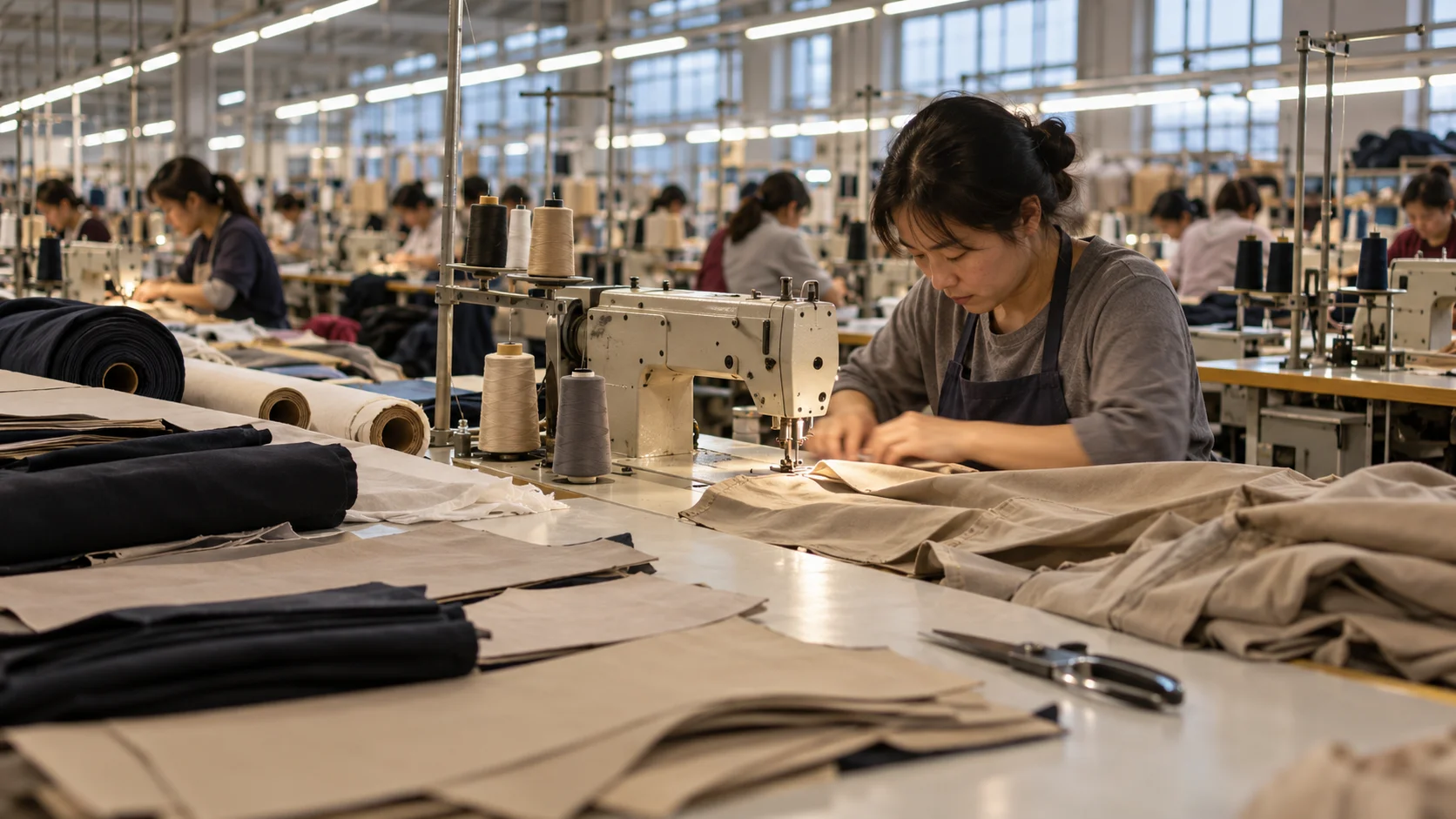
The 0% ChAFTA rate is not automatic. It applies only when the goods meet the ChAFTA rules of origin and are supported by a valid Certificate of Origin. For apparel, the general ChAFTA rule of origin is a change in tariff classification, specifically a change at the chapter level (CC) or heading level (CTH) from the inputs to the finished garment. In practice, this means fabric qualifies for ChAFTA origin when it is woven and cut in China, sewn and finished in China, and exported as a finished garment. Fabric imported into China from another country and simply cut and sewn in China may or may not qualify, depending on whether the manufacturing step achieves the required tariff classification change.
For importers sourcing from Chinese manufacturers, the ChAFTA saving is worth quantifying precisely. It also reduces the GST base, since GST is calculated on the customs value plus duty. The import duty and GST guide for Australia covers how the two interact in the total landed cost calculation.
Three sourcing patterns come up most often:
- Goods manufactured end-to-end in China (yarn spun in China, fabric woven in China, garments cut and sewn in China) generally meet the ChAFTA rules of origin without difficulty. The Certificate of Origin confirms the Chinese origin of the manufacturing process.
- Goods assembled in China from imported fabric (e.g., fabric woven in another ASEAN country, cut and sewn into garments in China) need to be assessed against the specific CTH rule to confirm whether the assembly step produces a sufficient change in classification. In most cases, cutting fabric from HS Chapter 50–55 (fibres and yarn) into a finished garment in Chapter 61 or 62 does achieve the required classification change, but this should be confirmed with the supplier’s Certificate of Origin documentation and, if uncertain, with an ABF ruling.
- Goods manufactured partly in China, partly in a third country may not qualify for ChAFTA origin at all. If a garment is cut in China from imported fabric that was itself not made in China, the classification change test may fail depending on how the value of non-originating materials is calculated.
The Certificate of Origin (Form C/O) for ChAFTA must be issued by an authorised body in China, the General Administration of Customs of China or the China Council for the Promotion of International Trade (CCPIT). The importer must retain the Certificate of Origin and be able to produce it to the ABF on request for up to five years after importation. Suppliers who cannot or will not provide a valid Certificate of Origin are either sourcing from non-qualifying inputs or are not familiar with ChAFTA documentation requirements. Both are problems worth surfacing before the first shipment arrives.
Put the ChAFTA saving in dollars. Take an illustrative consignment with a customs value of AUD 40,000 and AUD 3,000 of freight and insurance. With a valid ChAFTA Certificate of Origin, duty is AUD 0 and GST at 10% is AUD 4,300. Without one, the 5% general rate adds AUD 2,000 in duty, and GST rises to AUD 4,500 because duty joins the GST base. A GST-registered importer recovers the GST as a credit, so the lasting cost of a missing certificate is the AUD 2,000, with a further AUD 200 tied up until the credit arrives. The certificate itself costs one line in the purchase order and a request to the supplier before production starts. Against a AUD 2,000 loss, that is why we put the request in the purchase order and not in the shipping instructions.
AANZFTA as an alternative
The ASEAN-Australia-New Zealand Free Trade Agreement (AANZFTA) provides a second pathway to preferential tariff rates for apparel if the goods originate under AANZFTA rules. For imports from China, ChAFTA is the primary agreement; AANZFTA is more relevant for garments originating in Vietnam, Indonesia, Thailand, or other ASEAN members. For a Chinese supplier with some ASEAN sourcing in the supply chain, it is worth confirming which agreement’s rules the goods satisfy before choosing which certificate to request.
Australian Textile Labelling Requirements
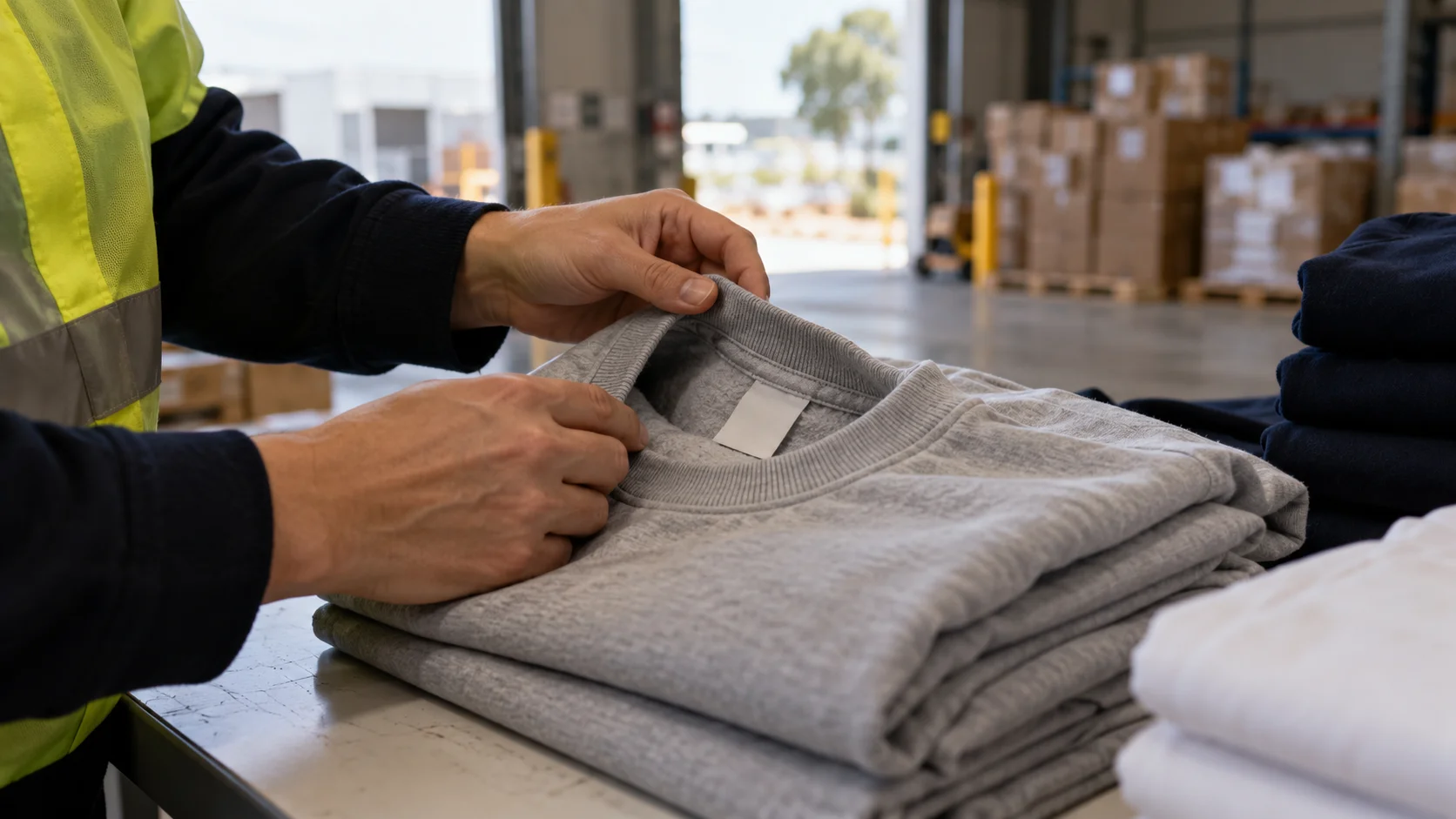
Two labelling rules are mandatory for clothing in Australia: care instructions under the ACCC’s Consumer Goods (Care Labelling) Information Standard 2023, and a country of origin trade description at import (covered in the next section). Fibre content labelling is voluntary, but a fibre claim that proves wrong is misleading conduct under the Australian Consumer Law.
Four rules apply:
- If you state fibre content, give it by percentage of weight, dominant fibre first. “80% cotton, 20% polyester” is a claim a lab can check; “cotton-poly blend” is not.
- Care instructions must be in English, international care symbols, or both. Labels that comply only with the Chinese standard (GB 5296.4) do not automatically satisfy the Australian requirement. A garment can carry both the Chinese-standard label and an Australian-compliant English label, but the English label must be present before the goods are offered for sale in Australia. Affixing labels after customs clearance is legally permissible, but doing it in Australia adds cost and creates a quality control risk. Mislabelling or incomplete labelling at the point of affixing is a common cause of ACCC enquiries.
- The label must be permanently attached. A hang tag is not sufficient. Labels must be sewn in or otherwise permanently affixed to the garment.
- Care instructions are legally required. The 2023 standard accepts them in English, as the internationally recognised care symbols, or both, and draws on AS/NZS 1957 and ISO 3758.
The most cost-effective approach is to specify Australian-compliant labels in the purchase order, so the manufacturer produces the garment with the correct English care and fibre content label already sewn in. Retrofitting labels to an existing stock of Chinese-standard-labelled garments costs time and money, and requires quality assurance to ensure accuracy.
Country of Origin Labelling
Country of origin claims on clothing in Australia are governed by the Australian Consumer Law (Schedule 2 of the Competition and Consumer Act 2010). The rules for clothing follow the general country of origin framework but apply specifically to manufactured goods.
For clothing imported from China, the relevant claim is “Made in China”, which is accurate and required when the goods were substantially transformed in China. A good is substantially transformed in China for Australian Consumer Law purposes if it has undergone a fundamental change in form, appearance, or nature in China such that the Chinese manufactured product is a different product from any imported inputs. Cutting and sewing woven fabric into a garment in China generally meets this test: the finished garment is a different article from the raw fabric.
What is more complex for importers who also design in Australia:
- “Designed in Australia, Made in China” is a permissible claim if the goods were genuinely designed in Australia and manufactured in China. Under section 255 of the Australian Consumer Law, a combined origin claim must not be misleading. The design activity in Australia must be real and material to the product, not merely a token step.
- “Australian brand” or “Australian owned” are not country of origin claims and do not imply Australian manufacture. Using these claims alongside Chinese-origin goods is permissible as long as the “Made in China” country of origin is clearly stated and not obscured.
- Mandatory disclosure. Country of origin is not optional on imported clothing, but the rule sits in customs law, not the ACL. The Commerce (Trade Descriptions) Regulation 2016 prohibits importing textile products and articles of apparel without a trade description naming the country where they were made (sections 9 and 16).
The ACCC has historically focused on misleading country of origin claims, particularly “Made in Australia” claims on goods with substantial overseas content, but has also taken action on missing labels. Importers acting as the responsible supplier for a Chinese-manufactured garment brand are fully liable for labelling compliance.
Product Safety: Mandatory Standards for Apparel
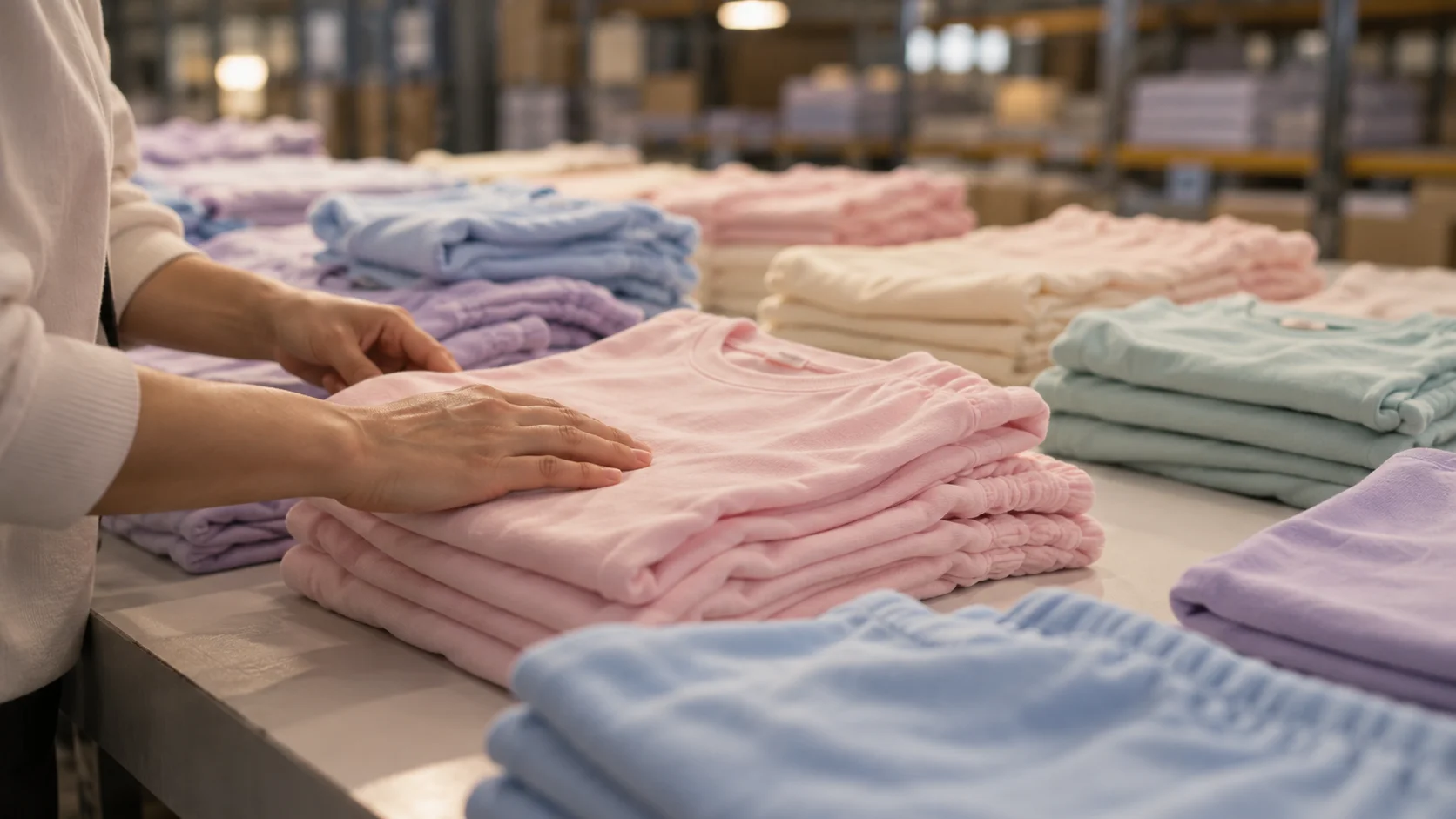
Most adult clothing has no applicable mandatory product safety standard in Australia beyond the general consumer guarantee that goods are of acceptable quality. Children’s clothing is a different matter. Two categories have mandatory standards that apply to importers as the supplier of record. See Australia’s commercial import rules explained for how ABF, ACCC, and other regulators work in parallel on imported goods, including how these product safety obligations fit into the broader multi-regulator import compliance system.
Children’s nightwear: flammability
The mandatory standard for children’s nightwear is the Consumer Goods (Children’s Nightwear and Limited Daywear and Paper Patterns for Children’s Nightwear) Safety Standard 2017, administered by the ACCC and built on AS/NZS 1249:2014. It applies to children’s sizes 00 to 14.
Compliance requires one of two approaches:
- The garment meets the flammability test under AS/NZS 1249 (Children’s nightwear: Requirements for reduced fire hazard). This involves testing to verify that the fabric and any trims do not ignite readily and do not spread flame rapidly under specified test conditions. The fabric itself may be treated with a flame-retardant finish, or a fibre with inherently low flammability (such as polyester or wool) may be used.
- The garment is a “low-fire-hazard design”: specifically, a close-fitting garment constructed to dimensions that limit the amount of fabric exposed to ignition. The standard provides dimensional templates. A close-fitting pyjama that meets the template dimensions can be sold without flammability testing, provided it is labelled with the mandatory “low-fire-hazard” warning label.
Importing children’s nightwear that fails to meet either pathway is a breach of mandatory safety standards under the Australian Consumer Law and can result in the Australian Competition and Consumer Commission requiring a product recall, seizure of stock at the border, or civil penalties against the importer.
Drawstrings on children’s clothing
ACCC suggested practice guidelines, which are voluntary, also cover drawstrings on children’s clothing. Drawstrings on hoods and necks of children’s garments have been associated with strangulation fatalities. The ACCC suggests that suppliers of children’s garments with hood or neck drawstrings follow its guidelines, which draw on ASTM F1816 and the European standard EN 14682. Garments with hood drawstrings that extend beyond 75mm when the garment is laid flat are likely to attract ACCC attention if sold for young children.
Biosecurity Requirements for Textile Imports
Finished garments imported from China are generally low biosecurity risk and are not routinely referred to the Department of Agriculture, Fisheries and Forestry (DAFF) for treatment or inspection at Australian ports. However, biosecurity requirements do apply to some categories:
- Second-hand clothing. Used garments require treatment before importation into Australia. This is typically a documented laundering and heat treatment process. Commercial importers of new stock are not affected, but importers of vintage or second-hand stock need to be aware of this requirement.
- Bamboo fibre garments with raw bamboo content. Finished bamboo fabric garments (bamboo viscose/rayon, bamboo lyocell) are generally acceptable, as the manufacturing process involves chemical treatment that removes biosecurity risk. However, garments containing structural raw bamboo components (a niche category) may require biosecurity clearance.
- Straw or plant-material accessories. Hats or clothing accessories incorporating dried plant materials may attract DAFF examination.
- Packaging materials. Wooden packing crates or wooden packing elements used to ship garments must comply with ISPM 15 (heat treatment or fumigation). Most Chinese exporters use cardboard cartons for apparel, which avoids this requirement entirely.
For standard new garments shipped in cardboard cartons, biosecurity is not a practical barrier at the border. The ABF import declaration will be the primary clearance process.

Pre-Shipment Quality Inspection
Apparel is one of the highest-risk import categories for quality problems that are not detectable from a product description or a sample: stitching failures, fabric weight shortfalls, colourfastness issues, incorrect sizing or grading, mislabelled fibre content, and garments that pass sample approval but differ meaningfully from the bulk production run. By the time a non-conforming shipment clears Australian customs and reaches a warehouse, the cost of the problem has already compounded: freight, duty, and customs costs have been paid on non-saleable stock.
The standard approach for Australian apparel importers managing quality risk from Chinese suppliers is a pre-shipment inspection (PSI) conducted during or immediately after final production, before goods are packed for export. This involves an independent third-party inspection company conducting an AQL (Acceptable Quality Limit) inspection of a statistically valid sample of the production run. SGS, Bureau Veritas, Intertek, and QIMA all offer China-based garment inspection services.
A standard apparel AQL inspection, commonly set at 0 for critical defects, 2.5 for major and 4.0 for minor, is the minimum most experienced importers use for new supplier relationships. This means:
- A sample of the production run is inspected (sample size determined by the AQL table based on total units)
- Defects are classified as critical (safety or legal compliance failures), major (cosmetic or functional failures that would affect sale), or minor (small deviations)
- If the number of defects found in the sample exceeds the acceptance threshold, the full shipment is placed on hold for rework or rejection
PSI costs for China-based garment inspections typically run USD 200–350 per inspection day, with most standard production runs completed in one day. A failed PSI that stops a non-conforming shipment almost always costs less than managing the problem after it arrives in Australia. For a new supplier, budget one inspection per shipment whenever you import apparel from China to Australia, until the factory has a track record.
For suppliers with an established compliance track record, some importers transition to a random inspection cadence (every third or fourth shipment) or require the supplier to provide their own internal QC reports alongside photos of the production run. A new supplier relationship should start with 100% PSI compliance, not because the supplier is assumed to be dishonest, but because garment production variability is high enough that problems appear even in good-faith operations.
Freight: LCL, FCL, and Air for Apparel
Apparel is one of the most freight-friendly product categories: high value-to-weight ratio relative to many industrial imports, no dangerous goods classification, no special temperature or humidity requirements, and high stackability when cartonised correctly. The main freight decision for Australian apparel importers is volume and timing.
LCL for smaller or first orders
A trial order or season opener (typically under 10–12 CBM) ships economically as LCL (a shared container, charged per CBM). LCL transit from Chinese ports to Australian ports (Melbourne, Sydney, Brisbane) runs approximately 18–25 days sea transit, plus origin consolidation time and Australian customs clearance. Door-to-door, a first LCL order from China takes 30–40 days from production completion to Australian warehouse. For seasonal fashion, this transit time needs to be built into the order calendar from the start, not treated as a variable to absorb.
FCL when volume warrants it
At approximately 12–15 CBM, the economics of a 20ft FCL begin to compete with LCL on a total cost basis. The FCL advantage beyond cost is control: a sealed container from the Chinese factory to the Australian port reduces the handling events and, with it, the carton damage risk. For folded and individually polybag-packed garments, LCL handling typically does not cause garment damage, but carton compression in shared LCL loads occasionally does.
Air freight for time-sensitive fashion
Air freight from China to Australia is a genuine option for trend-driven or fast-fashion categories, where missing a selling window has a direct revenue impact. For individual SKUs or top-up orders, it may be the right one. Air freight for apparel from Chinese ports to Australian capitals runs approximately 3–7 days. The cost premium over sea freight is significant (typically 6–10x per kg), but on high-margin garments where the alternative is selling at markdown, the economics often support it. Air is also the standard mode for sample shipments and pre-production prototypes.
Our LCL vs FCL guide for Australian importers sets out where the FCL premium is justified below the volume crossover.

Supplier Documentation Checklist
Before a shipment leaves China, the following documents should be confirmed as either in hand or in production. Missing or incorrect documentation is the most common cause of customs delays and preferential duty claim failures on apparel imports.
- Commercial invoice: must state the seller, buyer, garment description (including HS code if possible), quantity, unit price, total value, and Incoterms. The declared value must match the actual transaction value.
- Packing list: shows a carton-by-carton breakdown of contents, gross and net weight, and dimensions. This is used by Australian customs for examination if the shipment is selected.
- Bill of lading (sea) or airway bill (air): serves as the transport contract and the document of title for sea freight.
- ChAFTA Certificate of Origin (Form C/O): issued by the General Administration of Customs of China or CCPIT. It must be obtained before the goods leave China. Without this document, the ChAFTA 0% duty rate cannot be claimed at Australian customs entry.
- Pre-shipment inspection report: if an inspection was conducted, the report and pass/fail status should accompany the shipment documentation.
- Lab test reports: for children’s nightwear, an AS/NZS 1249 flammability test report from an accredited laboratory is required as evidence of compliance. For children’s garments with drawstrings, a dimensional compliance declaration may be requested by Australian customs.
- Textile composition test report: for higher-value or higher-volume orders, a fibre content test from an accredited lab confirms that the labelled composition matches the actual fabric. This is particularly important where the duty rate, fibre claim, or product safety standard depends on the fibre type.
The Import Process: Putting It Together
For an Australian importer running a regular apparel program from China, the practical sequence looks like this: issue the purchase order with Australian label specifications included; have the supplier produce the garment with Australian-compliant English fibre content and country of origin labels sewn in; conduct the pre-shipment inspection before packing; obtain the ChAFTA Certificate of Origin from CCPIT at the time of export; ship from the Chinese port (LCL or FCL depending on volume); file the Australian customs entry through a licensed customs broker, claiming ChAFTA duty preference with the Certificate of Origin; clear customs; and deliver to the warehouse.
The friction points are the Certificate of Origin (supplier must know to obtain it and must obtain it before export, not retrospectively), the label compliance (specify in the PO, not after the garment is made), and the PSI (schedule it 7–10 days before the expected ship date, not the day of loading).
The China to Australia import guide walks through each stage, and our total landed cost framework for Australian importers covers the full cost stack.
Working with a Freight Forwarder
An experienced freight forwarder for China-to-Australia apparel can do more than arrange the container. The right partner will confirm that the ChAFTA Certificate of Origin matches the commercial invoice, check that the packing list reflects the garment descriptions on the customs entry, and flag to the customs broker any HS code classification that might attract examination or a duty rate review. On the Australian side, a licensed customs broker with apparel experience knows which headings attract random inspection and can structure the entry to minimise delay risk.
Swift Cargo’s Australia shipping service covers ABF clearance, biosecurity, and delivery to warehouse, with a full overview of the Australian customs clearance process for imported goods. Contact Swift Cargo to discuss your China-to-Australia apparel freight program. We handle the full door-to-door process including ChAFTA documentation review, customs brokerage, and warehouse delivery across all major Australian ports.
Spend enough time reading Australian Border Force tariff-classification rulings and a pattern emerges that no supplier will volunteer. The dispute is almost never about whether apparel is dutiable. It is about a single distinction buried in the tariff line: knitted versus woven, the fibre-content threshold that tips a garment from one duty rate into another, whether a jacket is “of” a material or merely “trimmed with” it. Importers lose these arguments not because they acted in bad faith, but because they trusted a supplier’s commercial-invoice description as if it were a customs classification. It is not. The number that determines your duty is the one a customs officer assigns, working from the garment in front of them. By then, the goods have already landed, and the reassessed bill is yours.
Frequently Asked Questions
What is the import duty on clothing from China to Australia?
Under ChAFTA, most apparel originating in China is imported duty-free into Australia: the ChAFTA preferential rate for the majority of Chapter 61 and Chapter 62 garments is 0%. Without ChAFTA (i.e., at the general MFN rate), the duty rate on most clothing is 5%. To claim the 0% ChAFTA rate, a valid Certificate of Origin (Form C/O) issued by an authorised Chinese body such as the CCPIT is required, and the goods must meet ChAFTA rules of origin. The Certificate of Origin must be obtained before the goods are exported from China.
What labelling is required on clothing imported to Australia?
Clothing sold in Australia must carry care instructions under the Consumer Goods (Care Labelling) Information Standard 2023, in English, as the internationally recognised care symbols, or both. Imported clothing must also carry a trade description naming the country where it was made, under the Commerce (Trade Descriptions) Regulation 2016. Fibre content labelling is voluntary, but any percentage stated must be accurate. Check a label made to the Chinese standard (GB 5296.4) against both rules before Australian retail sale.
Do I need a Certificate of Origin to import apparel from China to Australia?
A Certificate of Origin is required to claim the ChAFTA preferential duty rate of 0%. Without it, the general duty rate of 5% applies to most apparel categories. The ChAFTA Form C/O must be issued by an authorised Chinese body (the General Administration of Customs of China or CCPIT) and must be obtained before export. It cannot be obtained retrospectively after the goods have shipped.
Is children’s clothing subject to any mandatory safety standards in Australia?
Children’s nightwear is subject to a mandatory flammability standard (the Consumer Goods (Children’s Nightwear and Limited Daywear and Paper Patterns for Children’s Nightwear) Safety Standard 2017). The garment must either pass AS/NZS 1249 flammability testing, or be a close-fitting “low-fire-hazard design” that meets dimensional templates under the standard, labelled accordingly. Non-compliant children’s nightwear is a mandatory safety standard breach under Australian Consumer Law. The importer, as the responsible supplier, bears full liability.
What HS codes cover apparel imported from China to Australia?
Most apparel falls under Chapter 61 (knitted or crocheted: T-shirts at HS 6109, hoodies at HS 6110, swimwear at HS 6112) or Chapter 62 (woven: trousers at HS 6203/6204, woven shirts at HS 6205/6206, jackets and coats at HS 6201/6202). The 4-digit heading determines both the duty rate and the applicable ChAFTA rule of origin. Classification disputes on garments at the Chapter 61/62 boundary (e.g., bonded or laminated fabric garments) can be resolved through an ABF advance tariff ruling before importation.