
One category of import cost does not appear on your supplier’s quote, does not show up in most online duty calculators, and can exceed the price of the goods themselves. Anti-dumping duty is the ambush of Australian importing. Ordinary customs duty on most goods runs at 0 or 5 percent. Anti-dumping duty on the wrong steel from the wrong mill can run past 100 percent. The difference between those two numbers is the difference between a profitable container and a container you cannot afford to clear.
Frustratingly, every piece of information you need to avoid the ambush is published. The Anti-Dumping Commission maintains a public register listing every product, every origin country, and every exporter subject to measures, with the rates attached. The importers who get burned are almost never the ones who checked and misread the register. They are the ones who never knew it existed.
A worked example below shows how the choice of exporter (not product, not origin, just exporter) can move an aluminium extrusion order’s duty bill from 5 percent to more than 40 percent.
What Anti-Dumping and Countervailing Duties Actually Are
Two related concepts travel together here, and the register lists both.
Dumping occurs when an exporter sells goods to Australia at a price below the “normal value”: broadly, the price the same goods sell for in the exporter’s home market, or a constructed value based on cost of production plus a reasonable profit. If a Chinese mill sells hollow steel sections domestically at the equivalent of AUD 1,200 a tonne but exports them to Australia at AUD 950, the goods are dumped, and the dumping margin is the gap expressed as a percentage of the export price.
Countervailing (or subsidy) duties address a different distortion: foreign government subsidies that let exporters price below what an unsubsidised producer could sustain. Cheap state-directed loans, discounted raw materials from state-owned enterprises, tax rebates tied to export performance: where an investigation finds these benefits flowing to the goods, a countervailing duty offsets them. Many measures on Chinese-origin goods combine both: a dumping duty and a countervailing duty stacked on the same product.
Neither is a penalty for doing anything wrong as the importer. They are remedial trade measures designed to lift the landed price of dumped or subsidised goods back to an undistorted level, protecting Australian producers from material injury. That is cold comfort when you are the one paying, but it matters for how you should think about them: they are not going away, they are lawful and WTO-consistent, and arguing with the Australian Border Force officer at clearance achieves nothing. The time to deal with anti-dumping duty is before the purchase order, not at the wharf.
The system has two institutional halves. The Anti-Dumping Commission investigates: it receives applications from Australian industry, examines export prices and normal values, calculates margins, and recommends measures to the Minister. The Australian Border Force collects: once measures are in place, ABF applies them at the border like any other duty, calculated on top of ordinary customs duty, with GST then applied to the lot. Both agencies publish; the Commission’s paper trail is the document set every serious importer of affected goods learns to read: initiation notices, statements of essential facts, final reports, the dumping commodity register itself.
Which Products Are Affected
Anti-dumping measures cluster heavily in a handful of industrial categories. If you import any of the following, treat the register check as mandatory, not optional.
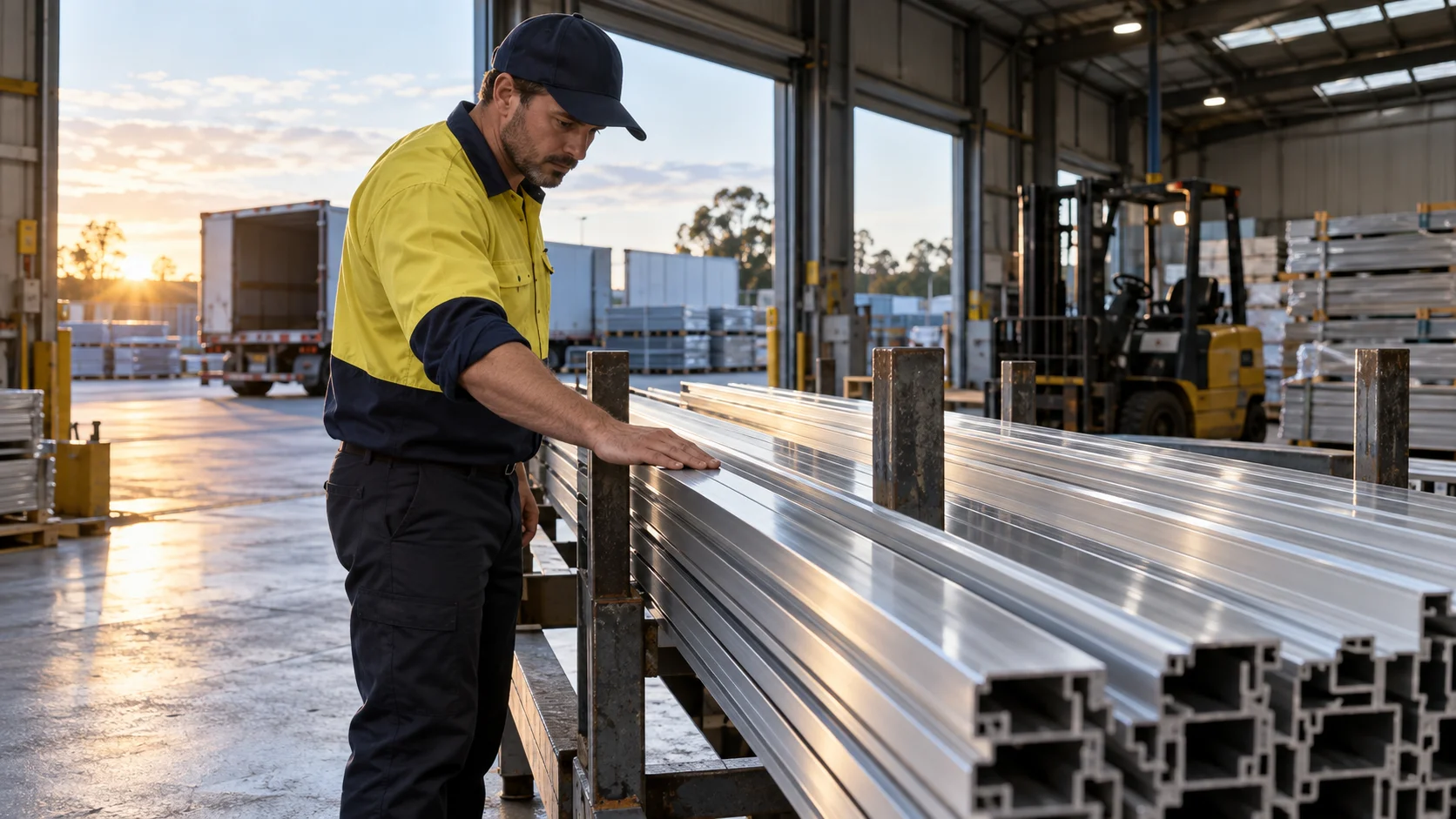
Steel products dominate the register. A wide range of steel products has carried measures at various points, typically against China and in various cases Korea, Taiwan, Malaysia, Vietnam, Thailand and others: rod in coils, steel reinforcing bar (rebar), hollow structural sections (the square and rectangular tube used in everything from fencing to building frames), hot-rolled plate, and various coated and galvanised products. Steel measures are the ones that catch builders, fabricators and fencing suppliers who order direct from Asian mills expecting the ordinary 5 percent duty and discover the real figure at clearance.
Aluminium extrusions have been subject to both dumping and countervailing measures on Chinese-origin goods for well over a decade, with exporter-specific rates spanning an enormous range. The category covers the profiles used in window frames, shopfronts, shower screens, solar mounting rails and countless fabricated products. It is the category in our worked example below, because it illustrates the exporter-rate problem better than any other.
Certain chemicals and industrial inputs appear periodically: ammonium nitrate, certain PVC resins, glyphosate at various points, and other inputs where Australian producers compete with large-scale foreign plants.
Wind towers and other large fabricated steel structures have attracted measures too: a reminder that the register is not just about commodity products. Project cargo can be affected.
Origins follow a pattern. China is by far the most common subject country, which is why anti-dumping risk should be on the checklist for anyone importing from China to Australia in the affected categories. But it is a mistake to assume China-only. Measures have applied to goods from Korea, Taiwan, Malaysia, Indonesia, Vietnam, Thailand, Spain, Italy and elsewhere. The register, not your assumptions, is the source of truth.
One more subtlety: measures attach to goods as described in the measure, cross-referenced to tariff classifications, not to tariff codes alone. Two products under the same tariff heading can be treated differently if one falls inside the goods description and the other does not. This is one of several reasons the check is broker work, not a thirty-second web search.
How the Rates Work, and Why Your Specific Mill Matters
Here is where the numbers get serious, and where most importer misunderstandings live.
Anti-dumping duty is additional. It stacks on top of ordinary customs duty. If your aluminium extrusions carry 5 percent general duty and a 30 percent dumping margin, you pay 35 percent before GST, and GST is then calculated on the duty-inclusive value. The measures do not replace ordinary duty; they compound it.
Margins vary enormously. Dumping margins found in Australian investigations have ranged from single digits to well over 100 percent on some steel products. Measures generally are not imposed below 2 percent, where the margin is treated as negligible. A 10 to 40 percent range is common; 50 to 100 percent-plus happens. When a countervailing duty is stacked on a dumping duty for the same goods, the combined effective rate climbs further.
Rates are exporter-specific. This is the single most important operational fact in this entire article. During an investigation, the Commission invites exporters to cooperate: to open their books, supply cost and pricing data, and have an individual margin calculated. Exporters that cooperate get their own rate, which reflects their actual pricing behaviour and is often relatively low. Exporters that do not cooperate, or that did not exist or did not export during the investigation period, fall under the residual “all others” rate, which is derived from the least favourable facts available and is almost always the highest rate in the measure.
The practical consequence: two factories in the same industrial park can carry duty rates 35 percentage points apart while producing physically identical extrusions to the same standard. The product is the same. The origin is the same. The tariff code is the same. The only variable is the name on the exporter line of the paperwork. Choosing your supplier without checking their name against the register is choosing your duty rate blind.
It follows that the check cannot stop at “is my product covered?” It has three layers, and all three must match your actual transaction: the goods description and tariff code, the country of origin, and the specific exporter or manufacturer. Get the exporter’s registered legal name in Chinese-origin cases: trading names, English marketing names and group names frequently differ from the entity named in the measure, and the entity named in the measure is what determines the rate.

The Pre-Order Check: The Register Is the Document
The Anti-Dumping Commission publishes the dumping commodity register (DCR), the consolidated public record of every measure in force. For each affected product it lists the goods description, the relevant tariff classifications, the subject countries, and the exporters with their individual rates alongside the residual rate. It is updated as measures change. It is free. It is the single document that would have saved every importer who has ever been ambushed by anti-dumping duty.
The working method, before any significant order in an at-risk category:
1. Classify the goods properly. You need the tariff code your broker will actually declare, not a guess. Classification errors flow straight into anti-dumping errors in both directions: you can miss a measure that applies, or panic about one that does not.
2. Search the register by product and tariff code. Confirm whether a measure exists for your goods from your origin country. Read the goods description carefully: coverage turns on the wording, including dimensions, alloy grades, coatings and end-use descriptions in some measures.
3. Match your exporter by legal name. If the measure applies, find your specific supplier in the exporter list. If they appear with an individual rate, that is your rate. If they do not appear, the residual rate applies, and that changes the economics of the deal, possibly fatally.
4. Put the resulting rate into a full landed cost calculation before committing. Anti-dumping duty belongs in the same spreadsheet as freight, ordinary duty, GST, port charges and delivery. Our total landed cost when importing to Australia guide works through that discipline in full.
A licensed customs broker should be doing this with you, and a good one will raise it unprompted the moment they see steel or aluminium on a commercial invoice. The broker’s role here is genuinely valuable: they read the goods descriptions the way the Commission writes them, they know which measures have pending reviews, and they can query ABF treatment of borderline goods before the container ships rather than after. If your broker has never mentioned the dumping commodity register and you import metal products, that silence is information. Swift Cargo runs this check as standard on affected commodity categories.
Worked Example: One Product, Two Exporters, 35 Points of Duty
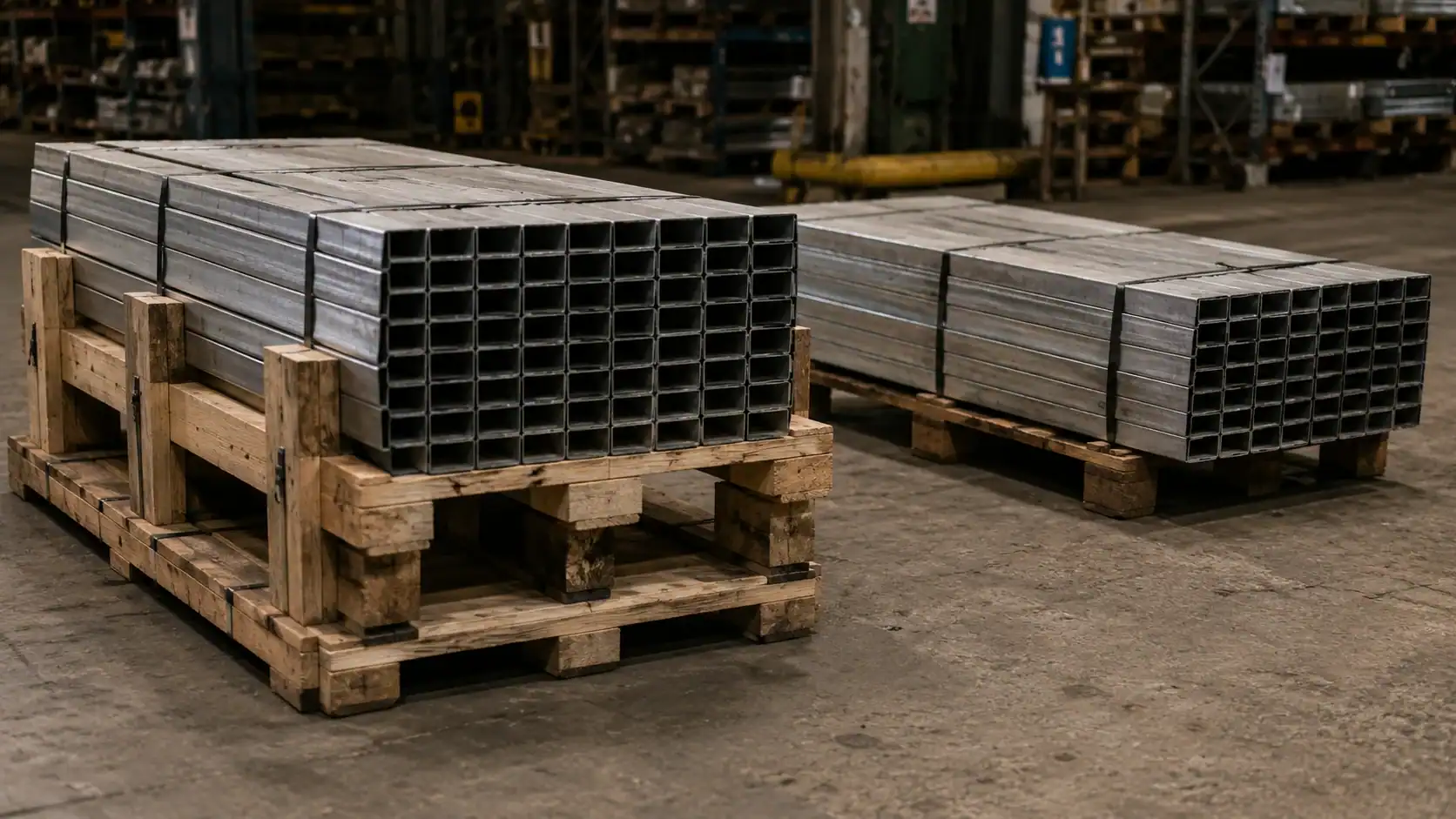
Numbers make the stakes concrete. Suppose a Brisbane shopfitting business orders aluminium extrusions from China: a 20-foot container of profiles for shopfront glazing systems, customs value AUD 60,000, sea freight and insurance already inside that CIF figure for simplicity.
Scenario A: cooperative exporter with a low individual rate. The supplier is a large extruder that cooperated with the Commission’s investigations and holds a low individual dumping margin; assume a combined dumping and countervailing rate of 5 percent for illustration.
- Ordinary customs duty at 5%: AUD 3,000
- Anti-dumping/countervailing at 5%: AUD 3,000
- GST at 10% on (value + duties) = 10% of 66,000: AUD 6,600 (creditable for most registered businesses)
- Cash at the border: AUD 12,600; non-recoverable duty cost: AUD 6,000 (10% of goods value)
Scenario B: uncooperative exporter on the residual rate. The supplier quoted 8 percent cheaper on the goods, and their name is nowhere in the register’s exporter list. The residual combined rate is assumed at 40 percent for this example (residual rates on this category have historically sat at these levels and beyond). Goods cost drops to AUD 55,200.
- Ordinary customs duty at 5%: AUD 2,760
- Anti-dumping/countervailing at 40%: AUD 22,080
- GST at 10% of 80,040: AUD 8,004
- Cash at the border: AUD 32,844; non-recoverable duty cost: AUD 24,840 (45% of goods value)
The “cheaper” supplier costs AUD 18,840 more in non-recoverable duty than they saved on the goods. Total landed cost swings by roughly a third of the order value on the strength of a single line in a public register that takes fifteen minutes to check. And Scenario B assumes everything goes smoothly: the duty is at least known and budgeted. The genuinely destructive version is the importer who prices their shopfront contracts off Scenario A economics, ships under Scenario B paperwork, and finds out at clearance with the container accruing storage while they scramble for AUD 33,000.
Anyone bringing in construction inputs should run this arithmetic as standard practice. The overlap is almost total between anti-dumping categories and the products our importing building materials from China to Australia guide draws on.
Circumvention: The Traps That Turn a Cost Problem Into a Legal Problem
When a duty bill can exceed 40 percent, the incentive to dodge it is obvious, and an ecosystem of dodges exists. Every one of them lands on the importer.
Transshipment origin-washing. The classic offer routes Chinese-origin goods through Malaysia, Vietnam or Thailand, re-documents them with a third-country certificate of origin, and ships them to Australia as if they were made there. Sometimes the goods pass through a genuine but trivial processing step; sometimes they just change containers. Either way, origin under customs law follows where the goods were manufactured, not where they were last loaded. Declaring the wrong origin is a false declaration. The liability is the importer’s, even if the importer was deceived by the supplier. ABF can demand years of unpaid duty on past entries, plus penalties, and “my supplier told me it was Malaysian” is a mitigation argument at best, not a defence. If a supplier volunteers a transshipment arrangement, they have told you two things: the real duty exposure of their goods, and how they treat legal risk that belongs to someone else.
Slight modification. The subtler variant alters the goods just enough to fall outside the measure’s goods description (a marginally different alloy, a coating, a small dimensional change with no commercial purpose) while the product does the same job. Australia’s anti-circumvention framework exists precisely for this, and the Commission has conducted circumvention inquiries and extended measures to slightly modified goods. A product that is outside the measure today because of a cosmetic tweak can be inside it after an inquiry, and the pricing advantage evaporates retroactively for future orders you have already contracted.
Under-declared values. Because anti-dumping duty is ad valorem in most cases, a lower declared value produces lower duty, which makes affected goods a magnet for the invoice games unpacked in our customs valuation in Australia article. ABF pays particular attention to valuation on goods subject to measures, and some measures use floor-price mechanisms specifically to defeat under-invoicing. Do not let a supplier “help” you here either.
The pattern across all three: the supplier proposes, the importer pays. You are the entity ABF can reach. Price the duty honestly or restructure the sourcing honestly; no durable third option exists.
Measures Change: Reviews, Sunset Reviews and Why Repeat Importers Must Monitor
A register check is a snapshot, and the picture moves.
Measures are normally imposed for five years. Before expiry, the Commission can conduct a sunset review (continuation inquiry): if it finds that removing the measures would lead to continued or recurring dumping and injury, they are extended for another five years. Several long-running steel and aluminium measures have been extended repeatedly. Expiry is not automatic in practice for the persistent categories.
Between sunsets, interim reviews and reinvestigations adjust individual rates. An exporter’s margin can be revised up or down; new exporters can apply for their own rates through accelerated reviews instead of wearing the residual rate; goods descriptions can be clarified; circumvention inquiries can pull new goods or origins into scope. Variable-rate mechanisms tied to benchmark prices move with the market.
For the one-off importer this is background noise. For anyone importing affected products on a repeat basis, it is operational risk that compounds quietly: the rate you verified in March may not be the rate in November, in either direction. The discipline is simple: re-check the register before every significant order, and have your broker flag reviews in progress on your commodities. Commission review outcomes are published with commencement dates, so rate changes are knowable in advance by anyone who watches. The importers who treat the register as a living document get cost changes as forecasts; the ones who checked once get them as surprises.
Interim Duty, Final Assessment and Getting Money Back
A detail that surprises even experienced importers: the anti-dumping duty you pay at clearance is interim duty. It is collected at the rate in force, but the final liability for a given import period can be assessed later against the exporter’s actual export prices and normal values in that period.
This cuts both ways, but the useful direction is the refund. If the actual dumping margin on your consignments turns out to be lower than the interim rate you paid, you can lodge a duty assessment application with the Anti-Dumping Commission and claim back the difference between interim duty paid and final duty owed. That can happen because your exporter lifted prices, or the market moved. Applications relate to defined importation periods and carry strict lodgement windows counted in months, not years, so the mechanism only works for importers who keep organised records: entry numbers, duty paid per line, exporter details, dates.
For a business importing affected goods regularly, this is real money. Take an importer who pays interim duty at 20 percent while their exporter’s actual margin resolves to 12 percent. That 8-point gap becomes a refund claim across every entry in the period. Most never claim it, because most never knew the mechanism existed. Set up the tracking on your first affected shipment. A simple register of entries and duty paid, reviewed against assessment windows with your broker, turns a bureaucratic footnote into a recurring cost recovery.
Options If Your Product Is Affected
Finding your product on the register is not the end of the sourcing plan. It is a fork with four honest paths.
Source from a non-subject origin. If the measure covers China but not, say, India or Turkey for your product, a supplier in a non-subject country avoids the duty entirely, legitimately, because the goods genuinely originate there. Run the full landed cost comparison: a non-subject origin at a higher unit price frequently beats a subject origin plus 30 percent duty. And verify the origin claim properly; buying “Malaysian” extrusions that are Chinese goods in transit puts you straight back into the circumvention trap above.
Choose a low-rate exporter within the subject country. Often the best answer. The register tells you exactly which exporters carry which rates; sourcing from a cooperative exporter with a low individual margin keeps your Chinese supply chain intact at a duty premium of a few points instead of forty. This turns the register into a supplier-selection tool rather than just a hazard map.
Price the duty in. For some products the subject-origin supplier is still cheapest even with the full duty loaded. That is a legitimate outcome: the measure’s purpose is fair pricing, not prohibition. The requirement is simply that the duty appears in your costing and your sell-price before you commit, not after.
Exemption applications. Where no Australian producer makes the goods (or a substitutable product), an importer can apply for an exemption from the measures for those specific goods. Exemptions are granted for defined goods and are not quick, but for a product line that is genuinely unavailable locally, they can remove the duty lawfully and durably. Broker or trade-consultant territory, worth exploring for high-volume niche inputs.
Common Mistakes
Ordering steel or aluminium without checking the register. Still the number one failure, and the most expensive per incident. If the goods are metal and the origin is Asia, the DCR check is as mandatory as the tariff classification. No exceptions for small orders: the duty percentage does not care about your container count.
Trusting “we handle the duty” from the supplier. Under the standard terms most importers buy on, the importer of record pays Australian duties, full stop. A supplier claiming to have duty “sorted” is describing either a misunderstanding, a DDP arrangement you should scrutinise line by line, or one of the circumvention schemes above wearing a reassuring sentence. Ask precisely: sorted how, under whose importer-of-record, at what declared origin and value?
Accepting transshipment offers. Covered above, repeated deliberately: the liability is yours, deception is not a defence, and back-duty demands can reach years of entries. The discount is never large enough.
Matching the product but not the exporter. Confirming “extrusions from China carry measures” and stopping there misses the entire exporter-rate structure, and with it, both the risk (your supplier is on the residual rate) and the opportunity (a comparable supplier is at 5 percent).
Checking once and never again. Reviews, sunsets and circumvention inquiries move the rates. Repeat importers need a repeat check.
These sit alongside the broader failure patterns in our roundup of common import mistakes in Australia. Anti-dumping just carries a higher price tag per mistake than most.
The Fifteen-Minute Habit
Anti-dumping duty is unusual among import costs: enormous, variable, and entirely knowable in advance. The Commission publishes the register, lists rates by exporter, and announces reviews before they conclude. Everything about the system rewards the importer who reads the documents and punishes the one who assumes.
So build the habit. Before any order of steel, aluminium or industrial chemicals from Asia: classify the goods, search the dumping commodity register by code and origin, match the exporter’s legal name, and load the resulting rate into the landed cost sheet. Fifteen minutes with a public document, or a single email to your broker, guards against a downside measured in tens of thousands of dollars and, in the circumvention cases, in legal exposure that outlasts the shipment by years.
Related Reading
- Total Landed Cost: What Importing to Australia Really Costs
- Customs Valuation in Australia: How ABF Decides What Your Goods Are Worth
- Importing Building Materials from China to Australia
- Importing from China to Australia: The Complete Guide
- Import Mistakes Australia: The Errors That Cost Importers Most
- HS Codes Explained: How to Classify Your Imports to Australia Correctly
Frequently Asked Questions
What are anti-dumping duties in Australia?
Additional import duties are applied when goods are exported to Australia below their normal value, investigated by the Anti-Dumping Commission and collected by the Australian Border Force on top of ordinary duty and GST. Countervailing duties, which offset foreign government subsidies, work the same way and are often imposed alongside dumping duties on the same goods.
How do I check if my product is subject to anti-dumping duty?
Search the Anti-Dumping Commission’s dumping commodity register using three inputs: the tariff classification, the country of origin, and the exporter’s legal name. All three determine the outcome. A licensed customs broker can run the check as part of a pre-order landed cost estimate, and should raise it unprompted for steel and aluminium orders.
Why does the specific exporter matter so much?
Because rates are exporter-specific. Cooperative exporters receive individual margins, often low; everyone else wears the residual “all others” rate, usually the highest in the measure. Identical goods from two suppliers in the same country can carry duty rates 35 points apart.
Is transshipment through a third country legal if my supplier arranges it?
No. Origin follows where goods were manufactured, not where they shipped from. Declaring a false origin is circumvention. The importer carries the liability even when deceived by the supplier, and ABF can pursue unpaid duty on years of past entries plus penalties.
Can I get anti-dumping duty back?
Potentially. Duty collected at import is interim; final liability is assessed later. If the actual dumping margin for the period was lower than the interim rate paid, a duty assessment application to the Anti-Dumping Commission recovers the difference. Lodgement windows are strict, so keep entry-level records from the first affected shipment.
Do measures expire?
Measures normally run five years, but sunset reviews frequently extend them, and interim reviews adjust individual rates in between. Repeat importers should re-check the register before every significant order rather than relying on a previous answer.