
Most people who move to Thailand book their flight, find accommodation, and think about shipping their possessions in roughly that order. The flight and the apartment have fixed dates; the shipment is arranged when there is time. And then the timing matters in a way it did not with the flight: Thai customs gives personal effects a six-month duty-free window from the date of first entry: the clock runs from when you arrived, not when the goods were sent, and delays that compound across the origin, the transit, and the Thai customs queue can eat that window faster than expected.

The Typical Timeline and Where It Comes Apart
A door-to-door personal effects shipment from Australia to Thailand covers five discrete stages, each with its own delay risk profile:
- Origin packing and documentation: removal company availability, export permits, supporting documents
- Origin customs and port processing: export declaration, container loading, vessel cut-off
- Ocean transit: vessel voyage, possible transshipment at Singapore or Port Klang
- Thai port arrival and staging: vessel berthing, discharge, container yard staging
- Thai customs clearance: Form 130/1 submission, documentation review, examination if selected
Typical transit time, Australia to Laem Chabang: Direct services (available from Sydney, Melbourne, Brisbane, and Fremantle through select carriers) run 14–18 days port to port. Services routing through Singapore or Port Klang run 18–25 days port to port, with an additional 3–7 days at the transshipment hub if the connecting vessel has a different cut-off day. Total door-to-door including origin and Thai customs: 8–14 weeks under normal conditions.
Under abnormal conditions (a combination of document delay at origin, a Singapore transshipment miss, and a yellow or red channel examination at Laem Chabang) the same shipment can take 16–22 weeks. The six-month exemption is 26 weeks from Thai entry. A relocator who started the shipping process at week 12 post-arrival and encountered a multi-stage delay is looking at a close call or a miss.
Origin Country Delays: The Stage Most Relocators Underestimate
The origin stage (getting the goods packed, documented, and exported) is routinely underestimated because it does not feel like shipping. It feels like moving. But it involves logistics dependencies with lead times that compound unpredictably.
Removal company availability: International removal companies with the capability to pack, export-clear, and containerise a household goods shipment are not universally available on short notice. In Sydney, Melbourne, and Brisbane, reputable companies with Thai-market experience typically book 3–5 weeks in advance during peak relocation periods (Q4, January). A relocation scheduled in November or December (common for families following the school year) may encounter 4–6 week lead times from the first inquiry call to the pack date. Starting the removal company search within 2 weeks of confirming the move date is too late in these periods.
Documentation requirements at origin: Thai customs Form 130/1 requires a packing list with specific fields: item descriptions, quantities, country of manufacture, and declared values. The packing list must be prepared before the container is sealed, since it is a statutory document that becomes part of the customs clearance submission in Thailand. A poorly prepared packing list, with vague descriptions (“clothing × 50”), incorrect values, or missing country of origin information, creates a documentation problem in Thailand that is difficult to correct from abroad. Some Thai customs offices return the Form 130/1 for amendment if the packing list is inadequate, adding 5–10 working days to clearance.
Export permits and deregistration documents: Certain categories of goods require Australian export permits or deregistration paperwork before they can leave Australia:
- Motor vehicles: deregistration with the relevant state roads authority, plus AQIS inspection (to remove pest risk from undercarriage and interior). Processing time: 10–20 working days from application depending on the authority.
- Firearms: export permit from the Australian Federal Police (AFP). These are not issued quickly, and transport of firearms into Thailand requires a Thai import permit that must be arranged in advance through the Thai authorities.
- Cultural objects and heritage items: export permit from the Australian government under the Protection of Movable Cultural Heritage Act 1986, which can take several weeks for initial assessment.
- Plants and plant material: DAFF phytosanitary certificate, issued after inspection. Book the inspection as early as possible: in peak periods, inspection appointments may be 2–3 weeks out.
For most household goods shipments (furniture, clothing, kitchenware, electronics) no specific export permit is required beyond a standard export declaration lodged through the Australian Border Force (ABF) system. But if any regulated item is in the shipment, the entire container waits for the slowest permit process to complete.
Transit Delays: Vessel Schedules and Transshipment Risk
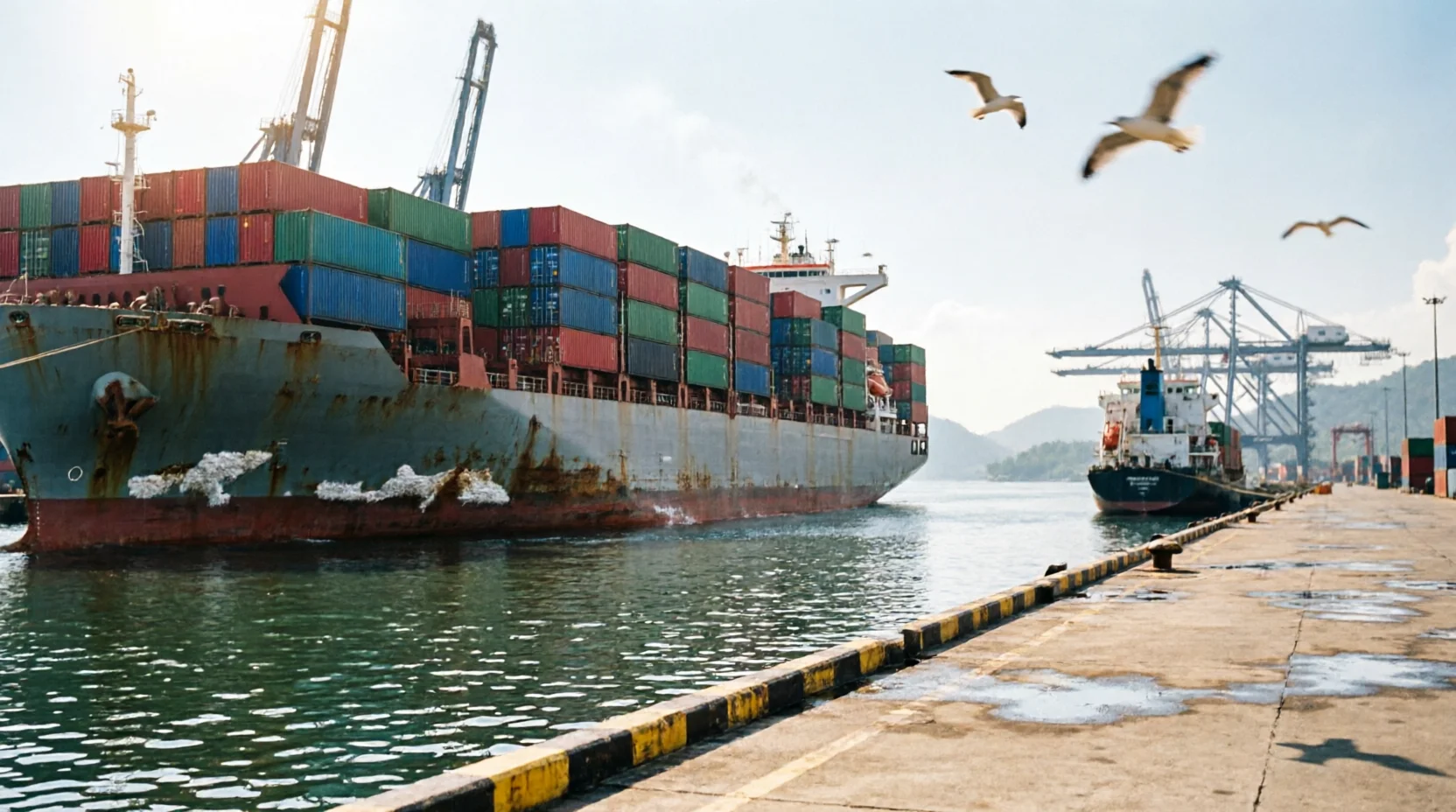
Ocean transit from Australia to Thailand is not a direct voyage on most services. Laem Chabang (Thailand’s primary deep-water container port, approximately 130 km south of Bangkok on the Gulf of Thailand) is served by a limited number of direct Australia-to-Thailand vessel strings. Most shipments route through a transshipment hub, typically Singapore or Port Klang (Kuala Lumpur), where the container transfers from the Australia mainline vessel to a feeder or a different mainline service to Laem Chabang.
Transshipment connection miss: The most common transit delay for personal effects shipments is a missed transshipment connection. If the mainline vessel arrives late at Singapore and the connecting vessel has already departed, the container must wait for the next departure, typically 7–14 days at Singapore. A single connection miss adds one to two weeks to the total transit time.
Factors that increase the probability of a connection miss: short connection window at the hub (less than 4 days between vessel arrival and connecting vessel departure), high port congestion at Singapore (PSA Singapore periodically experiences yard congestion that slows discharge and transfer), and vessel delays on the mainline leg (weather, port congestion en route).
Routing via the Cape of Good Hope: Since 2024, the security situation in the Red Sea has caused most carriers to divert Australia-Europe routing via the Cape of Good Hope rather than through the Suez Canal. This affects Australia-Thailand routing only indirectly: vessels on the Europe string that also call Australian ports and Asian ports have been on longer itineraries, reducing port frequency and occasionally disrupting connecting schedules. For relocators, the practical impact is that some vessel services that previously had weekly departures from Australian ports are now on 10–14 day cycles as the fleet is stretched across longer itineraries. Fewer departures mean less flexibility if a pack date slips by a few days and the next vessel is 10 days away instead of 7.
Peak season congestion: Q3–Q4 (September–December) is peak season for Australia-Asia freight, driven by pre-Christmas manufacturing and retail shipments from Chinese factories through Australian importers. Container space on Australian export strings tightens in this period, vessel schedule reliability drops, and booking lead times extend. Personal effects shipments, which are lower-priority freight for most carriers compared to commercial cargo, can be rolled (bumped to the next vessel) if space is tight. A relocation planned for November or December should allow an additional 2–3 weeks in the timeline estimate to account for peak season variability.
Thai Customs Clearance: The Procedural Delays
The Thai customs stage for personal effects is more procedurally complex than commercial import clearance in some respects, because the duty-free exemption requires an active assessment of eligibility rather than a straightforward classification and duty calculation.
Form 130/1 and the document package: Thai customs personal effects clearance requires the consignee (the relocator) to submit Form 130/1 along with a supporting document package. The typical package includes:
- Form 130/1 (completed in Thai or with a certified Thai translation)
- Passport with the relevant entry stamp showing the Thai entry date
- Non-immigrant visa or other long-term visa in the passport
- Proof of Thai address (rental contract, utility bill, or letter of employment specifying Thai residence)
- Packing list matching the bill of lading quantities exactly
- Commercial invoice or declaration of goods value
- Bill of lading or air waybill
Documents that are missing or inconsistent create a documentary query from Thai customs. The most common: the Thai address proof uses a different romanised spelling of the consignee’s name than the passport (romanisation of Thai addresses is not standardised); the packing list quantities differ from the bill of lading because goods were added or removed at the last minute; the passport presented is a renewal that does not contain the original Thai entry stamp (the old passport with the stamp must also be presented).
Each documentary query adds 3–7 working days to the clearance timeline while the customs broker in Thailand seeks clarification and resubmits.
Examination selection: Thai customs uses a risk-based examination system. Personal effects shipments are generally low-risk and clear on the green channel (documentary review only, 1–3 working days) in most cases. However, certain factors increase examination risk: high declared goods value, shipments from countries with known smuggling routes for specific goods, goods categories that require import permits (electronics, food, medication, alcohol), and random selection. A yellow channel examination (documentary review plus customs officer questions, 3–6 working days) or red channel examination (physical inspection of the goods, 5–21 working days) adds significantly to the clearance timeline and increases the risk of missing the six-month window if timing is already tight.
Songkran (Thai New Year, April) and public holidays: Thai customs does not process clearances during official public holidays. Songkran, Thailand’s most significant public holiday, typically spanning a 7–10 calendar day period in mid-April, effectively closes the customs clearance process for that period. A shipment that arrives at Laem Chabang in the first week of April may sit for 10–14 days before clearance begins. For relocators entering Thailand in mid-October, the six-month window expires in mid-April, precisely when a customs closure could add the margin that causes a miss.

The Six-Month Exemption: Financial Stakes of a Delay
The Thai personal effects duty-free exemption is a significant financial benefit and its loss is a significant financial penalty. The numbers are concrete enough to make the planning stakes clear.
What the exemption covers: Personal and household effects owned and used by the relocator for at least 12 months prior to the move, imported within six months of first Thai entry on a long-term visa. Coverage includes furniture, clothing, kitchenware, electronics, books, bicycles, and most standard household goods. It does not cover motor vehicles, firearms, commercial goods, new goods purchased for import, alcohol in excess of personal use quantities, or goods prohibited under Thai law.
Duty rates that apply if the exemption is missed: Thai import duty rates for common personal effects categories include:
- Furniture and household goods: 10–20% of CIF value
- Clothing and textiles: 10–30% of CIF value
- Electronics (televisions, computers, audio equipment): 0–15% of CIF value (many electronics have low duty rates)
- Kitchen equipment and appliances: 10–20%
- Books and printed materials: 0%
- Musical instruments: 5–15%
VAT applies at 7% on top of the duty-inclusive value (so if duty is 20%, VAT is 7% of 120% of the CIF value = 8.4% of CIF). The effective combined rate for most mixed household goods shipments falls in the range of 15–30% of the total shipment value.
Worked example: A household goods shipment from Sydney to Bangkok containing furniture, electronics, and clothing with a total declared CIF value of AUD 45,000:
- Blended duty rate (mixed goods, conservative estimate): 15%
- Duty: AUD 6,750
- VAT: 7% × (AUD 45,000 + AUD 6,750) = AUD 3,622
- Total liability: AUD 10,372
That AUD 10,372 is zero if the goods arrive within the six-month window with a complete Form 130/1. It becomes a real payment obligation if the window expires. The cost of a properly timed, well-documented shipment with a Thailand-experienced forwarder (perhaps AUD 3,500–5,500 for a 20ft container) looks different when compared against the duty and VAT that an improperly managed timing or documentation problem could trigger.
The difference between a five-figure duty bill and a zero one is a shipping date. Write the six-month deadline on a calendar the day you land in Thailand, not the week your container ships.
Goods and Categories That Have Their Own Timelines
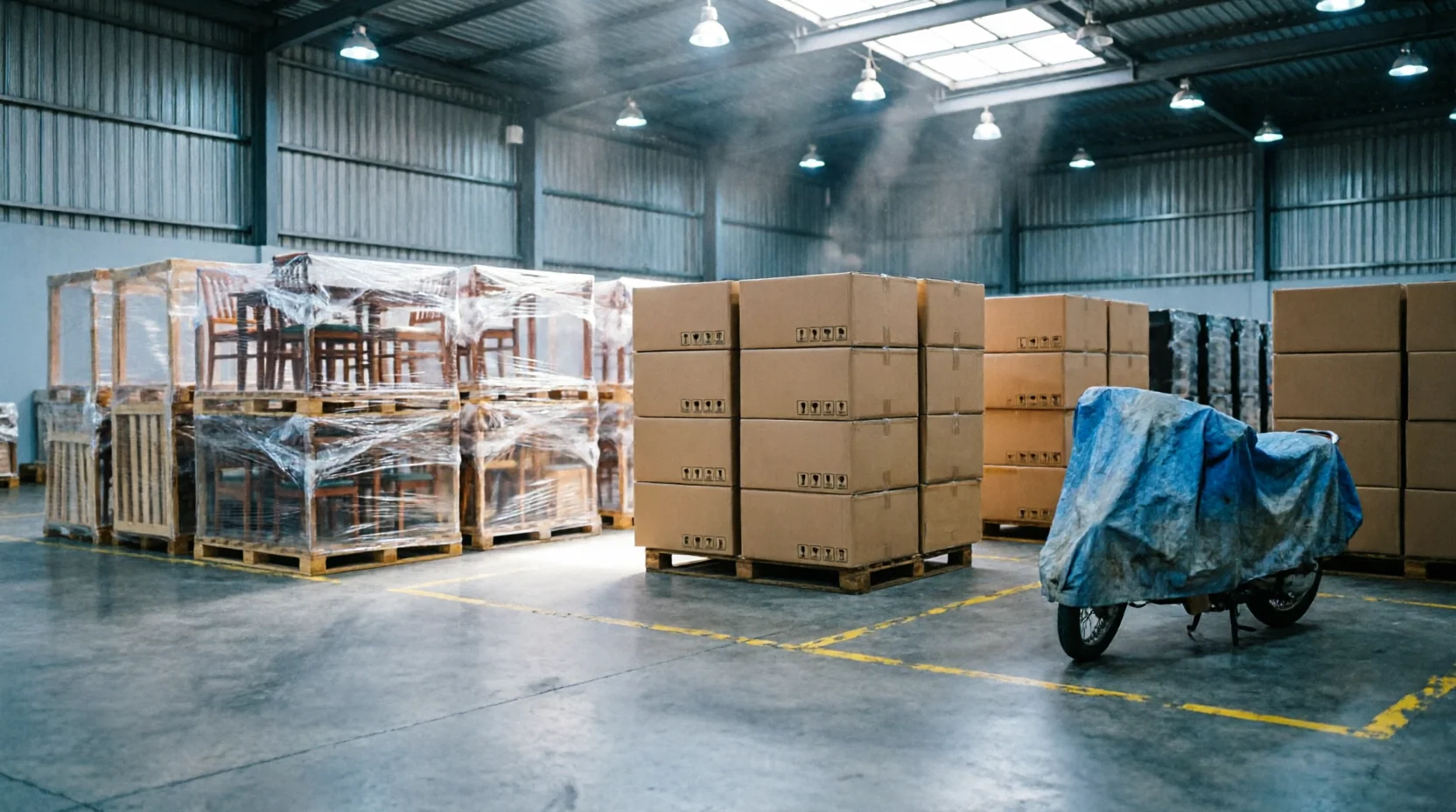
Not all household goods travel on the same timeline. Several categories require separate handling that must be planned well ahead of the main container shipment.
Motor vehicles: Importing a car or motorcycle into Thailand as part of a personal effects relocation is possible but slow and expensive. The process involves Australian deregistration, AQIS inspection and biosecurity clearance, Australian export documentation, Thai import duty (up to 80% for passenger vehicles plus excise duty and VAT), and registration with the Thai Department of Land Transport. Total process from Australian deregistration to Thai registration: 3–5 months minimum. Most relocators sell their Australian vehicle before the move and purchase locally in Thailand.
Pets: The timeline for relocating a pet from Australia to Thailand is 4–8 weeks minimum under smooth conditions. Thailand requires: a health certificate from an Australian accredited veterinarian, an official government endorsement from the Australian Department of Agriculture (DAFF), a rabies vaccination record (vaccination must have been administered at least 30 days but not more than 12 months prior to travel), an import permit from the Thai Department of Livestock Development issued before the animal enters Thailand. The Thai import permit alone takes 15–30 working days to process. Quarantine in Thailand: typically 2–14 days in an approved Thai government quarantine facility at the owner’s cost (THB 5,000–15,000 per animal depending on size and duration). Airlines have their own restrictions on live animal transport by route and season: not all Australia-Thailand routes accept pets in cargo, and the pet import permit must match the airline’s routing. Start the pet import process at least 10–12 weeks before the move date.
Medication and prescription drugs: Personal use quantities of prescription medication can be imported into Thailand in luggage (in original packaging with a prescription and a letter from the prescribing doctor translated into Thai). Shipping medication in a sea freight container is more complex: Thailand requires an import permit from the Food and Drug Administration (Thai FDA) for most prescription and controlled medications, and the permit must be obtained before the goods ship. Controlled substances (opioids, benzodiazepines, and others) face strict quantity limits regardless of personal use purpose. Carry a 3–6 month supply in luggage while the main shipment is in transit and confirm your specific medication’s import status with a Thai customs broker before sending anything in the container.
Artwork and antiques: Items over 100 years old are subject to export restriction in Australia (Protected Objects under the Protection of Movable Cultural Heritage Act) and may require export permits. In Thailand, all antiques (defined as objects over 50 years old with artistic or historical significance) require a permit from the Thai Fine Arts Department for import. The permit application takes 30–60 working days. Do not include antiques or items that might be classified as antiques in a container without confirming both the Australian export status and the Thai import permit requirement first.

Practical Steps to Protect the Timeline
The delay risks described above are not equally likely and not equally manageable. The following steps address the highest-probability issues in order of leverage:
1. Start 14 weeks before your Thailand move date, not 6. A 14-week lead time gives you buffer for a removal company booking lead time of 3–5 weeks, origin document preparation and permit processing, and the 8–14 week transit and clearance timeline. Starting at 6–8 weeks is operating without margin: any single delay event puts the six-month window at risk.
2. Do not book your Thai visa and then count down to the move. The six-month exemption clock starts on the date of first entry into Thailand on your long-term visa. If you enter Thailand to scout accommodation before the main move and then return to Australia for a few more weeks, the clock starts on the first entry date, not on the date you permanently relocate. Your removal schedule must account for the visa entry date, not the actual move date.
3. Ship essentials in advance by air freight. Items you will need in the first 2–4 weeks in Thailand (documents, work equipment, clothing for immediate use, children’s school supplies) should travel by air freight or in your checked luggage. Do not rely on the sea freight shipment arriving in time for immediate needs. Air freight from Australia to Bangkok takes 3–5 days door-to-door; the cost for 30–50 kg is AUD 300–600, which is a reasonable insurance premium against needing items that are still at sea.
4. Have the Thai customs document package ready before the goods are loaded. Form 130/1, the packing list, the visa documentation, the Thai address proof, and all supporting documents should be assembled, in Thai customs-acceptable format, before the container is sealed. Work with your freight forwarder and their Thailand-side customs broker to prepare the document package in parallel with the origin packing. Waiting until the goods arrive at Laem Chabang to start the document preparation adds 2–4 weeks to the clearance timeline unnecessarily.
5. Avoid shipments that will arrive at Laem Chabang during April. Schedule origin packing to avoid Laem Chabang arrival in the first three weeks of April. If your Thailand entry date means the goods must arrive during Songkran, coordinate with your forwarder to have all pre-arrival documents pre-lodged and prepared in advance so that clearance can begin immediately when customs reopens.
6. Track the shipment actively, not passively. Get the container number and bill of lading from your forwarder as soon as the container is loaded and the vessel departs. Track the vessel via the carrier’s website or a vessel tracking service. Know when the vessel is due at the transshipment hub and when it is due at Laem Chabang. If the vessel shows a delay of more than 5 days, contact your forwarder immediately to assess the impact on the exemption timeline. Passive tracking, waiting for updates, means delays are discovered later than they could be, compressing the response time.

The six-month clock is not a courtesy Thai customs extends to you. It is a fixed rule enforced without regard for who caused the delay, a supplier’s late departure, a missed Singapore connection, a week lost to Songkran. The department bears none of that risk. You bear all of it, in duty owed on goods you already paid to ship once. The practical response is to stop treating your first entry date as something to schedule around your shipment’s expected arrival. Enter Thailand on your long-term visa as early as your circumstances allow, not on the date that looks convenient next to a shipping estimate, because every day you delay entry is a day you are not getting back once the goods are already at sea and something goes wrong that is not your fault.
When the Delay Has Already Happened
If you are already in a situation where a delay has occurred and the six-month window is within 4–6 weeks of expiring, the options narrow but do not disappear entirely.
Contact your Thailand-side customs broker and ask them to assess the Form 130/1 submission status and timeline. If the goods have arrived at Laem Chabang, the customs broker may be able to request priority clearance appointment. This is not a guarantee, but Thai customs does process urgent personal effects applications when the reason is documented.
If the goods have not yet departed Australia and a faster vessel service is available that could arrive before the six-month deadline, contact your forwarder to assess rebooking, accepting the LCL or FCL re-booking cost as insurance against the duty exposure that a miss would create.
If the six-month window has already expired and the goods have not yet cleared customs, seek advice from a qualified Thai customs specialist on the current duty assessment process. The duty is based on Thai customs’ assessed CIF value (which may differ from your declared value) and the specialist can help ensure the assessment is accurate and the most favourable applicable duty rates are applied.
For the full Thailand relocation freight process (from export packing in Australia through to Laem Chabang customs clearance and final delivery in Bangkok or Chiang Mai) visit swiftcargo.solutions/thailand to discuss your specific relocation timeline and what a structured freight program looks like for your move date.
For more on the Thai customs documentation process (including the five most common Form 130/1 errors and how to correct them) see What Happens When Paperwork Is Wrong at Thai Customs. For transit times and how to read a carrier schedule, see How Long Does Shipping to Thailand Actually Take.
Frequently Asked Questions
How long does it take to ship personal effects from Australia to Thailand?
Door-to-door for a personal effects shipment from Australia to Thailand is typically 8–14 weeks under normal conditions. Transit time from an Australian port to Laem Chabang is 14–21 days (14–18 days for direct services, 18–25 days with a Singapore or Port Klang transshipment). Thai customs clearance for personal effects with a complete Form 130/1 package adds 5–10 working days. Origin packing and export clearance adds 1–2 weeks. If any stage is delayed (documentation problems, vessel schedule disruptions, Thai examination) the total timeline can reach 16–20 weeks. The most time-sensitive constraint is the six-month duty-free exemption: this clock starts from the date of first arrival in Thailand on your visa, not from when the shipment is sent, so departures that are tight on the six-month window can turn a modest delay into a significant duty liability.
What is the six-month duty-free exemption for personal effects in Thailand?
Under Thai customs law, personal effects imported by a person relocating to Thailand are exempt from import duty and VAT if the importer holds a qualifying status and the goods arrive within six months of that importer’s first entry into Thailand. Qualifying statuses are a Thai work permit valid one year or more (in practice with a Non-Immigrant B), a non-immigrant visa with a confirmed working period of not less than one year, Thai permanent residence, a full one-year Smart Visa, or returning-Thai-national status after 12 or more consecutive months abroad. A retirement visa (Non-Immigrant O, O-A or O-X) does not qualify, and neither do Thailand Elite, education, tourist or visa-exempt entries, so those importers pay duty and VAT whenever their goods arrive. The goods must have been owned and used by the relocator for at least 12 months before the move. The exemption is claimed through Form 130/1 (personal effects declaration) submitted to Thai customs at Laem Chabang or the relevant entry port. If the goods arrive after the six-month window (because the shipment was delayed) the full import duty applies: typically 10–30% of the declared goods value depending on category, plus 7% VAT. On a household goods shipment worth AUD 50,000, exceeding the six-month window could mean AUD 8,500–18,500 in duty and VAT that would otherwise have been zero. The six-month window cannot be extended; it is a fixed deadline under the Thai Revenue Code.
What happens if my shipment is delayed and the six-month window is at risk?
If you have an active shipment and the six-month duty-free exemption is at risk because of a delay, the priority is to identify the cause and the remaining timeline as precisely as possible. Contact your freight forwarder immediately to get an accurate ETA at Laem Chabang and an estimate for customs clearance. If the window is within 4 weeks of expiring and the goods have not yet cleared customs, you have limited options: (1) request your customs broker in Thailand to prioritise the Form 130/1 submission and clearance appointment. Thai customs does process urgent personal effects applications but cannot guarantee timelines; (2) if the goods are sitting at the origin port, investigate whether a faster vessel service is available that could arrive before the deadline; (3) seek advice from a Thai customs specialist on whether any discretionary relief applies in your situation. In practice, relief is rarely granted, but it is worth confirming. The most effective strategy is prevention: start the shipment process no later than 10 weeks before your Thailand move date, so there is buffer in the timeline for normal delay events.
Does cargo insurance cover personal effects delays when moving to Thailand?
Standard cargo insurance under the Institute Cargo Clauses (ICC-A) does not cover delay losses. This means that if your personal effects shipment is delayed at sea or in Thai customs, and the delay causes you to miss the six-month duty-free exemption window, the resulting duty cost is not covered by your cargo insurance policy. The only delay-related coverage some specialist international relocation insurance products offer is cover for additional temporary accommodation or storage costs during a delay, not for duties that become payable because the exemption expires. Before arranging insurance for a personal effects relocation, confirm with the insurer specifically whether duty exposure from missed exemption windows is covered. In most cases it is not, and the risk must be managed through timeline planning.