
This article covers duty rates by fibre content, the mandatory care-labelling rules Australian Consumer Law requires, and how fabric actually moves in freight: roll handling, moisture protection and LCL thresholds.
Fabric is one of those cargoes that looks simple on the rate sheet and turns out to be anything but. A roll of polyester-cotton shirting is not apparel, and Australian customs, consumer law and biosecurity all treat it differently from the finished shirts it will eventually become. Get the fibre composition wrong on the entry and you can under- or over-pay duty for years. Let a roll get wet in transit and you don’t have damaged goods. You have no goods. And if the care labels your mill printed at origin don’t match Australia’s mandatory standard, you’ll discover the problem at retail, long after the container is unpacked.
This guide covers importing textiles to Australia as fabric (rolls, bolts and piece goods, plus made-up textile products like bedding and towels) rather than finished garments.

Why fabric classification is harder than it looks
Textiles live in Section XI of the Harmonized System (Chapters 50 through 63) and it is one of the most granular, trap-laden sections in the entire tariff. Unlike most goods, where classification turns on what the product is, fabric classification turns on what it is made of, how it is constructed, and how far it has been processed: three separate axes, each capable of moving the code.
Fibre composition drives the chapter. Woven cotton fabrics sit in Chapter 52. Woven fabrics of man-made filament sit in Chapter 54, and of man-made staple fibre in Chapter 55. Wool and animal hair take Chapter 51; silk, Chapter 50; flax, jute and other vegetable fibres, Chapter 53. For blends, the rule in Section XI Note 2 is blunt: the fabric classifies as if it consisted wholly of the fibre that predominates by weight. A 60% cotton / 40% polyester shirting is a cotton fabric of Chapter 52. Reverse the blend to 40/60 and the identical-looking cloth becomes a man-made staple fibre fabric of Chapter 55: a different chapter, a different statistical code, and potentially a different duty and FTA outcome. When two fibres tie at 50/50, the fabric classifies under the heading that occurs last in numerical order among those meriting equal consideration. Yes, a 50/50 poly-cotton and a 52/48 poly-cotton can land in different chapters.
Construction splits woven from knitted. Knitted and crocheted fabrics have their own chapter (Chapter 60) regardless of fibre. A cotton single jersey is not a Chapter 52 good; it is heading 6006 territory. Importers who buy both wovens and knits from the same mill routinely see invoices that describe everything as “cotton fabric,” and entries prepared from those invoices are wrong half the time.
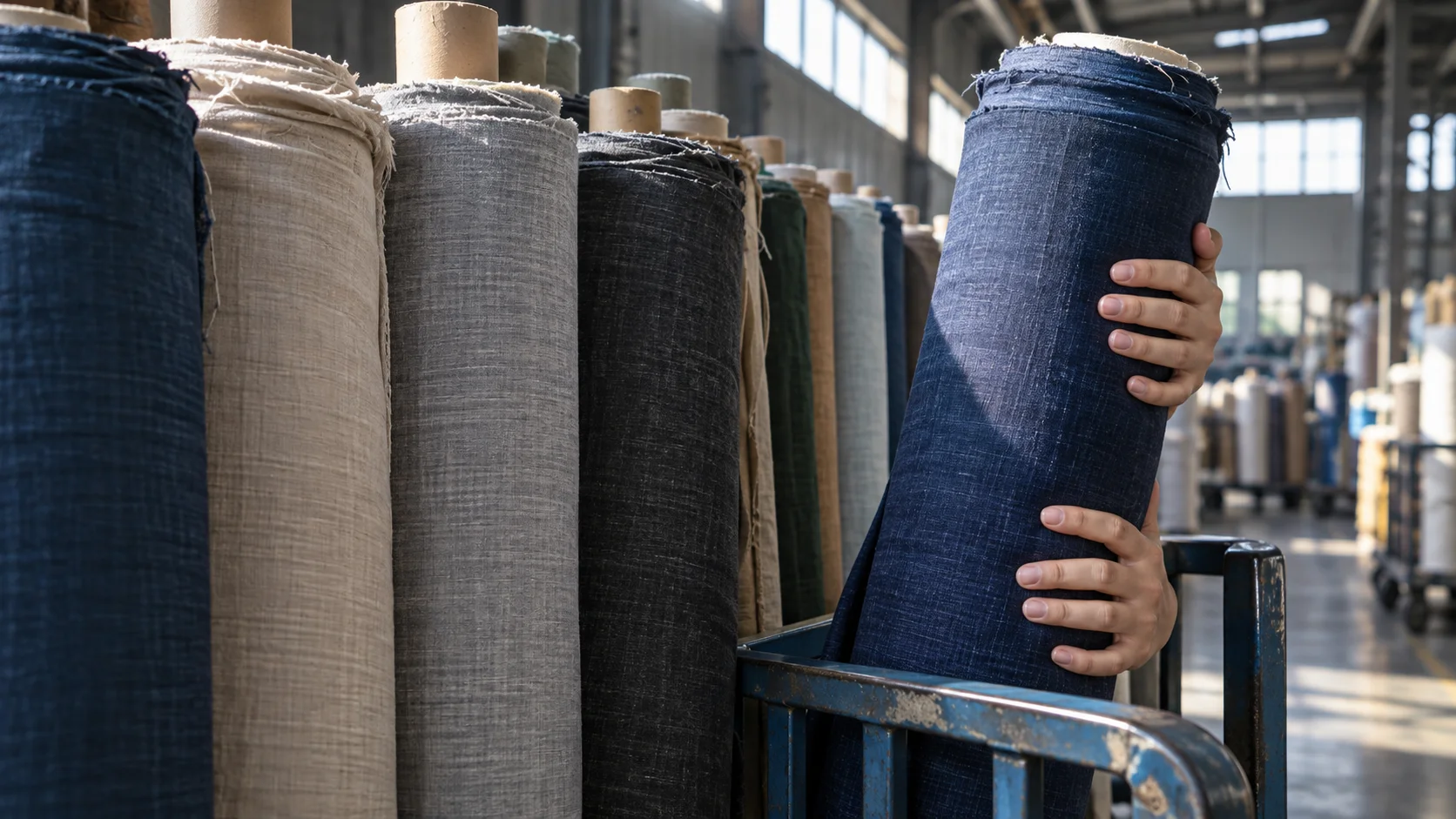
Within the heading, the subheading splits keep coming: unbleached versus bleached versus dyed versus printed versus yarn-dyed; weight per square metre bands (cotton wovens split at 200 g/m²); weave type (plain, twill, 3-thread or 4-thread twill including cross twill); and for some headings, yarn count. A dyed plain-weave cotton fabric at 190 g/m² and the same cloth at 210 g/m² carry different statistical codes.
Why does misclassification matter if most textile rates are 5% anyway? Three reasons. First, FTA schedules are written at tariff-line level, and the origin rules differ line by line: claim preference under the wrong code and the claim itself is defective. Second, the Australian Border Force runs post-entry compliance audits with a four-year amendment window; a systematic classification error across two years of entries becomes a demand for back duty, GST adjustments and potential penalties in one unpleasant letter. Third, misclassification corrupts your own landed-cost model, and textile margins are thin enough that a percentage point of phantom duty distorts real pricing decisions.
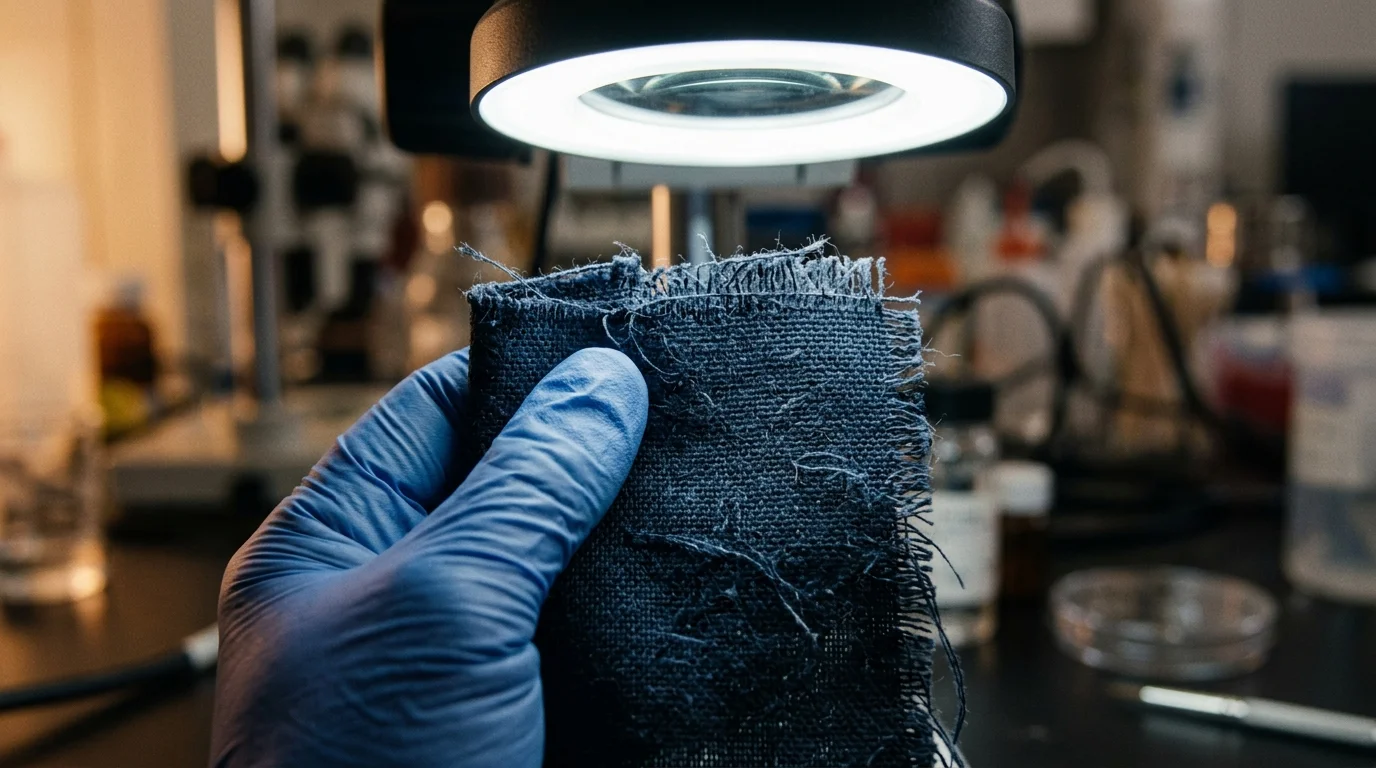
The practical discipline: classify from a laboratory fibre analysis, not from the supplier’s proforma. Mills describe fabric commercially (“TC shirting,” “CVC fleece”), and commercial names encode blend conventions loosely. A composition test from an accredited lab costs little against the value of a container and gives you the number that Note 2 actually operates on. Keep the test report in the entry file. It is also your defence document if ABF queries the entry.
Duty rates and FTA preference by origin
The general duty rate on most woven and knitted fabrics entering Australia is 5%, applied to the customs value, normally the FOB price paid or payable, converted at the exchange rate applicable on the day of export. A minority of textile lines are already duty-free under the general tariff, but budget on 5% until you’ve confirmed your specific code.
The real money is in preference. Australia’s FTA network covers the major fabric origins:
- ChAFTA (China). Textile tariffs under the China–Australia FTA phased to zero, so Chinese-origin fabric with a valid ChAFTA Certificate of Origin or Declaration of Origin enters duty-free. China remains the dominant fabric origin for Australian importers, which makes this the single most valuable certificate in the textile trade.
- AANZFTA (ASEAN plus New Zealand). Covers Vietnam, Indonesia, Thailand, Malaysia and the rest of ASEAN. Textile rates for ASEAN origins are at zero for qualifying goods. Vietnam-origin knits and Indonesia-origin rayon wovens both ride this agreement. Note the origin rules: fabric generally qualifies via a change-of-tariff-classification rule, which usually means the weaving or knitting, not just finishing, happened in the FTA partner.
- ECTA (India). The Australia–India Economic Cooperation and Trade Agreement eliminated duty on Indian textiles from entry into force, significant for cotton wovens, home textiles and the powerloom sector. India-origin bed linen and towelling that previously wore 5% now enters free with ECTA origin documentation.
Two operating rules keep preference claims clean. First, the certificate must exist and be valid at the time you claim. Chasing a retrospective certificate after entry means lodging a refund application, which works but ties up cash and attention. Second, watch third-country processing: Chinese greige fabric dyed and finished in Vietnam does not automatically become Vietnamese-origin under AANZFTA. Where the fabric was formed is the question, and mills are not always precise about it until you ask in writing.
GST of 10% applies to the value of the taxable importation (customs value plus duty plus international transport and insurance) for every origin, preference or not. If you’re registered for GST and hold deferral approval, it’s a cash-flow timing item rather than a cost, but it belongs in the landed-cost model regardless.
Labelling: fibre content accuracy and mandatory care labels
Australia repealed its old prescriptive fibre-content labelling standard years ago, and some importers took that as “no rules.” Wrong conclusion. What replaced prescription is the Australian Consumer Law’s general prohibition on false or misleading representations, and a fibre content claim is a representation. If the label, the invoice, or the product page says 100% cotton and the lab says 82% cotton / 18% polyester, that is a misleading claim the ACCC can and does act on. The exposure isn’t at the border; it’s at retail, where a competitor, a customer or the regulator commissions a burn test.
The discipline mirrors classification: test, don’t trust. Fibre composition on your labels should trace to the same lab report you classified from. When compositions drift batch to batch (common with blended yarns bought on the open market) either tighten the supply contract or label to the tolerance the standard test methods allow.
Care labelling is where the mandatory standard still bites. Made-up textile products supplied to consumers in Australia (bedding, towels, curtains, furnishing items and similar) must carry care labelling complying with the mandatory standard based on AS/NZS 1957. The labels must be permanent, legible for the life of the product, in English, and must give adequate instructions for care appropriate to the product. Piece goods sold by the metre have their own requirement: care information must be provided so it can be passed to the end customer, typically on the roll ticket or an accompanying leaflet.
The classic failure mode: care labels printed at origin follow the mill’s home-market convention, using symbols only, no English text, or wash instructions that don’t survive the standard’s adequacy test. Origin-printed labels are cheap and sewing them in later is expensive, so get the label artwork approved before bulk production, in writing, against the Australian requirement. A one-page label spec in the purchase order costs nothing and prevents a relabelling exercise that can run to dollars per unit across a container of quilt covers.
Flammability: nightwear and commercial upholstery
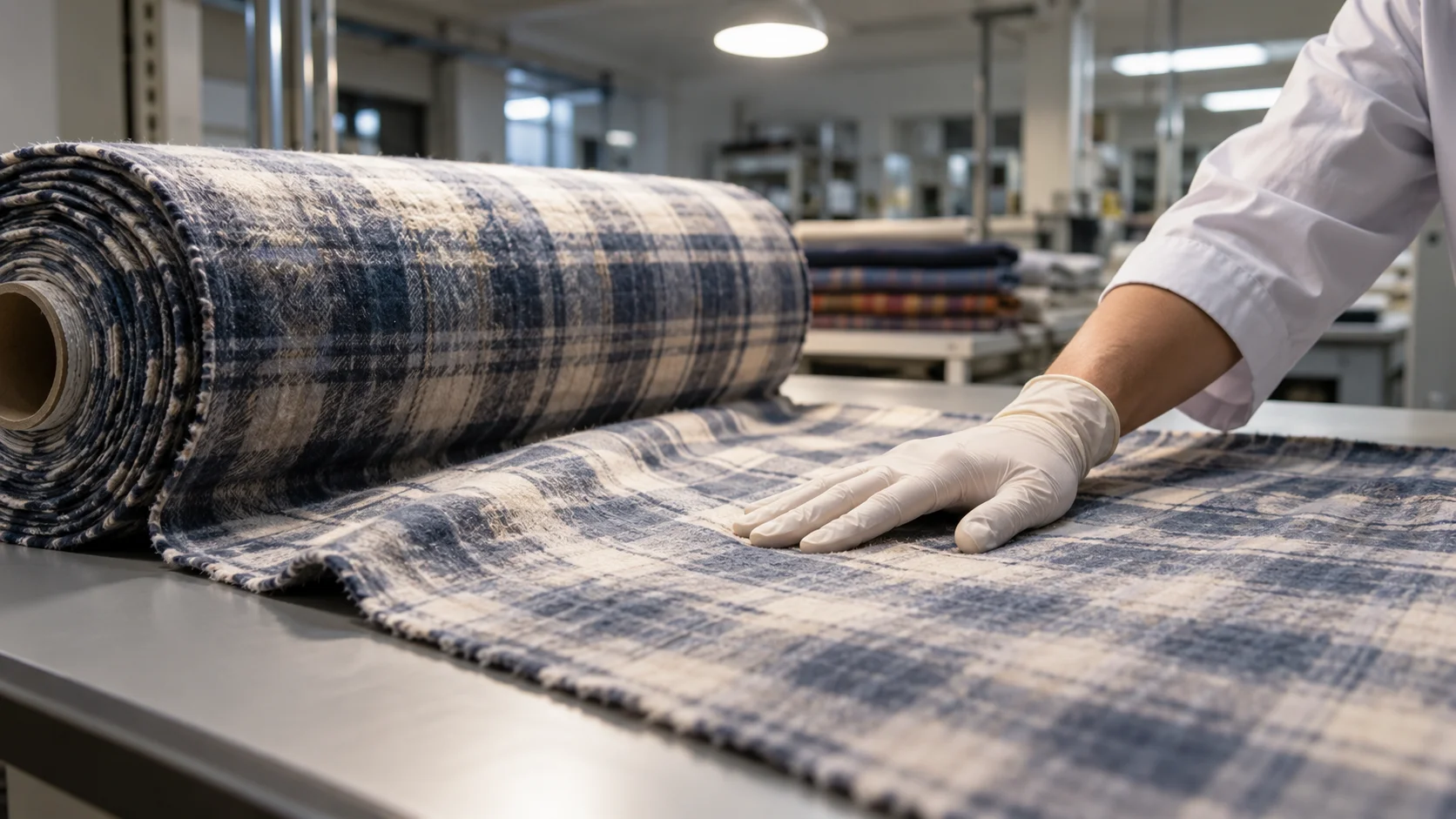
Two flammability regimes matter to fabric importers. The first is the mandatory standard for children’s nightwear, based on AS/NZS 1249, which categorises garments (and by extension the fabrics destined for them) by fire hazard and prescribes labelling from “low fire danger” through to “warning: high fire danger.” If you import fabric that will be cut into children’s sleepwear (brushed cotton flannelette is the obvious case), the fabric’s burn behaviour determines what category the finished garment can carry, and a fabric that can’t achieve a saleable category is a fabric your customer can’t use. Test before bulk, and put the burn-performance requirement in the fabric contract.
The second regime is commercial rather than mandatory-consumer: upholstery and furnishing fabrics for commercial fitouts (hotels, offices, healthcare, public buildings) are routinely specified against flammability performance under building and furnishing codes. The specifier’s schedule will cite the test standard; your job as the importer is to hold current test certificates from the mill and confirm they cover the actual construction and finish being shipped, not a cousin of it. A flame-retardant finish gets applied to the tested batch, then quietly omitted from the production batch. That is a real and recurring problem, discovered at the worst possible time: during fitout certification.
Biosecurity: natural fibres, packing and the used-textile trap
New, commercially manufactured fabric is low-risk cargo from a biosecurity standpoint, and most textile containers clear without intervention from the Department of Agriculture, Fisheries and Forestry (DAFF). The risk concentrates in three places.
Packaging. Timber pallets and dunnage must be ISPM 15 compliant. But textiles bring their own packaging quirks: jute and sisal wrapping, hessian bale covers and straw padding are traditional in some origins and all of them are biosecurity risk material. Specify synthetic wrapping and plastic or compliant timber pallets in the purchase order. A container of pristine polyester gets held for treatment because of the hessian it was wrapped in. That is an entirely self-inflicted delay.
Raw and lightly processed natural fibres. Scoured and carbonised wool, degummed silk and processed cotton are fine. But greasy (unscoured) wool, raw jute, raw sisal and similar minimally processed fibres carry import conditions and may require treatment or documentation showing processing. Check the DAFF import conditions database (BICON) against the actual processing state of the fibre before you commit to the shipment, not after it arrives.
Used textiles are a different regime entirely. Second-hand clothing bales, used bedding, and recycled textile inputs are treated as high-risk: they attract inspection, frequently require fumigation or other treatment, and must be clean, free of soil, seeds and animal material. If your business model involves used textile bales, price in inspection and treatment as routine costs and vet your origin supplier’s cleaning process: a dirty bale does not get a warning. It gets treated at your expense or exported.
Freight mechanics: how fabric actually travels
Fabric freight rewards physical thinking. The cargo is heavy for its bulk or bulky for its weight, depending on construction. It is unforgiving of moisture, and the way rolls are stowed determines whether they arrive as sellable goods or as creased, crushed seconds.
Roll handling and stow
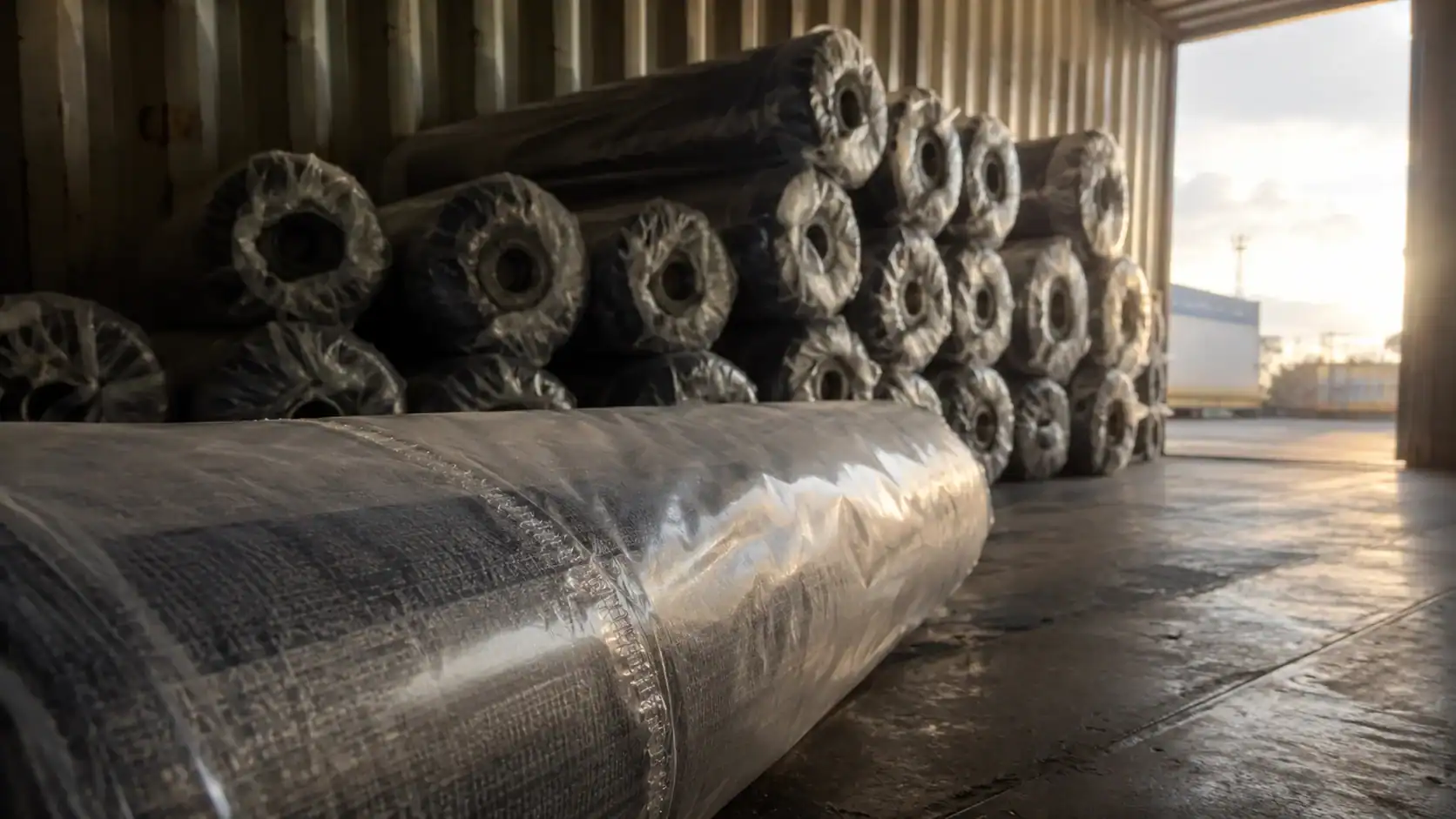
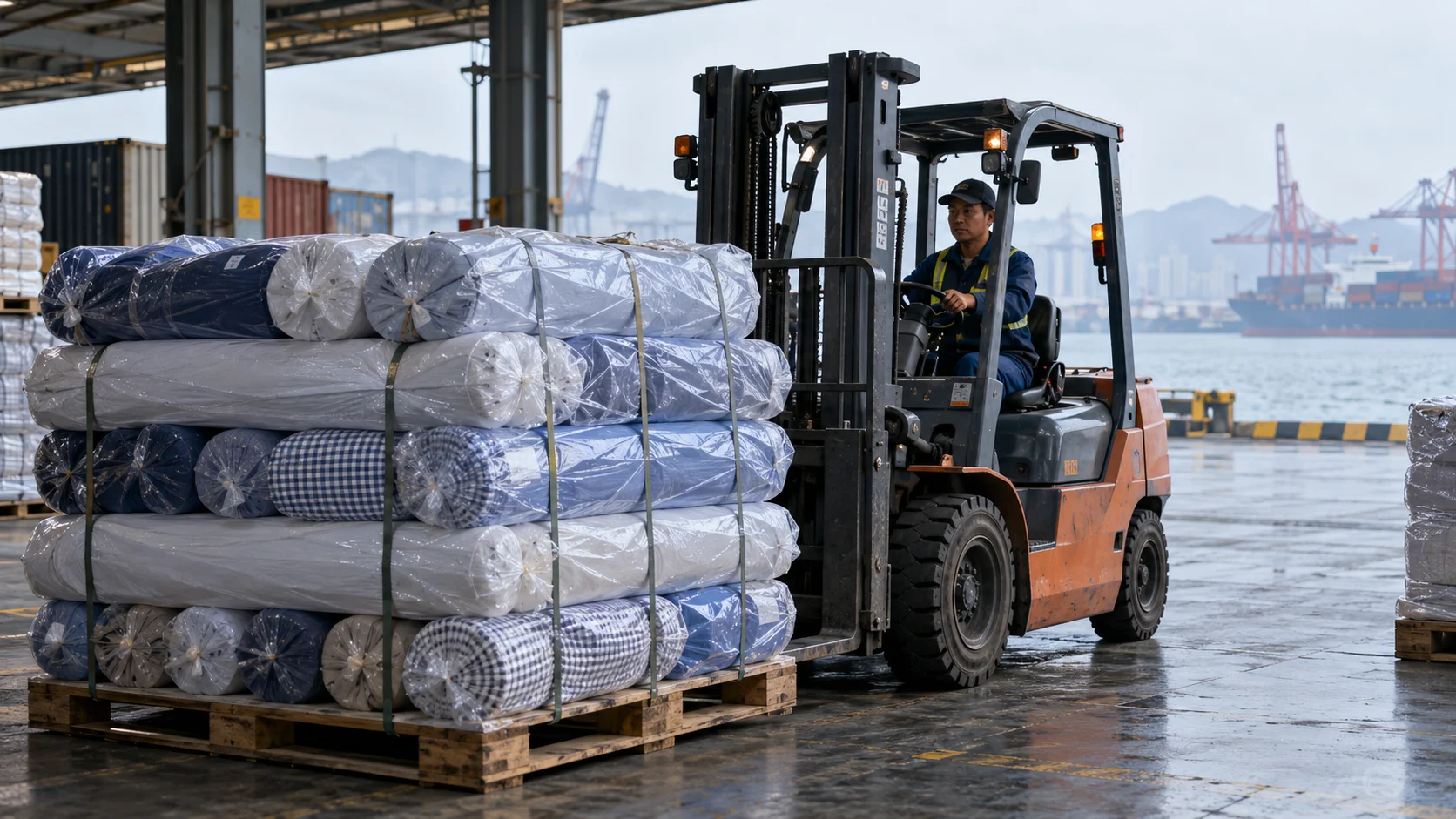
Fabric ships on rolls: cardboard or plastic tubes, typically 1.5 to 3 metres wide depending on loom width. The stow question is roll-on-end versus flat (horizontal) stow. On-end stow keeps the roll’s weight on the tube and prevents flat-spotting, but only works for rolls short enough to stand within container height and stable enough not to topple; it suits shorter, fatter rolls and racked stow. Flat stow is the default for full containers: rolls laid horizontally, stacked in interlocking tiers. The rules that matter: put heavy constructions on the bottom, never stack more tiers than the tube stiffness supports (crushed tubes telescope and crease the inner metres of fabric), and use end-boards or bracing so the stack cannot shift and chafe. Pile fabrics like velvet and corduroy deserve special care: crushing under stack weight leaves permanent pressure marks, so they ride on top or in racked stow.
Moisture: the loss that can’t be fixed
If one paragraph in this guide earns its keep, it’s this one. A wet roll is a total loss. Water staining, mildew, tide marks and dye migration cannot be economically remediated on fabric. You cannot re-dye your way out of a mildewed shirting roll, and cutting around damage on a continuous 100-metre roll destroys yield. Container rain (condensation cycling as the box crosses climate zones) does the damage more often than seawater does. The specification that prevents it: every roll individually sleeve-wrapped in polyethylene, ends sealed; desiccant dosed to the transit season and route (a January sailing from humid South China into a Melbourne winter is the worst case); no roll in direct contact with the container floor, so use pallets or a dunnage layer underneath; and inspect the container before loading for holes of light and old cargo residue. Put the moisture spec in the purchase order and require loading photos. When a claim happens, the insurer’s first question is whether the cargo was packed to a documented standard, and “the mill wrapped it however they usually do” is how claims get denied.
Weight versus volume by fabric type
Fabric density varies enormously, and it flips the economics of the freight mode. Denim at 400–500 g/m² on full rolls packs a 20-foot container out to 18–20 tonnes before the box is volumetrically full: you weigh out. Voile, chiffon and other sheers at 60–80 g/m² cube out long before any weight limit matters. Quilted and pile constructions trap air and cube out fastest of all. The consequences are practical: heavy fabrics favour 20-foot containers over 40-foot (you can’t use the extra cube anyway); light fabrics favour 40-foot high-cubes; and on LCL, heavy constructions can trip the weight-basis charging threshold (commonly 1 tonne per cubic metre), so a denim LCL shipment may be charged on weight while the voile next to it is charged on measure.
LCL suitability
Fabric is genuinely good LCL cargo: dense, regular, stackable, non-hazardous. A 5,000-metre order of mid-weight shirting occupies roughly 4–6 cubic metres depending on roll dimensions, which is comfortably LCL territory and nowhere near justifying a dedicated container. Two cautions. Co-loaded cargo is unknown cargo: your wrapped rolls may share a box with wet-packed goods or leaking drums, so the polyethylene sleeve spec matters even more for LCL than FCL. And CFS handling means more touches. Insist on rolls that are wrapped, end-capped and ideally palletised, because loose rolls at a busy CFS get forklift tines through them with depressing regularity.
Colour workflow: lab dips, tolerances and shade bands
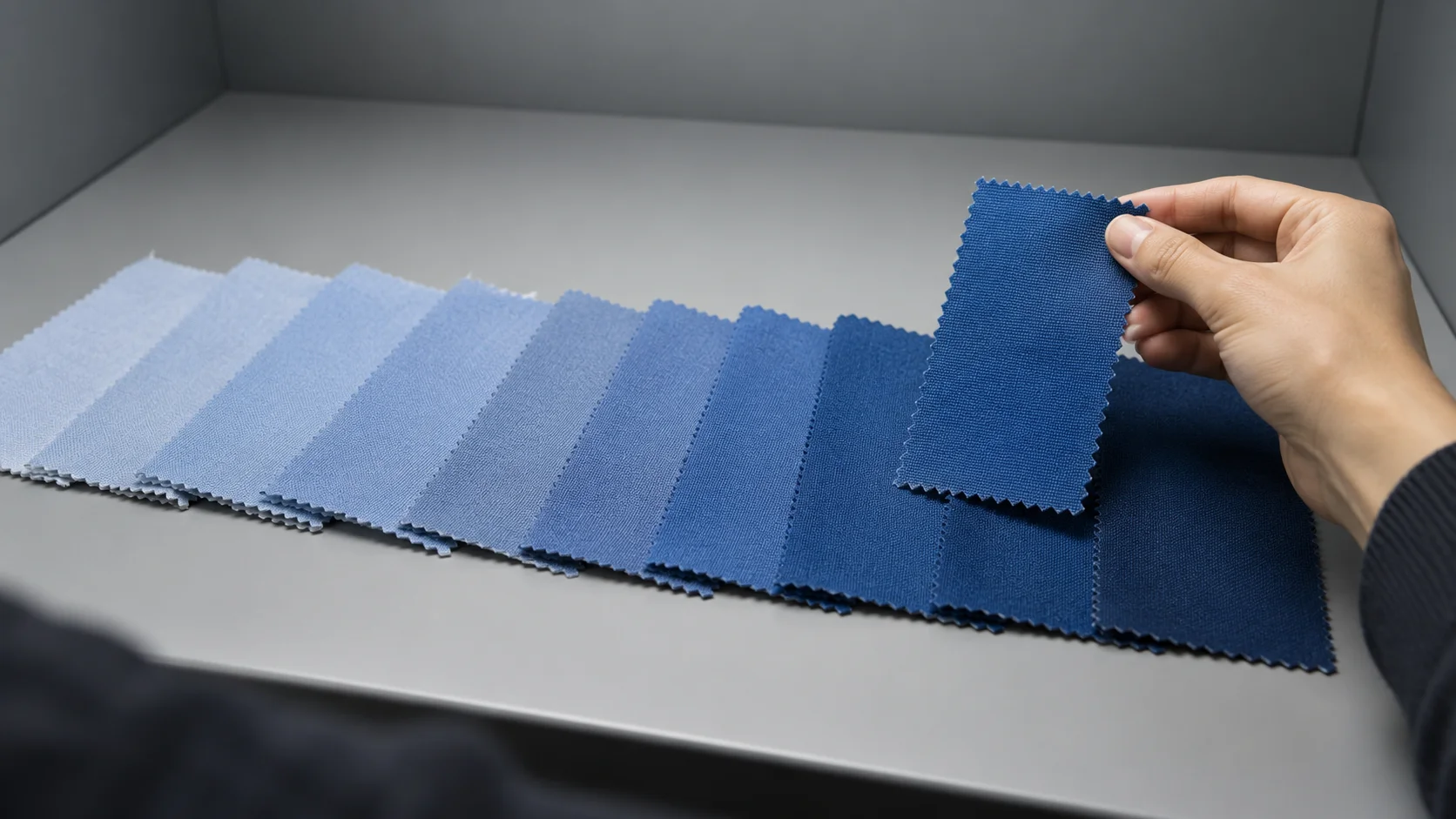
Colour is where fabric importing stops being logistics and becomes craft, and where undocumented process turns into unwinnable disputes. The standard workflow runs: the buyer issues a colour standard (a physical swatch or a spectral reference); the mill submits lab dips (small dyed samples, usually two or three options per colour) for approval before bulk dyeing; the buyer approves one dip in writing; bulk production is then dyed against the approved dip.
The commercial machinery hangs on tolerance. Visual assessment happens in a light box under agreed illuminants: D65 daylight as primary, often with a store-lighting secondary. Metamerism, where two samples match under one light and diverge under another, is a genuine trap for retail fabric. Instrumental assessment uses a spectrophotometer and a colour-difference number, most commonly CMC ΔE, with a typical commercial tolerance of ΔE ≤ 1.0 against the approved dip. The contract should state the tolerance, the illuminants and who measures.
Then comes within-order consistency: shade bands. Continuous dyeing drifts, and batch dyeing varies batch to batch, so a 5,000-metre order will contain measurable shade variation. The mill documents this by cutting a swatch from each dye lot (and head/middle/tail of long lots), grouping them into shade bands, and shipping the shade band card with the goods, so the cutter downstream never mixes lots in one garment marker. When a colour claim arises, the approved lab dip, the stated tolerance and the shade band card are the entire evidentiary record. Importers who keep all three documents win claims; importers who approved colour “by WhatsApp photo” do not, because a phone photo of a swatch is colourimetric noise.
The awkward case is the importer who approved colour from a photo and got a perfect match anyway. It is tempting to read that as proof the shortcut works. It is closer to a bet that happened to pay: nobody measured the odds, so the good result says almost nothing about the next order. Put a rough number on it. If one photo-approved order in five ends in a shade claim you cannot win, and the affected lot sells at a 40% discount, the 5,000-metre shirting order in the worked example below (AUD 3.18 landed per metre) carries roughly AUD 1,270 of expected loss per order. A lab dip round costs a week and a courier fee. Judge the approval process by that arithmetic, not by how the last order turned out.
Origin QC: four-point grading and pre-shipment inspection
Fabric quality is graded at origin under the four-point system, the textile industry’s near-universal standard. Every roll (or a sampled fraction of rolls) is run over an inspection frame and defects are scored by size: up to 3 inches, 1 point; over 3 to 6 inches, 2 points; over 6 to 9 inches, 3 points; over 9 inches, 4 points. Four points is also the maximum per linear yard, however bad the yard is; full-width defects score 4. The points are totalled and normalised to points per 100 square yards. Typical commercial acceptance thresholds run around 20 points per 100 square yards for a first-quality woven shipment average, with individual rolls rejected above roughly 28–30; premium programmes buy tighter, workwear and utility fabrics looser. Your purchase contract should state the threshold, the sampling rate (10% of rolls is a common minimum), and what happens to rejected rolls: replaced, discounted, or excluded from the shipment.
Pay for an independent pre-shipment inspection rather than trusting the mill’s own report in four cases: first orders from a new mill, always; any order where the fabric feeds a committed downstream programme (a fitout deadline, a retailer launch window) where late discovery of bad goods is catastrophic; high-value or technically demanding constructions (FR finishes, performance coatings); and any mill whose previous shipment threw a claim. A third-party inspection on a container-sized fabric order costs a few hundred dollars and checks four-point results, colour against the approved dip, width, length verification (short rolls are a quiet, chronic form of leakage; 96 metres invoiced as 100 adds up), moisture packing and labelling. Against a shipment value in the tens of thousands, it is the cheapest insurance in this guide.
Worked example: 5,000 metres of polyester-cotton shirting from China
Let’s land a real order. The goods: 5,000 metres of woven shirting, 65% polyester / 35% cotton, dyed, 120 g/m², 150 cm width, from a mill in Shaoxing, shipped LCL ex Ningbo to Melbourne. Because polyester predominates by weight, this classifies in Chapter 55 (woven fabrics of synthetic staple fibre mixed mainly with cotton), not Chapter 52: exactly the blend trap described earlier.
The physicals first. At 120 g/m² and 1.5 m width, the fabric weighs 180 g per linear metre: 5,000 m = 900 kg of fabric, roughly 1,050 kg with tubes, wrapping and pallets. Rolled at 100 m per roll, that’s 50 rolls; palletised and wrapped, call it 4.8 cubic metres. At ~220 kg/m³ this charges on volume, not weight.
| Cost line | Basis | AUD |
|---|---|---|
| Fabric FOB Ningbo | 5,000 m × US$1.85/m = US$9,250 @ 0.66 | $14,015 |
| Customs duty | 5% general rate; ChAFTA preference claimed: 0% | $0 |
| Ocean freight LCL | 4.8 m³ (w/m) Ningbo–Melbourne incl. origin charges | $620 |
| Marine insurance | 110% CIF basis | $95 |
| Destination port/CFS charges | 4.8 m³ LCL unpack, wharf, fees | $540 |
| Customs brokerage + entry fees | Entry, import processing charge | $290 |
| Quarantine/biosecurity fees | Document assessment (no inspection expected) | $60 |
| GST | 10% of (customs value + duty + freight + insurance) ≈ 10% × $14,730 | $1,473 |
| Delivery CFS to warehouse | Local cartage, tailgate unload | $260 |
| Total outlay | $17,353 | |
| Landed cost ex-GST (GST-registered importer) | $15,880 |
That’s $3.18 per metre landed ex-GST against an FOB price of $2.80/m, a landed uplift of about 13.3%. Now run the counterfactuals. Without the ChAFTA certificate, duty adds $701 (5% of $14,015) plus $70 of extra GST: the certificate is worth 14 cents a metre, for the price of asking the mill for a document. If the entry had been classified from the invoice description “cotton shirting” into Chapter 52 and preference claimed under the wrong tariff line, the claim is defective, and a post-entry audit would unwind it with penalties. And if one pallet of rolls (say 12 rolls, 1,200 m) arrives wet because the sleeve-wrap spec was never issued, the loss is roughly $3,800 of landed value plus the downstream cost of shorting your customer, nearly six times the entire ocean freight bill. The cheap lines in this table are not where the risk lives.
Common mistakes that cost real money
- Invoice fibre composition not matching the lab test. The single most common textile compliance failure. The mill invoices “T/C 65/35,” the lab finds 70/30, and now the classification, the FTA claim and the retail label are all wrong at once. Test every new fabric quality and re-test periodically on repeats.
- No moisture specification in the purchase order. If the PO doesn’t say “individual PE sleeve wrap, sealed ends, desiccant, no floor contact, loading photos required,” you have no packing standard, and when a roll arrives mildewed you have no claim either.
- Care labels printed at origin without Australian sign-off. Origin printing is cheap; relabelling in Australia is not. Approve label artwork against the mandatory standard before bulk production, in writing.
- Approving colour from photographs. Lab dips exist for a reason. Approve physical dips under agreed illuminants, state the ΔE tolerance in the contract, and demand shade band cards with the shipment.
- Classifying from the commercial description. “Shirting,” “fleece” and “canvas” are not tariff terms. Composition by weight, construction and finish state drive the code. Get the test report first.
- Skipping the origin inspection on programme-critical orders. A four-point inspection at the mill costs a rounding error and catches short rolls, off-shade lots and defect rates before they cross the ocean, while the mill can still fix them.
- Ignoring the packaging biosecurity angle. Hessian wrap and untreated timber pallets turn a clean cargo into a held container. Specify synthetic wrap and ISPM 15 pallets in the PO.
Swift Cargo moves fabric and made-up textile orders into Australia on the LCL and FCL mechanics covered above. See how the process works before your first container books.
Related Reading
- Importing Apparel from China to Australia
- Total Landed Cost When Importing to Australia
- Biosecurity Requirements When Importing to Australia
- Retail Import Logistics in Australia
- HS Codes Explained: How to Classify Your Imports to Australia Correctly
Frequently Asked Questions
What is the duty rate on textiles imported to Australia?
Most woven and knitted fabrics attract a 5% general duty rate on the customs value. FTA preference (ChAFTA for China, AANZFTA for ASEAN origins, ECTA for India) takes qualifying fabric to zero, provided valid origin documentation exists at the time of the claim. GST of 10% applies on the duty-paid value plus transport and insurance for every origin.
How is fabric classified for customs in Australia?
Fabric is classified by fibre composition by weight first (the predominant fibre sets the chapter under Section XI Note 2), then by construction (woven versus knitted; knits have their own Chapter 60), then by processing state (unbleached, bleached, dyed, printed) and often weight per square metre. Classify from a laboratory fibre analysis, never from the supplier’s commercial description.
Do imported fabrics need fibre content labels in Australia?
Fibre content claims must be accurate under the Australian Consumer Law: a misdescribed blend is a misleading representation the ACCC can pursue. Made-up textile products such as bedding, towels and curtains must also carry care labelling complying with the mandatory standard based on AS/NZS 1957: permanent, legible, in English, with adequate care instructions.
Are there biosecurity requirements for importing fabric to Australia?
New processed fabric is low-risk, but packaging (timber, jute, hessian, straw) and raw natural fibres (greasy wool, raw jute, raw sisal) carry DAFF import conditions. Used textile bales sit under a much stricter regime with routine inspection and treatment. Specify synthetic wrapping and ISPM 15 pallets to keep clean cargo clean.
Why is moisture protection so important when shipping fabric?
Because a wet roll is a total loss: mildew, water staining and dye migration can’t be economically fixed, and cutting around damage on a continuous roll destroys yield. Individual polyethylene sleeve wrap, sealed ends, desiccant matched to the route and season, and no floor contact should be written into the purchase order, with loading photos required.
Can fabric ship LCL or does it need a full container?
Fabric is excellent LCL cargo: a typical 5,000-metre order occupies only 4–6 cubic metres. Insist on wrapped, end-capped, ideally palletised rolls because co-loaded cargo and CFS handling raise moisture and damage risk, and check the chargeable basis: dense constructions like denim can be charged on weight rather than volume.