
Every container of second-hand goods arriving in Australia is, from a biosecurity officer’s point of view, a container of unknowns. A new laptop left a factory last month in sealed packaging. A used laptop has lived somewhere: a desk, a warehouse, a garage. So has the pallet it’s strapped to, the furniture packed beside it and the vintage denim filling the gaps. That single fact, that used goods have a history, drives almost everything about how Australia treats them at the border: the inspection rates, the cleanliness paperwork, the valuation arguments and, ultimately, whether a second-hand import business makes commercial sense.
This guide works through importing used goods to Australia category by category (clothing, machinery, furniture, refurbished electronics, vehicle parts, décor) then tackles the two questions that trip up more importers than any biosecurity rule: where the line sits between personal effects and commercial stock, and how customs values goods that were bought at auction for a fraction of their original price. We finish with a worked comparison of two real-world business models, because “can I import it” and “is it worth importing” are very different questions.
Why Used Goods Get More Scrutiny Than New Goods
Australia’s biosecurity system runs on risk profiling. The Department of Agriculture, Fisheries and Forestry (DAFF) doesn’t inspect every consignment; it inspects the ones its profiles flag as likely to carry pests, soil, seeds or organic contamination. Used goods sit high on that risk ladder for reasons that are easy to picture once you think like an inspector.
Soil hides in tyre treads, machinery tracks, the feet of garden furniture and the wheels of anything that ever rolled across a yard. Organic residue (food, plant matter, animal material) clings to upholstery, textiles and packaging. Insects and their eggs shelter in timber joints, cardboard, foam and fabric folds, and some of Australia’s most-feared arrivals, like the brown marmorated stink bug, actively seek out exactly the kind of dark, sheltered cavities that used goods provide in abundance. A new item, made and packed under factory conditions, offers almost none of these opportunities. A used item offers all of them. (Our quarantine and biosecurity handling overview covers how this plays out at the border in general terms.)
The practical consequence is that declaring goods as “used” or “second-hand” on import documentation raises the probability of documentary assessment and physical inspection. That is not a reason to describe used goods as new. Misdescription is a far more serious problem than an inspection, and it’s the kind of thing that follows an importer’s profile around for years. It’s a reason to plan for scrutiny: budget time for inspection in your lead times, budget money for it in your landed cost, and prepare the goods so that when an officer opens the container, there’s nothing to find.
That last point deserves emphasis, because it’s where experienced used-goods importers separate themselves from beginners. Inspectors are not looking for used goods; they’re looking for contaminated used goods. A container of laundered vintage clothing, steam-cleaned machinery and wiped-down furniture with a cleanliness declaration on file is a fast inspection. A container with mud in the wheel arches and mouse droppings in the upholstery is a treatment order, a fumigation bill, weeks of delay, and in bad cases a directive to re-export or destroy the goods at your expense. The condition of the goods when they were packed overseas determines almost everything about what happens when they arrive.
Used Clothing and Textiles: Bales Versus Boutique
Second-hand clothing splits cleanly into two very different import propositions, and the difference is scale.
At the boutique end, with a vintage reseller bringing in curated stock of tens or hundreds of garments per shipment, used clothing is one of the more manageable second-hand categories. The goods should be clean and laundered before packing, and the shipment should travel with a declaration to that effect. Clean, dry textiles present low biosecurity risk, and small consignments of laundered vintage clothing routinely clear without drama. The margin structure at this end can be genuinely attractive: a garment bought for a few dollars at an overseas market can retail for ten or twenty times that in Australia, and freight per unit is trivial because clothing is light and dense.
Commercial bales are a different world. Bulk used textiles, the compressed bales that supply op-shop chains and rag traders, are treated as a higher-risk commodity. Bales can conceal moisture, mould, insects and contaminated items deep inside the compressed mass, where no external inspection can see them. Bulk second-hand clothing imports move into permit territory, inspections approach certainty, and a single contaminated bale can taint the treatment status of an entire container. Importers at this scale need established relationships with suppliers who sort and clean to a documented standard, because the economics only work if treatment orders are rare.
The practical rule: if you can describe your consignment as “cleaned and laundered garments, individually sorted,” you’re in the viable zone. If the honest description is “mixed bales, condition unsorted,” get professional advice before the goods ship, not after they arrive.
Used Machinery: The Steam-Clean Regime
Used machinery is the category where DAFF’s expectations are most explicit; the full regime is set out in our guide to importing machinery to Australia. The short version: any machine that has worked outdoors (agricultural equipment, earthmoving plant, forestry gear) is presumed contaminated until demonstrated otherwise. Soil is the enemy. It carries seeds, nematodes, fungal spores and bacteria that Australia’s agricultural sector is structured around keeping out.
The accepted answer is aggressive pre-shipment cleaning: high-pressure steam cleaning of every surface, with particular attention to tracks, tyres, undercarriages, radiator cores and the internal cavities where soil compacts and hides. Photograph the machine after cleaning, from every angle, including the awkward ones underneath. A cleanliness certificate from a recognised cleaning contractor overseas is worth far more than its cost, because the alternative, cleaning ordered on arrival at Australian contractor rates with the machine sitting in storage on your account, can run to thousands of dollars and weeks of delay.
Even indoor machinery (printing presses, CNC equipment, food-processing lines) needs attention. Food residue in processing equipment is organic contamination. Timber skids and packing cases carry their own ISPM 15 treatment requirements. And a machine that arrives with its coolant, hydraulic fluid or fuel still aboard can raise dangerous goods questions on top of the biosecurity ones. Drain, clean, photograph, certify: the sequence is boring and it works.
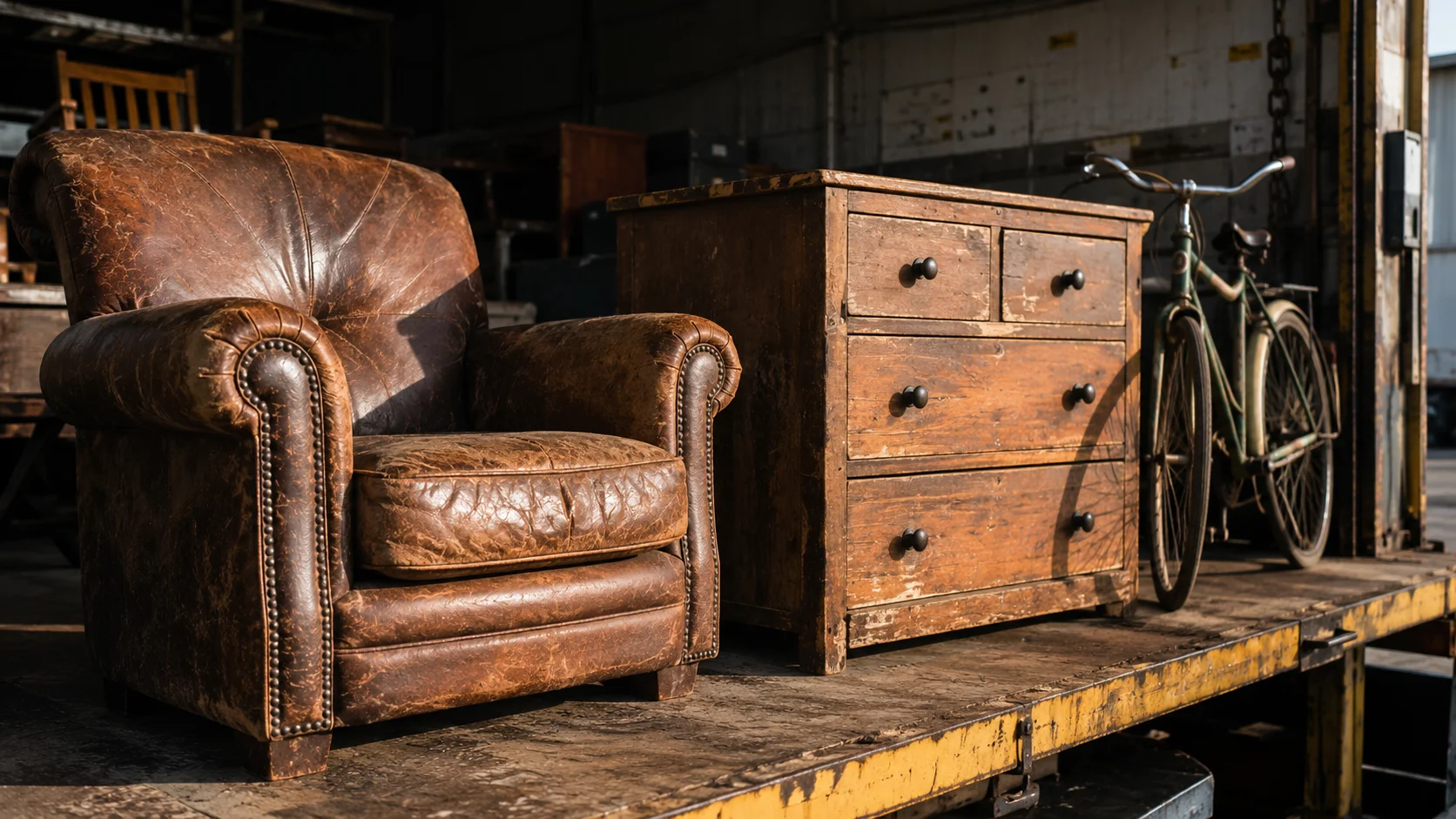
Used Furniture: Timber, Bugs and Upholstery
Second-hand furniture imports run into three distinct risk streams, and it pays to know which one your stock sits in.
Timber pests. Solid-timber furniture, the mid-century teak and French oak and colonial pine that vintage dealers love, can harbour wood-boring insects whose larvae live inside the timber for years. Exit holes, frass (the fine powder borers push out) and live activity are what inspectors look for. Furniture with active borer is looking at fumigation at minimum. Buying stock, check for fresh exit holes and powder before you commit; a treatment history from the seller is a genuine asset.
Seasonal hitchhikers. Furniture shipped from BMSB-risk countries during the Northern Hemisphere’s stink bug season (roughly September through April for goods shipped from affected countries) can fall under the seasonal treatment measures that apply to a wide range of goods, not just furniture. If your supply chain runs through Europe, the US or parts of Asia, the shipping calendar is a compliance variable: the same container that clears untreated in July may need heat treatment or fumigation in November.
Upholstery cleanliness. Fabric and padding hold organic material: food, hair, dander, and occasionally worse. Upholstered pieces should be professionally cleaned before shipment and declared as such. Anything that smells of damp when packed will smell worse after six weeks in a sealed container, and mould is a treatable but expensive finding.
The furniture category rewards curation. A dealer hand-selecting thirty clean, treated, photographed pieces has a fundamentally different risk profile from someone shipping a container of house-clearance stock sight unseen. The same logic applies to migrants’ household shipments too, a subject our guide to used household goods inspection in Australia covers in full. Inspectors open what they can’t verify, and documentation is what lets them not open things.
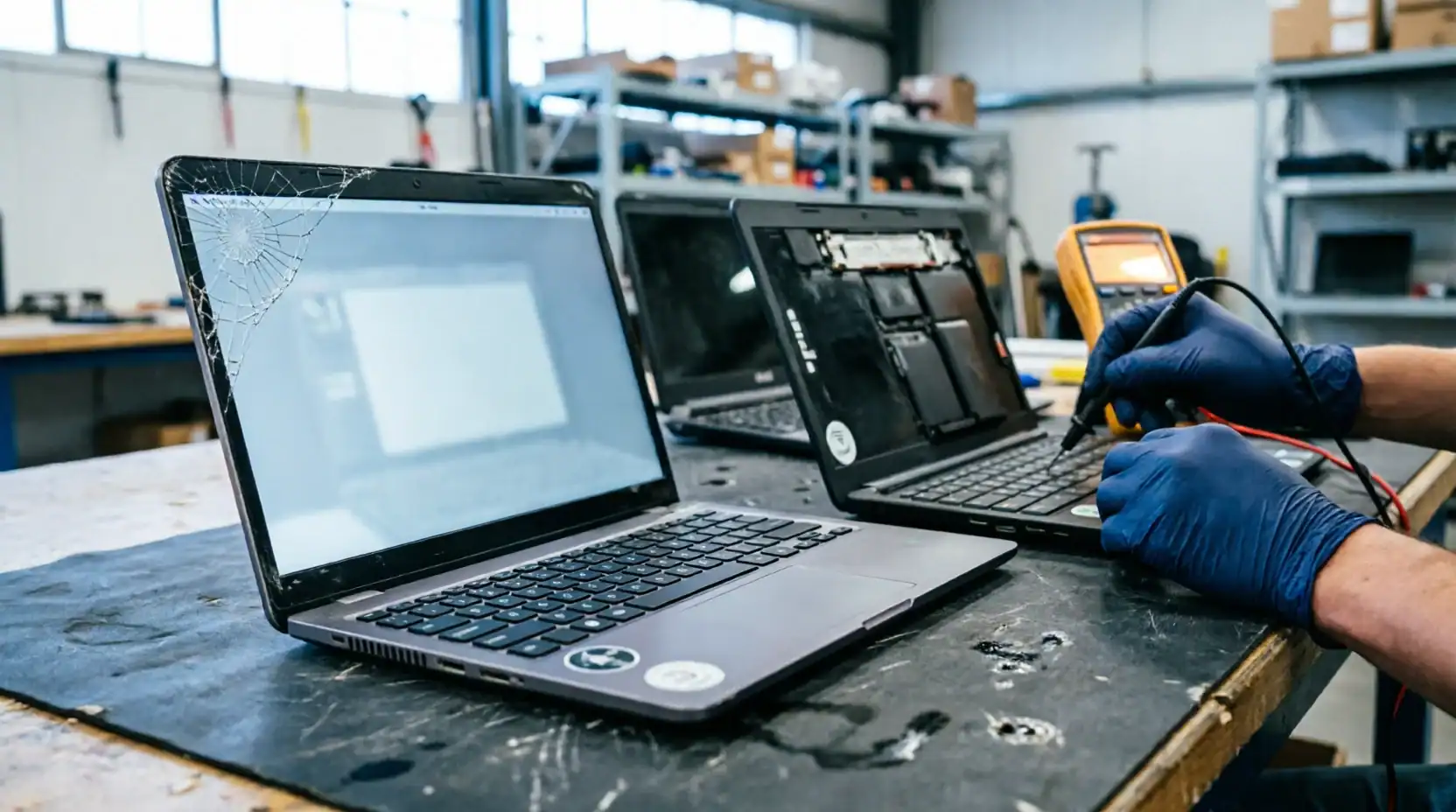
Refurbished Electronics: The Growth Category With Hidden Homework
Refurbished electronics is arguably the most commercially interesting used-goods category right now. Corporate laptop fleets refresh on three-year cycles, generating a steady stream of off-lease machines; consumer demand for cheaper, sustainable alternatives to new devices keeps growing; and per-unit freight is negligible. But the compliance homework is heavier than most new entrants expect, and it has almost nothing to do with biosecurity.
RCM applies to refurbs. The Regulatory Compliance Mark, Australia’s electrical safety and electromagnetic compatibility marking regime, applies to devices placed on the Australian market, and a refurbished device you import and sell is being placed on the Australian market by you. The fact that the device was compliant when first sold in another country, under another regulator, does not transfer. If you’re the supplier, the registration, the compliance records and the marking obligations sit with you. Importers who skip this discover it at the worst possible moment: when a safety incident or a competitor complaint puts their operation in front of a regulator.
Lithium batteries are a freight problem before they’re a compliance problem. Used devices ship with used batteries, and dangerous goods rules for lithium cells care about condition. Damaged, swollen or recalled batteries are restricted or forbidden from air freight entirely, and even healthy batteries in equipment are subject to state-of-charge and packaging requirements. A refurb trader air-freighting laptops needs a DG-literate freight partner and a supplier who actually screens batteries, because one swollen cell identified at the airline’s acceptance check can offload a whole consignment.
Australian Consumer Law requires disclosure. Selling refurbished goods as new, or leaving their history ambiguous, is misleading conduct under the consumer law the ACCC administers. “Refurbished” must be disclosed, and consumer guarantees, that goods are of acceptable quality and fit for purpose, apply to refurbished goods sold in trade, with the standard adjusted for price and description but never eliminated. Your warranty terms can’t contract out of them. Build the guarantee cost into your margin model from day one; treat returns as a line item, not a surprise.
Grey-market imports are generally legal. Parallel importing, meaning buying genuine branded goods overseas and reselling them in Australia without the brand’s blessing, is broadly lawful here, and legislative changes to trademark law have made it harder for brand owners to use registered marks to block genuine parallel imports. The nuances live at the edges: repackaging, modified goods, certain copyright-protected elements, and the practical reality that the Australian brand entity won’t honour its local warranty on your grey stock (which is precisely why your own ACL obligations matter more). At high volumes, spend the money on proper legal advice. At the level of principle: genuine goods, honestly described, are yours to import.
Used Vehicles, Parts and Tyres
Used vehicle parts are a workable import category with the same biosecurity logic as machinery: parts that have been on a vehicle carry road grime, oil and soil, and they should be cleaned and declared accordingly. Engines and gearboxes should be drained of fluids. For the category’s full compliance picture, including the asbestos testing question that catches out importers of older friction components, see our guide to importing auto parts to Australia.
Complete used vehicles are a different regulatory universe. Road vehicles require approval under the Road Vehicle Standards framework, the ROVER system, before import, and the eligibility pathways (older vehicles, specialist and enthusiast vehicles, and so on) are a specialist topic well beyond this guide. If your plan involves whole cars, start with the vehicle import approval question, not the freight question, because without the approval there is no freight question.
Used tyres deserve their own warning: they are close to a prohibited item in practice. Tyres hold water, and water breeding mosquitoes, including species that vector dengue, is exactly the pathway biosecurity regimes exist to close. Used tyre imports face requirements strict enough (cleaning, treatment, permits depending on circumstances) that the economics almost never work for commercial resale. If your used-parts supplier wants to fill container space with tyres, decline.
Vintage Décor and Antiques: Mostly Low Risk, With Exceptions
The gentlest corner of the used-goods trade is decorative: ceramics, glass, metalware, art, mirrors, lighting. Inorganic, cleanable and easy to describe, these clear with little friction and make excellent supplementary stock for vintage retailers. The exceptions are predictable from everything above: timber items (carved pieces, frames, boxes) carry the borer question; anything organic (taxidermy, feathers, shells, seeds, unprocessed hides) steps into wildlife trade and biosecurity territory simultaneously and needs case-by-case checking; and woven organic materials like cane and seagrass sit between the two. Sort your buying accordingly: a pallet of French mirrors and ceramic lamps is easy money; a crate of carved tribal masks with feather inlays is a research project.
The Personal-Effects Boundary: Where ABF Draws the Line
Australia’s unaccompanied personal effects concession lets arriving migrants and returning residents bring their own used household goods in free of duty and GST. It exists because taxing someone’s own furniture as they move countries would be absurd. It is not a channel for commercial stock, and the Australian Border Force polices the boundary using two straightforward tests.
Quantity and pattern. One person owns one, maybe two, of most things. A UPE shipment containing forty pairs of sneakers in graduated sizes, or fifteen sealed smartphones, or six identical mid-century sideboards, doesn’t look like a household. It looks like inventory. Officers see thousands of genuine personal-effects shipments; the commercial ones stand out immediately.
Ownership and resale intent. The concession covers goods you’ve personally owned and used overseas for the qualifying period, imported for your continuing personal use. Goods bought recently, goods still in retail packaging, and goods imported to sell all fail the test regardless of quantity.
The consequences of blurring the line scale badly. At minimum, the commercial goods in a mixed shipment are assessed for duty and GST. Beyond that, the whole consignment can be reclassified, the false declaration itself becomes the issue, and (the cost that keeps costing) the importer’s profile is flagged, which means the next shipment, and the one after, get opened. If you’re migrating and starting a resale business, run two consignments: personal effects declared as personal effects, commercial stock declared commercially with duty paid. The duty on a startup-sized commercial shipment is almost always cheaper than the downstream cost of a compliance finding.
Valuing Used Goods at Customs: The eBay-Receipt Problem
Customs valuation of second-hand goods confuses importers because the goods’ history suggests ambiguity where the law mostly doesn’t have any. Transaction value, the price you actually paid, is the primary valuation method for used goods just as for new. If you bought a pallet of off-lease laptops for AUD 9,000, the customs value starts at AUD 9,000 (plus the usual adjustments), regardless of what the machines cost new or what you’ll sell them for.
The complications are practical, not legal:
Evidence quality. Used goods are bought at auctions, from marketplace sellers, at estate clearances, channels that generate PayPal screenshots and handwritten receipts rather than commercial invoices. That evidence can absolutely support a declared value, but it needs to be kept, organised and consistent. The eBay-receipt problem isn’t that eBay receipts are invalid; it’s that importers don’t retain them, can’t match them to specific items, or declare a “round number” that matches no document at all.
The reassessment power. The ABF can reject a declared value it considers unreliable and work through the alternative valuation methods, which in practice means undocumented low values get revised upward, with duty, GST and potentially penalties following. The declared values most likely to attract attention are the implausibly low ones: the “gifted” container of furniture, the “$200” pallet of laptops. If you genuinely bought cheaply at auction, the auction record is your shield; declare the real price and keep the proof. Our guide to customs valuation in Australia walks through the full methodology, including when transaction value gives way to fallback methods.
Condition documentation. Photograph everything before it ships: overall shots, serial numbers, damage, cleanliness. Pre-shipment photos serve three masters at once: they support your valuation (this is genuinely used stock, not new goods under-declared), they support your biosecurity position (the machinery was clean when packed), and they’re your insurance evidence if the container arrives damaged. For categories where cleanliness declarations apply, the photos are what make the declaration credible.
Own the evidence problem before it becomes ABF’s problem to solve for you. A screenshot buried in an old email, a receipt with no item description, a purchase you genuinely remember but cannot document. None of that is fraud, but none of it survives a reassessment either, and the burden sits with you, not with the marketplace you bought from. The discipline that actually protects a used-goods importer is boring and unglamorous: a folder, one entry per purchase, screenshot plus price plus date plus what it was, made at the time of purchase, not reconstructed from memory when a shipment gets flagged. Take ownership of that record before you need it, because by the time you need it, it is too late to create it honestly.
The Commercial Case: When Used Goods Are Worth It
Strip away the compliance detail and the used-goods trade is a margin-versus-overhead calculation. Second-hand categories offer buy prices that new-goods importers can’t touch, and that’s the entire attraction. Against that sit costs that new-goods importers don’t carry: higher inspection rates, cleaning and treatment, heavier documentation, valuation evidence management, and (for electronics) RCM and consumer-guarantee overheads. The categories worth entering are the ones where the margin premium comfortably outruns the compliance premium at your intended scale.
Some rough contours. Vintage clothing at boutique scale clears the bar easily: huge markups, trivial freight, light compliance. Refurbished electronics clears it at medium scale and above, where RCM setup and returns-handling costs amortise across enough units. Restored furniture clears it for curated, treated stock and fails it for speculative bulk. Used tyres fail it outright. Used machinery isn’t resale arbitrage at all for most importers. It’s capital equipment acquisition, where the “margin” is the discount to new price and the compliance cost is a known line item.
Worked Example: The Bale Trader and the Laptop Trader
Two importers, both starting a used-goods business with roughly AUD 25,000 of working capital per cycle. Their paths diverge instructively.
Importer A: vintage clothing, quarterly bale import. She buys graded vintage stock from a US sorter, not raw bales but “picked” grade (sorted, laundered, faults removed), at about AUD 14,000 for 800 kg, roughly 3,200 garments. Sea freight LCL, insurance and port charges add AUD 2,400. Duty on clothing plus GST on the lot adds about AUD 3,900. The supplier provides a cleanliness declaration; her broker flags the consignment accurately as commercial used textiles. Because the stock is graded and laundered, her inspections have been document-only in three of four quarters; the one physical inspection cost her AUD 380 in fees and eight days. Landed cost: about AUD 20,700, or AUD 6.50 per garment. She retails through a mix of market stalls and online at an average AUD 38, sells through 70% in the quarter and clears the rest at cost. Quarterly gross margin lands around AUD 55,000 on revenue of about AUD 91,000, before her labour, which is substantial, because every garment is photographed and listed by hand. Her compliance overhead is real but stable: the declaration, the broker, the inspection risk. Her actual business constraint is listing labour, not the border.
Importer B: refurbished laptops. He buys 120 off-lease business laptops from a Singapore refurbisher at AUD 190 each, or AUD 22,800. Air freight with DG-compliant lithium battery handling: AUD 1,900. GST on import: about AUD 2,500 (no duty on the laptops themselves). But his cycle-one costs include items Importer A never sees: RCM registration and compliance record-keeping for his supplier entity, battery screening documentation from the refurbisher, and a returns reserve. He budgets 8% of units for consumer-guarantee claims, about AUD 2,000 per cycle at his repair-or-refund costs. Landed and provisioned: roughly AUD 245 per unit. He wholesales 40 units to a school supplier at AUD 330 and retails 80 at AUD 419 with “refurbished, Grade A” disclosed prominently. Cycle gross margin: about AUD 14,700, but his cycle is six weeks, not a quarter, and his per-unit labour is minutes, not the half-hour a vintage garment takes. Annualised, the two businesses gross within shouting distance of each other; the laptop trade scales further because adding units barely adds labour, while the clothing trade defends better because curation is the moat.
The contrast is the lesson. A’s compliance risk is biosecurity-shaped and managed by supplier selection; B’s is regulator-and-consumer-shaped and managed by process. Neither business works if its operator treats the compliance layer as optional. A’s model dies the first time an ungraded bale draws a treatment order, B’s the first time an undisclosed refurb or a missing RCM record surfaces. Both work because the overhead was priced in from the start.
Common Mistakes
Shipping dirty goods. The single most expensive error in the category. Contamination found in a container means treatment at Australian rates, storage while you wait, and in serious cases export or destruction directions. Every dollar spent on cleaning overseas saves several on arrival. If a DAFF officer would frown at it, wash it before it ships, and read our breakdown of DAFF biosecurity inspection triggers to understand what draws attention in the first place.
Assuming RCM doesn’t apply to refurbs. It does. The obligation attaches to placing devices on the Australian market, not to their manufacturing date.
Declaring undocumented values. Round numbers with no supporting evidence invite reassessment, and reassessment goes one direction. Keep the auction record, the marketplace receipt, the payment confirmation, and declare what you actually paid.
Mixing personal effects with commercial stock. One consignment, one purpose. The UPE concession is generous precisely because it’s policed; using it to smuggle inventory in duty-free risks the concession, the consignment and your importer profile in one move.
Skipping condition documentation. No pre-shipment photos means no evidence for valuation, no support for cleanliness declarations, and no leverage in an insurance claim. A phone and twenty minutes at the packing stage is the cheapest insurance in freight.
Treating “used” as a description to avoid. Some importers, knowing used goods draw scrutiny, shade their descriptions toward ambiguity. This is exactly backwards. Accurate declaration plus good preparation is a fast lane; misdescription discovered at inspection is a profile flag that makes every future shipment slower.
Related Reading
- Importing Machinery to Australia: The Complete Compliance Guide
- Importing Auto Parts to Australia: Rules, Asbestos Testing and Used Components
- Used Household Goods Inspection in Australia: What Officers Look For
- DAFF Biosecurity Inspection Triggers: Why Shipments Get Flagged
- Customs Valuation in Australia: How Your Duty Is Really Calculated
The bale trader and the laptop trader above started with comparable capital and ended with comparable annual gross margin, which makes the difference between them worth naming precisely, because it isn’t the product category. It’s a specific, repeated discipline. The vintage-clothing importer photographs and lists every garment individually and works with a supplier whose grading and cleanliness declarations hold up to inspection, quarter after quarter, which is why three of her four inspections went document-only. The laptop trader built battery-screening documentation and a consumer-guarantee reserve into his process before his first shipment, not after a claim forced the issue. Neither business succeeded because of one clever sourcing decision. Each succeeded because a specific compliance habit got repeated often enough to become the thing regulators and customers actually noticed, which looks like luck from the outside and looks like nothing much, day to day, from the inside.
Frequently Asked Questions
Why are used goods inspected more heavily than new goods?
Because they have a history. Soil, organic residue and pests accumulate in goods during use in ways factory-new items never allow, so DAFF’s risk profiles weight second-hand declarations toward documentary and physical inspection. Clean, well-documented used goods still clear efficiently. The scrutiny targets contamination, not second-hand status itself.
Do I need a permit to import used clothing into Australia?
Curated, laundered vintage stock at small commercial scale generally moves on a cleanliness declaration without a permit. Bulk bales of unsorted used textiles are higher-risk goods where permits and near-certain inspection enter the picture. The dividing line is effectively whether your goods are individually sorted and clean, or compressed and unknown.
Does RCM apply to refurbished electronics?
Yes. Whoever places a device on the Australian market, including an importer of refurbished units, carries the Regulatory Compliance Mark obligations. Compliance in the device’s original market doesn’t transfer. Lithium battery condition adds a separate dangerous-goods dimension for freight, particularly by air.
How does customs value used goods bought at auction?
Transaction value, what you actually paid, remains the primary method. Auction records and marketplace receipts are acceptable evidence if you keep them and they match your declaration. The ABF can reassess values it finds implausible, and undocumented low declarations are the ones that get revised upward.
Can I bring commercial stock in under the personal effects concession?
No. The UPE concession covers goods you’ve owned and used personally, imported without resale intent. Quantity patterns and packaging give commercial stock away quickly, and a blurred declaration risks the whole consignment being reassessed and your importer profile being flagged for future shipments.
Is it legal to import grey-market or parallel-import goods into Australia?
Generally, yes. Australia permits parallel importation of genuine goods, and trademark law changes have weakened brand owners’ ability to block it. Edge cases exist around repackaging and copyright elements, and local brand warranties won’t cover grey stock, which makes your own consumer-law obligations the ones that matter. Take legal advice before building a large program.