
Australians spend more than $33 billion a year on their pets, and a growing share of that money goes on imported products: food, treats, toys, beds, harnesses, GPS trackers, automatic feeders. From the outside it looks like one category. From a compliance perspective it is two completely different businesses that happen to share a shelf.
Whether the product contains animal-derived material is the distinction that determines everything else in this guide. Pet food and treats made from animal material sit among the most heavily biosecurity-controlled imports Australia processes, harder, in several respects, than importing human food. Pet accessories (toys, beds, bowls, leads, grooming tools) are mostly standard consumer goods that clear the border like any other freight from the same origin.
Get that split clear in your head before you order anything, because importers who blur it lose entire consignments. A container of silicone dog bowls and a carton of dried chicken treats can leave the same Shenzhen warehouse on the same day. The bowls clear in days. The treats, without the right permit, get destroyed at the border at your expense. Same supplier, same freight lane, opposite outcomes.
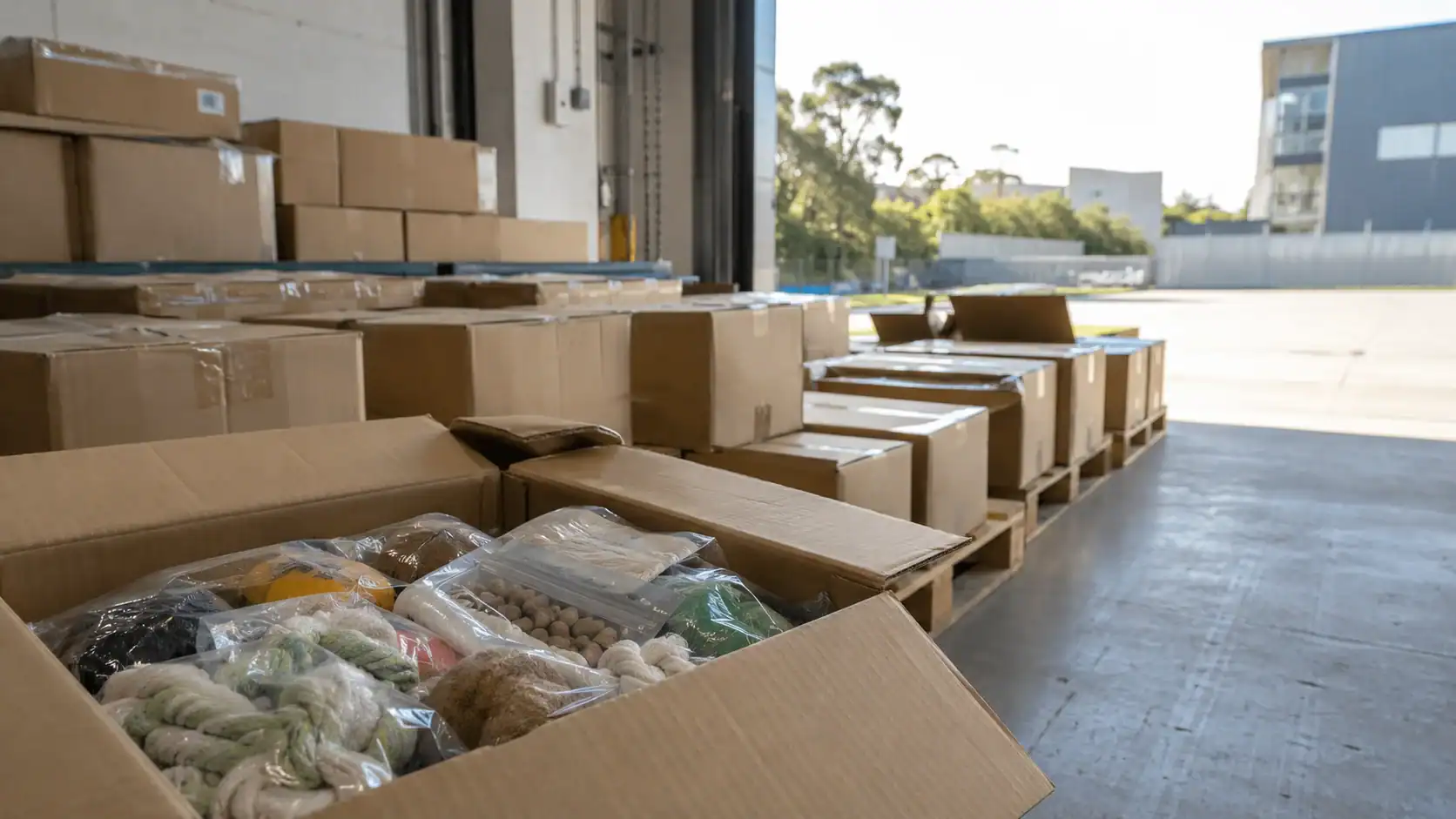
The Decision Frame: Animal-Derived or Not?
Run every pet product you consider importing through one question first: does it contain material derived from an animal? Not “is it food”: does it contain animal material. The biosecurity system doesn’t care about your marketing category; it cares about disease pathways.
Animal-derived material shows up in obvious places and unobvious ones:
- Obvious: canned dog food, kibble containing meat meal, pig ears, rawhide chews, dried liver treats, freeze-dried raw food, fish-based treats, bully sticks.
- Less obvious: feather cat toys, sheepskin dog beds, wool-felted toys, leather leads and collars, bone-shaped chews that actually contain bone or hide, toys stuffed with catnip mixed with animal-derived attractants, dental chews with dairy or meat flavouring agents.
- Genuinely clean: rubber and silicone toys, nylon chews, polyester beds and blankets, plastic and stainless bowls, webbing leads and harnesses, plastic litter trays, grooming brushes, synthetic-bristle products, electronic devices.
The Department of Agriculture, Fisheries and Forestry (DAFF) administers these controls through BICON, the Biosecurity Import Conditions database. BICON is where you check the actual conditions for your specific product, and “specific” means specific: species of origin, ingredient list, processing method, country of manufacture, and sometimes the individual facility all change the answer. Two chicken treats from two factories in the same country can have different import outcomes.
Pet Food and Treats: The Compliance Wall
Australia’s animal biosecurity settings exist to keep out diseases like foot-and-mouth and African swine fever, which would devastate the country’s livestock industries. Pet food made from animal material is a recognised pathway for exactly those diseases. That is why the controls are so severe, and why they are not going to soften for a promising e-commerce niche.
How BICON conditions work for pet food
Import conditions for pet food are determined by a matrix of factors:
- Ingredient species. Products containing ruminant material (beef, lamb), pig material, or avian material each carry their own risk profiles. Pig and ruminant material attract the tightest controls.
- Country of origin. DAFF maintains approved-country lists tied to disease status. A retort-processed chicken product might be importable from one country and prohibited from its neighbour.
- Manufacturing facility. For many pathways, the product must come from a facility approved by the exporting country’s veterinary authority, with that approval recognised by DAFF. You cannot substitute factories mid-program.
- Processing method. This is the big one. Retort processing (commercial sterilisation in a sealed can or pouch, the same technology behind shelf-stable human food) is the treatment DAFF trusts most. Retorted, shelf-stable pet food from approved countries and facilities is the most workable commercial pathway. Raw, freeze-dried, air-dried and gently-cooked products are the formats Australia’s system is least willing to admit, even though they’re the formats driving premium pet food growth globally.
Most animal-derived pet food pathways require a DAFF import permit issued before the goods ship. Permit applications require detailed manufacturer information, ingredient breakdowns by species and percentage, and processing parameters (time and temperature data for heat treatments). Assessment takes weeks at minimum, longer where the product is novel or the documentation is thin.
Dried treats: the category that catches everyone
Pig ears, rawhide, dried chicken breast, duck jerky and bully sticks make up the treat wall at every pet shop, and they deserve their own warning. These products are dried, not sterilised. Drying does not reliably kill the pathogens DAFF cares about, so dried animal treats face permit requirements plus specific treatment requirements, typically prescribed heat treatments such as holding at a specified core temperature for a specified time. Certification must prove the treatment happened.
The trap is that these products look casual. They’re cheap per unit, they ship light, they’re the obvious add-on line for an accessories importer. Marketplace suppliers will happily sell them to you and put anything you like on the paperwork. None of that moves a biosecurity officer. Dried animal treats arriving without a valid import permit are directed for export or destruction. There is no “pay a fine and keep the goods” option, and no retrospective permit.
Fish-based products
Fish and aquatic-animal material runs on a different set of BICON pathways from land-animal material, reflecting different disease concerns (salmonid diseases, prawn viruses, and others). Some fish-based pet food and treat lines are more accessible than their land-animal equivalents; others carry their own strict controls, particularly those containing salmonid material or uncooked prawn. Do not assume the fish pathway is “the easy one”; check the specific species in BICON. A dried whitefish skin treat and a salmon-based kibble are different regulatory conversations.
The honest feasibility assessment
Many small importers simply cannot import pet food commercially, and no amount of process knowledge changes that. If the product you want to sell is raw, freeze-dried, air-dried, or comes from a facility without the right approvals, the answer is not “find a better agent”. The answer is no. The compliance wall is the point of the system.
What is feasible, for an importer willing to do the work:
- Retort-processed, shelf-stable food (cans, pouches) from approved countries and facilities is workable, under permit and with full manufacturer documentation. This is how the multinational brands do it, and a disciplined smaller importer can run the same pathway at smaller scale, provided the manufacturer will support the documentation burden for your volumes.
- Products with no animal-derived material at all. Genuinely plant-based treats and foods sit on much lighter pathways, though “no animal material” must be literally true, down to flavouring agents and processing aids, and you will need the manufacturer to declare it.
- Buying locally manufactured food and importing only the accessories side of your range is another established option. Australia has a substantial pet food manufacturing sector precisely because importing is so constrained. Many successful pet brands import their hardgoods and contract-manufacture their consumables onshore.
If your business plan depends on importing dried raw treats from a marketplace supplier, change the plan now, before the border changes it for you.
The Documentation Trail for Animal-Derived Products
Where an animal-derived pathway does exist, it runs on paper. Expect to assemble and maintain:
- Manufacturer declarations state exactly what the product contains, by species, and how it was processed. These must be on manufacturer letterhead, signed, dated, batch-linked and consistent with every other document in the pack. A declaration that says “chicken” while the label says “chicken and beef” is a consignment-stopper.
- Treatment certificates evidence the required processing (retort parameters, heat-treatment records), often endorsed by the exporting country’s competent authority.
- Batch documentation. Permits and declarations attach to production batches, not to your brand. Every shipment needs its documentation matched to the batches physically in the boxes. Mixed-batch cartons with single-batch paperwork are a classic inspection failure.
- Your import permit must stay current and match the product as manufactured, not as originally applied for. Reformulations, new flavours and facility changes all require the permit to be revisited before shipping.
The practical implication: your manufacturer is a compliance partner, not just a supplier. A factory that won’t produce consistent, authority-endorsed documentation for your order size is a factory you cannot import animal-derived product from, whatever their price. Vet the paperwork capability before you vet the samples.
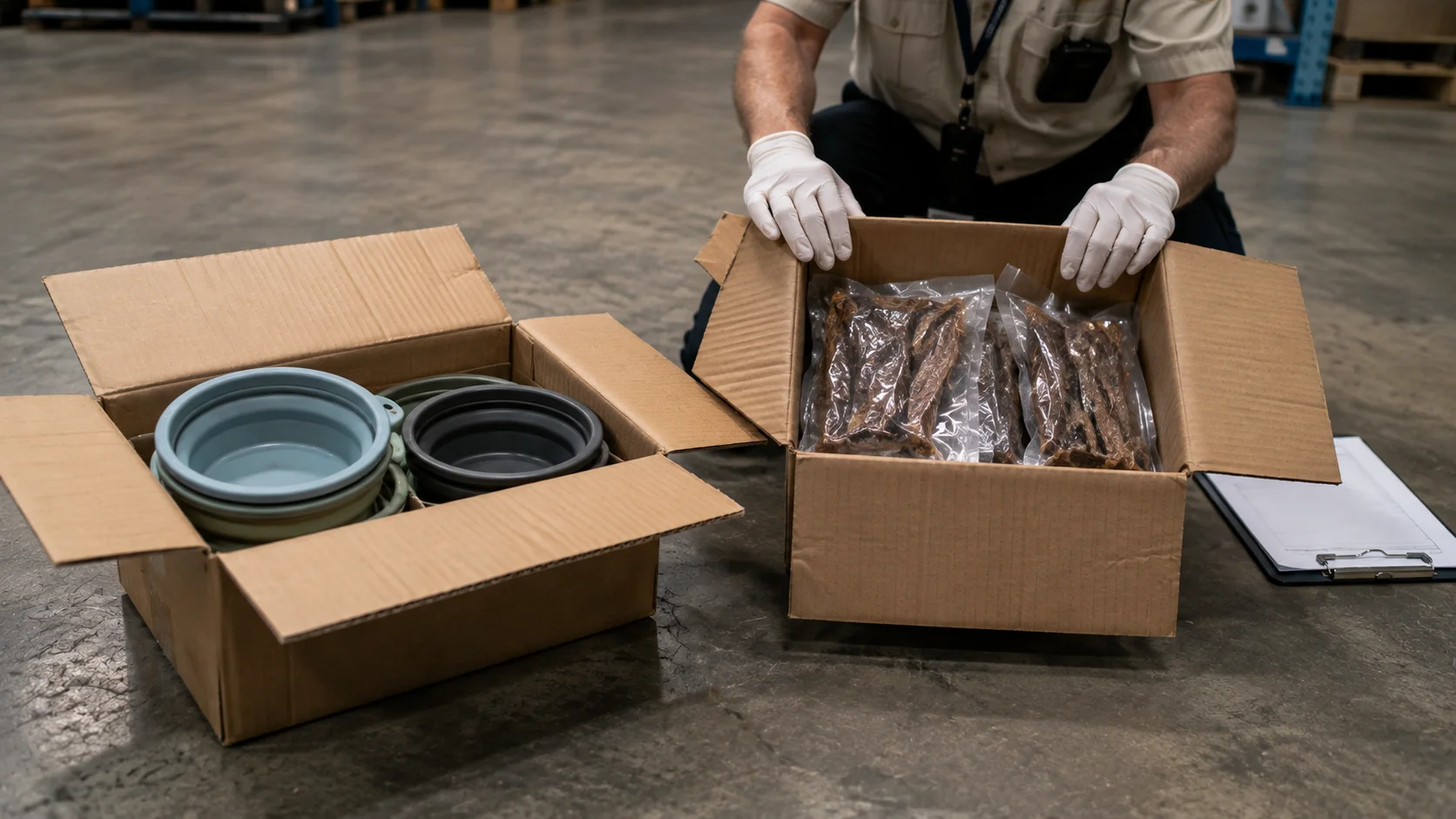
The Accessories Path: Where the Category Opens Up
Cross to the non-animal side of the line and the regulatory landscape changes character entirely. Toys, beds, bowls, leads, harnesses, litter accessories and grooming tools are, for import purposes, general consumer goods. No import permit, no BICON pathway to navigate (assuming genuinely no animal material), no approved-facility lists. Your obligations shift from biosecurity law to consumer and electrical law.
Pet toys: no mandatory standard, but not a free-for-all
A point that surprises importers coming from children’s products: there is no mandatory safety standard for pet toys in Australia. The mandatory children’s toy standards (small parts, magnets, button batteries as applied to toys for children under 36 months) apply to toys for children. A dog toy is not within their scope.
That does not mean nothing applies. The Australian Consumer Law (ACL), administered by the ACCC, still imposes:
- Acceptable quality and fitness for purpose. A chew toy that fragments into swallowable shards on first use fails the consumer guarantees, and you as the importer are the “manufacturer” for ACL purposes when the overseas maker has no Australian presence. Refunds, replacements and liability land on you.
- The general safety provisions. Selling goods that are unsafe in normal use invites ACCC attention, mandatory recall exposure, and direct liability under the ACL’s evolving safety provisions.
- Misleading conduct rules. Every claim on your packaging must be substantiable, including “indestructible,” “vet approved” and “non-toxic.” The ACCC has a long record of pursuing unsubstantiated product claims, and pet owners are an energetic complaint demographic.
Smart accessories importers behave as if a standard existed: they specify materials (food-grade silicone, phthalate-free PVC or none at all), commission basic lab testing for heavy metals and phthalates on mouthed products, and document durability testing. It costs a few hundred dollars per SKU and converts directly into defensibility and retail credibility.
Electronic accessories: the RCM obligation importers miss
GPS trackers, automatic feeders, pet cameras, smart doors, heated beds and LED collars make up the fastest-growing accessories segment. It carries the compliance requirement most first-time importers miss entirely: electrical and radiocommunications compliance under the RCM (Regulatory Compliance Mark) scheme.
If the device plugs into mains power, includes a charger, or transmits (Bluetooth, Wi-Fi, GPS, cellular), then before sale you must:
- Register as a responsible supplier on the national compliance database;
- Hold compliance evidence (test reports to the applicable electrical safety and EMC standards) for each device;
- Apply the RCM mark to the product.
This is a supplier obligation that attaches to you as the Australian importer. Your factory’s CE report is useful supporting evidence but is not, by itself, Australian compliance. Selling unregistered transmitting devices exposes you to penalties and to marketplace delisting: Amazon AU and the major retailers increasingly ask for RCM documentation up front. Budget roughly $1,500–$4,000 per electronic SKU for testing and compliance if your factory cannot supply usable reports, and check the factory’s test evidence before you commit to the order, not after.
Beds, textiles and BMSB season
Pet beds, blankets and soft toys are standard textile goods, with two caveats. First, filling material: recycled or unidentified stuffing can raise quality questions and, if animal-derived (like feather or wool), biosecurity questions; specify virgin polyester fill and have it declared. Second, seasonal BMSB measures: shipments from brown marmorated stink bug risk countries between September and April may require offshore treatment depending on cargo type. Risk countries include much of Europe, parts of Asia and North America; China is not currently BMSB-listed. If you source beds or timber-and-textile cat furniture from a risk country, build BMSB and quarantine handling into your Q4 shipping plans: peak pet retail season sits exactly inside the BMSB window.
Labelling Pet Food for the Australian Market
Suppose you have a viable food pathway: retorted pouches from an approved facility, permit in hand. Labelling is the next layer, and it is messier than human food because there is no single national mandatory standard.
The framework in practice:
- AS 5812, the Australian Standard for the manufacturing and marketing of pet food, is voluntary. It specifies labelling requirements: product name and species, ingredient list in descending order, typical analysis (protein, fat, fibre, moisture percentages), feeding guide, batch identification, Australian contact details.
- PFIAA (the Pet Food Industry Association of Australia) administers industry self-regulation around AS 5812; members commit to the standard. Major retailers and distributors largely treat AS 5812-compliant labelling as the ticket to shelf, voluntary or not.
- State-based rules add a patchwork underneath: several states maintain labelling and registration expectations for stock foods and pet foods under agricultural compliance legislation, and enforcement attention has increased following recurring national reviews of pet food regulation. Check the requirements for each state you’ll sell into rather than assuming a single national position.
- ACL overlay: every nutrition and health claim must be substantiable, including “complete and balanced” and “supports joint health,” exactly as with any consumer product.
Practical approach: label to AS 5812 from day one, with a compliant typical-analysis panel and Australian supplier details, and have your overseas manufacturer print it correctly rather than over-stickering: inspection officers and retail buyers both read stickered-over imported labels as a red flag.
Duty, GST and FTA Preference
The good news in an otherwise demanding category: pet products are cheap to bring through customs. Most relevant tariff lines carry 0–5% duty, and free trade agreements take much of the range to zero:
- Dog and cat food put up for retail sale (HS 2309.10): 0% duty as a general rate. Other prepared animal feed (2309.90) is similarly low.
- Rubber and plastic toys and articles: typically 5% general rate; 0% for Chinese-origin goods under ChAFTA with valid origin documentation.
- Textile beds and blankets: up to 5% general rate; again generally 0% under ChAFTA and other FTAs for qualifying origin.
- Electronic devices (trackers, feeders, cameras): predominantly 0% under general rates for most electronics lines.
- Leather goods (collars, leads): around 5% general, FTA-dependent.
GST of 10% applies to the value of the taxable importation (customs value + duty + transport and insurance) on commercial consignments regardless of origin. It’s recoverable as an input tax credit if you’re GST-registered, and deferrable on the BAS if you’re on the deferred GST scheme. For a category where landed margins are made or broken on freight and compliance rather than duty, the FTA paperwork is still worth doing: on a $60,000 annual accessories program, ChAFTA origin documentation is worth about $3,000 a year for an hour of supplier paperwork per shipment. The Australian Border Force publishes the tariff and FTA rules of origin; your broker will classify, but you should know your own lines.
Freight Profiles: Two Different Logistics Businesses
Accessories are volume-light. Pet beds, plush toys and hollow rubber products cube out long before they weigh out: a 40-foot container of dog beds might carry six tonnes in 65 cubic metres. Your freight cost per unit is driven by cubic efficiency: compression-packing beds, nesting bowls, flat-packing where the product allows. Accessories tolerate slow transit (no expiry), suit sea freight LCL for starting volumes, and fit the standard e-commerce import playbook.
Pet food is weight-dense and shelf-life-driven. Canned and pouched food stows heavy: you will hit container weight limits (roughly 21–24 tonnes payload depending on equipment and road limits) well before you fill the cube. And every day in transit is a day off the best-before date. Retailers commonly want long remaining shelf life at receipt, so a 12–18-month shelf-life product already loses a meaningful slice of its saleable window to three months in manufacturing, consolidation, transit and clearance. Food importing is therefore an inventory-cycle business: regular, forecast-driven FCL shipments, buffer stock calculated against permit and clearance variability, and a real cost attached to every biosecurity delay. Inspection holds don’t just cost storage: they cost shelf life.
The Private-Label Opportunity: Why Accessories Are the Entry Point
Food has deep, recurring, sticky demand, and a compliance wall that keeps small importers out. Accessories have lighter demand economics per SKU, and a compliance path any diligent operator can walk.
That asymmetry is why private-label accessories from China are the standard entry into the Australian pet category. The playbook: select a focused range (say, silicone slow-feeder bowls, webbing harnesses, and a plush toy line), private-label it with your brand from established factories, and do the ACL diligence and lab testing the factories won’t do for you. Once the base range is proven, add RCM-compliant electronics and build the brand and channel relationships on hardgoods margin. If food ever enters the picture, it comes later: via the retort-import pathway with a capable manufacturer, or more commonly via Australian contract manufacturing under the brand you built on accessories.
Worked Example: An Accessories Launch vs an Attempted Treats Import
Two hypothetical importers, both starting with about $30,000 of product budget, both sourcing from China.
Importer A: private-label accessories range
- Range: silicone bowls and slow feeders (4 SKUs), webbing harness/lead sets (6 SKUs), plush and rubber toys (8 SKUs). No animal material anywhere: feather, wool and rawhide explicitly excluded in the product spec.
- Compliance outlay: heavy-metals and phthalate testing on mouthed SKUs, ~$2,400; ACL claim review of packaging, ~$700. No permits, no BICON pathway. Total: ~$3,100.
- Freight: 22 cbm LCL/part-container, Shenzhen to Melbourne, ~$4,300 including port charges. Standard clearance: broker ~$450, duty $0 under ChAFTA with Certificates of Origin, GST ~$3,900 (creditable).
- Timeline: 8 weeks production, 4 weeks shipping and clearance. Goods on sale in under 3 months.
- Landed outcome: ~$38,000 all-in for a retail-value range around $110,000. Repeatable quarterly.
Importer B: dried chicken treats
- Plan: $30,000 of air-dried chicken breast treats from a marketplace supplier who “ships to Australia all the time”.
- Reality at BICON: the product is an animal-derived, non-retorted treat. The pathway requires an import permit, an eligible country and facility, prescribed heat treatment with certification, and manufacturer declarations. The marketplace supplier can produce none of it: no veterinary-authority facility approval, no treatment records, declarations that don’t survive first reading.
- Best case (importer checks before shipping): the project dies at the desk. Sunk cost: samples and time. Painful, survivable.
- Worst case (importer ships first, asks later): consignment arrives, is referred to biosecurity, has no permit, and is directed for destruction. Sunk cost: $30,000 of product, ~$3,500 of freight, destruction and storage charges typically $2,000–$5,000, plus an importer profile that now attracts closer scrutiny on future consignments. Total loss approaching $40,000, revenue: zero.
- The viable version of Importer B exists, but looks completely different: months of permit work, an approved facility relationship, retorted or fully treated product formats, and a documentation pack maintained batch by batch, a program measured in quarters and tens of thousands in setup before the first saleable unit lands. That is a considered second-phase move for an established pet brand, not a first import.
Common Mistakes
- Ordering dried treats without permits. This is the single most expensive mistake in this category. Dried, air-dried and raw animal treats need permits and treatment certification; without them the border outcome is export or destruction, not a warning.
- Assuming “natural” means importable. In biosecurity terms, natural is precisely the problem. The less processed an animal product is, the harder it is to import. Marketing language on the packet has zero regulatory meaning.
- Missing RCM on electronic accessories. Trackers, feeders and cameras need responsible-supplier registration and compliance evidence before sale. Factory CE paperwork alone doesn’t cut it.
- Animal material hiding in “accessories”. Feather toys, sheepskin beds, rawhide-core rope toys and leather goods with untreated hide sit on the biosecurity side of the line even though they’re merchandised as accessories. Screen every SKU’s bill of materials, not the category name.
- Stickered-over labels on food. Print AS 5812-style Australian labelling at the factory. Over-stickering looks improvised to both inspectors and buyers.
- Ignoring shelf life in the freight plan. For food, transit time is inventory cost. Plan the whole cycle (production to shelf) against the best-before date, not just the sailing schedule.
- Trusting supplier claims about Australian rules. “We ship to Australia all the time” is not a compliance document. Check BICON yourself, and make permits and testing your workstream.
Related Reading
- Biosecurity Requirements When Importing to Australia
- Importing Food to Australia: The Complete Compliance Guide
- DAFF Biosecurity Inspection Triggers: What Gets Your Container Flagged
- Importing from China to Australia: The Complete Playbook
- E-commerce Importing to Australia
Frequently Asked Questions
Can I import pet food to Australia commercially?
Sometimes, but the bar is high. Most pet food containing animal-derived material requires a DAFF import permit, granted only for approved countries and often approved facilities, with prescribed processing such as retort treatment. Many products (especially raw, dried and air-dried formats) effectively cannot be imported commercially. Shelf-stable retorted food from approved sources is the most feasible pathway; many importers instead contract-manufacture food locally and import only accessories.
Do pet toys and accessories need an import permit?
Generally no. Synthetic toys, beds, bowls, leads and grooming tools are standard consumer goods with no biosecurity permit. The exceptions are products containing untreated animal material (rawhide, feathers, sheepskin) and electronic devices, which need RCM compliance rather than a permit.
What happens if I import dried animal treats without a permit?
The consignment is directed for export or destruction at your cost, with storage and disposal charges on top. There is no retrospective permit and no fine-and-release option. Check BICON before ordering, not after arrival.
What duty applies to pet products?
Most lines are 0–5%. Retail dog and cat food is duty-free as a general rate; toys, beds and leather goods are around 5% general but typically 0% for Chinese-origin goods under ChAFTA with correct origin documents; most electronics are 0%. GST of 10% applies to commercial imports regardless of origin.
Do GPS trackers and automatic feeders need Australian electrical approval?
Yes. Mains-powered or transmitting pet devices fall under the RCM scheme: register as a responsible supplier, hold test evidence for each device, apply the RCM mark before sale. This obligation sits with you as the importer, not your factory.
Is pet food labelling mandatory in Australia?
There is no single national mandatory standard. AS 5812 is voluntary and administered in practice through PFIAA industry self-regulation, with additional state-based expectations underneath. Commercially, AS 5812-style labelling (ingredients, typical analysis, feeding guide, Australian contact) is the effective baseline for retail.