
Moving from Germany to Thailand is a straightforward decision to make and a complex one to execute. The clarity comes in the lifestyle: the weather, the cost of living, the food, the pace. The complexity comes in the details. Which visa you’re arriving on determines whether your belongings clear customs duty-free or attract duties of up to 30%. The routing your container takes determines whether your goods arrive in seven weeks or eleven. And the documents your removal company prepares in Hamburg determine whether Thai customs releases your shipment within a week of arrival or holds it in bonded storage at daily cost. For a full overview of what the move to Thailand actually involves, the Thailand relocation guide 2026 covers visas, customs and what to ship.
Visa Type Determines Everything at Thai Customs
Before you book a removal company or pack a box, confirm your visa status. Thai customs grants a duty-free personal effects exemption based on visa type, not on how long you’ve lived in Thailand, not on the value of your goods, and not on your intention to reside permanently.
| Visa / Status | Duty-Free Eligible? | Notes |
|---|---|---|
| Non-Immigrant B (work permit) | Yes | One-year work permit required; 6-month shipment window applies |
| Retirement (O-A / O-X) | No | Excluded from the standard criteria; Thai Customs does not accept a retirement visa as a qualifying status |
| Thai Elite / Privilege Card | No | Lifestyle visa: no work permit, no exemption |
| Long-Term Resident (LTR) | Seek ruling | Conditions vary by LTR sub-category |
| Education (ED) | No | Student visa, so no exemption |
| Tourist / visa-exempt | No | No qualifying status |
| Returning Thai national | Yes | Must prove 12+ consecutive months abroad |
The retirement visa case is the one that catches German expats most often. A significant number of Germans relocating to Thailand do so on the O-A retirement visa. It is accessible, renewable, and requires no employer sponsorship. But it does not qualify for the duty-free household goods exemption. Duties of 10–30% plus 7% VAT will apply to the declared CIF value of everything you ship. This materially changes the economics of what is worth bringing.
For those moving on a work-related Non-Immigrant B visa with a valid one-year work permit, the exact conditions for the exemption are:
- The work permit must be issued and valid before your shipment arrives at port
- You must have resided in Germany (or your origin country) for at least 12 consecutive months before the move
- Your shipment must arrive no earlier than one month before your Thailand entry and no later than six months after your work permit issue date
- One sea shipment and one air shipment qualify, but not multiple sea consignments
- All goods must be demonstrably used and personally owned. Items in original packaging risk reclassification
- One unit of each appliance type qualifies; duplicate units are dutiable
The Route: Hamburg or Bremerhaven to Laem Chabang
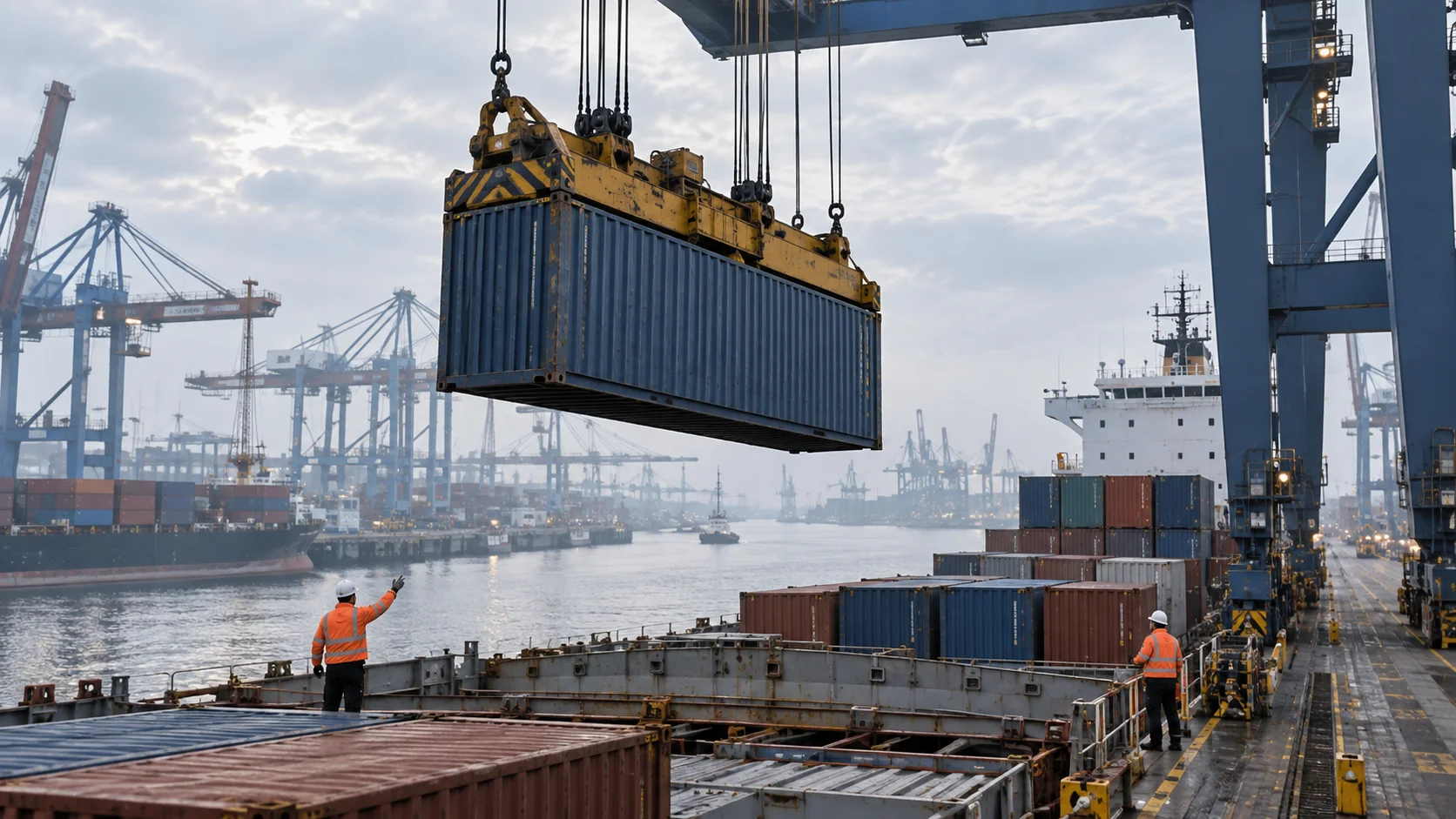
Germany’s two main container ports for household goods departures are Hamburg and Bremerhaven. Hamburg is the country’s largest deep-sea port. Bremerhaven handles significant volumes of consolidated household goods (groupage/LCL) shipments. Your removal company will advise which is operationally better for your specific move and volume.
From either port, the route to Thailand runs through one of two paths:
Via Suez Canal (standard routing): Through the Mediterranean, Suez Canal, Red Sea, Indian Ocean, with transshipment at Singapore or Port Klang (Malaysia), then onward to Laem Chabang. Ocean leg: approximately 28–33 days.
Via Cape of Good Hope (in effect since early 2024 due to Houthi disruptions in the Red Sea): Around southern Africa, across the Indian Ocean, transshipment at Singapore or Port Klang, then Laem Chabang. Ocean leg: approximately 36–49 days, which adds 10–14 days versus the Suez route.
As of mid-2026, many carriers continue to use Cape routing depending on security conditions. Your freight forwarder or removal company should confirm the current routing before you book, and any transit-time estimate should reflect it honestly.
Realistic door-to-door timeline:
- Collection and packing in Germany: 1–3 days
- Port handling and vessel loading at Hamburg/Bremerhaven: 5–10 days
- Ocean transit (Suez routing): 28–33 days
- Ocean transit (Cape routing): 36–49 days
- Thai customs clearance at Laem Chabang: 5–10 working days
- Delivery to your Thai address: 1–3 days
Total: 7–10 weeks (Suez) or 9–11 weeks (Cape). Any quote promising 30-day delivery refers to vessel-only transit time, not door-to-door. Plan accordingly, particularly given the 6-month exemption window. Book freight immediately after your work permit is issued, not weeks later.
One week in this process almost no one plans for, and it is easy to miss because nothing about it looks like logistics. It is the week the work permit is finally stamped. A relocator in Stuttgart, say, has spent months on the visa, found an apartment in Chiang Mai, and given notice on the flat. Then the permit issues, and a quiet six-month clock starts that has nothing to do with how ready anyone feels. The container that leaves Hamburg in March will spend five or six weeks at sea before it reaches Laem Chabang, where an officer opens it and reads the inventory line by line against what is actually inside. Run the arithmetic backward from that inspection and the booking date is not “soon.” It is now.
The six-month window opens the day the permit is stamped, so matching your volume to a sailing is worth doing that week rather than a month later.
LCL or FCL: Matching Your Volume to the Right Option
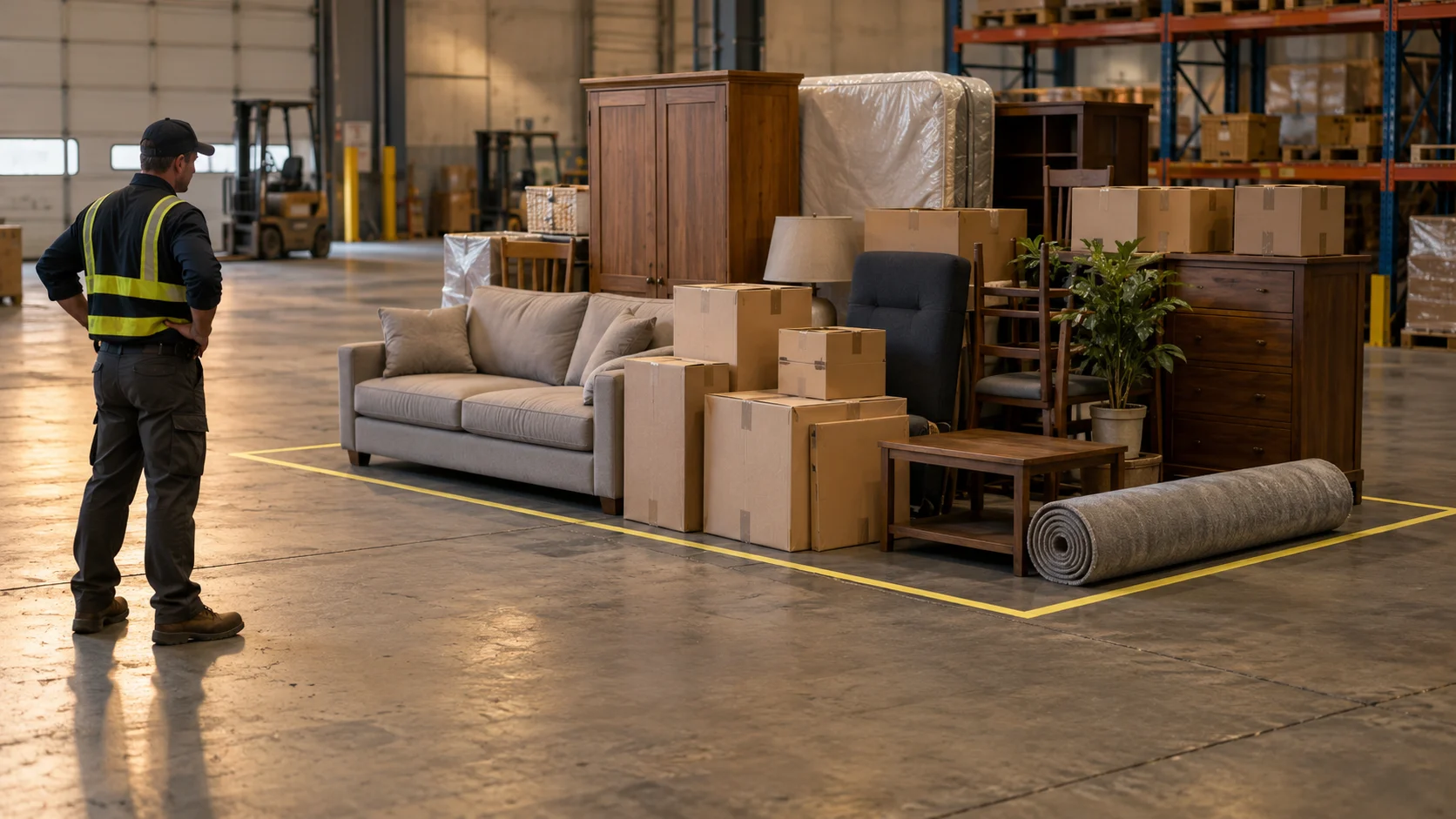
German apartments are typically well-furnished. But shipping an entire German apartment to Thailand rarely makes financial sense. Most experienced Germany-Thailand relocators ship a curated selection and source the rest locally in Thailand. That selection usually covers personal effects, clothing, books, specific furniture with sentimental value, and specialist equipment.
| Typical Move Volume | Estimated CBM | Best Option | Approximate Cost |
|---|---|---|---|
| Studio / 1-room (personal items) | 5–15 CBM | LCL groupage | €600–€2,100 |
| 2–3 room apartment (selective) | 15–35 CBM | LCL or 20ft FCL | €1,800–€4,500 |
| Full apartment / family move | 35–60 CBM | 20ft or 40ft FCL | €2,500–€6,000+ |
LCL (Sammelcontainer / groupage): Your goods share container space with other exporters. You pay per CBM. It is cost-effective for smaller moves. Consolidation and deconsolidation at origin and destination add handling time and marginally increase inspection risk at Thai customs.
FCL 20ft (approximately 25–28 CBM usable): You get your own container, and your goods travel alone in it. Clearance at Laem Chabang is faster. Fragile or high-value items fare better because there is no co-loading. This is the right option for most 2–3 room apartment moves once volume exceeds 15 CBM.
FCL 40ft HC (approximately 55–60 CBM usable): This takes a full family home. It is rarely necessary for Thailand-specific relocations, given that most expats ship selectively.
What to Bring, and What to Leave Behind
Good candidates for shipping from Germany:
- Clothing, particularly winter items if you plan to travel back to Europe
- Books and professional libraries
- Artworks and objects of sentimental or monetary value
- Specialist tools or professional equipment
- Custom-made or high-quality furniture not easily replaced
- Children’s toys and comfort items
Typically not worth shipping:
- Standard IKEA-equivalent furniture: available in Thailand at comparable prices
- Large white goods (washing machine, dishwasher, large fridge): Thai apartments are smaller, plumbing differs, and local replacements are affordable
- Bulky sectional sofas and large dining tables
- Bicycles and outdoor sports equipment unless specifically used and valuable
- Flammable substances, aerosols, paint: these are prohibited by shipping regulations anyway
Prohibited Items
Remove these before packing. They will be found during the Red Line inspection at Laem Chabang.
Prohibited (will be seized or destroyed):
- Lithium batteries of any kind (laptops, power banks, e-bike batteries, tool batteries, portable speakers). These are classified as dangerous goods under IMDG regulations and may not travel as sea freight cargo. Remove all batteries before packing and carry them in your cabin luggage.
- Flammable substances, gas canisters, aerosols, paint
- Narcotics and controlled substances
- Pornographic material
- Counterfeit goods
- Weapons, firearms (without Thai police permit)
- CITES-protected wildlife and derivatives
Restricted (permit or documentation required):
- Alcohol: subject to Thai excise duty even under the personal effects exemption; limited personal quantities accepted
- Buddha images and religious antiques: Fine Arts Department permit required
- Plants and plant material: phytosanitary certificate from German NPPO required; easier to leave behind
- Prescription medication in quantities beyond personal use: carry documentation
Required Documents for Thai Customs
Your removal company will coordinate most of the documentation, but you need to supply:
- Passport copy: including all visa-stamp pages showing your current valid visa
- Work permit copy: your valid one-year Thai work permit (if claiming duty-free exemption)
- Detailed packing inventory (Packliste): every item listed in English with description, quantity, and estimated value. Thai customs compares your physical goods against this list during inspection.
- Bill of Lading: issued by the shipping line
- Proof of residence in Germany for 12+ months: utility bills, Meldebescheinigung, or rental contracts covering the relevant period
The complete document checklist for shipping to Thailand covers the full set including the electronic import declaration your Thai customs broker submits through the National Single Window system.
All household goods shipments enter the Red Line, which means physical inspection. A Thai customs officer reviews the goods against the declared inventory. With complete, accurate documents, clearance typically takes 5–10 working days after vessel arrival. Incomplete documents mean bonded storage, and bonded storage accrues daily fees. Document issues are the primary cause of clearance delays at Laem Chabang.
For the German departure side: a formal Ausfuhrzollanmeldung (EU export customs declaration) is generally not required for personal household effects below commercial thresholds. Your BAVC-accredited removal company will handle departure documentation. The inventory prepared for German departure also serves as the foundation for your Thai customs declaration.
The Packliste you write for German departure and the inventory Thai customs inspects against are meant to be the same document, not two documents that happen to agree. That reuse is the detail worth building your process around. Every mismatch between them is a mismatch an officer at Laem Chabang can flag on inspection day: an item description that changed, a value that got rounded differently, a quantity that shifted after a last-minute repack. Write the Packliste once, in English, to the standard the Thai side expects, and let it travel unchanged through both customs processes rather than being redrafted at either end.
One honest thing before the FAQs: the hardest part of a Germany-to-Thailand move is rarely the freight. Once the container is booked it more or less takes care of itself. What trips people up is the small print they meet in a new language (a Frachtbrief here, a customs form there) at exactly the moment they are also trying to find a flat and a working SIM card. So do the boring thing early. Get your documents translated and your visa dates pinned down before the packers arrive, and the shipping half of the move becomes the part you worry about least.
🇩🇪 Germany → 🇹🇭 Thailand
We handle the Hamburg sailing and the Laem Chabang clearance
Tell us your volume and your permit date and we come back with a free estimate: fixed pricing, no hidden costs.
Related reading: Moving from Europe to Thailand: The Six-Layer Cost
Frequently Asked Questions
Can I import my household goods duty-free when moving from Germany to Thailand?
Only if you hold a qualifying visa. A valid one-year Non-Immigrant B visa with a one-year work permit makes you eligible. Retirement visa (O-A, O-X) holders are excluded from the standard relocation-exemption criteria and do not qualify. Thai Elite members, education visa holders, and tourist arrivals are not eligible at all. Without eligibility, import duties of 10–30% plus 7% VAT apply to the CIF value of your goods, per the Thai Customs Department personal effects conditions.
How long does sea freight take from Germany to Thailand?
Door-to-door, plan for 7–11 weeks. The ocean leg from Hamburg or Bremerhaven to Laem Chabang takes 28–33 days via Suez, or 36–49 days via the Cape of Good Hope (in use since 2024 Red Sea disruptions). Add collection, port handling, and 5–10 days Thai customs clearance.
Do I need a German customs export declaration before shipping?
For personal household effects below commercial thresholds, a formal Ausfuhrzollanmeldung is generally not required. Your BAVC-accredited removal company handles export documentation. The detailed packing inventory (Packliste) is what Thai customs requires.
Can I ship lithium batteries in my household goods to Thailand?
No. Lithium batteries of any kind, including those installed in devices, are prohibited from sea freight containers under IMDG dangerous goods regulations. Remove all batteries before packing and carry them in your cabin luggage.
What is the 6-month window for importing household goods into Thailand?
Your shipment must arrive in Thailand no earlier than one month before your initial entry and no later than six months after your work permit was first issued. Given realistic transit times of 7–11 weeks, book freight immediately after your work permit is issued. The window can fill quickly.
Planning Your Move from Germany with Swift Cargo
The step-by-step process for shipping household goods to Thailand covers eligibility confirmation, volume calculation, document preparation, and customs clearance in full. Swift Cargo manages European-origin household goods shipments to Thailand including customs broker coordination and Laem Chabang clearance.