Author: Dan Santarina

  • How to Ship Household Goods to Thailand: Step-by-Step Guide

    How to Ship Household Goods to Thailand: Step-by-Step Guide


    Most people who ship household goods to Thailand don’t get it wrong because they’re careless. They get it wrong because they focus on the move itself — the apartment, the visa, the job — and treat the freight as an afterthought. The boxes get packed. A moving company is called. And somewhere between Le Havre and Laem Chabang, they discover that Thai customs has rules they didn’t know existed.

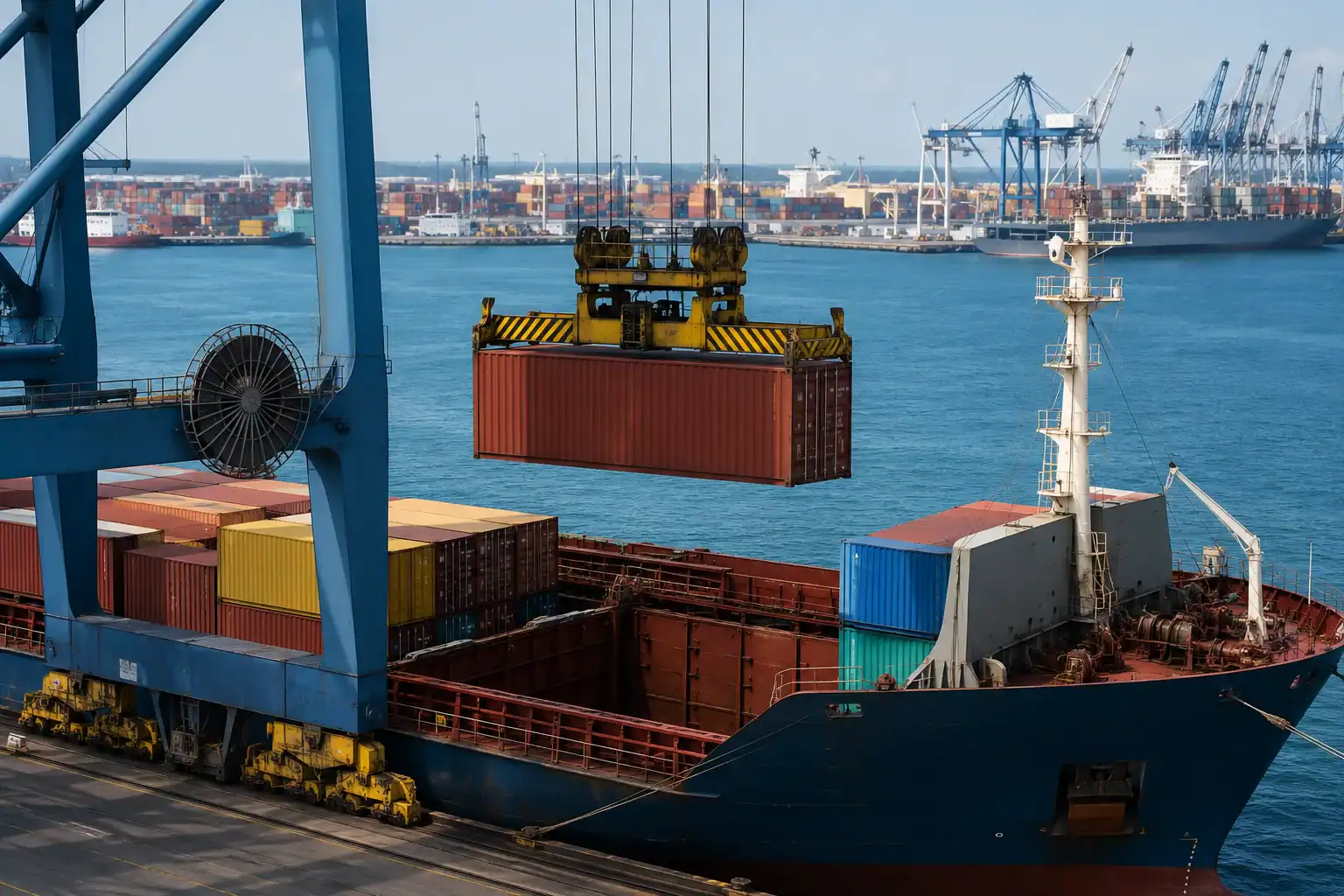
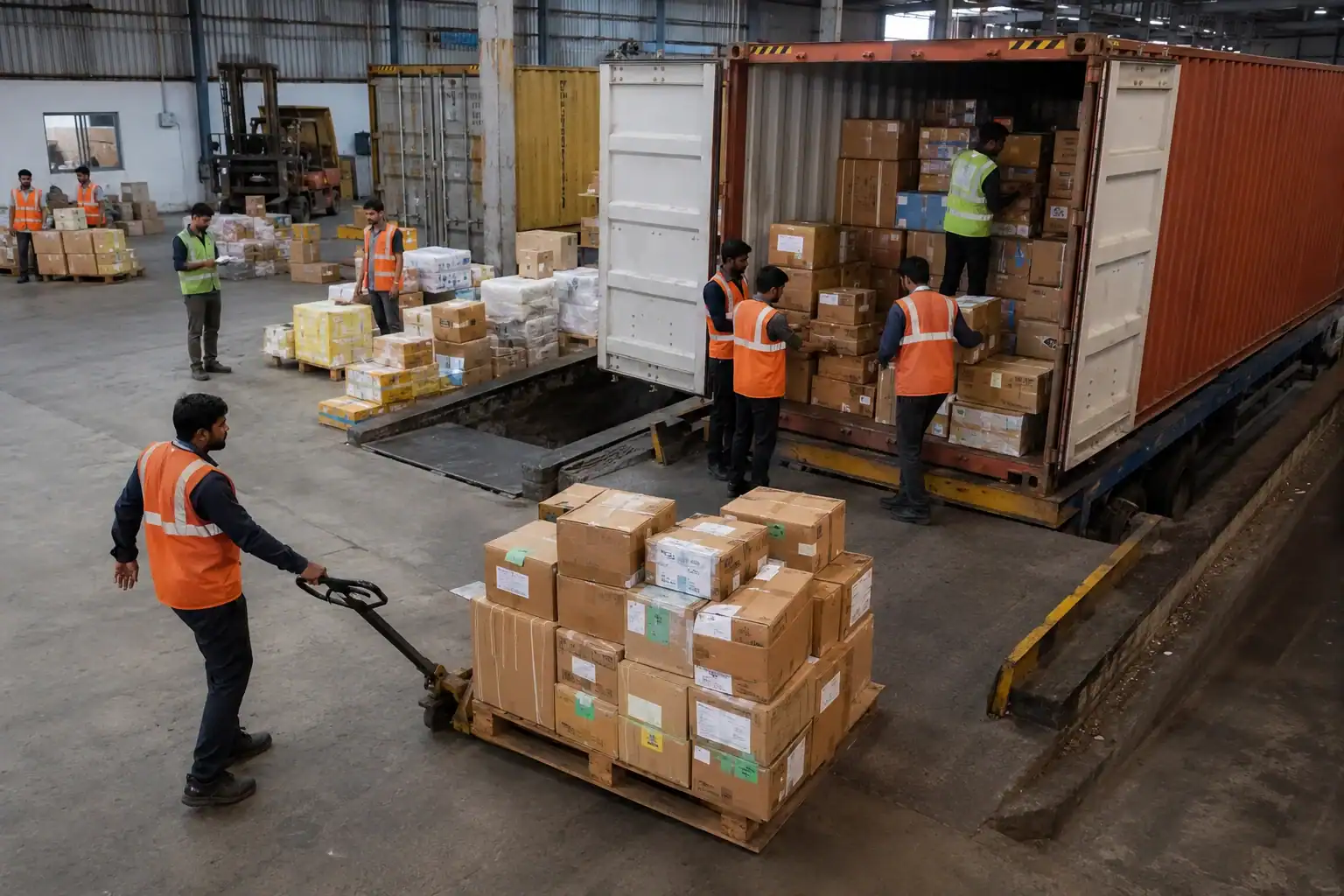
    Packed moving boxes stacked near a door with a Thai temple or Bangkok street scene visible through the window. Alternatively: a shipping container being loaded with household furniture at a port

    The good news: those rules are clear. Thai customs duty-free exemption for personal effects has specific eligibility conditions, a specific timing window, and a specific document set. Get those right, and your shipment moves smoothly. Get them wrong, and your belongings sit in bonded storage accumulating daily fees while you try to fix documents from a Bangkok apartment.

    This guide covers every step — who qualifies, what they need to prove it, how to choose between LCL and FCL, what Thai customs does with your goods on arrival, and what to do to avoid the scenarios that delay otherwise straightforward shipments.

    Step 1: Confirm Your Visa Eligibility

    Before you plan what to ship or book freight, confirm whether you qualify for Thailand’s duty-free personal effects exemption. Your visa type — not your moving volume, not your residency history — is the determining factor.

    Visa / Status Duty-Free Eligible? Notes
    Non-Immigrant B (work permit) Yes One-year work permit required; 6-month window applies
    Retirement visa (O-A / O-X) No Does not qualify — standard duties apply to all goods
    Thai Elite (Privilege Card) No Lifestyle visa, not a work visa — no exemption
    Long-Term Resident (LTR) Seek ruling Conditions vary by LTR category — confirm with Thai customs before shipping
    Education visa (ED) No Student visa — no exemption
    Tourist / visa-exempt No No qualifying status
    Returning Thai national Yes Must prove 12+ continuous months of residence abroad

    Retirement visa holders moving to Thailand — a significant proportion of all expat relocations — do not qualify for duty-free clearance of their household goods. Duties of 10–30% on declared value plus 7% VAT (CIF basis) will apply. This changes the economics of what’s worth shipping substantially, and it’s a fact that many online guides either miss entirely or bury in small print.

    If you do qualify, the exemption applies under these exact conditions:

    • You hold a valid one-year Non-Immigrant B visa at the time your shipment arrives at port
    • You hold a valid one-year Thai work permit, issued before your shipment arrives
    • You can demonstrate you resided in your origin country for at least 12 consecutive months before the move
    • Your shipment arrives no earlier than one month before your first Thailand entry, and no later than six months after the date your work permit was first issued
    • The shipment covers one sea freight consignment and one air freight consignment — not multiple sea shipments
    • All goods are used and personally owned — items must be at least six months old
    • Each type of appliance is represented once — one television, one washing machine. Duplicate units are dutiable

    Step 2: Decide What to Ship

    This decision matters more than most people realise. Thailand is not a country where you need to bring everything. Thai furniture markets are excellent. Electronics are widely available and competitively priced. Large appliances often don’t suit Thai apartments, which tend to be smaller than European or Australian equivalents and frequently come with appliances included.

    Worth shipping:

    • Clothing and personal wardrobe — high value relative to weight
    • Books, artworks, sentimental objects — irreplaceable
    • Specialist equipment (photography, music, professional tools)
    • Custom-made or irreplaceable furniture pieces with genuine sentimental value
    • Children’s comfort objects, toys, books
    • High-end audio equipment

    Usually not worth shipping:

    • Standard flat-pack or IKEA-equivalent furniture — available in Thailand at lower prices
    • Large white goods (fridge, washing machine, dryer) — Thai apartment voltage is compatible but most landlords include appliances; local replacements are inexpensive
    • Bulky sofas and sectionals — Thai apartments are smaller; Thai-made furniture is good quality
    • Garden furniture and outdoor equipment — Thai climate is different; items rarely get used

    The rough rule: if the combined shipping cost and applicable duty (or even just the shipping cost, for eligible shipments) exceeds 50–60% of what you’d pay to replace the item in Bangkok, leave it. Ship the things that genuinely can’t be replaced, and furnish locally for everything else.

    Step 3: Estimate Your Volume and Choose LCL or FCL

    Volume drives the shipping method decision. Measure realistically — cubic metres of furniture and boxes, not bedroom count.

    Move Type Estimated Volume Recommended Option
    Studio / 1-bed (personal items only) 3–10 CBM LCL groupage
    1–2 bed apartment (selective) 10–20 CBM LCL or 20ft FCL
    2–3 bed apartment (most items) 20–30 CBM 20ft FCL (25–28 CBM usable)
    Full house move 30–60+ CBM 40ft FCL (55–60 CBM usable)

    LCL (Less than Container Load / groupage): Your goods share a container with other exporters’ shipments. You pay per cubic metre. Cost-effective for smaller volumes. Transit time may be 2–5 days longer than FCL due to consolidation and deconsolidation handling. Inspection risk at Thai customs is marginally higher because a shared container involves multiple declarations.

    FCL (Full Container Load): Your container, your goods only. Flat rate regardless of how full the container is. Faster clearance in Thailand because there’s only one consignee per container. Better for fragile or high-value items because there’s no handling of other shipments around yours. The 20ft FCL is the right choice for most expat apartment moves once volume exceeds about 15 CBM.

    Step 4: Prepare Your Documents

    Thai customs clearance of household goods requires a specific document set. Missing or incorrect documents are the primary reason personal effects shipments get delayed at Laem Chabang. Prepare everything before your vessel departs — not on arrival.

    Required documents:

    • Passport copy — full copy including visa stamp pages showing your Non-Immigrant B visa (or equivalent qualifying visa)
    • Work permit copy — your one-year Thai work permit, valid at time of shipment arrival
    • Bill of Lading — issued by the shipping line; your customs broker needs the original or express release copy
    • Detailed packing inventory — every item in your shipment listed with description, quantity, and estimated value. This is not optional and must match the physical contents exactly. Thai customs officers compare the physical goods against the inventory during inspection
    • Proof of residence abroad — if claiming the 12-month residency condition; utility bills, rental contracts, or bank statements from your origin country covering the relevant period

    Additional documents for specific items:

    • Buddha images, antiques, religious artefacts: Fine Arts Department permit (must be obtained before shipment departs)
    • Firearms: Royal Thai Police import permit
    • Plants: Phytosanitary certificate from origin country

    The full document requirements for shipping to Thailand cover the complete framework including NSW electronic submission and the Kor Sor Kor 99/1 import declaration form that your customs broker lodges for sea freight personal effects.

    Step 5: Understand What Thai Customs Does on Arrival

    All household goods shipments are directed to the Red Line — physical inspection. This is standard procedure, not a flag. A Thai customs officer compares your physical goods against your declared inventory.

    Goods valuation: Thai customs uses the Transaction Value Method. For personal effects, officers assess whether items are genuinely used and personally owned. Keep this in mind when packing:

    • Items in original packaging, appearing brand new, or in quantities inconsistent with personal use (six identical items of the same clothing in different sizes) may be reclassified as commercial goods and dutiable accordingly
    • Declare values accurately — undervaluation creates a valuation dispute that delays clearance; Thai customs has reference price databases for common goods
    • Used items should look used. A flat-screen television still in manufacturer’s packaging from three years ago is a problem. The same television mounted, with remote and cables packed beside it, is not

    Bonded storage and the 45-day rule: If your documents are not in order on arrival, your goods enter bonded storage at Laem Chabang. Daily warehouse fees accrue. Shipping line detention and demurrage fees also accrue separately. You have 45 days from arrival to submit a formal import entry, or 60 days once an entry is submitted. After those periods, Thai customs can formally auction goods that remain unclaimed.

    This is not a theoretical risk. It happens to real shipments with real goods because documents were incomplete. The prevention is entirely front-end: complete documents prepared and confirmed with your customs broker before the vessel leaves your origin port.

    Step 6: Prohibited and Restricted Items

    Remove these from your shipment before packing. Thai customs will find them during the Red Line inspection. Thailand maintains a strict restricted and prohibited goods list that applies to personal effects as much as commercial imports.

    Prohibited (will be seized): Narcotics, counterfeit goods, pornographic material, endangered wildlife products (CITES-listed species)

    Restricted (permit required before arrival):

    • Alcohol: dutiable even under the personal effects exemption; beer and wine in personal quantities are generally accepted; a full bar isn’t
    • Firearms: Royal Thai Police permit required; process is lengthy; obtain it before booking freight
    • Plants and seeds: phytosanitary certificate from origin country; easier to leave behind
    • Antiques and Buddha images: Fine Arts Department assessment and permit required
    • Prescription medication in large quantities: carry Thai prescriptions or documentation

    The simplest decision rule for shipping household goods to Thailand is to treat the visa timeline and the shipping timeline as one project from the first booking conversation. Most relocators plan them separately — book the visa with the immigration agent, book the container with the freight forwarder, then discover the gap between visa-issue date and customs clearance only when the duty bill arrives at the border. The 6-month duty-free window is not the problem. The disconnected planning is. Build a single timeline document that lists visa milestones and shipping milestones on the same calendar from day one, and most of the timing surprises that catch first-time relocators stop being surprises. The information is public, the rules are stable, and the planning discipline is the entire game.


    The first time I helped a family ship a household to Thailand, I underestimated everything. I underestimated how many boxes there would be. I underestimated how long the customs paperwork would take. I underestimated how attached the family was to specific items I had assumed they would happily leave behind. I underestimated how stressful the gap between the container leaving origin and arriving at the Bangkok apartment would be. None of those underestimations were unique to that family. Every family I have worked with since has gone through a version of the same surprise. The household-shipping experience is one of those things you cannot really understand until you have done it once, and the first time is almost always harder than expected. The relocators who land most cleanly are not the ones who think they know what to expect. They are the ones who explicitly accept that they do not, and build margin into the timeline, budget, and emotional energy for the things that will inevitably go differently than planned. The freight is logistics. The move is the harder, more human thing the logistics are wrapped around.


    Frequently Asked Questions

    Who qualifies for the duty-free exemption on household goods in Thailand?

    Only holders of a valid one-year Non-Immigrant B visa with a corresponding one-year work permit qualify. Retirement visa (O-A, O-X) holders, Thai Elite members, education visa holders, and tourist visa arrivals do not qualify. Returning Thai nationals may qualify if they can prove 12 months of continuous residence abroad.

    What is the 6-month timing rule for household goods?

    Your shipment must arrive in Thailand no earlier than one month before your first entry and no later than six months after the date your work permit was first issued. If your shipment arrives outside that window — even by a few days — you lose the duty-free exemption regardless of your visa status.

    What size container do I need for a Bangkok apartment?

    For a studio or one-bedroom (selected personal items): LCL groupage, 5–10 CBM. For a two-bedroom apartment: LCL 10–20 CBM or a 20ft FCL. For a three-bedroom or larger: 20ft or 40ft FCL. Most Bangkok expat moves fit within LCL or a 20ft FCL.

    How does Thai customs value used household goods?

    Thai customs uses the Transaction Value Method. Officers assess whether items are genuinely used and personally owned. Items in original packaging, appearing brand new, or in quantities inconsistent with personal use may be reclassified as commercial imports and dutiable accordingly. Declare accurately.

    What happens if my goods aren’t cleared within 45 days at Laem Chabang?

    Thai customs allows goods to remain in bonded warehouse for up to 45 days without an import entry submission. After that period, or upon expiry of any extension, customs can formally auction unclaimed goods. Daily warehouse and port storage fees accrue throughout. Complete documents before shipment prevent this entirely.

    Ready to Ship Your Household Goods to Thailand?

    Swift Cargo manages household goods and personal effects shipments to Thailand end-to-end — including document coordination, customs broker engagement, and clearance at Laem Chabang. Confirm your eligibility and document requirements before you pack.

    Contact Swift Cargo for a freight assessment →

  • How to Import Apparel from Vietnam to Australia: Compliance, Duty and Freight Guide

    How to Import Apparel from Vietnam to Australia: Compliance, Duty and Freight Guide


    Vietnam has become one of the most significant apparel manufacturing countries in the world — and for Australian fashion importers, it represents a compelling combination of cost, capability, and trade access. With the AANZFTA free trade agreement in force, qualifying Vietnamese-made garments enter Australia at 0% duty. With the right freight and compliance setup, the economics work well.

    Vietnamese garment factory workers on a production line with racks of finished clothing visible

    But apparel imports carry a compliance burden that goes beyond duty. Australian law mandates care labelling on every garment. Children’s clothing is subject to mandatory safety standards. Natural fibres trigger biosecurity screening at the border. And the AANZFTA zero-rate only applies if you obtain the right Certificate of Origin before the goods ship.

    This guide covers the full picture: HS codes, AANZFTA duty access, labelling requirements, ACCC product safety for children’s clothing, biosecurity conditions for natural fibres, and the freight route from Ho Chi Minh City and Hai Phong to Australian ports.

    HS Codes for Apparel: Start with Classification

    As with any import, the HS code comes first. It determines your duty rate, your AANZFTA eligibility, and whether your goods trigger any biosecurity or product safety requirements.

    Apparel is classified under two chapters of the Australian Customs Tariff:

    • HS Chapter 61 — Knitted or crocheted clothing and accessories (6101–6117): T-shirts, knitwear, socks, hosiery, swimwear made from knitted fabric
    • HS Chapter 62 — Woven apparel (6201–6217): Suits, jackets, trousers, dresses, blouses, shirts made from woven fabric

    The 10-digit Australian tariff item code within these chapters determines the specific duty rate applicable to your product. Use the ABF Tariff Classification tool or ask your customs broker for a binding tariff ruling on your specific garment category. Getting this right matters — an incorrect HS code means an incorrect duty rate and incorrect AANZFTA claim.

    AANZFTA Duty Rates: 5% to Zero

    The general MFN (most favoured nation) duty rate on Chapters 61 and 62 apparel imported into Australia is 5%.

    Under AANZFTA — the ASEAN-Australia-New Zealand Free Trade Agreement — that rate drops to 0% for goods originating in Vietnam, with a valid Form AANZ Certificate of Origin.

    On a $100,000 annual apparel program, that 5% saving is $5,000 in avoided duty each year. On a $500,000 program, it’s $25,000.

    To access the AANZFTA rate:

    1. Your goods must originate in Vietnam — meeting the AANZFTA rules of origin. For most cut-and-sewn garments manufactured in Vietnam, this is satisfied. The key test is whether the product undergoes sufficient transformation in Vietnam (typically, fabric cut and assembled into finished garments qualifies)
    2. Your Vietnamese supplier must obtain a Form AANZ Certificate of Origin from an authorised issuing body in Vietnam (typically the Vietnam Chamber of Commerce and Industry, VCCI)
    3. The Form AANZ must accompany each import declaration lodged with ABF

    Confirm the preferential rate for your specific HS code using the DFAT FTA Portal. AANZFTA covers a broad range of Australian imports from ASEAN countries — if you’re sourcing across product categories from the region, the framework is worth understanding in full.

    Request the Form AANZ before your goods ship. It cannot be issued retrospectively, and a missing certificate means you pay the 5% MFN rate — an avoidable cost on every shipment.

    Care Labelling: The Mandatory Standard

    Every garment sold in Australia must carry a permanently attached care instruction label. This is not a best practice — it is a mandatory standard under Consumer Protection Notice 25 of 2010, which incorporates AS/NZS 1957:1998.

    Requirements:

    • Instructions must be in English
    • The label must be permanently attached to the garment — not a hangtag
    • Instructions must use the standard care symbols (washing, bleaching, drying, ironing, dry cleaning) as defined in AS/NZS 1957
    • Instructions must be accurate — a “machine wash cold” instruction on a dry-clean-only garment is not a labelling error, it is a misleading representation under the Australian Consumer Law

    Many Vietnamese manufacturers supply for European and US markets and are familiar with care labelling requirements, but the specific Australian standard (AS/NZS 1957 symbols and English language requirement) may differ from their standard output. Specify the requirement in your purchase order and request label samples for approval before production runs.

    Non-compliance with the mandatory care labelling standard can result in ACCC enforcement action, mandatory recalls, and fines. Garments found non-compliant at retail level create liability for the importer.

    Children’s Clothing: Mandatory Safety Standards

    If any part of your range includes clothing designed or marketed for children, mandatory ACCC safety standards apply.

    Children’s nightwear — AS/NZS 1249:2014 (mandatory): Applies to nightwear and limited daywear intended for children up to 14 years. Garments must either meet specific low-flammability fabric requirements or carry a prominent fire danger warning label if made from high-flammability fabric. This standard is strictly enforced — non-compliant nightwear has been the subject of multiple ACCC recalls.

    Drawstrings and cords in children’s clothing (mandatory): A mandatory standard restricts drawstrings and functional cords in children’s upper garments (up to size 14). Neck area drawstrings are prohibited. Waist-area drawstrings must meet specific length and protrusion limits. This applies to hoodies, jackets, tracksuit tops, and similar garments.

    General ACL obligations: All children’s clothing must be of acceptable quality, fit for purpose, and match its description under the Australian Consumer Law. This includes being free from hazardous embellishments (sharp edges, small detachable parts on infant clothing) even where no specific mandatory standard exists.

    Check current mandatory standards at the ACCC Product Safety portal before placing production orders. Standards update — the version in force at import date is what applies.

    Biosecurity: Natural Fibres at the Border

    Apparel made from natural fibres — cotton, wool, silk, linen, hemp — is subject to DAFF biosecurity screening on arrival in Australia. Australia’s biosecurity import conditions apply to any goods containing plant or animal material.

    Key biosecurity considerations by fibre type:

    Wool and woollen articles: Specific treatment requirements apply under DAFF Industry Advice 125-2017. Woollen garments (sweaters, coats, wool-blend fabrics) may require treatment certification or face inspection on arrival. Check BICON for the current conditions applicable to your specific product and country of origin.

    Cotton garments: Generally lower biosecurity risk for finished, commercially laundered garments — but raw cotton or garments with soil contamination can trigger treatment requirements. Commercially manufactured, clean garments from established Vietnamese factories rarely have issues, but the biosecurity screening applies regardless.

    Silk: Animal-derived fibre — biosecurity conditions apply. Finished silk garments in normal commercial condition are generally lower risk, but BICON should be consulted.

    Biosecurity inspection at arrival is not a penalty — it is a standard part of Australian border management. Garments that pass inspection (the large majority of commercial shipments) proceed to customs clearance. Those that don’t may face treatment at the importer’s cost or re-export.

    Consult BICON before your first natural-fibre shipment from Vietnam.

    The Vietnam-Australia Freight Route

    Vietnam’s two main apparel export hubs connect to Australia as follows:

    Ho Chi Minh City (HCMC / Saigon): The largest garment and textile manufacturing cluster in Vietnam, concentrated in HCMC and surrounding Binh Duong and Dong Nai provinces. Cat Lai Port handles the majority of container exports from the south. Transit to Sydney or Melbourne: approximately 18–25 days.

    Hai Phong: The main northern Vietnam export port, serving manufacturers in Hanoi and the northern provinces (also a growing fast-fashion manufacturing belt). Transit to Sydney: approximately 22–28 days.

    LCL or FCL: Apparel is relatively compact and heavy for its volume compared to furniture. LCL (shared container) is cost-effective for orders under 12–15 CBM. FCL becomes more economical above that threshold and reduces handling risk — important for garments that may be damaged by rough handling or moisture exposure in a shared container.

    GST of 10% applies to the combined customs value plus duty plus international freight and insurance. For apparel, ensure your commercial invoice shows the correct Incoterms (typically FOB) so the GST calculation uses the right freight and insurance figures.

    Documentation Checklist

    Document Required Notes
    Commercial Invoice Always FOB value, HS codes, garment descriptions
    Packing List Always Carton count, per-carton weights and dimensions
    Bill of Lading / Air Waybill Always Original or express release
    Form AANZ Certificate of Origin AANZFTA claims From VCCI; reduces duty 5% → 0%
    Biosecurity documentation Natural fibre goods As required by BICON for your commodity
    Import Declaration Always (goods > AUD $1,000) Lodged by licensed customs broker

    The structural reason Vietnam apparel imports to Australia work so smoothly is that AANZFTA is genuinely a regional production system, not just a tariff schedule. Vietnam sits at a particular point in the ASEAN garment network where fabric inputs, labour cost, and origin-certification infrastructure converge — and the agreement was designed around that geography. Australian importers who treat AANZFTA as “a way to save duty” tend to miss the larger point: the same agreement that lowers tariffs also standardises documentation, simplifies origin verification, and creates predictable lane structure between Vietnamese suppliers and Australian customs. That predictability is the actual value. Tariff savings are visible on the invoice; lane reliability is what makes apparel sourcing repeatable at scale. Importers who design their supplier relationships around the system, rather than treating it as a per-shipment optimisation, end up with a sourcing capability that scales without breaking.


    Here is something worth thinking about. Most coverage of Vietnam-to-Australia apparel trade frames the lane as a derivative of the China trade — the same goods, just from a different origin, as supply chains move south. That framing is wrong, or at least incomplete. Vietnamese apparel manufacturing built up around a different mix of buyers (more European, more US, less domestic-Asian), a different labour structure (smaller factories, more direct relationships with brands), and a different relationship to the AANZFTA preference architecture. An Australian importer who treats Vietnamese sourcing as “China but cheaper” misses the parts of the lane that make it work differently — the supplier negotiation, the quality-control structure, the lead-time mechanics. The lane is not a substitute. It is its own thing, with its own logic, and the importers who do best in it are the ones who learned that logic on its own terms rather than imported their China-trade habits and applied them here.


    Frequently Asked Questions

    What is the duty rate on clothing imported from Vietnam to Australia?

    The standard MFN duty rate on apparel (HS Chapters 61 and 62) is 5%. Under AANZFTA, the rate drops to 0% for goods originating in Vietnam with a valid Form AANZ Certificate of Origin. GST of 10% applies regardless.

    Is care labelling mandatory for clothing imported into Australia?

    Yes. Care labelling is mandatory under Consumer Protection Notice 25 of 2010, incorporating AS/NZS 1957:1998. Every garment sold in Australia must have a permanently attached care instruction label in English. Non-compliance can trigger ACCC recalls and enforcement action.

    Do biosecurity requirements apply to clothing from Vietnam?

    Yes, for garments made from natural fibres. Cotton, wool, silk, linen, and other natural materials are subject to DAFF biosecurity screening on arrival. Wool and woollen articles have specific treatment requirements under DAFF Industry Advice 125-2017. Check BICON before your first shipment.

    What HS codes apply to apparel from Vietnam?

    HS Chapter 61 covers knitted or crocheted apparel (6101–6117). HS Chapter 62 covers woven apparel (6201–6217). Confirm the specific 10-digit code for your product with your customs broker or the ABF Tariff Classification tool before ordering.

    How long does sea freight take from Vietnam to Australia?

    Typically 18–30 days from Ho Chi Minh City or Hai Phong to Australian east coast ports. HCMC to Sydney direct: approximately 18–25 days. Hai Phong to Sydney: approximately 22–28 days. Add 2–5 business days for customs clearance after arrival.

    Ready to Import Apparel from Vietnam?

    Swift Cargo manages LCL and FCL freight from Vietnam to Australia, with AANZFTA certificate coordination and customs brokerage included. If you’re planning a new apparel program from Vietnamese manufacturers, start with a freight assessment.

    Contact Swift Cargo for a freight assessment →

  • Required Documents for Shipping to Thailand: The Complete Checklist

    Required Documents for Shipping to Thailand: The Complete Checklist


    Shipments don’t get held at Thai customs because importers are careless. They get held because most people assume the documents they used last time will work again — or that their supplier has it covered. Neither assumption is usually right.

    Shipping container on a customs scanner gate with palletized cargo on rails, representing the documentation checkpoints required for shipping to Thailand.

    Thai customs clearance operates on a document-first principle. Before goods are physically examined — or released without examination — the customs authority reviews the submitted paperwork. If the documents stack up, the shipment moves. If they don’t, it doesn’t.

    This guide covers every document required to import goods into Thailand: what each one is, what it must contain, when additional permits apply, and how the process flows through the National Single Window system that Thai customs has operated since 2025.

    The Standard Document Set

    Five documents are required for every commercial shipment into Thailand, regardless of goods type.

    1. Commercial Invoice

    The commercial invoice is the primary valuation document. Thai customs calculates import duty and VAT on a CIF basis — Cost plus Insurance plus Freight. Whatever value appears on the invoice is the starting point for that calculation.

    A Thai customs-compliant commercial invoice must include:

    • Full name and address of both exporter and importer
    • Invoice date and reference number
    • Specific goods description (not generic — “electronic goods” will flag the shipment; “lithium-ion rechargeable batteries, 3.7V 2600mAh, model XJ200” will not)
    • HS code for each line item (8 digits minimum; 10-digit Thai tariff code preferred)
    • Quantity, unit price, and total value in the invoice currency
    • Country of origin for each goods line
    • Incoterms (e.g., FOB Shanghai, CIF Bangkok)
    • Port of loading and destination port

    Thai customs maintains a comparative valuation database. If your declared value sits significantly below what comparable goods typically land at, your shipment will be flagged for a valuation dispute — not because you’ve done anything wrong, but because the number doesn’t match the pattern. The goods don’t move while the dispute is resolved.

    2. Packing List

    The packing list must match the commercial invoice exactly. A quantity discrepancy between documents — 200 units on the invoice, 198 on the packing list — will trigger a physical inspection, even if the actual goods are precisely as declared.

    The packing list must include:

    • Goods description matching the invoice
    • Number of packages (cartons, pallets, crates)
    • Gross and net weight per package
    • Dimensions of each package
    • Package marks and numbers

    3. Bill of Lading or Air Waybill

    The Bill of Lading (for sea freight) or Air Waybill (for air cargo) is the transport contract and the document of title for the goods. Without it, the consignee cannot take possession of the shipment.

    The main commercial sea freight ports in Thailand are Laem Chabang (near Bangkok) and Bangkok Port. For air cargo, Suvarnabhumi Airport handles the primary cargo volume.

    The B/L must show:

    • Shipper (exporter) name and address
    • Consignee name and address
    • Notify party — usually the customs broker or freight forwarder
    • Goods description consistent with the invoice
    • Number of packages and gross weight
    • Port of loading and discharge
    • Vessel name and voyage number

    One note on “To Order” Bills of Lading: if the B/L is issued to order rather than directly to the named consignee, the shipper must endorse the original before the consignee can take possession. This is common in letters-of-credit transactions. If the endorsed original doesn’t arrive before the vessel does, your goods will sit at port waiting for the document — not because customs is holding them, but because you don’t have title.

    The B/L and AWB requirements differ significantly between sea and air freight, including whether original documents or electronic equivalents are accepted at the cargo terminal.

    4. Import Declaration (e-Goods Declaration via NSW)

    Since 2025, all commercial imports into Thailand are submitted electronically through the National Single Window (NSW) — a digital platform that connects Thai Customs, the Thai FDA, the Department of Foreign Trade, and other regulatory agencies in a single portal.

    Your licensed Thai customs broker registers your shipment through the NSW portal (customs.go.th) and lodges the import declaration — the digital equivalent of the legacy Customs Form 99. The system cross-references your declaration against the submitted documents and either auto-releases the shipment (Green Line) or directs it to physical inspection (Red Line).

    If you don’t have a licensed Thai customs broker, you cannot lodge this declaration yourself. Engaging a licensed broker is not optional for commercial imports — it’s the only practical path to clearance.

    The Foreign Transaction Form is required for any shipment with a customs value exceeding ฿500,000 (approximately AUD $22,000). Your customs broker lodges this alongside the import declaration.

    5. Insurance Certificate

    When goods ship on CIF terms, the insurance premium invoice or certificate must accompany the shipment documents. Thai customs includes the insurance value in the CIF calculation used to assess duty and VAT.

    If you’re shipping on FOB terms and your buyer arranges insurance, the insurance documentation still needs to be available to the customs broker for reference in the valuation calculation.

    The Certificate of Origin — and the AANZFTA Advantage for Australian Shippers

    A Certificate of Origin is not required for every shipment. It’s required when you want to access preferential duty rates under a free trade agreement.

    For goods shipped from Australia to Thailand, the relevant agreement is AANZFTA — the ASEAN-Australia-New Zealand Free Trade Agreement. Under AANZFTA, qualifying Australian-origin goods may attract reduced or zero duty rates in Thailand compared to the standard MFN (most favoured nation) rate.

    To claim AANZFTA preference:

    1. The goods must originate in Australia (meeting the rules of origin criteria specified in the agreement)
    2. The exporter must obtain a Certificate of Origin from an authorised Australian issuing body — typically the Australian Chamber of Commerce and Industry or another DFAT-approved authority
    3. The certificate must accompany the import declaration submitted through NSW

    If you’re shipping Australian-origin goods to Thailand without claiming AANZFTA preference, you’re paying duty you don’t have to pay. For regular container shipments, that’s a meaningful recurring cost. The DFAT AANZFTA guide covers current tariff schedules and rules of origin criteria by product category.

    Product-Specific Permits

    The five standard documents clear most goods. But certain product categories require additional permits from Thai regulatory agencies. These permits must be obtained before the goods arrive — obtaining them after a shipment is at port is slower, more expensive, and sometimes not possible at all.

    Thai FDA Import Permit

    Required for: processed foods, pharmaceutical products, medical devices, cosmetics, dietary supplements, vitamins, and veterinary products.

    The Thai Food and Drug Administration issues import permits, and for some categories, a License Per Invoice (LPI) — a permit that is product- and shipment-specific, meaning a fresh permit is required for each consignment. Application is made through the Thai FDA portal (fda.moph.go.th). Processing time varies by product category; allow four to eight weeks minimum.

    Phytosanitary Certificate

    Required for: live plants, plant products, fresh fruit and vegetables, timber and wood products, cut flowers, seeds, and some processed agricultural goods.

    The phytosanitary certificate is issued by the national plant protection organisation (NPPO) in the exporting country. From Australia, that’s the Department of Agriculture, Fisheries and Forestry (DAFF). The certificate confirms the goods have been inspected and found free of regulated pests. Shipments of plant-based goods without a phytosanitary certificate will not clear Thai customs — the Department of Agriculture Thailand enforces this requirement at the border.

    CITES Permit

    Required for: wildlife products, items derived from protected species, certain timber species (rosewood, ebony, Siamese rosewood), coral, ivory, and exotic leathers.

    Both the exporting country and Thailand must issue a CITES permit. The process involves the relevant wildlife authorities in each country. Lead time for complex applications can be 8–12 weeks.

    Import Licence

    Required for: controlled goods including arms and ammunition, explosives, certain chemicals, radioactive materials, and other goods under specific Thai ministerial control orders.

    Fine Arts Department Approval

    Required for: antiques, art objects, and cultural artefacts. The Fine Arts Department evaluates each item to determine whether it constitutes a national heritage object subject to import or export restrictions under Thai law.

    How Thai Customs Processes Your Documents

    When your broker submits the import declaration through the NSW, the system assigns the shipment to one of two clearance channels:

    Green Line — automatic release. Documents are in order, the goods are not flagged for inspection, and duty and VAT can be paid electronically. Clearance can complete within hours of the vessel arriving and documents being lodged.

    Red Line — physical inspection required. A Thai customs officer examines the goods against the declared documents. This is a normal part of the process for approximately 15% of commercial shipments — it is not a penalty or a sign that something has gone wrong. However, if the physical goods don’t match the documents, the consequences escalate quickly: formal investigation, goods held in bonded storage at the importer’s cost, and no release until the discrepancy is resolved in writing.

    Duty payment is made electronically through BOT BAHTNET or Krung Thai Bank’s import payment system. Once duty is paid and cleared, the goods are released.

    The Document Mistakes That Cost Money

    Most shipments that stall at Thai customs follow predictable patterns. The errors are documented. The consequences are known. But they recur because importers assume the process is more forgiving than it is.

    Undervalued commercial invoices. Thai customs compares declared values against a valuation database of comparable goods. If your declared value is significantly below the reference range, your shipment is held for a valuation dispute. You can resolve it — but your goods wait in bonded storage while you do.

    Generic goods descriptions. “Electronics,” “clothing,” “consumer goods” — descriptions like these exist precisely because someone is trying to avoid scrutiny. Thai customs knows this too. Specific descriptions (model numbers, material composition, intended use) clear faster and with less inspection friction.

    Incorrect HS codes. The HS code determines your duty rate. A wrong code means a wrong rate — either an underpayment (which attracts penalties) or an overpayment. For product categories where the rate difference between adjacent codes is significant, this is worth confirming with your customs broker before shipment.

    Missing product permits. There is no workaround for a missing Thai FDA permit or phytosanitary certificate once goods are at port. The shipment sits until the permit is obtained or the goods are re-exported.

    Document discrepancies. Any mismatch between documents — invoice quantities versus packing list counts, B/L consignee versus import declaration — creates a reconciliation problem that the customs broker must resolve in writing. The shipment waits.

    Working with a Licensed Thai Customs Broker

    NSW submission requires a registered Thai customs agent. For international shippers, the practical approach is to engage a freight forwarder with an established Thai customs brokerage relationship. Your forwarder coordinates document preparation, broker lodgement, and clearance on your behalf.

    Confirm before shipment:

    • That your goods don’t require a product permit you haven’t yet obtained
    • That your commercial invoice value is accurate and defensible against Thai customs reference data
    • That your HS codes are correct for the Thai tariff schedule (dtc.customs.go.th is the authoritative tariff database)
    • That your Certificate of Origin is in order if you’re claiming AANZFTA preference

    The earlier these checks happen, the more options you have. A document issue identified before loading can be corrected at no cost. The same issue identified at Laem Chabang costs time, storage fees, and sometimes goods.

    The decision rule for shipping documents to Thailand is to assemble them in the order Thai Customs reads them, not in the order they feel natural to gather. Officers look for three things first: ownership proof (passport + visa or matching name on commercial invoice), commodity declaration (itemised inventory, no “miscellaneous” categories), and valuation defensibility (clear pricing logic, original receipts where available). Get those three correct and most shipments clear without follow-up. Get any of the three wrong and the officer asks for the next document in line — which is when single-day clearances turn into week-long holds. Prepare the document set in officer-reading order, not your own packing order, and the entire clearance step compresses from a worry into a routine.


    Most relocators who get held at Thai customs over documentation could have avoided it by owning the paperwork instead of outsourcing it. Brokers help. They prepare paperwork. They submit declarations. They do not own your shipment. You do. If a document field is wrong, you pay. If a classification is contested, you pay. If a signature is missing on the supplier invoice, you pay. So treat the documentation as your responsibility from the start. Before the container leaves origin, you should have laid eyes on every single document the Thai customs officer will see — the commercial invoice, the packing list, the bill of lading, the ownership proof, the visa paperwork, the duty declaration where required. Not the broker’s confirmation that they exist. The actual documents. Read them. Cross-check them against each other. Find the inconsistencies before customs does. The relocators whose shipments clear cleanly do this without being told. The relocators who skip this step learn it the expensive way. Own the paperwork.


    Frequently Asked Questions

    What is the Thai customs de minimis threshold?

    Shipments with a customs value below ฿1,500 (approximately USD $45) are exempt from duty and VAT. However, a digital declaration is still required under 2025 rules — informal personal imports are no longer automatically waived from the NSW system.

    Do I need a customs broker to import into Thailand?

    For commercial shipments, yes in practical terms. The NSW electronic submission requires a registered customs agent. Individual importers are not typically registered for direct NSW access. Your freight forwarder will have an established relationship with a licensed Thai customs broker who handles lodgement on your behalf.

    How long does Thai customs clearance take?

    Green Line clearances can complete within 24 hours of arrival and payment. Red Line physical inspections typically add 2–5 business days. Shipments involving valuation disputes or missing permits can take weeks — the timeline is driven by the nature of the issue, not a fixed schedule.

    What happens if my goods are classified as Red Line?

    A customs officer physically inspects the goods against the declared documents. If everything matches, the goods are released after duty payment. If there are discrepancies — in quantity, value, or description — a formal investigation process begins. Your goods remain in bonded storage during that process, at your cost.

    Can I use AANZFTA if my goods were manufactured in a third country?

    No. AANZFTA preferential rates apply to goods that meet the rules of origin criteria — broadly, goods substantially manufactured in Australia. Goods transshipped through Australia without Australian manufacturing content do not qualify. Rules of origin criteria vary by product category; the DFAT guide covers the specifics.

    What if my shipment includes both regulated and unrestricted goods?

    Each regulated item category requires its own permit. If a shipment includes both general goods and Thai FDA-regulated products, the entire shipment may be held pending confirmation that the regulated items have the required permits. The safest approach is to separate regulated and unrestricted goods into different shipments where commercially practical.

    Ready to Ship to Thailand?

    Swift Cargo manages document coordination, customs broker engagement, and end-to-end clearance for shipments into Thailand. Whether you’re moving commercial goods or relocating personal effects, the document requirements can be confirmed before loading — not after your container reaches Laem Chabang.

    Contact Swift Cargo for a freight assessment →

  • Why Shipments Get Stuck at Thai Customs (And What Actually Causes It)

    Why Shipments Get Stuck at Thai Customs (And What Actually Causes It)

    Aerial view of Thai Customs gate at Bangkok port with stacked shipping containers and the Thai flag, illustrating how Thai customs holds shipments for review.

    Most people who contact a freight company about a stuck shipment in Thailand share one belief: Thai customs is unpredictable. They’re usually wrong.

    Thai customs is systematic. The problem is that most shippers don’t know which part of the system they failed to satisfy until their goods are sitting in a bonded warehouse collecting fees.


    Key Takeaways


    • Thailand’s customs system assigns shipments to Green Line (automatic release) or Red Line (physical inspection) based on documentation quality and risk signals.
    • Over 85% of compliant, well-documented shipments receive Green Line status and clear within 24–48 hours.
    • The most common delay triggers are documentation errors, incorrect HS codes, and valuation disputes — not random enforcement.
    • From January 2026, both VAT and full customs duties now apply to imports into Thailand. Valuation accuracy is more material than it was under the previous system.
    • A qualified Thai customs agent handles the NSW digital filing, HS classification, and officer communication — preventing most avoidable delays before they start.


    How Thai Customs Actually Works Today


    Thailand’s import system is built around a risk-based release model. When your customs agent files an import entry declaration through the National Single Window (NSW), the system evaluates the submission against a set of parameters — document consistency, HS code plausibility, declared value relative to known market data, and goods category risk — and assigns one of two lanes:

    Green Line: Automatic release. Documents are consistent and valid, the goods match their declared profile, and no flags have been raised. No physical inspection is required. In 2025, over 85% of compliant shipments received Green Line status according to the Thai Customs Department’s processing data. Source: THAILAND.GO.TH — Import Entry with Red Line status

    Red Line: Physical inspection required. The shipment has triggered a flag — document mismatch, suspect HS code, incomplete paperwork, unusual valuation, or a random compliance audit. A customs officer is assigned to inspect the goods and review all documentation.

    The entire system is digital. As of 2025, Thailand’s customs clearance process requires all declarations and documents to be submitted electronically via the NSW and e-Customs platform. Physical paperwork is not accepted. If your shipment arrives with documentation gaps, there is no desk you can walk to and fix it on the spot. Source: THAILAND.GO.TH — Import Customs clearance and releasing goods

    Green Line shipments typically clear within one to two business days of arrival. Red Line shipments add three to seven business days once inspection is assigned — and can extend significantly if a valuation dispute or missing permit requires formal resolution.


    The Seven Most Common Reasons Shipments Get Held


    1. Documentation Errors

    The most common cause of customs delays, by some margin. Thai customs requires a specific document set for every import: an Import Declaration, Commercial Invoice showing FOB value, Packing List, and either a Bill of Lading (sea freight) or Air Waybill (air freight). For personal effects and household goods, you’ll typically also need proof of your prior overseas residence and an itemised description of the goods.

    The errors that trigger flags are often small: a name spelled differently on the invoice versus the bill of lading, a declared value in USD that doesn’t convert cleanly to the THB figure on the invoice, item descriptions on the packing list that don’t match descriptions on the commercial invoice. Thai customs officers compare documents against each other. Inconsistencies don’t get waived — they get flagged for review.

    2. Incorrect or Disputed HS Codes

    Every imported item is classified using a Harmonized System (HS) code, which determines the applicable duty rate. If your agent assigns a code that doesn’t match the goods — or that customs officers interpret differently — the system may flag it before release, or an officer will reclassify during a Red Line inspection.

    The risk is highest for goods that sit across categories: electronics that could be classified as consumer or commercial grade, tools that might be industrial or personal use, clothing in larger quantities that reads more like commercial stock than household effects. Getting HS classification right before the entry is filed is one of the highest-leverage steps in preventing delays. Source: U.S. Commercial Service — Thailand Customs Regulations

    3. Valuation Disputes

    Thai customs uses transaction value — the price actually paid — as the primary basis for duty assessment. When a declared value appears low relative to known market data for that item, officers issue a value doubt query. You’ll need to provide payment proof: bank transfer records, original purchase invoices, or documented appraisals confirming the declared amount.

    This is particularly relevant for used household goods, which are often declared at current market value rather than original purchase price. If you’re using depreciated or second-hand market values, documenting the methodology — and being able to show comparable prices — reduces dispute risk considerably. Our guide on how Thai customs decides whether goods are used or new covers the assessment process in detail.

    4. Restricted or Controlled Items

    Certain categories of goods require specific import permits or approvals before they can enter Thailand. Medicines and health supplements need FDA approval from Thailand’s Food and Drug Administration. Communications equipment may require NBTC certification. Firearms and weapons are prohibited outright. Some food products need product registration.

    The critical point: if a restricted item appears in your shipment without the required permit documentation, the entire shipment may be held while the issue is resolved — not just the flagged item. A full understanding of what requires a permit before you pack avoids this scenario entirely. See our guide on what you cannot ship to Thailand for the full restricted and prohibited categories.

    5. Misdeclaration or Underdeclaration

    Declaring a high-value item as “miscellaneous household goods,” or significantly undervaluing electronics, is treated as misdeclaration under Thai customs law. The penalties include fines up to four times the evaded duty amount and potential seizure of goods. Thai customs uses reference databases and market pricing data to check declared values against known market rates.

    For relocation shippers, the risk usually isn’t deliberate fraud — it’s careless packing lists where items are bundled under vague descriptions. A laptop, a camera, and a drone all have material value and each should have its own line on the invoice with a clear description and declared value.

    6. Missing or Expired Permits

    For goods that require import licences or phytosanitary certificates, the permit must be current at the time of arrival. An import licence that was valid when filed but has since lapsed, or a certificate that expires before the vessel docks, will hold your shipment. Permit expiry dates should be checked against the expected arrival date — not the date of filing or the date of sailing.

    7. Random Compliance Audits

    A small percentage of shipments that would otherwise receive Green Line status are selected for physical inspection as part of routine compliance auditing. This isn’t a reflection of anything wrong with the shipment — it’s a random sample function built into the risk management system. The inspection typically resolves within 24 to 72 hours if documentation is accurate and goods match the declaration. There’s nothing to do here except ensure your paperwork is clean so the audit resolves quickly.


    What Red Line Inspection Means in Practice


    When a shipment is assigned Red Line status, a customs officer is formally assigned to review the goods and documentation. Your customs agent — or you, if you’re self-filing — receives notification to contact the assigned officer.

    The inspection covers whether the declared goods match what was physically packed, whether the HS codes are appropriate for the actual items, whether the declared value is supported by evidence, and whether any controlled items have the required permit documentation.

    Common requests during Red Line inspection include: payment proof such as bank transfer records or original purchase receipts; supporting documentation for high-value items; permit or licence paperwork for controlled goods; and clarification on packing list descriptions that are vague or inconsistent with the invoice.

    Response time matters. Customs officers typically allow three to five business days for the importer or their agent to provide the requested information before goods are transferred to bonded storage, at which point daily warehouse fees begin. If you’re working with a professional customs agent, they handle all officer communication on your behalf. If you’re managing this yourself, being immediately responsive shortens your resolution time considerably. Source: U.S. Commercial Service — Thailand Import Requirements and Documentation


    What Changed in 2026 — And Why It Affects Your Shipment


    Until the end of 2025, Thailand applied a simplified system for many imported goods that limited enforcement of customs duties on lower-value shipments. From January 2026, both VAT and full customs duties now apply according to the tariff schedule for each product type. This change was confirmed and implemented by the Thai government at the start of this year. Source: Nation Thailand — Government to impose VAT and customs duties on imports from January 2026

    Three practical effects follow from this change:

    First, more shipments now carry real duty liability, which means valuation accuracy has become more material than it was before. Items that previously cleared on a simplified basis now go through full tariff assessment.

    Second, customs has stronger financial incentive to query declarations where the declared value appears inconsistently low. The duty calculation depends on declared value, so value doubt queries are now more likely to be pursued formally.

    Third, shippers who previously relied on informal low-value clearance paths now need to file proper import entries with accurate documentation. The informal channel has effectively closed.

    For relocation shipments specifically: most household goods qualify for duty-free treatment under Thailand’s personal effects concession if you meet the residency requirements and timing conditions. But this exemption must be explicitly claimed with supporting documentation — it’s not applied automatically. Check our duty-free guide for Thailand if you’re moving under a retirement or long-stay visa. For the DTV and other newer visa types, see our DTV holders shipping guide.


    How to Prevent Delays Before Your Shipment Leaves


    Most customs delays are resolved in documentation, not at the port. The steps below address the highest-frequency causes before they become problems:

    Use a qualified Thai customs agent. This is the single highest-leverage move. A customs agent who knows the current HS code conventions, the current value reference databases, and which goods categories attract scrutiny removes the majority of avoidable delay risk. Thailand’s digital-only NSW system also requires technical familiarity with the e-Customs platform — this isn’t a process to navigate for the first time with your household goods.

    Itemise everything. Generic descriptions — “household goods,” “personal effects,” “assorted items” — are delay magnets. Every item of material value should have its own line on the packing list with a specific description, country of manufacture, quantity, and declared value.

    Match all documents before filing. The names, values, quantities, and item descriptions on your commercial invoice, packing list, and bill of lading must be internally consistent. Discrepancies between documents are the most common Green Line failure and the easiest to fix before filing.

    Verify HS codes for any item that sits across categories. Electronics, tools, food products, cosmetics, and textiles in larger quantities all carry classification risk. Confirm the correct code with your agent before the entry is filed.

    Check restricted goods before you pack. If anything in your shipment might require a permit, confirm permit status before sailing — not after the ship has left. Applying for a permit after arrival is a slow, expensive process.


    What to Do If Your Shipment Is Already Held


    Contact your customs agent immediately if you have one. They know which officer is assigned, what the specific query is, and what documentation is needed to resolve it. This is where having professional representation is most valuable.

    If you’re managing this yourself: contact the assigned customs officer, ask for a specific statement of what is required, and respond within one to two business days. Gather original purchase receipts for any queried items, bank transfer records as payment proof for high-value goods, and any permit documentation you hold.

    Respond to the specific query, not the general situation. A valuation query requires different documentation than a permit query. A misdeclaration concern requires different evidence than an HS code dispute.

    If the delay extends beyond ten business days with no clear resolution path, a licensed customs consultant or a logistics operator with established relationships in the Thai customs system can often accelerate the process.

    Swift Cargo manages end-to-end customs clearance for household goods and relocation shipments into Thailand — from documentation preparation through officer communication and final release. If your shipment is already stuck or you want to ensure it isn’t, get in touch with our team.


    The strategic point worth naming about Thai customs delays is that the operators who never get stuck are not lucky — they have built a quiet capability advantage that compounds over years. Most relocators and importers treat each Thai shipment as an isolated paperwork problem. The disciplined operator builds an internal model of how Thai Customs actually triages cargo: which item types attract Red Line referrals, which valuation patterns invite review, which documentation gaps cost a week, which timing windows compound the inspection backlog. That model is genuinely hard to replicate by working harder on the next shipment — it has to be built across many. The competitive edge is not in escaping the rules. It is in knowing them well enough that they stop creating surprises.


    Consider the chronology of how a typical Thai customs hold actually unfolds. The container arrives at Laem Chabang on a Tuesday morning. The shipping line submits the manifest. By Wednesday afternoon, the customs broker submits the import declaration. By Thursday morning, a Thai customs officer reviews the documentation and notes that the commercial invoice value differs by $400 from the bill-of-lading value on a single line item. The shipment is flagged for further review. By Friday, the broker is contacting the relocator in Bangkok asking for clarification. By the following Monday, the relocator has located the original supplier invoice and confirmed the higher value is correct. By Tuesday, the broker resubmits the declaration. By Wednesday, customs releases the shipment, with a week of port storage fees attached. Each step in that chronology was preventable at the previous step. The $400 inconsistency existed on the documents three weeks before the container shipped. The cost of catching it at origin was zero. The cost of catching it at Laem Chabang was a week of storage fees and a stressful five days for the relocator. The customs officer was not being difficult. The discrepancy was real. The system was working exactly as designed — which is why the discipline of pre-departure documentation review matters more than any other single intervention in the shipping process.


    Frequently Asked Questions


    How long does Thai customs clearance actually take?
    For Green Line shipments, one to two business days from arrival is typical. Red Line shipments add three to seven business days once inspection is assigned. Complex cases involving valuation disputes or missing permits can extend to two to four weeks depending on how quickly the required documentation is provided.

    What is the most common reason household goods get held at Thai customs?
    Documentation errors and incomplete or vague packing lists are the most frequent triggers. A packing list that uses broad descriptions like “household goods” instead of itemised entries is the single most avoidable cause of delays.

    Do I need a customs agent to import household goods into Thailand?
    Technically no, but practically yes for most shippers. Thailand’s customs system requires accurate HS code classification, correct valuation documentation, and current knowledge of permit requirements. The entire process is digital. Professional customs agents reduce delay risk substantially.

    Will my shipment be physically inspected by Thai customs?
    Most compliant, well-documented shipments receive Green Line status and are not physically inspected. Over 85% of qualifying shipments clear without physical inspection. Red Line status — which triggers physical inspection — is assigned when documentation flags are detected or as part of random compliance auditing.

    What changed in 2026 for Thai customs on imported goods?
    From January 2026, Thailand applies both VAT and full customs duties on imports according to the tariff schedule for each product type. The previous simplified system that limited duty enforcement on lower-value shipments no longer applies. Household goods shippers who qualify for the personal effects duty-free concession still benefit from that exemption, but it must be explicitly claimed with supporting documentation.

  • A Weak Currency Is Not a Tourism Strategy. It Is an Opening.

    A Weak Currency Is Not a Tourism Strategy. It Is an Opening.

    A weak currency does not automatically create a tourism strategy. It creates a pricing shock. That is a different thing.

    When a country’s currency falls, foreign visitors suddenly discover that hotels, meals, transport, nightlife, shopping, and leisure experiences cost less in their home currency. That makes the destination look more attractive. But attractiveness is not the same as capture. Plenty of countries become cheaper and still fail to convert that temporary advantage into a durable tourism gain.

    The countries that win are usually not the countries with the weakest currencies. They are the countries with the clearest offer, the best distribution, enough flight access, and enough infrastructure to absorb demand once it arrives. Currency depreciation is a catalyst. It is not a plan.

    That is the right way to read tourism booms linked to exchange-rate shocks. Thailand after the 1997 crisis, Iceland after the 2008 collapse, Japan during the weak-yen era, and Argentina during periods of peso weakness all show the same pattern in different forms. A weaker currency changes relative price. What happens next depends on whether the destination can turn lower foreign-currency prices into real movement, real spending, and real repeat demand.

    This matters on Swift Cargo because international movement does not stop at tourism. Tourism often sits upstream of long-stay relocation, trade relationships, second-home demand, household-goods shipping, and broader confidence in a place. Countries that learn how to absorb visitor demand often get better at absorbing other kinds of cross-border demand too.

    Thailand is the clearest example in this cluster. We already looked at how the country used crisis-era promotion in How “Amazing Thailand” Turned the 1997 Baht Crisis Into a Tourism Boom. We also looked at how financial networks improved tourism targeting in Thailand Used Credit‑Card Data to Market Tourism in the 1990s. This page takes the broader comparative view: why weak currencies sometimes trigger tourism growth, why they sometimes do not, and why calling any of this a “tourism strategy” without the surrounding system is analytically sloppy.

    Tourists arriving in Thailand illustrating how international travel flows respond to currency advantages

    Exchange rates can change a destination’s value proposition fast. They do not guarantee that the destination knows how to monetize the moment.

    What a Weak Currency Actually Changes

    Tourism behaves like an export sector in disguise. Foreign visitors bring outside money into a local economy and spend it on services that cannot be shipped abroad in the traditional sense: rooms, meals, local transport, tours, entertainment, medical services, and experiences. That is one reason the IMF and tourism economists keep paying attention to exchange-rate effects in tourism flows. Relative price matters. IMF research on exchange rates and tourism flows Academic research on exchange rates and tourism demand

    When a local currency weakens, the destination becomes cheaper in foreign-currency terms even if local sticker prices do not change. Travelers notice quickly. A hotel that felt merely reasonable can suddenly feel cheap. A premium meal becomes a casual indulgence. Shopping, nightlife, and domestic flights all feel more accessible.

    That is the direct mechanism. But there is also an indirect one. A weaker currency changes the stories a destination can credibly tell about itself. “Good value” becomes easier to believe. Luxury becomes easier to sample. A long weekend becomes easier to justify. Price-sensitive markets begin to pay attention.

    Still, not every traveler responds equally. Once-in-a-lifetime trips, business travel, and ultra-luxury tourism are often less sensitive to exchange-rate moves than mass-market leisure demand. Currency alone therefore does not tell you whether a tourism boom will happen. It tells you only that the destination just got more price-competitive.

    That distinction matters because “cheaper” and “more compelling” are not the same word. Cheaper only becomes compelling when infrastructure, awareness, and distribution do the rest.

    Thailand: The Benchmark Case

    Thailand after the Asian Financial Crisis remains one of the strongest illustrations of this dynamic. The baht collapse sharply improved foreign purchasing power. But Thailand did not simply wait for the market to figure that out by itself. It marketed into the opening, pushed the Amazing Thailand framework harder, and used its already mature hospitality base to convert affordability into arrivals. Bank of Thailand annual report 1998 Bank of Thailand annual report 2000

    That is the key difference between a weak currency and a strategy. Thailand had something ready to meet the moment. The country already had brand recognition, a deep tourism product, and a state tourism apparatus willing to reframe the crisis as a value proposition for foreigners. That is why the weak baht became economically useful instead of merely painful.

    The arrival numbers point in the right direction, but the more important insight is structural. Thailand had enough airline access, accommodation capacity, destination awareness, and promotional muscle to absorb the demand shock. Without those layers, the same exchange-rate move would have been much less commercially productive.

    This also helps explain why Thailand later became sticky for other forms of movement. A country that repeatedly succeeds at bringing international visitors in, getting them comfortable, and turning price advantage into positive experience often becomes easier to imagine as a place to stay longer, retire, invest, or relocate to. That bridge matters for Swift Cargo readers, which is why pages such as The Complete Thailand Relocation Guide 2026 and Air Freight vs. Sea Freight to Thailand belong in the same authority cluster.

    Iceland: Cheapness Was Not Enough at First

    Iceland is useful because it disproves the lazy version of the thesis. The króna collapse after the banking crisis did make the country cheaper for foreign visitors. But the tourism response was not instant. The immediate post-crisis numbers were more muted than the myth suggests. Growth became dramatic later, once airline connectivity improved, visibility expanded, and Iceland’s image scaled globally. Icelandic Tourist Board statistics Iceland tourism GDP statistics IMF analysis of Iceland tourism growth

    This is exactly why the phrase “weak currency creates a tourism strategy” is too loose. Iceland became more competitive on price, but demand only compounded once infrastructure and exposure caught up. The weaker currency created the opening. The tourism system converted it into a decade-long growth arc.

    The Iceland case is a warning against simplistic macro storytelling. Exchange rates matter. But if you mistake the spark for the engine, you miss the reason some countries can scale the opportunity and others cannot.

    Japan: The Modern Version of the Same Logic

    Japan’s weak-yen period is the clean contemporary case. The country did not need to discover tourism infrastructure. It already had it. What the yen did was make an already world-class destination feel significantly cheaper to foreign visitors. That mattered because the product was already visible, connected, and trusted. Japan National Tourism Organization visitor statistics Japan Tourism Agency inbound spending report Bank of Japan tourism spending analysis

    That is why record visitor numbers and record spending arrived together. Japan did not need currency weakness to become desirable. It needed the weaker currency to make its desirability feel like unusually strong value to outsiders.

    This is the cleanest version of the rule: the strongest tourism booms tend to happen when a destination is already globally legible and then becomes more affordable at the margin. Weak currencies amplify strong destinations more reliably than they rescue weak ones.

    Luxury hotel resort in Thailand representing how favorable exchange rates can make premium travel experiences more affordable

    A weak currency often works by making a familiar destination feel newly accessible, not by making an unknown destination automatically compelling.

    Argentina: The Advantage Can Reverse Fast

    Argentina shows the other side of the story. Peso weakness repeatedly made the country look like a bargain destination to foreigners. That helped support tourism demand and foreign-currency inflows. But once domestic prices rose and the currency advantage changed, tourism competitiveness weakened quickly. UN Tourism investment profile for Argentina Financial Times reporting on Argentina tourism trends

    That volatility is the point. Exchange-rate-driven competitiveness can be powerful and still fragile. If the destination’s value narrative is mostly price, the market can turn away just as quickly when the price edge fades.

    That is why serious tourism strategy cannot rely on macro luck alone. It has to convert temporary price advantage into habit, reputation, repeat visitation, and a broader image of value that survives when the pure discount weakens.

    Why Some Countries Capture the Boom and Others Waste It

    There are a few structural traits that show up again and again in the countries that capture weak-currency tourism upside.

    First, they are visible. The destination is already legible enough that lower prices can trigger action rather than confusion.

    Second, they are reachable. Airlines, airports, route frequency, and visa practicality are not afterthoughts. Without access, cheapness stays theoretical.

    Third, they are absorbent. Hotels, local transport, service capacity, and hospitality quality all determine whether the destination can handle more visitors without collapsing into friction.

    Fourth, they know how to market the moment. Thailand did this well. Japan did not need much convincing because the product was already famous. Iceland eventually did it once the connectivity and visibility layers matured.

    Fifth, they can turn visitor demand into a broader movement economy. This is the part most tourism commentary misses. Countries that handle tourism surges well often become stronger at attracting later-stage movement too: longer stays, relocations, second homes, or cross-border business activity. That is why a tourism-authority article can still belong on a logistics and relocation site.

    Why Receipts Matter More Than Raw Arrivals

    One reason these exchange-rate stories get flattened so badly is that commentators stop at arrival numbers. More visitors arrive, the line goes up, and the country is declared a winner. That is a weak standard.

    Arrivals measure movement. Receipts measure captured value. The two often move together, but not neatly enough that one can substitute for the other. A destination can attract a lot of extra tourists during a cheap-currency phase and still disappoint economically if average spend drops, discounting intensifies, or too much of the captured value leaks out through foreign-owned channels. Bank of Thailand annual report 2000

    Thailand remains a useful benchmark because the country had enough breadth in its tourism offer that lower prices could drive spending across accommodation, food, local transport, leisure, and shopping. That is a very different commercial picture from a destination that gets a spike in budget travelers but fails to deepen value capture. A serious tourism strategy therefore asks not only whether a weak currency brought more visitors, but whether the destination was built to convert those visitors into durable foreign-exchange inflows.

    This matters for SEO and authority too. A page that only repeats “weak currency helps tourism” is too thin to be trusted. A page that distinguishes arrivals, receipts, quality mix, and value capture is closer to how policymakers and serious operators actually think.

    Airlines, Visas, and Capacity Usually Decide the Outcome

    A destination can become cheaper overnight. It cannot usually become more connected overnight. That is why airline seat supply, route breadth, airport usability, visa rules, and hotel capacity matter so much in the real world.

    Thailand in the late 1990s had more of these pieces in place than many countries do when they hit a currency shock. Japan during the weak-yen era also benefited from an already mature, trusted travel system. Iceland needed time for connectivity and awareness to catch up. Argentina’s recurring volatility shows the opposite risk: even when a place looks cheap, friction and instability can stop the advantage from scaling cleanly.

    That is why price is best treated as a trigger, not a strategy. Travelers still need enough flights, enough confidence that the trip will run smoothly, and enough room in the system to absorb growing demand. If those conditions are weak, the exchange-rate advantage stays abstract. It shows up in think pieces more than in bookings.

    This is also where logistics and tourism start to rhyme. A place that becomes easier to fly into, navigate, and understand often becomes easier to ship to and relocate to later. Mobility systems rarely improve in isolated silos.

    The Hard Part Is Turning Price Into Habit

    The best destinations do not just monetize a cheap phase. They use it to create repeat behavior. A traveler who comes once because the exchange rate made the place feel irresistible can come back later for different reasons: familiarity, lifestyle, trust, social proof, or even business opportunities.

    That is what separates a fleeting bargain destination from a durable international hub. Thailand used affordability as an opening, then kept compounding on hospitality, familiarity, and ease. Japan paired value with a globally trusted product. Iceland eventually paired price with an image strong enough to sustain desire even after the novelty phase cooled. Those are habit-forming outcomes, not just opportunistic discounts.

    If a destination fails to make that transition, the cycle is much weaker. Visitors come for cheapness, then disappear when another market looks cheaper. The country wins a season, not a position. That is why real strategy always extends beyond the macro trigger. It has to build memory, not just movement.

    The Policy Mistakes That Usually Waste the Opening

    Weak-currency tourism gains are often wasted in predictable ways. The first mistake is assuming the exchange rate itself will do the marketing. It will not. Travelers need to notice the new value, believe the trip is practical, and feel that the destination can absorb them without chaos.

    The second mistake is leaning too hard on discount logic. A country can train the market to think of it as cheap without training the market to think of it as good. That is dangerous because pure discount demand disappears quickly when another destination undercuts the price or when the exchange-rate advantage fades.

    The third mistake is ignoring friction. If visas are irritating, flights are awkward, airport processes feel painful, or service quality falls as demand rises, the weak currency loses some of its force. Price competitiveness can attract interest, but friction kills conversion.

    The fourth mistake is confusing publicity with market design. A campaign can create headlines while the destination remains structurally underprepared. That is why some countries get a burst of travel-media attention during a cheap-currency phase without ever turning it into a deeper movement economy. They market the moment but do not operationalize it.

    Thailand largely avoided these traps because the country had enough depth in hospitality, access, and destination awareness that the exchange-rate opening could be turned into a usable offer. That is a more serious explanation than simply repeating that the baht got weak and tourists came.

    What the Country Comparison Really Shows

    Put the four examples side by side and the pattern gets clearer. Thailand shows what happens when a destination already has enough capacity and state tourism muscle to market aggressively into a crisis-era price advantage. Japan shows how extraordinary the result can be when a globally trusted destination suddenly feels better value to foreigners. Iceland shows that even a famous landscape still needs connectivity and scaled visibility before cheapness can compound. Argentina shows how unstable the whole equation becomes when the story is too dependent on macro dislocation rather than durable confidence.

    Those are not interchangeable cases. They reveal different bottlenecks. Thailand’s bottleneck was less about visibility than about converting a crisis into controlled international demand. Iceland’s bottleneck was not simply price but the lag between price competitiveness and scaled market access. Japan’s bottleneck was lower because brand trust and infrastructure were already strong. Argentina’s bottleneck is that volatility can keep collapsing confidence even when price competitiveness looks favorable from the outside.

    This is why a long-form article is justified here. The query looks simple, but the actual answer is comparative. Search users who land on a serious page about tourism and devaluation should leave with a framework, not a slogan. They should understand that exchange-rate advantage interacts with visibility, access, trust, and value capture in different ways depending on the country.

    Why Search Engines Reward the Better Explanation

    From an SEO point of view, this topic invites thin content. Many pages stop at a single mechanism: weak currency equals cheaper travel. That is not false, but it is incomplete enough that it collapses under real scrutiny.

    A stronger page earns authority by doing three things thinner pages usually avoid. It explains the mechanism. It shows the exceptions. And it links the mechanism to adjacent commercial realities like receipts, infrastructure, and later movement demand. That is why expanding this article is not vanity. It is part of making the page more defensible and more useful for search.

    In practical terms, more words only help if they carry more proof. That is the standard this page should meet: more country comparison, more policy logic, more receipts-versus-arrivals analysis, and more internal links into the Thailand movement cluster. Otherwise the page gets longer without getting better.

    Price Opens the Door. Trust Decides Whether People Walk Through It.

    There is a final distinction worth making because it explains why some exchange-rate tourism stories look obvious in hindsight and still fail in practice. Price changes faster than trust.

    A weak currency can make a destination feel cheap overnight, but it cannot instantly make the destination feel easy, safe, desirable, or well understood. Those judgments are built slowly through prior reputation, social proof, transport reliability, service consistency, and thousands of smaller signals travelers use to decide whether a place is worth the hassle. That is why two equally cheap destinations can produce very different tourism outcomes.

    Thailand benefited because the country already had enough trust embedded in the system. Japan benefited even more during the weak-yen period because global trust in the product was exceptionally strong. Iceland eventually compounded once price advantage was reinforced by a stronger international image and easier access. Argentina shows the opposite problem: cheapness can coexist with enough uncertainty that many travelers still hesitate.

    This is also why the article should not be reduced to a macro explainer. Trust is not a soft side note. It is one of the hidden variables that determines whether exchange-rate advantage turns into real bookings, stronger receipts, and later relocation confidence. If price is the opening, trust is the conversion layer.

    For Swift Cargo, that matters because relocation decisions depend even more heavily on trust than holidays do. A traveler may tolerate uncertainty for a short trip. Someone planning a move, a shipment, or a long-stay arrangement usually will not. The same countries that can convert tourism price advantage into trusted movement often become better long-run markets for freight and relocation support.

    Why the Timing Window Closes Faster Than Most Governments Expect

    Another reason these situations deserve more than short-form commentary is that exchange-rate openings are perishable. Governments often behave as if a cheaper currency has created a durable tourism edge. In practice the window can close quickly.

    Competitor destinations adjust. Airlines reallocate capacity slowly. Local operators may raise prices once demand returns. Political headlines can interrupt confidence. And travelers themselves adapt faster than ministries do. Once the destination is no longer unusually attractive relative to substitutes, the market starts re-ranking its options.

    That is why strong destinations move early. They use the cheap-currency phase to attract first-time visitors, improve route economics, deepen distribution, and create a base of repeat demand that can outlast the pure price advantage. Thailand’s success makes more sense when viewed through that timing discipline. The country did not simply enjoy a cheap phase. It used the phase to strengthen a larger tourism position.

    This also explains why some policymakers misread later outcomes. A destination can look brilliant while the currency is weak and then seem to “mysteriously” lose momentum once the exchange-rate edge fades. There is usually no mystery. The country monetized the opening but failed to convert it into habit, trust, or structural advantage. The cheapness expired and little else remained.

    For readers on Swift Cargo, that timing logic matters because movement markets work the same way. Windows open. Demand clusters. The operators who use the window to build relationships and systems keep compounding after the opening narrows. The operators who merely enjoy the temporary tailwind usually fall back quickly.

    That is one more reason this topic should be handled as a systems article rather than a travel cliché. The real strategic asset is not the weak currency itself. It is the speed with which a country turns temporary price advantage into durable trust, repeat demand, and a wider movement ecosystem.

    Once that point is visible, the topic stops being a one-line economics lesson and becomes a much better framework for understanding why some destinations keep compounding after the cheap phase ends and others stall quickly.

    Tourism as a Shock Absorber

    Tourism can work as an economic shock absorber because it is faster than many other recovery channels. A country can take years to rebuild banks, recapitalize corporations, or grow new industrial capacity. It can often bring in foreign visitors much faster if the destination is cheap enough, visible enough, and easy enough to buy.

    That does not mean tourism is a cure-all. The quality of demand matters. So does spending per visitor, not just arrivals. Thailand’s own recovery period showed that more visitors do not always mean stronger value capture immediately. Bank of Thailand annual report 1998

    Still, tourism is one of the few sectors where exchange-rate advantage can translate into quick external demand without building a new product from scratch. That is why policymakers keep turning to it in crisis narratives, and why some destinations emerge from shocks with stronger global visibility than they had before.

    How Tourism Openings Spill Into Relocation Demand

    Tourism is not the same as relocation, but in practice it often acts as the first stage of market trust. People visit. They learn the airport rhythm, the neighborhoods, the weather, the service culture, and the administrative friction. Some decide to come back for longer stays. Some start buying property. Some open a business thread, source locally, or plan a move.

    That is why Swift Cargo should care about tourism strategy at all. A country that repeatedly turns exchange-rate advantages into positive, repeatable visitor experiences often ends up generating later demand for customs support, household-goods shipping, and long-stay logistics. That is not a side effect. It is one of the ways movement economies compound.

    Thailand is again the clearest case because the pathway is easy to see. Tourism familiarity lowered the psychological cost of later movement. Once foreigners knew the country was comfortable, navigable, and good value, Thailand became easier to picture not just as a place to visit but as a place to spend a season, run a business, retire, or relocate to. That is why the Thailand tourism pages sit naturally next to The Complete Thailand Relocation Guide 2026 and Air Freight vs. Sea Freight to Thailand.

    The broader lesson is that movement funnels are layered. Tourism attention can become familiarity. Familiarity can become intent. Intent can become freight, customs, and household decisions. That is why reducing this article too far would have broken its commercial usefulness even if the thesis stayed technically correct.

    Why This Matters for Swift Cargo Readers

    The logistics angle is straightforward once you stop thinking of tourism as a sealed-off leisure industry. Tourism is one of the entry points through which international movement gets normalized. People visit first. Then some return for longer stays, retirement, trade relationships, business expansion, or relocation.

    That is why Thailand’s tourism story and Thailand’s relocation story are not separate universes. A destination that repeatedly proves itself easy, desirable, and good value to outsiders tends to generate downstream demand for services like customs guidance, freight mode decisions, household-goods shipping, and long-stay planning. That is exactly where pages such as How Thai Customs Decides What’s “Used” vs. “New”, The Forbidden Items List: 11 Things You Cannot Ship to Thailand, and DTV Visa Holders Guide to Ship Belongings to Thailand become commercially relevant.

    The bridge is confidence. Countries that get good at welcoming and monetizing visitor demand usually become easier for foreigners to imagine living in, shipping to, and operating through.

    A Weak Currency Lowers the Price. Strategy Captures the Demand.

    The cleanest conclusion is also the least glamorous one. Currency depreciation can make a destination more attractive. It does not tell the market what to do next.

    The destinations that win are the ones that can turn a temporary pricing edge into attention, bookings, spending, and eventually repeat demand. That requires distribution, infrastructure, airline access, trust, and enough institutional competence to market the opening while it still matters.

    Thailand proved the model. Iceland proved cheapness is not enough on its own. Japan showed how powerful the effect becomes when the destination is already globally trusted. Argentina showed how fast the edge can disappear when the price story reverses.

    So no, a weak currency is not a tourism strategy. It is an opening. The strategy is everything that determines whether the opening becomes movement.

    Looking back, you can connect the dots of how Thailand’s currency cycle produced a tourism economy. None of the people inside the story could have seen the pattern at the time. The Bank of Thailand defending the baht peg in early 1997 was not thinking about how the eventual devaluation would price European backpackers in for a decade. The hoteliers in Phuket adding rooms in 1995 were not anticipating a 50% baht devaluation that would make those rooms suddenly cheap to foreign currency. The marketing teams at the Tourism Authority of Thailand were not planning a campaign that would catch a tailwind from a macro event nobody predicted. Each piece of the story made sense in its own moment. The pattern only became visible after the dots could be drawn back across each other, in retrospect, by someone looking at the whole arc. That is true of most economic narratives. You cannot connect the dots looking forward. You can only connect them looking backward. The lesson for anyone reading currency cycles today is not to predict the next pivot — predictions of that scale almost never work — but to stay open to the possibility that the next dot, when it appears, will only make sense in connection with the ones that came before.


    FAQ — Currency Devaluation and Tourism

    Does currency depreciation automatically create a tourism boom?

    No. Currency depreciation improves price competitiveness, but demand still depends on visibility, flight access, safety, infrastructure, and the destination’s ability to market the opportunity.

    That is why weak-currency headlines need more context than they usually get. The exchange rate may change quickly, but route capacity, visa rules, hotel supply, and global awareness do not. The destination still has to be legible and easy enough to buy.

    Why did Thailand benefit so much from the weak baht after 1997?

    Because Thailand combined a cheaper foreign-currency price with a mature tourism system, aggressive promotion, and strong enough infrastructure to absorb demand. The weak baht created the opening, but the tourism machine captured it.

    Thailand also had breadth. Visitors were not responding to one discounted product. They were entering a destination where accommodation, food, leisure, transport, and shopping all felt better value at once. That made spending easier to spread through the local tourism economy.

    Why was Iceland’s response slower than Thailand’s?

    Iceland became cheaper quickly, but the tourism surge needed more airline connectivity, more global visibility, and more time for the destination to scale in the international imagination.

    That is exactly why cheapness is not strategy. The macro move created a trigger, but the tourism system still needed time to mature into something the world could book at scale.

    Why did Japan’s weak-yen period produce record tourism?

    Because Japan was already globally recognizable, highly connected, and trusted. The weaker yen made an already premium destination feel unusually good value.

    Can a strong currency reduce tourism demand?

    Yes. When a destination becomes more expensive in foreign-currency terms, price-sensitive travelers often shift toward cheaper alternatives, especially if the destination’s value case was heavily tied to affordability.

    Why do receipts matter more than arrivals in these stories?

    Because receipts are closer to captured economic value. Arrivals tell you people came. Receipts help show whether the destination actually monetized those visits well.

    This distinction is central because weak-currency phases can attract plenty of budget demand while still underdelivering commercially. A stronger tourism strategy is one that improves value capture, not just footfall.

    Why is this relevant to relocation and logistics?

    Tourism often sits upstream of wider cross-border movement. Countries that repeatedly attract and absorb visitor demand often generate later demand for relocation, shipping, customs, and long-stay support too.

    That is why this page belongs on Swift Cargo instead of being stranded as a generic travel article. The useful bridge is not “tourism is interesting.” It is that successful tourism systems often become the front door to later shipping, customs, and relocation demand.

    That is why this page belongs on Swift Cargo instead of being stranded as a generic travel article. The useful bridge is not “tourism is interesting.” It is that successful tourism systems often become the front door to later shipping, customs, and relocation demand.

  • How “Amazing Thailand” Turned the 1997 Baht Crisis Into a Tourism Boom

    How “Amazing Thailand” Turned the 1997 Baht Crisis Into a Tourism Boom

    On July 2, 1997, Thailand gave up defending the baht. What followed was not a tidy market adjustment but a violent economic repricing that tore through banks, corporate balance sheets, and public confidence across the region. Most retellings of the crisis stop there. They stay with the collapse.

    That misses the more interesting part. Thailand did not merely survive the shock. It found a way to convert one of the ugliest features of the crisis, a much weaker currency, into a usable international offer. The country became cheaper for foreigners almost overnight, and the Tourism Authority of Thailand moved faster than most governments would have dared. Instead of treating tourism promotion as a soft extra during a financial emergency, it treated tourism as one of the quickest ways to pull foreign spending back into the economy.

    That is why the “Amazing Thailand” campaign matters. Not because it was catchy, and not because every tourism board eventually starts talking about experiences, culture, or hospitality. It matters because Thailand understood a hard commercial truth that many governments and businesses still miss: when an exchange-rate shock changes purchasing power, demand does not automatically appear. Someone has to package the new value, distribute it, and turn it into actual economic behavior.

    The late-1990s campaign did exactly that. Thailand took a crisis-born pricing advantage and translated it into a global value proposition. It linked currency weakness to destination marketing, then reinforced that effort with distribution partnerships and travel-industry channels that could reach high-value visitors. The campaign did not fix the whole economy. But it did something important and fast: it helped turn a macroeconomic wound into an exportable service offer.

    That makes this more than tourism history. It is a lesson in how countries turn international attention into spending. For Swift Cargo readers, that matters because Thailand’s modern relocation, logistics, and long-stay appeal did not appear out of nowhere. It grew out of decades of getting better at converting global movement into local economic activity. The same country that learned how to market itself intelligently to travelers later became one of Asia’s more durable hubs for expats, trade-linked movement, and cross-border services.

    This article takes a narrower and more defensible angle than the usual “Thailand is great at tourism” summary. The core argument is that the 1997–1998 transition mattered because Thailand stopped treating tourism promotion as decorative branding and started using it as economic infrastructure. If a weaker baht was the raw opportunity, “Amazing Thailand” was the machinery that helped make the opportunity legible to the world.

    Busy Thai market scene showing local commerce, cultural exchange, and everyday street-level spending in Thailand

    Street markets, food, and local commerce became part of Thailand’s practical value proposition when foreign purchasing power suddenly strengthened.

    If you want the companion angle on how transaction data and card-network partnerships strengthened this broader system, read Thailand Used Credit‑Card Data to Market Tourism in the 1990s. If you want the infrastructure layer underneath Thailand’s long tourism rise, U.S. Military Bases in Thailand Became the Backbone of a $50B Tourism Economy shows how much of the country’s commercial mobility story was built earlier than most people realize.

    Thailand’s Crisis Was Financial. The Opportunity Was Relative Price.

    The Asian Financial Crisis is often told as a story of currency pressure, capital flight, IMF conditions, and institutional weakness. That framing is correct, but incomplete. Financial crises also reorganize relative prices. Once the baht fell, Thailand became dramatically cheaper for anyone earning and spending in stronger foreign currencies. Federal Reserve History: Asian Financial Crisis IMF: Thailand and the Asian Crisis

    For domestic borrowers with dollar-linked obligations, that repricing was brutal. For foreign visitors, it created a powerful and immediate increase in purchasing power. The same hotel room, restaurant meal, taxi ride, beach holiday, or shopping trip could suddenly feel far cheaper in dollar, pound, yen, or deutsche mark terms, even though the local product itself had not been magically upgraded.

    That is the mechanism many weak-currency stories flatten into cliché. A cheaper country is not automatically a more successful tourism destination. Cheapness creates an opening. Someone still has to tell the market what changed, frame the opportunity credibly, and make sure the signal reaches travelers who are both willing and able to act on it.

    Thailand’s planners understood that with unusual speed. The Tourism Authority of Thailand was already preparing a major campaign linked to national milestones, including the 1998 Asian Games and the King’s 72nd birthday celebrations in 1999. Then the crisis hit, and the campaign’s role changed. What might have remained a conventional destination push was repurposed into something more strategic: a way to attract foreign visitors and foreign spending while other parts of the economy were still under pressure. TAT annual report: Amazing Thailand years and economic context Phuket Island overview: campaign context

    The key point is not that Thailand invented tourism marketing during a downturn. It is that the country did not hide from the new economics. It recognized that exchange-rate weakness had altered the destination’s international value and decided to market into that reality instead of pretending it did not exist.

    Crisis Timeline

    July 1997: Thailand abandons the baht peg, accelerating the financial crisis. Federal Reserve History

    1998: “Amazing Thailand” becomes a more explicit tourism-led recovery instrument as authorities intensify promotion despite budget pressure. TAT annual report

    1998–2000: International arrivals keep rising even as the region absorbs the crisis. Thailand moves from roughly 7.29 million visitors in 1997 to about 9.58 million by 2000. Nomura Foundation paper: arrivals and receipts

    Long tail: “Amazing Thailand” does not disappear with the recovery. It evolves into a durable master brand. Tourism Authority of Thailand

    Why “Amazing Thailand” Was More Than a Slogan

    Most national tourism campaigns are basically publicity wrappers. They signal mood. They give marketing departments a tag line, a logo system, and a reason to buy media. There is nothing inherently wrong with that, but it rarely changes the economics of demand in a meaningful way.

    Thailand’s campaign became more important because it aligned with a real market condition. The destination had just become significantly better value for international visitors. A branding effort that translated that reality into global attention was not cosmetic. It was a method for helping the country monetize a new price position.

    The Tourism Authority of Thailand’s own framing supports that interpretation. In its reporting on the period, it explicitly described the designation of 1998 and 1999 as the “Amazing Thailand” years as part of a broader effort to help alleviate the country’s economic plight. That wording matters. It makes clear that tourism promotion was being treated as a practical economic lever rather than a pure image exercise. TAT annual report

    This is what separates a serious campaign from decorative state branding. The campaign did not ask the market to ignore the crisis. It effectively reframed one consequence of the crisis, lower foreign-currency prices, as a reason to come. That is sharper than generic destination advertising because it connects message to mechanism.

    The structure also let Thailand do something many governments fail to do under stress: move faster than its own institutional caution. In plenty of countries, a financial crisis would have made tourism promotion look politically frivolous. Thailand did the opposite and treated international demand as something worth competing for harder, not less.

    Distribution Was the Hidden Force Multiplier

    A value proposition is not enough. A weak currency only becomes a tourism strategy when the message reaches people likely to act on it. Thailand benefited from traditional travel-distribution channels, but it also leaned on more targeted partnerships, especially with financial networks and related travel ecosystems. That part matters because it improved audience quality, not just message reach.

    We go deeper on that in the companion article on credit-card distribution and spending signals, but the short version is simple: Thailand used travel-adjacent infrastructure that already sat close to internationally mobile consumers. That gave the campaign more leverage than a generic awareness push.

    The archived campaign material around card partnerships is unusually revealing. It shows the tourism authorities understood that premium mailing lists, in-house publications, and traveler databases were not just nice add-ons. They were distribution channels to people statistically more likely to travel and spend. Travel Impact Newswire archive: campaign material and card data

    That distribution logic is one of the reasons the campaign still reads intelligently. Thailand did not simply shout “visit us.” It used channels that were structurally closer to purchasing behavior. In modern language, that sounds obvious. In the late 1990s, it was much less common.

    Did the Numbers Support the Story?

    If the campaign had been little more than patriotic marketing, the rebound would have looked much weaker. Instead, the basic arrival figures point in the right direction. Thailand recorded approximately 7.293 million international arrivals in 1997, then around 7.842 million in 1998, about 8.651 million in 1999, and roughly 9.578 million in 2000. Nomura Foundation paper

    Those numbers do not mean tourism alone “saved” Thailand. That would be careless. Thailand’s recovery was shaped by financial stabilization, export performance, restructuring, and broader macroeconomic changes. But the tourism channel did provide a faster way to bring spending into the country than many other sectors could manage.

    That matters especially because receipts can be misunderstood during currency turbulence. Dollar-denominated tourism revenue may not capture the full domestic effect when a weaker local currency amplifies the baht value of foreign spending. A destination can generate meaningful local purchasing power even while the foreign-currency representation of receipts looks messier. Thai academic summary: tourism revenue in baht

    Editorial-style image representing tourism spending and foreign currency flowing into Bangkok during Thailand’s late-1990s recovery

    Tourism mattered because it brought outside spending into Thailand quickly while much of the economy was still under pressure.

    The more precise conclusion is this: tourism did not replace broader recovery policy, but it gave Thailand a relatively fast demand engine that could exploit the country’s new price advantage. That made it strategically valuable in a way soft branding campaigns almost never are.

    Why the Brand Survived While Most Tourism Campaigns Die

    Most destination slogans disappear because they are built around shallow novelty. They capture a moment, then start sounding dated as soon as the market moves on.

    “Amazing Thailand” lasted because it evolved into something broader than a campaign. It became a flexible brand architecture that could absorb new themes, markets, and travel trends without forcing Thailand to rebuild its tourism identity from scratch every few years. Tourism Authority of Thailand Amazing Thailand: Amazing New Chapters Amazing Thailand: Your Stories Never End

    This is an underrated sign of strategic competence. Countries usually rebrand because the original idea was too narrow. Thailand’s framework proved flexible enough to keep pointing at beaches, cities, food, festivals, retail, wellness, and long-stay lifestyles without losing recognition.

    That endurance also says something about why the 1998 campaign worked in the first place. It was not pinned to a single emotional claim. It was anchored in a broad commercial truth: Thailand offered a compelling mix of value, accessibility, and diversity of experience. Crisis conditions amplified that truth rather than inventing it.

    In other words, the campaign survived because the underlying proposition survived. Once the economy recovered, the brand still had enough elasticity to keep carrying new growth cycles. That is rare.

    The Business Lesson Is About Turning Price Shifts Into Demand

    The most useful lesson here is not nostalgic admiration for a smart government campaign. It is the much colder commercial point underneath it. Exchange-rate shifts change relative value. The winners are usually the actors who recognize that change early, frame it cleanly, and route the message through channels that already touch high-probability demand.

    That principle works beyond tourism. Exporters, service firms, relocation businesses, and logistics operators all live with versions of the same question: when market conditions change the economics of buying from you, can you explain the new value before someone else captures the demand?

    Thailand did that unusually well in the late 1990s. It did not pretend the crisis was good. It simply recognized that some foreign consumers now had more buying power in Thailand and moved to capture that advantage before it decayed.

    That is one reason the country stayed sticky in the international imagination. Travelers who first encountered Thailand as a strong-value destination often returned for different reasons later, and some eventually became longer-term residents, investors, or repeat seasonal visitors. Tourism familiarity creates a pipeline. It lowers the psychological cost of later movement.

    That pipeline is part of the bridge between tourism history and Swift Cargo’s modern role. A country that becomes legible and desirable to international visitors is more likely to generate the second-order demand that follows: relocation, household-goods shipping, customs navigation, and long-stay planning.

    What This Means for Moving to Thailand Today

    For someone planning a move today, the lesson is not that a tourism slogan matters. The lesson is that Thailand has a long record of understanding how international purchasing power shapes demand. That matters because relocation costs are also exposed to exchange-rate timing, local-price structures, and service ecosystems.

    If you are moving household goods, evaluating shipping modes, or trying to understand customs friction, the same underlying logic shows up in a different form. Thailand can feel dramatically different in cost and usability depending on currency conditions, shipping choices, and timing. That is why practical pages like The Complete Thailand Relocation Guide 2026, How Thai Customs Decides What’s “Used” vs. “New”, and Air Freight vs. Sea Freight to Thailand sit naturally beside this historical analysis.

    The point is continuity. Thailand has spent decades learning how to convert foreign demand into local economic activity. Tourism was one channel. Relocation and logistics are part of the broader system that followed.

    Why Arrivals Matter Less Than Most Headlines Suggest

    A lot of tourism commentary gets lazy the moment it finds an arrivals chart moving in the right direction. Visitor numbers rise, and the story instantly becomes one of uncomplicated success. That is not how recovery economics works.

    Arrivals tell you that people came. They do not tell you whether the country captured high-quality demand, whether spending per visitor held up, whether tourism businesses gained pricing power, or whether the foreign-currency value of those visits translated cleanly into domestic resilience. Thailand’s own late-1990s numbers show why that distinction matters. Visitor growth was real, but receipts and value capture did not move as neatly as a tourism-brochure version of history would like to claim. Bank of Thailand annual report 1998

    That is not a contradiction. It is normal. In a weak-currency phase, a destination can become dramatically more attractive to foreign travelers while average spending per visitor still shifts unpredictably. Some travelers come because the place suddenly feels cheaper. Some trade up into experiences they would not normally buy. Others treat the destination as a value market and keep spending tight. The macro signal can therefore be positive while the quality mix remains uneven.

    Thailand still benefited because the country was able to convert higher foreign purchasing power into sustained demand and longer-term market confidence. But the more useful lesson is analytical discipline: do not confuse volume with value. If you want to understand why a campaign mattered economically, you have to ask what kind of demand it attracted, not just how many passports showed up.

    This is one more reason the “Amazing Thailand” case still matters. It was not strong because it created a magical surge in visitors alone. It was strong because it helped Thailand keep tourism economically relevant while the wider economy was still trying to regain balance.

    That distinction also justifies keeping the page long enough to prove the point properly. Once you separate arrivals from captured value, the campaign stops looking like a tourism slogan and starts looking like an early exercise in economic triage through foreign demand.

    What Thailand Really Built Was Tourism Statecraft

    The phrase “tourism campaign” can make this whole episode sound smaller than it was. A campaign sounds like advertising. Tourism statecraft is closer to what Thailand was actually practicing.

    Tourism statecraft means treating destination demand as something that can be shaped with intent, not merely advertised to once it already exists. It means recognizing that exchange rates, air access, events, media, infrastructure, card networks, and hospitality capacity all form part of one system. Thailand’s advantage was not just that it had beaches and culture. Plenty of countries have those. Thailand’s advantage was that it got unusually good at turning those raw assets into an organized global offer.

    The late-1990s crisis sharpened that capability. Under pressure, the country learned to coordinate message, value, and distribution more aggressively. That coordination matters because it helps explain why Thailand stayed so resilient as an international destination even as regional competition intensified later. A country that has already learned how to sell a shock can usually sell a boom more effectively too.

    This matters beyond tourism because the same habit of coordination often spills into adjacent sectors. When a destination becomes easier to understand, easier to reach, and easier to value for visitors, it often becomes easier to evaluate for longer-stay residents, entrepreneurs, and cross-border service providers. That is part of the hidden continuity between tourism growth and later relocation demand.

    So when Swift Cargo uses Thailand history to support present-day relocation authority, that is not decorative context. It is an attempt to explain why some countries remain globally sticky. Thailand did not just market itself well once. It built a repeatable habit of making itself legible and attractive to outsiders.

    How Thailand Captured Value Instead of Just Chasing Footfall

    The more serious version of this story is not “Thailand got more tourists after a currency collapse.” Lots of countries can post a short-term arrivals bump when they suddenly get cheaper. The stronger question is whether the country captures useful value from that demand.

    Value capture in tourism is harder than most political rhetoric suggests. A destination can get crowded and still underperform economically. Visitors may cluster in a few cheap zones, spend less than expected, book through foreign-owned channels, or concentrate demand into low-margin segments. That is why a pure arrivals narrative can mislead policymakers. A country does not recover because more passports crossed the border. It recovers when foreign demand converts into meaningful receipts, broader business activity, and enough confidence to keep private operators investing. Bank of Thailand annual report 2000

    Thailand was unusually well positioned here because the country already had a relatively broad tourism product. Beach destinations, urban shopping, food, hospitality, domestic travel services, and cultural travel were not all starting from zero. When the baht fell, foreigners did not just find one discounted product. They found a destination where a whole basket of experiences suddenly felt better value. That is one reason the tourism response had more room to compound than a simpler “cheap holiday” explanation allows.

    This also matters for understanding later Thailand demand outside leisure travel. Destinations that capture value well tend to create more than tourism receipts. They create familiarity, return visits, property interest, business scouting, and eventually relocation behavior. A traveler who first comes because the destination feels cheap may return because the place feels usable. That step from affordability to usability is the real bridge to later logistics and household-goods demand.

    Seen that way, the “Amazing Thailand” years were not just a lucky tourism window. They helped train the market to understand Thailand as a place where foreign money could go far without the experience feeling compromised. That reputation compounds much longer than a one-season discount story.

    What This Article Does Not Claim

    A few caveats make the argument stronger, not weaker.

    First, the article is not claiming tourism alone repaired Thailand’s economy. That would be unserious. Recovery came from a wider mix of policy, stabilization, restructuring, and external demand.

    Second, the article is not saying the campaign invented modern performance marketing. The tools were much more limited, and attribution was much softer than what marketers expect today.

    Third, the useful claim is narrower: Thailand recognized earlier than many destinations that a currency shock had created a marketable change in relative value, and the state tourism apparatus worked to turn that into tangible demand.

    That is enough. The argument does not need exaggeration to be interesting.

    Thailand Did Not Waste the Shock

    Plenty of countries live through exchange-rate trauma. Far fewer manage to transform part of that trauma into a coherent external offer. Thailand did.

    The “Amazing Thailand” campaign mattered because it was not floating above the crisis as a layer of feel-good branding. It was tied to the hard economics of a cheaper destination and to the practical need for foreign spending. That gave the campaign real commercial weight.

    Thailand did not become more beautiful in 1998. It became more affordable to foreigners, and then it marketed that reality with unusual discipline. That is the story worth remembering.

    Modern tourism boards now do versions of the same thing with better software, richer analytics, and more channels. But the basic strategic move is unchanged: when relative value shifts in your favor, the smart play is to make the market feel it quickly and clearly.

    Thailand understood that before most destinations were talking about data, attribution, or demand systems. That is why the campaign lasted, and why the country’s wider movement economy kept compounding around it.

    Step back from the immediate freight or tourism mechanics of 1997 and the Asian Financial Crisis looks less like an economic event and more like a turning point in how regional economies reorganise after collapse. Thailand had been moving toward what the World Bank called a “miracle economy” for two decades — pegged baht, capital inflows, real estate boom, manufacturing growth. The peg broke in July 1997 and the structure unwound in months. But what emerged on the other side was not a return to the pre-1997 path. It was a different Thailand, one whose competitive advantages had reorganised around a now-cheaper baht, a now-cheaper labour cost, and a now-cheaper holiday for foreign visitors. The state did not plan that pivot; the market produced it through millions of small adjustments. Civilisations rarely return to the path they were on before a major shock. They reroute around the disruption and emerge with a different shape. The Thailand of 2000 was not the Thailand of 1996 with a year of bad luck attached. It was a new economic structure built from the same building blocks. The tourism boom that followed was not an accident. It was the most economically rational use of the assets the crisis left behind.


    Frequently Asked Questions

    Was “Amazing Thailand” created only because of the 1997 crisis?

    No. Elements of the campaign were already tied to major national events, but the crisis changed its role and made tourism promotion part of a broader recovery strategy.

    Why did the weaker baht help tourism?

    Because it made Thailand cheaper for foreign visitors paying in stronger currencies, which raised their real purchasing power inside the country. IMF: Thailand and the Asian Crisis

    Did arrivals actually rise after the crisis?

    Yes. Arrival figures rose from about 7.29 million in 1997 to roughly 9.58 million by 2000, even though the wider regional crisis was severe. Nomura Foundation paper

    Why is this relevant on Swift Cargo?

    Because Thailand’s ability to attract international movement is part of the same wider system that later supports relocation, trade, and household-goods demand.

    What made the campaign different from a normal slogan?

    It aligned with a real economic mechanism. The campaign did not invent value; it translated a newly improved foreign purchasing-power position into demand.

  • Thailand Tourism Marketing 1990s

    Thailand Tourism Marketing 1990s

    Modern travel marketing likes to pretend it was born when ad platforms, dashboards, and loyalty apps became sophisticated enough to track users at scale. That story is neat, modern, and mostly wrong.

    Long before tourism boards had real-time ad attribution, Thailand had already started moving toward a more intelligent version of destination marketing. The important shift was not that Thailand suddenly became creative. It was that Thai tourism planners began to understand something many destination marketers still miss: the most valuable travel marketing systems are built on distribution, behavioral proof, and economic timing, not on slogans alone.

    That is what makes Thailand’s card-network partnerships in the late 1990s strategically important. They were not just sponsorships. They functioned as an early bridge between audience access and spending intelligence. In practical terms, the Tourism Authority of Thailand was not simply buying visibility. It was learning how to market a destination to travelers who were already more likely to spend, while also getting better signals about whether those travelers were actually creating economic value once they arrived.

    The result was not a modern CRM stack in the software sense. It was cruder than that. But the commercial logic was close enough that the campaign deserves to be read as a precursor to modern tourism analytics. Thailand’s tourism planners used cardmember publications, mailing-list access, transaction data, and distribution partnerships to reach high-value travelers during a moment when exchange-rate conditions made the country especially attractive. That architecture matters more than the slogan wrapped around it.

    This also helps explain why Thailand’s tourism statecraft kept working long after the 1997 crisis. The country learned to treat tourism less like generic promotion and more like a system. We looked at the macro side of that shift already in How “Amazing Thailand” Turned the 1997 Baht Crisis Into a Tourism Boom. We also traced the deeper infrastructure roots in U.S. Military Bases in Thailand Became the Backbone of a $50B Tourism Economy. This page takes the next layer: how financial-network distribution and spending signals gave Thailand an early version of data-driven destination marketing before the internet became the dominant channel.

    Editorial-style image representing Thailand pioneering a more data-driven approach to destination marketing before the internet era

    Thailand’s tourism strategy in the late 1990s anticipated many of the targeting and measurement ideas that later became standard in travel marketing.

    The thesis here is simple but specific: Thailand did not merely run a successful tourism campaign in the 1990s. It recognized earlier than most destinations that tourism demand becomes far more powerful when marketing is connected to a distribution network that already knows who travels, who spends, and where value concentrates.

    That matters for Swift Cargo readers for a reason. Tourism strategy, relocation demand, and freight demand are not identical, but they are related. Countries that learn how to attract, understand, and monetize international movement usually become better at building the broader commercial systems around that movement. The same places that get good at turning flows of people into sustained economic activity often become stronger at logistics, hospitality, infrastructure, and international services. Thailand’s modern relocation relevance did not appear from nowhere. It was built on decades of learning how to make international demand land in the right places and spend in the right ways.

    Travel Marketing Before the Internet Was Mostly Blind

    Before search engines, social media, and online booking funnels turned tourism into a measurable performance business, destination marketing was structurally blunt. Tourism boards could buy attention. They could influence travel agents. They could run campaigns in magazines, newspapers, airline channels, and trade publications. But they had very limited visibility into what happened after the traveler arrived.

    Arrival data told them people came. Hotel occupancy suggested demand was improving or weakening. Trade feedback from tour operators gave a partial sense of what markets were responding. But those signals were all downstream, delayed, and incomplete. They described volume better than value.

    That distinction matters. A destination can attract more visitors without materially improving the economic quality of demand. A country may fill rooms and still fail to maximize foreign-exchange inflows, retail spending, premium leisure spend, or the broader multiplier effects that policymakers actually care about. In other words, counting arrivals is not the same thing as understanding economic performance.

    Travel agencies sat at the center of this older system. They were distribution chokepoints. Airlines and wholesalers also mattered because they controlled routes, packaged inventory, and consumer attention. Tourism authorities therefore had to work through intermediaries. That made distribution power essential, but it still did not solve the measurement problem.

    Vintage-style holiday imagery evoking how Thailand was marketed to international travelers before internet booking and digital advertising

    Before digital platforms reshaped travel demand, destinations depended on print, travel agents, airline partnerships, and slower feedback loops.

    At the same time, other industries were already learning how customer databases could outperform pure mass advertising. Airline loyalty programs, direct-mail systems, and early database marketing had started proving a basic idea: if you know something about past behavior, you can market more efficiently than if you shout at everyone equally. Research on database marketing in travel and tourism had already begun to formalize this logic, and airline loyalty systems demonstrated how customer records could create better targeting and stronger retention. Bournemouth University: Database Marketing in Travel and Tourism ScienceDirect: defining database marketing AAAI case study: frequent-flyer customer database

    Tourism boards, however, rarely owned that level of behavioral signal themselves. They needed a partner that could do two things at once: offer access to travelers likely to spend and provide evidence about how those travelers behaved economically inside the destination. Credit-card networks were unusually well positioned to do both.

    The Real Insight Was Not “Data.” It Was Economic Visibility.

    People often reduce this story to the soft claim that Thailand “used data.” That is directionally true and still too lazy to be useful. The more precise statement is that payment networks gave tourism planners a view into economic behavior that ordinary tourism reporting could not provide.

    Every international card transaction captures more than a sale. In aggregate, it becomes a map of traveler value: where people are spending, how much they are spending, which segments appear stronger, and whether a campaign is bringing in visitors who matter economically rather than just statistically. For a tourism authority trying to recover from a regional financial crisis, that kind of visibility is strategically different from simply knowing headcount.

    By the late 1990s, card companies had a structural advantage over tourism boards. They sat inside the payment layer of international travel. They could see activity in hotels, restaurants, retail, and experiences. Tourism boards could infer visitor significance. Card networks could observe spending behavior directly. UN Statistics presentation: Visa analytics and TAT

    That meant Thailand’s tourism planners were not just buying exposure when they worked with payment companies. They were gaining a clearer way to think about what kinds of travelers generated the strongest return. Once that frame is in place, the campaign reads differently. It stops looking like a patriotic branding push wrapped around a crisis. It starts looking like a destination-level effort to align message, distribution, and value capture.

    This is one reason the campaign still feels modern in retrospect. It moved beyond demographics toward behavior. It cared not only where a traveler came from, but whether that traveler was part of a segment with observable spending power. Modern performance marketers would recognize the logic immediately.

    Card Networks Were Also a Distribution Machine

    The data side of the story is only half of it. The other half is distribution.

    Credit-card companies in the 1990s did not just process payments. They also published magazines, sent direct mail, maintained premium cardmember communications, and operated a trust-rich relationship with customers who were already affluent, internationally mobile, and comfortable transacting abroad. That is an unusually high-quality audience for a tourism campaign.

    In practical terms, partnerships with financial networks let Thailand reach consumers who were more likely to travel internationally and more likely to spend meaningfully once they arrived. Instead of relying solely on broad destination promotion, the campaign could piggyback on a channel that already filtered for valuable behavior.

    That is why cardmember publications mattered. They were not merely brand halo placements. They were highly targeted media environments before digital targeting made that commonplace. Premium travel offers, destination features, and curated editorial all sat inside a communication system designed for people with demonstrated purchasing power. Expression magazine for American Express cardmembers American Express publishing history

    Thai temple travel scene evoking the aspirational holiday imagery used to promote Thailand to overseas travelers in the pre-internet era

    Cardmember publications gave destination campaigns access to an affluent audience long before modern ad platforms made similar targeting routine.

    The Tourism Authority of Thailand was explicit that these relationships mattered. Contemporary campaign material and later archived reporting show that card-network partnerships provided access to in-house publications and mailing-list channels that would otherwise have been difficult or expensive to replicate independently. Travel Impact Newswire archive: 1998 campaign materials and card data

    Once you see the distribution function clearly, the strategy sharpens. Thailand was not using card companies as a decorative co-brand. It was using them as an efficient way to get in front of the right travelers through a channel that already carried trust, context, and audience quality.

    Spending Data Turned a Branding Campaign Into a Feedback Loop

    One of the hardest problems in destination marketing is proving whether a campaign changed anything economically meaningful. Branding campaigns are usually defended with soft proxies, selective anecdotes, or broad arrival growth that may have had multiple causes. Thailand’s card-network partnerships helped reduce that ambiguity.

    Tourism officials cited early signals from major card issuers showing that international spending activity was rising during the campaign period. The frequently cited figures included sharp growth in American Express cardmember spending and a reported rise in international Visa transactions in Thailand during 1998. Travel Impact Newswire archive: 1998 campaign materials and card data

    Those figures should not be treated as a modern attribution model. They do not prove that every dollar of spending came directly from one campaign message. But they do matter because they narrow the gap between promotion and observed behavior. They show that tourism planners were at least trying to evaluate market response through spending signals instead of relying only on narrative.

    That matters strategically. Once marketers can observe whether higher-value visitor segments are responding, they can refine future decisions with more confidence. The system becomes less ideological and more adaptive.

    This is the point where the article’s thesis becomes stronger than the usual summary. Thailand’s real innovation was not simply partnering with card companies. It was combining a demand shock, a targeted distribution channel, and a partial performance signal into one coherent marketing structure. That structure is what makes the campaign look ahead of its time.

    Modern marketers would call that a feedback loop. Thailand did not have today’s dashboards or identity graphs, but it did have a better-than-average way to observe whether economic response matched promotional intent.

    The Baht Crisis Created the Offer. The Data Helped Thailand Aim It.

    No account of the campaign is complete without the exchange-rate context. The 1997 crisis made Thailand dramatically cheaper for foreign visitors holding stronger currencies. That was the offer, whether stated explicitly or not. But offers do not convert themselves. They have to reach the right people, through the right channels, with the right framing.

    We already explored how Thailand turned crisis conditions into tourism opportunity in our analysis of the 1997 baht crisis and the Amazing Thailand response. The key point here is narrower: the economic conditions made Thailand attractive, but the card-network partnerships improved the country’s ability to get that message in front of consumers with demonstrated travel and spending power.

    That meant the campaign was not just cheaper-country marketing. It was value-proposition marketing delivered through a more selective audience channel. In other words, Thailand did not simply become a bargain. It learned how to sell the bargain better.

    This is an important distinction because lots of countries experience depreciating currencies without turning that into a durable tourism advantage. Weak currency alone is not a strategy. It is an opening. Thailand’s comparative strength was that it had distribution, branding discipline, and enough intelligence to use the opening well.

    You can see a similar logic in modern relocation and freight demand. Price dislocation attracts attention, but it is infrastructure, process clarity, and trusted channels that turn attention into actual movement. That is part of why Thailand still matters for relocation today, and why pages like The Complete Thailand Relocation Guide 2026 and Air Freight vs. Sea Freight to Thailand sit naturally beside this historical analysis on the Swift Cargo blog.

    Why This Was an Early CRM Mindset, Not Just Clever Promotion

    Customer relationship management is often discussed as software. That framing is too narrow. At its core, CRM is a commercial logic: identify the audience segments that matter most, understand their behavior, communicate with them more intelligently, and optimize toward long-term value rather than generic reach.

    Thailand’s tourism planners were doing a version of that logic before modern marketing stacks became standard. They were implicitly prioritizing traveler segments with stronger spending potential, using partnerships that gave them direct access to those segments, and validating parts of the strategy through spending data rather than broad sentiment alone.

    That does not mean the Tourism Authority of Thailand had a modern segmentation engine in the SaaS sense. But it does mean the campaign was directionally closer to CRM than to classic top-down brand advertising. It cared about high-value audience quality. It used behavior-adjacent data. It relied on channels that could reach known spenders, not just mass-market dreamers.

    The conceptual shift is the important part. Traditional tourism promotion asks: how do we attract more tourists? A more advanced system asks: which visitors generate the most value, how do they behave, and how do we reach them efficiently? Thailand’s late-1990s strategy moved in that second direction.

    That is why the article should not end with the lazy conclusion that Thailand “was ahead of its time.” Lots of things are called ahead of their time without being structurally important. The better conclusion is that Thailand identified the commercial logic that modern destination marketing would later formalize: audience quality beats broad visibility when your goal is economic return.

    How the Model Evolved Into Modern Tourism Analytics

    What Thailand did in the 1990s through card-network partnerships later became easier, broader, and more measurable through digital systems. Today destination marketers use booking data, search data, airline demand signals, payment analytics, social engagement, and ad-platform reporting to understand where demand is forming and which travelers are most valuable.

    But the underlying logic did not change much. Modern tourism analytics still tries to answer the same questions:

    Which audiences are likely to travel?
    Which of those audiences spend the most?
    Which channels reach them efficiently?
    What evidence suggests the campaign is changing behavior?

    Thailand’s card-network approach did not answer those questions perfectly, but it answered them earlier and more concretely than many peer destinations at the time.

    That helps explain why Thailand is still widely treated as one of the world’s more capable tourism marketers. Its institutional edge did not come only from branding creativity. It came from treating tourism as a system of infrastructure, channels, value capture, and feedback. That same systems thinking is also visible in the way Thailand built and reused infrastructure over time, which is why the country’s broader logistics and commercial relevance became so durable. U.S. Military Bases in Thailand Became the Backbone of a $50B Tourism Economy

    Later presentations by Thai tourism intelligence teams explicitly referenced partnership-based analytics, including payment-network support, as part of a broader market-intelligence approach. UN Statistics presentation: Visa analytics and TAT That continuity matters. It suggests the 1990s strategy was not a one-off gimmick. It was part of a longer evolution toward evidence-backed tourism management.

    What the Card Data Could Not Do

    One reason this case study is worth keeping long is that it becomes weaker if we sand off the limitations. Thailand’s use of card-network partnerships was strategically smart, but it was not omniscient. Payment data can show transactions. It cannot explain every motive behind a trip, every non-card purchase, or every future behavior that matters to a destination.

    That matters because tourism economics is always messier than a dashboard makes it look. Cash spending still mattered heavily in the 1990s. Package-tour economics could hide parts of value capture. Some of the most important effects of a successful tourism campaign, later repeat trips, brand familiarity, word of mouth, or eventual long-stay conversion, often sit outside a neat transaction report. Card data therefore improved visibility, but it did not complete the picture.

    Even so, partial visibility can still be commercially decisive. That is the right reading here. Thailand did not need perfect information to outperform a blind campaign. It needed better information than most destination marketers had at the time, and better channels than a generic media buy could provide. Card networks offered both. They pointed toward where value lived, even if they could not explain every layer of why it lived there.

    This is also why the page should not collapse into a lazy “data solved tourism” argument. The stronger claim is narrower: Thailand got closer to economic signal than many peer destinations did. That stronger signal improved audience selection, improved message credibility, and made the campaign less dependent on pure guesswork. In tourism, that is often enough to create a durable edge.

    Why Distribution Beat Publicity

    It is easy to underestimate this point because modern marketers are trained to fetishize creative. Thailand’s advantage was not only that it had a memorable campaign wrapper. It was that the wrapper sat on top of channels with built-in commercial gravity.

    A tourism board can buy magazine space and hope readers remember it. A payment network, airline, or loyalty channel starts from a stronger position. It already owns a relationship with people who travel, transact, or aspire to premium travel behavior. That makes the message more than publicity. It becomes distribution into a pre-qualified market.

    This distinction matters for modern Swift Cargo readers because the same logic appears in relocation and logistics. Distribution into a high-intent audience usually beats generic awareness. A guide that reaches people already researching a Thailand move is more commercially useful than a broad lifestyle article shown to readers who will never act. Thailand’s late-1990s tourism partnerships matter because they demonstrate that serious operators understood this principle long before today’s content and performance-marketing language made it fashionable.

    If we strip out that distribution lesson, the article becomes thinner than the evidence deserves. The interesting part is not that Thailand ran ads with financial brands. The interesting part is that the country aligned message, timing, and audience quality in a way that looks strikingly modern once you see it clearly.

    Why High-Value Travelers Mattered More Than Big Crowds

    Tourism authorities often talk publicly as if every additional traveler is equally good news. That is politically convenient and analytically weak. The deeper question is about value density: which travelers stay longer, spend more broadly, and generate stronger economic effects once they arrive.

    That is why the card-network layer matters so much in Thailand’s case. Premium traveler ecosystems are not just audience lists. They are proxies for spending power, travel frequency, and behavior that a destination can monetize more effectively than generic mass awareness. For a tourism authority operating in a recovery context, that quality difference matters more than another vague promise of bigger reach.

    Research on travel database marketing keeps returning to the same principle: richer behavioral information improves audience quality, not just audience size. Thailand’s late-1990s strategy should therefore be understood as an early quality-of-demand play, not merely a visibility play. Bournemouth University: Database Marketing in Travel and Tourism

    That makes the article more defensible. The claim is not that data was fashionable or modern. The claim is that Thailand was trying to improve the economic quality of demand at a moment when foreign spending mattered intensely. That is much closer to how serious operators think.

    What Thailand Kept After the Campaign Moment

    The late 1990s matter partly because the crisis created urgency, but more because Thailand did not discard what it learned once the urgency eased. That is a sign of institutional quality.

    Many governments run one strong campaign under pressure and then slide back into generic promotion. Thailand’s record looks different. Over time, the country kept building tourism intelligence, kept investing in destination positioning, and kept working through channels that linked demand generation to practical market information. UN Statistics presentation: Visa analytics and TAT

    That continuity matters because it shows the card-network phase was not an isolated curiosity. It was part of a longer pattern in which Thailand kept getting better at understanding who came, what they spent, and how a tourism system should be tuned around value rather than noise.

    For Swift Cargo, that continuity reinforces a bigger theme across the Thailand cluster: durable movement economies are built by institutions that learn. They do not just market harder. They get better at recognizing which flows matter and how to support them over time.

    That institutional memory is one of the strongest reasons to keep the article expansive rather than compressed. Readers searching this topic are not really asking whether Thailand once used card data. They are asking what that fact reveals about how the country learned to manage international demand more intelligently than many peers.

    Why This Matters for Swift Cargo Readers

    At first glance, this might look like a pure tourism-marketing history article. It is more useful than that.

    For people moving to Thailand, doing business with Thailand, or shipping goods into the country, these stories help explain why Thailand became unusually effective at absorbing international demand. Countries do not become relocation magnets only because they are cheap or beautiful. They become sticky because they build connective systems: transport, hospitality, administrative habits, service ecosystems, and a state or quasi-state ability to direct attention.

    Tourism was one of the channels through which Thailand learned to do that. Once a country gets good at attracting international flows, it often becomes better at serving the wider needs that follow those flows. Some people arrive as tourists and return as long-stay residents. Some businesses first encounter a market through travel and later build trade routes, supply relationships, or relocation plans around it.

    This is part of the reason Swift Cargo’s Thailand content strategy is broader than shipping paperwork alone. Pages such as The Complete Thailand Relocation Guide 2026, How Thai Customs Decides What’s “Used” vs. “New”, and The Forbidden Items List: 11 Things You Cannot Ship to Thailand make more sense when read as part of a larger Thailand demand system. Tourism built familiarity. Familiarity built movement. Movement created logistics demand.

    So the value of this article is not nostalgic. It explains part of the commercial architecture behind why Thailand keeps outperforming as an international destination economy.

    What the Thesis Does Not Claim

    A few claims are worth avoiding because they would overstate the case.

    First, this was not modern programmatic advertising before programmatic advertising. The tools were much cruder. The targeting was narrower. The attribution was weaker. The point is not that Thailand had a hidden digital stack in 1998.

    Second, payment data did not fully explain tourism demand. Exchange rates, air connectivity, hotel supply, geopolitical context, and national branding all mattered. Card-network information improved visibility; it did not replace the rest of the system.

    Third, the available evidence often comes through campaign archives, official reporting, and secondary summaries rather than a modern measurement framework. That means the right standard is defensible interpretation, not exaggerated certainty.

    Those caveats do not weaken the thesis. They make it stronger. The argument does not depend on pretending Thailand invented modern MarTech. It depends on a narrower and more defensible observation: Thailand adopted a more economically intelligent approach to destination marketing than many people realize, and credit-card partnerships were a meaningful part of that shift.

    Thailand Understood That the Best Marketing Channels Already Know Who Spends

    The strongest lesson from this episode is not that Thailand was creative, or resilient, or lucky enough to benefit from a weak currency. It is that Thailand recognized a deeper truth about marketing earlier than many destinations did.

    The best channels are not always the loudest. They are often the channels that already sit closest to behavior. Credit-card networks gave Thailand access to travelers with money, proof of spending, and communication systems built around trust-rich customer relationships. In the late 1990s, that combination was unusually powerful.

    That is why this story deserves to be remembered as more than campaign history. It is a case study in how destinations move from broad promotion toward economic intelligence. Thailand did not just tell the world to come. It worked out, earlier than many competitors, that marketing becomes far more effective when distribution, spending visibility, and timing reinforce each other.

    More than two decades later, modern tourism boards do the same thing with better software and more data sources. The tools changed. The logic did not.

    Here is the move that made it work. Thailand’s tourism marketing in the 1990s figured something out before most countries did: a holiday is not a product, it is a story you tell yourself about the kind of person you are becoming. The credit card campaigns that ran in Europe and Australia in that era did not sell beaches or hotels. They sold the idea of being the kind of traveller who goes to Thailand. The hotel was incidental. The taxi from Bangkok airport was incidental. What you were buying was a version of yourself you could not quite reach at home. That framing is now standard in tourism marketing globally — every destination sells identity, not infrastructure — but Thailand got there early, and the dividend has been compounding for thirty years. The lesson generalises. The brands that sell things sell weakly. The brands that sell a version of yourself you cannot quite reach yet sell forever.


    Frequently Asked Questions

    Did Thailand really use credit-card partnerships in tourism marketing during the 1990s?

    Yes. Tourism Authority of Thailand campaign material and later archived reporting describe partnerships with card companies that provided access to publications, mailing channels, and spending-related intelligence.

    The key point is not just that a logo appeared on a campaign. The partnerships helped Thailand reach affluent international travelers through channels that were already trusted and behaviorally relevant. Travel Impact Newswire archive: 1998 campaign materials and card data

    Was this early tourism CRM?

    In logic, yes. In software terms, no.

    Thailand was not using a modern CRM platform, but it was applying a CRM-like idea: focus on higher-value travelers, use behavior-adjacent signals, and improve marketing efficiency by reaching people already likely to spend.

    Why did credit-card networks matter so much to destination marketing?

    Because they combined audience access and economic visibility.

    Most tourism boards could estimate arrivals but not easily observe how visitors spent money after arrival. Payment networks could supply a much better view into actual purchase behavior while also offering premium communication channels to cardholders. UN Statistics presentation: Visa analytics and TAT

    Did the weak baht alone create Thailand’s tourism advantage?

    No. The currency shock created an opening, but distribution and execution helped Thailand capitalize on it.

    Many destinations benefit temporarily from exchange-rate moves. Thailand stood out because it had stronger tourism branding, distribution partnerships, and a better ability to turn favorable economics into actual demand.

    What is the difference between publicity and distribution in this case?

    Publicity creates awareness. Distribution puts the message inside channels that already have trusted access to likely spenders.

    That difference is why the card-network partnerships mattered. They were not only media placements. They gave Thailand access to traveler audiences that were already transaction-capable and easier to monetize than a generic mass audience.

    Why is this relevant on a logistics and relocation site?

    Because tourism strength often sits upstream of broader international movement.

    Countries that become better at attracting international visitors often build supporting infrastructure, service capacity, and market familiarity that later shape relocation, trade, and freight demand too. That is part of Thailand’s broader international advantage.

    What makes this article stronger than a generic tourism-history summary?

    It makes a narrower, more defensible point.

    The article is not claiming Thailand invented modern digital marketing. It is showing that Thailand recognized earlier than many destinations that high-value travel marketing works best when audience quality, spending visibility, and distribution channels align.

    It also keeps the quality-of-demand question in view. Instead of treating every tourist as interchangeable, the article asks why premium audiences, payment visibility, and channel quality mattered economically to Thailand’s recovery and later tourism system.

    That extra proof burden is exactly what makes the page more authoritative than a shorter tourism-history recap. It turns a familiar anecdote into a usable commercial framework.

  • U.S. Military Bases in Thailand Became the Backbone of a $50B Tourism Economy

    U.S. Military Bases in Thailand Became the Backbone of a $50B Tourism Economy

    The hidden military lineage of Southeast Asia’s most resilient supply chain.


    At 3,505 meters long, engineers built U-Tapao’s runway to launch fully loaded military aircraft into a regional war zone. Today, that same strip of concrete handles civilian jets, charter flights, and cargo operations—clear evidence that Thailand quietly repurposed wartime infrastructure into a commercial backbone.


    This adaptive mindset extends beyond visa policy. For example, in the post-Ukraine period, Thailand expanded visa-exemption schemes that allowed Russian passport holders to stay up to 90 days, explicitly aiming to sustain tourism inflows during geopolitical disruption. Royal Thai Ministry of Foreign Affairs: Visa exemption announcement (Oct 2023) Meanwhile, Thailand continues to refine its digital-asset regulatory framework and pilot initiatives like the TouristDigiPay program. In effect, the pilot aims to let foreign visitors convert cryptocurrencies into Thai baht under supervised conditions—further integrating modern capital tools into the tourism economy. TouristDigiPay pilot overview


    Most people explain Thailand’s post‑Vietnam boom with culture: food, beaches, affordability. However, the infrastructure story is less famous—and more decisive. Beneath the neon sat a logistics network built for war: runways, aprons, fuel farms, navigation aids, and the legal steps that later turned them into civilian gateways for tourists and freight.


    At a glance

    • Claim: Thailand’s postwar tourism scale is partly an infrastructure reuse story, not just a cultural one.
    • Evidence: seven U.S.-era bases, documented conversion steps (especially U-Tapao), and Eastern Seaboard port build-out (Laem Chabang).
    • Why it matters: this lineage helps explain why Thailand can absorb tourism surges while keeping freight moving.


    Jump to a section


    The $50B number and what it captures


    By 2019, Thailand’s tourism engine was generating about 1.93 trillion baht in revenue—roughly $53 billion. Bangkok Post: 2019 tourism arrivals and revenue context AP: Thailand tourism scale context


    The widely told version of how Thailand got there is cultural: food, beaches, affordability. The less-told version is infrastructural—and it starts with seven American-era air bases.


    The seven bases were never “just bases”


    During the Vietnam War era, the United States operated from multiple Royal Thai air bases. A Library of Congress analysis of U.S. installations points to key USAF operating bases including Takhli, Korat, Ubon, U-Tapao, Don Muang, and Udorn. Library of Congress: U.S. bases in Thailand during the Vietnam War


    A seventh node—Nakhon Phanom—played a significant role in irregular warfare and operations along the Ho Chi Minh Trail, as described in U.S. Navy historical material. U.S. Navy History: Nakhon Phanom


    This matters because the “Thailand tourism miracle” wasn’t built on vibes. It was built on a wartime requirement: move aircraft, people, parts, and fuel—with reliability. Nowhere is that clearer than U-Tapao.


    1960s construction of U-Tapao and other U.S. military airbases in Thailand during the Vietnam War era, showing runway groundwork and early infrastructure later reused for commercial aviation and tourism logistics

    1960s: Runways built for wartime tempo would later anchor Thailand’s civilian aviation and tourism expansion.


    U-Tapao’s conversion is documented, not mythical


    U-Tapao International Airport sits roughly 30 kilometers south of Pattaya and around 35 kilometers west of Rayong city, according to an Environmental and Health Impact Assessment (EHIA) chapter hosted by the Asian Infrastructure Investment Bank (AIIB). AIIB: EHIA Chapter 1 (U-Tapao location and context)


    The same EHIA chapter lays out a direct lineage that most logistics content never mentions. U-Tapao was first built as a naval air base with a 1,200-meter asphalt runway, later expanded after a 1965 Thai Cabinet resolution tied to regional conflict dynamics.


    After U.S. withdrawal, Thailand decided in 1976 to convert U-Tapao into a secondary international commercial airport complementing Don Muang—and issued Ministerial Regulation No. 68 (1976) under the Customs Act, designating it as a customs airport to handle international commercial flights and serve as an import-export hub. AIIB: EHIA Chapter 1 (1976 conversion and customs-airport designation)


    Operationally, the Thai Cabinet later approved joint operation with the Department of Commercial Aviation (1989), with responsibilities split between Royal Thai Navy functions and civil aviation functions.


    Thailand’s own government tourism and investment channel describes the U-Tapao development plan as including cargo-linked components such as a Cargo Village, Free Trade Zone, and a Cargo Complex. Thailand.go.th: U-Tapao development plan (cargo components)


    “Military-grade” is measurable: runway length, apron scale, design criteria


    If you want evidence that the infrastructure was built to move heavy metal—and still can—the specs do the talking. The AIIB EHIA chapter states U-Tapao’s current runway is an ICAO code 4E runway and measures 3,505 meters by 60 meters, with Instrument Landing System (ILS) Precision CAT I described for runway operations. AIIB: EHIA Chapter 1 (runway class, dimensions, ILS)


    U-Tapao’s published airport data lists the same runway length and width and adds an operational detail freight operators care about: apron area and stand counts. It lists an apron size of 432,300 square meters and multiple aircraft stands across apron zones. U-Tapao Airport: runway and apron data


    This is the physical substrate that lets a country do two things at once: scale tourism flows and keep freight moving, even when demand surges are lumpy.


    The Vietnam-era air bridge helped seed the tourism product


    Tourism didn’t grow out of nowhere. It grew with demand that was, at first, institutional. During the Vietnam War, Bangkok was a common destination for R&R leave for personnel serving in Vietnam, according to New Zealand’s official Vietnam War history site. Vietnam War (NZ Govt): R&R context


    Economists and historians have tracked how that war-linked demand accelerated Bangkok’s service economy. A widely cited academic paper on Bangkok’s development argues that U.S. military involvement influenced the city’s growth through base construction and related infrastructure and through spending by servicemen on leave, alongside the first major upswing in tourism. TAT Tourism Library: Bangkok development paper (full text)


    Pattaya—now a global brand—was, according to standard historical summaries, a fishing village until the 1960s, with tourism beginning during the Vietnam War as American servicemen arrived on R&R. Wikipedia: Pattaya overview


    1970s U.S. airbase operations in Thailand during the Vietnam War, with roadside vendors and early tourism services forming outside the military perimeter, seeding Pattaya and Bangkok’s service economy

    1970s: War-linked air traffic created demand that accelerated Thailand’s early tourism and service sectors.


    Laem Chabang and the Eastern Seaboard turned the war coastline into a container corridor


    If U-Tapao is the aviation keystone, Laem Chabang is the maritime sequel. Thailand’s Port Authority history states that the Sattahip port, formerly a Navy port, was developed for commercial use under PAT management in 1979; that construction of Laem Chabang Port started in 1987; and that it was officially opened on 21 January 1991. Port Authority of Thailand: history


    That same PAT history notes that by 1997, Laem Chabang hit 1 million TEU and became Thailand’s major port, triggering Phase 2 acceleration. Port Authority of Thailand: Laem Chabang throughput milestone


    The Japan Society of Civil Engineers’ Laem Chabang project page describes a construction project started in 1987, based on a JICA master plan presented in 1985, and emphasizes that roads and railroads were developed in parallel with port development. JSCE: Laem Chabang project archive


    JICA’s evaluation summary frames the Eastern Seaboard Development Plan as a major infrastructure program centered on Laem Chabang and Map Ta Phut, explicitly including related infrastructure such as ports, roads, rail, and the development of industrial estates. JICA: Eastern Seaboard Development Plan evaluation summary


    A JICA ex-post evaluation summary compares container handling productivity per crane—28 pieces/hour at Laem Chabang vs 20 pieces/hour at Bangkok Port. JICA: productivity comparison (ex-post evaluation)


    Together, those documents sketch a coherent transformation: a Gulf-of-Thailand coastline once valued for strategic basing becomes a paired system—aviation capacity (U-Tapao) plus deep-sea container throughput (Laem Chabang)—supported by industrial estates and transport links.


    1980s transition of former U.S. military base areas in Thailand into commercial zones, with improved transport links, emerging hotels, and infrastructure reuse tied to Eastern Seaboard development

    1980s–1990s: Military airfields and coastal bases were folded into the Eastern Seaboard corridor and tourism growth strategy.


    The hidden infrastructure lineage behind modern shipping outcomes


    This is where most logistics competitors stop at generic claims like “Thailand has good infrastructure.” The lineage is the reason. You can trace it in documents.


    Vietnam-era air operations pushed heavy use of Thai bases; official USAF history describes tanker operations at U-Tapao beginning in 1966, and notes Don Muang reconnaissance deployments in 1961. USAF history (archived): U-Tapao tanker ops and Don Muang deployments


    Declassified Project CHECO reporting shows the Air Force treated Thailand base defense as a serious operational domain—evidence of the security and operational rigor associated with these sites. Project CHECO (archived): Thailand base defense reporting


    Postwar Thailand then reorganized key nodes as dual-use, with U-Tapao explicitly designated a customs airport and import-export hub, and later planned as an aerotropolis with cargo components. AIIB: EHIA Chapter 1 (customs airport and hub) Thailand.go.th: cargo-linked components


    For maritime freight, PAT and JICA documentation show a deliberate shift from constrained river port capacity toward deep-sea container throughput at Laem Chabang, with measurable productivity differences and a planning lineage rooted in the Eastern Seaboard program. Port Authority of Thailand: Laem Chabang development timeline JICA: container handling productivity comparison


    At SwiftCargo, our internal household-goods shipment data shows 94% clear Thai customs within 48 hours (internal SwiftCargo measurement; methodology available on request). This infrastructure lineage helps explain why that speed is achievable here—while many civilian-built ports struggle to replicate it at scale.


    If you want the practical takeaways for shipping into Thailand—including which entry points are typically fastest for different household-goods profiles—see our Thailand port expertise section


    The takeaway: Thailand didn’t just “get tourism.” It engineered reuse.


    Thailand’s Vietnam War legacy isn’t only cultural. It’s operational.

    • Seven bases built to support wartime tempo became a nationwide mobility mesh.
    • U-Tapao’s conversion is documented down to a customs-airport regulation and cabinet decisions.
    • Laem Chabang’s rise is documented as part of a deliberate corridor plan, backed by productivity metrics.

    You don’t have to romanticize any of this history to recognize the outcome: infrastructure that can absorb shocks—tourism surges, freight spikes, rerouted capacity when Bangkok saturates—and keep moving. That’s not an accident. It’s a conversion strategy.


    Modern Thailand tourism and logistics hub built around former U.S. military airbase infrastructure, including U-Tapao International Airport and Eastern Seaboard transport corridors

    Today: The same runway network once designed for military operations now supports Thailand’s $50B tourism economy and regional freight flows.


    Consider the chronology of how US military spending built Thailand’s tourism infrastructure. In 1962, the United States and Thailand signed the Thanat-Rusk communique, which formalised American military access to Thai bases for what would become the Vietnam conflict. By 1965, U-Tapao, Korat, Udon, Ubon, Takhli, Nakhon Phanom, and Don Muang were active. By 1969, more than 50,000 US military personnel were stationed in Thailand. Each base needed support — housing, food, transport, laundry, entertainment, infrastructure to serve the rest-and-recreation rotation. The dollars flowed into local Thai economies along observable, measurable lines: payroll for Thai civilian staff at the bases, contracts for construction firms in Bangkok, lease payments to Thai landowners around each installation, and the cash economy that grew up around the bars, hotels, and tour operators serving R&R leave. By 1975, the US withdrew. The bases closed. The infrastructure remained. The tourism workforce trained in the late 1960s for one purpose found itself, by the early 1980s, serving a different clientele — European package tourists, then Australian retirees, then the broader Asian middle class. The tourism economy did not appear from nowhere. It was assembled, dollar by dollar, during a specific decade for a specific reason, and the assembly outlasted the original purpose by half a century.


    Frequently Asked Questions


    How many U.S. military bases operated in Thailand during the Vietnam War?

    Seven major U.S.-operated air bases functioned in Thailand during the Vietnam War era.

    Historical documentation from the Library of Congress and U.S. military archives identifies U-Tapao, Takhli, Korat, Ubon, Udorn, Don Muang, and Nakhon Phanom as key operational nodes. These were not temporary landing strips; they were fully developed airfields with fuel farms, navigation systems, and heavy-aircraft capability—foundations later reused for civilian aviation.


    Was U-Tapao originally built as a civilian airport?

    No. U-Tapao was built as a naval air base in the 1960s.

    According to the AIIB-hosted EHIA documentation, U-Tapao began as a 1,200-meter naval runway and was later expanded during the Vietnam War. In 1976, Thailand formally converted it into a commercial airport under Ministerial Regulation No. 68, designating it as a customs airport—an explicit legal pivot from military to trade infrastructure.


    How did Vietnam War infrastructure contribute to Thailand’s tourism boom?

    Military runway capacity and R&R traffic seeded Thailand’s early tourism ecosystem.

    R&R programs brought servicemen into Bangkok and Pattaya, accelerating hotel, restaurant, and entertainment growth. Academic research in the TAT Tourism Library notes how U.S. military spending influenced Bangkok’s service sector expansion, while runway infrastructure later enabled mass civilian aviation.


    What makes U-Tapao strategically important today?

    Its 3,505-meter ICAO 4E runway supports both heavy passenger jets and cargo aircraft.

    Official airport data confirms runway dimensions of 3,505 x 60 meters and significant apron capacity (432,300 sqm). This scale allows U-Tapao to absorb overflow traffic from Bangkok and operate as a cargo-capable customs gateway.


    What is the Eastern Seaboard Development Plan?

    A large-scale infrastructure program that transformed Thailand’s Gulf coastline into a logistics corridor.

    JICA and Port Authority documentation show Laem Chabang Port, Map Ta Phut, industrial estates, and transport links were deliberately developed beginning in the 1980s. This integrated corridor tied former strategic coastline to container throughput and export-driven growth.


    Why did Laem Chabang replace Bangkok Port as Thailand’s primary container hub?

    Capacity and productivity.

    JICA ex-post evaluations report crane productivity of 28 moves per hour at Laem Chabang versus 20 at Bangkok Port. Deep-sea capability also removed river-draft constraints that limited expansion.


    Did Thailand intentionally reuse military infrastructure for economic growth?

    Yes, through documented cabinet resolutions and regulatory conversion.

    Thai Cabinet decisions in 1976 and 1989 formalized U-Tapao’s commercial role. Rather than abandon assets, Thailand layered civilian aviation, customs designation, and later aerotropolis planning onto existing military-grade foundations.


    How does this infrastructure lineage affect modern freight and customs speed?

    High-capacity infrastructure reduces congestion risk.

    Airports and ports designed for wartime tempo were built for surge resilience. This makes it structurally easier to maintain clearance speed, particularly at nodes like U-Tapao and Laem Chabang compared to ports originally built for lighter civilian throughput.


    Was Pattaya always a tourism hub?

    No. It was a fishing village prior to the 1960s.

    Historical summaries attribute Pattaya’s early tourism growth to Vietnam-era R&R demand. Its proximity to U-Tapao accelerated hospitality investment and later beachfront development.


    Is Thailand’s $50B tourism industry purely cultural?

    Culture matters—but infrastructure scale enabled mass tourism.

    Tourism revenue reached approximately 1.93 trillion baht in 2019. While cultural appeal drives demand, the physical ability to process millions of arrivals annually depends on runway length, customs designation, port throughput, and coordinated corridor planning.


    Additional background (general references): Wikipedia: U-Tapao International Airport Wikipedia: USAF in Thailand Wikipedia: Thailand in the Vietnam War


    For duty-free clearance within 48 hours and expert handling of Thailand shipping timelines, visit our Thailand shipping services page.

  • The Duty-Free Loophole: How Thai Customs Decides What’s “Used” vs. “New”

    The Duty-Free Loophole: How Thai Customs Decides What’s “Used” vs. “New”


    Last updated: February 2026


    Thai Customs applies a simple standard to duty-free personal effects. The friction begins when your shipment makes that standard hard to verify.


    Container inspection area at a port at dawn — where duty-free household effects can be questioned

    Inspection decisions are often triggered by packaging and paperwork signals, not by what you intended.


    Most duty disputes aren’t about contraband. They’re about classification. Thailand customs used items are assessed on how the shipment reads—like a household relocation or like a retail import wearing a household label.


    Thailand’s published exemption rests on three words: owned, possessed, used. If those words aren’t easy to verify, clearance becomes interpretive—and interpretation is where delays and cost exposure begin.


    This report maps the gap between written rules and real clearance: the official standard, the inspection mechanics (including Red/Green selectivity), and the evidence that prevents a “used” shipment from being treated like retail. The objective is simple—remove ambiguity before the file is reviewed. For a structured overview of timelines, visas, and shipment preparation, see our Thailand relocation guide for 2026.


    Case vignette (composite): The paperwork says “used household effects.” The container mostly supports it. Then one premium appliance appears in pristine retail packaging—foam inserts, manuals, plastic wrap. The officer doesn’t need to prove it is new. They only need to doubt it is used. The file pauses. Clarifications begin. Storage charges accumulate while proof is requested.

    Composite based on recurring patterns described in public guidance and expat clearance anecdotes. Not a single verified individual case.


    Jump to a section


    What rule does Thai Customs actually apply?


    Thai Customs states that duty/tax exemption can apply to used household effects that were owned, possessed, and used in the country where the importer lived before returning to Thailand. Thai Customs (official): personal effects / household effects rule + timing window


    Visa status and eligibility: who actually qualifies?


    The household effects exemption is tied to a change-of-residence framework. In practice, Customs will expect documentation that supports lawful residence and the conditions under which personal effects are being imported.


    Eligibility is not based on intent. It is based on documentation. Different visa categories and residency circumstances can affect how a shipment is treated at clearance.

    • Work-authorized entrants: Typically must show valid visa status and supporting authorization documentation consistent with a relocation.
    • Returning Thai nationals: Must demonstrate overseas residence consistent with Customs’ published conditions.
    • Long-stay categories (retirement, education, other non-work classes): May face different treatment depending on whether the shipment clearly meets change-of-residence conditions.


    Relocation to Thailand is not just a shipping event—it is a residency event. Customs treatment aligns with your documented move status. When your visa pathway, entry timing, and shipment narrative match, clearance tends to follow process rather than debate.

    Different long-stay categories—such as those outlined in our retirement visa shipping guide—carry different practical expectations at clearance. Retirement pathways, work-authorized entry, and categories such as the DTV visa shipping pathway are reviewed in context of relocation intent—not just visa labels.


    Timing: the 1-month / 6-month window


    Timing is a separate gate from used status. Customs guidance ties exemption to goods arriving no earlier than one month before, and no later than six months after, the importer’s arrival. Thai Customs (official): timing window tied to importer arrival


    The 1-month / 6-month rule for household goods is not flexible in spirit—even when it appears flexible in conversation. Customs evaluates shipment arrival against your documented entry date. Small paperwork inconsistencies create larger eligibility questions.


    Red Line vs Green Line: what it really means


    Thailand uses a selectivity system that routes import declarations into inspection channels. Green Line typically clears with minimal review. Red Line can trigger document checks and physical inspection. Thai Customs (official): selectivity / inspection channels overview


    Selection does not mean wrongdoing. It means your file is being looked at more closely. At that point, presentation matters.


    The “Used vs New” decision logic officers apply


    Officers are not debating philosophy. They are drawing inferences.


    Shipping documents and packing lists on a desk — paperwork that shapes classification outcomes

    Clear inventories reduce interpretation. Interpretation creates delays.


    • Presentation first: If an item looks retail, it will often be treated like retail until you supply context.
    • Quantity second: Multiples of high-value items can resemble resale, even when they belong to a real household.
    • Documentation third: Vague inventories force interpretation. Specific inventories force classification.
    • Timeline last: Clear ownership history and a clean arrival window usually stop the questions quickly.

    There is no formal burden-of-proof language. In practice, prior use must be obvious.


    It is tempting to read this as bureaucratic gatekeeping. It is something else. Customs officers are not, on the ground, debating philosophy about wear and ownership. They are doing a verification job: confirming that this shipment is the kind of thing the household-effects exemption was written for, and not a retail import wearing a different label. Importers who lose money here usually lose it the same way — they prepare for the rule as written rather than for the job the officer has to do. When the inventory, the packaging, and the timing make that verification trivial, the file moves. When they make it work, the file pauses. The pattern repeats across visa categories, container sizes, and origin countries because the underlying job is the same.


    The signals that make items look “new”


    • Original packaging: sealed plastic, inserts, brand-new cartons.
    • Uniform identical units: several monitors, identical appliances.
    • Unopened accessories: cables and manuals still factory sealed.
    • High resale categories: premium electronics, specialty tools, coffee equipment.

    None of these automatically create duty. They invite questions.


    High-risk items that commonly trigger questions


    • Espresso machines and premium kitchen appliances
    • Large-screen televisions and OLED monitors
    • Professional camera gear
    • High-end audio systems
    • Multiple power tools
    • Designer furniture in factory wrapping

    These categories hold resale value. That alone can increase scrutiny when they appear unused. A few related categories — knives, drones, certain electronics and luxury items — may not be importable at all, and the distinction between restricted and prohibited is worth checking before the container is sealed.


    What actually happens during inspection


    Customs clearance inspection with opened cartons — officers verifying shipment contents against paperwork

    Inspections usually start with a few high-signal cartons and expand only if inconsistencies appear.


    When a shipment is selected for inspection, the sequence is usually routine. The stress comes from uncertainty, not from the steps.

    1. Document review (visa status, timing, inventory).
    2. Clarification questions on high-value items.
    3. Physical opening of selected cartons.
    4. Condition review and quantity cross-check.
    5. Determination or request for additional proof.

    Delays usually come from incomplete answers, not from the existence of inspection itself.


    As explained in our comparison of Laem Chabang vs Bangkok Port, port selection does not eliminate inspection risk, but operational flow differs by location. Understanding how documentation is reviewed at your arrival port reduces avoidable procedural delays.


    How to prove Thailand customs used items qualify for exemption


    • Dated photos before packing: show items in a lived-in environment.
    • Serial number documentation: connects the physical item to prior use.
    • Ownership records: older invoices can help establish timeline.
    • Condition notes in inventory: small scratches or wear details.
    • Remove retail cues: avoid shipping used goods as showroom units.

    Customs does not evaluate documents in isolation. Visa status, packing list specificity, shipment timing, and item condition are read together. When those signals align, clearance accelerates. When they conflict, scrutiny expands.


    Packing list: what clears vs what stalls


    Household goods shipping container staged for Thailand — contents must match the packing list

    A shipment can read like a household move—or like retail inventory—depending on how it is packed and documented.


    • Weak: “Electronics – assorted”
    • Stronger: “Used 55-inch television (1 unit)”
    • Stronger: “Used espresso machine (1 unit, household use)”

    Specificity reduces interpretation.


    Pre-shipment evidence checklist


    • Photograph high-value items before movers pack them.
    • Confirm shipment timing aligns with arrival window.
    • Remove unnecessary factory packaging.
    • Prepare a clean, itemized inventory.
    • Keep visa and arrival documentation accessible.

    Myths vs reality


    Myth: If it is older than six months it is automatically duty-free.
    Reality: Age helps. Presentation still matters.


    Myth: Sea freight is always easier than air.
    Reality: Both are subject to selectivity.


    Myth: Receipts always help.
    Reality: Recent receipts can create questions.


    Myth: If you label everything “used personal effects,” it will be treated as used.
    Reality: Labels help. Signals and evidence carry more weight.


    Myth: A packing list can be generic as long as Customs can open boxes.
    Reality: Generic lists increase inspection scope and slow resolution.


    Myth: One questionable item won’t affect the rest of the shipment.
    Reality: One questionable item often expands the questions. It can still be resolved item-by-item if you respond fast.


    Edge-case scenarios that cause surprise duty


    Exemptions are usually lost on the margins—Thailand customs used items that don’t match the story the paperwork tells. When documentation and presentation diverge, scrutiny escalates quickly. The scenarios that follow are common failure modes and the practical correction. These are not loopholes. They are predictable breakpoints.


    1) The item is used, but it ships like it’s new

    This is the most common trigger: a genuinely used appliance or electronics unit packed in pristine retail packaging.

    • How it gets interpreted: Retail import disguised as personal effects.
    • What reduces doubt: Pre-shipment photos in use, serial-number proof, and an inventory line that reads like household use—not resale.

    2) You bought replacements right before moving

    Many relocations involve last-minute purchases: a new monitor after an old one breaks, a new kitchen appliance because it was cheaper to replace than repair.

    • How it gets interpreted: New goods imported under the household-effects umbrella.
    • What reduces doubt: Separate the new items, declare them clearly, and avoid mixing them into the “used household” narrative.

    3) Gifts and unopened items

    Unopened goods are hard to defend as “used.” Gifts create the same problem: ownership may be clear, prior use usually isn’t.

    • How it gets interpreted: Newly acquired goods entering Thailand as consumer imports.
    • What reduces doubt: If it’s unopened, assume scrutiny. Decide whether to ship it separately and be prepared for assessment.

    4) Multiples of identical high-value items

    Two laptops can be a couple. Four identical monitors in perfect condition can look like inventory.

    • How it gets interpreted: Quantity inconsistent with “reasonable household” use.
    • What reduces doubt: Explain household composition (family members, home office), itemize each unit, and document prior use for the most resale-friendly items.

    5) “Home office” shipments that resemble business equipment

    Modern households blur lines: monitors, docking stations, network gear, specialty printers.

    • How it gets interpreted: Commercial equipment entering under personal effects.
    • What reduces doubt: Describe the items as household/home-office use, avoid bulk quantities, and keep the packing list specific.

    6) Mixed shipments: used goods plus clearly new goods

    The fastest way to widen inspection is to mix a relocation shipment with a small retail import.

    • How it gets interpreted: The shipment contains dutiable goods; Customs may examine more of it to separate categories.
    • What reduces doubt: Segregate: pack new items together, label them clearly, and do not force officers to hunt box-by-box.

    7) Timing that’s technically close—but messy in the paperwork

    Even when you are within the 1-month/6-month window, multiple entries and unclear “arrival” evidence can slow clearance.

    • How it gets interpreted: Unclear eligibility timeline.
    • What reduces doubt: Keep clear arrival evidence and align the file to the entry date your broker will present.

    Each scenario is solvable. The common thread is clarity: you’re either making it easy for Customs to classify the goods, or you’re asking them to interpret.

    If items become dutiable: duty/VAT (conceptual)


    If items are classified as dutiable, assessment depends on HS classification and valuation methodology. VAT is then applied according to the applicable framework.


    For an overview of Thailand’s customs regulatory environment and valuation framing, see: U.S. International Trade Administration (Trade.gov): Thailand customs regulations overview


    How Thailand determines customs value (conceptual overview)


    When items are treated as dutiable, assessment is not arbitrary. Customs valuation follows internationally recognized principles, typically anchored to transaction value and adjusted under defined methodologies when necessary.


    If no invoice exists—or if the invoice does not reflect the value Customs considers appropriate—officers may rely on alternative valuation methods permitted under customs law frameworks. That is why documentation consistency matters even for personal effects.


    Classification (HS code) determines the applicable duty structure. Valuation determines the base on which any duty and VAT are calculated. The two are separate analytical steps. In sequence, Customs classifies the item, determines value under valuation rules, applies duty where relevant, and then calculates VAT on the assessed base.


    What happens if only one item is disputed?


    Disputes are often item-specific, not shipment-wide. If one appliance or electronics unit is treated as dutiable, Customs may assess duty on that item while allowing the remainder of the shipment to clear under the household effects framework.


    The key variable is documentation response time. Delays usually stem from clarification requests, not from blanket rejection of the entire container.


    Delay risk: storage and timing exposure


    When clearance pauses for clarification or reassessment, storage and handling timelines continue. Ports and bonded facilities operate on procedural schedules independent of relocation stress.


    Most costly scenarios arise from slow documentation turnaround rather than from enforcement intensity. Preparation reduces time under review. Time under review reduces exposure.


    A simpler decision rule before you start packing

    The whole “used vs new” framework comes down to one practical filter: can a customs officer hold an item up and instantly recognise it as a thing you have already lived with? If yes, it almost always passes. If no — original packaging, retail tags, factory wrapping, mint condition — it almost always invites a question. That single test will not catch every edge case, but it correctly classifies the vast majority of household items in under a second per item.

    The discipline most relocators skip is applying that test before the packers arrive, not after the inventory is sealed. Spend an hour walking your possessions with this filter, set aside anything that fails, and decide for each: ship in original condition and accept the duty exposure, sell or donate locally, or ship after deliberately removing the original packaging and using the item for thirty days first. The decision is cheap to make in your origin country and expensive to make at the Thai border.

    FAQ


    How do I prove items are used for Thailand customs?
    Short answer: Show clear proof the items were owned and used before shipping.
    Thai Customs applies the standard “owned, possessed, and used.” The strongest proof includes dated pre-shipment photos, serial-number documentation, and a clear itemized packing list. The goal is to make prior use obvious without forcing officers to interpret vague descriptions.


    What does “owned, possessed, and used” mean under Thailand Customs rules?
    Short answer: The goods must clearly have been owned and used abroad.
    The exemption is designed for relocation, not retail import. Customs expects the goods to have been in your possession and actually used in your previous country of residence. Packaging, quantity, and documentation must support that narrative.


    What is the 1-month / 6-month rule for personal effects in Thailand?
    Short answer: It must arrive within the official 1-month before / 6-month after window.
    Customs guidance generally ties eligibility to goods arriving no earlier than one month before and no later than six months after your arrival in Thailand. Clear arrival documentation is essential to avoid timeline disputes.


    What is considered “reasonable quantity” for Thailand customs household goods?
    Short answer: Only quantities consistent with a normal household qualify.
    Customs does not publish fixed limits. Instead, officers evaluate whether the shipment resembles a genuine household relocation rather than commercial inventory. Multiples of identical high-value goods can increase scrutiny.


    Can I import brand-new items duty free when moving to Thailand?
    Short answer: No—brand-new items are usually dutiable.
    The household effects exemption applies to used goods. Brand-new, unopened, or recently purchased items may fall outside the exemption and be assessed under standard import rules.


    Does visa type affect Thailand customs duty exemption?
    Short answer: Yes—eligibility depends on your documented residence status.
    Customs reviews visa and residency documentation as part of the eligibility check. Work-authorized entrants and returning Thai nationals must demonstrate compliance with change-of-residence conditions.


    What happens during a Red Line inspection in Thailand?
    Short answer: It undergoes detailed document and physical inspection.
    Red Line selection does not imply wrongdoing. It means Customs will review documentation in more detail and may open selected cartons to verify condition, quantity, and consistency with your declared inventory.


    Can one disputed item cause duty on the entire shipment?
    Short answer: No—duty is typically assessed item-by-item.
    Customs commonly assesses duty only on the questioned item. However, a single high-risk item can expand inspection scope if documentation is unclear, which may slow overall clearance.


    How does Thailand Customs calculate duty and VAT on household goods?
    Short answer: Based on HS classification and customs valuation rules.
    If goods are treated as dutiable, assessment depends on HS classification and valuation methodology. VAT is applied according to the relevant framework. Duty rates vary by product category.


    Do receipts help prove items are used?
    Short answer: Sometimes—older receipts help more than recent ones.
    Older receipts can support ownership history. Recent purchase invoices may create questions if they suggest the item was acquired specifically for import.


    Are gifts treated differently under Thailand customs rules?
    Short answer: Yes—gifts can still be dutiable.
    Unopened or newly acquired gifts may not qualify as “used household effects.” Ownership alone is not enough; prior use is typically the key factor.


    Does shipping by sea reduce inspection risk compared to air?
    Short answer: No—both air and sea shipments face selectivity.
    Thailand’s selectivity system applies across transport modes. Sea freight may feel less urgent, but both air and sea shipments can be routed to detailed inspection channels.


    What packing list format reduces Thailand customs delays?
    Short answer: Use specific, itemized, descriptive entries.
    Avoid generic labels like “electronics” or “kitchen items.” Instead, describe each significant item individually, noting it is used and specifying quantity. Clear inventories reduce interpretation.


    What are the most common reasons Thailand customs personal effects shipments are delayed?
    Short answer: Vague paperwork and retail-style presentation.
    Delays usually stem from unclear packing lists, retail-style packaging, timeline confusion, or slow responses to clarification requests—not from inspection itself.


    Can I appeal a Thailand customs decision on personal effects?
    Short answer: Yes—formal review procedures exist.
    Appeal or review mechanisms exist under customs frameworks, typically handled through licensed brokers or formal submission processes. Fast, structured documentation improves outcomes.


    Clearance is procedural. Interpretation is situational. Understanding the distinction is where experience matters.


    In practice, most Thailand customs used items clear without issue when documentation aligns with presentation. The preventable problems we see most often are retail-style packaging, vague inventories, and newly purchased goods mixed into used shipments.


    At Swift Cargo, the role is not to bypass rules. It is to anticipate what Customs is likely to focus on before a box is opened—and to structure inventories, timing, and documentation so the shipment reads as a legitimate household relocation.


    That means identifying high-risk items in advance, aligning shipment timing with eligibility windows, and ensuring declarations read like a legitimate household relocation rather than a commercial import.


    Inspection cannot be eliminated. Avoidable friction can be reduced.


    Expert preparation does not guarantee a specific outcome. It significantly improves the probability of a smooth one.


    Author: Swift Cargo Compliance Team
    Specialists in Thailand household goods and personal effects clearance.
    Reviewed against publicly available Thai Customs guidance as of February 2026.


    The Short Story


    “Used” vs “new” is not theoretical. It is evidentiary—and procedural.


    Thai Customs applies a published standard—owned, possessed, used—within a defined timing window and a reasonable-quantity framework. For Thailand customs used items, preparation determines whether a shipment reads like a household move or a retail import.


    If you want your Thailand customs used items reviewed before shipment, begin your Thailand move assessment with our team.

  • Air Freight vs. Sea Freight to Thailand: When Speed Beats Cost

    Air Freight vs. Sea Freight to Thailand: When Speed Beats Cost


    A practical guide for expats and small businesses: how long air and sea shipping really take door-to-door, what costs people miss, and when “faster” is actually cheaper.


    Bangkok street during monsoon rain — real-world delays that can affect shipping timelines to Thailand

    In freight, your delivery date is the part that gets negotiated by paperwork, ports, and seasonality—not just by distance.


    What you’re being quoted What it usually excludes What you should plan around
    Port-to-port Packing, pickup, consolidation, customs clearance, delivery scheduling A ship docking is not your delivery date
    Door-to-door Less is hidden—end-to-end handling is part of the timeline The calendar you can actually coordinate with visas, leases, and work

    Most comparisons of air vs. sea freight stop at a cliché: air is fast and expensive, sea is slow and cheap. In industrial supply chains, that’s often close enough.


    For an expat move—or an SME restocking in Thailand—that binary can be a trap. Cost is a number; time is a bill. What matters is the total: freight, clearance risk, storage exposure, and the cost of waiting.


    SwiftCargo’s Thailand guide uses planning benchmarks most relocations can actually live with: air freight ~2–3 weeks door-to-door and sea freight ~3–6 weeks door-to-door. In practice, the difference isn’t just comfort—it’s coordination: visas, lease start dates, and the day your shipment is cleared and scheduled for delivery.


    Jump to a section


    Port-to-port is not your delivery date


    A forwarder can quote a sailing schedule or flight time. That’s port-to-port. Most people need door-to-door — especially in USA to Thailand household goods shipping, where clearance timing and delivery coordination matter as much as the sailing itself.


    Door-to-door includes the parts that quietly consume time:

    • Export handling: packing, pickup, consolidation, and export clearance.
    • Thailand clearance: risk screening, document checks, and inspection if selected.
    • Last-mile reality: delivery windows, building rules, and scheduling.

    Thailand clearance is also risk-managed: shipments can be screened into different paths. Timing also matters for eligibility and duty relief — especially under Thailand’s 6-month rule for household goods, which can affect whether items clear duty-free. Government guidance describes a Green Line (no inspection) and a Red Line (inspection) release model in Customs risk management.


    That matters because an inspection doesn’t just add time—it adds exposure: port storage clock, warehouse handling, and “please clarify” loops on valuation and item descriptions.


    Peaceful temple grounds in Thailand — why door-to-door timelines depend on more than sailing schedules


    Air freight to Thailand: where the time goes


    Air freight is the fastest mode, but it’s not instant for relocations. Most household shipments still spend time in packing, export handling, consolidation, and clearance.


    Planning window (door-to-door): ~2–3 weeks for typical air freight moves.


    That window is less about flight time and more about the steps around it: packing and pickup, export processing, consolidation, and then Thailand-side clearance and delivery scheduling. If your timeline is tight, the goal is simple: reduce rework by getting the inventory and documents clean before anything is booked.


    Air freight pricing is sensitive to weight and space. Aviation economics also shift with fuel and capacity conditions—one reason air rates can move quickly month to month.


    Neighborhood pharmacy in Thailand — why documentation and controlled items can affect clearance time

    When air usually wins:

    • Your deadline is inside three weeks.
    • You’re shipping essentials you’d rather not replace locally: work gear, clothing, or critical household items.
    • Your shipment is small-to-medium (roughly under ~5 CBM or under ~500 kg), where sea freight’s terminal handling and local charges can erase the headline savings.


    Sea freight to Thailand: where the weeks go


    Sea freight is cost-efficient for volume, but the calendar stretches because the work happens in batches: booking windows, consolidation, sailing schedules, terminal processing, and delivery sequencing.


    Planning window (door-to-door): ~3–6 weeks for typical sea freight household moves.


    Sea freight tends to be more stable than air, but ports can become the bottleneck. Choosing between Laem Chabang and Bangkok Port for your shipment can influence clearance speed, delivery scheduling, and inland transit costs. UNCTAD has documented how port congestion and unreliable schedules can amplify delays during high-demand periods.


    When sea usually wins:

    • You’re shipping a full household (high CBM), where air becomes punitive.
    • Your living timeline is flexible (you can tolerate a 4–8 week window).
    • You can plan around seasonality and avoid “deadline shipping.”


    Hidden costs that change the “cheap vs expensive” story


    The most expensive shipments are often the ones that arrive “on schedule” but clear late. The surprise costs usually show up in two places:


    Thai bank lobby — where small delays can turn into real fees and unexpected costs
    • Seasonality: certain periods (Songkran and late-year peaks) can slow processing and trigger surcharges, stretching door-to-door timelines.
    • Demurrage and detention exposure: these charges exist to discourage containers sitting too long at terminals or in the chain. Academic and port-industry explainers describe demurrage (terminal dwell) vs detention (equipment out of terminal).

    For expats, the hidden cost can be simple: a delay forces storage or replacement purchases—either can erase sea freight’s advantage on small shipments.


    Decision matrix + scenario playbook


    Decision factor Air freight Sea freight
    Door-to-door planning time ~2–3 weeks ~3–6 weeks
    Best for Essential items, smaller shipments, urgent timelines Full households, high volume, flexible timelines
    Delay risk profile Lower exposure (days matter) Higher exposure (weeks can matter)
    What breaks the plan Weight/volume surprises; paperwork delays Port congestion; inspections; storage/demurrage exposure

    Scenario A: Expat essentials (small shipment)

    • Volume: under ~5 CBM
    • Constraint: you need “survival” items fast
    • Recommendation: Air freight, or hybrid (air essentials + sea bulk)

    Scenario B: 1–2 bedroom apartment move

    • Volume: roughly ~5–15 CBM
    • Constraint: you want cost-efficiency without risking months of waiting
    • Recommendation: Sea freight (LCL) if your timeline is flexible; otherwise hybrid

    Scenario C: Full household / family home

    • Volume: 15+ CBM
    • Constraint: budget matters more than speed
    • Recommendation: Sea freight (FCL) planning around seasonality

    Scenario D: Urgent parts / critical equipment

    • Constraint: downtime costs more than freight
    • Recommendation: Air freight


    Get a Thailand quote (and a plan)


    A quote is the price. A plan is how you avoid delays, storage surprises, and last-minute rework. If you want help choosing air, sea, or a hybrid split—and timing it around retirement visa shipping rules and seasonality—our team can map the trade-offs before you commit.


    Get a Thailand shipping quote →


    Condominium pool area in Thailand at night — aligning shipping delivery with lease start dates and move-in timelines


    Most teams shipping to Thailand frame the air-vs-sea decision as a calculator question — plug in weight, dimensions, urgency, get an answer. The best teams treat it as a discovery question. Before they pick a mode, they want to know what their actual operational tolerance is for variance in arrival time. Some shipments cannot tolerate any variance — visa-arrival timing, exhibition deadlines, contractual delivery dates. Some shipments are completely indifferent — backfill stock, sentimental household goods, items the relocator will not touch for months. The mode decision is downstream of the variance-tolerance question, not upstream. Teams that ask “what mode should I book” first solve for execution. Teams that ask “what variance can this specific cargo absorb” first solve for the right discovery. The execution problem becomes easy once the discovery question has been answered honestly. The reverse rarely works — which is why so many air-freight shipments turn out to have been over-engineered for cargo that could have tolerated sea-freight transit, and why so many sea-freight shipments arrive on a date that breaks the relocator’s actual plan.


    The mode comparison is arithmetic. Air freight to Thailand costs roughly four times what sea freight costs. Sea freight takes roughly four times as long. The question is which currency — money or time — you cannot afford to spend. Most importers get this backwards: they agonise over transit time when their inventory buffer is generous, or default to sea freight when a production deadline makes the cost difference irrelevant. Ask the right question first. The answer to the mode decision follows directly from it.

    FAQ


    Is air freight to Thailand always faster?


    In transit, yes. In real moves, the calendar includes packing, export handling, and clearance. That’s why many relocations still plan around ~2–3 weeks door-to-door for air.


    Why does sea freight to Thailand vary so much?


    Sea schedules are only one piece. Consolidation windows, port congestion, and inspection selection can extend door-to-door time. UNCTAD notes how congestion can amplify schedule unreliability in high-demand periods.


    What triggers customs delays?


    Vague inventories, mismatched values, controlled categories, and missing documents increase the chance of additional checks. Visa status can also change what paperwork you’ll be asked to show at clearance — including for DTV visa holders shipping belongings to Thailand. Thailand’s public guidance describes a Green/Red release model under risk management.


    What’s the simplest rule to choose air vs sea?


    If your deadline is inside three weeks, air (or hybrid) usually wins. If your shipment is a full household and you have time buffer, sea usually wins.


    SwiftCargo’s Thailand freight experts can help translate your shipment details into the right mode and timeline—especially when seasonality or documents could turn a “cheap” option into a delay.


    When the right answer is a split shipment


    Most relocators frame the air-vs-sea question as a binary. The decision-quality move is to ask whether the shipment can be split. For Thailand-bound household moves, the split is almost always the same shape: a small air-freight tranche for the things you cannot live without, and a larger sea-freight tranche for the things that can wait six to ten weeks.


    The air tranche typically holds: laptops and chargers, prescription medication, professional documents, two weeks of clothing, anything sentimental that would derail the move emotionally if it sat in customs limbo, and any items you genuinely use daily. Total air weight for a typical expat move is 30 to 80 kilograms.


    The sea tranche absorbs everything else: furniture, kitchen equipment, books, low-frequency electronics, seasonal clothing, sports gear, and anything heavy or bulky. Sea freight is roughly five to ten times cheaper per kilogram for these categories, and the time-cost is low because you do not need them in week one.


    The decision rule that makes this work is unsentimental: for each item, ask “if this arrives ten weeks after I do, does it cost me real money or just inconvenience?” Real money — your laptop because you cannot work, prescription medication because you cannot replace it locally, professional certification because you need it for a visa step — goes by air. Inconvenience — your favourite mug, the comforter you like, the spice rack — goes by sea. Most people get this wrong in one direction: they air-freight things they could replace at IKEA Bangkok for half the air-freight cost. Walk through the inventory once with that lens before booking.


    The split also reduces clearance risk. A sea container with a clean inventory and clear customs documentation generally clears faster than a mixed-priority shipment where some items are time-critical. Your required documents for shipping to Thailand are easier to prepare cleanly when the air-freight tranche is treated as accompanied baggage logic and the sea tranche as standard household goods. The two clearance pathways do not compete with each other.


    For relocators on a long-stay or retirement visa, the split also interacts with duty-free eligibility. A first-arrival air shipment of personal essentials usually clears under accompanied-baggage rules. The sea container, if timed inside the duty-free window, can clear under household-goods concession provisions. Treating them as one shipment can complicate both. Treating them as two streams, each with its own paperwork, usually keeps both pathways open.


    The hybrid approach is not always cheaper than pure sea freight. It is, however, almost always cheaper than pure air freight for a full household, and almost always less stressful than pure sea freight for the first month in-country. The premium you pay for the air tranche is essentially insurance against being functionally stuck while waiting for your laptop to clear Laem Chabang.


    Bottom line


    Air freight buys time. Sea freight buys savings.


    For Thailand, the decision is rarely just “how much” and “how long.” It’s also: what happens if clearance slips, if peak season hits, or if your inventory triggers inspection.


    If you want a recommendation tailored to your shipment size and deadline, a freight expert can sanity-check the plan before you commit—especially if you’re moving on an expat timeline where delays compound. Get a Thailand shipping quote →


    Sources (for verification)