
“Duty-free” in the Thai customs context means two different things depending on who is asking. For an individual relocating to Thailand, duty-free means the personal effects exemption, a regulatory pathway with its own visa conditions. For a business importing goods from another country, duty-free means a 0% tariff rate, either because the goods attract no duty under Thailand’s standard schedule or because a free trade agreement applies. For a BOI-promoted manufacturer, it means something else again.
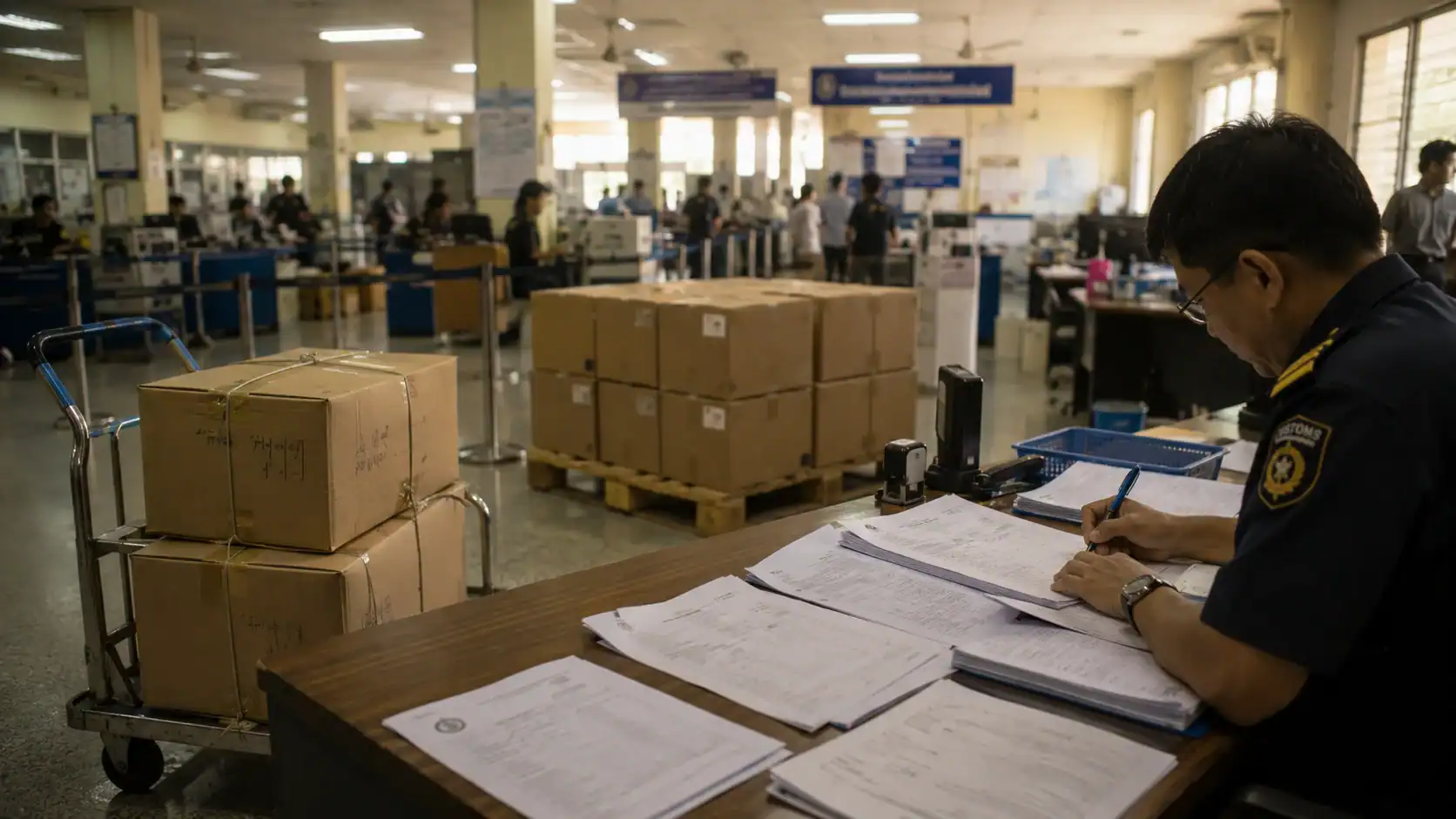
Each of these pathways has precise eligibility conditions. None applies automatically, and none covers everything.
The confusion is structural. The personal effects exemption and FTA duty reduction operate under two separate Thai legislative frameworks with two separate documentation triggers. The personal effects exemption comes from the Customs Act and applies to relocating individuals meeting a narrow definition of personally owned used goods. FTA duty reduction comes from bilateral treaty implementation in Thailand’s customs tariff schedule and applies to commercial goods with valid origin documentation. They do not overlap, and the conditions that activate one have no bearing on the conditions that activate the other. Misreading this is not a minor error. It produces either an unexpected duty bill at Laem Chabang or a missed cost reduction that was available the whole time. Two questions follow, in order: which pathway applies to your shipment, and what documentation that pathway requires.
The cost of getting the pathway wrong shows up at one specific point: the day the import declaration is lodged at Laem Chabang. A retiree on an O-A visa may assume household goods clear duty-free. They learn otherwise that day: the personal effects exemption was never available to claim, and duty of 10–30% plus 7% VAT is due on the declared value before the container is released. A customs broker can only declare what the paperwork supports. The moment to establish which pathway applies is before the goods leave the origin port, not after they have arrived.
Pathway 1: Personal Effects Exemption for Relocating Individuals
This is the exemption most relevant to expats and returning Thai nationals shipping household goods to Thailand. It is not a blanket duty exemption. Strict qualifying criteria apply.
Most guides describe this exemption as a checklist, which makes it sound more mechanical than it is. The line that actually decides your duty bill is not on any form: it is a Thai customs officer’s judgment about whether your possessions read as genuinely used and owned, or as a shopping trip disguised as a relocation. A returning teacher shipped a three-year-old sofa and a box of worn kitchenware, and cleared in days. A different mover on the same visa packed boxed electronics with the shrink-wrap still on, and spent a fortnight arguing that the items were “previously owned.” The rule on paper was identical. The discretion behind it was not, and nobody hands first-time movers a map of where that line falls.
You are three months out from the move, and the fear that keeps you up at night isn’t really the paperwork. It’s the quiet dread that you’ll do everything right and still get the one thing wrong that costs you thousands of baht you never budgeted for. Here’s the plain truth: if you’re on a retirement visa, that fear is pointing at something real. The personal effects exemption was never built for you, no matter how long you’ve lived abroad or how used your furniture actually is. That’s not a loophole you missed. It was never yours to claim. The useful thing to do with that fear isn’t push it away. It’s find out which pathway actually applies to your situation, so the anxiety has somewhere to go. You stop guessing and start planning around a number you can budget for. That’s not as good as duty-free. It’s still better than finding out at Laem Chabang.
Who qualifies:
- Foreign nationals arriving on a valid one-year Non-Immigrant B visa with a one-year work permit issued and valid before the shipment arrives at Laem Chabang
- Returning Thai nationals who have lived outside Thailand continuously for 12 or more months
Who does not qualify:
- Retirement visa (O-A, O-X) holders: the most common misconception in this whole area. It is a long-stay visa, but it does not carry the household goods duty-free exemption: the FIDI Thailand customs guide records that holders of visa type “O” and “O-A” will not be considered for duty-free entry and are subject to duties and taxes. See what retirement visa holders can and cannot ship duty-free.
- Thai Elite / Privilege Card holders
- Long-Term Resident (LTR) visa holders: seek a specific ruling from Thai customs for your LTR sub-category
- Education (ED) visa holders
- Tourist or visa-exempt arrivals
What the exemption covers:
- Personally owned and used household effects: furniture, clothing, electronics, books, kitchenware
- One of each appliance type (one washing machine, one television, etc.)
- Items demonstrably used, not new-in-box
What the exemption does not cover (duty and excise apply regardless):
- Alcohol (wine, spirits, beer). Thai excise tax and import duty apply.
- Tobacco products
- Motor vehicles
- Commercial quantities of any goods
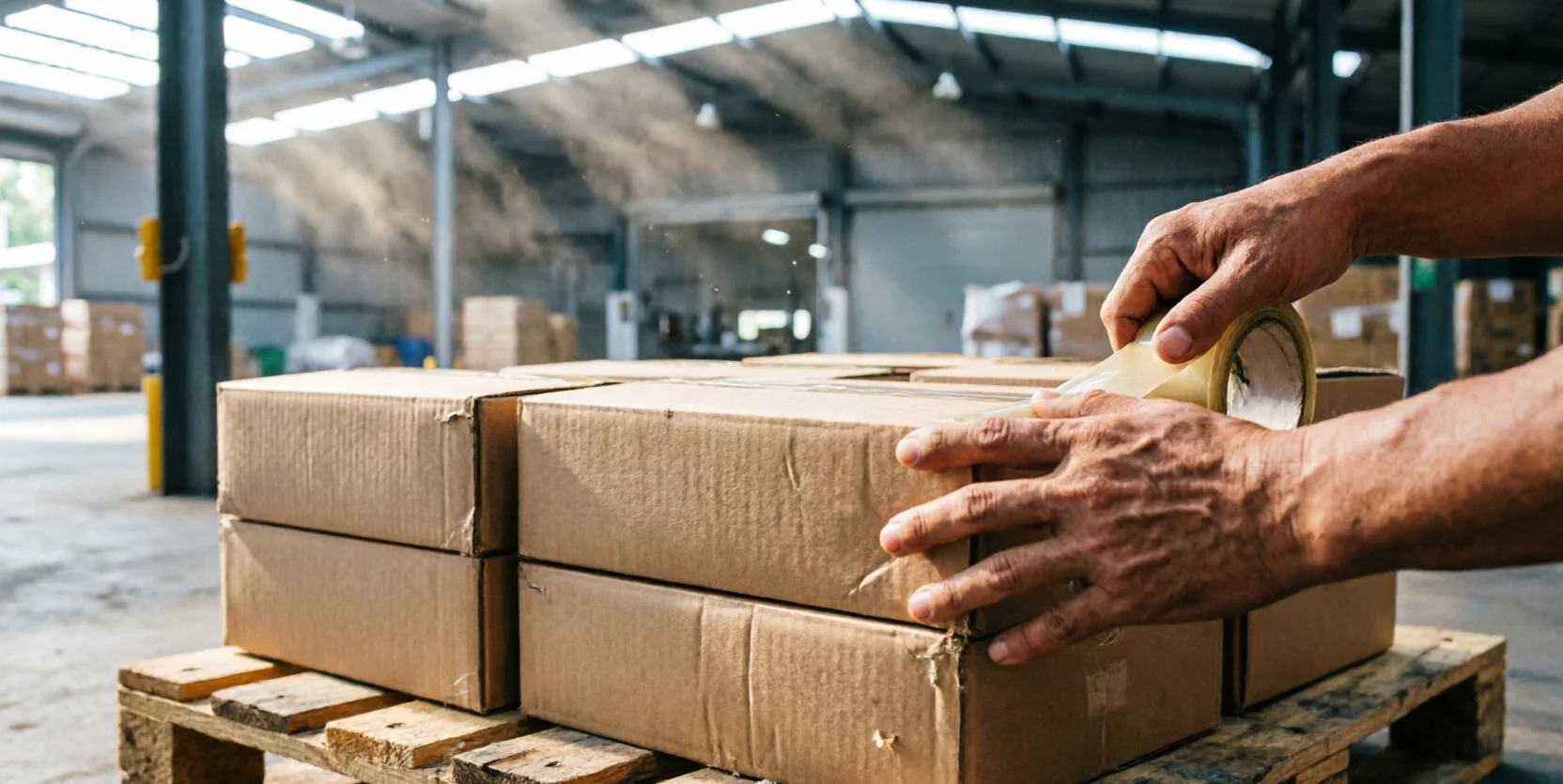
- Goods in original retail packaging (may be reclassified as new commercial goods)
Key conditions:
- Shipment must arrive no earlier than one month before your initial Thailand entry and no later than 6 months after your work permit issue date
- One sea shipment and one air shipment qualify, not multiple sea consignments
- All goods must be accompanied by a detailed packing inventory in English listing every item, quantity, and estimated value
The complete documentation checklist covers the full document set for claiming the personal effects exemption at Laem Chabang.
Pathway 2: FTA-Based Duty-Free for Commercial Importers
Thailand is party to multiple free trade agreements that reduce import duties to 0% on qualifying goods from partner countries. The Department of Trade Negotiations tracks them. This is the commercial importer’s duty-free pathway, distinct from the personal effects exemption and available regardless of who is importing, provided the goods meet the rules of origin and a valid Certificate of Origin is presented.
ATIGA: ASEAN Trade in Goods Agreement
ATIGA (in force since May 2010) covers trade among ASEAN member states: Thailand, Malaysia, Indonesia, Vietnam, Philippines, Singapore, Brunei, Cambodia, Laos, and Myanmar. Under ATIGA, most goods traded between ASEAN members attract 0% import duty. As of 2026, Thailand has eliminated tariffs on over 99% of ASEAN-origin goods under ATIGA. This is the most commercially significant FTA for Thai importers sourcing from regional suppliers.
Certificate of Origin required: Form D, issued by the relevant national trade authority in the exporting ASEAN member state (e.g., VCCI in Vietnam, KADIN in Indonesia).
ACFTA: ASEAN-China Free Trade Agreement
ACFTA covers trade between ASEAN members (including Thailand) and China. Most goods originating in China qualify for 0% duty when imported into Thailand. This is a significant advantage for Thai businesses importing from Chinese manufacturers. The same 0% duty that Australian importers access via ChAFTA applies in Thailand via ACFTA.
Certificate of Origin required: Form E, issued by CCPIT or CIQ in China.
AANZFTA: ASEAN-Australia-New Zealand Free Trade Agreement
AANZFTA covers goods traded between ASEAN members and Australia or New Zealand. For Australian exporters shipping to Thailand, AANZFTA provides 0% duty on the vast majority of goods with a valid Form AANZ Certificate of Origin. For Thai businesses sourcing from Australia, the same agreement reduces duties on Australian-origin goods to 0%.
Certificate of Origin required: Form AANZ, issued by DFAT-authorised bodies in Australia.
Other Thailand FTAs with 0% duty provisions
- JTEPA: Japan-Thailand Economic Partnership Agreement. 0% on most manufactured goods from Japan.
- TAFTA: Thailand-Australia Free Trade Agreement (bilateral, predates AANZFTA). Still in force and may offer specific advantages for certain goods not fully covered under AANZFTA.
- AKFTA: ASEAN-Korea FTA. 0% on qualifying Korean-origin goods.
- AIFTA: ASEAN-India FTA. Reduced or eliminated duties on Indian-origin goods. For commercial shipments specifically (the personal-effects exemption in Pathway 1 is separate), see shipping costs from India to Thailand and how AIFTA duty relief works.
For all FTA claims: the Certificate of Origin must be requested before or at shipment loading and presented with the Thai import declaration. Missing or incomplete FTA CoO documentation is a common cause of customs delays. See what else gets shipments held at Thai customs.
Pathway 3: Thailand’s Standard Duty Schedule and MFN 0% Lines
Separate from FTA preferences, Thailand’s standard MFN (Most Favoured Nation) tariff schedule includes product categories that attract 0% duty regardless of origin. These include many industrial raw materials, capital goods, and inputs not produced domestically. Key 0% MFN categories:
- Many semiconductor and electronic components (HS 85 subheadings)
- Agricultural inputs and specific fertilisers
- Certain pharmaceutical active ingredients
- Industrial machinery not produced in Thailand (MFN 0% or low single-digit rates)
Confirm MFN rates via the Thai Customs Department’s online tariff database for your specific HS code. MFN 0% applies to all origins, so no CoO is required.
Pathway 4: BOI Duty Exemptions for Investors
Thailand’s Board of Investment (BOI) grants promoted companies specific duty exemptions as part of its investment incentive package. BOI-promoted status is not automatic. Companies must apply to the BOI office and be approved.
What BOI duty exemptions cover:
- Imported machinery and equipment specified in the BOI promotion certificate, duty exempt for use in the promoted activity
- Certain raw materials and components used in export production (under specific BOI incentive categories)
- Equipment for research and development activities in promoted sectors
What BOI exemptions do not cover:
- Goods not listed in the BOI promotion certificate
- Spare parts and consumables (unless specifically included)
- General operating supplies
- Goods sold in the domestic Thai market (BOI export-production exemptions are typically conditional on export)
The BOI exemption is relevant to foreign investors establishing manufacturing or services operations in Thailand’s promoted zones: the Eastern Economic Corridor (EEC), special economic zones, or BOI-promoted industrial estates. For businesses sourcing inputs or goods for sale in Thailand, the FTA pathways are more applicable than BOI.
Pathway 5: Duty-Free Zones and Bonded Warehouses
Thailand maintains several types of geographic or facility-based duty-free mechanisms:
Industrial Estate Authority of Thailand (IEAT) Free Zones: Companies operating in IEAT-designated free zones can import raw materials and equipment duty-free for manufacturing export goods. The duty exemption is conditional on goods being used in production for export. Goods sold domestically attract standard duty and VAT on exit from the zone.
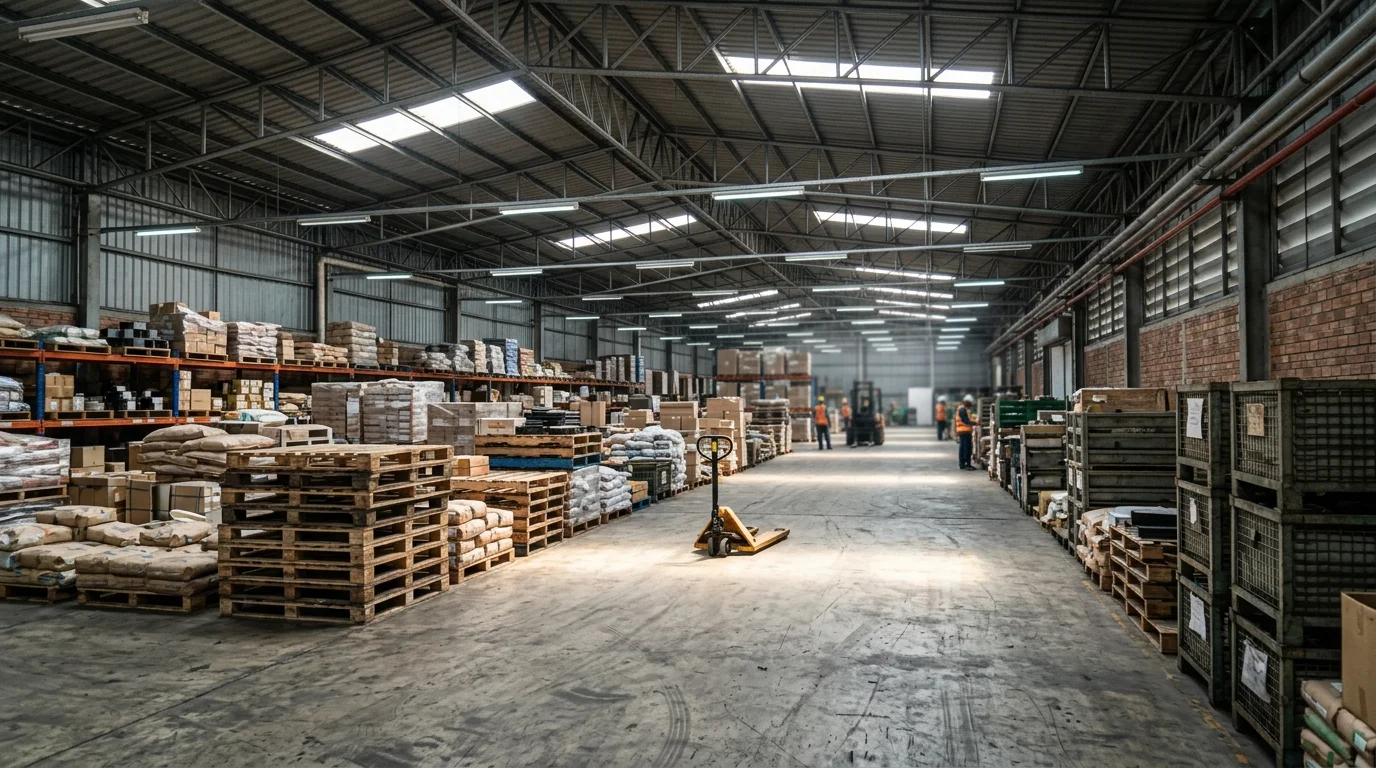
Customs bonded warehouses: Goods can be stored in Thai Customs-approved bonded warehouses without paying import duty until they are withdrawn for domestic consumption (at which point duty is payable) or re-exported (duty-free). Bonded warehousing is used for goods in transit, goods pending resale or re-export, and goods awaiting final buyer confirmation.
Duty-free retail: Thailand’s duty-free retail shops at airports and border crossings operate under specific licences and are distinct from commercial import exemptions. Goods purchased in duty-free retail are for personal consumption and carry quantity limits.
What Is Never Duty-Free in Thailand
Regardless of FTA status, BOI promotion, personal effects claims, or any other pathway, the following categories always attract Thai import duties and/or excise tax, administered by the Thai Excise Department alongside Thai Customs:
| Category | Applicable Charges | Notes |
|---|---|---|
| Alcohol (spirits, wine, beer) | Import duty + excise tax + VAT | High combined tax burden; effective duty + excise can exceed 400% for spirits |
| Tobacco products | Import duty + excise + VAT | Excise rates are very high; effectively prohibitive for large quantities |
| Motor vehicles (passenger cars) | 80% import duty + excise + VAT | FTAs reduce this for some origins but do not eliminate it in most cases |
| Petroleum products | Import duty + excise + VAT | Subject to Thai energy pricing policy |
| Luxury goods (certain) | High MFN duty rates | FTAs reduce but may not eliminate; check HS code |
Related reading: Thai Customs Duty Is Calculated on CIF Value, Not Price Paid
Frequently Asked Questions
Who qualifies for duty-free import of household goods into Thailand?
Foreign nationals on a one-year Non-Immigrant B visa with a one-year work permit, and returning Thai nationals after 12+ consecutive months abroad. Retirement visa holders, Thai Elite members, and education visa holders do not qualify. The exemption covers personally used household effects, not alcohol, tobacco, or vehicles.
What is the duty-free threshold for small imports into Thailand?
THB 1,500 per consignment for postal/courier imports for duty purposes. VAT applies above THB 1,000. Commercial shipments above these thresholds require full import duty and VAT payment unless covered by an FTA CoO or personal effects exemption.
How does AANZFTA affect duty rates for goods from Australia to Thailand?
Most Australian-origin goods imported into Thailand attract 0% duty under AANZFTA with a valid Form AANZ Certificate of Origin. Thailand has eliminated tariffs on over 96% of Australian and New Zealand-origin tariff lines under the agreement. Form AANZ must be obtained from DFAT-authorised bodies in Australia and presented at Thai customs.
What goods are never duty-free in Thailand?
Alcohol, tobacco, motor vehicles, and petroleum products are always subject to Thai import duty and excise tax regardless of FTA status or personal effects claims. Effective combined tax rates on spirits exceed 400%. Even under the personal effects exemption, alcohol and tobacco are excluded.
What is the BOI duty exemption for machinery?
BOI-promoted companies can import specified machinery duty-free under their promotion certificate. Requires prior BOI approval. Applies only to machinery listed in the certificate used in the promoted activity, not general goods, consumables, or domestically sold products.
Planning Your Thailand Import Cost Structure
The documentation that activates the correct duty-free pathway protects your landed cost.
Swift Cargo manages Thailand-bound freight from multiple origins, including FTA CoO coordination, engaging a Thai customs broker, and Laem Chabang clearance. For an assessment of your Thailand import cost position: