
Most international shipments to Thailand don’t fill a container. A household goods move from the UK typically runs 8–18 CBM. A commercial consignment of 200 units of a product might run 4–6 CBM. Both are well below the 27–28 CBM that fills a 20-foot container. For these shipments, goods travel LCL, short for Less than Container Load.
LCL means your cargo shares a container with goods from other shippers. You pay for the space your cargo occupies, measured in cubic metres or tonnes (whichever is greater), not for the full container. The shipping line and freight forwarder handle consolidation at origin and deconsolidation at destination. Your goods travel inside a sealed container, but that container belongs to the voyage, not to you.
The LCL Journey: Stage by Stage
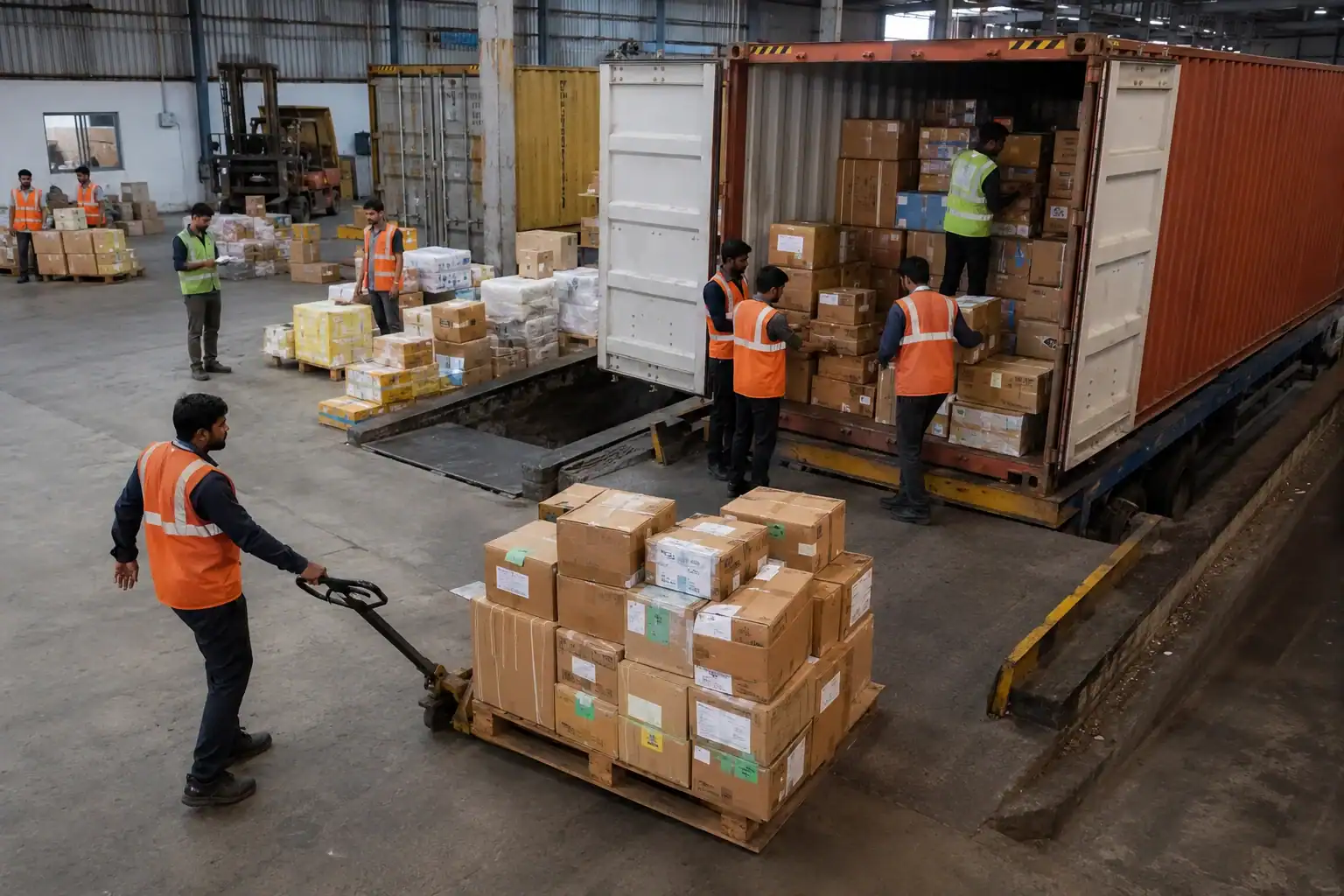
LCL cargo must be consolidated at origin and deconsolidated at destination, so it follows a longer and more complex path than FCL. Each of these steps adds time and cost compared to a dedicated container that loads at origin and is unstuffed at destination without intermediate handling.
Stage 1: Booking and Pick-Up
The shipper (or their freight forwarder) books an LCL shipment with a carrier or NVOCC (Non-Vessel Operating Common Carrier). The booking specifies the cargo dimensions, weight, commodity, and destination port. Unlike FCL, LCL has no container release stage. The shipper instead receives a CFS (Container Freight Station) address for delivery or collection.
The forwarder can arrange pick-up, or the shipper can deliver the goods themselves. Goods must arrive at the origin CFS within the CFS closing date, typically two to three days before the vessel’s port cut-off. Missing the CFS closing date means the cargo waits for the next scheduled sailing, which may be weekly or twice-weekly depending on the trade lane.
Stage 2: Consolidation at the Origin CFS
The origin CFS is a warehouse where goods from multiple shippers are sorted, measured, weighed, and consolidated into a container. CFS staff verify dimensions and weight against the booking. If your consignment turns out larger or heavier than you declared, the CFS charges you for the actual measurements, not the declared ones. The difference may also delay booking confirmation.
Consolidation follows a set sequence. CFS staff arrange cargo from multiple shippers within the container, packing for stability and using the space fully. Fragile or hazardous items are handled according to IATA/IMDG classification. Container doors are sealed once fully loaded. The NVOCC issues a House Bill of Lading (HBL) to each shipper for their portion of the container.
The typical turnaround at an origin CFS is 24–72 hours from cargo receipt to container seal.
Stage 3: Vessel Transit
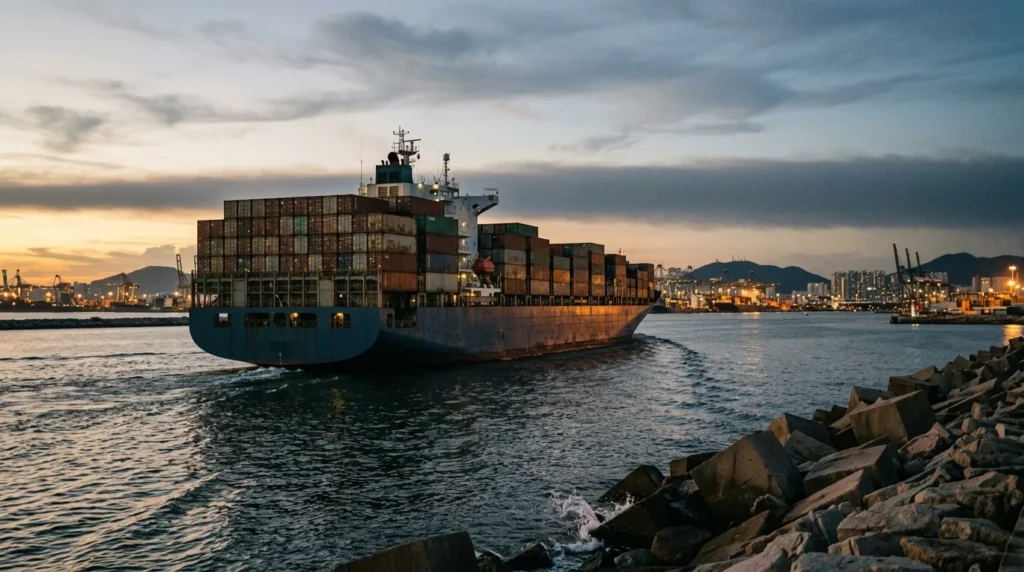
The consolidated container loads onto the vessel along with all other containers on that sailing. From the shipping line’s perspective, the container is a single FCL unit. The individual LCL shippers’ House Bills of Lading are consolidated under a Master Bill of Lading (MBL) issued by the carrier to the NVOCC.
Transit times on the major routes to Thailand differ sharply by origin port. The ranges below run to Laem Chabang, the country’s main container port:
- Shanghai/Ningbo → Laem Chabang: 8–12 days (direct); 14–18 days (via Singapore or Port Klang)
- Singapore → Laem Chabang: 3–5 days (direct)
- Southampton → Laem Chabang: 35–45 days (via the Cape of Good Hope, the standard routing since late December 2023; the fastest services run single-vessel with no transshipment)
- Felixstowe/London Gateway → Laem Chabang: 38–50 days (Cape routing, transshipping through Singapore or Port Klang)
- Hamburg/Rotterdam → Laem Chabang: 36–49 days (Cape routing; the wide spread is rotation position, not carrier quality, and the same carrier can publish both ends of it in the same week)
- Sydney/Melbourne → Laem Chabang: 14–22 days
- Los Angeles/Long Beach → Laem Chabang: 20–26 days
These are vessel transit times only: they do not include origin CFS handling (add 2–4 days) or destination CFS handling and customs clearance (add 3–8 days).
Stage 4: Arrival and Documentation at the Destination Port
When the vessel arrives at Laem Chabang, the shipping line discharges all containers. The NVOCC’s agent at Laem Chabang takes delivery of the consolidated container under the MBL and arranges its transport to the destination CFS.
The consignee’s Thai customs broker files an import declaration with Thai Customs. For personal effects and household goods, the broker applies for the duty-free personal effects concession (if applicable) and submits the itemised packing list, Bill of Lading, passport copy, and visa documentation. For commercial cargo, the broker files against the commercial invoice and HS code classification.
Thai Customs issues a release notice once the declaration is approved and any applicable duties are paid. The container is then transported to the destination CFS.
Stage 5: Deconsolidation at the Destination CFS
At the destination CFS (which is separate from the port facility), the container is opened and goods from different consignees are sorted. This is deconsolidation: the reverse of what happened at the origin CFS. Each consignee’s cargo is identified, placed in a designated area, and released to the consignee or their agent when customs clearance paperwork is presented.
The destination CFS charges a fee called Destination CFS (DCFS) or Container Freight Station (CFS) fee. At Laem Chabang, this typically runs THB 800–2,500 per CBM depending on the operator and the commodity. This fee covers unloading, sorting, and storage until collection.
Storage charges at the destination CFS accumulate from the day goods arrive. Free time (the period before storage charges begin) varies by CFS operator, typically three to seven calendar days. After free time, storage charges run approximately THB 200–500 per CBM per day.

How LCL Freight Is Priced
LCL freight is charged on a weight/measure (W/M) basis. You pay for whichever is greater: the actual weight or the volumetric weight. The conversion rate used to calculate volumetric weight is typically 1 CBM = 1,000 kg (this is the sea freight standard; note that air freight uses a different conversion).
If your consignment is 2 CBM and 1,800 kg, the freight charge applies to 2 CBM (since 2 CBM = 2,000 kg equivalent, which is greater than 1,800 kg actual weight). If your consignment is 2 CBM and 2,500 kg, the charge applies to 2.5 tonne (since actual weight is greater than volumetric weight).
For most household goods and general cargo, volume is the binding constraint. Heavy cargo (machinery, metals, stone) is the exception where weight governs.
The Full LCL Cost Stack to Thailand
The ocean freight rate is only one component. A complete LCL cost to Thailand includes:
- Origin CFS / handling fee: charged per CBM or W/M tonne; covers CFS receipt, handling, and consolidation
- Ocean freight: the per-CBM or per-tonne rate for the voyage
- Origin THC (Terminal Handling Charge): charged by the shipping line for loading the container at the origin port
- Documentation fee / B/L fee: the House Bill of Lading issuance charge
- Destination THC: charged by the shipping line at Laem Chabang for discharging the container
- Destination CFS fee: charged by the Laem Chabang CFS for deconsolidation and storage
- Thai customs broker fee: for filing the import declaration, duty-free application (if applicable), and coordinating release
- Port storage (if any): if customs clearance is delayed beyond the free time period
- Last-mile delivery: from the CFS to the consignee’s address in Thailand
Shippers who compare only the “ocean freight” line item receive quotes that look lower than the shipment really costs. The final invoice then adds items they did not anticipate. The correct comparison basis is total cost to destination address, a “door-to-door” LCL rate that includes all of the above.
Almost nobody gets this decision right on the first move, and that is worth saying plainly. The common arc runs the same way: the first shipment goes in a full container because a dedicated box feels safer, eleven cubic metres of it travel empty, and the crossover maths only becomes obvious when the invoice arrives. You cannot connect those dots looking forward. You connect them backward, after a shipment or two. The practical substitute for hindsight is arithmetic: measure the actual CBM, price both options on a door-to-door basis, and let the numbers make the call before the booking is placed rather than after.
LCL vs FCL: When Does LCL Make Sense for Thailand Shipments?
FCL becomes cheaper than LCL at a crossover point that varies by trade lane, market conditions, and cargo density. For the Thailand trade lane, the general rule is:
- Under 10 CBM: LCL is almost always cheaper
- 10–15 CBM: LCL is typically cheaper, but the margin narrows; get quotes for both
- 15–20 CBM: FCL in a 20ft container is frequently competitive; get quotes for both
- Over 20 CBM: FCL is generally cheaper for most trade lanes to Thailand
If your volume tips toward FCL, see the full 20ft vs 40ft container guide for sizing and cost detail.
Volume is not the only factor. Consider also:
- Transit time: LCL takes 3–8 days longer than FCL on the same trade lane, because of CFS handling at both ends. If time is critical, FCL may be preferred even at lower volumes
- Fragility: LCL cargo is handled more times than FCL cargo: origin CFS, consolidation, deconsolidation, destination CFS. Every additional handling event is a damage risk. For fragile items, FCL or a dedicated padded LCL shipment is preferable
- Consolidation with co-loaders: Some NVOCCs offer priority consolidation services where your LCL cargo is co-loaded with cargo from the same forwarder. This cuts the number of co-shippers and tightens packing discipline
- Security: FCL containers are sealed at origin and opened only at destination. LCL containers are opened at multiple points. CFS facilities have security controls, but they are not equivalent to a sealed container
LCL for Personal Effects and Household Goods to Thailand
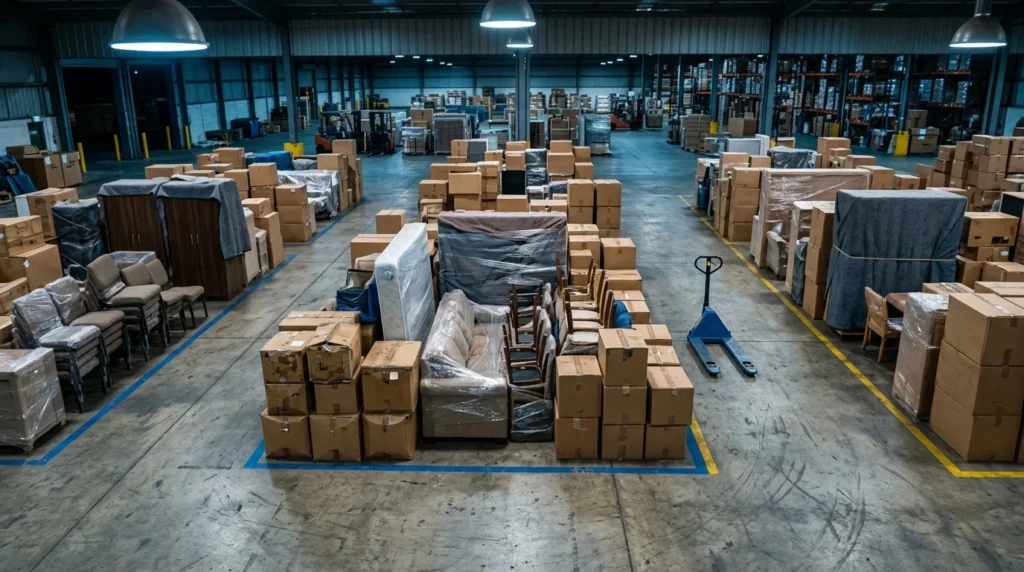
For relocators moving personal effects to Thailand, LCL is the standard option for moves under approximately 15 CBM, and worth pricing against a 20ft container between 15 and 20 CBM. A typical one-bedroom apartment fills 8–12 CBM; a studio or minimal relocation may be 4–7 CBM. These volumes are squarely in LCL territory.
The Thai customs clearance process for LCL personal effects is identical to FCL personal effects: the duty-free concession does not distinguish between the two. The documentation requirements (itemised packing list, passport, visa, duty-free declaration) are the same. The difference is that LCL goods must clear customs before the destination CFS releases them. The broker must file the declaration and Thai Customs must approve it first.
Timing matters here. Brief your Thai customs broker and hand over the full document set before the vessel’s estimated arrival at Laem Chabang, so the customs declaration can be pre-filed. Pre-filing is not always available for personal effects (it depends on the broker and the customs system status at the time), but preparing documents early means the broker can file as soon as arrival is confirmed. That avoids unnecessary days of storage charges.
For a guide to the required documents for shipping to Thailand, see our article on required documents for shipping to Thailand. For the duty-free personal effects concession and the qualifying conditions, see duty-free import rules in Thailand. For advice on avoiding customs delays that commonly affect personal effects shipments, including the packing list standards that prevent examination, see our guide on how to avoid customs delays when moving to Thailand.
LCL for Commercial Cargo to Thailand
For businesses shipping product stock, components, samples, or trade goods to Thailand, the LCL process differs from household goods in two ways: customs classification and duty calculation.
Commercial goods are classified by HS (Harmonised System) code. The applicable import duty rate depends on the HS code and the origin country. Thailand has FTA arrangements with ASEAN countries, Australia (TAFTA/ATFTA), China (ACFTA), India (TIFTA), Japan (JTEPA), and several other partners. Goods originating from FTA partner countries may attract preferential duty rates. Claiming the preference requires a valid Certificate of Origin (Form D for ASEAN, Form A for countries with GSP schemes, or bilateral FTA forms for specific agreements). For India specifically, see our India-to-Thailand shipping cost and AIFTA duty relief guide.
Thai Customs applies VAT of 7% on the CIF value (Cost + Insurance + Freight) plus any applicable duty. For businesses importing on a commercial basis, this VAT is typically recoverable through the Thai VAT system if the importer is registered.
Commercial LCL shipments also need a commercial invoice (stating quantity, unit value, total value, country of origin, and HS code), a packing list, a Bill of Lading, and any product-specific documentation (import licence for certain restricted goods, phytosanitary certificate for agricultural products, MSDS for chemicals).

Understanding the House Bill of Lading in LCL
LCL runs on two bills of lading: the House B/L (HBL) issued by the NVOCC to the individual shipper, and the Master B/L (MBL) issued by the shipping line to the NVOCC. The consignee in Thailand receives the House B/L: their title document for the cargo.
The House B/L must match the packing list and the customs declaration. Clearance stalls on any discrepancy between the HBL consignee, the declared importer, and the Thai customs declaration. Common errors include goods consigned to “ABC Company” on the HBL while the customs declaration names an individual director. These records must align.
The HBL can be issued as an original (negotiable) document that must be endorsed and presented before the cargo is released, or as a “telex release” (non-negotiable, released electronically at destination). For personal effects moves, telex release is standard: it removes the need to courier original documents to Thailand before the cargo arrives. For commercial shipments where payment terms involve a documentary collection (D/P or D/A), original HBLs are used and must be endorsed before the cargo can be released.
LCL Damage Risk: What You Can and Cannot Control
LCL cargo is handled more frequently than FCL. Each transition is a potential damage event: origin CFS handling, consolidation, deconsolidation at the destination CFS, and collection by the consignee. The main risk categories are:
- Compression damage: goods stacked on top of each other in the container; mitigated by rigid outer cartons, internal padding for fragile items, and “Do Not Stack” markings where enforced
- Moisture damage: containers are not climate-controlled; humidity exposure during the voyage can damage electronics, wooden furniture, artwork, paper goods; desiccant bags inside packaging help
- Handling damage at CFS: forklift contact on carton corners; mitigated by double-wall cartons and corner protectors
- Co-mingling errors: rare but possible at busy CFS facilities, where incorrect sorting releases goods to the wrong consignee; mitigated by clear labelling with consignee name, reference number, and destination
For LCL household goods, we strongly recommend marine insurance. The Hague-Visby Rules govern carrier liability in LCL, or the carrier’s own tariff where Hague-Visby doesn’t apply. Either way, liability caps at approximately SDR 2 per kg, a small fraction of actual value for most household goods. An “all risks” marine policy (Institute Cargo Clauses A) insures the shipment for its replacement value from origin to the destination warehouse.
For the full case for marine insurance on Thailand-bound shipments, see our article on whether you need cargo insurance when shipping to Thailand.
CBM: Calculating Your LCL Volume
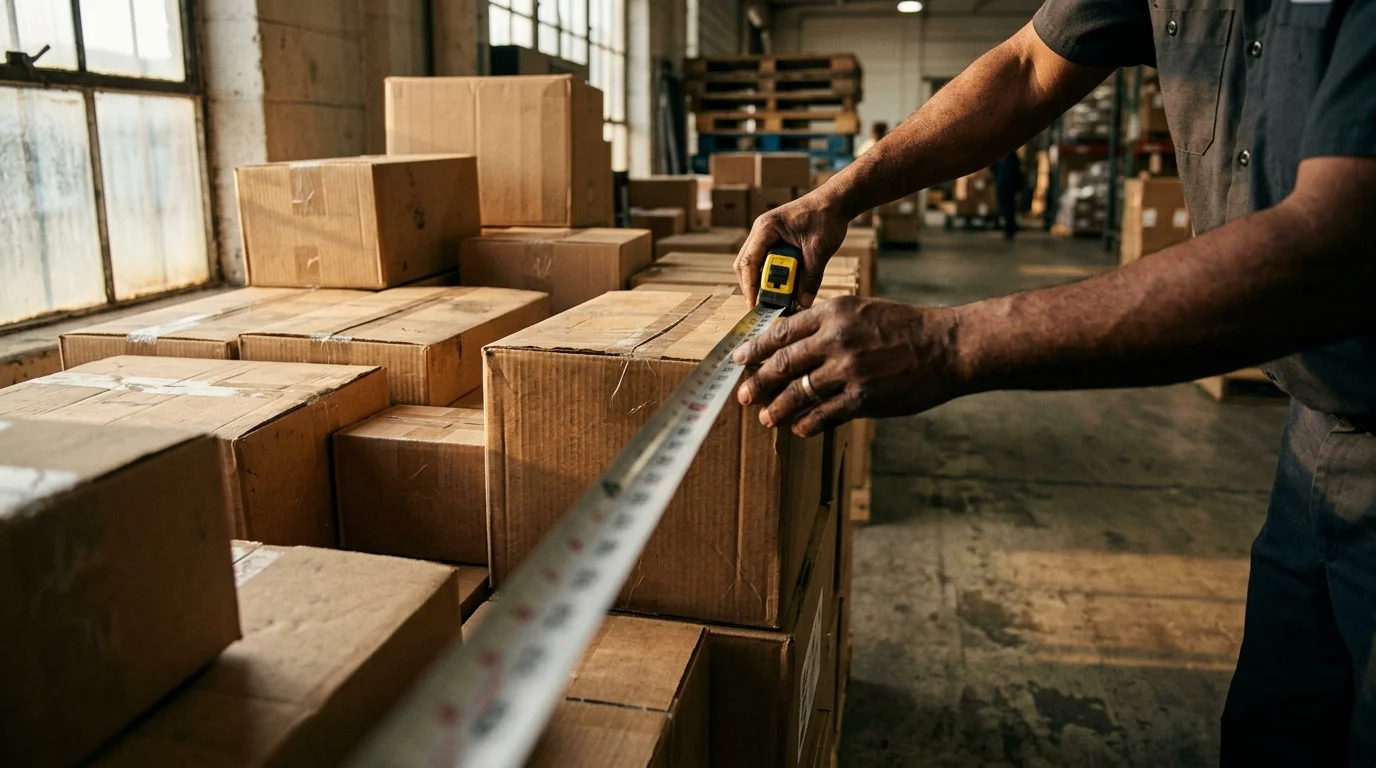
Measure your volume accurately before you book LCL freight. Under-declaring volume triggers additional charges at the CFS. Over-declaring means paying for space you don’t use.
Volume in CBM = Length (m) × Width (m) × Height (m) for each item, summed across all cartons and pieces.
For irregular items such as furniture, wrapped items, and items without square profiles, measure the outer dimensions of the final packaged item (including packaging). The CFS measures the packaged item’s outer dimensions, not the item’s own.
As a rough guide for household goods:
- Studio / minimal: 3–6 CBM
- 1-bedroom apartment: 8–12 CBM
- 2-bedroom apartment: 15–20 CBM
- 3-bedroom house: 22–35 CBM
For a detailed guide to CBM calculation and what fits in different container sizes, see our CBM size guide for international moves.
The LCL Booking Process: What to Provide Your Forwarder
To get an accurate LCL quote and confirm a booking to Thailand, your freight forwarder needs:
- Origin and destination addresses: country, city, postcode; the forwarder needs this to determine which CFS to use at each end and to quote any collection or delivery charges
- Cargo dimensions and weight: total CBM and gross weight; if you don’t have precise measurements, estimate as closely as you can and confirm the actual figures at packing
- Commodity description: “household goods,” “personal effects,” or a specific product description for commercial cargo; this affects customs classification and insurance
- Desired sailing or arrival date: the forwarder can work backward to the required CFS closing date
- Incoterms preference: for commercial cargo, Ex Works (EXW), FOB, CIF, or DAP are the common LCL Incoterms; for household goods, a “door-to-door” quotation is typically easiest
- Any special handling requirements: fragile items, temperature-sensitive goods, items requiring “Do Not Stack” treatment
To compare LCL and FCL options and get a door-to-door rate for your shipment, see the shipment size guidance on the Swift Cargo Thailand page.
There is a version of an LCL shipment most customers never see: the consolidation warehouse itself, somewhere between the origin port and the vessel, where a dozen unrelated shipments from a dozen unrelated households get sorted, weighed, and packed into shared container space by people who do this hundreds of times a week. A wardrobe box from a family in Manchester sits a few feet from spare parts for a business in Birmingham, both waiting for the same sailing. The CBM number on your quote is really a measurement of how efficiently that warehouse crew can fit your specific boxes into whatever space is left after everyone else’s cargo. It looks like a pricing formula. It is actually a description of a very literal, very physical packing puzzle played with other people’s belongings.
Related reading: Part Load Removals to Thailand: Sailing Dates, Duty and Crates
Related reading: FCL to Thailand: Container Costs, Sizes, and the LCL Break-Even
Frequently Asked Questions
How long does LCL shipping to Thailand take compared to FCL?
LCL typically takes three to eight days longer than FCL on the same route because of the additional CFS handling at origin (sorting and consolidation) and destination (deconsolidation). On the UK-to-Thailand route, for example, FCL runs 35–45 days port-to-port on Cape routing while LCL on the same route takes 38–53 days total including CFS handling. For time-critical shipments, this difference matters.
What is a CFS fee and do I have to pay it?
Yes. The CFS (Container Freight Station) fee covers the consolidation and deconsolidation handling at origin and destination. It is a standard charge for LCL shipments, not an optional add-on. Ensure any LCL quote you receive explicitly includes both origin CFS and destination CFS fees so you can compare quotes on a like-for-like basis.
Can I ship one small box to Thailand via LCL?
Yes. Technically, LCL has no minimum shipment size. However, for very small shipments (under 0.5 CBM or under 50 kg), international courier or express freight may be more economical than LCL once all the CFS fees and documentation charges are included. LCL economics improve once a shipment reaches 1–2 CBM.
What is the difference between a House B/L and a Master B/L in LCL?
The Master B/L (MBL) is issued by the shipping line to the NVOCC/freight forwarder and covers the entire container. The House B/L (HBL) is issued by the NVOCC to the individual shipper and covers only that shipper’s portion of the cargo. The consignee in Thailand needs the HBL (not the MBL) to collect their goods. Ensure the HBL consignee details match the customs declaration exactly.
Is LCL cargo inspected by Thai customs more often than FCL?
There is no systematic difference in examination rate based on LCL vs FCL status. Thai Customs selects shipments for examination on declared contents, declared value, origin country, and the importer’s history. A well-documented LCL personal effects shipment with an itemised packing list is no more likely to be examined than an equivalent FCL shipment.