
LCL vs FCL for Australian Importers: When to Use Each
Search for LCL vs FCL and almost every answer gives you the same number: a crossover somewhere around 12 to 16 CBM, stated as if it applies to your shipment. It doesn’t, not exactly. Your real crossover moves with your rate card, your lane, the season and what you’re shipping, and treating a generic rule of thumb as your answer is how importers end up paying LCL rates on volume that should have moved FCL months ago.
Most Australian importers start with LCL and graduate to FCL. A few never graduate, because their volumes never justify a full box. And a subset make the wrong choice at each stage. They pay LCL rates on volume that should have moved FCL, or book FCL when their cargo would have moved faster and cheaper as a consolidated shipment.
What LCL and FCL Actually Mean
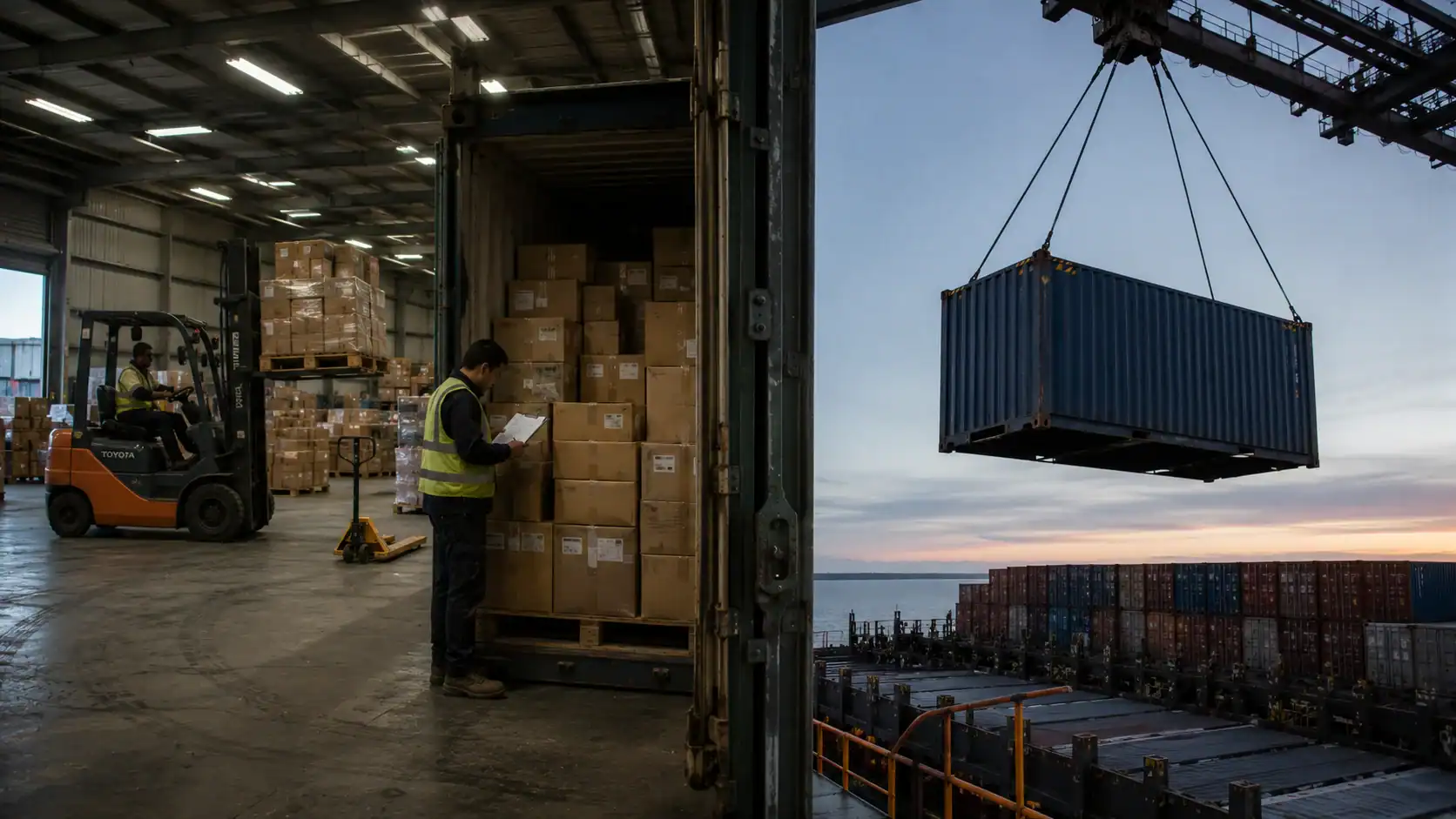
FCL (Full Container Load) means you book an entire container for your exclusive use, either a 20-foot (20ft) or a 40-foot (40ft) box. The container is loaded at origin, sealed, and does not open again until it reaches the destination port or your warehouse. You pay for the container regardless of how full it is.
LCL (Less than Container Load) means your cargo shares a container with other shippers’ goods. A consolidator (usually a freight forwarder or specialist LCL operator) collects cargo from multiple shippers, loads it all into one or more containers at a container freight station (CFS), ships it, then deconsolidates it at the destination CFS and releases individual shipments to their respective consignees. You pay only for the volume and weight of your cargo.
LCL is cheaper per CBM at low volumes; FCL becomes cheaper above a crossover point.
The Volume Crossover: Where FCL Becomes Cheaper
China to Australia is the highest-volume import corridor for Australian businesses, and 12 to 16 CBM for a 20-foot container is the commonly cited starting point for where the LCL to FCL cost crossover falls. That range is not fixed: it moves with your current rate card, and on some lanes and at some points in the freight cycle the real crossover runs well into the mid-20s CBM instead, not just down toward 10 CBM in the other direction. Below roughly 10 CBM, LCL is almost always cheaper on a per-CBM basis. Above your own quoted crossover point, FCL is typically cheaper or comparable, and the only way to know that number for your own shipment is to run the numbers, which our freight consolidation cost breakdown walks through with a real worked example.
Several factors push the crossover point lower and make FCL attractive at smaller volumes:
- Peak season LCL rate spikes. When consolidation capacity is tight, as it is before Chinese New Year and through the Q3–Q4 peak season, LCL rates per CBM can spike while FCL rates follow a different supply curve. The crossover can drop to 10 CBM or below during peak periods.
- Route surcharges. On longer routes (Europe, USA), LCL origin and destination handling charges are applied per shipment regardless of volume. Those flat charges make small LCL shipments disproportionately expensive next to volume-based rates.
- Dangerous goods. DG cargo in LCL requires specialist consolidation and carries surcharges. DG FCL movements avoid these per-shipment costs.
The crossover is not a fixed number. Get current quotes for both options before deciding on any shipment above 10 CBM. The difference in your specific market conditions may be larger or smaller than the rule of thumb suggests.
The Hidden Time Cost of LCL
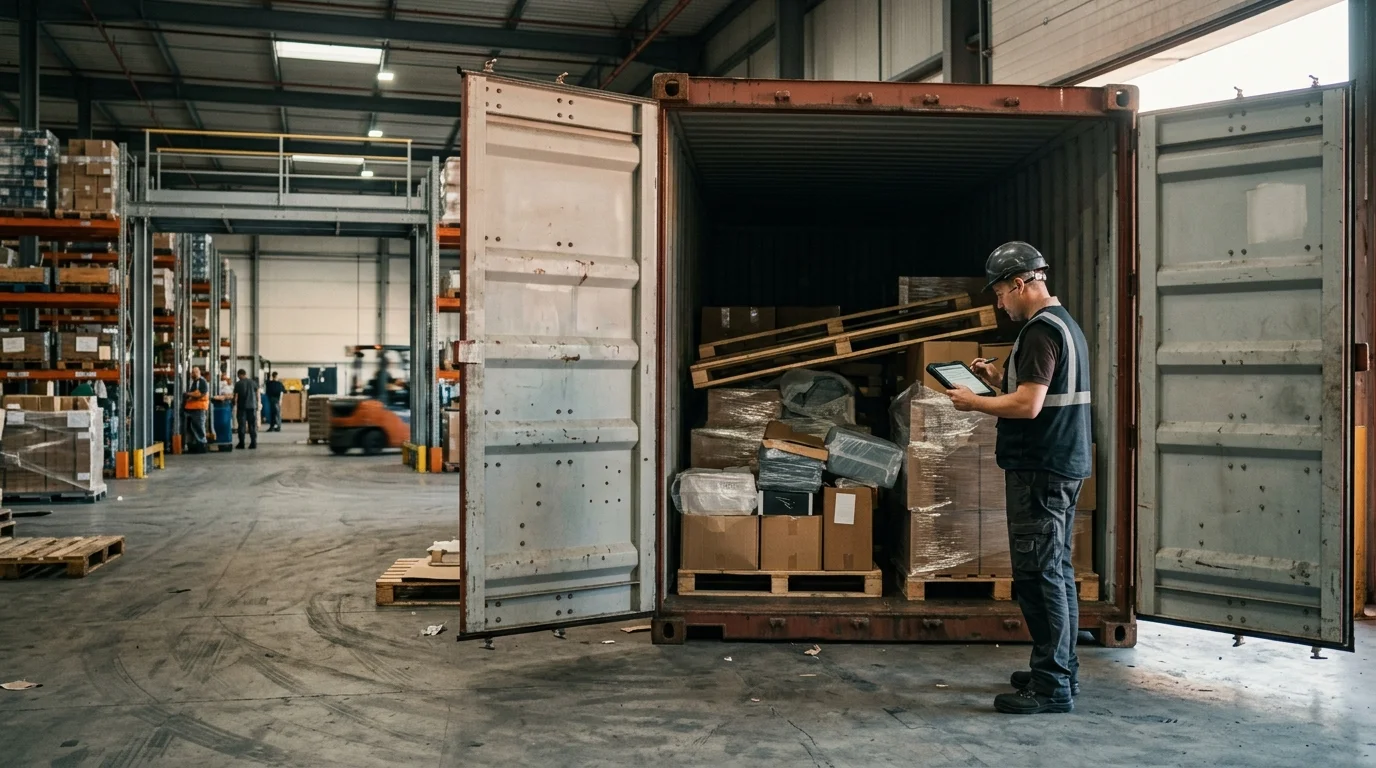
LCL is slower than FCL, but not because of vessel transit time. Vessel transit is the same for both; the ship doesn’t know what’s inside the containers. The time difference comes from two sources: consolidation scheduling at origin and deconsolidation at destination.
Origin consolidation. Your cargo arrives at the origin CFS and waits for the consolidation cut-off, the point at which the consolidator closes the box and sends it to port. Cut-offs typically occur weekly or twice-weekly for major routes. If your cargo arrives at the CFS on the day after a cut-off, it waits until the next one. This can add 3–7 days to the origin phase that an FCL movement would not have.
Destination deconsolidation. When the container arrives at the Australian destination port, it is moved to a CFS for deconsolidation. Individual shipments are stripped out, sorted, and released to each consignee or their broker. This process typically takes 2–5 days after vessel arrival. An FCL container never spends that time at a CFS, because it moves directly from port to the importer’s warehouse or a bonded facility.
Combined, LCL typically adds 7–14 days to the total door-to-door time compared to FCL on the same route. For importers running tight inventory buffers, that gap decides whether stock arrives on time or runs out. The total landed cost framework for Australian importers should account for this time cost as an inventory carrying cost, not just a freight cost.
Most importers price the LCL-vs-FCL decision on freight cost alone and treat the 7–14 days as a footnote. That’s backwards: the freight quote is the easy number to compare, which is exactly why it gets the weight it doesn’t deserve. Run the decision the other way. Start from your actual inventory buffer in days, ask whether a 7–14 day swing breaks it, and only then compare freight rates within whichever option survives that filter. A cheaper quote that triggers a stockout was never actually the cheaper option.
When Fragility Overrides Volume
The LCL vs FCL decision is usually presented as a volume and cost calculation. But for certain cargo types, the handling exposure of LCL can make FCL the right choice at volumes well below the cost crossover.
LCL cargo goes through at least four handling events that FCL cargo never sees: loading into the container at origin CFS, securing within the consolidated load, deconsolidation at destination CFS, and staging for release. Each event is a damage risk. For fragile goods such as glassware, ceramics, electronics with precision-manufactured components, unpackaged furniture, and artworks, each additional handling cycle raises the chance of damage.
Importers of high-value fragile goods often choose FCL at 8–10 CBM even when LCL would be cheaper, because the freight cost premium is offset by reduced cargo insurance claims and lower replacement costs. This is a strategic decision, not a calculation error.
The reverse case also exists. Dense, heavy cargo such as steel, tiles, and building materials survives handling well, but its weight may reach the FCL payload limit before the volume limit. A 20-foot container has a maximum payload of approximately 22–25 tonnes depending on the port and shipping line. A shipment of structural steel or ceramic tiles at 15 CBM may exceed that limit. At that point the right answer is LCL, or a specialist heavy-cargo FCL movement. See our guide on importing building materials from China to Australia for the weight-volume interaction specific to dense goods.
Container Sizes: 20ft vs 40ft vs 40ft High Cube
When you move to FCL, the container size decision matters.
| Container | Usable volume (approx) | Max payload (approx) | Best for |
|---|---|---|---|
| 20-foot (20ft) | 25–28 CBM | 22–25 tonnes | Dense, heavy cargo; smaller shipments at FCL crossover |
| 40-foot (40ft) | 55–58 CBM | 26–28 tonnes | Moderate-density goods at medium-to-large volumes |
| 40-foot High Cube (40HC) | 60–67 CBM | 26–28 tonnes | Light, bulky cargo: furniture, apparel, household goods |
The 40HC is the standard choice for most Australian importers of manufactured goods. Its additional height (2.7m internal against 2.4m for a standard 40ft) makes it more usable for stacked cartons and tall furniture. The rate difference between 40ft and 40HC is typically small; most forwarders default to 40HC unless the cargo is weight-limited rather than volume-limited.
Security and Supply Chain Integrity
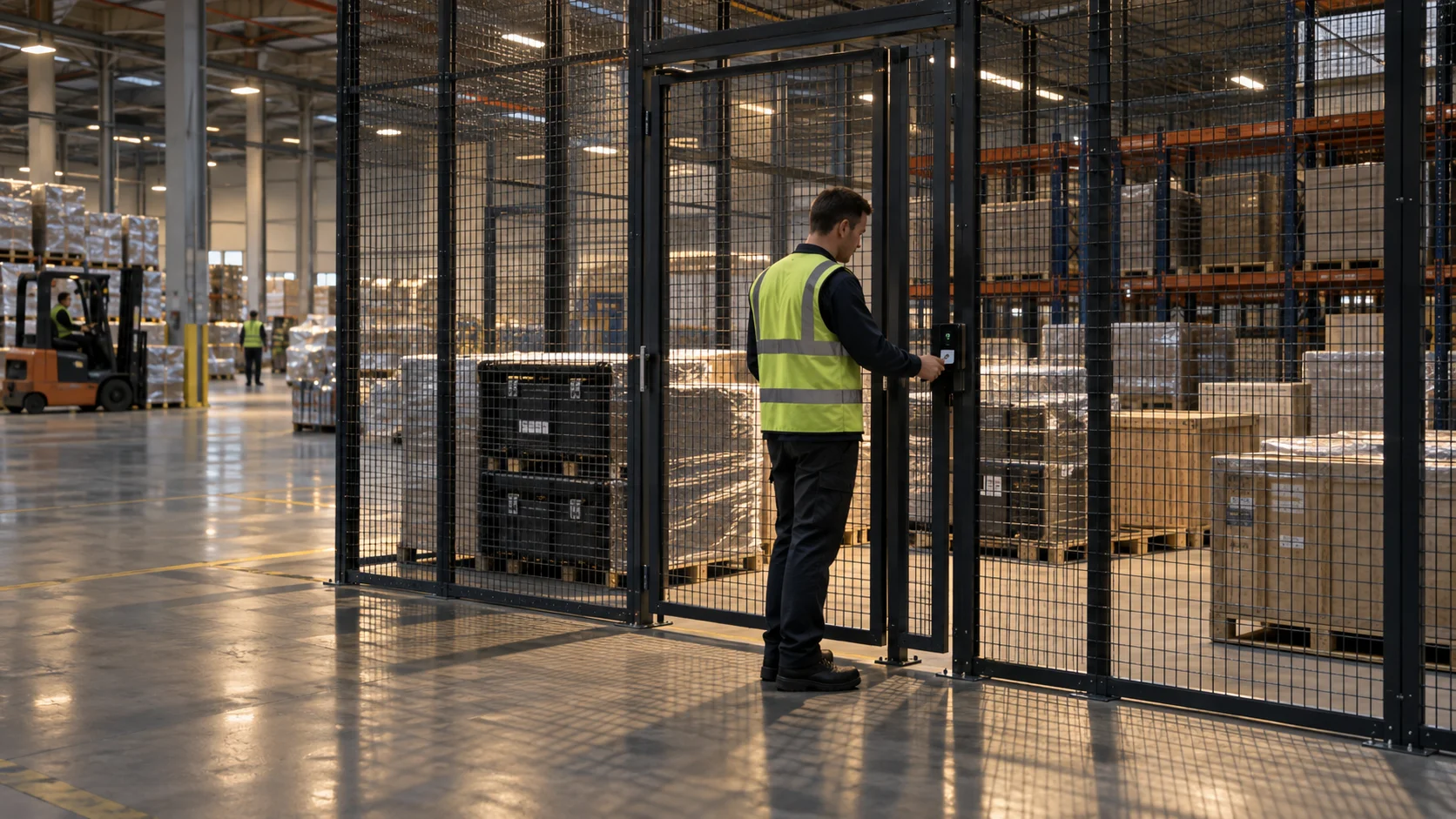
FCL has a security advantage that LCL does not: a container sealed at origin by the shipper maintains chain of custody throughout the journey. Only the shipper, the carrier’s trusted agents, and the destination customs authority open it. In LCL, the consolidator’s staff pack and unpack the container, and your cargo is co-mingled with other shippers’ goods in a CFS environment.
For most cargo types this barely matters. For high-value goods such as electronics, jewellery, pharmaceuticals, and luxury products, the chain of custody argument for FCL is material. Cargo theft at CFS facilities, while not common, does occur; FCL movements through a trusted carrier eliminate the CFS exposure at both ends.
Building Your Freight Program as Volume Grows
Most Australian importers follow a predictable trajectory:
- Trial phase. First imports are small, 1–5 CBM, to test product quality and supplier reliability. LCL is the only practical choice. Frequency is low (one or two shipments).
- Growth phase. Volume per shipment increases to 6–15 CBM as the product line expands. LCL continues to make economic sense, but consolidation scheduling starts to affect inventory timing. Importers begin to feel the LCL time constraint.
- Consolidation phase. Volume reaches 12–20+ CBM per shipment, or the importer decides to consolidate multiple smaller orders into larger shipments. The LCL vs FCL decision becomes live. Some importers move to FCL at this point; others hold on LCL because they prefer the flexibility of shipping on-demand rather than waiting to fill a container.
- Mature phase. Regular FCL movements on a scheduled basis. The importer has negotiated a rate agreement with a freight forwarder, established a relationship with a licensed customs broker, and defined an import schedule aligned with their inventory cycle.
The transition from LCL to FCL is not just a freight decision. It is an inventory planning decision. FCL works best when you can plan your orders far enough in advance to fill a container on a schedule. If your order quantities are unpredictable or your supplier lead times are variable, LCL’s on-demand flexibility can be worth its cost premium even at volumes that would technically justify FCL.
For the Australia-specific LCL and FCL cost ranges and volume thresholds, see the shipment size guidance on the Swift Cargo Australia page. Our overview of importing from China to Australia covers how to structure the supplier-to-warehouse flow at each volume stage.
Cost Components Side by Side
Here is what you actually pay for in each model:
| Cost component | LCL | FCL |
|---|---|---|
| Origin freight | Per CBM or W/M (weight/measure) | Per container (fixed) |
| Origin CFS charge | Per CBM or per shipment | Not applicable |
| Origin THC | Included in LCL rate | Per container |
| Ocean freight | Per CBM | Per container (20ft or 40ft) |
| Destination THC | Included in LCL rate | Per container |
| Destination CFS / deconsolidation | Per CBM or per shipment | Not applicable |
| Customs brokerage | Per shipment | Per container (same fixed fee) |
| DAFF biosecurity levy | Per shipment declaration | Per container declaration |
| Duty and GST | Duty on customs (FOB) value; GST on customs value plus duty, freight and insurance | Duty on customs (FOB) value; GST on customs value plus duty, freight and insurance |
The customs brokerage and DAFF biosecurity levy are per-declaration costs that apply regardless of container type. At very low LCL volumes, these fixed per-shipment costs can dominate the freight cost. That is another reason to consolidate several small orders into fewer, larger LCL shipments rather than shipping every order separately.
There is a pattern here that catches even experienced import managers. The business keeps booking LCL long after its volume has crossed into FCL territory, not through carelessness, but because each individual order looks too small to justify a whole container. Every shipment is judged on its own merits, and on its own merits LCL always looks reasonable. The crossover only becomes visible when you stop pricing the next order and start pricing the quarter. Framed that way, the FCL decision stops being about any single shipment and becomes a question of how your ordering pattern has shifted underneath you.
Frequently Asked Questions
At what volume does FCL become cheaper than LCL for Australian imports?
On China-to-Australia routes, FCL is commonly cited as becoming cost-competitive at approximately 12–16 CBM for a 20-foot container, but that number moves with your rate card: it can drop to 10 CBM during peak season LCL rate spikes, or run well into the mid-20s CBM on other lanes and rate sets. Get current quotes for both options rather than treating any single number as fixed.
What is the difference between LCL and FCL transit times to Australia?
Vessel transit is the same. LCL adds 3–7 days for consolidation at origin and 2–5 days for deconsolidation at destination, typically 7–14 days of extra door-to-door time next to FCL. The consolidation scheduling cut-off is the main variable; missing a cut-off can add a week.
Can I mix different products in an LCL shipment?
Yes. LCL shipments can contain multiple product types on the same bill of lading. Dangerous goods cannot be consolidated with non-DG cargo in standard LCL. DAFF biosecurity applies per shipment. If any item in your LCL shipment triggers an inspection, the entire shipment may be held pending examination.
Is FCL safer than LCL for fragile goods?
Yes. FCL containers are sealed at origin and opened at destination, with no intermediate handling. LCL cargo goes through at least four extra handling events (loading into the container at origin CFS, securing within the consolidated load, deconsolidation at destination CFS, and staging for release), each of which is a damage risk. Many importers of fragile goods choose FCL at volumes well below the cost crossover point.
What does destination THC mean and does it apply to both LCL and FCL?
Destination THC (Terminal Handling Charge) is a port fee for moving a container from the vessel to the terminal yard. For FCL, it appears as a per-container charge. For LCL, it is bundled into the LCL rate. Both pay it. The difference is how it is presented on the invoice. For a full breakdown of Australian import cost components, see our total landed cost guide.
The LCL vs FCL decision turns on your volume, your timeline, and your cargo type, and the right answer changes as your import program matures. If that decision is live for you now, or you are moving from trial imports to a regular program, get a freight quote from Swift Cargo for a freight program assessment. We can run the current-market cost comparison for your specific route, volume, and product type, and help you structure a program that scales with your business.