
Vietnam has emerged as a significant solar equipment manufacturing hub over the past decade, driven by foreign direct investment from major panel manufacturers seeking production bases outside China. For Australian solar importers, Vietnam offers an alternative origin to China, one that carries different compliance considerations, a different rules-of-origin profile, and the same critical requirement that applies to all solar equipment sold into the Australian grid-connected market: CEC approval.
Vietnam’s Solar Manufacturing Sector
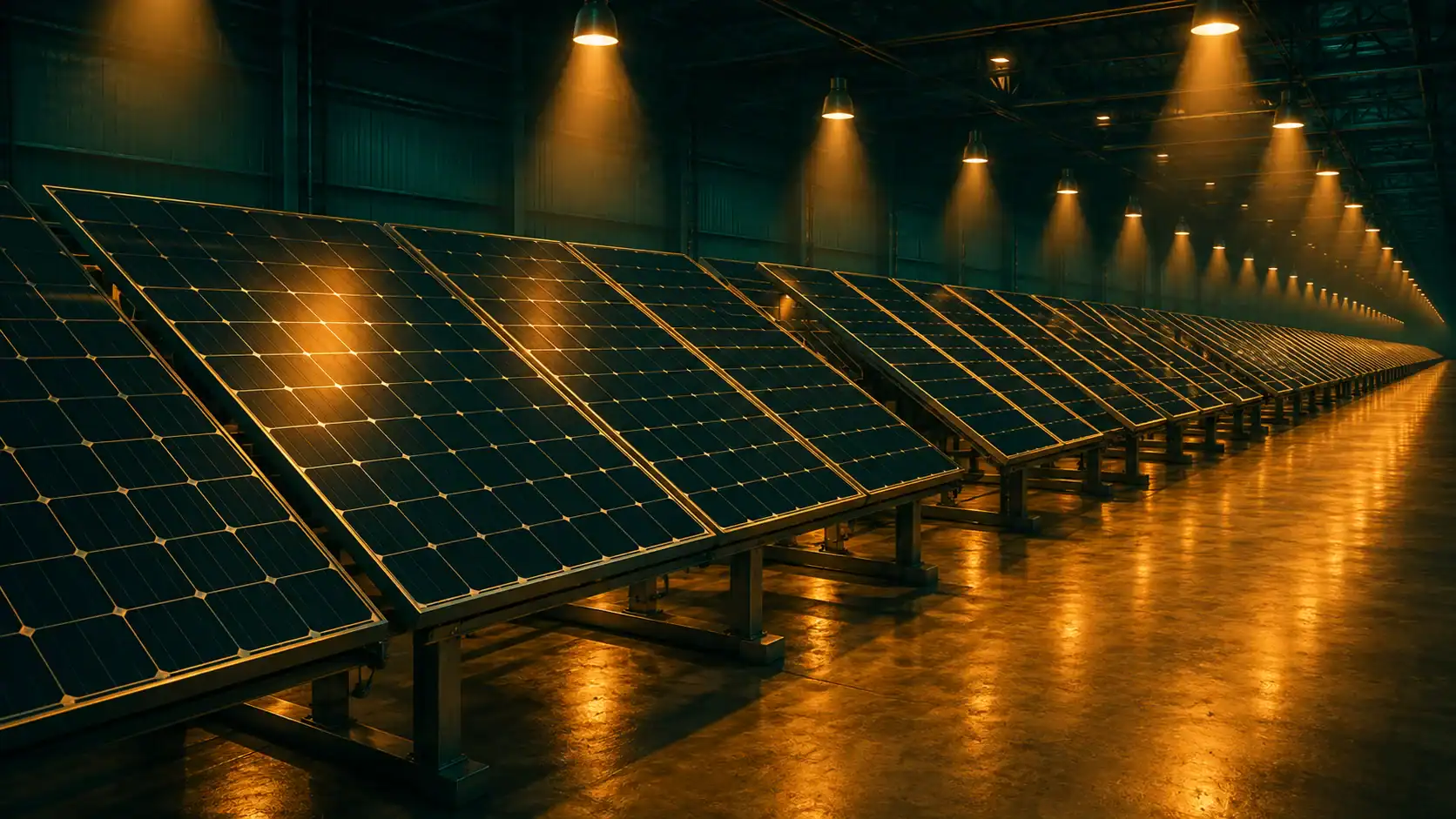
Vietnam’s solar panel manufacturing base expanded rapidly from 2018 onward, as US tariffs on Chinese solar equipment prompted major manufacturers to shift or duplicate production to Vietnam. Companies including LG (now exited solar), LONGi, JA Solar, and numerous tier-two manufacturers established or expanded Vietnamese production facilities, particularly in the northern provinces of Hai Phong and Bac Ninh and in the south around Ho Chi Minh City.
The distinction relevant to importers is between manufacturers and assemblers. Some Vietnamese facilities perform full cell-to-module production: manufacturing solar cells from wafers and assembling them into finished panels. Others are assembly operations that import cells and wafers (primarily from China) and laminate them into finished panels. The compliance and rules-of-origin implications differ between these two production models.
For inverters, Vietnam has a smaller manufacturing base. The dominant inverter brands sold into Australia are Fronius (Austria), SMA (Germany), Enphase (USA), Goodwe (China), and Sungrow (China), all primarily manufactured in China or Europe, not Vietnam. An importer sourcing inverters from Vietnam should verify whether the inverter is genuinely manufactured there or is a re-exported Chinese product, as this affects rules of origin and potentially anti-dumping exposure.
AANZFTA Duty Treatment
Solar panels classified under HS 8541.43 (photovoltaic cells assembled in modules or panels) currently attract a 0% MFN (Most Favoured Nation) duty rate in Australia’s tariff schedule, meaning the AANZFTA preferential rate provides no financial benefit for this specific HS code, since the MFN rate is already zero. The same applies to most solar inverter subheadings under HS 8504.
However, obtaining an AANZFTA Certificate of Origin from the DFAT AANZFTA framework remains worthwhile for two reasons: it provides documentary evidence of origin for any future tariff schedule changes, and it is required if any components in the solar system (mounting structures, racking systems, certain storage components) attract a non-zero MFN rate where AANZFTA preference would save duty.
Importers should verify the current duty rate for each HS code in their shipment against the ABF Schedule 3 at the time of import. Tariff schedules are updated and specific subheadings within a product category may have different rates. Battery storage systems (HS 8507) and mounting structures (HS 7308 or HS 7610 for aluminium) are separate HS chapters with their own duty rates that should be checked independently.
For a full overview of how Australian customs duty, GST, and formal entry requirements apply on this route, see Swift Cargo’s Australia customs guide.
It is worth pausing on what the free trade agreement is actually doing here, because the instinct is usually wrong. Importers are trained to treat an FTA as the saving: find the preferential rate, claim it, pocket the difference. But on solar panels the preferential rate and the ordinary rate are the same number: zero. So what are you protecting by getting the origin paperwork right? Not the duty on the panels, which was never going to be charged. You are protecting the ancillary items that do carry a rate, and buying an option against a tariff schedule that may not stay at zero. Once you see that, the question stops being “how much duty does AANZFTA save me” and becomes “where on this shipment is the cost the paperwork is really insuring against,” and on this lane that attention is better spent on the CEC listing clock than on a duty line that reads zero either way.
Rules of Origin for Vietnamese Solar Panels
The rules of origin question for Vietnamese solar panels is significant because most Vietnamese production uses Chinese-origin solar cells and wafers as primary inputs. Whether the finished panel qualifies as AANZFTA-originating depends on whether the Vietnamese manufacturing process satisfies the AANZFTA Rules of Origin.
For HS 8541.43 (photovoltaic cells assembled into modules), the AANZFTA Rules of Origin accept a Change in Tariff Classification (CTC) from a different chapter or heading as sufficient to grant origin. Solar cells (HS 8541.41 or 8541.42) are classified differently from assembled panels (HS 8541.43), and the assembly of cells into a laminated module with frame and junction box constitutes the qualifying transformation under the CTC rule. This means panels assembled in Vietnam from Chinese-origin cells can qualify as AANZFTA-originating.
This is a different outcome from, for example, re-exporting Chinese panels that were already assembled: those would not qualify, as no transformation occurs. An importer should obtain confirmation from the Vietnamese exporter that their specific production process was assessed for AANZFTA origin, not rely on a generic claim. The Vietnamese exporter should be able to reference which specific Rule of Origin their production satisfies and which certifying authority issued the CoO.
CEC Approved Products List: The Critical Compliance Gate
For solar equipment sold into the Australian grid-connected market, the Clean Energy Council’s Approved Products List is the central compliance gateway. Grid-connected solar systems that generate Small-scale Technology Certificates (STCs) under the Commonwealth’s renewable energy incentive scheme must use CEC-approved panels and inverters.
The financial stakes are significant. STCs are certificates created when a system is installed and are typically assigned to the installer in exchange for an upfront discount to the customer. The value of STCs depends on the installation zone and the current deeming period: for a residential 6.6 kW system in Sydney (Zone 3), the STC value at a deeming period of approximately 8 years is roughly AUD 2,800–3,500. An installer using non-CEC-approved panels forfeits this rebate entirely, making the system commercially uncompetitive against offerings using approved equipment.
Getting a panel onto the CEC Approved Products List requires: IEC 61215 certification (for crystalline silicon panels) or IEC 61646 (for thin-film), from an accredited certification body; submission of the certification documentation and panel datasheet to the CEC; and payment of the listing fee. The CEC does not test panels itself. It accepts certification from internationally accredited bodies (TÜV, UL, Bureau Veritas, etc.). For a Vietnamese panel manufacturer already certified to IEC 61215, the CEC listing process typically takes 4–8 weeks. For a manufacturer without existing IEC certification, the certification process adds 3–6 months.
Importers should verify CEC listing status for their specific panel model before placing a commercial order, not after. The CEC Approved Products List is publicly searchable on the Clean Energy Council website. A model that is listed for a prior production year may not carry the same certification for a current production run if there have been specification changes. The listing should correspond to the model and specifications being ordered.
Australian Standards for Solar Equipment
Beyond CEC listing, the following Australian and international standards apply to solar equipment installed in Australia:
- AS/NZS 5033: Installation and safety requirements for photovoltaic (PV) arrays. This is a design and installation standard that applies to the installer, but equipment compliance with electrical safety requirements is a prerequisite.
- AS 4777: Grid connection of energy systems via inverters. AS 4777.2 covers inverter requirements specifically and is the standard that grid-connected inverters must comply with to operate legally on the Australian grid. Inverters not compliant with the current version of AS 4777.2 cannot be used in grid-connected systems.
- IEC 61215: Terrestrial photovoltaic modules, design qualification and type approval. The primary panel certification for crystalline silicon technology. Required for CEC listing.
- IEC 62109: Safety of power converters for use in photovoltaic power systems. Applies to inverters. Provides the safety basis for RCM certification.
Vietnamese panel manufacturers exporting to multiple markets typically hold IEC 61215 certification as a standard part of their export qualification. An importer should request the current IEC certificate (not just the CEC listing confirmation) and verify that it covers the specific wattage and configuration being ordered: a 400W panel certification does not automatically extend to a 430W variant of the same model if the specifications changed.
RCM for Inverters and Electrical Components
Solar inverters are in-scope electrical equipment under Australia’s regulatory framework and must carry the Regulatory Compliance Mark (RCM) before they can be sold in Australia. The RCM certifies compliance with Australian electrical safety standards and electromagnetic compatibility (EMC) requirements.
The RCM certification process is managed through the ERAC framework. Inverters must be tested by an accredited laboratory against the applicable standards (primarily IEC 62109 for safety and CISPR 11 or equivalent for EMC), and the certification submitted to the Responsible Supplier System. A Vietnamese-manufactured inverter from a manufacturer who has not previously exported to Australia will not have RCM certification. The Australian importer or a local agent must hold the RCM for the product.
The RCM process typically takes 6–16 weeks from commencement, depending on the complexity of the product and the laboratory’s queue. Importers planning to introduce a new inverter model from a Vietnamese manufacturer should factor this timeline into their product launch planning: a commercial shipment of uncertified inverters that arrives at the border without RCM documentation cannot be cleared for distribution.
Battery storage systems, charge controllers, and monitoring equipment imported alongside solar panels also require assessment against applicable electrical safety standards. Not all of these products require formal RCM certification, but all must be safe for use in the Australian market. An importer should confirm the certification status of every electrical component in a solar system package before placing a commercial order.

Biosecurity and ISPM 15
Solar panels themselves do not present a biosecurity risk. The biosecurity concern on this lane is the wooden packaging (pallets, crating, and A-frame structures used to ship panels), which must meet ISPM 15 phytosanitary treatment requirements (heat treatment to 56°C core temperature for 30 minutes, marked with the IPPC stamp).
Vietnam is a high-risk origin for timber biosecurity. Wooden packing used to ship solar panels from Vietnamese manufacturers must be ISPM 15 treated and marked. DAFF inspects arriving cargo for ISPM 15 compliance and will hold a shipment where non-compliant wooden packaging is detected. On-arrival treatment costs AUD 2,000–5,000 per container and adds 3–7 days to the delivery timeline. The requirement is straightforward to meet in advance: include ISPM 15 packing compliance as a purchase order specification and verify compliance during pre-shipment inspection.
Some manufacturers use steel or aluminium A-frame racking to ship panels. These are not subject to ISPM 15. Importers who specify non-wood packing structures eliminate the biosecurity packaging risk entirely.
Freight Handling for Solar Equipment
Solar panels are fragile, volume-sensitive goods with specific handling requirements that must be specified on the purchase order and verified at inspection.
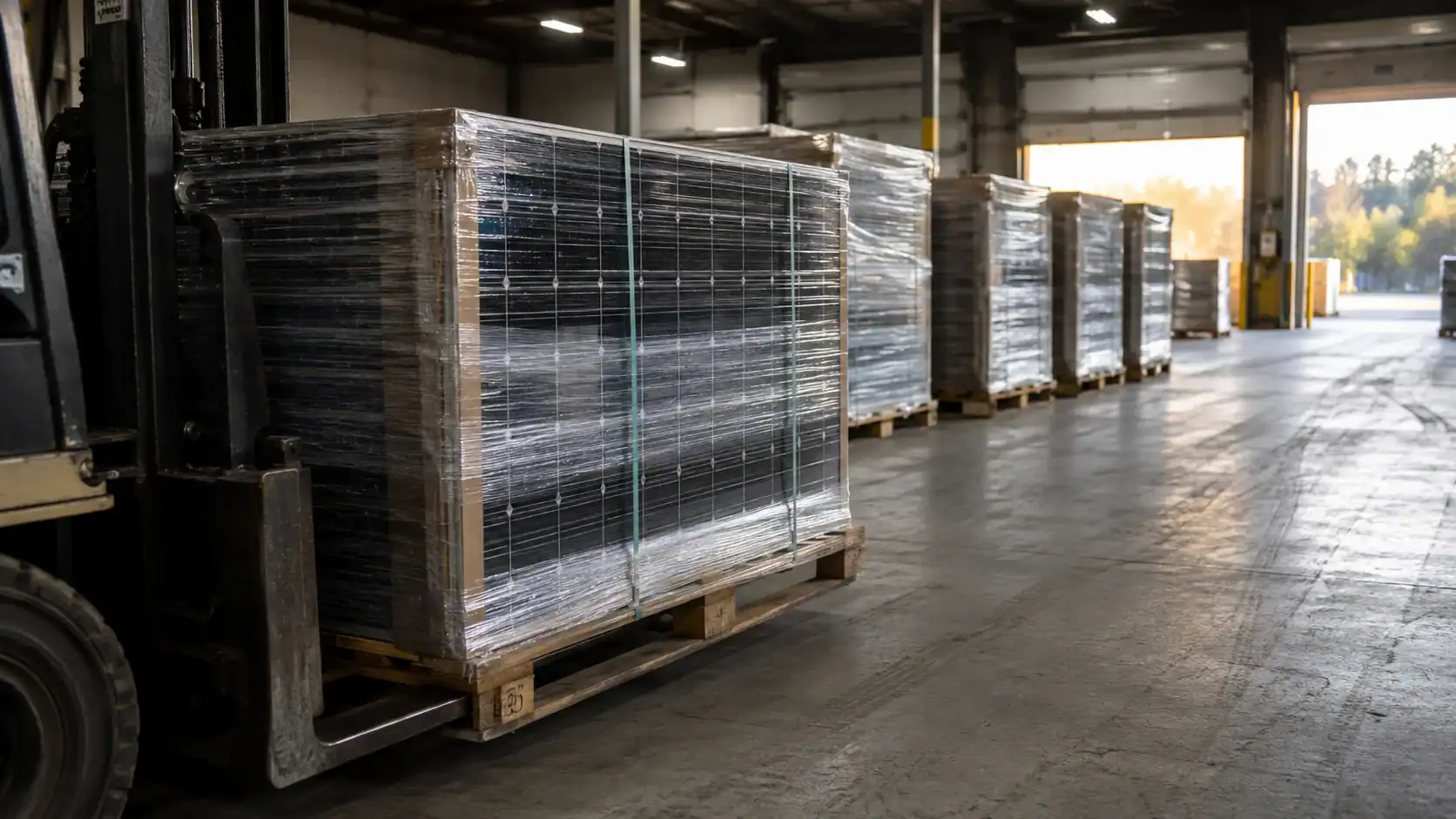
Packing configuration. The industry standard for ocean shipping is vertical loading on A-frame pallets with panels edge-on, packed in individual cardboard sleeves with corner protection. Flat stacking (laying panels face-to-face in horizontal stacks) increases the risk of glass breakage from vibration and compression during the ocean transit. A purchase order should specify “A-frame vertical shipping” explicitly.
Container capacity. A standard 40-foot dry container typically holds 750–1,000 residential solar panels in the 380–430W range (approximately 1.7m × 1.0m × 35mm per panel). At 1 kg/panel average weight for the packing plus panel weight of around 20–22 kg, a full container of panels is well within payload limits: this is a volume-driven freight calculation, not weight-driven.
For LCL vs FCL decisions, solar panels become FCL-cost-effective at approximately 10–15 CBM, which corresponds to roughly 80–120 panels, a small commercial order. Most commercial solar import programs run on FCL from the first container.
Transit time. Direct services from Ho Chi Minh City or Hai Phong to Sydney, Melbourne, or Brisbane run 18–25 days port-to-port. Transshipment services via Singapore add 5–10 days. For project-committed solar delivery dates, the transit variance matters: pre-arrival lodgement of the import declaration and confirmed DC or project site booking are important to ensure panels don’t sit in a port yard after clearance.
Landed Cost Breakdown
For a 40-foot container of 800 residential solar panels (400W, AUD 130/panel FOB Ho Chi Minh City):
- FOB value: AUD 104,000 (customs value).
- Ocean freight (Ho Chi Minh City to Sydney, 40-foot FCL): AUD 2,800–4,200.
- Marine insurance (0.35%): approximately AUD 365.
- Import duty: 0% (both MFN and AANZFTA rates for solar panels are zero).
- GST: 10% on customs value + 10% of freight and insurance = approximately AUD 10,650–10,790 (recoverable by registered businesses).
- Customs brokerage: AUD 350–500 for a standard declaration.
- Destination charges and cartage: AUD 600–900.
Total landed cost (excluding GST recovery): approximately AUD 108,000–110,000 on the AUD 104,000 FOB basis. The per-panel landed cost on an 800-panel container is approximately AUD 135–138 before the importer’s margin: the freight and clearance overhead adds roughly AUD 5–8 per panel on a full container.

Battery Storage Systems: Additional Compliance Layer
Importers bringing in solar-plus-storage systems (combining PV panels with lithium-ion battery storage) face a compliance layer that does not apply to panels-only imports. Battery Energy Storage Systems (BESS) from Vietnam involve both freight and product safety requirements that are specific to lithium chemistry and energy storage.
Dangerous Goods classification in freight. Lithium-ion battery cells above certain energy thresholds are classified as Dangerous Goods Class 9 under IMDG (sea freight) and IATA (air freight) regulations. A residential battery storage system (typically 5–15 kWh) contains lithium cells in a configuration that requires DG declaration, compliant packaging, and a Dangerous Goods shipping note. Errors in DG documentation can result in port refusal or carrier rejection. The Vietnamese exporter must have established DG export procedures for battery shipments, and the forwarder must be experienced in DG documentation for Class 9 lithium batteries.
UN38.3 testing. All lithium batteries exported commercially must have passed UN38.3 testing: a series of safety tests (altitude simulation, thermal, vibration, shock, external short circuit, impact, overcharge, forced discharge) that certify the battery is safe for transport. The UN38.3 test report is a shipping prerequisite. A Vietnamese battery manufacturer without a current UN38.3 test report for the specific cell configuration cannot legally export the product.
Australian product safety for residential battery storage. Residential battery storage systems must comply with AS/NZS 5139 (installation of battery systems for use with renewable energy systems) and the specific requirements of each state’s electrical safety regulator. The battery management system (BMS) requires electrical safety testing against AS 62619 (secondary lithium cells and batteries: safety requirements for use in stationary applications). A battery storage product from Vietnam that has not been assessed against these standards cannot legally be installed in a residential or commercial premises in Australia.
The CEC also maintains an Approved Battery Storage Products list. As with solar panels, battery storage systems used in STC-eligible installations must be CEC-approved. Battery products not on the list can be installed in off-grid or non-STC systems but are excluded from the primary residential market.
Importers adding battery storage to a Vietnamese solar import program should budget 4–6 months of additional compliance lead time above the panel import timeline: UN38.3 testing, AS 62619 assessment, electrical safety certification, and CEC listing are sequential steps that cannot all run in parallel.
Warranty, Support, and the Long-Horizon Import Risk
Solar equipment carries product warranties that are longer than almost any other imported consumer good: 10–12 years for product defects and 25–30 years for power output performance on panels; 5–10 years for inverters. For an Australian importer, this means the commercial relationship with the supplier extends well beyond the point of sale.
A Vietnamese panel manufacturer who exits the market, discontinues the model, or changes ownership in year 8 of a 25-year performance warranty has effectively left the importer holding the warranty obligation with no manufacturer backup. This is a real commercial risk in a fast-moving manufacturing sector where smaller tier-two manufacturers enter and exit production regularly.
The questions to ask a Vietnamese solar manufacturer before placing a commercial order include:
- How long has the company been producing this panel model? Models with less than two years of production history have no real-world degradation data to support the performance warranty.
- What is the warranty claims process for Australian installers? Is there a local representative who can process claims, or does the installer need to deal directly with the Vietnamese factory?
- Does the manufacturer carry product liability insurance that covers Australian market claims? The insurance certificate should name the Australian importer as an additional insured.
- What is the manufacturer’s financial backing? A panel manufacturer that is a subsidiary of a listed company or backed by major institutional investors carries materially lower counterparty risk than a private manufacturer of similar size.
Tier-one panel manufacturers (the top 10–15 by shipment volume globally, including several with Vietnamese production facilities) carry stronger warranty backing than tier-two or tier-three manufacturers by virtue of their scale and financial position. For importers willing to accept a lower gross margin per panel, tier-one brands from Vietnamese facilities represent a better risk-adjusted position than similarly priced tier-two options.

Common Problems on the Vietnam Solar Lane
Four failure patterns account for most problems on this lane:
1. Panels not on CEC Approved Products List at time of arrival. The most commercially disruptive failure mode. An installer cannot use non-CEC-approved panels in an STC-eligible system, making the stock unsaleable to the primary residential and commercial market. Prevention: verify CEC listing status for the exact model and specification before placing the order; confirm the listing is current and covers the production period of the shipment.
2. Inverter arrives without RCM certification. Non-RCM inverters cannot be sold for use in Australian electrical installations. An importer who receives uncertified inverters must either re-export them (at full freight and handling cost), have them certified in Australia (a slow and expensive process), or write off the stock. Prevention: confirm RCM certification status before placing the first commercial order; allow 6–16 weeks for the certification process if the inverter is new to the Australian market.
3. ISPM 15 packaging non-compliance. Wooden packing without the IPPC treatment mark triggers DAFF hold and on-arrival treatment at AUD 2,000–5,000 per container. Prevention: include ISPM 15 packing compliance in the purchase order specification; verify at PSI before loading.
4. Rules of origin documentation error. A CoO that cannot be verified by the issuing authority, or that misrepresents the manufacturing process, creates customs compliance liability. While most solar HS codes attract 0% MFN duty (reducing the financial incentive for origin fraud), a false CoO is still a false customs declaration. Prevention: obtain the CoO directly from the issuing authority (VCCI or Vietnam’s Ministry of Industry and Trade) and confirm the document reference is valid.
Here’s what almost nobody importing solar panels from Vietnam realises until it’s too late: paying 0% duty under AANZFTA and being allowed to install the panels are two completely separate approvals, decided by two different bodies, and passing one tells you nothing about the other. AANZFTA duty relief is a customs and rules-of-origin question, decided at the border. The CEC Approved Products List is an electrical-safety and grid-connection question, decided separately, and a panel can clear customs at zero duty and still be legally uninstallable because it was never added to that list. The importers who get this wrong usually find out from an installer, not from customs, weeks after the container has already landed. The panels that clear both gates aren’t the cheapest ones. They’re the ones somebody checked against the CEC list before the purchase order was signed, not after the shipment arrived.
Frequently Asked Questions
Do solar panels from Vietnam need to be on the CEC Approved Products List?
For grid-connected STC-eligible installations, yes. CEC listing is required for panels used in systems generating Small-scale Technology Certificates, worth AUD 280–450+ per panel in rebate value. Off-grid systems are not subject to the CEC requirement but may still need to meet AS/NZS 5033 installation standards.
What AANZFTA duty rate applies to solar panels from Vietnam?
Solar panels (HS 8541.43) currently attract 0% MFN duty in Australia, the same rate as AANZFTA. AANZFTA preference provides no current saving on panels, though a CoO is still worth obtaining for documentation completeness and potential future tariff changes.
Do Vietnamese solar panels qualify under AANZFTA if they use Chinese cells?
Generally yes, if the Vietnamese manufacturer assembles Chinese cells into finished modules. The AANZFTA Change in Tariff Classification rule is typically satisfied because cells (HS 8541.41/42) and assembled panels (HS 8541.43) are in different subheadings. Importers should confirm the specific origin ruling with their exporter rather than relying on the general principle.
Do solar inverters from Vietnam require RCM certification?
Yes. Solar inverters are in-scope electrical equipment and must carry the RCM before sale in Australia. The certification process typically takes 6–16 weeks. Inverters must also comply with AS 4777.2 and be CEC-listed to be used in STC-eligible grid-connected systems.
How are solar panels shipped from Vietnam without damage?
Panels should be shipped vertically on A-frame pallets in individual protective sleeves with corner protection, not flat-stacked. A 40-foot container holds approximately 750–1,000 standard residential panels. Specify A-frame vertical shipping on the purchase order and verify packing during pre-shipment inspection.