
The transit time to Thailand is one of the most consistently misquoted figures in international shipping. The number people find online (“15 days from Australia,” “22 days from the UK”) is almost always the ocean sailing time only, not the total time from factory to Thai address. We have been based in Bangkok for fourteen years and have watched enough shipments get stranded at Laem Chabang waiting on missing documents to know that the ocean leg is the part of the timeline you can least influence once the goods are loaded. The parts that vary (Thai customs clearance, inland delivery, seasonal congestion) are the parts that need to be in your planning model. This guide covers the complete timeline, not just the sailing time.

The Four-Stage Timeline Model for Shipping to Thailand
Every international shipment to Thailand passes through four stages, each with its own time range and its own variance driver:
Stage 1. Origin: Factory preparation, export customs clearance, collection and delivery to origin port or airport. Time: 1–5 days depending on the origin country’s port efficiency, customs examination rate, and whether the goods require pre-shipment inspection.
Stage 2. Transit: Ocean or air transit to Thailand. For sea freight, this includes any transshipment at Singapore or another hub port. Time: 2–28 days depending on origin and freight mode.
Stage 3. Thai customs clearance: Import declaration, duty assessment, and cargo release at Laem Chabang or Suvarnabhumi Airport. Time: 2–10 working days depending on documentation completeness, channel selection, and the specific goods category.
Stage 4. Inland delivery: Trucking or transfer from the port or airport to the final Thai address. Time: 1–5 days depending on the destination (Bangkok vs Chiang Mai vs island).
The total timeline is the sum of all four stages, not just the ocean transit. Quoting a shipment as “20 days from Australia” without the clearance and delivery legs gives a number that’s missing 4–12 days of the actual journey.
Sea Freight Transit Times by Origin Country
The ocean transit time to Laem Chabang by origin:
Australia (Sydney/Melbourne) to Thailand (Laem Chabang):
- FCL direct service or Singapore transshipment: 15–20 days
- LCL (consolidation at origin adds 3–5 days): 18–25 days
- Most services route via Singapore hub; direct Australia-Thailand sailings have limited frequency
United Kingdom (Felixstowe/Southampton) to Thailand (Laem Chabang):
- Suez Canal routing (standard): 22–28 days
- Cape of Good Hope routing (Suez disruptions): 32–42 days
- Routing via Singapore or Port Klang hub is standard for most UK-Thailand services
United States (West Coast: Los Angeles/Long Beach) to Thailand:
- Transpacific to Singapore, then feeder to Laem Chabang: 18–24 days
United States (East Coast: New York/Savannah) to Thailand:
- Via Suez Canal and Singapore: 28–36 days
- Via Panama Canal and transpacific: 25–32 days
China (Guangdong/Shanghai) to Thailand:
- Direct feeder services: 5–10 days
- High frequency: weekly and twice-weekly sailings from major Chinese ports
Germany/Netherlands to Thailand:
- Hamburg or Rotterdam to Laem Chabang via Suez: 23–30 days
- Largest European export volumes to Thailand use this corridor
Singapore to Thailand:
- Feeder service: 2–4 days
- Singapore is the primary transshipment hub for most Asia-Pacific to Thailand cargo
LCL vs FCL: How Cargo Type Affects the Timeline
The difference in timeline between LCL (Less than Container Load) and FCL (Full Container Load) shipments to Thailand is not just the ocean transit. It’s the consolidation and deconsolidation stages that add time at both ends.
LCL additional time at origin: LCL cargo needs to be delivered to an origin Container Freight Station (CFS) for consolidation with other shippers’ goods into a shared container. The CFS cutoff is typically 3–5 days before vessel departure. Miss the cutoff and you wait for the next sailing. An FCL shipment loads to your exclusive container and can depart on the next available vessel without CFS timing constraints.
LCL additional time at destination: On arrival at Laem Chabang, the shared container must be deconsolidated at the destination CFS before your cargo can be separated and cleared. Deconsolidation typically takes 2–4 days after vessel arrival. An FCL container can be picked up and processed as soon as it’s discharged from the vessel, typically 1–2 days after arrival.
Total LCL vs FCL timeline difference: For a shipment from Australia to Bangkok, LCL typically adds 5–9 days to the total timeline compared to FCL, spread across origin CFS, deconsolidation, and customs processing sequence. This is a consistent pattern, not a worst-case. It is the structural difference between the two modes.
For the volume thresholds at which FCL becomes cost-competitive with LCL (and when the timeline difference justifies the step up to FCL), the cost guide for shipping to Thailand covers the rate comparison in detail.
Air Freight to Thailand: The Complete Door-to-Door Timeline
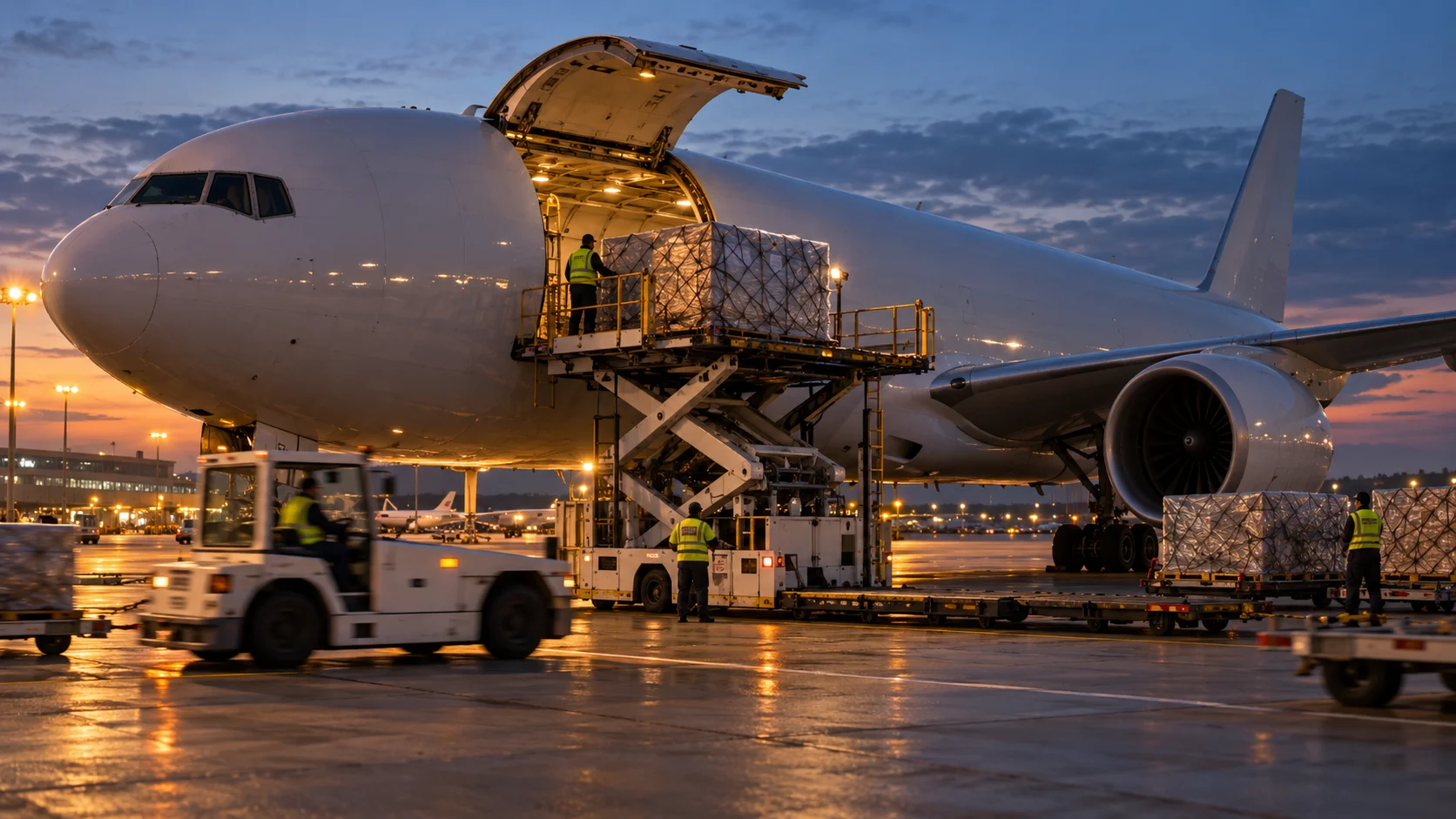
Air freight to Thailand uses Suvarnabhumi Airport (BKK) as the primary cargo gateway for Bangkok-bound shipments. International origins and their air transit times to BKK:
- Australia (Sydney/Melbourne): 1–3 days flight transit
- United Kingdom (London): 2–4 days flight transit (via Middle East hub)
- USA (Los Angeles): 2–3 days flight transit
- USA (New York): 3–4 days flight transit
- Germany (Frankfurt): 2–4 days flight transit
- China (Shanghai/Guangzhou): 3–5 hours flight, same-day or next-day arrival
Air transit is only the flight leg. The complete door-to-door air freight timeline to a Bangkok address:
- Factory to origin airport: 1–3 days
- Flight transit: 1–4 days depending on origin and routing
- Thai customs clearance at BKK airport: 1–5 working days
- Delivery from BKK airport to Bangkok address: 1–2 days
- Total: 4–14 days depending on origin
Express courier services (DHL, FedEx, UPS, TNT) typically deliver faster on the door-to-door timeline by using pre-cleared customs processes and dedicated courier networks. For standard international express courier from Australia to Bangkok: 3–6 days door-to-door. From the UK: 4–7 days. From the USA: 4–7 days. Express courier handles customs clearance as part of the door-to-door service, which is why the total timeline is shorter than general air freight even though the flight is the same.
Thai Customs Clearance: What Controls How Long It Takes
Thai customs clearance is the stage with the highest variance in the total timeline. For some shipments it takes 2 days. For others it takes 2 weeks. The factors that determine where you land in that range:
Channel selection: Thai customs uses a three-channel system, similar to Australian ABF practice:
- Green channel (straight release): 1–3 working days. Shipment is released without physical inspection based on the import declaration and document review. Most straightforward commercial shipments with complete, consistent documentation clear green channel.
- Yellow channel (document review): 3–6 working days. Customs officers review the documents in detail: invoice values, origin certificates, duty classification. No physical examination, but the delay is real.
- Red channel (physical examination): 5–12 working days. Container is physically opened and inspected. Common for first-time importers, high-value goods, and product categories with a history of undervaluation or duty evasion. Add to this the port storage charges accumulating from day 1.
Documentation completeness: Missing or incorrect documents halt clearance until the issue is resolved. The most common documentation failures for shipments into Thailand: invoice value inconsistency with the declared CIF value, missing or incorrect Certificate of Origin (required for TAFTA preferential duty), incomplete packing list, and mismatch between the Bill of Lading and the import declaration. Each of these adds 2–5 days minimum while corrections are sourced.
Public holidays: Thai customs offices close on Thai public holidays. Songkran (April 13–15, with effective closures running 3–5 days either side) is the most significant single clearance delay event of the year. A container arriving at Laem Chabang on April 10 and selected for yellow-channel review may not clear until April 22 or later, 12 days of storage charges accumulating on a clearance that would take 4 days in any other week.
Product-specific permits: Goods in controlled categories (food products, medical devices, pharmaceuticals, chemicals, some electronics) require prior import permits from Thai regulatory bodies (FDA, TGA equivalent, Energy Regulatory Commission) before customs can release them. If the permit isn’t secured before the goods arrive, clearance waits until it is. Pre-arrival permit applications are not optional for these categories; they are part of the import program.
Inland Delivery: Bangkok vs Chiang Mai vs Islands
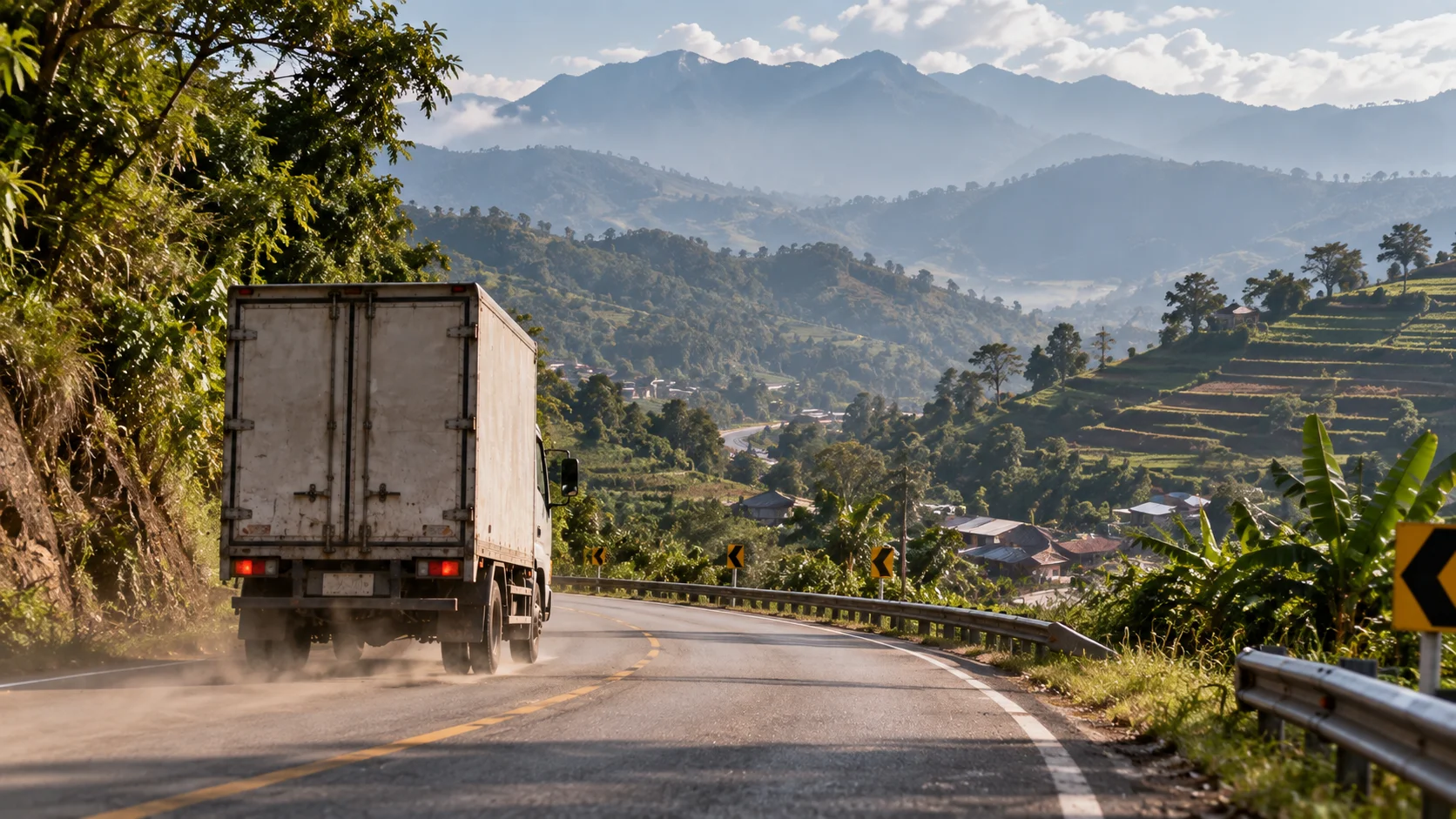
Once goods clear Thai customs at Laem Chabang, the inland delivery leg determines the final stage of the timeline. Delivery times from Laem Chabang by Thai destination:
- Pattaya: 15 km from Laem Chabang. Same-day or next-day delivery. Shortest inland leg of any Thai destination.
- Bangkok (central): 130 km, 2–3 hours. Delivery 1–2 days after port release, including booking the truck and completing the port gate-out process.
- Chiang Mai: Approximately 700 km north, 7–8 hours by truck. Add 2–3 days after port release.
- Phuket: Approximately 900 km south. Truck transit 10–12 hours, delivery 2–4 days after port release.
- Koh Samui / island destinations: Laem Chabang truck to Surat Thani (approximately 700 km), then ferry or barge to island. Total: 4–6 days after port release, dependent on barge schedules.
Full Timeline Models by Origin and Mode
Complete factory-to-Thai-address timelines for common shipping scenarios:
Sydney to Bangkok, FCL sea freight, normal conditions:
- Factory to Sydney port: 2 days
- Vessel loading and departure: 3 days
- Sydney to Laem Chabang (via Singapore): 17 days
- Thai customs clearance (green channel): 3 days
- Bangkok delivery: 2 days
- Total: approximately 27 days
London to Bangkok, FCL sea freight, Suez routing, normal conditions:
- Factory to Felixstowe port: 3 days
- Vessel loading and departure: 4 days
- Felixstowe to Laem Chabang (via Suez + Singapore): 26 days
- Thai customs clearance (green channel): 3 days
- Bangkok delivery: 2 days
- Total: approximately 38 days
Sydney to Bangkok, LCL sea freight:
- Factory to Sydney CFS: 3 days
- CFS consolidation and vessel departure: 4 days
- Ocean transit: 17 days
- Laem Chabang CFS deconsolidation: 3 days
- Thai customs clearance: 3 days
- Bangkok delivery: 2 days
- Total: approximately 32 days
Melbourne to Bangkok, air freight via forwarder:
- Factory to Melbourne airport: 2 days
- Flight transit (via Singapore or Dubai hub): 2 days
- Thai customs clearance (BKK airport): 3 days
- Bangkok delivery: 1 day
- Total: approximately 8 days
Los Angeles to Bangkok, FCL sea freight:
- Factory to LA/Long Beach port: 2 days
- Vessel loading and departure: 3 days
- Transpacific transit to Singapore: 16 days
- Singapore transshipment and feeder to Laem Chabang: 4 days
- Thai customs clearance (green channel): 3 days
- Bangkok delivery: 2 days
- Total: approximately 30 days
Shanghai to Bangkok, FCL sea freight (direct feeder):
- Factory to Shanghai port: 2 days
- Vessel loading and departure: 2 days
- Direct ocean transit to Laem Chabang: 7 days
- Thai customs clearance (green channel): 3 days
- Bangkok delivery: 2 days
- Total: approximately 16 days
The China-Thailand corridor (particularly Shanghai and Guangdong to Bangkok) is the fastest sea freight lane serving Thailand, driven by the high frequency and short distance of direct feeder services. Importers sourcing goods from Chinese suppliers for Thai delivery operate on a meaningfully tighter cycle than Australian or European shippers, which is worth factoring into supplier selection if lead time is a competitive variable in your business.
Ask your forwarder for the vessel name and voyage number before you book, not after, and you will know about a missed Singapore connection days before your forwarder tells you. Most shippers only ever see a tracking status that says “in transit,” which is true right up until it silently stops updating. The shipping line’s own vessel schedule, searchable the moment you have the voyage number, shows the actual port calls and any schedule change as it happens, no forwarder update cycle in between. It costs nothing to ask for two pieces of information you already have a right to. It is the difference between finding out about a delay from someone else’s email and finding it yourself, three days earlier, while there is still time to plan around it.
Common Delays That Extend the Timeline Beyond the Base Case
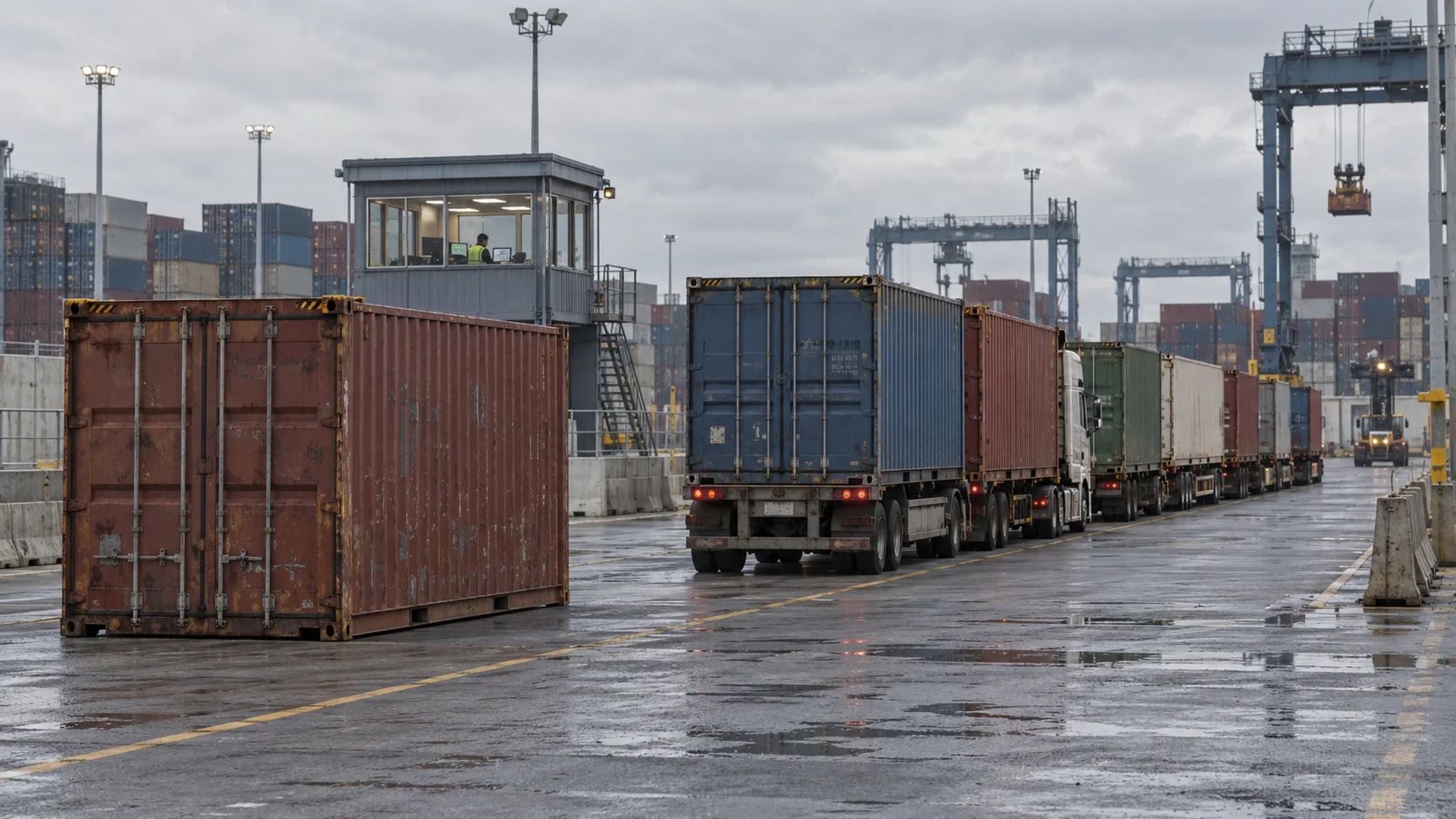
The base timelines assume everything goes to plan. In practice, these are the specific events that push the actual timeline beyond the base case, and how far each one extends the schedule:
Singapore transshipment miss. Most Australia-Thailand and Europe-Thailand sea freight services route through Singapore, where cargo transships from the origin mainline vessel onto a feeder or connecting mainline for Laem Chabang. If the feeder misses the connection (because the inbound vessel arrived late, the Singapore terminal was congested, or the booking rolled), the next available sailing to Laem Chabang may be 5–10 days later. This is the single most common unplanned delay on the Australia-Thailand and UK-Thailand lanes, and it is the reason transit time “ranges” are ranges rather than fixed numbers.
Suez Canal disruptions. The Suez Canal route connects Europe, the Middle East, and South Asia to Southeast Asia. When the Suez route is disrupted (as it was significantly during 2024 due to Houthi attacks on commercial shipping in the Red Sea), carriers divert to the Cape of Good Hope routing, adding 10–15 days to UK-Thailand and Europe-Thailand transit times. Shippers using UK or European origin who are sensitive to Thailand delivery timing should monitor Suez Canal status and build a Cape routing buffer into any shipment for which on-time arrival is commercially critical.
Origin port congestion. Port congestion at origin, most commonly at major Chinese ports (Yantian, Nansha, Shanghai) or the US West Coast (LA/Long Beach), delays vessel departures and pushes the entire timeline later. Australian ports (Port Botany, Melbourne) have their own periodic congestion events, typically driven by industrial action or peak season equipment shortages. A shipment delayed by 5 days at origin arrives 5 days late in Thailand, compounding with any subsequent clearance delays.
Missing documents at Thai customs. The single most controllable source of clearance delay is documentation. Thai customs will not release cargo until the import declaration is accepted and all required documents are lodged. For personal effects shipments: a missing passport copy or residence evidence halts clearance until it’s provided. For commercial imports: a missing Certificate of Origin delays TAFTA preferential duty processing, which may trigger a larger duty assessment and additional clearance steps. The document set should be prepared and transmitted to the Thai customs broker before the vessel arrives at Laem Chabang, not assembled after the port storage charges start accumulating.
Product permit delays. Goods in controlled categories (food for sale in Thailand, medical devices, cosmetics, certain electronics) require import permits from the Thai Food and Drug Administration or other regulatory bodies before customs will release them. Processing times for Thai FDA permits vary from 5 days to 6 weeks depending on the product category and whether the product has been registered before. The permit application must be filed in advance of the shipment’s arrival. A first-time import of a controlled product into Thailand without a pre-secured permit faces a clearance delay of 10–30 days. That is not a risk. It is a near-certainty.
Incorrect goods valuation. Thai customs officers are trained to identify undervaluation on the commercial invoice, a common practice used to reduce the CIF value on which duty and VAT are calculated. If a customs officer believes the declared CIF value does not reflect the true transaction value, the goods are held for valuation review, a process that can take 5–20 working days. The correct response to Thai customs valuation challenges is to have the original purchase order and payment evidence available through your customs broker. Importers who declare values that cannot be supported by documentary evidence face both the delay and the risk of revised duty assessment.

Building Your Shipping Buffer: How Much Extra Time to Allow
The base timelines assume normal conditions: green channel clearance, no port congestion, standard vessel schedules. The planning buffer you add depends on the risk profile of your specific shipment:
- First-time importer to Thailand: Add 5–7 days. Red or yellow channel clearance is more likely when Thai customs has no import history for your business. Your customs broker’s familiarity with the specific commodity helps, but the first shipment is always the highest-variance one.
- Controlled product categories (food, medical, chemicals): Add 7–14 days for permit processing if the permit isn’t pre-secured. Budget zero additional time if the permit is in hand before goods arrive. Preparation, not waiting, controls this variable.
- Songkran window (April 8–20): Add 7–12 days if goods will arrive at Laem Chabang between April 8 and April 20. Plan either to clear port before April 8 or to accept goods arriving post-April 20.
- Q4 peak season (October–December): Add 3–7 days for potential Singapore hub congestion, vessel rolling, and schedule variability. Pre-book vessel space 4–6 weeks earlier than usual during peak season.
- Upcountry or island destinations: Add 2–6 days beyond the Bangkok delivery model depending on destination and transport schedule.
- Suez routing uncertainty (UK/Europe origin): Add 10–15 days contingency if Suez disruptions are active at time of shipment. Monitor current routing advisories before committing to a departure date.
The most common planning mistake we see is treating the headline ocean transit as the delivery timeline. Someone books a sea freight shipment, reads “15 days Sydney to Bangkok,” and tells their Thai business partner the goods will arrive in two weeks. They don’t account for the 3 days at origin, the 3 days Thai customs, or the 2 days for Bangkok delivery, let alone the Singapore transshipment window. The goods arrive 25 days after departure, not 15. For a personal relocation this is a minor inconvenience. For a commercial consignment with a committed delivery date and a Thai customer waiting, it is a relationship problem and potentially a contract problem. The full 27–32 day Australian FCL timeline, planned for from the start, is not a problem at all.
The transit time to Thailand is also one of the variables that most directly determines whether you need to hold buffer stock in Thailand or can operate leaner. For household goods this question is simple. For commercial importers running an ongoing supply program into Thailand, the transit time model (including the seasonal adjustments) should be the foundation of the reorder point calculation, not an afterthought when a container is already in the water. For the full cost picture alongside transit planning, see what shipping to Thailand actually costs and the hidden costs that arrive with your goods. For UK and European shippers, the Europe to Thailand shipping guide covers Suez vs Cape routing and European carrier services in detail. To get a freight estimate and understand transit timelines for your specific route, see Swift Cargo’s Thailand shipping process.
Here is the thing nobody puts in a transit-time table: the reason you are counting these days is almost never the cargo. It is the visa that starts on a fixed date, the lease that begins the first of the month, the child who needs a bed before school starts. You are not really asking how long the shipping takes. You are asking whether your life will be assembled by the time you have to start living it. We have watched people torment themselves over a two-day difference in ocean transit when the real fix was booking two weeks earlier. Give yourself the full 27 to 32 days from Australia, plan backwards from the date that actually matters to you, and the anxiety mostly dissolves, because the number was knowable all along, and now you know it.
Frequently Asked Questions
How long does sea freight from Australia to Thailand take?
Sea freight from Sydney or Melbourne to Laem Chabang takes 15–20 days ocean transit for FCL, or 18–25 days for LCL due to consolidation and deconsolidation at the CFS. Add 3–7 days for Thai customs clearance and 1–3 days for inland delivery to Bangkok. Total factory-to-address timeline for an Australian FCL shipment to Bangkok: 20–32 days under normal conditions.
How long does it take to ship from the UK to Thailand?
FCL sea freight from UK ports (Felixstowe, Southampton) to Laem Chabang takes 22–28 days via the Suez Canal under normal routing. Cape of Good Hope routing (used when Suez is disrupted) adds 10–15 days, pushing total transit to 32–42 days. Add 3–7 days for Thai customs clearance and 1–3 days for Bangkok delivery, giving a total of 26–52 days depending on routing.
How long does Thai customs clearance take?
Thai customs clearance takes 2–4 working days for straightforward shipments with complete documentation on the green channel. The yellow channel (document review) adds 1–3 days. The red channel (physical examination) adds 3–7 days. Missing or incorrect documentation is the primary cause of clearance delays beyond these ranges. Shipments cannot be released until the required documents are received and accepted by Thai customs.
What is the fastest way to ship goods to Thailand?
Air freight from most international origins reaches Suvarnabhumi Airport (Bangkok) in 1–4 days. Thai customs clearance adds 1–5 days. Door-to-door from most origins to a Bangkok address: 4–10 days. For very small parcels (under 5 kg), express couriers (DHL, FedEx) offer 3–5 day door-to-door service from most countries including Australia, UK, and USA.