Author: Dan Santarina

  • The Forbidden Items List: 11 Things You CANNOT Ship to Thailand (Even Used)

    The Forbidden Items List: 11 Things You CANNOT Ship to Thailand (Even Used)


    A source-backed warning list for movers and expats: if you cannot ship to Thailand, it’s usually because it’s on the prohibited items Thailand customs list, it’s permit-controlled, or it’s refused under air/mail dangerous-goods rules.


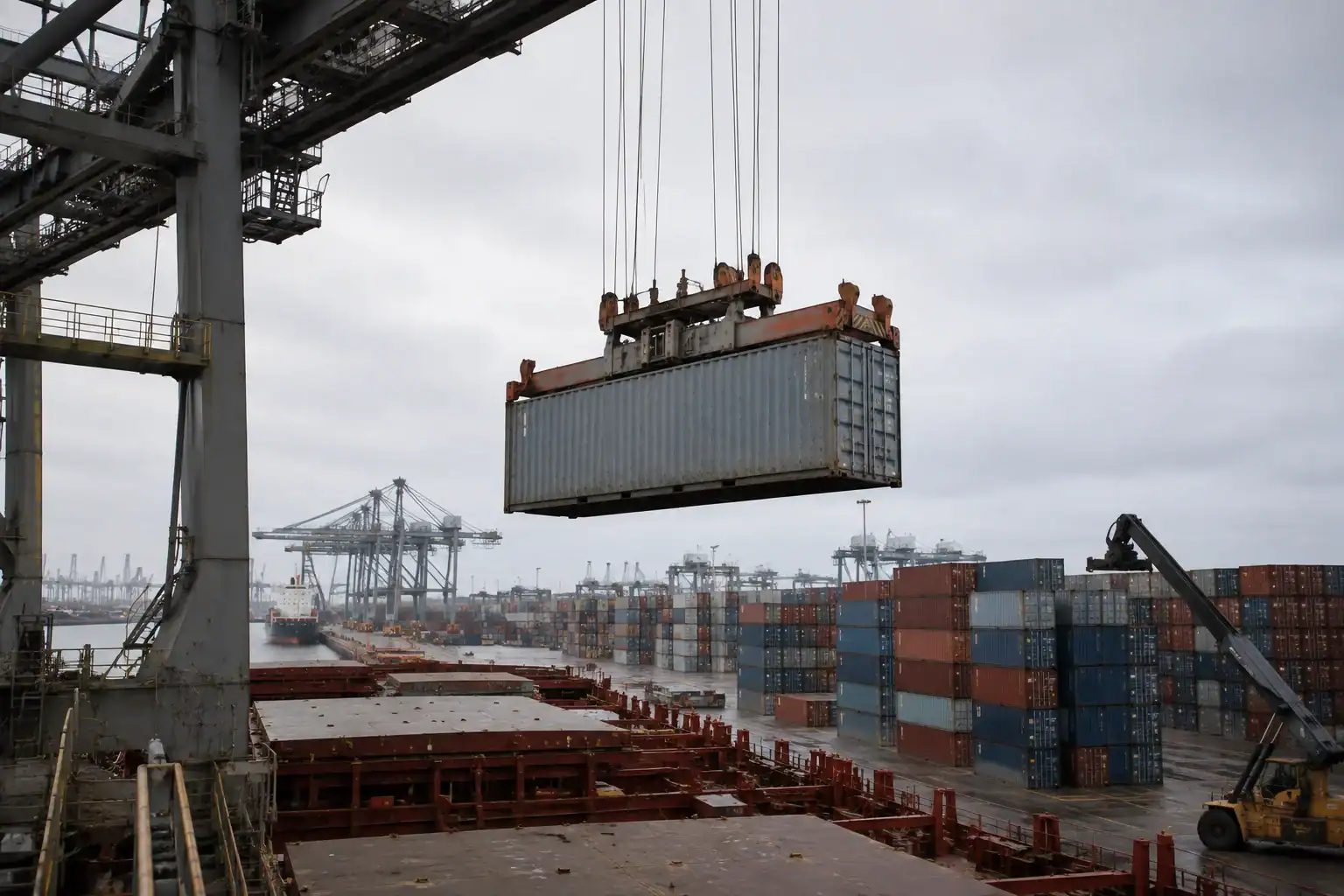
    Moving to Thailand: unpacking household goods and avoiding prohibited items at customs

    Shipments don’t fail because of bad luck. They fail because one controlled item triggers inspection.


    Customs seizures rarely look dramatic. They look like a courier tracking page that stops moving—or a container that can’t clear because one item triggered inspection.


    Thailand Customs groups problematic goods into two buckets that matter for movers: prohibited (illegal to import) and restricted (legal only with the right permits from agencies like the FDA, NBTC, Excise, or the Fine Arts Department). Thai Customs: prohibited vs restricted goods


    The most expensive myth we see is the “used loophole”: that personal, second-hand items are automatically exempt. They aren’t. If the category is controlled, it stays controlled—whether it’s brand-new in a box or scratched up in a toiletry bag.


    This article follows the same categories customs uses—prohibited, restricted, and carrier-refused dangerous goods—then translates them into decisions you can use before you pack. Remove the items that trigger seizure. Treat restricted items as a paperwork job, not “personal effects.” If you’re planning a move, the broader checklist is in our Thailand relocation guide.


    Case vignette (composite): A mover slips one controlled item into an otherwise normal household shipment—something small, easy to overlook, and easy to spot on X-ray. The outcome is rarely cinematic. It’s procedural: the file gets flagged, inspection expands, and the packing list becomes a cross-examination. Storage fees don’t care that the mistake was accidental.

    This composite is based on recurring patterns described in expat communities and public-facing clearance guidance—not a single verified individual case.


    Jump to a section


    Prohibited vs restricted: the 10-second check


    Thai government office building — permits and restricted items guidance

    Before you pack, sort every “risky” item into one of three categories:


    How customs decides: category beats intent

    Customs does not need to believe you’re a smuggler to stop your shipment. They only need a category match: a prohibited item, a restricted item without the right paperwork, or something the carrier network treats as hazardous. That’s why “I’m not selling it” and “it’s used” rarely changes the outcome.

    In practice, the trigger is documentation. If your packing list is vague (“electronics,” “supplements,” “tools”), an officer has no fast way to clear it—and the safest move is to hold it until you can prove what it is. That’s the moment a single item becomes a container problem.

    • Decision rule: If you can’t describe an item precisely in one line, don’t ship it until you can.
    • Decision rule: If an item is controlled by another agency (FDA, Excise, NBTC, Fine Arts), assume delay unless paperwork is ready.


    The 11 items you cannot ship to Thailand (even used)


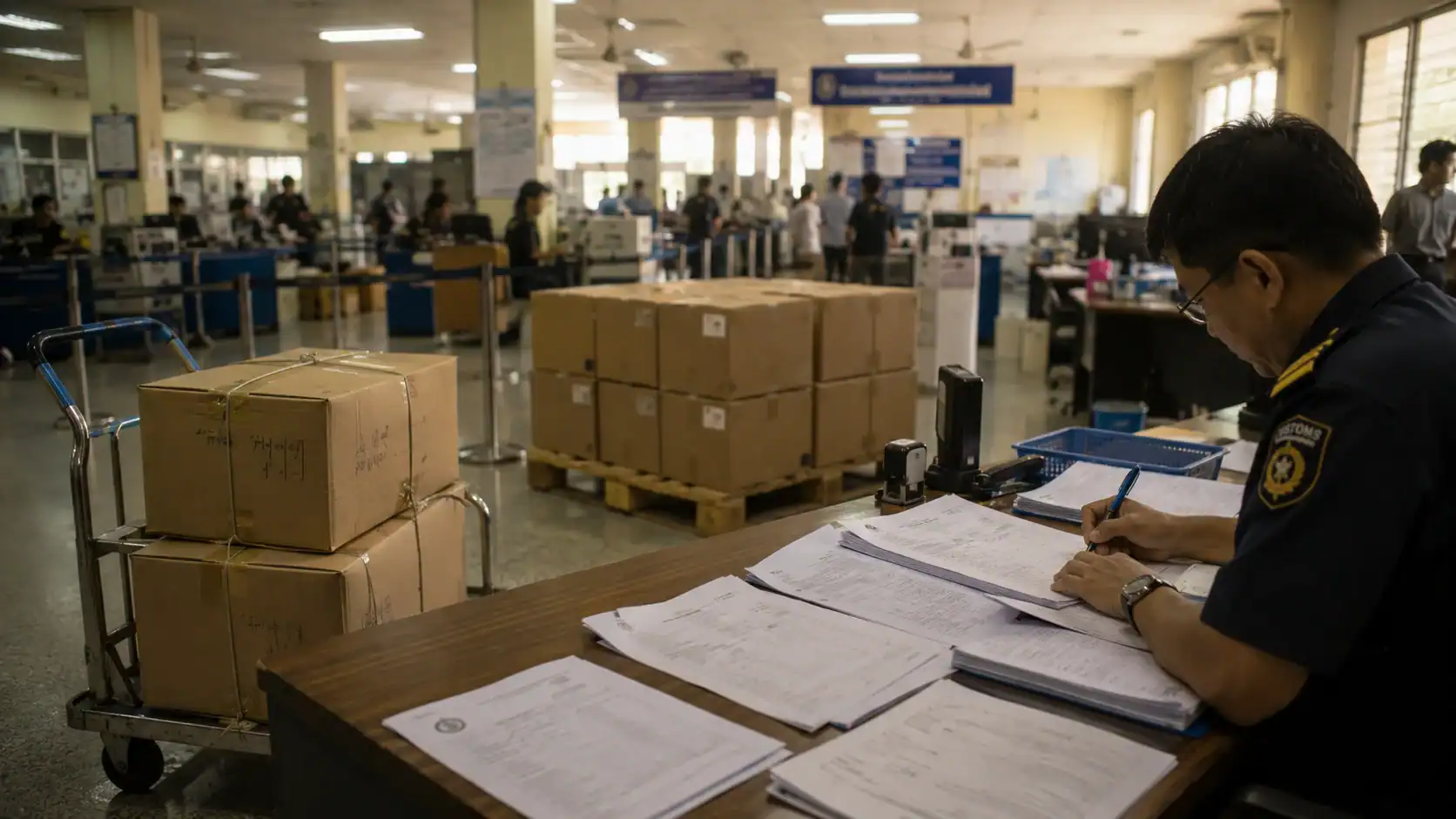
    Thailand customs inspection area — prohibited items that can trigger holds

    1) E-cigarettes and vaping devices (including used)

    Thailand treats e-cigarettes as prohibited to import in policy and enforcement practice, and the risk applies to devices, parts, and e-liquids—new or used. Tobacco Control Laws: Thailand e-cigarette policy instruments

    • What to do instead: Remove devices, parts, and liquids from the shipment entirely—don’t pack “just the empty device.”
    • What to do instead: If you’re quitting, dispose of hardware before travel; don’t rely on mailing it later.

    2) Narcotics and controlled drugs

    Thai Customs lists narcotics as prohibited goods. If a medicine is classified as a narcotic/psychotropic under Thai rules, shipping it as ordinary freight can create serious legal exposure. Thai Customs: prohibited goods examples

    For traveler-focused medication rules, controlled categories, and documentation, consult Thai FDA’s official guidance. Thai FDA: Guidance for Travelers (PDF)

    • What to do instead: Check whether your medication is controlled in Thailand before you pack or ship it.
    • What to do instead: If it’s permitted for travelers, carry only documented personal quantities—don’t ship it as freight.

    3) Pornographic/obscene materials

    Thai government guidance lists obscene objects/materials as prohibited, and Thai Customs also includes pornographic materials among prohibited examples. Thailand.go.th: prohibited items overview

    • What to do instead: Remove explicit magazines, DVDs, and similar media from household goods shipments.
    • What to do instead: If in doubt, don’t include it—border decisions can be subjective.

    4) Counterfeit goods and pirated media (including “replicas”)

    Thai Customs flags counterfeit trademark goods and intellectual-property-infringing goods as prohibited examples. Thai Customs: IPR/counterfeit examples

    • What to do instead: Leave replica/counterfeit branded goods behind—even if they’re personal and used.
    • What to do instead: If it’s genuine, keep proof of purchase for high-value branded items.

    5) Fake currency, fake coins, or forged official seals

    Government guidance lists fake money/coins and forged seals as prohibited. Thailand.go.th: prohibited items overview

    • What to do instead: Don’t ship prop money or novelty notes/coins that resemble real currency.
    • What to do instead: Keep collectibles clearly documented and separate—avoid anything that looks like a forged instrument.

    6) Used motorcycles and used motorcycle parts

    U.S. trade guidance lists used motorcycles and used motorcycle parts as prohibited imports. Trade.gov: prohibited imports list

    • What to do instead: Buy used parts locally in Thailand or ship new parts only with specialist advice.
    • What to do instead: Keep vehicle-related items off your household inventory unless your broker has confirmed compliance.

    7) Gaming machines

    U.S. trade guidance lists gaming machines as prohibited imports. Trade.gov: prohibited imports list

    • What to do instead: Don’t ship slot/arcade gambling machines or parts—remove them from the inventory.
    • What to do instead: If it’s a legal arcade device, get classification guidance before shipping to avoid a hold.

    8) Refurbished medical devices

    U.S. trade guidance lists refurbished medical devices as prohibited imports. Trade.gov: prohibited imports list

    • What to do instead: Avoid shipping refurbished clinical devices as personal effects.
    • What to do instead: If you need equipment in Thailand, source locally or use a medical-import specialist pathway.

    9) Household refrigerators using CFCs

    U.S. trade guidance flags household refrigerators using chlorofluorocarbons (CFCs) as prohibited imports. Trade.gov: prohibited imports list

    • What to do instead: Don’t ship older refrigerators—consider local purchase for appliances.
    • What to do instead: If you must ship an appliance, confirm specifications and compliance before packing.

    10) Dangerous goods commonly refused in air/mail networks

    Even when not “illegal,” many products are blocked under transport safety rules (aerosols, gases, corrosives, oxidizers, certain chemicals). Thailand Post outlines categories typically refused in international mail. Thailand Post: prohibited/dangerous goods overview

    • What to do instead: Remove aerosols, pressurized cans, and unknown chemicals from shipments.
    • What to do instead: Declare batteries and liquids accurately—carriers may refuse undeclared hazardous goods.

    11) Ivory and endangered wildlife products (including antiques containing ivory)

    CITES controls trade in endangered species products and derivatives; violations can be criminal. CITES: official site

    • What to do instead: Don’t ship items containing ivory or protected-species materials—even in antiques.
    • What to do instead: If you suspect a material is controlled, get it verified before shipping (and be prepared to remove it).

    Quick sanity check: If you’re not sure whether something falls into prohibited vs restricted, don’t gamble on the border. Send us your draft packing list and we’ll flag the landmines before you ship.


    Restricted but commonly delayed (permits + paperwork)


    Drones and many radio/telecommunications devices

    Thailand’s government guidance explains that drone operation requires registration with the NBTC and CAAT. Thailand.go.th: drone rules

    CAAT also publishes official RPA (drone) registration information. CAAT: RPA registration


    Alcohol and tobacco

    Thai Customs lists alcoholic beverages and tobacco products among restricted goods tied to the Excise Department. Thai Customs: Excise-controlled goods


    Food, supplements, cosmetics, and some medicines

    Thai Customs lists food, medicine, cosmetics, and related products as restricted goods tied to Thailand FDA oversight. Thai Customs: FDA-controlled goods


    Buddha images, antiques, and cultural items

    Thai Customs lists antiques and objects of art among restricted goods tied to the Fine Arts Department. Thai Customs: Fine Arts-controlled goods

    A Thai government SME resource also summarizes restricted goods and responsible agencies, including Buddha images and Fine Arts. SME Thailand: restricted goods and agencies


    The cost reality in 2026: 7% VAT + duties


    Even when an item is legal, paperwork mistakes and misclassification can trigger inspections, storage fees, and long delays.


    And as of 1 January 2026, import duty and Thailand’s 7% VAT can apply to imported goods valued from 1 baht, replacing older low-value exemption logic many expats still rely on. DHL Thailand: import duty/VAT update (2026)


    That change matters because it removes the psychological safety net. People used to treat small parcels as “too minor to bother.” In 2026, the safer assumption is the opposite: you may be assessed, and if your paperwork is messy, you may also be delayed.

    • What gets expensive fast: a hold that blocks delivery scheduling, then storage while you chase documents.
    • What gets expensive quietly: rework—repacking, relabeling, reissuing documents—after the shipment is already in the system.

    Want to know the number before it becomes a bill? We can map your shipment to likely friction points—controlled categories, paperwork gaps, and the places customs usually slows things down—before you commit.


    How to ship safely (packing list rules)


    • Write a real packing list. Vague descriptions like “miscellaneous electronics” increase inspection risk.
    • Separate controlled categories. If you must ship restricted goods, don’t mix them into a general household box.
    • Prepare permits early. Restricted goods are where delays get expensive.
    • Assume “used” is irrelevant. Customs cares about category and compliance, not how old the item is.
    • Use plain-language descriptions. Replace “electronics” with “laptop computer,” “Wi-Fi router,” “camera body,” or “Bluetooth speaker.” Ambiguity is what triggers manual review.
    • Quarantine the usual suspects. Keep food/supplements, alcohol/tobacco, radio devices, and anything medical out of general cartons unless you’ve checked requirements.

    At SwiftCargo, we audit packing lists against Thailand customs rules before the container is sealed—and flag controlled categories early so clients can decide: remove, replace locally, or prepare documentation.

    Thailand destination delivery — door-to-door shipping and coordinated clearance

    Door-to-door to Thailand (so customs doesn’t write the ending)

    The easiest way to lose weeks is to learn the rules at the port. SwiftCargo runs door-to-door shipping to Thailand—including professional packing and a pre-shipment compliance check—so your container isn’t held hostage by one avoidable item.

    • Packing + inventory that clears faster: We help turn “miscellaneous” into descriptions customs can process.
    • What you can bring (and what you shouldn’t): We flag prohibited and permit-controlled categories early, before the shipment is in motion.
    • On-the-ground Thailand support: With operations in Thailand and a global partner network, we coordinate clearance and delivery end-to-end.

    Planning a move? Start with a door-to-door Thailand quote.


    The single decision rule before you ship

    Most “what can I ship to Thailand” mistakes are not made at the border; they are made in the packing room when someone slides a borderline item into a carton “just to see.” A simple decision rule eliminates most of that risk: if you have to ask whether an item is restricted, treat it as restricted. Get the paperwork or leave it behind. The cost of leaving a $40 item behind is $40. The cost of declaring a household shipment that contains an item Thai customs treats as restricted is hours of holding-area time, possible reclassification of the entire consignment as commercial, and in the worst cases seizure of the questioned item plus inspection of everything around it. The asymmetry is not close. Apply the same rule one layer up: if you are uncertain whether the recipient’s visa status qualifies your shipment for duty-free treatment, treat it as dutiable until proven otherwise. Optimism in the packing room is paid for at the border, with interest.


    The single mental-model upgrade that prevents most forbidden-item surprises is treating the inventory walkthrough as a regulator-readability problem, not a personal-organisation problem. Pack the way a Thai Customs officer would want to read your container: one item, one description, one obvious classification. The forbidden-items list is not long, but the items that look like edge cases — souvenir knives, certain medications, electronic items with built-in radio modules, anything that could be classified as a weapon or controlled substance under a strict reading — fail at the same point in the inspection: the officer cannot resolve them in three seconds. If your inventory forces an officer to ask a question, the question itself becomes the delay, even when the answer is obvious. The discipline is not memorising the list. It is presenting the cargo so the list never has to be checked.


    Talk to enough relocators who have had items confiscated at Thai customs and a pattern emerges that the official “forbidden items” list does not quite capture. The items that get seized are not, in the main, the obviously prohibited ones. Most relocators know not to ship narcotics, firearms, or pornography. The seizures that happen are over items that fall into a grey zone the official list calls restricted but does not explain well: certain electronics with built-in radio modules, certain medications that are legal in the origin country but controlled in Thailand, certain food products that contain ingredients the Thai FDA has flagged. The official list says these items “may require special permits.” In practice, the relocator who ships them without the permits loses the items. The relocator who reads the official list carefully but misses the restricted category — assuming “restricted” means “needs paperwork” rather than “will be seized without paperwork” — encounters the gap between regulatory language and operational reality. The distinction matters because it changes how to read the list. “Prohibited” is the obvious half. “Restricted” is the half where the actual losses happen, and the official guidance does not say that loudly enough.


    FAQ: the questions people actually ask


    Can I ship vapes or e-cigarettes to Thailand?

    In practice, this is one of the most common seizure triggers for expats. Treat vaping devices, parts, and e-liquids as prohibited and keep them out of household shipments.


    Thailand customs seized my package—what happens next?

    Most cases turn into delay: customs requests documents, expands inspection, and storage fees can start compounding while the file is resolved. If the item is prohibited, you may not be able to recover it.


    Can I ship medication to Thailand?

    Don’t assume. Some medications are controlled. Check Thai FDA traveler guidance first, and avoid shipping controlled medicines as freight unless you have the required approvals.


    Can I ship a drone to Thailand?

    Drones and radio/telecom devices are often held for classification and paperwork. You may also need NBTC/CAAT registration before legal operation. Build time for compliance.


    Can I ship batteries, power banks, or electronics with lithium batteries?

    This is a carrier problem as much as a customs problem. Undeclared batteries can trigger refusal, repacking, or a hold. Treat batteries as a special category: declare them clearly and don’t bury them inside “miscellaneous electronics.”


    Can I ship alcohol in my household goods?

    Alcohol sits in the “restricted” bucket. If you ship it casually, expect it to be flagged. If you ship it at all, build time for permits and assessment—then decide whether the value is worth the friction.


    What should my packing list actually say?

    Write it like you’re going to be questioned on it. List item type, brand/model when relevant, and quantities. “Personal effects” is not a description. It’s a red flag.


    Are used electronics exempt from Thailand customs rules?

    “Used” is not a loophole. Customs cares about category and compliance. If it’s controlled, it’s controlled—whether it’s new in a box or old in a drawer.


    Want the boring stuff (duty, VAT, paperwork) explained before it becomes expensive? Start with a Thailand shipping & customs review.


    Bottom line


    One controlled item can hold up an entire move. If you want your shipment to clear smoothly, remove the truly prohibited categories entirely, treat restricted goods as a paperwork project, and don’t bet your timeline on “used” being a loophole.


    Don’t let a vape, a battery, or “miscellaneous electronics” decide your move date. Get a door-to-door Thailand plan →

  • Laem Chabang vs. Bangkok Port: Which Should Your Shipment Use?

    Laem Chabang vs. Bangkok Port: Which Should Your Shipment Use?


    Executive summary: Thailand’s two main container ports—Bangkok Port (Khlong Toei) and Laem Chabang—are not interchangeable. One is a river port with vessel and channel constraints. The other is the country’s deep-sea gateway built for scale. Choosing the wrong one doesn’t just change geography—it changes schedule reliability, inland routing, and total landed cost. If you’re planning a relocation shipment (not just commercial cargo), the broader Thailand relocation guide (2026) maps the paperwork and timing that usually drive avoidable fees.

    Port Authority of Thailand (PAT) data presented publicly shows how lopsided container volume really is: Laem Chabang handled roughly 8.73 million TEU (2022) and 8.676 million TEU (2023), while Bangkok Port handled about 1.277 million TEU (2022) and 1.259 million TEU (2023). That imbalance explains why most containerized imports—even those destined for Bangkok—discharge at Laem Chabang and then move inland.

    This guide compares the ports the way a shipper should: vessel limits, throughput scale, transit-time variability, fee drivers, and hinterland connectivity. At the end, you’ll have a practical decision framework—not a brochure summary.


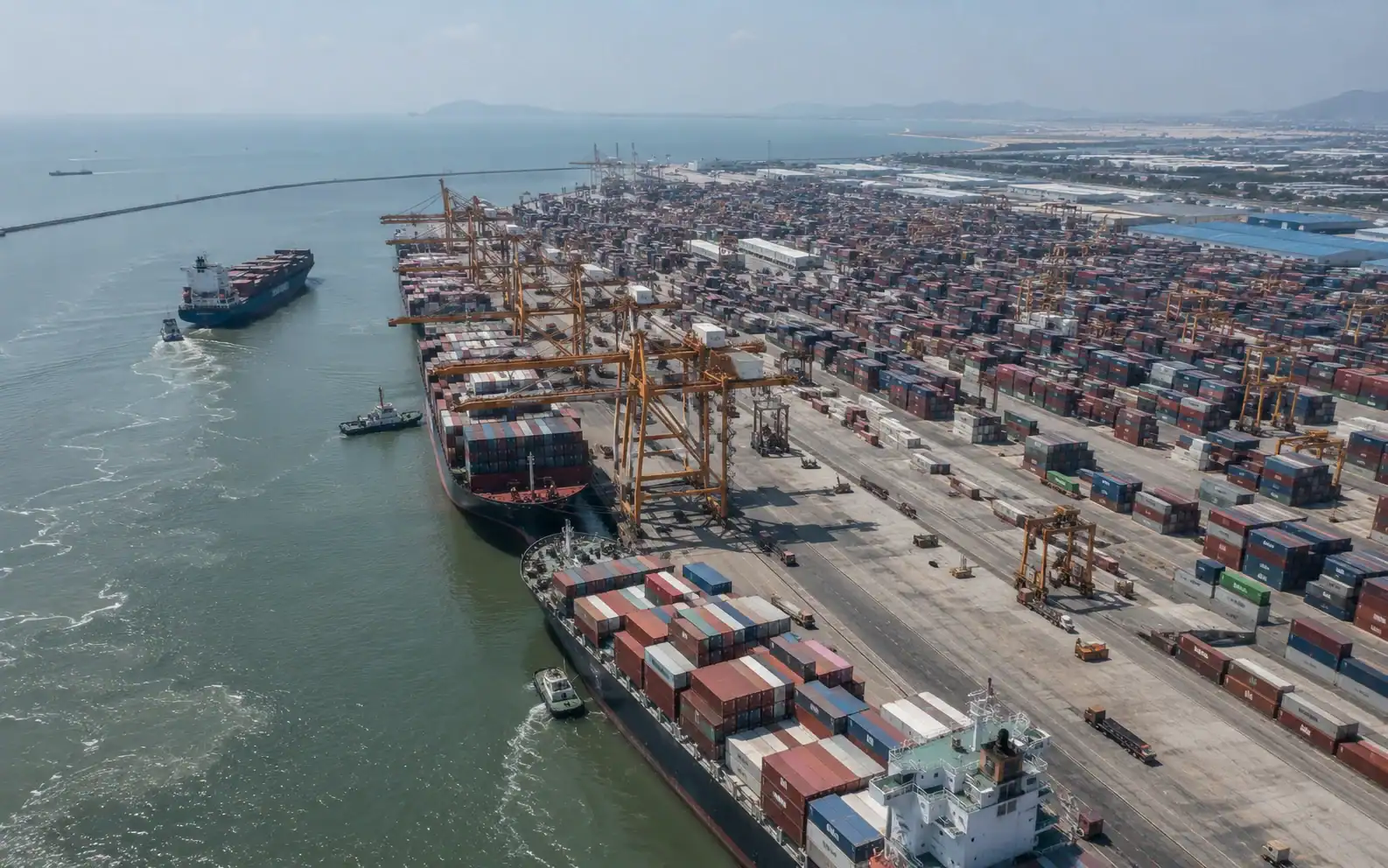
    Laem Chabang vs Bangkok Port — choosing the right Thailand container port for your shipment

    Quick rule: if your routing depends on larger vessels and predictable mainline schedules, you’re usually in Laem Chabang territory. If your shipment is regional, smaller-vessel, or tightly tied to central Bangkok delivery, Bangkok Port can still matter.


    Jump to a section


    The core difference in one paragraph

    Bangkok Port (Khlong Toei, commonly spelled “Klong Toey”) is a river port. Ocean-going vessels reach it through the Chao Phraya approach channel, which introduces physical and operational constraints that don’t exist at a deep-sea terminal. Port Authority of Thailand (PAT) documentation lists container-terminal limits around 8.2 meters maximum draught and a practical ceiling of smaller vessel calls—one reason Bangkok Port is typically associated with feeder, coastal, and regional patterns rather than the largest mainline services.

    Verification (PAT Bangkok Port brochure): Port Authority of Thailand: Bangkok Port container terminal specifications

    Laem Chabang is Thailand’s primary deep-sea gateway. PAT positions it as the country’s main deep-sea port, with multiple container terminals and direct highway and rail connectivity into Bangkok and the Eastern Seaboard industrial base. In practice, that combination—scale offshore, then inland execution—explains why most containerized imports discharge at Laem Chabang even when the consignee is in Bangkok.

    Verification (PAT Laem Chabang overview): Port Authority of Thailand: Laem Chabang Port information

    What it means for shippers: this is not a trivia question about which port is “closer.” It’s a supply-chain decision about vessel availability, schedule variability, inland haulage, and the total door-to-door cost stack.


    Side-by-side: specs that change real-world outcomes

    This comparison focuses on the variables that routinely change outcomes for importers: what ships can call, how dense the service ecosystem is, and how much inland execution you inherit once the container is discharged.

    Category Bangkok Port (Khlong Toei) Laem Chabang Why it matters to shippers
    Port type River port Deep-sea gateway port River access adds navigational constraints and time variability; deep-sea terminals are built for scale.
    Published container-terminal limits (PAT) Max draught 8.2 m; max vessel size 12,000 DWT (container terminals) PAT positions Laem Chabang as Thailand’s main deep-sea port with multiple terminals Limits influence which liner services can call (feeder vs. mainline density).
    Throughput signal (PAT) ~1.277M TEU (2022); ~1.259M TEU (2023) ~8.73M TEU (2022); ~8.676M TEU (2023) Throughput is a proxy for service frequency and the surrounding logistics ecosystem.
    Expansion runway Urban footprint; expansion is structurally constrained Phase 3 is publicly described as targeting capacity growth from 11M to 18M TEU/year Capacity growth affects congestion risk and long-run resilience.
    Inland options to Bangkok nodes Close to central Bangkok delivery points, when the ocean service calls Truck and rail corridors; PAT publishes train schedules to Lat Krabang ICD Inland options determine door-to-door predictability as much as the ocean leg does.

    Verification (PAT/PRD sources): Bangkok Port brochure PAT data in APEC deck (TEU throughput) PRD: Laem Chabang Phase 3 (capacity target) PAT train schedules (Laem Chabang ↔ Lat Krabang ICD)


    Thailand port routing for importers — Laem Chabang deep-sea gateway vs Bangkok Port (Khlong Toei)

    Shippers don’t experience ports as names on a bill of lading. They experience them as delivery windows, queue time, and the reliability of the inland leg into Bangkok.


    Transit times: why “closer” is not always faster

    It’s easy to assume Bangkok Port must be faster for Bangkok deliveries because it sits inside the city. The catch is that river ports add navigational variables. Port Authority of Thailand (PAT) describes Bangkok Port’s approach as an 18 km sandbar channel with published channel geometry and notes that ocean-going vessels transiting the Chao Phraya bar require pilotage. Those constraints don’t make the port “bad”—they simply create more moving parts that can widen the gap between an advertised ETA and a practical discharge window.

    Verification (PAT Bangkok Port general info): Bangkok Port channel facts + pilotage note

    Laem Chabang’s advantage is structural: it is designed for deep-sea volume, then pushes containers inland through dedicated corridors. PAT’s own rail schedule page is unusually explicit—listing train movements between Laem Chabang and Lat Krabang ICD, plus a posted per-train capacity figure (68 TEU) and a posted cost line (900 Baht per TEU). Rail doesn’t eliminate delays, but it can make inland movement more predictable than relying solely on peak-hour trucking into Bangkok.

    Verification (PAT train schedules): Laem Chabang ↔ Lat Krabang ICD train schedules (capacity + posted cost)

    Practical translation: if your shipment is time-sensitive, optimize for predictability before you optimize for distance. For many importers, a deep-sea discharge at Laem Chabang plus a planned inland move beats a “closer” river-port call that arrives with more schedule variance.

    The same dynamic shows up in personal effects and household shipments: if clearance slips, storage and handling costs can compound quickly. If that’s your context, see Thailand’s 6‑Month Rule for Household Goods: What Happens If You Miss the Deadline? for the timing mistakes that trigger avoidable charges.


    Fees: what actually changes when you pick a port

    Port choice changes cost in two ways: what the port charges and what the route forces you to pay for. If you’re comparing quotes, don’t ask “what’s the port fee?” Ask which charges are port tariffs, which are published surcharges, and which are downstream costs created by time variability and inland haulage.

    Port Authority of Thailand (PAT) publishes Bangkok Port tariff-rate information and updates—an official reminder that port charges are made up of categories rather than a single number, and that add-ons can exist depending on the service. That doesn’t mean Bangkok Port is automatically more expensive. It means you need to compare fee stacks, not fee headlines.

    If you’re quoting a port-to-port move, be especially careful: the “cheap” option can get expensive once destination handling, documentation corrections, and demurrage/storage start ticking. We break down the practical tradeoffs in International Household Shipping to Thailand From the USA (the fee logic applies to any origin).

    Verification (PAT Bangkok Port tariff page): Bangkok Port: tariff rates and notices


    Bangkok delivery planning after port discharge — comparing inland trucking and rail from Laem Chabang

    Laem Chabang’s “port cost” often shifts inland. If your discharge is Laem Chabang and your consignee is in Bangkok, you’re pricing trucking or rail plus the risk cost of dwell time. PAT’s train schedule page for Laem Chabang ↔ Lat Krabang ICD includes a posted per-train capacity (68 TEU) and a posted cost line (900 Baht per TEU), which is useful primary data when you’re comparing inland options.

    Verification (PAT rail schedule + posted cost): Laem Chabang train schedules (Lat Krabang ICD)

    How to budget without guesswork: build a comparison that keeps the ocean leg separate from the inland leg, then model variability. If a river-port call slips, what happens to storage, delivery windows, and downstream labor? If the deep-sea discharge is stable but inland trucking hits Bangkok congestion, what’s your fallback—rail, off-peak delivery, or buffer days?


    Hinterland connectivity: trucks, rail, and the Bangkok reality

    Laem Chabang’s official positioning is explicit: PAT describes it as Thailand’s main deep-sea port and emphasizes links to a network of highways and railways. In shipper terms, that’s the point—you are buying options. When trucking into Bangkok tightens, you want a rail-backed fallback that can still hit logistics nodes like Lat Krabang ICD.

    Verification (PAT Laem Chabang overview): Laem Chabang Port information

    Thailand is also investing for scale. A public PRD report on Laem Chabang Phase 3 describes the project as a public-private partnership under the Eastern Economic Corridor plan, with an intent to lift container capacity from roughly 11 million to 18 million TEU/year. Capacity isn’t just a headline: it typically correlates with more resilient yard operations and more supporting-mode investment over time.

    Verification (PRD on Phase 3): Laem Chabang Phase 3 capacity target (PRD)

    Bangkok Port’s advantage is the mirror image: it sits inside the city and can be useful for certain regional flows when the service pattern and vessel constraints fit. PAT’s published limits (for container terminals) keep Bangkok Port in a smaller-vessel lane, which affects service density—and often turns the “port choice” into a question of which sailings are actually available for your lane.


    Which port should you use? A decision matrix

    Choose Laem Chabang when:

    • Your lane depends on mainline container services and you want higher schedule density (the throughput scale is the tell).
    • Your consignee is not strictly tied to the central Bangkok river corridor, or you can plan an inland leg reliably.
    • You want more routing optionality (truck and rail corridors into Bangkok and the Eastern Seaboard).

    Choose Bangkok Port (Khlong Toei) when:

    • Your service genuinely calls Bangkok Port and the shipment fits smaller-vessel constraints.
    • Your delivery profile benefits from central Bangkok positioning enough to outweigh river-port variability.
    • You have buffer for the extra moving parts (channel transit, pilotage, and tighter operational constraints).

    Reality check: if your carrier’s service does not call Bangkok Port, the decision is effectively made—Laem Chabang becomes the default discharge, and the real variable shifts to inland execution.


    Decision matrix for Thailand shipping — when to use Laem Chabang vs Bangkok Port

    Shortcut: if your first question is “which is closer,” you’re likely missing the real variable. Start with service availability and predictability, then price the inland leg.


    Practical next steps

    • Start with constraints: if your carrier’s vessel profile exceeds Bangkok Port limits, the “choice” is made for you.
    • If this is a personal relocation shipment: use a proven checklist before you book. Start with Americans Moving to Thailand (2026), UK & EU Citizens Moving to Thailand (2026), or DTV Visa Shipping to Thailand (2026) depending on your status.
    • Price the route, not the port: compare port tariffs + any published surcharges + inland haulage + dwell/variability risk.
    • Pick a primary plan and a backup: if Bangkok Port service slips, consider a Laem Chabang discharge plus a planned inland move.
    • Write down assumptions: final delivery location, target delivery window, inland mode (truck/rail), and buffer days.

    If you want a quote that compares both routes properly (port + inland), visit our Thailand shipping services page.


    Stand at the entrance gate of either port for a morning and the difference between them becomes obvious. Laem Chabang sits about 130 kilometres southeast of Bangkok, on the Gulf of Thailand coast, sprawling across reclaimed land that did not exist a generation ago. The container yards are flat and orderly; the cranes are new; the road infrastructure was built around the port rather than retrofitted to it. Bangkok port, by contrast, is older and pressed into the Chao Phraya River, hemmed in by the city it grew up inside. The cranes serve smaller vessels; the trucks queue along streets that pre-date container shipping. Both ports do similar work, but they do it in very different physical contexts, and the difference shows up in handling rates, dwell times, and inland-trucking economics. The carrier who chooses between them on tariff alone misses the parts of the port that determine how a specific consignment actually moves. The two ports do not compete on price. They compete on fit with the cargo profile and the inland delivery network the importer is trying to feed.


    FAQ: Laem Chabang vs Bangkok Port

    Which Thai port handles most container volume: Laem Chabang or Bangkok Port?

    PAT throughput figures presented publicly show Laem Chabang handling several times Bangkok Port’s annual TEU. For many importers, that scale translates into denser service patterns and more routing options at Laem Chabang.

    Can large container ships call Bangkok Port (Khlong Toei)?

    Bangkok Port is a river port with published constraints. PAT’s Bangkok Port brochure lists container-terminal limits including maximum draught (8.2 m) and maximum vessel size (12,000 DWT), which generally keeps calls in a smaller-vessel lane.

    Is Bangkok Port faster for deliveries in Bangkok?

    Sometimes—but the tradeoff is variability. PAT notes river-channel navigation and pilotage requirements for ocean-going vessels transiting the Chao Phraya bar, which can widen the gap between ETA and practical discharge. Many Bangkok-bound containers discharge at Laem Chabang and move inland by planned truck or rail.

    How does rail from Laem Chabang to Lat Krabang ICD work?

    PAT publishes train schedules between Laem Chabang and Lat Krabang ICD, including per-train capacity (68 TEU) and a posted cost line (900 Baht per TEU). Rail can be a useful inland option when trucking capacity or Bangkok congestion tightens.

    Which port should I choose for FCL or LCL shipments into Thailand?

    Start with constraints (service availability and vessel limits), then optimize for predictability and total landed cost. For many lanes, Laem Chabang is the default discharge and the inland plan is the key decision variable.


    Bottom line

    Thailand’s port “choice” is usually a routing choice. Bangkok Port’s river constraints and published terminal limits keep it in a smaller-vessel lane. Laem Chabang’s deep-sea scale and inland connectivity make it the default discharge point for most containerized imports—including many shipments ultimately delivered in Bangkok.

    If you want a practical rule: optimize for service availability and predictability first, then price the inland move. In Thailand, the winning route is often the one that is simplest to execute consistently.


    Need help comparing routes to Thailand (port + inland)? Visit our Thailand shipping services page.


    Sources

  • Retirement Visa to Thailand: What You Can (and Can’t) Ship Duty‑Free

    Retirement Visa to Thailand: What You Can (and Can’t) Ship Duty‑Free

    Executive summary: People searching “retirement visa Thailand ship belongings” usually expect a simple perk: a Non‑O retirement stamp (and the broader retiring in Thailand checklist) should mean their used household goods are duty‑free. Thai Customs’ framework is real—but it’s procedural. Eligibility is assessed as a relocation claim (with timelines, “reasonable quantity” tests, and a document packet), not as an assumption.

    One detail is easy to miss in Thai government guidance: Thailand.go.th’s relocation criteria notes that foreigners who entered Thailand with a Non‑Immigrant O visa for retirement “do not fall under item 1” of the relocation criteria. That single line helps explain why Non‑O visa household goods shipments sometimes get assessed—even when the cargo is clearly used.

    This article sticks to what official sources say, then translates it into a retiree‑friendly playbook: the seven documents Customs tends to ask for, the categories that trigger duties (especially duplicate electronics), and the timing rule that quietly decides whether your shipment clears smoothly—or starts accruing storage fees.


    Packing household goods for Thailand — documents and inventory for Thai Customs clearance

    In Thailand, “duty‑free” is paperwork. If your file is thin, Customs fills the gaps—often with inspection, valuation, and delay.


    Case vignette (composite): A retiree arrives in Thailand, ships a container of used household goods, and assumes the retirement visa stamp is the key. Customs asks for additional relocation evidence, then tests the inventory for duplicates and categories that look commercial. The shipment isn’t confiscated—but it stalls. Storage fees begin. The retiree ends up paying duties on categories that look duplicated, high‑value, or insufficiently documented.

    This composite reflects recurring patterns described in public expat discussions and the official clearance framework—not a single verified individual incident.


    Jump to a section


    Retirement visa Thailand: can you ship household goods duty‑free?

    Thai Customs distinguishes between “personal effects” and “household effects.” Household effects are the things that equip a home—furniture, appliances, kitchenware—brought as part of changing residence. Thai Customs also states that to be eligible for duty exemption, household effects must be used, owned/possessed/used before returning to Thailand, and in reasonable quantity. In addition, timing matters: used household effects must be imported not earlier than one month before or not later than six months after the importer’s arrival (with possible extensions in exceptional circumstances).

    Verification (Thai Customs, Household Items Import Clearance): Thai Customs (official): household items import clearance

    The retiree catch (and why outcomes vary): Thailand.go.th’s relocation criteria notes that foreigners who entered Thailand with a Non‑Immigrant O visa for retirement “do not fall under item 1” of the relocation criteria list. In practice, that can change what officers consider a clean “change of residence” case—especially if your long‑stay proof and inventory don’t read like a relocation file.

    Verification (Thailand.go.th, relocation criteria): Thailand.go.th (government): relocation criteria

    How to use this guide: treat duty exemption as a claim you substantiate. Your visa is context; your document packet and packing list are the proof.


    The 7 Documents Thai Customs Requires for Retirement‑Visa Holders

    Official sources publish longer checklists, including work‑permit pathways that don’t fit many retirees. Below is the retiree‑oriented “minimum viable packet” for attempting a household‑effects duty exemption: the documents that typically anchor clearance when you ship personal effects to Thailand by sea freight or air cargo (a practical primer: how to ship household goods to Thailand).


    Bangkok condo delivery access — building rules that affect household goods shipping in Thailand

    Clearance is only half the story. Building access rules, delivery windows, and address readiness often decide whether cargo moves smoothly after Customs.


    How household-goods clearance actually moves (the 4-step workflow)

    Treat duty exemption as a gate inside the clearance workflow. If your file is clean, the process is routine. If it’s thin, the shipment becomes an inspection-and-valuation problem. If you want the full framework, start with the Ultimate Moving Guide.

    1. Apply for duty exemption and submit the packet (passport, long-stay proof, bill of lading/air waybill, packing list, etc.).
    2. Customs reviews eligibility (what qualifies as “used household effects” in reasonable quantity, versus what will be assessed).
    3. Prepare and submit the import declaration using the reviewed documents.
    4. Release and collection (or payment of duties/taxes for any non-eligible items).

    Verification (Thailand.go.th clearance steps): Thailand.go.th (government): clearance steps overview

    Important: some documents listed by Customs are work‑related and may not apply to retirees. This checklist focuses on what Customs and Thailand.go.th commonly require for household goods clearance—then explains what the retiree version of “proof of long stay” looks like in practice (without offering legal advice).


    1) Draft import declaration

    This is the administrative backbone of clearance. If the import declaration can’t be prepared cleanly, everything else becomes guesswork.

    Verification (document list): Thailand.go.th (government): household goods clearance documents

    2) Passport

    The passport isn’t just ID—Customs uses it to anchor timing and travel history, especially for the 6‑month window discussed below.

    Verification (document list): Thai Customs (official): document list and exemption conditions

    3) Proof supporting a long stay in Thailand (relocation evidence)

    Thai Customs lists specific relocation evidence categories for nonresidents (including an Immigration Department letter confirming an annual temporary stay is granted, and other pathways). Thailand.go.th also lists a “Letter from the Immigration Office certifying that they will be granted a temporary stay for a year” for foreigners who have relocated.

    Verification (Thai Customs + Thailand.go.th): Thai Customs (official): relocation evidence categories Thailand.go.th (government): relocation letter and document list

    4) Bill of lading (sea) or air waybill (air)

    This is the shipment identity document. Thailand clearance is paperwork-driven, so treat names and dates as hard constraints: the consignee name should match your passport, and your document set should make the 1-month / 6-month timing rule easy to verify.

    Verification (document list): Thai Customs (official): document list and exemption conditions

    5) Invoice (if any) or value support

    Even for used household goods, Customs may ask for value support—especially where declared values feel unrealistic or items look new. If you don’t have invoices, your packing list (below) must be specific enough to reduce valuation guesswork.

    Verification (document list): Thailand.go.th (government): household goods clearance documents

    6) Packing list (or purchase/sale documents if any)

    This is where retiree shipments often win or lose. A thin list (“miscellaneous personal effects”) invites inspection and pricing assumptions. A strong list is structured by box number, category, quantity, and “used” condition notes. Electronics should include serial numbers when feasible.

    Packing list template (inspection-ready)

    A credible list is specific enough that an officer doesn’t need to invent values or intent. Keep descriptions plain, consistent, and clearly “used.”

    Box # Room / category Item description Qty Condition Notes (model/serial where possible)
    12 Kitchen Used saucepan set 1 Used Approx. 3 years old
    19 Bedroom Used bed linen (sheets, pillowcases) 1 set Used
    31 Electronics Used laptop 1 Used Model: ____ / Serial: ____

    Verification (packing list requirement): Thai Customs (official): packing list as clearance document Thailand.go.th (government): packing list referenced in document list

    7) Application / form for duty exemption

    Thai Customs and Thailand.go.th both frame household goods clearance as starting with an application for duty exemption and supporting documents. Customs reviews eligibility first; anything not eligible is assessed like a normal import.

    Verification (clearance procedure): Thai Customs (official): duty exemption application and procedure Thailand.go.th (government): clearance steps


    Two common add‑ons (situational):

    • Permit for restricted goods (if you ship controlled/restricted items, permits must be presented during Customs formalities).
    • Power of attorney (if an agent clears on your behalf).

    Verification (restricted goods permits + official agency list): Thai Customs (official): restricted/prohibited goods and permit authorities

    Verification (Thailand.go.th note on POA / missing e-gate stamps): Thailand.go.th (government): POA and travel-record note


    What You Can (and Can’t) Ship Duty‑Free

    A practical rule: Customs is looking for a household in reasonable quantity, clearly used, tied to a relocation timeline. The closer your shipment looks like “a home,” the less it looks like retail import—and the lower the odds you get hit with discretionary valuation.

    Usually safer (lower‑risk) examples (assuming used condition, reasonable quantity, and a strong packing list): clothing, books, linens, kitchenware, and basic furniture—items that read like lived‑in household effects rather than new purchases.

    Common red flags that trigger duty assessment (even when items are used):

    • Duplicate appliances/electronics. Thai Customs states that for electrical appliances, only ONE unit each is eligible for duty‑free allowance (family relocation may allow TWO); extra units are assessed under normal duty/tax rules.
    • Commercial‑looking quantities or new‑in‑box goods. Thai Customs’ Pre‑Check guidance states goods imported for commercial purpose are not eligible as household effects.
    • Vague inventories. “Miscellaneous” invites inspection and valuation.

    Verification (ONE unit rule + commercial purpose language): Thai Customs (official): household effects conditions and limits Thai Customs (official): pre-check timing + non-commercial rule

    Before you ship anything “sensitive,” run a simple test: is it prohibited (don’t ship), or restricted (ship only with a permit)? Thai Customs distinguishes prohibited goods (e.g., narcotics, pornographic materials, counterfeit goods) from restricted goods that require permissions from named agencies. If a permit is required, Customs states it must be presented during formalities—missing permits are a repeat reason shipments stall.


    Thai Customs shipment inspection — household goods inventory, valuation checks, and restricted items

    When documentation is thin, the shipment becomes an inspection and valuation problem—often the point where fees begin to compound.


    Verification (Thai Customs restricted/prohibited items + issuing authorities): Thai Customs (official): restricted/prohibited items and permit authorities

    • Prohibited: do not ship (risk of seizure/penalties).
    • Restricted: ship only after confirming the issuing agency and obtaining the permit (common examples include certain religious/antique items, some food/medicine/cosmetics categories, and some telecom/radio devices).

    Examples of “restricted” categories Customs explicitly ties to permit authorities:

    • Buddha images, antiques, or objects of art: permits may be required via the Fine Arts Department.
    • Food, medicine, cosmetics, or chemicals: permits may be required via the Thai FDA (Food and Drug Administration).
    • Radio/telecom equipment: permits may be required via NBTC (National Broadcasting and Telecommunications Commission).


    Community complaints: the “surprise tax” pattern (redacted)

    Official rules are one thing. The retiree stress test is what happens when those rules meet inspection, valuation, and timelines.

    In a publicly accessible mirror of a Thai visa Facebook‑group discussion, a retiree described Customs “practically taxed everything” despite presenting a passport with a Non‑O stamp. Another commenter wrote that outcomes can depend on “the mood of the officer.” These posts aren’t proof of policy—but they are a reliable signal of failure points: name/timeline mismatches, thin inventories, duplicates that look commercial, and discretionary interpretation at inspection.

    Public mirror (redact names; do not share personal data): Public thread mirror: retiree Non‑O shipment duties discussion

    A second public thread framed the same question—whether Customs will charge tax for shipping personal items to Thailand under a retirement Non‑O visa—and the summary reflects mixed experiences: some report low or no charges, others warn about storage fees, valuation disputes, and unexpected taxation.

    Public mirror (second thread): Public thread mirror: will I be charged customs tax (Non‑O)

    What these complaints suggest: assume duty‑free is uncertain, then strip your shipment of avoidable triggers—duplicate appliances, new‑in‑box items, thin inventories—and make your paperwork consistent enough that an officer can approve clearance without guesswork.

    Key takeaways for retirees shipping to Thailand

    • Duty‑free is a relocation claim you prove with documents—not a benefit attached to the retirement stamp.
    • Your packing list is leverage: vague inventories invite inspection and valuation assumptions.
    • Duplicate electronics are a repeat trigger (the “one unit per appliance” rule is routinely enforced).
    • The deadline is operational: plan to clear well before month six to avoid storage costs.


    The 1‑month / 6‑month timing rule (and the planning mistake)

    Thai Customs sets a narrow window for used household effects: no earlier than one month before, and no later than six months after, the importer’s arrival (with extensions possible in exceptional cases). Thailand.go.th repeats the same “not later than 6 months” rule and notes the Director‑General can extend the deadline in special circumstances.

    Verification (Thai Customs + Thailand.go.th): Thai Customs (official): 1‑month / 6‑month timing window Thailand.go.th (government): timing window + extension note

    A claim you’ll see in industry customs guides (but not stated in the official pages cited above): some industry customs guides say household effects should be “at least 6 months old” (or that newer items may be assessed). The Thai Customs and Thailand.go.th pages we cite here use a different test—owned, possessed, and used—and do not specify a “6 months old” duration. Treat the 6‑month‑old rule as third‑party guidance and confirm with your broker or Thai Customs if it affects your shipment.

    Verification (industry customs guide example): FIDI Customs Guide (industry reference): Thailand household goods notes

    Verification (Thai Customs English explainer on ownership/possession/use): Thai Customs (official): owned/possessed/used test

    The planning mistake: people plan to arrive by month six. Clearance is what matters. Inspections, document corrections, and permit checks happen on Customs’ timeline—not yours—and that’s how “within the window” still turns into storage fees. For a broader planning view, use this Thailand relocation guide (2026).


    Thailand relocation timing — avoid storage fees by clearing household goods within the 6-month window

    The six-month window is generous on paper. Operationally, the last-mile work is paperwork, coordination, and buffer—so you’re not clearing at the edge of the deadline.


    Timeline decision table

    Shipment timing What it means in practice Risk level What to do
    Arrives 1 month before arrival → early after arrival Within the published window (but paperwork must match). Low–Medium Finalize the 7-document packet before departure; avoid duplicate appliances.
    Approaching 6 months after arrival Still within the window, but little buffer for inspections or missing docs. Medium Assume extra scrutiny; have permits ready if any item is restricted.
    After 6 months Exemption risk increases; you may need an exceptional-circumstances argument. Medium–High Gather written delay evidence early; budget for duties/taxes and storage.


    Practical next steps (and a printable checklist)

    Practical next steps checklist:

    • Read the relocation criteria first (especially the Non‑Immigrant O retirement note), then decide whether shipping is worth the risk.
    • Build the 7‑document packet before your cargo departs—late fixes are where delays and fees begin.
    • Write a packing list that can survive inspection: box numbers, categories, quantities, used-condition notes; serial numbers for electronics when feasible.
    • Remove red flags: duplicates of appliances; new-in-box items; restricted goods without permits.
    • Plan a timing buffer: aim to clear well before month six, not “just in time.”
    • Optional: if you’re settling in for the long term, keep a short phrase sheet—see 101 Thai phrases for expats moving to Thailand.

    When shipping isn’t worth it (the fixed-cost problem)

    Even when your goods are genuinely “personal,” clearance has fixed costs: documentation, handling, inspection risk, and the time it takes to resolve questions. For small shipments, those fixed costs can dominate.

    A practical rule: set a minimum shipment threshold so the clearance overhead doesn’t outweigh the value of what you’re moving. For example: minimum shipment: 6 boxes.

    Printable one‑page checklist: If you want a single-page “Thailand Retirement Shipping Checklist” (7 documents + packing list template + red flags + timing window) to share with family or a clearing agent, we can send a printable PDF.


    There is a question worth asking about the Thai retirement visa duty-free framework that most relocation guides avoid. Why are the eligibility windows so narrow and the documentation requirements so opaque? The official position is that the rules exist to prevent abuse of the personal-effects concession. The observable reality is that the rules disadvantage retirees who do not have access to expensive Thai-language legal advice — and quietly favour retirees who do. A retired teacher from Manchester who arrives without a Thai lawyer relationship faces a different effective framework than a retired executive who arrived with one. The system formally treats both retirees equally. In practice, the bureaucratic discretion that decides whether a specific household consignment qualifies under the duty-free concession is not exercised uniformly. None of this is hidden — Thai customs officers are not concealing the asymmetry. But the official guidance does not name it, and retirees who plan against the official guidance alone discover the gap the expensive way. The retirees who plan against observed practice rather than stated rules pay less duty and clear cleaner shipments.


    FAQ: retirement visa Thailand shipping (Non‑O household goods)

    Can I ship personal effects to Thailand duty‑free on a Non‑O retirement visa?

    Sometimes—but treat it as a household‑effects duty‑exemption claim you must prove with documents, timing, and a credible “used household” inventory. Government guidance notes Non‑O retirement entrants don’t fall under one relocation category, which helps explain inconsistent outcomes. For the visa side of the paperwork, see Thailand retirement visa FAQs.

    What documents does Thai Customs require for household goods clearance?

    At minimum, expect a draft import declaration, passport, long‑stay/relocation proof, bill of lading (or air waybill), invoice/value support if any, a detailed packing list, and the duty‑exemption application—plus permits for restricted goods and a power of attorney if an agent clears for you.

    What items get taxed most often in retiree shipments?

    Duplicates of electrical appliances and electronics, goods that look new or “commercial,” and shipments with vague inventories. Even used items can be assessed if quantities look resale‑oriented or values can’t be supported.

    What is the 1‑month / 6‑month rule for importing used household effects?

    Thai Customs states used household effects should be imported no earlier than one month before and no later than six months after the importer’s arrival (extensions may be possible in special circumstances). In practice, plan to clear earlier than the deadline.

    Should I ship restricted items like Buddha images, food, cosmetics, or telecom devices?

    Only if you’ve confirmed whether the item is restricted and obtained the correct permit from the relevant agency. Customs states permits must be presented during formalities; missing permits are a common reason shipments stall.


    The pattern that catches retirees here is worth naming precisely. It is not an information problem. Most people who face unexpected duty assessments had done their research — they knew about the Non-O exemption and had read the relevant rules. The failure is a mental model problem. The model that works for domestic moves — ‘I’m relocating my own belongings, so I shouldn’t owe duty’ — transfers cleanly into the Thai context and then breaks on a different rule set. Thai Customs does offer an exemption pathway, but it is document-driven and timing-constrained in ways that domestic procedures are not. Understanding the underlying logic — what the process is actually designed to verify — matters more than memorising the checklist. The checklist is what to prepare. The logic is how to prepare it in a form that Customs can accept without questions.

    Bottom line

    Thai Customs publishes a duty‑exemption pathway for used household effects, along with a document checklist and timing rules. Retirees get blindsided when they assume the retirement (Non‑O) visa stamp is the exemption. It isn’t. It’s one input into a relocation file Customs must be able to accept.

    If you’re shipping on a retirement (Non‑O) status, treat the process as document‑driven. The win condition isn’t “arguing” duty‑free. It’s presenting a clean relocation file—so Customs can say yes quickly, or tell you exactly what won’t qualify.


    If you want help planning a Thailand retirement shipment around the paperwork and the clock, visit our Thailand shipping services page.


    Sources

  • DTV Visa Shipping to Thailand 2026

    DTV Visa Shipping to Thailand 2026

    Most DTV guides explain eligibility. This one is the practical playbook for DTV visa shipping belongings to Thailand — so your shipment clears without expensive delays.


    Bangkok street during monsoon rain — everyday conditions that can complicate relocations and shipping timelines

    Moving timelines don’t happen in a vacuum. Housing, paperwork, and port schedules collide in real life.


    The hard truth: DTV makes long stays easier. It doesn’t make shipping cheaper. Customs treatment depends on what you import and whether your paperwork is coherent.

    Thailand’s Destination Thailand Visa (DTV) makes long stays easier. It doesn’t make moving easier. For many remote workers, friction starts with customs clearance for personal effects.

    If you’re planning a digital nomad Thailand relocation, focus on three decisions: what to ship, how to document it, and which quote structures prevent surprises. The goal is delivery without turning week one into a paperwork sprint.

    Call it the DTV shipping paradox: you can stay longer, but your shipment can still be assessed like a standard import. Budget for more than freight.


    Case vignette (composite): A DTV holder ships a chair, a monitor, and a few cartons labeled “used personal effects,” assuming it will clear like a routine relocation. The shipment arrives, Customs requests a tighter inventory and supporting documents, and the quote they budgeted for becomes a duty/VAT and destination-fees conversation.

    This composite reflects recurring patterns described in public-facing clearance guidance and expat communities—not a single verified individual case.


    The 2026 reality: The DTV visa process rewards clean documentation. If your plan includes shipping to Thailand without a work permit, treat your visa paperwork and your shipping paperwork as one file. Consular checklists emphasize completeness and consistency—especially for proof of funds and remote-work evidence.

    Jump to a section


    What the DTV visa allows — and why it matters for shipping

    The DTV is a multiple-entry visa valid for five years, with stays of up to 180 days per entry (and potential extensions, depending on rules and circumstances). Official guidance and consular checklists cite a 10,000 THB fee and documentation requirements such as proof of funds. (Thai MFA: DTV revised guidance (PDF)) (Thai Consulate LA: DTV checklist)

    This matters for movers because DTV is no longer niche. Thailand is pitching it as a tool to attract longer-stay remote workers. News coverage has described strong early demand, including reports of tens of thousands of applications in the first year. (IMI Daily: DTV demand reporting) (Travel And Tour World: DTV context + demand)

    From a logistics standpoint, Thai customs doesn’t evaluate your shipment in isolation. The documentation that supports your long-stay presence—passport biodata page, visa approval, entry stamps—helps explain why a container of “personal effects” is arriving.


    Why DTV status can change your customs expectations

    A common mistake is assuming Thailand will treat a DTV relocation like a classic “expat household move” with broad duty relief. Thai Customs distinguishes between personal effects for personal use and household effects imported as part of a return-to-residence move. Duty relief in household-effects guidance is often tied to specific conditions (such as ownership, prior use, and residency/work-permit status). If you don’t clearly qualify, assume normal duty/VAT assessment unless you’ve confirmed otherwise before shipment. (SIRVA: Thailand customs guide (foreign citizens)) (Siam Relocation: importing personal effects to Thailand) (Thai Customs: household/personal effects guidance) (Thai Customs: duties/VAT overview for individuals)

    The practical takeaway: treat your shipment like a personal-effects import. For DTV customs duty questions, your inventory and supporting documents do most of the talking. If duty relief matters, confirm eligibility before cargo departs.


    Why people think DTV is getting “harder”

    The DTV hasn’t “closed,” but it can feel stricter when consulates push for tighter documentation. If your bank statements, employment evidence, or supporting letters leave room for interpretation, you may be asked for clarifications—or told to re-submit. The fix is boring but effective: match the checklist exactly and keep every document internally consistent.

    2026 shipping update: Thailand has moved to remove the long-used low-value import exemption often discussed as “THB 1,500.” From 1 January 2026, small parcels that previously cleared with minimal charges may face VAT/duty assessment. If you planned to “split shipments into smaller boxes” to avoid fees, revisit that assumption before you ship. (DHL: import duty FAQ (Thailand)) (Lexology: analysis on ending low-value exemption)

    Thailand’s DTV rules can be applied differently across consulates and over time. Always verify the latest checklist with the Thai e-Visa portal and the consulate handling your application.


    The DTV shipping profile: smaller loads, higher expectations

    Most DTV holders aren’t shipping an entire household. Typical moves are a few cartons, work gear, and one bulky item. The economics shift. The priority is rarely the lowest cost per cubic meter. It’s speed, predictability, and low friction.

    • Typical volumes: a few boxes to a small shared-load (LCL) shipment.
    • Typical contents: electronics and professional equipment, plus personal effects.
    • Typical priority: speed and certainty over maximizing container efficiency.

    The strategic edit: voltage, value, and sentiment

    Before you compare quotes, decide what deserves space in the shipment. Edited moves clear faster: fewer items, cleaner lists, fewer questions. Use the framework below to decide what to ship and what to replace locally.


    Decision filter Ship when… Buy locally when…
    Voltage (electronics) The device is dual-voltage (often labeled 100–240V), specialist, or central to your work. Keep chargers/labels and list it clearly on the packing list. It’s a high-draw 110V appliance (kitchen appliances, hair tools, vacuums) or anything that would need a bulky transformer. Replacement is usually simpler than importing.
    Value (replacement cost) Replacement in Thailand would be materially higher, or the item is hard to source (specialist gear, instruments, calibrated monitors, niche tools). The item is common and replaceable (flat-pack furniture, basic kitchenware, generic bedding). These are the items where taxes and destination fees often erase any shipping “savings.”
    Sentiment (irreplaceable) It’s genuinely irreplaceable (family items, personal archives) and can be packed safely with clear documentation. It’s sentimental but bulky/fragile and would drive up volume; consider storage at origin or carrying a smaller subset in luggage.
    Customs optics Items look like personal use: used condition, realistic quantities, and no original retail packaging. Items look commercial: multiple brand-new units, sealed retail boxes, or high quantities of the same SKU. These tend to invite questions.

    The shipping decision that shapes everything: air vs sea vs door-to-door

    Most DTV moves are small. That’s why the wrong shipping method gets expensive fast. Choose based on two constraints: how much you’re sending (volume/weight) and how quickly you need it.


    Typical timelines and price levers (what actually moves your quote)

    Costs vary by origin, volume, and clearance, but most quotes move on the same levers: chargeable weight/volume, destination handling, delivery constraints (condo rules, stairs, island transport), documentation quality, and speed.

    At-a-glance comparison (typical ranges):
    • Air freight: fastest (often days) and priced mainly by chargeable weight; best for small, time-sensitive cartons.
    • Sea freight (LCL/shared): slower (often weeks) and priced by cubic volume plus destination handling; best for bulkier household items.
    • Sea freight (FCL/container): best when you have enough volume to justify a dedicated container; fewer consolidation touchpoints.
    • Door-to-door: bundles pickup → export → main carriage → Thai clearance → delivery; reduces “surprise fees” by defining inclusions upfront.

    Note: duties/taxes—when applicable—are assessed by Thai Customs based on declared/assessed value and item category. VAT is generally 7% in Thailand. (Thai Customs: duties/VAT overview for individuals)


    Option 1: Air freight (fast, expensive, paperwork-light)

    • Best for: 2–10 cartons, essential equipment, urgent personal items
    • Typical experience: faster transit, simpler warehouse handling, but higher per-kg cost
    • Watch-outs: lithium batteries, high-value electronics, incomplete invoices/packing lists

    Option 2: Sea freight (economical per volume, slower, more moving parts)

    • Best for: household goods, furniture, bulk items, bikes, multiple cartons
    • Typical experience: lower cost per cubic meter, longer transit, more fees at origin and destination
    • Watch-outs: port storage windows, customs inspections, missing document originals

    Option 3: Door-to-door (premium convenience, fewer surprises)

    Door-to-door services bundle pickup, export handling, ocean/air movement, Thai import clearance, and local delivery. For DTV holders, the advantage isn’t just convenience — it’s accountability.

    Want a quote that won’t surprise you at the port? Start with a door-to-door quote that explicitly includes Thai destination fees. Then layer in duty/tax estimates from your itemized inventory. If you’re planning a home move—not just a few cartons—use our Thailand home relocation planning page to structure your quote request. See pricing details and what an itemized door-to-door quote should include: Thailand relocation pricing and inclusions.

    Three strategies DTV holders actually use

    Most DTV moves land in one of three patterns. The right choice depends on speed, duty exposure, and how much you want to ship at all.


    1) Minimalist import: fly with the essentials, ship only what you can’t replace

    This is the default. Carry high-value tech with you, then ship only what you can’t replace, can’t safely carry, or can’t easily source locally. Fewer line items means fewer questions.


    2) Sequence the move: settle first, then ship once your documentation is stable

    If you’re still choosing a base city or waiting on a long lease, delaying the shipment can prevent address mismatches and rushed inventories. Clearance is cleaner when the address, entry stamps, and paperwork line up.


    3) Replace locally: treat shipping as the exception, not the default

    Thailand’s retail market is deep. Once you price in handling, storage windows, and tax assessment, basics are often cheaper to replace than import. Ship only the items that justify the friction.


    Thailand customs: what gets shipments delayed

    Clearance is usually straightforward when the paperwork is consistent. Problems start when a shipment looks commercial, inconsistent, or under-declared.


    Container yard at a Thai port — inspections, storage windows, and paperwork quality drive delays

    Most surprises don’t come from freight. They come from the handoff between paperwork and release.


    One more reason to be conservative and precise: Thailand’s modern customs regime includes significant penalties for false declarations and smuggling-related offences. You don’t need bad intent to trigger trouble. Omissions, inconsistent inventories, or “new in box” goods presented as used can escalate a routine clearance. (Tilleke & Gibbins: Thai Customs Act penalty scheme)


    How the bill is typically calculated

    When charges apply, costs arrive as a stack: customs duty (by category) plus VAT. VAT is generally 7% and is commonly applied to a base that includes the goods value, freight/insurance, and any assessed duty. That means freight can raise the taxable base—another reason quotes should be explicit about what’s included.


    The documents you should assume you’ll need

    • Packing list (itemized; cartons numbered; major electronics listed separately)
    • Passport biodata page and supporting visa/entry documentation (DTV approval or visa page)
    • Transport document: Bill of Lading (sea) or Air Waybill (air)
    • Address in Thailand (proof of residence helps; at minimum, a stable delivery location)
    • Power of attorney (if you’re authorizing a broker/agent to clear on your behalf)

    Consular DTV document lists commonly specify passport biodata pages and the DTV visa approval as part of core identity documentation. (Thai Consulate LA: DTV checklist)


    Items that trigger questions

    • Brand-new goods in packaging (can look like resale/import)
    • High quantities of the same item (commercial signal)
    • High-value electronics without clear personal use context
    • Restricted goods (certain medications, firearms/weapons, counterfeit items)

    Restricted items to double-check before you pack

    Rules change and enforcement can vary. Treat this as a “check first” list, not legal advice. If you’re unsure, ask your shipper to flag items that may require permits or special handling.

    • Vapes / e-cigarettes: high-risk category in Thailand—don’t ship them.
    • Medications: especially controlled prescriptions; keep documentation and verify rules.
    • Weapons and ammunition: don’t ship; restrictions are severe.
    • Counterfeit goods: never ship; seizures are common worldwide.
    • Telecom / radio equipment: some devices can trigger questions depending on specifications.
    • Alcohol: avoid shipping; travelers should verify personal allowance rules separately.

    Don’t forget TDAC: the arrival step that can derail your timeline

    Since 1 May 2025, Thailand has required non‑Thai travelers entering by air, land, or sea to complete the Thailand Digital Arrival Card (TDAC) within 3 days prior to arrival. It doesn’t replace shipping documents, but it can affect your entry timeline. If clearance requires you in-country, treat TDAC as a dependency. (Thailand Immigration: TDAC official portal) (U.S. Embassy Bangkok: TDAC launch notice)


    International arrivals in Thailand — entry timelines can affect when you can handle customs clearance

    For DTV moves, entry timing is a dependency—especially if clearance requires you in-country.


    A relocation checklist built for DTV holders

    Treat shipping like a project with milestones and deadlines. Use the checklist below to keep your visa timeline and shipment timeline aligned.


    Before you book

    • Create an inventory: carton number, contents summary, estimated value, and weight/volume.
    • Decide what must arrive quickly (air) vs what can follow later (sea).
    • Photograph valuable items and keep receipts where available.
    • Plan your Thailand address and access (condo rules, delivery hours, elevator bookings).

    Before departure

    • Make digital backups of your passport and DTV documents.
    • Confirm your entry date and whether you intend to extend your stay.
    • Remove prohibited items and separate batteries/power banks where required.
    • Ask what destination fees apply (port/terminal handling, inspection, storage windows).

    During transit

    • Track milestones: export cleared → departed → arrived (port/airport) → customs → released → delivery.
    • Be reachable: customs questions often have short response windows.

    At arrival

    • Have your ID/visa documents ready for clearance support.
    • Expect inspections. They’re routine; delays aren’t automatically a red flag.
    • Check cartons on delivery and document damage immediately.

    The nomad strategy: ship what’s irreplaceable, buy the rest locally

    For DTV holders, shipping is most defensible when the item is hard to replace, essential for work, or genuinely sentimental. If you’re importing basics—flat-pack furniture, cheap kitchenware, generic bedding—the math often breaks once you add handling, storage windows, and taxes.

    Quick decision test (Ship vs Buy): If the Thailand replacement cost is lower than the expected landed cost (freight + destination fees + estimated duty/VAT), buy locally. If the item is specialized, sentimental, or hard to source—and replacement is meaningfully higher—ship it.
    • Ship: specialist work gear, a favorite chair, a calibrated monitor, musical instruments, sports equipment you can’t easily replace.
    • Buy in Thailand: everyday home goods, small appliances, furniture basics, pantry items—especially if you’re still testing your base city.
    • Hybrid: fly with the expensive tech, ship the bulky-but-worth-it items, and source the rest locally after you settle.

    Small Bangkok apartment interior — many DTV holders start with furnished rentals and buy basics locally

    Furnished rentals change the math: ship specialist gear, then buy everyday items once you’ve settled.


    Related planning resources for Thailand relocations: If you’re building a life in Thailand (not just shipping a box), these guides cover the practical extras that shape your timeline:

    The voltage check (why some items aren’t worth importing)

    Thailand uses 220V / 50Hz power. If you’re coming from a 110V market, many household appliances won’t run safely without step-down transformers—and even then, voltage fluctuations can be rough on sensitive gear.

    For many DTV movers, the clean play is to import only dual-voltage electronics and specialist equipment, then replace everyday appliances locally. It’s often cheaper than shipping items that need transformers—or won’t run safely.


    Tax residency timing: a DTV blind spot worth planning around

    Shipping decisions can collide with tax planning. Thailand generally treats you as a tax resident in a given calendar year if you are present in the country for 180 days or more. That can change your reporting obligations. If you plan to stay for long stretches, consider tax advice before you commit to large imports or long leases. (Expat Tax Thailand: 180-day tax residency rule)


    How costs usually show up for DTV shipments

    The most useful way to read pricing is as a stack. A low headline freight number can mask real landed costs. Duty/VAT outcomes vary by category and Customs assessment. Treat any estimate as planning guidance, not a guarantee.

    • Freight: the air or sea movement cost (priced by weight or volume).
    • Origin handling: pickup, export documentation, warehouse/consolidation fees.
    • Destination handling: terminal/port handling, documentation, and release fees.
    • Clearance support: broker/admin work, sometimes billed separately.
    • Duties & VAT: assessed by Thai Customs based on declared/assessed value and category.
    • Last-mile delivery: Bangkok vs islands, condo access rules, stairs/elevator bookings.

    Avoid surprises with an itemized quote that states what’s included at destination and what’s excluded as “government charges.”


    How to keep costs predictable

    Most losses aren’t on the ocean line item. They show up in the in-between: storage windows, last‑mile constraints, and paperwork mistakes. Predictability comes from a clean quote and clean documents.


    Bangkok condominium loading bay — last-mile delivery rules and access constraints can add fees

    Condo rules, elevator bookings, and delivery windows are real line items—get them into the scope early.


    What quotes often omit (and what to demand in writing)

    • Destination handling and release: terminal/port handling, documentation, and release fees can be material if they’re not included in the quote.
    • Brokerage scope: confirm whether customs clearance support is included, and whether you’ll need to sign a separate broker agreement or power of attorney.
    • Storage windows: ask how long you have before storage charges begin, and what happens if Customs selects your shipment for inspection.
    • Duty/tax assumptions: if the quote says “government charges excluded,” ask for an estimated range based on your inventory—then budget for variance.
    • Ask for an all-in structure: origin pickup → export → main carriage → Thai clearance → delivery.
    • Confirm what is included: port/terminal handling, documentation fees, and any customs broker work.
    • Don’t improvise your packing list: inconsistent lists are a fast path to re-checks.
    • Be honest about “new” items: unopened, high-value items can change the customs conversation.

    Most DTV visa holders treat the household-shipping decision as logistics — what to ship, how to ship it, when to clear customs. The best DTV relocators treat it as a discovery problem before they treat it as a logistics problem. Before booking a container, they want to know three things: what their actual daily life in Thailand is going to look like (which determines what they need), what the DTV visa’s specific shipping concessions allow (which determines what is duty-free), and how their tax position changes once they have spent 180 days in-country (which determines what they should not bring). The shipping decision is downstream of those answers, not upstream. The DTV holders who land cleanly are the ones who answered the discovery questions in the three months before the move. The DTV holders who arrive with a half-unpacked container in a Bangkok serviced apartment, slowly realising they shipped the wrong things, did the logistics first and the discovery later.


    FAQ: DTV visa shipping belongings to Thailand


    1) Can DTV holders ship personal belongings to Thailand?

    Short answer: Yes—DTV holders can ship belongings, but the shipment still has to clear Thai Customs like any other import.

    The practical issue is classification and documentation. Customs will focus on your packing list, whether items appear for personal use, and whether the shipment looks commercial. Keep the inventory coherent, avoid retail packaging where possible, and be ready to supply supporting documents quickly if asked.


    2) Do DTV holders get duty-free import of household goods?

    Short answer: Don’t assume it—many duty-relief pathways depend on specific eligibility conditions.

    Classic “expat household move” advice often assumes a status or condition you may not have. If duty relief is a make-or-break factor, confirm eligibility before cargo departs. Otherwise, plan for duties/VAT as the baseline and budget around the landed cost.


    3) What documents do I need for DTV visa shipping belongings to Thailand?

    Short answer: Assume you’ll need a detailed packing list, identity/visa docs, and the transport document (B/L or AWB).

    For most personal-effects shipments, the minimum set is: an itemized packing list (cartons numbered), passport biodata page and visa/entry documentation, and the Bill of Lading (sea) or Air Waybill (air). If you use an agent or broker, you may also need a signed authorization/power of attorney.


    4) What’s the safest shipping method for a digital nomad Thailand relocation?

    Short answer: For small loads, air freight can reduce handling steps; for larger loads, sea freight can be economical but adds more moving parts.

    Many DTV moves are small—cartons, work gear, and one bulky item. In that profile, the “safest” method is the one with fewer handoffs and clearer inclusions. Door-to-door quotes are often easier to compare because they define pickup, export handling, Thai clearance support, and delivery in one scope.


    5) How do I avoid hidden charges when shipping to Thailand?

    Short answer: Demand an itemized quote that states what’s included at destination and what’s excluded as “government charges.”

    The headline freight number rarely equals landed cost. Ask for destination handling/release fees, clearance support scope, storage windows, and last‑mile delivery terms in writing. If the quote says “government charges excluded,” request an estimated range based on your inventory so you can budget for variance.


    6) What should a door-to-door quote include in Thailand?

    Short answer: Pickup, export handling, main carriage, Thai destination handling/release, clearance support, and last‑mile delivery.

    Door-to-door should read like a scope of work. You want explicit inclusions for destination handling/release, documentation, and delivery constraints (condo rules, elevator bookings, island transport). If you’re comparing providers, a clean door-to-door scope is the fastest way to compare like-for-like.


    7) Should I ship electronics to Thailand on a DTV visa?

    Short answer: Ship only what you need and what will run reliably on Thailand’s power standards.

    Focus on dual‑voltage devices (often labeled 100–240V) and specialist equipment you rely on for work. High-draw 110V appliances can be a bad trade once you factor transformers and risk. List major electronics clearly on the packing list and keep chargers/labels.


    8) Can I ship lithium batteries, power banks, or devices with batteries?

    Short answer: Treat batteries as a compliance risk—many carriers and lanes restrict them.

    Battery rules vary by carrier, mode, and the specific battery type. Some items can’t move by air; some require special packing or declarations. Flag any battery-containing items upfront so your shipper can advise what can move, how it must be packed, and what has to travel with you instead.


    9) Will Customs inspect my shipment?

    Short answer: It can happen—inspections are routine and don’t automatically mean something is wrong.

    Inspections are often triggered by inconsistencies (vague packing lists, new-in-box goods, high quantities of the same item) or restricted categories. The best defense is a clean inventory, realistic quantities, and quick responses if Customs requests clarifications.


    10) Do I need to be in Thailand to clear my shipment?

    Short answer: Not always—many people clear through an authorized agent, but requirements vary.

    Clearance often involves identity/visa documentation and signatures. If you’re not available, a broker or agent may clear on your behalf with proper authorization. Plan this early—especially if your travel dates are fluid—so you’re not trying to solve it when cargo is already waiting at destination.


    11) What address should I use if I’m moving between Bangkok, Chiang Mai, and Phuket?

    Short answer: Use the most stable delivery location you can, and keep it consistent across documents.

    Address mismatches create delay. If you’re still choosing a base, consider settling first and shipping second. If you must ship before you finalize housing, work with your shipper to use a documented, stable delivery solution and align it with your entry timeline.


    12) What’s the simplest way to decide what to ship vs buy locally?

    Short answer: Ship what’s irreplaceable or essential for work; buy basics locally.

    For DTV holders, shipping makes the most sense for specialist gear, calibrated equipment, or truly sentimental items. For everyday goods—flat‑pack furniture, basic kitchenware, generic bedding—the landed cost often beats any savings. Use the “Ship vs Buy” test in this guide and default to smaller, edited shipments.


    The practical takeaway

    In 2026, Thailand remains an attractive base for remote work. DTV is part of that story. But the operational bar is rising. Consulates judge applications on document quality. Customs judges shipments on document coherence.

    Ship what you need. Keep the paperwork clean. Treat the move as a timeline, not a leap.

    Ready to plan a home relocation to Thailand? Use our Thailand relocation planning page to request an itemized door-to-door quote structure and avoid destination-fee surprises.

    Sources (for manual verification)

  • Thailand 6-Month Goods Rule

    Thailand 6-Month Goods Rule

    A source-backed guide to the deadline, the gray areas, and the decisions that cost people money.


    Bangkok street during monsoon rain — everyday conditions that can complicate relocations and shipping timelines

    Moving timelines don’t happen in a vacuum. Weather, housing, paperwork, and port schedules all collide in real life.


    The six-month window for importing household goods duty-free into Thailand sounds simple—right up to the point you’re paying storage while your paperwork catches up.


    Thai Customs publishes the timeline. What it doesn’t publish is the part expats care about: the practical outcome when a shipment clears after the window—or when the documents you assumed would be “ready by then” aren’t.


    This guide sticks to what official sources and airport authority process notes actually say, then turns that into decision rules: what the clock attaches to, what changes when you miss it, where discretion can show up, and how to keep fees from compounding while you argue your case. If you’re planning a move, the broader checklist lives in our Thailand relocation guide.


    Case vignette (composite): An expat arrives in Thailand and waits on paperwork, assuming the six-month clock starts later. The shipment lands close to the deadline, but clearance slips while documents are finalized. The outcome usually isn’t “confiscation.” It’s delay: more scrutiny on the inventory, questions on valuation, and fees piling up while the file is resolved.

    This composite is based on recurring patterns described in expat communities and in public-facing clearance guidance—not a single verified individual case.


    Jump to a section


    What exactly is Thailand’s 6‑month rule for household goods?


    Thai Customs describes the household effects duty‑free window in more than one place. The consistent rule is the timing: household effects must arrive “within 1 month prior or 6 months after the arrival of the importer.” Thai Customs (official): duty-free personal effects/household effects timing window


    The main Customs site summarizes the same exemption framework and conditions. Thai Customs (official): personal effects/household effects duty exemption conditions


    That makes the anchor point clear: the clock is tied to the importer’s arrival. Separately, documentation can still make or break a duty‑free claim at clearance—so even inside the window, treat paperwork readiness as a requirement, not an afterthought.


    In general, the exemption is designed for used personal or household effects, not commercial quantities. Limits also matter: industry guides commonly referenced by movers highlight constraints around shipment counts and duplicate appliances (for example, one unit per appliance category per person). FIDI Customs Guide: Thailand household goods limits and document expectations


    What does “arrival of the importer” mean in practice?


    Thai Customs frames the timing window around the importer’s arrival, not the shipment’s departure date. Thai Customs (official): timing window language (1 month before / 6 months after arrival)


    For planning, anchor “arrival” to a date you can prove cleanly (passport stamps and/or immigration records). If you have multiple entries, don’t wing it: keep copies of the relevant stamp pages and confirm the timeline your broker will present at clearance.


    Don’t confuse the deadline with the “used household goods” requirement


    Most expat confusion comes from mixing two separate tests:

    • The six‑month deadline is about when your shipment is imported relative to your arrival in Thailand.
    • The duty‑free category is generally intended for used, personal household effects rather than brand‑new or commercial quantities of goods.

    Treat the timeline rule and the “used household effects” definition as two separate checks you must satisfy at clearance. Thai Customs (official): household effects definition and timing conditions


    Who qualifies for duty‑free household goods clearance?


    Eligibility depends on your status, documents, and the category you’re applying under. Official pages focus on the timing rule and the definition of household effects, while industry guides provide practical detail on common documentation expectations for foreign nationals and returning Thai citizens. Thai Customs (official): household effects timing and duty-free scope Thailand.go.th (government): household items import clearance overview (duty-free window + extensions) FIDI Customs Guide: Thailand household goods requirements (industry reference)


    What tends to matter in practice:

    • Your clearance category and paperwork have to match at the moment the shipment is cleared (not weeks later). If your status is still in flux, build buffer into your shipping plan.
    • Inventories that read like normal household effects clear more smoothly than inventories that look new, duplicated, or unusually high‑volume for personal use.
    • Returning Thai citizens and frequent travelers should expect closer documentation review of travel history and residency evidence; edge cases are often decided on the quality of supporting documents.

    Online anecdotes can be useful for spotting patterns—but they’re a poor substitute for planning. The same shipment can look “easy” in one story and painful in the next because valuation, item mix, documentation, and port handling vary. ExpatForum thread: household goods shipping experiences in Thailand


    What happens if you miss the 6‑month deadline?


    There is no single, published “late shipment schedule” that tells you what happens on day 181. The mechanism is simpler: if Customs does not treat the shipment as exemption-eligible, it gets processed like a normal import unless an exemption or discretionary extension is granted.


    Immediate consequences:


    If Customs determines your shipment (or parts of it) are not eligible for duty exemption, those items can be processed like normal imports—meaning duties/taxes may apply depending on classification and valuation. AOT Suvarnabhumi: household items import clearance guidance


    Official guidance also acknowledges discretion: one Thailand.go.th explainer notes the Director-General of the Customs Department may extend the deadline in special circumstances. Thailand.go.th (government): extension and duty-free window notes Airport authority guidance (including Don Mueang International Airport) similarly acknowledges that time limits may be extended in exceptional circumstances. AOT Don Mueang: household items import clearance guidance


    Financial impact (budget the ugly version):


    Thai Customs does not publish a simple “late shipment penalty schedule” for household effects. If exemption isn’t granted, budget for duties/taxes and Thailand’s 7% VAT where applicable. The number turns on classification and valuation—not on what a forum thread says it cost someone else. AOT Suvarnabhumi: household items clearance guidance (fees/taxes context)


    Can you get an extension if you’re late?


    Sometimes—in principle. One Thailand.go.th government explainer states the Director‑General of the Customs Department may extend the deadline in special circumstances. Thailand.go.th (government): exceptional-circumstances extension reference


    Airport authority guidance (including Don Mueang International Airport) also acknowledges time limits may be extended in exceptional circumstances. AOT Don Mueang: extension language in clearance guidance


    Treat extensions as discretionary and documentation‑driven, not guaranteed. If you think you will miss the window, prepare a written explanation and supporting evidence early (for example, confirmed shipping delays or other circumstances outside your control), and expect Customs to decide case by case.


    If I leave Thailand and re-enter, does the 6-month clock reset?


    Don’t assume it does. The official rule is written around the importer’s “arrival,” and in practice Customs may look at the arrival date you’re relying on to claim the exemption when reviewing your documents. Thai Customs (official): timing window tied to importer arrival


    If you have multiple entries (or you left and returned while your shipment was in transit), treat this as a case‑specific question: keep clear copies of your entry/exit records and ask your broker how Customs at your port is likely to interpret your timeline before your cargo arrives.


    Why outcomes vary: classification, valuation, and settlement paths


    Expat answers conflict because outcomes differ on the inputs: classification, declared value, documentation quality, and how the file is handled at the port.


    The U.S. International Trade Administration notes that where Customs and the offender agree to settle a case at the Customs level (including waiver of prosecution), penalties may follow settlement criteria prescribed by the Director-General of the Customs Department. U.S. ITA Trade.gov: Thailand customs regulations (settlement language)


    Bottom line: don’t budget off a stranger’s “standard fee.” Budget for a process that depends on documentation quality, item classification, and how the shipment is valued.


    The teams who get caught by the 6-month rule almost never lack the information. The deadline is published, the eligibility criteria are public, and most freight forwarders mention it during the booking conversation. What they lack is a habit of treating the visa timeline and the shipping timeline as one project. They book the visa, then book the container, then discover the gap between document-issue date and actual customs clearance only when the duty bill arrives. Currency cycles and customs deadlines are not generous to importers who plan around the comfortable case. The expensive surprise is rarely an unexpected rule — it is a known rule applied to a self-inflicted timeline.


    Patterns reported in expat communities


    Scenario 1: Shipment delayed past six months

    Delays show up in the same places: sailing schedules, consolidations, documentation timing, and port handling. When a shipment clears after the window, expats describe closer scrutiny on high-value categories (especially electronics) and more back-and-forth on declared values or item classification. ExpatForum thread: reported delays and clearance outcomes


    Scenario 2: Visa/status mismatch

    Some arrivals assume the exemption applies to any long-stay visa. In practice, outcomes can depend on whether your documents match the specific exemption category you apply under at clearance. When in doubt, verify your category and paperwork before shipping. FIDI Customs Guide: visa/document expectations (Thailand)


    Scenario 3: Returning Thai citizen with frequent trips

    Returning Thai citizens may be asked to prove residence abroad and meet the conditions of the relevant exemption category; frequent returns can complicate the factual picture. Official guidance emphasizes documentation and the applicable category requirements. Thailand.go.th (government): returning Thai citizen clearance conditions


    Your timeline decision table

    Time relative to your Thailand arrival What it means Risk level What to do
    1 month before arrival → arrival day Earliest window commonly referenced for household effects timing Low Finalize inventory + packing list; align key documents early. Thai Customs (official): timing window reference
    Arrival day → 6 months after arrival Standard “safe window” most people aim for Low–Medium Prepare your exemption packet and avoid categories that commonly attract duty (e.g., duplicates/electronics). AOT Suvarnabhumi: clearance process reference
    After 6 months Exemption risk increases; you may need a discretionary extension or accept duties/taxes Medium–High Gather a written explanation + evidence for delays; budget for duties/taxes and VAT if exemption is not granted. Thailand.go.th (government): extension reference

    Plan by separating three questions: (1) are you inside the timing window, (2) will your paperwork be ready at clearance, and (3) does your inventory read like genuine household effects.

    • Inside the window: ship with enough margin that your cargo can be cleared (not just arrive) before the six‑month mark.
    • Close to the deadline: prioritize paperwork readiness and decide whether it’s smarter to split essentials from bulk items.
    • Past the deadline: assume duties/taxes may apply and focus on minimizing surprises: clean inventory, realistic valuations, and complete documentation.


    What do Thai Customs officers actually check during inspection?


    Inspection intensity can vary by shipment type, declared contents, and how complete your paperwork is. Public-facing clearance guidance from airport authorities describes the household goods clearance process and reinforces that documentation and declared contents shape how a shipment is handled. AOT Suvarnabhumi: household items clearance process (public guidance)


    During inspection, officers verify:

    • Whether items look like genuine household effects (versus new-for-resale or commercial quantities)
    • Duplicate or high‑value categories that commonly attract closer scrutiny (especially electronics)
    • Restricted or controlled goods that may require permits or special handling (for example alcohol, tobacco, certain medicines)
    • Whether the physical contents match the packing list and inventory

    Receipts and other evidence that items are genuinely used/previously owned (rather than new purchases for resale) can help. If you’re claiming an exemption, assume you may be asked to support it—especially for higher-value categories or inventories that draw scrutiny. FIDI Customs Guide: evidence and documentation expectations for household goods clearance


    Why doesn’t Thai Customs publish a simple penalty schedule for being late?


    Thailand’s rules are clear on the timing requirement, but less clear in public-facing guidance about what a “late” household-effects shipment will cost in practice. Part of the reason is structural: valuation and classification decisions happen case by case, and not every dispute becomes a formal “penalty schedule” the way it might in other jurisdictions.


    The trade-off is predictability. Two similar shipments can face different outcomes depending on the declared contents, documentation quality, how the goods are classified, and how the case is handled at the port.


    When should you ship to avoid missing the deadline?


    The conventional wisdom—ship everything as soon as you arrive—can backfire.


    City buildings: access + delivery timing

    In Bangkok and other dense cities, “arrival” is not the same thing as “delivery.” Condos and serviced apartments may require booking a lift, limiting delivery hours, or providing advance notice to building management. If your shipment lands before you have a stable address—or before your building will accept delivery—your cargo can sit while you negotiate access windows and paperwork.


    Bangkok Chinatown from above — dense urban neighborhoods where delivery timing and access matter

    In dense city neighborhoods, access windows and building rules can determine when you actually want cargo to arrive.

    That’s why the safest planning move is to separate the customs deadline from your living timeline. Use the first part of your six-month window to lock housing, build a clean inventory, and line up the documents you’ll need at clearance. Then ship with enough margin that you’re not trying to clear at the outer edge of the rule. A shipment that clears smoothly in customs but has nowhere to go can still become expensive—just on a different line item.


    Upcountry deliveries: last-mile realities

    Outside major hubs, the constraint is rarely “can it clear?” It’s “can it get there without friction?” Long-distance delivery can introduce extra handling steps, scheduling constraints, and storage decisions—especially if your destination is a smaller town or rural area where building access and unloading requirements differ from Bangkok’s.


    Rural northeastern Thailand — long-distance delivery realities outside major hubs

    Outside major hubs, last-mile delivery timing and storage choices can become part of the cost equation.

    This is where the “ship too early” problem bites: if the cargo arrives before you’re ready to receive it, you’re forced into storage decisions you didn’t budget for. If it arrives too late, you’re forced into duty and tax decisions you didn’t budget for. The practical solution is buffer—ship early enough that clearance and delivery are calm, but not so early that your cargo sits waiting for you.


    Lifestyle planning: why buffer matters

    Most people move to Thailand for the lifestyle—coastlines, cities, and a cost base that can be dramatically lower than back home. But the relocation mechanics are still mechanics: paperwork, port schedules, and the compounding cost of delay. The more you treat the six-month rule as a hard edge—rather than a window you want to clear comfortably inside—the less likely you are to pay for a preventable timing mistake.


    Koh Tao sunrise — the lifestyle pull that brings many expats to Thailand

    Thailand’s lifestyle is the draw. The logistics work best when the paperwork and the clock are treated as part of the plan.


    If you arrive in Thailand before you’ve secured housing, storage and handling costs can add up quickly once any free period ends. Factor that into your timing so you don’t trade “duty risk” for “storage shock.”


    The middle ground is buffer. Ship with enough margin to absorb delays—without arriving so early you rack up storage and handling. Plan for clearance well before the six‑month mark; don’t try to “hit” month six.


    For returning Thai citizens, the calculation can be different. Timing and eligibility can turn on how Customs interprets your travel history and supporting documents. If your travel pattern includes frequent entries and exits, treat it as a documentation-heavy case and get broker guidance before your shipment lands.


    The bottom line: plan for the worst case


    It is worth saying plainly what this rule is and is not. Thailand’s six-month window is not a customer-service deadline. It is the operating edge of a tax concession the state grants on its own terms, and the state has no obligation to grant it generously. Most relocators meet a friendly inspector and a clean clearance. But the rule, as written, gives Customs the authority to assess full duty on a shipment that arrives a week late or a document short — and that authority is not theoretical. It is exercised. The asymmetry sits with the importer: the cost of preparing carefully is small; the cost of leaning on goodwill is not. Treat the window as a right you earn through paperwork rather than one you assume because your case feels reasonable.


    Here’s the planning reality: even when you think you qualify, budget for the possibility that some portion of the shipment is treated as a normal import. The broader rules on what actually qualifies for duty-free import in Thailand are worth re-reading the week before your container ships, not the week after.


    Outcomes tend to improve when your documentation cleanly matches the exemption category you’re applying under at the time the shipment is cleared—and when the inventory looks like genuine household effects rather than commercial quantities.


    If your situation is an edge case (multiple entries, paperwork delays, high-value electronics, or a status category that brokers routinely flag as harder to exempt), treat the six-month window as necessary but not sufficient. Build buffer, keep your documentation tight, and price the “late or non-exempt” scenario into your decision.


    In Thailand, the honest answer to “what happens if I miss the deadline” is still: it depends—on documentation, classification, valuation, and whether your case fits a discretionary path.


    For duty-free clearance within 48 hours and expert handling of your Thailand shipment timeline, visit our Thailand shipping services page.

  • Importing a U.S. Vehicle into Thailand: The Tax Stack, Permits, and Why Most Imports Fail (2026)

    Importing a U.S. Vehicle into Thailand: The Tax Stack, Permits, and Why Most Imports Fail (2026)


    BANGKOK—Most losses in Thailand vehicle imports aren’t dramatic. They’re incremental: a fee you didn’t know existed; a document that’s “fine” until it meets a Thai officer’s filing rules; a U.S. vehicle that clears the ocean crossing and then sits—billing you by the day—because the export side or the import lane was wrong.


    Thailand doesn’t treat vehicle entry as one process. It runs three distinct regimes: temporary import under Customs rules, touring permission under the Foreign Vehicle Permit (FVP), and permanent import that ends in Thai registration. The expensive mistake is planning for one lane while paying for another.


    For most Americans, the story splits in two. If you’re a civilian expat or retiree chasing Thai plates, Thailand’s compounded taxes and tight eligibility rules can turn a normal U.S. vehicle into a financially irrational project. If you’re arriving under a U.S. military or diplomatic lane, the economics and paperwork can look very different—but the “benefit” is usually temporary, tightly conditional, and built around re-export.


    That distinction matters because it changes what you optimise for. Civilians need to model the downside before they ship. Military/diplomatic movers need to avoid the one mistake that turns a privileged lane into a retroactive tax event: treating a temporary entitlement like permanent ownership.


    USA → Thailand vehicle import, in one minute: If you want Thai plates, you’re dealing with the permanent import lane—advance permits, a compounded tax stack, and a registration inspection that can fail on practical safety items like headlights. If you want a short-term stay, you’re usually in temporary import or the Foreign Vehicle Permit (FVP) touring system—both assume the vehicle exits Thailand again. On the U.S. side, the trip starts with export readiness: have the original title (and a clear lien release if financed) and ensure your forwarder files the required export entry so the vehicle can be presented at port with the right identifiers.


    The same sequencing decisions that shape Thailand household relocation requirements also shape vehicle outcomes. The Thailand relocation planning timeline 2026 lays out the order that usually prevents avoidable holds and port-time surprises. U.S. note: there is no broad U.S.–Thailand vehicle tariff deal that makes imports “cheap.” Budget as if standard Thai import duties, excise-style taxes, and VAT apply.


    Jump to a section (USA → Thailand car and motorbike import)


    U.S. car awaiting Thai import inspection


    Case vignette: the USA → Thailand shipment that failed on paperwork, not ocean freight


    LONG BEACH—Evan did what most movers do: he priced shipping first. His SUV was packed, photographed, and booked weeks before his flight. The problem wasn’t the sea leg. It was the document chain.


    At the port, the language changed. His move stopped being “a relocation” and became “an export presentation” on the U.S. side—and an “import file” on the Thai side. One missing detail turned into a hold: the original title wasn’t in hand, and the lien release letter didn’t match what the forwarder needed to submit for export presentation. The sailing didn’t wait.


    At the time the hold hit, he’d already committed roughly $2,700 in ocean freight and handling. Export documentation and port handling added another $420. Then storage started running at about $35 per day. After three weeks of back-and-forth—reissuing paperwork, rebooking port cutoffs, and resubmitting the file—his “simple shipment” had crossed $4,000 before Thailand had assessed a single baht of duty, excise-style tax, or VAT.


    The lesson is blunt: on USA → Thailand moves, the ocean leg is often the predictable part. The risk is sequencing—export readiness, the lane you’re importing under, and the timing that connects them.


    Thai vehicle registration office

    USA → Thailand: choose the right lane (temporary import, FVP touring, or Thai plates)

    Start with the uncomfortable question: what do you actually want—Thai plates, a short-term tour, or a vehicle that leaves Thailand again on schedule? Thailand treats those as separate regimes, with separate paperwork and separate failure modes. The broader framework for moving a car or motorbike to Thailand covers the definitions, duty logic, and the post-arrival registration sequence across cars and motorbikes.

    Before you pick a shipping method, sanity-check whether your vehicle can legally enter the lane you want. For most U.S. movers aiming for Thai plates, the constraints are structural: one vehicle per importer (personal use), narrow eligibility for permanent import, and advance permits that must exist before the vehicle arrives.

    • Tax reality: Thailand’s duty, excise-style tax, and VAT can push landed cost to multiples of the vehicle’s CIF value, especially once storage and re-handling are added (Thai Customs sample assessment — see Sources).
    • Eligibility (permanent import): typically tied to a qualifying long-stay status such as a work-permit-backed non-immigrant visa or documented relocation circumstances; assume you will need to prove the right to import, not just the right to drive.
    • Used-vehicle permits: used/secondhand vehicles generally require a Foreign Trade Department permit before importation; vehicles under 3,500 kg may also require an Industrial Standards Institute permit (Thai Customs — see Sources).
    • Penalty for arriving “un-permitted”: if the required approvals aren’t in place before arrival, Thai Customs guidance allows for fines in addition to delays and storage (Thai Customs — see Sources).
    Your real goal Thailand lane What it means for USA → Thailand
    You will leave Thailand again with the vehicle Temporary import (Customs) Plan the exit (re-export), not just the arrival
    You’re touring with defined dates Foreign Vehicle Permit (FVP) Useful for travel; does not become Thai registration
    You want Thai plates for daily life Permanent import + DLT registration Eligibility is narrow; permits come first; costs compound
    You’re importing a collectible Classic / vintage pathway (where applicable) More predictable lane for some cars, but usage limits can apply

    U.S. vehicle export requirements: title, lien release, CBP presentation, AES/ITN


    Most import write-ups start in Thailand. That’s backwards for Americans. If the export side isn’t clean, the vehicle never leaves—or it misses sailings until costs compound. U.S. vehicle exports are governed by Customs procedures for used self-propelled vehicles, and ports apply them strictly.


    The U.S. export gauntlet (the three gates that decide whether you sail):

    • AES/EEI filing → ITN issued: your forwarder files the export entry and you get an Internal Transaction Number (ITN). No ITN, no load.
    • Title perfection: you need the original title in hand. If there’s a lien, you need a lender release / authorization that explicitly allows export.
    • CBP port presentation: the vehicle is presented for VIN verification against the title and export filing—timed to the port’s cutoff windows (often discussed as the “72-hour” rule).

    AES filing and the ITN number (the step that quietly blocks exports)


    For many exports, your forwarder files Electronic Export Information (EEI) through the Automated Export System (AES). The output you care about is the Internal Transaction Number (ITN)—because it is the proof that the filing exists when the vehicle is presented for export. If your file is late or inconsistent, the vehicle doesn’t “almost export.” It simply doesn’t.


    Title readiness: original document, clean ownership, and lien releases


    If you don’t have the original title in hand (or your state is still processing it), treat that as a stop sign. If there is a lien, assume you will need documentation that clearly authorizes export. This is the most common U.S.-side failure mode: the vehicle is physically ready, but the ownership proof is not.

    Documentation checklist by title status (what ports actually ask for)

    Requirements can vary by port and forwarder, but these are the most common proof-of-ownership patterns that trigger holds or delays. Knowing which applies to your vehicle is often the difference between a smooth export and a missed sailing.

    • Standard titled vehicles: original title plus copies; the owner’s name must match the exporter’s ID exactly.
    • Financed vehicles (active lien): original title plus lender’s explicit export authorization and/or lien release; some forwarders may require notarization.
    • New vehicles (MSO/Manufacturer’s Statement of Origin): original MSO plus dealer invoice establishing the chain of ownership.
    • Salvage/rebuilt titles: salvage or rebuilt title plus detailed VIN photos; expect extra scrutiny at the port and during Thai import.

    Port presentation timing: why “72 hours” becomes real money


    Ports run on cutoffs. Miss one and you don’t lose a day—you can lose a full sailing cycle. Align your document pack, the export presentation window, and the carrier cutoff before you book inland trucking. Otherwise, every delay becomes storage, re-handling, and re-booking.


    If you only do one thing before shipping: make your vehicle export-ready on paper before it is export-ready on a truck.

    Common U.S.-side failure points (the stuff that misses sailings)

    These are the issues that most often cause U.S. vehicles to miss their scheduled sailings:

    • Title not physically available (“in transit” delays).
    • Lien letter doesn’t clearly authorize export (wording matters).
    • Exporter/consignee names don’t match across title, booking, and AES filing.
    • Late AES/EEI filing, so no ITN when the vehicle is presented.
    • Missed port cutoff → re-handling + storage starts immediately.
    • Assuming ‘we can fix it after arrival’ on headlights or other inspection items.


    Left-hand drive (LHD) cars in Thailand: inspection, usability, and resale

    U.S. vehicles are left‑hand drive. Thailand is a left‑side‑traffic, right‑hand drive market. That mismatch doesn’t automatically make import impossible—but it does change what “compliance” means. It’s not only emissions class and paperwork. It’s whether the vehicle can clear inspection without creating an obvious safety issue, and whether it’s usable day-to-day once it does.


    Drive-side divide: what left-hand drive changes in Thailand


    Left-hand drive is not automatically disqualifying. But it changes the risk profile in three predictable ways: (1) how the vehicle is judged at inspection, (2) how it behaves in ordinary “Thailand life” moments, and (3) who will buy it if you ever need to sell.


    On the road, the issue is less about basic steering and more about visibility and ergonomics. Overtakes on two-lane roads are harder when the driver sits away from the centre line; toll booths, parking garages, and drive-throughs are designed for right-hand drive. None of this is theoretical—these are the daily frictions that turn a legal import into an irritating one.


    Resale is the third constraint. Thailand is a right-hand drive market; buyers, insurers, and service networks are oriented around Thai-market configurations. A left-hand drive car can be perfectly usable for an owner who accepts the compromises, but it is a narrower resale pool—often only enthusiasts, collectors, or buyers seeking a specific model.


    In practice, the friction shows up in petty, expensive ways. Headlights built for right‑side traffic can throw a beam pattern that dazzles drivers in a left‑side‑traffic country; some vehicles allow adjustment, others require replacement, coding, or both. Wiper sweep patterns can be oriented around the LHD driver’s field of view. None of this looks decisive—until it becomes a failed inspection and a broker asking you to approve a fix you never priced.


    Left‑hand drive headlights: the inspection problem that blocks Thai registration


    Most people price freight first, then argue about tax. Headlights are the third line item—often discovered late, when the vehicle is already in Thailand and everyone’s incentives change. If a beam pattern is judged unsafe for left‑side traffic, the conversation stops being about documents and starts being about whether the vehicle can be made acceptable without turning the project into an open‑ended workshop bill.


    This is why “compliant in the U.S.” isn’t the same as “registerable in Thailand.” Paperwork can reduce questions about what the vehicle is. It can’t override what the vehicle does on the road—and lighting is an easy place for an inspector to say no without debating every other line in your file.


    U.S. vintage car driving on a road in Thailand

    Treat headlights as a pre‑flight gate, not a post‑arrival surprise. Before you ship, confirm whether your exact model supports beam adjustment, what replacement options exist in Thailand, and what paperwork will document the change for inspection. If you can’t verify that in advance, don’t ship the vehicle—because you’re not buying transport, you’re buying an open‑ended workshop bill on port time.


    A practical U.S. note: assume you’ll need a clean, consistent “identity pack” for the vehicle—title, registration, proof of purchase/ownership, and certified translations where Thai officers need a document they can legally file.


    Shipping a car from the USA to Thailand: LA/Long Beach vs East Coast, container vs RoRo

    From the United States, your main decision is coast strategy: West Coast ports (Los Angeles/Long Beach) usually offer the simplest Asia routing; East Coast ports often add time and handling. Container shipping is the default for private relocations—especially for motorbikes and higher‑value vehicles. RoRo can be price-competitive for operable vehicles, but it is less forgiving around personal effects and schedules. Miss a consolidation cutoff and you don’t lose a day; you can lose a full sailing cycle. In practice, the schedules that matter most are the ones that coordinate export readiness, carrier cutoffs, and Thai-side clearance—alongside the destination-side handover and delivery constraints supported by the Thailand household relocation requirements and the Thailand relocation planning timeline 2026.

    • West Coast (LA/Long Beach): most frequent Asia routings; often the cleanest schedule for private moves.
    • East Coast (NY/NJ, Baltimore, Savannah): longer transit and more handling steps; paperwork delays are more likely to snowball into storage + rebooking.
    • Gulf (Houston): workable, but transshipment is common—treat timelines and cutoffs as less forgiving.

    If you want predictability, treat LA/Long Beach as the baseline reference point for schedules and documentation flow. East Coast departures can still work—but the more links in the chain, the more often timing errors turn into re-booking fees. Either way, align the permit strategy and document pack before the vessel departs. The ocean leg is usually the predictable part; clearance and registration are where plans break.

    Realistic budgeting also means separating ocean freight from the rest of the bill. The headline price you see quoted at origin rarely includes inland trucking, export documentation handling, port fees, cargo insurance, and destination-side charges. If you want a cleaner baseline, treat West Coast departures as the reference case for transit time and schedule frequency, and treat East Coast departures as “more links in the chain,” where timing mistakes are costlier.


    Container options: shared vs dedicated (what changes in cost and risk)

    Containers are the default choice for private relocations—especially for higher-value vehicles and motorbikes. RoRo can be cheaper for operable vehicles, but containers offer more flexibility, security, and control over scheduling.

    • Shared container (consolidated): lower cost, but schedule depends on consolidation cutoffs.
    • Dedicated 20-foot container: best for a single vehicle or motorbike with spares; more control, higher cost.
    • Dedicated 40-foot container: best for two vehicles or a vehicle plus parts; highest cost, highest control.

    USA → Thailand port strategy: realistic transit times and shipping cost ranges

    The fastest, most frequent routing is usually through Los Angeles / Long Beach, with fewer handoffs en route to Laem Chabang. East Coast departures can work, but they typically add transit time and increase the odds that a documentation delay turns into a missed sailing (and therefore storage + re-handling fees).

    Use the benchmarks below as planning ranges rather than quotes. Your final cost depends on vehicle size, whether the vehicle runs, shared vs dedicated container, and inland U.S. trucking.

    Common U.S. export port Typical ocean transit to Laem Chabang Planning-range ocean freight (vehicle only)
    Los Angeles / Long Beach (West Coast) ~22–30 days ~US$1,700–$3,000 (RoRo) or ~US$2,800+ (container)
    Seattle / Tacoma (Pacific Northwest) ~28–31 days (often with transshipment) Usually higher than LA/Long Beach due to extra handling
    New York / New Jersey (East Coast) ~38–50 days Often ~25–40% higher than West Coast routings
    Houston (Gulf Coast) ~35–45 days Varies widely; transshipment is common

    Two practical takeaways: (1) if your timeline is tight, treat West Coast as the default; (2) if your paperwork isn’t export‑ready, don’t ship “to buy time”—because the time you buy is often port time billed daily.


    Temporary import into Thailand: bringing a U.S.-registered vehicle short-term


    Temporary import is conditional relief built around re‑export. In practice, it’s a time‑bound permission paired with a financial guarantee (cash deposit or bank guarantee) that’s designed to make sure the vehicle leaves Thailand again. Thai Customs publishes temporary import guidance that makes the obligation clear: you are borrowing permission to use a foreign‑registered vehicle in Thailand under conditions that assume it exits on schedule (Thai Customs temporary import guidance — see Sources).

    Plan the exit date as seriously as the arrival date. Overstays don’t just create stress—they create a daily fine and a negotiation problem at the point you try to leave. Treat the temporary lane as a contract: your documents, your guarantee, and your outbound plan must all align.


    If you can’t explain—practically—how the vehicle exits Thailand within the permitted window, you are not in a temporary lane. You are just hoping.


    A common misread is to treat Thailand like a “carnet country” by default. At the counter, the system is less romantic and more administrative: the authorities care about the permit lane you are in and the guarantee behind it, not the stamp collection. A carnet can still matter if Thailand is one stop in a multi-country overland route, but it is not a magic key that turns a temporary stay into a frictionless relocation.


    Foreign Vehicle Permit (FVP) Thailand: touring on U.S. plates


    The Foreign Vehicle Permit is administered by Thailand’s Department of Land Transport. It is a touring system—defined dates, a checkable trail—not a conversion system (DLT FVP manual — see Sources). Think of it as permission to travel on foreign plates for a limited period, not a bridge into Thai registration.


    If you’ve travelled overland elsewhere, the instinct is to ask whether a carnet will “cover Thailand.” The more relevant question here is simpler: can you obtain (and comply with) the FVP terms for the exact dates and border you plan to use? In other words, this is permission to pass through and spend time—not a back door into Thai registration.


    If your goal is to live in Thailand long-term with Thai plates, treat FVP as a travel tool, not a relocation strategy.


    Importing a car from the USA to Thailand: permanent import permits + Thai tax stack


    Permanent import is where “shipping” becomes “importing.” Thai Customs states that importing used/secondhand motor vehicles and motorcycles requires an import permit from the Foreign Trade Department prior to importation, and it also notes that vehicles under 3,500 kg require an additional permit from the Industrial Standards Institute (Thai Customs — see Sources).


    Permits first: why used vehicles get stuck


    Permanent import is not a “ship now, paperwork later” situation. If the permit lane isn’t approved before arrival, the file can stall while storage and handling fees accrue. This is the most common pattern behind the horror stories: the vehicle arrives on time, and the approvals arrive late.

    USA → Thailand permanent import: the step-by-step sequence that prevents port-time surprises

    1. Confirm eligibility and lane: verify you qualify for permanent import and that the vehicle is a realistic candidate for Thai registration (don’t assume the port will “figure it out”).
    2. Build the document pack: title/ownership proof, identity documents, and any supporting manufacturer specs you’ll need for filing and inspection.
    3. Secure permits before shipment: obtain the required import permits for used/secondhand vehicles and any applicable standards permits for vehicles under 3,500 kg (Thai Customs — see Sources).
    4. Ship with inspection in mind: clean the vehicle, remove personal items where required, document condition, and pre-check known inspection friction points (especially headlights) before departure.
    5. Clear Customs at arrival: file the declaration and permit set, accept that Customs may assess value based on its own references, and pay duties/taxes before release.
    6. Complete DLT registration: pass the inspection, submit the file, obtain plates, and only then treat the vehicle as “done.”

    The tax stack: why landed cost rarely matches the purchase price


    Thailand’s duty, excise-style taxes, and VAT are often calculated on expanding bases as each layer is added. The practical result is that the effective landed burden can rise far above the original purchase price—especially when delays add storage, re-handling, and broker time on top.


    For U.S. owners, the paperwork quality bar is higher than many expect. Bring originals where required, keep the file consistent across name/address formats, and assume that “U.S. standard” still needs to be legible inside Thai processes. Manufacturer spec sheets and service records can reduce inspection friction—but they do not change eligibility rules.


    Then comes the part people underestimate: Thailand’s duty-and-tax base expands as each layer is added. Thai Customs’ sample duty assessment shows why “duty rate” is not the same thing as landed burden—VAT can apply to a compounded base rather than a single sticker price (Thai Customs sample assessment — see Sources).

    Worked example: what a normal U.S. truck can cost once it hits Thailand’s tax stack

    To make the math concrete, model a common U.S. import: a 2021 Ford F‑150. Assume a CIF value of ฿1,750,000 (the amount Thai Customs uses as the tax base: vehicle value + ocean freight + insurance).

    Thailand’s charges are often calculated on expanding bases. In simplified form:

    • Import duty is applied to CIF.
    • Excise‑style tax is applied to (CIF + duty) at a rate driven by category, engine size, and emissions.
    • Interior tax (often shown as 10%) is applied to the excise amount.
    • VAT is applied to the cumulative base.
    Line item Illustrative calculation Estimated amount
    Import duty 80% × ฿1,750,000 ฿1,400,000
    Excise‑style tax (illustrative) 35% × (฿1,750,000 + ฿1,400,000) ฿1,102,500
    Interior tax 10% × ฿1,102,500 ฿110,250
    VAT 7% × (CIF + duty + excise + interior) ≈ ฿305,000
    Total estimated Thai taxes ≈ ฿2,917,750

    That’s before storage, broker handling, and any inspection‑driven fixes. For left‑hand drive U.S. vehicles, the add‑ons most commonly discovered late are headlight beam corrections and other safety‑presentation items that can turn a predictable tax bill into an unpredictable workshop bill.

    Use this example as a sanity check: if the taxes alone are already close to or above the Thailand‑market replacement price for a comparable RHD truck or SUV, importing for daily life usually fails on economics.


    Two recurring pitfalls for U.S. files: assuming U.S. paperwork creates automatic Thai acceptance (it doesn’t), and treating technical issues—especially headlights—as an afterthought. In Thailand, the order is unforgiving: eligibility, permits, tax assessment, inspection. If you reverse it, the port becomes your holding pen.


    U.S. car awaiting Thai import inspection

    If you can’t model the stack on paper, you can’t budget the downside. And if you can’t budget the downside, you risk arriving at port with a vehicle you technically own but can’t afford—or can’t clear.


    Shipping a motorbike from the USA to Thailand: why Thai registration usually fails


    Motorbikes feel like they should be simpler: smaller, cheaper to ship, easier to handle. Thailand often treats motorcycles more sharply than cars—especially used motorcycles—where restrictions and prohibitions appear in official import licensing contexts (WTO notification — see Sources).


    This sharp treatment is not discretionary. Thailand’s import licensing notifications classify used motorcycles as prohibited or restricted goods outside narrow government and special-purpose channels (WTO — see Sources). Shipping a second-hand motorbike from the USA may be physically possible, but permanent registration is usually blocked at the licensing stage—not at the dock.


    That doesn’t mean every scenario is impossible. It means “registerable” is the test, not “shippable.” If your objective is daily use on Thai plates, buying locally is often the cleanest route. If your objective is touring on foreign plates, treat it as time-bound and permit-driven.


    U.S. military and diplomatic vehicle imports: special lane + re-export requirement


    If you’re moving under a U.S. military or diplomatic assignment, you may be eligible for a different administrative lane than a civilian expat. This is the category that creates most confusion online: people hear “tax-free” and assume it means “permanent.” In reality, these lanes are usually structured as temporary privileges tied to an assignment and anchored around re-export.


    Military / SOFA-style lanes: what changes (and what doesn’t)

    In a military lane, the benefit is typically that duties and taxes can be waived for an assigned service member importing one personally owned vehicle under the terms of the posting. The obligations are the trade‑off.

    • It’s assignment-linked: the permission exists for the duration of your tour, not indefinitely.
    • Re-export is the core rule: the vehicle is expected to leave Thailand when your posting ends.
    • No local sale (in most cases): you generally can’t sell the vehicle into the Thai market. Any transfer is typically limited to another eligible person under the same lane.
    • Compliance still applies: the vehicle may still need to pass inspection for safe operation, and you should budget for practical fixes (especially headlights for left‑hand drive vehicles).

    Diplomatic lanes: a similar benefit, the same “exit-first” mindset

    Diplomatic postings can also involve duty/tax privileges under a separate administrative route. But the structural logic is the same: the vehicle is treated as temporarily present under conditions that assume it will be re-exported.


    The one mistake that triggers a retroactive tax event

    The highest-stakes failure in these lanes is simple: treating a temporary entitlement like permanent ownership. If a vehicle that entered under a privileged lane is not re-exported as required—or is sold or transferred outside the permitted rules—you can trigger the full, retroactive application of Thailand’s standard tax stack, plus penalties.


    Think of the privilege as a long-term loan of permission. Your plan should be built around two dates: arrival and mandatory exit.


    Practical checklist for military/diplomatic movers

    • Before you ship: confirm the lane in writing (what is exempt, what is not, and what documents prove eligibility).
    • Build a re-export plan early: bookend your tour with an outbound shipping plan; don’t wait until the last month.
    • Budget for non-tax costs: even when taxes are reduced, you still pay for export readiness, port handling, inland delivery, storage risk if paperwork slips, insurance, and inspection-driven fixes.
    • Don’t improvise a sale: if you need to dispose of the vehicle, do it through the permitted process for your lane, not through informal local buyers.

    Classic car import Thailand: the 30-year pathway (and why it changes the math)


    For Americans, the most plausible “ship and import” scenario is often a true classic. Thailand’s structured approach to classic-car importation creates a lane where certain older vehicles can be treated as collectibles rather than daily commuters—and where restrictions on use can apply. That trade-off can make the numbers legible for collector-grade vehicles, even when modern daily drivers remain financially irrational.

    A second, narrower opportunity exists for some electric vehicles, where Thailand’s policy incentives can reduce certain taxes for qualifying models. The details change and eligibility is specific—treat this as a case-by-case check, not a general discount.

    Classic eligibility file: age proof, valuation proof, and authenticity

    Thai authorities and insurers respond better when classic imports are documented like collectibles, not commuters. Building a comprehensive file up front can reduce processing friction and help establish the vehicle’s status.

    • Age proof: build year evidence (manufacturer letter/build sheet, VIN decode from reputable source).
    • Valuation proof: professional appraisal and recent market comparables (auction results, specialist listings).
    • Authenticity proof: restoration records, spec sheet, and clear photos of VIN/engine plates.

    If your vehicle is not a collectible—and is replaceable locally—the cleaner strategy is usually to buy in Thailand, not to fight the permanent import lane.


    Emissions and standards: EPA paperwork vs Thai filing reality (helpful, not decisive)


    U.S. owners often assume emissions compliance is a simple checkbox: show an EPA label, point to “Tier” standards, and move on. In Thailand, emissions and standards tend to function differently. They rarely replace permits or change import eligibility; they mainly reduce questions during inspection and registration if your documents are clean, consistent, and legible inside Thai processes.


    Treat emissions documentation as supporting evidence. Bring manufacturer spec sheets, any conformity/emissions documentation you can obtain, and translations where officers need a document they can legally file. The goal is not to “prove” the U.S. system is equivalent—it’s to prevent your file from stalling on avoidable technical ambiguity after you’ve already paid freight and port handling.


    US-spec parts and diagnostics in Thailand: the hidden long-term cost


    Even if a U.S.-spec vehicle clears Customs, the ownership problem may begin after registration. Thailand’s service ecosystem is built around Thai‑market (RHD) variants. U.S. trims, lighting modules, driver‑assist sensors, and region‑specific electronics can turn routine repairs into international parts hunts.


    This matters most for modern vehicles: headlight assemblies and control modules, ADAS calibration after windscreen work, and software‑coded components that local dealers may not stock or support for your exact U.S. configuration. Before you ship, sanity-check parts availability for your model’s VIN range and confirm where diagnostics and calibration can be performed in Thailand—because “it’s a Ford” or “it’s a Toyota” does not guarantee Thai-market interchangeability.


    When importing from the USA can make sense (three narrow exceptions)


    There are still scenarios where importing from the United States is rational—but they are narrow:

    • Classic or vintage collector cars that qualify under Thailand’s structured classic‑car approach and are imported as collectibles rather than commuters (often with usage limits).
    • Military or diplomatic assignments where vehicles enter under a special administrative lane and are typically expected to be re‑exported when the assignment ends.
    • Ultra‑specialized vehicles where the configuration is unavailable locally and the value is tied to function, not resale (film, medical, industrial, or other purpose‑built vehicles).

    For most daily drivers and most motorcycles, the defensible answer remains the unromantic one: sell in the U.S., buy in Thailand.


    Consider the chronology of how a typical USA-to-Thailand vehicle import goes wrong. On Monday, the vehicle is loaded onto a RoRo vessel in Long Beach. The US documents — title, bill of lading, EPA exemption letter — are couriered to the Thai customs broker. By Wednesday of the following week, the vessel reaches Laem Chabang. By Thursday, the broker submits the import paperwork. By Friday, the Thai customs officer flags a discrepancy: the vehicle’s emissions classification under EPA standards does not map cleanly to the Thai excise classification it was submitted under. The vehicle is held pending reclassification. By the following Monday, the relocator is paying daily port storage fees while the broker negotiates the reclassification. By the following Friday, the reclassification is resolved at a higher excise rate than originally calculated. The relocator pays the difference, the storage fees, and a re-inspection charge. Each step in that chronology was preventable at the previous step. The classification discrepancy was visible on the EPA exemption letter weeks before departure. The cost of catching it in the US, before the vehicle moved, was zero. The cost of catching it at Laem Chabang was the entire margin the relocator had assumed for the import process.

    Why do vehicle import guides start in Thailand? That framing seems natural — the destination is where the unfamiliar process lives. But it systematically underweights where failures originate. The export side from the USA is where the larger share of avoidable problems begin: emissions documentation that doesn’t match the vehicle spec, title discrepancies that customs picks up on arrival. These are not Thai problems. They are American paperwork problems, entirely preventable if the export checklist gets the same attention as the Thai customs checklist. The uncomfortable implication is that a significant share of USA-to-Thailand vehicle import failures have nothing to do with Thai customs at all. The vehicle arrived with a problem baked in before it left the US.


    FAQs: importing a car or motorbike from the USA to Thailand


    Below are the questions American movers ask most often—answered for scanning, budgeting, and lane selection.


    1) What is the AES/ITN step and why does it matter?

    Quick answer: AES is the Automated Export System; ITN is the Internal Transaction Number. U.S. Customs requires an ITN for vehicle exports—no ITN, no export.


    2) Do I need the original title and a lien release to export from the USA?

    Quick answer: Yes. If there’s a lien, you need a formal release. No title or incomplete release = no export.


    3) What’s the difference between temporary import and the FVP in Thailand?

    Quick answer: Temporary import is for vehicles leaving Thailand again; FVP is a touring permit for set dates—neither converts to Thai registration.


    4) Can I get Thai plates for my U.S. car or motorbike?

    Quick answer: Only on the narrow permanent import lane, with advance permits and full taxes paid. Most used vehicles will not qualify easily.


    5) Is left-hand drive a problem in Thailand?

    Quick answer: Yes—LHD is allowed but faces inspection friction, especially for headlights and safety. Resale is also harder.


    6) Can I ship and register my used U.S. motorbike in Thailand?

    Quick answer: Nearly always blocked. Used motorcycles are restricted/prohibited for permanent import—touring on U.S. plates may be possible, but not registration.


    7) What’s different for U.S. military or diplomatic shipments?

    Quick answer: Special lanes may reduce duty and paperwork, but vehicles are usually treated as temporary and must be re-exported at the end of assignment.


    8) Is there a classic car pathway for U.S. vehicles?

    Quick answer: Yes—Thailand has a structured classic-car lane (typically 30+ years old), with different rules and some usage restrictions.


    9) Should I use RoRo or a container to ship my car?

    Quick answer: Containers are safer for high-value vehicles and personal effects; RoRo can be cheaper for operable cars but is less flexible.


    10) How long does the process take end-to-end?

    Quick answer: 5–10 weeks is typical, but delays on paperwork, export clearance, or Thai permits can extend this by weeks or more.


    11) Why do costs often exceed my vehicle’s value?

    Quick answer: Thailand’s taxes compound on top of each other, and storage, re-handling, and broker fees add up fast if paperwork is missing.


    12) Is buying locally in Thailand usually smarter?

    Quick answer: For most daily drivers and motorbikes, yes. Importing is best reserved for classics, irreplaceables, or special assignments.


    Sources

  • France-Thailand Vehicle Import

    France-Thailand Vehicle Import


    BANGKOK—Most losses in Thailand vehicle imports aren’t dramatic. They’re incremental: a fee you didn’t know existed; a document that’s “fine” until it meets a Thai officer’s filing rules; a left-hand drive French car that completes the crossing and then sits—billing you by the day.


    Thailand doesn’t treat vehicle entry as one process. It runs three distinct regimes: temporary import under Customs rules, touring permission under the Foreign Vehicle Permit (FVP), and permanent import that ends in Thai registration. The expensive mistake is planning for one lane while paying for another.


    Zooming out: the same decisions that shape a household relocation into Thailand shape vehicle outcomes, too—and the Thailand relocation planning timeline for 2026 is the cleanest way to see them in order. Europe-specific note: the EU and Thailand have restarted trade negotiations, but there is no EU–Thailand FTA in force today (EU Commission overview — see Sources). Budget as if standard Thai import duties and taxes apply.


    Jump to a section (France → Thailand car and motorbike import)


    Porsche imported and registered in Thailand


    Case vignette: the France → Thailand car shipment that arrived too early


    MARSEILLE—Philippe had done what responsible people do: he paid for professional packing, took photos, printed the shipping documents, and booked the handover weeks before his flight. His 2019 Peugeot—unremarkable, maintained, “compliant”—went into the system.


    At Laem Chabang, the language changed. His shipment stopped being “a relocation” and became “an import file.” Thai Customs is explicit that used/secondhand vehicles and motorcycles can require an import permit from the Foreign Trade Department prior to importation, and it outlines penalties when that doesn’t happen (Thai Customs guidance — see Sources). Once a file is flagged, time converts directly into cost: storage, handling, re-checks—and a broker’s quiet suggestion that the fastest fix is the one you pay for.


    The first number was familiar: €2,900 for ocean freight and handling, paid before his wheels ever touched a Thai port. The second arrived like a metered taxi: €1,120 in storage and “waiting time” charges that began the moment the file stalled. By the time his broker had translated and re‑submitted the ownership bundle, the running total had cleared €4,500—before a single baht of duty, excise, or VAT was even assessed.


    Bangkok logistics broker reviewing vehicle import documents


    Quick decision: temporary import, FVP touring, or Thai plates?


    Start with the uncomfortable question: what do you actually want—Thai plates, a short-term tour, or a vehicle that leaves Thailand again on schedule? Thailand treats those as separate regimes, with separate paperwork and separate failure modes. For the full baseline—definitions, duty logic, and how post-arrival registration works across cars and motorbikes—this fits inside the broader framework for moving a car or motorbike to Thailand.

    Your real goal Thailand lane What it means for France → Thailand
    You will leave Thailand again with the vehicle Temporary import (Customs) Plan the exit (re-export), not just the arrival
    You’re touring with defined dates Foreign Vehicle Permit (FVP) Useful for travel; does not become Thai registration
    You want Thai plates for daily life Permanent import + DLT registration Eligibility is narrow; permits come first; costs compound
    You’re importing a collectible Classic / vintage pathway (where applicable) More predictable lane for some cars, but usage limits can apply


    Left‑hand drive France → Thailand: what changes at inspection and registration


    French vehicles are left‑hand drive. Thailand is a left‑side‑traffic, right‑hand drive market. That mismatch doesn’t automatically make import impossible—but it does change what “compliance” means. It’s not only emissions class and paperwork. It’s whether the car can clear inspection without creating an obvious safety issue.


    At inspection, the friction arrives in petty, expensive ways. Headlights built for right‑side traffic can throw a beam pattern that dazzles drivers in a left‑side‑traffic country; some cars allow adjustment, others require replacement, coding, or both. Wiper sweep patterns can be oriented around the LHD driver’s field of view. None of this looks like a dealbreaker—until it turns into a failed inspection and a broker asking you to approve a fix you never priced.


    Left‑hand drive headlights: the inspection problem that blocks Thai registration


    Most people price freight first, then argue about tax. Headlights are the third line item—often discovered late, when the vehicle is already in Thailand and everyone’s incentives change. If a beam pattern is judged unsafe for left‑side traffic, the conversation stops being about documents and starts being about whether the car can be made acceptable without turning the project into an open‑ended workshop bill.


    This is why “Euro‑compliant” isn’t the same as “registerable.” Emissions paperwork can reduce questions about what the car is. It can’t override what the car does on the road—and lighting is an easy place for an inspector to say no without debating every other line in your file.


    EU car undergoing Thai vehicle inspection

    Treat headlights as a pre‑flight gate, not a post‑arrival surprise. Before you ship, confirm whether your exact model supports beam adjustment, what replacement options exist in Thailand, and what paperwork will document the change for inspection. If you can’t verify that in advance, don’t ship the car—because you’re not buying transport, you’re buying an open‑ended workshop bill on port time.


    It’s the inverse of what many Australians moving to Thailand experience: right‑hand drive alignment removes one variable, but it doesn’t soften the tax stack.


    A practical note for France: assume you’ll need a clean, consistent “identity pack” for the vehicle—carte grise (registration), proof of purchase/ownership, and certified translations where Thai officers need a document they can legally file. And don’t confuse France’s roadworthiness culture with Thailand’s: a recent contrôle technique is sensible maintenance, but it doesn’t substitute for Thai inspection rules.


    France’s “definitive export” step that people skip


    One missing piece in most English-language write‑ups is the French exit itself (Douanes — see Sources). If the vehicle is permanently leaving the EU system, you may need a déclaration d’exportation définitive through French Customs (Douanes).


    If you’re using a broker in Thailand, expect a Power of Attorney and supporting identity documents. In France, formalities can involve an apostille (rather than embassy legalisation) depending on the document and use‑case. The point isn’t legal theory; it’s sequencing: the export file, the authorisations, and the Thai import lane must agree before the vessel departs.


    For newer EU-market vehicles, a European Certificate of Conformity (COC) can be useful as supporting evidence of specifications (weights, emissions class, type approval), even though it doesn’t replace Thai permits or Thai tax assessment. Think of it as a way to reduce back-and-forth during technical checks—not as a shortcut around the import regime.


    Shipping a car from France to Thailand: Marseille vs Le Havre, container vs RoRo


    From France, container shipping is the default for private relocations—especially for motorbikes and higher‑value vehicles. RoRo exists on some lanes, but it’s less forgiving around personal effects and requires the vehicle to be operable. Miss a consolidation cutoff and you don’t lose a day; you can lose a full sailing cycle. In practice, the schedules that matter most are the ones that coordinate permits, packing dates, and arrivals—alongside the destination-side handover and delivery constraints described in Thailand relocation requirements and the broader Thailand relocation planning timeline for 2026.


    RoRo vehicle ramp at a Thai port during unloading

    Marseille/Fos can be the clean option for southern France. Le Havre tends to offer denser Asia schedules, sometimes with extra handling depending on the sailing. Either way, align the permit strategy and document pack before the vessel departs. The ocean leg is usually the predictable part; clearance and registration are where plans break.


    Temporary import Thailand: bringing a French vehicle short‑term


    Temporary import is conditional relief built around re‑export. Thai Customs publishes guidance that makes the obligation clear: you are borrowing permission to use a foreign‑registered vehicle in Thailand under conditions that assume it leaves again (Thai Customs temporary import guidance — see Sources).


    If you can’t explain—practically—how the vehicle exits Thailand within the permitted window, you are not in a temporary lane. You are just hoping.


    A common European misread is to treat Thailand like a “carnet country” by default. At the counter, the system is less romantic and more administrative: the authorities care about the permit lane you are in and the guarantee behind it, not the stamp collection. A carnet can still matter if Thailand is one stop in a multi-country overland route, but it is not a magic key that turns a temporary stay into a frictionless relocation.


    Foreign Vehicle Permit (FVP): touring rules, not Thai plates


    The Foreign Vehicle Permit is administered by Thailand’s Department of Land Transport. It is a touring system—defined dates, a checkable trail—not a conversion system (DLT FVP manual — see Sources). It does not turn a French plate into a Thai plate.


    If you’ve travelled overland elsewhere, the instinct is to ask whether a carnet will “cover Thailand.” The more relevant question here is simpler: can you obtain (and comply with) the FVP terms for the exact dates and border you plan to use? In other words, this is permission to pass through and spend time—not a back door into Thai registration.


    If your goal is to live in Thailand long-term with Thai plates, treat FVP as a travel tool, not a relocation strategy.


    Permanent import: importing a car from France to Thailand (permits + tax stack)


    Permanent import is where “shipping” becomes “importing.” Thai Customs states that importing used/secondhand motor vehicles and motorcycles requires an import permit from the Foreign Trade Department prior to importation, and it also notes that vehicles under 3,500 kg require an additional permit from the Industrial Standards Institute (Thai Customs — see Sources).


    For French (and wider EU) owners, the paperwork quality bar is higher than many expect. Bring originals where required, keep the file consistent across name/address formats, and assume that “European standard” still needs to be legible inside Thai processes. COCs, service records, and manufacturer spec sheets can reduce inspection friction—but they do not change eligibility rules.


    Then comes the part people underestimate: Thailand’s duty-and-tax base expands as each layer is added. Thai Customs’ sample duty assessment shows why “duty rate” is not the same thing as landed burden—VAT can apply to a compounded base rather than a single sticker price (Thai Customs sample assessment — see Sources).


    Two recurring pitfalls for French files: assuming EU paperwork creates automatic Thai acceptance (it doesn’t), and treating technical issues—especially headlights—as an afterthought. In Thailand, the order is unforgiving: eligibility, permits, tax assessment, inspection. If you reverse it, the port becomes your holding pen.


    If you can’t model the stack on paper, you can’t budget the downside. And if you can’t budget the downside, you risk arriving at port with a vehicle you technically own but can’t afford—or can’t clear.


    Shipping a motorbike from France to Thailand: why “ship and register” fails


    Motorbikes feel like they should be simpler: smaller, cheaper to ship, easier to handle. Thailand often treats motorcycles more sharply than cars—especially used motorcycles—where restrictions and prohibitions appear in official import licensing contexts (WTO notification — see Sources).


    This sharp treatment is not discretionary. Thailand’s import licensing notifications classify used motorcycles as prohibited or restricted goods outside narrow government and special-purpose channels (WTO — see Sources). Shipping a second-hand motorbike from France may be physically possible, but permanent registration is usually blocked at the licensing stage—not at the dock.


    That doesn’t mean every scenario is impossible. It means “registerable” is the test, not “shippable.” If your objective is daily use on Thai plates, buying locally is often the cleanest route. If your objective is touring on foreign plates, treat it as time-bound and permit-driven.


    Emissions: Euro compliance for France → Thailand imports (helpful, not decisive)


    European owners often assume emissions alignment does the heavy lifting. It helps—but it doesn’t solve the Thailand problem by itself. Documentation still needs to be acceptable to Thai processes, and in some pathways the system wants more than a certificate: it wants verification and local compliance steps.


    The smartest way to use emissions compliance is as a supporting document, not a strategy. It can reduce questions; it does not eliminate them.


    French car ownership in Thailand: official dealers, slow parts


    Even when a French brand has official representation in Thailand, ownership can still collide with parts logistics—especially when European‑spec variants diverge from Thai‑market configurations. That gap matters long after Customs: it affects downtime, repair cost, and the viability of keeping a niche vehicle on the road.


    This is the paradox people discover too late: the badge exists in Thailand, but the exact variant you shipped may not be the variant dealers are built to service quickly.


    When importing from France can make sense (three narrow exceptions)


    There are still scenarios where importing from France is rational—but they are narrow:

    • Classic/vintage collector vehicles that qualify under Thailand’s structured classic-car approach and are imported as collectibles rather than commuters.
    • Diplomatic assignments where vehicles enter under specific privileges and must later be re-exported.
    • Ultra-specialized vehicles where the configuration is unavailable locally and the value is tied to function, not resale.

    For everyone else, the most defensible answer is usually the unromantic one: sell in France, buy in Thailand.


    The friction in importing a vehicle from France to Thailand is rarely the vehicle itself. The vehicle survives the journey. The friction lives in the gap between two regulatory mental models that were never designed to communicate with each other. French export documentation thinks in terms of registration history, emissions class, and EU customs status. Thai import documentation thinks in terms of HS classification, excise eligibility, and right-hand-drive conformity. Both systems are correct. Neither was designed with the other in mind. The relocator stands between them, expected to translate documents that use different vocabulary for the same vehicle facts. Better design would standardise the handoff — a single international document carrying the data both sides need in a format both sides accept. That document does not exist. Until it does, the relocator’s job is to do the translation work the systems do not. The vehicle imports that go smoothly are the ones where the relocator (or their broker) acted as the translator the underlying systems lack.


    FAQs: importing a car or motorbike from France to Thailand


    Below are the questions French movers ask most often—answered in a way that’s useful for scanning, budgeting, and deciding which lane you’re actually in.


    1) Can I bring my French car to Thailand and register it for daily use?


    Quick answer: Sometimes—but only in narrow eligibility lanes, with permits and taxes handled correctly.


    More detailed: Thai Customs notes permit requirements for used/secondhand vehicles prior to importation and also notes additional permit requirements for vehicles under 3,500 kg. If permits are not in place before arrival, you risk fines and delays (Thai Customs — see Sources).


    2) Is temporary import a safe way to test Thailand with my vehicle?


    Quick answer: Only if you can re-export on schedule.


    More detailed: Temporary import relief is structured around the obligation to export the vehicle again. Your plan must include the exit path, not just the entry path (Thai Customs — see Sources).


    3) What is the Foreign Vehicle Permit (FVP) in Thailand?


    Quick answer: A touring permit for foreign-registered vehicles.


    More detailed: The FVP is administered by Thailand’s Department of Land Transport and is designed for time-bound touring entry; it does not convert into Thai registration (DLT manual — see Sources).


    4) Does the FVP help me get Thai plates?


    Quick answer: No.


    More detailed: FVP supports temporary operation under touring conditions. Thai plates require the permanent import and registration workflow (DLT manual — see Sources).


    5) Why do people say Thai import taxes can exceed the car’s value?


    Quick answer: Because the taxable base compounds.


    More detailed: Thai Customs sample duty assessment guidance illustrates that duty, excise and VAT can apply on expanding bases. “Rate” is not the same as “landed cost” (Thai Customs sample assessment — see Sources).


    6) Do I need an import permit before my used vehicle arrives in Thailand?


    Quick answer: Often, yes.


    More detailed: Thai Customs states used/secondhand motor vehicles and motorcycles require an import permit from the Foreign Trade Department prior to importation and warns of penalties when missing (Thai Customs — see Sources).


    7) Are left-hand drive French cars a problem in Thailand?


    Quick answer: They can add friction.


    More detailed: Thailand is a left-side-traffic market where right-hand drive is standard. Treat LHD as a pricing penalty: if you can’t pre-verify headlight beam compliance or replacement options for your model, don’t ship—because inspection failure is where costs start compounding.


    8) Can I import a used motorbike from France and register it in Thailand?


    Quick answer: High risk—assume “no” until proven otherwise on paper.


    More detailed: Used motorcycles appear in prohibited/restricted import contexts in official trade references (WTO — see Sources). Touring entry may be possible; permanent registration is the usual failure point.


    9) If I ship my motorbike inside household goods, does that bypass restrictions?


    Quick answer: No.


    More detailed: Classification rules still apply; packaging does not change the policy category.


    10) What’s the most common paperwork failure on France → Thailand moves?


    Quick answer: Document mismatch.


    More detailed: Name formatting differences, address inconsistency, and value documentation that doesn’t match the shipping and ownership narrative are frequent causes of delay.


    11) What’s the cleanest way to reduce delays at Thai Customs?


    Quick answer: Decide your lane early and complete permits before shipment.


    More detailed: Many delays come from shipping first and building the permit file later. Thai Customs is explicit about permit timing; treat that as a hard constraint.


    12) Is RoRo cheaper than a container from France?


    Quick answer: Sometimes on paper, but not always in total risk and fees.


    More detailed: RoRo increases handling exposure and typically restricts contents. Containers often provide better control for private relocations, especially for motorbikes.


    13) Do emissions certificates from France automatically satisfy Thailand?


    Quick answer: No—use them as supporting evidence, not as permission.


    More detailed: Emissions and type-approval paperwork (including an EU COC, where available) can reduce questions about a vehicle’s specifications. But Thai-side processes may still require verification and documentation in accepted formats, and permits/taxes still apply.


    14) Does Thailand have French-brand service support?


    Quick answer: Some brands do, but parts logistics can still be slow.


    More detailed: Even with official dealer presence, European-spec variants may diverge from Thai-market configurations, making parts availability and repair lead times a real ownership cost.


    15) When is buying locally in Thailand the smarter move?


    Quick answer: For most daily drivers and most motorbikes.


    More detailed: If the vehicle is replaceable locally, permit complexity, registration friction and the compounding tax base often make import a luxury decision rather than a rational one.


    Sources

  • Moving a Car or Motorbike from Australia to Thailand: What Works, What Breaks, and What Costs the Most

    Moving a Car or Motorbike from Australia to Thailand: What Works, What Breaks, and What Costs the Most


    For Australians relocating to Thailand, shipping a personal vehicle can look like the rare part of a move that should be straightforward. Both countries drive on the left. Right‑hand drive is already the default. The maintenance history is known. But the corridor that feels simple on a map becomes complicated where freight meets regulation—especially for anyone who treats a vehicle as “just another item” in a household shipment.


    The recurring search terms—shipping car Australia to Thailand, shipping motorbike Australia to Thailand, temporary import vehicle Thailand, Foreign Vehicle Permit Thailand (FVP), Thailand vehicle import tax calculation, import motorcycle Thailand ban—aren’t really about logistics. They’re about enforceability: whether the ownership story is consistent, whether the right permits exist before arrival, and whether the tax base is understood before it starts compounding. That question tends to surface alongside broader relocations such as household goods to Thailand and a wider move from Australia to Thailand, where a vehicle is easy to misclassify until the rules harden at the port.


    Jump to a Section


    Case Vignette: The Sydney Paperwork Loop


    SYDNEY—The bike was clean, well-kept, and familiar in the way only a long-owned machine can be. The owner had done the sensible things: a fresh service, a battery check, photos for insurance, a crate arranged through a freight partner. The timeline looked tidy—ride for another week, drop it off, fly out, meet it in Thailand.


    Then the export chain started asking questions in a language of forms. Which name is the “exporter” if the bike is in your name but the shipment is booked through a third party? Which address appears on the declaration if you’ve already handed back your lease? Which document is “proof of value” when you’re not selling anything?


    Nothing was fraudulent. Nothing was even unusual. It was the most common relocation pattern: a move in motion, paperwork trying to catch up. The problem is that border systems don’t reward “close enough.” They reward clean, stable facts—names that match, values that are defensible, ownership that’s unambiguous.


    The owner eventually solved it, but the lesson was expensive in time: if you wait until the shipment is rolling to assemble a coherent story, you end up negotiating with your own documents.


    Quick Decision: Which Lane Are You Actually In?


    Most Australia‑to‑Thailand vehicle plans unravel for a predictable reason: people mix regimes. Thailand runs distinct pathways for foreign vehicles—temporary entry, touring permissions, and permanent import/registration—and Australia’s export reporting adds its own documentary discipline. Confusing one lane for another is how a manageable shipment turns into a file that can’t clear.

    Your real goal Thailand lane What this means from Australia
    You will leave Thailand again with the vehicle Temporary import (Customs) Export paperwork can be simpler, but Thailand will expect re-export discipline
    You’re touring (overland-style) with a planned itinerary FVP (DLT touring permit) Plan early; this is not a backdoor to Thai plates
    You want Thai plates for daily life Permanent import (full regime) or buy local Permits + tax compounding + DLT registration friction; budget time, not just money
    You’re moving a collectible Classic/vintage pathway (where applicable) + permanent steps Potentially more “legible” economics, but strict usage restrictions apply
    You want to ship a used motorbike and register it Usually buy local Used-bike imports hit restriction/prohibition risk; do not assume household move status helps

    If you’re treating the vehicle as part of a broader relocation, build the move like a project timeline. A practical structure for sequencing documents, inventory, and arrival buffers sits inside a broader moving preparation timeline, while the non-Australia-specific rules and cost mechanics are detailed in the main guide to moving a car or motorbike to Thailand. For Thailand specifically, a Thailand relocation checklist can help align what you ship with what you can actually clear. And if your timing is dictated by long-stay decisions, the limiting factor is often administrative rather than logistical—especially around retirement visa options (2026).


    TAFTA Myth-Busting: What It Does (and Doesn’t) Change


    TAFTA is the detail that gets repeated in expat forums because it sounds like a shortcut: Australia equals cheaper import. In practice, it’s closer to a filter than a discount. Preferential duty treatment only exists where the shipment can prove it qualifies, and Thai Customs tends to treat assumptions as noise.


    The hinge is rules of origin. State registration in Australia is not proof of origin, and many “Australian” vehicles are assembled elsewhere in the same way many “Thai” vehicles are built for export. On used vehicles in particular, the documentary trail can be thin—exactly where officials expect it to be thick.


    The practical implication: don’t build your budget around a duty outcome you haven’t verified before the container is sealed. Even when preferential duty applies, it rarely changes the headline decision. Thailand’s excise, interior tax, VAT, and the post-clearance registration workflow are usually the bigger gravity wells. TAFTA can shift one layer; it doesn’t re-write the stack.


    Australia-Side Prep: Export Reporting, Deregistration, and Plates


    Australia doesn’t run a dramatic “export approval” gate for personal vehicles, but it does enforce export reporting. The Australian Border Force makes the point plainly: exports are reported through an Export Declaration (or an exemption), often via the Integrated Cargo System. Many people never log into the system themselves—brokers and forwarders do it—but the accuracy burden still lands on the owner.


    The more mundane friction comes from state registration. If you cancel rego, you’re typically surrendering plates and timing refunds around a week when you’re also ending leases, closing utilities, and trying to board a flight. It’s not a legal hurdle so much as a sequencing problem—and it’s where otherwise tidy plans start to wobble.


    The process rewards one thing above all: consistency. One spelling of your name, one ownership story, one defensible value, repeated across the export declaration, shipping paperwork, insurance documents, and Thailand-side permits. Most delays that look “mysterious” from the outside are simply inconsistencies that force an official to decide which document is the one to trust.


    Shipping Methods: Container vs RoRo vs Air (What Changes for Australia)


    On this corridor, the shipping choice isn’t a personality test. It’s a risk decision disguised as a freight quote. Australia-to-Thailand traffic is routine enough that sailings exist, but the exposure profile changes sharply depending on how many hands touch the vehicle, how much of the journey is sealed, and how tightly you can control what’s inside when it arrives.


    Most private vehicles move one of two ways: sealed in a container or driven onto a roll-on/roll-off (RoRo) vessel. Motorbikes sit in the middle, where crating and consolidation are common, and air freight appears occasionally when the calendar is the true constraint.


    • Container shipping: The default for motorbikes and the safer choice for higher-value cars. A sealed container reduces handling points and keeps the vehicle out of the “open system” until arrival. It also tends to produce a cleaner chain of custody when insurers and customs officers look for clarity.
    • RoRo: The vehicle is driven onto the ship and parked on deck. It can price well when schedules align, but it is less forgiving: the vehicle must be operational, personal effects are typically restricted, and the handling footprint is larger. If you’re sensitive to scuffs, missing items, or ambiguous responsibility, RoRo is the option that forces you to be realistic.
    • Air (mostly motorbikes): This is what people reach for when a tour, an event, or a fixed start date matters more than cost. It shortens transit time, but it doesn’t eliminate clearance time. The paperwork still has to clear the same gate once the bike lands.

    Australia’s right-hand-drive alignment with Thailand is the quiet structural advantage here. It doesn’t soften the Thai tax stack, but it removes a common compliance friction that slows left-hand-drive imports later in the process.


    Australian-only models: the parts-and-paperwork problem


    The second Australia-specific factor is less visible than right-hand drive: what happens when the vehicle is Australian-market specific. The shipping leg is rarely the problem. The problem arrives later—when the vehicle needs parts, diagnostics, or documentation that was never designed to be read in Thailand.


    If the model was never sold locally in meaningful volume, you can end up importing your own maintenance ecosystem: niche parts ordered from abroad, longer waits for sensors and control modules, and a mechanic network that learns your vehicle on the job. It’s manageable for enthusiasts. It’s miserable if you expected “normal servicing” to stay normal.


    Paperwork can fail the same way. A vehicle can be perfectly lawful on Australian roads while still being difficult to make legible to the Thai compliance workflow—especially where safety or emissions documentation must translate into the categories Thailand uses. If you’re importing anything niche, treat the documentation pack as part of the asset. What you can produce, in a format the system accepts, matters as much as what the vehicle is.


    Temporary Import Vehicle Thailand (Australia → Thailand): What Customs Actually Allows


    Temporary import is the most misunderstood phrase in this entire category. In Thailand, Customs temporary import relief is conditional: the vehicle must be re-exported and the permitted time is capped. Thai Customs describes a temporary import relief window typically measured in one or two months, with an outer ceiling of six months, and only narrow extensions in exceptional circumstances.


    For Australians doing a shorter assignment or a long “test period,” the mistake is assuming temporary import is a flexible trial. It isn’t. It’s a controlled re-export lane. If you can’t confidently describe how and when the vehicle leaves Thailand, you’re not in this lane—you’re just hoping you are.


    Foreign Vehicle Permit Thailand (FVP): Touring, Not Relocation


    The Foreign Vehicle Permit (FVP) is administered by Thailand’s Department of Land Transport (DLT). It exists to manage touring entry for foreign-registered vehicles—think planned trips, defined dates, and a paper trail that can be checked at borders.


    What matters for Australians is not the acronym; it’s the boundary. The FVP is not a mechanism for “I’ve moved here, now let me keep my Australian plates indefinitely.” It does not convert a foreign registration into Thai registration. It does not solve the permanent-import permit and tax regime. It is a controlled, time-bound permission to operate a foreign-registered vehicle in Thailand under touring conditions.


    • What it is: a DLT-managed touring permit workflow for foreign-registered vehicles, built around defined dates and a checkable paper trail.
    • What it isn’t: a conversion to Thai registration, a substitute for permanent import permits, or a residency workaround.
    • Operational rule: if your plan depends on staying indefinitely, you’re outside the intent of FVP. Treat it as time-bound permission and assume officials will test whether your story still looks like touring.

    If your plan involves Thai plates for daily life, read the FVP section as a warning label: it can help riders and drivers who are passing through. It is not designed to help people who are settling in.


    Permanent Import (Australia → Thailand): Taxes, Permits, and the Compounding Base


    Permanent import is where “shipping a vehicle” becomes “importing a vehicle.” In Thailand, that distinction matters. Thai Customs explicitly states that importing used/secondhand motor vehicles and motorcycles requires an import permit from the Foreign Trade Department before the vehicle arrives. If you ship first and try to fix the permit after, Customs warns you may be fined 10% of the vehicle’s price, with the fine not less than 1,000 baht and not exceeding 20,000 baht. Thai Customs also states that vehicles under 3,500 kg require an additional import permit from the Industrial Standards Institute.


    Who can realistically qualify for permanent import?


    This is the part most people skip, then pay for later. Thailand does not treat permanent vehicle import as a general expat entitlement. The eligibility lane is narrow, document-driven, and designed to keep routine personal imports rare.


    In practice, the cases that clear cleanly tend to look like one of these: a Thai national returning after an extended period overseas with a provable change of residence; a foreigner with a non-immigrant status tied to work and a valid work permit (not just a long-stay intention); or a special-status importer (for example, certain official or diplomatic categories) operating under a separate administrative framework.


    Two rules that catch Australians off guard: the “one person, one vehicle” posture in personal-use contexts, and the fact that retirement plans do not automatically unlock a vehicle-import pathway. If you can’t state—on paper—why you qualify before the ship sails, you’re not planning a permanent import. You’re gambling on interpretation with storage fees running.


    On cost: the hard part is not one rate; it’s the stacking. Thai Customs provides a sample duty assessment approach that illustrates the compounding nature of valuation and charges. In practice, this is why “headline duty” and “actual landed burden” can be worlds apart.


    An illustrative cost example in AUD (why the base compounds)


    This is not a quote—and it’s not a promise. It’s a simple illustration of why Thailand’s “stacking base” produces results that surprise first-time importers. The actual rates and assessed values depend on vehicle type, engine/CO₂ category, Customs valuation, and the permits you qualify for.


    Assume a mid-range used vehicle leaving Australia with these illustrative inputs:


    • Vehicle value: AUD 40,000
    • Ocean freight + insurance: AUD 4,000
    • CIF (cost + insurance + freight): AUD 44,000

    Now assume (purely for illustration) that the combined duty/excise layers and later taxes act like this:


    • Layer 1: Duty applied to CIF (adds to the base)
    • Layer 2: Excise applied to (CIF + duty)
    • Layer 3: Interior/local tax applied to excise
    • Layer 4: VAT applied to the whole stack

    If duty were 50% of CIF in this illustration, duty alone would be AUD 22,000. Your excise base is now AUD 66,000 (CIF + duty)—not AUD 44,000.


    If excise were 30% of that new base, excise would be AUD 19,800. Add a 10% interior/local tax on the excise (AUD 1,980), and your VAT base becomes:


    VAT base (illustrative) = CIF 44,000 + duty 22,000 + excise 19,800 + interior 1,980 = AUD 87,780


    At 7% VAT (illustrative), VAT would be AUD 6,144. Total taxes and duties in this simplified scenario would be:


    Total (illustrative) = duty 22,000 + excise 19,800 + interior 1,980 + VAT 6,144 = AUD 49,924


    That is how a “AUD 40,000 car” becomes a vehicle with nearly AUD 50,000 in duties/taxes before port charges, broker fees, inland transport, and the registration steps that follow.


    The point isn’t the exact number; it’s the mechanism. If you can’t model the stack on paper, you can’t budget the downside.


    If you’re relocating for the long term, import economics tend to make sense in a narrow band: truly hard-to-replace vehicles, special-use builds, or collector vehicles where the value proposition survives the tax structure. Otherwise, buying locally is usually the lower-risk, lower-friction path.


    Case Vignette: The Brisbane Clearance Clock


    LAEM CHABANG—The container landed on a Tuesday. The owner had flown out weeks earlier, confident the hard part was done. Brisbane to Thailand was supposed to be the easy corridor: left-side traffic, right-hand drive, familiar Japanese hardware.


    Then the broker called with a question that didn’t sound like a question. The permit had to be on file before arrival. Customs wanted one document to prove the vehicle’s value and another to prove the same number was defensible. A name on the export chain didn’t match the name on the registration chain—one had a middle initial, one didn’t. None of it looked dramatic. All of it was enough to slow the release.


    That is when the clock becomes physical. Storage starts accruing. The port doesn’t care whether you’re in Chiang Mai on a new lease or back in Sydney packing the last of your life into boxes. “Just one more form” stops being paperwork and becomes a cost line.


    The vehicle cleared in the end. What changed wasn’t the law; it was the mood. The owner stopped asking whether the process was fair and started asking what would make the file legible. In Thailand, that is often the difference between a plan and a lesson.


    Motorbikes (Australia → Thailand): The Used-Bike Wall and the Routes That Still Work


    Australians often assume a motorbike will be the easier shipment because it’s smaller, cheaper to crate, and simpler to handle at destination. Thailand tends to treat motorcycles more sharply than cars—not because the logistics are harder, but because the policy posture is different. In official trade guidance and import-notification summaries, used motorcycles repeatedly appear in prohibited or restricted contexts. That reality sits underneath a lot of the search traffic: people aren’t looking for a crate quote—they’re trying to work out whether their bike can be made registerable.


    From Australia, the workable options depend on which lane you are actually in:


    • Touring / time-bound entry: A foreign-registered bike may be able to operate in Thailand under touring permissions or temporary entry frameworks. It is date-driven, document-driven, and designed for a bike that leaves again.
    • Permanent Thai registration: This is where most used-bike plans fail. The gap isn’t mechanical; it’s administrative. If the bike can’t be treated as a permissible import for permanent registration, you can end up with a shipment you own but can’t legally plate for daily use.
    • Special cases: There are narrow exceptions in some regimes, but they are exceptions that must be confirmed on paper before you ship. “We’ll sort it out after arrival” is how storage fees get introduced to the budget.

    The practical takeaway is unglamorous but protective: if your plan is “ship a used bike and register it,” assume it’s a hard no until proven otherwise by the category rules and a broker who can point to the specific pathway. For riders who want Thailand-road legality without an administrative fight, buying locally is usually the cleanest route.


    Classic Cars (Australia → Thailand): The 30-Year Pathway and Weekend-Use Reality


    Collectors face a different equation because Thailand has signalled a more structured lane for vintage imports. Reporting and legal summaries describe a classic-car framework that applies a 45% excise tax rate to imported classic vehicles from fiscal year 2026, paired with a usage posture that is intentionally non-commuter: weekend and public-holiday operation, with limited carve-outs for events.


    From Australia, right-hand drive can make the compliance story easier than left-hand-drive markets, but it doesn’t change what the scheme is designed to do. The win is not “bring a classic as your daily driver.” The win is that the economics become legible for a collector vehicle, and the rules create a pathway that looks more like a policy category than an exception negotiated case-by-case.


    If you’re considering this lane, treat the restrictions as part of the purchase price: the vehicle can be importable and still be operationally constrained. That’s not a flaw—it’s the design.


    Documents Checklist (Australia → Thailand): What You’ll Be Asked For


    Documents vary by lane, but the pattern of success is repetitive: identity that matches across every form, ownership that is unambiguous, and a value story that can be defended without improvisation. The most expensive delays rarely come from “missing paperwork” in the abstract—they come from small mismatches that force officials to stop and reconcile your file.


    Australia-side (common requirements)

    • Passport ID matching the shipment paperwork
    • Proof of ownership (registration / title-equivalent documents)
    • Proof of value (invoice, purchase record, or defensible valuation)
    • Export reporting paperwork (Export Declaration via ICS if required)
    • State registration actions (if cancelling rego): plate surrender and cancellation paperwork

    Thailand-side (by lane)

    • Temporary import: entry documents + ownership + shipping chain + coherent re-export plan
    • FVP: touring permit workflow (typically via Thai travel agency) + registration documents
    • Permanent import: import permits (where required) + Customs clearance docs + DLT registration steps after release

    If you’re handling the first months in-country, even a small base of Thai phrases for bureaucracy can reduce missed requests at counters and banks—especially when you’re trying to fix a document problem quickly.


    Timeline (Australia → Thailand): What’s Predictable and What Isn’t


    Sea freight is the easy part to estimate. Clearance and registration are where plans lose their shape, because that’s where the process stops caring about your sailing date and starts caring about whether your documents are internally consistent.


    • Week 0–2: Choose your lane. Stabilise documents (names, addresses, ownership proof). Decide whether you are cancelling registration in Australia.
    • Week 2–6: Export reporting (as needed), booking, vehicle prep, and document pack finalisation.
    • Arrival window: Customs processing, inspection, permit checks. This is the variable period that creates storage and handling cost risk.
    • Post-clearance: If permanent import, DLT registration steps follow. Treat this as its own workflow, not an afterthought.

    If you want a broader structure for sequencing the relocation as a project, treat the move as a preparation-driven timeline rather than a shipment-driven timeline. That’s the difference between “we shipped it” and “we cleared it.”


    The Failure Points That Cost the Most


    Most costly failures don’t look dramatic at the start. They look like minor assumptions that only become expensive once the vehicle is physically in the system.


    Failure point 1: lane confusion. Temporary import is re-export discipline. FVP is touring permission. Permanent import is a permit-and-tax regime followed by a separate DLT registration workflow. When people blend lanes, they end up arguing with a system built for categorisation, not negotiation.


    Failure point 1b: shipping before permits are issued. Thailand’s warning is unusually explicit for used/secondhand vehicles: the permit is expected before arrival. If you discover that requirement after the container lands, the project shifts from planning to triage—usually with storage accruing while paperwork catches up.


    Failure point 2: unstable identity. New addresses, third-party bookings, middle initials, and small formatting differences are normal in a relocation. They are also exactly what causes export and import documents to stop matching. Officials don’t need to accuse you of anything to delay you—they only need a reason to doubt which document is authoritative.


    Failure point 3: budgeting as if shipping is the main cost. The compounding tax base is the story. If you can’t explain how the duty-and-tax base grows through stacked components, you can’t budget the downside. That’s how a vehicle becomes “too expensive to release” after it has already arrived.


    Failure point 4: treating a used motorbike as household goods. Used-bike restrictions appear in official contexts for a reason. The cheapest fix is often not a better broker; it’s avoiding the attempt and buying locally.


    Most Australian relocators who try to import a vehicle to Thailand fail because they outsource the paperwork and assume someone else is owning the outcome. That is the mistake. The Australian customs export side has one set of requirements. The Thai customs import side has a different set. The shipping company is operating between them but is not accountable for either. If the relocator does not own the timeline, the documentation, and the gaps between the two regulatory systems, no one else will. That is not a complaint about freight forwarders. It is the structure of how cross-border vehicle imports work. Own the export documentation. Own the import documentation. Own the gap between them. Run a pre-shipment checklist that confirms every single document the Thai inspector will ask for is in your hands and matches the export paperwork exactly. If something looks weak in the chain, fix it before the vehicle ships, not after. The Australian-to-Thai vehicle imports that go through cleanly are not lucky. They are owned. Decide right now that this one will be yours.


    FAQs: Australia to Thailand (Cars & Motorbikes)


    If this move is happening alongside a long-stay plan, the vehicle questions usually sit next to visa rules, insurance, and recurring reporting requirements. A consolidated reference list of Thailand retirement FAQs can help you keep the administrative timeline coherent while you plan the shipping timeline.


    1) Do I need to lodge an export declaration to ship a car or motorbike from Australia?


    Quick answer: Often, yes—especially if the goods value exceeds AUD 2,000 or other conditions apply.


    More detailed: The Australian Border Force states that goods being exported must be reported using an Export Declaration or an exemption code, with goods over AUD 2,000 requiring an Export Declaration in many cases. In practice, freight forwarders or brokers often lodge this through the Integrated Cargo System (ICS), but the information still needs to match your ownership and shipping paperwork.


    2) Do I have to cancel my Australian registration before exporting?


    Quick answer: Not always, but if you do, plan plate surrender and timing.


    More detailed: Registration is state-based. Some owners keep rego active until the vehicle departs; others cancel and seek refunds for unused periods. NSW and Queensland, for example, describe processes that involve returning/surrendering plates when cancelling registration. The right move depends on your timeline, insurer requirements, and whether you plan to bring the vehicle back.


    3) Is Australia’s right-hand drive setup an advantage in Thailand?


    Quick answer: Yes—Thailand drives on the left, so right-hand drive reduces compliance friction.


    More detailed: It doesn’t reduce Thai import taxes, but it can remove a common registration complication faced by left-hand-drive vehicles. It’s an advantage in feasibility and inspection comfort, not a discount on the tax stack.


    4) Can I temporarily import my Australian car into Thailand for six months?


    Quick answer: Sometimes, but only if you’re truly in a re-export lane.


    More detailed: Thai Customs describes temporary import relief as typically limited to one or two months, with an outer ceiling of six months, and only narrow extensions in exceptional circumstances. This pathway assumes the vehicle leaves again—temporary import is not a low-risk trial for permanent residency.


    5) What is the Foreign Vehicle Permit (FVP) and does it help relocators?


    Quick answer: It’s a touring permit for foreign-registered vehicles, not a path to Thai plates or a relocation workaround.


    More detailed: The FVP is administered by Thailand’s Department of Land Transport and is built around managed touring entry: defined dates, a checkable document trail, and time-bound permission to operate a foreign-registered vehicle in Thailand. It does not convert an Australian registration into Thai registration, and it does not replace the permanent import system (permits + taxes + post-clearance registration). If you’re relocating, treat FVP as something that can help a short trip—then plan on switching to a Thailand-registered vehicle if you’re staying.


    6) What permits can block a permanent import into Thailand?


    Quick answer: Used/secondhand vehicles can require permits before arrival, and missing them can trigger fines.


    More detailed: Thai Customs states that used/secondhand motor vehicles and motorcycles require an import permit from the Foreign Trade Department prior to importation, and warns of fines if missing. It also states that vehicles under 3,500 kg require an additional permit from the Industrial Standards Institute. Permit timing is a common “stuck at port” cause.


    7) Why do Thailand import taxes feel higher than the headline duty rate?


    Quick answer: Because the taxable base grows as each component is added.


    More detailed: Thai Customs provides sample duty assessment guidance showing how CIF value, duty, and later taxes build an expanded base. By the time VAT is applied, you can be paying tax on a stack, not a single number.


    8) Can I import a used Australian motorbike into Thailand and register it?


    Quick answer: This is high risk; used motorcycles appear in prohibited/restricted import contexts.


    More detailed: Official trade guidance and import-notification summaries list used motorcycles among prohibited/restricted imports. Temporary touring entry may still be possible, but permanent registration is where most used-bike plans fail.


    9) If I ship the bike as “household goods,” does that avoid Thailand’s used-motorbike restrictions?


    Quick answer: No—don’t assume household status overrides vehicle policy.


    More detailed: Household moves can still be subject to vehicle classification rules. If a category is prohibited or restricted, packaging it inside household goods doesn’t magically change the category. Confirm your lane and eligibility before shipping.


    10) Which is safer for Australia → Thailand: container or RoRo?


    Quick answer: Container is typically safer for protection; RoRo can work but increases handling exposure.


    More detailed: Containers reduce handling steps and protect the vehicle in a sealed environment. RoRo can be practical for some cars, but it usually restricts items inside the vehicle and depends on the vehicle being operable. The best choice depends on value, timing, and risk tolerance.


    11) What’s the #1 paperwork mistake Australians make on this route?


    Quick answer: Document mismatch—names, addresses, VIN formatting, and value proof drifting across forms.


    More detailed: Relocation creates “moving facts”: changing addresses and third-party bookings. Border systems need stable facts. The fix is to stabilise your document pack before shipping, not after the container is in motion.


    12) What happens after the vehicle clears Thai Customs?


    Quick answer: Clearance is only half the story; Thai registration is a separate workflow.


    More detailed: If you want Thai plates, plan DLT registration steps in advance. Many vehicles “clear” but then stall because the owner assumes plates are automatic. They aren’t—inspection and documentation steps follow.


    13) How long does Australia → Thailand take end-to-end?


    Quick answer: Shipping can be estimated; clearance and registration timelines vary widely.


    More detailed: A vessel schedule is not your road-legal schedule. Build your plan around documentation readiness, inspection scheduling, and permit checks, because that’s what causes delays and cost escalation.


    14) Does the classic 30-year pathway change the equation for Australians?


    Quick answer: It can—if you’re a collector and you accept usage limits.


    More detailed: Thai reporting and the Library of Congress summary describe a 45% excise rate from fiscal year 2026 for imported classic cars, paired with weekend/public holiday usage restrictions and event exceptions. It’s designed for collectors and exhibitions, not daily commuting.


    15) When is buying locally in Thailand the smarter move?


    Quick answer: For most daily drivers and most used motorcycles.


    More detailed: If your vehicle is replaceable locally, the tax stack, permit complexity, and time risk often make importing a luxury decision. Local purchase usually wins on speed, compliance, and total cost—especially for motorcycles.


    Sources (Verification)

  • Moving a Car or Motorbike to Thailand: Import Rules, Real Costs, and the Mistakes That Trap Expats

    Moving a Car or Motorbike to Thailand: Import Rules, Real Costs, and the Mistakes That Trap Expats

    Thailand will let you bring a vehicle in. It just won’t pretend it wants you to.


    For many expatriates and long-term residents, the dream is simple: ship the car or motorbike you already trust, register it in Thailand, and get on with life. The reality is harsher. Thailand’s system is engineered to control private imports through permits, deadlines, and a layered tax stack that often turns “reasonable” into “regrettable.”


    This guide is built to rank for the queries people actually type—temporary import vehicle Thailand, foreign vehicle permit Thailand (FVP), Thailand vehicle import tax calculation, and import motorcycle Thailand ban—and to answer them without the usual fluff. It’s written for two groups who seriously consider moving a vehicle to Thailand: (1) relocators shipping household goods to Thailand, and (2) collectors importing a classic or vintage vehicle.


    A Container in Limbo: How Small Paperwork Errors Become Big Money


    BANGKOK—It started as the most common expat assumption: if the vehicle is yours, and you’re moving anyway, the rest is logistics.

    The couple had timed their shipment like a project plan—lease signed, flights booked, and a container scheduled to land within days of the keys changing hands. Their SUV was packed last, strapped inside the same load as their household goods, and sealed for Laem Chabang. They arrived in Bangkok expecting a short clearance window and an awkward taxi phase.


    Then the paperwork hit the kind of mismatch that feels trivial until it meets a government form. The registration had one spelling. The purchase invoice had another—one character different, the kind of old accent mark that had been flattened by a database years earlier. The VIN matched. The engine number matched. The intent was obvious. But the documents didn’t align, and Thai Customs isn’t built to “assume you meant well.” It’s built to protect the system from fraud.


    At the port, time becomes a meter. A day lost is not abstract; it is storage, handling, and the quiet erosion of your budget while you chase corrected originals, notarizations, and certified translations across time zones. “We thought we’d be driving it within a week,” the husband said later. “Instead we were negotiating with paperwork.”


    Nobody was trying to be difficult. This is simply how Thailand’s vehicle-import machinery keeps itself honest: it rewards complete, consistent documentation and punishes ambiguity with delay.


    The point of this guide is to help you avoid that moment. Before you decide whether to import a car or motorbike to Thailand, you need to know which lane you’re in—temporary import, touring permits, or permanent import—and what Thailand expects you to prove.


    Quick Decision: Should You Import or Buy Local?


    Before you price freight or argue about paperwork, decide what you’re actually trying to achieve. In Thailand there are three different “lanes” for foreign vehicles: (1) temporary import under Thai Customs (tied to re-export), (2) DLT’s Foreign Vehicle Permit (FVP) (touring-oriented), and (3) permanent import (full tax exposure + registration).


    If your goal is everyday transport in Thailand, importing a normal daily driver is rarely the rational option. If your vehicle is replaceable locally, Thailand’s rules effectively price “familiarity” as a luxury. Importing becomes most defensible when the vehicle is truly hard to replace (special build, accessibility needs, niche utility), or when it’s a collectible with long-term value. If your decision is driven by long-stay retirement planning rather than a short assignment, the numbers usually make more sense when they’re paired with a realistic view of retirement budgets in Thailand. Common Thailand retirement questions often come down to the same trade-off: certainty and time versus control and familiarity.


    Situation Most sensible path Why
    Short stay (months), you will leave with the vehicle Temporary import (Customs) Designed for re-export within a capped window
    Overland/touring entry with a planned itinerary Foreign Vehicle Permit (FVP) Touring system with time caps and agency workflow
    Relocating long-term and want Thai plates Permanent import (or buy local) Permanent import triggers the tax stack + full registration friction (especially when the move is part of a larger household transition)
    Classic/vintage vehicle with collector intent Vintage pathway (where applicable) + permanent import steps Thailand is carving out a narrower classic lane with restrictions
    Used motorcycle you want to register in Thailand Usually buy local Used bike imports are restricted/prohibited in official contexts


    Temporary Import Vehicle Thailand: What Customs Actually Allows


    Most online advice about “temporary import vehicle Thailand” comes from one misunderstood line. Thai Customs does allow temporary import of personal vehicles with duty/tax relief, but it is conditional: the vehicle must be re-exported, and the timeline is constrained. Customs describes temporary import relief as typically limited to one or two months, with an outer ceiling of six months.


    This matters because many relocators mistakenly treat “temporary import” as a low-risk trial run—ship the car now, decide later. That is the worst possible way to learn the rules, because uncertainty becomes expensive the moment the vehicle arrives at a port. Under the Customs pathway, your plan must be coherent from day one: you are bringing the vehicle in and you are taking it back out.


    Customs also notes that in exceptional circumstances—an accident or a documented mechanical failure—the time limit may be extended beyond six months, but not exceeding eight months. Think of this as an emergency valve, not flexibility.


    Foreign Vehicle Permit Thailand (FVP): Touring, Not Relocation


    The second system people confuse with “temporary import” is the Foreign Vehicle Permit (FVP), administered by Thailand’s Department of Land Transport (DLT). This is primarily a touring control mechanism, not a relocation mechanism.


    DLT’s FVP manual states that applications must be submitted through a Thai travel agency, and that applications should be submitted at least five working days prior to the date of entry. Thailand’s government portal summarizes the operational limits: tour operators can request permission for a maximum of 30 days, and not to exceed 60 days per calendar year.


    If you are relocating and you want Thai plates, the FVP system is not your lane. It may help you travel through Thailand with a foreign-registered vehicle for a limited period. It is not a pathway to residency-style vehicle ownership.


    Permanent Import: Thailand Vehicle Import Tax Calculation Reality


    If your goal is permanent registration, you are entering Thailand’s full import regime—and this is where most people lose the plot financially. The shock is rarely shipping. It is the tax stack.


    Thailand calculates duties and taxes through layered compounding. Customs commonly begins with CIF value (cost, insurance, freight), applies import duty, then applies further taxes and VAT on an expanded base. Thai Customs publishes sample duty assessment logic that illustrates how the base grows as components are added.


    This is why simplistic “80% duty” headlines are misleading. Duty is only the first bite. By the time VAT lands, you can be paying tax on tax. That doesn’t mean permanent import is impossible. It means it is often a luxury decision unless your vehicle is genuinely hard to replace.


    For most standard vehicles under 30 years old, importing rarely beats buying locally unless the vehicle is irreplaceable, economically unique, or you are prepared to pay a premium for familiarity.


    Worked Example: How the Tax Stack Compounds (Illustrative)


    Readers often ask for a simple “Thailand car import tax calculator.” The honest version is that precise totals depend on classification and valuation. But the mechanism is consistent, and once you understand it, you can model your own scenario and pressure-test quotes.


    Below is an illustrative example that shows how compounding works. The numbers are not presented as official rates for your vehicle; they are a demonstration of the stacking method described in Customs’ sample duty assessment guidance.


    Example inputs (illustrative): CIF value = 1,000,000 THB (vehicle price + insurance + freight). Assume an import duty rate of D% and a later tax component of E% (vehicle-dependent). VAT is applied after other components are included in the taxable base, per Customs examples.


    1. Start with CIF: 1,000,000 THB
    2. Add import duty: 1,000,000 × D% = duty amount
    3. New base grows: CIF + duty
    4. Add additional taxes: calculated from the expanded base (vehicle-dependent)
    5. Add VAT: calculated after other components are added to the base

    The key takeaway is not the rate—it is the shape of the calculation. When the base grows early, every later percentage has a larger target.


    Documents Checklist: What You’ll Be Asked For


    Documents vary by lane, but the recurring theme is that Thailand expects a paper trail that makes the vehicle legible: ownership, identity, and a verifiable shipping chain. If you want the process to move, you prepare documents as if a skeptical bureaucrat is reviewing them—because that’s exactly what is happening.


    For relocators combining a vehicle shipment with the rest of a household move, a Thailand relocation checklist (visas, inventory, clearance pack, and timing) helps prevent the most common mismatch problem: documents prepared for “shipping” but not for “clearance.”


    Temporary import (Customs) — typical document expectations


    • Passport and entry stamp/visa
    • Vehicle registration or title showing ownership
    • Shipping documents (bill of lading / airway bill)
    • Evidence of intent to re-export (practically, your plan must match the lane)

    FVP (touring) — typical document expectations


    • Application submitted through a Thai travel agency (per DLT manual)
    • Passport and entry documentation
    • Vehicle registration document matching the traveler

    Permanent import — what trips people up


    • Ownership documents that are clean and consistent (names, VIN/engine numbers)
    • Shipping chain documents (bill of lading, packing lists, invoices)
    • Proof of address / residency documentation required for later DLT steps
    • Translated documents where required (plan for official translation and time)


    Realistic Timeline: From Booking to Road-Legal


    One reason people get trapped is that they treat shipping time as the whole timeline. Shipping is the easy part. Bureaucracy is the variable.


    If you want a broader framework for planning the move as a project (not a last-minute scramble), the most reliable outcomes come from treating the relocation as a preparation timeline with a document pack, hard deadlines, and a buffer for administrative friction.


    • Week 0–2: Decide the lane (temporary Customs, FVP touring, or permanent import). Start document preparation.
    • Week 2–6: Book transport, prepare vehicle, finalize shipping documents.
    • Arrival window: Customs clearance and inspection (variable). Delays here can create compounding costs.
    • Post-clearance: If you want Thai plates, DLT registration and inspection steps follow (variable by location and documentation readiness).

    If you are attempting permanent import, budget time as well as money. The most expensive outcome is not “high taxes.” It is “high taxes plus prolonged storage because a document doesn’t match.”


    Thailand’s 30-Year Rule: The New Classic Car Import Exception


    Collectors face a different calculation. Thailand is carving out a narrower pathway for vintage imports. Thai reporting attributes a policy shift to the Excise Department: starting fiscal year 2026, imported vintage cars may face a 45% tax rate.


    The restriction is the design: these vehicles receive special registration and are generally limited to weekends and public holidays. Thailand appears to want collector activity without daily-driver competition.


    If you are importing a classic Porsche, Land Rover, or Mercedes under this scheme, the economics may finally be legible. If you are importing a commuter car, it changes nothing.


    Import Motorcycle Thailand: The Used Motorbike Ban


    Many assume motorcycles are easier because they are smaller. Thailand treats them more harshly. Used motorcycles have been treated as prohibited imports in official notification contexts, which is why “just ship your used bike” plans often collapse at the policy layer.


    Foreign-registered motorcycles can still enter temporarily under touring or re-export frameworks. Permanent registration is the hard wall. For most riders, the practical solution is buying locally.


    From Port Arrival to Thai Plates: DLT Registration


    Customs clearance is only half the process. If you intend to legally drive, you still need Department of Land Transport registration—inspections, documentation, and final issuance of plates and the blue book.


    This is where many imports die quietly: incomplete permits, valuation disputes, or mismatched documentation can strand a vehicle while port fees accumulate. If you are pursuing permanent import, plan your post-clearance steps before the vessel arrives.


    Here is the uncomfortable observation about vehicle import failures: the people who lose the most money are rarely careless. They researched the vehicle carefully. They compared shipping quotes. Where the failure happened was in the time allocation — documentation gets an afternoon; the vehicle itself gets three days. Documentation is administrative and unrewarding. Engine specs are interesting and feel like progress. The brain routes effort toward what feels meaningful, not toward what the process actually requires. Thai customs does not know how many hours went into the exciting parts. It only sees what’s in the file.


    The Failure Points That Cost the Most


    Most disasters follow a few predictable patterns. The goal is not to “be optimistic.” The goal is to remove uncertainty before the vehicle lands.


    Failure point 1: confusing systems. Customs temporary import is tied to re-export with a capped window. FVP is a touring permit system with short limits. Permanent import triggers the tax stack and registration friction. When people blend these lanes, they waste time arguing with a process that does not bend.


    Failure point 2: budgeting like it’s only shipping. Customs’ sample duty assessment guidance shows the layered nature of charges. If you can’t explain the compounding base, you can’t reliably budget for the outcome.


    Failure point 3: document drift. A name mismatch, a missing page, or inconsistent vehicle identifiers can turn into days or weeks at port. In Thailand, time is not neutral—it generates cost.


    Failure point 4: treating a used motorcycle like a used car. Used bike imports face restriction/prohibition in official contexts. The easiest “fix” is usually avoiding the attempt and buying locally.


    Australia to Thailand Vehicle Import | France to Thailand Vehicle Import | USA To Thailand Vehicle Import

    Importing a car or motorbike to Thailand is best understood as two regulatory systems that were not designed to interoperate. The origin system (whichever country the vehicle leaves from) handles export documentation, emissions clearance, and ownership transfer. The Thai system handles import classification, excise calculation, right-hand-drive conformity, and post-import registration. Each system is internally coherent. Together they form a network with brittle handoffs at the borders between them. Vehicles that move through cleanly are the ones whose paperwork was prepared with both systems in mind from the start. Vehicles that get stuck did not. The relocator who frames this as “Thai customs is unpredictable” is misreading the situation — Thai customs is following its own coherent logic, which the origin paperwork sometimes does not satisfy. The right framing is that the relocator is operating at the boundary of two systems and the systems will not meet them in the middle. The boundary is the relocator’s problem to manage. Frame it that way and the process becomes much more navigable.


    FAQs: Moving a Vehicle to Thailand


    1) Can I temporarily import a car into Thailand for six months?


    Quick answer: Yes—but only under Customs temporary import rules that are tied to re-export. It’s not a long-stay workaround.


    More detailed: Thai Customs describes temporary import relief as typically limited to one or two months, with an outer ceiling of six months. Customs also notes narrow extensions in exceptional circumstances (for example, an accident or documented mechanical failure), but even then the window is capped. The key is intent: temporary import is designed around the vehicle leaving Thailand again.


    2) What is the Foreign Vehicle Permit (FVP) in Thailand?


    Quick answer: It’s a Department of Land Transport (DLT) system that allows foreign-registered vehicles to enter for touring under tight time caps.


    More detailed: The DLT FVP manual states applications must be submitted through a Thai travel agency and should be lodged at least five working days before entry. Thailand’s government portal summarizes operational limits commonly described as short permissions—tour operators can request up to 30 days, not to exceed 60 days per calendar year. It’s built for itineraries, not relocation and Thai plates.


    3) What’s the difference between “temporary import” and the FVP?


    Quick answer: Temporary import is a Customs framework tied to re-export; FVP is a DLT touring permit with its own caps and workflow.


    More detailed: People mix these up because both can look like “temporary entry.” But they solve different problems. Customs temporary import is about tax/duty relief because the vehicle leaves. The FVP is a permission system aimed at managed touring. If your goal is Thai registration, neither one automatically gets you there.


    4) How much tax do you pay to import a car into Thailand?


    Quick answer: It varies by vehicle classification and valuation, but the structure is layered and often severe for standard cars.


    More detailed: Thailand’s import regime compounds charges: Customs commonly starts from CIF value (cost, insurance, freight), applies import duty, then applies additional taxes and VAT on an expanded base. Customs’ sample duty assessment guidance illustrates how the taxable base grows as components are added—why totals can balloon beyond what first-time importers expect.


    5) How do I estimate Thailand vehicle import tax calculation for my car?


    Quick answer: Start with CIF, then model duty, then model later taxes on the expanded base, and VAT last.


    More detailed: If you want a realistic estimate, don’t treat duty as the whole story. Build a simple model: CIF → duty on CIF → expanded base → additional taxes on the expanded base (vehicle-dependent) → VAT after the other components. Your numbers will still depend on classification and Customs valuation, but the sequence helps you sanity-check quotes and avoid “surprise” totals.


    6) Is it cheaper to ship a car to Thailand or buy one locally?


    Quick answer: For most standard daily drivers, buying locally wins once you account for taxes, time, and risk.


    More detailed: Shipping costs are often the smallest part of the decision. The tax stack plus delays, inspections, and documentation risk can make importing a normal vehicle financially irrational. Importing tends to make sense only when the vehicle is hard to replace (special build, accessibility needs), or when it’s a collectible where the value proposition survives the tax burden.


    7) Can foreigners permanently import a motorcycle into Thailand?


    Quick answer: Permanent import and registration is rare; used motorcycles are restricted/prohibited in official contexts.


    More detailed: Thailand has treated used motorcycles as prohibited imports in official notification contexts, which is why “ship your used bike and register it” often fails at the policy layer. Temporary entry can still be possible under touring or re-export frameworks, but long-term ownership usually points to purchasing locally.


    8) Can I ship a used motorcycle to Thailand if it’s part of my household move?


    Quick answer: Don’t assume household goods status makes it acceptable—used motorcycles are treated differently than cars.


    More detailed: Many people assume “household goods” is a blanket exemption. In practice, vehicle categories can trigger their own restrictions. Because used motorcycles appear in prohibited/restricted import contexts, your safest move is to confirm the policy lane before shipping anything—otherwise you risk paying to deliver a problem you can’t register.


    9) What documents do I need to import a vehicle to Thailand?


    Quick answer: Expect identity + ownership + shipping-chain documentation, and consistency across every page.


    More detailed: Exact requirements vary by lane, but the recurring pattern is a paper trail that makes the vehicle legible: passport/entry status, registration/title, bill of lading/air waybill, invoices, and (where required) translations. Most delays come from mismatch: names, VIN/engine numbers, dates, or missing pages. If you’re handling the first months in-country, even a small base of Thai phrases for bureaucracy can reduce missed requests at counters and banks.


    10) What’s the biggest mistake people make when importing a car or bike to Thailand?


    Quick answer: Treating uncertainty as harmless—then trying to solve it after arrival.


    More detailed: Thailand’s system rewards preparation and punishes ambiguity. If you don’t know which lane you’re in, or your documents drift (small inconsistencies across paperwork), you can end up paying for time—storage, handling, repeat inspections—while trying to fix issues that would have been cheap to prevent.


    11) How long does it take to move a car or motorbike to Thailand?


    Quick answer: Shipping can be predictable; clearance and registration are the variable.


    More detailed: Your vessel schedule may be fixed, but the “road-legal” timeline depends on clearance speed, documentation quality, inspections, and post-clearance steps at DLT. Many people underestimate this because they plan around transit time rather than administrative time. If you’re pursuing permanent import, build a timeline that assumes friction—not best-case speed.


    12) Does Thailand allow classic car imports under the 30-year rule?


    Quick answer: Thailand is introducing a vintage category (reported at 45% tax from fiscal year 2026) with strict usage restrictions.


    More detailed: Reporting indicates Thailand’s Excise Department is creating a clearer pathway for vintage imports. The trade-off is the leash: special registration and limits commonly described as weekend/public holiday driving. It’s aimed at collectors and events, not daily commuting.


    13) Can I import a left-hand-drive car into Thailand?


    Quick answer: Sometimes, but don’t assume registration will be straightforward.


    More detailed: Thailand drives on the left, and the practical challenge is not the container—it’s registration and road-legal compliance. Because rules can be vehicle- and case-dependent, treat left-hand-drive as an “extra friction” scenario: more scrutiny, more questions, and more risk of delays. If you’re moving from a left-hand-drive country, plan for that uncertainty rather than discovering it after arrival.


    14) Do I need a Carnet de Passage to enter Thailand with my vehicle?


    Quick answer: Most people enter under Thailand’s own systems (Customs temporary import or DLT’s FVP) rather than relying on a Carnet.


    More detailed: Travelers often mention a Carnet because it’s used in other regions, but Thailand’s published entry guidance centers on its domestic processes. The right question is not “do I have a Carnet?” but “which Thai lane am I using, and what does that lane require?”


    15) What are the most common reasons vehicles get stuck at port in Thailand?


    Quick answer: Document mismatch, lane confusion, and valuation/classification disputes.


    More detailed: The predictable traps are boring: a name mismatch, inconsistent VIN/engine number formatting, missing pages, unclear ownership chain, or an importer assuming one lane applies when another does. Add valuation disputes and inspection scheduling, and delays can compound quickly. The best defense is consistency: treat your paperwork as if it will be audited, because effectively it will be.


    Sources (Verification)


  • UK & EU Citizens Moving to Thailand (2026): Visas, Tax, Pensions, Healthcare, and Shipping

    UK & EU Citizens Moving to Thailand (2026): Visas, Tax, Pensions, Healthcare, and Shipping

    Thailand sells an easy narrative to Brits and Europeans: warm weather, lower bills, better food, and a lifestyle that doesn’t punish you for existing. The part most guides skip is the mechanics — the paperwork, the tax edge-cases, the healthcare misconceptions, and the shipping decisions that quietly turn a “fresh start” into an expensive mess.

    This is a 2026 field guide for UK and EU nationals who want to relocate properly — retirees, remote workers, couples, and families — with UK/EU-specific realities spelled out, not romanticised.


    Why Thailand works for UK & EU movers

    UK and EU movers have one quiet advantage that Americans don’t: the electrics aren’t out to kill your appliances. Thailand’s modern residential supply is built around the same basic standard you’re used to (230V/50Hz), which means you can ship many household items without playing voltage roulette. You’ll still need plug adapters because sockets vary, but the underlying compatibility is real — and it changes your shipping maths. [Sources]

    The second advantage is proximity to “home” in the practical sense: time zones that don’t erase your working day (particularly for UK remote workers), and flight patterns that make family logistics possible if you plan ahead. None of that makes Thailand frictionless. It just means the failures tend to come from bureaucracy and tax planning — not literal smoke coming out of a kettle.

    If you want the broad, non-nationality-specific version of this guide (culture, regions, housing, timing), use: Thailand relocation guide 2026 https://blog.swiftcargo.solutions/category/thailand/-relocation-guide-2026/

    Visa options (2026) for UK & EU citizens

    Thailand’s visa system rewards people who pick a lane early. If you’re aiming to stay beyond a “trial season,” treat visas like an infrastructure decision — not a last-minute admin task.

    60-day visa exemption + TDAC (what changed)

    As of 15 July 2024, Thailand expanded the visa exemption period to 60 days for many nationalities, including the UK and most EU passports. That’s useful for scouting, but it’s not a strategy for living long-term. [Sources]

    From 1 May 2025, Thailand introduced the Thailand Digital Arrival Card (TDAC) requirement for non-Thai nationals entering by air, land, or sea. It’s not a visa. It’s an immigration form — and it’s compulsory. If you don’t complete it, you’re gambling with boarding and entry outcomes. [Sources]

    Retirement visas (Non-O / O-A / O-X)

    If you’re 50+, retirement pathways are the most stable option on paper — but they come with financial proof rules and ongoing compliance. The headline numbers you’ll see repeatedly are Thailand’s 800,000 THB deposit option or a monthly income alternative (often referenced around 65,000 THB/month). Specific documentary requirements and accepted evidence can vary by embassy/consulate and can change — so treat any checklist as “current as published,” not eternal truth.

    For readers targeting retirement pathways, keep your internal navigation clean: Retiring in Thailand guide https://blog.swiftcargo.solutions/retiring-in-thailand/ and Thailand retirement visa FAQs https://blog.swiftcargo.solutions/category/thailand/-retirement-faqs/

    Destination Thailand Visa (DTV) for remote workers

    If you earn offshore and want a base in Thailand, the DTV has become the default talking point because it matches modern work patterns: longer stays per entry, multi-entry structure, and fewer incentives to play the “border bounce” game. The hard requirement isn’t vibes — it’s proof: funds, documentation of remote work status, and consistency.

    LTR and Thailand Privilege (Elite) options

    The LTR and Privilege/Elite-style pathways exist for people buying certainty: long-duration permissions, reduced friction, and predictable paperwork. The trade-off is cost and eligibility thresholds. If your plan only works if your visa never goes sideways, these routes are worth pricing properly — not dismissing as “for rich people.”

    Tax residency: HMRC vs Thai Revenue (how people get caught)

    Most relocation tax disasters don’t come from doing something illegal. They come from believing one country’s definition of “resident” automatically solves the other country’s definition. It doesn’t.

    UK: HMRC Statutory Residence Test (SRT) is the actual gate

    UK tax residency is decided through the Statutory Residence Test — days in the UK, overseas work patterns, and “ties” that keep you anchored. If you’re serious about leaving, you plan this like a project: days, evidence, and a timeline you can defend. [Sources]

    Thailand: 180 days is the switch that changes your exposure

    Thailand generally treats you as tax resident if you spend 180 days or more in a calendar year. That matters because it changes how remittances and income categories are assessed. This is where a lot of retirees and remote workers stumble: they get “long-stay comfortable” before they get “tax-clear organised.”

    The post-2024 foreign income remittance rule you can’t ignore

    Thailand’s Revenue Department guidance shifted the practical risk profile for foreigners who bring offshore income into Thailand. In plain terms: foreign-sourced income earned from 1 January 2024 onwards can become taxable when it is brought into Thailand by Thai tax residents. That’s not internet panic — it’s the direction of travel in professional guidance and commentary, and it affects pension flows and investment income in real life. [Sources]

    The decision rule is simple: if your lifestyle depends on regular transfers into Thailand, you should model your remittance pattern and get professional advice from someone who does UK/EU ↔ Thailand cross-border work. The “it’ll be fine” approach is how people end up paying for mistakes twice: once in tax, once in stress.

    Treaty relief paperwork: what people skip

    If you’re UK-based and claiming treaty relief mechanisms, understand the paperwork exists for a reason. HMRC’s DT-Individual process is one formal route used to apply for relief at source or to reclaim UK Income Tax in treaty situations. It’s not the only relevant form, but it’s a concrete example of what “doing this properly” looks like. [Sources]

    UK pensions & retirement income: the remittance trap

    The UK pension conversation in Thailand is where optimism goes to die — not because Thailand is hostile, but because the interaction is complicated and people act on bad assumptions. The most common bad assumption is that “a tax treaty means my pension is automatically tax-free.” Treaties allocate taxing rights; they don’t eliminate compliance, and they don’t protect you from how remittance rules are applied in practice.

    If your retirement funding relies on the UK State Pension, private pensions, SIPPs, or drawdowns, build a plan around:

    • Where the pension is paid (UK account vs Thai account)
    • How often you transfer (monthly vs lump sums)
    • What documentation you can produce if asked (statements, payment schedules, source evidence)
    • What year the income was earned vs when it was remitted

    If you want a practical retirement decision tree (visa, budgeting, logistics) rather than tax theory, start with: Retiring in Thailand guide https://blog.swiftcargo.solutions/retiring-in-thailand/

    EU-specific differences (you don’t move as “EU”, you move as a nationality)

    “EU citizen” is a useful label for headlines and a useless label for paperwork. Each EU country has its own treaty structure, pension systems, and proof standards. Your experience as a German national will not mirror a French national — and your bank letters won’t read the same either.

    Two practical implications:

    • Tax treaties differ by country. Don’t borrow a UK or another EU country’s tax logic and assume it applies to you.
    • Documentation norms differ. Some embassies and banks are familiar with certain pension/income proofs; others create friction you need to anticipate.

    Healthcare: NHS myths, S1 myths, and what actually works

    This is where UK movers lose time because the myth is comforting: “I’m British, surely some NHS paperwork covers me.” It doesn’t.

    The S1 form does not follow you to Thailand

    The UK’s S1 (and related portable documents) are designed for healthcare arrangements in the EU/EEA/Switzerland — not Thailand. If you show up in Thailand expecting the S1 to function like a magic card, you’re just announcing you didn’t do the homework. [Sources]

    Private healthcare is the default for most expats

    Thailand’s private hospitals can be excellent, particularly in major centres. But “excellent” doesn’t mean “cheap in every scenario,” and it definitely doesn’t mean “financially safe without insurance.” If you’re older, have pre-existing conditions, or you’re simply planning to stay long-term, you should treat insurance as part of the visa-and-budget stack — not an optional add-on.

    Cost of living: UK/EU baselines vs Thailand (what changes, what doesn’t)

    Thailand can be cheaper — sometimes dramatically. But the biggest cost-of-living mistake is measuring “holiday Thailand” against “real life UK/EU.” Your costs rise as soon as you want stability: better location, better air quality, better healthcare access, and a home that isn’t a temporary rental.

    A more honest way to budget:

    • Fixed costs: rent, utilities, insurance, visa renewals/extensions, transport
    • Variable costs: food, social life, travel, discretionary spending
    • Hidden costs: agents, document translation/certification, bank requirements, and “one-off” purchases that happen every time you move houses

    Where UK & EU nationals tend to live

    People pick Thai cities the way they pick careers: for reasons they can explain, and reasons they only admit later. Here’s the practical version.

    Bangkok (infrastructure first)

    Bangkok is for people who want hospitals, international schools, air links, and less “island logistics.” It’s not calm. It’s functional.

    Chiang Mai (slower pace, seasonal trade-offs)

    Chiang Mai pulls retirees and remote workers for cost, community, and pace. The trade-off is seasonal air quality issues — something you should experience before committing to a 12-month lease.

    Phuket & Koh Samui (beach living, higher burn rate)

    Islands offer lifestyle. They also increase cost and reduce convenience when you need specialist care, paperwork, or fast travel. If your plan depends on “easy access to Bangkok,” price in how often you’ll actually do that.

    Hua Hin & Pattaya/Jomtien (retiree ecosystems)

    These areas attract long-stayers for community density and a daily rhythm that doesn’t demand Bangkok energy. The quality of life depends heavily on neighbourhood choice and how you handle noise, tourism cycles, and transport.

    Shipping from the UK/EU to Thailand (what’s worth it)

    Shipping decisions are where “moving abroad” becomes real. Your job is not to ship everything you own. Your job is to ship what’s hard to replace, annoying to replace, or meaningfully more expensive to replace.

    The UK/EU voltage advantage changes what you can ship

    Unlike US movers, most UK/EU appliances are built for the same voltage/frequency class as Thailand (230V/50Hz). That makes shipping major appliances and certain household items plausible — provided you still confirm the label and understand plug differences. [Sources]

    What tends to be worth shipping

    • High-quality 230V appliances you already own and trust (after label checks)
    • Personal items with replacement pain (special sizes, medical equipment, hobby gear)
    • Sentimental items that you’d regret losing more than you’d regret paying to move

    What people ship and later regret

    • Large furniture that doesn’t handle humidity well, or doesn’t fit Thai layouts
    • Cheap appliances where the cost to ship exceeds the value to replace locally
    • “Just in case” boxes that become paid storage because you never unpack them

    Sea freight vs air freight (how to choose)

    Sea freight is for volume and patience. Air freight is for essentials and deadlines. A disciplined approach is often a split shipment: air for a short list of high-need items, sea for the household baseline.

    If you want the relocation logistics handled by a team that moves household goods into Thailand as a core lane, use: Thailand household shipping and relocation logistics https://swiftcargo.solutions/thailand

    90-day relocation checklist (UK/EU-specific)

    • Day 90–60: decide your visa lane; gather proof documents; book an initial “trial stay” if needed
    • Day 60–45: plan your tax residency days; map pension/income flows; identify what you will remit and when
    • Day 45–30: shortlist housing areas; confirm schooling if relevant; book shipping survey/quotes
    • Day 30–14: inventory household goods; photograph high-value items; check voltage labels; sort prohibited/restricted items
    • Day 14–0: complete entry requirements (including TDAC timing); ensure you can show onward travel if entering visa-exempt

    If you’re planning to live in Thailand long-term, don’t wait until you arrive to learn the language basics. The goal isn’t fluency — it’s competence for housing, services, and the small negotiations that run your daily life. Thai phrases for expats moving to Thailand https://blog.swiftcargo.solutions/101-thai-phrases-for-expats-moving-to-thailand/

    Common mistakes UK & EU movers make

    1) Treating tax residency as a vibe

    “I’m basically living in Thailand now” is not a tax position. Your days, ties, and remittances create the paper trail. If you can’t explain your position cleanly, you don’t have one.

    2) Believing NHS/S1 paperwork covers Thailand

    The S1 certificate is not a Thailand solution. If you plan on long-term living, you need insurance and you need to understand visa requirements, not nostalgia. [Sources]

    3) Shipping everything because you’re anxious

    Anxiety packing is expensive packing. If you ship boxes you won’t unpack, you’re paying international freight to create overseas storage.

    4) Using visa exemption as a long-term plan

    Visa exemption is a scouting tool. Long-term living needs a visa lane you can maintain without constant border friction.

    The first time I sat across from a British couple who had just arrived in Thailand from Brighton, I noticed something that stayed with me. They had executed the move competently — visa sorted, container shipped, apartment leased, healthcare arranged. But three weeks in, they looked exhausted in a way that did not match the practical success of what they had done. I asked what was hardest. They said it was not the paperwork or the heat or the language. It was that they had not realised, until they got here, how much of their identity in Brighton had been wrapped up in a small set of relationships and routines that did not transfer. The pub on Tuesday nights. The walk along the seafront on Sunday mornings. The neighbour who fed the cat. The Thai version of those things existed, but they had to be built from scratch, and the building was slow. The relocators who land cleanly are not the ones who packed better. They are the ones who knew in advance that the architecture of daily life would have to be rebuilt, and started rebuilding it before the move rather than after. The freight is the smaller half of the work.


    Final thoughts + next steps

    Thailand can be a brilliant place to live — but only for people who respect what it is. The country isn’t “UK/EU but cheaper.” It’s a different operating system with different incentives. The winners plan the boring parts early: visas, tax exposure, healthcare coverage, and what they ship. Then they earn the lifestyle everyone else tries to buy on day one.

    For the broad relocation framework and timing guidance, use: Thailand relocation guide 2026 https://blog.swiftcargo.solutions/category/thailand/-relocation-guide-2026/

    If you want help executing the physical move into Thailand (household goods, timelines, customs coordination), use: Thailand household shipping and relocation logistics https://swiftcargo.solutions/thailand

    Back to top


    Sources: