Author: SwiftCargo Team

  • An Itemized Quote Shows What an Australian Freight Forwarder Handles

    An Itemized Quote Shows What an Australian Freight Forwarder Handles

    Before choosing a freight forwarder, it helps to be precise about what job you are actually hiring them to do. A small importer bringing in two LCL shipments per year from a single Chinese supplier is hiring for a different job than a retailer running 12 FCL shipments per year across three countries with active FTA concessions and TGA-regulated product lines. Both are “importing to Australia” but the forwarder capability that matters most differs between them. Choosing a freight forwarder in Australia starts with that job description, not with the lowest quote.

    The Australian freight forwarding market includes large global logistics companies, mid-size specialists, single-country boutique operators, and digital freight platforms. Price is rarely a reliable differentiator at the selection stage. A low quote on a misunderstood shipment costs more than a higher quote on one that goes right. The criteria that actually separate a good forwarder from an expensive problem are not always the ones that appear in a first pitch meeting.

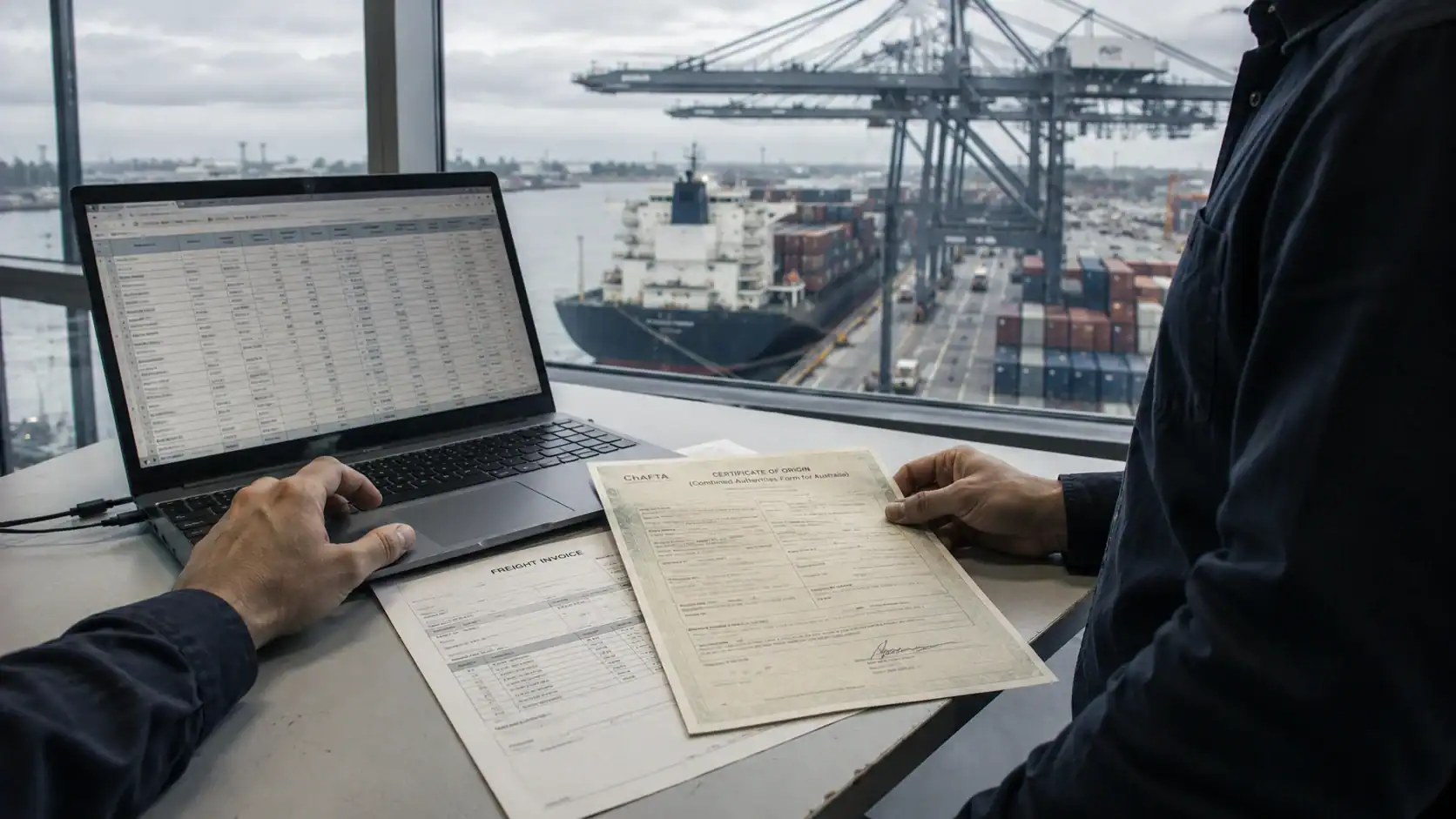
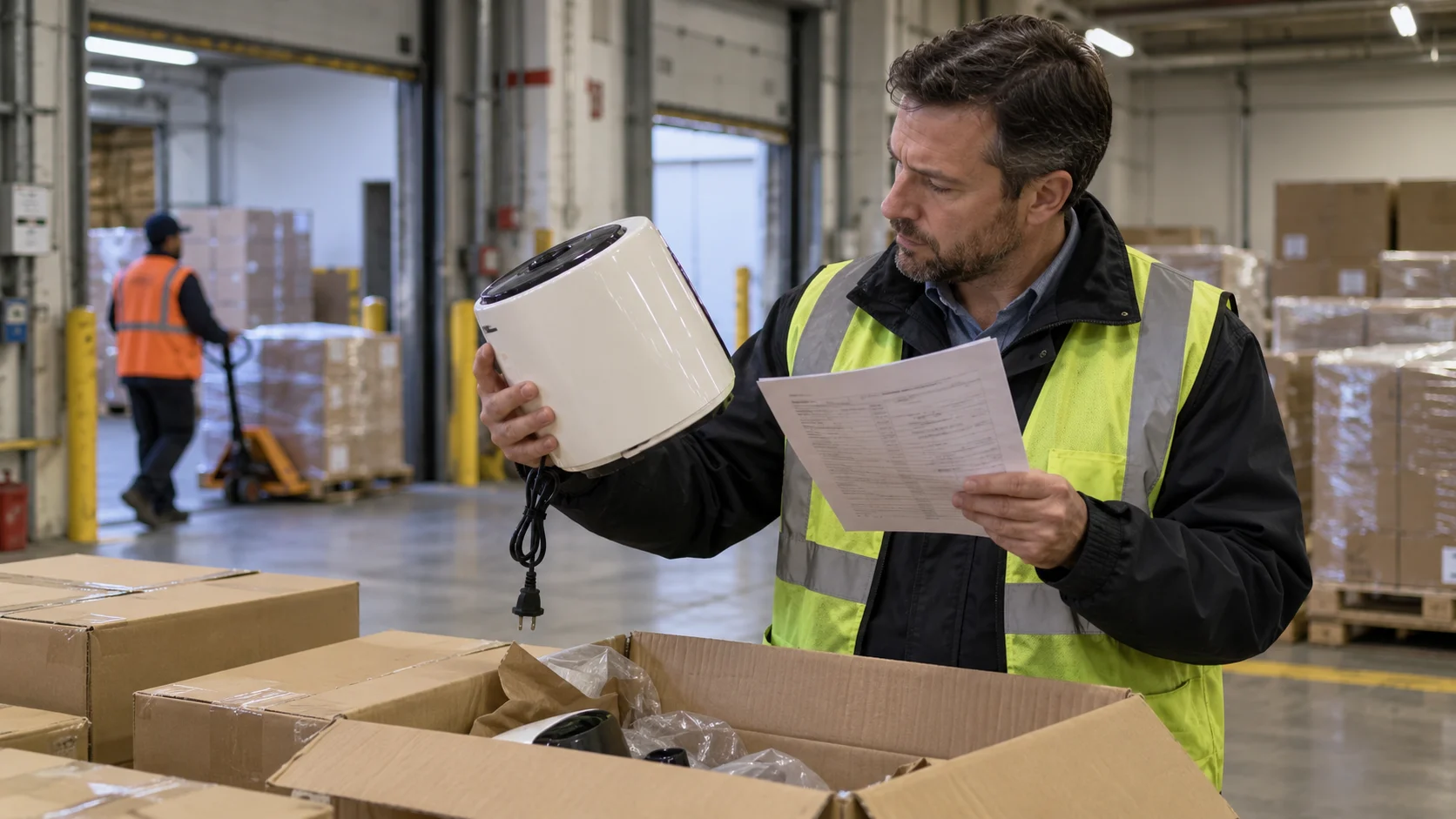
    Importer reviewing an itemized freight forwarder quote alongside an ABF customs broker licence check

    The Licensing Question: Freight Forwarder vs Customs Broker

    The most important distinction in the Australian market is between freight forwarding and customs brokerage. They are different regulated activities, and not every company that calls itself a freight forwarder is licensed to do both.

    A freight forwarder organises the physical movement of goods: booking carriers, managing documentation, coordinating port handling. A customs broker lodges import declarations with Australian Border Force, calculates duty, applies FTA concessions, and manages the customs clearance process. Customs brokers in Australia must hold a licence issued under the Customs Act 1901, regulated by the Department of Home Affairs. The licence requires examinations, character checks, and continuing professional development.

    Many companies operate as both. But if a forwarder is outsourcing your customs entries to a third-party broker you have never met, your goods are effectively being managed by two separate parties with divided accountability. When a customs hold occurs or a duty assessment is wrong, you need to know who is responsible for what.

    What to ask: “Do you hold an Australian customs broker licence, or do you outsource customs entries?” If they outsource, ask who the broker is, how communication flows between the two parties on your shipment, and who your single escalation contact is for compliance problems.

    Industry Affiliation as a Credibility Baseline

    Two industry affiliations are worth checking as a minimum credibility screen:

    AFIF (Australian Federation of International Forwarders) is the peak industry body for Australian freight forwarders. AFIF members operate under the AFIF Standard Trading Conditions, which govern liability, claims procedures, and the forwarder’s obligations to you as a client. Most professional Australian forwarders are AFIF members. Lacking AFIF membership doesn’t automatically disqualify a forwarder, but it should prompt the question: what standard trading conditions do they use, and have you read them?

    FIATA (International Federation of Freight Forwarders Associations) is the global industry body. FIATA-affiliated forwarders can access the FIATA Bill of Lading (FBL) and operate within an internationally recognised framework. For importers dealing with freight from multiple countries, FIATA affiliation of a forwarder’s overseas partners matters as much as their own domestic membership.

    These affiliations are a baseline, not a guarantee. An AFIF member who handles your route poorly is still a poor choice. But a forwarder is a higher-risk selection if they are not a member of any industry body and cannot explain why.

    For the full picture of what happens at each stage, from import declaration to Trusted Trader status, see our guide to the Australia import process end to end.

    Route Specialisation Over Company Size

    Company size is not a proxy for route capability. A forwarder with 500 staff and offices in 40 countries may have less expertise on Vietnam-to-Australia LCL consolidations than a 20-person Melbourne operator whose core business is exactly that route.

    The relevant question is: how many shipments per month does this forwarder move on your specific route? A forwarder doing 30 LCL shipments per month from Ho Chi Minh City to Sydney has current carrier relationships, current port knowledge, current customs broker familiarity with Vietnamese origin documentation, and current DAFF biosecurity experience with products from that origin. A forwarder doing three shipments per month on that route has none of this in active practice.

    Carrier relationships matter operationally. Forwarders with volume commitments to specific shipping lines can often recover space during peak season congestion when spot-market shippers cannot. They also have escalation contacts at carriers that are worth having when a booking is bumped or a container is rolled to a later vessel.

    What to ask: “How many shipments per month do you handle from [my origin country] to Australia? Which carriers do you hold regular space allocations with on that route? Who is your primary carrier contact when a booking needs to be escalated?”

    Three diverging freight forwarder routes converging on an Australian port, one route highlighted with a checklist motif

    What a Good Quote Looks Like, and What a Bad One Reveals

    The structure of a forwarder’s quote tells you almost as much as its price. A professional freight forwarder quotes the cost components separately. A quote that gives you a single “all-in” number without itemisation is concealing information you need.

    A structured quote for a sea freight shipment to Australia should itemise:

    • Ocean freight: the base rate from origin port to destination port (per CBM for LCL, per container for FCL)
    • Origin charges: origin port handling, container freight station fees (for LCL), export documentation
    • Bunker Adjustment Factor (BAF) / fuel surcharge: listed separately so you can see when it changes
    • Destination THC (Terminal Handling Charge): port of Melbourne or Port Botany handling fee
    • Customs brokerage: the fee for lodging your import declaration with ABF
    • DAFF biosecurity levy: currently AUD 53.10 per import declaration (set by the Australian Government, not the forwarder)
    • Cartage / delivery: port-to-warehouse delivery in Australia
    • Cargo insurance: if included; if not, it should be noted as excluded

    When all of these are visible, you can compare quotes from different forwarders meaningfully. When they are bundled, you cannot tell whether a lower headline number reflects a competitive ocean rate or a missing cost component that will appear on the arrival invoice.

    An “all-in” quote that is significantly lower than itemized competitors is usually lower because something is missing, not because the forwarder is more efficient. The arrival invoice reconciliation is where you find out what was omitted. Ask any freight forwarder in Australia to itemise the quote before you compare headline prices.

    The itemized quote has a simple reading: it is a signal, not a formality. A forwarder who breaks out every line is telling you something before you have signed anything: I am not worried about you seeing where the money goes. Call it the honest-quote test. The forwarders worth hiring want to be compared line by line, because a fair comparison is where they win. The ones who bundle everything into a single number are quietly betting that you will not ask. So ask. The quote you can actually read is nearly always the quote you can trust.
    An Itemized Quote Reveals What an Australian Freight Forwarder Can Handle: Customs Capability: The Questions That Matter

    Customs Capability: The Questions That Matter

    For most Australian importers, the customs brokerage component of a forwarder’s service is where the highest-value (and highest-risk) work happens. Duty classification errors, missed FTA concessions, and DAFF biosecurity mishandling all occur here. Evaluating customs capability requires specific questions.

    FTA experience: “Have you handled ChAFTA (China-Australia FTA) concessions on goods similar to mine? What is your process for ensuring the Certificate of Origin is in place before the goods ship?” A forwarder who fumbles this answer, or who treats the CoO as a box to check rather than a pre-shipment process, is likely to cost you duty concessions.

    Pre-arrival declarations: “Do you lodge pre-arrival declarations with ABF?” A pre-arrival declaration lodges the import entry before the vessel berths. It reduces port dwell time and speeds customs release. Not all forwarders do this as standard. For high-volume importers, the difference between 24-hour and 5-day clearance times raises real carrying costs.

    DAFF experience: “How many DAFF biosecurity referrals have you managed in the last 12 months, and what was the typical resolution time?” A forwarder with active DAFF experience has an established relationship with the referral process. A forwarder who has rarely dealt with DAFF holds is going to learn on your shipment.

    HS code classification: “Who in your team is responsible for tariff classification on new products, and what is your process for verifying the correct HS code?” The right answer requires a licensed customs broker and, for novel products, an ABF Binding Tariff Advice. The wrong answer is “we use what the client tells us.”

    Visibility and Communication Standards

    An import program has a timeline. Delays affect warehouse planning, retail promotions, and cash flow at any point: origin booking cut-offs, vessel rollings, transshipment waits, customs holds. The question is not whether delays will occur, but how quickly you will know about them when they do.

    Good freight forwarders proactively notify you of exceptions. The shipment was rolled to a later vessel. You get an email the same day with the revised ETA and the reason. The container was flagged for DAFF inspection. You get a call before you are chasing an overdue delivery. The customs entry has been queried. You hear from the broker before the goods are held for a week without explanation.

    Poor freight forwarders communicate reactively. You email asking for a status update and wait 24 hours. You call to ask where your container is and are told someone will get back to you. You discover a customs hold when your goods do not arrive on the expected date.

    The visibility question at evaluation stage: “What does your standard shipment notification process look like? At what points in the journey do we receive proactive status updates, and through what channel?” Ask to be shown an example shipment tracking report or notification email. If they cannot produce one, you are being asked to trust a claim they have no evidence to support.

    What Happens When Something Goes Wrong

    Every import program experiences exceptions. A container is damaged. A customs entry is queried. A booking is rolled and the revised vessel has a 12-day gap. The relevant evaluation question is not whether your forwarder has perfect operations (no one does) but what happens when theirs are not.

    Specific things to probe:

    Escalation path: Who do you call when there is a problem? Is there a named account manager, or does every call go to a general inbox? On a Friday afternoon when a container is being held and demurrage is accruing, the difference between a direct mobile number and a ticketing system is measured in AUD.

    Cargo claim history: “Have you managed cargo insurance claims for clients on this route? What was the process and typical resolution time?” A forwarder who has managed claims knows what documentation ABF and the insurer require and can guide you through it. One who has not will be reading the policy for the first time when you need them to act.

    DAFF control action experience: If DAFF orders treatment of your goods (fumigation, heat treatment), the forwarder’s speed and existing relationships with approved treatment providers determine how many days of additional demurrage you pay. A forwarder with a trusted treatment provider on speed dial resolves this faster than one making cold calls.

    Volume Commitments and Contract Terms

    Some forwarders offer below-market rates in exchange for volume commitments: a minimum number of shipments per year or an exclusivity arrangement. Read these terms carefully before signing.

    Volume commitments create leverage in the forwarder’s favour once you are inside the contract. If service quality deteriorates (rates increase, communication lapses, errors recur), your ability to switch is constrained by the commitment you made. The rate you secured at the start becomes a sunk cost you are weighing against the disruption of switching and any contractual penalties.

    A professional forwarder who is confident in their service quality does not need to lock you in contractually. The best freight forwarder relationships are retained by performance, not by contract. If a forwarder is heavily emphasising the volume commitment structure rather than their service capability during the evaluation, treat that emphasis as a red flag.

    Minimum terms to understand before signing anything: What is the minimum volume commitment? What are the penalties for falling short? Is there a rate review mechanism, and who triggers it? What are the termination conditions?

    Step back from any single contract and the pattern is structural, not just contractual. Freight forwarding is a low-differentiation category: two forwarders quoting the same lane with the same carrier options can rarely justify a large price gap on capability alone, which means switching costs are close to zero for anyone who hasn’t already been locked in. A forwarder leaning on volume commitments and exclusivity clauses isn’t protecting a real advantage. It’s manufacturing one, because the underlying service is too easy to replicate for the relationship to hold on performance alone. That’s the real question buried inside “why do they want me to sign a volume commitment”: are they locking you in because they’re confident you’d stay anyway, or because they know you wouldn’t? A forwarder who could win the rebooking every quarter has no structural reason to need the contract at all.

    A Practical Evaluation Framework

    When evaluating two or three forwarders in parallel, the following structure produces a cleaner comparison than general impressions:

    1. Licence check: ABF customs broker licence number, verified on the ABF register
    2. Industry affiliation: AFIF member? FIATA affiliate? Standard trading conditions used?
    3. Route volume: Monthly shipments on your specific origin-Australia route
    4. Itemized quote: All cost components visible and labelled
    5. FTA process: How do they ensure CoO is in place before loading?
    6. Pre-arrival declaration: Standard practice or optional extra?
    7. DAFF experience: Referral history and treatment provider relationships
    8. Communication standard: Proactive exception notifications (evidence, not claims)
    9. Escalation path: Named account manager with direct contact
    10. Contract terms: Volume commitments, penalties, termination conditions

    A forwarder who handles nine of ten well and is weak on one is a known risk you can manage. A forwarder who cannot answer three or four of these questions clearly during evaluation is unlikely to improve once your shipments are in their hands.

    For context on what a well-run freight forwarder should be catching on your behalf, and the cost when they miss it, the most common compliance failures are catalogued in our guide to common import mistakes Australian importers make. For the cost framework that a good forwarder’s quote should map to, see our total landed cost guide for Australian importers. If you are evaluating forwarders specifically because your current program is experiencing customs delays, the guide to why shipments get held at Australian customs identifies the documentation and compliance gaps that forwarders are supposed to prevent.

    If you are reviewing your current freight forwarder or selecting one for the first time, see how Swift Cargo handles the Australia shipping process, including customs brokerage and pre-arrival declarations. If your evaluation concludes your current forwarder should be replaced rather than kept, switching freight forwarders without disrupting your supply chain covers the transition itself.

    Before adding evaluation criteria to your freight forwarder selection, consider what happens when the selection goes wrong. Missing the certificate of origin pre-loading requirement on a ChAFTA shipment loses the duty concession and repeats that loss on every subsequent shipment until you catch the problem. A DAFF treatment hold adds 2 to 5 days at port plus AUD 1,500 to 5,000 in treatment and storage costs, on a schedule you cannot predict. The forwarder who underquotes wins the brief; the cost of that underquote lands 6 weeks later in a demurrage invoice. Inverting the selection problem means asking what a bad forwarder costs rather than what a good one provides. That changes the criteria that matter. The price difference between a route specialist and a generalist rarely exceeds AUD 500 to 1,000 per shipment. A single ISPM 15 incident costs more. The evaluation question is not which forwarder is cheapest but which forwarder’s failure modes are least expensive.

    Shortlisting a Freight Forwarder in Australia

    Check the customs broker licence on the ABF register, AFIF membership and monthly volume on your route, then insist on an itemised quote and ask how pre-arrival declarations, DAFF referrals and escalations are handled. Read any volume commitment’s penalties and termination terms before signing.

    Frequently Asked Questions

    Do I need a freight forwarder or a customs broker, or both?

    For most Australian import programs, you need both functions. The simplest arrangement is a single company that is licensed for both freight forwarding and customs brokerage. This gives you one point of contact and undivided accountability. If you use separate providers, establish clearly in writing who is responsible for what, particularly for customs entry lodgement, DAFF biosecurity clearance, and cargo insurance.

    How do I verify that a freight forwarder holds an Australian customs broker licence?

    The Australian Border Force maintains a public register of licensed customs brokers. A forwarder is a red flag if they claim to hold a licence but cannot provide a licence number for verification.

    What is the AFIF Standard Trading Conditions document and why does it matter?

    The AFIF Standard Trading Conditions govern the contractual relationship between a freight forwarder and their client in Australia. They set out the forwarder’s liability limits, claims procedures, and obligations. Understanding these conditions, particularly the liability caps, is important before you have a claim. Ask for a copy before engaging any forwarder and read the liability and claims sections specifically.

    Should I use a digital freight platform instead of a traditional forwarder?

    Digital freight platforms (online quoting and booking tools) offer price transparency and speed for straightforward shipments. They are most useful for standard LCL or FCL shipments on high-volume, well-documented routes. For shipments involving FTA concessions, regulated product categories, DAFF biosecurity complexity, or non-standard cargo, the automated workflow of a platform is less suited than a relationship with a specialist customs broker who understands your product category. Use platforms for benchmarking quotes; use specialists for managing exceptions.

    How often should I review my freight forwarder relationship?

    An annual review is a reasonable minimum for any active import program. Review against the criteria above, not just against the rate. Has communication remained proactive? Have they caught compliance issues before they became problems? Has their route expertise kept pace with your import program’s evolution? A forwarder who was right for two shipments per year may not be the right partner for twelve.

  • Shipping Household Goods from Europe to Thailand

    Shipping Household Goods from Europe to Thailand

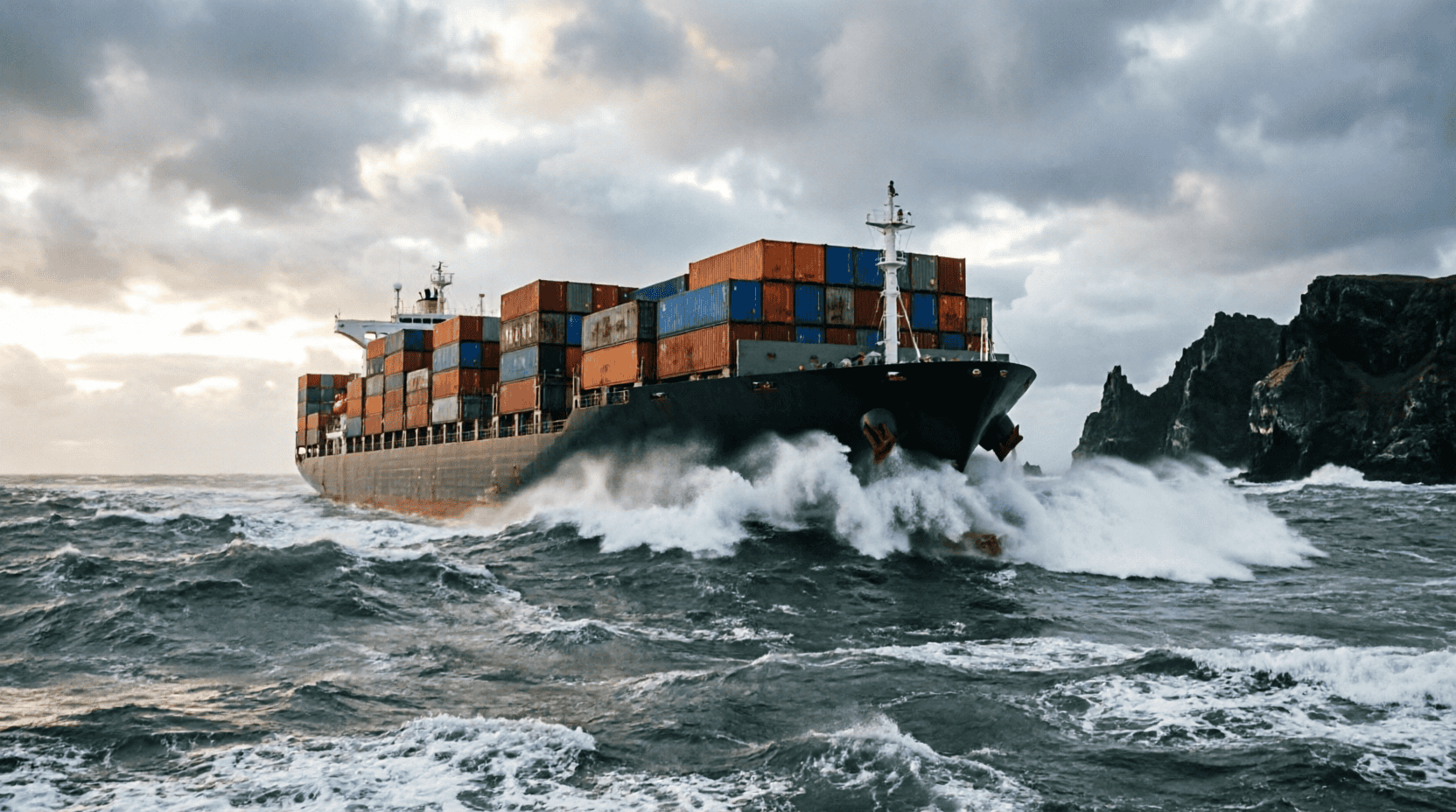
    Shipping household goods from Europe to Thailand via Cape of Good Hope route

    Europe to Thailand is not a short move. The sea route from Rotterdam to Laem Chabang covers roughly 19,000 kilometres via the Cape of Good Hope, a distance that shapes almost every decision you will make about what to ship, how to ship it, and how long to wait for it. European relocations to Thailand are structurally different from a European house move in almost every way. Most of the frustration comes from applying the wrong mental model to the journey.

    If you are planning the move itself, not just the freight, our Thailand relocation guide 2026 covers visa categories, duty-free personal effects rules, and the full customs process at Laem Chabang.

    The Thailand-side process (customs clearance, duty assessment, delivery) is covered in full in our step-by-step guide to shipping household goods to Thailand.

    The Route: What Actually Happens Between Your Front Door and Thailand

    Since the Houthi attacks on Red Sea shipping that began in late 2023, virtually all Europe-to-Asia container traffic has rerouted via the Cape of Good Hope. No meaningful exceptions apply to household goods consolidations. The Cape route adds roughly 7–11 days to the sea transit compared to the Suez route and meaningfully increases fuel costs, which carriers pass through as surcharges.

    The voyage itself breaks down as follows from major European ports to Laem Chabang:

    • Rotterdam / Antwerp / Hamburg: 28–35 days sea transit via Cape
    • Felixstowe / Southampton (UK): 30–37 days sea transit
    • Le Havre: 29–35 days sea transit
    • Genoa / La Spezia: 27–33 days sea transit
    • Barcelona / Valencia: 27–32 days sea transit

    These are vessel transit figures. Your goods are not on the vessel for this entire period. Before the vessel departs, three steps happen: a collection and packing window (5–10 days), a container loading window at the CFS or container yard (3–5 days for LCL), and customs export clearance. At the Thailand end, port handling, customs clearance, and delivery typically add 7–14 days. The realistic door-to-door timeline for a European relocation to Thailand is 10 to 16 weeks under current Cape routing conditions.

    Nearly all routes stop at one or two transshipment ports. Tanjung Pelepas (Malaysia), Port Klang (Malaysia), and Singapore are the most common intermediate stops for Europe-to-Thailand cargo. Each transshipment point is a point of damage risk: the container is lifted off one vessel and onto another, sometimes after a period of storage in the yard. This matters for both insurance decisions and packing standards.

    European Departure Ports: Which One Is Right for You

    The decision is mostly made for you by geography. Use the major container port that serves your region; the freight cost difference between adjacent ports is rarely large enough to justify repositioning your goods.

    Country / RegionPrimary Port(s)Notes
    Netherlands, Belgium, Germany (North)Rotterdam, Antwerp, HamburgRotterdam is Europe’s largest container port. Excellent LCL consolidation frequency to Southeast Asia.
    UK, IrelandFelixstowe, SouthamptonPost-Brexit: goods leave as non-EU exports. EU-standard exit documents no longer required.
    France (North)Le HavreMajor consolidation hub. Good direct service to Singapore/Laem Chabang.
    France (South), MonacoMarseille, FosShorter access to Mediterranean feeder services connecting to Cape route vessels.
    Italy, Switzerland, AustriaGenoa, La Spezia, LivornoGenoa and La Spezia serve as gateway for central Europe. Livorno for Tuscany.
    Spain, PortugalBarcelona, Valencia, AlgecirasAlgeciras is the southernmost major port, with a marginally shorter Cape route. Barcelona and Valencia have more frequent consolidation services.
    Germany (South), Austria, CzechiaHamburg or inland to RotterdamHamburg is often preferred for landlocked central European origins due to rail/road connections.
    ScandinaviaGothenburg, Copenhagen, feeder to RotterdamSmaller volumes often feed via Rotterdam rather than direct services.

    LCL vs FCL: The Crossover Calculation for European Shipments

    For most personal relocations from Europe, LCL (less than container load) is the default. A one-bedroom European apartment typically yields 10–18 cubic metres of household goods; a three-bedroom home might reach 25–35 CBM. The LCL-to-FCL crossover on European routes sits at approximately 15–20 CBM, slightly higher than on shorter China-to-Australia routes because the fixed FCL costs (port handling, container hire, destination THC at Laem Chabang) are spread over a longer voyage with higher base rates.

    If your volume is firmly below 12 CBM, LCL is almost certainly the right answer. If you are at 20+ CBM, a 20-foot container (which holds approximately 25–28 CBM of household goods once packed) is worth pricing. Above 28 CBM, a 40-foot high-cube container (up to 76 CBM capacity, though household goods rarely fill more than 40–50 CBM of this) becomes relevant for larger moves.

    Three things shift the calculation toward FCL even at lower volumes:

    1. High-value fragile goods. Art, antiques, musical instruments, and certain furniture pieces benefit from sole-occupancy container environments: no co-loading, no intermediate handling at the CFS deconsolidation facility. The fewer times your goods are touched, the lower the damage risk. This is worth paying a FCL premium for at volumes that would otherwise be LCL on cost.
    2. Delivery timing. LCL on European routes adds a consolidation scheduling cut-off delay at origin (typically 5–10 days to the next sailing after your goods arrive at the CFS) and a deconsolidation delay at destination (Laem Chabang or Bangkok CFS adds 3–7 days). If you need goods to arrive by a hard date, FCL gives you direct vessel booking control that LCL does not.
    3. Peak season rate spikes. Q3-Q4 sees significant rate increases across European routes as northbound/southbound flows compete for vessel space. During peak periods, LCL rates per CBM can approach FCL cost-per-CBM at volumes well below the theoretical crossover.

    Thai Customs Duty-Free for European Nationals: What Is Actually Required

    Thai Customs allows used personal and household effects to enter duty-free under a personal effects exemption. The rules are the same regardless of which European country you are relocating from, but the documents you need to supply as proof differ by country of origin.

    The Thai Customs requirements are:

    • Goods must be used, not new in original packaging
    • The owner must be entering Thailand to reside (the exemption is not available for holiday or tourist trips)
    • The shipment must arrive within 6 months of the owner’s visa-backed entry into Thailand (bring the goods with you or ship them close to your arrival date)
    • A valid non-immigrant visa is typically required; tourist visas and most short-stay entries do not qualify
    • The owner must be able to demonstrate they have departed their country of origin as a resident (not a visitor leaving for a holiday)

    That last requirement is where European country-specific documents become critical. Thai Customs commonly requests residence deregistration evidence (proof that you have officially ended your residence in your home country) as supporting documentation for the duty-free claim.

    Country-Specific Deregistration Documents

    CountryDeregistration ProcessDocument for Thai Customs
    GermanyAbmeldung at the Einwohnermeldeamt (local registration office), mandatory by law when leaving GermanyAbmeldebestätigung (deregistration confirmation)
    NetherlandsAangifte van emigratie: file with the BRP (Basisregistratie Personen) at your local gemeenteUittreksel BRP (personal data extract confirming emigration) or the emigration confirmation letter
    FranceNo mandatory deregistration from the Mairie, but tax residence departure must be declared to the tax authorityAttestation de changement de résidence or a combination of rental contract termination, utility final bills, and French tax authority correspondence confirming non-resident status
    SpainBaja consular (deregistration from the Padrón municipal at your Ayuntamiento): submit Certificado de Empadronamiento as proof of prior residence, then deregisterCertificado de baja padronal or equivalent deregistration confirmation
    ItalyCancellazione anagrafica at your comune (municipal registry), required when establishing permanent residence abroadCertificato di residenza with emigration notation, or cancellazione confirmation from the comune
    UKNo formal resident deregistration system. Deregister from electoral roll, close National Insurance record contributions, notify HMRC of non-resident tax statusHMRC P85 (Leaving the UK form) confirmation, electoral roll removal letter, and/or council tax deregistration as supporting evidence
    Sweden / NordicFolkbokföring deregistration at Skatteverket (Swedish Tax Agency): notify of emigrationSkatteverket emigration confirmation or Personbevis (person record extract) confirming deregistered status
    BelgiumDeregistration at the commune / gemeenteCommune deregistration confirmation or radiation des registres de population

    Obtain these documents before your goods are collected. Thai Customs will not wait for paperwork to arrive after the shipment clears.

    If you want the complete country-specific guide rather than just the deregistration step, see our full write-ups for Germany, the Netherlands, France, Italy, Spain, Austria, Ireland, or the UK.

    An open box of small electricals with a blank sticker sits on a side table near a sofa wrapped in packing paper.

    What Is Not Worth Shipping from Europe to Thailand

    The length of the voyage and the Thai import duty structure together make several categories of goods economically irrational to ship. Working through this list before packing saves both money and container space.

    Wine and spirits. Thailand applies excise duty of approximately 400% of CIF value on imported spirits, plus VAT and health surcharges. A case of wine or whisky that cost EUR 200 in France or Scotland can attract AUD 500–1,000+ in duty and taxes on arrival. Thai customs does not distinguish between personal effects and commercial alcohol imports for duty calculation purposes. The household effects duty-free exemption does not extend to alcohol. Leave it behind, sell it, or drink it before you leave.

    Cars and motorcycles. Thai import duty on passenger vehicles ranges from 80% to 328% of the vehicle’s CIF value depending on engine size, and this applies regardless of how long you have owned the vehicle. A EUR 25,000 European car will cost EUR 20,000–80,000+ in Thai import duty alone, before any local registration. No meaningful personal effects exemptions apply to vehicles. This is not a close call.

    E-bikes with lithium batteries. Lithium-ion batteries above a certain watt-hour threshold are classified as dangerous goods under IATA DGR Class 9 and are prohibited or strictly regulated on sea freight consolidations. Most e-bikes are ineligible for standard household goods shipping. The bike itself can sometimes be shipped separately as a lithium-battery-free frame with the battery purchased new in Thailand. But this is usually not worth the hassle for a single bike.

    Large appliances at 220V/50Hz. Thailand runs on 220V/50Hz, the same as most of Europe. European appliances will generally work electrically. However, warranty and service support for European-branded appliances in Thailand is limited, and the cost of shipping a washing machine or refrigerator in a consolidation often approaches or exceeds the cost of buying new in Thailand. Appliances with residual value worth noting: premium European brands (Miele, AEG) retain enough value to sometimes justify the decision. Basic appliances do not.

    Flat-pack furniture. The shipping cost per kilogram for flat-pack furniture rarely makes economic sense on a 10,000+ km route. IKEA operates in Thailand. Higher-quality solid European furniture (oak dining tables, quality upholstered sofas) is a different calculation, particularly if it has personal or sentimental value that makes replacement in Thailand impossible.

    Shipping Household Goods from Europe to Thailand: Packing Standards for a Long-Haul Route

    Packing Standards for a Long-Haul Route

    The Europe-to-Thailand route is among the longest regular household goods routes in the world. Three factors create higher physical stress on cargo than shorter routes: multiple vessel transshipments, Cape weather exposure (swells in the Southern Ocean can exceed 10 metres), and extended voyage duration.

    The International Maritime Organization’s CTU Code (Code of Practice for Packing of Cargo Transport Units, produced jointly by IMO, ILO, and UNECE) is the relevant packing benchmark. For personal effects on this route, the key principles are:

    • Desiccant placement: container sweat is a real phenomenon on long voyages through tropical and sub-tropical temperature transitions. Moisture absorbers (silica gel desiccant bags, sized to the container volume) prevent condensation damage to wooden furniture, electronics, books, and fabrics.
    • Double-boxing fragile items: a box inside a box with foam padding on all six faces, not just bottom and top. Transshipment crane operations generate vertical shock; padding on vertical faces matters.
    • Stow plan adherence: heavy items (books, tools, ceramics) on the floor of the container, lighter items above. Weight stacked on top of furniture causes compression damage over 30+ days of vibration.
    • Void fill in all cartons: any movement inside a carton during the voyage becomes cumulative abrasion damage. Fill every carton to its rated capacity.

    If your freight forwarder or removals company packs your goods, ask to see their packing methodology for long-haul routes specifically. “Standard packing” varies significantly between operators.

    Cargo Insurance on the Europe-to-Thailand Route

    The Hague-Visby Rules cap carrier liability at approximately USD 2.70 per kilogram of cargo lost or damaged, equivalent to roughly 4–5% of the typical replacement value of household electronics or quality furniture. On a long-haul route with multiple transshipment points and Cape weather exposure, relying on carrier liability is not a defensible position.

    Institute Cargo Clauses (A), the “all risks” policy, is the appropriate cover for household goods on this route. ICC (B) and ICC (C) both exclude important perils that are directly relevant: rain damage, condensation, and physical handling damage in transshipment yards are typically only covered under ICC (A). The full insurance decision framework, including premium ranges and the insufficient packing exclusion you need to be aware of, is covered in our cargo insurance guide for Thailand shipping.

    One specific point for European relocations: war and strikes (SRCC) add-on cover is worth considering given current Cape routing exposes your goods to additional political and maritime risk zones. This add-on is typically nominal in cost relative to the base premium.

    A distant container ship crosses open ocean under a glowing orange sunset sky.

    The Realistic Timeline, Assembled

    PhaseDurationNotes
    Collection, packing, and delivery to port / CFS5–10 daysDepends on removals/freight forwarder collection schedule in your city
    Consolidation and loading (LCL) / Container stuffing (FCL)3–10 daysLCL: next available sailing from CFS after goods arrive. FCL: your booked sailing date.
    Sea transit via Cape of Good Hope27–37 daysVaries by departure port. Current Cape routing adds 7–11 days vs Suez.
    Transshipment waiting time (if applicable)0–7 daysDepends on port of transshipment and connecting service schedule
    Arrival at Laem Chabang / Bangkok port2–4 daysPort handling and documentation lodgement
    Thai customs clearance3–14 daysDuty-free personal effects: 3–7 days if documents are complete. Inspection or duty assessment: can extend to 14+ days.
    Domestic delivery in Thailand1–5 daysBangkok metropolitan: 1–2 days. Provincial: 3–5 days.
    Total door-to-door10–16 weeksPlan for the upper end under current Cape routing conditions

    One practical implication: if you are relocating to Thailand on a fixed date (a job start, a school term, a lease beginning), your household goods will not be waiting for you when you arrive unless you shipped them 3–4 months in advance. Most Europeans arriving in Thailand live out of suitcases for the first 6–10 weeks while their shipment is in transit. Planning for furnished temporary accommodation for this period is standard practice.

    Let’s be honest about what that 10-to-16-week window actually feels like: you’ll be living out of two suitcases in a rented apartment, missing your good kitchen knife, wondering why you packed the winter coat you definitely will not need in Thailand. That’s normal. Nobody plans their move around “I will feel slightly unmoored for two months,” but that’s the real experience most Europeans have, not the tidy version where the container magically arrives the same week you do. The useful thing to do with that feeling isn’t ignore it. It’s plan the furnished temporary accommodation before you leave, the same way you’d plan the shipment itself, instead of assuming you’ll sort it out once you land. You wouldn’t book a flight without knowing where you’re sleeping that night. Don’t ship your life without knowing where you’re sleeping for the ten weeks after it arrives.

    It helps to read that 10-to-16-week range for what it actually is. The lower bound is not the plan; it is the best case, and the best case is the least likely single outcome on a route with this many independent delay points: sailing schedule, Cape weather, transshipment connection, customs inspection. Each one is usually fine on its own. But “usually fine” stacked across four or five stages compounds, and the odds that every stage lands at its optimistic end are genuinely low. The honest number to plan around is the upper half of the range, with the very top held in reserve. People underestimate that tail because each individual delay looks small in isolation.

    A man carrying a laptop inspects a living room's sofa and shelving while a homeowner waits in the doorway.

    Getting an Accurate Quote

    Most international removals companies quote door-to-door to a single Thai delivery address. This is the simplest arrangement for personal relocation. The quote should itemise:

    • Origin packing and collection
    • Freight (sea, LCL or FCL, origin port to Laem Chabang or Bangkok port)
    • Origin customs export clearance
    • Destination charges (destination THC, terminal handling, port delivery order)
    • Thai customs brokerage and clearance
    • Cargo insurance (usually quoted separately or as an add-on)
    • Domestic delivery in Thailand

    Items that are sometimes excluded from removals quotes and should be asked about explicitly: storage in Thailand if your accommodation is not ready on arrival, re-delivery fees if customs clearance is delayed, and customs inspection fees if Thai Customs opens the container. Get the full scope in writing before accepting any quote.

    If you are using a freight forwarder rather than a removals company (more common for part-container or business-goods shipments), the scope typically excludes origin packing and domestic delivery. You arrange those separately.

    One document decides whether a container that has already arrived can actually be released, and most quotes never mention it: the bill of lading. If your forwarder issues an original B/L, the Thai agent needs that paper, endorsed, in Bangkok before the delivery order is cut. Couriered from Europe after sailing, it can arrive later than the goods, and the port starts charging storage while an envelope is in transit. Ask at booking for a telex (express) release or a sea waybill instead, so release is electronic and tied to the shipper’s instruction rather than to a physical document. On a 30-day Cape voyage, the paper should never be the slowest thing on the route.

    Swift Cargo quotes door-to-door Europe-to-Thailand household goods moves across LCL and FCL from all major European departure ports.

    In late 2023, a 23-cubic-metre household goods shipment from Rotterdam bound for Laem Chabang was rolled at a Singapore transshipment terminal. The vessel had berthed on schedule. Rolling meant the container sat in a yard for eleven days before the next available service. Notification reached the shipper’s broker on day four. The duty-free documentation package, timed to a specific arrival window, needed to be resubmitted with revised dates. Additional storage and rebooking costs came to approximately EUR 600. Cape routing is not the risk. It remains the primary practical option for most European household goods moving to Thailand. The risk is the assumption that the container will move on the timeline the forwarder quoted at booking. Build notification requirements into the forwarder agreement before the goods leave. Hold the duty-free documentation on a planning buffer, not a fixed arrival deadline. Both decisions happen before the container is sealed.

    Frequently Asked Questions

    Can I ship goods from any European country to Thailand duty-free?

    Yes. The Thai personal effects duty-free exemption applies to all nationalities and all countries of origin. The key requirements are that goods are used, the owner holds a valid non-immigrant visa, and the shipment arrives within 6 months of the owner’s entry. The country-specific deregistration documents required vary, but the Thai customs rules are the same regardless of origin.

    How long does shipping from Europe to Thailand take?

    Allow 10–16 weeks door-to-door under current Cape of Good Hope routing. Sea transit alone is 27–37 days depending on the departure port. Add pre-shipment preparation, consolidation, Thai customs clearance, and domestic delivery for the full timeline.

    Is it better to use a removals company or a freight forwarder for European relocations to Thailand?

    For personal household goods, a removals company with door-to-door service is typically easier to manage: one contract, one point of accountability. A freight forwarder is more appropriate if you are shipping commercial goods, if you are managing packing yourself, or if volume is large enough (20+ CBM) that you want direct control over the container booking and customs brokerage. Both can handle the same physical goods; the difference is scope of service and who coordinates what.

    What happens if Thai Customs decides to inspect my shipment?

    Customs may open and inspect any shipment. For personal effects, inspection typically adds 3–10 days and may incur inspection fees (which your customs broker can advise on before clearance). Having complete, accurate documentation (including the packing list with clear item descriptions, origin deregistration documents, and visa paperwork) significantly reduces both the likelihood and duration of inspection. Vague packing lists (“miscellaneous household goods”) are a common inspection trigger.

    Does the Thai personal effects exemption cover electronics?

    Yes. Used personal electronics (laptops, televisions, cameras, audio equipment) qualify as personal effects if they are genuinely used and not in commercial quantities. One laptop, one television, and personal audio equipment are straightforward. Six televisions or ten laptops will attract scrutiny. No per-item limit is published, but Thai Customs applies a reasonableness test to quantities.

    Can I ship alcohol as part of my household goods?

    Alcohol is excluded from the personal effects duty-free exemption in Thailand and attracts excise duty at rates that make shipping economically unviable in almost all cases. Spirits face duty rates that can reach 400%+ of CIF value including all applicable taxes. Do not include alcohol in your household goods shipment.

  • Cut Australia Import Freight Costs With Consolidation and FTA Savings

    Cut Australia Import Freight Costs With Consolidation and FTA Savings

    Cut Australia Import Freight Costs With Consolidation and FTA Savings

    How to Reduce Freight Costs When Importing to Australia

    Freight cost reduction has a counterintuitive property: most of the easy gains come from decisions made before the booking, not from negotiating the booking itself.

    The shipper who sends five separate 3-CBM LCL shipments per month and then negotiates hard on the freight rate per CBM is optimising the wrong variable. The same goods moved as one 15-CBM LCL shipment, or as an FCL if the volume warrants it, would carry lower total freight cost before any rate negotiation occurs. The per-shipment fixed costs (origin handling, destination handling, customs brokerage, DAFF biosecurity levy) get paid once instead of five times.

    The Cost Reduction vs Cost Shifting Distinction

    Not every action that reduces your freight invoice reduces your total landed cost. Several common “freight cost reduction” strategies are actually cost-shifting strategies. They move the cost from the freight line to another line.

    Buying on FOB instead of CIF. CIF terms mean your supplier arranges and pays for freight and insurance to the destination port, and you pay for it indirectly through the invoice price. FOB terms mean you arrange and pay for freight and insurance directly. Switching from CIF to FOB does not automatically reduce freight costs. It transfers freight control to you. Whether this produces a saving depends entirely on whether you can source freight more competitively than your supplier’s forwarder. For large importers with established carrier relationships, FOB often does produce savings. For smaller importers buying at relatively low volumes, the supplier’s forwarder may have scale advantages that you cannot match. The comparison must be made on a fully-landed basis, including cargo insurance that you may now need to purchase separately.

    Reducing insurance coverage. Removing or reducing cargo insurance reduces the freight-related invoice. It does not reduce costs. It self-insures the risk. If a loss occurs, the uninsured portion is a cost that was deferred rather than avoided. This is a risk management decision, not a cost reduction.

    Choosing a cheaper freight forwarder. Rate is not the only variable in forwarder selection. A cheaper quote that comes with slower transit, less reliable customs clearance performance, or inadequate documentation support may cost more in total than a slightly more expensive provider with better operational outcomes. Evaluate total landed cost and operational reliability, not just the freight rate line. Our guide on freight mode selection covers the cost and service variables across shipping options.

    Cut Australia Import Freight Costs With Consolidation and FTA Savings: Consolidation: The Highest-Leverage Action

    Consolidation: The Highest-Leverage Action

    For most Australian importers, the single highest-leverage freight cost reduction is consolidating more volume into fewer, larger shipments.

    The reason is fixed per-shipment costs. Every shipment incurs the following, regardless of size:

    • Origin handling and documentation fees (typically AUD 100–300 per shipment)
    • Destination handling and deconsolidation (typically AUD 150–400 per shipment for LCL)
    • Australian customs brokerage (typically AUD 200–500 per import declaration)
    • DAFF biosecurity levy (AUD 49.20 per import declaration as of 2025–26, plus any inspection costs)
    • Cargo insurance premium base (per policy)

    If you are shipping 3 CBM per order and placing four orders per month, you are paying these fixed costs four times to move 12 CBM. Consolidating to one 12-CBM shipment per month pays these costs once. The freight rate per CBM may be slightly higher for the consolidated shipment (because the consolidation is larger and requires a longer wait), but the total cost is almost always lower.

    The trade-off is inventory: consolidating into fewer shipments means holding more stock between deliveries. For importers with consistent demand and reliable supplier lead times, the inventory carrying cost is typically lower than the freight cost saving. For importers with unpredictable demand or variable lead times, the calculation is more nuanced.

    FTA Duty Savings: The Overlooked Lever

    Australia has free trade agreements with its major import partners that eliminate or significantly reduce import duty on a wide range of goods. The agreements in force that matter most to Australian importers:

    • ChAFTA (China): Eliminates duty on the vast majority of manufactured goods. MFN rates of 5–10% on many product categories are reduced to 0% with a valid Certificate of Origin (CoO) issued by CCPIT or CIQ in China.
    • AANZFTA (ASEAN, including Vietnam): Eliminates or significantly reduces duty on goods from Vietnam, Thailand, Indonesia, Malaysia, and other ASEAN members. Particularly relevant for apparel, footwear, furniture, and electronics.
    • AUSFTA (USA): Eliminates duty on most US-origin goods, with self-certification by the exporter or importer rather than a third-party CoO.
    • A-UKFTA (UK): Eliminates duty on most UK-origin goods following implementation post-Brexit.

    The duty saving is calculated on the CIF value of the goods. On a AUD 100,000 shipment of goods with a 5% MFN duty rate, a valid ChAFTA CoO saves AUD 5,000 in duty, plus the GST that would have been applied to that duty (another AUD 500). Over a year of regular imports, these savings compound.

    The common failure is not claiming the FTA rate when you are entitled to it, because the CoO was never obtained, was obtained incorrectly, or was not presented at the time of customs lodgement. The CoO must be issued before or at the time of loading (for ChAFTA) and presented to the Australian Border Force at or before the time of the import declaration. A retrospective CoO does not qualify. (ChAFTA rules of origin, DFAT) For a detailed overview of how ChAFTA and other FTAs affect the total landed cost calculation, see our total landed cost guide for Australian importers.

    Container Optimisation: Using the Space You Are Paying For

    For importers moving FCL, the container is a fixed cost. The rate does not change whether the container is 60% full or 100% full. Every unused CBM in a container you have booked is money you cannot recover.

    Container optimisation means maximising the usable volume in each FCL, and it is an operational discipline that reduces cost per unit directly. Four levers do most of the work:

    • Carton size standardisation. Irregular carton sizes create voids in the container. Standardising carton dimensions across a product range, and choosing dimensions that stack efficiently to the container’s internal height, can improve fill rates by 10–20%.
    • Load planning. A detailed load plan (ideally using container loading software or a 3D packing calculation) identifies the theoretical maximum fill rate for your cargo mix and gives the packing team a target to hit.
    • Product mix optimisation. If you have flexibility in which products move in which container, pairing high-density goods (which hit the weight limit before the volume limit) with low-density goods (which hit the volume limit first) can maximise both volume and weight utilisation.
    • 40HC vs 20ft selection. A 40-foot High Cube container (60–67 CBM) costs less per CBM than two 20-foot containers (50–56 CBM combined) at most rate levels. If your volume justifies a 40HC, the unit cost is lower than splitting into smaller boxes.
    An empty berth at an Australian container terminal on a quiet weekday, a single ship departing in the far distance leaving a soft wake.

    Timing: Freight Rate Seasonality

    Freight rates on Australia-bound routes are not constant. They follow a seasonal pattern driven by retail demand cycles and manufacturing calendars:

    • Peak rate period: Q3–Q4 (July–October). Australian retailers build Christmas inventory, which drives demand for container space sharply up. Rates and surcharges are typically highest during this window.
    • Secondary peak: Post-CNY (February–March). Chinese factories resume production after the Lunar New Year holiday just as shippers clear backlogged orders, and the two together produce a temporary demand spike.
    • Softer rate periods: Late Q2 (May–June) and Q1 post-CNY backlog clearance. Rates typically soften as the post-CNY rush clears and pre-Q3 demand has not yet built.

    Shifting even a portion of annual import volume from peak to off-peak periods can produce meaningful freight savings, either by holding higher inventory through peak seasons or by pulling purchases forward. The constraint is the inventory cost of the additional stock held to enable the timing shift. For some importers, the freight saving exceeds the carrying cost; for others, the reverse is true. Running the numbers on your specific inventory turns, storage cost, and freight rate differential is the way to decide.

    Incoterms: FOB vs CIF as a Strategic Decision

    The choice of Incoterms with your supplier is not purely an administrative decision. It determines who arranges freight, who bears the risk of loss, and who has negotiating leverage with the carrier.

    Under CIF, the supplier arranges and pays for freight and insurance to the destination port. The freight cost is embedded in the invoice price. You have no visibility into the actual freight rate and no ability to negotiate it directly. The supplier’s forwarder relationship may or may not produce competitive rates.

    Under FOB, you take control of the freight from the port of loading. You negotiate directly with your freight forwarder, you see the freight rate, and you can compare it against alternatives. If you have volume across multiple suppliers, you can consolidate their shipments into your freight program rather than having each supplier’s forwarder arrange separate bookings at potentially higher rates.

    The CIF to FOB switch produces real savings when the importer’s freight buying power exceeds the supplier’s. A buyer consolidating twenty suppliers’ shipments through a single forwarder relationship typically has more buying power than any individual supplier. Importers who have not yet evaluated this transition should run the comparison, particularly anyone importing significant volumes from China, Vietnam, or the USA.

    The caveat: FOB shifts risk to you from the port of loading. That requires cargo insurance arranged on your account, which may not have been required under CIF. Factor this into the comparison. Our guide to importing from China to Australia covers Incoterms in the context of the China supply chain specifically.

    Port Selection: Does It Matter?

    For most Australian importers, port selection is determined by geography, because you import through the port closest to your warehouse or distribution centre. But where the choice is not obvious, port economics matter.

    Melbourne (Port of Melbourne) and Sydney (Port Botany) handle the largest volumes and typically attract the most competitive ocean freight rates due to carrier network competition. Brisbane and Fremantle have higher per-unit costs for most commodity freight at equivalent volumes, but lower last-mile delivery costs for importers whose customers are concentrated in Queensland or Western Australia.

    The correct comparison is total landed cost to the warehouse, not ocean freight rate. An importer with a Melbourne warehouse may import through Sydney to access a marginally lower ocean freight rate, then pay interstate trucking to move the goods to Melbourne, and end up paying more in total. Run the full calculation: ocean freight + destination THC + customs brokerage + DAFF levy + last-mile delivery to warehouse.

    A pair of hands carefully checking the strapping and corner protectors on a palletized shipment before it's wrapped, warm warehouse light.

    What Not to Cut

    Some cost lines in the freight invoice are not good targets for reduction:

    • Customs brokerage. A licensed customs broker who knows your product range, your HS classifications, and your FTA eligibility is worth their fee. The cost of an incorrect import declaration, counting penalties, delays, and redelivery, typically exceeds the brokerage saving many times over.
    • DAFF biosecurity compliance. Attempting to avoid or minimise DAFF declaration costs by misdescribing goods or omitting biosecurity-relevant items is a compliance failure with significant potential consequences. The levy exists because biosecurity inspection is a cost-recovery system for real government expenditure.
    • Cargo insurance on high-value shipments. As discussed above, reducing the insurance premium by reducing coverage is cost-shifting, not cost reduction. For goods of material value, the insurance premium is a cost of doing business, not a discretionary line item.

    The structural levers in this guide work most reliably before the current freight rate feels normal. Freight costs are subject to what behavioural economists call the adaptation level effect: the rate paid at month twelve becomes the reference point for month thirteen. An AUD 4,200 FCL rate that started at AUD 3,100 eighteen months ago registers as “the rate” rather than as a 35% increase over a benchmark that exists and is findable. The implication is not that negotiation always works. It is that the window for applying these levers narrows gradually as the current rate becomes the psychological floor. A quarterly freight cost review works not only because it identifies variance but because it resets the comparison. The question is not “is our rate fair?” but “what would a new importer pay for this volume today?” Those are different questions. The second one is more useful.

    The tempting cuts are the ones whose value only shows up when they fail. Customs brokerage looks like an administrative fee until a tariff code is entered wrong, the Australian Border Force reclassifies the consignment at a higher duty rate, and a penalty lands on top of the corrected duty. The DAFF biosecurity inspection looks like a pure levy until an uninspected pallet of timber-packed goods is found to carry a pest and the whole container is held, fumigated, or in the worst case destroyed at the importer’s expense. Each of these line items is inexpensive precisely because it is doing its job quietly; the saving from removing it is real right up until the shipment where it would have earned its cost back many times over.

    Frequently Asked Questions

    What is the single most effective way to reduce freight costs when importing to Australia?

    For most importers, consolidating more volume into fewer, larger shipments. This spreads fixed per-shipment costs (origin handling, destination handling, customs brokerage, DAFF levy) across more cargo, so the total cost per CBM falls. The second-highest leverage point is consistently using valid FTA Certificates of Origin to access preferential duty rates.

    How much can ChAFTA save on duties when importing from China?

    Most Chinese-origin manufactured goods are now at 0% under ChAFTA vs MFN rates of 5–10%. On AUD 100,000 of goods at 5% MFN duty, a valid ChAFTA CoO saves AUD 5,000 in duty plus approximately AUD 500 in GST on that duty. Compounded across a year of regular imports, the savings are significant.

    Does buying on FOB terms instead of CIF reduce my freight costs?

    Not automatically. FOB transfers freight control to you; it only saves money if you can source freight more competitively than your supplier’s forwarder. For large importers consolidating multiple suppliers’ shipments, FOB often produces savings. For smaller importers, not necessarily. Compare on a fully-landed basis including cargo insurance.

    What is peak season for freight rates to Australia and how do I avoid it?

    Rates peak in Q3–Q4 (July–October) as retailers stock Christmas inventory, and again post-Chinese New Year (February–March). Rates soften in late Q2 and post-CNY clearance. Shifting import volume to off-peak periods requires higher inventory levels but can produce meaningful freight savings for importers with predictable demand.

    Can I reduce costs by using a different Australian port?

    Possibly. Melbourne and Sydney carry the most competitive rates due to volume. Brisbane and Fremantle have higher ocean freight costs but lower last-mile costs for Queensland and WA-based importers. Always compare total landed cost to your warehouse (ocean freight + THC + brokerage + DAFF levy + last-mile), not just the ocean freight rate.


    Freight cost reduction for Australian importers is mostly a structural exercise. It happens in how you organise your import program, not in how you negotiate individual shipments. If you would like a review of your current import program, covering consolidation opportunities, FTA eligibility, container optimisation, and Incoterms strategy, request an Australia import freight review. We work with Australian importers to structure freight programs that reduce total landed cost, not just freight invoice cost.

  • Cargo Insurance Fills the Gap Carrier Liability Leaves on Thailand Shipments

    Cargo Insurance Fills the Gap Carrier Liability Leaves on Thailand Shipments

    We have arranged cargo insurance for thousands of shipments between Australia and Thailand across fourteen years in Bangkok. The question we hear most often from first-time shippers is not “what does insurance cover?” It is “does my carrier already cover me?” The answer is yes, but for far less than most shippers expect. The conditions under which that liability applies are also narrower than any reasonable person would assume from reading a bill of lading. That gap is what cargo insurance for shipping to Thailand is for, and pricing it correctly takes the carrier’s cap, the right ICC clause and an insured value based on CIF plus 10%.

    Cargo Insurance Fills the Gap Carrier Liability Leaves on Thailand Shipments A Practical Guide

    What the Carrier Is Actually Liable For

    When you ship goods by sea freight, your relationship with the ocean carrier is governed by the bill of lading and the international maritime conventions it incorporates. For most shipments from Australia to Thailand, and for most international sea freight generally, the applicable liability framework is the Hague-Visby Rules.

    Everyone assumes that handing a sealed container to a shipping line makes the shipping line responsible for what is inside it. It is the intuitive position. You paid them to carry your goods, so surely they carry the risk. The Hague-Visby Rules quietly invert that assumption. The carrier’s liability is not the value of your cargo. It is capped at roughly AUD 1,350 per package regardless of what the package contains. A list of exemptions then lets the carrier owe nothing at all when the packing was inadequate or the sea was rough.

    The Hague-Visby Rules set three things that matter for a shipper trying to understand their exposure:

    A liability cap per package and per kilogram. The carrier’s maximum liability for cargo damage or loss is SDR 667 per “package or unit” or 2 SDR per kilogram, whichever produces the higher amount. At mid-2026 exchange rates, SDR 667 is approximately AUD 1,350 (THB 30,000). The 2 SDR per kilogram equivalent is approximately AUD 4.05 per kilogram.

    For a 40kg carton of electronics declared as one package on the bill of lading, the carrier’s liability cap is:

    • Per package: AUD 1,350
    • Per kilogram: 40 × AUD 4.05 = AUD 162
    • Applicable cap: AUD 1,350 (the higher of the two)

    If that carton contained AUD 8,000 worth of electronics and was destroyed in a container fire, the carrier owes AUD 1,350. The remaining AUD 6,650 is the shipper’s loss.

    A list of carrier exemptions. Even within the liability cap, the carrier can avoid all liability under a range of circumstances. The Hague-Visby Rules exempt carriers from liability for: errors in navigation or management of the ship (the “nautical fault” exemption), fire (unless caused by the carrier’s actual fault), perils of the sea, acts of war or public enemies, act or omission of the shipper, inherent defect in the goods, insufficient packing by the shipper, riots or civil commotions, latent defects in the vessel not discoverable by due diligence, and any cause arising without the carrier’s actual fault.

    In practice, the nautical fault exemption is rarely invoked for routine cargo damage. But the insufficient packing exemption is relevant: if a carrier can demonstrate that the goods were inadequately packed for the ordinary conditions of sea transit, the carrier may successfully argue that its liability is zero, not merely capped at SDR 667 per package.

    A limitation on the definition of “package.” For containerised cargo, the question of what constitutes a “package” for the purposes of the liability cap is often contested. If a single container holds 500 cartons and the bill of lading describes the shipment as “1 x 20ft container,” the carrier might argue the liability cap applies to one package, which would be AUD 1,350 for the entire container. Most bills of lading now specify the number of packages inside the container to avoid this, but the “package” issue is real and affects the calculation of maximum carrier exposure.

    Warehouse packer applying a final layer of protective wrap around a wooden crate

    The Three Levels of Cargo Insurance

    The Institute Cargo Clauses (ICC), published by the Lloyd’s Market Association and the International Underwriting Association, provide three standard levels of cover for cargo insurance. These are internationally recognised and used across the global marine insurance market.

    ICC-A: All Risks (Broadest Cover)

    ICC-A provides the broadest cover available. It is written as an all-risks policy, so it covers all physical loss or damage to the insured goods from any external cause, subject only to the named exclusions. You do not need to prove which specific peril caused the damage; you need only prove that the goods were damaged during the transit period and that the cause was not an excluded peril.

    What ICC-A covers:

    • Theft: full theft or pilferage of goods from the container or CFS
    • Water damage: sea water, fresh water, or condensation inside the container
    • Crushing damage: from stacking loads, forklift accidents, or container collapse
    • Fire and explosion
    • Vessel stranding, grounding, sinking, or capsizing
    • General average sacrifice and general average contributions
    • Jettison and washing overboard
    • Damage during loading and unloading at Laem Chabang or any other port in the transit
    • Damage during road or rail transit to the inland destination

    What ICC-A excludes:

    • Inherent vice: goods deteriorating by their own nature (fresh produce rotting, metal rusting because of its composition, goods with manufacturing defects)
    • Delay: loss or damage caused by delay in transit, even where the delay is the carrier’s fault
    • War risks: covered separately by Institute War Clauses (Cargo), available as an endorsement
    • Strikes, riots, and civil commotions: covered separately by Institute Strikes Clauses (Cargo), available as an endorsement
    • Wilful misconduct of the insured: deliberate destruction or damage by the insured party

    For most commercial shipments to Thailand and for personal effects moves, ICC-A is the appropriate standard. The premium differential between ICC-A and ICC-C is typically 0.05–0.1% of the insured value. On a AUD 50,000 shipment, that is a difference of AUD 25–50. The cover difference is substantially larger.

    ICC-B: Named Perils (Broader)

    ICC-B covers specific named perils only. The covered perils under ICC-B are: fire or explosion; vessel stranding, grounding, sinking, or capsizing; overturning or derailment of land conveyance; collision or contact of vessel, craft, or conveyance with any external object; discharge of cargo at a port of distress; earthquake, volcanic eruption, or lightning; general average sacrifice; jettison or washing overboard; entry of sea water, lake water, or river water; and total loss of any package lost overboard or dropped during loading or unloading.

    ICC-B notably does not cover theft, crushing, condensation damage, or handling damage at the CFS. Those are the causes that produce the majority of routine cargo damage claims on Australia-Thailand shipments. ICC-B is more commonly used for bulk commodities where theft and handling damage are not the primary risk concerns.

    ICC-C: Named Perils (Narrower)

    ICC-C is the most restricted form of cover. It covers: fire or explosion; vessel stranding, grounding, sinking, or capsizing; overturning or derailment of land conveyance; collision or contact of vessel, craft, or conveyance with any external object; discharge at port of distress; and general average sacrifice. It does not cover entry of sea water, does not cover washing overboard (unless a consequence of a covered vessel casualty), and does not cover any form of handling damage.

    ICC-C is suitable for low-value bulk cargo on established routes where the primary risk is total vessel loss rather than routine transit damage. It is not appropriate for general cargo, containerised shipments, or personal effects.

    Calculating the Correct Insured Value

    The insured value for cargo insurance is not the invoice value of the goods. It is the CIF value plus an uplift to cover anticipated profit and other consequential costs. Insure for less than the actual loss exposure and the insurer reduces any claim payment proportionally, which leaves the shipper carrying the residual risk.

    The standard formula: Insured value = CIF (Cost + Insurance + Freight) × 1.10

    The 1.10 multiplier (110% of CIF) is the standard commercial practice and covers the expected profit on the goods. For goods being imported for resale, the expected profit margin is typically higher than 10%, in which case the insured value should reflect the actual margin rather than the standard multiplier.

    Example: Australian fashion exporter shipping to a Thai distributor.
    Commercial invoice value (FOB Sydney): AUD 35,000
    Freight (Sydney to Bangkok): AUD 2,800
    Insurance premium: AUD 150
    CIF value: AUD 37,950
    Insured value (CIF × 1.10): AUD 41,745
    Profit margin on sale to Thai distributor: AUD 12,000 (actual)
    Recommended insured value: AUD 49,950 (CIF + actual profit)

    Insuring at AUD 41,745 rather than AUD 49,950 saves approximately AUD 16 in premium (0.2% rate differential) and leaves AUD 8,205 of profit uninsured.

    Personal Effects Valuation

    For personal effects moves, meaning household goods from Australia to Thailand, the insured value should be based on replacement cost in Thailand rather than the original Australian purchase price or a depreciated value. Consider a piece of furniture bought in Australia for AUD 800 five years ago. If it is destroyed in transit, replacing it in Thailand with an equivalent piece of furniture (of which much is imported from China or Europe and carries Thai import duty) may cost THB 35,000–50,000 (AUD 1,500–2,200).

    Insuring at the original purchase price of AUD 800 leaves the shipper underinsured by AUD 700–1,400 on that single item. Across a full container of household goods, the underinsurance gap between original-purchase-price valuation and Thailand-replacement-cost valuation can be AUD 15,000–30,000 on a AUD 80,000 insured shipment.

    Most cargo insurers offer a “replacement cost” valuation basis for personal effects insurance. The premium is slightly higher than for commercial goods due to the valuation methodology, but the cover basis is correct for the actual risk.

    Two movers walking a large glass-fronted cabinet down a ramp into a container using a proper hand truck

    Situations Where Insurance Is Financially Essential

    General average events. A vessel carrying your cargo may declare general average after a fire in the hold, a grounding requiring salvage, or any other event requiring voluntary sacrifice to save the ship. Cargo owners may then be required to contribute to the general average fund before their goods are released from the shipowner’s lien. General average contributions are calculated as a proportion of the cargo value and can run to several percent of the goods’ value. ICC-A covers both general average sacrifice and general average contributions.

    Uninsured cargo owners in a general average event face this choice: pay the contribution (which may be tens of thousands of dollars, calculated as a percentage of the commercial value) to release the goods, or leave the goods under the shipowner’s lien while disputing the general average calculation, a process that can take months and requires appointing an average adjuster. ICC-A policyholders simply file a claim; the insurer handles the general average deposit and contribution.

    High-value goods in LCL. LCL (Less than Container Load) shipments are handled at origin CFS, transshipped through Singapore (for Australia-Thailand services), and deconsolidated at Laem Chabang. A single LCL consignment passes through at minimum four CFS handling events. For high-value goods such as electronics, jewellery, instruments, and antiques, the CFS handling exposure is substantial. ICC-A covers theft and damage at every point in the transit including CFS handling; the carrier’s liability cap covers one package at AUD 1,350.

    Personal effects moves to Thailand. A 20ft container of household goods from Sydney to Bangkok is typically valued at AUD 30,000–80,000 at replacement cost. Assuming 200 declared packages at AUD 1,350 each, the carrier’s maximum liability is AUD 270,000, which appears to exceed the goods value. But carrier liability applies only where damage is proven to have been caused by the carrier’s negligence, and the carrier’s exemptions (including the insufficient packing exemption) are routinely invoked. In practice, the carrier pays a fraction of the declared liability for personal effects damage that occurred in their custody. Personal effects insurance on a replacement cost basis, with ICC-A cover, is standard practice for household goods moves to Thailand.

    New-to-carrier relationships. The first time you ship with a new carrier or forwarder, the risk of handling damage and loss is statistically higher than on established programs. That is truest on routes where the carrier and freight station relationships are not yet well established. ICC-A insurance on the first two or three shipments with a new carrier covers you while handling standards are still being established.

    Seasonal risk periods. Q4 (October–December) is the peak shipping season on Australia-Thailand lanes. Container space is at premium, vessels are fully loaded, and handling facilities at Laem Chabang operate at elevated throughput. CFS dwell times extend; the number of handling events per LCL consignment increases; the time goods spend in transit storage lengthens. The statistical damage rate during Q4 peak is higher than during off-peak periods. For shippers who might otherwise forego insurance on low-risk shipments, Q4 is the period to reconsider.

    Interior of a Thai bonded storage warehouse

    The Thailand-Specific Insurance Considerations

    Several features of the Australia-Thailand shipping route affect the insurance risk profile in ways that differ from other lanes.

    Singapore transshipment. Australia-Thailand sea freight services typically transship at Singapore rather than operating as direct services. The transshipment adds one additional container manipulation: the container is unloaded from the Australia-Singapore vessel and reloaded onto the Singapore-Thailand feeder service. For FCL shipments, the risk is primarily the transshipment handling itself. For LCL shipments, transshipment may involve CFS deconsolidation and reconsolidation at Singapore, adding two to four additional handling events. The Singapore transshipment leg is covered by ICC-A under the warehouse-to-warehouse clause; no additional endorsement is required.

    Laem Chabang CFS conditions. Laem Chabang is Thailand’s primary container port and handles a large volume of LCL cargo from Australia, Europe, and North America. CFS facilities at Laem Chabang are busy, particularly during Q4. Goods awaiting customs clearance may dwell in the CFS shed for 3–10 days for commercial cargo and longer for goods requiring customs examination. During this period, goods are under the CFS operator’s custody, not the ocean carrier’s. The carrier’s liability has ended, and the cargo insurance policy is the only protection left. If you are weighing cargo insurance for shipping to Thailand, this CFS dwell period is the stretch of risk the carrier’s liability does not reach at all.

    Thai customs examination. A physical customs examination by Thai customs authorities involves opening cartons, inspecting goods, and repacking. Examination handling damage is covered under ICC-A as physical loss or damage not attributable to an excluded peril. The relevant documentary evidence: note the condition of goods before customs examination if possible, and photograph any visible damage immediately after examination and repacking.

    Inland delivery to upcountry destinations. Delivery from Laem Chabang to Chiang Mai, Phuket, or other upcountry destinations in Thailand involves road transit on routes that may include challenging road conditions, particularly during the June–October monsoon season in northern Thailand. ICC-A covers physical loss or damage during inland road transit as part of the warehouse-to-warehouse coverage, subject to the transit clause’s terms regarding extended storage and delays.

    Premium Costs for Australia-Thailand Shipments

    Cargo insurance premiums for Australia-Thailand sea freight shipments are quoted as a percentage of the insured value, budgeted as a separate line item from your sea freight quote, since the insurer prices against declared value, not against what you paid to move the container. The rate depends on the commodity, packaging standard, mode, and the insured’s claims history. Indicative rates for mid-2026:

    • General cargo, ICC-A, sea freight FCL, commercial goods: 0.15–0.25% of insured value
    • General cargo, ICC-A, sea freight LCL, commercial goods: 0.20–0.35% of insured value (higher rate reflects increased handling exposure)
    • Personal effects, replacement cost basis, ICC-A, sea freight FCL: 0.30–0.60% of insured value
    • Electronics and high-value goods, ICC-A, sea freight: 0.30–0.60% of insured value
    • Air freight, ICC-A: 0.10–0.20% of insured value (shorter transit, fewer handling events, lower rate)

    Cost illustration:

    • AUD 50,000 CIF commercial cargo, ICC-A FCL: premium approximately AUD 83–138
    • AUD 80,000 personal effects, replacement cost ICC-A FCL: premium approximately AUD 240–480
    • AUD 20,000 LCL electronics shipment, ICC-A: premium approximately AUD 60–100

    War and strikes cover, which we recommend on all shipments, typically adds 0.01–0.05% of insured value, or AUD 5–25 on most shipments.

    Photograph every box before it is packed, not after it arrives damaged. A timestamped photo of the contents going in is worth more in a dispute than any argument about what should have been inside. The same carrier cap and ICC clause structure applies if you are also moving commercial goods through Australia.

    Claims Documentation: What to Do When Goods Arrive Damaged

    The cargo insurance policy responds when the claim is documented correctly. Two things determine whether a claim is paid: whether the damage was caused by a covered peril, and whether the documentation was completed within the policy timeframes.

    At the time of delivery at Laem Chabang or at the consignee’s premises:

    Before signing the delivery receipt, inspect the outer condition of all packaging. If any carton, package, or pallet shows visible damage of any kind, from wet staining and crushing to tears and broken strapping, write a specific exception on the delivery receipt before signing. Do not sign a clean receipt for damaged goods. Carriers and insurers read a clean receipt, one with no exceptions noted, as confirmation that the goods arrived in good condition. Once you have signed a clean receipt, proving that the damage occurred in transit rather than after delivery becomes much harder.

    Photograph before unpacking:

    Photograph every damaged package in the condition it arrived, before any unpacking and before any attempt at repair. Photograph the damage to the outer packaging, the inner packaging, and the goods themselves after unpacking. The photographs should be time-stamped (smartphone photos carry automatic EXIF metadata) and should show the context clearly enough that a surveyor can assess the damage mechanism from the images alone.

    Notify the carrier and the insurer:

    For significant damage, notify the ocean carrier in writing within 3 days of delivery (this is the standard time limit under the Hague-Visby Rules for non-apparent damage; apparent damage should be noted on the delivery receipt at the time of delivery). Notify your cargo insurer or your freight forwarder’s insurance provider as soon as possible after discovery. Most ICC-A policies require notification within 30 days of the voyage completion date, but earlier notification is always better, because it lets the insurer appoint a surveyor while the damaged goods and original packaging are still in the condition in which they arrived.

    Request a marine survey:

    For any claim above approximately AUD 5,000, request a marine survey. A marine surveyor physically inspects the damaged goods, assesses the damage mechanism, estimates the extent of loss, and prepares a survey report that forms the primary technical evidence for the insurance claim. Marine surveyors are available in Bangkok and at Laem Chabang; your insurer or freight forwarder can arrange this.

    Preserve the packaging:

    Do not discard or dispose of damaged packaging, void fill, or moisture-damaged carton material before the survey. The condition of the packaging shows the damage mechanism (forklift contact, condensation, crushing under stacking load), and the surveyor needs it to work out how and where the damage occurred.

    Swift Cargo arranges cargo insurance for Australia-Thailand shipments as part of the freight program: ICC-A cover, replacement cost valuation available for personal effects, and war and strikes endorsements included. For a quote that covers both the freight and the insurance on your next Thailand shipment, visit swiftcargo.solutions.

    Choosing Cargo Insurance for Shipping to Thailand

    Choose ICC-A for containerised commercial cargo and personal effects, insure at CIF plus 10% or at your actual margin if it is higher, and value household goods at Thai replacement cost. Add war and strikes cover, and on delivery note every exception on the receipt, photograph before unpacking and notify the carrier in writing within three days.

    Related reading: Lire cet article en français

    Frequently Asked Questions

    Do I need cargo insurance for shipping to Thailand?

    Cargo insurance is not legally required for shipments to Thailand, but the carrier’s liability under the Hague-Visby Rules is capped at SDR 667 per package (approximately AUD 1,350 or THB 30,000 at mid-2026 rates) or 2 SDR per kilogram, whichever is higher. For most commercial shipments and personal effects moves, this cap covers a small fraction of the actual goods value. A AUD 40,000 shipment of household goods with 30 cartons has a maximum carrier liability of approximately AUD 40,500 (30 packages × AUD 1,350), but only if all goods were damaged simultaneously and the carrier cannot invoke any exemption. In practice, carrier payouts on uninsured damaged shipments are significantly lower. ICC-A All Risk cargo insurance on a AUD 40,000 shipment costs approximately AUD 80–200 in premium. That is what it costs to protect everything the carrier will not pay for.

    What does ICC-A All Risk cargo insurance cover?

    ICC-A (Institute Cargo Clauses A) is the broadest form of cargo insurance. It covers all risks of physical loss or damage to the insured goods during transit, subject only to the named exclusions: inherent vice (goods deteriorating by their own nature), delay, war risks (covered separately under Institute War Clauses), strikes (covered separately under Institute Strikes Clauses), and wilful misconduct of the insured. ICC-A covers theft, container damage, crushing, water damage from container condensation, damage during handling at Laem Chabang CFS, fire, and general average sacrifice. It does not require you to identify which specific peril caused the damage. If the goods arrive damaged and the cause is not an excluded peril, the policy responds.

    How do I calculate the correct insured value for a Thailand shipment?

    The standard insured value formula is CIF value plus 10%. CIF value is the commercial invoice value of the goods plus freight and insurance to the destination port. The 10% addition covers the anticipated profit on the goods. If the shipment is lost or destroyed, the insured party should recover not only the cost of the goods but the expected margin. For personal effects, the insured value should be the replacement cost of the goods in Thailand, not the original purchase price. Replacement cost in Thailand for imported goods such as furniture, electronics, and appliances is typically higher than in Australia, because of import duty and local retail margins. An insurance value based on original purchase price may leave the claimant underinsured.

    What is general average and does it affect my Thailand shipment?

    General average is the maritime law principle that when a voluntary sacrifice is made to save a ship and its cargo, all cargo interests share proportionally in the loss and the costs of that sacrifice. Jettisoning containers overboard, using fire suppression that damages cargo, and diverting to an emergency port all count. If a general average event occurs on a vessel carrying your goods, you may be required to contribute to the general average fund before your goods are released, even if your specific cargo was not damaged. The contribution is calculated as a percentage of your goods’ value. ICC-A cargo insurance covers general average contributions; uninsured cargo owners must pay the contribution from their own funds or their goods remain held by the shipowner.

  • LCL vs FCL for Australian Importers: The Crossover Point Moves

    LCL vs FCL for Australian Importers: The Crossover Point Moves

    LCL vs FCL for Australian Importers: The 12–16 CBM Crossover

    LCL vs FCL for Australian Importers: When to Use Each

    Search for LCL vs FCL and almost every answer gives you the same number: a crossover somewhere around 12 to 16 CBM, stated as if it applies to your shipment. It doesn’t, not exactly. Your real crossover moves with your rate card, your lane, the season and what you’re shipping, and treating a generic rule of thumb as your answer is how importers end up paying LCL rates on volume that should have moved FCL months ago.

    Most Australian importers start with LCL and graduate to FCL. A few never graduate, because their volumes never justify a full box. And a subset make the wrong choice at each stage. They pay LCL rates on volume that should have moved FCL, or book FCL when their cargo would have moved faster and cheaper as a consolidated shipment.

    What LCL and FCL Actually Mean

    FCL (Full Container Load) means you book an entire container for your exclusive use, either a 20-foot (20ft) or a 40-foot (40ft) box. The container is loaded at origin, sealed, and does not open again until it reaches the destination port or your warehouse. You pay for the container regardless of how full it is.

    LCL (Less than Container Load) means your cargo shares a container with other shippers’ goods. A consolidator (usually a freight forwarder or specialist LCL operator) collects cargo from multiple shippers, loads it all into one or more containers at a container freight station (CFS), ships it, then deconsolidates it at the destination CFS and releases individual shipments to their respective consignees. You pay only for the volume and weight of your cargo.

    LCL is cheaper per CBM at low volumes; FCL becomes cheaper above a crossover point.

    The Volume Crossover: Where FCL Becomes Cheaper

    China to Australia is the highest-volume import corridor for Australian businesses, and 12 to 16 CBM for a 20-foot container is the commonly cited starting point for where the LCL to FCL cost crossover falls. That range is not fixed: it moves with your current rate card, and on some lanes and at some points in the freight cycle the real crossover runs well into the mid-20s CBM instead, not just down toward 10 CBM in the other direction. Below roughly 10 CBM, LCL is almost always cheaper on a per-CBM basis. Above your own quoted crossover point, FCL is typically cheaper or comparable, and the only way to know that number for your own shipment is to run the numbers, which our freight consolidation cost breakdown walks through with a real worked example.

    Several factors push the crossover point lower and make FCL attractive at smaller volumes:

    • Peak season LCL rate spikes. When consolidation capacity is tight, as it is before Chinese New Year and through the Q3–Q4 peak season, LCL rates per CBM can spike while FCL rates follow a different supply curve. The crossover can drop to 10 CBM or below during peak periods.
    • Route surcharges. On longer routes (Europe, USA), LCL origin and destination handling charges are applied per shipment regardless of volume. Those flat charges make small LCL shipments disproportionately expensive next to volume-based rates.
    • Dangerous goods. DG cargo in LCL requires specialist consolidation and carries surcharges. DG FCL movements avoid these per-shipment costs.

    The crossover is not a fixed number. Get current quotes for both options before deciding on any shipment above 10 CBM. The difference in your specific market conditions may be larger or smaller than the rule of thumb suggests.

    A worker in a hard hat checks a tablet beside a partially loaded shipping container holding wrapped pallets and stacked boxes.

    The Hidden Time Cost of LCL

    LCL is slower than FCL, but not because of vessel transit time. Vessel transit is the same for both; the ship doesn’t know what’s inside the containers. The time difference comes from two sources: consolidation scheduling at origin and deconsolidation at destination.

    Origin consolidation. Your cargo arrives at the origin CFS and waits for the consolidation cut-off, the point at which the consolidator closes the box and sends it to port. Cut-offs typically occur weekly or twice-weekly for major routes. If your cargo arrives at the CFS on the day after a cut-off, it waits until the next one. This can add 3–7 days to the origin phase that an FCL movement would not have.

    Destination deconsolidation. When the container arrives at the Australian destination port, it is moved to a CFS for deconsolidation. Individual shipments are stripped out, sorted, and released to each consignee or their broker. This process typically takes 2–5 days after vessel arrival. An FCL container never spends that time at a CFS, because it moves directly from port to the importer’s warehouse or a bonded facility.

    Combined, LCL typically adds 7–14 days to the total door-to-door time compared to FCL on the same route. For importers running tight inventory buffers, that gap decides whether stock arrives on time or runs out. The total landed cost framework for Australian importers should account for this time cost as an inventory carrying cost, not just a freight cost.

    Most importers price the LCL-vs-FCL decision on freight cost alone and treat the 7–14 days as a footnote. That’s backwards: the freight quote is the easy number to compare, which is exactly why it gets the weight it doesn’t deserve. Run the decision the other way. Start from your actual inventory buffer in days, ask whether a 7–14 day swing breaks it, and only then compare freight rates within whichever option survives that filter. A cheaper quote that triggers a stockout was never actually the cheaper option.

    When Fragility Overrides Volume

    The LCL vs FCL decision is usually presented as a volume and cost calculation. But for certain cargo types, the handling exposure of LCL can make FCL the right choice at volumes well below the cost crossover.

    LCL cargo goes through at least four handling events that FCL cargo never sees: loading into the container at origin CFS, securing within the consolidated load, deconsolidation at destination CFS, and staging for release. Each event is a damage risk. For fragile goods such as glassware, ceramics, electronics with precision-manufactured components, unpackaged furniture, and artworks, each additional handling cycle raises the chance of damage.

    Importers of high-value fragile goods often choose FCL at 8–10 CBM even when LCL would be cheaper, because the freight cost premium is offset by reduced cargo insurance claims and lower replacement costs. This is a strategic decision, not a calculation error.

    The reverse case also exists. Dense, heavy cargo such as steel, tiles, and building materials survives handling well, but its weight may reach the FCL payload limit before the volume limit. A 20-foot container has a maximum payload of approximately 22–25 tonnes depending on the port and shipping line. A shipment of structural steel or ceramic tiles at 15 CBM may exceed that limit. At that point the right answer is LCL, or a specialist heavy-cargo FCL movement. See our guide on importing building materials from China to Australia for the weight-volume interaction specific to dense goods.

    Container Sizes: 20ft vs 40ft vs 40ft High Cube

    When you move to FCL, the container size decision matters.

    Container Usable volume (approx) Max payload (approx) Best for
    20-foot (20ft) 25–28 CBM 22–25 tonnes Dense, heavy cargo; smaller shipments at FCL crossover
    40-foot (40ft) 55–58 CBM 26–28 tonnes Moderate-density goods at medium-to-large volumes
    40-foot High Cube (40HC) 60–67 CBM 26–28 tonnes Light, bulky cargo: furniture, apparel, household goods

    The 40HC is the standard choice for most Australian importers of manufactured goods. Its additional height (2.7m internal against 2.4m for a standard 40ft) makes it more usable for stacked cartons and tall furniture. The rate difference between 40ft and 40HC is typically small; most forwarders default to 40HC unless the cargo is weight-limited rather than volume-limited.

    A warehouse worker uses a keypad to unlock a mesh security cage holding pallets of goods, with the open warehouse floor visible beyond.

    Security and Supply Chain Integrity

    FCL has a security advantage that LCL does not: a container sealed at origin by the shipper maintains chain of custody throughout the journey. Only the shipper, the carrier’s trusted agents, and the destination customs authority open it. In LCL, the consolidator’s staff pack and unpack the container, and your cargo is co-mingled with other shippers’ goods in a CFS environment.

    For most cargo types this barely matters. For high-value goods such as electronics, jewellery, pharmaceuticals, and luxury products, the chain of custody argument for FCL is material. Cargo theft at CFS facilities, while not common, does occur; FCL movements through a trusted carrier eliminate the CFS exposure at both ends.

    Building Your Freight Program as Volume Grows

    Most Australian importers follow a predictable trajectory:

    1. Trial phase. First imports are small, 1–5 CBM, to test product quality and supplier reliability. LCL is the only practical choice. Frequency is low (one or two shipments).
    2. Growth phase. Volume per shipment increases to 6–15 CBM as the product line expands. LCL continues to make economic sense, but consolidation scheduling starts to affect inventory timing. Importers begin to feel the LCL time constraint.
    3. Consolidation phase. Volume reaches 12–20+ CBM per shipment, or the importer decides to consolidate multiple smaller orders into larger shipments. The LCL vs FCL decision becomes live. Some importers move to FCL at this point; others hold on LCL because they prefer the flexibility of shipping on-demand rather than waiting to fill a container.
    4. Mature phase. Regular FCL movements on a scheduled basis. The importer has negotiated a rate agreement with a freight forwarder, established a relationship with a licensed customs broker, and defined an import schedule aligned with their inventory cycle.

    The transition from LCL to FCL is not just a freight decision. It is an inventory planning decision. FCL works best when you can plan your orders far enough in advance to fill a container on a schedule. If your order quantities are unpredictable or your supplier lead times are variable, LCL’s on-demand flexibility can be worth its cost premium even at volumes that would technically justify FCL.

    For the Australia-specific LCL and FCL cost ranges and volume thresholds, see the shipment size guidance on the Swift Cargo Australia page. Our overview of importing from China to Australia covers how to structure the supplier-to-warehouse flow at each volume stage.

    A single shrink-wrapped pallet sits parked beside a much larger open shipping container in a sunny warehouse yard, highlighting the size difference.

    Cost Components Side by Side

    Here is what you actually pay for in each model:

    Cost component LCL FCL
    Origin freight Per CBM or W/M (weight/measure) Per container (fixed)
    Origin CFS charge Per CBM or per shipment Not applicable
    Origin THC Included in LCL rate Per container
    Ocean freight Per CBM Per container (20ft or 40ft)
    Destination THC Included in LCL rate Per container
    Destination CFS / deconsolidation Per CBM or per shipment Not applicable
    Customs brokerage Per shipment Per container (same fixed fee)
    DAFF biosecurity levy Per shipment declaration Per container declaration
    Duty and GST Duty on customs (FOB) value; GST on customs value plus duty, freight and insurance Duty on customs (FOB) value; GST on customs value plus duty, freight and insurance

    The customs brokerage and DAFF biosecurity levy are per-declaration costs that apply regardless of container type. At very low LCL volumes, these fixed per-shipment costs can dominate the freight cost. That is another reason to consolidate several small orders into fewer, larger LCL shipments rather than shipping every order separately.

    There is a pattern here that catches even experienced import managers. The business keeps booking LCL long after its volume has crossed into FCL territory, not through carelessness, but because each individual order looks too small to justify a whole container. Every shipment is judged on its own merits, and on its own merits LCL always looks reasonable. The crossover only becomes visible when you stop pricing the next order and start pricing the quarter. Framed that way, the FCL decision stops being about any single shipment and becomes a question of how your ordering pattern has shifted underneath you.

    Frequently Asked Questions

    At what volume does FCL become cheaper than LCL for Australian imports?

    On China-to-Australia routes, FCL is commonly cited as becoming cost-competitive at approximately 12–16 CBM for a 20-foot container, but that number moves with your rate card: it can drop to 10 CBM during peak season LCL rate spikes, or run well into the mid-20s CBM on other lanes and rate sets. Get current quotes for both options rather than treating any single number as fixed.

    What is the difference between LCL and FCL transit times to Australia?

    Vessel transit is the same. LCL adds 3–7 days for consolidation at origin and 2–5 days for deconsolidation at destination, typically 7–14 days of extra door-to-door time next to FCL. The consolidation scheduling cut-off is the main variable; missing a cut-off can add a week.

    Can I mix different products in an LCL shipment?

    Yes. LCL shipments can contain multiple product types on the same bill of lading. Dangerous goods cannot be consolidated with non-DG cargo in standard LCL. DAFF biosecurity applies per shipment. If any item in your LCL shipment triggers an inspection, the entire shipment may be held pending examination.

    Is FCL safer than LCL for fragile goods?

    Yes. FCL containers are sealed at origin and opened at destination, with no intermediate handling. LCL cargo goes through at least four extra handling events (loading into the container at origin CFS, securing within the consolidated load, deconsolidation at destination CFS, and staging for release), each of which is a damage risk. Many importers of fragile goods choose FCL at volumes well below the cost crossover point.

    What does destination THC mean and does it apply to both LCL and FCL?

    Destination THC (Terminal Handling Charge) is a port fee for moving a container from the vessel to the terminal yard. For FCL, it appears as a per-container charge. For LCL, it is bundled into the LCL rate. Both pay it. The difference is how it is presented on the invoice. For a full breakdown of Australian import cost components, see our total landed cost guide.


    The LCL vs FCL decision turns on your volume, your timeline, and your cargo type, and the right answer changes as your import program matures. If that decision is live for you now, or you are moving from trial imports to a regular program, get a freight quote from Swift Cargo for a freight program assessment. We can run the current-market cost comparison for your specific route, volume, and product type, and help you structure a program that scales with your business.

  • Moving from Spain to Thailand: The Complete Relocation Freight Guide

    Moving from Spain to Thailand: The Complete Relocation Freight Guide

    Spain and Thailand share more than sunshine and a reputation for good food. For a growing number of Spanish nationals they are the two ends of a significant life transition: one chapter ending in Madrid, Barcelona, or Valencia, and the next beginning in Bangkok, Chiang Mai, or the islands. What sits between those two points, practically and logistically, is a 12,000-kilometre ocean route, a shipping container, and a Thai customs process that rewards preparation and punishes omission. Moving from Spain to Thailand usually takes 35 to 48 days door to door for an FCL shipment via Suez, so the planning starts well before the flight.

    Moving from Spain to Thailand relocation freight

    The Spain-to-Thailand Shipping Route

    Spain is the westernmost major freight origin for Australia-Asia trade lanes, and the routing to Thailand from Barcelona, Bilbao, or Valencia reflects that geography. There are two main routing options for sea freight, each with different transit times and risk profiles.

    Suez Canal route (standard, when available): Barcelona or Valencia → through the Strait of Gibraltar → Mediterranean → Suez Canal → Red Sea → Indian Ocean → Strait of Malacca → Singapore → Laem Chabang. This is the standard routing for Europe-to-Asia freight when the Suez Canal is operating normally. Ocean transit: approximately 25–33 days from Barcelona to Laem Chabang. Total door-to-door for an FCL move is approximately 35–48 days once Thai customs processing and inland delivery are included.

    Cape of Good Hope route (alternative, Suez disruption): When Red Sea security conditions or Canal disruptions redirect services around Africa, the Cape routing adds approximately 10–14 days to the Suez transit time. Barcelona to Laem Chabang via the Cape: approximately 38–47 days ocean transit. During the periods of elevated Red Sea risk in 2024, most European carriers temporarily moved to Cape routing; as of mid-2026, services are operating via a mix of both routes depending on carrier and vessel. Confirm the routing with your freight forwarder when booking, because it affects both the transit time and the insurance pricing.

    For LCL (Less than Container Load) shipments, add the consolidation and deconsolidation time at the origin and destination CFS: typically an additional 5–9 days above the FCL ocean transit time.

    Spanish Port Options: Barcelona vs. Bilbao vs. Valencia

    Spain has three main container ports used for international furniture and household goods export, each with different trade lane strengths and LCL consolidation frequency for Thailand-bound cargo.

    Barcelona: Spain’s largest container port by volume and the primary origin for household goods moves from Catalonia and southern Europe. Good frequency of consolidation services for Thailand-bound LCL cargo. Most freight forwarders with Spain-Thailand experience have agents or offices in Barcelona. FCL services from Barcelona to Laem Chabang are available on regular sailings (approximately weekly depending on the carrier).

    Valencia: Spain’s second-largest container port by volume, with strong trade connections to Asia. For expats relocating from the Valencia region or southeastern Spain, Valencia origin is often more cost-effective than trucking to Barcelona. LCL consolidation frequency for Thailand is slightly lower than Barcelona, so expect an additional 3–5 days waiting time for the next departure.

    Bilbao: The primary container port for northern Spain (Basque Country, Navarra, La Rioja, and goods from Portugal that move north). For expats relocating from Madrid, the choice between Bilbao and Barcelona depends on the volume and the trucking distance; Madrid is roughly equidistant between the two. Barcelona typically has better direct Laem Chabang service frequency. That makes it the default recommendation for Madrid-origin moves.

    Gantry crane lifting a full shipping container from a cargo vessel at a Spanish port at sunset, with wrapped pallets of boxed freight staged on the dock for LCL consolidation

    FCL vs. LCL: What Volume Threshold Matters

    The decision between a full container (FCL) and a shared consolidation (LCL) for a Spain-Thailand household goods move is primarily a volume and cost calculation.

    FCL 20ft container: Holds approximately 25–28 CBM of household goods (or up to 33 CBM if the container is loaded to roof height). Suitable for a 1–2 bedroom apartment’s worth of furniture and personal effects. A studio apartment with selected furniture and boxes typically fills 15–20 CBM, too little for a 20ft FCL without paying for empty space. The FCL rate from Barcelona to Laem Chabang (ocean freight only, ex works Barcelona) is approximately EUR 1,800–3,200 for a 20ft container depending on season and carrier selection. Q4 peak (October–December) adds 25–40% to these rates.

    FCL 40ft container: Holds approximately 55–65 CBM of household goods. Suitable for a 3–4 bedroom home or when shipping a full household including large furniture. The FCL rate from Barcelona for a 40ft general-purpose container is approximately EUR 2,800–4,800. If you are shipping vehicles (motorcycles, not cars: see below on car import duty) or oversized furniture, the 40ft high-cube provides additional headroom.

    LCL: Charged by the cubic metre (CBM) of your shipment. Rate from Barcelona to Laem Chabang: approximately EUR 120–220 per CBM (ocean freight + origin charges). For volumes below 10 CBM, LCL is typically more cost-effective than FCL. For volumes of 10–15 CBM, the comparison depends on how quickly LCL consolidations are available for your departure timing. Above 15 CBM, a 20ft FCL is usually competitive. For LCL, add the destination CFS deconsolidation fee at Laem Chabang: approximately THB 800–2,500 per CBM (approximately EUR 21–67/CBM), which is billed separately from the ocean freight and is the most commonly absent charge in initial freight quotes.

    Thai Customs: Personal Effects Duty-Free Exemption

    Thailand’s duty-free personal effects exemption lets most incoming residents clear their household goods without paying the standard import duty rates, which run to 30% for furniture, 80% for vehicles, and 0–20% for electronics depending on category.

    Current personal-effects rules and required forms are published by the Thai Customs Department.

    The exemption applies only when all four conditions below are met. Miss any one of them, or have one disputed by Thai Customs, and the goods will be assessed at standard rates.

    Condition 1: The goods must be used, not new. New items are assessed at commercial import rates regardless of whether an individual is importing them. Thai Customs reads an item as new when it is still in manufacturer’s packaging, carries retail price stickers, or shows unfaded colour. Thai Customs officers have discretion in determining whether goods are “used.” Items that have clearly been owned and used (furniture with wear, appliances with use marks, clothing that has been washed) pass this test easily. A new flat-screen television still in the factory-sealed box does not. Ship it used, or buy it in Thailand.

    Condition 2: You must be relocating to Thailand. The exemption applies to goods of a person changing their residence to Thailand, not to goods imported during a tourist visa or short-term visit. Your long-term visa status supports the exemption claim for a Non-Immigrant B (work permit) or LTR visa. A retirement visa (O-A) does not qualify under Thai Customs’ standard criteria, which turn on documented work or residence status rather than on the fact of relocating. Budget for duty and 7% VAT. Tourist visa holders cannot claim the personal effects exemption.

    Condition 3: The goods must arrive within six months of your first arrival in Thailand. If you arrive in Thailand in February and your container departs Spain in September, it will arrive in October or November, potentially outside the six-month window. Plan the shipping to arrive before the deadline. The date is measured from your first arrival in Thailand as a new resident, not from your first visa. Keep your passport entry stamp as documentation.

    Condition 4: Excluded categories do not qualify regardless of the other conditions. Alcohol, tobacco products, motor vehicles (including motorcycles and motorised watercraft), and commercial quantities of any category are excluded from the personal effects exemption. A reasonable personal supply of wine packed in your container will still be assessed at duty (approximately THB 155–600 per litre depending on type), because the exemption does not cover it.

    For most of human history, moving to build a new life on the other side of the world meant walking, sailing, or riding for months with whatever you could physically carry. No customs form decided what counted as “yours.” The six-month duty-free window Thai customs offers newly arrived residents is, in that light, a remarkably recent invention: a bureaucratic recognition that a household migrating a continent away still deserves to bring its accumulated life with it, within limits a modern state can audit. The four conditions gating that exemption are not arbitrary friction. They are the compromise a nation makes between welcoming its new residents and preventing its ports from becoming an unregulated duty-free trade route. Seeing that trade-off clearly, rather than resenting it, is usually what separates the relocation that clears smoothly from the one that gets stuck in a customs shed.

    Pallet of household cartons from a European shipment being checked at a Thai customs bonded warehouse, natural skylight mixed with warm interior lighting

    What Happens at Thai Customs

    The personal effects clearance process at Thai Customs at Laem Chabang proceeds as follows when documentation is complete and goods are eligible for the exemption:

    Your customs broker in Thailand files the BAI TAAN KHONG ISAN (บัญชีของอยู่อาศัย, household goods declaration) along with supporting documentation: your passport copy showing entry stamps, your long-term visa, a packing list in both English and Thai (or translated), and proof of the shipping arrangement (bill of lading or air waybill). The declaration is submitted before or at the time of container arrival.

    Thai Customs assigns the declaration to one of three examination channels:

    • Green channel: no physical examination, documentary check only. Goods are released within 1–3 business days. Approximately 60–70% of well-documented personal effects declarations go through green channel.
    • Yellow channel: documentary examination, in which an officer reviews the packing list against the declaration in detail. Additional documents may be requested. Release typically follows within 3–6 business days.
    • Red channel: physical examination of the container contents. Officers open cartons, verify goods against the packing list, and assess whether any items fail the exemption conditions. Adds 5–12 business days and incurs an examination fee. Red channel is triggered by incomplete documentation, discrepancies between the packing list and declaration, or a flag in the risk assessment system.

    The single most effective way to get green channel is a detailed, accurate packing list that uses clear category descriptions: “oak dining table (used, 8 years old)” and “Samsung 55-inch television (used, 3 years old)”, not “furniture” and “electronics.” Vague descriptions invite yellow or red channel.

    What Not to Ship from Spain to Thailand

    Several categories of goods create problems at Thai customs. Some are prohibited or restricted, some attract high duty even under the personal effects regime, and some are simply not worth the logistical and cost friction next to buying in Thailand.

    Motor vehicles: Thailand’s import duty on passenger vehicles is 80% of the customs value, plus excise taxes. Together they price a European car out of Thailand for all but the highest-value vehicles. A vehicle worth EUR 20,000 in Spain would face approximately THB 2,000,000–2,500,000 (roughly EUR 50,000–65,000) in duty and taxes before it can be registered in Thailand. The personal effects exemption explicitly excludes motor vehicles. Sell your car in Spain; buy or lease in Thailand.

    Motorcycles: Motorcycles carry the same duty structure as passenger vehicles, at 80% import duty. Motorcycle culture in Thailand is strong, and local prices undercut European equivalents for the same specifications. Shipping a motorcycle from Spain to Thailand rarely makes economic sense.

    Alcohol: Alcohol is excluded from the personal effects duty-free exemption. A reasonable personal supply of wine, beer, or spirits packed in your container will be assessed at import duty (typically THB 155 per litre for beer; THB 600 per litre for wine; spirits assessed at higher rates) plus excise taxes and VAT. For small quantities (a case of wine you are particularly attached to), the duty may be acceptable. For large quantities, it is not worthwhile. Thailand has an excellent selection of imported wines available locally at reasonable prices.

    New electronics still in original packaging: Any electronics item that appears to be commercially new will be assessed at commercial import rates rather than under the personal effects exemption. A sealed box, unopened accessories, or intact factory stickers are enough to trigger that assessment. If you must bring new electronics, unbox them, set them up, use them once, and pack them without factory packaging. Or purchase them in Thailand, where electronics are competitively priced due to the regional supply chain. The same logic applies to most bulky appliances when moving from Spain to Thailand: measure them and compare local prices before you ship.

    Prescription medications beyond 30 days: Thailand allows incoming residents to bring a 30-day personal supply of prescription medications. Larger quantities require documentation from a licensed physician and import approval. If you take regular medication, bring a 30-day supply and arrange a Thai physician consultation for continuity of prescription.

    Items of cultural or historical significance: Thai law restricts the import of certain religious objects, antiques, and items classified as cultural property. Antique Buddha images and Thai religious artefacts require export permits from Thailand’s Fine Arts Department if being re-imported. Spanish antiques may require documentation of origin and value for customs assessment.

    A small stack of travel folders and a passport-sized wallet resting on a sunlit kitchen table in a Spanish apartment mid-packing.

    Documentation Checklist for Spanish Expats

    The following documents are required for a personal effects clearance at Thai Customs for a shipment from Spain:

    Personal identity and visa documents:

    • Passport copies: all pages with relevant stamps, including the entry stamp for your first arrival in Thailand as a new resident
    • Current Thai visa: retirement visa (Non-Immigrant O-A), Non-Immigrant B, LTR visa, or Thailand Elite card documentation
    • Proof of Thai address: rental agreement or property title showing Thai residential address

    Shipping documents:

    • Original Bill of Lading (for sea freight) or Air Waybill (for air freight)
    • Commercial Invoice: for personal effects, this is a valuation list showing estimated current value of goods, not a sale invoice, with total value typically declared at replacement cost
    • Packing List: itemised list in English (and ideally Thai), showing carton number, contents, quantity, and condition (used/new) for each item
    • Certificate of Origin: not required for personal effects; required if any commercial goods are included

    Spanish documentation for tax and administrative purposes (not customs, but needed for your move):

    • Spanish tax residency change: notification to Agencia Tributaria of change of fiscal residency if you are establishing Thai tax residency
    • Empadronamiento de baja (deregistration from Spanish municipal register)
    • DNI or NIE: ensure your Spanish identification documents are valid for the expected period abroad

    Transit Times and Full Cost Estimate

    20ft FCL move from Barcelona to Bangkok (via Suez):

    • Packing and origin loading: 1–2 days
    • Barcelona port processing: 2–3 days
    • Ocean transit Barcelona to Laem Chabang: 28–33 days
    • Thai customs clearance (green channel, complete documentation): 3–5 business days
    • Inland delivery Laem Chabang to Bangkok: 1–2 days
    • Total door-to-door: approximately 35–45 days

    Approximate freight cost breakdown (FCL 20ft, standard season):

    • Origin packing service (professional): EUR 600–1,200
    • Origin port charges (Barcelona): EUR 250–400
    • Ocean freight Barcelona to Laem Chabang: EUR 1,800–2,800
    • Destination port charges at Laem Chabang (THC, container handling): THB 4,500–7,500 (approximately EUR 120–200)
    • Destination CFS / container return: EUR 100–180
    • Thai customs broker fee: THB 3,000–8,000 (approximately EUR 80–215)
    • Inland delivery Bangkok: THB 4,500–9,000 (approximately EUR 120–240)
    • Total estimated range: EUR 2,950–5,035

    These figures exclude cargo insurance (recommended: ICC-A All Risk, approximately 0.3–0.5% of declared value) and exclude any customs duty payable on items not qualifying for the personal effects exemption.

    Healthcare, Costs and the Spanish Pension in Thailand

    The logistical questions around what to ship are inseparable from the broader question of where and how you will live in Thailand. A few areas require early planning for Spanish nationals in particular.

    Healthcare: Spain’s national health system (Sistema Nacional de Salud) does not cover you once you have established residency abroad. Thai private health insurance is the standard for foreign residents. Comprehensive plans from major Thai or international insurers (Bupa Thailand, AXA, Cigna regional plans) cost a healthy 50-year-old approximately THB 40,000–80,000 per year (roughly EUR 1,000–2,000). Private hospital care in Bangkok is internationally accredited and high quality; costs are substantially lower than equivalent care in Spain for most procedures. Spain and Thailand do not have a bilateral social security agreement, so SEGSS entitlement does not transfer to Thailand-based healthcare coverage.

    Spanish pension abroad: Spain’s national pension (pensión de jubilación from the INSS) continues to be paid to beneficiaries living outside Spain, including Thailand. You must renew your proof of life (fe de vida) annually through the Spanish consulate in Bangkok. Spain and Thailand have a double taxation treaty (in force 1998). Under that treaty, Spanish-source pension income is generally taxable in Spain, but confirm your specific pension category with a Spanish fiscal advisor. Agencia Tributaria requires notification of change of tax residence; failure to deregister as a Spanish tax resident while living in Thailand creates dual-taxation exposure.

    Cost of living comparison: For Spanish expats accustomed to mid-size city living (Valencia, Seville, Bilbao), Bangkok offers a comparable or lower cost of living in most categories. Rent for a modern 2-bedroom apartment in a Bangkok inner suburb runs THB 20,000–35,000 per month (EUR 500–875); equivalent quality in Madrid or Barcelona would be EUR 1,200–2,000+. Food, utilities, and domestic services are meaningfully cheaper in Bangkok. Imported European products such as wine and certain foods cost more, because of Thai import duty. Healthcare is lower cost than Spain for equivalent private hospital care.

    A Spanish family's living room mid-move, furniture partially wrapped in protective blankets and a rolled rug leaning against the wall.

    Practical Tips for Spanish Expats Shipping to Thailand

    Somewhere in the last month before you leave Spain, the logistics will stop being the hard part. You will be standing in an empty room that used to be your kitchen, and it will hit you that this is real in a way that reading about container volumes never quite was. That feeling is normal, and it does not mean you are making a mistake. What actually helps, when the leaving gets heavier than the shipping, is having the practical pieces already handled so your attention is free for the parts that are genuinely hard: saying goodbye, not chasing a missing document. Here is what makes that possible.

    Start the process 8–10 weeks before your intended departure from Spain. Booking the container, packing, local port processing, ocean transit, Thai clearance, and inland delivery all require lead time. Moving to Thailand in January? Book your freight in early November to ensure arrival before the Chinese New Year factory shutdown period (which affects Laem Chabang handling throughput in February).

    Spanish power plugs and voltage. Spain operates at 220V 50Hz, as does Thailand, so the voltage is compatible. However, Spain primarily uses Type F (Schuko) round-pin plugs, while Thailand uses a mix of Type A (flat-pin, US-style) and Type B sockets. Your Spanish appliances will need plug adapters. High-powered appliances in large European formats, such as washing machines, dryers, and refrigerators, may also fail to fit Thai kitchen or bathroom layouts. Measure before shipping.

    Mattress dimensions. European mattress sizes (90×200cm single, 160×200cm Queen equivalent, 180×200cm King equivalent) are close but not identical to Thai mattress sizes available locally. If your Spanish bed frame accommodates standard European mattresses, shipping the mattress is worthwhile. If you plan to buy a Thai bed frame, buy the mattress locally to ensure compatibility.

    Timing relative to your Thai visa start. The personal effects exemption’s six-month window runs from your first entry into Thailand as a resident. Some people arrive in Thailand and then return to Spain for several weeks before their goods ship, a common pattern for anyone managing a property sale. Your first Thai entry starts the clock, not the date your goods arrive. Plan the shipping timeline accordingly.

    Consider a pre-shipment survey. For a full container of household goods with significant antiques, art, or high-value items, a pre-shipment survey by an independent assessor documents the condition of goods before loading. That documentation supports any insurance claim and shows that the damage occurred in transit rather than before loading. The cost is EUR 300–600; for valuable shipments, it is worthwhile.

    Moving from Spain to Thailand is a significant logistical undertaking, but the freight component is well-served by established trade lanes with regular service. The variables that cause problems are the same ones you can manage or eliminate before the container is packed: customs documentation gaps, new items shipped under the personal effects claim, and vehicles or alcohol included in the load.

    Swift Cargo handles Spain-to-Thailand household goods shipments including customs brokerage at Laem Chabang, packing coordination, and cargo insurance. Visit swiftcargo.solutions to discuss your move with our team.

    Before Moving from Spain to Thailand

    Book freight 8 to 10 weeks before departure, choose Barcelona, Valencia or Bilbao by distance and sailing frequency, and confirm whether your carrier is routing via Suez or the Cape. Leave vehicles and alcohol out of the container, ship used goods only, and prepare a detailed English packing list for Thai customs.

    Estimated Moving Costs: Spain to Thailand

    Home sizeEstimated cost (EUR)
    2 bedroomEUR 3,540–8,090
    3 bedroomEUR 3,980–8,560
    4 bedroomEUR 5,000–10,460
    5 bedroomEUR 9,050–15,000

    These are door to door estimations, not port to port. They include standard packing and customs clearance on both ends, and assume an origin and destination reasonably near the port on both sides; a move to or from a more remote location may cost more. Treat these as budgets, not final pricing. The final cost depends on the quantity and nature of what you are shipping, service availability, and sea freight rates at the time of your move. These figures are based on average home sizes from past moves and may not reflect your own home. Timing and availability can also materially affect the price, and in some cases whether we are able to complete the job on your preferred timeline. For an accurate quote, contact our team or start our online self service quote, a short survey about your move that takes about four minutes and lets our team provide a real quote based on your specific details.

    Frequently Asked Questions

    How long does shipping from Spain to Thailand take?

    Sea freight from Barcelona or Bilbao to Laem Chabang (Thailand’s main container port) takes approximately 28–38 days via the Suez Canal route, or 38–50 days via the Cape of Good Hope when the Suez routing is disrupted. The total door-to-door timeline is typically 35–55 days for FCL containers and 42–62 days for LCL shipments, counting packing, port loading, ocean transit, Thai customs clearance (3–7 days for personal effects with correct documentation), and inland delivery to your Thai destination. Air freight from Madrid or Barcelona to Suvarnabhumi or Don Mueang airports takes 1–3 days transit, with door-to-door delivery in 5–10 days including Thai customs clearance.

    Do I need to pay import duty on my household goods moving to Thailand from Spain?

    Used household goods and personal effects may enter Thailand duty-free under the personal effects exemption, provided four conditions are met: the goods are used (not new), you are relocating to Thailand (not a holiday), the goods arrive within six months of your first arrival in Thailand, and the goods do not include alcohol, tobacco products, or motor vehicles. If these conditions are met, you file a BAI TAAN KHONG ISAN (personal effects declaration) with Thai Customs. Items that are new, arrive after the six-month window, or exceed a reasonable quantity for personal use will be assessed for customs duty at the standard rate for the relevant category.

    What should I not ship from Spain to Thailand?

    Items that should not be included in a Thailand-bound shipping container from Spain: alcohol (restricted import, high duty if not exempted under personal effects rules), tobacco (same restriction), motor vehicles (Thailand import duty on passenger vehicles is 80%), firearms and ammunition (require Thai import permit; generally not permitted for most non-residents), prescription medications beyond a 30-day personal supply (require documentation from a licensed physician), certain plants and plant products (biosecurity inspection required), and any goods prohibited under Thai law. European electrical appliances operating at 220V 50Hz are compatible with Thailand’s power supply, but the plug format differs. Type A/B and type C sockets are used in Thailand depending on the installation.

    Can I ship my car from Spain to Thailand?

    Technically yes, but rarely financially worthwhile. Thailand imposes an 80% import duty on passenger vehicles plus excise taxes, making the total landed cost of a European vehicle approximately double or more the vehicle’s original purchase price. A vehicle worth EUR 25,000 in Spain would cost approximately THB 1,900,000–2,500,000 (approximately EUR 50,000–65,000) to land legally in Thailand after all duties and taxes. The personal effects duty-free exemption does not apply to motor vehicles. Most expats relocating from Spain to Thailand sell their vehicle in Spain and purchase a Thai-registered vehicle locally, or use ride-hailing and public transport in Bangkok.

  • Importing PPE and Safety Equipment to Australia: The Compliance Guide for Commercial Importers

    Importing PPE and Safety Equipment to Australia: The Compliance Guide for Commercial Importers

    PPE is one of the most compliance-sensitive product categories an Australian importer can work with. The regulatory framework is split across at least three separate authorities depending on the product and its intended use: the Therapeutic Goods Administration for anything with a medical claim, AS/NZS standards enforced by Safe Work Australia and state WHS regulators for industrial safety equipment, and the AICIS (Australian Industrial Chemicals Introduction Scheme) for PPE that contains chemical formulations or coatings. Getting any one of these wrong does not just delay a shipment. It can leave you holding goods that cannot legally be sold in Australia. Before you import PPE to Australia, work out which of those frameworks your product falls under, because some products must satisfy more than one.

    Importing PPE safety equipment Australia

    How Australia Regulates PPE: Three Separate Frameworks

    Any PPE import compliance assessment starts by identifying which regulatory framework applies to the specific product. The three frameworks are not mutually exclusive, and some PPE products must satisfy more than one.

    Framework 1, AS/NZS standards (occupational and industrial PPE): PPE sold for workplace use must comply with the relevant Australian/New Zealand Standard, under the Work Health and Safety Act 2011 and equivalent state legislation. Compliance is typically demonstrated through a test report from an accredited testing laboratory confirming the product meets the standard’s performance requirements. Safe Work Australia publishes guidance on which standard applies to each PPE category; state WHS regulators (WorkSafe Victoria, SafeWork NSW, etc.) enforce these requirements in their jurisdictions.

    Framework 2, TGA medical device registration (medical-grade PPE): Under the Therapeutic Goods Act 1989, PPE that counts as a medical device must be listed or registered on the Australian Register of Therapeutic Goods (ARTG) before it can be legally supplied in Australia. “Supplied” includes importing for sale, so goods cannot enter the country as stock unless the ARTG listing is already in place.

    Framework 3, AICIS (chemical-contact PPE and coatings): Some PPE incorporates chemical formulations that require AICIS assessment before introduction into Australia. Biocide-treated gloves, antimicrobial coatings on masks, and flame-retardant treatments on garments all fall into this group. The AICIS Inventory lists evaluated chemicals; chemicals not on the Inventory require a prior Introduction Notification or Full Public Assessment before the goods containing them can be imported commercially.

    AS/NZS Standards by PPE Category

    The relevant standard determines the performance requirements a product must meet. Below is the compliance reference for the main PPE categories imported commercially to Australia.

    Respiratory Protection

    AS/NZS 1716:2012, Respiratory Protective Devices applies to non-powered air-purifying respirators (P1, P2, P3 particulate respirators), half-face and full-face gas respirators, self-contained breathing apparatus, and supplied air respirators. The standard specifies the filtration efficiency, fit test requirements, and classification markings required for each protection class.

    The P2 class (≥94% filtration efficiency against particles) is the industrial equivalent of the N95 standard used in other markets. PPE importers selling P2 respirators must ensure the product’s test report references AS/NZS 1716 specifically. A product tested to EN 149 (European FFP2) or NIOSH N95 (US) is not automatically compliant, though the performance levels are broadly comparable. The test must be from an ILAC-accredited laboratory.

    Disposable respirators marketed for medical use (surgical respirators, procedure masks) require TGA listing as a medical device (see the TGA section below).

    Eye and Face Protection

    AS/NZS 1336:2014, Recommended practices for occupational eye protection is a guidance document, not a performance standard; it references AS/NZS 1337 for the actual product requirements.

    AS/NZS 1337.1:2010, Eye protectors for industrial applications covers safety spectacles, goggles, and welding filters. The standard specifies optical class, impact resistance, and field of vision requirements. Products must be marked with the relevant class designation and the testing laboratory’s certification mark.

    AS/NZS 1337.4:2014, Eye and face protectors for sporting use applies to protective eyewear sold for sports and recreational activities. That is a separate pathway from industrial eye protection.

    Head Protection

    AS/NZS 1800:1998, Occupational protective helmets: Selection, care and use is the selection and maintenance guide. The performance standard is AS/NZS 1801:1997, Occupational protective helmets. Industrial hard hats must comply with AS/NZS 1801, which specifies impact attenuation, penetration resistance, and retention system requirements. There are two classes: Type 1 (brim all round) and Type 2 (brim at front only).

    Hard hats marked to EN 397 (European standard) or ANSI Z89.1 (US) are not compliant with AS/NZS 1801. Australian site safety rules call for AS/NZS 1801 marking specifically. Chinese manufacturers supplying the Australian market typically test to both AS/NZS 1801 and EN 397; confirm the AS/NZS marking is present on the helmet itself, not just the packaging.

    Hand Protection

    AS/NZS 2161, Occupational protective gloves is a multi-part standard covering gloves by hazard type: 2161.1 (terminology and performance), 2161.3 (protection against heat), 2161.4 (chemical resistance), 2161.7 (waterproof gloves), and 2161.10 (cut resistance). The applicable part depends on the primary hazard the glove is designed to protect against.

    Nitrile disposable examination gloves sold for industrial use (not medical examination) must comply with AS/NZS 2161 for the relevant hazard class. The same glove sold for medical examination use requires TGA ARTG listing as a medical device.

    Anti-dumping note: check the ADC register for rubber examination gloves before placing any order, because measures have previously been applied to specific glove categories from specific origins. The anti-dumping section below covers that check in full.

    High Visibility Clothing

    Two standards govern high-visibility workwear: AS/NZS 4602.1:2011, High visibility safety garments for daytime and combined day/night use, and AS/NZS 1906.4:2010, Retro-reflective materials. Between them they define the performance requirements for the fluorescent background material and the retroreflective tape. Class D/N (day/night) garments are the most commonly required specification on Australian construction sites.

    Chinese manufacturers supplying the Australian market typically offer AS/NZS 4602.1-compliant high-visibility vests and garments as a standard export configuration. The compliance requirement applies to the specific batch tested. Documentary evidence means a test report from an ILAC-accredited laboratory that tested the actual production run. A test report on a visually similar garment built to a different specification does not transfer compliance.

    Fall Protection

    AS/NZS 1891, Industrial fall-arrest systems and devices is a multi-part standard: 1891.1 (harnesses and ancillary equipment), 1891.2 (horizontal lifeline and rail systems), 1891.3 (fall-arrest devices associated with a rigid anchorage line), and 1891.4 (selection, use and maintenance). Fall protection equipment imported to Australia must comply with the relevant parts of AS/NZS 1891 for the product type.

    Fall protection is a life-safety category. ABF and state WHS authorities treat non-compliant fall protection equipment as a priority enforcement matter. Test reports must be from ILAC-accredited laboratories; compliance marking must appear on the product itself, not only on the packaging.

    TGA Requirements for Medical-Grade PPE

    The boundary between industrial PPE and medical-grade PPE is defined by the intended purpose, not the physical product. A nitrile glove sold for general industrial use is regulated under AS/NZS 2161. The same glove becomes a medical device under the Therapeutic Goods Act as soon as its labelling or marketing points to clinical use: examination of patients, protection during clinical procedures, or handling of body fluids. At that point it requires TGA ARTG listing. The same pre-market clearance gate governs other TGA-regulated import categories, including supplement shipments arriving from the US, where the sponsor’s listing status gets checked long before the container leaves port.

    The TGA medical device classifications most relevant to PPE importers:

    • Surgical masks: Class I medical devices. They must be listed on the ARTG before supply in Australia. The sponsor (the Australian entity responsible for the product) applies to TGA for listing. That listing requires evidence of compliance with TGA’s Essential Principles and the applicable Australian standard (AS 4381 for surgical masks).
    • Examination gloves (medical): Class I medical devices, or Class IIa if sterile. They require ARTG listing, with testing to AS/NZS 4179 (sterile surgical gloves) or AS/NZS 4011 (single-use examination gloves).
    • Face shields (medical): Class I medical devices when indicated for infection control in clinical settings. They require ARTG listing, and performance evidence comes from AS 4381 or the relevant TGA guidance document.
    • Protective gowns (medical): Class I medical devices when the gown is intended to protect against clinical contamination. AS 3789 and TGA’s Essential Principles cover them.

    For Class I (non-sterile) medical devices, the sponsor self-declares that the product meets TGA’s Essential Principles and the applicable standards, and supports that declaration with a Declaration of Conformity. TGA reviews submissions and issues ARTG listing numbers. Straightforward Class I applications take 4 to 8 weeks when the documentation is complete.

    Goods that require TGA listing but arrive without it cannot be released to the market. ABF can detain goods at the border pending TGA confirmation of their status. Importers who discover a TGA listing gap after goods have already arrived pay storage while they complete the listing. TGA assessment must therefore happen before you raise the purchase order, not after the container is at port. If you import PPE to Australia for both industrial and clinical buyers, both pathways apply to the same product.

    AICIS for Chemical-Containing PPE

    The Australian Industrial Chemicals Introduction Scheme (AICIS) regulates chemicals introduced into Australia for industrial use. PPE products that incorporate chemical formulations may contain industrial chemicals that are not yet on the AICIS Inventory. Biocide treatments, antimicrobial silver coatings, flame-retardant finishes, and chemical-resistant coatings are the usual sources.

    The AICIS Inventory lists chemicals that have been assessed and can be introduced without prior notification (subject to conditions). If a chemical in the PPE product is not on the Inventory, the importer must obtain an AICIS Introduction Notification or Assessment before importing commercially.

    PPE categories where AICIS is most likely to apply:

    • Antimicrobial-treated masks or garments (silver ion treatments, triclosan)
    • Flame-retardant treated PPE (organophosphate or brominated flame retardants not on the Inventory)
    • Chemical-resistant gloves with proprietary polymer coatings
    • Biocide-impregnated gloves (including some examination gloves marketed as antimicrobial)

    The AICIS check is straightforward: identify the chemicals in the product formulation from the supplier’s Safety Data Sheet (SDS), then cross-reference each one against the AICIS Inventory. If all chemicals are on the Inventory and within the permitted use conditions, no further AICIS action is required. If any chemical is absent from the Inventory, settle the introduction pathway before ordering.

    HS Code Classification for PPE

    PPE classification under the Australian Customs Tariff is not always intuitive. The same physical product can have different tariff classifications depending on its material composition and primary function, and the duty rate varies accordingly. The list below sets out the principal HS codes for PPE categories:

    • Safety helmets: 6506.10. Duty rate typically 0% under ChAFTA/TAFTA or MFN; confirm for the specific origin.
    • Safety spectacles/goggles: 9004.90. Duty 0% for most origins.
    • Respiratory masks (non-medical, air-purifying): 6307.90. Duty 0% for most origins.
    • Medical/surgical masks: 9020.00 (breathing appliances). Duty 0%.
    • Rubber examination gloves (natural latex): 4015.11. Duty 0–5%, depending on origin and any ADC measures.
    • Nitrile disposable gloves: 4015.12. Duty 0–5%; ADC check required.
    • Protective gloves (general, not rubber): 4015.19. Confirm by material.
    • Leather protective gloves: 4203.29.
    • High-visibility garments (textile): 6211.20 (men’s) or 6211.42/43 (women’s, by fabric). Duty 0% MFN if ChAFTA/TAFTA origin.
    • Safety footwear with protective metal toecap: 6401.10 (rubber/plastic outer sole, rubber/plastic upper), or 6402.91 (rubber/plastic outer sole and upper, no toecap protection claim).
    • Fall arrest harnesses: 6217.10 (clothing accessories). Confirm with a broker for multi-component sets.

    Classification errors on PPE are a known ABF compliance focus. The distinction between 6307.90 (made-up textile articles, including non-medical respirators) and 9020.00 (medical breathing apparatus) changes both the duty rate and the TGA position. A respirator classified as 9020.00 with no TGA listing will trigger scrutiny. Have a licensed customs broker confirm the classification with the actual product specification in hand.

    Anti-Dumping: Gloves and the ADC Register

    Australia’s Anti-Dumping Commission (ADC) has investigated PPE categories, with measures applied to certain rubber and synthetic examination gloves from specific countries. Anti-dumping measures impose an additional duty on top of the standard customs duty, based on the dumping margin calculated by the ADC.

    Anti-dumping measures apply per tariff item and per country of origin. A nitrile glove product from Country A may be subject to measures; the same product specification from Country B may be measure-free. The ADC public register is searchable by HS code and by country. A search before placing the purchase order takes less than ten minutes, and it is the only way to confirm the current status.

    Measures on the ADC register may be:

    • Active: the measure is currently in force, and the additional duty applies.
    • Interim: a preliminary measure applied during an ongoing investigation.
    • Lapsed or terminated: the measure is no longer in force.
    • Under review: a sunset review may extend or terminate the measure.

    The register itself is not the failure point. It is public, searchable, and free to check. The failure point is a procurement process where nobody is assigned to check it before the purchase order goes out. In every case reviewed for this guide, the importer who got caught by an active anti-dumping measure had not been deceived by a hidden rule. The rate was published. The register was searchable. What was missing was a single named person whose job included the ten-minute search before the order was placed. That is not a compliance gap. It is an accountability gap, and it is the cheaper of the two problems to fix.

    By the time an importer discovers an active anti-dumping measure at customs clearance, the goods are already in Australia. The measure must be paid before they are released. The measure is a percentage of the customs value and can range from 5% to 80%+ of the CIF value depending on the product and the investigation outcome. For a AUD 200,000 CIF container of examination gloves subject to a 30% anti-dumping measure, that is AUD 60,000 in additional duty that was not in the landed cost calculation. That kind of clearance-stage surprise is exactly the pattern behind most customs delays on Australian imports: the paperwork was correct, but nobody checked a register that changes independently of the shipment.

    Sourcing Structure: China vs Thailand vs Malaysia

    Most PPE imported to Australia is manufactured in China, Malaysia, or Thailand. Each origin has different compliance and tariff implications:

    China (ChAFTA): The China-Australia Free Trade Agreement eliminates or reduces tariffs on most PPE categories for goods meeting the Rules of Origin (substantial transformation or specific product rules). Form CI (Certificate of Origin) is required at clearance. ADC measures apply to specific PPE categories from China, so check the register before ordering. An AICIS check matters most for Chinese PPE with proprietary chemical treatments.

    Thailand (TAFTA): The Thailand-Australia Free Trade Agreement reduces tariffs on goods meeting the Rules of Origin. Thailand is a significant manufacturer of rubber and nitrile gloves, and that duty preference reaches those gloves wherever the Rules of Origin are met. Thailand is not on the BMSB targeted countries list, which is relevant for timber packaging compliance.

    Malaysia (MAFTA): The Malaysia-Australia Free Trade Agreement also reduces tariffs on qualifying goods. Malaysia is a major global glove manufacturer; anti-dumping measures on Malaysian gloves have historically been applied to specific categories. MAFTA preference does not reduce or eliminate anti-dumping measures. Anti-dumping duty is levied on top of any applicable duty rate.

    Total Landed Cost Model for PPE: AUD 180,000 CIF Safety Equipment Shipment

    Take a 20ft FCL from China to Sydney with a CIF value of AUD 180,000, carrying hard hats (6506.10), high-visibility vests (6211.20), and P2 respirators (6307.90):

    • Ocean freight (included in CIF): AUD 0 additional
    • Customs duty: 0% on all three categories under ChAFTA origin = AUD 0
    • GST: 10% on CIF = AUD 18,000
    • Import declaration (ICS) lodgement fee: AUD 120
    • Customs broker: AUD 350
    • Port THC/container handling: AUD 380
    • Inland delivery (Sydney port to warehouse): AUD 650
    • Total landed cost: approximately AUD 199,500

    Now add AUD 40,000 CIF of examination gloves to the same shipment, with a 28% ADC measure applying to that glove component:

    • Anti-dumping measure on gloves: 28% × AUD 40,000 = AUD 11,200
    • GST on glove component after anti-dumping: 10% × (AUD 40,000 + AUD 11,200) = AUD 5,120
    • Revised total landed cost for full shipment: approximately AUD 215,820

    A 10-minute ADC register check before placing the order would have avoided that AUD 11,200 liability entirely, either by confirming no measures applied, or by prompting a switch to a measure-free origin before the container was loaded.

    Pre-Order PPE Compliance Checklist

    For each new PPE product category you plan to import to Australia, complete the following checks before you raise the purchase order:

    1. Identify the regulatory framework: Is this industrial PPE (AS/NZS standards), medical-grade PPE (TGA), or both? The intended end use and any marketing claims determine the framework. If your customer intends to sell the same product for both industrial and medical use, both pathways apply.

    2. Confirm the applicable AS/NZS standard: Identify the correct standard for the product category from the Safe Work Australia reference list. Obtain the current edition of the standard (AS/NZS standards are periodically revised; test reports against superseded editions may not satisfy current requirements).

    3. Verify test report currency and accreditation: The test report must reference the correct edition of the applicable AS/NZS standard and must be issued by an ILAC-accredited testing laboratory. Review any test report older than 3 years for relevance. If the product specification has changed or the standard has been revised, a re-test may be required.

    4. Check ARTG status (if medical-grade): Search the TGA ARTG database for the product. If the product is not listed, complete the listing before importing any goods for sale. If the product is listed by a different sponsor (manufacturer or importer), confirm that the listing is transferable or that a new listing is required for your company’s sponsorship.

    5. Check AICIS Inventory (if chemical-containing): Request the SDS from the supplier for any PPE with biocide treatment, antimicrobial coating, flame retardant treatment, or chemical-resistant formulation. Cross-reference each listed chemical against the AICIS Inventory. Flag any chemical not on the Inventory before ordering.

    6. Check the ADC register: Search the ADC public register by the applicable HS code and country of origin for any active anti-dumping or countervailing measures. Run this check for every new product category and every new country of origin, because measures change and previous searches go stale.

    7. Confirm HS code classification: Have a licensed customs broker confirm the 8-digit tariff item, the applicable duty rate, and any import permit or quota requirement for the specific product and origin. For PPE that sits at the boundary between two tariff items (e.g., a garment that could be classified as PPE clothing or as a general garment), get the classification confirmed in writing before the first shipment.

    8. Specify compliance requirements on the purchase order: Once all checks are complete, incorporate the compliance requirements into the purchase order: the applicable AS/NZS standard, the required marking on the product itself, the ILAC-accredited test report to be supplied with the shipment, ISPM 15 timber packaging, and BMSB treatment where required (for target goods shipped from BMSB target countries between 1 September and 30 April, judged by the shipped-on-board date).

    PPE compliance failures in Australia carry consequences beyond a delayed shipment. Non-compliant PPE that has entered the supply chain has already been sold to distributors and issued to workers on site. At that point it creates liability for the importer under the Work Health and Safety Act, and under the Therapeutic Goods Act for medical-grade PPE. The pre-order checklist is the point in the process where these risks are still manageable.

    Swift Cargo works with Australian importers across industrial and medical PPE categories. That work includes sea freight programs from China, Thailand, and Malaysia. For guidance on the compliance documentation required for your specific PPE program, visit swiftcargo.solutions to speak with our team.

    What to Settle Before You Import PPE to Australia

    Confirm the regulatory framework and the current edition of the AS/NZS standard, get an ILAC-accredited test report for the actual production run, and check ARTG status for anything with a clinical use. Then check the AICIS Inventory for chemical treatments and search the ADC register by HS code and origin, a check that takes less than ten minutes.

    Frequently Asked Questions

    What standards apply to importing PPE to Australia?

    PPE imported to Australia must comply with the relevant AS/NZS standard for the product category: AS/NZS 1336 (eye protection), AS/NZS 1337 (safety glasses and goggles), AS/NZS 1716 (respiratory protective equipment), AS/NZS 1801 (occupational protective helmets), AS/NZS 2161 (occupational protective gloves), AS/NZS 4602.1 and AS/NZS 1906.4 (high visibility garments), and AS/NZS 1891 (fall protection). Surgical masks, medical gloves, and gowns count as medical-grade PPE, and all of them also require TGA (Therapeutic Goods Administration) listing before sale in Australia. Non-compliant PPE cannot legally be sold in Australia and may be seized at the border.

    Is there anti-dumping duty on gloves imported to Australia?

    Australia has applied anti-dumping measures on certain rubber examination gloves imported from Malaysia. The Anti-Dumping Commission (ADC) register should be checked before ordering any glove product. Anti-dumping measures are product- and country-specific; gloves from other origins (Thailand, China, Vietnam) may not be affected, but the ADC register is the authoritative source. As with all anti-dumping situations, the check must be done before the purchase order goes out. Discovery at clearance is too late to avoid the duty.

    Does TGA apply to all PPE imports?

    TGA (Therapeutic Goods Administration) registration applies specifically to PPE that meets the definition of a medical device, meaning goods whose primary intended purpose is medical or clinical. This includes: surgical masks (ARTG listed as Class I medical devices), examination gloves and surgical gloves, medical gowns used in clinical settings, and face shields used in clinical care. Industrial PPE sold for workplace safety (construction helmets, high-visibility vests, safety boots) is not subject to TGA and is regulated instead by Safe Work Australia and state WHS regulators through AS/NZS standards. An importer must be clear about the intended end use: marketing the same glove for ‘general use’ vs ‘clinical use’ determines whether TGA applies.

    What HS codes apply to PPE imported to Australia?

    Common HS codes for PPE categories: safety helmets 6506.10; safety glasses/goggles 9004.90; respiratory masks (non-medical) 6307.90; surgical masks (medical) 9020.00; rubber examination gloves 4015.11; nitrile disposable gloves 4015.12; protective gloves (general) 4015.19; high-visibility garments 6211.20; safety footwear with protective toecaps 6401–6405 (dependent on material); fall arrest harnesses 6217.10. Classification should be verified by a licensed customs broker against the actual product specifications, as duty rates and permit requirements vary by tariff item.

  • Cargo Damage Claims: The Process, and How to Prevent It

    Cargo Damage Claims: The Process, and How to Prevent It

    Cargo Damage Claims: The Process, and How to Prevent It

    When a shipment arrives damaged, the first instinct is to blame the carrier. That instinct is usually wrong, and acting on it is usually expensive.

    Ask a first-time importer what causes cargo damage and they will name the storm, the dropped container, the reckless forklift driver. Those make the news. They are not what actually empties the box, and they are not what determines whether a claim gets paid. What determines that is narrower and less dramatic: a signature on a delivery receipt, a notification sent inside a three-day window, a packing standard that either meets the industry benchmark or it doesn’t. Get those right and a legitimate claim gets paid. Get them wrong and the carrier or insurer has a documented reason to decline, regardless of how the damage actually happened.

    For the full breakdown of cargo damage causes by mode (sea freight, air freight, and LCL handling, covered separately), see why shipments get damaged in transit. What follows here is the claims process: the two moments that decide whether you get paid, and the checklist that prevents you from needing it again.

    The Claims Process: Two Moments That Determine Everything

    When damage does occur, the outcome of any claim depends heavily on what happens in the first hours after delivery, not in the weeks of correspondence that follow.

    Moment 1: The delivery receipt. When the carrier delivers and presents the consignee with a delivery receipt or proof of delivery, this is the moment to note any visible damage. Carriers and courts in most jurisdictions treat “clean” delivery (signing without noting damage) as confirmation that the cargo was delivered in good order. A carrier who has a clean signed receipt has a very strong legal position. Note damage specifically: not “possible damage” but “dented carton, top right corner, cargo not inspected,” and note it before you sign.

    Moment 2: The 3-day notification window. For concealed damage (damage that was not visible at delivery but discovered when the carton was opened), most insurance policies and the Hague-Visby Rules require written notification to the carrier within 3 days of delivery. Late notification is one of the most common reasons damage claims fail. The clock starts at delivery, not at the moment you discover the damage.

    Photograph everything. Photograph the container seal number. Photograph the container doors before opening. Photograph the cargo in position before unloading. Photograph the damage. This documentation is not for your files. It is evidence.

    On the insurance side: liability under the Hague-Visby Rules (which governs most international sea freight) is capped at SDR 2 per kilogram or SDR 666.67 per package (approximately AUD 3.90 per kilogram or AUD 1,300 per package at current exchange rates), amounts that are typically far below the commercial value of the cargo. This is why marine cargo insurance is not optional for any business shipping goods of material value: coverage needs to reach the full commercial value of the shipment. For context on where insurance fits in the cost stack, see the Thailand shipping cost breakdown.

    For shipments into Thailand specifically, what gets held at customs and what gets physically damaged in transit are two different risk categories. Our guide on why shipments get stuck at Thai customs covers the customs dimension. Here is what it looks like when the two moments above go wrong.

    Photorealistic documentary-style close-up at a warehouse loading dock: a delivery receipt or proof-of-delivery clipboard being annotated by hand, a damaged carton corner

    A Claim That Failed: The Cost of a Clean-Signed Receipt

    In early 2025, a consolidated shipment of household goods from Rotterdam (seven cubic metres, insured under an All Risks policy) arrived at Laem Chabang with a damaged flatscreen television and two cracked ceramic pieces. The delivery was signed without noting the damage. A claim was filed ten days later. The insurer declined. The insufficient packing exclusion was the stated reason, but the proximate problem was the clean-signed delivery receipt: by accepting goods without notation, the consignee had no documented evidence of arrival condition, and the 3-day concealed damage notification window had passed. The television had been packed in its original manufacturer box. The ceramics had been double-wrapped in bubble wrap. Neither met the CTU Code requirement for blocking and bracing to prevent movement inside the container. The packing felt sufficient. It was not sufficient in the legal sense that an insurance policy requires. The gap between those two definitions (felt safety and contractual sufficiency) is where most cargo damage claims fail.

    What Cargo Insurance Actually Covers (and What It Doesn’t)

    Institute Cargo Clauses (A), the broadest standard form of cargo insurance, covers “all risks” of physical loss or damage from an external cause. The exclusion that ends the most claims is insufficient packing: if the packaging doesn’t meet the standard expected for the journey, the insurer has grounds to decline regardless of what actually caused the damage. The benchmark for “sufficient” is the CTU Code (Code of Practice for Packing of Cargo Transport Units), published jointly by the IMO, ILO, and UNECE. It isn’t legally mandatory, but when an insurer or carrier assesses whether packaging was adequate, the CTU Code is the reference point. That’s exactly what failed in the Rotterdam claim above: manufacturer boxes and bubble wrap felt sufficient, but neither met the CTU Code’s blocking-and-bracing requirement.

    The other exclusions cargo owners encounter less often but should still know:

    • Inherent vice. Damage caused by the natural properties of the cargo: fresh fruit ripening, metal corroding in the presence of moisture, wet hides decomposing. Not insurable under any standard policy, because the cause is internal to the cargo rather than an external event.
    • Delay. ICC (A) does not cover losses caused by delay, even where an insured event caused the delay. The only exception is general average and salvage expenses payable under Clause 2.
    • War and strikes. Covered by separate ICC (War) and ICC (Strikes) clauses, typically available as add-ons.

    Packing- and handling-related losses account for a significant share of cargo claims globally, according to annual ocean cargo statistics from the International Union of Marine Insurance. Most of these losses are preventable.

    The Causes of Cargo Damage: The Journey Your Cargo Actually Takes

    The three types of cargo damage covered below (moisture, stowage failure, and vibration) all trace back to the same thing: a journey with far more handling steps than most shippers picture. Most shippers think of their cargo’s journey as: factory → ship → warehouse. The real journey looks more like this:

    • Factory: packed and palleted
    • Truck: road transport to freight forwarder or CFS
    • CFS or container yard: loaded into container
    • Port of origin: container craned onto vessel
    • Vessel hold: 3–6 weeks at sea through changing temperatures and swells
    • Port of transshipment (often 1–2 stops): container craned off, held in yard, craned back on
    • Destination port: craned off vessel, moved through customs examination
    • Truck: road transport to warehouse
    • Warehouse: unloaded

    Each step is a separate risk event. Each crane lift puts the container through a shock load; each transshipment adds another handling cycle to a box that was built, at best, for one. The transshipment point and the original packaging decision account for the majority of damage events industry-wide, according to TT Club loss prevention data, which is why a direct sailing, where one exists, is worth its extra cost on high-value or fragile cargo. Swift Cargo can advise on direct-versus-transshipment routing; see the Thailand shipping process for route options.

    Container Sweat: The Hidden Moisture Mechanism

    Moisture damage is commonly misunderstood. Shippers assume it means rain or a leaking roof, when in most cases the water never came from outside the container at all. Container sweat is condensation that forms on the container’s steel ceiling and walls when the warm, humid air sealed inside cools as the vessel moves through cooler water: warm air holds more moisture than cool air, and when the steel drops below the dew point, that moisture condenses on it and drips onto the cargo. (Why shipments get damaged in transit works through the full temperature-differential mechanics, including a worked Bangkok-to-Sydney example.)

    • Wooden pallets and packaging materials. Timber absorbs and releases moisture. A container loaded with wet timber packing releases moisture into the closed environment continuously.
    • Route temperature variation. A container loaded in subtropical Southeast Asia and transshipped through a temperate northern port experiences significant temperature cycling.
    • High-moisture cargo. Agricultural products, green coffee, and natural fibre goods loaded at elevated moisture content are a known source of cargo sweat events.

    The practical steps: load in a dry environment, use silica gel desiccant sized correctly for the container volume, wrap moisture-sensitive goods in polybags or VCI film before cartoning, and (for steel and metal goods) specify VCI (Vapour Corrosion Inhibitor) packaging explicitly in the purchase order.

    Stowage Position Inside the Container

    Where your cargo sits inside the container affects the damage it experiences. The CTU Code addresses stowage pattern and weight distribution in detail, but the practical principles are:

    • Heaviest cargo on the floor, lightest on top. This sounds obvious, but mixed-product container loads frequently violate it when loading is done without a stow plan.
    • Weight distributed across the floor, not concentrated on one side. An off-centre load creates a listing container during lifting, which puts lateral stress on internal stacking.
    • Fragile cargo away from the doors. The doors are the most vulnerable point of a container to external impact. If the container is rear-ended during road transport, door-adjacent cargo takes the full force.
    • Void filling. Unfilled voids allow cargo to shift. Airbags, dunnage bags, and kraft paper void fill are standard tools. An unfilled void is not just a damage risk. It signals insufficient packing to any insurer or carrier who inspects the container after an incident.

    A stow plan (even a simple hand-drawn diagram created before loading) is evidence that the packing was deliberate. It matters in claims and it matters for the loading crew.

    Vibration and Shock: The Journey Your Electronics Don’t Expect

    Road transport generates a specific vibration frequency profile; sea transport generates a different one. The combination of road-sea-road, repeated at each transshipment, creates a vibration and shock history that standard factory testing often does not replicate.

    Electronics are particularly vulnerable because printed circuit boards, solder joints, and connectors have resonance frequencies. If the packaging lets the product vibrate at its own resonance frequency, fatigue damage accumulates and shows up later as field failures rather than visible breakage on arrival. Glass carries a different risk: shock at transshipment, where crane lifts generate the highest instantaneous shock load of any stage in the journey.

    High-value electronics and fragile goods need two kinds of mitigation: shock and vibration indicators on the outer packaging (inexpensive labels that change colour if the package has been dropped or over-vibrated), and packaging that isolates the product from the transport medium (foam-in-place, custom-moulded EPE foam, or suspension packaging) rather than simply surrounding it with soft fill.

    Prevention Checklist Before You Seal the Container

    Damage prevention is almost entirely a pre-loading activity. Once the container is sealed, the options narrow to route selection and insurance coverage. Before sealing:

    1. Verify carton weight ratings. Confirm that outer cartons are rated for the stack height you are using. Carton compression testing (BCT) should match the actual stacking load.
    2. Specify internal blocking and bracing. Include internal bracing requirements in purchase orders, not just outer carton specifications. Inspect before sealing if possible.
    3. Check pallet overhang. No cargo should extend beyond the pallet edge. If it does, use a larger pallet or redistribute.
    4. Install desiccant. Size to the container volume and the cargo type. Silica gel at 1–2 kg per 10 CBM is a common starting point for general cargo; increase for hygroscopic goods.
    5. Seal moisture-sensitive goods. Use polybags, VCI film for metals, or moisture barrier bags for electronics.
    6. Create a stow plan. Put heavy items on the floor, keep fragile items away from the doors, and fill voids.
    7. Photograph before sealing. Document the loaded container interior before the doors close. This is your baseline evidence.
    8. Note the container seal number. Photograph the seal. Note the number on your shipping records.
    9. Review your insurance coverage. Confirm that your policy covers the full commercial value of this shipment, and review the packing-related exclusions before the container leaves.
    10. Brief the consignee. The person signing the delivery receipt needs to know what to do: note visible damage before signing, notify within 3 days of discovering concealed damage, photograph everything.

    For businesses shipping household goods or personal effects to Thailand (where the cargo mix is particularly varied and packing is often done under time pressure), the same principles apply. Our household goods shipping guide covers packing requirements in that context.


    Cargo damage is largely preventable, but prevention happens before the container is sealed, not after it arrives. If you are shipping goods to Thailand or elsewhere in Southeast Asia and want a pre-shipment packing review, a transit route assessment, or help arranging cargo insurance, get a shipping quote from Swift Cargo. We can advise on packing standards, routing, and insurance coverage while there is still time to act on it.

    Frequently Asked Questions

    What’s the first thing I should do if my shipment arrives damaged?

    Inspect the outer condition of the shipment before you sign anything. If cartons are wet, crushed, torn, or otherwise show damage, note it on the delivery receipt in specific terms (“dented carton, top right corner” rather than “possible damage”) and do this before you sign. A clean signature is treated by carriers and courts in most jurisdictions as confirmation that the cargo arrived in good order, and it is very difficult to contest afterward. Photograph the container seal, the container doors before opening, and the cargo in position before unloading.

    What is container sweat and how do I prevent it?

    Container sweat is condensation that forms on the container’s steel ceiling and walls, then drips onto cargo, when warm, humid air sealed inside a container cools as the vessel moves through cooler water. It is not caused by rain or a leaking container. The moisture comes from air and cargo that were already humid when the container was loaded. Prevention: load in a dry environment, use silica gel desiccant sized to the container volume, wrap moisture-sensitive goods in VCI film or polybags, and avoid loading high-moisture goods alongside dry goods.

    Does cargo insurance cover damage from poor packaging?

    Most standard cargo insurance policies, including Institute Cargo Clauses (A), exclude damage caused by “insufficiency or unsuitability of packing or preparation of the subject-matter insured.” If an insurer can show the packaging was inadequate for the journey, the claim is declined. This is why packing standards matter before a damage event, not after.

    How do I file a cargo damage claim?

    Two steps are critical. First, note the damage on the delivery receipt before signing it. Under the Hague-Visby Rules a clean signature is prima facie evidence that the goods arrived as described, and the carrier will rely on it. Second, notify your insurer and the carrier in writing within three days of delivery for concealed damage not visible at the time of delivery. Late notification is one of the most common reasons claims fail. Photograph the damage inside the container before unloading if possible.

    What is the CTU Code and does it apply to my shipment?

    The CTU Code (Code of Practice for Packing of Cargo Transport Units) is published jointly by the IMO, ILO, and UNECE. It sets out best-practice requirements for packing, securing, and labelling cargo in containers and other transport units. It isn’t legally mandatory in most jurisdictions, but it defines the industry standard for “sufficient packing,” and it’s the benchmark insurers and carriers use when they invoke the insufficient packing defence.

  • Building Materials from China to Australia: Anti-Dumping, ChAFTA, and DAFF

    Building Materials from China to Australia: Anti-Dumping, ChAFTA, and DAFF

    China is the dominant source for Australian construction imports across every major material category: steel products, ceramic tiles, glass, aluminium profiles, timber and engineered wood, bathroom fixtures, and PVC fittings. The supply chain is mature and well-established. But building materials from China carry a compliance layer that general merchandise doesn’t: anti-dumping duties on several steel categories, strict DAFF biosecurity conditions for timber, and NCC (National Construction Code) requirements that don’t apply at customs but decide what can actually be installed on a building site. To import building materials from China to Australia cleanly, run four checks before ordering: anti-dumping exposure, the ChAFTA Certificate of Origin, DAFF conditions and NCC compliance.

    Steel beams or building materials being loaded into a container at a Chinese factory or Tianjin/Shanghai port, with an Australian construction site or Port Botany crane in the background

    HS Codes by Building Material Category

    Classification determines the standard duty rate, ChAFTA eligibility, and whether anti-dumping measures apply.

    Product Category HS Code Range MFN Duty ChAFTA Rate Anti-Dumping Risk
    Flat-rolled steel (hot-rolled coil) 7208–7212 0–5% 0% HIGH: check register
    Hollow structural sections (RHS/SHS) 7306.61–7306.69 0–5% 0% HIGH: check register
    Reinforcing bar (rebar) 7214 0–5% 0% HIGH: check register
    Steel structural sections (beams, angles) 7216 0–5% 0% Medium: check register
    Aluminium profiles and sections 7604–7610 5% 0% Medium: check register
    Ceramic tiles (floor/wall) 6907–6908 5% 0% Low
    Float glass / safety glass 7003–7008 5% 0% Low
    Sawn timber / structural lumber 4407 0% 0% Low
    Plywood and engineered wood panels 4412 0–5% 0% Low–Medium
    PVC pipes and fittings 3917 0% 0% Low
    Ceramic sanitary ware (basins, toilets) 6910 5% 0% Low
    Stainless steel sinks / bathroom fittings 7324 0–5% 0% Low

    Confirm HS codes with your customs broker before importing any new product. Misclassifying steel subheadings can produce incorrect anti-dumping duty treatment, particularly where structural steel and hollow sections are confused. Duty arrears, penalties, and potential seizure follow.

    Anti-Dumping Duties: The Critical Check for Steel Products

    Anti-dumping measures on Chinese steel products are the most significant compliance variable for Australian building material importers. Anti-dumping duty is separate from, and cumulative with, standard MFN or ChAFTA import duty: a ChAFTA 0% rate does not exempt goods from an applicable anti-dumping measure.

    Australia has applied anti-dumping or countervailing duty measures to these Chinese product categories:

    • Hot-rolled plate and coil (flat-rolled steel)
    • Hollow structural sections (rectangular and square), known as RHS and SHS
    • Reinforcing bar
    • Certain pipe and tube products
    • Aluminium extrusions (in some periods)

    Anti-dumping duty rates vary by Chinese exporter (manufacturer-specific rates may apply) and by product subheading. Rates can range from a few percent to over 100% of customs value. The measures are reviewed periodically, so what applies today may change within 12 months.

    Before contracting any Chinese steel order:

    1. Check the ABF anti-dumping register for your specific HS code and Chinese origin
    2. Confirm with your customs broker whether the specific Chinese exporter has a manufacturer-specific duty rate or faces the residual rate
    3. Factor the anti-dumping duty into your landed cost model before signing a purchase contract

    ChAFTA and the Certificate of Origin

    For building material categories not subject to anti-dumping duties, ChAFTA removes the duty entirely. Standard MFN rates for tiles (5%), aluminium (5%), glass (5%), and ceramic sanitary ware (5%) become 0% with a valid ChAFTA Certificate of Origin.

    The CoO must be issued by CCPIT or CIQ in China before or at the time of shipment loading. A retrospective CoO is possible only in exceptional cases, within 12 months of shipment. Order values in this category are often substantial: a single container of tiles or bathroom fittings may have a customs value of AUD 50,000–200,000+. The duty saving from a ChAFTA CoO is therefore material per shipment. At 5% MFN duty on AUD 100,000 of tiles, the ChAFTA 0% saves AUD 5,000 in duty plus AUD 500 in GST on that duty, per consignment.

    Request the CoO as part of every purchase order. The ChAFTA CoO process is the same mechanism used across all Chinese import categories. CCPIT and CIQ issue the certificate regardless of product type.

    Biosecurity inspector in a hi-vis vest examining the end grain of a timber shipping crate with a magnifying loupe on a wet port apron, container ship behind

    DAFF Biosecurity: Timber Is the High-Risk Category

    Building materials that contain or are derived from plant or animal material face DAFF biosecurity conditions. Timber and wood products demand more compliance work than any other building material category.

    Solid timber (sawn lumber, structural beams):

    • Must be accompanied by a phytosanitary certificate issued by GACC (General Administration of Customs of China), the Chinese NPPO
    • Must be heat-treated or fumigated to DAFF’s required standard, with the treatment method stated on the phytosanitary certificate
    • Specific species may carry additional import conditions, so check DAFF BICON for your timber species before ordering
    • All wooden packaging (pallets, dunnage) must separately comply with ISPM 15

    Engineered wood products (plywood, MDF, particleboard, LVL, glulam):

    • Import conditions vary by product type and manufacturing process: some engineered wood products are heat-treated during manufacturing, which satisfies biosecurity requirements, and others are not
    • Check DAFF BICON specifically for each engineered wood product category you intend to import
    • Formaldehyde emissions from Chinese MDF and particleboard may be subject to Australian standards (AS/NZS 4266) separate from DAFF biosecurity. That is a building-compliance issue, not a biosecurity condition

    Other building materials with biosecurity conditions:

    • Natural stone products (granite, marble) may carry soil or organic material and are subject to inspection
    • Clay and ceramic products are generally low biosecurity risk, but confirm with BICON for specific forms
    • Products containing animal-derived adhesives or fillers fall under BICON conditions

    Check Australia’s biosecurity import conditions via DAFF BICON for every new product category. The specific conditions vary and are not reliably generalised across product types.

    NCC Compliance: The Market Access Requirement

    Australia’s National Construction Code (NCC), administered by the Australian Building Codes Board, sets performance requirements for building products installed in Australian buildings. NCC compliance is not an ABF customs clearance requirement, and goods are not detained at the border for NCC non-compliance. But products that don’t meet NCC requirements cannot legally be installed in buildings. The builder carries the liability for installing them, and potentially so does the importer who supplied them.

    These Australian standards apply most often to Chinese-origin building materials:

    • Safety glass (AS/NZS 2208): glazing in doors, shower screens, and certain windows must be toughened or laminated safety glass. Chinese float glass must carry certification against AS/NZS 2208 to be installed in safety-glazing applications.
    • Structural steel (AS/NZS 3678 / AS/NZS 3679): structural steel used in Australian buildings must meet Australian standard specifications for grade, yield strength, and weld quality. Confirm grade certification with your Chinese steel supplier before ordering.
    • Timber bushfire resistance (AS 3959): in designated bushfire attack level (BAL) areas, timber products must meet specific fire resistance ratings. Confirm applicable ratings for your intended use case.
    • Formaldehyde emissions in MDF and particleboard (AS/NZS 4266): the standard limits emissions from wood-based panels used in construction. Chinese suppliers should provide E0 or E1 emissions certification.

    For any building material in a regulated NCC category, obtain the specific Australian standard test report or compliance declaration from your Chinese supplier before placing an order. Do not rely on Chinese domestic standards (GB standards) as equivalents. They often are not. Whenever you import building materials from China to Australia for installation, the Australian standard test report is the document to hold.

    NCC compliance is less a hurdle the supplier clears for you than a question of who ends up holding the evidence. When a certifier or a building surveyor questions a product on site in Australia, they ask the importer, not the factory in Foshan. So the useful question to settle before you place the order is simple: if someone asks me to prove this batch meets the Australian standard, what document do I hand them, and do I have it in my own files? If the answer is “the supplier says it complies,” you do not yet have a compliant import. You have a promise. Ask for the actual test report against the named AS/NZS standard, keep it with the shipment records, and you turn a downstream argument you would probably lose into one you can end in thirty seconds.

    Forklift loading shrink-wrapped pallets of bagged and boxed building materials into a 40-foot container for a full container load shipment

    FCL for Building Materials: Volume, Weight, and Handling

    Building materials are among the best candidates for FCL shipment from China. They are typically:

    • Heavy and dense. A full 20ft container of ceramic tiles may weigh 20+ tonnes but use only 20–25 CBM. Weight freight (per tonne) economics favour FCL over LCL for dense goods.
    • Fragile in transit. Tiles, glass, and ceramic fittings break under co-loading in LCL. FCL eliminates the additional handling at origin and destination CFS.
    • High value per container. A container of bathroom fittings or architectural tiles often has a customs value of AUD 50,000–300,000. Cargo insurance is essential. Dedicated FCL also reduces handling risk.

    LCL is appropriate only for sample orders or very small first shipments, typically below 5 CBM or below a tonne of actual cargo weight.

    For guidance on managing that decision as import volumes grow, including structures like sharing a container with other buyers from the same origin, see our guide to freight consolidation strategies for Australian importers.

    Container weight limits are a consideration for heavy building materials. A standard 20ft container has a maximum payload of approximately 21–28 tonnes (container-specific, so check with your carrier). Dense materials like steel, stone, and tile can reach maximum payload before reaching the container’s volumetric capacity. Your freight forwarder should confirm whether the planned shipment weight exceeds container payload limits before booking.

    The exposure is concrete, and the numbers move over time. Australia’s Anti-Dumping Commission raised the measure on Chinese steel reinforcing bar from 19% to 23.7% after its April 2026 review, fixed for five years. Hot-rolled coil from China now carries a separate 3.4% countervailing duty, confirmed from May 2026, layered on top of any anti-dumping finding on the same product rather than a substitute for it. Both apply to the full customs value regardless of what the purchase contract assumed. On a AUD 200,000 rebar order, the jump from 19% to 23.7% alone adds AUD 9,400 in duty that a contract priced against the old rate would not have budgeted for. Measures like these are reviewed on a cycle, typically fixed for five years once a finding continues, with an interim review possible sooner if circumstances change materially. Aluminium extrusions have moved on and off the register within the lifetime of a single supply relationship, which is the argument for treating the check as recurring rather than a one-time box ticked at the start of an account. Trade publications tracking the Anti-Dumping Commission’s public record are one way to catch a revision before it shows up as an unbudgeted line on a customs clearance.

    Before You Import Building Materials from China to Australia

    Search the Anti-Dumping Commission register for every steel line, request the ChAFTA Certificate of Origin with the purchase order, and check BICON for timber and engineered wood. Then collect AS/NZS test reports for regulated products and plan FCL loads against the container’s payload limit.

    Frequently Asked Questions

    Are there anti-dumping duties on building materials from China in Australia?

    Yes, particularly for steel products. Hot-rolled coil, hollow structural sections, reinforcing bar, and certain pipe and tube products have all attracted anti-dumping measures. Check the ABF anti-dumping register before contracting any Chinese steel order. ChAFTA 0% does not exempt goods from applicable anti-dumping duties. Both apply independently.

    What are the biosecurity requirements for importing timber from China?

    Solid timber requires a phytosanitary certificate from GACC (Chinese NPPO) confirming heat treatment or fumigation. All wooden packaging must comply with ISPM 15. Check DAFF BICON for your specific timber species and engineered wood product type. Conditions vary. Non-compliant timber is detained for treatment at the importer’s cost.

    Does ChAFTA apply to building materials from China?

    Yes, for most building material categories not subject to anti-dumping measures. Tiles, glass, aluminium, PVC, ceramic fittings: 0% with a valid CCPIT/CIQ Certificate of Origin. Anti-dumping duties on steel apply independently of and in addition to ChAFTA rates.

    Do I need NCC compliance for building products from China?

    Not for customs clearance, but for legal installation in Australian buildings. Safety glass must meet AS/NZS 2208. Structural steel must meet AS/NZS 3678/3679. MDF/particleboard must meet AS/NZS 4266 formaldehyde emissions limits. Obtain Australian standard test reports from your supplier before importing regulated building products.

    Is FCL or LCL better for building materials from China?

    FCL is strongly preferred. Building materials are heavy, often fragile, and fill containers efficiently by weight. Co-loading in LCL increases breakage risk and adds handling steps. For any commercial-volume order beyond 5 CBM or 1 tonne, FCL is safer and typically cheaper on a per-unit or per-tonne basis.

    Import duty and GST for Australian importers covers landed cost modelling including the anti-dumping duty layer.

    Get a quote for building materials freight from China to Australia →

  • USA to Australia Imports: AUSFTA, Biosecurity and Standards

    USA to Australia Imports: AUSFTA, Biosecurity and Standards

    Australia and the United States have traded under AUSFTA since 2005, and the agreement has largely achieved its goal: most goods move between the two countries at 0% duty. For Australian importers, the US supply chain covers a specific set of product categories: industrial equipment, aerospace components, pharmaceutical ingredients, software-embedded products, specialised agricultural inputs, and premium consumer goods. In each of them, American manufacturing, technology, or intellectual property creates a genuine supply advantage. Importing from the USA to Australia is therefore less about duty than about proving US origin and meeting Australian standards that US certifications do not cover.

    Container ship loaded with cargo from the United States bound for an Australian port, representing USA-to-Australia sea freight imports

    The compliance picture for US-origin imports differs from China-origin in two ways. The first is an advantage: AUSFTA self-certification is simpler than ChAFTA’s CoO process. The second is the US product standards gap, and it is a trap for importers who assume that US regulatory approval translates to Australian market clearance. UL, FCC and FDA certifications do not transfer to Australian regulatory requirements. Importers have to manage both actively.

    AUSFTA: 0% Duty with Self-Certification

    The Australia-United States Free Trade Agreement eliminates import duties on qualifying US-origin goods imported into Australia. In force since January 2005, the agreement covers the vast majority of US-origin commercial goods. As of 2026, virtually all of them attract 0% Australian import duty.

    One operational difference sets AUSFTA apart from Australia’s other FTAs.

    AUSFTA allows self-certification. ChAFTA requires a CCPIT or CIQ Certificate of Origin and AANZFTA requires a Form AANZ. AUSFTA asks for neither: the importer or exporter certifies the rules of origin themselves. That certification is typically:

    • A statement on the commercial invoice (“I certify that the goods described in this document qualify as originating goods under the Australia-United States Free Trade Agreement”), or
    • A separate origin declaration signed by the exporter

    Self-certification does not mean no documentation. It means the documentation is simpler. ABF can still request verification at any time. Retain supporting records: supplier invoices, bills of material, manufacturing process documentation showing US origin. Rules of origin under AUSFTA generally require goods to be “wholly obtained” in the US or substantially transformed there. Goods merely assembled in the US from third-country components may not qualify.

    Without AUSFTA self-certification, MFN rates apply: clothing 5%, footwear 5%, furniture 5%, most electronics 0–5%. For any significant import program, obtaining and retaining origin documentation costs substantially less than the annual duty bill at MFN rates.

    HS Code Classification and GST

    Every imported product must be classified under an HS (Harmonised System) code before duty rate, FTA eligibility, and any special import conditions can be determined. US-to-Australia HS classification uses the same Australian Customs Tariff Schedule as other origins. The HS code determines the MFN duty rate and confirms whether AUSFTA 0% applies to that specific subheading.

    GST of 10% applies to all taxable imports. The base is the Australian customs value (CIF: invoice value + international freight + insurance) plus any import duty payable. For AUSFTA 0% duty goods, GST is 10% of customs value alone. For GST-registered Australian businesses, import GST is recoverable as an input tax credit on their BAS.

    The CIF customs value is the most commonly misunderstood component. The base on which both duty and GST are calculated includes international freight and insurance. An importer who uses only the FOB invoice value will underestimate their GST liability. US East Coast to Australia is a long voyage, so freight is a large part of the customs value on those imports. The full landed cost calculation method for Australian imports covers this in detail.

    DAFF Biosecurity: Same Rules, US-Specific Products

    Australia’s biosecurity requirements apply to all imports regardless of origin. US-origin goods raise two specific biosecurity considerations:

    ISPM 15 wooden packaging: All wooden pallets, crates, and dunnage from the USA must be ISPM 15 heat-treated and stamped. The US is an ISPM 15 signatory, and American exporters are familiar with the requirement. Specify compliance in every purchase order regardless. Non-compliant pallets are detained for treatment at the importer’s cost.

    US-specific product categories with BICON conditions:

    • Livestock products (leather, wool, animal fats, gelatine) carry import conditions in DAFF BICON
    • Timber and timber products face species and treatment conditions
    • Plant-derived ingredients (herbal supplements, botanical extracts) face conditions that vary by genus and species
    • Food products may require import permits or phytosanitary certificates depending on category
    • Soil, growing media, and organic material are typically prohibited or heavily conditioned

    Check DAFF’s BICON database for your specific product category and US origin before placing an order. Biosecurity holds at the Australian border are less common for US goods than for Asian origins. They still occur, and they are expensive. A US supplier’s familiarity with ISPM 15 says nothing about the conditions for your specific goods, so build the BICON check into every new product line when importing from the USA to Australia.

    Inline image, 16:9. A realistic warehouse or receiving-dock scene: a customs broker or compliance officer examining a product against a printed test-standard reference
    Two nearly identical electrical devices sitting side by side on a testing bench, one with a small compliance tag attached and one without, clean clinical lab lighting, a

    The US Product Standards Gap: What US Certifications Don’t Cover

    Call this the FDA-approved trap. A US supplier tells you the product is FDA-approved, UL-listed, DOT-compliant. All of that is true and impressive, and none of it is recognised at the Australian border. UL does not mean AS/NZS. FDA does not mean TGA. The certification that reassured you in the sales call is not the certification the ABF or the TGA is looking for. A US credential is evidence the product is safe, not evidence it is legal to sell in Australia. Those are different questions, and the gap between them is where first-time US importers lose money. Ask every US supplier one question: “what is your Australian compliance evidence?” That one question skips the most expensive lesson on this page.

    Here’s the bet most first-time US importers are making, whether they’d phrase it that way or not: “UL certification is close enough to AS/NZS that I probably won’t get flagged.” For a shipment or two, that bet can pay off. ABF’s audit rate isn’t 100%, so a non-compliant product can clear cleanly. The importer then concludes the compliance gap doesn’t really matter in practice. That conclusion is resulting: judging the decision by an outcome that had nothing to do with whether the decision was sound. The bet was never good; it just hadn’t been called yet. The confidence implied by “US-certified is good enough” was never higher than the audit rate suggests. An ACCC recall or a post-clearance review doesn’t reveal that the importer got unlucky. It reveals what the real odds were all along. The fix is to confirm the Australian-specific standard before the bet is placed, not after it’s graded.

    The standards gap is the most significant compliance risk specific to US-origin imports. American certification schemes are credible in their own jurisdiction, but five of them misalign with Australian mandatory standards:

    US Certification Australian Equivalent Is US Cert Accepted?
    UL (Underwriters Laboratories): electrical safety AS/NZS 3820 + product-specific AS/NZS standards No: separate testing required
    FCC (Federal Communications Commission): EMC/radio ACMA compliance (AS/NZS CISPR, radiocommunications rules) Partially: FCC data can support an ACMA declaration but is not equivalent
    FDA approval: therapeutic goods/food TGA registration (ARTG) for therapeutic goods; FSANZ for food No: ARTG registration or TGA import permit required separately
    CPSC (Consumer Product Safety Commission): consumer products ACCC mandatory safety standards (AS/NZS series) No: AS/NZS test report from accredited laboratory required
    NSF/ANSI: food contact materials FSANZ food contact standards No: separate Australian food safety compliance required

    In practice, obtain the specific Australian standard test report or registration for each US-sourced product in a regulated category before the goods enter the Australian market. US-origin goods can be detained at the border or recalled from market if they don’t comply with mandatory Australian standards. The liability falls on the Australian importer, not the US supplier.

    TGA for Therapeutic Goods from the USA

    Medicines, health supplements, medical devices, and cosmetics with therapeutic claims must be listed or registered on the Australian Register of Therapeutic Goods (ARTG) or covered by a valid TGA import permit before importation. This applies equally to US-origin goods despite the AUSFTA commercial relationship.

    US FDA approval does not substitute for Australian ARTG listing. A supplement approved by the FDA as GRAS (Generally Recognised As Safe) still needs ARTG listing or a valid import permit to enter Australia as a therapeutic good. The TGA compliance guide for importing supplements from the USA covers ARTG listing mechanics, the FSANZ vs TGA classification split, and AUSFTA duty treatment for health supplements.

    US Departure Ports and Transit Times to Australia

    The USA has two distinct coastlines with different transit times to Australia. Your supplier’s location determines the economically rational departure port:

    US Origin / Departure Port Australian Destination Vessel Transit (FCL) Door-to-Door
    Los Angeles / Long Beach (West Coast) Sydney / Melbourne 16–22 days 22–32 days
    Seattle / Tacoma (West Coast) Sydney / Melbourne 17–23 days 23–33 days
    New York / New Jersey (East Coast) Sydney / Melbourne 28–38 days 35–48 days
    Savannah / Charleston (East Coast) Sydney / Melbourne 29–40 days 36–50 days
    Houston (Gulf Coast) Sydney / Melbourne 28–36 days 34–46 days

    US West Coast to Australia is the most efficient sea freight lane, with transit times comparable to China-origin shipments. US East Coast is longer. For East Coast origin goods with urgent timelines, air freight may be commercially rational depending on the value-to-weight ratio.

    Add 2–5 business days for ABF customs clearance after the vessel arrives at an Australian port. A DAFF biosecurity inspection adds further time if the goods are selected. Pre-lodging the import declaration with your customs broker before the vessel arrives shortens the clearance window.

    Air cargo containers being loaded onto a cargo-dolly train on a US airport apron at dusk, the sky a deep blue with runway lights beginning to glow.

    Air Freight from the USA to Australia

    Air freight from the US to Australia is viable for high-value, low-weight goods: pharmaceuticals, electronic components, precision instruments, luxury goods, and urgent industrial parts. Door-to-door transit from most US cities to Sydney or Melbourne takes 6–10 days, and 5–8 days from West Coast gateways. That is the full chain: pickup, consolidation and cargo cut-off at origin, the flight, Australian clearance, and delivery. The flight itself is under 24 hours, so almost all of that elapsed time is ground handling and waiting for the next consolidation. That is why a weekly-consol lane runs days longer than a daily one on the same route.

    IATA Dangerous Goods Regulations apply to US-origin air cargo the same way they apply globally. Certain industrial chemicals and lithium battery shipments above IATA thresholds travel by sea without restriction but cannot move by air. Verify IATA DGR classification for any potentially restricted product before booking air freight.

    The US-to-Australia Compliance Checklist

    Requirement Action When
    HS code confirmed Verify with customs broker; confirm AUSFTA rate applies Before first import of any new product
    AUSFTA self-certification Instruct US supplier to include origin statement on invoice; retain supporting documentation Each shipment
    ISPM 15 packaging confirmed Specify in PO; request packing photos confirming ISPM 15 stamp Each shipment
    BICON conditions checked Check DAFF BICON for product-specific import conditions Before ordering any new product category
    Australian mandatory standards confirmed Obtain AS/NZS test report for regulated products; do not rely on UL/CPSC/FCC alone Before placing first order of regulated goods
    TGA/ARTG checked Verify ARTG listing or import permit for therapeutic goods; FDA approval is not sufficient Before any therapeutic goods shipment
    ACMA registration (inverters/radio devices) Register electrical equipment with EESS/ACMA as applicable Before placing electrical equipment on market
    Anti-dumping register check Search ABF register for duties on steel, aluminium, or other industrial goods Before ordering industrial materials categories
    Import declaration pre-lodged Provide full document set to broker before vessel arrival 5–7 days before expected arrival
    Cargo insurance Arrange a marine all-risk policy for each shipment Each shipment

    The Bottom Line on Importing from the USA to Australia

    Most US-origin goods enter at 0% duty under AUSFTA if you keep the origin records to prove it, but UL, FCC and FDA approvals do not replace Australian standards, ACMA compliance or TGA listing. Get the Australian test report or registration for each regulated product before it ships, and allow 22 to 32 days door-to-door from the West Coast or 35 to 50 days from the East Coast.

    Frequently Asked Questions

    What duty rate applies to goods from the USA to Australia?

    Qualifying US-origin goods attract 0% duty under AUSFTA with self-certification of origin. Without AUSFTA qualification, MFN rates apply: clothing 5%, furniture 5%, most electronics 0–5%. GST of 10% applies regardless of duty rate.

    How does AUSFTA self-certification work?

    The US exporter includes an origin statement on the commercial invoice or separate declaration. No third-party CoO is required. Retain supporting documentation (bills of material, supplier records) for ABF verification. Rules of origin require goods to be wholly obtained or substantially transformed in the USA.

    Do US product certifications satisfy Australian requirements?

    No. UL does not satisfy AS/NZS electrical standards. FCC does not replace ACMA compliance. FDA approval does not substitute for TGA/ARTG registration. Each Australian regulatory pathway requires its own testing or registration. Obtain specific Australian standard documentation before placing goods on the Australian market.

    How long does sea freight from the USA take?

    West Coast (LA/Long Beach) runs 22–32 days door-to-door. East Coast (New York, Savannah) runs 35–50 days. Add 2–5 business days ABF customs clearance. See also the common causes of Australian customs delays and how to avoid them.

    What are Australia’s biosecurity requirements for US imports?

    ISPM 15 wooden packaging applies to all shipments. DAFF BICON sets product-specific conditions for livestock products, timber, plant-derived ingredients, and food. Check BICON before ordering any new product category from the USA.

    Managing Your USA Import Program

    Swift Cargo moves sea and air freight from all major US coastal hubs to Australian ports. We also coordinate AUSFTA documentation, handle customs brokerage, brief US suppliers on ISPM 15, and manage DAFF compliance. For the Australian customs and biosecurity process from the importer’s perspective, see the ABF customs and DAFF biosecurity overview. For the end-to-end import sequence from supplier to warehouse, the Australia import process guide maps out all nine stages. For a full breakdown of what determines import cost (duties, GST, freight, biosecurity levies), the total landed cost guide for Australian imports covers each component. Whether you’re establishing a new US supplier relationship or managing ongoing import volumes, a freight and compliance assessment is the starting point.

    Get a USA-to-Australia freight and compliance quote →