Author: SwiftCargo Team

  • Moving from Germany to Thailand: Visa, Customs and Freight

    Moving from Germany to Thailand: Visa, Customs and Freight

    Moving from Germany to Thailand is a straightforward decision to make and a complex one to execute. The clarity comes in the lifestyle: the weather, the cost of living, the food, the pace. The complexity comes in the details. Which visa you’re arriving on determines whether your belongings clear customs duty-free or attract duties of up to 30%. The routing your container takes determines whether your goods arrive in seven weeks or eleven. And the documents your removal company prepares in Hamburg determine whether Thai customs releases your shipment within a week of arrival or holds it in bonded storage at daily cost. For a full overview of what the move to Thailand actually involves, the Thailand relocation guide 2026 covers visas, customs and what to ship.
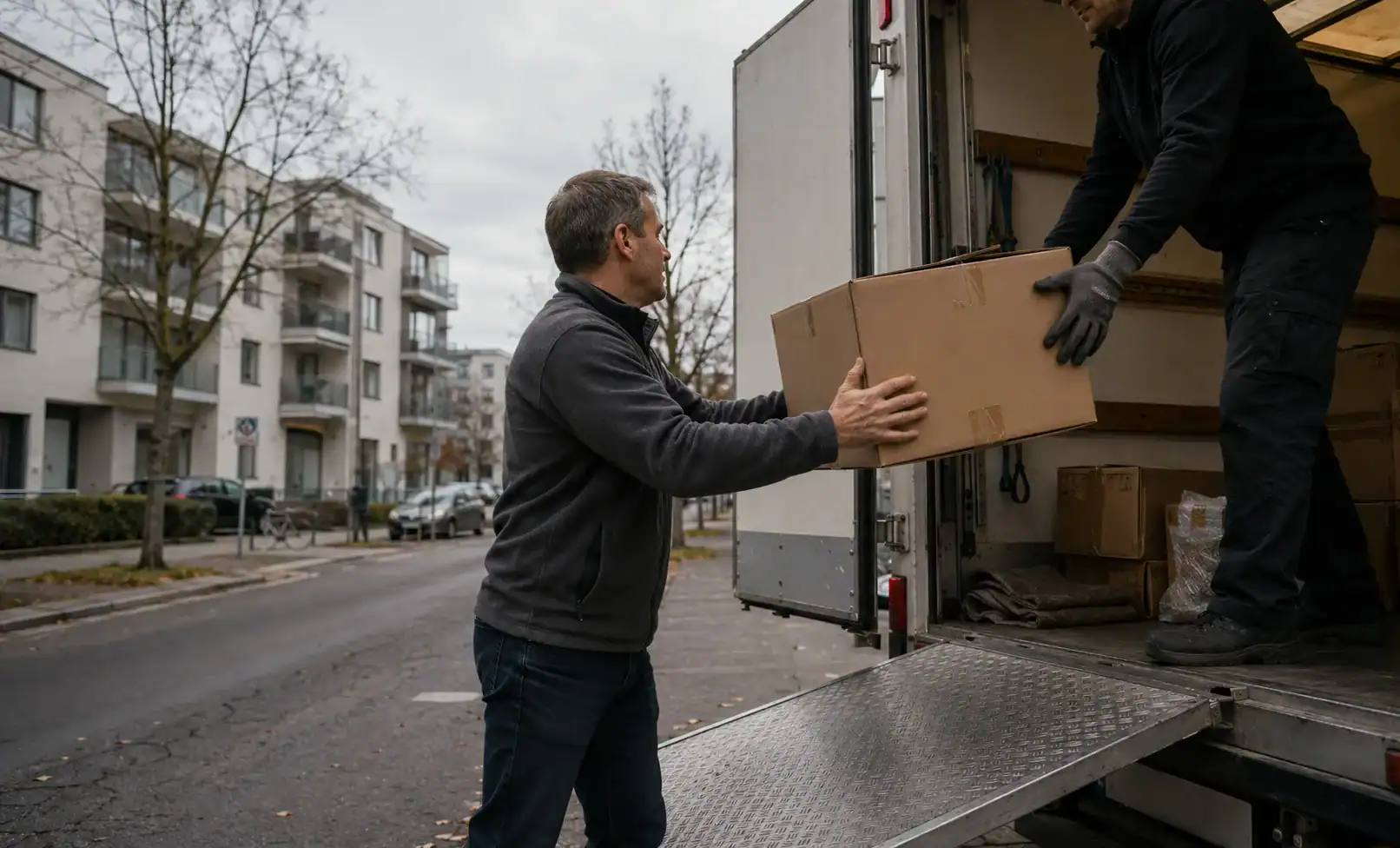
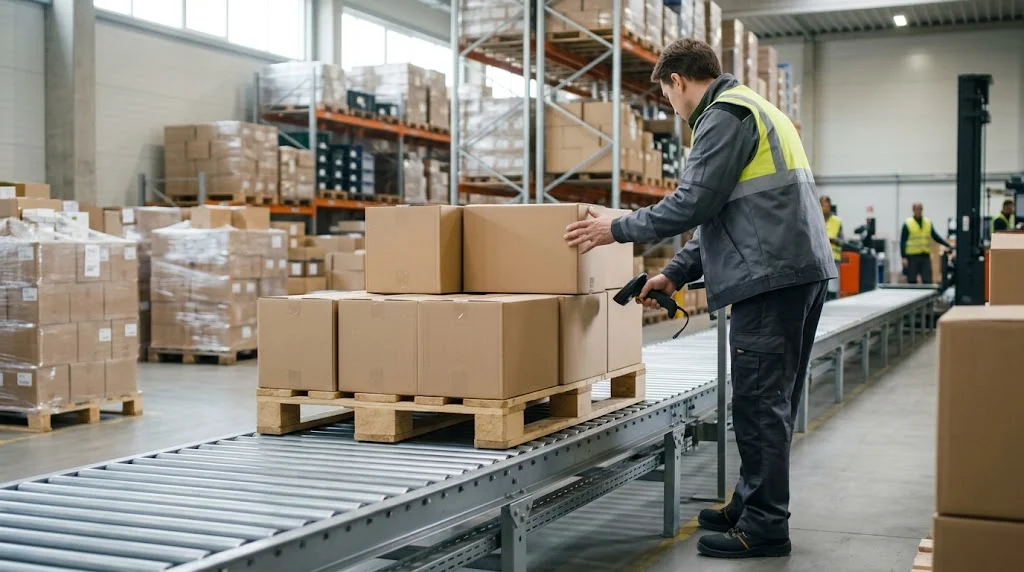
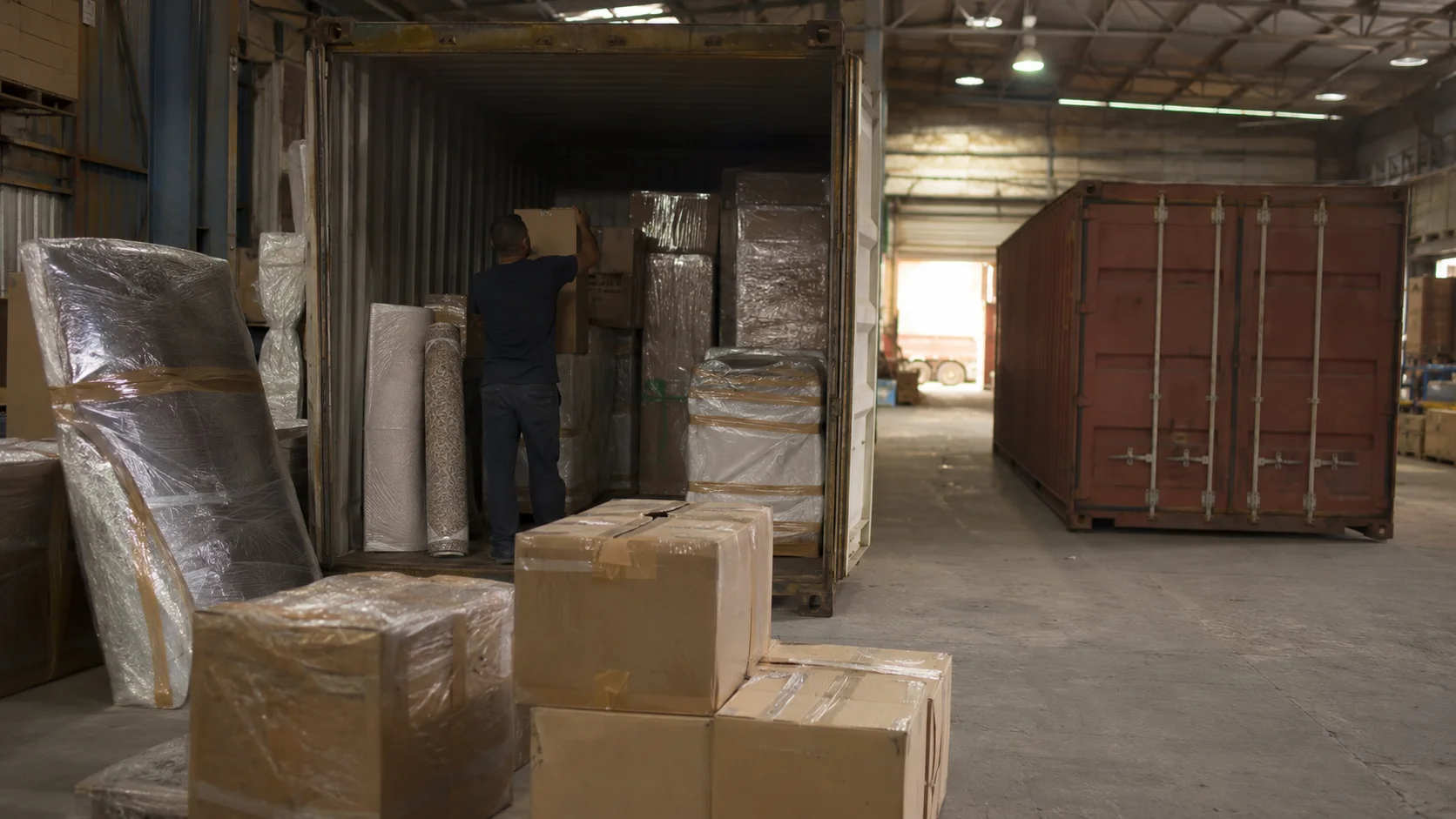
    German expat packing boxes or loading a removal van, with Hamburg port or a Bremerhaven container terminal softly visible in the background and a Thai street sc

    Visa Type Determines Everything at Thai Customs

    Before you book a removal company or pack a box, confirm your visa status. Thai customs grants a duty-free personal effects exemption based on visa type, not on how long you’ve lived in Thailand, not on the value of your goods, and not on your intention to reside permanently.

    Visa / Status Duty-Free Eligible? Notes
    Non-Immigrant B (work permit) Yes One-year work permit required; 6-month shipment window applies
    Retirement (O-A / O-X) No Excluded from the standard criteria; Thai Customs does not accept a retirement visa as a qualifying status
    Thai Elite / Privilege Card No Lifestyle visa: no work permit, no exemption
    Long-Term Resident (LTR) Seek ruling Conditions vary by LTR sub-category
    Education (ED) No Student visa, so no exemption
    Tourist / visa-exempt No No qualifying status
    Returning Thai national Yes Must prove 12+ consecutive months abroad

    The retirement visa case is the one that catches German expats most often. A significant number of Germans relocating to Thailand do so on the O-A retirement visa. It is accessible, renewable, and requires no employer sponsorship. But it does not qualify for the duty-free household goods exemption. Duties of 10–30% plus 7% VAT will apply to the declared CIF value of everything you ship. This materially changes the economics of what is worth bringing.

    For those moving on a work-related Non-Immigrant B visa with a valid one-year work permit, the exact conditions for the exemption are:

    • The work permit must be issued and valid before your shipment arrives at port
    • You must have resided in Germany (or your origin country) for at least 12 consecutive months before the move
    • Your shipment must arrive no earlier than one month before your Thailand entry and no later than six months after your work permit issue date
    • One sea shipment and one air shipment qualify, but not multiple sea consignments
    • All goods must be demonstrably used and personally owned. Items in original packaging risk reclassification
    • One unit of each appliance type qualifies; duplicate units are dutiable
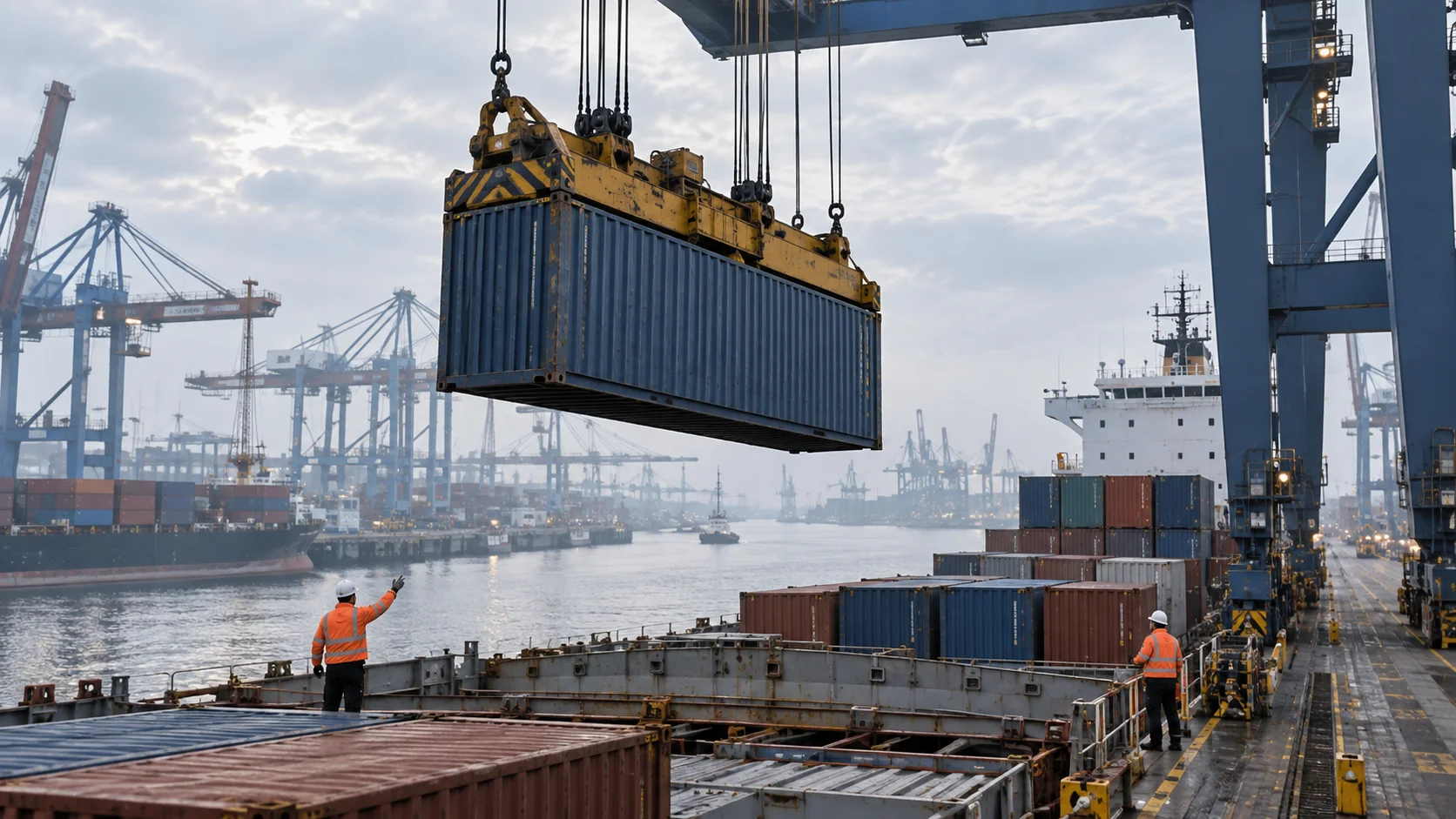
    A shipping container hangs from a gantry crane above a container ship's deck at a hazy, overcast port.

    The Route: Hamburg or Bremerhaven to Laem Chabang

    Germany’s two main container ports for household goods departures are Hamburg and Bremerhaven. Hamburg is the country’s largest deep-sea port. Bremerhaven handles significant volumes of consolidated household goods (groupage/LCL) shipments. Your removal company will advise which is operationally better for your specific move and volume.

    From either port, the route to Thailand runs through one of two paths:

    Via Suez Canal (standard routing): Through the Mediterranean, Suez Canal, Red Sea, Indian Ocean, with transshipment at Singapore or Port Klang (Malaysia), then onward to Laem Chabang. Ocean leg: approximately 28–33 days.

    Via Cape of Good Hope (in effect since early 2024 due to Houthi disruptions in the Red Sea): Around southern Africa, across the Indian Ocean, transshipment at Singapore or Port Klang, then Laem Chabang. Ocean leg: approximately 36–49 days, which adds 10–14 days versus the Suez route.

    As of mid-2026, many carriers continue to use Cape routing depending on security conditions. Your freight forwarder or removal company should confirm the current routing before you book, and any transit-time estimate should reflect it honestly.

    Realistic door-to-door timeline:

    • Collection and packing in Germany: 1–3 days
    • Port handling and vessel loading at Hamburg/Bremerhaven: 5–10 days
    • Ocean transit (Suez routing): 28–33 days
    • Ocean transit (Cape routing): 36–49 days
    • Thai customs clearance at Laem Chabang: 5–10 working days
    • Delivery to your Thai address: 1–3 days

    Total: 7–10 weeks (Suez) or 9–11 weeks (Cape). Any quote promising 30-day delivery refers to vessel-only transit time, not door-to-door. Plan accordingly, particularly given the 6-month exemption window. Book freight immediately after your work permit is issued, not weeks later.

    One week in this process almost no one plans for, and it is easy to miss because nothing about it looks like logistics. It is the week the work permit is finally stamped. A relocator in Stuttgart, say, has spent months on the visa, found an apartment in Chiang Mai, and given notice on the flat. Then the permit issues, and a quiet six-month clock starts that has nothing to do with how ready anyone feels. The container that leaves Hamburg in March will spend five or six weeks at sea before it reaches Laem Chabang, where an officer opens it and reads the inventory line by line against what is actually inside. Run the arithmetic backward from that inspection and the booking date is not “soon.” It is now.

    The six-month window opens the day the permit is stamped, so matching your volume to a sailing is worth doing that week rather than a month later.
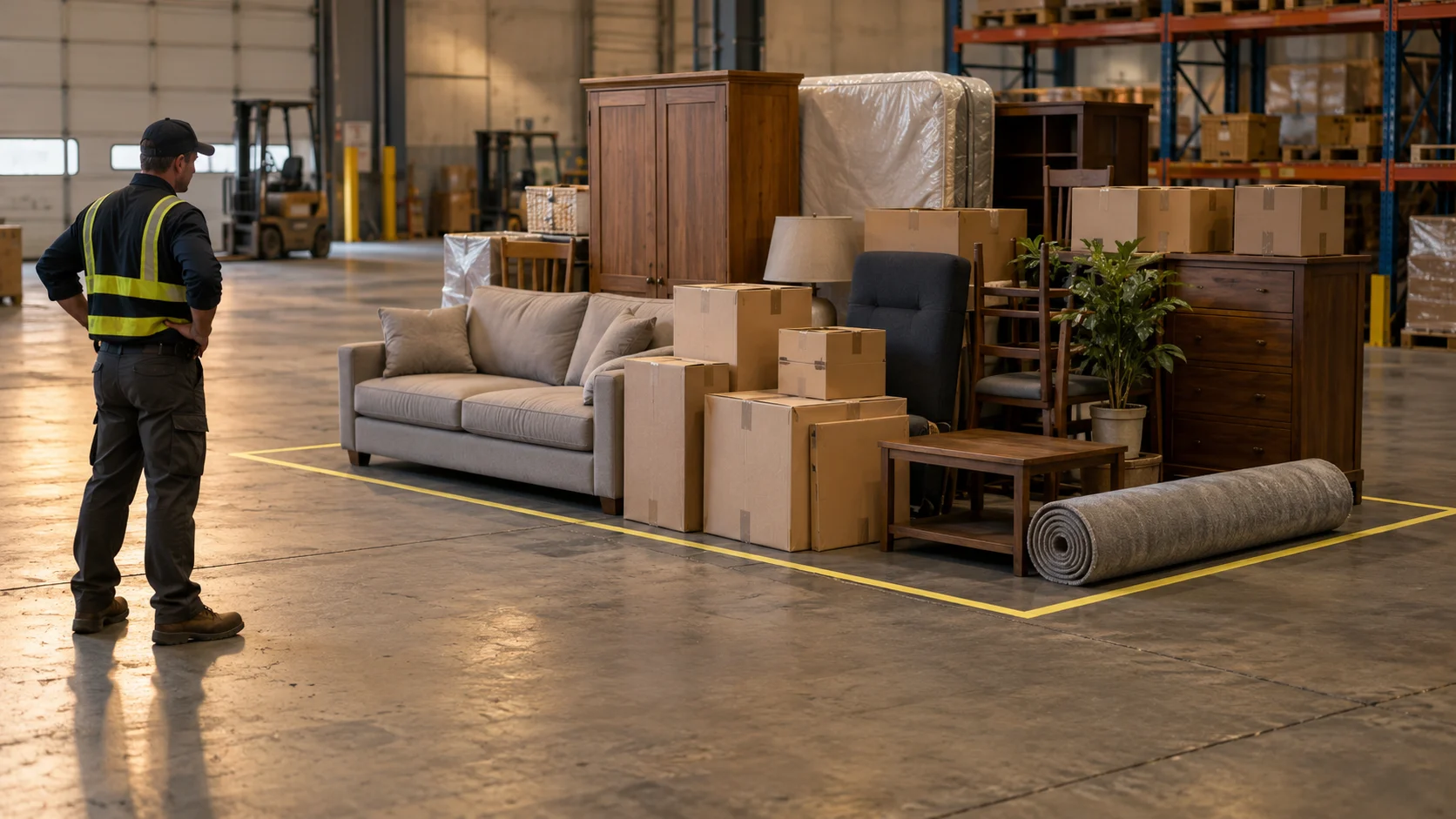
    A worker stands back to assess a household's furniture and boxes arranged inside a taped floor outline.

    LCL or FCL: Matching Your Volume to the Right Option

    German apartments are typically well-furnished. But shipping an entire German apartment to Thailand rarely makes financial sense. Most experienced Germany-Thailand relocators ship a curated selection and source the rest locally in Thailand. That selection usually covers personal effects, clothing, books, specific furniture with sentimental value, and specialist equipment.

    Typical Move Volume Estimated CBM Best Option Approximate Cost
    Studio / 1-room (personal items) 5–15 CBM LCL groupage €600–€2,100
    2–3 room apartment (selective) 15–35 CBM LCL or 20ft FCL €1,800–€4,500
    Full apartment / family move 35–60 CBM 20ft or 40ft FCL €2,500–€6,000+

    LCL (Sammelcontainer / groupage): Your goods share container space with other exporters. You pay per CBM. It is cost-effective for smaller moves. Consolidation and deconsolidation at origin and destination add handling time and marginally increase inspection risk at Thai customs.

    FCL 20ft (approximately 25–28 CBM usable): You get your own container, and your goods travel alone in it. Clearance at Laem Chabang is faster. Fragile or high-value items fare better because there is no co-loading. This is the right option for most 2–3 room apartment moves once volume exceeds 15 CBM.

    FCL 40ft HC (approximately 55–60 CBM usable): This takes a full family home. It is rarely necessary for Thailand-specific relocations, given that most expats ship selectively.

    What to Bring, and What to Leave Behind

    Good candidates for shipping from Germany:

    • Clothing, particularly winter items if you plan to travel back to Europe
    • Books and professional libraries
    • Artworks and objects of sentimental or monetary value
    • Specialist tools or professional equipment
    • Custom-made or high-quality furniture not easily replaced
    • Children’s toys and comfort items

    Typically not worth shipping:

    • Standard IKEA-equivalent furniture: available in Thailand at comparable prices
    • Large white goods (washing machine, dishwasher, large fridge): Thai apartments are smaller, plumbing differs, and local replacements are affordable
    • Bulky sectional sofas and large dining tables
    • Bicycles and outdoor sports equipment unless specifically used and valuable
    • Flammable substances, aerosols, paint: these are prohibited by shipping regulations anyway
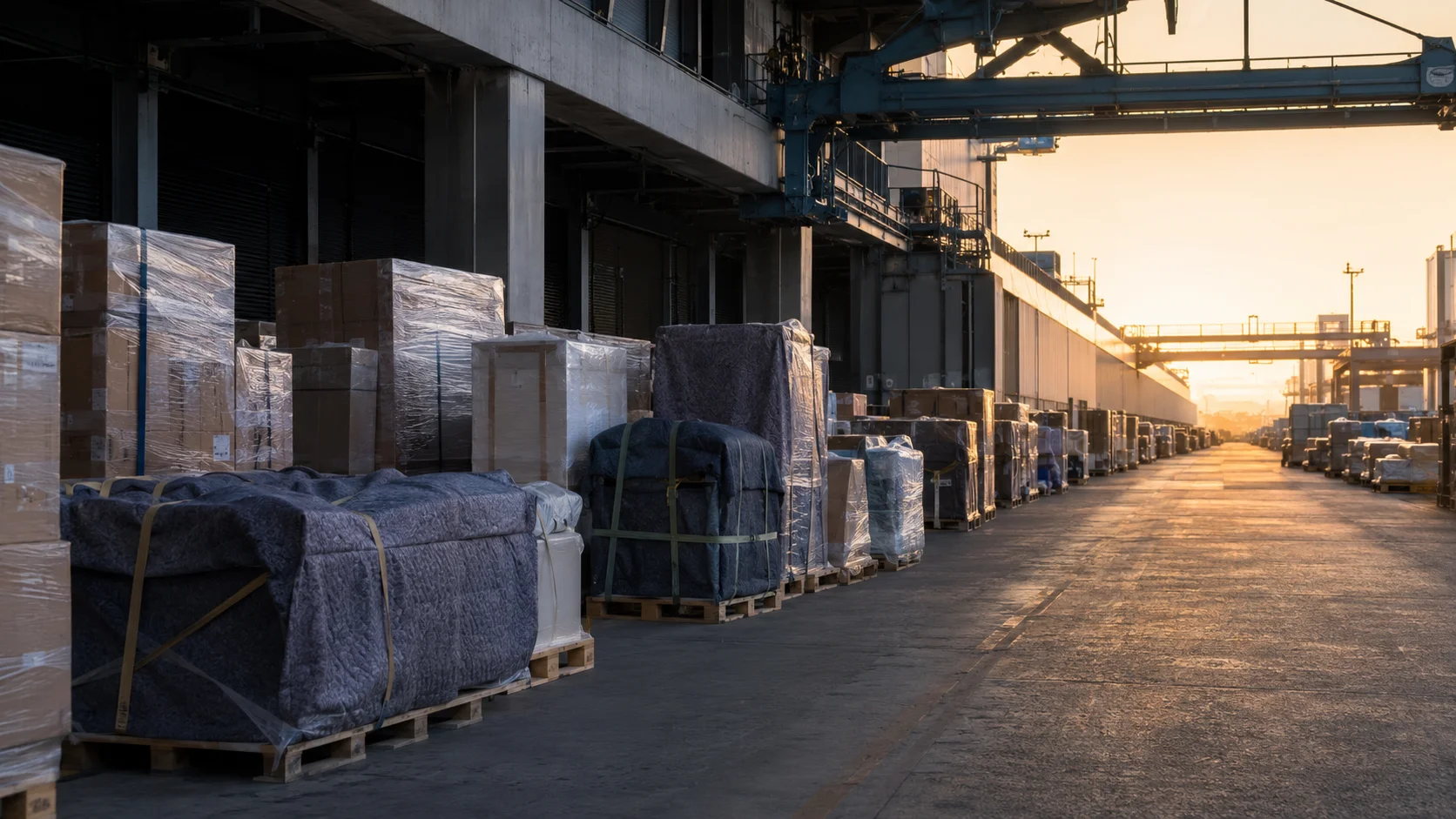
    Shipping route from German ports to Thailand

    Prohibited Items

    Remove these before packing. They will be found during the Red Line inspection at Laem Chabang.

    Prohibited (will be seized or destroyed):

    • Lithium batteries of any kind (laptops, power banks, e-bike batteries, tool batteries, portable speakers). These are classified as dangerous goods under IMDG regulations and may not travel as sea freight cargo. Remove all batteries before packing and carry them in your cabin luggage.
    • Flammable substances, gas canisters, aerosols, paint
    • Narcotics and controlled substances
    • Pornographic material
    • Counterfeit goods
    • Weapons, firearms (without Thai police permit)
    • CITES-protected wildlife and derivatives

    Restricted (permit or documentation required):

    • Alcohol: subject to Thai excise duty even under the personal effects exemption; limited personal quantities accepted
    • Buddha images and religious antiques: Fine Arts Department permit required
    • Plants and plant material: phytosanitary certificate from German NPPO required; easier to leave behind
    • Prescription medication in quantities beyond personal use: carry documentation

    Required Documents for Thai Customs

    Your removal company will coordinate most of the documentation, but you need to supply:

    • Passport copy: including all visa-stamp pages showing your current valid visa
    • Work permit copy: your valid one-year Thai work permit (if claiming duty-free exemption)
    • Detailed packing inventory (Packliste): every item listed in English with description, quantity, and estimated value. Thai customs compares your physical goods against this list during inspection.
    • Bill of Lading: issued by the shipping line
    • Proof of residence in Germany for 12+ months: utility bills, Meldebescheinigung, or rental contracts covering the relevant period

    The complete document checklist for shipping to Thailand covers the full set including the electronic import declaration your Thai customs broker submits through the National Single Window system.

    All household goods shipments enter the Red Line, which means physical inspection. A Thai customs officer reviews the goods against the declared inventory. With complete, accurate documents, clearance typically takes 5–10 working days after vessel arrival. Incomplete documents mean bonded storage, and bonded storage accrues daily fees. Document issues are the primary cause of clearance delays at Laem Chabang.

    For the German departure side: a formal Ausfuhrzollanmeldung (EU export customs declaration) is generally not required for personal household effects below commercial thresholds. Your BAVC-accredited removal company will handle departure documentation. The inventory prepared for German departure also serves as the foundation for your Thai customs declaration.

    The Packliste you write for German departure and the inventory Thai customs inspects against are meant to be the same document, not two documents that happen to agree. That reuse is the detail worth building your process around. Every mismatch between them is a mismatch an officer at Laem Chabang can flag on inspection day: an item description that changed, a value that got rounded differently, a quantity that shifted after a last-minute repack. Write the Packliste once, in English, to the standard the Thai side expects, and let it travel unchanged through both customs processes rather than being redrafted at either end.

    One honest thing before the FAQs: the hardest part of a Germany-to-Thailand move is rarely the freight. Once the container is booked it more or less takes care of itself. What trips people up is the small print they meet in a new language (a Frachtbrief here, a customs form there) at exactly the moment they are also trying to find a flat and a working SIM card. So do the boring thing early. Get your documents translated and your visa dates pinned down before the packers arrive, and the shipping half of the move becomes the part you worry about least.

    🇩🇪 Germany → 🇹🇭 Thailand

    We handle the Hamburg sailing and the Laem Chabang clearance

    Tell us your volume and your permit date and we come back with a free estimate: fixed pricing, no hidden costs.

    Price your Thailand shipment

    Related reading: Moving from Europe to Thailand: The Six-Layer Cost

    Frequently Asked Questions

    Can I import my household goods duty-free when moving from Germany to Thailand?

    Only if you hold a qualifying visa. A valid one-year Non-Immigrant B visa with a one-year work permit makes you eligible. Retirement visa (O-A, O-X) holders are excluded from the standard relocation-exemption criteria and do not qualify. Thai Elite members, education visa holders, and tourist arrivals are not eligible at all. Without eligibility, import duties of 10–30% plus 7% VAT apply to the CIF value of your goods, per the Thai Customs Department personal effects conditions.

    How long does sea freight take from Germany to Thailand?

    Door-to-door, plan for 7–11 weeks. The ocean leg from Hamburg or Bremerhaven to Laem Chabang takes 28–33 days via Suez, or 36–49 days via the Cape of Good Hope (in use since 2024 Red Sea disruptions). Add collection, port handling, and 5–10 days Thai customs clearance.

    Do I need a German customs export declaration before shipping?

    For personal household effects below commercial thresholds, a formal Ausfuhrzollanmeldung is generally not required. Your BAVC-accredited removal company handles export documentation. The detailed packing inventory (Packliste) is what Thai customs requires.

    Can I ship lithium batteries in my household goods to Thailand?

    No. Lithium batteries of any kind, including those installed in devices, are prohibited from sea freight containers under IMDG dangerous goods regulations. Remove all batteries before packing and carry them in your cabin luggage.

    What is the 6-month window for importing household goods into Thailand?

    Your shipment must arrive in Thailand no earlier than one month before your initial entry and no later than six months after your work permit was first issued. Given realistic transit times of 7–11 weeks, book freight immediately after your work permit is issued. The window can fill quickly.

    A sunlit living room shows a sofa draped with a folded blanket, sheer curtains, and a wooden coffee table.

    Planning Your Move from Germany with Swift Cargo

    The step-by-step process for shipping household goods to Thailand covers eligibility confirmation, volume calculation, document preparation, and customs clearance in full. Swift Cargo manages European-origin household goods shipments to Thailand including customs broker coordination and Laem Chabang clearance.

    Get a quote for your Germany–Thailand move →

  • Importing Supplements from the USA to Australia: TGA and Duty Requirements

    Importing Supplements from the USA to Australia: TGA and Duty Requirements

    The US supplements market is the largest in the world. For Australian importers, it opens access to product formulations, brands, and manufacturing quality that don’t yet exist at scale domestically. But importing supplements from America into Australia is not the same as importing furniture or electronics. Two regulatory frameworks apply, each with its own independent requirements. The consequences of getting either wrong range from seizure at the border to legal liability after sale.

    Supplement bottles and capsules arranged with TGA/ARTG documentation and a shipping invoice on a clean white surface

    The first framework is the TGA, the Therapeutic Goods Administration. The second is FSANZ, Food Standards Australia New Zealand. Everything else starts with knowing which one applies to your specific product, and why.

    TGA or FSANZ: Which Framework Applies?

    Importers most often go wrong by treating this as an ingredient question. It is not. Whether your product falls under TGA or FSANZ jurisdiction depends on form plus claims, not on what the product contains.

    A single formulation can be a food (FSANZ) or a therapeutic good (TGA) depending on how it is presented and what it says on the label. The ingredients and the quantities can be identical in both cases.

    Product Presentation and Claims Regulatory Framework
    Protein powder Sold as food, no therapeutic claims FSANZ (Food Standards Code)
    Same protein powder “Supports muscle recovery and lean mass” TGA (therapeutic good)
    Vitamin C tablets In tablet/capsule form with any health indication TGA (listed medicine, AUST L)
    Magnesium powder Bulk powder, no health claim, food labelling FSANZ (food supplement)
    Herbal capsules (echinacea) Any form with “supports immune function” TGA (listed medicine, AUST L)
    Fish oil softgels Any claim referencing omega-3 health benefits TGA (listed medicine, AUST L)

    The TGA’s guidance on food versus medicine classification sets out the boundary in detail. Bulk powders that carry subtle health claims on the packaging sit in a grey area. Ask the TGA for a formal classification on those before you import commercially.

    The ARTG: When Registration Is Required

    Every product classified as a therapeutic good must be listed or registered on the Australian Register of Therapeutic Goods (ARTG) before it can be legally imported for commercial supply.

    The importer must be an Australian-resident TGA sponsor: a legal entity registered with the TGA that answers for whether the product meets Australian requirements. Your US supplier cannot self-sponsor. An Australian entity must hold the ARTG entry, either as the importer themselves or through an appointed Australian sponsor.

    AUST L (Listed Medicine): This category covers low-risk therapeutic goods that use only ingredients from the TGA’s permitted ingredients database and carry approved low-level indications. The sponsor self-certifies via the TGA’s eListing system. The TGA does not individually evaluate listed medicines before they reach market. Most standard vitamins, minerals, fish oils, herbal supplements, and similar products qualify as listed medicines.

    AUST R (Registered Medicine): This category covers higher-risk products and those making stronger therapeutic claims. The TGA evaluates each one in full before market, and that process is lengthy (12+ months) and expensive. Very few standard supplements are registered medicines, because the category is primarily pharmaceutical. If your US product sits in a low-risk category, AUST L is the correct pathway.

    Importing a therapeutic good without an ARTG entry is an offence under the Therapeutic Goods Act, regardless of whether the product is legal in the US, widely available there, or clearly beneficial. The ARTG entry must exist before the goods are imported.

    AUSFTA Duty Rates: Effectively Zero from the USA

    AUSFTA, the Australia-United States Free Trade Agreement, has been in force since 2005. Under it, the effective duty rate on supplements from the USA is 0% for most product categories.

    HS code classification determines the rate:

    HS Code Description General Rate AUSFTA Rate (US-origin)
    HS 3004 Medicaments (products qualifying as medicines) 0% 0%
    HS 2936 Vitamins and derivatives 0% 0%
    HS 2106 Food preparations not elsewhere specified (general supplements as food) 4–5% 0% with AUSFTA origin declaration

    GST of 10% applies regardless of duty outcome. Customs calculates it on customs value plus any duty plus international freight and insurance. The full GST calculation for Australian imports is worth understanding before you model landed costs.

    To access the 0% AUSFTA rate for HS 2106 goods, you need a statement of US origin from your supplier. AUSFTA is self-certified, so no third-party body issues it: the declaration sits on the commercial invoice or a separate document, and you retain the supporting records. Confirm the specific HS code with your customs broker before the first shipment. Incorrect classification affects both the duty rate and whether an ARTG entry is required.

    Importing Supplements from USA to Australia: TGA, ARTG and Duty: Biosecurity: Plant and Animal Derivatives

    Biosecurity: Plant and Animal Derivatives

    Many supplements contain ingredients derived from plants or animals: herbal powders, botanical extracts, fish-derived omega-3, collagen from bovine or marine sources, and bee products like propolis or royal jelly. All of these trigger biosecurity assessment at the Australian border.

    DAFF publishes the biosecurity import conditions in BICON, its online conditions database. Check it for your specific ingredient and source country. Biosecurity conditions for supplements vary by:

    • The plant or animal species the ingredient derives from
    • The country of origin of the raw material (not just the country of manufacture)
    • The processing method (raw powder vs. heat-treated extract vs. encapsulated product)

    Common biosecurity situations for supplement imports:

    Herbal powders and botanical extracts count as plant material. DAFF conditions typically require that goods are commercially prepared, free from soil and pests, and meet the relevant processing specifications. DAFF may also require an import permit, and standard permits take up to 20 business days to process. Check BICON before ordering, because the permit process must begin well before your freight is booked.

    Fish oil, collagen and gelatin count as animal derivatives, so conditions depend on species and source country. Products from approved countries with appropriate processing certification typically clear without issue. Products from non-approved source countries face stricter conditions.

    Bee products (propolis, royal jelly, bee pollen) fall under DAFF regulation, carry their own specific conditions, and often need an import permit.

    Finished encapsulated products generally face fewer biosecurity conditions than raw ingredient imports, provided they are commercially manufactured, heat-processed, and sourced from an approved country. That is not universal, so confirm the position for your specific product and source.

    Labelling Requirements

    Australian labelling requirements for supplements depend on whether the product is a therapeutic good (TGA) or a food (FSANZ).

    TGA therapeutic goods labelling:

    • AUST L or AUST R number must be displayed prominently on the label
    • Only TGA-approved indications may be stated, with no unapproved therapeutic claims
    • Ingredient listing per the ARTG entry
    • Required warning statements as specified by TGA guidelines
    • Australian sponsor name and address

    FSANZ food supplements labelling (Australia New Zealand Food Standards Code):

    • Country of origin (“Made in USA” or equivalent), which must meet the ACCC safe harbour test
    • Nutrition information panel (NIP) in standard Australian format
    • Allergen declarations (Top 14 allergens under Standard 1.2.3)
    • No health claims that would trigger TGA jurisdiction
    • Ingredient listing in descending order by weight

    US products that arrive already in Australian labelling format are the cleaner solution. Relabelling in Australia is permitted but adds cost and logistics complexity. Ask your supplier whether they can produce Australia-compliant labels from the factory, and approve label proofs before any production run.

    Prohibited and High-Risk Ingredients

    Several ingredients widely available in US supplements are controlled, prescription-only, or prohibited in Australia. Importing products that contain them creates serious legal exposure, whatever their legal status in the US.

    • DHEA and androstenedione: Australia schedules both as prescription-only or prohibited substances. They are common in US anti-aging and hormone-support supplements. A DHEA product sold freely at a US health food store is still illegal to import commercially into Australia.
    • Ephedra / ephedrine: Australia prohibits these in consumer supplements and bans them from import.
    • Kava: Australia treats kava as a controlled substance with restricted import conditions. It requires specific import permits and is not freely importable as a supplement.
    • US pre-workout formulas with proprietary blends: Many contain undisclosed quantities of stimulants that may include substances scheduled under the Australian Poisons Standard (1,3-DMAA, DMHA, AMP citrate, and others). Check every ingredient against the current Poisons Standard before ordering.
    • Unapproved therapeutic claims: If a product makes therapeutic claims without an ARTG listing, importing it for commercial supply is illegal, even where evidence substantiates the claims and even where identical claims are legal in the US.

    Screen every product against the TGA’s permitted ingredients list for listed medicines and the current Poisons Standard before placing an order with a US supplier. A product that clears these screens, holds an ARTG listing, and meets biosecurity requirements is straightforward to import. One that does not becomes a problem, and that problem gets more expensive the further down the supply chain it surfaces.

    There is a quiet trap in this category, and it is a psychological one. A supplement that arrives from a well-known American brand feels compliant in a way a plain white-label tub does not: glossy label, an “FDA-registered facility” badge, thousands of five-star reviews. The polish reads as safety. But the TGA does not read a label the way a shopper does; it reads the ingredient list against a schedule, and it has never heard of the brand. The shipments most likely to be held are often the ones that looked most reassuring on the purchase order. Their very legitimacy is what stopped the importer from checking the one ingredient that is perfectly legal there and restricted here. The American halo is real. It just does not clear Australian customs.

    Cartons of imported supplements moving through warehouse intake at the start of the import workflow

    The Import Workflow: Step by Step

    1. Classify the product: TGA therapeutic good or FSANZ food? Confirm based on form and claims, not ingredients.
    2. Obtain ARTG listing: If a therapeutic good, establish or confirm the ARTG entry with a registered Australian sponsor before ordering stock.
    3. Check BICON: Confirm biosecurity conditions for your specific ingredients and source country. Obtain any required import permits, and allow 20 business days minimum.
    4. Confirm HS code and AUSFTA rate: Classify correctly, and request an AUSFTA origin declaration from your US supplier for HS 2106 goods.
    5. Confirm labelling compliance: Check that labels meet TGA or FSANZ format, carry Australian sponsor details, and include the required warnings.
    6. Book freight: Use air for urgent or small volumes (under ~150kg), and sea LCL or FCL for larger programmes. USA-Australia sea freight runs approximately 20–35 days depending on port pair.
    7. Clear customs: Your licensed customs broker lodges the declaration. ABF cross-checks TGA status for declared therapeutic goods.

    Two US supplement brands with comparable catalogues and comparable freight budgets can have completely different experiences moving into Australia, and the difference is rarely one dramatic decision. The brand that treats TGA classification as a one-off checklist item, run once when the first shipment goes out, tends to get caught out the moment it adds a new SKU with a slightly different claim on the label. The brand that builds classification into a repeatable step before every purchase order, checking the ARTG and the FSANZ split each time a formula changes, rarely has a shipment held. From the outside both look equally organized until the second brand’s tenth SKU clears without incident and the first brand’s third SKU sits in a bonded warehouse. The discipline was invisible until it compounded.

    Related reading: Importing Electronics USA to Australia: RCM, AUSFTA and DGR

    Frequently Asked Questions

    Do I need TGA approval to import supplements from the USA to Australia?

    Yes, if your products are classified as therapeutic goods. Any supplement that makes therapeutic claims, is in tablet or capsule form, or contains ingredients on the TGA’s permitted list for listed medicines must be on the ARTG before import. US suppliers cannot self-sponsor. An Australian-resident TGA sponsor must hold the entry.

    What is the difference between AUST L and AUST R on a supplement?

    AUST L indicates a listed medicine: low-risk, and self-certified by the sponsor via TGA’s eListing system. The TGA does not evaluate listed medicines before market. AUST R requires full pre-market TGA evaluation. Most standard vitamins, minerals, and herbal supplements qualify as listed medicines (AUST L).

    Is a protein powder a therapeutic good or a food in Australia?

    It depends on the claims and presentation. A plain powder sold as food with no therapeutic claims falls under FSANZ. The same powder with claims like “supports muscle recovery” or “promotes lean muscle mass” triggers TGA jurisdiction as a therapeutic good. The ingredient is not the deciding factor. The label claims are.

    What is the import duty rate on supplements from the USA?

    Under AUSFTA it is effectively 0% for most supplement categories. HS 3004 and HS 2936 were already 0%. HS 2106 (food preparations) reaches 0% under AUSFTA with a supplier origin declaration, self-certified rather than issued by a third-party body. GST of 10% applies regardless.

    What US supplements are prohibited from import into Australia?

    DHEA, androstenedione, and prohormones are prescription-only or prohibited. Kava is controlled, with restricted import conditions. Ephedra and ephedrine are banned. Many US pre-workout proprietary blends contain stimulants scheduled under the Australian Poisons Standard. Always screen against the current Poisons Standard before ordering.

    The enforcement record on prohibited supplement ingredients in Australia is worth understanding before dismissing it as a compliance technicality. The TGA’s post-market monitoring program regularly identifies products in Australian retail channels that contain undisclosed scheduled substances. That happens not because the importers deliberately sourced prohibited goods, but because US pre-workout and sports supplement formulas frequently use proprietary blend labelling that does not disclose individual ingredient quantities. A product sold legally in a US health store, with a US-compliant label, can contain a scheduled substance in a quantity that makes it illegal to import commercially into Australia. The importer who discovers this discovers it when TGA contacts them, not when the goods cross the border. The consequences are not proportional to the importer’s knowledge of the violation: mandatory recall, civil penalty, potential product embargo. The TGA holds the Australian sponsor responsible regardless of what the US supplier disclosed. Only one measure reliably protects against this outcome, and it is screening every product’s ingredient list against the current Poisons Standard before placing an order. It is also the only part of the compliance workflow the importer directly controls from beginning to end.

    Ready to Import Supplements from the USA?

    Swift Cargo handles commercial freight from the USA to Australia, including LCL and air freight, and coordinates customs brokerage. If you’re setting up a US supplement import program and need freight and compliance clarity, start with a freight assessment.

    Contact Swift Cargo for a freight assessment →

  • Ship Household Goods to Thailand: Step-by-Step Guide

    Ship Household Goods to Thailand: Step-by-Step Guide

    Most people who ship household goods to Thailand don’t get it wrong because they’re careless. They get it wrong because they focus on the move itself and treat the freight as an afterthought. The apartment, the visa, the job: those get the attention. The boxes get packed. A moving company is called. And somewhere between Le Havre and Laem Chabang, they discover that Thai customs has rules they didn’t know existed.

    Packed moving boxes in a Bangkok apartment living room, with a Thai temple visible through the balcony window while a resident wraps fragile items

    The good news: those rules are clear. Thai customs duty-free exemption for personal effects has specific eligibility conditions, a specific timing window, and a specific document set. Get those right, and your shipment moves smoothly. Get them wrong, and your belongings sit in bonded storage accumulating daily fees while you try to fix documents from a Bangkok apartment.

    Step 1: Confirm Your Visa Eligibility

    Before you plan what to ship or book freight, confirm whether you qualify for Thailand’s duty-free personal effects exemption. Your visa type is the determining factor, not your moving volume and not your residency history.

    Visa / Status Duty-Free Eligible? Notes
    Non-Immigrant B (work permit) Yes One-year work permit required; 6-month window applies
    Retirement visa (O-A / O-X) No Does not qualify; standard duties apply to all goods
    Thai Elite (Privilege Card) No Lifestyle visa, not a work visa, so no exemption
    Long-Term Resident (LTR) Seek ruling Conditions vary by LTR category; confirm with Thai customs before shipping
    Education visa (ED) No Student visa, so no exemption
    Tourist / visa-exempt No No qualifying status
    Returning Thai national Yes Must prove 12+ continuous months of residence abroad

    Retirement visa holders make up a significant proportion of all expat relocations to Thailand, and they do not qualify for duty-free clearance of their household goods. Duties of 10–30% on declared value plus 7% VAT (CIF basis) will apply. That changes the economics of what’s worth shipping substantially. Many online guides either miss it entirely or bury it in small print.

    If you do qualify, the exemption applies under these exact conditions:

    • You hold a valid one-year Non-Immigrant B visa at the time your shipment arrives at port
    • You hold a valid one-year Thai work permit, issued before your shipment arrives
    • You can demonstrate you resided in your origin country for at least 12 consecutive months before the move
    • Your shipment arrives no earlier than one month before your first Thailand entry, and no later than six months after the date your work permit was first issued
    • The shipment covers one sea freight consignment and one air freight consignment, but not multiple sea shipments
    • All goods are used and personally owned, which means items must be at least six months old
    • Each type of appliance is represented once (one television, one washing machine). Duplicate units are dutiable

    Step 2: Decide What to Ship

    This decision matters more than most people realise. Thailand is not a country where you need to bring everything. Thai furniture markets are excellent. Electronics are widely available and competitively priced. Large appliances often don’t suit Thai apartments. They tend to be smaller than European or Australian equivalents, and they frequently come with appliances included.

    Worth shipping:

    • Clothing and personal wardrobe (high value relative to weight)
    • Books, artworks, sentimental objects (irreplaceable)
    • Specialist equipment (photography, music, professional tools)
    • Custom-made or irreplaceable furniture pieces with genuine sentimental value
    • Children’s comfort objects, toys, books
    • High-end audio equipment

    Usually not worth shipping:

    • Standard flat-pack or IKEA-equivalent furniture: available in Thailand at lower prices
    • Large white goods (fridge, washing machine, dryer): Thai apartment voltage is compatible, but most landlords include appliances and local replacements are inexpensive
    • Bulky sofas and sectionals: Thai apartments are smaller, and Thai-made furniture is good quality
    • Garden furniture and outdoor equipment: the Thai climate is different, and these items rarely get used

    The rough rule is simple. If the combined shipping cost and applicable duty (or even just the shipping cost, for eligible shipments) exceeds 50–60% of what you’d pay to replace the item in Bangkok, leave it. Ship the things that genuinely can’t be replaced, and furnish locally for everything else.

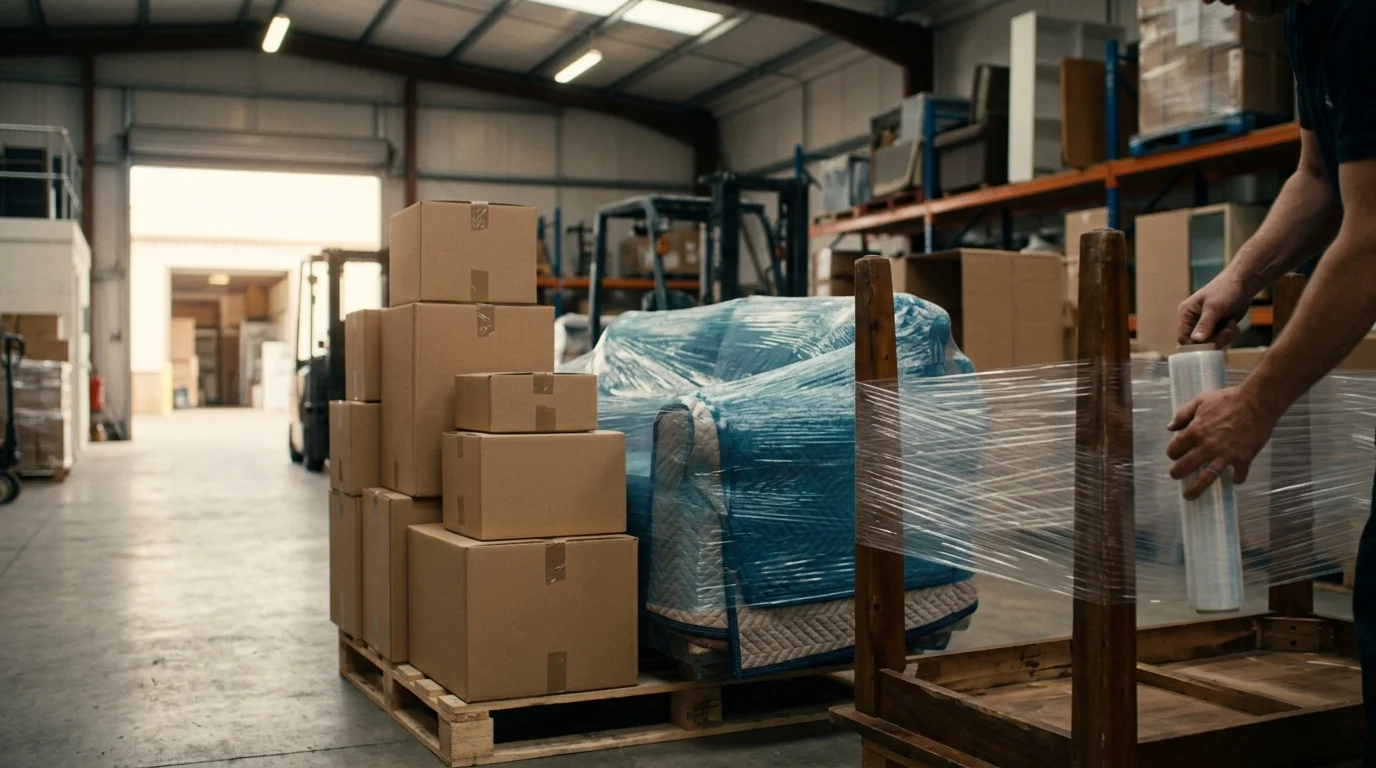
    A pair of hands wraps stretch film around a wooden post beside stacked moving boxes and a plastic-wrapped sofa on a pallet.

    Step 3: Estimate Your Volume and Choose LCL or FCL

    Volume drives the shipping method decision. Measure realistically in cubic metres of furniture and boxes, not in bedroom count.

    Move Type Estimated Volume Recommended Option
    Studio / 1-bed (personal items only) 3–10 CBM LCL groupage
    1–2 bed apartment (selective) 10–20 CBM LCL or 20ft FCL
    2–3 bed apartment (most items) 20–30 CBM 20ft FCL (25–28 CBM usable)
    Full house move 30–60+ CBM 40ft FCL (55–60 CBM usable)

    LCL (Less than Container Load / groupage): Your goods share a container with other exporters’ shipments. You pay per cubic metre. It is cost-effective for smaller volumes. Transit time may be 2–5 days longer than FCL due to consolidation and deconsolidation handling. Inspection risk at Thai customs is marginally higher because a shared container carries multiple declarations.

    FCL (Full Container Load): You get your own container, and your goods travel alone in it. You pay a flat rate regardless of how full the container is. Clearance in Thailand is faster because there’s only one consignee per container, and fragile or high-value items fare better because nobody handles other shipments around yours. The 20ft FCL is the right choice for most expat apartment moves once volume exceeds about 15 CBM.

    Step 4: Prepare Your Documents

    Thai customs clearance of household goods requires a specific document set. Missing or incorrect documents are the primary reason personal effects shipments get delayed at Laem Chabang. Prepare everything before your vessel departs, not on arrival.

    Required documents:

    • Passport copy: a full copy including the visa stamp pages showing your Non-Immigrant B visa (or equivalent qualifying visa)
    • Work permit copy: your one-year Thai work permit, valid at the time your shipment arrives
    • Bill of Lading: issued by the shipping line. Your customs broker needs the original or an express release copy
    • Detailed packing inventory: every item in your shipment listed with description, quantity, and estimated value. This is not optional, and it must match the physical contents exactly. Thai customs officers compare the physical goods against the inventory during inspection
    • Proof of residence abroad: required if you are claiming the 12-month residency condition. Utility bills, rental contracts, or bank statements from your origin country covering the relevant period will do

    Additional documents for specific items:

    • Buddha images, antiques, religious artefacts: Fine Arts Department permit (must be obtained before shipment departs)
    • Firearms: Royal Thai Police import permit
    • Plants: Phytosanitary certificate from origin country

    The full document requirements for shipping to Thailand cover the complete framework including NSW electronic submission and the Kor Sor Kor 99/1 import declaration form that your customs broker lodges for sea freight personal effects.

    Step 5: Understand What Thai Customs Does on Arrival

    All household goods shipments are directed to the Red Line, which means physical inspection. This is standard procedure, not a flag. A Thai customs officer compares your physical goods against your declared inventory.

    Goods valuation: Thai customs uses the Transaction Value Method. For personal effects, officers assess whether items are genuinely used and personally owned. Keep this in mind when packing:

    • Thai customs may reclassify items as commercial goods, and charge duty accordingly, if they are in original packaging, appear brand new, or arrive in quantities inconsistent with personal use, such as six identical garments in different sizes
    • Declare values accurately. Undervaluation creates a valuation dispute that delays clearance, and Thai customs has reference price databases for common goods
    • Used items should look used. A flat-screen television still in manufacturer’s packaging from three years ago is a problem. The same television mounted, with remote and cables packed beside it, is not

    Bonded storage and the 45-day rule: If your documents are not in order on arrival, your goods enter bonded storage at Laem Chabang. Daily warehouse fees accrue. Shipping line detention and demurrage fees also accrue separately. You have 45 days from arrival to submit a formal import entry, or 60 days once an entry is submitted. After those periods, Thai customs can formally auction goods that remain unclaimed.

    This is not a theoretical risk. It happens to real shipments with real goods because documents were incomplete. You prevent it entirely at the front end: complete documents, prepared and confirmed with your customs broker before the vessel leaves your origin port.

    What Bonded Storage Actually Costs, in Real Numbers

    “Daily fees accrue” is easy to read past without registering what it means. For a standard 20-foot or 40-foot household shipment held at Laem Chabang, warehouse storage typically runs THB 500–1,500 per day depending on cargo type and the terminal operator. That is separate from whatever the shipping line charges for container detention and demurrage, often another THB 1,000–3,000 per day once the free period expires, since the line wants its container back in circulation regardless of why your paperwork is delayed. Two weeks of missing documentation can easily add up to THB 20,000–60,000 in combined fees on top of your original freight cost, and that is before you have resolved whatever caused the hold in the first place. Two weeks is not an unusual delay when a required certificate has to be re-issued from the origin country.

    The arithmetic matters because it changes the calculus on document preparation. Pay a customs broker an extra fee to triple-check your paperwork before the vessel sails. That is cheap insurance against a cost that compounds daily and has no upper limit until you fix the underlying problem. Importers who cut document preparation to save money are betting against exactly that.

    One category is worth naming specifically. The documents most likely to trigger this delay are the ones that have to travel back to the origin country to be corrected: a missing signature on an inventory, a work permit copy that doesn’t match the visa stamp, an incomplete valued list. Documents you control locally in Thailand can usually be fixed in a day or two. Documents that require your former employer, your bank, or a government office back home to reissue something are the ones that turn a minor gap into a multi-week hold, because you are now waiting on someone else’s processing time on top of your own. Identify which category each required document falls into before you fly, not after your container is already sitting in bond.

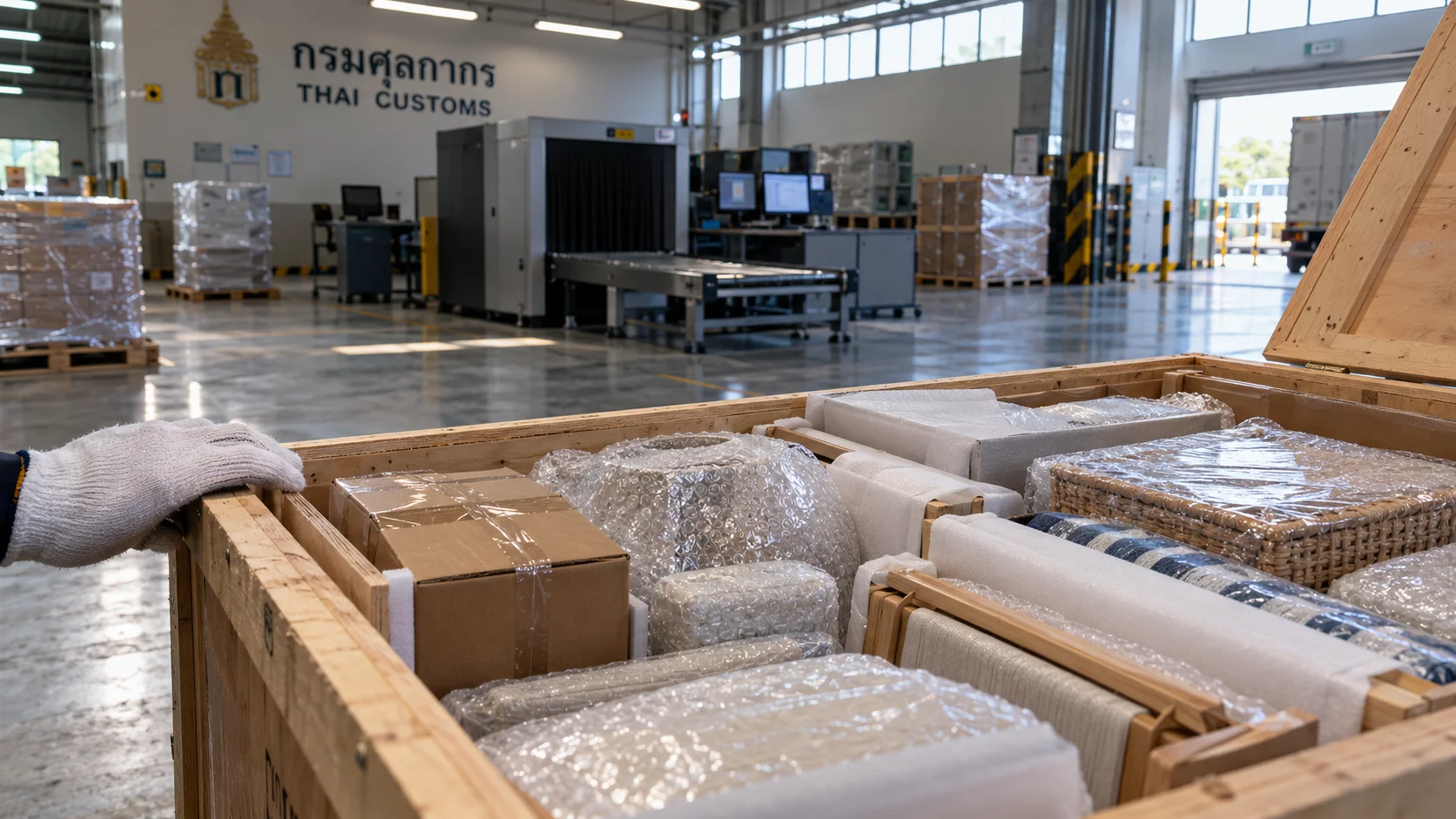
    Inside a Thai customs inspection bay, a partially opened household shipment sits under even overhead light while an officer's gloved hand rests on the edge of an open

    Step 6: Prohibited and Restricted Items

    Remove these from your shipment before packing. Thai customs will find them during the Red Line inspection. Thailand maintains a strict restricted and prohibited goods list that applies to personal effects as much as commercial imports.

    Prohibited (will be seized): Narcotics, counterfeit goods, pornographic material, endangered wildlife products (CITES-listed species)

    Restricted (permit required before arrival):

    • Alcohol: dutiable even under the personal effects exemption; beer and wine in personal quantities are generally accepted; a full bar isn’t
    • Firearms: Royal Thai Police permit required; process is lengthy; obtain it before booking freight
    • Plants and seeds: phytosanitary certificate from origin country; easier to leave behind
    • Antiques and Buddha images: Fine Arts Department assessment and permit required
    • Prescription medication in large quantities: carry Thai prescriptions or documentation

    Related reading: Part Load Removals to Thailand: Sailing Dates, Duty and Crates

    Frequently Asked Questions

    Who qualifies for the duty-free exemption on household goods in Thailand?

    Only holders of a valid one-year Non-Immigrant B visa with a corresponding one-year work permit qualify. Retirement visa (O-A, O-X) holders, Thai Elite members, education visa holders, and tourist visa arrivals do not qualify. Returning Thai nationals may qualify if they can prove 12 months of continuous residence abroad.

    What is the 6-month timing rule for household goods?

    Your shipment must arrive in Thailand no earlier than one month before your first entry and no later than six months after the date your work permit was first issued. If your shipment arrives outside that window, even by a few days, you lose the duty-free exemption regardless of your visa status.

    What size container do I need for a Bangkok apartment?

    For a studio or one-bedroom (selected personal items): LCL groupage, 5–10 CBM. For a two-bedroom apartment: LCL 10–20 CBM or a 20ft FCL. For a three-bedroom or larger: 20ft or 40ft FCL. Most Bangkok expat moves fit within LCL or a 20ft FCL.

    How does Thai customs value used household goods?

    Thai customs uses the Transaction Value Method. Officers assess whether items are genuinely used and personally owned. Items in original packaging, appearing brand new, or in quantities inconsistent with personal use may be reclassified as commercial imports and dutiable accordingly. Declare accurately.

    What happens if my goods aren’t cleared within 45 days at Laem Chabang?

    Thai customs allows goods to remain in bonded warehouse for up to 45 days without an import entry submission. After that period, or upon expiry of any extension, customs can formally auction unclaimed goods. Daily warehouse and port storage fees accrue throughout. Complete documents before shipment prevent this entirely.

    Ready to Ship Your Household Goods to Thailand?

    Swift Cargo manages household goods and personal effects shipments to Thailand end-to-end, including document coordination, customs broker engagement, and clearance at Laem Chabang. Confirm your eligibility and document requirements before you pack.

    Contact Swift Cargo for a freight assessment →

  • Importing Apparel from Vietnam to Australia: Duty, Compliance and Freight

    Importing Apparel from Vietnam to Australia: Duty, Compliance and Freight

    Vietnam has become one of the most significant apparel manufacturing countries in the world. With the AANZFTA free trade agreement in force, qualifying Vietnamese-made garments enter Australia at 0% duty. To import apparel from Vietnam to Australia at that 0% rate, the Form AANZ has to be issued before the goods ship.

    But apparel imports carry a compliance burden that goes beyond duty. Australian law mandates care labelling on every garment. Children’s clothing is subject to mandatory safety standards. Natural fibres trigger biosecurity screening at the border. And the AANZFTA zero-rate only applies if you obtain the right Certificate of Origin before the goods ship.

    Importing Apparel from Vietnam to Australia: Duty, Compliance and Freight

    HS Codes for Apparel: Start with Classification

    As with any import, the HS code comes first. It determines your duty rate, your AANZFTA eligibility, and whether your goods trigger any biosecurity or product safety requirements.

    Apparel is classified under two chapters of the Australian Customs Tariff:

    • HS Chapter 61 covers knitted or crocheted clothing and accessories (6101–6117): T-shirts, knitwear, socks, hosiery, swimwear made from knitted fabric
    • HS Chapter 62 covers woven apparel (6201–6217): Suits, jackets, trousers, dresses, blouses, shirts made from woven fabric

    The 10-digit Australian tariff item code within these chapters determines the specific duty rate applicable to your product. Use the ABF Tariff Classification tool or ask your customs broker for a binding tariff ruling on your specific garment category. Getting this right matters: an incorrect HS code means an incorrect duty rate and incorrect AANZFTA claim.

    AANZFTA Duty Rates: 5% to Zero

    The general MFN (most favoured nation) duty rate on Chapters 61 and 62 apparel imported into Australia is 5%.

    Under AANZFTA (the ASEAN-Australia-New Zealand Free Trade Agreement), that rate drops to 0% for goods originating in Vietnam, with a valid Form AANZ Certificate of Origin.

    On a $100,000 annual apparel program, that 5% saving is $5,000 in avoided duty each year. On a $500,000 program, it is $25,000.

    To access the AANZFTA rate:

    1. Your goods must originate in Vietnam under the AANZFTA rules of origin. Most cut-and-sewn garments manufactured in Vietnam satisfy that test. The key test is whether the product undergoes sufficient transformation in Vietnam (typically, fabric cut and assembled into finished garments qualifies)
    2. Your Vietnamese supplier must obtain a Form AANZ Certificate of Origin from an authorised issuing body in Vietnam (the Ministry of Industry and Trade, MOIT)
    3. The Form AANZ must accompany each import declaration lodged with ABF

    Confirm the preferential rate for your specific HS code using the DFAT FTA Portal. AANZFTA covers a broad range of Australian imports from ASEAN countries. If you are sourcing across product categories from the region, the framework is worth understanding in full.

    Request the Form AANZ before your goods ship. It can be issued retroactively only in limited cases, and without one at entry you pay the 5% MFN rate.

    Care Labelling: The Mandatory Standard

    Every garment sold in Australia must carry a permanently attached care instruction label. This is not a best practice. It is required by the Consumer Goods (Care Labelling) Information Standard 2023, which accepts AS/NZS 1957:1998 or ISO 3758:2012.

    Requirements:

    • Instructions must be on a permanent label in English words, international care symbols (ISO 3758:2012), or both
    • The label must be permanently attached to the garment, not a hangtag
    • Instructions must be accurate: a “machine wash cold” instruction on a dry-clean-only garment is a misleading representation under the Australian Consumer Law

    Many Vietnamese manufacturers supply European and US markets and are familiar with care labelling requirements. The Australian rule (English words under AS/NZS 1957, or ISO 3758 symbols) may still differ from their standard output. Specify the requirement in your purchase order and request label samples for approval before production runs.

    Non-compliance with the mandatory care labelling standard can result in ACCC enforcement action, mandatory recalls, and fines. Garments found non-compliant at retail level create liability for the importer.

    Close-up of folded children's clothing with an animal-print pattern being hand-inspected at a Vietnamese garment factory, sewing floor visible in the background

    Children’s Clothing: Mandatory Safety Standards

    If any part of your range includes clothing designed or marketed for children, mandatory ACCC safety standards apply.

    Children’s nightwear (AS/NZS 1249:2014, mandatory): Applies to nightwear and limited daywear intended for children up to 14 years. Garments must either meet specific low-flammability fabric requirements or carry a prominent fire danger warning label if made from high-flammability fabric. Non-compliant nightwear has been the subject of multiple ACCC recalls.

    Drawstrings and cords in children’s clothing (mandatory): A mandatory standard restricts drawstrings and functional cords in children’s upper garments (up to size 14). Neck area drawstrings are prohibited. Waist-area drawstrings must meet specific length and protrusion limits. This applies to hoodies, jackets, tracksuit tops, and similar garments.

    General ACL obligations: All children’s clothing must be of acceptable quality, fit for purpose, and match its description under the Australian Consumer Law. This includes being free from hazardous embellishments (sharp edges, small detachable parts on infant clothing) even where no specific mandatory standard exists.

    Check current mandatory standards at the ACCC Product Safety portal before placing production orders. Standards update. The version in force at import date is what applies.

    Biosecurity: Natural Fibres at the Border

    Apparel made from natural fibres is subject to DAFF biosecurity screening on arrival in Australia. That covers cotton, wool, silk, linen, and hemp. Australia’s biosecurity import conditions apply to any goods containing plant or animal material.

    Key biosecurity considerations by fibre type:

    Wool and woollen articles: Specific treatment requirements apply under DAFF Industry Advice 125-2017. Woollen garments (sweaters, coats, wool-blend fabrics) may require treatment certification or face inspection on arrival. Check BICON for the current conditions applicable to your specific product and country of origin.

    Cotton garments: Finished, commercially laundered cotton carries generally lower biosecurity risk, but raw cotton or garments with soil contamination can trigger treatment requirements. Commercially manufactured, clean garments from established Vietnamese factories rarely have issues, but the biosecurity screening applies regardless.

    Silk: Silk is an animal-derived fibre, so biosecurity conditions apply. Finished silk garments in normal commercial condition are generally lower risk, but BICON should be consulted.

    Consult BICON before your first natural-fibre shipment from Vietnam.

    The Vietnam-Australia Freight Route

    Vietnam’s two main apparel export hubs connect to Australia as follows:

    Ho Chi Minh City (HCMC / Saigon): The largest garment and textile manufacturing cluster in Vietnam, concentrated in HCMC and surrounding Binh Duong and Dong Nai provinces. Cat Lai Port handles the majority of container exports from the south. Transit to Sydney or Melbourne: approximately 18–25 days.

    Hai Phong: The main northern Vietnam export port, serving manufacturers in Hanoi and the northern provinces. Transit to Sydney: approximately 22–28 days.

    LCL or FCL: LCL (shared container) is cost-effective for orders under 12–15 CBM. FCL becomes more economical above that threshold and reduces handling risk. That matters for garments that may be damaged by rough handling or moisture exposure in a shared container. When you import apparel from Vietnam to Australia in volumes under 12 to 15 CBM, LCL is usually the cheaper mode.

    GST of 10% applies to the combined customs value plus duty plus international freight and insurance. For apparel, ensure your commercial invoice shows the correct Incoterms (typically FOB) so the GST calculation uses the right freight and insurance figures.

    Documentation Checklist

    Document Required Notes
    Commercial Invoice Always FOB value, HS codes, garment descriptions
    Packing List Always Carton count, per-carton weights and dimensions
    Bill of Lading / Air Waybill Always Original or express release
    Form AANZ Certificate of Origin AANZFTA claims From MOIT; reduces duty 5% → 0%
    Biosecurity documentation Natural fibre goods As required by BICON for your commodity
    Import Declaration Always (goods > AUD $1,000) Lodged by licensed customs broker

    Why “Made in Vietnam” Doesn’t Always Mean the Zero-Tariff Rate Applies

    A Vietnamese factory does not by itself prove origin; the Product Specific Rule for each HS subheading decides. For most Chapter 61 and 62 lines, AANZFTA accepts either a 40% regional value content (RVC 40) or a change of tariff classification, and some lines also require the garment to be cut or knit to shape and assembled in an AANZFTA country. Garments sewn in Vietnam from imported fabric therefore often qualify, but read the rule text for your HS code on the DFAT FTA Portal before relying on it.

    Before You Import Apparel from Vietnam to Australia

    Check the AANZFTA rule for each HS code on the DFAT FTA Portal, and get the Form AANZ before shipping. Specify AS/NZS 1957 care labels in the purchase order, check children’s lines against the mandatory standards, and consult BICON for natural fibres.

    Frequently Asked Questions

    What is the duty rate on clothing imported from Vietnam to Australia?

    The standard MFN duty rate on apparel (HS Chapters 61 and 62) is 5%. Under AANZFTA, the rate drops to 0% for goods originating in Vietnam with a valid Form AANZ Certificate of Origin. GST of 10% applies regardless.

    Is care labelling mandatory for clothing imported into Australia?

    Yes. Care labelling is mandatory under the Consumer Goods (Care Labelling) Information Standard 2023 (AS/NZS 1957:1998 or ISO 3758:2012). Every garment sold in Australia must have a permanently attached care instruction label in English words, ISO care symbols, or both. Non-compliance can trigger ACCC recalls and enforcement action.

    Do biosecurity requirements apply to clothing from Vietnam?

    Yes, for garments made from natural fibres. Cotton, wool, silk, linen, and other natural materials are subject to DAFF biosecurity screening on arrival. Wool and woollen articles have specific treatment requirements under DAFF Industry Advice 125-2017. Check BICON before your first shipment.

    What HS codes apply to apparel from Vietnam?

    HS Chapter 61 covers knitted or crocheted apparel (6101–6117). HS Chapter 62 covers woven apparel (6201–6217). Confirm the specific 10-digit code for your product with your customs broker or the ABF Tariff Classification tool before ordering.

    How long does sea freight take from Vietnam to Australia?

    Typically 18–30 days from Ho Chi Minh City or Hai Phong to Australian east coast ports. HCMC to Sydney direct: approximately 18–25 days. Hai Phong to Sydney: approximately 22–28 days. Add 2–5 business days for customs clearance after arrival.

    Ready to Import Apparel from Vietnam?

    Swift Cargo manages LCL and FCL freight from Vietnam to Australia, with AANZFTA certificate coordination and customs brokerage included. If you are planning a new apparel program from Vietnamese manufacturers, request a freight assessment here.

  • Moving from France to Thailand: Customs, Freight and Timing

    Moving from France to Thailand: Customs, Freight and Timing

    Moving from France to Thailand is not a small decision. It is a full reconstruction: a new city, a new language, a new pace. And somewhere in the middle of it all sits a practical question that most people leave too late: what do I do with my belongings?

    French expat packing boxes or loading a removal van near Paris or Le Havre port, with a Thai street scene or Laem Chabang terminal softly in the background

    Shipping household goods internationally is manageable when you know the rules. In Thailand, those rules have a particular feature that surprises many French expats: your visa status, and nothing else, determines whether your belongings come in duty-free. It does not turn on how long you have lived in Thailand, how much you are bringing, or whether the items are genuinely used and personal.

    The Visa Question First

    Before you book a moving company or pack a box, clarify your visa situation. Thai customs draws a sharp line between visa categories when it comes to household goods.

    Visa Type Duty-Free Eligibility Notes
    Non-Immigrant B (work permit) Yes, with conditions Must have 1-year work permit; shipment arrives within 6-month window
    Retirement (O-A, O-X) No Does not qualify; duties of 10–30% + 7% VAT apply
    Thai Elite No Lifestyle visa, not a work permit, so no exemption
    Long-Term Resident (LTR) Partial Seek specific customs ruling before shipping
    Education (ED) No Student visa does not qualify
    Tourist visa / visa-exempt No No qualifying status for personal effects exemption
    Returning Thai national Yes, with conditions Must prove 12+ months residence abroad

    This distinction matters enormously. A large proportion of French expats move to Thailand on a retirement visa, and in that case your household goods will be subject to standard import duties. That changes the economics of what is worth shipping. Shipping a sofa for €800 and then paying 20% duty on its declared value is a different calculation from clearing that same sofa duty-free.

    If you are moving for work and hold a valid one-year Non-Immigrant B visa with a work permit, you may qualify for the full duty-free exemption, but specific conditions attach.

    A mover kneels in an ornate French hallway wrapping a lamp base in paper beside other bubble-wrapped items.

    The Duty-Free Exemption: Exact Conditions

    For those who qualify, the Thai Customs Department duty-free exemption for household goods applies under these conditions:

    • Visa: Valid one-year Non-Immigrant B visa at time of shipment arrival
    • Work permit: Valid one-year Thai work permit, issued before the shipment arrives at port
    • Residency: You must have resided in France (or your origin country) for a continuous period of at least 12 months before your move
    • Window: Your shipment must arrive no earlier than one month before your first Thailand entry and no later than six months after the date your work permit was first issued
    • One shipment: One sea freight shipment and one air freight shipment may qualify, but not multiple sea shipments
    • Used goods only: Items must be genuinely used and personally owned, which typically means being in your possession for at least six months
    • Appliances: One unit of each appliance type qualifies; duplicate units (two TVs, two washing machines) are dutiable

    The timing condition is the one that most often causes problems. If your shipment arrives outside the six-month window, you lose the exemption entirely. A delayed freight booking or a vessel schedule change is enough to do it. Plan your shipment booking to arrive well within the window, not at the edge of it.

    Sea Freight from France to Thailand: The Route

    The vast majority of household moves from France to Thailand go by sea. Air freight is practical only for urgent or very light items, because the cost per kilogram makes it prohibitive for anything above roughly 100kg.

    Departure ports from France:

    • Le Havre is France’s largest container port, in Normandy, and the primary departure point for most France-Thailand shipments. Direct weekly services run to major Asian hubs.
    • Marseille is the main southern France container port, better positioned for shippers in the south (Provence, Côte d’Azur, Languedoc). Its Mediterranean head start often makes transit to Asia slightly faster.

    Arrival port in Thailand: Laem Chabang Port in Chonburi province is Thailand’s primary deep-sea container terminal, approximately 130km southeast of Bangkok city centre and 80km from Pattaya. Virtually all sea freight household moves into Thailand arrive here.

    Transit time: 30–46 days from Le Havre or Marseille to Laem Chabang. Routing is typically via Singapore or Port Klang (Malaysia). Add 5–10 working days for Thai customs clearance after vessel arrival.

    Total door-to-door timeline: Plan for 6–8 weeks from packing day to delivery at your Bangkok or Chiang Mai apartment.

    LCL or FCL: What Most Expats Actually Need

    LCL or FCL: What Most Expats Actually Need

    A typical French expat moving to Thailand out of a furnished Paris apartment has 5–15 cubic metres genuinely worth shipping. That puts you squarely in LCL territory.

    LCL (groupage / shared container): Your goods share a container with other importers’ shipments, and you pay per cubic metre rather than booking a full box. Transit may be slightly longer than FCL due to consolidation handling at both ends.

    FCL 20ft: Your own container, holding approximately 25–28 CBM. Suitable for a 2–3 bedroom household. Clearance at destination is faster, because fewer hands touch your goods.

    FCL 40ft: Full house move, approximately 55–60 CBM. Rarely necessary unless you are shipping a large family home’s worth of belongings, which most experienced expats advise against for Thailand.

    Estimated Moving Costs: France to Thailand

    Home size Estimated cost (EUR)
    2 bedroom EUR 3,590–8,310
    3 bedroom EUR 4,340–9,040
    4 bedroom EUR 5,380–10,700
    5 bedroom EUR 7,740–14,740

    These are door to door estimations, not port to port. They include standard packing and customs clearance on both ends, and assume an origin and destination reasonably near the port on both sides; a move to or from a more remote location may cost more. Treat these as budgets, not final pricing. The final cost depends on the quantity and nature of what you are shipping, service availability, and sea freight rates at the time of your move. These figures are based on average home sizes from past moves and may not reflect your own home. Timing and availability can also materially affect the price, and in some cases whether we are able to complete the job on your preferred timeline. For an accurate quote, contact our team or start our online self service quote, a short survey about your move that takes about four minutes and lets our team provide a real quote based on your specific details.

    What to Bring, and What to Leave Behind

    Most household furniture is not worth shipping to Thailand. Honest moving companies will tell you this. Online quote tools never surface it.

    Good candidates for shipping:

    • Clothing and personal wardrobe
    • Books, artworks, and objects with sentimental value
    • Specific electronics (high-end audio, camera equipment, specialist tools)
    • Custom-made or irreplaceable furniture pieces
    • Children’s items (toys, books, comfort objects)
    • Professional equipment

    Commonly not worth shipping:

    • Standard flat-pack furniture (IKEA-equivalent pieces are available in Thailand at similar or lower prices)
    • Large white goods such as washing machines, fridges and tumble dryers (voltage compatibility issues; Thai apartments often include appliances)
    • Large sofas and dining tables (Thai apartments are typically smaller; Thai-made furniture is excellent quality)
    • Bulky storage systems and shelving

    The honest calculation is simple. If the shipping cost plus any applicable duty exceeds 60–70% of the item’s replacement cost in Thailand, leave it. The furniture markets in Bangkok and Chiang Mai in particular offer good quality at prices that make most European furniture economically indefensible to ship.

    There is a perception effect hiding in that calculation, and it works in your favour. Paying duty on your own sofa feels like an insult in a way that paying for a new one never does. The same 20,000 baht reads as a penalty in the first case and as a pleasure in the second. Behavioural economists call it a framing effect; furniture dealers in Bangkok simply benefit from it. If you are on a retirement visa, the exemption is not available to you at all, so use the bias deliberately: let the dutiable sofa go and put the money toward its Thai-made replacement. The arithmetic barely changes, but the move stops feeling like a tax and starts feeling like furnishing a new life. For most people, that is worth more than the sofa was.

    In a mostly packed French kitchen, a single small unmarked box sits alone on the otherwise empty counter while wrapped kitchenware fills sealed boxes stacked nearby,

    Prohibited and Restricted Items

    Thai customs maintains a strict list of prohibited and restricted goods. Some items are prohibited outright; others require special permits obtained before the shipment arrives.

    Prohibited (will not clear, will be seized or destroyed):

    • Narcotics and controlled substances
    • Pornographic material
    • Counterfeit goods
    • Counterfeit currency
    • Endangered wildlife and CITES-restricted products

    Restricted (permit required before shipment):

    • Religious objects including Buddha images: Antique or sacred Buddhist objects require a Fine Arts Department permit. This surprises many Western expats who purchase Thai artefacts before leaving France. If you have purchased Thai Buddha images, research the export and re-import requirements carefully.
    • Alcohol: Subject to excise duty even under the duty-free personal effects scheme. Beer and wine may be brought in limited quantities; spirits require specific approval. Do not pack a cellar.
    • Plants and seeds: Require phytosanitary certification from the French NPPO (ANSES). Most expats simply do not ship plants.
    • Firearms: Require a Royal Thai Police permit. The process is lengthy and complex.
    • Pharmaceuticals: Personal medication in reasonable quantities is generally tolerated; controlled substances require advance documentation.

    Required Documents for Thai Customs Clearance

    Your freight forwarder or moving company will coordinate the paperwork, but you need to supply:

    • Passport copy (with current valid visa)
    • Work permit copy (if claiming duty-free exemption)
    • Detailed packing inventory (inventaire détaillé), with every item listed by description and estimated value
    • Bill of Lading (issued by the shipping line)
    • Proof of residence in France for 12+ months (for work permit exemption claimants)

    The inventory is not a formality. Thai customs uses it to verify that your goods match the declaration. A complete document set is the single most important factor in whether your clearance is smooth or delayed.

    For household goods clearance, your customs broker submits the import declaration through the Thai National Single Window (NSW) digital system. A licensed Thai customs broker must handle this submission. You cannot lodge it yourself.

    What Happens at Thai Customs

    Household goods shipments go through the Red Line, which means physical inspection. This is standard, not a sign that something has gone wrong. A customs officer reviews the shipment against your declared inventory.

    If the goods match the documents and your visa/work permit eligibility is established, clearance typically takes 5–10 working days after the vessel arrives at Laem Chabang. If there are document issues or if your goods include restricted items without the required permits, clearance is suspended and your goods begin accruing bonded storage costs.

    Bonded storage in Thailand accrues quickly. After 45 days without an import entry submission, Thai customs may auction unclaimed goods. This is not a hypothetical risk. Documentation gaps are the primary cause of prolonged customs holds. Have everything in order before your vessel departs France.

    A mover stands at the open rear door of a loaded truck outside a stone French home at dusk, a street lamp glowing.

    Why the Outcome Is Decided Before You Leave France

    Trace it back and the outcome turns out to be decided surprisingly early. Most movers tell themselves that customs happens at the end, on arrival, a formality to be handled when the container lands. The record says otherwise. The duty-free claim stands or falls on documents assembled in France: the valued inventory, the dated work permit, the proof of twelve months’ residence, all in order long before the vessel clears Le Havre. By the time an officer at Laem Chabang is comparing a packing list against the contents of a container, there is nothing left to assemble. There is only what was prepared, and what was not. The space between “I’ll deal with it when I get there” and what Thai customs actually requires is exactly where shipments end up in bonded storage, accruing daily costs nobody budgeted for.

    Here is the practical version of that, for the week you are already overwhelmed with everything else. You do not need to have the whole move figured out in France. You need three specific documents in a folder before you fly: the valued inventory, the dated work permit or visa approval, and whatever proves your twelve months of residence. Everything else on this page can wait until you land. Get those three things right while you still have easy access to French bureaucracy and can fix a mistake in an afternoon rather than by international courier. That is the one piece of homework that actually protects the rest of the move.

    Zoom out far enough and the pattern here is an old one: societies have always granted freer passage to people and possessions that were expected and documented in advance than to whatever simply turns up at the border. A twelve-month residency requirement and a dated work permit are a modern, bureaucratic version of a much older test, proof that you belong to the place you’re arriving in, not just a claim that you do. What changes with digitization is not the underlying logic, only its speed and its unforgivingness: an officer at Laem Chabang comparing a packing list against a container’s contents has, in effect, always been asking the same question a village gate once asked, just with less patience for a story assembled after the fact than for one prepared in France months before the vessel ever sailed.

    Related reading: Shipping a car from France to Thailand and moving dogs and cats from Europe to Thailand.

    Related reading: Moving from Europe to Thailand: The Six-Layer Cost

    Frequently Asked Questions

    Can I import my belongings duty-free when moving from France to Thailand?

    Only if you hold a qualifying visa. Non-Immigrant B visa holders with a valid one-year work permit are eligible. Retirement visa (O-A, O-X) holders are excluded from the standard relocation-exemption criteria and do not qualify. Tourist visa holders, Thai Elite members, and education visa holders are not eligible at all. Without it, import duties of 10–30% plus 7% VAT apply to the declared value of your goods.

    How long does sea freight take from France to Thailand?

    Typically 30–46 days from Le Havre or Marseille to Laem Chabang port, depending on the transshipment routing, usually via Singapore or Port Klang, Malaysia. Add 5–10 working days for Thai customs clearance after arrival.

    What is the 6-month rule for importing household goods into Thailand?

    Your shipment must arrive no earlier than one month before your initial Thailand entry and no later than six months after the date your work permit was first issued. Shipments arriving outside this window lose eligibility for the duty-free exemption, even if your visa and work permit are valid.

    Is it worth shipping furniture from France to Thailand?

    Rarely. Large furniture is expensive to ship, may not fit Thai-style apartments, and Thai-made equivalents are good quality and significantly cheaper. Most experienced expats ship personal items, clothing, books, sentimental objects, and specific electronics, and furnish locally.

    Do I need to declare my belongings to French customs before leaving?

    For standard household goods, France does not require an export customs declaration below standard thresholds. However, you will need a detailed inventory for Thai customs clearance: a comprehensive list of your goods with estimated values. Your moving company or freight forwarder will help prepare this.

    Planning Your Move with Swift Cargo

    Swift Cargo handles household goods and personal effects shipments from France to Thailand, including customs broker coordination, eligibility assessment, and end-to-end clearance at Laem Chabang. If you are planning a move from France and want to confirm your visa eligibility, timing, and document requirements before you book freight, request a freight quote here.

  • Required Documents for Shipping to Thailand

    Required Documents for Shipping to Thailand

    Shipments don’t get held at Thai customs because importers are careless. They get held because most people assume the documents for shipping to Thailand are the same ones that worked last time, or that their supplier has it covered. Neither assumption is usually right.

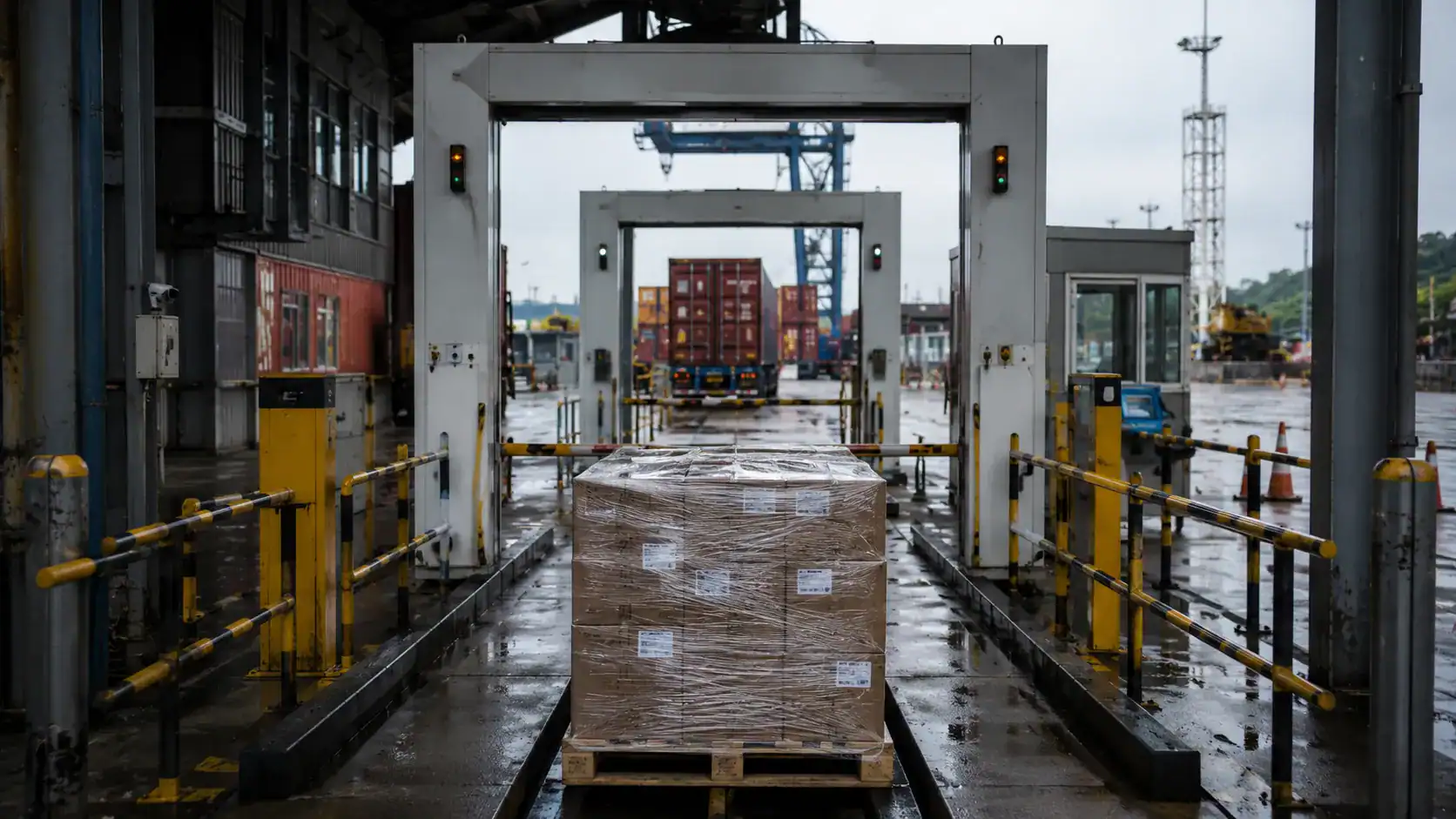
    Shipping container on a customs scanner gate with palletized cargo on rails, representing the documentation checkpoints required for shipping to Thailand.

    Thai customs clearance operates on a document-first principle. Before goods are physically examined, or released without examination, the customs authority reviews the submitted paperwork. If the documents stack up, the shipment moves. If they don’t, it doesn’t.

    A customs broker cross-checking invoice, packing list, and declaration paperwork against a shipment checklist

    The Standard Documents for Shipping to Thailand

    Five documents are required for every commercial shipment into Thailand, regardless of goods type.

    1. Commercial Invoice

    The commercial invoice is the primary valuation document. Thai customs calculates import duty and VAT on a CIF basis: Cost plus Insurance plus Freight. Whatever value appears on the invoice is the starting point for that calculation.

    A Thai customs-compliant commercial invoice must include:

    • Full name and address of both exporter and importer
    • Invoice date and reference number
    • Specific goods description (not generic: “electronic goods” will flag the shipment; “lithium-ion rechargeable batteries, 3.7V 2600mAh, model XJ200” will not)
    • HS code for each line item (8 digits minimum; 10-digit Thai tariff code preferred)
    • Quantity, unit price, and total value in the invoice currency
    • Country of origin for each goods line
    • Incoterms (e.g., FOB Shanghai, CIF Bangkok)
    • Port of loading and destination port

    Thai customs maintains a comparative valuation database. If your declared value sits significantly below what comparable goods typically land at, your shipment will be flagged for a valuation dispute, not because you’ve done anything wrong, but because the number doesn’t match the pattern. The goods don’t move while the dispute is resolved.

    2. Packing List

    The packing list must match the commercial invoice exactly. A quantity discrepancy between documents will trigger a physical inspection, even if the actual goods are precisely as declared. It takes as little as 200 units on the invoice against 198 on the packing list.

    The packing list must include:

    • Goods description matching the invoice
    • Number of packages (cartons, pallets, crates)
    • Gross and net weight per package
    • Dimensions of each package
    • Package marks and numbers

    3. Bill of Lading or Air Waybill

    The Bill of Lading (for sea freight) or Air Waybill (for air cargo) is the transport contract and the document of title for the goods. Without it, the consignee cannot take possession of the shipment.

    The main commercial sea freight ports in Thailand are Laem Chabang (near Bangkok) and Bangkok Port. For air cargo, Suvarnabhumi Airport handles the primary cargo volume.

    The B/L must show:

    • Shipper (exporter) name and address
    • Consignee name and address
    • Notify party: usually the customs broker or freight forwarder
    • Goods description consistent with the invoice
    • Number of packages and gross weight
    • Port of loading and discharge
    • Vessel name and voyage number

    One note on “To Order” Bills of Lading: if the B/L is issued to order rather than directly to the named consignee, the shipper must endorse the original before the consignee can take possession. This is common in letters-of-credit transactions. If the endorsed original doesn’t arrive before the vessel does, your goods will sit at port waiting for the document, not because customs is holding them, but because you don’t have title.

    The B/L and AWB requirements differ significantly between sea and air freight, including whether original documents or electronic equivalents are accepted at the cargo terminal.

    4. Import Declaration (e-Goods Declaration via NSW)

    Since 2025, all commercial imports into Thailand are submitted electronically through the National Single Window (NSW), a digital platform that connects Thai Customs, the Thai FDA, the Department of Foreign Trade, and other regulatory agencies in a single portal.

    Your licensed Thai customs broker registers your shipment through the NSW portal (customs.go.th) and lodges the import declaration (the digital equivalent of the legacy Customs Form 99). The system cross-references your declaration against the submitted documents and either auto-releases the shipment (Green Line) or directs it to physical inspection (Red Line).

    If you don’t have a licensed Thai customs broker, you cannot lodge this declaration yourself. Engaging a licensed broker is not optional for commercial imports. It is the only practical path to clearance.

    The Foreign Transaction Form is required for any shipment with a customs value exceeding ฿500,000 (approximately AUD $22,000). Your customs broker lodges this alongside the import declaration.

    5. Insurance Certificate

    When goods ship on CIF terms, the insurance premium invoice or certificate must accompany the shipment documents. Thai customs includes the insurance value in the CIF calculation used to assess duty and VAT.

    If you’re shipping on FOB terms and your buyer arranges insurance, the insurance documentation still needs to be available to the customs broker for reference in the valuation calculation.

    A warehouse operator moves a shrink-wrapped export pallet by forklift, the stage at which origin documentation must already match the goods being loaded.

    The Certificate of Origin and the AANZFTA Advantage for Australian Shippers

    A Certificate of Origin is not required for every shipment. It’s required when you want to access preferential duty rates under a free trade agreement.

    For goods shipped from Australia to Thailand, the relevant agreement is AANZFTA, the ASEAN-Australia-New Zealand Free Trade Agreement. Under AANZFTA, qualifying Australian-origin goods may attract reduced or zero duty rates in Thailand compared to the standard MFN (most favoured nation) rate.

    To claim AANZFTA preference:

    1. The goods must originate in Australia (meeting the rules of origin criteria specified in the agreement)
    2. The exporter must obtain a Certificate of Origin from an authorised Australian issuing body, typically the Australian Chamber of Commerce and Industry or another DFAT-approved authority
    3. The certificate must accompany the import declaration submitted through NSW

    If you’re shipping Australian-origin goods to Thailand without claiming AANZFTA preference, you’re paying duty you don’t have to pay. For regular container shipments, that’s a meaningful recurring cost. The DFAT AANZFTA guide covers current tariff schedules and rules of origin criteria by product category.

    Product-Specific Permits

    The five standard documents for shipping to Thailand clear most goods. But certain product categories require additional permits from Thai regulatory agencies. Obtain these permits before the goods arrive. Getting them after a shipment is at port is slower, more expensive, and sometimes not possible at all.

    Thai FDA Import Permit

    Required for: processed foods, pharmaceutical products, medical devices, cosmetics, dietary supplements, vitamins, and veterinary products.

    The Thai Food and Drug Administration issues import permits, and for some categories a License Per Invoice (LPI). An LPI is product- and shipment-specific, so each consignment needs a fresh one. Apply through the Thai FDA portal (fda.moph.go.th). Processing time varies by product category; allow four to eight weeks minimum.

    Phytosanitary Certificate

    Required for: live plants, plant products, fresh fruit and vegetables, timber and wood products, cut flowers, seeds, and some processed agricultural goods.

    The phytosanitary certificate is issued by the national plant protection organisation (NPPO) in the exporting country. From Australia, that’s the Department of Agriculture, Fisheries and Forestry (DAFF). The certificate confirms the goods have been inspected and found free of regulated pests. Shipments of plant-based goods without a phytosanitary certificate will not clear Thai customs. The Department of Agriculture Thailand enforces this requirement at the border.

    CITES Permit

    Required for: wildlife products, items derived from protected species, certain timber species (rosewood, ebony, Siamese rosewood), coral, ivory, and exotic leathers.

    Both the exporting country and Thailand must issue a CITES permit. The process involves the relevant wildlife authorities in each country. Lead time for complex applications can be 8–12 weeks.

    Import Licence

    Required for: controlled goods including arms and ammunition, explosives, certain chemicals, radioactive materials, and other goods under specific Thai ministerial control orders.

    Fine Arts Department Approval

    Required for: antiques, art objects, and cultural artefacts. The Fine Arts Department evaluates each item to determine whether it constitutes a national heritage object subject to import or export restrictions under Thai law.

    Permits are only one layer of what Thai customs checks.

    Getting the full document set right before the container ships avoids the slower, costlier path of fixing it once your goods are already at Laem Chabang.

    How Thai customs clearance works

    Wide shot of a palletized shipment moving beneath an overhead scanning gantry inside a busy Thai customs-processing terminal, a pallet-jack operator guiding it through mid-motion

    How Thai Customs Processes Your Documents

    When your broker submits the import declaration through the NSW, the system assigns the shipment to one of two clearance channels:

    Green Line: automatic release. Documents are in order, the goods are not flagged for inspection, and duty and VAT can be paid electronically. Clearance can complete within hours of the vessel arriving and documents being lodged.

    Red Line: physical inspection required. A Thai customs officer examines the goods against the declared documents. This is a normal part of the process for approximately 15% of commercial shipments. It is not a penalty or a sign that something has gone wrong. However, if the physical goods don’t match the documents, the consequences escalate quickly: formal investigation, goods held in bonded storage at the importer’s cost, and no release until the discrepancy is resolved in writing. The guide to how Thai customs decides what’s used vs new covers how officers evaluate whether goods are as declared, and what specifically triggers a Red Line classification.

    You pay duty electronically through BOT BAHTNET or Krung Thai Bank’s import payment system. Once duty is paid and cleared, the goods are released.

    The Document Mistakes That Cost Money

    Most shipments that stall at Thai customs follow predictable patterns. They recur because importers assume the process is more forgiving than it is.

    Undervalued commercial invoices. Thai customs compares declared values against a valuation database of comparable goods. If your declared value is significantly below the reference range, your shipment is held for a valuation dispute. You can resolve it, but your goods wait in bonded storage while you do.

    Generic goods descriptions. Descriptions like “electronics,” “clothing,” and “consumer goods” exist precisely because someone is trying to avoid scrutiny. Thai customs knows this too. Specific descriptions (model numbers, material composition, intended use) clear faster and with less inspection friction.

    Incorrect HS codes. The HS code determines your duty rate. A wrong code means a wrong rate: either an underpayment (which attracts penalties) or an overpayment. Where the rate difference between adjacent codes is significant, confirm the code with your customs broker before shipment.

    Missing product permits. A missing Thai FDA permit or phytosanitary certificate has no workaround once goods are at port. The shipment sits until the permit is obtained or the goods are re-exported.

    Document discrepancies. Any mismatch between documents creates a reconciliation problem that the customs broker must resolve in writing: invoice quantities against packing list counts, or the B/L consignee against the import declaration. The shipment waits.

    Every mistake above is avoidable before the container ships, and lining up your documents alongside a real quote for your Thailand shipment means nothing surprises you at the port.

    A delivery truck reverses smoothly into a covered loading bay at a Thai freight-forwarding depot, its rear doors already swung open as a dock worker's silhouette guides

    Working with a Licensed Thai Customs Broker

    NSW submission requires a registered Thai customs agent. For international shippers, the practical approach is to engage a freight forwarder with an established Thai customs brokerage relationship. Your forwarder coordinates document preparation, broker lodgement, and clearance on your behalf.

    Confirm before shipment:

    • That your goods don’t require a product permit you haven’t yet obtained
    • That your commercial invoice value is accurate and defensible against Thai customs reference data
    • That your HS codes are correct for the Thai tariff schedule (dtc.customs.go.th is the authoritative tariff database)
    • That your Certificate of Origin is in order if you’re claiming AANZFTA preference

    The earlier these checks happen, the more options you have. A document issue identified before loading can be corrected at no cost. The same issue identified at Laem Chabang costs time, storage fees, and sometimes goods. For relocators moving household goods, the document set for personal effects differs from the commercial set. The guide to shipping household goods to Thailand covers the personal effects customs pathway in detail.

    A single sealed export carton moves along a short conveyor inside a compact customs-clearance office in Thailand, caught mid-transit under warm mixed lighting from a

    Related reading: Thai Customs Paperwork Errors Cost More Than Prevention Does

    Frequently Asked Questions

    What is the Thai customs de minimis threshold?

    Shipments with a customs value below ฿1,500 (approximately USD $45) are exempt from duty and VAT. However, a digital declaration is still required under 2025 rules. Informal personal imports are no longer automatically waived from the NSW system.

    Do I need a customs broker to import into Thailand?

    For commercial shipments, yes in practical terms. The NSW electronic submission requires a registered customs agent. Individual importers are not typically registered for direct NSW access. Your freight forwarder will have an established relationship with a licensed Thai customs broker who handles lodgement on your behalf.

    How long does Thai customs clearance take?

    Green Line clearances can complete within 24 hours of arrival and payment. Red Line physical inspections typically add 2–5 business days. Shipments involving valuation disputes or missing permits can take weeks. The timeline is driven by the nature of the issue, not a fixed schedule.

    What happens if my goods are classified as Red Line?

    A customs officer physically inspects the goods against the declared documents. If everything matches, the goods are released after duty payment. If there are discrepancies in quantity, value, or description, a formal investigation process begins. Your goods remain in bonded storage during that process, at your cost.

    Can I use AANZFTA if my goods were manufactured in a third country?

    No. AANZFTA preferential rates apply to goods that meet the rules of origin criteria, broadly, goods substantially manufactured in Australia. Goods transshipped through Australia without Australian manufacturing content do not qualify. Rules of origin criteria vary by product category; the DFAT guide covers the specifics.

    What if my shipment includes both regulated and unrestricted goods?

    Each regulated item category requires its own permit. If a shipment includes both general goods and Thai FDA-regulated products, the entire shipment may be held pending confirmation that the regulated items have the required permits. The safest approach is to separate regulated and unrestricted goods into different shipments where commercially practical.

    Ready to Ship to Thailand?

    Swift Cargo manages document coordination, customs broker engagement, and end-to-end clearance for shipments into Thailand. Whether you’re moving commercial goods or relocating personal effects, the document requirements can be confirmed before loading, not after your container reaches Laem Chabang.

    Contact Swift Cargo for a freight assessment →

  • Electronics from China to Australia: Duties, EESS, Landed Cost

    Electronics from China to Australia: Duties, EESS, Landed Cost

    Electronics (laptops, earbuds, smart devices) being packed into a shipping carton in a Chinese factory or warehouse, with Australian port dock or customs facility visible as a secondary element

    Most Australian importers who run into problems with electronics shipments from China are not caught by complicated regulations. They are caught by a small number of well-documented requirements they did not know applied to them: compliance marks they did not have, certificates of origin they did not request, or duty concessions they did not claim. To import electronics from China to Australia without those surprises, line up three things before the goods arrive: a ChAFTA Certificate of Origin, EESS registration for in-scope electrical equipment, and ACMA compliance for anything with Wi-Fi, Bluetooth or other radio functions.

    Key Takeaways

    • Most electronics from China attract 0% import duty under ChAFTA, but you must hold a valid Certificate of Origin from your supplier to claim the preferential rate.
    • GST at 10% applies to all imported electronics regardless of duty rate, calculated on the customs value plus duty, freight and insurance.
    • Level 2 and Level 3 household and personal-use electrical equipment operating between 50V–1000V AC must be registered under the Electrical Equipment Safety Scheme (EESS) before it can be sold in Australia.
    • Telecommunications equipment requires ACMA compliance, typically demonstrated via the RCM (Regulatory Compliance Mark).
    • Most delays trace to one of four things: a missing Certificate of Origin, no EESS registration, an undeclared value, or an incorrect HS code.

    The Compliance Stack: Which Regulators Govern Electronics Imports

    Electronics imports into Australia do not sit under one regulator. They sit under a stack of them, and different products trigger different layers. Work out which rules apply to your specific goods before you place a supplier order.

    The main layers are:

    Australian Border Force (ABF): Handles customs entry, import declaration, duty assessment, and GST collection at the border. Every commercial import above AUD 1,000 requires a formal Import Declaration lodged through the Integrated Cargo System (ICS). ABF assesses duty on the customs value, generally the FOB price excluding international freight and insurance, and GST on that value plus duty, freight and insurance. Source: ABF: Cost of importing goods

    Electrical Equipment Safety Scheme (EESS): Governs the sale of electrical equipment operating between 50V and 1000V AC (or 75V–1500V DC) designed for household, personal, or similar use. This captures most consumer electronics: chargers, cables, power adaptors, smart home devices, lighting, and most household appliances. Importers must register as a Responsible Supplier with the EESS national database before their goods can be sold in Australia. Level 2 and Level 3 equipment must be formally registered; Level 3 requires a Certificate of Conformity. Source: EESS: Steps for compliance

    Australian Communications and Media Authority (ACMA): Governs telecommunications and radio devices. Any product that transmits or receives radio frequency signals must comply with ACMA’s Radiocommunications Act requirements. That covers Wi-Fi devices, Bluetooth equipment, mobile phones, routers, and smart speakers. Compliance is typically demonstrated through the RCM (Regulatory Compliance Mark), which covers both electrical safety (EESS) and electromagnetic compatibility (EMC) in a single mark. Source: ACMA: Supplier labelling requirements

    Therapeutic Goods Administration (TGA): Applies when electronics have a medical or therapeutic function: blood pressure monitors, glucose meters, hearing devices, and CPAP machines. Medical electronics require TGA registration before import and sale, with significant lead time.

    Most business electronics importers sell consumer gadgets, accessories, smart home products, and computing equipment. For them, the relevant stack is ABF + EESS + ACMA. Confirm where your specific product sits in this stack before you ship. Our guide to Australia’s commercial import rules covers how they interact.

    Sealed cartons of electronics palletised for import, the point at which duty and GST are calculated

    Duty and GST: What You Owe Under ChAFTA

    The China–Australia Free Trade Agreement (ChAFTA) entered into force in December 2015 and eliminated tariffs on most Chinese goods by 2019. How it applies to your goods determines whether you have a duty liability at all.

    0% duty: Most IT products, computing equipment, and high-technology devices qualify for zero duty under ChAFTA. This includes laptops, tablets, servers, networking equipment, phones, and most HTS Chapter 85 electronics. Australia also participates in the WTO Information Technology Agreement (ITA), which independently eliminates duties on a broad range of technology products. Source: DFAT: Guide to using ChAFTA

    5% duty: Non-IT consumer electronics may attract a 5% general tariff if they do not qualify under ChAFTA or the ITA. That group covers smart home devices, some appliances, and certain audio equipment. Check the specific HS code classification for your product before assuming zero duty applies.

    To claim the preferential ChAFTA rate: Your Chinese supplier must provide a valid Certificate of Origin (COO) confirming the goods were manufactured in China and meet ChAFTA rules of origin requirements. The COO must be issued by an authorised Chinese body, typically the China Council for the Promotion of International Trade (CCPIT) or China Customs. Without a valid COO on file, ABF will apply the general tariff rate rather than the preferential rate.

    GST: 10% GST applies to all imported goods regardless of duty rate, calculated on the customs value (FOB price) plus duty and international freight and insurance. Even at 0% duty, a AUD 50,000 electronics shipment carries at least AUD 5,000 in GST at the border. GST-registered businesses recover this as an input tax credit, but the cash stays tied up until the credit comes through, so plan for it. Source: ATO: GST on imported goods

    Import Processing Charge (IPC): A flat ABF processing charge applies to formal import declarations. Budget AUD 50 for consignments from AUD 1,000 to under AUD 10,000 and AUD 152 from AUD 10,000. Source: ABF: Import Processing Charges

    Duty and GST interact differently across import scenarios than many importers expect. Our guide to import duty and GST in Australia breaks down each one.

    Required Documentation for Customs Clearance

    For electronics imports from China, the standard set covers:

    Commercial Invoice: Must show the FOB (Free on Board) price, HS codes for each line item, country of origin (China), supplier and buyer details, and a clear description of the goods. Vague descriptions like “electronic components” slow clearance. Specific descriptions help ABF match goods to HS classifications quickly, for example “USB-C laptop charging cables, 65W, 1.8m, Model XYZ”.

    Packing List: Must show quantities, weights (gross and net), dimensions per carton, and a description consistent with the commercial invoice. Customs commonly flags discrepancies between the invoice and packing list.

    Bill of Lading or Air Waybill: Issued by your freight carrier. The consignee details must match your import declaration exactly.

    Certificate of Origin: Required to claim the ChAFTA preferential rate. Request this from your supplier when you place the order, not when you are booking freight. Chinese suppliers can take 7–14 days to obtain a COO from the relevant authority. The certificate must also be valid at the time of import entry. Leaving it late is a common way to import electronics from China to Australia at the general tariff rate instead of 0%, or to pay port storage while the certificate catches up.

    EESS registration evidence: If you are importing in-scope electrical equipment, have your EESS responsible supplier registration in place before the goods arrive. ABF does not always check at the border. Registration is still required before the goods can legally be sold, and it is cleaner to resolve this before a shipment is sitting in a warehouse.

    Insurance certificate: Documents the insurance cost that forms part of the GST value. Recommended regardless. Electronics in transit carry material loss and damage risk.

    Air vs Sea Freight for Electronics from China

    Electronics from China move by both air and sea. The right choice depends on the value density of the goods, the urgency of the order, and the volume being shipped.

    Air freight is the default for high-value, low-volume electronics: phones, laptops, tablets, and precision components. Transit from Shenzhen, Shanghai, or Guangzhou to Sydney or Melbourne typically runs 3–7 days. For goods worth AUD 500 per kilogram or more, the freight cost as a percentage of value stays manageable. For lower-value goods in bulk, air freight economics deteriorate quickly.

    Sea freight is appropriate for larger volumes: bulk accessories, cables, audio equipment, smart home devices, and lighting. LCL (Less than Container Load) shipments run 18–28 days from China to Australian east-coast ports. FCL (Full Container Load) offers similar transit times and becomes relevant when you are consistently shipping enough volume to fill a container. Sea freight typically costs 80–90% less per kilogram than air, which matters for lower-value goods where freight is a large component of landed cost.

    For most business electronics importers starting out, LCL sea freight makes sense for bulk replenishment orders, and air freight for urgent or high-value lines. As volume grows, you move from LCL to FCL once your regular shipments pass the LCL break-even point, typically around 10–12 CBM. The timing and cost trade-offs across LCL, FCL and air are laid out in full in our guide to shipping timelines to Australia.

    Electronics-Specific Risks in Transit

    Moisture and condensation: Ocean containers experience wide temperature swings over a 3–4 week transit, particularly through tropical shipping lanes. Condensation inside packaging can damage circuit boards and connectors. Desiccant packs inside cartons and moisture-barrier bags around individual units reduce this risk.

    Static discharge: Pack sensitive components in anti-static bags, not generic plastic packaging. This is standard practice for component importers but sometimes overlooked for finished consumer goods.

    Physical handling damage: Electronics packaged for retail display are often not packaged for freight. A full sea freight journey covers factory to port, loading, transit, unloading, port storage, customs, and delivery. Products need carton packaging robust enough for that repeated handling. Double-walled outer cartons and proper internal cushioning reduce damage rates.

    Cargo insurance is strongly recommended for electronics shipments. A standard all-risk marine cargo policy covers loss and damage during transit for roughly 0.3–0.5% of shipment value. For a consignment worth AUD 100,000, that is AUD 300–500 to protect the full shipment value.

    Warehouse worker scanning a barcode with a handheld scanner on stacked cartons on a pallet rack

    Worked Landed Cost Example

    Scenario: 500 units of wireless earbuds, FOB Shenzhen price USD 28 per unit = USD 14,000 total. Shipped by sea freight LCL to Sydney.

    Cost ComponentCalculationAmount (AUD)
    FOB value (goods)USD 14,000 × 1.55 exchange rate (indicative)AUD 21,700
    International sea freight (LCL)Approx 2 CBM at AUD 180/CBM + surchargesAUD 650
    Cargo insurance (0.4%)0.4% × AUD 22,350AUD 89
    Value of taxable importationFOB goods + freight + insurance (customs value AUD 21,700)AUD 22,439
    Import duty0% (ChAFTA, with valid COO)AUD 0
    GST at 10%10% × AUD 22,439AUD 2,244
    Import Processing ChargeABF electronic declaration, AUD 10,000+AUD 152
    Customs broker feeTypical broker rateAUD 180
    Sydney port charges + deliveryPort THC + last-mile to warehouseAUD 420
    Total landed costAUD 25,435
    Landed cost per unitAUD 25,435 ÷ 500AUD 50.87

    GST is recoverable as an input tax credit for GST-registered businesses. The effective landed cost for a registered importer is therefore AUD 23,191 (AUD 46.38 per unit) once the GST credit is applied.

    This example assumes you hold a valid ChAFTA COO. Without it, a 5% duty on the AUD 21,700 customs value adds AUD 1,085 to the cost, a meaningful difference at scale.

    An electronics carton undergoing a compliance re-check on a bench separate from the main pallet, a technician examining a device's power adapter closely under a task lamp

    Common Mistakes Australian Electronics Importers Make

    Not requesting the Certificate of Origin when you place the order. Importers forget the COO request while they focus on product specs and pricing. By the time the shipment is booked, it is too late to get a properly issued COO in time for the import entry. You then pay the general tariff rate rather than 0%, an avoidable cost.

    Assuming ChAFTA covers everything. Not all goods from China qualify. The rules of origin require that goods are manufactured in China and meet specific content or processing criteria. Goods assembled in China from third-country components may not qualify. When in doubt, ask your supplier for their COO supporting evidence before relying on the preferential rate.

    Ignoring EESS registration until after the goods arrive. EESS registration is a prerequisite for selling in-scope electrical equipment in Australia, not a post-arrival formality. If you start registering after the shipment has landed, the goods can sit in a warehouse for weeks before they can legally go on sale.

    Using vague HS codes to simplify the invoice. Some importers classify a mixed electronics consignment under a single broad HS code to reduce paperwork. That increases inspection risk, and ABF may assess the duty incorrectly. Each distinct product type should have its own HS code and its own invoice line.

    Underinsuring or not insuring at all. Electronics have high value-to-weight ratios and material transit damage risk. A single water-damaged carton on a sea freight shipment can be a significant loss. Cargo insurance at 0.3–0.5% of value is one of the lower-cost line items in a landed cost calculation.

    Not building freight time into inventory planning. Sea freight from China to Australia takes 18–28 days in transit plus port processing time at both ends. Importers who plan inventory on supplier lead time alone, without adding freight time, run into stockouts when shipping is delayed. See our guide to biosecurity clearance timelines for the additional buffer needed when goods require DAFF inspection on arrival.

    Swift Cargo handles electronics imports from China for Australian businesses: freight booking, customs documentation, EESS guidance, and delivery coordination. If you are planning your first electronics import or scaling an existing supply line, request a corporate freight quote for a freight assessment.

    What to Confirm Before You Import Electronics from China to Australia

    Confirm the HS code and duty treatment for each product line, request the Certificate of Origin with the purchase order, and have EESS registration and RCM evidence in place for in-scope products before the shipment lands. Then budget 10% GST on the customs value plus duty, freight and insurance, and insure the consignment, which typically costs 0.3 to 0.5% of its value.

    Frequently Asked Questions

    What is the import duty rate for electronics from China to Australia?

    Most IT and high-technology electronics from China attract 0% import duty under the China-Australia Free Trade Agreement (ChAFTA). Some non-IT consumer electronics may attract a 5% general tariff. To claim the 0% preferential rate, you need a valid Certificate of Origin from your Chinese supplier confirming the goods meet ChAFTA’s rules of origin. GST at 10% applies regardless of duty rate.

    What is EESS and does it apply to my electronics import?

    EESS stands for the Electrical Equipment Safety Scheme. It applies to electrical equipment operating between 50V and 1000V AC designed for household, personal, or similar use, which covers most consumer electronics. Importers must register as a Responsible Supplier with the EESS national database before their goods can legally be sold in Australia. Some higher-risk categories (Level 3) also require a Certificate of Conformity before registration.

    Do I need ACMA certification for electronics from China?

    If your electronics transmit or receive radio frequency signals (Wi-Fi, Bluetooth, cellular, or other RF technologies), ACMA compliance is required. This is typically demonstrated through the RCM (Regulatory Compliance Mark), which covers both electrical safety and electromagnetic compatibility. Products without RCM cannot legally be supplied in Australia.

    How long does it take to ship electronics from China to Australia?

    Sea freight typically takes 18 to 28 days in transit from major Chinese ports (Shenzhen, Shanghai, Guangzhou) to Australian east-coast ports. Air freight from the same origins to Sydney or Melbourne runs 3 to 7 days. Port processing and customs clearance add 1 to 3 business days at the Australian end for straightforward shipments.

    What is the Certificate of Origin and why does it matter?

    A Certificate of Origin (COO) is a document issued by an authorised Chinese body confirming that the goods were manufactured in China and meet ChAFTA’s rules of origin. It is required to claim the 0% preferential duty rate at the Australian border. Without a valid COO, the general tariff rate applies. The COO can take 7 to 14 days to obtain, so request it from your supplier when you place the order.

  • Documentation Quality Decides Green Line or Red Line at Thai Customs

    Documentation Quality Decides Green Line or Red Line at Thai Customs

    Aerial view of Thai Customs gate at Bangkok port with stacked shipping containers and the Thai flag, illustrating how Thai customs holds shipments for review.

    Most people who contact a freight company about a stuck shipment in Thailand share one belief: Thai customs is unpredictable. They’re usually wrong.

    Thai customs is systematic. Most shippers only find out which part of the system they failed to satisfy once their goods are sitting in a bonded warehouse collecting fees.


    Thai customs officers physically inspecting imported boxes on a warehouse table during a Red Line examination

    Key Takeaways


    • Thailand’s customs system assigns shipments to Green Line (automatic release) or Red Line (physical inspection) based on documentation quality and risk signals.
    • Most compliant, well-documented shipments receive Green Line status and clear within 24–48 hours.
    • The most common delay triggers are documentation errors, incorrect HS codes, and valuation disputes, not random enforcement.
    • From January 2026, customs duty applies to imported goods of any value, ending the old low-value exemption. Valuation accuracy carries more weight than it did under the previous system.
    • A qualified Thai customs agent handles the NSW digital filing, HS classification, and officer communication. That prevents most avoidable delays before they start.


    How Thai Customs Actually Works Today


    Thailand’s import system is built around a risk-based release model. When your customs agent files an import entry declaration through the National Single Window (NSW), the system weighs document consistency, HS code plausibility, declared value relative to known market data, and goods category risk. It then assigns a lane. The two that matter for most shipments are:

    Green Line: Automatic release. Documents are consistent and valid, the goods match their declared profile, and no flags have been raised. No physical inspection is required. Source: THAILAND.GO.TH: Import Entry with Red Line status

    Red Line: Physical inspection required. The shipment has triggered a flag: document mismatch, suspect HS code, incomplete paperwork, unusual valuation, or a random compliance audit. A customs officer is assigned to inspect the goods and review all documentation.

    Declarations are filed electronically, and the e-Customs system analyses the risk in each import declaration before it issues an inspection order. Source: THAILAND.GO.TH: Import Customs clearance and releasing goods

    Green Line shipments typically clear within one to two business days of arrival. Red Line shipments add three to seven business days once inspection is assigned, and can extend further if a valuation dispute or missing permit requires formal resolution.


    The Seven Most Common Reasons Shipments Get Held


    1. Documentation Errors

    This is the most common cause of customs delays, by some margin. Thai customs requires a specific document set for every import: an Import Declaration, Commercial Invoice showing FOB value, Packing List, and either a Bill of Lading (sea freight) or Air Waybill (air freight). For personal effects and household goods, you’ll typically also need proof of your prior overseas residence and an itemised description of the goods.

    The errors that trigger flags are often small: a name spelled differently on the invoice versus the bill of lading, a declared value in USD that doesn’t convert cleanly to the THB figure on the invoice, item descriptions on the packing list that don’t match descriptions on the commercial invoice. Thai customs officers compare documents against each other and flag every inconsistency for review.

    Inside a Thai bonded-warehouse staging area, a logistics coordinator cross-references a handheld tablet against a row of uniformly boxed cartons organized into distinct zones on open shelving, mid-check, unhurried.

    2. Incorrect or Disputed HS Codes

    Every imported item is classified using a Harmonized System (HS) code, which determines the applicable duty rate. Your agent may assign a code that doesn’t match the goods, or one that customs officers interpret differently. The system may then flag it before release, or an officer will reclassify it during a Red Line inspection.

    The risk is highest for goods that sit across categories: electronics that could be classified as consumer or commercial grade, tools that might be industrial or personal use, clothing in larger quantities that reads more like commercial stock than household effects. Get the classification right before the entry is filed. Source: U.S. Commercial Service: Thailand Customs Regulations

    3. Valuation Disputes

    Thai customs uses transaction value, the price actually paid, as the primary basis for duty assessment. When a declared value appears low relative to known market data for that item, officers issue a value doubt query. You’ll need to provide payment proof: bank transfer records, original purchase invoices, or documented appraisals confirming the declared amount.

    This matters especially for used household goods, which are often declared at current market value rather than original purchase price. If you’re using depreciated or second-hand market values, document the methodology and be ready to show comparable prices. That reduces dispute risk. Our guide on how Thai customs decides whether goods are used or new covers the assessment process in detail.

    4. Restricted or Controlled Items

    Certain categories of goods require specific import permits or approvals before they can enter Thailand. Medicines and health supplements need FDA approval from Thailand’s Food and Drug Administration. Communications equipment may require NBTC certification. Firearms and weapons are prohibited outright. Some food products need product registration.

    One restricted item without its permit documentation can hold the entire shipment, not just the flagged item. See our guide on what you cannot ship to Thailand for the full restricted and prohibited categories.

    5. Misdeclaration or Underdeclaration

    Thai customs law treats two things as misdeclaration: declaring a high-value item as “miscellaneous household goods,” and significantly undervaluing electronics. Thai customs uses reference databases and market pricing data to check declared values against known market rates. The penalties include fines up to four times the evaded duty amount and potential seizure of goods.

    For relocation shippers, the usual risk is a careless packing list that bundles items under vague descriptions, rather than deliberate fraud. A laptop, a camera, and a drone all have material value. Each should have its own line on the invoice with a clear description and declared value.

    6. Missing or Expired Permits

    For goods that require import licences or phytosanitary certificates, the permit must be current at the time of arrival. A licence that lapsed since filing will hold your shipment. So will a certificate that expires before the vessel docks. Check permit expiry dates against the expected arrival date, not the date of filing or the date of sailing.

    A warehouse packer's hands seal a wooden export crate with a strap tensioner in a clean staging bay, a blank document wallet already fixed to the crate's side, ready for whatever check comes next.

    7. Random Compliance Audits

    A small percentage of shipments that would otherwise receive Green Line status are selected for physical inspection as part of routine compliance auditing. Selection is a random sample function built into the risk management system and says nothing about the shipment itself. The inspection typically resolves within 24 to 72 hours if documentation is accurate and goods match the declaration. All you can do here is keep your paperwork clean so the audit resolves quickly.


    Most holds above trace back to paperwork, not enforcement.

    Getting your invoice, packing list and bill of lading to agree before the entry is filed is the cheapest fix available, and the one most shipments skip.

    The Thailand documents checklist

    What Red Line Inspection Means in Practice


    When the system routes a shipment to the Red Line, customs formally assigns an officer to review the goods and documentation. Your customs agent receives a notice to contact that officer. If you’re self-filing, that notice comes to you.

    The inspection covers whether the declared goods match what was physically packed, whether the HS codes are appropriate for the actual items, whether the declared value is supported by evidence, and whether any controlled items have the required permit documentation.

    Common requests during Red Line inspection include: payment proof such as bank transfer records or original purchase receipts; supporting documentation for high-value items; permit or licence paperwork for controlled goods; and clarification on packing list descriptions that are vague or inconsistent with the invoice.

    Response time matters. Until the officer has what they asked for, the goods stay in storage and warehouse fees keep accruing. If you’re working with a professional customs agent, they handle all officer communication on your behalf. If you’re managing this yourself, responding immediately shortens your resolution time. Source: U.S. Commercial Service: Thailand Import Requirements and Documentation


    What Changed in 2026 and Why It Affects Your Shipment


    Until the end of 2025, Thailand applied a simplified system for many imported goods that limited enforcement of customs duties on lower-value shipments. From January 2026, both VAT and full customs duties now apply according to the tariff schedule for each product type. The Thai government confirmed and implemented this change at the start of this year. Source: Nation Thailand: Government to impose VAT and customs duties on imports from January 2026

    Three practical effects follow from this change:

    First, more shipments now carry real duty liability, so valuation accuracy matters more than it did before. Items that previously cleared on a simplified basis now go through full tariff assessment.

    Second, the duty calculation depends on declared value, so customs now has stronger financial incentive to query declarations that look inconsistently low. Officers are more likely to pursue value doubt queries formally.

    Third, shippers who previously relied on informal low-value clearance paths now need to file proper import entries with accurate documentation. The informal channel has effectively closed.

    For relocation shipments specifically: most household goods qualify for duty-free treatment under Thailand’s personal effects concession if you meet the residency requirements and timing conditions. But you must claim this exemption explicitly, with supporting documentation. Thai customs does not apply it for you. Check our duty-free guide for Thailand if you’re moving under a retirement or long-stay visa. For the DTV and other newer visa types, see our DTV holders shipping guide.


    The 2026 duty change means declared values get a harder look than before, so it is worth pricing your move against the current rules before you pack, not after a query lands.

    A freight van reverses up to a rear warehouse loading dock in the low gold light of early morning, a staff member guiding the vehicle's final approach with a raised hand while cartons wait pre-staged on a pallet jack nearby.

    How to Prevent Delays Before Your Shipment Leaves


    Most customs delays are resolved in documentation, not at the port. The steps below address the highest-frequency causes before they become problems:

    Use a qualified Thai customs agent. This is the single highest-leverage move. The right customs agent removes the majority of avoidable delay risk, because they know the current HS code conventions, the current value reference databases, and which goods categories attract scrutiny. Thailand’s digital-only NSW system also requires technical familiarity with the e-Customs platform. This isn’t a process to navigate for the first time with your household goods.

    Itemise everything. Generic descriptions are delay magnets: “household goods,” “personal effects,” “assorted items.” Every item of material value should have its own line on the packing list and supporting documents. Each line needs a specific description, country of manufacture, quantity, and declared value.

    Match all documents before filing. The names, values, quantities, and item descriptions on your commercial invoice, packing list, and bill of lading must be internally consistent. Discrepancies between documents are the most common Green Line failure and the easiest to fix before filing.

    Verify HS codes for any item that sits across categories. Electronics, tools, food products, cosmetics, and textiles in larger quantities all carry classification risk. Confirm the correct code with your agent before the entry is filed.

    Check restricted goods before you pack. If anything in your shipment might require a permit, confirm permit status before sailing, not after the ship has left. Applying for a permit after arrival is a slow, expensive process.


    What to Do If Your Shipment Is Already Held


    Contact your customs agent immediately if you have one. They know which officer is assigned, what the specific query is, and what documentation is needed to resolve it. This is where having professional representation is most valuable.

    If you’re managing this yourself: contact the assigned customs officer, ask for a specific statement of what is required, and respond within one to two business days. Gather original purchase receipts for any queried items, bank transfer records as payment proof for high-value goods, and any permit documentation you hold.

    Respond to the specific query, not the general situation. A valuation query requires different documentation than a permit query. A misdeclaration concern requires different evidence than an HS code dispute.

    Why does a hold that starts as a paperwork query so often end up costing more than the duty being queried? Two meters start running while the officer waits for your answer. The terminal or warehouse holding the goods charges storage once its free period ends, and on a full container the shipping line adds demurrage for each extra day its box stays in the port. Neither meter pauses while the query is open, and a clean release at the end does not normally cancel what has accrued. So on the first day of a hold, ask your agent or the carrier for two dates: when free storage ends and when free container time ends. Those dates are the real deadline for your reply, and either can run out well before the ten-business-day mark mentioned below.

    If the delay extends beyond ten business days with no clear resolution path, bring in a licensed customs consultant or a logistics operator with established relationships in the Thai customs system. Either can often accelerate the process.

    Swift Cargo manages end-to-end customs clearance for household goods and relocation shipments into Thailand: from documentation preparation through officer communication and final release. If your shipment is already stuck or you want to ensure it isn’t, get in touch with our team.


    The guide on shipping time to Thailand covers total transit time from origin to Thai delivery, including the customs clearance window.

    Frequently Asked Questions


    For the prevention side of this, see our guide to avoiding Thai customs delays when moving. It covers the documentation protocols and pre-shipment steps that stop holds before they start.

    How long does Thai customs clearance actually take?

    For Green Line shipments, one to two business days from arrival is typical. Red Line shipments add three to seven business days once inspection is assigned. Complex cases involving valuation disputes or missing permits can extend to two to four weeks depending on how quickly the required documentation is provided.

    What is the most common reason household goods get held at Thai customs?

    Documentation errors and incomplete or vague packing lists are the most frequent triggers. A packing list that uses broad descriptions like “household goods” instead of itemised entries is the single most avoidable cause of delays.

    Do I need a customs agent to import household goods into Thailand?

    Technically no, but practically yes for most shippers. Thailand’s customs system requires accurate HS code classification, correct valuation documentation, and current knowledge of permit requirements. The entire process is digital. Professional customs agents reduce delay risk.

    Will my shipment be physically inspected by Thai customs?

    Most compliant, well-documented shipments receive Green Line status and are not physically inspected. Red Line status, which triggers physical inspection, is assigned when documentation flags are detected or as part of random compliance auditing.

    What changed in 2026 for Thai customs on imported goods?

    From January 2026, Thailand applies both VAT and full customs duties on imports according to the tariff schedule for each product type. The previous simplified system that limited duty enforcement on lower-value shipments no longer applies. Household goods shippers who qualify for the personal effects duty-free concession still benefit from that exemption, but they must claim it explicitly, with supporting documentation.

  • AANZFTA Rules of Origin and Duty Claims for Australian Importers

    AANZFTA Rules of Origin and Duty Claims for Australian Importers

    Trade agreements attract a strange kind of wishful thinking. Importers hear that a deal exists between Australia, ASEAN and New Zealand, then assume the agreement itself will somehow make the shipment cheaper. In practice, AANZFTA is useful only when the goods, origin, and paperwork line up tightly enough for the preference to be claimed correctly.

    That is why AANZFTA should be understood less as a political headline and more as an operational instrument. The agreement can create a preferential-duty pathway, but it does not remove the need for correct classification, origin analysis, customs documentation, or biosecurity compliance. Importers who treat it as a broad promise often become frustrated. Importers who treat it as a document-sensitive customs tool usually get more value from it.

    For Australia-bound cargo, the practical question is not “does AANZFTA exist?” It is “can this shipment properly claim AANZFTA treatment, and what evidence will customs expect?”

    Cargo ship and customs documents representing an AANZFTA rules-of-origin certificate claim at an Australian port

    What AANZFTA Actually Does

    AANZFTA creates a framework under which qualifying goods can receive preferential tariff treatment when imported into Australia from participating economies. DFAT and ABF both frame the agreement operationally: it is about how importers claim preferences, how origin is established, and how the agreement works in the actual customs environment (see DFAT: AANZFTA overview and ABF: free trade agreements).

    AANZFTA is not a universal discount on imports from Southeast Asia. It is a structured preference regime. The importer is still dealing with customs law, tariff treatment, and evidentiary expectations. The agreement creates an opportunity. It does not create an automatic entitlement.

    For commercially serious importers, that makes AANZFTA a planning tool. It changes sourcing and landed-cost decisions where the goods genuinely qualify. But it delivers real value only when the preference can be claimed cleanly, defended if questioned, and integrated into the rest of the import file.

    Why Rules of Origin Matter More Than Importers Expect

    Rules of origin are where many trade-agreement conversations stop being casual and start becoming technical. A product shipped from an AANZFTA country is not necessarily an originating good in the agreement sense. It may have been assembled there, repackaged there, or re-exported through that country without actually satisfying the origin criteria required for preferential treatment.

    Customs is not asking where the container boarded. Customs is asking whether the good qualifies as originating under the agreement. The applicable test depends on the product and may turn on production history, tariff-shift logic, regional value content, or a commodity-specific rule, as set out in the Rules of Origin Facilitator: AANZFTA product-specific rules.

    This is why importers should not use AANZFTA as a sales talking point before the origin analysis is done. If the commercial team starts budgeting around a preference that later cannot be substantiated, the landed-cost model will be wrong at exactly the moment it needs to be credible.

    The Origin Tests That Actually Decide Eligibility

    AANZFTA uses product-specific rules, which means eligibility is not determined at the agreement level but at the tariff heading level. To qualify as ASEAN-origin, most goods must satisfy one of three tests. A good is wholly obtained when it is produced within ASEAN member states with no non-ASEAN inputs. A tariff change rule requires non-originating inputs to shift to a specified HS chapter or heading through processing in the ASEAN country. A regional value content threshold requires a minimum percentage of the good’s value to be added within the ASEAN region. DFAT: AANZFTA rules of origin sets out all three.

    For finished manufactured goods, the tariff change rule is the test most commonly in play. This means an importer needs to understand not just where the product was assembled but where the key input materials originated and whether the manufacturing process in the ASEAN country changes the tariff classification enough. Take a product assembled in Vietnam from Chinese components that remain in the same HS chapter as the finished good. It may not satisfy the tariff change rule, and therefore may not qualify for AANZFTA preference regardless of the country of export.

    Importers should not assume AANZFTA eligibility just because they source finished goods from ASEAN factories that draw heavily on Chinese upstream inputs. They should check the specific HS code against the relevant product-specific rule and confirm with the manufacturer what origin evidence is available to support the claim.

    The Specific Tests, Named

    Name the actual instruments. The vaguer an importer is about them, the more likely they are to accept a supplier’s word as if it were proof. A Product-Specific Rule (PSR) tied to the good’s tariff classification decides AANZFTA origin. For many goods the PSR offers a choice of two tests. One is a Regional Value Content test: commonly 40% RVC, meaning at least that share of the value must originate in the free-trade area. The other is a Change in Tariff Classification test, where the input materials shift HS classification through processing in the exporting country. The PSR schedule, not the exporter’s confidence, decides which test applies.

    The claim itself rests on a valid Certificate of Origin (the AANZ form) issued by an authorised body in the exporting country. The importer holds that certificate at the time they claim the duty preference. This is where accountability quietly shifts. The supplier prints “made in Vietnam” on the invoice. But if a Border Force audit finds the RVC arithmetic does not hold, Border Force pursues the Australian importer for the underpaid duty, penalties, and interest. The exporter who asserted the origin bears none of that exposure. That asymmetry explains why origin claims deserve verification rather than trust.

    Warehouse worker's hands checking a shipping label and packing document attached to a plastic-wrapped freight pallet

    Why Documentation Decides Whether the Claim Survives

    Even where goods genuinely qualify, the claim still lives or dies through documents. Customs needs documents showing that the origin claim is valid and that the importer is entitled to request preferential treatment.

    Invoices, origin declarations or certificates where relevant, product descriptions, tariff logic, and supporting commercial records all matter. If the file is vague, inconsistent, or too thin to explain why the preference is being claimed, the importer has created avoidable risk. The deciding question is whether the claim is documented strongly enough to survive scrutiny.

    Experienced importers treat preference documentation as part of the customs file, not as a side note for the procurement team. The agreement may save money, but only if the evidence is strong enough to make the claim operationally real. For the broader Australian customs framework that surrounds any preference claim, see Australian customs and import services.

    What AANZFTA Does Not Change

    AANZFTA does not dissolve the rest of the Australian border system. It does not remove GST, customs valuation rules, DAFF biosecurity controls, or the need for correct classification. Nor does it solve permit problems for regulated commodities. Australia’s Commercial Import Rules Explained and Import Duty and GST Explained for Australia cover those obligations in detail.

    Trade-agreement logic belongs inside the bigger import system. A qualifying preference can still sit alongside inspections, treatment, valuation work, or compliance obligations that have nothing to do with the agreement itself. A preferential duty rate and a DAFF treatment order can arrive in the same shipment file. The agreement handles one; the importer still manages the other.

    How to Use AANZFTA Intelligently as an Importer

    • Confirm tariff classification first, because origin and preference logic become meaningless if the product is misclassified.
    • Check the actual origin rule for the goods (tariff change, regional value content, or wholly obtained) rather than relying on broad supplier assurances.
    • Make the preference file part of the customs file, not an isolated procurement note.
    • Model landed cost with and without the preference so the business understands the real exposure if the claim fails.
    • Keep the broader border system in view, especially for goods with biosecurity or regulator sensitivity.

    The classification step deserves particular attention. AANZFTA duty rates are set at the HS heading level, and the gap between two adjacent headings can mean the difference between a 5% rate and a 0% rate, or between a qualifying rate and an exclusion. Importers often delegate tariff classification entirely to their customs broker and never review the rationale. That leaves them exposed: if the classification has been generous in the past and customs disagrees, the preference claim falls with the classification dispute. Independently review the classification before the first shipment of a new product. It is the cheapest form of landed-cost risk management available.

    An independent classification review is cheap; a failed claim is not.

    If your AANZFTA eligibility has never been checked against the actual product-specific rule, that gap is worth closing before your next shipment books.

    Talk to our import team

    Origin Documentation as an Ongoing Capability

    Two competitors can import the same goods from the same ASEAN supplier and still end up with two different landed costs. The difference comes down to whether one company has invested in origin documentation as an ongoing capability and the other has not. Over time that gap compounds. The agreement is public; the discipline of using it well is the actual cost advantage.

    In practice this means maintaining a working HS-code map for your product range. It also means holding supplier origin certificates on file and reviewing them whenever suppliers change production inputs. And it means establishing a standard preference-claim checklist that travels with every shipment file. Some importers redo the origin analysis from scratch on every new SKU and re-request paperwork each time a shipment books. Those importers are not using AANZFTA as an advantage. They are experiencing it as a compliance overhead.

    Say a version of this to a customer or a procurement team, not just to yourself: “we claim AANZFTA preference on every eligible shipment, every time, because our origin documentation is standing infrastructure, not a scramble.” Most competitors cannot say that sentence honestly. The ones who redo the analysis from scratch each time either miss claims quietly or claim inconsistently, and inconsistency is the thing a sharp-eyed customer notices before the cost savings ever do. Treat the discipline as a story worth telling, not just a cost line worth capturing. That framing turns a compliance habit into something a buyer remembers you for.

    Calibrating Confidence in the Claim

    Most importers who are aware of AANZFTA believe their goods qualify for preferential duty. Importers tend to feel more confident about that belief than the evidence supports. The rules of origin under AANZFTA are product-specific. They specify transformation processes and regional value content thresholds that determine whether a product is ASEAN-origin for customs purposes. The margin for error is narrower than importers typically assume.

    A supplier asserting ASEAN origin on a commercial invoice has not determined rules of origin. A freight forwarder who has successfully claimed AANZFTA preference on similar goods does not guarantee eligibility on your specific product. The importer bears the risk of a disputed preference claim, not the supplier. Run the rules-of-origin analysis specifically for your product, and hold your confidence in the claim at the level the analysis actually supports, not the level that makes the landed-cost projection look better on a spreadsheet.

    Readers working through regional sourcing strategy alongside preference claims should see RCEP and Australian Trade and Australia–ASEAN Logistics Strategy for the broader agreement context.

    AANZFTA Is Valuable Only When the Claim Is Real

    The agreement matters, but the real commercial value sits in the claim discipline around it.

    The teams who fail to claim AANZFTA preference are rarely the ones who do not know the agreement exists. The failure is operational. Teams treat origin documentation as a one-shipment problem rather than a permanent capability. They redo it informally at every booking instead of building it once and keeping it current. None of those mistakes look catastrophic in the moment, but over an importer’s annual volume they become the difference between treating AANZFTA as a real edge and treating it as a tariff discount that someone else captures more reliably.

    The most straightforward way to close the gap is to build a one-page preference checklist for each product category: the HS code, the applicable product-specific rule, the required origin documentation from the supplier, and the last date that documentation was confirmed current. That document travels with the product’s purchase order template. It does not require a dedicated compliance team. It requires answering the origin question once, properly, and keeping the answer current.

    We treat your import as a system, not a one-off shipment.

    Most SMEs receive a detailed, all-inclusive quote within 24 hours, no hidden fees, so your landed cost is real before you commit.

    Price your Australia import

    “Our goods qualify for AANZFTA preference” stays an assumption until someone has actually run the rules-of-origin analysis on that specific product. A supplier’s assertion of ASEAN origin on an invoice isn’t a determination. A forwarder’s past success claiming preference on similar goods isn’t a guarantee on yours. The real decision hiding inside “we claim AANZFTA” is how much you’re willing to spend, in analysis time or in specialist fees, to convert a belief into a position you can defend if it’s challenged. That’s a choice with a real cost of being wrong: proceed on an unverified claim and you may owe the duty back with penalties; verify every claim and you’re paying for certainty you sometimes didn’t need. Neither option is free.

    Related reading: Australia’s Free Trade Agreements: A Practical Guide for Importers · Trade Finance for Australian Importers: How to Fund the Gap Between Paying Suppliers and Getting Paid

    Frequently Asked Questions

    Does AANZFTA automatically reduce duty on goods from ASEAN countries?

    No. The goods still need to qualify under the agreement’s origin rules, and the importer needs to make the claim properly.

    Is the shipping country the same as the origin country under AANZFTA?

    Not necessarily. Customs is concerned with originating status under the agreement, not just where the goods were shipped from.

    Does AANZFTA remove GST or biosecurity requirements?

    No. It can affect tariff treatment, but it does not remove the rest of the customs, tax, or biosecurity framework.

    What is the biggest importer mistake with AANZFTA?

    The most common mistake is budgeting around preferential treatment before origin and documentation have been tested properly.

  • AUD Volatility 2013–2020: What the Currency Cycle Means for Import Planning

    AUD Volatility 2013–2020: What the Currency Cycle Means for Import Planning

    AUD coins or banknotes alongside a long-term currency chart spanning 2013-2020 with visible peaks and troughs

    Currency history matters when it teaches a durable planning lesson. One of those lessons is the Australian dollar’s path from the strong post-boom years into 2020 volatility. It shows that the currency can move through very different regimes depending on macro conditions, commodity drivers, risk sentiment, and crisis pressure. For importers, that matters because budgeting assumptions built in one regime often break badly in another.

    Our companion article on commodity prices and the AUD covers the structural relationship: why iron ore and coal export earnings drive the exchange rate, and what that means for import cost planning.

    Why the peak years created false confidence

    When the AUD was strong, it was easy to treat the currency as a stable backdrop for imports. That kind of period produces bad habits. Companies start assuming the budget environment is normal, they make supplier choices around those assumptions, and the idea that the exchange rate could deteriorate sharply begins to feel theoretical. The lesson of the later cycle is that those assumptions were softer than they looked.

    The post-float high for AUD/USD was approximately 1.10 in mid-2011, driven by the mining boom and strong Chinese commodity demand. By early 2013 the rate had pulled back to around 1.04, still well above long-run averages and still sufficient to make USD-denominated sourcing feel comfortable. The RBA’s exchange rate explainer documents the structural factors behind that strength: elevated terms of trade, high iron ore and coal prices, and a wide interest rate differential relative to the US and Europe.

    In that environment many Australian importers locked in supplier contracts and sourcing relationships priced around rates in the 0.95–1.05 range. The assumption embedded in those contracts was not always explicit; it rarely is. But when you quote a landed cost to a customer or set an internal budget without specifying a currency range, you are implicitly betting the rate stays close to where it is today. That is the soft assumption the later cycle exposed.

    The AUD descent: 2013 to 2020

    The AUD did not fall from 1.04 to 0.57 in a single move. It fell in phases, with partial recoveries between them, which is exactly what makes it a difficult planning problem. Each recovery tempts the importer back into complacency.

    The broad trajectory, drawing on RBA research on exchange rate drivers:

    • 2013–14: AUD falls through 0.90 as commodity prices soften and the US Federal Reserve signals tapering of quantitative easing.
    • 2015–16: AUD falls through 0.80, then 0.70. Iron ore prices drop sharply. The Reserve Bank cuts the cash rate.
    • 2017–19: Partial recovery to the 0.72–0.80 range. Commodity prices stabilise. Some importers treat this as a new floor.
    • March 2020: COVID-19 global risk shock. AUD/USD reaches approximately 0.57 on 19 March 2020, the lowest level since the early 2000s, before recovering sharply as commodity prices held up and global stimulus measures took hold.

    For a business that started budgeting at 1.04 in early 2013, a USD-denominated purchase costing AUD 100 at that rate cost approximately AUD 182 at the March 2020 low. That is not an unusual event in an asset class known for volatility. It is the normal operating range of the Australian dollar under stress.

    Why 2020 mattered so much

    The COVID shock mattered beyond its severity because of its speed. The AUD moved from around 0.66 in late February 2020 to 0.57 in roughly three weeks. Importers with shipments already at sea, with supplier invoices already issued in USD, had no practical hedge available at that point. The exposure had already been taken on.

    In practical terms, this means importers should stop treating exchange-rate stability as a default between shocks. Commodity conditions, global risk events, and local economic expectations can all move the AUD at once, and none of them announce themselves in advance.

    Once you accept that, landed-cost planning becomes more serious and less complacent. Customs value for duty purposes is assessed in AUD at the exchange rate applicable at the time of export, which means currency moves directly affect the duty bill, not just the supplier invoice. The ABF’s customs valuation framework spells this mechanism out.

    How this changes import thinking today

    The useful takeaway is not the chart. It is the range of outcomes the currency has already shown it can produce.

    If the AUD has already shown that it can move from around 1.04 to 0.57 in seven years, with a partial recovery in the middle, then any landed-cost model built on a single exchange rate assumption is thinner than it looks. Run the model at three rates: a base case at current spot (AUD/USD traded near 0.72 in August 2026, having ranged roughly 0.67 to 0.73 across that year), a stress case at the 2020 low of 0.57, and a favourable case at 0.78 to 0.80, a level last sustained in 2021. If the business only works at the base case, that is a risk position that needs to be named and managed, not hidden inside a budget line.

    The three-rate model is really a probability discipline in disguise. Most importers do not ignore the stress case because they think it impossible; they ignore it because they quietly price its probability at close to zero. That is the error. In early 2013 a fall to 0.57 would have looked like a one-in-fifty scenario, the kind of number that rounds to “won’t happen.” It happened inside seven years. Running the model at 0.57 is not an attempt to predict it. It is a refusal to assign a real, recurring outcome a probability of zero simply because it is inconvenient to budget for.

    Think of it the way an insurer prices a policy rather than the way a forecaster predicts weather. An insurer doesn’t claim to know whether your warehouse burns down next year; it prices the premium against the historical frequency of warehouse fires, whatever that frequency turns out to be. A three-rate landed-cost model does the same job for currency exposure: it isn’t a bet on where the AUD goes next, it’s a premium you pay upfront, in the form of slightly more conservative margins and contract terms, against a range the currency has already proven it can occupy. The businesses that struggled hardest through 2013-2020 weren’t the ones with bad luck on timing. They were the ones that had never priced the premium at all, because the stress case felt too unlikely to be worth the discomfort of planning for.

    That affects pricing discipline on customer quotes, the buffer you carry in supplier contracts, and how much value you place on customs timing or shipment flexibility when rates are moving.

    AUD Peak to Volatility 2013-2020: Building a currency buffer for Australia imports

    Building a currency buffer for Australia imports

    A practical buffer predicts nothing. It marks the range your unit economics can survive. The 2013–2020 history gives you a data point: the AUD sat at 1.04 in early 2013 and reached 0.57 in March 2020, a spread of 0.47 across seven years. Most ongoing import businesses need to survive at least one full cycle.

    A workable approach: build your base-case landed cost at current spot, then calculate the same landed cost at 0.68 (the 2015–16 low) and at 0.57 (the 2020 extreme). The gap between the base case and the 0.68 scenario gives you a defensible buffer to hold as margin headroom or to price into customer contracts. If that gap is larger than your current margin, you have a structural problem that no amount of freight optimisation will solve, but at least you can see it clearly.

    Put a number on it. An importer landing USD 100,000 of goods at a base-case spot of 0.72 pays roughly AUD 138,900. Re-run the same USD 100,000 invoice at the 0.68 buffer rate and the landed cost rises to about AUD 147,100. That is an AUD 8,200 swing on a single shipment before freight or duty even enter the calculation. Run it again at the 2020 extreme of 0.57 and the same invoice costs AUD 175,400, nearly AUD 36,500 more than the base case. That gap is not a rounding error to absorb quietly; it is the exact number a pricing model needs to survive, and most importers only discover it exists the year the rate actually gets there.

    The fix costs nothing but arithmetic done in advance. Run your own landed-cost model at 0.68 and at 0.57 before you sign the next supply contract, not after the rate has already moved against you. Price the difference into either your margin or your customer contracts while you still have the choice.

    The ABS international trade price indexes track how import prices move in AUD terms as the exchange rate shifts, which is useful for checking whether your specific import category behaves in line with the broader AUD pattern or diverges due to supplier pricing power or commodity inputs.

    Two things compound currency exposure for Australian importers in a way other import markets do not face. First, the AUD is a commodity-linked currency: it tends to fall hardest during global risk-off events, which are often the same moments when supply chains are under stress and freight costs are rising. So the three headwinds (weaker AUD, higher freight, disrupted supply) tend to arrive together. Second, Australian customs duty is calculated on the AUD customs value, which is the transaction value converted at the ABF ruling rate for the day of export. An importer cannot retrospectively choose a more favourable rate. The date the goods leave the origin port sets the exchange rate for the entire duty calculation. Two identical shipments therefore carry different duty bills if one left Shanghai on 19 March 2020, the day the AUD hit 0.57, and the other left two weeks earlier. Understanding that mechanism is not just historically interesting. It changes how you think about shipment timing when rates are moving fast.

    During periods of AUD weakness, accelerating or deferring shipment timing has genuine value if the rate is moving against you. That is not always possible, because production lead times, vessel schedules and inventory cycles impose their own constraints, but knowing the mechanism means you can at least model the cost of different timing choices before committing, rather than discovering the impact on the customs entry.

    What disciplined importers do with this history

    The right mental model for using a currency cycle is closer to a stress test than a forecast. Importers who try to predict the next AUD turn usually lose money. Importers who instead build pricing models for the full 0.60 to 0.80 AUD/USD range lose far less, far less often, and they do it without breaking margin discipline. Run your current landed-cost model against the historical extremes. If your unit economics fall apart at 0.62, or only hold together above 0.78, you have currency exposure dressed up as commercial strategy. Most teams do the opposite: take today’s rate, apply it forward twelve months, and call it planning. The 2013-to-2020 cycle is a worked example of how badly that habit breaks under stress.

    One more thing the headline number hides. Ask anyone who imported through the 2013 to 2020 window and they will say the dollar was weak, but that framing does unearned work. Against the USD the fall was severe; on a trade-weighted basis it was far milder; against the yuan the story changes again. The yuan is the rate that actually matters if you buy from China. If your supplier invoices in CNY, AUD/USD is a proxy you are using out of habit. The importers who priced most accurately through that window were not the ones who forecast the cycle better, but the ones who modelled the rate they actually paid in.

    Knowing the range makes timing tractable. Buying forward while the rate is temporarily strong, or accelerating a container departure as the AUD softens, both depend on knowing where spot sits inside the historical band: timing decisions on Australian freight shipments interact directly with that exposure.

    Importers planning Australia-bound freight can see how currency exposure fits into total shipment cost at Swift Cargo’s Australia shipping overview.

    Related reading: Customs Exchange Rates: Why the Day of Export Matters in Australia

    Frequently Asked Questions

    Why does the 2013 to 2020 AUD cycle matter to importers?

    Because it shows how quickly the currency environment can move from strength to severe volatility, which directly affects import budgets.

    Is this mainly a macro story or a freight story?

    It is both. The macro cycle matters because it changes the cost environment inside which importers make freight and customs decisions.

    What is the practical lesson for importers?

    Do not assume a favourable currency regime is permanent. Build landed-cost plans that can survive sharper moves; the 2020 low of 0.57 is a useful stress-test floor.

    How does this connect to customs timing?

    Currency volatility becomes more operationally important when customs timing rules can lock in specific exchange-rate effects on shipment value.