Author: SwiftCargo Team

  • Duty-Free Import Rules in Thailand: What Actually Qualifies

    Duty-Free Import Rules in Thailand: What Actually Qualifies

    “Duty-free” in the Thai customs context means two different things depending on who is asking. For an individual relocating to Thailand, duty-free means the personal effects exemption, a regulatory pathway with its own visa conditions. For a business importing goods from another country, duty-free means a 0% tariff rate, either because the goods attract no duty under Thailand’s standard schedule or because a free trade agreement applies. For a BOI-promoted manufacturer, it means something else again.
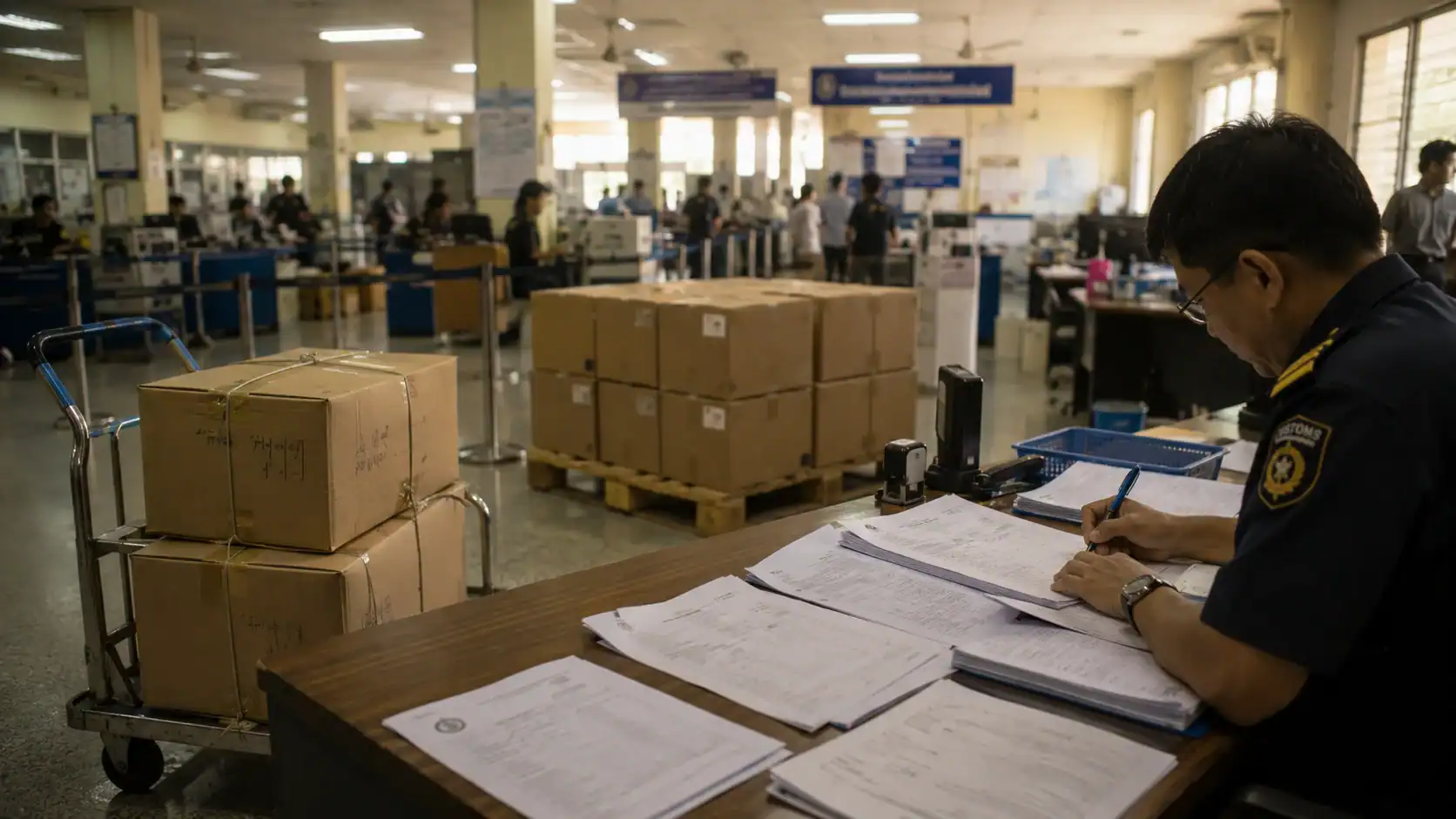
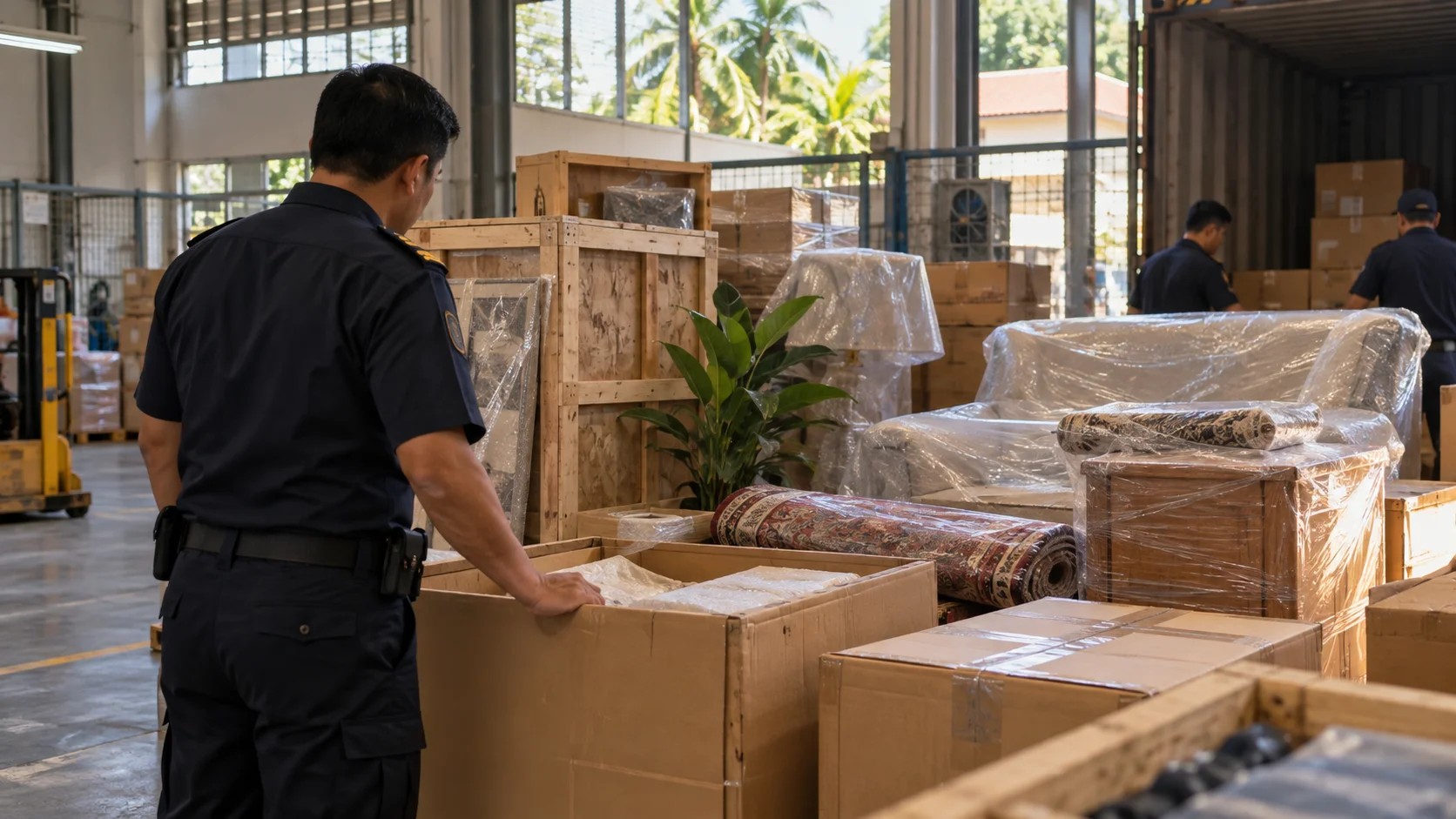
    Thai customs officer completing declaration paperwork at a clearance counter, cartons on a hand trolley and palletised boxes behind him

    Each of these pathways has precise eligibility conditions. None applies automatically, and none covers everything.

    The confusion is structural. The personal effects exemption and FTA duty reduction operate under two separate Thai legislative frameworks with two separate documentation triggers. The personal effects exemption comes from the Customs Act and applies to relocating individuals meeting a narrow definition of personally owned used goods. FTA duty reduction comes from bilateral treaty implementation in Thailand’s customs tariff schedule and applies to commercial goods with valid origin documentation. They do not overlap, and the conditions that activate one have no bearing on the conditions that activate the other. Misreading this is not a minor error. It produces either an unexpected duty bill at Laem Chabang or a missed cost reduction that was available the whole time. Two questions follow, in order: which pathway applies to your shipment, and what documentation that pathway requires.

    The cost of getting the pathway wrong shows up at one specific point: the day the import declaration is lodged at Laem Chabang. A retiree on an O-A visa may assume household goods clear duty-free. They learn otherwise that day: the personal effects exemption was never available to claim, and duty of 10–30% plus 7% VAT is due on the declared value before the container is released. A customs broker can only declare what the paperwork supports. The moment to establish which pathway applies is before the goods leave the origin port, not after they have arrived.

    Pathway 1: Personal Effects Exemption for Relocating Individuals

    This is the exemption most relevant to expats and returning Thai nationals shipping household goods to Thailand. It is not a blanket duty exemption. Strict qualifying criteria apply.

    Most guides describe this exemption as a checklist, which makes it sound more mechanical than it is. The line that actually decides your duty bill is not on any form: it is a Thai customs officer’s judgment about whether your possessions read as genuinely used and owned, or as a shopping trip disguised as a relocation. A returning teacher shipped a three-year-old sofa and a box of worn kitchenware, and cleared in days. A different mover on the same visa packed boxed electronics with the shrink-wrap still on, and spent a fortnight arguing that the items were “previously owned.” The rule on paper was identical. The discretion behind it was not, and nobody hands first-time movers a map of where that line falls.

    You are three months out from the move, and the fear that keeps you up at night isn’t really the paperwork. It’s the quiet dread that you’ll do everything right and still get the one thing wrong that costs you thousands of baht you never budgeted for. Here’s the plain truth: if you’re on a retirement visa, that fear is pointing at something real. The personal effects exemption was never built for you, no matter how long you’ve lived abroad or how used your furniture actually is. That’s not a loophole you missed. It was never yours to claim. The useful thing to do with that fear isn’t push it away. It’s find out which pathway actually applies to your situation, so the anxiety has somewhere to go. You stop guessing and start planning around a number you can budget for. That’s not as good as duty-free. It’s still better than finding out at Laem Chabang.

    Who qualifies:

    • Foreign nationals arriving on a valid one-year Non-Immigrant B visa with a one-year work permit issued and valid before the shipment arrives at Laem Chabang
    • Returning Thai nationals who have lived outside Thailand continuously for 12 or more months

    Who does not qualify:

    • Retirement visa (O-A, O-X) holders: the most common misconception in this whole area. It is a long-stay visa, but it does not carry the household goods duty-free exemption: the FIDI Thailand customs guide records that holders of visa type “O” and “O-A” will not be considered for duty-free entry and are subject to duties and taxes. See what retirement visa holders can and cannot ship duty-free.
    • Thai Elite / Privilege Card holders
    • Long-Term Resident (LTR) visa holders: seek a specific ruling from Thai customs for your LTR sub-category
    • Education (ED) visa holders
    • Tourist or visa-exempt arrivals

    What the exemption covers:

    • Personally owned and used household effects: furniture, clothing, electronics, books, kitchenware
    • One of each appliance type (one washing machine, one television, etc.)
    • Items demonstrably used, not new-in-box

    What the exemption does not cover (duty and excise apply regardless):

    • Alcohol (wine, spirits, beer). Thai excise tax and import duty apply.
    • Tobacco products
    • Motor vehicles
    • Commercial quantities of any goods
    • Goods in original retail packaging (may be reclassified as new commercial goods)

    Key conditions:

    • Shipment must arrive no earlier than one month before your initial Thailand entry and no later than 6 months after your work permit issue date
    • One sea shipment and one air shipment qualify, not multiple sea consignments
    • All goods must be accompanied by a detailed packing inventory in English listing every item, quantity, and estimated value

    The complete documentation checklist covers the full document set for claiming the personal effects exemption at Laem Chabang.
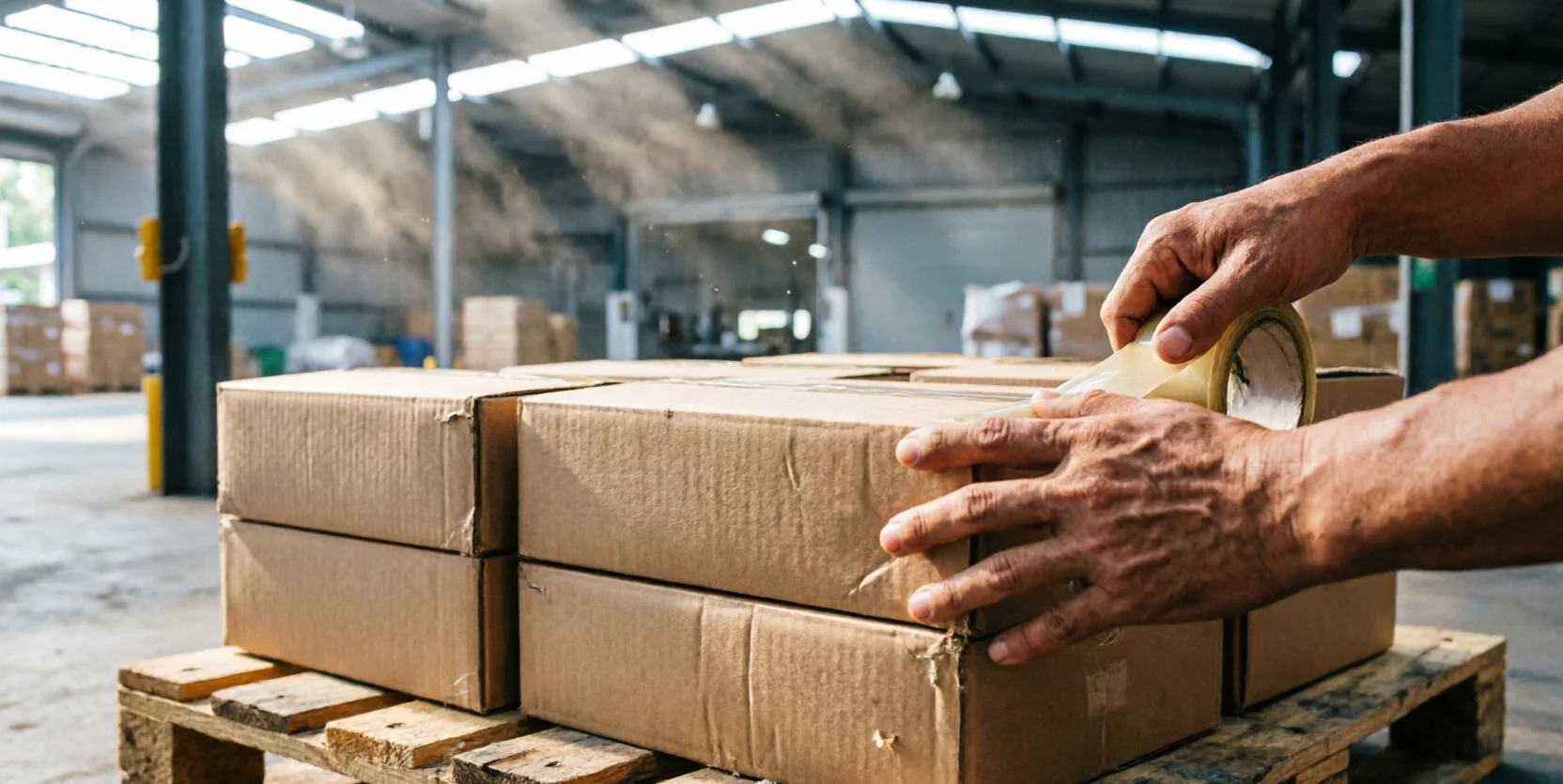
    A pair of hands tapes shut cartons stacked on a pallet in a sunlit warehouse staging area.

    Pathway 2: FTA-Based Duty-Free for Commercial Importers

    Thailand is party to multiple free trade agreements that reduce import duties to 0% on qualifying goods from partner countries. The Department of Trade Negotiations tracks them. This is the commercial importer’s duty-free pathway, distinct from the personal effects exemption and available regardless of who is importing, provided the goods meet the rules of origin and a valid Certificate of Origin is presented.

    ATIGA: ASEAN Trade in Goods Agreement

    ATIGA (in force since May 2010) covers trade among ASEAN member states: Thailand, Malaysia, Indonesia, Vietnam, Philippines, Singapore, Brunei, Cambodia, Laos, and Myanmar. Under ATIGA, most goods traded between ASEAN members attract 0% import duty. As of 2026, Thailand has eliminated tariffs on over 99% of ASEAN-origin goods under ATIGA. This is the most commercially significant FTA for Thai importers sourcing from regional suppliers.

    Certificate of Origin required: Form D, issued by the relevant national trade authority in the exporting ASEAN member state (e.g., VCCI in Vietnam, KADIN in Indonesia).

    ACFTA: ASEAN-China Free Trade Agreement

    ACFTA covers trade between ASEAN members (including Thailand) and China. Most goods originating in China qualify for 0% duty when imported into Thailand. This is a significant advantage for Thai businesses importing from Chinese manufacturers. The same 0% duty that Australian importers access via ChAFTA applies in Thailand via ACFTA.

    Certificate of Origin required: Form E, issued by CCPIT or CIQ in China.

    AANZFTA: ASEAN-Australia-New Zealand Free Trade Agreement

    AANZFTA covers goods traded between ASEAN members and Australia or New Zealand. For Australian exporters shipping to Thailand, AANZFTA provides 0% duty on the vast majority of goods with a valid Form AANZ Certificate of Origin. For Thai businesses sourcing from Australia, the same agreement reduces duties on Australian-origin goods to 0%.

    Certificate of Origin required: Form AANZ, issued by DFAT-authorised bodies in Australia.

    Other Thailand FTAs with 0% duty provisions

    • JTEPA: Japan-Thailand Economic Partnership Agreement. 0% on most manufactured goods from Japan.
    • TAFTA: Thailand-Australia Free Trade Agreement (bilateral, predates AANZFTA). Still in force and may offer specific advantages for certain goods not fully covered under AANZFTA.
    • AKFTA: ASEAN-Korea FTA. 0% on qualifying Korean-origin goods.
    • AIFTA: ASEAN-India FTA. Reduced or eliminated duties on Indian-origin goods. For commercial shipments specifically (the personal-effects exemption in Pathway 1 is separate), see shipping costs from India to Thailand and how AIFTA duty relief works.

    For all FTA claims: the Certificate of Origin must be requested before or at shipment loading and presented with the Thai import declaration. Missing or incomplete FTA CoO documentation is a common cause of customs delays. See what else gets shipments held at Thai customs.

    Pathway 3: Thailand’s Standard Duty Schedule and MFN 0% Lines

    Separate from FTA preferences, Thailand’s standard MFN (Most Favoured Nation) tariff schedule includes product categories that attract 0% duty regardless of origin. These include many industrial raw materials, capital goods, and inputs not produced domestically. Key 0% MFN categories:

    • Many semiconductor and electronic components (HS 85 subheadings)
    • Agricultural inputs and specific fertilisers
    • Certain pharmaceutical active ingredients
    • Industrial machinery not produced in Thailand (MFN 0% or low single-digit rates)

    Confirm MFN rates via the Thai Customs Department’s online tariff database for your specific HS code. MFN 0% applies to all origins, so no CoO is required.

    Pathway 4: BOI Duty Exemptions for Investors

    Thailand’s Board of Investment (BOI) grants promoted companies specific duty exemptions as part of its investment incentive package. BOI-promoted status is not automatic. Companies must apply to the BOI office and be approved.

    What BOI duty exemptions cover:

    • Imported machinery and equipment specified in the BOI promotion certificate, duty exempt for use in the promoted activity
    • Certain raw materials and components used in export production (under specific BOI incentive categories)
    • Equipment for research and development activities in promoted sectors

    What BOI exemptions do not cover:

    • Goods not listed in the BOI promotion certificate
    • Spare parts and consumables (unless specifically included)
    • General operating supplies
    • Goods sold in the domestic Thai market (BOI export-production exemptions are typically conditional on export)

    The BOI exemption is relevant to foreign investors establishing manufacturing or services operations in Thailand’s promoted zones: the Eastern Economic Corridor (EEC), special economic zones, or BOI-promoted industrial estates. For businesses sourcing inputs or goods for sale in Thailand, the FTA pathways are more applicable than BOI.
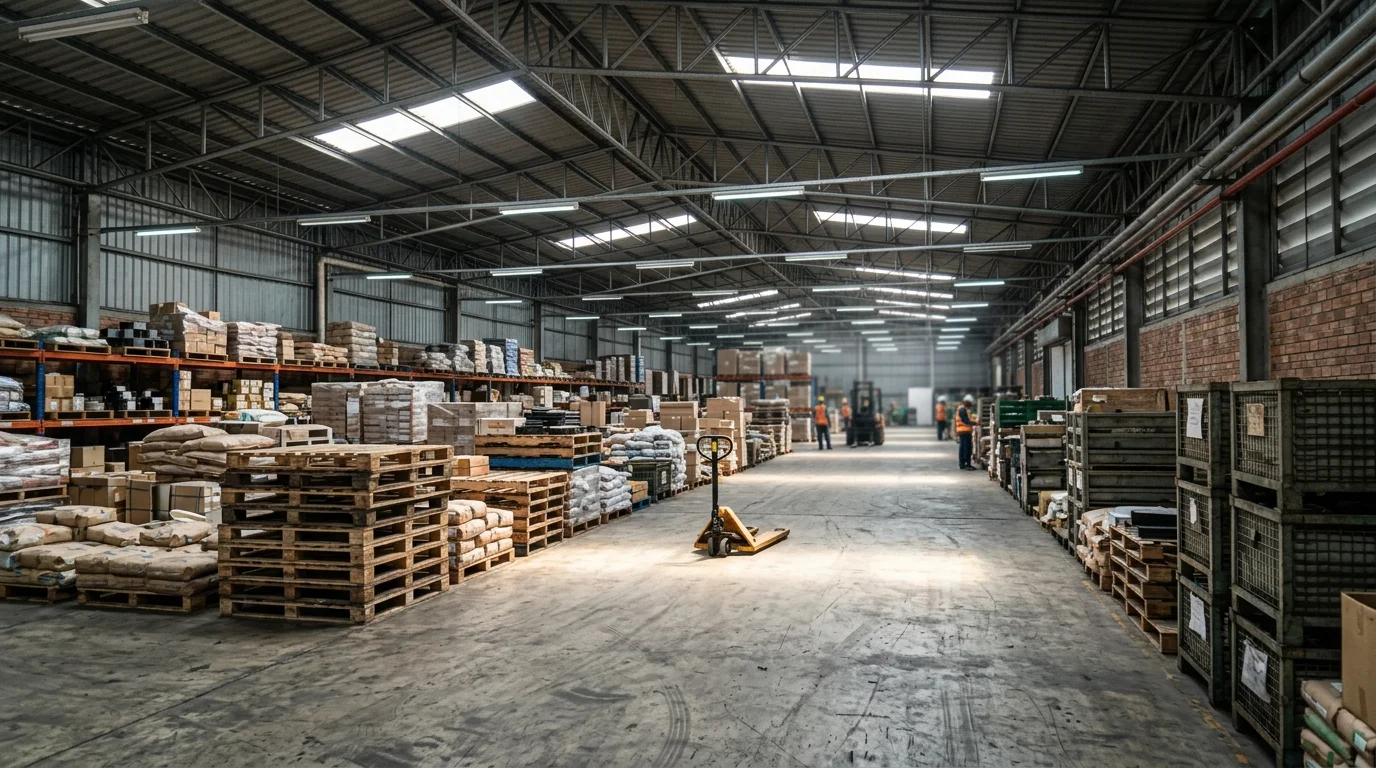
    A wide interior view of a steel-trussed warehouse shows rows of palletized goods and a single pallet jack parked in the aisle.

    Pathway 5: Duty-Free Zones and Bonded Warehouses

    Thailand maintains several types of geographic or facility-based duty-free mechanisms:

    Industrial Estate Authority of Thailand (IEAT) Free Zones: Companies operating in IEAT-designated free zones can import raw materials and equipment duty-free for manufacturing export goods. The duty exemption is conditional on goods being used in production for export. Goods sold domestically attract standard duty and VAT on exit from the zone.

    Customs bonded warehouses: Goods can be stored in Thai Customs-approved bonded warehouses without paying import duty until they are withdrawn for domestic consumption (at which point duty is payable) or re-exported (duty-free). Bonded warehousing is used for goods in transit, goods pending resale or re-export, and goods awaiting final buyer confirmation.

    Duty-free retail: Thailand’s duty-free retail shops at airports and border crossings operate under specific licences and are distinct from commercial import exemptions. Goods purchased in duty-free retail are for personal consumption and carry quantity limits.

    What Is Never Duty-Free in Thailand

    Regardless of FTA status, BOI promotion, personal effects claims, or any other pathway, the following categories always attract Thai import duties and/or excise tax, administered by the Thai Excise Department alongside Thai Customs:

    Category Applicable Charges Notes
    Alcohol (spirits, wine, beer) Import duty + excise tax + VAT High combined tax burden; effective duty + excise can exceed 400% for spirits
    Tobacco products Import duty + excise + VAT Excise rates are very high; effectively prohibitive for large quantities
    Motor vehicles (passenger cars) 80% import duty + excise + VAT FTAs reduce this for some origins but do not eliminate it in most cases
    Petroleum products Import duty + excise + VAT Subject to Thai energy pricing policy
    Luxury goods (certain) High MFN duty rates FTAs reduce but may not eliminate; check HS code

    Related reading: Thai Customs Duty Is Calculated on CIF Value, Not Price Paid

    Frequently Asked Questions

    Who qualifies for duty-free import of household goods into Thailand?

    Foreign nationals on a one-year Non-Immigrant B visa with a one-year work permit, and returning Thai nationals after 12+ consecutive months abroad. Retirement visa holders, Thai Elite members, and education visa holders do not qualify. The exemption covers personally used household effects, not alcohol, tobacco, or vehicles.

    What is the duty-free threshold for small imports into Thailand?

    THB 1,500 per consignment for postal/courier imports for duty purposes. VAT applies above THB 1,000. Commercial shipments above these thresholds require full import duty and VAT payment unless covered by an FTA CoO or personal effects exemption.

    How does AANZFTA affect duty rates for goods from Australia to Thailand?

    Most Australian-origin goods imported into Thailand attract 0% duty under AANZFTA with a valid Form AANZ Certificate of Origin. Thailand has eliminated tariffs on over 96% of Australian and New Zealand-origin tariff lines under the agreement. Form AANZ must be obtained from DFAT-authorised bodies in Australia and presented at Thai customs.

    What goods are never duty-free in Thailand?

    Alcohol, tobacco, motor vehicles, and petroleum products are always subject to Thai import duty and excise tax regardless of FTA status or personal effects claims. Effective combined tax rates on spirits exceed 400%. Even under the personal effects exemption, alcohol and tobacco are excluded.

    What is the BOI duty exemption for machinery?

    BOI-promoted companies can import specified machinery duty-free under their promotion certificate. Requires prior BOI approval. Applies only to machinery listed in the certificate used in the promoted activity, not general goods, consumables, or domestically sold products.

    Planning Your Thailand Import Cost Structure

    The documentation that activates the correct duty-free pathway protects your landed cost.

    Swift Cargo manages Thailand-bound freight from multiple origins, including FTA CoO coordination, engaging a Thai customs broker, and Laem Chabang clearance. For an assessment of your Thailand import cost position:
    Contact Swift Cargo for a Thailand import assessment →

  • Importing from China to Australia: Duty, Biosecurity and Freight

    Importing from China to Australia: Duty, Biosecurity and Freight

    China is Australia’s largest import source by value and has been for over a decade. The supply chain between Chinese manufacturers and Australian businesses is deep, well-worn, and increasingly sophisticated on both sides. For Australian importers, the route from a Chinese factory to an Australian warehouse has a consistent structure: ChAFTA duty advantages, biosecurity compliance at the Australian border, and a freight network that handles everything from a single carton to a 40-foot container.

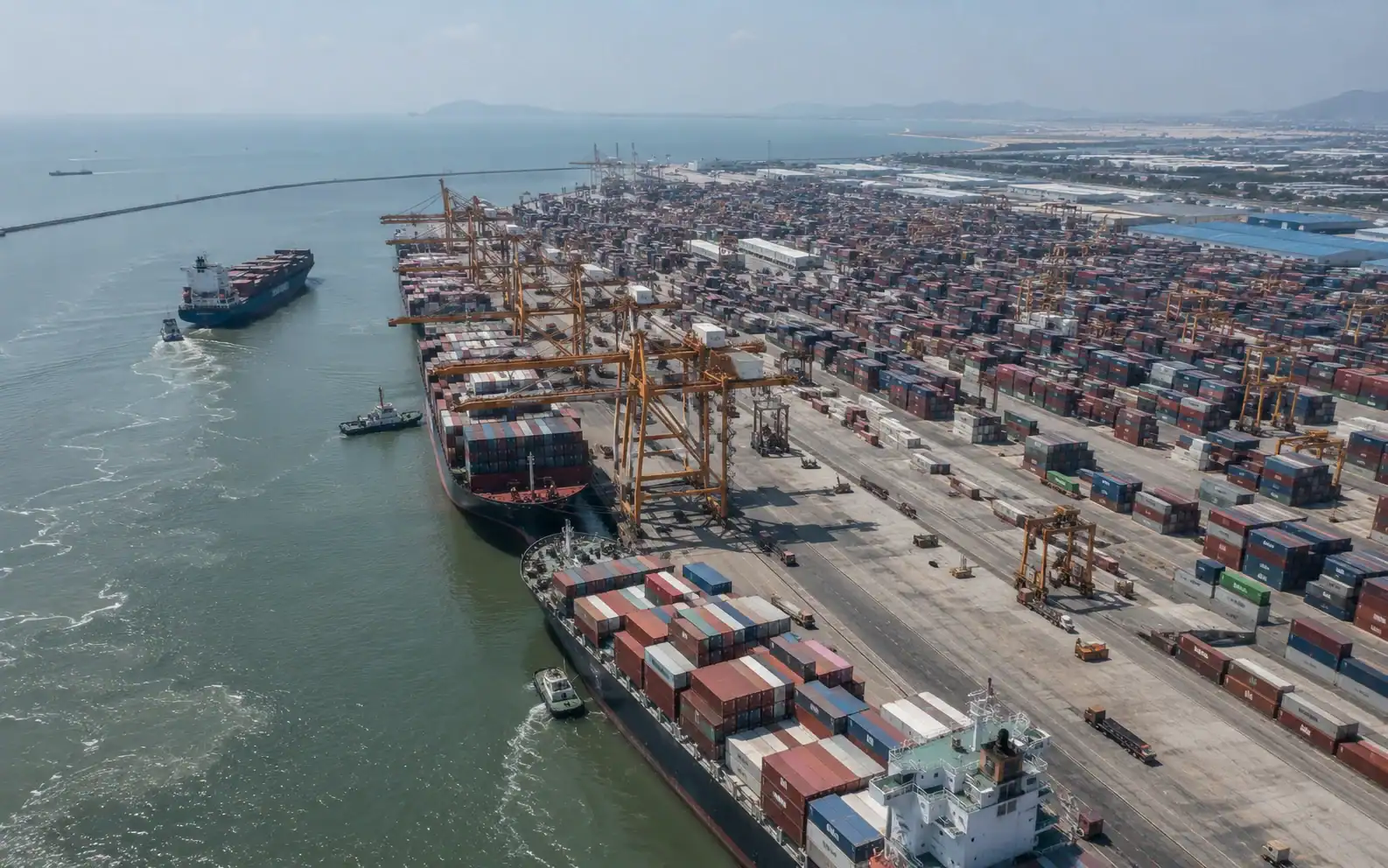
    Aerial view of a Chinese container port at sunrise, container vessels berthed along the quay under gantry cranes

    ChAFTA: The Duty Advantage That Requires Active Management

    The China-Australia Free Trade Agreement (ChAFTA), in force since December 2015, has eliminated import duties on the vast majority of goods imported from China to Australia. According to DFAT, over 96% of Australian imports from China now enter at 0% duty under ChAFTA.

    ChAFTA doesn’t apply automatically. It requires:

    1. A valid Certificate of Origin (CoO) issued by an authorised Chinese body: CCPIT (China Council for the Promotion of International Trade) or CIQ (China Inspection and Quarantine)
    2. The CoO must be requested before or at the time of shipment; after loading, a retrospective CoO is possible only in exceptional cases, within 12 months of shipment
    3. The goods must meet ChAFTA Rules of Origin: generally, goods must be wholly obtained or substantially transformed in China
    4. The CoO must be presented to ABF with the import declaration at the time of clearance

    Without a CoO, the MFN (Most Favoured Nation) duty rate applies: 5% for clothing, 5% for footwear, 5% for furniture. On a AUD 200,000 annual clothing import program, the difference between ChAFTA 0% and MFN 5% is AUD 10,000 per year in duty, plus GST on that duty. Managing the Certificate of Origin on every shipment is a direct cost lever, not administrative overhead.

    Read enough post-clearance audit files and one pattern surfaces that no supplier volunteers at the quoting stage: the Certificate of Origin that never arrives in valid form. A factory promises ChAFTA-eligible paperwork, and the pro forma invoice quotes the zero-duty price. Only after the vessel has loaded does the importer discover that the CCPIT document names the wrong exporter, or was requested a day too late to be issued, or describes a product that no longer matches what was packed. By then the only route back is a retrospective certificate, allowed only in exceptional cases. The importers who avoid this are not luckier than the rest; they treat the Certificate of Origin as a condition of the purchase order, not a form to be chased once the goods are already at sea. They verify it against the authorised issuer before any deposit leaves their account.

    HS Code Classification: The Foundation of Every Import
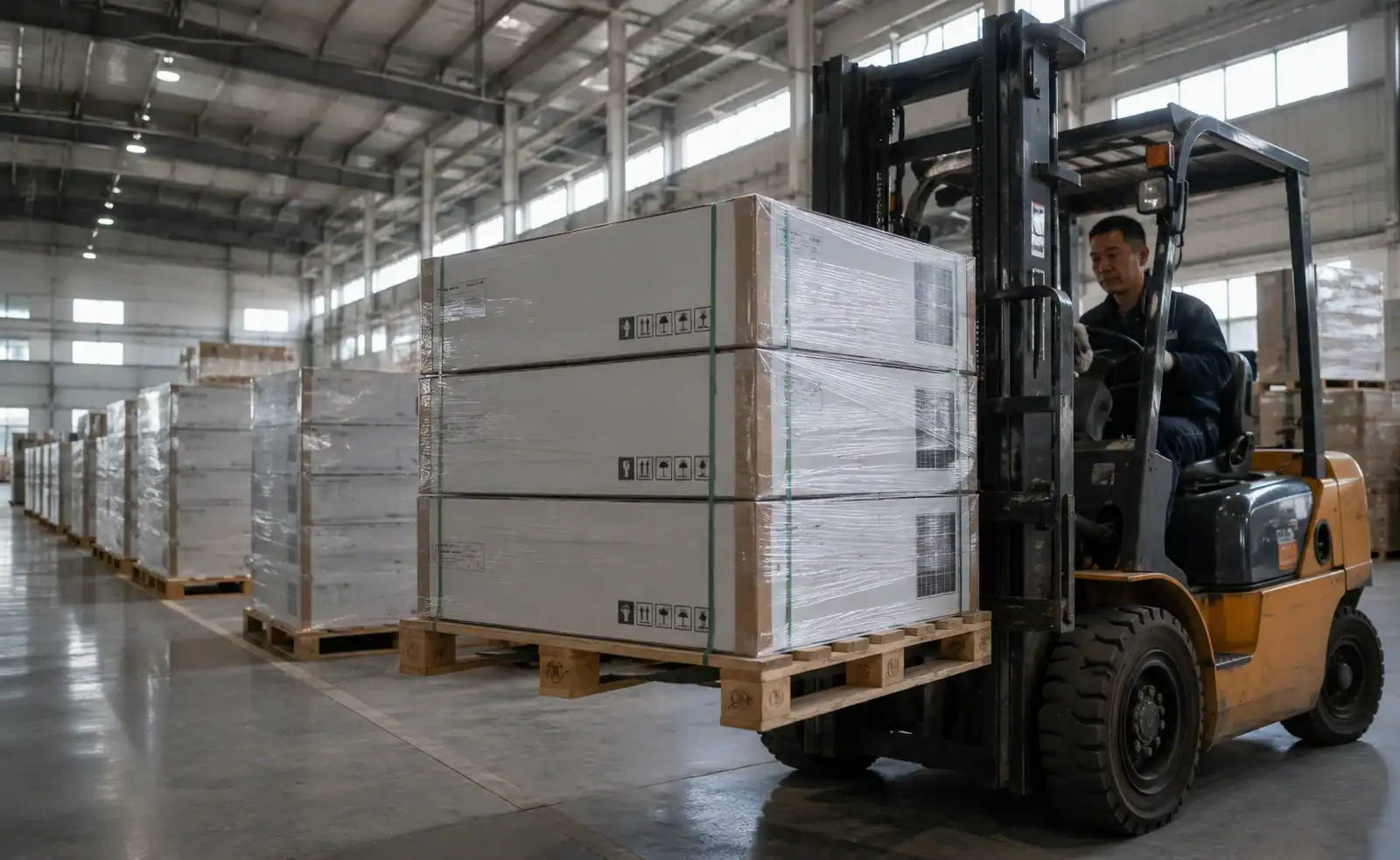
    Every imported product is classified under an HS (Harmonised System) code that determines its duty rate, any applicable FTA treatment, whether special import conditions apply, and what the customs declaration must state. HS code errors are among the most common causes of Australian customs holds.

    Getting HS classification right means:

    • Correctly identifying the product’s principal function and composition (not just its trade name)
    • Using the current Australian Customs Tariff Schedule, not an outdated version or a generic international HS code
    • Applying any applicable Chapter Notes or Explanatory Notes for borderline classifications
    • Seeking a Tariff Classification Advice from ABF for any product where there is genuine ambiguity

    Three misclassification traps recur on China imports: electronic products classified too broadly (many electronics subheadings attract different rates); composite goods where the principal component isn’t obvious; and goods that straddle two HS chapters (e.g., a product that could be classified as a textile or as a manufactured article).

    Your customs broker should confirm the HS code before the first import of any new product. Once it is established, use the same code. Changing classification between shipments flags inconsistency and may trigger an ABF review.

    A wrong HS code changes your duty rate, not just your paperwork.

    Confirming classification before the first shipment of a new product is the cheapest fix available, and a broker who knows the China-Australia lane can do it before you order.

    Talk to a customs broker

    In a bright receiving bay, a logistics coordinator holds a tablet beside an open pallet of goods, comparing the physical carton count against the screen with a focused, unhurried posture.

    Customs Value and GST: The Numbers That Drive Your Landed Cost

    Australia sets customs value on an FOB basis: the price of the goods packed at the place of export, before international freight and insurance. Duty is charged on that value. GST is charged on the value of the taxable importation, which adds international freight, insurance and duty. Leave freight out of the GST base and you underestimate your GST.

    For 0% duty ChAFTA goods, GST is 10% of the customs value plus international freight and insurance. GST paid at import is recoverable as an input tax credit for GST-registered Australian businesses on their BAS. The net GST cost for a GST-registered importer is zero. What still matters is the cash flow timing of payment at import and recovery on the next BAS.

    See our import duty and GST guide for Australian importers for a worked landed cost calculation. It stacks THC, wharfage, brokerage, the biosecurity levy, and last-mile delivery against the customs value.

    DAFF Biosecurity: The Non-Negotiable Compliance Layer

    Every commercial import from China must comply with Australia’s biosecurity requirements under the Biosecurity Act 2015, regardless of product type. DAFF (Department of Agriculture, Fisheries and Forestry) enforces these at the border. For the full ABF and DAFF customs procedure, see Australia customs and import procedures.

    ISPM 15 wooden packaging: All wooden pallets, crates, dunnage, and wooden packaging material must be heat-treated or fumigated and marked with the ISPM 15 stamp, per DAFF requirements. Non-compliant wooden packaging is the most common cause of DAFF holds for general cargo from China. Require ISPM 15 marked pallets in every purchase order and request packing photos confirming the stamp before the vessel loads.

    Product-specific biosecurity conditions: Certain product categories have specific import conditions listed in DAFF’s BICON database (bicon.agriculture.gov.au). Plant-derived products, animal-derived materials, and food products all have conditions: documentary requirements, treatment requirements, or import permits. The plant-derived category includes herbal ingredients, natural fibres, and wooden goods; the animal-derived category includes leather, wool, gelatin, and animal fats. Check BICON before ordering any product in these categories. Australia’s biosecurity import conditions are specific to product category and origin, not a generic requirement.

    Anti-dumping register: Check the ABF anti-dumping register before importing any product category where Australian manufacturing interests are significant (steel, aluminium, certain plastics, some textiles). Anti-dumping and countervailing duties are levied in addition to standard import duty and can be substantial. Most consumer goods and electronics are not affected, but industrial materials require a register check.

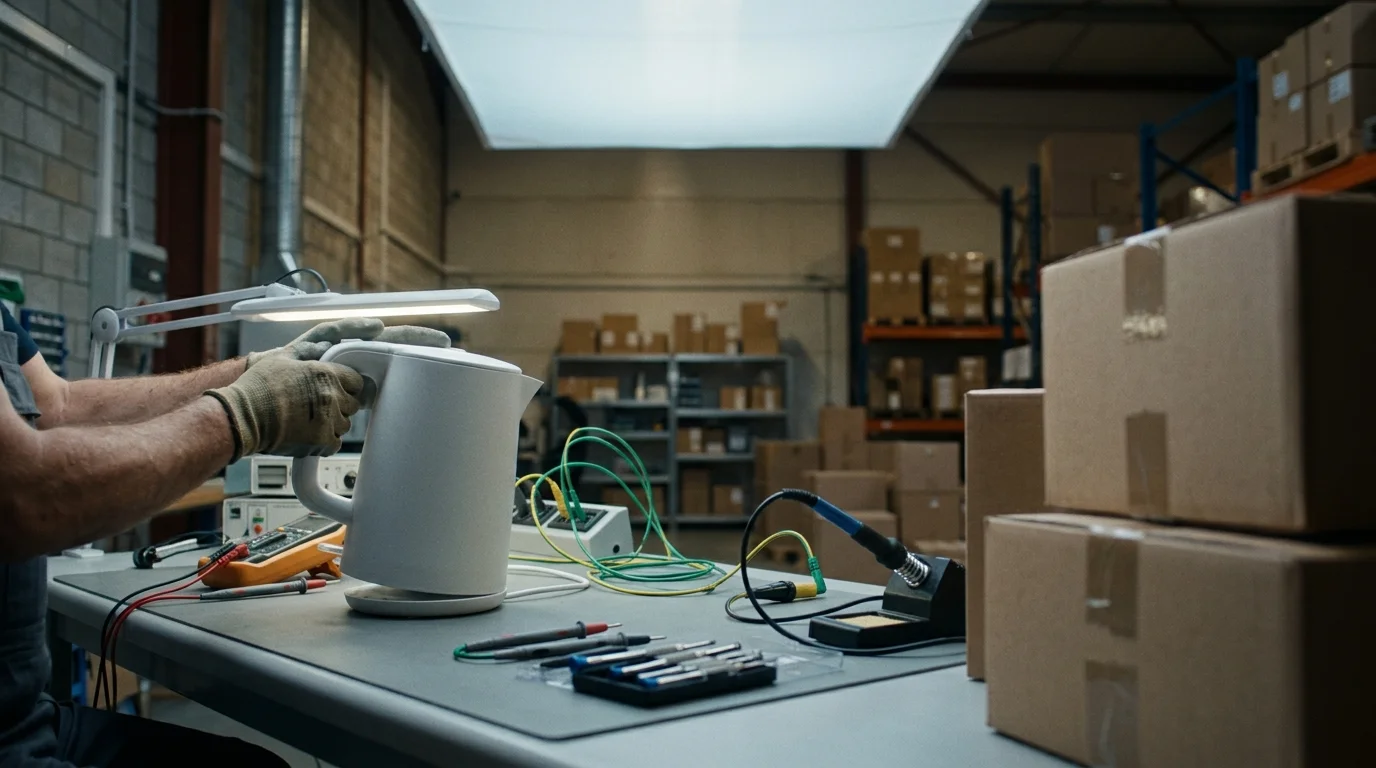
    On a product-testing bench inside a compliance-lab-style warehouse corner, a technician's hands examine a sample consumer item, a small appliance or homeware piece, turning it gently under a raking work light to check its finish and fittings.

    ACCC Product Safety: What Must Comply Before Goods Enter the Market

    The ACCC administers mandatory product safety standards under the Australian Consumer Law. These are not import-clearance requirements in the same way as customs duty or biosecurity conditions. They don’t stop goods at the border. Once goods are placed on the Australian market, any that don’t comply with mandatory standards face recalls, banning orders, and importer liability.

    Product categories with mandatory Australian safety standards include:

    • Children’s toys (AS/NZS ISO 8124 series)
    • Electrical and electronic goods (AS/NZS 3820 and product-specific standards)
    • Children’s furniture (cots, highchairs, prams)
    • Personal protective equipment
    • Helmets (bicycle, motorcycle)
    • Cosmetics (ingredient restrictions)
    • Sunscreen (TGA regulation)

    Verify that compliance certificates from Chinese suppliers come from accredited testing laboratories. Chinese export certificates (CCC mark, etc.) are not the same as Australian standard compliance. Require the specific AS/NZS test report from the supplier for each product model.

    ChAFTA, biosecurity, ACCC and TGA are four separate compliance layers on the same shipment, and pricing your China import against all four at once is how you avoid a surprise at any one of them.

    TGA Requirements for Therapeutic Goods

    Medicines, supplements, medical devices, and therapeutic products are regulated by the Therapeutic Goods Administration (TGA) under the Therapeutic Goods Act 1989. Chinese-manufactured therapeutic goods must be listed or registered on the Australian Register of Therapeutic Goods (ARTG) or covered by a valid import permit before import. ABF will detain goods arriving without ARTG registration or an import permit, and may seize them.

    The Swift Cargo article library covers supplements and therapeutic goods from China in more detail. Product-specific compliance guides for electronics from China cover the IEC certification, EESS registration, and ACMA compliance pathway, and our furniture import guide covers the BMSB, ACCC safety-standard and Illegal Logging Prohibition Act requirements specific to that category.

    Freight: FCL vs LCL from China to Australia

    China-to-Australia imports move by two primary sea freight modes:

    Mode Best For Volume Threshold Transit (Door-to-Door)
    LCL (groupage) Smaller orders, multiple suppliers, first orders Up to ~12 CBM 25–38 days
    FCL 20ft Single-supplier orders, 12–25 CBM 12–25 CBM usable 22–32 days
    FCL 40ft HC Large single-supplier orders, fragile goods 25–65 CBM usable 22–32 days

    LCL (Less than Container Load) consolidates your cargo with other exporters’ shipments. You pay per CBM. It suits 1–12 CBM orders, a small first order with a new supplier, or a consolidation from multiple suppliers. It adds handling steps at origin CFS and destination CFS, which marginally increases inspection risk and handling time.

    FCL (Full Container Load) gives you the entire container. You pay a flat rate regardless of how full it is, so the per-unit freight cost drops as you fill the container. It also brings better handling security (no co-loading) and faster port clearance, which is why it is preferred for fragile goods where additional handling introduces breakage risk, such as electronics, glassware, and solar panels.

    The crossover comes when your order volume consistently exceeds 12 CBM. Past that point, FCL economics are almost always better. The efficiency gain from FCL compounds across dozens of shipments per year. That 12 CBM figure is a starting rule of thumb, not a fixed line: peak-season rate spikes, route surcharges and cargo fragility all move it. Our full LCL vs FCL decision guide walks through how to find the real crossover point for your own rate card and cargo type.

    Key Chinese Ports and Transit Times to Australia

    Chinese Origin Port Australian Destination Vessel Transit (FCL) Door-to-Door
    Shanghai / Ningbo Sydney (Port Botany) 16–22 days 22–32 days
    Shanghai / Ningbo Melbourne 17–23 days 23–33 days
    Shenzhen (Yantian) Sydney 14–18 days 20–28 days
    Guangzhou (Nansha) Melbourne 15–19 days 21–29 days
    Tianjin / Qingdao Sydney / Melbourne 18–25 days 24–35 days

    Add 2–5 business days for ABF customs clearance after vessel arrival. DAFF biosecurity inspection may add further time if goods are selected or if packaging is non-compliant. A pre-arrival compliance check shortens the clearance window: confirm ISPM 15 compliance, verify the CoO is issued, and pre-lodge the import declaration with your broker. For the full end-to-end lead-time breakdown, see China–Australia import lead times, stage by stage. It covers all seven stages from supplier production through peak-season variance, with worst-case planning numbers.

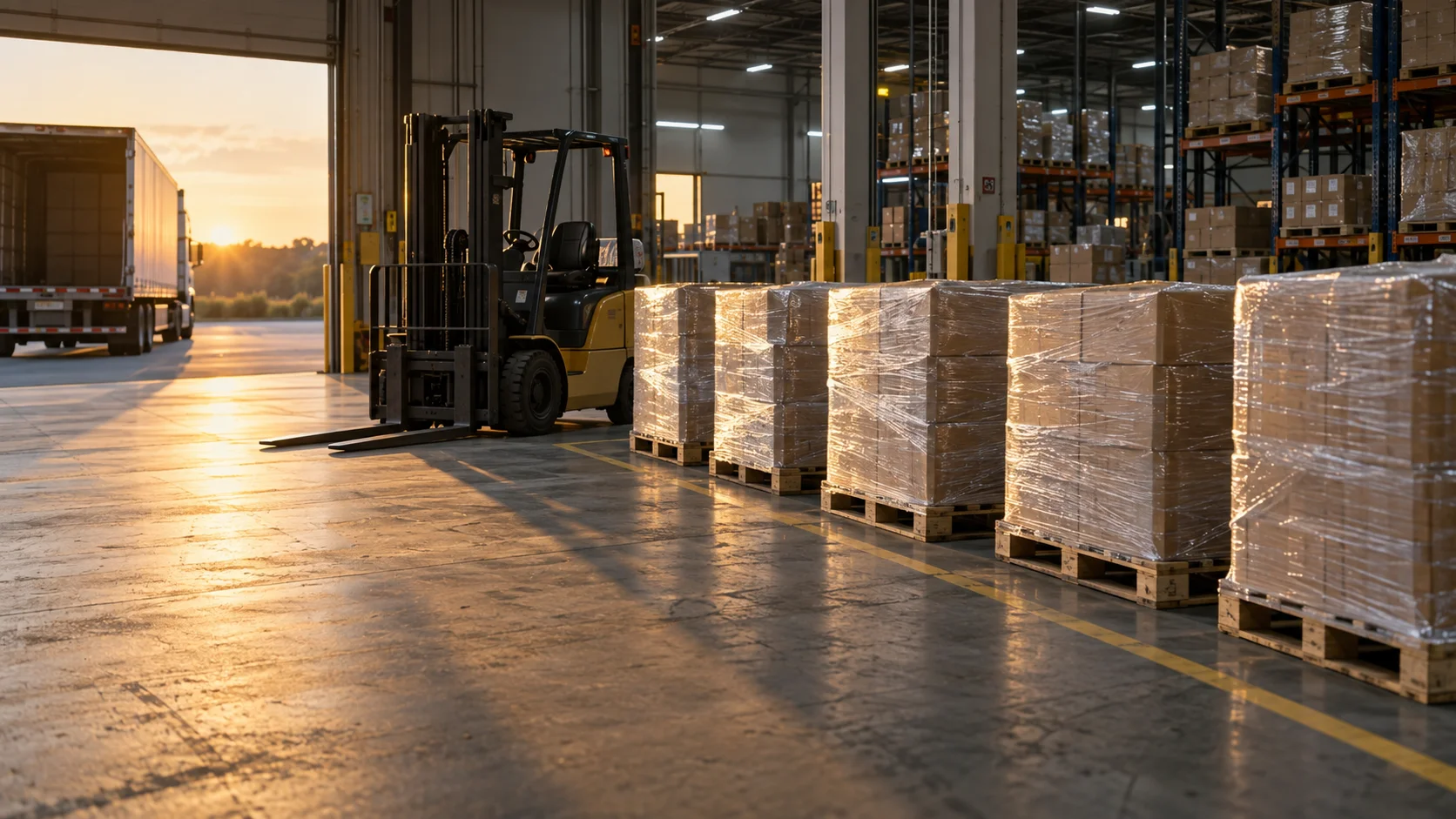
    A wide view of a warehouse staging lane where several pallets sit fully wrapped and squared away in a tidy row, ready for outbound loading, a forklift parked nearby with its forks lowered rather than in motion.

    The China Import Compliance Checklist

    Step Action When
    HS code confirmed Verify with customs broker; seek ABF ruling if ambiguous Before first import of any new product
    ChAFTA CoO instructed Brief supplier to prepare CoO from CCPIT or CIQ before loading Each shipment; before vessel loads
    ISPM 15 packaging confirmed Specify in PO; require packing photos showing ISPM 15 stamp Each shipment
    BICON conditions checked Check DAFF BICON for product-specific import conditions Before ordering any new product category
    ACCC standards confirmed Obtain AS/NZS test report from accredited lab for regulated products Before placing first order of regulated goods
    TGA/ARTG checked Verify ARTG listing or import permit for therapeutic goods Before any therapeutic goods shipment
    Anti-dumping register checked Search ABF register for applicable duties on industrial materials Before ordering industrial/material goods categories
    Import declaration pre-lodged Provide full document set to customs broker before vessel arrives 5–7 days before expected vessel arrival
    Cargo insurance confirmed Marine all-risk policy in place for each shipment Each shipment

    ChAFTA compliance stays messy even though the duty saving is large, well documented, and available to anyone. Nobody in the chain has a strong incentive to fix it. The Chinese supplier is paid on the goods, not on the paperwork, and a Certificate of Origin is an administrative errand that earns them nothing. The forwarder quotes freight, not classification, and treats origin documents as the importer’s business. The broker files what they are given. The duty saving accrues entirely to the importer. So does the cost of getting it wrong. That asymmetry is structural, not a failure of any particular counterparty. It explains why the importers who reliably capture the ChAFTA margin are the ones who took origin documentation in-house rather than delegating it. The same asymmetry is why routing decisions deserve their own look: sourcing the identical goods through a Hong Kong intermediary changes which origin rules apply and who is on the hook for proving them. Settle both before the first order, not after an audit.

    Related reading: most of the costly errors on this lane repeat on a schedule across different importers. Our import mistakes guide covers the ten that recur most often, each with the real dollar cost of getting it wrong.

    Frequently Asked Questions

    What duty rate applies to goods from China to Australia?

    Goods enter at ChAFTA 0% with a valid CCPIT or CIQ Certificate of Origin. Without a CoO, MFN rates apply: electronics 0–5%, clothing 5%, furniture 5%, footwear 5%. GST 10% applies regardless of duty rate.

    How does ChAFTA work?

    Present a valid CoO with your import declaration. CCPIT or CIQ must issue it before loading. ABF then applies ChAFTA 0% duty. Without a CoO, the MFN rate is the default. A retrospective CoO is possible only in exceptional cases. Instruct your supplier before the vessel loads, every shipment.

    What are Australia’s biosecurity requirements for China imports?

    Any wooden packaging on any shipment must be ISPM 15 compliant. Plant, animal, and organic material categories also carry product-specific conditions from DAFF BICON. Non-compliance means a DAFF hold, treatment costs, and a minimum delay of 5–12 days.

    Do I need ACCC approval to import goods from China?

    No pre-import approval is required as such, but regulated product categories must comply with mandatory Australian safety standards before entering the market. Obtain AS/NZS test reports from accredited laboratories for children’s goods, electrical products, PPE, and other regulated categories.

    How long does sea freight from China to Australia take?

    FCL takes 22–32 days door-to-door from Shanghai/Ningbo and 20–28 days from Shenzhen. LCL takes 25–38 days. Add 2–5 business days for ABF customs clearance after arrival. Confirm current routing conditions with your freight forwarder.

    Contact Swift Cargo for a China-to-Australia import assessment →

  • Italy to Thailand: Visa Duty Relief, Ports and Freight Costs

    Italy to Thailand: Visa Duty Relief, Ports and Freight Costs

    Leaving Italy for Thailand poses a particular kind of packing problem. Italy is not a country where people travel light: decades of accumulated furniture, kitchen equipment, art, ceramics, books, clothing built for a climate you’re about to leave behind. The move, whether for work or retirement or simply for the life, forces you to decide what comes with you, what gets sold, and what gets stored. Moving from Italy to Thailand also means deciding how much Thai duty those goods will attract, which depends on your visa.

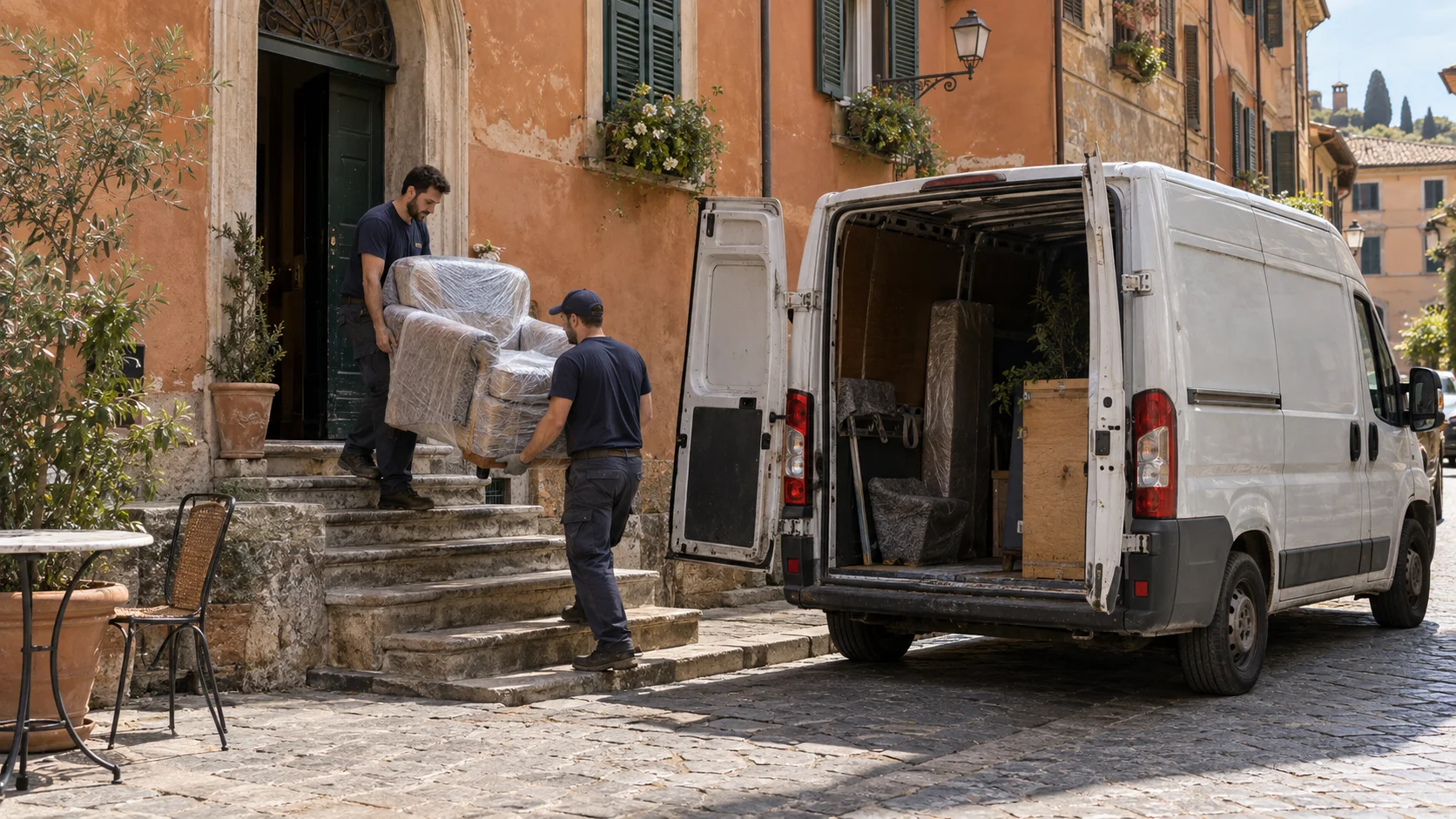
    Italian expat packing boxes or loading a removal van in front of a northern Italian building or Genoese port, with a Thai street scene or Laem Chabang terminal softly in the background

    The freight side of those decisions is more structured than it might feel. The questions that matter most have specific answers: whether your visa qualifies you for the duty-free import exemption, how long the journey actually takes from Genoa or La Spezia to Laem Chabang, what your shipment volume implies about container type, and what Thai customs will examine when it arrives. The Thailand relocation guide 2026 covers the broader relocation context: visas, timelines, and what to ship.

    Visa Type Determines Your Customs Position

    Before booking a cubic metre of space in a container, confirm which Thai visa you’re arriving on. Thai customs’ duty-free personal effects exemption is visa-based, not nationality-based, not value-based, and not based on how long you intend to stay.

    Visa / Status Duty-Free Eligible? Notes
    Non-Immigrant B (work permit) Yes One-year work permit required; 6-month shipment arrival window applies
    Retirement (O-A / O-X) No Excluded from the standard criteria; Thai Customs does not accept a retirement visa as a qualifying status
    Thai Elite / Privilege Card No Lifestyle visa with no work permit, so no exemption
    Long-Term Resident (LTR) Seek ruling Conditions vary by LTR sub-category
    Education (ED) No No exemption
    Tourist / visa-exempt No No qualifying status
    Returning Thai national Yes Must demonstrate 12+ consecutive months abroad

    The retirement visa is a common choice, given Thailand’s appeal to European retirees. Italian nationals arriving on it do not qualify for duty-free import of household goods. Import duties of 10–30% and 7% VAT will apply to the declared CIF value of the entire shipment. This changes the economics of what is worth shipping. A €15,000 shipment CIF value at 20% duty plus 7% VAT generates approximately THB 120,000–150,000 in Thai import costs. Factor that into the decision before packing the dining table.

    For those arriving on a Non-Immigrant B visa with a valid one-year work permit, the exemption conditions are:

    • Work permit must be issued and valid before your shipment arrives at Laem Chabang
    • You must have resided in Italy (or your origin country) for at least 12 consecutive months
    • Shipment must arrive no earlier than one month before your initial Thailand entry, no later than 6 months after your work permit issue date
    • One sea and one air shipment qualify; not multiple sea consignments
    • All goods must be demonstrably used and personally owned, and the exemption covers one of each appliance type

    Full Thai customs duty-relief conditions are published at Thai Customs Department: personal effects exemption.

    Container ship departing Genoa port bound for Laem Chabang, Thailand

    Italian Departure Ports and the Route to Laem Chabang

    Italy’s main container ports for international household goods departures:

    • Genova (Genoa): Italy’s busiest container port and the primary departure point for most international removal shipments originating in northern and central Italy. Multiple weekly services to Asian ports via Mediterranean carriers.
    • La Spezia: a significant container port 100 km southeast of Genoa, well-connected to Asian shipping routes. Often used for groupage/LCL consolidation for Emilia-Romagna and Liguria-origin shipments.
    • Livorno (Leghorn): the port for Tuscany, Umbria, and central Italy. LCL consolidation services with feeder connections to main Asia routes.

    From Italian ports, the routing to Laem Chabang:

    Via Suez Canal: Eastern Mediterranean, Suez Canal, Red Sea, Indian Ocean, transshipment at Singapore or Port Klang (Malaysia), onward to Laem Chabang. Ocean leg approximately 34–42 days from Italian ports, shorter than from northern European ports because of the Mediterranean head start.

    Via Cape of Good Hope: around southern Africa, across the Indian Ocean, transshipment, Laem Chabang. Ocean leg approximately 44–56 days, 10–14 days more than Suez. This has been the default routing for most carriers since 2024, and it is now written into 2026 network planning rather than treated as a temporary detour, per 2026 Suez Canal routing analysis. Confirm current routing with your freight forwarder before setting a timeline.

    Realistic door-to-door from Italy:

    • Collection and packing in Italy: 1–3 days
    • Italian port handling and vessel loading: 5–10 days
    • Ocean transit (Suez routing): 34–42 days
    • Ocean transit (Cape routing): 44–56 days
    • Thai customs clearance at Laem Chabang: 5–10 working days
    • Last-mile delivery in Thailand: 1–3 days

    Total: 7–9 weeks (Suez) or 9–11 weeks (Cape). Italy is geographically better placed than northern European ports. The Mediterranean entry point shaves several days off the vessel leg compared to Hamburg or Felixstowe. But door-to-door from Italy to Thailand is still measured in weeks, not days.

    Removals van is parked outside an Italian apartment building with shuttered windows and warm terracotta-toned walls

    LCL or FCL: Sizing an Italian Household Move

    Italian homes tend to be well-furnished. What you ship depends on both the volume and the visa-driven duty calculation.

    Property Type / Volume Estimated CBM Recommended Mode Approximate Cost (EUR)
    Monolocale / studio (personal items) 5–12 CBM LCL groupage €600–€1,800
    Bilocale / 2-room (selective) 12–28 CBM LCL or 20ft FCL €1,800–€4,200
    Trilocale or larger / family home 28–55 CBM 20ft or 40ft FCL €2,800–€7,000+

    Freight costs shown are approximate and exclude Thai import duty, VAT, and local delivery. LCL (grupaggio) is cost-effective for smaller moves but adds consolidation handling at origin and deconsolidation at the Laem Chabang CFS. FCL gives better physical protection and often faster customs clearance at destination, because your goods travel in a sealed container with no co-loading.

    What Is Worth Shipping from Italy

    Good candidates for the container:

    • Quality Italian furniture: solid timber dining tables, leather sofas, handcrafted pieces. These are often difficult or prohibitively expensive to replicate in Thailand. They are worth shipping when the replacement cost significantly exceeds the shipping cost, including any import duty.
    • Clothing, particularly winter and business attire, and Italian-made items that are expensive or unavailable in Thailand
    • Books, artwork, ceramics, and objects with sentimental or monetary value
    • Professional and specialist equipment: camera gear, musical instruments, tools
    • Children’s belongings and comfort items for families relocating with children

    Generally not worth shipping:

    • Standard IKEA-equivalent furniture, available in Thailand at comparable prices
    • Large white goods such as washing machines, fridges, and dishwashers, since Thai apartments are typically smaller and local replacements are affordable
    • Wine in any significant quantity, for the duty reasons set out in the FAQ below
    • Bulky items (heavy sectional sofas, large wardrobes) where the shipping cost approaches replacement value
    • Items with only sentimental value that could be photographed and stored or given to family

    A Simple Rule for the Ship-or-Sell Decision

    The lists above tell you what tends to be worth shipping in general, but the actual decision on any single item comes down to one comparison: what would it cost to buy an equivalent replacement in Thailand, versus what it costs to ship the one you already own. As a working threshold, if replacement cost in Thailand is less than roughly 1.5 to 2 times your per-item shipping share (rough total freight cost divided by CBM used), sell or leave it behind. If replacement cost is 3 times or more, ship it. The 2 to 3 times range is genuinely borderline. In that band, let sentimental or practical value decide rather than the arithmetic alone: a piece that fits your specific space, an item whose quality you already know.

    Run this calculation before packing day, not during it. Italian movers consistently report that the hardest packing decisions happen under time pressure with the truck already booked, when everything starts to feel worth shipping because the alternative is deciding fast. Do the ship-or-sell math for your major items two to three weeks ahead, while you can still research Thai replacement prices and get a real freight quote. That turns a rushed emotional call into a five-minute spreadsheet exercise.

    Prohibited and Restricted Items

    Remove these before packing, because Thai customs Red Line inspection will find them:

    Prohibited (will be seized):

    • Lithium batteries of any type: power banks, e-bike batteries, laptop batteries, tool batteries, even those installed in devices. They are prohibited from sea freight containers under IMDG regulations. Remove all batteries before packing and carry them in your cabin luggage.
    • Flammable substances, aerosols, gas canisters, paint, solvents
    • Narcotics and controlled substances
    • Weapons and firearms (without Thai police permit)
    • Pornographic material
    • Counterfeit goods
    • CITES-protected wildlife and derivatives (ivory, certain leathers)

    Restricted (documentation or customs assessment required):

    • Wine and spirits: subject to Thai excise duty. Small personal quantities may be accepted, but the personal effects exemption does not cover them in full
    • Buddha images and religious antiques: a Fine Arts Department permit is required
    • Plants and plant material: a phytosanitary certificate from the Italian NPPO (National Plant Protection Organisation) is required, and they are easier to leave behind
    • Prescription medication in quantities beyond personal use: carry documentation

    Italian Export: What You Don’t Need to Worry About

    Italy remains part of the EU customs union, so personal household effects leaving for a non-EU country like Thailand are technically an export under EU customs procedures. In practice, your Italian removal company (spedizioniere) handles a relocation’s household goods and personal effects under simplified export procedures. Personal effects within normal thresholds generally do not need a formal Dichiarazione Doganale di Esportazione (export customs declaration) under the standard commercial goods process. That leaves the Thai side as the real paperwork burden when moving from Italy to Thailand.

    Your spedizioniere or international removal company will manage the Italian export documentation. Thai customs cares about the detailed packing inventory (lista colli / inventario) in English: a complete itemised list of every item in the shipment, with descriptions and estimated values. Thai customs compares your physical goods against this list during the Red Line inspection at Laem Chabang.

    Shipment of household goods sits partially unwrapped inside a Thai bonded receiving area

    Required Documents for Thai Customs

    • Passport copy: all pages including current valid Thai visa
    • Work permit copy: valid one-year Thai work permit (if claiming duty-free exemption)
    • Detailed packing inventory in English: item description, quantity, estimated value for every packed item
    • Bill of Lading: issued by the shipping line
    • Proof of Italian residence for 12+ months: utility bills, certificato di residenza, rental contract or property ownership documents covering the relevant period

    The complete document checklist for shipping to Thailand covers the full set including the electronic import declaration your Thai customs broker submits via the National Single Window system.

    All household goods at Laem Chabang enter the Red Line, a physical inspection against the declared inventory. With complete, accurate documents, clearance takes 5–10 working days. Incomplete or inconsistent documents mean bonded storage and daily fees. Documentation gaps are the primary cause of clearance delays at Laem Chabang.

    Here’s a question worth sitting with: why does the ship-or-sell math above feel optional right up until the truck is booked, and then suddenly feel too late to do? The arithmetic itself is simple, replacement cost against your per-item share of freight, and it doesn’t get harder to calculate as moving day approaches. What changes is the cost of doing it. Two weeks out, checking a Thai retail price is a five-minute search. The night before, with boxes half-packed and decisions piling up, the same five minutes feels like a luxury you don’t have, so everything defaults to “just ship it,” which is the expensive answer disguised as the easy one. The good version of this decision was never hard. It just had to happen on a day when it was still cheap to be careful.

    Before Moving from Italy to Thailand

    Confirm your visa before booking, because retirement visa holders pay 10 to 30% duty plus 7% VAT on the whole shipment. Allow 7 to 9 weeks door to door via Suez or 9 to 11 via the Cape, prepare an English packing inventory, and run the ship-or-sell math two to three weeks before packing day.

    Frequently Asked Questions

    Can Italian nationals import household goods duty-free when moving to Thailand?

    Yes, if you arrive on a qualifying visa. A Non-Immigrant B visa with a one-year work permit qualifies. Retirement visa (O-A, O-X) holders are excluded from the standard criteria and do not qualify. Full duties of 10-30% plus 7% VAT apply. The rule is visa-based, not nationality-based.

    How long does sea freight take from Italy to Thailand?

    Door-to-door: approximately 7–9 weeks via Suez Canal, or 9–11 weeks via Cape of Good Hope (current routing for many carriers since 2024). Ocean leg from Genoa or La Spezia: 34–42 days (Suez) or 44–56 days (Cape). Add Italian port handling and Thai customs clearance at each end.

    Which Italian ports do household goods to Thailand depart from?

    Genoa and La Spezia are the primary departure points. Livorno serves central Italy. Your removal company will advise the most suitable port based on your location and the available carrier services.

    Is Italian furniture worth shipping to Thailand?

    Solid timber, leather and designer furniture are often worth shipping when replacement cost in Thailand significantly exceeds total shipping cost including any import duty. Standard or mid-market furniture is generally not worth shipping. The retirement visa duty calculation (10–30% duty + 7% VAT on CIF value) changes the economics materially for non-qualifying visa holders.

    Can I ship wine from Italy to Thailand?

    Wine is not covered by the personal effects duty-free exemption in the same way as household goods. Thai excise duty and import taxes apply. Small personal quantities (a case or two of valued bottles) may be accepted, but high-value cellar collections are economically impractical to ship given the duty burden. Consult your removal company and Thai customs broker before including wine in your shipment.

    Planning Your Italy-to-Thailand Freight

    The step-by-step guide to shipping household goods to Thailand covers eligibility confirmation, volume planning, document preparation, and Laem Chabang clearance in full. Swift Cargo manages European-origin household goods shipments to Thailand, including Italian-origin removal coordination, customs brokerage, and delivery to your Thai address.

    Thai customs requirements and duty-relief conditions are set out in full on the Swift Cargo Thailand page. For a freight assessment specific to your move from Italy, request a quote for your Italy-to-Thailand shipment.

  • Five Avoidable Causes Trigger Most Australian Customs Holds

    Five Avoidable Causes Trigger Most Australian Customs Holds

    A customs hold is not random. It feels that way from the outside: your container is at Port Botany or Webb Dock, it has been there for five days, demurrage is accruing, and nobody has given you a clear timeline. But the holds that cost Australian importers the most money almost always trace back to one of five specific causes, and most are avoidable before the shipment ever leaves the factory. Import customs delays in Australia fall into two queues, because the ABF and DAFF can each hold the same container for different reasons.

    Five Avoidable Causes Trigger Most Australian Customs Holds

    The Two Authorities That Clear Australian Imports

    Two government agencies assess incoming goods at Australian ports. Which one has flagged your shipment determines both the timeline and your response.

    The Australian Border Force (ABF) is responsible for customs clearance. ABF assesses the import declaration, verifies the declared customs value, checks HS code classification, and determines whether any prohibited or restricted goods are present. ABF has the authority to seize goods, require additional documentation, or refer a consignment to another agency. The import declaration (ICS, the Import Declaration for Sea Cargo) must be lodged before goods can be released.

    The Department of Agriculture, Fisheries and Forestry (DAFF) is responsible for biosecurity. DAFF assesses whether incoming goods pose a biosecurity risk: contamination with soil, seeds, plant material, live insects, or animal products. DAFF has the authority to direct treatment (fumigation, heat treatment), re-export, or destruction of goods. A biosecurity declaration is separate from the customs ICS.

    Both can independently hold the same shipment. A consignment can be cleared by ABF on customs grounds and held by DAFF for biosecurity inspection at the same time. A clean customs declaration does not guarantee that the goods will move.

    How ABF Selects Shipments for Examination

    ABF uses a risk-based targeting system to select which consignments receive further examination. Not every import is physically inspected. Compliant importers with clean histories face lower examination rates than new importers, goods from high-risk countries, or commodity types that ABF has flagged as compliance risks.

    The targeting process produces one of three outcomes:

    Permission to Deal (PTD) granted immediately: the import declaration was lodged correctly, no flags were raised, and ABF issued PTD before the vessel berthed. The importer can direct the container to their nominated warehouse immediately after unpack. This is the outcome for well-structured import programs with pre-arrival lodgement.

    Documentary examination: ABF requests supporting documentation (commercial invoice, packing list, purchase order, supplier invoices, certificates of origin) and reviews the declared information against the submitted papers. ABF does not physically inspect the goods. Timeline: 1–3 business days.
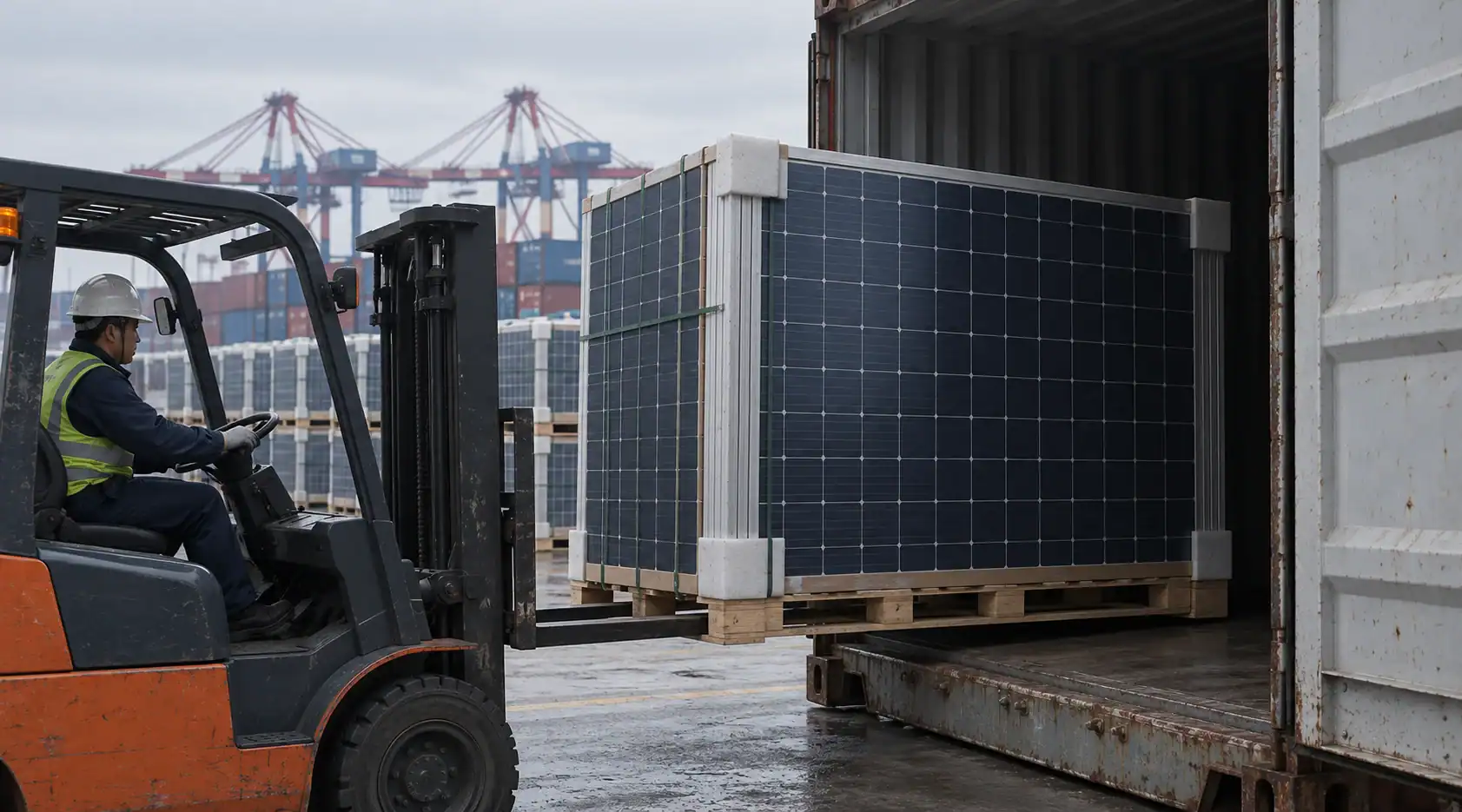
    Physical examination: ABF directs the container or cargo to an examination facility at the port. Officers physically open cartons, verify goods against the packing list, check for undeclared items, and assess whether the declared HS codes match the actual goods. Timeline: 3–7 business days depending on examination facility queue depth. The importer pays the examination fee.
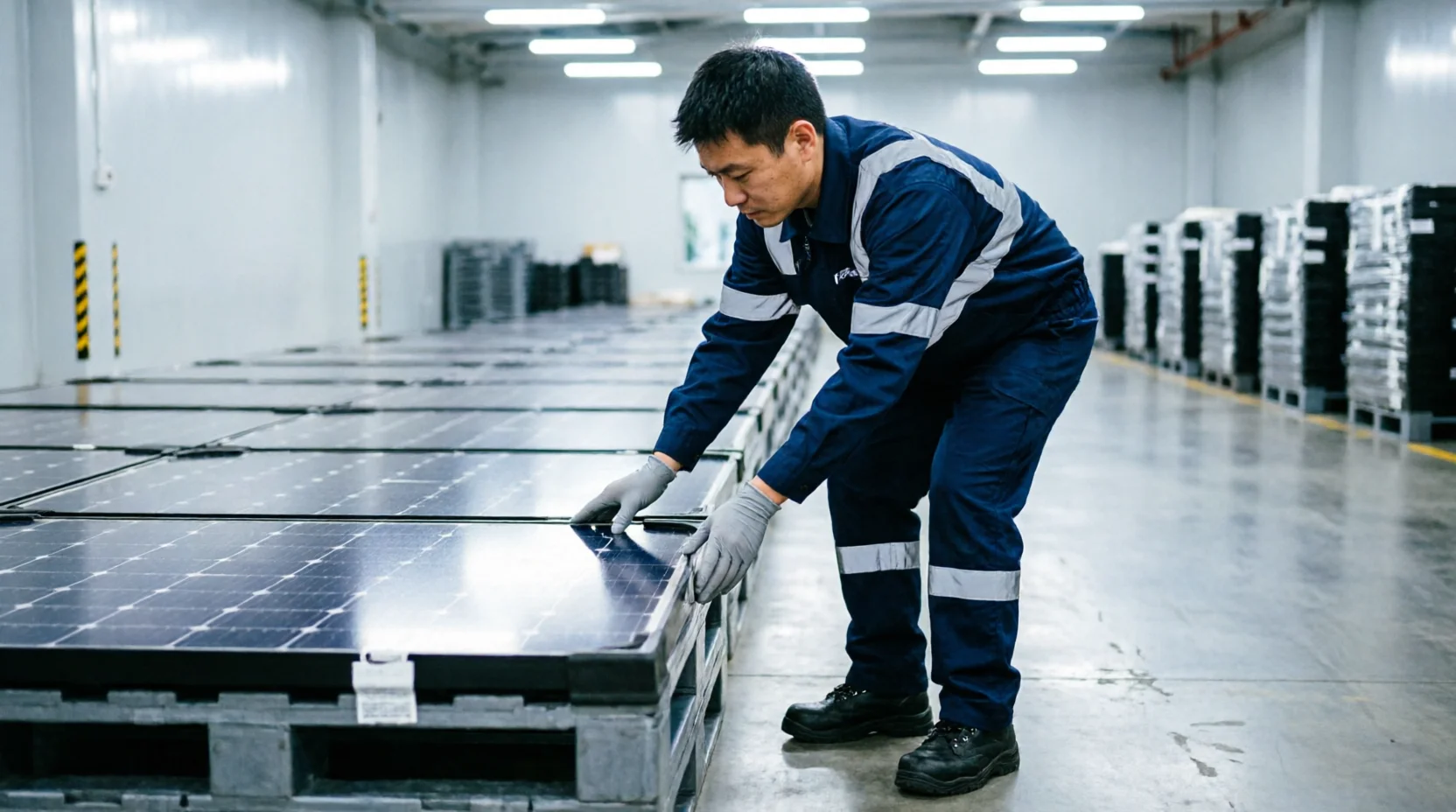
    Lab testing is a fourth possible outcome. It follows a physical examination when ABF or DAFF suspects mislabelled chemicals, prohibited substances, or agricultural contamination, and it extends the hold to 7–21 days.

    A rear commercial receiving yard at an Australian import warehouse in clean early-morning light, a stack of palletized cartons waiting under a covered awning beside a

    The Five Most Common Causes of Australian Customs Holds

    1. Missing or Incorrect Import Documentation

    Documentary examination holds most often start with a mismatch between the import declaration and the supporting documents. ABF cross-references the declared value on the ICS against the commercial invoice, and any discrepancy triggers a review.

    Common documentation failures that cause holds:

    • Commercial invoice with insufficient detail: a vague description such as “sporting goods” without itemised quantities, unit values, and HS codes does not satisfy ABF’s documentary standard
    • Missing packing list: the packing list must match the commercial invoice line-for-line. An inconsistent or missing one is among the most common hold triggers for Chinese imports
    • Absent permit or import approval: the permit must be in hand before the goods arrive, and you cannot apply for one afterwards. Permit-required categories include certain chemicals, therapeutic goods, telecommunications equipment, and controlled timber species
    • Currency or value conversion errors: customs value must be expressed in AUD at the rate applicable on the date of exportation. Incorrect conversion methods trigger value disputes

    A licensed customs broker catches most of these when reviewing documents before lodgement. A five-minute invoice check at the supplier stage is cheaper than a three-day documentary hold at the port.

    2. HS Code Misclassification

    HS code misclassification affects both duty rates and controlled goods flags. Australian importers who use the wrong eight-digit tariff item number face two risks. The first is paying the wrong duty rate, and underpaying creates a compliance liability. The second is importing goods whose correct classification requires a permit they never obtained.

    Misclassification is particularly common for goods that sit at the boundary between categories: machinery with embedded software, composite goods that could fall under multiple headings, and goods whose product description differs from their actual function. The ABF National Import Helpdesk and the Australian Customs Tariff are the authoritative references. The practical route is a licensed customs broker familiar with the specific commodity.

    When ABF detects misclassification during examination, it issues a Penalty Infringement Notice (PIN) and reclassifies the goods. Reclassification can mean back-paying duty plus a penalty. For repeat misclassification on the same commodity, ABF can issue an Infringement Notice for the full duty liability plus a financial penalty.

    3. Under-Declared or Incorrectly Declared Customs Value

    Australian customs value is based on the transaction value of the imported goods: the price actually paid or payable for those goods when sold for export to Australia, adjusted for certain additions and deductions. Under-declaration of value is one of ABF’s primary enforcement targets because it directly reduces the duty and GST collected.

    ABF’s valuation branch compares declared values against trade databases and historical import records for the same commodity category. Declared prices significantly below those market references trigger a valuation review. The review can extend a documentary hold by 5–10 business days while ABF seeks additional evidence of the transaction value.

    The three most common valuation errors that trigger holds:

    • Declaring factory price rather than the price paid by the Australian importer (relevant for related-party transactions)
    • Omitting commissions, packing costs, or royalties from the customs value where those must be included
    • Apportioning freight incorrectly across the consignments in an LCL shipment

    4. Prohibited, Restricted, or Permit-Required Goods Not Declared

    Australia’s import controls require permits or approvals for some goods and prohibit others outright. Common permit-required categories that importers encounter:

    • Industrial chemicals: chemicals not on the AICIS Inventory need an assessment under the Australian Industrial Chemicals Introduction Scheme. Categories range from Introduction Notice to Full Public Assessment depending on hazard and volume
    • Therapeutic goods: medicines, medical devices, and complementary health products require TGA listing or registration before import. Personal-import exemptions are narrow
    • Telecommunications equipment: only ACMA-compliant devices may enter. Non-compliant devices can be seized and destroyed at the border
    • Wildlife and wildlife products: CITES-listed species and their derivatives need permits from both the exporting country and Australia’s DAFF
    • Timber products from controlled species: rosewood, ebony, and other CITES Appendix II species require documents proving legal origin

    If you do not obtain the required permit before import, the goods are not simply released late. They are held indefinitely until they comply, and goods that cannot be brought into compliance are often destroyed or re-exported at the importer’s cost.

    Close-up of gloved hands inspecting the corner joints of a wooden shipping crate in warm sunlight.

    5. Biosecurity Concerns: BMSB, Timber Packing, and Organic Contamination

    Biosecurity holds by DAFF operate independently from customs. Three main risk factors trigger them:

    Brown Marmorated Stink Bug (BMSB) season: BMSB is a significant biosecurity threat to Australian agriculture. The risk season runs from 1 September to 30 April (inclusive), determined by the shipped-on-board date on the ocean bill of lading. During that window, goods from targeted countries must either arrive with evidence of offshore treatment or undergo mandatory treatment on arrival. Targeted countries include Italy, Germany, France, the USA, Turkey, and other Northern Hemisphere origins. On-arrival treatment happens at approved facilities, at the importer’s expense, and costs range from AUD 800–3,500 depending on consignment volume and facility. DAFF holds untreated goods from targeted countries until treatment is complete. In peak season, when treatment facilities are at capacity, that adds 5–14 days to clearance.

    For the full set of triggers behind a DAFF referral, not just BMSB, see our guide to what triggers a DAFF biosecurity inspection.

    Timber packing material: All timber packaging, dunnage, and pallets must comply with ISPM 15, the International Standard for Phytosanitary Measures No. 15. Non-compliant timber packaging triggers a biosecurity hold and mandatory treatment (fumigation with methyl bromide or heat treatment to 56°C core temperature for 30 minutes). The importer pays for it, and it adds 2–5 business days to clearance time. An international heat treatment symbol on the packaging marks ISPM 15 compliance. Chinese suppliers generally know the requirement, but confirm it on every purchase order.

    Organic material contamination: Soil, seeds, plant material, feathers, and other organic matter found in or on shipments trigger DAFF holds. The risk is highest on machinery, used equipment, and goods packed with organic void-fill. DAFF requires contaminated items to be treated or destroyed before release. A pre-shipment inspection (PSI) at origin is the cheapest way to prevent this for goods that carry contamination risk.

    What a Hold Actually Costs

    The direct cost of a customs hold has three components: port storage fees, container detention fees, and ABF examination fees. Indirect costs are harder to quantify, but for time-sensitive goods they consistently exceed the direct fees. They include expedited inland transport after release, production line delays, and retailer penalty clauses.

    Port storage fees are charged by the port or terminal operator from the day the container is available for collection. At major Australian container terminals, storage rates for import containers are approximately:

    • Days 1–5: free storage (within the terminal’s free-time allowance)
    • Days 6–10: AUD 80–120 per TEU per day
    • Days 11+: AUD 120–200 per TEU per day

    For a 20ft container held for 10 days during a physical examination, port storage alone adds AUD 400–600 after free time expires.

    Container detention fees are charged by the shipping line from the day the free-time period for container return expires. Free-time periods vary by shipping line and trade lane (typically 7–14 calendar days for Australian imports). After free time, detention runs AUD 80–180 per TEU per day depending on the line and equipment type.

    ABF examination fees: ABF charges the importer a cost-recovery examination fee for physical inspections. The fee is approximately AUD 340–680 per examination for a standard container. The customs broker invoices it and passes it to the importer.

    Full cost scenario for a 7-day physical hold on an AUD 150,000 CIF electronics consignment:

    • ABF examination fee: AUD 510
    • Port storage (days 6–10, 20ft container): AUD 480
    • Container detention (days 8–14): AUD 840
    • Customs broker time to manage examination: AUD 350
    • Total direct cost of hold: approximately AUD 2,180

    A missing permit triggered that AUD 2,180 hold, and the permit itself would have cost nothing if obtained before the purchase order was raised.

    Empty warehouse bay with pallet jacks and trolleys staged along the wall, morning light through an open roller door.

    Pre-Arrival Lodgement: The Single Most Effective Prevention Tool

    Pre-arrival lodgement means submitting the import declaration (ICS) before the vessel arrives at the Australian port, rather than after. Under the standard process, importers can lodge pre-arrival up to 30 days before the vessel’s estimated time of arrival (ETA). Many importers file within the final 48 hours before arrival, or worse, after the container is already sitting at the terminal. Late lodgement is one of the cheapest import customs delays in Australia to prevent, because the declaration can go in up to 30 days before the vessel arrives.

    When you lodge early, ABF’s targeting system processes the declaration and either grants Permission to Deal or flags the consignment for examination before the container is even unloaded. For consignments that receive PTD before vessel arrival, the container moves directly from the terminal to the importer’s warehouse on the day of unloading. That removes the 1–3 day wait that applies when PTD arrives only after unloading.

    A structured pre-arrival lodgement process requires two things. First, the shipping documents must reach the customs broker at least 3–5 business days before the vessel arrives: bill of lading, commercial invoice, packing list, and certificate of origin where applicable. Second, the commercial invoice must be detailed enough for the broker to classify the goods correctly on first lodgement. Correcting documents and re-lodging resets the targeting queue.

    China and Southeast Asia are the short lanes, where transit times are brief enough that documents sometimes arrive after the vessel. If you run regular programs on those routes, ask suppliers to issue documents electronically at the time of loading rather than at the time of payment. That removes the document timing problem.

    BMSB Season: The Hold Most Importers Don’t Plan For

    The BMSB risk season runs from 1 September to 30 April. That covers the entire Q4 peak shipping period. If you source from BMSB-targeted countries and have not arranged offshore treatment, expect a treatment hold at an Australian port during this window.

    Offshore treatment before loading is cheaper and faster than on-arrival treatment. Most Chinese and European suppliers know the BMSB treatment protocol, which is methyl bromide fumigation or heat treatment with a phytosanitary certificate. Specify it on the purchase order and confirm it on the packing list. In peak season (October–November), on-arrival treatment in Australia often means multi-day queues at treatment facilities. Those queues add delay on top of the treatment time itself.

    Thailand is not currently on the BMSB targeted countries list. Goods originating in Thailand and transshipped through Singapore therefore avoid BMSB treatment requirements in most cases. That matters for importers weighing Thai suppliers against Northern Hemisphere sources during the BMSB season.

    A forklift carries a wrapped pallet down a busy warehouse aisle while staff work among the shelving.

    How a Licensed Customs Broker Reduces Hold Risk

    A licensed customs broker prevents holds through classification accuracy and document review before lodgement, not through speed. Most import holds start with errors made at the document preparation stage, not at the port. Reviewing the commercial invoice and packing list before lodging the ICS catches these errors while correction is still free.

    The specific broker functions that reduce hold risk:

    HS code classification: a broker with commodity expertise in your product category applies the correct 8-digit tariff item, checks whether any permit is required, and flags rate-of-duty surprises before the goods ship rather than after they arrive.

    Permit pre-check: before you raise a purchase order for a new product type, a customs broker can confirm whether it requires an import permit or additional approval, and can tell you the lead time to obtain one. That conversation takes less than 30 minutes and costs nothing on an established broker relationship. Skipping it has left shipments worth hundreds of thousands of dollars held indefinitely at Australian ports.

    Customs value assessment: for related-party transactions or complex pricing structures, a broker can set the correct customs value methodology before the first shipment. That heads off the valuation disputes that trigger extended documentary holds.

    ABF compliance history: ABF’s risk targeting takes a broker’s record into account. A broker with a long history of accurate declarations on similar goods presents a lower-risk profile than a new importer lodging self-prepared declarations for the first time.

    There are two kinds of cargo arriving at an Australian port right now: surprise cargo and pre-lodged cargo. Surprise cargo is a container ABF has never seen documentation for until it is already on the water, forcing a decision under time pressure. Pre-lodged cargo is the same container, but ABF has had the paperwork for days and already made its call before the ship ties up. Same goods, same value, wildly different odds of a hold, because one of them gives the system time to say yes in advance and the other forces it to decide under uncertainty. If you are still lodging on arrival, you are choosing to be surprise cargo. That is not a customs problem. It is a timing choice, and it is the one lever in this entire guide that costs nothing to pull.

    Building a Hold-Free Import Program

    Most experienced importers using a structured process achieve Permission to Deal on first lodgement, and they do not get there by luck. They run systems that prevent the five causes of holds before any shipment leaves origin.

    Standardised commercial invoice template: issue a required invoice template to every supplier. The template specifies the importer’s ABN, country of origin (per TAFTA or ChAFTA requirements where applicable), country of manufacture, country of export, itemised product descriptions with HS codes, unit prices and total values in the transaction currency, and the Incoterms basis. A supplier who fills in your template cannot produce an invoice that lacks the fields ABF requires.

    HS code register: maintain a register of HS codes for every product type you import, with the duty rate, any permit requirement, and the date of last verification. When you add a new product, the broker classifies it before the first PO is raised. Review the register annually against tariff schedule changes.

    Permit calendar: maintain a calendar of expiry and renewal dates for any permit-required goods in your range. Most import permits run for a fixed period (typically 12 months) with a specified volume limit. Exceeding the limit or letting a permit lapse mid-program forces a hold.

    Biosecurity packing requirement on all POs: include ISPM 15 timber packaging compliance and any BMSB treatment requirement on every purchase order to every supplier, regardless of season. Enforce it every time, and a supplier cannot substitute non-compliant packaging on a single order.

    Pre-shipment inspection for new suppliers or new product categories: book a third-party PSI at origin, typically USD 400–800 per inspection. The inspector verifies that the goods match the purchase order description, that the packing list is accurate, and that the shipment carries no visible organic contamination. On a new supplier, a PSI also warns you about quality issues before the container is loaded. One PSI costs substantially less than one day’s container detention plus the examination fee.

    Document cut-off date on every order: specify to your supplier that the original bill of lading, commercial invoice, packing list, and any certificates must be issued and transmitted electronically to your customs broker by a set date before vessel ETA. For China-Australia services, that is typically 5 business days before arrival. Tell suppliers who miss the cut-off that the cost of any resulting hold will be charged back under the contract. That concentrates minds.

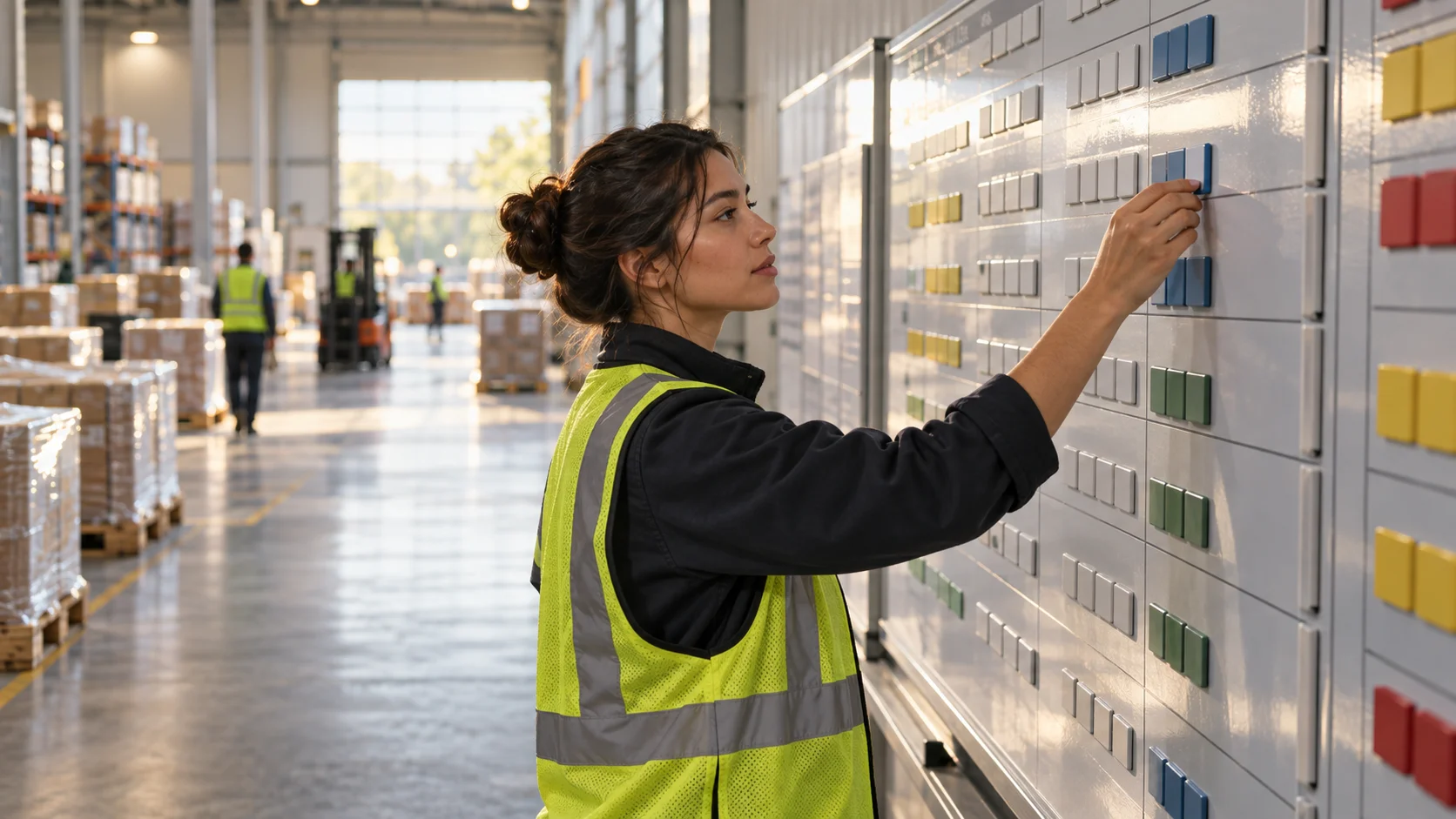
    A warehouse coordinator in a hi-vis vest places a colored magnetic tag on a wall-mounted scheduling board.

    Full Cost Comparison: Systematic Program vs. Ad-Hoc Approach

    Across a 12-month import program of 24 FCL shipments from China to Australia (2 containers per month, AUD 120,000–180,000 CIF each):

    Ad-hoc approach (self-prepared declarations, no systematic document review, no HS code register):

    • Assumed hold rate: 2 documentary holds + 1 physical examination per year = 3 holds
    • Documentary holds: 2 × AUD 1,200 in storage and broker time = AUD 2,400
    • Physical examination: 1 × AUD 2,500 in fees, storage, and detention = AUD 2,500
    • Total direct hold costs: AUD 4,900 per year
    • Indirect costs (production delays, expedited transport, 1 retailer penalty clause at AUD 3,000): AUD 6,000
    • Total cost of holds: approximately AUD 10,900 per year

    Systematic approach (licensed broker, standardised invoices, HS register, BMSB treatment on POs, pre-arrival lodgement):

    • Additional broker cost vs. DIY: AUD 120–180 per shipment × 24 = AUD 2,880–4,320 per year
    • BMSB treatment cost on shipments from targeted countries (5 shipments): AUD 800–1,500 each = AUD 4,000–7,500 per year
    • PSI for 2 new supplier programs: 2 × AUD 700 = AUD 1,400
    • Total systematic program cost (above basic freight): AUD 8,280–13,220 per year
    • Assumed hold rate: 0–1 holds per year
    • Total cost of holds: AUD 0–1,200 per year

    On a 24-container program, the systematic approach adds AUD 8,000–13,000 per year and removes AUD 10,900 in hold-related costs. The net difference is roughly cost-neutral to slightly positive. That calculation also excludes the harder-to-quantify benefit of predictable clearance times, which carries real commercial value for importers supplying retail or manufacturing clients.

    The most expensive customs hold is the one you could have prevented for nothing. A seven-day physical examination on an AUD 150,000 container runs about AUD 2,180 in storage, detention, and examination fees before a single carton is opened. Yet the measure that prevents most holds, lodging the import declaration up to 30 days before the vessel arrives, costs an importer nothing but attention. The Australian Border Force clears pre-lodged, correctly documented cargo the way it clears a green-channel wave-through; it stops the shipment that turns up as a surprise. Almost every importer who is held again and again has the same problem underneath the varied symptoms: the paperwork reaches the border at the same moment the container does.

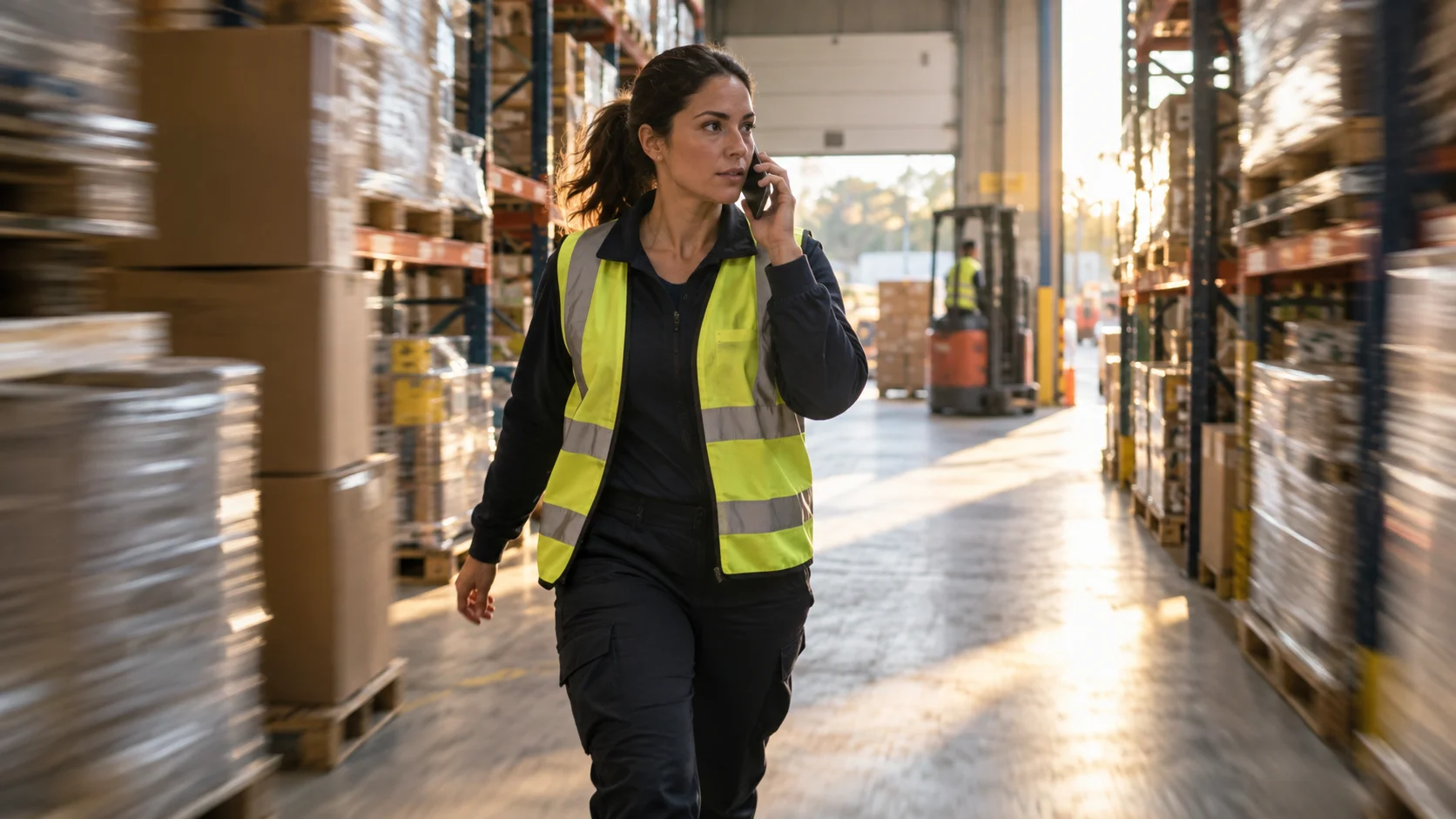
    A warehouse staff member in a hi-vis vest walks briskly down an aisle while talking on her phone.

    What to Do When Your Shipment Is Already Held

    If your shipment has been flagged for documentary or physical examination, do three things immediately:

    Engage your customs broker: if you do not have one, appoint one now. The broker can talk directly to ABF, find out what has been requested, and submit the response in a format that meets ABF’s evidentiary requirements. Badly formatted self-lodged responses to ABF queries draw further requests and extend the hold.

    Request an examination appointment: ABF schedules physical examinations by appointment availability. Your broker can book the earliest slot and confirm that the facility has access to the container. Every day lost in scheduling adds a day of port storage.

    Notify your inland carrier: once the examination outcome is known, your transport provider needs the expected release date to schedule pickup and delivery. Releasing a container on a Friday afternoon without confirming carrier availability can add a weekend of port storage to the total hold cost.

    Swift Cargo works with Australian importers on sea freight programs from China, Southeast Asia, and Europe, across a range of commodities and origins. For advice on building a compliant import process for your business, visit swiftcargo.solutions to discuss your program with our team.

    Preventing Import Customs Delays in Australia

    Lodge the import declaration before the vessel arrives, give every supplier your invoice template, keep an HS code register and permit calendar, and put ISPM 15 packaging and any BMSB treatment requirement on every purchase order. Target goods shipped from BMSB target countries between 1 September and 30 April need treatment evidence, so arrange it offshore before loading.

    Frequently Asked Questions

    What are the most common causes of customs delays in Australia?

    The five most common causes of Australian customs holds are: (1) missing or incorrect import documents such as a commercial invoice with incorrect values or an absent permit; (2) HS code misclassification that triggers a duty rate dispute or a restricted goods flag; (3) under-declared or incorrectly declared customs value; (4) prohibited, restricted, or permit-required goods not declared prior to arrival; and (5) biosecurity concerns including BMSB-risk timber packaging and organic material contamination. Most holds are avoidable with correct documentation and a licensed customs broker.

    How long can ABF hold a shipment at Australian customs?

    A documentary examination typically takes 1–3 business days. A physical examination adds 3–7 business days depending on examination queue depth at the port. Lab testing extends the hold to 7–21 days, and it is required when goods are suspected of containing prohibited substances, agricultural contamination, or mislabelled chemicals. During this time, the importer is liable for port storage fees (AUD 25–60 per CBM per day at major container terminals) and container detention fees if the shipping line’s free-time window has expired.

    What does a physical examination cost at Australian customs?

    ABF charges an examination fee for physical inspections: approximately AUD 340–680 per examination depending on the container type and cargo volume. This is separate from port storage fees (AUD 25–60 per CBM per day), container detention fees charged by the shipping line, and any customs broker time for managing the examination process. A 7-day physical hold on a standard LCL consignment can cost AUD 2,000–6,000 in fees before the goods move.

    How do I reduce the risk of my shipment being held at Australian customs?

    The most effective single action is pre-arrival lodgement of your import declaration (ICS) before the vessel arrives. This allows ABF to assess risk and issue a permission-to-deal before the container is unloaded, rather than selecting it for examination after. Beyond pre-lodgement: use a licensed customs broker for HS code classification, ensure your commercial invoice matches packing list and purchase order, confirm any permit requirements before shipping, and use ISPM 15-compliant timber packaging for all consignments. For BMSB target goods shipped between 1 September and 30 April (judged by the shipped-on-board date), arrange offshore treatment at origin.

  • Shipping to Thailand: Realistic Door-to-Door Times

    Shipping to Thailand: Realistic Door-to-Door Times

    Ask how long shipping to Thailand takes, and the number you hear most often is wrong, or at least incomplete. “About three weeks from China” is vessel transit time, port-to-port. It doesn’t include the days before the vessel loads, the days the shipment spends in Thai customs after arrival, or the last-mile delivery to the final address. The realistic door-to-door figure from China is 20–32 days for FCL sea freight. From Europe it’s 44–87 days. These are not the same numbers.

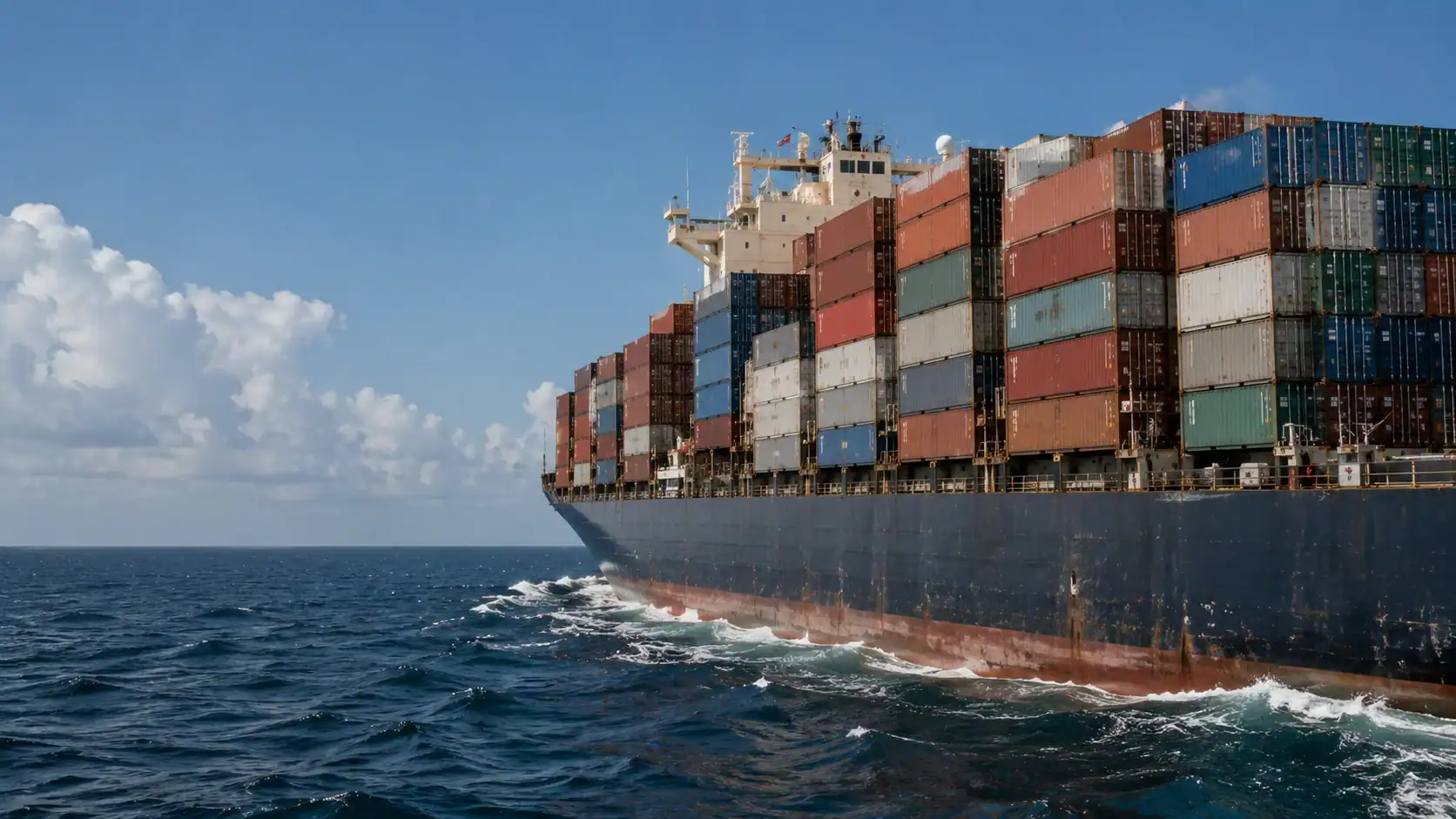
    Loaded container ship under way on open ocean in clear weather, seen from the bow quarter

    The distinction matters for inventory planning, contract deadlines, and household moves. Plan around the vessel-only figure and you’ll be short on stock, late on a production schedule, or standing in an empty apartment waiting for your belongings. Plan around the full door-to-door timeline and you won’t be.

    The Two Numbers: Vessel Transit vs Door-to-Door

    Every shipping quote references “transit time.” What it means depends on what it’s measuring:

    • Vessel transit (port-to-port): Time from origin port departure to Laem Chabang (or Bangkok port) arrival. This is what carriers quote on their schedules.
    • Door-to-door: Time from collection at the origin address to delivery at the Thai destination address. This includes origin handling, customs export, vessel loading wait, vessel transit, Thai customs clearance, and last-mile delivery.

    The gap between these two figures is 9–38 days for sea freight: 5–14 days of origin handling, up to 7 days of CFS deconsolidation for LCL, 3–14 calendar days of Thai customs clearance and 1–3 days of final delivery. European-origin moves carry the same non-vessel time as any other origin. They take longer because the ocean leg does.

    Sea Freight Transit Times to Thailand

    From China

    Origin Port Vessel Transit (Port-to-Port) Door-to-Door FCL Door-to-Door LCL
    Shanghai / Ningbo 12–18 days 20–30 days 25–38 days
    Shenzhen (Yantian) / Guangzhou (Nansha) 10–15 days 18–28 days 23–35 days
    Tianjin / Qingdao 14–20 days 22–32 days 27–40 days

    Most China-to-Thailand shipments transit through Singapore or Port Klang (Malaysia) before the final leg to Laem Chabang. Transshipment typically adds 2–5 days and is already included in the vessel transit figures above. LCL shipments add consolidation time at origin and deconsolidation time at the destination CFS, which explains the longer door-to-door range.

    From Southeast Asia

    Origin Vessel Transit Door-to-Door
    Ho Chi Minh City (Vietnam) 5–8 days 14–22 days
    Jakarta (Indonesia) 7–10 days 16–25 days
    Singapore 3–5 days 12–20 days
    Manila (Philippines) 5–9 days 15–24 days

    From Europe

    European-origin shipments to Thailand take the longest, and the current Red Sea routing situation is the critical variable:

    Origin Port Vessel Transit (Suez) Vessel Transit (Cape) Door-to-Door (Cape)
    Hamburg / Bremerhaven 28–33 days 36–46 days 44–87 days
    Felixstowe / Southampton (UK) 28–35 days 35–48 days 44–87 days
    Rotterdam / Antwerp 27–33 days 36–49 days 44–87 days
    Barcelona / Genoa 25–31 days 33–45 days 42–83 days

    Most Europe-Asia sailings still go around the Cape of Good Hope, following the Red Sea diversions that began in late December 2023. Carriers began returning individual services to Suez in December 2025, Maersk paused its trans-Suez sailings again in March 2026, and services have been moving back one at a time since. Maersk called its latest switches a measured step rather than a wider return, and Sea-Intelligence rated the Europe-to-Asia leg only 38% normalised for September 2026. The door-to-door column therefore assumes Cape routing. On a sailing your forwarder confirms is going via Suez, allow 36–73 days from northern Europe or the UK and 34–69 days from Barcelona or Genoa. Confirm the current routing with your freight forwarder before setting a delivery deadline.

    From Australia

    Origin Port Vessel Transit Door-to-Door
    Sydney (Port Botany) 12–16 days 20–28 days
    Melbourne 13–17 days 21–30 days
    Brisbane 11–15 days 19–27 days

    From the USA

    Origin Port Vessel Transit Door-to-Door
    Los Angeles / Long Beach 18–25 days 28–38 days
    Houston / New Orleans 22–30 days 32–42 days
    New York / Savannah 26–35 days 36–48 days

    Air Freight and Express Courier Times

    Mode Origin Door-to-Door (Bangkok)
    Express courier (DHL/FedEx/UPS) China 2–4 business days
    Express courier Australia 2–3 business days
    Express courier Europe / USA 3–5 business days
    Air freight (consolidated) China 4–7 days
    Air freight Australia 3–6 days
    Air freight Europe / USA 5–9 days

    Air freight clears through the Suvarnabhumi Airport cargo terminal. Thai customs clearance for air cargo typically takes 1–3 working days for complete, standard consignments, faster than sea freight clearance at Laem Chabang. Express courier services integrate customs clearance and last-mile delivery, which is why they quote door-to-door figures directly.

    Thai Customs Clearance: The Timeline Within the Timeline

    When the vessel arrives at Laem Chabang, the clock on Thai customs clearance starts. Most importers underestimate this component, and most delivery delays start here. Times in this section are working days (Monday to Friday, excluding Thai public holidays). The door-to-door ranges in this guide convert them to calendar days, so 3–10 working days counts as 3–14 days.

    Standard clearance (Green Line, documentary only): 3–7 working days after vessel arrival. Applies to low-risk consignments where the declaration matches the goods and all documents are complete.

    Red Line (physical inspection): 7–10 working days. All household goods shipments enter Red Line automatically. Thai customs risk profiling may select commercial consignments. An officer physically inspects the goods against the declared inventory.

    Examination hold (documents incomplete or discrepancy found): Indeterminate. Goods move to bonded storage pending resolution, and daily fees accrue there. The most common causes of Thai customs holds are covered in full in our Thai customs clearance guide, which also sets out how to avoid them.

    What triggers the clock: Customs clearance begins when the Bill of Lading is surrendered, the import declaration is lodged by your Thai customs broker, and the container is in the terminal. Port congestion at Laem Chabang can delay the container reaching the terminal examination area. That is separate from customs processing time.

    A container ship at anchor outside a Thai port under a bank of heavy monsoon cloud, visible queuing distance from the berth, muted grey-gold light breaking through at the horizon.

    What Extends Transit Times

    Transit times are not fixed. Several variables reliably add days to the quoted schedule:

    Red Sea / Cape routing: As covered above, this adds 8–14 days for Europe-origin vessels compared to Suez routing.

    Port congestion: Laem Chabang and transshipment hubs (Singapore, Port Klang) experience periodic congestion, particularly around Chinese New Year and the pre-Christmas peak season. Container vessel schedule reliability has averaged 60–70% globally since the post-COVID disruption period. Expect some delays as a planning baseline, not as an exception.

    Thai public holidays: Thai customs closes for national holidays. Shipments arriving just before a major holiday will wait. Key dates to plan around:

    • Songkran (Thai New Year): April 13–15. Expect 3–5 additional days if your vessel arrives in this window
    • Makha Bucha / Visakha Bucha / Asanha Bucha: Buddhist holidays on varying dates each year. Thai customs typically closes for 1–2 days
    • His Majesty’s Birthday: July 28, one-day closure
    • Queen’s Birthday: August 12, one-day closure
    • King Chulalongkorn Day: October 23, one-day closure
    • Constitution Day: December 10, one-day closure

    LCL consolidation cycles: LCL groupage shipments don’t load every day. Freight forwarders consolidate cargo for weekly or bi-weekly vessel loadings. A consignment ready to ship on a Wednesday may wait until Monday for the next consolidation cycle. That adds up to a week before the vessel even departs.

    Documentation issues: Incomplete documents extend clearance, whether at origin (a missing Certificate of Origin for FTA duty, incorrect invoice details) or at destination (a discrepancy between the packing list and the goods). This is the most controllable variable, and complete documentation prevents the most common delays. The complete document checklist for shipping to Thailand covers everything Thai customs will ask for.

    Planning Your Shipment Timeline

    A practical planning framework based on the transit time data above:

    1. Establish your need-by date: the date the goods must be at the Thai destination
    2. Subtract Thai customs clearance time: up to 14 calendar days (10 working days) if the goods may be physically inspected, which all household goods are, or up to 11 calendar days (7 working days) for documentary-only clearance, plus a 5-day buffer for any holiday overlap
    3. Subtract vessel transit: use the table above for your origin, with Cape routing for Europe unless your forwarder confirms a Suez sailing
    4. Subtract origin handling time: 5–10 days for FCL (container loading, vessel loading wait), or 7–14 days for LCL (next consolidation cycle plus CFS handling)
    5. That date is your latest cargo-ready date at origin

    Add a 7-day buffer to any date derived this way. Real-world shipments encounter real-world variables. The buffer is not pessimism. It’s the difference between planning and wishful thinking.

    That 7-day buffer deserves honesty. The transit ranges in the tables above are not promises; they are distributions. “28 to 35 days” means most shipments land inside that window, a lucky few arrive sooner, and a meaningful minority (call it one in six or seven) run longer because of a missed vessel connection, a customs query, or a congested berth. A flat buffer treats every shipment as equally risky, when the variable that actually matters is how costly it would be for yours to land in that slow tail. If a late arrival costs you nothing, plan to the middle of the range and move on. If it would cost you a signed lease, a product launch, or a visa deadline, plan to the far edge and treat the quoted average as the optimist’s number.

    When we used to plan launches, the hardest part was never the schedule itself. It was deciding how much uncertainty to share with the people depending on the date. Tell your landlord “the container arrives in six weeks” and you sound confident and organized, right up until week nine, when you’re explaining a delay you technically knew was possible from day one. The better move, we’ve learned, is to give people a range and a reason, not a single confident number: “realistically 6 to 10 weeks, and here’s what would push it toward the long end.” That’s not hedging. It’s giving the people around you enough information to plan their own contingencies, whether that’s a landlord holding a unit or a new employer expecting you at a desk. The version of you that says “6 weeks” and quietly hopes isn’t more in control. It’s just more likely to have an uncomfortable conversation later instead of an easy one now.

    For door-to-door transit windows by origin country and a current schedule, see Swift Cargo’s Thailand shipping process.

    Why the Quoted Number and the Real Number Drift Apart

    The “three weeks from China” figure isn’t a lie. It’s a measurement taken from a different vantage point than the one you’re standing in. The carrier measures from the moment the vessel leaves the origin port to the moment it berths at Laem Chabang. You measure from the day you hand over the goods to the day they reach your door in Thailand. Those two clocks were never counting the same thing, and most timeline disappointments trace back to that gap rather than to anything actually going wrong. When a deadline is genuinely fixed, the honest move is to change the mode rather than argue with the expectation: choosing air freight over sea collapses the door-to-door window from weeks to days, at a cost you can decide is worth it. And if your arrival lands near a Chinese New Year or pre-Christmas peak, plan the congestion in before it plans itself in for you.

    Inside a bonded consolidation warehouse, a worker uses a pallet jack to position one customer's boxes into a shared LCL container next to other palletized shipments, each stack visibly distinct in size and wrapping.

    LCL vs FCL: How Cargo Type Affects the Timeline

    The timeline difference between LCL (Less than Container Load) and FCL (Full Container Load) shipments to Thailand comes from the consolidation and deconsolidation stages at both ends, not from the ocean transit itself.

    LCL additional time at origin: You deliver LCL cargo to an origin Container Freight Station (CFS), where it is consolidated with other shippers’ goods into a shared container. The CFS cutoff is typically 3–5 days before vessel departure. Miss the cutoff and you wait for the next sailing. An FCL shipment loads to your exclusive container and can depart on the next available vessel without CFS timing constraints.

    LCL additional time at destination: On arrival at Laem Chabang, the shared container must be deconsolidated at the destination CFS before your cargo can be separated and cleared. Deconsolidation typically takes 2–4 days after vessel arrival. An FCL container can be picked up and processed as soon as it’s discharged from the vessel, typically 1–2 days after arrival.

    Total LCL vs FCL timeline difference: For a shipment from Australia to Bangkok, LCL typically adds 5–9 days to the total timeline compared to FCL, spread across origin CFS, deconsolidation, and customs processing sequence. This is the structural difference between the two modes, not a worst-case scenario.

    The cost guide for shipping to Thailand covers the volume thresholds at which FCL becomes cost-competitive with LCL, and when the timeline difference justifies the step up.

    Inland Delivery: Bangkok vs Chiang Mai vs Islands

    Once goods clear Thai customs at Laem Chabang, the inland delivery leg determines the final stage of the timeline. Delivery times from Laem Chabang by Thai destination:

    • Pattaya: 15 km from Laem Chabang. Same-day or next-day delivery. Shortest inland leg of any Thai destination.
    • Bangkok (central): 130 km, 2–3 hours. Delivery 1–2 days after port release. That covers booking the truck and completing the port gate-out process.
    • Chiang Mai: Approximately 700 km north, 7–8 hours by truck. Add 2–3 days after port release.
    • Phuket: Approximately 900 km south. Truck transit 10–12 hours, delivery 2–4 days after port release.
    • Koh Samui / island destinations: Laem Chabang truck to Surat Thani (approximately 700 km), then ferry or barge to island. Total: 4–6 days after port release, dependent on barge schedules.

    Related reading: Shipping Delays When Moving to Thailand Cluster at Predictable Points

    Frequently Asked Questions

    How long does sea freight take from China to Thailand?

    Vessel transit from Shanghai/Ningbo: 12–18 days. From Shenzhen: 10–15 days. Door-to-door FCL: 20–30 days. LCL: 25–38 days. The difference is consolidation, deconsolidation, and Thai customs clearance time added to the vessel leg.

    How long does sea freight take from Europe to Thailand?

    27–35 days vessel transit via Suez Canal; 35–49 days via Cape of Good Hope (standard for many carriers since late December 2023). Door-to-door: 44–87 days from UK or northern European ports via the Cape, or 36–73 days on a sailing confirmed via Suez. Any door-to-door figure under 34 days from Europe is vessel-only and not realistic for planning purposes.

    How long does air freight take to Thailand?

    4–7 days door-to-door from China; 5–9 days from Europe or USA. Add 1–3 working days for Suvarnabhumi cargo terminal customs clearance. Express courier integrates clearance and delivery: 2–4 days from China, 3–5 days from Europe/USA.

    How long does Thai customs clearance take at Laem Chabang?

    Standard: 3–7 working days (Green Line). Physical inspection: 7–10 working days, about 9–14 calendar days (Red Line, including all household goods). Document issues move goods to bonded storage: indeterminate timeline and daily fees until resolved. Add 3–7 working days around Thai national holidays.

    Does the Red Sea situation still affect shipping to Thailand?

    For Europe-origin lanes, yes. Cape routing adds 8–14 days. Carriers have been returning individual services to Suez since December 2025, with a pause in March 2026, but in September 2026 most Europe-to-Asia capacity still sailed via the Cape. Asia-origin routes (China, Vietnam) to Thailand are not affected by this rerouting. Confirm current routing with your forwarder before committing to delivery deadlines.

  • Total Landed Cost for Australian Imports: The 8-Layer Formula

    Total Landed Cost for Australian Imports: The 8-Layer Formula

    Most importers get the freight quote. Many also factor in the duty rate. A smaller number correctly calculate GST. And almost none of them model all eight cost layers that sit between the supplier’s invoice and the goods arriving at their Australian warehouse.

    A customs entry form, freight invoice, and insurance certificate laid out on a desk overlooking a container port

    The mental model that produces consistently wrong landed costs treats “freight + duty” as the total. The actual formula has more terms. Each additional term is small by itself, but together they add 8–18% to the naïve freight-plus-duty estimate on a typical consignment. The additions include customs brokerage, terminal handling, and the biosecurity levy. Get the model wrong and the import becomes less profitable than projected. Get it right on every shipment and the margin improvement compounds.

    Stacked shipping containers at an Australian port terminal at sunset, with cranes and the city skyline in the background

    The Landed Cost Formula

    Landed cost for Australian imports = the sum of all costs incurred between the supplier’s door in the origin country and your warehouse door in Australia:

    1. Customs Value (CIF): the base for duty and GST calculations
    2. Import Duty: the charge levied on customs value at the applicable tariff rate
    3. GST (10%): the tax applied to customs value plus duty
    4. Customs Brokerage: fees for lodging your import declaration
    5. Port Terminal Handling Charges (THC): the shipping line’s charge for handling containers at the destination port
    6. Wharfage / Stevedoring: port operator charges for container handling
    7. Biosecurity Import Levy: DAFF levy on commercial imports
    8. Last-Mile Delivery: port to your warehouse

    Origin costs (supplier packaging, collection, export freight to the origin port) don’t appear as a separate layer in the Australian landed cost calculation. They’re already embedded in the CIF customs value.

    Layer 1: Customs Value

    Australia uses the CIF (Cost, Insurance, Freight) method to determine customs value. The customs value is:

    Customs Value = Invoice price of goods + International freight cost + Insurance cost

    This means freight is included in the base on which duty and GST are calculated. If your goods have an invoice value of AUD 20,000 and you paid AUD 2,000 in international freight and AUD 200 in insurance, your customs value is AUD 22,200. Duty and GST are calculated on that AUD 22,200, not on the AUD 20,000 invoice.

    This is the most commonly misunderstood aspect of Australian customs valuation. Importers who model duty on the invoice value alone underestimate their duty and GST liability by 8–12% on typical freight-to-goods-value ratios.

    Layer 2: Import Duty

    Import duty is levied on the customs value at the tariff rate applicable to your goods’ HS code. The standard MFN (Most Favoured Nation) rate for common goods is:

    Product Category Typical MFN Rate ChAFTA (China) AUSFTA (USA) AANZFTA (ASEAN/Vietnam)
    Electronics (HS 85xx) 0–5% 0% 0% 0%
    Clothing and textiles 5% 0% 0% 0%
    Furniture 5% 0% 0% 0%
    Footwear 5% 0% 0% 0%
    Food preparations (HS 2106) 4–10% 0% 0% 0%
    Steel and aluminium structures 5% 0–5% 0% 0%
    Vehicles (motor cars) 5% 0% 0% 0%

    FTA preferential rates require proof of origin, but the form differs by agreement. For China, that means a certificate from CCPIT or CIQ. For the USA, it means self-certification by the exporter or importer, with no third-party body involved. For ASEAN countries, it means the relevant national trade body (e.g., the Vietnam National Chamber of Commerce and Industry, or VCCI). The CoO must be requested before or at shipment loading. It cannot be backdated after the vessel sails.

    If you don’t present a CoO at the time of import declaration, the MFN rate applies by default. On a AUD 100,000 shipment of clothing from China, the difference between ChAFTA 0% and MFN 5% is AUD 5,000 in duty, plus GST on that duty. Certificate of origin management is not a paperwork formality; it is a direct cost lever.

    Layer 3: GST (10%)

    Australia’s Goods and Services Tax applies to all taxable importations. The GST base for imports is:

    GST Base = Customs Value + Import Duty

    GST Rate = 10%

    If your customs value is AUD 22,200 and import duty is AUD 1,110 (5%), GST is:

    10% × (AUD 22,200 + AUD 1,110) = 10% × AUD 23,310 = AUD 2,331

    Under ChAFTA with 0% duty on the same AUD 22,200 customs value:

    10% × (AUD 22,200 + 0) = AUD 2,220

    The FTA rate saves AUD 1,110 in duty and reduces the GST base, saving an additional AUD 111 in GST. The CoO saves a total of AUD 1,221 on this consignment.

    GST paid at import is generally claimable as an input tax credit by GST-registered Australian businesses: you pay it at the border and recover it on the next BAS period (Business Activity Statement). That timing is the relevant operational consideration, not whether GST is a net cost (for GST-registered businesses, it typically isn’t).

    A customs broker's tidy desk with a closed shipping folder and a small unbranded pen holder, warm desk-lamp light against a cooler window-lit background showing a soft

    Layer 4: Customs Brokerage

    A licensed customs broker prepares and lodges your Import Declaration with ABF. They also calculate and pay duty and GST on your behalf and arrange release of your cargo. This is not optional. Goods cannot clear the Australian border without an import declaration, and only licenced brokers can lodge declarations for commercial importations.

    Standard brokerage fees:

    • Sea freight FCL import entry: AUD 150–400 per declaration
    • LCL / air freight import entry: AUD 100–300 per declaration
    • Classification advice (if needed): AUD 100–250 per HS code ruling
    • Examination attendance (if ABF or DAFF examines the goods): AUD 100–300 additional

    These fees are separate from duty and GST. The broker collects those at cost and remits to ABF. They then recover the amount from you.

    Layer 5: Terminal Handling Charges (THC)

    Destination THC is charged by the shipping line for moving the container from the vessel to the port terminal yard. It is not included in ocean freight rates despite being inevitable. Standard destination THC at Australian ports:

    • Port Botany (Sydney): AUD 300–450 per 20ft TEU; AUD 450–650 per 40ft FEU
    • Port of Melbourne: AUD 280–430 per TEU; AUD 420–620 per FEU
    • Port of Brisbane: AUD 270–420 per TEU; AUD 400–600 per FEU
    • Fremantle (Perth): AUD 260–400 per TEU; AUD 380–560 per FEU

    For LCL shipments, a destination CFS (Container Freight Station) deconsolidation fee applies instead: typically AUD 20–50 per CBM.

    Layer 6: Wharfage

    Port operators levy wharfage charges on cargo moving through their terminals. In Australia, this is primarily the stevedore/terminal operator charge, separate from shipping line THC. Wharfage is typically levied per tonne of cargo or per TEU, and varies by terminal operator (DP World, Hutchison Ports, Patrick Terminals). For budgeting, AUD 50–150 per TEU equivalent is a reasonable estimate. Your broker or freight forwarder will confirm the specific rate for your port and terminal.

    Wharfage, THC and brokerage rarely arrive as one number, worth pricing all eight layers together instead of adding them up yourself.

    Layer 7: Biosecurity Import Levy

    The Department of Agriculture, Fisheries and Forestry (DAFF) administers the Biosecurity Import Levy on commercial goods entering Australia above the de minimis threshold. The levy is charged per import declaration entry line. It’s separate from any inspection fees, which apply only if your goods are selected for biosecurity examination.

    Current levy rates are set under the Biosecurity (Charges) Act 2014. For most commercial importers, the levy is a minor per-shipment cost, typically AUD 10–40 per consignment depending on the number of entry lines. It is not optional and not waivable. Australia’s biosecurity import conditions are enforced at the border regardless of this levy (including ISPM 15 timber packaging compliance). Treatment costs for non-compliant packaging are additional and separate.

    Layer 8: Last-Mile Delivery

    Port to your warehouse is the final cost layer. Costs vary by port and delivery distance:

    • Port Botany to Sydney metro warehouse: AUD 350–600 per 20ft container
    • Port of Melbourne to Melbourne metro warehouse: AUD 300–550 per 20ft
    • Container unpack / devanning (if required): AUD 150–350 depending on volume
    • LCL delivery (per CBM, metro): AUD 25–60 per CBM

    The De Minimis Threshold: AUD 1,000

    Goods with a customs value at or below AUD 1,000 are generally exempt from import duty and the formal import declaration requirement. This applies to individual consignments. Splitting a larger order into multiple sub-AUD 1,000 consignments to avoid duty is considered duty avoidance and is not a lawful strategy.

    Note that GST applies to low-value imports from overseas sellers under the Low Value Imports framework (in force since July 2018). Under this regime, overseas sellers with AUD 75,000+ in Australian annual sales must register for and collect Australian GST at the point of sale. Some goods clear below AUD 1,000 with GST already collected by the overseas seller. These goods may not have additional GST collected at the border, but they are not GST-free. The mechanism shifts, not eliminates, the GST obligation.

    The AUD 1,000 line isn’t a compliance detail. It’s a cost-curve threshold, and the two sides of it look nothing alike. Below it, most of this eight-layer stack simply doesn’t apply: no duty, no formal declaration, and often GST already collected at the point of sale. One dollar above it, the entire structure reactivates: duty, brokerage minimums, formal-entry paperwork, and every ad-valorem layer downstream. That’s not a smooth cost increase. It’s a step function, and it changes what the rational move actually is. A shipment sitting at AUD 1,050 in customs value now carries fixed brokerage and compliance costs that a sub-threshold shipment never triggers at all, so it isn’t marginally more expensive to land than one at AUD 950. It can be materially more expensive per unit. Importers who size orders around the sticker price instead of the threshold are optimizing for the wrong number.

    Worked Example 1: Electronics from China (FCL, ChAFTA)

    A 20ft FCL container of consumer electronics imported from Shenzhen to Sydney, with a ChAFTA Certificate of Origin:

    Cost Component Amount (AUD)
    Goods invoice value (FOB) 80,000
    International freight (included in CIF) 2,800
    Insurance 240
    Customs Value (CIF) 83,040
    Import duty (ChAFTA 0%) 0
    GST (10% × AUD 83,040) 8,304
    Customs brokerage 280
    Destination THC (Port Botany) 380
    Wharfage 90
    Biosecurity levy 20
    Last-mile delivery (Sydney metro) 450
    Total Landed Cost (excl. GST input credit) AUD 92,564
    Effective landed cost (after GST ITC recovery) AUD 84,260

    Without the ChAFTA CoO (MFN 5% duty on electronics), this shipment would incur an additional AUD 4,152 in duty and AUD 415 in GST on that duty: AUD 4,567 more per consignment. At 10 consignments per year, that’s AUD 45,670 of avoidable cost.

    Small pharmaceutical-style cartons of health supplements being packed into an air-freight box at a US warehouse.

    Worked Example 2: Health Supplements from the USA (Air Freight, AUSFTA)

    500 kg of TGA-listed health supplements imported by air from Los Angeles to Melbourne, with an AUSFTA origin declaration:

    Cost Component Amount (AUD)
    Goods invoice value (FOB) 35,000
    International air freight 3,200
    Insurance 180
    Customs Value (CIF) 38,380
    Import duty (AUSFTA 0% on food preparations HS 2106) 0
    GST (10% × AUD 38,380) 3,838
    Customs brokerage 220
    Airport handling (air cargo) 180
    Biosecurity levy 20
    Last-mile delivery (Melbourne metro) 250
    Total Landed Cost (excl. GST ITC) AUD 42,888
    Effective landed cost (after GST ITC recovery) AUD 39,050

    The same unmodelled gaps that wreck a landed-cost estimate also get shipments held at the Australian border. Confirm the HS code and country-of-origin FTA eligibility before placing the order, not after the freight quote arrives.

    Related reading: Customs Valuation in Australia: How the Value of Your Goods Is Determined

    Frequently Asked Questions

    What is landed cost and how do I calculate it for Australian imports?

    Landed cost = Customs Value (CIF) + Import Duty + GST + Customs Brokerage + THC + Wharfage + Biosecurity Levy + Last-Mile Delivery. Customs value uses the CIF method: goods invoice value plus international freight plus insurance. Duty and GST are calculated on this base.

    How is GST calculated on imports to Australia?

    GST (10%) is applied to customs value plus import duty. For 0% duty goods (FTA or MFN), GST is 10% of customs value alone. For 5% duty goods, GST is 10% of (customs value + 5% duty). GST paid at import is recoverable as an input tax credit for GST-registered businesses.

    What is Australia’s de minimis threshold?

    AUD 1,000. Goods at or below this customs value are generally exempt from import duty and the formal declaration requirement. GST may still apply via the overseas seller under the Low Value Imports framework. The AUD 1,000 threshold exempts duty, not necessarily GST.

    How do FTA certificate of origin requirements affect my landed cost?

    Proof of origin unlocks the FTA preferential rate: 0% under ChAFTA, AUSFTA, or AANZFTA for most goods. ChAFTA and AANZFTA need a certificate from an authorised issuing body; AUSFTA is self-certified. Without it, the MFN rate applies. A third-party certificate must be requested at or before shipment loading. It cannot be backdated.

    What is the biosecurity import levy?

    A DAFF levy on commercial imports above the de minimis threshold. It’s charged per import declaration entry line, currently a minor per-entry cost. It funds biosecurity inspection infrastructure and applies regardless of whether goods are inspected.

    Getting Your Landed Cost Model Right

    Import duty and GST explained for Australian importers covers the tax calculation mechanics. Australia’s biosecurity import conditions affect all imported goods and add treatment costs for non-compliant packaging. Both are factors in an accurate landed cost model.

    Swift Cargo assesses landed cost as part of the freight quoting process. This covers all eight cost layers, FTA duty savings where applicable, and customs clearance coordination for your product category.

  • Moving from the UK to Thailand: Visas, Tax and Shipping (2026)

    Moving from the UK to Thailand: Visas, Tax and Shipping (2026)

    Since January 2021, UK nationals have been navigating a different relationship with international borders. Freedom of movement within the EU is gone. This is a physical relocation: the contents of a Hackney flat or a Surrey semi-detached, shipped to Bangkok or Chiang Mai. For that kind of move, post-Brexit status affects the UK departure side in specific ways. What it does not change is how Thai customs treats your household goods when they arrive. Thailand never applied EU rules at Laem Chabang; it applies Thai customs rules, uniformly, to everyone. Moving from the UK to Thailand therefore turns on the Thai side of the paperwork more than the British one.

    UK expat packing boxes or loading a removal van, with a British passport and Thai visa paperwork visible, and Felixstowe port or a Laem Chabang terminal softly in the background

    The Thai side matters more: which visa you arrive on determines whether your goods qualify for duty-free import. That question catches a significant proportion of UK nationals moving to Thailand, because the most accessible route (the retirement visa) does not qualify under the standard criteria at all.

    The Visa Decision: Thai Customs Rules Haven’t Changed

    Thai customs’ duty-free personal effects exemption has never been nationality-dependent. It is visa-dependent. The rules are the same for a UK national as for any other nationality:

    Visa / Status Duty-Free Eligible? Notes
    Non-Immigrant B (work permit) Yes One-year work permit required; 6-month shipment window applies
    Retirement (O-A / O-X) No Excluded from the standard criteria; Thai Customs does not accept a retirement visa as a qualifying status
    Thai Elite / Privilege Card No Lifestyle visa; no work permit, no exemption
    Long-Term Resident (LTR) Seek ruling Conditions vary by LTR sub-category
    Education (ED) No No exemption
    Tourist / visa-exempt No No qualifying status
    Returning Thai national Yes Must prove 12+ consecutive months abroad

    The retirement visa case is the one that matters most for UK movers. A large proportion of British nationals relocating to Thailand do so on the O-A retirement visa (available from age 50, well-understood, and renewable). It does not qualify for the duty-free household goods exemption. Import duties of 10–30% and 7% VAT will apply to the declared CIF value of everything in your shipment. If your household contents are valuable, this materially changes the cost calculation for what is worth shipping from the UK.

    For those moving on a Non-Immigrant B visa with a valid work permit, the qualifying conditions are:

    • A valid one-year Thai work permit, issued before your shipment arrives at Laem Chabang
    • Proof of 12+ consecutive months of residence in the UK (or country of origin) before the move
    • Shipment arriving no earlier than one month before your initial Thailand entry and no later than 6 months after your own arrival in Thailand
    • One sea shipment and one air shipment, not multiple sea consignments
    • All goods demonstrably used and personally owned; one unit of each appliance type

    What Brexit Changed on the UK Departure Side

    Before January 2021, personal effects departing the UK to a non-EU destination like Thailand were already subject to standard international removal procedures. Brexit changed the UK’s relationship with the EU but had little practical effect on UK-to-Thailand removal shipments, which were always international rather than intra-EU.

    The specific changes to be aware of:

    No more TOR (Transfer of Residence) relief via EU mechanisms: UK nationals who had lived in an EU country before moving to Thailand previously had access to EU Transfer of Residence relief when passing goods through EU member states. Post-Brexit, if your removal transits an EU port (say, Antwerp or Rotterdam for consolidation), additional documentary steps may apply. A UK-accredited removal company with post-Brexit experience will manage this.

    UK export documentation for household goods: The UK is now a third country for EU customs purposes. However, when household goods and personal effects are permanently exported as part of a relocation, licensed removal companies generally handle them under simplified procedures. HMRC governs UK export customs requirements. See gov.uk’s export goods guidance. For personal effects below commercial thresholds, your removal company will manage the UK-side documentation using established HMRC procedures.

    The British Association of Removers (BAR): For UK origin removals, a BAR-accredited company (the UK equivalent of Germany’s BAVC) has the export procedures and insurance required for international household goods shipments.

    A gantry crane lifting a shipping container onto a container vessel at a rain-wet UK port terminal

    UK Departure Ports and the Route to Laem Chabang

    Felixstowe (Port of Felixstowe, Suffolk) is the UK’s largest and busiest container port. The majority of UK containerised exports, including household goods and groupage shipments, depart from here. Well-served by major carriers operating Asia routes.

    Southampton (Port of Southampton, Hampshire) handles significant household goods and removal volumes, particularly from the South and South-West of England. For movers in that region, Southampton may offer faster inland transit to port.

    Tilbury and DP World’s London Gateway (both Thames Estuary) are alternatives for movers based in London and the Home Counties, with direct feeder services to Felixstowe and deep-sea routes.

    From any of these departure ports, the routing to Laem Chabang follows one of two paths:

    Via Suez Canal: Through the English Channel, Mediterranean, Suez Canal, Red Sea, Indian Ocean, transshipment at Singapore or Port Klang (Malaysia), then Laem Chabang. Ocean leg approximately 28–33 days.

    Via Cape of Good Hope: Around southern Africa, across the Indian Ocean, transshipment, then Laem Chabang. This is still the routing most carriers use on this lane, following the 2024 Houthi disruptions in the Red Sea. The return to Suez that began in 2026 is happening service by service, and the carriers running direct Laem Chabang calls have not made the switch yet. Ocean leg approximately 35–45 days, adding 10 to 14 days versus the Suez route. Yang Ming’s published June 2026 schedule puts Southampton at 40 days to Laem Chabang on a single vessel with no transshipment.

    Door-to-door timeline from the UK:

    • Collection and packing in the UK: 1–3 days
    • UK port handling and vessel loading: 5–10 days
    • Ocean transit (Suez routing): 28–33 days
    • Ocean transit (Cape routing): 35–45 days
    • Thai customs clearance at Laem Chabang: 5–10 working days
    • Delivery to Thai address: 1–3 days

    Total: 6–9 weeks (Suez) or 8–11 weeks (Cape). Plan to the upper end of whichever applies: global schedule reliability ran 62.6% in June 2026, and vessels that arrived late averaged 5.3 days behind. As with all Europe-to-Thailand routes, any quote giving a 30-day figure is vessel transit only. Plan to the door-to-door number. Given the 6-month qualifying window for the duty-free exemption, book freight promptly after your work permit is issued.

    LCL or FCL: Sizing Your Shipment from a UK Property

    UK properties range from London studio flats to large detached houses. Most UK-to-Thailand relocators ship a curated selection rather than the entire household. Furniture is generally cheaper to buy in Thailand than to ship from the UK, and the cost of shipping large items over 10–12 weeks is rarely justified unless the piece has significant monetary or sentimental value. For most households moving from the UK to Thailand, a curated selection is the realistic shipment, not the whole house.

    Property Type / Volume Estimated CBM Recommended Mode Approximate Cost
    Studio / 1-bed flat (personal items) 5–15 CBM LCL groupage £600–£2,200
    2–3 bed flat or small house (selective) 15–35 CBM LCL or 20ft FCL £2,000–£5,000
    Large house / full family move 35–60+ CBM 20ft or 40ft FCL £3,500–£8,000+

    Costs shown are approximate freight-only ranges; they exclude Thai import duty, VAT, and local delivery in Thailand. See the full breakdown of hidden costs in Thailand shipping.

    LCL (groupage): Your goods consolidated with others in a shared container. Charged per CBM. Practical for studio to 2-bed flat volumes. Adds handling steps at origin and destination CFS: marginally higher inspection risk and slightly longer clearance time at Laem Chabang.

    FCL: Your container, your goods only. Better handling security. Right for 2–3 bed house volumes once CBM exceeds 15. Faster port clearance. UK-based removal companies with Asia operations typically handle both. Choose based on volume.

    What to Ship and What to Leave

    This is the part that keeps people up at night, and it is rarely about logistics. You’re standing in a Surrey hallway, deciding whether the bookshelf your father built comes with you. That’s not a shipping question. It’s a question about what you’re willing to let go of. Here is the honest answer: ship the things you would grieve, and be ruthless about the rest. A UK three-piece suite that cost £400 is not worth its share of a container: the same money buys new in Bangkok. The battered kitchen table your children did their homework at is worth it, because you cannot buy that back at any price. Decide on that basis first. The cubic metres will sort themselves out afterwards.

    Worth shipping from the UK:

    • Clothing, particularly cold-weather and business attire
    • Books and professional libraries
    • Artworks, heirlooms, and items of monetary or sentimental value
    • Specialist equipment (musical instruments, photography gear, professional tools)
    • Children’s belongings and comfort items
    • Custom-built or high-quality furniture not easily replaced

    Typically not worth shipping:

    • Standard flatpack or mid-market furniture, available throughout Thailand at competitive prices
    • Large white goods (fridge, washing machine, dishwasher): Thai apartments typically have these or the local equivalent; UK plugs differ, although the 230V/50Hz supply is compatible
    • Bulky sofas and dining sets
    • Electronics running on UK-only frequencies or power profiles
    A mover setting down a car battery beside a part-used tin of paint in a UK home, with packed cartons stacked alongside

    Prohibited and Restricted Items

    Prohibited (remove before packing, or these will be seized at Laem Chabang):

    • Lithium batteries of all types: installed in devices or standalone (power banks, e-bike batteries, tool batteries). Prohibited from sea freight containers under IMDG dangerous goods regulations. Carry them in your cabin luggage.
    • Flammable substances, aerosols, gas canisters, paint
    • Narcotics and controlled substances
    • Pornographic material
    • Counterfeit goods
    • Weapons and firearms (without Thai police permit)
    • CITES-protected wildlife and derivatives

    Restricted (documentation or permit required):

    • Alcohol: limited personal quantities accepted; excise duty may apply even under the personal effects exemption
    • Buddha images and religious antiques: Fine Arts Department permit required
    • Plants and plant material: phytosanitary certificate required; easier to leave behind
    • Prescription medication in excess of personal use quantities: carry documentation

    Required Documents for Thai Customs

    Your removal company coordinates most documentation, but you must supply:

    • Passport copy: all pages including current valid visa stamps
    • Work permit copy: valid one-year Thai work permit (if claiming duty-free exemption)
    • Detailed packing inventory: every item listed in English with description, quantity, and estimated value. Thai customs compares against this during physical inspection.
    • Bill of Lading: issued by the shipping line
    • Proof of UK residence for 12+ months: utility bills, bank statements, or council tax documents covering the relevant period

    The complete document checklist for shipping to Thailand covers the full set, including the electronic import declaration your Thai customs broker files through the National Single Window system.

    All household goods enter the Red Line at Laem Chabang: physical inspection against the declared inventory. With complete, accurate documents, clearance takes 5–10 working days. Missing or inconsistent documents mean bonded storage and daily fees. Documentation gaps are the primary cause of clearance delays.

    Here is the part that catches British movers off guard, and it has nothing to do with packing. Two households leave the UK in the same month, ship comparable goods out of Felixstowe on the same service, and use competent agents at both ends. One clears Thai customs with personal effects relief granted. The other pays duty and VAT on the lot. The difference is that the second household arrived in Thailand on a tourist entry and intended to convert to a longer visa once they had found somewhere to live. That’s a completely reasonable plan for the move, and the wrong plan for the container. Thai duty relief is assessed against the importer’s status at the time of clearance, not against their intentions. Nobody in the UK removals chain is paid to notice that. The removal company is paid to get the crate to the port, the shipping line to move the box, and the Thai agent inherits whatever visa position the customer turns up with. The gap between those responsibilities is where the duty bill lives, and it is the single most expensive thing on a UK-to-Thailand move that no one quotes for.

    Tax, Pensions and Healthcare: The UK-Specific Traps

    Most relocation tax problems do not come from doing something illegal. They come from assuming that one country’s definition of resident settles the other country’s. Two tests run at once, and the shipping decision above sits inside them.

    HMRC’s Statutory Residence Test on one side, Thailand’s 180 days on the other

    UK tax residency is decided by HMRC’s Statutory Residence Test: days in the UK, overseas work patterns, and the ties that keep you anchored. If you are serious about leaving, plan it like a project, with a day count and evidence you can defend. Thailand treats you as tax resident once you spend 180 days or more in a calendar year, and that switch changes how your remittances are assessed.

    The post-2024 remittance rule reaches pension drawdowns

    Since 1 January 2024, foreign-sourced income earned by a Thai tax resident can become taxable when it is brought into Thailand. The operative guidance is Revenue Departmental Instruction Paw. 161/2566 and its follow-up Paw. 162/2566, summarised for foreign readers by KPMG. It reaches pension drawdowns and investment income, not just salary. If your lifestyle depends on regular transfers into Thailand, model the remittance pattern before you move and take advice from someone who works the UK-to-Thailand corridor specifically.

    UK pensions: a treaty allocates taxing rights, it does not remove compliance

    The common bad assumption is that the UK-Thailand tax treaty makes a pension automatically tax-free. It does not. If your funding relies on the State Pension, a private pension, a SIPP or drawdown, decide where the pension is paid (UK account or Thai account), how often you transfer (monthly or lump sums), which year the income was earned versus when it is remitted, and what statements you can produce if asked. For UK-based treaty claims, HMRC’s DT-Individual form is the formal route to relief at source or a reclaim of UK Income Tax. For the retirement decision tree itself (visa, budget, location), see the Retiring in Thailand guide.

    The NHS and the S1 form stop at the EU border

    The comforting myth is that some NHS paperwork follows a British passport abroad. It does not. The S1 and related portable documents cover healthcare arrangements in the EU, EEA and Switzerland only; Thailand is outside that scope entirely. Private healthcare is the default for UK movers, and if you are older, have pre-existing conditions, or plan to stay long term, treat insurance as part of the visa-and-budget stack rather than an optional add-on. The O-A retirement visa requires it in any case.

    Before Moving from the UK to Thailand

    Confirm your visa first, because retirement visa holders pay 10 to 30% duty plus 7% VAT on the whole shipment, and book freight promptly once a work permit is issued so the goods land inside the 6-month window. Plan to the door-to-door figure, not the vessel transit time alone. For the full visa-and-shipping timeline that applies regardless of departure country, see our Thailand Relocation Guide 2026.

    Frequently Asked Questions

    Can UK nationals import household goods duty-free when moving to Thailand?

    Yes, if arriving on a qualifying visa. A Non-Immigrant B visa with a one-year work permit qualifies. Retirement visa (O-A, O-X) holders are excluded from the standard criteria and do not qualify; full duties of 10-30% plus 7% VAT apply. Thai customs rules are visa-based, not nationality-based; Brexit had no effect on these Thai regulations.

    How long does sea freight take from the UK to Thailand?

    Door-to-door: 6–9 weeks via Suez, 8–11 weeks via Cape of Good Hope (current 2024–2026 routing for many carriers due to Red Sea disruptions). Don’t plan around the vessel-transit-only figure of 35–45 days, which excludes UK collection, port handling, Thai customs, and last-mile delivery.

    Do I need a UK export declaration for my household goods?

    For personal household effects exported as part of a permanent relocation, formal HMRC export declarations are generally handled by your removal company using established procedures. Thai customs requires a detailed packing inventory in English, not a UK export declaration.

    Which UK port do household goods to Thailand depart from?

    Felixstowe is the primary departure point for most UK-to-Thailand container shipments. Southampton and Tilbury/London Gateway are alternatives depending on your location in the UK. Your removal company will advise which port their consolidation and carrier arrangements favour.

    Does the NHS or an S1 form cover healthcare in Thailand?

    No. The NHS does not provide healthcare coverage in Thailand, and the UK S1 certificate only applies within the EU/EEA and Switzerland. Long-term residents in Thailand typically rely on private international health insurance or Thai private healthcare services.

    Do UK pensions get taxed in Thailand?

    UK pension income may be taxable in Thailand if you become a Thai tax resident and remit pension funds into Thailand. The interaction between the UK-Thailand tax treaty and Thailand’s foreign income remittance rules can be complex, so professional cross-border tax advice is strongly recommended.

    How does Thai tax residency work for expats?

    Thailand generally considers you a tax resident if you spend 180 days or more in the country within a calendar year. Tax residents may face Thai taxation on Thai-sourced income and potentially foreign income remitted into Thailand under updated post-2024 guidance.

    What is the 6-month rule for importing household goods into Thailand?

    Your shipment must arrive at Laem Chabang no earlier than one month before your initial Thailand entry and no later than 6 months after your own arrival in Thailand. With UK-to-Thailand door-to-door times of 6–11 weeks, book immediately after your work permit is issued. The window can fill without much slack.

    The step-by-step guide to shipping household goods to Thailand covers eligibility verification, volume assessment, document preparation, and Laem Chabang clearance in full. Swift Cargo manages UK-origin household goods shipments to Thailand, including customs broker coordination and delivery to your Thai address.

    Contact Swift Cargo for a UK-to-Thailand freight assessment →

  • Air vs Sea Freight for Australian Importers: A Decision Framework

    Air vs Sea Freight for Australian Importers: A Decision Framework

    Most Australian importers make the air-versus-sea decision the same way they make most freight decisions: they ask their forwarder, accept the mode they usually use, and file the outcome under “logistics cost.” The decision deserves more discipline. Air freight and sea freight are not interchangeable services at different price points. They are different supply chain instruments that solve different problems. Sending everything by sea because it’s cheaper on paper is as misaligned as defaulting to air because it’s faster. The correct answer depends on four measurable variables, and once you calculate them, the decision usually makes itself. Air vs sea freight for Australian importers is a per-order calculation, not a standing policy.

    Air vs Sea Freight for Australian Importers: The Real Decision Framework

    What Air and Sea Freight Actually Cost per Kilogram

    The most useful comparison format is cost per kilogram, because it normalises across shipment sizes and makes the premium visible in terms your margin model can absorb, or can’t.

    Air freight rates from Asia to Australia (2026, forwarder rates, airport to airport):

    • China (Shanghai, Guangzhou, Shenzhen) to Sydney or Melbourne: AUD 8–15/kg
    • Vietnam (Ho Chi Minh City, Hanoi) to Australia: AUD 6–12/kg
    • India (Mumbai, Delhi) to Australia: AUD 7–13/kg
    • USA (Los Angeles, New York) to Australia: AUD 12–20/kg

    These are forwarder rates for general cargo, not express courier. Express courier runs AUD 20–50/kg door-to-door for parcels. Forwarder air freight is airport-to-airport; you pay separately for Australian customs brokerage (AUD 300–700) and delivery from airport to warehouse.

    Sea freight on a per-kilogram equivalent basis:

    • LCL from China to Australia: USD 80–130/CBM. For cargo at a typical density of 300–500 kg/CBM (packaged goods, electronics, garments), the effective per-kg rate is approximately AUD 0.30–0.65/kg.
    • FCL 40ft from China to Australian east coast: AUD 1,800–3,000 ocean freight. At 15,000–20,000 kg actual cargo weight in a full container, the per-kg rate is AUD 0.09–0.20/kg.

    The per-kilogram ratio between air and sea on the China-Australia lane runs 12:1 to 50:1 against LCL, and wider still against FCL, depending on mode, density, and whether you’re comparing LCL or FCL sea. The financial case for sea is unambiguous on volume. What air offers is time. Whether that time is worth the premium depends on your specific situation, not on a general preference for speed or frugality.

    Chargeable Weight: Why Air Freight Costs More Than the Rate Card Says

    Air freight carriers charge on chargeable weight: whichever is greater between actual gross weight and volumetric weight. Volumetric weight is calculated as:

    Volumetric weight (kg) = Length (cm) × Width (cm) × Height (cm) ÷ 6,000

    For dense goods (machine parts, ceramics, bottled liquids, books), actual weight exceeds volumetric, and you pay actual. For light, voluminous goods (clothing, toys, empty packaging, foam products, assembled furniture), volumetric weight exceeds actual, and you pay volumetric.

    The consequence is significant. A 1 CBM carton of folded clothing weighing 18 kg has a volumetric weight of 166.7 kg. At AUD 10/kg, the air freight cost is AUD 1,667, not the AUD 180 that actual weight would suggest. That same 1 CBM shipped LCL costs approximately AUD 100–160 in ocean freight. The gap on that single carton is 10:1 to 17:1, driven entirely by volumetric weight rather than by the goods themselves, and it widens further for very low-density cargo.

    Before comparing any air freight quote to sea freight, calculate volumetric weight for your specific carton dimensions and compare it to the actual weight. Use the higher number as the basis for the air freight cost estimate. Importers who skip this step are routinely surprised when a 20 kg carton invoices at 150 kg chargeable. It is not a billing error.

    Transit Time: Factory to Australian Warehouse by Mode

    Transit time is where air freight earns its premium. The complete factory-to-warehouse timeline for each mode on the China-Australia lane:

    Air freight (China to Australian east coast):

    • Factory to airport: 1–3 days
    • Flight transit: 2–4 days
    • Australian customs clearance with pre-arrival lodgement: 1–2 days
    • Delivery from airport to warehouse: 1–2 days
    • Total: 5–11 days

    Sea freight FCL (China to Sydney or Melbourne):

    • Factory to port: 1–4 days
    • Port dwell and vessel loading: 2–5 days
    • Ocean transit (direct): 18–22 days
    • Customs clearance: 2–5 days
    • Port handling and cartage to warehouse: 1–3 days
    • Total: 24–39 days

    Sea freight LCL (China to Sydney or Melbourne):

    • Factory to origin CFS: 2–5 days
    • CFS consolidation and vessel loading: 3–7 days
    • Ocean transit: 18–22 days
    • Destination deconsolidation: 2–4 days
    • Customs clearance: 2–5 days
    • Delivery: 1–2 days
    • Total: 28–45 days

    Air freight is typically 17–30 days faster than FCL sea freight and 23–35 days faster than LCL on the China-Australia lane. In dollar terms, the daily carrying cost of goods in transit is a real component of the comparison, even if it often goes uncalculated. For a AUD 200,000 inventory order at a 15% annual holding cost, each day in transit costs approximately AUD 82. Over a 30-day difference between air and sea, that accumulates to AUD 2,460, which partially offsets the air freight premium for high-value orders. For the complete clearance timeline, see how long customs clearance takes in Australia.

    Palletised cargo loading into a freighter aircraft, the fast and expensive end of the air versus sea decision

    When Air Freight Is the Correct Answer

    Air freight is the right tool for a specific set of commercial situations. The conditions under which it is the correct answer for an Australian importer:

    1. High value-to-weight ratio. When freight cost is a small fraction of goods value, the air premium shrinks in commercial significance. Semiconductors, precision instruments, luxury goods, medical devices and high-end electronics all sit in this category. AUD 15/kg freight on a product worth AUD 2,000/kg is 0.75% of the goods value. The same rate on a AUD 30/kg consumer good is 50%. Calibrate the mode decision to the value of the goods, not to the freight rate in isolation.

    2. Stockout cost exceeds the air freight premium. If a stockout costs AUD 5,000 per day in lost revenue and fulfilment penalties, and air freight costs AUD 3,000 more than sea on the same order, air freight has a positive return without counting the transit time difference. Importers who calculate stockout cost know when air freight is self-funding. Those who treat it as a luxury often find the cost of a stockout far exceeds what they saved in freight on the sea booking.

    3. Selling window with a fixed deadline. Christmas, Easter, financial year-end, trade shows: the window doesn’t move. An order that misses a seasonal peak because it was routed by sea generates zero revenue on its delayed arrival. Air freight to hit the window is not extravagance; it is the correct margin management decision. The question is whether the incremental freight cost is less than the margin lost by arriving 4 weeks late. For seasonal goods with strong peak demand, it almost always is.

    4. Volume below LCL economic minimums. LCL carriers apply minimum charges, typically 1 CBM or AUD 150–250 minimum revenue. For a 0.2 CBM sample order or a 30 kg urgent replacement component, the LCL minimum makes sea freight only nominally cheaper than air when you add brokerage and handling. At very small volumes, the modes converge in cost, and air wins on transit time by default.

    5. Urgent replacement after damage or customs failure. After a failed quality inspection, a customs hold, or damaged container goods, replacement stock needs to arrive within days, not weeks. Air freight as an emergency mode is a legitimate cost-of-business expense that belongs in the importer’s contingency budget before the crisis, not as a shock when it happens.

    When Sea Freight Is the Correct Answer

    Sea freight is the correct mode for the large majority of Australian commercial import volume. The conditions that make it the right answer:

    1. Predictable, well-forecasted demand. Sea freight works commercially only when you have sufficient lead time. If your business can forecast demand 6–10 weeks ahead with enough accuracy to commit to a sea freight order, sea freight wins on cost. Businesses that default to air freight often haven’t invested in demand planning. The air freight premium is a symptom of a forecasting gap, not a logistics necessity.

    2. High volume or dense goods. Any shipment above 2–3 CBM where LCL rates apply, or any shipment above 10–15 CBM where FCL becomes competitive, is a sea freight shipment on cost grounds. The per-kg cost of FCL sea freight is so far below air that even high-value goods rarely justify air at full container volumes. The framework for comparing LCL and FCL within the sea freight mode is covered in the LCL vs FCL decision guide for Australian importers.

    3. Low margin-per-unit goods. For consumer goods, fast-moving retail stock, and commodity-grade products with thin margins, the freight cost is a material percentage of the landed cost, and the air premium would eliminate the commercial basis for importing. Sea freight is the only viable mode for most high-volume, low-margin programs regardless of transit time preferences.

    4. Long shelf life and no seasonal dependency. Industrial components, raw materials, durable goods and non-perishables are sea freight goods by default. The transit time difference has no bearing on a product with a 12-month shelf life that will sit in a warehouse for 6 months regardless of arrival date. For goods like these, air vs sea freight for Australian importers is not a close call.

    Sea freight base stock being broken down for van delivery under a hybrid sea and air model

    The Hybrid Model: Sea for Base Stock, Air for Replenishment

    Many Australian importers in retail and e-commerce operate a hybrid freight model rather than committing exclusively to one mode. The structure is simple: sea freight for planned, high-volume base stock replenishment, and air freight for fast replenishment when demand spikes exceed the sea freight cycle or selling windows tighten.

    The economics depend on how often air replenishment is needed and at what volume. If 95% of volume ships by sea and air freight covers the 5% that is genuinely time-critical, the blended freight cost stays close to sea rates. If air replenishment becomes a routine mode, reached for whenever sea timing is uncertain, the sea freight ordering cycle needs tightening rather than supplementing. Regular air freight use is most often a planning problem disguised as a logistics solution.

    For the inventory buffer methodology and reorder point framework that supports sea freight discipline, see how to avoid stockouts when importing to Australia.

    Seasonal Mode Decisions: When the Calculation Shifts

    The air-versus-sea calculation changes in two predictable seasonal windows:

    Q4 pre-Christmas (October–December): Air freight demand peaks globally as retailers rush emergency stock. Air freight rates on the Asia-Australia lane increase 20–50% above off-peak levels in October and November. Vessel space for sea freight tightens simultaneously. The importer who plans Q4 sea freight orders with August and September departure dates avoids both the air rate premium and the vessel space competition. An October decision between air and sea is a worse calculation than a July decision to ship by sea in time for a November warehouse arrival.

    Chinese New Year (January–February): Chinese factory production shuts for 1–3 weeks. Orders placed in December typically don’t ship until late January or February, pushing FCL arrival into March. An importer needing stock by mid-February must either order in October–November for a sea freight departure before factory shutdown, or accept air freight for urgent post-CNY restocking. This is a planning decision that eliminates the air freight premium for most importers, and those who pay it are those who didn’t plan order timing around the factory calendar.

    The Decision in Practice: Four Variables

    Reduce the air vs sea decision to four variables, calculated for each specific order:

    1. Freight cost differential. Air freight cost (using chargeable weight, not actual) minus sea freight cost for the same shipment. This is the premium you pay for air.
    2. Revenue impact of the transit time difference. How much revenue or margin is at risk by arriving 3–5 weeks later? If the answer is zero (non-seasonal goods, buffer stock adequate), sea wins. If the answer is AUD 40,000 in missed seasonal sales, air may win.
    3. Stockout probability and daily cost. What is the probability of a stockout during the additional weeks sea freight takes, and at what daily cost? Multiply daily stockout cost by the probability-weighted additional stockout days. If this exceeds the freight premium, air freight is the lower-cost option in expected value terms.
    4. Freight cost as a percentage of goods value. If the air premium is below 2% of the goods value, the decision weight shifts toward air regardless of the other variables. Above 5%, sea freight requires a compelling time argument to lose.

    These four variables make the decision explicit rather than instinctive. Most importers who run this calculation would still choose sea, but they would do so with confidence rather than convention. The minority for whom air is the right answer are often the ones who default to sea out of habit and then pay for emergency air replenishments when sea timing fails them.

    Total Landed Cost Comparison on a Real Order

    For a concrete comparison, take a AUD 80,000 FOB (customs value) shipment of commercial electronics from China: 500 kg actual weight, 2 CBM volume (volumetric weight 333 kg), 0% duty under ChAFTA.

    Air freight:

    • Chargeable weight: 333 kg (volumetric exceeds actual)
    • Air freight at AUD 12/kg × 333 kg: AUD 3,996
    • Customs brokerage: AUD 500
    • Airport handling and delivery: AUD 400
    • GST 10% on (customs value + freight AUD 83,996): AUD 8,400
    • Total landed: approximately AUD 93,296, delivered in 5–11 days

    LCL sea freight:

    • LCL rate (2 CBM × AUD 200): AUD 400
    • Origin charges: AUD 300
    • Customs brokerage: AUD 500
    • Port handling and delivery: AUD 600
    • GST 10% on (customs value + freight AUD 80,400): AUD 8,040
    • Total landed: approximately AUD 89,840, delivered in 28–45 days

    The air freight premium on this order is approximately AUD 3,456 for delivery 17–34 days earlier. Whether that premium is worth paying depends entirely on what those days are worth in the context of this business and this order. For a product launch timed to a retail event in 10 days, air freight is the lower-cost option when the alternative is missing the window. For a well-planned replenishment order with adequate buffer stock, sea freight is the correct answer and the AUD 3,456 is a cost to avoid. For the full landed cost framework, see total landed cost when importing to Australia. For the China-specific import program framework, see importing from China to Australia.

    Most freight guides frame this as a cost-per-kilogram decision, and that framing quietly favours sea because sea almost always wins on the rate card. But the rate card is not where the money is decided. A Melbourne homewares importer we worked with saved roughly AUD 3,400 by moving a Q4 replenishment order by LCL sea instead of air. They then lost a shelf allocation with a national retailer when the container cleared eleven days after the promotional window opened. The AUD 3,400 saving turned into a five-figure hole, because the real variable was never freight cost; it was the retailer’s calendar, which does not care how the goods arrive. The importers who get this decision right are not the ones who compare per-kilo rates most carefully. They are the ones who price the cost of being late before they price the freight.

    Air vs Sea by Product Category: How the Decision Typically Falls

    The air-versus-sea decision is not the same across product categories. Value-to-weight, seasonal dependency, volume profile and margin structure cluster differently by product type, and most experienced importers have already solved the decision for their category without explicitly running the four-variable calculation. The patterns:

    Fashion and apparel: Predominantly sea freight for base-stock replenishment. Season-opening inventory (summer collection arriving March, winter collection arriving September) ships by sea with 8–12 week order lead times. Air freight is used for emergency restocking of top-selling SKUs mid-season, a planned contingency in most retail buying budgets rather than a surprise. Volumetric weight makes bulk apparel air freight expensive. Folded garments at low density trigger chargeable weight well above actual, so the per-unit air premium is high for low-ASP items.

    Consumer electronics: Mixed mode by tier. High-margin flagship electronics (smartphones, premium audio, cameras) often ship by air on initial launch inventory. The AUD 12–18/kg freight cost is under 1% of goods value for a AUD 1,500+ unit, and launch-day arrival is commercially critical. Accessory and commodity electronics ship by sea FCL. Warranty replacement stock for consumer electronics is almost always air freight.

    Industrial machinery and equipment: Almost exclusively sea freight. High weight, low value-to-weight ratio, and non-time-sensitive delivery make sea FCL the only economically viable mode. Spare parts are the exception. A critical component needed to restart a production line ships by air regardless of cost, because the cost of production downtime exceeds the freight premium within hours.

    Health and beauty products: Sea freight for volume; air freight for new product launches and promotional stock tied to retail events or influencer campaigns. Regulatory complexity (AICIS importer registration, Therapeutic Goods Administration requirements for some categories) means the compliance lead time is often longer than the freight lead time. That makes sea freight timing adequate for most programs.

    Perishables and temperature-controlled goods: Air freight by necessity. Sea freight transit times are incompatible with short shelf-life goods. The relevant cost comparison for perishables is not air versus sea. It is air freight versus the landed cost including product loss from sea transit, which is not a viable option for fresh goods.

    Furniture and homewares: Sea freight FCL almost exclusively. Volume, weight, and low value-to-weight ratio make air freight economically unfeasible for most furniture categories. Custom and high-end furniture is occasionally air freighted for specific installation deadlines (commercial fit-outs, staged properties), but this is a project logistics decision rather than a standard import program decision.

    Getting Comparable Quotes: What to Tell Your Freight Forwarder

    Comparing air and sea freight quotes requires giving the same information to both modes. The inputs that determine a meaningful quote:

    • Origin city and country (factory location, not supplier head office)
    • Destination city (usually your warehouse address, not just “Australia”)
    • Total gross weight in kilograms
    • Total volume in CBM (for air freight, give individual carton dimensions instead, so volumetric weight can be calculated accurately)
    • Commodity type and HS code, which affect classification of dangerous goods, any special handling requirements, and the duty rate
    • Desired departure window (or “ready to ship” date from the factory)
    • Whether pre-shipment inspection is required, since it adds 2–5 days to ex-factory timing for either mode

    A quote that comes back without stating the chargeable weight (for air) or the specific port-to-port routing (for sea) is incomplete. Ask for both, in writing, before comparing the totals. The freight forwarder’s job is to give you the right mode at the right cost, but the inputs you provide determine whether their advice is calibrated to your shipment or to a generic request. A forwarder who flags an inflated air freight volumetric weight before you ask is working in your interest, not booking what’s easiest to quote.

    Swift Cargo works with Australian importers on air and sea freight programs from China, Southeast Asia, and the USA. For a freight quote calibrated to your shipment dimensions and timeline, see Swift Cargo Australia freight services.

    Deciding Air vs Sea Freight for Australian Importers

    Calculate chargeable weight first, then compare the air premium with what the transit days are worth: a stockout, a fixed selling window, or carrying cost of about AUD 82 a day on a AUD 200,000 order. On the China-Australia lane, air is typically 17 to 30 days faster than FCL sea freight.

    Frequently Asked Questions

    How much cheaper is sea freight than air freight from China to Australia?

    On a per-kilogram basis, LCL sea freight from China to Australia costs approximately AUD 0.30–0.65/kg for standard goods at a typical packed density of 300–500 kg per CBM, versus AUD 8–15/kg for air freight, a ratio of roughly 12:1 to 50:1 in favour of sea. For a 500 kg shipment of general goods, that difference is roughly AUD 3,700–7,300 in freight cost on a single order. FCL sea freight at full container utilisation delivers even lower per-kg rates, widening the gap further.

    When does air freight make financial sense for Australian importers?

    Air freight makes financial sense when: (1) the goods are high-value relative to weight, such as electronics, medical devices and luxury goods where freight is under 2% of goods value; (2) a stockout would cost more per day than the air freight premium; (3) a selling window cannot be missed; (4) volume is below LCL minimums where sea minimum charges erode the sea advantage; or (5) an urgent replacement shipment is needed after damage or customs delay.

    What is chargeable weight and how does it affect air freight costs?

    Air freight is charged on whichever is higher: actual weight in kg, or volumetric weight calculated as (length cm × width cm × height cm) ÷ 6,000. Light, bulky goods trigger volumetric weight. A 1 CBM carton of clothing weighing 20 kg has a volumetric weight of 166.7 kg, and the air freight cost is calculated on 166.7 kg, not 20 kg. Always calculate volumetric weight before comparing air and sea quotes.

    How long does air freight from China to Australia take compared to sea freight?

    Air freight from China to Australian capital cities takes 5–11 days factory to warehouse: 2–4 days flight transit plus 1–2 days Australian customs clearance with pre-arrival lodgement, plus factory and delivery legs. Sea freight FCL takes 24–39 days and LCL 28–45 days. Air is typically 17–30 days faster than FCL sea freight on the China-Australia lane.

  • Cost of Shipping to Thailand: The Full Landed Total, Origin by Origin

    Cost of Shipping to Thailand: The Full Landed Total, Origin by Origin

    Most people ask for a shipping quote to Thailand and get a number. What they don’t get is what that number contains, or what it leaves out. A freight rate is not a landed cost. Between the vessel leaving origin and your goods arriving at a Thai warehouse, six to eight separate cost layers stack on top of each other, each charged by a different party, each varying with market conditions, shipment type, and product classification.

    Aerial view of Laem Chabang container terminal in Thailand, a vessel working under gantry cranes and a second ship under tow in the approach channel

    The mental model that causes the most problems treats “shipping cost” as a single, stable figure. It isn’t one. It’s a stack. Once you see the stack, you can price your goods correctly, compare quotes on an apples-to-apples basis, and avoid the cash flow shock that comes when a consignment costs 35% more than the freight quote suggested.

    Layer 1: Origin Charges

    Before a box reaches the vessel, it incurs costs at origin. These are often bundled into a freight quote or left out entirely:

    • Collection / cartage: Pickup from your supplier’s warehouse to the port or CFS (Container Freight Station). USD 50–300 depending on distance and vehicle size.
    • Export packing and labelling: If goods aren’t already export-packed, this is an additional cost, usually handled by the supplier but sometimes charged separately.
    • Origin CFS / stuffing (LCL only): For groupage/LCL shipments, cargo is delivered to a Container Freight Station where it’s consolidated with other exporters’ cargo. Typically USD 15–35 per CBM.
    • Export customs declaration: Some origins require a formal export entry. From China, most commercial shipments do. Your freight forwarder handles it but may charge USD 30–80.
    • Bill of Lading fee: Document fee charged by the shipping line. USD 30–80 per consignment.

    Layer 2: Ocean Freight

    This is the component most people mean when they say “freight cost.” It’s the charge for moving the container (or your share of one) from the origin port to Laem Chabang or Bangkok port.

    LCL (Less than Container Load / Groupage)

    LCL pricing is quoted per CBM (cubic metre) or per tonne, whichever is greater (a “revenue tonne” comparison). Standard LCL ocean freight rates to Thailand:

    Origin LCL Rate (USD/CBM) Transit Time
    Shanghai / Ningbo (China) 35–65 12–18 days
    Shenzhen / Guangzhou (China) 35–60 10–15 days
    Ho Chi Minh City (Vietnam) 30–55 7–10 days
    Jakarta (Indonesia) 40–70 7–12 days
    Hamburg / Bremerhaven (Germany) 90–160 35–52 days
    Felixstowe (UK) 95–165 38–55 days

    These are ocean freight only. Add origin CFS, destination CFS deconsolidation (see Layer 4), and all other layers below.

    FCL (Full Container Load)

    FCL pricing is a flat rate per container, regardless of how full it is. FCL therefore gets more cost-effective as your shipment volume grows. A rule of thumb: FCL becomes competitive once your LCL volume exceeds 12–15 CBM. For container specs, the 8-step booking process, and demurrage, see FCL to Thailand: container costs, sizes, and the LCL break-even.

    Origin 20ft FCL (USD) 40ft HC FCL (USD)
    Shanghai / Ningbo 600–1,400 900–2,000
    Shenzhen / Guangzhou 550–1,300 850–1,900
    Ho Chi Minh City 500–1,100 750–1,600
    Hamburg / Bremerhaven 1,800–3,500 2,500–4,800

    These ranges reflect market conditions from 2024–2026. Container freight rates are volatile. Demand cycles, carrier capacity decisions, and disruption events all move them. Always get a current rate from your freight forwarder rather than relying on historical benchmarks.

    Container Rates from Australia, North America and the UK

    A 40ft container from Melbourne to Laem Chabang usually costs less than a single business-class fare on the same route. Almost nobody pricing a Thailand move from a Western origin expects that going in. The China and Europe lanes above are the busiest, but plenty of movers ship from Australia, the United States, the United Kingdom or Canada, where sailings are less frequent and the per-container rate sits higher. Current benchmark ranges:

    Origin 20ft FCL (USD) 40ft HC FCL (USD)
    Sydney / Melbourne (Australia) 1,400–2,600 2,000–3,600
    Los Angeles / Long Beach (US West) 1,600–3,000 2,400–4,300
    New York / Savannah (US East) 2,200–3,800 3,200–5,400
    Felixstowe / Southampton (UK) 1,900–3,600 2,700–5,000
    Vancouver / Montreal (Canada) 1,900–3,400 2,800–4,900

    Two things drive the higher numbers. Longer transit and fewer direct sailings to Thai ports mean more transhipment. Most Australian, North American and UK boxes route through Singapore, Port Klang or a China hub before reaching Laem Chabang, and each leg carries its own handling cost. Thinner demand on these lanes also means less rate competition than on the China–Thailand corridor, where dozens of carriers fight for the same freight. If a 40ft quote from a Western origin comes back below the floor of the range above, read it twice. It almost always means origin haulage, terminal handling or the destination THC has been left out, not that you found a bargain.

    Moving specifically from Australia? See the full Australia-to-Thailand cost breakdown, with studio, one-bedroom and two-bedroom scenarios in AUD. A full container move out of the UK prices differently. See the full UK to Thailand container cost breakdown. Both 20ft and 40ft scenarios are priced there, in GBP. India-origin shipments get their own line: See the full India to Thailand container and freight rate breakdown, which prices Nhava Sheva and Chennai origins separately.

    A loaded container ship departing a busy origin port at golden hour, cranes mid-operation lowering a container onto the deck, tugboats visible at a realistic distance

    Layer 3: Surcharges and Market Adjustments

    On top of the base ocean freight rate, shipping lines apply surcharges that vary by lane, season, and market conditions. These are not optional extras. They are part of the freight cost:

    • Bunker Adjustment Factor (BAF) / Fuel Surcharge: Adjusts for fuel price volatility. Can add 5–15% to the base rate.
    • Red Sea Emergency Surcharge (EBS/GRI): Since January 2024, most Europe-to-Asia carriers rerouted via the Cape of Good Hope. Emergency surcharges on Europe-origin lanes to Thailand added USD 200–600 per TEU at peak. A partial, carrier-by-carrier return to Suez routing began in mid-2026, so current surcharge levels vary by service. Confirm the rate and routing with your forwarder.
    • Peak Season Surcharge (PSS): Applied ahead of Chinese New Year (January) and the pre-Christmas peak (August–October). USD 100–300 per TEU typically.
    • Currency Adjustment Factor (CAF): Covers exchange rate risk on certain lanes. USD 20–80 per TEU.

    A quote that shows only base ocean freight and omits surcharges is incomplete. A good freight forwarder quotes an all-in rate with current applicable surcharges included.

    Layer 4: Destination Terminal Handling (THC) and Port Fees

    Once the vessel arrives at Laem Chabang, the shipping line or terminal levies charges to move the container from the ship to the terminal yard. These are unavoidable and are not included in ocean freight rates:

    • Destination THC (Laem Chabang): USD 120–180 per 20ft / USD 180–250 per 40ft. Charged by the shipping line.
    • Destination CFS / deconsolidation (LCL only): When your LCL cargo is unloaded from the container at the destination CFS, you pay a deconsolidation fee. Typically USD 20–50 per CBM.
    • Delivery order / documentation fee: Charged by the shipping line to release the Bill of Lading to your broker. USD 30–80.
    • Container detention: If your container is not returned to the shipping line within the free-time window (typically 5–10 days), daily detention charges of USD 20–80 per TEU apply. Timely customs clearance avoids them.

    Layer 5: Thai Customs Duty and VAT

    This is the layer most importers underestimate, particularly if they’ve only budgeted for freight. Thai customs duty applies to most imported goods based on their HS classification. Duty is calculated on the CIF value: the value of the goods plus international freight and insurance costs to the Thai port.

    • Import duty: Ranges from 0% to 80% depending on the product. Common manufactured goods (electronics, clothing, furniture) attract 5–30%. Food and beverage can be higher. Raw materials often 0–5%.
    • VAT (7%): Applied to CIF value plus import duty. Thailand’s standard VAT rate is 7% (temporarily reduced from 10%, maintained for most of the past decade).

    Example: A shipment with a CIF value of THB 200,000 (approximately USD 5,500) with 10% import duty:

    • Import duty: THB 20,000
    • VAT base: THB 220,000
    • VAT (7%): THB 15,400
    • Total tax liability: THB 35,400 (approximately USD 975)

    Thailand’s bilateral and multilateral free trade agreements reduce or eliminate duty on qualifying goods with a valid Certificate of Origin. They include the ASEAN Free Trade Area (AFTA), the ASEAN-China FTA (ACFTA), and the ASEAN-Australia-New Zealand FTA (AANZFTA). See how Thai customs classification and documentation affects clearance.

    Whether your shipment lands in the 5% duty band or the 30% one depends on its HS classification, and Thailand’s customs duty rules explain exactly how that gets decided.

    Palletized cargo moving through a structured customs-processing warehouse in Thailand, a forklift naturally mid-motion positioning a pallet under warm

    Layer 6: Customs Brokerage

    A licensed Thai customs broker prepares and lodges your import entry with the Thai Customs Department, pays duties on your behalf, and coordinates physical release of the goods. Without a broker, goods sit in bonded storage and accrue daily fees.

    Typical customs brokerage fees for Thailand:

    • Standard FCL import entry: THB 3,000–8,000 (USD 80–220)
    • LCL / groupage entry: THB 2,000–5,000 (USD 55–140)
    • Red Line physical examination assistance (if applicable): additional THB 1,000–3,000
    • Storage coordination (if goods go to bonded warehouse): additional fees apply

    These fees do not include duty and VAT. Those are collected and remitted on your behalf at cost, not as a brokerage margin.

    Layer 7: Last-Mile Delivery in Thailand

    The final cost layer runs from the port to your warehouse or final delivery address in Thailand. Laem Chabang, the main deep-sea port, sits in Chonburi province, approximately 130 km south-east of Bangkok. Transport costs from Laem Chabang:

    • Laem Chabang to Bangkok (Eastern Seaboard): THB 4,000–8,000 per truck (20ft FCL equivalent)
    • Laem Chabang to Central Bangkok: THB 6,000–12,000 per truck
    • LCL delivery to Bangkok area: THB 500–2,000 per CBM (distance-dependent)

    Air freight shipments clear through Suvarnabhumi Airport cargo terminal in Bangkok. Delivery from the airport cargo area to a Bangkok warehouse is shorter and cheaper than a Laem Chabang port run.

    Delivery Cost by Thai Destination

    Layer 7’s cost above is a Bangkok figure. The distance from Laem Chabang to your actual delivery address determines the real number, and it varies substantially by destination:

    • Bangkok (central, Sukhumvit, Silom): approximately 130 km, 2–3 hours from Laem Chabang. THB 6,000–12,000 per truck (matches the Layer 7 figure above).
    • Pattaya: only 15 km from Laem Chabang, and the cheapest delivery of any Thai destination at THB 2,500–5,000.
    • Chiang Mai: approximately 700 km north, 7–8 hours by truck. THB 9,000–18,000 depending on volume.
    • Phuket: approximately 900 km south. THB 12,000–23,000. Some operators route larger volumes via feeder vessel through Singapore to Penang or Hat Yai instead.
    • Island destinations (Koh Samui, Koh Phangan, Koh Tao): overland to Surat Thani, then barge or ferry. THB 15,000–30,000, more for large volumes. Timing depends on barge schedules, not just truck availability.

    This leg is quoted in Thai Baht by the local agent or the customs broker’s trucking partner and billed at clearance in Thailand, not at booking. Confirm the inland figure for your specific address before treating any quote as final.

    Worked Example: 10 CBM LCL from Shanghai to Bangkok

    To show how the layers stack, here is a worked cost example for a 10 CBM LCL consignment from Shanghai to a Bangkok warehouse:

    Cost Component Estimated Cost (USD)
    Origin collection and CFS 200–400
    Ocean freight (LCL @ USD 50/CBM × 10 CBM) 500
    Surcharges (BAF + current market) 100–200
    Destination THC / CFS deconsolidation 300–500
    Customs brokerage 80–150
    Thai import duty (example: 10% on USD 5,000 CIF value) 500
    Thai VAT (7% on CIF + duty) 385
    Last-mile delivery (Bangkok) 150–350
    Total estimated door-to-door USD 2,215–2,485 (excl. goods value)

    This example assumes a mid-range duty rate. If your goods qualify for 0% duty under AANZFTA or ACFTA with a valid Certificate of Origin, the duty layer disappears and the VAT base falls to the CIF value alone.

    A cargo aircraft on the tarmac at dusk, ground crew and a loader vehicle mid-operation at a realistic distance beneath the fuselage, believable lighti

    Air Freight to Thailand: When the Premium Is Worth It

    Air freight to Thailand runs approximately 4–6 times the per-kg cost of sea freight, but compresses the transit time from 12–52 days (sea) to 3–7 days door-to-door. The cases where air freight is worth the premium:

    • High-value, low-weight goods: Pharmaceuticals, electronics components, and luxury goods, where holding cost and time-to-market outweigh the freight premium
    • Stock replenishment urgency: A fast-moving product that’s out of stock in Thailand for 30+ days loses more margin than the air freight premium costs
    • Sample shipments: Single units or small quantities for buyer approval, where the volume doesn’t justify sea freight economics
    • Time-critical materials: Production inputs that hold up a manufacturing line

    Air cargo clears through Suvarnabhumi Airport’s air cargo terminal, typically in 1–3 working days for standard consignments. The same duty rates and VAT apply as for sea freight.

    Thai Customs Duties: How Thailand Taxes Imports by Product

    Thailand applies customs duty on imported goods based on the CIF value: the cost of the goods plus insurance plus freight to the Thai port of entry. Duty rates vary significantly by product category. Common categories and approximate Thai duty rates:

    • Personal computers and peripherals: 0%
    • Consumer electronics: 0–10%
    • Clothing and textiles: 30%
    • Furniture and homewares: 30%
    • Toys and sporting goods: 30%
    • Cosmetics and skincare: 30%
    • Books and printed matter: 0%
    • Alcoholic beverages: 54% + excise duty
    • Passenger vehicles: 80%
    • Most industrial machinery: 0–5%

    Thai VAT on imports is 7%, applied to the CIF value plus the customs duty. It applies regardless of the duty rate. A 0%-duty commercial import still attracts 7% VAT on the CIF value, so an AUD 50,000 CIF commercial shipment with 0% duty carries AUD 3,500 of Thai VAT.

    Australia and Thailand operate the Thailand-Australia Free Trade Agreement (TAFTA), in force since 2005. Australian-origin goods exported to Thailand can enter at preferential TAFTA rates with a valid Certificate of Origin, frequently at 0%. For commercial importers shipping Australian-manufactured goods into Thailand, TAFTA origin certification is worth obtaining if the standard Thai duty rate is above 5%. The Australian Chamber of Commerce or an equivalent body issues it. The Thai Customs Department publishes current tariff schedules at customs.go.th.

    Household boxes and furniture being checked into an organized rear receiving area of a warehouse, a worker naturally mid-task with a clipboard-free ha

    The Duty-Free Personal Effects Allowance: What Actually Qualifies

    Thailand’s Customs Act provides a duty-free import allowance for personal effects brought in by a person establishing residence there. The rules are specific, and Thai customs officers enforce them with varying degrees of strictness depending on the port, the officer, and the shipment profile.

    The conditions for duty-free personal effects treatment:

    1. The goods must be genuinely used. New items still in commercial packaging are regularly challenged. Thai customs regulations carry no formal definition of “used”, so the officer’s assessment is the operative standard. A laptop used for two years is clearly personal effects. Fifty identical T-shirts with price tags still attached are not, regardless of what the declaration says.
    2. The goods must arrive within six months of the owner’s first entry to Thailand on resident status. The shipment arrival date is compared against the owner’s entry stamp. Missing the six-month window forfeits duty-free eligibility with no discretionary extension.
    3. The exemption is one-time. A follow-up shipment of additional household goods does not qualify, whether it is furniture out of storage or items shipped later.
    4. Some items are excluded outright. Alcohol, tobacco, firearms, and vehicles fall outside the personal effects exemption regardless of use status or declaration.

    When personal effects clear duty-free, the Thai side of the cost is the customs broker fee (THB 3,000–8,000) plus any examination charges if the shipment is selected. Full duty applies to commercial imports and to non-qualifying personal goods, and it is calculated as customs duty at the applicable rate on CIF value, plus 7% VAT on CIF plus duty.

    The full requirements and timing for the personal effects exemption, alongside visa documentation and what to ship versus what to sell before leaving, are covered in the Thailand relocation guide 2026.

    Related reading: Moving from Europe to Thailand: The Six-Layer Cost

    Frequently Asked Questions

    How does a shipping container fit into the total cost of shipping to Thailand?

    Container freight is only one layer of the total. A 20ft FCL from China to Laem Chabang typically runs USD 600–1,400 for ocean freight. A 40ft HC runs USD 900–2,000. These are freight-only rates. Add origin charges, destination THC, customs brokerage, duty, VAT, and last-mile delivery to get the door-to-door total. Our guide to the cost of shipping a container to Thailand has the all-in breakdown by origin and container size.

    How much does LCL shipping to Thailand cost per CBM?

    LCL ocean freight from China runs USD 35–65 per CBM to Thailand. From Europe, USD 90–165 per CBM. Add origin CFS charges (USD 15–35/CBM), destination CFS deconsolidation (USD 20–50/CBM), and all other cost layers for the real door-to-door cost.

    What import duty and VAT applies to goods entering Thailand?

    Thai import duty ranges from 0% to 80% depending on HS classification. Common manufactured goods attract 5–30%. VAT is 7%, applied to CIF value plus duty. Free trade agreements (AANZFTA, ACFTA, AFTA) reduce duty to 0% on qualifying goods with a valid Certificate of Origin.

    What are THC charges at Laem Chabang?

    Destination THC at Laem Chabang is typically USD 120–180 per 20ft / USD 180–250 per 40ft. Charged by the shipping line, separate from ocean freight.

    Has the Red Sea crisis raised shipping costs to Thailand?

    Yes, primarily for Europe-to-Asia lanes. Carrier rerouting via Cape of Good Hope since early 2024 added Emergency Surcharges of USD 200–600 per TEU at peak. Asia-origin lanes to Thailand are less directly affected, though market-wide congestion effects have influenced rates across all lanes. Confirm current surcharge levels with your forwarder before budgeting.

    A Thai container terminal during a visibly busier operational period — more stacked containers and active cranes than a quiet-season scene, but still

    Seasonal Timing: When Rates and Clearance Times Increase

    Shipping cost to Thailand is not static across the year. Two recurring windows push rates and transit times higher on top of everything in the layers above:

    Q4 pre-Christmas peak (October–December): global container demand surges as retailers stock for the holiday season, on top of the Peak Season Surcharge already noted in Layer 3. Ocean freight rates on Asia-Thailand lanes can run 25–50% above off-peak levels during October and November, and vessel space tightens earlier than usual. If you’re timing a shipment for a January arrival, departing origin in late September avoids both the rate peak and the Singapore transshipment congestion it creates.

    Thai New Year / Songkran (mid-April): Songkran typically spans April 13–15, with reduced customs staffing running 3–5 days on either side. Goods arriving at Laem Chabang inside that window can face clearance delays of 5–10 days as backlogs build. Target arrival at least 25 days before April 13, or plan for an April 20+ arrival once operations normalise.

    Chinese New Year affects vessel supply even on non-China lanes to Thailand, since most carriers serving the route also run China-origin services. Factory shutdowns cut container flow out of Chinese ports for 2–3 weeks, which ripples into vessel positioning and Singapore hub capacity across January and February.

    We price your Thailand shipment’s full stack, not a benchmark range.

    Tell us your route and volume, and our team prices the full stack for your shipment: a free estimate, fixed pricing, no hidden costs.

    Get your landed cost

    Getting an Accurate Cost Picture for Your Thailand Shipment

    Complete documentation for shipping to Thailand is what keeps clearance fast, detention rare, and storage costs off the invoice. Understanding what causes shipments to get held at Thai customs matters just as much: it separates a clean pickup from one that sits in detention, where the destination end absorbs the most common cost blow-outs.

    The seven layers above cover what a forwarder can quote in advance. Marine insurance, CFS deconsolidation, Songkran storage and three-currency FX exposure sit outside that quote. The hidden costs of shipping to Thailand are itemised separately.

    Contact Swift Cargo for a complete cost assessment for your Thailand shipment →

  • Import Solar Panels from China to Australia: CEC, EESS, 0% Duty

    Import Solar Panels from China to Australia: CEC, EESS, 0% Duty

    Australia’s solar installation rate is among the highest per capita in the world, and the vast majority of panels, inverters, and battery storage systems installed here are manufactured in China. Chinese solar manufacturers have achieved a scale, cost structure, and product quality that no other country currently matches at volume. For Australian solar businesses, the supply chain runs through Jiangsu, Zhejiang, and Guangdong.

    Solar panels being loaded into a container at a Chinese factory or Jiangsu/Zhejiang port facility, with an Australian port (Port Botany or Melbourne) or rooftop

    Solar equipment sits at the intersection of customs, electrical safety regulation, energy policy, and biosecurity. Each has its own requirements, its own authority, and its own consequences for getting it wrong. Once the framework is understood, it is entirely navigable. And unlike the US market, Australia imposes no anti-dumping duties on Chinese solar, which keeps the economics straightforward.

    HS Codes: Get Classification Right Before Anything Else

    Solar equipment spans multiple HS chapters. The classification determines your duty rate, your ChAFTA eligibility, and whether any special import conditions apply.

    Product HS Code MFN Duty ChAFTA Rate
    Solar PV panels (photovoltaic cells) 8541.40 0% 0%
    Inverters (static converters) 8504.40 0% 0%
    Lithium-ion battery storage 8507.60 0% 0%
    Racking/mounting (steel) 7308.90 5% 0% with CoO
    Racking/mounting (aluminium) 8302.41 5% 0% with CoO

    Solar panels are classified as semiconductor devices (HS 8541), not generators or electrical machinery, which is why they attract 0% MFN duty. This classification is settled and consistent. Misclassification into HS 8501 (electric motors and generators) would attract a duty rate. Confirm with your customs broker and use the ABF Tariff Classification tool for each product category you import.

    For racking and mounting systems, the ChAFTA 0% rate requires a valid Certificate of Origin from an authorised Chinese issuing body (CCPIT or CIQ). The ChAFTA certificate process is the same mechanism used across electronics and other product categories. Request it before the vessel loads; it cannot be backdated.

    Put a number on what that certificate is worth. A container of steel racking valued at AUD 60,000 pays 5% MFN duty (AUD 3,000) if the Certificate of Origin isn’t in hand at clearance. The same shipment with a valid CoO pays zero. Because the certificate can’t be backdated, that AUD 3,000 isn’t a rate you negotiate after the fact; it’s locked in the moment the container clears without the paperwork, and no amount of explaining to the broker afterward recovers it. On a program running several racking containers a year, that’s the difference between a rounding error and a real line item, for one document requested at the wrong time.

    No Anti-Dumping Duties: A Genuine Australian Advantage

    Australia currently has no anti-dumping or countervailing duties on solar panels, inverters, or battery storage from China. This is a structural advantage for Australian solar importers compared to their US counterparts, who face tariff rates of 14.25% to 250%+ on Chinese solar depending on the manufacturer and applicable measures.

    The Clean Energy Regulator and Australian Border Force monitor solar import volumes and have mechanisms to initiate anti-dumping investigations if domestic manufacturing interests file a complaint, but no such measures are currently in force. Check the ABF anti-dumping register before any large volume contract. Conditions can change.

    CEC Approved Products List: What It Means and When It Matters

    The Clean Energy Council (CEC) Approved Products List is Australia’s industry-managed register of panels and inverters eligible for STC (Small-scale Technology Certificate) rebates under the Renewable Energy Target.

    CEC listing is not a customs import requirement. It does not affect whether you can legally import the goods. But it directly affects whether your products are commercially viable in the Australian residential and small commercial solar market. Australian solar installers accredited under the CEC can only use listed products for STC-eligible installations. Installations using non-listed products do not generate STCs. The customer cannot claim the rebate, so you cannot sell the product at competitive prices.

    How to get listed:

    1. The panel or inverter must hold current IEC certification (see below)
    2. The importer or manufacturer applies via the CEC Products Program, not the installer
    3. The CEC assesses the product and grants listing per model
    4. Listing must be renewed if the product specification changes materially

    Plan the CEC application process before or immediately after your first import. New models not yet listed cannot be used for STC-eligible installations. If you have not started early, your first shipment may sit in your warehouse while the listing is processed.

    IEC Certification: The Technical Compliance Layer

    CEC listing requires that panels and inverters hold current IEC (International Electrotechnical Commission) certification from an accredited testing laboratory.

    For solar panels:

    • IEC 61215: design qualification and type approval for crystalline silicon modules. Tests performance durability and degradation.
    • IEC 61730: safety qualification. From 1 May 2026, IEC 61730:2023 (the updated version) is mandatory for new CEC applications. Confirm with your Chinese supplier that their IEC 61730 certificates reference the 2023 standard. The CEC will not accept older editions for new listings.

    For inverters:

    • AS/NZS 4777.2: the Australian/NZ standard for grid connection of inverter energy systems. Updated version (2020) is the current requirement. Inverters must be tested and certified against this standard, not older versions.
    • AS/NZS 61000: electromagnetic compatibility (EMC) requirements.

    Request current, valid IEC and AS/NZS certificates from your Chinese supplier before placing an order. Certificates have expiry dates. A certificate that expired after the last production run creates a compliance problem for new batches.

    EESS Registration: Mandatory for Inverter Importers

    Australia’s Electrical Equipment Safety System (EESS) requires importers of prescribed electrical equipment to register as a Responsible Supplier before placing products on the Australian market. Grid-connected inverters are prescribed equipment.

    Registration requirements:

    • Register your business as a Responsible Supplier in the EESS database (eess.gov.au) with a valid ABN
    • Register each inverter model separately, with supporting technical documentation and test reports
    • The responsible supplier is legally accountable for compliance with the relevant Australian standard
    • Model registration must be current, not a historical registration for a discontinued product

    EESS registration is separate from CEC listing. A product can be EESS-registered without being CEC-listed (meaning it is safe to sell but not STC-eligible), and vice versa (though the latter scenario is unusual). Both are typically required for commercial viability in the Australian solar market.

    ACMA (Australian Communications and Media Authority) also has jurisdiction over grid-connected inverters for electromagnetic compatibility and radiocommunications compliance. Your EESS registration will require ACMA-compliant test reports.

    Shipping Solar Equipment: Handling, Container Choice, and Insurance

    Shipping Solar Equipment: Handling, Container Choice, and Insurance

    Solar panels are heavy, glass-faced, and fragile. How they are shipped matters as much as whether they are compliant.

    FCL is strongly preferred over LCL for panels. Co-loading in LCL means your panels are handled by forklift alongside other cargo, sometimes multiple times between Chinese port consolidation and Australian deconsolidation. Each handling event introduces breakage risk. A 40ft High Cube container holds approximately 1,500–2,000 residential panels (depending on wattage and manufacturer carton dimensions). For any order above 10–12 CBM, FCL is safer and typically cheaper on a per-panel basis.

    Packing specifications: Panels should be palletised in manufacturer cartons, in portrait orientation, with adequate corner protection. Require packing photos and packing lists with carton-level serial numbers from your Chinese supplier. This matters for two reasons: customs clearance at the Australian end (the CER requires serial number reporting for STC claims), and insurance claims if breakage occurs.

    Cargo insurance is essential. A marine all-risk policy covering breakage should be standard on panel shipments. Glass breakage is excluded from standard marine policies unless specifically endorsed. Confirm the policy wording with your insurer before the first shipment.

    Wooden packaging and ISPM 15: Solar panels are typically palletised on treated timber pallets. All wooden packaging must comply with ISPM 15, the international standard for heat treatment or fumigation of wooden packaging material. A fumigation certificate must accompany the shipment. Non-compliant packaging is treated at the importer’s cost on arrival or destroyed. Australia’s biosecurity import conditions apply to the packaging of all imported goods, not just the goods themselves.

    Chinese Manufacturing Hubs and Transit to Australia

    Main manufacturing regions:

    • Jiangsu and Zhejiang provinces: LONGi, JA Solar, Trina Solar, and Canadian Solar production facilities. Export primarily through Shanghai and Ningbo ports.
    • Guangdong province: BYD (battery storage and panels) and other Shenzhen-area manufacturers. Export through Yantian (Shenzhen) and Guangzhou (Nansha).

    Transit times to Australia:

    • Shanghai / Ningbo to Sydney or Melbourne: approximately 16–22 days FCL
    • Yantian (Shenzhen) to Sydney: approximately 14–18 days FCL
    • Add 2–5 business days for ABF customs clearance after vessel arrival

    Australian destination ports: Sydney (Port Botany) and Melbourne are the primary entry points for solar equipment. Brisbane, Adelaide, and Fremantle also handle significant volumes for state-level projects.

    GST of 10% applies to the customs value plus duty plus international freight and insurance. For 0% duty solar equipment, the GST base is essentially customs value plus freight costs. Model this correctly in your landed cost calculation.

    A warehouse technician methodically checking each solar-panel pallet's protective corner guards along a row before shipment.

    The Import Compliance Checklist

    Requirement Authority When Required
    HS code confirmed ABF Before first import
    ChAFTA Certificate of Origin CCPIT / CIQ (China) Each shipment; for racking at 5% MFN rate
    IEC 61215 + IEC 61730:2023 (panels) CEC / accredited lab Before CEC listing application
    AS/NZS 4777.2 (inverters) CEC / EESS Before EESS registration and CEC listing
    CEC Approved Products listing Clean Energy Council Before STC-eligible sales
    EESS Responsible Supplier registration EESS Before placing inverters on market
    ISPM 15 fumigation certificate (packaging) DAFF Every shipment with timber pallets
    Serial number reporting to CER Clean Energy Regulator For each STC-eligible panel batch
    Marine cargo insurance (all-risk, breakage endorsed) Insurer Every shipment
    Import Declaration ABF (via customs broker) Every shipment above AUD $1,000

    Here is the contradiction worth sitting with. Australia runs anti-dumping cases against Chinese steel, aluminium and glass, yet waves Chinese solar panels in at zero duty. The obvious reading is inconsistency. The more useful reading is that trade policy here is not really about protecting local production. Australia barely makes panels. It is about a decarbonisation target that outranks the protectionist instinct. That tells you something about durability: a 0% duty defended by an emissions commitment is far harder to reverse than one defended by an industry lobby. Import on the assumption the policy holds, but understand exactly why it holds.

    Ready to Import Solar Equipment from China?

    Swift Cargo handles FCL and LCL freight from China to Australian ports, with customs brokerage, ISPM 15 compliance coordination, and cargo insurance guidance. For importers setting up or scaling a solar program, request a freight assessment from Swift Cargo.

    Related reading: Importing Solar Panels from China to Australia: Compliance Guide

    Frequently Asked Questions

    What is the import duty on solar panels from China to Australia?

    Solar panels (HS 8541.40) are classified as semiconductor devices and attract 0% duty under both the general MFN rate and ChAFTA. Inverters (HS 8504.40) and lithium-ion battery storage (HS 8507.60) are also 0% under ChAFTA with a valid Certificate of Origin. GST of 10% applies regardless. Australia does not currently have anti-dumping measures on Chinese solar panels, unlike the United States.

    Do solar panels need to be on the CEC Approved Products List before I can import them?

    CEC listing is not required to import panels into Australia, but it is required for those panels to be eligible for STCs (Small-scale Technology Certificates) under Australia’s Renewable Energy Target. If your customers or installers rely on STC rebates, only CEC-listed panels qualify. Apply for listing via the Clean Energy Council before or immediately after your first import.

    What is EESS and do I need to register as an importer of solar inverters?

    EESS is the Electrical Equipment Safety System, Australia’s national framework for electrical equipment compliance. Importers of grid-connected inverters must register as a Responsible Supplier in the EESS database with a valid ABN and ensure each product model has current registration. Inverters must comply with AS/NZS 4777.2 (grid connection) and AS/NZS 61000 (EMC). Registration is required before the goods are placed on the market.

    Is FCL or LCL better for shipping solar panels from China?

    FCL (Full Container Load) is strongly preferred for solar panels. Panels are fragile: they are typically glass-faced and palletised in manufacturer cartons. Co-loading in LCL introduces additional handling by forklift and other cargo, which increases breakage risk. For any order above approximately 10–12 CBM, FCL is safer and often cheaper per panel. A 40ft HC container holds approximately 1,500–2,000 residential panels depending on wattage.

    Are there anti-dumping duties on Chinese solar panels in Australia?

    No. Australia currently has no anti-dumping or countervailing duties on solar panels from China. This is a meaningful difference from the United States, which applies tariff rates of 14.25–250%+ on Chinese solar imports depending on the manufacturer. Australian importers source Chinese solar equipment without the punitive tariff burden that affects US competitors.