Author: Carl Ansama

  • Australia Seasonal Shipping Risk: Cyclones, Floods, Biosecurity

    Australia Seasonal Shipping Risk: Cyclones, Floods, Biosecurity

    Importers often talk about weather as if it sits outside the real logistics problem. They book the shipment, choose the route, estimate the transit, and then treat climate risk as an unfortunate backdrop. That is a weak operating model for Australia.

    Australia is not one uniform freight environment. It is a large, climate-diverse system where tropical exposure, flood-prone inland corridors, smoke events, heat stress, and seasonal biosecurity controls can all change how reliable a shipment feels after it lands. The right question is not whether Australia has seasonal risk. It clearly does. The right question is where that risk enters the chain and what it can do to the commercial outcome.

    A vessel can arrive roughly on schedule and the shipment can still become operationally late. A road leg can fail even when the port leg held. A time-sensitive airfreight move can run into smoke or capacity pressure that never appears on a simple ocean schedule. A cargo plan that looks clean on a climate map can still hit a seasonal compliance problem if it moves during the wrong biosecurity window.

    That is why serious planning for Australia needs a wider frame. Seasonal risk is not just about storms. It is about calendar risk across ports, inland movement, aviation, warehousing, and compliance.

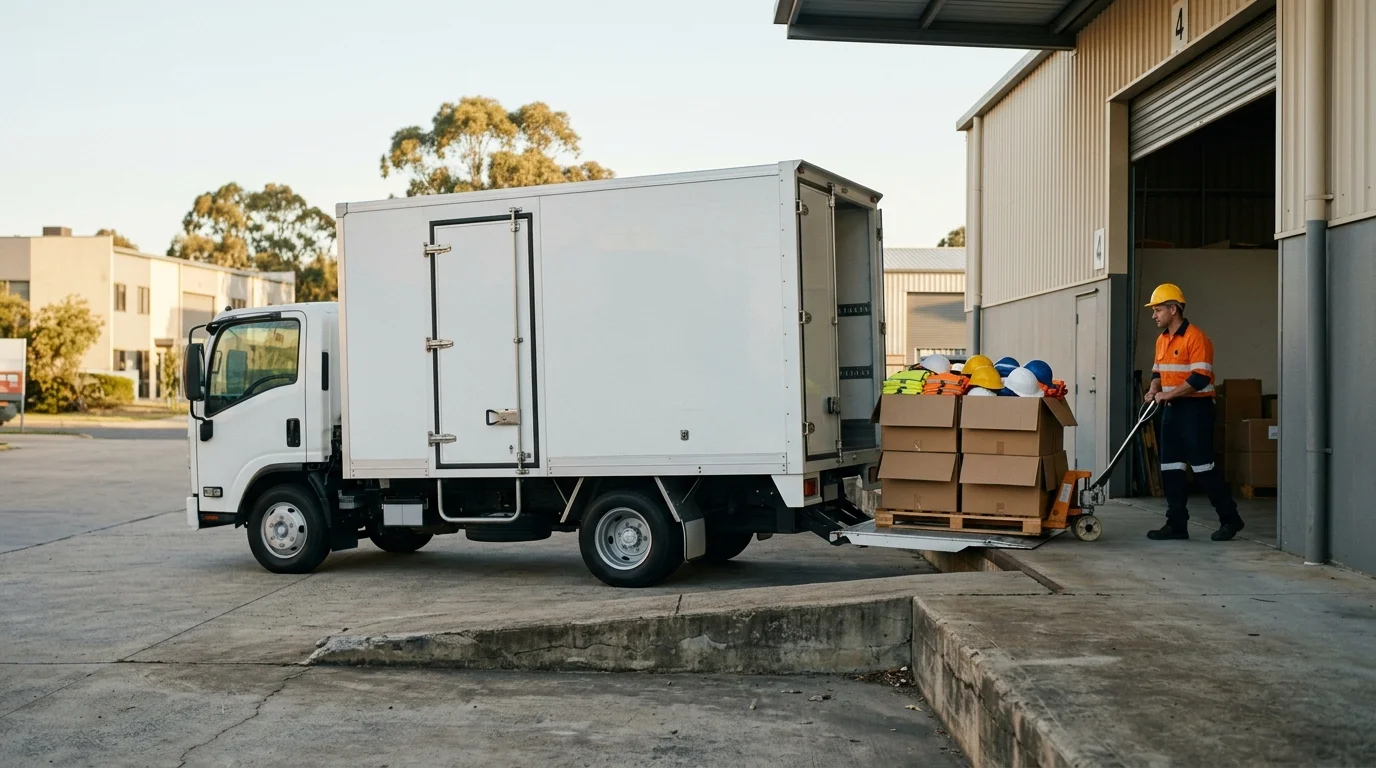
    Editorial illustration of cyclone, flood, and biosecurity risk zones across Australian freight corridors

    Seasonal Risk at a Glance

    • Australia’s seasonal shipping risk is route-specific, region-specific, and cargo-specific rather than national in one simple sense.
    • Tropical cyclone season broadly runs from November to April and matters most for northern and north-western exposures. BOM: Tropical Cyclone Knowledge Centre
    • Flooding, bushfire smoke, and extreme heat can disrupt inland freight, airport operations, labor efficiency, and delivery reliability even when the main vessel schedule remains technically intact. CSIRO: State of the Climate Flight Safety Australia: Haze, Smoke and Dust
    • For many Australia-bound shipments, the most commercially important seasonal issue is biosecurity timing, especially the Brown Marmorated Stink Bug control season from 1 September to 30 April. DAFF: BMSB seasonal measures
    • The right response is not generic caution. It is route-aware planning, honest buffer design, and better matching of shipment urgency to the real risk calendar.

    Jump to a Section

    Why Seasonal Risk Belongs Inside Logistics Planning

    Australia punishes lazy averaging. A planner who says “it is summer in Australia” has not said enough to make a good logistics decision. Conditions in Melbourne, Brisbane, Darwin, Perth, inland Queensland, and regional New South Wales do not create the same freight risk. Nor do the same weather patterns stress sea freight, airfreight, customs processing, and final-mile delivery in the same way.

    This is where many timelines become misleading. They assume the stable part of the chain will tell the truth about the unstable part. It rarely does. A container discharge date does not tell you whether the inland leg remains open. A booked air movement does not tell you whether smoke, visibility, or terminal strain will reduce practical reliability. A customer delivery promise does not become safe just because the vessel ETA still looks respectable on paper.

    Strong operators therefore ask a different sequence of questions.

    • Which leg of this shipment is most exposed to seasonal stress?
    • Which event would hurt us most if it happened: port delay, inland closure, flight disruption, or compliance hold?
    • Which buffer is cheap to add now but expensive to add later?
    • Is the shipment urgent enough that climate uncertainty changes the route decision itself?

    That is a better framework because it turns “weather risk” into an operating variable rather than a vague excuse. Once the weak point is identified, the planning problem becomes much more manageable.

    Where Climate Risk Actually Enters the Shipment

    It helps to stop thinking about seasonal risk as one thing. In practical freight terms, it usually enters through four separate channels.

    1. Port and terminal disruption. Severe weather can reduce berthing efficiency, slow yard activity, or create a backlog that persists after the weather event itself passes.
    2. Inland freight disruption. Road closures, washed-out corridors, or constrained rail movement can turn an apparently successful arrival into a commercially late delivery.
    3. Aviation and handling disruption. Smoke, heat, or regional operating constraints can affect airport efficiency, ground handling, or flight reliability.
    4. Calendar-based compliance risk. Seasonal biosecurity controls can change how a shipment is treated even if the physical transport leg is uneventful.

    That four-part view matters because it prevents a common mistake: over-focusing on the ocean leg. Many shipments into Australia do not fail on the headline leg. They fail in the hidden part of the chain, usually after the importer has already reassured internal stakeholders that the goods are “basically there.”

    For consumer moves, this can mean household goods arriving in-country but not reaching the residence when expected. For commercial cargo, it can mean inventory technically entering Australia but missing the window where it has economic value. Those are different customer stories, but the underlying operational error is the same. The plan treated arrival as completion.

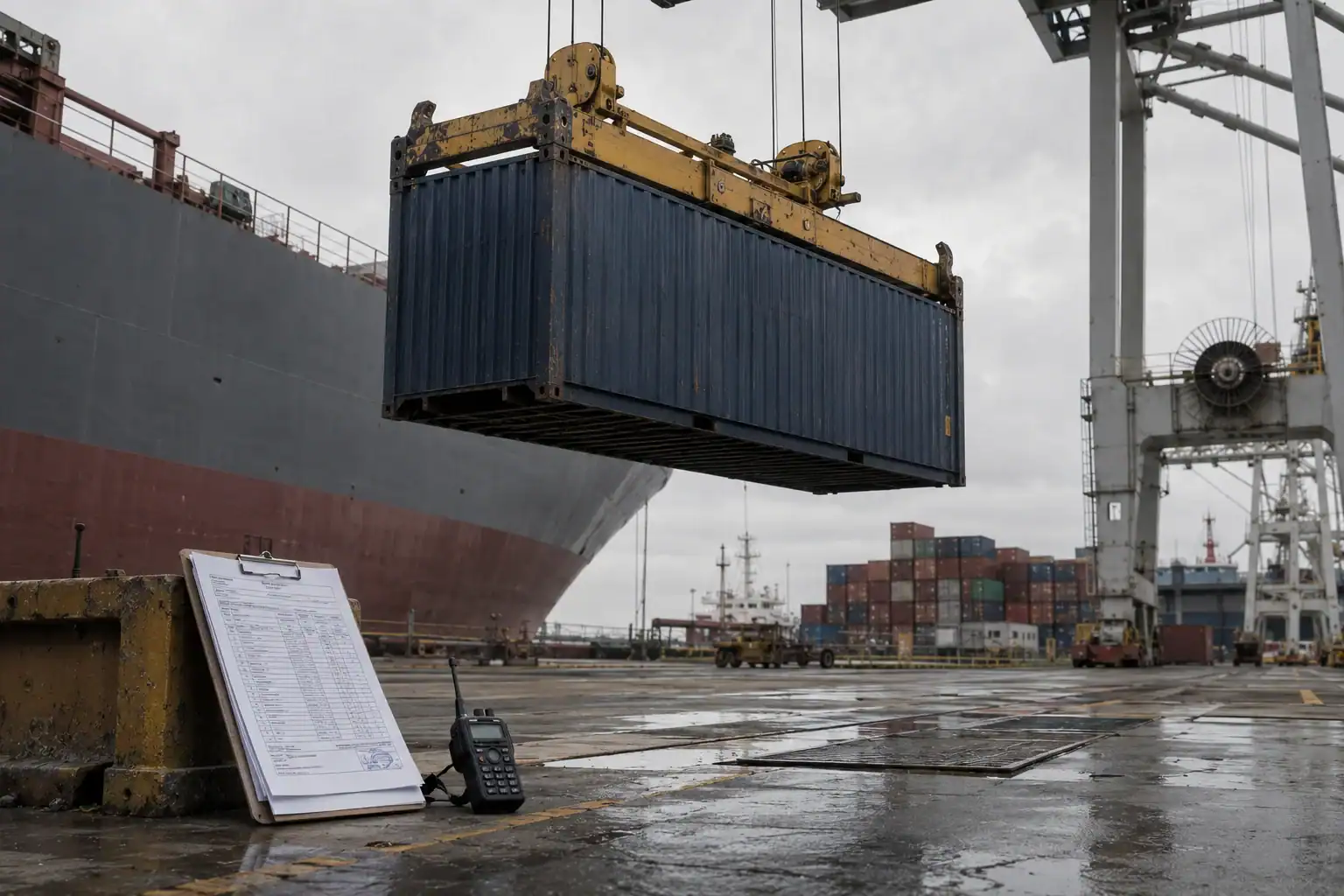
    Close-up of a vintage map with overlapping warm and cool shaded zones spotlighted on a desk, representing overlapping cyclone-exposure and biosecurity-risk zones across Australia

    Cyclones, Flooding, and Northern Exposure

    The Bureau of Meteorology’s guidance is clear that Australia’s tropical cyclone season broadly runs from November to April, with the most obvious exposure in the northern part of the country. BOM: Tropical Cyclone Knowledge Centre That does not mean every route in those months becomes unsafe or unusable. It means the probability distribution changes, especially for chains that rely on exposed northern corridors, regional delivery, or tight timing tolerance.

    The direct storm event is only one part of the commercial risk. Importers usually feel the pain through secondary effects. Wet-season disruption can ripple through terminal activity, truck availability, warehouse scheduling, and inland delivery reliability. A short delay at the front of the chain can become a larger delay once congestion and constrained capacity compound behind it.

    Flooding is often the more deceptive risk because it can be geographically distant from the port and still break the delivery promise. A container can land in Australia on time while the cargo remains commercially inaccessible because a road corridor or regional destination is under stress. That is why inland geography matters at least as much as the discharge port when planning seasonal buffer.

    The question is not “will there be flooding somewhere?” There usually will be. The question is “does this shipment need to touch a corridor where flooding can change the outcome, and if it does, what should we change now?”

    • Move earlier if the customer deadline is fixed and the destination is exposed.
    • Increase arrival-to-delivery buffer if the shipment is not urgent but the route is fragile.
    • Consider alternate routing or staging if the inland leg matters more than the headline port ETA.
    • Communicate delivery uncertainty honestly instead of hiding it behind a neat but weak calendar promise.

    Bushfire Smoke, Heat, and Aviation or Warehouse Strain

    Smoke and heat tend to be underrated because they do not always create the visual drama of a cyclone. That makes them easier to dismiss and more dangerous to ignore. Flight Safety Australia has written plainly about the operational significance of haze, smoke, and dust for aviation conditions. Flight Safety Australia: Haze, Smoke and Dust If a shipment depends on air cargo, express handling, or a time-sensitive downstream appointment, that matters.

    Smoke can affect visibility and airport reliability, but the commercial story is wider than aircraft movement alone. Smoke events can also change labor conditions, slow site activity, and reduce the smoothness of warehouse or delivery operations. The disruption may look small in isolation and still be expensive when it hits an urgent or tightly coordinated move.

    Heat is similar. It is easy to treat as routine in Australia, but that can become a bad assumption for packaging, cargo condition, equipment handling, and labor efficiency. Some goods are sensitive in obvious ways. Others are not delicate in the technical sense but still become harder to move cleanly through a stressed system during very hot periods. CSIRO’s climate reporting supports the broader point: extreme heat and intense rainfall should be viewed as structural features of the operating environment, not freak anomalies. CSIRO: State of the Climate

    If the shipment is urgent, valuable, or operationally high-consequence, seasonal stress on aviation or handling conditions should be priced in before the booking is treated as reliable.

    Why Biosecurity Season Can Matter More Than Weather

    Many importers ask about the best time to ship to Australia and expect a weather answer. Often that is only half the answer. For a large class of goods, the more commercially important seasonal risk is biosecurity timing.

    The clearest example is Brown Marmorated Stink Bug control season, which runs from 1 September to 30 April for affected pathways and cargo profiles. DAFF: BMSB seasonal measures That window can alter treatment requirements, compliance planning, and the practical smoothness of release in ways that matter more than the weather forecast. The Australia seasonal shipping calendar on the Swift Cargo main site maps this compliance window alongside transit time benchmarks.

    This is why seasonal risk in Australia needs to be read as a combined system problem. Climate, route, and compliance all interact. A shipper who optimises for weather alone can still choose a weak timing window if the cargo falls into a seasonal biosecurity regime. A shipper who only studies biosecurity can still under-model a flood-prone inland leg. The right answer sits in the combination.

    That combination is exactly why adjacent timing pages in this cluster matter. If your concern is the seasonal compliance window, the most direct next read is Brown Marmorated Stink Bug Shipping Season Explained. If your question is broader booking strategy, move next to Best Time to Ship to Australia. If the cargo is urgent and timing failure is expensive, the next layer is How Airport Cargo Capacity Affects Urgent Shipments.

    Diagram contrasting Australia's cyclone-season shipping corridors with the BMSB biosecurity control calendar

    A Practical Playbook for Importers

    Most climate and seasonal risk does not require dramatic contingency. It requires honest assumptions and a small number of well-chosen adjustments.

    • Define the real deadline. If the customer, warehouse, project site, or household move depends on a firm outcome date, do not let the booking date masquerade as a delivery plan.
    • Identify the fragile leg. Decide whether the real exposure is ocean arrival, airport reliability, inland transport, final-mile delivery, or compliance timing.
    • Price buffer where it changes the outcome. A small buffer in the right place is often more useful than a large generic buffer applied everywhere.
    • Separate urgent cargo from flexible cargo. A stock replenishment job and a high-consequence urgent move should not be run on the same planning logic.
    • Test the calendar against both climate and compliance. Weather season and biosecurity season can each change the answer.
    • Communicate uncertainty early. The cheapest time to explain seasonal risk is before someone starts treating a weak ETA as a promise.

    Seasonal Risk in Australia Is a Planning Variable, Not an Excuse

    Australia’s climate profile does not make shipping impossible. It makes weak planning more visible. Once the route, delivery region, urgency, and compliance calendar are all placed on the table together, the right response is usually calm and practical: adjust timing, add buffer where it matters, and stop pretending that arrival alone defines success.

    Frequently Asked Questions

    What months are riskiest for cyclone-related shipping disruption in Australia?

    Broadly November to April, especially for northern and north-western exposures, though the real commercial effect depends on the route, delivery region, and how much inland fragility sits behind the arrival point.

    Does bushfire smoke really matter for cargo planning?

    Yes. Smoke can affect aviation reliability, visibility, labor conditions, and the general smoothness of transport operations, which matters most on urgent or tightly timed jobs.

    Is weather more important than biosecurity timing when shipping to Australia?

    Not always. For many cargo types, seasonal biosecurity controls such as the BMSB window can be more commercially important than the weather forecast.

    How should importers respond to seasonal shipping risk?

    By matching the route and the deadline to the real seasonal exposure, adding buffer where it changes the outcome, and checking both climate risk and compliance timing before the shipment is booked as if it were routine.

  • Australia’s UPE Concession: What Qualifies and What It Doesn’t

    Australia’s UPE Concession: What Qualifies and What It Doesn’t

    One of the most misunderstood phrases in Australia household-goods shipping is “Unaccompanied Personal Effects concession.” People hear the word concession and assume it means the shipment is automatically duty free and automatically simple. That is not how it works.

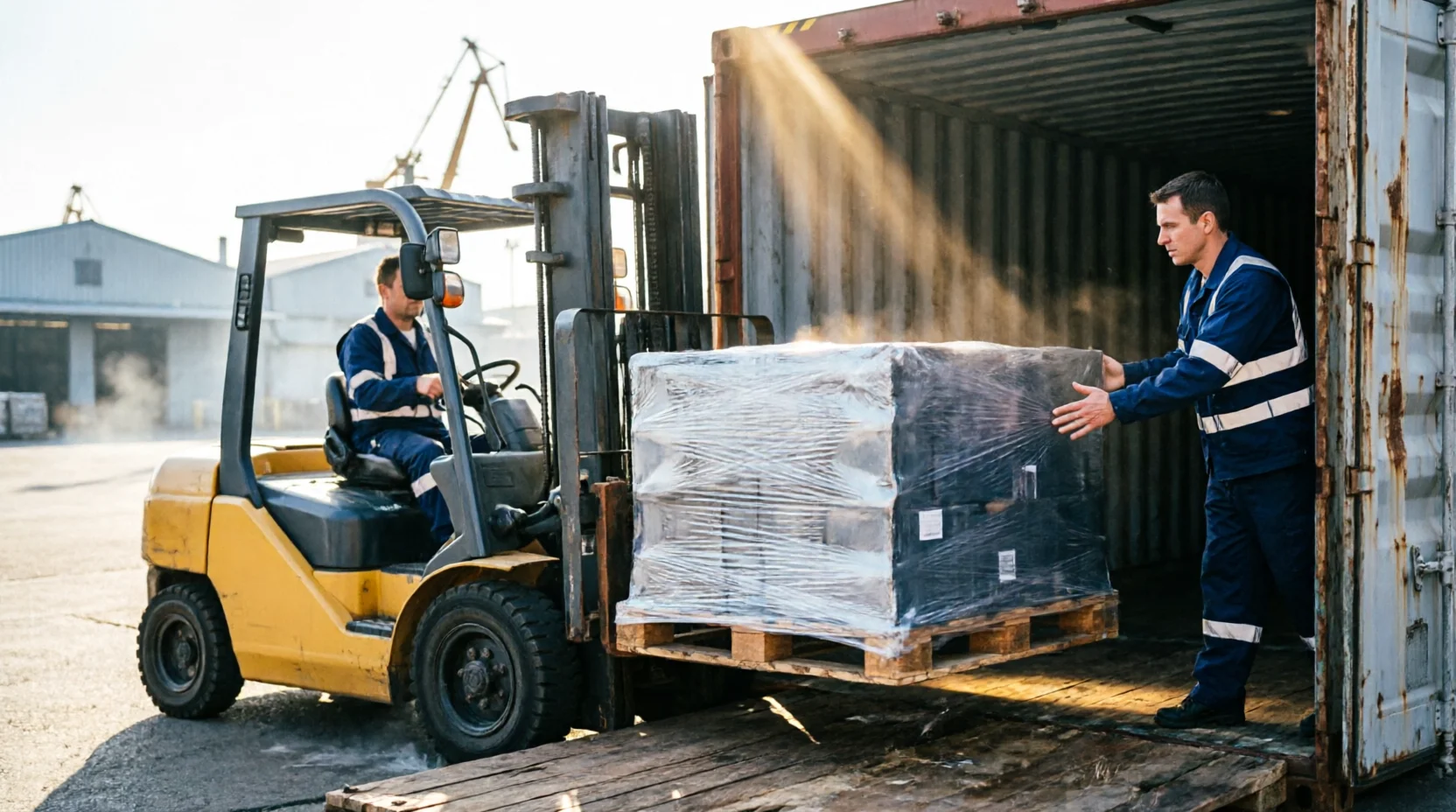
    Wooden crates or moving cartons labeled Personal Effects being unloaded at an Australian port, with an Australian customs form or B534 declaration visible in frame

    The UPE concession matters because it can change the customs-duty and GST picture for qualifying household and personal goods arriving separately from the traveller. But it does not turn the shipment into a compliance-free event, and it does not remove Australia’s separate biosecurity controls.

    That distinction is where a lot of costly confusion begins. A shipment can be customs-favourable and still be operationally difficult. It can qualify on the customs side and still need inspection, treatment, or extra handling because of what is actually inside the consignment.

    The useful question is not just “do I get the concession?” It is “what does the concession actually cover, what does it not cover, and how do I avoid mistaking customs relief for total clearance relief?”

    What the UPE Concession Actually Is

    The Unaccompanied Personal Effects concession is part of the customs treatment for certain personal and household goods that arrive separately from the traveller. It exists because people relocating internationally often do not carry all of their belongings with them as accompanied baggage — some items move later by sea or air cargo.

    That customs distinction matters. ABF separates accompanied traveller concessions from unaccompanied goods, and the rules are not identical. A shipment arriving later is not automatically treated the same way as items in your luggage just because they are yours. ABF: Duty free concessions

    The concession can allow qualifying goods to clear without the full duty-and-tax burden that would otherwise apply in a standard import scenario. But it is a concession with conditions, not a blanket exemption for anything labelled “household goods.”

    Who It Is Designed to Help

    The concession is designed for genuine personal relocation, not for disguised commercial imports. DAFF’s moving-to-Australia guidance describes personal effects and household goods as unaccompanied items transported into Australia by a returning resident or a new resident via sea or air freight. DAFF: Moving to Australia or importing personal effects

    The underlying purpose is clear: this pathway is for people moving their own belongings, not for using a personal-effects classification to avoid normal commercial treatment on goods that do not belong in that category.
    ABF’s compliance material makes clear that the UPE concession is an area where misuse matters. Incorrect use can lead to non-payment of duties, taxes, and charges, and the agency treats that seriously. ABF: Trade and goods compliance
    Why Ownership and Use History Matter

    One of the biggest practical filters is ownership and use history. ABF’s duty-free guidance explains that unaccompanied goods do not automatically receive the same concession treatment as accompanied baggage and may still be subject to duty and tax unless they have been owned and used overseas for the relevant period. ABF: Duty free concessions

    ABF’s moving-to-Australia guidance specifies that to qualify, household effects must have been owned and used by the traveller overseas for at least 12 months before the move to Australia. Goods purchased specifically for the relocation — regardless of where — generally do not qualify for the concession and attract full duty and GST at the applicable rates. ABF: Moving to Australia

    Many movers unintentionally mix different categories together. Long-owned personal furniture may sit in the same container as newer purchases, replacement appliances, recent online buys, decorative items never really used, or goods that look closer to commercial inventory than lived-in household effects.

    Once that happens, the concession picture becomes less clean. The question stops being whether the container belongs to a relocating family and starts being a more granular question about which specific goods qualify and how the shipment is being presented.

    “Owned and used overseas for at least 12 months” is not just technical wording. It is the main filter that separates a qualifying personal-effects shipment from a cargo mix that may need duty-and-tax assessment on some or all items.

    Customs officer cross-checking a printed declaration form against an itemized packing list at a warehouse table, with boxes on pallets in the background

    What the Concession Does Not Remove

    The most common misconception is that customs relief means total relief. It does not. DAFF makes clear that personal effects and household goods are still subject to biosecurity control because they can carry pests, disease risk, soil, plant matter, animal-origin material, and contamination hidden inside normal household items. DAFF: Personal effects and household goods

    A mover can be told the shipment is eligible for a customs concession and still face inspection, treatment, or destruction/export decisions on specific items — each of which adds days to how long clearance takes at the border. Biosecurity does not disappear just because the goods are personal.

    The concession also does not remove the need to consult BICON where relevant. DAFF’s guidance explicitly tells movers to check BICON if they are unsure whether goods can be brought in, whether they require treatment, or whether extra conditions apply. DAFF: Personal effects and household goods

    The concession may help with duty and GST, but it is not a substitute for preparing the goods for Australian inspection standards. Why Used Household Goods Get Inspected in Australia

    For a full picture of how Australia’s customs duty and GST charges work on qualifying and non-qualifying goods, see the Australia customs and import conditions overview.

    Why Paperwork and Packing Detail Still Matter

    The B534 form exists for a reason. Agencies are not just checking whether you say the shipment is personal — they are trying to understand what is actually in the consignment and what risks it creates.

    DAFF explains that it assesses the B534 form and packing list to decide how much of the consignment needs to be presented for inspection and whether goods of biosecurity concern are present. DAFF: Personal effects and household goods

    Accurate paperwork is commercially useful, not bureaucratic decoration. Vague labels such as “miscellaneous household goods” may feel convenient at origin, but they do not help a shipment clear cleanly in Australia if the actual contents include timber, outdoor gear, animal-related items, food-related utensils, or contamination-prone equipment.

    Good packing detail also helps separate what is likely to qualify cleanly from what may create questions. When that work is skipped, the concession discussion becomes less credible because the authorities cannot easily see what they are being asked to clear.

    The Common Mistakes People Make

    • Assuming every item in a relocation shipment automatically qualifies.
    • Confusing customs concession treatment with biosecurity clearance.
    • Mixing long-used personal goods with newer purchases and expecting one clean answer.
    • Treating the B534 and packing list as paperwork chores rather than risk documents.
    • Assuming “household goods” means low inspection risk even when the cargo contains timber, outdoor items, animal-related goods, or contamination-prone objects.

    Most of the pain around UPE concessions comes from over-simplification. The concession is real and useful. But it works best when the shipment is genuinely eligible, documented accurately, and prepared with the understanding that Australia’s border applies customs and biosecurity logic separately.

    If that separation is understood early, the move becomes far easier to plan. If it is misunderstood, the shipper is often surprised twice: first by the customs answer, and then by the biosecurity answer that still follows. Import Duty and GST Explained for Australia

    Read that list of mistakes closely and a pattern emerges worth stating plainly. Almost every one traces back to the same false belief — that the concession is a single door the whole shipment walks through. It is not. Customs and biosecurity read the same container through two separate lenses, and the shipper who prepared for one is repeatedly caught by the other. The detail that exposes this is usually tiny: one undeclared timber ornament, one bike with dried soil still on the tyres. Yet it reveals the larger truth that the concession relieves a tax, not an inspection — and those were never the same gate.

    Why the B534 Feels Harder Than It Is

    People routinely describe the B534 declaration as confusing, and it is worth asking why. The form itself is short. The difficulty is a mismatch of mental models. The person filling it in thinks in terms of their life: “this is my kitchen, these are my books, that is the bike I ride.” The border system reading it thinks in terms of risk categories: timber, soil contact, animal-origin material, ownership duration. The form is the narrow channel where those two ways of seeing the same boxes have to meet, and most frustration happens exactly there.

    The practical fix is to fill in the form from the border’s point of view rather than your own. Walk the inventory asking the system’s questions — how long owned, what is it made of, where has it been used — instead of describing your household the way you would to a friend. Movers who make that mental switch produce declarations that clear faster, and they are far less surprised by what happens at the arrival end of the shipping timeline. The form did not get easier. The model matched.

    The UPE Concession Is Valuable, but It Is Not a Shortcut Around the Border

    The B534 is one page; the packing list might run to twelve. The two sit side by side on a folding table at the depot. The inspector reads them the way a geologist reads rock layers — not for individual items, but for the pattern. A consistent vocabulary across both documents, room-by-room organisation, ages noted where they help, ownership history that does not need explaining. The shipments that flow through this step are the ones where the paperwork describes the cargo before anyone has to open a box. The shipments that pause are the ones where the inspector has to reconstruct the description from the goods themselves.

    Australia’s UPE concession can materially improve the customs position for qualifying household and personal goods. That makes it important. But the real value comes from understanding its limits as clearly as its benefits.

    A customs concession is not the same as a low-friction shipment. The cleanest moves are the ones where concession eligibility, documentation quality, and biosecurity preparation all line up together — including a BICON pre-check where the conditions exist (see our explainer on Australia’s Biosecurity Import Conditions database).

    The cleanest decision rule for UPE eligibility is to walk the inventory once with a single filter: “Have I personally owned and used this item for at least twelve months before shipment?” If yes, document it and it rides with the household effects. If the answer is “no”, “maybe”, or “I just bought it for the move”, set it aside and decide deliberately: ship at duty, sell or donate locally, or use it for twelve months before shipping if the timeline allows. The expensive UPE surprise is almost never the rule itself. It is mixed shipments where a small share of dutiable items contaminates the rest of the consignment because the inventory does not separate them clearly.

    Why the Concession Is Assessed Item by Item, Not Shipment by Line

    The concession does not apply to a shipment as a single decision — it applies to each item inside it separately. A container that includes twelve months of owned furniture, a newly purchased television bought the week before departure, and a set of tools intended for resale is not one eligible shipment or one ineligible one. It is three separate assessments, and the outcome for one item has no bearing on the outcome for another. This is the choice the concession makes, and it is worth naming directly: it exists to relieve duty on genuine relocation of a person’s own established possessions, not to relieve duty on a shipment merely because most of it qualifies.

    The practical failure mode is not dishonesty — it is treating the shipment as the unit of decision instead of the item. An importer who lists “household goods” as a single line on the inventory, with a new appliance folded into the middle of a genuinely owned collection, has not hidden anything, but they have made the officer’s job harder and their own claim weaker: an inventory that cannot show, item by item, which goods meet the ownership test invites a slower, more conservative read of the whole shipment. An inventory that separates owned-and-used items from anything bought in the last twelve months, priced and listed on its own line, lets the concession do exactly what it was built to do — and nothing more.

    Frequently Asked Questions

    What is the Unaccompanied Personal Effects concession in Australia?

    It is a customs concession pathway for certain personal and household goods that arrive separately from the traveller, usually as sea or air cargo during a relocation move.

    Does the concession mean I pay no charges at all?

    No. It can improve the customs-duty and GST position for qualifying goods, but it does not remove possible biosecurity inspection, treatment, storage, or other operational costs.

    Do all household goods qualify automatically?

    No. Ownership and use history matter, and shipments that mix different categories of goods can create a more complex customs answer than people expect.

    Why does the B534 form matter so much?

    Because authorities use it, together with the packing list, to understand what is in the shipment and what customs or biosecurity response may be needed.

  • Best Time to Ship to Australia: BMSB, Cyclones and Customs

    Best Time to Ship to Australia: BMSB, Cyclones and Customs

    People often ask for the best month to ship to Australia as if there is a universal answer. There is not. The better answer is that Australia has several overlapping calendars, and the right shipping window depends on which of those calendars affects your cargo most.

    One shipment is dominated by biosecurity season. Another is shaped by cyclone exposure, flood disruption, or the inland route after discharge. Another is driven by customs valuation timing, storage risk, or when a household is ready to receive the goods.

    That is why the practical question is not “what is the best time to ship?” It is “what kind of delay or extra cost is this shipment most exposed to, and which window reduces that risk?”

    For Australia, the strongest planning decisions usually come from treating shipping as a timing problem across compliance, weather, and delivery, not just as a freight-booking problem.

    Best Time to Ship to Australia: BMSB, Cyclones and Customs

    Why There Is No Single Best Shipping Window

    The simplest reason there is no universal answer is that “shipping to Australia” covers very different shipment types. A container of commercial stock, a family’s household goods, a machine with contamination exposure, and a time-sensitive urgent consignment do not face the same timing risks.

    That matters because each shipment moves through a different mix of border logic, operational pressure, and delivery constraints. One importer may be trying to avoid seasonal biosecurity treatment exposure. Another may care more about storm-season uncertainty in northern Australia. Another may need to align arrival with lease start dates, warehouse availability, or internal inventory deadlines.

    So the best time is not a fixed month on the calendar. It is the window that gives your specific shipment the cleanest path through departure, transit, clearance, and delivery.

    When Biosecurity Season Becomes the Main Issue

    For many Australia-bound shipments, the biggest timing issue is not weather at all. It is biosecurity season. Brown Marmorated Stink Bug measures are one of the clearest examples because they create a recurring compliance window from 1 September to 30 April that can materially change how affected goods are handled. DAFF: BMSB risk season

    That window matters because the same goods can sit in a different compliance reality depending on when they are shipped, loaded, or exposed in transit. A shipment that looks ordinary on paper can become more expensive or more fragile operationally once it enters a seasonal control regime.

    This is why the answer to “best time to ship” often begins by asking whether the cargo is likely to fall into a more tightly managed seasonal pathway. If the goods are BMSB-exposed, machinery-related, vehicle-related, or otherwise sensitive to seasonal screening, the calendar can change the risk profile before the vessel even sails. Brown Marmorated Stink Bug Shipping Season Explained

    Biosecurity timing also matters outside BMSB. Household goods, timber-related items, outdoor equipment, and other contamination-prone cargo still need to move through Australia’s broader biosecurity system, which is stricter than many movers assume. DAFF: Moving to Australia or importing personal effects

    When Weather and Disruption Calendars Matter More

    For some routes, climate and disruption risk become the more important timing factor. The Bureau of Meteorology says Australia’s tropical cyclone season runs from 1 November to 30 April, with cyclones concentrated in the north and north-west and affecting coastal and inland conditions through wind, rain, flooding, and downstream disruption. BOM: Tropical cyclone season

    That does not mean every shipment during cyclone season is a bad idea. It means the risk buffer should change. Northern delivery corridors, remote destinations, time-sensitive final-mile legs, and project cargo with tight install windows may need more margin during those months than generic shipping calculators suggest.

    Seasonality also matters beyond cyclones. Flooding, heavy rainfall, and smoke-related disruption can all affect how predictable a move feels even when the vessel schedule itself still looks intact. In practical terms, the “best time” is often the period where your shipment has the fewest external variables stacked against it.

    This is one reason a southern-metro household move and a northern commercial delivery should not be given the same calendar advice. One may tolerate more seasonal uncertainty. The other may not.

    The practical gap shows up in delivery planning. Shipments discharging at Darwin, Fremantle, or Townsville and moving goods inland during cyclone season face a different risk calculation than a Sydney or Melbourne delivery. Road closures, flooding on inland routes, and port operational disruptions from severe weather can add days or weeks to inland transit, independent of what happens at sea. Commercial shippers with installation deadlines or just-in-time stock needs should factor these inland variables into the departure window, not just the ocean leg. Bureau of Meteorology: cyclone tracking and forecasts

    Why Commercial Timing Can Differ From Household Timing

    Commercial cargo and household moves often want different timing windows because they are measured differently. A household move is usually trying to minimize stress, border friction, and storage mismatch at destination. A commercial shipment may be trying to hit inventory cycles, avoid peak handling pressure, or manage landed-cost exposure.

    That last point matters more than most importers realise. ABF guidance explains that customs value in foreign currency is converted using the rate prevailing on the day of export, not the day the goods arrive. ABF: Customs value guidance

    That does not make exchange-rate timing the dominant issue in every move, but it does mean the calendar can affect the landed-cost picture in ways that are invisible if you only think about sailing dates. For some commercial importers, the best time to ship is partly a customs-timing question as well as a logistics question.

    Household shipments, by contrast, are more likely to care about concession eligibility, lease timing, and how likely the goods are to be inspected or treated on arrival. The “best” window is therefore different because the practical objective is different. Importers claiming the Unaccompanied Personal Effects concession under Australian Customs Act provisions also have specific timing requirements tied to residency and arrival date — shipping too early or too late relative to the owner’s arrival date can affect concession eligibility. Unaccompanied Personal Effects Concession Explained

    The Constraint Most Timing Guides Skip: The 30 June Deadline

    Inventory-cycle pressure has a specific, calendar-fixed version that most shipping-timing guides never name directly: the end of the Australian financial year, 30 June. For any importer carrying stock for resale, goods still on the water at 30 June sit on the balance sheet as inventory rather than as a completed sale — with real consequences for tax timing, warehousing cost allocation, and how the year’s numbers read to a lender or an investor. This is a binding constraint in its own right, separate from the biosecurity and weather calendars covered above.

    Two importers with an identical shipment profile — same goods, same origin, same freight budget — can have very different years depending on which one worked backwards from that date. The importer who counts backwards from 30 June, adds the realistic transit time for the route, and layers in the BMSB or cyclone-season buffer already covered above books the shipment in time to land before the deadline that actually matters to their business. The importer who tracks biosecurity and weather calendars but not the financial-year calendar discovers the EOFY problem in the last week of June, when the remaining options are all expensive and none of them are really solutions — paying for express re-routing, or accepting the inventory-timing hit and explaining it at reporting time instead of avoiding it. The constraint was never hidden. It just was not on the same calendar as the other two.

    How to Choose the Best Window for Your Shipment

    The strongest way to choose a shipping window is to work backwards from the real sources of friction:

    • Check whether the goods fall into a seasonal biosecurity regime.
    • Look at route exposure and destination exposure, not just the departure port.
    • For household moves, align the shipment with actual destination readiness rather than an optimistic arrival guess.
    • For commercial imports, assess whether landed-cost timing or stock timing matters as much as transit time.
    • Build buffer where the calendar creates predictable risk rather than hoping the border will be forgiving.

    In practice, the best time to ship to Australia is the moment when your cargo is least exposed to avoidable compliance pressure, seasonal disruption, and delivery mismatch. That answer is more nuanced than a blog list of “best months,” but it is also much more useful.

    If the move is flexible, that flexibility is valuable. It gives you room to step around known stress windows instead of absorbing them. If the move is not flexible, the answer is not panic. It is better planning: cleaner documentation, stronger preparation, a more realistic timeline, and a route choice that respects Australia’s actual operating conditions. Shipping Timeline to Australia: What Actually Controls Delivery Time

    Swift Cargo’s Australia shipping peak months guide maps the key seasonal windows for importers and movers planning an Australia-bound shipment.

    Overlapping orange and blue risk-window bands illuminated across a hand-marked calendar chart pinned to a corkboard, representing layered seasonal shipping risk periods for Australia

    The Practical Way to Find Your Shipping Window

    Most importers try to optimise across biosecurity season, weather, and commercial timing simultaneously. That approach usually produces a window that satisfies none of them. The more reliable method is to identify which single constraint actually controls cost or risk in your specific shipment, and optimise against that one.

    If the goods are BMSB-affected or carry contamination risk, biosecurity is the binding constraint. The window is outside September–April, or you accept treatment cost and timeline uncertainty. If the route runs through a cyclone-exposed northern corridor and delivery timing matters, weather exposure is the binding constraint. Add two to three weeks of buffer between November and April. If the shipment is commercially driven — Q4 inventory needs, contract dates, stock-turn cycles — commercial timing governs, and the window is whatever your business calendar requires.

    The pre-booking step that most importers skip is reconstructing the full chain before confirming a vessel: what biosecurity window does this cargo land in, what is the real arrival date against the BMSB season, is the inland delivery window workable during the expected clearance period, and what happens if the vessel runs ten days late. That check takes around twenty minutes. It catches most of the timing errors that become expensive downstream.

    For shipments that do not fall neatly into one of the three categories above — biosecurity-driven, weather-driven, or commercially-driven — the default is to optimise against biosecurity first. The September to April BMSB window is the most predictable recurring cost risk in Australia-bound shipping, and it is the one most importers underestimate until they receive a treatment or re-inspection invoice. If the goods are not BMSB-exposed, the risk profile shifts, and weather or commercial timing can dominate instead. But starting with biosecurity and working outward is the more reliable planning sequence for most cargo categories. DAFF: BMSB industry advice for importers

    Not All Seasonal Risks Deserve Equal Weight

    Timing decisions improve when vague worry is replaced with rough probabilities. A machinery consignment booked to arrive in October sits inside the BMSB window: for goods loaded in a target risk country, offshore treatment is close to a scheduled cost, and untreated cargo faces a realistic prospect of onshore intervention or re-export. Move the same consignment to a June arrival and the seasonal measure simply does not apply. Compare that with cyclone exposure on a Melbourne delivery: the season nominally runs November to April, but the chance that a southern-metro consignment is materially delayed by a tropical cyclone in any given window is small. Many importers weight both risks equally because both appear under the same seasonal-risks heading, and they are not equal. Sort each exposure into near-certain, plausible, or remote before booking, then spend your flexibility on the near-certain ones: a BMSB-window arrival for affected goods is a near-certain cost, while most weather risk south of Brisbane is remote.

    Frequently Asked Questions

    What is the best month to ship to Australia?

    There is no single best month for every shipment. The right window depends on cargo type, route, destination, biosecurity exposure, and how much flexibility you have around departure and arrival.

    Does BMSB season affect the best shipping time?

    Yes. For affected goods, the BMSB window from 1 September to 30 April can change treatment, routing, timing, and clearance risk in ways that materially affect the shipment.

    Does cyclone season matter for Australia shipping?

    It can, especially for northern routes, exposed destinations, and time-sensitive deliveries. It matters less as a headline than as a reason to add timing buffer and route awareness.

    Is the cheapest freight month always the best month to ship?

    No. A cheaper booking window can still be a worse overall decision if it exposes the cargo to seasonal controls, disruption, or destination timing problems that create bigger downstream costs.

  • Australian Import Duty and GST: How the Four Variables Work

    Australian Import Duty and GST: How the Four Variables Work

    One of the most common questions importers ask is also one of the vaguest: how much duty and tax will I pay in Australia?

    The problem is not the question itself. The problem is that people ask it as if there is one flat answer. There is not. Australian import charges depend on what the goods are, how they are valued, how the shipment is declared, and whether the cargo falls into a household-goods, commercial, or concession scenario.

    The real answer sits in the customs value, the GST calculation framework, the presence of other charge layers, and whether the shipment qualifies for any concession.

    Australian Import Duty and GST: How the Four Variables Work

    The Difference Between Duty and GST

    Import duty and GST are often mentioned together, but they are different charge layers. Duty depends on the product and its customs treatment. GST is a tax on taxable importations and is calculated through its own framework.

    Saying “I paid tax” does not explain what happened at the border. One shipment may be paying duty plus GST plus processing charges. Another may avoid one of those layers but still face the others.

    Duty is product and customs-treatment sensitive. GST is part of the broader tax logic applied to the importation itself.

    Why the Answer Varies by Shipment

    The charge answer varies because not every shipment is the same legal or commercial event. A container of commercial goods is not the same as a returning resident’s household shipment. A taxable commercial import is not the same as a consignment that may qualify for a concession path.

    Casual online answers collapse several different import scenarios into one simplified figure and strip out the context that determines what will be payable.

    Why Customs Value Matters So Much

    The customs value matters because it is part of the base from which import charges are assessed. ABF guidance on GST and other taxes makes clear that GST is calculated on a taxable importation framework rather than on a simplistic retail-style number.

    Once the underlying valuation is wrong, the rest of the charge picture becomes unreliable. Accurate description and valuation are the first discipline, not an afterthought.

    For shipments subject to Australian customs, the ABF’s cost of importing goods page sets out how duty, GST, and import processing charges interact. Understanding which customs value basis applies to the shipment type is the starting point. For importers shipping household goods or commercial cargo to Australia, Australian customs requirements outlines the customs pathway and documentation that affects how the valuation is assessed.

    How Household Goods Fit Into the Picture

    Household goods create the most confusion because people mix tax logic and biosecurity logic together. A household shipment may in some circumstances qualify for a concession path on the customs side, but that does not remove the separate possibility of biosecurity review, inspection, treatment, or related costs. See Why Used Household Goods Get Inspected in Australia.

    A client can hear “concession” and still end up facing a bill. The customs treatment may be favorable while the biosecurity pathway still generates cost through inspection or intervention.

    To check whether a specific item is likely to trigger that pathway before you ship it, see our guide to BICON import conditions.

    What Other Costs People Forget

    Importers often focus on duty and GST but overlook the other layers around the border event. Import processing charges, documentation issues, storage, inspections, and biosecurity actions can all add to the total landed cost — and storage charges in particular depend on how long customs clearance actually takes once the goods arrive. The ABF import processing charge schedule is separate from duty and GST and applies to most formal customs entries.

    The real budgeting mistake is not underestimating one tax line. It is failing to understand that the full landed cost is built from several separate border and handling layers.

    Free Trade Agreements and the Duty Rate Variable

    Australia’s free trade agreements are the most significant lever most importers underuse. The DFAT free trade agreements register lists agreements in force with China (ChAFTA), ASEAN countries (AANZFTA), the United Kingdom (A-UKFTA), the United States (AUSFTA), Japan (JAEPA), South Korea (KAFTA), and others. Under these agreements, the applicable duty rate can be zero or significantly reduced — but only if the goods meet the rules of origin requirements for that agreement.

    Rules of origin are not automatic. They require documentation: a certificate of origin or origin declaration from the exporter, plus any required supporting evidence. If the documentation is missing or the goods do not qualify under the agreement’s origin rules, the MFN (most favoured nation) rate applies instead. For some product categories, the difference between MFN and preferential rates is substantial.

    The practical implication is that the duty rate in the four-variable framework is not a fixed number — it is a decision. Importers who check FTA applicability before ordering, confirm origin with the supplier, and obtain the correct documentation at shipment time can lock in the preferential rate. Importers who ask about the rate after the shipment arrives often cannot retroactively claim it. The decision point is before purchase order, not at customs clearance.

    Low-Value Imports and the GST Threshold

    For shipments with a customs value of AUD 1,000 or less, the import is classified as a low-value import (LVI). Under Australian law, most low-value goods are subject to GST but not formal customs duty or import processing charges. The GST is typically collected at point of sale by the overseas vendor rather than at the Australian border — a system that has applied to most online retail imports since 2018.

    For shipments above AUD 1,000, the formal clearance pathway applies: customs entry, duty assessment, GST on the taxable importation value, and import processing charges. This threshold is the dividing line between a simplified border experience and the full charge framework. Importers who are close to the threshold should model both scenarios — the cost difference at AUD 999 versus AUD 1,001 is not just ten dollars, it is the difference between a simplified GST-only cost and a full customs event.

    The ABF guidance on duty concessions and thresholds details how the low-value threshold interacts with the broader import cost framework.

    Tariff Classification and Why It Determines the Rate

    Every imported good is assigned an HS (Harmonised System) tariff code. That code is the mechanism that determines the applicable duty rate. In Australia, the working tariff schedule is administered by the ABF tariff classification unit. The rate attached to a specific HS code ranges from zero to 5% for most goods, with higher rates applying to certain categories such as textiles, footwear, and some processed food products.

    The classification is the importer’s responsibility, not the broker’s. Brokers can advise, but the importer carries liability for incorrect classification. Misclassification that results in underpayment of duty creates exposure to back-duty, penalties, and potential seizure. Misclassification that results in overpayment of duty is recoverable, but requires lodging a formal amendment and is rarely pursued unless the amounts are significant.

    The practical check: before ordering, look up the HS code for the goods using the ABF Schedule 3 tariff schedule. Confirm whether the code attracts duty or is duty-free. Then confirm whether an FTA preferential rate applies. Both checks take under ten minutes and can shift the cost model materially for high-volume imports.

    How to Budget More Realistically

    A useful test for any import budget: read it aloud and see whether every line names a real charge. “Miscellaneous border costs, approx. $500” is not a budget line — it is a placeholder for thinking that has not been done yet. Write “import processing charge”, “duty at 5 percent on customs value”, “GST on the taxable importation”, “possible inspection fee” as separate lines, each with the basis for the number beside it. The discipline of naming each charge in plain words does more than tidy the spreadsheet. It exposes the assumptions you have been carrying silently, and those are usually where the budget goes wrong.

    • Separate duty, GST, and processing charges rather than treating them as one vague border fee.
    • Use accurate customs values and shipment descriptions.
    • Check whether the shipment falls into a commercial or household/concession pathway.
    • Verify FTA eligibility before placing the order, not at clearance.
    • Add a buffer for biosecurity-related intervention if the goods are contamination-prone.
    • Budget for the full landed event, not just the tax headline.

    The biggest improvement most importers can make is not finding a cheaper tax number. It is building a more realistic total-cost picture before the shipment arrives.

    The Unit Landed Cost Multiplier

    The decision-quality move on duty and GST is to stop thinking of them as two separate line items and start thinking of them as a unit cost that depends on a small number of inputs. The unit landed cost per dollar of FOB value is approximately: 1 + (duty rate) + 0.10 x (1 + duty rate + freight and insurance fraction). For most product categories that calculation produces a multiplier between 1.10 and 1.35. Importers who internalise the multiplier instead of computing each shipment separately make faster pricing decisions and can quote landed costs without scrambling.

    The arithmetic is not the discipline. The discipline is recognising that duty and GST are a near-deterministic function of inputs already known before the shipment moves — and that the only variable worth real attention is the duty rate itself, because it is the lever that trade-agreement claims actually move.

    The Four-Variable Framework

    The framework that works for Australian import duty and GST is simpler than most importers make it. There are four variables: customs value (FOB plus relevant insurance and freight components), duty rate (tariff classification, modified by any applicable free trade agreement), GST (10% on customs value plus duty plus shipping), and processing fees (fixed schedule). Importers who model these four variables for every shipment have predictable landed-cost outcomes. Importers who treat any of the four as “the broker will handle it” have unpredictable ones.

    The most common error is collapsing the four into a single rough percentage — “roughly 15% of CIF for everything” — which produces approximately accurate results for predictable goods but is wildly wrong on goods subject to preferential FTAs or anti-dumping duties. The framework matters more than the rate tables. Once the four variables are named and modelled with realistic ranges, the duty-and-GST answer becomes calculable. Treat the rate tables as reference data; treat the framework as the actual planning tool.

    The split here mirrors something good product teams learn the hard way. The temptation is to jump straight to execution — one blended percentage applied to everything, because a single number feels like progress. The discipline that actually pays is the discovery step underneath it: working out what a specific shipment really is before pricing it. Model a concrete case — furniture imported from China, say — and that up-front work earns its keep the moment a tariff line or an anti-dumping measure turns the blended guess into a five-figure surprise. The framework is the discovery; the rate is only its output.

    Build Two Cost Models, Not One

    The simplest decision rule for budgeting Australian import charges is to model two numbers. Build a base case at the published duty rate plus 10% GST on a clean customs value. Then build a stress case where the customs valuation is challenged upward by 5–10%, the duty classification falls into the next-tier bracket, and processing fees apply. If unit economics work in both, the import is genuinely profitable. If only the base case works, there is border-cost exposure dressed up as commercial strategy.

    Most importers who get caught by an unexpected charge did not lose money on a surprise rule — they lost money on the gap between an optimistic model and a normal-shaped clearance. Build both numbers before committing to the order.

    Frequently Asked Questions

    Is import duty the same as GST in Australia?

    No. Duty and GST are different charge layers and are not calculated the same way.

    Is GST on imported goods 10 percent?

    Generally yes for taxable importations, but the base it applies to is broader than many people expect because it sits within the overall import valuation framework.

    Do household goods always avoid import charges?

    No. Some household shipments may qualify for customs concessions, but that does not eliminate possible biosecurity costs or other border-related charges.

    What do importers most often forget to budget for?

    Import processing charges, inspection-related costs, storage exposure, and other border handling costs are often overlooked.

  • BMSB Season: Australia’s September–April Shipping Rule

    BMSB Season: Australia’s September–April Shipping Rule

    For many shipments to Australia, the most important calendar is not cyclone season, Christmas congestion, or end-of-financial-year volume. It is Brown Marmorated Stink Bug season.

    The Brown Marmorated Stink Bug (BMSB) is an invasive pest risk that has driven seasonal controls on a wide range of goods moving into Australia. When those controls apply, shipment timing, treatment planning, and routing decisions can change significantly.

    BMSB should be treated as an operational season, not a technical note buried in compliance guidance. If you ship affected goods between September and April, the bug becomes part of your logistics planning.

    BMSB Season: Australia’s September–April Shipping Rule

    What BMSB Is and Why Australia Cares

    BMSB is an invasive pest risk because it can hitchhike in cargo and establish itself in environments where it does not belong. For a country like Australia, which already runs a high-protection biosecurity system, that kind of pathway is taken seriously.

    The concern is operational, not theoretical. A pest does not need to be obvious on the outside of a shipment to create risk. If it can shelter in goods, vehicles, machinery, or packaging during transit, border controls become much stricter.

    This is one of the clearest examples of how Australian biosecurity works in practice: seasonal risk becomes a shipping rule. Australia Biosecurity Rules Explained

    Why the Season Window Matters

    DAFF’s seasonal BMSB measures run between 1 September and 30 April. DAFF: BMSB seasonal measures That date window matters because it changes how the same goods may be treated depending on when they ship and when they arrive.

    Many import rules stay relatively stable across the year. BMSB rules behave more like a recurring risk season, creating periods where treatment, documentation, or shipment eligibility can become more complex.

    Shipment timing is not just about freight rates or port congestion. In some cases, timing changes the compliance burden itself.

    Shipping container truck at an Australian inspection point during BMSB screening season
    Seasonal BMSB controls turn a date window into a real inspection-point shipping rule.

    Which Countries Trigger the Highest Risk

    DAFF publishes an annual list of target high-risk countries — the origins where BMSB populations are established and from which the pest is most likely to hitchhike on cargo. The list changes each season and should be verified against the DAFF BMSB measures page before each shipment during the season window.

    Historically, the countries that have consistently attracted target high-risk country (THRC) status include Italy, France, Germany, Switzerland, the United States, Japan, South Korea, China, and several other European and North American origins. Goods shipped from or transiting through these countries during the September–April window are subject to mandatory pre-departure treatment or offshore treatment before arrival in Australia. DAFF BMSB measures — target high-risk country list

    The mechanism matters here. DAFF does not require that the pest be detected in a shipment. The origin country status alone, combined with the goods classification, can trigger the requirement. This is what makes BMSB different from most biosecurity rules: compliance is pre-emptive, not response-based.

    What Treatment Is Required and Who Arranges It

    When a shipment triggers BMSB measures, the accepted treatments include methyl bromide fumigation and heat treatment (56°C for a minimum of 30 minutes at the core of the wood or goods). The specific treatment required depends on the goods type, the packing material, and DAFF’s current treatment schedule. Not all treatments are available at every origin port, which is one reason why pre-departure planning with a freight forwarder matters.

    Treatment must be conducted by a DAFF-approved treatment provider and documented with a valid treatment certificate. A shipment that arrives without the correct pre-departure treatment documentation may face re-treatment in Australia — at the importer’s cost — or refusal of entry. Both outcomes are expensive and avoidable with early compliance planning.

    What the Treatment Certificate Must Actually Show

    The detail that decides most disputed BMSB cases is small: the paperwork either reconstructs what happened to the container, or it does not. A valid treatment certificate identifies the DAFF-approved provider, states the treatment method and its parameters — the fumigant rate and exposure period, or the core temperature and duration for heat treatment — and records a treatment date that sits before the goods were loaded. It also has to tie to the shipment itself: the container number on the certificate must match the container number on the bill of lading.

    Officers reviewing seasonal cargo start from those cross-checks, and the pattern in refused shipments is consistent — a certificate dated after vessel departure, a container number that matches nothing in the file, a provider that does not appear on the approved list. Each looks like a clerical slip. Each reads, from the border’s side of the desk, as a treatment that may never have happened. The importers who clear quickly during BMSB season are the ones whose file tells one continuous story from treatment shed to wharf.

    Which Shipments Are Most Affected

    BMSB measures tend to matter most for goods that provide shelter or transport pathways for the pest. Machinery, vehicles, equipment, certain manufactured goods, and goods shipped from or through higher-risk origins are the main problem categories. The full list of target high-risk goods is updated annually by DAFF and published on the BMSB measures page.

    Importers often underestimate the issue because they think of biosecurity as something tied mainly to food, plants, or visible contamination. BMSB shows that manufactured cargo can also trigger seasonal biosecurity controls when the transport pathway itself creates the risk.

    For mixed shipments, one affected item can change the compliance picture for the whole move.

    Why Timing and Routing Matter So Much

    BMSB season changes the value of timing discipline. A shipment booked casually inside the seasonal window may face a very different treatment burden than one planned with the measures in mind.

    Routing also matters because vessel exposure, transshipment history, and treatment arrangements can affect how risk is assessed. BMSB belongs in the planning stage alongside route, departure date, and expected arrival period — not discovered as a last-minute paperwork check.

    Most delays do not come from the treatment itself. They come from discovering too late that the shipment falls into a seasonal control structure that was never priced into the move.

    Inspection staff reviewing inbound cargo under Australian biosecurity control measures
    Late discovery is expensive because seasonal controls must be absorbed by real inspection workflows.

    Why Late Discovery Is the System Default

    A useful way to understand BMSB compliance failures is to treat them as a design problem rather than an information problem. The rules are public, the DAFF seasonal measures page is freely accessible, and the target high-risk country list is published at the start of each season. The information is available. The problem is that the logistics system is not designed to surface it at the moment when it would change a decision.

    When an importer places a purchase order with a European or North American supplier, they are thinking about product specifications, price, lead time, and payment terms. The BMSB compliance question is several steps removed from that conversation. It surfaces at the freight booking stage — when the goods are already committed and the departure window is fixed. By that point, the cost of accommodating treatment, rerouting, or delaying has already been absorbed into the supply chain whether the importer recognises it or not.

    The design solution is to move the BMSB question earlier in the procurement workflow — to the supplier qualification and purchase order stage, not the freight booking stage. A single question in the purchase order process (“Does this shipment depart between September and April from a target high-risk country, and does it fall into a target high-risk goods category?”) is enough to trigger the right compliance conversation at the right moment. The question does not require specialist expertise. It requires deliberate placement in a workflow where it can produce a decision before commitments are made.

    Most BMSB compliance failures are not caused by importers ignoring clear instructions. They are caused by systems that make the wrong action the path of least resistance. In this case, the path of least resistance is to book freight, confirm the shipment, and discover the treatment requirement after the goods have already left the origin port. Reversing that sequence — making the BMSB check happen before booking rather than after — requires a deliberate change in how the purchase and shipping process is structured. Awareness alone does not change the default. The checklist needs to be in the purchase order template, not in a compliance briefing that arrives during the loading window. For shipments that span the September–April season window, a structured pre-booking checklist is the only reliable defence against the expensive surprise.

    How Importers Should Plan Around BMSB Season

    The most practical approach is to treat BMSB season as a known planning variable.

    • Check whether the goods and origin profile fall within current BMSB measures before booking, alongside the goods’ standard BICON import conditions.
    • Verify the current target high-risk country list for the season on the DAFF BMSB measures page.
    • Assess whether seasonal timing can be adjusted if the move is flexible.
    • Do not assume manufactured cargo is automatically outside biosecurity risk.
    • Build extra time into the shipment plan if treatment or seasonal review may be required.
    • Make sure the compliance conversation happens before departure, not after loading.

    BMSB is a good example of why Australia rewards disciplined import planning. The country’s border system checks not only what the goods are but also what season they are moving through. For shipments from origin countries covered by seasonal measures, an understanding of Australia’s peak compliance windows can change the cost and timing of the move.

    What Happens When a Shipment Arrives Without Compliant Treatment

    The treatment section above covers the two outcomes most guides stop at: re-treatment at the importer’s cost, or refusal of entry. In practice there are four distinct pathways once a shipment is flagged non-compliant, and which one applies is not the importer’s choice. The department can direct offshore treatment (goods held and treated at an approved facility before re-presentation), on-arrival treatment where a suitable facility has capacity, mandatory re-export at the importer’s cost and arrangement, or destruction. None of these run on a timeline the importer controls, and container storage and demurrage charges accrue at the terminal for every day the shipment sits in one of these four queues.

    The importers who get caught by this are rarely the ones shipping from a listed high-risk country every season — they already budget for treatment as a routine line item. It is more often the first-time shipper from a newly listed origin, or the returning shipper who assumes this season’s paperwork will work because last season’s did. Neither assumption holds: the target risk country list is reviewed and can change between seasons, and a shipment that cleared cleanly twelve months ago carries no guarantee about this year’s requirements. A clean history is not evidence the risk has gone away — it is only evidence that this particular shipment has not yet been tested against a changed list. The only reliable check is confirming current-season requirements against the DAFF BMSB measures page for the specific origin country before every shipment, not from memory of how the last one went.

    BMSB Season Is a Logistics Calendar, Not a Footnote

    The simplest decision rule during BMSB season: ask one question before shipment — “Is any part of this cargo a target high-risk good arriving by sea between September and April?” If yes, a treatment-or-divert decision needs to happen before booking, not after the container reaches Australian waters. The expensive surprise is rarely the rule itself. It is shippers who discover the question applied to them after the risk window opened.

    Frequently Asked Questions

    What is BMSB season in Australia?

    It is the seasonal period when Australia applies Brown Marmorated Stink Bug risk measures, generally between 1 September and 30 April.

    Why does BMSB season matter for shipping?

    Because it can change treatment, timing, routing, and compliance requirements for affected goods moving into Australia.

    Does BMSB only affect agricultural cargo?

    No. It can affect manufactured and industrial goods as well, because the risk is about pest shelter and transport pathways, not just food or plant products.

    What countries trigger BMSB treatment requirements?

    DAFF publishes a target high-risk country list each season. Historically this has included Italy, France, Germany, Switzerland, the USA, Japan, South Korea, and China, among others. Verify the current list against the DAFF BMSB measures page before each shipment during the season window.

    What is the main planning mistake importers make?

    They discover too late that the shipment falls inside a seasonal control window and needs more compliance planning than they allowed for.

  • Shipping Timeline to Australia: Real Door-to-Door Numbers

    Shipping Timeline to Australia: Real Door-to-Door Numbers

    When clients ask how long shipping to Australia takes, they usually mean one thing and hear another. They ask for a transit number. The real answer is a workflow.

    A container ship arriving at an Australian port (Botany or Melbourne) framed alongside a calendar visualization or timeline graphic showing weeks of transit

    The vessel leg matters, but it is only one part of the timeline. Australian clearance, biosecurity inspection risk, seasonal controls, port handling, and inland delivery can all lengthen or stabilize the move depending on how well the shipment was planned.

    That is why two shipments leaving at roughly the same time can arrive on very different practical timelines. The difference is often not the ocean itself. It is everything surrounding it.

    Ocean Transit Times by Origin Region

    The following are typical vessel transit times for sea freight to Australian major ports. These figures cover port-to-port; the full door-to-door timeline is longer once customs, inspection, and inland delivery are included.

    • Southeast Asia (Singapore, Thailand, Vietnam): 10–18 days to Sydney or Melbourne
    • Northeast Asia (China, Hong Kong, Japan): 14–22 days
    • South Asia (India, Sri Lanka): 18–25 days
    • Middle East (UAE, Oman): 20–28 days
    • Europe (UK, Germany, Netherlands): 28–40 days (via Suez) or 35–45 days (Cape route)
    • North America (USA West Coast): 14–22 days

    Air freight is 2–5 days from most origins, with customs clearance adding 1–3 working days after arrival. These are vessel-only figures; they do not include the time from door to port of loading, or from port of discharge to final delivery address.

    The Real Stages in an Australia Shipping Timeline

    A realistic door-to-door timeline usually includes at least these stages:

    • booking and cargo preparation (1–5 working days depending on readiness)
    • inland transport from origin address to port of loading (1–3 days)
    • port cut-off and vessel departure (typically 3–7 days after cargo arrives at origin port)
    • ocean transit (see figures above)
    • arrival at Australian port and document review (1–2 days)
    • biosecurity and customs assessment (1–5 days, depending on risk flag)
    • inspection or treatment if required (add 3–10 days if triggered)
    • release and inland delivery to final address (1–5 days depending on destination)

    Clients often compress this mentally into “time on the water.” That is why their expectations break the moment a shipment is held for a perfectly predictable border reason.

    A reasonably clean shipment from Bangkok to Melbourne, for example, might look like this: 5 days cargo prep, 2 days inland to Laem Chabang, 4 days to vessel departure, 12 days ocean transit, 2 days arrival processing, 2 days customs clearance, 1 day truck to warehouse — total 28 days. Add a biosecurity inspection and that adds 5–7 days. That is a realistic outcome range, not a worst case.

    Why the Ocean Leg Is Only Half the Story

    Transit time is visible, so it gets too much attention. It is easy to compare sailing schedules and feel like the timeline question has been answered. But the move is not finished when the vessel arrives.

    The inland leg, the clearance sequence, and the risk profile of the goods often determine whether the real timeline stays tight or begins to slip. That is why a fast vessel schedule does not always produce a fast delivery outcome.

    How Clearance and Inspection Shape Timing

    Australia’s clearance process is one of the biggest variables in the timeline. The Australian Border Force import overview sets out the documentary requirements: commercial invoice, bill of lading or airway bill, packing list, and where applicable an import permit or import declaration. If the documents are clean, the cargo profile is low-risk, and the shipment fits the declared conditions, the process can move relatively smoothly. If risk flags remain, timing starts to widen.

    Biosecurity is usually the most misunderstood part of the answer. Personal effects, used household goods, machinery, wood products, and contamination-prone goods can all create review or inspection exposure. Why Used Household Goods Get Inspected in Australia

    That means the real timeline is often won or lost before arrival, when the shipment is being prepared. The DAFF clearance and inspection overview details the conditions that trigger examination and the categories of goods most likely to be selected for treatment.

    Documentation That Protects the Timeline

    Missing or incorrect documents are one of the most common avoidable causes of clearance delay. The standard set required for a commercial import into Australia includes:

    • Commercial invoice — must state the value, description, country of origin, and terms of trade accurately. Discrepancies between the invoice and the goods trigger scrutiny.
    • Bill of lading or airway bill — the transport document issued by the carrier. Must match the invoice description.
    • Packing list — itemised contents, weights, and dimensions per carton or pallet.
    • Import declaration — lodged electronically with ABF via a licensed customs broker before goods arrive. For household effects, a separate form covering the nature and origin of goods.
    • Import permits (where required) — for certain goods including food, biological products, weapons, and chemicals. Check the BICON database for biosecurity import conditions before shipment.

    For personal effects being imported by a returning resident or new migrant, the key additional requirement is evidence of overseas residence — typically a passport showing the period abroad and proof of employment or residence overseas — which supports the duty-free entry claim under the traveller’s exemption.

    How Seasonality Can Create Extra Delay

    Seasonality matters because Australia’s shipping timeline is not only about weather. It is also about compliance seasons.

    BMSB is the clearest example. During the seasonal measures window, certain goods can move into a more controlled compliance path even if the physical route is unchanged. That means time risk is being created by the calendar, not just by transport conditions. The measures window typically runs September through May, covering the Southern Hemisphere warm season when BMSB is most active.

    This is why timing discipline matters. In Australia, the date of movement can sometimes matter almost as much as the place of movement. Brown Marmorated Stink Bug Shipping Season Explained

    Why Inland Delivery Changes the Answer

    Even after release, the shipment is still not finished. Australia is large, and domestic delivery can add meaningful time depending on the gateway and the destination. Freight released at Sydney but destined for Brisbane adds road transport time. Freight released at Melbourne for Perth adds significantly more — sometimes a week or longer by road, depending on mode and carrier scheduling.

    That is why the port choice matters so much. A route that looks efficient to the coast can still create a slower overall move once the goods have to travel domestically. Sydney vs Melbourne vs Brisbane: Which Port Is Best for Inbound Cargo?

    The variance in actual delivery dates is driven more by the inland leg than the ocean leg. Two containers that left Shanghai on the same vessel can reach a Sydney warehouse three days apart because of how each one moved through Port Botany, road haulage, and final-mile delivery. The ocean part is predictable; the inland part is where the variance lives. An importer optimising shipping timelines by negotiating faster ocean services is probably optimising the wrong variable. The leverage is in the inland network, and most importers do not see it because the freight industry sells the ocean leg as the product and treats the inland leg as an afterthought.

    Who Owns the Timeline?

    Here is the uncomfortable part of shipping to Australia: by the time a container is on the water, most of the timeline has already been decided. The documents were either prepared to Australian standards or they were not. The goods were either cleaned, declared, and classified correctly or they were not. Nobody at the destination port can recover time that was given away at origin.

    That is why the importers with the most reliable timelines treat pre-departure preparation as their own responsibility rather than something the supplier or the forwarder will handle by default. They confirm the packing declaration before the container is sealed. They check seasonal measures against the actual sailing date, not the booking date. They ask the broker to review the commercial invoice while there is still time to fix it. None of this is complicated. It simply has to be done before departure, because afterwards the only options left are waiting and paying.

    If you take one action from this article, take this one: two weeks before your cargo ships, sit down with the document set and read it the way an Australian border officer will. Every inconsistency you find at that table is a delay you will not experience at the wharf.

    It is worth being generous about why this gets dropped. Most teams do not neglect pre-departure preparation out of carelessness; they neglect it because ownership is genuinely ambiguous. The supplier assumes the forwarder has it, the forwarder assumes the broker will catch it, and everyone is quietly relying on someone one step further down the chain. The fix is less about effort than about naming the owner out loud. When one person agrees, before the container is sealed, that the document set is theirs to sign off, the ambiguity that produces most of the delay has nowhere left to hide.

    How to Reduce Avoidable Delay

    • Prepare goods for Australian biosecurity standards, not just for packing.
    • Check whether any product-specific conditions or seasonal controls apply before departure.
    • Use accurate declarations and realistic documentation.
    • Choose the gateway with the final delivery route in mind.
    • Build some buffer into the plan if the goods are high-risk or seasonally affected.

    The fastest timeline is usually not the most optimistic one. It is the one built around the actual friction points Australia is likely to apply.

    The most useful mental model for delivery time is that it is not one number — it is a chain of conditional probabilities. Vessel transit is the headline figure, but it is also the most predictable link. The variance lives in the handoffs: berth pressure at discharge port, customs hold rate, biosecurity inspection trigger rate, inland transport scheduling, final-mile coordination. A planning team that treats delivery date as a single estimate inherits the worst-case of every link silently. A planning team that asks for the realistic range at each handoff gets a delivery estimate that is wider but materially more accurate — and starts to see which links actually deserve a tighter procedure.

    Delivery time is also one of the few competitive variables an Australian importer can actually own. Most importers treat it as something that happens to them — a function of the carrier, the port, the season, the broker. The disciplined importer treats delivery time as a designed system: chosen route, chosen handler, chosen inland arrangement, chosen documentation discipline. Each of those decisions, repeated across hundreds of shipments, compounds into a delivery-time profile that competitors who outsource the question cannot match. See how Swift Cargo structures the Australia shipping process.

    The Clock Inside the Clock: Free Time

    Every shipping line and terminal gives a container a fixed number of free days to be collected after it clears — usually somewhere between five and ten calendar days, set by the carrier and the terminal, not by the importer. That number is the real deadline behind the headline transit time, and it is the one almost nobody mentions until the invoice for detention and storage arrives.

    The transit-time estimate quoted at booking answers “when does the ship arrive.” It does not answer “how many days do I have to actually collect the container once it does,” and those are two different clocks running on two different rules. A shipment that clears customs and biosecurity in three days after a five-week ocean voyage has used most of its free time before the importer has even confirmed delivery arrangements at the destination end — the ocean leg does not pause the free-time clock, and neither does a slow customs broker or a delayed transport booking. Confirming the free-time allowance and booking destination transport before the vessel arrives, not after clearance completes, is the difference between a shipment that lands on budget and one that quietly accrues a few hundred dollars a day in charges nobody budgeted for.

    Frequently Asked Questions

    How long does shipping to Australia take?

    Sea freight from Asia takes 10–22 days vessel-to-vessel; from Europe, 28–45 days. Add clearance, inspection risk, and inland delivery, and the door-to-door timeline is typically 5–10 weeks from Asia and 8–14 weeks from Europe.

    What causes the biggest delays?

    Biosecurity inspection risk, poor preparation, missing or inaccurate documents, seasonal measures, and inland delivery complexity are common causes.

    Is the ocean schedule the most important part?

    No. It matters, but many Australia delays happen around the border and after discharge, not just during transit. The inland leg typically drives more delivery date variance than the ocean leg does.

    How can I make the timeline more reliable?

    Prepare high-risk goods properly, check conditions early, choose the right gateway, and build the plan around the whole chain instead of just the transit leg.

    Does the BMSB season affect transit time?

    It can. Goods covered by the seasonal measures — typically metalwork, machinery, and certain vehicles from BMSB-risk countries — must comply with treatment or inspection requirements that add time. The measures window runs approximately September through May each year.

  • Sydney vs Melbourne vs Brisbane: Port Choice for Inbound Cargo

    Sydney vs Melbourne vs Brisbane: Port Choice for Inbound Cargo

    The wrong way to choose an Australian port is to ask which one is “best” in the abstract. The right question is which one is best for the cargo, the timeline, and the final destination you are actually trying to serve.

    Aerial of a major Australian container port at golden hour — Port Botany, Port of Melbourne, or Brisbane container terminal

    Sydney, Melbourne, and Brisbane are all major gateways, but they do not solve the same inland delivery problem. One may look attractive on the ocean leg while creating more friction once the container has to move inland. Another may seem more expensive up front but reduce domestic transport complexity afterward.

    That is why there is no single best Australian port for inbound cargo. There are only better and worse gateway choices for a specific shipment profile.

    This matters because port decisions influence far more than discharge. They affect drayage, inland freight timing, destination-state exposure, and how much optionality you retain once the goods are on the ground.

    Why There Is No Single Best Port

    Australian importers often talk about ports as if one gateway wins on reputation alone. That is too simplistic. A port is only good if it fits the distribution problem behind the shipment.

    If the cargo is ending up in New South Wales, Sydney may be operationally obvious. If the consignee footprint is in Victoria, Melbourne can reduce the amount of inland movement you need to buy after discharge. If the shipment needs to serve Queensland efficiently, Brisbane may be the cleaner answer.

    That is why serious port selection starts with destination logic, not port mythology. The same structure applies wherever a country offers more than one plausible gateway — it is the same decision logic that separates Laem Chabang from Bangkok port for shipments into Thailand.

    When Sydney Makes Sense

    Sydney works best when the cargo is actually solving a Sydney or broader New South Wales delivery problem. That sounds obvious, but importers still ignore it when they chase a slightly better ocean rate somewhere else and then pay for it domestically.

    If the goods need to reach Sydney customers quickly, or the receiving business footprint is concentrated in that corridor, Sydney can be the most rational option simply because it reduces handoffs after the port leg ends.

    The practical advantage is not that Sydney is magically easier. It is that the cargo is already closer to where it needs to be.

    When Melbourne Makes Sense

    Melbourne becomes attractive when the shipment is tied to Victoria or when southern distribution is the real center of gravity. For many businesses, the best port is the one that shortens inland movement to the consignee base, not the one that looks best on a map of ocean routes.

    This is especially true when inland cost and timing are a bigger concern than the headline ocean price. A gateway that reduces domestic repositioning often creates a cleaner total result, even if it did not look cheapest at first glance.

    When Brisbane Makes Sense

    Brisbane matters when Queensland is the commercial destination rather than an afterthought. If the cargo ultimately needs to move north, forcing it through a southern gateway can mean buying unnecessary domestic complexity after arrival.

    That does not mean Brisbane is always best. It means Brisbane is often best when the importer is honest about where the freight really needs to land and how much secondary movement they are willing to absorb.

    Why Inland Delivery Changes Everything

    The biggest port-selection mistake is treating port arrival as the finish line. It is not. For most importers, discharge is only the midpoint between ocean transport and final delivery.

    That is why inland routes matter so much. The port choice affects drayage, domestic trucking, warehousing flexibility, and the ability to recover from delays if the vessel leg slips. Once you think door-to-door, the “best port” question becomes more disciplined and much more practical.

    The correct port is usually the one that solves the inland problem with the least friction, not the one that simply looks cheapest on the bill of lading.

    How to Choose the Right Gateway

    • Start with the final destination, not the port list.
    • Compare the full landed movement, not just the vessel leg.
    • Ask which gateway leaves the fewest domestic miles, handoffs, and timing dependencies.
    • Consider whether state-level biosecurity sensitivity and the wider customs rule stack change the risk picture for the destination.
    • Choose the port that makes the whole move simpler, not the quote that only looks simpler.

    The port decision becomes much clearer when treated as a network question. Once you know where the cargo really needs to end up, the gateway choice usually becomes more obvious.

    Gateway choice compounds over years. Importers who re-test the gateway question every twelve to eighteen months — against the current cargo profile, current inland network, current congestion picture, and current contract pricing — find at least one decision lever each cycle that competitors leave on the table. The port itself is not the moat. The discipline of choosing it well, repeatedly, is. Over a decade of inbound shipments that gap shows up in landed cost, lead-time variance, and how often demurrage events become routine.

    Spend a week walking around the three ports and they reveal themselves as different organisms. Port Botany in Sydney sits in a tight basin between two airports and a national park, hemmed in on every side by competing land uses. The Port of Melbourne sprawls along the Yarra mouth with freight networks that feel layered, almost geological. Brisbane’s port is younger, less constrained, with room to expand in ways Sydney and Melbourne never had. None of this shows up in throughput statistics. But it shapes everything downstream. The carrier who chooses a port based purely on tonnage numbers misses the part of the port that determines whether a container will move predictably through inland delivery.

    For the full picture on how inbound shipping to Australia works — costs, process, and customs — see Swift Cargo’s Australia shipping guide.

    A Worked Gateway Decision: One Shipment, Three Discharge Options

    Consider a single 40ft container of general merchandise bound for a distribution centre in Brisbane. The ocean leg from Asia lands at roughly the same cost into any of the three east-coast gateways — the spread between Port Botany, Melbourne, and Brisbane on the water is usually a few hundred dollars, not a few thousand. The real money is decided after the box is discharged.

    Discharge in Brisbane and the container drays a short distance to the DC: an in-metro drayage of roughly AUD 400–650, done inside a day. Discharge that same box in Sydney and it now has to travel north — a road linehaul of around 900 km that, depending on lane and season, adds something like AUD 1,800–3,000 and two to three days before it reaches the same door. Discharge in Melbourne, chasing a marginally cheaper ocean rate, and the interstate move stretches toward AUD 3,000–4,500 over roughly 1,700 km. The “cheaper” gateway quietly became the most expensive way to get the goods to Queensland.

    Rail can soften that penalty on the north-south corridor — a container moved by rail rather than road is often cheaper per TEU on the long legs — but it trades some of the saving back for extra transit days and an added handoff at each rail terminal. That trade is exactly the kind of thing you want to price before you commit to a gateway, not discover after the first invoice.

    These are indicative ranges, not a rate card — lanes, container size, fuel levies, and rail-versus-road all move them. But the shape of the answer rarely changes: a wrong-gateway penalty of a few thousand dollars per container, repeated across a year of shipments, dwarfs the ocean-rate saving that tempted the decision. If you want to see how each terminal is laid out and connected to the road and rail network behind it, our guide to how Australia’s container ports are structured maps the inland links that make one gateway cheaper to clear than another.

    Transit predictability matters as much as the dollar figure. A gateway that adds an interstate linehaul also adds a second leg where things can slip — a missed rail slot, a driver shortage, a demurrage clock that starts before the truck arrives. The factors that actually govern how long delivery to your door really takes are weighted heavily toward these post-discharge steps, not the vessel schedule everyone watches on the tracking page.

    Treating Gateway Choice Like a Design Decision

    Early in my time around freight programs, I treated the port as a procurement line item — pick the cheapest quote, move on. It took a few painful interstate-linehaul invoices to see that the gateway is really a design decision, and design decisions reward you for thinking one layer deeper than the obvious number. The generous reading of the importer who keeps choosing the wrong port is not that they are careless; it is that nobody handed them the right question to ask.

    So it helps to keep the decision to a short set of questions, asked in order. Where does this cargo actually need to be on the ground? Which gateway leaves the fewest interstate miles between discharge and that address? What does the whole move cost — ocean, drayage, linehaul, and demurrage risk — not just the leg printed on the bill of lading? And how often does this lane repeat, because a small per-container gap compounds fast when it runs weekly? None of these questions require a logistics degree. They require the discipline to ask them before the rate tempts you, not after the invoice arrives.

    Answer those four honestly and the gateway usually chooses itself. The importers who do this well are not smarter about ports; they are just more willing to trust the destination logic over the headline price — and that habit, more than any single clever routing, is what keeps their landed costs quietly lower than their competitors’ year after year.

    There is a reason importers keep sending Sydney-bound cargo through a cheaper-looking gateway that ends up costing more to deliver, and it is not ignorance. It is arithmetic on the wrong number. The ocean quote sits in a spreadsheet next to two other ocean quotes, in the same currency, easy to rank in ten seconds. The interstate linehaul invoice arrives two weeks later, from a different vendor, coded to a different cost centre, and rarely gets compared back against the port decision that caused it. Nobody is being irrational exactly. They are optimising the number that is visible and comparable at the moment of booking, and the port fee is simply more visible than the total delivered cost will ever be. The fix is not smarter importers. It is putting the inland number on the same page as the ocean number before the booking is made, not after the invoice arrives.

    Frequently Asked Questions

    Which Australian port is best for inbound cargo?

    There is no universal answer. The best port depends on the cargo’s final destination, inland delivery needs, and the overall door-to-door routing problem.

    Is the cheapest ocean rate always the best routing choice?

    No. A cheaper ocean leg can create a more expensive inland move if the goods discharge far from where they actually need to end up.

    When does Sydney make the most sense?

    Usually when the shipment is solving a Sydney or broader New South Wales delivery problem and domestic repositioning can be minimized.

    When does Melbourne or Brisbane make more sense?

    When the cargo’s commercial destination is concentrated in Victoria or Queensland and using those gateways reduces inland complexity.

    How much does discharging at the wrong port actually cost?

    As a rule of thumb, sending a container through a gateway that then needs an interstate road linehaul adds roughly AUD 1,800–4,500 per box and two to four days, depending on the lane and container size. Repeated across a year of shipments, that penalty usually outweighs any ocean-rate saving that prompted the gateway choice in the first place.

    Should I split inbound cargo across multiple ports?

    Often yes, if your consignee base is genuinely spread across states. Matching each shipment to the gateway closest to its final destination reduces total interstate movement. The trade-off is more customs, drayage, and transport relationships to manage, so it tends to pay off once volumes justify the added coordination.

  • State Biosecurity Rules: Why WA, TAS and NT Add a Second Layer

    State Biosecurity Rules: Why WA, TAS and NT Add a Second Layer

    One of the most confusing things about shipping into Australia is that clearance can still feel destination-specific. Clients hear “Australia” and assume there is one border logic. In practice, the experience can feel tougher in places like Western Australia, Tasmania, and the Northern Territory.

    Roadside biosecurity checkpoint sign on a remote Australian highway (WA or NT outback aesthetic) with a freight truck approaching

    That is not just perception. Australia’s Biosecurity Act 2015 provides the national framework, but it also contemplates concurrent operation with state and territory laws. The national system is not designed to erase local protections automatically. The Department of Agriculture, Fisheries and Forestry notes explicitly that biosecurity is a shared responsibility between Commonwealth and state and territory governments. This matters most for household goods, machinery, outdoor-use items, plant-related materials, and cargo heading into regions with strong local biosecurity priorities.

    State Biosecurity Rules: Why WA, TAS and NT Add a Second Layer

    Why There Is an Extra Layer Beyond Federal Clearance

    The starting point is legal structure. The Biosecurity Act provides federal powers but does not displace state and territory biosecurity legislation. States and territories retain the authority to impose additional controls on the movement of goods — including goods that have already passed federal inspection at an Australian port of entry.

    Local conditions differ across Australian jurisdictions in ways that justify this split. Some regions are more exposed to particular plant pests, more dependent on horticulture or grain production, or more protective of isolated ecosystems. A state or territory can therefore have strong reasons to maintain tighter controls around movement, declaration, or local biosecurity expectations — independent of what the federal layer has already decided.

    For importers and people moving household goods, the practical lesson is that national clearance answers one important question, but destination risk can still shape what happens next.

    Why Western Australia Feels Strict

    Western Australia has long had a reputation for being especially sensitive to incoming agricultural and contamination risk. That reputation is grounded in economics as much as geography. WA is one of Australia’s most important grain-growing states and a significant producer of stone fruit, citrus, and other horticultural crops. The cost of pest introduction is not abstract: a fruit fly establishment event in WA, for example, would cause significant commercial damage to an industry that currently operates in a fruit fly-free zone.

    The WA Department of Primary Industries and Regional Development maintains state biosecurity controls that operate alongside federal biosecurity measures. These cover a range of goods including: live plants and plant material; soil and growing media; fresh produce; honey; used machinery and equipment; and certain timber and wood products. Some of these categories require additional documentation or treatment on entry into WA regardless of their federal clearance status.

    For household and relocation clients, the practical effect is that “already cleared elsewhere” should never be treated as a universal argument. The closer the goods are to local contamination pathways — soil on machinery, seeds in packed boxes, untreated timber furniture, used outdoor equipment — the weaker that assumption becomes.

    Why Tasmania Feels Strict

    Tasmania often feels even more distinct because its isolation is part of the value it is protecting. The island setting is commercially useful for agriculture and environmentally useful for conservation, but it also heightens sensitivity to imported pests and disease pathways. Tasmania is one of Australia’s few fruit fly-free zones and has a significant agricultural sector including apples, cherries, and cool-climate produce. Biosecurity Tasmania maintains controls that extend beyond federal entry requirements for certain goods categories.

    Goods categories that attract specific Tasmanian biosecurity attention include: live bees and bee products (Tasmania has a protected disease-free status for some bee conditions); fresh plant material; used earth-moving and agricultural machinery; beehives and apiary equipment; and any goods that have been in contact with soil or organic material in ways not cleaned off before shipping.

    A shipment that seems ordinary from a mainland perspective can still raise local risk questions when the destination has a more protected ecological profile. The margin for sloppy preparation is smaller, and the benefit of clean documentation and honest packing descriptions is higher.

    Why the Northern Territory Matters

    The Northern Territory matters for a different reason. Its climate, trade exposure, and proximity to northern biosecurity pathways make vigilance strategically important. The NT is a first point of entry for some northern trade routes and has a warm-season climate that can support establishment of tropical pests. The risk profile is not identical to Tasmania’s or Western Australia’s, but it is serious.

    The NT government maintains separate biosecurity management frameworks for plant and animal health, particularly for northern agricultural zones. Certain categories — live plants, plant propagation material, high-risk agricultural equipment, and some animal products — can attract NT-specific requirements beyond the federal clearance process.

    Cargo moving into the NT should not be planned on the assumption that a generic east-coast import workflow tells the full story. The local context shapes how risk is viewed, particularly for goods with agricultural, outdoor, or contamination-prone characteristics.

    Bundled timber garden stakes, coiled rubber hose, pruning shears, and a woven cane armchair staged on a pallet in a warehouse bay, goods types that draw extra state-level biosecurity scrutiny in WA, Tasmania, and the NT

    The Goods Categories That Create the Most State-Level Friction

    Across all three jurisdictions, certain goods categories are consistently more likely to trigger additional state or territory requirements:

    • Used outdoor and garden equipment: soil contamination risk is the primary concern. Equipment that has been used in gardens, farms, or outdoor environments should be cleaned and documented before shipping.
    • Timber and wooden goods: untreated timber, cane, bamboo, and wood products can carry bark beetle, termite, or fungal contamination. Heat treatment or fumigation documentation may be required.
    • Natural fibre items: cane furniture, wicker, bamboo mats, dried plant arrangements, and similar items can carry hitchhiker insects or plant disease.
    • Fresh produce and plant material: generally not permitted in household goods shipments without specific permits; the federal position on this is reinforced at state level.
    • Used agricultural and earth-moving machinery: all three jurisdictions treat this as a high-risk category requiring inspection and cleaning evidence.
    • Beehives and apiary equipment: Tasmania in particular has strict controls; WA also maintains controls related to its disease-free status in parts of the state.

    The risk profile of a shipment is mostly determined by what is in it, not where it came from. A container of flat-pack furniture from a European factory is a lower risk profile than a container of mixed household goods that includes gardening tools, potted plant cuttings, and outdoor furniture.

    If your household shipment also qualifies for a customs concession, that concession covers duty and GST, not the biosecurity screening above. See our guide to the Unaccompanied Personal Effects concession for how the two pathways interact.

    The Pre-Departure Routine That Prevents State-Border Problems

    The fix is discipline before departure, not negotiation after arrival. Own the condition of the cargo before it is packed. High-pressure wash anything that has touched soil — garden tools, mower decks, boot soles, tent pegs, bike tyres — and let it dry fully before it goes in a box. Photograph the cleaned items. Those photographs cost nothing at origin and answer questions at destination that would otherwise cost days.

    Paperwork gets the same treatment. Keep fumigation or heat-treatment certificates for timber and cane items in the same file as the waybill, not buried in an inbox. List wooden furniture, wicker, and outdoor equipment as separate line items on the packing declaration instead of folding them into “household goods”. A vague description is a decision you are handing to an inspector.

    For Perth, Hobart, or Darwin deliveries, confirm requirements with Quarantine WA, Biosecurity Tasmania, or the NT biosecurity authority while the shipment is still at origin. That call takes minutes. Discovering the same answer at a state checkpoint takes weeks. Run the routine every time, and the second layer of rules stops being a surprise and becomes a checklist item you have already cleared.

    What This Means for Shipment Planning

    State biosecurity in WA, TAS, and NT functions less like a single stricter border and more like a routing network. Each jurisdiction operates as its own decision node, and the network’s apparent strictness is the cost of moving cargo across multiple nodes that do not share decision authority. Importers who think of biosecurity as one wall keep getting surprised at state borders. Importers who treat it as a multi-node routing problem plan around it: cargo bound for Perth gets WA-specific clean-down attention before it leaves origin; cargo for Hobart gets treatment certificates pre-staged; cargo for Darwin gets NT-specific declarations attached at packing.

    The operational approach for WA, TAS, and NT shipments:

    • Assume federal biosecurity is the foundation, not the end point.
    • Identify high-risk goods categories early and document cleaning, treatment, or proof of manufacture.
    • Build a time buffer if the destination is especially sensitive or the shipment profile is high-risk.
    • Use accurate, specific packing descriptions — vague descriptions increase the chance of escalated inspection.
    • Confirm state requirements directly with the relevant state or territory biosecurity authority before shipping, not after arrival.

    Strong document accuracy and pre-shipment condition checks matter more here than for a standard east-coast delivery. The tighter the destination’s risk sensitivity, the less room there is for optimistic packing descriptions.

    The time buffer this section recommends should be built around real clearance timelines, not guesswork. See our guide to customs clearance time in Australia for how long each stage typically takes.

    For Australian customs and biosecurity requirements more broadly, see Swift Cargo’s Australia customs and biosecurity overview.

    Why Three States Guard a Border the Federal Government Already Cleared

    Look at a map of Australia’s biosecurity history and the three states-within-the-state make a strange kind of sense once you notice what separates each of them from everywhere else. Western Australia sits behind roughly 2,000 kilometres of the Nullarbor Plain, a genuine biological barrier that has kept a number of pests and diseases out of the west simply because nothing has found an easy way to cross it on its own. Tasmania is the one part of the conversation that is not, technically, the mainland at all — it is an island, with the kind of clean pest and disease status an island can defend that a state sharing a land border never quite can. The Northern Territory sits closer to South-East Asia than anywhere else in the country, which means it absorbs the first wave of tropical pest pressure the rest of Australia rarely has to think about.

    Federal clearance through the national import-conditions database that governs entry everywhere else establishes that a shipment is safe to enter Australia. It does not, and was never designed to, establish that the same shipment is safe to enter a specific state that has spent decades defending a geographic advantage the rest of the country does not share. That is the layer this article is actually about — not a second bureaucracy stacked on the first for its own sake, but three governments that each inherited something worth protecting and built their own import conditions around protecting it.

    The practical result is the same for an importer or a returning household regardless of the history behind it: the rules that clear a shipment for commercial entry nationally are not the last word — a second, state-specific check can still hold, inspect, or condition the same goods before they travel the last few hundred kilometres to a WA, Tasmanian, or NT address. Knowing why the second layer exists does not remove it. It does explain why a quarantine officer in Fremantle is not being difficult when a shipment that sailed through Melbourne without incident gets stopped at the WA border — they are doing exactly what a government behind a very good natural barrier has always done, which is guard it.

    Frequently Asked Questions

    Can state rules still matter after federal biosecurity clearance?

    Yes. Australia’s federal framework operates alongside state and territory laws, so local risk controls can still matter depending on the goods and destination. Federal clearance does not automatically satisfy state entry requirements.

    Why is Western Australia seen as strict?

    WA’s agricultural sector — particularly its fruit fly-free zones for stone fruit and citrus — makes pest introduction very costly. The WA Department of Primary Industries and Regional Development maintains state biosecurity controls on a range of goods categories including live plants, soil, used machinery, and certain timber products.

    Why does Tasmania feel different for imports?

    Tasmania’s island setting and disease-free agricultural status — including bee health status — make local biosecurity sensitivity especially high. Biosecurity Tasmania maintains controls beyond federal entry requirements for certain goods.

    Which goods categories are most likely to cause state-level friction?

    Used outdoor equipment with soil, untreated timber and cane goods, natural fibre items, fresh plant material, used agricultural machinery, and apiary equipment are the most commonly flagged categories across WA, TAS, and NT.

    Does this affect household goods too?

    Yes. Household goods can contain high-risk items including wooden furniture, gardening equipment, cane or wicker items, dried plant arrangements, or tools that have been used outdoors. These categories attract biosecurity attention regardless of the broader shipment type.

    What is the safest planning assumption?

    Assume national clearance is essential, but not always the whole compliance story. Destination-specific sensitivity in WA, TAS, and NT can still shape timing and scrutiny — plan around it, not after it.

  • Australia BICON Import Conditions: What Shippers Need to Check

    Australia BICON Import Conditions: What Shippers Need to Check

    For many shipments into Australia, the most important compliance mistake happens before the cargo even moves: the importer never checked BICON properly.

    BICON is Australia’s Biosecurity Import Conditions system. In practice, it is the operational rulebook that tells importers whether a product is allowed, whether conditions apply, whether permits or supporting documents are required, and whether treatment or inspection may be necessary.

    That makes BICON far more than a reference site. It is one of the first places Australia expects importers to check if they want to understand what the border will require.

    If you are moving household goods, importing commercial stock, or planning a shipment that contains unusual materials, understanding BICON early is one of the easiest ways to reduce avoidable delay and cost.

    Australia BICON Import Conditions: What Shippers Need to Check

    What BICON Actually Is

    BICON is the public-facing system DAFF uses to present Australia’s biosecurity import conditions. It is where importers can check whether a product is permitted and what legal or operational conditions must be satisfied before the goods can enter. DAFF: BICON

    That may sound administrative, but it has real operational weight. BICON is how a broad legal framework becomes shipment-specific. The Biosecurity Act establishes the authority. BICON translates that into practical conditions importers can act on.

    This is why experienced import planning starts with the database, not with assumptions. The law is broad. BICON is where the actual commodity logic becomes visible.

    Why BICON Matters Before Shipping

    The common mistake is treating biosecurity as an arrival issue. In reality, Australia expects import conditions to be understood before shipment.

    If BICON shows that a permit is required, or that a treatment certificate must exist, or that a commodity is prohibited from certain origins, those are not details you want to discover after the container is already on the water.

    This is where delay becomes expensive. The shipment arrives, documents do not match what the border expects, and the cargo moves into inspection, treatment, hold, or in some cases a much more disruptive outcome. A large share of “unexpected” friction is really just late compliance discovery.

    For a fuller picture of what Australian customs and biosecurity require when goods arrive, the Australia shipping page on Swift Cargo covers customs documentation and biosecurity procedures in full.

    What Kind of Information BICON Shows

    The exact output varies by commodity, but BICON commonly helps importers answer questions like these:

    • Is the product permitted into Australia?
    • Does the origin country matter?
    • Is a biosecurity import permit required?
    • Are there pre-shipment treatment conditions?
    • Are supporting declarations or certificates required?
    • Are there packaging, contamination, or inspection conditions?

    That is why BICON is so central. It does not just say yes or no. It maps the conditions that determine whether the shipment can move cleanly through the system.

    How BICON Matters for Household Goods

    Household-goods importers sometimes assume BICON is mainly for commercial products. That is too narrow. Household shipments often include categories of items that still trigger product-specific or contamination-related conditions.

    Wood products, natural-fibre items, outdoor equipment, garden tools, and other contamination-prone goods can all sit close to the kinds of questions BICON is designed to answer. Even where BICON is not being used commodity by commodity for every carton in a personal shipment, the database still reflects the wider logic Australia uses to assess what is acceptable and what is not.

    That is why it pairs naturally with practical preparation guidance. If you are sending used goods, BICON helps explain what the system cares about. Why Used Household Goods Get Inspected in Australia

    Household shipments that qualify for a customs concession still go through this same biosecurity screening. See our guide to the Unaccompanied Personal Effects concession for how the customs and biosecurity pathways interact for a household move.

    Wooden furniture leg, coiled garden hose, and woven seagrass basket staged on a warehouse pallet, examples of goods that trigger BICON checks

    Product Categories That Commonly Trigger BICON Conditions

    Some goods consistently attract biosecurity attention in personal and household shipments. Knowing these categories before packing reduces the chance of discovering a compliance requirement at arrival.

    Timber and wood products. Solid wood furniture, timber frames, wooden ornaments, and pallets can carry bark, insects, or fungal material. BICON conditions for timber items often specify treatment requirements — heat treatment or fumigation — depending on origin country and species. DAFF: timber import conditions

    Natural-fibre items. Wicker, rattan, cane, dried flowers, straw baskets, and similar items can harbour insects or plant material that DAFF considers a biosecurity risk. Many of these items require declaration and may be subject to inspection.

    Outdoor and garden equipment. Garden tools, mowers, camping equipment, and hiking gear can carry soil, seeds, or organic residue. The rule of thumb: any item that has been in contact with soil or plant matter needs to be thoroughly cleaned before shipment, and that cleaning should be documented.

    Food items. Many household moves include pantry stock. Fresh fruit, vegetables, seeds, and certain processed foods face strict import conditions or prohibition. BICON provides commodity-level guidance on what can and cannot enter. DAFF: BICON food lookup

    Animal products and biological materials. Taxidermy, leather goods with visible hair or feathers, horn items, and similar products can trigger permit requirements depending on origin and species. Some are protected under CITES and require documentation beyond what BICON covers.

    These categories do not represent the full range of BICON conditions — they are the ones household movers most commonly overlook. The principle that runs through all of them is consistent: origin, treatment history, and cleanliness all affect what the border will expect.

    What BICON Does Not Do for You

    BICON is powerful, but it is not a substitute for careful shipment planning. It does not clean the goods, fix poor packing, or make an inaccurate declaration harmless.

    It also does not remove the need to read conditions carefully. Importers sometimes search a product name, see that an item appears permitted, and stop there. But the real meaning often sits in the conditions, notes, origin restrictions, or linked requirements.

    BICON is not magic. It is a rulebook. You still have to interpret it properly and build the shipment around what it says.

    How to Use BICON More Effectively

    The most useful way to treat BICON is as an early decision tool.

    • Check it before booking, not after loading.
    • Search by the actual commodity, not a vague household label.
    • Read the conditions fully instead of stopping at the first apparent answer.
    • Cross-check whether the goods, documents, and packaging match what the conditions require.
    • If the shipment is mixed, focus extra attention on higher-risk items and materials.

    That process does not guarantee a frictionless border outcome, but it sharply reduces the odds of discovering avoidable compliance problems at the expensive end of the move.

    BICON Is Where Australia’s Biosecurity Logic Becomes Practical

    BICON matters because it turns Australia’s biosecurity framework into operational instructions. For many imports, it is the difference between guessing what the border wants and knowing what the border expects.

    That is why serious import planning starts there. Not because BICON solves everything, but because it is one of the clearest ways to avoid shipping blind into one of the world’s more demanding import-control systems.

    BICON is a system that works much better for the agencies running it than for the importers using it. That is not a complaint about the people who built it. It is a design observation. The agencies need a tool that captures the full complexity of import conditions across thousands of commodity codes. The importer needs a tool that answers one question: what conditions apply to my specific consignment, and what do I have to do before it arrives? The same database is being asked to serve both needs, and it primarily serves the first.

    The importers who use BICON effectively have learned to translate from the agency’s data model into their own decision model — usually with the help of a customs broker who has internalised the translation. Less experienced importers run the same searches and reach the wrong answer, not because they read the system incorrectly, but because the system was not designed for the questions they are asking.

    Most importers use BICON the way a user tests a product: by entering inputs and observing outputs, iterating until they get a usable answer. That is discovery work — useful, but the wrong order of operations. The customs broker who advises on biosecurity compliance has already done the discovery work. They know which product profiles consistently generate conditions, which commodity descriptions create ambiguity at inspection, and which permits are non-negotiable before the vessel departs. The importer who treats BICON as a starting point will eventually arrive where the experienced operator starts. The cost of that journey is paid in clearance delays and hold fees, not tuition.

    The question BICON puts to importers is not purely a compliance question — it is a capability question. Every consignment that passes through BICON without incident generates knowledge: which commodity descriptions work, which treatments are consistently required, which product profiles attract inspection. That knowledge is only valuable if someone captures it. Importers who treat each BICON search as a one-off compliance task discard that knowledge after use. Importers who document their product pathway decisions — which conditions applied, what documents satisfied the border — progressively build the internal model that the experienced customs broker already holds. The broker’s advantage is not privileged access to the system. BICON is public. The advantage is pattern recognition built across hundreds of consignments. That pattern recognition can be built incrementally, one shipment at a time, by any importer who treats documentation as a learning record rather than a filing requirement. — JulieZhuo

    A habit that helps import teams here: after each consignment clears, spend ten minutes writing down what BICON asked of you and what you would check earlier next time. Teams that grow into confident importers rarely get there through a training course — they get there by treating each shipment as feedback. Three questions are enough for the debrief: which condition surprised us, which document did we scramble for, and what would we tell someone shipping this commodity for the first time? The answers accumulate into an internal playbook that makes the next BICON search faster and calmer, and it means a staff change does not erase what the team has learned about its own commodity lanes.

    What a BICON Result Actually Tells You to Do Next

    A BICON search returns one of four outcomes, and each one carries a different next step. “No permit required” means the item clears without further action beyond standard documentation. “Permit required” means an import permit must be issued before the goods arrive — some permit types take days, others take weeks, and applying after the vessel has sailed is a common and avoidable delay. “Treatment required” means the goods are permitted only after a specified treatment has been completed and documented — the treatment certificate becomes part of the clearance package, not an optional extra. “Prohibited” or conditions-not-met means the item cannot be imported under the searched conditions at all, and the shipper needs a different classification, a different origin treatment, or a different plan.

    Most of the delay BICON gets blamed for does not happen inside the tool. It happens in the gap between reading the result and acting on it. A permit application filed the week the container arrives is functionally the same as not checking BICON at all — the information existed, but nobody converted it into a booked action while there was still time to use it. Teams that treat a BICON search as the start of a task list, not the end of a compliance check, are the ones who avoid the scramble: check conditions at quote stage, file any required permit immediately, confirm a treatment provider before the goods leave origin, and hold the printed BICON case reference with the shipping documents so the border officer sees the same information the importer saw weeks earlier.

    Permit timing is only one input into how long clearance actually takes. See our guide to customs clearance time in Australia for how a BICON permit requirement interacts with the rest of the clearance timeline.

    Frequently Asked Questions

    What is BICON in Australia?

    BICON is DAFF’s Biosecurity Import Conditions system. It shows whether goods are permitted into Australia and what conditions, permits, documents, or treatments may apply.

    Do I need to check BICON before shipping?

    Yes. BICON is most useful before shipment because many conditions need to be understood and satisfied before cargo arrives in Australia.

    Does BICON only matter for commercial imports?

    No. Household shipments can still contain materials and goods that trigger biosecurity conditions or reflect the same contamination-risk logic.

    Does BICON guarantee customs or biosecurity clearance?

    No. It helps importers understand conditions, but clearance still depends on the goods, their preparation, the documents provided, and the actual state of the shipment when assessed.

    What happens if I ignore BICON?

    You increase the risk of avoidable delay, treatment requirements, permit problems, added cost, or border action against the shipment once it arrives.

  • Why Used Household Goods Get Inspected in Australia

    Why Used Household Goods Get Inspected in Australia

    If you are shipping personal effects into Australia, the most expensive misunderstanding is assuming household goods are automatically low-risk. They are not.

    Used household goods (a worn sofa, kitchen items in open cartons, books) being unpacked at a customs warehouse for inspection. Slightly worn aesthetic, documentary feel

    From a client’s point of view, the shipment may contain ordinary things: bicycles, garden tools, camping gear, sports equipment, furniture, prams, and household boxes. From Australia’s biosecurity point of view, those same items can carry soil, seeds, plant residue, insects, mould, or organic contamination hidden in seams, wheels, joints, and fabric.

    That is why used household goods get inspected so often. The issue is not whether the goods look neat in a domestic sense. The issue is whether they present a biological pathway Australia does not want crossing the border.

    This matters because inspection risk drives cost, delay, treatment orders, and sometimes disposal or re-export decisions. Once you understand what the system is actually trying to stop, the process feels much less arbitrary.

    Used Goods Inspections Australia

    Key Takeaways

    • Used household goods are subject to biosecurity control because personal effects can carry contamination pathways even when they are not commercial goods.
    • DAFF treats soil, plant matter, seeds, insects, mould, and organic residue as practical border risks. DAFF: Clearance and inspection of goods
    • Outdoor-use items such as bicycles, boots, tools, camping gear, and outdoor furniture are more likely to attract scrutiny.
    • The difference that matters is not tidy versus untidy. It is visibly clean versus biosecurity clean.
    • The best way to reduce delays is to clean contamination-prone goods thoroughly, declare them accurately, and check relevant conditions before shipping. Australia Biosecurity Rules Explained BICON Explained
    DAFF inspector examining used household goods at Australian biosecurity checkpoint

    Jump to a Section

    Why Personal Effects Are Not Automatically Low-Risk

    Australia’s biosecurity system does not start by asking whether goods are commercial or personal. It starts by asking what risk pathway they create.

    DAFF’s own import guidance makes clear that personal effects and household goods can be subject to biosecurity control. That is because household items often arrive after being used outdoors, stored in garages, moved through gardens, or packed with residue still trapped in corners and surfaces. DAFF: Clearance and inspection of goods

    This is the core misunderstanding many relocation clients have. They assume personal ownership reduces inspection intensity. In practice, personal ownership changes the category of shipment, but it does not eliminate the contamination problem.

    What Biosecurity Officers Actually Look For

    The most common triggers are simple and physical. Officers are looking for soil, plant fragments, seeds, insect presence, mould, animal residue, and general organic material that could introduce pests or disease pathways.

    DAFF’s guidance on recreational and outdoor items is useful because it shows the principle clearly. Boots, fishing gear, camping equipment, and similar items are treated seriously because small traces of soil, plant matter, or water are enough to create risk. DAFF: Recreational, camping, hiking and fishing goods

    That same logic extends into household shipments. A used lawn mower is obvious. A child’s scooter with dried mud in wheel housings is less obvious, but the risk logic is the same. So are bicycles, golf clubs, hiking poles, garden furniture, sports bags, and anything that has spent time on soil, grass, or in damp storage.

    Why Cleaned Goods Still Fail Inspection

    A common cause of surprise is false confidence. Items were “cleaned,” but they were cleaned to a household standard, not to a border-risk standard.

    That gap matters because contamination often hides in places normal cleaning ignores: under screws, inside wheel treads, in rubber seals, beneath fabric edging, inside toolbox corners, or behind detachable panels. An item can look clean on the surface and still fail once inspected closely.

    That is also why some shipments feel inconsistent. One container may pass with little interference while another gets opened and parts of it are treated. The difference is often not luck. It is whether unresolved risk remains visible once the shipment is assessed.

    Officers who have worked the biosecurity line describe the same quiet pattern year after year: the shipments that fail are rarely the ones that look dirty. They are the ones where the paperwork and the cargo disagree. An inventory reads “garden tools, cleaned”; the wheel housing says otherwise. That gap — between what a household believes it packed and what actually crossed the dock — is where a routine clearance becomes a treatment order. It is the same tension that governs commercial freight arriving into Australia, where a mismatch between the declaration and the contents is what invites the closer look, not the dollar value of the goods.

    Which Household Items Attract the Most Scrutiny

    Not every personal item carries the same inspection risk. In household shipments, scrutiny is usually higher for items with an outdoor, agricultural, or contamination-prone history.

    • bicycles and scooters
    • camping and hiking gear
    • garden tools and outdoor furniture
    • sports equipment used on grass or soil
    • prams, wheelchairs, and wheeled items used outdoors
    • wooden goods, baskets, and natural-fibre items
    • garage equipment and stored machinery parts

    These categories do not guarantee a problem. They simply have more ways to carry hidden residue. That is why they tend to attract more attention than clothes, books, kitchenware, or boxed indoor goods.

    How to Prepare Used Household Goods Properly

    The practical goal is to reduce the chance that inspection reveals something preventable. That means cleaning goods with the inspection standard in mind, not merely preparing them for packing.

    For contamination-prone items, that usually means:

    • removing all visible soil, dust, plant matter, and residue
    • cleaning wheel housings, seams, undersides, hinges, and crevices
    • drying items fully so moisture and mould risk are reduced
    • separating high-risk outdoor items from low-risk household contents where possible
    • declaring the nature of the goods accurately on shipping documents

    It is also worth checking whether specific commodities or materials have conditions in BICON before shipping. Household cargo may still contain goods that attract product-specific rules. DAFF: BICON

    How Inspections Create Cost and Delay

    Inspection is not automatically bad news, but it does put the shipment into a slower and more expensive path. DAFF can direct inspection, treatment, isolation, or other action depending on what it finds. If goods do not meet import requirements and cannot be treated, they may be exported or disposed of at the importer’s expense. DAFF: Clearance and inspection of goods

    That means the real cost of poor preparation is not just the inspection fee itself. It is the chain reaction that follows: extra handling, missed delivery windows, storage exposure, treatment costs, and longer uncertainty at the exact moment clients want the move finished. These are the same holds that explain why shipments get held at the Australian border, and biosecurity is one of the most common reasons they start.

    The simplest way to think about it is this: Australia does not charge you for owning used goods. It charges time and money when those goods arrive with unresolved risk.

    Why This Topic Works Best When It Demystifies the Border

    Household-goods inspection content becomes much more valuable when it demystifies the border rather than merely warning the reader about inspections. Most people are not trying to become biosecurity experts. They are trying to stop the process from feeling arbitrary. That is why the article improves when it explains the logic beneath the inspections: contamination pathways, hidden residue, and the difference between what looks clean domestically and what counts as low risk at the border. Once readers understand that, they can prepare better and panic less.

    This is also where a cleaner, more human explanatory style helps. The issue is not to make the border seem friendlier than it is. The issue is to make its behavior feel more legible. That is one of the best trust-building functions Swift Cargo can perform in this cluster.

    How It Fits with the Core Biosecurity and Household Pages

    This page should naturally send readers into the broader biosecurity explanation at Australia Biosecurity Rules Explained and the operational conditions page at BICON Explained. Readers who are focused on the customs side of household moves should also be directed toward Unaccompanied Personal Effects Concession Explained. Those links turn the article into a practical bridge rather than a single-topic warning page.

    What Strong Operators Do With This Topic

    Why Used Household Goods Get Inspected in Australia becomes more valuable once it is read as an operator page rather than as a reference note. That distinction matters because operators are not only collecting facts. They are trying to make cleaner decisions under constraint. The strongest way to use a page like this is to translate its central mechanism into a sequence of choices: what should change in planning, what should change in documentation, what should change in timing, and what should change in how the shipment is explained internally. That is where the article stops being informative in the shallow sense and becomes commercially useful in the Swift Cargo sense. A page that leaves the reader merely “aware” of the topic is weaker than a page that changes how the reader designs the job.

    That is also why the writing standard here should stay calm, precise, and unsentimental. Strong logistics prose is not loud. It is clarifying. William Zinsser-style sentence discipline helps because it strips away performance and leaves the mechanism visible. A light Ben Thompson-style systems framing helps because it reminds the reader that no article in this cluster is really isolated. Each one is describing a layer inside a larger Australia inbound system. Customs interacts with timing. Timing interacts with port choice. Port choice interacts with inland freight. Agreements interact with documentation. Biosecurity interacts with cargo preparation. The more clearly a page reinforces those relationships, the more authority it creates for the site.

    In practical terms, readers should use this article together with adjacent pages rather than treating it as the final answer. The most relevant next stops in the cluster are /australia-biosecurity-rules-explained, /australias-biosecurity-import-conditions-bicon-explained, and /unaccompanied-personal-effects-concession-explained-australia. Those internal links are not decorative. They are part of the reading path that turns the cluster into a usable knowledge system. If a reader starts on one page and can only answer part of the freight or compliance problem, the article should route them forward. That is one of the cleanest ways to increase both usefulness and trust without bloating the prose with generic filler.

    The commercial edge comes from exactly that discipline. Generic relocation and logistics blogs usually explain one layer of the issue and stop. A stronger authority cluster shows the reader how the pieces connect and where the next operational question lives. That is why this article should be read as one spoke in a larger authority spine rather than as an isolated post. Once the reader sees the topic that way, the practical value of the page increases. It becomes easier to budget correctly, plan more honestly, and avoid the kind of small assumptions that create expensive friction later — including delivery-time assumptions that miss inspection or treatment windows. That is the standard this cluster should keep pushing toward.

    The Border Is Testing for Risk, Not Tidiness

    It does not feel like it at the time, but the moment you decide how seriously to take the inspection paperwork is the moment that determines how the next two weeks of your move will go. Most people learn this in reverse — they pack carefully, ship without sweating the inventory, and only later, standing in a depot looking at a held container, realise that the work they did not do was the work that mattered most. The good news is that the rule is unusually consistent across years and across shipments: prepare the cargo so it can be read in one pass. That is the whole instruction. It looks like a small thing in advance. Looking back, it is usually the only thing that made the whole arrival quiet.

    Used household goods get inspected in Australia because they can carry contamination pathways even when they are personal belongings and even when they seem clean enough for ordinary life.

    Once that point is clear, the process becomes much easier to manage. The task is not to guess what a border officer might feel like checking. The task is to prepare the shipment so there is little reason to doubt it.

    That is why serious preparation matters more than optimistic packing. Australia’s system is strict, but it is not random. It is built to find preventable biosecurity risk before the goods are released.

    The single decision rule that prevents most household-goods inspection surprises is to package goods so an inspector can read the cargo profile in one pass. Used items grouped by room, with consistent descriptions, age-of-use noted where it helps, and any cleaning treatments mentioned upfront. New items separated, declared, and accompanied by their own paperwork. Anything ambiguous — partially-used, recently-cleaned, possibly-contaminated — flagged proactively rather than discovered. The inspection is not adversarial. It is a search for resolution. If your inventory resolves the questions before they get asked, the inspection completes quickly. If the inspector has to construct the answer from inconsistent descriptions, the inspection becomes a hold.

    Frequently Asked Questions

    Are personal effects exempt from biosecurity inspection in Australia?

    No. Personal effects can still be inspected because household goods may carry contamination pathways such as soil, seeds, insects, mould, or plant residue.

    Why are bicycles and outdoor items checked so often?

    They are more likely to carry soil and organic residue in wheels, joints, seams, and surfaces exposed to outdoor use.

    What does Australia mean by clean?

    In practice it means biosecurity clean, not merely household clean. Goods should not contain visible soil, plant matter, moisture-related contamination, or residue that creates a biological risk pathway.

    Can a cleaned item still fail inspection?

    Yes. Items often fail because contamination is hidden in crevices, undersides, housings, fabric seams, or other places routine cleaning missed.

    How do I reduce the chance of delay?

    Clean high-risk goods thoroughly, declare them accurately, separate contamination-prone items where possible, and check BICON for any specific conditions before the shipment moves.

    For a quote on shipping used household goods to Australia with a freight operator that handles DAFF biosecurity compliance, Swift Cargo manages Australia-bound household goods shipments.