
One of the most confusing things about shipping into Australia is that clearance can still feel destination-specific. Clients hear “Australia” and assume there is one border logic. In practice, the experience can feel tougher in places like Western Australia, Tasmania, and the Northern Territory.
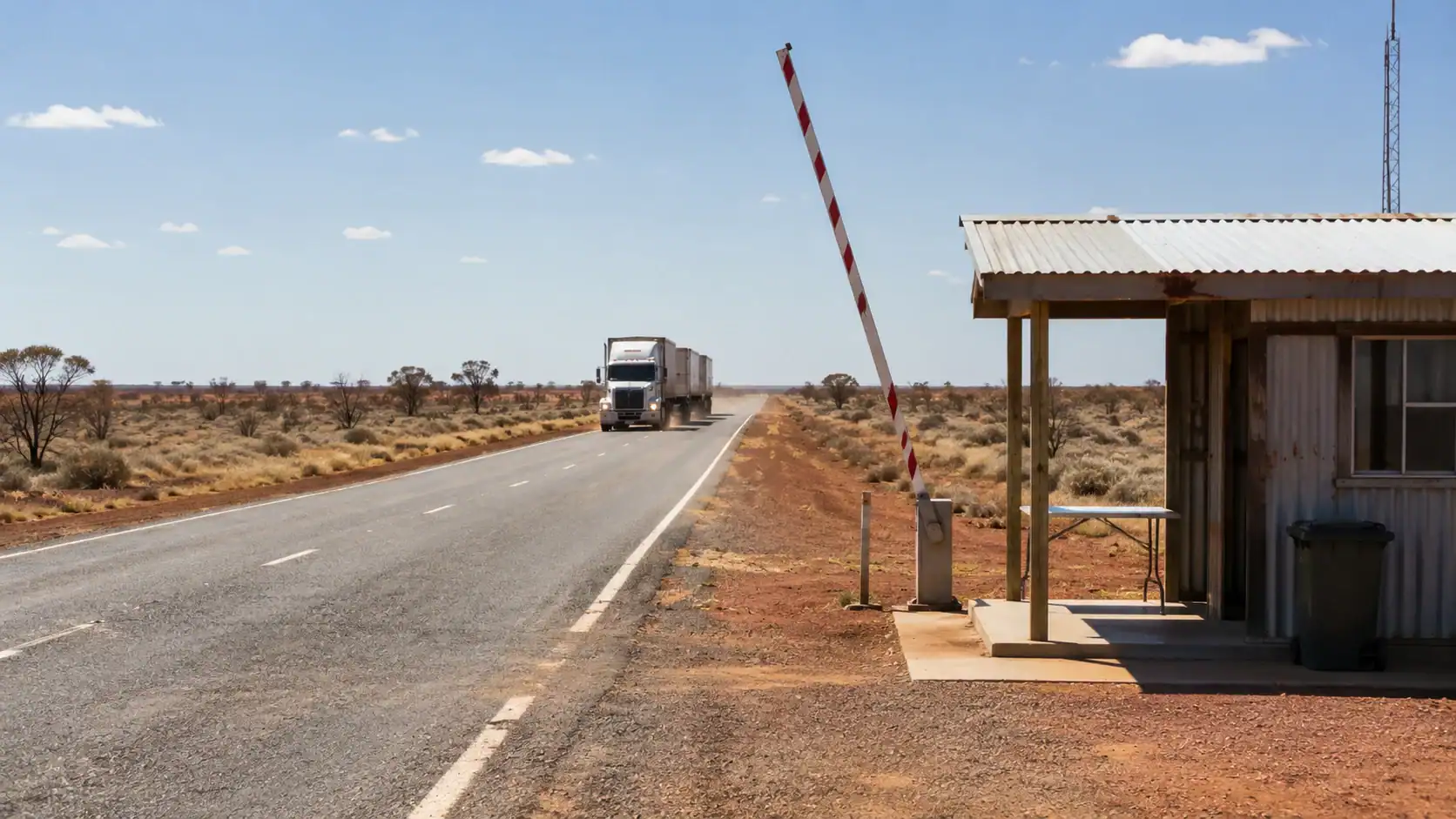
That is not just perception. Australia’s Biosecurity Act 2015 provides the national framework, but it also contemplates concurrent operation with state and territory laws. The national system is not designed to erase local protections automatically. The Department of Agriculture, Fisheries and Forestry notes explicitly that biosecurity is a shared responsibility between Commonwealth and state and territory governments. This matters most for household goods, machinery, outdoor-use items, plant-related materials, and cargo heading into regions with strong local biosecurity priorities.
Why There Is an Extra Layer Beyond Federal Clearance
The starting point is legal structure. The Biosecurity Act provides federal powers but does not displace state and territory biosecurity legislation. States and territories retain the authority to impose additional controls on the movement of goods, including goods that have already passed federal inspection at an Australian port of entry.
Local conditions differ across Australian jurisdictions in ways that justify this split. Some regions are more exposed to particular plant pests, more dependent on horticulture or grain production, or more protective of isolated ecosystems. A state or territory can therefore have strong reasons to maintain tighter controls around movement, declaration, or local biosecurity expectations, independent of what the federal layer has already decided.
For importers and people moving household goods, the practical lesson is that national clearance answers one important question, but destination risk can still shape what happens next.
Why Western Australia Feels Strict
Western Australia has long had a reputation for being especially sensitive to incoming agricultural and contamination risk. That reputation is grounded in economics as much as geography. WA is one of Australia’s most important grain-growing states and a significant producer of stone fruit, citrus, and other horticultural crops. The cost of introducing a pest is not abstract: if fruit fly established itself in WA, it would cause significant commercial damage to an industry that currently operates in a fruit fly-free zone.
The WA Department of Primary Industries and Regional Development maintains state biosecurity controls that operate alongside federal biosecurity measures. These cover a range of goods: live plants and plant material; soil and growing media; fresh produce; honey; used machinery and equipment; and certain timber and wood products. Some of these categories require additional documentation or treatment on entry into WA regardless of their federal clearance status.
For household and relocation clients, the practical effect is that “already cleared elsewhere” should never be treated as a universal argument. The closer the goods are to local contamination pathways (soil on machinery, seeds in packed boxes, untreated timber furniture, used outdoor equipment), the weaker that assumption becomes.
Why Tasmania Feels Strict
Tasmania often feels even more distinct because its isolation is part of the value it is protecting. The island setting is commercially useful for agriculture and environmentally useful for conservation, but it also heightens sensitivity to imported pests and disease pathways. Tasmania is one of Australia’s few fruit fly-free zones and has a significant agricultural sector including apples, cherries, and cool-climate produce. Biosecurity Tasmania maintains controls that extend beyond federal entry requirements for certain goods categories.
Goods categories that attract specific Tasmanian biosecurity attention include live bees and bee products (Tasmania has a protected disease-free status for some bee conditions); fresh plant material; used earth-moving and agricultural machinery; beehives and apiary equipment; and any goods that have been in contact with soil or organic material that was not cleaned off before shipping.
A shipment that seems ordinary from a mainland perspective can still raise local risk questions when the destination has a more protected ecological profile. The margin for sloppy preparation is smaller, and the benefit of clean documentation and honest packing descriptions is higher.
Why the Northern Territory Matters
The Northern Territory matters for a different reason. Its climate, trade exposure, and proximity to northern biosecurity pathways make vigilance strategically important. The NT is a first point of entry for some northern trade routes and has a warm-season climate that can support establishment of tropical pests. The risk profile is not identical to Tasmania’s or Western Australia’s, but it is serious.
The NT government maintains separate biosecurity management frameworks for plant and animal health, particularly for northern agricultural zones. Some categories can attract NT-specific requirements beyond the federal clearance process: live plants, plant propagation material, high-risk agricultural equipment, and some animal products.
Cargo moving into the NT should not be planned on the assumption that a generic east-coast import workflow tells the full story. The local context shapes how risk is viewed, particularly for goods with agricultural, outdoor, or contamination-prone characteristics.
The Goods Categories That Create the Most State-Level Friction
Across all three jurisdictions, certain goods categories are consistently more likely to trigger additional state or territory requirements:
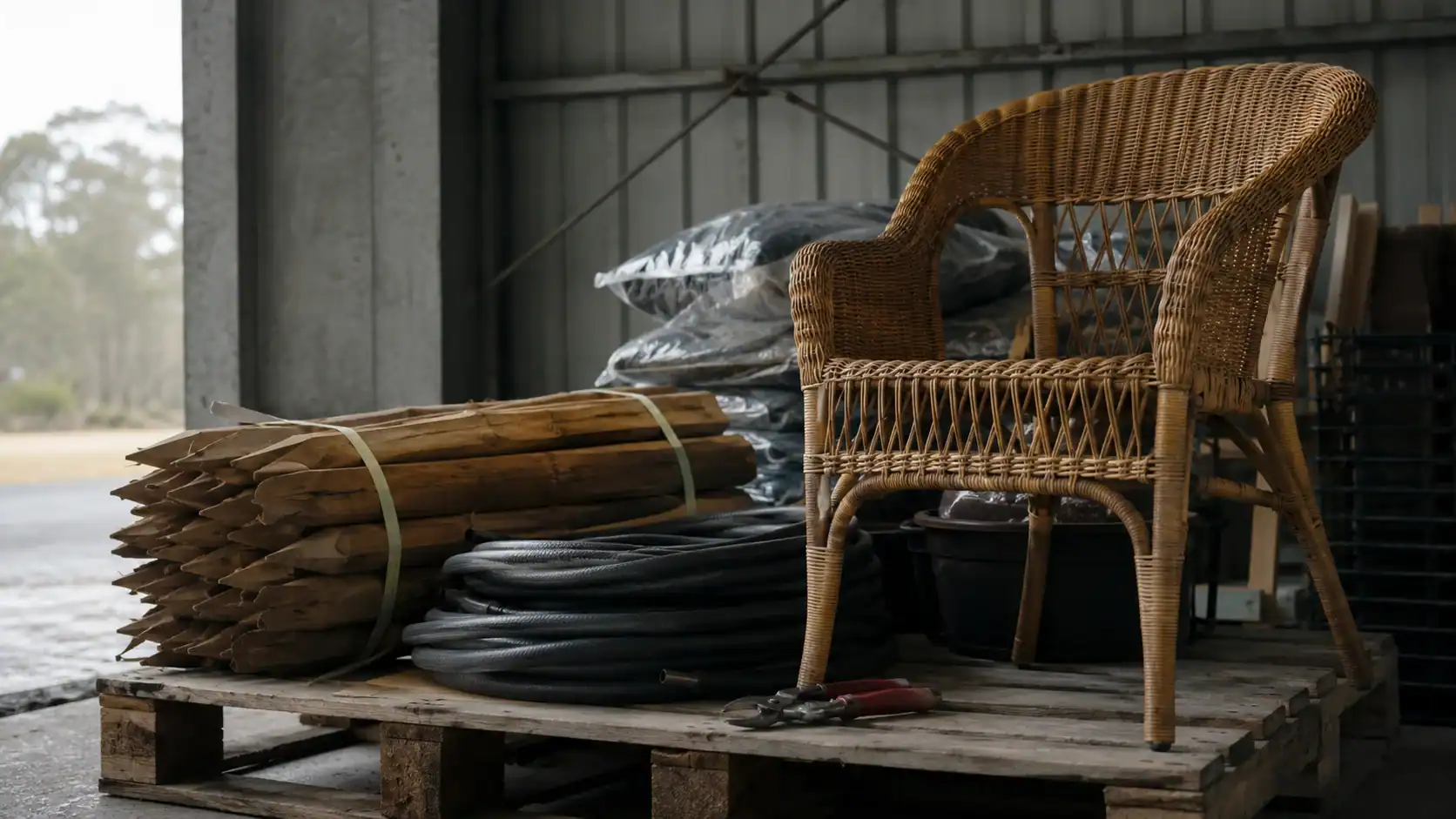
- Used outdoor and garden equipment: soil contamination risk is the primary concern. Equipment that has been used in gardens, farms, or outdoor environments should be cleaned and documented before shipping.
- Timber and wooden goods: untreated timber, cane, bamboo, and wood products can carry bark beetle, termite, or fungal contamination. Heat treatment or fumigation documentation may be required.
- Natural fibre items: cane furniture, wicker, bamboo mats, dried plant arrangements, and similar items can carry hitchhiker insects or plant disease.
- Fresh produce and plant material: generally not permitted in household goods shipments without specific permits; the federal position on this is reinforced at state level.
- Used agricultural and earth-moving machinery: all three jurisdictions treat this as a high-risk category requiring inspection and cleaning evidence.
- Beehives and apiary equipment: Tasmania in particular has strict controls; WA also maintains controls related to its disease-free status in parts of the state.
What is in a shipment mostly determines its risk profile, not where it came from. A container of flat-pack furniture from a European factory is a lower risk profile than a container of mixed household goods that includes gardening tools, potted plant cuttings, and outdoor furniture.
If your household shipment also qualifies for a customs concession, that concession covers duty and GST, not the biosecurity screening above. How the two pathways interact is covered in our guide to the Unaccompanied Personal Effects concession.
The Pre-Departure Routine That Prevents State-Border Problems
The fix is discipline before departure, not negotiation after arrival. Own the condition of the cargo before it is packed. High-pressure wash anything that has touched soil: garden tools, mower decks, boot soles, tent pegs, bike tyres. Let it dry fully before it goes in a box. Photograph the cleaned items. Those photographs cost nothing at origin and answer questions at destination that would otherwise cost days.
Paperwork gets the same treatment. Keep fumigation or heat-treatment certificates for timber and cane items in the same file as the waybill, not buried in an inbox. List wooden furniture, wicker, and outdoor equipment as separate line items on the packing declaration instead of folding them into “household goods”. A vague description is a decision you are handing to an inspector.
For Perth, Hobart, or Darwin deliveries, confirm requirements with Quarantine WA, Biosecurity Tasmania, or the NT biosecurity authority while the shipment is still at origin. That call takes minutes. Discovering the same answer at a state checkpoint takes weeks. Run the routine every time, and the second layer of rules stops being a surprise and becomes a checklist item you have already cleared.
What This Means for Shipment Planning
State biosecurity in WA, TAS, and NT functions less like a single stricter border and more like a routing network. Each jurisdiction operates as its own decision node, and the network’s apparent strictness is the cost of moving cargo across multiple nodes that do not share decision authority. Importers who think of biosecurity as one wall keep getting surprised at state borders. Importers who treat it as a multi-node routing problem plan around it: cargo bound for Perth gets WA-specific clean-down attention before it leaves origin; cargo for Hobart gets treatment certificates pre-staged; cargo for Darwin gets NT-specific declarations attached at packing.
The operational approach for WA, TAS, and NT shipments:
- Assume federal biosecurity is the foundation, not the end point.
- Identify high-risk goods categories early and document cleaning, treatment, or proof of manufacture.
- Build a time buffer if the destination is especially sensitive or the shipment profile is high-risk.
- Use accurate, specific packing descriptions, because vague descriptions increase the chance of escalated inspection.
- Confirm state requirements directly with the relevant state or territory biosecurity authority before shipping, not after arrival.
Strong document accuracy and pre-shipment condition checks matter more here than for a standard east-coast delivery. The tighter the destination’s risk sensitivity, the less room there is for optimistic packing descriptions.
The time buffer this section recommends should be built around real clearance timelines, not guesswork. Our customs clearance time in Australia guide shows how long each stage typically takes.
For Australian customs and biosecurity requirements more broadly, see Swift Cargo’s Australia customs and biosecurity overview.
Why Three States Guard a Border the Federal Government Already Cleared
Look at a map of Australia’s biosecurity history and the three states-within-the-state make a strange kind of sense once you notice what separates each of them from everywhere else. Western Australia sits behind roughly 2,000 kilometres of the Nullarbor Plain, a genuine biological barrier that has kept a number of pests and diseases out of the west simply because nothing has found an easy way to cross it on its own. Tasmania is the one part of the conversation that is not, technically, the mainland at all. It is an island, with the kind of clean pest and disease status an island can defend that a state sharing a land border never quite can. The Northern Territory sits closer to South-East Asia than anywhere else in the country, which means it absorbs the first wave of tropical pest pressure the rest of Australia rarely has to think about.
Federal clearance through the national import-conditions database that governs entry everywhere else establishes that a shipment is safe to enter Australia. It does not, and was never designed to, establish that the same shipment is safe to enter a specific state that has spent decades defending a geographic advantage the rest of the country does not share. That is the layer this article is actually about: not a second bureaucracy stacked on the first for its own sake, but three governments that each inherited something worth protecting and built their own import conditions around protecting it.
The practical result is the same for an importer or a returning household regardless of the history behind it: the rules that clear a shipment for commercial entry nationally are not the last word. A second, state-specific check can still hold, inspect, or condition the same goods before they travel the last few hundred kilometres to a WA, Tasmanian, or NT address. Knowing why the second layer exists does not remove it. It does explain why a quarantine officer in Fremantle is not being difficult when a shipment that sailed through Melbourne without incident gets stopped at the WA border. They are doing exactly what a government behind a very good natural barrier has always done, which is guard it.
Deciding whether to declare a borderline item at a WA, Tasmanian, or Northern Territory checkpoint is a bet, whether the shipper thinks of it that way or not. Declaring costs a short delay while an inspector checks; not declaring risks a seizure and a much longer one if the item turns out to be restricted. Shippers tend to judge that decision by how the one shipment turned out, which is the wrong test. An importer who declares consistently and gets waved through nine times out of ten made nine good decisions and one merely lucky one, not ten correct guesses about what would get flagged. The importer who skips declaring and gets away with it nine times has not proven the shortcut works. They have proven only that the tenth shipment has not arrived yet.
Frequently Asked Questions
Can state rules still matter after federal biosecurity clearance?
Yes. Australia’s federal framework operates alongside state and territory laws, so local risk controls can still matter depending on the goods and destination. Federal clearance does not automatically satisfy state entry requirements.
Why is Western Australia seen as strict?
WA’s agricultural sector, particularly its fruit fly-free zones for stone fruit and citrus, makes pest introduction very costly. The WA Department of Primary Industries and Regional Development maintains state biosecurity controls on a range of goods categories including live plants, soil, used machinery, and certain timber products.
Why does Tasmania feel different for imports?
Tasmania’s island setting and disease-free agricultural status, including bee health status, make local biosecurity sensitivity especially high. Biosecurity Tasmania maintains controls beyond federal entry requirements for certain goods.
Which goods categories are most likely to cause state-level friction?
Used outdoor equipment with soil, untreated timber and cane goods, natural fibre items, fresh plant material, used agricultural machinery, and apiary equipment are the most commonly flagged categories across WA, TAS, and NT.
Does this affect household goods too?
Yes. Household goods can contain high-risk items including wooden furniture, gardening equipment, cane or wicker items, dried plant arrangements, or tools that have been used outdoors. These categories attract biosecurity attention regardless of the broader shipment type.
What is the safest planning assumption?
Assume national clearance is essential, but not always the whole compliance story. Destination-specific sensitivity in WA, TAS, and NT can still shape timing and scrutiny. Plan around it, not after it.