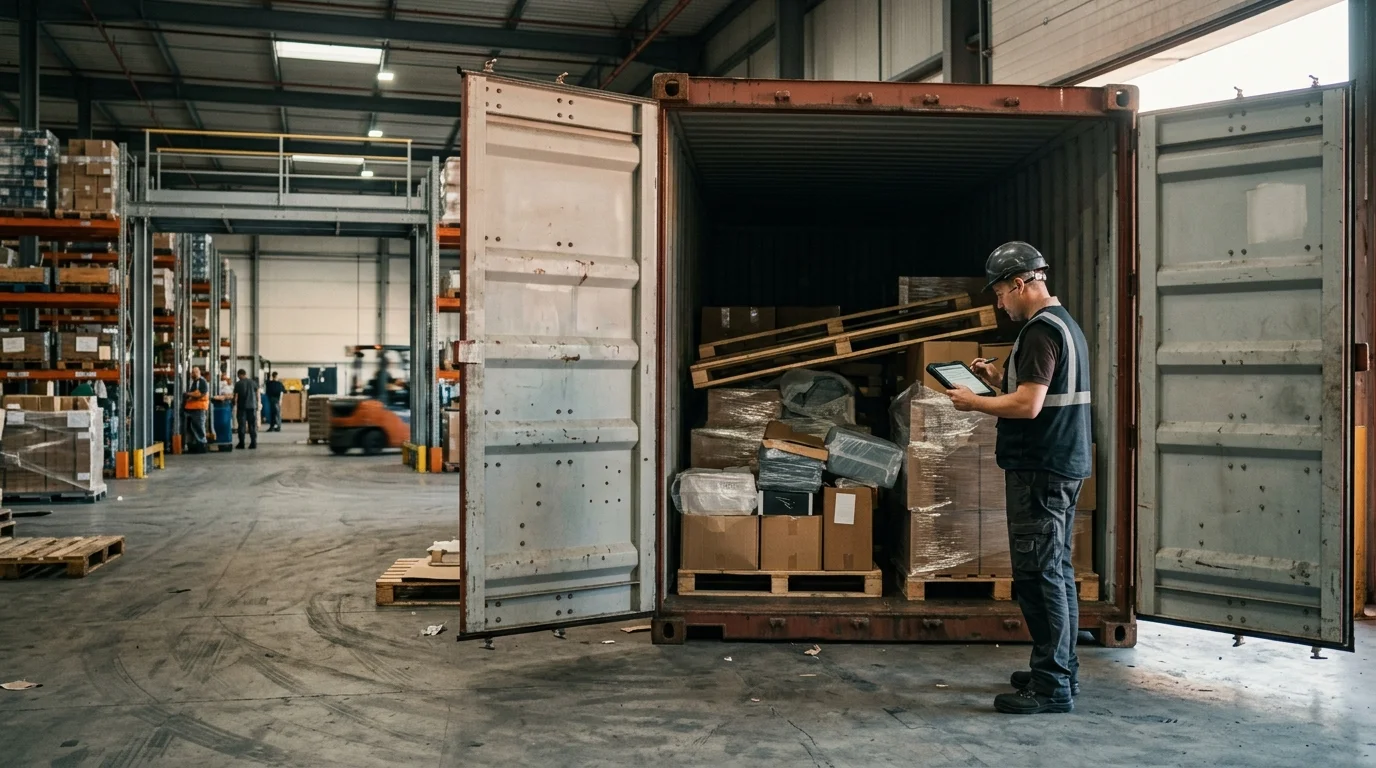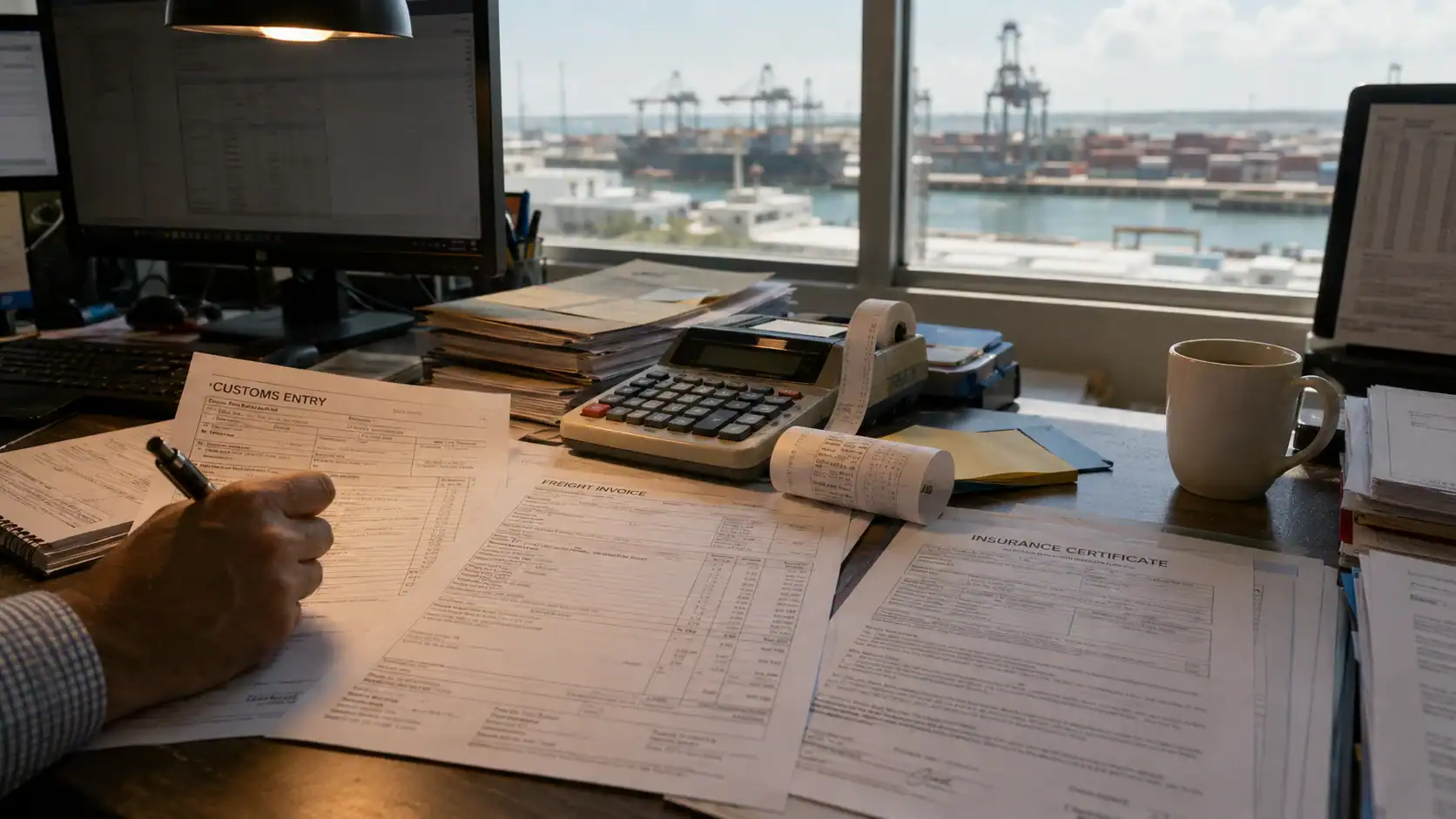
Before choosing a freight forwarder, it helps to be precise about what job you are actually hiring them to do. A small importer bringing in two LCL shipments per year from a single Chinese supplier is hiring for a different job than a retailer running 12 FCL shipments per year across three countries with active FTA concessions and TGA-regulated product lines. Both are “importing to Australia” but the forwarder capability that matters most differs between them. Choosing a freight forwarder in Australia starts with that job description, not with the lowest quote.
The Australian freight forwarding market includes large global logistics companies, mid-size specialists, single-country boutique operators, and digital freight platforms. Price is rarely a reliable differentiator at the selection stage. A low quote on a misunderstood shipment costs more than a higher quote on one that goes right. The criteria that actually separate a good forwarder from an expensive problem are not always the ones that appear in a first pitch meeting.

The Licensing Question: Freight Forwarder vs Customs Broker
The most important distinction in the Australian market is between freight forwarding and customs brokerage. They are different regulated activities, and not every company that calls itself a freight forwarder is licensed to do both.
A freight forwarder organises the physical movement of goods: booking carriers, managing documentation, coordinating port handling. A customs broker lodges import declarations with Australian Border Force, calculates duty, applies FTA concessions, and manages the customs clearance process. Customs brokers in Australia must hold a licence issued under the Customs Act 1901, regulated by the Department of Home Affairs. The licence requires examinations, character checks, and continuing professional development.
Many companies operate as both. But if a forwarder is outsourcing your customs entries to a third-party broker you have never met, your goods are effectively being managed by two separate parties with divided accountability. When a customs hold occurs or a duty assessment is wrong, you need to know who is responsible for what.
What to ask: “Do you hold an Australian customs broker licence, or do you outsource customs entries?” If they outsource, ask who the broker is, how communication flows between the two parties on your shipment, and who your single escalation contact is for compliance problems.
Industry Affiliation as a Credibility Baseline
Two industry affiliations are worth checking as a minimum credibility screen:
AFIF (Australian Federation of International Forwarders) is the peak industry body for Australian freight forwarders. AFIF members operate under the AFIF Standard Trading Conditions, which govern liability, claims procedures, and the forwarder’s obligations to you as a client. Most professional Australian forwarders are AFIF members. Lacking AFIF membership doesn’t automatically disqualify a forwarder, but it should prompt the question: what standard trading conditions do they use, and have you read them?
FIATA (International Federation of Freight Forwarders Associations) is the global industry body. FIATA-affiliated forwarders can access the FIATA Bill of Lading (FBL) and operate within an internationally recognised framework. For importers dealing with freight from multiple countries, FIATA affiliation of a forwarder’s overseas partners matters as much as their own domestic membership.
These affiliations are a baseline, not a guarantee. An AFIF member who handles your route poorly is still a poor choice. But a forwarder is a higher-risk selection if they are not a member of any industry body and cannot explain why.
For the full picture of what happens at each stage, from import declaration to Trusted Trader status, see our guide to the Australia import process end to end.
Route Specialisation Over Company Size
Company size is not a proxy for route capability. A forwarder with 500 staff and offices in 40 countries may have less expertise on Vietnam-to-Australia LCL consolidations than a 20-person Melbourne operator whose core business is exactly that route.
The relevant question is: how many shipments per month does this forwarder move on your specific route? A forwarder doing 30 LCL shipments per month from Ho Chi Minh City to Sydney has current carrier relationships, current port knowledge, current customs broker familiarity with Vietnamese origin documentation, and current DAFF biosecurity experience with products from that origin. A forwarder doing three shipments per month on that route has none of this in active practice.
Carrier relationships matter operationally. Forwarders with volume commitments to specific shipping lines can often recover space during peak season congestion when spot-market shippers cannot. They also have escalation contacts at carriers that are worth having when a booking is bumped or a container is rolled to a later vessel.
What to ask: “How many shipments per month do you handle from [my origin country] to Australia? Which carriers do you hold regular space allocations with on that route? Who is your primary carrier contact when a booking needs to be escalated?”

What a Good Quote Looks Like, and What a Bad One Reveals
The structure of a forwarder’s quote tells you almost as much as its price. A professional freight forwarder quotes the cost components separately. A quote that gives you a single “all-in” number without itemisation is concealing information you need.
A structured quote for a sea freight shipment to Australia should itemise:
- Ocean freight: the base rate from origin port to destination port (per CBM for LCL, per container for FCL)
- Origin charges: origin port handling, container freight station fees (for LCL), export documentation
- Bunker Adjustment Factor (BAF) / fuel surcharge: listed separately so you can see when it changes
- Destination THC (Terminal Handling Charge): port of Melbourne or Port Botany handling fee
- Customs brokerage: the fee for lodging your import declaration with ABF
- DAFF biosecurity levy: currently AUD 53.10 per import declaration (set by the Australian Government, not the forwarder)
- Cartage / delivery: port-to-warehouse delivery in Australia
- Cargo insurance: if included; if not, it should be noted as excluded
When all of these are visible, you can compare quotes from different forwarders meaningfully. When they are bundled, you cannot tell whether a lower headline number reflects a competitive ocean rate or a missing cost component that will appear on the arrival invoice.
An “all-in” quote that is significantly lower than itemized competitors is usually lower because something is missing, not because the forwarder is more efficient. The arrival invoice reconciliation is where you find out what was omitted. Ask any freight forwarder in Australia to itemise the quote before you compare headline prices.
The itemized quote has a simple reading: it is a signal, not a formality. A forwarder who breaks out every line is telling you something before you have signed anything: I am not worried about you seeing where the money goes. Call it the honest-quote test. The forwarders worth hiring want to be compared line by line, because a fair comparison is where they win. The ones who bundle everything into a single number are quietly betting that you will not ask. So ask. The quote you can actually read is nearly always the quote you can trust.
Customs Capability: The Questions That Matter
For most Australian importers, the customs brokerage component of a forwarder’s service is where the highest-value (and highest-risk) work happens. Duty classification errors, missed FTA concessions, and DAFF biosecurity mishandling all occur here. Evaluating customs capability requires specific questions.
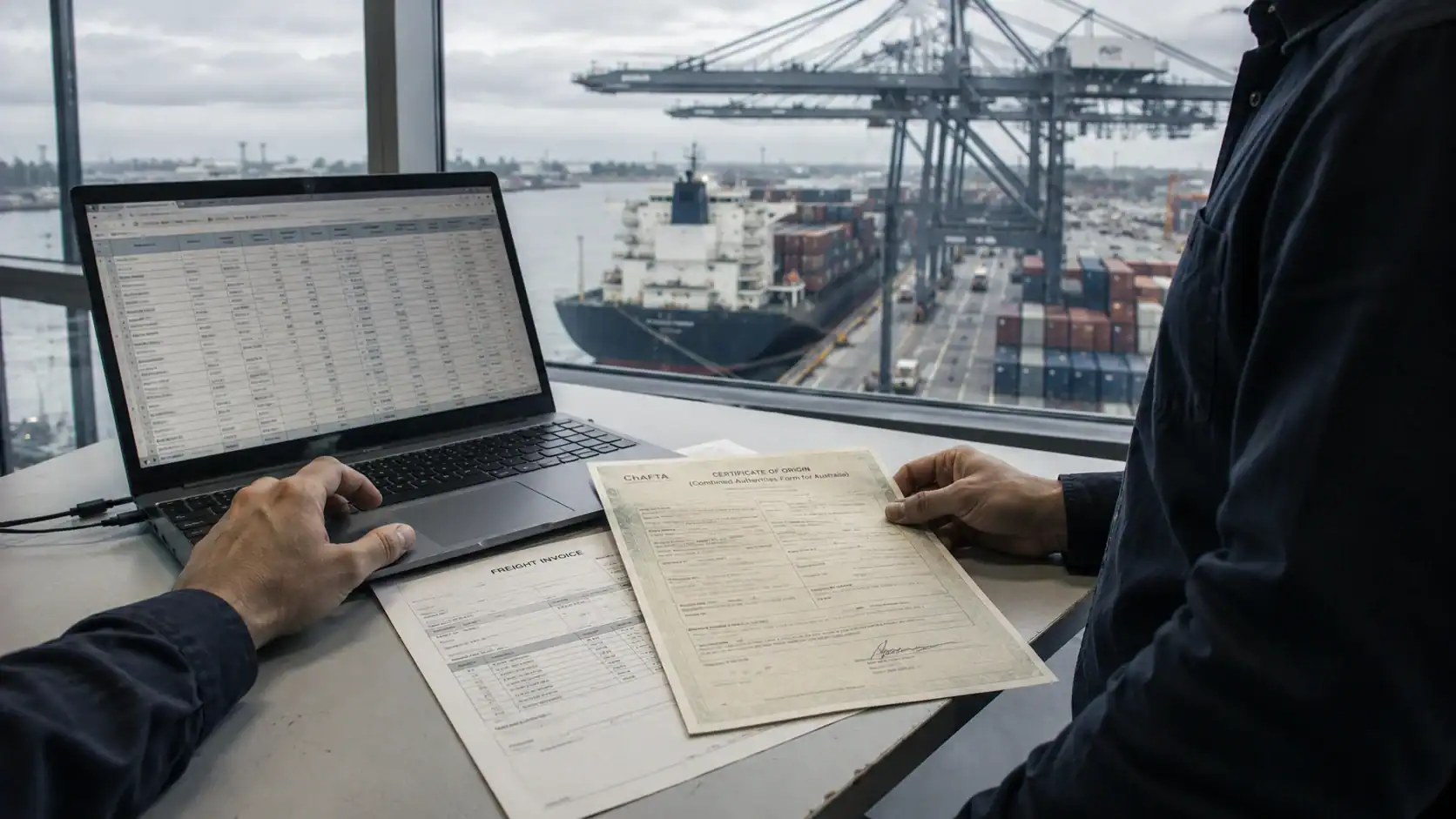
FTA experience: “Have you handled ChAFTA (China-Australia FTA) concessions on goods similar to mine? What is your process for ensuring the Certificate of Origin is in place before the goods ship?” A forwarder who fumbles this answer, or who treats the CoO as a box to check rather than a pre-shipment process, is likely to cost you duty concessions.
Pre-arrival declarations: “Do you lodge pre-arrival declarations with ABF?” A pre-arrival declaration lodges the import entry before the vessel berths. It reduces port dwell time and speeds customs release. Not all forwarders do this as standard. For high-volume importers, the difference between 24-hour and 5-day clearance times raises real carrying costs.
DAFF experience: “How many DAFF biosecurity referrals have you managed in the last 12 months, and what was the typical resolution time?” A forwarder with active DAFF experience has an established relationship with the referral process. A forwarder who has rarely dealt with DAFF holds is going to learn on your shipment.
HS code classification: “Who in your team is responsible for tariff classification on new products, and what is your process for verifying the correct HS code?” The right answer requires a licensed customs broker and, for novel products, an ABF Binding Tariff Advice. The wrong answer is “we use what the client tells us.”
Visibility and Communication Standards
An import program has a timeline. Delays affect warehouse planning, retail promotions, and cash flow at any point: origin booking cut-offs, vessel rollings, transshipment waits, customs holds. The question is not whether delays will occur, but how quickly you will know about them when they do.
Good freight forwarders proactively notify you of exceptions. The shipment was rolled to a later vessel. You get an email the same day with the revised ETA and the reason. The container was flagged for DAFF inspection. You get a call before you are chasing an overdue delivery. The customs entry has been queried. You hear from the broker before the goods are held for a week without explanation.
Poor freight forwarders communicate reactively. You email asking for a status update and wait 24 hours. You call to ask where your container is and are told someone will get back to you. You discover a customs hold when your goods do not arrive on the expected date.
The visibility question at evaluation stage: “What does your standard shipment notification process look like? At what points in the journey do we receive proactive status updates, and through what channel?” Ask to be shown an example shipment tracking report or notification email. If they cannot produce one, you are being asked to trust a claim they have no evidence to support.
What Happens When Something Goes Wrong
Every import program experiences exceptions. A container is damaged. A customs entry is queried. A booking is rolled and the revised vessel has a 12-day gap. The relevant evaluation question is not whether your forwarder has perfect operations (no one does) but what happens when theirs are not.
Specific things to probe:
Escalation path: Who do you call when there is a problem? Is there a named account manager, or does every call go to a general inbox? On a Friday afternoon when a container is being held and demurrage is accruing, the difference between a direct mobile number and a ticketing system is measured in AUD.
Cargo claim history: “Have you managed cargo insurance claims for clients on this route? What was the process and typical resolution time?” A forwarder who has managed claims knows what documentation ABF and the insurer require and can guide you through it. One who has not will be reading the policy for the first time when you need them to act.
DAFF control action experience: If DAFF orders treatment of your goods (fumigation, heat treatment), the forwarder’s speed and existing relationships with approved treatment providers determine how many days of additional demurrage you pay. A forwarder with a trusted treatment provider on speed dial resolves this faster than one making cold calls.
Volume Commitments and Contract Terms
Some forwarders offer below-market rates in exchange for volume commitments: a minimum number of shipments per year or an exclusivity arrangement. Read these terms carefully before signing.
Volume commitments create leverage in the forwarder’s favour once you are inside the contract. If service quality deteriorates (rates increase, communication lapses, errors recur), your ability to switch is constrained by the commitment you made. The rate you secured at the start becomes a sunk cost you are weighing against the disruption of switching and any contractual penalties.
A professional forwarder who is confident in their service quality does not need to lock you in contractually. The best freight forwarder relationships are retained by performance, not by contract. If a forwarder is heavily emphasising the volume commitment structure rather than their service capability during the evaluation, treat that emphasis as a red flag.
Minimum terms to understand before signing anything: What is the minimum volume commitment? What are the penalties for falling short? Is there a rate review mechanism, and who triggers it? What are the termination conditions?
Step back from any single contract and the pattern is structural, not just contractual. Freight forwarding is a low-differentiation category: two forwarders quoting the same lane with the same carrier options can rarely justify a large price gap on capability alone, which means switching costs are close to zero for anyone who hasn’t already been locked in. A forwarder leaning on volume commitments and exclusivity clauses isn’t protecting a real advantage. It’s manufacturing one, because the underlying service is too easy to replicate for the relationship to hold on performance alone. That’s the real question buried inside “why do they want me to sign a volume commitment”: are they locking you in because they’re confident you’d stay anyway, or because they know you wouldn’t? A forwarder who could win the rebooking every quarter has no structural reason to need the contract at all.
A Practical Evaluation Framework
When evaluating two or three forwarders in parallel, the following structure produces a cleaner comparison than general impressions:
- Licence check: ABF customs broker licence number, verified on the ABF register
- Industry affiliation: AFIF member? FIATA affiliate? Standard trading conditions used?
- Route volume: Monthly shipments on your specific origin-Australia route
- Itemized quote: All cost components visible and labelled
- FTA process: How do they ensure CoO is in place before loading?
- Pre-arrival declaration: Standard practice or optional extra?
- DAFF experience: Referral history and treatment provider relationships
- Communication standard: Proactive exception notifications (evidence, not claims)
- Escalation path: Named account manager with direct contact
- Contract terms: Volume commitments, penalties, termination conditions
A forwarder who handles nine of ten well and is weak on one is a known risk you can manage. A forwarder who cannot answer three or four of these questions clearly during evaluation is unlikely to improve once your shipments are in their hands.
For context on what a well-run freight forwarder should be catching on your behalf, and the cost when they miss it, the most common compliance failures are catalogued in our guide to common import mistakes Australian importers make. For the cost framework that a good forwarder’s quote should map to, see our total landed cost guide for Australian importers. If you are evaluating forwarders specifically because your current program is experiencing customs delays, the guide to why shipments get held at Australian customs identifies the documentation and compliance gaps that forwarders are supposed to prevent.
If you are reviewing your current freight forwarder or selecting one for the first time, see how Swift Cargo handles the Australia shipping process, including customs brokerage and pre-arrival declarations. If your evaluation concludes your current forwarder should be replaced rather than kept, switching freight forwarders without disrupting your supply chain covers the transition itself.
Before adding evaluation criteria to your freight forwarder selection, consider what happens when the selection goes wrong. Missing the certificate of origin pre-loading requirement on a ChAFTA shipment loses the duty concession and repeats that loss on every subsequent shipment until you catch the problem. A DAFF treatment hold adds 2 to 5 days at port plus AUD 1,500 to 5,000 in treatment and storage costs, on a schedule you cannot predict. The forwarder who underquotes wins the brief; the cost of that underquote lands 6 weeks later in a demurrage invoice. Inverting the selection problem means asking what a bad forwarder costs rather than what a good one provides. That changes the criteria that matter. The price difference between a route specialist and a generalist rarely exceeds AUD 500 to 1,000 per shipment. A single ISPM 15 incident costs more. The evaluation question is not which forwarder is cheapest but which forwarder’s failure modes are least expensive.
Shortlisting a Freight Forwarder in Australia
Check the customs broker licence on the ABF register, AFIF membership and monthly volume on your route, then insist on an itemised quote and ask how pre-arrival declarations, DAFF referrals and escalations are handled. Read any volume commitment’s penalties and termination terms before signing.
Frequently Asked Questions
Do I need a freight forwarder or a customs broker, or both?
For most Australian import programs, you need both functions. The simplest arrangement is a single company that is licensed for both freight forwarding and customs brokerage. This gives you one point of contact and undivided accountability. If you use separate providers, establish clearly in writing who is responsible for what, particularly for customs entry lodgement, DAFF biosecurity clearance, and cargo insurance.
How do I verify that a freight forwarder holds an Australian customs broker licence?
The Australian Border Force maintains a public register of licensed customs brokers. A forwarder is a red flag if they claim to hold a licence but cannot provide a licence number for verification.
What is the AFIF Standard Trading Conditions document and why does it matter?
The AFIF Standard Trading Conditions govern the contractual relationship between a freight forwarder and their client in Australia. They set out the forwarder’s liability limits, claims procedures, and obligations. Understanding these conditions, particularly the liability caps, is important before you have a claim. Ask for a copy before engaging any forwarder and read the liability and claims sections specifically.
Should I use a digital freight platform instead of a traditional forwarder?
Digital freight platforms (online quoting and booking tools) offer price transparency and speed for straightforward shipments. They are most useful for standard LCL or FCL shipments on high-volume, well-documented routes. For shipments involving FTA concessions, regulated product categories, DAFF biosecurity complexity, or non-standard cargo, the automated workflow of a platform is less suited than a relationship with a specialist customs broker who understands your product category. Use platforms for benchmarking quotes; use specialists for managing exceptions.
How often should I review my freight forwarder relationship?
An annual review is a reasonable minimum for any active import program. Review against the criteria above, not just against the rate. Has communication remained proactive? Have they caught compliance issues before they became problems? Has their route expertise kept pace with your import program’s evolution? A forwarder who was right for two shipments per year may not be the right partner for twelve.