
How to Import PPE from China to Australia: Standards, Duty, and Compliance
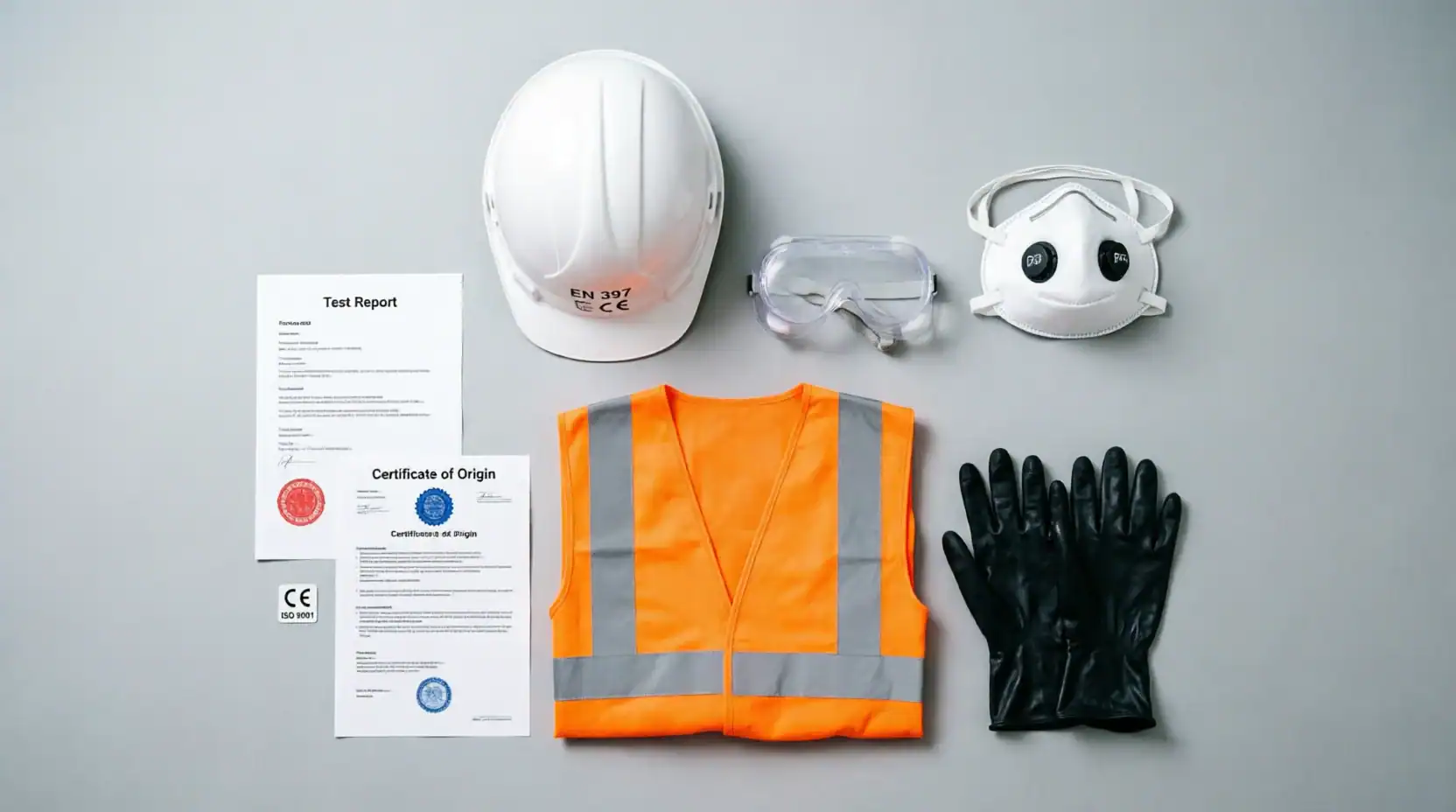
China is the world’s largest manufacturer of personal protective equipment. Chinese PPE production spans helmets, respirators, gloves, safety glasses, protective clothing, and footwear at enormous scale. That scale gives Australian importers a wide, competitive supply base. It also hands them a compliance problem: Chinese PPE is manufactured to Chinese standards, tested by Chinese laboratories, and certified under a Chinese regulatory framework that does not automatically satisfy Australian workplace health and safety requirements. To import PPE from China to Australia without that gap, plan on AS/NZS testing before the bulk order ships, not after it lands.
The gap is not hypothetical. During the COVID-19 procurement surge, the Australian market was briefly flooded with KN95 respirators certified under Chinese standard GB 2626. That equipment met Chinese specifications, but a GB 2626 certificate does not show how a respirator performs under Australian AS/NZS 1716 test conditions. The Chinese standard and the Australian standard both set a 95% filtration threshold, but the test methods, particle sizes, flow rates, and fit test requirements differ in ways that matter for actual worker protection. An importer who assumed GB 2626 certification meant AS/NZS compliance was exposed commercially, legally, and in terms of worker safety.
PPE Categories and HS Classification
PPE spans multiple HS chapters. The classification of a PPE item determines both the ChAFTA duty rate and which mandatory Australian product safety standards apply to it. Misclassification is a common cause of incorrect duty calculation on PPE imports and can also affect whether the goods are subject to additional import controls.
| PPE category | HS code(s) | General (MFN) rate | ChAFTA rate |
|---|---|---|---|
| Safety helmets (industrial, construction) | 6506.10 | 0% | 0% |
| Safety glasses, goggles, face shields | 9004.90 | 5% | 0% |
| Protective gloves (knitted/crocheted) | 6116.10 | 0% | 0% |
| Protective gloves (rubber) | 4015.19 | 0% | 0% |
| Protective gloves (plastic) | 3926.20 | 0% | 0% |
| Disposable face masks / non-woven textile | 6307.90 | 5% | 0% |
| Respirators (filtering facepiece, half-face) | 6307.90 / 9020.00 | 0–5% | 0% |
| High-visibility protective clothing | 6211.33 / 6211.43 | 5% | 0% |
| Chemical-resistant protective suits | 6210.10 / 6210.40 / 6210.50 | 0–5% | 0% |
| Safety footwear (steel-capped boots) | 6403.40 / 6401.10 | 0–5% | 0% |
| Ear protection (earmuffs, earplugs) | 3926.90 / 6307.90 | 5% | 0% |
| Breathing apparatus (SCBA, PAPR) | 9020.00 | 0% | 0% |
Rates under the Customs Tariff Act 1995 (Cth), Schedule 3, as operative from 1 July 2026. ChAFTA rates for the majority of PPE lines were fully phased in by 2019. Safety helmets, breathing apparatus and most protective gloves are already duty-free under the general (MFN) rate; ChAFTA delivers savings on safety glasses, disposable masks, protective clothing and some safety footwear.
Classification at the 6-digit level can require judgement on PPE that crosses category boundaries. A balaclava-style flame-resistant head covering, for example, sits ambiguously between Chapter 61 (knitted apparel) and Chapter 65 (headgear). A respirator with integral eye protection may be classified as protective eyewear (HS 9004) or as a respirator (HS 9020) depending on its primary function. For PPE products with uncertain classification, an advance tariff ruling from the ABF removes the risk of reclassification at customs entry.
ChAFTA Duty Savings and Rules of Origin
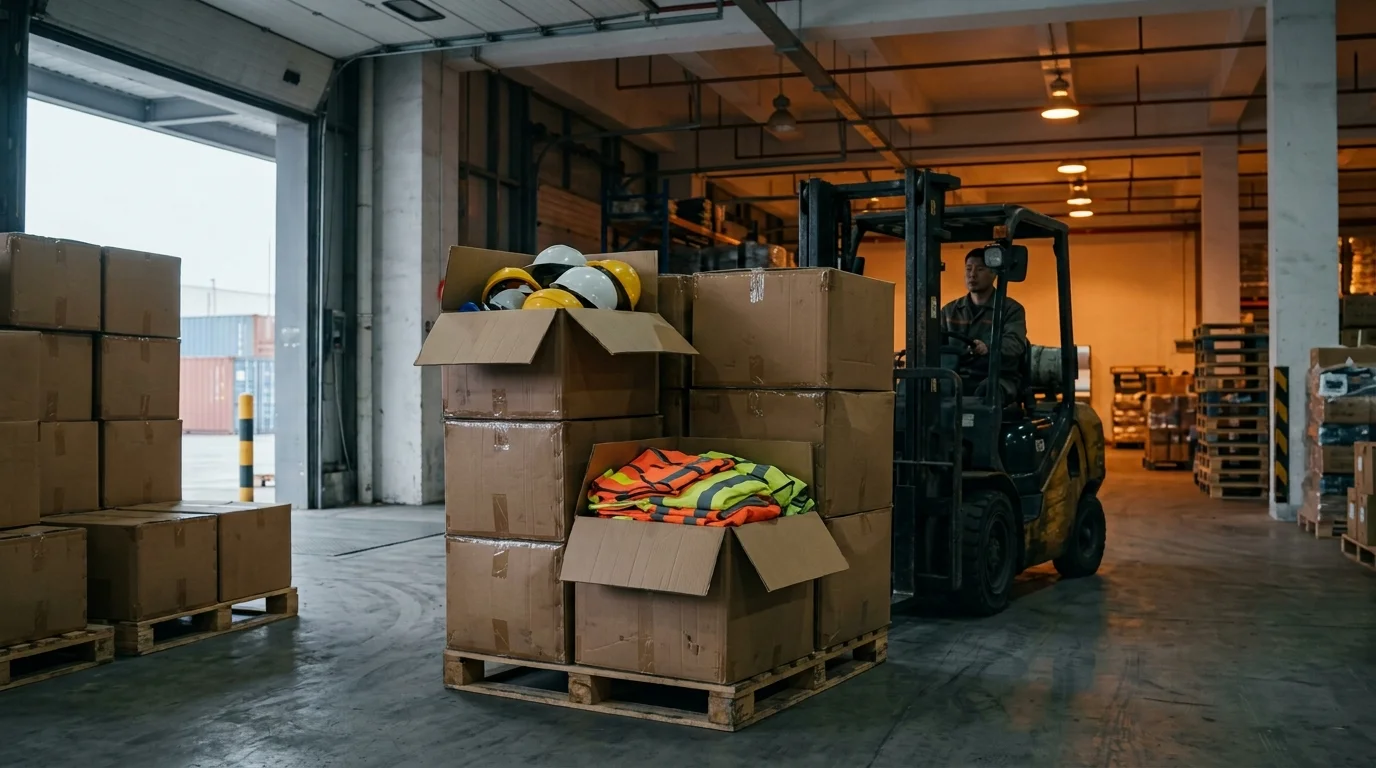
Hi-vis workwear, safety glasses and rubber or plastic safety footwear attract a 5% general duty rate but qualify for 0% under ChAFTA, a 5 percentage point saving on the customs value of the goods. Duty is calculated on the customs value, which is the FOB price, so freight and insurance do not enlarge the saving. On a shipment of AUD 100,000 FOB in protective clothing, that is AUD 5,000 in duty avoided.
To claim ChAFTA, the goods must:
- Originate in China under the ChAFTA rules of origin. ChAFTA Annex II sets a change in tariff classification rule by product. Helmets, footwear, eyewear and plastic or rubber gloves need a change of HS heading (CTH) from their non-originating inputs. Apparel in Chapters 61 and 62, including hi-vis clothing and knitted gloves, needs a change of chapter (CC). Disposable masks (heading 6307) also need a change of chapter, and where the starting material is fabric, it must be raw and fully finished in China or Australia. PPE manufactured in China from Chinese materials (plastics, fabrics, rubber) straightforwardly satisfies this. Some PPE is assembled in China from pre-fabricated components sourced from third countries. That PPE needs to be assessed against the applicable rule to confirm sufficient transformation occurred in China.
- Be supported by a valid Certificate of Origin (Form C/O) issued by an authorised Chinese body, either the China Council for the Promotion of International Trade (CCPIT) or China Customs. The certificate is issued before or at the time of export. ABF’s ChAFTA guideline allows a certificate issued after export only in exceptional cases, within 12 months of shipment and marked “ISSUED RETROSPECTIVELY”; otherwise the importer pays the general rate and can claim a refund once they hold a valid certificate. DFAT’s ChAFTA guide adds that an exporter’s declaration of origin stands in for the certificate only where an ABF advance ruling on origin covers the goods, and that no document is needed for a consignment with a customs value of AUD 1,000 or less.
Build the Certificate of Origin request into the purchase order process, not the freight booking process. For importers running a regular PPE program from Chinese suppliers, that is the most reliable way to ensure the ChAFTA rate is available at entry. The import duty and GST guide for Australia covers the full four-variable calculation of how import duty and GST interact in the total customs liability on PPE orders.
The Chinese Standard / Australian Standard Gap
This is the compliance risk specific to Chinese PPE supply that has no parallel in most other product categories. Chinese PPE is certified against Chinese National Standards (GB standards, named for Guobiao, “national standard” in Mandarin). Australian PPE compliance is assessed against AS/NZS standards published by Standards Australia and Standards New Zealand. These are not the same standards, and a GB certificate does not imply AS/NZS compliance, even when both standards nominally address the same PPE category.
Respiratory protective equipment: GB 2626 vs AS/NZS 1716
Chinese particulate respirators certified under GB 2626 (KN95, KN100) are tested using a sodium chloride aerosol at 85 L/min airflow. Australian P-class respirators certified under AS/NZS 1716 are tested under a different particle size distribution, and the conditions include a panel fit test that better represents the range of human faces. The 95% filtration efficiency threshold is nominally similar, but the test conditions that produce that number differ enough that a respirator passing GB 2626 may not pass AS/NZS 1716 under the Australian methodology.
Safe Work Australia’s guidance on Standards says that where a WHS regulation names an Australian Standard, the duty holder should use it and may consider an international standard alongside it; the model WHS Regulations name AS/NZS 1716:2012 (regulation 529B). SafeWork NSW’s alert on fake face masks treats N95, FFP2 and KN95 respirators as equivalent to P2 and acceptable in Australian workplaces, but does not recommend KN95s unless the buyer fully understands the product’s testing and quality control. A supplier may assert that their KN95 is “equivalent to P2.” Ask for the product certificate and check it with the certifying body, or ask for an AS/NZS 1716 test report from an accredited laboratory.
The TGA’s guidance on face masks and respirators draws a second line, by the claims made for a mask rather than its KN95, N95 or P2 label. A mask intended for industrial use is outside TGA regulation, but one labelled or advertised to prevent disease transmission between people, or as suitable for clinical use, must be included in the ARTG. If a supplier’s carton or brochure makes a clinical claim for a respirator you plan to sell as industrial PPE, resolve it before you order, because it changes which regulator you answer to.
Safety helmets: GB 2811 vs AS/NZS 1801
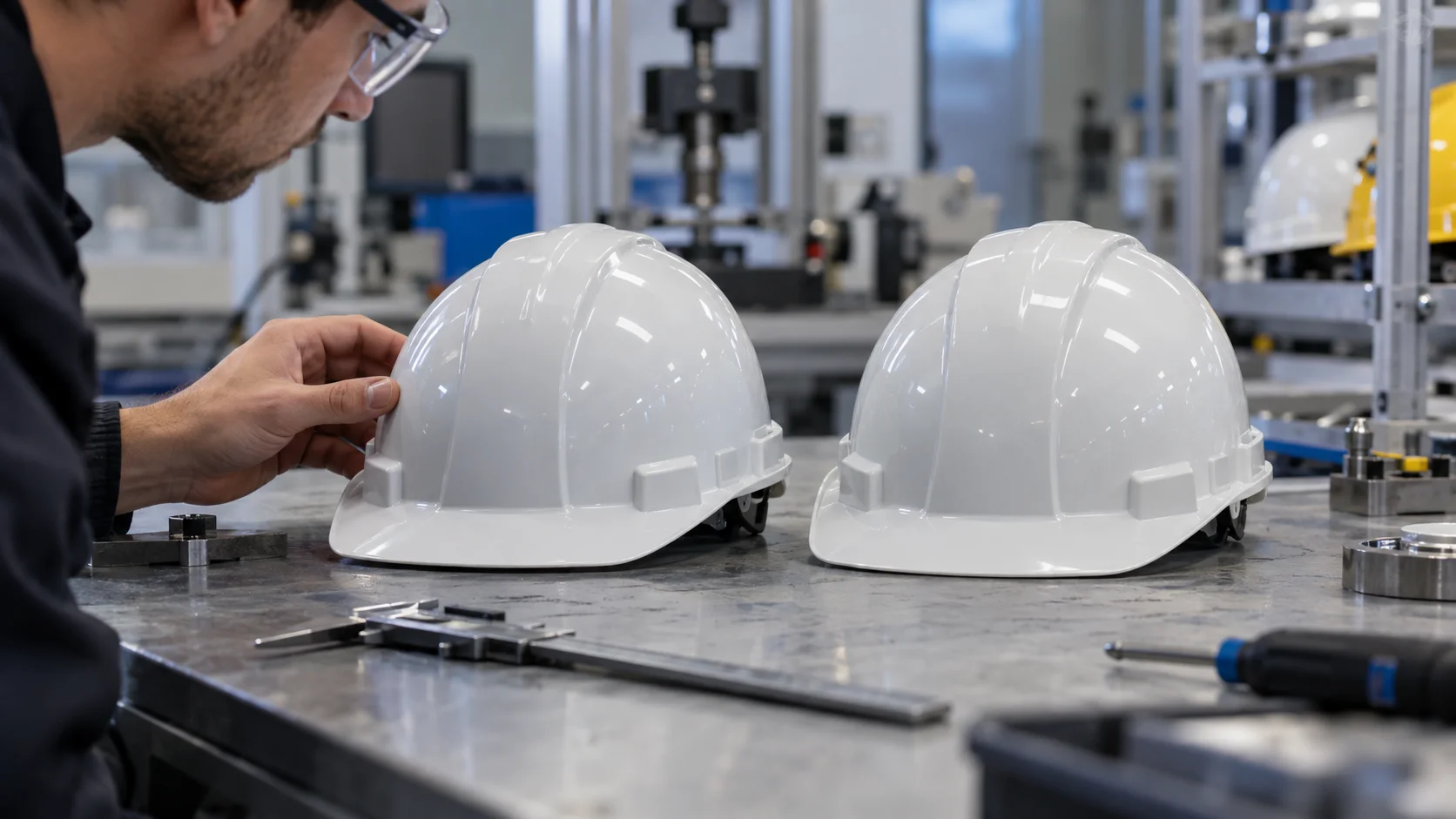
Chinese industrial safety helmets are certified under GB 2811. Australian requirements are set by AS/NZS 1801. The standards address similar hazards (penetration resistance, impact absorption, retention system performance) but have different test drop heights, different anvil shapes for impact tests, and different temperature conditioning requirements. A helmet that meets GB 2811 has been tested to a standard. Only AS/NZS testing can confirm whether it would also pass AS/NZS 1801, and the GB certificate does not.
Eye protection: GB 14866 vs AS/NZS 1337
Safety glasses and goggles certified under GB 14866 have been tested for optical clarity, impact resistance, and UV transmission under Chinese standard conditions. AS/NZS 1337 covers the same product categories with similar requirements, but has specific test methods for optical performance, side shield coverage, and high-impact variants that may differ from the GB test conditions. For most basic safety spectacles, the gap between GB 14866 and AS/NZS 1337 is manageable; for specialised eyewear (arc flash, laser protection, chemical splash), the test conditions diverge enough to require specific AS/NZS verification.
High-visibility clothing: GB/T 20653 vs AS/NZS 4602
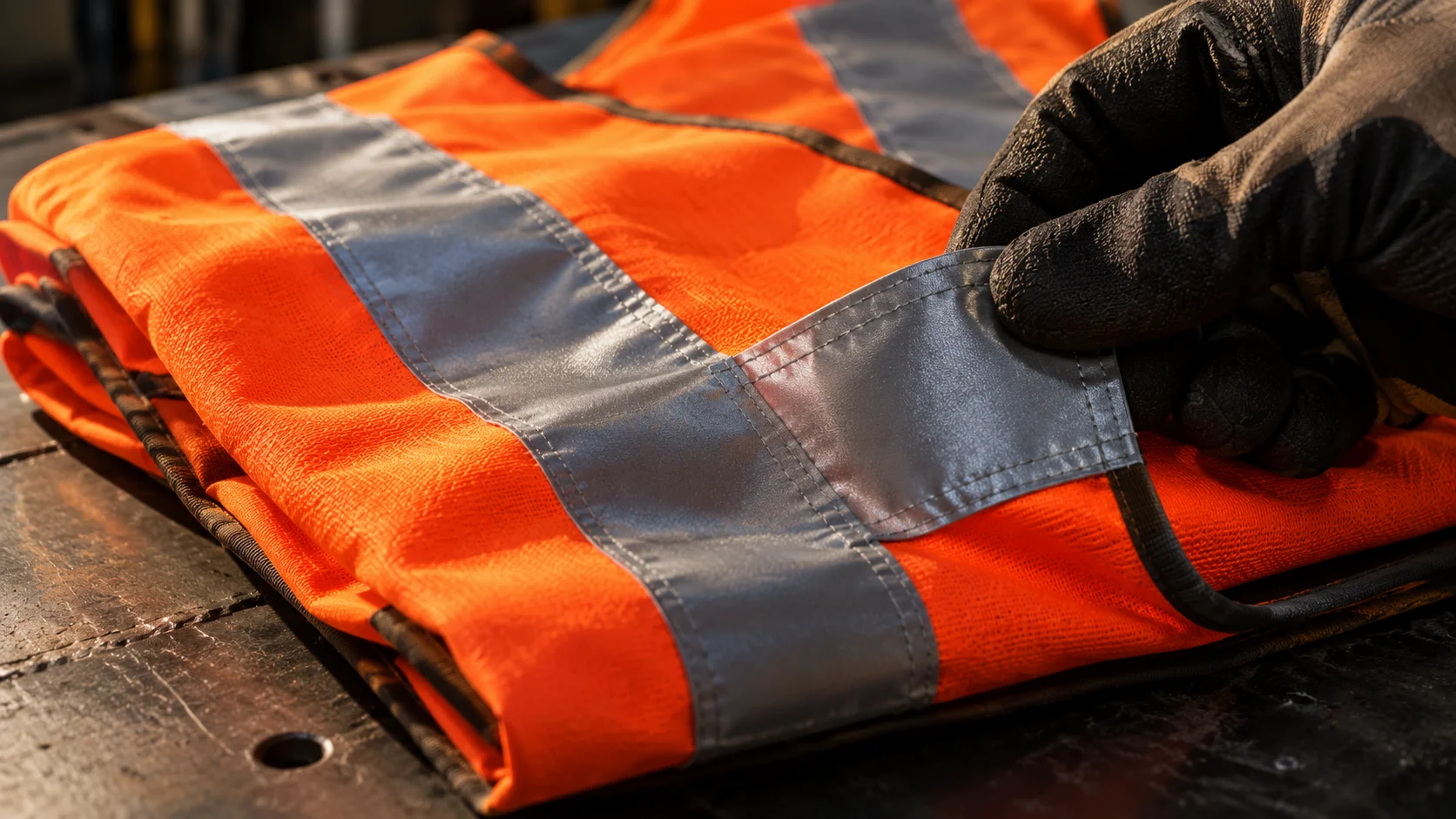
Hi-vis workwear for use in Australian workplaces, particularly road and rail work environments, is assessed under AS 4602.1 (High visibility safety garments). The standard specifies retroreflective tape area, fluorescent background material colour, and garment construction. Chinese hi-vis garments may meet similar performance parameters but may use tape widths or background material specifications that do not satisfy the specific AS 4602.1 requirements. This is a category where Australian construction and road-works procurement teams regularly specify the AS 4602.1 class (D, N or D/N) and level explicitly in purchase orders, and where a garment that does not carry an AS/NZS test report will be rejected on site.
Australian Mandatory Standards for PPE
Australian Consumer Law and Work Health and Safety legislation create two overlapping compliance obligations for PPE importers. Consumer Law mandatory standards apply to goods placed on the general Australian market. WHS standards apply when PPE is supplied for use in workplaces.
No single Australian mandatory standard covers all PPE. The relevant standards apply by product category, and the applicable standard is determined by the specific PPE item’s HS classification and intended use. The key applicable standards include:
- AS/NZS 1801:2024: Occupational protective helmets (industrial safety helmets)
- AS/NZS 1337.1:2010: Eye protectors for industrial applications (safety glasses and goggles)
- AS/NZS 1716:2012: Respiratory protective devices (particulate, gas, combined)
- AS 4602.1:2024: High visibility safety garments, Part 1: Garments for high risk applications
- AS 2210.3:2019: Personal protective equipment, Part 3: Safety footwear (safety boots)
- AS/NZS 2161.1:2016: Occupational protective gloves, Part 1: Selection, use and maintenance
- AS/NZS 1891.1:2020: Personal equipment for work at height, Part 1: Full body, combination and lower body harnesses
PPE that falls within a mandatory standard category must comply with that standard before being placed on the Australian market. The importer, as the responsible supplier, bears legal responsibility for compliance. Supplying non-compliant PPE is a breach of Australian Consumer Law. Where workplace use is involved, it may also constitute a breach of Work Health and Safety legislation, with substantially higher penalties and the potential for coronial inquiry involvement if a worker is injured using non-compliant equipment. What triggers a closer ABF customs inspection depends largely on documentation accuracy rather than product category, so get the paperwork right before the shipment reaches the border.
For a full breakdown of Australian mandatory PPE standards, the applicable test requirements, and the ACCC’s enforcement approach, the PPE import compliance guide for Australia covers each category in detail.
Pre-Shipment Testing: Closing the Compliance Gap
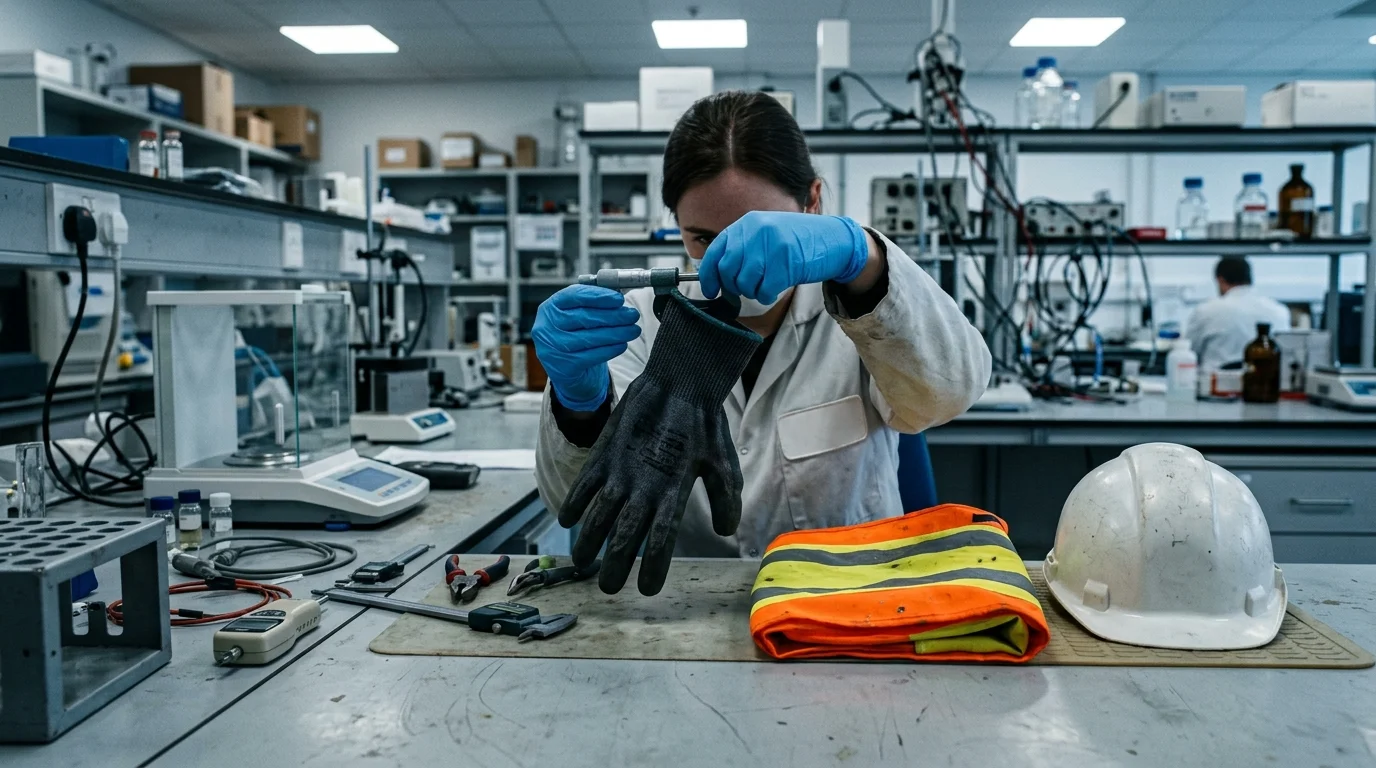
Pre-shipment testing against the relevant AS/NZS standard is the most reliable way to confirm that Chinese-manufactured PPE will meet Australian requirements before it ships. A NATA-accredited laboratory, or an internationally accredited laboratory with a Mutual Recognition Agreement with NATA, should test the PPE.
The structure of a pre-shipment testing programme for PPE from China:
- Obtain the supplier’s existing test reports. Most established Chinese PPE manufacturers hold test reports against relevant GB standards and often against ISO or European (EN) standards as well. These reports establish the product’s baseline performance and identify whether the performance gap between GB and AS/NZS is likely to be material. If a Chinese supplier cannot provide any test documentation, not even a GB standard test report, its quality management processes require scrutiny before an order is placed.
- Assess the gap between existing reports and AS/NZS requirements. For some PPE categories (safety glasses, ear protection, many protective gloves), the GB and AS/NZS performance requirements are close enough that a product meeting GB requirements will also meet AS/NZS. For others (P2 respirators, safety helmets, safety footwear), the test conditions are sufficiently different that AS/NZS-specific testing is required to confirm compliance.
- Commission AS/NZS testing on production samples before the main run. Before the bulk production run is complete, testing a pre-production sample or an initial production sample against the relevant AS/NZS standard catches problems before they are replicated across thousands of units. If testing happens only after production is complete and the goods are packed for export, a test failure means either a delayed shipment or accepting non-compliant goods.
- Maintain test reports for the product lifecycle. AS/NZS test reports do not expire in a formal sense, but they apply to the product configuration and materials that were tested. If the supplier changes the filter media in a respirator, the shell material in a helmet, or the retroreflective tape supplier in a hi-vis garment, the test report no longer covers the current product. For ongoing supply programs, industry practice is periodic re-testing, typically every 2–3 years or at any significant product specification change.
NATA-accredited laboratory testing for PPE items typically costs AUD 800–3,500 per test depending on the standard and the number of performance parameters assessed. The lead time for testing is typically 3–6 weeks. For a first-time order from a new Chinese supplier, treat the testing timeline as a fixed part of the order schedule, not an optional post-order step.
Biosecurity and Packaging Requirements
Most PPE imported from China presents minimal biosecurity risk at the Australian border. Finished goods (helmets, gloves, respirators, safety glasses) are manufactured items that do not carry the biological material that triggers biosecurity examination. However, two areas warrant attention:
- Wooden packaging and pallets. PPE is frequently palletised on timber pallets for container loading in China. All timber packaging must comply with ISPM 15 (International Standards for Phytosanitary Measures No. 15), the international standard for heat treatment or methyl bromide fumigation of wooden packaging. Non-compliant timber packaging at an Australian port results in mandatory treatment at the importer’s cost, or in some cases, destruction of the packaging. Require ISPM 15 certification from your Chinese supplier as a standard purchase order condition. Most major Chinese exporters are already aware of this requirement, but verification matters.
- Organic or natural material components. PPE incorporating untreated animal-derived materials (leather work gloves, wool linings in winter PPE, untreated bamboo elements) may attract DAFF biosecurity examination. Finished leather goods and tanned leather products are generally low risk, but declaration is required on the import entry.
Import Documentation Checklist for PPE from China
Freight and customs documents (required for clearance):
- Commercial invoice, with HS codes, quantities, FOB value, and buyer/seller details
- Packing list, itemised by carton, with weights and dimensions
- Bill of lading or airway bill
- ChAFTA Certificate of Origin (Form C/O), required to claim 0% duty rate
- ISPM 15 certificate, for all timber packaging
Compliance documents (held by importer, produced on request):
- AS/NZS test report from an accredited laboratory, for each PPE category being imported
- Supplier’s Chinese GB standard certificate, as supplementary evidence of the quality management process
- Pre-shipment inspection report, if a PSI was conducted
- Declaration of conformity, a signed statement from the supplier or importer confirming the goods meet the applicable AS/NZS standard
The ACCC and Safe Work Australia do not routinely test PPE at the border. They act on complaints, incidents, and targeted market surveillance. The importer’s risk is not primarily at the border; it is in the market, in the workplace, and in the event of a worker injury involving PPE that is later found to be non-compliant. Holding the compliance documentation on file is the evidentiary foundation of a defensible position if a product is ever investigated.
Freight Options for PPE from China
PPE from China is typically non-hazardous freight with no dangerous goods classification. Respirator canisters containing activated carbon are an exception, as some may be classified as hazardous under IATA DGR for air freight. Standard PPE items (helmets, gloves, glasses, hi-vis clothing) ship as general cargo without restriction on sea or air freight.
- LCL sea freight for trial orders and smaller volume programs, typically 15–40 days port-to-port from Chinese ports to Australian capitals, with door-to-door adding 5–10 days. Economical for orders below 12–15 CBM.
- FCL sea freight for established volume programs. A 20ft container is 5.9 m long by 2.35 m wide inside, which takes about 10 standard pallets on the floor, or roughly twice that when light PPE cartons can be stacked two high. This makes FCL viable for regular replenishment orders. For PPE categories with high unit volume (disposable masks, gloves), FCL is cost-effective at relatively modest SKU counts.
- Air freight for urgent replenishment, seasonal demand spikes, or small high-value orders (specialist respirators, powered air-purifying respirators). Cost is typically 6–10x sea freight per kg, but the 3–7 day transit versus 25–35 days sea makes it the right choice when supply continuity has a direct cost.
For the LCL vs FCL decision framework, including the volume crossover point and how the destination handling fee affects the total, the LCL vs FCL guide for Australian importers covers the analysis applicable to PPE and other general cargo.
For a complete overview of the Australia import process from supplier to warehouse (the nine stages, the documentation at each, and the cost implications), the China to Australia import guide and the total landed cost framework cover the full picture.
Working With a Freight Forwarder on PPE from China
PPE imports from China have a compliance dimension that most general freight forwarders do not manage: the AS/NZS testing, the supplier GB certificate review, the declaration of conformity. A forwarder’s role is the logistics and customs clearance; the compliance responsibility sits with the importer. A good forwarder can flag when a shipment description raises a classification question (a respirator that might be HS 9020 or HS 6307), ensure the ChAFTA Certificate of Origin is in order before clearance, and connect the importer with a customs broker who knows which PPE categories attract targeted examination at Australian ports.
Swift Cargo’s Australia import service covers China-sourced PPE freight with ChAFTA documentation review and licensed Australian customs brokerage. For a quote on your China-to-Australia PPE freight program, sea or air, LCL or FCL, request a quote from Swift Cargo.
The Structural Advantage in PPE Compliance
AS/NZS testing before the first bulk order costs AUD 800–3,500 per standard. Skipping it and receiving non-compliant goods at the Australian warehouse costs the same freight, duty, and customs charges on stock that cannot legally be sold, plus the risk of a mandatory recall that exposes the failure to customers and regulators at once.
A Checklist to Import PPE from China to Australia
Classify each item and arrange the ChAFTA Certificate of Origin through the purchase order, then ask for AS/NZS test reports from a NATA-accredited laboratory rather than relying on GB certificates. Budget AUD 800 to 3,500 per standard and 3 to 6 weeks for testing, and hold the compliance file yourself.
Frequently Asked Questions
What is the import duty on PPE from China to Australia?
Under ChAFTA, most PPE originating in China is duty-free. Disposable masks (HS 6307), hi-vis protective clothing (HS 6211) and safety glasses (HS 9004) are 0% under ChAFTA, compared to a general MFN rate of 5%. Safety helmets (HS 6506), breathing apparatus (HS 9020) and most protective gloves are already duty-free under the general rate, so ChAFTA provides no additional saving on those categories. A valid Certificate of Origin (Form C/O) from CCPIT or an authorised Chinese body is required to claim the 0% ChAFTA rate.
Do Chinese GB standards meet Australian AS/NZS requirements for PPE?
Not automatically. Chinese GB standards are designed for the Chinese regulatory environment and have different test methods, performance thresholds, and marking requirements than Australian AS/NZS standards. A GB certificate confirms the product has been tested. It does not confirm the product would pass AS/NZS testing. For PPE sold into Australian workplaces, an AS/NZS test report from a NATA-accredited or internationally accredited laboratory is the required evidence of compliance. Some GB standards align closely with ISO standards that underlie AS/NZS equivalents, but alignment must be verified for each PPE category, not assumed.
Is respiratory protective equipment from China safe to import to Australia?
Respirators can be imported from China and used in Australian workplaces, provided they meet AS/NZS 1716 or an accepted equivalent. KN95 respirators certified under Chinese standard GB 2626 are not automatically equivalent to AS/NZS P2 respirators: the filtration efficiency threshold is similar but test methods differ. SafeWork NSW treats KN95 as equivalent to P2 but does not recommend it unless the buyer fully understands the product’s testing and quality control, and the model WHS Regulations name AS/NZS 1716:2012 for respirators. Importers risk non-compliance with Work Health and Safety legislation if they supply KN95 respirators for workplace use in Australia without evidence that they meet AS/NZS 1716 or an accepted equivalent.
What pre-shipment testing is required for PPE from China?
Pre-shipment testing against AS/NZS standards is not required by Australian customs at the border, but it is required by the importer’s obligations as responsible supplier under Australian Consumer Law and WHS legislation. The standard approach is to commission AS/NZS testing on production samples from a NATA-accredited laboratory before the bulk production run ships. Testing cost is typically AUD 800–3,500 per standard, with 3–6 week lead times. Testing after goods arrive in Australia, or not at all, shifts all non-compliance risk to the importer.
What HS codes apply to PPE imported from China to Australia?
Key HS codes: safety helmets (6506.10), safety glasses and goggles (9004.90), knitted protective gloves (6116.10), rubber gloves (4015.19), plastic gloves (3926.20), disposable face masks and respirators (6307.90), breathing apparatus including SCBA and PAPR (9020.00), hi-vis workwear (6211.33 / 6211.43), safety footwear (6403.40 / 6401.10). Classification to the full 8-digit tariff line determines the duty rate, and the heading or chapter determines which ChAFTA rule of origin applies.