Author: SwiftCargo Team

  • Thailand Relocation Door-to-Door: The Five-Party Chain Explained

    Thailand Relocation Door-to-Door: The Five-Party Chain Explained

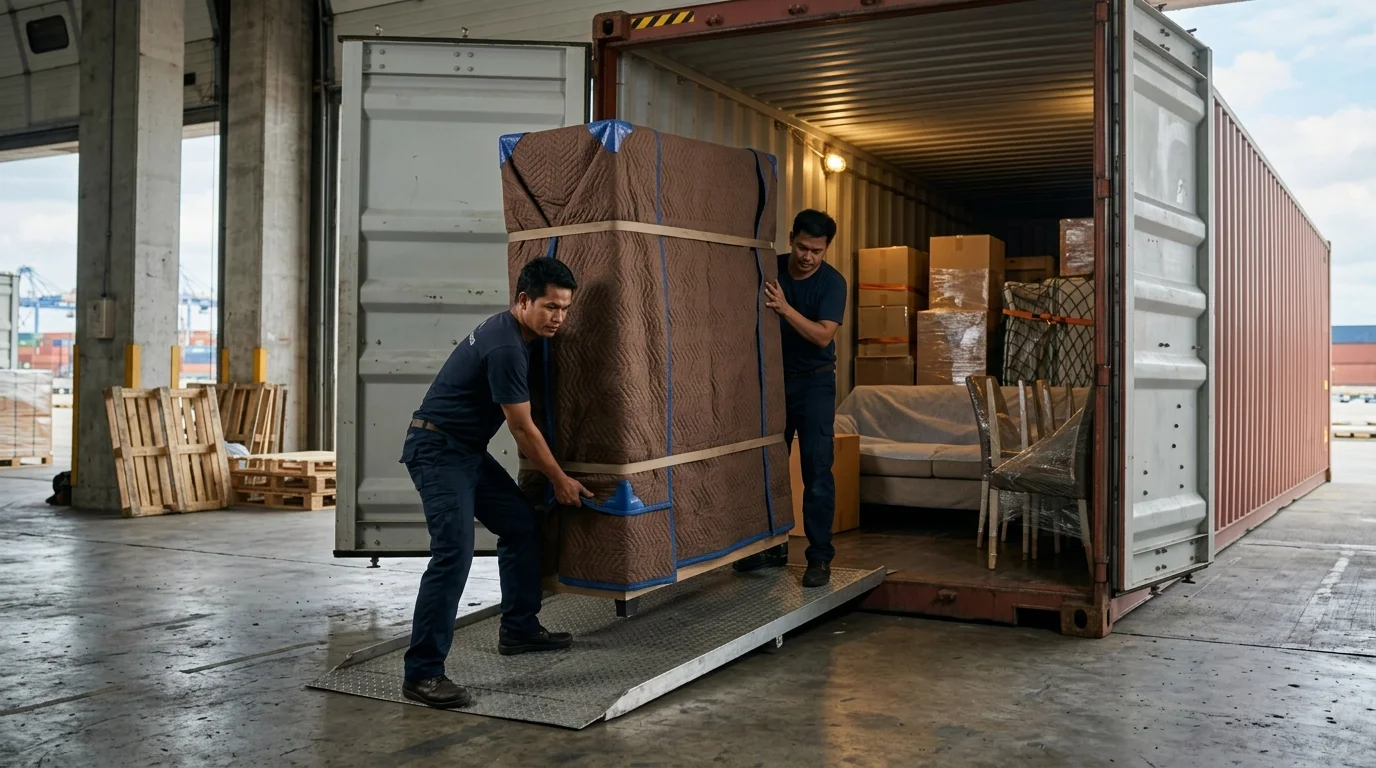
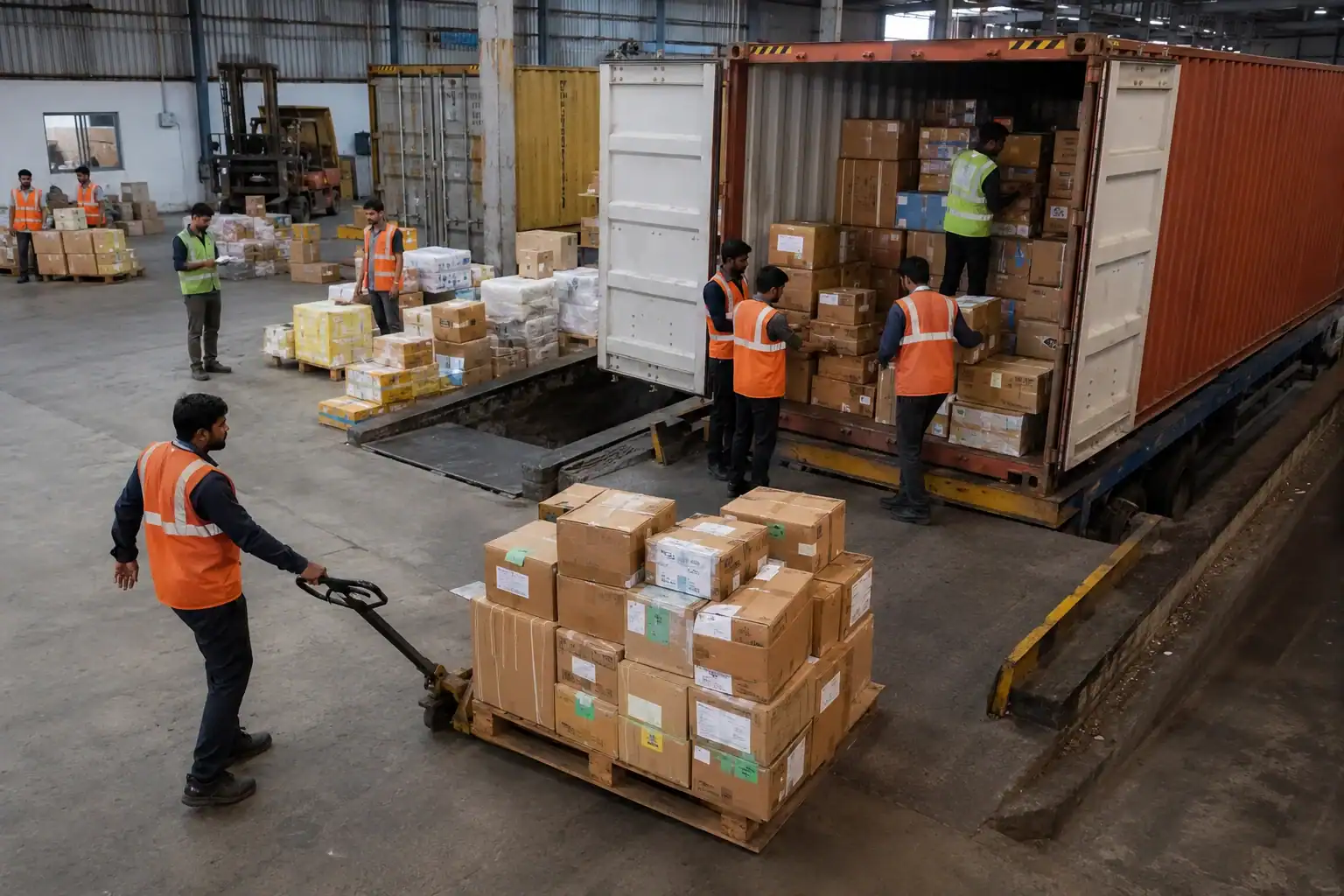
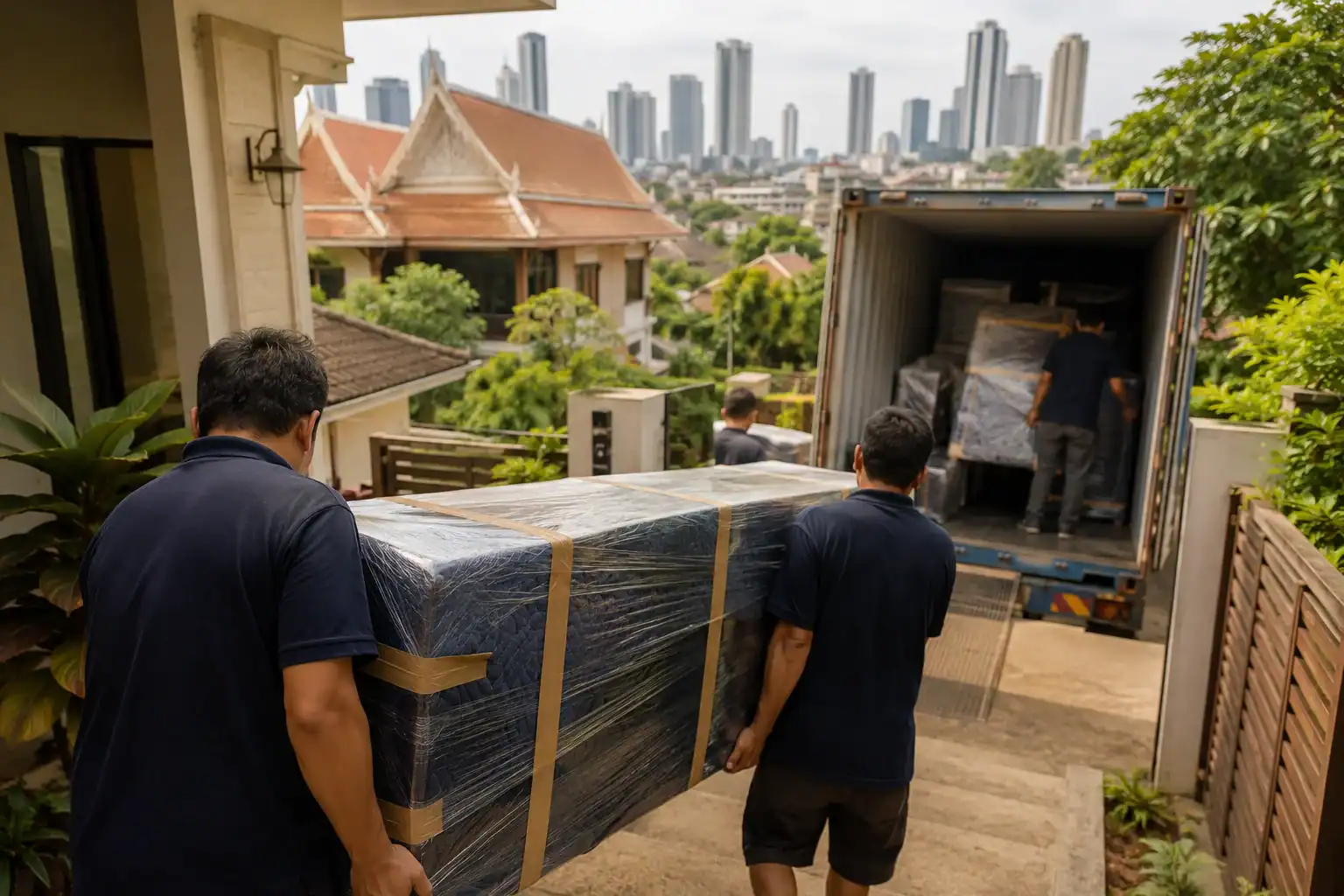
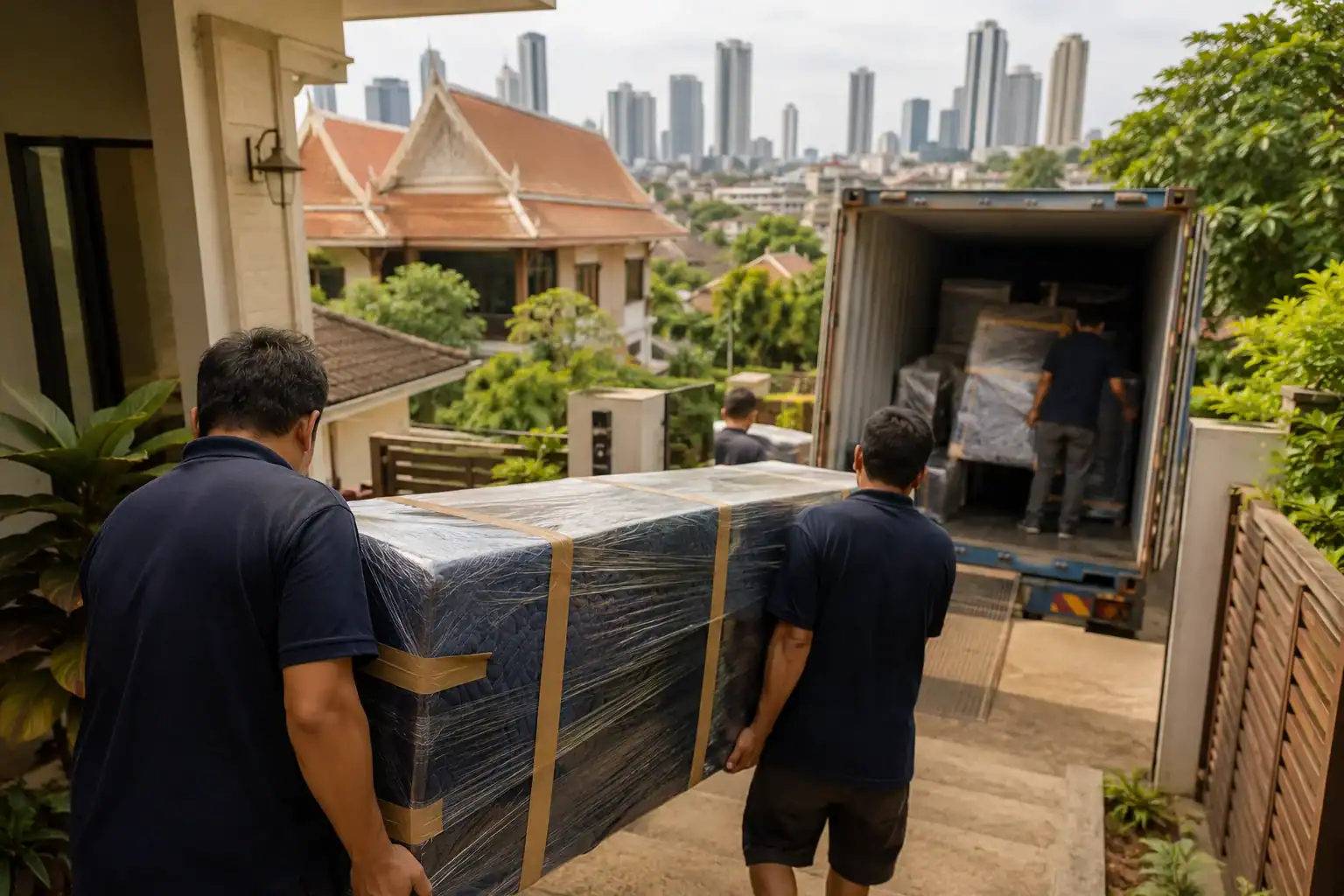
    Removal crew loading furniture for door-to-door relocation to Thailand

    “Door-to-door” is the most quoted and least explained phrase in international removals. Every company offers it. Few explain what actually happens between the two doors: who touches your goods, when responsibility transfers, which charges are inside the quote and which are waiting outside it.

    A genuine door-to-door relocation to Thailand is a chain of at least seven distinct services performed by at least five different parties: the origin removals crew, the origin freight forwarder, the shipping line, the Thai customs broker, and the Thai delivery crew. When the service works well, the customer never has to coordinate any of them. When it works badly, the customer discovers the chain only when one link fails, usually at Thai customs, usually with their furniture sitting in a bonded warehouse.

    What “Door-to-Door” Actually Includes: The Three Service Levels

    Door-to-door is a scope definition, not a service standard. It means the price covers movement from the origin address to the destination address. It says nothing about who packs, who unpacks, or what happens if customs holds the shipment. Within “door-to-door” there are three recognised service levels:

    • Door-to-door (standard): the mover collects packed goods at origin and delivers boxes and furniture to the destination address, usually to the ground floor or first accessible room. The customer packs and unpacks, unless those services are added.
    • Door-to-door with packing: the origin crew packs everything professionally: export wrapping for furniture, cartons for loose items, an itemised inventory created as they pack. This is the standard recommendation for Thailand moves because Thai customs requires an itemised packing list, and a professionally created inventory meets that standard automatically.
    • Full door-to-door (premium): packing at origin, delivery, placement of furniture in rooms, unpacking, and removal of packing debris at destination. Sometimes called “white glove.”

    The single most consequential choice is professional packing. It is not only about damage protection. Thai customs scrutinises the packing list before the shipment arrives. The duty-free personal effects concession depends on a list that names items rather than summarising them. A crew-created inventory is exactly the standard Thai customs expects: “Carton 14: kitchen, saucepans x4 (used), dinner plates x12 (used), glassware x18 (used).” A self-packed move where the list says “kitchen items” invites examination. For the full packing list standard and what triggers examination, see our guide on how to avoid customs delays when moving to Thailand.

    Stage 1: The Pre-Move Survey

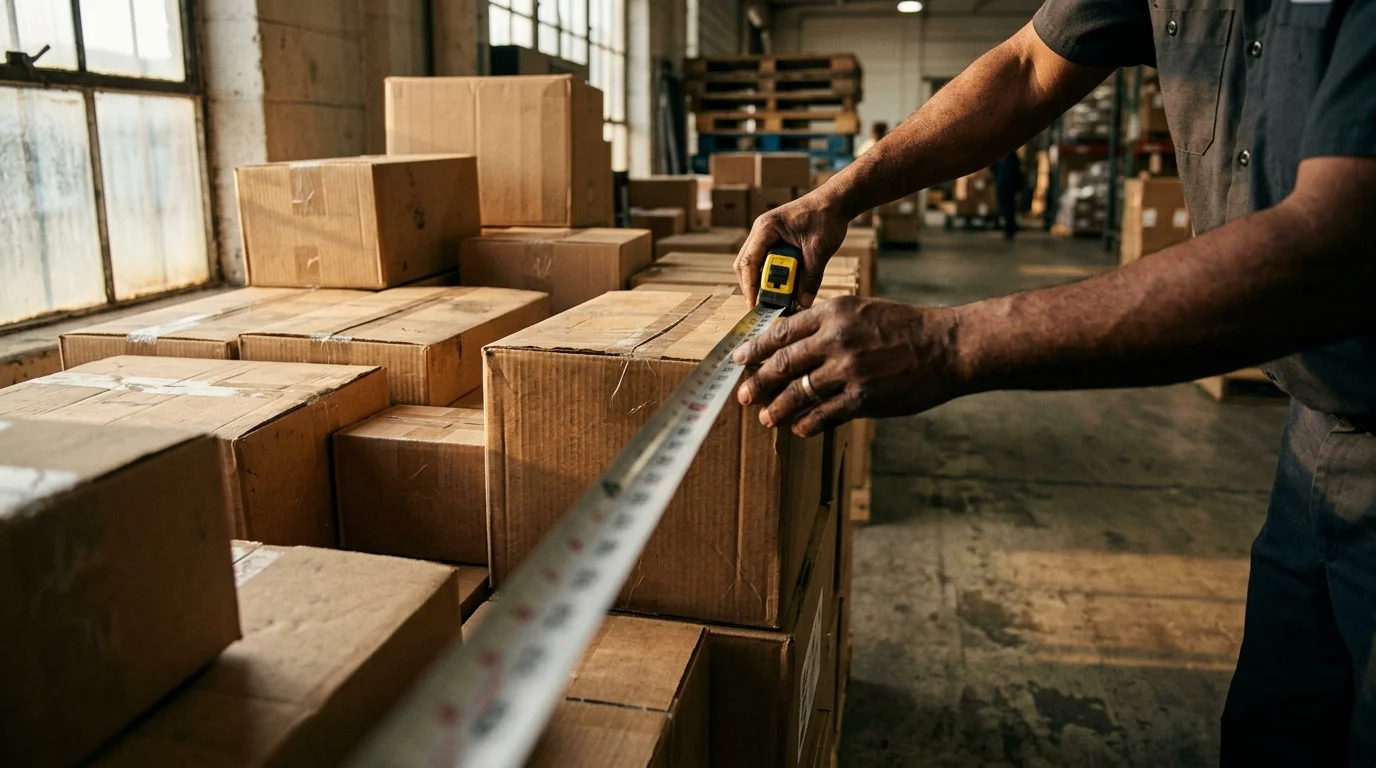
    Every genuine door-to-door quote starts with a survey, in person or by video call. The mover assesses the volume of goods, access conditions at the origin property, and any special items such as pianos, artwork, safes and gym equipment. The survey produces the volume estimate in cubic metres (CBM) that determines everything downstream: LCL or FCL, container size, crew size, and price.

    A company that quotes a fixed price without a survey is guessing. If they guess low, the shortfall appears later as a revised invoice or a dispute on packing day when the crew discovers a garage full of unmentioned boxes. Volume determines mode: under roughly 13–15 CBM, your goods will travel as LCL in a shared container; above that, a dedicated container becomes economic. See our guide to FCL shipping to Thailand for the crossover arithmetic.

    At survey stage, also confirm your destination details: the delivery address, floor level, lift availability, and parking access at the Thai property. Bangkok condominiums frequently require you to book the service lift in advance and the delivery crew to show proof of insurance; a mover who asks about this at survey is one who has delivered in Bangkok before.

    Stage 2: Packing and Collection at Origin

    On packing day, the crew export-wraps furniture, cartons loose items, and builds the inventory as they go. Export wrapping means a paper blanket plus bubble or corrugated wrap, not the reusable blankets used for domestic moves, which never travel inside containers. Each carton is numbered and its contents recorded. A typical two-bedroom household takes one to two days to pack.

    For FCL moves, the container is delivered to the origin address and loaded directly. The goods are handled once between your home and the Thai port. For LCL moves, goods travel by truck to the forwarder’s warehouse, where they are consolidated into a shared container. This difference matters for fragile items: LCL adds handling events, which is why professional export packing pays off even more on smaller moves.

    When the crew finishes, you sign the inventory. From this point the inventory is a legal document: it is the basis of the customs declaration, the insurance schedule, and the delivery checklist in Thailand. Review it before signing. Items not on the inventory are not insured and not declared.

    Stage 3: Export Formalities and Ocean Transit

    The origin forwarder files the export declaration, books the vessel, and issues the Bill of Lading. The export entry itself differs by country: the customs export entry in the UK, the ABF/ICS export declaration in Australia, and an AES/EEI filing in the US for shipments over USD 2,500. For household goods moves, a telex release is standard: no original documents need to travel to Thailand.

    Transit times to Laem Chabang, Thailand’s main container port:

    • UK (Felixstowe/Southampton): 28–36 days
    • Northern Europe (Hamburg/Rotterdam): 26–32 days
    • Australia (Sydney/Melbourne): 12–20 days
    • USA (Los Angeles/Long Beach): 20–26 days
    • Singapore: 3–5 days

    During transit, the operator tracks the vessel, updates you on the ETA and, most critically, transmits the document set to the Thai customs broker well before arrival. The customer sees nothing happening; the operator is making sure the Thai side is ready before the vessel berths.

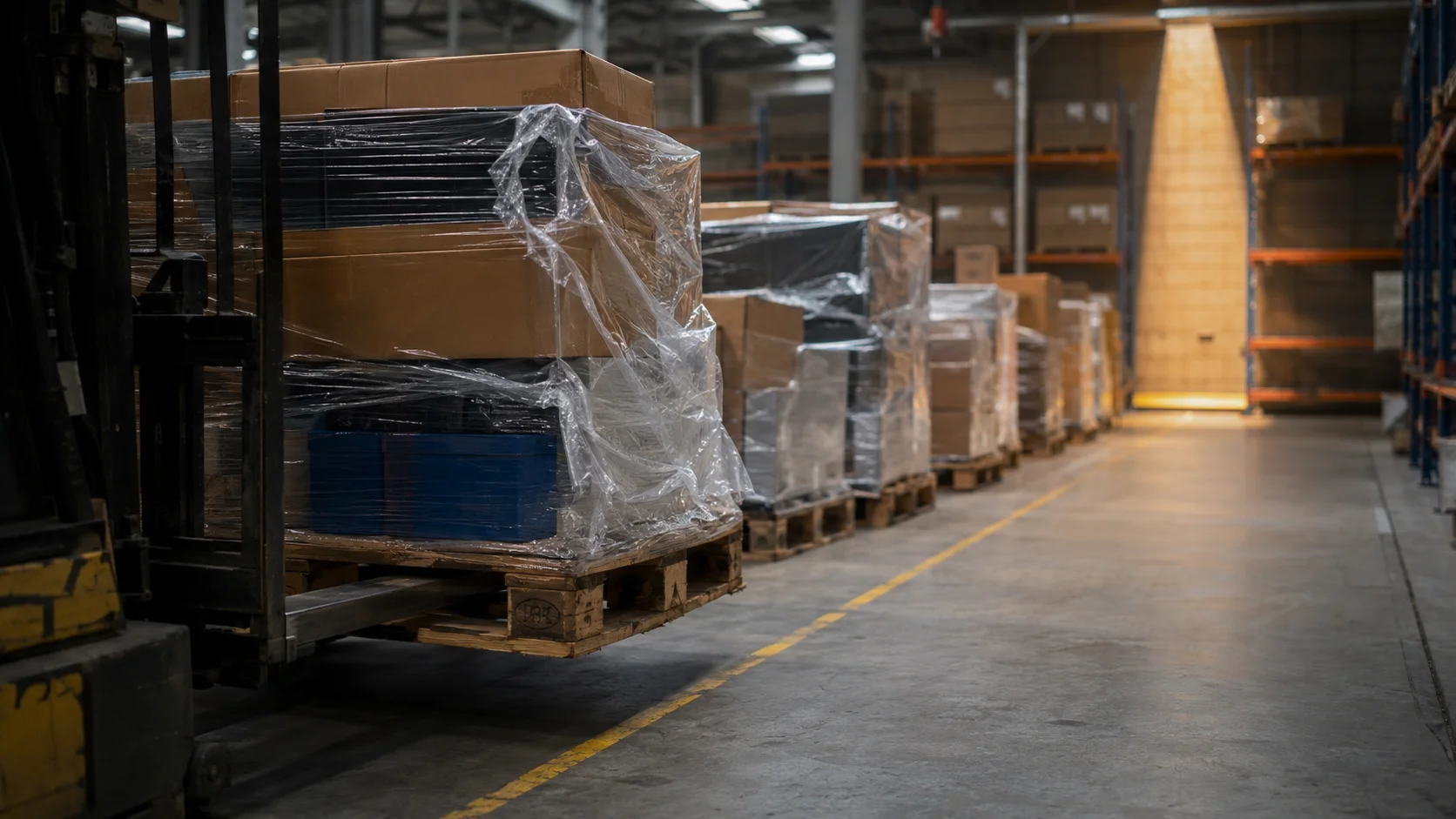
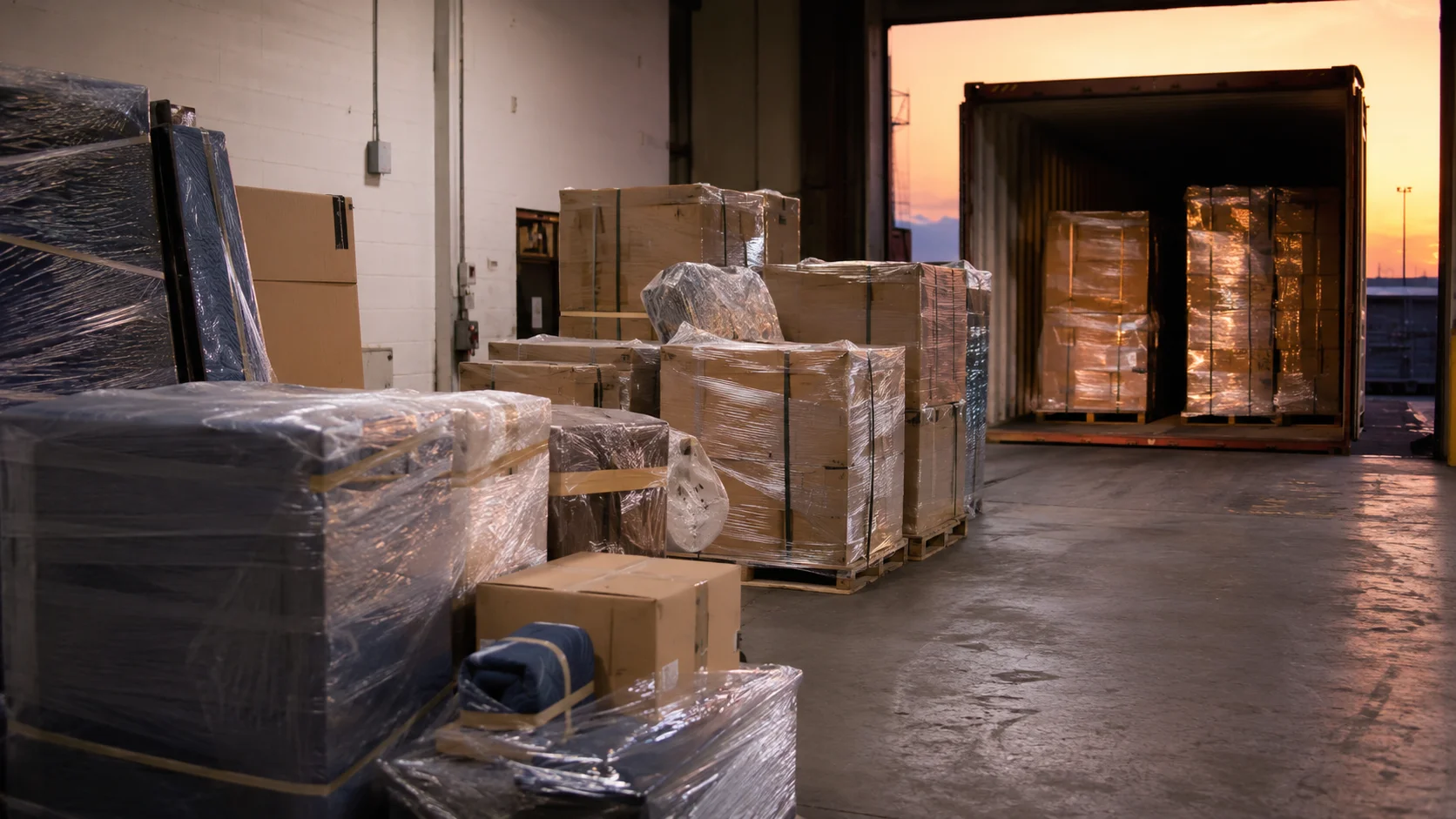
    Palletized household cargo moving through a structured customs-processing warehouse in Thailand, photographed from a low angle as a pallet jack guides a wrapped pallet close past camera, warm mixed daylight and industrial lighting behind, tropical humidity softness in the background architecture.

    Stage 4: Thai Customs Clearance

    This is the stage that makes or breaks the door-to-door experience. The door-to-door operator appoints the Thai customs broker, not you. That broker files the import declaration and, where the shipper qualifies, the personal effects duty-free application.

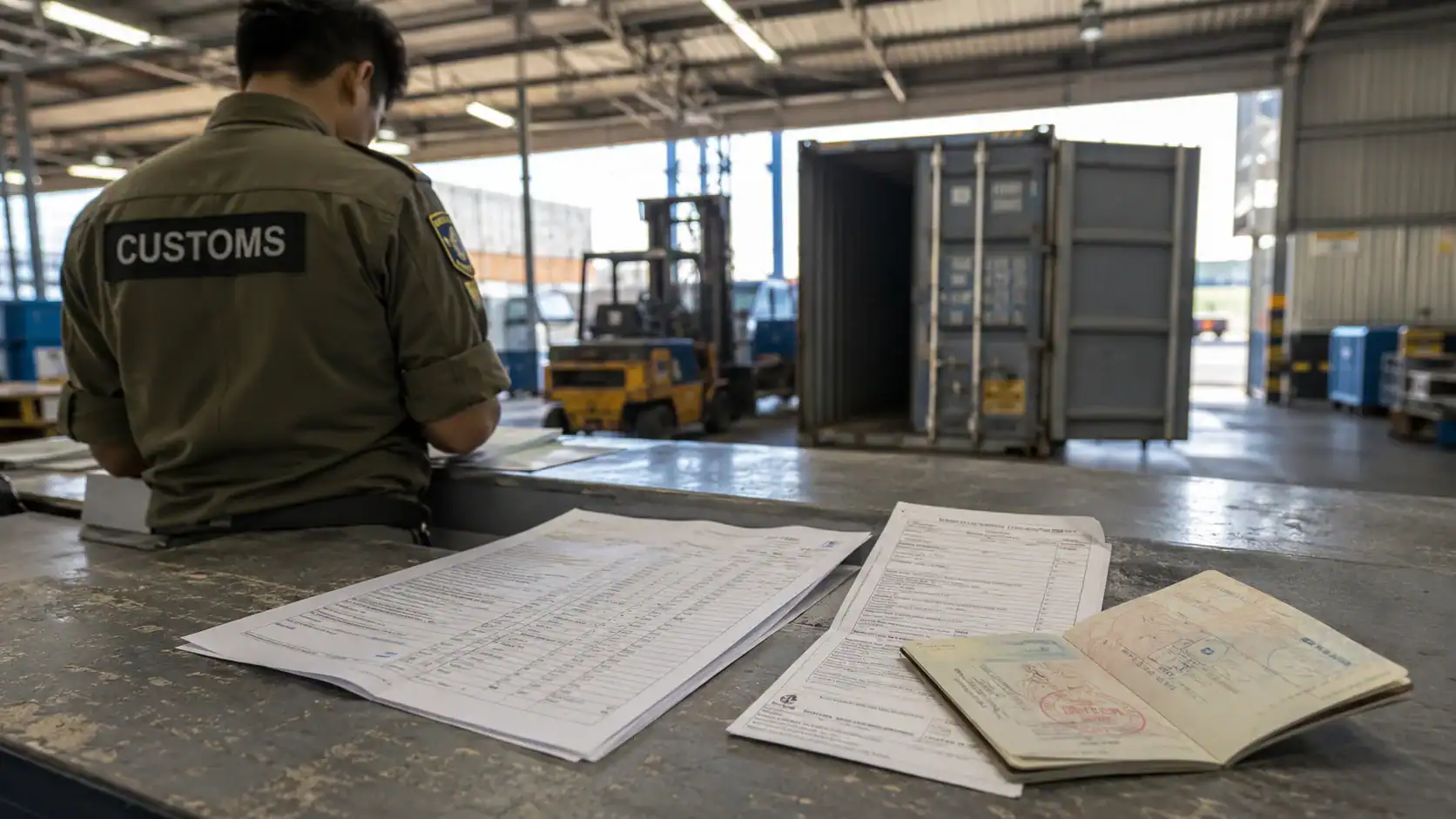
    The duty-free concession requires a qualifying status, goods arriving within six months of your first entry on it, and used household goods for personal use. Thai Customs grants the concession against documented status, not against a long-stay visa in general. The qualifying routes are a one-year Thai work permit (in practice with a Non-Immigrant B), a non-immigrant visa with a confirmed working period of not less than one year, Thai permanent residence, a full one-year Smart Visa, or returning-Thai-national status after 12 or more consecutive months abroad. The document set comprises a passport copy with the entry stamp, status documentation, the itemised packing list, and the Bill of Lading.

    Retirement visas do not qualify. A Non-Immigrant O, O-A or O-X holder pays import duty and 7% VAT on the shipment, and Thailand Elite and education visas fall outside the concession on the same basis. Getting this wrong changes what the move costs rather than when it arrives, which makes it the single most expensive assumption a door-to-door customer can carry into a quote. For the qualifying conditions in detail, see duty-free import rules in Thailand.

    With complete documents submitted before the vessel arrives, a personal effects shipment typically clears in three to five working days. Clearance must complete inside the free time at Laem Chabang before storage charges begin: 7–14 days for FCL, 3–7 days at the CFS for LCL. A door-to-door operator manages this window properly by collecting your documents at packing stage, rather than asking for them once the vessel arrives.

    If customs orders a physical examination, add two to four working days. Examination is usually triggered by packing list quality, not bad luck. That is another reason the professionally created inventory earns its cost.

    Stage 5: Delivery, Placement, and the Empty Box Problem

    After release, goods travel by truck from Laem Chabang to your Thai address: Bangkok is 90 minutes; Chiang Mai is a 9–10 hour trunk haul; Phuket 10–12 hours. Island and remote destinations may involve a ferry leg and an additional day.

    At delivery, service level matters again. Standard door-to-door delivers to the first accessible point. With placement service, the crew positions furniture room by room against the numbered inventory. With full unpacking, the crew empties cartons to surfaces and removes all packing debris. In a full household move that debris fills a surprisingly large volume. Without that service it is yours to dispose of, in a country where you don’t yet know how waste collection works.

    Check deliveries against the inventory as they come off the truck. Note any damage or missing items on the delivery receipt at the time of delivery. Marine insurance claims depend on exceptions recorded at delivery, not on damage discovered three weeks later.

    Where Responsibility Sits: The Single Point of Contact Test

    The defining feature of genuine door-to-door service is a single contract and a single point of accountability. You pay one company; that company subcontracts the chain (origin crew, ocean freight, Thai broker, Thai delivery crew) and remains responsible for all of it. If the Thai delivery crew damages a wardrobe, your claim goes to the company you paid, not to a Thai subcontractor you’ve never heard of.

    The alternative is to book origin removals, freight, and destination services separately. That can be cheaper on paper, but it makes you the integrator. Every handover between parties you’ve separately contracted is a gap where responsibility can fall through. For most relocators, the integration premium of a single door-to-door contract is worth paying. For what the full removals process looks like from booking to delivery, see international removals to Thailand.

    That 10–20% saving is not free money: it is a job. Self-integrating means quietly hiring yourself as the project manager of a five-party logistics chain across two continents, in a second language, usually while also starting a new life in a new country. The people who regret this are rarely the ones who lost money; they are the ones who lost three weekends chasing a customs broker in a time zone six hours away, or who found out on delivery day that no one had been contracted to carry a sofa up four flights of stairs. The premium a single door-to-door operator charges is insurance against your own future bandwidth. During a move, bandwidth is the scarcest thing you own.

    A delivery team unloading a single wrapped wardrobe from a small truck outside a Bangkok condominium's rear loading bay, one mover guiding the base while the other steadies the top on a hand trolley, believable contact with the ground and realistic shadow beneath the wheels.

    What a Complete Door-to-Door Quote Must Include

    What a quote silently excludes is why two quotes for the “same” door-to-door service can differ by thousands. A complete quote includes:

    • Professional packing and materials (if selected), including the inventory the crew creates as it packs
    • Origin collection, export customs formalities, and origin port charges (THC, documentation)
    • Ocean freight including current surcharges (BAF, peak season surcharges where applicable)
    • Destination THC and CFS/port handling at Laem Chabang
    • Thai customs brokerage including the personal effects duty-free application
    • Delivery to the destination address, with the floor level and access conditions stated
    • The free storage period and the daily rate after it expires

    Ask explicitly about the common exclusions: marine insurance (almost always quoted separately, typically 2.5–3.5% of declared value for all-risks cover), customs examination fees if an inspection is ordered, storage and demurrage if clearance runs past free time, shuttle vehicle fees if a container cannot access the destination street, and stair-carry or long-carry fees at delivery. Their absence from a quote does not mean they will stay off the invoice. For the full anatomy of what freight quotes leave out, see hidden costs of shipping to Thailand.

    Indicative Door-to-Door Costs to Thailand

    Working ranges for a door-to-door move with professional packing (origin city to Bangkok, 2026 market conditions):

    • UK → Bangkok, 1-bedroom (8–12 CBM, LCL): GBP 3,000–4,800
    • UK → Bangkok, 3-bedroom (20ft FCL): GBP 5,500–8,000
    • Australia → Bangkok, 1-bedroom (LCL): AUD 3,500–5,500
    • Australia → Bangkok, 3-bedroom (20ft FCL): AUD 7,000–10,500
    • USA → Bangkok, 1-bedroom (LCL): USD 3,500–5,500
    • USA → Bangkok, 3-bedroom (20ft FCL): USD 7,500–11,000

    Deliveries beyond Bangkok add THB 8,000–25,000 depending on distance and access. These ranges assume duty-free clearance under the personal effects concession; a shipment that doesn’t qualify adds duty and 7% VAT on the assessed value. For a tailored quote based on your volume and origin, see how the shipping process works and request a quote.

    The Timeline: Booking to Delivery

    A realistic end-to-end door-to-door timeline from a European origin:

    1. Week 0: survey and quote; book 4–8 weeks ahead of your preferred packing date
    2. Week 4–6: packing and collection (1–2 days); documents collected by the operator
    3. Week 5–7: export clearance and vessel departure
    4. Week 9–11: vessel arrives Laem Chabang; customs clearance (3–5 working days with pre-filed documents)
    5. Week 10–12: delivery to your Thai address

    From Australia, compress the ocean leg: total door-to-door is typically 5–8 weeks. From the US West Coast, 7–10 weeks. The most common timeline failure is not the ocean leg: it is the customer obtaining their qualifying status later than planned, which either delays the shipment or forfeits the duty-free concession. Check first that the status qualifies at all: a retiree on an O-A has no concession to forfeit and should budget duty and VAT from the outset. The status, not the vessel, should anchor your planning. For sequencing the entire move, see the moving to Thailand checklist.

    Call it the single point of contact test. Ask your removals company one question: if something goes wrong at any stage, packing, export, ocean transit, Thai customs, final delivery, who do you call? A real door-to-door service has one answer: us. A broker pretending to be a door-to-door service has a different answer depending on which stage broke: that’s the shipping line’s problem, that’s the customs agent’s problem, that’s the local delivery contractor’s problem. The service isn’t defined by how many stages it covers on a sales page. It’s defined by whether accountability survives contact with a problem. Ask the question before you book, not after your shipment is stuck at Laem Chabang and three different companies are pointing at each other.

    Related reading: Lire cet article en français

    Related reading: Thailand Relocation Costs 2026: Full Budget by Scenario

    Frequently Asked Questions

    Does door-to-door include Thai customs clearance?

    In any legitimate door-to-door service, yes. The operator’s Thai broker files the import declaration and duty-free application, and the brokerage fee is inside the quote. Typically not included: duty and VAT if the shipment doesn’t qualify for the personal effects concession, examination fees, and storage beyond free time.

    Do I need to be in Thailand when my shipment arrives?

    You need to have entered Thailand on your qualifying status before the shipment clears customs. The concession requires your passport entry stamp. The stamp on its own is not enough: it has to be a stamp on a status that qualifies, which a retirement O/O-A/O-X is not. You do not need to be physically present at the port. Most relocators fly ahead of their goods.

    How long does door-to-door delivery to Thailand take in total?

    From Europe or the UK: 9–12 weeks from packing day to delivery. From Australia: 5–8 weeks. From the USA: 7–10 weeks. Pre-filed customs documents keep destination-side clearance to 3–5 working days.

    What happens if my new Thai address isn’t ready when the shipment arrives?

    Operators offer storage at the Thai destination warehouse after clearance, typically THB 150–400 per CBM per month. The goods must still clear customs within your duty-free window, so don’t delay the shipping itself to wait for a lease.

    Is door-to-door more expensive than arranging shipping myself?

    Component-by-component, self-managing can be 10–20% cheaper on paper, but the saving is frequently consumed by missed cut-offs, clearance delays, or examinations triggered by self-made packing lists. For a full household with the duty-free concession at stake, the door-to-door premium buys integration and single-party accountability.
  • China to Australia Shipping Time: Port-by-Port Transit Guide

    China to Australia Shipping Time: Port-by-Port Transit Guide

    The shipping time from China to Australia is not a single number. The tails of the range are where stockouts, missed deadlines, and emergency air freight decisions happen. Most freight forwarders quote the middle of the range: 18–22 days from Shanghai. Few are forthcoming about when the range extends to 35 days, and why. China to Australia shipping time for business cargo is best planned as an end-to-end lead time, from purchase order to warehouse.

    China–Australia Import Lead Times: All 7 Stages Broken Down

    Why Quoted Transit Times Are Not the Same as Actual Transit Times

    A freight forwarder’s quoted transit time is the vessel’s scheduled port-to-port sailing duration: the time from when the container loads at the Chinese port to when the vessel arrives at the Australian port. This number has two important limitations:

    First, it excludes the time before the vessel loads (export documentation, container stuffing, port cut-off) and after the vessel arrives (customs clearance, wharf release, delivery). The port-to-port number describes the vessel’s voyage, not the time your goods take to travel from your Chinese supplier’s door to your Australian warehouse.

    Second, the port-to-port number is the scheduled time under normal conditions. Vessel delays, port congestion, transhipment connections, and weather events all extend actual transit times beyond the schedule. On the China-Australia trade lane, the difference between scheduled and actual port-to-port transit can be 3–10 days in normal conditions and significantly more during major disruption events.

    The End-to-End Timeline: All Seven Stages

    A China-to-Australia import cycle for sea freight moves through the following stages, each with its own duration and variability:

    Stage 1: Supplier Production

    Duration: 0–42 days, depending on whether goods are in stock or made-to-order.

    For ex-stock goods (items already manufactured and available in the supplier’s warehouse), this stage may be zero: the goods can ship immediately once the order is confirmed. For standard make-to-order goods (clothing, custom products, furniture), production lead times of three to five weeks are typical. For complex or high-customisation goods, six weeks or more is common.

    Many importers discover that a supplier’s stated “5–7 days” production time is optimistic during peak periods, particularly the weeks before Chinese New Year or Golden Week, when factories are working through a backlog of rush orders.

    Stage 2: Export Documentation and Stuffing

    Duration: 3–7 days.

    Once goods are ready, the supplier arranges export documentation: the packing list, commercial invoice, and (if applicable) the Certificate of Origin for FTA duty preference claims. For ChAFTA (China-Australia Free Trade Agreement), the ChAFTA Certificate of Origin, issued by the China Council for the Promotion of International Trade (CCPIT) or China Customs. Obtaining it adds 2–5 days to the documentation stage if not pre-arranged.

    The container is stuffed and transported to the port of loading. Port cut-off dates for container gate-in are typically 24–48 hours before the vessel departs. Missing the cut-off means waiting for the next sailing. On the China-Australia trade lane that next sailing may be 3–7 days later for a direct service, longer for a port-specific service.

    Stage 3: Port-to-Port Ocean Transit

    Duration: 12–28 days, depending on port pair and routing.

    The table below shows scheduled port-to-port transit times for the main China-Australia port pairs under normal operating conditions:

    Origin Port Destination Port Service Type Scheduled Days Peak Season Range
    Shanghai / Ningbo Sydney (Port Botany) Direct 18–22 20–28
    Shanghai / Ningbo Melbourne Direct 20–24 22–30
    Shanghai / Ningbo Brisbane Via transhipment 22–28 25–35
    Shanghai / Ningbo Perth (Fremantle) Via transhipment 20–26 23–32
    Guangzhou / Shenzhen Sydney Via transhipment (SG or PK) 20–26 24–33
    Guangzhou / Shenzhen Melbourne Via transhipment 22–28 25–35
    Guangzhou / Shenzhen Perth Via transhipment 18–24 21–30
    Qingdao Sydney Direct or via SG 20–26 23–32
    Tianjin Sydney Via transhipment 22–30 26–38

    Peak season range covers Q3–Q4 (July–December), when vessel space is tightest and port congestion at both ends tends to peak.

    Stage 4: Arrival at Australian Port (Vessel Queue)

    Duration: 0–5 days (vessel queue before berth).

    When a vessel arrives at Port Botany, Port of Melbourne, or another Australian port, it may not berth immediately. If the berth is occupied by another vessel, the arriving vessel anchors in the bay or anchorage area and waits. During peak periods, berth queues at Port Botany and Port of Melbourne can add 2–5 days to arrival-to-berth time.

    The port’s reported ETA is typically the vessel’s arrival at the anchorage or pilot station, not the berthing date. Goods are not discharged until the vessel is berthed. This distinction matters for customs pre-clearance timing.

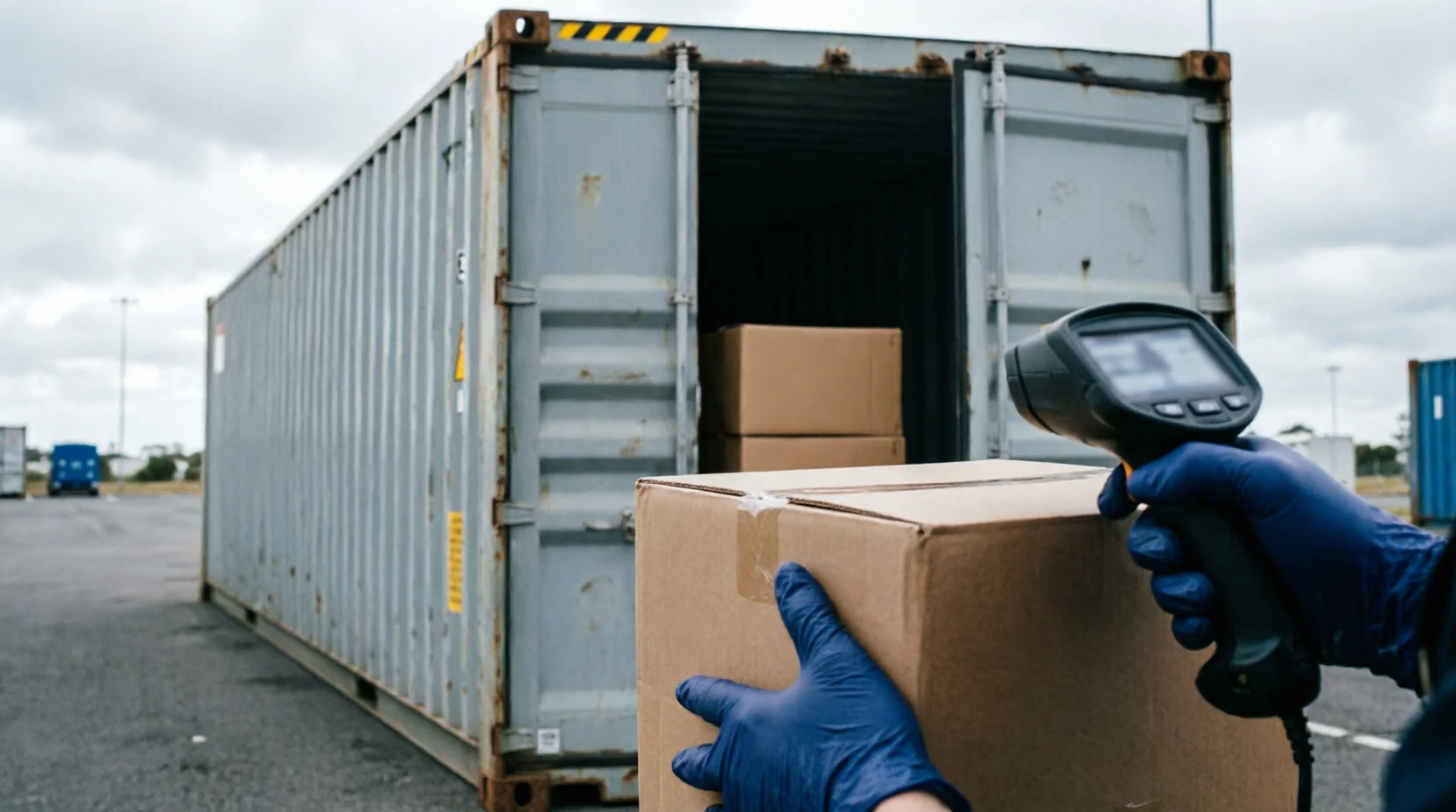
    Scanning a consignment at the container yard during Australian customs clearance

    Stage 5: Australian Customs Clearance

    Duration: 1–10 days, depending on declaration status and examination.

    Australian customs declarations are filed with the Australian Border Force (ABF) through the Integrated Cargo System (ICS). For commercial cargo, the import declaration must be lodged before the goods can be released. Customs duty, GST, and any applicable excise must be paid or deferred under a licensed broker’s deferral arrangement before the ABF issues a Release Advice.

    For a standard commercial shipment with correct documentation and HS code classification, customs clearance typically takes 1–3 business days. Key delays at this stage:

    • ABF “Hold”: a proportion of all shipments are held for examination, either directed examination (customs has a reason to examine) or random examination. A hold adds 3–7 business days while the examination is scheduled and completed.
    • DAFF (Department of Agriculture) intervention: certain goods (food, plant products, animal products, timber) require biosecurity clearance from the Department of Agriculture, Fisheries and Forestry. Biosecurity clearance runs in parallel with customs clearance but adds 2–5 days if inspection is required.
    • Documentation errors: incorrect HS code, mismatched invoice values, or missing permits delay the declaration and must be corrected before the ABF issues the Release Advice.

    For a full breakdown of what the ABF checks on Chinese imports and what documentation is required, see the Australian customs import requirements guide.

    Stage 6: Wharf Release and Container Collection

    Duration: 1–3 business days.

    After customs issues the Release Advice, the shipping line releases the container from the port. The importer or their broker pays the destination THC (Terminal Handling Charge) to the shipping line. The container is then collected by a road transport company and transported to the importer’s warehouse or a deconsolidation facility.

    Port congestion affects this stage as well: during peak periods, transport slots at port terminals can be 2–4 days from the Release Advice, rather than next-day. Importers who manage their own transport should build this congestion into their peak season planning.

    Stage 7: Delivery and Warehouse Receipt

    Duration: 1–2 business days.

    Once collected from the port, the container is transported to the importer’s warehouse. For metropolitan Sydney and Melbourne delivery, same-day or next-day delivery is typically available. For regional destinations, add 1–3 days for trunk transport.

    Total End-to-End Lead Time Summary

    Adding all seven stages:

    Stage Normal Conditions Peak Season / Delays
    Supplier production (ex-stock) 0–5 days 0–7 days
    Supplier production (made-to-order) 14–35 days 21–45 days
    Export documentation and stuffing 3–7 days 5–10 days
    Ocean transit (Shanghai → Sydney) 18–22 days 22–35 days
    Vessel queue at Australian port 0–1 day 2–5 days
    Customs clearance (no exam) 1–3 days 2–5 days
    Customs clearance (ABF exam) 4–8 days 6–12 days
    Wharf release and collection 1–2 days 2–4 days
    Delivery to warehouse 1–2 days 1–3 days

    Total (ex-stock, no exam, normal conditions): approximately 24–40 days end-to-end.
    Total (made-to-order, no exam, normal conditions): approximately 38–70 days end-to-end.
    Total (made-to-order, ABF exam, peak season): approximately 60–105 days end-to-end.

    The 60–105 day worst case is not hypothetical: it occurs regularly for importers who source made-to-order goods from slower-producing suppliers, ship during October-November peak, and encounter ABF examination. Any business where stockouts carry a meaningful cost should plan against that worst case. The China to Australia shipping time for business planning is that worst case, not the sailing time on the quote.

    China-Australia Import Lead Times: All 7 Stages Broken Down: The Four Peak Season Periods That Extend China-Australia Lead Times

    The Four Peak Season Periods That Extend China-Australia Lead Times

    Chinese New Year (January–February)

    Factory closures run from 1–3 weeks. Production rushes and port congestion fill the weeks before closure: vessels at Shanghai, Ningbo, and Shenzhen experience sailing delays of 3–7 days in the pre-CNY peak (typically late December to mid-January). Not all factory workers return immediately, so post-reopening production ramp-up takes 2–4 weeks.

    Planning rule: Orders needed in February and March must be placed by late October–November at the latest (for made-to-order goods). Orders needed in January must ship before late November.

    Golden Week in China (October 1–7)

    A one-week factory closure combines with the northern hemisphere Q4 freight surge to make October the most congested month on the Asia-Pacific trade lane. Space on direct China-Australia services tightens and vessels roll bookings. Peak season surcharges apply from approximately August onward.

    Planning rule: Orders needed for the Australian Christmas period (November–December) must be shipped by early September. Book space in July–August, before peak season surcharges rise.

    Australian Christmas Season (November–December)

    Australian port throughput reaches its highest level of the year in November–December. Port of Melbourne and Port Botany operate at near-capacity; berth queues add 2–4 days compared to the annual average. Road transport capacity also tightens, particularly in the December fortnight.

    Planning rule: Target vessel arrival at Australian ports by late October or early November for Christmas season goods. Buffer an additional week for port congestion.

    Australian Long Weekends and Public Holidays

    Each state has specific additional holidays (Melbourne Cup Day in Victoria, Show Day in Queensland). Customs clearance, wharf operations, and transport services all operate at reduced capacity on public holidays. A shipment that arrives on the Friday before a long weekend may not clear customs until Wednesday of the following week.

    Planning rule: Check the public holiday calendar for the destination state when scheduling vessel arrival. Arriving on Thursday before a long weekend (rather than Monday after it) saves 3–4 days.

    ChAFTA and Certificate of Origin: Impact on Customs Clearance Speed

    Under ChAFTA, most Chinese goods attract a duty rate of 0% when accompanied by a valid ChAFTA Certificate of Origin. Without it, general MFN (Most Favoured Nation) duty rates apply: typically 0–5% for most consumer goods categories, but up to 10% for some. Check the ChAFTA tariff schedule on DFAT for the specific HS code covering your goods.

    A declaration claiming ChAFTA preference without the certificate in hand may be held pending verification.

    Issuance takes 2–5 business days from application. Obtain the certificate for every shipment and instruct your Chinese supplier to include it in the standard export documentation pack, not on request.

    Air Freight: When Does the Speed Premium Pay?

    Air freight from China to Australia takes 3–5 days door-to-door (including customs clearance), compared to sea freight’s 24–70+ days. The cost premium is significant: approximately AUD 8–18 per kg for air freight vs AUD 2–6 per kg for sea freight (inclusive of port charges and local delivery). For a typical 500 kg commercial consignment, air freight might cost AUD 5,000–9,000 vs AUD 1,200–2,500 for sea freight.

    Air freight makes commercial sense when:

    • The stockout cost (lost margin × stockout duration) exceeds the air freight premium
    • The goods are high-value and time-sensitive (fashion, electronics, pharmaceutical components)
    • The shipment weight is under 150–200 kg (the crossover where air becomes disproportionately expensive relative to sea)
    • The shipment is an emergency replenishment and sea freight cannot arrive in time to prevent stockout

    For the air vs sea freight decision framework in detail, see our article on air vs sea freight for Australian importers. For how to calculate stockout cost and decide when air freight is justified, see how to avoid stockouts when importing goods.

    How to Get Reliable Transit Time Information From Your Forwarder

    Standard questions (“how long does it take?”) produce the scheduled port-to-port time, not the full picture.

    Questions to ask that produce more useful answers:

    • “What is the typical range for this trade lane, not the average but the 20th percentile and 80th percentile of actual arrival times?”
    • “For the vessel I’m booked on, what is the current ETA at Port Botany/Melbourne and has it changed since the original booking?”
    • “Is this a direct service or does it tranship at Singapore or Port Klang? If transhipping, what is the connection schedule and what happens if the feeder misses the connection?”
    • “What is the current ABF examination rate for this commodity from China? Has it changed recently?”
    • “What is the current berth situation at my destination port? Are vessels queuing?”

    A specific answer cites the current vessel schedule, the current port conditions, and the current examination rates.

    For a practical way to integrate this transit time intelligence into your inventory planning, see our article on how to plan inventory around shipping timelines. For the full guide to importing from China to Australia, see importing from China to Australia: the complete business guide. It covers compliance, documentation, and supplier management.

    To get door-to-door transit estimates and current space availability for your specific route and volume, request a corporate freight quote.

    Planning China to Australia Shipping Time for Business

    Plan against end-to-end lead time: about 24 to 40 days for ex-stock goods and 38 to 70 days for made-to-order goods in normal conditions. Get the ChAFTA certificate with the export documents, avoid Golden Week and pre-Chinese New Year sailings where you can, and target Australian arrival by late October for Christmas stock.

    Frequently Asked Questions

    How long does sea freight from China to Sydney take?

    Port-to-port transit from Shanghai or Ningbo to Port Botany (Sydney) on a direct service is 18–22 days under normal conditions, and 22–28 days during peak season (Q3–Q4). The total end-to-end time from goods leaving the Chinese factory to delivery at your Sydney warehouse is typically 24–40 days under normal conditions, and can extend to 50–70 days during peak season or when an ABF examination occurs.

    Is the China-Australia route affected by the Suez Canal or Red Sea disruptions?

    The China-Australia trade lane does not typically route via the Suez Canal or Red Sea. It transits directly across the Pacific or via Singapore/Port Klang. Red Sea disruptions on Europe-Asia trade lanes barely affect China-Australia freight directly. However, shipping lines repositioning vessels away from disrupted routes (vessel cascading) can indirectly affect space availability and rates on the China-Australia lane during major global shipping disruptions.

    Does ChAFTA eliminate import duty on goods from China?

    For most goods, yes: under ChAFTA, the tariff rate for most goods originating from China is 0% when accompanied by a valid ChAFTA Certificate of Origin. However, not all goods are covered. Some agricultural products, sensitive goods, and goods where origin cannot be clearly established as Chinese may still attract duty. Check the specific HS code for your goods against the ChAFTA tariff schedule before assuming duty-free status.

    What is the difference between a direct service and a transhipment service?

    A direct service means the vessel travels from the Chinese loading port to the Australian destination port without calling at an intermediate transhipment hub. A transhipment service means the container is transferred from a mainline vessel to a feeder vessel at an intermediate hub (typically Singapore or Port Klang) for the final leg to Australia. Direct services are faster but less frequent. Transhipment services are more frequent but add 3–7 days to transit time and introduce the risk of missing the feeder connection. A missed connection can add another 7–14 days if the next feeder is a week away.

    How should I plan my orders to avoid Chinese New Year delays?

    Work backward from your Required In-Stock Date (RISD). If you need goods in February or March, your Must-Ship Date (MSD) from China is early to mid-January, before the pre-Chinese New Year rush. Confirm your purchase order with the supplier by November at the latest (for made-to-order goods with 4–6 week production lead time). For ex-stock goods, orders by mid-December may still make a January ship date. Confirm with your supplier and forwarder based on the specific year’s Chinese New Year date.

  • FCL to Thailand: Container Costs, Sizes, and the LCL Break-Even

    FCL to Thailand: Container Costs, Sizes, and the LCL Break-Even

    FCL stands for Full Container Load. The name is slightly misleading: FCL doesn’t mean your goods fill the container. It means you’ve booked the entire container for your exclusive use. You get the box. Whether you fill it to the door or load 60% of it, you pay the same box rate.

    For shipments to Thailand above a certain volume, FCL is almost always cheaper than LCL (sharing a container with other shippers), faster, and lower-risk. Your goods go into a sealed container at origin, that container stays shut until it reaches the destination, and it is handled as a single unit throughout. Once you understand when FCL makes sense, how it is priced, and what the booking process involves, you can judge that decision yourself instead of leaning entirely on the freight forwarder’s recommendation.

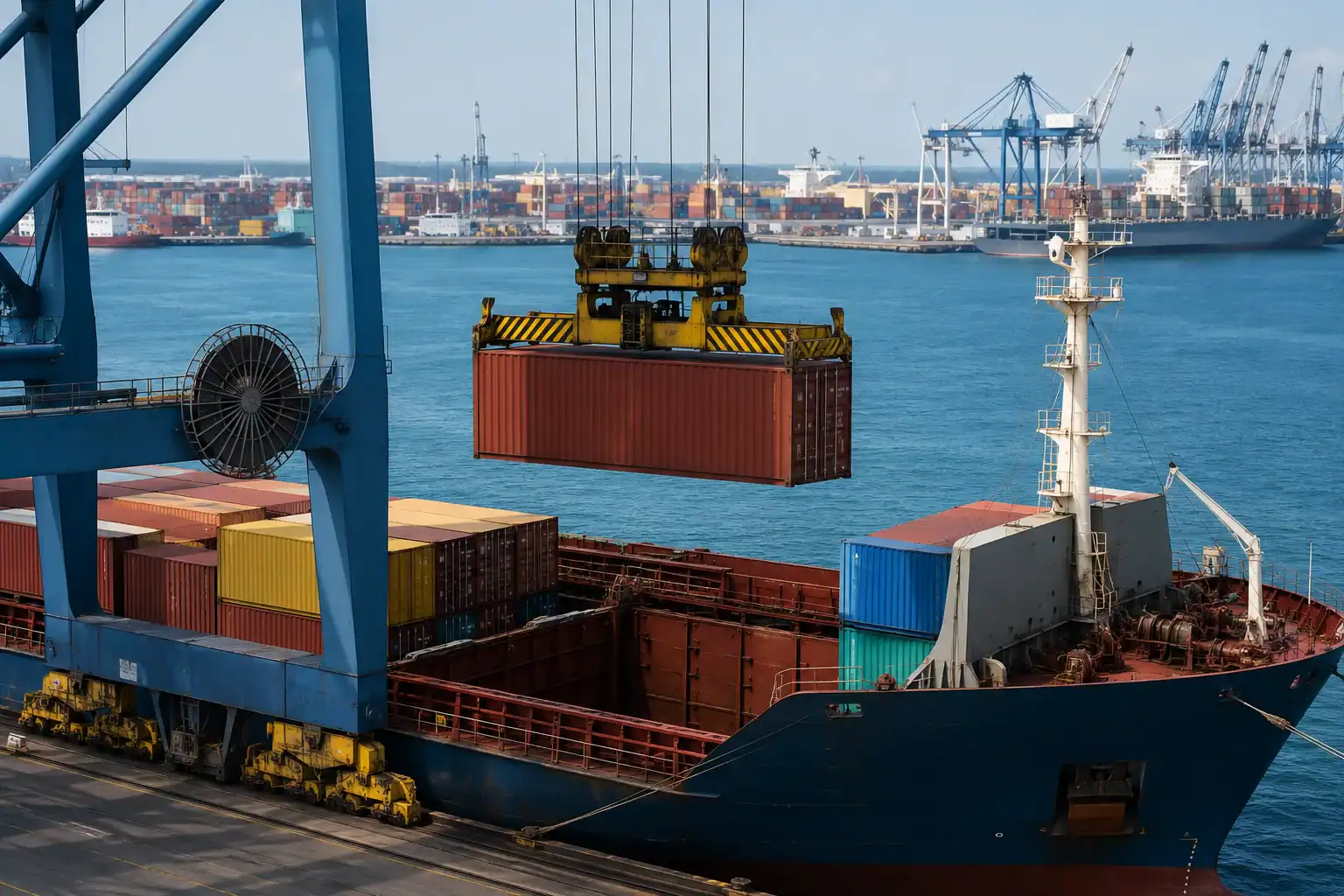
    Dockside crane loading a sealed FCL shipping container bound for Laem Chabang, Thailand

    Container Specifications: 20ft and 40ft

    Standard shipping containers come in two primary sizes for general cargo: the 20-foot container (TEU, or Twenty-foot Equivalent Unit) and the 40-foot container (FEU, or Forty-foot Equivalent Unit). The 40ft High Cube (40HC) adds another 30cm of internal height, and it is the standard for household goods and voluminous cargo.

    Our guide to shipping a container to Thailand: 20ft vs 40ft breaks the sizing down further, covering what fits in each box and all-in cost scenarios from the UK, Europe, Australia and the USA.

    Container Type External Length Internal Length Internal Width Internal Height Max Payload Max Volume
    20ft Standard 6.1m 5.9m 2.35m 2.39m 28,000 kg ~33 CBM
    40ft Standard 12.2m 12.0m 2.35m 2.39m 26,500 kg ~67 CBM
    40ft High Cube 12.2m 12.0m 2.35m 2.69m 26,300 kg ~76 CBM

    Three things pull usable space below the container’s technical maximum: irregularly shaped items, the packaging clearance around them, and load planning for safe transit. In practice, most shipments fill 85–90% of the theoretical maximum volume.

    For household goods moves to Thailand, the 40ft High Cube is the standard once a move exceeds the roughly 28 CBM a 20ft container practically holds. Furniture, mattresses, and larger items all benefit from the additional ceiling height. For commercial cargo (cartons, pallets), the standard 40ft is typically adequate.

    How FCL Pricing Works

    FCL freight is priced as a flat box rate: a single charge for the container, regardless of how full it is. This is the fundamental difference from LCL, which is priced per CBM or per tonne.

    A typical FCL box rate from Europe to Thailand (Felixstowe or Hamburg → Laem Chabang) runs USD 1,800–2,800 for a 20ft container and USD 2,400–3,800 for a 40ft or 40HC container. The exact figure depends on the carrier, the season, and the routing. These rates fluctuate with market conditions. Peak season in Q3–Q4 often carries surcharges of USD 500–1,500 on top of base rates. The box rate is only the freight line; the full cost of shipping to Thailand also stacks origin charges, destination THC, and last-mile delivery. Note: spot rates change frequently; verify current levels via Freightos or Drewry before you book.

    The full FCL cost stack to Thailand:

    • Origin charges: container collection fee or depot release fee (if the shipping line delivers an empty container to a shipper’s premises), or loading at the origin port/CFS
    • Ocean freight: the flat box rate for the voyage
    • Origin THC (Terminal Handling Charge): the port’s charge for loading the container onto the vessel; varies by port, typically USD 150–350 per container
    • Documentation/B/L fee: the shipping line’s charge for issuing the Bill of Lading
    • Destination THC at Laem Chabang: approximately THB 4,000–6,000 per container for a 20ft; THB 6,000–9,000 for a 40ft
    • Thai customs broker fee: for filing the import declaration, applying for duty-free status (if applicable), and coordinating release; typically THB 8,000–20,000 depending on the complexity of the shipment and the goods category
    • Port storage (if any): charged when customs clearance runs past the shipping line’s free time at Laem Chabang, typically 7–14 days for FCL, after which demurrage begins
    • Last-mile delivery: from Laem Chabang to the delivery address in Thailand

    The door-to-door FCL rate bundles all of the above into a single quote, which makes it the most transparent basis for comparison. Ask for the door-to-door all-in rate when comparing FCL freight forwarders. A low ocean freight rate with high destination charges is not necessarily cheaper than a higher ocean freight rate with lower charges bundled in.

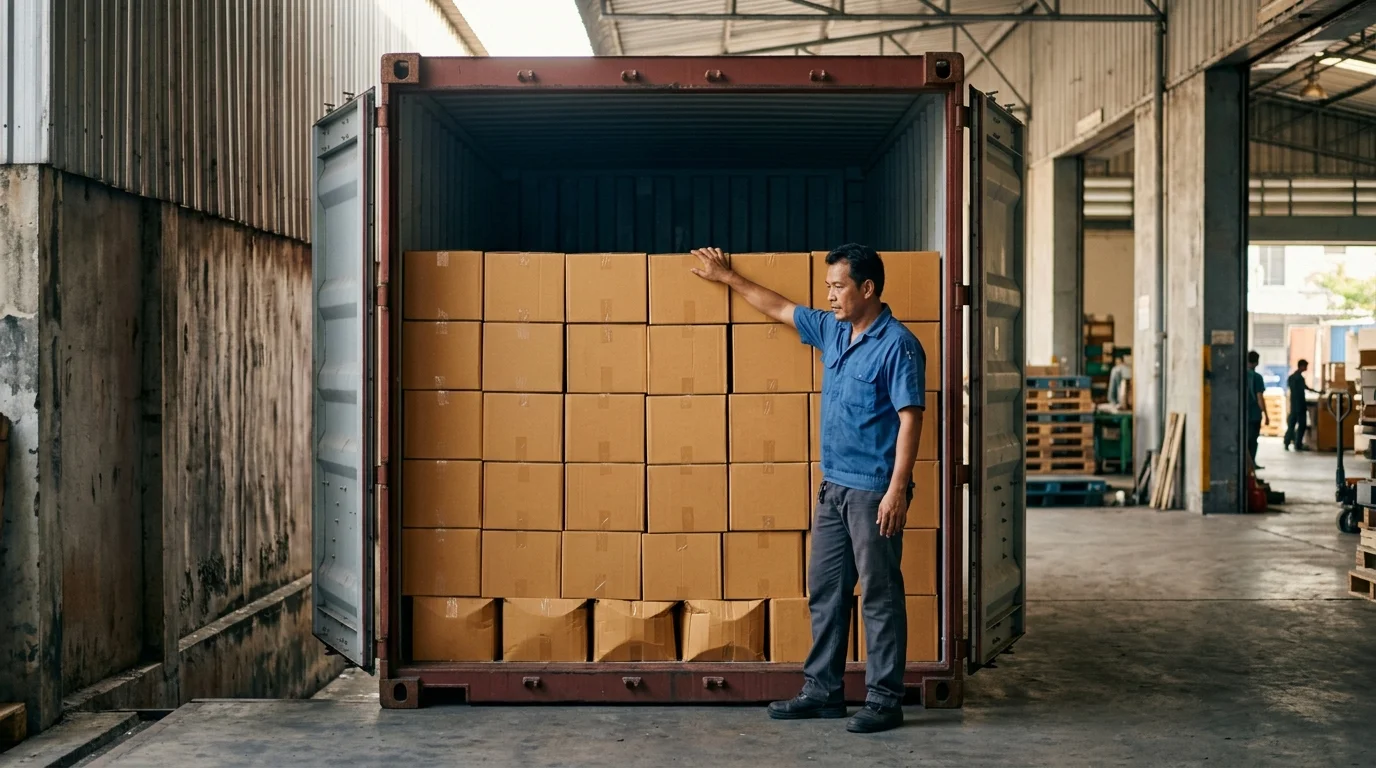
    Fully loaded FCL shipping container with a worker inspecting the cargo

    FCL vs LCL: When FCL Wins

    The economic crossover point is where FCL becomes cheaper than LCL. It moves with the trade lane, market conditions, and the surcharge environment at the time of booking. Because the whole comparison turns on volume, the first step is measuring your shipment in cubic metres (CBM). As a general guide for Thailand-bound shipments:

    • Under 10 CBM: LCL is almost always cheaper. FCL box rates cannot compete with per-CBM LCL rates at this volume.
    • 10–15 CBM: Compare both; LCL is often cheaper but the margin narrows. Peak season surcharges or specific origin THC structures can make FCL competitive at 12–13 CBM.
    • 15–20 CBM: FCL in a 20ft container is frequently competitive with LCL at this volume. Get quotes for both. If a 20ft container is USD 1,800 and LCL at 18 CBM would cost the equivalent of USD 1,600+, FCL wins on certainty and transit time.
    • Over 20 CBM: FCL is almost always cheaper. A 20ft holds roughly 28 CBM of household goods once real packing efficiency is allowed for, so 20–28 CBM still fits one box.
    • Over 28 CBM: A 40ft or 40HC container is required. LCL at this volume would be substantially more expensive than FCL box rates.

    Volume is not the only factor. FCL also wins on:

    • Transit time: FCL is typically 3–7 days faster than LCL on the same route because the cargo skips CFS consolidation at origin and deconsolidation at destination. The container loads at origin and doesn’t open until the consignee or their broker opens it at the destination.
    • Cargo security: An FCL container is sealed at origin with the shipper’s seal. No one opens it until destination. LCL cargo is handled multiple times at origin and destination CFS facilities.
    • Fragility: Furniture, artwork, large appliances, and fragile items travel better in FCL because they are not co-loaded with other cargo; the shipper controls how the container is loaded.
    • Customs risk: Customs examines a sealed FCL container less often than an LCL shipment, provided it comes from a known shipper with a clean customs history. The carrier never sees inside an LCL consignment before sealing, so it cannot vouch for the contents.

    The Swift Cargo Thailand shipment-size guide sets out the cost comparison across specific CBM ranges, which is where the LCL vs FCL threshold on a Thailand move falls. Shared containers get the full walkthrough in our guide to how LCL shipping to Thailand works.

    FCL to Thailand: Container Costs, Sizes, and the LCL Break-Even: The FCL Booking Process, Step by Step

    The FCL Booking Process, Step by Step

    FCL bookings follow a more defined sequence than LCL, because an empty container must be sourced, delivered to the loading point, stuffed, sealed, and returned to the port for loading. The sequence:

    Step 1: Booking Confirmation

    The freight forwarder confirms a vessel booking with the shipping line. The booking specifies: container size, vessel and voyage, origin port, destination port, commodity description, and estimated cargo weight. The shipping line issues a Booking Confirmation (BC) with a reference number and the cut-off dates: the Equipment Return Date (when the empty container must be returned to port after stuffing) and the Port Cut-Off (when the fully loaded container must be at the port gate).

    Step 2: Equipment Release

    The shipping line releases an empty container from its depot. For a shipper’s load (shipper-stuffed, or SOL for Shipper’s Own Load), the shipping line delivers the container to the shipper’s premises or a designated loading address. For CFS-stuffed FCL, which is less common and mostly reserved for particular commodity types, the shipping line stuffs the container at its own CFS facility.

    Step 3: Stuffing and Sealing

    The shipper or their removalist/packer loads the container. For household goods, this is the work of the removal company on the day of packing. For commercial cargo, it may be the shipper’s warehouse team or a third-party container stuffing service.

    When loading is complete, the container is sealed, usually with both a shipping line seal and a shipper’s own padlock. The shipper prepares the packing list and cargo declaration for the forwarder’s documentation file.

    Step 4: Return to Port and Gate-In

    The loaded container is transported to the origin port terminal by truck. At the gate, the terminal scans the container seal, verifies the booking reference, and checks the cargo declaration against the booking. The terminal then positions the container in the export stack. It waits there until the vessel loads.

    Step 5: Vessel Loading and ETD

    At vessel loading, the container is craned from the export stack onto the vessel. The forwarder confirms the Estimated Time of Departure (ETD) and issues the draft Bill of Lading for the shipper’s review. Once confirmed, the shipping line issues the original B/L. For most moves to Thailand, a telex release replaces it.

    Step 6: Transit and ETA

    The container travels as part of the vessel’s stow plan. The forwarder tracks vessel position and updates the ETA as the voyage progresses. If the vessel calls at transhipment ports (Singapore or Port Klang for UK/Europe → Thailand routes), the container transfers to a connecting vessel.

    Step 7: Arrival at Laem Chabang and Customs Clearance

    When the vessel arrives at Laem Chabang, the shipping line discharges the container to the port. The Thai customs broker files the import declaration. For personal effects, the broker also submits the duty-free application. For commercial cargo, the broker calculates duty and VAT from the declared CIF value and the applicable tariff.

    Thai Customs releases the container once you have paid any applicable duties and the broker confirms. The shipping line then releases it from the Laem Chabang facility once you present the B/L or telex release and pay the destination THC. The container is then collected by the consignee’s agent or transported by truck to the delivery address.

    Step 8: Unstuffing and Delivery

    At the delivery address, the container is unstuffed, either by the removal team (for household goods) or by the consignee’s warehouse staff (for commercial cargo). The empty container is returned to the shipping line’s Laem Chabang depot within the free time period (typically 3–7 days after release from port). Container detention charges apply if the empty is returned late.

    Two movers loading wrapped furniture into an FCL container for a household goods shipment

    FCL for Personal Effects and Household Goods

    For relocators moving household goods to Thailand, FCL is the preferred option for moves above approximately 20 CBM, and worth pricing against LCL from 15 CBM up. The case is not only cost: the sealed-container approach suits a household goods shipment better than CFS co-loading.

    Key considerations for FCL household goods moves to Thailand:

    • Professional packers should load the container. For FCL household goods, the removal company stuffs the container at the shipper’s premises. How the container is loaded determines how goods travel. Professional packers understand how to brace furniture, wrap fragile items, and distribute weight to prevent load shift during transit. An improperly loaded container will damage its contents even when they are not fragile: they shift across a 25–30 day voyage.
    • The itemised packing list standard applies equally to FCL and LCL. Thai Customs does not distinguish between FCL and LCL for personal effects documentation requirements. An itemised list (named items, values, condition, approximate year of purchase) is required for both. See the guide on how to avoid customs delays when moving to Thailand for the full packing list standard.
    • Free time at Laem Chabang is your customs clearance window. That window runs 7–14 days for FCL in most cases, and container demurrage charges begin the moment it closes. Your Thai customs broker should file the declaration and have goods released within this window. If the documentation set is complete and submitted before arrival, a straightforward personal effects FCL typically clears in two to four working days.
    • Marine insurance should cover the full FCL. Even in a sealed container, FCL household goods can be damaged by container condensation, load shift, and (rarely) container flood events. Marine insurance on an “all risks” basis (Institute Cargo Clauses A) covers the shipment from loading to the destination warehouse.

    FCL for Commercial Cargo to Thailand

    For businesses importing product stock, retail goods, or industrial equipment to Thailand, FCL offers advantages beyond cost:

    • Cargo integrity: commercial cargo in FCL travels in a dedicated, sealed container. Nothing from another shipper’s consignment can co-mingle with it, contaminate it, or damage it in transit.
    • Customs simplicity: a single FCL commercial shipment with one shipper, one consignee, and one commodity type is straightforward to declare and clear. Mixed LCL consignments with multiple commodity types can generate classification questions.
    • FTA origin advantage: a Certificate of Origin presented with the shipment may reduce or eliminate import duty, provided your goods originate from a country with which Thailand has an FTA (China, ASEAN, Australia, India, Japan). See the full India-to-Thailand freight rate and AIFTA duty breakdown if India is your origin country. The paperwork is the same for FCL and LCL, but FCL generally clears more simply.
    A single shipping container sits on its chassis at a quiet corner of a Thai port storage area, tropical humidity softening the light into a diffuse, slightly hazy afternoon glow

    Container Demurrage and Detention: The Costs That Surprise FCL Shippers

    Here is the part almost nobody prices in before booking. Two identical 40ft containers leave Hamburg on the same vessel, pay the same box rate, and arrive at Laem Chabang on the same tide. One clears for the quoted price. The other costs its owner an extra USD 900: not because anything went wrong at sea, but because a single missing customs document left the box sitting in the terminal past its free days. The vessel did its job; the paperwork did not. That gap, measured in days on a demurrage clock, is where FCL budgets quietly break.

    Two time-related charges apply to FCL and not to LCL: container demurrage and container detention. These are distinct charges, often confused:

    • Demurrage: the shipping line’s charge for the container occupying space at the port terminal beyond the free time period. The clock starts from the day the vessel arrives at Laem Chabang. If customs clearance is delayed and the container sits in the port terminal, demurrage accumulates, typically USD 30–100 per day per container for a 20ft and higher for a 40ft.
    • Detention: the shipping line’s charge for keeping the empty container beyond the free time period after it has been released from the port and collected by the consignee. If unstuffing takes longer than expected (common for large household goods moves), detention charges accumulate at a daily rate similar to demurrage.

    Two habits avoid both charges. First, submit complete customs documentation before the vessel arrives; a Thai customs broker who pre-files the declaration keeps demurrage off the clock. Second, return the empty container to the depot promptly after unstuffing. Telling your forwarder the collection and unstuffing timeline before the vessel arrives keeps detention risk down.

    Request a Thailand shipping quote from Swift Cargo for door-to-door FCL rates with all destination charges included.

    Demurrage and detention charges confuse people for the same reason a badly designed thermostat does: nobody explained which clock is running. Demurrage is the port’s clock, counting days the container sits at the terminal after arrival. Detention is the carrier’s clock, counting days the empty container sits with you before it’s returned. Shippers assume one number when there are actually two, running from different start points, charged by different parties, for different reasons. That’s less a shipper’s mistake than a design failure in how the industry explains its own rules. The fix isn’t cleverness. It’s asking your forwarder, before the container even ships, to write down both free-time windows and both daily rates on the same page. Once the two clocks are visible side by side, the surprise charge stops being a surprise.

    Related reading: Laem Chabang Port: Terminals, Berths, Cut-Offs and Customs Explained

    Frequently Asked Questions

    Does FCL mean my container will be full?

    No. FCL means you have exclusive use of the container. It does not mean your cargo fills it. You may ship 15 CBM in a 20ft container (which can hold up to ~33 CBM) and still pay the full FCL box rate. The advantage is that no other shipper’s cargo is in your container.

    How long does FCL shipping to Thailand take?

    Port-to-port transit times: UK → Laem Chabang 28–35 days; Germany → Laem Chabang 24–30 days; Australia → Laem Chabang 12–20 days; USA → Laem Chabang 20–26 days; China → Laem Chabang 8–14 days. Add 2–5 business days for Thai customs clearance after arrival at Laem Chabang.

    What is a telex release and do I need one for Thailand?

    A telex release is an electronic instruction authorising the consignee to collect the container without presenting original B/L documents. For personal effects moves and most direct commercial shipments, telex release is standard and removes the need to courier original B/L paperwork to Thailand.

    What is container demurrage and how do I avoid it?

    Demurrage is the charge your shipping line imposes when your container sits at Laem Chabang port beyond the free time period (typically 7–14 days from vessel arrival). Avoid it by ensuring your Thai customs broker has a complete document set before the vessel arrives so the declaration can be filed promptly.

    Can I use a 40ft container if I only have 20ft worth of cargo?

    Yes, but the economics rarely make sense. A 40ft FCL rate is typically 30–50% higher than a 20ft rate. For cargo that fills a 20ft container, booking a 40ft wastes money. The exception is when specific goods require the 40HC’s additional ceiling height.

  • Inventory Planning Around Shipping Timelines for Australian Importers

    Inventory Planning Around Shipping Timelines for Australian Importers

    Inventory Planning Around Shipping Timelines for Australian Importers

    Inventory Planning Around Shipping Timelines for Australian Importers

    Most inventory problems in import businesses are actually calendar problems. The stock ran out, but not because no one thought to reorder. It ran out because the reorder date was calculated from the wrong reference point. The purchase order was placed when the warehouse looked low, not when the shipping timeline required it. By the time goods were ordered, the eight-week supply chain had only six weeks to complete. Inventory planning for shipping to Australia starts from the date stock must be on the shelf and works backwards through transit and production, not forwards from the day the warehouse looks low.

    Planning inventory around sea freight timelines is a different discipline from planning inventory for a domestic supply chain. The lead times are longer, the variability is higher, and the consequences of a miscalculation arrive later and are harder to fix. A domestic stockout can sometimes be resolved in 48 hours. An import stockout resolved by emergency air freight costs three to five times as much per kilogram. A stockout that cannot be resolved by air freight at all costs customers.

    The Three Reference Points That Matter in Import Inventory Planning

    The Three Reference Points That Matter in Import Inventory Planning

    Most importers plan inventory using one date: the date goods are expected to arrive. But this date is not stable. Transit times vary, vessels delay, and customs holds happen. Building a planning system around a single expected arrival date produces a brittle plan that fails whenever actual arrival deviates from forecast.

    A more robust approach uses three reference points:

    1. The Required In-Stock Date (RISD): the date by which goods must be available for sale or use. This is the hard deadline that everything else works backward from. For seasonal goods, the RISD is typically the start of the selling window, not the peak. You need stock available before demand peaks, not when it peaks.
    2. The Must-Arrive Date (MAD): the latest date goods can arrive at the Australian port and still complete customs clearance and delivery before the RISD. This is typically the RISD minus four to seven business days (for customs clearance, wharf collection, and delivery).
    3. The Must-Ship Date (MSD): the vessel departure date required to ensure goods arrive by the MAD. This is the MAD minus the transit time for the relevant trade lane, plus a buffer for transit variability.

    Working backward from RISD → MAD → MSD gives you the Purchase Order Confirmation (POC) deadline: the date by which the supplier must confirm the order and begin production. The POC deadline is the MSD minus the supplier’s production lead time.

    In practice, start from a RISD of 1 November. The MAD falls around 25 October. For a China-to-Australia shipment, the MSD is 25 October minus 20 days of transit, so the vessel departs around 5 October. For a supplier with a four-week production lead time, the POC deadline is 5 October minus 28 days, or 7 September.

    Place the purchase order in early September for a 1 November RISD and the system works, barely, with no room for any disruption. Place it in mid-September and you have already missed the window without knowing it.

    Building the Shipping Timeline Into Your Calendar System

    A shipping timeline is not a single number. It is a set of milestones that must be tracked and managed actively. For each purchase order, the following milestones should be in your planning system:

    • PO Confirmed: the date the supplier confirms the order and production begins
    • Production Complete / Goods Ready: the date the supplier advises goods are ready for pickup/booking
    • Cargo at CFS / Vessel Booked: the date goods are delivered to origin CFS or FCL is loaded; the vessel booking is confirmed
    • Estimated Time of Departure (ETD): the vessel departure date; confirmed by the freight forwarder when the B/L is drafted
    • Estimated Time of Arrival (ETA): the vessel’s expected arrival at the Australian port; should be updated by the forwarder if the vessel delays
    • Customs Clearance Date (est.): expected date that Australian customs releases the goods; typically ETA + 2–5 business days for a compliant shipment
    • Available In Warehouse: the actual date goods are received and available for sale or use

    These milestones should be tracked against the original plan dates. A deviation at any early milestone propagates through the rest of the timeline. If “Cargo at CFS” is two days late, the ETD shifts, the ETA shifts, and the Available In Warehouse date shifts. Tracking at the milestone level means you see the deviation early, while you still have options. Without it, you discover the delay only after the stock has run out.

    Trade Lane Lead Time Ranges: The Numbers That Anchor the Plan

    Lead time ranges for Australian importers vary by origin. Planning to average lead times produces plans that work in normal conditions but fail during peak season, congestion events, or supplier delays. Plan expected conditions against the average lead time, but buffer stock against the worst-case lead time on high-velocity SKUs.

    A single missed cut-off costs more than a whole year of careful buffering saves. An importer who orders Christmas stock from Guangzhou on 1 September is already three weeks past the real deadline. They do not lose three weeks. They lose the selling season, because the container clears in mid-December when the shelves needed filling in November. The lead-time ranges below are the raw inputs; stage by stage, they become a defensible order date once run through the realistic China-to-Australia freight timeline. If you are still setting up the compliance side, the same discipline governs importing from China to Australia: the documentation that clears customs fastest is prepared before the vessel sails, not after it berths.

    Port-to-port and end-to-end ranges for Australia’s major ports (Sydney/Melbourne):

    China (Shanghai/Ningbo → Sydney/Melbourne)

    • Normal conditions: 18–24 days port-to-port
    • Peak season (Q4, post-Chinese New Year): 22–35 days
    • Production lead time (standard order, ex-stock): 5–14 days
    • Production lead time (made-to-order): 21–42 days
    • Total end-to-end (order to warehouse): 35–65 days in normal conditions; 50–90 days in peak season

    China (Guangzhou/Shenzhen → Sydney/Melbourne)

    • Normal conditions: 20–28 days port-to-port (often via Singapore or Port Klang transhipment)
    • Peak season: 25–38 days
    • Total end-to-end: 38–70 days normal; 55–95 days peak

    Vietnam (Ho Chi Minh City/Hanoi → Sydney/Melbourne)

    • Normal conditions: 20–28 days port-to-port
    • Peak season: 24–35 days
    • Total end-to-end: 45–80 days (Vietnamese production lead times tend to be slightly longer than Chinese equivalents)

    India (Mumbai/Chennai → Sydney/Melbourne)

    • Normal conditions: 22–32 days port-to-port
    • Total end-to-end: 50–85 days

    For Australian customs clearance, add 2–5 business days for a standard commercial shipment with complete documentation. Add 5–10 business days if an Australian Border Force (ABF) examination is ordered. ABF examination rates vary by commodity and origin country, with certain high-risk combinations targeted well above the general average.

    The Four High-Risk Calendar Periods for Australian Importers

    Inventory planning around shipping timelines is especially critical during four periods where lead time variability spikes predictably.

    Chinese New Year (January–February)

    Chinese factories close for one to three weeks around the Lunar New Year holiday (dates shift annually; typically late January to mid-February). The weeks before the holiday bring production rushes and port congestion, as factories try to ship before closing. The weeks after reopening see production capacity running at 60–80% of normal as workers return from regional provinces. BIMCO seasonal shipping analyses and DHL/Flexport import demand reports both document the pattern.

    Planning implication: Goods required in February and March must be ordered by October at the latest (November for shorter production cycles). Goods required before Chinese New Year must be booked to ship by late November. Orders placed in December for January delivery are almost always late.

    Golden Week in China (October)

    China’s National Day Golden Week (October 1–7) is a second factory holiday. Combined with the northern hemisphere pre-Christmas freight surge, October is the most congested month on the Asia-Pacific trade lane. Vessel space tightens; shipping lines apply Peak Season Surcharges (PSS) from approximately August onward.

    Planning implication: Goods required for Australian Christmas season (November–December) should be shipped by early September at the latest. Orders for Christmas goods should be placed with Chinese suppliers in June–July to allow for standard production lead times and pre-Golden Week shipping.

    Australian Christmas Season (November–December)

    Demand peaks for consumer goods, gifts, and discretionary categories in November–December. On the supply side, this peak coincides with the northern hemisphere Q4 peak. Global shipping capacity sits under its greatest pressure precisely when Australian importers need their Christmas stock to arrive.

    Planning implication: Required In-Stock Dates for Christmas goods should be set for October, not November. Planning to arrive in November leaves no buffer for any disruption. Businesses that run out of Christmas stock almost always ordered in August or September rather than June or July.

    Back-to-School (January–February)

    Australian Back-to-School demand (stationery, uniforms, electronics, sporting goods) peaks in late January and early February. This demand window overlaps directly with Chinese New Year supply disruption. Goods required for Back-to-School must be ordered and shipped before the Chinese New Year shutdown. Place purchase orders by November and confirm shipping by December. Where two of these periods overlap, as Back-to-School and Chinese New Year do, inventory planning for shipping to Australia has to work back from the factory shutdown, not the school term.

    Integrating Freight Forwarder Communication Into the Planning Cycle

    Your freight forwarder is not just a logistics executor. For inventory planning purposes, they are a lead time intelligence source. The most effective importers treat the forwarder relationship as an active planning input, not a reactive transaction.

    Practical integration points:

    • Weekly vessel schedule update: Ask your forwarder for a weekly summary of upcoming sailings on your key trade lanes. This tells you which vessel to book onto and confirms whether the schedule you planned around is holding
    • ETD/ETA deviation alerts: Ask your forwarder to notify you the moment a confirmed vessel ETD or ETA changes. A two-day ETD delay is not a crisis if you know about it immediately. It becomes one if you find out a week before the RISD
    • Peak season advisories: Ask your forwarder to flag upcoming periods of congestion or surcharge increases before they hit; experienced ones do it unprompted. With that warning you can pull forward orders, confirm vessel space early, or adjust safety stock levels
    • Customs clearance pre-check: For any new product or new supplier, ask your forwarder to pre-check the likely customs classification and duty rate before the first shipment. Incorrect HS code declarations can trigger examinations that add 5–10 days to the clearance timeline, a delay a pre-check would have prevented

    Matching Reorder Frequency to Lead Time Variability

    One adjustment reduces stockout risk more reliably than most: order more often in smaller quantities. This shortens the inventory exposure window and keeps safety stock levels lower for the same service level.

    The trade-off is freight cost efficiency. LCL freight rates are higher per CBM than FCL rates; smaller orders may fall into LCL territory where larger orders would qualify for FCL. The business must calculate whether ordering more often costs more in freight than it saves in safety stock holding and stockout risk.

    For most high-margin, fast-moving goods, the calculation favours more frequent smaller orders. For low-margin, slow-moving goods, the calculation may favour less frequent larger orders with higher safety stock. The safety stock formula and the air freight decision framework for an imminent stockout are both in our guide to avoiding stockouts when importing goods.

    For the LCL vs FCL trade-off and the cost crossover calculation, see our guide to LCL vs FCL for Australian importers. Any reorder frequency decision should rest on the total landed cost framework, worked through in full in total landed cost when importing to Australia.

    Swift Cargo’s Australia import process overview details how a managed freight service integrates with your ordering calendar, including documentation requirements and customs clearance timelines.

    Common Failures in Import Inventory Planning

    Planning to Best-Case Lead Times

    The forwarder quotes “18–24 days” for China transit. The planner uses 18 days. The actual shipment takes 23 days. This happens six times in a year. Each order cycle absorbs five days of unplanned stockout risk. The fix is to plan to the 80th-percentile lead time, the time exceeded only 20% of the time, rather than the average.

    Treating “Ordered” as “On Its Way”

    A purchase order confirmation is not a shipping booking. Production lead time must elapse before the goods are ready to ship. Many planners mentally close the PO loop when the supplier confirms. Three weeks later they are surprised that nothing has shipped, because production ran late. The relevant milestone is “Cargo Booked / ETD Confirmed,” not “PO Confirmed.”

    Forecasting from the Recent Past Without Seasonal Adjustment

    An importer who sold 1,000 units last month and orders 1,100 units this month is forecasting one month into the future. If the goods arrive in eight weeks, the forecast is for the demand environment in eight weeks, which in November might be 2,500 units at the Christmas peak. Recent-past demand data without seasonal adjustment systematically underestimates Christmas demand and overestimates post-Christmas demand.

    Using One Safety Stock Level for All SKUs

    Setting a blanket “four weeks of safety stock” policy applies the same buffer to high-velocity and slow-moving products. A high-velocity product can move four weeks of stock in ten days at Christmas. A slow-moving one may carry four months of stock. Safety stock should be set at the SKU level, proportional to demand variability and lead time variability for each product.

    Not Updating the Plan When Lead Times Change

    Shipping market conditions change. The lead time that was reliable twelve months ago may be shorter or longer today as trade lanes, carriers, and port congestion patterns evolve. Import inventory plans should be recalibrated against actual lead time data at least twice a year, and immediately after any significant market disruption.

    A Simple Framework for Getting Started

    For businesses building a more structured approach from scratch, the following four-step framework lays the foundation:

    1. Measure your actual lead times. For every order received in the past twelve months, calculate the actual elapsed time from PO Confirmation to Available In Warehouse. Create a range, not just an average. Identify your worst-case lead time. That is your planning buffer.
    2. Set Required In-Stock Dates for each SKU class. Define the dates by which each product category must be in stock, working backward from seasonal demand events. These are your hard planning constraints.
    3. Calculate reorder points using actual lead times. Use the worst-case (or 80th-percentile) lead time in your safety stock calculation, not the average. The formula: Reorder Point = (Average Daily Usage × Average Lead Time) + Safety Stock. Safety stock accounts for demand variability and lead time variability.
    4. Build a single ordering calendar with all four high-risk periods marked. Include the Chinese New Year shipping cutoffs, Golden Week, the Australian Christmas goods ship date, and the Back-to-School ship date. Review this calendar with your forwarder each quarter and update it as confirmed sailing schedules become available.

    One structural point sits underneath all five failures. Each of them is a symptom of planning against a single number when the underlying reality is a distribution. Importers once planned that way because gathering the distribution was expensive. That has stopped being true. Carrier schedule reliability data, container tracking events and customs status now arrive as feeds rather than phone calls. An importer can hold a real lead-time distribution per lane and per supplier without hiring anyone to maintain it. What disappears here is the experienced planner’s intuition about “how long that lane usually takes.” That intuition was genuinely valuable when the data was scarce. It is now simply a lower-resolution version of something measurable. The importers who move first will not be the largest ones. They will be the ones whose receiving process already records what actually arrived and when, because the plan is only as good as the receiving data that closes the loop on it.

    The Core Rules of Inventory Planning for Shipping to Australia

    Plan to the 80th-percentile lead time for each lane rather than the forwarder’s best case, and set safety stock per SKU instead of as a blanket number of weeks. Track every order at milestone level from PO confirmation to available in warehouse, and set required in-stock dates for Christmas goods in October.

    Frequently Asked Questions

    How far in advance should I place orders for Christmas goods if I’m importing from China?

    For standard made-to-order goods, place orders no later than June for December delivery. That leaves four to six weeks of production lead time, a confirmed vessel booking by August (before peak season surcharges rise), 20–25 days of transit, and five days of customs clearance. Some buffer remains. Waiting until August to order for Christmas is risky; September or October is too late.

    What is the “80th-percentile lead time” and why should I use it?

    The 80th-percentile lead time is the lead time that your shipments take 80% of the time or less: 20% of shipments take longer. Using this number (rather than the average) as your planning assumption means that your safety stock buffers a normal range of variability while keeping holding costs manageable. If you planned to the 50th-percentile (average), half of your shipments would arrive later than planned.

    How do I get accurate ETA updates from my freight forwarder?

    Ask your forwarder to set up automatic notifications when vessel ETAs change. Most modern freight management systems can send email or SMS alerts when a vessel tracking update shows an ETA deviation. If your forwarder doesn’t offer this, ask for a weekly vessel position update until goods are confirmed at the Australian port. A forwarder who is reactive about ETA communications is a risk to your supply chain plan.

    Should I keep a spreadsheet or use inventory management software?

    Either can work, but software pulls clearly ahead for businesses managing more than 20–30 active SKUs: automated reorder point alerts, integrated purchase order tracking, and supplier lead time tracking that updates with each order cycle. Cin7, Unleashed, and MYOB Advanced all support Australian-import-focused inventory workflows. A well-maintained spreadsheet is still better than no system at all.

  • LCL Shipping to Thailand: Costs, CFS Fees and the FCL Crossover

    LCL Shipping to Thailand: Costs, CFS Fees and the FCL Crossover

    Most international shipments to Thailand don’t fill a container. A household goods move from the UK typically runs 8–18 CBM. A commercial consignment of 200 units of a product might run 4–6 CBM. Both are well below the 27–28 CBM that fills a 20-foot container. For these shipments, goods travel LCL, short for Less than Container Load.

    LCL means your cargo shares a container with goods from other shippers. You pay for the space your cargo occupies, measured in cubic metres or tonnes (whichever is greater), not for the full container. The shipping line and freight forwarder handle consolidation at origin and deconsolidation at destination. Your goods travel inside a sealed container, but that container belongs to the voyage, not to you.

    LCL shared container freight station Thailand

    The LCL Journey: Stage by Stage

    LCL cargo must be consolidated at origin and deconsolidated at destination, so it follows a longer and more complex path than FCL. Each of these steps adds time and cost compared to a dedicated container that loads at origin and is unstuffed at destination without intermediate handling.

    Stage 1: Booking and Pick-Up

    The shipper (or their freight forwarder) books an LCL shipment with a carrier or NVOCC (Non-Vessel Operating Common Carrier). The booking specifies the cargo dimensions, weight, commodity, and destination port. Unlike FCL, LCL has no container release stage. The shipper instead receives a CFS (Container Freight Station) address for delivery or collection.

    The forwarder can arrange pick-up, or the shipper can deliver the goods themselves. Goods must arrive at the origin CFS within the CFS closing date, typically two to three days before the vessel’s port cut-off. Missing the CFS closing date means the cargo waits for the next scheduled sailing, which may be weekly or twice-weekly depending on the trade lane.

    Stage 2: Consolidation at the Origin CFS

    The origin CFS is a warehouse where goods from multiple shippers are sorted, measured, weighed, and consolidated into a container. CFS staff verify dimensions and weight against the booking. If your consignment turns out larger or heavier than you declared, the CFS charges you for the actual measurements, not the declared ones. The difference may also delay booking confirmation.

    Consolidation follows a set sequence. CFS staff arrange cargo from multiple shippers within the container, packing for stability and using the space fully. Fragile or hazardous items are handled according to IATA/IMDG classification. Container doors are sealed once fully loaded. The NVOCC issues a House Bill of Lading (HBL) to each shipper for their portion of the container.

    The typical turnaround at an origin CFS is 24–72 hours from cargo receipt to container seal.

    Stage 3: Vessel Transit: LCL Shipping to Thailand: Costs, CFS Fees and the FCL Crossover

    Stage 3: Vessel Transit

    The consolidated container loads onto the vessel along with all other containers on that sailing. From the shipping line’s perspective, the container is a single FCL unit. The individual LCL shippers’ House Bills of Lading are consolidated under a Master Bill of Lading (MBL) issued by the carrier to the NVOCC.

    Transit times on the major routes to Thailand differ sharply by origin port. The ranges below run to Laem Chabang, the country’s main container port:

    • Shanghai/Ningbo → Laem Chabang: 8–12 days (direct); 14–18 days (via Singapore or Port Klang)
    • Singapore → Laem Chabang: 3–5 days (direct)
    • Southampton → Laem Chabang: 35–45 days (via the Cape of Good Hope, the standard routing since late December 2023; the fastest services run single-vessel with no transshipment)
    • Felixstowe/London Gateway → Laem Chabang: 38–50 days (Cape routing, transshipping through Singapore or Port Klang)
    • Hamburg/Rotterdam → Laem Chabang: 36–49 days (Cape routing; the wide spread is rotation position, not carrier quality, and the same carrier can publish both ends of it in the same week)
    • Sydney/Melbourne → Laem Chabang: 14–22 days
    • Los Angeles/Long Beach → Laem Chabang: 20–26 days

    These are vessel transit times only: they do not include origin CFS handling (add 2–4 days) or destination CFS handling and customs clearance (add 3–8 days).

    Stage 4: Arrival and Documentation at the Destination Port

    When the vessel arrives at Laem Chabang, the shipping line discharges all containers. The NVOCC’s agent at Laem Chabang takes delivery of the consolidated container under the MBL and arranges its transport to the destination CFS.

    The consignee’s Thai customs broker files an import declaration with Thai Customs. For personal effects and household goods, the broker applies for the duty-free personal effects concession (if applicable) and submits the itemised packing list, Bill of Lading, passport copy, and visa documentation. For commercial cargo, the broker files against the commercial invoice and HS code classification.

    Thai Customs issues a release notice once the declaration is approved and any applicable duties are paid. The container is then transported to the destination CFS.

    Stage 5: Deconsolidation at the Destination CFS

    At the destination CFS (which is separate from the port facility), the container is opened and goods from different consignees are sorted. This is deconsolidation: the reverse of what happened at the origin CFS. Each consignee’s cargo is identified, placed in a designated area, and released to the consignee or their agent when customs clearance paperwork is presented.

    The destination CFS charges a fee called Destination CFS (DCFS) or Container Freight Station (CFS) fee. At Laem Chabang, this typically runs THB 800–2,500 per CBM depending on the operator and the commodity. This fee covers unloading, sorting, and storage until collection.

    Storage charges at the destination CFS accumulate from the day goods arrive. Free time (the period before storage charges begin) varies by CFS operator, typically three to seven calendar days. After free time, storage charges run approximately THB 200–500 per CBM per day.

    LCL Shipping to Thailand: Costs, CFS Fees and the FCL Crossover: How LCL Freight Is Priced

    How LCL Freight Is Priced

    LCL freight is charged on a weight/measure (W/M) basis. You pay for whichever is greater: the actual weight or the volumetric weight. The conversion rate used to calculate volumetric weight is typically 1 CBM = 1,000 kg (this is the sea freight standard; note that air freight uses a different conversion).

    If your consignment is 2 CBM and 1,800 kg, the freight charge applies to 2 CBM (since 2 CBM = 2,000 kg equivalent, which is greater than 1,800 kg actual weight). If your consignment is 2 CBM and 2,500 kg, the charge applies to 2.5 tonne (since actual weight is greater than volumetric weight).

    For most household goods and general cargo, volume is the binding constraint. Heavy cargo (machinery, metals, stone) is the exception where weight governs.

    The Full LCL Cost Stack to Thailand

    The ocean freight rate is only one component. A complete LCL cost to Thailand includes:

    • Origin CFS / handling fee: charged per CBM or W/M tonne; covers CFS receipt, handling, and consolidation
    • Ocean freight: the per-CBM or per-tonne rate for the voyage
    • Origin THC (Terminal Handling Charge): charged by the shipping line for loading the container at the origin port
    • Documentation fee / B/L fee: the House Bill of Lading issuance charge
    • Destination THC: charged by the shipping line at Laem Chabang for discharging the container
    • Destination CFS fee: charged by the Laem Chabang CFS for deconsolidation and storage
    • Thai customs broker fee: for filing the import declaration, duty-free application (if applicable), and coordinating release
    • Port storage (if any): if customs clearance is delayed beyond the free time period
    • Last-mile delivery: from the CFS to the consignee’s address in Thailand

    Shippers who compare only the “ocean freight” line item receive quotes that look lower than the shipment really costs. The final invoice then adds items they did not anticipate. The correct comparison basis is total cost to destination address, a “door-to-door” LCL rate that includes all of the above.

    Almost nobody gets this decision right on the first move, and that is worth saying plainly. The common arc runs the same way: the first shipment goes in a full container because a dedicated box feels safer, eleven cubic metres of it travel empty, and the crossover maths only becomes obvious when the invoice arrives. You cannot connect those dots looking forward. You connect them backward, after a shipment or two. The practical substitute for hindsight is arithmetic: measure the actual CBM, price both options on a door-to-door basis, and let the numbers make the call before the booking is placed rather than after.

    LCL vs FCL: When Does LCL Make Sense for Thailand Shipments?

    FCL becomes cheaper than LCL at a crossover point that varies by trade lane, market conditions, and cargo density. For the Thailand trade lane, the general rule is:

    • Under 10 CBM: LCL is almost always cheaper
    • 10–15 CBM: LCL is typically cheaper, but the margin narrows; get quotes for both
    • 15–20 CBM: FCL in a 20ft container is frequently competitive; get quotes for both
    • Over 20 CBM: FCL is generally cheaper for most trade lanes to Thailand

    If your volume tips toward FCL, see the full 20ft vs 40ft container guide for sizing and cost detail.

    Volume is not the only factor. Consider also:

    • Transit time: LCL takes 3–8 days longer than FCL on the same trade lane, because of CFS handling at both ends. If time is critical, FCL may be preferred even at lower volumes
    • Fragility: LCL cargo is handled more times than FCL cargo: origin CFS, consolidation, deconsolidation, destination CFS. Every additional handling event is a damage risk. For fragile items, FCL or a dedicated padded LCL shipment is preferable
    • Consolidation with co-loaders: Some NVOCCs offer priority consolidation services where your LCL cargo is co-loaded with cargo from the same forwarder. This cuts the number of co-shippers and tightens packing discipline
    • Security: FCL containers are sealed at origin and opened only at destination. LCL containers are opened at multiple points. CFS facilities have security controls, but they are not equivalent to a sealed container
    LCL for Personal Effects and Household Goods to Thailand: LCL Shipping to Thailand: Costs, CFS Fees and the FCL Crossover

    LCL for Personal Effects and Household Goods to Thailand

    For relocators moving personal effects to Thailand, LCL is the standard option for moves under approximately 15 CBM, and worth pricing against a 20ft container between 15 and 20 CBM. A typical one-bedroom apartment fills 8–12 CBM; a studio or minimal relocation may be 4–7 CBM. These volumes are squarely in LCL territory.

    The Thai customs clearance process for LCL personal effects is identical to FCL personal effects: the duty-free concession does not distinguish between the two. The documentation requirements (itemised packing list, passport, visa, duty-free declaration) are the same. The difference is that LCL goods must clear customs before the destination CFS releases them. The broker must file the declaration and Thai Customs must approve it first.

    Timing matters here. Brief your Thai customs broker and hand over the full document set before the vessel’s estimated arrival at Laem Chabang, so the customs declaration can be pre-filed. Pre-filing is not always available for personal effects (it depends on the broker and the customs system status at the time), but preparing documents early means the broker can file as soon as arrival is confirmed. That avoids unnecessary days of storage charges.

    For a guide to the required documents for shipping to Thailand, see our article on required documents for shipping to Thailand. For the duty-free personal effects concession and the qualifying conditions, see duty-free import rules in Thailand. For advice on avoiding customs delays that commonly affect personal effects shipments, including the packing list standards that prevent examination, see our guide on how to avoid customs delays when moving to Thailand.

    LCL for Commercial Cargo to Thailand

    For businesses shipping product stock, components, samples, or trade goods to Thailand, the LCL process differs from household goods in two ways: customs classification and duty calculation.

    Commercial goods are classified by HS (Harmonised System) code. The applicable import duty rate depends on the HS code and the origin country. Thailand has FTA arrangements with ASEAN countries, Australia (TAFTA/ATFTA), China (ACFTA), India (TIFTA), Japan (JTEPA), and several other partners. Goods originating from FTA partner countries may attract preferential duty rates. Claiming the preference requires a valid Certificate of Origin (Form D for ASEAN, Form A for countries with GSP schemes, or bilateral FTA forms for specific agreements). For India specifically, see our India-to-Thailand shipping cost and AIFTA duty relief guide.

    Thai Customs applies VAT of 7% on the CIF value (Cost + Insurance + Freight) plus any applicable duty. For businesses importing on a commercial basis, this VAT is typically recoverable through the Thai VAT system if the importer is registered.

    Commercial LCL shipments also need a commercial invoice (stating quantity, unit value, total value, country of origin, and HS code), a packing list, a Bill of Lading, and any product-specific documentation (import licence for certain restricted goods, phytosanitary certificate for agricultural products, MSDS for chemicals).

    Understanding the House Bill of Lading in LCL: LCL Shipping to Thailand: Costs, CFS Fees and the FCL Crossover

    Understanding the House Bill of Lading in LCL

    LCL runs on two bills of lading: the House B/L (HBL) issued by the NVOCC to the individual shipper, and the Master B/L (MBL) issued by the shipping line to the NVOCC. The consignee in Thailand receives the House B/L: their title document for the cargo.

    The House B/L must match the packing list and the customs declaration. Clearance stalls on any discrepancy between the HBL consignee, the declared importer, and the Thai customs declaration. Common errors include goods consigned to “ABC Company” on the HBL while the customs declaration names an individual director. These records must align.

    The HBL can be issued as an original (negotiable) document that must be endorsed and presented before the cargo is released, or as a “telex release” (non-negotiable, released electronically at destination). For personal effects moves, telex release is standard: it removes the need to courier original documents to Thailand before the cargo arrives. For commercial shipments where payment terms involve a documentary collection (D/P or D/A), original HBLs are used and must be endorsed before the cargo can be released.

    LCL Damage Risk: What You Can and Cannot Control

    LCL cargo is handled more frequently than FCL. Each transition is a potential damage event: origin CFS handling, consolidation, deconsolidation at the destination CFS, and collection by the consignee. The main risk categories are:

    • Compression damage: goods stacked on top of each other in the container; mitigated by rigid outer cartons, internal padding for fragile items, and “Do Not Stack” markings where enforced
    • Moisture damage: containers are not climate-controlled; humidity exposure during the voyage can damage electronics, wooden furniture, artwork, paper goods; desiccant bags inside packaging help
    • Handling damage at CFS: forklift contact on carton corners; mitigated by double-wall cartons and corner protectors
    • Co-mingling errors: rare but possible at busy CFS facilities, where incorrect sorting releases goods to the wrong consignee; mitigated by clear labelling with consignee name, reference number, and destination

    For LCL household goods, we strongly recommend marine insurance. The Hague-Visby Rules govern carrier liability in LCL, or the carrier’s own tariff where Hague-Visby doesn’t apply. Either way, liability caps at approximately SDR 2 per kg, a small fraction of actual value for most household goods. An “all risks” marine policy (Institute Cargo Clauses A) insures the shipment for its replacement value from origin to the destination warehouse.

    For the full case for marine insurance on Thailand-bound shipments, see our article on whether you need cargo insurance when shipping to Thailand.

    LCL shipment volume being measured with a tape measure at a Thai warehouse

    CBM: Calculating Your LCL Volume

    Measure your volume accurately before you book LCL freight. Under-declaring volume triggers additional charges at the CFS. Over-declaring means paying for space you don’t use.

    Volume in CBM = Length (m) × Width (m) × Height (m) for each item, summed across all cartons and pieces.

    For irregular items such as furniture, wrapped items, and items without square profiles, measure the outer dimensions of the final packaged item (including packaging). The CFS measures the packaged item’s outer dimensions, not the item’s own.

    As a rough guide for household goods:

    • Studio / minimal: 3–6 CBM
    • 1-bedroom apartment: 8–12 CBM
    • 2-bedroom apartment: 15–20 CBM
    • 3-bedroom house: 22–35 CBM

    For a detailed guide to CBM calculation and what fits in different container sizes, see our CBM size guide for international moves.

    The LCL Booking Process: What to Provide Your Forwarder

    To get an accurate LCL quote and confirm a booking to Thailand, your freight forwarder needs:

    1. Origin and destination addresses: country, city, postcode; the forwarder needs this to determine which CFS to use at each end and to quote any collection or delivery charges
    2. Cargo dimensions and weight: total CBM and gross weight; if you don’t have precise measurements, estimate as closely as you can and confirm the actual figures at packing
    3. Commodity description: “household goods,” “personal effects,” or a specific product description for commercial cargo; this affects customs classification and insurance
    4. Desired sailing or arrival date: the forwarder can work backward to the required CFS closing date
    5. Incoterms preference: for commercial cargo, Ex Works (EXW), FOB, CIF, or DAP are the common LCL Incoterms; for household goods, a “door-to-door” quotation is typically easiest
    6. Any special handling requirements: fragile items, temperature-sensitive goods, items requiring “Do Not Stack” treatment

    To compare LCL and FCL options and get a door-to-door rate for your shipment, see the shipment size guidance on the Swift Cargo Thailand page.

    There is a version of an LCL shipment most customers never see: the consolidation warehouse itself, somewhere between the origin port and the vessel, where a dozen unrelated shipments from a dozen unrelated households get sorted, weighed, and packed into shared container space by people who do this hundreds of times a week. A wardrobe box from a family in Manchester sits a few feet from spare parts for a business in Birmingham, both waiting for the same sailing. The CBM number on your quote is really a measurement of how efficiently that warehouse crew can fit your specific boxes into whatever space is left after everyone else’s cargo. It looks like a pricing formula. It is actually a description of a very literal, very physical packing puzzle played with other people’s belongings.

    Related reading: Part Load Removals to Thailand: Sailing Dates, Duty and Crates

    Related reading: FCL to Thailand: Container Costs, Sizes, and the LCL Break-Even

    Frequently Asked Questions

    How long does LCL shipping to Thailand take compared to FCL?

    LCL typically takes three to eight days longer than FCL on the same route because of the additional CFS handling at origin (sorting and consolidation) and destination (deconsolidation). On the UK-to-Thailand route, for example, FCL runs 35–45 days port-to-port on Cape routing while LCL on the same route takes 38–53 days total including CFS handling. For time-critical shipments, this difference matters.

    What is a CFS fee and do I have to pay it?

    Yes. The CFS (Container Freight Station) fee covers the consolidation and deconsolidation handling at origin and destination. It is a standard charge for LCL shipments, not an optional add-on. Ensure any LCL quote you receive explicitly includes both origin CFS and destination CFS fees so you can compare quotes on a like-for-like basis.

    Can I ship one small box to Thailand via LCL?

    Yes. Technically, LCL has no minimum shipment size. However, for very small shipments (under 0.5 CBM or under 50 kg), international courier or express freight may be more economical than LCL once all the CFS fees and documentation charges are included. LCL economics improve once a shipment reaches 1–2 CBM.

    What is the difference between a House B/L and a Master B/L in LCL?

    The Master B/L (MBL) is issued by the shipping line to the NVOCC/freight forwarder and covers the entire container. The House B/L (HBL) is issued by the NVOCC to the individual shipper and covers only that shipper’s portion of the cargo. The consignee in Thailand needs the HBL (not the MBL) to collect their goods. Ensure the HBL consignee details match the customs declaration exactly.

    Is LCL cargo inspected by Thai customs more often than FCL?

    There is no systematic difference in examination rate based on LCL vs FCL status. Thai Customs selects shipments for examination on declared contents, declared value, origin country, and the importer’s history. A well-documented LCL personal effects shipment with an itemised packing list is no more likely to be examined than an equivalent FCL shipment.

  • Thai Customs Delays When Moving: 5 Preventable Mistakes

    Thai Customs Delays When Moving: 5 Preventable Mistakes

    Most customs delays in Thailand are not caused by bad luck. They are caused by documentation that was close enough to pass a quick read but not close enough to pass a customs officer’s scrutiny: a packing list that says “household goods” instead of naming items, a duty-free application filed after goods arrived instead of before, a prohibited item buried in a container because the shipper didn’t know it was restricted.

    To understand why Thai customs holds happen at the system level (the classification decisions, document failures, and valuation disputes that trigger holds), read our companion article before working through the prevention steps here.

    The Thai Customs Department processes over 20 million import declarations per year. Risk profiling is automated and systematic. Shipments flagged for physical examination are rarely flagged by chance. Understanding what triggers scrutiny and what eliminates it is the difference between goods cleared in three to five working days and goods sitting in a bonded warehouse while paperwork is gathered under time pressure.

    Thai Customs Delays When Moving: 5 Preventable Mistakes

    Why Thailand Customs Delays Happen: The Five Causes

    Thailand operates under the Customs Act B.E. 2560 (2017). The Act modernised the framework but kept the core requirement: goods must be declared accurately and completely before clearance is granted. The five causes below account for the majority of delays experienced by international relocators.

    Current clearance requirements and personal-effects conditions are published by the Thai Customs Department.

    1. A Packing List That Doesn’t Meet Thai Standards

    The single most common cause of examination and delay is a packing list that uses category labels instead of itemised descriptions. “Household goods,” “personal effects,” “miscellaneous items,” or “furniture and clothing” are not acceptable descriptions under Thai customs practice for personal effects shipments claiming duty-free status.

    What Thai customs expects is an itemised list that includes, for each item: a specific description (e.g., “Sony 65-inch television, LED, model KD-65X80J”), a declared value in the currency of origin, a statement that the item is used and personally owned, and the approximate year of purchase. A customs officer reviewing a packing list labelled “electronics x 12” has no basis to approve a duty-free claim, and every reason to refer the shipment for physical examination to verify what “electronics” means.

    The practical standard: write the packing list as if you are writing it for someone who has never seen your house. Every item named. Every item with a condition note (used, personal use, approximately X years old). Every item with a conservative estimated value. Box-level or room-level organisation is acceptable, but each box’s contents must be itemised, not summarised.

    2. The Duty-Free Window Is Missed or Misunderstood

    Thailand’s personal effects duty-free concession exempts household goods from the standard 5–30% import duty and 7% VAT, but it is not unconditional. It applies when three requirements are met: the importer holds a qualifying immigration status, the importer is relocating their principal residence to Thailand, and the goods arrive within six months of the importer’s first entry on the visa under which they are relocating. Status is the requirement that disqualifies most people, and it is the one no amount of better timing can fix.

    The six-month window is measured from visa entry, not from the date goods are shipped. Some relocators ship goods early (before securing a visa, or under a tourist visa) and then return to collect a long-stay visa on a separate trip. They can find that their goods arrived outside the window, or that the visa class doesn’t qualify them for the concession at all.

    Thai Customs grants the concession against documented status, not against the fact of relocating. The qualifying routes are: a Department of Labour work permit valid for one year or more, in practice held alongside a Non-Immigrant B visa; a non-immigrant visa with a confirmed working period of not less than one year; Thai permanent residence; a full one-year Smart Visa; or returning-Thai-national status after 12 or more consecutive months abroad. An LTR holder qualifies only where the LTR carries a work permit or a confirmed one-year working period, and then via that route rather than via the LTR itself.

    Retirement visas do not qualify. The FIDI Global Alliance Thailand customs guide records that holders of visa type O and O-A will not be considered for duty-free entry and are subject to duties and taxes. The guide excludes Thailand Elite and education visas on the same basis. Tourist visas and visa exemption entries do not support a claim either. A retiree shipping on a Non-Immigrant O, O-A or O-X should budget 5–30% duty on CIF value plus 7% VAT rather than plan around a window they cannot use. Verifying eligibility with a Thai customs broker before shipping is not optional. It is the step that determines whether the financial case for sea freight holds. Swift Cargo’s Thailand customs documentation checklist sets out what each qualifying status requires.

    A customs officer's gloved hands carefully unpacking one box from an otherwise sealed household shipment inside a Thai examination bay, the rest of the shipment still shrink-wrapped and undisturbed on a pallet behind.

    3. Prohibited and Restricted Items That Were Not Declared

    Thailand maintains a list of prohibited and restricted goods under the Customs Act and associated sector legislation. Items that are commonly included in household shipments but that generate customs examination or seizure risk include:

    • Firearms and ammunition: prohibited without a Thai firearms import licence issued in advance; this includes replica and deactivated firearms
    • Certain medications: narcotics and psychotropic substances under the Narcotics Act require pre-approval from the Thai Food and Drug Administration; bringing more than a 30-day personal supply of any controlled substance requires advance documentation
    • Certain animal products: ivory, shagreen (stingray leather), items containing protected species under CITES require export and import permits
    • Religious and cultural images: images of Buddha and other Thai religious figures are restricted for export from Thailand, but there is no import prohibition on images brought from overseas for personal use; however, antique religious images require cultural property clearance from the Fine Arts Department if they are antiques (over 100 years old)
    • Electronic gambling equipment: prohibited
    • Tobacco exceeding the duty-free limit: 200 cigarettes or 250g of tobacco; quantities above this are dutiable regardless of personal effects status
    • Alcohol exceeding the duty-free limit: 1 litre; quantities above this are dutiable regardless of personal effects status

    The issue is not always deliberate concealment. Relocators with collections (wine cellars, antique firearms, taxidermy, or extensive medication supplies) often don’t realise these items have specific import requirements. A shipment that triggers examination for one item holds all other goods in the container while the issue is resolved.

    4. Valuation Disputes

    Thai customs has the authority to challenge declared values that appear understated. For commercial goods, this is a common source of delay. For personal effects, it is less common but still occurs. The typical trigger is high-value electronics, jewellery, watches, artwork, or luxury goods declared significantly below the Thai Revenue Department’s reference values for those categories.

    The risk is not that you need to overvalue your goods. It is that goods with visible and verifiable market values should be declared at values that reflect their actual market worth, not a nominal “used and depreciated” figure that ignores current resale value. Declaring a three-year-old MacBook at USD 50 will raise questions. Declaring it at a realistic used-market price will not.

    5. The Broker Receives Documents Too Late

    Thai customs clearance requires a customs broker to file an import declaration before goods can be released. The broker cannot file without a complete document set: the Bill of Lading or Air Waybill, the commercial invoice or packing list, the importer’s passport copy, the visa documentation, and the duty-free application (if applicable).

    If the broker receives documents after the vessel arrives, goods begin accumulating port storage charges from day one of arrival. Storage at Laem Chabang runs approximately THB 300–900 per day per container depending on container size and dwell time. A seven-day documentation delay on a 20ft container costs THB 2,100–6,300 in storage, before any broker or customs fees. On a 40ft container, the storage charge is proportionally higher. Documentation delays are also among the easiest to prevent entirely.

    The Documentation Set: What Thailand Customs Requires for Personal Effects

    The following documents are required for a standard personal effects import cleared by a licensed Thai customs broker. “Standard” means sea freight of used household goods by someone relocating their primary residence to Thailand under a qualifying visa.

    Primary Documents

    • Bill of Lading (OBL or Telex): the original or a telex-released copy issued by the shipping line. Must match the vessel, voyage, container number, and declared contents
    • Itemised packing list, to the standard described above: named items, values, condition, quantity per box, total declared value
    • Importer’s passport: copy of the data page and the page showing the entry stamp in Thailand on the qualifying visa
    • Status documentation, meaning proof of a qualifying status: a Non-Immigrant B visa with its one-year work permit, a non-immigrant visa with a confirmed one-year working period, a permanent residence certificate, or a full one-year Smart Visa. A retirement O/OA/O-X, a Thailand Elite card and an education visa do not support a personal effects claim
    • Personal effects duty-free declaration. This is the Customs Department’s form for claiming the personal effects exemption; it must be completed by the importer (not just the broker) and declares that goods are used, personally owned, and not for commercial resale

    Supporting Documents (Required in Many Cases)

    • Origin packing list / shipper’s export declaration: from the origin country, confirming what was loaded
    • Proof of residence in origin country: lease termination, utility bills, or sale of property in the origin country confirming that the relocation is genuine (i.e., the importer is not simply importing goods while maintaining their primary home abroad)
    • Valuation support for high-value items: purchase receipts, insurance valuations, or current market value references for electronics, jewellery, or artwork above approximately THB 50,000 per item
    • CITES permits: for any items made from protected species, including some leather goods, fur items, ivory, or timber products from restricted species
    A freight coordinator's hand placing a stamped document into a document pouch on a pallet at a Thai warehouse, a wall clock visible softly out of focus in the background with its face unreadable at this distance, warm afternoon light through a high window.

    Submission Timing: The Document Window That Matters

    The Thai customs broker requires a complete document set ideally two weeks before the vessel arrives at Laem Chabang. The practical minimum is five working days before arrival. “Arrival” means the date the vessel is scheduled to berth, not the date goods are loaded at origin.

    Transit times on major routes to Thailand:

    • UK (Felixstowe/Southampton) → Laem Chabang: 26–33 days sea freight
    • Australia (Sydney/Melbourne) → Laem Chabang: 12–20 days sea freight
    • USA (Los Angeles/Long Beach) → Laem Chabang: 18–24 days sea freight
    • Germany (Hamburg) → Laem Chabang: 24–30 days sea freight

    Working backward: if you load a container in Sydney, documents should be at your Thai broker within five to seven days of loading. For a UK shipment, the same applies, but the longer transit time means you have more days before vessel arrival, not more days before you need to act. The earlier documents are submitted, the more time there is to resolve any discrepancy before the clock starts ticking on port storage.

    Choosing and Briefing a Thai Customs Broker

    A Thai customs broker is a licensed intermediary who files the import declaration with the Thai Customs Department on the importer’s behalf. Brokers are also known as customs agents or freight forwarders with customs clearance services. For personal effects shipments, choose a broker who regularly handles household goods relocation clearances: the duty-free process has specific documentation requirements that not all brokers handle routinely.

    Questions to ask a Thai customs broker before appointing them:

    • How many personal effects relocation clearances do you handle per month?
    • What is your standard timeline from document receipt to customs release?
    • Do you provide a document checklist before the shipment departs origin?
    • What is your process if customs requests additional documentation during examination?
    • What are your fees for a standard clearance, and what are the situations that would generate additional charges?

    A broker who cannot answer these questions with specific process detail is not the right broker for a household goods shipment. The clearance of a container of personal effects, particularly one claiming duty-free status, requires actively managing the documentation relationship between the importer, the origin freight forwarder, and the Thai customs officer. A broker who treats it as a standard commercial import transaction will produce standard commercial delays.

    Items That Almost Always Trigger Physical Examination

    The Thai Customs Department’s risk profiling system assigns examination probability to shipments based on declared contents, origin country, shipper history, and declared value relative to category norms. The following categories of goods reliably increase examination probability:

    • Electronics above a certain quantity threshold: a packing list that includes more than three or four items in the “television / monitor” category, or more than five or six items in the “laptop / computer” category, will often trigger questions about whether goods are for personal use or commercial resale
    • New or near-new goods: a shipment of household goods where many items appear to be recent purchases (based on declared values) may be examined to verify that goods are genuinely “used household effects” rather than commercial stock
    • Luxury goods: watches, jewellery, handbags, and high-end audio equipment above certain value thresholds are routinely flagged for valuation verification
    • Any declared weight that appears low for the declared volume: a 20ft container declared as carrying 10 CBM of “household goods” at 800 kg will raise questions, since normal household goods density runs approximately 200–250 kg per CBM
    • Any item listed as “misc” or “assorted”: these items force the examining officer to open the box and record contents manually, which takes time and increases examination scope

    The solution to all of the above is the same: specific descriptions, realistic values, and a packing list that reads as though it was written by someone who has nothing to hide, because it was.

    Shipping containers held at Thai customs inspection

    The Role of Marine Insurance in a Customs Delay

    Customs delays create a secondary risk that relocators often don’t consider until it materialises: goods held in a bonded warehouse or port CFS (Container Freight Station) for more than a few days may accrue storage and demurrage charges that the shipper is responsible for. Most marine insurance policies cover the transit period plus a defined number of days at the destination, typically 30–60 days from arrival. A protracted customs dispute that runs beyond the policy’s arrival window can leave goods in a warehouse without insurance coverage.

    Verifying the policy’s “extended cover” provisions for customs-related delays before shipping is part of the document preparation process, not an afterthought. A marine insurance policy that includes a customs delay rider, or that explicitly extends cover during any period of government-ordered delay, provides a safety net that standard transit policies do not.

    Air Freight vs Sea Freight: The Customs Delay Calculus

    Air freight shipments to Thailand are cleared through the Suvarnabhumi or Don Mueang cargo terminals rather than Laem Chabang port. The customs process is structurally similar (itemised packing list, customs broker, duty-free declaration) but the timeline is compressed: air freight can be cleared in 24–72 hours if documentation is complete. The same documentation gaps that delay a sea freight shipment by seven days may cause the same seven-day delay in air freight, but the starting storage costs are much higher at an airport cargo terminal than at a sea port.

    Air freight makes sense for: high-value items that need to arrive quickly, items where the replacement cost of a delay exceeds the cost premium of air freight, and small volumes (under 300 kg) where the sea freight cost differential is small. For a full household goods move (sofas, beds, kitchen equipment), sea freight remains the only commercially viable option, and the customs documentation process needs to be treated accordingly.

    What Happens During a Physical Examination

    When a shipment is flagged for physical examination, the process unfolds as follows:

    1. The customs officer issues an examination notice to the broker. The broker notifies the importer.
    2. A date is set for examination. The container (if FCL) or the specific boxes (if LCL) are moved to the examination bay.
    3. A customs officer opens designated boxes or the container and physically inspects contents against the declared packing list.
    4. If contents match the declaration, the examination is completed and a clearance recommendation is issued, typically within one to three working days of the examination date.
    5. If discrepancies are found (items not on the list, items with values that don’t match, or prohibited items), the officer will either: request a revised declaration and supporting documentation, issue a penalty for misdeclaration, or refer the goods for further review by a senior officer.

    During a physical examination, the most useful thing an importer can do is keep their Thai broker’s contact information at hand and respond to any document requests within the same working day. Every day of delay in responding to a customs information request is another day of port storage charges and potentially another day before goods are released.

    A container being sealed at a warehouse export bay just before departure, a worker closing the locking bar while another checks the door alignment, late-afternoon golden light spilling across the container's side panel.

    Pre-Shipment Checklist: What to Complete Before Your Container Loads

    One caution before you work through it. The checklist moves your odds; it does not settle them. A relocator who itemised every box and filed the concession on time can still draw a physical examination, because a share of inspections are selected on profiling factors no shipper controls. Another who wrote “household goods” across three lines can clear in four days on a quiet week at Laem Chabang. Neither result tells you much on its own. The first person made the right call and lost the toss; the second made a poor one and happened to win it, and will very likely repeat it on a shipment where the stakes are higher. Judge the preparation on what was knowable before the container sealed, not on how the clearance happened to land, or you will learn precisely the wrong lesson from a good outcome.

    Working backward from vessel loading, the following sequence gives a Thailand-bound household goods shipment the highest probability of clearing customs without delay:

    Eight to twelve weeks before departure:

    • Confirm visa class and entry date eligibility for personal effects duty-free concession with a Thai customs broker or immigration lawyer
    • Appoint a Thai customs broker and obtain their document checklist
    • Begin the itemised packing list. Start with the highest-value items: electronics, jewellery, artwork, musical instruments, sporting equipment

    Four to six weeks before departure:

    • Book the removals survey. Volume determines container size and LCL vs FCL decision
    • Review goods against the prohibited/restricted items list. Remove anything that requires an import licence that you have not obtained
    • Obtain any required permits for restricted items (CITES certificates, medication import approvals), which have lead times of two to six weeks

    Two to three weeks before loading:

    • Finalise the packing list to itemised standard: every box, every item
    • Send the packing list draft to your Thai customs broker for pre-clearance review. A good broker will flag potential issues before the container is sealed, not after it arrives
    • Prepare the personal effects duty-free declaration and ensure you have copies of your qualifying visa and passport entry stamp ready to transmit

    At loading / sealing:

    • Confirm the final packing list matches what was actually loaded (not what was planned to be loaded, but actual contents after removalists packed)
    • Ensure Bill of Lading draft is reviewed and any errors corrected before the shipping line issues the final OBL

    Immediately after loading, before vessel departure:

    • Transmit the complete document set to your Thai customs broker: B/L, packing list, passport copy, visa documentation, duty-free declaration
    • Confirm broker has received and reviewed the documents. Resolve any outstanding questions before the vessel sails

    The sequence matters because some of these steps have hard dependencies. The duty-free concession application requires both the visa documentation and the itemised packing list. The broker cannot pre-check the packing list until it is itemised. The B/L cannot be reviewed until loading is complete. Doing these steps in the wrong order doesn’t save time. It creates gaps that delay clearance.

    None of this is complicated. It is just discipline. Every delay in this article traces back to a step someone skipped, rushed, or assumed the broker would handle. The mover who itemises the packing list down to the box, completes the duty-free declaration personally, and gets the full document set to the broker before the vessel sails is not smarter than the one whose container sits in a Bangkok examination yard for three weeks, just more disciplined about the boring parts. You own this outcome, not the customs officer and not the broker. Do the checklist. Do it early. Do it completely.

    Related reading: Shipping Delays When Moving to Thailand Cluster at Predictable Points

    Frequently Asked Questions

    How long does customs clearance typically take for household goods shipped to Thailand?

    When documentation is complete and correct, customs clearance for a personal effects shipment in Thailand typically takes three to five working days from the vessel’s arrival at Laem Chabang. If a physical examination is ordered, add two to four working days for the examination itself. If a discrepancy is found during examination, the timeline depends on how quickly supporting documentation can be provided. One to two additional weeks is common for minor discrepancies; longer for valuation disputes or prohibited items.

    Do I need a customs broker for personal effects in Thailand?

    Yes. Personal effects may not be self-cleared in Thailand. A licensed customs broker must file the import declaration on your behalf. The broker relationship should be established and the document checklist obtained before your goods are shipped, not after they arrive.

    What is the personal effects duty-free limit in Thailand?

    There is no single monetary limit on the personal effects duty-free concession. The concession applies to used household goods that are personally owned, brought to Thailand as part of a genuine relocation of primary residence, and imported within six months of the importer’s first entry on a qualifying status. The key eligibility criteria are: a qualifying status (a one-year Thai work permit, a non-immigrant visa with a confirmed one-year working period, Thai permanent residence, or a full one-year Smart Visa), used (not new), personal (not commercial), and timed within the six-month window. Retirement visas, Thailand Elite and education visas are excluded outright, so for those holders there is no concession to place a limit on. Alcohol, tobacco, and vehicles are treated separately. They have quantity/value limits regardless of personal effects status.

    What happens if I miss the six-month duty-free window?

    Goods that arrive after the six-month personal effects window closes are subject to standard import duty and VAT. Duty rates vary by goods category: furniture typically attracts 10–20%, electronics 5–10%, clothing 10–30%. VAT is 7% on CIF value plus duty. The importer must decide whether to pay the duty to release the goods or explore storage options. There is no appeal process for a missed window. It is a hard deadline.

    Can I ship a car to Thailand under personal effects?

    No. Vehicles, including motorcycles, caravans, and boats, are excluded from the personal effects duty-free concession. Vehicle imports are subject to import duty of 80% or more on the CIF value, plus excise duty (varies by engine size) and VAT. Most relocators either sell their vehicle before departure or investigate Thailand’s Temporary Import Permit (TIP) as an alternative to permanent import. See our guide to the Thailand Temporary Import Vehicle Permit for the full TIP pathway.

    What should I do if my shipment is held for examination?

    First, do not panic. Examination is a normal part of the customs process and does not automatically indicate a problem. Contact your Thai customs broker immediately and confirm: what triggered the examination, what documentation has been requested, and what the estimated timeline is. Respond to any document requests within the same working day. If the issue involves a prohibited or restricted item, seek advice from a Thai customs lawyer before responding, since a voluntary disclosure before formal seizure is treated significantly more favourably than a contested examination result.

  • Moving Pets from the USA to Thailand: Documentation and Timing

    Moving Pets from the USA to Thailand: Documentation and Timing

    Moving a dog or cat from the USA to Thailand is achievable, but it requires a specific sequence of US government documentation that most vets and even some pet relocation services do not know well. The bottleneck is not Thailand’s requirements; Thailand’s Department of Livestock Development (DLD) issues import permits straightforwardly. The bottleneck is the US side: USDA-accredited veterinary health certificates endorsed by USDA APHIS (Animal and Plant Health Inspection Service), with timing constraints that leave very little margin for error. Moving pets from the USA to Thailand works when those steps run in order: microchip, rabies vaccination, import permit, then the endorsed health certificate.

    The permit and quarantine mechanics are set by Thailand’s Department of Livestock Development. See the DLD animal quarantine guidance for current requirements.

    Get the sequence wrong and your pet will be denied boarding in the USA or refused entry in Thailand. A wrong microchip standard, a health certificate issued too early, or a rabies vaccination outside the valid window is all it takes. This guide walks through every requirement for dogs and cats specifically, in the order they must be completed, with the timing constraints that trip people up.

    Note: we already published a companion guide covering moving pets from Europe to Thailand. This guide covers the US-specific documentation pathway, which differs in the USDA endorsement requirement and the airline options available from the USA.


    Moving Pets from the USA to Thailand: Documentation and Timing

    Thailand’s Status on Rabies and Why It Matters

    Thailand is not a rabies-free country. This is the single most important fact in Thailand’s pet import rules. Countries considered “rabies-free” (such as Japan, Singapore, Australia, and some EU countries) are treated differently: Thailand has simplified entry rules for pets arriving from them. The USA is not on this list.

    For pets arriving from non-rabies-free countries like the USA, Thailand’s DLD applies its full import protocol: valid Thai import permit, USDA APHIS-endorsed health certificate, current rabies vaccination within the valid window, and ISO-compatible microchip. The good news: if these requirements are met correctly, there is no mandatory quarantine period. Your pet goes through a DLD inspection at the airport and is released to you. The inspection is typically 30–60 minutes at the livestock checkpoint inside customs.


    Step-by-Step: The US-to-Thailand Pet Import Process

    Step 1: Microchip (ISO 11784/11785 Standard)

    Thailand requires a 15-digit ISO 11784/11785-compliant microchip (134.2 kHz) for all imported dogs and cats. This is important for American pet owners because many US vets implant a different chip standard: the 125 kHz (9-digit) chip used by HomeAgain and AVID in the USA. A 125 kHz chip will not be read by Thailand’s ISO scanners.

    If your pet already has a US-standard chip, you have two options:

    • Have a second ISO-compliant chip implanted (your vet can do this; the old chip stays in place). The ISO chip must be implanted before the rabies vaccination that will appear on the health certificate; otherwise the certificate cannot link the rabies vaccination to the ISO chip number.
    • Purchase a universal scanner that reads both chip types and carry it with you. Note, however, that Thai DLD may only scan with their standard equipment, so this is not a reliable workaround.

    Recommendation: If your pet does not have an ISO 11784/11785 chip, implant one first, then complete the rabies vaccination, then obtain the health certificate. This sequence is critical.

    A healthy, relaxed medium-sized dog sitting calmly on an exam table at a bright US veterinary clinic, a vet's hand resting gently on the dog's shoulder mid-checkup, soft

    Step 2: Rabies Vaccination

    Thailand requires proof of current rabies vaccination. The timing constraints are:

    • Minimum: a primary rabies vaccination must be administered at least 21 days before travel into Thailand, and the same wait applies to a shot given after the previous one had lapsed. A booster given while the previous vaccination was still valid carries no 21-day wait, but the earlier vaccination records must be submitted with the permit application.
    • Maximum: The vaccination must be current, meaning within the manufacturer’s stated validity period (typically 1 year or 3 years depending on the vaccine). Thailand checks the vaccination expiry, not just the date administered.

    An annual booster must be given before the previous vaccination expires. A lapsed rabies vaccination means starting the 21-day wait again, which may delay your travel date. Plan backward from your intended travel date to ensure the 21-day minimum is met without cutting it close.

    Step 3: Thai DLD Import Permit

    Before anything else on the Thai side, you need an import permit from Thailand’s Department of Livestock Development (DLD). The application goes to the Animal Quarantine Station at your port of entry, and DLD’s own instruction sheet sets the window: request it within 60 days of departure but no later than 7 days before it. Submit the documents at least 7 business days out. The permit issues about 5 business days after DLD has a complete set and stays valid for 60 days. Applying around 30 days out sits comfortably inside the window and leaves room for a query.

    The import permit application requires:

    • Species and number of animals (dogs and/or cats, how many)
    • Your name and Thailand address or contact
    • Intended date of arrival
    • Port of entry (typically Suvarnabhumi Airport, Bangkok, for US arrivals)
    • Name of the USDA-accredited veterinarian who will issue the health certificate (if known at application time)

    The DLD issues the permit as a PDF document. Print it and carry it with all other pet travel documents. The permit is granted for a specific arrival window. Confirm the validity dates when you receive it.

    Step 4: USDA-Accredited Vet Health Certificate

    The health certificate must be issued by a USDA-accredited veterinarian (specifically USDA-accredited, not just any licensed vet). Search for USDA-accredited vets in your state using the USDA APHIS veterinary accreditation portal.

    Critical timing constraint: the health certificate is valid for only 10 days from the date USDA APHIS endorses it, not from the date your vet signs it, and the pet must arrive in Thailand inside that window. This means the vet appointment and the APHIS endorsement both have to sit in the final stretch before departure, not weeks in advance. Thai quarantine accepts only the original endorsed certificate with the APHIS stamp; an electronic copy is not accepted.

    The health certificate must include:

    • Pet’s name, species, breed, sex, age, colour
    • Microchip number (the ISO 11784/11785 chip number)
    • Rabies vaccination details (date, vaccine brand, batch number, expiry date)
    • General health examination confirming the pet is clinically healthy and free of clinical signs of infectious disease
    • Companion vaccinations, which Thailand requires rather than merely recommends: for dogs, canine distemper, canine hepatitis, canine parvovirus and leptospirosis; for cats, feline panleukopenia. A dog without a valid leptospirosis vaccine must either wait 21 days after it is given or carry a negative leptospirosis test result from within 30 days before departure
    • Confirmation that the pet is fit to travel

    The USDA-accredited vet completes the certificate in a format accepted by USDA APHIS for endorsement. Ask your vet to use the USDA Form VS 7001 (official interstate and international certificate of health examination for small animals) or confirm they are familiar with the Thai DLD requirements and the APHIS endorsement process.

    Step 5: USDA APHIS Endorsement

    After the health certificate is signed by the USDA-accredited vet, it must be endorsed (countersigned and stamped) by the USDA APHIS Veterinary Services Center. This is the US government step that certifies the vet is accredited and the health certificate is legitimate.

    USDA APHIS centers that handle endorsements:

    • In person: APHIS VS National Center in Riverdale, MD; regional VS offices (call ahead for appointment availability)
    • By mail: Ship the original signed certificate to the USDA APHIS office serving your state; allow 3–5 business days (standard) or 1–2 business days (expedited). USDA APHIS charges USD 38 per certificate for endorsement.

    Because the health certificate must be issued within 10 days of travel, and endorsement takes 1–5 business days, the practical window is tight. For a travel date of Day 0:

    • Day -10 to -8: vet appointment, health certificate signed
    • Day -8 to -4: ship to APHIS or visit in person; endorsement returned
    • Day -4 or later: endorsed certificate in hand, travel documents complete

    Do not cut this closer than Day -7 for the vet appointment. APHIS can be delayed; holiday periods and high-volume periods add time. Have the Thai DLD import permit, microchip certificate, and rabies certificate ready before the vet appointment so the vet has all information to complete the health certificate in one visit.


    A golden retriever resting in an airline-approved travel crate on the apron beside a cargo aircraft

    Airline Options from the USA to Thailand

    Getting a pet from the USA to Thailand is the most logistically complex part of the move. The obstacle is not the Thai paperwork but finding an airline that will carry your pet on the route and understanding the conditions. For a quote on pet transport to Thailand, Swift Cargo coordinates the cargo shipment for pets not eligible for cabin travel.

    In-Cabin (small pets only)

    In-cabin pet carriage (pet in a carrier under the seat) is available on some routes for small dogs and cats (combined weight of pet + carrier typically under 8–10 kg). However, the route from the USA to Thailand requires at least one connection, and not all airlines allow in-cabin pets on all segments. Airlines that have historically offered in-cabin pet transport on transpacific routes: Thai Airways (on some routes), EVA Air, Japan Airlines (JAL). Confirm directly with the airline at the time of booking, because policies change frequently and are enforced at check-in.

    Checked Baggage (medium pets)

    Pets travelling as checked baggage ride in the temperature-controlled cargo hold. This option is available on some routes for pets too large for in-cabin carriage but meeting the airline’s weight/size limits. Temperature and pressure conditions in modern aircraft holds are appropriate for pet travel, but confirm the airline’s specific temperature restrictions (many airlines suspend pet carriage in holds when ambient temperatures exceed 85°F/29°C at origin or destination).

    Cargo Shipment (large dogs, pets not eligible for passenger cabin/baggage)

    Three groups must travel as manifest cargo through an IATA-certified pet transport agent: large dogs above airline weight limits, snub-nosed (brachycephalic) breeds that most airlines restrict (English Bulldogs, French Bulldogs, Pugs, Shih Tzus, Persian cats, etc.), and pets whose owners are not flying on the same flight. The pet travels in a larger IATA-compliant crate in the cargo hold, shipped as freight rather than passenger baggage.

    IATA Live Animals Regulations (LAR) govern the crate standards, minimum dimensions (the pet must be able to stand, turn, and lie down), ventilation, bedding, and food/water requirements for cargo shipments. An IATA-certified pet relocation agent arranges the cargo booking, coordinates with the airline cargo department, and handles the freight customs documentation on arrival in Thailand. For large or snub-nosed breeds, that agent-booked cargo route is usually the only way of moving pets from the USA to Thailand.

    Airlines with dedicated air cargo pet handling on US–Thailand routes: Thai Airways Cargo, Singapore Airlines Cargo (via Singapore), Korean Air Cargo (via Seoul), Japan Airlines Cargo (via Tokyo). Confirm current policies and availability, because cargo space for live animals must be booked separately from passenger tickets.


    Restricted and Prohibited Breeds

    Thailand restricts the import of certain dog breeds under the Dangerous Animals Act. Breeds that may face import restrictions or require special permits include: American Pit Bull Terrier, American Staffordshire Terrier, Staffordshire Bull Terrier, Rottweiler, Dogo Argentino, Fila Brasileiro, Tosa, and some other large working breeds. The list is subject to change, so confirm with the Thai DLD at the time of your import permit application. If you attempt to bring a restricted breed without the required permits, the DLD may refuse the animal entry.

    Snub-nosed (brachycephalic) dogs and cats face additional airline carriage restrictions: many airlines refuse to carry them in holds or cabins due to respiratory risk. For brachycephalic breeds, cargo shipment through a specialist pet relocation agent is typically the only viable option.

    Snub-nosed breeds narrow the airline list fast, so it is worth booking the crate and cargo space before the vet appointment is set, not after.


    At Bangkok’s Suvarnabhumi Airport

    US-to-Thailand flights typically arrive at Suvarnabhumi Airport (BKK). On arrival with your pet:

    Pet carrier arriving at a Thai airport quarantine checkpoint
    1. Proceed through immigration (passport control) normally
    2. Collect your baggage and pet carrier (or collect your pet from the cargo hall if travelling as freight)
    3. Before exiting customs, present yourself at the Animal Import Inspection Counter (operated by Thai DLD, located within the customs hall)
    4. Present all documents: Thai DLD import permit, USDA APHIS-endorsed health certificate, microchip certificate, rabies vaccination record
    5. A DLD officer inspects the pet, scans the microchip, and reviews the documents
    6. If all documents are in order, the pet is cleared and you exit customs normally

    The inspection typically takes 30–60 minutes. There is no mandatory quarantine for pets from the USA that arrive with correct documentation. Quarantine applies only if documents are incomplete or if the animal shows clinical signs of disease.


    Costs Summary

    Item Approximate cost
    ISO microchip implantation (if needed) USD 40–100
    Rabies vaccination (if due) USD 30–80
    USDA-accredited vet health certificate USD 80–250
    USDA APHIS endorsement USD 38 per certificate
    Thai DLD import permit (free) plus arrival processing fee THB 500 per animal
    IATA-approved travel crate (if needed) USD 50–200 depending on size
    Airline pet carriage fee (in-cabin) USD 100–250 per flight
    Airline cargo pet fee (large pets) USD 400–1,500+ depending on route, weight, airline
    Pet relocation agent (if using) USD 500–2,500 for full coordination

    Thailand does not require a rabies antibody titre test. That is worth stating plainly. The titre belongs to rabies-free destinations such as Australia, Japan and New Zealand, yet owners routinely import it into their Thailand planning and lose weeks to a test nobody asked for. The DLD instruction sheet for US arrivals lists no blood test of any kind. What Thailand does impose is a sequence with fixed durations: the 21-day wait after a primary or lapsed rabies vaccination, a health certificate that is valid for only 10 days from the date USDA APHIS endorses it, and an endorsement step that has to fit inside that same window. A pet owner who begins eight weeks out is comfortable. One who books the vet appointment three weeks out, before the microchip and rabies steps are done, is not. The animals who miss their flight are not victims of the airline or Thai immigration. They are the outcome of a timeline that started too late.

    If that timeline just made your stomach drop, take a breath. That reaction is exactly why people hire help for this, and it’s completely manageable once someone lays it out for you. The pets who fly without drama belong to owners who started early and let the calendar be the boss. So do the unglamorous thing first: pick your travel month, count backwards, and book the microchip and rabies steps before you book anything fun. It helps to fold the pet timeline into your wider Thailand relocation plan instead of bolting it on at the end. And if you’re moving the whole household, our guide for Americans moving to Thailand covers the pieces that sit right alongside your dog or cat’s paperwork.

    We keep the USDA sequence and the flight on one calendar

    Tell us about your dog or cat and the month you want to fly, and one coordinator sequences the permit, the vaccination and the certificate so nothing lands out of order.

    Plan your pet’s Thailand move

    There’s a mental model from aviation safety worth borrowing here: redundancy beats optimism. Pilots don’t assume the primary system will work; they build in a backup and check it independently. Pet owners moving to Thailand tend to do the opposite. They book one flight, print one set of documents, and assume the airline’s cargo desk will catch any gap. It won’t, and it isn’t supposed to, that’s the owner’s job. The owners whose pets clear Suvarnabhumi without a hitch are the ones who treat every document, the health certificate, the import permit, the microchip record, as a separate system that has to independently pass, rather than one bundle that either works or doesn’t. Redundant checking isn’t paranoia. It’s just how anyone who has watched a system fail learns to operate.

    A Timeline for Moving Pets from the USA to Thailand

    Start 8 to 12 weeks out with an ISO 11784/11785 microchip and the rabies vaccination, then allow the 21-day wait. Apply for the DLD import permit around 30 days before travel, and keep the USDA-accredited vet visit and APHIS endorsement inside the final stretch, because the certificate is valid for only 10 days from endorsement.

    Frequently Asked Questions

    Do I need a USDA-endorsed health certificate to bring my pet to Thailand from the USA?

    Yes. Thailand requires a health certificate from a USDA-accredited vet endorsed by USDA APHIS. The certificate must be issued within 10 days of travel. APHIS endorsement takes 1–5 business days. Budget 7–10 days minimum for the US documentation step.

    Is there a quarantine for pets entering Thailand from the USA?

    No mandatory quarantine for dogs and cats with correct documentation: Thai DLD import permit, USDA APHIS-endorsed health certificate, ISO-compliant microchip, and current rabies vaccination (at least 21 days before arrival). Inspection at the airport livestock counter takes 30–60 minutes.

    Will my US microchip work in Thailand?

    Many US pets have 125 kHz chips (HomeAgain, AVID) which are NOT ISO 11784/11785 standard. Thailand’s DLD scans only ISO 134.2 kHz chips. If your pet has a US-standard chip, have an ISO 15-digit chip implanted before the rabies vaccination on the health certificate.

    Which airlines fly pets from the USA to Thailand?

    No direct US-Thailand flight accepts in-cabin pets currently. Thai Airways, EVA Air, and JAL have accepted in-cabin small pets on some transpacific connections. Larger pets must travel as cargo through an IATA-certified program. Confirm all policies at time of booking.

    How far in advance should I start the pet import process?

    Start 8–12 weeks before travel. DLD import permit: at least 30 days before. Microchip and rabies vaccination: 10–12 weeks out (wait 21 days post-vaccination before travel). USDA vet certificate and APHIS endorsement: final 7–10 days before departure.

  • Thailand Temporary Import Vehicle Permit: The Carnet de Passage Explained

    Thailand Temporary Import Vehicle Permit: The Carnet de Passage Explained

    Thailand’s import duty on passenger vehicles runs at approximately 80% of the vehicle’s CIF (cost, insurance, freight) value, before excise tax and 7% VAT are added. The effective tax burden on a permanent vehicle import typically exceeds 150-250% of the vehicle’s market value, per the Thai Excise Department vehicle duty rates. For most people bringing a foreign-registered car, SUV, or motorcycle to Thailand, permanent import is not a realistic option.

    The alternative is a Temporary Import Permit (TIP): a formal Thai customs mechanism that allows a foreign-registered vehicle to enter and remain in Thailand for a defined period without paying import duty, provided the vehicle leaves before the permit expires. This pathway is used by overlanders, retirees spending extended periods in Thailand, and expats whose stay is time-limited.


    Thailand Temporary Import Vehicle Permit: The Carnet de Passage Explained

    What Is the Thailand Temporary Import Permit?

    The Temporary Import Permit (TIP) is issued by Thai Customs at the point of entry under the Thai Customs Act. It allows a foreign-registered vehicle to remain in Thailand temporarily without the owner paying the import duty that would apply to a permanent import.

    The TIP is a guarantee mechanism. Thai Customs holds a guarantee equal to the amount of duty that would apply to the vehicle if permanently imported. The guarantee takes the form of a Carnet de Passage en Douane, a cash deposit, or a Thai Customs bond. If the vehicle leaves Thailand before the TIP expires, the guarantee is released. If it does not leave, Thai Customs exercises the guarantee and the full duty becomes payable.

    The TIP does not grant permanent use of a foreign vehicle in Thailand. It is a provision for vehicles that will be re-exported. Thai traffic rules, insurance requirements, and road rules apply regardless of the vehicle’s registration country. Drivers considering a permanent relocation with their vehicle should review the full costs in the guide to moving a car or motorbike to Thailand.


    The Two TIP Pathways: Carnet de Passage vs Thai Customs Bond

    Pathway 1: Carnet de Passage en Douane

    The Carnet de Passage en Douane (CPD) is an internationally recognised customs document issued by national automobile clubs affiliated with the Federation Internationale de l’Automobile (FIA) or the Alliance Internationale de Tourisme (AIT). It functions as a passport for your vehicle. It is accepted at customs borders in over 100 countries, including Thailand, and guaranteed by the issuing club’s national federation.

    When a CPD holder crosses into Thailand, the Thai customs officer stamps the carnet, recording vehicle entry. When the vehicle exits, Thai customs stamps the exit page. If the vehicle has not exited when the carnet expires, the issuing country’s automobile club is liable for the import duty. This is why clubs require a financial guarantee from the carnet holder before issuing.

    CPD issuing clubs by country:

    Country Issuing organisation Notes
    USA AAA (American Automobile Association) CPD issued for members; financial guarantee required
    UK RAC Motoring Services CPD issued; financial guarantee 100-150% of vehicle value
    Australia NRMA, RAA, RACQ (state clubs) CPD issued through state clubs
    Germany ADAC CPD issued; widely used for overlanding
    France Automobile Club de France CPD issued via ACF
    Canada CAA (Canadian Automobile Association) CPD via CAA

    The CPD application process (typical for USA, UK, Australia):

    1. Join or confirm membership in the national automobile club
    2. Complete the CPD application: include vehicle details (make, model, year, chassis number, engine number, current market value)
    3. Provide the financial guarantee: typically a cash deposit or bank guarantee equal to 100-150% of the vehicle’s declared value (varies by country and club)
    4. Pay the carnet issue fee (varies: AUD 300-600 in Australia; USD 250-500 in the USA)
    5. Receive the carnet booklet. It contains pages for entry and exit stamps for each country visited

    The CPD is typically valid for 12 months from issue, sometimes up to 24 months for extended overlanding trips. Thailand’s TIP runs for the duration of the CPD validity, up to a maximum defined by Thai Customs rules (typically six months for passenger vehicles, extendable).

    A dusty foreign-plated sedan parked at a Thai border checkpoint booth in early morning light

    Pathway 2: Thai Customs Bond (Local Guarantee)

    For vehicles entering Thailand without a CPD, or for temporary imports that exceed the CPD validity period, the alternative is a direct guarantee lodged with Thai Customs at the border crossing. This requires either a cash deposit equal to the import duty that would apply to the vehicle (typically 80%+ of vehicle value plus excise), or a guarantee letter from a Thai bank.

    Arranging a Thai bank guarantee from overseas is difficult, so this pathway is more complex for foreign visitors arriving at a land border. Most overlanders and long-stay visitors use the CPD rather than the local bond pathway.


    Documents Required at the Thai Border

    Whether using a CPD or a local bond arrangement, present the following at Thai Customs and Immigration upon entry:

    Document Details
    Carnet de Passage (if using CPD pathway) Original carnet booklet, correctly completed. Border officer will stamp entry page.
    Vehicle registration certificate Original, not a copy. Must show current ownership in your name (or company name).
    Proof of vehicle insurance Third-party liability insurance valid in Thailand. Confirm before travel whether your home-country policy covers Thailand.
    International Driving Permit (IDP) Issued by your home country automobile club. Required alongside your national driving licence.
    Passport with valid Thai visa The TIP duration cannot exceed your visa/permission-to-stay duration. A 30-day visa-exempt stamp limits the TIP to 30 days.

    TIP Duration and Extensions

    The initial TIP duration is tied to your permission to remain in Thailand, which your visa or entry stamp determines:

    Entry type Initial TIP duration Extendable?
    Visa-exempt entry (30 days for UK, US, Australian and most EU passports) 30 days Limited; requires border exit and re-entry
    Tourist visa (TR, 60 days) 60 days Extension possible at Thai Customs / Immigration
    Non-Immigrant visa (90 days) 90 days Extension possible at Thai Customs
    Non-Immigrant with annual extension Up to 1 year Annual renewal

    The Thai Customs office, not the Immigration office, extends vehicle TIPs. Present your passport, current TIP document, and vehicle registration. Thai Customs may require the vehicle to be physically inspected to confirm it matches the permit.

    The maximum continuous TIP duration for passenger vehicles in Thailand is generally up to six months at a time, applied at customs officer discretion and varying by crossing point. For long-stay arrangements, consult a Thai customs agent or legal adviser before entry to confirm current rules.


    What Happens If the TIP Expires

    If a vehicle remains in Thailand after the TIP expires, Thai Customs is entitled to:

    • Seize the vehicle pending resolution
    • Demand payment of the full import duty, excise tax, and VAT that would apply to a permanent import
    • Exercise the CPD guarantee against the issuing automobile club (which then claims against the carnet holder)
    • Impose additional fines and penalties

    The consequences are severe. A vehicle worth THB 1,500,000 (approximately USD 43,000) attracts a total tax bill of THB 2,000,000-3,500,000 once the 80% duty, excise tax, and 7% VAT are applied, depending on category. This is not a theoretical risk: expired TIPs are enforced at border crossings and at periodic customs checks on foreign-registered vehicles in Thailand.

    The standard exit strategy for long-stay visitors is to drive the vehicle out of Thailand before the TIP expires, then re-enter with a new entry stamp and a new TIP voucher from the CPD. Exit routes run to Malaysia in the south, or to Laos or Cambodia in the north-east and east. This border run resets the clock.


    A foreign-plated SUV parked on a Thai street with motorbikes passing by

    Thai Insurance for Foreign Vehicles

    Third-party liability insurance is compulsory in Thailand for all vehicles on public roads, including foreign-registered vehicles on a TIP. Two options:

    1. Thai insurance policy: Purchase compulsory motor insurance (Phot pha pay) and an optional third-party liability extension from a Thai insurer. This requires the TIP document and vehicle registration. Bangkok Insurance, Viriyah, and AXA are among the insurers that issue policies for foreign-registered vehicles on TIPs.
    2. Home-country international policy: Some international motor insurance policies extend to Thailand. Confirm explicitly with your insurer before travel. International does not always mean Thailand is included, and some policies exclude coverage in countries where the vehicle is not registered.

    Driving without compulsory insurance is an offence. If an accident occurs and you are uninsured, personal liability is unlimited. Arrange Thai compulsory insurance before driving on Thai roads.


    Practical Considerations for Long-Stay Visitors

    Vehicle safety and storage

    Your vehicle cannot remain in Thailand while you are abroad unless it is left in a bonded customs facility, which is complex and expensive. If you leave and re-enter, the vehicle travels with you. If you plan to travel within Thailand without the vehicle, arrange secure private storage.

    Vehicle maintenance and parts

    Thailand has good service infrastructure for Toyota, Honda, and Isuzu (which dominate the Thai market), but parts for other brands may require ordering. For overlanders on a foreign-registered vehicle, factor sourcing delays into long-stay planning.

    Selling the vehicle in Thailand

    A foreign-registered vehicle on a TIP cannot be legally sold in Thailand. It must leave the country to exit the TIP. Selling domestically would convert the temporary import to a permanent import and trigger the full import duty liability. Drive the vehicle to a neighbouring country first and complete the sale there.
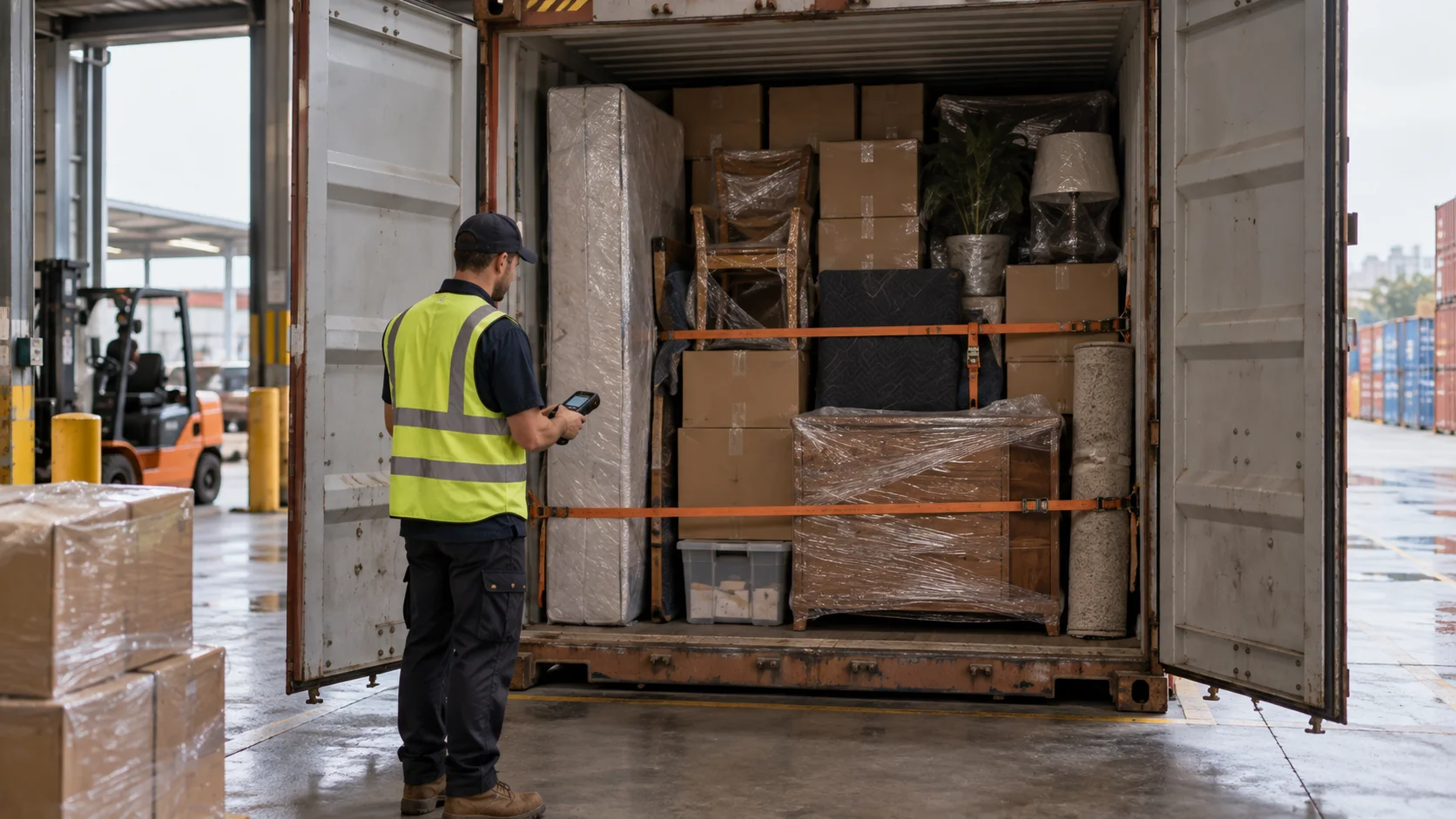
    If you are shipping a vehicle to Thailand rather than driving it in, Swift Cargo’s Thailand customs guide covers the customs clearance process at Laem Chabang and what documentation the freight forwarder handles on your behalf.

    Most explanations of the temporary import permit make it sound like a form you fill in. It is not. It is a bet Thai Customs makes with you, collateralised. The carnet or the bond is not paperwork. It is the exact amount of duty you would owe on a permanent import, held against the possibility that you cross a border one day and simply do not come back. Understand that and the confusing parts stop being confusing. The same logic explains why the guarantee runs to 100–150% of the vehicle’s value, why a lapsed permit converts instantly into a full duty bill, and why the six-month ceiling gets applied differently at different crossings. It is a duty deferral held open by a guarantee, not a duty exemption. If you are bringing the vehicle in by sea rather than driving it across a land border, the mechanism is identical the moment it lands: shipping a vehicle into a Thai port puts it under the same TIP terms as an overland crossing.

    Thailand Temporary Import Vehicle Permit

    Every long-stay visitor bringing a foreign vehicle into Thailand faces the same cold-start problem: the Carnet de Passage costs real money and paperwork lead time before you’ve driven a single kilometre, and that upfront friction is exactly why most people default to the Thai Customs Bond pathway instead, even when the carnet would be cheaper over a longer stay. The choice isn’t which pathway is objectively better. It’s which upfront cost you can actually clear before the TIP window opens. Visitors who get this wrong don’t fail because the rules are unclear. They fail because they solved for the wrong constraint, optimizing for lowest cost per day instead of for which paperwork they could realistically complete before the vehicle needed to cross the border. The forwarders who handle this well treat the carnet-versus-bond decision as a sequencing problem to solve weeks out, not a form to fill in at the checkpoint.

    Related reading: Shipping a Motorcycle to Thailand: Import Rules, Costs and What Actually Works

    Frequently Asked Questions

    How long can I keep a foreign car in Thailand on a temporary import permit?

    The TIP duration matches your visa permission-to-stay in Thailand. A 30-day visa-exempt entry (the allowance for UK, US, Australian and most EU passports since 15 September 2026) allows a 30-day TIP. A Non-Immigrant visa (60-90 days) allows a correspondingly longer TIP. The maximum continuous TIP period for passenger vehicles is generally up to six months at a time. Long-stay visitors typically extend by making a border run: driving the vehicle out to a neighbouring country (Malaysia, Laos, Cambodia) and re-entering with a new entry stamp, which generates a new TIP voucher. The Carnet de Passage booklet has multiple entry/exit pages to record successive border crossings.

    Do I need a Carnet de Passage to bring my car into Thailand?

    A Carnet de Passage en Douane (CPD) is the standard and most practical mechanism for bringing a foreign-registered vehicle into Thailand temporarily. It is not the only pathway. A direct Thai Customs bond (cash deposit equal to import duty) is an alternative, but this is difficult to arrange from abroad. The CPD is issued by national automobile clubs (AAA in the USA, RAC in the UK, NRMA/RAA in Australia) and requires membership, a completed application, and a financial guarantee equal to 100-150% of the vehicle’s declared value.

    Can I drive a left-hand drive vehicle in Thailand?

    Yes, a left-hand drive (LHD) vehicle can legally be driven in Thailand on a valid TIP. Thailand drives on the left, and the majority of Thai-registered vehicles are right-hand drive (RHD). LHD vehicles are not prohibited, but they do present practical challenges: overtaking visibility is reduced, and toll booth and drive-through configurations are designed for RHD vehicles. Many overlanders from North America and continental Europe drive LHD vehicles through Thailand without issues, but the driving experience requires more care than in LHD-traffic countries.

    What is the import duty if I want to permanently import my car to Thailand?

    Thai import duty on passenger vehicles is approximately 80% of the CIF (cost, insurance, freight) value, before excise tax and 7% VAT are applied. For a vehicle with a CIF value of USD 30,000, import duty alone is approximately USD 24,000. With excise tax (20-50% depending on engine size) and 7% VAT on the post-duty value, the total tax burden can reach 150-250% of the vehicle’s value. This is why most people bringing a vehicle to Thailand use the temporary import pathway and the Carnet de Passage rather than attempting a permanent import.

    Can I ship my vehicle to Thailand and avoid permanent import duty using the TIP?

    Yes. Vehicles shipped to Thailand (arriving at Laem Chabang or another port rather than entering by land) can also enter under a TIP using the Carnet de Passage. The vehicle is declared as a temporary import at the port customs, the CPD is stamped, and the vehicle is released for use in Thailand on the same terms as a land-border temporary import. The same duration, extension, and re-export obligations apply. This is used by overlanders who ship the vehicle from a distant continent and by some long-stay expats who want their vehicle for the duration of a stay.

  • Moving to Thailand Checklist: The Operational Version

    Moving to Thailand Checklist: The Operational Version

    Moving to Thailand Checklist: The Operational Version

    Moving to Thailand Checklist: The Operational Version

    Most “moving to Thailand checklists” tell you to learn some Thai, open a bank account, and get travel insurance.

    This is the operational checklist: the sequence of decisions and actions that need to happen in the right order to move household goods to Thailand without a customs hold, a duty bill you did not budget for, or a container that arrives before your visa does.

    The order matters. A visa application started too late delays customs clearance. A shipping booking made without a pre-move survey produces the wrong container size. A packing list written in vague terms invites a Thai customs examination.


    12+ Weeks Before Move Date

    ✓ Decide your Thai visa category and start the application

    This is the first decision, not the last. Your visa category determines whether your household goods qualify for personal effects duty relief at Thai customs (saving 10–30% import duty plus 7% VAT on the value of your goods). The permit must be in place when the goods arrive at Thai customs, not in process, not pending, not applied for.

    Visa categories that qualify for personal effects duty relief under Thai Customs’ standard criteria: Non-Immigrant B with work permit and Thailand LTR (Long-Term Resident) visa. Non-Immigrant OA (retirement) and Non-Immigrant O (marriage/family) are excluded from that standard list per Thailand’s official relocation criteria, so neither route qualifies for the duty-free concession. Categories that do not qualify at all: tourist visa, visa-exempt entry (a 30-day stamp for UK, US, Australian and most EU passports since 15 September 2026).

    Apply at the Royal Thai Embassy or Consulate in your home country. Processing times: Non-Immigrant visas: 5–15 working days. LTR visa: 20–40 working days. This is the longest lead-time item in the whole move.

    ✓ Book a pre-move survey with a removals company or freight forwarder

    A professional surveyor measures your goods and produces a CBM (cubic metre) estimate: the number that determines whether you ship LCL (less than container load) or FCL (full container load), and that drives the freight quote. Self-estimated volumes consistently run low. Book the survey at 12 weeks to allow time to select a provider and confirm the booking. Do not book the shipping first and estimate the volume second, or you may end up with the wrong container size.

    ✓ Decide what you are not shipping

    The cheapest goods to ship to Thailand are the ones you leave behind. Every unnecessary CBM adds cost at origin (THC, CFS fee), on the ocean (freight rate, surcharges), and at Thai destination (THC, CFS deconsolidation). The full financial picture (including shipping as a proportion of year-one costs) is mapped in the Thailand relocation cost breakdown. Sofas, mattresses, refrigerators, and washing machines are widely available in Thailand at low cost, and they cost less to replace locally than to ship internationally. Make this decision at 12 weeks, before the survey, not after it.

    ✓ Research pet import requirements (if applicable)

    Importing a pet to Thailand requires a government-issued health certificate from a licensed veterinarian in your origin country, a rabies vaccination certificate (with sufficient time after vaccination, typically 21 days), and a microchip (ISO 11784/11785 compliant). Thailand’s Department of Livestock Development issues the import permit. Processing and documentation take 4–8 weeks minimum from booking to arrival clearance. Start this process at 12 weeks if you have pets, not at 4 weeks.

    ✓ Research Thai school options (families with children)

    Bangkok international schools have waitlists of 3–12 months for popular year groups. At 12 weeks out, you are likely already too late for an immediate September intake at the most competitive schools. Submit applications immediately and request the waitlist position in writing. Confirm whether the school requires a Thai address at enrollment. This affects your housing search timing.


    A person sits at a kitchen table with a laptop open, its screen angled away from camera, a half-finished cup of coffee and a Thailand guidebook resting nearby, morning

    8–10 Weeks Before Move Date

    ✓ Confirm the removals or freight booking

    After the survey, confirm the service level, container size, collection date, and destination address in Thailand. Get the all-in quote in writing. It should itemise: UK/origin packing, origin THC, B/L fee, export clearance, ocean freight, named surcharges (BAF, LSS, War Risk if applicable), marine insurance (separate quote), destination THC, CFS deconsolidation if LCL, Thai customs broker fee, and last-mile delivery to your Thailand address. Any quote that does not name these layers separately will generate unexpected invoices later.

    ✓ Arrange marine cargo insurance

    Arrange marine insurance before the goods are loaded. It cannot be purchased retrospectively after a damage event. Request an all-risks policy covering the declared replacement value of goods. Ocean carrier liability (Hague-Visby Rules or COGSA for US origin) is capped at a fraction of most goods’ replacement value. For a two-bedroom household goods shipment, the premium is typically USD 120–300 / GBP 90–240 / AUD 150–300.

    ✓ Begin the Thai bank account preparation

    Opening a Thai bank account before arrival is not possible for most nationalities. But you can prepare: research the bank (Bangkok Bank and Kasikorn Bank are most accessible for expats), confirm the document requirements for your visa category (typically passport, non-immigrant visa, and proof of address in Thailand), and budget the initial deposit. Note that tourist visas and visa-exempt entries complicate bank account opening: another reason your long-term visa matters before you arrive.

    ✓ Notify relevant authorities of your change of address

    Start with the tax authority in your origin country (HMRC, ATO, IRS, etc.): a change of tax residency may have implications that require planning before departure, not after. Pension provider if applicable. Notify investment platforms and banks, and confirm online banking access will not be geo-blocked. Electoral roll / voter registration. If you have a UK National Insurance number, State Pension, or NHS registration that requires action on departure, handle it now.

    ✓ Research Thai health insurance

    Arrange private health insurance in Thailand before arrival rather than after. Some insurers apply exclusions or additional underwriting for conditions disclosed after policy inception. Research providers: Cigna Global, Allianz Care, Aetna International, and Thai-specific providers such as Pacific Cross. Premiums for a healthy adult under 50 range from USD 1,700–4,000 per year (AUD 2,600–6,200 / GBP 1,300–3,200) for comprehensive inpatient and outpatient cover in Thailand. Apply now; coverage starts from a named date.


    Professional mover kneeling beside a half-packed carton

    4–6 Weeks Before Move Date

    ✓ Packing and collection

    Professional removals teams pack in 1–3 days depending on volume. Be present for the entire packing process. You need to see and approve the packing list as it is created. Every carton must be inventoried with a description specific enough for Thai customs. “Miscellaneous household goods” is not a sufficient description. “Kitchen utensils, ceramic dishes, glassware” is. Specific descriptions make a Thai customs physical examination less likely.

    ✓ Review and sign the packing list before the goods leave

    The packing list is the primary document that Thai customs uses to assess your shipment. Read it before the goods leave your property. Check: are the descriptions specific? Are high-value items (electronics, jewellery, artwork) separately itemised with values? Are any items listed that should not be in the shipment (prohibited goods)? Once the container is sealed, you cannot amend the packing list without a B/L amendment, which costs USD 50–100 and delays clearance.

    ✓ Confirm the export customs declaration is filed

    Your removals company or forwarder handles this, but confirm it explicitly. For UK movers, this is an HMRC CDS (Customs Declaration Service) submission. For Australian movers, it is an ABF ICS filing. For US movers, it is an AES/EEI filing. Ask for the export declaration reference number. If the goods are queried on the Thai side, the broker may need it.

    ✓ Obtain the bill of lading and track the vessel

    Your forwarder issues the bill of lading (B/L) after the goods are loaded and the vessel departs. The B/L is the title document for your goods. Keep the original (or confirm telex release arrangements) and note the B/L number. Use the container number and B/L number to track the vessel on the carrier’s website. Share the B/L number with your Thai agent or customs broker immediately. They need it before the vessel arrives at Laem Chabang.


    Before the Vessel Arrives at Laem Chabang

    ✓ Send documents to your Thai customs broker

    Your Thai customs broker needs the following before the vessel arrives, ideally 2 weeks before arrival:

    • Copy of your passport (photo page and all visa stamps)
    • Your Thai non-immigrant visa or residency permit documentation
    • The bill of lading (B/L number and copy)
    • The detailed packing list
    • The commercial invoice or household goods inventory with declared values
    • Any additional certificates (phytosanitary, fumigation) if your goods contain wood or plant materials

    Missing or late documents at this stage add 3–10 working days to Thai customs clearance and may generate storage charges at the port or CFS.

    Thai Customs confirms the document set directly: see Thai Customs Department for current personal-effects clearance requirements.

    ✓ Confirm your Thailand delivery address and access

    Your Thai agent needs the full delivery address before the goods leave port. For Bangkok apartment buildings, they need to know: building name and address, floor, building management contact for elevator/truck access booking, any delivery time restrictions (many Bangkok buildings restrict deliveries to weekday business hours). For houses: road access width for the delivery truck, any access restrictions. A 20ft container truck is 13 metres in length and cannot access all Bangkok streets or building car parks.

    ✓ Arrange temporary accommodation timed around delivery

    Your goods will arrive 5–15 working days after the vessel docks at Laem Chabang (under normal conditions). Time your own arrival in Thailand so that you are present for customs clearance and delivery. Being out of the country when your goods need customs clearance adds complexity. Your broker can handle it with a power of attorney, but that requires preparation in advance.


    Moving to Thailand Checklist

    On Arrival in Thailand

    ✓ Get a Thai SIM card at the airport

    AIS, True Move, and DTAC all have counters at Suvarnabhumi and Don Mueang airports. A 30-day tourist SIM costs THB 300–600. A postpaid plan on a non-immigrant visa requires a trip to a service centre. Do this in the first week. Thai mobile numbers are essential for bank account opening, building management, utility connections, and every administrative interaction in Thailand.

    ✓ Open a Thai bank account

    Bangkok Bank, Kasikorn Bank (KBank), and SCB (Siam Commercial Bank) are the most expat-accessible. Bring your passport and original non-immigrant visa. Some branches require a work permit for Non-Immigrant B holders. Kasikorn Bank has been the most consistent for expats without work permits (retirement and marriage visa holders). The account is needed for: receiving goods on duty-free terms (sometimes the broker requires a Thai account for duty payment in case relief is denied), rental deposits, utility bills, and health insurance direct debit.

    ✓ Register the Thai address for official correspondence

    Once you have a rental contract and a Thailand address, register it with: your embassy (UK, US, Australian, etc. nationals can register with their embassy for emergency contact and voting purposes), the Thai immigration office for your area (foreign nationals must notify immigration of their address within 24 hours of checking into new accommodation using the TM30 form, typically filed by the landlord on your behalf), and your Thai customs broker for all official documentation.


    After Goods Delivery

    ✓ 90-day reporting to Thai Immigration

    Foreign nationals on non-immigrant visas must report their current address to Thai Immigration every 90 days. You can file the TM47 form online (at the Thai Immigration Bureau website), in person at any immigration office, or by post. Missing a 90-day report incurs a THB 2,000 fine. Set a calendar reminder on day 1 in Thailand for the first reporting date (90 days from visa start, not from arrival date).

    ✓ Sort out Thai driving licence (if driving)

    A foreign driving licence does not permit permanent driving in Thailand. You must convert to a Thai driving licence within 90 days of taking up residency. Required: your origin country driving licence, an international driving permit (obtained in your home country before departure), your passport and non-immigrant visa, medical certificate (obtainable from any Thai clinic, costs THB 100–200), and proof of Thai address. Convert the licence at the Department of Land Transport office in your province.

    ✓ Annual visa renewal preparation

    For Non-Immigrant OA (retirement) and Non-Immigrant O (marriage) visas: mark the renewal date (typically 90 days before visa expiry for first renewal) and confirm the current Thai Immigration requirements at that time. Requirements can change. Check the official Thai Immigration Bureau website or your local immigration office for the current document list. For LTR visa holders: no annual renewal required for 10 years.


    Shipping container sits with its doors still open at a departure warehouse

    The Sequencing Red Lines

    1. Visa before goods sail, not after. The Thai long-term visa must be issued before goods arrive at Thai customs. With 30–100 days of ocean transit depending on origin, the visa must be applied for before the goods depart, not after arrival in Thailand.
    2. Survey before booking, not after. The volume estimate drives the container size, which drives the freight cost. Booking a 20ft container before a survey, then discovering you need 40ft, costs significantly more than booking the right size from the start.
    3. Packing list review before the container is sealed. Once the container is sealed, the packing list is locked. Amending it at the Thai customs stage requires a B/L amendment, costs USD 50–100, and delays clearance.
    4. Marine insurance before loading. Cannot be arranged retrospectively. A claim on goods damaged in transit requires a policy that was in force when loading occurred.
    5. Documents to Thai broker before vessel arrival. Sending customs documents after the vessel arrives adds weeks of storage charges. The broker files the customs entry as soon as the vessel berths. Documents must be in their hands 7–14 days before arrival.

    Book a pre-move survey through a licensed freight forwarder early enough to confirm container size, customs document requirements, and visa timing before goods depart. The Swift Cargo Thailand page covers how the shipping process to Thailand works, including port handling at Laem Chabang.

    Dog lying on a woven rug beside stacked moving boxes in a bright Thai home

    Related reading: Thailand Relocation Guide 2026: Visas, Customs and What to Ship

    Frequently Asked Questions

    How far in advance should I start planning a move to Thailand?

    Start the visa application and shipping survey at least 12 weeks before your intended move date. If you have school-age children, international school applications should begin 6–12 months before. Many Bangkok international schools have long waitlists. If you have pets, the import documentation process takes a minimum of 4–8 weeks. The visa is the longest lead-time critical path item: Non-Immigrant visas take 5–15 working days; the Thailand LTR visa takes 20–40 working days. Starting late on the visa is the most common cause of customs duty bills that should not have been paid.

    What documents do I need for Thai customs clearance of household goods?

    The core document set for personal effects customs clearance in Thailand: passport copy (all pages with visas), Thai non-immigrant visa or residency permit documentation, original bill of lading or telex release confirmation, detailed packing list (itemised by carton with descriptions), commercial invoice or household goods inventory with declared values, and in some cases a phytosanitary certificate for wood products or plant-based goods. Send these to your Thai customs broker at least 7–14 days before the vessel arrives at Laem Chabang.

    How does the 90-day reporting rule work in Thailand?

    Foreign nationals on non-immigrant visas must report their current address to Thai Immigration every 90 days using the TM47 form. The 90-day clock starts from your last entry into Thailand or your last 90-day report. You can report online at the Thai Immigration Bureau website, in person at any immigration office, or by post (with a self-addressed stamped envelope for return of the acknowledgement slip). Missing the report date incurs a THB 2,000 fine. You can report from 15 days before to 7 days after the due date. Use the online system to check your specific date.

    Can I ship prohibited goods to Thailand if they are for personal use?

    No. Thailand’s prohibited import list applies regardless of whether goods are for personal use or commercial sale. Absolutely prohibited items include: firearms and ammunition (without specific government permits), illegal narcotics, counterfeit goods, pornographic material, and goods that contravene intellectual property rights. Restricted items requiring permits or special clearance include: prescription medications in quantity, some electronic devices, certain plant and animal products, and vehicles. The Thai Customs Department’s prohibited and restricted goods list is published on their website. Confirm any questionable items with your removals company or Thai customs broker before packing day. Removing a prohibited item from a sealed container is expensive and time-consuming.

    Does my household goods shipment need to arrive at the same time I move to Thailand?

    Not exactly, but timing matters. Thai personal effects duty relief requires goods to arrive no earlier than one month before and no later than six months after you arrive in Thailand. Goods that arrive before your long-term visa is issued will not qualify for duty relief. Goods that arrive more than six months after your Thai residency was established also lose the duty relief eligibility. The practical window: goods should arrive after your long-term visa is in place, but within six months of your residency start date. For most movers, aiming for goods to arrive 2–4 weeks after you do (having sorted your visa in-country or before departure) is the safest timing.

  • Cost of Moving Household Goods from the USA to Thailand: A Complete Breakdown

    Cost of Moving Household Goods from the USA to Thailand: A Complete Breakdown

    Labeled moving boxes for kitchen, living room and bedroom staged in a US garage beside a framed Pacific Ocean shipping route map and container ship photo, representing a household move from the USA to Thailand

    Cost of Moving Household Goods from the USA to Thailand: A Complete Breakdown

    Moving household goods from the USA to Thailand uses a different ocean route than most of the articles you will find online, and a different surcharge profile. The trans-Pacific route from Los Angeles or Long Beach to Singapore and then Laem Chabang is not affected by the Red Sea rerouting that added 10–14 days and a War Risk Surcharge to UK and European shipments in 2024. For US movers, the transit time is 20–28 days, the surcharge stack is simpler, and the freight rates on the Pacific trade lane are more competitive than on the Europe-Asia lane.

    That does not make the total cost small. A one-bedroom LCL move from Los Angeles to Bangkok still spans six cost layers across two currencies (USD for US origin and ocean freight, THB for Thai destination costs). It also carries US export documentation requirements, Thai customs, and the same personal effects duty relief conditions that apply to every nationality. The total cost is driven by the same five inputs as any international move: volume, departure port, month, Thai visa status at customs clearance, and delivery destination within Thailand.
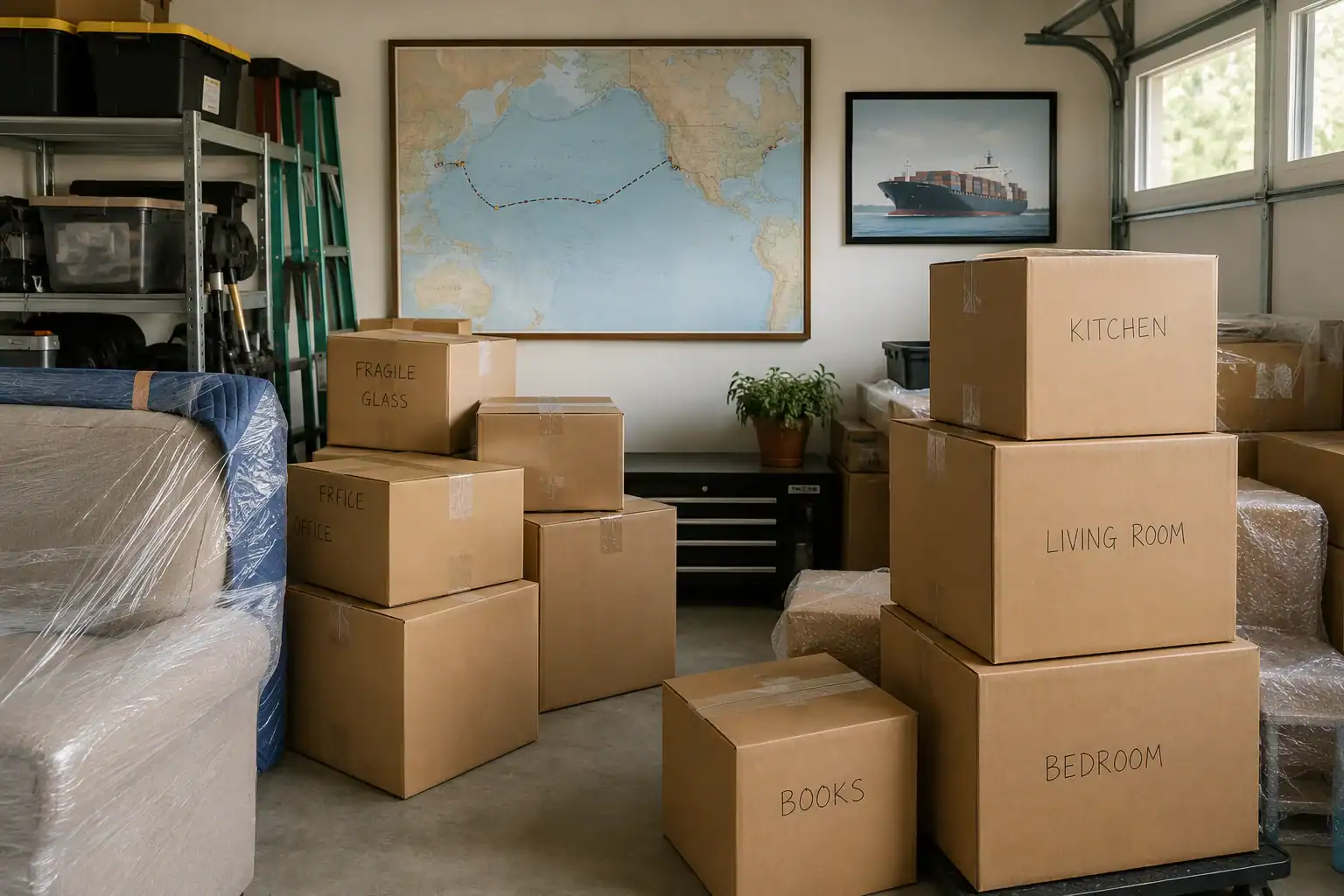
    A 20-foot container of a two-bedroom home moves from Long Beach to Laem Chabang for less than the airfare most families pay to fly there, and almost nobody costing the move that way finds that out until the quote lands. For the full process of how a removal to Thailand works stage by stage, see our guide to international removals to Thailand.


    The USA-to-Thailand Route

    US household goods shipments to Thailand travel trans-Pacific: across the Pacific Ocean from US West Coast ports to Singapore or another Southeast Asian transshipment hub, then onward to Laem Chabang. This route does not pass through the Red Sea or the Suez Canal, which means:

    • No War Risk Surcharge (the Red Sea conflict does not affect this trade lane)
    • No Cape of Good Hope rerouting (not applicable to Pacific trade)
    • Transit times are unaffected by the 2024 Red Sea disruption

    Current transit times from US ports to Laem Chabang:

    US departure portTransit (port to port)Primary routing
    Los Angeles / Long Beach20–26 daysTrans-Pacific to Singapore, feeder to Laem Chabang
    Seattle / Tacoma22–28 daysTrans-Pacific to Singapore or Port Klang
    Houston (US Gulf)28–38 daysPanama Canal transit, trans-Pacific or via Singapore
    New York / New Jersey35–48 daysSuez Canal or Cape of Good Hope, then to Thailand

    For the great majority of US movers to Thailand, Los Angeles or Long Beach is the most practical departure port: the highest vessel frequency on the Pacific trade lane, the most competitive freight rates, and the shortest transit times from the West Coast. East Coast movers should note that shipping from New York to Thailand requires a much longer routing via Panama Canal or Suez/Cape. That routing adds 10–20 days and higher cost compared to the West Coast option. If you are on the East Coast, it may be worth transporting goods overland to a West Coast port. Compare the land transport cost against the transit time and freight rate difference.

    Total door-to-door from US packing day to Bangkok delivery: 35–55 days (West Coast origin) to 55–75 days (East Coast origin).


    US Export Requirements

    Goods leaving the USA valued at USD 2,500 or more must be filed with the US Census Bureau via the Automated Export System (AES). The same applies to any goods requiring an export licence, regardless of value. This Electronic Export Information (EEI) filing is required for most household goods removal shipments. Your freight forwarder or removals company files this on your behalf.

    Household goods shipments are filed under the “HH” export information code rather than a standard Schedule B commodity number. Your forwarder will advise how to classify any high-value or regulated items shipped alongside the household lot.

    Household goods leaving the USA incur no export duty. The EEI filing is an administrative requirement. Filing incorrectly delays export clearance. Confirm with your forwarder that AES filing is included in their service.
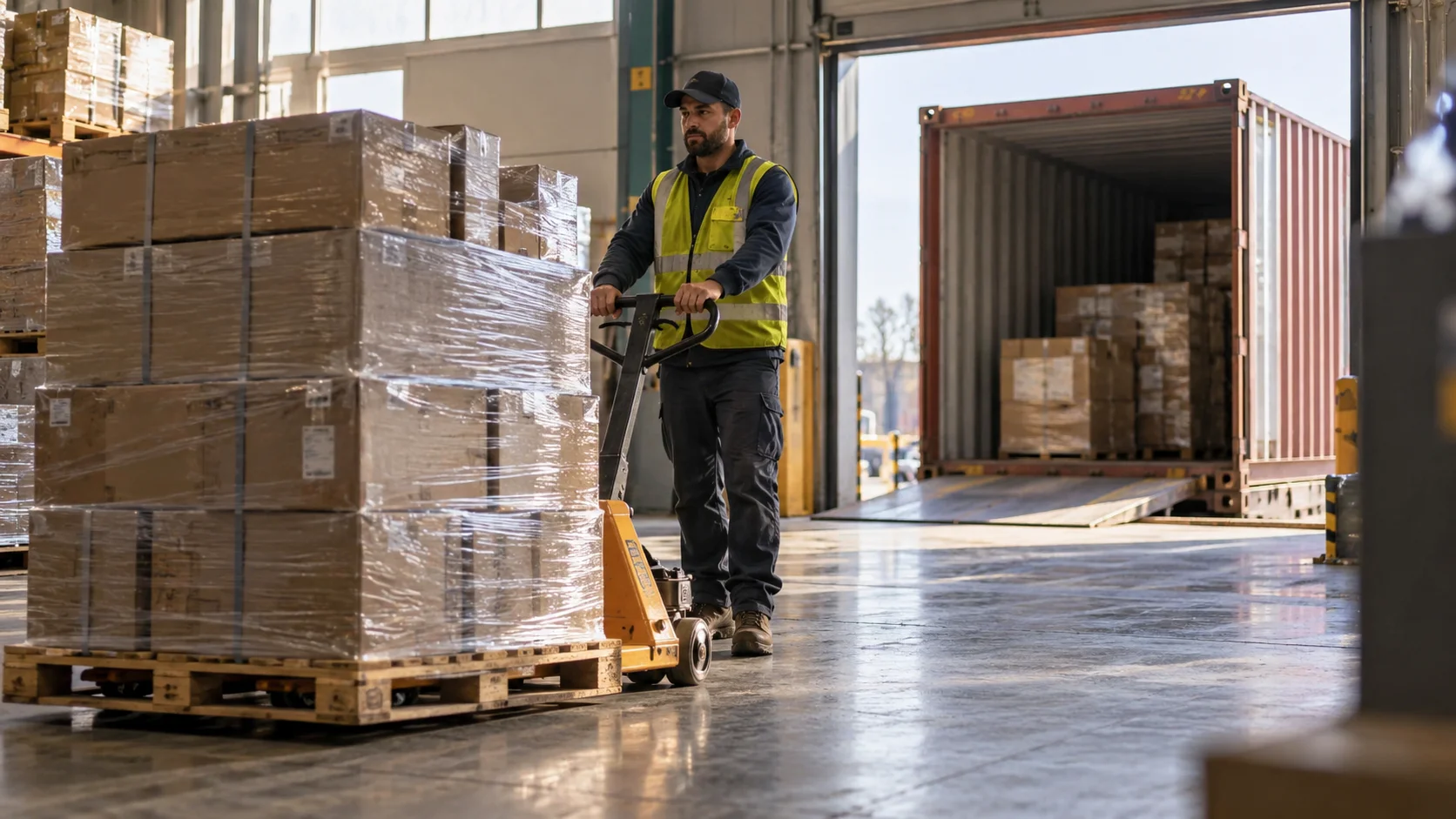
    For goods subject to US export controls (certain electronics, dual-use technology, firearms, etc.), additional licensing may be required. Most standard household goods are exempt, but confirm any regulated items with your forwarder before packing.


    A stack of ocean-freight moving cartons at a US export depot, layered and organized by weight on a pallet, a warehouse worker using a pallet jack to align the stack

    The Six Cost Layers: USA to Thailand

    Layer 1: US Origin Costs

    ItemLCL (per CBM)20ft FCL
    Professional packing serviceUSD 300–700 flatUSD 900–1,800
    Origin THC (LA/LB)USD 12–22/CBMUSD 225–400
    Origin CFS fee (LCL only)USD 10–20/CBMN/A
    Bill of lading / Seaway bill feeUSD 40–80USD 40–80
    AES / EEI filingUSD 50–120USD 50–120
    Inland transport to port (if not LA-area)USD 200–800+USD 400–2,000+

    Inland transport from non-LA-area origins is a significant variable. A shipment from New York or Chicago to Los Angeles for West Coast departure adds USD 600–2,500 for an LCL shipment or USD 1,500–4,000 for an FCL container. You must weigh this cost against the total cost of an East Coast departure port. If you are unsure how many CBM your home occupies, the CBM size guide breaks it down tier by tier.

    Layer 2: Ocean Freight and Surcharges

    ItemLCL (per CBM)20ft FCL
    Base ocean freight (LA/LB–Laem Chabang)USD 60–140USD 1,400–2,800
    Bunker Adjustment Factor (BAF)USD 15–40USD 200–500
    Low Sulphur Surcharge (LSS/IMO 2020)USD 8–20USD 100–220
    Peak Season Surcharge (Q3 if applicable)USD 10–30USD 120–350
    War Risk SurchargeNone (trans-Pacific route)None

    The absence of a War Risk Surcharge is a meaningful cost advantage for US-origin shipments compared to UK/European equivalents. The Pacific trade lane also benefits from strong carrier competition, which keeps base rates and BAF levels more stable than on the Europe-Asia lane.

    Layer 3: Marine Cargo Insurance

    All-risks marine cargo insurance for household goods: 2–3.5% of declared replacement value. For goods valued at USD 20,000, the premium is USD 400–700. For USD 40,000 (typical 20ft FCL), the premium is USD 800–1,400. Household goods cover is a different product from commercial marine cargo and is priced far higher. It is written on new-for-old replacement value at destination for used goods, and it extends to mould, mechanical derangement and pairs-and-sets. Commercial containerised cargo runs a fraction of this. Owner-packed cartons are normally restricted to total-loss-only and are not covered at this rate. The Carriage of Goods by Sea Act (COGSA), the US equivalent of the Hague-Visby Rules, limits ocean carrier liability to USD 500 per package, not per kilogram. For container moves, “package” may be interpreted as the entire container if not itemised. That interpretation makes marine insurance even more critical for US-origin container moves than for some other origins.

    Layer 4: Thai Destination Port Charges

    ItemLCL20ft FCL
    Destination THC (Laem Chabang)THB 300–700/CBM (~USD 9–20)THB 3,500–5,500 (~USD 100–157)
    CFS deconsolidation fee (LCL only)THB 400–900/CBM (~USD 11–26)N/A
    Port entry / customs processing feeTHB 200–400 (~USD 6–11)THB 200–400 (~USD 6–11)

    Exchange rate used: THB 35/USD (mid-2025 baseline; the Baht has since strengthened to roughly THB 33.7/USD, so treat these USD conversions as directional, not exact). FCL containers bypass the CFS deconsolidation step. That saves THB 400–900 per CBM compared to LCL, a meaningful saving on a 15–25 CBM move.

    Layer 5: Thai Customs, Duty Relief and What Applies to Americans

    Thai personal effects duty relief applies equally to all nationalities, including Americans. The conditions are unchanged: valid Thai long-term residency permit at the time of customs clearance, used personal effects only, goods arrive within six months of establishing Thai residence, one-time relief per change of residence.

    For American movers, the common residency paths are:

    • Non-Immigrant B with work permit: This route is employer-sponsored. The work permit must be in hand before customs clearance for duty relief to apply.

    • Non-Immigrant OA (retirement): This route is available to Americans 50+ and requires proof of funds (THB 800,000 in Thai bank account or monthly income THB 65,000+).
    • Thailand Elite / LTR visa: Available to Americans with qualifying income, investment, or professional credentials. The LTR visa fee is THB 50,000, and it offers 10-year status.
    • Non-Immigrant O (marriage/family): This route applies to Americans married to Thai nationals.

    Americans on a tourist visa or visa-exempt entry do not qualify for duty relief. That visa-exempt window for US passport holders fell from 60 to 30 days on 15 September 2026. Confirm the current allowance before booking goods to sail. Thai import duty applies at 10–30% of CIF value for household goods categories, plus 7% VAT. See our detailed guide to duty-free import rules in Thailand.

    Customs broker fee: THB 3,500–7,000 (~USD 100–200) for a standard personal effects entry.

    Layer 6: Last-Mile Delivery Within Thailand

    DestinationLCL van20ft FCL truck
    Laem Chabang to BangkokTHB 2,000–4,000 (~USD 57–114)THB 5,000–9,000 (~USD 143–257)
    Bangkok to Chiang MaiTHB 6,000–12,000 (~USD 171–343)THB 12,000–22,000 (~USD 343–629)
    Bangkok to PhuketTHB 5,000–10,000 (~USD 143–286)THB 10,000–18,000 (~USD 286–514)

    Three distinctly sized stacks of household moving boxes lined up in a US warehouse staging area — a small studio-sized stack, a mid-sized one-bedroom stack, and a larger

    Three Full Cost Scenarios

    All costs in USD. Ocean freight at LA/LB–Laem Chabang rates last confirmed mid-2025. Trans-Pacific pricing has moved since, so treat these as a starting reference and confirm current rates with your forwarder. Personal effects duty relief is granted in all three scenarios, and West Coast origin is assumed.

    Scenario 1: Studio Move (5 CBM LCL, Bangkok delivery)

    From ~USD 3,886, door to door: West Coast departure, Bangkok delivery, duty relief granted. This package price includes origin pickup, loading, packing, short-term storage, ocean transit, Thai customs clearance, destination port charges, last-mile delivery, removal of packaging, and marine insurance.

    Scenario 2: One-Bedroom Apartment (12 CBM LCL, Bangkok delivery)

    From ~USD 5,890, door to door: West Coast departure, Bangkok delivery, duty relief granted. This package price includes origin pickup, loading, packing, short-term storage, ocean transit, Thai customs clearance, destination port charges, last-mile delivery, removal of packaging, and marine insurance.

    Scenario 3: Two-Bedroom House (20ft FCL, Bangkok delivery)

    From ~USD 8,140, door to door: West Coast departure, Bangkok delivery, duty relief granted. This package price includes origin pickup, loading, full packing, short-term storage, ocean transit, Thai customs clearance, destination port charges, last-mile delivery to a house, removal of packaging, and marine insurance.

    Scenarios assume West Coast departure, personal effects duty relief granted, non-Q3 departure. No inland US transport cost is included (West Coast origin). East Coast movers should add USD 600–4,000 for inland transport to LA/LB, or request quotes for East Coast port departure with longer transit.

    Treat every figure here as a budget to plan around, not a fixed quote. Nobody in this industry can responsibly price a move without knowing the details. Real costs move with things a blog post can’t account for: building access (a third-floor walk-up costs more to load than a ground-floor pickup), the time of year, and events like storms or global shipping disruptions that move freight rates with little warning. Fragile, oversized, or high-value items that need custom crating or special handling can add substantially to the total as well. The scenarios above assume a straightforward household load. Declared value also isn’t tied to room size or CBM: some people value ordinary furniture and electronics very low, while a small load of antiques or collectibles can be worth far more than a full container of everyday items. Our team works with you on your specific job and situation to give accurate, current pricing when it’s actually time to move.


    East Coast vs West Coast: Which Port to Use

    For Americans relocating to Thailand from East Coast cities (New York, Boston, Miami, Atlanta, Dallas), the port choice matters:

    • West Coast departure (LA/LB): This option offers lower freight rates and surcharges, shorter Pacific transit (20–26 days port-to-port), and better vessel frequency. But it requires inland transport from the East Coast: typically USD 600–2,500 for LCL, USD 1,500–4,000 for FCL container.
    • East Coast departure (New York/NJ): This option has no inland transport cost but involves longer routing (Panama Canal or Suez Canal depending on carrier), higher freight rates, and 35–48 days port-to-port. It is currently not affected by Red Sea rerouting (Panama Canal routing is available), but Suez routing adds a War Risk Surcharge if used.

    The break-even calculation: compare (inland US transport cost to LA/LB) + (LA/LB ocean freight + surcharges) against (East Coast ocean freight + surcharges with longer routing). For most LCL moves under 10 CBM, West Coast departure is typically cheaper in total. For large FCL moves from deep East Coast cities, the inland transport cost can tip the comparison toward East Coast departure.

    Rough starting point by region (first-pass estimates, not measured rates: treat as a planning guide, not a quote):

    RegionExample statesTypical inland leg to a West Coast port
    West Coast / near-portCalifornia, Oregon, Washington, NevadaMinimal: often just local pickup
    Mountain WestArizona, Utah, Idaho, Colorado, New MexicoLower end of the inland range above
    Central / PlainsTexas, Kansas, Nebraska, Minnesota, MissouriMiddle of the inland range above
    Midwest / SouthIllinois, Ohio, Tennessee, Georgia, FloridaUpper end of the inland range above
    Northeast / East CoastNew York, Massachusetts, Virginia, North CarolinaTop of the inland range: worth comparing an East Coast departure instead, per the break-even note above

    These groupings are a starting estimate built on the inland-transport ranges above, not a measured rate per state. Actual cost depends on your exact city, the carrier’s routing that week, and current fuel and freight-market conditions. Get a quote for your specific origin before treating any number here as final.


    Five Cost Management Actions for US Movers

    1. Use a West Coast port if feasible

    For movers within 800 km of the West Coast, departing from LA/LB is almost always cheaper in total than any East Coast routing. For movers in the Southeast or Midwest, get quotes for both before deciding. Inland transport costs are quantifiable, and the freight rate difference is significant.

    2. Confirm Thai visa timing before goods sail

    Since 15 September 2026, US visa-exempt entry runs 30 days and does not qualify for Thai personal effects duty relief. With a 35–55 day total timeline from LA departure to Thai customs clearance, goods booked without a confirmed Thai residency permit will likely arrive before the visa is granted. Apply for the Thai non-immigrant visa at the Royal Thai Consulate in Los Angeles, Chicago, or New York before departure.

    3. Understand COGSA carrier liability vs marine insurance

    COGSA (US carriage of goods law) limits carrier liability to USD 500 per package, not per kilogram. For a 20ft container declared as one package, the carrier’s total liability could be interpreted as USD 500. Marine insurance fills this gap. Arrange all-risks cover before goods are loaded, not after.

    4. Declutter high-volume, low-value items

    Every unnecessary CBM adds USD 160–200 to the total across origin THC, ocean freight, and Thai destination charges. Furniture and appliances available cheaply in Thailand (sofa sets, refrigerators, washing machines, mattresses) cost less to replace locally than to ship from the US. Focus the container on high-value, sentimental, or difficult-to-source items.

    A container yard under heavy tropical rain at a Thai port, a truck's headlights cutting through the downpour as it approaches a covered loading canopy, containers glistening with realistic water sheeting rather than glassy perfection.

    5. Avoid Q3 departures and Songkran arrivals

    Q3 Peak Season Surcharges add USD 120–350 per FCL or USD 10–30 per CBM for LCL. Goods arriving at Laem Chabang in mid-April during Songkran add 7–14 days to clearance and THB 500–1,500 per CBM per week in storage charges. Both are avoidable with booking timing.


    Get a quote for your USA-to-Thailand move →

    The single most expensive mistake on a US-to-Thailand move is not choosing the wrong port or the wrong carrier. It is shipping before the long-term visa is in the passport. Get that one sequence wrong and a shipment that should have cleared duty-free instead attracts 10–30% duty plus 7% VAT on the declared value of every sofa, mattress and box: a five-figure surprise on a two-bedroom load. The freight quote is the small number. The visa timing is the one that decides whether the freight quote is the whole bill or a fraction of it. And freight is only the first line: budget for the full first-year cost of relocating to Thailand before you decide how much of the house is worth shipping at all.

    A note on reading the numbers above. Six layers is an accurate way to account for the cost, and a poor way to predict it. Three of the six barely move: insurance tracks your declared value, Thai destination charges are published, and the customs broker charges roughly what every other broker charges. Two move a little with the season and the port. One moves enormously, and it is the one most people never price: whether your visa is in hand, in the right category, on the day the container arrives. Get that wrong and duty and VAT land on the whole shipment. On a typical household consignment, that is a five-figure difference. Everything else on the list is rounding by comparison. Price the visa timing first. Then worry about the freight.

    Related reading: Ship Household Goods to Thailand: Step-by-Step Guide

    Frequently Asked Questions

    How much does it cost to move household goods from the USA to Thailand?

    The all-in cost of moving household goods from the USA to Thailand ranges from approximately USD 3,600–4,200 for a studio LCL move (5 CBM, West Coast departure, Bangkok delivery, duty relief granted) to USD 5,500–6,300 for a one-bedroom apartment (12 CBM LCL) to USD 7,700–8,600 for a two-bedroom house FCL move. East Coast departures add USD 600–4,000 in inland transport or higher ocean freight costs on longer routings. These figures assume personal effects duty relief is granted. Without it, import duty (10–30% of CIF value) plus 7% VAT adds substantially to the total.

    How long does shipping from the USA to Thailand take?

    From Los Angeles or Long Beach, port-to-port to Laem Chabang is 20–26 days. Total door-to-door from US packing day to Bangkok delivery is typically 35–55 days for West Coast departures, shorter than European-origin moves (80–100 days). East Coast departures add 15–22 days to the ocean transit. Unlike UK and European cargo, US trans-Pacific routes are unaffected by the 2024 Red Sea disruption and current War Risk Surcharges.

    Do Americans pay import duty on household goods shipped to Thailand?

    Not if personal effects duty relief is granted. The conditions are the same for Americans as for any nationality: valid Thai long-term residency permit (not tourist or visa-exempt entry) at the time goods arrive at Thai customs; goods must be used personal effects; arrival within six months of establishing Thai residence; one-time relief per change of residence. Thailand’s visa-exempt entry for US passport holders has been 30 days since 15 September 2026 (down from 60). Either way, it does not qualify for duty relief. Obtain a Thai non-immigrant visa before goods sail to ensure the permit is in place at customs clearance.

    Is there a War Risk Surcharge on US-to-Thailand shipments?

    No. The War Risk Surcharge that applies to UK and European shipments to Asia is specific to cargo transiting the Red Sea zone, which affected carriers rerouting via the Cape of Good Hope from late December 2023. US trans-Pacific cargo to Thailand travels across the Pacific Ocean and does not pass through the Red Sea or the Cape of Good Hope. The surcharge does not apply to this trade lane. This is a meaningful cost advantage for US-origin shipments compared to European equivalents.

    Can I ship a car from the USA to Thailand?

    Technically yes, but Thai import duty on passenger vehicles is approximately 80% of the CIF value, with additional excise tax and 7% VAT. Together, those push the effective tax burden to 150–250% of the vehicle’s value for most imported cars. A USD 25,000 vehicle can incur USD 37,500–62,500 in Thai import duty and taxes. Most Americans relocating to Thailand sell their US vehicle and purchase locally (right-hand drive vehicles, as Thailand drives on the left). Left-hand drive American vehicles also face registration difficulties in Thailand.