Author: SwiftCargo Team

  • Shipping from Hong Kong to Australia: Transit, Costs, Customs and LCL vs FCL

    Shipping from Hong Kong to Australia: Transit, Costs, Customs and LCL vs FCL

    Hong Kong handles more than 18 million TEUs of container traffic every year. That volume makes Kwai Chung one of the highest-throughput container terminals in the world. For Australian importers, that throughput is partly an advantage. Services are frequent, consolidation options are broad, and the port infrastructure is mature. That same throughput also adds complexity. Frequent sailings mean you have options. Options mean decisions. And three decisions matter most on the HK-to-Australia route: container mode, documentation structure, and customs strategy. All three carry real cost consequences that most importers don’t model until something goes wrong.
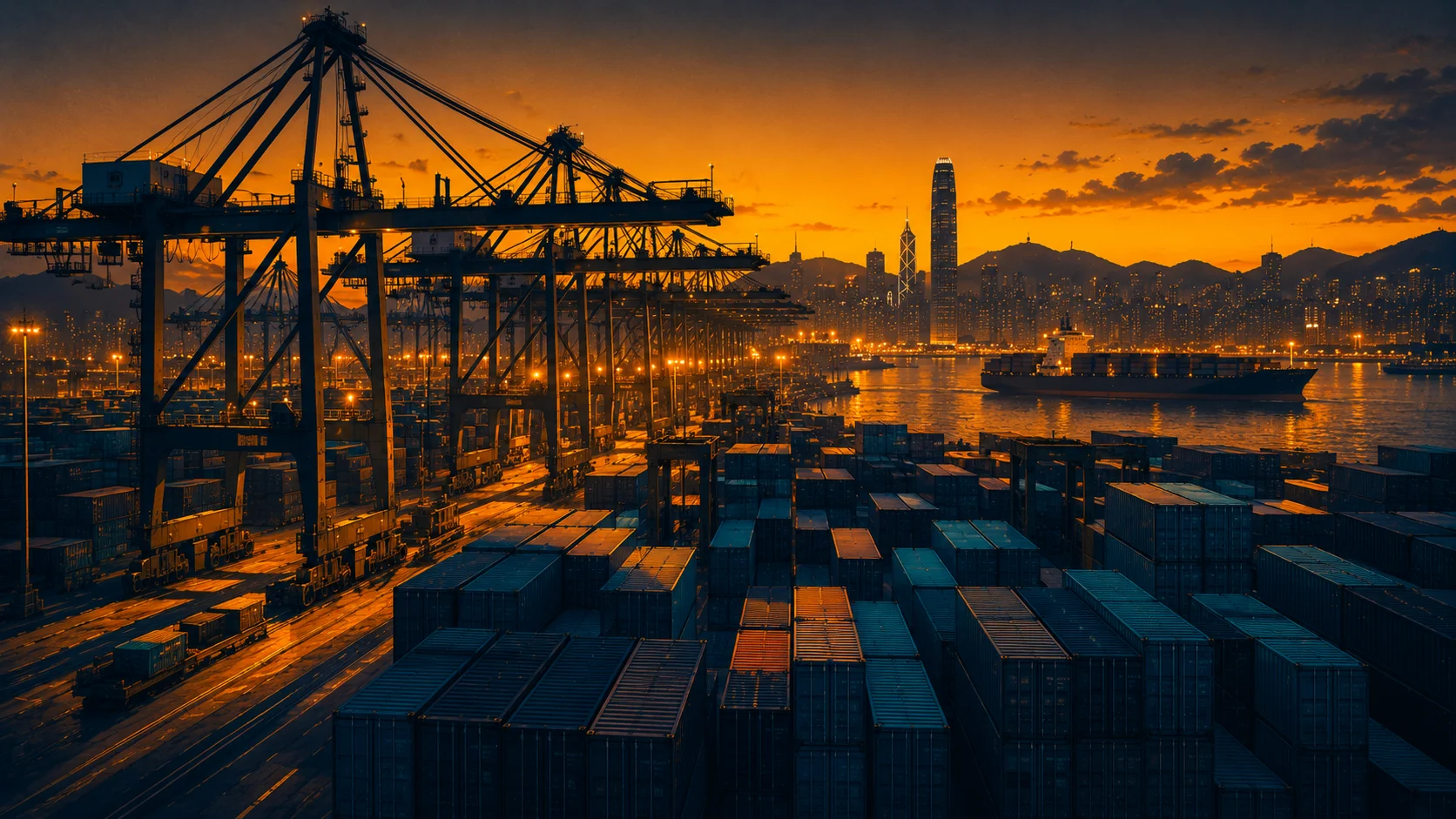
    Kwai Chung container terminal Hong Kong shipping to Australia

    Why Hong Kong Still Matters as a Shipping Origin

    Hong Kong is not China, and that distinction matters more than most importers realize. As a Special Administrative Region, Hong Kong maintains its own customs territory, its own port authority, and its own export documentation system, all separate from mainland China’s. Goods manufactured in Guangdong or Shenzhen are frequently consolidated at HK terminals before being loaded onto deep-sea vessels bound for Australia. As a result, a significant share of what Australian businesses call “China sourcing” actually departs from Hong Kong waters.

    According to Hong Kong’s Trade and Industry Department, Australia is a consistent Hong Kong trading partner, and re-exports dominate the trade flowing between them. Telecommunications and sound-recording equipment, office and data-processing machines, and watches and clocks lead the re-export categories to Australia, alongside smaller volumes of clothing and machinery. Hong Kong charges no tariffs on imports or exports, and that free-port status makes the territory a natural consolidation hub for goods flowing between mainland China and global markets including Australia, according to the U.S. International Trade Administration’s Hong Kong commercial guide.

    Under this structure, goods shipped from Hong Kong may be manufactured in mainland China, assembled in Hong Kong, or genuinely originate with HK-based manufacturers. The country of origin determines how Australian Border Force applies duty rates and whether biosecurity requirements differ. Getting this right before the shipment moves is easier than correcting it after goods arrive at Port Botany or Swanson Dock.
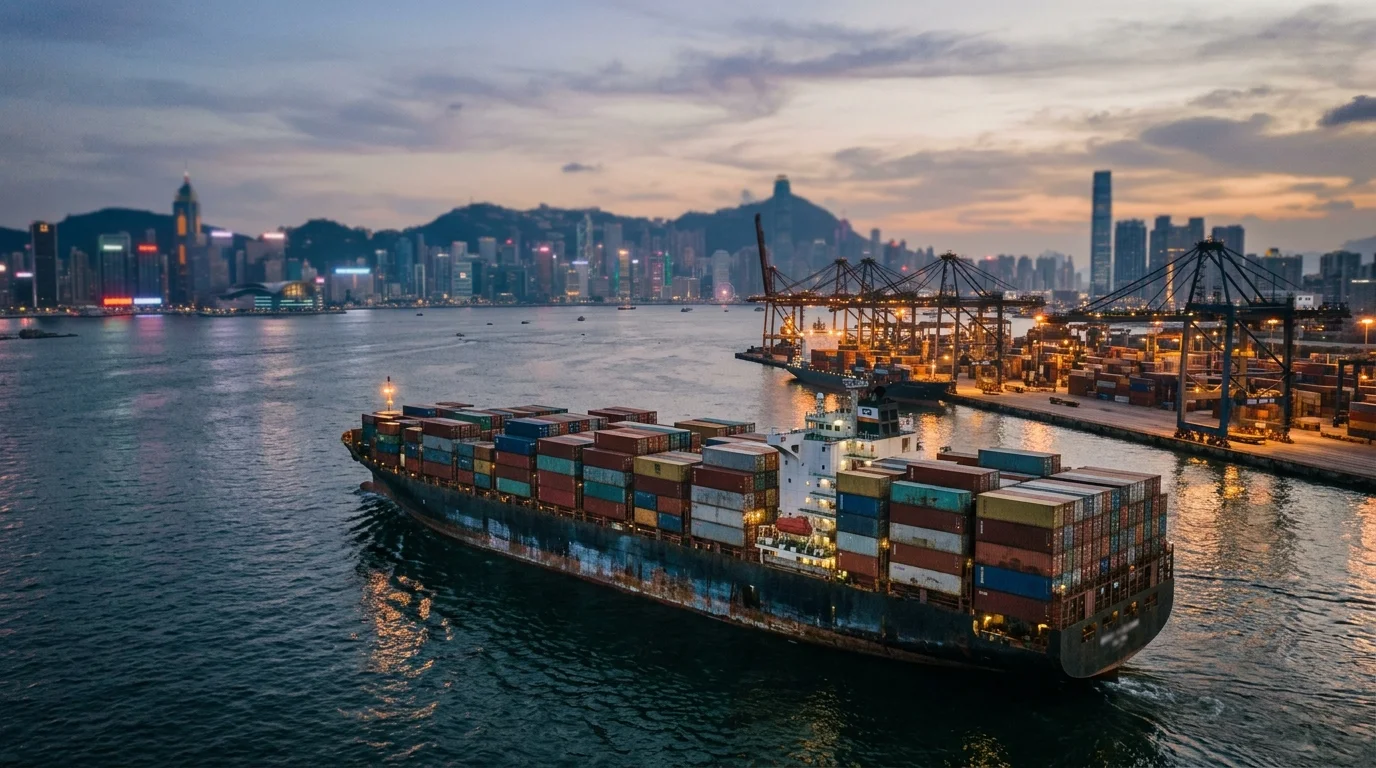
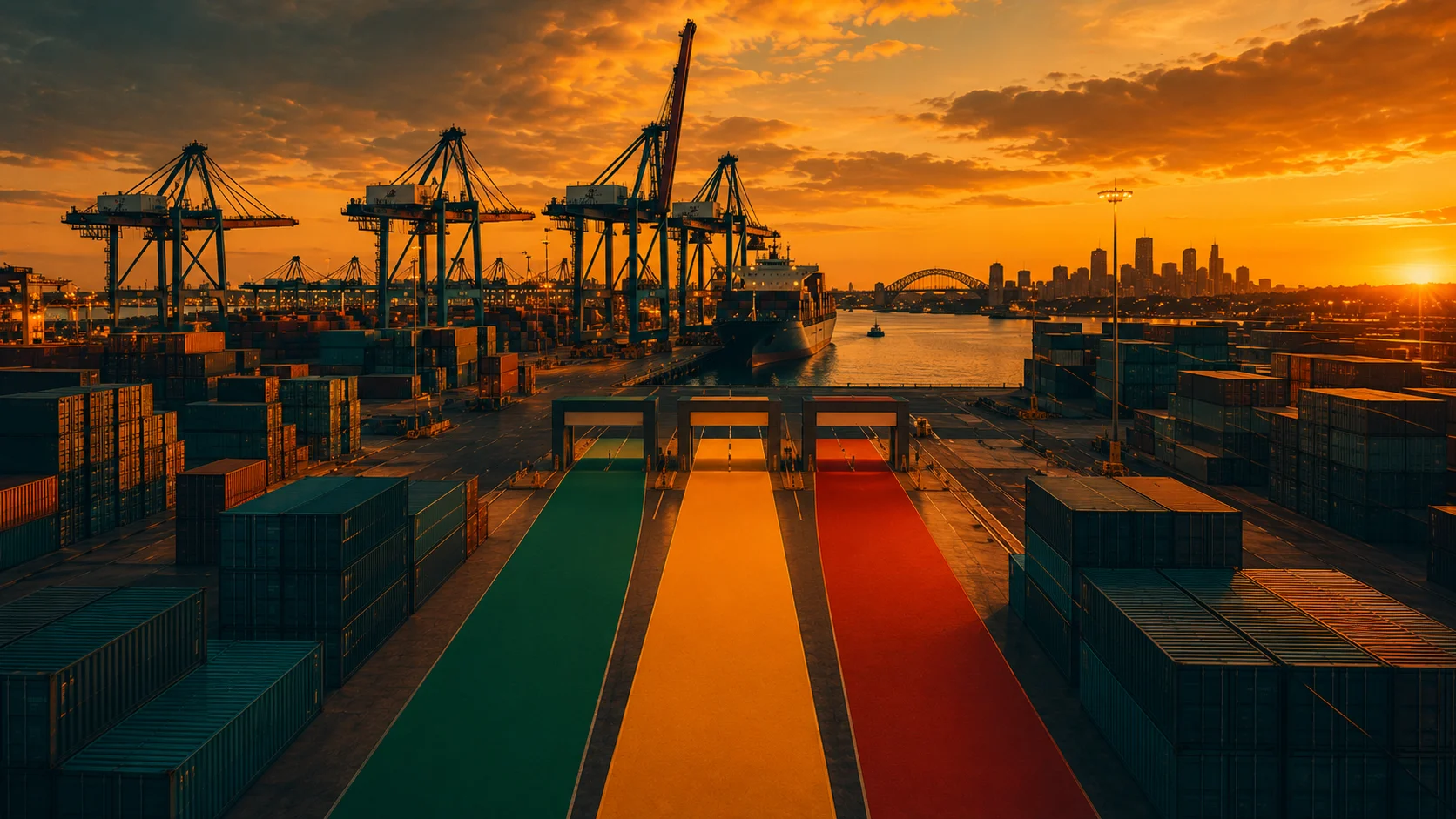
    Container ship departing Hong Kong harbour at dusk bound for Australia

    Transit Times: What to Expect and How to Plan Around Uncertainty

    Sea freight from Hong Kong to Australia takes between 12 and 22 days port-to-port, depending on the destination port and the specific shipping service. A 10-day spread is a real planning risk for businesses managing inventory cycles or responding to seasonal demand. Treating the midpoint as a certainty is the kind of overconfidence that creates stockouts.

    Think about the distribution rather than the average. Direct services to Sydney (Port Botany) typically run 12–16 days. Melbourne (Webb Dock / Swanson Dock) services run 13–17 days on most schedules, broadly similar to Sydney. Brisbane (Fisherman Islands) is longer at 15–20 days on direct services. Services routing via Singapore or another transhipment hub add 3–7 days and introduce a connection risk. If the feeder vessel misses the connection, that margin disappears entirely.

    Air freight compresses this to 3–5 days door-to-door, and premium services handle urgent cargo in under 72 hours. The cost premium is substantial. Rates typically run 4–6x sea freight on a per-kilogram basis. That premium is worth paying when time sensitivity is the primary driver: perishable goods, stock replenishment to avoid a stockout, or high-value, low-weight items where freight cost is a small fraction of cargo value.

    The published transit-time charts consistently understate port dwell time at the Australian end. Australian customs clearance adds time beyond the sailing schedule. Dwell time at major Australian ports varies from 1 business day for pre-cleared low-risk cargo to 5–10 business days when the goods are physically inspected. Building a realistic delivery window means adding port dwell time to the transit estimate, not just reading a carrier’s timetable.

    Sea Freight Options: LCL vs FCL from Hong Kong

    Hong Kong is one of the world’s strongest LCL (less-than-container-load) consolidation markets. Weekly LCL services run to all three major Australian ports. Importers who don’t fill a full 20-foot container can still book regular sailings without paying for space they don’t use. The trade-off is handling: LCL cargo passes through more hands, is co-loaded with other importers’ goods, and is slightly more exposed to damage than FCL (full-container-load) cargo. FCL moves from shipper to receiver in a sealed box.

    The decision framework for most Australian importers is straightforward. LCL makes sense when cargo volume is below roughly 10–15 CBM and the per-unit value doesn’t justify the FCL premium. FCL makes sense when volume clears the threshold, when goods are fragile or high-value, or when the business needs a predictable sealed-container chain of custody for quality assurance or insurance reasons.

    From Hong Kong specifically, FCL services have an advantage: many carriers operate weekly FCL sailings from Kwai Chung to Sydney, Melbourne, and Brisbane. Their reliable schedules simplify booking and inventory planning. The port’s efficiency means FCL containers are typically loaded and sealed with fewer delays than at some mainland Chinese ports. That is a modest gain when schedule adherence matters.
    Shipping from Hong Kong to Australia: Transit, Costs, Customs and LCL vs FCL: Cost Benchmarks: What Shipping from Hong Kong to Australia Actually Costs

    Cost Benchmarks: What Shipping from Hong Kong to Australia Actually Costs

    Freight rates change with market conditions, fuel surcharges, and seasonal demand, so any specific number in a guide like this is a planning reference, not a quote. The realistic cost bands for sea freight as of mid-2026 are:

    • LCL (per CBM): AUD $80–$150 origin-to-destination, depending on port pair and consolidator
    • FCL 20-foot container: AUD $1,200–$2,500 all-in, port-to-port
    • FCL 40-foot container: AUD $1,800–$3,500 all-in, port-to-port
    • Air freight: AUD $6–$14 per kilogram depending on weight, volume, and service level

    These numbers do not include customs duty, GST, terminal handling charges at the Australian port, transport from the Australian port to the delivery address, or customs broker fees. A proper total landed cost calculation adds all of these together. Run one before comparing supplier quotes or deciding where to source. Importers who skip this step regularly discover that once duty, GST, and logistics are accounted for, the cheapest ex-works price becomes the most expensive landed cost.

    Peak-season surcharges apply on the Hong Kong route. Two windows affect rate levels and space availability: the pre-Christmas shipping peak (August through October) and the Chinese New Year disruption window (January through February). Importers who treat the base rate as a year-round constant tend to get caught by surcharges that can add 20–40% to ocean freight costs during these windows. Work with a freight forwarder who monitors the HK-Australia market, and you get earlier warning and better options when the market tightens.

    Documentation: What Hong Kong Requires on the Exporter Side

    Hong Kong’s free-port status means export formalities are minimal by global standards. Most commercial shipments require a commercial invoice, a packing list, and a bill of lading or airway bill. Controlled goods need an export licence from Hong Kong Customs and Excise. That category covers certain chemicals, dual-use items, and strategic commodities. The HK Trade and Industry Department maintains a controlled-goods list that exporters must check before shipping.

    The most consequential documentation decision on the HK side is the Certificate of Origin. Because Hong Kong is a separate customs territory from mainland China, goods that truly originate in HK carry a different status than goods manufactured in China and re-exported through HK. The Australian Border Force administers Australia’s customs rules, and it assesses duty based on country of origin, not country of departure. If a commercial invoice states “Made in Hong Kong” on goods actually manufactured in Guangdong, that is not just a documentation error. It is a false declaration to a customs authority, with corresponding legal exposure.

    For goods that genuinely originate in Hong Kong, the Hong Kong General Chamber of Commerce issues Certificates of Origin. A preferential rate under the A-HKFTA depends on a Declaration of Origin, which the importer, exporter or producer can complete, held when the goods are imported. For goods manufactured in mainland China but exported via HK, the origin documentation should reflect China, not Hong Kong. The import duty rate at the Australian end will then follow Chinese-origin rules.
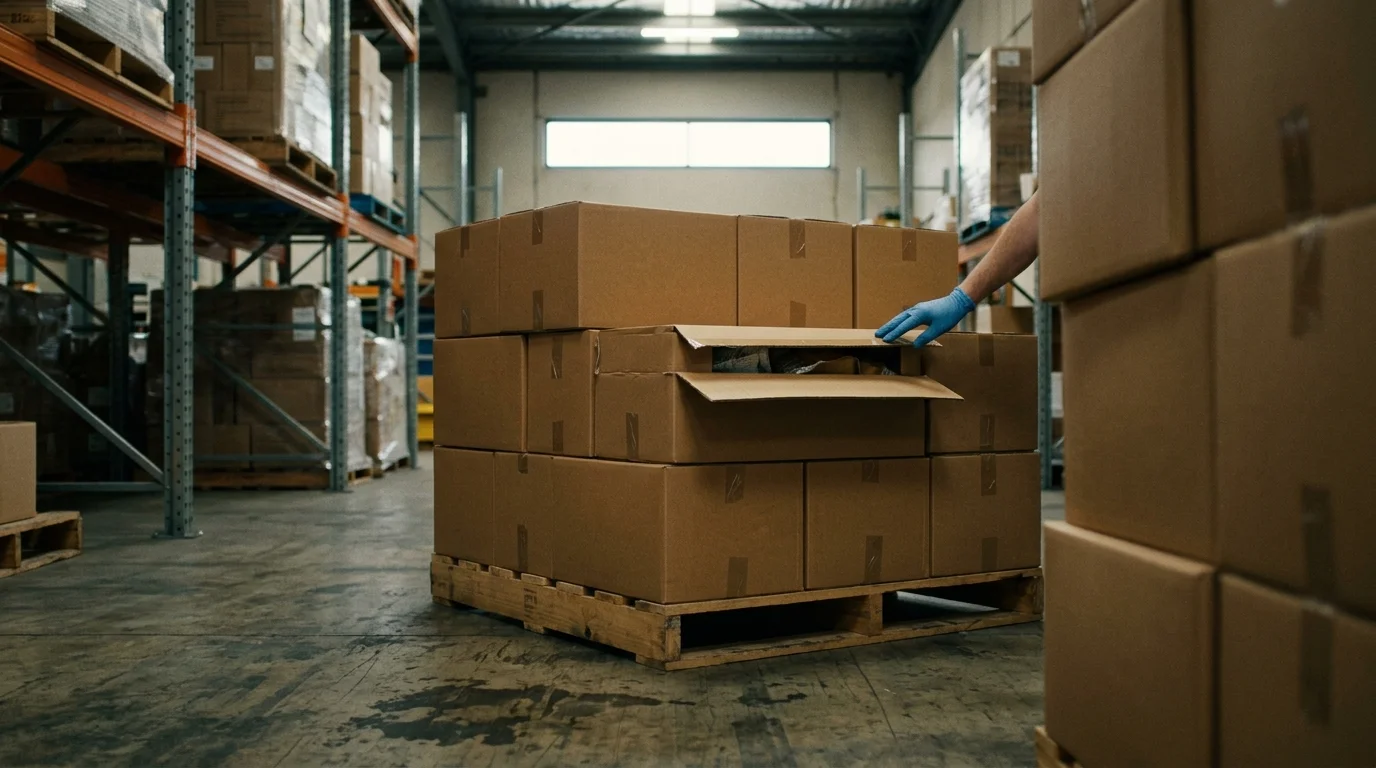
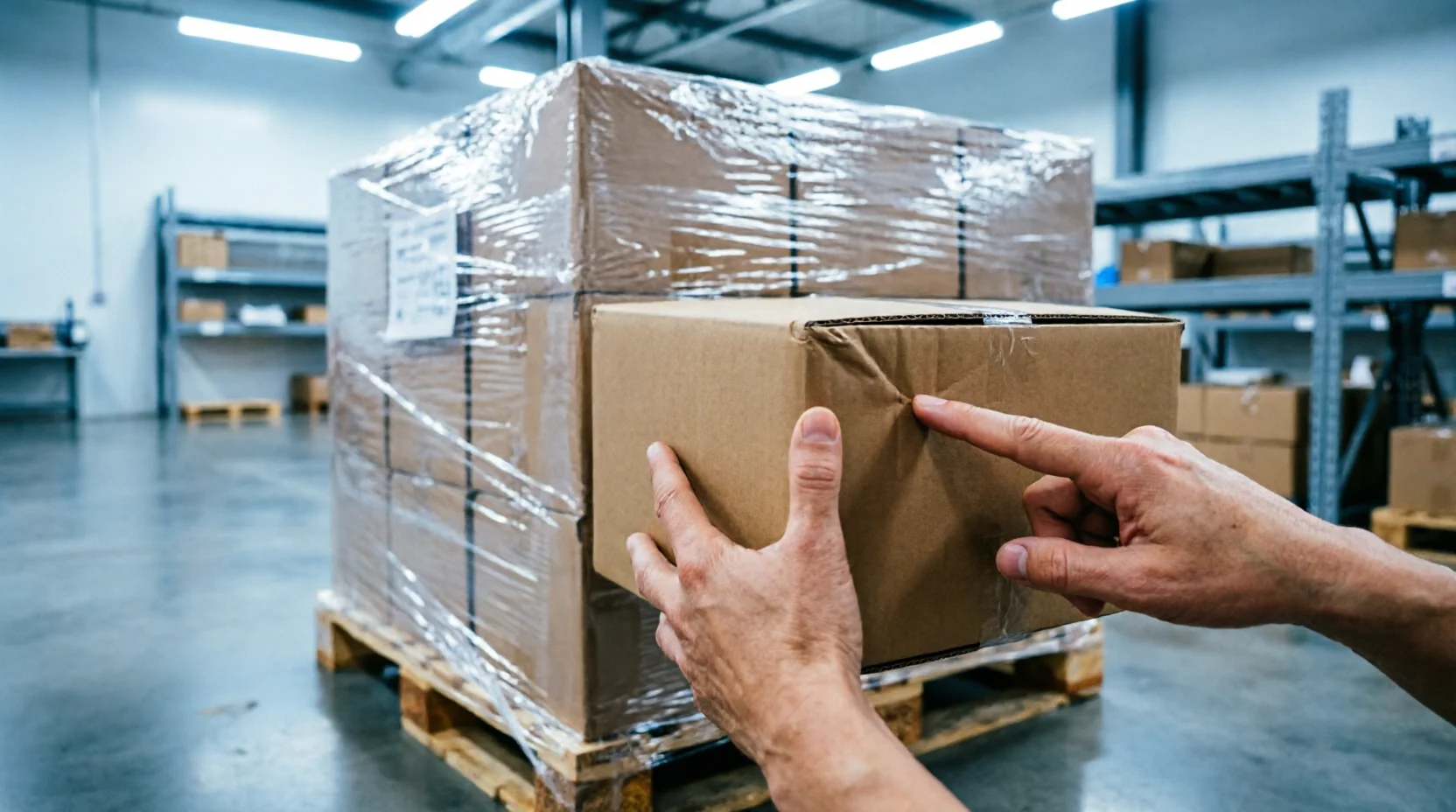
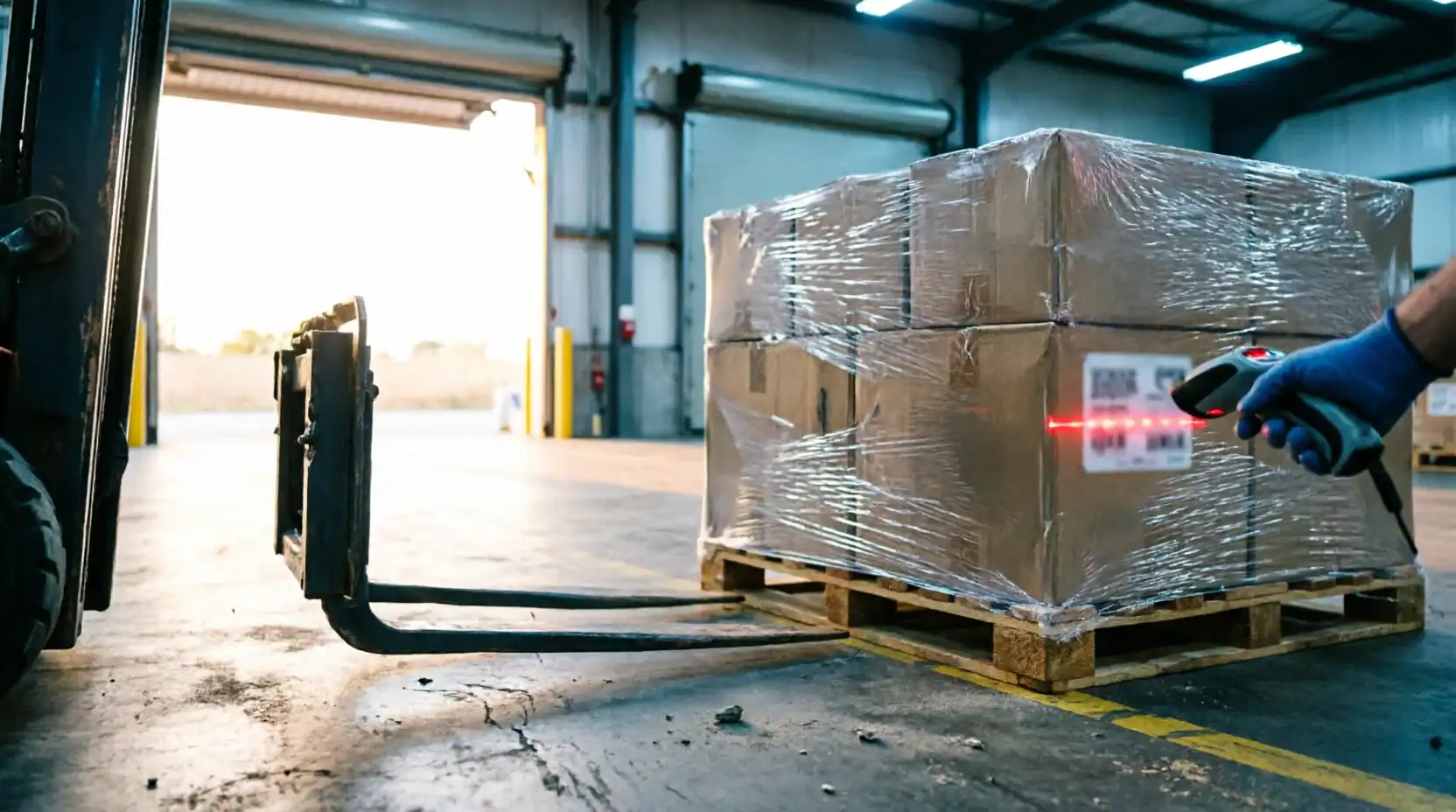
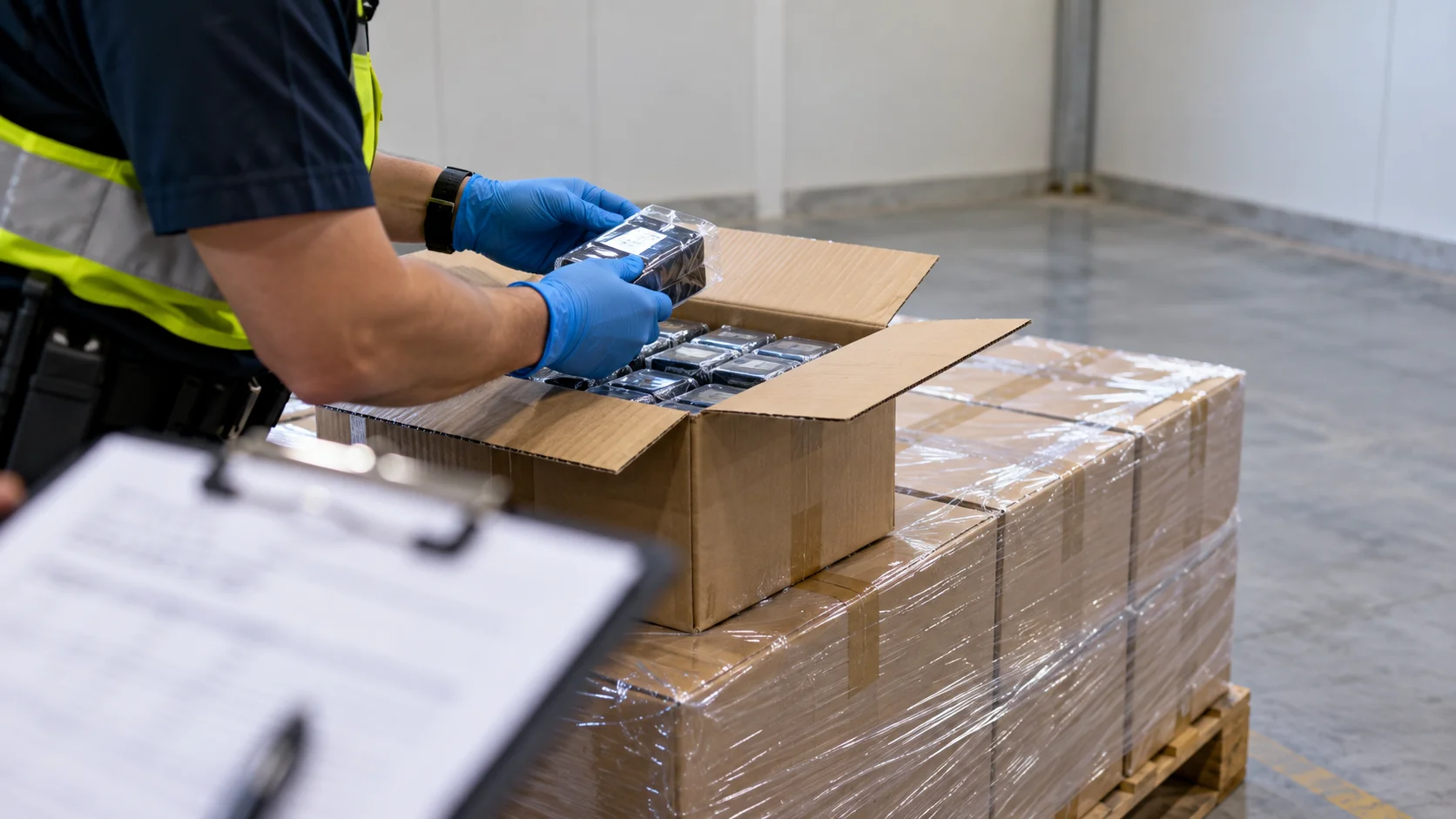
    Warehouse worker inspecting an opened carton on a pallet of Hong Kong-origin goods

    Australian Customs Requirements for HK-Origin Goods

    At the Australian end, the same import regulations apply regardless of whether goods depart from Hong Kong, mainland China, or anywhere else. The regulatory stack starts with the Australian Border Force for customs clearance and the Department of Agriculture, Fisheries and Forestry for biosecurity screening. On the customs side, consistent, accurate documentation is what keeps a shipment from being flagged for inspection. Specialist regulators cover product categories that require additional compliance: TGA for therapeutic goods, ACMA for electronics, and so on.

    For most commercial goods arriving from Hong Kong, the import process follows a standard pathway:

    1. A licensed customs broker typically lodges an import declaration with ABF before or on arrival
    2. ABF assesses duty and GST liability based on customs value: the transaction value of the goods plus overseas freight and insurance costs to the Australian port
    3. The Department of Agriculture inspects or clears goods that fall under biosecurity regulations
    4. The importer pays duty and GST, or defers them under a duty deferral account
    5. Goods are released for delivery

    The duty rate for goods from Hong Kong depends on origin. Australia and Hong Kong have a free trade agreement, the A-HKFTA, in force since 17 January 2020. Goods get its preferential rate only if they satisfy its rules of origin and you hold a Declaration of Origin when they are imported. Otherwise the general rate of duty applies. However, Australia is party to the Regional Comprehensive Economic Partnership (RCEP). Goods that originate in China may qualify for RCEP preferential rates even if they are transshipped through Hong Kong, provided origin documentation and rules of origin are satisfied. This is an underappreciated planning opportunity for importers who source from Guangdong-province suppliers and route through HK: the origin claim can be China rather than Hong Kong. A China claim can qualify the goods for RCEP duty relief, where a Hong Kong claim gets a preferential rate only if the goods meet the A-HKFTA’s own rules of origin.

    GST at 10% applies to the customs value of all imported goods. The low-value import threshold no longer exempts commercial importers. Businesses must account for GST on all commercial imports regardless of consignment value.
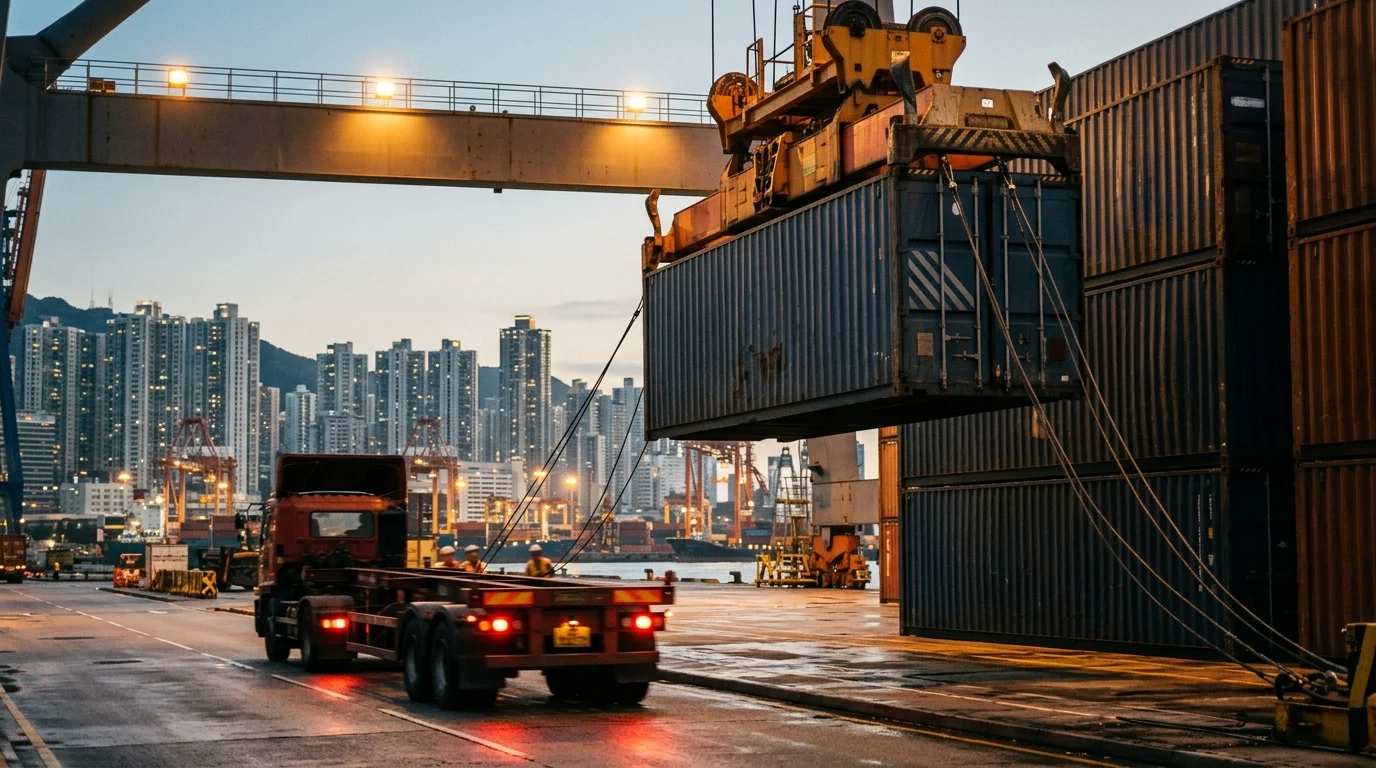
    Crane loading a shipping container onto a truck at a Hong Kong container terminal

    Choosing Your Incoterms on the HK-Australia Route

    Incoterms define where responsibility and cost transfer from the Hong Kong seller to the Australian buyer. The practical consequences on this route are significant, so choose your Incoterms deliberately rather than accept the seller’s default. Understanding what Incoterms mean for Australian importers is especially relevant when you source from HK-based trading companies or manufacturers who may default to EXW or FOB without explaining the implications.

    EXW (Ex Works) makes the buyer responsible for all freight, insurance, and export clearance. From a Hong Kong factory or warehouse, this means your freight forwarder must collect the goods, arrange export documentation, and handle all logistics from origin. EXW gives the buyer maximum control but maximum operational exposure. If the freight forwarder you engage doesn’t have strong Hong Kong operations, problems compound quickly.

    FOB (Free on Board) is the more common commercial arrangement, and Australian importers with established freight relationships generally prefer it. Under FOB, the HK seller clears the goods for export and delivers them to the vessel at Kwai Chung or the named port. From the moment the goods cross the ship’s rail, the Australian importer’s freight forwarder takes over. This is a cleaner handoff point, and it lets the buyer choose their own ocean carrier without bearing origin-side logistics risk.

    CIF (Cost, Insurance, Freight) bundles the freight and insurance into the seller’s quote. The buyer sees a single delivered price, which can look attractive. The disadvantage is that the buyer loses control over freight selection, cannot verify that the insurance coverage is adequate, and often pays a margin above market freight rates embedded in the CIF price. For regular import programs, FOB with buyer-nominated freight is typically more cost-efficient and operationally transparent.

    Working with a Freight Forwarder on the HK Route

    Global and regional freight forwarders both serve the HK-to-Australia route, so importers have genuine choices. The quality differences are real. Choosing the right freight forwarder in Australia matters at both ends of the route: you need Hong Kong-side capability to manage origin consolidation, export documentation, and carrier booking, and you need Australian-side capability for customs clearance, biosecurity coordination, and last-mile delivery.

    On the HK side specifically, look for a forwarder with established relationships at Kwai Chung. The terminal operates at high utilization. A forwarder with well-managed booking windows and truck slots will hit cut-offs more reliably than one managing HK operations at arm’s length from a Sydney office. For LCL shipments, the HK consolidation partner matters: consolidators vary in how tightly they manage co-loading, how carefully they handle cargo, and how closely they hold to departure schedules.

    Swift Cargo operates on the Hong Kong to Australia corridor and handles both FCL and LCL services. If you’re comparing providers or want to understand current rate levels and transit schedules, talk to a Swift Cargo freight coordinator for a realistic picture of market conditions. Pricing fluctuates with carrier availability and seasonal demand, and a real quote is always more useful than a guide’s benchmark figures.

    One discipline separates a clean Hong Kong shipment from a stalled one: get your documentation right before the goods move, not after. The commercial invoice, packing list, and certificate of origin are not paperwork you chase down at the port. They are the operation. If your supplier is still sorting out the origin declaration when the container is booked, you have already lost the timeline. Set the standard early. Tell the exporter exactly which documents you need, in what format, and by what date, and hold them to it. Leave Hong Kong with a complete, accurate document set and your shipment clears Australian customs on schedule. Leave with gaps and it waits. Own the paperwork.
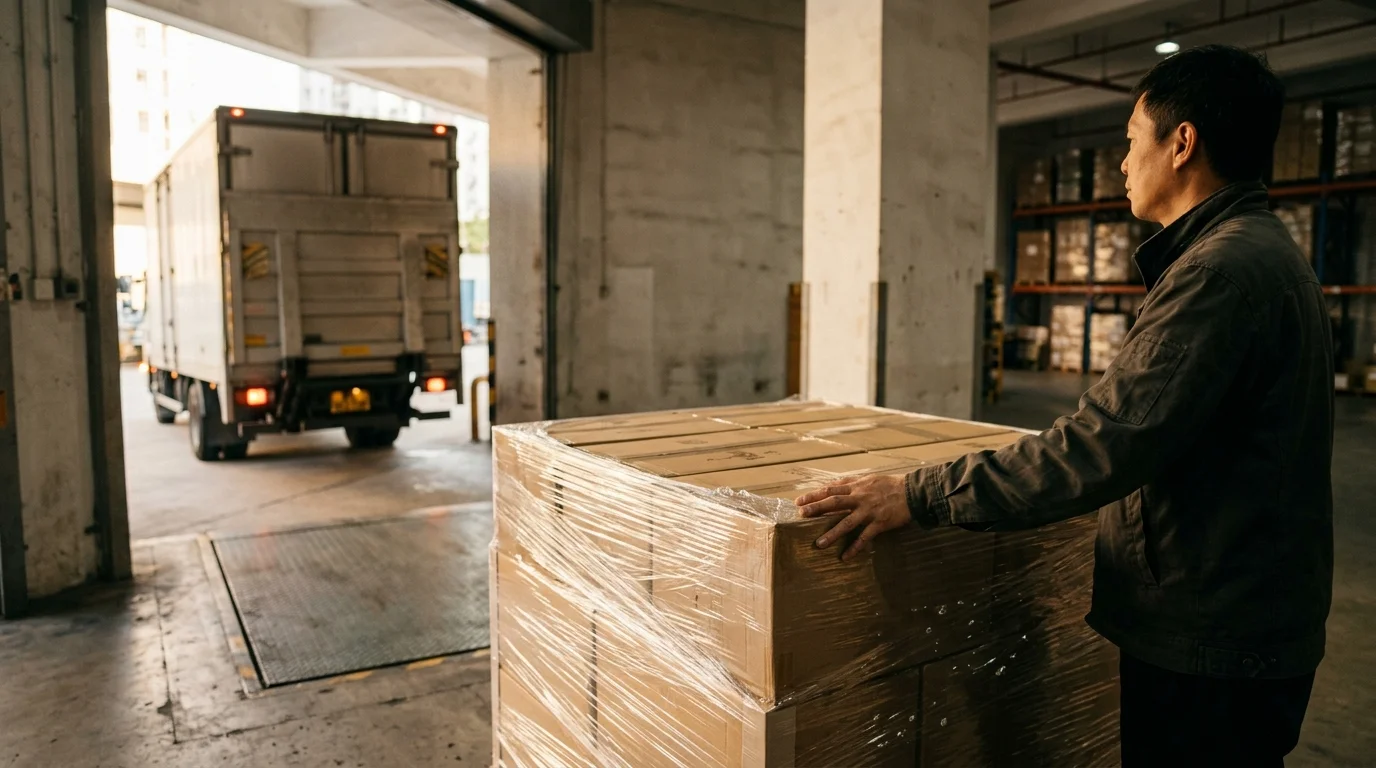
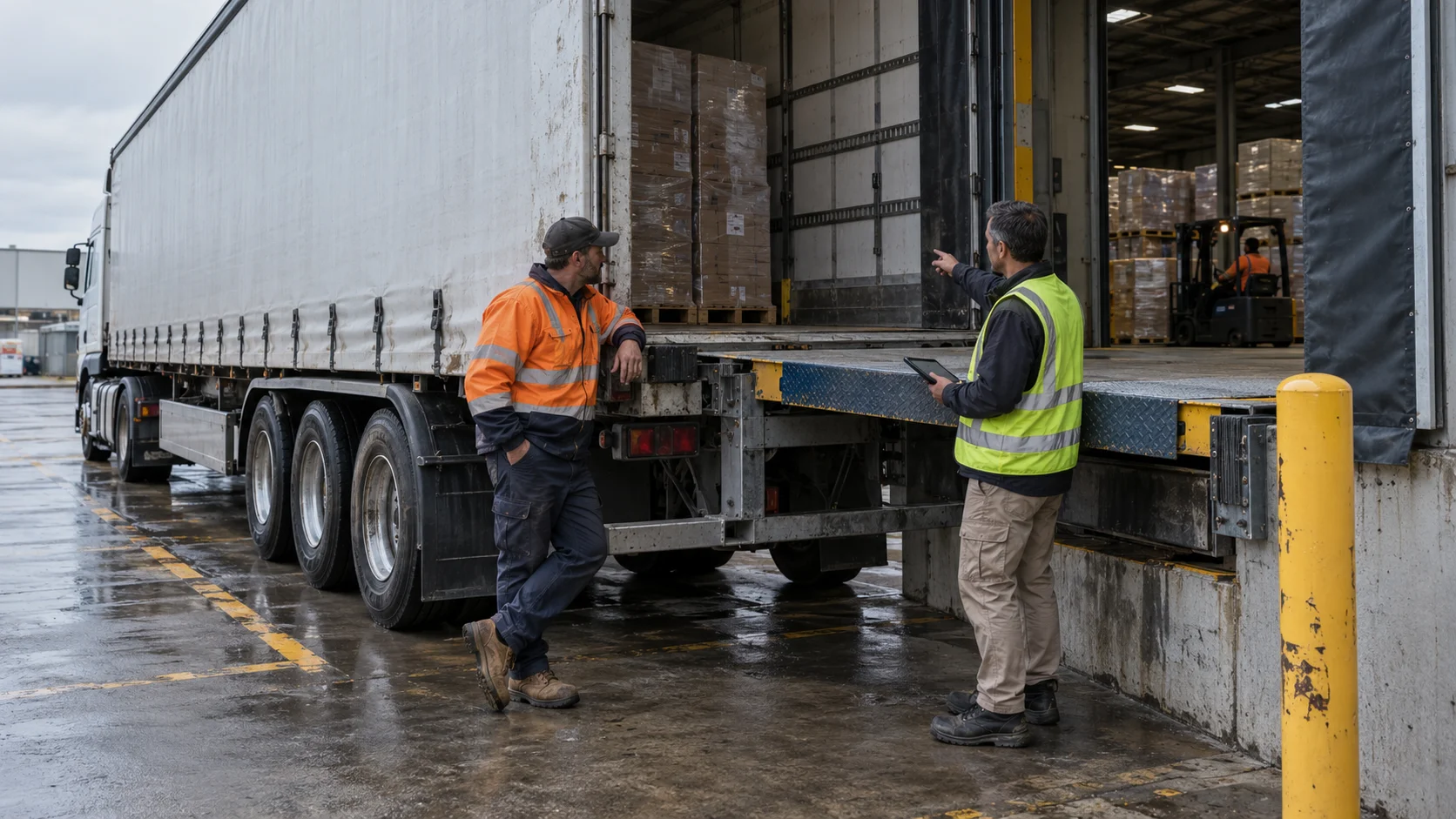
    Worker with a shrink-wrapped pallet watching a delivery truck depart a Hong Kong warehouse

    Practical Planning Checklist for HK-to-Australia Shipments

    • Confirm country of origin before the first shipment: HK-origin and China-origin goods carry different duty treatment and CO documentation requirements
    • Choose Incoterms deliberately: FOB is usually the most practical for Australian importers with established freight relationships
    • Plan for port dwell time: add at least 3–5 business days to transit time when building inventory delivery windows
    • Check if your goods need a product-specific permit: electronics (ACMA), therapeutic goods (TGA), and certain textiles carry additional requirements beyond standard customs clearance
    • Engage a customs broker at the Australian end: the ABF and DAFF regulatory stack is complex enough that most regular importers save money by using a broker rather than self-clearing
    • Build peak-season rate protection into your buying calendar: Chinese New Year and the pre-Christmas peak consistently push rates up and squeeze space on Hong Kong services
    • Calculate total landed cost before comparing supplier quotes: freight, duty, GST, broker fees, and local delivery are all material, and the cheapest ex-works price is rarely the cheapest landed cost

    Most guides on this route will tell you Hong Kong is a free port, and leave it there, as if that settles the question of what the shipment will cost. It’s technically true and almost useless. Hong Kong charging no export duty tells you nothing about what Australian Border Force charges on the way in. That’s the number that actually determines the shipment’s cost, not the origin side. The importers surprised by a duty bill aren’t the ones who misunderstood Hong Kong. They’re the ones who heard “free port” and stopped asking questions, when the real mechanism was sitting one step further down the chain the whole time: Australian import duty, assessed on the goods’ classification and origin. Hong Kong being a free port is a fact about Hong Kong. It was never a fact about what you’ll owe when the container lands in Sydney.

    Frequently Asked Questions: Shipping from Hong Kong to Australia

    How long does sea freight from Hong Kong to Australia take?

    Port-to-port transit on direct services runs 12–16 days to Sydney and Melbourne, and 15–20 days to Brisbane. Transhipment services via Singapore or other hubs add 3–7 days and introduce connection risk. Add port dwell time (1–5 business days) and inland delivery to get a realistic door-to-door window.

    Is Hong Kong a free port? Does that mean no export duties?

    Yes. Hong Kong levies no customs tariffs on imports or exports and maintains a separate customs territory from mainland China. Export formalities are minimal for most commercial goods, though controlled items require export licences from Hong Kong Customs and Excise.

    What duty rate applies to goods from Hong Kong when imported into Australia?

    Australia and Hong Kong have a free trade agreement, the A-HKFTA, in force since 17 January 2020. The applicable duty rate depends on the country of origin of the goods, not the port of departure. Goods truly originating in Hong Kong attract the general rate of duty unless they meet the A-HKFTA’s rules of origin and you hold a Declaration of Origin when they are imported. Goods manufactured in mainland China but transshipped through HK should be documented as Chinese-origin and may qualify for RCEP preferential rates.

    Do I need a Certificate of Origin for shipments from Hong Kong?

    Not always, but it’s worth getting one when the origin claim matters for duty or compliance purposes. The Hong Kong General Chamber of Commerce issues COs for HK-origin goods. If your goods are China-origin transiting HK, the CO should reflect Chinese origin rather than Hong Kong.

    What are the main Australian customs requirements I need to prepare for?

    You need three things: an import declaration lodged with the Australian Border Force, duty and GST payment based on customs value, and biosecurity clearance for applicable goods. Most commercial importers use a licensed customs broker to manage these steps. The regulatory stack is manageable but has enough moving parts to justify professional handling.

    Should I use LCL or FCL from Hong Kong?

    LCL is practical when cargo volume is below roughly 10–15 CBM and a sealed container chain of custody isn’t required. FCL makes more sense above that threshold, for fragile or high-value goods, or when schedule reliability on a fixed sailing is more important than cost-per-CBM. Hong Kong has strong weekly LCL consolidation services to all major Australian ports, so LCL importers have good options.

    When is the best time to book HK-to-Australia sea freight?

    Book at least 3–4 weeks before your intended cargo-ready date during normal conditions. During Chinese New Year and the pre-Christmas peak, extend that to 5–6 weeks and be prepared for rate surcharges of 20–40% above base market levels. Hong Kong’s ports run close to capacity, so cargo booked late during peak periods often gets rolled to later sailings.

    Estimated Moving Costs: Hong Kong to Australia

    Home sizeEstimated cost (AUD)
    2 bedroomAUD 3,160–7,160
    3 bedroomAUD 4,170–9,190
    4 bedroomAUD 5,120–10,330
    5 bedroomAUD 8,700–17,180

    These are door to door estimations, not port to port. They include standard packing and customs clearance on both ends, and assume an origin and destination reasonably near the port on both sides; a move to or from a more remote location may cost more. Treat these as budgets, not final pricing. The final cost depends on the quantity and nature of what you are shipping, service availability, and sea freight rates at the time of your move. These figures are based on average home sizes from past moves and may not reflect your own home. Timing and availability can also materially affect the price, and in some cases whether we are able to complete the job on your preferred timeline. For an accurate quote, contact our team or start our online self service quote, a short survey about your move that takes about four minutes and lets our team provide a real quote based on your specific details.
  • Solar Panels from Vietnam to Australia: CEC, RCM and 0% Duty

    Solar Panels from Vietnam to Australia: CEC, RCM and 0% Duty

    Vietnam has emerged as a significant solar equipment manufacturing hub over the past decade, driven by foreign direct investment from major panel manufacturers seeking production bases outside China. For Australian solar importers, Vietnam offers an alternative origin to China, one that carries different compliance considerations, a different rules-of-origin profile, and the same critical requirement that applies to all solar equipment sold into the Australian grid-connected market: CEC approval.

    Solar Panels from Vietnam to Australia: CEC, RCM and 0% Duty

    Vietnam’s Solar Manufacturing Sector

    Vietnam’s solar panel manufacturing base expanded rapidly from 2018 onward, as US tariffs on Chinese solar equipment prompted major manufacturers to shift or duplicate production to Vietnam. Companies including LG (now exited solar), LONGi, JA Solar, and numerous tier-two manufacturers established or expanded Vietnamese production facilities, particularly in the northern provinces of Hai Phong and Bac Ninh and in the south around Ho Chi Minh City.

    The distinction relevant to importers is between manufacturers and assemblers. Some Vietnamese facilities perform full cell-to-module production: manufacturing solar cells from wafers and assembling them into finished panels. Others are assembly operations that import cells and wafers (primarily from China) and laminate them into finished panels. The compliance and rules-of-origin implications differ between these two production models.


    For inverters, Vietnam has a smaller manufacturing base. The dominant inverter brands sold into Australia are Fronius (Austria), SMA (Germany), Enphase (USA), Goodwe (China), and Sungrow (China), all primarily manufactured in China or Europe, not Vietnam. An importer sourcing inverters from Vietnam should verify whether the inverter is genuinely manufactured there or is a re-exported Chinese product, as this affects rules of origin and potentially anti-dumping exposure.

    AANZFTA Duty Treatment

    Solar panels classified under HS 8541.43 (photovoltaic cells assembled in modules or panels) currently attract a 0% MFN (Most Favoured Nation) duty rate in Australia’s tariff schedule, meaning the AANZFTA preferential rate provides no financial benefit for this specific HS code, since the MFN rate is already zero. The same applies to most solar inverter subheadings under HS 8504.

    However, obtaining an AANZFTA Certificate of Origin from the DFAT AANZFTA framework remains worthwhile for two reasons: it provides documentary evidence of origin for any future tariff schedule changes, and it is required if any components in the solar system (mounting structures, racking systems, certain storage components) attract a non-zero MFN rate where AANZFTA preference would save duty.

    Importers should verify the current duty rate for each HS code in their shipment against the ABF Schedule 3 at the time of import. Tariff schedules are updated and specific subheadings within a product category may have different rates. Battery storage systems (HS 8507) and mounting structures (HS 7308 or HS 7610 for aluminium) are separate HS chapters with their own duty rates that should be checked independently.

    For a full overview of how Australian customs duty, GST, and formal entry requirements apply on this route, see Swift Cargo’s Australia customs guide.

    Solar panels from Vietnam awaiting CEC approved products list compliance check

    It is worth pausing on what the free trade agreement is actually doing here, because the instinct is usually wrong. Importers are trained to treat an FTA as the saving: find the preferential rate, claim it, pocket the difference. But on solar panels the preferential rate and the ordinary rate are the same number: zero. So what are you protecting by getting the origin paperwork right? Not the duty on the panels, which was never going to be charged. You are protecting the ancillary items that do carry a rate, and buying an option against a tariff schedule that may not stay at zero. Once you see that, the question stops being “how much duty does AANZFTA save me” and becomes “where on this shipment is the cost the paperwork is really insuring against,” and on this lane that attention is better spent on the CEC listing clock than on a duty line that reads zero either way.

    Rules of Origin for Vietnamese Solar Panels

    The rules of origin question for Vietnamese solar panels is significant because most Vietnamese production uses Chinese-origin solar cells and wafers as primary inputs. Whether the finished panel qualifies as AANZFTA-originating depends on whether the Vietnamese manufacturing process satisfies the AANZFTA Rules of Origin.

    For HS 8541.43 (photovoltaic cells assembled into modules), the AANZFTA Rules of Origin accept a Change in Tariff Classification (CTC) from a different chapter or heading as sufficient to grant origin. Solar cells (HS 8541.41 or 8541.42) are classified differently from assembled panels (HS 8541.43), and the assembly of cells into a laminated module with frame and junction box constitutes the qualifying transformation under the CTC rule. This means panels assembled in Vietnam from Chinese-origin cells can qualify as AANZFTA-originating.

    This is a different outcome from, for example, re-exporting Chinese panels that were already assembled: those would not qualify, as no transformation occurs. An importer should obtain confirmation from the Vietnamese exporter that their specific production process was assessed for AANZFTA origin, not rely on a generic claim. The Vietnamese exporter should be able to reference which specific Rule of Origin their production satisfies and which certifying authority issued the CoO.

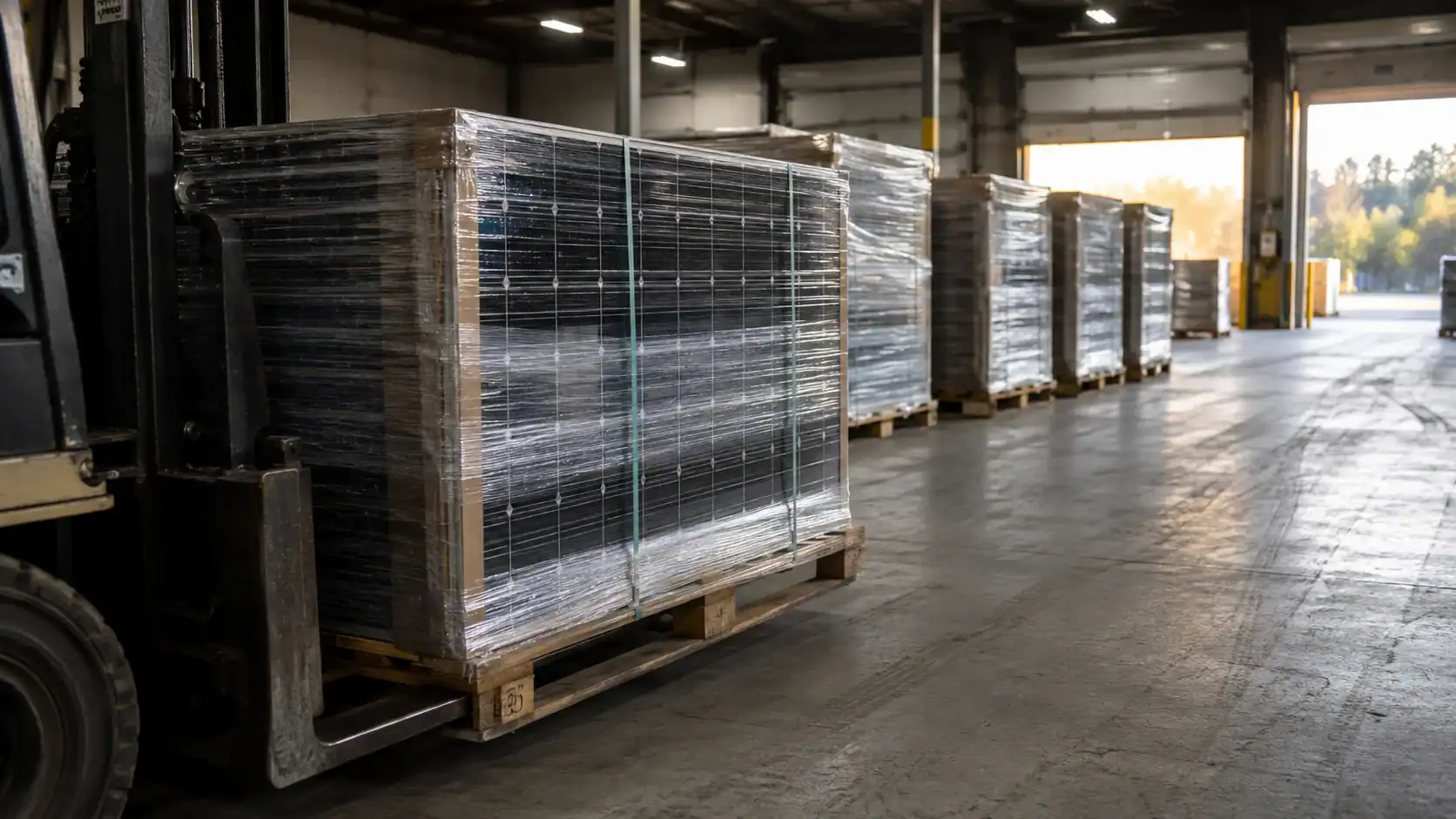
    Forklift carrying a shrink-wrapped pallet of solar panel modules through a warehouse, with additional wrapped pallets staged in a row toward an open loading bay

    CEC Approved Products List: The Critical Compliance Gate

    For solar equipment sold into the Australian grid-connected market, the Clean Energy Council’s Approved Products List is the central compliance gateway. Grid-connected solar systems that generate Small-scale Technology Certificates (STCs) under the Commonwealth’s renewable energy incentive scheme must use CEC-approved panels and inverters.

    The financial stakes are significant. STCs are certificates created when a system is installed and are typically assigned to the installer in exchange for an upfront discount to the customer. The value of STCs depends on the installation zone and the current deeming period: for a residential 6.6 kW system in Sydney (Zone 3), the STC value at a deeming period of approximately 8 years is roughly AUD 2,800–3,500. An installer using non-CEC-approved panels forfeits this rebate entirely, making the system commercially uncompetitive against offerings using approved equipment.

    Getting a panel onto the CEC Approved Products List requires: IEC 61215 certification (for crystalline silicon panels) or IEC 61646 (for thin-film), from an accredited certification body; submission of the certification documentation and panel datasheet to the CEC; and payment of the listing fee. The CEC does not test panels itself. It accepts certification from internationally accredited bodies (TÜV, UL, Bureau Veritas, etc.). For a Vietnamese panel manufacturer already certified to IEC 61215, the CEC listing process typically takes 4–8 weeks. For a manufacturer without existing IEC certification, the certification process adds 3–6 months.

    Importers should verify CEC listing status for their specific panel model before placing a commercial order, not after. The CEC Approved Products List is publicly searchable on the Clean Energy Council website. A model that is listed for a prior production year may not carry the same certification for a current production run if there have been specification changes. The listing should correspond to the model and specifications being ordered.

    Australian Standards for Solar Equipment

    Beyond CEC listing, the following Australian and international standards apply to solar equipment installed in Australia:

    • AS/NZS 5033: Installation and safety requirements for photovoltaic (PV) arrays. This is a design and installation standard that applies to the installer, but equipment compliance with electrical safety requirements is a prerequisite.
    • AS 4777: Grid connection of energy systems via inverters. AS 4777.2 covers inverter requirements specifically and is the standard that grid-connected inverters must comply with to operate legally on the Australian grid. Inverters not compliant with the current version of AS 4777.2 cannot be used in grid-connected systems.
    • IEC 61215: Terrestrial photovoltaic modules, design qualification and type approval. The primary panel certification for crystalline silicon technology. Required for CEC listing.
    • IEC 62109: Safety of power converters for use in photovoltaic power systems. Applies to inverters. Provides the safety basis for RCM certification.

    Vietnamese panel manufacturers exporting to multiple markets typically hold IEC 61215 certification as a standard part of their export qualification. An importer should request the current IEC certificate (not just the CEC listing confirmation) and verify that it covers the specific wattage and configuration being ordered: a 400W panel certification does not automatically extend to a 430W variant of the same model if the specifications changed.

    RCM for Inverters and Electrical Components

    Solar inverters are in-scope electrical equipment under Australia’s regulatory framework and must carry the Regulatory Compliance Mark (RCM) before they can be sold in Australia. The RCM certifies compliance with Australian electrical safety standards and electromagnetic compatibility (EMC) requirements.

    The RCM certification process is managed through the ERAC framework. Inverters must be tested by an accredited laboratory against the applicable standards (primarily IEC 62109 for safety and CISPR 11 or equivalent for EMC), and the certification submitted to the Responsible Supplier System. A Vietnamese-manufactured inverter from a manufacturer who has not previously exported to Australia will not have RCM certification. The Australian importer or a local agent must hold the RCM for the product.

    The RCM process typically takes 6–16 weeks from commencement, depending on the complexity of the product and the laboratory’s queue. Importers planning to introduce a new inverter model from a Vietnamese manufacturer should factor this timeline into their product launch planning: a commercial shipment of uncertified inverters that arrives at the border without RCM documentation cannot be cleared for distribution.

    Battery storage systems, charge controllers, and monitoring equipment imported alongside solar panels also require assessment against applicable electrical safety standards. Not all of these products require formal RCM certification, but all must be safe for use in the Australian market. An importer should confirm the certification status of every electrical component in a solar system package before placing a commercial order.

    Timber packing crates holding solar-panel modules in portrait orientation, stacked in a Vietnamese factory's export-staging area.

    Biosecurity and ISPM 15

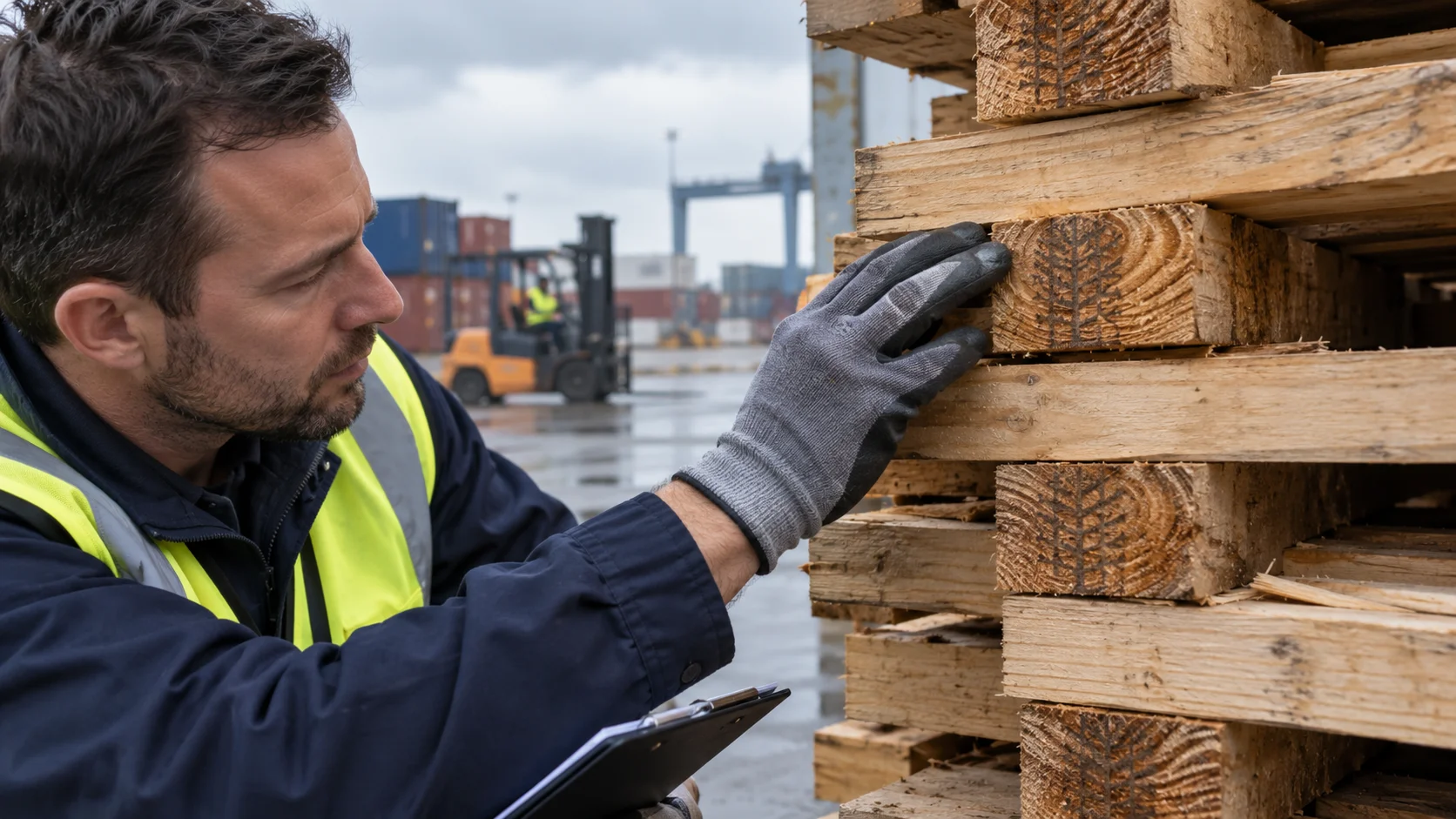
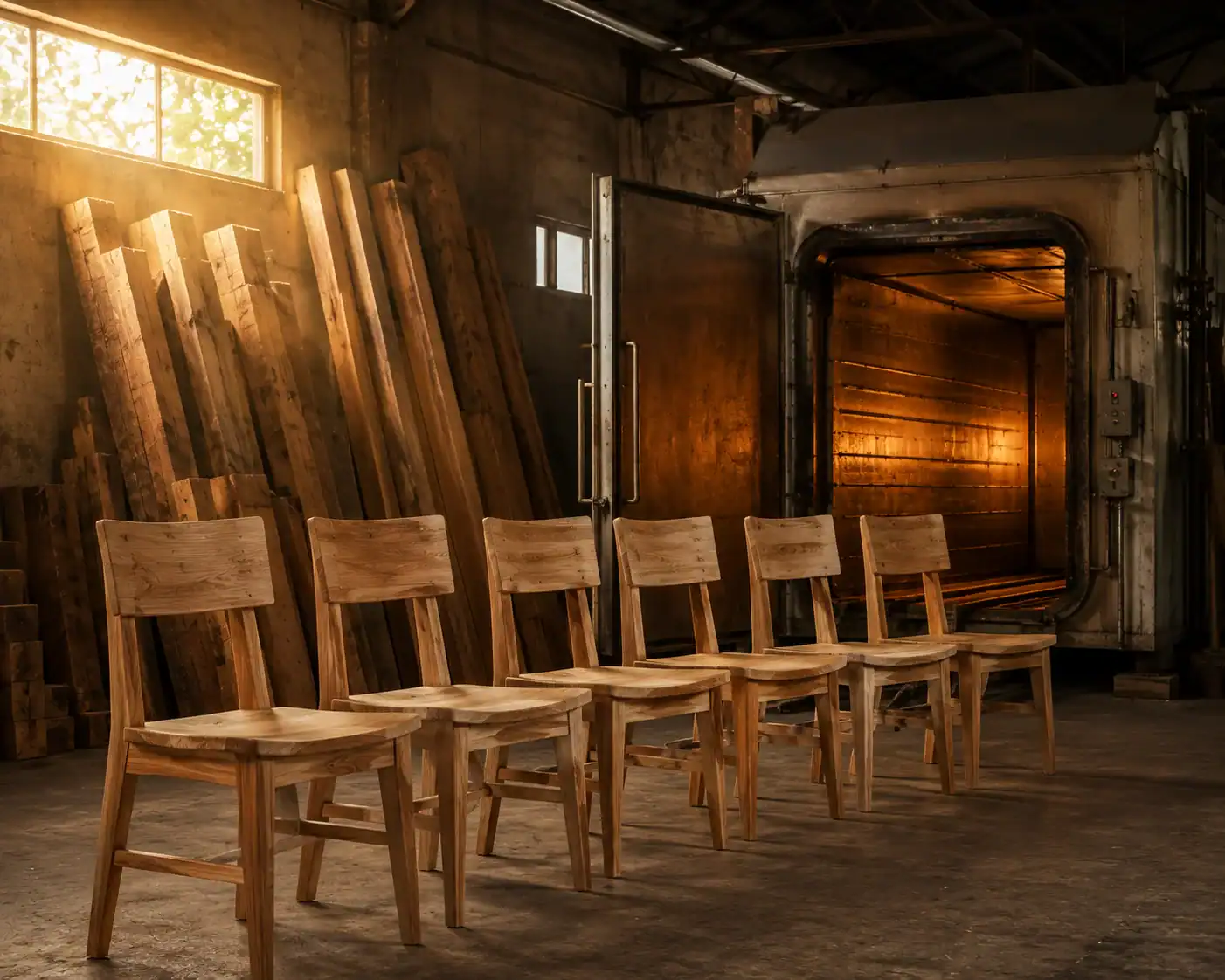
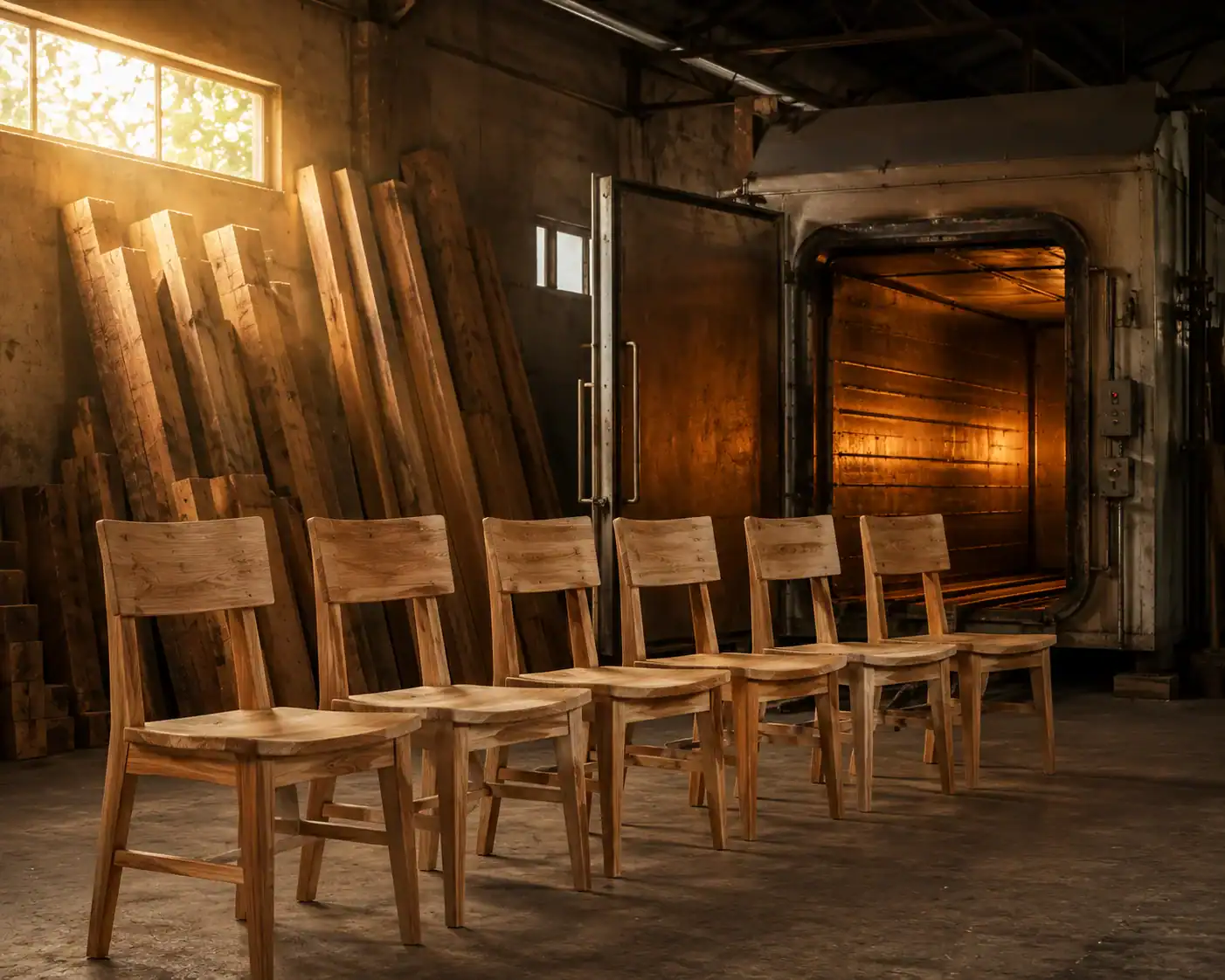
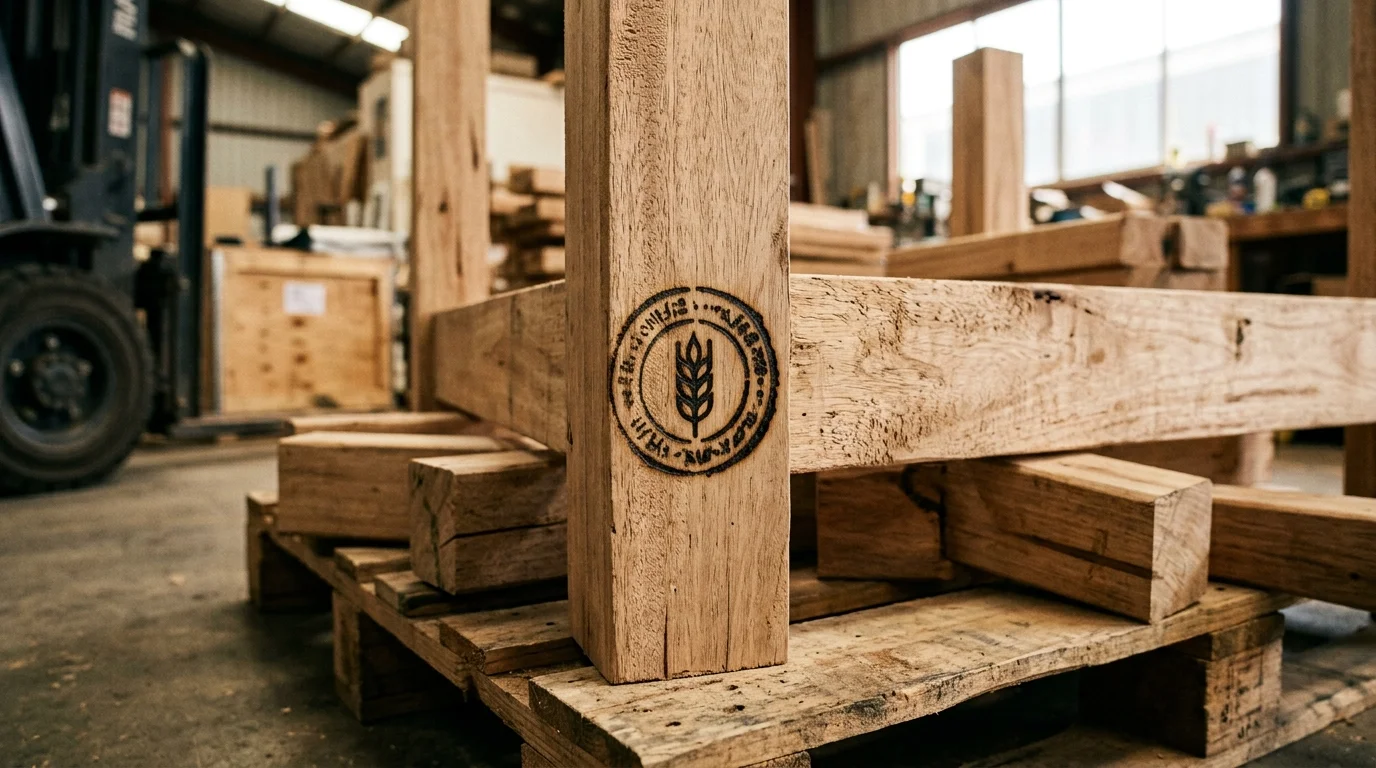
    Solar panels themselves do not present a biosecurity risk. The biosecurity concern on this lane is the wooden packaging (pallets, crating, and A-frame structures used to ship panels), which must meet ISPM 15 phytosanitary treatment requirements (heat treatment to 56°C core temperature for 30 minutes, marked with the IPPC stamp).

    Vietnam is a high-risk origin for timber biosecurity. Wooden packing used to ship solar panels from Vietnamese manufacturers must be ISPM 15 treated and marked. DAFF inspects arriving cargo for ISPM 15 compliance and will hold a shipment where non-compliant wooden packaging is detected. On-arrival treatment costs AUD 2,000–5,000 per container and adds 3–7 days to the delivery timeline. The requirement is straightforward to meet in advance: include ISPM 15 packing compliance as a purchase order specification and verify compliance during pre-shipment inspection.

    Some manufacturers use steel or aluminium A-frame racking to ship panels. These are not subject to ISPM 15. Importers who specify non-wood packing structures eliminate the biosecurity packaging risk entirely.

    Freight Handling for Solar Equipment

    Solar panels are fragile, volume-sensitive goods with specific handling requirements that must be specified on the purchase order and verified at inspection.

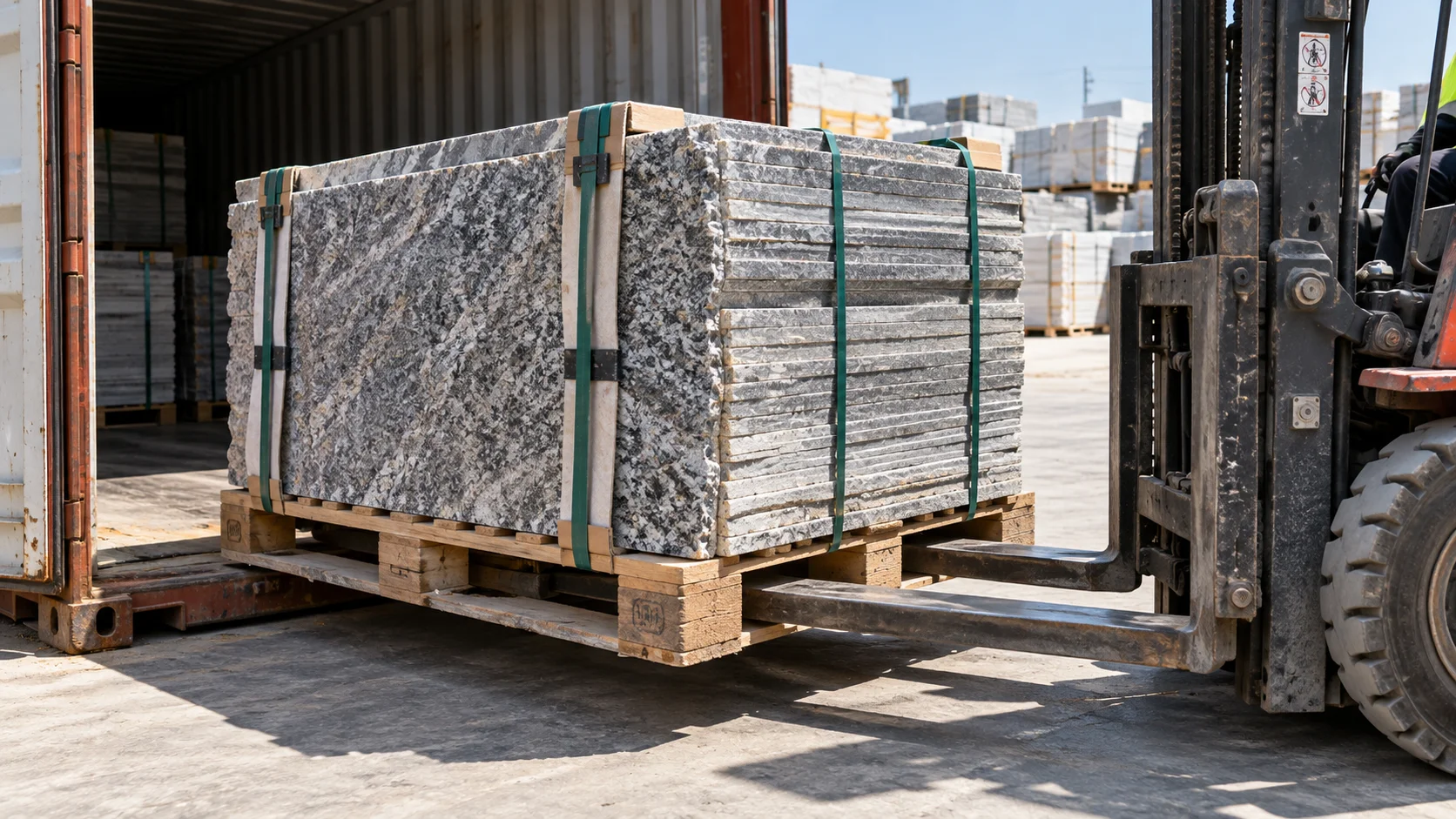
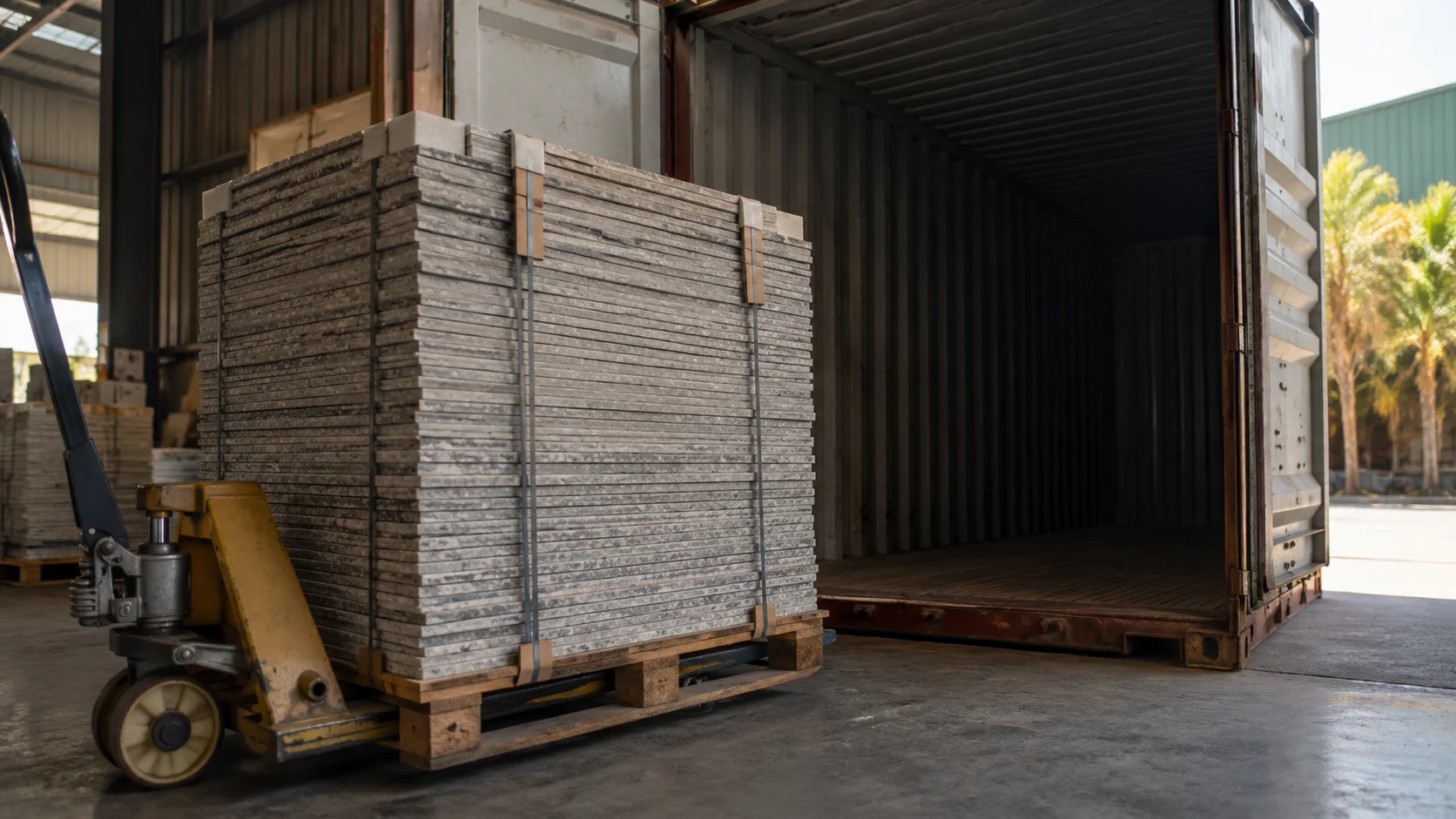
    Packing configuration. The industry standard for ocean shipping is vertical loading on A-frame pallets with panels edge-on, packed in individual cardboard sleeves with corner protection. Flat stacking (laying panels face-to-face in horizontal stacks) increases the risk of glass breakage from vibration and compression during the ocean transit. A purchase order should specify “A-frame vertical shipping” explicitly.

    Container capacity. A standard 40-foot dry container typically holds 750–1,000 residential solar panels in the 380–430W range (approximately 1.7m × 1.0m × 35mm per panel). At 1 kg/panel average weight for the packing plus panel weight of around 20–22 kg, a full container of panels is well within payload limits: this is a volume-driven freight calculation, not weight-driven.

    For LCL vs FCL decisions, solar panels become FCL-cost-effective at approximately 10–15 CBM, which corresponds to roughly 80–120 panels, a small commercial order. Most commercial solar import programs run on FCL from the first container.

    Transit time. Direct services from Ho Chi Minh City or Hai Phong to Sydney, Melbourne, or Brisbane run 18–25 days port-to-port. Transshipment services via Singapore add 5–10 days. For project-committed solar delivery dates, the transit variance matters: pre-arrival lodgement of the import declaration and confirmed DC or project site booking are important to ensure panels don’t sit in a port yard after clearance.

    Landed Cost Breakdown

    For a 40-foot container of 800 residential solar panels (400W, AUD 130/panel FOB Ho Chi Minh City):

    • FOB value: AUD 104,000 (customs value).
    • Ocean freight (Ho Chi Minh City to Sydney, 40-foot FCL): AUD 2,800–4,200.
    • Marine insurance (0.35%): approximately AUD 365.
    • Import duty: 0% (both MFN and AANZFTA rates for solar panels are zero).
    • GST: 10% on customs value + 10% of freight and insurance = approximately AUD 10,650–10,790 (recoverable by registered businesses).
    • Customs brokerage: AUD 350–500 for a standard declaration.
    • Destination charges and cartage: AUD 600–900.

    Total landed cost (excluding GST recovery): approximately AUD 108,000–110,000 on the AUD 104,000 FOB basis. The per-panel landed cost on an 800-panel container is approximately AUD 135–138 before the importer’s margin: the freight and clearance overhead adds roughly AUD 5–8 per panel on a full container.

    A row of battery storage units in protective foam-lined packaging inside a clean factory warehouse.

    Battery Storage Systems: Additional Compliance Layer

    Importers bringing in solar-plus-storage systems (combining PV panels with lithium-ion battery storage) face a compliance layer that does not apply to panels-only imports. Battery Energy Storage Systems (BESS) from Vietnam involve both freight and product safety requirements that are specific to lithium chemistry and energy storage.

    Dangerous Goods classification in freight. Lithium-ion battery cells above certain energy thresholds are classified as Dangerous Goods Class 9 under IMDG (sea freight) and IATA (air freight) regulations. A residential battery storage system (typically 5–15 kWh) contains lithium cells in a configuration that requires DG declaration, compliant packaging, and a Dangerous Goods shipping note. Errors in DG documentation can result in port refusal or carrier rejection. The Vietnamese exporter must have established DG export procedures for battery shipments, and the forwarder must be experienced in DG documentation for Class 9 lithium batteries.

    UN38.3 testing. All lithium batteries exported commercially must have passed UN38.3 testing: a series of safety tests (altitude simulation, thermal, vibration, shock, external short circuit, impact, overcharge, forced discharge) that certify the battery is safe for transport. The UN38.3 test report is a shipping prerequisite. A Vietnamese battery manufacturer without a current UN38.3 test report for the specific cell configuration cannot legally export the product.

    Australian product safety for residential battery storage. Residential battery storage systems must comply with AS/NZS 5139 (installation of battery systems for use with renewable energy systems) and the specific requirements of each state’s electrical safety regulator. The battery management system (BMS) requires electrical safety testing against AS 62619 (secondary lithium cells and batteries: safety requirements for use in stationary applications). A battery storage product from Vietnam that has not been assessed against these standards cannot legally be installed in a residential or commercial premises in Australia.

    The CEC also maintains an Approved Battery Storage Products list. As with solar panels, battery storage systems used in STC-eligible installations must be CEC-approved. Battery products not on the list can be installed in off-grid or non-STC systems but are excluded from the primary residential market.

    Importers adding battery storage to a Vietnamese solar import program should budget 4–6 months of additional compliance lead time above the panel import timeline: UN38.3 testing, AS 62619 assessment, electrical safety certification, and CEC listing are sequential steps that cannot all run in parallel.

    Warranty, Support, and the Long-Horizon Import Risk

    Solar equipment carries product warranties that are longer than almost any other imported consumer good: 10–12 years for product defects and 25–30 years for power output performance on panels; 5–10 years for inverters. For an Australian importer, this means the commercial relationship with the supplier extends well beyond the point of sale.

    A Vietnamese panel manufacturer who exits the market, discontinues the model, or changes ownership in year 8 of a 25-year performance warranty has effectively left the importer holding the warranty obligation with no manufacturer backup. This is a real commercial risk in a fast-moving manufacturing sector where smaller tier-two manufacturers enter and exit production regularly.

    The questions to ask a Vietnamese solar manufacturer before placing a commercial order include:

    • How long has the company been producing this panel model? Models with less than two years of production history have no real-world degradation data to support the performance warranty.
    • What is the warranty claims process for Australian installers? Is there a local representative who can process claims, or does the installer need to deal directly with the Vietnamese factory?
    • Does the manufacturer carry product liability insurance that covers Australian market claims? The insurance certificate should name the Australian importer as an additional insured.
    • What is the manufacturer’s financial backing? A panel manufacturer that is a subsidiary of a listed company or backed by major institutional investors carries materially lower counterparty risk than a private manufacturer of similar size.

    Tier-one panel manufacturers (the top 10–15 by shipment volume globally, including several with Vietnamese production facilities) carry stronger warranty backing than tier-two or tier-three manufacturers by virtue of their scale and financial position. For importers willing to accept a lower gross margin per panel, tier-one brands from Vietnamese facilities represent a better risk-adjusted position than similarly priced tier-two options.

    A single solar-panel pallet with its protective corner guard slightly askew, a warehouse staff member's hand straightening it before the pallet is wrapped.

    Common Problems on the Vietnam Solar Lane

    Four failure patterns account for most problems on this lane:

    1. Panels not on CEC Approved Products List at time of arrival. The most commercially disruptive failure mode. An installer cannot use non-CEC-approved panels in an STC-eligible system, making the stock unsaleable to the primary residential and commercial market. Prevention: verify CEC listing status for the exact model and specification before placing the order; confirm the listing is current and covers the production period of the shipment.

    2. Inverter arrives without RCM certification. Non-RCM inverters cannot be sold for use in Australian electrical installations. An importer who receives uncertified inverters must either re-export them (at full freight and handling cost), have them certified in Australia (a slow and expensive process), or write off the stock. Prevention: confirm RCM certification status before placing the first commercial order; allow 6–16 weeks for the certification process if the inverter is new to the Australian market.

    3. ISPM 15 packaging non-compliance. Wooden packing without the IPPC treatment mark triggers DAFF hold and on-arrival treatment at AUD 2,000–5,000 per container. Prevention: include ISPM 15 packing compliance in the purchase order specification; verify at PSI before loading.

    4. Rules of origin documentation error. A CoO that cannot be verified by the issuing authority, or that misrepresents the manufacturing process, creates customs compliance liability. While most solar HS codes attract 0% MFN duty (reducing the financial incentive for origin fraud), a false CoO is still a false customs declaration. Prevention: obtain the CoO directly from the issuing authority (VCCI or Vietnam’s Ministry of Industry and Trade) and confirm the document reference is valid.

    Here’s what almost nobody importing solar panels from Vietnam realises until it’s too late: paying 0% duty under AANZFTA and being allowed to install the panels are two completely separate approvals, decided by two different bodies, and passing one tells you nothing about the other. AANZFTA duty relief is a customs and rules-of-origin question, decided at the border. The CEC Approved Products List is an electrical-safety and grid-connection question, decided separately, and a panel can clear customs at zero duty and still be legally uninstallable because it was never added to that list. The importers who get this wrong usually find out from an installer, not from customs, weeks after the container has already landed. The panels that clear both gates aren’t the cheapest ones. They’re the ones somebody checked against the CEC list before the purchase order was signed, not after the shipment arrived.

    Related reading: Importing Solar Panels from China to Australia: Compliance Guide

    Frequently Asked Questions

    Do solar panels from Vietnam need to be on the CEC Approved Products List?

    For grid-connected STC-eligible installations, yes. CEC listing is required for panels used in systems generating Small-scale Technology Certificates, worth AUD 280–450+ per panel in rebate value. Off-grid systems are not subject to the CEC requirement but may still need to meet AS/NZS 5033 installation standards.

    What AANZFTA duty rate applies to solar panels from Vietnam?

    Solar panels (HS 8541.43) currently attract 0% MFN duty in Australia, the same rate as AANZFTA. AANZFTA preference provides no current saving on panels, though a CoO is still worth obtaining for documentation completeness and potential future tariff changes.

    Do Vietnamese solar panels qualify under AANZFTA if they use Chinese cells?

    Generally yes, if the Vietnamese manufacturer assembles Chinese cells into finished modules. The AANZFTA Change in Tariff Classification rule is typically satisfied because cells (HS 8541.41/42) and assembled panels (HS 8541.43) are in different subheadings. Importers should confirm the specific origin ruling with their exporter rather than relying on the general principle.

    Do solar inverters from Vietnam require RCM certification?

    Yes. Solar inverters are in-scope electrical equipment and must carry the RCM before sale in Australia. The certification process typically takes 6–16 weeks. Inverters must also comply with AS 4777.2 and be CEC-listed to be used in STC-eligible grid-connected systems.

    How are solar panels shipped from Vietnam without damage?

    Panels should be shipped vertically on A-frame pallets in individual protective sleeves with corner protection, not flat-stacked. A 40-foot container holds approximately 750–1,000 standard residential panels. Specify A-frame vertical shipping on the purchase order and verify packing during pre-shipment inspection.

  • Supplier Risks: China Vietnam Import Red Flags for Australian Importers

    Supplier Risks: China Vietnam Import Red Flags for Australian Importers

    Most importing problems don’t start at the port. They start at the supplier, and for many Australian importers that supplier is based in China or Vietnam. The same supplier risks recur regardless of which country is involved: a shipment held by ABF because the country of origin documentation is wrong. A container of goods that don’t match the approved sample. A Certificate of Origin that can’t be verified. A quality issue that only becomes visible when the stock reaches the customer’s hands. Recognising supplier risks: China Vietnam import shipments carry the same handful of warning signs regardless of factory or product category, and catching them before the first order is far cheaper than fixing them after.

    The common thread in these scenarios is a supplier relationship that wasn’t adequately evaluated before the first order was placed, or a supplier who changed behaviour after the relationship was established. Australian importers bear the compliance and commercial liability for what they bring in. The supplier bears the production risk up to the point of loading; the importer bears everything after.

    Supplier Red Flags: How Australian Importers Get Burned

    Why Due Diligence Is the Importer’s Problem

    Australia’s import compliance framework places legal responsibility on the importer of record, not the exporter. The Australian Border Force holds the importer responsible for the accuracy of the import declaration: the correct HS classification, the declared customs value, the preferential tariff claim. The ACCC holds the importer responsible for the compliance of goods sold in Australia with mandatory product safety standards. If a supplier produces non-compliant goods and the importer unknowingly sells them, the ACCC’s enforcement action names the importer.

    This is not a theoretical risk. ACCC recalls for non-compliant goods imported from China and Vietnam (helmets, electrical equipment, children’s toys, cosmetics) regularly name Australian importers who sourced from suppliers who either didn’t understand or actively circumvented Australian compliance requirements.

    Understanding where your compliance obligations begin is practical, not optional. Swift Cargo’s Australia customs and import guide covers the importer-of-record process and common compliance checkpoints.

    Due diligence is the mechanism that breaks this liability chain before a shipment is placed.

    Documentation Red Flags

    A supplier’s documentation capability is one of the clearest early signals of their export experience and compliance culture. The following patterns are reliable warning indicators:

    Unable to provide a Certificate of Origin within 48 hours. For a supplier exporting regularly to Australia, producing a ChAFTA (China-Australia Free Trade Agreement) or AANZFTA (Vietnam-Australia) Certificate of Origin is a routine administrative task. A supplier who cannot identify the issuing authority, does not know what a CoO is, or says they will “check with the trading company” is not experienced in direct export to Australia. This matters because the CoO is the document that gives you 0% duty instead of 5% MFN, and it must be accurate to avoid ABF scrutiny.

    Offers a self-signed declaration in place of third-party certification. For categories requiring accredited laboratory test reports (electrical safety, AS/NZS product standards, RCM), a self-declaration (“we certify this product meets AS 4268”) is not a valid substitute. A genuine test report names the testing laboratory, the specific standard tested, the test date, and the production batch. A supplier who substitutes a self-declaration for a test report either does not have one or is hoping you won’t notice the difference.

    Invoice and packing list figures don’t reconcile. Commercial invoices and packing lists that don’t match (different quantities, different weights, inconsistent unit descriptions) are a sign of sloppy administration at best and deliberate misrepresentation at worst. ABF cross-checks declared values and quantities against physical examinations. A discrepancy between the documents and the goods creates a compliance event that falls on the importer.

    Country of manufacture listed inconsistently across documents. If the commercial invoice says “Made in China” but the Certificate of Origin is issued by a Vietnamese authority for an AANZFTA claim, that inconsistency requires explanation. It may indicate undisclosed manufacturing in a third country, which would invalidate the preferential tariff claim.

    In a factory-adjacent quality-control room, an inspector holds a sample product up to a raking desk lamp, examining a seam or joint closely with a small loupe in the other hand, a second identical sample waiting beside the bench.

    Quality and Compliance Red Flags

    Compliance documentation and product quality are related but distinct concerns. A product can have correct paperwork and still fail in the field. The following signals indicate a quality risk:

    The sample you received was sourced externally, not manufactured in-house. Some suppliers present samples of products they plan to source from subcontractors rather than manufacture themselves. Indicators include: the sample arrived suspiciously quickly (too fast for in-house production), it carries no factory markings, or the supplier is evasive about which production line it came from. Samples should be tagged with a “golden sample” seal and production specifications at the time of approval so there is a documented baseline for PSI comparison.

    The supplier resists pre-shipment inspection. A supplier who has nothing to hide welcomes PSI. It resolves disputes before goods are loaded and establishes a quality record. A supplier who objects to third-party inspection, insists the inspection is “not necessary,” or demands access restrictions for the inspector is a supplier who expects the inspection to find problems. This is the single highest-confidence red flag on this list. Pre-shipment inspection is standard practice in commercial import programs of any scale.

    Test reports are undated, cover a different production model, or name an unrecognised laboratory. For products requiring mandatory Australian compliance: bicycle helmets (AS/NZS 2063), electrical goods (RCM), children’s toys (ACCC mandatory standard). The test report must be from a NATA-accredited or equivalent accredited laboratory, must cover the specific model and configuration being sold, and must not be so old as to predate a regulatory update. A test report from a laboratory with no web presence, no accreditation listing, or an address that doesn’t match a known testing facility is a fabricated document.

    The goods are dramatically cheaper than established market pricing. A supplier offering helmets at 40% below the next cheapest verified-compliant source is not more efficient. They are cutting somewhere. The most common cuts are in testing (skipping the AS/NZS certification process entirely), materials (substandard impact absorption foam), and labour (skipping quality checks). Price is not always a red flag, but a price that is implausibly low for a compliance-sensitive category almost always is.

    Factory audit scene for Australian importer supplier verification

    Factory Audit Red Flags

    Factory audits (whether self-conducted or through a third-party inspection firm) are the primary tool for verifying a supplier’s production capability and compliance culture before the first order is placed. The following patterns during or after an audit indicate risk:

    The factory’s stated capacity is inconsistent with the physical facility. A factory claiming capacity to produce 50,000 units per month with 20 workers and two production lines cannot deliver on that claim. Capacity claims should be cross-checked against the physical evidence: number of workers, number of production lines, shift patterns, and equipment age. An overstated capacity claim is a sign that the supplier will subcontract your order, to a factory you have not vetted. These factory-audit signals are exactly the supplier risks: China Vietnam import buyers run into most often once volume increases beyond a first small order.

    Areas of the factory are restricted from the auditor. A factory audit’s value depends on full access. Sections that are locked, under renovation, or “not relevant to your order” are sections that contain something the supplier doesn’t want you to see. This may be substandard working conditions (a separate compliance issue), sub-quality materials in storage, or evidence of a different production process than the one being claimed.

    The factory has no documented quality management system. A supplier exporting at commercial scale to a regulated market like Australia should have a documented QMS: a quality manual, standard operating procedures for production, incoming material inspection records, and finished goods inspection records. A factory that produces from memory without documentation is a factory where quality variation is untracked and uncorrectable.

    Workers cannot explain production specifications for your product. Line workers and supervisors should be able to describe the production steps for your order. If the production manager cannot explain what tests are run on finished goods, what the rejection rate is, or what specifications apply to your product category, quality control is not functioning.

    A single wrapped pallet sits alone on an otherwise empty stretch of loading dock as dusk settles, the rest of the bay's equipment idle and parked off to the side, long shadows stretching across the concrete.

    Communication Red Flags

    Communication patterns are a leading indicator of how a supplier will behave under pressure, which is when it matters most. The following patterns in pre-order communication translate directly into problems during production and shipping:

    Evasive or delayed responses to specific technical questions. A supplier who responds quickly to price enquiries but takes days to answer questions about test reports, materials specifications, or production timelines is a supplier who doesn’t have the answers to those questions. In a legitimate production environment, these are questions that factory staff answer from knowledge or existing documentation, not questions that require extended deliberation.

    “Yes” to every requirement without a follow-up question. A supplier who agrees to every specification (including specifications that appear contradictory, challenging, or unusual) without asking any clarifying questions is agreeing to things they haven’t read or understood. Legitimate manufacturers push back on unclear or unusual specifications because those specifications affect their production cost and quality liability.

    Reluctance to discuss problems or defect rates. An experienced manufacturer knows their defect rate. A supplier who claims zero defects, cannot discuss their quality rejection rate, or becomes defensive when quality failure scenarios are raised is a supplier who either has a high defect rate they are concealing or has not implemented quality monitoring.

    Communication is through a trading company, not the factory directly. Trading companies are legitimate intermediaries, but they create a communication buffer between the importer and the manufacturer. If problems arise (quality issues, specification deviations, shipping delays), the trading company is one more party through which information is filtered and delayed. For compliance-sensitive categories, direct factory access is important. If a supplier insists all communication goes through a trading company and won’t allow direct factory contact, the importer’s ability to resolve problems in-production is limited.

    On a clean inspection table, two similar-looking product samples sit side by side under even daylight from a large workshop window, a technician's hand hovering between them mid-comparison, one sample subtly newer than the other.

    Intellectual Property and Design Risk

    Sharing product designs, specifications, and technical drawings with an overseas supplier creates intellectual property exposure that many importers underestimate. The risk is not only that the supplier copies your design. It is that they sell it to your competitors while still supplying you, often at a lower price.

    The red flags in this category are subtler than documentation failures but carry significant commercial consequences:

    Supplier offers to produce your design without a non-disclosure agreement. A basic NDA is not ironclad protection in Chinese or Vietnamese law, but its absence signals that the supplier has no IP protection protocol at all. A supplier who proactively offers to sign an NDA, or who has a standard NDA in their supplier onboarding process, has engaged with IP protection as a commercial reality. One who dismisses the question has not.

    Your product appears on the supplier’s catalogue or Alibaba listing shortly after sampling. Suppliers who add customer designs to their standard product catalogue without authorisation are suppliers who treat customer IP as their own inventory. This is most common with designs that have broad market appeal, products the supplier calculates they can sell to multiple buyers. A Google image search or Alibaba reverse-image search before the first commercial order is a reasonable due diligence step for any design you have developed.

    Molds and tooling are held by the supplier without a written ownership agreement. Custom tooling (injection molds, die casting tools, jigs) that you paid for as part of the product development process should be documented as your property in the purchase agreement. A supplier who does not acknowledge tooling ownership in writing, or who insists the molds are theirs by default, is a supplier who can hold your tooling hostage when you want to change suppliers or demand better terms. The practical remedy (having the molds inspected, verified, and moved to a bonded warehouse or a new supplier) is expensive and slow without a clear prior agreement.

    Register designs under the Australian Designs Act before sharing detailed drawings with suppliers. Registered design protection is not a perfect barrier against offshore copying, but it creates a legal record of ownership and a remedy under Australian law if the design appears in the Australian market through a competing importer.

    A warehouse roller door sits raised only partway, a freight truck waiting just outside in the yard, the gap of light beneath the door casting a long warm stripe across the dim interior floor.

    Financial and Payment Red Flags

    Payment terms reflect a supplier’s financial position, risk appetite, and the leverage they perceive they have in the relationship.

    Demands for 100% payment before production begins, on a first order. This is the highest-risk payment structure for a new relationship. The importer has no leverage once payment is received. The supplier can ship anything, or nothing. The standard payment structure for a new relationship is 30% deposit at order confirmation and 70% against documents (against the Bill of Lading). This provides the supplier with production funding and the importer with a payment lever that remains available until loading is confirmed.

    Unable or unwilling to accept a Letter of Credit. For high-value orders, a documentary Letter of Credit (L/C) issued through a bank provides the importer with formal document compliance as a condition of payment. A supplier who refuses L/C entirely (not just one who is unfamiliar with the process but one who actively declines) is a supplier who is not confident they can produce compliant documentation.

    Invoice currency or bank account changes between orders. A legitimate supplier whose bank details change mid-relationship may simply be changing banks. But a change in invoice currency, payment beneficiary, or bank account on an existing order is a known vector for payment fraud, either by an external party who has intercepted your communication, or by the supplier itself redirecting payment to an unrelated account. Any bank detail change should be verbally confirmed with a known contact at the supplier before payment is made.

    Shipping Documentation Red Flags

    Shipping documents (the Bill of Lading, commercial invoice, packing list, and Certificate of Origin) are the evidentiary record of what was shipped and on what terms. Anomalies in these documents create customs problems that the importer must resolve.

    Goods declared at a lower value than the purchase price. Some suppliers offer to undervalue goods on the commercial invoice to reduce the duty payment. This is customs fraud. The ABF assesses duty on the transaction value, the price actually paid or payable for the goods. An invoice that understates the purchase price creates a false declaration. The importer, as the declarant, is liable for the full duty on the correct value, plus penalties for the understatement. The landed cost saving from duty fraud is smaller than importers typically assume, and the penalty exposure is not.

    Country of origin on the Bill of Lading or commercial invoice differs from the Certificate of Origin. The country of manufacture stated on the shipping documents should be consistent. A mismatch (“Made in China” on the invoice but a Vietnamese CoO) is an inconsistency that ABF’s systems will flag. Either the goods were manufactured in China and the Vietnamese CoO is fraudulent, or the documents are inaccurate. Neither is acceptable.

    Weights or quantities on the packing list don’t match what was loaded. Container weights are checked at the gate by the port authority. If the declared weight on the packing list materially differs from the verified container weight, the shipment may be examined. Quantity discrepancies (short-shipped or over-shipped goods) require amendment of the import declaration and create reconciliation work with both the customs broker and the supplier.

    A tidy archive wall inside a compliance-office-adjacent warehouse space holds a grid of reference product samples on labeled-but-blank shelf tags, a staff member adding one more sample to its designated slot.

    Building a Supplier Verification Framework

    Individual red flags are more useful when they are part of a structured evaluation process rather than ad-hoc judgements. The elements of a practical supplier verification framework for an Australian importer are:

    1. Documentation checklist before the first order: request the CoO sample, test reports for the applicable Australian standards, their export licence (where applicable), and a factory profile. Score the response: did they provide the documents, and are they credible?
    2. Factory audit for first orders above AUD 30,000: either a self-conducted audit using a standard checklist or a third-party audit through a firm like Bureau Veritas, SGS, or Intertek. Commit the findings in writing and require a corrective action response for any non-conformance.
    3. Pre-shipment inspection for every commercial order: a PSI report comparing production units against the approved sample specification. The inspection cost (typically USD 300–500) is the cheapest insurance available against receiving a non-compliant container.
    4. Standing payment terms with leverage: 30/70 payment structure for new suppliers, with the 70% payment triggered by document review (Bill of Lading confirmation). Adjust to more favourable terms only after a demonstrated delivery track record.
    5. Annual supplier review: re-assess key suppliers annually against the original qualification criteria. Supplier risk is not static. A factory under new ownership, financial stress, or rapid growth may behave differently from the supplier you audited two years ago.

    The China import guide covers the supplier due diligence process in the context of the most common Australian import origin. For Vietnam-origin goods, the Vietnam import guide covers AANZFTA documentation and the specific compliance considerations for Vietnamese manufacturers.

    What to Do When You’ve Identified a Red Flag

    A red flag is a signal that requires a response, not automatic disqualification. The appropriate response depends on the type and severity of the flag:

    Documentation gap: request the specific document with a defined deadline. If the supplier cannot produce it within a reasonable period (typically 5 business days for standard compliance documents), treat this as disqualifying for compliance-sensitive categories. For non-compliance-sensitive categories, the risk tolerance is higher but the gap should be documented.

    Quality concern: escalate to a pre-shipment inspection before approving shipment. Do not accept the supplier’s assurance that production quality is consistent with the sample. Verify independently.

    Communication or behaviour pattern: consider whether the relationship is salvageable before placing further orders. A supplier who is evasive about compliance questions before the order is placed will be more evasive when problems arise mid-production. The cost of re-qualifying a new supplier is typically lower than the cost of managing a problematic one.

    Financial or payment anomaly: pause payment and seek independent verification. Do not transfer funds to a changed bank account without direct verbal confirmation with a known contact.

    Supplier Risks: China Vietnam Import Checklist

    The patterns above cluster into a short, repeatable checklist: verify documentation within 48 hours, insist on independent pre-shipment inspection, cross-check factory capacity against physical evidence, and put IP and tooling ownership in writing before sharing a design. Treating these as standard onboarding steps, not optional extras, is what separates importers who catch supplier risks: China Vietnam import relationships that go wrong before they become a landed shipment, from importers who find out at the port.

    Frequently Asked Questions

    What is sample switching and how do Australian importers detect it?

    Sample switching occurs when a supplier produces a high-quality sample to win the order, then uses inferior materials, components, or construction quality for the production run. Detection requires either a pre-shipment inspection (PSI) by a third-party inspector who compares the production units against the approved sample specification, or mid-production inspection to catch substitutions before all goods are manufactured. An importer who skips PSI and receives a container has no practical recourse. The supplier's obligation under a standard FOB purchase order ends when goods are loaded. Pre-shipment inspection is the only reliable protection against sample switching.

    What compliance documents should a Chinese or Vietnamese supplier be able to provide?

    A supplier exporting to Australia should be able to provide: a ChAFTA or AANZFTA Certificate of Origin (as applicable) issued by an authorised body; a commercial invoice and packing list that accurately reflect the goods; a phytosanitary certificate if ISPM 15 compliance is required for timber or wooden packaging; test reports from accredited laboratories for any mandatory Australian product safety standards (AS/NZS, RCM for electrical goods); and MSDS sheets for any chemicals or hazardous materials. A supplier who cannot produce these documents within 48 hours of a request, or who offers self-signed declarations in place of third-party certification, is a compliance risk.

    What are the warning signs that a supplier is subcontracting without disclosure?

    Common signs of undisclosed subcontracting include: the factory you audited does not produce the specific category of goods in your order, or has significantly lower capacity than the order volume requires; the goods arrive with different packaging or labelling than the audited factory uses; the Certificate of Origin lists a different factory address than the one you visited; your factory contact cannot answer specific production questions about your order; and lead times are inconsistently longer than the factory's stated capacity would suggest. Undisclosed subcontracting creates compliance risk because you cannot verify the subcontractor's compliance with Australian standards, origin requirements, or quality specifications.

    How do I handle a supplier who demands full payment before shipping?

    Full upfront payment (100% before production or before shipment) is a significant risk for a new supplier relationship. The standard approach is a split payment: typically 30% deposit at order confirmation and 70% against documents (after loading, when the Bill of Lading is issued). This structure protects both parties: the supplier has production funding and the importer has leverage on the final payment. If a supplier insists on 100% upfront from a new buyer with no trading history, use a smaller trial order to test delivery before committing larger volumes. For established relationships with a proven delivery record, 100% payment terms may be appropriate, but not for a first order.

    What should I do if I suspect a supplier has issued a false Certificate of Origin?

    A false or fraudulent Certificate of Origin is a serious matter with consequences for both the supplier and the importer. If you suspect the CoO is inaccurate (for example, the goods were manufactured in a country other than stated), you should not submit it to your customs broker for a preferential tariff claim. Contact the issuing authority (for ChAFTA, this is CCPIT or China Customs (GACC), which absorbed CIQ in 2018) to verify the document's authenticity. If the CoO has already been submitted and duty preference claimed, notify the ABF voluntarily. Voluntary disclosure typically attracts lower penalties than audit-detected fraud. The importer, as the declarant, bears legal responsibility for the accuracy of claims made in an import declaration.

  • Importing Sporting Goods from China to Australia Takes More Than ChAFTA

    Importing Sporting Goods from China to Australia Takes More Than ChAFTA

    ChAFTA brings the duty to zero on most lines, but that doesn’t clear helmet and protective-equipment standards, e-bike battery Dangerous Goods rules, or the ISPM 15 wood-treatment requirement, and each applies independently.

    China is the origin country for the majority of sporting goods sold in Australia. From recreational equipment and gym supplies to bicycles, team sports gear, and outdoor products, Chinese manufacturing dominates the global sporting goods supply chain. The country’s production capacity, tooling infrastructure, and cost structure have made it the default origin for a category that ranges from AUD 5 skipping ropes to AUD 5,000 carbon-frame road bikes.

    But the China sporting goods lane has several compliance layers that catch importers unprepared. Australian product safety standards for helmets and protective equipment are mandatory. E-bikes and battery-powered equipment carry Dangerous Goods obligations for freight and RCM requirements for electrical components. Wooden sporting goods interact with DAFF biosecurity rules. And the ChAFTA duty benefit (worth 5% on most lines) requires compliant origin documentation from the Chinese exporter. Importers weighing origin markets should also see the USA sourcing guide for how AUSFTA and RCM-versus-FCC requirements differ.

    Chinese sporting goods manufacturing facility with equipment production

    Why China Dominates Sporting Goods Manufacturing

    China’s concentration in sporting goods is not simply a labour cost story. The country has built deep tooling and component infrastructure (aluminium extrusion, carbon fibre fabrication, injection moulding, electronic assembly) that produces economies of scale unavailable elsewhere. A bicycle frame manufacturer in Guangdong is within an hour of carbon fibre suppliers, component manufacturers, paint shops, and export logistics. The vertical integration of the supply chain means faster iteration, lower minimum order quantities, and a shorter path from product design to a finished container-ready shipment.

    The dominant production regions for sporting goods include Guangdong province (bicycles, gym equipment, outdoor furniture, team sports gear), Zhejiang province (fishing equipment, camping gear, outdoor sports), and Fujian province (footwear including sports footwear). Some higher-end equipment (particularly in golf, tennis, and cycling) has production concentrated in smaller specialist clusters that have developed around specific brands’ supply chains over decades.

    For an Australian importer sourcing from China, origin concentration also means that most Chinese sporting goods exporters are already well-versed in Australian compliance requirements: ChAFTA Certificates of Origin, ACCC product standards documentation, and Australian electrical safety standards. This is not true of all origins. A Chinese sporting goods supplier who has been exporting to Australia for five years has seen these compliance requirements before; a new supplier from a less established origin may not.

    ChAFTA Duty Rates for Sporting Goods

    Under the China-Australia Free Trade Agreement (ChAFTA), which entered into force in December 2015, the vast majority of sporting goods originating in China are eligible for 0% duty when imported into Australia. The MFN (Most Favoured Nation) rate for most sporting goods categories is 5%, which means a compliant ChAFTA claim saves 5% of the customs value on every shipment.

    On a commercial shipment with an AUD 80,000 customs value, that is AUD 4,000 in duty avoided, directly improving the importer’s margin or pricing position. Over a year of regular imports, the cumulative saving is significant and fully justifies the administrative investment in maintaining compliant ChAFTA documentation.

    To claim ChAFTA preference, the Chinese exporter must provide a Certificate of Origin in the format prescribed by the DFAT ChAFTA framework. The certificate can be issued by an authorised Chinese body (typically the China Council for the Promotion of International Trade, CCPIT, or China Inspection and Quarantine, CIQ) or, for approved exporters, self-declared. The certificate must be presented to the customs broker at the time of lodging the import declaration.

    The ChAFTA Rules of Origin for sporting goods generally require that the goods were manufactured in China and that a minimum level of processing or value addition occurred there. For finished goods produced entirely within China from Chinese inputs, this is straightforward. For goods that involve inputs from third countries (South Korean carbon fibre, Taiwanese components), the value addition calculation requires attention.

    Importers should also confirm classification under the ABF Schedule 3. Sporting goods span several HS chapters: Chapter 94 (furniture and sporting furniture), Chapter 95 (toys, games, sports equipment), Chapter 64 (footwear), Chapter 87 (bicycles and e-bikes), Chapter 85 (electrical sporting equipment). The ChAFTA rate schedule must be checked for each specific HS subheading, as a small number of categories have different treatment.

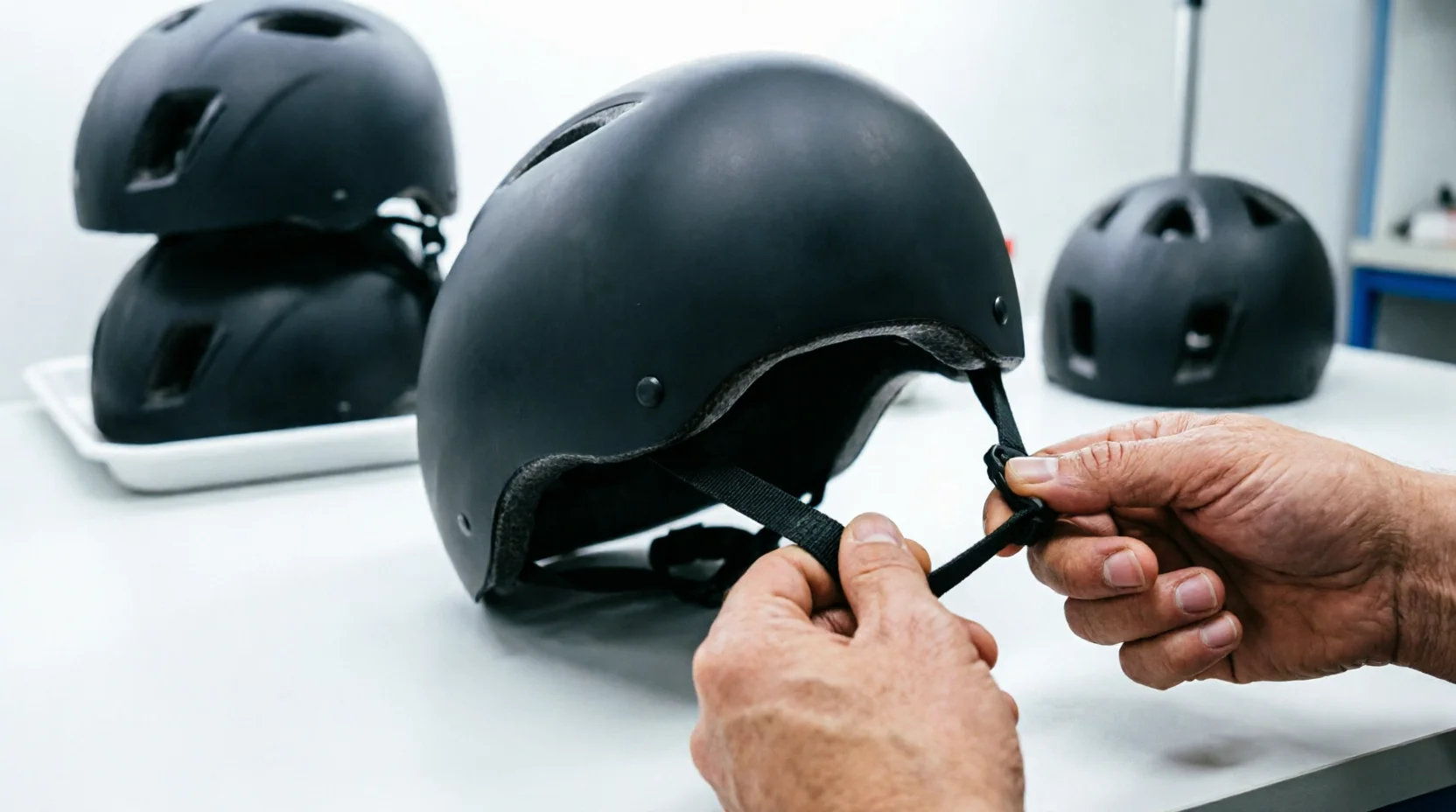
    A quality-control technician's hands testing a bicycle helmet's chin strap on a lab bench, the helmet's brand area deliberately turned away from camera.

    Australian Product Safety Standards

    Australia’s product safety regime for sporting goods is administered by the ACCC under the Australian Consumer Law. Mandatory safety standards apply to specific product categories, and supplying goods that don’t meet those standards is a strict liability offence, regardless of whether the importer knew about the non-compliance.

    The key mandatory standards relevant to sporting goods imported from China include:

    • Bicycle helmets: AS/NZS 2063:2008 (or equivalent listed international standard). All bicycle helmets sold in Australia must comply. The ACCC conducts regular market surveillance and has issued recalls for Chinese-manufactured helmets that failed the standard.
    • Children’s toys: ACCC Mandatory Standard for Toys (EN 71 or equivalent). Mandatory standards cover toys for children up to and including 36 months, and toys containing magnets for children under 14, which can catch junior equipment and pool toys.
    • Portable swimming pools and barriers: AS 1926.2 and related standards for pool safety barriers where relevant to water sports or backyard sporting equipment.
    • Electrical equipment: Regulatory Compliance Mark (RCM) for all in-scope electrical goods, covering product safety and electromagnetic compatibility (EMC) testing. Applies to powered gym equipment, e-bikes, electric scooters, and any sporting product with a mains power input or rechargeable battery with a charger sold in Australia.

    The ACCC Product Safety website maintains the current list of mandatory standards and bans. Importers should check this list against their product range before placing orders, not after. A test report from a Chinese exporter issued by an unaccredited laboratory is not sufficient to demonstrate compliance with an AS/NZS standard. The laboratory must be NATA-accredited or an accredited equivalent for the specific standard.

    Bicycle Helmets and Protective Equipment

    Bicycle helmets are among the most frequently recalled consumer goods in Australia, and China is the dominant origin for recalled units. The common failure modes in ACCC helmet recalls include:

    • Impact absorption below AS/NZS 2063 threshold (the helmet doesn’t meet the deceleration test).
    • Retention system failure (chin strap or fastening mechanism breaks under load).
    • Misleading AS/NZS markings on non-compliant helmets (the standard number printed without valid certification).

    The importer, not the Chinese exporter, bears the legal liability for non-compliant helmets sold in Australia. A recall notice naming the importer, combined with the cost of retrieving and destroying distributed stock, typically costs AUD 50,000–250,000 depending on the volume distributed before detection.

    Due diligence for helmet imports must include: a test report from an accredited laboratory for the specific AS/NZS 2063 standard, confirmation of which production batch the test report covers, and a factory inspection to verify that production quality is consistent with the tested sample. Helmets are not a category where a supplier’s self-declaration of compliance is acceptable.

    The same principle applies to other protective equipment sold with safety claims: knee pads, wrist guards, skateboard and cycling helmets. Where a product is marketed as protective equipment in an activity context, the ACCC treats it as a safety-relevant product regardless of whether a specific mandatory standard exists. Misleading safety claims trigger ACL enforcement powers independently of the product standards regime.

    E-Bikes, Electric Scooters, and Lithium Battery Compliance

    Powered sporting equipment (e-bikes, electric scooters, electric skateboards) is one of the fastest-growing import categories on the China-Australia lane. It is also one of the highest-compliance-complexity categories.

    Dangerous Goods classification in freight. Lithium-ion batteries above certain watt-hour thresholds are classified as Dangerous Goods Class 9 under IMDG (sea) and IATA (air) regulations. E-bike batteries typically fall in the 200–700 Wh range: well above the thresholds for unrestricted shipment. For sea freight, DG declaration is required; the battery must be packed in accordance with IMDG packing instructions (typically packing instruction P903 for batteries packed with or contained in equipment), and documentation must correctly identify the battery chemistry, watt-hour rating, and quantity. Errors in DG documentation can result in port refusal of the container or, in severe cases, seizure.

    RCM for electrical components. The e-bike’s charger, and any in-scope electrical components, must carry the Regulatory Compliance Mark. The RCM certifies that the product has been tested to Australian electrical safety and EMC standards. The testing and certification is managed through the Electrical Regulatory Authorities Council (ERAC) framework. A Chinese e-bike exported without RCM-certified electrical components cannot legally be sold in Australia. The certification process typically takes 6–12 weeks and should be completed before the first commercial shipment.

    Motor power and road classification. Australian states regulate e-bikes by motor power output. A pedelec (pedal-assist) e-bike with a motor not exceeding 250W nominal output is classified as a bicycle in most Australian states and can be ridden without registration or a licence. An e-bike with a motor exceeding 200W (throttle-controlled, seated) or 250W (pedelec) may be classified as a motor vehicle, requiring registration and insurance in some jurisdictions. For importers marketing e-bikes through retail channels, the motor power specification must be correctly represented, and marketing materials should reflect the state-by-state regulatory position to avoid creating misleading impressions about where the product can legally be used.

    A stack of wooden baseball bats and hockey sticks bundled in a Chinese factory's export-packing area, visible heat-treatment stamp marks rendered as abstract dark

    Wooden Sporting Goods and ISPM 15

    Sporting goods with solid wood components (cricket bats, wooden hockey sticks, baseball bats, wooden gym equipment, wooden table tennis tables) interact with DAFF’s biosecurity import requirements. China is a high-risk origin for timber biosecurity, and wooden sporting goods from China are subject to documentary and potentially physical inspection on arrival.

    The ISPM 15 phytosanitary treatment standard (heat treatment to 56°C core temperature for 30 minutes, or methyl bromide fumigation as a less common alternative) applies to solid wood used in product components and to the wood packaging (pallets, crates, dunnage) used to ship any cargo. The IPPC mark stamped on treated timber is the required evidence of compliance.

    Importers of wooden sporting goods should check the DAFF BICON database for the specific biosecurity import conditions applicable to their HS code and origin. Some wooden sporting goods require a phytosanitary certificate from the Chinese competent authority (the entry-point quarantine service); others require only that the ISPM 15 treatment mark be present. The BICON conditions are specific to product type and origin and must be checked for each new product category.

    Untreated solid wood components arriving from China without the IPPC mark will be held for treatment on arrival at the importer’s cost (typically AUD 2,000–5,000 per container for treatment plus associated holding costs) or destroyed. Biosecurity clearance is a mandatory step before goods can be released, and the costs of failing it fall on the importer.

    Pre-Shipment Inspection for Quality-Critical Goods

    Sporting goods purchased from Chinese manufacturers involve a production quality risk that is different from off-the-shelf commodity goods. A gym equipment set, a bicycle, or a set of tennis racquets represents a finished product with performance and safety requirements. Defects discovered after a container arrives in Australia (incorrect specifications, finish failures, component quality below sample standard) are expensive to remediate and potentially impossible to return.

    Pre-shipment inspection (PSI) is the systematic solution. A third-party inspection firm (Bureau Veritas, SGS, Intertek, or a specialist sports goods inspector) visits the factory before goods are loaded, inspects a statistically representative sample of the production run, and issues a report covering:

    • Quantity verification (carton count and unit count match the purchase order).
    • Specification check (dimensions, materials, finish, colour match against approved sample).
    • Functional testing (for products with moving parts or electrical components).
    • Safety check (AS/NZS compliance markings present, no obvious safety defects).
    • Packing check (carton strength, inner packing protection, label accuracy).

    PSI on a full container typically costs USD 300–600 for a standard commercial inspection, plus travel time if the factory is remote from a major city. Against the cost of receiving a container of defective sporting goods (the freight, the duty, the storage, the disposal), the inspection cost is negligible. The inspection also creates leverage with the supplier: defects identified pre-shipment can be remediated before loading; defects identified after arrival are the importer’s problem to negotiate.

    The question that decides whether PSI is worth the cost is what job the product actually has to do. A bicycle helmet is hired to protect a skull in an impact: if the shell delaminates or the foam density is wrong, the product has failed at the one thing it exists for, and a customer only discovers that failure at the worst possible moment. A branded gym towel is hired to be a towel; a colour mismatch is a minor annoyance, not a functional failure. Spend the inspection budget where the product’s job is safety-critical or performance-critical, and accept a lighter check on goods where the worst-case outcome is a customer complaint rather than an injury.

    A factory showroom shelf displaying sample sporting goods — helmets, protective pads, a folded tent — arranged for a buyer's inspection visit, warm afternoon light

    Finding and Qualifying Chinese Sporting Goods Suppliers

    The dominant sourcing channel for Chinese sporting goods remains Alibaba and Global Sources for initial contact, with trade shows (China Import and Export Fair, Guangzhou) as the primary venue for relationship development and competitor scanning. Neither channel provides automatic quality assurance: they are discovery tools, not qualification tools.

    Supplier qualification for a sporting goods import program involves several steps beyond the initial sample exchange:

    • Factory audit: an on-site assessment of production capability, quality management systems, and compliance documentation. For first-order volumes above AUD 30,000, a self-conducted or third-party audit is standard practice. The audit should verify that the factory produces the same goods sold at the quoted price, not that they source from subcontractors who do.
    • Documentation review: can the supplier provide ChAFTA Certificates of Origin? Do they have existing test reports for the Australian standards relevant to the product category? Have they exported to Australia before?
    • Reference checks: other importers in the same category who use this supplier. A Chinese exporter with a track record of compliant Australian supply is materially less risky than one exporting to Australia for the first time.

    The broader China import process covers supplier due diligence in detail across categories. For sporting goods specifically, the ACCC’s history of recalls from Chinese-origin products makes compliance-focused supplier qualification essential, not optional.

    Freight Structure: LCL for Samples, FCL for Commercial Orders

    The freight structure for sporting goods from China depends on the volume and density of the goods.

    Lightweight sporting goods (inflatable equipment, foam padding, textile products, most team sports consumables) are volume-heavy and reach FCL thresholds on a CBM basis without approaching container weight limits. A 40-foot container carries 55–60 CBM of usable volume and around 26 tonnes of payload; for light sporting goods, CBM will be the binding constraint.

    Dense goods (weight training equipment, dumbbells, kettlebells, weight plates, steel gym equipment) reach weight limits before volume limits. A 20-foot container holds 21–22 tonnes; at 100 kg/CBM average density for weight training goods, that’s approximately 20–22 CBM before the container is at maximum payload. Planning a dense-goods container requires a weight calculation as well as a volume calculation.

    For initial orders and sample shipments, LCL freight is cost-effective. The LCL rate on China-Australia lanes runs approximately AUD 120–200 per CBM, making it appropriate for shipments below 12–15 CBM. Above that threshold, FCL economics improve on a per-CBM basis, particularly on high-volume direct services between Chinese ports (Ningbo, Shanghai, Guangzhou) and Australian ports (Melbourne, Sydney, Brisbane).

    Transit time on direct China-Australia services runs 18–24 days port-to-port. Transshipment services (via Singapore or Port Klang) add 5–10 days and are typically used to fill vessel space gaps. They are not the default for regular commercial imports.

    Landed Cost Breakdown for a Sporting Goods Container

    Understanding the full landed cost is the foundation of wholesale pricing for any import program. For a typical 40-foot container of sporting goods from China to Australia, the cost stack looks like this:

    • FOB China value: AUD 80,000 (the customs value for duty purposes).
    • Freight (ocean + origin charges): AUD 3,500–5,500 for a 40-foot FCL on China-Australia lanes, including origin handling and documentation fees.
    • Marine insurance: approximately 0.3–0.5% of cargo value, so AUD 240–400 on an AUD 80,000 shipment.
    • Import duty: 0% with valid ChAFTA Certificate of Origin. Without ChAFTA, 5% MFN = AUD 4,000. This is the most controllable cost differential.
    • GST: 10% of the value of the taxable importation (customs value + duty + international freight and insurance) = approximately AUD 8,400–8,600 (recoverable by a registered business via input tax credit).
    • Customs brokerage: AUD 250–450 for a standard import entry, higher for complex multi-line or DG declarations.
    • Destination charges (port fees, container release): AUD 300–600.
    • Cartage to warehouse: AUD 400–800 for metro delivery.

    Total landed cost on an AUD 80,000 FOB order with ChAFTA: approximately AUD 92,500–95,000. Without ChAFTA: approximately AUD 96,500–99,000. The ChAFTA benefit of AUD 4,000 is recoverable simply by obtaining and submitting the correct origin documentation: the highest-return, lowest-effort compliance task in this import program.

    Swift Cargo ships commercial and personal cargo from China to Australia, including LCL and FCL sea freight and full customs brokerage. Get a quote for China-to-Australia freight.

    A warehouse quality-check station where a staff member's hands inspect a single carton pulled aside from an otherwise tightly wrapped, intact pallet.

    Common Problems on the China Sporting Goods Lane

    Four failure patterns account for the majority of problems encountered by importers of Chinese sporting goods:

    1. Product safety non-compliance discovered after arrival. The most costly failure mode. A shipment of helmets, children’s sports equipment, or electrical sporting goods that fails Australian mandatory standards cannot be sold and must be destroyed or exported. Detection typically occurs either at an ABF examination (for flagged categories) or in post-sale ACCC market surveillance. The remediation cost is the full freight, duty, and clearance cost (sunk) plus the destruction or export cost. Prevention: verify test reports against the specific AS/NZS or mandatory standard before placing the order; do not accept supplier self-declarations as compliance evidence for regulated categories.

    2. ChAFTA claim rejected on documentation grounds. A ChAFTA Certificate of Origin issued in a non-compliant format, or without a valid authorisation number, will not be accepted by ABF. The result is duty assessed at MFN (5%) recoverable only through a refund application, generally within four years, once valid origin evidence exists. Prevention: confirm with the Chinese exporter that they are authorised to issue ChAFTA CoOs, and request a sample of their CoO format before placing the order.

    3. Lithium battery DG documentation errors. E-bike and powered equipment shipments without correct Dangerous Goods declarations are refused by carriers or detained at origin ports. Common errors include incorrect watt-hour rating, wrong packing instruction reference, and missing shipper’s declaration. Prevention: ensure the Chinese exporter has a compliant DG packing and documentation procedure before booking the shipment; confirm with the freight forwarder that the DG declaration is reviewed before container booking.

    4. ISPM 15 packaging failures on wooden goods. The outer cartons or pallets used to pack wooden sporting goods arriving without the IPPC treatment mark trigger DAFF inspection and potential treatment or destruction. Prevention: include ISPM 15 packaging compliance as a specific purchase order requirement and verify before the container is loaded.

    Frequently Asked Questions

    What duty rate applies to sporting goods from China under ChAFTA?

    Most sporting goods originating in China are eligible for 0% duty under ChAFTA, versus 5% MFN without ChAFTA. The saving on a AUD 50,000 order is AUD 2,500. A valid ChAFTA Certificate of Origin from the Chinese exporter is required to claim the preference.

    Do bicycle helmets from China need AS/NZS 2063 certification?

    Yes. Bicycle helmets sold in Australia must comply with AS/NZS 2063:2008 or a listed equivalent international standard. An accredited laboratory test report is required. Supplier self-declarations are not sufficient. Non-compliant helmets are prohibited from sale and subject to ACCC recall.

    What are the lithium battery requirements for e-bikes from China?

    E-bike batteries are Dangerous Goods Class 9 in both sea and air freight and require compliant DG documentation and packaging. In Australia, the e-bike’s charger and electrical components must carry the RCM mark. Motor power specifications must reflect state road regulations: a pedelec e-bike above 250W may be classified as a motor vehicle in some states.

    Do wooden sporting goods require ISPM 15 treatment?

    Solid wood components in sporting goods from China are subject to DAFF biosecurity requirements. Many categories require ISPM 15-treated wood (IPPC mark) for both product components and outer packaging. Check DAFF BICON for the specific conditions by HS code and origin before shipping.

    What is the LCL vs FCL threshold for sporting goods from China?

    For most sporting goods, LCL is cost-effective below 12–15 CBM. Above that threshold, FCL per-CBM rates on China-Australia lanes become competitive. Dense goods (weight equipment) reach container payload limits before volume limits: weight calculation is required in addition to CBM for these categories.

  • Wholesale Importing in Australia: How Distributors Structure Their Import Logistics

    Wholesale Importing in Australia: How Distributors Structure Their Import Logistics

    Most guides to importing into Australia are written for the business placing its first order from an overseas supplier. The concerns at that stage (which freight terms to accept, how the clearance process works, what duty rates apply) are real and important. But they describe a fundamentally different operation from what a wholesale distributor runs.

    A distributor importing regular FCL volumes, managing dozens of active SKUs, maintaining a supplier network across multiple origins, and supplying distribution centres with strict receiving requirements faces a different set of decisions. The economics are different. The compliance exposure is different. The freight conversation is different. And the failure modes are different.

    Australian wholesale distribution warehouse with organised pallet rows

    What Makes Wholesale Import Different

    The distinction isn’t just volume. A business importing one container per year and a business importing twenty containers per year are not just doing the same thing more frequently. The structure of the operation changes qualitatively at scale.

    At single-order scale, the importer is managing an event: place the order, track the shipment, clear customs, receive the goods. Each shipment gets individual attention. Decisions are made case by case.

    At wholesale scale, the importer is managing a system. The question is not “what do I do with this shipment?” but “what rules govern all my shipments?” Freight rate agreements replace spot quotes. Standing customs broker arrangements replace individual clearance engagements. Supplier auditing replaces per-order quality review. DC receiving schedules replace ad-hoc delivery bookings.

    The operational model that works at ten shipments per year fails at forty. Distributors who scaled without changing their operating model typically find it in the failure: a customs examination that delays a key line, a demurrage bill from an unplanned port hold, a DC receiving rejection because packing specifications weren’t met. The fixes are structural, not tactical.

    The Economics of Wholesale Volume: MOQ, FCL, and the Inventory Cost

    The commercial logic of wholesale importing runs through three numbers: minimum order quantity (MOQ), container economics, and the cost of capital tied up in transit.

    MOQ and container crossover. Most manufacturers set MOQs that reflect their production economics: a minimum run that justifies a setup cost or occupies a meaningful share of a production shift. For finished consumer goods from China, a common MOQ lands between USD 3,000 and USD 15,000 per SKU per order. At that range, a multi-SKU order can fill an FCL before a single SKU reaches FCL volume on its own.

    The crossover point from LCL to FCL typically falls around 15–20 CBM of cargo. Below that threshold, LCL is cost-effective: you pay per CBM and avoid the fixed cost of chartering a full container. Above 20 CBM, FCL rates become cheaper on a per-CBM basis, particularly on high-volume lanes like China-Australia where the FCL economics are well-established. A 40-foot container at AUD 3,000–4,500 freight works out to roughly AUD 55–80 per CBM, typically half the LCL rate on the same lane once you’re filling the box.

    Cash flow tied up in transit. A 20–28 day ocean transit from China to Australia means a distributor’s inventory is in motion for nearly a month before it can be sold. On a USD 100,000 order at 90-day payment terms, the distributor has paid for the goods before they’ve cleared Australian customs. At 14% annual cost of capital (a reasonable figure for a mid-sized distributor financing from a trade credit facility), that transit period costs approximately AUD 1,100 on a AUD 100,000 shipment, roughly 1.1% of the order value just for the time in transit, before freight, duty, and clearance.

    This is why distributors at volume negotiate supplier payment terms aggressively. Moving from 30-day to 60-day terms on a AUD 100,000/month import program saves roughly AUD 1,150 per month in financing cost at 14% annualised. Over a year, that’s AUD 13,800, meaningful against freight costs on the same volume.

    There is a threshold most distributors do not see until they have crossed it. The freight and supplier setup that runs smoothly at ten containers a year quietly becomes the bottleneck at forty: not because any single shipment got harder, but because the coordination cost between shipments scales faster than the volume does. Importers who handle this well tend to make one deliberate switch: they stop treating each container as a fresh negotiation and start running a standing system of fixed lane rates, suppliers pre-qualified by tier, and DC-ready documentation templates that are not rebuilt from scratch every order. The point to systematise is one order before the chaos, not one after. By the time the demurrage invoices and repack charges arrive, you are already paying the cost of having waited.

    How Distributors Structure Their Supplier Network

    Single-origin concentration is the most common structural risk in wholesale importing. A distributor with 80% of volume sourced from one supplier in one country is exposed to production disruption, exchange rate movement, and supply chain events (port congestion, raw material shortages, regulatory changes) with no fallback.

    Mature wholesale importers typically develop a tiered supplier structure:

    • Primary supplier: highest volume, most established relationship, best pricing, first call for regular replenishment orders.
    • Secondary supplier: alternative source for the same or equivalent product, audited and approved, capable of stepping in at 4–6 weeks notice. May be a different origin country, deliberately so, to diversify regulatory and logistics risk.
    • Development supplier: being qualified for a future category, receiving trial orders, undergoing factory audit. Not yet in regular rotation.

    Supplier qualification for a wholesale program involves more than a sample and a quotation. The distributor’s due diligence typically includes a factory audit (either self-conducted or via a third-party inspection firm), a financial stability review, a review of the supplier’s export compliance record, and verification that the supplier can produce the required compliance documentation: Certificates of Origin, test reports, country-of-origin declarations for ChAFTA or AANZFTA purposes.

    For categories subject to Australian product safety standards, the supplier must be able to produce the specific test reports required. A supplier who cannot produce an AS/NZS 4268 test report for a padlock, or an EN 1078 test report for a bicycle helmet, is not a viable supplier for a distributor selling into Australian retail, regardless of price.

    Freight Structure at Wholesale Volume

    Spot rates are expensive. Distributors importing at meaningful volume (typically AUD 500,000+ per year in import value, or 5+ containers annually) have enough freight mass to negotiate standing rate agreements.

    A standing rate agreement (sometimes called an annual freight contract) locks a per-container rate or per-CBM rate on a specific lane for a 12-month period. In exchange for the volume commitment, the forwarder provides a fixed rate that is typically 10–25% below current spot. The distributor gets cost certainty; the forwarder gets predictable volume.

    The negotiating variables on a freight contract include:

    • Origin and destination ports: more specific contracts cover named port pairs; broader agreements cover a lane.
    • Minimum volume commitment: the threshold below which the spot rate applies. Setting this too high ties the distributor to a volume level they may not consistently meet.
    • Equipment type: standard dry 20-foot, 40-foot, or 40-foot high-cube. If the distributor ships mixed equipment, they need rates for each type.
    • Free time at origin and destination: the days the container can sit at port before demurrage accrues. Negotiating free time on the destination side (typically 7–14 days) is important for distributors whose DCs have inbound booking lead times.

    Beyond ocean freight, the full cost reduction lever set for a wholesale importer includes customs brokerage consolidation (one broker, consistent classification, lower per-entry cost), consolidation of shipments from the same origin region, and pre-arrival lodgement of import declarations to eliminate port storage on clearance.

    Wholesale Importing in Australia: How Distributors Structure Their Import Logistics: Distribution Centre Receiving Requirements

    Distribution Centre Receiving Requirements

    Wholesale importers don’t typically receive goods at their own facility: they deliver into a distribution centre, either their own DC or a 3PL. DCs operate on inbound booking systems, and they have explicit packing and labelling specifications that must be met for an inbound delivery to be accepted.

    A DC receiving rejection is among the most expensive failure modes in wholesale importing. The container has been freighted from overseas, cleared customs, and drayaged to the facility, typically costing AUD 3,000–6,000 in freight and clearance before a single unit is touched. A rejection for non-compliant packing or missing carton labels sends the container to a third-party repack facility, adding AUD 800–2,500 in rework cost and 3–7 days of delay.

    The DC specification must therefore be incorporated into the supplier purchase order, not appended after the fact. The standard elements of a DC packing specification include:

    • Carton dimensions and weight: maximum carton dimensions (typically 60 × 40 × 40 cm) and maximum carton weight (typically 20 kg) for manual handling compliance.
    • Barcoding: outer carton barcode (typically ITF-14 or GS1-128), inner unit barcode (EAN-13 or UPC-A), and barcode placement position and minimum print quality.
    • Pallet configuration: pallet dimensions (standard Australian pallet: 1165 × 1165 mm), maximum stacking height, whether the goods must be slip-sheeted between layers.
    • SSCC labels: Serial Shipping Container Code labels on each pallet, pre-generated by the supplier and tied to an ASN (Advanced Shipment Notification) transmitted before the container arrives.
    • Country of origin: required on the outer carton where the DC system records it for downstream traceability.

    Large retail DCs (major grocery chains, hardware retailers, pharmacy chains) may have GS1-compliant EDI requirements that go further still. A distributor supplying into these channels should budget for EDI integration or a managed EDI service as part of the distribution cost structure.

    Compliance as the Importer of Record

    The importer of record is the entity legally responsible for the import declaration lodged with the Australian Border Force. The IOR is responsible for the accuracy of the declaration (the correct HS classification, the declared customs value, the claimed preferential tariff treatment if applicable) and is liable for any underpayment of duty identified in a post-clearance audit.

    For a wholesale distributor, the IOR obligation is ongoing and cumulative. Each import declaration creates a record. Systematic classification errors (a product consistently classified under a lower-duty HS code, or preferential tariff claimed without a valid Certificate of Origin) create a pattern that the ABF’s post-clearance audit program is designed to find. The risk is not just duty recovery; ABF can apply penalties for negligent or reckless underpayment.

    Distributors managing high import volume should conduct periodic internal audits of their HS classifications, particularly after:

    • Introducing new product categories where the classification is not straightforward.
    • A supplier change where the country of manufacture changes (affecting preferential tariff eligibility).
    • A regulatory change to the tariff schedule (Australia updates its tariff schedule periodically; the ABF Schedule 3 is the current reference).

    Some distributors engage their customs broker to conduct an annual classification review. This is not standard practice but pays for itself if it identifies a systematic error. Duty is a fixed cost in the landed cost model: accurate classification ensures you’re not overpaying, and not creating audit exposure by underpaying.

    Product Compliance When Reselling

    As the importer of record and the entity selling goods into the Australian supply chain, the distributor bears compliance responsibility for the products they import. The relevant framework depends on the product category.

    The ACCC administers a range of mandatory safety standards and product bans under the Australian Consumer Law. These include standards for electrical equipment (requiring the Regulatory Compliance Mark, or RCM), bicycle helmets (AS/NZS 2063), children’s toys (ACCC Mandatory Safety Standard for Toys), portable swimming pools (AS/NZS 4864), and many other consumer product categories. The ACCC Product Safety website lists current mandatory standards and bans.

    A product sold in Australia that doesn’t meet its mandatory standard is not just a customs issue: it’s a post-sale recall risk. Distributors who import without verifying product compliance, and whose goods subsequently fail in the field or are found non-compliant in market surveillance, face ACCC enforcement action, mandatory recall notices, and the direct cost of collecting and destroying non-compliant stock.

    The due diligence model for a wholesale distributor differs from a retailer importing a single product range. A distributor who changes suppliers for an existing SKU must re-verify compliance for the new supplier’s production: a test report from the previous supplier does not transfer. Biosecurity clearance requirements for applicable product categories (timber, animal products, plant material) add another compliance layer for distributors in relevant sectors.

    A freight partner who already knows ACCC product-safety and DC-receiving rules catches these gaps before the container leaves origin, worth pricing a dedicated freight partnership against what you pay now.

    Country of Origin Labelling

    For food products, Australia’s Country of Origin Food Labelling Information Standard (enforced by the ACCC) is mandatory and prescriptive. The standard requires a bar chart displaying the proportion of Australian content and a text statement of the country of origin. Non-food distributors are not subject to this standard but remain subject to the ACL’s prohibition on misleading representations.

    The practical implication for a non-food distributor is: if the packaging says “Designed in Australia,” “Assembled in Australia,” or any other qualified origin claim, that claim must accurately reflect the production process. The ACL’s origin claims guidance states that “Made in Australia” requires that the product was substantially transformed in Australia and that the significant process of its manufacture occurred in Australia. For goods manufactured entirely overseas, neither standard is met.

    Distributors who want to make origin claims about products that incorporate Australian processing or inputs should take legal advice before making those claims in marketing materials or on packaging. The safest approach for a distributor of wholly imported goods is to make no origin claim and rely on the mandatory product standard compliance (RCM, AS/NZS certification, etc.) as the quality signal.

    Multi-SKU Container Management

    A wholesale distributor typically imports mixed SKU containers: multiple product lines consolidated into a single FCL to reach the FCL volume threshold. Mixed-SKU containers introduce complexity at every stage: the commercial invoice must correctly describe all line items, the packing list must be accurate at the carton level, and the customs declaration must separately classify each distinct product.

    Classification of mixed loads is done line by line. A container holding 300 cartons of electrical tools (HS 8467), 150 cartons of hand tools (HS 8205), and 80 cartons of safety gloves (HS 6116) requires three separate tariff line entries. If any of those categories qualify for ChAFTA duty reduction, each must have its own Certificate of Origin entry. A customs broker handling mixed-SKU entries for a regular client typically templates the classification by SKU rather than re-classifying per shipment, which is another reason why standing customs broker relationships are more efficient than per-shipment engagement for wholesale importers.

    Packing list accuracy is critical in a mixed container. If the customs broker cannot reconcile the commercial invoice against the packing list, ABF will flag the discrepancy. And if a post-clearance audit identifies that the quantities actually received differed from those declared, the distributor bears the compliance liability.

    Seasonal Planning and Lead Time Management

    Wholesale distributors typically plan their import program six to twelve months forward, mapping purchase orders against retail replenishment cycles, promotional calendars, and known shipping windows.

    The key planning inputs are:

    • Production lead time: the time from purchase order to goods-ready at the supplier’s factory. For manufacturing-to-order products, this is typically 30–60 days. For stocked goods, it may be 7–14 days.
    • Booking lead time: ocean carriers typically require booking confirmation 7–14 days before vessel departure on China-Australia lanes.
    • Transit time: 20–28 days ocean transit plus 1–5 days for port processing at destination.
    • Clearance and delivery lead time: 1–5 days for customs clearance (assuming pre-arrival lodgement; longer if an examination is triggered), plus DC receiving booking lead time (typically 2–5 business days for a major DC).

    Adding these components: a distributor placing a purchase order today for manufacturing-to-order goods from China should expect stock to be available for distribution in approximately 70–100 days, before any buffer for production delays, vessel space availability, or clearance holds. Against a retail promotional calendar with hard replenishment deadlines, this means planning windows that most distributors extend to 90–120 days from PO to DC receipt.

    Chinese New Year creates an annual disruption window: factories typically close for 2–3 weeks in late January to mid-February, and production delays in the weeks before closure are common. The corresponding peak at Chinese ports in January (as factories front-load shipping before closure) creates vessel space pressure. Distributors who need stock available in February–March must place orders no later than November to safely clear the CNY window.

    Negotiating as a Volume Importer

    Volume creates leverage, but leverage only converts to rate improvement if it’s visible to the counterparty. A distributor who places spot bookings through multiple forwarders fragments their volume across the market and appears to be a smaller shipper than they are. Consolidating volume through one primary freight partner (even if the consolidation doesn’t cover 100% of shipments) makes the distributor’s freight mass visible and negotiable.

    The negotiation is not just about freight rate. For a wholesale distributor, the more valuable concessions are often operational: extended free time at destination (avoiding demurrage on containers waiting for a DC booking slot), priority handling on bookings in peak season, and a dedicated operations contact who knows the distributor’s cargo profile and DC requirements.

    Distributors importing AUD 2 million or more per year in freight value are typically working with forwarders who have dedicated account management. Below that threshold, the relationship is transactional. The upgrade happens when the distributor is willing to commit volume, and the freight partner’s rate and service level reflect that commitment.

    We quote wholesale-volume freight the way distributors run it.

    Most SMEs get a detailed, all-inclusive quote within 24 hours, covering DC compliance and mixed-container handling.

    Price your import volume

    Most new distributors assume the path to better wholesale pricing is negotiating harder on unit cost. It usually isn’t. The distributors who actually get better economics are the ones who worked backwards from container utilization first, structuring orders so a full container clears at a lower per-unit freight cost, and treated the supplier price negotiation as the second lever, not the first. That’s backwards from how most people approach it, and it sounds backwards until you run the numbers: a modest per-unit discount on FOB price is often smaller than the freight-per-unit saving from filling a container properly instead of shipping half-empty at MOQ. The question worth sitting with isn’t “how do I get a better price.” It’s “why am I solving the freight-efficiency problem last, when it’s usually the bigger lever.”

    Related reading: Importing for Retail Stores in Australia: Freight and Logistics Guide

    Frequently Asked Questions

    What is the minimum volume needed to justify a full container from China?

    For most consumer goods, FCL becomes cost-effective at roughly 15–20 cubic metres. Below that threshold, LCL is typically cheaper. Above 20 CBM on China-Australia lanes, the per-CBM rate inside a 40-foot FCL is usually significantly below LCL rates.

    Who is the importer of record when a distributor brings goods in on behalf of a retailer?

    The importer of record is the entity lodging the import declaration with ABF and legally responsible for duty payment and compliance. When a distributor imports on its own account and resells to retailers, the distributor is the IOR. If a retailer arranges their own import and uses the distributor only for warehousing and distribution, the retailer may be the IOR.

    What country of origin labelling applies to imported goods resold in Australia?

    For food products, the Country of Origin Food Labelling Information Standard mandates a bar chart and origin statement. For non-food goods, there is no mandatory origin label, but the ACL prohibits misleading origin claims. If packaging makes an origin claim, it must be accurate.

    Can a distributor pass duty and GST costs through to retailers?

    Yes. Duty becomes part of the distributor’s landed cost and is incorporated into the wholesale price. GST is recoverable by registered businesses through the BAS input tax credit mechanism. Duty is a permanent cost and is not recoverable for commercial importers.

    How do distributors handle slow-moving SKUs that tie up container space?

    Most wholesale importers apply ABC analysis: A-class (high-velocity) SKUs ship in FCL quantities on schedule; B-class SKUs are consolidated with A-class in mixed containers; C-class SKUs are ordered LCL or on-demand. Some distributors negotiate vendor-managed inventory with offshore suppliers to shift slow-moving stock storage offshore.

  • Test for Asbestos Before You Import Vietnamese Building Materials to Australia

    Test for Asbestos Before You Import Vietnamese Building Materials to Australia

    AANZFTA brings the duty to zero on most categories, but WaterMark certification for plumbing fittings and RCM for electrical items still gate the shipment separately from any tariff question. To import building materials from Vietnam to Australia without a seizure or an unsellable container, settle asbestos testing and those certifications with the supplier before anything ships.

    Vietnam is a significant source of building materials for Australian construction, renovation, and fit-out projects: timber flooring, ceramic and porcelain tiles, structural bamboo, aluminium profiles, hardware fittings, and stone cladding all move on the Vietnam-Australia lane at commercial scale. The compliance picture is more complex than for furniture or apparel, because building materials imported into Australia interact with construction codes, certification schemes, and one zero-tolerance prohibition: asbestos.

    Building materials from Vietnam being loaded for Australian import

    What Australia Imports from Vietnam in Building Materials

    The major product categories in the Vietnam-Australia building materials trade are:

    • Timber: Structural timber, hardwood flooring, decking, cladding, door and window frames, engineered timber products (LVL, glulam), bamboo flooring and structural bamboo
    • Ceramic and porcelain tiles: Floor tiles, wall tiles, large-format porcelain slabs, mosaic tiles
    • Steel fabrications: Structural steel sections, steel reinforcing bar (rebar), steel doors and frames, balustrade components
    • Aluminium profiles and extrusions: Window frames, curtain wall systems, louvre systems, architectural hardware
    • Stone and natural materials: Granite, marble, and sandstone tiles and slabs; natural stone cladding
    • Plumbing and electrical fittings: Faucets, fittings, conduit, wiring accessories, switches and sockets
    • Construction hardware: Fasteners, brackets, anchors, hinges, door furniture

    AANZFTA Duty Rates for Building Materials

    The ASEAN-Australia-New Zealand Free Trade Agreement (AANZFTA) provides a 0% preferential duty rate for most Vietnamese building materials entering Australia. The standard MFN rates that apply without AANZFTA are typically 0–5% depending on the HS heading, meaning the AANZFTA benefit is most significant on the categories that carry a 5% MFN rate (some aluminium products, certain ceramic products, and some timber headings).

    To claim the AANZFTA rate, your Vietnamese exporter must provide either a Form AANZ (issued by a Vietnamese authorised body: Chamber of Commerce or Ministry of Industry and Trade) or a self-declaration of Vietnamese origin on the commercial invoice. This documentation must accompany the shipment and be available at Australian customs clearance. A Form AANZ not issued before departure is very difficult to obtain after the shipment has arrived.

    For importers of high-value construction materials where duty at 5% MFN represents a material cost, the AANZFTA documentation process should be treated as a non-negotiable supplier requirement, built into the purchase order terms and verified before every shipment.

    The Asbestos Prohibition: Zero Tolerance

    Australia has a complete ban on the importation of all forms of asbestos, chrysotile (white asbestos), amosite (brown asbestos), crocidolite (blue asbestos), and all other asbestos varieties, under the Customs (Prohibited Imports) Regulations 1956 and the Industrial Chemicals (Notification and Assessment) Act. The penalty for importing goods containing asbestos is severe: seizure of the goods, significant financial penalties, and potential criminal prosecution.

    Vietnam officially banned chrysotile asbestos use in 2020, but the legacy of asbestos-containing materials in the supply chain means that Australian importers of Vietnamese building materials must actively manage the asbestos risk. The product categories that carry the highest residual exposure are those where Vietnam historically used asbestos as a reinforcing fibre: roofing sheets, cement products, pipe fittings, gaskets, and some insulation materials.

    High-risk product categories

    The following Vietnamese building material categories carry elevated asbestos risk and require active testing or strong supplier assurance:

    • Fibre cement products: Cement sheeting, fibre cement cladding panels, compressed cement board
    • Roofing materials: Corrugated cement sheets, roofing tiles with fibre reinforcement
    • Gaskets and sealing products: Any cement or compressed fibre gasket used in plumbing or mechanical applications
    • Pipe fittings: Older-design cement pipe fittings and transition collars
    • Brake and friction components: Not a building material, but commonly co-imported in hardware shipments

    How to manage asbestos risk

    Written asbestos-free declaration: Require your Vietnamese supplier to provide a written declaration that the goods are free of all forms of asbestos, signed by a responsible officer of the manufacturing company. This does not provide full protection against non-compliance, but it creates contractual liability on the supplier and a clear paper trail.

    Independent laboratory testing: For fibre cement products, cement sheeting, or any product where you cannot independently verify the raw material inputs, arrange independent laboratory testing before the first import. Accredited Australian laboratories can test samples for asbestos presence: cost is typically AUD 150–400 per sample. One test result on a product line from a specific supplier provides assurance for subsequent shipments from the same source, unless the supplier’s raw material supply changes.

    Safe Work Australia guidance: Safe Work Australia publishes current guidance on asbestos importation risk and the categories of goods that are actively monitored at the border. Review this guidance before importing any category that might carry asbestos risk.

    Stacked timber packaging material at an Australian receiving dock, heat-treatment stamp texture visible on the cut ends of the wood (no readable characters, just stamped

    Timber Biosecurity: Building Materials in Detail

    Timber building materials are subject to DAFF biosecurity requirements under the same framework as timber furniture, but the product forms differ: structural beams, flooring boards, and decking are distinct from furniture components, and some engineered timber products have different treatment requirements.

    Solid timber building materials

    Structural beams, hardwood flooring, decking, cladding, and door frames in solid timber must comply with ISPM 15 heat treatment requirements: core temperature of 56°C for 30 continuous minutes, with the IPPC mark physically stamped on each timber element or the packaging. Vietnam is a high-risk timber source country: DAFF inspection rates on Vietnamese timber are elevated relative to lower-risk origins. Documentation must specifically identify the timber species, treatment type, and treatment provider.

    Engineered timber products

    Plywood, MDF (medium-density fibreboard), LVL (laminated veneer lumber), and particleboard are processed timber products that have undergone manufacturing processes that significantly reduce pest risk compared to solid timber. DAFF’s import conditions for these products differ from solid timber: check the DAFF BICON database for the specific import conditions applicable to your product form before the first shipment.

    Bamboo products

    Bamboo is a grass, not a timber, and is subject to DAFF import conditions as a plant product rather than under the timber/ISPM 15 framework. Commercially processed bamboo flooring and structural bamboo products (heat-treated and fully manufactured) generally present lower biosecurity risk than raw or minimally processed bamboo. Declare bamboo products accurately on documentation as “processed bamboo [product type]” rather than “timber” to ensure the correct biosecurity assessment regime is applied.

    Ceramic and Porcelain Tiles: Straightforward Compliance

    Ceramic and porcelain tiles from Vietnam have one of the most straightforward import compliance profiles in the building materials category. They attract 0% duty under AANZFTA, have low biosecurity risk as fully manufactured ceramic products (no organic material, no pest risk), and do not present asbestos risk under standard tile specifications.

    The primary compliance consideration for tiles intended for retail sale or specification in Australian construction projects is slip resistance. Australian building codes require specific slip resistance ratings for tiles used in wet areas, stairways, and public pedestrian zones. The relevant standards are AS 3958.1 (ceramic tiles, installation guidance) and AS/NZS 4586 (slip resistance classification). Request slip resistance test data from your Vietnamese supplier for tiles intended for commercial or regulated applications.

    Large-format porcelain slabs (1200×2400mm and above), popular in Australian kitchen and bathroom markets, are a specific logistics challenge. These require specialist handling, custom packaging (foam-lined A-frames or purpose-built crating), and careful assessment of stacking weight limits in the container. Breakage during transit is the primary commercial risk on this product format, not compliance.

    Steel and Aluminium: Structural Standards

    Structural steel from Vietnam (beams, columns, RHS sections, rebar) requires compliance with AS/NZS 3678 (structural steel hot-rolled bars and sections) or AS/NZS 4671 (steel reinforcing materials) if it is to be used in structural applications under the National Construction Code (NCC). Vietnamese steel mills serving the Australian market are generally aware of these requirements and can provide mill certificates confirming compliance: request mill certificates on every shipment and retain them for the life of the structure they are used in.

    Aluminium profiles and extrusions from Vietnam are subject to AS/NZS 1734 (aluminium and aluminium alloys) for structural applications, and any specific window or door systems must be assessed under the relevant NCC energy efficiency and structural provisions. Vietnamese aluminium manufacturers serving the Australian market typically have their systems tested and documented for NCC compliance: verify this with your supplier before committing to a first import.

    Plumbing and Electrical Fittings

    Plumbing fittings and fixtures for installation in Australian buildings must carry the WaterMark certification, administered by the Australian Building Codes Board. WaterMark applies to plumbing and drainage products that could affect public health or safety if they fail: taps, mixers, valves, pipe fittings, and similar products. Importing Vietnamese plumbing fittings without WaterMark certification for retail sale or installation in Australian buildings is non-compliant. Vietnamese manufacturers producing for the Australian market are increasingly WaterMark-certified: verify certification before ordering.

    Electrical wiring accessories (switches, sockets, switchboard components) must carry the RCM (Regulatory Compliance Mark) under ACMA requirements. The same applies to any electrical component incorporated into a building material product (LED strips built into cove profiles, powered louvre systems, etc.). As with RCM certification for other electrical products, FCC or CE certification does not satisfy Australian ACMA requirements.

    Stacked granite or porcelain tile slabs on a heavy-duty pallet beside an open container door, forklift tines just entering the frame to lift the pallet

    Stone and Natural Materials from Vietnam

    Vietnam produces and exports granite, marble, basalt, and sandstone, as cut tiles, slabs, cladding panels, and decorative elements. Vietnamese stone, particularly basalt from the central highlands, has grown significantly in the Australian architectural specification market over the past decade as an alternative to Chinese or Indian stone on price and lead time.

    The biosecurity risk on natural stone from Vietnam is lower than on timber, but not zero. Cut and polished stone in commercial tile format presents minimal biosecurity risk. Rough-cut or bush-hammered stone with unfinished faces and stone with visible soil or organic material in crevices can trigger DAFF inspection. Documentation should specify the stone type, surface finish, and that goods are “commercially cut, polished/finished, new goods, no soil or plant material present.” This specificity speeds biosecurity assessment.

    Stone is a weight-dense category: granite tiles run 25–35 kg/m² and slabs significantly heavier. A 20-foot container of polished granite tiles will often hit the payload weight limit (21–22 tonnes) with 60–85 m² of tile, leaving substantial volume unused. For stone imports, calculate your container loads on weight capacity, not CBM.

    There is no asbestos risk associated with natural stone products: granite, marble, basalt, and sandstone are silica-based and do not contain asbestos. Asbestos risk is specific to manufactured fibre-cement products, not natural quarried stone.

    Common Problems on the Vietnam Building Materials Lane

    The most costly problems on this lane cluster around asbestos compliance, timber biosecurity documentation, and structural certification gaps. Each can be prevented with supplier-level quality management before goods depart Vietnam.

    Asbestos detection on arrival

    A shipment of fibre cement sheeting that tests positive for asbestos at the Australian border results in mandatory seizure and destruction of the entire consignment at the importer’s cost. ABF and Safe Work Australia actively test high-risk building material categories, and the testing regime has become more systematic since a series of high-profile asbestos detections in Vietnamese-origin goods in the 2018–2022 period. Prevention is the only viable strategy: laboratory test results on the specific product from the specific supplier before the first import order.

    ISPM 15 non-compliance on timber packaging

    This is the same failure as on furniture imports: the structural timber itself may have valid heat treatment documentation, but the wooden pallets or dunnage used to pack the shipment are not IPPC-marked. DAFF inspects all timber in a consignment. A structural timber shipment held for biosecurity examination generates examination fees, treatment costs, and delivery delays that can run AUD 2,000–5,000 per container on a commercial building project. Include ISPM 15 compliance on all packaging timber in your purchase order and verify it on the pre-shipment inspection checklist.

    WaterMark and RCM gaps on fittings

    Vietnamese hardware exporters frequently offer products that meet European or US certification requirements but do not hold Australian WaterMark (plumbing) or RCM (electrical) certification. An Australian plumbing contractor cannot legally install non-WaterMark fittings, and non-RCM electrical products cannot be supplied for installation. Importers who receive a container of Vietnamese plumbing fittings without WaterMark discover the compliance gap at the point of sale, not at customs clearance: the goods clear the border but cannot be sold in the Australian market. Verify certification before ordering, not on arrival. Clearing customs proves nothing about WaterMark or RCM when you import building materials from Vietnam to Australia; only the certificate does.

    Structural certification unavailable for steel

    Structural steel from Vietnam must be accompanied by mill certificates confirming compliance with the relevant AS/NZS standard. Vietnamese steel mills vary significantly in their quality documentation: some have full third-party certified mill certificates; others provide in-house test results of uncertain provenance. For structural steel that will be used in certified construction under the NCC, the mill certificate is a legal compliance document. A steel fabrication delivered to site without a compliant mill certificate may require the steel to be independently tested before it can be incorporated into the structure, a cost and delay that is entirely avoidable with proper supplier qualification.

    Large-format tile breakage in transit

    Large-format porcelain slabs and tiles (900×900mm and above) require A-frame packaging or purpose-built crates for sea freight transit. A Vietnamese exporter using flat carton packaging for large-format slabs will produce a predictable level of breakage on a 14–22 day sea journey through tropical waters. Include packaging specification in the purchase order (A-frame with foam interleaving and corner protection) and verify packaging on the pre-shipment inspection. Freight insurance covers breakage above a threshold, but the administrative burden of a breakage claim and replacement ordering is disproportionate to the cost of proper packaging.

    There is a pattern on this lane that catches experienced importers off guard: the cheapest Vietnamese supplier frequently produces the most expensive shipment. It looks paradoxical until you frame the job the material is actually being hired to do. An importer is not buying tiles or steel or fittings in the abstract: they are buying a component that has to pass certification on an Australian building site. A batch that arrives at a lower unit price but lacks AS/NZS conformance, a valid WaterMark, or a clean asbestos-free declaration cannot do that job, and the cost of that failure (rejection, retesting, replacement, project delay) dwarfs the saving. The suppliers worth qualifying are the ones who understand which certification the material must satisfy on arrival, not simply the ones who quote low.

    Landed Cost for Vietnamese Building Materials

    Building materials are typically higher-value-per-container than general merchandise, making the landed cost components material to project economics. Working from an FOB HCMC price on a typical 20-foot container:

    • Ocean freight (FCL 20-foot, HCMC to Sydney/Melbourne): AUD 1,800–3,200 depending on carrier and season
    • Origin charges (export customs, CFS handling, document fees): USD 200–350 per container
    • Destination THC (terminal handling): AUD 350–600 per container
    • Wharfage and port fees: AUD 100–250 per container
    • Customs duty: 0% with valid AANZFTA Form AANZ; 0–5% without (product-dependent)
    • GST: 10% on the customs value plus freight plus insurance
    • Customs brokerage: AUD 150–300 per import declaration
    • DAFF biosecurity levy: approximately AUD 36.80 per declaration: DAFF-legislated charges are indexed annually on 1 July, so confirm the exact current figure against the DAFF fees schedule before quoting a landed cost
    • DAFF biosecurity examination (if triggered): AUD 300–800 plus potential treatment costs
    • Drayage (port to site or warehouse): AUD 400–900 depending on distance and whether the delivery point can take a side-loader or requires a crane unload

    For structural and heavy materials, delivery to site rather than to a warehouse is common, and site delivery charges vary significantly depending on access, crane requirements, and time-on-site restrictions. Factor site delivery logistics into your landed cost from the first quotation.

    For the broader framework on managing costs across a growing import program, including when FCL volume justifies a rate agreement with your forwarder, see How to Scale Your Import Business in Australia.

    Freight for Building Materials: Weight and Volume Dynamics

    Freight for Building Materials: Weight and Volume Dynamics

    Building materials are predominantly weight-dense: tiles, stone, steel, and structural timber all load to the container’s weight limit well before the volume limit is reached. This inverts the freight economics compared to light manufactured goods, where volume (CBM) typically drives cost.

    A standard 20-foot container has a maximum payload of approximately 21–22 tonnes. For ceramic tiles (which can weigh 18–22 kg/m²), a full 20-foot container may hold as little as 60–80 m² of large-format tile before hitting the weight limit, well short of the 33 CBM volume capacity. Plan your container utilisation on weight, not CBM, for tiles, stone, steel, and dense timber.

    LCL is generally unsuitable for heavy building materials beyond small sample orders. Fragile goods (tiles, glass, stone) carry higher damage risk in LCL consolidation. Weight-sensitive goods (structural steel, tiles) are priced per tonne in LCL, which quickly makes FCL more economic. For most commercial building material imports from Vietnam, FCL is the appropriate freight mode from the first order.

    Transit times from HCMC to Australian east coast ports (Sydney, Melbourne, Brisbane) are 14–22 days. For the full freight and landed cost framework applicable to Vietnam imports, see Importing from Vietnam to Australia: What Businesses Need to Know. For the specific timber biosecurity requirements that overlap with building materials, see How to Import Furniture from Vietnam to Australia: the ISPM 15 requirements are identical for structural timber and furniture timber.

    A Vietnamese timber supplier's yard, the kind of site an importer inspects before placing an order

    Supplier Qualification for Vietnamese Building Materials

    Vietnamese building material manufacturers range from large, internationally certified export factories to small workshops producing primarily for domestic construction. Qualification criteria should be matched to the compliance requirements of your specific product category.

    For asbestos-risk categories, the minimum qualification requirement is: a written asbestos-free declaration plus independent laboratory test results on samples from the specific production run. For structural applications (steel, aluminium, structural timber), request and verify compliance certifications and mill certificates before the first order. For ceramic tiles, request slip resistance test data for any tiles intended for commercial specification.

    A factory audit (either in person or via a third-party inspection service) is justified for annual import programs above AUD 100,000 from any single Vietnamese supplier. Below that threshold, sample-based testing and documentation review on each shipment is the appropriate risk management approach.

    For projects where building materials are being imported against a specific construction schedule, transit time variance on the Vietnam-Australia lane must be built into the project programme. A missed vessel connection at a transshipment port adds 7–14 days to a nominal 14–22 day transit. For a project critical path, that variance is significant. Order building materials with a minimum 4-week buffer over the project commencement date, and hold a certified copy of all compliance documents (AANZFTA Form AANZ, ISPM 15 certificates, mill certificates, WaterMark certifications) in a project folder before works commence. For inventory management against variable transit windows, see How to Avoid Stockouts When Importing to Australia.

    For a freight quote on building materials from Vietnam to Australia, including LCL and FCL options with customs brokerage, see Swift Cargo’s Australia shipping quote.

    Most importers treat supplier qualification as a box to tick once, at the start of the relationship, and then stop looking. The best importers treat it as a discovery process that never fully closes, because a supplier’s certification status is a snapshot, not a guarantee. A factory that passed asbestos-free testing on its first production run can start sourcing a cheaper substrate six months later without telling you, especially if a subcontractor changes. The qualification event is not the end of the discovery, it is the start of an ongoing one. Build a re-verification trigger into your purchase order cadence, for example every fourth order or any order after a stated price drop, rather than assuming the certificate you filed at onboarding still describes what ships today.

    Before You Import Building Materials from Vietnam to Australia

    Get laboratory test results on fibre cement and any other asbestos-risk product, ISPM 15 treatment and IPPC marks on all solid timber and packaging, and WaterMark, RCM or mill certificates for fittings and structural steel. Plan FCL loads on weight rather than volume, and hold a buffer of at least four weeks over the project start date against the 14 to 22 day transit from Ho Chi Minh City.

    Frequently Asked Questions

    What is the import duty on building materials from Vietnam to Australia?

    Most building materials from Vietnam enter Australia at 0% duty under the ASEAN-Australia-New Zealand Free Trade Agreement (AANZFTA). This covers timber products, ceramic tiles, steel and aluminium fabrications, glass, and most construction hardware. A Form AANZ certificate of origin from the Vietnamese exporter is required to claim the preferential rate. Without AANZFTA documentation, MFN rates apply, typically 0–5% depending on the product category.

    Is asbestos a risk when importing building materials from Vietnam?

    Yes. Australia has a strict ban on the importation of all forms of asbestos under the Industrial Chemicals Act and the Customs (Prohibited Imports) Regulations. Vietnam historically used asbestos in certain construction materials, and the risk is highest in ceramic fibre products, cement sheeting, roofing materials, gaskets, and legacy pipe fittings. ABF and Safe Work Australia actively test imported building materials for asbestos. Importers must obtain written asbestos-free declarations from Vietnamese suppliers and, for high-risk categories, independent laboratory test results before importing.

    Do timber building materials from Vietnam require biosecurity treatment?

    Yes. Solid timber building materials (structural beams, flooring, decking, cladding, door frames) must comply with ISPM 15 phytosanitary treatment requirements. Vietnam is classified as a high-risk timber source country by DAFF. All solid timber must have been heat-treated to a minimum core temperature of 56°C for 30 continuous minutes and carry the IPPC mark. Engineered wood products (MDF, plywood, particleboard) have different requirements: check BICON for the specific conditions applicable to each product type.

    What Australian Standards apply to imported building materials?

    Structural timber must comply with AS 1720 (Timber Structures) if it is to be used in structural applications in Australian buildings. Steel and aluminium structural products must comply with the relevant AS/NZS standards for the application. Electrical materials must carry the RCM (Regulatory Compliance Mark). Plumbing fittings must carry the WaterMark certification. Ceramic tiles must meet AS 3958.1 for slip resistance and AS/NZS 4586 if used in wet areas or pedestrian traffic zones.

    How long does sea freight from Vietnam to Australia take for building materials?

    Sea freight from Ho Chi Minh City (Cat Lai) to Sydney or Melbourne takes 14–22 days. From Hai Phong to east coast Australia, 18–26 days. Building materials typically ship FCL (full container load) due to their weight and volume: a 20-foot container can carry approximately 21 tonnes of payload for heavy goods like tiles, stone, and structural steel.

    Are ceramic tiles from Vietnam safe to import to Australia?

    Yes, ceramic and porcelain tiles from Vietnam have a straightforward import compliance profile. They attract 0% duty under AANZFTA, have low biosecurity risk as manufactured ceramic products, and do not require asbestos testing under standard conditions. The main compliance requirement is ensuring the tiles meet AS 3958.1 and AS/NZS 4586 slip resistance ratings if they are to be used in areas where slip resistance is specified in Australian building codes.

  • Australia Customs Clearance: How Long It Actually Takes

    Australia Customs Clearance: How Long It Actually Takes

    Australian customs clearance can take four hours or four days, depending on what is in your container, how your documentation was prepared, and whether ABF’s risk engine flagged the shipment for examination. Most importers do not know which outcome they are heading toward until the result arrives, and by that point, the container is already at the port and the clock on storage charges is running.

    Australia Customs Clearance: How Long It Actually Takes

    Who Does What: ABF, DAFF, and Your Customs Broker

    Australian customs clearance involves three parties with distinct roles.

    Australian Border Force (ABF) administers the Customs Act 1901 and assesses all commercial imports for duty liability, prohibited goods, and compliance with import conditions. ABF’s role is the financial and regulatory gate. They determine whether duty is payable, whether the goods are permitted to enter Australia, and whether the importer’s declaration accurately represents what is in the container.

    The Department of Agriculture, Fisheries and Forestry (DAFF) administers biosecurity under the Biosecurity Act 2015. DAFF’s role is to prevent the introduction of pests, diseases, and contaminants that could harm Australia’s agricultural sector or natural environment. ABF and DAFF operate simultaneously. Clearance from both is required before goods can be released.

    Your customs broker is the intermediary who lodges the import declaration through ABF’s Integrated Cargo System (ICS) and manages communication with ABF and DAFF. They also pay duty and GST on your behalf and coordinate port release. Your customs broker’s documentation quality and their familiarity with your product classification profile are the biggest determinants of your clearance speed.

    The Integrated Cargo System: How Clearance Actually Works

    The Integrated Cargo System (ICS) is ABF’s electronic processing platform for all imports arriving in Australia. Every commercial import above AUD 1,000 customs value requires a formal import declaration lodged through the ICS by a licensed customs broker.

    When a declaration is lodged, the ICS applies an automated risk assessment algorithm that draws on:

    • The tariff classification and product description
    • The country of origin and exporter
    • The importer’s compliance history (tied to your ABN)
    • The value declared relative to statistical benchmarks for similar goods
    • Any active targeting profiles or intelligence on the specific origin or product type
    • The customs broker’s compliance history

    The ICS returns one of three directions:

    Green channel (electronic clearance)

    The declaration is accepted and clearance is granted electronically. No ABF officer reviews the declaration or inspects the goods. This is the outcome for the majority of commercial shipments from low-risk origins with accurate documentation. Green channel clearance is typically granted within 1–4 hours of declaration lodgement during business hours.

    Yellow channel (documentary examination)

    ABF directs the shipment to documentary review. An officer reviews the declaration, commercial invoice, packing list, and any supporting documents (certificate of origin, fumigation certificate, etc.) before deciding whether to grant clearance, query a specific point, or escalate to physical examination. Yellow channel adds 1–3 business days to the clearance timeline. The most common yellow channel triggers are: first-time import of a new product category, a value that appears low relative to the declared goods, or a product classification that ABF is actively reviewing across the market.

    Customs officer inspecting a carton's contents against a manifest at an Australian bonded examination bay

    Red channel (physical examination)

    ABF directs the container or parcel to a physical examination facility. Goods are unloaded, inspected, and documented by an ABF officer, sometimes in conjunction with DAFF biosecurity officers. Red channel examination adds 2–5 business days and imposes examination costs on the importer. Physical examination is triggered by high-risk product categories, intelligence-based targeting, unexplained discrepancies between the declaration and the goods visible on scanning, or random audit selection.

    DAFF Biosecurity Clearance: Running in Parallel

    DAFF biosecurity clearance runs simultaneously with ABF customs clearance for most shipments. For low-risk goods (commercially packaged manufactured goods, machinery, electronics, general merchandise in sealed cartons from low-risk origins), DAFF assessment is electronic and adds no time to the clearance process.

    DAFF directs goods to additional assessment in the following circumstances:

    • Risk commodity categories: Wood and timber products, plant material, animal-derived goods, food and food ingredients, soil-bearing items, used or second-hand goods
    • Documentation gaps: Missing treatment certificates for timber (ISPM 15), absent import permits for restricted goods, generic product descriptions that prevent accurate risk assessment
    • Origin-based risk: Goods from countries with known pest or disease issues relevant to the declared product type
    • Random inspection: a baseline inspection rate applied to certain commodity types regardless of risk profile, to maintain biosecurity system integrity

    When DAFF directs goods to inspection, the examination typically takes 1–3 business days for documentary review and 2–7 business days for mandatory physical inspection. If goods are found to require treatment (fumigation, heat treatment) that was not performed at origin, treatment can be arranged at an Australian treatment facility, adding 3–10 days and treatment costs.

    For a detailed breakdown of what triggers biosecurity holds by product category and how to prepare documentation to reduce inspection risk, see Biosecurity Requirements for Importing to Australia.

    Whether you land in green, yellow or red channel comes down to your own classifications and documentation, and pricing your import with those classifications already on file is how you stay there.

    Pre-Arrival Lodgement: The Fastest Path to Clearance

    For sea freight, lodging the import declaration before the vessel arrives is the most effective way to minimise clearance time. ABF allows customs brokers to lodge declarations up to 30 days before the vessel’s estimated arrival date (ETA). When a declaration is lodged pre-arrival and receives green channel clearance, the goods can be released at the port within hours of the vessel berthing, rather than requiring a full clearance cycle after arrival.

    Pre-arrival lodgement requires having all shipping documents in hand before the vessel arrives: the bill of lading, commercial invoice, packing list, and any supporting compliance documents (origin certificates, treatment certificates, import permits). Shipments where the supplier sends documents late (a common problem when buying on EXW terms with a supplier new to export documentation) cannot benefit from pre-arrival lodgement.

    For air freight, same-day lodgement and clearance is the standard, since air freight transit is too short for meaningful pre-arrival lodgement. Air cargo is typically cleared within 4–8 hours of the flight’s arrival, provided documentation is complete and the goods present no examination triggers.

    Australian customs clearance timeline at port of entry

    Real-World Timelines by Scenario

    Sea freight, standard commercial goods, green channel

    The broker lodges the pre-arrival declaration 3–5 days before vessel arrival. Green channel clearance follows within 4 hours of lodgement. ABF assesses duty and GST, and your customs broker advises the amount and collects payment. On vessel arrival and berthing, port release typically follows within 2–6 hours during business hours. Drayage to your warehouse takes the same or next business day, depending on port location and your warehouse’s receiving schedule. Total time from vessel berth to goods at your warehouse runs 1–2 business days.

    Sea freight, standard commercial goods, yellow channel

    The broker lodges the declaration pre-arrival. ABF directs the shipment to yellow channel, and documentary examination begins. ABF review typically completes within 1–3 business days. If clearance is granted after review, port release and delivery proceed as above. Total time from vessel berth to goods at warehouse runs 3–5 business days.

    Sea freight, timber or biosecurity-risk goods, DAFF inspection

    The broker lodges the declaration pre-arrival. DAFF directs goods to mandatory inspection on arrival. Goods move from port to a department-approved biosecurity examination site. Inspection occurs within 2–5 business days. If goods comply (no live pests, treatment certification correct), goods are released from the examination facility and proceed to your warehouse. Total time runs 5–10 business days from vessel berth. If treatment is required, add 3–10 days.

    Air freight, commercial goods

    The broker lodges the declaration on or before the day of aircraft arrival. Green channel delivers same-day clearance. Goods are available for collection from the air freight facility the same business day. Total time from aircraft arrival to goods available for collection runs 4–12 hours.

    What Causes Clearance Delays

    Delays fall into two categories: those caused by the importer’s documentation and those caused by ABF or DAFF processes.

    Documentation errors (controllable)

    Incorrect tariff classification. It’s the most common and consequential documentation error. If the HS code on the import declaration does not match ABF’s classification of the goods, the duty rate is wrong, and the discrepancy will either be caught on examination or in a post-clearance audit. Yellow or red channel is more likely on declarations where the declared classification is unusual for the product type.

    Valuation discrepancies. If the declared customs value is materially lower than ABF’s statistical benchmarks for similar goods, the ICS may flag the shipment for review. This can happen legitimately (you may have negotiated a particularly good price), but it requires supporting documentation (price negotiations, supplier price lists) to satisfy ABF’s review.

    Missing origin documentation. If you are claiming a preferential FTA rate (AUSFTA, AANZFTA, ChAFTA) and the origin certificate is missing or incorrectly completed, the duty is assessed at the MFN rate. The FTA preference can sometimes be claimed retrospectively, but this requires an amendment process that adds 3–10 business days.

    Late documentation from suppliers. Your customs broker cannot lodge a declaration without the commercial invoice, packing list, and bill of lading. A supplier who issues documents late (after the vessel has already arrived) converts a pre-arrival clearance scenario into a post-arrival clearance delay. This is a relationship and purchase order management problem, not a customs problem. See How to Manage Supplier to Warehouse Logistics in Australia for a framework on managing document timelines from your suppliers.

    Biosecurity holds (partially controllable)

    DAFF inspection holds on timber, plant-derived, or animal-derived goods can be reduced but not eliminated. The controllable elements are: correct ISPM 15 treatment certification, specific product descriptions on documentation, and supplier compliance with DAFF import conditions. A well-documented timber shipment clears faster than a poorly documented one even at the same risk profile.

    ABF examinations (not controllable)

    Random audit selection, intelligence-based targeting, and systematic reviews of certain product categories are outside the importer’s control. An importer with an excellent compliance history can still receive a red channel direction on a given shipment. The only mitigation is ensuring that when an examination occurs, the goods match the declaration exactly. Any discrepancy extends the timeline by days to weeks.

    Most red-channel holds trace back to paperwork, not the goods.

    If your classifications or origin documentation have never been checked against ABF’s own risk triggers, that gap is worth closing before your next shipment, not after a hold.

    Talk to our freight team

    How to Reduce Customs Clearance Time

    Clearance time is largely determined before the goods leave your supplier. Four specific actions reduce your average clearance time.

    Set documentation deadlines in your purchase order

    Your purchase order should specify that the supplier must provide the commercial invoice, packing list, and bill of lading to your freight forwarder within 48 hours of goods departing origin. For sea freight, this allows pre-arrival lodgement with a meaningful buffer. Put a supplier who routinely issues documents late on notice that you will deduct any port storage charges and the cost of the added clearance delay from their payment.

    Standardise your tariff classifications

    Agree your product classifications with your customs broker at the start of the relationship, not on a per-shipment basis. For your top 10 product SKUs by volume, confirm the HS code, the applicable duty rate, and any FTA treatment. Store this in a classification register that your broker references on every declaration. This eliminates the most common yellow-channel trigger: a classification that varies shipment-to-shipment because it was never formally established.

    Carry treatment certificates in the shipment documents

    For any goods that require biosecurity treatment (timber, wool, animal-derived products), the treatment certificate must travel with the shipment documents and be presented to DAFF at the same time as the import declaration. A certificate issued after arrival, sent by email, or retrieved from a filing system during a DAFF review adds days to the resolution. Treat the treatment certificate as a shipping document with the same priority as the bill of lading.

    Build buffer stock to absorb clearance variance

    Even with perfect documentation, clearance time varies. A shipment that normally clears in 4 hours can be directed to yellow channel without prior indication. For business-critical stock, do not plan to receive goods from customs the same week you need them on the shelf. Between expected vessel arrival and your operational need for the stock, a minimum 10-business-day buffer absorbs all but the most unusual clearance delays. For a framework on managing inventory against clearance time variance, see How to Avoid Stockouts When Importing to Australia.

    Port Storage Charges: The Real Cost of Delays

    Port storage and demurrage charges accumulate while goods are awaiting clearance or collection. At Australian container terminals, free time (the period before storage charges begin) is typically 3–5 calendar days from vessel discharge. After free time expires, storage fees run at AUD 80–250 per day per TEU (twenty-foot equivalent unit) depending on the terminal and container type. Published tariff schedules are available directly from DP World Australia and Patrick Terminals.

    A shipment that enters yellow channel examination on day 1 and clears on day 5 may be within the free time period. A shipment that goes to DAFF inspection and takes 7 business days to clear will likely incur 4–6 days of storage charges before collection can be arranged.

    Demurrage (the charge for keeping the carrier’s container beyond the contracted free time) is a separate cost from port storage, and accumulates from the moment the container is discharged from the vessel. Most contracts provide 7–10 calendar days free time for demurrage before daily charges begin (typically AUD 100–200 per day per container). A delayed clearance combined with a busy warehouse schedule can run up AUD 1,000–2,000 in demurrage on a single container before collection.

    Pre-arrival clearance eliminates most storage and demurrage exposure. Filing the port release request on the day of vessel arrival minimises the time between discharge and gate-out.

    The Importer Compliance Record

    Your compliance record with ABF (tied to your ABN) accumulates over time and influences your examination rate. With a long history of accurate declarations, no duty shortfall queries, and no voluntary disclosures of past errors, an importer is assessed as lower risk by the ICS algorithm and is less likely to be directed to examination on any given shipment.

    The ABF post-clearance audit program regularly reviews importer compliance records and may identify duty shortfalls on past shipments. If ABF identifies a systematic classification error across your import history, the audit can result in back-duty demands covering up to four years of imports. The best defence against post-clearance audit liability is the same as the best defence against clearance delays: accurate, consistent, well-documented declarations on every shipment.

    High-volume importers with strong compliance records may be eligible for ABF’s Trusted Trader program, a formal accreditation that results in reduced examination rates, priority processing, and a direct relationship with an ABF account manager. Application details are available at the ABF Trusted Trader program page.

    The Integrated Cargo System is less a gatekeeper than a piece of design responding to the signals you feed it. When a consignment lands in the yellow or red channel, importers tend to read it as bad luck or an officious inspector. It is neither. The system is doing exactly what it was built to do: matching the data on your declaration against known risk patterns and surfacing anything incomplete, inconsistent, or unfamiliar for a human to check. A red-channel hold is rarely a verdict on your goods; more often it is a verdict on your paperwork. The importers who clear fastest are the ones who treat the declaration itself as the deliverable, not an afterthought handed to a broker at the last minute.

    What to Do When Clearance Is Delayed

    When a shipment is directed to examination or is awaiting a DAFF biosecurity decision, the instinct is often to wait and hope for a quick resolution. The more productive approach is to communicate systematically and supply documentation proactively.

    Get specific information from your broker within 24 hours. “Under examination” is not sufficient information. Ask: Is this ABF documentary examination, ABF physical examination, or DAFF biosecurity? What documentation has been requested? What is the estimated resolution timeline? The examination type determines how you respond and how long you wait.

    For documentary examination: ABF is reviewing specific documents and may request additional information: a supplier invoice for price verification, an origin certificate for an FTA claim, a product specification sheet for a classification query. Supply whatever is requested immediately. Every day of delay in responding is a day added to your clearance timeline. Your customs broker should be the communication channel, but you need to provide the substantive information they cannot source independently.

    For physical examination: The goods are at a physical examination facility and ABF officers will inspect them on their schedule, typically within 2–4 days of direction. There is no action you can take to accelerate this step other than ensuring the facility has all supporting documentation. Monitor daily for the examination result and act immediately if ABF identifies any discrepancy between the declaration and the physical goods.

    For DAFF biosecurity holds: DAFF will issue a direction specifying why the goods are held (documentation gap, inspection required, treatment required). If the hold is documentation-based (a missing treatment certificate that exists but was not provided), supply the certificate through your broker immediately. If treatment is required, your broker can arrange treatment at an accredited Australian facility. Get treatment quotations and approve the work on the same day the hold is confirmed. Every day of delay in approving treatment extends the timeline by a day.

    For extended delays beyond 7 business days: Contact ABF through your customs broker to request a status update and an estimated resolution date. If storage charges are escalating, you may need to decide whether to pay duty under protest (to get goods released) and dispute it later, or wait for the examination to conclude. Discuss this option with your broker if the examination runs beyond 7 business days.

    For a summary of Australian customs procedures and what to prepare before your goods arrive, see Australian customs clearance procedures on the Swift Cargo Australia page.

    A handover at the loading dock, the moment Incoterms decide who carries clearance responsibility

    Incoterms and Clearance Responsibility

    The Incoterm in your purchase order determines when your responsibility for customs clearance begins. For CIF (Cost, Insurance, Freight) and DDP (Delivered Duty Paid) terms, the supplier manages transport to an Australian port or address. Import customs clearance in Australia is the buyer’s responsibility under every Incoterm except DDP, where the seller clears the goods for import and pays the duty. The logistics of a foreign entity acting as the Australian importer are complex, and DDP into Australia is uncommon in practice.

    For FOB, EXW, and CFR terms (the most common terms on the major import lanes), you are fully responsible for Australian customs clearance from the point the goods arrive at an Australian port. Your freight forwarder and customs broker manage this process on your behalf. For a detailed explanation of how Incoterms allocate cost and responsibility across the supply chain, see What Incoterms Mean for Australian Importers.

    We lodge your declaration and work the ICS, not around it.

    Most SMEs receive a detailed, all-inclusive quote within 24 hours, no hidden fees, so you know your landed cost before you book.

    Get your import quote

    Frequently Asked Questions

    How long does standard customs clearance take in Australia?

    For sea freight shipments, standard electronic customs clearance (green channel) takes 1–4 hours after your broker lodges the import declaration and ABF’s Integrated Cargo System accepts it. For air freight, clearance is typically same-day. Documentary examination (yellow channel) adds 1–3 business days. Physical examination (red channel) adds 2–5 business days. DAFF biosecurity clearance runs in parallel with ABF customs clearance and typically takes the same or less time for low-risk goods.

    What is the Integrated Cargo System (ICS) and how does it affect clearance?

    The Integrated Cargo System (ICS) is ABF’s electronic platform for processing all cargo arriving in Australia. Import declarations are lodged by licensed customs brokers through the ICS. For sea freight, pre-arrival lodgement is possible up to 30 days before vessel arrival. This means clearance can be granted before the ship docks. For air freight, same-day lodgement and clearance is the standard. The ICS’s automated risk assessment determines whether a shipment is directed to green (auto-clear), yellow (documents), or red (physical) channel.

    What causes customs clearance delays in Australia?

    The main causes of clearance delay are: documentation errors (incorrect tariff classifications, valuation discrepancies, missing origin certificates), biosecurity holds from DAFF for prohibited or restricted goods, ABF examinations triggered by risk assessment, post-clearance audit queries on previous shipments, and high-volume periods at major ports (particularly October to December and around Chinese New Year). Documentation issues are the most common and most preventable cause of delay.

    Can customs clearance be done before the ship arrives in Australia?

    Yes. For sea freight, your customs broker can lodge an import declaration up to 30 days before the vessel’s estimated arrival date (ETA). If the declaration is accepted and the shipment passes electronic risk assessment, customs clearance can be granted before the ship docks. This means that for a standard sea freight shipment without biosecurity issues, goods can be released and available for collection at the port within hours of the vessel berthing, rather than waiting days for clearance after arrival.

    How long does DAFF biosecurity clearance take?

    For low-risk goods (commercially packaged manufactured goods in sealed containers from low-risk origins), DAFF biosecurity clearance is electronic and occurs in parallel with ABF customs clearance with no additional time added. For goods directed to documentary review, clearance takes 1–3 business days. For goods directed to mandatory physical inspection at a biosecurity examination facility, clearance takes 2–7 business days plus examination fees. Treatment on arrival (if required) adds 3–10 additional days.

    What is the Australian Trusted Trader program and does it speed up clearance?

    Australian Trusted Trader is the ABF accreditation program for importers with a strong compliance record and secure supply chain practices. Accredited businesses get reduced examination rates, priority processing and a dedicated ABF account manager. It suits established importers with a demonstrated compliance history, and not every applicant is accepted.

  • Import Furniture from Vietnam to Australia: AANZFTA, ISPM 15 and Freight

    Import Furniture from Vietnam to Australia: AANZFTA, ISPM 15 and Freight

    Vietnam has become one of the world’s most significant furniture manufacturing hubs, outpacing China on labour cost for handcrafted pieces and offering wood species and craftsmanship that are difficult to source elsewhere at comparable price points. Australian furniture retailers, interior designers, and hospitality fit-out companies have been importing from Vietnam for over a decade, but the compliance requirements on this lane (particularly DAFF timber biosecurity) remain the most consistent source of costly errors. To import furniture from Vietnam to Australia at 0% duty and without a biosecurity hold, you need AANZFTA origin documentation from your supplier and ISPM 15 treatment on all solid timber, including the crating.

    Vietnamese furniture workshop with completed pieces ready for export

    AANZFTA Tariff Treatment

    The ASEAN-Australia-New Zealand Free Trade Agreement (AANZFTA) eliminates or reduces tariffs on most goods traded between ASEAN member states (including Vietnam) and Australia. For furniture imports from Vietnam, the practical effect is a 0% duty rate on most Chapter 94 headings: wooden furniture (9403), metal furniture (9403), and upholstered seating (9401), compared to a 5% MFN rate that would otherwise apply to wooden furniture.

    To claim the AANZFTA preferential rate, two conditions must be met:

    1. Rules of origin: The furniture must qualify as originating in Vietnam under AANZFTA. The standard for furniture is that it is wholly obtained or substantially transformed in Vietnam, meaning that Vietnamese manufacture adds sufficient value (the regional value content test or change in tariff heading test, depending on the specific product). Furniture assembled in Vietnam from Vietnamese timber and components is straightforwardly qualifying. Furniture assembled in Vietnam from Chinese-origin components may not qualify depending on the value contribution of the Vietnamese transformation.
    2. Origin documentation: A Form AANZ (the AANZFTA certificate of origin) issued by a Vietnamese authorised body, or a self-declaration of origin from the Vietnamese exporter on the commercial invoice. The form must be available at the time of import for ABF to accept the preferential rate claim.

    For a detailed explanation of how AANZFTA certificates of origin work and what the Form AANZ must contain, see Importing from Vietnam to Australia: What Businesses Need to Know.

    IPPC ISPM 15 compliance stamp on solid timber furniture crating

    Timber Biosecurity: The Detail That Creates Holds

    DAFF classifies Vietnam as a high-risk timber source country. This means that any solid timber furniture from Vietnam (regardless of how well-established your supplier is) is subject to a higher-than-average biosecurity scrutiny level at Australian ports. The most important compliance investment on this lane is understanding exactly what is required and building it into your supplier instructions and documentation.

    ISPM 15 requirements

    The International Standards for Phytosanitary Measures No. 15 (ISPM 15) specifies treatment requirements for wood packaging material used in international trade. For furniture specifically, it applies to:

    • Solid wood components in the furniture itself (legs, frames, panels, structural elements)
    • Solid wood packaging: wooden crates, pallets, dunnage used to pack or support the furniture during transit

    The required treatment options are:

    • Heat treatment (HT): The wood must be heated to a minimum core temperature of 56°C for 30 continuous minutes. This is the preferred treatment method for most furniture components: it leaves no chemical residue and is widely available at Vietnamese furniture factories.
    • Methyl bromide fumigation (MB): An alternative treatment. Methyl bromide is a restricted chemical and its use for timber fumigation is being phased out in many markets, though it remains available in Vietnam. Not accepted as a substitute for ISPM 15-compliant heat treatment in all circumstances: confirm acceptability with your customs broker.
    • Dielectric heating (DH): Available but less common.

    The treatment must be marked on the timber or packaging with the IPPC mark, the internationally recognised symbol showing the country code (VN), the producer/treatment provider code, and the treatment type (HT or MB). The mark must be physically stamped on the wood, not on a paper label or sticker that can detach.

    What triggers a DAFF inspection

    DAFF may direct any furniture shipment to a biosecurity examination facility. The triggers that increase inspection likelihood include:

    • Missing or non-compliant IPPC mark on timber components or packaging
    • Bark or live plant material present on any timber element
    • Documentation that describes the goods generically (“furniture”) rather than specifically (“solid acacia wood dining chairs, ISPM 15 heat treated”)
    • First-time importers from a new Vietnamese supplier who have no biosecurity clearance history
    • Mixed containers with both timber and non-timber goods, where the timber component is not clearly separated and identified

    A biosecurity examination adds 2–7 business days and AUD 300–800 in examination fees (payable by the importer) to your clearance timeline. Treatment on arrival (required if timber does not meet ISPM 15 on inspection) adds further cost and 3–10 days. For a high-volume furniture importer, these costs and delays recur on every non-compliant shipment. The investment in getting documentation right from the first shipment pays back immediately.

    Non-timber furniture

    Upholstered furniture with no exposed solid wood components, metal-frame furniture, rattan and wicker furniture, and furniture made entirely of engineered wood products (MDF, plywood, particleboard) do not require ISPM 15 treatment. Rattan and wicker carry their own biosecurity requirements: check BICON for current import conditions on plant-derived materials. MDF and plywood are processed materials and are treated differently from solid timber; confirm with your customs broker whether ISPM 15 treatment requirements apply to the specific engineered wood products in your shipment.

    A furniture factory floor in southern Vietnam with rows of frames in various stages of assembly, natural humid daylight filtering through open warehouse siding, a worker's hands sanding a wooden joint in the foreground with the production line softly blurred behind.

    Vietnamese Furniture Regions and Their Freight Implications

    Vietnamese furniture manufacturing is geographically concentrated, and the production region determines which load port you use, which in turn affects freight cost and transit time to Australia.

    Southern Vietnam (Ho Chi Minh City / Binh Duong / Dong Nai)

    The majority of Vietnam’s furniture export production is concentrated in the provinces surrounding Ho Chi Minh City (particularly Binh Duong and Dong Nai), which host large-scale furniture manufacturing clusters. The load port is Cat Lai (Ho Chi Minh City’s main container terminal). Transit times to Australian east coast ports:

    • HCMC to Sydney: 14–20 days
    • HCMC to Melbourne: 15–21 days
    • HCMC to Brisbane: 16–22 days

    Northern Vietnam (Hanoi / Hai Phong)

    Northern Vietnam has a growing furniture cluster, particularly for lacquerware, handicrafts, and natural fibre furniture. The load port is Hai Phong. Transit times to Australian east coast ports are 4–6 days longer than HCMC due to the additional distance and limited direct sailing options from Hai Phong to Australia. Hai Phong cargo frequently transships at Singapore or Port Klang, adding variance to the transit window.

    Freight Mode Selection: LCL vs FCL

    Furniture is a high-cube, low-weight commodity category: pieces pack large relative to their weight, which means volume (CBM) rather than weight drives your freight cost calculation.

    LCL for small orders

    LCL (less than container load) works for furniture import volumes up to approximately 12–15 CBM. Below that threshold, LCL cost per CBM is usually lower than the equivalent FCL cost spread across a small volume. The disadvantage of LCL for furniture is handling risk: your pieces move through a CFS (container freight station) at origin and at destination, where they are handled alongside other cargo. Well-packaged furniture with internal foam and external cardboard or wooden crating survives LCL transit adequately, but fragile or decorative pieces (lacquer finishes, glass elements, marble tops) carry higher damage risk than in a dedicated container.

    FCL for container volumes

    A 20-foot container holds approximately 25–28 CBM of flat-packed furniture and 18–22 CBM of assembled furniture (which packs less efficiently). A 40-foot high-cube container (the preferred option for furniture) holds approximately 60–68 CBM of flat-packed goods. For any order exceeding 15 CBM, run the FCL cost comparison against LCL: on the Vietnam-Australia lane, FCL rates from HCMC are typically AUD 2,000–3,500 per 20-foot container (freight only, not including origin and destination charges), making the per-CBM FCL cost competitive against LCL from approximately 18–20 CBM.

    For the methodology for calculating the LCL/FCL crossover point and when volume justifies a rate agreement with your forwarder, see How to Scale Your Import Business in Australia.

    Supplier Qualification for Vietnamese Furniture

    Vietnamese furniture manufacturing spans a wide quality and compliance range, from internationally certified factories producing for major global retailers, to small workshops producing handcraft pieces for niche buyers. Qualifying your supplier before committing to a first order prevents the most common problems: quality failure, ISPM 15 non-compliance, and AANZFTA origin documentation gaps.

    Factory audit or remote qualification

    For orders above USD 10,000, a factory audit (either in person or via a third-party inspection service) is worth the cost. A standard audit covers: production capacity, quality control procedures, ISPM 15 treatment facility (on-site kiln or documented use of an accredited external treatment provider), export compliance experience, and sample review. Remote qualification through photos, video calls, and sample shipment is an acceptable alternative for lower-value first orders, provided you build in a physical inspection on the first production run before goods are packed.

    ISPM 15 compliance verification

    Confirm directly with your supplier that they have on-site heat treatment capability or a documented relationship with an accredited treatment provider. Ask for the treatment provider’s NPPO (National Plant Protection Organisation) registration number: Vietnamese ISPM 15 treatment providers are registered with the Vietnam Plant Protection Department. A supplier who cannot provide this information does not have compliant timber treatment in place.

    AANZFTA origin capability

    Ask your supplier to confirm that they can issue a Form AANZ or provide a self-declaration of Vietnamese origin on the commercial invoice. An established exporter will have a relationship with a Vietnamese Chamber of Commerce or Ministry of Industry and Trade office that issues Form AANZ. A supplier who has never exported to Australia may need to establish this relationship for your first shipment: allow 2–4 weeks for the first Form AANZ to be issued.

    A quality inspector running a hand along the joint of a wooden chair frame inside a bright QC checkpoint area of a Vietnamese furniture factory, a finish-sample swatch board softly visible on the wall behind, out of focus.

    Quality Control: What to Check and When

    Furniture quality defects (finish scratches, misaligned joints, inconsistent fabric tension, incorrect dimensions) cannot be identified from shipping documents. They require physical inspection of the goods. The most cost-effective time to inspect is before goods are packed and loaded into the container, while defective pieces can still be replaced or reworked at the factory.

    A pre-shipment inspection (PSI) by an independent inspector at the factory should cover:

    • Dimensions: Measure a sample against the approved specification sheet. Size deviations over 5mm on structural dimensions affect assembly and fitment.
    • Finish quality: Check for scratches, uneven lacquer, timber grain gaps, fabric pilling, stitching irregularities, and colour match against your approved sample.
    • Structural integrity: Load-test chairs and tables against the weight rating. Check joint tightness: dovetail, mortise and tenon, or screw-fixed joints should have no visible gaps.
    • Packaging: Inspect carton strength, internal foam protection for corners and edges, and carton labelling accuracy (SKU, dimensions, weight, handling instructions).
    • ISPM 15 marking: Confirm the IPPC mark is present and legible on all solid timber components and packaging before the container is sealed.

    PSI costs on the Vietnam-Australia lane are typically USD 200–400 per inspection day. A standard 20-foot furniture container can be inspected in one day. The cost of a missed defect (a full container of chairs with wrong finish colour, or dining tables with non-conforming dimensions) far exceeds the inspection cost.

    Common Problems on the Vietnam-Australia Furniture Lane

    IPPC mark missing from packaging timber

    This is the most frequent cause of biosecurity holds on Vietnamese furniture shipments. The furniture itself may have a valid heat treatment certificate, but the wooden crating or pallet material used for packaging lacks the IPPC mark. DAFF inspects all timber in the consignment, not just the finished goods. Specify in your purchase order that all wooden packaging material must carry the IPPC mark, and include this in your pre-shipment inspection checklist.

    AANZFTA documentation not ready at loading

    Form AANZ must be available at the time of Australian customs clearance, not weeks after arrival. Some Vietnamese suppliers issue the form only after shipment, which creates a scenario where goods arrive, clearance is attempted, no form is available, and duty is assessed at the 5% MFN rate (or clearance is delayed while the form is couriered or electronically submitted). Confirm in writing with your supplier that the Form AANZ will accompany the shipment documents before loading. At the 5% MFN rate, a late form on a AUD 50,000 order adds AUD 2,500 in duty, a cost you carry yourself when you import furniture from Vietnam to Australia.

    Finish variation between sample and production

    The approved sample was one piece, manufactured at the sample stage with individual attention. Production furniture is manufactured at scale. Finish colour, fabric dye lot, and lacquer sheen can vary between the sample and the production run, particularly on orders that span multiple production batches. A mid-production inspection (not just pre-shipment) catches dye lot or finish variation before the full order is completed. For high-value or colour-critical furniture, specify that the importer must approve a production sample before the full order proceeds.

    Rattan and wicker misclassified as “furniture”

    Rattan furniture is subject to different biosecurity import conditions than timber furniture. Natural rattan, wicker, and bamboo are plant-derived materials with specific DAFF requirements that are separate from the ISPM 15 framework for processed timber. Declaring rattan furniture simply as “furniture” without specifying the material type can trigger a DAFF query. Use accurate material descriptions (“rattan-frame dining chairs, synthetic wicker weave” or “solid bamboo shelving unit”) that give the biosecurity assessor the information needed to assess risk correctly.

    A loaded shipping container being sealed at a Vietnamese factory export yard, a worker closing and latching the container doors while another logs the container number

    Incoterms with Vietnamese Furniture Suppliers

    Vietnamese furniture exporters typically offer FOB or EXW terms. Understanding which term your purchase order uses determines your cost and risk exposure from the factory gate to your Australian warehouse.

    FOB (Free On Board) HCMC or Hai Phong is the most practical term for Australian importers. Your supplier handles export customs, inland transport to port, and CFS handling, then delivers goods to the ship’s rail at the nominated load port. Your responsibility (and your freight forwarder’s management) begins from that point. FOB gives you full control over the ocean freight booking, carrier selection, and Australian customs handling, while keeping your supplier responsible for export compliance in Vietnam.

    EXW (Ex Works) from a Vietnamese factory means your freight forwarder must manage the complete movement from factory gate: inland transport to port, export customs in Vietnam, CFS handling, and the ocean leg. This is operationally more complex and requires your forwarder to have an established Vietnamese agent at the production location (Binh Duong, Dong Nai, or Hanoi province). EXW does give you full cost visibility across the supply chain, since your supplier is not marking up freight components.

    CIF (Cost, Insurance, Freight) to an Australian port means your supplier books and pays for the ocean freight and insurance, delivering to an Australian port. This is convenient but removes your control over carrier selection, routing, and freight cost. Your supplier’s freight markup is built into the CIF price and may not be transparent. CIF is generally not recommended for volume importers who want control over transit time and freight cost on a lane they are actively managing.

    For a detailed comparison of the cost and operational implications of each Incoterm for Australian importers, see EXW vs FOB vs CIF for Australian Importers.

    It is worth asking who actually carries the risk when a timber consignment is held at the border. The supplier’s quote says “AANZFTA duty-free.” The forwarder’s brochure says “we handle the paperwork.” Neither of them absorbs the cost when DAFF flags untreated timber and orders fumigation or re-export: that bill is yours, every time. Do not settle for the reassuring version. Ask, in writing, for the treatment certificate and the ISPM 15 mark before the container is packed, and confirm which party is legally the importer of record on the DAFF declaration.

    Managing Your First Furniture Container

    A first furniture container from Vietnam involves more coordination than a repeat shipment once the process is established. The key milestones to manage actively:

    Pre-production: Sample approval

    Before the factory commences production, approve a physical sample of each SKU against your specification sheet. The sample approval is the reference point for the pre-shipment inspection: if the PSI inspector finds production goods that differ materially from the approved sample, you have documented grounds to require rework before the container is sealed. Keep one approved sample at your office, and send one to the inspection company so the inspector has a physical reference on-site.

    Production milestone: Mid-production check

    For orders involving colour-critical finishes or fabric with specific dye lot requirements, arrange a mid-production check when approximately 30–40% of the order is complete. This catches finish or colour variation before the full production run is committed. A mid-production check does not require a formal PSI: a video call with your supplier during which they show you production goods against the approved sample is sufficient for most orders. For high-value orders, send an inspector on-site.

    Pre-loading: PSI and ISPM 15 verification

    The PSI occurs when the full order is completed, goods are ready for packing, and the container has not yet been sealed. The inspector checks goods against your specification, approves or rejects the order, and verifies ISPM 15 compliance on all timber and packaging components. Receive the PSI report before authorising container sealing and final payment. A PSI report with a “conditional” result (indicating some defects requiring rework before dispatch) requires a follow-up photo or video confirmation that the rework has been completed before giving seal authority.

    Post-departure: Document management

    Once the container is sealed and departed, your freight forwarder will issue or receive the following documents that you need for Australian customs clearance: bill of lading (or sea waybill), commercial invoice, packing list, ISPM 15 treatment certificate, and Form AANZ. Confirm you have received and reviewed all five documents before the vessel arrives at the Australian port. Missing documents (particularly the Form AANZ) cannot always be sourced quickly after the vessel has sailed, and the cost of collecting them remotely from Vietnam can delay clearance.

    For a freight quote on the Vietnam-Australia furniture lane, including LCL consolidation and FCL options from Cat Lai, see Swift Cargo Australia.

    A wrapped furniture pallet being wheeled into an Australian rear receiving warehouse on a pallet jack, morning light through the open roller door, a stack of already-received furniture pallets organized along the wall behind.

    Landed Cost for Vietnamese Furniture

    Working from an FOB HCMC price, the full landed cost components for a typical furniture order are:

    • Ocean freight (FCL 20-foot): AUD 2,000–3,500 HCMC to east coast Australia
    • Origin charges: CFS handling, export documentation, export customs, approximately USD 200–350 per container
    • Destination THC: AUD 350–600 per container at Sydney, Melbourne, or Brisbane
    • Customs duty: 0% with valid AANZFTA Form AANZ; 5% MFN without
    • GST: 10% on customs value plus freight plus insurance
    • Customs brokerage: AUD 150–300 per import declaration
    • DAFF biosecurity levy: AUD 36.80 per declaration (current rate)
    • Biosecurity inspection (if triggered): AUD 300–800 examination fee
    • Drayage (port to warehouse): AUD 300–600 depending on distance

    The single largest controllable cost variable is AANZFTA duty: 5% MFN on a AUD 50,000 furniture order is AUD 2,500 in avoidable duty. Getting the Form AANZ right on every shipment, from the first, pays for multiple years of customs brokerage fees.

    For tracking and managing your supply chain from your Vietnamese supplier’s factory gate through to your Australian warehouse, see How to Manage Supplier to Warehouse Logistics in Australia.

    A held container at the Australian border is not bad luck. It is the result of a decision made weeks earlier, usually the decision to skip the timber treatment certificate because the supplier said it wasn’t necessary. Extreme ownership means the importer owns that outcome, not the supplier, not DAFF, not the freight forwarder. Before the first container ships, get the fumigation or heat-treatment certificate in hand, confirm it matches the actual timber species used, and confirm it again once the furniture is built, not just when the raw timber was sourced. That is not excessive caution. That is the minimum standard for anyone moving cargo a biosecurity inspector is trained to distrust by default. Push the responsibility back onto the supplier and you will lose time waiting for someone else to fix your problem. Own the checklist yourself and the container moves.

    Before You Import Furniture from Vietnam to Australia

    Confirm your supplier can issue a Form AANZ before the order is placed, and specify ISPM 15 treatment with the IPPC mark for all solid timber and wooden packaging. Book a pre-shipment inspection against the approved sample, and hold the bill of lading, commercial invoice, packing list, ISPM 15 certificate and Form AANZ before the vessel reaches Australia.

    Frequently Asked Questions

    What is the import duty on furniture from Vietnam to Australia?

    Most furniture from Vietnam enters Australia at 0% duty under the ASEAN-Australia-New Zealand Free Trade Agreement (AANZFTA). To claim the preferential rate, goods must meet AANZFTA rules of origin and be accompanied by a Form AANZ certificate of origin or an equivalent origin declaration from the Vietnamese exporter. Without AANZFTA documentation, the standard MFN rate applies, typically 5% for wooden furniture under Chapter 94.

    What are the biosecurity requirements for importing Vietnamese furniture to Australia?

    Timber furniture from Vietnam is subject to DAFF biosecurity assessment. Solid wood components must comply with ISPM 15 phytosanitary treatment requirements (heat treatment or methyl bromide fumigation), with the IPPC mark visible on the timber or packaging. Vietnam is classified as a high-risk timber source country by DAFF. Goods with untreated solid wood, bark-on timber, or live plant material will be directed to mandatory inspection and may require treatment on arrival.

    How long does sea freight from Vietnam to Australia take?

    Sea freight from Ho Chi Minh City (Cat Lai port) to Sydney or Melbourne takes approximately 14–22 days. From Hai Phong (serving northern Vietnam, including Hanoi) the transit is 18–26 days to east coast Australia. Brisbane and Adelaide add 1–3 days over Sydney/Melbourne times. Actual transit depends on the carrier, sailing schedule, and any transshipment routing.

    Do I need a fumigation certificate for wooden furniture from Vietnam?

    Yes. For solid timber furniture, you need either an ISPM 15-compliant heat treatment certificate (showing the timber was heated to a core temperature of 56°C for 30 continuous minutes) or a methyl bromide fumigation certificate. The IPPC mark must also be physically stamped on the timber or wooden packaging. Upholstered furniture with no exposed solid wood and metal-frame furniture do not require timber treatment certification.

    What quality control should I do before importing furniture from Vietnam?

    A pre-shipment inspection (PSI) by an independent third-party inspector before goods are packed and sealed is the most cost-effective quality control method. The inspection should check: dimensions and finish against approved samples, joinery and structural integrity, fabric or leather quality and colourfastness, packaging quality sufficient for a 20-day sea transit, and carton labelling accuracy. Expect to pay USD 200–400 per day for an accredited inspection service. One day typically covers a standard furniture container.

    Can I source furniture from both Ho Chi Minh City and Hanoi suppliers?

    Yes, but mixing southern and northern suppliers in a single shipment adds logistics complexity. HCMC (Cat Lai) and Hai Phong are distinct load ports, and consolidating goods from both in one container requires inland transport of goods from one region to the other, or splitting the shipment across two containers from separate ports. For a first import, source from a single production region to simplify freight and inspection coordination.

  • Importing from Italy to Australia: Premium Goods, Compliance and Freight Guide

    Importing from Italy to Australia: Premium Goods, Compliance and Freight Guide

    Italy is one of Australia’s most valued import sources for premium goods: a category that spans aged Parmigiano-Reggiano, Brunello di Montalcino, Bottega Veneta leather, Carrara marble, and CNC-precision industrial equipment. What these goods share is not their product category but their import compliance complexity: Italian food, wine, leather, and stone all carry specific biosecurity, food safety, or chemical compliance requirements that generic import guides miss. Importing from Italy to Australia still runs under the standard MFN duty schedule until the EU-Australia FTA enters into force.

    Container goods imported from Italy to Australia at port

    Tariff Treatment: MFN Rates and the EU-Australia FTA

    Australia does not currently have a bilateral free trade agreement specifically with Italy. Italy is a member of the European Union, and the applicable framework is the broader EU-Australia FTA, negotiations for which concluded in March 2026 after talks collapsed in 2023. The text still has to be signed and ratified by both sides. Until it enters into force, Italian goods enter Australia under the standard Most Favoured Nation (MFN) tariff schedule.

    For most Italian exports to Australia, the practical impact of the MFN schedule is limited: a large proportion of manufactured goods, machinery, precision equipment, and luxury goods already attract 0% MFN duty. The categories where MFN duty creates a material cost are textiles and apparel (5%), footwear (5% on most headings), and some processed food categories (variable, typically 0–5%).

    When the EU-Australia FTA enters into force, most remaining tariffs on bilateral trade are expected to be eliminated or reduced. Australian importers of Italian goods who currently pay MFN duty should monitor the DFAT EU-Australia FTA page for ratification updates, as the entry-into-force date will affect landed cost calculations for textile, apparel, and processed food categories.

    Major Italian Export Categories to Australia

    The six most commercially significant Italian export categories for Australian buyers are:

    Food and beverage

    Italy is one of the world’s most significant food exporters to Australia. Key products include extra-virgin olive oil, pasta and dried goods, canned tomatoes and passata, aged cheese (Parmigiano-Reggiano, Grana Padano, Pecorino), cured meats (prosciutto, salami, mortadella), wine, balsamic vinegar, and preserved goods. Each sub-category carries its own biosecurity and food safety compliance requirement, covered in detail below.

    Fashion, leather goods, and footwear

    Italian footwear and leather goods (from mass-market to luxury) represent a significant import category. Products subject to a 5% MFN tariff include footwear (Chapter 64) and most textile apparel (Chapters 61–63). Italian fashion goods often contain multiple material types (leather, textile, metal, rubber) that create classification questions at the four-digit HS heading level. Misclassification between a 0% and a 5% heading on a high-value shipment of leather goods creates a material duty shortfall.

    Furniture and homewares

    Italian furniture (including designer pieces, system furniture, and ceramic tableware) attracts 0% MFN duty under most HS headings (Chapter 94 furniture). Ceramic tiles and stone products (marble, travertine, granite) typically attract 0–5% duty. The compliance risk on Italian furniture imports is biosecurity: wooden furniture and stone products both carry specific DAFF requirements.

    Ceramic tiles and stone

    Carrara marble, travertine, and Italian ceramic tiles are a significant building materials import category. Most ceramic tiles (heading 6907) attract 5% duty. Cut stone and marble products (Chapter 68) attract 0–5% depending on the heading. The biosecurity risk on stone products is soil contamination on cut faces and packaging: commercial product in sealed crates from a reputable Italian supplier presents minimal risk, but documentation of clean product status speeds clearance.

    Industrial machinery and precision equipment

    Italian industrial machinery (packaging equipment, woodworking machinery, textile machinery, precision measuring instruments) is a high-value import category with a generally straightforward compliance profile. Machinery (Chapter 84) and precision instruments (Chapter 90) typically attract 0% duty. The main compliance consideration is electrical safety for powered equipment, which must meet Australian Standards before installation.

    Cosmetics and personal care

    Italian cosmetics and skincare products are subject to the Therapeutic Goods Act (for products making therapeutic claims) and the Industrial Chemicals Act (for general cosmetics). Products must comply with AICIS (Australian Industrial Chemicals Introduction Scheme) registration requirements if they contain industrial chemicals not previously introduced to Australia. Standard commercial cosmetics from established Italian brands are typically compliant, but importer due diligence on ingredient lists is necessary before first import.

    Inside a climate-controlled receiving area, a warehouse worker carefully lowers a case of wine bottles onto a foam-lined pallet layer, one hand supporting its base, the stack already several layers high and perfectly aligned.

    Food and Beverage Compliance

    Italian food imports are subject to two overlapping compliance regimes: DAFF biosecurity and FSANZ food standards. The biosecurity question is asked at the border; the food standards question applies to retail supply.

    DAFF biosecurity by product category

    The DAFF BICON database is the authoritative source for import conditions by commodity. For Italian food categories:

    • Olive oil: Commercially produced, in sealed containers, generally clears biosecurity without intervention. Declare accurately as “extra-virgin olive oil” rather than “food product.”
    • Pasta and dried goods: Commercially produced wheat-based pasta, dried legumes, and similar shelf-stable products clear biosecurity routinely. Pasta containing eggs (fresh-dried) has a slightly higher risk profile: confirm import conditions on BICON before the first shipment.
    • Canned and jarred products: Heat-treated, commercially sealed products (canned tomatoes, passata, preserved vegetables) clear biosecurity without intervention in most cases.
    • Aged cheese: Aged hard cheeses (Parmigiano-Reggiano, Grana Padano) may require import permits depending on the maturation period and treatment status. Check BICON for current conditions. Soft cheeses carry higher biosecurity risk and more complex import conditions.
    • Cured meats: Prosciutto, salami, and other cured pork products have specific biosecurity import conditions. Italy is a recognised producer under certain DAFF protocols, but import permits may be required. Verify conditions on BICON well in advance of the first order.
    • Wine: Italian wine in commercial sealed bottles clears biosecurity without issue. Biosecurity risk on wine is low; the compliance burden is on food labelling and state/territory liquor licensing.

    FSANZ labelling compliance

    All packaged food sold in Australia must comply with Food Standards Australia New Zealand (FSANZ) Standard 1.2. Italian goods imported for retail sale require English-language labels before they reach the consumer. The most common error: receiving goods from an Italian supplier with Italian-only packaging and assuming the label can be added later at the point of sale. Australian law requires the label to be on the product before first sale, not applied at checkout. Either source pre-labelled English product from your Italian supplier, or arrange over-stickering at your Australian warehouse before distribution.

    Required label elements under FSANZ 1.2 include: product name, ingredient list with allergen declarations, country of origin (“Product of Italy” for wholly Italian goods), net quantity, best before or use-by date, and the importer’s Australian name and address. For more detail on food labelling requirements, the FSANZ labelling guide is the authoritative reference.

    Wine Imports from Italy

    Wine is a significant Italian export category to Australia and carries its own distinct compliance structure separate from general food imports.

    The Australian Grape and Wine Authority (Wine Australia) administers the imported wine labelling requirements. Required information on wine labels includes: variety or style, vintage year (if labelled), geographic indication (e.g., Chianti Classico DOCG), alcohol percentage, standard drinks count, health advisory statement (for standard wine: “Contains Sulphites”), and net volume.

    Wine imported for wholesale or retail sale requires a licence from your state or territory liquor authority: the specific licence type and cost varies by jurisdiction. Licensing timelines can be four to eight weeks; apply before committing to a first commercial shipment.

    Wine imported in bulk (consignments of more than 5 litres per individual container) has additional requirements under the imported wine labelling regulations. For commercial importers buying by the pallet or container, all individual bottles must be in the final retail format, correctly labelled.

    On a padded packing table in a small export workshop, a pair of hands folds tissue paper around a leather handbag before it goes into a rigid shipping box, other

    Leather Goods and Footwear: Classification and Duty

    Italian leather goods and footwear attract a 5% MFN duty rate on most headings. For importers sourcing at volume, this duty is a material landed cost that should be built into pricing from the first negotiation. When the EU-Australia FTA enters into force, this rate is expected to reduce to 0% on most headings, giving Australian importers of Italian fashion goods a significant margin benefit that is worth modelling now even if timing remains uncertain.

    The classification question most frequently encountered on Italian leather imports is the distinction between leather goods (Chapter 42, covering handbags, wallets, and travel goods, mostly at 0% or 5%) and footwear (Chapter 64, 5% on most leather footwear). Within Chapter 42, classification between headings 4202 (travel goods and handbags) and 4205 (other leather articles) can affect the applicable rate. Confirm your HS classifications with your customs broker before the first shipment, particularly on mixed-material goods (leather with textile lining, metal hardware, rubber sole).

    Furniture, Marble, and Stone: Biosecurity Requirements

    Italian furniture and stone products carry specific biosecurity risk profiles that require documentation attention even for commercial, manufactured goods.

    Wooden furniture

    Solid wood components in Italian furniture (frames, panels, decorative elements) are subject to ISPM 15 phytosanitary treatment requirements for timber packaging. The furniture itself (as a finished product) is assessed for pest and disease risk at import. Commercially manufactured Italian furniture from established factories, shipped in manufacturer packaging, presents low biosecurity risk. However, antique or reclaimed wood furniture, or goods with bark-on timber elements, require declaration and may require treatment or inspection.

    Marble and stone

    Cut and polished stone (Carrara marble, travertine, granite) is a lower biosecurity risk in its finished commercial form. The documentation requirement is straightforward: declare the stone type accurately (“polished Carrara marble tiles, cut to size, no bark or soil present, commercial manufacture”). Unpacked stone with unpolished faces (common in some architectural stone shipments) carries slightly higher inspection risk due to soil contamination potential on rough surfaces.

    Freight Options: Italy to Australia

    The Italy-to-Australia lane is a long-haul route with limited direct service options. Italian ports are in the western Mediterranean, which requires either a Suez Canal transit or a Cape of Good Hope routing for vessel movements to Australian ports.

    Sea freight routes and transit times

    The main Italian load ports for Australia-bound cargo are Genoa, La Spezia, and Livorno (for northern Italy) and Naples or Gioia Tauro (for southern Italy and transshipment). All Italy-to-Australia container services are transshipment rather than direct: standard transshipment points are Singapore, Port Klang (Malaysia), Colombo (Sri Lanka), or Port Said (Egypt, for Suez routing).

    Indicative transit times (port to port, Suez routing):

    • Genoa / La Spezia to Sydney: 32–40 days
    • Genoa / La Spezia to Melbourne: 33–42 days
    • Genoa / La Spezia to Brisbane: 34–43 days
    • Genoa / La Spezia to Perth: 28–35 days (shorter via Cape, rare; Suez is typically used)

    Transit time variance on this lane is higher than on China-Australia or USA-Australia routes because of the transshipment dependency. A missed connection at Singapore adds 7–14 days. Build a 5–10 day buffer into any supply chain plan that depends on Italy-to-Australia sea transit. When importing from Italy to Australia, that buffer belongs in the first reorder cycle, not after a missed connection.

    At a European container terminal in the blue hour before sunset, a single part-loaded container stands open at its doors on a trailer, a stevedore securing the last few crates inside with strapping while a full sealed container waits closed on the adjacent trailer.

    LCL vs FCL

    For Italian goods importers, LCL is the dominant freight mode at low to medium volumes, particularly for food and beverage, where a full container of a single Italian product requires significant commercial scale. Italian luxury goods (leather, fashion) often move in low-volume, high-value shipments that are well-suited to LCL consolidation at Genoa or La Spezia CFS.

    FCL becomes cost-effective on the Italy-Australia lane at approximately 15–20 CBM, the same general threshold as other long-haul lanes. Given the higher per-CBM LCL rates on a long transshipment route, the crossover point may be lower than on the China-Australia lane. For the economics of LCL-to-FCL transition, see How to Scale Your Import Business in Australia.

    Air freight

    Air freight from Milan Malpensa or Rome Fiumicino to Sydney, Melbourne, or Brisbane takes 3–5 days. Rates are typically EUR 6–15 per kilogram, placing air freight firmly in the category of high-value, time-sensitive, and low-volume shipments. Italian fashion buyers receiving seasonal samples, or food importers airfreighting a perishable product for a first-order trial, are the typical air freight users on this lane.

    Incoterms with Italian Suppliers

    Italian suppliers (particularly small and medium manufacturers in the fashion, ceramics, and food sectors) frequently prefer to sell on EXW (Ex Works) or DAP (Delivered At Place) terms. EXW is common in Italian manufacturing culture: the supplier’s responsibility ends at their factory gate, and the buyer manages all export, freight, and import logistics.

    For an Australian importer, EXW from an Italian supplier means your freight forwarder needs an established agent in Italy to handle export customs, coordinate factory pick-up, and book the container or LCL consolidation. EXW is manageable but operationally more demanding than FOB. Many Italian food exporters prefer DAP: they arrange the freight themselves and deliver to your nominated Australian address, meaning you simply receive the goods and manage customs clearance. DAP transfers less control to you and typically includes the exporter’s freight markup.

    FOB is generally the most transparent and manageable Incoterm for Australian importers on a long-haul lane: your supplier handles export formalities and delivers to port, you control the ocean freight booking and Australian clearance. Not all Italian suppliers will agree to FOB; it depends on their export experience and your negotiating position. For a detailed comparison of how each term affects your total cost and operational responsibility, see EXW vs FOB vs CIF for Australian Importers.

    Common Problems on the Italy-Australia Lane

    Cured meat import permit gaps

    Prosciutto, salami, and other cured pork products are among the most commonly mis-imported Italian goods. Many importers assume that a commercially produced, vacuum-sealed cured meat from a HACCP-certified Italian producer will clear Australian biosecurity without issues. DAFF has specific import conditions for pork products that may require an import permit and specific treatment or processing certification. Verify conditions on BICON before placing any order for cured meats.

    English-only label assumption

    Receiving Italian goods with Italian-only packaging and assuming relabelling can happen “later” creates a compliance problem: goods cannot be sold in Australia without English labels. If your Italian supplier cannot supply English-labelled product, budget for over-stickering at your Australian warehouse. Factor the cost of sticker stock and labour into your landed cost calculation for food and beverage lines.

    Transit time underestimation

    The Italy-Australia lane is one of the longest standard trade routes, and the transshipment structure means transit time variance is higher than on China or USA origins. An importer who plans inventory on 35-day sea transit and receives their first shipment 45 days after loading (due to a missed transshipment connection) discovers the supply chain problem at the worst possible time. Build a transit buffer of at least 10 days over the quoted standard transit when planning your first Italy-sourced reorder cycle. For inventory planning against long and variable transit times, see How to Avoid Stockouts When Importing to Australia.

    Geographic indication misrepresentation

    Italian food products often carry protected geographic indications (GI): Parmigiano-Reggiano, Prosciutto di Parma, Aceto Balsamico di Modena. Using these names on the label for a product that is not genuinely from the designated region of production is a breach of Australian consumer law (misleading and deceptive conduct) as well as Italian and EU export law. Confirm that your supplier is a genuine producer or licensed distributor for any GI-named product before importing for retail sale.

    Quality Certifications and Documentation for Italian Imports

    Italian premium goods derive much of their commercial value from third-party quality certifications and origin guarantees. For Australian importers, these certificates serve two purposes: they are often required for biosecurity or food safety compliance, and they are a marketing asset that justifies the price premium to Australian consumers.

    Food and beverage certification

    Key Italian food certifications and their Australian relevance:

    • DOP (Denominazione di Origine Protetta): Protected designation of origin that guarantees the product is produced, processed, and prepared in a specific geographic area using approved methods. Parmigiano-Reggiano DOP, Prosciutto di Parma DOP, and Aceto Balsamico Tradizionale DOP are examples. DOP status supports FSANZ country-of-origin labelling and premium retail positioning.
    • IGP (Indicazione Geografica Protetta): Protected geographic indication for a product associated with a region, though all stages of production need not occur there. Prosciutto di San Daniele IGP, Mortadella Bologna IGP.
    • Organic certification: Italian organic products certified under EU Regulation 2018/848 are accepted as equivalent by DAFF under a bilateral recognition arrangement. Request a copy of the producer’s organic certification if the product is to be sold as organic in Australia.

    Industrial machinery and electrical compliance

    Italian industrial equipment carrying CE marking (the EU conformity declaration) meets EU safety and electromagnetic compatibility standards. CE marking is not equivalent to Australian Standards compliance for the purposes of installation and use in Australia, but it demonstrates that the product has been assessed against a recognised safety framework. For powered equipment installed in commercial or industrial premises, your Australian installer will verify applicable Australian Standards compliance (AS/NZS series) before commissioning. Request the CE Declaration of Conformity and technical specifications from your Italian supplier: these documents significantly expedite the Australian Standards review.

    In a warehouse corner set up as a dedicated recurring bay, neatly stacked pallets of Italian goods sit alongside a small shelf of reference samples, a staff member placing a new arrival sample next to previous ones for a quick quality comparison.

    Building a Long-Term Italian Supply Relationship

    Italian manufacturing is structured around small and medium enterprises: family businesses, artisanal producers, and specialist manufacturers who do not necessarily have English-speaking export departments or experience with Australian regulatory requirements. The first Italian supplier relationship requires more onboarding investment than sourcing from a Chinese or Vietnamese export-oriented manufacturer.

    The investment is justified by what Italian supply delivers: genuine provenance, product quality that premium Australian consumers will pay a margin for, and supply chain differentiation that a competitor buying from a generic Asian source cannot easily replicate.

    Australian businesses importing from Italy can request a freight assessment at Swift Cargo Australia, particularly useful for first-time Italian-lane shipments that combine food compliance, customs classification, and transshipment freight on a single order.

    Allow additional time for first-order documentation (commercial invoice detail, origin declarations, certificates of conformity, biosecurity documentation) and use the first shipment as a documentation audit. Establish the correct paperwork format before volume orders, not after. A freight forwarder with an Italy-origin agent and experience on this specific lane will significantly reduce the onboarding friction compared to a forwarder whose Italy operation is a new or low-volume account. For the criteria to use when evaluating lane-specific forwarder expertise, see How to Switch Freight Forwarders Without Disrupting Your Supply Chain.

    First-Shipment Checks for Importing from Italy to Australia

    Check BICON for cured meats, cheese and other animal-derived foods, arrange English FSANZ labels before first sale, and confirm HS classification on mixed-material leather goods. Plan 28 to 43 days of sea transit with a buffer for missed transshipment connections, and treat the first shipment as a documentation audit.

    Frequently Asked Questions

    Is there a free trade agreement between Australia and Italy?

    Australia does not have a bilateral FTA with Italy specifically, but Italy is a member of the European Union. Australia and the EU concluded FTA negotiations in March 2026; the agreement still has to be signed and ratified before it enters into force. Until then, Italian goods enter Australia under the standard MFN (Most Favoured Nation) tariff schedule. Many Italian product categories (particularly machinery and manufactured goods) already attract 0% MFN duty.

    What Italian goods are most commonly imported to Australia?

    The most significant Italian export categories to Australia include food and beverage products (olive oil, pasta, cheese, wine, cured meats), fashion and leather goods (footwear, handbags, garments), furniture and homewares, ceramic tiles and stone products, industrial machinery and precision equipment, and cosmetics and personal care products.

    Do I need any special permits to import Italian food products to Australia?

    Italian food imports are subject to DAFF biosecurity assessment. Products with animal-derived components (cured meats, aged cheese, products with milk solids) require specific import conditions that can be checked on the DAFF BICON database. All imported food must comply with Food Standards Australia New Zealand (FSANZ) labelling requirements including ingredients, country of origin, and allergen declarations in English. Some products may require import permits.

    How long does sea freight from Italy to Australia take?

    Sea freight from Genoa, La Spezia, or Livorno to Australian east coast ports (Sydney, Melbourne) typically takes 32–42 days depending on the shipping line, routing, and transshipment points. Most Italy-to-Australia services transship at Singapore, Port Klang, or Colombo. Direct services are rare. Air freight takes 3–5 days from major Italian airports (Milan Malpensa, Rome Fiumicino).

    What are the labelling requirements for Italian food products imported to Australia?

    All packaged food sold in Australia must be labelled in English and comply with FSANZ Standard 1.2. Required label information includes: product name, ingredient list, allergen declarations, country of origin (‘Product of Italy’ or ‘Made in Italy’ as applicable), net quantity, best before or use by date, and importer name and Australian address. Labels with Italian-only text must be over-stickered in English before retail sale.

    Can I import Italian wine to Australia for retail sale?

    Yes, but wine imports require compliance with both DAFF biosecurity conditions and the Australian wine labelling standards administered by the Australian Grape and Wine Authority. All wine must be labelled with variety, vintage (if applicable), region of origin, alcohol content, standard drinks count, and health advisory warnings. Wine imported in bulk (above 5 litres per container) has additional requirements. A licence from your state/territory liquor authority is also required for wholesale or retail supply.

  • US Sporting Goods Imports to Australia: Compliance Is the Real Risk

    US Sporting Goods Imports to Australia: Compliance Is the Real Risk


    AUSFTA already brings duty close to zero on most lines, but the real gate is whether US safety standards for helmets and protective equipment satisfy AS/NZS requirements, and they don’t automatically.

    The USA is one of Australia’s most significant sources for sporting goods: performance footwear, protective equipment, fitness technology, and specialist outdoor gear all have US-origin supply chains that Australian retailers, distributors, and clubs rely on. But the import pathway from the United States carries specific compliance requirements that differ from China or Vietnamese sourcing, and getting those requirements wrong creates delays, duty shortfalls, or goods that cannot legally be sold on arrival.

    US performance sporting goods packed for export, representing the AUSFTA duty-free import pathway from the USA to Australia

    How Sporting Goods Are Classified for Import

    Australian customs classifies sporting goods under Schedule 3 of the Customs Tariff Act 1995, which implements the Harmonized System (HS). The principal chapters relevant to sporting goods imports are:

    • Chapter 95: Toys, games and sports requisites. HS headings 9506 (sports equipment including balls, rackets, gym equipment, water sports gear) and 9507 (fishing rods, hooks, and accessories)
    • Chapter 64: Footwear. Sports shoes, cleats, and specialist footwear
    • Chapter 62/63: Apparel and textile accessories. Sports jerseys, wetsuits, compression garments
    • Chapter 90: Optical, photographic, measuring instruments. GPS sports watches, fitness trackers, performance monitors
    • Chapter 39: Plastics. Protective pads, guards, helmets with plastic components

    The correct HS code determines the base tariff rate and any applicable anti-dumping measures. Misclassification (the most common error on sporting goods imports) can move you from a 0% duty heading to a 5% or 10% heading, or bring your goods within the scope of a different compliance regime. Confirm the classification with your licensed customs broker before the first shipment.

    AUSFTA Tariff Rates: What You Actually Pay

    The Australia-United States Free Trade Agreement (AUSFTA), in force since January 2005, eliminated tariffs on most goods traded between the two countries. For sporting goods, the practical effect is:

    • HS Chapter 95 sporting equipment: 0% duty under AUSFTA for goods with US origin
    • Sports footwear (Chapter 64): 0% under AUSFTA (standard MFN rate for non-FTA footwear is 10%)
    • Sports apparel (Chapters 61–63): 0% under AUSFTA (standard MFN rate for many garments is 10%)
    • Electronic sports equipment (Chapter 90): 0% under AUSFTA

    To claim the AUSFTA preferential rate, your goods must qualify as originating in the USA under the agreement’s rules of origin. For most manufactured goods, this means the goods are wholly obtained or substantially transformed in the USA. Your US supplier must provide a written declaration of US origin on the commercial invoice or a separate certificate. This documentation must be available at the time of import. ABF can request it on any shipment.

    Goods manufactured in China or Vietnam and imported through a US distributor (a common supply chain structure for mass-market sporting goods) are not US-origin goods. They attract the standard MFN tariff rate and are not eligible for AUSFTA preferences regardless of where the shipment departs from.

    Product Safety Compliance: Where the Real Risk Sits

    For most product categories, Australian consumer safety law creates higher practical compliance risk than the tariff system. The Australian Competition and Consumer Commission (ACCC) enforces mandatory safety standards under the Australian Consumer Law (ACL). Sporting goods that are subject to mandatory standards cannot be sold in Australia unless they comply, and goods that arrive non-compliant cannot be rectified at the border. They are either destroyed, re-exported, or treated as prohibited imports.

    Protective equipment standards

    The following categories carry mandatory Australian Standards compliance requirements:

    • Bicycle helmets: AS/NZS 2063 is mandatory. US helmets meeting CPSC 1203 are not automatically compliant with the Australian standard. The testing methodology differs. Confirm with your supplier that the specific model has been tested to AS/NZS 2063 before importing for resale.
    • Motorcycle and motorsport helmets: AS 1698 is mandatory. US DOT-certified helmets do not meet this standard.
    • Eye protection: AS/NZS 1337.1 applies to protective eyewear for sports with projectile risk.
    • Personal flotation devices: AS 4758 (life jackets) applies to water sports PFDs sold in Australia.

    For categories without a mandatory standard, the general ACL safety provision applies: goods must not be unsafe. This is a performance standard, not a document standard, but it creates liability exposure if goods cause injury and are found not to meet reasonable safety expectations.

    RCM compliance for electronic sporting goods

    Fitness trackers, GPS running watches, wireless heart rate monitors, cycling computers, and any sporting equipment that transmits or receives a radio signal must carry the Regulatory Compliance Mark (RCM) before being supplied in Australia. The RCM combines electrical safety (via equipment energy efficiency regulations) and electromagnetic compatibility requirements under the ACMA technical framework.

    US sporting goods brands frequently sell devices that are FCC-certified (the US equivalent) but not RCM-certified. FCC certification does not satisfy ACMA requirements. The importer (not the US brand) is responsible for RCM compliance on goods sold in Australia. If the supplier cannot provide RCM documentation, contact the brand’s Australian distributor or consider whether the brand has an authorised Australian supply chain that you should be buying through rather than importing directly.

    Biosecurity: Product Categories by Risk Level

    The Department of Agriculture, Fisheries and Forestry (DAFF) assesses biosecurity risk on all commercial imports. For sporting goods, the risk level varies significantly by product category.

    Lower risk

    New, synthetic goods in original sealed packaging (rubber-soled footwear, synthetic balls, plastic equipment, aluminium frames) are the lowest risk category. They clear biosecurity without intervention in most cases. Declare them accurately and ensure the packing list describes the goods specifically rather than generically (“rubber composite footballs” rather than “sporting goods”).

    Moderate risk

    • Leather goods: Baseball gloves, leather sports balls, and leather-faced protective equipment require declaration of the leather type. Treated leather generally clears without intervention; untreated or partially treated hides carry higher risk. Your commercial invoice should specify “full-grain leather, chrome-tanned” or equivalent.
    • Foam padding: Equipment with foam components (padding in protective gear, yoga mats, gymnastic mats) may be questioned if the foam composition is ambiguous. Some foam types use animal-derived binders. Synthetic foam with a clear composition declaration clears without issue.
    • Wooden components: Baseball bats, cricket bat handles, gym equipment with wooden structural elements, and any timber packaging must comply with ISPM 15 phytosanitary treatment requirements for timber. The treatment mark must be visible on the wood or the packaging.

    Higher risk

    Second-hand or used sporting goods are the highest-risk category. DAFF treats used outdoor equipment (hiking boots, climbing gear, kayaks, bicycles) as a priority biosecurity risk because of soil, plant material, and biological residue. All used goods must be declared on import documentation. Expect mandatory inspection. Clean goods in declared condition with no visible contamination will clear; goods with soil, seeds, or animal material present will require treatment or destruction.

    Freight Options: USA to Australia

    The USA-Australia lane offers three practical freight modes for sporting goods imports.

    Air freight

    Air freight from US East or West Coast to Sydney, Melbourne, or Brisbane takes 5–8 business days. Rates are typically USD 8–18 per kilogram depending on the airline, season, and weight/volume ratio of the goods. Air freight suits high-value, low-weight goods (GPS devices, performance eyewear, specialist footwear for a new season’s range) where the cost of air is justified by inventory timing or product value.

    LCL sea freight

    Less than container load (LCL) is the standard mode for import volumes under approximately 15 cubic metres. Goods are consolidated at a US freight station with other importers’ cargo and deconsolidated at the Australian destination port. Transit time from the US West Coast to Sydney or Melbourne is approximately 28–35 days. The advantage is cost-efficiency at low volumes; the disadvantage is a longer and less predictable transit window compared to direct FCL services.

    FCL sea freight

    A full container load (either 20-foot or 40-foot) makes sense when your shipment volume exceeds 15–20 CBM or when you need the predictability and security of a dedicated container. Transit time from the US West Coast is 22–30 days on direct services, depending on the carrier and port of origin. FCL from the US East Coast (for brands with east coast distribution) adds 5–8 days. The economics of LCL versus FCL for Australian importers are covered in detail in How to Scale Your Import Business in Australia.

    For the Incoterm structure that governs your freight responsibility on USA imports (whether your supplier books freight to port or you control the full movement), see What Incoterms Mean for Australian Importers.

    Common Problems on the USA-Australia Sporting Goods Lane

    Non-US origin goods routed through US distributors

    Many sporting goods brands (footwear especially) manufacture in Vietnam, Cambodia, or Indonesia and distribute through US-based entities. An invoice from a US company does not make goods US-origin for AUSFTA purposes. If you claim AUSFTA preference on goods that are not genuinely US-origin, ABF can issue a post-clearance audit demand for the unpaid duty plus penalties. Verify origin at the product level, not the supplier level.

    The invoice from the US distributor tells you who sold the goods. It does not tell you where they were made, and that distinction is exactly what a post-clearance audit is built to test. When ABF opens a file on an AUSFTA claim, the document that actually settles the question is not the commercial invoice from the US seller, it is the manufacturer’s own export declaration from the country where the goods were produced. Importers who ask their US distributor for “proof of US origin” usually get a letter on the distributor’s letterhead, which proves nothing an auditor will accept. Ask instead for the factory’s export paperwork from Vietnam, Cambodia or Indonesia, the same document that would accompany a direct shipment from that factory. If the distributor cannot produce it, that is the finding, before any audit happens.

    RCM compliance missed on electronics

    The most consistent compliance failure on electronic sporting goods is assuming that FCC certification covers Australian requirements. It does not. Importers who receive a shipment of GPS watches or fitness monitors without RCM documentation face two options: hold the goods until RCM is obtained (which requires testing by an accredited laboratory and can take 4–12 weeks), or re-export. Budget for RCM certification costs when evaluating US-origin electronics imports. They are a genuine landed cost item on this lane.

    Bicycle helmet standard mismatch

    This is the single most common safety compliance error on US sporting goods imports. Australia’s AS/NZS 2063 helmet standard requires testing by an accredited body to Australian test protocols. Helmets certified to CPSC 1203 (the US standard) may meet some but not all AS/NZS 2063 requirements. Do not import US-standard helmets for resale in Australia without written confirmation from the brand that the specific model has been tested to AS/NZS 2063.

    What the record of held shipments on this lane shows is rarely anything resembling fraud. It is a small documentary gap (a test report covering a different production batch, a certificate naming the US standard where AS/NZS 2063 is required), discovered only once the container is already on the water. Each detail looks trivial in isolation. Followed to its end, the pattern exposes the real problem: the American compliance regime is respected enough that importers stop asking whether it transfers. It does not, and the officials at the receiving end have no discretion to pretend otherwise.

    Biosecurity declaration errors on leather goods

    Generic descriptions on commercial invoices (“sports gloves,” “leather accessories”) create biosecurity uncertainty. DAFF assessors work with the documentation provided. A shipment described as “baseball gloves, full-grain leather, chrome-tanned, new and unused, in original manufacturer packaging” clears faster than one described as “leather goods.” The investment in precise documentation on moderate-risk categories is negligible; the cost of a hold and inspection is not.

    Inventory timing on air-to-sea transitions

    Australian sporting goods importers often receive their first season’s sample order by air freight (fast, manageable cost at low volume) and then discover that the transit time on sea freight for bulk reorders is 35 days, not 8 days. A buyer whose sell-through on a first season is strong and who reorders on the same day the samples sell out is already four to five weeks behind on replenishment. Build USA-sea freight lead times into your buying cycle from the start. For a framework on managing inventory against longer transit windows, see How to Avoid Stockouts When Importing to Australia.

    Working with US Suppliers: What Australian Importers Need to Know

    Importing directly from a US brand or manufacturer (rather than through an Australian distributor) is more common in sporting goods than in most other categories because the USA has a deep, specialist supply base for performance equipment, outdoor gear, and fitness technology that does not have direct equivalents in Australian wholesale distribution.

    Before placing a first order, establish the following with your US supplier.

    Minimum order requirements

    US sporting goods brands that are accustomed to selling domestically often have minimum order quantities (MOQs) designed for the US wholesale market: in some cases, minimum values of USD 5,000 to USD 15,000 per purchase order. For a first import from the USA, a lower MOQ trial order is preferable even if the unit economics are worse. The first shipment will surface any compliance, documentation, or transit-time issues before you have committed to a large inventory position.

    Commercial invoice and packing list requirements

    Australian customs requires commercial invoices to include: the seller’s name and address, buyer’s name and address, date of invoice, description of goods (specific, not generic), quantity, unit price, total value in the transaction currency, country of origin, and Incoterm. A US supplier accustomed to domestic sales may not include all of these elements, particularly the country of origin declaration, which is essential for both tariff classification and AUSFTA preference claims.

    Provide your supplier with a commercial invoice template before the first shipment. Fixing a documentation error after goods have departed is expensive; fixing it before shipment is a 10-minute conversation.

    Origin documentation for AUSFTA

    For goods manufactured in the USA, the AUSFTA preference is self-declared: your supplier includes a statement of US origin on the commercial invoice or a separate declaration. The declaration must include the supplier’s name, the goods description, and a statement that the goods are of US origin within the meaning of the AUSFTA. There is no standard form; most US exporters with international experience will have a template.

    For goods where the brand is US-based but manufacturing is offshore, ask the supplier to confirm the country of manufacture for the specific products you are ordering, not the brand’s headquarters country. This matters for duty rate, compliance standards, and potentially for anti-dumping risk on certain product categories.

    Payment terms on the USA lane

    US sporting goods suppliers commonly offer net 30 or net 60 payment terms on open account for established domestic buyers. For a new Australian importer without a trading history with the supplier, expect either prepayment (wire transfer before shipment) or a credit card arrangement for the first one to three orders. Once a payment history is established, many US suppliers will extend open account terms, which materially improves your import working capital position. Letters of credit are uncommon on the USA-Australia lane; wire transfer on confirmed payment terms is the standard mechanism.

    The Customs Clearance Process for USA Sporting Goods

    For standard new sporting goods from the USA, the clearance sequence is predictable.

    Pre-arrival lodgement

    Your customs broker will lodge an Import Declaration (previously known as an N10) through the Integrated Cargo System (ICS) before your goods arrive in Australia. For sea freight, lodgement typically occurs 2–5 days before vessel arrival. The import declaration includes your ABN, the tariff classification, the customs value, the duty rate, and any applicable FTA preference claims. ABF reviews the declaration and may either grant clearance electronically (green channel) or direct the goods to physical or documentary examination.

    DAFF biosecurity screening

    Simultaneously with customs processing, DAFF screens import documentation for biosecurity risk. For new synthetic sporting goods in sealed original packaging, the DAFF response is typically a routine clearance with no physical inspection required. For categories with moderate or higher biosecurity risk (leather, wood, used goods), DAFF may direct the goods to a biosecurity examination facility, a process that adds 2–5 business days and examination costs to your clearance timeline.

    For a complete reference on biosecurity import conditions by product category, the DAFF BICON database at agriculture.gov.au/bicon is the authoritative source. Search by commodity type to confirm the applicable import conditions before your first shipment.

    Duty and GST payment

    Once both ABF and DAFF clearances are issued, duty and GST are payable before the goods can be released from the port. Your customs broker will advise the duty and GST amounts and arrange payment on your behalf (deducting from your account or invoicing you for the amounts). If your goods are duty-free under AUSFTA and you are GST-registered, the only payment at this stage is GST, which you reclaim on your next BAS. For a first-time importer, ensure your bank account has sufficient cleared funds to cover the GST component before the goods arrive.

    Port release and delivery

    After clearance, your goods are released from the port or air freight facility. Your freight forwarder arranges drayage to your nominated warehouse address. For LCL sea freight, goods go to a port container freight station (CFS) for deconsolidation before delivery; this adds 1–3 business days after vessel arrival. For FCL, the container moves directly from the port to your warehouse on a wharf cartage truck, subject to your warehouse’s container unpack capability.

    For a full breakdown of the supplier-to-warehouse chain and how each handoff works for Australian importers, see How to Manage Supplier to Warehouse Logistics in Australia.

    Landed Cost Calculation for USA Sporting Goods

    The full landed cost of a sporting goods import from the USA includes components that many buyers miss when evaluating the economics against domestic wholesale supply.

    Working from a FOB New York or FOB Los Angeles price:

    • Ocean freight (LCL): AUD 150–250 per CBM, port-to-port
    • Origin charges: CFS handling, export documentation, USD 80–150 per shipment
    • Destination THC and port fees: AUD 200–350 per shipment (LCL) or AUD 400–700 per container (FCL)
    • Customs duty: 0% for AUSFTA-eligible goods, 5–10% otherwise
    • GST: 10% on the customs value plus duty plus transport plus insurance (the standard TAV calculation)
    • Customs brokerage: AUD 150–300 per import declaration
    • DAFF biosecurity levy: AUD 36.80 per import declaration as of current rates (check current rates at DAFF cost recovery)
    • Drayage (port to warehouse): AUD 200–500 depending on distance and volume

    GST is an importer cash flow cost, not a true cost if you are registered for GST. You claim it back on your next BAS. But the cash outlay at customs clearance is real and should be modelled in your working capital plan, particularly for high-value shipments where 10% GST on a AUD 100,000 customs value is a AUD 10,000 cash outflow that sits in your BAS cycle for up to 90 days.

    Swift Cargo ships commercial and personal cargo from the USA to Australia, including LCL and FCL sea freight, air freight, and full customs brokerage. Get a quote for USA-to-Australia freight.

    Building a Reliable USA Supply Chain

    The USA sporting goods market is highly brand-structured. Most performance categories are dominated by brands with established global distribution. Before importing directly, confirm whether the brand has an authorised Australian distributor. Direct importation that bypasses an authorised distributor can create problems with warranty support, product recall communications, and future brand access.

    Frequently Asked Questions

    What is the import duty rate on sporting goods from the USA to Australia?

    Most sporting goods from the USA enter Australia at 0% duty under the Australia-United States Free Trade Agreement (AUSFTA). Some protective equipment and textiles retain a 5% tariff even under the agreement. You need a certificate of origin or a supplier declaration confirming US manufacture to claim the preferential rate.

    Do I need any safety certifications to import sporting goods into Australia?

    Protective equipment must comply with relevant Australian Standards (AS/NZS). Helmets, protective pads, and safety harnesses are subject to mandatory safety standards under the Australian Consumer Law. Electronic sporting goods (GPS units, fitness trackers, heart rate monitors) require RCM (Regulatory Compliance Mark) certification under ACMA rules before they can be sold in Australia.

    How long does it take to ship sporting goods from the USA to Australia?

    Sea freight from the US West Coast to Australian east coast ports (Sydney, Melbourne) takes approximately 25–35 days depending on the carrier and any transshipment routing. Air freight takes 5–8 days. For high-value, low-volume goods or time-sensitive orders, air freight can be cost-effective. For bulk or container-volume orders, sea LCL or FCL is standard.

    Is a customs broker required for importing sporting goods from the USA?

    For commercial imports with a customs value above AUD 1,000, a formal customs entry lodged through the Integrated Cargo System (ICS) is required. Most importers use a licensed customs broker for this. While it is technically possible to lodge your own entry, errors in tariff classification or valuation can result in duty shortfalls, penalties, and compliance audit exposure.

    What biosecurity checks apply to sporting goods imported from the USA?

    Most synthetic sporting goods (rubber, plastic, metal) clear biosecurity without issue. Risk areas include: leather goods (treated hides, gloves, balls), wooden items (bats, handles, accessories), goods with foam padding (contamination risk from animal-derived components), and any goods that have been used outdoors. Wooden items must meet ISPM 15 treatment requirements for packaging timber. DAFF can request inspection on any consignment. Clean, new goods in original packaging clear faster.

    Can I import second-hand or used sporting goods from the USA?

    Yes, but second-hand and used sporting goods carry a significantly higher biosecurity inspection risk. Soil, plant material, and biological residues on used outdoor equipment are a priority concern for DAFF. All used goods must be declared on the import documentation. Expect mandatory inspection on footwear, outdoor gear, and any item with foam or organic components. Cleaning certificates from a recognised treatment provider can reduce but not eliminate inspection risk.