Author: SwiftCargo Team

  • Shipping Routes to Australia: A Lane-by-Lane Guide

    Shipping Routes to Australia: A Lane-by-Lane Guide

    Most Australian importers choose their shipping route the first time, usually by accepting whatever service their first freight forwarder offers, and revisit it only when something goes wrong. A missed shipment, an unexpectedly long transit time, or a rate spike on their usual lane forces a comparison they should have done at the start.

    Route choices are not one-size-fits-all: the right route from Guangdong Province to Melbourne is different from the right route from Ho Chi Minh City to Perth, and both are different from the route evaluation for goods from Milan to Brisbane.
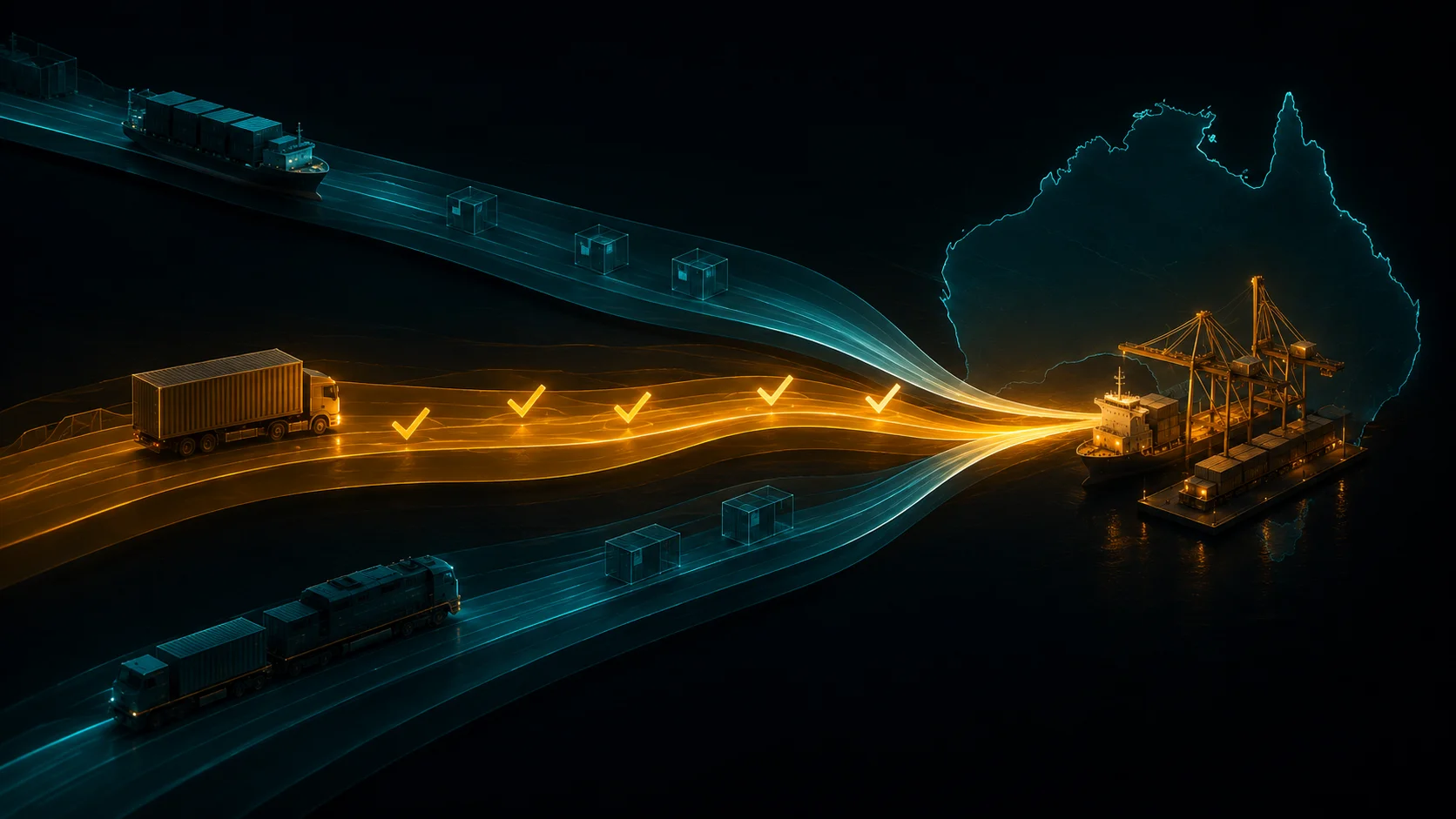
    Choosing the Right Shipping Route to Australia: A Lane-by-Lane Guide for Importers

    Australia’s Import Port Landscape

    Container throughput figures below are annual TEU volumes; the ACCC’s Container Stevedoring Monitoring Report publishes updated port-by-port volumes each year.

    Port Botany (Sydney): Australia’s second-largest container port, handling approximately 2.5 million TEUs per year. Port Botany is the most competitive import port for freight rates on most Asia-Australia lanes because of the high service frequency and carrier competition. Most major shipping line alliances call Sydney directly from all major Asian origins. For importers whose warehouse is in Sydney or who distribute to NSW and ACT, Port Botany is typically the default choice and is rarely worth departing from on cost grounds.

    Port of Melbourne (Webb Dock and Swanston Dock): Australia’s largest container port, handling approximately 3.1 million TEUs per year. Melbourne has strong direct services from China, Vietnam, and increasingly India. For Victorian businesses and those distributing nationally via Melbourne, this is the natural destination port. Freight rates to Melbourne are generally comparable to Sydney; for some origin ports, Melbourne is slightly cheaper, and for others slightly more expensive. The differential is typically AUD 100–250 per TEU on major Asia lanes.

    Port of Brisbane: Queensland’s main container port, handling approximately 1.1 million TEUs annually. Brisbane has direct services from major Chinese ports and Southeast Asia, though with fewer service options than Sydney or Melbourne. Frequency is slightly lower, because not all carrier services that call Sydney and Melbourne also call Brisbane. For Queensland-based importers or those serving the northeast of the country, Brisbane avoids the cost and transit time of trucking from southern ports. Freight rates to Brisbane are typically AUD 100–300 per TEU above Sydney rates on equivalent lanes due to lower competition and slightly longer vessel voyage times.

    Fremantle (Perth): The dominant port for Western Australia, handling approximately 850,000 TEUs. Fremantle has direct services from Southeast Asia, China, and the Indian subcontinent, and is a key port for the mining and resources sector. Freight rates to Fremantle can be AUD 200–500 per TEU above east coast rates on some lanes because of lower service competition; on others (particularly routes originating in South and Southeast Asia), Fremantle rates are competitive. For businesses distributing in WA, SA, and the Northern Territory, Fremantle is the operational choice regardless of the rate differential.

    Port Osborne (Adelaide): South Australia’s container port, approximately 400,000 TEUs. Adelaide typically has fewer direct services and lower frequency than east coast ports. LCL importers are often better served routing via Melbourne with onward road transport to Adelaide (approximately 730 km, 7–8 hours truck time) rather than waiting for less frequent direct Adelaide services. For FCL importers with sufficient volume, direct Adelaide services do exist on major Asia lanes and are worth quoting.
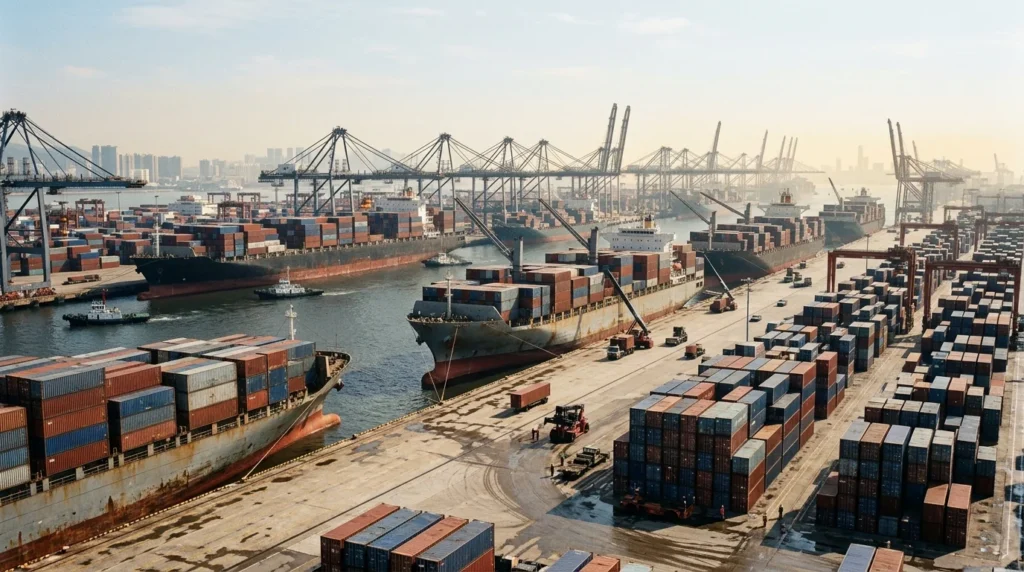
    China to Australia: The Dominant Lane: Shipping Routes to Australia: A Lane-by-Lane Guide

    China to Australia: The Dominant Lane

    China-to-Australia is the most important import lane for most Australian businesses, accounting for roughly a quarter of Australia’s total merchandise imports by value (DFAT trade statistics). The lane has mature service infrastructure with strong carrier competition and multiple routing options.

    South China origins (Yantian, Nansha, Shekou): The Pearl River Delta manufacturing region of Guangdong Province ships through Yantian (Shenzhen) and Nansha (Guangzhou). These are the busiest export ports on the China-Australia lane. Direct services to Sydney and Melbourne run 14–18 days; Brisbane 16–20 days; Fremantle 17–21 days. Most major carrier alliances offer weekly departures from Yantian. This is the most competitive origin for rate purposes, with the highest frequency of direct services.

    East China origins (Shanghai, Ningbo): Yangtze River Delta manufacturing in Zhejiang and Jiangsu ships through Shanghai and Ningbo. Transit times to Sydney are 14–17 days direct; slightly shorter than Yantian on some services due to more northerly routing. Ningbo is particularly important for apparel, textiles, and consumer goods; Shanghai for machinery, automotive parts, and electronics.

    North China origins (Tianjin, Qingdao): Northern manufacturing for industrial goods, machinery, and chemicals. Transit times to Sydney are 16–22 days direct. Fewer direct services than south or east China; some cargo routes through Qingdao or Shanghai transshipment before the Australia leg, adding 3–7 days.

    Transshipment versus direct: The choice between direct service and transshipment via Singapore or Port Klang is principally a trade-off between transit time and cost. Direct services are generally preferred for most cargo because they are faster, involve one less handling event (reducing damage risk), and have better schedule reliability, because the container does not depend on a transshipment connection that can be missed. Transshipment via Singapore or Port Klang can occasionally offer lower rates on specific port pairs, and may be the only option for less-served origins (regional Chinese ports without direct Australia services). For standard cargo under normal market conditions, direct services are preferred when available at comparable rates.
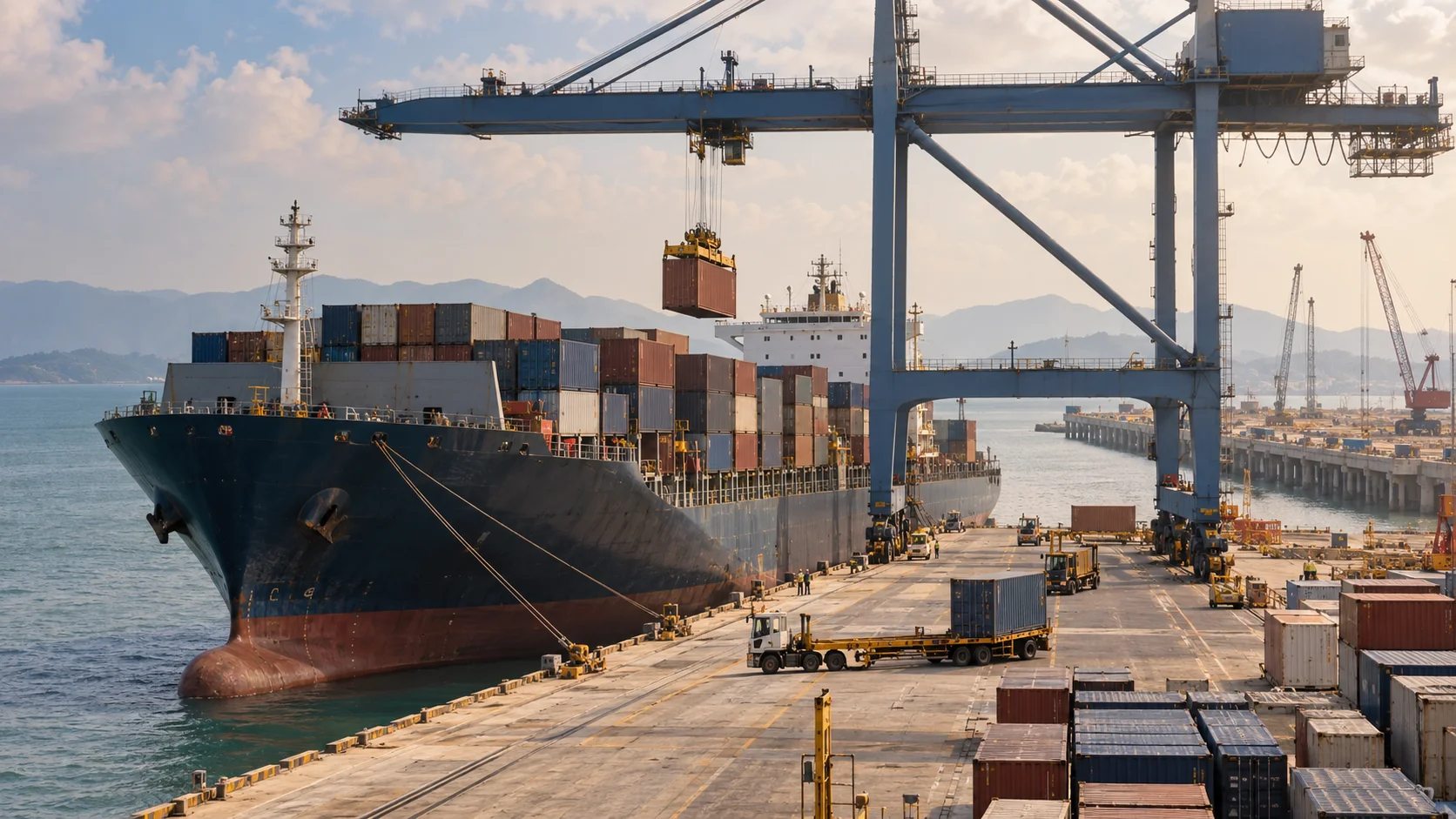
    A mid-sized container terminal at a Vietnamese deep-water port, a single vessel alongside taking on containers via one working crane, tropical humidity softening the

    Southeast Asia to Australia

    Vietnam, Thailand, Indonesia, Malaysia, and the Philippines are increasingly important origin markets for Australian importers, particularly for apparel, footwear, electronics assembly, furniture, and food products.

    Vietnam (Ho Chi Minh City / Cai Mep, Hanoi / Hai Phong): Vietnam’s export infrastructure has developed rapidly over the past decade. Cai Mep-Thi Vai deep-water terminal (serving Ho Chi Minh City) now handles large container vessels directly; Hai Phong handles northern Vietnam exports. Direct services from Ho Chi Minh City to Sydney and Melbourne run 14–20 days; services from Hai Phong are typically longer (18–25 days) or route via Singapore. Vietnam-to-Australia freight rates on direct services are generally comparable to or slightly below equivalent China-Australia rates. ASEAN-Australia-New Zealand Free Trade Agreement (AANZFTA) concessions apply to Vietnamese-origin goods meeting rules of origin. Confirm with your broker whether your specific products qualify before relying on AANZFTA rates.

    Thailand (Laem Chabang): Laem Chabang is Thailand’s major deep-water export port. Services to Australia run primarily via Singapore or Port Klang transshipment, adding 7–14 days to the base transit. Direct services from Laem Chabang to Australia are limited. Most Thailand-origin cargo transships at Singapore onto Asia-Australia mainline services. Total transit time Sydney 18–27 days; Melbourne similar. Thailand-origin goods can qualify for AANZFTA concessions, particularly important for automotive parts, electrical goods, and processed food.

    Indonesia (Tanjung Priok / Jakarta, Surabaya): Indonesia exports to Australia primarily through Tanjung Priok. Services to Sydney and Melbourne are either direct (some services, 12–16 days from Jakarta) or via Singapore (adds 5–10 days). Indonesia-to-Australia is an important lane for furniture, textiles, agricultural goods, and seafood. AANZFTA rates apply to Indonesian-origin goods meeting rules of origin. Fremantle services from Indonesia are particularly competitive for WA-based importers of Indonesian goods.

    Malaysia (Port Klang, Penang): Malaysia is itself a transshipment hub as well as an export origin. Port Klang is a major hub for Singapore-routing vessels. Direct Malaysia-to-Australia services are available from Port Klang, with transit times of 10–15 days to Sydney, among the shorter transit times from Southeast Asia due to geographic proximity. Malaysia exports electronics, rubber goods, palm oil products, and manufactured goods.

    Europe to Australia: The Cape of Good Hope Adjustment

    The Europe-Australia lane underwent a structural change from late 2023 onwards as the Red Sea security situation forced carriers to reroute vessels via the Cape of Good Hope rather than Suez Canal. The practical consequences for Australian importers sourcing from Italy, Germany, Spain, France, Portugal, and the UK:

    Transit time increase: Cape of Good Hope routing adds approximately 10–14 days versus the Suez route. Pre-disruption transit times of 28–35 days from major European ports to Sydney are now 40–50 days on most services. A limited return to Suez began in early 2026, led by CMA CGM, but it is a test rather than a recovery: Xeneta counted 120 Suez transits in November 2025 against 583 in October 2023. Plan on Cape routing until your carrier confirms in writing that your specific service has switched.

    Capacity reduction: Longer voyages mean the same vessel fleet provides less capacity per time period. Australia-Europe carriers have responded with general rate increases and reduced service frequency on some strings. The result is a thinner service menu than pre-2024 and higher average rates.

    Lead time planning adjustment: Australian importers sourcing from Europe must now plan a minimum of 8–12 weeks from purchase order to goods arriving in Australian warehouse (5–7 weeks production, 6–7 weeks transit and clearance). This is 2–3 weeks longer than pre-2024 standard lead times. Safety stock and reorder points must be recalculated to reflect the longer and more variable supply chain.

    Origin ports: Major departure points for Europe-Australia services include Rotterdam, Hamburg, Antwerp, Le Havre, Genoa, and Barcelona. Not all European ports are called on every service rotation. Goods from suppliers in Spain or Portugal may route through Rotterdam or Hamburg before the Australian leg, adding 3–7 days. Confirm your supplier’s nearest called port when evaluating the full transit time.
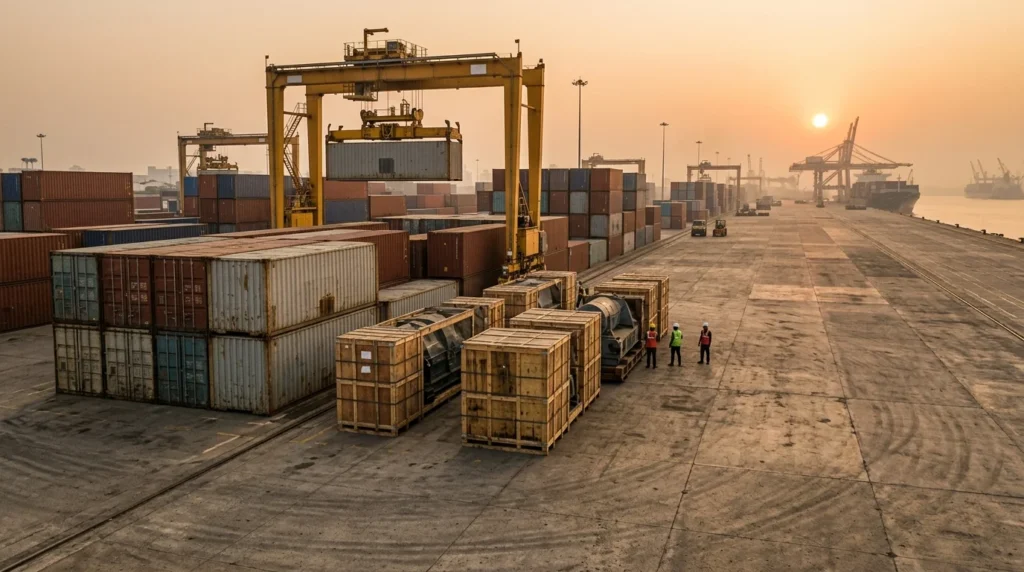
    India to Australia: A Growing Lane: Shipping Routes to Australia: A Lane-by-Lane Guide

    India to Australia: A Growing Lane

    The India-Australia Economic Cooperation and Trade Agreement (ECTA), which entered force in December 2022, has accelerated trade flows between the two countries. Australian importers sourcing from India, primarily for pharmaceuticals, textiles and apparel, engineering goods, auto components, and gems and jewellery, are served by an improving direct service network.

    Major origin ports: Nhava Sheva (Jawaharlal Nehru Port, near Mumbai), Chennai (Madras), and Mundra (Gujarat) are the primary container export ports. Services from Nhava Sheva to Sydney and Melbourne run 18–26 days; from Chennai, 16–22 days (slightly shorter due to more easterly position).

    ECTA duty concessions: ECTA provides progressive tariff reductions on thousands of goods categories. Some goods qualify for immediate duty-free entry; others have scheduled reductions over 7–10 years. Confirm the ECTA rate for your specific HS codes with your customs broker. Not all goods benefit, and the rules of origin requirements must be met for the concession to apply.

    Service frequency: Service frequency from India to Australia has improved since 2022 but remains less frequent than China-Australia. Most Australian ports receive 1–2 direct services per week from major Indian origins. This makes advance booking more important: if you miss your preferred vessel, the next departure may be 10–14 days away rather than 7 days.

    USA to Australia

    US-origin goods flowing into Australia cover electronics, machinery, agricultural products, chemicals, and pharmaceutical ingredients.

    West Coast USA (Los Angeles / Long Beach, Seattle): The primary US export origin for Australia-bound goods. Transit times from LA/LB to Sydney: 17–22 days on direct services; 20–28 days via a transshipment at Auckland (NZ) or another Pacific hub. The Australia-US Free Trade Agreement (AUSFTA) provides duty-free entry for most US-origin goods meeting rules of origin. US exporters typically provide a certificate of origin or self-declared origin statement for AUSFTA claims. Note that AUSFTA rules of origin require substantial transformation in the US; goods manufactured in third countries and merely shipped through the US do not qualify.

    East Coast USA (New York, Savannah, Houston): East Coast US exports to Australia route via Panama Canal or Suez Canal, with transit times of 25–40 days depending on routing. This is a less common lane, since most US exporters ship from the West Coast for Australia, but it is relevant for specific goods categories concentrated in the US Southeast and Gulf Coast (chemicals, forest products, agricultural commodities).

    Route Selection Framework

    Choosing the right route for a given import program involves five variables evaluated against each other. A sixth factor sits underneath all of them but rarely gets its own line in a route comparison: how long clearance actually takes at the destination port once the vessel arrives. A route that wins on ocean transit time can still lose on total door-to-warehouse time if the destination port has slower average clearance.

    1. Transit time requirement: What is the maximum acceptable transit time given your reorder point and safety stock? A business with 4 weeks of safety stock can tolerate a 25-day service; a business with 10 days of safety stock cannot absorb a 25-day service with ±7-day variability.
    2. Schedule reliability: How consistently does the service meet its schedule? A 16-day service running at 55% on-time reliability is worse for supply planning than a 19-day service running at 85% on-time. Much of that unreliability is not vessel-related at all: what actually delays containers at Australian ports is frequently a destination-side problem (congestion, equipment shortages, berth availability) that a faster origin service cannot fix.
    3. Freight cost: The per-CBM or per-TEU rate including all surcharges, destination handling, and local cartage. Compare total landed cost, not just ocean freight.
    4. Service frequency: How often does the vessel depart? Weekly departures give more flexibility than fortnightly; the consequence of a missed cut-off is a 7-day delay versus a 14-day delay.
    5. Destination port fit: Does the service call your preferred Australian port directly, or does it require transshipment or onward trucking?

    No single service will be optimal on all five dimensions simultaneously. The trade-off most Australian importers face is between transit time and cost: faster, more reliable services often cost more. The right choice depends on your specific cost of stockout (lost sales, emergency airfreight cost, customer penalties) versus the freight premium for the faster service.

    For a business where a stockout costs AUD 15,000 in lost margin per week and occurs once per year under the current service, switching to a faster, more reliable service that costs AUD 3,000 more per year in freight is a compelling trade even if the faster service saves only 3 days on average, because it reduces the variability that causes the stockout, not just the mean transit time.

    A real route decision requires something a comparison table does not: naming the lanes you are not going to optimise for. “We ship from wherever is cheapest that week” is the absence of a strategy, because it never specifies which trade-off the business will accept. A route strategy names the lane it builds the supply chain around (say, direct Yantian-to-Sydney on a six-week safety-stock buffer) and names the lanes it will deliberately not chase rate advantages on, because the transit-time or reliability cost is not worth it for that product category. The second half is the one missing from most route-selection worksheets.
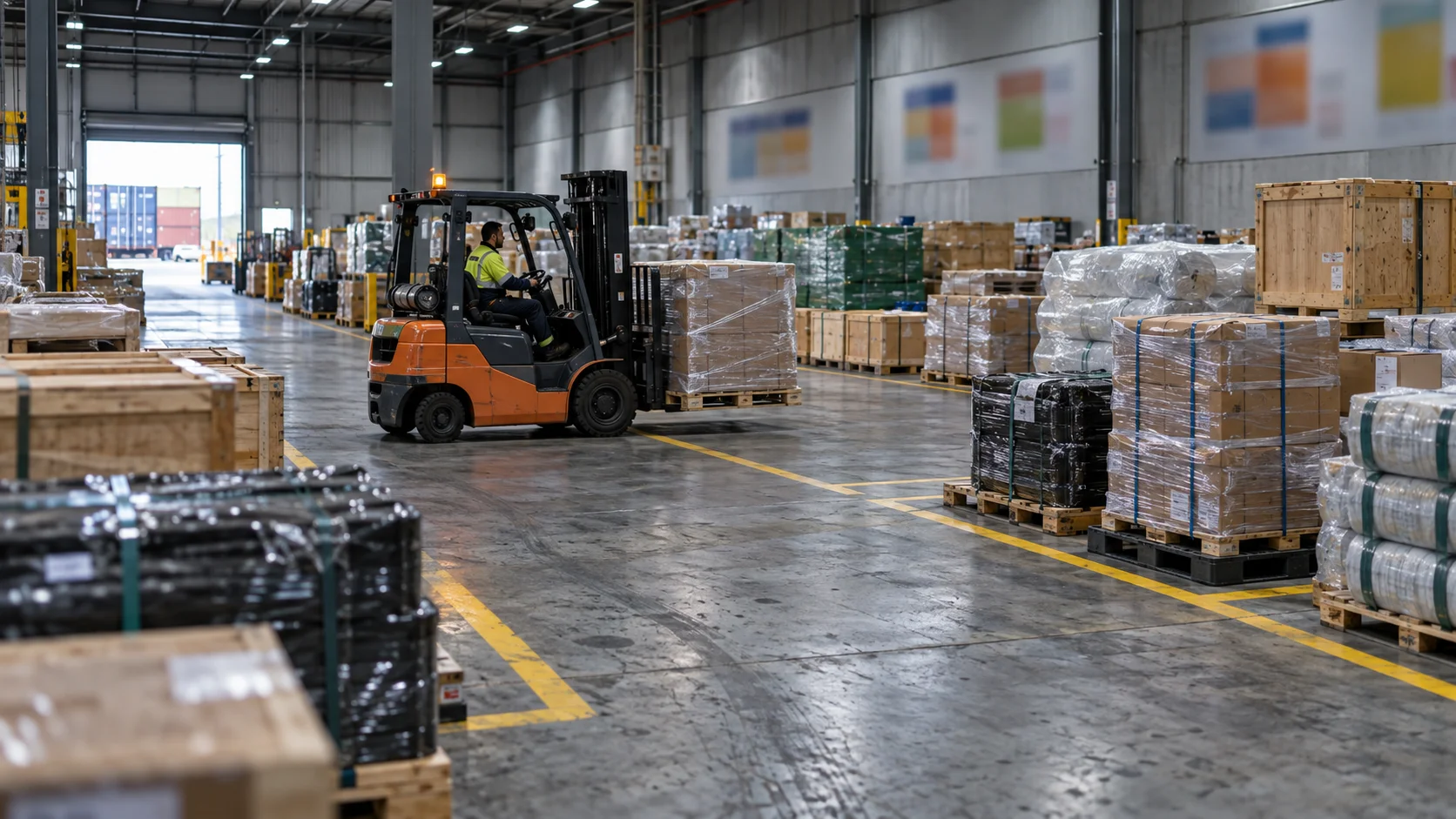
    Inside a freight consolidator's warehouse, cargo destined for different Australian ports sits grouped in clearly separated bays marked only by painted floor lines, a

    LCL vs FCL Route Considerations

    Route selection is not the same decision for LCL and FCL importers. FCL importers book their own dedicated container and can select from the full range of direct and transshipment services. LCL importers ship into a consolidator’s shared container and are dependent on which services the consolidator has booked, and cannot independently select a vessel service in the same way.

    When evaluating LCL service options on a given lane, the relevant comparison is not between individual vessel services but between consolidating carriers: which LCL consolidator on the China-Australia lane offers the best combination of transit time, cut-off frequency, and rate? Major LCL consolidators typically have preferred carrier agreements with 1–3 shipping lines and offer weekly or fortnightly cut-offs depending on the volume of cargo they are moving on that lane. Asking your freight forwarder “which LCL consolidator do you use on this lane and what is their schedule reliability?” gives you more useful information than the vessel name.

    For FCL importers, the route decision involves selecting both the shipping line and the specific service rotation within that line’s fleet. Two services from the same carrier may use different vessel rotations, one calling Singapore before Sydney and one direct, with different transit times and reliability records. Your freight forwarder should have access to schedule reliability data by vessel service and can recommend which services have consistent on-time records on your specific lane.

    When to Review and Switch Routes

    A route that was optimal 18 months ago may not be optimal today. Carrier alliances restructure their services periodically; new services launch; port infrastructure changes (new berths, new terminals); trade agreements alter duty economics; and freight rate differentials between competing routes shift. The following triggers should prompt a route review:

    Your average transit time has increased by more than 5 days over the past 6 months without a corresponding change in your shipping origin. This indicates that your current service’s reliability has deteriorated. Perhaps the vessel rotation was lengthened, or port congestion at a transshipment hub has worsened. Compare alternative service options with your forwarder.

    A new direct service has launched on your lane. Carrier alliances announce new service rotations periodically. A new direct service from your origin port to your destination port may offer faster transit than your current transshipment routing, at comparable or lower cost.

    Your supplier base has shifted to a new region. If you originally sourced from Guangdong and have added suppliers in Zhejiang or Vietnam, the optimal consolidation depot and vessel service may have changed. A forwarder who was optimal for Guangdong cargo may not be optimal for a mixed Guangdong-Vietnam program.

    Freight rate differentials between lanes have moved significantly. If the China-Australia lane has seen substantial rate increases while the Vietnam-Australia lane has stayed flat, and you source from both countries, consolidating more volume through Vietnam (if the goods qualify under AANZFTA and your suppliers can handle the volume) may reduce total freight cost, even if Vietnam is not the lower-cost manufacturing option for every SKU.

    A new trade agreement has entered force. The India-Australia ECTA (December 2022) and any future agreements with other trading partners change the duty economics of alternative origin lanes. A route that previously attracted high duty may become cost-competitive after an FTA enters force.

    Route reviews are worth conducting formally at least once per year, timed to coincide with the annual freight budget cycle, and immediately when any of the triggers above appear, since waiting for the annual review in an active market can mean 6–12 months of suboptimal freight cost. The review should cover all five variables in the selection framework above, using current rate quotes and the past 12 months’ schedule reliability data.

    Swift Cargo sources freight on all major Australia import lanes (China, Southeast Asia, Europe, India, and the USA) and can model service options, rates, and reliability data for your specific origin-destination pairs. Visit swiftcargo.solutions/australia to discuss your import routes and identify where better service selection could improve your supply chain.

    For how shipping frequency interacts with route selection, see How to Optimise Shipping Frequency for Your Import Business. For the freight cost variables that make up your total landed cost, see Total Landed Cost When Importing to Australia. For how seasonal demand affects rate levels on these lanes, see Seasonal Demand and Freight Pricing for Australian Importers.

    Two importers using the same China-to-Australia lane, with comparable volumes and comparable budgets, can end up in very different positions after a few years, and the difference usually is not who found the cheaper carrier. One reviews its route choice on a fixed schedule, every six months, regardless of whether the current lane is causing any visible problem. The other only revisits the question after a bad shipment forces the issue, which means it is making the decision under pressure, with a deadline, instead of calmly with options open. The scheduled reviewer catches a rerouting opportunity or a new port option months before it becomes urgent. The reactive importer discovers the same opportunity only after paying for the problem it would have prevented. Neither company looks different from the outside until the difference compounds.
    Frequently Asked Questions: Shipping Routes to Australia: A Lane-by-Lane Guide

    Related reading: for the full LCL vs FCL decision (crossover CBM, transit-time cost, fragility and security trade-offs), see our LCL vs FCL guide for Australian importers.

    Related reading: Sydney vs Melbourne vs Brisbane: Port Choice for Inbound Cargo

    Frequently Asked Questions

    What is the fastest shipping route from China to Australia?

    The fastest shipping routes from China to Australia are direct services (no transshipment) from Yantian, Nansha, Shanghai, or Ningbo to Sydney, Melbourne, Fremantle, or Brisbane. Direct port-to-port transit times on these services run 14–18 days. Services from northern China (Tianjin, Qingdao) to southern Australian ports typically run 16–22 days direct. Transshipment services routing via Singapore or Port Klang add 3–10 days depending on the connection window. The fastest service in the market at any given time depends on which shipping line alliance is running which rotation, so your freight forwarder can identify the fastest direct service on your specific port pair. Note that vessel schedule reliability (the percentage of vessels arriving within 24 hours of schedule) varies significantly between carriers and services; a nominally faster service with low reliability may deliver later than a slightly slower service with high on-time performance.

    Is it faster to ship to Sydney or Melbourne from Asia?

    Transit times from major Asian origin ports to Sydney (Port Botany) and Melbourne (Webb Dock or Swanston Dock) are broadly similar, typically within 1–3 days of each other on equivalent services. The difference is that some carrier strings call one port before the other, meaning the cargo arriving at the first-called port gets slightly earlier delivery. On most Asia-Australia services, Sydney is called before Melbourne (or vessels travel north to south down the east coast), giving Sydney a marginal transit time advantage. However, both ports have direct services from major Asian origins, and Melbourne has competitive direct services from China and Southeast Asia that match Sydney transit times. For importers distributing goods nationally, the more important variable is inland transport cost after port arrival, not the 1–2 day port-to-port transit difference.

    How has the Red Sea situation affected shipping routes to Australia?

    Since late 2023, the security situation in the Red Sea and Gulf of Aden has caused most container shipping lines to reroute Europe-Australia and Europe-Asia services via the Cape of Good Hope (southern tip of Africa) rather than through the Suez Canal. This adds approximately 10–14 days to transit times on Europe-Australia routes (from approximately 28–35 days Suez transit to 40–50 days Cape of Good Hope transit) and effectively removes 15–20% of vessel capacity from the Europe-Australia lane because the same ships must sail longer distances per rotation. The result has been higher freight rates, longer and more variable transit times, and less frequent service schedules on Europe-Australia. A partial return to Suez began in early 2026, but transit volumes remain far below pre-crisis levels and most Europe-Australia services still route via the Cape. Asia-Australia routes (from China, Southeast Asia) are not directly affected by the Red Sea situation since they do not transit the Red Sea. However, some vessels that previously served both Asia-Australia and Europe-Australia rotations have been reallocated, slightly reducing Asia-Australia capacity.

    What are the main Australian ports for container imports?

    Australia’s five main container import ports are: Port Botany (Sydney), handling approximately 2.5 million TEUs annually, with the most frequent and competitive direct services from all major origins; Port of Melbourne (Webb Dock and Swanston Dock), Australia’s largest container port, approximately 3.1 million TEUs per year, with strong direct services from China and Southeast Asia and improving India connections; Port of Brisbane, serving Queensland and northern NSW, approximately 1.1 million TEUs, with direct Asia services; Fremantle (Perth), the main port for Western Australia, approximately 850,000 TEUs, important for imports destined for WA, SA, and the mining sector; Adelaide (Port Osborne), approximately 400,000 TEUs, serves South Australia. Port selection for importers is primarily driven by the location of their distribution centre or warehouse, not by port availability. Goods imported into Sydney must then be trucked to Melbourne if the customer is in Victoria, adding cost and transit time.

  • Moving from Netherlands to Thailand: Freight, Customs and What to Know Before You Ship

    Moving from Netherlands to Thailand: Freight, Customs and What to Know Before You Ship

    Moving from the Netherlands to Thailand is one of the longer logistics journeys a European can take. Rotterdam to Laem Chabang spans roughly 19,000 kilometres via the Cape of Good Hope, which since 2024 has become the standard routing for commercial shipping avoiding the Red Sea. The practical freight questions (how long, how much, what qualifies for duty-free, what does not) have specific answers, and getting them right before your goods are sealed in a container saves significant cost and complication at the Thai end.

    Moving from Netherlands to Thailand
    Moving from Netherlands to Thailand: Freight, Customs and What to Know Before You Ship

    Who makes this move and why

    Three distinct expat profiles drive the Netherlands–Thailand relocation route. The first is retirement: the Netherlands has a substantial retirement-age expat community in Thailand, particularly in Chiang Mai and coastal areas like Hua Hin and Phuket, drawn by lower cost of living, warm climate, and access to quality healthcare at Thai private hospitals. The second is remote work or digital business: Dutch nationals in tech, consulting, or online business who can work from anywhere and choose Thailand’s Non-Immigrant visa ecosystem as their operating base. The third is Thailand-based business: Dutch entrepreneurs running operations in Bangkok or the Eastern Economic Corridor, where Dutch-Thai trade relationships in agriculture, logistics, and manufacturing create employment and investment opportunities.

    Each profile has slightly different freight considerations: the retiree bringing 25 years of household goods, the remote worker shipping two suitcases worth of essentials plus a good desk setup, the business owner moving an operational household. The customs rules apply equally to all, but the container choice and duty exposure differ significantly by volume.

    Departure ports: Rotterdam, Antwerp, and the gateway question

    The Netherlands has two practical departure options for sea freight to Thailand: Rotterdam (the main Dutch port, Europe’s largest container terminal) and Antwerp (across the Belgian border, roughly 60 minutes by road from many Dutch cities). Both serve Laem Chabang via the same major carriers (Maersk, CMA CGM, MSC, Evergreen), and transit time differences between the two ports are minimal.

    For most Dutch households, Rotterdam is the natural choice. It offers more frequent sailings, more carrier options, and lower local transport costs from Dutch pickup addresses. Antwerp becomes relevant for households in the southern Netherlands (Eindhoven, Maastricht, Breda) where road distance to the Belgian port is shorter than to Rotterdam’s Maasvlakte terminals.

    The origin side of the shipment involves collection from your Dutch address (road transport to the CFS facility or directly to the port), consolidation into the container (for LCL shipments), export customs clearance via the Dutch Douane, and container loading at the terminal. For LCL shipments, allow 3–5 working days between collection and vessel departure. FCL shipments can sometimes be packed at your address using a door-to-door container service, eliminating the CFS stage.

    The shipping route: Rotterdam to Laem Chabang

    Sea freight from the Netherlands to Thailand now travels via the Cape of Good Hope rather than the Suez Canal. Since late 2023, major carriers have rerouted to avoid Houthi attacks on commercial shipping in the Gulf of Aden. The Cape routing adds approximately 10–14 days to the journey and a structural surcharge to freight costs: USD 500–1,500 per TEU depending on carrier and contract.

    The standard routing is Rotterdam → (Atlantic transit) → Cape of Good Hope → (Indian Ocean) → Singapore or Port Klang (transshipment) → Laem Chabang. Port-to-port transit time on this route is 28–35 days. Most European-origin shipments to Thailand transship at Singapore, which is the primary hub for Southeast Asian distribution. Transshipment adds a connection-change step: your container (or LCL cargo) transfers from the deep-sea vessel to a feeder vessel at Singapore for the final 700-kilometre leg to Laem Chabang.

    Door-to-door (from collection at your Dutch address to delivery inside your Thai property) runs 6–10 weeks. The range reflects variability in: how quickly export documentation is finalised, whether you use LCL (which adds consolidation lead time) or FCL, whether Thai customs processes your entry as Green Line (no inspection, 3–5 days) or Red Line (physical examination, 7–21 days), and last-mile delivery complexity in Thailand.

    For planning purposes, use 8 weeks as your base assumption and build in a 2-week buffer if you have a firm move-in date at your Thai destination.

    Dutch export formalities

    BRP deregistration

    Uitschrijving uit de Basisregistratie Personen (BRP deregistration) is the formal process of removing yourself from the Dutch municipal population register when you emigrate. You submit aangifte van vertrek (notice of departure) at your local gemeente before leaving. The gemeente issues a bewijs van uitschrijving (deregistration certificate) and a BRP uittreksel (population register extract) confirming your registered address history.

    Critical sequencing note: do not complete BRP deregistration before you have your Thai visa and Thai address documentation. The BRP uittreksel showing your Dutch registered address is one of the supporting documents for Thai customs personal effects duty-free exemption. Thai customs uses it as evidence of prior residence in the Netherlands, proving that the items you are shipping were genuinely part of a Dutch household, not goods purchased for Thai import. Once the BRP record is closed, obtaining a historical extract becomes more complicated and may require a request through the RvIG (Rijksdienst voor Identiteitsgegevens).

    The Nederlandse Ambassade in Bangkok (located in Sathorn) can assist with documentation queries related to your Dutch status in Thailand, but they do not process BRP changes. That remains a Netherlands-based administrative function.

    Dutch Douane export customs

    Personal effects and household goods departing the EU require a Douane export declaration (uitvoeringsaangifte) when the declared value exceeds EUR 1,000. Your freight forwarder or customs broker handles this as a standard part of the export service. You provide an itemised inventory (packing list) with declared values, and they file the EAD (Export Accompanying Document) with Dutch Douane. Keep a copy of the EAD: Thai customs may request evidence that goods were properly exported from the EU.

    There is no specific permit requirement for most household goods leaving the Netherlands, but certain items require additional documentation: antiques over 50 years old may require a cultural export licence; CITES-listed items (certain wood furniture, ivory, tortoiseshell) require a CITES permit; and any firearms require a Douane export licence and advance import permit from Thai authorities.

    Thai customs: the personal effects exemption

    Thailand’s personal effects duty-free exemption is the most consequential customs question for Dutch expats shipping household goods. Getting it right saves 10–30% in duty costs on the value of everything you ship. Getting it wrong at Laem Chabang (because the documentation is incomplete or the timing is off) results in a full duty assessment you cannot easily appeal after the container has cleared.

    The exemption rules are set out in the Thai Customs Act B.E. 2560 (2017). The practical requirements are:

    1-year ownership and use rule: items must have been owned by the claimant and in daily use for at least one year before the date of departure from the Netherlands. Thai customs interprets this strictly: new goods in original packaging, items purchased in the 12 months before emigration, and goods that appear commercially new rather than genuinely used do not qualify. The 1-year rule is assessed on item condition, purchase documentation if requested, and inventory consistency with the claimed household volume.

    6-month arrival window: the shipment must arrive at Laem Chabang within 6 months of the date of your first valid Thai visa entry. This is a hard deadline, not 6 months from when the container was packed, or from when you signed the lease in Bangkok, but from the date you first entered Thailand on your qualifying visa. An expat who entered Thailand in March and whose container arrives in October has missed the window and owes full import duty.

    Qualifying visa types: the exemption applies under Thai Customs’ standard criteria to holders of a Non-B (business/work-permit) visa or an LTR visa. A Non-O for retirement is excluded from that standard test and does not qualify. Tourist visas (TR) and Destination Thailand Visas (DTV) do not qualify. This is a common error for Dutch expats who arrive on a DTV or multiple-entry tourist visa while their goods are in transit. The container clears Thai customs, but the importer cannot claim exemption because their visa category is wrong.

    Here is the part most guides skip: the visa-category rule is not a paperwork technicality invented to trip people up. Thai customs is not actually checking your visa type. It is using visa type as a proxy for something harder to verify directly, which is whether you are genuinely relocating or extending a long holiday with a container of belongings behind you. A Non-B or LTR visa signals a commitment (a work permit, a ten-year residency application) that is expensive and slow to fake. A tourist visa or a DTV signals the opposite: cheap, fast, reversible, which happens to be exactly the profile of someone importing goods to sell rather than goods to live with. The rule looks arbitrary until you see it as a fraud filter calibrated on visa cost and reversibility, not a random bureaucratic line. Understanding that logic will not change your visa category, but it explains why arguing the point with a customs officer rarely works: you are not disputing a technicality; you are disputing the entire proxy the system is built on.

    The complete documentation package for Thai customs personal effects duty-free clearance includes: Thai customs Form 130/1 (personal effects declaration), passport (current and prior, showing departure from the Netherlands and entry to Thailand), valid qualifying visa, itemised inventory in Thai and English with estimated values, BRP uittreksel (Dutch population register extract), proof of Thai address or lease, and for high-value electronics, original purchase receipts. You’ll also need the shipping line’s Bill of Lading, and your customs broker files the entry electronically through Thailand’s National Single Window system rather than on paper.

    For more detail on exactly what qualifies and what does not under Thai customs rules, including the specific categories of goods that are always dutiable regardless of prior ownership, see duty-free moving to Thailand: what actually qualifies.

    Dutch-specific pitfalls

    Bicycles

    The Netherlands exports more bicycles per capita than any country in Europe, and Dutch expats moving to Thailand frequently ask whether their bicycle can be included in the personal effects shipment duty-free. The answer is no. Thai customs does not classify bicycles as personal effects. They fall under the HS code for vehicles and wheeled transport, which carries import duty of 10–20% plus 7% VAT. A quality Dutch bicycle declared at EUR 800 generates a duty and tax bill of approximately EUR 135–175. Most Dutch expats sell their bicycle before departure.

    E-bikes with lithium batteries have an additional complexity: lithium batteries above a certain Wh threshold are subject to IATA DGR Class 9 restrictions for air freight and IMDG Code requirements for sea freight. A standard 500Wh e-bike battery requires proper IMDG declaration and carrier acceptance, which some carriers refuse for personal effects shipments. If you are determined to bring an e-bike, get carrier acceptance in writing before booking.

    Dutch electrical appliances

    The Netherlands operates on 230V/50Hz electricity, identical to the rest of continental Europe and compatible with Thailand’s 220V/50Hz standard. In practical terms, this means your Dutch appliances will work in Thailand without a voltage converter. Dutch washers, refrigerators, televisions, and kitchen equipment can be shipped and used directly.

    The complication is plug type. The Netherlands predominantly uses the Type F (Schuko) two-round-pin plug with earthing clips. Thailand’s standard socket (TIS 166-2549) accepts Type A (US flat-blade), Type B (US three-pin), and Type C (Europlug two-round-pin without earthing), but not Type F Schuko because the earthing clips prevent insertion into the Thai socket. You will need Schuko-to-Type-C or universal adapters for earthed Dutch appliances. These cost less than EUR 5 each and are widely available in Thailand, so adapter supply is not a reason to leave appliances behind. Just budget for adapters before your goods arrive.

    Wine and spirits

    Dutch expats who are serious wine or spirit collectors face a stark customs reality in Thailand. The personal effects duty-free allowance for alcohol is 1 litre per adult, approximately one standard wine bottle or one bottle of spirits. Everything beyond that limit is subject to Thai excise duty, which runs at 400%+ on spirits on a combined basis (excise rate × base value × VAT × 7%). A EUR 30 bottle of Dutch jenever declared correctly at Laem Chabang can generate a duty and tax bill of EUR 120+.

    The practical conclusion most Dutch expats reach is that wine and spirits are not worth shipping. Thailand has a well-developed wine import trade (particularly through Bangkok specialist retailers and Makro), and while Thai wine prices are higher than Dutch prices, the freight cost and duty liability on a wine collection make shipping economically irrational compared to selling the collection in the Netherlands and rebuilding it in Bangkok.

    Container options and volume guide

    Container selection is the first major logistics decision. The choice between LCL (Less than Container Load, shared space) and FCL (Full Container Load, dedicated container) turns primarily on volume and timing tolerance. If you are not sure which bracket your household falls into, working out how much space your belongings actually occupy is worth doing on paper before you call a forwarder. See this practical guide to estimating your CBM volume for a room-by-room method that converts furniture and boxes into a number a quote can be built around.

    LCL for 1-bedroom apartments and small moves

    LCL is the right choice for moves up to approximately 10–12 CBM, roughly the contents of a 1-bedroom Dutch apartment after removing large furniture you plan to leave behind or sell. At 5 CBM, a typical LCL shipment for a minimalist Dutch mover includes: a bed frame and mattress, 15–20 boxes of personal items and books, a desk setup, kitchenware, and soft furnishings. Ocean freight on the Rotterdam–Laem Chabang LCL lane runs approximately USD 80–140 per CBM, so a 5 CBM shipment generates USD 400–700 in ocean freight before origin and destination charges are added.

    LCL lead time adds 3–7 working days at origin (consolidation at the Rotterdam CFS facility) and 2–5 working days at destination (deconsolidation at the Laem Chabang CFS before delivery). Total door-to-door for LCL is typically 8–10 weeks on this lane.

    FCL 20ft for 2–3 bedroom households

    A 20-foot container holds approximately 25–28 CBM of packed household goods, enough for a comfortably-furnished 2–3 bedroom Dutch apartment including sofas, dining furniture, wardrobes, and appliances. At the FCL crossover point (approximately 12–15 CBM), FCL becomes cost-competitive with LCL once per-CBM LCL rates and CFS charges are factored in, and it eliminates the consolidation and deconsolidation steps that add time.

    A 40-foot container (50–55 CBM) is appropriate for larger Dutch households moving a complete 4–5 bedroom house, but relatively rare for Netherlands-Thailand expat moves. Most Dutch expats moving to Bangkok or resort areas downsize significantly before the move, selling or donating furniture that will not suit Thai apartment living.

    For a practical guide to shipping household goods to Thailand, including volume benchmarks for different apartment and house sizes, see the linked article which covers the full container-packing process.

    Cost ranges: Rotterdam to Bangkok

    Costs vary based on departure date, carrier selection, volume, Thai destination address, and whether additional services (packing, unpacking, customs brokerage in the Netherlands and Thailand) are included. The figures below are indicative for mid-2026 and include ocean freight only unless stated.

    Shipment type Volume Ocean freight (USD) Indicative door-to-door (EUR)
    LCL: small move 3–5 CBM USD 240–700 EUR 2,500–4,000
    LCL: 1-bed apartment 8–12 CBM USD 640–1,680 EUR 4,000–6,500
    20ft FCL ~25 CBM USD 2,800–4,500 EUR 6,000–9,500
    40ft FCL ~50 CBM USD 4,500–7,000 EUR 9,500–15,000

    Door-to-door estimates include: Dutch origin collection, CFS or FCL packing, Rotterdam export documentation, ocean freight, Thai customs brokerage, destination THC, last-mile delivery to a Bangkok or major city address. They do not include packing labour, Thai customs duty (if applicable), or storage.

    Cape rerouting surcharges are included in current ocean freight rate quotes from carriers. They are no longer itemised separately in most carrier quotes as of 2026, having been absorbed into base rates on the affected lanes.

    Visa timing and the duty-free window

    The interaction between your visa entry date and your shipment arrival date is the most consequential timing decision in the entire move. Misalign these two events by more than 6 months and you lose the personal effects duty-free exemption on everything in the container.

    The standard approach for Dutch expats retiring to Thailand is the Non-Immigrant O-A visa (retirement visa), which requires proof of funds (THB 800,000 in a Thai bank account or monthly pension equivalent), a police clearance from the Netherlands, and a medical certificate. The O-A is issued by Thai consulates. The Royal Thai Consulate-General in The Hague handles Dutch applications.

    The LTR (Long-Term Resident) visa is a newer option that has gained traction among Dutch expats with investment income, pension income, or remote work. Depending on category, the LTR offers a 10-year renewable visa, work permit eligibility, and either exemption from Thai tax on foreign-sourced income (the Wealthy Pensioner, Wealthy Global Citizen and Work-from-Thailand Professional categories most Dutch applicants use) or a 17% flat rate on Thai employment income (Highly-Skilled Professional category only): more stable legal status than the annual O-A renewal cycle.

    Timing the move correctly means booking your shipping so the container arrives at Laem Chabang within the 6-month window from your first Thai entry. For a Dutch expat who enters Thailand in January, the container must clear Thai customs no later than July. With 8 weeks sea freight transit and 2–3 weeks Thai customs processing, the container needs to leave Rotterdam no later than April. If you enter Thailand in January and want to ship your household goods, your collection date in the Netherlands should be February–March at the latest.

    Working backwards further: your BRP deregistration should happen after you have your Thai visa in hand (so you can present the Dutch consulate with proof of Thai residence for your BRP uittreksel), and your Dutch departure should be close to your shipping date so that items recently in use at your Dutch address match the packing inventory your freight forwarder compiles.

    For more on the practical customs delays that can threaten the 6-month window, including what happens if Thai customs holds your goods for documentation queries, see how to avoid customs delays when moving to Thailand.

    What to Ship and What to Leave Behind

    Generally worth shipping from the Netherlands:

    • Quality clothing, particularly cold-weather and business attire; Dutch fashion is not easily replicated in Thailand
    • Books and personal libraries
    • Artwork, antiques, and objects of sentimental or monetary value
    • Professional and specialist equipment
    • Children’s belongings and comfort items
    • Quality Dutch-made or European furniture with significant replacement cost

    Typically not worth shipping:

    • Bicycles: the Netherlands’ bicycle culture does not translate to Thailand’s roads, traffic, or terrain. City bikes are bulky to ship, and comparable bicycles for Thai conditions are readily available locally. High-performance road or mountain bikes may be an exception if they are high-value and not easily replaced.
    • Standard flatpack or mid-market furniture: available in Thailand at comparable prices
    • Large white goods: washing machines, dishwashers, large fridges. Thai apartments are smaller and local replacements are affordable
    • Bulky items (heavy sofas, large wardrobes) where shipping cost approaches replacement cost
    • Dutch-voltage electrical appliances not usable on Thailand’s 220V/50Hz grid (most modern appliances are dual-voltage, but older Dutch-purchased items may not be)

    A quick word about the bicycle, because we know it’s the one that stings. If you’re Dutch, that bike probably isn’t “a bike”. It’s the thing you’ve ridden to work in the rain for fifteen years, the one with the basket that knows the way home. Leaving it at the kerb feels like leaving a small piece of the Netherlands behind. Here’s the honest version, friend to friend: it won’t be happy on a Bangkok soi, and you won’t enjoy watching it seize up in the heat. Ship the road bike you actually race, if you have one. Photograph the old city bike, hand it to someone who’ll love it, and buy something built for the country you’re moving to. You’re allowed to feel a bit sad about it and still make the sensible call.

    Prohibited and Restricted Items

    Prohibited, remove before packing:

    • Lithium batteries of any kind: power banks, e-bike batteries, laptop batteries, power tool batteries. Prohibited from sea freight under IMDG dangerous goods regulations. Remove all batteries from devices before packing; carry them in your cabin luggage. This is especially relevant for Dutch movers who commonly own e-bike batteries.
    • Flammable substances, aerosols, gas canisters, paint
    • Narcotics and controlled substances
    • Pornographic material
    • Counterfeit goods
    • Weapons and firearms (without Thai police permit)
    • CITES-protected wildlife and derivatives

    Restricted, documentation required:

    • Alcohol: not covered by the personal effects duty-free exemption; Thai excise duty applies. Small personal quantities may be accepted; consult your removal company.
    • Buddha images and religious antiques: Fine Arts Department permit required
    • Plants and plant material: phytosanitary certificate from NVWA (Nederlandse Voedsel- en Warenautoriteit) required; easier to leave behind
    • Prescription medication in excess of personal use: carry documentation

    Common mistakes Dutch expats make

    Deregistering BRP before obtaining Thai residence proof. This is the single most frequent administrative error. A Dutch expat who cancels their BRP registration at their gemeente before they have their Thai visa and address in hand loses the ability to produce a current BRP uittreksel showing Dutch registered address. Thai customs expects this document. Without it, proving prior Dutch residence for the personal effects exemption becomes significantly more difficult, and you may end up paying duty on goods you were legally entitled to import duty-free.

    The correct sequence: obtain Thai visa → secure Thai address (lease or letter of invitation) → submit BRP deregistration at gemeente → collect BRP uittreksel before the record closes → pack goods and book shipping.

    Assuming Dutch plug sockets work in Thailand. Voltage is compatible (220–230V), but the Type F Schuko plug does not fit standard Thai sockets (TIS 166-2549). Dutch expats who do not budget for adapters discover this within 24 hours of delivery. Buy Schuko-to-Type C adapters in the Netherlands before departure, or plan to buy them in Thailand. They are inexpensive and widely stocked. The voltage compatibility means you do not need transformers or converters, which saves both space and cost compared to British or American expats whose equipment requires voltage conversion.

    Shipping wine and spirits assuming personal effects exemption covers them. The 1-litre duty-free allowance per adult applies. Beyond that, Thai excise on spirits makes shipping economically irrational. Dutch expats who ship a wine rack worth EUR 500–1,000 can face duty assessments of EUR 800–2,500+ depending on what is in it. Sell the collection or drink it before departure.

    Missing the 6-month arrival window because of delayed booking. Sea freight takes 8–10 weeks door-to-door, and Thai customs processing adds another 1–3 weeks for clean paperwork. The Dutch expat who enters Thailand in March, then spends April and May enjoying Bangkok before thinking about shipping, is leaving Rotterdam no earlier than June for an August–September arrival at Laem Chabang, which is within the 6-month window, but without any buffer if Thai customs requests additional documentation and delays clearance by 2–3 weeks. Expats who genuinely cannot align their departure with the shipping timeline (a Dutch lease that runs longer, a job handover that has not finished) have a third option beyond rushing the shipment or missing the exemption: holding goods in storage at either end while the visa and shipping timelines catch up to each other, which is worth planning deliberately rather than discovering as a last-minute scramble.

    How Swift Cargo handles Netherlands-to-Thailand moves

    Swift Cargo offers door-to-door relocation freight from the Netherlands to Thailand: collection from your Dutch address in any province, Rotterdam export customs clearance, sea freight to Laem Chabang, Thai customs brokerage, and delivery to your Bangkok, Chiang Mai, Phuket, or Hua Hin destination.

    For Dutch expats, the value is in the documentation coordination: BRP uittreksel guidance, correct Customs Form 130/1 preparation, itemised inventory in the format Thai customs expects, and a customs broker in Thailand who handles the personal effects clearance process rather than leaving you to navigate it alone at Laem Chabang.

    Ready to plan the move? Get a quote for shipping to Thailand from Swift Cargo.

    None of the individual choices in this move (which visa route to start, how much to leave behind, which container size to book) make complete sense on their own while you are making them. They only connect into a coherent decision once you are standing in the Bangkok apartment looking at what actually arrived and what you wish you had left in Rotterdam. That is not a reason to skip the planning. It is a reason to trust the sequence laid out here even when one step (downsizing harder than feels necessary, or booking a smaller container than the inventory suggests) does not yet look like it is going to pay off. The families who move well are usually the ones who followed the order of operations before they could see why it mattered, not after.

    Related Reading

    Frequently Asked Questions

    How long does shipping from the Netherlands to Thailand take?

    Sea freight from Rotterdam to Laem Chabang (Bangkok’s deep-water port) takes 28–35 days port-to-port. Door-to-door, including collection from your Dutch address, consolidation at the port, ocean transit, Thai customs clearance, and final delivery in Thailand, is typically 6–10 weeks total. The Red Sea rerouting via Cape of Good Hope has added roughly 10–14 days compared to pre-2024 Suez Canal transit times.

    Do I need to deregister from the BRP before moving to Thailand?

    Yes. Uitschrijving uit de Basisregistratie Personen (BRP deregistration) is legally required when you emigrate from the Netherlands. You submit aangifte van vertrek (emigration notice) at your gemeente. However, do not deregister until you have your Thai visa and proof of Thai address. The BRP uitreksel (extract) showing your Dutch registered address is supporting documentation for Thai customs personal effects duty-free exemption, and you need it before it is closed.

    Can I ship my bicycle duty-free to Thailand?

    No. Bicycles are not classified as personal effects under Thai customs law and do not qualify for the duty-free personal effects exemption. Import duty applies at 10–20% of declared value plus 7% VAT. E-bikes with lithium batteries are additionally restricted under IATA DGR Class 9 rules for air freight and require IMDG declaration for sea freight. Most Dutch expats leave bicycles behind or sell them before departure.

    What is the 6-month rule for personal effects in Thailand?

    Under Thai Customs regulations, personal effects shipped duty-free must arrive in Thailand within 6 months of your first valid visa entry date. Items must also have been owned and in use for at least 1 year prior to your move. If your shipment arrives after the 6-month window, or if you cannot demonstrate 1-year prior ownership and use, import duty applies at standard rates.

    How much does it cost to ship a container from the Netherlands to Thailand?

    As of mid-2026, a 20ft FCL (Full Container Load) from Rotterdam to Laem Chabang runs approximately USD 2,800–4,500 ocean freight, plus origin costs (THC, documentation, collection from your address), destination costs (Thai customs broker, destination THC, CFS handling if LCL, last-mile delivery), and insurance. Total door-to-door for a 20ft FCL typically runs EUR 6,000–9,500 depending on volume, pickup location, and destination in Thailand. LCL (Less than Container Load) runs approximately USD 80–140 per CBM ocean freight for this lane.

  • Seasonal Freight Pricing in Australia: How Demand Cycles Drive Your Rates

    Seasonal Freight Pricing in Australia: How Demand Cycles Drive Your Rates

    The freight rate your supplier quoted you in March will not be the rate you pay in October. That much is certain. What most Australian importers do not fully account for is the mechanism: the predictable, cyclical logic that drives rates up and down across the shipping year, and how that cycle intersects with their ordering calendar.

    Freight pricing is not arbitrary. It follows patterns that repeat across the year, anchored to specific demand events on the Asia-Australia trade lane, layered on top of a base rate structure worth understanding in its own right. See how a freight quote actually breaks down into its component charges, which is a separate question from when in the year you pay more or less for each of them. Some of those patterns are cultural (Chinese New Year, Golden Week). Some are structural (Q3 retail restocking). Some are geopolitical and ongoing (Red Sea rerouting adding a persistent surcharge that did not exist in 2022). Understanding the pattern does not eliminate volatility, but it does mean you can stop being surprised by it.

    Seasonal Freight Pricing in Australia: How Demand Cycles Drive Your Rates

    Why freight pricing moves at all

    Ocean freight is a capacity market. Carriers operate a fixed number of vessels on a fixed schedule, and when more cargo than available space wants to move on the same route in the same week, prices rise. When cargo demand softens and vessel space goes partially empty, rates fall.

    The variable is not supply. Carrier fleets do not double in size between January and October. The variable is demand: how many importers are trying to move cargo at the same time. And that demand is not random. It clusters around predictable events that any importer can map twelve months in advance.

    The premium you pay for peak-season shipping is not purely a function of physical scarcity. It is partly a function of how late in the cycle you decide to book. An importer who commits to vessel space in June pays materially less than one who calls their forwarder in August to move the same cargo. The ship has not changed. The route has not changed. What changed is your negotiating position, which is now zero.

    The four seasonal peaks and what drives them

    Pre-Christmas / Q3–Q4 retail peak (July–November)

    This is the dominant annual demand event on Asia-Australia lanes. Retailers, importers, and wholesalers all simultaneously push cargo forward to meet Christmas inventory requirements, and the booking surge compresses into a roughly four-month window from July through October.

    The mechanism: Australian retailers work backwards from Christmas trading dates. If stock needs to be on shelf or in distribution centres by mid-November, and sea freight from China takes 20–28 days plus customs clearance, booking cut-offs fall in August and September. Every retailer in Australia is running the same calculation at the same time, and carrier space is finite.

    FCL rates on the China-Australia lane typically run 25–40% above January levels during this window. PSS (Peak Season Surcharges) of USD 300–600 per TEU activate with approximately 15–30 days’ notice. LCL rates move proportionally but with less volatility at the headline level, because the cost impact shows more in consolidation lead times than in per-CBM rates.

    Lead time implication: importers who want September arrival need to place purchase orders no later than late July (for 28-day sea freight plus 7–10 days pre-shipment). That means supplier payment and production confirmation needs to happen in June or early July. The importer who calls their forwarder in August asking about September delivery is already too late to avoid peak pricing, and may be too late to secure vessel space at any price.

    Chinese New Year impact (January–February)

    Chinese New Year (CNY) typically falls between late January and mid-February, and it generates two distinct freight events that Australian importers often conflate into one.

    The first event is the pre-CNY rush: Chinese factories ramp production in the six weeks before the holiday and push finished goods to port before workers leave. This creates a booking crunch in November–December, adding cargo volume to an already-pressured Q4 market. Importers who do not have confirmed vessel bookings by early November find their late-November departure requests competing with pre-CNY freight from the same Chinese origins.

    The second event is the post-CNY restocking demand. Chinese factories close for 2–4 weeks over CNY. Production stops. When they reopen in February, there is a backlog of orders, and March–April sees a surge in cargo moving to satisfy the domestic and export restocking demand that accumulated during the shutdown.

    Typical rate impact: a 15–25% rate premium in the weeks immediately following CNY as spot capacity tightens. The window usually normalises by late March or April as factory output catches up with demand. Vietnamese factories (a major sourcing origin for Australian importers) observe Tết, a shorter holiday of 5–10 working days, with its own smaller version of the same pattern.

    A Chinese factory export-staging area with palletized cartons queued for loading, a light spring haze in the air.

    Golden Week and the May restocking surge (May)

    Golden Week in China spans the first week of May (International Labour Day to Children’s Day). Chinese factories and logistics operations partially close for 3–7 working days, creating a smaller version of the CNY dynamic.

    Golden Week’s direct freight impact is modest compared to CNY. It does not generate the same pre-holiday rush or post-holiday restocking surge. Its significance for Australian importers is more positional: Golden Week falls inside what is otherwise the calmest rate window of the year (April–June). It is a small disruption in the best window to book.

    The practical note: avoid booking departure dates in the first two weeks of May if your cargo is moving from Chinese mainland origins. The consolidation and documentation stage at Chinese CFS facilities slows meaningfully during the holiday. Aim for late April departure or post-15 May to avoid the disruption without sacrificing the low-rate Q2 window.

    Post-CNY restocking: March–April

    March and April represent the most underappreciated pricing window on the Asia-Australia trade calendar. Post-CNY restocking demand from Chinese factories pushes cargo into March. Bookings placed in February for March–April departure capture rates that are already normalising from the holiday rush, and the Q3 peak is still three months away.

    The window is not risk-free, because post-CNY demand means capacity is contested, and late bookers still pay premiums. But March–April spot rates are consistently 20–35% below Q3 peak levels on the same lanes. An importer with an autumn order cycle who can pull their booking six weeks earlier will find that April arrival is cheaper than September arrival on two counts: the direct freight rate, and the absence of a PSS.

    How seasonal peaks affect LCL and FCL differently

    The season-rate relationship is not identical across shipping modes. LCL (Less than Container Load) and FCL (Full Container Load) respond to peak demand through different mechanisms, and importers who use both modes need to track both.

    FCL and peak season

    FCL pricing is directly exposed to spot market volatility. Carriers set FCL rates at the voyage level, and peak season surcharges apply per TEU (twenty-foot equivalent unit) or FEU (forty-foot equivalent). When demand exceeds capacity, carriers add PSS on top of base rates, typically with 2–4 weeks’ advance notice.

    FCL importers also face carrier allocation decisions during peak. Carriers prioritise their contract customers (importers with committed volume agreements) when filling vessels. Spot FCL shippers, those without a volume contract, are allocated remaining space and are the first to be rolled to the next sailing when the vessel is overbooked.

    For FCL-volume importers, this means the peak season question is not just about price. It is about certainty. A confirmed vessel booking on a specific sailing matters more in October than in February, because the cost of a one-week delay at the receiving warehouse during a Christmas peak window is orders of magnitude higher than the freight premium paid to secure the booking in June.

    Inside a consolidation warehouse.

    LCL and peak season

    LCL pricing operates through consolidation (CFS) facilities at origin and destination. The rate is quoted per CBM, and the per-CBM rate does not typically move as dramatically as FCL spot rates during peak season.

    The hidden peak cost for LCL shippers is not in the rate. It is in lead time. During Q3–Q4 peak, CFS facilities in Chinese ports (Shanghai, Ningbo, Shenzhen) operate at higher utilisation, which extends consolidation lead times by 2–5 working days compared to off-peak periods. At destination CFS facilities in Australia, deconsolidation queues lengthen similarly. A shipper comparing June LCL lead times to October LCL lead times will find an additional 5–10 days built into the process, even if the per-CBM rate appears similar.

    For importers calibrating their seasonal ordering lead times, this means LCL shipments in Q3 require 8–14 days of additional buffer in planning compared to Q1 or Q2 equivalents, even at unchanged rates.

    Spot rates versus contract rates: when to lock in

    Contract rates and spot rates are not simply “expensive certainty vs cheap flexibility.” They are different instruments for different risk profiles, and the right choice depends on your volume, your demand visibility, and your tolerance for price variance.

    When contract rates make sense

    A contracted rate on a specific lane (origin port to discharge port) locks in a freight rate for a defined period, typically 6 or 12 months, in exchange for a minimum volume commitment, usually expressed in TEUs per month or quarter. Carriers offer contract rates because predictable booking volume helps them optimise vessel utilisation. Importers take them to eliminate rate variance from their landed cost model.

    The break-even analysis is straightforward: if the expected spot rate over your contract period would exceed the contracted rate by more than your commitment-risk penalty, the contract wins. For importers shipping more than 4–6 FCL per year on the same origin-destination lane, a 12-month contract almost always outperforms spot-only purchasing over the full period, because at least one peak season will fall within the contract window and the contracted rate will be materially below whatever spot is doing in October.

    Contract rates also provide carrier space allocation guarantees. During peak, your cargo is protected from the rolling that spot shippers experience. That is not a soft benefit. It is a quantifiable logistics value worth several days of production planning certainty.

    When spot rates make sense

    Spot purchasing is rational for importers with low volume, unpredictable demand patterns, or multiple origin countries where no single lane justifies the commitment. It is also rational during genuinely soft rate markets such as Q1 of most years, after CNY normalisation, when spot rates fall below what contracts signed the previous year would require.

    The discipline required for spot purchasing is the willingness to book early. Spot rates quoted six weeks before departure are structurally lower than rates quoted two weeks before departure on the same sailing, because carriers allocate preferred rates to early commitments and hold back capacity for last-minute premium pricing. An importer with good demand visibility who books spot but books early will often do better than one who signs a contract but books late.

    The Red Sea and Cape rerouting surcharge: still live in 2026

    Since late 2023, major carriers have diverted vessels away from the Suez Canal/Red Sea route due to Houthi attacks on commercial shipping in the Gulf of Aden. The Cape of Good Hope rerouting adds approximately 10–14 days to Europe-Asia and Europe-Australia sailings, and carriers have imposed a standing surcharge to cover the additional fuel and vessel operating costs.

    For Australian importers, the direct impact is felt most on European-origin goods: machinery, premium consumer goods, wine, and specialised equipment sourced from Germany, Italy, the Netherlands, and the UK. Asia-Australia lanes (China, Vietnam, Korea, Japan) are not directly affected by the Cape rerouting, but they are indirectly affected: the diversion has removed vessel capacity from the global fleet’s effective availability, tightening the supply of available vessel-days worldwide and supporting higher base rates globally.

    The Cape surcharge as of mid-2026 ranges from approximately USD 500–1,500 per TEU on affected lanes, depending on carrier and lane specifics. This is a structural addition to landed costs that was not present in pre-2024 freight budgets. A limited return to Suez began in early 2026, led by CMA CGM, but it has not yet displaced Cape routing at scale: Xeneta counted 120 Suez transits in November 2025 against 583 in October 2023. Budget the Cape surcharge as a persistent landed cost component until your carrier confirms in writing that your specific service has switched, and re-check the position each quarter rather than each year.

    The broader lesson: seasonal rate cycles are layered on top of structural surcharge environments. Peak season adds 20–40% to base rates. Cape rerouting adds USD 500–1,500 per TEU to European lanes. These stack; they are not alternatives. An importer moving European-origin goods in Q3 2026 is paying base rate + Cape surcharge + PSS, all simultaneously.

    Why the Pricing Power Sits With the Carriers, Not the Season

    It is tempting to describe seasonal freight pricing as a weather system, something that happens to importers rather than something with an identifiable structural cause. It is more accurate to describe it as a bargaining-power problem. Container shipping is a capital-intensive industry with genuinely high barriers to entry: a new vessel costs upward of USD 100 million and takes years to build, so supply cannot expand to meet a demand spike the way, say, warehouse capacity can. That structural rigidity is what gives carriers pricing power during peak windows regardless of how efficiently any single importer plans. The importer’s real lever is not negotiating harder in October. It is choosing, structurally, not to compete for capacity at the moment everyone else in the category needs the same ships. A contract rate, an off-peak order calendar, and a forwarder with committed carrier volume are three ways of opting out of that bargaining position rather than three tactics for winning inside it.

    Ordering calendar for Australian importers showing when purchase orders must be placed to land cargo outside the Q3 peak freight window

    Lead time planning: what the calendar actually requires

    The practical consequence of understanding seasonal patterns is a specific ordering calendar, not a general awareness that “Q3 is expensive.” Working backwards from arrival requirements reveals where purchase orders need to be placed to avoid peak exposure.

    Required arrival window Sea freight origin Latest PO date to avoid peak PSS Rationale
    Sep–Oct (Christmas stock build) China / Vietnam Late June / early July July departure; avoids August–September peak booking crunch
    Nov (pre-Christmas buffer stock) China / Vietnam Late July August departure; PSS likely active but space still available
    Feb–Mar (post-Christmas restock) China / Vietnam Late December / January Post-CNY normalisation; aim for March departure
    May–Jun (general replenishment) Any Asia origin March / April Best rate window; below CNY rush, before Q3 peak

    The 6–8 week lead time referenced as best-practice guidance for peak windows is a composite: 2–4 weeks supplier production, 1–2 weeks pre-shipment and CFS consolidation, 20–28 days ocean transit, 3–7 days customs clearance and wharf release, 2–5 days inland delivery. That totals 8–13 weeks from PO to warehouse. Adding a peak season buffer of 1–2 weeks makes 6–8 weeks ahead of departure booking the target, which means POs placed 11–15 weeks ahead of required arrival.

    For most Australian importers with September–October arrival requirements, that means POs placed in June or early July. Every week of delay in PO placement narrows options, raises the spot rate, and increases the rolling risk.

    Carrier allocation during peak: how shippers get rolled

    Rolling, the practice of moving a confirmed booking from one sailing to a later one, is the operational consequence of peak demand that most importers experience but few fully understand. It is also only one entry in a longer list of port-side disruptions that can add days to a shipment. Rolling is demand-driven and seasonal, while congestion, equipment shortages, and berth availability are separate risks that do not follow the same calendar.

    Carriers oversell vessel space on popular routes during peak, in the same way airlines oversell seats. They do this because cancellations and late cargo tendering mean vessels would sail with empty slots if they only sold the nominal capacity. In normal markets, overselling is managed without significant passenger-equivalent bumping. In peak markets, when more cargo is tendered than the vessel can physically take, someone gets rolled.

    The priority sequence for vessel allocation typically works as follows: first, carrier-committed contract customers (forwarders with long-term volume agreements and direct carrier relationships); second, NVO (non-vessel-operating) customers with consolidation relationships; third, spot shippers booked through online platforms or general forwarder channels. Rolling disproportionately hits the spot category.

    The remedy is not simply “book earlier”. It is “book through a forwarder with demonstrable carrier relationships on your specific lane.” A good freight forwarder can tell you which carriers they have volume commitments with on the China-Melbourne lane, and whether they have confirmed space allocation for your October departure. A forwarder without those relationships cannot protect you from rolling regardless of how early you book.

    If you need to understand whether your freight forwarder in Australia has the carrier relationships that matter during peak, the test is direct: ask them which carriers they have contracted volume commitments with on your specific origin-destination lane. A forwarder who can answer that question with carrier names and monthly TEU figures is protecting your peak-season bookings. One who cannot is offering the same spot market access you could get yourself.

    A warehouse aisle with extra buffer stock visible as additional palletized cartons neatly stacked beyond the normal racking line.

    How importers can buffer against seasonal rate exposure

    Acknowledging the seasonal cycle without responding to it operationally is just expensive awareness. The practical buffers available to Australian importers fall into four categories.

    Safety stock and off-peak ordering

    The most direct seasonal rate mitigation is ordering earlier. An importer who places orders in May for August arrival is outside the peak window entirely. The correct framing is not “hold more stock to avoid peak freight” but “order with enough lead time that you are never in an emergency booking position during peak.” The worst outcome is not paying peak rates; it is paying air freight rates to cover a stockout that sea freight could not reach in time.

    Contract rate negotiation timing

    Contract negotiations with carriers or forwarders are most advantageous when freight markets are soft. Q1 (January–March), after CNY normalisation and before Q3 peak booking begins, is the most favourable window for annual contract discussions. Carriers are more willing to offer competitive rates when their vessels are partially empty than when they have waitlists for Q3 bookings.

    An importer who secures a 12-month contract in February at Q1 soft rates will have that contracted rate protect them through the Q3 and Q4 peak, locking in a material saving on what spot pricing would have required in September and October.

    Freight forwarder relationships

    The ability to avoid rolling and access preferential PSS rates during peak is distributed through forwarder relationships, not equally available at the spot market. A structured approach to reducing freight costs begins with having a forwarder who holds committed carrier volume on your specific lane. During peak 2024, importers with such forwarder relationships experienced rolling rates of 5–8%; those booking through spot platforms reported 15–25% rolling on the same lanes in the same weeks. That gap in reliability is worth more than any freight rate optimisation.

    Split shipment strategy

    For importers who cannot avoid peak entirely, splitting a single order across two sailings, one in a lower-rate window and one during peak, reduces both rate exposure and rolling risk. An importer who would normally move a full 40HC in October can move half in July and half in October, bridging with safety stock and averaging the two rate environments. It requires inventory buffer to execute but consistently outperforms an all-in October booking on total freight cost.

    Typical peak surcharge ranges and what they mean for landed cost

    Quantifying the peak surcharge cycle in landed cost terms makes the planning urgency concrete. The numbers below are representative of Asia-Australia lane conditions in 2025–2026, benchmarked against published spot indices such as Drewry’s World Container Index and should be treated as indicative rather than contractually precise, because actual rates vary by carrier, route, and market conditions.

    Period Conditions Typical FCL rate (China–Australia, 40HC) Premium vs Q1 baseline
    Q1 (Jan–Mar) Post-CNY normalisation, softest window USD 1,200–1,800 Baseline
    Q2 (Apr–Jun) Stable, Golden Week minor disruption USD 1,400–2,200 +10–20%
    Q3 (Jul–Sep) Retail peak build, PSS active USD 2,000–3,500 +40–80%
    Q4 (Oct–Nov) Pre-Christmas urgency, constrained USD 2,200–4,000 +50–100%
    Dec Normalising, post-deadline USD 1,500–2,500 +20–40%

    On a standard import program of 20 FCL per year, moving 5 FCL in Q3–Q4 at peak rates instead of Q2 rates represents a freight cost difference of approximately USD 15,000–25,000 per year at mid-range estimates. That is not a rounding error. It is a material procurement budget variable that responds directly to order timing decisions.

    For LCL shippers, the comparable figure is smaller in absolute terms but still meaningful: a 5 CBM LCL shipment moved in October versus May will typically cost AUD 400–700 more in ocean freight, plus 7–10 days of additional lead time. Across 12 LCL shipments per year, if half fall in the peak window, the cumulative premium is AUD 2,400–4,200 in freight and a meaningful number of days in planning lead time.

    Understanding the total landed cost of importing to Australia requires treating freight as a variable with seasonal range, not a fixed number from your last quotation.

    A small freight-operations team viewed from behind at a standing desk.

    How Swift Cargo helps importers navigate the seasonal cycle

    Seasonal rate management is not primarily a spreadsheet problem. It is a relationships-and-timing problem. The importers who consistently pay below-market freight rates do so because they have a forwarder with carrier volume commitments on their lanes, they plan their ordering calendars with a seasonal freight overlay, and they book early rather than reactively.

    Swift Cargo works with Australian importers to map their ordering calendar against the freight rate cycle, identify the booking windows where their specific lanes trade most efficiently, and ensure space allocations are confirmed before the market tightens. On lanes where contract rates are appropriate, Swift Cargo can structure 6–12 month agreements that protect peak-season exposure without locking in volume that does not exist.

    If you are importing regularly from Asia and your freight rates are unpredictable quarter to quarter, the solution is not better rate-shopping. It is better planning. A freight forwarder who understands the seasonal cycle on your lane is worth considerably more than the cheapest quote you can find in October.

    For a full cost overview beyond seasonal pricing swings, see Swift Cargo’s Australia shipping cost summary.

    An importer who budgets freight using last year’s average rate is measuring the wrong thing. Ocean freight pricing during peak season does not move in a smooth, predictable range around that average. It spikes, and the spikes are what actually break a landed-cost budget, not the calm months that make up most of the average. A shipper who has not been caught by a surcharge yet is not necessarily pricing correctly. They may simply not have shipped during the one week a year when carrier allocation gets tightest and rates move the most. The importers who budget well are not the ones with the most accurate average. They are the ones who price for the tail event specifically, holding a buffer sized to the worst four-week stretch of the year rather than the twelve-month mean.

    Related reading: The EOQ Trade-Off Behind Every Import Business’s Shipping Frequency

    Frequently Asked Questions

    When is the cheapest time to book freight to Australia?

    January–February (after Chinese New Year restocking rush) and May–June (post-Golden Week, before Q3 peak build) are historically the lowest-rate windows. Q1 spot rates are typically 20–30% below Q3 peak for most Asia-Australia lanes.

    How much do freight rates increase during peak season?

    Typical peak surcharges on Asia-Australia lanes run 20–40% above the base rate during standard peak periods. In supply-constrained years (as happened in 2021–2022), rates spiked 200–400% above base. Cape rerouting, still the default on Europe lanes through 2026, adds a structural surcharge of USD 500–1,500 per TEU on top of seasonal variation.

    What is a Peak Season Surcharge (PSS) and when does it apply?

    A Peak Season Surcharge is a temporary levy added by carriers during periods of high demand. On Asia-Australia lanes, PSS typically activates July–October (Q3/Q4 retail peak) and again January–February (post-CNY restocking). The charge is announced with 15–30 days’ notice and usually ranges from USD 200–600 per TEU.

    Should I lock in a contract rate or use spot rates?

    Contract rates offer predictability but require volume commitment. For importers shipping more than four FCL per year on the same lane, a 6–12 month contract provides rate certainty and carrier space allocation guarantees. Spot rates are better for low-volume or irregular shippers, but expose you to peak surcharges without notice.

    What is carrier rolling and how do I avoid it?

    Rolling means your container is bumped from its allocated vessel and loaded onto the next sailing, adding 7–14 days to your delivery. It happens when carriers oversell capacity during peak season. To reduce rolling risk: book 4–6 weeks in advance during peak windows, use a forwarder with direct carrier relationships and space commitments, and avoid week-of-Chinese-New-Year sailing dates entirely.

  • Moving to Thailand Duty-Free: What Qualifies and What Doesn’t

    Moving to Thailand Duty-Free: What Qualifies and What Doesn’t

    The container had been sitting at Laem Chabang for eleven days when the call came. The shipment was an expat’s household: sofas, kitchen equipment, a decent collection of photography books, a fourteen-year-old guitar. All of it packed and labelled and wrapped with the careful attention people bring to moving their lives across an ocean. The problem was not the items themselves. The problem was a single line on the inventory: two cases of wine, listed at declared value, claimed under personal effects.

    Thai Customs does not grant duty-free status to alcohol. It does not matter how long you owned the bottles. It does not matter that you are genuinely moving to Thailand rather than running a commercial import. The excise law is separate from the personal effects exemption, and it applies regardless of the visa category, the volume, or the stated intention. The shipment was released after eleven days, the wine assessed at Thai excise rates, and the owner paid a duty bill that cost more than the wine was worth to ship in the first place.

    The personal effects duty-free exemption at Thai Customs is real, and for most people relocating with a full household, it removes a substantial tax liability. But it is not automatic, and several categories that seem obviously personal are excluded.

    Duty-free personal effects customs documentation for a move to Thailand

    What “Duty-Free” Actually Means in Thai Customs Law

    The exemption is governed by the Thai Customs Act B.E. 2560 (2017) and associated Revenue Department regulations covering excise tax and VAT. The legal framework creates a carve-out for personal effects imported by individuals taking up residence in Thailand. Qualifying goods can enter without import duty, VAT, and certain other charges that would otherwise apply.

    The exemption attaches to specific categories of goods, and only when specific eligibility conditions are met. Thai Customs officers at Laem Chabang Port and Suvarnabhumi Airport cargo terminal have authority to inspect, reclassify, and assess duty on any goods they determine do not meet the criteria, and they exercise that authority regularly.

    Multiple units of the same item invite reclassification as commercial goods, regardless of how they are labelled on the inventory. That includes six laptops, twelve kitchen knives, or forty identical shirts.

    The Core Eligibility Rule: The 1-Year Test

    Goods must have been owned and used by the importer for at least 12 months before the date of importation into Thailand. That single requirement is the exemption’s most important rule, the one most often misunderstood, and the legal threshold separating qualifying personal effects from dutiable imports.

    New goods do not qualify, whether bought in the weeks before a move or still sealed in the manufacturer’s packaging, even when they are genuinely for personal use. A new espresso machine purchased the month before departure and still in its box will be assessed at the standard household appliance import duty rate. The same espresso machine purchased three years ago, used daily, and showing the reasonable wear of a working appliance qualifies for duty-free treatment.

    Thai Customs officers apply three tests when evaluating personal effects at inspection:

    • Condition: Used goods show wear. Furniture has scratches. Electronics have smudged screens and worn keyboard lettering. Clothing has been washed. Officers are trained to distinguish genuinely used household items from items staged to appear used.
    • Purchase documentation: You do not need receipts for every item. But for high-value goods (electronics worth more than a few hundred dollars, quality furniture, musical instruments), purchase documentation strengthens the claim if it predates the shipment by at least 12 months.
    • Inventory consistency: The declared inventory should match what a household of the stated size would reasonably own. Quantities that suggest commercial stock rather than domestic use will draw scrutiny.

    The 12-month rule creates a practical planning constraint: shipping household goods to Thailand works best when the move is planned well in advance, with documentation gathered during the months before departure rather than assembled in a rush at the port.

    Ordinary, clearly well-used household belongings — a table lamp, framed photographs, kitchen items — being carefully boxed in a home setting, natural indoor daylight,

    What Qualifies as Personal Effects

    Within the exemption, Thai Customs recognises the following categories as legitimate personal effects for an individual or family relocating to Thailand:

    Household furniture and furnishings. Sofas, beds, dining tables, wardrobes, shelving, rugs, curtains, lamps. These are the most commonly shipped items and typically the least problematic, provided they show reasonable evidence of prior use. Quantities must match the household: one sofa, not five; one king bed, not four identical beds in boxes.

    Clothing and personal items. Wardrobe contents, shoes, personal accessories, jewellery for personal use. Fifty identical garments of the same size in the same colour count as commercial stock.

    Kitchenware and appliances. Used kitchen equipment, small appliances, pots, utensils, tableware. Appliances that are new and unused attract different treatment.

    Personal electronics already in use. A laptop you have worked on for two years, a camera you have used, a television from your living room: all straightforward personal effects. Sealed retail boxes do not meet the used-goods standard.

    Books, artwork, and decorative items. Libraries travel well through Thai Customs. Artwork for personal display, family photographs, musical instruments that have been played all establish the authentic domestic character of a shipment.

    Sports and hobby equipment. Bicycles, surfboards, golf clubs, fitness equipment. Used personal items generally qualify; commercial quantities of the same item do not.

    What Does Not Qualify

    Several categories people expect to include in a personal effects shipment are excluded, some by the Thai Customs framework itself, others by separate excise or regulatory rules.

    Alcohol. Beer, wine, and spirits are subject to Thai excise tax regardless of the personal effects exemption. The allowance is 1 litre per adult. Anything above 1 litre per adult is assessed at Thai excise rates, which on spirits run to roughly 400% of combined import duty and excise on a per-litre basis. Two cases of wine shipped “as personal effects” will generate a duty bill. The wine in the Laem Chabang case at the start of this article cleared at a cost that exceeded what the same wine would have cost to purchase in Bangkok.

    Tobacco. 200 cigarettes per adult (one standard carton), or 250 grams of cigars or rolling tobacco. Amounts above these limits are assessed at Thai excise rates.

    New goods and goods in original packaging. The 12-month personal use rule is absolute. Goods in manufacturer’s packaging are treated as new commercial goods unless compelling documentation establishes otherwise: sealed boxes, foam inserts intact, plastic wrap undisturbed. The safest approach is to bring new purchases separately, declared honestly, rather than attempting to include them in a personal effects claim.

    Vehicles. Private cars, motorcycles, and other registered vehicles require a separate import process: either a Temporary Import Permit (for stays under six months) or a full vehicle import license for permanent importation. Full import duty on private vehicles ranges from 80% to 328% depending on engine size, with additional excise tax. The economics rarely support it. Most people who relocate permanently to Thailand sell their vehicle before departure and purchase locally. For a detailed look at the vehicle import process separately, see the guide on the Thailand temporary vehicle import permit.

    Commercial quantities of any item. The personal effects framework is built for individual households, not inventory. A single household does not need 200 identical items of the same product. Thai Customs has authority to reclassify shipments where quantities suggest commercial intent, and does so when the evidence supports it.

    Gifts for Thai residents. Items brought as gifts for people already living in Thailand, as distinct from your own household goods, do not qualify for the personal effects exemption. They are dutiable imports from the perspective of Thai Customs.

    The Documentation Requirement

    Documentation is where many claims fail: not because the goods don’t qualify, but because the paperwork doesn’t support the claim. The importer carries the burden of demonstrating eligibility.

    The required documentation package for a personal effects claim at Thai Customs includes:

    Passport copy. Current, valid, showing the importer’s identity clearly.

    Visa proof. This is where the most expensive assumption in the whole process gets made. A tourist visa (category TR) does not establish residency for customs purposes, but neither does every long-stay visa. Thailand’s published criteria for duty exemption on used household effects reach two groups of foreigners: those holding an immigration quota or residence certificate, and those permitted to work in Thailand with immigration permission to stay at least one year, which in practice means a Non-Immigrant B visa alongside a valid one-year work permit when the shipment lands. The same guidance states that foreigners who entered on a non-Immigrant O visa for retirement, or who stay on the basis of a Thai spouse, do not fall under that category (Thailand.go.th: criteria for duty exemption on used household effects).

    That exclusion is the operative rule, not an opening position. Budget for full duty and 7% VAT on a retirement-track move. If you believe your case is exceptional, ask Thai Customs for a written ruling before the goods ship rather than after they land. The detail is set out in what retirement-visa holders can and cannot ship duty-free.

    Formal itemised inventory list. This must be in English or Thai. It must list every item in the shipment with descriptions, approximate dimensions for large items, and declared values. The declaration format used at Laem Chabang is Customs Form 130/1, which your customs broker will assist in preparing. Vague inventory entries (“miscellaneous household items” without further description) attract inspection. Precise, item-level inventories are processed more smoothly and more quickly. The link between clean documentation and clearance speed is documented consistently in how to avoid customs delays when moving to Thailand.

    Value declarations for high-value electronics. Laptop computers, cameras, audio equipment, smart devices: declare these individually with make, model, and approximate value. Do not attempt to hide high-value electronics in the general household goods category. Undeclared high-value items discovered at inspection generate additional scrutiny across the entire shipment.

    Proof of prior overseas residence. This is evidence that you genuinely lived outside Thailand and are now relocating. Acceptable documents include: a deregistration certificate from your home country (Germany’s Abmeldung, the Netherlands’ BRP uitschrijving, France’s attestation de radiation, Spain’s baja padronal), a rental agreement or mortgage statement from your former address, utility bills from your prior home in the 12 months before departure, or an employer letter confirming your departure from your prior country.

    The Process at Laem Chabang Port and BKK Airport

    Personal effects arriving by sea typically enter through Laem Chabang, Thailand’s major container port on the Eastern Seaboard. Personal effects arriving by air typically come through the cargo terminal at Suvarnabhumi Airport in Bangkok.

    At Laem Chabang, the process works differently depending on shipment size. A full container load (FCL), typically 15–20 CBM or more, arrives as a sealed container assigned to a single consignee. The customs declaration is filed before or at arrival, and the container may be released without physical inspection if documentation is complete and the importer’s record is clean. A less-than-container load (LCL) goes through a Container Freight Station (CFS) consolidation facility. These are typically smaller personal effects shipments that share container space with other shippers. At the CFS, goods are deconsolidated, your shipment is separated, and it is then subject to customs clearance as a distinct consignment. LCL shipments go through more handling points and the CFS stage adds cost and time. The Thailand relocation checklist breaks down the timing of each stage for both modes.

    The role of the customs broker is central to this process. You are not personally filing Customs Form 130/1. Your licensed Thai customs broker files it on your behalf, based on the inventory and documentation you provide. The broker’s experience with Laem Chabang’s customs division matters. An experienced broker knows which HS codes attract inspection and which documentation gaps delay release. This is not a step to economise on.

    Physical inspection happens when Thai Customs selects a shipment for examination, either at random or because something in the documentation or manifest raises a question. When inspection occurs, customs officers physically open boxes and check the shipment against the inventory declaration. Discrepancies between the declared inventory and the actual contents generate delay and potential duty assessments. An accurate, detailed inventory prepared before packing reduces this risk substantially.

    At Suvarnabhumi Airport cargo terminal, the process is faster but the customs clearance structure is essentially the same. Air freight shipments are smaller by definition, usually a few boxes of urgent items sent ahead while the main household shipment travels by sea. The documentation requirement is identical.

    A shipment holding area where a single carton sits apart from the rest on a separate table for closer review, soft overcast warehouse light, a staff member's hand

    Common Mistakes That Void the Exemption

    Arriving on a tourist visa and importing goods later. The exemption requires a qualifying status, and that list is narrower than the list of long-stay visas. Arriving on a tourist visa, then attempting to claim duty-free treatment for goods shipped separately, does not work. Thai Customs checks visa status against the date of importation. If your visa category does not establish residence at the time the goods clear customs, the exemption is unavailable.

    Shipping goods before arriving in Thailand. The personal effects exemption is for people relocating to Thailand. If goods arrive at Laem Chabang before you have entered Thailand on a qualifying visa, the legal basis for the duty-free claim does not exist yet. The timing matters: goods should arrive during a window when you are already present in Thailand on a qualifying visa, or within a reasonable period after arrival while you are in the process of establishing residency.

    Every one of these mistakes has the same underlying shape: the exemption is not a fixed asset you own once you qualify, it is a threshold condition that has to hold at one specific moment, the date the goods clear customs. Treat it like a permanent status and the whole plan is exposed the instant any one condition slips: visa timing, arrival order, ownership duration. Treat it like what it actually is, a threshold you either clear or do not clear on a specific date, and the planning question changes completely. It stops being “am I eligible” and becomes “will I still be eligible on the day the container is examined.” That shift in framing is the entire difference between the movers who clear cleanly and the ones who discover, at the worst possible moment, that a condition which held in January no longer holds in June.

    Failing to declare high-value electronics. Undeclared electronics are a common trigger for physical inspection and duty assessment. Customs officers are experienced in identifying high-value consumer electronics by weight, packaging, and manifest patterns. Declaring them honestly, with make, model, and value, is both legally required and practically faster than having them discovered during inspection.

    Co-mingling commercial goods in a personal effects shipment. Stock for a business, inventory for resale, commercial samples do not belong in a personal effects container. When customs identifies commercial goods mixed into a personal effects claim, the treatment can extend beyond the non-qualifying items. In documented cases, the entire shipment is subjected to commercial import duty assessment when the mixing appears deliberate. Keep business goods entirely separate from household goods in both the physical shipment and the documentation.

    Filing a vague or inaccurate inventory. “Boxes of miscellaneous household goods, value USD 5,000” is not an inventory. It is an invitation for inspection. A precise inventory gives the customs officer what they need to process the claim without opening boxes: sofa × 1 USD 800; dining table × 1 USD 400; laptop computer (2-year-old) × 1 USD 900; books × 45 USD 300; kitchen appliances × assorted USD 600.

    What Happens When Something Doesn’t Qualify

    When goods in a personal effects shipment are assessed as dutiable, Thai Customs applies standard import duty rates plus 7% VAT. Goods fail that test either because they don’t meet the 1-year rule, because they sit in an excluded category, or because they are found to be commercial rather than personal.

    Under the Customs Act B.E. 2560, the penalty exposure for an inaccurate declaration is separate from, and larger than, the duty itself. That is why a guessed inventory is a worse risk than a fully declared one (Tilleke & Gibbins: Customs Act penalty scheme).

    Duty rates vary by product category and HS code. Household furniture typically attracts 10–30% import duty depending on the material. Solid timber furniture sits at the higher end of that range. Consumer electronics rates vary by product type and HS code classification; some categories are 0%, others 10–20%. Clothing is generally assessed at 30%. The excise tax on alcohol adds substantially to the total cost when alcohol is dutiable.

    A modest duty assessment on a partial shipment is manageable in practice: a few new-in-box items, an inadvertent inclusion of gifts. Because the visa timing was wrong or the documentation was insufficient, a duty assessment on a large portion of a substantial shipment can amount to tens of thousands of baht on a mid-size household relocation.

    A move coordinator and driver confirming a personal effects consignment before departure

    Swift Cargo’s Role in Personal Effects Shipments to Thailand

    Swift Cargo works with customers at each stage of a personal effects move, not just the freight booking.

    The practical value is in documentation preparation and broker relationships. An inventory list that a Swift Cargo agent reviews before packing is more likely to survive the customs declaration process than one assembled in the days before sailing. A broker who has handled hundreds of clearances at Laem Chabang knows what the customs division there considers adequate.

    How to ship household goods to Thailand covers the full end-to-end process, from booking to Bangkok doorstep delivery.

    For a quote on personal effects freight to Thailand, or to talk through the documentation requirements for your specific situation, contact Swift Cargo at swiftcargo.solutions/thailand.

    Related reading: Duty-Free Import Rules in Thailand: What Actually Qualifies

    Frequently Asked Questions

    What is the 1-year rule for duty-free personal effects in Thailand?

    Thai Customs requires that personal effects claimed under the duty-free exemption must have been owned and used by the importer for at least 12 months prior to the date of import. Items purchased new or still in original packaging do not qualify, regardless of whether they are for personal use. Thai Customs officers verify this through visible signs of use, wear, and condition.

    Does alcohol qualify for the personal effects duty-free exemption in Thailand?

    No. Alcohol is explicitly excluded from the personal effects duty-free exemption under Thai excise law. The allowance for alcohol is 1 litre per adult, and amounts above this limit are subject to Thai excise tax regardless of how long you have owned the bottles. Wine, spirits, and beer are all treated the same way.

    What documents do I need to claim duty-free personal effects at Thai Customs?

    You need: a passport copy showing your identity, proof of a qualifying status (a tourist visa never qualifies; a retirement-track Non-Immigrant O or O-A falls outside Thailand’s published relocation criteria and does not qualify), a formal itemised inventory list in English or Thai with descriptions and values, value declarations for high-value electronics, and proof of prior overseas residence such as a utility bill, rental agreement, or deregistration certificate. Customs Form 130/1 is the declaration form used at Laem Chabang for personal effects shipments.

    What happens if goods in my personal effects shipment don’t qualify for duty-free treatment?

    Non-qualifying goods are assessed at standard import duty rates plus 7% VAT. Household furniture typically attracts duty of 10–30% depending on material and HS code classification. Consumer electronics are assessed at varying rates by HS code. New goods still in original packaging are typically treated as commercial imports and assessed accordingly.

    Can I ship my vehicle duty-free when moving to Thailand?

    No. Vehicles are excluded from the personal effects duty-free exemption and require a separate import process: either a Temporary Import Permit (for short-term stays) or a full vehicle import license, which carries import duty of 80–328% depending on engine size and vehicle type. Most people who relocate to Thailand conclude that importing a private vehicle is not commercially viable and either sell their vehicle before departing or purchase in Thailand.

  • Freight Consolidation Strategies for Australian Importers

    Freight Consolidation Strategies for Australian Importers

    An importer sourcing from four Chinese suppliers and shipping each one separately on LCL pays the minimum charge four times, clears customs four times, arranges four separate Australian deliveries, and pays four brokerage bills. The goods could have moved in one container for less than the combined cost of three of those four LCL shipments. Consolidation is one of the most consistent freight cost reduction opportunities available to Australian importers, and it is underused. Not because it is complicated, but because it requires deliberate coordination that most importers have never set up.

    Freight Consolidation Strategies for Australian Importers

    The Four Consolidation Structures

    1. Supplier Consolidation (Origin Depot)

    Supplier consolidation, also called origin stuffing or CFS (container freight station) consolidation, involves a freight forwarder collecting cargo from multiple suppliers in the same region, holding the cargo at an origin warehouse or CFS, and loading everything into a single FCL container when all suppliers have delivered their portion.

    This is the most common and most financially impactful consolidation structure for Australian importers sourcing from China. The origin warehouse is typically the forwarder’s own facility or a partner CFS in a manufacturing hub: Guangzhou, Foshan, Dongguan, Ningbo, Yiwu, or Qingdao, depending on where the suppliers are located.

    How it works operationally:

    1. The importer issues purchase orders to multiple suppliers with a specified cargo-ready date and a consolidation delivery address (the forwarder’s origin depot).
    2. Suppliers deliver their finished goods to the depot. Each delivery is received, counted against the packing list, and stored.
    3. When all suppliers have delivered (or when the vessel cut-off date is reached, whichever comes first), the forwarder loads everything into an FCL container and issues a single master bill of lading (MBL) covering all cargo.
    4. The container ships to Australia under one ocean freight rate. At destination, one customs entry clears all cargo. One delivery is made to the Australian warehouse.

    Economics: For an importer sourcing from four Guangdong suppliers, each delivering 5 CBM per cycle:

    • Four separate LCL shipments at AUD 75/CBM + AUD 120 minimum + AUD 380 destination charges each = approximately AUD 2,980 total freight cost for 20 CBM
    • One 20ft FCL at AUD 1,900 ocean freight + AUD 380 destination + AUD 450 cartage = AUD 2,730 total freight cost
    • Supplier consolidation fees at origin: AUD 80 warehouse-in per supplier + AUD 150 loading = AUD 470
    • Total consolidation option: AUD 3,200 vs AUD 2,980 LCL option

    At 20 CBM from four suppliers, LCL is marginally cheaper in this worked example. The consolidation advantage starts when total volume is higher (above 25–30 CBM from multiple suppliers, the FCL economics clearly win) or when the minimum charge gap is larger. The real calculation must use your forwarder’s actual rates on your specific lane.

    Beyond pure freight cost, supplier consolidation reduces administrative load (one BL, one customs entry, one delivery), reduces damage risk (goods travel in a sealed FCL rather than being handled multiple times through a shared consolidation warehouse), and gives the importer a single point of accountability for the entire shipment.

    2. LCL Groupage (Shared Container)

    LCL (less-than-container-load) is the consolidation structure most importers already use, often without thinking of it as consolidation. When you ship LCL, a freight forwarder or consolidating carrier combines your shipment with other importers’ cargo into a shared container. You pay for the CBM (and minimum kilogram) you use; the consolidator bears the risk of filling the rest of the container.

    LCL is appropriate when your volume is genuinely too small for an FCL, typically below 10–12 CBM per shipment, and when you cannot coordinate with other suppliers or buyers to reach the FCL threshold. It is the right structure for importers with low-volume, high-frequency requirements and for trial orders where the eventual volume is uncertain.

    Where LCL becomes expensive relative to alternatives: at volumes approaching the FCL threshold (10–15 CBM), LCL per-CBM cost typically exceeds FCL. The economics invert as you approach the threshold because the LCL minimum charges and tailgate fees add a fixed cost layer that does not apply to FCL. At 12 CBM, the combined LCL freight and charges often match or exceed a 20ft FCL at AUD 15–20 per CBM more than the raw rate comparison suggests.

    Selecting an LCL service: LCL consolidators vary significantly in quality. Key differentiators: the transit time to Australia (direct LCL services from major Chinese ports to Sydney typically transit 18–22 days port-to-port; indirect services via a transshipment hub add 5–10 days); the cut-off frequency (weekly cut-offs give you more flexibility than fortnightly); and the cargo mix (some LCL consolidators specialise in particular cargo types, so avoid general LCL consolidators for hazardous goods, temperature-controlled cargo, or high-value electronics, which have specific co-loading risks).

    A wide view across a major Southeast Asian transshipment terminal, multiple gantry cranes working different vessels simultaneously along a long quay, containers from

    3. Cross-Origin Consolidation (Hub Consolidation)

    When an importer sources from multiple countries (China, Vietnam, India, Indonesia, Thailand) and wants to ship to Australia in a single container, cross-origin consolidation is the relevant structure. Cargo from each origin moves to a transit hub (typically Singapore or Port Klang), is cross-docked and consolidated into a single FCL, and the FCL moves to Australia.

    This structure is more complex than single-origin supplier consolidation and is used by importers with established multi-country supply chains, not occasional multi-origin buyers. The operational requirements are significant: each origin shipment must be customs-cleared for export at its origin; the hub cross-dock must be coordinated to receive all shipments within a narrow time window to avoid extended storage; and the Australian import entry must correctly reflect all origins and their applicable duty rates and any applicable certificate of origin concessions (ASEAN-Australia FTA, India-Australia ECTA, etc.).

    Economics: For a business importing 8 CBM from Vietnam, 7 CBM from China, and 5 CBM from India per cycle:

    • Three separate LCL shipments to Australia: approximately AUD 3,100–3,700 combined (different rates per lane, minimum charges applying to each)
    • Cross-origin FCL via Singapore hub: AUD 1,600–2,000 ocean freight from Singapore + AUD 380 destination + AUD 200–400 cross-dock fees at Singapore + three origin export LCL feeder costs (approximately AUD 800–1,100 combined) = AUD 2,980–3,880

    At 20 CBM from three origins, the economics are tight. Cross-origin consolidation often wins on non-freight factors (simpler Australian clearance, lower damage risk from reduced co-loading handling, one delivery) even when freight cost is similar. At 30 CBM combined, cross-origin FCL is clearly cheaper than three separate LCL shipments.

    Documentation complexity: Cross-origin consolidation requires careful handling of country of origin documentation. Each origin country’s goods must be correctly identified on the packing list and customs entry. If any origin qualifies for FTA preference (e.g., Vietnam under ASEAN-Australia FTA with Form D Certificate of Origin), the FTA documentation for those goods must accompany the consolidation and be correctly referenced in the Australian import entry. A customs entry that combines FTA and non-FTA goods must segregate them correctly or the FTA concession may be denied on audit.

    4. Buyer Consolidation (Import Consolidation Programs)

    Buyer consolidation, often called an Import Consolidation Program (ICP) or nominated forwarder program, is a formal arrangement where a larger importer places all or most of their ocean freight with a single freight forwarder under a structured program with agreed service levels, rates, and procedures.

    Under an ICP, the forwarder assigns an origin depot or CFS for the importer’s exclusive or near-exclusive use, guarantees vessel space on agreed services, and manages the end-to-end logistics: supplier pickups from factory to origin depot, loading, ocean freight, Australian customs clearance, and delivery. The importer gets a single invoice per cycle covering all components, agreed transit time guarantees, and a dedicated account team at origin and destination.

    When an ICP is appropriate: ICPs make financial sense for importers with at least AUD 400,000–500,000 in annual ocean freight spend (approximately 150–200 TEUs per year) and a reasonably predictable import cadence. Below this scale, the contracted rate advantage does not offset the commitment and administrative overhead of a formal program. Above this scale, the contracted rate discount (typically 10–20% below the forwarder’s spot rates for the same lanes), priority loading access, and reduced transaction cost of a managed program produce material savings.

    ICPs also shift the forwarder relationship from transactional to partnership. The forwarder has committed resources and the importer has committed volume, creating mutual incentive to solve problems cooperatively rather than each party protecting their margin on individual transactions. This relationship structure matters most during freight market disruptions (peak season space tightening, vessel cancellations, port congestion) when spot customers are rolled and ICP customers are protected.

    Two shrink-wrapped pallets sit at the open end of a shipping container in a warehouse, a pallet jack parked beside them.

    Consolidation at the FCL/LCL Threshold: The Decision That Moves the Most Money

    For most Australian importers, the highest-value consolidation decision is not choosing between the four structures above but the simpler choice of whether to consolidate individual LCL shipments into an FCL. This decision recurs with every order cycle and compounds over 12–24 cycles per year.

    The threshold decision requires three inputs: your LCL all-in cost for the actual volume, the FCL all-in cost for the same lane, and the incremental carrying cost of the inventory delta if you must wait for more cargo to reach the FCL threshold.

    Worked example at the threshold: An importer of industrial brushware regularly ships 11 CBM per month from Ningbo to Melbourne.

    • LCL monthly cost: AUD 75/CBM × 11 + AUD 100 tailgate + AUD 350 destination = AUD 1,275
    • 20ft FCL monthly cost: AUD 1,700 ocean freight + AUD 350 destination + AUD 400 cartage = AUD 2,450
    • FCL premium over LCL at 11 CBM: AUD 1,175/month, or AUD 14,100/year

    The importer’s goods value at AUD 80/CBM average = AUD 880 per CBM = AUD 9,680 for 11 CBM. To fill a 20ft FCL (approximately 26 CBM maximum), they would need to ship 15 CBM more than the current 11 CBM order, meaning they must either advance-purchase 15 CBM of additional demand or source an additional product line to ship in the same container.

    The carrying cost of holding 15 CBM of additional inventory at AUD 880/CBM average value = AUD 13,200 additional inventory × 25% carrying cost rate = AUD 3,300/year. The freight saving from moving from LCL to FCL by increasing volume to 26 CBM: LCL 26 CBM cost = AUD 75 × 26 + AUD 100 + AUD 350 = AUD 2,400 vs FCL all-in AUD 2,450, essentially break-even. The crossover point for this specific lane and rate set is around 24–27 CBM, not 10–15 CBM as the generic rule of thumb would suggest.

    This example illustrates why the generic “FCL saves money over 12 CBM” rule of thumb is unreliable. The actual crossover depends on destination handling charges (which are fixed and favour FCL more at some ports than others), the specific carrier’s LCL rate (some offer very competitive LCL on high-volume lanes), and whether tailgate or container transport cost is included in the comparison. Always run the calculation with actual quotes from your forwarder.

    Timing Consolidation: The Order Alignment Problem

    Supplier consolidation requires that all suppliers’ cargo is ready by the vessel cut-off date. In practice, suppliers deliver on different schedules, with different lead times, and sometimes with delays. The consolidation only works if the timing is manageable: either all suppliers can hit the same cut-off, or the importer accepts that some cargo will miss the consolidation and ship separately (at LCL rates).

    Vendor-managed delivery windows: The most effective practice is to set a cargo-ready date in the purchase order that builds in a 5–7 day buffer before the vessel cut-off. This gives late suppliers a window to deliver without missing the consolidation. The cut-off date itself should not be shared with suppliers as the delivery deadline. Suppliers who know the exact cut-off often deliver on the last possible day, leaving no buffer for delays. Give suppliers a delivery deadline that is 5–7 days before the forwarder’s depot cut-off.

    We did not understand this the first time we watched a consolidation program fall apart. Every supplier had a delivery date. Every date was, individually, reasonable. And the whole shipment still missed its cut-off, because nobody had connected the dots between what was reasonable for one supplier and what was workable for the group. Looking back, the fix was not more pressure on any single supplier. It was building a buffer that assumed, correctly, that reasonable people running independent schedules will not spontaneously synchronise on their own. You cannot see that connection looking forward, when each supplier’s promise looks fine in isolation. You can only see it looking back, after the cut-off has already passed once. Build the buffer before you learn the lesson the expensive way.

    Partial consolidation policy: Define in advance what happens when a supplier misses the delivery window. Options: (a) hold the entire container until all cargo arrives, accepting the delay but preserving FCL economics; (b) ship the ready cargo as LCL and the late cargo on the next FCL cycle; (c) ship the ready cargo as FCL (accepting an underutilised container) and leave the late cargo for next cycle. Option (b) is usually the right answer when the delay is 5–10 days or more; option (a) when the delay is 1–2 days and the inventory risk of delay is manageable.

    Supplier concentration and geographic clustering: Consolidation works best when suppliers are geographically close, ideally within one or two trucking days of the consolidation depot. Suppliers in Guangzhou, Dongguan, Shenzhen, and Foshan can all deliver to a Guangzhou CFS within 1–2 days. A supplier in Yiwu (Zhejiang Province) is 10–12 hours by truck from Guangzhou and might be better served by a separate Ningbo consolidation point. Splitting your supplier base across two consolidation depots adds complexity but may still be worthwhile if it reduces each supplier’s trucking cost and simplifies their delivery logistics.

    A worker holds a handheld scanner beside pallets of varied cargo arranged in floor zones marked by painted yellow lines.

    Documentation for Consolidated Shipments

    A consolidated FCL covering multiple suppliers requires more careful documentation than a single-supplier shipment, because each supplier’s cargo must be traceable from the factory to the Australian warehouse.

    Packing list structure: A consolidation packing list should identify each supplier’s cargo in a separate section, with total weights and dimensions per supplier, and an overall shipment total. If the suppliers are in different countries, the country of origin must be shown per item or per section, not just at the shipment level, because the customs entry will need to apply different duty rates and possibly different FTA concessions to different portions of the cargo.

    Commercial invoice requirements: If multiple suppliers have separate commercial invoices, the Australian customs entry must reference each invoice against the correct goods. Some importers consolidate multiple supplier invoices into one consolidated commercial invoice (produced by the importer, not the suppliers) for customs purposes. This is acceptable under Australian Border Force rules as long as the consolidated invoice reflects actual transaction prices and the individual supplier invoices are available for ABF review if requested.

    Certificate of Origin for consolidated shipments: If FTA preferences apply to some suppliers’ goods but not others, each eligible supplier must provide a separate Certificate of Origin covering only their portion of the shipment. The customs broker must correctly reference the applicable CoO against the eligible line items in the import entry. A single CoO covering the whole consolidated shipment is not valid if cargo from multiple origin countries is included.

    Consolidation and Cargo Insurance

    Consolidated shipments require careful attention to cargo insurance, because the risk profile differs from a single-supplier FCL in ways that can affect whether a claim is paid in full.

    Under a standard marine cargo policy (Institute Cargo Clauses A), all cargo in the container is covered at declared value, regardless of whether it came from one or multiple suppliers. However, two issues arise in practice:

    Declared value accuracy: A consolidation covering four suppliers with separate commercial invoice values totalling AUD 85,000 must be insured for at least AUD 85,000 (and typically CIF + 10% under standard policy terms, so approximately AUD 93,500). If the cargo is under-insured, because the importer only declared the value of their largest supplier’s cargo and forgot to include the others, the insurer can apply the average rule, paying only the proportion of the claim that the declared value bears to the actual value.

    Segregation in loss assessment: If only one supplier’s cargo is damaged in a consolidated FCL (e.g., damaged during stuffing at the origin depot), the loss assessment must identify and quantify only the damaged portion. A comprehensive packing list and photographic documentation of how the cargo was loaded, with cargo positions noted per supplier, provides the evidence needed to make a clean partial-loss claim rather than an entire-container claim.

    For consolidations over AUD 50,000 in cargo value, confirm with your insurance broker that the policy covers consolidated shipments and that the declared value mechanism is correctly structured for multiple-invoice cargo. See Do You Need Cargo Insurance When Shipping? for the broader insurance framework.

    A man in an office points to a marker on a large wall-mounted shipping map, port cranes visible through the window behind him.

    Building a Consolidation Program Step by Step

    Most importers treat consolidation as all-or-nothing, and that is the wrong frame. The real obstacle is circular: you cannot get supplier delivery discipline until you have run the program, and you cannot justify the program’s overhead until that discipline is proven. Break the circle with a three-supplier pilot in one origin cluster. Two cycles of real cut-off adherence and cost variance data make a stronger case for adding a fourth and fifth supplier than any spreadsheet model.

    For an importer who currently ships LCL from multiple suppliers and wants to move to a structured consolidation program, the implementation sequence:

    Step 1: Map your supplier geography and volumes. List every active supplier, their city of operation, and the CBM volume they ship per order cycle. Identify clusters: suppliers within the same city or region who can deliver to the same consolidation depot.

    Step 2: Calculate the consolidation economics. Use your forwarder’s current LCL and FCL quotes for each cluster. Calculate total LCL cost per cycle for each cluster versus FCL cost including consolidation depot fees. Identify which clusters reach the FCL threshold at current volumes and which fall short.

    Step 3: Align purchase order cycles. Identify the order cycle adjustments needed to synchronise suppliers within each cluster. This may mean negotiating a slightly earlier cargo-ready date with one supplier and a slightly later date with another to bring them within the same vessel cycle window.

    Step 4: Establish the origin depot arrangement. Work with your freight forwarder to set up the consolidation depot arrangement: agreed depot location, storage fee schedule, delivery instructions for each supplier, and the cut-off date process.

    Step 5: Pilot with one consolidation cycle. Run the first consolidation cycle and track the actual cost against the model. Pay attention to what went wrong: which supplier was late, whether the packing list was correctly structured, whether the Australian customs entry was correctly filed for the multi-supplier cargo.

    Step 6: Standardise and scale. After a successful pilot, formalise the consolidation program: standardise the delivery instructions in the PO template, agree a regular vessel schedule with the forwarder, and track freight cost per CBM against the pre-consolidation baseline each month.

    For importers with multiple supplier clusters in China or Southeast Asia, this six-step process typically takes 6–10 weeks from decision to first consolidated shipment. The freight cost reduction, which compounds over every order cycle, begins immediately from the first consolidation. Reductions of AUD 8,000–25,000 per year are common for importers who were previously shipping three or more separate LCL consignments per cycle from suppliers in the same origin region.

    Swift Cargo assists Australian importers in structuring consolidation programs across major origin markets including China (Guangdong, Zhejiang, Jiangsu), Vietnam, Thailand, and India, with origin depot services, contracted FCL rates, and integrated customs brokerage on the Australian side. Visit swiftcargo.solutions/australia to model a consolidation program for your current supplier map.

    For the core LCL vs FCL comparison, see LCL vs FCL for Australian Importers: When to Use Each. For how consolidation fits into shipping frequency planning, see How to Optimise Shipping Frequency for Your Import Business. For the total landed cost context, see Total Landed Cost When Importing to Australia.

    A sealed shipping container sits loaded on a truck at a warehouse dock in golden late-afternoon light, a driver's silhouette nearby.

    Related reading: Freight Pricing to Australia Hides Costs in Five Buckets

    Frequently Asked Questions

    What is freight consolidation and how does it work for Australian importers?

    Freight consolidation means combining multiple smaller shipments, either from different suppliers at origin or from different buyers at destination, into a single container or cargo unit to reduce the freight cost per unit. For Australian importers, there are two main forms. Supplier consolidation: the importer’s freight forwarder collects cargo from multiple suppliers at origin (typically in China or Southeast Asia), holds it at a consolidation warehouse, and loads everything into one FCL container when all cargo is ready. This allows an importer sourcing from 3–5 suppliers in the same region to ship a full 20ft or 40ft FCL rather than multiple LCL shipments, capturing FCL per-CBM economics. LCL groupage (also called LCL consolidation): the importer ships a single small consignment into the forwarder’s shared container alongside cargo from other buyers. The cost is lower than a dedicated FCL at small volumes but higher per CBM than FCL at volumes above the LCL/FCL threshold (typically 10–15 CBM). Consolidation decisions hinge on volume, timing, and the per-CBM cost differential at each method’s rate threshold.

    How much does supplier consolidation save compared to shipping LCL from each supplier separately?

    Savings depend on the number of suppliers, volumes, and origin location, but a typical scenario illustrates the scale. An importer sourcing from 4 suppliers in Guangdong Province, each shipping 5 CBM per cycle: four separate LCL shipments at AUD 75/CBM plus minimum charges and destination handling might total AUD 2,800–3,200. A single 20ft FCL consolidating all 20 CBM: AUD 1,800–2,200 all-in. Savings: AUD 600–1,400 per order cycle. Over 12 monthly cycles: AUD 7,200–16,800 per year in freight reduction. The supplier consolidation cost itself (forwarder warehouse-in, storage, and loading fees at origin) typically runs AUD 100–250 per supplier per consolidation, or AUD 400–1,000 for 4 suppliers, which is substantially less than the freight saving. Additional benefits: one customs entry (lower brokerage fees), one delivery to the Australian warehouse, and lower damage risk than four separate LCL consignments co-loaded by a consolidator.

    What is an import consolidation program and should Australian importers use one?

    An import consolidation program (ICP) is a formal, structured arrangement with a freight forwarder to handle all or most of an importer’s ocean freight under a single managed program. Instead of ad-hoc shipments, the forwarder manages a regular vessel schedule, consolidation at the origin depot, customs brokerage, and delivery on the Australian side under agreed service levels and rates. ICPs make sense for importers with AUD 500,000+ in annual landed goods value, multiple suppliers, and regular (at least monthly) shipment cadence. Benefits include contracted freight rates (typically 10–20% below spot), dedicated origin depot space, priority loading when vessel space is tight, simplified documentation (one master BL per cycle), and a single point of accountability for the supply chain. The trade-off is commitment: ICPs typically require volume commitment over a 12-month term. If import volumes drop significantly, the committed rate may become unattractive relative to the spot market.

    What is cross-dock consolidation and when does it make sense for Australian importers?

    Cross-dock consolidation is a technique where inbound cargo from multiple origins or suppliers is received at an intermediate point, sorted by final destination, and re-loaded without extended storage, typically within 24–48 hours. For Australian importers, this is most relevant when sourcing from multiple countries (e.g., China, Vietnam, and India) and wanting to consolidate into one container at a transit hub such as Singapore or Port Klang before the final leg to Australia. The cross-dock hub receives multiple smaller consignments, inspects them, and co-loads them into a single container bound for Sydney, Melbourne, or another Australian port. Cost saving versus direct separate LCL from each origin: typically AUD 400–900 per order cycle at the volumes most Australian multi-origin importers handle. The trade-off is transit time: cross-docking at a hub adds 3–10 days versus direct services, and hub inventory risk (goods sitting at the cross-dock waiting for other cargo) must be managed.

  • The EOQ Trade-Off Behind Every Import Business’s Shipping Frequency

    The EOQ Trade-Off Behind Every Import Business’s Shipping Frequency

    Most Australian importers set their shipping frequency once (when they start the import program) and rarely revisit it. The first order was for three months of stock because the importer was uncertain about demand. That three-month replenishment cycle became the default. Years later, the business has changed but the shipping frequency has not, and no one has sat down to calculate whether it is still the right choice. The right shipping frequency for Australian importers is a calculation, and it changes whenever demand, freight rates or supplier lead times do.

    Shipping frequency is one of the highest-leverage decisions in an import supply chain. It affects freight cost, inventory holding cost, cash flow, stockout risk, and warehouse utilisation simultaneously. Getting it wrong in either direction creates costs that compound quietly over every order cycle, whether you ship too frequently (paying a freight premium for volumes that could consolidate) or not frequently enough (funding excessive inventory with working capital).

    The EOQ Trade-Off Behind Every Import Business's Shipping Frequency

    The Core Trade-Off: Freight Cost vs. Carrying Cost

    Every shipping frequency decision sits on the same axis: as shipment frequency increases, unit freight cost rises and average inventory falls. As frequency decreases, unit freight cost falls and average inventory rises. The optimal frequency is where the total of both costs is minimised.

    Freight cost components: Shipping costs do not scale linearly with volume. LCL freight is priced per CBM per kilogram with minimum charges, and becomes progressively more expensive per unit at small volumes. FCL freight has a fixed cost per container regardless of fill: an empty 20ft container costs approximately the same to ship as a full one. This creates a step-function cost structure with sharp inflection points at the LCL-to-FCL threshold (typically 10–15 CBM) and at the 20ft-to-40ft threshold (typically 25–28 CBM).

    The implication: if your regular shipment volume sits below the LCL-to-FCL threshold, each order pays LCL rates, which may be significantly higher per CBM than FCL. If you ship less frequently and accumulate volume above the FCL threshold, you capture the FCL unit economics. Conversely, if you currently ship infrequently in FCL volumes but you could split into two LCL shipments, the freight premium may be more than offset by the carrying cost reduction.

    Carrying cost components: Holding inventory costs money even when the goods are sitting still. The carrying cost rate (expressed as a percentage of average inventory value per year) typically includes:

    • Cost of capital: the opportunity cost or financing cost of working capital tied up in inventory. For a business with a bank line at 7–8% per annum, this alone is a significant carrying cost on a AUD 500,000 inventory balance.
    • Warehousing cost: rent, rates, utilities, and handling for the physical storage space occupied. In Sydney and Melbourne, third-party logistics (3PL) warehousing runs AUD 15–35/pallet/month for standard racking.
    • Insurance: typically 0.5–1.5% of inventory value annually under a marine/stock-throughput policy.
    • Obsolescence and shrinkage: goods that are damaged, expired, or become unsaleable while in storage. High for perishables or fashion goods; lower for durable industrial products.

    For most Australian importers, a combined carrying cost rate of 20–30% of average inventory value per year is a reasonable estimate. This means a business holding AUD 1,000,000 in average inventory incurs AUD 200,000–300,000 in carrying cost annually: a cost that appears nowhere on the freight invoice but is very real on the balance sheet.

    The EOQ Model: A Starting Point for Frequency Calculation

    The Economic Order Quantity (EOQ) model is the standard framework for calculating optimal order size and, by extension, order frequency. While the academic version makes simplifying assumptions that don’t hold perfectly in practice, the model provides a useful starting point and identifies the key variables that drive the decision.

    The EOQ formula: Q* = √(2DS / H)

    Where:

    • D = Annual demand (in units)
    • S = Cost per order (freight and clearance cost per shipment)
    • H = Annual holding cost per unit (carrying cost rate × unit cost)

    Worked example: An importer of industrial fasteners with the following parameters:

    • Annual demand: 60,000 units
    • Average unit cost (landed, before local distribution): AUD 8.00
    • Cost per shipment (LCL freight + customs brokerage + DAFF if applicable): AUD 2,200
    • Annual carrying cost rate: 25%
    • Annual holding cost per unit: AUD 8.00 × 25% = AUD 2.00

    EOQ = √(2 × 60,000 × 2,200 / 2.00) = √(132,000,000) = approximately 11,490 units

    Optimal order frequency: 60,000 / 11,490 = 5.2 orders per year, or approximately every 10 weeks.

    This means the mathematics favour shipping roughly every 10 weeks for these parameters. If the importer is currently shipping monthly (12 times per year), they are over-ordering relative to the EOQ, generating excess freight cost. If they are shipping once per year, they are under-ordering, generating excess carrying cost.

    The EOQ output is a guideline, not a fixed answer. The actual optimal frequency also depends on practical constraints: vessel schedules (you cannot ship every 10 weeks on a clean cut-off; you align to available vessel departures), warehouse capacity (if you don’t have space for 11,490 units, you must order in smaller batches regardless of the EOQ), and supplier minimum order quantities.

    The FCL Threshold Decision

    The LCL-to-FCL threshold is the most important practical breakpoint in shipping frequency planning. Below approximately 10–15 CBM per shipment, LCL is typically cheaper on a freight basis. Above 15 CBM, a 20ft FCL becomes competitive or preferable. This creates a binary decision at the threshold that overrides the continuous EOQ optimisation.

    Calculating your threshold: Obtain LCL and FCL rate quotes from your freight forwarder for your specific origin-to-destination lane. A typical cost comparison might look like this (rates shown as indicative examples, not real-time quotes):

    • LCL rate China to Sydney: AUD 75/CBM (minimum AUD 450), plus tailgate AUD 120, plus import charges AUD 380. For a 10 CBM shipment: AUD 75 × 10 + AUD 120 + AUD 380 = AUD 1,250
    • 20ft FCL China to Sydney: AUD 1,800 all-in (ocean freight + destination handling), plus import charges AUD 380, plus tailgate or container transport AUD 450. Total: AUD 2,630
    • Crossover point: (AUD 2,630 − AUD 500) / AUD 75 per CBM = about 28 CBM. Below 28 CBM, LCL wins on freight cost alone.

    But freight cost is not the only variable. FCL also offers: no co-loading (lower damage risk), faster transit on some services, no minimum volume delivery constraint (LCL consolidators sometimes hold freight waiting for enough cargo to fill a truck to the CFS), and no port fees for container stuffing at origin. These soft advantages are worth AUD 1–3 per CBM of freight premium, effectively lowering the FCL crossover point by a few CBM.

    Planning around the threshold: If your optimal order size sits just below the FCL threshold, the right response may not be to ship LCL. Instead, consider whether you can pull forward one or two weeks of demand into the same order to cross the FCL threshold: capturing the FCL unit economics while adding only marginally to average inventory. The incremental carrying cost of 1–2 weeks of additional inventory is typically small relative to the freight cost difference at volumes near the threshold.

    Lead Time and Safety Stock: The Frequency Driver Most Importers Underweigh

    Shipping frequency decisions are often treated as a pure cost optimisation exercise, but the relationship between frequency and safety stock is equally important, and often dominates the total cost calculation when demand or supply lead times are variable.

    How frequency affects safety stock requirements: The order cycle time (the time between successive shipments) directly determines the review period in a periodic review inventory model. A longer order cycle means more demand must be covered during the cycle, which means more safety stock is required to achieve the same service level. Doubling the order cycle (halving the frequency) raises the required safety stock by about 40% (the square root of 2), because the variance of demand over a longer period grows proportionally.

    For the fastener importer above, with weekly demand of approximately 1,150 units and a demand standard deviation of 180 units per week:

    • Quarterly order cycle (13 weeks): safety stock = 1.65 × 180 × √13 = approximately 1,070 units
    • Monthly order cycle (4.3 weeks): safety stock = 1.65 × 180 × √4.3 = approximately 615 units

    At AUD 8.00 per unit, the safety stock reduction from moving from quarterly to monthly shipments is (1,070 − 615) × AUD 8.00 = AUD 3,640 in working capital released. Annualised at 25% carrying cost rate, that is AUD 910 per year. If the freight premium of monthly vs. quarterly shipments is less than AUD 910 per year, the more frequent schedule wins on total cost even though it looks more expensive on the freight invoice.

    Supply Lead Time Variability: The Correct Way to Buffer

    Australian importers commonly manage supply lead time uncertainty by holding more inventory. A better strategy (where feasible) is to manage lead time uncertainty directly, because additional inventory is a permanent cost while lead time improvement is a one-time investment.

    Supply lead time for an import from China or Southeast Asia to Australia has three main uncertainty sources:

    • Production lead time variability: the supplier’s manufacturing timeline. The standard deviation of production lead time (how much it varies around the average) is typically 1–3 weeks for standard manufactured goods and 2–5 weeks for custom or complex products.
    • Shipping lead time variability: vessel schedule changes, port congestion, transshipment delays. Typically ±3–7 days for a China-to-Australia lane under normal conditions; ±10–21 days during disrupted periods (peak season, pandemic-like events, Suez Canal disruptions).
    • Australian border variability: ABF customs and DAFF biosecurity clearance. Typically 1–3 business days for most goods in green channel; 5–21 business days for red channel examination or biosecurity treatment.

    The combined standard deviation of total lead time (assuming independent sources) is approximately √(σ²_production + σ²_shipping + σ²_border). For a product with σ_production = 10 days, σ_shipping = 7 days, σ_border = 2 days: combined σ = √(100 + 49 + 4) = √153 ≈ 12 days.

    To reduce safety stock, focus on the biggest variance contributor. Production lead time variability is often the largest component and is the most addressable: supplier production scheduling agreements, earlier PO placement with confirmed production dates, and supplier factory audits that verify scheduling discipline all reduce this variance. Shipping lead time variability can be reduced by choosing vessel services with better schedule reliability (measured by Vessel Schedule Reliability scores, published by third-party maritime research firms) and by booking freight earlier relative to the desired sailing.

    Seasonal Demand and Frequency Adjustment

    A fixed shipping frequency optimised for average annual demand will be wrong in both directions through a seasonal demand cycle: too frequent in low-demand periods (generating excess inventory) and not frequent enough in high-demand periods (risking stockouts).

    The correct approach is a variable frequency model: ship more often when demand is high, less often when demand is low, targeting a consistent weeks-of-cover at any point in the year rather than a fixed order quantity.

    Practical implementation, the weeks-of-cover model: Define a target weeks-of-cover for each product (e.g., 6 weeks at safety stock + cycle stock levels). Monitor inventory daily against current demand run rate. When inventory reaches the reorder point (safety stock + demand during lead time), trigger an order regardless of the calendar date. In high-demand periods, this will generate orders at 5–6 week intervals; in low-demand periods, orders may be spaced 10–12 weeks apart.

    The freight implication: in peak demand periods, you will be shipping more frequently at smaller volumes, potentially at LCL rates. In low-demand periods, you will ship less frequently at larger volumes, potentially qualifying for FCL. This is the correct pattern: the additional LCL freight cost in peak periods buys you inventory availability during your highest-revenue weeks, which is typically a positive ROI. The freight savings in quiet periods reduce cost when carrying cost is highest because inventory turns slowly.

    Pre-season inventory build: For goods with predictable seasonal peaks (Christmas retail, summer outdoor, winter heating), the alternative to variable frequency shipping is a pre-season inventory build: one large shipment several weeks before the peak begins, sized to cover peak demand without replenishment. This works when the peak is predictable in timing and magnitude, when the goods do not expire or become obsolete, and when warehouse space is available for the pre-season stock. The freight advantage is a single FCL shipment at the pre-season; the risk is forecast error: if peak demand is lower than expected, you carry excess inventory into the post-season.

    Freight Rate Cycles and Timing Strategy

    Shipping frequency is not independent of freight rates. International freight rates are cyclical, with significant variation between peak and off-peak periods, and between contracted and spot rates.

    The Australia-China lane has historically shown freight rate volatility of 100–300% between cycle troughs (typically Q1) and cycle peaks (Q3–Q4). A business that ships consistently through the year pays an average rate. A business that can flex its shipping schedule (pulling orders forward before the Q3 peak begins and reducing frequency during peak season) can materially reduce average freight cost per unit. This requires visible freight rate forecasting (monitoring spot rate indices published by Freightos, Xeneta, and similar platforms) and some demand planning flexibility (the ability to pull inventory demand forward by 4–6 weeks without stockout risk).

    In practice, only larger importers with strong demand planning capability and working capital flexibility can systematically exploit freight rate cycles. For smaller importers, the more achievable strategy is to lock in contracted rates through a freight forwarder for your regular lanes, eliminating spot rate exposure at the cost of volume commitment flexibility. Contracted rates typically offer AUD 200–600 per TEU discount versus spot rates on major Australia-China and Australia-Southeast Asia lanes.

    Freight Consolidation: The Partial Solution to Frequency Trade-Offs

    Consolidation (combining multiple product lines, multiple suppliers, or even multiple buyers’ freight into a single container) partially decouples shipping frequency from order quantity economics. If you can consolidate two SKUs that each require 10 CBM per order into a single 20 CBM FCL shipment (by synchronising their reorder cycles), you get the FCL economics for both SKUs at twice the individual order frequency.

    Supplier consolidation: If you source multiple product lines from a single supplier, consolidating orders into one container shipment per cycle is straightforward. If you source from multiple suppliers in the same origin city or region, freight forwarder consolidation services (the forwarder collects from multiple suppliers and consolidates into one FCL before the vessel cut-off) can achieve the same economics. Most freight forwarders in Guangdong, Zhejiang, and other major Chinese manufacturing regions offer this service; lead time is typically 7–14 days to collect from suppliers and consolidate.

    Product lead time alignment: Consolidation requires that multiple products have compatible replenishment cycles. If Product A reorders every 8 weeks and Product B every 6 weeks, their order dates will only coincide every 24 weeks (LCM of 8 and 6). If the freight cost savings from consolidation exceed the carrying cost of the product that is forced to order slightly early to align with the other, consolidation makes sense. Calculate the carrying cost of the inventory that would be held early (the few extra weeks of stock on Product A or B) versus the freight cost saved by shipping FCL instead of two LCL shipments.

    Indicators That Your Shipping Frequency Needs to Change

    The right frequency is not permanent. It should be reviewed when any of these conditions change:

    Your average inventory turnover has been declining for two consecutive quarters. Declining turnover means you are holding inventory longer than previously, which may indicate your frequency is too low (each order is too large) relative to current demand levels.

    You have had more than two stockout events in the past quarter. Stockouts on active SKUs indicate that your frequency is too low, your safety stock is too low, or your demand forecasting is systematically understating actual demand. Investigate the cause before increasing frequency: if it is a forecasting problem, more frequent shipping will not fix it.

    Your freight cost per unit has increased by more than 15% without a carrier rate increase. If freight cost per unit is rising on stable carrier rates, you are shipping at smaller volumes per shipment than previously, which may indicate that a fixed order quantity is now crossing a more expensive rate threshold as your product dimensions or weights have changed.

    You have moved to a new warehouse with different cost characteristics. A move from in-house storage to 3PL, or to a more expensive 3PL location, changes the carrying cost rate and therefore the optimal frequency. Recalculate with the new storage cost when you move.

    Your supplier has changed their minimum order quantity or production lead time. Both affect the EOQ calculation. Rerun the calculation after any significant supplier change.

    Your COGS has changed significantly (either direction). Higher COGS increases the annual holding cost per unit, which pushes the EOQ toward more frequent, smaller orders. Lower COGS pushes in the opposite direction.

    The Frequency Review Process

    Optimal shipping frequency should be reviewed at least annually, and whenever a trigger condition above is observed. The review process:

    1. Gather current parameters: Annual demand by SKU, current cost per shipment (freight + brokerage + handling), current carrying cost rate, current average inventory value, current stockout rate.
    2. Calculate the EOQ for each major SKU or product group. Group SKUs that can be consolidated into the same shipment.
    3. Map the EOQ against the freight cost curve. Identify where the optimal order quantity falls relative to the LCL/FCL threshold. If the EOQ is near the threshold, calculate the total cost on both sides to determine whether to pull to FCL or push to LCL.
    4. Apply practical constraints: vessel schedule availability, warehouse space limits, supplier MOQs, product lead time alignment.
    5. Model the seasonal overlay: if demand is seasonal, determine whether a fixed frequency or a weeks-of-cover model is more appropriate.
    6. Calculate the annual total cost difference between the current frequency and the proposed frequency. If the improvement exceeds AUD 5,000 annually (a rough threshold for the analysis to be worth acting on), implement the change and schedule a follow-up review in 6 months to verify the model assumptions held.

    Swift Cargo works with Australian importers to model shipping frequency scenarios and structure freight programs (contracted rates, consolidation arrangements, and vessel schedule alignment) around the optimal replenishment cycle. Visit swiftcargo.solutions/australia to discuss your current import program and where frequency optimisation could reduce total supply chain cost.

    For context on the cost components that feed into frequency calculations, see Total Landed Cost When Importing to Australia and How to Reduce Freight Costs When Importing to Australia. For guidance on the inventory planning side of the frequency decision, see How to Plan Inventory Around Shipping Timelines and How to Avoid Stockouts When Importing Goods.

    Setting Shipping Frequency for Australian Importers

    Use the EOQ as a starting point, test whether pulling demand forward lifts each order over the 10 to 15 CBM FCL threshold, and cost the safety stock each schedule needs, not just the freight. Review the result at least once a year, and sooner if turnover, stockouts, freight cost per unit, warehouse costs, supplier terms or COGS change.

    Frequently Asked Questions

    How do I decide how often to import goods into Australia?

    Shipping frequency is a trade-off between freight cost and carrying cost (storage, insurance, working capital tied up in inventory). Fewer, larger shipments have lower freight cost per unit but higher average inventory and storage cost. More frequent, smaller shipments have higher freight cost per unit but lower average inventory and holding cost. The optimal frequency is the point where total cost (freight plus carrying) is minimised. Calculate your freight cost per unit at LCL and FCL thresholds (typically 12–15 CBM marks the FCL/LCL crossover) and compare against your carrying cost rate (typically 15–30% of inventory value annually for combined storage, insurance, and working capital cost). If carrying cost savings from reduced inventory exceed the freight premium of more frequent shipments, ship more often. If freight savings from larger, less frequent loads exceed carrying costs, consolidate into fewer shipments.

    When does it make sense to ship LCL instead of waiting for a full container?

    LCL (less-than-container-load) typically makes sense when your shipment volume is under 10–12 CBM (roughly 5,000–7,500 kg). Above that threshold, a 20ft FCL (full container) becomes competitive in cost per CBM and offers advantages in transit time, lower damage risk (no co-loading), and no tailgate fees. If your regular order is 15–20 CBM but you ship every 8 weeks, you may be paying FCL rates unnecessarily for volumes that would be cheaper as two monthly LCL shipments, but the calculation depends on your specific goods, origin, and carrier rates. The more important driver than volume alone is frequency: if market lead times are tight or demand is volatile, shipping more often in LCL can protect service levels even at higher freight cost per unit. The stockout cost (lost sales, expediting, airfreight emergency cost) often exceeds the freight premium.

    How does shipping frequency affect cash flow for Australian importers?

    Higher shipping frequency at smaller volumes ties up less cash in inventory at any one time but triggers more frequent import duty payments. Australian import duty and GST are payable at each customs entry. If you ship monthly instead of quarterly, you make 12 duty payments per year instead of 4: same total annual duty obligation, but the payments are smaller and more frequent, which is better for cash flow because you are not making one large quarterly payment. However, more frequent shipments also mean more frequent customs brokerage fees (typically AUD 150–300 per LCL entry). The net cash flow impact depends on the duty and brokerage costs relative to the working capital freed by not holding 3 months of inventory. For businesses with annual import duty bills over AUD 50,000, shifting from quarterly to monthly shipments will typically improve cash flow even accounting for the higher brokerage frequency.

    What is the right safety stock level for Australian importers?

    Safety stock is the buffer inventory held to protect against variability in supply lead time or demand. A simple safety stock formula: Safety Stock = Z × σ(lead time) × average daily demand, where Z is the service level multiplier (1.28 for 90% service level, 1.65 for 95%, 2.05 for 98%) and σ(lead time) is the standard deviation of lead time in days. For an Australian importer with average daily demand of 50 units, an 8-week sea freight lead time with a standard deviation of ±10 days, and a target 95% service level: Safety Stock = 1.65 × 10 × 50 = 825 units. This safety stock sits on top of the cycle stock (the inventory consumed between shipments). Total average inventory = safety stock + cycle stock/2. Understanding this formula helps you make explicit trade-offs: reducing lead time variability (through a more reliable carrier or better supplier execution) reduces the safety stock requirement more effectively than simply increasing inventory.

  • Shipping Delays When Moving to Thailand Cluster at Predictable Points

    Shipping Delays When Moving to Thailand Cluster at Predictable Points

    Most people who move to Thailand book their flight, find accommodation, and think about shipping their possessions in roughly that order. The flight and the apartment have fixed dates; the shipment is arranged when there is time. And then the timing matters in a way it did not with the flight: Thai customs gives personal effects a six-month duty-free window from the date of first entry: the clock runs from when you arrived, not when the goods were sent, and delays that compound across the origin, the transit, and the Thai customs queue can eat that window faster than expected.

    Shipping Delays When Moving to Thailand Cluster at Predictable Points

    The Typical Timeline and Where It Comes Apart

    A door-to-door personal effects shipment from Australia to Thailand covers five discrete stages, each with its own delay risk profile:

    1. Origin packing and documentation: removal company availability, export permits, supporting documents
    2. Origin customs and port processing: export declaration, container loading, vessel cut-off
    3. Ocean transit: vessel voyage, possible transshipment at Singapore or Port Klang
    4. Thai port arrival and staging: vessel berthing, discharge, container yard staging
    5. Thai customs clearance: Form 130/1 submission, documentation review, examination if selected

    Typical transit time, Australia to Laem Chabang: Direct services (available from Sydney, Melbourne, Brisbane, and Fremantle through select carriers) run 14–18 days port to port. Services routing through Singapore or Port Klang run 18–25 days port to port, with an additional 3–7 days at the transshipment hub if the connecting vessel has a different cut-off day. Total door-to-door including origin and Thai customs: 8–14 weeks under normal conditions.

    Under abnormal conditions (a combination of document delay at origin, a Singapore transshipment miss, and a yellow or red channel examination at Laem Chabang) the same shipment can take 16–22 weeks. The six-month exemption is 26 weeks from Thai entry. A relocator who started the shipping process at week 12 post-arrival and encountered a multi-stage delay is looking at a close call or a miss.

    Origin Country Delays: The Stage Most Relocators Underestimate

    The origin stage (getting the goods packed, documented, and exported) is routinely underestimated because it does not feel like shipping. It feels like moving. But it involves logistics dependencies with lead times that compound unpredictably.

    Removal company availability: International removal companies with the capability to pack, export-clear, and containerise a household goods shipment are not universally available on short notice. In Sydney, Melbourne, and Brisbane, reputable companies with Thai-market experience typically book 3–5 weeks in advance during peak relocation periods (Q4, January). A relocation scheduled in November or December (common for families following the school year) may encounter 4–6 week lead times from the first inquiry call to the pack date. Starting the removal company search within 2 weeks of confirming the move date is too late in these periods.

    Documentation requirements at origin: Thai customs Form 130/1 requires a packing list with specific fields: item descriptions, quantities, country of manufacture, and declared values. The packing list must be prepared before the container is sealed, since it is a statutory document that becomes part of the customs clearance submission in Thailand. A poorly prepared packing list, with vague descriptions (“clothing × 50”), incorrect values, or missing country of origin information, creates a documentation problem in Thailand that is difficult to correct from abroad. Some Thai customs offices return the Form 130/1 for amendment if the packing list is inadequate, adding 5–10 working days to clearance.

    Export permits and deregistration documents: Certain categories of goods require Australian export permits or deregistration paperwork before they can leave Australia:

    • Motor vehicles: deregistration with the relevant state roads authority, plus AQIS inspection (to remove pest risk from undercarriage and interior). Processing time: 10–20 working days from application depending on the authority.
    • Firearms: export permit from the Australian Federal Police (AFP). These are not issued quickly, and transport of firearms into Thailand requires a Thai import permit that must be arranged in advance through the Thai authorities.
    • Cultural objects and heritage items: export permit from the Australian government under the Protection of Movable Cultural Heritage Act 1986, which can take several weeks for initial assessment.
    • Plants and plant material: DAFF phytosanitary certificate, issued after inspection. Book the inspection as early as possible: in peak periods, inspection appointments may be 2–3 weeks out.

    For most household goods shipments (furniture, clothing, kitchenware, electronics) no specific export permit is required beyond a standard export declaration lodged through the Australian Border Force (ABF) system. But if any regulated item is in the shipment, the entire container waits for the slowest permit process to complete.

    A container ship viewed from a quay at a Southeast Asian transshipment port.

    Transit Delays: Vessel Schedules and Transshipment Risk

    Ocean transit from Australia to Thailand is not a direct voyage on most services. Laem Chabang (Thailand’s primary deep-water container port, approximately 130 km south of Bangkok on the Gulf of Thailand) is served by a limited number of direct Australia-to-Thailand vessel strings. Most shipments route through a transshipment hub, typically Singapore or Port Klang (Kuala Lumpur), where the container transfers from the Australia mainline vessel to a feeder or a different mainline service to Laem Chabang.

    Transshipment connection miss: The most common transit delay for personal effects shipments is a missed transshipment connection. If the mainline vessel arrives late at Singapore and the connecting vessel has already departed, the container must wait for the next departure, typically 7–14 days at Singapore. A single connection miss adds one to two weeks to the total transit time.
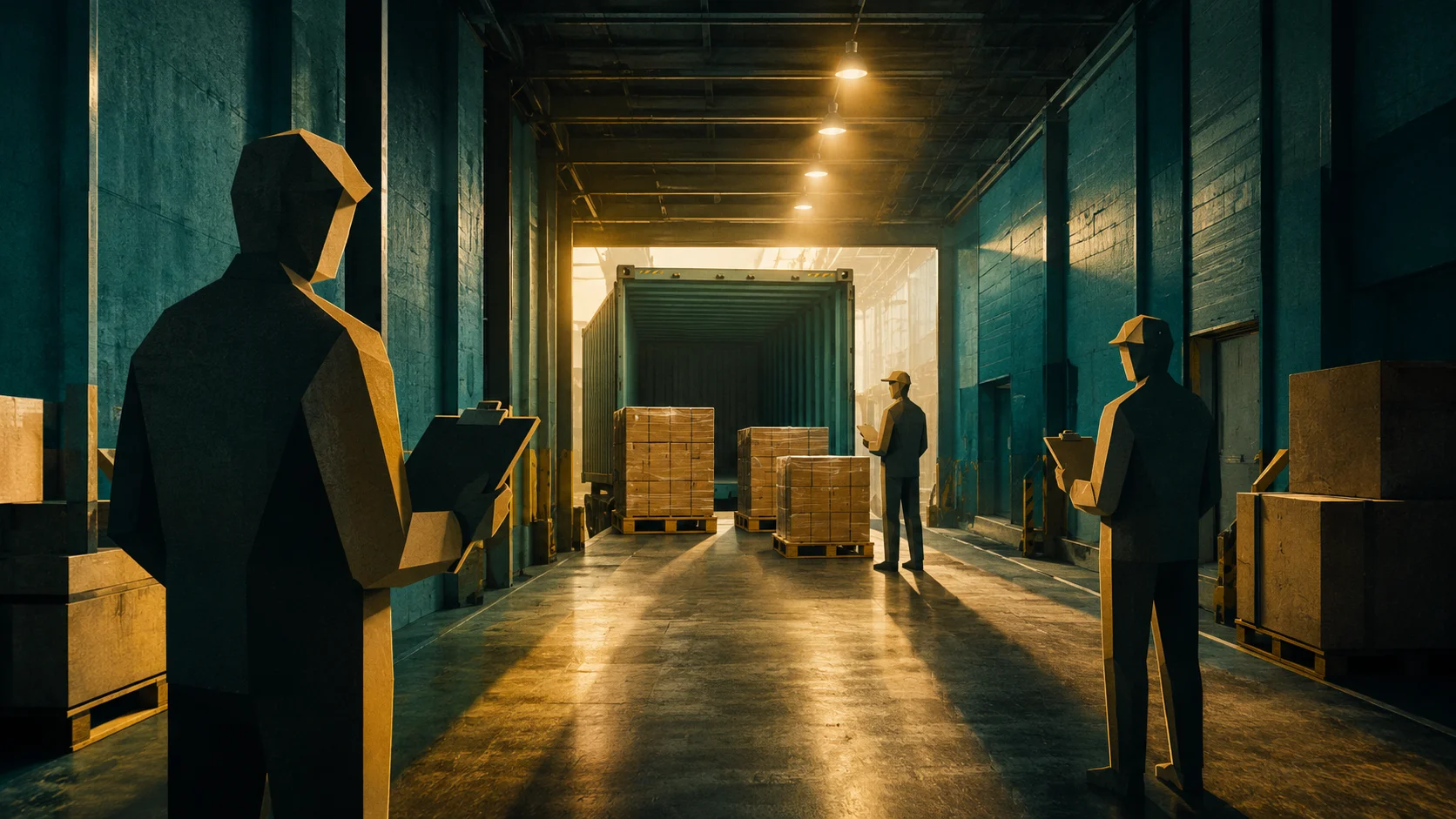
    Factors that increase the probability of a connection miss: short connection window at the hub (less than 4 days between vessel arrival and connecting vessel departure), high port congestion at Singapore (PSA Singapore periodically experiences yard congestion that slows discharge and transfer), and vessel delays on the mainline leg (weather, port congestion en route).

    Routing via the Cape of Good Hope: Since 2024, the security situation in the Red Sea has caused most carriers to divert Australia-Europe routing via the Cape of Good Hope rather than through the Suez Canal. This affects Australia-Thailand routing only indirectly: vessels on the Europe string that also call Australian ports and Asian ports have been on longer itineraries, reducing port frequency and occasionally disrupting connecting schedules. For relocators, the practical impact is that some vessel services that previously had weekly departures from Australian ports are now on 10–14 day cycles as the fleet is stretched across longer itineraries. Fewer departures mean less flexibility if a pack date slips by a few days and the next vessel is 10 days away instead of 7.

    Peak season congestion: Q3–Q4 (September–December) is peak season for Australia-Asia freight, driven by pre-Christmas manufacturing and retail shipments from Chinese factories through Australian importers. Container space on Australian export strings tightens in this period, vessel schedule reliability drops, and booking lead times extend. Personal effects shipments, which are lower-priority freight for most carriers compared to commercial cargo, can be rolled (bumped to the next vessel) if space is tight. A relocation planned for November or December should allow an additional 2–3 weeks in the timeline estimate to account for peak season variability.

    Thai Customs Clearance: The Procedural Delays

    The Thai customs stage for personal effects is more procedurally complex than commercial import clearance in some respects, because the duty-free exemption requires an active assessment of eligibility rather than a straightforward classification and duty calculation.

    Form 130/1 and the document package: Thai customs personal effects clearance requires the consignee (the relocator) to submit Form 130/1 along with a supporting document package. The typical package includes:

    • Form 130/1 (completed in Thai or with a certified Thai translation)
    • Passport with the relevant entry stamp showing the Thai entry date
    • Non-immigrant visa or other long-term visa in the passport
    • Proof of Thai address (rental contract, utility bill, or letter of employment specifying Thai residence)
    • Packing list matching the bill of lading quantities exactly
    • Commercial invoice or declaration of goods value
    • Bill of lading or air waybill

    Documents that are missing or inconsistent create a documentary query from Thai customs. The most common: the Thai address proof uses a different romanised spelling of the consignee’s name than the passport (romanisation of Thai addresses is not standardised); the packing list quantities differ from the bill of lading because goods were added or removed at the last minute; the passport presented is a renewal that does not contain the original Thai entry stamp (the old passport with the stamp must also be presented).

    Each documentary query adds 3–7 working days to the clearance timeline while the customs broker in Thailand seeks clarification and resubmits.

    Examination selection: Thai customs uses a risk-based examination system. Personal effects shipments are generally low-risk and clear on the green channel (documentary review only, 1–3 working days) in most cases. However, certain factors increase examination risk: high declared goods value, shipments from countries with known smuggling routes for specific goods, goods categories that require import permits (electronics, food, medication, alcohol), and random selection. A yellow channel examination (documentary review plus customs officer questions, 3–6 working days) or red channel examination (physical inspection of the goods, 5–21 working days) adds significantly to the clearance timeline and increases the risk of missing the six-month window if timing is already tight.

    Songkran (Thai New Year, April) and public holidays: Thai customs does not process clearances during official public holidays. Songkran, Thailand’s most significant public holiday, typically spanning a 7–10 calendar day period in mid-April, effectively closes the customs clearance process for that period. A shipment that arrives at Laem Chabang in the first week of April may sit for 10–14 days before clearance begins. For relocators entering Thailand in mid-October, the six-month window expires in mid-April, precisely when a customs closure could add the margin that causes a miss.

    A stack of household moving boxes in a Bangkok apartment corner beside a wall calendar rendered as soft unreadable color blocks, warm domestic evening light.

    The Six-Month Exemption: Financial Stakes of a Delay

    The Thai personal effects duty-free exemption is a significant financial benefit and its loss is a significant financial penalty. The numbers are concrete enough to make the planning stakes clear.

    What the exemption covers: Personal and household effects owned and used by the relocator for at least 12 months prior to the move, imported within six months of first Thai entry on a long-term visa. Coverage includes furniture, clothing, kitchenware, electronics, books, bicycles, and most standard household goods. It does not cover motor vehicles, firearms, commercial goods, new goods purchased for import, alcohol in excess of personal use quantities, or goods prohibited under Thai law.

    Duty rates that apply if the exemption is missed: Thai import duty rates for common personal effects categories include:

    • Furniture and household goods: 10–20% of CIF value
    • Clothing and textiles: 10–30% of CIF value
    • Electronics (televisions, computers, audio equipment): 0–15% of CIF value (many electronics have low duty rates)
    • Kitchen equipment and appliances: 10–20%
    • Books and printed materials: 0%
    • Musical instruments: 5–15%

    VAT applies at 7% on top of the duty-inclusive value (so if duty is 20%, VAT is 7% of 120% of the CIF value = 8.4% of CIF). The effective combined rate for most mixed household goods shipments falls in the range of 15–30% of the total shipment value.

    Worked example: A household goods shipment from Sydney to Bangkok containing furniture, electronics, and clothing with a total declared CIF value of AUD 45,000:

    • Blended duty rate (mixed goods, conservative estimate): 15%
    • Duty: AUD 6,750
    • VAT: 7% × (AUD 45,000 + AUD 6,750) = AUD 3,622
    • Total liability: AUD 10,372

    That AUD 10,372 is zero if the goods arrive within the six-month window with a complete Form 130/1. It becomes a real payment obligation if the window expires. The cost of a properly timed, well-documented shipment with a Thailand-experienced forwarder (perhaps AUD 3,500–5,500 for a 20ft container) looks different when compared against the duty and VAT that an improperly managed timing or documentation problem could trigger.

    The difference between a five-figure duty bill and a zero one is a shipping date. Write the six-month deadline on a calendar the day you land in Thailand, not the week your container ships.

    A Thai bonded warehouse floor with distinctly different cargo types staged in separate marked-off zones — furniture pallets in one area.

    Goods and Categories That Have Their Own Timelines

    Not all household goods travel on the same timeline. Several categories require separate handling that must be planned well ahead of the main container shipment.

    Motor vehicles: Importing a car or motorcycle into Thailand as part of a personal effects relocation is possible but slow and expensive. The process involves Australian deregistration, AQIS inspection and biosecurity clearance, Australian export documentation, Thai import duty (up to 80% for passenger vehicles plus excise duty and VAT), and registration with the Thai Department of Land Transport. Total process from Australian deregistration to Thai registration: 3–5 months minimum. Most relocators sell their Australian vehicle before the move and purchase locally in Thailand.

    Pets: The timeline for relocating a pet from Australia to Thailand is 4–8 weeks minimum under smooth conditions. Thailand requires: a health certificate from an Australian accredited veterinarian, an official government endorsement from the Australian Department of Agriculture (DAFF), a rabies vaccination record (vaccination must have been administered at least 30 days but not more than 12 months prior to travel), an import permit from the Thai Department of Livestock Development issued before the animal enters Thailand. The Thai import permit alone takes 15–30 working days to process. Quarantine in Thailand: typically 2–14 days in an approved Thai government quarantine facility at the owner’s cost (THB 5,000–15,000 per animal depending on size and duration). Airlines have their own restrictions on live animal transport by route and season: not all Australia-Thailand routes accept pets in cargo, and the pet import permit must match the airline’s routing. Start the pet import process at least 10–12 weeks before the move date.

    Medication and prescription drugs: Personal use quantities of prescription medication can be imported into Thailand in luggage (in original packaging with a prescription and a letter from the prescribing doctor translated into Thai). Shipping medication in a sea freight container is more complex: Thailand requires an import permit from the Food and Drug Administration (Thai FDA) for most prescription and controlled medications, and the permit must be obtained before the goods ship. Controlled substances (opioids, benzodiazepines, and others) face strict quantity limits regardless of personal use purpose. Carry a 3–6 month supply in luggage while the main shipment is in transit and confirm your specific medication’s import status with a Thai customs broker before sending anything in the container.

    Artwork and antiques: Items over 100 years old are subject to export restriction in Australia (Protected Objects under the Protection of Movable Cultural Heritage Act) and may require export permits. In Thailand, all antiques (defined as objects over 50 years old with artistic or historical significance) require a permit from the Thai Fine Arts Department for import. The permit application takes 30–60 working days. Do not include antiques or items that might be classified as antiques in a container without confirming both the Australian export status and the Thai import permit requirement first.

    A relocation coordinator's hands arranging a small set of shipment reference cards face-down in sequence on a warehouse desk.

    Practical Steps to Protect the Timeline

    The delay risks described above are not equally likely and not equally manageable. The following steps address the highest-probability issues in order of leverage:

    1. Start 14 weeks before your Thailand move date, not 6. A 14-week lead time gives you buffer for a removal company booking lead time of 3–5 weeks, origin document preparation and permit processing, and the 8–14 week transit and clearance timeline. Starting at 6–8 weeks is operating without margin: any single delay event puts the six-month window at risk.

    2. Do not book your Thai visa and then count down to the move. The six-month exemption clock starts on the date of first entry into Thailand on your long-term visa. If you enter Thailand to scout accommodation before the main move and then return to Australia for a few more weeks, the clock starts on the first entry date, not on the date you permanently relocate. Your removal schedule must account for the visa entry date, not the actual move date.

    3. Ship essentials in advance by air freight. Items you will need in the first 2–4 weeks in Thailand (documents, work equipment, clothing for immediate use, children’s school supplies) should travel by air freight or in your checked luggage. Do not rely on the sea freight shipment arriving in time for immediate needs. Air freight from Australia to Bangkok takes 3–5 days door-to-door; the cost for 30–50 kg is AUD 300–600, which is a reasonable insurance premium against needing items that are still at sea.

    4. Have the Thai customs document package ready before the goods are loaded. Form 130/1, the packing list, the visa documentation, the Thai address proof, and all supporting documents should be assembled, in Thai customs-acceptable format, before the container is sealed. Work with your freight forwarder and their Thailand-side customs broker to prepare the document package in parallel with the origin packing. Waiting until the goods arrive at Laem Chabang to start the document preparation adds 2–4 weeks to the clearance timeline unnecessarily.

    5. Avoid shipments that will arrive at Laem Chabang during April. Schedule origin packing to avoid Laem Chabang arrival in the first three weeks of April. If your Thailand entry date means the goods must arrive during Songkran, coordinate with your forwarder to have all pre-arrival documents pre-lodged and prepared in advance so that clearance can begin immediately when customs reopens.

    6. Track the shipment actively, not passively. Get the container number and bill of lading from your forwarder as soon as the container is loaded and the vessel departs. Track the vessel via the carrier’s website or a vessel tracking service. Know when the vessel is due at the transshipment hub and when it is due at Laem Chabang. If the vessel shows a delay of more than 5 days, contact your forwarder immediately to assess the impact on the exemption timeline. Passive tracking, waiting for updates, means delays are discovered later than they could be, compressing the response time.

    A Thai customs bonded storage area at early evening.

    The six-month clock is not a courtesy Thai customs extends to you. It is a fixed rule enforced without regard for who caused the delay, a supplier’s late departure, a missed Singapore connection, a week lost to Songkran. The department bears none of that risk. You bear all of it, in duty owed on goods you already paid to ship once. The practical response is to stop treating your first entry date as something to schedule around your shipment’s expected arrival. Enter Thailand on your long-term visa as early as your circumstances allow, not on the date that looks convenient next to a shipping estimate, because every day you delay entry is a day you are not getting back once the goods are already at sea and something goes wrong that is not your fault.

    When the Delay Has Already Happened

    If you are already in a situation where a delay has occurred and the six-month window is within 4–6 weeks of expiring, the options narrow but do not disappear entirely.

    Contact your Thailand-side customs broker and ask them to assess the Form 130/1 submission status and timeline. If the goods have arrived at Laem Chabang, the customs broker may be able to request priority clearance appointment. This is not a guarantee, but Thai customs does process urgent personal effects applications when the reason is documented.

    If the goods have not yet departed Australia and a faster vessel service is available that could arrive before the six-month deadline, contact your forwarder to assess rebooking, accepting the LCL or FCL re-booking cost as insurance against the duty exposure that a miss would create.

    If the six-month window has already expired and the goods have not yet cleared customs, seek advice from a qualified Thai customs specialist on the current duty assessment process. The duty is based on Thai customs’ assessed CIF value (which may differ from your declared value) and the specialist can help ensure the assessment is accurate and the most favourable applicable duty rates are applied.

    For the full Thailand relocation freight process (from export packing in Australia through to Laem Chabang customs clearance and final delivery in Bangkok or Chiang Mai) visit swiftcargo.solutions/thailand to discuss your specific relocation timeline and what a structured freight program looks like for your move date.

    For more on the Thai customs documentation process (including the five most common Form 130/1 errors and how to correct them) see What Happens When Paperwork Is Wrong at Thai Customs. For transit times and how to read a carrier schedule, see How Long Does Shipping to Thailand Actually Take.

    Frequently Asked Questions

    How long does it take to ship personal effects from Australia to Thailand?

    Door-to-door for a personal effects shipment from Australia to Thailand is typically 8–14 weeks under normal conditions. Transit time from an Australian port to Laem Chabang is 14–21 days (14–18 days for direct services, 18–25 days with a Singapore or Port Klang transshipment). Thai customs clearance for personal effects with a complete Form 130/1 package adds 5–10 working days. Origin packing and export clearance adds 1–2 weeks. If any stage is delayed (documentation problems, vessel schedule disruptions, Thai examination) the total timeline can reach 16–20 weeks. The most time-sensitive constraint is the six-month duty-free exemption: this clock starts from the date of first arrival in Thailand on your visa, not from when the shipment is sent, so departures that are tight on the six-month window can turn a modest delay into a significant duty liability.

    What is the six-month duty-free exemption for personal effects in Thailand?

    Under Thai customs law, personal effects imported by a person relocating to Thailand are exempt from import duty and VAT if the importer holds a qualifying status and the goods arrive within six months of that importer’s first entry into Thailand. Qualifying statuses are a Thai work permit valid one year or more (in practice with a Non-Immigrant B), a non-immigrant visa with a confirmed working period of not less than one year, Thai permanent residence, a full one-year Smart Visa, or returning-Thai-national status after 12 or more consecutive months abroad. A retirement visa (Non-Immigrant O, O-A or O-X) does not qualify, and neither do Thailand Elite, education, tourist or visa-exempt entries, so those importers pay duty and VAT whenever their goods arrive. The goods must have been owned and used by the relocator for at least 12 months before the move. The exemption is claimed through Form 130/1 (personal effects declaration) submitted to Thai customs at Laem Chabang or the relevant entry port. If the goods arrive after the six-month window (because the shipment was delayed) the full import duty applies: typically 10–30% of the declared goods value depending on category, plus 7% VAT. On a household goods shipment worth AUD 50,000, exceeding the six-month window could mean AUD 8,500–18,500 in duty and VAT that would otherwise have been zero. The six-month window cannot be extended; it is a fixed deadline under the Thai Revenue Code.

    What happens if my shipment is delayed and the six-month window is at risk?

    If you have an active shipment and the six-month duty-free exemption is at risk because of a delay, the priority is to identify the cause and the remaining timeline as precisely as possible. Contact your freight forwarder immediately to get an accurate ETA at Laem Chabang and an estimate for customs clearance. If the window is within 4 weeks of expiring and the goods have not yet cleared customs, you have limited options: (1) request your customs broker in Thailand to prioritise the Form 130/1 submission and clearance appointment. Thai customs does process urgent personal effects applications but cannot guarantee timelines; (2) if the goods are sitting at the origin port, investigate whether a faster vessel service is available that could arrive before the deadline; (3) seek advice from a Thai customs specialist on whether any discretionary relief applies in your situation. In practice, relief is rarely granted, but it is worth confirming. The most effective strategy is prevention: start the shipment process no later than 10 weeks before your Thailand move date, so there is buffer in the timeline for normal delay events.

    Does cargo insurance cover personal effects delays when moving to Thailand?

    Standard cargo insurance under the Institute Cargo Clauses (ICC-A) does not cover delay losses. This means that if your personal effects shipment is delayed at sea or in Thai customs, and the delay causes you to miss the six-month duty-free exemption window, the resulting duty cost is not covered by your cargo insurance policy. The only delay-related coverage some specialist international relocation insurance products offer is cover for additional temporary accommodation or storage costs during a delay, not for duties that become payable because the exemption expires. Before arranging insurance for a personal effects relocation, confirm with the insurer specifically whether duty exposure from missed exemption windows is covered. In most cases it is not, and the risk must be managed through timeline planning.

  • Warehouse and Delivery Planning After Import: The Receiving Guide

    Warehouse and Delivery Planning After Import: The Receiving Guide

    Customs has cleared the container. The forwarder calls to say it’s ready for pickup. For many importers, this is where planning runs out. The focus has been on the shipment getting to Australia, not on what happens after it arrives. The transport is booked hastily. The warehouse is not ready. The receiving team does not have the packing list. The container sits an extra day while the organisation catches up, and the demurrage clock runs.

    Post-import delivery and receiving is the part of the import process that most importers have never systematically designed. They have supplier relationships, freight programs, and customs processes, but their warehouse receiving is improvised every time. This guide covers the full post-customs sequence: container transport, warehouse receiving, inspection protocol, empty return, inventory integration, and what to do when the goods do not match what was ordered.

    Warehouse and Delivery Planning After Import: The Receiving Guide

    Container Transport: Booking Before Clearance

    The critical error in container transport booking is waiting for the container to clear customs before arranging the truck. By the time customs clears (which in Australia typically takes 1–3 working days for a pre-arrival declaration or 3–7 days for goods selected for examination), the free time at the port is already running. Booking transport reactively after clearance adds 1–2 days of logistics coordination on top of the free time clock.

    The correct sequence is to book container transport when the vessel arrives at the Australian port, not when the container is cleared. Book against the vessel’s berthing date and the expected clearance timeline your broker provides. Confirm the booking once clearance is received. If clearance is delayed by examination, update the transport booking, but maintain the slot, since transport providers in peak periods operate at capacity and released slots may not be available the next day.

    Vehicle type selection: The type of container transport depends on your warehouse configuration and the container’s cargo type.

    • Skel trailer: the standard for FCL container delivery. The container is transported on a skeletal trailer to your premises and unpacked in place (if you have a container dock) or tipped off if you have a container ramp. Requires adequate yard space and a vehicle of sufficient height clearance.
    • Tilt-tray or crane truck: for warehouses that cannot accommodate a skel trailer. The container is tilted or craned off the vehicle. Less common for standard FCL imports but useful for smaller premises.
    • Wharf cartage with CFS unpack: for LCL shipments, the goods are deconsolidated at the CFS (container freight station) and delivered as loose cargo. The delivery vehicle is a standard curtain-sider or box trailer. No container to return.

    Cost benchmarks (Australian east coast, mid-2026): FCL skel delivery within 30 km of Port Botany or Webb Dock: AUD 300–550. FCL delivery 30–80 km: AUD 450–750. Empty container return from your premises to the container park: AUD 200–400 if booked as a separate run, or AUD 100–200 as a round trip with the delivery. LCL cartage from CFS to premises: AUD 150–350 depending on cubic metres and distance.

    Out-of-hours delivery: If your warehouse has dock staff available after standard hours, an evening or early-morning delivery from the port (available from many transport providers) can avoid peak-period port gate queues and deliver the container to your warehouse ready for a full-day unpack. Port gate queues at Port Botany and Webb Dock during peak hours (7–11am) can add 45–90 minutes to a collection run; early-morning collections (5–7am) typically move in 10–15 minutes.

    Scheduling the Warehouse Receiving Window

    A container arriving at a warehouse without a prescheduled receiving window creates a cascade of internal inefficiencies: dock staff are not ready, forklifts are committed to other tasks, warehouse locations have not been cleared, and the receiving team does not have the documentation to process the inbound goods.

    The receiving window should be booked in the warehouse management system (or on a whiteboard schedule for smaller operations) at the same time the container transport is booked, not when the container is on its way. The receiving window booking should trigger:

    • Dock allocation (which dock the container will park at)
    • Forklift scheduling (how many forklifts are needed for the unpack, for how long)
    • Staff allocation (how many people are needed to unload the expected carton or pallet count)
    • Receiving documentation preparation (purchase order, packing list, receiving checklist printed or loaded into the warehouse management system)
    • Pre-clearance of warehouse locations (locations where the goods will be put away should be at or above required capacity before the delivery arrives, not cleared during the unpack)

    Time estimation for container unloads: A standard 20ft container with cartons (averaging 20 kg per carton) unloaded by two operators with one counterbalance forklift: 2–4 hours for approximately 400–600 cartons depending on stacking pattern and palletisation. A 40ft container with similar cargo: 4–7 hours. Palletised 20ft: 1–2 hours. Bulk/heavy goods requiring repositioning: add 30–50% to standard estimates. Plan the receiving window to accommodate the unpack plus the inspection time, not just the unload time.

    Warehouse and Delivery Planning After Import: The Receiving Guide: The Receiving Inspection Protocol

    The Receiving Inspection Protocol

    The receiving inspection is the quality and quantity gateway for every imported shipment. Its outputs (the inspection record) are the evidence base for any claim against the supplier, carrier, or insurance company. An inspection that is not documented is not an inspection.

    Before the container is opened:

    • Check the container seal number against the bill of lading. If the seal number on the physical container does not match the bill of lading, photograph it and notify your forwarder before breaking the seal. A broken or mismatched seal is evidence of a potential container breach and must be documented before you break into the container.
    • Note the container’s external condition: dents, rust, evidence of moisture damage, any structural compromise.
    • Note the delivery receipt condition before signing. If there is any external damage to the container (even if you do not yet know whether the cargo inside is affected), note it on the delivery receipt before the truck driver leaves your premises.

    Opening and unloading:

    • Photograph the interior of the container before any goods are moved. This documents the loading pattern, the stacking condition, and any immediately visible damage.
    • Count every carton or pallet as it is unloaded and tally against the packing list. Do not do a bulk count at the end. Count each unit as it leaves the container.
    • Separate damaged cartons from the main unload. Do not integrate damaged goods into the putaway flow; keep them in a designated quarantine area for inspection and documentation.

    Inner goods inspection (sample-based): For most commercial imports, a 100% inspection of every item is not practical. Establish a sample rate appropriate to the goods value and supplier reliability:

    • New supplier, first shipment: inspect 20–30% of cartons opened
    • Established supplier with clean track record: inspect 5–10% of cartons
    • High-value goods (electronics, jewellery): inspect 100% or a stratified sample weighted toward the highest-value SKUs
    • Goods with compliance marking requirements (RCM, AS/NZS, TGA): inspect 100% for marking, as non-compliant goods cannot be sold

    What to check in the inner inspection:

    • SKU/model match: does the goods description on the carton match the purchase order? Is the correct size, colour, and specification inside?
    • Unit count per carton: does the carton contain the quantity stated on the packing list?
    • Compliance markings: for electrical goods (RCM mark, voltage rating), food products (ingredient and allergen labelling in English, country of origin), personal care products (ingredients, batch number, expiry), medical devices (TGA number)
    • Expiry dates for perishable or time-sensitive goods
    • Physical condition: no moisture damage, no crushing, no contamination

    When we managed a team responsible for receiving, the hardest habit to build was not the checklist. It was getting people to flag a problem the moment they noticed it instead of hoping it would sort itself out by the time the pallet reached the shelf. A wrong SKU or a cracked carton does not get better with time; it gets more expensive to unwind the longer it sits unflagged in the warehouse. The generous read of a receiving team that misses things is not that they are careless. It is that no one gave them a clear, low-friction way to say “something is off here” before the goods moved on. Building that path (a five-minute photo-and-note habit at the point of discovery) does more for inventory accuracy than any downstream audit ever will.

    Empty Container Return: The Deadline That Runs While You Unpack

    Detention charges begin accumulating the day you collect the container from the port, regardless of how long the unpack takes. The free return period (typically 3–5 working days) is short enough that an unplanned delay in unpacking can push you into detention before you have finished receiving the goods.

    The discipline required: on the day you collect the container, note the detention-free return deadline in your calendar and assign responsibility for arranging the empty return. This is not a task for “after the unpack is done”. It is a task to book in advance of the unpack.

    Operationally: unpack the container as quickly as possible after delivery (ideally within the same or the next business day for a standard carton shipment). Once unpacked, arrange the empty return run promptly. An empty container sitting in your yard for 3 days past the free period at AUD 150/day is AUD 450 of avoidable cost.

    Detention charges exist because the deadline is real and the shipping line has no reason to extend it for your convenience. That is a fair, disclosed arrangement. What is not fair, and what nobody at the shipping line will volunteer to explain, is that the same free-time clock that starts the moment you collect the container gives you no credit for delays that were the line’s own fault: a late vessel, a missed transhipment, congestion at the terminal they chose. The obligation runs one way unless you specifically ask it not to. Importers who assume the deadline is symmetrical, that a carrier-caused delay will be reflected fairly in their free time, find out otherwise only when the detention invoice arrives. Ask the question in writing before you collect the container, not after the charge lands.

    Container inspection before return: Before returning the empty, check the interior for: any remaining goods that were missed during unloading; any pallets or dunnage that must be removed (returning a container with timber dunnage may breach ISPM 15 requirements); any damage to the container interior that was there on arrival but that you have not documented (the shipping line may attempt to charge you for pre-existing damage if it is discovered on return and you have no record of it from collection).

    Photograph the empty container interior before it is collected by the transport provider for return. This closes the evidence chain if the shipping line subsequently raises a damage query.

    HS Code to Internal SKU Mapping

    The HS code on the customs entry and the internal SKU in your inventory management system are two different classification systems that rarely align automatically. Bridging this gap is a one-time setup task for each new product but it has ongoing operational consequences if not done properly.

    The HS code determines: the import duty rate, the applicable FTA concession, any anti-dumping duty, any import permit requirement, and the reporting category for trade statistics. Your internal SKU determines: inventory location, reorder triggering, sales category, and COGS tracking.

    A product that is imported under HS code 9403.20 (wooden furniture) and sold as a range with 12 individual SKUs needs a mapping table that associates the HS code to each SKU, so that when you run a landed cost report by SKU, the correct duty rate is applied to each product’s cost of goods. Without this mapping, landed cost calculations are wrong, and pricing built on those landed costs may be below breakeven without the importer realising it.

    For businesses importing across multiple HS codes with multiple SKUs per code, the mapping table is maintained in the inventory management system (MYOB, Xero Inventory, NetSuite, or similar) and updated whenever new products are added to the import program. It should be reviewed by the customs broker annually to confirm HS code classifications remain accurate, since both the Australian tariff schedule and the goods’ specifications can change.

    Putaway Planning: Organising the Warehouse Before Delivery

    Putaway is more efficient when it is planned before the goods arrive than when it is improvised during the unpack. An import delivery is a predictable event: the quantities, dimensions, and weights are on the packing list days or weeks before arrival. Use that information to pre-plan location assignments.

    Velocity-based location assignment: High-velocity SKUs (fast-moving goods that are picked frequently) should be assigned locations close to the dispatch dock, at a height that does not require a forklift to access (1–1.5 metres), and in quantities that reflect the expected pick frequency. Low-velocity goods (slow movers, seasonals, safety stock) go to the back of the warehouse, higher shelving, or off-site storage.

    Seasonal import planning: If you are importing seasonal goods (for example, summer product for the October–December selling period), the delivery location should reflect the fact that these goods will be needed urgently in a specific time window. Do not store seasonal imports behind other stock that will need to be moved to access them. If the warehouse is full on arrival, assess whether lower-priority stock can be moved to an external storage facility temporarily to make room for the seasonal import in a prime location.

    Pre-location clearance: Before the import delivery arrives, confirm that the nominated putaway locations are clear and at sufficient capacity to receive the new stock. A receiving team that arrives to find the nominated locations occupied by residual stock from a previous run must improvise location assignments on the spot, leading to stock being put in non-standard locations that are not recorded in the WMS, creating a picking accuracy problem downstream.

    Inventory Integration: Receiving Into the System

    Imported goods do not generate value until they are in the inventory management system as available stock. A receiving process that accurately counts, inspects, and puts away goods but delays the system receipt creates a gap in which goods exist in the warehouse but not in the sales system, leading to orders being declined for apparent stockouts that are not real, and losing sales from customers who were ready to buy.

    The system receipt should be completed the same day as the physical receipt, or at the latest, within 24 hours. For operations with a warehouse management system (WMS), this is typically handled through the inbound delivery process: the advance shipping notice (ASN) is pre-loaded from the packing list, the receiving team scans each carton barcode as it is received, and the WMS automatically reconciles the receipt against the ASN and updates available inventory on confirmation.

    For operations without a WMS (using a spreadsheet or simple accounting system), the receiving record should be entered into the system as a purchase receipt or goods received note (GRN) within 24 hours of the physical delivery.

    Handling receiving discrepancies in the system:

    • Quantity short: receive only what was physically received, not the packing list quantity. Record the shortfall as a purchase order variance and notify the supplier. Do not receive more than was physically delivered, as this overstates inventory and creates a negative quantity discrepancy when the short units are sold and cannot be picked.
    • Quantity over: receive the actual quantity. Record the excess against the purchase order and notify the supplier. An overshipment may have duty implications if the customs entry was lodged for the expected quantity.
    • Wrong goods received: do not receive into available inventory. Place the wrong goods on hold in a quarantine location in the WMS and initiate a supplier query.
    • Damaged goods: receive the full quantity but mark damaged units as non-saleable in the WMS. This preserves the quantity record for insurance claim purposes while preventing the damaged goods from appearing as available stock.

    Quality Inspection Beyond Receiving: When a Full QC Check is Required

    For some goods categories, the receiving inspection is a first-pass check and a more thorough quality control inspection is required before the goods can be put into saleable stock. This is particularly relevant for:

    Regulated goods: Medical devices, therapeutic goods, and food products subject to TGA or FSANZ compliance requirements may require batch release testing or certificate verification before stock can be sold. The goods should be held in a designated “quality hold” warehouse location until the compliance check is complete and the batch is released by the quality team.

    OEM or private label goods: Goods manufactured to your specification (where you bear the compliance and quality responsibility as the importer and OEM) should undergo a specification conformance test on every shipment if the supplier is new or has had previous quality issues. Testing parameters depend on the product category: electrical goods need voltage and safety testing; textiles need fibre content testing; chemicals need composition verification.

    High-value goods with resale warranties: Electronics, jewellery, and goods with significant after-sales warranty obligations benefit from a 100% functionality test before putaway. A product that fails in the field within the warranty period costs far more in customer service, return freight, and replacement cost than a factory test caught at receiving.

    When Goods Don’t Match the Order

    Every importer will eventually receive a shipment where something does not match: a quantity shortfall, a specification substitution, a wrong colour or model, a missing compliance mark, or goods that are damaged on arrival. Having a pre-defined response protocol for each scenario prevents the situation from escalating into a supplier dispute that consumes weeks of management time.

    Quantity shortfall (goods not shipped): verify that the shortfall is not an unloading count error (recount before contacting the supplier). If confirmed short: document with photographic evidence of the carton count, notify the supplier in writing within 48 hours of delivery, request a credit note or replacement shipment. Under most purchase order terms, the supplier is responsible for shortfalls against the confirmed purchase order quantity.

    Specification substitution (wrong goods): photograph the received goods and the specification discrepancy. Notify the supplier within 48 hours. Do not put the wrong goods into saleable stock. They may not comply with Australian regulations even if they are a higher-specification substitute. Request return or credit depending on the commercial relationship and the value.

    Compliance marking failure: goods that fail the receiving inspection for compliance markings (missing RCM, wrong AS/NZS standard, missing ACCC-required labelling) must not be sold in Australia. The importer (not the supplier) is the responsible supplier under the Australian Consumer Law once the goods are imported. Selling non-compliant goods exposes the importer to ACCC enforcement action, product recalls, and fines. Remediation options: return to the supplier for remarking (expensive), arrange for Australian-based remarking (possible for some goods categories), or destroy and claim against the supplier for the full loss.

    Landed Cost Reconciliation After Each Delivery

    Every import delivery is a data point for improving the landed cost model that drives pricing and purchasing decisions. The week after delivery (once the receiving inspection is complete and the inventory receipt is in the system) is the right time to reconcile the actual landed cost against the estimate used when the purchase was committed.

    The components to reconcile: ocean freight, local cartage, import duty and GST, customs brokerage fees, port charges and terminal handling, and any unplanned costs that arose on this shipment (demurrage, container examination fees, DAFF treatment costs, quarantine storage). Which of these actually land on your invoice rather than your supplier’s depends on the Incoterm the purchase order was written against. Compare actuals against the landed cost estimate by component, not just in total. A consistent overrun in demurrage indicates a process gap (too little free time in the booking, or too slow to collect after clearance) rather than bad luck, and warrants a process change. An overrun in duty may indicate an HS code that needs reclassification or an FTA concession that is not being claimed.

    This reconciliation, done after each shipment, produces an accurate landed cost history that supports competitive pricing, informed freight rate negotiations, and identification of which import cost components are worth management attention. For guidance on managing shipment delays and their cost impacts, see What to Do When a Shipment Is Delayed and How to Handle Damaged Shipments.

    Swift Cargo provides Australia-wide freight and cartage coordination as part of the import program (from port collection through to warehouse delivery) for commercial importers managing regular FCL and LCL programs. Visit swiftcargo.solutions/australia to discuss how delivery planning can be integrated into your freight arrangement.

    Related reading: Inventory Planning Around Shipping Timelines for Australian Importers

    Frequently Asked Questions

    How far in advance should I book container transport from an Australian port?

    Book container transport a minimum of 3–5 working days before the container’s estimated available date at the port. During Q3–Q4 peak season (September–December) or following port congestion events, availability of suitable container transport vehicles (skel trailers, tilt-trays) tightens. Book 7–10 days ahead during these periods. Do not wait for the container to show as ‘available’ before booking; the transport slot should be pre-booked against the vessel’s expected arrival date and confirmed once the container is released from customs. Late bookings during peak periods result in 1–3 day delays that accrue demurrage charges at AUD 80–250 per container per day.

    What is a receiving inspection and what should it cover?

    A receiving inspection is a systematic check of the imported goods against the purchase order, commercial invoice, and packing list at the point of delivery to your warehouse. It should cover: (1) carton count: verify the number of cartons or pallets matches the packing list exactly; (2) external condition check: note any damaged, wet, or deformed cartons before the delivery receipt is signed; (3) weight verification for high-value goods: weigh selected cartons and compare to the packing list; (4) inner goods inspection: open a sample of cartons to verify contents against the packing list (size, colour, model, specification); (5) compliance marking check: verify required Australian compliance marks (RCM, AS/NZS labels) are present on the goods; (6) expiry date check for consumables. The delivery receipt must be signed only after the external condition check. Any visible damage must be noted on the receipt before signing, not after.

    When must I return the empty container after unpacking?

    The empty container must be returned to the shipping line’s nominated container park within the free return period specified by the carrier, typically 3–5 working days from the date you collected the container from the port. After the free period, detention charges apply at the same daily rate as demurrage, typically AUD 80–250 per container per day depending on the carrier and container size. The return deadline runs from the day you picked up the container, not from the day you finish unpacking. Plan your unpack and empty return as a linked sequence: unpack within 1–2 days of collection, return empty within the free period. For 40ft containers, arranging a cartage provider for the empty return in the same booking as the delivery run saves time and typically gets a lower rate.

    What should I do if the delivered quantity is short or the goods are wrong?

    If the quantity delivered is less than the quantity on the bill of lading and packing list: note the shortfall on the delivery receipt before signing, photograph the container interior to document the loading pattern (which may show whether goods were left behind or never loaded), and notify your freight forwarder immediately. If the goods were short-shipped (not loaded at origin), this is a supplier responsibility under your purchase order terms. If goods were loaded but not delivered (a custody gap), the freight forwarder and carrier need to trace the missing cartons. For wrong goods (substituted products that do not match the purchase order specification), document the specification mismatch in writing with photographs and notify the supplier within 24 hours of discovering the error. For goods with compliance marking errors (missing RCM, wrong AS/NZS standard) discovered on receiving inspection, quarantine those goods immediately. They cannot legally be sold in Australia until the compliance status is resolved.

  • Thai Customs Paperwork Errors Cost More Than Prevention Does

    Thai Customs Paperwork Errors Cost More Than Prevention Does

    Every week, a container sits at Laem Chabang waiting for a correction to a document that was wrong when it left the origin port. The correction takes two days. The storage and examination fees cost more than the error itself. The importer, who was not told to expect this, is calling their supplier in Shenzhen asking why nothing is moving, and the supplier has no answer because the goods left China perfectly and the problem is 5,000 kilometres away, in a Thai customs shed.

    Customs paperwork mistakes Thailand

    Thai customs documentation requirements are not arbitrary. They are consistent, they are published, and they are enforced. The commercial invoice, packing list, bill of lading, certificate of origin, and import permits form a chain of documents that must agree with each other and with the Thai Customs Department’s records. When one link in the chain is wrong, the chain breaks, and the goods do not move until it is repaired.

    How Thai Customs Examines Documentation

    All imports to Thailand pass through the Thai Customs Department’s risk management system, which assigns each consignment to one of three examination channels:

    Green channel: cleared for release on the basis of the electronic import declaration (Type B entry) alone. No document review, no physical inspection. Green channel clearance typically takes 1–3 working days and is the normal outcome for low-risk consignees with clean import history, accurate documentation, and low-risk commodities.

    Yellow channel: documentary review required. A customs officer reviews the import declaration against the original shipping documents: commercial invoice, packing list, bill of lading, certificate of origin, and any permits. If the documents agree and the declared values align with Thai Customs’ reference price database (Thaan Raakha), the goods are cleared. Yellow channel examination adds 3–6 working days to clearance.

    Red channel: physical inspection plus documentary review. The container is moved to the container examination facility (CEF) for an officer inspection. The goods are physically verified against the packing list; HS code classification is confirmed against the physical goods; quantities and values are checked. Red channel examination adds 5–21 working days, depending on the complexity of the goods and whether additional specialist examination is required (for example, by the Thai Food and Drug Administration for food products, or by the Office of Industrial Works for controlled materials).

    Documentation errors do not automatically push a consignment from green to yellow or red. The channel assignment is based on the risk profile of the goods, the consignee’s compliance history, the origin country, and the declared value relative to reference prices. But a documentation error that is identified during yellow or red examination extends the clearance time by however long it takes to obtain and submit the corrected document. Every day of extension costs CFS storage fees (THB 1,500–4,000/day at Laem Chabang) on top of the broker’s amendment fees.

    Most guides to Thai customs paperwork treat the examination channels as a filing formality. They are not. The Thaan Raakha reference price database exists because Thai Customs assumes, correctly in a meaningful share of cases, that importers under-declare value, and it flags the discrepancy automatically, before a human officer ever looks at the file. The value-discrepancy penalty structure and the five-error taxonomy below are not arbitrary bureaucracy. They are a documented enforcement system built around the specific ways importers have historically tried to under-pay. Treating it as an enforcement system rather than a paperwork inconvenience is what separates the importer who clears in three days from the one who spends three weeks arguing with a red-channel officer about a description on an invoice.

    Mistake 1: Wrong or Ambiguous Invoice Description

    The commercial invoice description of goods must accurately describe what is in the container to the level of specificity required for HS code classification. “General merchandise,” “household goods,” “electrical items,” or “spare parts” are descriptions that Thai customs will not accept. They are unclassifiable and untaxable without specificity.

    The correct description level for the commercial invoice is: the specific type of goods, the material they are made of (where relevant), and the intended use (where the HS code depends on it). Examples:

    • Not: “furniture”. Yes: “upholstered dining chairs, solid timber frame, cotton/polyester fabric, set of 4”
    • Not: “electronics”. Yes: “portable Bluetooth speakers, output 20W, lithium battery 3.6V 2600mAh”
    • Not: “clothing”. Yes: “men’s cotton woven shirts, 80% cotton 20% polyester, sizes M-XL, 120 pieces”
    • Not: “industrial equipment”. Yes: “hydraulic press, 50-tonne capacity, for metal forming, HS 8462.10”

    When Thai customs receives a vague invoice description, the goods cannot be classified under the Thai Harmonised Tariff Schedule without physical inspection. A vague description is effectively a request for a red channel examination, because the customs officer cannot assign the correct HS code (and therefore the correct duty rate) from the paperwork alone.

    Amendment procedure: A corrected commercial invoice must be issued by the supplier, translated into English (if not already), and submitted to the Thai customs broker who files the amendment. The broker files Form Kor Sor 100 with the revised invoice attached. If the goods are in yellow channel, this amendment can typically be processed while the examination is ongoing, adding 1–2 days to the clearance timeline. If the goods are in red channel and physical examination has already revealed the discrepancy, the amendment must be filed before the examination report is finalised.

    A customs officer's gloved hand cross-checking a shipping carton against a handheld scanner inside a Thai customs examination bay, the carton opened just enough to show neatly packed contents, no readable text on any label or screen.

    Mistake 2: Declared Value Discrepancy

    Thai Customs applies the WTO Customs Valuation Agreement: transaction value on a CIF (cost, insurance, freight) basis, per the Thai Customs Department. The declared value must represent the actual price paid or payable for the goods, plus all freight, insurance, and loading costs to the Thai port of entry.

    The most common valuation errors are:

    FOB value declared instead of CIF: The invoice shows the goods value only (FOB), but the importer or their broker files the customs entry using the FOB value without adding the freight and insurance to convert to CIF. Thai customs expects CIF; using FOB understates the customs value and the duty base. The correction requires the addition of the freight invoice and insurance certificate to the customs file.

    Undervalued invoice (related party pricing): When importer and supplier are related (parent company, subsidiary, or affiliated company), Thai Customs scrutinises the transfer price against market value. Goods imported at below-market related-party prices must be justified with arm’s length pricing documentation. Thai Customs will query any declared value that is materially below the Thaan Raakha reference price for the same goods category.

    Missing assists in the declared value: An “assist” is anything provided by the buyer to the seller free of charge or at reduced cost that assists the seller in producing the goods: tooling, moulds, designs, materials, engineering support. The value of assists must be added to the declared customs value. Importers who have provided moulds to a Chinese supplier but do not include the mould value in the customs declaration are undervaluing their imports.

    Penalty structure for undervaluation: For genuine administrative undervaluation errors corrected through the amendment process before goods release, Thai Customs typically imposes the unpaid duty plus a 5% surcharge. For undervaluation assessed as intentional tax evasion, the penalty is 0.5 times the unpaid duty per month (compounding from the import date), plus potential goods seizure and criminal referral under the Thai Customs Act B.E. 2560 (2017). The distinction between error and evasion is made by the examining officer based on the pattern across the shipment and the importer’s compliance history.

    Mistake 3: HS Code Classification Error

    The HS (Harmonised System) code determines the import duty rate, whether any special permits are required, whether anti-dumping duties apply, and whether the goods qualify for preferential duty under a Thailand FTA (ATIGA, ACFTA, TAFTA, JTEPA, etc.). A wrong HS code is a declaration error on all of these dimensions simultaneously.

    Common HS code errors on Thailand-bound shipments:

    Using a Chinese tariff code without converting to the Thai tariff schedule: The HS system is an international standard, but countries add national sub-headings at the 8-digit or 10-digit level. A Chinese HS code at 8 digits does not automatically map to the Thai HS code at 10 digits. Your Thai customs broker must verify the correct Thai 10-digit code, not just accept the origin country’s code from the supplier’s invoice.

    Classifying goods by their most common use when the material composition creates a different classification: A plastic bucket classified as “household goods” may actually be classified under the plastic articles chapter depending on its composition. Goods with multiple components are classified under the principal component or use, but getting this right requires reading the relevant HS chapter notes and, sometimes, the Thai Customs Department’s binding tariff ruling for the specific product.

    Missing the split between components that attract different duty rates: A shipment of furniture with electronic components (for example, LED lighting embedded in cabinets) must be classified correctly: either as a complete article or as separate components, depending on whether the electronic components are separately identifiable and separately packaged.

    What Thai Customs does when the HS code is wrong: If the examining officer identifies an HS code error during yellow or red examination, they reclassify the goods under the correct code and reassess the duty at the correct rate. If the correct rate is higher than what was declared, the importer owes the duty difference plus the 5% surcharge. The corrected entry is filed by the broker. If the correct HS code triggers an import permit requirement that the importer does not hold, the goods cannot be cleared until the permit is obtained, or the goods must be re-exported.

    A pallet of export cartons staged at a factory loading dock in daylight, a logistics coordinator's hand placing a stamped origin document into a clear pouch affixed to the pallet wrap, the paper angled away from camera so no text is legible.

    Mistake 4: Certificate of Origin Errors

    A certificate of origin (CoO) is required to claim preferential duty under any of Thailand’s FTAs: ATIGA (ASEAN), ACFTA (China), TAFTA (Australia-Thailand), JTEPA (Japan), and others. Errors in the CoO, or submission of a CoO that does not meet the specific FTA’s rules of origin, result in preferential duty being refused and the goods being assessed at the higher MFN (most-favoured-nation) rate.

    The most common CoO errors:

    Using the wrong CoO form for the applicable FTA: Each Thailand FTA uses a different CoO form. ATIGA uses Form D; ACFTA uses Form E; TAFTA uses a self-declaration format. Submitting a Form E for an Australian-origin claim (TAFTA) is incorrect. TAFTA does not use Form E. Your customs broker must confirm which FTA and which form applies to your goods’ origin before the shipment departs.

    Rules of origin not satisfied: FTA preferential duty requires that the goods meet the applicable rule of origin: typically either a change in tariff heading (CTH), a regional value content (RVC) percentage threshold, or a specific process requirement (as for textiles under yarn-forward rules). A CoO issued by the origin country’s authority certifies that the goods meet these rules, but the certification does not immunise the importer if the certification is incorrect. Thai Customs can request verification from the origin country’s authority under the FTA’s verification procedures; if the rules are found unsatisfied, the preferential duty is refused and MFN duty is assessed.

    Expired CoO: FTA certificates of origin have validity periods. ATIGA Form D has a validity period of 12 months from the date of issue. A CoO issued more than 12 months before importation into Thailand is expired and cannot be used for the FTA claim. Expired CoO is the most avoidable documentation error: it requires only that the importer check the issue date before shipment.

    What Thai Customs does when the CoO is wrong: If the CoO error is identified, Thai Customs refuses the preferential duty claim and assesses duty at the MFN rate. For the ATIGA rate on many goods this is 0–5%; the MFN rate for the same goods may be 10–20%, meaning a significant duty increase. The importer can appeal the reclassification within 30 days of the customs decision, but appeals on CoO grounds require the origin country’s authority to issue a verification or revised certificate, which can take 30–90 days.

    Mistake 5: Missing or Incorrect Import Permits

    Certain goods categories require an import permit or licence from a Thai regulatory authority before they can be cleared through Thai customs. The permit must be obtained before the goods arrive (or in some cases before the order is placed) and must match the consignee on the bill of lading exactly.

    Common permit errors for shipments to Thailand:

    Missing permit not identified before shipment: The importer did not check whether their goods require a Thai import permit. Controlled goods categories include: pharmaceutical products and medical devices (Thai FDA); food products (Thai FDA); agricultural chemicals and pesticides (Department of Agriculture); telecommunications equipment (NBTC type approval); weapons and defence materials (Ministry of Defence); electrical and electronic products requiring TISI (Thai Industrial Standards Institute) certification. A container of goods requiring a missing permit cannot be cleared. Options: obtain the permit post-arrival (possible for some categories, adding 2–6 weeks), re-export the goods, or request Thai Customs to hold the goods under sufferance while the permit is pursued.

    Permit issued to the wrong entity: The import permit must be issued to the same entity as the consignee on the bill of lading. If the goods are consigned to Company A (the importer) but the permit was issued in Company B’s name (a related entity, an agent, or a former business name), Thai Customs will refuse clearance. This is a common error when importers change company names, use subsidiaries, or route shipments through a purchasing agent whose name appears on the bill of lading.

    Permit expired at time of import: Thai import permits have validity periods that vary by permit type. An FDA import permit for a specific batch of pharmaceutical goods may be valid for one shipment only; a TISI licence for a product model is renewable annually. An expired permit is treated the same as a missing permit: the goods cannot be cleared until a new permit is obtained.

    A small stack of personal-effects moving boxes being checked against a shipment manifest on a tablet inside a bright receiving office adjoining a Thai warehouse, the

    The Personal Effects Exception: Form 130/1 Errors

    For relocators shipping household goods to Thailand, the standard commercial documentation requirements are replaced by the personal effects duty exemption process, but the documentation for this exemption is equally precise and equally unforgiving when wrong.

    The personal effects duty exemption under Thai Customs Notification No. 161/2560 requires: (a) the goods are used personal effects, not new; (b) the importer is relocating to Thailand; (c) the goods arrive within 6 months of the importer’s first entry to Thailand; (d) the goods are not in an excluded category (vehicles, alcohol, tobacco).

    The key document is Form 130/1 (the Thai personal effects declaration form). Errors on this form include:

    • Wrong arrival date: the date must match the importer’s actual first Thai entry date shown on the passport
    • Incorrect or missing passport number or visa type
    • Mismatch between the Thai address on the form and the address registered with Thai immigration
    • Goods listed as “new” or in original packaging, which disqualifies them from the exemption
    • Excluded items (vehicles, alcohol, tobacco, new electronics in original packaging) listed on the exemption form

    Errors on Form 130/1 result in the personal effects declaration being rejected. The consignment moves to a standard commercial customs entry, and full duty applies on all goods: typically 20–30% for furniture, 10–20% for appliances, 0–10% for clothing. For a full household goods shipment worth AUD 30,000, the duty impact of a failed personal effects exemption is AUD 6,000–9,000. The exemption is worth getting right.

    Correcting Errors: Before and After Arrival

    The window for correcting documentation errors without penalty is narrow and closes at different points depending on the error type.

    Before vessel departure (best outcome): Any documentation error identified before the vessel leaves the origin port can be corrected at zero or minimal cost. This is why pre-shipment document review (checking the draft invoice, packing list, bill of lading, and CoO before they are finalised) is the highest-leverage intervention in the Thailand import process. A document review by your Thai customs broker before the goods leave China, Australia, or Europe costs THB 1,500–3,000. A post-arrival correction costs 5–10 times that amount in storage, amendment fees, and demurrage.

    After vessel departure but before arrival (amendment possible): Once the vessel is in transit, the shipping line can issue a bill of lading amendment (a “corrected OBL” or seaway bill amendment) for consignee name errors, port of discharge corrections, or description changes, subject to origin country export customs having already cleared the goods. Commercial invoice and packing list corrections can be issued by the supplier at any time before the customs entry is filed at the Thai end. CoO corrections require re-issuance by the origin country’s authority, which takes 3–10 days for most countries.

    After arrival but before goods release (amendment under Thai Customs rules): Form Kor Sor 100 amendment can be filed for value corrections, HS code corrections, and description corrections, provided the goods have not yet been released. The amendment process takes 1–5 working days depending on the type of correction and the examination channel the goods are in. The amendment incurs broker fees (THB 3,000–8,000) and any additional duty plus the 5% surcharge if the amendment increases the duty liability.

    After goods release (post-clearance amendment): Once the goods are released from Thai customs and collected, amendment is no longer possible through the standard process. If the importer discovers an error post-clearance, they may have a voluntary disclosure obligation to report to Thai Customs. Thai Customs conducts post-clearance audits covering imports up to 3 years old; errors discovered in audit attract the full penalty rather than the reduced amendment surcharge rate. Voluntary disclosure before audit is treated more favourably.

    A freight coordinator at an origin warehouse reviewing a stack of export cartons already palletized and shrink-wrapped, ready for departure, late-afternoon golden light streaming through the open loading bay behind and rimming the cargo in warm light.

    When we managed teams that shipped physical goods, the recurring mistake was never a lack of a checklist. It was that everyone assumed someone else was the one actually reading it against the draft documents before they got finalised. Assign one specific person, by name, as the final reviewer with authority to hold the shipment if something looks wrong, even if that person is you. A shared responsibility with no single owner is not a review process, it is a hope. The cost difference here is stark enough to make the ownership question worth forcing: a THB 1,500 to 3,000 pre-shipment review against a duty impact that can run into the thousands once goods are already on the water and the correction window has closed.

    The Cost of Getting It Right Before Departure

    Pre-shipment document review is the most cost-effective intervention in the Thailand customs process. The typical cost of a pre-shipment document check by a Thai customs broker is THB 1,500–3,000 (AUD 60–120). The typical cost of a documentation error at Laem Chabang that triggers a yellow or red examination is THB 8,000–30,000 (AUD 320–1,200) in direct costs, plus THB 1,500–4,000/day in CFS storage for each day of examination delay.

    On a shipment that takes 6 days to clear in a red channel examination instead of 2 days in green, the storage cost alone is THB 6,000–12,000 (AUD 240–480). Add broker amendment fees, examination fees, and any reclassification duty: the total cost of one documentation error on one shipment is typically AUD 500–2,000. Against a pre-shipment document review cost of AUD 60–120, the return on that review is clear.

    Swift Cargo’s Thailand desk handles documentation review as part of the freight arrangement for commercial shipments and personal effects moves. Visit swiftcargo.solutions/thailand to discuss how document pre-clearance can be included in your shipping program.

    Frequently Asked Questions

    What happens if the declared value on my Thai customs invoice is wrong?

    Thai Customs uses the WTO Customs Valuation Agreement (transaction value method, CIF basis). If the declared value is lower than the customs authority’s assessed value, Thai Customs will issue a valuation query and assess duty on their determined value. For undervaluation that appears to be a genuine administrative error, a correction can be filed through an amendment (Form Kor Sor 100) with the supporting documentation: the original supplier invoice, the bank transfer records, and correspondence. For undervaluation that is assessed as intentional, the penalty is 0.5 times the unpaid duty per month (compounding), with possible goods seizure. Thai Customs compares declared values against their reference price database (Thaan Raakha), which is sourced from international trade data. If your declared value is materially below the Thaan Raakha reference for the same goods, the query is automatic and the burden shifts to you to prove the declared price is correct.

    Can I correct a wrong HS code after my goods arrive in Thailand?

    Yes, HS code errors can be corrected after arrival through the Form Kor Sor 100 amendment process, provided the goods have not yet cleared Thai customs. Once the goods are released from customs (duty paid and goods collected), the amendment window closes for most goods categories. If you discover an HS code error after clearance and the correct code carries a higher duty rate than what you paid, you may have a voluntary disclosure obligation: notify your Thai customs broker for specific advice on the Thai Customs Department’s voluntary disclosure procedures. For goods that have cleared but were assigned the wrong HS code to a lower duty rate, Thai Customs may issue a post-clearance audit demand if the error is identified in the audit cycle. Post-clearance audits cover up to 3 years after import in Thailand.

    What documents are most commonly wrong in Thailand shipments?

    The five most frequently incorrect documents in commercial shipments to Thailand are: (1) the commercial invoice: wrong declared value, ambiguous goods description, or CIF versus FOB basis not clearly stated; (2) the packing list: quantity or weight inconsistencies with the invoice or bill of lading; (3) the bill of lading or sea waybill: consignee name or Thai address different from the import permit or VAT registration; (4) the certificate of origin: wrong FTA reference, wrong producing country, or the document is expired; (5) the import permit or licence: missing, expired, or issued to a different entity than the consignee on the bill of lading. Of these, invoice value discrepancies and certificate of origin errors are the most likely to trigger a yellow or red examination channel referral.

    How much does a Thai customs documentation error cost in practice?

    The direct cost of a documentation error at Thai customs depends on the type of error and the examination channel it triggers. A simple invoice description error corrected in a yellow channel examination typically costs THB 2,000–8,000 in broker amendment fees plus THB 1,500–4,000/day in CFS storage charges during the examination period (typically 3–6 days). An HS code error that results in a duty reclassification costs the duty difference plus a 5% surcharge on the unpaid duty. A serious undervaluation that triggers a red channel inspection can cost THB 20,000–100,000+ in duties, penalties, broker fees, storage, and examination costs, on top of a 5–21 day clearance delay. For personal effects, incorrect or missing Form 130/1 documentation typically adds 5–10 days to customs clearance and THB 5,000–15,000 in storage and broker amendment costs.

  • Shipment Delayed in Australia: The Importer’s Response Guide

    Shipment Delayed in Australia: The Importer’s Response Guide

    A delayed shipment is not one problem. It is five different problems that each require a different response, a different contact, and a different timeline to resolve. The importer who treats “my shipment is late” as a single undifferentiated event (and rings the supplier in Guangzhou to ask where the container is) loses 48 hours before anyone useful is involved. Import shipment delays in Australia split into five types, and the first job is working out which one you have.

    Shipment Delayed in Australia: The Importer’s Response Guide

    The Five Types of Shipment Delay (and Why They Matter)

    Identifying which of the five types you are dealing with determines who can resolve it and how fast.

    Type 1. Vessel or carrier delay: The shipping line has delayed the vessel’s departure, missed a port call, or rerouted the vessel. This is the most visible delay. It shows on the shipping line’s vessel schedule and your freight forwarder can confirm it within hours. Transit time from China to the Australian east coast runs 12–18 days; a vessel delay of 3–5 days is common and expected. For Europe-origin shipments via the Cape of Good Hope, the transit is 38–48 days. A 3-day vessel delay is proportionally less disruptive but still needs to be tracked.

    Type 2. Port congestion delay: The vessel has arrived but the container cannot be discharged or moved from the terminal because the port is congested. Major Australian ports (Port Botany, Fremantle, Melbourne’s Webb Dock) operate under variable productivity levels. During Q3–Q4 peak season or following industrial action, terminal dwell times extend and the queue for collection extends accordingly. Port congestion delays are not caused by the importer, the carrier, or the goods, but the importer bears the cost if containers wait on-port past the free period.

    Type 3. Australian Border Force / customs hold: ABF has placed a hold on the container or consignment pending documentary verification or physical examination. This can be triggered by: a risk-flagged commodity (certain electronics, food, chemicals); a discrepancy between the shipping documents and the import declaration; a compliance history issue with the importer; or random examination selection. The customs hold is separate from biosecurity and must be resolved through ABF channels.

    Type 4. DAFF biosecurity hold: The Department of Agriculture, Fisheries and Forestry (DAFF) has selected the container for biosecurity examination. This is the most common cause of delays that importers cannot predict or control in advance. DAFF holds can be triggered by: the type of goods (timber, plant products, soil-exposed machinery, animal-origin products); the origin country; the packing material (timber dunnage, crating); or random selection under the biosecurity risk matrix.

    Type 5. Documentation or declaration error: Your customs entry, commercial invoice, packing list, or certificate of origin contains an error or omission that prevents the goods from being released. This is the only delay type that the importer can typically resolve faster than a port or government agency, if they act immediately to obtain the corrected documents.

    A freight forwarder's desk phone handset mid-lift in a small logistics office, morning light through a window overlooking a distant container yard, a

    Immediate Response: The First 24 Hours

    When your forwarder or tracking system shows the shipment has not arrived as scheduled, or when you receive a notification that the container is on hold, the first 24 hours determine how quickly and cheaply the delay is resolved.

    Step 1: Confirm delay type with your forwarder. Email or call your freight forwarder with the bill of lading number, container number (if known), and the expected arrival date. Ask specifically: “What is the current status and what is holding the release?” A competent forwarder will have the answer or the answer in progress within 2–4 hours. If your forwarder cannot tell you the delay type within 24 hours, that is a performance issue to address separately.

    Step 2: Get the timeline estimate for the delay. Once you know the delay type, ask for a realistic resolution timeline. Carrier delays have predictable timelines (the revised vessel ETA from the shipping line). Customs holds have unpredictable but estimable timelines (1–3 days for a standard documentary check, 5–10 days for a physical examination). Documentation errors have timelines that depend on how quickly you can obtain corrected documents from your supplier.

    Step 3: Identify the demurrage clock start date. Ask your forwarder: “When does the free time period expire and what is the daily demurrage rate?” Free time varies by carrier. Most Australian importers have 5 working days from wharf availability. Once you know the clock start, you can calculate the exposure. At AUD 150 per container per day (a mid-market rate), a 10-day delay past free time costs AUD 1,500, not catastrophic on a commercial FCL shipment, but compounding if the delay continues.

    Step 4: Inform your supply chain. If the delay affects production or customer orders, internal and external stakeholders need to know within 24–48 hours, not when the delay has already caused a missed commitment. A 5-day warning gives a production planner options. A 0-day warning gives them none.

    Responding to a Carrier or Vessel Delay

    Carrier delays are the least actionable from the importer’s perspective. The vessel schedule is the carrier’s responsibility and the importer has limited leverage. The correct response is:

    Monitor the revised ETA actively. Shipping line vessel tracking systems update in real time. Your forwarder should be monitoring and pushing you an ETA update daily once the vessel is within 5 days of Australian port arrival.

    Notify the port depot of the revised arrival. If you have booked container transport (cartage) from the port, your transport provider needs the revised ETA to rebook. If the vessel has been delayed more than 3 days, the original cartage booking may no longer be valid. Confirm with your transport provider.

    Check whether carrier liability applies. Shipping lines include delay liability exclusions in their standard bill of lading terms. Vessel delays caused by weather, port congestion, or operational decisions are generally excluded from carrier liability. The Hague-Visby Rules do not create liability for delay, only for loss or physical damage to goods. In practice, you cannot claim the cost of a vessel delay from the carrier unless the delay was caused by the carrier’s negligence in a way that is demonstrable and material.

    Consider air freight for urgent partial shipments. If the delayed goods include a high-priority component needed for production or a customer commitment, consider whether a partial urgent reorder by air freight is more cost-effective than waiting. The cost comparison: air freight AUD 8–15/kg from China to Australia east coast; sea freight AUD 0.30–0.80/kg. For a 50 kg urgent component worth AUD 5,000, the air premium of AUD 350–700 may be justified against a customer penalty or production shutdown cost.

    An elevated view over a congested Australian container terminal, stacks of containers extending toward the horizon with several ships waiting at ancho

    Responding to a Port Congestion Delay

    Port congestion is systemic. It cannot be resolved by any individual importer acting alone. The response is cost management, not resolution.
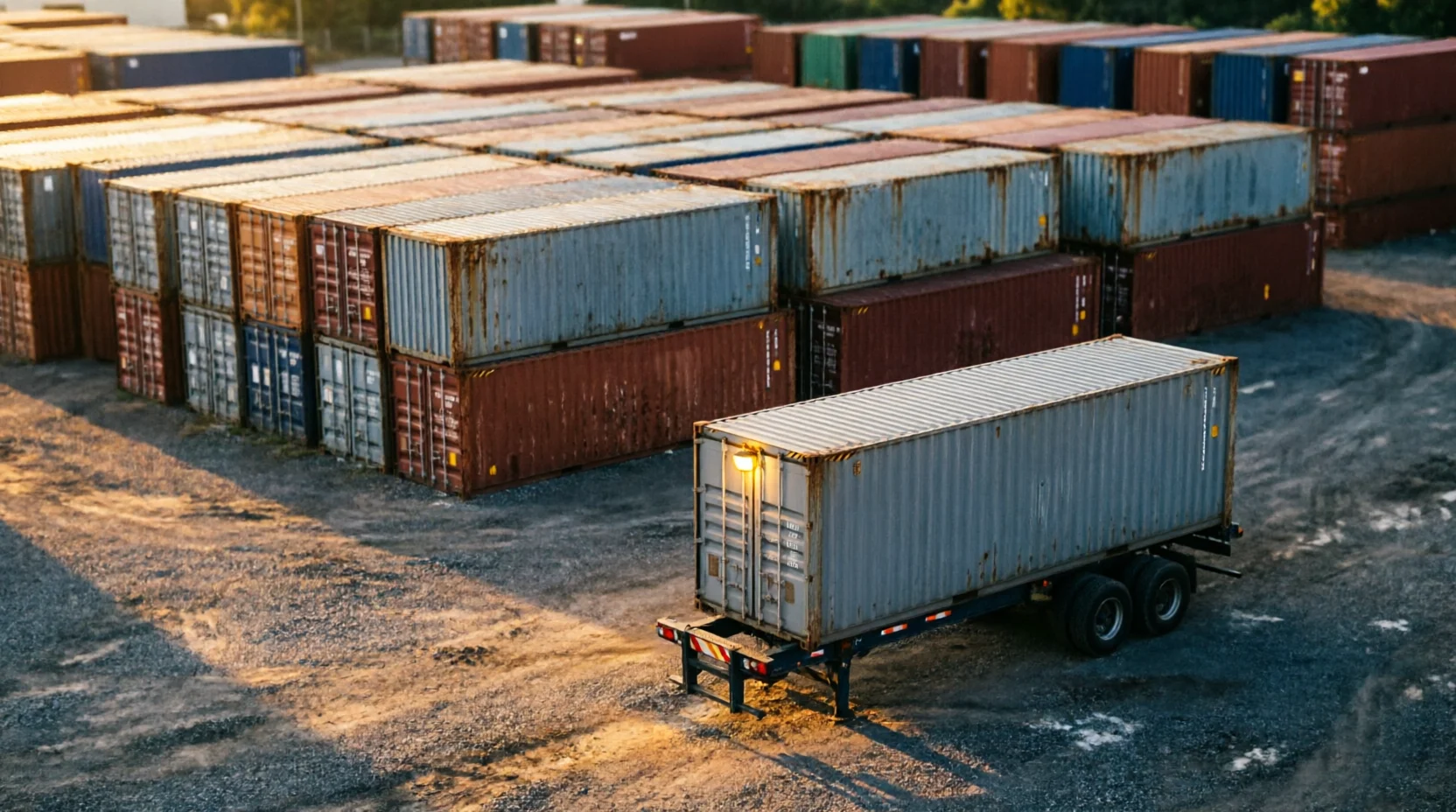
    Request a free time extension from the shipping line. During declared port congestion events, some Australian shipping line agents will grant free time extensions of 2–5 days on request. This is not guaranteed, but it costs nothing to request. Email the shipping line’s Australian agent (not the global carrier’s customer service) with your container number and a brief statement that the delay is port congestion. If granted, get the extension confirmed in writing.

    Prioritise documentation so you can move the container the moment it is available. Port congestion delays are often followed by a surge of container releases as the congestion clears. Importers who have their customs entry and DAFF biosecurity documentation pre-lodged are positioned to collect containers immediately on release. Importers who start their documentation after the container is available lose a further 1–3 days to declaration and clearance processing.

    Arrange overnight or weekend collection with your transport provider. Australian ports have extended operating hours and some offer weekend pickup during congestion periods. Pre-booking a confirmed pickup slot (including an out-of-hours option) positions you for the fastest possible departure once the container is released.

    Responding to an ABF Customs Hold

    An Australian Border Force customs hold is a formal intervention and must be treated as such. The contact protocol:

    Contact your licensed customs broker immediately. Your broker has access to the ABF Integrated Cargo System (ICS) and can view the exact reason for the hold. They can also lodge responses and queries through the ICS channels that are not available to importers directly. If you do not have a broker and filed your own import declaration, you can contact ABF directly on 1300 558 286, but the process is slower without ICS access.

    Identify the basis for the hold. Common ABF hold triggers: (a) documentation discrepancy, a difference between the import declaration values and the shipping documents; (b) goods subject to import prohibition or permit requirement; (c) suspected customs value understatement; (d) anti-dumping duty liability check; (e) random selection under ABF risk profiling.

    For documentation discrepancy holds: the broker can typically resolve these with a declaration amendment and supporting document upload (1–3 working days for standard amendments). Do not attempt to correct a duty value after ABF has already raised a query without seeking advice. Voluntary disclosure before a query is treated differently from a correction made in response to ABF scrutiny.

    For permit-required goods: if your goods require an import permit (firearms, certain chemicals, therapeutic goods, certain food items) and the permit was not obtained before importation, the ABF hold cannot be resolved until the permit is obtained or the goods are re-exported. Obtaining a permit post-arrival is possible for some goods categories but adds weeks to the clearance timeline. This situation is preventable with pre-import commodity research. The ABF prohibited goods list should be reviewed before every new product category is imported.

    A biosecurity examination area within an Australian bonded warehouse, a single pallet of cartons partially unwrapped under bright inspection lighting,

    Responding to a DAFF Biosecurity Hold

    DAFF biosecurity holds are the most process-intensive delay type. The response sequence:

    Confirm the DAFF hold with your broker and obtain the DAFF Direction or Notice. DAFF issues a direction to the importer (or their broker) specifying what examination or treatment is required. Read this direction carefully. It specifies whether the hold is (a) documentary only, (b) requires a physical inspection, or (c) requires treatment.

    For documentary holds (most common for food, chemicals, plant products): DAFF needs to verify biosecurity-relevant certificates: phytosanitary certificates, HACCP certification for food, treatment certificates. If these were not lodged with the import documentation, your broker can upload them through the Integrated Cargo System. Typical resolution time: 1–3 working days.

    For physical inspection: DAFF will arrange an inspection at the port container examination facility or at an approved biosecurity site. The cost is AUD 100–300 for the DAFF officer’s attendance plus any facility fees charged by the port. Typical resolution time: 3–7 working days including scheduling lag.

    For treatment required (ISPM 15 timber packaging failure is the most common): An approved treatment provider must fumigate the container with methyl bromide or provide an alternative approved treatment. Treatment provider costs: AUD 200–600 for fumigation of a standard 20ft container. Total delay including treatment, re-inspection, and clearance resubmission: 5–12 working days. During treatment, the container remains on-port and demurrage continues to accrue.

    Prevention of ISPM 15 treatment holds: require all suppliers to confirm that timber packaging (pallets, crating, dunnage) complies with ISPM 15: heat treated (HT mark) or fumigated (MB mark) with approved treatment. Make this a purchase order condition rather than a post-arrival verification. One ISPM 15 failure costs AUD 200–600 in treatment plus AUD 150–300/day in demurrage during treatment. Over a 12-month import program, one preventable treatment event per quarter costs AUD 1,400–3,600, compared to zero additional cost for requiring ISPM 15 compliance in the PO. Of all import shipment delays in Australia, ISPM 15 treatment holds are among the easiest to design out at the purchase order stage.

    Responding to a Documentation Error

    Documentation errors are the most preventable delay type and also the fastest to resolve if action is taken immediately. The response protocol:

    Identify the specific error. Your broker will identify the discrepancy. Typically: wrong HS code declared, unit quantity or weight mismatch between invoice and packing list, value declared incorrectly (CIF vs FOB), missing or expired certificate (origin, phytosanitary, ACMA), or import declaration lodged to the wrong entity (wrong ABN).

    Obtain corrected documents from the supplier immediately. For invoice or packing list errors, contact the supplier by phone (not email) and request the corrected document within 2 hours if the shipment is at the Australian port. A supplier who takes 48 hours to issue a corrected invoice while demurrage is accruing is costing you AUD 300–600 in port charges. This is worth escalating to the supplier’s management if the junior contact cannot produce the document promptly.

    Lodge the amendment through your broker. ABF declaration amendments for value corrections and document additions are processed through the ICS. Standard processing time for a simple amendment: 24–48 hours. For amendments involving duty recalculation (wrong HS code with different duty rate), the processing time may extend to 3–5 working days while ABF assesses the correct classification.

    Know which errors cannot be amended. An import declaration for prohibited goods cannot be amended to make the goods legal. The goods must be re-exported or destroyed. An import declaration with a false statement about the nature, origin, or value of goods is not corrected by an amendment. It may constitute a false declaration offence under the Customs Act 1901. For any documentation error that involves a possible customs value dispute or description misrepresentation, seek advice from your broker before lodging an amendment that may be treated as an admission.

    Rows of containers stacked in a storage yard at golden hour, one container conspicuously set apart on a chassis under a small overhead light as if awa

    Managing Demurrage and Detention Costs

    Demurrage and detention are the cost clock that runs in parallel with every delay. The faster you understand and manage these charges, the smaller the bill.

    Demurrage rates by Australian port and carrier (typical range, mid-2026):

    • Free time at port: 3–5 working days from wharf availability (varies by carrier and terminal)
    • Demurrage days 1–5 after free time: AUD 80–150/TEU/day
    • Demurrage days 6–10: AUD 150–250/TEU/day (escalating tier common among major carriers)
    • Demurrage days 11+: AUD 250–400/TEU/day at many carriers

    Cost example, 15-day DAFF treatment delay: Free time: 5 days. DAFF examination + treatment + re-inspection + clearance: 12 working days. Days past free time: 7. Demurrage at mid-tier rates (AUD 80 days 1–5, AUD 150 days 6–7): (5 × AUD 80) + (2 × AUD 150) = AUD 400 + AUD 300 = AUD 700. Plus DAFF inspection and treatment cost: AUD 400. Total delay cost on one container: AUD 1,100, from a preventable ISPM 15 compliance failure.

    Requesting demurrage waiver or credit: If the delay was caused by a carrier vessel delay (not the importer’s actions), it is reasonable to request a demurrage waiver for the days of delay caused by the carrier’s late arrival. Many carriers will waive demurrage for the period corresponding to vessel delay on request, but you must ask, with documentation of the vessel ETA versus actual arrival date. Carriers do not proactively waive demurrage; you must initiate the request.

    Detention management: Once you collect the container and begin unpacking, return the empty container to the nominated container park within the free return period. Track the empty return deadline on the day you collect the container. Detention charges for late empty return are typically the same rate as demurrage (AUD 80–250/day), and are charged directly by the shipping line against your credit account.

    Communicating During a Delay

    Delay management is as much a communication task as a logistics task. Stakeholders who receive no information during a delay make assumptions, usually the worst possible ones.

    Every delay this guide describes eventually produces two competing accounts: the one the carrier or broker gives when asked directly, and the one the tracking data and timestamps actually show. They rarely match exactly, and the gap between them is not usually deception. It is closer to institutional habit: a customer service desk trained to say “processing” long after the real cause is known internally, because “processing” requires no further explanation and no escalation. The importers who manage delays best are the ones who ask a second, more specific question when the first answer is vague, and who keep their own written timeline of what they were told and when. That timeline is what turns a disputed demurrage waiver request from a feeling into a documented case a carrier’s claims desk cannot easily wave off.

    Customer communication: If the delay will affect a committed delivery date, notify the customer within 24 hours of confirming the delay. Provide: (a) the new expected date with a confidence range (“we expect delivery between 15 and 18 July, most likely 16 July”); (b) the cause (at a level of detail appropriate for the customer relationship); (c) what you are doing to minimise the delay. Do not wait until you have certainty about the new date. Customers who receive timely uncertain information are easier to manage than customers who receive late certain information.

    Internal production/operations communication: Notify your production planner, warehouse manager, or inventory team of the revised delivery date as soon as you have a first estimate. A 5-day warning gives them options; a 0-day warning forces reactive decisions.

    Supplier communication: Contact the origin supplier if the delay involves documentation that the supplier must correct or provide. Be specific about what you need and by when. “Please send a corrected commercial invoice (the description must read ‘polypropylene safety helmets AS/NZS 1801’ not ‘hard hats’ and the declared value must be in AUD, not CNY) within 2 hours.” Vague requests to suppliers produce vague responses.

    A warehouse claims-desk corner with a closed hard-shell shipping case sitting beside a small desk lamp, soft directional light from one side, a second

    What Cargo Insurance Covers (and Does Not Cover) During a Delay

    A common misunderstanding among Australian importers is that cargo insurance covers business losses caused by a delayed shipment. Standard ICC cargo insurance does not.

    Under Institute Cargo Clauses (A), the broadest standard coverage, Clause 4.5 explicitly excludes: “loss, damage or expense caused by delay, even though the delay be caused by a risk insured against.” This means that if your goods are physically damaged during transit AND delayed, the insurance covers the physical damage but not the financial losses caused by the delay.

    The following losses from delays are typically NOT covered by standard cargo insurance:

    • Demurrage and detention charges
    • Lost sales revenue from missed delivery windows
    • Customer penalty clauses triggered by late delivery
    • Production shutdown costs from missing components
    • Expediting costs (premium air freight to partially substitute for delayed sea freight)

    Businesses with significant exposure to delay-related losses (particularly those with tight production schedules or customers with contractual delivery penalty clauses) should discuss contingency freight insurance or trade credit insurance with a specialist broker. These products are separate from standard cargo insurance and require individual underwriting based on the specific business risk.

    Swift Cargo manages cargo insurance and maintains relationships with marine insurance specialists as part of the freight program for commercial importers. Visit swiftcargo.solutions/australia to discuss how your freight program can be structured to minimise delay exposure and insurance gaps.

    Handling Import Shipment Delays in Australia

    Confirm the delay type with your forwarder, get a resolution timeline, and find the date free time expires, which for most importers is 5 working days from wharf availability. Then warn customers and your production team within 24 to 48 hours, keep a written timeline of what you were told, and remember that standard cargo insurance does not cover delay losses.

    Frequently Asked Questions

    Who do I contact first when my shipment is delayed in Australia?

    Your first call is to your freight forwarder or customs broker. They have access to the tracking systems, port records, and carrier communications that you do not, and they can identify the specific delay type within 30–60 minutes in most cases. If you do not have a forwarder (for example, you are using a supplier-arranged FOB shipment), contact the shipping line’s Australian agent directly with your bill of lading number. Do not contact the origin supplier about a delay until you have confirmed the delay type with your forwarder, as suppliers cannot resolve Australian customs or port issues from the other end of the supply chain.

    What is the difference between demurrage and detention?

    Demurrage is the charge applied when a container remains on the port terminal beyond the free time period, typically 3–5 working days after vessel arrival. It applies at the terminal and is charged by the shipping line (or their Australian agent) at rates of AUD 80–300 per container per day depending on the carrier and container size. Detention is the separate charge applied when you take the container off-port but do not return the empty box to the container park within the free return period, also typically 3–5 working days. Both charges accrue independently and can accumulate simultaneously if a container was both delayed on-port and then not returned promptly after unpacking. Shipping line free time periods and charge rates differ by carrier. Check the specific tariff for your shipment.

    Does my cargo insurance cover losses caused by shipping delays?

    Standard cargo insurance under ICC-A All Risk, ICC-B, and ICC-C does not cover financial losses caused by delay, including missed sale windows, lost contracts, demurrage costs, or customer penalties. The ICC clauses explicitly exclude delay losses under Institute Cargo Clauses (A), Clause 4.5: ‘loss, damage or expense caused by delay, even though the delay be caused by a risk insured against.’ If your business relies on just-in-time inventory or has penalty clauses with customers for late delivery, you need a separate business interruption or contingency freight policy, not a standard cargo insurance policy. Confirm coverage scope with your insurer or broker before assuming delay losses are covered.

    How long does a DAFF biosecurity examination take in Australia?

    A standard DAFF (Department of Agriculture, Fisheries and Forestry) documentary examination typically takes 1–3 working days. A physical inspection (X-ray or container examination) typically takes 3–7 working days. If treatment is required (for example, methyl bromide fumigation for timber packaging that fails ISPM 15 requirements), the treatment itself takes 1–2 days but scheduling the treatment provider and resubmitting for clearance can add a further 2–5 days. In total, a DAFF examination that requires treatment can delay clearance by 5–12 working days and cost AUD 200–800 for the treatment plus the port storage and demurrage that accrues during that period. Goods that present significant biosecurity risk and cannot be treated may be re-exported or destroyed at the importer’s cost.