Author: SwiftCargo Team

  • Damaged Shipment Australia Import Claims: The First 24 Hours

    Damaged Shipment Australia Import Claims: The First 24 Hours

    A damaged shipment is a business problem the moment it reaches your warehouse in Australia, whether the goods came in by sea or air import. The decisions you make in the first 24 to 72 hours after discovering the damage determine how much of your loss you can recover: from the carrier, from your cargo insurer, or both. Miss the notification window and your options narrow. Accept the delivery without noting the damage and the burden of proof shifts to you. Open everything before photographing and you weaken the surveyor’s report. Handling a damaged shipment: Australia import businesses that treat the first day as a documentation exercise, not a cleanup job, recover a materially larger share of the loss.

    Note: this guide focuses on what to do after damage has occurred. If you are looking at how damage happens and how to prevent it in the first place (packaging specifications, container condensation, CFS handling risk), that is covered in the companion guide at Why Shipments Get Damaged in Transit.
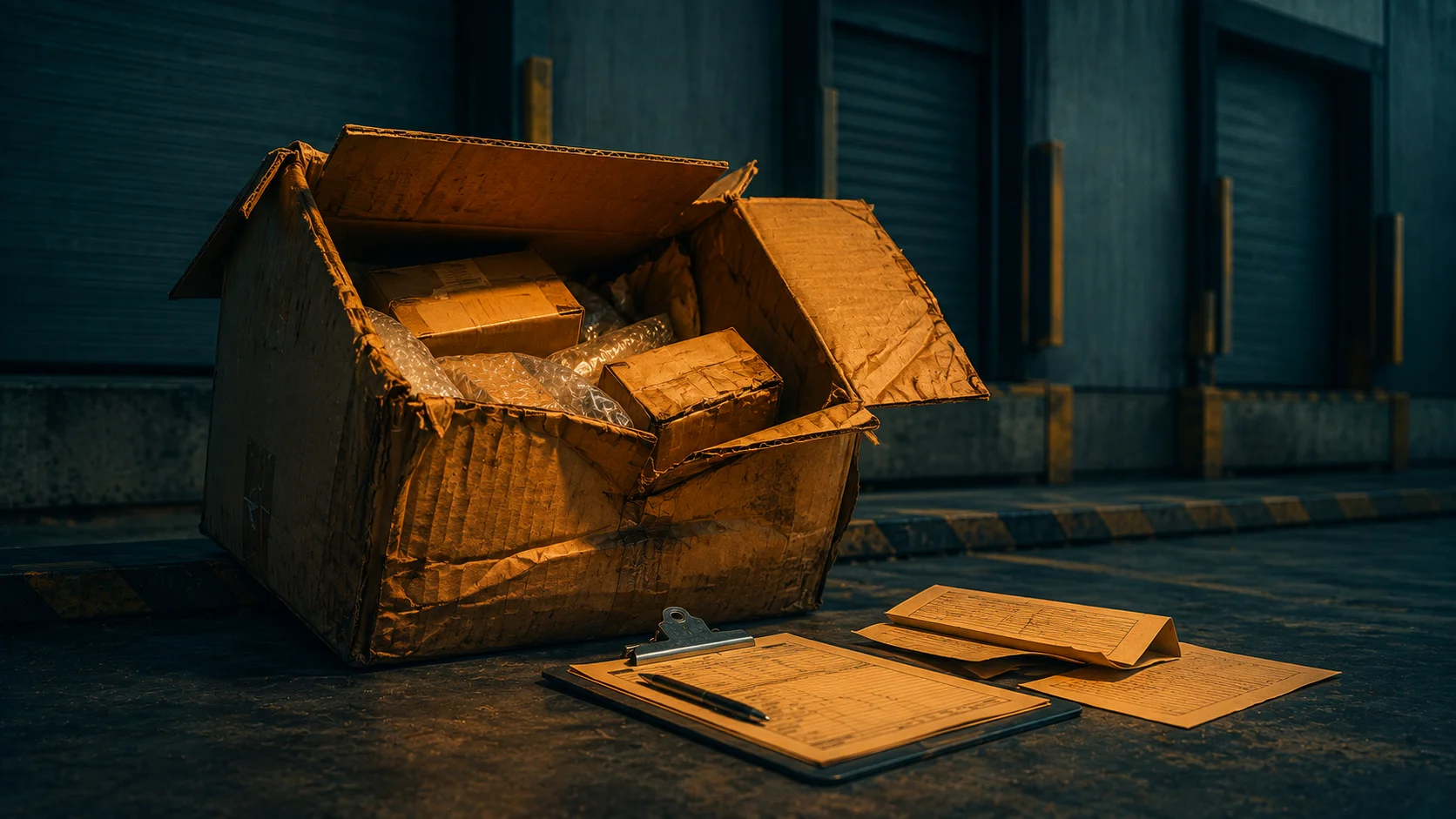
    Damaged Shipment? The Australian Importer’s Claim Guide

    The First 24 Hours: What Happens at Delivery

    The moment your goods arrive at the delivery point (warehouse, distribution centre, or store) is the most critical point in a cargo damage claim. What you do in the next few hours either locks in your evidence or surrenders it.

    Step 1: Do not sign the delivery receipt without notation. The delivery receipt (sometimes called the Proof of Delivery, POD, or CMR note for road transport) is a legal document. Signing it without exception is evidence that you received the goods in the condition described, and the carrier will argue that means “good order and condition.” If external packaging shows signs of damage (crushed cartons, wet marks, forklift punctures, open seals), write the description of that damage on the delivery receipt before you sign. Use specific language: “3 cartons crushed, external damage to carton 7, wet discolouration on carton 12”, not “possible damage” or “subject to inspection.” Specific notation is evidence; vague language is hedging that carriers dismiss.

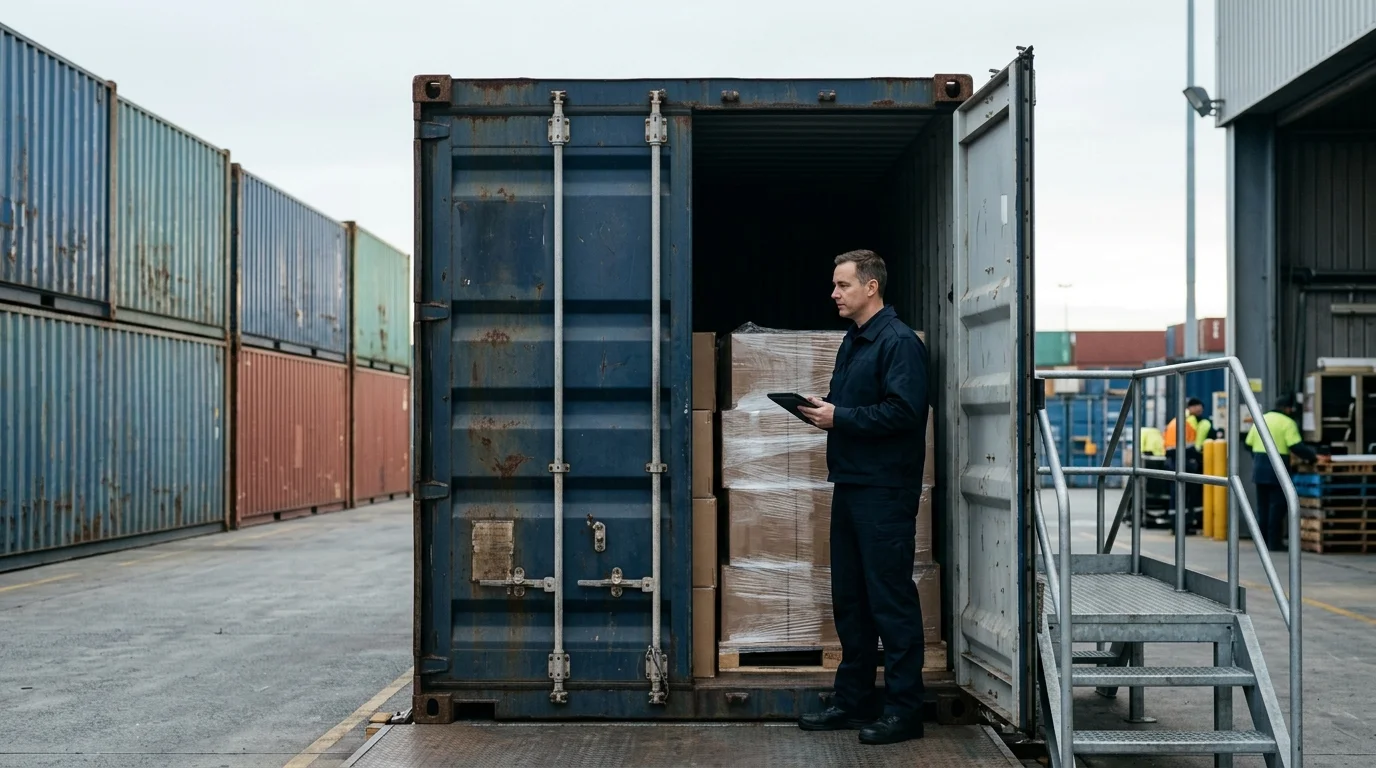
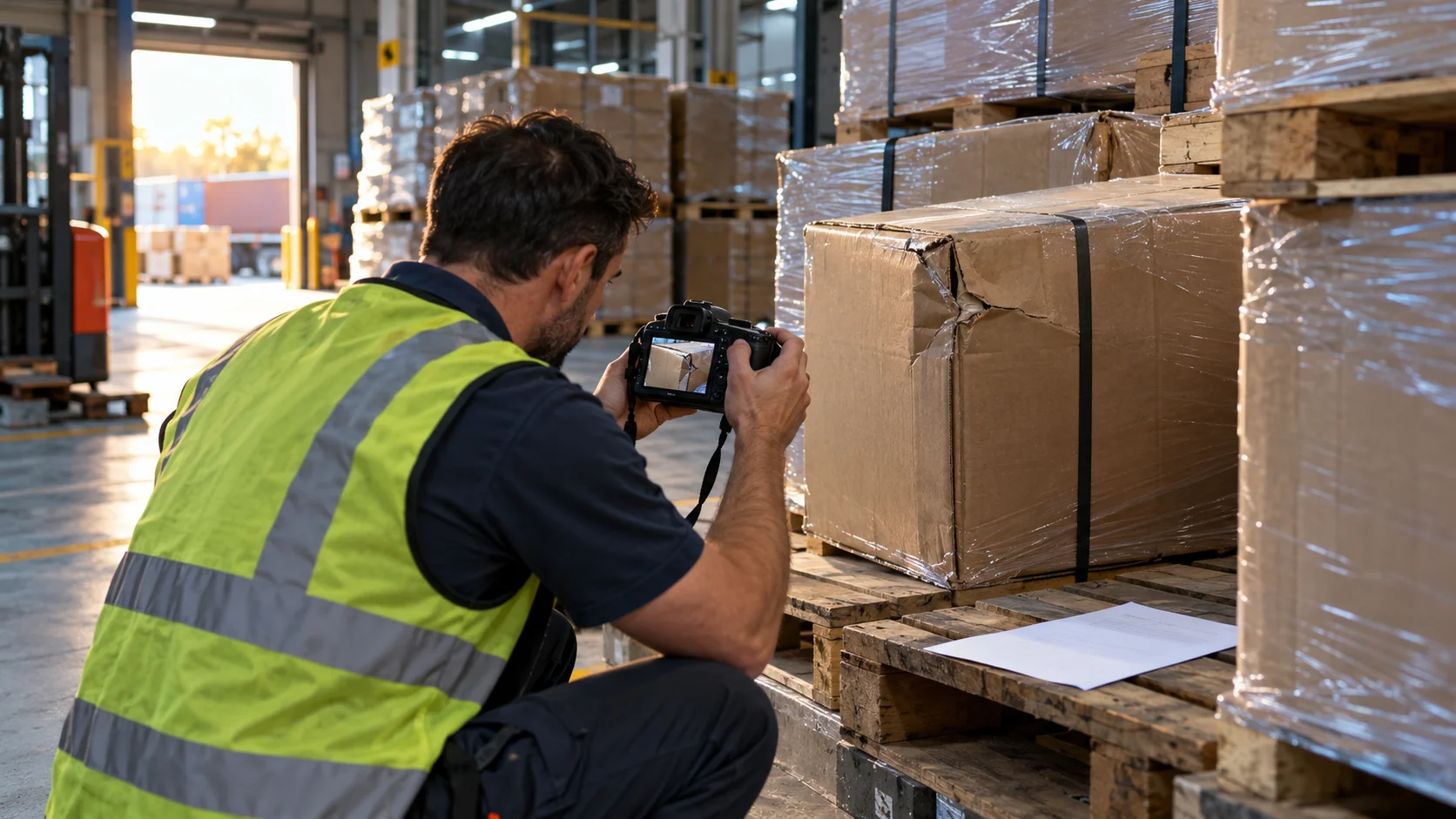
    Step 2: Photograph everything before unpacking. Take photographs of the container or truck at the point of delivery: open doors, cargo in situ, stacking arrangement. Then photograph each damaged carton before it is moved. Then photograph the carton being opened. Then photograph the damaged goods inside. This sequence proves the damage was present on delivery, before your warehouse team touched anything. A photograph of a damaged item sitting on a warehouse shelf (without the carton, without the delivery context) is far weaker evidence than a photograph sequence that follows the goods from the transport unit to the damaged item.

    Step 3: Preserve all packaging. Do not discard damaged cartons, packing materials, desiccants, or inner protective materials. These are physical evidence. Your marine surveyor will want to examine them to determine whether the packing was adequate (relevant to the carrier’s insufficiency defence) and to identify the mechanism of damage (crush damage vs. moisture damage vs. handling impact). Surveyor reports that lack packaging examination are weaker. Packaging that has been thrown in the skip before the surveyor arrives is gone.

    Step 4: Do not use, modify, or repair the damaged goods before the claim is settled. Using damaged goods before the insurance or carrier claim is settled complicates the valuation: you cannot claim replacement cost on goods that have been put into service. In some cases, your insurer may agree to a partial repair assessment (agreeing to pay repair costs rather than replacement costs), but this should be discussed with the insurer before any repair work begins. Unauthorised repair before claim settlement can void the insurer’s liability for the repair cost.

    Notifying the Carrier: Deadlines Under Australian Law

    Under the Carriage of Goods by Sea Act 1991 (COGSA 1991), which incorporates the Hague-Visby Rules into Australian maritime law, the carrier’s notification requirements are:

    • Apparent damage (visible at delivery): Written notice to the carrier must be given at the time of delivery. In practice, the damage notation on the delivery receipt serves this function, which is why correct notation at delivery is so important.
    • Non-apparent damage (not visible at delivery): Written notice must be given within three days of delivery. If you receive a shipment with externally undamaged packaging but discover damaged contents when unpacking, you have three days to notify the carrier in writing.

    Missing these notification windows does not automatically eliminate your claim, but COGSA 1991 states that failure to give timely notice creates a presumption of delivery in good order: the burden shifts to you to prove the damage occurred in transit. If you are within the deadline, the burden is on the carrier to prove the damage did not occur under their care.

    Written notification to the carrier should be sent by email (with read receipt) or registered mail. The notification should include: bill of lading number, container number or truck reference, description of damage as observed, and the fact that you are reserving your right to claim. Keep the carrier correspondence as part of your claim file.

    Note: carriers often have their own claim forms and submission windows in their terms and conditions, which may be shorter than the COGSA 1991 defaults. Check the bill of lading terms for any shorter contractual notification periods: terms that lessen carrier liability below the Rules are void under Article III rule 8, but follow the carrier’s process anyway.

    A marine cargo surveyor and a warehouse manager standing beside a single opened carton with a visibly dented corner, examining it together under bright but even inspection lighting, the rest of the surrounding shipment intact and orderly on shelving behind them.

    How Much the Carrier Actually Owes: The Hague-Visby Liability Cap

    The cap is set in Special Drawing Rights (SDR), the IMF’s unit of account:

    • SDR 667 per package: the per-package limit, which applies when goods are shipped as individual cartons or packages
    • 2 SDR per kilogram: the per-weight limit, which applies when it produces a higher figure than the per-package limit

    At mid-2026 exchange rates, SDR 1 ≈ AUD 2.03 (IMF: SDR valuation). This means the per-package cap is approximately AUD 1,354 per carton, and the per-kilogram cap is approximately AUD 4.06/kg.

    Worked example (electronics): You import 10 cartons of electronics. Each carton contains AUD 12,000 worth of goods and weighs 18 kg. The per-package cap is AUD 1,354 per carton. The per-kilogram cap is AUD 4.06 × 18 = AUD 73.08 per carton. The higher figure applies: AUD 1,354. For 10 damaged cartons, the carrier’s maximum liability is AUD 13,540, against a loss of AUD 120,000. The carrier owes approximately 11% of the actual loss.

    Worked example (furniture): You import 1 FCL container of furniture, declared at AUD 80,000. The goods are in 24 pallets. If the bill of lading describes “24 pallets” as the package count, the per-package cap applies to pallets: AUD 1,354 × 24 = AUD 32,496. If the goods are also heavy (say, 18,000 kg total), the per-kilogram alternative is AUD 4.06 × 18,000 = AUD 73,080. The higher figure applies: AUD 73,080 for total loss of the container. Against an AUD 80,000 declared value, the carrier covers 91% of the loss, a relatively favourable outcome for the Hague-Visby cap. But partial damage (say, AUD 20,000 of damage to 5 pallets weighing 3,750 kg) is capped at the higher figure, AUD 4.06 × 3,750 = AUD 15,225.

    Engaging Your Cargo Insurer: The Correct Sequence

    If you have cargo insurance (ICC-A All Risk or ICC-B/C), the claim sequence is:

    Notify the insurer promptly. Most ICC policies require notification within 3–7 days of discovering the damage. Check your policy’s specific wording: this is not a negotiable condition. Late notification that prejudices the insurer’s ability to investigate the claim (for example, by allowing you to alter or dispose of the damaged goods before a surveyor attends) can result in denial of the claim. Send the notification email and keep a copy of the send timestamp. This notification step is where most damaged shipment: Australia import claims are won or lost, since a late or vague notice gives the insurer grounds to dispute everything that follows.

    Request the insurer’s survey instructions before appointing a surveyor. For claims above approximately AUD 5,000, the insurer will want an independent marine surveyor to inspect the goods. Most insurers have a panel of approved surveyors in major Australian cities. Do not appoint a surveyor independently without checking with the insurer first: non-panel surveyors may produce reports that the insurer disputes on methodology grounds. In smaller cities or regional locations without a local approved surveyor, the insurer may authorise you to appoint a local trade surveyor.

    Submit the claim with complete documentation. A complete cargo insurance claim submission includes: (1) completed claim form; (2) original or copy bill of lading; (3) commercial invoice showing declared/insured value; (4) packing list; (5) delivery receipt with damage notation; (6) photograph sequence (delivery, unpacking, damaged goods); (7) surveyor’s report; (8) repair or replacement cost evidence; (9) any correspondence with the carrier about the damage; (10) a written narrative of what happened and when you discovered it.

    Understand subrogation. Once your insurer pays your claim, they acquire the right to pursue the carrier for the portion of the loss within the carrier’s liability cap: this is called subrogation. Your insurer pursues the carrier in their own name; you do not need to manage that process. Cooperation with the insurer’s subrogation proceedings is a standard policy condition: if your insurer asks you for documents or witness statements to support their recovery from the carrier, you are required to provide them.

    A marine surveyor in plain workwear photographing a damaged furniture item from several angles inside a controlled warehouse bay, a camera flash softly illuminating the

    When to Engage a Marine Surveyor Directly

    If you do not have cargo insurance, or if the insurer is disputing the claim, you may need to engage a marine surveyor independently to support a direct carrier claim.

    A marine surveyor’s report for a cargo damage claim typically covers: the physical condition of the goods at the time of inspection; the packaging condition (relevant to the insufficiency defence); the apparent cause of damage (crush load, moisture, handling impact); an assessment of the pre-damage value and post-damage value; the repair cost or replacement cost estimate; and any opinion on carrier liability based on the facts observed.

    The cost of a marine survey in Australia ranges from approximately AUD 800 (small desktop survey with photographs) to AUD 3,500+ (on-site inspection of a full container’s contents). For claims of AUD 10,000 or more, the survey cost is typically justified. For claims below AUD 3,000 against a carrier with an SDR cap well below the loss value, the economics of paying AUD 1,500 for a survey to recover a capped AUD 1,354 are questionable: in those cases, a written demand to the carrier with your own photographic evidence and replacement quotes is often more efficient.

    Quantifying the Loss: Replacement Cost vs. Market Value

    How you quantify the loss determines the maximum amount you can recover. There are three approaches, and they produce different figures:

    Replacement cost: What does it cost to buy equivalent goods today to replace the damaged goods? This is the standard basis for cargo insurance claims under ICC policies and is the most favourable method for the claimant when goods have appreciated in value since purchase or when landed costs (duty, freight) add significantly to the replacement cost. For goods imported into Australia, the replacement cost includes the import cost: the freight, duty, and landed charges to replace the goods, not merely the ex-works supplier price.

    Invoice value (CIF): The price stated on the commercial invoice, which on CIF terms includes cost, insurance and freight. Australian duty is assessed on the FOB customs value, not CIF. Many cargo insurance policies insure the CIF value plus 10% as a standard uplift (CIF × 1.10). If your goods have increased in market value since purchase, invoiced CIF value may understate the true loss.

    Market value in Australia: The selling price of equivalent goods in the Australian market. For commercial importers selling into the retail or wholesale market, the market value typically exceeds the landed cost, but insurers pay the cost to the claimant (CIF + 10%), not the claimant’s profit margin on the goods. Loss of profit due to inability to fulfil orders because of damaged goods is generally not covered by standard cargo insurance and requires a separate business interruption or contingency policy.

    Partial loss assessment: Where only part of the shipment is damaged, the loss is assessed proportionally. A shipment of 100 units where 15 are damaged to destruction is typically assessed at 15% of the insured value, assuming the undamaged 85 units are of full value. Where damage affects the whole shipment’s marketability (contamination, for example, that means the entire batch must be quarantined regardless of visible damage to individual units), the loss basis may be adjusted to total or near-total loss depending on the surveyor’s assessment.
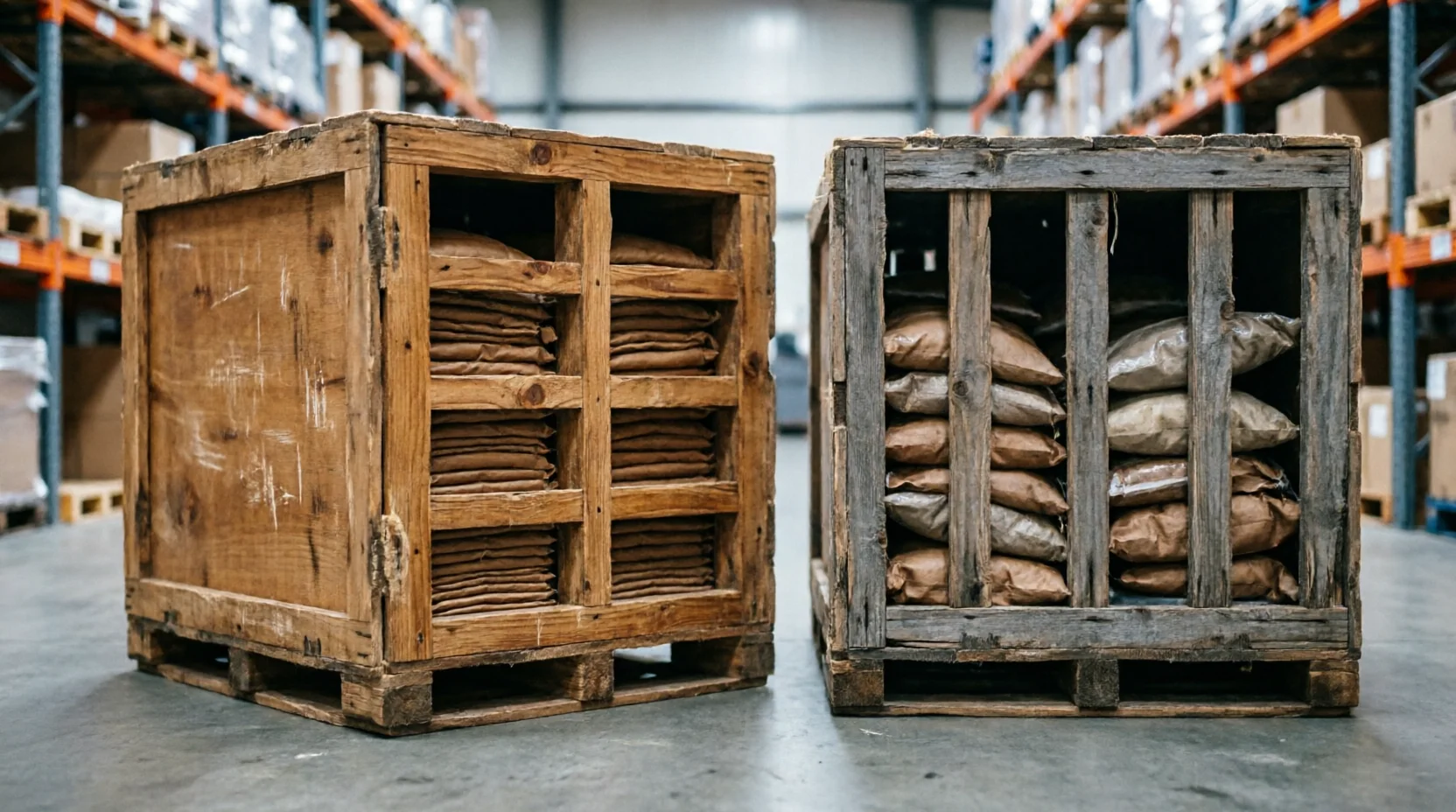
    A close comparison of two packing crates side by side in a warehouse — one with thick, structured internal bracing visible through a partially open panel, the other more loosely packed — photographed under even daylight to let the construction difference read naturally without any labels.

    The Insufficient Packing Defence: How to Rebut It

    The single most common carrier defence to a cargo damage claim is Article IV Rule 2(n) of the Hague-Visby Rules: insufficiency of packing. If the carrier successfully establishes this defence, their liability reduces to nil, not merely to the SDR cap.

    The defence requires the carrier to prove that the packing was insufficient for the ordinary risks of sea carriage for that type of goods. Industry standards for packing are the key battleground. For most commercial goods in cartons, the relevant standards include:

    • Carton stacking strength: minimum 400 kPa (approximately 7.2 kgf/cm² ECT) for standard goods. Heavier stacking requires higher ECT ratings.
    • Inner cushioning: adequate void fill and cushioning to prevent goods moving within the carton under normal sea freight vibration and impact
    • Moisture protection: PE wrap or moisture barrier for goods susceptible to humidity damage, especially for shipments with long ocean transit or transshipment at tropical ports
    • Pallet specification: for palletised goods, pallet condition (no broken boards), stretch wrap securing cartons to the pallet, corner protectors where required

    To rebut the carrier’s insufficiency defence, you need evidence that your packing met these standards. The best evidence is: a packing specification in the purchase order that your supplier was required to comply with; a pre-shipment inspection report confirming packing compliance; and a marine surveyor’s report that examines the packaging at your end and concludes the packing was adequate.

    If your purchase order has no packing specification (if you simply ordered goods and accepted whatever packing the supplier chose), you are in a weaker position to rebut the insufficiency defence. The practical lesson: specify packing standards in every purchase order for goods you intend to ship by sea.

    Everyone treats the insufficient packing defence as though the carrier has already won once they raise it. That is backwards. Article IV Rule 2(n) puts the burden of proof on the carrier, not on you, and most carriers who invoke it never actually produce evidence that your specific packing failed a specific standard. They assert the defence and wait to see if you concede. The contrarian move is to do nothing except ask, in writing, for the packing standard the carrier claims you violated and the survey report proving your cargo failed to meet it. A large share of insufficient packing defences are dropped at exactly that request, not because the carrier was wrong about your packing, but because building the actual proof costs them more than the claim is worth.

    Realistic Timelines: How Long a Cargo Damage Claim Takes

    Australian importers often underestimate how long a cargo damage claim takes to resolve. Planning the business response around realistic timelines prevents compounding the initial loss with stock shortages, delayed production schedules, or rushed reorders at premium cost.

    Simple claim with cargo insurance (claim under AUD 20,000, clear documentation, cooperative insurer): Surveyor appointment within 5–10 business days of notification. Surveyor report issued 5–15 business days after inspection. Insurer assessment and settlement offer: 15–30 business days after receiving the complete claim file. Payment: 5–10 business days after settlement agreement. Total: 6–12 weeks from the date of discovery of damage to payment received, if your documentation is complete and the insurer does not dispute liability.

    Complex claim with cargo insurance (claim over AUD 50,000, carrier liability dispute, counter-arguments about packing adequacy): Add 4–12 additional weeks for dispute resolution, legal correspondence between your insurer and the carrier’s P&I club, and potentially formal arbitration under the contract of carriage terms. For claims involving total loss of a full container, it is not unusual for the final settlement to take 6–9 months from date of damage to final payment.

    Direct carrier claim without insurance: Carriers are motivated to minimise and delay direct claims. Initial liability denial is common. Expect 3–6 months for a simple claim and 12 months or more for a disputed claim. The one-year Hague-Visby time bar adds urgency: if the claim is not resolved within a year and you have not obtained a written time bar extension from the carrier, your claim extinguishes by operation of law regardless of its merits.

    Business continuity during the claim period: Do not wait for the insurance settlement before reordering stock to replace damaged goods. The claim will reimburse the documented loss; it will not reimburse business losses from not having stock available during the claim period (unless you have a separate contingency policy). File the insurance claim, document the loss, and reorder stock on the basis that the insurance will ultimately reimburse the replacement cost. Coordinate the timing with your insurer so the replacement purchase is documented as part of the claim if needed.

    A small business owner reviewing paperwork alone at a warehouse office desk in early morning light, a single affected carton visible on a shelf in the middle distance behind them, out of focus.

    Recovery Without Cargo Insurance

    If you do not have cargo insurance and are pursuing the carrier directly, the process is: written notification to the carrier within the COGSA 1991 deadlines; compilation of your claim documentation; submission of a formal claim letter to the carrier’s P&I club or claims department; and negotiation of a settlement figure within the Hague-Visby cap.

    Carriers rarely pay claims without negotiation. Common carrier positions: the claim is out of time; the damage was pre-existing; the packing was insufficient; the quantity is disputed. Each of these can be rebutted with the right documentation, which is why the delivery notation, the photograph sequence, and the surveyor’s report matter so much.

    The Hague-Visby time bar is one year from the date of delivery (or the date the goods should have been delivered). Claims filed after one year are extinguished unless the carrier has agreed in writing to extend the time bar. Mark the one-year deadline in your records from the moment you discover the damage.

    Swift Cargo can connect you with cargo insurance providers and marine surveyors as part of your import freight program. If you are shipping goods into Australia without cargo insurance, visit swiftcargo.solutions/australia to discuss your freight arrangement: the cost of a single uninsured damaged container typically exceeds the cost of two to three years of cargo insurance premiums.

    Damaged Shipment: Australia Import Recovery Checklist

    Note the damage on the delivery receipt before signing, photograph in sequence before unpacking, preserve every piece of packaging, and notify both the carrier and your insurer inside their respective deadlines. Handled this way, a damaged shipment: Australia import claim moves through survey and settlement in weeks rather than dragging on for months over a documentation gap that was avoidable on day one.

    Frequently Asked Questions

    How long do I have to notify the carrier of damaged goods in Australia?

    Under the Carriage of Goods by Sea Act 1991 (COGSA 1991), which incorporates the Hague-Visby Rules into Australian law, the standard notification requirement for apparent damage is immediate written notice at the time of delivery. For damage not apparent at delivery, written notice must be given within three days. Failure to give notice within these timeframes does not extinguish your claim, but it shifts the burden of proof: the carrier is presumed to have delivered the goods in good order unless you can prove otherwise. In practice, most cargo insurance policies also require notification to the insurer within 3–7 days of discovery of damage. Check your policy’s specific notification requirement, as missing the insurer deadline can void the insurance claim entirely.

    Should I claim against the carrier or my cargo insurance first?

    For most practical purposes, claim against your cargo insurer first. The carrier’s liability under the Hague-Visby Rules is capped at SDR 667 per package or 2 SDR per kilogram (whichever is higher): at current exchange rates, approximately AUD 1,350 per package or AUD 4.05 per kilogram. For any commercial shipment with goods worth more than AUD 1,350 per package, the carrier’s liability cap means you can only recover a fraction of the loss from the carrier alone. Cargo insurance (especially ICC-A All Risk) covers the full declared value minus any applicable excess. Your insurer will then pursue subrogation against the carrier for the portion of the loss within the carrier’s liability limit. You keep the insurance payout; the insurer recovers from the carrier in its own name.

    What documents do I need to make a cargo damage claim in Australia?

    A complete cargo damage claim requires: (1) the original Bill of Lading or Sea Waybill; (2) the commercial invoice showing the insured value of the goods; (3) the packing list as loaded at origin; (4) the delivery receipt or Proof of Delivery (POD) showing the damage notation you made at the time of delivery: this is the most critical document; (5) photographs of damage taken before, during, and after unpacking; (6) a marine surveyor’s report if the claim value exceeds AUD 5,000; (7) any written correspondence with the carrier or freight forwarder about the damage; (8) repair or replacement cost quotes from qualified tradespeople or suppliers. Missing any of these documents does not automatically defeat a claim, but each gap weakens your negotiating position with both the carrier and the insurer.

    The carrier says the damage was caused by insufficient packing. What does that mean for my claim?

    The Hague-Visby Rules provide an exemption to the carrier’s liability for damage caused by insufficient packing. This is Article IV Rule 2(n): ‘insufficiency of packing.’ If the carrier successfully argues that the goods were inadequately packed for normal sea freight conditions, their liability reduces to zero, not merely to the SDR cap, but entirely. This is the carrier’s most commonly raised defence for cargo damage claims. To rebut it, you need evidence that the packing met industry standards: carton stacking strength (minimum 400 kPa / 7.2 kgf/cm ECT for standard goods), moisture barriers, inner cushioning, and pallet specifications. If the goods were packed by the supplier under your purchase order, your purchase order should specify packing standards, and the surveyor’s report should address whether the packing was adequate. A vague packing list with no specification gives the carrier room to argue insufficiency.

  • Seven Physical Mechanisms Cause International Shipping Damage, and Most Are Preventable

    Seven Physical Mechanisms Cause International Shipping Damage, and Most Are Preventable

    We have been based in Bangkok for fourteen years, and in that time we have seen every variety of freight damage that international shipping produces. The damaged furniture that arrived from a Melbourne consolidation point with forklift tine marks through the side panels. The electronics consignment that arrived at Laem Chabang with water stains across the carton tops, condensation that had accumulated over three weeks at sea and dripped from the container ceiling the entire voyage. The personal effects move where the owner had packed everything carefully in their Sydney home, and the goods arrived in Chiang Mai with broken items that were not broken when they left. Between them, those three shipments show the common causes of shipping damage at work: forklift handling, container condensation and breakage in transit.

    Damage in international shipping is not primarily caused by storms at sea or reckless carriers. It is caused by a predictable set of conditions (packaging failures, condensation physics, CFS handling, load shift) that can be identified before a shipment leaves and largely prevented by addressing them at the origin stage.

    If your cargo has already arrived and you are dealing with damage right now, the claims process and documentation deadlines matter more than the mechanism. See cargo damage claims and prevention for what to do in the first 24 hours. What follows here is the mechanism itself: why this happens, mode by mode, and the specific measures that prevent it.

    Seven Physical Mechanisms Cause International Shipping Damage, and Most Are Preventable

    Seven Mechanisms That Damage International Shipments

    International freight damage can be categorised into seven distinct mechanisms. Which mechanism is most likely for a given shipment depends on the goods, the packaging, the mode, and the trade lane. That determines which prevention steps matter most.

    1. Packaging failure under static load: cartons crushed by the weight of goods stacked above them in a container or on a pallet. It’s the most common cause of damage in FCL sea freight.

    2. Container condensation (container rain): moisture that forms inside the container as it transits between temperature zones, drips onto goods, and causes water damage, mould, or corrosion. It’s most common on routes that cross major temperature differentials.

    3. Load shift: goods moving inside the container during transit due to vessel motion or road vibration. It causes impact damage when goods collide with each other or with the container walls.

    4. CFS handling damage: physical damage caused by forklift operations, manual handling, and pallet stacking during consolidation or deconsolidation at a container freight station. It’s the primary risk for LCL shipments.

    5. Moisture intrusion: water entering the container through damaged door seals, holes in packaging, or inadequate moisture barriers. It’s distinct from condensation in that the moisture source is external rather than internal.

    6. Examination damage: goods that are physically inspected by customs authorities and not repacked correctly. A carton that is opened, searched, and roughly resealed is more likely to arrive at the consignee with visible damage than a carton that was never opened.

    7. Mishandling at warehouse interfaces: forklift damage at the origin warehouse when loading, at the port terminal, at the destination CFS or deconsolidation point, and at the consignee’s warehouse during final delivery. Each handling event is an opportunity for damage.

    For most commercial shipments, mechanisms 1, 2, and 4 are responsible for the majority of damage claims. For personal effects moves, mechanisms 1, 3, and 7 dominate.

    Sea Freight Damage: Container Loading, Stacking, and Moisture

    In a loaded sea freight container, the goods on the bottom of each stack bear the combined weight of everything above them. A standard 40ft container can hold 28–30 tonnes of cargo, distributed across its floor area. Cartons at the bottom of a 6-high stack on a 1.2m pallet are bearing more compressive load than they were designed for if the packaging specification assumed 3-high stacking in a domestic warehouse.

    The failure mode is predictable: the carton walls collapse inward, the goods inside are crushed or deformed, and the damage is only discovered when the container is unpacked at the destination CFS or the consignee’s warehouse. By that point, the origin packaging failure is days or weeks behind the shipment.

    The packing standard that prevents this: cartons must be specified by the importer on the purchase order with an explicit stacking strength requirement (expressed in kilograms of top-load capacity) that accounts for the maximum expected stacking height in a container. For goods shipped in standard cartons from China to Thailand, a minimum of 180 kg top-load capacity is a reasonable starting point for goods that will be palletised and double-stacked. Fragile goods, or goods with high density, require individual assessment.

    Void fill inside the carton matters for impact protection but not stacking strength. A well-filled carton that is structurally weak will still fail under stacking pressure. The carton wall and corner integrity are the load-bearing elements; void fill protects the goods from shifting inside a carton that has already failed to protect them from stacking load.

    Container condensation is the damage mechanism that surprises importers who thought their packaging was adequate. A shipping container loaded in Bangkok in June (ambient temperature 35°C, relative humidity 80%) crosses to Sydney in July, where the vessel encounters ambient temperatures of 12–18°C as it moves south. The air inside the container, saturated with moisture at tropical temperatures, cannot hold that moisture at colder temperatures. The excess moisture condenses on the container’s steel walls and ceiling (which are the coldest surfaces) and drips onto whatever is below.

    The moisture source is not only the air. Timber pallets, wooden dunnage, cardboard cartons, and natural fibre goods all release moisture as humidity changes. A 40ft container loaded with goods packed in unconditioned cardboard on green timber pallets can generate several litres of condensation over a 3-week voyage. Containers are not waterproof inside: they are steel boxes designed to be weathertight from external water, but internal condensation is not an external problem.

    To prevent this, address both moisture sources:

    • Desiccants: silica gel packets placed inside the container absorb moisture from the air during the voyage. Minimum quantity: 1 kg of silica gel per 10 CBM of container space; for hygroscopic goods (textiles, leather, paper, food), increase to 2–3 kg per 10 CBM. Desiccant bags are hung from container walls or placed on top of cargo, not buried inside cartons.
    • Kiln-dried timber: pallets and dunnage made from kiln-dried timber release less moisture than green or air-dried timber. Kiln-drying alone does not satisfy the ISPM 15 biosecurity requirement for Australian imports: the timber must be heat treated to the ISPM 15 schedule (56°C at the core for 30 minutes) and carry the IPPC mark.
    • Polyethylene wrapping: wrapping palletised goods in stretch film or shrink wrap before loading adds a moisture barrier that prevents condensation droplets from reaching the goods even if they form on the container ceiling.
    • Ventilated containers: available as a specialist equipment type, these containers have vents in the walls that allow air circulation and reduce the temperature differential between the container interior and exterior. Suitable for goods that can tolerate airflow (coffee, cocoa, spices, some foods) but not for goods that require controlled humidity.
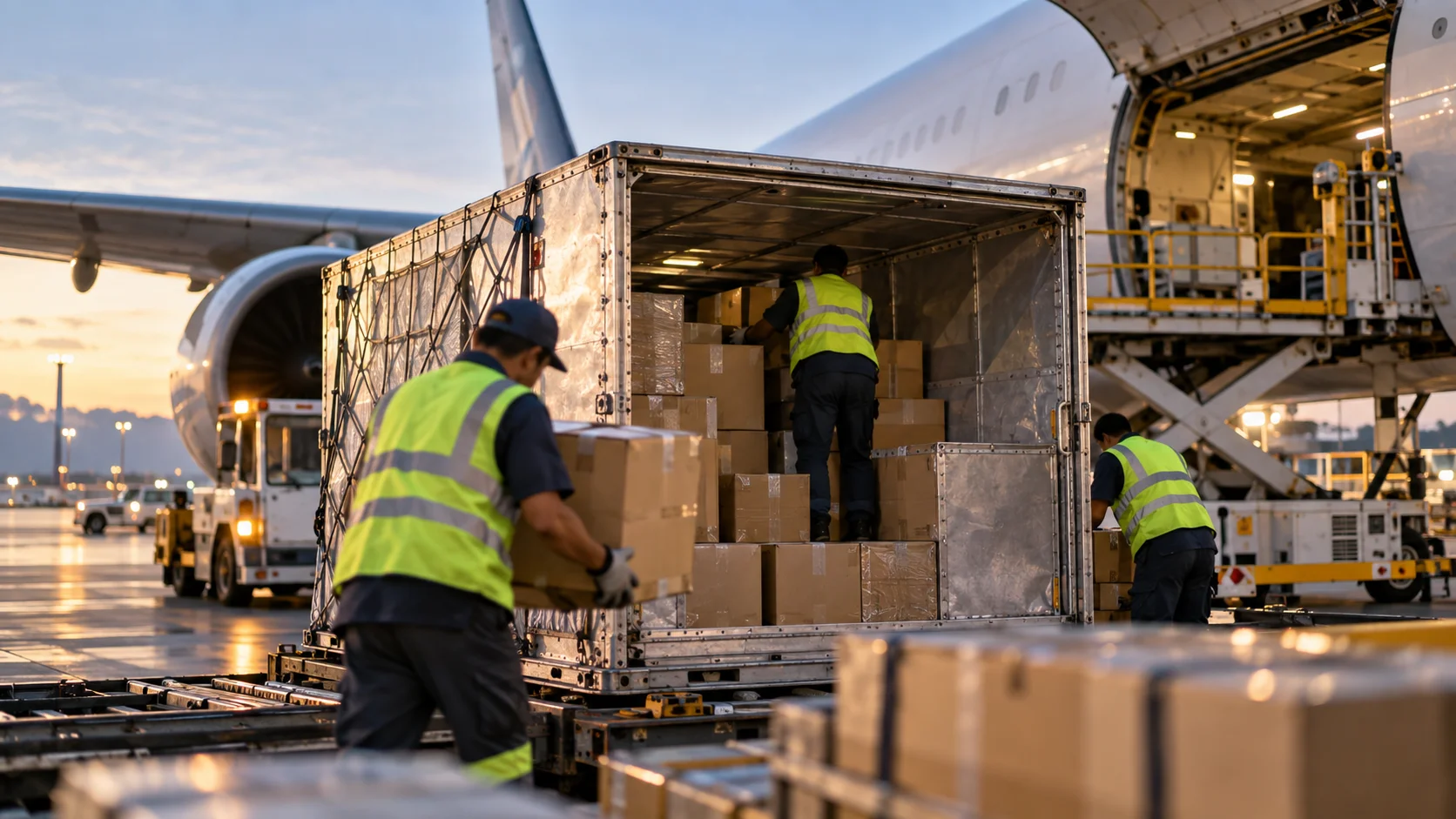
    Photorealistic documentary-style shot at an air cargo terminal: an aluminium ULD (Unit Load Device) mid-build, ground handlers stacking cartons into it, an aircraft

    Air Freight Damage: Handling and the ULD Environment

    Air freight damage occurs at different points in the chain than sea freight damage. The transit itself (in the pressurised hold of a passenger or freighter aircraft) is a controlled environment. Temperature and pressure in the hold are maintained at levels suitable for most cargo. The damage events in air freight happen at the ground handling interfaces.

    Air cargo is built into Unit Load Devices (ULDs), aluminium containers or pallets designed to fit the aircraft’s cargo hold geometry. Goods arrive at the cargo terminal, are accepted and screened, and are then assembled into these units by ground handling agents. Building a ULD means stacking goods to its weight and volume limits. Cartons at the base of a ULD build bear the load of everything above them, and ground handlers building ULDs are working at speed.

    The specific damage risk for air freight: goods packed in cartons designed for road or sea transit are not necessarily sized for efficient ULD loading. Cartons that leave voids in the ULD build are filled with other cargo; cartons that protrude beyond the ULD profile are compressed. The result can be crush damage on the carton faces that contact adjacent cargo or the ULD wall.

    For Bangkok’s Suvarnabhumi airport, goods arriving as general air freight are handled by THAI Cargo or Bangkok Flight Services (BFS) depending on the airline. For express courier (DHL, FedEx, UPS), the handling is tighter and more controlled, which is one reason express courier damage rates are lower than general air freight. The courier envelope is also the primary packaging, not an afterthought.

    For high-value or fragile goods shipped by air, individual carton marking (THIS WAY UP, FRAGILE, HANDLE WITH CARE) protects the goods only marginally. The more effective intervention is carton design. Size the carton to fit a ULD build efficiently and cushion it internally against the compressive force of ULD loading: a carton built this way performs better than one marked fragile that collapses under compressive load regardless of the label.

    CFS Handling: The LCL Risk That Most Importers Underestimate

    LCL (Less-than-Container-Load) shipments are consolidated with other importers’ cargo at an origin CFS, loaded into a shared container, deconsolidated at a destination CFS, and stored there until the individual consignees arrange collection. A single LCL consignment is typically handled at minimum four times before the importer collects it: at the origin CFS when consolidated, during container loading, during container unloading, and at the destination CFS when deconsolidated.

    Each handling event is an opportunity for forklift damage, improper stacking, or carton crushing. TT Club loss prevention data consistently identifies CFS and warehouse handling among the leading contributors to cargo claims globally. At the destination CFS in Thailand (Laem Chabang’s CFS facilities handle large volumes of LCL cargo from Australia, China, and Europe), consignments wait for the container to complete customs clearance and for the deconsolidation process to work through all the cargo in the container. During this wait, cartons are stacked in the CFS shed, often not under controlled conditions. That is why CFS handling ranks among the common causes of shipping damage for LCL cargo in particular.

    The CFS risk is asymmetric: a damaged carton in a consolidated container means that one importer’s goods were damaged by another’s poorly packed cargo sharing the same space, or by CFS forklift operations that the importer had no visibility over. When this happens, photographic evidence of the damage condition at the CFS is critical for insurance claims. Damage noted on the delivery receipt is the documentation that supports the claim; damage discovered after collection with no CFS evidence is significantly harder to claim.

    Mitigation for LCL shipments:

    • Pallet all cartons: palletised LCL cargo is handled as a unit (forklift under the pallet) rather than as individual cartons (manual stacking). This reduces the number of individual handling events and reduces the risk of cartons being placed under heavy cargo by CFS workers who are consolidating multiple consignments.
    • Sturdy outer packaging: use double-wall cartons for anything fragile, or timber crating for anything that cannot absorb forklift incidental contact.
    • Corner protectors and edge boards: protect carton corners from forklift tine contact and pallet band crushing

    High-Risk Conditions by Trade Lane and Season

    Some routes and seasons produce higher damage rates than others.

    Australia to Thailand (sea freight, LCL): The routing from Australian ports to Laem Chabang typically transships at Singapore. This adds one additional container manipulation (transshipment) to the standard sea freight journey. LCL cargo may also change CFS at Singapore during transshipment. That adds two more handling events. For fragile LCL cargo from Australia, this route has above-average handling exposure compared to direct port-to-port services.

    China to Thailand (sea freight, direct): The Shanghai-Laem Chabang and Guangdong-Laem Chabang services are short (5–9 days ocean transit), which reduces condensation exposure compared to longer routes. The primary risk on this lane is CFS handling in both countries and load quality at the Chinese origin CFS, where consolidation standards vary by facility and operator.

    Monsoon season (June–October, Bay of Bengal): The monsoon season affects the Bay of Bengal routing used by some services from South Asia and the Indian subcontinent. For Thailand-origin or Thailand-bound cargo, the more significant monsoon effect is on inland transport within Thailand. Roads in northern Thailand and the Mekong region can be affected by flooding during the monsoon, adding transit time and road condition risk for inland delivery from Laem Chabang to Chiang Mai or beyond.

    Q4 peak congestion (October–December): Port congestion during the Q4 peak shipping season extends container dwell times at terminals and CFS facilities. Longer dwell time means more handling events and more exposure to storage conditions. For temperature-sensitive goods, extended CFS storage during Thai wet season can compound moisture risk.

    Packing Standards That Prevent Damage

    Damage prevention begins at the supplier’s packing bench, not at the port. The most effective intervention is issuing a written packaging specification with every purchase order and verifying compliance via pre-shipment inspection before the container is sealed.

    A complete packaging specification for international sea freight should address:

    Carton strength: specify the minimum bursting test (kPa) or edge crush test (ECT) value for cartons, based on the goods weight and the maximum expected stack height. For most commercial goods going into sea freight containers, a minimum 400 kPa bursting test or 7.2 kgf/cm ECT is appropriate; heavier goods or taller stacking heights require stronger cartons.

    Inner packaging: specify the void-fill material (polyethylene foam, bubble wrap, kraft paper, air pillows) and the minimum clearance between the goods and the carton wall on each face. For fragile goods, a minimum 5 cm of cushioning on all six faces prevents goods from impacting the carton wall during transit vibration.

    Moisture protection: for goods sensitive to moisture (electronics, leather, textiles, paper), specify that each carton contains a moisture-barrier lining (polyethylene bag or liner) in addition to any outer carton wrapping.

    Pallet specifications: specify pallet dimensions (1200×1000 mm or 1200×800 mm, depending on container floor width optimisation), maximum weight per pallet, and whether pallets must be kiln-dried/ISPM 15 treated. Specify whether goods should be stretch-wrapped to the pallet and to what height. An unwrapped pallet of cartons in an LCL CFS is a stable surface for someone else to stack their cargo on top of. The wrapping makes it one unit.

    Marking requirements: cartons should be marked on two adjacent sides with consignee name, PO number, carton number (e.g., 1/24, 2/24), gross weight in kg, net weight in kg, country of origin, and any special handling instructions. Use indelible ink for all marks; marks that cannot be read in the CFS shed cannot be matched to a packing list during deconsolidation.

    What Carrier Liability Actually Covers

    When goods are damaged in transit, the carrier’s liability is governed by international convention rather than by the commercial value of the goods. For sea freight, the Hague-Visby Rules apply to most international shipments:

    • Maximum liability per package: SDR 667 (approximately AUD 1,300 at mid-2026 exchange rates)
    • Maximum liability per kilogram: 2 SDR (approximately AUD 3.90 per kilogram)
    • The higher of the two applies

    Take a carton of electronics declared as one “package,” with a commercial value of AUD 8,000 and a weight of 25 kg. Its carrier liability cap is:

    • Per package: AUD 1,300
    • Per kilogram: 25 kg × AUD 3.90 = AUD 97.50
    • Applicable cap: AUD 1,300 (higher of the two)

    The carrier owes the importer a maximum of AUD 1,300 on AUD 8,000 worth of damaged goods. The remaining AUD 6,700 is the importer’s loss unless cargo insurance is in place.

    The Hague-Visby Rules also include carrier exemptions, circumstances under which the carrier owes nothing even when goods are damaged. These include: errors in navigation or management of the ship, fire (unless caused by the carrier’s actual fault), perils of the sea, acts of war, acts of God, inherent defect of the goods, and insufficient packaging. The insufficient packaging exemption is relevant: if the importer fails to pack goods adequately for sea transit, the carrier may successfully argue it owes nothing at all.

    Cargo Insurance: What to Buy and How to Value It

    Cargo insurance under the Institute Cargo Clauses (ICC) provides three levels of cover:

    ICC-A (All Risks): the broadest cover. Covers all risks of physical loss or damage to the insured cargo except for the named exclusions (inherent vice, delay, war, strikes). For commercial shipments, ICC-A is the appropriate standard; it is the cover that responds when damage occurs from causes that are not yet determined.

    ICC-B (Named Perils, broader): covers fire, explosion, vessel stranding, grounding, capsizing or overturning, collision, discharge at port of distress, earthquake, lightning, general average, jettison, and entry of sea water. Does not cover theft, contamination, or rough handling unless evidenced by the named perils.

    ICC-C (Named Perils, narrower): the most restricted cover. It suits bulk cargo or low-value shipments where the specific risk is well-defined, but it isn’t appropriate for commercial cargo in cartons.

    The insured value formula: CIF value + 10–15%. The 10–15% addition covers the anticipated profit on the goods. The importer’s loss is not just the cost of the goods but the margin they would have made selling them. For personal effects, the insured value is the replacement value of the goods in the destination country, not the original purchase price.

    Premium cost for ICC-A on general cargo runs approximately 0.1–0.5% of the insured value. On an AUD 60,000 CIF shipment, the premium is AUD 60–300. On a AUD 30,000 personal effects move, the premium is AUD 30–150. The premium reflects the commodity risk, packaging standard, trade lane, and the importer’s claims history.

    Confirm one clause with your insurer before shipping: the survey requirement, which conditions the claim on noting damage at the time of delivery and requesting a survey within a set window, typically three business days. Miss either step and the insurer can decline even a genuine loss. Cargo damage claims and prevention covers this process in full, including what to write on the receipt and how the notification window works.

    Most transit damage is not bad luck. It happens in the handoffs, the moments when your cargo belongs to nobody in particular. Call it the custody gap. The container is stuffed by a CFS operator who will never meet you, ridden by a vessel crew who cannot see inside it, and unpacked by a warehouse team paid for speed rather than care. Every one of those parties is doing their job correctly, and your carton still bursts, because no single one of them owns the outcome you actually care about. The importers who stop losing goods do one unglamorous thing: they close the gap in advance. They write the packing specification into the purchase order, so the responsibility for surviving the journey sits with the supplier before the goods ever move, not with whoever happens to be holding the box when it fails.

    If Your Shipment Has Already Arrived Damaged

    What you document in the first 24 hours after delivery decides the outcome of the claim more than anything else in this guide: what you note on the delivery receipt before signing, whether you photograph before unpacking, and whether you notify the insurer inside the policy deadline. Cargo damage claims and prevention walks through the full process, including the two moments that decide most claims and a real case where a claim failed on the documentation, not the damage.

    If you are shipping personal effects or commercial cargo to Thailand and want to understand the damage risk profile for your specific goods, route, and packaging, Swift Cargo’s Thailand specialists can advise on packaging requirements and connect you with cargo insurance options appropriate for the shipment.

    Preventing the Common Causes of Shipping Damage

    For commercial cargo, packaging that fails under stacking load, container condensation and CFS handling account for most claims, so write carton strength, moisture protection and pallet wrapping into the purchase order and verify them before the container is sealed. Carrier liability rarely covers the full loss, so insure under ICC-A at CIF value plus 10 to 15%.

    Frequently Asked Questions

    Why do shipments get damaged during international shipping?

    The most common damage causes in international shipping are: (1) improper packaging that fails under sea freight stacking weight or air freight handling; (2) container condensation (‘container rain’) caused by temperature differentials as a vessel crosses climate zones; (3) load shift inside the container from insufficient securing or overweight top-loading; (4) rough handling at container freight stations (CFS) during LCL consolidation and deconsolidation; (5) moisture intrusion through container door seals or holes in packaging; (6) forklift damage at origin or destination warehouses; and (7) examination damage when customs authorities unpack and repack cargo. Most damage is preventable with correct packaging specifications issued to the supplier before shipment.

    Who is liable when goods are damaged in international shipping?

    Carrier liability for sea freight damage is governed by the Hague-Visby Rules, which cap the carrier’s liability at SDR 667 per package or 2 SDR per kilogram, whichever is higher. At current SDR values, this equates to approximately AUD 1,300 per package, far below the value of most commercial shipments. Carriers are also exempt from liability for a range of ‘nautical fault’ circumstances including navigation errors, fire, and acts of God. In practice, the carrier’s liability rarely covers the actual loss. Cargo insurance (ICC-A All Risk or ICC-B Named Perils) covers the gap between carrier liability and the actual value of the goods.

    What is container rain and how do I prevent it?

    Container rain is condensation that forms inside a shipping container when warm, humid air at the origin port cools as the vessel transits to a colder climate zone. Water vapour in the air, and moisture absorbed by timber packaging, dunnage, or the goods themselves, condenses on the container’s steel walls and ceiling, then drips onto the cargo below. Prevention methods: use desiccant packets inside the container (minimum 1 kg of silica gel per 10 CBM of cargo space); use ventilated containers for hygroscopic goods; ensure timber packaging and dunnage are kiln-dried; wrap goods in polyethylene sheeting before loading. Routes most affected by container rain are those crossing major temperature differentials: Australia-Japan, China-Northern Europe, Southeast Asia-Scandinavia.

    Do I need cargo insurance for international shipments?

    Cargo insurance is not legally required, but carrier liability is so limited under the Hague-Visby Rules (SDR 667 per package, approximately AUD 1,300) that most commercial shipments are effectively unprotected without it. All Risk cargo insurance (ICC-A) typically costs 0.1–0.5% of the insured value depending on commodity, packaging, and trade lane. On a AUD 50,000 shipment, that is AUD 50–250 in premium. The insured value should be calculated as CIF value plus 10–15% to cover the anticipated profit on the goods. For personal effects moves, the same logic applies: a 20ft container of household goods worth AUD 30,000 has a carrier liability cap of less than AUD 20,000, usually less, once the per-package calculation is applied.

  • Real Shipping Time to Thailand Includes Customs Clearance and Inland Delivery

    Real Shipping Time to Thailand Includes Customs Clearance and Inland Delivery

    The transit time to Thailand is one of the most consistently misquoted figures in international shipping. The number people find online (“15 days from Australia,” “22 days from the UK”) is almost always the ocean sailing time only, not the total time from factory to Thai address. We have been based in Bangkok for fourteen years and have watched enough shipments get stranded at Laem Chabang waiting on missing documents to know that the ocean leg is the part of the timeline you can least influence once the goods are loaded. The parts that vary (Thai customs clearance, inland delivery, seasonal congestion) are the parts that need to be in your planning model. This guide covers the complete timeline, not just the sailing time.

    Real Shipping Time to Thailand Includes Customs Clearance and Inland Delivery

    The Four-Stage Timeline Model for Shipping to Thailand

    Every international shipment to Thailand passes through four stages, each with its own time range and its own variance driver:

    Stage 1. Origin: Factory preparation, export customs clearance, collection and delivery to origin port or airport. Time: 1–5 days depending on the origin country’s port efficiency, customs examination rate, and whether the goods require pre-shipment inspection.

    Stage 2. Transit: Ocean or air transit to Thailand. For sea freight, this includes any transshipment at Singapore or another hub port. Time: 2–28 days depending on origin and freight mode.

    Stage 3. Thai customs clearance: Import declaration, duty assessment, and cargo release at Laem Chabang or Suvarnabhumi Airport. Time: 2–10 working days depending on documentation completeness, channel selection, and the specific goods category.

    Stage 4. Inland delivery: Trucking or transfer from the port or airport to the final Thai address. Time: 1–5 days depending on the destination (Bangkok vs Chiang Mai vs island).

    The total timeline is the sum of all four stages, not just the ocean transit. Quoting a shipment as “20 days from Australia” without the clearance and delivery legs gives a number that’s missing 4–12 days of the actual journey.

    Sea Freight Transit Times by Origin Country

    The ocean transit time to Laem Chabang by origin:

    Australia (Sydney/Melbourne) to Thailand (Laem Chabang):

    • FCL direct service or Singapore transshipment: 15–20 days
    • LCL (consolidation at origin adds 3–5 days): 18–25 days
    • Most services route via Singapore hub; direct Australia-Thailand sailings have limited frequency

    United Kingdom (Felixstowe/Southampton) to Thailand (Laem Chabang):

    • Suez Canal routing (standard): 22–28 days
    • Cape of Good Hope routing (Suez disruptions): 32–42 days
    • Routing via Singapore or Port Klang hub is standard for most UK-Thailand services

    United States (West Coast: Los Angeles/Long Beach) to Thailand:

    • Transpacific to Singapore, then feeder to Laem Chabang: 18–24 days

    United States (East Coast: New York/Savannah) to Thailand:

    • Via Suez Canal and Singapore: 28–36 days
    • Via Panama Canal and transpacific: 25–32 days

    China (Guangdong/Shanghai) to Thailand:

    • Direct feeder services: 5–10 days
    • High frequency: weekly and twice-weekly sailings from major Chinese ports

    Germany/Netherlands to Thailand:

    • Hamburg or Rotterdam to Laem Chabang via Suez: 23–30 days
    • Largest European export volumes to Thailand use this corridor

    Singapore to Thailand:

    • Feeder service: 2–4 days
    • Singapore is the primary transshipment hub for most Asia-Pacific to Thailand cargo

    LCL vs FCL: How Cargo Type Affects the Timeline

    The difference in timeline between LCL (Less than Container Load) and FCL (Full Container Load) shipments to Thailand is not just the ocean transit. It’s the consolidation and deconsolidation stages that add time at both ends.

    LCL additional time at origin: LCL cargo needs to be delivered to an origin Container Freight Station (CFS) for consolidation with other shippers’ goods into a shared container. The CFS cutoff is typically 3–5 days before vessel departure. Miss the cutoff and you wait for the next sailing. An FCL shipment loads to your exclusive container and can depart on the next available vessel without CFS timing constraints.

    LCL additional time at destination: On arrival at Laem Chabang, the shared container must be deconsolidated at the destination CFS before your cargo can be separated and cleared. Deconsolidation typically takes 2–4 days after vessel arrival. An FCL container can be picked up and processed as soon as it’s discharged from the vessel, typically 1–2 days after arrival.

    Total LCL vs FCL timeline difference: For a shipment from Australia to Bangkok, LCL typically adds 5–9 days to the total timeline compared to FCL, spread across origin CFS, deconsolidation, and customs processing sequence. This is a consistent pattern, not a worst-case. It is the structural difference between the two modes.

    For the volume thresholds at which FCL becomes cost-competitive with LCL (and when the timeline difference justifies the step up to FCL), the cost guide for shipping to Thailand covers the rate comparison in detail.

    Cargo aircraft on the tarmac at dusk

    Air Freight to Thailand: The Complete Door-to-Door Timeline

    Air freight to Thailand uses Suvarnabhumi Airport (BKK) as the primary cargo gateway for Bangkok-bound shipments. International origins and their air transit times to BKK:

    • Australia (Sydney/Melbourne): 1–3 days flight transit
    • United Kingdom (London): 2–4 days flight transit (via Middle East hub)
    • USA (Los Angeles): 2–3 days flight transit
    • USA (New York): 3–4 days flight transit
    • Germany (Frankfurt): 2–4 days flight transit
    • China (Shanghai/Guangzhou): 3–5 hours flight, same-day or next-day arrival

    Air transit is only the flight leg. The complete door-to-door air freight timeline to a Bangkok address:

    • Factory to origin airport: 1–3 days
    • Flight transit: 1–4 days depending on origin and routing
    • Thai customs clearance at BKK airport: 1–5 working days
    • Delivery from BKK airport to Bangkok address: 1–2 days
    • Total: 4–14 days depending on origin

    Express courier services (DHL, FedEx, UPS, TNT) typically deliver faster on the door-to-door timeline by using pre-cleared customs processes and dedicated courier networks. For standard international express courier from Australia to Bangkok: 3–6 days door-to-door. From the UK: 4–7 days. From the USA: 4–7 days. Express courier handles customs clearance as part of the door-to-door service, which is why the total timeline is shorter than general air freight even though the flight is the same.

    Thai Customs Clearance: What Controls How Long It Takes

    Thai customs clearance is the stage with the highest variance in the total timeline. For some shipments it takes 2 days. For others it takes 2 weeks. The factors that determine where you land in that range:

    Channel selection: Thai customs uses a three-channel system, similar to Australian ABF practice:

    • Green channel (straight release): 1–3 working days. Shipment is released without physical inspection based on the import declaration and document review. Most straightforward commercial shipments with complete, consistent documentation clear green channel.
    • Yellow channel (document review): 3–6 working days. Customs officers review the documents in detail: invoice values, origin certificates, duty classification. No physical examination, but the delay is real.
    • Red channel (physical examination): 5–12 working days. Container is physically opened and inspected. Common for first-time importers, high-value goods, and product categories with a history of undervaluation or duty evasion. Add to this the port storage charges accumulating from day 1.

    Documentation completeness: Missing or incorrect documents halt clearance until the issue is resolved. The most common documentation failures for shipments into Thailand: invoice value inconsistency with the declared CIF value, missing or incorrect Certificate of Origin (required for TAFTA preferential duty), incomplete packing list, and mismatch between the Bill of Lading and the import declaration. Each of these adds 2–5 days minimum while corrections are sourced.

    Public holidays: Thai customs offices close on Thai public holidays. Songkran (April 13–15, with effective closures running 3–5 days either side) is the most significant single clearance delay event of the year. A container arriving at Laem Chabang on April 10 and selected for yellow-channel review may not clear until April 22 or later, 12 days of storage charges accumulating on a clearance that would take 4 days in any other week.

    Product-specific permits: Goods in controlled categories (food products, medical devices, pharmaceuticals, chemicals, some electronics) require prior import permits from Thai regulatory bodies (FDA, TGA equivalent, Energy Regulatory Commission) before customs can release them. If the permit isn’t secured before the goods arrive, clearance waits until it is. Pre-arrival permit applications are not optional for these categories; they are part of the import program.

    Delivery truck on a two-lane road approaching Chiang Mai

    Inland Delivery: Bangkok vs Chiang Mai vs Islands

    Once goods clear Thai customs at Laem Chabang, the inland delivery leg determines the final stage of the timeline. Delivery times from Laem Chabang by Thai destination:

    • Pattaya: 15 km from Laem Chabang. Same-day or next-day delivery. Shortest inland leg of any Thai destination.
    • Bangkok (central): 130 km, 2–3 hours. Delivery 1–2 days after port release, including booking the truck and completing the port gate-out process.
    • Chiang Mai: Approximately 700 km north, 7–8 hours by truck. Add 2–3 days after port release.
    • Phuket: Approximately 900 km south. Truck transit 10–12 hours, delivery 2–4 days after port release.
    • Koh Samui / island destinations: Laem Chabang truck to Surat Thani (approximately 700 km), then ferry or barge to island. Total: 4–6 days after port release, dependent on barge schedules.

    Full Timeline Models by Origin and Mode

    Complete factory-to-Thai-address timelines for common shipping scenarios:

    Sydney to Bangkok, FCL sea freight, normal conditions:

    • Factory to Sydney port: 2 days
    • Vessel loading and departure: 3 days
    • Sydney to Laem Chabang (via Singapore): 17 days
    • Thai customs clearance (green channel): 3 days
    • Bangkok delivery: 2 days
    • Total: approximately 27 days

    London to Bangkok, FCL sea freight, Suez routing, normal conditions:

    • Factory to Felixstowe port: 3 days
    • Vessel loading and departure: 4 days
    • Felixstowe to Laem Chabang (via Suez + Singapore): 26 days
    • Thai customs clearance (green channel): 3 days
    • Bangkok delivery: 2 days
    • Total: approximately 38 days

    Sydney to Bangkok, LCL sea freight:

    • Factory to Sydney CFS: 3 days
    • CFS consolidation and vessel departure: 4 days
    • Ocean transit: 17 days
    • Laem Chabang CFS deconsolidation: 3 days
    • Thai customs clearance: 3 days
    • Bangkok delivery: 2 days
    • Total: approximately 32 days

    Melbourne to Bangkok, air freight via forwarder:

    • Factory to Melbourne airport: 2 days
    • Flight transit (via Singapore or Dubai hub): 2 days
    • Thai customs clearance (BKK airport): 3 days
    • Bangkok delivery: 1 day
    • Total: approximately 8 days

    Los Angeles to Bangkok, FCL sea freight:

    • Factory to LA/Long Beach port: 2 days
    • Vessel loading and departure: 3 days
    • Transpacific transit to Singapore: 16 days
    • Singapore transshipment and feeder to Laem Chabang: 4 days
    • Thai customs clearance (green channel): 3 days
    • Bangkok delivery: 2 days
    • Total: approximately 30 days

    Shanghai to Bangkok, FCL sea freight (direct feeder):

    • Factory to Shanghai port: 2 days
    • Vessel loading and departure: 2 days
    • Direct ocean transit to Laem Chabang: 7 days
    • Thai customs clearance (green channel): 3 days
    • Bangkok delivery: 2 days
    • Total: approximately 16 days

    The China-Thailand corridor (particularly Shanghai and Guangdong to Bangkok) is the fastest sea freight lane serving Thailand, driven by the high frequency and short distance of direct feeder services. Importers sourcing goods from Chinese suppliers for Thai delivery operate on a meaningfully tighter cycle than Australian or European shippers, which is worth factoring into supplier selection if lead time is a competitive variable in your business.

    Ask your forwarder for the vessel name and voyage number before you book, not after, and you will know about a missed Singapore connection days before your forwarder tells you. Most shippers only ever see a tracking status that says “in transit,” which is true right up until it silently stops updating. The shipping line’s own vessel schedule, searchable the moment you have the voyage number, shows the actual port calls and any schedule change as it happens, no forwarder update cycle in between. It costs nothing to ask for two pieces of information you already have a right to. It is the difference between finding out about a delay from someone else’s email and finding it yourself, three days earlier, while there is still time to plan around it.

    Container yard under an overcast sky

    Common Delays That Extend the Timeline Beyond the Base Case

    The base timelines assume everything goes to plan. In practice, these are the specific events that push the actual timeline beyond the base case, and how far each one extends the schedule:

    Singapore transshipment miss. Most Australia-Thailand and Europe-Thailand sea freight services route through Singapore, where cargo transships from the origin mainline vessel onto a feeder or connecting mainline for Laem Chabang. If the feeder misses the connection (because the inbound vessel arrived late, the Singapore terminal was congested, or the booking rolled), the next available sailing to Laem Chabang may be 5–10 days later. This is the single most common unplanned delay on the Australia-Thailand and UK-Thailand lanes, and it is the reason transit time “ranges” are ranges rather than fixed numbers.

    Suez Canal disruptions. The Suez Canal route connects Europe, the Middle East, and South Asia to Southeast Asia. When the Suez route is disrupted (as it was significantly during 2024 due to Houthi attacks on commercial shipping in the Red Sea), carriers divert to the Cape of Good Hope routing, adding 10–15 days to UK-Thailand and Europe-Thailand transit times. Shippers using UK or European origin who are sensitive to Thailand delivery timing should monitor Suez Canal status and build a Cape routing buffer into any shipment for which on-time arrival is commercially critical.

    Origin port congestion. Port congestion at origin, most commonly at major Chinese ports (Yantian, Nansha, Shanghai) or the US West Coast (LA/Long Beach), delays vessel departures and pushes the entire timeline later. Australian ports (Port Botany, Melbourne) have their own periodic congestion events, typically driven by industrial action or peak season equipment shortages. A shipment delayed by 5 days at origin arrives 5 days late in Thailand, compounding with any subsequent clearance delays.

    Missing documents at Thai customs. The single most controllable source of clearance delay is documentation. Thai customs will not release cargo until the import declaration is accepted and all required documents are lodged. For personal effects shipments: a missing passport copy or residence evidence halts clearance until it’s provided. For commercial imports: a missing Certificate of Origin delays TAFTA preferential duty processing, which may trigger a larger duty assessment and additional clearance steps. The document set should be prepared and transmitted to the Thai customs broker before the vessel arrives at Laem Chabang, not assembled after the port storage charges start accumulating.

    Product permit delays. Goods in controlled categories (food for sale in Thailand, medical devices, cosmetics, certain electronics) require import permits from the Thai Food and Drug Administration or other regulatory bodies before customs will release them. Processing times for Thai FDA permits vary from 5 days to 6 weeks depending on the product category and whether the product has been registered before. The permit application must be filed in advance of the shipment’s arrival. A first-time import of a controlled product into Thailand without a pre-secured permit faces a clearance delay of 10–30 days. That is not a risk. It is a near-certainty.

    Incorrect goods valuation. Thai customs officers are trained to identify undervaluation on the commercial invoice, a common practice used to reduce the CIF value on which duty and VAT are calculated. If a customs officer believes the declared CIF value does not reflect the true transaction value, the goods are held for valuation review, a process that can take 5–20 working days. The correct response to Thai customs valuation challenges is to have the original purchase order and payment evidence available through your customs broker. Importers who declare values that cannot be supported by documentary evidence face both the delay and the risk of revised duty assessment.

    Living room of a Thai home during the settling-in period after delivery

    Building Your Shipping Buffer: How Much Extra Time to Allow

    The base timelines assume normal conditions: green channel clearance, no port congestion, standard vessel schedules. The planning buffer you add depends on the risk profile of your specific shipment:

    • First-time importer to Thailand: Add 5–7 days. Red or yellow channel clearance is more likely when Thai customs has no import history for your business. Your customs broker’s familiarity with the specific commodity helps, but the first shipment is always the highest-variance one.
    • Controlled product categories (food, medical, chemicals): Add 7–14 days for permit processing if the permit isn’t pre-secured. Budget zero additional time if the permit is in hand before goods arrive. Preparation, not waiting, controls this variable.
    • Songkran window (April 8–20): Add 7–12 days if goods will arrive at Laem Chabang between April 8 and April 20. Plan either to clear port before April 8 or to accept goods arriving post-April 20.
    • Q4 peak season (October–December): Add 3–7 days for potential Singapore hub congestion, vessel rolling, and schedule variability. Pre-book vessel space 4–6 weeks earlier than usual during peak season.
    • Upcountry or island destinations: Add 2–6 days beyond the Bangkok delivery model depending on destination and transport schedule.
    • Suez routing uncertainty (UK/Europe origin): Add 10–15 days contingency if Suez disruptions are active at time of shipment. Monitor current routing advisories before committing to a departure date.

    The most common planning mistake we see is treating the headline ocean transit as the delivery timeline. Someone books a sea freight shipment, reads “15 days Sydney to Bangkok,” and tells their Thai business partner the goods will arrive in two weeks. They don’t account for the 3 days at origin, the 3 days Thai customs, or the 2 days for Bangkok delivery, let alone the Singapore transshipment window. The goods arrive 25 days after departure, not 15. For a personal relocation this is a minor inconvenience. For a commercial consignment with a committed delivery date and a Thai customer waiting, it is a relationship problem and potentially a contract problem. The full 27–32 day Australian FCL timeline, planned for from the start, is not a problem at all.

    The transit time to Thailand is also one of the variables that most directly determines whether you need to hold buffer stock in Thailand or can operate leaner. For household goods this question is simple. For commercial importers running an ongoing supply program into Thailand, the transit time model (including the seasonal adjustments) should be the foundation of the reorder point calculation, not an afterthought when a container is already in the water. For the full cost picture alongside transit planning, see what shipping to Thailand actually costs and the hidden costs that arrive with your goods. For UK and European shippers, the Europe to Thailand shipping guide covers Suez vs Cape routing and European carrier services in detail. To get a freight estimate and understand transit timelines for your specific route, see Swift Cargo’s Thailand shipping process.

    Here is the thing nobody puts in a transit-time table: the reason you are counting these days is almost never the cargo. It is the visa that starts on a fixed date, the lease that begins the first of the month, the child who needs a bed before school starts. You are not really asking how long the shipping takes. You are asking whether your life will be assembled by the time you have to start living it. We have watched people torment themselves over a two-day difference in ocean transit when the real fix was booking two weeks earlier. Give yourself the full 27 to 32 days from Australia, plan backwards from the date that actually matters to you, and the anxiety mostly dissolves, because the number was knowable all along, and now you know it.

    Frequently Asked Questions

    How long does sea freight from Australia to Thailand take?

    Sea freight from Sydney or Melbourne to Laem Chabang takes 15–20 days ocean transit for FCL, or 18–25 days for LCL due to consolidation and deconsolidation at the CFS. Add 3–7 days for Thai customs clearance and 1–3 days for inland delivery to Bangkok. Total factory-to-address timeline for an Australian FCL shipment to Bangkok: 20–32 days under normal conditions.

    How long does it take to ship from the UK to Thailand?

    FCL sea freight from UK ports (Felixstowe, Southampton) to Laem Chabang takes 22–28 days via the Suez Canal under normal routing. Cape of Good Hope routing (used when Suez is disrupted) adds 10–15 days, pushing total transit to 32–42 days. Add 3–7 days for Thai customs clearance and 1–3 days for Bangkok delivery, giving a total of 26–52 days depending on routing.

    How long does Thai customs clearance take?

    Thai customs clearance takes 2–4 working days for straightforward shipments with complete documentation on the green channel. The yellow channel (document review) adds 1–3 days. The red channel (physical examination) adds 3–7 days. Missing or incorrect documentation is the primary cause of clearance delays beyond these ranges. Shipments cannot be released until the required documents are received and accepted by Thai customs.

    What is the fastest way to ship goods to Thailand?

    Air freight from most international origins reaches Suvarnabhumi Airport (Bangkok) in 1–4 days. Thai customs clearance adds 1–5 days. Door-to-door from most origins to a Bangkok address: 4–10 days. For very small parcels (under 5 kg), express couriers (DHL, FedEx) offer 3–5 day door-to-door service from most countries including Australia, UK, and USA.

  • Importing Solar Panels from China to Australia: Compliance Guide

    Importing Solar Panels from China to Australia: Compliance Guide

    Container vessel loaded with solar panels approaching an Australian port

    Australia imports more solar panels from China than from any other origin by a margin that makes comparison almost meaningless. The value proposition is straightforward: Chinese manufacturers produce at scale and at cost structures that no competitor matches. What Australian importers routinely underestimate is the compliance complexity between placing the order and opening a distribution account with the first installer. The importer who checks the CEC Approved Products List and the Anti-Dumping Commission register before issuing the purchase order doesn’t scramble at customs. The one who encounters either for the first time when goods are sitting at Port Botany pays for the lesson twice: once in clearance delays and again in the margin it costs to resolve them. To import solar panels from China to Australia without that second bill, run the HS classification, Form CI, ADC register, CEC listing and inverter EESS checks before the purchase order is issued.

    Product Classification: Getting the HS Code Right Before You Order

    The HS code controls your duty rate, your anti-dumping exposure, and your customs documentation requirements. For solar equipment imports from China, the three primary classifications are:

    • Solar panels / photovoltaic modules: HS 8541.43 (updated in the 2022 HS revision; previously classified under 8541.40). Monocrystalline, polycrystalline, PERC, TOPCon, and HJT cells assembled into complete modules.
    • Solar inverters: HS 8504.40. Static converters for grid-connected and off-grid applications: string inverters, central inverters, and microinverters all classify here.
    • Battery energy storage systems: HS 8507.60 (lithium-ion), depending on configuration and system integration; 8507.20 is lead-acid. The classification depends on whether the product is imported as cells, battery modules, or a complete system with integrated power conversion.
    • Mounting structures and racking: HS 7308.90 (steel), HS 7610.90 (aluminium) or HS 8302 depending on material and configuration. Aluminium racking for rooftop installation typically classifies under 7610.90.

    Classification errors create downstream problems: incorrect duty declarations, mismatched anti-dumping register queries, and examination flags at the Australian border. Your customs broker should assign classification with written confirmation based on the actual product specifications before you finalise the order, not assign it retrospectively when preparing the customs entry. The HS code on the commercial invoice, the packing list, and the customs entry must be consistent.

    For importers sourcing panels, inverters, and mounting hardware in a single shipment, each product category requires its own line on the commercial invoice with its HS code, quantity, unit value, and total value stated separately. Bundling all three under a single invoice line is a documentation failure that creates clearance complications. The full documentation framework for importing from China to Australia covers the complete commercial invoice requirements across product categories.

    A forklift carries a crated solar panel toward an open shipping container in a warehouse stacked with more crated panels.

    ChAFTA Duty Treatment and the Certificate of Origin Requirement

    The China-Australia Free Trade Agreement (ChAFTA) provides preferential tariff rates for goods of Chinese origin. For most solar equipment categories, ChAFTA reduces the applicable duty rate to 0%, but only when the importer holds a valid Form CI (Certificate of Origin) issued by an authorised body in China, typically the China Council for the Promotion of International Trade (CCPIT) or the China Chamber of International Commerce (CCOIC).

    Without a Form CI, the most-favoured-nation (MFN) rate applies. The current MFN tariff rate for each HS code is available through the Australian Border Force Tariff Reference at abf.gov.au. While Australia’s overall tariff structure is low, assembled panels (8541.43.00) carry a Free general rate anyway. The Form CI matters on 5% lines such as lithium-ion batteries (8507.60): on a AUD 500,000 FOB shipment that is AUD 25,000.

    ChAFTA rules of origin require goods to satisfy either a Regional Value Content (RVC) threshold or a Change in Tariff Classification (CTC) test. For solar panels manufactured in China using Chinese-origin cells, the origin test is typically met. For panels assembled in China from third-country cells (sourced from Taiwan, South Korea, Malaysia, or Vietnam), the supplier must confirm that the rules of origin test is still satisfied before issuing a Form CI. A Form CI issued without a documented origin determination is a customs compliance liability for the Australian importer, not just the Chinese exporter.

    Anti-Dumping Exposure: What the ADC Register Means for Solar Importers

    The Australian Anti-Dumping Commission (ADC) investigates and administers anti-dumping and countervailing duties on goods exported to Australia at below-normal value, or subsidised by the exporting government. The 2014 investigation into Chinese PV modules (EPR 239) was terminated in 2016, but the status of measures changes over time.

    Anti-dumping duties are levied as a percentage of the customs value and apply in addition to the standard tariff rate. Where measures are active, the additional duty can range from 10% to more than 40% of the customs value depending on the specific exporter and product category. An importer who brings in goods subject to active anti-dumping measures without accounting for that duty faces a retrospective customs liability that can eliminate the entire margin on a shipment.

    The failure mode is predictable: the supplier doesn’t volunteer the anti-dumping status, the customs broker doesn’t check at pre-order stage, and the measure is discovered at clearance when the options are limited to paying the duty or refusing the goods. Neither outcome is recoverable.

    Before placing any solar equipment order from China, run the following check: search the ADC Public Register at adc.gov.au for your specific HS code and country of origin. Review active measures, measures under review, and recent investigation outcomes. This takes 15 minutes and has a defined payoff: an ADC measure on your product category that you discover before ordering allows you to reprice, requalify a non-affected supplier, or adjust your margin model. Discovering it at clearance eliminates all three options.

    A dust-covered ute with a loaded tray sits near stacked and leaning solar panels in a fenced yard at golden hour.

    CEC Approved Products: The Commercial Gateway for STC Eligibility

    The Clean Energy Council (CEC) maintains an Approved Products List of solar panels, inverters, and battery systems assessed against Australian technical requirements. For the residential and commercial rooftop solar market, CEC listing is the commercial gateway, not because it is legally required for all imports, but because it determines eligibility for Small-scale Technology Certificates (STCs) under Australia’s Small-scale Renewable Energy Scheme (SRES).

    STCs are created for eligible solar system installations and are typically assigned to the installer or retailer, functioning as a point-of-sale discount to the buyer. The financial quantum varies by system size, postcode zone, and current STC market pricing. For a 6.6 kWp residential system installed in a Zone 3 postcode, the STC value runs approximately AUD 1,600–1,800 in 2026 (about 45 STCs). For a 99 kWp commercial rooftop, the STC value is roughly AUD 23,000–27,000. Products not on the CEC Approved Products List cannot generate STCs for any installation: a fact that directly determines whether installers will stock and sell your product.

    The CEC listing process requires the manufacturer to submit performance test reports from an ILAC-accredited laboratory, third-party safety certifications, and detailed product specifications. Each model variant requires its own listing. Processing time is typically 6–12 weeks. A Chinese supplier who tells you their products are “CEC approved” without providing a current listing URL should be treated as unverified: search the CEC database directly at cleanenergycouncil.org.au for the specific model and verify that the listing is current (not expired or under review).

    For commercial and utility-scale projects not participating in the SRES (ground-mounted solar above the STC threshold, large-scale generation projects, or export-oriented systems), CEC listing is not legally mandatory. But government procurement specifications, project finance covenants, and EPC contractor requirements frequently mandate it. Review the project documentation before assuming an unlisted product is acceptable in a non-residential channel.

    EESS Registration: Legal Requirement for Grid-Connected Inverters

    Australia’s Electrical Equipment Safety System (EESS) is a national framework administered by state and territory electrical safety regulators. Grid-connected solar inverters are classified as “registrable electrical equipment” under EESS, meaning they must hold current EESS registration before they can legally be offered for sale in Australia.

    EESS registration requires three components: a safety assessment of the inverter model against AS 4777.2 (Grid Connection of Energy Systems via Inverters: Inverter Requirements) by a NATA-accredited certification body or IECEE CB scheme participant; registration of the responsible supplier in the EESS database; and model-level registration with supporting test documentation. The process is per-model: an inverter range with five power variants (3 kW, 5 kW, 8 kW, 10 kW, 15 kW) requires five separate registrations.

    An inverter sold in Australia without valid EESS registration is a prohibited product. State electrical safety regulators have issued stop-sale directives, mandatory recall orders, and infringement notices to importers of non-registered inverters. For an importer with a full warehouse of non-registered stock, the cost of compliance failure significantly exceeds the cost of registration.

    The EESS product database is searchable at eess.gov.au. Before importing any new inverter model (including a new wattage variant from an existing registered range), verify that the specific model number is currently registered and that your business is the responsible supplier. EESS registration held by a previous Australian distributor for the same product does not automatically transfer to a new importer. Confirm this in writing with the outgoing distributor and the state regulator before assuming continuity of compliance.

    Importing Solar Battery Systems: A Different Compliance Pathway

    Battery energy storage systems (BESS) from China require a different compliance approach from panels and inverters. The relevant Australian standard is AS/NZS 5139 (Safety of Battery Systems for Use with Power Conversion Equipment), which governs stationary battery installations in residential and commercial premises. BESS classification under EESS depends on the specific system configuration; confirm the regulatory pathway with a compliance advisor for your product before importing.

    The transport compliance layer adds a dimension absent from panel and inverter imports. Lithium-ion battery shipments are classified as dangerous goods, Class 9, UN3480 (lithium-ion batteries) or UN3481 (lithium-ion batteries packed with or contained in equipment). Sea freight of lithium-ion batteries is governed by the IMDG Code; air freight by IATA DGR. Both impose packaging, labelling, documentation, and stowage requirements that your factory must meet and that your freight forwarder must confirm at booking.

    State of charge (SoC) restrictions apply to sea and air freight of lithium-ion batteries: typically a maximum 30% SoC for transport as standalone batteries. Factory configuration at below 30% SoC must be confirmed in the factory’s pre-shipment documentation. A BESS shipment that arrives at the Australian port with batteries charged above the permitted transport level is a regulatory non-compliance that creates both delay and liability.

    Customs classification for BESS is typically HS 8507.60 for lithium-ion battery systems, but the specific subheading depends on whether the product is imported as battery cells, modules, or integrated battery-plus-inverter systems. Integrated hybrid inverter-BESS units may classify under a different HS heading from standalone batteries. Your customs broker should obtain a binding tariff ruling from Australian Border Force before importing an integrated BESS product for the first time.

    Pre-Shipment Documentation and Inspection Checklist

    The documentation package for solar equipment clearance through Australian customs includes:

    • Commercial invoice with HS code per line, unit and total values, CIF terms stated, Chinese exporter and Australian importer details
    • Packing list with carton count, pallet count, gross and net weights, dimensions
    • Bill of lading (or airway bill for air shipments)
    • Form CI: ChAFTA Certificate of Origin issued by CCPIT or CCOIC
    • CEC product listing confirmation (model reference matching the invoice description exactly)
    • EESS registration certificate (for inverters)
    • Test reports: IEC 61215 and IEC 61730 for panels; AS 4777.2 assessment for inverters
    • ISPM 15 timber treatment certification for all wooden packing materials

    Pre-shipment inspection (PSI) for solar panels should include visual AQL sampling for delamination, framing defects, and glass damage; serial number recording against the packing list; carton and pallet integrity check; and confirmation of ISPM 15 timber treatment markings. For higher-value shipments, electroluminescence testing during PSI is the only reliable method for detecting micro-cracks in panels, damage that passes visual inspection at loading but manifests as underperformance and warranty claims after installation.

    For the full supplier verification framework (including how to validate that your Chinese manufacturer’s CEC and EESS certification is genuine rather than fabricated), see how to verify a supplier before shipping from China.

    A gantry crane lowers an open shipping container onto a trailer at a dockside at dusk, with two workers directing nearby.

    Container and Freight Planning for Solar Equipment

    Solar panels are high-volume, moderate-weight cargo. The economic freight mode for any volume above approximately 4 CBM is sea freight FCL. Air freight for solar panels is only viable for urgent replacement stock or small quantities of high-value inverters: the AUD-per-watt air premium makes bulk panel imports uneconomic by any margin model.

    Container loading specifications:

    • 20ft standard container: 200–250 panels (380W–420W), approximately 4,200–5,500 kg gross weight, approximately 15–18 CBM volume.
    • 40ft high-cube container: 450–550 panels, approximately 9,500–12,000 kg gross weight, approximately 32–36 CBM volume, the preferred format for bulk programs. Per-panel freight cost in a 40ft HC is approximately 35–40% lower than a 20ft on the same route.

    Pallet configuration and stacking height must be agreed with the factory before container stuffing. Over-stacked pallets create weight distribution and damage risk. Under-utilised containers inflate the per-unit freight cost. Your freight forwarder should specify container loading instructions in the booking documentation.

    Transit times from main Chinese solar manufacturing regions to Australian east coast ports: Shanghai/Yantian to Sydney or Melbourne, 18–22 days; Guangzhou Nansha to Sydney, 15–19 days. Add 2–5 days for port dwell and loading at origin, and 2–8 days for Australian customs clearance depending on pre-arrival lodgement and examination selection. Total factory-to-warehouse lead time under normal conditions: 22–35 days. For freight mode choice across different shipment volumes, the LCL vs FCL decision framework for Australian importers covers the volume thresholds and cost comparison in detail. A 22 to 35 day factory-to-warehouse window is the planning figure to quote installers when you import solar panels from China to Australia.

    Customs Clearance and DAFF Biosecurity for Solar Imports

    Solar panels and inverters are not high-risk biosecurity goods under DAFF’s import requirements. The biosecurity risk in solar imports comes from the packaging: timber pallets without valid ISPM 15 heat-treatment markings will be stopped at the Australian border. All timber packaging from China must carry the ISPM 15 mark, a burnt-in stamp showing the country code, producer identification, and treatment method (HT for heat treatment or MB for methyl bromide). Non-compliant timber packaging results in mandatory fumigation at the importer’s cost (AUD 2,000–5,000 per container) and a clearance delay of 3–7 days. Confirm ISPM 15 compliance at pre-shipment inspection.

    Pre-arrival lodgement is the primary lever on clearance timeline. Filing the import declaration electronically through the ABF Integrated Cargo System before the vessel berths reduces clearance from a 1–2 day post-arrival processing queue to 4–8 hours for green channel cargo. Your customs broker should routinely lodge pre-arrival for all sea freight shipments. For the complete clearance timeline breakdown and how examination selection affects delivery windows, see how long customs clearance takes in Australia.

    Total Landed Cost Framework for Solar Equipment from China

    The total landed cost for solar equipment from China includes line items that don’t appear on the supplier quote or the freight booking:

    Example: AUD 200,000 CIF shipment: 500 × 400W commercial panels, 40ft HC container, Sydney port

    • CIF value: AUD 200,000
    • Customs duty (8541.43.00, general rate Free): AUD 0
    • Anti-dumping duty (if applicable; verify ADC register): AUD 0 to AUD 80,000+ depending on active measures
    • GST (10% on CIF + duty): AUD 20,000
    • Customs broker fee: AUD 400–900
    • Port terminal handling charges (Sydney): AUD 900–1,500
    • Container cartage (port to warehouse, within 20 km): AUD 500–1,200
    • Pre-shipment inspection: AUD 750–1,350 (USD 500–900 converted at spot)
    • EESS registration (first-time setup, amortised over 3 years and multiple shipments): AUD 100–400
    • CEC Approved Products List application (amortised): AUD 50–200
    • Fumigation provision for ISPM 15 non-compliance: AUD 0 (if confirmed at PSI) to AUD 5,000 (if not confirmed)

    Total landed cost (excluding anti-dumping, excluding fumigation risk): AUD 222,700–225,550, or approximately AUD 445–451 per 400W panel delivered to a Sydney warehouse. Anti-dumping duty, if active, shifts the total by AUD 20,000–80,000 on a AUD 200,000 CIF shipment: the single largest variance in the landed cost model and entirely preventable with an ADC register check before the purchase order is issued.

    The full landed cost framework (including how ChAFTA duty treatment interacts with freight mode choice and how to structure the cash flow model across a multi-shipment import program) is covered in the total landed cost guide for importing to Australia.

    Close-up on a single solar panel's aluminium frame edge and junction box resting on an inspection bench inside a factory quality-control area, a measuring tool laid

    Solar Equipment Imports from China: The Pre-Order Checklist

    The compliance failure points in solar equipment imports from China cluster at two moments: before the purchase order, and at customs clearance. The clearance failures are almost always traceable to skipped pre-order steps.

    Before issuing a purchase order for any solar equipment from China:

    1. Confirm the HS code for your product with your customs broker and verify no discrepancy between how the factory classifies it and how Australian customs will classify it.
    2. Check the Anti-Dumping Commission register at adc.gov.au for active measures on your HS code and country of origin.
    3. Verify CEC Approved Products List status for panels and inverters, direct search on the CEC database, not the supplier’s claim.
    4. Verify EESS registration for inverters, search the EESS product database at eess.gov.au by model number and confirm your business is listed as the responsible supplier.
    5. Obtain a current Form CI from the manufacturer (CCPIT or CCOIC issued) before the goods are shipped, not at loading.
    6. Specify ISPM 15 compliant timber packing materials in the purchase order and confirm at PSI.
    7. Check that any test reports held by the factory reference the current version of the applicable IEC or Australian standard, not a superseded version.

    A freight forwarder with active solar equipment experience handles all of the logistics steps above correctly as a matter of routine. What they cannot do is fix a CEC listing gap, an anti-dumping exposure, or a Form CI that was never requested: those are pre-order decisions, not clearance problems.

    The cost of running the pre-order checklist on a solar equipment import from China is a few hours of due diligence. For commercial importers ready to ship, Swift Cargo’s Australian import team can advise on freight options and customs broker coordination for solar equipment from China. The cost of discovering an active anti-dumping measure at customs clearance, or attempting to sell inverters into the residential market without current EESS registration, is measured in five and six figures.

    How to Import Solar Panels from China to Australia Profitably

    Two variables move the margin most: the Form CI, which separates 0% ChAFTA duty from the 5% MFN rate on batteries and racking, and anti-dumping duty, which can add AUD 20,000 to 80,000 to a AUD 200,000 CIF shipment. Both are settled before the purchase order, so check them first and make CEC and EESS listings conditions of the order rather than paperwork for later.

    Frequently Asked Questions

    What import duty applies to solar panels from China to Australia?

    Under ChAFTA, most solar equipment categories attract 0% duty with a valid Form CI Certificate of Origin. Without ChAFTA origin certification, the most-favoured-nation (MFN) rate applies: verify the current rate for your specific HS code via the ABF Tariff Reference at abf.gov.au. Always check the Anti-Dumping Commission register at adc.gov.au before importing to confirm whether anti-dumping or countervailing duties apply to your specific product category and country of origin.

    Do solar panels from China need CEC approval to sell in Australia?

    Solar panels used in installations claiming Small-scale Technology Certificates (STCs) under Australia’s Small-scale Renewable Energy Scheme must appear on the Clean Energy Council (CEC) Approved Products List. Panels not on the CEC list can still be imported, but installers cannot claim STCs for those installations, a direct commercial disadvantage in the residential and small commercial solar market. For utility-scale solar not relying on SRES incentives, CEC listing is not legally mandatory, but many project finance covenants and EPC contracts require it regardless.

    Do solar inverters from China require EESS registration before being sold in Australia?

    Yes. Grid-connected solar inverters are registrable electrical equipment under Australia’s Electrical Equipment Safety System (EESS). Importers must hold valid EESS registration for each inverter model before selling or distributing in Australia. Registration requires a safety assessment against AS 4777.2 by an accredited certification body. Check the EESS product database at eess.gov.au before importing any new inverter model: registration held by a previous Australian distributor does not transfer automatically.

    How many solar panels fit in a 40-foot shipping container from China?

    A standard 40-foot high-cube container typically holds 450–550 commercial solar panels (380W–420W monocrystalline, approximately 1,722 mm × 1,134 mm × 35 mm per panel, stacked on pallets). Weight is rarely the limiting factor: 550 panels at 21–22 kg each totals around 11,500–12,000 kg, well within the 26,480 kg payload capacity of a 40ft HC. Pallet configuration and stacking height are the binding variables, and the factory’s loading plan should be reviewed and confirmed before container stuffing.

  • Consistent Documentation Accuracy Keeps Australian Customs Inspections Rare

    Consistent Documentation Accuracy Keeps Australian Customs Inspections Rare

    Australian Border Force customs inspection of shipping containers at port

    Most commercial shipments entering Australia clear customs without a physical examination. ABF clears the majority of entries through documentary review and automated risk-assessment checks. But a meaningful percentage of commercial consignments get selected for something more (an x-ray scan, a document examination, a physical inspection of cargo). When that happens, the clearance process stops and the clock starts on storage costs, demurrage, and supply chain disruption.

    Understanding what triggers an inspection is not a substitute for compliance. The importers who manage inspection risk well are not hiding anything: their documentation is consistently accurate, their goods descriptions match their contents, and their history with ABF has earned them the unremarkable outcome of routine clearance.

    How ABF Makes the Selection Decision

    Australian Border Force operates a risk-profiling system across all commercial cargo entering Australia. The system processes information from the import declaration lodged by your licensed customs broker, the cargo report filed by the shipping line or airline, and historical data about the importer, the exporter, the supplier country, and the goods category.

    That system outputs exam orders: instructions to ABF officers to conduct a specific type of examination before releasing the goods. The selection logic is not published in detail (ABF does not provide a public risk matrix), but the factors that feed into it are well understood by customs brokers who work with the system daily. Importers control several of those factors.

    Two regulators are involved in Australian border examination of commercial goods. ABF handles duty assessment, valuation, classification, and customs compliance. DAFF (the Department of Agriculture, Fisheries and Forestry) handles biosecurity risk: whether the goods or their packaging could introduce pests, diseases, or other biological risks into Australia. An exam order from either regulator is an independent process: a biosecurity hold from DAFF does not require ABF to hold the goods, and vice versa, though both can apply to the same consignment.

    The Types of Customs Examination

    When an exam order is issued, it specifies the type of examination required. The main categories:

    Document examination (DEx): ABF requests the original shipping documents: commercial invoice, packing list, bill of lading, Certificate of Origin, any permits or licences. Officers compare the declared information against the documents. This is the lightest-touch examination and does not require physical access to the goods. A DEx can be completed while the container is still on the vessel or in the terminal.

    X-ray examination: The container or cargo is passed through ABF’s scanning equipment. Officers are looking for undeclared goods, concealed items, or consignments whose visible density does not match the declared contents. Most x-ray orders are cleared once the scan is reviewed; a small proportion lead to a physical exam order when the scan shows something that requires confirmation.

    Physical examination (tailgate or devanning): ABF officers open the container and physically inspect the contents. This is the most time-consuming and expensive examination type for the importer. Physical exams may be targeted (open specific boxes from the packing list) or full devanning, where all cargo is unloaded and inspected. Physical examination typically adds 1 to 3 business days to clearance time. Storage and handling charges begin accruing when the container must be moved to an examination facility.

    DAFF biosecurity inspection: This is separate from the ABF exam process, though it physically occurs at the same port facilities. DAFF officers inspect goods for biosecurity risk: signs of contamination, pests, non-compliant packaging (timber that should be heat-treated but isn’t), or goods in categories that require mandatory inspection. DAFF inspection can trigger treatment requirements (fumigation, heat treatment) or, in the worst case, re-export or destruction orders. The article on biosecurity requirements for importing into Australia covers the DAFF framework.

    A shipping container's doors swinging open at an Australian customs examination bay, morning light spilling into the container's interior revealing neatly stacked

    The Triggers That Lead to Examination

    No single factor guarantees an exam, and their combined weight in the risk assessment shifts as ABF updates its intelligence picture. The most consistently relevant:

    Goods Category Risk

    Certain goods categories attract higher inspection rates because they have a documented history of compliance problems: misdeclaration, valuation understatement, prohibited item concealment, or biosecurity risk. ABF publishes its current trade and goods compliance focus, which names cargo reporting, Self-Assessed Clearance declarations and the Unaccompanied Personal Effects concession, Tariff Concession Orders, and the valuation of imported goods. Separately, ABF’s categories of prohibited and restricted goods cover firearms and weapons, wildlife listed under CITES, tobacco, and controlled chemicals. Goods carrying anti-dumping duty also attract closer valuation scrutiny.

    Beyond the ABF targeted goods list, some product categories attract routine biosecurity inspection from DAFF regardless of compliance history. Timber and timber packaging, fresh and dried plant material, animal products, and certain minerals are routinely directed to DAFF inspection. If your goods fall into a high-biosecurity-risk category, build inspection time into your supply chain planning, not as a contingency, but as a scheduled step.

    Supplier and Origin Risk

    ABF risk profiles extend beyond the goods to the supplier and the country of origin. ABF applies higher inspection rates to goods from countries with documented patterns of misdeclaration, counterfeit goods, or anti-dumping duty avoidance. Specific suppliers or exporters with a history of compliance problems can be flagged by ABF. Once flagged, their consignments attract elevated inspection rates regardless of the goods category.

    If you are sourcing from a country or a supplier for the first time, that unfamiliarity itself is a minor risk signal. ABF has less historical data on your supply relationship, which means the automated risk assessment defaults to a more cautious position. First-time import relationships are more likely to attract an examination than established, documented relationships with a clean compliance history. The risk climbs further for high-risk origins, or origins with recent pattern changes in goods types.

    Declaration Discrepancies and Documentation Errors

    The most avoidable trigger for customs inspection is an error or discrepancy in the import declaration. ABF’s automated system compares the declared information (HS code, goods description, value, country of origin, quantity) against the cargo report lodged by the carrier. It also compares it against historical data for that goods type, origin, and importer. Discrepancies flag the entry for review.

    Common documentation patterns that increase examination probability include:

    • Vague or generic goods descriptions. “Merchandise,” “general goods,” or “plastic parts” on a commercial invoice do not tell ABF what is in the container. Specific descriptions (“polypropylene injection-moulded storage containers, 5L capacity, household use”) give the risk system something to assess. Vague descriptions default to higher scrutiny because they cannot be verified against known risk profiles. ABF names this directly in its compliance guidance, citing “goods”, “unknown” and “shipment” as deficient cargo-report descriptions.
    • Value understatement signals. If the declared customs value is substantially below market price for goods of that type, or below the value ABF would expect based on its own databases, the entry will flag for review. This applies whether the understatement is intentional or an error on the commercial invoice. Price that is implausibly low for the quantity and goods type is a consistent inspection trigger. For a breakdown of how customs valuation works, see the article on total landed cost when importing to Australia.
    • HS code mismatches. An HS code can draw attention two ways: it might not match the goods description, or it might place the goods in a duty-free category when similar goods attract a higher rate. HS classification is the technical foundation of the customs entry. An incorrect HS code may reflect a genuine classification error or an attempt to reduce duty. Either way, the mismatch is visible to the risk system.
    • Country of origin inconsistencies. An origin that conflicts with other information in the cargo documentation is a red flag. That includes a mismatch with the supplier’s invoice, the port of loading, or the language on packaging. The common mistakes Australian importers make article covers origin declaration errors in more detail.
    A customs broker's office bookshelf holding plain binders, one noticeably thicker and pulled forward

    Importer Risk Profile

    ABF maintains a risk profile for every importer who has a customs ID. Importers with a history of compliance problems (prior penalties, prior examination findings of misdeclaration, prior biosecurity issues) carry a higher baseline inspection rate. Conversely, importers with a consistent, clean compliance history over many entries accumulate what amounts to a reputational credit with the system.

    This is not a formal program in the sense of an explicit tiering system, but the effect is real. An importer with 200 compliant entries and no findings is treated differently by the risk algorithm than a new importer on entry 3, or an importer whose last entry produced a penalty notice.

    Intelligence-Driven Targeting

    ABF receives intelligence from multiple sources: domestic law enforcement, customs authorities in trading partner countries, the World Customs Organisation, and its own post-clearance audit program. When intelligence indicates that a specific goods category, supplier, shipping route, or importer is associated with a compliance risk, that intelligence can trigger targeted examination of specific shipments regardless of what the automated risk profile says.

    Importers generally cannot know when their shipment has been targeted through intelligence. The correct response to an intelligence-triggered exam is the same as for any other: cooperate, provide accurate documentation promptly, and resolve any findings through your customs broker. The article on customs delays for Australian importers covers what to do when a hold extends beyond the expected timeframe.

    Random Selection

    A percentage of all commercial entries are selected for examination at random. This is deliberate policy: random selection ensures that perfect gaming of the risk system is not possible. An importer with an excellent compliance record and perfectly prepared documentation can still receive an exam order. When this happens, the response is the same: cooperate, provide documentation, wait for the exam to complete. The random selection rate is low enough that it is not a material planning risk for most importers.

    What Happens During and After Examination

    When ABF issues an exam order, it notifies your licensed customs broker. They coordinate the logistics of the examination. This includes moving the container to the examination facility if required, ensuring DAFF is contacted if a biosecurity inspection is also required, and arranging for any permits or licences to be produced.

    During a physical examination, ABF officers open and inspect the goods against the packing list and commercial invoice. They are checking that the declared contents match the actual contents, that quantities match, that goods descriptions are accurate, and that there are no undeclared or prohibited items. If the examination finds that the goods match the declaration accurately, ABF issues an Examination Release Order and clearance proceeds.

    If the examination finds a discrepancy (goods that don’t match the description, a quantity difference, an undeclared item, a possible prohibited item), the response depends on what was found. ABF typically corrects the import entry for minor discrepancies (a count difference of a few units). More significant findings (misdeclared goods, substantially undervalued goods, prohibited items) trigger formal ABF processes: penalty notices, seizure of goods, or referral to the Australian Federal Police in serious cases.

    A routine physical examination that produces no findings typically costs a few hundred to a couple of thousand Australian dollars in examination handling fees, depending on the terminal, the size of the consignment, and whether devanning is required. ABF does not reimburse that cost. You pay it regardless of whether the examination finds anything.

    Understanding how long this process takes is essential for supply chain planning. See the article on customs clearance time in Australia for realistic scenario-based timelines, including examination scenarios.

    A warehouse quality-assurance area where a staff member checks a shipment's packing against a reference sample laid out on a clean bench, natural skylight.

    How to Reduce Your Inspection Risk

    Most freight forwarder invoice templates have a single line labelled “Description of Goods,” and that line is where the vague descriptions ABF flags come from. This is not a diligence failure so much as a form that was designed for accounting, not for customs risk assessment. The forwarder’s template was built to match a commercial invoice a bank would accept, not to match what a risk algorithm is scanning for. If your forwarder’s standard template gives you one generic line, replace it with your own itemised schedule, one line per HS code, material and unit value, and attach it as a rider even when the forwarder’s own form stays generic. The fix is not trying harder to describe goods well. It is refusing to let a form built for a different job decide how your shipment gets read.

    No importer can eliminate inspection risk. Random selection and intelligence-driven targeting are outside your control. You can control the portion of your risk that comes from documentation quality and compliance history. For most importers, that’s the majority of what determines their practical inspection rate.

    Get your HS classification right. Use a licensed customs broker who classifies your goods against the current Australian Customs Tariff. Do not rely on the HS code your overseas supplier provides. Suppliers in different countries use their country’s tariff schedule, which may differ from the Australian classification. An incorrect HS code on every entry accumulates over time as a pattern that the ABF risk system will notice.

    Use specific goods descriptions. On every commercial invoice, the goods description should be specific enough that an ABF officer who has never seen your product could identify it from the paperwork. Avoid generic category names. If you import 12 product lines in one container, the invoice should list all 12. Vagueness is not neutral. It is a risk signal.

    Declare accurate customs values. The customs value is the price you actually paid your supplier (transaction value), adjusted for certain additions and deductions under ABF’s valuation rules. If your supplier provides a commercial invoice at a price that does not reflect what you actually paid (a common practice in some supplier relationships), the commercial invoice value is still what ABF uses. Submitting an invoice that materially understates the transaction value is a valuation misdeclaration, even if you think your supplier is being helpful. Confirm your valuation basis with your customs broker before your first entry, not after ABF flags a mismatch.

    Manage biosecurity risk proactively. If your goods or their packaging have biosecurity conditions under BICON (the Australian biosecurity import conditions database), ensure those conditions are met at origin before shipment. You can verify these conditions before the goods leave the supplier: heat-treated timber packaging documented with a proper ISPM 15 mark, correct biosecurity declarations for food ingredients, and proper cleaning of used machinery. Arriving at the Australian border with goods that fail a DAFF check is more expensive than managing compliance at origin.

    Build a consistent compliance record. You reduce inspection risk most durably by accumulating a history of compliant entries. An importer who submits accurate documentation consistently over time earns a lower baseline inspection rate than one who is inconsistent. Don’t accept a compliance shortcut because you think you won’t get caught. Get compliance right from entry one instead: the history is what reduces risk over the medium term.

    For businesses that import regularly, a freight partner reduces the probability of the specific documentation errors that trigger avoidable examinations. The right partner understands Australian compliance requirements and manages the documentation chain end-to-end. Swift Cargo’s Australia operations include in-house customs brokerage capability with experience across the product categories most frequently examined by ABF. Enquire at swiftcargo.solutions/australia.

    ABF keeps score, and the record follows your ABN rather than the individual shipment. Every clean entry lowers your risk profile; every discrepancy raises it. A discrepancy might be a description that does not match the tariff code or a declared value that will not reconcile with the invoice. Reconcile the entry before it is lodged: confirm the goods description matches the classification, the declared value matches the commercial invoice, and the country of origin matches the certificate.

    The exterior facade of a modern Australian government office building at midday, clean architectural lines and a flagpole visible without a readable flag.

    The Australian Customs Compliance Framework

    ABF’s examination program operates within a broader compliance framework that also includes post-clearance audits. Even if your goods clear without an examination, ABF may conduct a post-clearance audit of your import records. That audit reviews past entries for classification accuracy, valuation accuracy, and origin declarations. Post-clearance audits can go back four years. If an audit finds systemic errors, the liability for underpaid duty and GST extends to all the affected entries, not just the one examined. See Australia’s commercial import rules explained for the full regulatory framework.

    Frequently Asked Questions

    How common are customs inspections in Australia?

    ABF does not publish the exact percentage of commercial entries that receive exam orders. Most routine commercial consignments from established importers with clean compliance histories clear without a physical examination. The examination rate is higher for first-time importers, high-risk goods categories, and imports from countries with documented compliance issues. Biosecurity inspections from DAFF are routine for certain goods categories regardless of importer history.

    How long does a customs examination take?

    A document examination can often be completed without extending the clearance timeline significantly. An x-ray exam typically adds half a day to a day. A physical examination typically adds 1 to 3 business days depending on the terminal and consignment size. DAFF inspections vary. A clean result can be issued within a day; treatment orders take longer.

    Who pays for the customs inspection?

    The importer bears the cost of the examination: handling charges, terminal repositioning charges, examination facility fees. ABF does not charge for the examination itself, but the associated logistics costs are the importer’s responsibility. If the examination finds a compliance problem, penalties or duty adjustments are additional costs.

    Can I find out why my shipment was selected for inspection?

    ABF is not required to disclose the specific reason an exam order was issued, and typically does not. Your customs broker can sometimes infer the likely trigger from the nature of the examination requested. The most productive response is to cooperate promptly and provide accurate documentation.

    Does a history of clean examinations reduce future inspection risk?

    Yes, in practice. ABF’s risk profiling incorporates historical data on the importer. A consistent record of compliant entries with no findings does reduce the baseline risk score applied to future entries. This is one of the genuine long-term benefits of investing in documentation quality from the start of your import program.

    What happens if my goods fail a biosecurity inspection?

    The outcome depends on the finding. Minor issues like non-compliant timber packaging may be treated at the importer’s cost. Goods that cannot be treated may be re-exported at the importer’s cost. Goods presenting serious biosecurity risk can be seized and destroyed. Prevention through pre-shipment compliance verification is substantially cheaper than any of these outcomes.

  • Importing from Hong Kong to Australia: Business Guide

    Importing from Hong Kong to Australia: Business Guide

    Hong Kong container port with shipping containers bound for Australia

    Hong Kong has a reasonable claim to being the most trade-friendly port in Asia. It is a free port, with no tariffs on goods entering or leaving. It has decades of accumulated logistics infrastructure, a legal system that Australian businesses understand, and supplier networks that bridge mainland Chinese manufacturing with international quality standards. For Australian importers, those things add up to a sourcing option that sits somewhere between dealing directly with mainland China and paying European prices.

    Importing from Hong Kong to Australia runs on a set of rules that aren’t complicated but do need to be understood before you place your first order. The most important ones concern where your goods actually come from, what that means for Australian customs duty, and how to structure your documentation so that ABF can clear your shipment.

    Hong Kong as a Free Port: What It Means for Importers

    Hong Kong’s free port status means no import or export duties apply to goods moving through Hong Kong itself. This is not a special trade deal with Australia. It is Hong Kong’s baseline trade architecture, applied globally. That is one reason Hong Kong became a major re-export hub for mainland Chinese goods and goods destined for Asian markets.

    For Australian importers, the practical implication is straightforward: the price you pay your Hong Kong supplier does not include Hong Kong import tariffs, because there are none. What determines your Australian customs duty is where the goods were originally manufactured.

    Hong Kong’s Customs and Excise Department (C&ED) issues Certificates of Origin for goods that qualify as Hong Kong-origin under its substantial transformation rules. For goods manufactured in mainland China and re-exported through Hong Kong, C&ED issues a different document: the Certificate of Hong Kong Origin for Re-exports (Form HHKE). This is not a statement that the goods were made in Hong Kong. It is a declaration of the true origin of the re-exported goods.

    Australian Border Force applies duty based on the declared country of origin of the goods. If your goods were manufactured in mainland China and re-exported through Hong Kong, they attract Australian duty rates applicable to China-origin goods. Hong Kong’s free port status does not change this. Any Australian business importing through Hong Kong needs to understand this distinction first.

    Duty and GST: What You Actually Pay

    Australia applies most-favoured-nation (MFN) tariff rates to goods from Hong Kong and mainland China unless a specific Free Trade Agreement rate applies. The relevant agreement for China-origin goods is ChAFTA (the China-Australia Free Trade Agreement), which has eliminated or reduced tariffs on most goods categories. Australia’s phase-in finished on 1 January 2019, when the last remaining tariffs on Chinese-origin goods fell to zero. Every Australian tariff line now attracts 0% duty on goods that qualify as Chinese origin under ChAFTA, so the constraint is no longer the rate. It is proving origin.

    Hong Kong origin means substantially transformed in Hong Kong under C&ED’s rules. Goods that meet that test pay the general MFN rate unless you claim the Australia-Hong Kong Free Trade Agreement (A-HKFTA), in force since 17 January 2020, which gives preferential treatment to goods that satisfy its own rules of origin when you hold a Declaration of Origin at the time of import. For most manufactured goods, Australia’s MFN rate is 0% or 5%. For some product categories (garments, footwear, certain household goods), rates can be higher. The exact rate depends on the HS tariff classification of your goods.

    GST applies to all goods imported into Australia where the customs value plus duty plus any other charges at the border exceeds the low-value threshold. Since 2018, that threshold has been AUD 0 for online retailers required to register. In practice, GST applies to all commercial imports regardless of value. For business-to-business imports, standard import GST is 10% on the taxable importation value (customs value + duty + transport + insurance). This is an input tax credit for registered businesses, so it affects cashflow but not your landed cost after reconciliation.

    The landed cost of importing from Hong Kong has the same structure as it does from any other origin: supplier price, freight, insurance, duty, GST, port charges, customs brokerage, and delivery. See the article on total landed cost importing to Australia for the full breakdown of how to calculate what you are actually paying per unit.

    A cargo consolidation warehouse in Hong Kong with pallets from multiple regional origins staged in distinct zones.

    Rules of Origin and the Re-Export Question

    The rules of origin question sits at the centre of most Australian importers’ experience with Hong Kong suppliers. In practice, many goods sold by Hong Kong trading companies were manufactured in Guangdong, Fujian, or other mainland provinces. The Hong Kong intermediary holds inventory, manages quality control, or provides a more internationally accessible buying interface.

    This is not unusual and it is not problematic. What matters is that your customs declaration accurately reflects where the goods were manufactured. If your Hong Kong supplier provides you with a commercial invoice showing “Hong Kong” as the country of origin on goods that were made in Shenzhen, that is a misdeclaration to ABF. Misdeclaration of origin is a customs compliance issue with meaningful penalties under the Customs Act 1901.

    Consider how this plays out in sequence. The goods leave a factory in Foshan. A Hong Kong trading company holds them, invoices them, and writes “Hong Kong” in the origin field. The importer, who never saw the plant, lodges the entry as it reads. Months later a post-transaction audit works backward from the supplier’s own shipping records to the mainland factory, and ABF assesses the duty shortfall plus a penalty. The importer did not manufacture the goods and did not write the invoice. Under the Customs Act 1901 none of that moves the liability. The declarant answers for the declaration.

    The correct approach is to ask your Hong Kong supplier where the goods are manufactured. If they were manufactured in mainland China, declare Chinese origin on your import entry and apply ChAFTA rates if eligible. If they were manufactured in Hong Kong, verify with C&ED documentation and declare Hong Kong origin. Your licensed customs broker will handle the declaration, but the documentary basis for that declaration comes from your supplier.

    One case deserves attention: goods further processed in Hong Kong after manufacture in mainland China. Labelling, repackaging, and simple assembly do not normally constitute substantial transformation under C&ED’s rules. Substantial transformation requires a meaningful change in the character or use of the goods. If you are unsure whether goods your supplier claims are “Hong Kong-made” actually qualify, ask for the C&ED Certificate of Origin and check the manufacturing operations described against ABF’s country of origin guidance as well.

    RCEP (the Regional Comprehensive Economic Partnership, effective January 2022) does not include Hong Kong, which is not a signatory. China-origin goods can claim RCEP preferences under specific rules of origin criteria, but Australian importers claim under ChAFTA, not RCEP.

    Australian Compliance Requirements for Hong Kong Goods

    A misdeclared origin is your liability, not your supplier’s.

    If you want indicative guidance on your Hong Kong sourcing before committing to volume, our corporate team can talk it through.

    Get indicative guidance

    The compliance burden depends on the product category, not the origin. Goods that require product registration, testing, labelling compliance, or regulatory approval in Australia need to meet those requirements whether they come from Hong Kong, Germany, or the United States.

    The key regulatory authorities that apply to common Hong Kong import categories:

    • DAFF / ABF biosecurity: Any goods with biosecurity risk require clearance under the Biosecurity Act 2015, including timber, packaging, certain natural materials, and food ingredients. The BICON database defines conditions for each category. Hong Kong’s free port status does not exempt goods from biosecurity requirements; what matters is the goods’ composition and whether they carry biosecurity risk. Review the biosecurity requirements for importing into Australia for the full framework.
    • ACCC product safety: Consumer goods sold in Australia must comply with mandatory safety standards under the Australian Consumer Law. For electronics, electrical goods, and children’s products, this typically means complying with Australian standards (e.g., AS/NZS for electrical safety) and carrying RCM marking. Hong Kong suppliers familiar with export markets often hold IEC or CE certifications, but these are not automatic equivalents of Australian requirements. Verify compliance documentation against ACCC product safety standards before placing a volume order.
    • TGA: Therapeutic goods (medicines, medical devices, supplements) require TGA registration or listing regardless of origin. If your product touches health claims or is classified as a therapeutic good, confirm the regulatory pathway before importing.
    • ACMA: Telecommunications and radiocommunications equipment requires ACMA compliance marking (the Regulatory Compliance Mark, or RCM). Many Hong Kong electronics exporters supply FCC or CE-compliant goods, but these do not cover Australian frequency allocations or electromagnetic compatibility standards. Check before importing.

    Document this compliance before you commit to a supplier. A Hong Kong trading company with Australian market experience will typically keep this documentation on hand. If a potential supplier cannot provide compliance certificates or testing reports on request, factor that into your supplier assessment.

    A sourcing agent walking through a compact Hong Kong trading-company showroom, running a hand along a sample product on a shelf, dense urban high-rise view softly

    Supplier Due Diligence in Hong Kong

    Hong Kong’s trading company structure is different from mainland Chinese manufacturing. You are more likely to encounter an intermediary than a direct manufacturer. The intermediary places orders with mainland factories, manages quality inspection, and handles export logistics. This is not inherently a problem. Many of the most reliable Australian import relationships run through Hong Kong trading companies that have operated for decades.

    The due diligence process, however, needs to account for the intermediary layer. Four things matter.

    Business registration. Verify your supplier is a registered company with Hong Kong’s Companies Registry. You can search the register at the Companies Registry. A legitimate trading company should have a verifiable registration number. If a company you found through a trade portal or Alibaba does not appear in the registry under any close variation of their name, investigate further before proceeding.

    Factory verification. If your supplier is a trading company, ask for the name and location of the factory or factories where your goods are manufactured. A trading company that refuses to disclose its manufacturing sources is not necessarily unreliable, but the refusal does mean you cannot verify the factory directly. Consider whether that is acceptable for your order volume and risk profile. For larger orders, a third-party quality inspection at the factory before shipment is standard practice and inexpensive compared to the cost of a rejected container.

    Sample orders. The oldest advice in international sourcing remains correct: order samples before placing a commercial order. Hong Kong trading companies generally supply samples readily. The sample should match the product specifications you have agreed in writing, including materials, dimensions, labelling, and compliance documentation. Discrepancies between the sample and the commercial shipment are a common source of disputes in first-time import relationships. The article on red flags when working with overseas suppliers covers the specific patterns that predict problems downstream.

    Payment terms and escrow. Standard Hong Kong trading company payment terms are typically 30% deposit on order confirmation and 70% against shipping documents. Letter of credit terms are available for larger orders. Avoid 100% advance payment on first orders with a new supplier. If a supplier is insisting on 100% payment upfront for a significant order from a new buyer, treat that as a risk signal regardless of how professional their website looks.

    The perception that Hong Kong suppliers carry lower risk than mainland Chinese suppliers is partly accurate. Hong Kong’s legal system and regulatory environment do create a different accountability framework. That framework is not a substitute for standard due diligence. Reputation, documentation, and sample verification apply regardless of where the company is registered.

    It also helps to see where a Hong Kong trading company’s bargaining power comes from, because it shapes every negotiation you have with one. The trader usually does not own the factory. Its advantage is information: it knows which Guangdong plant makes your product and at what cost, and you do not. That position holds only for as long as the factory stays anonymous. Once you know the plant, a competing trader or a direct factory quote becomes a credible alternative, and the margin the intermediary can defend narrows. So ask for the factory name on the first order, when the trader wants your business most, rather than the fifth, when switching would mean re-qualifying a supplier from scratch. If the trader still wins your repeat orders after naming the plant, it is earning them on quality control and service, which is exactly what you want to be paying for.

    Freight Options and Practical Timelines

    Sea and air freight both run regularly between Hong Kong and Australia. The practical considerations for commercial shipments follow.

    Sea freight (LCL and FCL): Transit times from Hong Kong to Sydney, Melbourne, or Brisbane typically run 14 to 20 days for regular services via Singapore. Direct services on some lanes can be faster; transhipment routings add days. The most common ports in Australia for Hong Kong commercial imports are Port Botany (Sydney), Appleton Dock / Webb Dock (Melbourne), and Fisherman Islands (Brisbane). For a full comparison of mode, timeline, and cost structure, the article on shipping from Hong Kong to Australia covers the route in detail.

    Air freight: Hong Kong International Airport is one of the world’s highest-volume air cargo hubs. Transit to Sydney or Melbourne is typically 2 to 5 days, including customs clearance. Air freight is viable for high-value goods, time-sensitive shipments, or small initial orders where sea freight minimum charges are disproportionate.

    Peak seasons: Hong Kong’s peak shipping periods mirror the broader East Asian export calendar. Demand surges before Golden Week (late September/early October) and again before Chinese New Year (January/February). If your goods need to arrive in Australia before the Australian summer retail peak, book freight out of Hong Kong by late September. Booking later risks tighter capacity and higher rates.

    Incoterms: Most Hong Kong suppliers default to FOB (Free on Board at Hong Kong port) or EXW (Ex Works at factory). For an Australian importer managing the freight relationship directly, FOB is usually the cleaner arrangement. The supplier’s liability ends when the goods are loaded on the vessel, and your freight forwarder takes responsibility from that point. Understand your Incoterms obligations before signing a purchase order. See Incoterms for Australian importers for a plain-language breakdown.

    Palletized cargo moving through an Australian customs-processing warehouse, a forklift naturally mid-motion positioning a pallet beneath bright industrial skylighting,

    Documentation for Australian Customs Clearance

    ABF requires the following documents for commercial imports from Hong Kong:

    • Commercial invoice: issued by your Hong Kong supplier. It must show the buyer name, seller name, description of goods, HS code (if the supplier knows it), quantity, unit price, total value in the currency of trade, and the declared country of origin. ABF uses the commercial invoice value as the basis for customs valuation.
    • Packing list: itemises the contents of each carton, box, or pallet. It is required for multi-sku shipments and for any consignment going through DAFF biosecurity inspection.
    • Bill of Lading (sea) or Air Waybill (air): the contract of carriage issued by the shipping line or airline. The consignee on the B/L should be you or your licensed customs broker. Verify this before the goods depart Hong Kong. Errors on the B/L can cause delays at destination.
    • Certificate or Declaration of Origin: required when you claim a preferential rate, and you must hold it when the goods are imported. Under ChAFTA that means a ChAFTA Certificate of Origin issued by an authorised body, or a Declaration of Origin where an advance ruling covers the goods; under A-HKFTA it means a Declaration of Origin completed by the exporter, producer or importer. Neither is needed when the total customs value of the originating goods is AUD 1,000 or less, and goods entered at the general MFN rate need no preference document. Your broker will advise based on the specific goods and tariff line.
    • Compliance documentation: whatever applies to your product category, such as product safety test reports, RCM compliance records, ACCC compliance statements, and TGA documentation. These are not submitted to ABF at import entry but must be available on request, and ABF does conduct post-clearance audits.

    Your licensed customs broker lodges the import entry with ABF. Standard processing time for a compliant commercial consignment from Hong Kong is 1 to 4 business days. Consignments selected for biosecurity inspection add 1 to 3 days. See the article on customs clearance time in Australia for a realistic timeline breakdown by scenario.

    Working with a Freight Partner for HK Imports

    🇭🇰 Hong Kong → 🇦🇺 Australia

    One partner keeps your Hong Kong paperwork in sync with Australia.

    Most SMEs receive a detailed, all-inclusive quote within 24 hours, no hidden fees, covering freight, customs and compliance documentation.

    Quote your Hong Kong import

    For most Australian businesses importing from Hong Kong, one freight partner managing the whole chain produces fewer errors than managing each leg separately. That chain runs from origin coordination through ocean or air freight booking, destination customs brokerage, and final delivery.

    The practical reason is that the documentation stays consistent. When the entity coordinating origin pickup in Hong Kong also knows your customs broker’s requirements in Sydney, the B/L and the import entry are less likely to disagree. Documentation errors between the Hong Kong and Australian legs are one of the more predictable sources of clearance delays.

    Swift Cargo coordinates freight from Hong Kong to Australian ports and handles customs brokerage in house. Before you commit to a supplier relationship, work out the landed economics: whether the duty, freight, and compliance costs make the product commercially viable at your target retail price. That is a conversation worth having. Enquire at swiftcargo.solutions/hongkong.

    Frequently Asked Questions

    Do I pay lower duty on goods from Hong Kong than from mainland China?

    Not automatically. Australian duty is charged based on where goods were manufactured, not where they were shipped from. Goods made in mainland China and re-exported through Hong Kong are assessed at China-origin duty rates. Under ChAFTA, most China-origin goods attract 0% duty. Your broker will confirm the applicable rate for your specific HS code.

    Does my Hong Kong supplier need to provide a Certificate of Origin?

    It depends on the goods and the rate you are claiming. For ChAFTA preferential rates on China-origin goods, you need a ChAFTA Certificate of Origin issued by an authorised body, or a Declaration of Origin where an advance ruling covers the goods. For Hong Kong-manufactured goods, a preferential rate under the Australia-Hong Kong Free Trade Agreement needs a Declaration of Origin from the exporter, producer or importer, held when the goods are imported; goods entered at the general MFN rate need none. No origin document is required when the total customs value of the originating goods is AUD 1,000 or less. Your customs broker will advise based on the specific tariff classification.

    Can I import goods from mainland China through a Hong Kong trading company without declaring Chinese origin?

    No. Misdeclaration of country of origin is a customs offence under the Customs Act 1901. The declared origin must reflect where goods were manufactured, regardless of your commercial sourcing arrangement. If a supplier suggests declaring a different origin to reduce duty, that is a compliance risk you should not accept.

    What is the minimum order worth doing by sea freight from Hong Kong?

    LCL is available for any size, but fixed charges make shipments below 1-2 CBM expensive per unit. Compare air freight for very small shipments. Above 5 CBM, sea LCL is almost always more economical. FCL becomes worth evaluating at 15 CBM or more.

    How long does it take to import from Hong Kong to Australia by sea?

    Port-to-port transit is typically 14-18 days to Sydney and 16-20 days to Melbourne. Add 2-5 business days for customs clearance and delivery. Total door-to-door runs 21 to 30 days for a well-managed shipment.

    Do biosecurity rules apply differently to Hong Kong goods than to Chinese goods?

    No. DAFF assesses biosecurity risk based on the goods themselves, not the port of shipment. What matters is the materials, the packaging, and the country of manufacture. A product manufactured in mainland China and shipped via Hong Kong carries the same biosecurity conditions as a product shipped directly from China.

  • Shipping Time from Vietnam to Australia: Freight Timeline Guide

    Shipping Time from Vietnam to Australia: Freight Timeline Guide

    The Five Stages of a Vietnam-Australia Freight Timeline

    The shipping time from Vietnam to Australia is not a fixed number. It is the combined output of five variable stages, each with its own delay profile. An importer who plans around the vessel transit time alone will consistently encounter delivery windows that are 30–50% longer than expected, because the transit is only the middle portion of the timeline.

    Container ship on the Vietnam to Australia sea freight route

    The five stages for Vietnam sea freight are: Vietnamese factory to port of loading (1–3 days for HCMC, 2–5 days for Hai Phong or regional suppliers); Vietnamese port dwell before feeder departure (1–3 days); Singapore or Port Klang transhipment (2–4 days for the connection window, longer if the feeder misses the mainline vessel); ocean transit Singapore to Australian discharge port (7–12 days depending on destination); and Australian port discharge, customs clearance, and last-mile delivery (3–9 days). The total factory-gate-to-warehouse timeline for a Ho Chi Minh City supplier delivering to Sydney runs 19–30 days under normal conditions, and 26–40 days during Tết congestion or when a DAFF biosecurity examination is triggered.

    The segment that surprises most importers is the Singapore transhipment window. Unlike direct services from the US West Coast, the Vietnam-Australia lane operates primarily on a hub-and-spoke model: Vietnam feeder vessels bring cargo to Singapore or Port Klang, where it is transhipped onto the mainline Australia-bound vessel. A feeder that arrives late (due to weather, port congestion in HCMC, or vessel delays) may miss the connecting vessel’s cut-off by hours, rolling the cargo to the next available mainline sailing 5–7 days later. This transhipment risk is not visible in the headline transit time published by the carrier and is the primary source of transit time variance on the Vietnam-Australia lane.

    Vietnamese Ports of Export: Ho Chi Minh City and Hai Phong

    Vietnam’s export geography is divided between two major port clusters, the south, centred on Ho Chi Minh City, and the north, centred on Hai Phong, with a smaller secondary cluster around Da Nang in central Vietnam. The choice of export port is determined by supplier location, not by the importer: a furniture supplier in Binh Duong province ships via HCMC; a garment factory in Hanoi’s industrial corridors ships via Hai Phong. Understanding the transit profile of each origin cluster is necessary for accurate delivery planning.

    Ho Chi Minh City: Cat Lai and Cai Mep

    Ho Chi Minh City is Vietnam’s primary export hub, handling approximately 60–65% of the country’s containerised export volume. Two terminals serve the majority of Australian-bound cargo: Cat Lai Terminal, operated by Saigon Newport Corporation in the city’s eastern industrial zone, which handles the highest container throughput of any terminal in Vietnam; and Cai Mep International Terminal (CMIT) approximately 80 km south of HCMC in Ba Ria-Vung Tau province, which handles larger vessels and some direct deep-sea services.

    From HCMC (Cat Lai) to Sydney via Singapore, the standard vessel transit runs 12–16 days. To Melbourne, 14–18 days. These figures include the Singapore transhipment leg. Services via Port Klang run 1–2 days longer due to the additional Malaysia routing. Cai Mep-origin cargo on services that tranship at Singapore has a similar transit profile, with some direct Vietnam-Australia services on the Cai Mep rotation reducing the transit to 10–13 days on specific weekly sailings.

    Hai Phong: Lach Huyen and Green Port

    Hai Phong is the primary export hub for northern Vietnam, serving the manufacturing corridors of Hanoi, Hung Yen, Bac Ninh, and Quang Ninh provinces, the cluster responsible for much of Vietnam’s electronics, garment, and industrial component output. Hai Phong’s main container terminals are Lach Huyen International Container Terminal (LHICT) and Green Port, both in the outer harbour area that accommodates larger vessels than the older inner harbour.

    Transit from Hai Phong to Sydney via Singapore runs 14–19 days. The additional 2–3 days compared with HCMC reflects the longer Singapore feeder leg from northern Vietnam. For importers sourcing from both northern and southern Vietnamese suppliers in the same shipment (a common scenario for garment importers who consolidate multiple factories) Hai Phong cargo typically needs to be loaded onto a consolidation vessel before the HCMC cut-off, or sourced from each cluster separately for independent shipment. Mixing Hai Phong and HCMC cargo in a single LCL consolidation without careful planning can result in the overall shipment being delayed to the slower origin port’s schedule.

    A mid-sized container feeder vessel berthed at a central Vietnamese port under humid midday haze, cranes mid-cycle lifting a container with visible ca

    Da Nang and Central Vietnam

    Da Nang handles cargo from central Vietnamese manufacturers: primarily garments, seafood, and processed agricultural products. Container volumes at Da Nang are smaller than HCMC and Hai Phong, and fewer direct feeder services operate to the Singapore hub from Da Nang. For importers sourcing from central Vietnam, transit to Australian east coast ports typically runs 15–21 days, and the feeder frequency from Da Nang to Singapore means less departure date flexibility than HCMC or Hai Phong suppliers.

    Carrier Services and Sailing Frequency on the Vietnam-Australia Lane

    The Vietnam-Australia sea freight lane is served by the major global carriers (Evergreen, CMA CGM, MSC, Maersk, Hapag-Lloyd, and Yang Ming) primarily through their Asia-Oceania loop services that connect multiple Southeast Asian ports before calling at Australian east coast gateways. The practical implication for importers is that the sailing schedule from Ho Chi Minh City or Hai Phong to Australia is constrained by which rotation the carrier runs, and not all carriers offer the same service frequency from both Vietnamese port clusters.

    From Ho Chi Minh City, most carriers offer at least one weekly sailing on services that connect to Singapore before the Australian mainline. This gives importers reasonable flexibility in cargo cut-off timing: if a shipment misses one week’s cut-off by a day or two, the next departure is typically 5–7 days away rather than two weeks. From Hai Phong, the feeder frequency to the Singapore hub is lower, and in some periods there may be only one or two services per week that connect efficiently to Australia-bound mainline vessels. This lower frequency amplifies the consequence of missing a cut-off: a missed Hai Phong feeder means a delay of 5–10 days before the next viable connection, compared with 5–7 days from HCMC.

    Transit time variance between carriers on the Vietnam-Australia lane is meaningful. Services that route via Singapore with a tight transhipment window (24–36 hours) have the shortest total transit but also the highest transhipment miss risk. Services with a longer Singapore dwell (48–72 hours) have slightly longer headline transit times but are more robust to minor feeder delays. For importers with firm delivery commitments (a retail distribution centre receiving window, a seasonal product arrival deadline) choosing a service with a longer transhipment buffer is often more reliable than choosing the headline-fastest transit option. Your freight forwarder should be comparing transit time versus reliability for each carrier on the lane, not quoting the minimum transit as the planning figure.

    There is a predictable reason importers get Vietnam transit planning wrong, and it is not carelessness. It is a mismatch between two mental models. The importer’s model is the one the quote encourages: transit time is a single number, and smaller is better. The forwarder’s model is the operational one: what matters is the reliable arrival window, and most of its variance is hidden inside a Singapore transhipment step the importer never sees on a booking. A service advertised at fourteen days on a tight feeder connection can miss its mainline and land at twenty-one; a sixteen-day service with a longer Singapore dwell almost never does. Planning well on this lane means designing to the window a forwarder can actually hold, not the headline a spreadsheet finds most attractive.

    Air cargo pallets being staged on dollies beside a widebody freighter on an apron at a Vietnamese airport, early morning light with long shadows, grou

    Air Freight Timelines: Vietnam to Australia

    Air freight from Vietnam to Australia is faster than from most other Asian origins and more cost-competitive than US or European air freight, making it a viable mode for time-sensitive replenishment of high-value goods. Ho Chi Minh City (Tan Son Nhat International) and Hanoi (Noi Bai International) both have direct services to Sydney and Melbourne, and Hanoi has direct services to Brisbane and Perth.

    Standard commercial airfreight from HCMC or Hanoi to Sydney or Melbourne runs 3–5 days from airside handoff to delivery. Express courier services (DHL, FedEx, UPS, TNT) deliver in 2–3 days from any Vietnamese major city to Australian metropolitan addresses. Australian customs clearance for air freight adds 1–4 hours for green channel releases and 1–3 days for documentary or DAFF examinations. Unlike sea freight, air freight DAFF examinations for most Vietnamese goods (excluding fresh produce and certain agricultural categories) are typically completed within 24–48 hours.

    The cost of air freight from Vietnam to Australia is AUD 5–12 per kilogram for commercial airfreight, compared with the sea freight equivalent of AUD 0.40–1.20 per kilogram at FCL volumes. The differential is meaningful for heavy, low-value goods (furniture, ceramics, textiles in volume) where sea freight is the only economically viable option. For goods with high value-to-weight ratios (electronics components, garments, footwear) the air freight cost as a percentage of landed value is small enough that the transit time saving justifies the mode premium for urgent replenishment or sample delivery.

    AANZFTA and Customs Duty Treatment

    The ASEAN-Australia-New Zealand Free Trade Agreement has eliminated tariffs on the vast majority of goods traded between Vietnam and Australia. The AANZFTA tariff schedule shows most manufactured goods categories at 0% for Vietnamese origin, compared with MFN rates that would typically be 5%. Those categories include furniture (HS Chapter 94), garments (Chapters 61–62), footwear (Chapter 64), seafood (Chapter 3) and electronics (Chapters 84–85).

    AANZFTA duty preference requires a Form AANZ Certificate of Origin, issued by Vietnamese authorities (the Ministry of Industry and Trade or an authorised body), confirming that the goods qualify as Vietnamese-origin under the applicable AANZFTA Rules of Origin. The Rules of Origin test varies by product category, either a Change in Tariff Classification test or a Regional Value Content test of typically 40%, and must be met at the time of CoO issuance. A supplier whose goods are assembled in Vietnam from imported components must confirm that their production process satisfies the applicable test before the CoO is issued. An ABF CoO rejection at the Australian border reverts the duty to the MFN rate and can trigger a post-clearance audit covering prior shipments. For how AANZFTA duty treatment flows through to the total import cost model, see the total landed cost guide.

    Pre-Arrival Lodgement and Clearance Timelines

    Pre-arrival lodgement (submitting the import declaration to ABF before the vessel berths at the Australian port) is the primary mechanism for reducing the customs clearance component of the Vietnam-Australia timeline. Under the Integrated Cargo System, a pre-lodged declaration that receives a green channel determination allows container collection on the day of vessel discharge, saving 1–2 working days compared with post-arrival lodgement. For a green channel clearance, this means the container is available within 4–8 hours of vessel berth, compared with 2–3 working days without pre-arrival lodgement.

    Pre-arrival lodgement requires the full shipping document set (commercial invoice, packing list, Bill of Lading, Form AANZ Certificate of Origin) to be in the customs broker’s hands before the vessel’s estimated arrival date at the Australian port. For Ho Chi Minh City to Sydney freight with a 12–16 day transit, documents should be submitted to the customs broker by the time the vessel departs Singapore, that is, approximately 7–10 days before Australian arrival. The constraint that typically prevents pre-arrival lodgement is the supplier’s document lead time: a supplier who issues the final commercial invoice and packing list 2–3 days before vessel departure leaves insufficient time for the customs broker to lodge before arrival. Including document cut-off dates in purchase orders is the structural fix. For the full clearance channel breakdown and what triggers DAFF examination by product category, see the Australian customs clearance timeline guide.

    A quiet port-access road in Vietnam nearly empty during a public-holiday lull, a single freight truck parked at a closed warehouse roller door, string

    Vietnam-Specific Delay Risks

    Tết and Vietnamese Public Holidays

    Tết Nguyên Đán, Vietnamese Lunar New Year, is the most significant supply chain disruption event in the Vietnam-Australia freight calendar. Tết falls in late January to mid-February depending on the lunar calendar: in 2026 it fell on February 17; in 2027 it falls January 29. The factory closure window around Tết is typically 7–14 days, but the supply chain disruption extends well beyond the closure itself. Port congestion at Ho Chi Minh City and Hai Phong builds 3–4 weeks before Tết as factories rush to complete and ship orders ahead of the shutdown. Vessel booking availability tightens in November and December for the February-arrival window, and freight rates spike as demand exceeds available vessel capacity.

    After Tết, production normalisation takes longer than the nominal factory reopening date suggests. Workers return from their home provinces over 2–4 weeks rather than on a single day; raw material supply chains restart on their own schedules; and the backlog of post-holiday orders competes with new orders for production slot allocation. In practice, a Vietnamese factory that officially reopens on Day 1 after Tết is typically running at 50–70% of pre-Tết capacity for the first 2–3 weeks. Post-Tết orders placed in February should not be expected to ship until late March at the earliest for most product categories. Tết is the single event most likely to stretch the shipping time from Vietnam to Australia beyond a normal planning buffer.

    The Tết planning calendar for importers: orders needed in Australia by mid-February should ship from Vietnam before January 10; production must be completed and goods booked by late December. Orders placed after January 1 for pre-Tết delivery are unlikely to make it. Post-Tết replenishment orders should be placed by early March to expect April-May Australian arrival.

    DAFF Biosecurity Examination for Vietnamese Goods

    Vietnam is classified by DAFF as a high-biosecurity-risk origin for several major export categories, primarily due to the presence of wood-boring insects, bark, and soil contamination associated with Vietnamese timber and agricultural exports. The practical effect for Australian importers is an elevated biosecurity examination rate compared with some other Asian origins, and for goods in the high-risk categories, examination should be treated as a baseline assumption rather than an exceptional outcome.

    The highest-risk Vietnamese export categories for DAFF examination are: timber and wooden goods of all kinds (furniture, decorative items, structural timber, craft goods) due to wood-boring insect risk from Vietnam’s timber origin; natural fibre garments and textiles (cotton, linen, silk, jute) due to soil and insect contamination risk; fresh produce and seafood (subject to quarantine permit requirements and arrival inspection); and goods with visible soil, plant material, or organic matter contamination. A DAFF BICON check for the specific HS code and Vietnamese origin will indicate the biosecurity conditions that apply and whether examination or treatment is mandatory at the border. For the full biosecurity requirements framework for Australian imports, see the biosecurity requirements guide.

    Stacked wooden pallets and crating timber in a covered staging area at a Vietnamese factory, heat-treatment stamp marks rendered as abstract dark impr

    ISPM 15 Timber Treatment Compliance

    All timber and wooden goods imported into Australia must comply with ISPM 15, the International Standard for Phytosanitary Measures for Wood Packaging Material and Timber, regardless of whether they are finished goods or raw material. ISPM 15 requires that timber has been heat-treated to a core temperature of 56°C for 30 minutes, or fumigated with methyl bromide to approved concentration levels, and marked with the official ISPM 15 certification mark.

    Vietnam’s furniture export industry is well-established in ISPM 15 compliance, and reputable Vietnamese furniture exporters will provide ISPM 15 documentation as standard. However, smaller workshops, craft exporters, and secondary suppliers who produce wooden goods as part of a broader product range may not have consistent ISPM 15 treatment infrastructure. A wooden item, even a simple decorative frame or a product with minor wooden components, that arrives in Australia without ISPM 15 certification will be detained by DAFF, treated at the importer’s cost (typically AUD 2,000–5,000 per container for heat treatment), or destroyed if treatment is not feasible. Confirming ISPM 15 compliance documentation as part of the purchase order is not optional for any Vietnamese shipment containing wood.

    Full Timeline Model: HCMC Factory to Sydney Warehouse

    The following model illustrates the complete end-to-end timeline for a representative Ho Chi Minh City to Sydney sea freight shipment under normal operating conditions: pre-arrival lodgement submitted, documents complete, no DAFF examination triggered.

    Ho Chi Minh City (Cat Lai) to Sydney, Sea freight FCL, normal conditions: Factory cut-off to Cat Lai terminal 1–2 days; HCMC port dwell before feeder departure 1–2 days; feeder transit HCMC to Singapore 1–2 days; Singapore transhipment window 2–3 days; mainline vessel transit Singapore to Port Botany 9–11 days; Australian port discharge and customs clearance (pre-lodged, green channel) 1–2 days; last-mile Sydney metropolitan 1–2 days. Total: 16–24 days.

    Ho Chi Minh City to Sydney, with DAFF biosecurity examination (timber/furniture): Add 3–7 days to the Australian clearance stage. Total: 19–31 days. For LCL (Less than Container Load) shipments, add 2–4 days for the deconsolidation process at the Sydney freight station before the goods are available for collection. LCL total: 21–35 days.

    Tết disruption scenario (vessel departure HCMC in first two weeks of January): HCMC port congestion adds 3–5 days to port dwell; Singapore may be congested with pre-Tết volume adding 1–3 days to the transhipment window. Total: 22–33 days for an otherwise normal FCL shipment.

    The interior of an Australian receiving warehouse with organized racking partly filled with palletized cartons, a pair of hands checking a pallet with

    Inventory Buffer Planning for Vietnam Import Programs

    The inventory buffer for a Vietnam import program should be sized against the realistic worst-case timeline rather than the nominal transit figure. An importer who holds 20 days of safety stock for a Ho Chi Minh City to Sydney supply line will experience stockouts whenever the timeline extends beyond the base case, which, accounting for transhipment misconnections, DAFF examinations, and document delays, occurs in a meaningful proportion of shipments.

    A practical buffer model for monthly order cycles from Ho Chi Minh City to Sydney: 30 days of inventory on hand at time of order placement. For Hai Phong origin or Melbourne delivery, extend to 35 days. For product categories with high DAFF examination probability (timber, furniture, textiles), add 10 days to these base figures. For the Tết window (orders shipped in November through January) add a further 7–14 days to account for congestion and post-Tết production disruption.

    Swift Cargo coordinates Vietnam-to-Australia freight from Ho Chi Minh City and Hai Phong, with customs brokerage at Sydney, Melbourne, and Brisbane. For a transit timeline and landed cost estimate for your import program, visit swiftcargo.solutions/australia.

    Importers managing multiple Vietnamese suppliers across different product categories should consider separating their inventory planning by origin cluster (HCMC vs Hai Phong) and by DAFF risk category, since these variables produce materially different timeline distributions. A furniture importer who averages the transit time for garments and timber in a single safety stock figure will understock on timber and overstock on garments, a poor outcome in both directions.

    For importers who use air freight as a replenishment mode between sea freight cycles (particularly for fast-moving garment or footwear SKUs) the air freight safety stock is 7–10 days from order trigger to warehouse receipt under normal conditions. For the freight mode decision framework and when LCL consolidation makes sense relative to FCL for Vietnam volume levels, see the LCL vs FCL guide for Australian importers.

    There is a pattern here that looks paradoxical until you name it: as Vietnam’s manufacturing base has matured, shipping options have got faster and more reliable, yet many importers still plan on timelines built for a smaller, less-developed export market. That’s not a coincidence; it’s the standard lag between a country’s actual logistics capability and the assumptions its trading partners carry about it. The same pattern shows up whenever a manufacturing hub scales quickly: buyers keep pricing in the friction of the earlier, less mature version of the market long after the friction has been engineered out. Importers who periodically re-check the current sailing frequency and clearance data, rather than relying on what the route looked like two or three years ago, are the ones capturing the actual improvement instead of just paying for a buffer nobody needs anymore.

    Planning Around the Shipping Time from Vietnam to Australia

    Plan to the factory-gate-to-warehouse window, not the vessel transit: 19 to 30 days from Ho Chi Minh City to Sydney in normal conditions, and longer from Hai Phong or with a DAFF examination. Choose services with a transhipment buffer at Singapore, put document cut-off dates in purchase orders, and ship before 10 January for mid-February arrivals.

    Frequently Asked Questions

    How long does sea freight from Vietnam to Australia take?

    Sea freight transit from Ho Chi Minh City (Cat Lai terminal) to Sydney runs 12–16 days on services routing via Singapore. From Ho Chi Minh City to Melbourne, allow 14–18 days. From Hai Phong (north Vietnam) to Sydney, the typical transit is 14–19 days, also via Singapore or Port Klang. These are vessel transit times only. Add 1–3 days for Vietnamese port dwell before departure, 2–4 days for the Singapore transhipment window, 1–4 days for Australian customs clearance, and 1–3 days last-mile delivery to build the complete factory-gate-to-warehouse timeline. Total end-to-end from Ho Chi Minh City factory to Sydney warehouse runs 19–30 days under normal conditions.

    Does most Vietnam-Australia cargo route through Singapore?

    Yes. The majority of Vietnam-Australia sea freight transits Singapore (PSA terminals) or Port Klang (Malaysia) as the primary transhipment hub. Direct Vietnam-Australia services exist on some carrier rotations (CMA CGM, Evergreen, and others) but are limited in frequency. For most importers, the Vietnam-Australia routing is Vietnam origin port → Singapore transhipment → Australian discharge port. The Singapore transhipment window adds 2–4 days to the total transit and introduces a missed-connection risk: if the Vietnam feeder arrives late, the connecting vessel may already have departed, rolling the cargo to the next available service 5–7 days later.
    How does Tết affect Vietnam freight timelines?

    Tết (Vietnamese Lunar New Year) is the single largest supply chain disruption in the Vietnam-Australia freight calendar. Vietnamese factories typically close for 1–2 weeks around Tết, which falls in late January to mid-February depending on the year. Port congestion at Ho Chi Minh City and Hai Phong builds 3–4 weeks before Tết as factories rush to clear orders before the shutdown. After Tết, production normalisation takes 3–5 weeks as workers return and raw material supply chains restart. Importers who need goods to arrive in Australia before the February window should target vessel departure from Vietnam by mid-January at the latest. Post-Tết replenishment orders placed in February will not typically arrive in Australia until April.

    What duty rate applies to goods imported from Vietnam under AANZFTA?

    The ASEAN-Australia-New Zealand Free Trade Agreement (AANZFTA) has eliminated tariffs on the vast majority of manufactured goods imported from Vietnam to Australia. Most HS chapters applicable to Vietnamese export categories (furniture, garments, footwear, electronics, seafood, and general manufactured goods) carry an AANZFTA rate of 0% compared with the MFN rate that would otherwise apply (typically 5%). AANZFTA preferential duty requires a Form AANZ Certificate of Origin confirming that the goods meet the applicable Rules of Origin: either the Regional Value Content test or the Change in Tariff Classification test depending on the goods category. Verify the specific AANZFTA rate and Rules of Origin requirement for the HS subheading before the first shipment.

    Which Vietnamese goods face the highest DAFF biosecurity examination risk in Australia?

    Timber and wood products from Vietnam (including furniture, wooden crafts, and structural timber) face the highest DAFF biosecurity examination rate due to Vietnam’s status as a high biosecurity risk origin for wood-boring insects and bark. All timber and wooden goods from Vietnam must comply with ISPM 15 (heat treatment or methyl bromide fumigation) before export. Untreated timber will be detained, treated at the importer’s cost, or destroyed. Vietnamese natural fibre garments, fresh produce, and goods with soil contamination risk also carry elevated inspection probabilities. For products in these categories, add 3–7 days to the baseline Australian clearance timeline as a Biosecurity inspection buffer.

  • Commercial Cargo Insurance Australia: Coverage, Claims and Limits

    Commercial Cargo Insurance Australia: Coverage, Claims and Limits

    Why Carrier Liability Is Not the Same as Cargo Insurance

    When a container arrives in Australia with 300 kg of damaged goods, many importers assume that the shipping carrier is responsible for the loss. Under Australian law, the carrier is responsible, but the amount they are liable for is frequently a fraction of the actual loss, and recovering even that amount requires the importer to prove carrier negligence rather than mere delivery of damaged goods. A properly structured commercial cargo insurance: Australia policy removes that burden of proof entirely, since it pays out on physical loss or damage regardless of who caused it.

    Commercial cargo insurance documentation and shipping containers at Australian port

    Under the Carriage of Goods by Sea Act 1991, which incorporates the Hague-Visby Rules into Australian law, a sea carrier’s liability is capped at the higher of 2 SDR per kilogram or 666.67 SDR per package or unit. At current Special Drawing Right rates, this equates to approximately AUD 4–5 per kilogram or AUD 1,300–1,700 per package. For a 200 kg single-pallet shipment of electronics with an invoice value of AUD 80,000 (approximately AUD 400 per kilogram), the maximum carrier liability under the Hague-Visby cap is approximately AUD 800 to AUD 1,000. An importer carrying no cargo insurance receives the carrier liability amount as their total recovery, leaving AUD 79,000 in loss uncompensated.

    Cargo insurance operates independently of carrier liability. It covers loss or damage to the goods regardless of carrier fault, and it covers the full insured value, not a statutory cap set by an international maritime convention from 1968.

    Institute Cargo Clauses: Understanding Clause A, B, and C

    Commercial cargo insurance in Australia and internationally is governed by the Institute Cargo Clauses, published by the Lloyd’s Market Association and the International Underwriting Association of London. There are three standard coverage levels (A, B, and C) that differ primarily in how broadly they define covered perils. The choice between them determines what events trigger a valid claim.

    Clause A: All Risks Coverage

    Institute Cargo Clause A provides the broadest available coverage. It is an “all risks” policy, meaning that any loss or damage to the cargo is covered unless it falls within an enumerated exclusion. The standard exclusions under Clause A are: wilful misconduct of the insured; ordinary leakage, loss in weight or volume, and ordinary wear and tear; loss from inherent vice or the nature of the subject matter (cargo that deteriorates by its own process); loss caused by delay, even where the delay results from an insured risk; loss from insolvency of the carrier; loss from the use of nuclear, biological, or chemical weapons; and war and strike risks, which are excluded by default but can be covered by endorsement at additional premium.

    For general manufactured goods, Clause A is the appropriate coverage level. The premium differential between Clause A and Clause C for a standard commercial shipment is typically 0.05%–0.15% of insured value, a small additional cost against a significantly broader coverage profile.

    Clause B: Named Perils Including Water Damage

    Institute Cargo Clause B is a named-perils policy: it covers loss or damage caused by specific events enumerated in the clause, rather than all risks with exceptions. Clause B covers: fire or explosion; vessel or craft stranding, grounding, sinking, or capsizing; overturning or derailment of land conveyance; collision of vessel, craft, or conveyance with any external object other than water; discharge of cargo at a port of distress; earthquake, volcanic eruption, or lightning; general average sacrifice; jettison or washing overboard; entry of sea, lake, or river water into vessel, craft, hold, conveyance, container, or place of storage; total loss of any package lost overboard or dropped while loading or unloading.

    Clause B provides meaningful protection against the major physical perils of sea freight but does not cover theft, damage from improper stowage by the carrier, or damage from water other than sea/river/lake entry. For higher-risk cargo categories (consumer electronics, goods susceptible to rain damage, goods shipped through high-theft ports), Clause B is typically insufficient, and Clause A is the appropriate minimum.

    Clause C: Major Casualties Only

    Institute Cargo Clause C is the minimum coverage level and the default under CIF Incoterms. It covers only major casualty events: fire or explosion; vessel or craft stranding, grounding, sinking, or capsizing; overturning or derailment of land conveyance; collision of vessel with external object; discharge of cargo at a port of distress; and general average sacrifice and jettison. Clause C does not cover water damage, theft, damage during loading and discharge, or any form of partial physical damage to the cargo that does not arise from one of the listed catastrophic events.

    Clause C is appropriate for bulk commodities and raw materials where the primary risk is catastrophic loss of the vessel rather than partial damage to the goods during handling. For most manufactured goods in commercial import programs, Clause C provides inadequate coverage: a container that is dropped during discharge, goods that are wet-damaged by rain during port operations, or cargo that is partially stolen at a port facility are all uninsured events under Clause C.

    A logistics manager standing at a warehouse desk beside a palletized shipment, reviewing a tablet displaying a simple value chart with the screen angled away from

    Calculating the Correct Cargo Insurance Value

    The standard insured value for commercial cargo is CIF + 10%. The formula (Cost of goods plus Insurance premium plus Freight charges, with a 10% uplift) is the Incoterms 2020 article A5 minimum for seller-arranged cover and reflects the purpose of cargo insurance: to place the importer in the same financial position they would have been in if the goods had arrived undamaged.

    The 10% uplift represents the anticipated profit or commercial benefit that the importer expected to derive from the goods: the margin on the sale, or the cost of disruption to the business if the goods are lost. Without the uplift, an insurance claim on the CIF value recovers only the cost of the goods and the freight; it does not compensate for the sales opportunity lost while waiting for a replacement shipment.

    A worked example: an importer purchases AUD 120,000 FOB of consumer electronics from a Chinese supplier. Freight to Sydney costs AUD 6,500. The cargo insurance premium at 0.3% of insured value is calculated as follows: CIF value = AUD 126,500 ÷ 0.997 = approximately AUD 126,878. CIF + 10% = AUD 139,566. Insurance premium = 0.3% × AUD 139,566 = AUD 419. The insured value is AUD 139,566, not the invoice value of AUD 120,000. Insuring for the invoice value only, the most common underinsurance error, leaves AUD 19,566 in uninsured exposure.

    For goods purchased on CIF terms from the supplier, the importer should verify the insurance value in the supplier’s policy before relying on it. Suppliers purchasing CIF coverage routinely insure at invoice value without the 10% uplift, and at Clause C level, meaning the coverage is inadequate both in amount and scope from the importer’s perspective. The safest approach is for the importer to purchase their own open marine cargo policy covering all shipments and buy on FOB terms instead.

    What Cargo Insurance Excludes

    Even under Clause A all-risks coverage, there are standard exclusions that void or reduce claims.

    Inadequate Packaging

    Loss or damage caused by packaging that was insufficient to withstand the ordinary conditions of transit is excluded under all Institute Cargo Clauses. The standard applied is whether the packaging was adequate for the type of transit undertaken, not whether it passed through the specific handling event that caused the damage. A fragile item shipped in insufficient cushioning that is damaged during normal container handling does not have a valid insurance claim, because the damage resulted from the packaging failure rather than an insured peril. The importer bears responsibility for specifying adequate packaging in their purchase orders.

    Inherent Vice and Delay

    Inherent vice, the tendency of goods to deteriorate by their own natural process, is excluded under all clause levels. Fresh produce that spoils, goods with a limited shelf life that expire during transit, or materials that react chemically with their own packaging are standard examples. Delay is also excluded across all clause levels, including Clause A: if goods arrive late and the importer suffers a commercial loss because the goods missed a selling season, that loss is not covered regardless of whether the delay resulted from an insured peril such as a vessel diversion. The cargo insurance policy covers physical loss or damage to the goods; it does not cover consequential commercial loss from late arrival.

    What Voids a Claim in Practice

    Beyond the standard exclusions, cargo insurance claims are commonly voided or significantly reduced by procedural failures at the time of delivery. The most common voiding failures are: failing to notify the carrier of damage at the time of delivery and obtaining a signed receipt noting the damage; failing to commission an independent surveyor’s report within 24–48 hours of discovering damage; failing to preserve the damaged goods and packaging for inspection; and failing to notify the insurer within the required timeframe, typically 7 days for visible damage and 30 days for concealed damage. Once goods have been accepted at delivery without notation and their original packaging destroyed or discarded, establishing that the damage occurred during transit rather than during handling at the importer’s warehouse becomes extremely difficult, and claims are frequently rejected on this basis.

    Two shipping pallets photographed mid-handover at a port-side transfer point, one still on a supplier's truck bed and one already on the receiving forklift's tines, the

    Incoterms and Insurance Responsibility

    The allocation of insurance responsibility between the buyer and seller is determined by the Incoterm agreed in the sale contract. Two Incoterms impose an insurance obligation on the seller: CIF (Cost, Insurance, Freight) and CIP (Carriage and Insurance Paid To). Under all other Incoterms (including FOB, EXW, FCA, CPT, DAP, DDP), the seller has no contractual obligation to insure the goods, and the buyer purchases insurance independently if they want coverage.

    Under CIF, the seller’s minimum insurance obligation is Institute Cargo Clause C. As discussed, Clause C covers only major casualty events and is typically inadequate for manufactured goods in normal transit. An importer accepting CIF terms with Clause C coverage is insured against vessel sinking but not against the far more common risks of cargo damage during handling, theft, or water ingress. Buyers who accept CIF terms should either negotiate Clause A coverage in the contract or purchase a supplementary policy for their own account.

    Under FOB terms, the most common arrangement for Chinese and Vietnamese manufacturing sourcing, the seller delivers goods loaded on the vessel at the origin port, and risk transfers to the buyer at that point. The buyer arranges freight and insurance. An open marine cargo policy, which covers all shipments automatically as they are declared, is the standard tool for importers on FOB terms managing multiple active shipments. For a detailed breakdown of how Incoterms affect the total landed cost calculation, see the Incoterms guide for Australian importers.

    Making a Cargo Insurance Claim

    The claim process has a defined sequence that must be followed in the correct order for the claim to be valid. Deviating from this sequence, particularly by skipping the surveyor step or failing to notify the carrier, is the most common cause of valid claims being rejected on procedural grounds. Insurers underwriting commercial cargo insurance: Australia policies expect this sequence to be followed exactly, and treat a skipped step as grounds to dispute the claim.

    A marine cargo surveyor photographing a dented carton corner inside a controlled warehouse examination area

    The Claim Process Step by Step

    Step 1: At delivery, inspect the goods and packaging before signing the delivery receipt. If there is visible damage, note it on the delivery receipt (“received with visible damage, extent to be assessed”) and retain the carrier’s signed copy. If the driver refuses to allow inspection before signature, note this on the receipt as well. A clean delivery receipt with no notation of damage significantly complicates a subsequent claim.

    Step 2: Notify your insurer immediately, even before the full extent of the damage is known. Most policies require notification within 7 days of delivery for visible damage and within 30 days for concealed damage discovered after unpacking. Call the insurer rather than waiting to complete a written notification. The notification obligation is triggered by discovery of loss, not by completion of your assessment of it.

    Step 3: Commission an independent cargo surveyor to inspect and report on the damage. The surveyor’s report establishes the nature, cause, and extent of the damage and is the primary evidentiary document for the claim. The surveyor should inspect the damaged goods in their original packaging before any unpacking or processing. Retain all original packaging material, because the surveyor will assess whether the packaging was adequate as part of their investigation.

    Step 4: Preserve the damaged goods and do not dispose of them, repair them, or sell them at a reduced price without the insurer’s written consent. If the insurer subsequently inspects and determines that goods you disposed of were not as damaged as claimed, the claim will be voided.

    Step 5: Simultaneously notify the carrier in writing of your intention to claim, even if you do not yet know the full extent of the claim or the cause. Carrier notification preserves your right to subrogation: the insurer, after paying your claim, may pursue the carrier for recovery if the damage resulted from carrier negligence.

    Time Limits

    Claims must be lodged with the insurer within the policy’s specified time limit, typically 12 months from the date of the loss event. A claim lodged after the limitation period expires is time-barred regardless of its merits. The surveyor’s report and the carrier’s notification should be obtained well within this limit, because assembling documentation takes time and the limitation period runs from the loss event, not from when the importer became aware of the full extent of their loss.

    For disputes with an insurer over claim settlement (including denied claims, disputed amounts, or delays in settlement), the Australian Financial Complaints Authority (AFCA) provides a free external dispute resolution service for insurance products. Marine cargo policies sit under the Marine Insurance Act 1909, which the Insurance Contracts Act 1984 excludes, so confirm AFCA eligibility with your insurer.

    Cargo Insurance for Specific Cargo Types

    Dangerous Goods

    Dangerous Goods (DG) cargo classified under the IMDG Code or IATA DGR requires specialist cargo insurance that covers DG-specific risks, including segregation failures, containment incidents, and DG-related vessel diversions. Standard marine cargo policies frequently contain explicit DG exclusions or sublimits. Importers of Class 9 lithium battery goods, Class 3 flammable liquids, or other regulated DG categories should confirm with their insurer that their policy covers DG cargo without exclusion and that the insured value properly reflects the DG goods category.

    High-Value Goods

    Goods above a specified value threshold (often AUD 250,000–500,000 per shipment) typically require specific declaration to the insurer rather than automatic coverage under an open policy. High-value goods may also attract additional survey requirements, specific packing instructions as a condition of coverage, and enhanced documentation obligations. An importer of high-value electronics, jewellery, or luxury goods should review their open policy’s per-shipment limit and confirm that each shipment is adequately declared before loading.

    Perishables

    Perishable goods (fresh food, pharmaceuticals, temperature-sensitive products) require specialist refrigerated cargo insurance that covers reefer failure, power failure at the vessel, and temperature excursions. Standard Institute Cargo Clauses exclude inherent vice, which means that a perishable that deteriorates due to its own nature rather than an insured mechanical failure is not covered. Reefer cargo insurance must specifically cover equipment breakdown and temperature excursion, and many policies require temperature monitoring data to be preserved as a claim condition.

    A warehouse office desk with a laptop screen turned away from camera, a lever-arch folder open beside it showing indistinct document edges, morning light through a

    Subrogation: Preserving Your Claim Against the Carrier

    When a cargo insurer pays a claim, they are entitled by subrogation to pursue the party whose negligence caused the loss, typically the sea carrier, road carrier, or terminal operator, in the insured’s name. Subrogation allows the insurer to recover what they paid from the responsible party, which reduces the insurer’s net loss and, over time, keeps cargo insurance premiums lower than they would otherwise be. For the importer, the practical implication is that their own actions at delivery can either preserve or destroy the insurer’s subrogation rights, and destroying those rights can affect future claims and policy renewals.

    To preserve subrogation rights, the importer must: note damage on the delivery receipt at the time of delivery (not retrospectively); issue a written notice of claim to the carrier within three days of delivery for sea freight under the Hague-Visby Rules; and not release the carrier from liability, whether explicitly in writing or implicitly by accepting goods without notation. An importer who signs a clean delivery receipt, unpacks the goods, processes them into stock, and then discovers damage a week later has significantly damaged both their own claim and the insurer’s recovery position.

    The time limit for claims against sea carriers under the Hague-Visby Rules is one year from the date the goods were delivered or should have been delivered. The parties can extend it by agreement after the cause of action arises. An importer whose cargo insurance claim is being investigated past the one-year mark may lose the ability to pursue the carrier independently, meaning the insurer’s subrogation recovery is also lost. A written time-bar extension from the carrier, or suit filed within the year, is the protection against this outcome.

    Common Cargo Insurance Mistakes Australian Importers Make

    The most costly cargo insurance mistake is insuring for invoice value only, without freight, without the 10% uplift, and often without reviewing whether the CIF coverage provided by the supplier under CIF terms is adequate for the importer’s exposure.

    The second most common mistake is assuming that the carrier or forwarder’s liability provides meaningful coverage for large losses. Freight forwarders operating under standard trading conditions, typically the Australian Freight Council’s standard terms, may limit their liability to even lower amounts than the Hague-Visby cap. An importer who believes their forwarder’s liability covers a significant cargo loss is typically mistaken by an order of magnitude.

    A third common mistake is treating cargo insurance as a per-shipment decision rather than a standing open policy. An importer who arranges insurance shipment-by-shipment (when they remember, at the freight rate they happen to get that week) routinely has uncovered shipments, insufficient insured values, and no leverage to negotiate a competitive premium. An open policy removes the per-shipment decision entirely: all shipments are covered automatically, the rate is negotiated once a year, and the administrative burden is a monthly declaration of actual shipment values rather than individual voyage applications.

    A business owner and a freight account manager standing at the edge of a clean warehouse floor reviewing a shipment together, gesturing naturally toward a nearby stack of insured, professionally wrapped pallets rather than at any papers.

    Selecting a Cargo Insurance Policy

    For importers with regular shipment volumes (more than 6–8 FCL or LCL shipments per year), an open marine cargo policy (also called a floating policy) is more cost-effective than individual voyage policies. An open policy covers all shipments automatically as they are declared; the premium is calculated on actual shipment values declared monthly or quarterly rather than per-voyage. The policy also removes the administrative burden of arranging insurance for each individual shipment, and it ensures no shipment is accidentally uninsured due to an administrative gap.

    The premium rate for an open policy is negotiated based on: the annual volume of shipments, the product categories and their risk profile, the origins and routing, the clause level required, and the insured’s claims history. A standard commercial importer of general manufactured goods from China or Vietnam, shipping 10–20 FCL per year at Clause A, can typically negotiate rates of 0.15%–0.30% of CIF value. Specialist goods categories (electronics, pharmaceuticals, DG, high-value goods) attract higher rates reflecting the increased risk profile.

    Swift Cargo’s Australia import service includes cargo insurance coordination alongside freight and customs brokerage. To request a freight quote that includes all-in landed cost modelling, visit swiftcargo.solutions/australia.

    Cargo insurance is a component of the total landed cost of goods and should be budgeted as a fixed percentage of the CIF value of each shipment. For the complete breakdown of all cost components in an Australian import program, see the guide to total landed cost importing to Australia. For how cargo insurance interacts with LCL consolidation risk, where goods are handled more times than FCL, see the LCL vs FCL guide.

    Importers negotiate the premium rate hard and often never ask for the excess, which is the number that decides whether a given claim pays at all. A policy at 0.15 percent of CIF with a 2,500 dollar excess per claim looks cheaper than one at 0.25 percent with a 500 dollar excess, right up until a pallet arrives crushed and the repair comes to 1,900 dollars. That claim is not underpaid. It does not exist. Partial damage in exactly that range is the most common claim an LCL importer ever files, because consolidated cargo is handled more times and damaged in smaller increments than a sealed FCL. Ask for the excess alongside the rate on every quote, and then ask which of the two numbers your own claims history would actually have cared about.

    Commercial Cargo Insurance: Australia Buying Checklist

    Insure at full commercial invoice value plus freight and a 10% uplift, choose Institute Cargo Clause A for anything but the lowest-risk cargo, and confirm who holds insurable interest under your Incoterm before goods leave the supplier. Getting commercial cargo insurance: Australia importers actually rely on right, rather than accepting whatever the freight forwarder bundles in by default, is what makes a claim payable instead of disputed.

    Frequently Asked Questions

    What is the difference between Institute Cargo Clauses A, B, and C?

    Institute Cargo Clauses A provides the broadest coverage: all risks of loss or damage except for a defined list of exclusions (delay, inherent vice, wilful misconduct, war, and strike unless separately endorsed). Clause B covers named perils including fire, explosion, sinking, stranding, earthquake, washing overboard, and water ingress, broader than Clause C but narrower than Clause A. Clause C covers major casualties only: fire, explosion, sinking, stranding, collision, and general average sacrifice. Most commercial importers purchasing goods on CIF terms should carry Clause A coverage, since the premium differential over Clause C is small relative to the additional protection provided.

    What does carrier liability cover under Australian sea freight law?

    Under the Carriage of Goods by Sea Act 1991 (incorporating the Hague-Visby Rules), a sea carrier’s liability is limited to the higher of 2 SDR per kilogram or 666.67 SDR per package or unit of cargo. At current SDR rates, this equates to approximately AUD 4–5 per kilogram or AUD 1,300–1,700 per package. For goods with a high value-to-weight ratio (electronics, medical devices, fashion), this cap covers only a fraction of the actual loss. Carrier liability also requires the importer to prove the carrier was negligent; a claim is not automatic on delivery of damaged goods. Cargo insurance covers loss independently of carrier fault and is not subject to the SDR cap.

    How do I calculate the correct cargo insurance value?

    The standard insured value for commercial cargo is CIF + 10%: that is, the Cost of goods, plus Insurance premium, plus Freight charges, with a 10% uplift for anticipated profit. This formula, the Incoterms 2020 article A5 minimum, ensures the insured amount covers not just the replacement cost of the goods but also the lost margin if the goods cannot be replaced in time for a sales cycle. For goods purchased on FOB terms, the importer adds the freight cost and 10% uplift to arrive at the CIF equivalent. Underinsuring, meaning insuring for invoice value only without freight and uplift, is the most common claim shortfall.

    What can void a cargo insurance claim?

    The most common causes of cargo insurance claim voidance are: inadequate packaging (damage caused by packaging that was insufficient to withstand normal transit conditions is excluded under all Institute Cargo Clauses); inherent vice (goods that deteriorate by their own natural processes: fresh produce, certain chemicals); delay (loss of value due to late arrival is excluded across all clause levels); wilful misconduct of the insured; and failure to notify the insurer and carrier within the required timeframe after discovering damage. Many claims are also reduced or rejected because the insured did not obtain a surveyor’s report promptly after delivery, removing the ability to establish that the damage occurred during transit rather than before loading or after delivery.

    Who is responsible for cargo insurance under CIF Incoterms?

    Under CIF (Cost, Insurance, Freight) Incoterms, the seller is required to obtain insurance and deliver the policy to the buyer. However, the minimum insurance required under CIF is Institute Cargo Clause C, the narrowest coverage available. An importer receiving goods on CIF terms who needs broader coverage should either negotiate Clause A in the sale contract or purchase a separate open policy for their own account covering all shipments. Incoterms transfers risk to the buyer when goods are loaded on the vessel at origin. From that point, any loss or damage above the CIF minimum coverage is the buyer’s exposure. Never assume that CIF means the seller’s insurance provides adequate coverage for the buyer’s full loss.

  • USA to Australia Shipping Times: Port-by-Port Timeline Guide

    USA to Australia Shipping Times: Port-by-Port Timeline Guide

    USA to Australia Shipping Times: Port-by-Port Timeline Guide

    The Five Stages of a US-Australia Freight Timeline

    The shipping time from the USA to Australia is not a single number. It is the sum of five variable stages that each carry their own delay risk. An importer who knows only the vessel transit time is planning around approximately 60% of the actual factory-to-warehouse timeline. The other 40% (US domestic trucking, port dwell at origin, Australian customs clearance, and last-mile delivery) is where most of the variance occurs and where most of the avoidable delays happen.

    The five stages, each with typical ranges for sea freight, are: US factory to US port of loading (1–5 days, depending on inland distance and booking lead time); US port dwell before vessel departure (1–3 days, longer during peak periods); ocean transit (18–38 days depending on US origin port and Australian discharge port); Australian port discharge and customs clearance (1–10 days depending on clearance channel and biosecurity); and last-mile delivery from Australian port to warehouse (1–4 days depending on delivery location). The total end-to-end timeline for a West Coast US shipment to Sydney ranges from approximately 24 to 38 days under normal conditions. For an East Coast US shipment to Melbourne, the same model produces a range of 38 to 54 days.

    The difference between these ranges is not carrier performance variance. It is a function of how well the importer controls the stages they can control: booking lead time, documentation accuracy, pre-arrival lodgement, and delivery appointment scheduling at the warehouse end. An importer who treats freight as an event rather than a managed process will consistently experience the upper end of these ranges.

    Sea Freight Timelines by US Port of Origin

    The US port of loading determines both the vessel transit time to Australia and the available sailing frequency. Not all US export ports have direct services to Australian ports: some routes require transhipment at an Asian hub (Singapore, Port Klang, Hong Kong), which adds 3–7 days and introduces an additional transhipment risk.
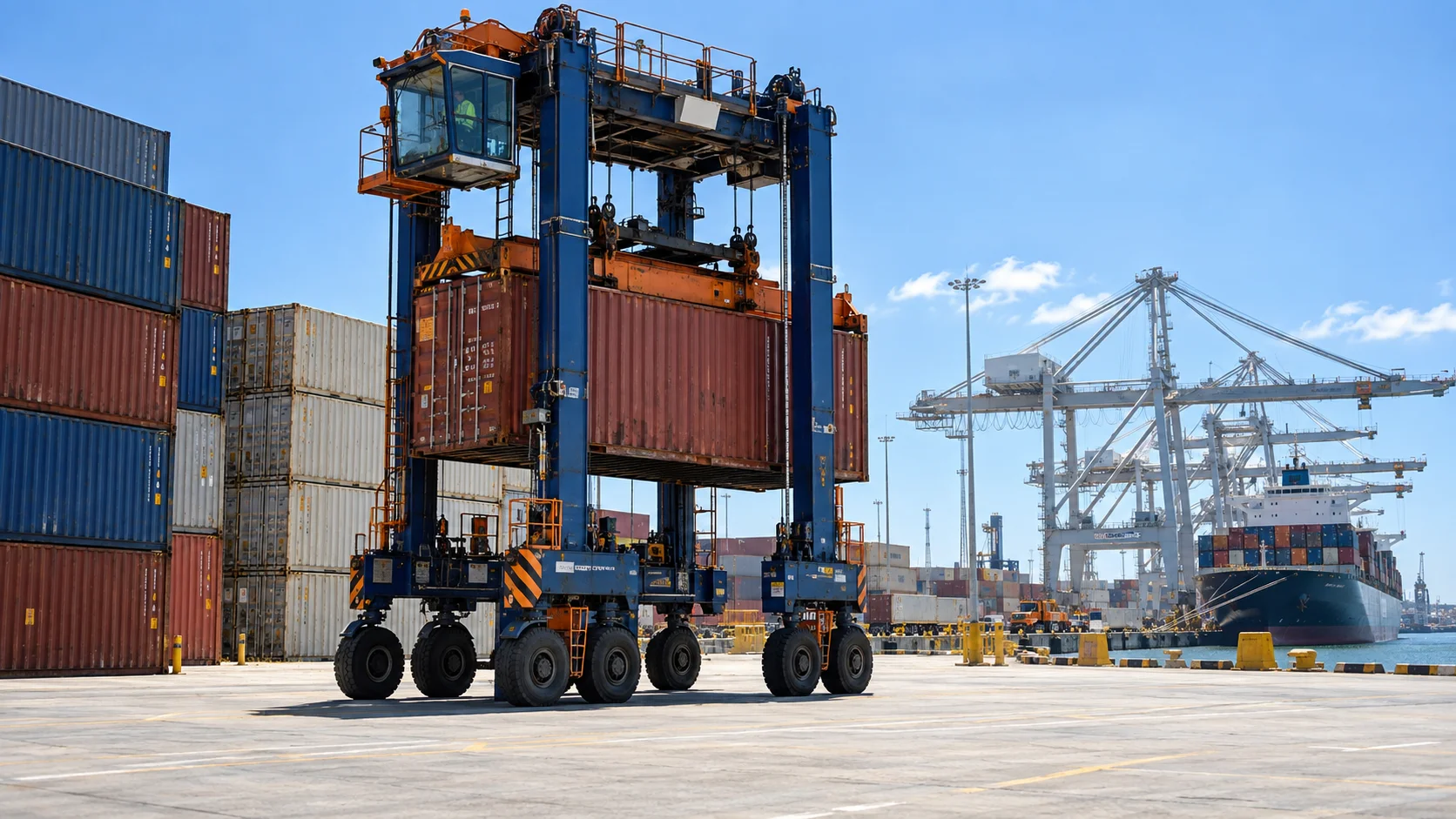
    US West Coast: Los Angeles, Long Beach, and Seattle

    The US West Coast, and specifically the Los Angeles and Long Beach port complex (LALB), is the primary export gateway for US goods destined for Australia. Most major carriers (Maersk, MSC, CMA CGM, Hapag-Lloyd, Evergreen) operate services from LALB to Australian east coast ports either directly or via Singapore, with sailing frequencies of 1–2 departures per week depending on the carrier and service loop.

    Ocean transit from Los Angeles to Sydney (Port Botany) runs 18–22 days on direct services. The same origin to Melbourne is 20–24 days. Services that route via Singapore add 4–7 days to these figures depending on the transhipment window. Seattle-origin cargo typically moves via LALB for Australian services, adding 2–3 days of domestic transit before vessel loading. During Q4 peak shipping season (September–December), LALB congestion regularly adds 3–7 days to port dwell times, a factor that should be accounted for in any US supplier delivery schedule covering that window.

    US East Coast: New York, Savannah, and Charleston

    US East Coast exports to Australia are a longer and more variable route. From New York (Port Newark), the standard routing transits the Panama Canal and connects to Australian services at a west coast transhipment hub. Total transit from New York to Sydney runs 28–35 days; to Melbourne, 30–37 days. The Panama Canal transit itself, now handling Neopanamax vessels, is a bottleneck that historically causes seasonal delays, particularly during periods of low water levels when draft restrictions apply.

    Savannah (Georgia) and Charleston (South Carolina), both significant US export hubs for manufactured goods and agricultural products, have similar routing profiles to New York, with transit times of 28–36 days to Australian east coast ports. For importers whose US suppliers are located in the Southeast or Mid-Atlantic, consolidation at Savannah or Charleston is more cost-effective than trucking inland cargo to LALB, despite the longer ocean transit. The freight rate differential between East Coast and West Coast services typically offsets the additional transit days in landed cost terms for lower-value or lower-time-sensitivity goods.

    US Gulf Coast: Houston and New Orleans

    The US Gulf Coast, primarily Houston (Port of Houston) and to a lesser extent New Orleans, handles significant volumes of petrochemical goods, machinery, and agricultural commodities bound for Australia. Gulf Coast routing to Australia goes via the Panama Canal, with transit times of 32–40 days to Australian east coast ports. Fewer direct or near-direct services operate on the Gulf-Australia corridor compared to the West Coast, meaning transhipment windows, and the associated delay risk, are a more common feature of this route. For importers shipping heavy machinery or breakbulk cargo from Texas or Louisiana, specialist freight forwarders with Gulf-Australia experience are important for navigating the limited carrier options on this lane.

    A container terminal at an Australian dock under a clear dry-climate sky, a straddle carrier mid-motion lifting a container, ship cranes visible at mid-distance with

    Australian Port of Discharge and Last-Mile Timelines

    The Australian port of discharge is driven by the delivery destination, not the US origin port. Choosing a discharge port that requires an additional coastal leg or long-haul road transport adds time and cost that is not visible in the vessel transit figure.

    Sydney (Port Botany)

    Port Botany is the primary container terminal for NSW and ACT deliveries. It operates through three terminals: DP World Australia, Patrick Terminals, and Hutchison Ports. Standard container availability after vessel discharge runs 1–2 working days for FCL and 2–4 working days for LCL (dependent on the consolidator’s deconsolidation schedule). Pre-arrival lodgement with ABF (submitting the import declaration before the vessel berths) reduces the time between container availability and release to 4–8 hours for green channel clearances. Without pre-arrival lodgement, the declaration queue can add 1–2 working days before the container is released.

    Last-mile delivery from Port Botany to warehouse in metropolitan Sydney is 1–2 days for a standard truck delivery. Regional NSW delivery (Newcastle, Wollongong, Central Coast) adds 1 day. Country NSW and regional delivery to ACT can add 2–4 additional days depending on freight network coverage.

    Melbourne (Webb Dock and Swanson Dock)

    Melbourne is the primary gateway for Victoria, South Australia, and Tasmania. Webb Dock (DP World) and Swanson Dock (Patrick) handle the majority of container traffic. Container availability timelines are broadly similar to Port Botany (1–2 days for FCL, 3–5 days for LCL) with the same pre-arrival lodgement advantage on customs clearance speed. Melbourne’s terminal operations have historically experienced periodic industrial action that can add 1–5 days to port dwell; this risk is lower than it was in the early 2020s but is not zero and should be reflected in buffer planning.

    Last-mile delivery from Melbourne’s Docklands/Webb Dock area to metropolitan warehouse is 1–2 days. Adelaide delivery via Melbourne adds 2–3 days of road freight. Hobart (Tasmania) requires a Bass Strait coastal service, adding 2–4 days beyond Melbourne port release.

    Brisbane, Fremantle, and Adelaide

    Brisbane (Fisherman Islands terminal, operated by Patrick and DP World) serves Queensland and is a viable discharge option for northern NSW. Most US West Coast services connect to Brisbane via transhipment at Singapore or an intermediate Asian port rather than directly: the transhipment leg adds 3–7 days to the vessel transit figure and a transhipment window of 2–5 days. For importers in Queensland, it is worth evaluating whether discharging at Sydney or Melbourne and trucking north is faster and cheaper than waiting for a transhipment service to Brisbane, particularly for time-sensitive cargo.

    Fremantle (Western Australia) is the gateway for WA-destined goods. US West Coast services to Fremantle typically route via Singapore with a transit of 24–30 days from LALB plus the transhipment window. Adelaide (Outer Harbor) is served by feeder services from Melbourne with a coastal leg of 2–3 days after Melbourne discharge. For cargo destined for Adelaide, discharge at Melbourne and road transport is often faster than waiting for a direct Adelaide service.

    Air Freight Timelines: USA to Australia

    Air freight from the USA to Australia is not a niche option. It is the standard mode for high-value goods, time-sensitive replenishment, and samples. The transit time is consistent and predictable in a way that sea freight is not, which makes it a more reliable planning tool even at its significantly higher cost.

    Standard commercial airfreight from major US origin cities (Los Angeles, Dallas-Fort Worth, Chicago O’Hare, New York JFK) to Australian gateway airports (Sydney, Melbourne, Brisbane) runs 2–4 days. The variance reflects connection routing: direct services from Los Angeles to Sydney are approximately 15–17 flying hours; services from East Coast US cities typically connect at Los Angeles or Dallas, adding 4–8 hours of transit plus a connection window. Express courier services (DHL, FedEx, UPS) using their own aircraft networks deliver in 1–3 days from any US origin, with next-day delivery from the US West Coast to Sydney available on some services at premium rates.

    Australian customs clearance for air freight runs 1–4 hours for green channel releases with pre-lodged declarations. Documentary examination adds 1–2 days; physical examination adds 2–4 days. DAFF biosecurity inspection for air freight on regulated product categories adds 1–3 days, which is shorter than the sea freight equivalent because DAFF air freight inspection is prioritised at airports. Last-mile delivery from Sydney Kingsford Smith or Melbourne Tullamarine to metropolitan warehouse is typically same-day or next-morning.

    The cost differential between air and sea is real and significant: air freight from the US to Australia typically runs AUD 8–18 per kilogram for commercial airfreight, compared with sea freight at AUD 0.50–2.00 per kilogram equivalent for FCL volumes. For goods with a high value-to-weight ratio (electronics, medical devices, luxury goods, fashion) the air freight cost is a smaller percentage of the landed value and the transit time saving justifies the premium. For goods with a low value-to-weight ratio (heavy manufactured goods, raw materials, general merchandise), sea freight is the only economically viable option. The decision point is rarely about transit time preference alone. It is about the ratio of freight cost to goods value, and the inventory holding cost of the longer sea transit.

    Cargo cartons stacked on a pallet inside an Australian customs-bonded warehouse

    AUSFTA and Customs Duty Treatment

    The Australia-United States Free Trade Agreement, in force since 2005 and fully phased in for most goods categories, has eliminated tariffs on the vast majority of manufactured goods traded between the two countries. For most product categories, the AUSFTA preferential rate is 0%, compared with the MFN (Most Favoured Nation) rate that would otherwise apply, typically 5% for manufactured goods in general categories.

    AUSFTA duty preference requires that the goods qualify as originating in the United States under AUSFTA Rules of Origin. Unlike ChAFTA and AANZFTA, it does not require a third-party Certificate of Origin. Article 5.12 of the agreement lets the importer, exporter or producer self-certify, in any format carrying the required data elements; no specific certificate is required for this agreement, per the US Department of Commerce. The obligation that replaces it is record-keeping: an importer claiming preference must be able to produce the supporting cost and manufacturing evidence on request, and must retain it for five years after importation. Goods manufactured in a third country and merely shipped through the US, or goods with insufficient US transformation to meet the Rules of Origin test, do not qualify for the AUSFTA rate. For goods sourced from US manufacturers with straightforward US manufacturing profiles, this is not a practical concern: a supplier origin statement on the invoice is enough. For goods with complex multinational supply chains, the Rules of Origin qualification should be confirmed before the first shipment. The implication for landed cost planning: see the total landed cost guide for how AUSFTA duty treatment flows through to the landed price model.

    GST at 10% applies to the customs value of all imported goods regardless of origin or FTA status, and is typically collected at the border for commercial shipments above the AUD 1,000 import threshold. The Goods and Services Tax on commercial imports is recoverable for GST-registered importers through the normal BAS cycle.

    Pre-Arrival Lodgement: The Biggest Single Timeline Lever

    Pre-arrival lodgement (submitting the import declaration to ABF before the vessel berths at the Australian port) is the single most impactful step an importer can take to reduce their customs clearance timeline. Under the Integrated Cargo System, an import declaration lodged before vessel arrival allows ABF to complete risk assessment while the vessel is still in transit. A green channel determination (the outcome for approximately 75–80% of commercial shipments) is issued within 1–4 hours of vessel berth, meaning the container can be collected on the day of discharge.

    Without pre-arrival lodgement, the import declaration is lodged after vessel arrival. The risk assessment queue, declaration processing, and any queries from ABF all occur after the container is already sitting at the terminal. For a green channel result, this adds 1–2 working days to the clearance timeline. For a yellow channel (documentary examination) or a DAFF biosecurity hold, the container sits at the terminal accumulating storage and demurrage charges (typically AUD 80–250 per day storage and AUD 100–200 per day demurrage) while the examination is completed. Pre-arrival lodgement does not guarantee a green channel result, but it ensures that any examination outcome is resolved before or concurrent with vessel discharge rather than after the container is already generating demurrage.

    Pre-arrival lodgement requires the full suite of shipping documents (commercial invoice, packing list, Bill of Lading or Air Waybill, and the AUSFTA origin declaration where preference is claimed) to be in the customs broker’s hands before vessel arrival at the Australian port. For sea freight from the US West Coast, this means documents must be received by the customs broker at least 3–5 days before the estimated arrival date. Document collection from US suppliers (particularly for shipments with complex documentation requirements such as AUSFTA origin declarations, DAFF permits, or multi-line packing lists) should be built into the purchase order timeline rather than treated as a post-shipment administrative task. For the full clearance timeline breakdown, see the guide to Australian customs clearance timelines.

    Wide shot of several container ships at anchorage outside an Australian port under hazy midday light

    What Causes US-Australia Freight Delays

    The most common causes of delay in the US-Australia freight lane fall into three categories: documentation failures, port congestion and vessel schedule variance, and biosecurity examination at the Australian border.

    Documentation failures are the most controllable delay category and the most common: a commercial invoice carrying no AUSFTA origin statement, a packing list with weight discrepancies against the Bill of Lading, or an origin claim that was never verified against the Rules of Origin before the goods shipped. Each of these triggers a documentary examination at ABF that adds 1–3 working days to clearance. A Bill of Lading issued in the wrong name (a common issue when US suppliers ship via a freight forwarder who appears on the B/L as the shipper) can complicate the import declaration and require an amendment before clearance. These failures are correctable but costly in time and storage charges.

    Port congestion at LALB, the most common US export port for Australian cargo, is a seasonal and cyclical risk. Q4 peak shipping (September–December) regularly produces US port dwell times of 3–7 days above baseline. Vessel blank sailings (carrier-initiated cancellations of scheduled sailings) can delay departure by 7–14 days for cargo already booked on the cancelled vessel and rolled to the next available service. For importers with defined inventory cycles, building a 7–10 day buffer above the modal transit time specifically for the Q4 window is the most practical mitigation.

    DAFF biosecurity examination at the Australian border adds 3–7 days for sea freight and 1–3 days for air freight when triggered. Certain US product categories carry elevated biosecurity risk profiles that increase the probability of examination: timber and wood products, agricultural products and food items, textiles and clothing with natural fibres, and goods with soil or plant material contamination risk from US agricultural origin states. For these product categories, the DAFF examination probability is high enough that it should be included in the baseline transit time estimate rather than treated as an exceptional outcome.

    Full Timeline Model: Factory Gate to Warehouse Arrival

    The following model illustrates the complete end-to-end timeline for representative US-Australia freight scenarios. All figures are under normal operating conditions: not peak season, not DAFF-examined, with pre-arrival lodgement and documentation submitted on time.

    US West Coast (Los Angeles) to Sydney, Sea freight FCL: US factory to trucking origin 1–2 days; US port booking and dwell 2–3 days; ocean transit LALB to Port Botany 19–21 days; Australian port discharge and customs clearance (pre-lodged, green channel) 1–2 days; last-mile Sydney metropolitan 1–2 days. Total: 24–30 days. With DAFF examination: add 3–7 days. With documentation delays (no pre-arrival lodgement): add 2–4 days.

    US East Coast (New York) to Melbourne, Sea freight FCL: US factory to trucking origin 1–3 days; US port booking and dwell 2–4 days; ocean transit New York to Melbourne via Panama 30–36 days; Australian port discharge and clearance 1–3 days; last-mile Melbourne metropolitan 1–2 days. Total: 35–48 days. This timeline reflects the reality of East Coast US to Australia imports: a minimum 5-week cycle from factory to warehouse under optimal conditions, and 7 weeks with documentation issues or peak season congestion.

    US West Coast (Los Angeles) to Sydney, Air freight commercial: US factory to freight forwarder handoff 0–1 day; airside processing and loading at LAX 1–2 days; flight transit to SYD 1–2 days; Australian customs clearance (pre-lodged, green channel) 0–1 day; last-mile Sydney 0–1 day. Total: 2–7 days. The air freight model is the planning anchor for replenishment orders where stockout cost exceeds the freight premium.

    An organized Australian warehouse interior, rows of palletized stock on industrial racking, a forklift naturally mid-motion placing a pallet into a marked buffer-storage zone

    Inventory Buffer Planning for US Import Programs

    The inventory buffer for a US-Australia sea freight import program should be sized against the worst-case timeline at your supply frequency, not the best-case transit figure. An importer who orders monthly from a Los Angeles-area supplier and holds only the 20-day median transit as safety stock will experience stockouts in any month where a vessel blank sailing, US port congestion, or a DAFF examination pushes the timeline beyond 28 days, which occurs more often than the median implies.

    The mistake is almost never ignorance of the numbers: the importer who under-buffers usually has the transit ranges in a spreadsheet. The mistake is trusting the median. A Melbourne homewares importer we spoke with sized safety stock to a 20-day West Coast transit for two years without incident, then hit a single Q4 where a blank sailing and a DAFF hold stacked to 34 days. The stockout did not cost the freight difference; it cost a AUD 14,000 emergency air replenishment on 600 kg and a cancelled retail promotion that a 30-day buffer would have absorbed for roughly a tenth of that. The buffer is not insurance against the average shipment. It is insurance against the one shipment a year that behaves nothing like the average.

    A practical buffer model for monthly order cycles from the US West Coast: 30-day supply on hand at time of order placement, covering the expected transit plus a 5–8 day contingency. For US East Coast origin, the equivalent buffer is 50 days. For importers who use air freight as a replenishment mode for fast-moving SKUs between sea freight shipments, the air freight safety stock is typically 7–10 days, sized to cover the airfreight cycle from order trigger to warehouse receipt.
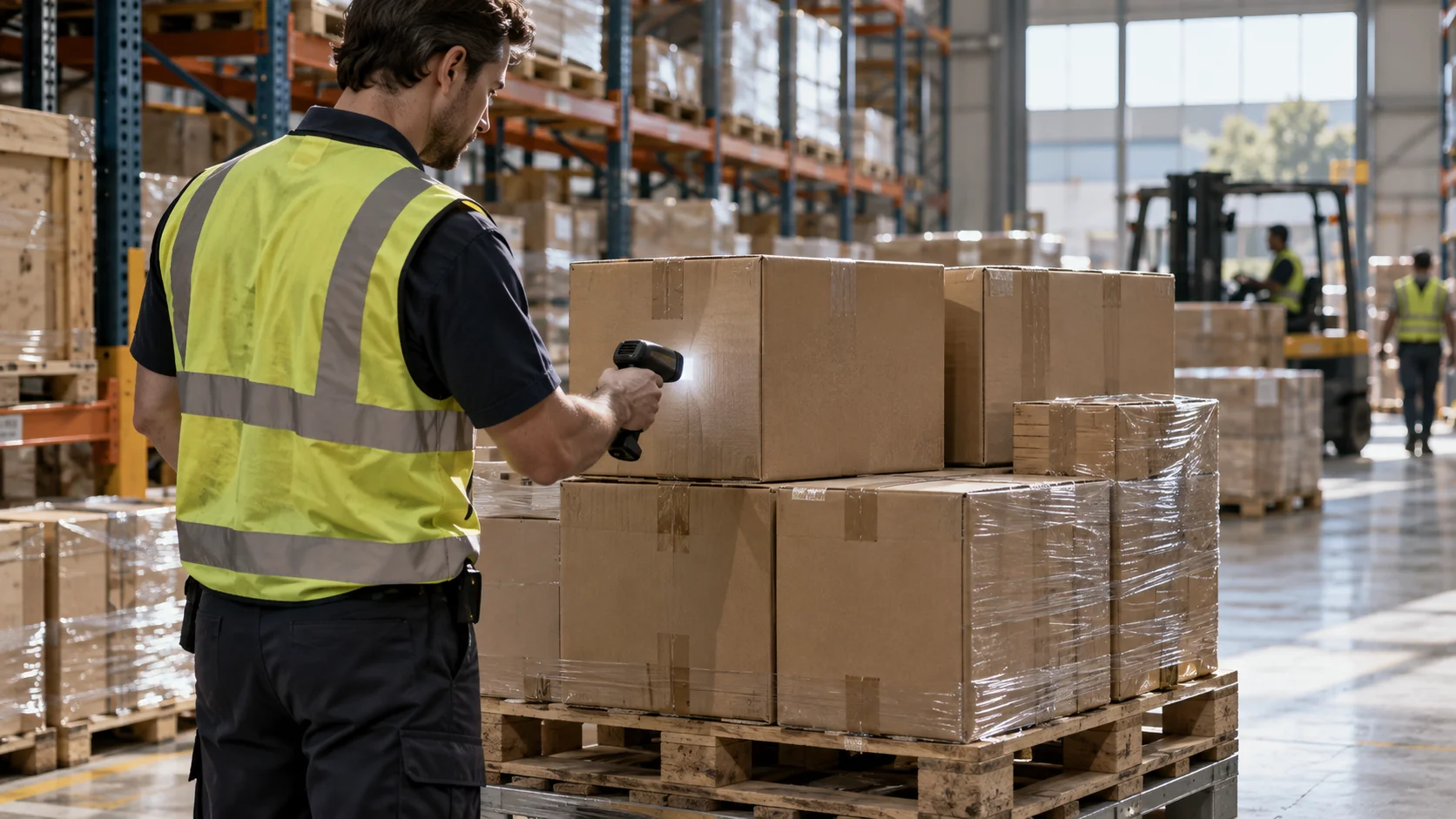
    Q4 peak season (September through December) requires an additional layer of buffer planning. Pre-Christmas demand peaks and US pre-Thanksgiving shipping surges consistently produce LALB congestion and vessel blank sailings that extend transit by 7–14 days above baseline. Importers who need to land goods before December 15 should target vessel departure from US ports by November 1 for West Coast origin and October 20 for East Coast origin, accounting for peak transit extension, Australian port congestion approaching Christmas, and warehouse closure schedules. For detailed guidance on buffer stock as a tool for managing transit variance in import programs, see the guide to avoiding stockouts when importing to Australia.

    For importers evaluating the freight mode decision (whether to consolidate into an FCL, ship LCL, or use air freight for specific SKUs) the transit time differential is one input into the decision alongside freight cost per unit, inventory holding cost, and minimum order quantity economics. For the full LCL versus FCL evaluation framework, see the LCL vs FCL guide for Australian importers.

    Everyone assumes the slow part of shipping from the US to Australia is the ocean crossing. It isn’t. Transpacific transit is close to the most predictable, most physically constrained part of the entire timeline: a ship cannot go faster than the ocean allows, and everyone plans around that fact accordingly. The actual variable is what happens on land, before and after: how fast the exporter’s paperwork is filed, whether pre-arrival lodgement happens before the vessel docks, how quickly DAFF clears a biosecurity referral if one is triggered. None of that is physically constrained the way ocean transit is. It is constrained by whether a human filed a form on time. The importers obsessing over which carrier is “faster” are optimising the one variable that barely moves. The ones who fix their own paperwork timeline are optimising the one that actually does.
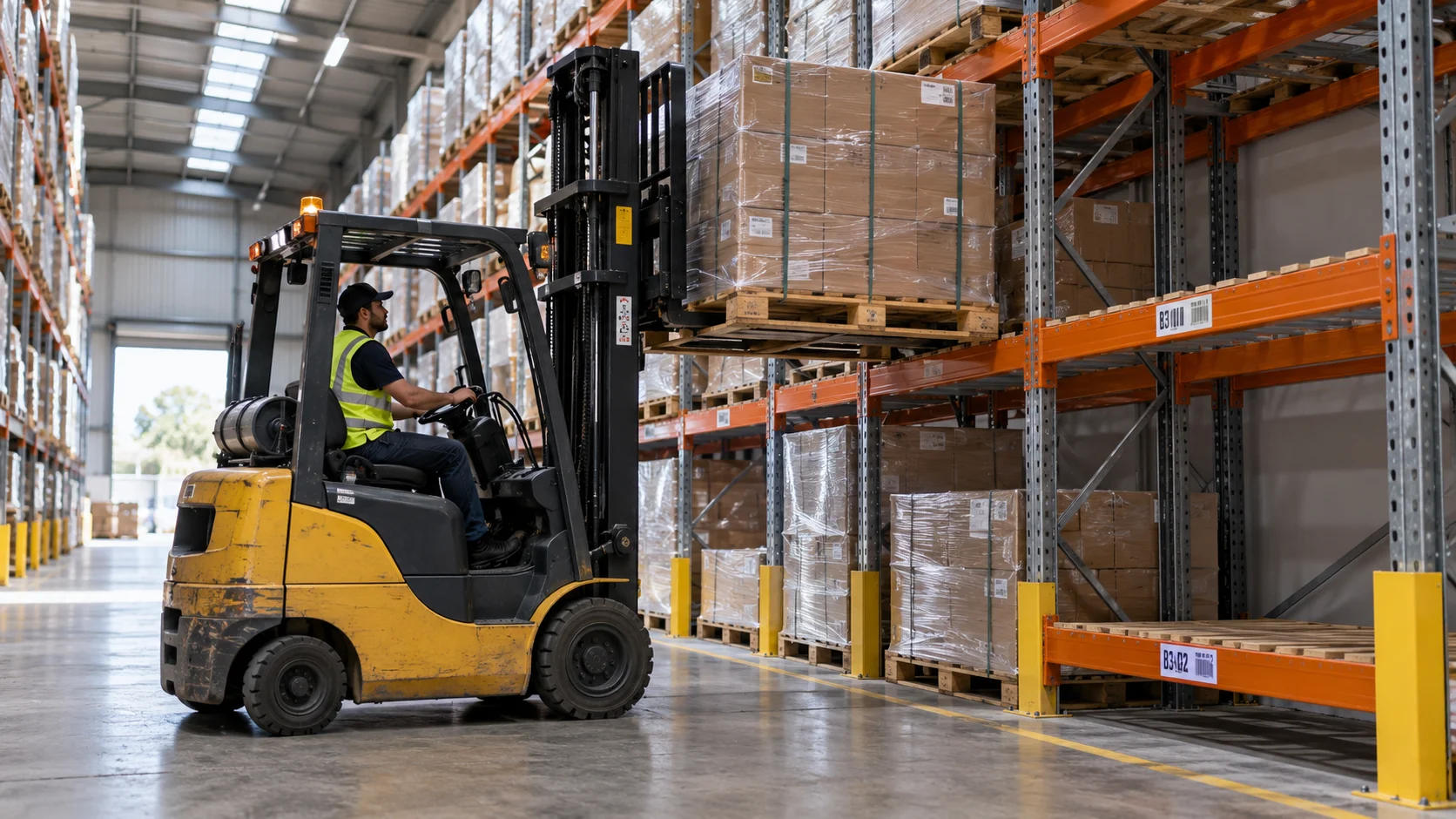
    Related reading: USA to Australia Imports: AUSFTA, Biosecurity and Standards

    Frequently Asked Questions

    How long does sea freight from USA to Australia take?

    Sea freight transit time from the US West Coast (Los Angeles, Long Beach) to Australian east coast ports (Sydney, Melbourne) is 18–22 days. From the US East Coast (New York, Savannah) to Australia, transit is 28–35 days. From the US Gulf Coast (Houston) to Australia, allow 32–38 days. These are vessel transit times only. Add 2–5 days for US domestic trucking to the origin port, 2–3 days US port dwell, 2–7 days Australian customs clearance, and 1–4 days last-mile delivery to warehouse to build the complete factory-gate-to-warehouse timeline.

    How long does air freight from USA to Australia take?

    Air freight from the USA to Australia takes 2–4 days for standard commercial airfreight and 1–3 days for express courier services (DHL, FedEx, UPS). The transit time is consistent across US origin cities due to the number of direct and one-stop services between major US hubs (Los Angeles, Dallas, Chicago, New York) and Sydney, Melbourne, and Brisbane. Australian customs clearance adds 1–4 hours (green channel) to 1–3 days (documentary examination) on the Australian end.

    What duty rate applies to goods imported from the USA to Australia?

    The Australia-United States Free Trade Agreement (AUSFTA) has eliminated tariffs on the vast majority of goods traded between the two countries. For most manufactured goods, the AUSFTA rate is 0%. AUSFTA does not require a third-party Certificate of Origin. The importer or exporter self-certifies that the goods meet the AUSFTA Rules of Origin, on the commercial invoice or a separate declaration. What decides preference is qualification rather than paperwork format: goods manufactured in the USA but sourced through a third-country intermediary may not qualify. Sensitive categories including certain agricultural goods, textiles, and apparel may retain residual tariffs or quota arrangements. Confirm the specific HS classification and applicable AUSFTA schedule rate with a licensed customs broker before the first shipment. Swift Cargo handles freight from the US to Australia on both LCL and FCL. see how the process works from US port to Australian warehouse.

    Which Australian port should I use for USA imports?

    The port of discharge decision is driven by your delivery destination, not your US origin port. For NSW and ACT delivery, Port Botany (Sydney) is the primary gateway. For Victoria, South Australia, and Tasmania, Melbourne (Webb Dock or Swanson Dock) is the primary gateway. For Queensland, Brisbane (Fisherman Islands) is standard. For Western Australia, Fremantle handles the majority of US cargo. Most carrier routes from US West Coast ports serve Sydney and Melbourne directly; Brisbane and Fremantle may involve transhipment at Singapore, Port Klang, or Hong Kong. For LCL shipments, the forwarder’s consolidation network determines the discharge port options.

    How much inventory buffer should I hold for US-Australia imports?

    For sea freight from the US West Coast, a minimum 28-day inventory buffer covers the modal transit time plus clearance. For US East Coast origin, a 45-day buffer is more appropriate. Add 7–10 days to these figures if your product category is subject to DAFF biosecurity inspection (timber, agricultural products, textiles with natural fibres, food products). For air freight replenishment of fast-moving lines, a 7–10 day buffer covers transit plus clearance for standard airfreight. Seasonal surges (particularly pre-Christmas and Q4 peak) add 3–7 days to vessel transit due to congestion at both Los Angeles and Australian east coast ports.

  • Verify Supplier: China Australia Import Verification Guide

    Verify Supplier: China Australia Import Verification Guide

    Verifying Overseas Suppliers: A Guide for Australian Importers

    Why Supplier Verification Is the Importer’s Responsibility

    An Australian importer who receives a container of non-compliant goods from an overseas supplier cannot transfer the compliance liability to that supplier. Under the Australian Consumer Law, the importer is the party who introduced the goods into the Australian market, and the obligations for product safety, labelling compliance, and mandatory standard conformance sit with that party, not with the factory that manufactured them. The supplier is outside Australian jurisdiction. The importer is not. Knowing how to verify supplier: China Australia trade routes carry the same core steps regardless of product category, and skipping them is what turns a routine order into a recall.

    This distinction changes how verification should be treated. It is not a relationship gesture or a quality preference. It is the importer’s only mechanism for reducing a liability they carry alone. A supplier who resists verification does not share the consequences if goods fail later. The recall, the ABF seizure, the ACCC enforcement notice, and the distributor claims all land on the Australian side of the transaction.

    Verification operates at four distinct points in the supply chain: before the purchase order (confirming the supplier can produce what is being ordered), before shipment (confirming that the specific production run meets specification), on arrival (confirming that documentation received matches goods on Australian soil), and annually (confirming that nothing in the supplier’s operation has materially changed). All four are necessary; none substitutes for the others.

    Stage 1: Business Registration and Company Legitimacy

    The first verification step happens before a purchase order is issued: confirming that the supplier is a legally registered entity whose registered business scope matches what they are claiming to produce. This check uses the official business registry for the country of manufacture, not a document provided by the supplier themselves, which is verifiable only by its own issuing authority.

    Verifying Chinese Suppliers via SAMR

    China’s National Enterprise Credit Information Publicity System, operated by the State Administration for Market Regulation, is publicly accessible at gsxt.gov.cn. A search using the supplier’s registered Chinese company name returns their Unified Social Credit Code (an 18-character alphanumeric identifier), registration status (active, suspended, or cancelled), registered business scope, registered capital, and any administrative penalties, court judgements, or recall records attached to the company or its legal representative.

    The registered business scope is the most operationally important field. No supplier issues a ChAFTA Certificate of Origin itself: an authorised body in China issues it on the exporter’s or producer’s application, and a trading company can be that exporter. The origin evidence must still trace back to the actual manufacturer, or ABF can deny the preference. A factory claiming to be a manufacturer whose SAMR record shows a trading company scope is misrepresenting their status, and the ChAFTA duty preference, typically 5% for the product categories where this matters, is at risk. Request the supplier’s Unified Social Credit Code as standard operating procedure. Any reluctance to provide it, or any discrepancy between the name on their commercial documents and the SAMR record, is a disqualifying red flag that should end the evaluation.

    Verifying Vietnamese Suppliers

    Vietnam’s enterprise registration system is administered by the Ministry of Finance (which absorbed the Ministry of Planning and Investment in 2025) through the National Business Registration Portal. The supplier’s enterprise registration certificate, which they are required to provide to trading partners under Vietnamese commercial practice, should be cross-checked against the portal for current registration status, business scope, and any suspension orders. The verification logic is identical to China: confirm that the registered entity matches the entity issuing CoO documentation, and that their registered business scope is consistent with the manufacturing capability they are claiming.

    For AANZFTA Certificate of Origin purposes, Vietnamese CoO documentation has additional requirements around the Rules of Origin, specifically the Regional Value Content test or the Change in Tariff Classification test depending on the goods category. A trading company supplying goods manufactured by a third party may not satisfy the Rules of Origin test required for a Form AANZ. Business registration verification surfaces this risk before the CoO is issued, not after it is rejected at the Australian border.

    The gated loading entrance of a mid-sized Chinese manufacturing facility, a delivery truck idling as a security barrier arm rests in the raised position, overcast midday

    Export Licences and Product-Specific Permits

    Certain product categories require Chinese or Vietnamese export licences in addition to standard business registration. China restricts exports of certain chemicals, precursors, dual-use goods, and specific technology under its export control regime. Vietnam has export licensing requirements for certain agricultural products, minerals, and goods subject to quota management. For goods in these categories, confirm that the supplier holds the relevant export licence by requesting a copy of the current licence and verifying its validity period and scope.

    Separately, some Australian import categories require permits from DAFF or ABF before the goods can be imported. Wood products subject to ISPM 15, therapeutic goods regulated by the TGA, agricultural chemicals, and goods subject to anti-dumping measures all have pre-import permit or compliance requirements. These are importer obligations, not supplier obligations, but the supplier must be capable of meeting their side of the documentation requirements (fumigation certification, phytosanitary certificates, test reports to specific standards) before the order is placed. Confirming the supplier’s documentation capability for the specific product category is part of pre-order verification.

    Stage 2: Factory Audit

    A factory audit is a physical inspection of the supplier’s production facility, conducted by a qualified third-party auditor or an agent appointed by the importer. It establishes production capacity against the supplier’s claimed output, quality management system depth, equipment condition, raw material sourcing practices, and worker capability on the specific goods being ordered. An audit answers the fundamental pre-order question: can this factory actually produce what the purchase order specifies, at the volume and quality level required?

    What a Factory Audit Covers

    A standard factory audit covers: physical production capacity against claimed monthly output (production line count, shift patterns, equipment throughput); raw material sourcing, inspection, and storage conditions; production line equipment age, calibration records, and maintenance schedules; quality control checkpoints embedded in the production process and whether they are documented and followed; finished goods storage and packaging standards; quality management system documentation; and worker capability on the specific product being ordered.

    The last point is diagnostic in a way the others are not. A worker on the production floor is a reliable indicator of the quality system’s actual depth, as distinct from its documented existence, if they cannot explain what the product is supposed to do, cannot identify the quality control step they are responsible for, or are visibly uncertain about the specification for the goods being audited. ISO 9001 certification can be verified through the certification body’s public registry (not from a certificate provided by the supplier), but the certification confirms the existence of a documented system, not its effective implementation.

    A standard one-day factory audit by a recognised third-party firm (SGS, Bureau Veritas, Intertek, QIMA, Asia Quality Focus) costs USD 400–800 including inspector travel from the nearest city. The audit is conducted with 48–72 hours notice rather than announced in advance, which allows the auditor to observe normal operating conditions rather than a staged presentation. The audit produces a scored report across the assessment areas. A minimum qualifying score of 70 out of 100 is a reasonable threshold for a new supplier. A score below 60 is a disqualification without negotiation. Scores between 60 and 70 warrant a reassessment after the supplier addresses the specific gaps identified.

    Virtual Factory Audits

    Virtual factory audits, conducted via video call and structured around the same assessment areas as an on-site audit, have become an accepted initial qualification tool for lower-risk suppliers where the importer cannot travel to origin. A virtual audit is less reliable than an on-site audit because the auditor is dependent on what the supplier chooses to show and cannot independently access production areas, storage facilities, or document files without the supplier’s cooperation.

    Virtual audits are adequate for initial qualification of a supplier in a lower-risk product category where the primary verification weight falls on test reports and PSI rather than production process inspection. They should be followed by an on-site audit before the annual import program scales to FCL volumes or before the product category shifts to a higher-risk classification (safety goods, regulated products, DG goods), where process verification matters more than documentation review.

    Inside a third-party testing laboratory, a technician's gloved hands position a product sample beneath a calibrated testing rig, the equipment's small displays angled

    Stage 3: Test Report and Certificate Verification

    Product certificates and test reports are the most commonly misrepresented category of supplier documentation. The misrepresentation is often not outright forgery (though that exists) but temporal mismatch: a test report issued for an earlier version of the product, tested against a superseded version of the relevant standard, submitted as if it covers the current product configuration and the current standard requirements.

    What a Genuine Test Report Contains

    A genuine, current test report from an ILAC-accredited laboratory will contain: the laboratory’s full name and accreditation number (NATA for Australian labs, CNAS for Chinese labs, VILAS for Vietnamese labs); the date the test was conducted; the specific product description and model number of the item actually tested; the exact version of the standard tested against including the year (AS/NZS 2063:2020, not “AS/NZS 2063”); the test methodology applied; each individual parameter tested with its result (pass or fail) and the test value recorded; and the overall determination. A genuine test report contains enough specificity that the product tested is identifiable, not a generic category description that could apply to many products.

    To verify that the test report applies to the goods being ordered: the product description on the test report must match the purchase order specification in material details: dimensions, construction materials, intended use, and any relevant safety-critical components. The standard referenced must be the current version. Australian Standards are periodically revised and withdrawn, and a test report against a withdrawn standard version does not satisfy an ACCC compliance check, regardless of when the test was conducted. Verify the laboratory’s accreditation at ilac.org. The ILAC MRA directory lists all signatories including NATA, CNAS, and VILAS. A test report from a laboratory not in this directory is not independently verifiable.

    Self-Declared Conformity vs Third-Party Test Reports

    Some suppliers provide a Certificate of Conformity signed by the factory itself, a document in which the manufacturer declares that the goods meet a specified standard, without independent testing. A self-declared conformity certificate is not a substitute for a third-party test report for goods subject to mandatory ACCC product safety standards.

    The Australian product safety framework requires the supplier to demonstrate compliance, not assert it. For goods in mandatory safety standard categories (bicycle helmets under AS/NZS 2063, children’s products, electrical equipment requiring RCM, and goods subject to specific ACCC bans or mandatory requirements), a test report from an accredited third-party laboratory is the minimum acceptable documentation. A self-signed manufacturer declaration provides no assurance that independent testing occurred. It also provides no basis for an importer’s due diligence defence if the goods later fail a market surveillance check, because the importer accepted a declaration rather than verifiable evidence of compliance.

    A worker opens a carton of individually wrapped components on a pallet, with rows of sealed boxes and a busy factory floor behind.

    Stage 4: Pre-Shipment Inspection

    A pre-shipment inspection (PSI) is a third-party inspection of the finished production run, conducted at the supplier’s factory after 80% of production is complete and before the goods are loaded for export. It is the closest verification step to the actual goods being shipped, specific to the production run on the purchase order, not to a product sample or a prior production run.

    What PSI Covers

    A standard PSI covers: quantity count against the purchase order and packing list (actual units produced versus ordered); physical dimension and weight spot-checks on a random sample; carton labelling compliance including barcode readability, country of origin marking, required safety symbols, and product markings; cosmetic defect grading under AQL sampling with photographic evidence; functional testing on a random sample (the product performs as specified under normal operating conditions); packaging integrity assessment including carton drop and compression testing; and documentation review including the commercial invoice, packing list, test reports, certificates of origin, and any required export permits. The inspector produces a full written report within 24–48 hours, including a clear pass/fail determination and photographs documenting each assessment area and all defects found.

    AQL Sampling in Practice

    PSI uses AQL (Acceptable Quality Limit) sampling, a statistical method for determining inspection sample size and the acceptable defect threshold, rather than 100% inspection of the production run. The AQL level is specified by the importer at time of booking and determines both how many units are inspected and how many defects can be found before the batch fails.

    For general goods, AQL 2.5 is the standard: from a production run of 1,000 units, the inspector randomly selects approximately 80 units and accepts the batch if no more than 5 major defects are found across the sample. For safety-critical goods (bicycle helmets, children’s products, electrical items, protective equipment), AQL 1.0 applies: the same 1,000-unit run requires 80 units inspected with a maximum of 2 major defects before the batch passes. For a first order with a new supplier regardless of product category, specifying AQL 1.0 for major defects provides additional protection against a supplier who calibrated their quality control to pass AQL 2.5 rather than produce to specification.

    A batch that fails PSI should not be loaded. The inspection failure report gives the importer a documented basis to require the supplier to correct the production run, fund a re-inspection, and confirm corrections before any further loading instruction is issued. An importer who instructs a freight forwarder to load goods after a PSI failure is accepting the compliance risk, and the failure report becomes evidence that the importer had advance knowledge of the defects.

    PSI Cost, Lead Time, and Return on Investment

    A full-container PSI by a recognised inspection firm costs USD 300–600 per inspection day. Most LCL and 20-foot FCL shipments are completed in one inspection day. A 40-foot container with a high SKU count or complex assembly inspection may require 1.5–2 days. Including inspector travel from the nearest city to the factory, the total cost for a standard inspection runs USD 350–650. Lead time from booking confirmation to inspection completion is 3–5 business days. This should be built into the purchase order delivery schedule from the outset, not treated as an optional add-on after production completes.

    A supplier who indicates that the goods must be loaded before the PSI date (because the vessel booking cannot be moved, because production finished later than planned, or for any other stated reason) is stating that they do not accept third-party inspection of the production run before it leaves the factory. That position is the single highest-confidence supplier red flag available to an importer. A supplier confident in their production quality does not require the goods to leave before they can be inspected.

    The return on investment for PSI is straightforward. A USD 400 inspection on a AUD 60,000 FOB shipment that identifies a production run requiring rejection, or a defect that can be corrected before loading at the supplier’s cost, prevents the importer from receiving and distributing non-compliant goods into the Australian market. A distributed recall for safety goods in Australia typically costs AUD 50,000–250,000 depending on distribution depth, the product category, and whether ACCC enforcement action follows. At any defect-detection probability above approximately 2%, the expected value calculation makes PSI mandatory on safety goods. For non-safety goods, the calculation is driven by defect rework cost, customer claims risk, and the cost of return freight, which in most cases still supports PSI on orders above AUD 20,000 FOB.

    Two weathered hands fasten the latch on a blue shipping container's doors in warm late-afternoon light, cargo visible inside.

    Payment Structure as a Verification Lever

    Payment terms are not merely a financial negotiation. They are a structural verification tool. The standard 30/70 payment split (30% deposit on purchase order confirmation, 70% balance released on receipt of the PSI pass report and shipping documents) means the supplier must produce compliant goods before receiving the majority of their payment. The payment structure forces compliance verification into the supply chain rather than leaving it as an optional step that can be bypassed when timelines are tight.

    An importer who pays 100% upfront on a first order has removed their primary leverage at the point in the relationship when leverage matters most. If the goods fail PSI or do not match specification, the importer’s options (renegotiate, require rework, withhold further orders) all operate from a weaker position when the supplier has already been paid in full. A supplier who insists on 100% upfront for a first commercial order, or who refuses to release the goods for PSI as a condition of the payment balance, should be treated as a qualification failure. It is not a negotiating position. It is a refusal of the verification process. A supplier who fails this test has already told you how the rest of the relationship will go, which is exactly why payment structure is one of the most reliable ways to verify supplier: China Australia deals before a single container has shipped.

    For established suppliers with a verified track record of three or more completed orders with clean inspection results and consistent documentation, payment terms can move to 30/70 with the balance against shipping documents rather than the inspection report, which is standard commercial practice for ongoing supplier relationships. But PSI frequency should not reduce to zero for any active supplier supplying safety-critical goods, regardless of relationship length.

    Arrival Documentation Reconciliation

    Arrival verification is the final stage of the verification cycle. When goods arrive at the Australian port of entry, the documentation received from the supplier (commercial invoice, packing list, Bill of Lading, Certificate of Origin, test reports) should be reconciled against each other before the import declaration is lodged. The declared customs value on the import entry must match the commercial invoice. The packing list quantities and descriptions must match the Bill of Lading. The Certificate of Origin must reference the same goods as the commercial invoice and must have been issued by the correct authorised body for the applicable FTA.

    Any discrepancy between these documents at the time of import declaration creates a customs compliance risk. An invoice that describes the goods differently from the Bill of Lading creates a documentation discrepancy that can trigger an ABF documentary examination, extending clearance time by 1–3 days and creating a post-clearance audit risk. An undervalued invoice, where the stated transaction value does not reflect the actual price paid, creates a customs fraud exposure for the importer, regardless of whether the undervaluation was initiated by the supplier. The ABF customs value rules require the importer to declare the actual transaction value, not the value the supplier writes on the invoice. For a full breakdown of Australian import documentation requirements, see Swift Cargo’s Australia import documentation guide.

    Arrival sampling (checking the actual carton count against the packing list, spot-checking item count per carton, confirming product markings and labelling against the purchase order specification) closes the verification loop at delivery. If the goods are in a product category requiring ongoing compliance documentation (test reports should be current for each new production run, not recycled from prior orders), arrival sampling can feed a laboratory submission without disrupting the full shipment. For more on the clearance process and timeline, see the guide to Australian customs clearance timelines.

    Seen from behind, a person in plain clothes walks an aisle of a sunlit factory floor as machinery runs in the background.

    Annual Supplier Review Cycle

    Supplier verification is not a one-time qualification exercise. A supplier who passes initial verification may change their manufacturing processes, subcontract production to a third party, switch raw material suppliers, expand into product categories beyond their certified scope, or face financial pressure that changes their quality control decisions, without informing their customers. A structured annual review cycle maintains the importer’s visibility across the supplier base and catches drift before it becomes a compliance event.

    An annual review for an established supplier covers: current business registration status (re-check SAMR or the equivalent registry, since a registration that lapsed or a scope that changed is material); current test reports against the relevant standard versions (AS/NZS standards are periodically revised; a test report against a superseded standard is no longer current for ACCC compliance purposes); any ABF or ACCC enforcement activity in the product category during the review period; and a factory re-audit if annual purchase volumes exceed AUD 200,000 or if any product specification has changed since the last audit.

    PSI frequency for established suppliers should not fall below every third shipment. A supplier can change their production process between inspection cycles, and regular inspection is the only mechanism for detecting drift before it produces a batch of defective goods. Suppliers with three or more consecutive clean PSI results and no annual review flags can carry a lower inspection weight than new or development suppliers, but the program should never terminate entirely for safety-critical product categories. For importers managing multiple suppliers across different product categories, see the guide to wholesale import logistics in Australia for how verification fits into the tiered supplier network structure.

    The annual review exists because verification decays, and it decays quietly. Consider a common sequence that turns a qualified supplier into a recall: a factory passes its initial audit and clears three consecutive pre-shipment inspections, so the importer drops it to a lower inspection weight. Sometime in the following year the supplier changes a raw-material source to protect a margin, a substitution that never appears on an invoice and never triggers an alert. The goods keep passing PSI, because PSI checks the shipment against the specification, not the specification against the original approved sample. Eighteen months later an ACCC market-surveillance test on distributed stock finds the substituted material out of standard, and the reconciliation runs backward through every clean inspection to the one check that was never repeated: the annual re-audit. The lesson is not that PSI failed. It is that a control which is never re-run stops being a control.

    What Verification Cannot Cover

    A complete verification process (SAMR check, factory audit, test report verification, and PSI) reduces compliance risk significantly but does not eliminate it. PSI samples a portion of the production run under AQL methodology, not the entire run. A batch that passes AQL 2.5 inspection can still contain defective units within the accepted defect threshold. The sampling method is designed to provide a statistically defensible basis for accepting or rejecting a batch, not to guarantee zero defects in the accepted units. Test reports confirm that a sample of the product, at the time of testing, met the standard. They do not guarantee that every unit in every subsequent production run will meet the same specification, particularly if raw material sourcing or production processes change between test runs.

    The practical implication is that verification is a risk management system, not a guarantee. An importer who follows a complete verification process has exercised reasonable due diligence under Australian law, which provides a defensible position if a compliance issue arises despite the verification steps taken. An importer who skipped PSI, accepted self-declared conformity certificates, or did not conduct a factory audit before placing a large order has no equivalent position. The verification record (audit reports, inspection reports, test reports, SAMR screenshots, payment records with PSI pass conditions documented) is the evidentiary basis for the due diligence defence. Maintaining this file systematically is as important as conducting the verification itself.

    For a taxonomy of the warning signs that emerge during supplier verification, and how to escalate a response to each type of concern, see the guide to red flags when working with overseas suppliers. For the complete documentation framework and how verification records feed the customs declaration process, see the guide to importing from China to Australia.

    An elevated dusk view over an industrial park shows lit factory buildings, loading docks, and parked trucks against a fading orange sky.

    How to Verify Supplier: China Australia Quick Reference

    Confirm business registration and factory legitimacy first, verify test reports against an accredited laboratory, structure payment so a meaningful balance rides on pre-shipment inspection, and reconcile arrival documentation against what was agreed at order. Importers who verify supplier: China Australia relationships this way before the first large order catch the suppliers who would have failed later, while the order is still small enough to walk away from.

    Related reading: Lire cet article en français

    Frequently Asked Questions

    How do I verify a Chinese supplier’s business registration?

    Use China’s National Enterprise Credit Information Publicity System (SAMR) at gsxt.gov.cn. Enter the supplier’s registered Chinese company name to retrieve their Unified Social Credit Code, registration status, business scope, registered capital, and any administrative penalties or recall records. A legitimate manufacturer will provide their Unified Social Credit Code without hesitation. Any discrepancy between the name on their invoices and the SAMR record is a disqualifying red flag, including the common case where a trading company’s registered name differs from the factory name they present to buyers.

    What does a pre-shipment inspection actually check?

    A pre-shipment inspection covers: quantity count against the purchase order and packing list, physical dimensions and weight spot-checks, carton labelling compliance including barcode accuracy and country of origin marking, functional testing on a random sample, cosmetic defect grading using AQL sampling, packaging integrity assessment including drop and compression tests, and documentation review including test reports, certificates, and export declarations. The inspector photographs every stage and produces a written report within 24–48 hours, including a clear pass/fail determination and photographic evidence of any defects found.

    How do I verify that a test report is genuine and current?

    A genuine, current test report will be issued by an ILAC-accredited laboratory (NATA in Australia, CNAS in China, VILAS in Vietnam), will reference the exact current version of the relevant standard (including the year, as in AS/NZS 2063:2020, not a generic reference), will contain a product description specific enough to identify the goods being ordered, and will be dated after the product’s final design was locked. Verify the laboratory’s accreditation by searching the ILAC directory at ilac.org. A test report against a superseded standard version, or one whose product description is vague enough to apply to multiple product variants, is not adequate for ACCC compliance purposes.

    What AQL level should I specify for a pre-shipment inspection?

    For general goods, AQL 2.5 is the standard: from a batch of 1,000 units, 80 units are inspected and a maximum of 5 major defects are accepted before rejection. For safety-critical goods (bicycle helmets, children’s products, electrical items, protective equipment), AQL 1.0 applies, reducing the accepted defect rate significantly. For high-value first orders or new suppliers, specifying AQL 1.0 for major defects across all product types provides additional confidence regardless of the product category. The AQL level must be specified to the inspection firm at time of booking.

    How often should I run pre-shipment inspections on an established supplier?

    For a new supplier, run PSI on every shipment for the first three orders. For an established supplier with three or more consecutive clean inspection results, PSI frequency can reduce to every second or third shipment for general goods, but should never be eliminated entirely for safety-critical product categories. An annual supplier review should include re-examination of test report currency, business registration status, and any ACCC recall activity in the product category. If any annual review flags a concern, reinstate PSI at every shipment until the concern is resolved.