

Why Supplier Verification Is the Importer’s Responsibility
An Australian importer who receives a container of non-compliant goods from an overseas supplier cannot transfer the compliance liability to that supplier. Under the Australian Consumer Law, the importer is the party who introduced the goods into the Australian market, and the obligations for product safety, labelling compliance, and mandatory standard conformance sit with that party, not with the factory that manufactured them. The supplier is outside Australian jurisdiction. The importer is not. Knowing how to verify supplier: China Australia trade routes carry the same core steps regardless of product category, and skipping them is what turns a routine order into a recall.
This distinction changes how verification should be treated. It is not a relationship gesture or a quality preference. It is the importer’s only mechanism for reducing a liability they carry alone. A supplier who resists verification does not share the consequences if goods fail later. The recall, the ABF seizure, the ACCC enforcement notice, and the distributor claims all land on the Australian side of the transaction.
Verification operates at four distinct points in the supply chain: before the purchase order (confirming the supplier can produce what is being ordered), before shipment (confirming that the specific production run meets specification), on arrival (confirming that documentation received matches goods on Australian soil), and annually (confirming that nothing in the supplier’s operation has materially changed). All four are necessary; none substitutes for the others.
Stage 1: Business Registration and Company Legitimacy
The first verification step happens before a purchase order is issued: confirming that the supplier is a legally registered entity whose registered business scope matches what they are claiming to produce. This check uses the official business registry for the country of manufacture, not a document provided by the supplier themselves, which is verifiable only by its own issuing authority.
Verifying Chinese Suppliers via SAMR
China’s National Enterprise Credit Information Publicity System, operated by the State Administration for Market Regulation, is publicly accessible at gsxt.gov.cn. A search using the supplier’s registered Chinese company name returns their Unified Social Credit Code (an 18-character alphanumeric identifier), registration status (active, suspended, or cancelled), registered business scope, registered capital, and any administrative penalties, court judgements, or recall records attached to the company or its legal representative.
The registered business scope is the most operationally important field. A supplier registered as a trading company cannot issue a manufacturer-direct Certificate of Origin for ChAFTA purposes. The CoO documentation chain must trace back to the actual manufacturer, and if the entity issuing the CoO is a trading company rather than a manufacturer, ABF can reject the claim at the border. A factory claiming to be a manufacturer whose SAMR record shows a trading company scope is misrepresenting their status, and the ChAFTA duty preference, typically 5% for the product categories where this matters, is at risk. Request the supplier’s Unified Social Credit Code as standard operating procedure. Any reluctance to provide it, or any discrepancy between the name on their commercial documents and the SAMR record, is a disqualifying red flag that should end the evaluation.
Verifying Vietnamese Suppliers
Vietnam’s enterprise registration system is administered by the Ministry of Planning and Investment through the National Business Registration Portal. The supplier’s enterprise registration certificate, which they are required to provide to trading partners under Vietnamese commercial practice, should be cross-checked against the portal for current registration status, business scope, and any suspension orders. The verification logic is identical to China: confirm that the registered entity matches the entity issuing CoO documentation, and that their registered business scope is consistent with the manufacturing capability they are claiming.
For AANZFTA Certificate of Origin purposes, Vietnamese CoO documentation has additional requirements around the Rules of Origin, specifically the Regional Value Content test or the Change in Tariff Classification test depending on the goods category. A trading company supplying goods manufactured by a third party may not satisfy the Rules of Origin test required for a Form AANZ. Business registration verification surfaces this risk before the CoO is issued, not after it is rejected at the Australian border.
Export Licences and Product-Specific Permits
Certain product categories require Chinese or Vietnamese export licences in addition to standard business registration. China restricts exports of certain chemicals, precursors, dual-use goods, and specific technology under its export control regime. Vietnam has export licensing requirements for certain agricultural products, minerals, and goods subject to quota management. For goods in these categories, confirm that the supplier holds the relevant export licence by requesting a copy of the current licence and verifying its validity period and scope.
Separately, some Australian import categories require permits from DAFF or ABF before the goods can be imported. Wood products subject to ISPM 15, therapeutic goods regulated by the TGA, agricultural chemicals, and goods subject to anti-dumping measures all have pre-import permit or compliance requirements. These are importer obligations, not supplier obligations, but the supplier must be capable of meeting their side of the documentation requirements (fumigation certification, phytosanitary certificates, test reports to specific standards) before the order is placed. Confirming the supplier’s documentation capability for the specific product category is part of pre-order verification.
Stage 2: Factory Audit
A factory audit is a physical inspection of the supplier’s production facility, conducted by a qualified third-party auditor or an agent appointed by the importer. It establishes production capacity against the supplier’s claimed output, quality management system depth, equipment condition, raw material sourcing practices, and worker capability on the specific goods being ordered. An audit answers the fundamental pre-order question: can this factory actually produce what the purchase order specifies, at the volume and quality level required?
What a Factory Audit Covers
A standard factory audit covers: physical production capacity against claimed monthly output (production line count, shift patterns, equipment throughput); raw material sourcing, inspection, and storage conditions; production line equipment age, calibration records, and maintenance schedules; quality control checkpoints embedded in the production process and whether they are documented and followed; finished goods storage and packaging standards; quality management system documentation; and worker capability on the specific product being ordered.
The last point is diagnostic in a way the others are not. A worker on the production floor is a reliable indicator of the quality system’s actual depth, as distinct from its documented existence, if they cannot explain what the product is supposed to do, cannot identify the quality control step they are responsible for, or are visibly uncertain about the specification for the goods being audited. ISO 9001 certification can be verified through the certification body’s public registry (not from a certificate provided by the supplier), but the certification confirms the existence of a documented system, not its effective implementation.
A standard one-day factory audit by a recognised third-party firm (SGS, Bureau Veritas, Intertek, QIMA, Asia Quality Focus) costs USD 400–800 including inspector travel from the nearest city. The audit is conducted with 48–72 hours notice rather than announced in advance, which allows the auditor to observe normal operating conditions rather than a staged presentation. The audit produces a scored report across the assessment areas. A minimum qualifying score of 70 out of 100 is a reasonable threshold for a new supplier. A score below 60 is a disqualification without negotiation. Scores between 60 and 70 warrant a reassessment after the supplier addresses the specific gaps identified.
Virtual Factory Audits
Virtual factory audits, conducted via video call and structured around the same assessment areas as an on-site audit, have become an accepted initial qualification tool for lower-risk suppliers where the importer cannot travel to origin. A virtual audit is less reliable than an on-site audit because the auditor is dependent on what the supplier chooses to show and cannot independently access production areas, storage facilities, or document files without the supplier’s cooperation.
Virtual audits are adequate for initial qualification of a supplier in a lower-risk product category where the primary verification weight falls on test reports and PSI rather than production process inspection. They should be followed by an on-site audit before the annual import program scales to FCL volumes or before the product category shifts to a higher-risk classification (safety goods, regulated products, DG goods), where process verification matters more than documentation review.

Stage 3: Test Report and Certificate Verification
Product certificates and test reports are the most commonly misrepresented category of supplier documentation. The misrepresentation is often not outright forgery (though that exists) but temporal mismatch: a test report issued for an earlier version of the product, tested against a superseded version of the relevant standard, submitted as if it covers the current product configuration and the current standard requirements.
What a Genuine Test Report Contains
A genuine, current test report from an ILAC-accredited laboratory will contain: the laboratory’s full name and accreditation number (NATA for Australian labs, CNAS for Chinese labs, VILAS for Vietnamese labs); the date the test was conducted; the specific product description and model number of the item actually tested; the exact version of the standard tested against including the year (AS/NZS 2063:2020, not “AS/NZS 2063”); the test methodology applied; each individual parameter tested with its result (pass or fail) and the test value recorded; and the overall determination. A genuine test report contains enough specificity that the product tested is identifiable, not a generic category description that could apply to many products.
To verify that the test report applies to the goods being ordered: the product description on the test report must match the purchase order specification in material details: dimensions, construction materials, intended use, and any relevant safety-critical components. The standard referenced must be the current version. Australian Standards are periodically revised and withdrawn, and a test report against a withdrawn standard version does not satisfy an ACCC compliance check, regardless of when the test was conducted. Verify the laboratory’s accreditation at ilac.org. The ILAC MRA directory lists all signatories including NATA, CNAS, and VILAS. A test report from a laboratory not in this directory is not independently verifiable.
Self-Declared Conformity vs Third-Party Test Reports
Some suppliers provide a Certificate of Conformity signed by the factory itself, a document in which the manufacturer declares that the goods meet a specified standard, without independent testing. A self-declared conformity certificate is not a substitute for a third-party test report for goods subject to mandatory ACCC product safety standards.
The Australian product safety framework requires the supplier to demonstrate compliance, not assert it. For goods in mandatory safety standard categories (bicycle helmets under AS/NZS 2063, children’s products, electrical equipment requiring RCM, and goods subject to specific ACCC bans or mandatory requirements), a test report from an accredited third-party laboratory is the minimum acceptable documentation. A self-signed manufacturer declaration provides no assurance that independent testing occurred. It also provides no basis for an importer’s due diligence defence if the goods later fail a market surveillance check, because the importer accepted a declaration rather than verifiable evidence of compliance.
Stage 4: Pre-Shipment Inspection
A pre-shipment inspection (PSI) is a third-party inspection of the finished production run, conducted at the supplier’s factory after 80% of production is complete and before the goods are loaded for export. It is the closest verification step to the actual goods being shipped, specific to the production run on the purchase order, not to a product sample or a prior production run.
What PSI Covers
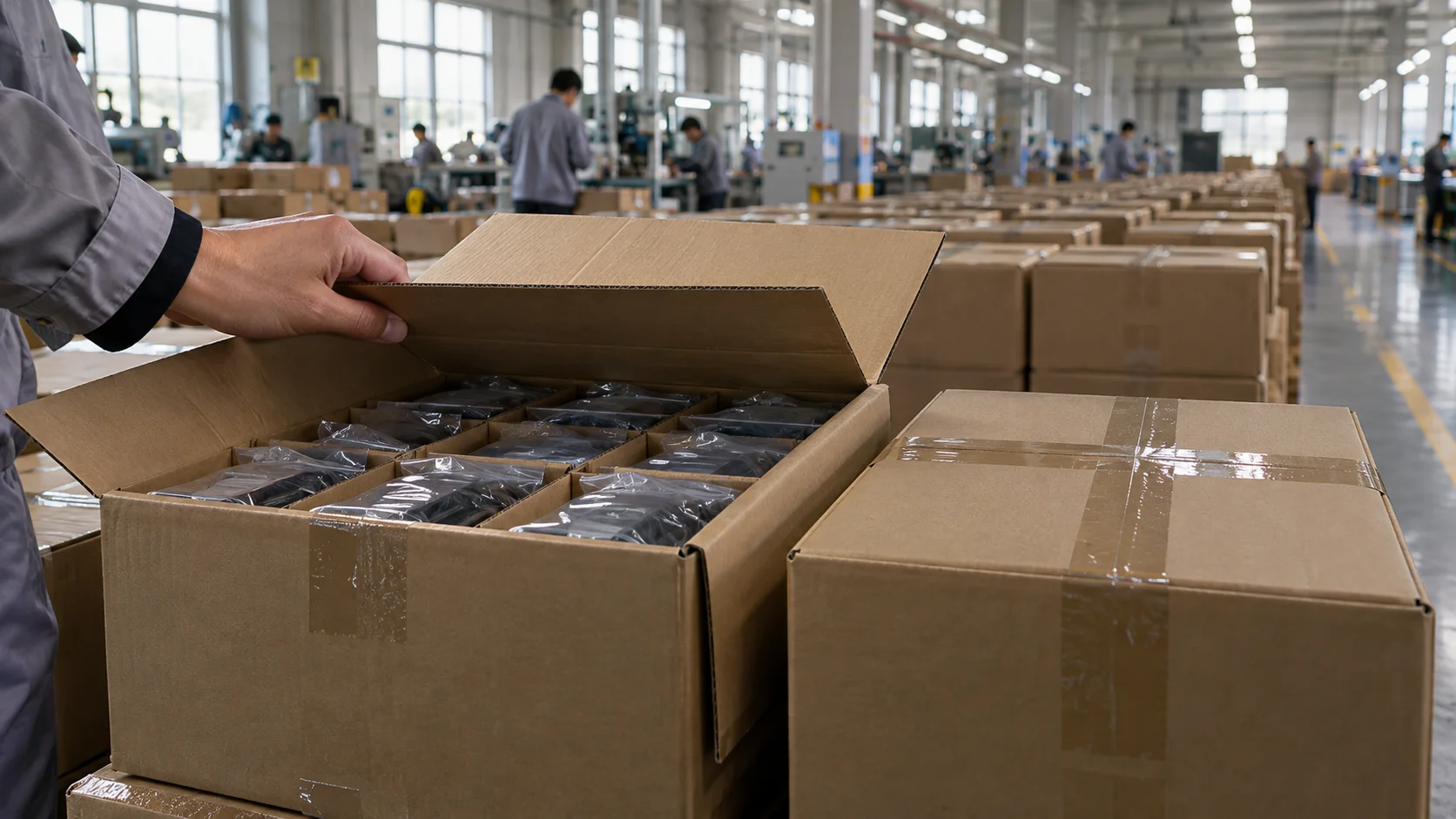
A standard PSI covers: quantity count against the purchase order and packing list (actual units produced versus ordered); physical dimension and weight spot-checks on a random sample; carton labelling compliance including barcode readability, country of origin marking, required safety symbols, and product markings; cosmetic defect grading under AQL sampling with photographic evidence; functional testing on a random sample (the product performs as specified under normal operating conditions); packaging integrity assessment including carton drop and compression testing; and documentation review including the commercial invoice, packing list, test reports, certificates of origin, and any required export permits. The inspector produces a full written report within 24–48 hours, including a clear pass/fail determination and photographs documenting each assessment area and all defects found.
AQL Sampling in Practice
PSI uses AQL (Acceptable Quality Limit) sampling, a statistical method for determining inspection sample size and the acceptable defect threshold, rather than 100% inspection of the production run. The AQL level is specified by the importer at time of booking and determines both how many units are inspected and how many defects can be found before the batch fails.
For general goods, AQL 2.5 is the standard: from a production run of 1,000 units, the inspector randomly selects approximately 80 units and accepts the batch if no more than 5 major defects are found across the sample. For safety-critical goods (bicycle helmets, children’s products, electrical items, protective equipment), AQL 1.0 applies: the same 1,000-unit run requires 80 units inspected with a maximum of 2 major defects before the batch passes. For a first order with a new supplier regardless of product category, specifying AQL 1.0 for major defects provides additional protection against a supplier who calibrated their quality control to pass AQL 2.5 rather than produce to specification.
A batch that fails PSI should not be loaded. The inspection failure report gives the importer a documented basis to require the supplier to correct the production run, fund a re-inspection, and confirm corrections before any further loading instruction is issued. An importer who instructs a freight forwarder to load goods after a PSI failure is accepting the compliance risk, and the failure report becomes evidence that the importer had advance knowledge of the defects.
PSI Cost, Lead Time, and Return on Investment
A full-container PSI by a recognised inspection firm costs USD 300–600 per inspection day. Most LCL and 20-foot FCL shipments are completed in one inspection day. A 40-foot container with a high SKU count or complex assembly inspection may require 1.5–2 days. Including inspector travel from the nearest city to the factory, the total cost for a standard inspection runs USD 350–650. Lead time from booking confirmation to inspection completion is 3–5 business days. This should be built into the purchase order delivery schedule from the outset, not treated as an optional add-on after production completes.
A supplier who indicates that the goods must be loaded before the PSI date (because the vessel booking cannot be moved, because production finished later than planned, or for any other stated reason) is stating that they do not accept third-party inspection of the production run before it leaves the factory. That position is the single highest-confidence supplier red flag available to an importer. A supplier confident in their production quality does not require the goods to leave before they can be inspected.
The return on investment for PSI is straightforward. A USD 400 inspection on a AUD 60,000 FOB shipment that identifies a production run requiring rejection, or a defect that can be corrected before loading at the supplier’s cost, prevents the importer from receiving and distributing non-compliant goods into the Australian market. A distributed recall for safety goods in Australia typically costs AUD 50,000–250,000 depending on distribution depth, the product category, and whether ACCC enforcement action follows. At any defect-detection probability above approximately 2%, the expected value calculation makes PSI mandatory on safety goods. For non-safety goods, the calculation is driven by defect rework cost, customer claims risk, and the cost of return freight, which in most cases still supports PSI on orders above AUD 20,000 FOB.
Payment Structure as a Verification Lever
Payment terms are not merely a financial negotiation. They are a structural verification tool. The standard 30/70 payment split (30% deposit on purchase order confirmation, 70% balance released on receipt of the PSI pass report and shipping documents) means the supplier must produce compliant goods before receiving the majority of their payment. The payment structure forces compliance verification into the supply chain rather than leaving it as an optional step that can be bypassed when timelines are tight.
An importer who pays 100% upfront on a first order has removed their primary leverage at the point in the relationship when leverage matters most. If the goods fail PSI or do not match specification, the importer’s options (renegotiate, require rework, withhold further orders) all operate from a weaker position when the supplier has already been paid in full. A supplier who insists on 100% upfront for a first commercial order, or who refuses to release the goods for PSI as a condition of the payment balance, should be treated as a qualification failure. It is not a negotiating position. It is a refusal of the verification process. A supplier who fails this test has already told you how the rest of the relationship will go, which is exactly why payment structure is one of the most reliable ways to verify supplier: China Australia deals before a single container has shipped.
For established suppliers with a verified track record of three or more completed orders with clean inspection results and consistent documentation, payment terms can move to 30/70 with the balance against shipping documents rather than the inspection report, which is standard commercial practice for ongoing supplier relationships. But PSI frequency should not reduce to zero for any active supplier supplying safety-critical goods, regardless of relationship length.
Arrival Documentation Reconciliation
Arrival verification is the final stage of the verification cycle. When goods arrive at the Australian port of entry, the documentation received from the supplier (commercial invoice, packing list, Bill of Lading, Certificate of Origin, test reports) should be reconciled against each other before the import declaration is lodged. The declared customs value on the import entry must match the commercial invoice. The packing list quantities and descriptions must match the Bill of Lading. The Certificate of Origin must reference the same goods as the commercial invoice and must have been issued by the correct authorised body for the applicable FTA.
Any discrepancy between these documents at the time of import declaration creates a customs compliance risk. An invoice that describes the goods differently from the Bill of Lading creates a documentation discrepancy that can trigger an ABF documentary examination, extending clearance time by 1–3 days and creating a post-clearance audit risk. An undervalued invoice, where the stated transaction value does not reflect the actual price paid, creates a customs fraud exposure for the importer, regardless of whether the undervaluation was initiated by the supplier. The ABF customs value rules require the importer to declare the actual transaction value, not the value the supplier writes on the invoice. For a full breakdown of Australian import documentation requirements, see Swift Cargo’s Australia import documentation guide.
Arrival sampling (checking the actual carton count against the packing list, spot-checking item count per carton, confirming product markings and labelling against the purchase order specification) closes the verification loop at delivery. If the goods are in a product category requiring ongoing compliance documentation (test reports should be current for each new production run, not recycled from prior orders), arrival sampling can feed a laboratory submission without disrupting the full shipment. For more on the clearance process and timeline, see the guide to Australian customs clearance timelines.

Annual Supplier Review Cycle
Supplier verification is not a one-time qualification exercise. A supplier who passes initial verification may change their manufacturing processes, subcontract production to a third party, switch raw material suppliers, expand into product categories beyond their certified scope, or face financial pressure that changes their quality control decisions, without informing their customers. A structured annual review cycle maintains the importer’s visibility across the supplier base and catches drift before it becomes a compliance event.
An annual review for an established supplier covers: current business registration status (re-check SAMR or the equivalent registry, since a registration that lapsed or a scope that changed is material); current test reports against the relevant standard versions (AS/NZS standards are periodically revised; a test report against a superseded standard is no longer current for ACCC compliance purposes); any ABF or ACCC enforcement activity in the product category during the review period; and a factory re-audit if annual purchase volumes exceed AUD 200,000 or if any product specification has changed since the last audit.
PSI frequency for established suppliers should not fall below every third shipment. A supplier can change their production process between inspection cycles, and regular inspection is the only mechanism for detecting drift before it produces a batch of defective goods. Suppliers with three or more consecutive clean PSI results and no annual review flags can carry a lower inspection weight than new or development suppliers, but the program should never terminate entirely for safety-critical product categories. For importers managing multiple suppliers across different product categories, see the guide to wholesale import logistics in Australia for how verification fits into the tiered supplier network structure.
The annual review exists because verification decays, and it decays quietly. Consider the documented sequence that turns a qualified supplier into a recall: a factory passes its initial audit and clears three consecutive pre-shipment inspections, so the importer drops it to a lower inspection weight. Sometime in the following year the supplier changes a raw-material source to protect a margin, a substitution that never appears on an invoice and never triggers an alert. The goods keep passing PSI, because PSI checks the shipment against the specification, not the specification against the original approved sample. Eighteen months later an ACCC market-surveillance test on distributed stock finds the substituted material out of standard, and the reconciliation runs backward through every clean inspection to the one check that was never repeated: the annual re-audit. The lesson is not that PSI failed. It is that a control which is never re-run stops being a control.
What Verification Cannot Cover
A complete verification process (SAMR check, factory audit, test report verification, and PSI) reduces compliance risk significantly but does not eliminate it. PSI samples a portion of the production run under AQL methodology, not the entire run. A batch that passes AQL 2.5 inspection can still contain defective units within the accepted defect threshold. The sampling method is designed to provide a statistically defensible basis for accepting or rejecting a batch, not to guarantee zero defects in the accepted units. Test reports confirm that a sample of the product, at the time of testing, met the standard. They do not guarantee that every unit in every subsequent production run will meet the same specification, particularly if raw material sourcing or production processes change between test runs.
The practical implication is that verification is a risk management system, not a guarantee. An importer who follows a complete verification process has exercised reasonable due diligence under Australian law, which provides a defensible position if a compliance issue arises despite the verification steps taken. An importer who skipped PSI, accepted self-declared conformity certificates, or did not conduct a factory audit before placing a large order has no equivalent position. The verification record (audit reports, inspection reports, test reports, SAMR screenshots, payment records with PSI pass conditions documented) is the evidentiary basis for the due diligence defence. Maintaining this file systematically is as important as conducting the verification itself.
For a taxonomy of the warning signs that emerge during supplier verification, and how to escalate a response to each type of concern, see the guide to red flags when working with overseas suppliers. For the complete documentation framework and how verification records feed the customs declaration process, see the guide to importing from China to Australia.
Skipping a verification step rarely comes from laziness. It comes from the same gap that makes bad product design so common: the importer’s mental model of “I found a supplier, we agreed a price” doesn’t match the supplier’s mental model of “I got an order, I’ll fulfil it however is cheapest for me this month.” Those two models only collide once, usually at the worst possible time, when a factory audit would have caught it earlier. A business registration check confirms a company exists. It says nothing about which of the supplier’s several possible mental models about your specific order is the one they’re actually operating on. The fix isn’t more paperwork for its own sake. It’s designing the verification sequence so the two mental models get forced into agreement before money moves, not after a container is already at sea.

How to Verify Supplier: China Australia Quick Reference
Confirm business registration and factory legitimacy first, verify test reports against an accredited laboratory, structure payment so a meaningful balance rides on pre-shipment inspection, and reconcile arrival documentation against what was agreed at order. Importers who verify supplier: China Australia relationships this way before the first large order catch the suppliers who would have failed later, while the order is still small enough to walk away from.
Frequently Asked Questions
How do I verify a Chinese supplier’s business registration?
Use China’s National Enterprise Credit Information Publicity System (SAMR) at gsxt.gov.cn. Enter the supplier’s registered Chinese company name to retrieve their Unified Social Credit Code, registration status, business scope, registered capital, and any administrative penalties or recall records. A legitimate manufacturer will provide their Unified Social Credit Code without hesitation. Any discrepancy between the name on their invoices and the SAMR record is a disqualifying red flag, including the common case where a trading company’s registered name differs from the factory name they present to buyers.
What does a pre-shipment inspection actually check?
A pre-shipment inspection covers: quantity count against the purchase order and packing list, physical dimensions and weight spot-checks, carton labelling compliance including barcode accuracy and country of origin marking, functional testing on a random sample, cosmetic defect grading using AQL sampling, packaging integrity assessment including drop and compression tests, and documentation review including test reports, certificates, and export declarations. The inspector photographs every stage and produces a written report within 24–48 hours, including a clear pass/fail determination and photographic evidence of any defects found.
How do I verify that a test report is genuine and current?
A genuine, current test report will be issued by an ILAC-accredited laboratory (NATA in Australia, CNAS in China, VILAS in Vietnam), will reference the exact current version of the relevant standard (including the year, as in AS/NZS 2063:2020, not a generic reference), will contain a product description specific enough to identify the goods being ordered, and will be dated after the product’s final design was locked. Verify the laboratory’s accreditation by searching the ILAC directory at ilac.org. A test report against a superseded standard version, or one whose product description is vague enough to apply to multiple product variants, is not adequate for ACCC compliance purposes.
What AQL level should I specify for a pre-shipment inspection?
For general goods, AQL 2.5 is the standard: from a batch of 1,000 units, 80 units are inspected and a maximum of 5 major defects are accepted before rejection. For safety-critical goods (bicycle helmets, children’s products, electrical items, protective equipment), AQL 1.0 applies, reducing the accepted defect rate significantly. For high-value first orders or new suppliers, specifying AQL 1.0 for major defects across all product types provides additional confidence regardless of the product category. The AQL level must be specified to the inspection firm at time of booking.
How often should I run pre-shipment inspections on an established supplier?
For a new supplier, run PSI on every shipment for the first three orders. For an established supplier with three or more consecutive clean inspection results, PSI frequency can reduce to every second or third shipment for general goods, but should never be eliminated entirely for safety-critical product categories. An annual supplier review should include re-examination of test report currency, business registration status, and any ACCC recall activity in the product category. If any annual review flags a concern, reinstate PSI at every shipment until the concern is resolved.