This guide walks through business structure, the government registrations you need, and your first shipment, in that order, because getting the sequence right early is what keeps setup cheap.
Every week someone pays a course-seller a few thousand dollars to learn how to “get their import licence” for Australia. There is no such licence. There never has been. The actual setup path costs a few hundred dollars in government fees and can be completed in a fortnight. It covers structure, ABN, GST, deferred GST, permits where relevant, banking, insurance and a compliance file. What it requires is not money but sequencing: doing the steps in the right order, because several of them are cheap to do early and expensive to fix late.
This is written for someone starting from zero in Australia with a product idea and no trading history.
Step 1: Choose Your Structure, and Why Importers Incorporate Earlier Than Most
The standard advice for a new small business is to start as a sole trader: free to set up, simple tax, upgrade to a company later if things work. For most businesses that is sound. For importers it is riskier than it looks, and the reason is product liability.
Under the Australian Consumer Law, when goods are supplied in Australia and the manufacturer has no local presence, the importer is deemed to be the manufacturer. Read that again, because it is the single most underappreciated fact in this whole process. If the phone charger you imported starts a house fire, the injured party does not chase a factory in Shenzhen. They chase you. As a sole trader, “you” means your personal assets: your house, your savings, everything. As a director of a proprietary limited company, the claim lands on the company, and your personal exposure is limited to what the company owns, with normal exceptions for negligence and director misconduct.
That asymmetry drives the default recommendation: a Pty Ltd company before your first commercial order. The costs are real but modest: an ASIC registration fee of a few hundred dollars, an annual review fee, and slightly more involved bookkeeping. Against uncapped personal liability for a defective product, it is one of the cheapest risk transfers available to you. The inversion worth noticing: people treat incorporation as a milestone you earn after the business proves itself. For an importer, it is protective equipment you put on before the activity that creates the risk. That risk begins with your very first sale, not your thousandth.
A word on trusts. A discretionary trust with a corporate trustee adds income-distribution flexibility and another asset-protection layer. Plenty of established importing families run this structure. It also adds setup cost, accounting complexity and decisions you are not yet equipped to make. It is a year-three conversation with your accountant, not a day-one one. Sole trader remains defensible for one narrow case: you are importing samples and tiny test batches, not yet selling to the public, and you incorporate before the first customer transaction.
Step 2: The Registration Stack, ABN, GST and the Deferred GST Scheme
Three registrations, in order.
ABN
The Australian Business Number is free, applied for through the Australian Business Register, and near-instant for straightforward applications. Nothing else in the stack works without it: it is the identifier customs entries key against, the number your GST registration hangs off, and the reference suppliers and platforms will ask for. If you have registered a company, the ABN application typically follows immediately using the company’s ACN.
GST: Register From Day One, Threshold or Not
New importers routinely burn money on GST. GST registration is compulsory once turnover hits AUD 75,000, so people below that threshold skip it. For a service freelancer, fine. For an importer, it is a straightforward working capital error.
Every commercial import into Australia attracts GST at 10% of the taxable importation value, roughly customs value plus duty plus international freight and insurance. On a shipment with AUD 12,000 of goods and AUD 2,500 of duty and freight, that is about AUD 1,450 of GST payable at the border. If you are GST-registered, that AUD 1,450 is an input tax credit: you claim it back on your next Business Activity Statement, and its net cost to you across the cycle is zero. If you are not registered, it is simply gone: a 10% surcharge on everything you land, unrecoverable, forever.
Run the numbers on a first year of, say, four trial-to-small orders totalling AUD 60,000 in landed inputs: skipping registration costs you roughly AUD 6,000 in dead GST while saving you a few hours of BAS paperwork. Nobody would take that trade if it were framed honestly. Register voluntarily from day one.
The Deferred GST Scheme: The Importer’s Cash Flow Transformation
GST registration gets your import GST back. The deferred GST scheme, run by the ATO, stops it leaving in the first place. Without deferral, GST is payable when your goods clear customs (real cash out at the wharf) and you wait until your BAS to claim it back. That gap can be weeks to months of cash you do not have working for you. With deferral approval, the GST liability moves onto your next BAS, where the matching input credit typically cancels it. The cash never leaves.
The price of admission is monthly BAS lodgement (instead of quarterly), electronic lodgement and a clean tax record. Monthly BAS sounds like a burden. With modern accounting software it is a modest routine, and for an importer it comes with a side benefit: you get your input credits on other expenses back monthly too. Apply as soon as your GST registration is active. On the worked example later in this article, deferral keeps roughly AUD 1,800–2,300 per order in your account instead of with the government. On a growing order cadence, that compounds into a genuine funding advantage. For more depth on how these costs stack, see our total landed cost guide.
Step 3: The Import Licence Question, and What You Actually Need
Say it plainly: Australia has no general import licence. Any person or company can import goods. The Australian Border Force does not issue, and has never issued, a licence to “be an importer”. When a course or “mentorship program” markets itself around securing your import licence, it is selling you a solution to a problem that does not exist. That’s a reliable tell that the rest of the material is padding too.
Australia does have permits and controls on specific categories of goods. The distinction matters: the licence attaches to the goods, not to you. A working checklist by category:
- Food and beverages: imported food inspection regime, biosecurity conditions, and for some items country-specific requirements. Check biosecurity import conditions before ordering anything edible.
- Therapeutic goods: medicines, supplements, medical devices (which includes more than you think: massage devices, some skincare claims). TGA territory: entries and sponsorship obligations apply.
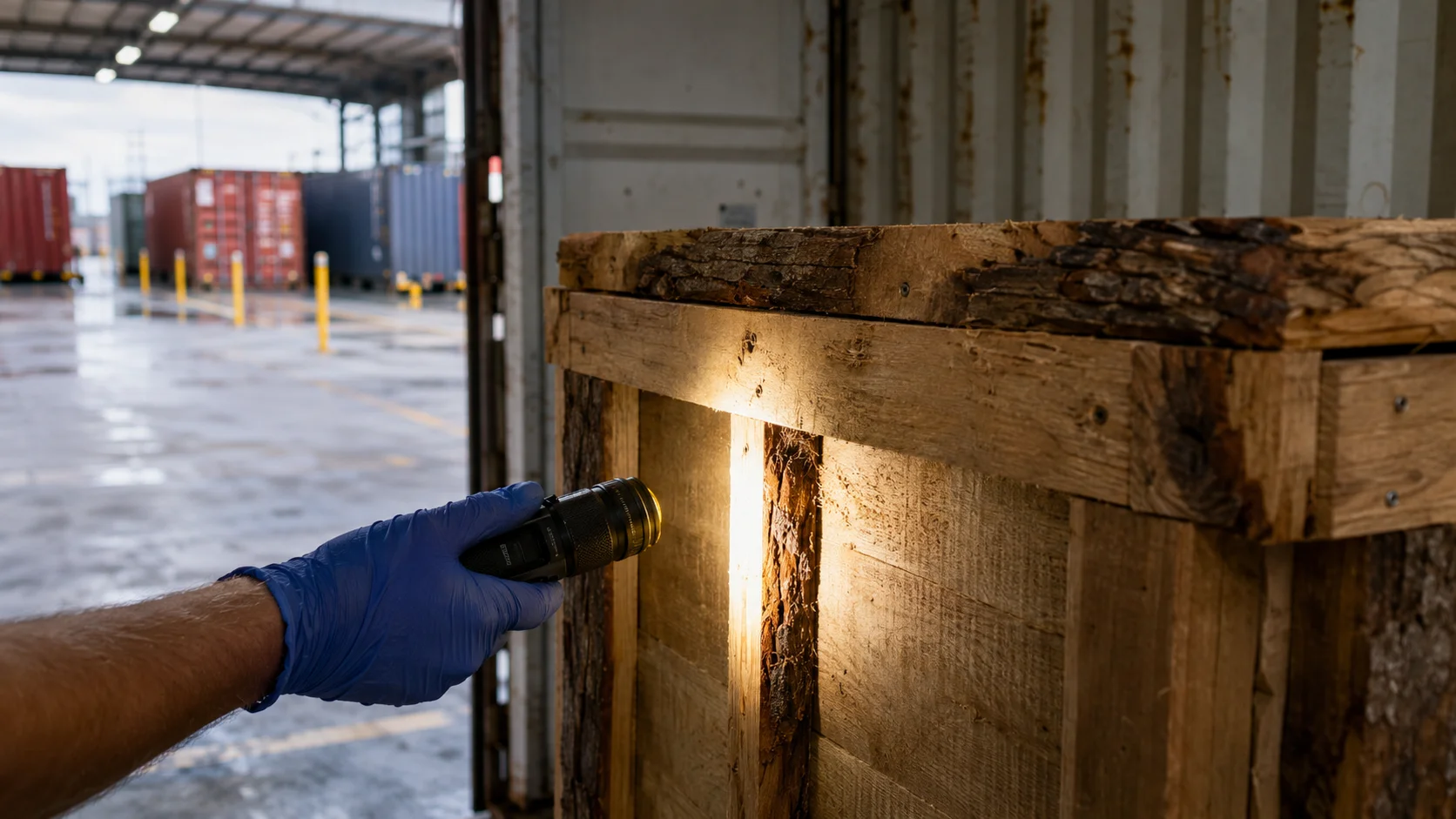
- Biosecurity-risk goods: plant material, timber and wooden items, seeds, animal products, soil-contaminated goods. Permits or treatments may be required.
- Electrical goods: no import permit, but state electrical safety certification (RCM marking regime) before sale. The barrier is at the point of sale, not the border, which catches people out.
- Firearms, weapons and restricted items: police certification and ABF permission. Also covers surprising items: laser pointers over a power threshold, some knives, slingshots.
- Chemicals and cosmetics: industrial chemical introduction rules; cosmetics count as industrial chemicals for this purpose.
- Vehicles: a genuine approval regime; one of the few categories with real import approval paperwork.
If your product is none of the above (homewares, textiles, tools, sporting goods, storage products, most general merchandise), you need no permit at all. Duty, GST and correct declaration, yes. Permission, no.
Step 4: Banking and FX, the Margin Leak Nobody Budgets
Open a dedicated business transaction account the moment the company exists. Mixing personal and company funds is both an accounting mess and a threat to the liability protection you incorporated for. Then look hard at how you will pay overseas suppliers, because this is where a quiet 1–3% of your cost base leaks away.
Pay a Chinese supplier USD 10,000 through a major bank’s standard international transfer and you are typically charged a margin of 1–3% hidden inside the exchange rate, plus a flat fee. Call it AUD 200–450 per payment at current rates. That does not sound catastrophic until you frame it correctly: if your net margin on the goods is 20%, a 2.5% FX cost is 12.5% of your entire profit on the order, paid for the privilege of moving money. Multi-currency accounts from specialist FX providers routinely cut that margin to 0.3–0.7%. Setting one up takes an afternoon and requires nothing but your company documents and ABN. It is among the highest hourly-rate tasks in this whole setup.
A second tool for later: forward contracts. When you place a large order with a deposit now and balance in 60–90 days, you carry currency risk on the balance. A 4% adverse move in AUD/USD between deposit and balance payment can erase a fifth of your margin. That size of move is well within a normal quarter’s range. A forward contract locks today’s rate for the future payment. For a first AUD 15–25k order, the exposure is survivable and hedging is optional; once individual orders pass AUD 50k, unhedged balances are gambling with your margin whether you intend to or not.
Step 5: The Insurance Stack, Product Liability Before First Sale, Not After
Three policies, in priority order:
Product liability insurance comes first, and its timing is the point. Remember the ACL deemed-manufacturer rule from Step 1: your exposure begins with your first sale, not with scale. A policy with AUD 10–20 million cover for a low-risk product category typically costs a new importer somewhere in the AUD 600–1,500 a year range. The sequencing error people make is treating it like other business insurance, something you add when the business is “real”. Incorporation caps what a claimant can take; insurance is what actually pays the claim and the defence costs. Bind it before the first unit leaves your possession.
Marine cargo (transit) insurance covers the goods from factory to your warehouse. Carrier liability under standard sea freight terms is capped at trivially small amounts per package, nowhere near replacement value. Per-shipment cover generally runs 0.3–0.5% of insured value; an annual open policy becomes economic once you are shipping regularly. On an AUD 15,000 shipment, that is roughly AUD 50–75. Skipping it means self-insuring a container fire or a dropped pallet for the sake of a restaurant meal’s worth of premium.
General business insurance covers public liability if customers or couriers visit premises, contents/stock cover for goods in your garage or 3PL, cyber if you run your own store checkout. Necessary, unremarkable, cheap at small scale.
Product liability and marine cargo cover close the risk gap the ACL leaves open, worth pricing your first shipment properly before you commit to a supplier.
Step 6: The Compliance File, and Doing It Before Choosing Your Product
The sequence inversion that separates importers who last from those who exit with a garage full of unsellable stock is this: compliance research comes before product selection, not after. The natural order (find a winning product, then check the rules) regularly leads people to fall in love with a product whose compliance burden they discover only after paying a supplier.
Build a simple compliance file for any product you are considering:
- Mandatory standards check. The ACCC Product Safety site lists every mandatory safety standard and ban. Search your category before you shortlist a product. Dozens of everyday categories carry mandatory standards, including toys with small parts, sunglasses, treadmills, button-battery products and kids’ nightwear. Supplying non-compliant goods is an offence with per-contravention penalties that would end a small company.
- Labelling requirements. Country-of-origin labelling for some categories (food especially), care labelling for textiles, ingredient labelling for cosmetics, trade descriptions accuracy generally. Labelling is cheap to get right at the factory and expensive to fix in a warehouse in Sydney, sticker by sticker.
- Evidence. Test reports from accredited labs for any product touching a mandatory standard. A supplier’s verbal assurance of compliance is worth exactly nothing in an ACCC investigation; a genuine test report against the specific Australian standard is your defence file.
- Record-keeping. Customs requires import records to be kept for five years: commercial invoices, packing lists, bills of lading and entry documentation. Set up the folder structure on day one; ABF can audit years after the fact, and reconstructing a 2026 shipment file in 2030 is misery.
Step 7: Choosing Your First Product, the Crawl-Walk-Run Ladder
You are choosing two things at once with a first product: something to sell, and a training environment for learning the import cycle. Optimise for the second. The money you make on order one is noise; the competence you build is the asset.
That logic says: defer regulated categories deliberately. Categories like electrical goods, toys, food, cosmetics and anything for infants are not bad businesses, but each stacks a certification or inspection regime on top of the already-new-to-you basics of supplier management, freight, customs and cash cycle. Failing at two new things simultaneously is how first orders die. The ladder:
- Crawl: compliance-light general merchandise such as homewares, storage and organisation, non-electrical kitchen tools, sporting accessories, pet accessories (non-food), plain textiles. Few or no mandatory standards, no permits, straightforward classification.
- Walk: categories with a defined, learnable compliance layer: textiles with care labelling, sunglasses against their mandatory standard, products needing a single test report.
- Run: electrical (RCM regime), toys, food and supplements, cosmetics, once you have a broker relationship, a compliance file habit, and enough margin history to absorb testing and certification costs.
Course-sellers push regulated niches as “moats”. A moat you cannot yet cross protects the incumbents, not you. Earn the right to the harder categories.
Compare two first-time importers who start with the same AUD 25,000. The first puts all of it into 400 units of a battery-powered children’s toy, so the stock arrives needing a mandatory-standard test package for every model before a single unit can legally be sold. The second runs two small orders of plain kitchen storage, learns where the paperwork stalls, and still has cash in the bank when the second order lands. Twelve months on, the second importer holds the broker relationship, the compliance file and the margin history the first is still trying to buy. What separated them was a small, correct step, repeated until it compounded.
Step 8: Broker and Forwarder, Where Self-Reliance Becomes False Economy
You can legally self-clear your own customs entries. For a first commercial shipment, do not. A licensed customs broker charges roughly AUD 150–400 per entry and, in exchange, classifies your goods against the tariff correctly, applies any free trade agreement preference you are entitled to, gets valuation right, and keeps your importer record clean. That FTA preference is frequently worth more than the broker fee on its own. The failure mode of self-clearing is not the paperwork being hard. It is being confidently wrong. A misclassified tariff heading can mean underpaid duty discovered in audit, with back-payment and penalties, or overpaid duty you never notice, order after order. Against that distribution of outcomes, the broker fee is not a cost. It is cheap insurance with a positive expected return.
The freight forwarder decision sits alongside it: many forwarders provide brokerage in-house, and for LCL trial orders a forwarder handling door-to-door with customs included is the sane default. Our guide to choosing a freight forwarder in Australia covers what to look for in more depth: communication cadence, LCL consolidation quality, transparent surcharge handling. Our import process walkthrough covers the mechanics of the shipment itself.

Step 9: The First Shipment Walkthrough, With a Real Budget
The pattern that works is three escalating commitments:
Samples first. Order samples from two or three shortlisted suppliers, and expect to pay AUD 50–150 per supplier including courier. You are checking build quality, labelling execution and whether the factory’s communication survives contact with a real request. Supplier vetting is its own discipline; our guide to vetting Chinese suppliers covers verification, and it applies before any money at scale moves.
Trial order second. 50–200 units, shipped LCL. This is deliberately below the quantity that maximises unit economics, because you are paying a per-unit premium to cap your downside while you test the full cycle: production, quality control, freight booking, customs clearance, receiving, and (most importantly) whether anyone buys the thing.
Then the full cycle at commercial scale. The realistic all-in budget for a first proper order of a compliance-light product looks like this: the numbers new importers actually experience, not the stock-cost-only figures course-sellers quote:
| Item | Low (AUD) | High (AUD) |
|---|---|---|
| Stock (150–400 units, ex-works) | 8,000 | 13,000 |
| Samples and courier (2–3 suppliers) | 200 | 450 |
| Pre-shipment QC inspection | 350 | 500 |
| LCL sea freight + origin/destination charges | 1,200 | 2,500 |
| Marine cargo insurance | 50 | 100 |
| Customs brokerage + entry fees | 250 | 450 |
| Import duty (0–5% typical; often 0% under FTA) | 0 | 650 |
| Import GST at 10% (recoverable / deferrable if registered) | 950 | 1,700 |
| Company setup + ASIC fees | 600 | 900 |
| Product liability insurance (year one) | 600 | 1,500 |
| Compliance: test report or standards review | 0 | 1,200 |
| FX costs on supplier payments (0.5–2.5%) | 50 | 350 |
| Local delivery, storage, contingency | 750 | 1,700 |
| Total | ~13,000 | ~25,000 |
Call it AUD 15,000–25,000 all-in for most realistic first proper orders. The GST line comes back to you (or never leaves, with deferral), and the setup lines are one-offs. The number that matters as much as the total is the timeline it is locked up for: 30% deposit at order, balance before shipment around week 4–6, freight and clearance costs around week 8–10, and first meaningful revenue somewhere from week 10 onward. That is a 60–90 day capital lock before the cycle turns. Under-capitalising it is how importers with genuinely good products go broke: enough for the stock, not enough for the weeks the money is at sea.
Common First-Year Mistakes
The same failures repeat with remarkable consistency:
- Skipping GST registration, then discovering the credits. The importer trades below the threshold unregistered, eats 10% dead GST on every shipment, and finds out in month nine what an input credit is. Registration can’t cleanly rescue GST already paid as an unregistered importer on earlier shipments. The money is gone. Day-one registration costs nothing and prevents all of it.
- The product liability gap on first sale. The importer trades as a sole trader, uninsured, in the exact window where ACL deemed-manufacturer exposure begins. The probability of a claim on any given unit is low; the severity is uncapped. Low-probability, ruinous-severity risks are precisely what you insure.
- Choosing regulated products naively. The first-timer who orders 500 units of a children’s electrical toy has combined three compliance regimes with zero import experience. The stock arrives; the RCM certification, standards testing and labelling problems surface afterwards; the goods can’t legally be sold.
- Under-capitalising the cash cycle. The importer budgets for stock cost and forgets that freight, duty, GST and the 60–90 day lock exist. The second order can’t be placed until the first order’s cash returns, and the business stalls at exactly the moment it has proven demand. Our guide to scaling an import business covers the growth-stage version of this problem.
- Paying for the mythical licence. The importer pays thousands of dollars to a course-seller for paperwork that does not exist, while the real registrations (free ABN, free GST registration, free deferred GST application) sit unused.
The Setup Sequence, Compressed
Total government cost across every registration above: a few hundred dollars. Total time: two to four weeks, running in parallel with supplier conversations. The registrations are the easy part. The discipline of compliance-first product selection and honest cash-cycle budgeting is what the first year actually tests. External references worth bookmarking as you go: the ATO (GST and deferred GST), ASIC (company registration), the ABF (import requirements and record-keeping) and the ACCC (product safety standards).
We quote first-time importers the same way we quote year-ten ones.
Most SMEs get a detailed, all-inclusive quote within 24 hours, covering classification, FTA eligibility and clearance.
Related Reading
- The Import Process in Australia: Step by Step
- Total Landed Cost When Importing to Australia
- How to Choose a Freight Forwarder in Australia
- How to Scale an Import Business in Australia
Frequently Asked Questions
Do I need an import licence to start an import business in Australia?
No. Australia has no general import licence, and anyone can import. Some goods need category-specific permits: food, therapeutic goods, biosecurity-risk items, firearms and a few others. Anyone selling you an “import licence” is selling a myth.
Should I register for GST before hitting the AUD 75,000 threshold?
If you import, almost certainly yes. Import GST at 10% of taxable importation value is an unrecoverable cost to an unregistered business and a claimable input credit to a registered one. Voluntary registration from day one is a working capital decision.
What is the deferred GST scheme and should I apply?
It’s an ATO scheme that moves import GST from a cash payment at customs clearance to your next BAS, where the input credit typically cancels it. The cost is monthly BAS lodgement. For importers it is close to free cash flow, so apply as soon as GST registration is active.
Sole trader or Pty Ltd for an import business?
Pty Ltd, and earlier than general small-business advice suggests. Under the ACL the importer is deemed the manufacturer for overseas-made goods, so product liability lands on you personally as a sole trader. Incorporate before your first commercial sale.
How much do I need for a first proper import order?
Budget AUD 15,000–25,000 all-in for a 50–400 unit LCL order of a compliance-light product, including freight, duty, GST, insurance, compliance, and setup costs. Expect the cash to be locked up for 60–90 days before revenue returns it.
Do I need a customs broker for my first shipment?
Not legally, but practically yes. AUD 150–400 per entry buys correct classification, FTA preference application and a clean compliance record. Self-clearing your first commercial shipment is usually a false economy.