Author: Carl Ansama

  • AANZFTA Rules of Origin and Duty Claims: What Australian Importers Need

    AANZFTA Rules of Origin and Duty Claims: What Australian Importers Need

    Trade agreements attract a strange kind of wishful thinking. Importers hear that a deal exists between Australia, ASEAN and New Zealand, then assume the agreement itself will somehow make the shipment cheaper. In practice, AANZFTA is useful only when the goods, origin, and paperwork line up tightly enough for the preference to be claimed correctly.

    That is why AANZFTA should be understood less as a political headline and more as an operational instrument. The agreement can create a preferential-duty pathway, but it does not remove the need for correct classification, origin analysis, customs documentation, or biosecurity compliance. Importers who treat it as a broad promise often become frustrated. Importers who treat it as a document-sensitive customs tool usually get more value from it.

    For Australia-bound cargo, the practical question is not “does AANZFTA exist?” It is “can this shipment properly claim AANZFTA treatment, and what evidence will customs expect?”

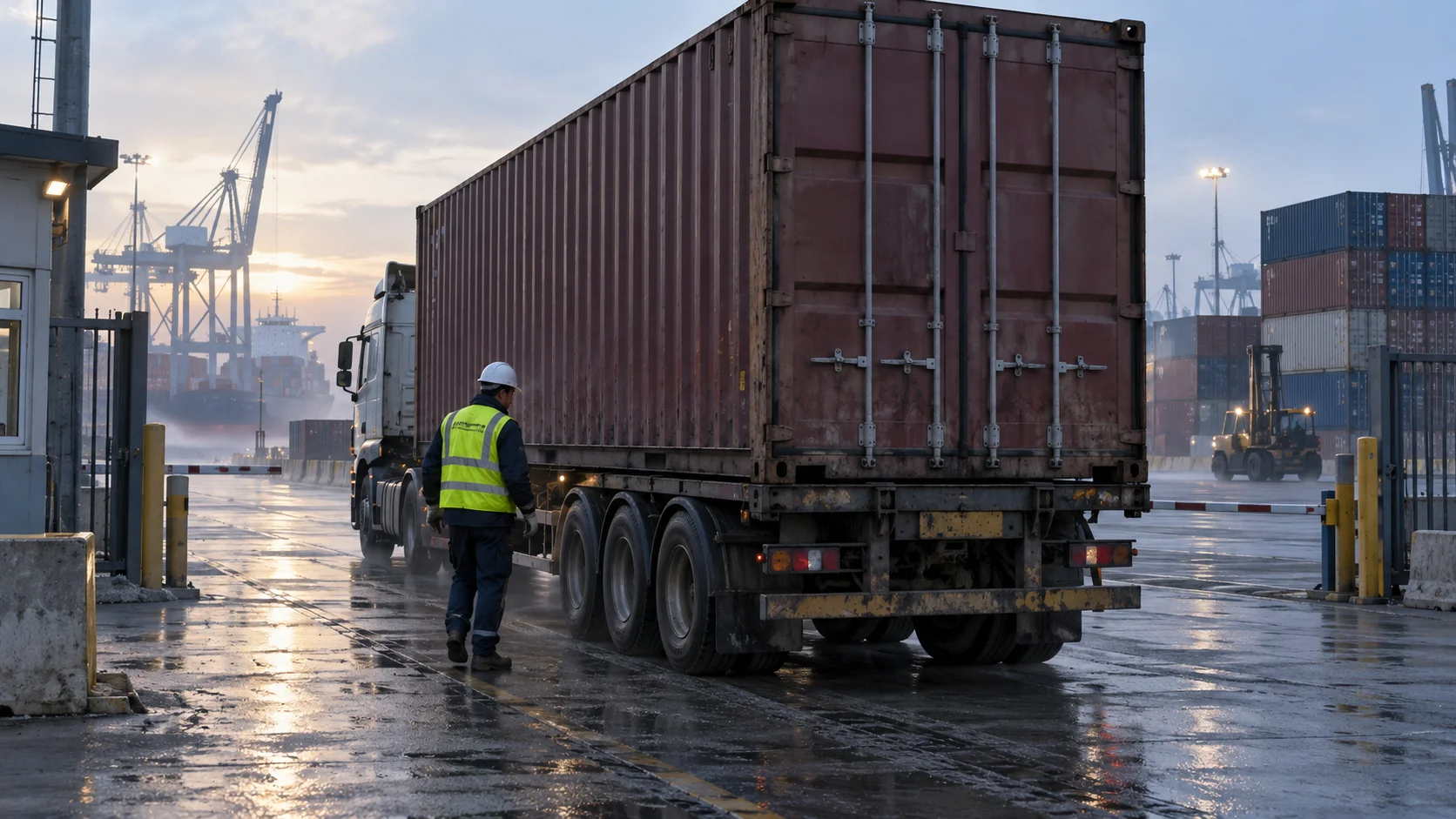
    Cargo ship and customs documents representing an AANZFTA rules-of-origin certificate claim at an Australian port

    What AANZFTA Actually Does

    AANZFTA creates a framework under which qualifying goods can receive preferential tariff treatment when imported into Australia from participating economies. DFAT and ABF both frame the agreement operationally: it is about how importers claim preferences, how origin is established, and how the agreement works in the actual customs environment. DFAT: AANZFTA overview ABF: free trade agreements

    AANZFTA is not a universal discount on imports from Southeast Asia. It is a structured preference regime. The importer is still dealing with customs law, tariff treatment, and evidentiary expectations. The agreement creates an opportunity. It does not create an automatic entitlement.

    For commercially serious importers, that makes AANZFTA a planning tool. It changes sourcing and landed-cost decisions where the goods genuinely qualify. But it only becomes real value when the preference can be claimed cleanly, defended if questioned, and integrated into the rest of the import file.

    Why Rules of Origin Matter More Than Importers Expect

    Rules of origin are where many trade-agreement conversations stop being casual and start becoming technical. A product shipped from an AANZFTA country is not necessarily an originating good in the agreement sense. It may have been assembled there, repackaged there, or re-exported through that country without actually satisfying the origin criteria required for preferential treatment.

    Customs is not asking where the container boarded. Customs is asking whether the good qualifies as originating under the agreement. That can depend on production history, tariff-shift logic, regional value content, or commodity-specific rules depending on the product. Rules of Origin Facilitator: AANZFTA product-specific rules

    This is why importers should not use AANZFTA as a sales talking point before the origin analysis is done. If the commercial team starts budgeting around a preference that later cannot be substantiated, the landed-cost model will be wrong at exactly the moment it needs to be credible.

    The Origin Tests That Actually Decide Eligibility

    AANZFTA uses product-specific rules, which means eligibility is not determined at the agreement level but at the tariff heading level. For most goods, qualifying as ASEAN-origin requires satisfying one of three tests: wholly obtained (the good is produced entirely within ASEAN member states with no non-ASEAN inputs), a tariff change rule (non-originating inputs must shift to a specified HS chapter or heading through processing in the ASEAN country), or a regional value content threshold (a minimum percentage of the good’s value must be added within the ASEAN region). DFAT: AANZFTA — rules of origin

    For finished manufactured goods, the tariff change rule is the test most commonly in play. This means an importer needs to understand not just where the product was assembled but where the key input materials originated and whether the manufacturing process in the ASEAN country is sufficient to achieve a change in tariff classification. A product assembled in Vietnam from Chinese components that remain in the same HS chapter as the finished good may not satisfy the tariff change rule — and may therefore not qualify for AANZFTA preference regardless of the country of export.

    The practical implication is that importers sourcing finished goods from ASEAN factories drawing heavily on Chinese upstream inputs should not assume AANZFTA eligibility. They should run the specific HS-code check against the relevant product-specific rule and confirm with the manufacturer what origin evidence is available to support the claim.

    The Specific Tests, Named

    It is worth naming the actual instruments, because the vaguer an importer is about them the more likely they are to accept a supplier’s word as if it were proof. AANZFTA origin is decided by a Product-Specific Rule (PSR) tied to the good’s tariff classification. For many goods the PSR offers a Regional Value Content test — commonly 40% RVC, meaning at least that share of the value must originate in the free-trade area — or a Change in Tariff Classification test, where the input materials shift HS classification through processing in the exporting country. The PSR schedule, not the exporter’s confidence, decides which test applies.

    The claim itself rests on a valid Certificate of Origin (the AANZ form) issued by an authorised body in the exporting country, held by the importer at the time the duty preference is claimed. This is where accountability quietly shifts. The supplier prints “made in Vietnam” on the invoice, but if a Border Force audit finds the RVC arithmetic does not hold, it is the Australian importer — the one who claimed the preference — who is pursued for the underpaid duty, penalties, and interest. The exporter who asserted the origin bears none of that exposure. That asymmetry is the real reason origin claims deserve verification rather than trust.

    Why Documentation Decides Whether the Claim Survives

    Even where goods genuinely qualify, the claim still lives or dies through documents. Customs needs documentary support that the origin claim is valid and that the importer is entitled to request preferential treatment.

    That means invoices, origin declarations or certificates where relevant, product descriptions, tariff logic, and supporting commercial records all matter. If the file is vague, inconsistent, or too thin to explain why the preference is being claimed, the importer has created avoidable risk. The issue is not whether the agreement exists. The issue is whether the claim is documented strongly enough to survive scrutiny.

    Experienced importers treat preference documentation as part of the customs file, not as a side note for the procurement team. The agreement may save money, but only if the evidence is strong enough to make the claim operationally real. For the broader Australian customs framework that surrounds any preference claim, see Australian customs and import services.

    What AANZFTA Does Not Change

    AANZFTA does not dissolve the rest of the Australian border system. It does not remove the need for correct classification. It does not remove GST. It does not remove customs valuation rules. It does not remove DAFF biosecurity controls. It does not solve permit problems for regulated commodities. Australia’s Commercial Import Rules Explained Import Duty and GST Explained for Australia

    Trade-agreement logic belongs inside the bigger import system. A qualifying preference can still sit alongside inspections, treatment, valuation work, or compliance obligations that have nothing to do with the agreement itself. A preferential duty rate and a DAFF treatment order can arrive in the same shipment file. The agreement handles one; the importer still manages the other.

    How to Use AANZFTA Intelligently as an Importer

    • Confirm tariff classification first, because origin and preference logic become meaningless if the product is misclassified.
    • Check the actual origin rule for the goods — tariff change, regional value content, or wholly obtained — rather than relying on broad supplier assurances.
    • Make the preference file part of the customs file, not an isolated procurement note.
    • Model landed cost with and without the preference so the business understands the real exposure if the claim fails.
    • Keep the broader border system in view, especially for goods with biosecurity or regulator sensitivity.

    The classification step deserves particular attention. AANZFTA duty rates are set at the HS heading level, and the difference between two adjacent headings can mean the difference between a 5% rate and a 0% rate, or between a qualifying rate and an exclusion. Importers who delegate tariff classification entirely to their customs broker and never review the rationale are exposed: if the classification has been generous in the past and customs disagrees, the preference claim falls with the classification dispute. Running an independent classification review before the first shipment of a new product is the cheapest form of landed-cost risk management available.

    Origin Documentation as an Ongoing Capability

    Two competitors importing the same goods from the same ASEAN supplier can experience two different landed costs purely because one company has invested in origin documentation as an ongoing capability and the other has not. Over time that gap compounds. The agreement is public; the discipline of using it well is the actual cost advantage.

    In practice this means maintaining a working HS-code map for your product range, holding supplier origin certificates on file and reviewing them when suppliers change production inputs, and establishing a standard preference-claim checklist that travels with every shipment file. The importer who redoes the origin analysis from scratch on every new SKU and re-requests paperwork each time a shipment books is not using AANZFTA as an advantage. They are experiencing it as a compliance overhead.

    Calibrating Confidence in the Claim

    Most importers who are aware of AANZFTA believe their goods qualify for preferential duty. The confidence in that belief tends to exceed the evidence available to support it. The rules of origin under AANZFTA are product-specific — they specify transformation processes and regional value content thresholds that determine whether a product is ASEAN-origin for customs purposes — and the margin for error is narrower than importers typically assume.

    A supplier asserting ASEAN origin on a commercial invoice is not providing a rules-of-origin determination. A freight forwarder who has successfully claimed AANZFTA preference on similar goods is not a guarantee of eligibility on your specific product. The importer bears the risk of a disputed preference claim, not the supplier. The disciplined approach is to run the rules-of-origin analysis specifically for your product and hold your confidence in the claim at the level the analysis actually supports — not the level that makes the landed-cost projection look better on a spreadsheet.

    Readers working through regional sourcing strategy alongside preference claims should see RCEP and Australian Trade and Australia–ASEAN Logistics Strategy for the broader agreement context.

    AANZFTA Is Valuable Only When the Claim Is Real

    The agreement matters, but the real commercial value sits in the claim discipline around it.

    The teams who fail to claim AANZFTA preference are rarely the ones who do not know the agreement exists. What goes wrong is operational. The origin documentation is treated as a one-shipment problem rather than a permanent capability, redone informally at every booking instead of built once and kept current. None of those mistakes look catastrophic in the moment, but over an importer’s annual volume they become the difference between treating AANZFTA as a real edge and treating it as a tariff discount that someone else captures more reliably.

    The most straightforward way to close the gap is to build a one-page preference checklist for each product category: the HS code, the applicable product-specific rule, the required origin documentation from the supplier, and the last date that documentation was confirmed current. That document travels with the product’s purchase order template. It does not require a dedicated compliance team. It requires that the origin question be answered once, properly, and kept current rather than re-answered informally at each booking.

    Frequently Asked Questions

    Does AANZFTA automatically reduce duty on goods from ASEAN countries?

    No. The goods still need to qualify under the agreement’s origin rules, and the importer needs to make the claim properly.

    Is the shipping country the same as the origin country under AANZFTA?

    Not necessarily. Customs is concerned with originating status under the agreement, not just where the goods were shipped from.

    Does AANZFTA remove GST or biosecurity requirements?

    No. It can affect tariff treatment, but it does not remove the rest of the customs, tax, or biosecurity framework.

    What is the biggest importer mistake with AANZFTA?

    Budgeting around preferential treatment before origin and documentation have been tested properly.

  • AUD Volatility 2013–2020: What the Currency Cycle Means for Import Planning

    AUD Volatility 2013–2020: What the Currency Cycle Means for Import Planning

    AUD coins or banknotes alongside a long-term currency chart spanning 2013-2020 with visible peaks and troughs

    Currency history matters when it teaches a durable planning lesson. The Australian dollar’s path from the strong post-boom years into 2020 volatility is one of those lessons. It shows that the currency can move through very different regimes depending on macro conditions, commodity drivers, risk sentiment, and crisis pressure. For importers, that matters because budgeting assumptions built in one regime often break badly in another.

    For the structural relationship between commodity prices and the AUD — why iron ore and coal export earnings drive the exchange rate and what that means for import cost planning — see our companion article.

    Why the peak years created false confidence

    When the AUD was very strong, it was easy to treat the currency as a relatively favorable and stable backdrop for imports.

    That kind of period often produces bad habits.

    Companies start assuming the budget environment is normal, supplier choices get made around those assumptions, and the idea that the exchange rate could deteriorate sharply begins to feel theoretical. The lesson of the later cycle is that those assumptions were softer than they looked.

    The post-float high for AUD/USD was approximately 1.10 in mid-2011, driven by the mining boom and strong Chinese commodity demand. By early 2013 the rate had pulled back to around 1.04 — still well above long-run averages and still sufficient to make USD-denominated sourcing feel comfortable. The RBA’s exchange rate explainer documents the structural factors behind that strength: elevated terms of trade, high iron ore and coal prices, and a wide interest rate differential relative to the US and Europe.

    That confluence created an environment in which many Australian importers locked in supplier contracts and sourcing relationships priced around rates in the 0.95–1.05 range. The assumption embedded in those contracts was not always explicit — it rarely is. But when you quote a landed cost to a customer or set an internal budget without specifying a currency range, you are implicitly betting the rate stays close to where it is today. That is the soft assumption the later cycle exposed.

    The AUD descent: 2013 to 2020

    The AUD did not fall from 1.04 to 0.57 in a single move. It fell in phases, with partial recoveries between them — which is exactly what makes it a difficult planning problem. Each recovery tempts the importer back into complacency.

    The broad trajectory, drawing on RBA research on exchange rate drivers:

    • 2013–14: AUD falls through 0.90 as commodity prices soften and the US Federal Reserve signals tapering of quantitative easing.
    • 2015–16: AUD falls through 0.80, then 0.70. Iron ore prices drop sharply. The Reserve Bank cuts the cash rate.
    • 2017–19: Partial recovery to the 0.72–0.80 range. Commodity prices stabilise. Some importers treat this as a new floor.
    • March 2020: COVID-19 global risk shock. AUD/USD reaches approximately 0.57 on 19 March 2020 — the lowest level since the early 2000s — before recovering sharply as commodity prices held up and global stimulus measures took hold.

    For a business that started budgeting at 1.04 in early 2013, the same USD-denominated purchase that cost AUD 100 at that rate cost approximately AUD 182 at the March 2020 low. That is not an unusual event in an asset class known for volatility — it is the normal operating range of the Australian dollar under stress.

    Why 2020 mattered so much

    The COVID shock mattered beyond its severity because of its speed. The AUD moved from around 0.66 in late February 2020 to 0.57 in roughly three weeks. Importers with shipments already at sea, with supplier invoices already issued in USD, had no practical hedge available at that point. The exposure had already been taken on.

    In practical terms, this means importers should stop treating exchange-rate stability as a default between shocks. The AUD can be affected by commodity conditions, global risk events, and local economic expectations simultaneously — and those factors do not announce themselves in advance.

    Once that is accepted, landed-cost planning becomes more serious and less complacent. It is also worth noting that customs value for duty purposes is assessed in AUD at the exchange rate applicable at the time of export — which means currency moves directly affect the duty bill, not just the supplier invoice. The ABF’s customs valuation framework makes this mechanism explicit.

    How this changes import thinking today

    The useful takeaway is not that importers should obsess over charts from a decade ago.

    It is that they should understand the range of outcomes the currency is capable of producing.

    If the AUD has already shown that it can move from around 1.04 to 0.57 in seven years — with a partial recovery in the middle — then any landed-cost model built on a single exchange rate assumption is thinner than it looks. The practical implication is to run the model at three rates: a base case (current spot), a stress case (the 2020 low of 0.57), and a favourable case (0.80+). If the business only works at the base case, that is a risk position that needs to be named and managed, not hidden inside a budget line.

    The three-rate model is really a probability discipline in disguise. Most importers do not ignore the stress case because they think it impossible; they ignore it because they quietly price its probability at close to zero. That is the error. In early 2013 a fall to 0.57 would have looked like a one-in-fifty scenario — the kind of number that rounds to “won’t happen.” It happened inside seven years. Running the model at 0.57 is not an attempt to predict it. It is a refusal to assign a real, recurring outcome a probability of zero simply because it is inconvenient to budget for.

    That affects pricing discipline on customer quotes, the buffer you carry in supplier contracts, and how much value you place on customs timing or shipment flexibility when rates are moving.

    Building a currency buffer for Australia imports

    A practical buffer is not a prediction — it is a range your unit economics can survive. The 2013–2020 history gives you a data point: the AUD traded at parity in 2011 and fell to 0.57 in 2020, a range of approximately 0.47 AUD per USD across nine years. Most ongoing import businesses need to survive at least one full cycle.

    A workable approach: build your base-case landed cost at current spot, then calculate the same landed cost at 0.62 (the approximate 2015–16 low, a historically common stress level) and at 0.57 (the 2020 extreme). The gap between the base case and the 0.62 scenario gives you a defensible buffer to hold as margin headroom or to price into customer contracts. If that gap is larger than your current margin, you have a structural problem that no amount of freight optimisation will solve — but at least you can see it clearly.

    The ABS international trade price indexes track how import prices move in AUD terms as the exchange rate shifts — useful for checking whether your specific import category behaves in line with the broader AUD pattern or diverges due to supplier pricing power or commodity inputs.

    Two things compound the currency exposure for Australian importers that other import markets do not face in the same way. First, the AUD is a commodity-linked currency — it tends to fall hardest during global risk-off events, which are often the same moments when supply chains are under stress and freight costs are rising. So the three headwinds (weaker AUD, higher freight, disrupted supply) tend to arrive together. Second, Australian customs duty is calculated on the AUD customs value, which is the transaction value converted at the rate published by the ATO for the week of exportation. An importer cannot retrospectively choose a more favourable rate. The date the goods leave the origin port sets the exchange rate for the entire duty calculation. That means a shipment that departs Shanghai on 19 March 2020 — the day the AUD hit 0.57 — carries a materially higher duty bill than an identical shipment that departed two weeks earlier. Understanding that mechanism is not just historically interesting. It changes how you think about shipment timing when rates are moving fast.

    The practical implication: during periods of AUD weakness, there is genuine value in accelerating or deferring shipment timing if the rate is moving against you. That is not always possible — production lead times, vessel schedules, and inventory cycles impose their own constraints — but knowing the mechanism means you can at least model the cost of different timing choices before committing, rather than discovering the impact on the customs entry.

    What disciplined importers do with this history

    Disciplined importers use the AUD cycle as a planning reminder. They model wider currency scenarios, communicate landed-cost sensitivity more honestly, and avoid treating one favorable stretch as if it were a permanent operating condition.

    The right mental model for using a currency cycle is closer to a stress test than a forecast. Importers who try to predict the next AUD turn usually lose money. Importers who instead build pricing models that hold up across a 0.60 to 0.80 AUD/USD range without breaking margin discipline lose much less, much less often. Run your current landed-cost model against the historical extremes. If your unit economics fall apart at 0.62 or only work below 0.78, you have currency exposure dressed up as commercial strategy. The discipline is recognising that distinction before the next cycle, not during it.

    A useful reframe: treat AUD/USD as the interesting uncertain variable and everything else in the landed-cost equation as engineering. Duty rate, freight, inland handling — these are largely fixed or at least manageable. The importer who accepts that framing optimises the fixed variables systematically rather than as an afterthought, and prices the currency exposure honestly rather than hoping the current rate persists. Most teams do the opposite: take today’s rate, apply it forward twelve months, call it planning. The 2013-to-2020 cycle is a worked example of how badly that habit breaks under stress.

    There is something curious about how importers remember the AUD. Ask anyone who imported through the 2013 to 2020 window and they will tell you the dollar fell or was weak. But that framing is doing more work than it should. Against the USD the dollar drifted; against trade-weighted baskets it behaved differently again; against the yuan, the comparison reshapes the story entirely. The currency itself did not have a mood. It had a relationship with each counterparty currency and each underlying commodity cycle, and the importer’s perceived experience of a weak Aussie dollar was actually three or four different stories competing for the same memory slot. The interesting implication: the importers who priced in the most disciplined way during that window were not the ones who predicted the cycle better. They were the ones who refused to let the headline AUD/USD number stand in for a more complicated reality. Perception of currency is rarely the same thing as the currency itself.

    Importers planning Australia-bound freight can see how currency exposure fits into total shipment cost at Swift Cargo’s Australia shipping overview.

    There is a temptation in any piece about currency history to apologise for the past tense. Do not apologise. The 2013-to-2020 cycle is recent enough that most active importers worked through part of it, and long enough ago that most have already forgotten what they learned. What the history provides is not a forecast — it provides a range. An importer who knows the range does not need to predict the next move to plan against it. Timing decisions on Australian freight shipments interact directly with currency exposure: buying forward when rates are temporarily strong, or accelerating a container departure when the AUD is softening, are decisions that require you to know the historical range first. Without it, you are guessing at both ends. With it, you are making an informed bet. That is the difference a working knowledge of the cycle buys. Read it once. Recall it when the AUD next moves ten cents in three weeks.

    Frequently Asked Questions

    Why does the 2013 to 2020 AUD cycle matter to importers?

    Because it shows how quickly the currency environment can move from strength to severe volatility, which directly affects import budgets.

    Is this mainly a macro story or a freight story?

    It is both. The macro cycle matters because it changes the cost environment inside which freight and customs decisions are made.

    What is the practical lesson for importers?

    Do not assume a favorable currency regime is permanent. Build landed-cost plans that can survive sharper moves — the 2020 low of 0.57 is a useful stress-test floor.

    How does this connect to customs timing?

    Currency volatility becomes more operationally important when customs timing rules can lock in specific exchange-rate effects on shipment value.

  • Skilled Visa Settlement Patterns: Where Freight Demand Appears

    Skilled Visa Settlement Patterns: Where Freight Demand Appears

    The headline numbers are easy to find. 195,000 permanent skilled places in the 2023–24 program, hundreds of thousands more temporary employer-sponsored visas active at any one time. What those totals hide is geography. Skilled migrants in Australia do not all move to Sydney. Most end up exactly where the visa structure told them to go. State nomination sends them to Adelaide and Perth. Regional sponsorship sends them to Ballarat and Toowoomba. Employer-sponsored visas track to wherever the sponsor operates. The freight demand that follows is unevenly distributed in a way the headline number completely conceals.

    If a logistics planner reads only the national migration figure, they get the timing right and the geography wrong — which is the same as getting it wrong. The visa programme is a logistics signal disguised as immigration policy.

    Skilled Visa Settlement Patterns: Where Freight Demand Appears

    Visa structure and freight geography

    Australia’s SkillSelect system operates through expression of interest rounds. Nomination thresholds, occupation ceilings, and age cutoffs all vary by state. The design is deliberately regional — the federal government has used the program since 2012 specifically to direct skilled migrants away from Sydney and Melbourne and toward states with specific workforce shortages.

    The practical result is that settlement patterns are structured, not random. A surge in South Australia’s nomination quota — which reached 3,060 places in 2023-24 — produces a predictable cluster of new households in and around Adelaide. A Western Australia occupation list that opens an engineering or healthcare category produces a Perth cluster on the same logic. Logistics businesses that treat Australia as one uniform demand zone miss these clusters entirely.

    Household moves, personal effects consignments, and relocation support are not evenly distributed. They follow the settlement geography the visa structure creates.

    State nomination programs and their settlement effects

    The main skilled migration pathways that drive settlement patterns are the Skilled Nominated visa (subclass 190) and the Skilled Work Regional visa (subclass 491). Both require state or territory nomination. The 190 allows permanent residence in any part of Australia after a two-year commitment to the nominating state. The 491 requires five years in a regional area before permanent residence eligibility under the Permanent Residence (Skilled Regional) visa (subclass 191).

    The commitment periods matter for freight demand. A 190 holder arriving in South Australia will likely have household goods follow within 6–18 months of arrival. A 491 holder settling in a regional area — Townsville, Geelong, Darwin — will have a similar household arrival profile but a different port and inland delivery requirement. Geelong is close enough to Melbourne port that the inland leg is manageable. Townsville is a different calculation.

    Picture the arithmetic from the receiving end. A container of household goods bound for a 491 holder in Ballarat comes off a ship at Melbourne, clears, and then travels a little over an hour northwest on the Western Freeway to a town that has been quietly absorbing regional-nomination families for years. The nurse or engineer who filled that container chose Ballarat because a nomination pointed there, not because a shipping line did. By the time the truck turns into the driveway, the visa decision made eighteen months earlier has become a physical thing: a pallet-load of a life, set down in a place the national migration totals never named.

    According to the Home Affairs migration program report for 2023–24, the state breakdown for skilled stream visas was led by Victoria and NSW but with significant allocation shifts toward South Australia, Western Australia, and Queensland compared to five years earlier. The distribution is not static — it shifts every program year as state quotas are renegotiated.

    The employer-sponsored category (subclass 482 and 186) follows a different logic. Settlement tracks to the sponsor’s location. When a mining company sponsors engineers to Western Australia, those engineers arrive at Perth. When aged-care providers sponsor workers in Queensland, the demand follows that corridor. The sector composition of state economies — mining in WA, agriculture and professional services in SA, construction in Queensland — maps fairly directly onto which origin countries and which household freight profiles are likely to follow.

    Which cohorts move full households

    Not all skilled migrants move full households, and the distinction matters for estimating freight volume against settlement data.

    The cohorts most likely to ship significant household goods are professionals arriving from established relocation source markets — the UK, Germany, South Africa, India (middle and senior managerial), and Southeast Asia returning expats. These arrivals tend to have 15–35 CBM of household contents, which requires LCL sea freight for smaller volumes and a 20ft container for larger moves.

    The cohorts less likely to ship household goods in bulk are those arriving under working-holiday pathways, international students transitioning to permanent residence (they have been living in Australia for years already), and arrivals from origin markets where sending household goods by air in multiple small shipments is standard practice. These arrivals may generate demand for household goods biosecurity inspection when items do arrive, but the volumes are lower per consignment.

    The visa type does not determine household volume directly, but it correlates with arrival profile, income level at destination, and likelihood of sponsored family migration — which is often the trigger for the full household shipment. A 482 holder who arrived solo will often ship household goods only once the partner and children follow, typically 6–24 months after initial arrival.

    Origin country patterns and freight corridors

    The origin country mix of skilled migrants matters because it determines which shipping corridors carry the freight load and what the typical consignment profile looks like.

    India is consistently the largest source country for skilled migrants under the permanent program — over 30,000 grants in 2023–24 across skilled stream visas according to Home Affairs data. Indian arrivals tend to ship household goods by sea, often from Chennai or Mumbai, with a mix of LCL consignments and full container moves for larger families. The Melbourne and Sydney corridors absorb most of this volume, though Perth has grown as Indian employer-sponsored arrivals in the resources sector increase.

    The UK remains a significant source, particularly for 190 and employer-sponsored arrivals in professional services and healthcare. UK-to-Australia moves are typically full-container or near-full-container moves — UK households are large and UK movers are experienced in international relocation. The freight corridor is direct sea freight, typically via Felixstowe or Southampton to Sydney, Melbourne, or Adelaide.

    South Africa produces consistent demand on the Perth corridor, driven by the longstanding SA migration community in Perth and ongoing employer-sponsored arrivals in mining and engineering. South African moves often include vehicles, which adds complexity to the consignment and biosecurity inspection requirements.

    China and the Philippines are significant sources for temporary employer-sponsored visas (482) but produce lower average household freight volume per arrival than the UK or South Africa cohorts, partly because of the more recent arrival profiles and partly because many arrivals have already established a household in Australia through earlier visa stages.

    How settlement patterns become a logistics signal

    The translation from migration data to freight signal requires two steps: identifying where the settlement is going and estimating the lag between visa grant and household arrival.

    Settlement data is published by the ABS overseas migration series and by Home Affairs visa statistics. Both carry a 12-month publication lag, so the data available now describes what happened 12 months ago. The forward signal comes from watching nomination quota announcements and occupation list changes, which precede actual arrivals by 18–36 months.

    The lag between visa grant and household goods arrival ranges from 3 to 18 months and varies by origin country and family status. Migrants arriving solo under temporary visas often wait until permanent residence is granted or until family migration is approved before shipping household goods. Arrivals under 190 or 186 (permanent from day one) tend to ship sooner, often within 6 months of settling into a property.

    Confidence layers in migration data

    National net-migration totals: high confidence. The ABS overseas migration series reports quarterly. The direction holds for 12–24 months and is reliable enough for medium-range planning.

    State-level settlement splits by visa category: medium confidence. Home Affairs publishes cohort data with a one-year lag, and the split shifts when policy changes. Regional nomination quotas have changed twice in the last five years. The state-level picture is directionally useful but not precise for quarter-specific planning.

    Quarter-specific city-level demand timing: low confidence. The gap between visa grant and household arrival ranges from three to eighteen months and varies significantly by origin country and family status. An operator who treats all three layers as equally reliable ends up overconfident on timing and underprepared for geographic variance. The appropriate response is not more data — it is a clearer view of which layer is actually driving the planning decision.

    What strong operators do with this information

    Strong operators use settlement-pattern knowledge to become more precise. They align route focus, service readiness, and capacity planning around where migrants are actually going rather than where the business vaguely hopes demand will appear.

    In practical terms, this means tracking state nomination quota announcements (published each program year by Home Affairs), watching ABS regional population data for settlement trend confirmation, and building partner relationships in second-tier cities — Adelaide, Perth, Brisbane corridors — rather than assuming all volume funnels through Sydney and Melbourne port infrastructure.

    For incoming shipments to Australia, the relevant operational questions include timing against biosecurity inspection requirements and inland delivery to the actual settlement destination, which is often not the port city. A consignment arriving at Port of Melbourne for a migrant settling in Geelong has a different inland leg than one destined for Carlton. Settlement data makes that inland planning more honest.

    For quotes and cost estimates on Australian inbound shipments, the Australian shipping cost overview provides current volume thresholds and price ranges by origin. For the full customs and biosecurity process, the Australian shipping process guide covers documentation requirements, inspection timelines, and port options.

    Settlement pattern data is only useful if it connects to a specific operational question. The ABS migration series, the Home Affairs visa grant breakdown, the state-and-territory population release — each answers a different question at a different level of resolution and lag. The ABS quarterly migration total answers “how many,” with a 12-month lag. The Home Affairs state breakdown answers “where,” with a 12–18 month lag. The nomination quota announcements, which precede arrivals by 18–36 months, answer “where it is going.” Using all three as if they answer the same question produces confident forecasts on the wrong time horizon. The correct use is sequential: quota announcements shape 2–3 year capacity planning; settlement data confirms or corrects 12-month corridor assumptions; current booking patterns calibrate the immediate quarter. A logistics business that can connect those three layers — without collapsing them into a single “migration is strong” summary — has what it needs to make defensible decisions about where to build capacity before the freight pressure appears.

    Frequently Asked Questions

    Why do skilled visa programs matter to logistics businesses?

    Because they determine where migrants settle, and settlement patterns shape relocation and freight demand. A national visa total tells you volume; state-level settlement data tells you geography.

    Does state nomination affect where freight demand appears?

    Yes. State nomination directs migrants to specific states, and the 2–5 year commitment periods mean those migrants will generate household freight demand in that state rather than in Sydney or Melbourne. The effect is predictable and observable in ABS data.

    Why is settlement data more useful than national migration headlines?

    Because it translates migration into actual geographic demand. National figures tell you the Australian market is growing. Settlement data tells you which ports, cities, and delivery corridors to prioritise.

    What is the biggest planning mistake with migration data?

    Treating demand as nationally uniform. Skilled migrant settlement is structured by visa design — it clusters in predictable locations based on nomination, employer, and regional program mechanics.

    How long is the lag between visa grant and household goods arrival?

    Typically 3–18 months, varying by visa type, family status, and origin country. Permanent residence visa holders (190, 186) ship sooner. Temporary visa holders (482) often wait until permanent residence is approved or family migration follows.

  • RCEP and Australian Trade: What Changes for Importers

    RCEP and Australian Trade: What Changes for Importers

    RCEP entered into force for Australia on 1 January 2023, bringing 14 Asia-Pacific trading partners — all ten ASEAN members plus China, Japan, South Korea, and New Zealand — under a single preferential framework. Together those economies represent roughly 30% of global GDP. For Australian importers sourcing across that region, the agreement does not guarantee cheaper shipments. It changes the preference environment, the rules-of-origin logic, and the planning questions worth asking. For businesses buying regionally, RCEP is not just a geopolitical acronym — it is part of the operating context.

    RCEP works alongside AANZFTA for trade between ASEAN members and Australia. For the specific rules of origin mechanics, tariff schedules, and Form AANZ documentation under AANZFTA, see our detailed guide to AANZFTA rules of origin.

    RCEP and Australian Trade: What Changes for Importers

    What RCEP actually does

    RCEP standardises rules of origin across the bloc. Under most bilateral agreements, each pair of countries had its own origin test. Under RCEP, the standard test is either 40% regional value content or a change in tariff classification — applied consistently across members. That matters because it enables cumulation: inputs from any RCEP member can count toward origin when calculating whether a product qualifies. A Vietnamese garment maker using Chinese fabric and South Korean thread can still produce goods that qualify for RCEP preference when exported to Australia, provided the combined value-add meets the threshold.

    Tariff elimination schedules vary considerably by member and product category. For goods from China, most tariff lines phase to zero over schedules running 9 to 15 years, with some sensitive categories excluded. For ASEAN members with whom Australia already had AANZFTA coverage, RCEP often provides a parallel or overlapping preferential rate. Importers can choose which agreement to claim under on a shipment-by-shipment basis — the obligation is to select one and document it correctly, not to use RCEP exclusively.

    Claiming the preference requires a valid Certificate of Origin. Self-declaration is permitted for shipments below a threshold value; larger consignments require a CO issued by an approved body in the exporting country. The ABF free trade agreements guide sets out what Australian customs requires at the border to accept a preference claim.

    Why the agreement should not be romanticized

    Trade agreements are easiest to misunderstand when they are treated as automatic commercial wins. RCEP is no exception. It can improve the preference environment and influence sourcing decisions, but the benefit is conditional. The goods have to qualify under the rules of origin. The documentation has to support the claim. The tariff line has to be one that RCEP covers at a rate better than the MFN rate. Importers who treat the agreement as a blanket cost reduction tend to overstate its value and then discover at customs that the claim cannot be supported. Importers who treat it as a structured opportunity — checking qualification product by product, supplier by supplier — tend to use it more effectively.

    RCEP also does not simplify the wider compliance picture. Australian importers still face ABF duty assessments, GST, biosecurity requirements, and product-specific import conditions that operate independently of any trade agreement. The preference only affects the tariff rate on qualifying goods. Everything else — total landed cost, biosecurity clearance, inland delivery — is unchanged by RCEP status.

    How RCEP changes sourcing logic

    The cumulation rules are the most strategically significant part of RCEP for Australian importers. Pre-RCEP, an importer sourcing components from multiple ASEAN countries might find that a finished product failed the origin test for bilateral agreements because inputs crossed too many borders. Under RCEP, inputs from any of the 15 members can count toward origin. That can change the economics of regional manufacturing: a supplier who previously failed the bilateral origin test for Australian preference might now qualify.

    That affects where importers should be sourcing and which suppliers are worth developing. If a Chinese manufacturer can incorporate ASEAN inputs and still hit the 40% regional value content threshold, the preference window opens. If a Vietnamese factory was previously excluded from preference because it used too much non-ASEAN input, that may now have changed. The practical implication is not that every supplier relationship needs restructuring immediately — it is that origin qualification is now worth re-examining for key product categories, particularly those with MFN rates above 5%.

    There is a pattern in RCEP adoption that looks paradoxical until you understand the incentives. The companies most likely to benefit — established importers running consistent regional sourcing programs — are often the slowest to actually claim preference. The companies that move fastest are smaller, newer entrants who have less to lose from getting the documentation wrong. Incumbent importers have existing broker relationships, fixed compliance workflows, and a quarterly cost target that nobody rewards them for disrupting. Restructuring origin documentation across hundreds of SKUs takes operational energy that nobody on the incumbent side has been told to spend. The smaller competitor has no legacy workflow to disrupt. Over five years that asymmetry compounds, and the incumbent finds itself paying a higher landed cost than newer rivals on the same SKUs from the same ASEAN suppliers. The agreement is public infrastructure. The cost of not using it is privately distributed.


    Why customs discipline still decides the outcome

    RCEP only matters commercially when the customs claim is real. Origin discipline, product classification, and documentary quality still decide whether the agreement changes the border outcome. The ABF applies the same scrutiny to RCEP preference claims as to any other preferential claim: the CO must be valid, the HS code must match, and the origin evidence must support the claim. An invalid claim results in duty assessed at the MFN rate plus potential penalties for misdeclaration.

    This is why RCEP belongs inside the customs and landed-cost model, not only inside a boardroom strategy slide. The practical value emerges only when the shipment file can support it. For most importers, that means three things: confirming HS classification before ordering rather than at clearance; requiring origin documentation from suppliers as a standing condition of purchase, not a last-minute request; and briefing the customs broker on RCEP eligibility for each product line so that preference claims are lodged consistently rather than opportunistically.

    Most importers treat trade agreement preferences as a one-time documentation exercise: submit the form, attach the certificate of origin, capture the reduced rate, move on. That is the first-order benefit. The compounding benefit is different. The importer who builds systematic RCEP origin documentation — commodity by commodity, supplier by supplier — ends up with a preference-claim capability that a competitor entering the same markets five years later cannot easily replicate. Not because the agreement is complex, but because the operational muscle of doing it correctly for every consignment takes time to build: supplier relationships that include origin documentation as a standing requirement, internal classification work that happens before the purchase order rather than at clearance, broker briefings that cover preference eligibility as routine. The importer who treats RCEP as an ongoing capability rather than a per-shipment checklist ends up not just cheaper on individual shipments, but structurally harder to dislodge.

    What importers should do with this

    The starting point is a product-level preference audit. Pull the top 20 imported product lines by duty spend and check each one against the RCEP tariff schedule for its origin country. For lines above 5% MFN, confirm whether the goods qualify under RCEP rules of origin. If they do, quantify the annual duty saving, verify that the supplier can provide the required CO, and instruct the broker to claim from the next shipment. That is a two-to-four-week exercise that often produces measurable savings with no supply chain changes required.

    The next step is to compare RCEP rates against AANZFTA rates for the same goods. On some lines, AANZFTA gives a better rate; on others, RCEP does. Because importers can choose the agreement per consignment, there is no reason to default to one. The broker should be checking both schedules for any new product category.

    RCEP’s real value over time is not the headline tariff saving on any individual shipment. It is the way the agreement lets a disciplined importer treat the region as one planning surface rather than a patchwork of bilateral relationships. An importer who maps origin qualification, regional value content, and CO documentation across a supplier base has a clearer view of the regional cost structure than one still working product-by-product through a series of bilateral agreements. That integrated view — one origin map, one documentation discipline, one routing logic — is where the structural competitive advantage lives. The agreement is just paperwork. The advantage is in the operating model built around it.

    For context on how misdeclared preference claims are treated at the Australian border, see our guide to Australian import compliance mistakes and how to avoid them. For background on the agreement and Australia’s full tariff schedule, see DFAT: RCEP and the ABS international trade goods series for current trade flow data by origin country. For pricing and logistics on Australia inbound freight once goods are ready to ship, see Australian customs and import procedures.

    The Six-Figure Line Item Nobody Wants to Own

    Here is the part that should bother more finance directors than it does. Take an importer bringing in AUD 2 million a year of a single product line from China at a 5% MFN rate. That is AUD 100,000 in duty, every year, sitting on the landed cost. If that line qualifies for RCEP or AANZFTA preference and the rate drops to zero, the whole AUD 100,000 disappears. The work to capture it — classify the goods, confirm origin, get the supplier to issue the Certificate of Origin, brief the broker — is a two-to-four-week project for one competent person. Nobody would turn down six figures a year for a fortnight of admin. And yet importers do, constantly.

    Why? Because the saving is diffuse and the effort is concentrated, and no one’s bonus depends on it. The compliance analyst who could run the audit is busy clearing this week’s shipments. The procurement lead is measured on unit price, not duty recovered. The broker lodges what the client instructs and is not paid to volunteer a preference the client never asked about. So the money stays on the table — not because the agreement is hard, but because the org chart has no owner for it. Larger importers sourcing heavily from China are frequently the worst offenders, precisely because their volumes make the unclaimed duty largest.

    The importers who do capture it treat it as a standing line item, not a project. And the cumulation rules make the audit worth repeating: a Vietnamese supplier that failed a bilateral origin test on non-ASEAN inputs may now clear the RCEP threshold on the same bill of materials. Run the numbers once a year across the top duty-spend lines and the exercise pays for itself many times over. Skip it, and you are quietly subsidising your faster competitors.

    A Certificate of Origin costs nothing to request and takes one email to chase. That is the entire distance between a supplier’s invoice and a customs duty bill that drops to zero on a qualifying line. Most importers treat origin documentation like a formality the broker sorts out if there is time, rather than the one piece of paper standing between the MFN rate and the RCEP or AANZFTA rate. It is usually the cheapest request an importer will ever make relative to what it is worth. If the ask costs one email and the payoff is a permanent rate cut on every future shipment on that line, the only defensible default is to ask every time, on every eligible line, rather than treating the certificate as optional paperwork nobody quite owns.

    Frequently Asked Questions

    Does RCEP automatically lower import costs into Australia?

    No. Goods must qualify under RCEP rules of origin, and the preference claim must be supported by a valid Certificate of Origin. For qualifying goods, RCEP reduces or eliminates the tariff rate applied at the Australian border — but GST, biosecurity levies, and other charges are unaffected.

    Can Australian importers use RCEP and AANZFTA on the same goods?

    Not on the same shipment — you must claim under one agreement per consignment. You can compare the rates and choose the better one. Some product lines are more favourable under AANZFTA; others under RCEP.

    What is cumulation and why does it matter?

    RCEP cumulation means that inputs from any of the 15 RCEP members can count toward origin. This makes it easier for goods manufactured across multiple ASEAN countries to meet the origin threshold — more flexible than most bilateral agreements.

    What documentation does the ABF require to accept an RCEP preference claim?

    A valid Certificate of Origin from an approved issuing body in the exporting country, or a self-declaration for low-value shipments.

    Does RCEP cover services or only goods?

    RCEP includes chapters on services and investment, but the tariff preference mechanism applies to goods. Most Australian importers engaging with RCEP will be focused on the goods schedules and rules of origin.

  • Australia Migration and Freight Demand: Why Surges Reshape Shipping

    Australia Migration and Freight Demand: Why Surges Reshape Shipping

    Australia’s net overseas migration totals have run above 500,000 per year in recent peak cycles — enough to materially shift freight demand around relocation services, personal-effects shipments, and settlement logistics. Migration statistics can feel remote from shipping until you remember what a surge in arrivals actually means in physical terms: people moving households, businesses repositioning staff, students entering housing markets, and settlement corridors absorbing a sharp increase in move volume. That physical demand is where migration data becomes relevant to logistics operators.

    Australia Migration and Freight Demand: Why Surges Reshape Shipping

    Why Australia’s recent migration surges matter

    Australia’s recent migration numbers have been large enough that they should not be treated as background demographics. ABS data on net overseas migration shows that population inflows can accelerate sharply across consecutive quarters, and when they do, they affect more than housing headlines. They change how many people are trying to settle, how many goods are being moved, and which metropolitan corridors feel the greatest pressure.

    The Home Affairs migration program report breaks down arrivals by visa category — skilled, family, humanitarian — and that breakdown matters because different visa cohorts produce different freight profiles. Skilled visa holders relocating from the UK, Europe, or North America tend to arrive with more household goods than student cohorts. Family stream arrivals often trigger secondary household consolidation moves. International students typically ship little or nothing on arrival, then move a modest personal-effects consignment when departing. Each category generates a different demand signature, and a logistics operator who conflates them into a single “migration” figure will misread the shape of demand even when the headline total is accurate.

    The post-pandemic migration rebound — driven partly by the skilled-visa backlog clearing and partly by the resumption of international student enrolments — produced one of the sharper freight-demand inflections on record for the Australia inbound corridor. Household goods services reported material increases in lead times during 2022–2024 as that backlog cleared. That inflection was visible in ABS migration data twelve months before it fully showed up in freight booking volumes.

    How migration demand shows up physically

    Migration-driven freight demand does not arrive as uniform waves of container imports. It shows up in clustered forms: household moves, personal effects shipments, time-sensitive settlement support, and demand concentration around the cities and states where new arrivals are actually landing. Sydney and Melbourne absorb the majority of skilled-visa arrivals; Brisbane and Perth have grown as secondary corridors. The big national number matters less than where the pressure concentrates and what shipment type that concentration generates.

    For international relocation shipping to Australia, migration surges show up as tighter lead times, higher demand for LCL consolidation services, and port congestion at Botany and Fremantle during peak settlement periods — typically Q3 and Q4, when a large share of skilled visa arrivals resolve their household goods decisions. Personal effects cleared under the ABF household goods concession add volume to this window without adding commercial cargo data, which is why the surge can feel sudden to operators who are not tracking migration data as a leading indicator.

    The ABF concession sets a hard timing requirement that migration surges interact with directly: to qualify for duty-free entry on used household goods, the goods must have been owned and used by the importer for at least 12 months prior to arrival, and the importer must have permanently departed their previous country of residence. The biggest personal-effects freight demand from any migration cohort tends to lag the arrival date by six to twelve months — once people have settled an address, confirmed their residency status, and arranged the move. For operators, this creates a second wave of demand that follows the visible arrival surge by roughly one to two shipping seasons.

    DAFF biosecurity inspection also becomes a bottleneck during migration surges. High-volume quarters at Botany and Fremantle mean longer inspection queues for used household goods, which carry higher biosecurity risk than new goods and require more intervention by DAFF officers. Operators who schedule shipments to arrive during peak migration settlement periods should account for extended DAFF biosecurity clearance times and the higher probability that goods will be directed to a treatment facility rather than cleared on the dock.

    Which origin corridors generate the most freight demand

    Not every origin country in Australia’s migration mix produces equivalent freight demand. The UK, India, China, and the Philippines consistently rank among the top source countries for permanent and long-term arrivals. Of these, UK and European arrivals typically generate the highest household goods volumes per person — they are more likely to be owner-occupiers with established households rather than younger skilled workers who have spent several years in furnished rentals. Indian and Chinese skilled migrants represent the largest cohorts by number, and while average shipment size per person is smaller, the total freight volume generated by those cohorts is substantial at scale.

    This is not a ranking of which nationalities move more — it is a description of which origin-to-Australia freight corridors carry the highest household goods volume per arrival. A surge in UK skilled-visa approvals translates more directly into Felixstowe–Botany LCL demand than a comparable surge in student visas from South-East Asia. Both matter to the Australia inbound corridor, but they show up differently: the UK cohort in household goods, the student cohort in personal parcel shipments at departure rather than arrival.

    Tracking Home Affairs visa grant data by country alongside ABS migration totals gives a more useful operational picture than either source alone. Visa grant data is published regularly and is leading — it shows approvals before arrivals occur. Pairing it with the ABS quarterly release and a simple model of household goods incidence by visa category is enough to build a 12-month forward demand view with reasonable confidence.

    Why this matters for planning

    For logistics operators, migration waves can be treated as an early warning system for where relocation demand and settlement-related freight pressure are likely to intensify. This does not mean every migration surge produces the same freight outcome. The operator who is watching migration patterns has a better chance of understanding why certain routes, services, or support categories are heating up — and can respond before the congestion appears rather than after.

    Pre-booking freight capacity ahead of confirmed individual demand requires justifying a decision that looks wrong in the short run: committing resources to demand that has not yet arrived as a specific booking. The visible cost of pre-positioning is immediate. The cost of being under-capacity during a surge disperses across dozens of individual shipments and never appears on a single line of a freight P&L. That asymmetry between visible and invisible cost is a framing problem, not a data problem.

    State-level data sharpens the planning picture. ABS state and territory population figures show which corridors are absorbing arrivals fastest. When Victoria and Queensland both record above-trend migration simultaneously, pressure on Melbourne and Brisbane freight capacity compounds. When NSW is the primary absorbing state, Botany-origin LCL services and Sydney-area removals operators are the first to feel it. Monitoring at the state level is what converts migration data from a background indicator into an operational input.

    What disciplined operators do differently

    Disciplined operators connect migration data to actual shipment categories and geography. They look at where arrivals are clustering, which visa cohorts are most likely to need freight support, what cargo categories are associated with those moves, and which service commitments will become harder to keep if pressure rises suddenly.

    In practice, this means separating what is known with high confidence (ABS migration totals, published quarterly with small revisions) from what can be inferred with moderate confidence (settlement corridor preferences, which correlate with historical patterns but shift when policy changes) from what is genuinely uncertain (which specific cities will see surge demand in the next two quarters). Collapsing those three layers into a single confident forecast is where planning errors originate.

    The cost of being wrong about settlement-driven freight demand is paid in surge pricing, last-minute capacity, and over-promised lead times. A migration-aware quarterly checklist — one that cross-references the most recent ABS release against current booking patterns for the Australia inbound corridor — costs an hour and removes most of those surprises.

    The systems-level insight here is that migration policy and freight capacity planning operate on the same timeline but are read by entirely separate teams. Policy analysts track visa grant volumes; logistics operators track booking patterns and current lead times. Australia’s skilled visa intake is published quarterly with specific occupation-and-state breakdowns — enough granularity to map directly onto corridor and service categories for freight planning. The migration program is not just a demographic signal. It is a forward logistics commitment, expressed in visa grants before it ever becomes a booking. Most operators wait for the booking pressure to arrive. The ones who act twelve months earlier have already secured the capacity those operators will later be unable to find at any reasonable rate.

    Migration waves are old; the data advantage is new

    Australia has absorbed migration surges before. The post-war assisted-passage program moved more than a million migrants between 1945 and the early 1970s, and the ships that carried them also carried household freight in volumes the wharves of the era struggled to clear. The 1980s intake from Southeast Asia reshaped demand again, this time concentrated in Melbourne’s west and Sydney’s southwest rather than spread evenly across the capitals. Every wave has followed the same sequence: a policy decision, a visa pipeline, arrivals, and then a delayed surge of personal-effects freight. What has changed is visibility. A 1950s removals firm learned about an assisted-passage cohort when the ship docked. A 2026 operator can read the equivalent signal in a quarterly Home Affairs dataset a year ahead of the booking. The pattern is a century old; the lead time is the only genuinely new resource, and it remains largely unused.

    Frequently Asked Questions

    Why does migration affect shipping demand?

    Because migration produces household moves, personal-effects shipments, and settlement-related freight demand concentrated around specific urban corridors. Different visa cohorts produce different freight volumes and timing profiles.

    Does every migration increase create the same freight effect?

    No. The impact depends on where arrivals cluster and what visa categories are involved. Skilled migrants relocating from Europe or North America generate materially different freight volumes and timing than student cohorts or family stream arrivals.

    Why should a logistics business watch migration data?

    Because it acts as a leading indicator of where relocation demand and delivery pressure may intensify. ABS releases migration figures quarterly, giving operators 12–18 months of visible lead time if they use it at the state level and cross-reference visa grant data by country.

    What is the biggest planning mistake here?

    Treating migration as a demographic headline rather than translating it into freight geography and specific shipment categories. National totals are less useful than state-level corridor data broken down by visa cohort and adjusted for the typical six-to-twelve-month lag between arrival and personal-effects shipment.

  • Importing Medicines and Medical Devices into Australia: TGA Compliance and Logistics

    Importing Medicines and Medical Devices into Australia: TGA Compliance and Logistics

    Medicines and medical devices are the kind of imports that punish casual logistics thinking. They may move through normal freight channels physically, but legally and commercially they sit inside a much stricter regulatory environment — shaped not only by customs and biosecurity, but by therapeutic-goods regulation through the TGA and, in some cases, additional licensing or permit requirements.

    The import plan therefore has to respect more than movement. It has to respect product legality, regulatory pathway, and documentation quality. A shipment is not successful just because it lands in Australia. It is successful only if it lands under a pathway that allows it to be lawfully and commercially usable.

    That is why strong operators treat regulated-import competence as part of delivery competence. Speed that outruns the legal pathway is not strong logistics — it is expensive confusion, especially when the goods are clinically important or commercially high-stakes.

    Importing Medicines and Medical Devices into Australia: TGA Compliance and Logistics

    Why Therapeutic-Goods Imports Are Not Ordinary Freight Jobs

    Medicines and medical devices move through familiar logistics channels, but that familiarity is deceptive. The freight can look ordinary while the legal environment around it is not. That is what makes the category dangerous for businesses used to handling standard commercial imports.

    The issue is not only that the goods are sensitive. It is that their lawful importation, supply, or use may depend on a regulatory position that has to be clear before the shipment is treated as routine. If the product is not in the right legal posture, fast logistics does not solve the problem. It only makes the problem arrive sooner.

    This is why medicines and medical devices should be understood as regulated imports first and freight jobs second. Customs entry, TGA pathway, product identity, and in some cases permit or licensing issues all have to support the same story. If they do not, the cargo may be moving physically while the commercial job is already broken.

    That is also why importer discipline matters more than freight enthusiasm. In this category, a clean file and a lawful pathway are part of the service outcome. The business is not merely buying transport — it is buying controlled, defensible movement.

    The distinction between personal importation and commercial importation matters here too. Under the TGA personal importation scheme, individuals can import a three-month supply of medicines for personal use without ARTG registration. Commercial importers do not have that option — every supply pathway must be confirmed against the ARTG or an applicable exemption before the shipment moves. TGA: Personal Importation Scheme

    Why TGA Matters So Much

    The TGA governs how many therapeutic goods can be imported, supplied, or handled within Australia. For importers, that means the freight plan cannot be the leading logic. The regulatory position has to be understood first. TGA: Importing Therapeutic Goods

    Central to that regulatory position is the Australian Register of Therapeutic Goods. Most medicines and medical devices intended for supply in Australia must be entered on the ARTG before they can be lawfully imported for commercial purposes. The importer’s first question should be whether the product has an ARTG entry, and if not, which exemption or approval pathway applies. TGA: Australian Register of Therapeutic Goods

    If the goods are not in the right legal posture for importation or supply, fast logistics only accelerates a compliance problem. TGA guidance should be treated as commercial infrastructure rather than an optional legal appendix — it tells the importer whether the planned shipment is structurally sound before money is wasted on movement.

    This is also where urgency becomes risky. Therapeutic-goods shipments can be time-sensitive for obvious reasons, and that urgency can pressure teams into weak sequencing. The stronger habit is the opposite: the more consequential the cargo, the more important it is to confirm the regulatory footing before treating the shipment as executable.

    In some situations, additional controls outside the TGA layer matter too. The Office of Drug Control governs imports of drugs of dependence and other controlled substances — requirements that sit alongside, not inside, the TGA framework. ODC: Import Requirements

    Route and timing decisions should reflect this. A gateway, timeline, or handling plan that works for ordinary commercial cargo may be a poor fit for therapeutic goods if it adds avoidable handoffs, unclear responsibility, or weak document control at the wrong point in the chain.

    Why Customs and TGA Logic Must Be Integrated

    A common error is to treat customs as the border layer and the TGA as something to think about later. These layers interact. Customs entry, documentation quality, product description, and regulatory pathway all need to cohere. If they do not, the shipment may be physically present but commercially unusable.

    This is particularly dangerous in categories where medical need or commercial pressure tempts teams to move first and regularize later. The border file and the therapeutic-goods position are not independent narratives. They need to describe the same product moving under the same lawful pathway.

    The customs classification adds another layer of precision. Many medical devices attract a 0% duty rate under Schedule 3 of the Customs Tariff Act — Chapter 90 covers instruments and apparatus for medical, surgical, dental, or veterinary use, including several subheadings with preferential or nil rates. But the classification has to be correct. A mis-classified medical device may attract a higher duty rate and flag for inspection. ABF: Tariff Classification

    Importer competence here is not just about knowing more regulations. It is about aligning functions that too many businesses treat as separate. Customs, compliance, procurement, and logistics all have to be looking at the same job through the same product reality.

    When those views diverge, the result is often confusion that surfaces only after arrival. At that point, the freight has already been paid for, urgency has already been priced, and the easiest fixes are usually gone. Serious importers resolve those questions while the business still has room to change timing, routing, or the commercial decision itself.

    Why Documentation Quality Is Decisive

    Documentation matters here because therapeutic-goods imports are a category where vague language is especially dangerous. The file needs to reflect what the product actually is, what its regulatory status is, and what pathway supports the import. A weak file creates doubt where certainty is required.

    Serious operators do not rely on generic freight paperwork alone. A technically correct shipment can still become commercially weak if the supporting documents leave room for the wrong interpretation at the wrong moment.

    The answer is not bureaucratic excess — it is precision. The importer should know how the product is being described, why that description is legally and commercially accurate, and whether the customs and therapeutic-goods layers reinforce rather than contradict each other.

    In regulated categories, documentation quality is not clerical polish. It is part of whether the product can move through the system without preventable friction. Import documents are a record of what you knew and when you knew it. Every permit, every TGA approval reference, every chain-of-custody declaration is part of that record. When something goes wrong at the border, the paper trail is what the ABF officer is going to read.

    What Strong Importers Do Differently

    Strong importers map the TGA position before the shipment moves, build the freight file around the regulatory reality, and use logistics providers who understand that urgency is not a substitute for a lawful, document-clean shipment.

    • Confirm the product’s regulatory footing before committing to freight urgency.
    • Ensure customs and therapeutic-goods documentation describe the same commercial reality.
    • Surface permit, licensing, or pathway issues early enough to influence the shipment plan.
    • Avoid vague paperwork on high-stakes goods.
    • Use urgency carefully. Speed is valuable only when the legal and documentary base is already clean.

    Internal coordination matters because regulated imports can fail through misalignment as easily as through ignorance. A team can be technically capable in each department and still create friction if the product, pathway, and timing assumptions do not match. Procurement, compliance, finance, and operations all need to converge before the consignment is treated as executable.

    It also means the consignee side has to be ready for the goods under the same assumptions. A legally valid import plan can still become messy if the receiving side expects a different product status or handling pathway. That gap is rarely visible until the shipment is already in transit.

    For shipments involving Australian customs documentation requirements more broadly, the Australian customs documentation overview on the Swift Cargo service page covers the standard import file stack.

    There is a pattern worth naming in who finds this category manageable. Established therapeutic-goods importers treat each consignment as cheap because the expensive work — TGA pathway mapping, documentation templates, broker relationships, sponsor arrangements — was paid for long ago and is reused on every shipment. A newcomer faces all of that cost on consignment one, priced against the margin of a single order. The economics predict the behaviour: incumbents ship routinely while first-time importers either underprepare or walk away, and neither response is careless — each is an answer to a different cost structure. The practical implication for a new entrant is to rent the incumbent’s infrastructure rather than rebuild it. An experienced broker and a forwarder who runs regulated freight lanes turn a fixed setup cost into a per-shipment fee, which is exactly the trade a low-volume importer should want.

    Readers who need the wider border-rule stack should move to Australia’s Commercial Import Rules Explained. Readers thinking about the cost side should see Import Duty and GST Explained for Australia. For urgency-sensitive consignments, How Airport Cargo Capacity Affects Urgent Shipments covers airfreight constraints that affect time-critical medical goods.

    Frequently Asked Questions

    Why are medicines and medical devices different from normal imports?

    Because they sit inside a therapeutic-goods regulatory framework that can add legal conditions beyond customs and freight requirements. The TGA determines whether the product can be lawfully imported and supplied — that determination has to precede the logistics decision.

    Can fast logistics solve a weak regulatory position?

    No. It can make the problem more expensive and more visible, but it does not resolve it. A shipment that arrives before the regulatory pathway is clear creates storage and compliance costs that move faster than the fix.

    Why does documentation matter so much here?

    Because customs and therapeutic-goods compliance both depend on accurate product identity and a clear legal pathway. Vague documents create doubt at exactly the point where the ABF and TGA processes require certainty.

    What is the biggest importer mistake in this category?

    Treating therapeutic goods as if they were ordinary freight with a more urgent delivery requirement. The regulatory layer is not an add-on to the logistics plan — it has to shape it from the start.

  • Australian Fresh Produce Exports: Market Access and Phytosanitary Rules

    Australian Fresh Produce Exports: Market Access and Phytosanitary Rules

    Fresh produce feels simple because it is physically familiar. Commercially and regulatorily, it is one of the least simple categories in trade. Freshness does not make a product export-ready. The shipment only becomes real when the destination market’s import conditions, phytosanitary expectations, and documentary pathway have been matched correctly.

    That is why the strongest exporters treat fresh produce as a market-access system first and a freight job second. If the certificate route is weak, if the destination-market conditions are misunderstood, or if the timing sequence does not respect perishability, the cargo can be packed beautifully and still fail commercially.

    This is what makes produce different from slower, more forgiving categories. Mistakes are not only compliance mistakes. They are value-destruction mistakes. The product can lose saleability while the exporter is still trying to repair the paperwork.

    Australian Fresh Produce Exports: Market Access and Phytosanitary Rules

    Why Fresh-Produce Exports Are Really Market-Access Systems

    The common mistake is to think the product quality itself will carry the shipment. In reality, produce quality is only one part of the outcome. The export becomes commercially viable only when the destination market can admit the goods under the right official pathway.

    That is why produce exports are better understood as market-access systems rather than as cold-chain jobs with extra paperwork. The buyer may want the product. The freight provider may be able to move it. But if the market-access side is weak, the shipment is still vulnerable. That vulnerability usually appears too late, after time-sensitive cargo has already entered a countdown against freshness and shelf life.

    Strong exporters therefore build the lane around the destination-country rule set, not around optimism. They ask whether the market is open for the specific commodity, what phytosanitary conditions apply, what supporting documents are needed, and whether the inspection or certification sequence is compatible with the product’s physical lifespan.

    That sequence sounds strict because it has to be. Produce punishes loose planning faster than many other categories do.

    Why Phytosanitary Controls Dominate the Category

    Plant-health controls dominate fresh-produce exports because importing markets are not just buying fruit, vegetables, or horticultural goods. They are managing pest and disease risk. That is why phytosanitary certificates matter so much. They are not ornamental compliance. They are part of the official mechanism by which the importing market decides whether the shipment can enter. DAFF: Export Certification

    This matters because the certificate logic often determines what has to happen before the cargo moves. Inspection, treatment, declarations, and product-specific conditions can all influence how the job is built. If the exporter treats certification as a back-end admin step, the freight plan may already be undermining the pathway that the destination market expects.

    That is why produce exporters should treat plant-health compliance as part of the commercial design of the shipment. The produce does not become more export-ready just because it is fresh. It becomes export-ready when the destination market has enough official confidence to admit it. In practice, the specific condition varies by commodity: a cold-treatment protocol for fruit fly risk on citrus, a methyl bromide fumigation requirement on some stone fruit, or an orchard-level pest-monitoring record for table grapes. The paperwork is different for every commodity-destination pair, which is exactly why “the documentation was complete” is not the same claim as “the documentation matched what this market actually requires.”

    How MICOR and Destination Rules Shape Reality

    MICOR and related market-access tools matter because they help exporters understand what the destination market requires. This is one of the clearest points where logistics can fail if requirement work is left too late. The exporter may have product, buyer demand, and freight access, but if the market conditions are misunderstood, the shipment is weak before it even leaves Australia. MICOR

    This is also where exporters need to be disciplined about detail. Destination rules can influence whether treatment is required, what inspection route is needed, what declarations must appear, and how the goods must be described in official paperwork. That means the destination-country requirement set is not merely a reference document. It is the commercial blueprint for the lane.

    When exporters ignore that blueprint, they often create false momentum. The cargo looks booked. The buyer thinks the process is moving. The warehouse may already be handling the goods. But the critical question, whether the destination market will admit the consignment under the planned pathway, remains unresolved. That is not progress. It is hidden fragility.

    This is why requirement work has to happen early enough to influence the physical plan. If a market expects a certain treatment, inspection order, or official declaration set, the exporter cannot leave those questions until after the product is packed and the departure window is closing. In produce, late answers are often expensive answers.

    Why Timing and Perishability Raise the Stakes

    Produce raises the cost of mistakes because the goods are time-sensitive. A document error or requirement mismatch does not only create regulatory pain. It can destroy commercial value much faster than it would in slower-moving categories. This is why produce exporters have to make the regulatory and physical timelines fit each other.

    The issue is not simply “move fast.” Fast movement is useless if the certification path is weak. The real challenge is sequencing. The inspection, certificate, packing, cold-chain handling, and freight plan all have to support each other closely enough that the goods remain both admissible and saleable by the time they arrive.

    Perishability creates panic, and panic lets the freight booking dominate the planning logic instead of the market-access side. The more useful response is to treat the perishability constraint as the reason for earlier, stricter planning — not as an excuse to skip it.

    That discipline is commercially valuable because produce margins can be damaged by relatively short delays. The goods do not wait patiently while the paperwork problem gets solved.

    That asymmetry is what makes produce such a demanding export category. A small administrative error can create a large commercial loss because the product keeps aging while the process stalls. In slower categories, the business may still have room to recover. In produce, the clock is much less forgiving.

    What Strong Exporters Do Differently

    Strong fresh-produce exporters usually do four things well. They define the destination-market requirements early. They build the phytosanitary path before the freight path. They sequence inspection, handling, and logistics so the goods stay commercially viable. And they treat documentation quality as part of product quality.

    In practice, that looks like a more disciplined workflow.

    • They start with destination acceptance, not with transport capacity. The lane has to be valid before it is fast.
    • They map the certificate path before they book the chain. If inspection or official documents drive the sequence, the freight plan has to respect that.
    • They coordinate perishability with compliance. The product’s physical life and the regulatory life of the file have to work together.
    • They build repeatability. A successful produce export process should become easier to run again, not be reinvented from scratch each time.
    • They communicate constraints early. Buyers, packers, and internal teams get better outcomes when the market-access pressure is clear before the shipment is rushed forward.

    This is what turns produce exports from hopeful shipments into repeatable export business.

    That repeatability matters commercially. A buyer gains more confidence when the exporter can show that the lane, documentation sequence, and product-handling logic are not improvised each time. The exporter also benefits because each successful consignment should reduce uncertainty on the next one. That is one of the quiet advantages of disciplined produce-export operators over competitors who are still discovering the process consignment by consignment.

    In that sense, process quality becomes part of the export product too.

    The strategic point worth naming is that fresh-produce export is one of those categories where capability compounds slowly and decays quickly. An exporter who runs three years of clean phytosanitary clearances builds something competitors cannot easily replicate: a track record with DAFF inspectors, established treatment-provider relationships, a packing crew that already knows the documentation cadence, and a customer base in the destination market that no longer prices in disruption risk. None of those individually look like a moat. Together they become one. Conversely, an exporter who lets that capability lapse — through a rushed harvest, a documentation shortcut, an under-rehearsed treatment process — usually finds the cost is not the immediate consignment. It is the inspector memory, the buyer caution, and the freight-rate quote that gets less competitive next quarter. The discipline is the asset. The certificates are just the receipts.

    Look at why fresh-produce export so often goes wrong, and the answer is rarely the regulation itself. The rules for phytosanitary certification, MICOR pathway selection, and market-access compliance are documented, public, and reasonably stable. The friction lives in the gap between the regulator’s mental model and the exporter’s. The regulator thinks in terms of pest-risk pathways, treatment efficacy, and country-specific protocols. The exporter thinks in terms of harvest dates, container bookings, and delivery commitments. Both views are correct. Both are necessary. But the system does not align them automatically — the exporter has to do the alignment work, and most exporters either skip it or do it inconsistently. The exporters who consistently clear cleanly have built internal processes that translate from one mental model to the other. They run a pre-departure documentation review not because anyone asks them to, but because they understand the alignment problem and refuse to leave it to chance. Exporters who move the same product into nearby ASEAN destination markets season after season eventually learn the pathway before the harvest, not after — that head start is the quiet advantage a first-time exporter cannot buy.

    Australian produce exporters planning a commercial export program can review Australian export and customs requirements on the Swift Cargo Australia page or request a freight quote for a specific shipment.

    Frequently Asked Questions

    Why is fresh produce export work so compliance-heavy?

    Because importing countries apply plant-health rules that require official certification and condition compliance before the goods are accepted.

    Does being perishable make export planning more important?

    Yes. Perishability increases the commercial cost of document mistakes, timing errors, and market-access delays because the value of the cargo can deteriorate quickly.

    What role does MICOR play?

    It helps exporters understand importing-country requirements and should be part of planning before the cargo moves.

    What is the biggest exporter mistake here?

    Treating produce quality and freight speed as enough while underestimating the market-access and certification system that actually decides whether the shipment can succeed.

  • Exporting Animal Products from Australia: DAFF Certification and Market Access

    Exporting Animal Products from Australia: DAFF Certification and Market Access

    Animal-product exports are the kind of trade many people underestimate because the goods do not look exotic. Wool, leather, pet food, hides, skins, and related by-products can all seem commercially ordinary. But controlled export systems do not treat them casually. These goods often move through structured certification frameworks because destination markets care about sanitary status, origin, product category, and documentary confidence.

    That is why this category should not be treated as ordinary freight with a few extra papers attached. For many animal-product exports, the documentary pathway is part of the commercial product. If the product is defined incorrectly, if the wrong official route is assumed, or if destination-market expectations are not built into the job early enough, the shipment can become physically movable and still commercially weak.

    Exporting Animal Products from Australia: DAFF Certification and Market Access

    Why Animal-Product Exports Are Documentation-Heavy by Design

    These categories attract heavier documentation because the importing market is rarely assessing freight risk alone. It is also assessing sanitary confidence, product identity, origin, and whether the goods fit a recognized official pathway. That is why wool, leather, pet food, hides, and similar products can involve more control logic than a casual exporter expects.

    The documentary burden is not arbitrary. If a destination market is concerned about disease status, product classification, or commodity treatment, the official file becomes part of how that risk is managed. The shipment only moves cleanly when the documents support the category the importer thinks it is buying and the regulator thinks it is admitting.

    This is what makes the topic commercially important. The freight leg may be straightforward. The paperwork is not secondary because the paperwork is what keeps the freight leg commercially valid.

    Why the Category Is Broader Than Many Exporters Expect

    One reason exporters get caught here is that “animal products” is a broader and more regulated category than it sounds. It can include raw and processed materials, by-products, treated goods, finished pet consumables, and products that sit close to veterinary, sanitary, or commodity-control logic.

    The exporter has to understand the category logic used by the control system, not just the commercial product description. If those two frames diverge, the file becomes unstable. A business may describe a product one way for marketing or invoicing while the export-control pathway treats it as something more sensitive, more specific, or more conditional.

    That is especially relevant in mixed or borderline categories such as processed animal-derived goods, value-added wool or leather products, and pet-food items that may appear straightforward commercially but still carry official requirements in practice.

    How Australian Certification Systems Matter

    Australia’s export systems create the official route by which controlled goods can be documented and accepted internationally. DAFF’s export documentation and controlled-goods frameworks are not optional polish layered on after the sale. They are part of the infrastructure that makes the trade commercially real. DAFF: Export DocumentationDAFF: Controlled Goods

    A destination market often wants more than a commercial invoice and packing list. It may want an official certificate, commodity-specific declarations, or evidence that the product sits inside the correct sanitary or export-control channel. If the exporter has not mapped that pathway clearly, the shipment can reach the booking stage before anyone realises the official side is still incomplete.

    Exporters should treat documentation systems as operating systems rather than admin tasks. Once the document route is clear, the exporter can plan with more confidence. For repeat trade, the goal is building process memory around the official route, not rediscovering the pathway every time a buyer places an order.

    The document sequence on a controlled animal-product export is fixed: commodity definition, DAFF controlled-goods registration, export certificate request, inspection sequence, health certificate or sanitary declaration, and the market-access conditions document for the destination country. Each piece precedes the next. The goods travel after the file is complete, not while the file is being assembled.

    Why Market Requirements Still Control the Outcome

    Australian systems are only half the story. The destination market still decides what it will accept, and that means importing-country requirements have to shape the export design. A certificate that looks valid in the abstract is not enough if it does not match the destination’s conditions for that product.

    Strong exporters start with destination acceptance logic and work backwards through the Australian framework. They ask what the buyer’s market requires, what category the product will sit in, what official document path supports that category, and how the shipment needs to be prepared so the pathway remains credible from origin to destination.

    That is also where timing becomes important. If a market expects a certain declaration, treatment, or document sequence, the freight booking cannot lead the job. The official pathway has to be understood early enough that the export plan does not trap the team in a weak position later.

    For Australian exporters shipping to destination markets with specific biosecurity conditions, the relevant processes are documented on the Swift Cargo Australia customs and export guide.

    What Good Exporters Do Differently

    Good exporters in these categories are disciplined in three ways. They define the commodity correctly, they confirm the documentary route before the goods move, and they treat controlled export work as a market-access process wearing a logistics uniform.

    • They define the commodity before they define the shipment. If the product category is unclear, the logistics plan is premature.
    • They confirm the official pathway before committing to timing. A booking is not progress if the certificate route is still uncertain.
    • They build documents around the destination market, not around habit. Repeat templates are useful only if they still match the lane and commodity.
    • They treat repeatability as a capability. The goal is not just to get one shipment through. It is to build a process that can survive the next shipment too.
    • They communicate constraints early. Buyers and internal teams get a better result when the control logic is surfaced before the freight is rushed forward.

    That mindset reduces rework, rejection risk, and the kind of delay that turns a viable shipment into a weak commercial outcome. Buyers do not only want one successful consignment. They want confidence that the next one will move with the same discipline. Exporters who build process memory around commodity definition, document logic, and lane-specific controls create a quieter but real advantage over competitors who are still improvising each file.

    Sanitary certification systems are among the oldest forms of market control in international trade. The frameworks that DAFF operates today continue that function in more transparent form. Understanding this matters for exporters not because it changes the current rules, but because it explains why the rules are structured as they are: they are not primarily about administrative efficiency. They are about conferring official standing on the product and the exporter. An uncertified animal product is not just undocumented — in the destination market’s logic, it may not exist as a tradeable category at all. Readers who need the detailed certificate framework should continue to Export Certification and Phytosanitary Requirements.

    What the Requirements Actually Look Like: Wool, Leather, and Pet Food

    The abstract point becomes concrete the moment you look at three of the most common animal-product exports, because each one carries a different documentary shape.

    Wool. Greasy and scoured wool are not the same export problem. Buyers in many markets expect a National Wool Declaration covering mulesing status and, increasingly, dark-and-medullated-fibre risk, alongside standard commercial documents. The packaging matters too: timber dunnage and pallets have to meet ISPM 15 heat-treatment marking, or the consignment can be held at the destination for a wood-packaging breach that has nothing to do with the wool itself. This is the same phytosanitary logic that governs Australian fresh-produce exports, applied to a different commodity.

    Leather and hides. A raw salted hide, a wet-blue, and a finished leather good move under different rules. Raw and semi-processed hides are far more sanitary-sensitive and usually require a health certificate confirming the animals passed ante- and post-mortem inspection; finished leather is often treated more like a manufactured good. Exotic skins — crocodile, for instance — add a CITES permit layer on top of the sanitary file. Defining which of these three the product actually is decides the entire pathway.

    Pet food. This is where exporters are most often caught. Pet food commonly requires the manufacturing establishment itself to be DAFF-registered for export, plus an importing-country health certificate that matches that market’s exact wording. China requires the facility to hold GACC registration before a single carton ships; the EU requires product from an approved establishment entering through a designated Border Control Post with TRACES-NT documentation. None of this is discoverable at the booking stage — it is a months-ahead facility-and-market question, not a freight question.

    How the Best Exporters Run This vs How Most Do

    Most exporters in this category work forward from the product they already make: they have wool, or hides, or a pet-food line, and they go looking for a buyer, then treat the certification as paperwork to be sorted once the order lands. The best exporters work backward from the destination market’s admissibility rules, and they do the discovery before they promise a ship date. That single reversal is what separates a lane that runs cleanly from one that stalls at the certificate stage.

    The best teams also treat the first successful shipment as a prototype, not a finish line. They capture exactly which commodity definition worked, which certificate template the destination regulator accepted, and which inspection sequence the consignment passed — so the second and tenth shipments are reproductions, not fresh improvisations. It is the same discipline good product teams use: learn the requirement deeply once, then build a repeatable process around it rather than rediscovering it under deadline pressure every quarter.

    And they manage the commercial layer with the same care as the documentary one. The day an export invoice is struck and the rate at which it converts can move the margin as much as a freight quote, which is why disciplined exporters watch why the day of export matters for exchange-rate exposure rather than leaving it to chance. Getting the certificate right keeps the shipment legal; getting the timing right keeps it profitable.

    A missing certificate is not bad luck. It is a planning failure that surfaced late, at the worst possible moment, in front of a customer waiting on a ship date. Nobody at the border cares whose job it was to confirm the destination market’s admissibility rules — the shipment is stopped either way. The exporters who never get caught out assign a single person to own the certification chain for each commodity line, end to end, before the first order is quoted. That person tracks which regulator, which template, which inspection window, and reports back the moment anything is uncertain, instead of assuming someone else already checked. Certification discipline is not a compliance department’s job to clean up afterward. It belongs to whoever is closest to the shipment, and it starts before the sale, not after the ship date is promised.

    Frequently Asked Questions

    Are wool, leather, and pet food exports treated as ordinary freight?

    Not usually. These goods often depend on certification, controlled-export pathways, or destination-market requirements that go beyond ordinary freight paperwork.

    Why do animal-product exports require so much documentation?

    Because destination markets often want sanitary, origin, or commodity-specific assurance before they accept the goods.

    Can exporters rely on generic commercial invoices alone?

    Often not. The official pathway depends on the product category, the destination market’s conditions, and whether the right export documentation has been prepared.

    What is the biggest mistake in this category?

    Underestimating how much the certification system and category definition shape whether the shipment can move cleanly.

    Does pet food require special registration to export from Australia?

    Commonly yes. Many markets require the manufacturing establishment itself to be DAFF-registered for export and the consignment to carry an importing-country health certificate. Some markets go further — China requires GACC facility registration and the EU requires product from an approved establishment entering through a designated Border Control Post — so it is a facility-and-market question to resolve months ahead, not at booking.

    How far ahead should I confirm animal-product export requirements?

    Before you promise a ship date. Commodity definition, establishment registration, and destination health-certificate wording can take weeks to months to put in place, and none of it is discoverable at the freight-booking stage. Working backward from the destination market’s admissibility rules early is what keeps the lane from stalling at the certificate stage.

  • Australia Export Certification: The Market-Access Logic

    Australia Export Certification: The Market-Access Logic

    Export certification sounds administrative until a shipment is delayed, rejected, or stripped of commercial value because the importing country’s conditions were not met correctly. That is why exporters should think about certification as a market-access system rather than as a paperwork exercise.

    For Australian exporters, the core question is not just whether the goods exist and can be moved. The real question is whether the shipment can be accepted at destination under the importing country’s official requirements. If the certificate pathway, inspection logic, and freight plan do not line up, the cargo can be physically mobile and still commercially blocked.

    This matters most with plant goods and plant products, where phytosanitary controls sit directly inside market access. But the broader lesson applies to controlled exports more generally. Documentation is not a layer that sits on top of the shipment after the real work is done. It is part of the shipment design.

    Australia Export Certification: The Market-Access Logic

    Why Export Certification Is Really a Market-Access Problem

    Many exporters learn this lesson too late. They assume the commercial sale is the hard part and the certificate work is an administrative tail-end task. In reality, the certificate pathway often decides whether the sale can be completed in practice.

    That is because official documentation is not generic. It has to support the importing country’s conditions. A certificate that is technically issued but misaligned with destination requirements may still leave the goods stuck, rejected, or delayed. The exporter can feel as if the shipment is “ready” when the market-access side is still unfinished.

    That is why the best framing is simple: export certification is part of market design. It tells you whether the lane is commercially viable, whether the cargo needs inspection or official treatment, and whether the documents will support entry at the other end. Treating it as paperwork leads to weak execution because the freight plan gets built before the access logic is stable.

    For Australia-based exporters, this is especially important because official certification interacts with DAFF systems, controlled-goods pathways, and the destination country’s own requirements. For consignments bound for ASEAN markets, the AANZFTA preference framework adds an origin-certification layer that must align with the phytosanitary pathway. That is a chain, not a checklist.

    Why Phytosanitary Requirements Matter So Much

    Phytosanitary requirements matter because plant and plant-product trade is governed by risk control, not by transport willingness. The fact that cargo can be packed, booked, and moved says nothing about whether a destination country will allow it in.

    Importing countries want official assurance that relevant plant goods meet their plant-health conditions. That is where phytosanitary certificates matter. The certificate is not ceremonial. It is evidence inside a destination-country risk framework. DAFF: Plant Export Certification

    This is also where many exporters underestimate the importance of early planning. If the goods need inspection, treatment, sampling, specific declarations, or a precise description format, those details cannot always be repaired after packing and booking are already underway. The shipment design needs to reflect the certificate logic early enough for the pathway to remain credible.

    That is why phytosanitary requirements should be read as commercial controls rather than as technical footnotes. They decide whether a market is reachable in a clean, repeatable way.

    How Certification and Country Rules Interact

    The exporter has to understand two things at once. First, what Australia can certify. Second, what the destination country actually requires. Those are related questions, but they are not identical.

    This is where systems such as MICOR become strategically useful. MICOR helps exporters understand importing-country requirements and the conditions attached to different goods and markets. MICOR That matters because a certificate is only commercially useful if it supports the conditions controlling entry at destination.

    In practical terms, that means documentation, inspection, commodity preparation, and freight timing all need to be read together. If the destination expects a certain inspection sequence or official assurance and the exporter builds the freight plan first, the job becomes fragile. A shipment can move physically while the compliance side remains unresolved.

    This is one of the clearest examples of why exporters should work backwards from acceptance. Destination rules should shape the plan upstream. They should not arrive late as a compliance surprise after the goods are already committed to a lane.

    That timing point is more important than it looks. If inspections, certificate issuance, supporting declarations, or authority checks need to happen in a certain order, then the freight booking cannot be treated as the master plan. In many export workflows, the certificate sequence is what makes the booking viable in the first place. When exporters reverse that logic, they create urgency where none was needed and lose control over the job.

    What the Certificate Actually Certifies

    It is worth being concrete about the paperwork, because “certification” in the abstract hides how specific the machinery is. A job-to-be-done framing helps here: the exporter is not really buying a document, they are hiring a certificate to unlock one importing country’s border rule. If the certificate does not match that specific rule, it has not done the job it was hired for — however genuine the underlying consignment.

    For most Australian agricultural exports the phytosanitary certificate is issued by the Department of Agriculture, Fisheries and Forestry under the Export Control Act 2020 and generated through the EXDOC system, after the goods meet the destination’s declared conditions. Those conditions are not guesswork: the department maintains the Manual of Importing Country Requirements (MICoR), which records what each market demands, and the certificate has to align with that wording rather than a generic template. Wood packaging adds a second layer — ISPM 15 requires timber pallets and dunnage to be heat-treated or fumigated and stamped with the international mark, and a missing or unreadable stamp can hold an otherwise-compliant consignment at the border. The most common failure is not fraud or contamination; it is a certificate that describes the shipment accurately but does not match the exact form of words the destination lodged with the IPPC.

    Why Documentation Quality Decides Smoothness

    Export failures are often blamed on regulation in the abstract, but the deeper cause is usually one of three things: requirement mismatch, weak documentation quality, or poor sequencing. None of those problems are glamorous. All of them are expensive.

    A weak file can damage a perfectly saleable shipment. Product details may be described too loosely. Certificate assumptions may not match the commodity or the destination. Supporting records may be incomplete. An inspection step may be mistimed. The problem is not that regulators love friction. The problem is that the file no longer gives the destination market the assurance it expects.

    This is why documentation quality has to be treated as a commercial discipline. Good exporters do not simply gather papers. They build a file that supports the real destination pathway.

    • They verify the market and commodity requirement set early.
    • They check whether the required official wording, declarations, or inspection steps are clear before the cargo is locked in.
    • They avoid treating certificate requests as generic admin requests detached from the lane.
    • They make sure freight timing does not undermine the inspection or document sequence.

    This is also where repeat exporters gain an advantage. Once the team has seen how a market behaves, they can start building repeatable documentation habits instead of reinventing the file each time. That reduces delay risk and makes it easier to spot when a new consignment is drifting away from the conditions that made the prior one work.

    What Strong Exporters Do Differently

    Strong exporters work backwards from destination acceptance. They identify the market’s import conditions, confirm the certificate pathway, prepare the goods to satisfy that pathway, and only then finalize the logistics plan. That sequence sounds basic, but it separates serious operators from hopeful ones.

    In practice, the better workflow usually looks like this.

    • Start with the destination rule set. The question is not “what documents do we usually ship with?” It is “what does this market require for this product?”
    • Confirm the official certification pathway. Make sure the certificate that can be issued actually supports the destination requirement.
    • Prepare the cargo around the certificate logic. Inspection, treatment, packing, and timing should not undermine the official pathway.
    • Build the freight plan after the compliance path is credible. Transport speed is useless if the market-access side is weak.
    • Protect repeatability. The strongest exporters do not just get one shipment through. They build a process that can survive the next shipment too.

    This is also where operator quality becomes visible to buyers and partners. An exporter who understands certification as part of market access is easier to trust than one who talks about paperwork only after a problem appears.

    Repeatability matters because export credibility is cumulative. One clean shipment is useful, but a buyer gains much more confidence when the exporter can show that the certificate pathway, inspection logic, and shipment design are not improvised each time. That is one of the practical differences between occasional exporters and serious export operators.

    The strategic point worth naming is that export certification is one of those capabilities where the gap between competent and confused exporters compounds quietly over time. An exporter who treats phytosanitary, MICOR pathway selection, and destination-country attestation as a permanent operating capability — staffed, documented, reviewed quarterly — will run cleaner consignments at lower cost than a competitor who treats each shipment as a fresh research problem. The cost difference rarely shows up on a single invoice. It shows up in inspection-rejection rates, treatment-provider relationships, buyer trust, and the freight quotes that get sharper because the cargo is genuinely lower-risk. None of those compound dramatically. They compound consistently. The exporter who industrialises certification capability ends up with a structural cost edge that competitors cannot replicate by working harder on individual shipments. The certificates are public. The discipline is the moat.

    Consider the chronology of how a single export-certification failure unfolds at the Australian end. A South Australian grape consignment leaves Adelaide on a Tuesday morning. By Wednesday afternoon the importer in Shanghai notes a discrepancy on the phytosanitary certificate — the variety listed in box 9 does not match the variety listed on the commercial invoice. By Thursday, the consignment is held at the Chinese port. By Friday, the Australian exporter has been notified, has called the original phytosanitary inspector, and has been told the certificate cannot be reissued retroactively. By the following Monday, the consignment is being re-routed, downgraded in classification, or destroyed. Each step in that chronology was preventable at the previous step. The certificate discrepancy was a typing error a week earlier. The variety mismatch existed on the documents three days before departure. The cost of catching it on Tuesday morning was zero. The cost of catching it on the following Monday was the entire margin on the consignment. The certificate is not the safeguard. The internal documentation review is. Exporters who run that review as a non-negotiable pre-departure step pay almost nothing for it. Exporters who skip it pay everything, sometimes.

    Exporters looking at commodity-specific certification should continue to Exporting Fresh Produce from Australia or Exporting Animal Products from Australia. For lane design and regional market logic, Australia–ASEAN Logistics Strategy covers the broader routing framework. For Australian customs requirements on inbound shipments, Swift Cargo’s Australian customs guide covers what goods face on arrival.

    Frequently Asked Questions

    What is a phytosanitary certificate?

    It is an official certificate used to show that plant or plant-product goods meet the relevant plant-health requirements of the destination market.

    Why does export certification matter so much?

    Because many markets will not accept goods unless the official documentation and certificate pathway match their import conditions.

    Can exporters treat certification as a final admin step?

    That is risky. Certification logic should shape the export plan before the shipment is booked, not after the logistics side is already committed.

    What is the biggest export mistake here?

    Moving the cargo plan ahead of the destination-country compliance pathway and assuming the documentation can always be repaired later.

  • How Shipment Timing Changes Customs Costs in Australia

    How Shipment Timing Changes Customs Costs in Australia

    Importers often talk about shipment timing as if it were only a lead-time question. They ask when the goods will leave, when they will arrive, and whether stock will land before the deadline. In Australia, that is only part of the story. Shipment timing can also become a valuation issue because customs conversion rules can attach cost consequences to specific dates.

    That is why the logistics calendar is not just an operational calendar. For some imports, it is part of landed-cost design. A team that watches only the arrival date can miss the date that actually matters for customs valuation. A finance team can feel comfortable with the treasury-side rate while the customs-side outcome still moves against them. The result is not usually a legal mystery. It is a coordination failure.

    How Shipment Timing Changes Customs Costs in Australia

    Why Shipment Timing Is a Cost Variable, Not Just a Logistics Variable

    Most logistics discussions focus on service performance. Will the goods arrive in time? Can the supplier release on schedule? Does the warehouse have enough buffer? Those are real questions, but they do not exhaust the timing issue.

    In Australia, shipment timing can also influence the customs-side cost outcome because border valuation requires foreign-currency values to be converted into AUD under official rules. ABF: Exchange Rates Once that is understood, timing stops being just a service-level concern. It becomes part of import-cost planning.

    This matters most when teams assume all important dates are commercially intuitive. They usually are not. Finance may care about invoice date or payment date. Logistics may focus on sail date or ETA. Procurement may anchor on supplier readiness. Customs valuation can be driven by a different date altogether. If those assumptions drift apart, the importer can feel sure they understand cost exposure while still watching the wrong clock.

    That is why the phrase “shipment timing” needs to be handled more carefully. It is not only about speed. It is about which moment in the chain ends up carrying the monetary consequence.

    How Customs Timing Enters the Import File

    The easiest way to think about this is to separate commercial dates from customs dates. Commercial teams build plans around the dates that help them run the job. Customs uses the dates that matter inside the legal valuation framework. Those are not always the same thing.

    Australia’s border rules on customs value and exchange-rate conversion make the basic mechanism clear. Imported goods valued in foreign currency need to be converted into AUD using the customs framework, not whatever internal reference point the business happens to prefer. ABF: Customs Value Customs Act 1901

    That is where shipment timing enters the file. If the shipment moves on one date rather than another, the customs outcome can change even when the supplier price never changed. The logistics calendar therefore becomes a border-cost variable rather than a neutral transport detail.

    This is especially important for importers dealing with tight margins, frequent shipments, or volatile currency conditions. A small conversion change may be tolerable on one consignment and commercially material across a larger purchasing cycle. Importers working through this can find current customs requirements covered at Swift Cargo — Australian customs procedures.

    Why Timing Mistakes Happen So Easily

    These mistakes happen because the work is fragmented. The freight team is trying to keep cargo moving. Finance wants cost visibility. Procurement wants supplier execution. Customs wants a legally sound valuation basis. Each group is rational inside its own lane, but the importer still loses if nobody reconciles the lanes.

    That is why landed-cost surprises often feel avoidable in hindsight. They are usually not caused by exotic legal traps. They come from ordinary coordination gaps.

    • The finance team watches one exchange-rate assumption while customs uses another timing basis.
    • The logistics team changes movement timing without realizing it may change the cost outcome.
    • Procurement locks in a purchase decision without checking whether shipment flexibility still exists.
    • No one clarifies which date will actually matter if the FX environment moves before export.

    This is one reason importers should be wary of oversimplified advice. The topic is not hard because the rule is conceptually impossible. It is hard because several teams can be technically competent and still misalign around the one date that matters.

    Why Strong Operators Treat Timing as Integrated

    The strongest importers treat timing as an integrated planning issue rather than as a late-stage customs clean-up task. They model the likely customs effect while the goods are still being planned, not after the freight is committed and the commercial flexibility has mostly disappeared.

    That changes behavior in useful ways. A team that understands the customs timing rule is less likely to confuse a favorable commercial FX rate with a favorable border outcome. It is more likely to ask whether the shipment schedule still has room to move. It is also more likely to communicate landed-cost uncertainty before someone downstream treats an early estimate as a fixed truth.

    This does not mean every shipment needs elaborate modeling. It means the importer should know when timing matters enough to warrant attention. High-value consignments, margin-sensitive products, volatile FX periods, and frequent import programs all make the coordination benefit larger.

    Strong operators also understand that timing interacts with other cost layers. Duty, GST, freight timing, and customs conversion do not sit in separate universes. If the business wants a realistic landed-cost view, those layers need to be read together rather than one at a time.

    The Exchange Rate You Can Actually Choose

    Most importers hold two beliefs about currency at the same time. The first is that exchange rates matter enormously to their landed cost. The second is that there is nothing to be done about them short of becoming a hedging desk. Both feel true, and together they produce a kind of learned passivity: the rate is treated like weather.

    The customs conversion mechanism quietly contradicts this. Because the valuation rate is anchored to a specific, rule-defined date, an importer who controls when goods are exported has partial control over which rate applies — without a forward contract, without an options desk, without any financial product at all. The lever is operational, not financial. It sits in the shipping schedule, which the importer already manages for other reasons.

    This is worth pausing on, because it inverts the usual assumption about where currency decisions live. The finance team watches the rate it cannot control, while the operations team controls a rate it never watches. The importers who benefit from the mechanism are simply the ones who noticed that the lever was on the other desk.

    How to Use This Without Overcomplicating the Job

    The practical fix is simpler than the topic sounds. Importers do not need to build a grand FX doctrine. They need a better pre-shipment checklist.

    • Identify the governing customs timing issue early. Do not wait until the file is in motion to ask which date affects the conversion outcome.
    • Align finance, procurement, logistics, and customs assumptions. If each team is watching a different date, the budget is already at risk.
    • Decide whether timing flexibility is commercially worth preserving. Some shipments justify speed over precision. Others do not.
    • Translate the timing issue into landed-cost impact. The team should know whether the customs difference is trivial, tolerable, or worth planning around.
    • Communicate the uncertainty honestly. A tentative cost assumption should not be presented as a locked result if timing can still change it.

    That last point matters more than many teams expect. A budget can be directionally correct and still be operationally misleading if the timing assumption underneath it has not been settled. This is why good operators prefer conditional language early in the shipment cycle rather than false precision. They would rather explain that the customs-side outcome still depends on the governing timing point than reassure stakeholders with a number that may not survive the actual export sequence.

    It also helps to think in terms of materiality. Not every customs timing difference will justify changing the shipment plan. Some will be too small to matter. Others will be large enough that preserving timing flexibility becomes commercially sensible. The job is not to chase perfection. It is to know when the timing rule deserves real attention.

    There is a quiet perceptual trick worth naming underneath all of this. An arrival date feels concrete — it is the day the goods appear, the day the customer is satisfied, the day the story ends — so the mind files it as the date that matters. The export date feels like a formality already behind you. Yet the formality is what fixes the valuation rate, and the vivid date fixes nothing. People reliably overweight the moment they can picture and underweight the moment that actually prices the shipment. Noticing that inversion is most of the discipline.

    This page works best as a bridge between freight planning and the more specific customs-valuation pages. Readers who need the exact exchange-rate logic should move next to Customs Exchange Rates: Why the Day of Export Matters. Readers trying to connect timing to actual border charges should continue to Import Duty and GST Explained for Australia. Readers who still think in service-level timing only should also read Shipping Timeline to Australia.

    That reading path matters because the real question is rarely “what is the rule?” It is usually “what should we now do differently with the shipment, the budget, or the explanation to stakeholders?” The cluster is stronger when this page makes that next step obvious.

    Frequently Asked Questions

    Why does shipment timing affect customs costs in Australia?

    Because imported goods valued in foreign currency are converted into AUD under official customs rules, and the timing basis behind that conversion can change the cost result.

    Is arrival date always the most important date for customs valuation?

    No. Importers often over-focus on arrival date when the customs framework may be concerned with another date inside the valuation process.

    What usually causes mistakes on this issue?

    Misalignment between finance, procurement, logistics, and customs assumptions. Different teams watch different dates and assume they are all talking about the same cost basis.

    What is the practical fix?

    Model the customs timing issue before the shipment is locked in, align the internal teams on the relevant date, and decide whether timing flexibility is commercially worth preserving.