Author: SwiftCargo Team

  • Moving from Sydney to Thailand: Port Botany Shipping, Timing and Duty

    Moving from Sydney to Thailand: Port Botany Shipping, Timing and Duty

    Port Botany handles 99.6% of the containers that move through New South Wales, according to NSW Ports. If you are moving from Sydney to Thailand, that is where your household goes to sea, whether you live in Bondi, Parramatta or Penrith. From there it reaches Laem Chabang, Thailand’s main container port, in roughly 12 to 18 days, usually after a transhipment in Singapore.

    The sailing is the easy part. The decisions that shape a Sydney move happen before the container is packed: which visa you will hold when the goods land, how a Thai customs officer will read your packing list, and, for the many Sydney households in apartments, how the removal crew will get a lounge suite out of the building. The first of those decisions carries the biggest price tag, because whether your belongings enter Thailand duty-free depends on your visa, and a retirement visa does not qualify.
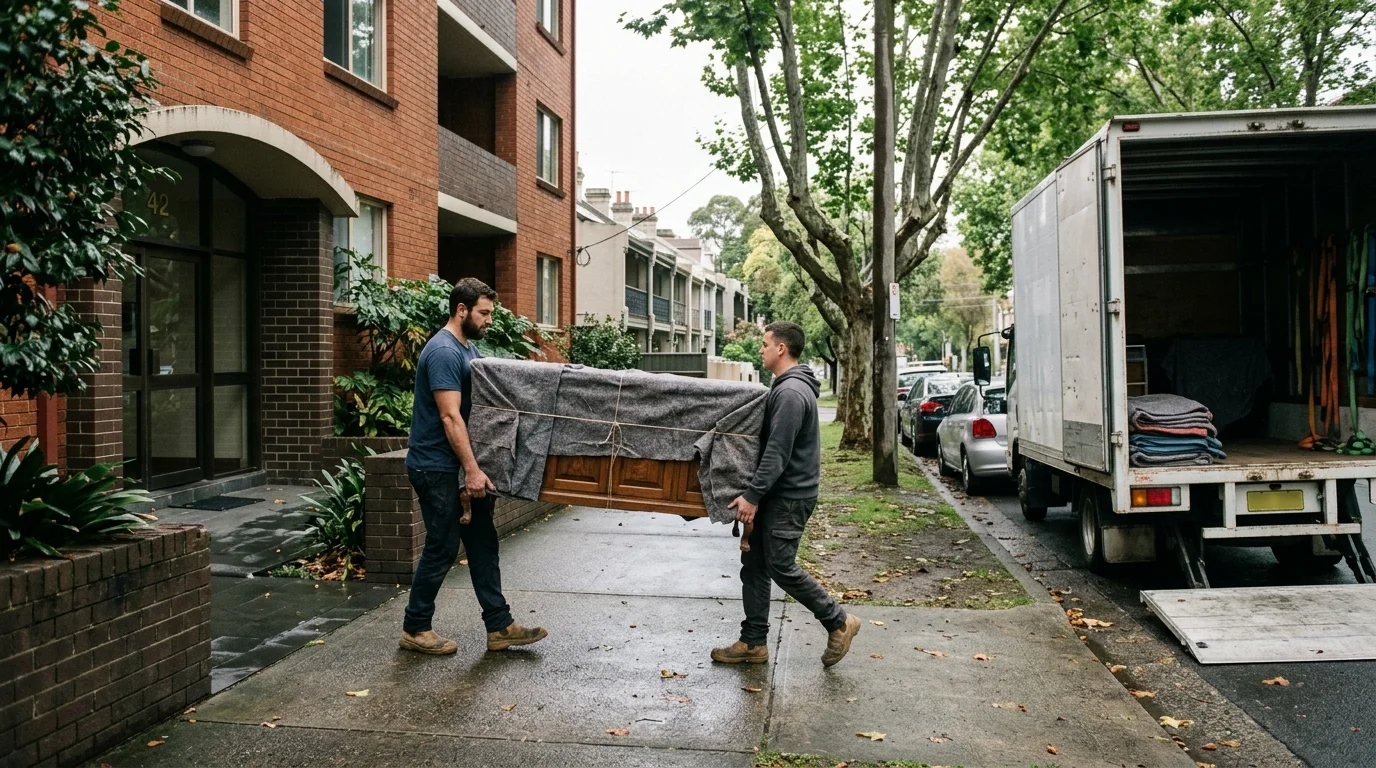
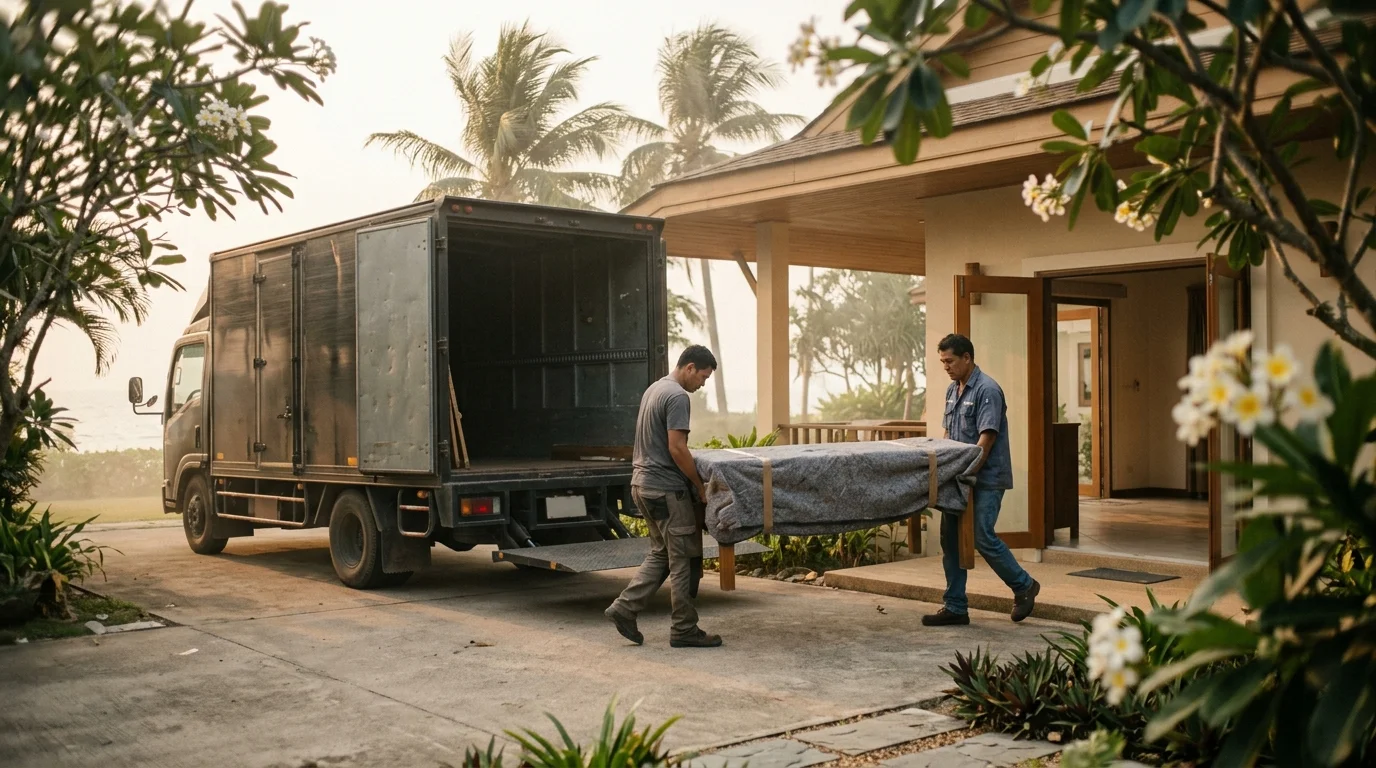
    Removalists carrying furniture from a Sydney apartment before shipping to Thailand

    Why Every Sydney Move Leaves Through Port Botany

    For a Sydney household the departure port is not a choice. Port Botany runs three container terminals with 12 container vessel berths and handles about 2.8 million TEU a year, NSW Ports reports. Its on-dock rail at all three terminals links it to metropolitan intermodal terminals at Enfield, Moorebank and Cooks River. The operator says 80% of import containers travel no further than 40 km from the port.

    For a household move, that concentration has two practical effects.

    • Frequency. Port Botany and Melbourne’s Webb Dock carry the highest frequency of services to Laem Chabang of any Australian port, as our Australia to Thailand cost guide notes. A Sydney move therefore has more sailing dates to choose from.
    • Distance to the wharf. The local truck leg from a house in the Sutherland Shire is shorter than one from Blacktown, but neither needs an interstate haul before the container sails.

    One trap is worth knowing. The same cost guide notes that trucking goods to a port further from home almost always costs more than any freight or transit saving it buys. Sydney households ship from Sydney.

    Twelve to Eighteen Days on the Water

    Our cost guide puts Sydney to Laem Chabang at 12 to 18 days port to port, via Singapore. That is a few days quicker than a Perth move, where Fremantle sailings run 16 to 22 days; our Perth to Thailand guide explains why a container from the west coast takes the long way round.

    The sea leg is only one slice of the wait. From the day the packers arrive to the day the goods reach a Thai address, our cost guide plans on roughly 25 to 40 days door to door, built from four stages:

    1. Packing and export preparation in Sydney. Inventory, packing, loading, and the export paperwork your forwarder lodges before the container reaches the terminal.
    2. The sailing. Port Botany to Singapore, transhipment, then on to Laem Chabang.
    3. Thai customs clearance. The FIDI customs guide for Thailand says that with all documents in order, used household goods typically clear in 3 to 5 working days for a full container and 5 to 7 for a shared (LCL) load.
    4. Delivery. Laem Chabang to a Bangkok address is roughly 130 km by road. Delivery to Pattaya is a much shorter run, since the port is in the same province, Chonburi.

    Thai public holidays stretch stage three. The cost guide flags Songkran in April, when port and customs work slows and goods can sit in storage for one to two weeks. A Sydney family planning a move for the start of a Thai school term, or around a lease start date, should count backwards from the delivery date rather than forwards from packing day.

    Container or shared load

    Volume decides this, not preference. A studio or one-bedroom apartment rarely fills a 20-foot container and usually travels as LCL, consolidated with other cargo, which costs less but adds consolidation time and a longer Thai clearance. A family house usually justifies its own container. The CBM size guide shows how many cubic metres a typical room produces.

    Whether your Sydney home fills a container or shares one, an estimate on your real room count gives the answer.

    Moving Out of a Sydney Apartment

    Many Sydney to Thailand removals start on the eighth floor, not in a driveway, and a Sydney apartment move adds steps that a house move never meets. None of them is difficult. All of them need booking before packing day.

    Start with the building’s rules. Strata schemes in NSW run on by-laws, and the NSW Government’s strata guidance points residents to their own scheme’s by-laws, which the strata manager or committee secretary can supply. Read them for anything on moving furniture through common property, then ask these questions a month out:

    • How much notice does the building need, and who must be told: the strata manager, the building manager or the committee?
    • Can a lift be booked and padded for the move, and for how many hours?
    • Is there a loading dock, what height clearance does it have, and can a removal truck use it?
    • Are moves limited to certain days or hours?
    • Is a bond or damage deposit required?

    Then think about the street. If the building has no dock the truck parks on the road, and your local council sets the parking rules, so check them before the crew arrives rather than on the morning. The answers change the plan in concrete ways. A building that allows moves only on weekday mornings sets your packing days. A dock too low for a large truck means a smaller vehicle shuttling to a container parked elsewhere, which adds time and cost you want to see in the quote, not on the day.

    Duty-Free or Duty-Paid: The Visa Comes First

    Thai Customs allows used household effects to enter free of duty for people changing residence into Thailand. It defines that narrowly for foreigners: a non-immigrant quota (Thai permanent residence), permission to work in Thailand backed by a one-year non-immigrant visa or a work permit of at least one year, or a government contract of at least one year. Accompanying spouses of the last two groups are covered too. The FIDI guide is blunt about who falls outside that. O and O-A visa holders, the retirement and guardian categories, “will not be considered for duty-free entry.” The same applies to Elite and education visas. A full one-year Smart Visa qualifies, up to 3,500 kg.

    For a retiree moving from Sydney to Thailand, that means a straightforward budgeting decision rather than a paperwork puzzle. Goods shipped on a retirement visa pay import duty, commonly around 10 to 30% of the value including freight and insurance, plus 7% VAT. Our guide to shipping on a retirement visa works through what that means in practice. A retiree who separately holds Thai permanent residence qualifies through that status, not through the retirement visa.

    If you do qualify, four conditions protect the exemption:

    • Timing. Thai Customs requires the goods to arrive no earlier than one month before you and no later than six months after you arrive. Our guide to the six-month rule covers what happens when a shipment misses it.
    • Origin. Thai Customs requires the goods to have been owned and used in the country where you lived before the move, and FIDI’s guide says the shipment must come from that country. A Sydney resident shipping from Sydney meets this without effort.
    • One of each appliance. Thai Customs allows one unit of each electrical appliance duty-free, or two of each for a family changing residence. A second television in a single person’s shipment pays duty.
    • Correct marking. FIDI warns that Thai Customs charges a fine of approximately USD 1,500 when the bill of lading lacks the required “Used Personal effects & Household goods” marking or the marking is incomplete.

    The sailing time gives you a rule for the earliest date to book. Thai Customs lets goods arrive no earlier than one month before you do, and the sea leg alone takes 12 to 18 days. A container that sails more than about 42 days before your flight can therefore reach Laem Chabang outside the window on a fast crossing: 30 days of allowed lead plus the 12 days of the quickest sailing. Booking the sailing roughly six weeks before your flight date or later keeps even the fastest vessel inside it. The catch is that a slipped flight moves your side of the calculation and not the vessel’s. Next step: ask your forwarder which date Thai Customs reads as the goods’ arrival, the vessel’s berthing or the clearance, then count back from your own flight date rather than from packing day.

    Getting the visa sorted from Sydney

    The Royal Thai Consulate-General in Sydney, on Macquarie Street, now directs applicants to Thailand’s online e-Visa system, with in-person visa services limited to weekday mornings. Apply early. The visa you hold when the goods clear decides the duty bill, so it should be issued before the container is booked, not while it is at sea. Our guide for Australians moving to Thailand weighs the visa routes themselves.

    Calling Bangkok from Sydney: The Clock Moves in October

    Much of a move is phone calls and emails with people in Thailand: a customs broker, a building manager, a school. Sydney is 3 hours ahead of Bangkok on standard time and 4 hours ahead during daylight saving, which the NSW Government says runs from 4 October 2026 to 4 April 2027. Thailand does not change its clocks.

    The gap sounds small until a document is needed on a Thai business day. A request emailed from Sydney at 4pm during daylight saving reaches Bangkok at noon. Anything that needs a same-day answer from a Thai office should go out from Sydney before lunch.

    Where Your Container Comes Ashore, and the Last Leg

    On the Port Botany to Laem Chabang route, containers bound for central Thailand clear customs at the port, and the final truck journey depends on where you are going.

    • Bangkok. For anyone moving from Sydney to Bangkok, the last leg is about 130 km by road after clearance. High-rise buildings in Bangkok bring their own lift and loading rules, so ask the Thai building the same questions you asked your Sydney strata manager.
    • Pattaya and Jomtien. The truck stays inside Chonburi province, a short run from the port.
    • Phuket. A long road leg south, or a different routing; our Phuket relocation logistics guide sets out the island premium.
    • Chiang Mai. A long inland leg north; see Chiang Mai versus Bangkok for how the costs compare.

    What to Ship from Sydney and What to Sell

    Before shipping household goods from Sydney, every family faces a pile of things nobody wants to decide about. A simple set of questions turns that pile into three lists.

    • Would it cost more to replace in Thailand than to ship? Good furniture, quality mattresses, specialist tools and books often pass this test. Flat-pack furniture and cheap appliances rarely do.
    • Will it work there? Australia and Thailand both run on 230 V, 50 Hz mains, so most Australian appliances work with a plug adapter. Check the rating plate on anything with a motor before you pack it.
    • Does it survive the climate? Thailand’s humidity is hard on leather, fine timber, paper and pianos. If it matters, pack it for moisture or store it.
    • Does it cost duty? On a retirement visa, everything shipped pays duty, which shifts the balance toward shipping less. Vehicles are a separate and expensive question; read our guide to moving a car or motorbike to Thailand before assuming the car comes too.

    Anything that fails all four goes on the sell list. Things you cannot part with but will not use for a year go on the store list. Our guide to storage options when moving to Thailand compares keeping them in Sydney with storing in Thailand.

    One item on the ship list can hold up everything else, and it is usually something the mover builds rather than something you own. Fragile or valuable pieces, such as a marble table top, framed art or a piano, often travel in a custom timber crate, and Thailand applies the international standard for solid wood packaging, ISPM 15: heat-treated or fumigated and stamped with the IPPC mark. An unmarked crate can be held for treatment or sent back, and your whole shipment can sit at the port while that is sorted out. The crate is one item; the delay falls on every box in the container. Ask the mover whether any crate they build will carry the ISPM 15 stamp, and look for the mark on packing day. Plywood and other processed-wood crates fall outside the standard.

    Flying Out of Sydney, With or Without a Pet

    Flightconnections lists nonstop Sydney to Bangkok services by Qantas and Thai Airways, about 16 flights a week, with a flying time of roughly 9 hours 50 minutes.

    That frequency matters most to pet owners. A dog or cat leaving Australia for Thailand usually travels as air cargo. Our comparison of Australian airports for pet flights to Thailand rates Sydney as having the most direct capacity to Bangkok of any Australian city. The pet’s paperwork runs on its own clock, often longer than the household’s, so start it when you book the container. Our guide to pet transport from Sydney to Thailand counts that schedule back from take-off, and the Australia to Thailand pet transport cost guide breaks down the bill.

    Paperwork on the Australian Side

    Leaving Australia is lighter than arriving in Thailand, but not empty. The Australian Border Force states that you need to lodge an export declaration for goods you export, unless an exemption applies, and recommends using a customs broker or agent for export entries. On a household move your forwarder normally handles this, so you only need to supply an accurate inventory.

    On the Thai side, keep originals together: passport, visa, the bill of lading and a detailed packing list. Our guide to customs paperwork mistakes in Thailand lists the errors that delay clearance most often.

    Booking a Sydney Move in the Right Order

    1. Settle the visa route and whether your goods qualify for duty relief.
    2. Ask your strata manager for the building’s moving rules and book the lift or dock.
    3. Sort possessions into ship, sell and store, then get an estimate on the real volume.
    4. Start any pet’s paperwork.
    5. Book packing, with the Port Botany sailing timed so the goods arrive no more than a month before you.
    6. Fly, keep your arrival records, and hand the Thai clearance documents to your broker.

    When moving from Sydney to Thailand, steps one and two decide the duty bill and the moving day, so settle them before you book anything else.

    If the move date slips, check the one-month rule first. A container booked against your old flight can land more than a month before you, and goods that arrive too early fall outside the exemption window.

    🇦🇺 Australia → 🇹🇭 Thailand

    We plan Sydney to Thailand moves around your real volume and date.

    Share your route, room count and move date in about 60 seconds. Our team prices the Port Botany sailing and sends back an estimate.

    Price my Sydney move

    Estimated Moving Costs: Australia to Thailand

    Home size Estimated cost (AUD)
    2 bedroom AUD 4,580–10,080
    3 bedroom AUD 6,660–12,670
    4 bedroom AUD 7,540–14,070
    5 bedroom AUD 9,700–15,760

    These are door to door estimations, not port to port. They include standard packing and customs clearance on both ends, and assume an origin and destination reasonably near the port on both sides; a move to or from a more remote location may cost more. Treat these as budgets, not final pricing. The final cost depends on the quantity and nature of what you are shipping, service availability, and sea freight rates at the time of your move. These figures are based on average home sizes from past moves and may not reflect your own home. Timing and availability can also materially affect the price, and in some cases whether we are able to complete the job on your preferred timeline. For an accurate quote, contact our team or start our online self service quote, a short survey about your move that takes about four minutes and lets our team provide a real quote based on your specific details.

    Frequently Asked Questions

    How long does shipping from Sydney to Thailand take?

    Sea freight from Port Botany to Laem Chabang takes roughly 12 to 18 days, usually with a transhipment in Singapore. From packing day in Sydney to delivery at a Thai address, plan on about 25 to 40 days once export preparation, Thai customs clearance and delivery are added.

    Can I ship household goods from Sydney to Thailand duty-free on a retirement visa?

    No. Thai Customs grants the used household effects exemption to foreigners with Thai permanent residence (a non-immigrant quota), permission to work backed by a one-year non-immigrant visa or a work permit of at least one year, or a government contract of at least one year. O and O-A visas, the retirement and guardian categories, are not considered for duty-free entry. Budget import duty of roughly 10 to 30 percent of the value including freight and insurance, plus 7 percent VAT.

    Which port does a Sydney move ship from?

    Port Botany. It handles 99.6 percent of New South Wales container volume across three container terminals, so household containers from anywhere in greater Sydney load there.

    When should my goods arrive in Thailand compared with me?

    Thai Customs requires used household effects to arrive no earlier than one month before you and no later than six months after you arrive. The exemption covers one sea shipment and one small air shipment.

    What is the time difference between Sydney and Bangkok?

    Sydney is 3 hours ahead of Bangkok on standard time and 4 hours ahead during New South Wales daylight saving, which runs from 4 October 2026 to 4 April 2027. Thailand does not use daylight saving.
  • Cat Transport to Thailand: Vaccines, Carriers, Flights and Arrival

    Cat Transport to Thailand: Vaccines, Carriers, Flights and Arrival

    Cat transport to Thailand asks for two vaccines, and the one more likely to trip the paperwork is not rabies. It is the second one, feline panleukopenia, a word many owners have never seen on their cat’s vaccination card. In Australia the same protection is called F3. In North America it sits inside FVRCP. In the UK it is feline infectious enteritis. Thailand’s Department of Livestock Development reads the certificate, not your vet’s shorthand, so the card has to name the disease the way the DLD’s list does.

    That naming problem is typical of taking a cat to Thailand. The rules themselves are short. What trips people is translation: between vaccine brand names and the disease on the form, between what an airline allows and what Thailand allows, and between the permit you can get on arrival and the one you must hold before you fly. Dogs face a longer rulebook, with five vaccines, breed bans and crate engineering. Our guide to taking a dog to Thailand covers it. A cat’s move is simpler on paper and easier to get wrong on detail.

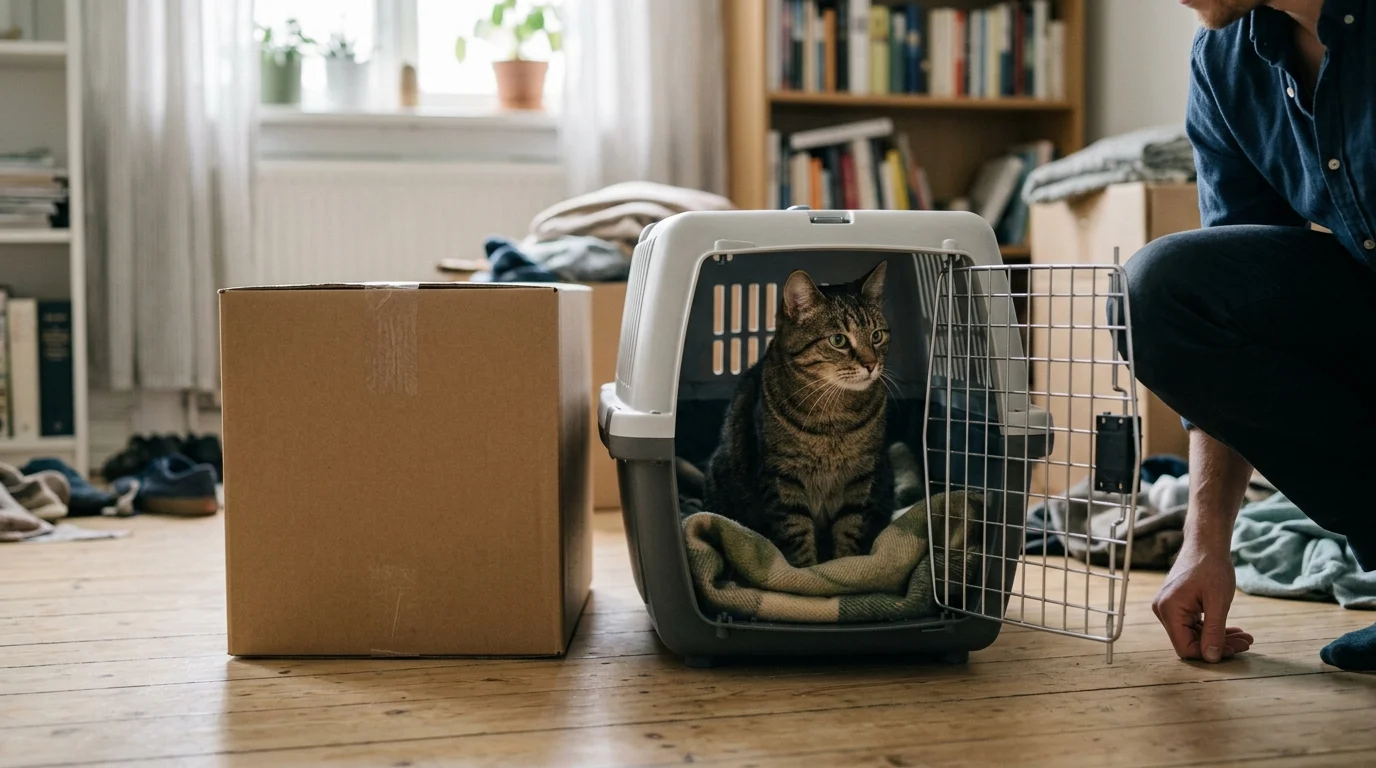
    Cat sitting calmly in an open travel crate ahead of a move to Thailand

    What Cat Transport to Thailand Requires

    The DLD publishes one set of instructions for dogs, cats and rabbits, handled by the Animal Quarantine Station (AQS) at your arrival airport. Thailand’s cat import requirements, set out in the DLD’s import instructions, come down to five things.

    • A microchip, with the same number on the permit application, the vaccination record and the health certificate. On arrival, officers check that the chip in the cat matches the number on the paperwork.
    • Two vaccinations: rabies and feline panleukopenia, recorded in English with the cat’s breed, sex, date of birth, colour and microchip number, plus the vaccinating vet’s full name, licence number and signature.
    • An import permit on form R1/1, emailed to the AQS at your port of entry with a copy of your passport and a colour photo showing the cat’s face. Suvarnabhumi, Phuket, Chiang Mai and Samui airports each have their own AQS email address.
    • An official health certificate from the veterinary authority of the exporting country, endorsed and stamped by that government.
    • An arrival inspection, where the AQS issues a Notice of Import Approval (R-6) and an Import Licence (R-7) and charges 500 baht per animal plus 10 baht per shipment.

    Thailand requires no rabies titre test for a cat, and a correctly documented cat is released on the day it arrives. The DLD is equally plain about the alternative: if the documents are not in order, the owner can be fined or the animal returned to the country of export at the owner’s expense.

    The timing rules that decide your departure date

    Three clocks run at once, and all three are set by the DLD’s instructions or your airline.

    • The 21-day wait. After a primary vaccination, or after a lapse that breaks the vaccination chain, the cat must wait 21 days before departure. A booster given while the previous vaccine was still valid needs no wait, provided you attach the earlier records.
    • The 12-week floor. A primary rabies vaccine only counts if the cat was at least 12 weeks old when it was given. Add the 21 days and a kitten cannot legally fly into Thailand much before 15 weeks old. Airlines often set a higher floor. Thai Airways, for example, accepts cats as checked baggage on international flights only when they are older than 4 months.
    • The permit window. The DLD asks for documents at least 7 working days before arrival and issues the permit by email within 7 working days. It is valid for 60 days, and a rescheduled flight inside those 60 days uses the same permit.

    The health certificate adds a fourth, shorter clock set by your departure country’s rules. For cats leaving the United States, the Royal Thai Embassy in Washington states the endorsed certificate is valid for 10 days, so the certificate is the last document you obtain, not the first.

    The Vaccine With Too Many Names

    A cat can be fully, currently vaccinated, with a card stamped by a good vet, and still present paperwork that does not visibly meet Thailand’s second requirement. Nothing is missing medically. The disease is simply hiding under a different label.

    Feline panleukopenia is one virus with several common names. International Cat Care lists it as feline panleukopenia virus, feline infectious enteritis and feline parvovirus. The Cornell Feline Health Center adds “distemper”, the word many American clinics still use. It also notes that the panleukopenia vaccine is part of the FVRCP combination, a core vaccine recommended for every cat. In Australia, the RSPCA describes the core F3 vaccination as protection against enteritis (feline panleukopaenia) and cat flu.

    So the vaccine is almost certainly already in your cat. The fix is on paper:

    • Ask your vet to write “feline panleukopenia” on the vaccination record next to F3, FVRCP or the product name, with the date, batch and expiry.
    • Check that the same wording appears on the official health certificate, since the AQS officer compares the two.
    • If a booster is due within the move window, give it early rather than late. A booster inside the previous vaccine’s validity carries no 21-day wait. A booster after it lapsed restarts the clock.

    The same check applies to rabies in countries where cats are rarely vaccinated against it. Australia is rabies-free, and an indoor Sydney or Perth cat may never have had the shot. That cat is on a primary vaccination, which means the full 21-day wait before it can fly.

    Vaccine dates, the permit window and the certificate each set a deadline, and we can line up your cat’s move so none of them collide.

    Cabin, Checked Baggage or Cargo

    Size is where cats and dogs part company. Most adult cats weigh well under the limits that airlines set for in-cabin or checked-baggage pets, so a cat often has options a large dog never gets. Whether you can use them depends on the airline and the route, not on the cat.

    Think of the choice as a bet with three possible tickets, each with a different price and a different risk.

    • In the cabin. The cat stays with you for the whole journey. This is the rarest option on flights to Thailand. Thai Airways does not accept pets in the cabin except trained service dogs, and none of the airlines flying between Australia and Thailand allows a cat in the cabin, as our Australia route check found. Some carriers on other routes do. If yours does, IATA’s container requirements allow a soft carrier with no water bowl, but it must still carry a Live Animal label.
    • As checked baggage. The cat flies in the pressurised, temperature-controlled hold on your flight and is collected at the arrival airport. Thai Airways accepts cats this way if the request is complete at least 3 working days before the flight, but not on flights to or from Sydney, Melbourne, Perth or Brisbane. The airline’s checked-baggage pet policy sets out the detail.
    • As manifested cargo. This is what most people mean by cat shipping to Thailand. The cat travels on an air waybill, often on a different flight from yours, and is cleared through the cargo terminal. This is the only option when the airline accepts no pets in the cabin or hold on your itinerary, and it is how cats leaving Australia usually travel.

    The Thai side changes with the ticket. For cargo, the DLD requires the import permit in advance, at least 7 working days before arrival. For a cat in the cabin or in checked baggage, the DLD also allows you to apply for the permit on arrival, with the original health certificate, the vaccination record and the R1/1 form in hand.

    That on-arrival option looks like a shortcut. Treat it as a fallback. The DLD itself does not recommend it for passengers with short transit times, and warns that processing time depends on how many pets arrive at once. Ask the airline whether it wants to see the Thai permit at check-in, too. A pre-approved permit costs one email a few weeks earlier and removes the one step you cannot fix from the arrivals hall. The DLD’s instructions send passengers to the on-arrival route for one situation: a flight change that leaves you less than 7 working days. That is the only time it is a good bet.

    To compare welfare, cost and paperwork across the three modes in more detail, see cabin versus cargo pet travel.

    Flat-Faced Cats: Persians, Himalayans and Exotic Shorthairs

    Brachycephalic cats have the same shortened airway problem as flat-faced dogs, on a smaller scale. Airlines each draw their own line. Thai Airways’ current checked-baggage list names no cat breeds at all, though it does name 34 dog breeds the airline will not carry. Other carriers treat flat-faced cats more cautiously. Ask the airline directly, by breed name, before you book anything else.

    If the airline accepts the cat, two rules change. IATA requires a container 10% larger for snub-nosed breeds, so a Persian needs more room than its body size suggests. The Australian Veterinary Association also warns that sedation further increases the risks for brachycephalic dogs, and a flat-faced cat shares the airway problem behind that warning. Get a vet’s fitness-to-fly opinion first for a flat-faced cat that is also older or has a heart or kidney condition; our guide to flying an older pet walks through the questions to ask.

    The Carrier Your Cat Will Actually Fly In

    For checked baggage and cargo, the carrier has to meet IATA’s Live Animals Regulations, and several specifications are set separately for cats. From IATA’s Edition 52 container requirements (January 2026):

    • Ventilation openings for cats must be small enough to be nose and paw proof, and no larger than 19 mm by 19 mm. The dog limit is 25 mm.
    • Welded wire mesh must be at least 2.0 mm thick for cats, and wooden sides at least 6 mm.
    • Openings must appear on all four sides and total at least 16% of their area.
    • A water container must be fixed inside with outside access for filling. A clip-on water bottle does not count.
    • Wheels must be removed or disabled.

    Size follows a formula rather than a label. Container length is the cat’s length from nose to the root of the tail plus half its height from the ground to the elbow. Internal height is the standing cat’s height to the top of the head or ear tip, plus bedding. Our crate measuring guide shows how to take each measurement on a cat that would rather not be measured.

    Two cats, one container

    IATA allows up to two adult animals of comparable size, each up to 14 kg, in one container if they are compatible and used to living together. Plenty of cat pairs qualify. The container width grows to fit both, and sharing can reduce the cost per cat. It works badly for two cats that tolerate each other at home but do not sleep together, and a flight is a long time to discover that. Check the airline’s own rule too, because carriers can be stricter than IATA.

    Preparing a Cat for the Journey

    The most useful preparation for flying with a cat to Thailand costs nothing and takes weeks. International Cat Care recommends leaving the carrier open at home, feeding treats inside it and making a bed of familiar-smelling bedding that travels with the cat. A cat that already naps in its carrier arrives far calmer than one that met it on travel day.

    On the day itself, IATA and the cat-welfare bodies point one way:

    • No sedation. The AVA’s policy states that dogs and cats should not be sedated for air transport. Sedation blunts blood pressure and breathing at a cabin altitude of roughly 8,000 feet, stops the animal bracing itself and does not reduce anxiety. IATA does not recommend tranquillisation either. A vet can prescribe a non-sedating anti-anxiety medication instead, trialled at home first.
    • Light food, early. IATA advises a light meal at least two hours before dispatch. International Cat Care suggests withholding food for four to five hours before a journey in case the cat is sick.
    • Collars and trackers off. IATA recommends removing collars and harnesses before crating, and any GPS tracker must be declared to the airline.
    • The cat’s name on the carrier. Pack a familiar item inside it too.

    Arrival: Clearing a Cat at the Animal Quarantine Station

    The Suvarnabhumi station lists office hours of 8:30 to 12:00 and 13:00 to 15:30 on weekdays, excluding Thai public holidays. Before you book an evening or weekend arrival, ask the airline or your handler how the cat will be cleared outside those hours. The officer checks the permit, the original health certificate and the vaccination record, scans the microchip and issues the R-6 and R-7 forms. Keep the R-7: the DLD states the import licence stays valid until the animal leaves Thailand.

    Our Suvarnabhumi pet arrival guide maps the terminal step by step, and choosing a Thai arrival airport covers Phuket, Chiang Mai and the other stations if Bangkok is not your final stop.

    Where Your Cat Is Flying From

    Thailand’s rules are the same for every cat relocation to Thailand, whatever the origin. The export side of cat transport to Thailand is not, and it usually takes longer than the Thai permit. Start with the guide for your departure country.

    The Order That Works

    Put the steps in this order and cat transport to Thailand becomes routine:

    1. Confirm the airline, the travel mode and, for flat-faced breeds, whether it accepts the breed.
    2. Check the microchip reads and matches every record.
    3. Check the vaccination record names rabies and feline panleukopenia, with dates. Vaccinate or boost early enough to clear any 21-day wait.
    4. Buy the carrier and start carrier training at least a month out.
    5. Email the R1/1 application to the right AQS at least 7 working days before arrival, sooner if you can.
    6. Get the official health certificate endorsed inside your departure country’s validity window.
    7. Carry the original documents on the day, check the arrival station’s hours, and keep the R-7.

    None of these steps is hard. The risk is that each one belongs to a different party: your vet, the airline, your own government or the DLD. None of them checks the others’ dates.

    Changes are where plans break. If the flight moves after the permit is issued, the 60-day validity usually absorbs it without a new application. If a vaccine lapses while you wait, the 21-day clock starts again, so recheck every date after any change to the itinerary.

    We coordinate your cat’s permit, vaccines and flight to Thailand.

    Tell us about your cat and your travel month in a form that takes about 60 seconds, and one coordinator sequences the steps.

    Plan my cat’s move

    Frequently Asked Questions

    What vaccinations does a cat need to enter Thailand?

    Two: rabies and feline panleukopenia. Panleukopenia is the same disease as feline infectious enteritis and feline parvovirus, and it is covered by the F3 vaccine in Australia and FVRCP in North America. After a primary vaccination the cat must wait 21 days before departure, and a primary rabies vaccine only counts if the cat was at least 12 weeks old.

    Does a cat have to go into quarantine in Thailand?

    Not when the documents are in order. The Animal Quarantine Station checks the import permit, health certificate, vaccination record and microchip, and a correctly documented cat is released on the day it arrives. If the paperwork is not in order, the owner can be fined or the cat returned to the export country at the owner’s expense.

    Can I take my cat in the cabin to Thailand?

    It depends on the airline and route. Thai Airways accepts no pets in the cabin except trained service dogs, and no airline flying between Australia and Thailand allows cabin pets. Thai Airways accepts cats as checked baggage in the hold on some routes, though not to or from Sydney, Melbourne, Perth or Brisbane, and manifested cargo is the other option.

    Do I need a Thai import permit before my cat flies?

    For cargo, yes: the permit must be requested at least 7 working days before arrival. For a cat in the cabin or checked baggage, the Department of Livestock Development also allows an on-arrival application, but a permit obtained in advance is safer: the DLD does not recommend the on-arrival route for passengers with short transits, and processing slows when several pets arrive together.

    Can two cats share one travel crate?

    Under IATA rules, up to two adult animals of comparable size, each up to 14 kg, may share a container if they are compatible and used to living together. The container must be sized for both, and individual airlines can apply stricter rules, so confirm with the carrier.

  • Moving from Vietnam to Thailand: Shipping, Customs and Duty Rules

    Moving from Vietnam to Thailand: Shipping, Customs and Duty Rules

    Moving from Vietnam to Thailand is a short international move, and that shortness is both its great advantage and its one real trap. A household packed in Ho Chi Minh City can be sitting at Laem Chabang, Thailand’s principal deep-sea port, while its owners are still handing back the keys to their apartment. Thai Customs cares about exactly that timing.

    Most people making this move are not starting from scratch. They have lived in Vietnam long enough to own a household: furniture bought locally, a work laptop, a motorbike they would rather not sell. The open questions are practical ones. What crosses the border with them, by which route, and whether Thai Customs will charge duty on it when it lands.

    Container ship on a river carrying cargo from Vietnam to Thailand

    Where a Vietnam Household Shipment Starts

    For households in and around Ho Chi Minh City, the container journey begins at one of two very different ports. Tan Cang Cat Lai, run by Saigon Newport Corporation, describes itself as the largest and most modern international container port in Vietnam, with 2,040 metres of berth across 160 hectares, and it operates as a feeder terminal (Saigon Newport, Tan Cang Cat Lai terminal). A feeder terminal serves regional vessels on shorter routes, which is the kind of service a move to Thailand uses.

    Further toward the coast, the Cai Mep and Thi Vai port cluster sits at the mouths of the Thi Vai and Cai Mep rivers and handles the ocean giants. Vietnam News Agency reported that the cluster carried about a third of the country’s container volume in 2024 and has welcomed mega container vessels on Asia to Europe services. It also lists the cluster’s location as Phu My Ward, Ho Chi Minh City (Vietnam News Agency on Cai Mep and Thi Vai). For a household bound for Thailand, the port matters less than the sailing, so ask which terminal and which service a quote assumes.

    Households in Hanoi and the north face a longer first leg, whether that means loading at a northern port or trucking goods south. Ask any mover quoting a Hanoi pickup to state which route the price assumes, because two quotes built on different routes are not comparable.

    By Sea: A Short Hop to Laem Chabang

    The sea route is short because Vietnam and Thailand sit on the same intra-Asia shipping lanes, and carriers link them directly in their regional loops. ZIM’s Thailand Fremantle Express is one published example: its rotation runs straight from Ho Chi Minh City to Laem Chabang before continuing to Port Klang and on to Australia (ZIM service announcement). Services change and your forwarder will book whatever is sailing that week, but the pattern holds. This is a regional lane, not a long-haul one.

    Sailing times on neighbouring lanes show the scale. Our guide to moving from Singapore to Thailand puts that crossing at 3 to 5 days on the water, and shipping from Hong Kong to Thailand runs roughly 5 to 8 days port to port on direct services. A sailing from Ho Chi Minh City belongs to the same regional range, measured in days rather than weeks. What stretches the timeline is everything around the sailing: consolidation cut-offs for shared loads at origin, Thai customs clearance and final delivery.

    On the Thai side, FIDI Asia’s Thailand customs guide puts clearance at 3 to 5 working days for a full container and 5 to 7 working days for a shared LCL load, once the documentation is in order (FIDI Thailand import customs guide). Incomplete paperwork is what pushes clearance past those ranges.

    The choice between a shared load and a container of your own follows volume. Our LCL shipping guide covers where a shared consolidation stops making sense, the guide to shipping a container to Thailand explains what fits in a 20ft or 40ft box, and the CBM size guide shows what a one-bedroom apartment actually fills.

    Whether your apartment fills a shared load or a container of its own, an estimate on your actual volume gives the answer.

    By Road: The Southern Economic Corridor Through Cambodia

    There is also an overland route. The Greater Mekong Subregion’s Southern Economic Corridor links Ho Chi Minh City and Bangkok by road through Cambodia, passing Phnom Penh, with crossings at Moc Bai and Bavet on the Vietnam and Cambodia frontier and at Poipet and Aranyaprathet between Cambodia and Thailand (APEC case study of the Bangkok, Phnom Penh and Ho Chi Minh City corridor).

    The corridor has seen real investment in making the borders easier. The same study describes a pilot of single-stop customs procedures at the Bavet and Moc Bai crossing, designed to cut transport time and costs, after which border trade between Cambodia and Vietnam rose by 40 percent a year. It also notes that the regional cross-border agreement behind the corridor simplifies customs procedures and minimises the need for transhipment at borders.

    That last point tells you what to ask. A truck from Ho Chi Minh City to Bangkok clears two land borders instead of one port, and every transfer of your goods between vehicles is another chance for handling damage. Before you accept a road quote, get clear answers to four questions:

    • Does the same truck and trailer run from your door to your Thai address, or is the load transferred at a border?
    • Who handles the Cambodian transit formalities, and are they included in the price?
    • Which crossing into Thailand does the route use, and where does Thai Customs clear the goods?
    • How is the load protected from rain and heat while it waits at a crossing?

    A mover who answers all four without hesitating has run this road before. For most full households, a sailing to Laem Chabang is the simpler option. Road freight earns a quote for a smaller load when a carrier can answer those questions cleanly.

    Thai Duty-Free Rules for Movers Arriving from Vietnam

    Thai Customs grants its used household effects exemption against documented status, and the status has to be in place when the goods arrive. Its own criteria cover non-residents with a non-immigrant quota, those holding a one-year non-immigrant visa together with a work permit, and those with government documentation confirming non-immigrant status and at least one year of employment (Thai Customs household effects criteria). For anyone moving from a job in Vietnam to a job in Thailand, a work permit in hand is the cleanest route to a duty-free shipment.

    FIDI’s guide spells out who falls outside. O and O-A visa holders, the retirement and guardian categories, are not considered for duty-free entry, and neither are Elite or ED education visa holders. A full one-year Smart Visa qualifies, with a 3,500 kg limit on the shipment. If your visa is not on the qualifying list, plan on import duty of 10 to 30 percent of the CIF value plus 7 percent VAT, and read our guide to duty-free import rules in Thailand before deciding how much to ship. Retirees can find the detail in our page on what a retirement visa lets you ship; the one route around the duty for a retiree is separately holding Thai permanent residence.

    The Timing Rule a Short Sailing Makes Dangerous

    Thai Customs requires used household effects to arrive no earlier than one month before you arrive and no later than six months after. On a long-haul move from Europe or North America, the first half of that rule rarely bites, because the goods spend weeks at sea. From Vietnam it can. Pack the apartment in Ho Chi Minh City, put the goods on a regional sailing, then spend six weeks finishing a contract or travelling before you fly to Bangkok, and your household can reach Laem Chabang more than a month ahead of you. At that point it no longer meets the condition.

    The fix costs nothing but planning. Time the pickup so the goods land after you do, or hold them in storage at origin until your own travel date is fixed. Our guide to storage options when moving to Thailand covers when storage earns its cost.

    Ship from the Country Where You Last Lived

    FIDI’s guide adds a condition that matters to people who have moved around Asia: the shipment must originate from the same country as the owner’s last place of residence or work. Boxes left in storage in a third country and shipped separately to Thailand risk losing the exemption a move from Vietnam would otherwise earn. The guide also allows one sea shipment and one small air shipment, requires the items to be used rather than new, and permits only one of each type of electrical appliance.

    What Vietnam’s Own Rules Tell You About Packing

    If you came to Vietnam to work for a year or more, you may already know half of this logic. Vietnam’s duty exemption for movable assets, set out in Decree 134/2016/ND-CP (since amended), lets foreigners entering the country to work or study for at least 12 months bring in duty-free personal items at a quota of one piece or set per item, and excludes cars and motorcycles from that quota (English text of Decree 134/2016/ND-CP). Thailand’s one-appliance-per-type condition applies the same idea from the other side of the border. Two rice cookers, two televisions, a spare fridge: sell the duplicates in Vietnam before the survey.

    The motorbike deserves its own paragraph, because it is the possession people least want to part with. Thailand has treated used motorcycles as prohibited imports, and imported cars face a duty and excise stack that can more than double their value, as our guide to moving a car or motorbike to Thailand explains. Sell the bike in Vietnam and buy again in Thailand.

    Pets move on a separate track from the household shipment, with their own Thai import requirements. Our guide to taking a dog to Thailand covers the Thai side for dog owners, and pet planning should start at the same time as the shipment, not after it.

    Paperwork That Travels with the Shipment

    Thai Customs’ document list for the exemption is short: a draft import declaration, your passport, the Immigration Bureau letter confirming an annual stay, your work permit documentation, the bill of lading or air waybill, invoices and packing lists where applicable, and an application for duty exemption. FIDI’s guide adds the practical details that stop a clearance. It asks for a legible packing inventory in English, a bill of lading marked “Used Personal Effects & Household Goods”, and the shipment consigned to your full name exactly as it appears in your passport, and it warns of a fine of roughly USD 1,500 when the bill of lading’s marks are missing or incomplete.

    If you fly into Suvarnabhumi, FIDI also advises using a staffed immigration counter rather than the automated lane, because Thai Customs needs to see an arrival stamp in your passport to accept the claim. You do not need to attend the inspection yourself, but your original passport does.

    Our guide to what happens when paperwork is wrong at Thai customs walks through the holds that follow a mismatched inventory or a missing stamp.

    Planning the Move in the Right Order

    Start with status. If a work permit is the basis of your exemption, get the permit and the one-year visa in place before the goods reach Laem Chabang, because Customs checks what you hold on arrival. Next, decide what stays in Vietnam: vehicles, duplicate appliances and anything you would not pay duty to keep. Then book a survey, choose sea or road with the four road questions in hand, and set the pickup date by counting back from your own flight rather than forward from your packing.

    For households headed beyond Bangkok, add the inland leg to the plan early. Our comparison of Chiang Mai and Bangkok relocation logistics shows how much a northern delivery changes both the timeline and the cost.

    🇻🇳 Vietnam → 🇹🇭 Thailand

    We price Vietnam to Thailand moves on your route and volume.

    Tell us your route, move date and home size in about 60 seconds. Our team checks the lane and sends back a free estimate.

    Price my Thailand move

    Estimated Moving Costs: Vietnam to Thailand

    Home size Estimated cost (THB)
    2 bedroom THB 3,280–6,880
    3 bedroom THB 3,760–8,460
    4 bedroom THB 5,520–11,170
    5 bedroom THB 8,370–14,170

    These are door to door estimations, not port to port. They include standard packing and customs clearance on both ends, and assume an origin and destination reasonably near the port on both sides; a move to or from a more remote location may cost more. Treat these as budgets, not final pricing. The final cost depends on the quantity and nature of what you are shipping, service availability, and sea freight rates at the time of your move. These figures are based on average home sizes from past moves and may not reflect your own home. Timing and availability can also materially affect the price, and in some cases whether we are able to complete the job on your preferred timeline. For an accurate quote, contact our team or start our online self service quote, a short survey about your move that takes about four minutes and lets our team provide a real quote based on your specific details.

    Frequently Asked Questions

    How do I ship household goods from Vietnam to Thailand?

    Most household moves go by sea from the Ho Chi Minh City port area to Laem Chabang, Thailand’s principal deep-sea port, either as a shared LCL consolidation or in a full container. Road freight through Cambodia on the Greater Mekong Subregion’s Southern Economic Corridor, crossing at Moc Bai and Bavet and then Poipet and Aranyaprathet, is a real alternative, with two land borders to clear instead of one port.

    Do I pay Thai import duty on household goods moved from Vietnam?

    Not if you qualify for the used household effects exemption. Thai Customs grants it to foreigners with a non-immigrant quota, a one-year non-immigrant visa plus a work permit, or government confirmation of at least one year of employment. O and O-A visas, the retirement and guardian categories, and Elite and ED visas do not qualify, so those shipments should budget roughly 10 to 30 percent duty on the CIF value plus 7 percent VAT.

    Can a short sailing from Vietnam cost me the duty exemption?

    It can. Thai Customs requires used household effects to arrive no earlier than one month before you and no later than six months after you arrive. Because the sea crossing from Vietnam is short, a shipment sent well ahead of your own move can land more than a month before you and fall outside that window.

    Can I bring my motorbike from Vietnam to Thailand?

    In practice, no. Thailand has treated used motorcycles as prohibited imports, and imported cars face a duty and excise stack that can more than double their value, so selling the vehicle in Vietnam before you move is usually the better plan.

    Does the shipment have to come from Vietnam to qualify for duty relief?

    Yes. FIDI’s Thailand customs guide says the shipment must originate from the same country as your last place of residence or work. Goods held in storage in a third country and shipped separately to Thailand can lose the exemption a move from Vietnam would otherwise earn.

  • Moving from Perth to Thailand: Fremantle Shipping, Timing and Duty

    Moving from Perth to Thailand: Fremantle Shipping, Timing and Duty

    Most people moving from Perth to Thailand have made the big decision long before they request a removal quote. The city is chosen, often Pattaya or Bangkok. The visa application is lodged, or the job offer is signed. What keeps them awake now is smaller and more stubborn: whether the lounge suite is worth the freight, whether the container will beat the lease start date, and whether someone at a Thai port will ask for money nobody mentioned.

    Two facts shape almost every one of those answers for a Western Australian household. Your belongings leave from Fremantle and reach Laem Chabang in roughly 16 to 22 days, usually by way of Singapore or Port Klang. The second fact is harder to hear. Whether those belongings enter Thailand duty-free depends on the visa in your passport, and a retirement visa does not qualify.

    Movers carrying furniture into a home in Thailand after a move from Perth

    Why a Perth Container Sails North by Way of Malaysia

    Put a ruler on a map and the lane from Fremantle to the Gulf of Thailand looks like a straight run up the Indian Ocean. So why do Perth to Thailand schedules keep naming Singapore and Port Klang?

    The answer sits in how container lines build their networks. A ship does not shuttle between two ports. It runs a loop, calling at a string of ports so that each call fills part of the vessel. ZIM’s Thailand Fremantle Express is a clear published example: the rotation it announced in 2023 runs Ho Chi Minh City, Laem Chabang, Port Klang, Sydney, Melbourne, Fremantle, then Port Klang and Ho Chi Minh City again (ZIM service announcement). On a loop like that, a box loaded at Fremantle heads to Port Klang first and reaches Laem Chabang only after the ship has worked its way back around the top of the circuit. Carrier networks change every season, so the service your forwarder books may look different, but the loop logic does not.

    That loop is why our Australia to Thailand cost guide puts Fremantle at 16 to 22 days to Laem Chabang, against 12 to 18 days from Sydney. Perth sits much closer to Thailand as the crow flies, but Port Botany and Melbourne’s Webb Dock carry the highest frequency of services to Laem Chabang. A Perth move trades a few days of transit for a far shorter drive to its own port.

    There is no departure-port decision to agonise over, either. The same cost guide makes the point plainly: trucking your goods to a port further from home almost always costs more than any freight or transit saving it buys. If you live in Perth, Fremantle is your port.

    Fremantle Is Still Perth’s Container Port, and Will Be for Years

    Western Australians who follow port news know the State Government plans to move container trade out of Fremantle. It is a real program with a real timeline, and it does not touch a move planned for the next decade. Westport, the government’s planning program, says it is planning to move container trade from Fremantle to Kwinana in the late 2030s, and expects Fremantle to reach capacity around 2038 (Westport timing and transition).

    The shift matters mainly to long-horizon planners. If you are keeping a Perth property and expect to ship a household back one day, a return shipment in the late 2030s may clear through a different port south of Fremantle. For a move out of Perth in the next few years, the container loads at Fremantle.

    The Timeline from a Perth Driveway to a Thai Front Door

    Transit on the water is the number people quote, and it is only part of the wait. The full timeline stacks four stages.

    Stage Typical duration What happens
    Packing, export paperwork and loading in Perth 3 to 5 days Survey, packing, inventory, container loading for Fremantle
    Ocean freight, Fremantle to Laem Chabang 16 to 22 days Calls or transhipment at Singapore or Port Klang
    Thai customs clearance 3 to 5 working days for FCL, 5 to 7 for LCL, with documents in order Broker lodges the entry; Customs may inspect
    Delivery to your Thai address 1 to 3 days Trucking from Laem Chabang to Pattaya, Bangkok or further

    Door to door, that adds up to roughly 25 to 40 days. The clearance figures come from FIDI Asia’s Thailand customs guide, which gives 3 to 5 working days for a full container and 5 to 7 for a shared LCL load once documentation is in order (FIDI Thailand import customs guide). Incomplete paperwork is what pushes clearance past those ranges.

    Two calendar windows stretch the timeline further. Songkran, the Thai New Year in mid-April, slows customs processing, and cargo arriving in that window can sit in storage for one to two extra weeks. On the freight side, July to September is peak season on Asian routes, when carriers add peak season surcharges. A Perth household with any flexibility gains the most by keeping its arrival clear of mid-April.

    One small advantage belongs to Perth alone. Neither Western Australia nor Thailand uses daylight saving, so Perth runs one hour ahead of Bangkok all year. Your Thai customs broker’s working day overlaps almost entirely with yours. A Sydney household in summer sits four hours ahead and waits until lunchtime for the same broker’s office to open.

    The Pattaya Question: Where Your Container Comes Ashore

    Laem Chabang, Thailand’s principal deep-sea port, sits in Chonburi province on the eastern shore of the Gulf of Thailand. Pattaya is in the same province. For a Perth household heading to Pattaya, Jomtien or Si Racha, that geography matters more than any freight rate: the shipment clears at a port in the province where you are going to live.

    A Bangkok delivery works differently. Container freight bound for Bangkok clears through Laem Chabang, roughly 130 km southeast of the capital, so a Bangkok address adds a truck run after clearance. Our cost guide prices that leg at THB 2,000 to 3,500 for an LCL van to a building with straightforward access, and higher for a high-rise apartment. Chiang Mai and Phuket add a far longer inland leg, which is why households headed north weigh Chiang Mai against Bangkok on logistics before they book.

    Pattaya delivery pricing varies with building access and the distance from the port, so ask each mover to itemise the Laem Chabang to Pattaya delivery as its own line. A quote that folds it into a Bangkok-priced “Thailand delivery” line may be charging you for kilometres your truck never drives.

    Duty-Free or Duty-Paid: Your Visa Decides

    This section decides whether the final bill matches the quote. Thai Customs does not exempt household goods because you are relocating. It exempts them because of the documented status you hold when they arrive. Our guide for Australians moving to Thailand covers the visa options themselves.

    Thai Customs’ own criteria for used household effects cover non-residents who hold a non-immigrant quota, those with a one-year non-immigrant visa together with a work permit, and those with government documentation confirming non-immigrant status and at least one year of employment (Thai Customs household effects criteria). FIDI’s Thailand guide, compiled for the accredited movers who clear these shipments, is blunter. Holders of an O or O-A visa, the retirement and guardian categories, are not considered for duty-free entry, and neither are Elite or ED education visa holders. A full one-year Smart Visa does qualify, with a 3,500 kg limit on the shipment.

    So for a Perth couple retiring to Pattaya on an O-A visa, the honest budget includes import duty: plan on 10 to 30 percent of the shipment’s CIF value, plus 7 percent VAT calculated on that value with the duty added. Our page on what a retirement visa lets you ship to Thailand covers the detail. The one legitimate way around it is permanent residence. A retiree who separately holds Thai permanent residence qualifies through the residence, never through the retirement visa.

    Here is how that arithmetic lands on a modest shipment. Say Customs values a one-bedroom household at AUD 20,000 including freight and insurance, and applies 20 percent duty. Duty comes to AUD 4,000. VAT at 7 percent then applies to AUD 24,000, adding AUD 1,680. The shipment costs AUD 5,680 on top of the freight. The rate Customs actually applies depends on how each category of goods is classified, so treat the example as the shape of the bill rather than a quote.

    If your visa does qualify, the exemption still carries conditions that trip people up. FIDI’s guide lists them:

    • The goods must arrive no earlier than one month before you and no later than six months after you arrive in Thailand.
    • Thai Customs accepts one sea shipment and one small air shipment. A second sea shipment pays full duty.
    • Everything must be used, not new.
    • Only one of each type of electrical appliance is allowed, and duplicates pay full duty.
    • The shipment must come from the country where you last lived or worked, which for a Perth household means Australia.

    Getting Through the Airport Before Your Goods Get Through the Port

    One detail catches movers who fly out of Perth. Thai Airways and Jetstar both fly Perth to Bangkok nonstop in about seven hours (Perth to Bangkok nonstop flights), landing at Suvarnabhumi. FIDI’s guide advises movers claiming the exemption not to use the automated immigration lane on arrival, because Thai Customs needs to see an arrival stamp in the passport. Without one, the mover may need a full immigration travel record from the Immigration Bureau in Bangkok before the claim can proceed.

    Thai Customs also needs your original passport, and your original work permit where the claim rests on one, presented at inspection. You do not have to attend in person. Your broker presents the originals on your behalf, which is one more reason to keep the passport stamped and the permit current.

    What to Ship from Perth, and What to Sell First

    Power is the easy part. Australia supplies 230 V at 50 Hz and Thailand 220 V at 50 Hz, so most Australian appliances run in Thailand; the plugs differ, with Australia on Type I and Thailand’s national standard on Type O, so pack adapters (mains electricity by country).

    The one-appliance-per-type rule changes what is worth packing. Two televisions, the second fridge from the garage, a spare air fryer: each duplicate attracts duty even on an exempt shipment. Sell the duplicates in Perth before the survey, while they still fetch a local price.

    Vehicles are a harder conversation. Thailand’s duty and excise stack on imported cars can more than double a vehicle’s value, and used motorcycles have been treated as prohibited imports, which is why shipping a car or motorbike to Thailand is usually a poor financial decision for an ordinary expat. If the ute or the trail bike genuinely matters, read our Australia to Thailand vehicle guide before ruling out a sale.

    Volume is where the real money moves. Every cubic metre removed before the survey saves across origin handling, ocean freight and Thai destination charges, and our cost guide puts that saving at AUD 110 to 200 per cubic metre. A studio’s worth of boxes and a few pieces of furniture often travels as a shared LCL consolidation, while a family home usually justifies a container of its own. The CBM size guide shows what fills each.

    A shared LCL load or a Fremantle container is a question your inventory answers, and an estimate on your real room count settles it.

    Bringing a Pet from Perth

    Perth owners hold the strongest hand in the country on this route. Perth’s nonstop flights to Bangkok are the shortest of any Australian capital, close to three hours quicker than Sydney’s, and that matters for an animal travelling as cargo. Our guide to the best Australian airport for a pet flight to Thailand also covers the heat-hold risk on hot summer afternoon departures, a real consideration for a Perth flight in summer.

    Pet paperwork runs on its own timeline, separate from the household shipment, so start both at the same planning meeting rather than one after the other. The Australia to Thailand pet transport cost guide breaks down what the flight, crate and paperwork add up to.

    Paperwork on the Australian Side

    Australia does not levy export duty on household goods, but it does track what leaves. The Australian Border Force requires an export declaration for goods you export unless an exemption applies (ABF export declaration rules). Your removalist or customs broker normally confirms whether your household shipment needs one and lodges it. Ask the question in writing at quote stage, so neither side assumes the other handled it.

    The documents that matter most are prepared in Perth but read in Chonburi. FIDI’s guide asks for a legible packing inventory in English, a bill of lading marked “Used Personal Effects & Household Goods”, and the shipment consigned to your full name exactly as it appears in your passport. It warns of a fine of roughly USD 1,500 when the bill of lading’s marks are missing or incomplete.

    An inventory that reads “misc boxes x 40” gives an inspector nothing to check against; a box-by-box list gives them everything. Our guide to what happens when paperwork is wrong at Thai customs walks through the holds that follow a vague one.

    Booking a Perth Move in the Order That Protects Your Exemption

    The sequence matters more than any single step. If your move depends on a work permit, secure the visa and permit before the container leaves Fremantle, because Thai Customs checks your status when the goods arrive, not when they sail. Then book the survey, so the quote rests on real volume rather than a guess over the phone.

    Work the shipping date backwards from your own flight. With 16 to 22 days on the water and a few days either side, a container that leaves Fremantle the week you fly lands comfortably inside Thailand’s one-month-before, six-months-after window. A container sent two months ahead of you arrives more than a month before you do, and that alone can cost the exemption.

    Retirees on an O-A visa can set the exemption timing aside, since the goods pay duty either way, and put their energy into shipping less. Nobody enjoys hearing that. It still beats meeting a duty bill at Laem Chabang with no warning.

    🇦🇺 Australia → 🇹🇭 Thailand

    We price Perth to Thailand moves on your real volume and route.

    Tell us your route, room count and move date in about 60 seconds. Our team prices the Fremantle sailing and sends back a free estimate.

    Price my Perth move

    Estimated Moving Costs: Australia to Thailand

    Home size Estimated cost (AUD)
    2 bedroom AUD 4,260–8,750
    3 bedroom AUD 6,640–12,120
    4 bedroom AUD 7,070–13,730
    5 bedroom AUD 9,460–16,930

    These are door to door estimations, not port to port. They include standard packing and customs clearance on both ends, and assume an origin and destination reasonably near the port on both sides; a move to or from a more remote location may cost more. Treat these as budgets, not final pricing. The final cost depends on the quantity and nature of what you are shipping, service availability, and sea freight rates at the time of your move. These figures are based on average home sizes from past moves and may not reflect your own home. Timing and availability can also materially affect the price, and in some cases whether we are able to complete the job on your preferred timeline. For an accurate quote, contact our team or start our online self service quote, a short survey about your move that takes about four minutes and lets our team provide a real quote based on your specific details.

    Frequently Asked Questions

    How long does shipping from Perth to Thailand take?

    Sea freight from Fremantle to Laem Chabang runs roughly 16 to 22 days, usually with a call or transhipment at Singapore or Port Klang. Door to door, from packing day in Perth to delivery at a Thai address, plan on about 25 to 40 days once export preparation, Thai customs clearance and last-mile delivery are added.

    Can I ship household goods from Perth to Thailand duty-free on a retirement visa?

    No. Thai Customs grants the used household effects exemption to foreigners with a non-immigrant quota, a one-year non-immigrant visa plus a work permit, or government confirmation of at least one year of employment. O and O-A visas, the retirement and guardian categories, are not considered for duty-free entry, so budget import duty of roughly 10 to 30 percent of the CIF value plus 7 percent VAT. A retiree who separately holds Thai permanent residence qualifies through the permanent residence, not through the retirement visa.

    Which Thai port will my Perth shipment arrive at?

    Container freight bound for Bangkok and central Thailand clears through Laem Chabang, Thailand’s principal deep-sea port, in Chonburi province, the same province as Pattaya. Goods for a Bangkok address are trucked roughly 130 km to the capital after clearance, while a Pattaya or Jomtien delivery has a much shorter final leg.

    When should my shipment arrive in Thailand compared with my own arrival?

    Thai Customs requires used household effects to arrive no earlier than one month before you and no later than six months after you arrive. The exemption covers one sea shipment and one small air shipment, so a second sea shipment pays full duty.

    Will Fremantle still be Perth’s container port when I move?

    Yes. The Western Australian Government’s Westport program plans to move container trade from Fremantle to Kwinana in the late 2030s, and expects Fremantle to reach capacity around 2038. A household move planned now leaves from Fremantle.

  • QROPS Portugal: How to Transfer a UK Pension When You Relocate

    QROPS Portugal: How to Transfer a UK Pension When You Relocate

    Photorealistic cinematic per Cargo-Pets.MD

    Ask a UK pension holder why they are looking at a QROPS transfer before a move to Portugal, and the honest answer is usually not really about the scheme itself. It is about a decision that feels irreversible, made under rules that changed twice in the last two years, about money that took decades to build and cannot easily be rebuilt if the decision goes wrong.

    That caution is the right instinct. A pension transferred overseas and hit with an unexpected tax charge does not come back. This guide sets out what actually changed, what stayed the same, and why a QROPS Portugal transfer specifically is a harder case right now than most guides written before late 2024 admit.

    This is a companion to our broader guide to moving to Portugal from the UK. Here we go deeper on one specific financial question inside that move: what happens to a UK pension, and whether transferring it makes sense at all.

    None of this is financial, pension or tax advice, and Swift Cargo is not a licensed adviser in any of those areas. We ship household goods and help people plan the logistics of a move. Whether to transfer a UK pension is a decision for you and a regulated adviser, not a shipping company’s blog post, and several sections below say that again at the exact point it matters most.

    What a QROPS Actually Is

    A QROPS, short for Qualifying Recognised Overseas Pension Scheme, is not a specific product or a single company’s offering. It is a status. An overseas pension scheme earns it by telling HMRC it meets a defined set of UK tax conditions, and HMRC then allows a UK registered pension to transfer into it without triggering an unauthorised payment charge, subject to a separate transfer charge covered below. HMRC’s own guidance increasingly uses the term ROPS, recognised overseas pension scheme, for the same category. QROPS is the older term, and it is still what most people type into a search bar and what most advisers say out loud, so this article uses it too.

    Most UK pension types can transfer to a QROPS: workplace pensions, personal pensions, and self-invested personal pensions among them. The one major exception is the UK State Pension, which cannot be transferred anywhere, QROPS or otherwise. It stays a UK entitlement wherever you live, paid according to its own separate rules.

    One rule applies regardless of the scheme or the country: accessing pension benefits before age 55, directly or indirectly, triggers UK tax charges in what HMRC itself describes as “all but the most exceptional circumstances.” A QROPS does not change that floor. If part of your reason for considering a transfer is earlier access to the money, that reason does not hold up against how HMRC actually enforces this.

    The 25 Percent Overseas Transfer Charge, and Why It Almost Always Applies Now

    Since 9 March 2017, transfers to a QROPS have been liable to a 25 percent tax charge, the Overseas Transfer Charge, unless the transfer qualifies for one of a specific list of exclusions. This is the single number every QROPS conversation eventually comes back to, and it is worth being precise about who actually avoids it.

    The exclusion most people used to rely on no longer exists in its old form. Before 30 October 2024, a transfer to a QROPS anywhere in the European Economic Area or Gibraltar was automatically excluded from the charge, regardless of where the member actually lived. That blanket exclusion was removed as part of the Autumn 2024 Budget. HMRC’s own reasoning, published in its pension schemes newsletter that October, was that the EEA exclusion had let some UK residents claim a second tax-free allowance while staying in the UK. Removing it protects against an estimated 1 billion pounds of UK tax-relieved pension savings moving overseas for reasons unrelated to a genuine relocation.

    A narrower set of exclusions remains. The one that matters most for someone actually moving abroad is residence-based: the transfer is excluded from the charge if you are resident in the exact same country where the receiving QROPS is established. The remaining exclusions are narrower still and mostly employment-linked: transfers into an occupational scheme where you work for the sponsoring employer, an overseas public service scheme where you are a public service employee there, or a pension scheme run by an international organisation that employs you. A short transitional window let transfers requested before 30 October 2024 keep the old EEA exclusion if they completed by 30 April 2025; that window has closed.

    A second, separate tightening followed on 6 April 2025. EEA-established ROPS schemes now have to meet the same qualifying conditions as schemes anywhere else in the world, generally meaning regulation by a recognised pensions regulator in their own country, rather than the looser conditions EEA schemes had operated under previously. Existing EEA schemes had to confirm they met the tightened conditions by 7 May 2025 or lose their status. Several UK pension and payroll trade publications reported this change consistently; it is a real tightening, not a rumour, though it primarily affects scheme administrators rather than something an individual transferring needs to act on directly.

    Even a genuinely excluded transfer is not permanently settled the day it happens. HMRC monitors the “relevant period,” five full UK tax years from the transfer date. If your residency changes within that window in a way that means the original exclusion no longer applies, the 25 percent charge can become due retroactively, and you are required to notify the scheme manager of a residence change within 60 days. A transfer that looked clean on day one can still generate a bill years later if the underlying facts change and nobody reports it.

    Here is the question that catches out the people who have done their homework: you have confirmed your transfer is excluded from the Overseas Transfer Charge, so why is HMRC still taking 25 percent of part of it? Because there are two separate tests, and clearing one says nothing about the other. When the Lifetime Allowance was abolished on 6 April 2024 it was replaced by three allowances, and one of them is the Overseas Transfer Allowance, set at 1,073,100 pounds. Every transfer to a QROPS is measured against it, and any amount above that ceiling is charged at 25 percent whether or not a residence-based exclusion applies to the transfer as a whole. For most people this never comes up. It becomes the decisive number for anyone with a defined benefit transfer value or a consolidated pot approaching seven figures, because it can settle whether a transfer is worth doing at all. Ask your adviser what your remaining Overseas Transfer Allowance is before anything else gets modelled.

    Why Portugal Specifically Makes This Harder Than It Looks

    General QROPS guides, most of them written before the 2024 and 2025 changes, tend to get one thing wrong or skip it: Portugal is not a straightforward destination for this decision, and the reason is specific rather than general.

    Multiple specialist pension-transfer advisers report that no QROPS is currently based in Portugal itself. That means the one exclusion most likely to help a genuine relocating retiree simply is not available for a transfer where Portugal is the destination: it requires being resident in the same country as the scheme. Advisers who work this corridor typically point clients toward an EEA-based scheme instead, commonly Malta, which has the largest and most established QROPS market in the EEA. But routing through a third country does not solve the exclusion problem it was meant to solve. Since the blanket EEA exclusion ended in October 2024, a UK resident moving to Portugal and transferring into a Malta-based scheme is very likely resident in neither Malta nor the UK by the time the transfer completes. That is exactly the gap the old rule used to paper over, and no longer does.

    We are being direct about the “no Portugal QROPS” point because it is the single fact that changes the shape of this whole decision. We are also being direct about its limits: this article has not independently verified HMRC’s live list against every scheme claiming Portuguese establishment, and we are not going to name any specific scheme as currently qualifying. HMRC updates its published recognised overseas pension schemes notification list on the 1st and 15th of every month. HMRC’s own wording on that list is unambiguous: “We cannot guarantee these are ROPS or that any transfers to them will be free of UK tax,” and, further, “it’s your responsibility to find out if you have to pay tax on any transfer of pension savings.” HMRC also states plainly that it will usually still pursue UK tax charges, plus interest, from a transfer to a scheme that does not actually meet the requirements, even if that scheme appeared on the list at the time you transferred. Appearing on the list is a starting point for checking, not a guarantee you can rely on and stop checking.

    Practically, this means the 25 percent charge applies to most straightforward UK-to-Portugal QROPS transfers today, unless your specific circumstances fit one of the narrow remaining exclusions. That is a materially different starting point than the “EEA transfers are exempt” advice that circulated for years before October 2024, and it is worth confirming directly with a regulated adviser before you assume otherwise.

    Swift Cargo ships households from the UK to Portugal.

    Once the pension question is settled and your move date is closer to confirmed, get a real quote for the freight leg, not a headline rate, so your shipment lines up with your actual residency timeline.

    Get a UK to Portugal quote

    The New UK-Portugal Tax Treaty Changes the Calculation

    One genuine reason people have historically considered a QROPS transfer is avoiding double taxation, paying tax on the same pension income in two countries. For UK pension holders moving to Portugal, that specific reason got considerably weaker very recently, and this is new enough that many existing QROPS guides do not reflect it yet.

    The UK and Portugal signed a new Double Taxation Convention on 15 September 2025, replacing the treaty that had governed both countries since 1968. It entered into force on 29 December 2025 and applies from 1 January 2026 for taxes withheld at source in both countries, and from 6 April 2026 for UK Income Tax. Under Article 17 of the new convention, private and occupational pensions, plus the UK State Pension specifically, paid to a resident of one country are taxable only in that country of residence. In plain terms: once you are genuinely tax resident in Portugal, your UK private pension and your State Pension become taxable only in Portugal, and the UK generally stops taxing them.

    Government service pensions work differently and stay where they have always sat under this kind of treaty: pensions paid for civil service, armed forces or police service to someone who is not also a national of the country they have moved to generally remain taxable only in the UK, the paying country, regardless of where the recipient lives.

    This has one straightforward, useful implication for the QROPS decision: if double taxation was your main worry, the new treaty already addresses the most common version of that problem for most private pension holders, without needing a transfer, a receiving scheme, or a 25 percent charge at all. That does not make a QROPS pointless for every situation: currency management, consolidating several pensions into one, or how death benefits pass to your beneficiaries are all still real reasons some people transfer, but it does remove the single most commonly cited justification for a large share of people researching this.

    This is not tax advice. Treaty relief depends on your specific residency status, the type of pension you hold and how it is classified, and confirming your own position with a professional who works across both the UK and Portuguese tax systems before you make any decision, transfer or otherwise.

    What Portugal Does With That Pension Once It Lands

    The treaty settles which country has the right to tax your pension. It does not settle how much Portugal actually charges once that right is Portugal’s. Once you become a Portuguese tax resident, generally by spending more than 183 days a year there or making it your habitual home, your foreign pension income falls under Portugal’s ordinary personal income tax, the IRS, unless a specific regime applies. Portugal’s old NHR scheme closed to new applicants on 1 January 2025, and its narrower replacement, IFICI, targets scientific research, higher education and qualifying innovation roles, not retirement or investment income, so most people relocating on a pension should not expect either regime to apply to them, whatever older search results promising a tax-free Portuguese retirement suggest. Our guide to the retirement visa and pension tax question covers this in more depth, though that guide is written for movers from Australia specifically, where a separate, still-not-in-force tax treaty leaves a genuinely different starting position than the UK’s newly in-force one covered here.

    Absent a special regime, foreign pension income sits inside Portugal’s nine progressive IRS brackets, running from roughly 13 percent at the bottom to 48 percent on income above approximately 81,000 euros for 2026, plus a solidarity surcharge of 2.5 to 5 percent on income above 80,000 euros. Treat those bracket figures as planning numbers to confirm at filing time, not fixed facts; Portugal adjusts them most years. How your particular scheme structures the payout determines whether your specific pension income is classified as a pension, a lump sum, or investment income for Portuguese tax purposes, and that classification changes the tax outcome. That is an individual determination a professional needs to make with your actual paperwork in front of them, not something this article can resolve in general terms.

    Why People Consider a Transfer Anyway

    Given the 25 percent charge risk and a treaty that now handles double taxation for most private pensions without any transfer at all, it is fair to ask why anyone still looks at a QROPS for a UK-to-Portugal move. A handful of real, specific reasons survive the changed picture, even if the general “avoid double tax” reason mostly does not anymore, and any of them belongs in a broader wealth management plan for Portugal, not in a QROPS decision on its own.

    Consolidation is one: someone holding four or five separate UK workplace pensions from a working life of job changes may want one scheme, one statement, one adviser relationship, purely for simplicity, independent of any tax angle. Currency management is another: drawing retirement income in euros rather than converting sterling pension payments every month is a genuine, ongoing consideration for anyone planning to live permanently in the eurozone. Death benefit treatment can also differ meaningfully between a UK pension and an overseas scheme, worth understanding on its own terms, separate from the income-tax question this article has focused on.

    Weigh those reasons against how asymmetric this decision is. Get it right, and you have simplified your finances or improved your currency exposure. Get it wrong, hit the 25 percent charge, or trigger a retroactive charge because a later residency change went unreported, and there is no clean way back. A UK pension, once transferred out and charged, does not return to what it was. That asymmetry is exactly why the legal advice requirement described next exists.

    The Rule That Applies Before Any of This: When Advice Is Legally Required

    If your UK pension includes defined benefit or other safeguarded benefits worth more than 30,000 pounds, this is not really a choice. Since 2018, under the Pension Schemes Act 2015 and the Financial Conduct Authority’s own rules, you are legally required to receive a personal recommendation from an FCA-authorised pension transfer specialist before any transfer can proceed, overseas or otherwise. Your current scheme’s trustees are required to confirm that advice was actually taken before they release the funds.

    Below that 30,000 pound threshold, advice is not a legal requirement, but the FCA’s own published position is worth repeating plainly: for most people, transferring out of a defined benefit pension is not in their best interest. A defined benefit pension carries guarantees that an overseas scheme generally cannot replicate, typically a set income for life, and giving those guarantees up is a real cost even before any transfer charge is counted.

    Two free, impartial resources exist specifically for this decision and are worth using regardless of whether paid advice is also required. MoneyHelper’s Pension Wise service offers free guidance appointments for anyone over 50 with a UK defined contribution pension. The FCA’s own ScamSmart service lists the warning signs of pension scams directly: unsolicited contact about your pension, promises of guaranteed high returns, pressure to act quickly, and offers bundled with unusual or exotic overseas investments. These are the recurring pattern behind reported pension scam losses, and an approach carrying two or more of those signs is worth walking away from regardless of how professional it looks.

    What the Actual Process Looks Like

    Stripped of the tax questions above, the mechanical steps are consistent across most genuine transfers. Start with a current valuation from your existing UK scheme. If defined benefit or safeguarded benefits exceed 30,000 pounds, the mandatory advice step happens next, and the adviser’s recommendation is a real gate, not a formality; your existing trustees will not release funds without evidence it happened. Choose a receiving scheme together with your adviser, and verify that scheme’s status independently against both HMRC’s current ROPS list and its own country’s local pensions regulator, rather than taking a provider’s own marketing claim about its status at face value. Submit the formal transfer request through your UK scheme’s trustees. The receiving scheme’s manager is required to report the transfer to HMRC within 60 days, and if the Overseas Transfer Charge applies, that reporting includes accounting for it. From there, the five-year relevant period begins, and you need to report any change in your residency status during that window to the scheme manager within 60 days of the change, not after the fact.

    None of these steps are ones a relocation company is positioned to walk you through, and that is deliberate: the practical logistics of a move, documents, housing, shipping a household, are our part of this. The pension decision itself belongs with a regulated adviser who can look at your specific scheme, your specific numbers and your specific circumstances, not a general guide written for anyone researching this corridor.

    Getting This Decision Right

    The number that matters here is not what your UK pension is worth on a valuation statement today. It is what it is worth after the 25 percent charge is applied or avoided, after Portugal’s tax treatment lands on whatever income you actually draw, and after any advice or verification costs along the way are paid. Two people with identical UK pensions can end up with genuinely different outcomes in Portugal, not because either one mishandled the paperwork, but because one of them checked their specific exclusions and the new treaty’s effect on their situation before committing, and the other assumed the pre-2024 rules still applied.

    The logistics of actually moving are the part we can genuinely help with: what to bring, when to ship it, how to time a household relocation against a residency timeline. Our guide to moving to Portugal from the UK covers that ground. A QROPS Portugal decision deserves the same patience as the visa and housing questions get, arguably more, since it is the one decision on this list that does not offer a do-over. Get a real answer from someone qualified to give one before the transfer happens, not after.

    It is worth being precise about what kind of claim a transfer decision actually is. Someone who moved to Portugal in 2023, transferred into a Malta-based scheme under the old EEA exclusion and paid no charge did not thereby prove the transfer was sound. They made a bet that the rules in force that year would hold, and that bet happened to settle before October 2024 removed the exclusion underneath it. Reasoning backwards from their outcome to your decision is the most common error in this whole area, and it is worth naming. The relevant period makes the point concrete: HMRC leaves the question open for five full UK tax years after the money moves, so a recent transfer that has not yet been charged is not a settled result. It is an open position.

    Related Reading

    Frequently Asked Questions

    What is a QROPS, and is it different from a ROPS?

    A ROPS is a recognised overseas pension scheme, one that has told HMRC it meets the conditions to receive a transfer from a UK registered pension. QROPS is the older term for the same thing and is still the one most people search for and most advisers use in conversation. HMRC itself now mostly uses ROPS in its own guidance, but the two terms describe the same category of scheme.

    Will I pay the 25 percent Overseas Transfer Charge if I transfer my UK pension to a QROPS while living in Portugal?

    In most current cases, yes. The exemption that used to cover transfers within the European Economic Area was removed from 30 October 2024, and no QROPS is currently based in Portugal itself, so the main remaining exclusion is not available to a straightforward UK-to-Portugal transfer: it requires being resident in the same country as the scheme. A small number of narrower exclusions still exist for specific employment situations. This is not tax advice; get a regulated adviser to check your specific case before you transfer anything.

    Is there a QROPS scheme based in Portugal?

    Not as far as multiple specialist pension-transfer advisers report, but HMRC’s own published list changes on the 1st and 15th of every month, and this article cannot promise that will still be true when you read it. Check HMRC’s live recognised overseas pension schemes notification list yourself, or have a regulated adviser check it for you, before you rely on this being the case.

    Do I need financial advice before transferring my UK pension?

    If your pension includes defined benefit or other safeguarded benefits worth more than 30,000 pounds, UK law requires you to take advice from an FCA-authorised pension transfer specialist before a transfer can proceed at all, overseas or otherwise. Below that threshold advice is not legally required but is still strongly recommended given how much this decision can cost to get wrong. The FCA’s own published position is that transferring out of a defined benefit pension is not in most people’s best interest.

    Will Portugal tax my UK pension if I don’t transfer it?

    Under the new UK-Portugal tax treaty, in force since 29 December 2025, private and occupational pensions and the UK State Pension are taxable only in your country of residence, so once you are a Portuguese tax resident, Portugal has the taxing right and the UK generally does not. Government service pensions, such as civil service, armed forces or police pensions, generally remain taxable in the UK. This is not tax advice; confirm your own situation with a professional who works across both systems.

    How do I check that a QROPS is genuine before I transfer?

    Check the scheme against HMRC’s live recognised overseas pension schemes notification list, updated twice monthly, and remember HMRC’s own stated position: appearing on that list is not a guarantee the scheme meets the requirements, and HMRC will usually still pursue UK tax charges from a transfer to a scheme that later turns out not to qualify, even if it was listed at the time. Use an FCA-authorised adviser, verify the receiving scheme’s regulator in its own country independently, and treat any unsolicited contact about transferring your pension as a warning sign, not an opportunity.

  • Cubic Feet Size Guide for International Moves (US Edition)

    Cubic Feet Size Guide for International Moves (US Edition)

    Stacked cardboard moving boxes in a garage with a tape measure resting on top, representing how to estimate cubic feet for an international move

    How Many Cubic Feet Do You Need to Move? A US Sizing Guide

    Ask a freight forwarder for a quote and the first question back is almost always: how much volume are you shipping? Most people guess low. Not from carelessness, but because a home you’ve lived in for years looks smaller than it measures. You scan the rooms and think, it’s not much, a few boxes and some furniture, maybe 300 cubic feet. Then the crew arrives, starts wrapping and stacking, and the real number turns out to be a third higher than the guess.

    This guide exists to close that gap before it costs you money. Everything here is stated directly in cubic feet, the unit most Americans actually think in. The CBM figure appears alongside it only where you’ll need it: on the quote itself. Most international forwarders, including ones serving US customers, still price and book in CBM.

    The One Conversion You Need

    One cubic metre (CBM) equals 35.3 cubic feet. That’s the whole conversion. Write it down, use it once to sanity-check a quote, and then stop thinking about it. Every figure in this guide is already given in cubic feet first, so you shouldn’t need to do the math again while you’re reading.

    Here’s why the conversion matters at all: freight is priced and booked internationally in CBM, a holdover from the metric system that dominates global shipping. A US customer sizes their own move in cubic feet, then sees a CBM number on the quote. There’s no easy way to tell whether the two match up. Now you do.

    One more reference point worth keeping: a standard large moving box, the size most interstate and international movers use by default, holds about 4.5 cubic feet. That’s roughly 0.13 CBM. Stack seven or eight of them and you’ve filled one cubic metre. That single mental image, a stack of eight boxes, is the anchor for everything that follows.

    US Moving Box Sizes in Cubic Feet

    Before the room-by-room tiers, it helps to know what a box actually holds, because “how many boxes” is the question most people ask before they ask about furniture.

    Box size Typical dimensions Cubic feet What goes in it
    Small 16″ × 12″ × 12″ ~1.3 ft³ Books, canned goods, dense items
    Medium 18″ × 18″ × 16″ ~3.0 ft³ Kitchenware, toys, mixed household
    Large 18″ × 18″ × 24″ ~4.5 ft³ Bedding, linens, lampshades, lightweight bulky items
    Wardrobe 24″ × 21″ × 46″ ~13.4 ft³ Hanging clothes, on a built-in bar

    A useful rule of thumb: dense items belong in small boxes so the box stays liftable, and bulky-but-light items belong in large boxes so you’re not wasting cardboard on air. Weight, not just volume, is why movers hand you three box sizes instead of one.

    The At-a-Glance Sizing Table

    Every tier in this guide, in one table. Bookmark it if you’re estimating on a call with a forwarder.

    Move size Cubic feet CBM equivalent Typical shipment Shipping mode
    Minimal / essentials-only 100–180 ft³ ~2.8–5.1 CBM Suitcases, boxes, no furniture LCL
    Studio / selective 1BR 250–350 ft³ ~7–10 CBM Studio or 1-bedroom, key furniture only LCL
    1BR, full contents 350–450 ft³ ~10–13 CBM 1-bedroom apartment, most possessions LCL
    2BR home 450–700 ft³ ~13–20 CBM 2-bedroom apartment or house LCL, edging toward crossover
    3BR+, selective 700–1,000 ft³ ~20–28 CBM 3-bedroom home, considered choices LCL/FCL crossover zone
    3BR+, full house 1,000–1,590 ft³ ~28–45 CBM Full 3-bedroom+ home, nothing left behind FCL likely
    Max 20ft container ~880–990 ft³ ~25–28 CBM Usable packing volume FCL: 20ft
    Max 40ft high-cube ~2,120–2,370 ft³ ~60–67 CBM Usable packing volume FCL: 40ft

    Notice the boundaries in that table don’t line up with round CBM numbers, because they were built in cubic feet first and then converted, not the other way around. That’s the point of this guide.

    100–180 Cubic Feet: The Minimal Move

    This is the shipment of someone who has made a deliberate call: I’m taking what I can’t replace and starting fresh with everything else. No furniture, typically. Maybe a folded mattress topper. Definitely not a couch or a dining table.

    What actually fits in 100–180 cubic feet:

    • 2 large suitcases or duffel bags of clothing (roughly 14–21 ft³ total)
    • 8–12 medium boxes: books, keepsakes, kitchenware you won’t replace, framed photos
    • Bedding compressed into vacuum bags (roughly 10–14 ft³ compressed)
    • A handful of meaningful items: a lamp, a couple of small artworks, a guitar case
    • Documents and electronics in a carry-on, which don’t count toward shipped volume at all since they travel with you

    Who ships at this size: people moving into furnished housing at the destination, remote workers who’ve been living out of bags for a year already, anyone whose partner is already there with a home set up. It’s not a small commitment, it’s a focused one. The temptation to add “just one more box” is real at this stage. Resist it unless the item is genuinely irreplaceable at your destination.

    250–350 Cubic Feet: Studio or Selective 1-Bedroom

    By this range, furniture is doing most of the volume work, not boxes. You’re keeping the pieces that defined how you actually lived, not every piece you own.

    What actually fits in 250–350 cubic feet:

    • Bedroom: queen mattress (~35–42 ft³), flat-pack bed frame or headboard only (~14–21 ft³), one bedside table, clothes in 3–4 wardrobe boxes
    • Living room: a loveseat or single armchair (~53–70 ft³), small coffee table, a TV up to 65″ boxed (~11–18 ft³)
    • Kitchen: 4–6 boxes of pots, pans, glassware, and the small appliances used daily
    • Office: laptop in a carry-on, maybe a monitor and desk lamp in a padded box
    • Everything else: 8–12 boxes of books, clothing, and miscellany

    Who ships at this size: a single professional leaving a studio and keeping only what mattered, a couple where one partner’s furniture stays behind and the other’s comes along, someone who rented furnished for years but built up a real layer of personal belongings on top. This range sits comfortably inside LCL pricing. Sharing a container at this volume is entirely standard; the per-cubic-foot rate here is close to what it would be at either end of this tier.

    350–450 Cubic Feet: 1-Bedroom, Full Contents

    This is where most single-person and couple moves from a genuine 1-bedroom apartment land, once you’re taking the majority of the contents, furniture and all. At this volume, a forwarder stops asking what you’re bringing and starts asking what you’re leaving.

    What actually fits in 350–450 cubic feet:

    • Bedroom: queen mattress and base (~53–71 ft³), headboard, two bedside tables, a small chest of drawers or wardrobe (~35–53 ft³), 5–6 wardrobe boxes
    • Living room: a 3-seater sofa (~71–88 ft³), armchair (~28–35 ft³), coffee table, TV up to 75″ boxed (~14–21 ft³), a TV unit or bookshelf
    • Dining area: a table for four, folded or dismantled (~18–28 ft³), plus four stacked chairs (~28–35 ft³)
    • Kitchen: 6–8 boxes covering the full kitchen you’re keeping, stand mixer included
    • Everything else: 12–16 boxes of books, clothing, personal effects, and any plants you’re allowed to bring (biosecurity rules vary sharply by destination country, so check before you pack them)

    Who ships at this size: a person or couple who’s been in the apartment two-plus years, long enough to accumulate a full furniture set and a real second layer of possessions. Settled, not minimalist. This still fits comfortably inside LCL: sharing a container doesn’t affect handling or insurance, it just means your goods travel alongside other shipments headed the same direction.

    450–700 Cubic Feet: The 2-Bedroom Home

    This is the volume of a 2-bedroom apartment or house moving with most of its contents. The question changes here. It’s no longer whether everything fits in a shared container, it’s whether every item that would fit is actually worth the per-cubic-foot cost of shipping it, versus the cost of buying an equivalent at your destination.

    A move in this range almost always forces a real sorting conversation. The guest room furniture, worth shipping? The six-seat dining table, will it even fit the new place? The books, all of them, or only the ones you can’t replace?

    What actually fits in 450–700 cubic feet:

    • Primary bedroom: king or queen mattress and base (~64–78 ft³), bed frame, two bedside tables, chest of drawers, a wardrobe if flat-pack (~53–71 ft³), 6–8 boxes of clothes and personal items
    • Second bedroom: single or double mattress and base (~28–42 ft³), bed frame, small wardrobe or chest, 4–5 boxes
    • Living room: a 3-seater plus a 2-seater or a pair of armchairs (~106–141 ft³ combined), coffee table, TV and unit, bookcase, floor lamp
    • Dining room: table for six (~28–42 ft³) plus six stacked chairs (~42–53 ft³)
    • Kitchen: 8–10 boxes, full contents
    • Home office: desk (~14–21 ft³), office chair (~11–18 ft³), monitor, files, books
    • Everything else: 10–15 boxes of personal items, art, linens, seasonal gear, kids’ belongings

    Who ships at this size: a couple or small family from a 2-bedroom home who’ve stayed put for several years, or parents where the second bedroom was a nursery. This tier is where the shipment starts nudging the LCL/FCL crossover, covered below, so it’s worth pricing both options once you’re past roughly 530 cubic feet.

    700+ Cubic Feet: The 3-Bedroom Home

    Once you’re past 700 cubic feet, you’re into 3-bedroom-and-up territory, and the range widens considerably depending on how selective you’re being. A carefully edited 3-bedroom move takes the main furniture from all three bedrooms, the living room suite, and full kitchen contents. That typically lands between 780 and 1,060 cubic feet. A full, unsorted home where nothing stays behind can reach 1,240 to 1,590 cubic feet or more.

    Here’s the number that matters most at this tier: a 20-foot container has roughly 880 to 990 cubic feet of usable packing volume once real-world loading is accounted for. If your estimate is landing anywhere near that range, get a quote for a full 20-foot container alongside your LCL quote. At this volume, FCL frequently costs about the same as LCL per unit of volume, plus you get sole custody of the container, no shared handling at origin or destination.

    What actually fits in a selective 780–1,060 ft³ move:

    • Primary bedroom: king bed complete (~71–88 ft³), two bedside tables, large wardrobe (~71–88 ft³), chest of drawers, 8–10 boxes
    • Bedroom 2: double or queen bed and base (~53–71 ft³), wardrobe, 4–6 boxes
    • Bedroom 3 / kids’ room: single bed and base (~28–42 ft³), bookcase, desk, 4–6 boxes of books, toys, clothes
    • Living room: a full sofa suite (~141–177 ft³), TV and entertainment unit, bookshelves, floor lamps, art
    • Dining room: table for eight (~35–53 ft³) plus eight stacked chairs (~53–71 ft³)
    • Kitchen: 10–12 boxes, full contents including appliances
    • Home office: desk, chair, equipment, files, 5–8 boxes
    • Everything else: 12–18 boxes of linens, seasonal clothing, sporting goods, garden items, art

    Who ships at this size: a family of three or four making a genuine international relocation, people who’ve owned a home long enough to accumulate the furniture and belongings that go with it. The question by this point isn’t “how much?” anymore. It’s “what stays behind?”

    What Adds Cubic Feet Without Adding Value

    Before you finalize any estimate, it’s worth flagging the items that eat volume out of proportion to what they’d cost to replace at your destination.

    • Cheap flat-pack furniture. A basic assemble-yourself bookcase costs maybe $80 to replace new. Shipping it internationally costs more than that per unit of volume. Leave it.
    • Large appliances. Washers, dryers, large refrigerators, and dishwashers are expensive to ship, and equivalent appliances usually cost less locally than the combined freight, insurance, and installation. You’ll also need to verify voltage and frequency compatibility at the destination.
    • Mattresses. A queen mattress runs 35–42 cubic feet. A quality replacement at most destinations costs less than the freight to ship the old one. Exception: genuinely high-spec mattresses, orthopedic or custom-sized, where replacement cost is steep.
    • Garden and outdoor equipment. Lawnmowers, patio furniture, and tools face biosecurity restrictions in many countries. Replacement cost almost always beats freight plus insurance plus potential biosecurity treatment.
    • Wine and spirits. Import duty and excise on alcohol run steep in many destinations, sometimes exceeding several hundred percent of value once every charge is combined. Not worth the volume or the paperwork.
    • Every single book you own. Books are dense. A box of books can hit its weight limit long before it hits its volume limit, and weight adds its own freight charges on ocean shipments at high density. Ship the ones you can’t replace. Donate the rest.

    How Cubic Feet Affect What You Pay

    For LCL shipments, freight is priced per unit of volume, so the accuracy of your estimate directly sets the accuracy of your quote. Underestimate, and you get a surprise invoice once the shipment is measured at origin. Overestimate, and you’ve budgeted for space you didn’t need.

    Once your estimate is pointing toward a full container, the LCL vs FCL guide covers the crossover calculation in more depth, including how it shifts by route and season.

    Per-unit rates vary by route, season, and market conditions. On a typical US-to-Southeast-Asia route, ocean-freight-only LCL rates generally fall between $2.30 and $5.10 per cubic foot, before port charges, customs, and local handling. The exact rate depends on origin port, season, and how easily your shipment consolidates with others heading the same way. At 400 cubic feet, that’s somewhere between $920 and $2,040 in ocean freight alone, before the rest of the charges that make up a full quote.

    Past roughly 530 to 640 cubic feet, it’s always worth requesting an FCL quote alongside the LCL quote. A 20-foot container has around 880 to 990 cubic feet of usable packing volume. If your shipment is 640 cubic feet and the FCL rate is competitive, the unused 240 to 350 cubic feet of extra room may still cost less than paying LCL per cubic foot on exactly what you have.

    A 20-foot container holds roughly 880-990 cubic feet of usable space, worth pricing an FCL quote against that before you commit to LCL.

    There is something odd about this whole exercise that is worth stopping on. Every international carrier prices in cubic metres, every quote converts back to cubic metres, and yet American movers think, talk and estimate in cubic feet. That is not only a units problem. It changes what the estimate is for. A cubic-foot figure feels like a measurement of your house. A cubic-metre figure is a measurement of the space you are renting on a ship. Once you see it as rented space, the asymmetry in estimating error becomes obvious. Guess high and you have paid for a little air. Guess low on a groupage booking and the overflow does not move at the rate you were quoted, because it is no longer part of the consolidation that rate was built on; it becomes its own small shipment with its own handling and clearance costs attached. So perhaps the question is not how many cubic feet your house contains. Perhaps it is how much you are willing to pay for the right to be wrong in the cheaper direction.

    How to Estimate Your Cubic Feet Before You Quote

    A rough estimate at the start of planning is useful. A precise one before you book freight is essential. Here’s how to move from one to the other.

    Step 1: List your furniture with dimensions. Measure each large item, beds, sofas, wardrobes, tables, in feet, or look up standard dimensions if you haven’t measured yet. Multiply length × width × height for each piece, then add them up.

    Step 2: Count your boxes and estimate their volume. If you haven’t packed yet, walk each room and estimate how many boxes the contents would fill. Use the box table above: small boxes run about 1.3 cubic feet, medium about 3 cubic feet, large about 4.5 cubic feet, wardrobe boxes about 13.4 cubic feet.

    Step 3: Add 10 to 15 percent for packing inefficiency. Nothing packs perfectly. Furniture has awkward shapes, fragile items need extra padding, and gaps between boxes add up. Multiply your calculated total by 1.1 to 1.15.

    Step 4: Send your forwarder a video walkthrough. A five-minute phone video lets an experienced forwarder estimate volume remotely with real accuracy. Walk slowly through every room, open closets, show the garage, and pan across shelves. Most established forwarders will ask for this on any shipment above roughly 280 to 350 cubic feet.

    There’s a predictable gap between how a room feels and how much it actually holds. You experience your home as open space: the air, the walkways, the light coming through a window. A packed container is the opposite, dense and gap-free, measured by exactly how much your belongings displace once boxed and stacked. So the estimate that comes back often feels too high, not because it’s wrong, but because daily life in a room hides how much volume that room truly contains. The fix isn’t a more careful guess. It’s measuring the objects instead of trusting your impression of the space.

    That displaced volume, once you have a real number for it, is also the single biggest variable in what the move ends up costing. That’s why getting the cubic-feet estimate right matters more than any other step in planning an international relocation.

    Swift Cargo estimates your shipment volume from a video walkthrough, no obligation and no fee. Get a volume assessment and quote for your international move.

    Worked Example: A 2-Bedroom Household

    Here’s how the math actually runs for a real household, so the abstract tiers above turn into a concrete number.

    The household: a couple with one child, moving from a 2-bedroom apartment. Primary bedroom with a queen bed, second bedroom set up as a nursery/office hybrid, a modest living room, and a kitchen they’ve used daily for four years.

    Item Cubic feet
    Queen mattress + base 67 ft³
    Bed frame (flat-pack) + 2 bedside tables 28 ft³
    Chest of drawers 25 ft³
    Crib + small desk (second bedroom) 32 ft³
    3-seater sofa 78 ft³
    Coffee table + TV unit 21 ft³
    TV (55″) boxed 12 ft³
    Dining table for 4 (dismantled) + 4 chairs 46 ft³
    18 medium/large boxes (kitchen, books, misc.) ~72 ft³
    6 wardrobe boxes (clothing) ~80 ft³
    Subtotal 461 ft³
    +12% packing inefficiency margin +55 ft³
    Estimated total ~516 ft³ (~14.6 CBM)

    516 cubic feet lands squarely in the 2-bedroom tier from the table above, and comfortably inside LCL territory, well short of the roughly 530 to 640 cubic foot range where FCL starts becoming competitive. If this household had kept the second bedroom as a full guest room instead of a nursery/office hybrid, or added a second armchair and a bookshelf, the total would likely cross 600 cubic feet and be worth an FCL comparison quote. That’s the practical value of running the math item by item instead of eyeballing a room and guessing: it tells you not just your number, but how close you are to the next pricing decision.

    To turn the worked example into money, apply the per-cubic-foot range from the pricing section to the 516 cubic feet. Ocean freight alone comes to roughly $1,190 to $2,630, before port charges, customs and local handling. Then run the one comparison that decides the next step. The same household with its second bedroom kept as a full guest room crosses roughly 600 cubic feet, which at the same rates is $1,380 to $3,060. Those 84 extra cubic feet cost $190 to $430, so one decision about a spare bedroom is worth that much, and it also moves you from “LCL is clearly right” to “ask for an FCL quote.” The wrong turn is to stop at the total. Price pieces instead: each 10 cubic feet adds $23 to $51 in ocean freight, so the 78 cubic foot sofa carries roughly $180 to $400 on its own. Set that next to what the sofa would cost to replace at your destination, and the keep-or-sell call rests on a number you can check. These figures are ocean freight only, which makes them the floor of each piece’s real cost. Confirm the rate for your own route against a written quote before you decide.

    Related Reading

    Frequently Asked Questions

    How many cubic feet do I need to move a 1-bedroom apartment?

    A 1-bedroom apartment moved with most of its contents, furniture included, typically runs 350 to 500 cubic feet. At the low end you’re taking the essentials and leaving anything bulky or easily replaced. At the high end you’re taking most of the furniture and the bulk of your possessions. The exact number depends on furniture size, box count, and how selective you are.

    How do I convert cubic feet to CBM for an international quote?

    Divide cubic feet by 35.3 to get CBM. A standard large moving box holds about 4.5 cubic feet, so 35 cubic feet, or 1 CBM, holds roughly 7 to 8 large boxes stacked neatly. Most international forwarders quote in CBM even for US customers, so keep both numbers handy when you’re comparing quotes.

    How many cubic feet for a 3-bedroom house move?

    A 3-bedroom house moved selectively takes the main furniture from all three bedrooms, the living room suite, and full kitchen contents. That typically comes to 780 to 1,060 cubic feet. A full, unsorted 3-bedroom home where nothing stays behind can reach 1,240 to 1,590 cubic feet. Above roughly 880 cubic feet it’s worth pricing a 20-foot container against LCL.

    What’s the difference between LCL and FCL for a US household move?

    LCL, less than container load, means your goods share a container with other shipments and you pay per cubic foot (or per CBM, since that’s how the rate is usually built). FCL, full container load, means you pay a flat rate for the whole container regardless of how full it runs. LCL suits most household moves up to roughly 530 to 640 cubic feet. Above that, a 20-foot FCL container often becomes cost-competitive.

    How do I calculate the cubic feet of a piece of furniture?

    Measure length, width, and height in feet, then multiply the three figures. Example: a sofa 7.2 feet long by 3 feet wide by 2.8 feet high equals 60.5 cubic feet. For irregular shapes or furniture you’ll disassemble, use the dimensions of the largest assembled piece, or the dimensions of the crate it ships in.

    What happens if my move measures more cubic feet than I estimated?

    Your shipment still moves, but the invoice is based on the volume measured after packing, not your original estimate. The extra volume is normally billed at your quoted per-unit rate. A large enough gap can also push you past the LCL/FCL crossover point. That changes the entire pricing structure, and it’s the argument for a video survey before you commit to a number.

    How many cubic feet fit in a 20-foot and 40-foot shipping container?

    A 20-foot container holds roughly 880 to 990 cubic feet of usable packing volume once real-world loading is accounted for. A 40-foot high-cube holds roughly 2,120 to 2,370 cubic feet. If your estimate is approaching 530 cubic feet, ask for FCL pricing alongside LCL. The crossover arrives sooner than most people expect.

  • Hong Kong’s Typhoon Season and Freight Disruption Planning

    Hong Kong’s Typhoon Season and Freight Disruption Planning

    A cargo ship secured at a container terminal under dark storm clouds with rough seas, representing typhoon-season freight disruption in Hong Kong

    Every June, freight moving out of Hong Kong starts operating under a condition that has nothing to do with demand, capacity, or pricing: the weather itself becomes a scheduling variable. From roughly May through November, with the sharpest concentration of activity in July, August, and September, tropical cyclones move through the South China Sea on a pattern that is well understood, well forecast, and consistently underestimated by shippers who plan their bookings as if the season doesn’t exist.

    This isn’t a piece about a specific storm. There’s no single typhoon to name here, no year to cite, because the planning problem is structural, not episodic. Hong Kong’s port and airport infrastructure shuts down under defined, publicly documented conditions every single typhoon season, on a schedule nobody can predict day-to-day but everybody can predict seasonally. The gap between unpredictable timing and a predictable pattern is exactly where good freight planning either earns its keep or fails.

    How Hong Kong’s Typhoon Season Actually Works

    Hong Kong sits inside one of the most active tropical cyclone basins on earth. The Northwest Pacific generates more named storms in an average year than the Atlantic and Eastern Pacific combined, and a meaningful share of that activity tracks close enough to the Pearl River Delta to matter for shipping. The Hong Kong Observatory (HKO), the territory’s official meteorological authority, tracks this activity year-round, but the operational season runs from roughly May to November. That’s the window in which freight planners actually need to account for cyclone risk.

    Within that window, activity isn’t evenly distributed. July through September is the period where the odds of a system approaching close enough to trigger port or airport restrictions rise sharply. This is climatology, not forecasting: it describes where the probability mass sits across a normal season, not what will happen in any given week. A freight planner who treats “typhoon season” as a single flat risk from May to November is already behind a planner who knows that the back half of summer carries disproportionately more of that risk.

    None of this varies much year to year in its broad shape. The number of systems, their tracks, and their intensity vary: details nobody can plan around six months out. The seasonal shape itself can be planned around: a five-to-six-month window where cyclone-driven disruption is a live possibility, concentrated but not confined to the middle third.

    The Signal System, and What Each Level Actually Shuts Down

    The Hong Kong Observatory communicates cyclone risk through the Tropical Cyclone Warning Signal system: a numbered scale (1, 3, 8, 9, 10) that the whole territory, including its logistics infrastructure, keys its operational decisions off. For freight purposes, the number that matters most is 8.

    Below Signal 8, port and airport operations largely continue, sometimes with precautionary adjustments. At Signal 8 and above, the operational picture changes fast and predictably:

    • Container terminal operations halt. Kwai Tsing, Hong Kong’s principal container terminal complex and the point through which the overwhelming majority of the territory’s containerized freight moves, stops gate operations, crane work, and yard handling once Signal 8 is hoisted.
    • Vessel berthing and departure are suspended. Ships already alongside typically stay put or reposition to shelter depending on the specific threat; vessels scheduled to berth or sail during the signal period simply don’t, and their windows shift to whatever slot becomes available once the signal drops.
    • Airport operations are affected at higher signal levels. Hong Kong International Airport doesn’t necessarily close outright at Signal 8 the way the port does, but flight schedules (cargo and passenger alike) see delays and cancellations that scale with signal severity, and operations become significantly more constrained at Signal 9 and 10.

    The mechanism is simple and, from an operational standpoint, entirely sensible: moving cranes, open containers, and aircraft in sustained gale-to-storm-force winds is a safety risk nobody in the chain is willing to take, and nobody should want them to. The signal system exists precisely so that this decision doesn’t have to be renegotiated storm by storm: it’s a standing protocol, which is exactly why it’s plannable in a way that, say, a sudden customs policy change is not.

    The Disruption Window Is Longer Than the Storm Itself

    Here’s the part that catches shippers who’ve only budgeted for “the day the port is closed.” The disruption doesn’t start when Signal 8 goes up and end when it comes down. It starts before, in the form of pre-storm vessel repositioning, and it continues after, in the form of backlog clearance.

    In the run-up to a system that looks likely to require Signal 8, shipping lines start moving vessels out of harm’s way (repositioning to deeper anchorage or delaying arrival) well before the signal is actually hoisted. That’s a rational precaution on their end, but it means berthing windows start slipping before the closure officially begins. On the back end, once the signal drops and Kwai Tsing reopens, the terminal isn’t simply back to normal capacity on hour one. It’s working through a backlog of vessels that all wanted the same slots, a yard that didn’t get worked for the closure period, and a trucking fleet trying to clear a sudden surge of both inbound and outbound container moves through the same limited number of gates.

    Add those two effects to the closure period itself and the real disruption window commonly runs 2 to 5 days beyond the hours the signal was actually up. A shipper who only accounts for the closure itself is missing the larger part of the delay.

    How Long Does a Typhoon Delay Actually Last? Separating What’s Known From What Varies

    It’s worth being precise here, because vague answers are how buffers get sized wrong in both directions. Two numbers matter, and they are not the same number.

    The closure itself is typically under 24 hours for a single Signal 8 event. This is the period during which Kwai Tsing is not handling cargo and vessels are not berthing or sailing. That’s the part people picture when they think “typhoon shuts down the port.” It’s real, but it’s the smaller piece of the total delay.

    The total delay to an affected shipment is a different and larger number, built from a missed vessel window, container yard congestion clearing, and trucking backlog resolution. For shipments actually caught by the closure, total delay of 3 to 7 days is the common range. That’s not a worst-case figure; it’s the ordinary outcome for a shipment whose vessel or gate slot fell inside or immediately adjacent to a Signal 8 period.

    The gap between “under 24 hours” and “3 to 7 days” is the single most consistently underestimated number in Hong Kong typhoon-season planning. If you’re pricing risk off the closure duration alone, you’re pricing roughly a quarter of the actual exposure. The rest is knock-on effect, and knock-on effect is where the real cost sits. A missed sailing becomes a missed connecting service, a missed customs slot at destination, or a missed delivery window for whatever the cargo was actually for.

    What’s genuinely uncertain is which specific week in a given season will see a Signal 8 event, how many events a season will bring, and exactly how severe any one system will be. This is where honest planning has to stop pretending to more precision than it has. Nobody can forecast that six months out with any real confidence, and a planning approach that requires that kind of precision is the wrong approach. What’s not uncertain is the range of outcomes once a closure does happen. That range is stable enough, season after season, to build a standing policy around. That’s the whole point of the next section.

    When a Typhoon Hits During an Already-Tight Season

    Typhoon disruption doesn’t happen in a vacuum. It lands on top of whatever the underlying freight market is already doing, and the underlying freight market has its own seasonal shape: general seasonal pricing pressure that peaks and eases independent of weather. When a Signal 8 closure hits during a period when vessel space, container availability, and terminal capacity are already tight from ordinary seasonal demand, the combined effect is worse than either factor alone.

    The reason is straightforward: a typhoon-driven backlog has to compete for the same limited vessel space and terminal slots that seasonal demand is already stretching thin. In a slack period, a carrier can often absorb a few days of lost capacity by running extra loaders or accepting a lighter-than-usual sailing on the next available service. In a tight period, there’s no slack to absorb into: the backlog simply queues behind demand that was already exceeding supply before the storm arrived. Shipments caught in that overlap tend to see the longer end of the 3-to-7-day range, not the shorter end, and in a genuinely bad overlap, longer still.

    This is the compounding effect worth planning around specifically: not “typhoon season is riskier,” which is obvious, but “typhoon season stacked on peak season is riskier than the sum of its parts,” which is the actual planning insight.

    Building the Buffer: A Standing Practice, Not a Reactive Scramble

    The buffer isn’t something you reach for once a storm is bearing down. That’s the discipline point that separates operators who handle typhoon season well from operators who get surprised by it every single year. By the time a system is close enough to worry about, your options are already narrowing. The buffer has to be built into the plan before the season starts, as a standing practice applied to every Hong Kong-origin booking from June through October: not a reaction you improvise in week three of a bad August.

    Concretely, that means adding 5 to 7 extra days to lead-time estimates for HK-origin shipments across that window, as a default, not as a contingency you only invoke once you see a storm forming. Booking with that buffer already built in is easiest to arrange through our Hong Kong shipping quote page, where the timeline accounts for the season from the start. Every booking made in that period carries the buffer, whether or not a typhoon ends up materializing that particular week. Most weeks, nothing happens, and the buffer costs you nothing but a slightly earlier booking date. Some weeks, a Signal 8 event hits, and the buffer absorbs it without a scramble.

    This is not a hedge against a single bad outcome. It’s a standing operating posture for a five-month window where the base rate of disruption is high enough to price in as a certainty of the season, even though no individual week is certain. Extreme ownership of a shipment schedule means accepting that responsibility up front, at the booking stage, rather than explaining after the fact why a cargo missed its connection. Nobody who reads a forecast the day a system forms and only then starts asking about alternatives is executing a plan: they’re improvising, and improvising during a live closure is a worse position than a boring buffer built in three months earlier.

    The useful comparison is not between a shipper who planned and one who did not. It is between two importers on the same lane, both carrying buffer, who came out of the same Signal 8 closure eleven days apart. The difference was not the buffer. It was that one of them had shipped something with a second carrier on that lane every quarter for two years, small volumes, nothing urgent, while the other had consolidated everything with the cheapest single carrier because that is what the annual rate review rewarded. When the backlog cleared and space was rationed, the first importer was an existing account with a booking history and the second was a name on a waiting list. That discipline is unglamorous, costs a little margin every quarter, and looks like nothing at all until the one week it decides your position in the queue.

    Is There a Viable Alternative Port? Addressed Honestly

    For genuinely time-critical shipments, the obvious question is whether routing around Hong Kong altogether is worth considering during the riskiest months. The honest answer, for most shippers, is no: and it’s worth saying plainly rather than gesturing vaguely at “alternatives” the way some guidance does.

    If your sourcing, your supplier relationships, or your consolidation network is genuinely tied to Hong Kong (which is the normal case for a large share of freight moving through the territory) there usually isn’t a practical substitute port that preserves your existing supply chain. Rerouting cargo to a different port means rerouting the trucking, the consolidation, and often the supplier relationship that got the cargo there in the first place. That’s not a same-week decision; it’s a structural change to how your goods move. Making that change reactively, mid-season, in response to a specific forecast, usually costs more in disruption than the typhoon delay it’s meant to avoid.

    Edge cases exist: a shipment genuinely flexible on origin, a supplier with dual-sourcing already in place, cargo where air freight from an alternate gateway is already a live option regardless of weather. For those, alternative routing is worth having as a standing contingency, evaluated in advance rather than invented under pressure. But for the general case, the honest planning answer isn’t “find another port.” It’s the buffer. The buffer is the real answer, not a compromise version of one.

    Tracking Systems and Turning Forecast Lead Time Into Action

    One genuine advantage typhoon disruption has over some other categories of port disruption is warning time. The Hong Kong Observatory tracks approaching systems and issues forecasts that typically give several days’ notice before a system reaches the point where Signal 8 becomes likely. That’s meaningfully different from disruption categories that arrive with no notice at all: a sudden customs enforcement action, an unplanned equipment failure, a labor action called on short notice. A typhoon, by contrast, is visible on a forecast track days before it matters operationally.

    The value of that lead time depends entirely on whether anyone is watching for it. A forecast that nobody checks is not a warning system: it’s a public record that a mistake was foreseeable. The practical use of HKO’s lead time is straightforward: when a system is tracking toward the region, that’s the signal to accelerate any bookings that can be moved earlier, confirm space on the next available sailing rather than waiting for the originally planned one, and flag time-sensitive cargo for closer monitoring. None of that requires special access or a paid monitoring service: HKO’s forecasts are public, and the several-day lead time is generally enough to adjust proactively at least once before a closure actually lands.

    The failure mode here isn’t a lack of information. It’s not checking it until the closure is already a problem.

    Insurance and Force Majeure: What They Do and Don’t Cover

    This is a distinction worth stating plainly, because it’s the source of a lot of misplaced expectation: typhoon disruption is generally not a claimable transit loss unless the cargo itself actually sustains physical damage. A shipment that sits in a Kwai Tsing yard for five extra days because of a Signal 8 backlog has not, in most cases, suffered an insurable loss. It’s been delayed. Delay, on its own, usually isn’t covered the way physical loss or damage is under a standard cargo insurance policy.

    This matters because it’s a common and expensive misunderstanding. Shippers sometimes treat cargo insurance as a general-purpose safety net for anything that goes wrong with a shipment, including schedule slippage. It isn’t. Insurance responds to loss and damage: cargo that’s crushed, wetted, contaminated, or lost outright. A container that sat safely, undamaged, in a closed yard for five days and arrived intact five days late has not triggered the kind of event most cargo policies are written to pay out on. If your planning assumes insurance will absorb the cost of a typhoon delay, that assumption is wrong, and it’s better to find that out in a planning conversation than in a claim rejection.

    Force majeure clauses in freight contracts occupy similar territory. They typically excuse a carrier or forwarder from liability for delay caused by events genuinely outside their control. A Signal 8 typhoon closure, mandated by a government meteorological authority, generally qualifies. Force majeure clauses typically don’t compensate the shipper for the delay. They protect the party invoking them from being held liable for something they couldn’t control; they don’t create a payout for the party on the receiving end of the delay. Knowing the difference matters, because “force majeure covers this” and “force majeure pays for this” are two different claims, and only the first one is usually true.

    The upshot is the same one this whole piece keeps returning to: delay risk during typhoon season is not a risk you insure away. It’s a risk you plan around with lead time.

    Worked Example: A Signal 8 Closure During Peak Season

    Put numbers against it. A container shipment books out of Hong Kong in late August: solidly inside the peak window, both for typhoon activity and for the general seasonal demand pressure covered in Swift Cargo’s seasonal pricing guide. The original vessel window is a Tuesday sailing.

    A system tracking toward the region prompts a Signal 8 hoist starting Monday evening. Kwai Tsing suspends terminal operations. The Tuesday sailing is missed entirely: not delayed a few hours, missed, because the vessel doesn’t berth during the signal period and the terminal isn’t loading regardless.

    Signal 8 drops Tuesday afternoon, so the closure itself runs under 24 hours, exactly in line with the typical pattern. But the shipment doesn’t sail Tuesday, or even Wednesday. The terminal spends Wednesday and part of Thursday clearing the yard backlog that built up during the closure, working through the queue of vessels that all wanted the same berthing windows. The shipment’s line secures a spot on a Friday sailing instead: four days after the original Tuesday slot, not one.

    Because this booking sat inside an already-tight peak-season window, the next available vessel space wasn’t simply sitting open waiting to absorb the backlog; carriers were already running close to full ahead of the disruption. That’s the compounding effect: the same closure during a slack period might have found space on a Wednesday sailing instead of waiting until Friday.

    The cost side of this isn’t abstract. Four extra days in a Hong Kong container yard means demurrage and storage charges accruing on top of the original freight cost: real money, not a rounding error, especially if the shipment includes multiple containers. If part of that cargo was genuinely time-critical (a retail shipment tied to a launch date, a manufacturing input feeding a production line with no slack) the shipper may need to decide whether to air-freight a portion of the load as a rescue shipment. That means absorbing air freight’s substantially higher per-kilo cost to protect the deadline on just the urgent fraction, while the bulk of the shipment rides out the four-day slip by sea.

    None of this was avoidable once the storm was tracking toward the region: by Monday, the options had already narrowed to accepting the delay or paying for an air rescue on the urgent portion. What was avoidable is being surprised by it. A shipper who’d built the standard 5-to-7-day buffer into their original booking date wouldn’t have needed the Tuesday sailing to hold; their delivery commitment downstream would already have absorbed a four-day slip without missing anything. The disruption is the same either way. The consequence isn’t.

    Common Mistakes Shippers Make During Typhoon Season

    Three mistakes account for most of the pain importers report during Hong Kong’s typhoon months, and all three are avoidable with the planning already covered above.

    Booking with zero buffer. Treating a June-through-October Hong Kong booking exactly like a February booking, with no schedule margin, is the single most common mistake. The season’s risk is well documented and well understood; booking as if it isn’t is a choice, not an accident.

    Assuming insurance covers delay. Discovering, mid-claim, that a policy pays for damage but not for a schedule slip is a bad time to learn the distinction covered earlier in this piece. It’s a planning question, not a claims question, and it needs to be answered before the season starts, not after a closure.

    Not tracking HKO forecasts proactively. The several-day lead time HKO typically provides is only useful to someone actually watching for it. Shippers who only check the forecast after hearing secondhand that a storm is approaching have already given up most of the lead time that made the warning valuable in the first place.

    Related Reading

    Frequently Asked Questions

    When is Hong Kong’s typhoon season and when is the highest-risk period?

    Hong Kong’s typhoon season runs roughly from May through November, with the highest concentration of activity typically falling between July and September. This is a general seasonal pattern rather than a forecast for any specific year, and it reflects the period during which tropical cyclone activity in the Northwest Pacific most often tracks close enough to Hong Kong to affect port and airport operations.

    What does a Signal 8 warning actually shut down?

    At Signal 8 and above, the Hong Kong Observatory’s warning triggers a halt to container terminal operations at Kwai Tsing, including gate access, crane work, and yard handling. Vessel berthing and departures are suspended for the duration. Airport cargo and passenger flight operations are also affected, with delays and cancellations that increase in scale at higher signal levels such as 9 and 10.

    How long does a typical typhoon delay actually last for a shipment?

    The port closure itself during a Signal 8 event is typically under 24 hours. However, the total delay experienced by an affected shipment commonly runs 3 to 7 days, once missed vessel windows, container yard congestion, and trucking backlog are accounted for. The closure duration significantly understates the real scheduling impact.

    Does cargo insurance cover delays caused by a typhoon closure?

    Generally, no. Cargo insurance responds to physical loss or damage to the goods, not to schedule delay on its own. A shipment that is delayed by a typhoon closure but arrives undamaged has typically not triggered an insurable event under a standard cargo policy. Delay-related costs such as storage or demurrage are usually not recoverable through cargo insurance.

    How much booking buffer should I build in for Hong Kong shipments during typhoon season?

    A common standing practice is to add 5 to 7 extra days to lead-time estimates for Hong Kong-origin shipments across the June through October window, applied to every booking in that period rather than added reactively once a storm is forecast. This buffer is designed to absorb the typical 3-to-7-day total disruption from a Signal 8 event without requiring schedule changes downstream.

    Is there an alternative port to avoid Hong Kong’s typhoon risk?

    For most shippers whose sourcing and supplier relationships are genuinely tied to Hong Kong, rerouting to an alternative port during typhoon season is not a practical solution, since it would require restructuring the supply chain rather than making a same-week decision. A built-in booking buffer is generally the more realistic and effective planning response than seeking an alternative port.

  • Sourcing Furniture from China: Foshan vs Dongguan Compared

    Sourcing Furniture from China: Foshan vs Dongguan Compared

    A furniture maker sanding a wooden chair frame in a sunlit Chinese workshop, representing furniture sourcing between Foshan and Dongguan

    Furniture importers who’ve already sourced general merchandise from China tend to arrive at their first furniture order with the wrong mental model. They’ve read about Guangzhou versus Yiwu, they understand factory-direct versus market-stall wholesale in the abstract, and they assume furniture will slot into one side of that divide the same way a homewares SKU would. It doesn’t, not cleanly. Furniture has its own geography, its own hub logic, and its own failure modes. Foshan and Dongguan come up most often. They sit only forty minutes apart on a map but run almost entirely different sourcing models underneath.

    Both are in Guangdong province, both feed the same ports, and both will happily quote you a dining set. But Foshan built its reputation as a market-plus-factory ecosystem centred on the Lecong furniture market, while Dongguan grew as a broader industrial base (furniture, electronics, toys, textiles) where the furniture side leans harder into factory-direct, solid-wood and export-grade joinery work. Importers who pick between them without understanding that difference end up with the wrong MOQ commitment, the wrong quality assumption, or a container that’s a third empty because nobody planned for flat-pack ratio. This guide works through the hub logic, the MOQ and cost economics, the compliance angle that furniture carries and general merchandise doesn’t, and a worked example splitting a mixed dining and living range across both cities.

    What Foshan Actually Is

    Foshan sits immediately southwest of Guangzhou, close enough that many buyers treat a Foshan sourcing trip as a day extension of a Canton Fair visit. It is, by most estimates, the largest furniture manufacturing and trading cluster on earth: a claim that sounds like marketing until you see the scale of Lecong, the town within Foshan that anchors the industry. Lecong furniture market is not one building but a sprawl of interconnected wholesale complexes, showroom towers and factory outlets covering an area measured in square kilometres, with thousands of vendors representing everything from single-workshop operations to factories with their own export departments.

    Foshan functions as a market-plus-factory ecosystem, not a pure trading market or a pure factory zone. That’s its defining feature. A showroom in Lecong is frequently the factory’s own retail front, staffed by people who can walk you back to the production floor if you ask, or it’s a dealer representing several factories whose goods sit side by side for direct comparison. Either way, you are looking at physical, full-scale furniture (not a swatch, not a rendering) and you can compare five versions of the same sofa frame from five different vendors in an afternoon. That’s a genuinely different buying experience from ordering a piece sight-unseen against a spec sheet.

    Foshan’s category breadth is the other half of the story. The cluster covers everything from budget knockdown furniture sold by the container-load to premium hospitality-grade pieces destined for five-star hotel chains, with every price and quality tier represented somewhere in between. That breadth is an advantage for range-building and a trap for the unwary: it means the Foshan “quality level” question has no single answer, and it depends entirely on which of the thousands of vendors you happen to be standing in front of.

    What Dongguan Actually Is

    Dongguan sits east of the Pearl River, closer to Shenzhen. It built its industrial identity on breadth rather than a single category. It is one of the Pearl River Delta’s most diversified manufacturing bases: furniture alongside electronics, toys, textiles and footwear. That gives it a more conventional industrial-park character than Foshan’s market-driven sprawl. You don’t wander Dongguan’s furniture factories the way you wander Lecong; you arrange a visit to a specific factory whose product line matches what you’re trying to buy.

    Within that broader base, Dongguan carries a real furniture-adjacent cluster, particularly strong in solid wood and export-grade joinery. Factories here tend to have grown up serving export clients from the start, often American and European furniture brands running long-term OEM programs. That history shows up in how they operate: engineering drawings taken seriously, tooling built for a specific customer’s joinery detail, and quality systems built around repeat production runs rather than one-off showroom sales. It is a more industrial, more factory-direct character than Foshan’s market-trading character, and that difference in character is the real reason to choose one hub over the other.

    The Fundamental Difference: Market-Plus-Factory vs Factory-Direct

    Strip the geography away and the two hubs represent different points on the same spectrum Guangzhou and Yiwu occupy for general merchandise, though shifted. Even Dongguan’s factory-direct furniture side isn’t quite the pure OEM model you’d find sourcing electronics. Still, the practical contrast holds.

    Foshan (market-plus-factory): lower barrier to entry, because you can browse finished physical showrooms before committing to anyone. Moderate MOQs, often startable at container-partial quantities through consolidation, similar to the crossover economics that apply across most China-sourcing categories. Faster initial engagement: a buyer can walk into Lecong with no prior contact and leave three days later with samples ordered from four vendors. The trade-off is quality variance: because the ecosystem spans budget to premium in the same few city blocks, physical inspection matters here more than in almost any other sourcing category on this blog.

    Dongguan (factory-direct): a higher barrier to entry (you need a specification before you show up, not after) but tighter control once you’re in. Better suited to larger volume orders and custom or OEM furniture programs where dimensional tolerance, joinery detail and finish consistency need to be locked down in a drawing rather than eyeballed off a showroom floor sample. MOQs scale with the factory’s own production line minimums rather than a market vendor’s flexible consolidation arrangement, which typically means committing to more volume per SKU.

    Framed as a job-to-be-done question: if the job is “let me see and compare physical furniture before I commit, and start at a quantity that doesn’t bet the business on one range,” that’s a Foshan job. If the job is “manufacture this exact piece, to this exact specification, at a volume that justifies dedicated tooling,” that’s a Dongguan job. Importers who try to force the wrong hub into the wrong job end up either overpaying Dongguan factory minimums for a range they haven’t validated, or discovering too late that a Foshan showroom vendor can’t hold the tight joinery tolerance a hospitality contract demands.

    MOQ Economics: What Each Hub Actually Asks For

    The MOQ gap between the two hubs is the first number a new furniture importer needs to internalise, because it changes the shape of the whole order.

    Foshan showroom orders can often start at container-partial quantities: a handful of each SKU rather than a full production run of any single one, particularly when placed through a trading company or consolidator working several Lecong vendors on your behalf. This mirrors the consolidation economics that show up across other China-sourcing content on this blog: you’re not asking one factory to justify a dedicated run, you’re asking several vendors to each contribute a smaller quantity into a shared container. A first-time importer building a 15-SKU mixed range might realistically start with 20 to 40 units per SKU from a Foshan showroom path.

    Dongguan factories work differently. Because the furniture side of the cluster is genuinely factory-direct, MOQs scale with the production line’s own minimums rather than a vendor’s flexibility. A solid-wood dining chair program might carry an MOQ in the low hundreds per finish variant: not because the factory is being difficult, but because setting up a run of fewer units than that doesn’t cover the tooling and changeover cost against their margin structure. For a buyer who already knows they want volume and consistency on a small number of hero SKUs, that’s a fair trade. For a buyer still validating which pieces will sell, it’s a much larger bet per SKU than the Foshan path requires.

    The practical rule that falls out of this: use Foshan to build and test a range across many SKUs at moderate quantity, and move the pieces that prove themselves (the ones that reorder) to a Dongguan factory relationship once the volume justifies dedicated production. That sequencing shows up again in the worked example below.

    Quality and Materials: Two Different Risk Shapes

    Furniture quality risk in Foshan and Dongguan doesn’t just differ in degree, it differs in shape.

    Foshan’s risk is variance. Because the cluster genuinely spans everything from low-cost knockdown furniture assembled with cam-lock fittings to premium hotel-grade case goods with hand-finished veneer, the same product category can be quoted at wildly different quality levels by vendors sitting a few doors apart in the same showroom building. A price that looks aggressive relative to a competitor’s quote is sometimes just a lower-grade substrate or a thinner veneer layer, not a better deal. Physical inspection matters more in Foshan than almost any other sourcing category, precisely because the market’s breadth means you cannot infer quality tier from the address alone. That means walking the showroom sample, checking drawer runners under load, and examining a cut edge for substrate quality.

    Dongguan’s risk is narrower but not absent. Because its export-oriented factories have typically already served American and European furniture brands, many arrive with international compliance experience already built into their process: testing protocols, documentation habits, and materials sourcing that assumes an export-grade buyer rather than a domestic Chinese retail customer. That prior experience is a reasonable quality proxy, though not a guarantee. A factory is more likely to hold consistent materials specification if it’s used to meeting CARB Phase 2 or EPA TSCA Title VI formaldehyde limits for the US market, or E1 requirements for the EU, than if it has only ever sold domestically. It’s a signal worth asking about directly during supplier vetting: our guide on vetting Chinese suppliers covers how to verify export history rather than take a claim at face value.

    The Formaldehyde and VOC Angle

    Engineered wood adds a compliance dimension to furniture sourcing that most general-merchandise categories don’t carry. MDF and particleboard are the substrate behind a large share of mid-market case goods, from bookshelves to bed frames. Both use formaldehyde-based resins in manufacture, and those resins continue to off-gas at a low level for months after production. That matters for two separate reasons: worker and consumer safety in an enclosed room, and, increasingly, retailer sourcing requirements that treat emission class as a condition of stocking a range at all.

    Australia does not currently mandate a single formaldehyde emission limit for furniture the way the EU’s E1 classification system or the US CARB Phase 2 rule do: a gap our furniture import compliance guide covers in more detail. That absence of a mandatory Australian standard is not a reason to skip the question. It’s a reason to set your own bar and hold every supplier to it regardless of which hub they’re in: ask for E1 or lower emission class certification on any MDF or particleboard component, in writing, before the order is confirmed. Dongguan’s export-experienced factories will generally have this documentation on file already, since it’s routine for their US and EU clients. Foshan vendors vary: some showroom-adjacent factories will have it, some genuinely won’t have tested for it because no prior customer has asked. Either way, treat it as a standing requirement in your purchase order, not a follow-up question after goods have shipped.

    Freight and Consolidation: Same Ports, Different Loading Math

    Geographically, Foshan and Dongguan both feed the same port network. Foshan sits close to Nansha, Guangzhou’s own deep-water terminal; Dongguan sits closer to Shenzhen’s Yantian and Shekou terminals, with Hong Kong also within reach for both. A mixed order can still consolidate into a single container, even when it pulls pieces from a Lecong showroom vendor and a Dongguan factory, provided the pickup schedule and any pre-shipment inspection are planned around both suppliers’ lead times. The same consolidation mechanics apply whether the goods are coming from one factory or several, as covered in our guide to freight consolidation for Australian imports. Once the container clears the port, our Australia customs and import guide covers what Australian Border Force expects on the way through.

    Furniture adds one more factor to that picture: the loading math itself. Furniture is a volume-heavy category: a container fills on cubic space well before it hits its weight limit. That makes the flat-pack-to-assembled ratio of your range one of the biggest levers on landed cost you control. Our garden and outdoor furniture guide walks through the numbers for a knock-down outdoor dining setting: assembled, a set can occupy nearly three times the cube of the same set flat-packed, and that ratio moves directly through freight cost per unit. The same physics applies indoors. A dining chair with a mortise-and-tenon frame built fully assembled is genuinely a better piece of joinery in some cases. But it is also genuinely triple the container space of the same chair shipped knocked-down, with the legs, seat and back packed separately. Neither Foshan nor Dongguan solves this for you: it’s a specification you decide with the factory, and that decision needs to be locked in before tooling is cut, not discovered when the container comes back a third empty.

    The lever that decides this is information timing, not negotiation. Furniture is priced by the factory per unit and by the shipping line per cubic metre, and those two numbers only become comparable once you know the packed carton dimensions. Most importers receive those dimensions on the pro-forma invoice, which arrives after the specification is agreed and often after tooling is committed. By then the only variable still open is the freight rate, which is the one variable you control least. Ask for packed carton dimensions and cubic metres per unit in the request for quotation itself, alongside the unit price, and the comparison changes shape: a Lecong showroom price that looks eight per cent better per unit can land several per cent worse once it ships at 0.9 cubic metres a unit against a Dongguan factory’s 0.35. Suppliers in both hubs can produce that figure on request. Very few volunteer it.

    Quality Control Specifics for Furniture

    Two QC checks matter for furniture that simply don’t come up sourcing soft goods or general merchandise, and both deserve a line in your quality plan regardless of which hub you’re buying from.

    Structural load testing for seating and tables. A chair or a dining table carries real, repeated load in normal use in a way a cushion or a lamp doesn’t. A visual finish check tells you nothing about whether the frame joints will hold under a static load test or survive a cyclic test simulating years of sitting down and standing up. Ask for load-test data on seating specifically, as a standard line item in the factory’s quality report, not a special request reserved for premium orders. That means static load capacity and, ideally, cyclic test results for the frame and joint construction. Dongguan’s export-experienced factories usually have this on file already, since American and European furniture buyers ask for it routinely. Foshan vendors are more of a mix; ask explicitly and treat a factory that can’t produce any load-test history as a signal to inspect more, not less.

    Finish and lacquer consistency across a batch. The showroom sample and the two hundred units that actually ship can diverge in colour depth, sheen level and finish texture, particularly on stained or lacquered timber where batch-to-batch variation in the finishing process is a known industry problem. This is a visual inspection matter more than a lab-test matter: walk the factory floor before shipment, or commission a pre-shipment inspection, and check finish consistency across multiple pieces pulled from different points in the production run, not just the first unit off the line.

    Worked Example: Sourcing a Mixed Dining and Living Range

    Consider an Australian homewares importer building a 12-SKU range: a dining table, six dining chairs sold as a set, a sideboard, a coffee table, a two-seat and three-seat sofa frame (upholstery to be finished locally), and a media console.

    The Foshan showroom path: the importer spends four days walking Lecong, comparing three or four vendors per category, and orders samples from the strongest match in each. MOQs across the range average around 25 units per SKU through a consolidator. That brings total product commitment to roughly US$38,000, at an average landed-adjacent FOB of about US$130 per piece. The range is heavily weighted toward the smaller case goods and lighter on the sofa frames, which carry a higher per-unit cost. Lead time from deposit to ex-factory runs four to six weeks, since most SKUs are variations on existing showroom stock rather than new tooling. The risk sits in quality variance: two of the twelve SKUs arrive with visibly inconsistent lacquer across the batch and need to negotiate a rework. Both were ordered from a lower-tier vendor on price alone.

    The Dongguan factory-direct path: the importer arrives with finished technical drawings for the same 12 SKUs and negotiates directly with one solid-wood furniture factory capable of the full range. MOQs run higher: the factory wants 150 to 200 units per SKU to justify tooling for the joinery details specified. That pushes total commitment to roughly US$171,000 to US$228,000 (12 SKUs at 150 to 200 units each), at a lower average per-unit FOB of about US$95 that reflects the volume discount and the absence of a market-vendor margin layer. Lead time stretches to ten to twelve weeks to allow for tooling and a full production run. Quality is tighter and more predictable across the batch, with load-test data supplied as standard. But the importer has committed four to six times the capital before knowing which of the twelve SKUs will actually sell.

    The hybrid, and the more common real-world outcome: this path works in two stages. First, validate the full 12-SKU range through the Foshan showroom path, at the lower commitment and shorter lead time. Then move the two or three pieces that prove strong sellers (typically the dining set and one sofa frame, in this kind of range) to a Dongguan factory relationship for the second production run, once volume justifies dedicated tooling and tighter joinery control. First-order product spend under this approach lands close to the all-Foshan figure, roughly US$38,000, with the scaling investment deferred until sales data justifies it rather than committed upfront. It’s the same validate-then-scale logic that applies sourcing general merchandise between Guangzhou and Yiwu, adapted to furniture’s higher per-unit stakes and its structural QC requirements.

    The worked example hides a decision that deserves its own rule. Moving two or three proven SKUs to Dongguan at 150 to 200 units each, at the roughly US$95 average FOB above, is a second commitment of about US$28,500 to US$57,000, and a sofa-heavy pick runs higher because frames cost more than the average. That is between three-quarters of the US$38,000 first order and one and a half times it, placed on the strength of one round of sales data. Treat it as a bet and fix the terms before the data arrives: which SKUs, what sell-through over what period, and what result would send a piece back to Foshan instead. Writing the threshold down early also protects you from misreading the lacquer problem. Two of the twelve SKUs arrived inconsistent, and the easy conclusion is that Foshan is the risky hub. The decision that failed was narrower: both pieces came from a lower-tier vendor chosen on price alone, and the finish check described in the quality control section is built to catch exactly that drift. Judge the first order by that process and the lesson is to vet the vendor and inspect the batch. Judge it by the outcome alone, and you may pay Dongguan minimums on a range that only needed a better Foshan vendor.

    Common Mistakes

    Ordering premium-grade expectations from a budget Foshan factory without inspecting samples first. A quote that undercuts three other Lecong vendors by 20 per cent is not automatically a better deal: it is frequently a thinner substrate, a lower-grade veneer, or hardware rated for lighter use. Inspect the physical sample against the spec you actually need before confirming volume, not after the first container lands.

    No formaldehyde emission spec in the purchase order. Because Australia has no single mandatory standard, it’s easy to let this slide as an assumption rather than a written requirement. Put E1 or lower emission class certification in the PO explicitly, for every MDF or particleboard component, regardless of hub: don’t rely on a factory volunteering it.

    Underestimating container utilisation loss on assembled versus flat-pack pieces. A range that looks fine on a per-unit FOB comparison can lose most of its margin advantage once the actual cube is loaded, if half the range ships assembled where it could have shipped flat-pack. Audit the flat-pack ratio of every SKU before confirming tooling, the same way you’d audit it for outdoor furniture.

    Treating the two hubs as interchangeable because they’re forty minutes apart. Proximity on a map says nothing about sourcing model. Match the hub to the job (showroom validation in Foshan, tooled production in Dongguan) rather than defaulting to whichever city a supplier directory happened to list first.

    Related Reading

    Frequently Asked Questions

    Is Foshan or Dongguan better for a first-time furniture importer?

    Foshan, in most cases. The Lecong furniture market lets you walk physical showrooms, compare finishes side by side, and place moderate-quantity orders through consolidation without committing to a single factory relationship sight unseen. Dongguan’s factory-direct model rewards buyers who already know their specification and can commit to fuller production runs, which is a harder starting position for a first order.

    What MOQ should I expect from a Foshan furniture supplier versus a Dongguan factory?

    Foshan showroom orders can often start at container-partial quantities, particularly through a trading company or consolidator working across several Lecong vendors. Dongguan factories typically set MOQs against their own production line minimums, which for furniture usually means a fuller container commitment per SKU or per finish variant, sometimes in the hundreds of units depending on the piece.

    Does Chinese furniture need to meet a formaldehyde emission standard for Australia?

    Australia has no single mandatory formaldehyde emission limit for furniture the way the EU’s E1 classification or the US CARB Phase 2 rule do. That gap does not make the issue optional. Ask every factory, in Foshan or Dongguan, for E1 or lower emission class certification on any MDF or particleboard component, both for occupant safety in an enclosed room and because more Australian retailers are starting to require it as a condition of stocking a range.

    Why does container utilisation matter more for furniture than most import categories?

    Furniture is volumetric cargo: a container fills on cubic space long before it reaches its weight limit. An assembled dining chair can occupy two to three times the cube of the same chair knocked down flat-pack, so the flat-pack-to-assembled ratio of your range decides how many units land in a single container and therefore your per-unit freight cost more than almost any other single sourcing decision.

    Should I ask for load-test data on Chinese-made chairs and tables?

    Yes, and this is a real point of difference from soft goods or general merchandise. Seating and tables carry structural load in normal use, so a factory quality report should include static and cyclic load-test results for the frame and joints, not just a visual finish check. Reputable Dongguan export factories usually have this data on file already; it is worth asking for explicitly from any Foshan supplier too.

    Can Foshan and Dongguan furniture both ship through the same Australian consolidation process?

    Yes. Both hubs feed the same Pearl River Delta port network (Nansha, Yantian, Shekou and Hong Kong) so a mixed order pulling pieces from Lecong showrooms and Dongguan factories can still consolidate into a single container at a Shenzhen or Guangzhou warehouse before it ships to Australia, provided you plan the pickup schedule and inspection timing around both suppliers’ lead times.

  • Hong Kong Electronics Fair Sourcing: Shipping It Home

    Hong Kong Electronics Fair Sourcing: Shipping It Home

    A visitor carrying a taped cardboard box past exhibition tables at an electronics trade fair, representing sourcing electronics at a Hong Kong fair for shipment home

    Walk into the Hong Kong Convention and Exhibition Centre during fair week and the first thing you notice is what’s missing. No excavator parts, no pallets of ceramic tile samples, no hall of garden furniture stretching to a vanishing point. The escalator opens onto screens, sensors, wearables, smart-home hubs, drones, charging gear, and a wall of gadgets you haven’t seen a category name for yet. Hong Kong doesn’t try to be everything. It tries to be electronics, and commits harder to that bet than any other fair in the region.

    That focus is the whole point of this guide. Australian buyers who’ve worked the Canton Fair arrive expecting a smaller, tidier version of the same thing, and get caught out by three differences that actually matter: what’s on the floor, who’s standing behind the booth, and what a hotel room costs. Get those wrong and a useful trip turns into an expensive week in a very nice city. Get them right and you leave with something Canton’s scale makes harder to find: a short list of finished-product suppliers whose samples are already in your hand.

    Not Canton With Better Views: What Makes Hong Kong Different

    The Canton Fair is organised by phase and covers almost the entire span of Chinese manufacturing in sequence: machinery in Phase 1, homewares in Phase 2, textiles in Phase 3. It is the whole economy, walked in three instalments. The Hong Kong Electronics Fair does not attempt that breadth. It is built around one proposition: if your product plugs in, connects, charges, senses, or streams, this is your show. The floor covers consumer electronics, IoT devices, smart-home and wearable tech, audio and imaging equipment, gaming peripherals, and innovation zones showcasing what’s about to become a category rather than what already is one. Where Canton’s Phase 1 electronics section sits alongside vehicle parts and building materials in one enormous hall system, Hong Kong’s entire footprint is electronics, end to end.

    The practical upshot is density of relevance: you spend less time walking past booths that have nothing to do with your product. That density cuts both ways, though: the show also skews further toward finished, market-ready consumer goods and further away from raw industrial components. If you’re sourcing sub-assemblies rather than a boxed product with a brand-ready housing, Canton’s Phase 1 halls, or a dedicated component sourcing trip to Shenzhen, may be closer to what you need. Our guide to sourcing electronics in Shenzhen covers that component-level end of the market.

    The second difference sits in who’s behind the booths. Canton’s exhibitor base is overwhelmingly mainland Chinese manufacturers, direct from the factory floor. Hong Kong’s floor is a genuinely different mix: plenty of mainland factories, often the same Pearl River Delta manufacturers exhibiting at both shows, but alongside them are real Hong Kong-based trading houses with decades of export relationships. There’s also a noticeably heavier presence of Taiwanese and Korean exhibitors than you’ll see in Guangzhou, some manufacturing entirely outside mainland China. It’s a more internationally blended floor, and that blend is a genuine strength if you’re trying to diversify sourcing geography, or want to see three or four manufacturing traditions in one afternoon.

    It also means “where is this actually made” matters more here than at Canton, where the answer is almost always simply “here, or nearby.” At Hong Kong, the honest answer might be a Shenzhen factory, a Taipei plant, a Korean assembly line, or some blend across all three. That question carries real financial consequences once you’re clearing goods through Australian customs, not just curiosity value on the show floor.

    Before You Go: Badges, the Venue, and the Price of a Bed

    Registration works the way most major Asian trade fairs work now: register your buyer badge online ahead of time, upload basic business details and a passport-style photo, and collect the physical badge at the venue or a partner hotel counter on arrival. Do this before you fly. On-site registration exists as a fallback, but opening-morning queues at a major HKCEC show aren’t where you want to spend the first ninety minutes of a three-day trip.

    The venue itself, the Hong Kong Convention and Exhibition Centre, sits on the harbourfront in Wan Chai: a fraction of the Canton Fair Complex’s footprint, and genuinely walkable end to end within a single day if your category is well defined. That compactness is part of what makes a three-day trip realistic here in a way a three-day Canton trip usually isn’t. Halls are organised by category and the fair publishes a floor plan ahead of each edition; the same discipline that serves you at Canton (mark your halls before you land, build a target exhibitor list, don’t just wander) pays off here too, over a shorter walk.

    Now the number that actually changes your budget: accommodation. Hong Kong is one of the most expensive hotel markets in Asia even outside fair weeks, and during a major HKCEC show, rates near Wan Chai routinely run two to three times what an equivalent Guangzhou hotel charges during Canton. A mid-range room that might run AUD 250–350 a night in Guangzhou can sit at AUD 500–750 a night in Hong Kong during fair week, and well-located properties book out weeks ahead. This is the single biggest line-item difference between the two trips, and the reason a shorter Hong Kong trip can still cost as much as a longer Canton one. Book the moment dates are confirmed, and if the harbourfront hotels are gone, look at Causeway Bay or North Point on the MTR line: a ten-minute ride for a meaningfully lower rate.

    Transport is straightforward by comparison. The MTR is fast, reliable, and air-conditioned against a humid show season, and gets you between most hotel clusters and the HKCEC in well under thirty minutes. Skip taxis during peak arrival and departure times; harbourfront traffic during a major fair is its own small ordeal.

    The Sourcing Conversation: Factory, Trading House, or Somewhere In Between

    Here is the adjustment that matters most once you’re standing at a booth. At Canton, ask “are you the factory or a trading company” and you’ll get a fair number of direct-factory answers, because a large share of Canton’s exhibitors genuinely are factories with their own production floor nearby. At the Hong Kong Electronics Fair, expect the balance to tip further toward agents and trading houses representing multiple manufacturers rather than showing their own single factory’s output. That’s not a flaw (Hong Kong has built its modern economy on exactly this trading and re-export function), but it changes how you should run the conversation.

    Ask directly, early, and specifically: “Are you the manufacturer, or are you representing factories on their behalf?” Don’t accept a vague answer. A genuine factory rep typically names a city and district without hesitation and can pull up production photos or a video tour on request. An agent or trading house will usually be candid about it if you ask plainly: Hong Kong’s trading sector doesn’t treat the agent role as something to hide, because it’s a legitimate, long-established business model here, not a workaround. What you’re establishing isn’t whether the agent is legitimate (many are excellent and worth the relationship); it’s which one you’re dealing with, because the two paths diverge from that point on.

    Talk to a factory directly and pricing reflects production cost plus the factory’s own margin, MOQs track actual production-run economics, and quality accountability sits with the entity you’re negotiating with. Talk to an agent and expect a margin layered on top of the underlying factory price (commonly 5–15%, similar to trading-company margins on the mainland) in exchange for their ability to compare multiple factories, communicate fluently, and pool smaller orders into MOQs a lone buyer couldn’t negotiate. Neither structure is wrong; a good agent earns that margin. The mistake is not knowing which one you’re in, and pricing your expectations as if you’re paying factory-direct when a margin is quietly built in.

    With any agent conversation going well, push further: which specific factory makes this, can you be introduced directly for quality matters, and will they disclose if the underlying factory changes between orders. That last point is a real risk, since the photos stay identical while the production line quietly doesn’t. A confident answer to all three is a strong signal; evasion is worth weighing against other candidates.

    Getting Samples Home: Hong Kong’s Real Logistics Advantage

    Whatever your sourcing conversations produce, you’ll likely leave with a stack of samples, and this is where Hong Kong quietly outperforms most other fair cities in the region. The general principles of moving samples (courier for small parcels, air freight once you cross into bulkier weights, riding an existing sea consolidation when timelines allow) are the same wherever you buy, and our guide to shipping samples from China covers those mechanics and the customs treatment. What’s specific to Hong Kong is the infrastructure underneath those options.

    Hong Kong International Airport is one of the busiest cargo airports on earth, with air freight capacity and courier density most mainland cities don’t match. Collecting samples from a dozen booths across three days and consolidating them into one outbound shipment is genuinely simple: a forwarder can pick up from your hotel, put multiple boxes on one manifest, and get the lot moving within a day of the fair closing, rather than juggling separate courier accounts per supplier. The port side tells the same story: container terminals sit minutes from the central business district, with constant sailings to Australia and the scheduling depth to add a sample consolidation onto an existing shipment if your timeline allows the extra weeks.

    The practical takeaway: samples from six or eight exhibitors (mainland factories, Hong Kong trading houses, maybe a Taiwanese or Korean demo unit) don’t need six or eight separate shipping arrangements. One forwarder can consolidate the lot, declare true values across the consignment, and move everything as a single shipment: turning a potential last-afternoon logistics headache into a fifteen-minute conversation with a pickup desk.

    The Origin Question: Where Was It Actually Made?

    This is where the sourcing conversation and the customs conversation collide, and it’s worth being precise, because getting it wrong doesn’t just cost money: it can trigger a compliance problem that outlasts the shipment. Here’s the scenario, and it happens constantly at this fair specifically: you meet an exhibitor at a Hong Kong booth, negotiate a deal, arrange shipping, and the goods that land in Australia were manufactured in a factory in Dongguan or Shenzhen (mainland China) the whole time. The transaction happened in Hong Kong. The manufacturing did not. For Australian customs purposes, what matters is the second fact, not the first.

    Country of origin for duty purposes is determined by where a product is substantially manufactured: not where you met the seller, not where the invoice was issued, not where payment was processed. Goods genuinely made in mainland China remain Chinese-origin goods regardless of how many Hong Kong intermediaries the deal passed through, and the preferential rate you’re entitled to (commonly zero duty under ChAFTA on eligible categories with correct documentation) depends entirely on accurately certifying that manufacturing origin. Hong Kong is not a party to ChAFTA. Declaring goods as Hong Kong origin because that’s where you struck the deal doesn’t grant a comparable preferential rate; it can instead cost you the ChAFTA rate you were actually entitled to, or draw a customs query you didn’t need to invite.

    The same logic runs the other way for the fair’s genuinely international exhibitors. A Taiwanese or Korean exhibitor whose product is truly made there carries a different origin again, with its own separate trade arrangements potentially in play. And an exhibitor representing a factory that’s relocated production to Vietnam or another ASEAN base (increasingly common as companies diversify beyond China) may put AANZFTA in play instead of ChAFTA. None of these arrangements care where the deal was made. They care, specifically and only, about where the goods were produced.

    The fix is simple to state and easy to skip under fair-week pressure: ask directly, and get it in writing on the commercial invoice and any certificate of origin. “Where exactly is this manufactured: factory, city, country?” is a question every legitimate seller should answer without hesitation. If the answer shifts between the booth conversation and the paperwork that eventually arrives, treat that inconsistency as seriously as any other red flag on this floor. Origin documentation is the difference between the duty rate you budgeted for and a higher one discovered at the worst moment, with the container already sitting at an Australian port.

    Verify Before You Order: The Same Discipline, a Different Floor

    Nothing about meeting a supplier at a well-run trade fair changes the verification work that has to happen before real money moves. A confident booth and a friendly English-speaking sales manager tell you a company can afford a good booth. They tell you nothing about production consistency, financial stability, or whether the person you’re shaking hands with has authority to bind the company they claim to represent.

    Our full guide to vetting Chinese suppliers covers the complete stack: registration checks, certification verification, live video factory tours, credit reports, and payment structures that protect you if something goes wrong. None of it becomes optional because the conversation started in a convention centre instead of over email. If anything, meeting someone in person manufactures a feeling of trust that two hours at a booth hasn’t earned. Run the same checks you’d run on a stranger found online, because until verified, that’s precisely what a fair contact is.

    This applies with particular force to agents. Verifying one means confirming two things: that the agent itself is a legitimate, registered business, and that the underlying factory they represent is real and capable. A good agent clears both checks without friction. One who resists introducing you to the actual production source, or grows evasive about factory verification beyond their own say-so, has told you something worth acting on.

    The Follow-Up Funnel, Hong Kong Style

    The funnel discipline that makes any trade fair worth attending translates directly here, adjusted for scale. At Canton, with 25,000 exhibitors across three phases, the working ratio is roughly 200 cards down to two verified suppliers. Hong Kong’s electronics-only floor is a fraction of that size, so top-of-funnel numbers are naturally smaller, but the discipline at each stage matters exactly as much.

    Over two to three days, expect 40 to 80 booths to pass an initial three-minute filter: factory or agent, MOQ, export markets, certifications on the spot. From that pool, a sit-down conversation with your strongest 10 to 15, sample terms negotiated where the fit looks right, and a formal RFQ sent within a week of flying home. Five or six solid responses, samples ordered from your top three or four, and (if the funnel runs properly) one or two verified suppliers at the end. That’s a genuinely successful outcome from a compact fair. The ratio compresses because the floor is smaller and more relevant per booth, not because the diligence gets lighter.

    The trap is treating a smaller, more focused fair as licence to skip the funnel’s discipline. A shorter trip can create a false sense that the fair floor already did the filtering for you. It didn’t. The booths still need triage, the candidates still need follow-up, and the survivors still need verification exactly as rigorous as anything Canton would demand.

    Worked Example: Three Days, Real Numbers

    Meet a composite buyer: a Brisbane importer of smart-home accessories, two years in, sourcing through a single Shenzhen factory and looking to diversify. She books three days at the fair’s autumn edition, flying in the day before doors open.

    The budget. Return economy flights Brisbane–Hong Kong, booked eight weeks out: about AUD 950. Four nights in a mid-range Causeway Bay hotel, a short MTR ride from the HKCEC, runs about AUD 2,400 at fair-week pricing (roughly AUD 600 a night), against AUD 250–300 for the same room class in Guangzhou during Canton. Meals, MTR fares, badge, data, sample fees and a contingency: AUD 900. Total: AUD 4,250 for three fair days against Canton’s typical four: a clear illustration that per fair-day, this trip runs meaningfully more expensive, almost entirely on the back of accommodation.

    Day 1. Doors at 10am. She’s built a target list of 22 exhibitors across the IoT and smart-home zones, walks the whole floor by early afternoon given the venue’s compact footprint, and runs the three-minute protocol on 52 more booths that catch her eye. 31 pass and get the photo-and-note treatment.

    Day 2. Sit-down conversations with her top 13. Six turn out to be Hong Kong trading houses representing multiple Shenzhen and Dongguan factories rather than manufacturers themselves (a higher share than she’s used to from Canton), and she asks each one directly whether she’s talking to the factory or an agent, adjusting price expectations once the answer comes back. Two conversations go especially well: a genuine factory rep offers a video tour the following week, and a trading house is candid about its agent role and offers a direct introduction to its Shenzhen supplier.

    Day 3. Final visits, sample terms confirmed at seven booths, and a single local forwarder arranged to consolidate all seven suppliers’ samples into one outbound shipment: the Hong Kong logistics advantage paying off immediately. Flight home that evening; follow-up emails drafted on the plane.

    The funnel, six weeks on. 83 approached → 31 captured → 13 deep conversations → 7 formal RFQs → 4 quality responses → 4 samples tested, arriving as one consolidated shipment → verification on all four → 2 suppliers approved, one direct factory relationship and one trading-house relationship she’s comfortable with, having verified the underlying factory independently.

    The maths. Trip cost AUD 4,250 against three fair days: noticeably pricier per day than a comparable Canton trip. But the two new suppliers cover a category she previously sourced from a single point of failure, and the trading-house relationship gives her access to production capacity she’d have taken months to find cold online. Whether the extra cost is worth it comes down to what you’re looking for: finished consumer electronics and an international exhibitor mix, Hong Kong’s focus pays for its premium; components or raw industrial goods, that premium buys you less.

    Common Mistakes

    Treating every booth as the factory. The single most common error at this fair specifically. Hong Kong’s higher share of agents and trading houses means assuming factory-direct pricing and accountability at every booth leaves you disappointed by the margin baked into quotes, or unclear who’s responsible when quality slips. Ask the manufacturer-or-agent question every time, without exception.

    Not verifying true manufacturing origin for duty purposes. A costly and avoidable mistake. Goods bought at a Hong Kong booth but made in a mainland Chinese factory are Chinese-origin goods for Australian customs purposes, full stop, and only accurate origin documentation unlocks the preferential ChAFTA rate they’re entitled to. Confirm and document the true country of manufacture before placing a real order, not after a customs query forces the question. Our Hong Kong customs and duty guide covers the documentation Australian customs expects at the border.

    Underbudgeting Hong Kong accommodation relative to mainland fairs. Buyers who’ve worked Canton and apply the same hotel budget here are routinely caught out. The two-to-three-times accommodation premium is the largest single line-item difference between the two trips, and needs planning for from the first flight search, not discovery at check-in.

    Hong Kong’s electronics fair rewards the same qualities Canton does (preparation, direct questions, systematic follow-up, verification before trust) layered onto a floor that’s smaller, sharper, and genuinely more international. Know which supplier type you’re talking to, document where the goods actually come from, and budget the accommodation honestly, and three focused days here can outperform a much longer trip spent walking the wrong aisles.

    Related Reading

    Frequently Asked Questions

    How is the Hong Kong Electronics Fair different from the Canton Fair?

    The Hong Kong Electronics Fair is narrower and more finished-goods focused than the Canton Fair. Where Canton spans everything from machinery to garments across three phases and roughly 25,000 exhibitors, the Hong Kong show concentrates on consumer electronics, IoT devices, gadgets and innovation categories. The exhibitor mix is also more international, drawing genuine Hong Kong trading houses and Taiwanese and Korean exhibitors alongside mainland factories, compared with Canton’s overwhelmingly mainland-factory floor.

    Is Hong Kong more expensive than Guangzhou for a sourcing trip?

    Yes, substantially. Hotel rates in Hong Kong during fair week typically run two to three times what a comparable Guangzhou hotel costs during Canton Fair. A modest three or four night stay near the Hong Kong Convention and Exhibition Centre can easily cost as much as five nights in Guangzhou. Budget for the gap rather than being surprised by it at check-in.

    Are Hong Kong Electronics Fair exhibitors factories or agents?

    A meaningfully higher share of Hong Kong exhibitors are trading companies and agents representing multiple mainland factories, compared with Canton where more direct-factory booths exist. Neither is automatically better, but you need to know which one you are negotiating with, because it changes pricing expectations, minimum order quantities and who is actually accountable for quality. Ask directly whether you are speaking to the manufacturer or an agent.

    If I buy at the Hong Kong fair but the goods are made in mainland China, what origin do I declare for Australian customs?

    Declare the true country of manufacture, not the city where you happened to meet the seller. Goods made in a mainland Chinese factory and sourced through a Hong Kong trading company are still Chinese-origin goods, and only correct Chinese origin documentation unlocks preferential ChAFTA duty rates. Labelling them as Hong Kong origin because that is where the deal was struck is a documentation error, not a shortcut, and it can cost you the preferential rate or trigger a customs query.

    How easy is it to consolidate and ship samples home from Hong Kong?

    Genuinely easy, and it is one of the fair’s real advantages. Hong Kong’s air and sea connectivity is exceptional, with dense courier networks, frequent air freight capacity and short trucking distances to a major container port, so consolidating samples picked up from multiple booths into a single shipment home is more straightforward than doing the same from many mainland cities.

    Should I place an order directly at a Hong Kong Electronics Fair booth?

    Not on a first meeting. Use the fair to shortlist suppliers, clarify whether you are talking to a factory or an agent, and collect samples, then verify each candidate afterwards with the same diligence you would apply to any supplier found online: registration checks, certificate confirmation and, for larger orders, a factory audit. A well-run booth and a confident sales pitch tell you nothing about production quality on their own.

  • Shipping from Hong Kong to Thailand: Duty, Origin Rules and LCL vs FCL

    Shipping from Hong Kong to Thailand: Duty, Origin Rules and LCL vs FCL

    Shipping containers stacked at a port terminal beneath a gantry crane at dusk, representing freight shipped from Hong Kong to Thailand

    A Bangkok importer priced a container of small kitchen appliances from a Hong Kong trading house and built the landed cost around a number his supplier’s sales rep had mentioned twice: “no tariff, it’s an FTA route.” He assumed that meant the same near-zero duty treatment he’d seen quoted on ASEAN-origin goods. The appliances were made in a factory outside Dongguan, boxed under a Hong Kong trading company’s label, and shipped from Kwai Tsing. When his broker filed the entry at standard MFN rates instead of the preferential rate he’d budgeted for, the duty line came in high enough to erase most of the margin on the shipment. Nobody had lied to him. The trading house’s invoice never claimed Hong Kong origin, and neither did the bill of lading. He had filled that gap in himself, and the gap is where most of the confusion on this lane actually lives.

    Here is the part that makes the story less simple than “no FTA applies, budget accordingly.” A Hong Kong-Thailand preferential trade agreement exists. It has been in force since 2019, and it can genuinely zero out duty on qualifying goods. The importer’s mistake wasn’t assuming a preference existed. It was assuming that shipping from Hong Kong was enough to claim it, when the agreement actually cares about where the goods were made, not where they were loaded onto a vessel.

    The Lane: Short, Fast, and Genuinely Well-Served

    Hong Kong to Thailand is one of the tighter intra-Asia sea lanes this blog covers. Kwai Tsing, Hong Kong’s main container terminal complex, runs direct weekly services to Laem Chabang, Thailand’s principal deep-sea port southeast of Bangkok, and to Bangkok Port on the Chao Phraya. Direct sailings cover the distance in roughly 5 to 8 days port-to-port. Outside the Singapore route, that puts Hong Kong-Thailand among the fastest sea lanes this blog tracks, well ahead of the 12-to-22-day range typical of Hong Kong to Australia and nowhere close to the multi-week transpacific and Europe lanes.

    The speed comes from geography and volume, not from any special arrangement. Both ports sit on well-trodden intra-Asia shipping corridors, so carriers run frequent, reliable, direct rotations rather than relying on transshipment hubs. That reliability matters more than the headline transit number. A 5-to-8-day sailing with a predictable weekly schedule is easier to plan inventory around than a faster but irregular routing that occasionally slips a week when a connecting vessel misses its window.

    Port dwell time at the Thai end still adds to the total. Laem Chabang handles enormous volume and can move pre-cleared, low-risk cargo through in a day or two, but a physical inspection or a documentation query pushes that out considerably. Realistic door-to-door timing, once you add clearance and inland trucking to Bangkok or beyond, lands closer to 10 to 16 days rather than the 5-to-8-day sailing figure alone. Air freight compresses the whole journey to 1 to 3 days but at a substantial cost premium, and on a lane this fast by sea, the case for air freight is narrower here than on longer routes where the time saved is measured in weeks rather than days.

    Two Different Shippers, One Article

    This lane carries two distinct groups of cargo, and they need different things from a forwarder.

    The larger and more commercially significant group is importers bringing Hong Kong-sourced or Hong Kong-transshipped goods into Thailand for resale. Hong Kong’s role as a re-export hub for the Pearl River Delta manufacturing base means a meaningful share of what arrives on a Hong Kong bill of lading was never made in Hong Kong at all. Electronics, consumer goods, and general trading-house merchandise move through Hong Kong’s ports and warehouses on their way from Guangdong factories to buyers across the region, Thailand included. For this group, the commercial questions are duty rate, origin documentation, and whether LCL or FCL makes more sense for the volume involved.

    The smaller group is individuals relocating from Hong Kong to Thailand, moving household goods and personal effects rather than commercial inventory. That move deserves its own dedicated planning, and this article keeps that portion brief by design; the mechanics of moving a household are covered in full in our broader Thailand relocation content. What matters here is the duty treatment, which turns out to be simpler than the commercial case. It’s addressed later in this guide.

    The FTA That Exists, and the Trap Inside It

    Thailand’s tariff schedule includes several free trade arrangements that cut duty below the standard Most Favoured Nation, or MFN, rate: ASEAN’s own internal agreement, ASEAN+1 deals with China, Japan, Korea, India, and Australia-New Zealand, and the newer RCEP bloc. Hong Kong sits outside all of those as a WTO member and customs territory in its own right, but it negotiated a separate track. The ASEAN-Hong Kong, China Free Trade Agreement, usually shortened to AHKFTA, entered into force between Hong Kong and Thailand on 11 June 2019, with the remaining ASEAN signatories completing ratification by February 2021.

    Where genuine Hong Kong origin can be demonstrated, AHKFTA reduces or eliminates duty on covered tariff lines, following a phase-down schedule that varies by product category rather than applying a single flat rate across the board.

    The qualifying test is where the trap sits. AHKFTA’s rules of origin require goods that are not wholly obtained in Hong Kong, meaning almost anything manufactured from imported components, to generate a Regional Value Content of at least 40% of the free-on-board price within Hong Kong itself. Claiming the preference requires a Certificate of Hong Kong Origin, Form AHK, issued by Hong Kong’s Trade and Industry Department or an approved certification body, and that certificate is not issued on request. It requires the exporter to document, product by product, that the 40% threshold is actually met.

    Consolidation, repackaging, relabeling, and warehousing in Hong Kong do not add regional value content in any way the rules of origin recognize. Nothing happened to this shipment of small appliances in Hong Kong that counts toward the 40% threshold: it was manufactured in a Dongguan factory, trucked across the border, and loaded onto a vessel at Kwai Tsing. It is Chinese-origin cargo that happens to depart from a Hong Kong port, and no Hong Kong trading house, however established, can issue it a valid Form AHK. This is precisely the scenario that caught the Bangkok importer in the opening example: a real trade agreement, applied to goods that never met its origin test.

    For the underlying mechanics of how Thai Customs applies any duty rate, preferential or standard, to a shipment’s declared value, see our guide to how Thai customs duty is calculated. Nothing about AHKFTA changes that cascade; it only changes the rate that goes into the first line of it.

    The Re-Export Documentation Problem

    If AHKFTA doesn’t apply to goods trans-shipped through Hong Kong, the next question an importer should ask is whether a different preference does. Goods genuinely manufactured in mainland China can potentially qualify for the ASEAN-China Free Trade Agreement, ACFTA, which Thailand has applied for considerably longer and which covers a wide range of tariff lines at 0% for goods of confirmed Chinese origin. But ACFTA preference requires a Chinese certificate of origin, Form E, issued against Chinese manufacturing facts, not a Hong Kong document of any kind.

    This is where the paperwork trail matters more than most importers expect going in. A Hong Kong trading house’s commercial invoice typically shows the trading company as seller and Hong Kong as the shipping origin. It rarely states, unprompted, where the goods were actually manufactured, because that fact isn’t relevant to the trading house’s own business. For the importer trying to claim any preferential duty rate, that missing fact is the entire question.

    Establishing true origin means going back further than the bill of lading. A defensible origin file includes the manufacturer’s factory information, a mill or factory certificate where the product category requires one, and consistency between the commercial invoice, the packing list, and whatever origin certificate gets presented at clearance. Thai Customs compares declared origin against its own reference data and against the documents in the file. A Form E presented for goods a Hong Kong trading company sold invites exactly the scrutiny an importer is trying to avoid. That risk grows sharply when there’s no traceable link back to a named Chinese manufacturer.

    None of this is unique to electronics or to this specific lane. It is the same valuation-and-origin discipline covered in our guide to how customs valuation works, applied here to origin rather than value. The principle transfers directly: the authority that assesses duty is entitled to ask for evidence, and “the invoice says so” is not evidence on its own.

    The safest default is to assume standard MFN duty applies unless the origin file can positively prove otherwise, and it’s the one most experienced Hong Kong-Thailand importers eventually land on. Budget the shipment at MFN, treat any confirmed preference as a pleasant reduction rather than a starting assumption, and the arithmetic never surprises you the way it surprised the importer who took his supplier’s word for it.

    LCL vs FCL: Hong Kong’s Consolidation Advantage

    Whatever the origin picture turns out to be, the freight mode decision is a separate question, and Hong Kong is unusually well set up to answer it in the importer’s favor. As one of the world’s highest-throughput container ports, Kwai Tsing supports dense, frequent LCL consolidation services that many smaller Asian ports simply cannot match. Multiple consolidators run weekly groupage services to Laem Chabang and Bangkok, which keeps LCL genuinely competitive on this lane rather than being a fallback for shippers too small to fill a container.

    As a planning reference rather than a locked quote, typical LCL rates on this lane run in the range of THB 2,800 to 4,800 per CBM origin-to-destination, depending on the consolidator, the season, and whether the cargo needs any special handling. FCL container rates run roughly THB 38,000 to 58,000 all-in for a 20-foot container and THB 50,000 to 75,000 for a 40-foot, again port-to-port before Thai-side duty, VAT, and local delivery. These figures move with fuel surcharges and seasonal demand, particularly around the pre-Lunar New Year rush when Hong Kong and South China factories push shipments out before the holiday shutdown.

    FCL starts beating LCL on a per-CBM basis at a crossover point that typically sits somewhere between 12 and 15 CBM on this lane, similar to the threshold on most Asia-origin routes into Thailand. Below that volume, LCL’s per-unit cost advantage usually outweighs the extra handling risk that comes with cargo moving through a consolidation warehouse alongside other shippers’ goods. Above it, FCL’s sealed, single-shipper container starts to win on both cost and on the reduced damage exposure that matters for fragile electronics or glass and ceramic housewares. Our dedicated breakdown of FCL shipping to Thailand covers container sizing and the LCL break-even point in more depth for shippers weighing the decision on a specific shipment.

    It helps to know why this particular paperwork problem attaches to this particular port. Hong Kong spent most of the last century and a half as an entrepot: a place whose commercial function was to receive other people’s goods, hold them, finance them, repackage them and send them onward. That was not a stage the territory passed through on the way to becoming a manufacturer. It was the business itself. The trading company that invoices you today is the direct descendant of that arrangement, which is why it can offer you goods it did not make, from countries it has never shipped from, on a single consolidated invoice. Every other origin covered in this series carries an implicit answer to the question of where the goods were made. Hong Kong is the one place where the shipping port genuinely tells you nothing about it. The documentation burden described above is not an administrative quirk. It is the residue of a two-hundred-year-old business model, and the importer is the party who now has to reconstruct what the entrepot was built to abstract away.

    Customs Brokerage on the Thai Side

    Once a Hong Kong shipment clears Thai Customs, the process runs on the same rails as any other import, regardless of origin. A licensed customs broker files the import declaration, presents the commercial invoice, packing list, bill of lading, and any origin certificate, and settles duty and VAT before the goods release from the port. The broker’s job is unaffected by whether the cargo came from Hong Kong, China, or anywhere else. What changes is the documentation package they’re working with. A broker unfamiliar with AHKFTA’s Form AHK requirements can miss a legitimate preference just as easily as an importer can wrongly claim one.

    Understand the distinction between what a freight forwarder handles and what requires a dedicated customs broker before the shipment arrives, not after it’s stuck at the port. Our guide to freight forwarders versus customs brokers lays out who does what.

    Relocating from Hong Kong: The Short Version

    For individuals moving household goods rather than commercial inventory, the duty-free personal effects exemption applies on exactly the same terms it applies to movers from any other country. Qualification depends on visa status, length of prior residence abroad, and whether the goods are genuinely used household items rather than new purchases mixed into the shipment. Hong Kong’s status as a low-tariff free port has no bearing on how Thailand treats an incoming household shipment; the exemption is about the mover’s circumstances, not the shipment’s country of origin.

    We cover the qualification rules, the documentation Thai Customs expects, and the common ways relocators lose the exemption in full in our guide to duty-free Thailand imports. That article applies in full to a Hong Kong departure; nothing about it changes here, which is exactly why this section stays short.

    Worked Example: A Consolidated Electronics and Housewares Shipment

    A Bangkok importer books a 13 CBM LCL shipment from a Hong Kong trading house: small kitchen appliances (electric kettles and blenders, manufactured in Guangdong and consolidated through the trading house’s Hong Kong warehouse) and general plastic and ceramic housewares. Neither product line carries a Hong Kong Certificate of Origin, because neither was manufactured in Hong Kong or meets the 40% regional value content test. Standard MFN duty applies to both.

    • Goods cost (FOB Hong Kong): Appliances 480,000 THB; housewares 320,000 THB. Total: 800,000 THB.
    • Sea freight (LCL, 13 CBM at 3,600 THB/CBM): 46,800 THB.
    • Insurance (notional 1% of cost plus freight): approximately 8,468 THB.
    • CIF value: 855,268 THB.

    Small kitchen appliances are not covered by the Information Technology Agreement exemptions that zero-rate computers and phones; they carry a standard MFN duty rate around 20% in Thailand’s tariff schedule (our Thailand duty and tax overview covers how these rates apply more broadly). General plastic and ceramic housewares sit in a similar band, also around 20%. Applying that rate across the CIF value:

    • Import duty (20% × 855,268): 171,054 THB.
    • VAT base (CIF + duty): 1,026,322 THB.
    • VAT (7% × 1,026,322): 71,843 THB.
    • Total import tax: 242,897 THB.
    • Landed cost before local delivery and broker fees: 1,098,165 THB, against 800,000 THB of goods value, an effective loading of roughly 37% on top of the goods price.

    Now consider the counterfactual: the number that matters for evaluating whether chasing genuine Hong Kong origin on a future order is worth the effort. If these same goods had been manufactured with sufficient value-added inside Hong Kong to legitimately qualify for a Form AHK, and assuming the relevant tariff line had already phased down to a low or zero preferential rate, the duty line could fall from 171,054 THB to a small fraction of that. Total import tax would drop by well over 100,000 THB on a shipment this size. That gap is the entire reason suppliers sometimes gesture vaguely at “FTA treatment” without being precise about which agreement, or whether the specific goods actually clear its origin bar. It is worth asking the question upfront rather than discovering the answer at the duty assessment.

    Put the worked example’s numbers on the preference and the asymmetry shows. Even if the duty line fell to zero, VAT at 7% would still apply to the CIF value, so the most a valid Form AHK could save on this shipment is 183,028 THB: the 171,054 THB of duty plus the 11,974 THB of VAT that duty attracts. Each percentage point of duty rate on a shipment this size is worth about 9,150 THB with that VAT included. The person who says “FTA treatment” collects the sale either way. The importer carries both sides: the saving if the origin file holds, and the customs offense if a Form AHK is claimed on goods that were really made in Dongguan. So before accepting a preference in a landed-cost sheet, ask what the supplier will put in writing about where the goods were made. A saving that depends on a certificate the supplier will not stand behind is a cost you have not been charged yet.

    Common Mistakes on This Lane

    The same three errors surface repeatedly on Hong Kong-Thailand shipments, and all three are avoidable with documentation gathered before the goods leave Hong Kong rather than after they arrive.

    Assuming a Hong Kong shipment automatically carries an FTA preference. AHKFTA is real and can produce genuine duty savings, but only for goods that clear its 40% regional value content threshold and carry a valid Form AHK. A Hong Kong bill of lading proves nothing about origin on its own.

    Weak re-export origin documentation. When goods are actually Chinese-origin, routed through Hong Kong for consolidation or trading-house handling, the correct preference path runs through ACFTA and a Chinese Form E, not through Hong Kong paperwork. Importers who can’t trace their goods back to a named manufacturing facility end up unable to claim any preference at all, even when one might genuinely apply, and risk a valuation dispute if their documentation doesn’t hold together under review.

    Treating Hong Kong as interchangeable with a mainland China lane. Hong Kong is a separate customs territory with its own trade agreements, its own certificate regime, and its own free-port export rules. Applying China-lane assumptions about duty preference, documentation, or anything origin-related to a Hong Kong shipment produces exactly the kind of mismatch this article opened with. Hong Kong requires its own origin analysis every time, not a China playbook with the port name swapped out.

    Related Reading

    Frequently Asked Questions

    Does Thailand have a free trade agreement with Hong Kong?

    Yes. The ASEAN-Hong Kong, China Free Trade Agreement has covered Thailand since June 2019. But the preference only applies to goods that meet Hong Kong’s rules of origin, generally at least 40% regional value content in Hong Kong, backed by a Certificate of Hong Kong Origin, Form AHK. Goods manufactured in mainland China and simply consolidated, repackaged, or warehoused in Hong Kong do not qualify, even though they physically ship from a Hong Kong port.

    How long does sea freight from Hong Kong to Thailand take?

    Direct sea freight from Kwai Tsing to Laem Chabang or Bangkok typically takes 5 to 8 days port-to-port, making it one of the fastest sea lanes on this blog outside the Singapore route. Add port dwell time and inland delivery, and a realistic door-to-door window runs closer to 10 to 16 days depending on clearance and trucking to the final address.

    Should I ship LCL or FCL from Hong Kong to Thailand?

    Hong Kong’s consolidation infrastructure makes LCL genuinely competitive on this lane, often the better choice below roughly 12 to 15 CBM. Above that threshold, or for fragile or high-value goods needing a sealed chain of custody, FCL usually wins on a per-CBM basis and on handling risk. Run both quotes before booking rather than defaulting to one mode.

    If my goods are made in China but shipped from Hong Kong, what duty rate applies?

    The duty rate that applies to their true country of manufacture, not the port they departed from. Chinese-origin goods may qualify for the ASEAN-China Free Trade Agreement preference, but only with a valid Chinese certificate of origin, Form E. A Hong Kong bill of lading or a Hong Kong Certificate of Origin does not establish Chinese origin, and claiming AHKFTA preference on goods that are really Chinese-origin is a customs offense, not a paperwork shortcut.

    Do relocating individuals get duty-free treatment on personal effects shipped from Hong Kong?

    Yes, on the same terms as any other origin. Thailand’s duty-free personal effects exemption for used household goods depends on your visa status and residency history, not on where you shipped from. Hong Kong offers no special relocation allowance beyond the standard rules that apply to movers from any country.

    Who handles customs clearance once my Hong Kong shipment reaches Thailand?

    A licensed Thai customs broker files the import declaration, presents supporting documents including any origin certificate, and pays duty and VAT on your behalf, whether arranged by your freight forwarder or engaged directly. Thai Customs Department procedure governs this side of the process, not where the goods were shipped from, so it is identical regardless of origin country.